EP3898200B1 - Verfahren zur herstellung von vollständig wiederverwertbaren bergbausieben - Google Patents
Verfahren zur herstellung von vollständig wiederverwertbaren bergbausieben Download PDFInfo
- Publication number
- EP3898200B1 EP3898200B1 EP19839708.5A EP19839708A EP3898200B1 EP 3898200 B1 EP3898200 B1 EP 3898200B1 EP 19839708 A EP19839708 A EP 19839708A EP 3898200 B1 EP3898200 B1 EP 3898200B1
- Authority
- EP
- European Patent Office
- Prior art keywords
- mining screen
- insert
- fibers
- composite
- cast elastomer
- Prior art date
- Legal status (The legal status is an assumption and is not a legal conclusion. Google has not performed a legal analysis and makes no representation as to the accuracy of the status listed.)
- Active
Links
Images

Classifications
-
- B—PERFORMING OPERATIONS; TRANSPORTING
- B29—WORKING OF PLASTICS; WORKING OF SUBSTANCES IN A PLASTIC STATE IN GENERAL
- B29B—PREPARATION OR PRETREATMENT OF THE MATERIAL TO BE SHAPED; MAKING GRANULES OR PREFORMS; RECOVERY OF PLASTICS OR OTHER CONSTITUENTS OF WASTE MATERIAL CONTAINING PLASTICS
- B29B17/00—Recovery of plastics or other constituents of waste material containing plastics
- B29B17/04—Disintegrating plastics, e.g. by milling
- B29B17/0404—Disintegrating plastics, e.g. by milling to powder
-
- B—PERFORMING OPERATIONS; TRANSPORTING
- B07—SEPARATING SOLIDS FROM SOLIDS; SORTING
- B07B—SEPARATING SOLIDS FROM SOLIDS BY SIEVING, SCREENING, SIFTING OR BY USING GAS CURRENTS; SEPARATING BY OTHER DRY METHODS APPLICABLE TO BULK MATERIAL, e.g. LOOSE ARTICLES FIT TO BE HANDLED LIKE BULK MATERIAL
- B07B1/00—Sieving, screening, sifting, or sorting solid materials using networks, gratings, grids, or the like
- B07B1/46—Constructional details of screens in general; Cleaning or heating of screens
- B07B1/4609—Constructional details of screens in general; Cleaning or heating of screens constructional details of screening surfaces or meshes
- B07B1/4618—Manufacturing of screening surfaces
-
- B—PERFORMING OPERATIONS; TRANSPORTING
- B29—WORKING OF PLASTICS; WORKING OF SUBSTANCES IN A PLASTIC STATE IN GENERAL
- B29B—PREPARATION OR PRETREATMENT OF THE MATERIAL TO BE SHAPED; MAKING GRANULES OR PREFORMS; RECOVERY OF PLASTICS OR OTHER CONSTITUENTS OF WASTE MATERIAL CONTAINING PLASTICS
- B29B17/00—Recovery of plastics or other constituents of waste material containing plastics
- B29B17/0026—Recovery of plastics or other constituents of waste material containing plastics by agglomeration or compacting
- B29B17/0042—Recovery of plastics or other constituents of waste material containing plastics by agglomeration or compacting for shaping parts, e.g. multilayered parts with at least one layer containing regenerated plastic
-
- B—PERFORMING OPERATIONS; TRANSPORTING
- B29—WORKING OF PLASTICS; WORKING OF SUBSTANCES IN A PLASTIC STATE IN GENERAL
- B29C—SHAPING OR JOINING OF PLASTICS; SHAPING OF MATERIAL IN A PLASTIC STATE, NOT OTHERWISE PROVIDED FOR; AFTER-TREATMENT OF THE SHAPED PRODUCTS, e.g. REPAIRING
- B29C39/00—Shaping by casting, i.e. introducing the moulding material into a mould or between confining surfaces without significant moulding pressure; Apparatus therefor
- B29C39/003—Shaping by casting, i.e. introducing the moulding material into a mould or between confining surfaces without significant moulding pressure; Apparatus therefor characterised by the choice of material
- B29C39/006—Monomers or prepolymers
-
- B—PERFORMING OPERATIONS; TRANSPORTING
- B29—WORKING OF PLASTICS; WORKING OF SUBSTANCES IN A PLASTIC STATE IN GENERAL
- B29C—SHAPING OR JOINING OF PLASTICS; SHAPING OF MATERIAL IN A PLASTIC STATE, NOT OTHERWISE PROVIDED FOR; AFTER-TREATMENT OF THE SHAPED PRODUCTS, e.g. REPAIRING
- B29C70/00—Shaping composites, i.e. plastics material comprising reinforcements, fillers or preformed parts, e.g. inserts
- B29C70/68—Shaping composites, i.e. plastics material comprising reinforcements, fillers or preformed parts, e.g. inserts by incorporating or moulding on preformed parts, e.g. inserts or layers, e.g. foam blocks
- B29C70/70—Completely encapsulating inserts
-
- C—CHEMISTRY; METALLURGY
- C08—ORGANIC MACROMOLECULAR COMPOUNDS; THEIR PREPARATION OR CHEMICAL WORKING-UP; COMPOSITIONS BASED THEREON
- C08K—Use of inorganic or non-macromolecular organic substances as compounding ingredients
- C08K7/00—Use of ingredients characterised by shape
- C08K7/02—Fibres or whiskers
- C08K7/04—Fibres or whiskers inorganic
- C08K7/14—Glass
-
- B—PERFORMING OPERATIONS; TRANSPORTING
- B29—WORKING OF PLASTICS; WORKING OF SUBSTANCES IN A PLASTIC STATE IN GENERAL
- B29B—PREPARATION OR PRETREATMENT OF THE MATERIAL TO BE SHAPED; MAKING GRANULES OR PREFORMS; RECOVERY OF PLASTICS OR OTHER CONSTITUENTS OF WASTE MATERIAL CONTAINING PLASTICS
- B29B17/00—Recovery of plastics or other constituents of waste material containing plastics
- B29B17/04—Disintegrating plastics, e.g. by milling
- B29B17/0412—Disintegrating plastics, e.g. by milling to large particles, e.g. beads, granules, flakes, slices
-
- B—PERFORMING OPERATIONS; TRANSPORTING
- B29—WORKING OF PLASTICS; WORKING OF SUBSTANCES IN A PLASTIC STATE IN GENERAL
- B29B—PREPARATION OR PRETREATMENT OF THE MATERIAL TO BE SHAPED; MAKING GRANULES OR PREFORMS; RECOVERY OF PLASTICS OR OTHER CONSTITUENTS OF WASTE MATERIAL CONTAINING PLASTICS
- B29B17/00—Recovery of plastics or other constituents of waste material containing plastics
- B29B17/04—Disintegrating plastics, e.g. by milling
- B29B2017/042—Mixing disintegrated particles or powders with other materials, e.g. with virgin materials
-
- B—PERFORMING OPERATIONS; TRANSPORTING
- B29—WORKING OF PLASTICS; WORKING OF SUBSTANCES IN A PLASTIC STATE IN GENERAL
- B29B—PREPARATION OR PRETREATMENT OF THE MATERIAL TO BE SHAPED; MAKING GRANULES OR PREFORMS; RECOVERY OF PLASTICS OR OTHER CONSTITUENTS OF WASTE MATERIAL CONTAINING PLASTICS
- B29B17/00—Recovery of plastics or other constituents of waste material containing plastics
- B29B17/04—Disintegrating plastics, e.g. by milling
- B29B2017/0424—Specific disintegrating techniques; devices therefor
- B29B2017/0484—Grinding tools, roller mills or disc mills
-
- B—PERFORMING OPERATIONS; TRANSPORTING
- B29—WORKING OF PLASTICS; WORKING OF SUBSTANCES IN A PLASTIC STATE IN GENERAL
- B29C—SHAPING OR JOINING OF PLASTICS; SHAPING OF MATERIAL IN A PLASTIC STATE, NOT OTHERWISE PROVIDED FOR; AFTER-TREATMENT OF THE SHAPED PRODUCTS, e.g. REPAIRING
- B29C39/00—Shaping by casting, i.e. introducing the moulding material into a mould or between confining surfaces without significant moulding pressure; Apparatus therefor
- B29C39/02—Shaping by casting, i.e. introducing the moulding material into a mould or between confining surfaces without significant moulding pressure; Apparatus therefor for making articles of definite length, i.e. discrete articles
- B29C39/10—Shaping by casting, i.e. introducing the moulding material into a mould or between confining surfaces without significant moulding pressure; Apparatus therefor for making articles of definite length, i.e. discrete articles incorporating preformed parts or layers, e.g. casting around inserts or for coating articles
-
- B—PERFORMING OPERATIONS; TRANSPORTING
- B29—WORKING OF PLASTICS; WORKING OF SUBSTANCES IN A PLASTIC STATE IN GENERAL
- B29C—SHAPING OR JOINING OF PLASTICS; SHAPING OF MATERIAL IN A PLASTIC STATE, NOT OTHERWISE PROVIDED FOR; AFTER-TREATMENT OF THE SHAPED PRODUCTS, e.g. REPAIRING
- B29C70/00—Shaping composites, i.e. plastics material comprising reinforcements, fillers or preformed parts, e.g. inserts
- B29C70/04—Shaping composites, i.e. plastics material comprising reinforcements, fillers or preformed parts, e.g. inserts comprising reinforcements only, e.g. self-reinforcing plastics
- B29C70/28—Shaping operations therefor
- B29C70/54—Component parts, details or accessories; Auxiliary operations, e.g. feeding or storage of prepregs or SMC after impregnation or during ageing
-
- B—PERFORMING OPERATIONS; TRANSPORTING
- B29—WORKING OF PLASTICS; WORKING OF SUBSTANCES IN A PLASTIC STATE IN GENERAL
- B29K—INDEXING SCHEME ASSOCIATED WITH SUBCLASSES B29B, B29C OR B29D, RELATING TO MOULDING MATERIALS OR TO MATERIALS FOR MOULDS, REINFORCEMENTS, FILLERS OR PREFORMED PARTS, e.g. INSERTS
- B29K2105/00—Condition, form or state of moulded material or of the material to be shaped
- B29K2105/26—Scrap or recycled material
-
- B—PERFORMING OPERATIONS; TRANSPORTING
- B29—WORKING OF PLASTICS; WORKING OF SUBSTANCES IN A PLASTIC STATE IN GENERAL
- B29K—INDEXING SCHEME ASSOCIATED WITH SUBCLASSES B29B, B29C OR B29D, RELATING TO MOULDING MATERIALS OR TO MATERIALS FOR MOULDS, REINFORCEMENTS, FILLERS OR PREFORMED PARTS, e.g. INSERTS
- B29K2309/00—Use of inorganic materials not provided for in groups B29K2303/00 - B29K2307/00, as reinforcement
- B29K2309/08—Glass
-
- B—PERFORMING OPERATIONS; TRANSPORTING
- B29—WORKING OF PLASTICS; WORKING OF SUBSTANCES IN A PLASTIC STATE IN GENERAL
- B29K—INDEXING SCHEME ASSOCIATED WITH SUBCLASSES B29B, B29C OR B29D, RELATING TO MOULDING MATERIALS OR TO MATERIALS FOR MOULDS, REINFORCEMENTS, FILLERS OR PREFORMED PARTS, e.g. INSERTS
- B29K2821/00—Use of unspecified rubbers as mould material
- B29K2821/006—Thermosetting elastomers
-
- B—PERFORMING OPERATIONS; TRANSPORTING
- B29—WORKING OF PLASTICS; WORKING OF SUBSTANCES IN A PLASTIC STATE IN GENERAL
- B29L—INDEXING SCHEME ASSOCIATED WITH SUBCLASS B29C, RELATING TO PARTICULAR ARTICLES
- B29L2031/00—Other particular articles
- B29L2031/737—Articles provided with holes, e.g. grids, sieves
-
- Y—GENERAL TAGGING OF NEW TECHNOLOGICAL DEVELOPMENTS; GENERAL TAGGING OF CROSS-SECTIONAL TECHNOLOGIES SPANNING OVER SEVERAL SECTIONS OF THE IPC; TECHNICAL SUBJECTS COVERED BY FORMER USPC CROSS-REFERENCE ART COLLECTIONS [XRACs] AND DIGESTS
- Y02—TECHNOLOGIES OR APPLICATIONS FOR MITIGATION OR ADAPTATION AGAINST CLIMATE CHANGE
- Y02W—CLIMATE CHANGE MITIGATION TECHNOLOGIES RELATED TO WASTEWATER TREATMENT OR WASTE MANAGEMENT
- Y02W30/00—Technologies for solid waste management
- Y02W30/50—Reuse, recycling or recovery technologies
- Y02W30/62—Plastics recycling; Rubber recycling
Definitions
- the present invention relates in general to mining, and more specifically to fully recyclable, polymer composite mining screens and inserts.
- screening systems are used to separate pieces of material by size.
- Such screening systems generally include a number of screen panels (inserts) which rest on a framework of steel supports. As the supports are jostled and moved around, fine material on the screen panels drops through the openings in the screen, whilst larger pieces of material bounce off the screens and off the sides of the screening system. Those larger pieces are collected for further processing.
- the screens Due to the abrasive nature of the materials contacting the screens, e.g., ores, rocks, stones, the screens have a limited lifespan ranging from approximately one to six months. When a screen breaks, the panel must be replaced with a new one and the broken one is discarded. Mining sites can rapidly accumulate these broken, discarded screens depending on the operation and material being mined.
- One of the problems in the mining industry therefore, is the accumulation of used mining screens which cannot be disposed of in an environmentally friendly manner or preferably, recycled and reused.
- Mining screen panels are typically made of steel wire, rods, or strips, which may be covered with a plastic resin to help reduce abrasion damage (See, U.S. Pat. Nos. 4,295,918 and 4,374,169 ). Due to the combination of materials making up these steel-reinforced plastic screens, recycling may be difficult and expensive. Further, given that mines are typically located in remote locations far from any recycling facility, it may not be economical or feasible to transport such heavy, metallic and plastic screens to a recycling location.
- US 2014/262978 A1 describes mining screens made from composite material comprising reinforcing fibrous material.
- AU 733 519 B2 is related to screening panels suitable in mining industry.
- US 2018/312667 A1 is related to mining screens comprising members of a fibre-reinforced composite material.
- WO 93/06991 A1 describes a non-cellular polyurethane composite material comprising desiccated rubber particles embedded in a non-cellular matrix of polyurethane.
- a composite mining screen according to claim 1 of the present invention that is made from an elastomer frame that encapsulates a pultruded composite insert, wherein the composite insert is made with 60 to 80 wt.% fibrous reinforcing material, which is further encapsulated with cast elastomer include polymer regrind.
- the present invention reduces or eliminates problems inherent in the art by providing an environmentally-friendly, fully recyclable polymer composite mining screen and insert which has sufficient rigidity to replace existing metal and metal covered plastic mining screens.
- the inventive polymer composite screen contains stiff reinforcing fibers (glass, carbon, etc.) and exhibits the rigidity of metal and metal-covered plastic mining screens so as to minimize deflection in use.
- the inventive mining screen and insert are also completely recyclable because at the end of their useful lives, the broken and used screen and insert can be ground into particles and the particles incorporated into new screen inserts or other parts.
- the present invention is directed to a composite mining screen comprising a cast elastomer frame encapsulating a pultruded composite mining screen insert, wherein the insert contains from 60 to 80 wt.% fibrous reinforcing material, based on the weight of the insert, and wherein a polyol component of the cast elastomer contains polymer regrind, wherein the cast elastomer is selected from polyurethane and thermoplastic polyurethane.
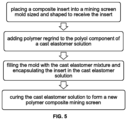
- the present invention is directed to a process of producing the composite mining screen according to the preceding paragraph, the process comprising: placing a pultruded composite insert into a mining screen mold sized and shaped to receive the insert; adding regrind polymer to a polyol component of a cast elastomer solution, filling the mold with the cast elastomer solution and encapsulating the insert in the cast elastomer solution; curing the cast elastomer solution to form a new composite mining screen.
- the present invention is directed to a method of recycling a polymer composite mining screen, the method comprising grinding the used polymer composite mining screen of the previous two paragraphs into regrind polymer particles; coating a fibrous reinforcing material with a liquid polymer mixture; pulling the fibrous reinforcing material with coating applied thereto through a pultrusion die; cutting and curing the fibrous reinforcing material to form a new pultruded polymer composite mining screen insert; placing the new pultruded polymer composite mining screen insert into a mining screen mold sized and shaped to receive the insert; adding the regrind particles to a polyol component of a liquid cast elastomer solution; filling the mining screen mold with a cast elastomer solution and encapsulating the insert in the cast elastomer; and curing the cast elastomer to form a new composite mining screen wherein the cast elastomer is selected from polyurethane and thermoplastic polyurethane.
- polymer encompasses prepolymers, oligomers and both homopolymers and copolymers; the prefix “poly” in this context referring to two or more.
- molecular weight when used in reference to a polymer, refers to the number average molecular weight (M n ), unless otherwise specified.
- Suitable polymers for use in the invention include, but are not limited to, thermoplastic polymers such as polycarbonate (PC), co-polycarbonate (co-PC), polyestercarbonate, copolyestercarbonate, siloxane-polycarbonate, siloxane-copolycarbonate, polyester, co-polyester, polyvinyl chloride (PVC), co-polyvinyl chloride (co-PVC), polymethylmethacrylate (PMMA), co-polymethylmethacrylate (co-PMMA), polypropylene (PP), cyclic olefin copolymer (COC), fluoropolymers, thermoplastic olefin (TPO), styrene acrylonitrile (SAN), thermoplastic polyurethane (TPU) or blends of these materials.
- thermoplastic polymers such as polycarbonate (PC), co-polycarbonate (co-PC), polyestercarbonate, copolyestercarbonate, siloxane-polycarbonate, siloxane
- the mining screen and insert are made of thermoplastic polyurethane.
- Thermoplastic polyurethanes contain:
- the ratio of isocyanate groups of component (A) to Zerewitinoff active groups of components (B) and (C) is in the range of from 0.90:1 to 1.2:1, preferably from 0.95:1 to 1.10:1.
- polyisocyanate refers to compounds comprising at least two unreacted isocyanate groups, such as three or more unreacted isocyanate groups.
- the polyisocyanate useful in the invention may comprise diisocyanates such as linear aliphatic polyisocyanates, cycloaliphatic polyisocyanates and alkaryl polyisocyanates.
- Suitable polyisocyanates include, for example, low molecular weight polyisocyanates having a molecular weight of 168 to 300, such as hexamethylene diisocyanate (HDI), pentamethylene diisocyanate (PDI), 2,2,4- and/or 2,4,4-trimethyl-1,6-hexamethylene diisocyanate, dodecamethylene diisocyanate, 1,4-diisocyanatocyclohexane, 1-isocyanato-3,3,5-trimethyl-5-isocyanatomethylcyclohexane (IPDI), 2,4'- and/or 4,4'-diisocyanato-dicyclohexyl methane, methylene dicyclohexyl diisocyanate or hydrogenated MDI (HMDI).
- HDI hexamethylene diisocyanate
- PDI pentamethylene diisocyanate
- the aliphatic polyisocyanate is a combination of hexamethylene diisocyanate (HDI) and 1-isocyanato-3,3,5-trimethyl-5-isocyanatomethyl-cyclohexane (IPDI) homopolymers.
- HDI hexamethylene diisocyanate
- IPDI 1-isocyanato-3,3,5-trimethyl-5-isocyanatomethyl-cyclohexane
- the polyisocyanate comprises a derivative of any of the foregoing monomeric polyisocyanates, such as a derivative containing one or more of biuret groups, isocyanurate groups, urethane groups, carbodiimide groups, and allophanate groups.
- suitable modified polyisocyanates include N,N',N"-tris-(6-isocyanatohexyl)-biuret and mixtures thereof with its higher homologues and N,N',N"-tris-(6-isocyanatohexyl)-isocyanurate and mixtures thereof with its higher homologues containing more than one isocyanurate ring.
- Isocyanate group-containing prepolymers and semi-prepolymers based on the monomeric simple or modified polyisocyanates exemplified above and organic polyhydroxyl compounds are also suitable for use as a polyisocyanate in the present invention.
- These prepolymers and semi-prepolymers often have an isocyanate content of 0.5% to 30% by weight, such as 1% to 20% by weight or 10% to 20% by weight, and can be prepared, for example, by reaction of polyisocyanate(s) with polyhydroxyl compound(s) at an NCO/OH equivalent ratio of 1.05:1 to 10:1, such as 1.1:1 to 3:1, this reaction may be followed by distillative removal of any unreacted volatile starting polyisocyanates still present.
- the prepolymers and semi-prepolymers may be prepared, for example, from low molecular weight polyhydroxyl compounds having a molecular weight of 62 to 299, specific examples of which include, but are not limited to, ethylene glycol, propylene glycol, trimethylol propane, 1,6-dihydroxy hexane; low molecular weight, hydroxyl-containing esters of these polyols with dicarboxylic acids; low molecular weight ethoxylation and/or propoxylation products of these polyols; and mixtures of the preceding polyvalent modified or unmodified alcohols.
- low molecular weight polyhydroxyl compounds having a molecular weight of 62 to 299, specific examples of which include, but are not limited to, ethylene glycol, propylene glycol, trimethylol propane, 1,6-dihydroxy hexane; low molecular weight, hydroxyl-containing esters of these polyols with dicarboxylic acids; low molecular weight ethoxy
- the prepolymers and semi-prepolymers are prepared from a relatively high molecular weight polyhydroxyl compound having a molecular weight of 300 to 8,000, such as 1,000 to 5,000, as determined from the functionality and the OH number.
- These polyhydroxyl compounds have at least two hydroxyl groups per molecule and generally have a hydroxyl group content of 0.5% to 17% by weight, such as 1% to 5% by weight.
- suitable relatively high molecular weight polyhydroxyl compounds which may be used for the preparation of the prepolymers and semi-prepolymers include polyester polyols based on the previously described low molecular weight, monomeric alcohols and polybasic carboxylic acids such as adipic acid, sebacic acid, phthalic acid, isophthalic acid, tetrahydrophthalic acid, hexahydrophthalic acid, maleic acid, the anhydrides of these acids and mixtures of these acids and/or acid anhydrides.
- Hydroxyl group-containing polylactones especially poly- ⁇ -caprolactones, are also suitable for the preparation of the prepolymers and semi-prepolymers.
- Polyether polyols which can be obtained by the alkoxylation of suitable starting molecules, are also suitable for the preparation of the isocyanate group-containing prepolymers and semi-prepolymers.
- suitable starting molecules for the polyether polyols include the previously described monomeric polyols, water, organic polyamines having at least two NH bonds and any mixtures of these starting molecules.
- Ethylene oxide and/or propylene oxide are exemplary suitable alkylene oxides for the alkoxylation reaction. These alkylene oxides may be introduced into the alkoxylation reaction in any sequence or as a mixture.
- hydroxyl group-containing polycarbonates which may be prepared by the reaction of the previously described monomeric diols with phosgene and diaryl carbonates such as diphenyl carbonate.
- the polyisocyanate comprises an asymmetric diisocyanate trimer (iminooxadiazine dione ring structure) such as, for example, the asymmetric diisocyanate trimers described in U.S. Pat. No. 5,717,091 .
- the polyisocyanate comprises an asymmetric diisocyanate trimer based on hexamethylene diisocyanate (HDI), 1-isocyanato-3,3,5-trimethyl-5-isocyanatomethyl-cyclohexane (IPDI); or a combination thereof.
- HDI hexamethylene diisocyanate
- IPDI 1-isocyanato-3,3,5-trimethyl-5-isocyanatomethyl-cyclohexane
- compositions useful in the present invention may also comprise a polymeric polyol.
- the polymeric polyol is distinct from, and in addition to, any polymeric polyol that may be used to prepare an isocyanate group-containing prepolymer or semi-prepolymer described above with respect to the polyisocyanate.
- the polymeric polyol comprises acid, such as carboxylic acid, functional groups.
- Polymeric polyols suitable for use in various embodiments of the invention include polyester polyols, polyether polyols, and polycarbonate polyols, such as those described above with respect to the preparation of isocyanate group-containing prepolymers or semi-prepolymers.
- the polymeric polyol comprises an acrylic polyol, including acrylic polyols that contain acid, such as carboxylic acid, functional groups.
- Acrylic polyols suitable for use in the compositions of the present invention include hydroxyl-containing copolymers of olefinically unsaturated compounds, such as those polymers that have a number average molecular weight (Mn) determined by vapor pressure or membrane osmometry of 800 to 50,000, such as 1,000 to 20,000, or, in some cases, 5,000 to 10,000, and/or having a hydroxyl group content of 0.1 to 12% by weight, such as 1 to 10% by weight and, in some cases, 2 to 6% by weight and/or having an acid value of at least 0.1 mg KOH/g, such as at least 0.5 mg KOH/g and/or up to 10 mg KOH/g or, in some cases, up to 5 mg KOH/g.
- Mn number average molecular weight
- the copolymers are based on olefinic monomers containing hydroxyl groups and olefinic monomers which are free from hydroxyl groups.
- suitable olefinic monomers that are free of hydroxyl groups include vinyl and vinylidene monomers, such as styrene, ⁇ -methyl styrene, o- and p-chloro styrene, o-, m- and p-methyl styrene, p-tert-butyl styrene; acrylic acid; methacrylic acid; (meth)acrylonitrile; acrylic and methacrylic acid esters of alcohols containing 1 to 8 carbon atoms, such as ethyl acrylate, methyl acrylate, n- and iso-propyl acrylate, n-butyl acrylate, 2-ethylhexyl acrylate, 2-ethylhexyl methacrylate, iso-oc
- Suitable olefinic monomers containing hydroxyl groups are hydroxyalkyl esters of acrylic acid or methacrylic acid having two to four carbon atoms in the hydroxyalkyl group, such as 2-hydroxyethyl(meth)acrylate, 2-hydroxypropyl(meth)acrylate, 4-hydroxybutyl(meth)acrylate and trimethylolpropane-mono- or pentaerythritomono-(meth)acrylate.
- Mixtures of the monomers exemplified above may also be used for the preparation of the acrylic polyol.
- (meth)acrylate and (meth)acrylic is meant to encompass methacrylate and acrylate or methacrylic and acrylics, as the case may be. Mixtures of the various polymeric polyols described above may be used.
- substantially linear polyols (C) with molecular weights ranging from 400 to 10,000, in some embodiments from 450 to 6,000 which may be used according to the invention include virtually all known polyesters, polylactones, polyethers, polythioethers, polyester amides, polycarbonates, polyacetals and vinylpolymers. It is preferred that substantially linear polyols (C) have two Zerewitinoff active groups (principally hydroxyl groups), although minor quantities of such compounds containing three Zerewitinoff active groups may also be included.
- polystyrene resins examples include polybutadiene diols, polyhydroxyl compounds already containing urethane or urea groups, modified or unmodified natural polyols, and compounds containing other Zerewitinoff active groups, such as amine, carboxyl or thiol groups.
- chain lengthening agents (B) may be used according to the invention including those known and described in the art. These include low molecular polyhydric alcohols (preferably glycols), polyamines, hydrazines and hydrazides. Amino alcohols such as ethanolamine, diethanolamine, N-methyldiethanolamine, triethanolamine and 3-aminopropanol may also be used according to the invention.
- Preferred chain lengthening agents include monoethylene glycol (MEG), ethylene glycol; di- and triethylene glycol; 1,2-propane diol; 1,3- and 1,4-butane diol; 1,6-hexane diol; 2-ethyl hexane diol(1,3); 2,2-dimethyl propane diol; 1,4-bis-hydroxy methyl cyclohexane and hydroquinone bis(2-hydroxyethyl) ether (HQEE).
- MEG monoethylene glycol
- ethylene glycol di- and triethylene glycol
- 1,2-propane diol 1,3- and 1,4-butane diol
- 1,6-hexane diol 2-ethyl hexane diol(1,3)
- 2,2-dimethyl propane diol 1,4-bis-hydroxy methyl cyclohexane and hydroquinone bis(2-hydroxyethyl) ether (HQEE).
- HQEE hydroquinone bis(
- the composite mining screen insert of the invention is made by pultrusion.
- Pultrusion is a manufacturing process for producing continuous lengths of fiber reinforced plastic ("FRP") structural shapes.
- Raw materials include a liquid resin mixture (containing resin, fillers and specialized additives) and reinforcing fibers. The process involves pulling these raw materials, rather than pushing as is the case in extrusion, through a heated steel forming die using a continuous pulling device.
- the reinforcement materials are in continuous forms such as rolls of fiberglass mat or doffs of fiberglass roving.
- the two ways to impregnate, or "wet out", the glass are open bath process and resin injection.
- Typical commercial resins include polyesters, vinyl esters, phenolics, and epoxy compounds.
- the resin injection process is used.
- the reinforcement materials are passed through a small closed box which is usually attached to the die or may be part of the die.
- the resin is injected, under pressure through ports in the box, to impregnate the reinforcement materials.
- Resin injection boxes are designed to minimize resin volume and resin residence time inside the box.
- a long fiber based reinforcing material is necessary to provide mechanical strength to the pultruded composite of the invention, and to allow the transmission of the pulling force in the process. Fibers should preferably be at least long enough to pass though both the impregnation and curing dies and attach to a source of tension.
- the fibrous reinforcing material is made of any fibrous material or materials that can provide long fibers capable of being at least partially wetted by the polyurethane formulation during impregnation.
- the fibrous reinforcing material may be single strands, braided strands, woven or nonwoven mat structures and combinations thereof. Mats or veils made of long fibers may be used, in single ply or multi-ply structures.
- Suitable fibrous materials are known in the pultrusion art, include, but are not limited to, glass fibers, glass mats, carbon fibers, polyester fibers, natural fibers, aramid fibers, nylon fibers, basalt fibers and combinations thereof.
- the fibrous reinforcing materials are long glass fibers.
- the fibers and/or fibrous reinforcing structures may be formed continuously from one or more reels feeding into the pultrusion apparatus and attached to a source of pulling force at the outlet side of the curing die.
- the reinforcing fibers may optionally be pre-treated with sizing agents or adhesion promoters known to those skilled in the art.
- the weight percentage of the long fiber reinforcement in the pultruded composites may vary considerably, depending on the end use application intended for the composite articles.
- reinforcement loadings may be from 60 to 80% by weight, and in various other embodiments from 70% to 80% by weight, based on the weight of the final composite.
- the long fiber reinforcement may be present in the pultruded composites in an amount ranging between any combination of these values, inclusive of the recited values.
- the polyisocyanate component and the isocyanate-reactive component may be the only components fed into the impregnation die in the pultrusion process.
- the polyisocyanate component or the isocyanate-reactive component may be premixed with any optional additives.
- the optional additives that are not themselves polyfunctional isocyanate-reactive materials are to be considered (counted) as entities separate from the isocyanate-reactive component, even when mixed therewith.
- the optional additives, or any part thereof, are premixed with the polyisocyanate component, these are to be considered as entities separate from the polyisocyanate component, except in the case where they are themselves polyfunctional isocyanate species.
- the impregnation die preferably provides for adequate mixing of the reactive components and adequate impregnation of the fibrous reinforcing material.
- the impregnation die may be fitted with a mixing apparatus, such as a static mixer, which provides for mixing of the reactive components before the resulting reaction mixture is used to impregnate the fibrous reinforcing structure.
- a mixing apparatus such as a static mixer
- Other types of optional mixing devices known to those skilled in the art include, but are not limited to, high-pressure impingement mixing devices or low pressure dynamic mixers such as rotating paddles.
- adequate mixing is provided in the impregnation die itself, without any additional mixing apparatus.
- a pultrusion apparatus has at least one impregnation die and at least one curing die. Because no polymerization is to take place in the impregnation die, the curing die necessarily will operate at a higher temperature than the impregnation die.
- the pultrusion apparatus may optionally contain a plurality of curing dies, or zones. Different curing zones may be set at different temperatures, if desired, but all the zones of the curing die will be higher in temperature than the impregnation die.
- the pultrusion apparatus may optionally contain a plurality of impregnation dies. In certain embodiments, there is just one impregnation die, and this is situated immediately prior to the first curing die (or zone).
- the impregnation die is set at a temperature that provides for substantially no reaction (polymerization) between the polyisocyanate component and the polyisocyanate-reactive component in the polyurethane-forming formulation before the fibrous reinforcing structure, which has been at least partially impregnated with the polyurethane-forming formulation, enters the first curing die (or zone).
- the reaction mixture may optionally contain a catalyst for one or more of the polymer forming reactions of polyisocyanates.
- Catalyst(s), where used, is/are preferably introduced into the reaction mixture by pre-mixing with the isocyanate-reactive component.
- Catalysts for the polymer forming reactions of organic polyisocyanates are well known to those skilled in the art.
- Such catalysts include, but are not limited to, tertiary amines, tertiary amine acid salts, organic metal salts, covalently bound organometallic compounds, and combinations thereof.
- the levels of the preferred catalysts required to achieve the needed reactivity profile for pultrusion processing will vary with the composition of the formulation and must be optimized for each reaction system (formulation). Such optimization would be well understood by persons of ordinary skill in the art.
- the catalysts preferably have at least some degree of solubility in the isocyanate-reactive component used, and are most preferably fully soluble in that component at the use levels required
- the pultrusion formulation may contain other optional additives, if desired.
- additional optional additives include particulate or short fiber fillers, internal mold release agents, fire retardants, smoke suppressants, dyes, pigments, antistatic agents, antioxidants, UV stabilizers, minor amounts of viscosity reducing inert diluents, combinations of these, and any other known additives from the art.
- the additives or portions thereof may be provided to the fibers, such as by coating the fibers with the additive.
- Suitable internal mold release additives are highly preferred in pultrusion of mixing activated isocyanate-based resins systems to prevent sticking or buildup in the die.
- Suitable internal mold release agents may include, for example, fatty amides such as erucamide or stearamide, fatty acids such a oleic acid, oleic acid amides, fatty esters such as LOXIOL G71S inert polyester (Henkel), carnuba wax, beeswax (natural esters), butyl stearate, octyl stearate, ethylene glycol monostearate, ethylene glycol distearate, glycerin di-oleate, glycerin tri-oleate, and esters of polycarboxylic acids with long chain aliphatic monovalent alcohols such as dioctyl sebacate, mixtures of (a) mixed esters of aliphatic polyols, dicarboxylic acids and long-chained ali
- Other preferred optional additives for use in pultrusion include moisture scavengers, such as molecular sieves; defoamers, such as polydimethylsiloxanes; coupling agents, such as the mono-oxirane or organo-amine functional trialkoxysilanes; combinations of these and the like.
- the coupling agents are particularly preferred for improving the bonding of the matrix resin to the fiber reinforcement.
- Fine particulate fillers such as clays and fine silicas, may be used at thixotropic additives. Such particulate fillers may also serve as extenders to reduce resin usage. Fire retardants are sometimes desirable as additives in pultruded composites.
- Examples of preferred fire retardant types include, but are not limited to, triaryl phosphates; trialkyl phophates, especially those bearing halogens; melamine (as filler); melamine resins (in minor amounts); halogenated paraffins and combinations thereof.
- the stoichiometry of mixing isocyanate-based polymer forming formulations, containing an organic polyisocyanate and a polyfunctional isocyanate reactive resin is often expressed by a quantity known in the art as the isocyanate index.
- the index of such a mixing activated formulation is simply the ratio of the total number of reactive isocyanate (-NCO) groups present to the total number of isocyanate-reactive groups (that can react with the isocyanate under the conditions employed in the process). This quantity is often multiplied by 100 and expressed as a percent.
- Preferred isocyanate index values in the mixing activated formulations, which are suitable for use in the invention range from 70% to 150%. A more preferred range of index values is from 90% to 125%.
- pultrusion of polyurethane and polyisocyanurate systems with fiber reinforced composites is performed by supplying the isocyanate and polyol components to a mix/metering machine for delivery in a desired ratio to a mixing apparatus, preferably a static mixer, to produce a reaction mixture.
- the reaction mixture is supplied to an injection die where it can be used to impregnate fibers being pulled concurrently into the injection die.
- the resulting uncured composite is pulled through a zoned heating die, attached directly to the injection die, having a desired cross-section where it is shaped and cured.
- the curing die has two to three heated zones equipped with electrical heating coils individually controlled to maintain the desired temperatures. The entrance to the die is cooled to prevent premature polymerization.
- the temperature at the hottest zone generally ranges from about 350°F (177°C) to about 450°F (232°C).
- the dynamic forces needed to pull the composite through the forming die are supplied by the pulling machine.
- This machine typically has gripping devices that contact the cured composite profile (or the glass fibers therein) and give the traction necessary to pull the composite profile through the die.
- the machine also has a device that develops a force in the desired direction of pull that gives the impetus necessary to pull the composite profile continuously through the die.
- the resulting composite profile upon exiting the pulling machine is then cut to the desired length typically by an abrasive cut off saw.
- the composite mining screen frame is a cast polyurethane.
- Cast polyurethane may be formed using a mold or form with one or more cavities corresponding to the size and shape of the cast polyurethane frame to be formed.
- the mold may have a substantially flat surface face below which the cavity extends.
- the component materials of a liquid polyurethane, an isocyanate and a polyol and a chain extender, are mixed and dispensed into the cavity and/or onto the substantially flat surface face of a mold in accordance with the present invention.
- nozzles having a desired distribution pattern that moves dispensers relative to the face of a mold to dispense polyurethane over the face in a desired pattern.
- a dispensing nozzle may distribute liquid polyurethane in a predetermined amount, at a predetermined rate, and/or in a predetermined pattern so as to fill the cavity of the mold substantially completely with little or no excess liquid polyurethane beyond the amount needed to fill the cavity.
- Polyurethane cast elastomers are made by either a one-shot process, or a prepolymer process.
- the one-shot process is a single step process in which the isocyanate, diol, amine curing agent, and optional chain extenders are mixed then cured in a mold to form the finished article.
- Various formulations for producing one-shot cast elastomers are contained for example, in U.S. Pat. No. 6,403,702 .
- a prepolymer is first made by reacting the isocyanate with the diol and, optionally, a chain extending diol to form an isocyanate capped prepolymer.
- this prepolymer is reacted with one or more amine curing agents and, optionally, a chain extending diol to form an isocyanate capped prepolymer.
- This prepolymer is reacted with one or more amine curing agents and, optionally, additional isocyanate.
- This mixture is cured in a mold to form the finished cast elastomer article. Cast elastomer articles are preferably post cured to achieve final properties. Additional isocyanate may be added in the second step to adjust the hard segment content of the elastomer, allowing a single prepolymer to be used to make materials with a wide range of hardness.
- hard segment content refers to the fraction of the composition that consists of the amine curing agent, optional chain extenders, and all of the isocyanate, both from the prepolymer and any added in the final step.
- the soft segment refers only to the polydiene polymer component. Because the final cast elastomer is crosslinked it is not necessary that the functionality of the polymeric diol or the isocyanate be exactly two. Formulations for producing prepolymers are contained for example, in U.S. Pat. No. 6,667,370 .
- the elastomer is a thermoplastic polyurethane.
- the thermoplastic urethane is either an ester- or ether-based urethane.
- Other polyurethanes include those selected from the group consisting of polyester, polyether, polycaprolactone, polyoxypropylene, and polycarbonate macroglycol based materials, and mixtures thereof.
- the polyurethane is formed of any polyurethane or a methylene diphenyl diisocyanate (MDI) or diisocyanate derivative.
- MDI methylene diphenyl diisocyanate
- isophorone diisocyanate IPDI
- H12MDI methylene bis 4-cyclohexyl isocyanate
- CHDI cyclohexyl diisocyanate
- HDI hexamethylene diisocyanate
- m-TMXDI m-tetramethyl xylene diisocyanate
- p-TMXDI p-tetramethyl xylene diisocyanate
- XDI xylylene diisocyanate
- the polyol component of the cast elastomer may include up to 40 wt.% of a polymer regrind, and in selected embodiments, from >0 wt.% to 20 wt.%, in all cases based on the weight of the polyol.
- the polyurethane is cut or ground to form smaller particles for processing. Such materials are commonly known in the art as "regrind.”
- the size of the regrind is selected for convenience and ease of use.
- the source polyurethane is a combination of polyurethanes having different Shore hardness.
- a variety of machines to process regrind polyurethane in a liquid vehicle such as a polyol are available from Baulé in the Advanced, Universal, Alpha, and Omega machine series.
- the polyurethane regrind source may include broken or used polymer composite mining screens and can include both a virgin material and material that has been recycled at least one time. Such polyurethane composite mining screens previously would have been discarded because of a lack of apparent or easy re-use without cumbersome steps or significant costs. Thus, the present invention helps to eliminate this waste and provide an environmentally-friendly alternative and cost-efficient use for the used and broken mining screens.
- the polyurethane can be a mix of virgin and recycled materials.
- the polyurethane may include from 5% to 99% by weight in other embodiments from 55% to 99% by weight of the recycled materials with the remainder being virgin material.
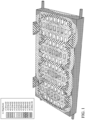
- FIG. 1 shows the magnitude of deflection by the prior art steel and composite mining screen inserts.
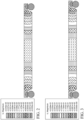
- FIG. 2 is a cross sectional view showing the magnitude of deflection in a mining screen insert made of A36 steel.
- FIG. 3 is a cross sectional view depicting the magnitude of deflection in a composite mining screen insert made according to the invention of pultruded polyurethane (80% glass/20% polyurethane by weight).
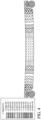
- FIG. 4 is a cross sectional view showing the magnitude of deflection in a mining screen insert made of 82 Shore D unfilled polyurethane.
- FIG. 5 provides a flow chart of one embodiment of the inventive process of producing a composite mining screen.
- FIG 6 is a flow chart depicting one embodiment of the composite mining screen recycling process of the present invention.
Landscapes
- Engineering & Computer Science (AREA)
- Chemical & Material Sciences (AREA)
- Mechanical Engineering (AREA)
- Environmental & Geological Engineering (AREA)
- Chemical Kinetics & Catalysis (AREA)
- Health & Medical Sciences (AREA)
- Manufacturing & Machinery (AREA)
- Medicinal Chemistry (AREA)
- Polymers & Plastics (AREA)
- Organic Chemistry (AREA)
- Composite Materials (AREA)
- Reinforced Plastic Materials (AREA)
- Compositions Of Macromolecular Compounds (AREA)
- Polyurethanes Or Polyureas (AREA)
Claims (13)
- Verbundstoff-Bergbausieb umfassend:
einen Gießelastomerrahmen, der einen pultrudierten Verbundstoff-Bergbausiebeinsatz umschließt, wobei der Einsatz von 60 bis 80 Gew.-% an faserförmigem Verstärkungsmaterial bezogen auf das Gewicht des Einsatzes enthält und wobei eine Polyolkomponente des Gießelastomers Polymerregenerat enthält, wobei das Gießelastomer ausgewählt ist aus Polyurethan und thermoplastischem Polyurethan. - Verbundstoff-Bergbausieb nach Anspruch 1, wobei das Polymerregenerat ausgewählt ist aus der Gruppe bestehend aus Polyurethan, Polycarbonat, Co-Polycarbonat, Polyestercarbonat, Copolyestercarbonat, Siloxan-Polycarbonat, Siloxan-Copolycarbonat, Polyester, Co-Polyester, Polyvinylchlorid, Co-Polyvinylchlorid, Polymethylmethacrylat, Co-Polymethylmethacrylat, Polypropylen, cyclischem Olefincopolymer, Fluorpolymeren, thermoplastischem Olefin, Styrolacrylnitril, thermoplastischem Polyurethan und Gemischen dieser Materialien.
- Verbundstoff-Bergbausieb nach Anspruch 1, wobei das Fasermaterial ausgewählt ist aus der Gruppe bestehend aus Glasfasern, Glasmatten, Kohlenstofffasern, Polyesterfasern, Naturfasern, Aramidfasern, Nylonfasern, Basaltfasern und Kombinationen davon.
- Verbundstoff-Bergbausieb nach Anspruch 1, wobei die Polyolkomponente des Gießelastomers bis zu 40 Gew.-% Polymerregenerat bezogen auf das Gewicht der Polyolkomponente enthält.
- Verbundstoff-Bergbausieb nach Anspruch 1, wobei der Verbundstoff-Bergbausiebeinsatz eine höchste Auslenkung unter Last aufweist, die mit jener eines Stahl-Bergbausiebeinsatzes vergleichbar ist.
- Verfahren zur Herstellung des Verbundstoff-Bergbausiebs nach Anspruch 1, wobei das Verfahren umfasst:Platzieren eines pultrudierten Verbundstoffeinsatzes in ein Bergbausieb-Formwerkzeug, das bemessen und geformt ist, den Einsatz aufzunehmen;Zugeben von Polymerregenerat zu einer Polyolkomponente einer Gießelastomerlösung,Füllen des Formwerkzeugs mit der Gießelastomerlösung und Umschließen des Einsatzes in der Gießelastomerlösung;Härten der Gießelastomerlösung, um ein neues Verbundstoff-Bergbausieb zu bilden.
- Verfahren nach Anspruch 6, wobei das Polymerregenerat aus einem gebrauchten Verbundstoff-Bergbausieb erhalten ist.
- Verfahren nach Anspruch 6, wobei der neue pultrudierte Verbundstoff-Bergbausiebeinsatz eine höchste Auslenkung unter Last aufweist, die mit jener eines Stahl-Bergbausiebeinsatzes vergleichbar ist.
- Verfahren zum Recycling eines Verbundstoff-Bergbausiebs, wobei das Verfahren umfasst:Vermahlen eines gebrauchten Verbundstoff-Bergbausiebs nach Anspruch 1 zu Polymerregeneratpartikeln;Beschichten eines faserförmigen Verstärkungsmaterials mit einem flüssigen Polymergemisch;Ziehen des faserförmigen Verstärkungsmaterials mit darauf aufgebrachter Beschichtung durch eine Pultrusionsdüse;Schneiden und Härten des faserförmigen Verstärkungsmaterials, um einen neuen pultrudierten Verbundstoff-Bergbausiebeinsatz zu bilden;Platzieren des neuen pultrudierten Verbundstoff-Bergbausiebeinsatzes in ein Bergbausieb-Formwerkzeug, das bemessen und geformt ist, den Einsatz aufzunehmen;Zugeben der Polymerregeneratpartikel zu einer Gießelastomerlösung;Füllen des Bergbausieb-Formwerkzeugs mit der Gießelastomerlösung und Umschließen des neuen pultrudierten Verbundstoff-Bergbausiebeinsatzes in der Gießelastomerlösung; undHärten der Gießelastomerlösung, um ein neues Verbundstoff-Bergbausieb zu bilden; wobei das Gießelastomer ausgewählt ist aus Polyurethan und thermoplastischem Polyurethan.
- Verfahren nach Anspruch 9, wobei das Polymerregenerat und das flüssige Polymer unabhängig ausgewählt sind aus der Gruppe bestehend aus Polyurethan, Polycarbonat, Co-Polycarbonat, Polyestercarbonat, Copolyestercarbonat, Siloxan-Polycarbonat, Siloxan-Copolycarbonat, Polyester, Co-Polyester, Polyvinylchlorid, Co-Polyvinylchlorid, Polymethylmethacrylat, Co-Polymethylmethacrylat, Polypropylen, cyclischem Olefincopolymer, Fluorpolymeren, thermoplastischem Olefin, Styrolacrylnitril, thermoplastischem Polyurethan, Phenolen, Epoxyverbindungen und Gemischen dieser Materialien.
- Verfahren nach Anspruch 9, wobei das Fasermaterial ausgewählt ist aus der Gruppe bestehend aus Glasfasern, Glasmatten, Kohlenstofffasern, Polyesterfasern, Naturfasern, Aramidfasern, Nylonfasern, Basaltfasern und Kombinationen davon.
- Verfahren nach Anspruch 9, wobei die Polyolkomponente des Gießelastomers bis zu 40 Gew.-% Polymerregenerat bezogen auf das Gewicht der Polyolkomponente enthält.
- Verfahren nach Anspruch 9, wobei der pultrudierte Verbundstoff-Bergbausiebeinsatz eine höchste Auslenkung unter Last aufweist, die mit jener eines Stahl-Bergbausiebeinsatzes vergleichbar ist.
Applications Claiming Priority (2)
| Application Number | Priority Date | Filing Date | Title |
|---|---|---|---|
| US201862781650P | 2018-12-19 | 2018-12-19 | |
| PCT/US2019/066810 WO2020131850A1 (en) | 2018-12-19 | 2019-12-17 | Process for manufacturing fully recyclable mining screens |
Publications (2)
| Publication Number | Publication Date |
|---|---|
| EP3898200A1 EP3898200A1 (de) | 2021-10-27 |
| EP3898200B1 true EP3898200B1 (de) | 2025-06-11 |
Family
ID=69185684
Family Applications (1)
| Application Number | Title | Priority Date | Filing Date |
|---|---|---|---|
| EP19839708.5A Active EP3898200B1 (de) | 2018-12-19 | 2019-12-17 | Verfahren zur herstellung von vollständig wiederverwertbaren bergbausieben |
Country Status (9)
| Country | Link |
|---|---|
| US (1) | US11890785B2 (de) |
| EP (1) | EP3898200B1 (de) |
| CN (1) | CN113165273A (de) |
| AU (1) | AU2019403126B2 (de) |
| CA (1) | CA3121591A1 (de) |
| CL (1) | CL2021001574A1 (de) |
| PL (1) | PL3898200T3 (de) |
| WO (1) | WO2020131850A1 (de) |
| ZA (1) | ZA202103731B (de) |
Families Citing this family (1)
| Publication number | Priority date | Publication date | Assignee | Title |
|---|---|---|---|---|
| CN112454806B (zh) * | 2020-11-05 | 2021-08-17 | 苏州双荣橡塑有限公司 | 一种高速电吹风进风网包胶装置 |
Family Cites Families (14)
| Publication number | Priority date | Publication date | Assignee | Title |
|---|---|---|---|---|
| GB1544822A (en) * | 1976-03-26 | 1979-04-25 | Process Scient Innovations | Filter elements for gas or liquid and methods of making such elements |
| US4247007A (en) * | 1978-11-02 | 1981-01-27 | Yuriko Kai | Strands and netting and screens made thereof |
| US4295918A (en) | 1979-12-26 | 1981-10-20 | Uop Inc. | Apparatus for assembling a plastic mining screen |
| US4374169A (en) | 1981-09-14 | 1983-02-15 | Uop Inc. | Abrasion resistant, reinforced screen panel member |
| US5254405A (en) * | 1991-10-02 | 1993-10-19 | Urethane Technologies, Incorporated | Non-cellular polyurethane composite |
| DE19532060A1 (de) | 1995-08-31 | 1997-03-06 | Bayer Ag | Polycyclische Iminooxadiazindione, deren Herstellung und Verwendung |
| AUPO932597A0 (en) * | 1997-09-22 | 1997-10-09 | Richardson Pacific Limited | Reinforcing for ore screening panels |
| DE19939840A1 (de) | 1999-08-23 | 2001-03-01 | Bayer Ag | Verfahren zur Herstellung von Isocyanatendgruppen enthaltenden Prepolymeren mit einem geringem Anteil an eingesetzten Ausgangsisocyanaten |
| US6403702B1 (en) | 1999-12-03 | 2002-06-11 | Bayer Corporation | Diurethane plasticizer containing one-shot polyurethane cast elastomers |
| CA2563802C (en) * | 2004-04-28 | 2011-01-04 | Geo2 Technologies, Inc. | Nonwoven composites and related products and methods |
| CN102037041B (zh) * | 2008-05-23 | 2014-08-27 | 路博润高级材料公司 | 纤维增强的tpu复合材料 |
| US9409209B2 (en) * | 2012-05-25 | 2016-08-09 | Derrick Corporation | Injection molded screening apparatuses and methods |
| FR2992321B1 (fr) * | 2012-06-22 | 2015-06-05 | Arkema France | Procede de fabrication d'un materiau fibreux pre-impregne de polymere thermoplastique. |
| CN116273870A (zh) * | 2017-04-28 | 2023-06-23 | 德里克公司 | 热塑组合物、方法、装置和用途 |
-
2019
- 2019-12-17 EP EP19839708.5A patent/EP3898200B1/de active Active
- 2019-12-17 PL PL19839708.5T patent/PL3898200T3/pl unknown
- 2019-12-17 US US17/297,619 patent/US11890785B2/en active Active
- 2019-12-17 CA CA3121591A patent/CA3121591A1/en active Pending
- 2019-12-17 CN CN201980084685.3A patent/CN113165273A/zh active Pending
- 2019-12-17 WO PCT/US2019/066810 patent/WO2020131850A1/en not_active Ceased
- 2019-12-17 AU AU2019403126A patent/AU2019403126B2/en active Active
-
2021
- 2021-05-31 ZA ZA2021/03731A patent/ZA202103731B/en unknown
- 2021-06-16 CL CL2021001574A patent/CL2021001574A1/es unknown
Also Published As
| Publication number | Publication date |
|---|---|
| CN113165273A (zh) | 2021-07-23 |
| WO2020131850A1 (en) | 2020-06-25 |
| AU2019403126A1 (en) | 2021-05-27 |
| CL2021001574A1 (es) | 2022-02-04 |
| EP3898200A1 (de) | 2021-10-27 |
| PL3898200T3 (pl) | 2025-10-06 |
| CA3121591A1 (en) | 2020-06-25 |
| ZA202103731B (en) | 2022-04-28 |
| US11890785B2 (en) | 2024-02-06 |
| BR112021011714A2 (pt) | 2021-08-31 |
| AU2019403126B2 (en) | 2024-11-07 |
| US20220023916A1 (en) | 2022-01-27 |
Similar Documents
| Publication | Publication Date | Title |
|---|---|---|
| US7056976B2 (en) | Pultrusion systems and process | |
| CN1958281B (zh) | 复合制件及其生产方法 | |
| US7993552B2 (en) | Filled polymer composite and synthetic building material compositions | |
| US20090071593A1 (en) | Pultrusion Apparatus and Method | |
| US9808969B2 (en) | Fiber composite component and a process for the production thereof | |
| EP2777915A1 (de) | Wasserklare aliphatische Polyurethanstrangziehformulierungen und Verfahren | |
| US20110001255A1 (en) | Vacuum Removal of Entrained Gasses In Extruded, Foamed Polyurethane | |
| EP3703937B1 (de) | Pultrusionsverfahren zur formung mehrschichtiger strukturen aus unterschiedlichen materialien unter verwendung einer multichip-pultrusionsvorrichtung | |
| US11890785B2 (en) | Process for manufacturing fully recyclable mining screens | |
| WO2013127850A1 (en) | 2-k pultrusion formulation and process | |
| US20080087373A1 (en) | Polymer polyol-containing polyurethane pultrusion formulations and processes | |
| US20080090966A1 (en) | Immiscible polyurethane pultrusion formulations and processes | |
| WO2024015544A1 (en) | Parcel chute and panel construction therefore, and a process for preparing the same | |
| BR112021011714B1 (pt) | Peneira de mineração de compósito, processo de produção e método de reciclagem da referida peneira | |
| KR20190077150A (ko) | 인발성형용 속경화성 이액형 폴리우레탄 수지 조성물 | |
| WO2021001210A1 (en) | Overmoulding a profile for producing a shaped article, a shaped article obtained therefrom and use thereof | |
| US20250206870A1 (en) | A panel construction, a process for preparing the same and use thereof as an automotive part | |
| JP7569207B2 (ja) | 熱可塑性樹脂複合体の製造方法および製造装置 | |
| WO2026010751A1 (en) | High speed pultrusion system | |
| Vuppalapati | Manufacturing and characterization of soy-based pultruded polyurethane composites | |
| HK1100406A (en) | Composite articles and a process for their production | |
| CN119859374A (zh) | 一种聚氨酯复合材料及其制备工艺和应用 |
Legal Events
| Date | Code | Title | Description |
|---|---|---|---|
| STAA | Information on the status of an ep patent application or granted ep patent |
Free format text: STATUS: UNKNOWN |
|
| STAA | Information on the status of an ep patent application or granted ep patent |
Free format text: STATUS: THE INTERNATIONAL PUBLICATION HAS BEEN MADE |
|
| PUAI | Public reference made under article 153(3) epc to a published international application that has entered the european phase |
Free format text: ORIGINAL CODE: 0009012 |
|
| STAA | Information on the status of an ep patent application or granted ep patent |
Free format text: STATUS: REQUEST FOR EXAMINATION WAS MADE |
|
| 17P | Request for examination filed |
Effective date: 20210719 |
|
| AK | Designated contracting states |
Kind code of ref document: A1 Designated state(s): AL AT BE BG CH CY CZ DE DK EE ES FI FR GB GR HR HU IE IS IT LI LT LU LV MC MK MT NL NO PL PT RO RS SE SI SK SM TR |
|
| DAV | Request for validation of the european patent (deleted) | ||
| DAX | Request for extension of the european patent (deleted) | ||
| STAA | Information on the status of an ep patent application or granted ep patent |
Free format text: STATUS: EXAMINATION IS IN PROGRESS |
|
| 17Q | First examination report despatched |
Effective date: 20230731 |
|
| RIC1 | Information provided on ipc code assigned before grant |
Ipc: C08J 11/04 20060101ALI20250109BHEP Ipc: B07B 1/00 20060101ALI20250109BHEP Ipc: E04C 2/42 20060101ALI20250109BHEP Ipc: C08K 3/40 20060101ALI20250109BHEP Ipc: C08K 3/013 20180101ALI20250109BHEP Ipc: B29C 65/00 20060101AFI20250109BHEP |
|
| GRAP | Despatch of communication of intention to grant a patent |
Free format text: ORIGINAL CODE: EPIDOSNIGR1 |
|
| STAA | Information on the status of an ep patent application or granted ep patent |
Free format text: STATUS: GRANT OF PATENT IS INTENDED |
|
| INTG | Intention to grant announced |
Effective date: 20250217 |
|
| GRAS | Grant fee paid |
Free format text: ORIGINAL CODE: EPIDOSNIGR3 |
|
| GRAA | (expected) grant |
Free format text: ORIGINAL CODE: 0009210 |
|
| STAA | Information on the status of an ep patent application or granted ep patent |
Free format text: STATUS: THE PATENT HAS BEEN GRANTED |
|
| AK | Designated contracting states |
Kind code of ref document: B1 Designated state(s): AL AT BE BG CH CY CZ DE DK EE ES FI FR GB GR HR HU IE IS IT LI LT LU LV MC MK MT NL NO PL PT RO RS SE SI SK SM TR |
|
| REG | Reference to a national code |
Ref country code: GB Ref legal event code: FG4D |
|
| REG | Reference to a national code |
Ref country code: CH Ref legal event code: EP |
|
| REG | Reference to a national code |
Ref country code: IE Ref legal event code: FG4D |
|
| REG | Reference to a national code |
Ref country code: DE Ref legal event code: R096 Ref document number: 602019071097 Country of ref document: DE |
|
| PG25 | Lapsed in a contracting state [announced via postgrant information from national office to epo] |
Ref country code: FI Free format text: LAPSE BECAUSE OF FAILURE TO SUBMIT A TRANSLATION OF THE DESCRIPTION OR TO PAY THE FEE WITHIN THE PRESCRIBED TIME-LIMIT Effective date: 20250611 Ref country code: ES Free format text: LAPSE BECAUSE OF FAILURE TO SUBMIT A TRANSLATION OF THE DESCRIPTION OR TO PAY THE FEE WITHIN THE PRESCRIBED TIME-LIMIT Effective date: 20250611 |
|
| REG | Reference to a national code |
Ref country code: LT Ref legal event code: MG9D |
|
| PG25 | Lapsed in a contracting state [announced via postgrant information from national office to epo] |
Ref country code: NO Free format text: LAPSE BECAUSE OF FAILURE TO SUBMIT A TRANSLATION OF THE DESCRIPTION OR TO PAY THE FEE WITHIN THE PRESCRIBED TIME-LIMIT Effective date: 20250911 Ref country code: GR Free format text: LAPSE BECAUSE OF FAILURE TO SUBMIT A TRANSLATION OF THE DESCRIPTION OR TO PAY THE FEE WITHIN THE PRESCRIBED TIME-LIMIT Effective date: 20250912 |
|
| REG | Reference to a national code |
Ref country code: NL Ref legal event code: MP Effective date: 20250611 |
|
| PG25 | Lapsed in a contracting state [announced via postgrant information from national office to epo] |
Ref country code: HR Free format text: LAPSE BECAUSE OF FAILURE TO SUBMIT A TRANSLATION OF THE DESCRIPTION OR TO PAY THE FEE WITHIN THE PRESCRIBED TIME-LIMIT Effective date: 20250611 |
|
| PG25 | Lapsed in a contracting state [announced via postgrant information from national office to epo] |
Ref country code: RS Free format text: LAPSE BECAUSE OF FAILURE TO SUBMIT A TRANSLATION OF THE DESCRIPTION OR TO PAY THE FEE WITHIN THE PRESCRIBED TIME-LIMIT Effective date: 20250911 |
|
| PG25 | Lapsed in a contracting state [announced via postgrant information from national office to epo] |
Ref country code: LV Free format text: LAPSE BECAUSE OF FAILURE TO SUBMIT A TRANSLATION OF THE DESCRIPTION OR TO PAY THE FEE WITHIN THE PRESCRIBED TIME-LIMIT Effective date: 20250611 |
|
| PG25 | Lapsed in a contracting state [announced via postgrant information from national office to epo] |
Ref country code: NL Free format text: LAPSE BECAUSE OF FAILURE TO SUBMIT A TRANSLATION OF THE DESCRIPTION OR TO PAY THE FEE WITHIN THE PRESCRIBED TIME-LIMIT Effective date: 20250611 |
|
| PG25 | Lapsed in a contracting state [announced via postgrant information from national office to epo] |
Ref country code: PT Free format text: LAPSE BECAUSE OF FAILURE TO SUBMIT A TRANSLATION OF THE DESCRIPTION OR TO PAY THE FEE WITHIN THE PRESCRIBED TIME-LIMIT Effective date: 20251013 |
|
| REG | Reference to a national code |
Ref country code: AT Ref legal event code: MK05 Ref document number: 1802048 Country of ref document: AT Kind code of ref document: T Effective date: 20250611 |
|
| PG25 | Lapsed in a contracting state [announced via postgrant information from national office to epo] |
Ref country code: IS Free format text: LAPSE BECAUSE OF FAILURE TO SUBMIT A TRANSLATION OF THE DESCRIPTION OR TO PAY THE FEE WITHIN THE PRESCRIBED TIME-LIMIT Effective date: 20251011 |
|
| PGFP | Annual fee paid to national office [announced via postgrant information from national office to epo] |
Ref country code: DE Payment date: 20251119 Year of fee payment: 7 |
|
| PG25 | Lapsed in a contracting state [announced via postgrant information from national office to epo] |
Ref country code: AT Free format text: LAPSE BECAUSE OF FAILURE TO SUBMIT A TRANSLATION OF THE DESCRIPTION OR TO PAY THE FEE WITHIN THE PRESCRIBED TIME-LIMIT Effective date: 20250611 Ref country code: SM Free format text: LAPSE BECAUSE OF FAILURE TO SUBMIT A TRANSLATION OF THE DESCRIPTION OR TO PAY THE FEE WITHIN THE PRESCRIBED TIME-LIMIT Effective date: 20250611 |
|
| PG25 | Lapsed in a contracting state [announced via postgrant information from national office to epo] |
Ref country code: CZ Free format text: LAPSE BECAUSE OF FAILURE TO SUBMIT A TRANSLATION OF THE DESCRIPTION OR TO PAY THE FEE WITHIN THE PRESCRIBED TIME-LIMIT Effective date: 20250611 |
|
| PGFP | Annual fee paid to national office [announced via postgrant information from national office to epo] |
Ref country code: PL Payment date: 20251128 Year of fee payment: 7 Ref country code: BG Payment date: 20251127 Year of fee payment: 7 |
|
| PG25 | Lapsed in a contracting state [announced via postgrant information from national office to epo] |
Ref country code: EE Free format text: LAPSE BECAUSE OF FAILURE TO SUBMIT A TRANSLATION OF THE DESCRIPTION OR TO PAY THE FEE WITHIN THE PRESCRIBED TIME-LIMIT Effective date: 20250611 |
|
| PG25 | Lapsed in a contracting state [announced via postgrant information from national office to epo] |
Ref country code: SK Free format text: LAPSE BECAUSE OF FAILURE TO SUBMIT A TRANSLATION OF THE DESCRIPTION OR TO PAY THE FEE WITHIN THE PRESCRIBED TIME-LIMIT Effective date: 20250611 Ref country code: RO Free format text: LAPSE BECAUSE OF FAILURE TO SUBMIT A TRANSLATION OF THE DESCRIPTION OR TO PAY THE FEE WITHIN THE PRESCRIBED TIME-LIMIT Effective date: 20250611 |
|
| REG | Reference to a national code |
Ref country code: DE Ref legal event code: R097 Ref document number: 602019071097 Country of ref document: DE |
|
| PG25 | Lapsed in a contracting state [announced via postgrant information from national office to epo] |
Ref country code: DK Free format text: LAPSE BECAUSE OF FAILURE TO SUBMIT A TRANSLATION OF THE DESCRIPTION OR TO PAY THE FEE WITHIN THE PRESCRIBED TIME-LIMIT Effective date: 20250611 |
|
| PG25 | Lapsed in a contracting state [announced via postgrant information from national office to epo] |
Ref country code: IT Free format text: LAPSE BECAUSE OF FAILURE TO SUBMIT A TRANSLATION OF THE DESCRIPTION OR TO PAY THE FEE WITHIN THE PRESCRIBED TIME-LIMIT Effective date: 20250611 |
|
| PLBE | No opposition filed within time limit |
Free format text: ORIGINAL CODE: 0009261 |
|
| STAA | Information on the status of an ep patent application or granted ep patent |
Free format text: STATUS: NO OPPOSITION FILED WITHIN TIME LIMIT |
|
| REG | Reference to a national code |
Ref country code: CH Ref legal event code: L10 Free format text: ST27 STATUS EVENT CODE: U-0-0-L10-L00 (AS PROVIDED BY THE NATIONAL OFFICE) Effective date: 20260423 |