EP3899770B1 - System und verfahren zur erkennung von datenanomalien durch analyse von morphologien bekannter und/oder unbekannter cyber-sicherheitsbedrohungen - Google Patents
System und verfahren zur erkennung von datenanomalien durch analyse von morphologien bekannter und/oder unbekannter cyber-sicherheitsbedrohungen Download PDFInfo
- Publication number
- EP3899770B1 EP3899770B1 EP20753862.0A EP20753862A EP3899770B1 EP 3899770 B1 EP3899770 B1 EP 3899770B1 EP 20753862 A EP20753862 A EP 20753862A EP 3899770 B1 EP3899770 B1 EP 3899770B1
- Authority
- EP
- European Patent Office
- Prior art keywords
- data object
- received data
- value
- block
- data
- Prior art date
- Legal status (The legal status is an assumption and is not a legal conclusion. Google has not performed a legal analysis and makes no representation as to the accuracy of the status listed.)
- Active
Links
Images



Classifications
-
- G—PHYSICS
- G06—COMPUTING OR CALCULATING; COUNTING
- G06F—ELECTRIC DIGITAL DATA PROCESSING
- G06F21/00—Security arrangements for protecting computers, components thereof, programs or data against unauthorised activity
- G06F21/50—Monitoring users, programs or devices to maintain the integrity of platforms, e.g. of processors, firmware or operating systems
- G06F21/55—Detecting local intrusion or implementing counter-measures
- G06F21/56—Computer malware detection or handling, e.g. anti-virus arrangements
-
- H—ELECTRICITY
- H04—ELECTRIC COMMUNICATION TECHNIQUE
- H04L—TRANSMISSION OF DIGITAL INFORMATION, e.g. TELEGRAPHIC COMMUNICATION
- H04L63/00—Network architectures or network communication protocols for network security
- H04L63/14—Network architectures or network communication protocols for network security for detecting or protecting against malicious traffic
- H04L63/1408—Network architectures or network communication protocols for network security for detecting or protecting against malicious traffic by monitoring network traffic
- H04L63/1425—Traffic logging, e.g. anomaly detection
-
- G—PHYSICS
- G06—COMPUTING OR CALCULATING; COUNTING
- G06F—ELECTRIC DIGITAL DATA PROCESSING
- G06F16/00—Information retrieval; Database structures therefor; File system structures therefor
- G06F16/90—Details of database functions independent of the retrieved data types
- G06F16/901—Indexing; Data structures therefor; Storage structures
- G06F16/9017—Indexing; Data structures therefor; Storage structures using directory or table look-up
-
- G—PHYSICS
- G06—COMPUTING OR CALCULATING; COUNTING
- G06F—ELECTRIC DIGITAL DATA PROCESSING
- G06F21/00—Security arrangements for protecting computers, components thereof, programs or data against unauthorised activity
- G06F21/50—Monitoring users, programs or devices to maintain the integrity of platforms, e.g. of processors, firmware or operating systems
- G06F21/55—Detecting local intrusion or implementing counter-measures
-
- G—PHYSICS
- G06—COMPUTING OR CALCULATING; COUNTING
- G06F—ELECTRIC DIGITAL DATA PROCESSING
- G06F21/00—Security arrangements for protecting computers, components thereof, programs or data against unauthorised activity
- G06F21/50—Monitoring users, programs or devices to maintain the integrity of platforms, e.g. of processors, firmware or operating systems
- G06F21/55—Detecting local intrusion or implementing counter-measures
- G06F21/56—Computer malware detection or handling, e.g. anti-virus arrangements
- G06F21/562—Static detection
-
- G—PHYSICS
- G06—COMPUTING OR CALCULATING; COUNTING
- G06N—COMPUTING ARRANGEMENTS BASED ON SPECIFIC COMPUTATIONAL MODELS
- G06N20/00—Machine learning
-
- G—PHYSICS
- G06—COMPUTING OR CALCULATING; COUNTING
- G06N—COMPUTING ARRANGEMENTS BASED ON SPECIFIC COMPUTATIONAL MODELS
- G06N3/00—Computing arrangements based on biological models
- G06N3/02—Neural networks
-
- G—PHYSICS
- G06—COMPUTING OR CALCULATING; COUNTING
- G06N—COMPUTING ARRANGEMENTS BASED ON SPECIFIC COMPUTATIONAL MODELS
- G06N3/00—Computing arrangements based on biological models
- G06N3/02—Neural networks
- G06N3/04—Architecture, e.g. interconnection topology
- G06N3/044—Recurrent networks, e.g. Hopfield networks
-
- G—PHYSICS
- G06—COMPUTING OR CALCULATING; COUNTING
- G06N—COMPUTING ARRANGEMENTS BASED ON SPECIFIC COMPUTATIONAL MODELS
- G06N3/00—Computing arrangements based on biological models
- G06N3/02—Neural networks
- G06N3/04—Architecture, e.g. interconnection topology
- G06N3/045—Combinations of networks
-
- G—PHYSICS
- G06—COMPUTING OR CALCULATING; COUNTING
- G06N—COMPUTING ARRANGEMENTS BASED ON SPECIFIC COMPUTATIONAL MODELS
- G06N3/00—Computing arrangements based on biological models
- G06N3/02—Neural networks
- G06N3/08—Learning methods
-
- H—ELECTRICITY
- H04—ELECTRIC COMMUNICATION TECHNIQUE
- H04L—TRANSMISSION OF DIGITAL INFORMATION, e.g. TELEGRAPHIC COMMUNICATION
- H04L63/00—Network architectures or network communication protocols for network security
- H04L63/14—Network architectures or network communication protocols for network security for detecting or protecting against malicious traffic
-
- H—ELECTRICITY
- H04—ELECTRIC COMMUNICATION TECHNIQUE
- H04L—TRANSMISSION OF DIGITAL INFORMATION, e.g. TELEGRAPHIC COMMUNICATION
- H04L63/00—Network architectures or network communication protocols for network security
- H04L63/14—Network architectures or network communication protocols for network security for detecting or protecting against malicious traffic
- H04L63/1408—Network architectures or network communication protocols for network security for detecting or protecting against malicious traffic by monitoring network traffic
-
- H—ELECTRICITY
- H04—ELECTRIC COMMUNICATION TECHNIQUE
- H04L—TRANSMISSION OF DIGITAL INFORMATION, e.g. TELEGRAPHIC COMMUNICATION
- H04L63/00—Network architectures or network communication protocols for network security
- H04L63/14—Network architectures or network communication protocols for network security for detecting or protecting against malicious traffic
- H04L63/1408—Network architectures or network communication protocols for network security for detecting or protecting against malicious traffic by monitoring network traffic
- H04L63/1416—Event detection, e.g. attack signature detection
-
- H—ELECTRICITY
- H04—ELECTRIC COMMUNICATION TECHNIQUE
- H04L—TRANSMISSION OF DIGITAL INFORMATION, e.g. TELEGRAPHIC COMMUNICATION
- H04L9/00—Cryptographic mechanisms or cryptographic arrangements for secret or secure communications; Network security protocols
- H04L9/32—Cryptographic mechanisms or cryptographic arrangements for secret or secure communications; Network security protocols including means for verifying the identity or authority of a user of the system or for message authentication, e.g. authorization, entity authentication, data integrity or data verification, non-repudiation, key authentication or verification of credentials
- H04L9/3247—Cryptographic mechanisms or cryptographic arrangements for secret or secure communications; Network security protocols including means for verifying the identity or authority of a user of the system or for message authentication, e.g. authorization, entity authentication, data integrity or data verification, non-repudiation, key authentication or verification of credentials involving digital signatures
Definitions
- malware malicious software
- Malware may be installed in a computer system through a number of ways, from the system's network (e.g. email, or website), through a CD-ROM inserted into the system or through an external storage device connected to the system. Once the malware has gained access to the system, it can cause devastating damage by compromising the system's security (e.g. by creating backdoors), accessing sensitive information, deleting crucial files thereby causing the system to fail.
- live update method which examines live programs, system memory contents as the programs are running, current network port activity, and other types of metadata while the computer system is in use in order to identify how it may have been modified by an attacker. The information obtained from this method may then be used to update the system's threat classification system.
- malware themselves are constantly evolving, developing new ways to circumvent existing detection methodologies, by employing various methods to camouflage their presence, making the job of computer security systems much more difficult. Some of these techniques include deleting indicators of their entry to a system such as the system's log file entries, file modification/access dates, and system processes.
- identity of the malware itself may be obfuscated by changing its name or execution profile such that it appears to be something benign thereby effectively camouflaging the malware.
- a first advantage of embodiments of systems and methods in accordance with the invention is that zero-day type anomalous files may be effectively and efficiently identified.
- a second advantage of embodiments of systems and methods in accordance with the invention is that anomalous files that have yet to be labelled or identified as threats will be blocked and this information will be used to train the system's threat identifier to prevent evolutions of such similar malware.
- a third advantage of embodiments of systems and methods in accordance with the invention is that regardless of the type of file introduced into the system, the file will be analysed to determine its threat value.
- a fourth advantage of embodiments of systems and methods in accordance with the invention is that regardless of the type and/or size of the file introduced into the system (and which may not contain any data files), any Read/ Write/ Overwrite commands initiated by the file will be analysed as a front-end manager of a data flash controller will be configured to constantly sample commands executed by the file. The sampling period may vary between a few hundred of a millisecond to a few tens of seconds and by doing so, this prevents the system from ransomware attacks.
- a system for detecting data anomalies in a received data object comprising: a processing unit; and a non-transitory media readable by the processing unit, the media storing instructions that when executed by the processing unit, cause the processing unit to: determine a security posture of the data object based on a digital signature and a file type of the data object; generate a type-security-platform (TSP) lookup table based on the security posture and the features of the data object associated with the security posture, and generate an obfuscation value and a forensic value for the received data object based on the TSP lookup table; generate a disassembled value or an interpreted value for the data object; compute a result value for each block of the received data object, whereby the result value for each of the blocks is generated based on the disassembled or interpreted value, an obfuscation value and a forensic value associated with the block of the received data object; create a data model based on all the
- the instructions to generate an obfuscation value for the received data object comprises instructions for directing the processing unit to: divide the data object into blocks of data; and calculate a Shannon Entropy value for each block of data.
- the instructions to generate a forensic value for the received data object comprises instructions for directing the processing unit to: divide the data object into blocks of data; and calculate a similarity score for each block of data using a Frequency-Based Similarity hashing scheme.
- the instructions to generate result values for each block of the received data object comprises instructions for directing the processing unit to: generate a result value comprising three bytes for each block of the received data, whereby for each block, the instructions direct the processing unit to: set a most significant bit (MSB) and a second MSB of a first byte of the result value based on the disassembled or interpreted value of the data object; parse a remainder of the bits of the first byte with a second byte of the result value, and set the parsed result based on the obfuscation value associated with the block; and set a value of a third byte based on the forensic value associated with the block.
- MSB most significant bit
- the instructions to generate a data model based on all the result values of the data object comprises instructions for directing the processing unit to: generate a data image model whereby each pixel in the data image model is associated with a unique result value, wherein each unique result value is represented in the data image model by a unique image.
- the AI algorithm used to process the data model comprises: a convolutional neural network (CNN) model, a deep neural network (DNN) model or a recurrent neural network (RNN) model.
- CNN convolutional neural network
- DNN deep neural network
- RNN recurrent neural network
- the instructions to process the data model using the artificial intelligence (Al) algorithm comprises instructions for directing the processing unit to: compare the data model with data models contained within a database, wherein the comparison is performed using machine learning algorithms.
- the media further comprises instructions for directing the processing unit to: provide a virtual file system that is configured to receive and store the data object, whereby the virtual file system causes the processing unit to perform all the steps within the virtual file system.
- the digital signature comprises a magic number associated with the data object.
- the features of the data object associated with the security posture comprises a platform type and a file type of the data object.
- a method for detecting data anomalies in a received data object using an Artificial Intelligence (Al) module comprising the steps of: determining, using an analyser module provided within the AI module, a security posture of the data object based on a digital signature and a file type of the data object; generating, using the analyser module and a detector module provided within the AI module, a type-security-platform (TSP) lookup table based on the security posture and the features of the data object associated with the security posture, and generate an obfuscation value and a forensic value for the received data object based on the TSP lookup table; generating, using a disassembling and interpreting module provided within the AI module, a disassembled value or an interpreted value for the data object; computing, using a block structuring module provided within the AI module, a result value for each block of the received data object, whereby the result value for each of the blocks is generated based on the disassembled or interpreted value
- TSP type-security-platform
- the step of generating a forensic value for the received data object comprises the steps of: dividing the data object into blocks of data; and calculating a similarity score for each block of data using a Frequency-Based Similarity hashing scheme.
- the step of generating result values for each block of the received data object comprises the steps of: generating a result value comprising three bytes for each block of the received data, whereby for each block, the method: sets a most significant bit (MSB) and a second MSB of a first byte of the result value based on the disassembled or interpreted value of the data object; parses a remainder of the bits of the first byte with a second byte of the result value, and set the parsed result based on the obfuscation value associated with the block; and sets a value of a third byte based on the forensic value associated with the block.
- MSB most significant bit
- the step of creating a data model based on all the result values of the data object comprises the steps of: generating a data image model whereby each pixel in the data image model is associated with a unique result value, wherein each unique result value is represented in the data image model by a unique image.
- the AI algorithm used to process the data model comprises: a convolutional neural network (CNN) model, a deep neural network (DNN) model or a recurrent neural network (RNN) model.
- CNN convolutional neural network
- DNN deep neural network
- RNN recurrent neural network
- the step of processing the data model using the artificial intelligence (Al) algorithm comprises the step of: comparing the data model with data models contained within a database, wherein the comparison is performed using machine learning algorithms.
- the method further comprises the step of: providing, using the analyser module, a virtual file system to receive and store the data object, whereby the virtual file system causes all the steps of the method to be executed within the virtual file system.
- the digital signature comprises a magic number associated with the data object.
- the features of the data object associated with the security posture comprises a platform type and a file type of the data object.
- This invention relates to a system and method for detecting anomalous data files and preventing detected anomalous data files from being stored in a data storage.
- the system and method divides each data file into blocks of data whereby entropy values are obtained for each block of data and this information is collated and subsequently used in a machine learning model to ascertain the security level of the data file.
- Files that are found to be anomalous are then quarantined while files that are deemed to be ok will be allowed to progress to the next step whereby it will be analysed for any malware and/or ransomware commands that may be running in the background (even if the file does not contain any data sections).
- An exemplary process or method for detecting, analysing and identifying an anomalous data file by an AI core processor in accordance with embodiments of the invention is set out in the steps below.
- the steps of the process or method are as follows:
- AI core module 105 comprises synthesis module 110, AI advanced analyser module 106, AI threat module 107, validation module 140 and storage 150.
- synthesis module 110 comprises sub-modules: analyser 111; platform detector 112; disassembling/ interpreting 113; and block structuring 114 while AI advanced analyser module 106 comprises sub-modules: output structure block 120; feature extractor 121; and model generator 122.
- AI threat module 107 this module comprises sub-modules AI search 130; database 131; and trained database 132.
- data 101 may comprise all types and formats of data objects and the content of these data may include, but are not limited to, video files, documents, images, spreadsheets, application programming interfaces, executable files and all other types of files with various file extensions /or dummy command bytes such as Read/Write(erase) commands.
- data 101 may be divided into a plurality of sub-objects 102, which when combined, make up data 101 as a whole.
- data 101 are categorized into smaller sub-objects 102 so that it would be easier for AI core module 105 to process each of these smaller sub-objects efficiently and effectively.
- Data 101 or objects 102 are then received by synthesis module 110. From herein, although reference is made to data 101, one skilled in the art will recognize that the subsequently discussed steps and processes may be applied also to all sorts of data objects and even sub-objects 102 without departing from the invention.
- analyser module 111 analyses the data structure of data 101 to obtain more details and information about the structure and make-up of data 101. In an embodiment of the invention, analyser module 111 is configured to determine through a digital signature lookup table, a file lookup table or a magic number lookup table whether data 101 is an anomalous file.
- analyser module 111 creates an optional virtual file system that is configured to read the file in a sandbox environment. Analyser module 111 then generates an appropriate security flag for data 101 which is then used in the generation of a unique type-security-platform (TSP) lookup table associated with data 101. This TSP lookup table is then used by the other modules in synthesis module 110 to analyse data 101 in greater detail.
- TSP type-security-platform
- Platform detector module 112 is then configured to populate the remainder of the received TSP lookup table based on certain key features about data 101 such as, but not limited to, its file type, its operating platform and computer architectures that may be affected and/or altered by data 101 and its security posture.
- the result of the analysis performed by detector module 112 is then stored at GV module 112a and is also provided to disassembling/ interpreting module 113.
- disassembling/ interpreting module 113 the result generated by detector module 112 is then either disassembled to generate a disassembled dataset or value, or is sent to a de-scripting source to be interpreted for recognizable ASCII terms and the interpreted data object and its corresponding value is then returned back to module 113 to be further processed.
- the dataset model is then stored at GV module 113a and provided to the next module, the block structuring module 114.
- structuring module 114 obfuscated data and/or other relevant features may be extracted from the reduced dataset.
- structuring module 114 identifies functions, external call functions, objects that communicate with input/output ports in turn adds this information to the dataset model.
- This dataset model may be presented as a complex table of bytes, i.e. output structure block 120, to AI advanced analyser module 106.
- the dataset model will be generated by block structuring module 114 based on the outputs of modules 111, 112 and 113. Module 114 will parse all the results obtained from the entropy/forensic/dissembler processes into a dataset model which possesses an appropriate data structure to unify all the results together.
- parsed results contained within this structure will be named with a prefix, whereby the prefix will be used to indicate the result's data or the function's name, e.g. the result of a forensic table will be named as "Prefix. Forensic.typeofForensic.table.result1.result2.result3".
- feature extractor module 121 will collate information contained within the output structure block 120 together with the outputs stored at GV modules 111a, 112a and 113a through GV call-back module 117, and data 101 and provide this collated information to model generator module 122.
- Model generator module 122 then in turn uses the received information to generate an appropriate model.
- the model is then provided to and stored in database 131 and is used in combination with trained database 132 by AI search module 130 to determine a threat score for the model.
- features obtained from extractor module 121 may be used by the model generator module 122 to generate a data image model having a matrix comprising 512 x 512 pixels, whereby each pixel represents a block of data 101 and is made up of 3 bytes of data.
- the generated data image model and/or the dataset model will then be temporarily stored inside database 131.
- AI search module 130 will then run a matching algorithm to match the model stored within database 131 with datasets stored in trained database 132.
- the outcome will then be normalized by 100 and the normalized score will then be passed to validation module 140.
- various scoring settings may be defined by the user of the system, such as, but not limited to:
- AI search module 130 utilizes a supervised machine learning algorithm to assign the threat scores to the dataset model.
- the supervised machine learning techniques such as, but not limited to, linear regression, random forest and/or support vector machines may be used.
- validation model 140 ascertains based on the scores that data 101 is a threat, data 101 will be blocked from being installed in storage 150 and instead, will be provided to an output 160 whereby data 101 will either be quarantined or further analysed.
- storage 150 may comprise, but is not limited to, any type or form of data storage such as a computer system's primary storage (e.g. RAM, solid state and/or magnetic hard disk) or the system's secondary storage (e.g. removable drives).
- primary storage e.g. RAM, solid state and/or magnetic hard disk
- secondary storage e.g. removable drives
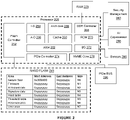
- FIG. 1 a block diagram representative of components that may be provided within AI core 105 (as illustrated in Figure 1 ) for implementing embodiments in accordance with embodiments of the invention is illustrated in Figure 2 .
- Figure 2 a block diagram representative of components that may be provided within AI core 105 (as illustrated in Figure 1 ) for implementing embodiments in accordance with embodiments of the invention is illustrated in Figure 2 .
- Figure 1 a block diagram representative of components that may be provided within AI core 105 (as illustrated in Figure 1 ) for implementing embodiments in accordance with embodiments of the invention is illustrated in Figure 2 .
- Figure 2 is provided by way of example only.
- processor 205 may be provided by any suitable logic circuitry for receiving inputs, processing them in accordance with instructions stored in memory and generating outputs (i.e. to the memory components, security management module 280, AI coprocessor 285, sensors 290 and/or PCIe BUS, etc.).
- processor 205 may be a single core or multi-core processor with memory addressable space.
- processor 205 may be multi-core, comprising-for example-an 8 core CPU.
- Cache 260 is also provided within processor 205 and is used by the processor to reduce the average cost (time or energy) to access data from the various types of memories.
- AI coprocessor 285 is connected to processor 205 via a dedicated bus (not shown) and comprises a specialized hardware accelerator that is designed to accelerate artificial intelligence applications, especially machine learning algorithms and is used to accelerate specific computing tasks to lighten the load on processor 205.
- FIG. 3 illustrates process 300 for analysing a received data object, whereby process 300 may be implemented by the modules in the AI core in accordance with embodiments of the invention.
- Process 300 begins at step 305 by receiving a data object that is to be analysed.
- the data object may comprise a document, image file, an executable file or any other types of files.
- the data object may comprise blocks of bytes whereby these blocks of bytes will be stored in a storage medium linked to the AI core, such as, but not limited to, a flash drive chipset where it will be assigned an area to record its size, flash location sectors and Start-of-File and End-of-File.
- Process 300 then loads a preloaded magic number lookup table at step 325.
- magic numbers refers to constant numerical values that may be used to identify a particular file format or protocol or may also refer to distinctive unique values that are unlikely to be mistaken for other meanings.
- Each magic number in the preloaded magic number lookup table refers to a particular file format or type and this lookup table may be updated periodically as required, or whenever a new file type is discovered.
- Process 300 determines at step 330 if the generated magic number matches with any of the magic numbers in the preloaded magic number lookup table.
- process 300 determines that a match does not exist, process 300 proceeds to step 335. At this step, a security flag associated with a soon to be generated type-security-platform (TSP) lookup table will be generated and set to a high level. Process 300 then proceeds to step 340 whereby a type-security-platform (TSP) lookup table is generated.
- TSP type-security-platform
- process 300 determines at step 330 that the generated magic number matches with a magic number in the preloaded magic number lookup table this would imply that the data object comprises a known file type.
- Process 300 then loads a lookup table of potential anomalous file types (e.g. stored as a data array) at step 345 whereby each known anomalous file type in this table is associated with a magic number.
- an anomalous file type represents a file that is a potential threat and may be executed on different platforms without having to be compiled with a specific tool chain compiler (for example a Java script object, a pdf file, a jpeg(with embedded exe file and called later to extract it).
- process 300 determines that there is a match, process 300 proceeds to step 355. At this step, a security flag associated with a soon to be generated type-security-platform (TSP) lookup table will be generated and the flag will be set to a high level. Process 300 then proceeds to step 340 whereby a TSP lookup table is then generated.
- TSP type-security-platform
- process 300 determines at step 350 that the file type of the received data object is not a match with an anomalous file type, process 300 proceeds to step 360 whereby a security flag associated with a soon to be generated type-security-platform (TSP) lookup table will be generated and set to a normal level indicating that the data object may not be an anomalous file.
- TSP type-security-platform
- a TSP lookup comprises a 32-bit variable whereby the first 16 most significant bits (MSB) represent the various types of data objects (i.e. bits 31 (MSB) to 16), the subsequent 8 bits represent the security posture of the data object (i.e. bits 15 to 8) and the final 8 bits represent the platform usage of the data object (i.e. bits 7 to 0 - the least significant bit (LSB)).
- MSB most significant bits
- LSB least significant bit
- Table 1 sets out an example how the various file types may be represented by bits 31 (MSB) to 16 in the TSP lookup table
- Table 2 sets an example how the security posture of a data object may be represented by bits 15 to 8
- Table 3 sets an example how the various types of platforms used by the data object may be represented by bits 7 to 0.
- “Status_1” may indicate that a data object's security flag has been set to the highest level and that its digital signature did not match with any magic number in the magic number lookup table
- “Status_2” may indicate that a data object's security flag has been set to the highest level and that its digital signature matched with a magic number in the magic number lookup table but the file type of the data object matches with an anomalous file type in the file lookup table
- “Status_3” may indicate that a data object's security flag has been set to a normal level, its digital signature matched with a magic number in the magic number lookup table and its file type does not match with any known anomalous file type.
- Status levels may be used to represent other types and variations of security postures without departing from this invention.
- bits 7 to 4 may be used to represent the file's architecture, the file's microcontroller unit (MCU) execution, operating system/hardware platform, and the lowest 4 bits (bits 3-0) may indicate the possible operating system of the data object, whereby if the LSB is set as B (or any other equivalent indicator) it means that the data object may run on any type of operating system.
- MCU microcontroller unit
- bits 3-0 may indicate the possible operating system of the data object, whereby if the LSB is set as B (or any other equivalent indicator) it means that the data object may run on any type of operating system.
- Process 400 then proceeds to step 430, where process 400 will determine from the first group of parsed bits whether the security level has been set to a normal or high level.
- process 400 determines that the security level has been set to a high level, it will proceed to step 435 whereby it will retrieve information relating to the type of the data object from the TSP and then to step 440 whereby it will retrieve information relating to the operating platform associated with the data object from the TSP. This information would be contained in the second and third group of parsed bits in the TSP. Information from steps 435 and 440 are then provided to step 447 and process 400 proceeds to step 445. The aim of providing information from 435 and 440 to step 447 is so that the forensic analysis may then be performed based on information from these two step.
- the range of the obfuscation values may be between 0-255 whereby a higher obfuscation value implies a higher risk of malware or ransomware.
- the obfuscation values of the data object comprises the entropy values for the data object.
- process 400 will proceed to compute an entropy value for the data object by first normalizing the size of the data object. For example, if the data object comprises 1 Mbyte of data, it will be divided by 256 to produce 43 000 blocks whereby each block comprises 256 bytes. The Shannon Entropy value for each block is then obtained as follows. There are several mathematical methods for generating a numerical value for the entropy of data, or the representation of the "randomness" of a block of data.
- the entropy value calculated based on the equations above will comprise a numerical value between 0 and 1, where values closer to 1 indicate higher degrees of entropy in a given block of data.
- Shannon Entropy reference is made to the publication titled Shannon, C. E. "A Mathematical Theory of Communication.” The Bell System Technical J 27, 379-423 and 623-656, July and October 1948 . skilled in the art will recognize that any other types of entropy calculation methods could be used without departing from this invention.
- the entropy values obtained for each of the blocks may then be set out as illustrated in exemplary Table 4 below.
- the forensic analysis will be performed based on solely the blocks of the data object. However, if it was previously determined at step 430 that the security level of the data object was set to a high level, the forensic analysis will be performed based on the blocks of the data object together with the type and platform information retrieved at step 435 and 440 for each of the blocks.
- a similarity score may be calculated whereby D1 is the data object and D2 is a dataset of known malware.
- Digest D 2 W D 2 ch 0 , W D 2 ch 1 , W D 2 ch 2 , ... W D 2 ch n ⁇ 1
- the function Digest() is a storage array where W Dx ch(n-1) is a chunk score generated by a FbHashing algorithm represented as W ch 0 D , W ch 1 D , W ch 2 D , ... , W ch n ⁇ 1 D , n: represents numbers of chunk scores used (or the number of blocks of the data object) and a FbHashing algorithm represents one of many methods for digital investigation where the following notations represent:
- Final similarity scores will ranges between 0 and 100 whereby a score of 100 implies that D1 is identical with D2 while a score of 0 implies that D1 does not match with D2 at all.
- process 400 determines whether the data object is to be disassembled or interpreted. If process 400 determines that the data object comprises substantial amounts of ASCII, process 400 will then cause the data object to be interpreted (steps 460, 482, 484, 486) while if process 400 determines that the data object comprises substantial amounts of machine language, process 400 will cause the data object to be disassembled (steps 455, 465, 470, 475).
- process 400 determines that the data object is to be disassembled, it will proceed to step 455. At this step, process 400 performs a listing process on the TSP lookup table of the data object. Based on the listed platform type, process 400 will decompile the file and list all internal and external calls at step 470, list all call functions at step 465, and list all used third library files at step 475. By listing out the common malware behaviours, which typically comprise commands that require access to file system, Ethernet I/O or any network access, process 400 is able to identify portions of the data object that may possibly constitute malware.
- Process 400 provides all this information to a table array which comprise predefined settings to identify commands that comprise normal behaviour or commands which may be threats. For example, the number of times a "DNS function" is called is recorded. Based on the data object's file type, process 400 then determines whether it is common for such a file type to call the selected function and if its behaviour is abnormal, the data object will be prevented from executing the function, the data object area will be locked and the user will be alerted. Process 400 then triggers a numeral counter in Counter 1 indicating that the data object has been disassembled while at the same time resetting a numeral counter in Counter 2.
- the data object is decompiled so that its behaviour may be analysed in detail.
- the raw binary of the data object may be obtained so that malware embedded inside the data object may be discovered and such an exemplary plot of the decompiled data is illustrated in Figure 6 .
- Figure 6 shows that different types of operations may be marked according to operation type.
- the x axis represents the frequency of a type of operation while the y axis represents the type of operation and may be plotted using the exemplary pseudocode below
- process 400 determines that the virtual data model is to be "interpreted"
- process 400 proceeds to step 460 whereby the virtual data model is de-scripted at this step and divided into various parts for further analysis.
- Obfuscated strings/ encrypted blocks are provided to step 482
- call functions by third parties are provided to step 484 and references to external links are provided to step 486.
- the outcome is then stored at step 488 whereby a numeral counter in Counter 2 is triggered indicating that the data object has been interpreted while at the same time resetting a numeral counter in Counter 1.
- steps 480 and 488 are then provided to data model generator at step 490 which may then use this information together with all the information generated by process 400 thus far to compute a dataset model A.
- process 400 uses the information generated thus far to generate a "result value" for each of the blocks of the data object whereby each result value comprises 3 bytes so that a data image model may be generated.
- the most significant bit (MSB) and the second MSB of the first byte of the result value is used to indicate whether the block of the data object was disassembled or interpreted, while the remaining 6 bits of the first byte which are parsed with the second byte (producing 14 bits) are used to represent the obfuscation value of the block of the data object (as computed at step 445).
- the third byte of the result value is then used to represent the forensic analysis value (as computed at step 447).
- the first 12 bits including the MSB (1 st byte + part of the 2 nd byte) will represent the power monitor (current/ voltage that will be converted by ADC), the next 10 bits will represent the temperature values, and the last 2 bits will indicate CPU loads: (values between 1 - 9 represents a low load, 10 represents a medium load and 11 represents a high load).
- a block of 512 bytes is then used to indicate the data object's name/location in NAND flash such as its page/sector/PLANE address/ status of file if locked or not locked/digital signature.
- Process 400 will then generate the data model A based on the appropriate features that were extracted above.
Landscapes
- Engineering & Computer Science (AREA)
- Computer Security & Cryptography (AREA)
- Theoretical Computer Science (AREA)
- General Engineering & Computer Science (AREA)
- Software Systems (AREA)
- Physics & Mathematics (AREA)
- General Physics & Mathematics (AREA)
- Computer Hardware Design (AREA)
- Computing Systems (AREA)
- Data Mining & Analysis (AREA)
- Signal Processing (AREA)
- Computer Networks & Wireless Communication (AREA)
- General Health & Medical Sciences (AREA)
- Health & Medical Sciences (AREA)
- Artificial Intelligence (AREA)
- Evolutionary Computation (AREA)
- Mathematical Physics (AREA)
- Biophysics (AREA)
- Biomedical Technology (AREA)
- Life Sciences & Earth Sciences (AREA)
- Molecular Biology (AREA)
- Computational Linguistics (AREA)
- Databases & Information Systems (AREA)
- Virology (AREA)
- Medical Informatics (AREA)
- Computer Vision & Pattern Recognition (AREA)
- Information Retrieval, Db Structures And Fs Structures Therefor (AREA)
- Storage Device Security (AREA)
- Optical Recording Or Reproduction (AREA)
- Investigating Or Analysing Biological Materials (AREA)
- Measuring And Recording Apparatus For Diagnosis (AREA)
Claims (15)
- System zum Erfassen von Datenanomalien in einem empfangenen Datenobjekt, wobei das System Folgendes umfasst:eine Verarbeitungseinheit; undein nichtflüchtiges Medium, das durch die Verarbeitungseinheit lesbar ist, wobei das nichtflüchtige Medium Anweisungen speichert, die, wenn sie durch die Verarbeitungseinheit ausgeführt werden, die Verarbeitungseinheit zu Folgendem veranlassen:Bestimmen eines Sicherheitsstatus des empfangenen Datenobjekts basierend auf einer digitalen Signatur und einem Dateityp des empfangenen Datenobjekts;Erzeugen einer Typ-Sicherheitsplattform-(TSP)-Nachschlagetabelle basierend auf dem Sicherheitsstatus und Merkmalen des empfangenen Datenobjekts, das dem Sicherheitsstatus zugeordnet ist, undErzeugen eines Verschleierungswertes und eines forensischen Wertes für das empfangene Datenobjekt basierend auf der TSP-Nachschlagetabelle;Erzeugen von zerlegten Werten oder interpretierten Werten für das empfangene Datenobjekt;Berechnen eines Ergebniswertes für jeden Block des empfangenen Datenobjekts, wobei der Ergebniswert für jeden der jeweiligen Blöcke des empfangenen Datenobjekts basierend auf den zerlegten oder interpretierten Werten, dem Verschleierungswert und dem forensischen Wert, die dem Block des empfangenen Datenobjekts zugeordnet sind, erzeugt wird;Erstellen eines Datenmodells basierend auf allen Ergebniswerten des empfangenen Datenobjekts; undVerarbeiten des Datenmodells unter Verwendung eines Algorithmus künstlicher Intelligenz (KI), um zu bestimmen, ob das empfangene Datenobjekt Datenanomalien enthält.
- System nach Anspruch 1, wobei die Anweisungen zum Erzeugen eines Verschleierungswertes für das empfangene Datenobjekt Anweisungen umfassen, um die Verarbeitungseinheit zu Folgendem anzuweisen:Unterteilen des empfangenen Datenobjekts in Datenblöcke; undErrechnen eines Shannon-Entropiewertes für jeden Datenblock.
- System nach einem der Ansprüche 1 oder 2, wobei die Anweisungen zum Erzeugen eines forensischen Wertes für das empfangene Datenobjekt Anweisungen umfassen, um die Verarbeitungseinheit zu Folgendem anzuweisen:Unterteilen des empfangenen Datenobjekts in Datenblöcke; undErrechnen einer Ähnlichkeitsbewertung für jeden Datenblock unter Verwendung eines frequenzbasierten Ähnlichkeits-Hashing-Schemas.
- System nach Anspruch 1, wobei die Anweisungen zum Berechnen eines Ergebniswertes für jeden Block des empfangenen Datenobjekts Anweisungen umfassen, um die Verarbeitungseinheit zu Folgendem anzuweisen:
Erzeugen des Ergebniswertes, der drei Bytes für jeden Block der empfangenen Daten umfasst, wobei für jeden Block die Anweisungen die Verarbeitungseinheit zu Folgendem anweisen:Setzen eines höchstwertigen Bits (MSB) und eines zweiten MSB eines ersten Bytes des Ergebniswertes basierend auf dem zerlegten oder interpretierten Wert des empfangenen Datenobjekts;Parsen eines Restes der Bits des ersten Bytes mit einem zweiten Byte des Ergebniswertes, und Setzen des geparsten Ergebnisses basierend auf dem Verschleierungswert, der dem Block zugeordnet ist; undSetzen eines Wertes eines dritten Bytes basierend auf dem forensischen Wert, der dem Block zugeordnet ist. - System nach Anspruch 1, wobei die Anweisungen zum Erstellen eines Datenmodells basierend auf allen Ergebniswerten des Datenobjekts Anweisungen umfassen, um die Verarbeitungseinheit zu Folgendem anzuweisen:
Erzeugen eines Datenbildmodells, wobei jedem Pixel in dem Datenbildmodell ein eindeutiger Ergebniswert zugeordnet ist, wobei jeder eindeutige Ergebniswert in dem Datenbildmodell durch ein eindeutiges Bild dargestellt ist. - System nach Anspruch 1, wobei das nichtflüchtige Medium ferner Anweisungen umfasst, um die Verarbeitungseinheit zu Folgendem anzuweisen:Bereitstellen eines virtuellen Dateisystems, das konfiguriert ist, um das empfangene Datenobjekt zu empfangen und zu speichern,wobei das virtuelle Dateisystem die Verarbeitungseinheit dazu veranlasst, alle Schritte innerhalb des virtuellen Dateisystems durchzuführen.
- System nach Anspruch 1, wobei die Merkmale des empfangenen Datenobjekts, die dem Sicherheitsstatus zugeordnet sind, einen Plattformtyp und einen Dateityp des Datenobjekts umfassen.
- Verfahren zum Erfassen von Datenanomalien in einem empfangenen Datenobjekt unter Verwendung eines Moduls für künstliche Intelligenz (KI), wobei das Verfahren Folgendes umfasst:Bestimmen, unter Verwendung eines Analysatormoduls, das innerhalb des KI-Moduls bereitgestellt ist, eines Sicherheitsstatus des empfangenen Datenobjekts basierend auf einer digitalen Signatur und einem Dateityp des empfangenen Datenobjekts;Erzeugen, unter Verwendung des Analysatormoduls und eines Detektormoduls, das innerhalb des KI-Moduls bereitgestellt ist, einer Typ-Sicherheitsplattform-(TSP)-Nachschlagetabelle basierend auf dem Sicherheitsstatus und Merkmalen des empfangenen Datenobjekts, das dem Sicherheitsstatus zugeordnet ist, und Erzeugen eines Verschleierungswertes und eines forensischen Wertes für das empfangene Datenobjekt basierend auf der TSP-Nachschlagetabelle;Erzeugen, unter Verwendung eines Zerlegungs- und Interpretationsmoduls, das innerhalb des KI-Moduls bereitgestellt ist, von zerlegten Werten oder interpretierten Werten für das empfangene Datenobjekt;Berechnen, unter Verwendung eines Blockstrukturierungsmoduls, das innerhalb des KI-Moduls bereitgestellt ist, eines Ergebniswertes für jeden Block des empfangenen Datenobjekts, wobei der Ergebniswert für jeden der jeweiligen Blöcke des empfangenen Datenobjekts basierend auf den zerlegten oder interpretierten Werten, dem Verschleierungswert und dem forensischen Wert, die dem Block des empfangenen Datenobjekts zugeordnet sind, erzeugt werden;Erstellen, unter Verwendung eines Modellgeneratormoduls, das innerhalb des KI-Moduls bereitgestellt ist, eines Datenmodells basierend auf allen Ergebniswerten des empfangenen Datenobjekts; undVerarbeiten, unter Verwendung eines KI-Bedrohungsmoduls, das innerhalb des KI-Moduls bereitgestellt ist, des Datenmodells unter Verwendung eines Algorithmus künstlicher Intelligenz (KI), um zu bestimmen, ob das empfangene Datenobjekt Datenanomalien enthält.
- Verfahren nach Anspruch 8, wobei der Schritt des Erzeugens des Verschleierungswertes für das empfangene Datenobjekt die folgenden Schritte umfasst:Unterteilen des empfangenen Datenobjekts in Datenblöcke; undErrechnen eines Shannon-Entropie-Wertes für jeden Datenblock.
- Verfahren nach einem der Ansprüche 8 oder 9, wobei der Schritt des Erzeugens eines forensischen Wertes für das empfangene Datenobjekt die folgenden Schritte umfasst:Unterteilen des empfangenen Datenobjekts in Datenblöcke; undErrechnen einer Ähnlichkeitsbewertung für jeden Datenblock unter Verwendung eines frequenzbasierten Ähnlichkeits-Hashing-Schemas.
- Verfahren nach Anspruch 8, wobei der Schritt des Berechnens eines Ergebniswertes für jeden Block des empfangenen Datenobjekts die folgenden Schritte umfasst:
Erzeugen des Ergebniswertes, der drei Bytes umfasst, für jeden Block der empfangenen Daten, wobei für jeden Block das Verfahren:einen höchstwertigen Bit (MSB) und einen zweiten MSB eines ersten Bytes des Ergebniswertes basierend auf dem zerlegten oder interpretierten Wert des empfangenen Datenobjekts setzt;einen Rest der Bits des ersten Bytes mit einem zweiten Byte des Ergebniswertes parst, und das geparste Ergebnis basierend auf dem Verschleierungswert, der dem Block zugeordnet ist, setzt; undeinen Wert eines dritten Bytes basierend auf dem forensischen Wert, der dem Block zugeordnet ist, setzt. - Verfahren nach Anspruch 8, wobei der Schritt des Erstellens eines Datenmodells basierend auf allen Ergebniswerten des empfangenen Datenobjekts die folgenden Schritte umfasst:
Erzeugen eines Datenbildmodells, wobei jedem Pixel in dem Datenbildmodell ein eindeutiger Ergebniswert zugeordnet ist, wobei jeder eindeutige Ergebniswert in dem Datenbildmodell durch ein eindeutiges Bild dargestellt ist. - Verfahren nach Anspruch 12, wobei der KI-Algorithmus, der verwendet wird, um das Datenmodell zu verarbeiten, Folgendes umfasst:
ein Modell eines neuronalen Faltungsnetzwerks (CNN), ein Modell eines tiefen neuronalen Netzwerks (DNN) oder ein Modell eines rekurrenten neuronalen Netzwerks (RNN). - Verfahren nach Anspruch 8, wobei der Schritt des Verarbeitens des Datenmodells unter Verwendung des Algorithmus künstlicher Intelligenz (KI) den folgenden Schritt umfasst:
Vergleichen des Datenmodells mit Datenmodellen, die innerhalb einer Datenbank enthalten sind, wobei der Vergleich unter Verwendung von maschinellen Lernalgorithmen durchgeführt wird. - Verfahren nach Anspruch 8, wobei die digitale Signatur eine magische Zahl umfasst, die dem empfangenen Datenobjekt zugeordnet ist.
Applications Claiming Priority (3)
| Application Number | Priority Date | Filing Date | Title |
|---|---|---|---|
| SG10202002125QA SG10202002125QA (en) | 2020-03-09 | 2020-03-09 | System and method for detecting data anomalies by analysing morphologies of known and/or unknown cybersecurity threats |
| US16/946,245 US11082441B1 (en) | 2020-03-09 | 2020-06-11 | Systems and methods for detecting data anomalies by analysing morphologies of known and/or unknown cybersecurity threats |
| PCT/SG2020/050441 WO2021183043A1 (en) | 2020-03-09 | 2020-07-30 | System and method for detecting data anomalies by analysing morphologies of known and/or unknown cybersecurity threats |
Publications (3)
| Publication Number | Publication Date |
|---|---|
| EP3899770A1 EP3899770A1 (de) | 2021-10-27 |
| EP3899770A4 EP3899770A4 (de) | 2021-12-08 |
| EP3899770B1 true EP3899770B1 (de) | 2022-10-05 |
Family
ID=72355657
Family Applications (1)
| Application Number | Title | Priority Date | Filing Date |
|---|---|---|---|
| EP20753862.0A Active EP3899770B1 (de) | 2020-03-09 | 2020-07-30 | System und verfahren zur erkennung von datenanomalien durch analyse von morphologien bekannter und/oder unbekannter cyber-sicherheitsbedrohungen |
Country Status (14)
| Country | Link |
|---|---|
| US (1) | US11082441B1 (de) |
| EP (1) | EP3899770B1 (de) |
| JP (1) | JP7092939B2 (de) |
| KR (1) | KR102323290B1 (de) |
| CN (1) | CN113632083B (de) |
| AU (1) | AU2020223632B2 (de) |
| CA (1) | CA3125101A1 (de) |
| DK (1) | DK3899770T3 (de) |
| IL (1) | IL289367B (de) |
| MY (1) | MY199083A (de) |
| SA (1) | SA522440461B1 (de) |
| SG (1) | SG10202002125QA (de) |
| TW (1) | TWI720932B (de) |
| WO (1) | WO2021183043A1 (de) |
Families Citing this family (15)
| Publication number | Priority date | Publication date | Assignee | Title |
|---|---|---|---|---|
| US11711310B2 (en) | 2019-09-18 | 2023-07-25 | Tweenznet Ltd. | System and method for determining a network performance property in at least one network |
| US11716338B2 (en) * | 2019-11-26 | 2023-08-01 | Tweenznet Ltd. | System and method for determining a file-access pattern and detecting ransomware attacks in at least one computer network |
| US11792223B2 (en) | 2020-06-29 | 2023-10-17 | Netapp, Inc. | Systems and methods for detecting malware attacks |
| US11720991B2 (en) * | 2021-05-20 | 2023-08-08 | International Business Machines Corporation | Signing and authentication of digital images and other data arrays |
| US11934667B1 (en) * | 2021-06-30 | 2024-03-19 | Amazon Technologies, Inc. | Encrypted-data-only media operations |
| CN114238983B (zh) * | 2021-12-10 | 2025-03-28 | 安天科技集团股份有限公司 | 涉密环境中的威胁分析方法、装置、设备及存储介质 |
| WO2023113772A1 (en) * | 2021-12-13 | 2023-06-22 | Hewlett-Packard Development Company, L.P. | Suspicious activity notifications via canary files |
| US12267299B2 (en) * | 2022-01-12 | 2025-04-01 | Bank Of America Corporation | Preemptive threat detection for an information system |
| CN116933253A (zh) * | 2022-03-29 | 2023-10-24 | 华为技术有限公司 | 检测勒索软件的方法及相关系统、存储介质 |
| US12067113B2 (en) | 2022-04-26 | 2024-08-20 | Bank Of America Corporation | Proactive anti cyber-forensic activity detection and prevention |
| US11647040B1 (en) * | 2022-07-14 | 2023-05-09 | Tenable, Inc. | Vulnerability scanning of a remote file system |
| CN115374075B (zh) * | 2022-08-01 | 2023-09-01 | 北京明朝万达科技股份有限公司 | 一种文件类型识别方法及装置 |
| WO2024065238A1 (en) * | 2022-09-28 | 2024-04-04 | Yu Wenfeng | Systems, methods, and media for protecting application programming interfaces |
| CN116668062B (zh) * | 2023-04-11 | 2024-01-05 | 丰辰网络科技(无锡)有限公司 | 一种基于数据分析的网络安全运维管理平台 |
| US12524534B1 (en) | 2025-04-17 | 2026-01-13 | R.C.Raven Cloud LTD | Techniques for assessing exploitations in a runtime environment |
Family Cites Families (13)
| Publication number | Priority date | Publication date | Assignee | Title |
|---|---|---|---|---|
| US9087195B2 (en) * | 2009-07-10 | 2015-07-21 | Kaspersky Lab Zao | Systems and methods for detecting obfuscated malware |
| CN101854404B (zh) * | 2010-06-04 | 2013-08-07 | 中国科学院计算机网络信息中心 | 检测域名系统异常的方法和装置 |
| US11126720B2 (en) * | 2012-09-26 | 2021-09-21 | Bluvector, Inc. | System and method for automated machine-learning, zero-day malware detection |
| US9292688B2 (en) | 2012-09-26 | 2016-03-22 | Northrop Grumman Systems Corporation | System and method for automated machine-learning, zero-day malware detection |
| US10713358B2 (en) * | 2013-03-15 | 2020-07-14 | Fireeye, Inc. | System and method to extract and utilize disassembly features to classify software intent |
| US9465939B2 (en) * | 2014-06-27 | 2016-10-11 | Mcafee, Inc. | Mitigation of malware |
| US20170068816A1 (en) * | 2015-09-04 | 2017-03-09 | University Of Delaware | Malware analysis and detection using graph-based characterization and machine learning |
| US10491627B1 (en) * | 2016-09-29 | 2019-11-26 | Fireeye, Inc. | Advanced malware detection using similarity analysis |
| US20180248896A1 (en) * | 2017-02-24 | 2018-08-30 | Zitovault Software, Inc. | System and method to prevent, detect, thwart, and recover automatically from ransomware cyber attacks, using behavioral analysis and machine learning |
| DK3528462T3 (da) * | 2018-02-20 | 2024-02-26 | Darktrace Holdings Ltd | Fremgangsmåde til at dele en cybersikkerhedstrusselsanalyse og defensive forholdsregler i et fællesskab |
| KR102075715B1 (ko) * | 2018-05-29 | 2020-02-10 | 국방과학연구소 | 공격 주체 분류 장치 및 방법 |
| US11574051B2 (en) * | 2018-08-02 | 2023-02-07 | Fortinet, Inc. | Malware identification using multiple artificial neural networks |
| CN109522926A (zh) * | 2018-09-28 | 2019-03-26 | 南京航空航天大学 | 基于信息熵聚类的异常检测方法 |
-
2020
- 2020-03-09 SG SG10202002125QA patent/SG10202002125QA/en unknown
- 2020-06-11 US US16/946,245 patent/US11082441B1/en active Active
- 2020-07-30 WO PCT/SG2020/050441 patent/WO2021183043A1/en not_active Ceased
- 2020-07-30 CA CA3125101A patent/CA3125101A1/en not_active Abandoned
- 2020-07-30 EP EP20753862.0A patent/EP3899770B1/de active Active
- 2020-07-30 JP JP2021505691A patent/JP7092939B2/ja active Active
- 2020-07-30 CN CN202080002105.4A patent/CN113632083B/zh active Active
- 2020-07-30 MY MYPI2021004142A patent/MY199083A/en unknown
- 2020-07-30 DK DK20753862.0T patent/DK3899770T3/da active
- 2020-07-30 AU AU2020223632A patent/AU2020223632B2/en active Active
- 2020-07-30 KR KR1020217002942A patent/KR102323290B1/ko active Active
- 2020-08-28 TW TW109129559A patent/TWI720932B/zh active
-
2021
- 2021-12-24 IL IL289367A patent/IL289367B/en unknown
-
2022
- 2022-09-08 SA SA522440461A patent/SA522440461B1/ar unknown
Also Published As
| Publication number | Publication date |
|---|---|
| SG10202002125QA (en) | 2020-07-29 |
| CN113632083A (zh) | 2021-11-09 |
| CN113632083B (zh) | 2022-09-13 |
| EP3899770A4 (de) | 2021-12-08 |
| IL289367A (en) | 2022-02-01 |
| JP2022522383A (ja) | 2022-04-19 |
| CA3125101A1 (en) | 2021-09-09 |
| TWI720932B (zh) | 2021-03-01 |
| US11082441B1 (en) | 2021-08-03 |
| EP3899770A1 (de) | 2021-10-27 |
| AU2020223632B2 (en) | 2021-10-21 |
| AU2020223632A1 (en) | 2021-09-23 |
| DK3899770T3 (da) | 2022-10-24 |
| SA522440461B1 (ar) | 2024-03-07 |
| IL289367B (en) | 2022-06-01 |
| TW202134919A (zh) | 2021-09-16 |
| KR102323290B1 (ko) | 2021-11-05 |
| MY199083A (en) | 2023-10-12 |
| KR20210114916A (ko) | 2021-09-24 |
| JP7092939B2 (ja) | 2022-06-28 |
| WO2021183043A1 (en) | 2021-09-16 |
Similar Documents
| Publication | Publication Date | Title |
|---|---|---|
| US11082441B1 (en) | Systems and methods for detecting data anomalies by analysing morphologies of known and/or unknown cybersecurity threats | |
| US11924233B2 (en) | Server-supported malware detection and protection | |
| US12443710B2 (en) | System and method for automated machine-learning, zero-day malware detection | |
| US8479296B2 (en) | System and method for detecting unknown malware | |
| US8955133B2 (en) | Applying antimalware logic without revealing the antimalware logic to adversaries | |
| US10878087B2 (en) | System and method for detecting malicious files using two-stage file classification | |
| JP2019003598A (ja) | 異常な事象を検出するシステム及び方法 | |
| JP6777612B2 (ja) | コンピュータシステムにおけるデータ損失を防止するためのシステム及び方法 | |
| CN108319853B (zh) | 病毒特征码处理方法及装置 | |
| US10103890B2 (en) | Membership query method | |
| CN114510713A (zh) | 检测恶意软件的方法、装置、电子设备及存储介质 | |
| EP3588349B1 (de) | System und verfahren zur erkennung von bösartigen dateien mittels zweistufiger dateiklassifizierung | |
| HK40054686B (en) | System and method for detecting data anomalies by analysing morphologies of known and/or unknown cybersecurity threats | |
| HK40054686A (en) | System and method for detecting data anomalies by analysing morphologies of known and/or unknown cybersecurity threats | |
| NZ767245B2 (en) | System and method for detecting data anomalies by analysing morphologies of known and/or unknown cybersecurity threats | |
| NZ767245A (en) | System and method for detecting data anomalies by analysing morphologies of known and/or unknown cybersecurity threats | |
| US20240248990A1 (en) | Machine learning-based malware detection for code reflection | |
| Godfrey et al. | Construction and Evaluation of Custom Cybersecurity AI Dataset for Ransomware Detection Using Machine Learning | |
| HK40044560B (en) | Abnormal script detection method, device, computer equipment and storage medium |
Legal Events
| Date | Code | Title | Description |
|---|---|---|---|
| STAA | Information on the status of an ep patent application or granted ep patent |
Free format text: STATUS: UNKNOWN |
|
| STAA | Information on the status of an ep patent application or granted ep patent |
Free format text: STATUS: THE INTERNATIONAL PUBLICATION HAS BEEN MADE |
|
| PUAI | Public reference made under article 153(3) epc to a published international application that has entered the european phase |
Free format text: ORIGINAL CODE: 0009012 |
|
| STAA | Information on the status of an ep patent application or granted ep patent |
Free format text: STATUS: REQUEST FOR EXAMINATION WAS MADE |
|
| 17P | Request for examination filed |
Effective date: 20200819 |
|
| AK | Designated contracting states |
Kind code of ref document: A1 Designated state(s): AL AT BE BG CH CY CZ DE DK EE ES FI FR GB GR HR HU IE IS IT LI LT LU LV MC MK MT NL NO PL PT RO RS SE SI SK SM TR |
|
| A4 | Supplementary search report drawn up and despatched |
Effective date: 20211110 |
|
| RIC1 | Information provided on ipc code assigned before grant |
Ipc: H04L 9/32 20060101ALI20211104BHEP Ipc: G06N 20/00 20190101ALI20211104BHEP Ipc: G06N 3/02 20060101ALI20211104BHEP Ipc: G06F 21/56 20130101AFI20211104BHEP |
|
| REG | Reference to a national code |
Ref country code: HK Ref legal event code: DE Ref document number: 40054686 Country of ref document: HK |
|
| GRAP | Despatch of communication of intention to grant a patent |
Free format text: ORIGINAL CODE: EPIDOSNIGR1 |
|
| STAA | Information on the status of an ep patent application or granted ep patent |
Free format text: STATUS: GRANT OF PATENT IS INTENDED |
|
| RIC1 | Information provided on ipc code assigned before grant |
Ipc: G06N 20/00 20190101ALN20220627BHEP Ipc: H04L 9/40 20220101ALI20220627BHEP Ipc: G06N 3/08 20060101ALI20220627BHEP Ipc: G06N 3/04 20060101ALI20220627BHEP Ipc: G06F 16/901 20190101ALI20220627BHEP Ipc: H04L 9/32 20060101ALI20220627BHEP Ipc: G06F 21/56 20130101AFI20220627BHEP |
|
| INTG | Intention to grant announced |
Effective date: 20220729 |
|
| GRAS | Grant fee paid |
Free format text: ORIGINAL CODE: EPIDOSNIGR3 |
|
| GRAA | (expected) grant |
Free format text: ORIGINAL CODE: 0009210 |
|
| STAA | Information on the status of an ep patent application or granted ep patent |
Free format text: STATUS: THE PATENT HAS BEEN GRANTED |
|
| AK | Designated contracting states |
Kind code of ref document: B1 Designated state(s): AL AT BE BG CH CY CZ DE DK EE ES FI FR GB GR HR HU IE IS IT LI LT LU LV MC MK MT NL NO PL PT RO RS SE SI SK SM TR |
|
| DAV | Request for validation of the european patent (deleted) | ||
| DAX | Request for extension of the european patent (deleted) | ||
| REG | Reference to a national code |
Ref country code: GB Ref legal event code: FG4D |
|
| REG | Reference to a national code |
Ref country code: CH Ref legal event code: EP |
|
| REG | Reference to a national code |
Ref country code: AT Ref legal event code: REF Ref document number: 1523188 Country of ref document: AT Kind code of ref document: T Effective date: 20221015 |
|
| REG | Reference to a national code |
Ref country code: FI Ref legal event code: FGE |
|
| REG | Reference to a national code |
Ref country code: DK Ref legal event code: T3 Effective date: 20221020 |
|
| REG | Reference to a national code |
Ref country code: IE Ref legal event code: FG4D |
|
| REG | Reference to a national code |
Ref country code: DE Ref legal event code: R096 Ref document number: 602020005508 Country of ref document: DE |
|
| REG | Reference to a national code |
Ref country code: SE Ref legal event code: TRGR |
|
| REG | Reference to a national code |
Ref country code: NL Ref legal event code: FP |
|
| REG | Reference to a national code |
Ref country code: LT Ref legal event code: MG9D |
|
| REG | Reference to a national code |
Ref country code: AT Ref legal event code: MK05 Ref document number: 1523188 Country of ref document: AT Kind code of ref document: T Effective date: 20221005 |
|
| PG25 | Lapsed in a contracting state [announced via postgrant information from national office to epo] |
Ref country code: PT Free format text: LAPSE BECAUSE OF FAILURE TO SUBMIT A TRANSLATION OF THE DESCRIPTION OR TO PAY THE FEE WITHIN THE PRESCRIBED TIME-LIMIT Effective date: 20230206 Ref country code: NO Free format text: LAPSE BECAUSE OF FAILURE TO SUBMIT A TRANSLATION OF THE DESCRIPTION OR TO PAY THE FEE WITHIN THE PRESCRIBED TIME-LIMIT Effective date: 20230105 Ref country code: LT Free format text: LAPSE BECAUSE OF FAILURE TO SUBMIT A TRANSLATION OF THE DESCRIPTION OR TO PAY THE FEE WITHIN THE PRESCRIBED TIME-LIMIT Effective date: 20221005 Ref country code: ES Free format text: LAPSE BECAUSE OF FAILURE TO SUBMIT A TRANSLATION OF THE DESCRIPTION OR TO PAY THE FEE WITHIN THE PRESCRIBED TIME-LIMIT Effective date: 20221005 Ref country code: AT Free format text: LAPSE BECAUSE OF FAILURE TO SUBMIT A TRANSLATION OF THE DESCRIPTION OR TO PAY THE FEE WITHIN THE PRESCRIBED TIME-LIMIT Effective date: 20221005 |
|
| PG25 | Lapsed in a contracting state [announced via postgrant information from national office to epo] |
Ref country code: RS Free format text: LAPSE BECAUSE OF FAILURE TO SUBMIT A TRANSLATION OF THE DESCRIPTION OR TO PAY THE FEE WITHIN THE PRESCRIBED TIME-LIMIT Effective date: 20221005 Ref country code: PL Free format text: LAPSE BECAUSE OF FAILURE TO SUBMIT A TRANSLATION OF THE DESCRIPTION OR TO PAY THE FEE WITHIN THE PRESCRIBED TIME-LIMIT Effective date: 20221005 Ref country code: LV Free format text: LAPSE BECAUSE OF FAILURE TO SUBMIT A TRANSLATION OF THE DESCRIPTION OR TO PAY THE FEE WITHIN THE PRESCRIBED TIME-LIMIT Effective date: 20221005 Ref country code: IS Free format text: LAPSE BECAUSE OF FAILURE TO SUBMIT A TRANSLATION OF THE DESCRIPTION OR TO PAY THE FEE WITHIN THE PRESCRIBED TIME-LIMIT Effective date: 20230205 Ref country code: HR Free format text: LAPSE BECAUSE OF FAILURE TO SUBMIT A TRANSLATION OF THE DESCRIPTION OR TO PAY THE FEE WITHIN THE PRESCRIBED TIME-LIMIT Effective date: 20221005 Ref country code: GR Free format text: LAPSE BECAUSE OF FAILURE TO SUBMIT A TRANSLATION OF THE DESCRIPTION OR TO PAY THE FEE WITHIN THE PRESCRIBED TIME-LIMIT Effective date: 20230106 |
|
| P01 | Opt-out of the competence of the unified patent court (upc) registered |
Effective date: 20230411 |
|
| REG | Reference to a national code |
Ref country code: DE Ref legal event code: R097 Ref document number: 602020005508 Country of ref document: DE |
|
| PG25 | Lapsed in a contracting state [announced via postgrant information from national office to epo] |
Ref country code: SM Free format text: LAPSE BECAUSE OF FAILURE TO SUBMIT A TRANSLATION OF THE DESCRIPTION OR TO PAY THE FEE WITHIN THE PRESCRIBED TIME-LIMIT Effective date: 20221005 Ref country code: RO Free format text: LAPSE BECAUSE OF FAILURE TO SUBMIT A TRANSLATION OF THE DESCRIPTION OR TO PAY THE FEE WITHIN THE PRESCRIBED TIME-LIMIT Effective date: 20221005 Ref country code: EE Free format text: LAPSE BECAUSE OF FAILURE TO SUBMIT A TRANSLATION OF THE DESCRIPTION OR TO PAY THE FEE WITHIN THE PRESCRIBED TIME-LIMIT Effective date: 20221005 Ref country code: CZ Free format text: LAPSE BECAUSE OF FAILURE TO SUBMIT A TRANSLATION OF THE DESCRIPTION OR TO PAY THE FEE WITHIN THE PRESCRIBED TIME-LIMIT Effective date: 20221005 |
|
| PLBE | No opposition filed within time limit |
Free format text: ORIGINAL CODE: 0009261 |
|
| STAA | Information on the status of an ep patent application or granted ep patent |
Free format text: STATUS: NO OPPOSITION FILED WITHIN TIME LIMIT |
|
| PG25 | Lapsed in a contracting state [announced via postgrant information from national office to epo] |
Ref country code: SK Free format text: LAPSE BECAUSE OF FAILURE TO SUBMIT A TRANSLATION OF THE DESCRIPTION OR TO PAY THE FEE WITHIN THE PRESCRIBED TIME-LIMIT Effective date: 20221005 Ref country code: AL Free format text: LAPSE BECAUSE OF FAILURE TO SUBMIT A TRANSLATION OF THE DESCRIPTION OR TO PAY THE FEE WITHIN THE PRESCRIBED TIME-LIMIT Effective date: 20221005 |
|
| 26N | No opposition filed |
Effective date: 20230706 |
|
| PG25 | Lapsed in a contracting state [announced via postgrant information from national office to epo] |
Ref country code: SI Free format text: LAPSE BECAUSE OF FAILURE TO SUBMIT A TRANSLATION OF THE DESCRIPTION OR TO PAY THE FEE WITHIN THE PRESCRIBED TIME-LIMIT Effective date: 20221005 |
|
| PG25 | Lapsed in a contracting state [announced via postgrant information from national office to epo] |
Ref country code: MC Free format text: LAPSE BECAUSE OF FAILURE TO SUBMIT A TRANSLATION OF THE DESCRIPTION OR TO PAY THE FEE WITHIN THE PRESCRIBED TIME-LIMIT Effective date: 20221005 |
|
| PG25 | Lapsed in a contracting state [announced via postgrant information from national office to epo] |
Ref country code: MC Free format text: LAPSE BECAUSE OF FAILURE TO SUBMIT A TRANSLATION OF THE DESCRIPTION OR TO PAY THE FEE WITHIN THE PRESCRIBED TIME-LIMIT Effective date: 20221005 |
|
| REG | Reference to a national code |
Ref country code: BE Ref legal event code: MM Effective date: 20230731 |
|
| PG25 | Lapsed in a contracting state [announced via postgrant information from national office to epo] |
Ref country code: LU Free format text: LAPSE BECAUSE OF NON-PAYMENT OF DUE FEES Effective date: 20230730 |
|
| PG25 | Lapsed in a contracting state [announced via postgrant information from national office to epo] |
Ref country code: LU Free format text: LAPSE BECAUSE OF NON-PAYMENT OF DUE FEES Effective date: 20230730 |
|
| REG | Reference to a national code |
Ref country code: IE Ref legal event code: MM4A |
|
| PG25 | Lapsed in a contracting state [announced via postgrant information from national office to epo] |
Ref country code: BE Free format text: LAPSE BECAUSE OF NON-PAYMENT OF DUE FEES Effective date: 20230731 |
|
| PG25 | Lapsed in a contracting state [announced via postgrant information from national office to epo] |
Ref country code: IE Free format text: LAPSE BECAUSE OF NON-PAYMENT OF DUE FEES Effective date: 20230730 |
|
| PG25 | Lapsed in a contracting state [announced via postgrant information from national office to epo] |
Ref country code: IE Free format text: LAPSE BECAUSE OF NON-PAYMENT OF DUE FEES Effective date: 20230730 |
|
| PG25 | Lapsed in a contracting state [announced via postgrant information from national office to epo] |
Ref country code: BG Free format text: LAPSE BECAUSE OF FAILURE TO SUBMIT A TRANSLATION OF THE DESCRIPTION OR TO PAY THE FEE WITHIN THE PRESCRIBED TIME-LIMIT Effective date: 20221005 |
|
| PG25 | Lapsed in a contracting state [announced via postgrant information from national office to epo] |
Ref country code: BG Free format text: LAPSE BECAUSE OF FAILURE TO SUBMIT A TRANSLATION OF THE DESCRIPTION OR TO PAY THE FEE WITHIN THE PRESCRIBED TIME-LIMIT Effective date: 20221005 |
|
| PG25 | Lapsed in a contracting state [announced via postgrant information from national office to epo] |
Ref country code: CY Free format text: LAPSE BECAUSE OF FAILURE TO SUBMIT A TRANSLATION OF THE DESCRIPTION OR TO PAY THE FEE WITHIN THE PRESCRIBED TIME-LIMIT; INVALID AB INITIO Effective date: 20200730 |
|
| PG25 | Lapsed in a contracting state [announced via postgrant information from national office to epo] |
Ref country code: HU Free format text: LAPSE BECAUSE OF FAILURE TO SUBMIT A TRANSLATION OF THE DESCRIPTION OR TO PAY THE FEE WITHIN THE PRESCRIBED TIME-LIMIT; INVALID AB INITIO Effective date: 20200730 |
|
| PGFP | Annual fee paid to national office [announced via postgrant information from national office to epo] |
Ref country code: NL Payment date: 20250708 Year of fee payment: 6 |
|
| PGFP | Annual fee paid to national office [announced via postgrant information from national office to epo] |
Ref country code: FI Payment date: 20250708 Year of fee payment: 6 |
|
| PGFP | Annual fee paid to national office [announced via postgrant information from national office to epo] |
Ref country code: DE Payment date: 20250708 Year of fee payment: 6 Ref country code: DK Payment date: 20250717 Year of fee payment: 6 |
|
| PGFP | Annual fee paid to national office [announced via postgrant information from national office to epo] |
Ref country code: IT Payment date: 20250708 Year of fee payment: 6 |
|
| PGFP | Annual fee paid to national office [announced via postgrant information from national office to epo] |
Ref country code: GB Payment date: 20250715 Year of fee payment: 6 |
|
| PGFP | Annual fee paid to national office [announced via postgrant information from national office to epo] |
Ref country code: FR Payment date: 20250715 Year of fee payment: 6 |
|
| PGFP | Annual fee paid to national office [announced via postgrant information from national office to epo] |
Ref country code: CH Payment date: 20250801 Year of fee payment: 6 Ref country code: SE Payment date: 20250710 Year of fee payment: 6 |
|
| PG25 | Lapsed in a contracting state [announced via postgrant information from national office to epo] |
Ref country code: TR Free format text: LAPSE BECAUSE OF FAILURE TO SUBMIT A TRANSLATION OF THE DESCRIPTION OR TO PAY THE FEE WITHIN THE PRESCRIBED TIME-LIMIT Effective date: 20221005 |