EP3899774B1 - Arbre d'intégrité pour contrôle d'intégrité de mémoire - Google Patents
Arbre d'intégrité pour contrôle d'intégrité de mémoire Download PDFInfo
- Publication number
- EP3899774B1 EP3899774B1 EP19791346.0A EP19791346A EP3899774B1 EP 3899774 B1 EP3899774 B1 EP 3899774B1 EP 19791346 A EP19791346 A EP 19791346A EP 3899774 B1 EP3899774 B1 EP 3899774B1
- Authority
- EP
- European Patent Office
- Prior art keywords
- integrity
- node
- memory
- branch
- given
- Prior art date
- Legal status (The legal status is an assumption and is not a legal conclusion. Google has not performed a legal analysis and makes no representation as to the accuracy of the status listed.)
- Active
Links
Images



Classifications
-
- G—PHYSICS
- G06—COMPUTING OR CALCULATING; COUNTING
- G06F—ELECTRIC DIGITAL DATA PROCESSING
- G06F3/00—Input arrangements for transferring data to be processed into a form capable of being handled by the computer; Output arrangements for transferring data from processing unit to output unit, e.g. interface arrangements
- G06F3/06—Digital input from, or digital output to, record carriers, e.g. RAID, emulated record carriers or networked record carriers
- G06F3/0601—Interfaces specially adapted for storage systems
- G06F3/0602—Interfaces specially adapted for storage systems specifically adapted to achieve a particular effect
- G06F3/0614—Improving the reliability of storage systems
- G06F3/0619—Improving the reliability of storage systems in relation to data integrity, e.g. data losses, bit errors
-
- G—PHYSICS
- G06—COMPUTING OR CALCULATING; COUNTING
- G06F—ELECTRIC DIGITAL DATA PROCESSING
- G06F12/00—Accessing, addressing or allocating within memory systems or architectures
- G06F12/02—Addressing or allocation; Relocation
- G06F12/08—Addressing or allocation; Relocation in hierarchically structured memory systems, e.g. virtual memory systems
- G06F12/10—Address translation
- G06F12/1009—Address translation using page tables, e.g. page table structures
-
- G—PHYSICS
- G06—COMPUTING OR CALCULATING; COUNTING
- G06F—ELECTRIC DIGITAL DATA PROCESSING
- G06F16/00—Information retrieval; Database structures therefor; File system structures therefor
- G06F16/90—Details of database functions independent of the retrieved data types
- G06F16/901—Indexing; Data structures therefor; Storage structures
- G06F16/9027—Trees
-
- G—PHYSICS
- G06—COMPUTING OR CALCULATING; COUNTING
- G06F—ELECTRIC DIGITAL DATA PROCESSING
- G06F21/00—Security arrangements for protecting computers, components thereof, programs or data against unauthorised activity
- G06F21/50—Monitoring users, programs or devices to maintain the integrity of platforms, e.g. of processors, firmware or operating systems
- G06F21/57—Certifying or maintaining trusted computer platforms, e.g. secure boots or power-downs, version controls, system software checks, secure updates or assessing vulnerabilities
-
- G—PHYSICS
- G06—COMPUTING OR CALCULATING; COUNTING
- G06F—ELECTRIC DIGITAL DATA PROCESSING
- G06F21/00—Security arrangements for protecting computers, components thereof, programs or data against unauthorised activity
- G06F21/60—Protecting data
- G06F21/64—Protecting data integrity, e.g. using checksums, certificates or signatures
-
- G—PHYSICS
- G06—COMPUTING OR CALCULATING; COUNTING
- G06F—ELECTRIC DIGITAL DATA PROCESSING
- G06F21/00—Security arrangements for protecting computers, components thereof, programs or data against unauthorised activity
- G06F21/70—Protecting specific internal or peripheral components, in which the protection of a component leads to protection of the entire computer
- G06F21/78—Protecting specific internal or peripheral components, in which the protection of a component leads to protection of the entire computer to assure secure storage of data
-
- G—PHYSICS
- G06—COMPUTING OR CALCULATING; COUNTING
- G06F—ELECTRIC DIGITAL DATA PROCESSING
- G06F3/00—Input arrangements for transferring data to be processed into a form capable of being handled by the computer; Output arrangements for transferring data from processing unit to output unit, e.g. interface arrangements
- G06F3/06—Digital input from, or digital output to, record carriers, e.g. RAID, emulated record carriers or networked record carriers
- G06F3/0601—Interfaces specially adapted for storage systems
- G06F3/0628—Interfaces specially adapted for storage systems making use of a particular technique
- G06F3/0653—Monitoring storage devices or systems
-
- G—PHYSICS
- G06—COMPUTING OR CALCULATING; COUNTING
- G06F—ELECTRIC DIGITAL DATA PROCESSING
- G06F3/00—Input arrangements for transferring data to be processed into a form capable of being handled by the computer; Output arrangements for transferring data from processing unit to output unit, e.g. interface arrangements
- G06F3/06—Digital input from, or digital output to, record carriers, e.g. RAID, emulated record carriers or networked record carriers
- G06F3/0601—Interfaces specially adapted for storage systems
- G06F3/0668—Interfaces specially adapted for storage systems adopting a particular infrastructure
- G06F3/0671—In-line storage system
- G06F3/0673—Single storage device
- G06F3/0679—Non-volatile semiconductor memory device, e.g. flash memory, one time programmable memory [OTP]
Definitions
- the present technique relates to the field of data processing. More particularly, it relates to memory security.
- Some data processing systems may need to run software which involves the processing of secret or sensitive information which should not be exposed to a potential attacker.
- providing enough capacity to store all such information in a memory which cannot be tampered with by an attacker may be infeasible, and so sometimes it may be necessary to export some sensitive information to a memory which is vulnerable to attack.
- data stored on-chip may be secured against attacks
- on-chip memory storage may be limited and so it may be required to write data to an off-chip external memory.
- An attacker may be able to read data from the external memory or intercept the data as it is passed to the external memory, and/or tamper with data values stored in the external memory in an attempt to cause incorrect behaviour when such externally stored data is subsequently brought back into the processing system.
- US 2005/050342 A1 describes a secure storage utility in which an integrity protection scheme defends against modification of data as well as “replay” and “relocation” of data since cryptographic integrity values are not only a function of the plaintext data and a cryptographic key, but also a function of the "address” of the disk block and a “whitening" value that defends against "replay attacks”.
- US 2014/0101461 A1 describes a memory encryption engine that provides replay and confidentiality protections to a memory region.
- the memory encryption engine performs low-overhead parallelized tree walks along a counter tree structure.
- US 2004/107341 A1 describes an authentication tree implementation method for cryptographic system, involves encrypting plain text block and initialized authentication tree that are input to authentication tree modifier, using pair of secret keys.
- At least some examples provide an apparatus according to claim 1. At least some examples provide a method according to claim 11. At least some examples provide a computer program according to claim 12.
- a storage medium may store the computer program described above. The storage medium may be a non-transitory medium.
- An apparatus has memory access circuitry for controlling access to data stored within a memory, and memory integrity checking circuitry for verifying integrity of data stored in the memory.
- the integrity verification may be for detecting an attacker tampering with the data stored in the memory.
- the memory could be an off-chip memory on a separate integrated circuit from the integrated circuit comprising the memory access circuitry and memory integrity checking circuitry.
- the integrity verification may depend on a comparison between the stored data and the integrity metadata maintained by the memory integrity checking circuitry. For example, when writing data to the memory, the memory integrity checking circuitry could generate the integrity metadata based on properties of data stored memory, and then when reading data from the memory, the previously stored integrity metadata can be used to check whether the data has changed since it was written.
- integrity metadata can require a significant amount of storage space to provide all the metadata for protecting data across the required address range.
- the capacity to hold data in a storage unit which is not vulnerable to an attacker, such as an on-chip memory on the same integrated circuit as the memory access circuitry may be limited. Hence, in practice it may be required to store at least part of the integrity metadata to the same memory as storing the data to be protected.
- the integrity metadata may itself be subjected to integrity verification when it is read, in a similar way to the actual data of interest, based on further metadata which may also be stored in the memory.
- a single contiguous block of the address space may be defined as a protected region whose data is to be protected using the integrity tree, and another contiguous block of the address space is pre-allocated in advance to accommodate the integrity tree which will include sufficient nodes to be able to protect the entire protected address range.
- the address at which a given tree node is stored can be computed from a base address of the integrity tree and the target address of the data block in the protected region whose integrity is to be verified using the tree.
- the integrity tree may be pre-allocated in advance to accommodate the entire potential protected address range within which data can be protected, then even if the operating system only chooses to allocate sensitive data to a subset of the pages within that protected address range, the full memory footprint of implementing the integrity tree across the whole protected address range has already been incurred, so that it is not possible for the operating system to allocate other data to the contiguous part of the address space allocated for the integrity tree, even if only a small fraction of the nodes of the integrity tree have actually been defined as providing integrity metadata for verifying integrity of specific blocks within the protected address range.
- the memory integrity checking circuitry verifies integrity of data stored in the memory using an integrity tree which uses a pointer to provide the association between a branch node of the tree and its child node.
- the tree includes at least one leaf node which comprises at least one leaf entry comprising at least one integrity tag for verification of a corresponding address block of data stored within the memory, and at least one branch node which comprises at least one branch entry.
- the branch entry comprises a pointer for specifying the address of a child node of the branch node (where the child node is either a leaf node or a further branch node of the integrity tree), and also specifies at least one integrity checking value for verification of a corresponding branch entry or leaf entry of the child node.
- verification of a given data block in memory may also involve verification of a number of nodes of the integrity tree based on their parent nodes.
- the integrity checking value specified in a parent node of the given branch entry may be used to verify the contents of that given branch entry, including the pointer.
- the pointer not only the integrity checking value(s) specified by the branch entry may be verified, but also the pointer. This protects against an attacker tampering with the pointer specified by a given branch entry in an attempt to evade the integrity checks.
- the memory integrity checking circuitry may support the integrity tree being configured to include one or more leaf nodes specifying leaf entries corresponding to discontiguous groups of address blocks within a memory address space, for which at least one intervening group of address blocks between the discontiguous groups of address blocks is unprotected by the integrity tree.
- the protected address blocks whose integrity is protected by the integrity tree do not need to be stored within a contiguous block of memory, which makes development of the operating system much simpler as the operating system can allocate its sensitive data to any physical address it likes.
- the memory integrity checking circuitry may support the integrity tree being configured to include nodes stored at two or more discontiguous groups of address blocks within a memory address space, for which at least one intervening group of address blocks between the discontiguous groups of address blocks comprises at least one of: unallocated memory; and memory allocated for storing data other than said integrity tree.
- the memory footprint of the integrity tree may be proportional to the size of the discontiguously located address blocks which are actually protected by the tree, rather than the size of the contiguous region which could potentially be protected by the tree as in the approach discussed above.
- the memory integrity circuitry may trigger a top-down traversal of the integrity tree from a root node to a given leaf node which comprises the integrity tag corresponding to the given address block. This contrasts with the approach discussed above where the tree would typically be traversed in a bottom-up manner starting at the leaf node and then stepping from parent node to child node until the root node is reached.
- the traversal may step from parent node to child node, following the trail of pointers in each branch node.
- the traversal may involve a number of parent-child node pairs of the integrity tree which are on a path from the root node to the given leaf node.
- the memory integrity checking circuitry may trigger a read operation to read a corresponding child entry of the given child node from the memory address calculated based on the pointer specified by a corresponding parent entry of the given parent node and an offset identified based on the target address of the given address block.
- the memory integrity checking circuitry may perform a verification operation to verify integrity of the corresponding child entry based on a corresponding integrity checking value specified in the corresponding parent entry of the given parent node.
- this top-down traversal would increase the latency of the integrity checking since the pointer in the parent node will need to be read before the child node at the next level of the tree can be read.
- this additional latency can be mitigated against by performing the read operation to locate the child entry in parallel with the verification operation being performed on the parent entry from a previous step of the top-down traversal. That is, while the integrity of the corresponding parent entry is being verified based on a corresponding integrity checking value specified in the given parent node's own parent node (i.e. the grandparent node of the child node), the read operation to read the corresponding child entry of the given child node can be triggered in parallel to reduce the delay in locating the child node if the verification of the parent node is successful.
- the memory integrity checking circuitry may support a branch node of the tree specifying a null indicator within a branch entry.
- the null indicator may indicate that any addresses which fall under that branch entry have not yet been allocated as needing protection by the memory integrity tree, and so there are no further branch nodes or leaf nodes under that branch entry.
- the memory integrity tree does not need to form a complete tree structure. Instead, nodes can be allocated to the tree as more data requiring protection is allocated to the memory, to ensure that the memory footprint of the integrity tree tracks the actual amount of data that needs to be protected rather than the size of the contiguous address region requiring protection as in the approach discussed above.
- null indicator can be useful because the memory integrity checking circuitry may then halt the top-down traversal in response to detecting, on a path from the root node to a given leaf node, a branch node for which a corresponding branch entry for the given address block specifies a null indicator. This allows for a relatively quick detection that a certain address block in memory does not require protection and hence it is not needed to complete the entire top-down traversal. This helps to reduce the performance impact of the integrity checking.
- the null indicator could be represented in different ways.
- the null indicator may comprises an integrity checking value specified in a given branch entry, which specifies a particular null value.
- the null indicator can comprise a pointer which specifies a null value.
- the null value could be one single predetermined value, or could be a group of values which share a certain subset of bits.
- the pointer could have a particular bit (e.g. the least significant bit) set to 1 if it represents a null value and to 0 if it represents an actual address pointer.
- the top-down traversal of the integrity tree could be triggered by a number of different types of request. For example a memory access request, which is requesting read or write access to a given block in memory, could trigger traversal of the tree in order to verify whether the data at the required block is valid and has not been tampered with. Alternatively a tag adding requests which requests the addition of an integrity tag for a newly allocated block in memory could be issued, which would then lead to an update of the integrity tag at the corresponding leaf node of the integrity tree.
- the memory integrity checking circuitry could either simply treat the given address block requested to be accessed by the memory access request as an unprotected address block for which no integrity verification is required, and hence allowed the memory access to proceed, or alternatively the memory access request could return an indication that integrity verification is successful for the given address block, without distinguishing whether the address block was protected or unprotected.
- the memory integrity circuitry may trigger software to allocate memory address space for storing a further child node of the given branch node and then update the pointer of the corresponding branch entry of the given branch node to indicate an address specified by the software as being allocated for the further child node. Also, if the pointer itself did not represent the null indicated, then the memory integrity checking circuitry may also clear the null indicator represented by another part of the corresponding branch entry. If the pointer represents the null indicator then the update of the pointer to match the address allocated for the further child nodes may be sufficient to clear the null indicator. Either way, the use of the pointer-based tree structure means the software executing on the processing circuitry may have complete freedom in the choice of the address allocated for storing the further child node. This makes mention to the address allocations much simpler.
- the integrity checks discussed above may not be the only types of checks performed in response to a memory access request which requests access to data for a given address block.
- the memory access circuitry may also perform access permission checking to check whether the given address block is allowed to be accessed.
- this access permission checking could be based on page tables which specify various attributes for the given address block, such as attributes restricting which privilege levels of the processing circuitry are allowed to access the given address block, or attributes specifying whether the address block is read only or can be both read and written to.
- Another form of access permission checking may be to check whether the given address block is associated with a secure domain or a less secure domain of operation, so that addresses associated with the secure domain may be prevented from being accessed by code operating in a less secure domain.
- some architectures may provide an ownership table which defines, for a given address region, an owner process which is allowed to specify which other processes are allowed to access the data. This can allow an owner process operating at a less privileged operating state to exclude a more privileged process executed at a higher privilege level from accessing the data stored in the region owned by the owner process.
- the memory access checking may also be based on such an ownership table.
- the access permission checking may incur some latency. For example, if the access permission checking is based on tables stored in memory, then if the required entry of the permission defining table is not already cached it may take some time to fetch the entry from memory.
- the memory access circuitry may provide a hint signal specifying an address of the given address block for which access was requested to the memory integrity checking circuitry.
- the memory integrity circuitry may trigger a read of at least one node of the integrity tree before the access permission checking performed by the memory access circuitry is complete.
- this can hide some of the latency associated with the integrity checking circuitry, because the memory integrity checking circuitry can start to read nodes of the integrity tree in the period when the memory access permission checking is being performed. For example the memory integrity checking circuitry could warm up its caches of integrity tree nodes based on the hint provided.
- the nodes of the integrity tree could be stored in the same memory as the data protected by the integrity tree. Alternatively, the nodes the integrity tree could be stored in a different memory to the memory storing the data protected by the integrity tree.
- the integrity tree configuration discussed above allows for protecting one memory type using structures stored in a different memory type. For example the integrity tree nodes could be stored in a memory with reduced access latency compared to the memory storing the protected data itself, to reduce the performance cost of performing the integrity checking.
- the root node of the integrity tree may be stored in an on-chip memory provided within the same integrated circuit as the memory integrity checking circuitry.
- An on-chip memory may be protected from tampering because the communication path between the on-chip memory and processor core is not exposed to the outside, and so this allows the root node to serve as the root of trust for the entire integrity tree.
- the root node may comprise a pointer specifying an address of a top-level branch node of the integrity tree, where the top-level branch node is a child node of the root node. Also the root node may specify at least one integrity checking value for verification of a corresponding branch entry of the top-level branch node. In some cases the root node may comprise multiple integrity checking values each corresponding to a different branch entry within the top-level branch node.
- the memory integrity checking circuitry may be configured to store a new top-level branch node of the integrity tree to an address specified by software as being allocated for storing the new top-level branch node, the new top-level branch node including the pointer and the at least one integrity checking value previously specified by the root node; update the pointer of the root node to specify the address allocated for storing the new top-level branch node; and update the at least one integrity checking value of the root node to correspond to contents of the new top-level branch node.
- Additional levels can simply be added when required and this again helps to limit the memory footprint of the trees so that only the required amount of space for protecting the amount of protected data already allocated is needed.
- the previous contents of the root node are stored out to memory to become a new branch entry within a new top-level branch node root (with other entries of the new top-level branch node specifying the null indicator) and then the root node is updated to point to that new top-level branch node and include at least one integrity checking value which corresponds with the contents of the non-null entry of the new top-level branch node.
- each integrity checking value may comprise integrity tags derived as function of the corresponding branch entry or leaf entry of the child node pointed to by the pointer of that branch entry.
- each integrity tag may be a hash of the corresponding branch entry or leaf entry, so that the overall tree forms a tree of hashes where a given entry within a child node can be verified by calculating its hash based on the stored value of that entry and comparing the calculated hash with the integrity tag stored within the branch entry which is the parent of that child node.
- the hashes could also be based on counters to provide freshness to protect against replay attacks.
- each integrity checking value may comprise at least one integrity nonce (number used once) for computing a corresponding integrity tag stored in the corresponding branch entry or leaf entry of the child node pointed to by the pointer of the given branch entry.
- the integrity tag which is in a given child node or leaf entry of a child node would be derived as a function of (i) the integrity nonce stored in the child node's parent entry, and (ii) other contents of that the child node entry.
- a given branch entry may specify a group of integrity nonces corresponding to respective branch entries or leaf entries of the child node, which may be protected by a shared integrity tag derived as a function of the group of integrity nonces and an integrity nonce specified in a parent node of the given branch node.
- an integrity nonce to calculate an integrity tag can be useful for guaranteeing freshness to protect against replay attacks where an attacker attempts to provide a previous valid value of an integrity tag (captured before an update to the corresponding data) but which is out of date because the corresponding data protected by the tag has since changed.
- the integrity nonce may be a random number which is changed each time the corresponding integrity tag is updated or could be any other value which is changed each time the integrity tag is updated.
- a simple way of implementing the integrity nonces can be as monotonically increasing encounters which are incremented each time an update of the corresponding integrity tag in made.
- one approach for reducing the memory footprint of the tree may be that the tree only provides integrity protection for the integrity nonces at each branch node but does not protect the corresponding integrity tag.
- the tag which protects the contents of a given branch entry or leaf entry is stored with that branch entry or leaf entry itself.
- each group of integrity nonces within a given branch entry can be implemented either as a group of non-split counters which are specified independently for each branch entry or leaf entry of the child node corresponding to that given branch entry, or as a group of split counters, where each split counter is represented as a combination of a major counter shared between the respective branch entries or leaf entries of the child node and a minor counter specified separately for each branch entry or leaf entry of the child node.
- split counters can help reduce the overall size of the group counters provided within a given branch entry.
- the minor counter for a given child entry would be incremented when the corresponding child entry is updated, and if incrementing the minor counter causes an overflow then the corresponding major counter may itself be updated, and then this may require recomputation of all of the tag values within the respective branch entries or leaf entries of the child node pointed to by the branch entry comprising that major counter.
- the present technique encompasses either a tree of hashes or a tree of counters (nonces).
- this could either be done by computing a new integrity tag of the root node based on the contents of the new top-level branch node or by updating a nonce of the root node to match the nonce value used for computing the tag of the new top-level branch node.
- the memory integrity checking circuitry could also encrypt data on writing to the memory and decrypt the data on reading it.
- the technique discussed above can be implemented in a physical device having bespoke circuitry providing the functions of the memory integrity checking circuitry in hardware.
- the software executing on a processing apparatus need not be aware that the integrity verification operations are being performed, as this could be done automatically by the memory integrity checking circuitry provided in hardware.
- the memory security circuitry could encrypt the data prior to writing it to the memory, and control generation of the corresponding integrity tree nodes and/or verification based on the integrity tree that the memory has not been compromised by an attacker.
- the memory security hardware may control decryption of the read data and the checking of the integrity tree nodes for verifying that the read data is still valid.
- encryption/decryption, generation of integrity tree nodes, and integrity verification operations based on the stored integrity tree may be performed by software executing on a general purpose processing circuitry within an apparatus, which does not itself have the hardware for automatically performing such memory security operations.
- the software may be platform-level code such as an operating system, hypervisor, software executing at a higher privilege level, or system firmware, which may support other applications running below it under its control.
- a virtual machine or simulator program may execute application code as if the hardware actually has the memory integrity checking circuitry, with the virtual machine or simulator program intercepting memory access instructions, and in response to such instructions, triggering encryption or decryption of data or triggering the operations for maintaining the integrity tree and/or verifying integrity of data based on the integrity tree.
- the technique may provide a storage medium which stores a computer program to control a data processing apparatus to provide a method as discussed above.
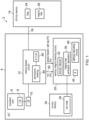
- Figure 1 schematically illustrates an example of a data processing system 2, which comprises an integrated circuit or system on chip 4 which includes at least one processor core 6 for executing program instructions to carry out data processing operations. While Figure 1 only shows one processor core in some cases the system on-chip 4 may comprise multiple processors. Each processor core or processor core cluster may have a cache 8 (or multiple levels of cache 8, 10).
- a memory controller 12 acts as memory access circuitry for controlling access to an off-chip memory 14 which is on a separate integrated circuit from the system on-chip 4.
- the edge of the system on-chip may act as a trust boundary and any data passing beyond that boundary may be vulnerable to attack by intercepting data on the physical channel 16 between the memory controller 12 and the off-chip memory 14, or by reading or modifying the data while it is stored in the off-chip memory 14.
- Figure 1 shows an example where the trust boundary corresponds to the edge of the system on-chip, in other cases there could be trust boundaries within a system on-chip which could expose data beyond the trust boundary to potential attacks.
- the system on-chip 4 includes memory integrity checking circuitry 20 provided for protecting data stored to the off-chip memory 14 from a malicious adversary who has physical access to the system and the ability to observe and/or replay the data or code being exchanged between the microprocessor and the off-chip system memory 14.
- the memory 14 stores the data 24 to be protected as well as integrity tree metadata 26 used in the verification of the data 24.
- the memory integrity checking circuitry 20 includes encryption/decryption circuitry 32 for encrypting data being written to the off-chip memory 14 and decrypting data read back from the off-chip memory. This provides privacy by preventing a malicious observer from seeing in the clear the data being read from or stored onto the off-chip memory 14.
- Encryption keys used by the encryption and decryption may be stored within an on-chip memory (e.g. SRAM) 34 on the system on-chip or within the memory integrity checking circuitry 20 itself. Any known technique may be used for the encryption and decryption, and any known approach for protecting the encryption keys can be used.
- the memory integrity checking circuitry 20 also includes integrity tree generation and verification circuitry 36, referred to in general as verification circuitry 36 below.
- the verification circuitry 36 is responsible for maintaining the integrity tree 26 in the memory 14.
- the integrity tree may provide a number of pieces of information for verifying whether data currently stored in the memory 14 is still the same as when it was written to that region.
- the checking of data integrity can for example be achieved using message authentication codes (MACs) which may be generated from the stored data using one-way cryptographic functions such as AES-GCM or SHA-256, which use functions which make it computationally infeasible for an attacker to guess the authentication code associated with a particular data value by brute force when a secret key used to generate the authentication code is unknown.
- MACs message authentication codes
- the authentication codes may be stored alongside the data 24 or in a separate data structure.
- the stored MAC for a data value is checked against a calculated MAC derived from the stored data using the same one-way function used to generate the stored MAC, and if a mismatch is detected between the stored MAC and calculated MAC then this may indicate that the data has been tampered with.
- Another type of attack may be a replay attack where a malicious person with physical access to the system stores a legitimate combination of the encrypted data and the MAC which was observed previously on the bus and then replays these onto the bus later with an intent to corrupt data at a given memory location with stale values so as to compromise the operation of the system.
- Such replay attacks can be prevented using the integrity tree 26, which provides a tree structure of nodes where each leaf node of the tree provides integrity data for verifying that one of the blocks of data 24 in the protected memory region 22 is valid and a parent node of a leaf node provides further integrity data for checking that the leaf node itself is valid.
- Parent nodes are themselves be checked using further parent nodes of the tree, and this continues as the tree is traversed up to the root of the tree which may then provide the ultimate source of verification.
- a root node 38 stored in the on-chip memory 34 may be used to verify that the root of the tree is authentic.
- the memory integrity checking unit 20 may have address calculating circuitry 40 for calculating the addresses at which the nodes of the integrity tree 26 required for checking particular data blocks are located in the protected memory region 22.
- the memory security unit 20 may also have a cache 42 for caching recently used nodes of the integrity tree for faster access than if they have to be read again from the off-chip memory 14.
- the memory integrity checking unit 20 could have access to one of the caches 10 which may also be used by the processor core 6 and so caching of data from the integrity tree 26 within the shared cache 10 could also help to speed up operation of the memory integrity checking unit 20.
- NPT Nested Protection Table
- Each leaf node 46 provides an integrity tag for verifying a corresponding protected address block 48 of the address space used to address the off-chip memory 14 (e.g. the protected address block may be one DRAM cache line, although other examples could provide tags at a different granularity).
- An integrity tag is a value that is used to authenticate a memory object (such as a DRAM cache-line).
- the tag can be a hash calculated over the object or a MAC value (calculated using a key). In both cases, a running counter may be used as an additional input when calculating the tag to guarantee freshness and provide anti-replay protection.
- the tags are typically stored in the off-chip memory 14 (e.g. DRAM) and so the integrity of the tags themselves should be guaranteed as well.
- the leaf node 46 can be verified using an integrity checking value provided by the parent node of the leaf node 46 (in this example, a level 3 branch node 44), that branch can then be verified using an integrity checking value provided by the parent node of that branch node (in this example, a level 2 branch node 44), and so on up the tree until the root node 38 is used to verify integrity of the Level 0 branch node.
- the root node provided inside the trust boundary e.g. the boundary of the System on Chip
- the root node provided inside the trust boundary can be used as the root of trust for guaranteeing integrity of the integrity tree 26 and data 24 stored beyond the trust boundary.
- Hash trees such as the Merkle tree construction are one mechanism for validating the authenticity of integrity tags efficiently. This is achieved by managing an n-ary tree (e.g. with a fixed number of descendants: binary, ternary, etc.) of hash values over the integrity tags.
- the protected objects, their corresponding integrity tags and the hash tree nodes protecting these tags are stored in untrusted memory.
- the hash tree root is located in trusted memory thus allowing to form a secure authentication chain.
- a variant of the hash-tree described above is forming an integrity tree that protects only the counter values that are used for calculating the tags, while continuing to store the tags themselves in unprotected memory and without providing for a tree-based protection for the tags.
- the hash tree 52 forms a complete tree and the address of any individual tree node 44, 46 can be computed direct from the address of the protected block 48 to be verified (the address can be used to index directly to the relevant leaf node 46 or branch node 44).
- the memory footprint of the hash tree (which depending on the solution can be up to 16% of the protected address range) is pre-allocated in advance to accommodate the entire potential range 50 to be protected.
- the hash tree 52 has to occupy a single contiguous region of the address space.
- the technique discussed below allows forming a secure integrity-chain structure for protecting a memory range that can span the entire physical memory of the system while only incurring the cost of the actual protected memory size. Additionally, the technique allows protecting one memory type (e.g. Low Power DRAM or High Bandwidth Memory or even Persistent Memory) using structures stored in a different memory type (e,g, Reduce Latency DRAM).
- one memory type e.g. Low Power DRAM or High Bandwidth Memory or even Persistent Memory
- a different memory type e,g, Reduce Latency DRAM
- both the protected regions of data and the integrity tree itself may be at a number of discontiguous regions in the address space with unallocated regions or regions allocated for other data in between.
- a leaf page 46 within the Nested Protection Table 26 holds integrity tags 61, grouped together in multiple Tag Groups 60 (leaf entries), where each tag corresponds to a protected memory chunk (address block).
- a branch page 44 includes multiple Tag Groups (branch entries) 62, where each Tag Group 62 corresponds to a child page (either a further branch page 44 at the next level, or a leaf page 46) and each tag 56 within a Tag Group protects the integrity of a corresponding Tag Group 62 or 60 in the child page.
- Each Tag Group 62 corresponds to a child page (either a further branch page 44 at the next level, or a leaf page 46) and each tag 56 within a Tag Group protects the integrity of a corresponding Tag Group 62 or 60 in the child page.
- leaf page 46 is added when software registers a cache-line or a page to be integrity protected, and the corresponding leaf page is not found in the expected location in the nested table 26.
- the physical page locations of leaf pages and branch pages that are added to the NPT are arbitrarily defined by management software and these do not require any special protection guarantees.
- Traversing the Nested Protection Table serves two purposes - reaching the leaf page and calculating the tags of the integrity chain that protects the tag.
- the example described below shows how these operations can be parallelized for mitigating the latency introduced by the linear traversal.
- NPT Nested Protection Table
- a cache-line requires integrity calculation only if a tag is found in the integrity page table. This allows for a quick detection that a cache-line does not require protection (without traversing the entire tree), as traversal can be halted when a NULL indication is found in a branch page 44.
- the size of the nested protection table expands and shrinks dynamically.
- the potential address range covered by a given NPT e.g. 64GB
- the potential address range covered by a given NPT can be defined starting from any offset with the maximally supported physical address range (e.g. 64TB).
- High performance can be achieved using caching and speculation and by leveraging a hint signal from an access control engine to the Nested Protection Engine allowing it to warm-up its caches.
- the Nested Protection Table 26 is based on the following principles:
- Figure 4 shows an example of a Nested Protection Table that can protect up to 8GB of memory, where Page size is 4KB and Tag size is assumed to be 56bits. The number of entries in each page varies according to the Branch level:
- Figures 6 and 7 show two variants proposed for the Nested Protection Branch and Leaf Pages. In both variants the memory required to store the integrity context is allocated on-demand.
- the leaf page contains the actual tag values that are calculated over the corresponding cache-lines.
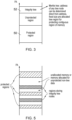
- Each branch entry 62 of the branch page 44 contains a number of tag values (hashes or MACs) each calculated over the contents of a corresponding branch entry 62 or leaf entry 60 of the child node pointed to by the pointer 58 of that branch entry 62.
- a leaf page contains:
- Both Tags and Counters are grouped under corresponding Tag Groups and Tag Counters within the Leaf page.
- a given leaf entry 60 comprises the group of tags 72 and the corresponding group of counters (nonces) 70.
- the Leaf Page has a pre-defined structure specifying the location of Counter Groups and their corresponding Tag Groups. This allows direct access to the location of the counter and tag that correspond to a given physical address.
- a given branch entry 62 of a branch page 44 comprises the pointer 62, a group of counters (nonces) 74, and a single tag value 76 computed over the counter group 74 using a corresponding counter provided by the corresponding branch entry 62 of the parent node of that branch page 44.
- each counter in the counter group 74 is used in the computation of a respective child entry within the branch node or leaf node that is a child of that branch page 44.
- the integrity checking values in a branch entry of a branch page 44 can be either integrity tags (hashes or MACs) generated based on contents of a corresponding child entry of a child page 44, or can be counters used in the computation of a counter tag 76 in the child entry of the child page 44.
- Variant2 there are two possible structures that can be considered for the Counter Group 70, 74 in a given entry of a leaf node or a branch node:
- the operations for managing the Nested Protection Table (NPT) 26 and for using it to authenticate memory are carried out by the memory integrity checking circuitry 20 (which acts as an on-chip Nested Protection Engine (NPE)).
- NPE Nested Protection Engine
- the encryption step can be omitted as long as the parent counter c p is always included in m.
- Verifying a cache-line are based on a sequence as shown in Figure 10 for the case of Variant1. (Similar to steps 1-3 described above for Figure 9 )
- Tags can be removed from the database by defining a single bit qualifier flag in each tag that software updates to 0 when the cache-line no longer needs to be protected. It is also possible to have a single flag that qualifies multiple tags or tag groups. Whenever a tag qualifier is zeroed then Software or the NPE 20 can also check if additional tags in the page are zero. By performing the check across all TagGroups in a page an entire page can be removed from the NPT.
- the system can also augment this process by adding a hint on a read or write operation of whether integrity is required or not for the cache-line.
- Performance enhancing methods applicable to Merkle Trees can also be applicable to the NPT with its own variants.
- Caching NPT entries In order to speed up performance, elements of the NPT can be cached within the cache 42 of the NPE 20. Either Branch page entries can be cached, Leaf Page entries or ⁇ Physical Address, Counter, Tag ⁇ tuples.
- Verifying the integrity of a cache-line does not necessarily have to block the return of the data of the user.
- the NPE may speculatively return data to the user before completing the verification flow and use an Abort signal that blocks any updates to NonVolatile storage or the External IO devices once an integrity error occurs. This way the system state is secured before the error propagates outside of system boundaries.
- MMU operations may result with the loading of a physical addresses into its caches and performing additional access control checks on the address before the actual Load/Store operation is performed.
- these components can send a hint 82 to the NPE for a specific physical address so the NPE can warm up its caches by starting to read the corresponding Branch page entries, without waiting for any access permission checks performed by permission checking circuitry 84 to be complete.
- This way parallelization is achieved between MMU access control checks and integrity checks of a given cache-line access.
- Figure 1 shows an example of performing permission checks based on page table entries cached in a TLB 80, it would also be possible for other types of access permission checks to be performed to generate the hint.
- Figure 11 shows another operation that can be performed by the memory integrity checking circuitry 20 to add an extra level to the integrity tree 26.
- software may trigger sending a request to add an extra tree level.
- the integrity tree verification/generation circuitry 36 stores a new level 0 branch node 44 to the off-chip memory 14 at an address specified by the software in the request.
- the new level 0 branch nodes will specify parameters corresponding to those previously specified in the root node 38 of the table.
- the branch node 44 that was previously the level 0 branch node will therefore become a level 1 branch node, level 1 branch nodes will become level 2 branch nodes and so on.
- one of the tag groups (branch entries) 62 corresponds to the previous contents of the root node 38, and all the other branch entries 62 in the same branch page 44 may be set with the pointers 58 providing the null indicator, to indicate that there are not yet any further child nodes under those entries.
- the integrity tree verification and generation circuitry 36 updates the pointer 64 in the root node 38 to specify the address of the new level 0 branch node which was allocated to memory.
- the integrity tree verification/generation circuitry 36 updates at least one integrity checking value of the root node 38 to correspond to the contents of the new top-level branch node 44.
- each tag within the root table may be updated based on a hash of a corresponding entry 62 of the new level 0 branch node 44 (where the hash is based on both the pointer and the tags). If variant 2 is used then the counters within the root table 64 may be updated to values used to calculate the corresponding counter hash within each entry of the new level 0 branch node.
- Figure 12 illustrates a simulator implementation that may be used. Whilst the earlier described embodiments implement the present invention in terms of apparatus and methods for operating specific processing hardware supporting the techniques concerned, it is also possible to provide an instruction execution environment in accordance with the embodiments described herein which is implemented through the use of a computer program. Such computer programs are often referred to as simulators, insofar as they provide a software based implementation of a hardware architecture. Varieties of simulator computer programs include emulators, virtual machines, models, and binary translators, including dynamic binary translators. Typically, a simulator implementation may run on a host processor 230, optionally running a host operating system 220, supporting the simulator program 210.
- the hardware there may be multiple layers of simulation between the hardware and the provided instruction execution environment, and/or multiple distinct instruction execution environments provided on the same host processor.
- powerful processors have been required to provide simulator implementations which execute at a reasonable speed, but such an approach may be justified in certain circumstances, such as when there is a desire to run code native to another processor for compatibility or re-use reasons.
- the simulator implementation may provide an instruction execution environment with additional functionality which is not supported by the host processor hardware, or provide an instruction execution environment typically associated with a different hardware architecture.
- An overview of simulation is given in " Some Efficient Architecture Simulation Techniques", Robert Bedichek, Winter 1990 USENIX Conference, Pages 53 - 63 .
- the simulator program 210 may be stored on a computer-readable storage medium (which may be a non-transitory medium), and provides a program interface (instruction execution environment) to the target code 200 (which may include applications, operating systems and a hypervisor) which is the same as the application program interface of the hardware architecture being modelled by the simulator program 210.
- the program instructions of the target code 200 including described above, may be executed from within the instruction execution environment using the simulator program 210, so that a host computer 230 which does not actually have the hardware features of the apparatus 4 discussed above can emulate these features.
- the simulator program 210 has memory access program access program logic 212 and memory integrity checking program logic 214 which emulates the functionality of the memory access circuitry 12 and memory integrity checking circuitry 20 described above.
- the words “configured to" are used to mean that an element of an apparatus has a configuration able to carry out the defined operation.
- a “configuration” means an arrangement or manner of interconnection of hardware or software.
- the apparatus may have dedicated hardware which provides the defined operation, or a processor or other processing device may be programmed to perform the function.
- Configured to does not imply that the apparatus element needs to be changed in any way in order to provide the defined operation.
Landscapes
- Engineering & Computer Science (AREA)
- Theoretical Computer Science (AREA)
- Computer Security & Cryptography (AREA)
- General Engineering & Computer Science (AREA)
- Computer Hardware Design (AREA)
- Physics & Mathematics (AREA)
- General Physics & Mathematics (AREA)
- Software Systems (AREA)
- General Health & Medical Sciences (AREA)
- Bioethics (AREA)
- Health & Medical Sciences (AREA)
- Human Computer Interaction (AREA)
- Databases & Information Systems (AREA)
- Data Mining & Analysis (AREA)
- Storage Device Security (AREA)
Claims (12)
- Appareil (4), comprenant :une circuiterie d'accès mémoire (12) destinée à commander l'accès à des données stockées dans une mémoire (14) ; etune circuiterie de contrôle d'intégrité de mémoire (20) destinée à vérifier l'intégrité de données stockées dans la mémoire, en utilisant un arbre d'intégrité (26) comprenant une pluralité de nœuds incluant :au moins un nœud feuille (46) comprenant au moins une entrée feuille comprenant au moins une étiquette d'intégrité pour vérification d'un bloc adresse correspondant de données stockées dans la mémoire ; etau moins un nœud branche (44) comprenant au moins une entrée branche comprenant :un pointeur (58) pour spécifier une adresse d'un nœud enfant du nœud branche, où le nœud enfant est un nœud feuille ou un nœud branche supplémentaire de l'arbre d'intégrité, etau moins une valeur de contrôle d'intégrité (56) pour vérification d'une entrée branche ou entrée feuille correspondante du nœud enfant ; etdans lequel :en réponse à une demande spécifiant une adresse cible d'un bloc adresse donné de données stockées dans la mémoire, la circuiterie de contrôle d'intégrité de mémoire est configurée pour déclencher une traversée descendante de l'arbre d'intégrité depuis un nœud racine (38) jusqu'à un nœud feuille donné comprenant l'étiquette d'intégrité correspondant au bloc adresse donné ; etla circuiterie de contrôle d'intégrité de mémoire est configurée pour arrêter la traversée descendante en réponse à la détection, sur un trajet depuis le nœud racine jusqu'au nœud feuille donné, d'un nœud branche pour lequel une entrée branche correspondante pour le bloc adresse donné spécifie un indicateur nul ; etlorsque la traversée descendante est déclenchée par une demande d'accès mémoire pour déclencher un accès mémoire au bloc adresse donné en mémoire, la circuiterie de contrôle d'intégrité de mémoire est configurée pour réaliser au moins un de :déterminer le fait qu'il faut traiter le bloc adresse donné, auquel l'accès a été demandé par la demande d'accès mémoire, comme étant un bloc adresse protégé pour lequel une vérification d'intégrité est requise ou comme étant un bloc adresse non protégé pour lequel aucune vérification d'intégrité n'est requise de façon dépendant du fait que la traversée descendante détecte ou non un nœud branche pour lequel l'entrée branche correspondante spécifie l'indicateur nul, dans lequel ; lorsque la traversée descendante détecte un nœud branche pour lequel l'entrée branche correspondante spécifie l'indicateur nul, la circuiterie de contrôle d'intégrité de mémoire traite le bloc adresse donné comme étant un bloc adresse non protégé pour lequel aucune vérification d'intégrité n'est requise ; etlorsque la traversée descendante détecte un nœud branche pour lequel l'entrée branche correspondante spécifie l'indicateur nul, renvoyer une indication qu'une vérification d'intégrité est réussie pour le bloc adresse donné auquel l'accès a été demandé par la demande d'accès mémoire.
- Appareil selon la revendication 1, dans lequel la circuiterie de contrôle d'intégrité de mémoire est configurée pour vérifier l'intégrité d'informations spécifiées par une entrée branche donnée, incluant le pointeur, sur la base d'une valeur de contrôle d'intégrité correspondante spécifiée dans un nœud parent du nœud branche donné.
- Appareil selon l'une quelconque des revendications 1 et 2, dans lequel la circuiterie de contrôle d'intégrité de mémoire est configurée pour prendre en charge au moins un de :l'arbre d'intégrité est configuré pour inclure un ou plusieurs nœuds feuille spécifiant des entrées feuille correspondant à des groupes discontinus de blocs adresse à l'intérieur d'un espace adresse de mémoire, pour lequel au moins un groupe intervenant de blocs adresse entre les groupes discontinus de blocs adresse est non protégé par l'arbre d'intégrité ; etl'arbre d'intégrité est configuré pour inclure des nœuds stockés au niveau de deux, ou plus, groupes discontinus de blocs adresse à l'intérieur d'un espace adresse de mémoire, pour lequel au moins un groupe intervenant de blocs adresse entre les groupes discontinus de blocs adresse comprend au moins une de : mémoire non attribuée ; et mémoire attribuée pour le stockage de données autres que ledit arbre d'intégrité.
- Appareil selon la revendication 1, dans lequel, dans la traversée descendante, pour une paire de nœuds parent-enfant donnés de l'arbre d'intégrité sur un trajet depuis le nœud racine jusqu'au nœud feuille donné, ladite paire de nœuds parent-enfant donnés comprenant un nœud parent donné et un nœud enfant donné, la circuiterie de contrôle d'intégrité de mémoire est configurée pour :déclencher une opération de lecture pour lire une entrée enfant correspondante du nœud enfant donné, d'une adresse de mémoire calculée sur la base du pointeur spécifié par une entrée parent correspondante du nœud parent donné et d'un décalage identifié sur la base de l'adresse cible dudit bloc adresse donné ; etréaliser une opération de vérification pour vérifier l'intégrité de l'entrée enfant correspondante sur la base d'une valeur de contrôle d'intégrité correspondante spécifiée dans l'entrée parent correspondante du nœud parent donné.
- Appareil selon la revendication 4, dans lequel, lorsque le nœud parent donné est un nœud autre qu'un nœud racine de l'arbre d'intégrité :
la circuiterie de contrôle d'intégrité de mémoire est destinée à déclencher l'opération de lecture pour lire l'entrée enfant correspondante du nœud enfant donné en parallèle avec la réalisation de l'opération de vérification pour une étape précédente de la traversée descendante, ladite opération de vérification pour l'étape précédente comprenant la vérification de l'intégrité de l'entrée parent correspondante sur la base d'une valeur de contrôle d'intégrité correspondante spécifiée dans un nœud parent dudit nœud parent donné. - Appareil selon une quelconque revendication précédente, dans lequel, lorsque la traversée descendante est déclenchée par une demande d'ajout d'étiquette pour demander un ajout d'une étiquette d'intégrité pour le bloc adresse donné à un nœud feuille correspondant de l'arbre d'intégrité, et la traversée descendante détecte un nœud branche donné pour lequel l'entrée branche correspondante spécifie l'indicateur nul, la circuiterie de contrôle d'intégrité de mémoire est configurée pour :déclencher un logiciel pour attribuer un espace adresse de mémoire pour stocker un nœud enfant supplémentaire du nœud branche donné, etmettre à jour le pointeur de l'entrée branche correspondante du nœud branche donné pour indiquer une adresse spécifiée par le logiciel comme étant attribuée pour le nœud enfant supplémentaire.
- Appareil selon une quelconque revendication précédente, dans lequel, en réponse à une demande d'accès mémoire pour demander l'accès à des données pour un bloc adresse donné, la circuiterie d'accès mémoire est configurée pour :réaliser un contrôle de permission d'accès pour contrôler le fait que l'accès au bloc adresse donné est permis ou non ; etavant que le contrôle de permission d'accès soit achevé, fournir un signal d'indice spécifiant une adresse du bloc adresse donné à la circuiterie de contrôle d'intégrité de mémoire.
- Appareil selon la revendication 7, dans lequel, en réponse au signal d'indice, la circuiterie de contrôle d'intégrité de mémoire est configurée pour déclencher une lecture d'au moins un nœud de l'arbre d'intégrité avant que le contrôle de permission d'accès réalisé par la circuiterie d'accès mémoire soit achevé.
- Appareil selon une quelconque revendication précédente, dans lequel la circuiterie de contrôle d'intégrité de mémoire est configurée pour lire un nœud racine de l'arbre d'intégrité, d'une mémoire sur puce prévue à l'intérieur du même circuit intégré que la circuiterie de contrôle d'intégrité de mémoire ;
le nœud racine comprend :un pointeur destiné à spécifier une adresse d'un nœud branche de premier niveau de l'arbre d'intégrité, où le nœud branche de premier niveau est un nœud enfant du nœud racine ; etau moins une valeur de contrôle d'intégrité pour vérification d'une entrée branche correspondante du nœud branche de premier niveau ; eten réponse à une demande d'ajouter un niveau à l'arbre d'intégrité, la circuiterie de contrôle d'intégrité de mémoire est configurée pour :stocker un nouveau nœud branche de premier niveau de l'arbre d'intégrité à une adresse spécifiée par un logiciel comme étant attribuée pour le stockage du nouveau nœud branche de premier niveau, le nouveau nœud branche de premier niveau incluant le pointeur et l'au moins une valeur de contrôle d'intégrité spécifiée auparavant par le nœud racine ;mettre à jour le pointeur du nœud racine pour spécifier l'adresse attribuée pour le stockage du nouveau nœud branche de premier niveau ; etmettre à jour l'au moins une valeur de contrôle d'intégrité du nœud racine pour correspondre à des contenus du nouveau nœud branche de premier niveau. - Appareil selon une quelconque revendication précédente, dans lequel :dans une entrée branche donnée d'un nœud branche donné, chaque valeur de contrôle d'intégrité comprend une étiquette d'intégrité dérivée en fonction de l'entrée branche ou entrée feuille correspondante du nœud enfant indiquée par le pointeur de l'entrée branche donnée ;
oudans une entrée branche donnée d'un nœud branche donné, chaque valeur de contrôle d'intégrité comprend au moins un nombre aléatoire d'intégrité pour calculer une étiquette d'intégrité correspondante stockée dans l'entrée branche ou entrée feuille correspondante du nœud enfant indiquée par le pointeur de l'entrée branche donnée, ladite étiquette d'intégrité correspondante étant dérivée en fonction du nombre aléatoire d'intégrité et d'autres composants de l'entrée branche ou entrée feuille correspondante du nœud enfant. - Procédé, comprenant :la commande d'un accès à des données stockées dans un mémoire (24) ; etla vérification d'une intégrité de données stockées dans la mémoire, en utilisant un arbre d'intégrité (26) comprenant une pluralité de nœuds incluant :au moins un nœud feuille (46) comprenant au moins une entrée feuille, chaque entrée feuille comprenant au moins une étiquette d'intégrité pour vérification d'un bloc adresse correspondant de données stockées dans la mémoire ; etau moins un nœud branche (44) comprenant au moins une entrée branche, chaque entrée branche comprenant :un pointeur (58) pour spécifier une adresse d'un nœud enfant du nœud branche, où le nœud enfant est un nœud feuille ou un nœud branche supplémentaire de l'arbre d'intégrité, etau moins une valeur de contrôle d'intégrité (56) pour vérification d'une entrée branche ou entrée feuille correspondante du nœud enfant ; etdans lequel :en réponse à une demande spécifiant une adresse cible du bloc adresse donné de données stockées dans la mémoire, le déclenchement d'une traversée descendante de l'arbre d'intégrité depuis un nœud racine (38) jusqu'à un nœud feuille donné comprenant l'étiquette d'intégrité correspondant au bloc adresse donné ;l'arrêt de la traversée descendante en réponse à la détection, sur un trajet depuis le nœud racine jusqu'au nœud feuille donné, d'une branche pour laquelle une entrée branche correspondante pour le bloc adresse donné spécifie un indicateur nul ; etlorsque la traversée descendante est déclenchée par une demande d'accès mémoire pour déclencher un accès mémoire au bloc adresse donné en mémoire, la réalisation d'au moins un de :la détermination du fait qu'il faut traiter le bloc adresse donné, auquel l'accès a été demandé par la demande d'accès mémoire, comme étant un bloc adresse protégé pour lequel une vérification d'intégrité est requise ou comme étant un bloc adresse non protégé pour lequel aucune vérification d'intégrité n'est requise de façon dépendant du fait que la traversée descendante détecte ou non un nœud branche pour lequel l'entrée branche correspondante spécifie l'indicateur nul, dans lequel, lorsque la traversée descendante détecte un nœud branche pour lequel l'entrée branche correspondante spécifie l'indicateur nul, le bloc adresse donné est traité comme étant un bloc adresse non protégé pour lequel aucune vérification d'intégrité n'est requise ; etlorsque la traversée descendante détecte un nœud branche pour lequel l'entrée branche correspondante spécifie l'indicateur nul, le renvoi d'une indication qu'une vérification d'intégrité est réussie pour le bloc adresse donné auquel l'accès a été demandé par la demande d'accès mémoire.
- Programme d'ordinateur (210) pour commander un appareil de traitement de données hôte pour fournir un environnement d'exécution d'instruction pour l'exécution d'instructions ; le programme d'ordinateur comprenant :une logique de programme d'accès mémoire (212) pour commander l'accès à un espace adresse simulé de l'environnement d'exécution d'instruction ; etune logique de programme de contrôle d'intégrité de mémoire (214) pour vérifier l'intégrité de données stockées à des adresses à l'intérieur de l'espace adresse simulé, en utilisant un arbre d'intégrité (26) comprenant une pluralité de nœuds incluant :au moins un nœud feuille (46) comprenant au moins une entrée feuille comprenant au moins une étiquette d'intégrité pour vérification d'un bloc adresse correspondant de données stockées dans la mémoire ; etau moins un nœud branche (44) comprenant au moins une entrée branche comprenant :un pointeur (58) pour spécifier une adresse d'un nœud enfant du nœud branche, où le nœud enfant est un nœud feuille ou un nœud branche supplémentaire de l'arbre d'intégrité, etau moins une valeur de contrôle d'intégrité (56) pour vérification d'une entrée branche ou entrée feuille correspondante du nœud enfant ; etdans lequel :en réponse à une demande spécifiant une adresse cible d'un bloc adresse donné de données stockées dans l'espace adresse simulé, la logique de programme de contrôle d'intégrité de mémoire est configurée pour déclencher une traversée descendante de l'arbre d'intégrité depuis un nœud racine (38) jusqu'à un nœud feuille donné comprenant l'étiquette d'intégrité correspondant au bloc adresse donné ;la logique de programme de contrôle d'intégrité de mémoire est configurée pour arrêter la traversée descendante en réponse à la détection, sur un trajet depuis le nœud racine jusqu'au nœud feuille donné, d'un nœud branche pour lequel une entrée branche correspondante pour le bloc adresse donné spécifie un indicateur nul ; etlorsque la traversée descendante est déclenchée par une demande d'accès mémoire pour déclencher un accès mémoire au bloc adresse donné dans l'espace adresse simulé, la logique de programme de contrôle d'intégrité de mémoire est configurée pour réaliser au moins un de :déterminer le fait qu'il faut traiter le bloc adresse donné, auquel l'accès a été demandé par la demande d'accès mémoire, comme étant un bloc adresse protégé pour lequel une vérification d'intégrité est requise ou comme étant un bloc adresse non protégé pour lequel aucune vérification d'intégrité n'est requise de façon dépendant du fait que la traversée descendante détecte ou non un nœud branche pour lequel l'entrée branche correspondante spécifie l'indicateur nul, dans lequel, lorsque la traversée descendante détecte un nœud branche pour lequel l'entrée branche correspondante spécifie l'indicateur nul, la logique de programme de contrôle d'intégrité de mémoire traite le bloc adresse donné comme étant un bloc adresse non protégé pour lequel aucune vérification d'intégrité n'est requise ; etlorsque la traversée descendante détecte un nœud branche pour lequel l'entrée branche correspondante spécifie l'indicateur nul, renvoyer une indication qu'une vérification d'intégrité est réussie pour le bloc adresse donné auquel l'accès a été demandé par la demande d'accès mémoire.
Applications Claiming Priority (2)
| Application Number | Priority Date | Filing Date | Title |
|---|---|---|---|
| GB1820597.1A GB2579849B (en) | 2018-12-18 | 2018-12-18 | Integrity tree for memory integrity checking |
| PCT/GB2019/052968 WO2020128413A1 (fr) | 2018-12-18 | 2019-10-17 | Arbre d'intégrité pour contrôle d'intégrité de mémoire |
Publications (2)
| Publication Number | Publication Date |
|---|---|
| EP3899774A1 EP3899774A1 (fr) | 2021-10-27 |
| EP3899774B1 true EP3899774B1 (fr) | 2025-05-14 |
Family
ID=65146993
Family Applications (1)
| Application Number | Title | Priority Date | Filing Date |
|---|---|---|---|
| EP19791346.0A Active EP3899774B1 (fr) | 2018-12-18 | 2019-10-17 | Arbre d'intégrité pour contrôle d'intégrité de mémoire |
Country Status (8)
| Country | Link |
|---|---|
| US (1) | US11775177B2 (fr) |
| EP (1) | EP3899774B1 (fr) |
| JP (1) | JP7464586B2 (fr) |
| KR (1) | KR102820165B1 (fr) |
| CN (1) | CN112639789B (fr) |
| GB (1) | GB2579849B (fr) |
| IL (1) | IL280846A (fr) |
| WO (1) | WO2020128413A1 (fr) |
Families Citing this family (16)
| Publication number | Priority date | Publication date | Assignee | Title |
|---|---|---|---|---|
| US12328397B2 (en) * | 2020-04-23 | 2025-06-10 | Nec Corporation | Memory processing apparatus, memory verification apparatus, memory updating apparatus, memory protection system, method, and computer readable medium |
| GB2596585B (en) | 2020-07-03 | 2022-09-07 | Advanced Risc Mach Ltd | Integrity tree for memory security |
| WO2022006880A1 (fr) * | 2020-07-10 | 2022-01-13 | 华为技术有限公司 | Procédé et dispositif de traitement de données, et support de stockage |
| CN112035890B (zh) * | 2020-09-04 | 2022-08-05 | 北京邮电大学 | 一种数据完整性验证方法及装置 |
| EP4002170A1 (fr) * | 2020-11-18 | 2022-05-25 | Thales DIS France SA | Protection d'exécution utilisant la coloration de données |
| US11687592B2 (en) * | 2021-05-27 | 2023-06-27 | Western Digital Technologies, Inc. | Storage of tree data structures |
| US11636153B2 (en) | 2021-05-27 | 2023-04-25 | Western Digital Technologies, Inc. | Storage of tree data structures |
| US20240095404A1 (en) * | 2022-09-15 | 2024-03-21 | Advanced Micro Devices, Inc | Offset Data Integrity Checks for Latency Reduction |
| US12579320B2 (en) * | 2022-11-03 | 2026-03-17 | Cryptography Research, Inc | Split counters with dynamic epoch tracking for cryptographic protection of secure data |
| KR20240071464A (ko) | 2022-11-15 | 2024-05-23 | 에스케이하이닉스 주식회사 | 머클 트리 기반 자격증명을 제공하는 컴퓨팅 장치, 스토리지 장치 및 스토리지 장치의 동작 방법 |
| CN115758477B (zh) * | 2022-11-18 | 2025-04-18 | 海南大学 | 一种新型的数据完整性验证方法 |
| CN117521167B (zh) * | 2023-11-15 | 2025-03-25 | 上海交通大学 | 高性能异构安全内存 |
| US12346299B1 (en) * | 2024-05-28 | 2025-07-01 | Workday, Inc. | Changing nodes for conjoined tree data structure |
| US12493600B1 (en) | 2024-05-28 | 2025-12-09 | Workday, Inc. | Rearranging nodes for conjoined tree data structure |
| JP7686161B1 (ja) * | 2024-05-30 | 2025-05-30 | 三菱電機株式会社 | 情報処理装置、および、情報処理方法 |
| WO2026022977A1 (fr) * | 2024-07-24 | 2026-01-29 | Nec Corporation | Appareil de gestion de données, procédé de gestion de données et support non transitoire lisible par ordinateur |
Citations (1)
| Publication number | Priority date | Publication date | Assignee | Title |
|---|---|---|---|---|
| US20040107341A1 (en) * | 2002-12-02 | 2004-06-03 | Hall William E. | Parallelizable authentication tree for random access storage |
Family Cites Families (12)
| Publication number | Priority date | Publication date | Assignee | Title |
|---|---|---|---|---|
| US20050050342A1 (en) * | 2003-08-13 | 2005-03-03 | International Business Machines Corporation | Secure storage utility |
| JP4956292B2 (ja) | 2007-06-25 | 2012-06-20 | パナソニック株式会社 | 情報セキュリティ装置およびカウンタ制御方法 |
| US9104618B2 (en) * | 2008-12-18 | 2015-08-11 | Sandisk Technologies Inc. | Managing access to an address range in a storage device |
| US8719580B2 (en) | 2009-06-26 | 2014-05-06 | Trusted Logic | Data verification method |
| JP5343793B2 (ja) | 2009-09-28 | 2013-11-13 | ブラザー工業株式会社 | 情報生成装置、情報生成プログラム、情報生成方法、ノード装置、ノードプログラム及び検索方法 |
| US8386835B2 (en) * | 2010-05-17 | 2013-02-26 | Oracle International Corporation | System and method for end-to-end data integrity in a network file system |
| CN101853190B (zh) * | 2010-06-04 | 2012-07-04 | 华中科技大学 | 一种适用于嵌入式处理器的数据完整性验证方法 |
| US9065860B2 (en) | 2011-08-02 | 2015-06-23 | Cavium, Inc. | Method and apparatus for multiple access of plural memory banks |
| US8819455B2 (en) * | 2012-10-05 | 2014-08-26 | Intel Corporation | Parallelized counter tree walk for low overhead memory replay protection |
| US9998449B2 (en) | 2014-09-26 | 2018-06-12 | Qualcomm Incorporated | On-demand serving network authentication |
| CN105069379B (zh) * | 2015-07-29 | 2017-11-21 | 哈尔滨工程大学 | 一种基于写计数器的存储器完整性保护方法 |
| US10713210B2 (en) * | 2015-10-13 | 2020-07-14 | Microsoft Technology Licensing, Llc | Distributed self-directed lock-free RDMA-based B-tree key-value manager |
-
2018
- 2018-12-18 GB GB1820597.1A patent/GB2579849B/en active Active
-
2019
- 2019-10-17 EP EP19791346.0A patent/EP3899774B1/fr active Active
- 2019-10-17 US US17/269,919 patent/US11775177B2/en active Active
- 2019-10-17 CN CN201980057094.7A patent/CN112639789B/zh active Active
- 2019-10-17 WO PCT/GB2019/052968 patent/WO2020128413A1/fr not_active Ceased
- 2019-10-17 JP JP2021514545A patent/JP7464586B2/ja active Active
- 2019-10-17 KR KR1020217005763A patent/KR102820165B1/ko active Active
-
2021
- 2021-02-14 IL IL280846A patent/IL280846A/en unknown
Patent Citations (1)
| Publication number | Priority date | Publication date | Assignee | Title |
|---|---|---|---|---|
| US20040107341A1 (en) * | 2002-12-02 | 2004-06-03 | Hall William E. | Parallelizable authentication tree for random access storage |
Also Published As
| Publication number | Publication date |
|---|---|
| IL280846A (en) | 2021-04-29 |
| JP2022512051A (ja) | 2022-02-02 |
| JP7464586B2 (ja) | 2024-04-09 |
| KR20210103455A (ko) | 2021-08-23 |
| US20210311640A1 (en) | 2021-10-07 |
| CN112639789B (zh) | 2024-12-13 |
| US11775177B2 (en) | 2023-10-03 |
| GB2579849B (en) | 2021-08-25 |
| KR102820165B1 (ko) | 2025-06-13 |
| CN112639789A (zh) | 2021-04-09 |
| EP3899774A1 (fr) | 2021-10-27 |
| GB201820597D0 (en) | 2019-01-30 |
| WO2020128413A1 (fr) | 2020-06-25 |
| GB2579849A (en) | 2020-07-08 |
Similar Documents
| Publication | Publication Date | Title |
|---|---|---|
| EP3899774B1 (fr) | Arbre d'intégrité pour contrôle d'intégrité de mémoire | |
| US11711201B2 (en) | Encoded stack pointers | |
| US11625337B2 (en) | Encoded pointer based data encryption | |
| EP3757850B1 (fr) | Gestion de tas surdébit de faible mémoire pour marquage de mémoire | |
| Taassori et al. | VAULT: Reducing paging overheads in SGX with efficient integrity verification structures | |
| Ren et al. | Design space exploration and optimization of path oblivious RAM in secure processors | |
| US10325118B2 (en) | Cryptographic cache lines for a trusted execution environment | |
| US10733313B2 (en) | Counter integrity tree for memory security | |
| EP3379448B1 (fr) | Procédé et système de fonctionnement d'une mémoire cache dans un environnement d'exécution sécurisé | |
| CN110945509B (zh) | 用于控制对受保护存储器区域中数据的访问的设备和方法 | |
| BR112021010475A2 (pt) | Defesa contra análise especulativa de canal lateral de um sistema de computador | |
| CN112148642A (zh) | 针对核中的所有权访问的存储器写入 | |
| US20170364684A1 (en) | In-memory attack prevention | |
| Umar et al. | Softvn: Efficient memory protection via software-provided version numbers | |
| US20240078323A1 (en) | Counter tree | |
| Yang et al. | Aria: Tolerating skewed workloads in secure in-memory key-value stores | |
| US20240080193A1 (en) | Counter integrity tree | |
| Su et al. | Secbus: Operating system controlled hierarchical page-based memory bus protection | |
| Taassori | Low Overhead Secure Systems | |
| Belle-Isle et al. | Memory Protection with Cached Authentication Trees | |
| Liu et al. | ShieldMMU: Detecting and Defending against Controlled-Channel Attacks in Shielding Memory System | |
| Zubair et al. | Coeus: Secure Similarity-Aware Data Integrity Verification for Secure Memories | |
| Khanvilkar | Guaranteeing memory integrity in secure processors with Dynamic Trees |
Legal Events
| Date | Code | Title | Description |
|---|---|---|---|
| STAA | Information on the status of an ep patent application or granted ep patent |
Free format text: STATUS: UNKNOWN |
|
| STAA | Information on the status of an ep patent application or granted ep patent |
Free format text: STATUS: THE INTERNATIONAL PUBLICATION HAS BEEN MADE |
|
| PUAI | Public reference made under article 153(3) epc to a published international application that has entered the european phase |
Free format text: ORIGINAL CODE: 0009012 |
|
| STAA | Information on the status of an ep patent application or granted ep patent |
Free format text: STATUS: REQUEST FOR EXAMINATION WAS MADE |
|
| 17P | Request for examination filed |
Effective date: 20210319 |
|
| AK | Designated contracting states |
Kind code of ref document: A1 Designated state(s): AL AT BE BG CH CY CZ DE DK EE ES FI FR GB GR HR HU IE IS IT LI LT LU LV MC MK MT NL NO PL PT RO RS SE SI SK SM TR |
|
| DAV | Request for validation of the european patent (deleted) | ||
| DAX | Request for extension of the european patent (deleted) | ||
| STAA | Information on the status of an ep patent application or granted ep patent |
Free format text: STATUS: EXAMINATION IS IN PROGRESS |
|
| 17Q | First examination report despatched |
Effective date: 20240521 |
|
| GRAP | Despatch of communication of intention to grant a patent |
Free format text: ORIGINAL CODE: EPIDOSNIGR1 |
|
| STAA | Information on the status of an ep patent application or granted ep patent |
Free format text: STATUS: GRANT OF PATENT IS INTENDED |
|
| INTG | Intention to grant announced |
Effective date: 20250103 |
|
| GRAS | Grant fee paid |
Free format text: ORIGINAL CODE: EPIDOSNIGR3 |
|
| GRAA | (expected) grant |
Free format text: ORIGINAL CODE: 0009210 |
|
| STAA | Information on the status of an ep patent application or granted ep patent |
Free format text: STATUS: THE PATENT HAS BEEN GRANTED |
|
| P01 | Opt-out of the competence of the unified patent court (upc) registered |
Free format text: CASE NUMBER: APP_13793/2025 Effective date: 20250320 |
|
| AK | Designated contracting states |
Kind code of ref document: B1 Designated state(s): AL AT BE BG CH CY CZ DE DK EE ES FI FR GB GR HR HU IE IS IT LI LT LU LV MC MK MT NL NO PL PT RO RS SE SI SK SM TR |
|
| REG | Reference to a national code |
Ref country code: GB Ref legal event code: FG4D |
|
| REG | Reference to a national code |
Ref country code: CH Ref legal event code: EP |
|
| REG | Reference to a national code |
Ref country code: IE Ref legal event code: FG4D |
|
| REG | Reference to a national code |
Ref country code: DE Ref legal event code: R096 Ref document number: 602019070006 Country of ref document: DE |
|
| REG | Reference to a national code |
Ref country code: NL Ref legal event code: MP Effective date: 20250514 |
|
| PG25 | Lapsed in a contracting state [announced via postgrant information from national office to epo] |
Ref country code: PT Free format text: LAPSE BECAUSE OF FAILURE TO SUBMIT A TRANSLATION OF THE DESCRIPTION OR TO PAY THE FEE WITHIN THE PRESCRIBED TIME-LIMIT Effective date: 20250915 Ref country code: FI Free format text: LAPSE BECAUSE OF FAILURE TO SUBMIT A TRANSLATION OF THE DESCRIPTION OR TO PAY THE FEE WITHIN THE PRESCRIBED TIME-LIMIT Effective date: 20250514 Ref country code: ES Free format text: LAPSE BECAUSE OF FAILURE TO SUBMIT A TRANSLATION OF THE DESCRIPTION OR TO PAY THE FEE WITHIN THE PRESCRIBED TIME-LIMIT Effective date: 20250514 |
|
| REG | Reference to a national code |
Ref country code: LT Ref legal event code: MG9D |
|
| PG25 | Lapsed in a contracting state [announced via postgrant information from national office to epo] |
Ref country code: NO Free format text: LAPSE BECAUSE OF FAILURE TO SUBMIT A TRANSLATION OF THE DESCRIPTION OR TO PAY THE FEE WITHIN THE PRESCRIBED TIME-LIMIT Effective date: 20250814 Ref country code: GR Free format text: LAPSE BECAUSE OF FAILURE TO SUBMIT A TRANSLATION OF THE DESCRIPTION OR TO PAY THE FEE WITHIN THE PRESCRIBED TIME-LIMIT Effective date: 20250815 |
|
| PG25 | Lapsed in a contracting state [announced via postgrant information from national office to epo] |
Ref country code: NL Free format text: LAPSE BECAUSE OF FAILURE TO SUBMIT A TRANSLATION OF THE DESCRIPTION OR TO PAY THE FEE WITHIN THE PRESCRIBED TIME-LIMIT Effective date: 20250514 Ref country code: PL Free format text: LAPSE BECAUSE OF FAILURE TO SUBMIT A TRANSLATION OF THE DESCRIPTION OR TO PAY THE FEE WITHIN THE PRESCRIBED TIME-LIMIT Effective date: 20250514 |
|
| REG | Reference to a national code |
Ref country code: AT Ref legal event code: MK05 Ref document number: 1795424 Country of ref document: AT Kind code of ref document: T Effective date: 20250514 |
|
| PG25 | Lapsed in a contracting state [announced via postgrant information from national office to epo] |
Ref country code: BG Free format text: LAPSE BECAUSE OF FAILURE TO SUBMIT A TRANSLATION OF THE DESCRIPTION OR TO PAY THE FEE WITHIN THE PRESCRIBED TIME-LIMIT Effective date: 20250514 |
|
| PGFP | Annual fee paid to national office [announced via postgrant information from national office to epo] |
Ref country code: GB Payment date: 20250923 Year of fee payment: 7 |
|
| PG25 | Lapsed in a contracting state [announced via postgrant information from national office to epo] |
Ref country code: HR Free format text: LAPSE BECAUSE OF FAILURE TO SUBMIT A TRANSLATION OF THE DESCRIPTION OR TO PAY THE FEE WITHIN THE PRESCRIBED TIME-LIMIT Effective date: 20250514 |
|
| PG25 | Lapsed in a contracting state [announced via postgrant information from national office to epo] |
Ref country code: AT Free format text: LAPSE BECAUSE OF FAILURE TO SUBMIT A TRANSLATION OF THE DESCRIPTION OR TO PAY THE FEE WITHIN THE PRESCRIBED TIME-LIMIT Effective date: 20250514 |
|
| PGFP | Annual fee paid to national office [announced via postgrant information from national office to epo] |
Ref country code: FR Payment date: 20250924 Year of fee payment: 7 |
|
| PG25 | Lapsed in a contracting state [announced via postgrant information from national office to epo] |
Ref country code: RS Free format text: LAPSE BECAUSE OF FAILURE TO SUBMIT A TRANSLATION OF THE DESCRIPTION OR TO PAY THE FEE WITHIN THE PRESCRIBED TIME-LIMIT Effective date: 20250814 |
|
| PG25 | Lapsed in a contracting state [announced via postgrant information from national office to epo] |
Ref country code: IS Free format text: LAPSE BECAUSE OF FAILURE TO SUBMIT A TRANSLATION OF THE DESCRIPTION OR TO PAY THE FEE WITHIN THE PRESCRIBED TIME-LIMIT Effective date: 20250914 |
|
| PG25 | Lapsed in a contracting state [announced via postgrant information from national office to epo] |
Ref country code: LV Free format text: LAPSE BECAUSE OF FAILURE TO SUBMIT A TRANSLATION OF THE DESCRIPTION OR TO PAY THE FEE WITHIN THE PRESCRIBED TIME-LIMIT Effective date: 20250514 |
|
| PGFP | Annual fee paid to national office [announced via postgrant information from national office to epo] |
Ref country code: DE Payment date: 20250923 Year of fee payment: 7 |
|
| PG25 | Lapsed in a contracting state [announced via postgrant information from national office to epo] |
Ref country code: DK Free format text: LAPSE BECAUSE OF FAILURE TO SUBMIT A TRANSLATION OF THE DESCRIPTION OR TO PAY THE FEE WITHIN THE PRESCRIBED TIME-LIMIT Effective date: 20250514 Ref country code: SM Free format text: LAPSE BECAUSE OF FAILURE TO SUBMIT A TRANSLATION OF THE DESCRIPTION OR TO PAY THE FEE WITHIN THE PRESCRIBED TIME-LIMIT Effective date: 20250514 |
|
| PG25 | Lapsed in a contracting state [announced via postgrant information from national office to epo] |
Ref country code: CZ Free format text: LAPSE BECAUSE OF FAILURE TO SUBMIT A TRANSLATION OF THE DESCRIPTION OR TO PAY THE FEE WITHIN THE PRESCRIBED TIME-LIMIT Effective date: 20250514 |
|
| PG25 | Lapsed in a contracting state [announced via postgrant information from national office to epo] |
Ref country code: EE Free format text: LAPSE BECAUSE OF FAILURE TO SUBMIT A TRANSLATION OF THE DESCRIPTION OR TO PAY THE FEE WITHIN THE PRESCRIBED TIME-LIMIT Effective date: 20250514 |
|
| PG25 | Lapsed in a contracting state [announced via postgrant information from national office to epo] |
Ref country code: SK Free format text: LAPSE BECAUSE OF FAILURE TO SUBMIT A TRANSLATION OF THE DESCRIPTION OR TO PAY THE FEE WITHIN THE PRESCRIBED TIME-LIMIT Effective date: 20250514 Ref country code: RO Free format text: LAPSE BECAUSE OF FAILURE TO SUBMIT A TRANSLATION OF THE DESCRIPTION OR TO PAY THE FEE WITHIN THE PRESCRIBED TIME-LIMIT Effective date: 20250514 |
|
| PG25 | Lapsed in a contracting state [announced via postgrant information from national office to epo] |
Ref country code: IT Free format text: LAPSE BECAUSE OF FAILURE TO SUBMIT A TRANSLATION OF THE DESCRIPTION OR TO PAY THE FEE WITHIN THE PRESCRIBED TIME-LIMIT Effective date: 20250514 |
|
| REG | Reference to a national code |
Ref country code: DE Ref legal event code: R097 Ref document number: 602019070006 Country of ref document: DE |
|
| PLBE | No opposition filed within time limit |
Free format text: ORIGINAL CODE: 0009261 |
|
| STAA | Information on the status of an ep patent application or granted ep patent |
Free format text: STATUS: NO OPPOSITION FILED WITHIN TIME LIMIT |
|
| REG | Reference to a national code |
Ref country code: CH Ref legal event code: L10 Free format text: ST27 STATUS EVENT CODE: U-0-0-L10-L00 (AS PROVIDED BY THE NATIONAL OFFICE) Effective date: 20260325 |
|
| 26N | No opposition filed |
Effective date: 20260217 |