EP3900631A1 - Verfahren zur messung der speicherbarkeit einer multimedianachricht - Google Patents
Verfahren zur messung der speicherbarkeit einer multimedianachricht Download PDFInfo
- Publication number
- EP3900631A1 EP3900631A1 EP18917043.4A EP18917043A EP3900631A1 EP 3900631 A1 EP3900631 A1 EP 3900631A1 EP 18917043 A EP18917043 A EP 18917043A EP 3900631 A1 EP3900631 A1 EP 3900631A1
- Authority
- EP
- European Patent Office
- Prior art keywords
- multimedia message
- user
- electrodes
- leads
- memorability
- Prior art date
- Legal status (The legal status is an assumption and is not a legal conclusion. Google has not performed a legal analysis and makes no representation as to the accuracy of the status listed.)
- Withdrawn
Links
Images




Classifications
-
- A—HUMAN NECESSITIES
- A61—MEDICAL OR VETERINARY SCIENCE; HYGIENE
- A61B—DIAGNOSIS; SURGERY; IDENTIFICATION
- A61B5/00—Measuring for diagnostic purposes; Identification of persons
- A61B5/72—Signal processing specially adapted for physiological signals or for diagnostic purposes
- A61B5/7235—Details of waveform analysis
- A61B5/7264—Classification of physiological signals or data, e.g. using neural networks, statistical classifiers, expert systems or fuzzy systems
-
- A—HUMAN NECESSITIES
- A61—MEDICAL OR VETERINARY SCIENCE; HYGIENE
- A61B—DIAGNOSIS; SURGERY; IDENTIFICATION
- A61B5/00—Measuring for diagnostic purposes; Identification of persons
- A61B5/24—Detecting, measuring or recording bioelectric or biomagnetic signals of the body or parts thereof
- A61B5/316—Modalities, i.e. specific diagnostic methods
- A61B5/369—Electroencephalography [EEG]
- A61B5/377—Electroencephalography [EEG] using evoked responses
- A61B5/378—Visual stimuli
-
- A—HUMAN NECESSITIES
- A61—MEDICAL OR VETERINARY SCIENCE; HYGIENE
- A61B—DIAGNOSIS; SURGERY; IDENTIFICATION
- A61B5/00—Measuring for diagnostic purposes; Identification of persons
- A61B5/0059—Measuring for diagnostic purposes; Identification of persons using light, e.g. diagnosis by transillumination, diascopy, fluorescence
- A61B5/0077—Devices for viewing the surface of the body, e.g. camera, magnifying lens
-
- A—HUMAN NECESSITIES
- A61—MEDICAL OR VETERINARY SCIENCE; HYGIENE
- A61B—DIAGNOSIS; SURGERY; IDENTIFICATION
- A61B5/00—Measuring for diagnostic purposes; Identification of persons
- A61B5/103—Measuring devices for testing the shape, pattern, colour, size or movement of the body or parts thereof, for diagnostic purposes
- A61B5/11—Measuring movement of the entire body or parts thereof, e.g. head or hand tremor or mobility of a limb
- A61B5/1103—Detecting muscular movement of the eye, e.g. eyelid movement
-
- A—HUMAN NECESSITIES
- A61—MEDICAL OR VETERINARY SCIENCE; HYGIENE
- A61B—DIAGNOSIS; SURGERY; IDENTIFICATION
- A61B5/00—Measuring for diagnostic purposes; Identification of persons
- A61B5/16—Devices for psychotechnics; Testing reaction times ; Devices for evaluating the psychological state
-
- A—HUMAN NECESSITIES
- A61—MEDICAL OR VETERINARY SCIENCE; HYGIENE
- A61B—DIAGNOSIS; SURGERY; IDENTIFICATION
- A61B5/00—Measuring for diagnostic purposes; Identification of persons
- A61B5/16—Devices for psychotechnics; Testing reaction times ; Devices for evaluating the psychological state
- A61B5/163—Devices for psychotechnics; Testing reaction times ; Devices for evaluating the psychological state by tracking eye movement, gaze, or pupil change
-
- A—HUMAN NECESSITIES
- A61—MEDICAL OR VETERINARY SCIENCE; HYGIENE
- A61B—DIAGNOSIS; SURGERY; IDENTIFICATION
- A61B5/00—Measuring for diagnostic purposes; Identification of persons
- A61B5/24—Detecting, measuring or recording bioelectric or biomagnetic signals of the body or parts thereof
- A61B5/25—Bioelectric electrodes therefor
-
- A—HUMAN NECESSITIES
- A61—MEDICAL OR VETERINARY SCIENCE; HYGIENE
- A61B—DIAGNOSIS; SURGERY; IDENTIFICATION
- A61B5/00—Measuring for diagnostic purposes; Identification of persons
- A61B5/24—Detecting, measuring or recording bioelectric or biomagnetic signals of the body or parts thereof
- A61B5/25—Bioelectric electrodes therefor
- A61B5/251—Means for maintaining electrode contact with the body
- A61B5/256—Wearable electrodes, e.g. having straps or bands
-
- A—HUMAN NECESSITIES
- A61—MEDICAL OR VETERINARY SCIENCE; HYGIENE
- A61B—DIAGNOSIS; SURGERY; IDENTIFICATION
- A61B5/00—Measuring for diagnostic purposes; Identification of persons
- A61B5/24—Detecting, measuring or recording bioelectric or biomagnetic signals of the body or parts thereof
- A61B5/25—Bioelectric electrodes therefor
- A61B5/271—Arrangements of electrodes with cords, cables or leads, e.g. single leads or patient cord assemblies
-
- A—HUMAN NECESSITIES
- A61—MEDICAL OR VETERINARY SCIENCE; HYGIENE
- A61B—DIAGNOSIS; SURGERY; IDENTIFICATION
- A61B5/00—Measuring for diagnostic purposes; Identification of persons
- A61B5/24—Detecting, measuring or recording bioelectric or biomagnetic signals of the body or parts thereof
- A61B5/25—Bioelectric electrodes therefor
- A61B5/279—Bioelectric electrodes therefor specially adapted for particular uses
- A61B5/291—Bioelectric electrodes therefor specially adapted for particular uses for electroencephalography [EEG]
-
- A—HUMAN NECESSITIES
- A61—MEDICAL OR VETERINARY SCIENCE; HYGIENE
- A61B—DIAGNOSIS; SURGERY; IDENTIFICATION
- A61B5/00—Measuring for diagnostic purposes; Identification of persons
- A61B5/24—Detecting, measuring or recording bioelectric or biomagnetic signals of the body or parts thereof
- A61B5/316—Modalities, i.e. specific diagnostic methods
- A61B5/369—Electroencephalography [EEG]
- A61B5/372—Analysis of electroencephalograms
-
- A—HUMAN NECESSITIES
- A61—MEDICAL OR VETERINARY SCIENCE; HYGIENE
- A61B—DIAGNOSIS; SURGERY; IDENTIFICATION
- A61B5/00—Measuring for diagnostic purposes; Identification of persons
- A61B5/40—Detecting, measuring or recording for evaluating the nervous system
- A61B5/4058—Detecting, measuring or recording for evaluating the nervous system for evaluating the central nervous system
- A61B5/4064—Evaluating the brain
-
- A—HUMAN NECESSITIES
- A61—MEDICAL OR VETERINARY SCIENCE; HYGIENE
- A61B—DIAGNOSIS; SURGERY; IDENTIFICATION
- A61B5/00—Measuring for diagnostic purposes; Identification of persons
- A61B5/68—Arrangements of detecting, measuring or recording means, e.g. sensors, in relation to patient
- A61B5/6801—Arrangements of detecting, measuring or recording means, e.g. sensors, in relation to patient specially adapted to be attached to or worn on the body surface
- A61B5/6802—Sensor mounted on worn items
- A61B5/6803—Head-worn items, e.g. helmets, masks, headphones or goggles
-
- A—HUMAN NECESSITIES
- A61—MEDICAL OR VETERINARY SCIENCE; HYGIENE
- A61B—DIAGNOSIS; SURGERY; IDENTIFICATION
- A61B5/00—Measuring for diagnostic purposes; Identification of persons
- A61B5/68—Arrangements of detecting, measuring or recording means, e.g. sensors, in relation to patient
- A61B5/6801—Arrangements of detecting, measuring or recording means, e.g. sensors, in relation to patient specially adapted to be attached to or worn on the body surface
- A61B5/6813—Specially adapted to be attached to a specific body part
- A61B5/6814—Head
- A61B5/6815—Ear
- A61B5/6816—Ear lobe
-
- A—HUMAN NECESSITIES
- A61—MEDICAL OR VETERINARY SCIENCE; HYGIENE
- A61B—DIAGNOSIS; SURGERY; IDENTIFICATION
- A61B5/00—Measuring for diagnostic purposes; Identification of persons
- A61B5/68—Arrangements of detecting, measuring or recording means, e.g. sensors, in relation to patient
- A61B5/6801—Arrangements of detecting, measuring or recording means, e.g. sensors, in relation to patient specially adapted to be attached to or worn on the body surface
- A61B5/6813—Specially adapted to be attached to a specific body part
- A61B5/6814—Head
- A61B5/682—Mouth, e.g., oral cavity; tongue; Lips; Teeth
-
- G—PHYSICS
- G06—COMPUTING OR CALCULATING; COUNTING
- G06F—ELECTRIC DIGITAL DATA PROCESSING
- G06F3/00—Input arrangements for transferring data to be processed into a form capable of being handled by the computer; Output arrangements for transferring data from processing unit to output unit, e.g. interface arrangements
- G06F3/01—Input arrangements or combined input and output arrangements for interaction between user and computer
- G06F3/011—Arrangements for interaction with the human body, e.g. for user immersion in virtual reality
- G06F3/013—Eye tracking input arrangements
-
- G—PHYSICS
- G06—COMPUTING OR CALCULATING; COUNTING
- G06F—ELECTRIC DIGITAL DATA PROCESSING
- G06F3/00—Input arrangements for transferring data to be processed into a form capable of being handled by the computer; Output arrangements for transferring data from processing unit to output unit, e.g. interface arrangements
- G06F3/01—Input arrangements or combined input and output arrangements for interaction between user and computer
- G06F3/011—Arrangements for interaction with the human body, e.g. for user immersion in virtual reality
- G06F3/015—Input arrangements based on nervous system activity detection, e.g. brain waves [EEG] detection, electromyograms [EMG] detection, electrodermal response detection
-
- G—PHYSICS
- G06—COMPUTING OR CALCULATING; COUNTING
- G06Q—INFORMATION AND COMMUNICATION TECHNOLOGY [ICT] SPECIALLY ADAPTED FOR ADMINISTRATIVE, COMMERCIAL, FINANCIAL, MANAGERIAL OR SUPERVISORY PURPOSES; SYSTEMS OR METHODS SPECIALLY ADAPTED FOR ADMINISTRATIVE, COMMERCIAL, FINANCIAL, MANAGERIAL OR SUPERVISORY PURPOSES, NOT OTHERWISE PROVIDED FOR
- G06Q10/00—Administration; Management
- G06Q10/06—Resources, workflows, human or project management; Enterprise or organisation planning; Enterprise or organisation modelling
- G06Q10/063—Operations research, analysis or management
-
- A—HUMAN NECESSITIES
- A61—MEDICAL OR VETERINARY SCIENCE; HYGIENE
- A61B—DIAGNOSIS; SURGERY; IDENTIFICATION
- A61B2503/00—Evaluating a particular growth phase or type of persons or animals
- A61B2503/12—Healthy persons not otherwise provided for, e.g. subjects of a marketing survey
-
- A—HUMAN NECESSITIES
- A61—MEDICAL OR VETERINARY SCIENCE; HYGIENE
- A61B—DIAGNOSIS; SURGERY; IDENTIFICATION
- A61B2562/00—Details of sensors; Constructional details of sensor housings or probes; Accessories for sensors
- A61B2562/04—Arrangements of multiple sensors of the same type
- A61B2562/046—Arrangements of multiple sensors of the same type in a matrix array
-
- G—PHYSICS
- G06—COMPUTING OR CALCULATING; COUNTING
- G06F—ELECTRIC DIGITAL DATA PROCESSING
- G06F2203/00—Indexing scheme relating to G06F3/00 - G06F3/048
- G06F2203/01—Indexing scheme relating to G06F3/01
- G06F2203/011—Emotion or mood input determined on the basis of sensed human body parameters such as pulse, heart rate or beat, temperature of skin, facial expressions, iris, voice pitch, brain activity patterns
-
- G—PHYSICS
- G06—COMPUTING OR CALCULATING; COUNTING
- G06Q—INFORMATION AND COMMUNICATION TECHNOLOGY [ICT] SPECIALLY ADAPTED FOR ADMINISTRATIVE, COMMERCIAL, FINANCIAL, MANAGERIAL OR SUPERVISORY PURPOSES; SYSTEMS OR METHODS SPECIALLY ADAPTED FOR ADMINISTRATIVE, COMMERCIAL, FINANCIAL, MANAGERIAL OR SUPERVISORY PURPOSES, NOT OTHERWISE PROVIDED FOR
- G06Q30/00—Commerce
- G06Q30/02—Marketing; Price estimation or determination; Fundraising
- G06Q30/0241—Advertisements
- G06Q30/0242—Determining effectiveness of advertisements
Definitions
- the present technology belongs to the means of objective quantitative assessment of impact on the user from multimedia messages (particularly, promotional videos); it may be used for development of training aids, preparation of promotional material, and also for assessment of awareness and memorability for videoclips.
- the major fault of both aforementioned methods is such that the measured index of memorability has no direct relation on the possibility of reproduction or recognition of the information retained by the user and concerned to the researchable object.
- the technical result of the present technology is the reduction of the labor effort required for assessment of the impact of multimedia messages on the users, particularly concerning the messages memorability; accordingly, there will be less time consumed to prepare or correct the materials where the objects that required quick memorability and/or reliable recognition and/or awareness are used.
- the second technical result is the ability to perform the objective universal quantitative assessment of the memorability indexes.
- the present technology is based on the known fact that the recollection of the objects seen or heard takes some time, and test subjects often prefer to report that they did not remember the object rather than spend some time for its memorability. Nonetheless, the research has shown that the reaction of test subjects for the object that might be remembered and the object permanently forgotten, differs even at the moment of the contact of the first test subject with the object.
- the measurement method of memorability for multimedia messages based on "10-20 system" use and reference electrodes installed at user's earlobes or mastoids; the electrodes must be installed at the points C3, C4, T3, T4, P3 and F4 (identified according to 10-20% international electrodes arrangement scheme) of the user's head; the user's brain activity index will be registered during multimedia message presentation to the user; based on registration results, there will be determined the values for: leads entropy (E1) for C3 electrode; leads' first coherence (K1), that is equal to leads' coherence for T3 and T4 electrodes within the range 30-45 Hz; leads' second coherence (K2), that is equal to leads' coherence for C4 and T4 electrodes within the range 4-8 Hz; leads' third coherence (K3) that is equal to leads' coherence for P3 and F4 electrodes within the range 8-13 Hz; there will be specified the memorability's weighting factor for the
- base memorability or “base recall” (BRec)
- base recall BRec
- the reference multimedia message will be presented to several users, and the reference multimedia message retention probability will be calculated as amount of users who retained the message, divided by the total amount of users both retained and not retained the reference multimedia message.
- the multimedia message will be the promotional video
- the reference multimedia message will be the promotional video too.
- KR1 0,5 ⁇ 30%
- KR3 1 ⁇ 30%
- KR2 2 ⁇ 30%
- KE1 4 ⁇ 30%.
- the multimedia message will be presented to the user in the sequence of messages that includes additional multimedia messages; herein the additional multimedia messages will be placed at the start and at the end of sequence.
- the sequence of messages includes pauses between additional multimedia messages, also between the additional multimedia messages and multimedia message.
- the pauses will be filled by neutral videoclips.
- the average BRec and BRec defined for user shall consider the unreliable if the divergence of average BRec and BRec defined for user is more than 20% with respect to average BRec.
- component for example, objects related to the computer, computational entities
- hardware in particular the equipment - for example, the device, tool, instrument, facility, device's integral part, including processor, microchip, printed circuit board etc.
- software for example, executable program code, compiled application, program module, software and/or code part etc.
- firmware for example, the firmware
- the component may be the process executed by the processor, the processor itself, the object, the executable file, the program, the function, the method, the library, sub-program and/or computing device (for example, microcomputer or PC) or hardware or software complex.
- server in particular, on central server
- the server may be the component or module, too.
- At least one component may be located inside the process.
- the component may be located at the one computing device (for example, PC) and/or may be shared between two and more computing devices.
- the application may be introduced as server component (server part) and client component (client part).
- client component may be installed at least in one computing device
- server component may be installed at the second computing device, from which, in a particular case, there will be performed the control and/or setting-up of the first computing device (and/or its integrated components/parts).
- the module (and etc.) may be implemented as one file or the set of files, including the executable file (or files), which in turn may be linked, at least, with one software library (for example, implemented as dll-file, which is the compiled form of Dynamic Link Library), and, at least, with one file (for example, containing the application's service data, application's meta-data, the data useful for application's functioning), and/or local and/or remote service (for example, web-service, including applications and services built on service-oriented architecture/SOA, including, but no limited to, REST - Representational State Transfer - technologies, RPC - Remote Procedure Call, and other).
- one software library for example, implemented as dll-file, which is the compiled form of Dynamic Link Library
- one file for example, containing the application's service data, application's meta-data, the data useful for application's functioning
- local and/or remote service for example, web-service, including applications and services built on service-oriented architecture/SOA, including
- the Fig. 1 depicts a sample variant of the system implementing the present technology.
- the present system includes a tool for electroencephalogram reading/registration 120 (linked with an electronic digital device - for example, a computer 130) , and a display 110 (linked with the computer 130 ), with the aid of which the user 105 will be presented with at least one multimedia message.
- the multimedia message may include video images, music and text.
- the multimedia message comprises data saved at least in one file, for example - FullHD (1920x1080) video in AVI, XVid, MP4, WMV, MKV, etc. format. In a particular case the quality, sound level and duration of the multimedia messages are the same for all presented multimedia messages.
- the display 110 supports the frame refresh with frequency at least 40 Hz and up to 150 Hz, and response time not exceeding 7 millisecond (ms).
- the electronic digital device for example computer 130 and display 110
- the electronic digital device may be implemented as single device - for example, all-in-one PC, PC pad, smart phone etc.
- the tool for electroencephalogram's reading - i.e. brain electrical activity registration tool - 120 , is used for registration of the results of electroencephalogram (EEG) of user 105 .
- Display 110 is intended for presentation of the objects - for example, multimedia messages. In a particular case of implementation the user 105 may be presented with several multimedia messages.
- the system shown at Fig. 1 includes and uses the electrodes 115 configured to provide contact with the user's scalp to transfer corresponding potentials to the analog data processing block.
- the electrodes may be fixed at the electrode supports on the user's head.
- the electrodes are arranged according to 10-20% international electrodes arrangement scheme ("10-20 system” or "10-20 scheme"), wherefore the description and the claims of the present technology use the terminology of the specified system; however the interpretation of the aspects of the present technology's claims may consider that in a particular case there may be no possibility to achieve an absolutely precise arrangement of the electrodes according to the "10-20 scheme", and the electrodes may be located at the areas having radiuses from 2 to 7 mm and centers located at the points estimated according to the "10-20 scheme". See Fig.
- every single electrode may be separately glued, or the coupling may be implemented as sets of electrode supports - as in the case, for example, of elastic skull-caps with fixed electrodes, in the case of helmets or other solid or elastic frames allowing the possible arrangement of electrodes as part of implementing of the present technology. See Fig. 4 for a sample variant of electrode supports.
- the electrodes may be located in close proximity and linked via conductors with an analog data processing block that transforms analog data to digital data according to a predefined algorithm ensuring analog to digital conversion with predefined time periods. Digital data from the analog data processing block may be transmitted to computer 130 via wired interface or via wireless communications.
- the electronic digital device implemented for example as portable or desktop computer 130 provides the analysis of the brain activity subsequent to the measurement results.
- Activity analysis is performed, for example, by making use of the data processing and analysis module (523, Fig. 5 ).
- the electroencephalograms (EEG) and data concerning the parameters of the at least one generated multimedia message are used.
- Multimedia message generation is performed via multimedia message generation module (513, Fig. 5 ) that generates data useful to present multimedia message on display, and specifically at specified moments, providing the presentation of multimedia messages on the display (screen) 110 .
- the moments of generation (time of creation), moments of blanking (time of disappearance) and other characteristics or parameters of generated multimedia messages may be defined automatically by multimedia message generation module (513, Fig. 5 ) .
- Multimedia messages parameters may be specified as result of the machine learning, including, optionally, the use of artificial intelligence.
- the time of creation, also the time of disappearance or blanking, and other characteristics of generated multimedia messages may be specified via multimedia message generation module (513, Fig. 5 ) .
- the tool for electroencephalogram's reading 120 i.e. brain electrical activity registration tool (EEG) - is provided with attachment for electrical potential sensors on the user's head and allows EEG analyzing. It is recommended to use tools that allow registration of the electrical potential with frequency no less than 125 cycles per second, allowing (via data processing and analysis module (523, Fig. 5 ) use and/or via data processing module that may be the part of the tool for electroencephalogram's reading, encephalograph 120) to detect the specific components of EEG alterations at the user's attention focusing on objects, in particular - the multimedia messages presented at display.
- EEG brain electrical activity registration tool
- Aforementioned elements of processing and analysis, including the artificial intelligence tools may be part of the data processing and analysis module (523, Fig. 5 ) or part of the computer 130 module linked with the tool for electroencephalogram reading 120 or other module - for example, with computer 130 module, including the data processing and analysis module (523, Fig. 5 ).
- the data processing and analysis module (523, Fig. 5 ) or at least one of its parts may be the part of the tool for electroencephalogram reading 120 .
- the system shown on Fig. 1 uses an algorithm that is using the user's brain characteristic features to change the electrical parameters of the brain activity, registered at presentation of multimedia message to the user if the user's attention is focused on the message, wherein the changes of electrical parameters of user's brain activity may be registered via the tool for electroencephalogram's reading 120 .
- the system shown in Fig. 1 provides presentation of multimedia messages at the display 110; every message characteristically exhibits a unique feature set having an unique effect on the electrical parameters of user's 105 brain activity.
- the received brain activity data (in particular, data that are registering or registered) may be processed (in full or in part) either by computer 130 (in particular, at least by one of its module - for example, by data processing and analysis module (523, Fig. 5 ) and/or by the tool for electroencephalogram's reading 120 (or at least by one of its modules when such tool (module, device etc.) for electroencephalogram's reading 120 allows to perform such processing - for example using, at least, one processor, microprocessor, or the controller, microcontroller etc.)
- Fig. 2 there is shown the location of the electrodes according to 10-20% international electrodes arrangement scheme ("10-20 system” or "10-20 scheme”).
- Positioning of the electrodes the "10-20 scheme” uses the measurement of the distances from the skull bone markers with subsequent percentage calculation of the intervals between electrodes.
- the "10-20 scheme” uses the measurement of the distances from the skull bone markers with subsequent percentage calculation of the intervals between electrodes.
- the sagittal electrodes frontal (Fz), central (Cz), parietal (Pz).
- electrodes A1 and A2 positioned on test subjects' earlobes or mastoids are used; herewith the term “leads” will be understood as registration of the difference of potentials between an electrode and a corresponding reference electrode A1 or A2 located at the earlobe on the same side of the user's head.
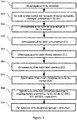
- FIG. 3 there is depicted a sample flow-chart of implementation of the method i accordance with the non-limiting embodiments of the present technology.
- the described method allows the reliable ranging of the measurement results.
- the electrodes located at the C3, C4, T3, T4, P3 and F4 points are arranged on the user's head, defined according to 10-20% international electrodes arrangement scheme C4-T4.
- the user fills a questionnaire where he enters: full name, gender, dominant arm, dominant eye, age, education, user's economic activity (when the user has a job), marital status, the number of children, financial status, the questions concerned the presented multimedia messages (for example, the rate of consumption of the goods/products that multimedia message promotes, etc.).
- the user is also invited to specify some user's individual body built peculiarities or characteristics of current health that may affect the results of multimedia messages' presentation or processing of the registered data.
- peculiarities or characteristics may be: cerebropathy condition, head injuries, convulsive attacks condition, epistaxis, recent sleep disturbances or long-lasting sleeplessness, health degradation on the day before or at the day of multimedia messages' presentation, increased nervous and emotional tension on the day before or on the day of multimedia messages' presentation, alcohol or drugs ingestion on the day before or on the day of multimedia messages' presentation, strong tea or coffee ingestion on the day before or on the day of multimedia messages' presentation.
- the user 105 is presented with at least one multimedia message; the user's 105 brain activity indexes are registered using the electrodes as arrange at Step 314, the electrodes being linked with the tool for electroencephalogram's reading 120 and/or computer 130 .
- the multimedia message is presented to the user 105 in the sequence of (multimedia) messages that includes additional multimedia messages; herein the additional multimedia messages may be placed at the start and at the end of sequence.
- at least one user may be presented with at least one multimedia message and at least two additional multimedia messages.
- the multimedia messages including the additional multimedia messages, belonging to the good's price category.
- the multimedia messages, including the additional multimedia messages being of the same category of artistic presentation.
- the aforementioned sequence of messages includes pauses between additional multimedia messages, also between the additional multimedia messages and multimedia message.
- the pauses may be filled by neutral videoclips.
- the aforementioned sequence of messages includes at least one neutral ambient multimedia message, for example, an image of the clouded sky.
- the neutral ambient multimedia message used for reading (registration) of the user's neurophysiologic parameters in quiescent state may be used for smoothing of the impact of the previous multimedia message.
- the aforementioned sequence of messages includes a start (introductory) multimedia message with instructions for user - for example, "close your eyes”, “open your eyes”, “look at the screen” etc.
- the procedure of probability-distribution entropy calculation for one lead includes:
- the leads' first coherence (K1) that is equal to leads' coherence for T3 and T4 electrodes within the range 30-45 Hz is determined.
- the leads' second coherence (K2) that is equal to leads' coherence for C4 and T4 electrodes within the range 4-8 Hz is determined.
- the leads' third coherence (K3) that is equal to leads' coherence for P3 and F4 electrodes within the range 8-13 Hz is determined.
- the memorability's weighting factor for the E1 (KE1) is specified.
- KR1, KR2 and KR3, respectively second and third memorability's weighting factors, respectively, for K1, K2 and K3 (KR1, KR2 and KR3, respectively) are specified.
- KR1, KR3, KR2 and KE1 will be chosen such that KR1 ⁇ KR3 ⁇ KR2 ⁇ KE1.
- KR1 0.5 ⁇ 30%
- KR3 1 ⁇ 30%
- KR2 2 ⁇ 30%
- KE1 4 ⁇ 30%.
- the multimedia message's memorability is determined via calculation of the sum of productions KE1 ⁇ E1, KR1 ⁇ K1, KR2 ⁇ K2 and KR3 ⁇ K3 for E1, K1, K2 and K3, specified for the multimedia message.
- the base memorability may be estimated via calculation of the sum of productions KE1 ⁇ E1 b , KR1 ⁇ K1 b , KR2 ⁇ K2 b and KR3 ⁇ K3 b , E1 b , K1 b , K2 b and K3 b being defined for a reference multimedia message with a defined retention probability, determining that the multimedia message retention probability is higher than reference multimedia message retention probability when BRec is higher than Rec, or lower than reference multimedia message retention probability when BRec is lower than Rec.
- the reference multimedia message may be presented to several users, and the reference multimedia message retention probability may be calculated as amount of users who retained the message, divided by the total amount of users both having retained or not the reference multimedia message.
- the reference multimedia message may be a promotional video.
- the multimedia message memorability probability may be set as 50%.
- the multimedia message may be presented to several users, and E1, K1, K2 and K3 may be the average values of E1, K1, K2 and K3 calculated for all users.
- the artifact due spontaneous user behavior may be an eye blink artifact.
- the average BRec and the BRec defined for user may be considered unreliable if the divergence of average BRec and BRec defined for the users is more than 20% with respect to average BRec.
- the user's eyelids' position may be registered via the video monitoring devices, and the results at the closed position of the user's eyelids lasting for more than 2 seconds may be excluded from the electroencephalograms.
- Probability calculation functional relation based on the measurement results may be derived based on the results of machine learning using for example the questionnaire as learning sequence result.
- Additional parameter for machine learning during memorability calculation may include percentage growth of sales for goods that were advertised in promotional videos that were the subjects of research.
- 10% difference in E1 corresponded to probability change from 55 to 45 percent, 10% difference in K1 - from 55 to 50%, 10% difference in K2 - from 55 to 53 %, and K3 - from 55 to 54%.
- 10% difference in K1 - corresponded to probability change from 55 to 45 percent
- 10% difference in K1 - corresponded to probability change from 55 to 45 percent
- 10% difference in K2 - corresponded to probability change from 55 to 45 percent
- 10% difference in K2 - corresponded to probability change from 55 to 53 percent
- K3 - from 55 to 54%.
- the users are the group of people who buy/consume the specified (examined) product (good, service etc.), that represents the specified market's consumer segment or group of several segments.
- the target group as a rule, has certain properties: social and age, geographic, psychological, consumer etc.
- the target group excludes the following users: respondents (and/or their family members) working in advertising/PR, marketing/marketing research, manufacturing or sales of the researched products, television, radio, press, sociology, psychology and/or medicine; respondents that endured cerebropathy, head injuries, convulsive attacks, epistaxis and/or respondents with ophtalmopathy.
- Fig. 4a and 4b show the sample variant of electrodes' supports.
- the individual case of reading the electroencephalogram 120A is the multi-electrode electroencephalograph.
- the tool for electroencephalogram's reading 120 may be the integrated part of neuro-fitting which provides the fixing at user 105 head the electrodes 115 in positions described in earlier in the present description.
- the electrodes support is adjusted (particularly, electrodes 115 position change) such that all electrodes are tightly fit one the user 105 head skin to improve the proper EEG signal acquisition.
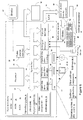
- Fig. 5 shows a variant of the present system implementation, including the user equipment.
- the user equipment shown on Fig. 5 is associated with one user, in particular, to user 105 .
- the system includes the computer 130 , the tool for electroencephalogram's reading 120 , the electrodes 115 linked therewith, and the display 110 , though it should be understood that user equipment or system's local part may belong to at least other user.
- the number of users in the present description is not limited in one particular case and may depend on: the speed of connection of the computer or any other part of the described system (for example in case when system includes - or is linked to - computing devices, tools, modules etc. allowing to perform connection with such devices, tools, modules etc.), with Internet network (system); the data processing rate of described devices, tools, modules etc. and their other specifications. For the one particular case of implementation there will be performed the detection of EEG response to presentation of multimedia message.
- the multimedia message generation module 513 performs playback (particularly, generation) of at least one multimedia message displayed on display 110 for user 105 .
- the parameters of multimedia messages and their presentation are defined by multimedia message generation module 513 .
- the entering of the multimedia message parameters mentioned earlier may be performed in the multimedia message generation module 513 by an operator, for example with multimedia message parameters setting module that may be part of the computer 130 , submodule of the multimedia message generation module 513 or may be linked with them in any known way.
- the multimedia message generation module 513 may also perform the data transmission to data processing and analysis module 523 for later processing.
- the data transmitted may be the specifications (parameters) of the multimedia messages generated (and presented), which may be used by data processing and analysis module 523 as described in the present description.
- the tool for electroencephalogram reading (registration) 120 using connected electrodes 115 performs the reading of electroencephalogram (EEG), particularly, for registration of user's 105 brain activity to presented multimedia messages.
- EEG electroencephalogram
- the registered electroencephalogram transmits to data processing and analysis module 523 of computer 130 via wired and/or wireless data transmitting devices.
- the registered electroencephalogram may be preprocessed by the tool for electroencephalogram's reading 120 or, at least, by one of its parts - for example, by preprocessing module.
- the pre-processing mentioned may include, for example, the decomposition of one signal registered by the tool for electroencephalogram's reading 120 to several signals, extraction of one signal from the group of signals, averaging (period), noise removal at least for one signal etc.
- pre-processing may be performed either by computer 130 (for example, by data processing and analysis module 523 ), and/or by other module (for example, by data preprocessing module that is a part of the computer 130 ).
- the data transmitted to data processing and analysis module 523 may be analyzed (and/or processed) by such module.
- the data processing and analysis module 523 may perform the multimedia message memorability calculation as described in the present description.
- the transmitted to the computer 130 data may be stored in computer's 130 database at a data storage device (particularly, at data storage).
- the database may also store the configuration parameters described in the present description, for example related to users, multimedia messages, etc.
- the aforementioned database may be hierarchical, object, object-oriented, document-oriented, object-relational, relational, network and/or functional database, either of which may centralized, localized, distributed, heterogeneous, homogenous, fragmented (partitioned), replicated, spatial, temporal, spatial-temporal, cyclic, very large database etc., wherein for database management, creation and usage there may be used different DataBase Management Systems (DBMS).
- DBMS DataBase Management Systems
- the aforementioned storage may be a temporary storage memory (for example, random access memory RAM), a persistent repository (for example, (programmable) read-only memory ROM), among other, realized at least as one microchip or as microchip set etc.
- the data may be stored in a repository, at least as one file (particularly, in text file), or the data may be stored in any known present data (information) storage format or in format that may arise in future.
- Fig. 6 shows an example of computer system of general purpose, which includes multifunctional computing device in the form of computer 20 or server, or mobile (computing) device, or the module of the system described in the present description, that in one particular case may be a terminal (computing) devices (for example, user or operator terminal, etc.), comprising a processor 21 , a system memory 22 and a system bus 23 , that performs connection of different components of system, including the system memory with processor 21 .
- multifunctional computing device in the form of computer 20 or server, or mobile (computing) device, or the module of the system described in the present description, that in one particular case may be a terminal (computing) devices (for example, user or operator terminal, etc.), comprising a processor 21 , a system memory 22 and a system bus 23 , that performs connection of different components of system, including the system memory with processor 21 .
- the system bus 23 may be of any type of different bus structures, including memory bus or memory controller, peripheral bus and local bus, with any bus architecture.
- the system memory 22 includes read-only memory ROM 24 and random access memory RAM 25 .
- ROM 24 there stored basic input-output system BIOS 26 , comprising base subprograms which render assistance to exchange of data between elements of computer 20 - for example, at system's start.
- the computer 20 also may include the hard disk drive 27 for reading and writing of hard drive (not shown), magnetic disk drive 28 for reading and writing of removable magnetic disks 29 , and optical disk drive 30 for reading and writing of optical disks 31 such as compact disk, digital video disk and other optical tools.
- Hard disk drive 27 , magnetic disk drive 28 and optical disk drive 30 are connected with system bus 23 via, correspondingly, hard disk drive interface 32 , magnetic disk drive interface 33 and optical disk drive interface 34 .
- the drives and their corresponding readable by the computer tools are providing the nonvolatile storage of readable by the computer instructions, data structures, software modules and other computer 20 data.
- sample configuration described herein uses a hard drive, removable magnetic disk 29 and removable optical disk 31
- other computer-readable means of data storage that may be available via computer such as magnetic tapes, flash-memory devices, digital video discs, Bernoulli cartridges, random access memory RAM devices, read-only access memory ROM devices and similar.
- Different software components including the operating system 35 , may be stored at hard drive, magnetic disc 29 , optical disk 31 , RAM 24 or ROM 25 .
- the computer 20 includes the file system 36 , connected with operating system 35 or included in it, one or more software applications 37 , other software components 38 and software data 39 .
- User may enter the commands and information to computer 20 via input devices such as keyboard 40 and pointing device 42 .
- Other input devices may include microphone, joystick, gamepad, satellite antenna, scanner or any other device.
- Aforementioned (and other) input devices are connected with the processor 21 usually via serial port interface 46 connected with system bus, but they may be connected via different interfaces, such as parallel port, game port or universal serial bus (USB).
- Display 47 or other type of visual display device also connected with system bus 23 via, for example video adapter interface 48 .
- the personal computers usually includes other peripheral output devices (not shown), such as printers.
- the computer 20 may work in networked environment via logical connections with one or more remote computers 49 .
- a remote computer (or computers) 49 may be a different computer, server, router, network PC, peer-to-peer device or other node of the single network, and usually includes the majority or all elements described above, in relation to computer 20 , though only the information storage device 50 of the remote computer 49 is shown.
- Logical connections include local area network LAN 51 and wide area network WAN 52 .
- Such network environments are the usual thing for enterprises, intranet, Internet.
- Computer 20 uses a LAN network to connect with local network 51 via network interface or adapter 53 .
- Computer 20 used in WAN network usually use modem 54 or other devices to connect with wide area network 52 such as Internet.
- the modem 54 that may be internal or external device connected with system bus 23 via serial port interface 46 .
- the software components and its parts described in relation to computer 20 may be stored at remote data storage device. It is necessary to take into consideration that all shown network connections are typical and there exists other communication methods for computers.
Landscapes
- Health & Medical Sciences (AREA)
- Life Sciences & Earth Sciences (AREA)
- Engineering & Computer Science (AREA)
- Physics & Mathematics (AREA)
- General Health & Medical Sciences (AREA)
- Biomedical Technology (AREA)
- Surgery (AREA)
- Public Health (AREA)
- Pathology (AREA)
- Veterinary Medicine (AREA)
- Biophysics (AREA)
- Heart & Thoracic Surgery (AREA)
- Medical Informatics (AREA)
- Molecular Biology (AREA)
- Animal Behavior & Ethology (AREA)
- Psychology (AREA)
- Psychiatry (AREA)
- Theoretical Computer Science (AREA)
- General Engineering & Computer Science (AREA)
- Neurology (AREA)
- Educational Technology (AREA)
- Developmental Disabilities (AREA)
- Child & Adolescent Psychology (AREA)
- Hospice & Palliative Care (AREA)
- Social Psychology (AREA)
- Physiology (AREA)
- Oral & Maxillofacial Surgery (AREA)
- Business, Economics & Management (AREA)
- Dentistry (AREA)
- Otolaryngology (AREA)
- General Physics & Mathematics (AREA)
- Human Resources & Organizations (AREA)
- Human Computer Interaction (AREA)
- Neurosurgery (AREA)
- Ophthalmology & Optometry (AREA)
- Economics (AREA)
- Strategic Management (AREA)
- Artificial Intelligence (AREA)
- Entrepreneurship & Innovation (AREA)
- Dermatology (AREA)
Applications Claiming Priority (2)
| Application Number | Priority Date | Filing Date | Title |
|---|---|---|---|
| PCT/RU2018/000848 WO2020130870A1 (ru) | 2018-12-21 | 2018-12-21 | Способ измерения запоминаемости мультимедийного сообщения |
| RU2018145585A RU2708197C1 (ru) | 2018-12-21 | 2018-12-21 | Способ измерения запоминаемости мультимедийного сообщения |
Publications (1)
| Publication Number | Publication Date |
|---|---|
| EP3900631A1 true EP3900631A1 (de) | 2021-10-27 |
Family
ID=68836575
Family Applications (1)
| Application Number | Title | Priority Date | Filing Date |
|---|---|---|---|
| EP18917043.4A Withdrawn EP3900631A1 (de) | 2018-12-21 | 2018-12-21 | Verfahren zur messung der speicherbarkeit einer multimedianachricht |
Country Status (7)
| Country | Link |
|---|---|
| US (1) | US20200202736A1 (de) |
| EP (1) | EP3900631A1 (de) |
| KR (1) | KR20210146459A (de) |
| CN (1) | CN111787860A (de) |
| CA (1) | CA3066584A1 (de) |
| RU (1) | RU2708197C1 (de) |
| WO (1) | WO2020130870A1 (de) |
Families Citing this family (5)
| Publication number | Priority date | Publication date | Assignee | Title |
|---|---|---|---|---|
| KR20210026305A (ko) * | 2019-08-29 | 2021-03-10 | 주식회사 룩시드랩스 | 선호도 결정 방법 및 이를 이용한 선호도 결정용 디바이스 |
| FR3111728A1 (fr) * | 2020-06-25 | 2021-12-24 | Orange | Procédé d’aide à l’apprentissage d’une pluralité d’informations par un utilisateur d’un terminal. |
| CN112637224B (zh) * | 2020-12-28 | 2022-11-15 | 浙江工业大学 | 一种自治系统内基于子空间和相对熵的DDoS攻击检测方法 |
| CN112957050B (zh) * | 2021-02-10 | 2023-02-28 | 首都医科大学宣武医院 | 基于脑机接口设备技术的视觉记忆能力评测装置及方法 |
| CN115192031A (zh) * | 2022-09-15 | 2022-10-18 | 北京金博智慧健康科技有限公司 | 头带结构 |
Family Cites Families (19)
| Publication number | Priority date | Publication date | Assignee | Title |
|---|---|---|---|---|
| US5331969A (en) * | 1985-07-30 | 1994-07-26 | Swinburne Limited | Equipment for testing or measuring brain activity |
| US4794533A (en) * | 1986-11-07 | 1988-12-27 | Cns, Inc. | System activity change indicator |
| US5243517A (en) * | 1988-08-03 | 1993-09-07 | Westinghouse Electric Corp. | Method and apparatus for physiological evaluation of short films and entertainment materials |
| US5813993A (en) * | 1996-04-05 | 1998-09-29 | Consolidated Research Of Richmond, Inc. | Alertness and drowsiness detection and tracking system |
| EP1139240A3 (de) * | 2000-03-28 | 2003-11-05 | Kenji Mimura | Entwurfs-Verfahren und Entwurfs-Evaluierungs Verfahren und zugehöriges System |
| KR101464397B1 (ko) * | 2007-03-29 | 2014-11-28 | 더 닐슨 컴퍼니 (유에스) 엘엘씨 | 마케팅 및 엔터테인먼트 효과의 분석 |
| US9629568B2 (en) * | 2010-01-06 | 2017-04-25 | Evoke Neuroscience, Inc. | Electrophysiology measurement and training and remote databased and data analysis measurement method and system |
| US20120130800A1 (en) * | 2010-11-24 | 2012-05-24 | Anantha Pradeep | Systems and methods for assessing advertising effectiveness using neurological data |
| US9224309B2 (en) * | 2012-04-02 | 2015-12-29 | Wisconsin Alumni Research Foundation | Teaching system for improving information retention based on brain-state monitoring |
| US9814426B2 (en) * | 2012-06-14 | 2017-11-14 | Medibotics Llc | Mobile wearable electromagnetic brain activity monitor |
| CN102855630A (zh) | 2012-08-21 | 2013-01-02 | 西北工业大学 | 一种基于saliency熵和object bank特征的图像记忆性判定方法 |
| CN103440496B (zh) * | 2013-08-01 | 2016-07-13 | 西北工业大学 | 一种基于功能磁共振成像的视频记忆性判别方法 |
| CN103500184B (zh) | 2013-09-13 | 2017-05-24 | 西北工业大学 | 一种基于视频数据的底层视听觉特征的视频记忆性判定方法 |
| PL409241A1 (pl) * | 2014-08-22 | 2016-02-29 | Maciej Rudziński | Sposób i system przetwarzania sygnału EEG |
| US20180184962A1 (en) * | 2015-06-26 | 2018-07-05 | BrainMarc Ltd. | Methods and systems for determination of mental state |
| US20170337834A1 (en) * | 2016-05-17 | 2017-11-23 | Rajaa Shindi | Interactive brain trainer |
| KR102179983B1 (ko) * | 2016-06-07 | 2020-11-18 | 뉴로스티어 엘티디. | 뇌활동을 분석하는 시스템 및 방법 그리고 그 애플리케이션 |
| US11717686B2 (en) * | 2017-12-04 | 2023-08-08 | Neuroenhancement Lab, LLC | Method and apparatus for neuroenhancement to facilitate learning and performance |
| CN108260012B (zh) * | 2018-03-14 | 2020-12-04 | Oppo广东移动通信有限公司 | 电子装置、视频播放控制方法及相关产品 |
-
2018
- 2018-12-21 EP EP18917043.4A patent/EP3900631A1/de not_active Withdrawn
- 2018-12-21 CA CA3066584A patent/CA3066584A1/en not_active Abandoned
- 2018-12-21 KR KR1020197023163A patent/KR20210146459A/ko not_active Withdrawn
- 2018-12-21 RU RU2018145585A patent/RU2708197C1/ru active
- 2018-12-21 CN CN201880004871.7A patent/CN111787860A/zh active Pending
- 2018-12-21 WO PCT/RU2018/000848 patent/WO2020130870A1/ru not_active Ceased
-
2019
- 2019-12-10 US US16/709,600 patent/US20200202736A1/en not_active Abandoned
Also Published As
| Publication number | Publication date |
|---|---|
| WO2020130870A1 (ru) | 2020-06-25 |
| KR20210146459A (ko) | 2021-12-06 |
| CN111787860A (zh) | 2020-10-16 |
| US20200202736A1 (en) | 2020-06-25 |
| CA3066584A1 (en) | 2020-06-21 |
| RU2708197C1 (ru) | 2019-12-04 |
Similar Documents
| Publication | Publication Date | Title |
|---|---|---|
| US20200202736A1 (en) | Memorability Measurement Method for Multimedia Messages | |
| Hölle et al. | Mobile ear-EEG to study auditory attention in everyday life: Auditory attention in everyday life | |
| US10733625B2 (en) | Neuro-response stimulus and stimulus attribute resonance estimator | |
| Berg et al. | Free viewing of dynamic stimuli by humans and monkeys | |
| McIntosh et al. | When the social mirror breaks: deficits in automatic, but not voluntary, mimicry of emotional facial expressions in autism | |
| US20140164095A1 (en) | Neuro-response data synchronization | |
| Kovalenko et al. | A pool of pairs of related objects (POPORO) for investigating visual semantic integration: Behavioral and electrophysiological validation | |
| US20110282231A1 (en) | Mechanisms for collecting electroencephalography data | |
| Fraedrich et al. | Brain activity during emotion perception: the role of attachment representation | |
| Handy et al. | ERP evidence for rapid hedonic evaluation of logos | |
| US20110046502A1 (en) | Distributed neuro-response data collection and analysis | |
| JP2010537738A (ja) | 消費者経験査定装置 | |
| Genzer et al. | Mu rhythm suppression over sensorimotor regions is associated with greater empathic accuracy | |
| CN101711124A (zh) | 使用神经反应测量的多市场节目和广告反应监测系统 | |
| Hu et al. | EEG-based cognitive interfaces for ubiquitous applications: Developments and challenges | |
| Anderson et al. | High psychopathic trait females exhibit reduced startle potentiation and increased P3 amplitude | |
| Riels et al. | Oscillatory brain activity links experience to expectancy during associative learning | |
| Hassani et al. | Gender differences in EEG responses to color and black-white images: implications for neuromarketing strategies | |
| Guilleminot et al. | Audiotactile stimulation can improve syllable discrimination through multisensory integration in the theta frequency band | |
| Sun et al. | A neural signature encoding decisions under perceptual ambiguity | |
| Clayton | Psychophysiological responses to using digital media | |
| Nascimben et al. | A minimal setup for spontaneous smile quantification applicable for valence detection | |
| Chernyshov et al. | EOG Glasses: An eyewear platform for cognitive and social interaction assessments in the Wild | |
| RU2722447C1 (ru) | Способ оценки произвольного внимания на основе глазодвигательных показателей и амплитудно-частотных характеристик электроэнцефалограммы | |
| Muñoz et al. | Selling of products: the use of single-electrode wireless EEG in consumer behavior |
Legal Events
| Date | Code | Title | Description |
|---|---|---|---|
| STAA | Information on the status of an ep patent application or granted ep patent |
Free format text: STATUS: UNKNOWN |
|
| STAA | Information on the status of an ep patent application or granted ep patent |
Free format text: STATUS: THE INTERNATIONAL PUBLICATION HAS BEEN MADE |
|
| PUAI | Public reference made under article 153(3) epc to a published international application that has entered the european phase |
Free format text: ORIGINAL CODE: 0009012 |
|
| STAA | Information on the status of an ep patent application or granted ep patent |
Free format text: STATUS: REQUEST FOR EXAMINATION WAS MADE |
|
| 17P | Request for examination filed |
Effective date: 20191114 |
|
| AK | Designated contracting states |
Kind code of ref document: A1 Designated state(s): AL AT BE BG CH CY CZ DE DK EE ES FI FR GB GR HR HU IE IS IT LI LT LU LV MC MK MT NL NO PL PT RO RS SE SI SK SM TR |
|
| DAV | Request for validation of the european patent (deleted) | ||
| DAX | Request for extension of the european patent (deleted) | ||
| STAA | Information on the status of an ep patent application or granted ep patent |
Free format text: STATUS: THE APPLICATION IS DEEMED TO BE WITHDRAWN |
|
| 18D | Application deemed to be withdrawn |
Effective date: 20220122 |