EP3901237B1 - Configuration de processus pour la production de matières premières pétrochimiques - Google Patents
Configuration de processus pour la production de matières premières pétrochimiques Download PDFInfo
- Publication number
- EP3901237B1 EP3901237B1 EP21168136.6A EP21168136A EP3901237B1 EP 3901237 B1 EP3901237 B1 EP 3901237B1 EP 21168136 A EP21168136 A EP 21168136A EP 3901237 B1 EP3901237 B1 EP 3901237B1
- Authority
- EP
- European Patent Office
- Prior art keywords
- stream
- aromatics
- unit
- produce
- range
- Prior art date
- Legal status (The legal status is an assumption and is not a legal conclusion. Google has not performed a legal analysis and makes no representation as to the accuracy of the status listed.)
- Active
Links
Images

Classifications
-
- C—CHEMISTRY; METALLURGY
- C10—PETROLEUM, GAS OR COKE INDUSTRIES; TECHNICAL GASES CONTAINING CARBON MONOXIDE; FUELS; LUBRICANTS; PEAT
- C10G—CRACKING HYDROCARBON OILS; PRODUCTION OF LIQUID HYDROCARBON MIXTURES, e.g. BY DESTRUCTIVE HYDROGENATION, OLIGOMERISATION, POLYMERISATION; RECOVERY OF HYDROCARBON OILS FROM OIL-SHALE, OIL-SAND, OR GASES; REFINING MIXTURES MAINLY CONSISTING OF HYDROCARBONS; REFORMING OF NAPHTHA; MINERAL WAXES
- C10G7/00—Distillation of hydrocarbon oils
- C10G7/08—Azeotropic or extractive distillation
-
- C—CHEMISTRY; METALLURGY
- C10—PETROLEUM, GAS OR COKE INDUSTRIES; TECHNICAL GASES CONTAINING CARBON MONOXIDE; FUELS; LUBRICANTS; PEAT
- C10G—CRACKING HYDROCARBON OILS; PRODUCTION OF LIQUID HYDROCARBON MIXTURES, e.g. BY DESTRUCTIVE HYDROGENATION, OLIGOMERISATION, POLYMERISATION; RECOVERY OF HYDROCARBON OILS FROM OIL-SHALE, OIL-SAND, OR GASES; REFINING MIXTURES MAINLY CONSISTING OF HYDROCARBONS; REFORMING OF NAPHTHA; MINERAL WAXES
- C10G69/00—Treatment of hydrocarbon oils by at least one hydrotreatment process and at least one other conversion process
- C10G69/02—Treatment of hydrocarbon oils by at least one hydrotreatment process and at least one other conversion process plural serial stages only
- C10G69/04—Treatment of hydrocarbon oils by at least one hydrotreatment process and at least one other conversion process plural serial stages only including at least one step of catalytic cracking in the absence of hydrogen
-
- B—PERFORMING OPERATIONS; TRANSPORTING
- B01—PHYSICAL OR CHEMICAL PROCESSES OR APPARATUS IN GENERAL
- B01D—SEPARATION
- B01D3/00—Distillation or related exchange processes in which liquids are contacted with gaseous media, e.g. stripping
- B01D3/34—Distillation or related exchange processes in which liquids are contacted with gaseous media, e.g. stripping with one or more auxiliary substances
- B01D3/40—Extractive distillation
-
- B—PERFORMING OPERATIONS; TRANSPORTING
- B01—PHYSICAL OR CHEMICAL PROCESSES OR APPARATUS IN GENERAL
- B01J—CHEMICAL OR PHYSICAL PROCESSES, e.g. CATALYSIS OR COLLOID CHEMISTRY; THEIR RELEVANT APPARATUS
- B01J19/00—Chemical, physical or physico-chemical processes in general; Their relevant apparatus
- B01J19/24—Stationary reactors without moving elements inside
- B01J19/245—Stationary reactors without moving elements inside placed in series
-
- C—CHEMISTRY; METALLURGY
- C07—ORGANIC CHEMISTRY
- C07C—ACYCLIC OR CARBOCYCLIC COMPOUNDS
- C07C5/00—Preparation of hydrocarbons from hydrocarbons containing the same number of carbon atoms
- C07C5/32—Preparation of hydrocarbons from hydrocarbons containing the same number of carbon atoms by dehydrogenation with formation of free hydrogen
- C07C5/373—Preparation of hydrocarbons from hydrocarbons containing the same number of carbon atoms by dehydrogenation with formation of free hydrogen with simultaneous isomerisation
- C07C5/393—Preparation of hydrocarbons from hydrocarbons containing the same number of carbon atoms by dehydrogenation with formation of free hydrogen with simultaneous isomerisation with cyclisation to an aromatic six-membered ring, e.g. dehydrogenation of n-hexane to benzene
-
- C—CHEMISTRY; METALLURGY
- C07—ORGANIC CHEMISTRY
- C07C—ACYCLIC OR CARBOCYCLIC COMPOUNDS
- C07C6/00—Preparation of hydrocarbons from hydrocarbons containing a different number of carbon atoms by redistribution reactions
- C07C6/02—Metathesis reactions at an unsaturated carbon-to-carbon bond
- C07C6/04—Metathesis reactions at an unsaturated carbon-to-carbon bond at a carbon-to-carbon double bond
-
- C—CHEMISTRY; METALLURGY
- C10—PETROLEUM, GAS OR COKE INDUSTRIES; TECHNICAL GASES CONTAINING CARBON MONOXIDE; FUELS; LUBRICANTS; PEAT
- C10G—CRACKING HYDROCARBON OILS; PRODUCTION OF LIQUID HYDROCARBON MIXTURES, e.g. BY DESTRUCTIVE HYDROGENATION, OLIGOMERISATION, POLYMERISATION; RECOVERY OF HYDROCARBON OILS FROM OIL-SHALE, OIL-SAND, OR GASES; REFINING MIXTURES MAINLY CONSISTING OF HYDROCARBONS; REFORMING OF NAPHTHA; MINERAL WAXES
- C10G11/00—Catalytic cracking, in the absence of hydrogen, of hydrocarbon oils
- C10G11/14—Catalytic cracking, in the absence of hydrogen, of hydrocarbon oils with preheated moving solid catalysts
- C10G11/18—Catalytic cracking, in the absence of hydrogen, of hydrocarbon oils with preheated moving solid catalysts according to the "fluidised-bed" technique
-
- C—CHEMISTRY; METALLURGY
- C10—PETROLEUM, GAS OR COKE INDUSTRIES; TECHNICAL GASES CONTAINING CARBON MONOXIDE; FUELS; LUBRICANTS; PEAT
- C10G—CRACKING HYDROCARBON OILS; PRODUCTION OF LIQUID HYDROCARBON MIXTURES, e.g. BY DESTRUCTIVE HYDROGENATION, OLIGOMERISATION, POLYMERISATION; RECOVERY OF HYDROCARBON OILS FROM OIL-SHALE, OIL-SAND, OR GASES; REFINING MIXTURES MAINLY CONSISTING OF HYDROCARBONS; REFORMING OF NAPHTHA; MINERAL WAXES
- C10G35/00—Reforming naphtha
- C10G35/04—Catalytic reforming
-
- C—CHEMISTRY; METALLURGY
- C10—PETROLEUM, GAS OR COKE INDUSTRIES; TECHNICAL GASES CONTAINING CARBON MONOXIDE; FUELS; LUBRICANTS; PEAT
- C10G—CRACKING HYDROCARBON OILS; PRODUCTION OF LIQUID HYDROCARBON MIXTURES, e.g. BY DESTRUCTIVE HYDROGENATION, OLIGOMERISATION, POLYMERISATION; RECOVERY OF HYDROCARBON OILS FROM OIL-SHALE, OIL-SAND, OR GASES; REFINING MIXTURES MAINLY CONSISTING OF HYDROCARBONS; REFORMING OF NAPHTHA; MINERAL WAXES
- C10G45/00—Refining of hydrocarbon oils using hydrogen or hydrogen-generating compounds
- C10G45/32—Selective hydrogenation of the diolefin or acetylene compounds
-
- C—CHEMISTRY; METALLURGY
- C10—PETROLEUM, GAS OR COKE INDUSTRIES; TECHNICAL GASES CONTAINING CARBON MONOXIDE; FUELS; LUBRICANTS; PEAT
- C10G—CRACKING HYDROCARBON OILS; PRODUCTION OF LIQUID HYDROCARBON MIXTURES, e.g. BY DESTRUCTIVE HYDROGENATION, OLIGOMERISATION, POLYMERISATION; RECOVERY OF HYDROCARBON OILS FROM OIL-SHALE, OIL-SAND, OR GASES; REFINING MIXTURES MAINLY CONSISTING OF HYDROCARBONS; REFORMING OF NAPHTHA; MINERAL WAXES
- C10G51/00—Treatment of hydrocarbon oils, in the absence of hydrogen, by two or more cracking processes only
- C10G51/06—Treatment of hydrocarbon oils, in the absence of hydrogen, by two or more cracking processes only plural parallel stages only
-
- C—CHEMISTRY; METALLURGY
- C10—PETROLEUM, GAS OR COKE INDUSTRIES; TECHNICAL GASES CONTAINING CARBON MONOXIDE; FUELS; LUBRICANTS; PEAT
- C10G—CRACKING HYDROCARBON OILS; PRODUCTION OF LIQUID HYDROCARBON MIXTURES, e.g. BY DESTRUCTIVE HYDROGENATION, OLIGOMERISATION, POLYMERISATION; RECOVERY OF HYDROCARBON OILS FROM OIL-SHALE, OIL-SAND, OR GASES; REFINING MIXTURES MAINLY CONSISTING OF HYDROCARBONS; REFORMING OF NAPHTHA; MINERAL WAXES
- C10G65/00—Treatment of hydrocarbon oils by two or more hydrotreatment processes only
- C10G65/02—Treatment of hydrocarbon oils by two or more hydrotreatment processes only plural serial stages only
- C10G65/12—Treatment of hydrocarbon oils by two or more hydrotreatment processes only plural serial stages only including cracking steps and other hydrotreatment steps
-
- C—CHEMISTRY; METALLURGY
- C10—PETROLEUM, GAS OR COKE INDUSTRIES; TECHNICAL GASES CONTAINING CARBON MONOXIDE; FUELS; LUBRICANTS; PEAT
- C10G—CRACKING HYDROCARBON OILS; PRODUCTION OF LIQUID HYDROCARBON MIXTURES, e.g. BY DESTRUCTIVE HYDROGENATION, OLIGOMERISATION, POLYMERISATION; RECOVERY OF HYDROCARBON OILS FROM OIL-SHALE, OIL-SAND, OR GASES; REFINING MIXTURES MAINLY CONSISTING OF HYDROCARBONS; REFORMING OF NAPHTHA; MINERAL WAXES
- C10G65/00—Treatment of hydrocarbon oils by two or more hydrotreatment processes only
- C10G65/14—Treatment of hydrocarbon oils by two or more hydrotreatment processes only plural parallel stages only
-
- C—CHEMISTRY; METALLURGY
- C10—PETROLEUM, GAS OR COKE INDUSTRIES; TECHNICAL GASES CONTAINING CARBON MONOXIDE; FUELS; LUBRICANTS; PEAT
- C10G—CRACKING HYDROCARBON OILS; PRODUCTION OF LIQUID HYDROCARBON MIXTURES, e.g. BY DESTRUCTIVE HYDROGENATION, OLIGOMERISATION, POLYMERISATION; RECOVERY OF HYDROCARBON OILS FROM OIL-SHALE, OIL-SAND, OR GASES; REFINING MIXTURES MAINLY CONSISTING OF HYDROCARBONS; REFORMING OF NAPHTHA; MINERAL WAXES
- C10G69/00—Treatment of hydrocarbon oils by at least one hydrotreatment process and at least one other conversion process
- C10G69/14—Treatment of hydrocarbon oils by at least one hydrotreatment process and at least one other conversion process plural parallel stages only
-
- B—PERFORMING OPERATIONS; TRANSPORTING
- B01—PHYSICAL OR CHEMICAL PROCESSES OR APPARATUS IN GENERAL
- B01J—CHEMICAL OR PHYSICAL PROCESSES, e.g. CATALYSIS OR COLLOID CHEMISTRY; THEIR RELEVANT APPARATUS
- B01J2219/00—Chemical, physical or physico-chemical processes in general; Their relevant apparatus
- B01J2219/00002—Chemical plants
- B01J2219/00027—Process aspects
- B01J2219/0004—Processes in series
-
- C—CHEMISTRY; METALLURGY
- C10—PETROLEUM, GAS OR COKE INDUSTRIES; TECHNICAL GASES CONTAINING CARBON MONOXIDE; FUELS; LUBRICANTS; PEAT
- C10G—CRACKING HYDROCARBON OILS; PRODUCTION OF LIQUID HYDROCARBON MIXTURES, e.g. BY DESTRUCTIVE HYDROGENATION, OLIGOMERISATION, POLYMERISATION; RECOVERY OF HYDROCARBON OILS FROM OIL-SHALE, OIL-SAND, OR GASES; REFINING MIXTURES MAINLY CONSISTING OF HYDROCARBONS; REFORMING OF NAPHTHA; MINERAL WAXES
- C10G2300/00—Aspects relating to hydrocarbon processing covered by groups C10G1/00 - C10G99/00
- C10G2300/20—Characteristics of the feedstock or the products
- C10G2300/201—Impurities
- C10G2300/202—Heteroatoms content, i.e. S, N, O, P
-
- C—CHEMISTRY; METALLURGY
- C10—PETROLEUM, GAS OR COKE INDUSTRIES; TECHNICAL GASES CONTAINING CARBON MONOXIDE; FUELS; LUBRICANTS; PEAT
- C10G—CRACKING HYDROCARBON OILS; PRODUCTION OF LIQUID HYDROCARBON MIXTURES, e.g. BY DESTRUCTIVE HYDROGENATION, OLIGOMERISATION, POLYMERISATION; RECOVERY OF HYDROCARBON OILS FROM OIL-SHALE, OIL-SAND, OR GASES; REFINING MIXTURES MAINLY CONSISTING OF HYDROCARBONS; REFORMING OF NAPHTHA; MINERAL WAXES
- C10G2300/00—Aspects relating to hydrocarbon processing covered by groups C10G1/00 - C10G99/00
- C10G2300/20—Characteristics of the feedstock or the products
- C10G2300/30—Physical properties of feedstocks or products
- C10G2300/301—Boiling range
-
- C—CHEMISTRY; METALLURGY
- C10—PETROLEUM, GAS OR COKE INDUSTRIES; TECHNICAL GASES CONTAINING CARBON MONOXIDE; FUELS; LUBRICANTS; PEAT
- C10G—CRACKING HYDROCARBON OILS; PRODUCTION OF LIQUID HYDROCARBON MIXTURES, e.g. BY DESTRUCTIVE HYDROGENATION, OLIGOMERISATION, POLYMERISATION; RECOVERY OF HYDROCARBON OILS FROM OIL-SHALE, OIL-SAND, OR GASES; REFINING MIXTURES MAINLY CONSISTING OF HYDROCARBONS; REFORMING OF NAPHTHA; MINERAL WAXES
- C10G2300/00—Aspects relating to hydrocarbon processing covered by groups C10G1/00 - C10G99/00
- C10G2300/20—Characteristics of the feedstock or the products
- C10G2300/30—Physical properties of feedstocks or products
- C10G2300/305—Octane number, e.g. motor octane number [MON], research octane number [RON]
-
- C—CHEMISTRY; METALLURGY
- C10—PETROLEUM, GAS OR COKE INDUSTRIES; TECHNICAL GASES CONTAINING CARBON MONOXIDE; FUELS; LUBRICANTS; PEAT
- C10G—CRACKING HYDROCARBON OILS; PRODUCTION OF LIQUID HYDROCARBON MIXTURES, e.g. BY DESTRUCTIVE HYDROGENATION, OLIGOMERISATION, POLYMERISATION; RECOVERY OF HYDROCARBON OILS FROM OIL-SHALE, OIL-SAND, OR GASES; REFINING MIXTURES MAINLY CONSISTING OF HYDROCARBONS; REFORMING OF NAPHTHA; MINERAL WAXES
- C10G2300/00—Aspects relating to hydrocarbon processing covered by groups C10G1/00 - C10G99/00
- C10G2300/20—Characteristics of the feedstock or the products
- C10G2300/30—Physical properties of feedstocks or products
- C10G2300/307—Cetane number, cetane index
-
- C—CHEMISTRY; METALLURGY
- C10—PETROLEUM, GAS OR COKE INDUSTRIES; TECHNICAL GASES CONTAINING CARBON MONOXIDE; FUELS; LUBRICANTS; PEAT
- C10G—CRACKING HYDROCARBON OILS; PRODUCTION OF LIQUID HYDROCARBON MIXTURES, e.g. BY DESTRUCTIVE HYDROGENATION, OLIGOMERISATION, POLYMERISATION; RECOVERY OF HYDROCARBON OILS FROM OIL-SHALE, OIL-SAND, OR GASES; REFINING MIXTURES MAINLY CONSISTING OF HYDROCARBONS; REFORMING OF NAPHTHA; MINERAL WAXES
- C10G2400/00—Products obtained by processes covered by groups C10G9/00 - C10G69/14
- C10G2400/02—Gasoline
-
- C—CHEMISTRY; METALLURGY
- C10—PETROLEUM, GAS OR COKE INDUSTRIES; TECHNICAL GASES CONTAINING CARBON MONOXIDE; FUELS; LUBRICANTS; PEAT
- C10G—CRACKING HYDROCARBON OILS; PRODUCTION OF LIQUID HYDROCARBON MIXTURES, e.g. BY DESTRUCTIVE HYDROGENATION, OLIGOMERISATION, POLYMERISATION; RECOVERY OF HYDROCARBON OILS FROM OIL-SHALE, OIL-SAND, OR GASES; REFINING MIXTURES MAINLY CONSISTING OF HYDROCARBONS; REFORMING OF NAPHTHA; MINERAL WAXES
- C10G2400/00—Products obtained by processes covered by groups C10G9/00 - C10G69/14
- C10G2400/04—Diesel oil
-
- C—CHEMISTRY; METALLURGY
- C10—PETROLEUM, GAS OR COKE INDUSTRIES; TECHNICAL GASES CONTAINING CARBON MONOXIDE; FUELS; LUBRICANTS; PEAT
- C10G—CRACKING HYDROCARBON OILS; PRODUCTION OF LIQUID HYDROCARBON MIXTURES, e.g. BY DESTRUCTIVE HYDROGENATION, OLIGOMERISATION, POLYMERISATION; RECOVERY OF HYDROCARBON OILS FROM OIL-SHALE, OIL-SAND, OR GASES; REFINING MIXTURES MAINLY CONSISTING OF HYDROCARBONS; REFORMING OF NAPHTHA; MINERAL WAXES
- C10G2400/00—Products obtained by processes covered by groups C10G9/00 - C10G69/14
- C10G2400/06—Gasoil
-
- C—CHEMISTRY; METALLURGY
- C10—PETROLEUM, GAS OR COKE INDUSTRIES; TECHNICAL GASES CONTAINING CARBON MONOXIDE; FUELS; LUBRICANTS; PEAT
- C10G—CRACKING HYDROCARBON OILS; PRODUCTION OF LIQUID HYDROCARBON MIXTURES, e.g. BY DESTRUCTIVE HYDROGENATION, OLIGOMERISATION, POLYMERISATION; RECOVERY OF HYDROCARBON OILS FROM OIL-SHALE, OIL-SAND, OR GASES; REFINING MIXTURES MAINLY CONSISTING OF HYDROCARBONS; REFORMING OF NAPHTHA; MINERAL WAXES
- C10G2400/00—Products obtained by processes covered by groups C10G9/00 - C10G69/14
- C10G2400/20—C2-C4 olefins
-
- C—CHEMISTRY; METALLURGY
- C10—PETROLEUM, GAS OR COKE INDUSTRIES; TECHNICAL GASES CONTAINING CARBON MONOXIDE; FUELS; LUBRICANTS; PEAT
- C10G—CRACKING HYDROCARBON OILS; PRODUCTION OF LIQUID HYDROCARBON MIXTURES, e.g. BY DESTRUCTIVE HYDROGENATION, OLIGOMERISATION, POLYMERISATION; RECOVERY OF HYDROCARBON OILS FROM OIL-SHALE, OIL-SAND, OR GASES; REFINING MIXTURES MAINLY CONSISTING OF HYDROCARBONS; REFORMING OF NAPHTHA; MINERAL WAXES
- C10G2400/00—Products obtained by processes covered by groups C10G9/00 - C10G69/14
- C10G2400/22—Higher olefins
-
- C—CHEMISTRY; METALLURGY
- C10—PETROLEUM, GAS OR COKE INDUSTRIES; TECHNICAL GASES CONTAINING CARBON MONOXIDE; FUELS; LUBRICANTS; PEAT
- C10G—CRACKING HYDROCARBON OILS; PRODUCTION OF LIQUID HYDROCARBON MIXTURES, e.g. BY DESTRUCTIVE HYDROGENATION, OLIGOMERISATION, POLYMERISATION; RECOVERY OF HYDROCARBON OILS FROM OIL-SHALE, OIL-SAND, OR GASES; REFINING MIXTURES MAINLY CONSISTING OF HYDROCARBONS; REFORMING OF NAPHTHA; MINERAL WAXES
- C10G2400/00—Products obtained by processes covered by groups C10G9/00 - C10G69/14
- C10G2400/30—Aromatics
-
- Y—GENERAL TAGGING OF NEW TECHNOLOGICAL DEVELOPMENTS; GENERAL TAGGING OF CROSS-SECTIONAL TECHNOLOGIES SPANNING OVER SEVERAL SECTIONS OF THE IPC; TECHNICAL SUBJECTS COVERED BY FORMER USPC CROSS-REFERENCE ART COLLECTIONS [XRACs] AND DIGESTS
- Y02—TECHNOLOGIES OR APPLICATIONS FOR MITIGATION OR ADAPTATION AGAINST CLIMATE CHANGE
- Y02P—CLIMATE CHANGE MITIGATION TECHNOLOGIES IN THE PRODUCTION OR PROCESSING OF GOODS
- Y02P20/00—Technologies relating to chemical industry
- Y02P20/50—Improvements relating to the production of bulk chemicals
- Y02P20/52—Improvements relating to the production of bulk chemicals using catalysts, e.g. selective catalysts
Definitions
- the present invention relates to a process configuration for production of light olefins and aromatics from residual hydrocarbon streams.
- Refining industry is a capital-intensive industry. Refiners face major challenges due to fluctuations in global prices of crude oil and products which affect the gross refinery margin. Stringent emission norms for automotive fuel increase the hydrogen requirements for hydrotreatment of high sulfur fuels. This increases the dependency for import of natural gas. Environmental concerns also lead to development of renewable products which will cause a decline in demand for refinery products. Also, due to the advent of electric vehicles, there might be a decrease in demand of distillate fuels. Therefore, there is a need to convert the distillate fuels to more valuable alternate finished products. The importance and demand for petrochemicals are growing day by day. The olefins and aromatics are the basic building blocks for the petrochemical units.
- the present invention produces mainly olefins, mono aromatics, and high valuable streams from high severity FCC unit.
- all the product streams such as naphtha, light cycle oil, and clarified oil from high severity FCC unit are subjected to various conversion processes for production of light olefins, mono aromatics and high quality distillate streams.
- the present configuration maximizes petrochemical feedstocks in the light of declining demand of transportation fuels.
- US9434894 describes a process for processing hydrocarbons including fractionating a hydrocarbon stream to form at least two fractions.
- the first fraction is reformed to form a reformate stream, and the reformate stream is introduced into an aromatics processing zone to produce aromatic products.
- At least a portion of the second fraction is cracked in a fluid catalytic cracking unit.
- a selectively hydrogenated light naphtha stream is formed by separating the cracked hydrocarbon stream into at least two streams and selectively hydrogenating the light naphtha stream, or selectively hydrogenating the cracked hydrocarbon stream and separating the hydrogenated cracked hydrocarbon stream into at least two streams.
- Aromatics are extracted from the selectively hydrogenated light naphtha stream forming an extract stream and a raffinate stream.
- the extract stream is hydrotreated, sent to the aromatics processing zone to produce additional aromatic products. It also talks about aromatics extractive distillation and using the olefinic FCC raffinate stream in gasoline blending.
- the main shortcoming of this invention is the process employed to produce aromatics from the crude distillation unit utilizing only the straight run naphtha and naphtha stream from FCC.
- the complete products from FCC main fractionator are utilized for production of light olefins and aromatics as petrochemical feedstocks.
- US5685972 relates to an integrated process of hydro treatment and catalytic treatment where in the naphtha is hydrotreated and treated on acidic catalyst to produce BTX and low sulfur gasoline.
- the main disadvantage of this invention is that, only naphtha produced from FCC is used for production of BTX.
- the process flow configuration gives an advantage of producing higher yield of light olefins and aromatics along with high quality distillate fuels.
- US9650579B2 refers to FCC units processing heavy feedstocks enriched with hydrogen, such as for example a highly hydrotreated VGO, or the unconverted part at the end of hydrocracking this same type of VGO feedstock, feedstocks which have the characteristic of cracking to light olefins such as ethylene and propylene.
- the integration of an FCC with an aromatic complex allows the recovery by the aromatic complex of the BTX formed in the FCC, and the recovery by the FCC from the flow at the bottom of the column, of heavy aromatics from the aromatic complex.
- US9644155 provides an integrated process for production of ultra-low sulfur products of high octane gasoline, high aromatic naphtha and high Cetane Diesel by subjecting high aromatic middle distillate range streams from any cracker units such as Light Cycle Oil (LCO) stream of FCC units to hydrotreating for removal of heteroatoms such as sulfur and nitrogen.
- LCO Light Cycle Oil
- the effluent from hydrotreating is subjected to hydrocracking at same pressure of hydrotreating step above for selective opening of saturated ring of multi-ring aromatics.
- the effluent from hydrocracking is separated into CUT1 and CUT 2 in which the monoaromatics and alkylated monoaromatics are concentrated and CUT3 in which concentration of saturates significantly increased.
- the CUT-3 is selectively oxidized to produce a diesel product with more enhanced Cetane.
- the feed used in US9644155 is a low boiling point stream, whereas the process of the present invention converts a high boiling stream into light olefins and aromatic feedstocks.
- WO2018048611A1 relates to systems and methods for crude oil separation and upgrading, which include the ability to reduce aromatic complex bottoms content in gasoline and higher-quality aromatic compounds.
- aromatic complex bottoms are recycled for further processing.
- aromatic complex bottoms are separated for further processing.
- This reference provides diesel with good cetane number and gasoline with optimum octane number by using hydrocracking, aromatization and hydrotreatment. Crude is distilled and only naphtha stream is utilized to produce aromatic compounds in WO2018048611A1 , whereas in the present invention all the streams from the high severity FCC unit are utilized to produce light olefins and aromatic feedstocks.
- US 10717941 discloses a process an integrated process for converting crude oil to petrochemical products including olefins and aromatics, and fuel products, includes mixed feed steam cracking and fluid catalytic cracking. It also provides teachings regarding use of metathesis reaction for producing additional propylene, use of delayed coker for thermal coking to produce petroleum coke and also hydrocracking reactions.
- crude is distilled and a cascade of hydroprocessing units are used for conversion of vacuum gas oil streams, whereas in the present invention all the streams from the high severity FCC unit are utilized to produce light olefins and aromatic rich feedstocks.
- the quality of liquid distillates produced in this invention is of high quality in terms of octane and cetane numbers. This invention partially caters to the need of supply of fuels in conventional refinery configuration along with production of petrochemicals.
- WO2018/094351 relates to an integrated process for producing petrochemicals and fuel product from a crude oil feed.
- Aromatics and alkyl substituted aromatics are used as the feedstocks for petrochemicals industry. These compounds are the basic building blocks for the production of polyester, purified terephthalic acid, phthalic anhydride, styrene, polystyrene, specialty solvents and numerous other components. Conventionally these compounds are obtained from petroleum crude refining industry. The various processes such as catalytic cracking, catalytic reforming of some of the refinery streams produce these compounds along with the other products which are recovered by separation process.
- the present invention relates to an integrated process for producing light olefins and aromatics from residual hydrocarbon streams, as disclosed in appended claims 1-6.
- a primary objective of the invention is to provide a process configuration for production of light olefins and aromatics from residual hydrocarbon streams.
- a further objective of the present invention is to produce light olefins and monoaromatics from high boiling hydrocarbon stream involving high severity catalytic cracking process followed by various catalytic and thermal refining processes.
- Another object of this invention is to produce higher yields of lighter olefins and various boiling fractions by employing high severity catalytic cracking process.
- Yet another objective of the invention is to subject the C4 stream separated from gaseous product to metathesis and aromatization to form monoaromatics.
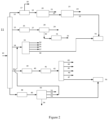
- FCC reactor effluent (1) is fractionated into different cuts in a FCC main fractionator (2).
- the hot vapors from the reactor enter the bottom section of the column.
- These vapors are fractionated to produce the following products: DG and LPG (3), Light naphtha to treatment and blending to gasoline pool (4), Heavy naphtha to DHDT/ HGU unit (5), Light cycle oil to DHDT (6), Clarified oil to Fuel oil (7).
- DG and LPG (3) Light naphtha to treatment and blending to gasoline pool (4)
- Heavy naphtha to DHDT/ HGU unit (5) Light cycle oil to DHDT (6)
- Clarified oil to Fuel oil (7) These streams undergo treatment before being blended into the finished products.
- these streams are further subjected to different types of new catalytic processes which convert them further into more additional valuable products such as light olefins, BTX, high octane gasoline and high cetane diesel along with premium grade petroleum coke.
- new catalytic processes which convert them further into more additional valuable products such as light olefins, BTX, high octane gasoline and high cetane diesel along with premium grade petroleum coke.
- the present invention provides an integrated process for producing light olefins and aromatics from residual hydrocarbon streams comprising:
- the stream (25) rich in higher olefins with good octane number and stream (38) are routed to gasoline pool (55).
- the present invention provides that the hydrotreating of step g) removes hetero atoms and selectively saturates the poly aromatics to di aromatics and di aromatics to mono aromatics.
- stream (47) and stream (53) are blended into a diesel pool (56).
- the stream (47) has a cetane number in a range of 30 - 42 and stream (53) has a cetane number in a range of 22 - 30.
- the stream (25) has an octane number in a range of 90 - 93 and stream (38) has an octane number in a range of 90- 95.
- stream (42) is fractionated into dry gas (43), C3-C4 stream (44), liquid hydrocarbon streams boiling in the range of C5-70°C (45), 70-170°C (46) rich in mono aromatics and alkyl substituted mono aromatics and 200°C+ (47).
- the general selective solvents such as ethylene glycol, sulfolane, dimethylsulfoxide, etc., or a combination of solvents are used for extractive distillation.
- the present invention provides a system for producing light olefins and aromatics from residual hydrocarbon streams, comprising:
- the high severity catalytic cracking unit (11) operates at a pressure in a range of 1.5 to 2 kg/cm 2 (g) and temperature in a range of 540 to 600 °C.
- the hydrotreaters (31), (39) and (48) operate at a pressure in a range of 30 to 120 kg/cm 2 (g) and temperature in a range of 300 to 400 °C.
- the hydrocracking unit (41) operates at a pressure in a range of 80 to 130 kg/cm 2 (g) and temperature in a range of 250 to 420 °C.
- high severity catalytic cracking unit (11) is fed with residual hydrocarbon stream (10) and the reactor effluent is fractionated into various product streams such as C3-C4 stream (12), liquid hydrocarbon streams boiling in the range of C5-70°C and 70-170°C (13), 170-210°C (14), 210-370°C (15) and 370°C + .
- the stream 12 sent to propylene splitter unit (17) where propylene is separated from stream 12 into stream 18 which contains 99.7 wt% C 3 s and stream (19) containing mostly C 4 and C 5 s.
- Stream (19) with 99.7% C4's is fed to a metathesis reactor and separation unit (20).
- Unit (20) produces propylene (21) and hexenes (22) by metathesis from stream (19) containing butenes and pentanes.
- Stream (22) is fed to aromatizing reactor unit (23) where the hexenes (22) along with higher olefins are aromatized to benzene and alkyl substituted benzenes (24).
- the unconverted stream (25) rich in higher olefins like hexenes, heptenes and octenes with good octane number will be routed to gasoline pool (55).
- the light naphtha stream (13) comprising30 wt% olefins, 5 wt% di olefins and 40 wt % aromatics are fed to a selective hydrogenation unit (26).
- a selective hydrogenation unit In this unit, all the di olefins which are the sources for gum formation and fouling are converted to olefins and saturates.
- the selectively hydrogenated stream (27) is sent to an extractive distillation column (28).
- the solvent extracts the aromatics along with sulfur compounds as stream (30) whereas olefins rich stream (29) is the raffinate in an extraction column operating at a temperature range of 30-180°C.
- stream (30) is hydrotreated and directed to an aromatics plant with 99% rich in aromatics.
- the stream (14) along with (52) is fed to (33) which is typically a circulating fluidized bed reactor.
- the reactor effluent is fractionated into various product streams such as dry gas (34), C3-C4 stream (35), liquid hydrocarbon streams boiling in the range of C5-70°C (36), 70-170°C (37) and 170°C+ (38).
- the stream (15) is fed to a hydrotreater unit (39) to remove the hetero atoms such as sulfur and to selectively saturate the poly aromatics to di aromatics and di aromatics to mono aromatics.
- Effluent from unit (39), stream (40) is processed in mild hydrocracking unit (41) for selective ring opening of di/poly aromatics.
- Stream (42) is fractionated to various products such as dry gas (43), C3-C4 stream (44), liquid hydrocarbon streams boiling in the range of C5-70°C (45), 70-170°C (46) which is rich in mono aromatics and alkyl substituted mono aromatics and 200°C + (47) having a good cetane number of 42 which is blended into diesel pool (56).
- the stream (16) is subjected to hydrotreating in unit (48) to remove the sulfur and metals to make a desirable feed stock for producing needle coke.
- Stream (49) is fed to delayed coker unit (50) for thermally cracking the feedstock to produce lighter products along with needle coke (54).
- the lighter products are fractionated into various products such as gases (51), liquid hydrocarbon streams boiling in the range of C5-210°C (52), and 210-370°C (53) diesel stream which can be routed to diesel pool (56).
- the process configuration of current invention converts the streams from high severity FCC unit into propylene, aromatics and octane rich gasoline, cetane rich diesel along with premium quality petroleum coke.
- Table-1 True boiling point (TBP) yields of high severity catalytic cracking unit (11) Products Wt% Dry gas (w/o inert) 10.91 LPG 44.15 LCN (C5-70 °C) 9.19 MCN (70-170°C) 17.14 HCN (170-210°C) 2.69 LCO (210-340 °C) 7.88 CLO (340 °C+) 2.24 Coke 5.8 Table-2: Yields of conversion unit-33 Products Wt% Dry gas 7.33 LPG 43.88 Benzene rich cut(70-90°C) 5.80 Benzene lean cut (C5-70°C and 90-210°C) 40.89 Coke 2.10 Table-3: Yields of conversion unit-41 Products Wt% Dry gas 1.5 LPG 8.0 Light Naphtha(C5-100°C) 15.0 Heavy Naphtha (100-200°C) 55.0 Diesel (200+°C) 20.5 Table-4: Yields of conversion unit-50 Products Wt% Dry gas 8.7 LPG 2.6 Na
- Table 5 shows that further processing of the stream obtained from unit no (11) byusing the present configuration as described in the present invention produces light olefins, mono aromatics, gasoline with octane number in the range of 90-95, diesel with cetane number in the range of 30-42 along with the needle coke.
- the process leads to an increase in the yield of dry gas, LPG, propylene and coke and reduction in the yields of gasoline, light cycle oil and clarified oil.
- Light cycle oil (15) undergoes conversion in unit (39) to an intermediate (40) and the change in quality in the typical temperature range of 300 to 400 °C and pressure range of 30 to 120 kg/cm 2 (g) is given in Table 6.
- Table 6 demonstrates that hydrotreatment of the light cycle oil (15) reduces the sulfur content, increases the content of saturates and mono aromatics, while reducing the content of di aromatics and poly aromatics.
- Table 6 Stream No-15 Stream No-40 Sulfur, ppm 9500 6.2 Saturates, wt% 24 34 Mono Aromatics 39.6 51.5 Di Aromatics 36.1 14.4 Poly Aromatics 0.3 0.1
- the reactor temperature and pressure ranges are very critical in achieving the desired result of decreasing sulfur, di aromatics and poly aromatics content in the feed which forms the desired feed to the hydrocracking unit (41).
- the yield and product quality from the hydrocracking unit (41) depends on the quality of intermediate stream (40).
- the temperature in the hydrotreatment unit (39) is decreased to 290°C and the pressure is 35 kg/cm 2 , the conversion of di aromatics to mono aromatics, poly aromatics to di aromatics and sulfur compounds to H 2 S decreases.
- the composition of intermediate stream (40) at 290°C and 25 kg/cm 2 is given in Table 8.
Landscapes
- Chemical & Material Sciences (AREA)
- Oil, Petroleum & Natural Gas (AREA)
- Organic Chemistry (AREA)
- Chemical Kinetics & Catalysis (AREA)
- Engineering & Computer Science (AREA)
- General Chemical & Material Sciences (AREA)
- Production Of Liquid Hydrocarbon Mixture For Refining Petroleum (AREA)
- Organic Low-Molecular-Weight Compounds And Preparation Thereof (AREA)
Claims (6)
- Un procédé intégré de production d'oléfines légères et d'aromatiques à partir de flux d'hydrocarbures résiduels comprenant :a) la soumission d'un flux d'hydrocarbures résiduel (10) à un craquage catalytique pour produire un effluent de craquage catalytique, dans lequel l'effluent de craquage catalytique est fractionné en un flux C3-C4 (12), un naphta léger de craquage (13), un naphta lourd de craquage (14), une huile légère de recyclage (15), et une huile clarifiée (16),b) la séparation du flux C3-C4 (12) en un flux contenant du propylène (18) et un flux contenant du butylène et du pentène (19),c) la soumission du flux contenant du butylène et du pentène (19) à la métathèse et à la séparation pour produire du propylène (21) et des hexènes (22), dans lesquels les hexènes (22) sont aromatisés pour produire du benzène et des benzènes substitués par des alkyles (24) ainsi qu'un flux non converti (25),d) l'hydrogénation sélective du naphta léger de craquage (13) pour produire un flux sélectivement hydrogéné comprenant des oléfines et des saturés (27),e) la soumission du flux sélectivement hydrogéné (27) à une distillation extractive à l'aide d'un solvant pour former un flux d'extraction (30) contenant des aromatiques ainsi que des composés sulfurés et un flux de raffinat (29) contenant des oléfines et l'hydrotraitement du flux d'extrait (30) pour obtenir le flux (32),f) la combinaison de naphta lourd de craquage (14) et de flux d'hydrocarbures liquides dont le point d'ébullition est compris dans la plage de C5-210°C (52) provenant d'une unité de cokéfaction retardée (50) dans un réacteur à lit fluidisé circulant pour le fractionnement en gaz sec (34), flux C3-C4 (35), flux d'hydrocarbures liquides dont le point d'ébullition est compris dans la plage de C5-70°C (36), 70-170°C (37) et 170°C+ (38),g) l'hydrotraitement de l'huile légère de recyclage (15) pour produire un flux intermédiaire (40),h) l'hydrocraquage du flux intermédiaire (40) pour produire un flux hydrocraqué (42) qui est fractionné en produits supplémentaires,i) l'hydrotraitement de l'huile clarifiée (16) pour produire un flux hydrotraité (49), dans lequel le flux hydrotraité (49) est acheminé vers une unité de cokéfaction retardée (50) pour produire des produits plus légers et du coke en aiguilles (54), les produits plus légers étant des gaz (51), les flux d'hydrocarbures liquides dont le point d'ébullition est compris dans la plage de C5-210°C (52), et du diesel (53),dans lequel le procédé permet d'obtenir des oléfines légères dans une fourchette de 11 à 15 % en poids et des aromatiques dans une fourchette de 15 à 21 % en poidsdans lequel le pourcentage en poids se réfère au flux d'hydrocarbures résiduel.
- Procédé selon la revendication 1, dans lequel le flux non converti (25) riche en oléfines supérieures avec un indice d'octane compris entre 90 et 93 et le flux à 170°C+ (38) avec un indice d'octane compris entre 90 et 95 sont acheminés vers le pool d'essence (55).
- Procédé selon la revendication 1, dans lequel l'hydrotraitement de l'étape g) élimine les hétéroatomes et sature sélectivement les polyaromatiques en diaromatiques et les diaromatiques en monoaromatiques.
- Procédé selon la revendication 1, dans lequel le flux hydrocraqué (42) est fractionné en gaz sec (43), en flux C3-C4 (44), en flux d'hydrocarbures liquides dont le point d'ébullition est compris dans la plage de C5-70°C (45), 70-170°C (46) riche en monoaromatiques et en monoaromatiques substitués par des alkyles et en flux à 200°C+ (47), et dans lequel le flux à 200°C+ (47) avec un indice de cétane compris entre 30 et 42 et le flux de diesel (53) avec un indice de cétane compris entre 22 et 30 sont mélangés dans un pool de diesel (56).
- Procédé selon la revendication 1, dans lequel le solvant utilisé pour la distillation extractive est choisi parmi l'éthylène glycol, le sulfolane, le diméthylsulfoxyde ou une combinaison de solvants pour l'extraction d'aromatiques.
- Système de production d'oléfines légères et d'aromatiques à partir de flux d'hydrocarbures résiduels, comprenant :a) une unité de craquage catalytique à haute sévérité (11) pour craquer le flux C3-C4 (12) et fractionner l'effluent de craquage catalytique, l'unité de craquage catalytique à haute sévérité étant en communication avec une unité de séparation du propylène (17), un réacteur de métathèse et une unité de séparation (20), un hydrotraiteur (48), un hydrotraiteur (39) et un réacteur à lit fluidisé circulant (33),b) une unité de séparation du propylène (17)c) un réacteur de métathèse et une unité de séparation (20) pour produire du propylène (21) et des hexènes (22) par métathèse,d) une unité de réacteur d'aromatisation (23) pour aromatiser les hexènes (22),e) une unité d'hydrogénation sélective (26) pour convertir toutes les di-oléfines responsables de la formation de gomme et de l'encrassement présentes dans le naphta léger de craquage (13) en oléfines et saturés faisant partie d'un flux sélectivement hydrogéné (27),f) une colonne de distillation extractive (28) pour produire un flux d'extrait (30) et un flux de raffinat (29) à partir du flux sélectivement hydrogéné (27),g) un premier hydrotraiteur (31), un deuxième hydrotraiteur (39) et un troisième hydrotraiteur (48), dans lequel le premier hydrotraiteur (31) est en aval de la colonne de distillation extractive (28) et le deuxième hydrotraiteur (39) et le troisième hydrotraiteur (48) sont en aval de l'unité de craquage catalytique à haute intensité, et dans lequel le deuxième hydrotraiteur (39) élimine les hétéroatomes et sature sélectivement les polyaromatiques en diaromatiques et les diaromatiques en monoaromatiques de l'huile légère de recyclage (15) et le troisième hydrotraiteur (48) élimine le soufre et les métaux de l'huile clarifiée (16) pour obtenir une matière première souhaitable pour la production de coke en aiguilles,h) un réacteur à lit fluidisé circulant (33) pour traiter le flux combiné de naphta lourd de craquage (14) et les flux d'hydrocarbures liquides dont le point d'ébullition est compris dans la plage de C5-210°C (52) et pour fractionner l'effluent du réacteur,i) une unité d'hydrocraquage doux (41) pour l'ouverture sélective du cycle des di ou polyaromatiques dans le flux intermédiaire (40) afin de produire un flux hydrocraqué (42),j) une unité de cokéfaction retardée (50) pour le craquage thermique du flux (49) afin de produire et de fractionner des produits plus légers et du coke en aiguilles (54).
Applications Claiming Priority (1)
| Application Number | Priority Date | Filing Date | Title |
|---|---|---|---|
| IN202021017031 | 2020-04-21 |
Publications (2)
| Publication Number | Publication Date |
|---|---|
| EP3901237A1 EP3901237A1 (fr) | 2021-10-27 |
| EP3901237B1 true EP3901237B1 (fr) | 2023-09-06 |
Family
ID=75529753
Family Applications (1)
| Application Number | Title | Priority Date | Filing Date |
|---|---|---|---|
| EP21168136.6A Active EP3901237B1 (fr) | 2020-04-21 | 2021-04-13 | Configuration de processus pour la production de matières premières pétrochimiques |
Country Status (4)
| Country | Link |
|---|---|
| US (1) | US11359149B2 (fr) |
| EP (1) | EP3901237B1 (fr) |
| RU (1) | RU2766508C1 (fr) |
| SA (1) | SA121420673B1 (fr) |
Family Cites Families (16)
| Publication number | Priority date | Publication date | Assignee | Title |
|---|---|---|---|---|
| US5685972A (en) | 1995-07-14 | 1997-11-11 | Timken; Hye Kyung C. | Production of benzene, toluene, and xylene (BTX) from FCC naphtha |
| EP1063274A1 (fr) * | 1999-06-17 | 2000-12-27 | Fina Research S.A. | Production d'oléfines |
| CN101531558B (zh) * | 2008-03-13 | 2013-04-24 | 中国石油化工股份有限公司 | 一种制取丙烯和芳烃的催化转化方法 |
| CN104031679B (zh) * | 2013-03-05 | 2016-05-25 | 中国石油化工股份有限公司 | 一种由石脑油生产烯烃和芳烃的方法 |
| US9856425B2 (en) | 2013-07-02 | 2018-01-02 | Saudi Basic Industries Corporation | Method of producing aromatics and light olefins from a hydrocarbon feedstock |
| ES2725609T3 (es) | 2013-07-02 | 2019-09-25 | Saudi Basic Ind Corp | Proceso e instalación para la conversión de crudo en productos petroquímicos que tienen un rendimiento de etileno mejorado |
| EA033755B1 (ru) * | 2014-02-25 | 2019-11-22 | Saudi Basic Ind Corp | Способ получения бтк из смешанного источника углеводородов с использованием каталитического крекинга |
| IN2014MU00985A (fr) | 2014-03-24 | 2015-10-02 | Indian Oil Corp Ltd | |
| FR3019554B1 (fr) | 2014-04-07 | 2017-10-27 | Ifp Energies Now | Procede de production d'olefines legeres et de btx utilisant une unite fcc traitant une charge lourde de type vgo tres hydrotraite, couplee avec une unite de reformage catalytique et un complexe aromatique traitant une charge de type naphta. |
| US9434894B2 (en) | 2014-06-19 | 2016-09-06 | Uop Llc | Process for converting FCC naphtha into aromatics |
| EP3294841B1 (fr) * | 2015-05-12 | 2022-07-13 | Ergon, Inc. | Méthode de fabrication d'huile de procédé de haute performance basée sur des extraits aromatiques distillés |
| EP3420051B1 (fr) * | 2016-02-25 | 2022-03-30 | SABIC Global Technologies B.V. | Procédé intégré pour l'augmentation de la production d'oléfines par recyclage et traitement de residu lourd de craqueur |
| US10093873B2 (en) | 2016-09-06 | 2018-10-09 | Saudi Arabian Oil Company | Process to recover gasoline and diesel from aromatic complex bottoms |
| US10472580B2 (en) | 2016-11-21 | 2019-11-12 | Saudi Arabian Oil Company | Process and system for conversion of crude oil to petrochemicals and fuel products integrating steam cracking and conversion of naphtha into chemical rich reformate |
| US10487275B2 (en) * | 2016-11-21 | 2019-11-26 | Saudi Arabian Oil Company | Process and system for conversion of crude oil to petrochemicals and fuel products integrating vacuum residue conditioning and base oil production |
| US20180142167A1 (en) | 2016-11-21 | 2018-05-24 | Saudi Arabian Oil Company | Process and system for conversion of crude oil to chemicals and fuel products integrating steam cracking and fluid catalytic cracking |
-
2021
- 2021-04-13 EP EP21168136.6A patent/EP3901237B1/fr active Active
- 2021-04-14 RU RU2021110363A patent/RU2766508C1/ru active
- 2021-04-20 SA SA121420673A patent/SA121420673B1/ar unknown
- 2021-04-21 US US17/236,315 patent/US11359149B2/en active Active
Also Published As
| Publication number | Publication date |
|---|---|
| EP3901237A1 (fr) | 2021-10-27 |
| SA121420673B1 (ar) | 2024-01-24 |
| RU2766508C1 (ru) | 2022-03-15 |
| US11359149B2 (en) | 2022-06-14 |
| US20210324279A1 (en) | 2021-10-21 |
Similar Documents
| Publication | Publication Date | Title |
|---|---|---|
| US11613713B2 (en) | Process to recover gasoline and diesel from aromatic complex bottoms | |
| US11072750B2 (en) | Process for upgrading refinery heavy residues to petrochemicals | |
| US8110091B2 (en) | Process for the conversion of feedstocks resulting from renewable sources for producing gas oil fuel bases with a low sulphur content and with an improved cetane number | |
| EP3017022B1 (fr) | Procédé de craquage d'une charge d'hydrocarbures dans une unité de vapocraquage | |
| US10465131B2 (en) | Process for the production of light olefins and aromatics from a hydrocarbon feedstock | |
| EP3110918B1 (fr) | Procédé de valorisation d'hydrocarbures lourds de raffinerie en produits pétrochimiques | |
| RU2672913C2 (ru) | Способ получения легких олефинов и втх с применением установки каталитического крекинга, обрабатывающей тяжелое сырье типа vgo глубокой гидроочистки, в комбинации с установкой каталитического риформинга и ароматическим комплексом, обрабатывающим сырье типа нафты | |
| US20160369190A1 (en) | Method of producing aromatics and light olefins from a hydrocarbon feedstock | |
| KR20160029813A (ko) | 원유를 에틸렌 수율이 향상된 석유화학물질로 변환시키기 위한 방법 및 장치 | |
| KR20100127726A (ko) | 고 옥탄가 및 저 황 함량의 탄화수소 분획물의 제조 방법 | |
| KR20160126044A (ko) | 고비점 탄화수소 공급원료를 보다 저비점의 탄화수소 생성물로 전환하는 방법 | |
| KR20160126023A (ko) | 고비점 탄화수소 공급원료를 보다 저비점의 탄화수소 생성물로 전환하는 방법 | |
| EP3901237B1 (fr) | Configuration de processus pour la production de matières premières pétrochimiques | |
| US11001771B2 (en) | Process for the production of petrochemical feedstock and high octane gasoline from middle distillates | |
| CN109988645A (zh) | 一种劣质柴油加氢改质和加氢精制组合工艺 | |
| CN121986152A (en) | Method and system for converting crude oil into chemicals |
Legal Events
| Date | Code | Title | Description |
|---|---|---|---|
| PUAI | Public reference made under article 153(3) epc to a published international application that has entered the european phase |
Free format text: ORIGINAL CODE: 0009012 |
|
| STAA | Information on the status of an ep patent application or granted ep patent |
Free format text: STATUS: THE APPLICATION HAS BEEN PUBLISHED |
|
| AK | Designated contracting states |
Kind code of ref document: A1 Designated state(s): AL AT BE BG CH CY CZ DE DK EE ES FI FR GB GR HR HU IE IS IT LI LT LU LV MC MK MT NL NO PL PT RO RS SE SI SK SM TR |
|
| B565 | Issuance of search results under rule 164(2) epc |
Effective date: 20210908 |
|
| STAA | Information on the status of an ep patent application or granted ep patent |
Free format text: STATUS: REQUEST FOR EXAMINATION WAS MADE |
|
| 17P | Request for examination filed |
Effective date: 20220303 |
|
| RBV | Designated contracting states (corrected) |
Designated state(s): AL AT BE BG CH CY CZ DE DK EE ES FI FR GB GR HR HU IE IS IT LI LT LU LV MC MK MT NL NO PL PT RO RS SE SI SK SM TR |
|
| STAA | Information on the status of an ep patent application or granted ep patent |
Free format text: STATUS: EXAMINATION IS IN PROGRESS |
|
| 17Q | First examination report despatched |
Effective date: 20230116 |
|
| GRAP | Despatch of communication of intention to grant a patent |
Free format text: ORIGINAL CODE: EPIDOSNIGR1 |
|
| STAA | Information on the status of an ep patent application or granted ep patent |
Free format text: STATUS: GRANT OF PATENT IS INTENDED |
|
| GRAS | Grant fee paid |
Free format text: ORIGINAL CODE: EPIDOSNIGR3 |
|
| INTG | Intention to grant announced |
Effective date: 20230629 |
|
| GRAA | (expected) grant |
Free format text: ORIGINAL CODE: 0009210 |
|
| STAA | Information on the status of an ep patent application or granted ep patent |
Free format text: STATUS: THE PATENT HAS BEEN GRANTED |
|
| P01 | Opt-out of the competence of the unified patent court (upc) registered |
Effective date: 20230712 |
|
| AK | Designated contracting states |
Kind code of ref document: B1 Designated state(s): AL AT BE BG CH CY CZ DE DK EE ES FI FR GB GR HR HU IE IS IT LI LT LU LV MC MK MT NL NO PL PT RO RS SE SI SK SM TR |
|
| REG | Reference to a national code |
Ref country code: GB Ref legal event code: FG4D |
|
| REG | Reference to a national code |
Ref country code: CH Ref legal event code: EP |
|
| REG | Reference to a national code |
Ref country code: IE Ref legal event code: FG4D |
|
| REG | Reference to a national code |
Ref country code: DE Ref legal event code: R096 Ref document number: 602021004834 Country of ref document: DE |
|
| REG | Reference to a national code |
Ref country code: LT Ref legal event code: MG9D |
|
| REG | Reference to a national code |
Ref country code: NL Ref legal event code: MP Effective date: 20230906 |
|
| PG25 | Lapsed in a contracting state [announced via postgrant information from national office to epo] |
Ref country code: GR Free format text: LAPSE BECAUSE OF FAILURE TO SUBMIT A TRANSLATION OF THE DESCRIPTION OR TO PAY THE FEE WITHIN THE PRESCRIBED TIME-LIMIT Effective date: 20231207 |
|
| PG25 | Lapsed in a contracting state [announced via postgrant information from national office to epo] |
Ref country code: SE Free format text: LAPSE BECAUSE OF FAILURE TO SUBMIT A TRANSLATION OF THE DESCRIPTION OR TO PAY THE FEE WITHIN THE PRESCRIBED TIME-LIMIT Effective date: 20230906 Ref country code: RS Free format text: LAPSE BECAUSE OF FAILURE TO SUBMIT A TRANSLATION OF THE DESCRIPTION OR TO PAY THE FEE WITHIN THE PRESCRIBED TIME-LIMIT Effective date: 20230906 Ref country code: NO Free format text: LAPSE BECAUSE OF FAILURE TO SUBMIT A TRANSLATION OF THE DESCRIPTION OR TO PAY THE FEE WITHIN THE PRESCRIBED TIME-LIMIT Effective date: 20231206 Ref country code: LV Free format text: LAPSE BECAUSE OF FAILURE TO SUBMIT A TRANSLATION OF THE DESCRIPTION OR TO PAY THE FEE WITHIN THE PRESCRIBED TIME-LIMIT Effective date: 20230906 Ref country code: LT Free format text: LAPSE BECAUSE OF FAILURE TO SUBMIT A TRANSLATION OF THE DESCRIPTION OR TO PAY THE FEE WITHIN THE PRESCRIBED TIME-LIMIT Effective date: 20230906 Ref country code: HR Free format text: LAPSE BECAUSE OF FAILURE TO SUBMIT A TRANSLATION OF THE DESCRIPTION OR TO PAY THE FEE WITHIN THE PRESCRIBED TIME-LIMIT Effective date: 20230906 Ref country code: GR Free format text: LAPSE BECAUSE OF FAILURE TO SUBMIT A TRANSLATION OF THE DESCRIPTION OR TO PAY THE FEE WITHIN THE PRESCRIBED TIME-LIMIT Effective date: 20231207 Ref country code: FI Free format text: LAPSE BECAUSE OF FAILURE TO SUBMIT A TRANSLATION OF THE DESCRIPTION OR TO PAY THE FEE WITHIN THE PRESCRIBED TIME-LIMIT Effective date: 20230906 |
|
| REG | Reference to a national code |
Ref country code: AT Ref legal event code: MK05 Ref document number: 1608580 Country of ref document: AT Kind code of ref document: T Effective date: 20230906 |
|
| PG25 | Lapsed in a contracting state [announced via postgrant information from national office to epo] |
Ref country code: NL Free format text: LAPSE BECAUSE OF FAILURE TO SUBMIT A TRANSLATION OF THE DESCRIPTION OR TO PAY THE FEE WITHIN THE PRESCRIBED TIME-LIMIT Effective date: 20230906 |
|
| PG25 | Lapsed in a contracting state [announced via postgrant information from national office to epo] |
Ref country code: IS Free format text: LAPSE BECAUSE OF FAILURE TO SUBMIT A TRANSLATION OF THE DESCRIPTION OR TO PAY THE FEE WITHIN THE PRESCRIBED TIME-LIMIT Effective date: 20240106 |
|
| PG25 | Lapsed in a contracting state [announced via postgrant information from national office to epo] |
Ref country code: AT Free format text: LAPSE BECAUSE OF FAILURE TO SUBMIT A TRANSLATION OF THE DESCRIPTION OR TO PAY THE FEE WITHIN THE PRESCRIBED TIME-LIMIT Effective date: 20230906 |
|
| PG25 | Lapsed in a contracting state [announced via postgrant information from national office to epo] |
Ref country code: ES Free format text: LAPSE BECAUSE OF FAILURE TO SUBMIT A TRANSLATION OF THE DESCRIPTION OR TO PAY THE FEE WITHIN THE PRESCRIBED TIME-LIMIT Effective date: 20230906 |
|
| PG25 | Lapsed in a contracting state [announced via postgrant information from national office to epo] |
Ref country code: SM Free format text: LAPSE BECAUSE OF FAILURE TO SUBMIT A TRANSLATION OF THE DESCRIPTION OR TO PAY THE FEE WITHIN THE PRESCRIBED TIME-LIMIT Effective date: 20230906 Ref country code: RO Free format text: LAPSE BECAUSE OF FAILURE TO SUBMIT A TRANSLATION OF THE DESCRIPTION OR TO PAY THE FEE WITHIN THE PRESCRIBED TIME-LIMIT Effective date: 20230906 Ref country code: IS Free format text: LAPSE BECAUSE OF FAILURE TO SUBMIT A TRANSLATION OF THE DESCRIPTION OR TO PAY THE FEE WITHIN THE PRESCRIBED TIME-LIMIT Effective date: 20240106 Ref country code: ES Free format text: LAPSE BECAUSE OF FAILURE TO SUBMIT A TRANSLATION OF THE DESCRIPTION OR TO PAY THE FEE WITHIN THE PRESCRIBED TIME-LIMIT Effective date: 20230906 Ref country code: EE Free format text: LAPSE BECAUSE OF FAILURE TO SUBMIT A TRANSLATION OF THE DESCRIPTION OR TO PAY THE FEE WITHIN THE PRESCRIBED TIME-LIMIT Effective date: 20230906 Ref country code: CZ Free format text: LAPSE BECAUSE OF FAILURE TO SUBMIT A TRANSLATION OF THE DESCRIPTION OR TO PAY THE FEE WITHIN THE PRESCRIBED TIME-LIMIT Effective date: 20230906 Ref country code: AT Free format text: LAPSE BECAUSE OF FAILURE TO SUBMIT A TRANSLATION OF THE DESCRIPTION OR TO PAY THE FEE WITHIN THE PRESCRIBED TIME-LIMIT Effective date: 20230906 Ref country code: PT Free format text: LAPSE BECAUSE OF FAILURE TO SUBMIT A TRANSLATION OF THE DESCRIPTION OR TO PAY THE FEE WITHIN THE PRESCRIBED TIME-LIMIT Effective date: 20240108 Ref country code: SK Free format text: LAPSE BECAUSE OF FAILURE TO SUBMIT A TRANSLATION OF THE DESCRIPTION OR TO PAY THE FEE WITHIN THE PRESCRIBED TIME-LIMIT Effective date: 20230906 |
|
| PG25 | Lapsed in a contracting state [announced via postgrant information from national office to epo] |
Ref country code: PL Free format text: LAPSE BECAUSE OF FAILURE TO SUBMIT A TRANSLATION OF THE DESCRIPTION OR TO PAY THE FEE WITHIN THE PRESCRIBED TIME-LIMIT Effective date: 20230906 Ref country code: IT Free format text: LAPSE BECAUSE OF FAILURE TO SUBMIT A TRANSLATION OF THE DESCRIPTION OR TO PAY THE FEE WITHIN THE PRESCRIBED TIME-LIMIT Effective date: 20230906 |
|
| REG | Reference to a national code |
Ref country code: DE Ref legal event code: R097 Ref document number: 602021004834 Country of ref document: DE |
|
| PG25 | Lapsed in a contracting state [announced via postgrant information from national office to epo] |
Ref country code: DK Free format text: LAPSE BECAUSE OF FAILURE TO SUBMIT A TRANSLATION OF THE DESCRIPTION OR TO PAY THE FEE WITHIN THE PRESCRIBED TIME-LIMIT Effective date: 20230906 |
|
| PLBE | No opposition filed within time limit |
Free format text: ORIGINAL CODE: 0009261 |
|
| STAA | Information on the status of an ep patent application or granted ep patent |
Free format text: STATUS: NO OPPOSITION FILED WITHIN TIME LIMIT |
|
| PG25 | Lapsed in a contracting state [announced via postgrant information from national office to epo] |
Ref country code: DK Free format text: LAPSE BECAUSE OF FAILURE TO SUBMIT A TRANSLATION OF THE DESCRIPTION OR TO PAY THE FEE WITHIN THE PRESCRIBED TIME-LIMIT Effective date: 20230906 Ref country code: SI Free format text: LAPSE BECAUSE OF FAILURE TO SUBMIT A TRANSLATION OF THE DESCRIPTION OR TO PAY THE FEE WITHIN THE PRESCRIBED TIME-LIMIT Effective date: 20230906 |
|
| 26N | No opposition filed |
Effective date: 20240607 |
|
| PG25 | Lapsed in a contracting state [announced via postgrant information from national office to epo] |
Ref country code: BG Free format text: LAPSE BECAUSE OF FAILURE TO SUBMIT A TRANSLATION OF THE DESCRIPTION OR TO PAY THE FEE WITHIN THE PRESCRIBED TIME-LIMIT Effective date: 20230906 |
|
| PG25 | Lapsed in a contracting state [announced via postgrant information from national office to epo] |
Ref country code: MC Free format text: LAPSE BECAUSE OF FAILURE TO SUBMIT A TRANSLATION OF THE DESCRIPTION OR TO PAY THE FEE WITHIN THE PRESCRIBED TIME-LIMIT Effective date: 20230906 |
|
| PG25 | Lapsed in a contracting state [announced via postgrant information from national office to epo] |
Ref country code: MC Free format text: LAPSE BECAUSE OF FAILURE TO SUBMIT A TRANSLATION OF THE DESCRIPTION OR TO PAY THE FEE WITHIN THE PRESCRIBED TIME-LIMIT Effective date: 20230906 Ref country code: BG Free format text: LAPSE BECAUSE OF FAILURE TO SUBMIT A TRANSLATION OF THE DESCRIPTION OR TO PAY THE FEE WITHIN THE PRESCRIBED TIME-LIMIT Effective date: 20230906 |
|
| REG | Reference to a national code |
Ref country code: CH Ref legal event code: PL |
|
| PG25 | Lapsed in a contracting state [announced via postgrant information from national office to epo] |
Ref country code: LU Free format text: LAPSE BECAUSE OF NON-PAYMENT OF DUE FEES Effective date: 20240413 |
|
| REG | Reference to a national code |
Ref country code: BE Ref legal event code: MM Effective date: 20240430 |
|
| PG25 | Lapsed in a contracting state [announced via postgrant information from national office to epo] |
Ref country code: LU Free format text: LAPSE BECAUSE OF NON-PAYMENT OF DUE FEES Effective date: 20240413 |
|
| PG25 | Lapsed in a contracting state [announced via postgrant information from national office to epo] |
Ref country code: BE Free format text: LAPSE BECAUSE OF NON-PAYMENT OF DUE FEES Effective date: 20240430 |
|
| PG25 | Lapsed in a contracting state [announced via postgrant information from national office to epo] |
Ref country code: BE Free format text: LAPSE BECAUSE OF NON-PAYMENT OF DUE FEES Effective date: 20240430 Ref country code: CH Free format text: LAPSE BECAUSE OF NON-PAYMENT OF DUE FEES Effective date: 20240430 |
|
| PG25 | Lapsed in a contracting state [announced via postgrant information from national office to epo] |
Ref country code: IE Free format text: LAPSE BECAUSE OF NON-PAYMENT OF DUE FEES Effective date: 20240413 |
|
| PGFP | Annual fee paid to national office [announced via postgrant information from national office to epo] |
Ref country code: DE Payment date: 20250430 Year of fee payment: 5 |
|
| PGFP | Annual fee paid to national office [announced via postgrant information from national office to epo] |
Ref country code: FR Payment date: 20250426 Year of fee payment: 5 |
|
| PG25 | Lapsed in a contracting state [announced via postgrant information from national office to epo] |
Ref country code: CY Free format text: LAPSE BECAUSE OF FAILURE TO SUBMIT A TRANSLATION OF THE DESCRIPTION OR TO PAY THE FEE WITHIN THE PRESCRIBED TIME-LIMIT; INVALID AB INITIO Effective date: 20210413 |
|
| PG25 | Lapsed in a contracting state [announced via postgrant information from national office to epo] |
Ref country code: HU Free format text: LAPSE BECAUSE OF FAILURE TO SUBMIT A TRANSLATION OF THE DESCRIPTION OR TO PAY THE FEE WITHIN THE PRESCRIBED TIME-LIMIT; INVALID AB INITIO Effective date: 20210413 |
|
| GBPC | Gb: european patent ceased through non-payment of renewal fee |
Effective date: 20250413 |
|
| PG25 | Lapsed in a contracting state [announced via postgrant information from national office to epo] |
Ref country code: GB Free format text: LAPSE BECAUSE OF NON-PAYMENT OF DUE FEES Effective date: 20250413 |