EP3901822B1 - Procédé et dispositif pour l'apprentissage actif sur véhicule destiné à être utilisé pour la formation d'un réseau de perception de véhicule autonome - Google Patents
Procédé et dispositif pour l'apprentissage actif sur véhicule destiné à être utilisé pour la formation d'un réseau de perception de véhicule autonome Download PDFInfo
- Publication number
- EP3901822B1 EP3901822B1 EP21168387.5A EP21168387A EP3901822B1 EP 3901822 B1 EP3901822 B1 EP 3901822B1 EP 21168387 A EP21168387 A EP 21168387A EP 3901822 B1 EP3901822 B1 EP 3901822B1
- Authority
- EP
- European Patent Office
- Prior art keywords
- frames
- scene
- codes
- autonomous vehicle
- driving
- Prior art date
- Legal status (The legal status is an assumption and is not a legal conclusion. Google has not performed a legal analysis and makes no representation as to the accuracy of the status listed.)
- Active
Links
Images



Classifications
-
- B—PERFORMING OPERATIONS; TRANSPORTING
- B60—VEHICLES IN GENERAL
- B60W—CONJOINT CONTROL OF VEHICLE SUB-UNITS OF DIFFERENT TYPE OR DIFFERENT FUNCTION; CONTROL SYSTEMS SPECIALLY ADAPTED FOR HYBRID VEHICLES; ROAD VEHICLE DRIVE CONTROL SYSTEMS FOR PURPOSES NOT RELATED TO THE CONTROL OF A PARTICULAR SUB-UNIT
- B60W60/00—Drive control systems specially adapted for autonomous road vehicles
- B60W60/001—Planning or execution of driving tasks
-
- B—PERFORMING OPERATIONS; TRANSPORTING
- B60—VEHICLES IN GENERAL
- B60R—VEHICLES, VEHICLE FITTINGS, OR VEHICLE PARTS, NOT OTHERWISE PROVIDED FOR
- B60R21/00—Arrangements or fittings on vehicles for protecting or preventing injuries to occupants or pedestrians in case of accidents or other traffic risks
- B60R21/01—Electrical circuits for triggering passive safety arrangements, e.g. airbags, safety belt tighteners, in case of vehicle accidents or impending vehicle accidents
- B60R21/013—Electrical circuits for triggering passive safety arrangements, e.g. airbags, safety belt tighteners, in case of vehicle accidents or impending vehicle accidents including means for detecting collisions, impending collisions or roll-over
- B60R21/0134—Electrical circuits for triggering passive safety arrangements, e.g. airbags, safety belt tighteners, in case of vehicle accidents or impending vehicle accidents including means for detecting collisions, impending collisions or roll-over responsive to imminent contact with an obstacle, e.g. using radar systems
-
- B—PERFORMING OPERATIONS; TRANSPORTING
- B60—VEHICLES IN GENERAL
- B60W—CONJOINT CONTROL OF VEHICLE SUB-UNITS OF DIFFERENT TYPE OR DIFFERENT FUNCTION; CONTROL SYSTEMS SPECIALLY ADAPTED FOR HYBRID VEHICLES; ROAD VEHICLE DRIVE CONTROL SYSTEMS FOR PURPOSES NOT RELATED TO THE CONTROL OF A PARTICULAR SUB-UNIT
- B60W30/00—Purposes of road vehicle drive control systems not related to the control of a particular sub-unit, e.g. of systems using conjoint control of vehicle sub-units
- B60W30/08—Active safety systems predicting or avoiding probable or impending collision or attempting to minimise its consequences
-
- B—PERFORMING OPERATIONS; TRANSPORTING
- B60—VEHICLES IN GENERAL
- B60W—CONJOINT CONTROL OF VEHICLE SUB-UNITS OF DIFFERENT TYPE OR DIFFERENT FUNCTION; CONTROL SYSTEMS SPECIALLY ADAPTED FOR HYBRID VEHICLES; ROAD VEHICLE DRIVE CONTROL SYSTEMS FOR PURPOSES NOT RELATED TO THE CONTROL OF A PARTICULAR SUB-UNIT
- B60W40/00—Estimation or calculation of non-directly measurable driving parameters for road vehicle drive control systems not related to the control of a particular sub unit, e.g. by using mathematical models
- B60W40/02—Estimation or calculation of non-directly measurable driving parameters for road vehicle drive control systems not related to the control of a particular sub unit, e.g. by using mathematical models related to ambient conditions
-
- G—PHYSICS
- G06—COMPUTING OR CALCULATING; COUNTING
- G06N—COMPUTING ARRANGEMENTS BASED ON SPECIFIC COMPUTATIONAL MODELS
- G06N3/00—Computing arrangements based on biological models
- G06N3/02—Neural networks
- G06N3/04—Architecture, e.g. interconnection topology
-
- G—PHYSICS
- G06—COMPUTING OR CALCULATING; COUNTING
- G06N—COMPUTING ARRANGEMENTS BASED ON SPECIFIC COMPUTATIONAL MODELS
- G06N3/00—Computing arrangements based on biological models
- G06N3/02—Neural networks
- G06N3/04—Architecture, e.g. interconnection topology
- G06N3/0464—Convolutional networks [CNN, ConvNet]
-
- G—PHYSICS
- G06—COMPUTING OR CALCULATING; COUNTING
- G06N—COMPUTING ARRANGEMENTS BASED ON SPECIFIC COMPUTATIONAL MODELS
- G06N3/00—Computing arrangements based on biological models
- G06N3/02—Neural networks
- G06N3/08—Learning methods
-
- G—PHYSICS
- G06—COMPUTING OR CALCULATING; COUNTING
- G06N—COMPUTING ARRANGEMENTS BASED ON SPECIFIC COMPUTATIONAL MODELS
- G06N3/00—Computing arrangements based on biological models
- G06N3/02—Neural networks
- G06N3/08—Learning methods
- G06N3/09—Supervised learning
-
- G—PHYSICS
- G06—COMPUTING OR CALCULATING; COUNTING
- G06N—COMPUTING ARRANGEMENTS BASED ON SPECIFIC COMPUTATIONAL MODELS
- G06N3/00—Computing arrangements based on biological models
- G06N3/02—Neural networks
- G06N3/08—Learning methods
- G06N3/091—Active learning
-
- G—PHYSICS
- G06—COMPUTING OR CALCULATING; COUNTING
- G06V—IMAGE OR VIDEO RECOGNITION OR UNDERSTANDING
- G06V10/00—Arrangements for image or video recognition or understanding
- G06V10/70—Arrangements for image or video recognition or understanding using pattern recognition or machine learning
- G06V10/764—Arrangements for image or video recognition or understanding using pattern recognition or machine learning using classification, e.g. of video objects
-
- G—PHYSICS
- G06—COMPUTING OR CALCULATING; COUNTING
- G06V—IMAGE OR VIDEO RECOGNITION OR UNDERSTANDING
- G06V10/00—Arrangements for image or video recognition or understanding
- G06V10/70—Arrangements for image or video recognition or understanding using pattern recognition or machine learning
- G06V10/82—Arrangements for image or video recognition or understanding using pattern recognition or machine learning using neural networks
-
- G—PHYSICS
- G06—COMPUTING OR CALCULATING; COUNTING
- G06V—IMAGE OR VIDEO RECOGNITION OR UNDERSTANDING
- G06V20/00—Scenes; Scene-specific elements
- G06V20/40—Scenes; Scene-specific elements in video content
-
- B—PERFORMING OPERATIONS; TRANSPORTING
- B60—VEHICLES IN GENERAL
- B60W—CONJOINT CONTROL OF VEHICLE SUB-UNITS OF DIFFERENT TYPE OR DIFFERENT FUNCTION; CONTROL SYSTEMS SPECIALLY ADAPTED FOR HYBRID VEHICLES; ROAD VEHICLE DRIVE CONTROL SYSTEMS FOR PURPOSES NOT RELATED TO THE CONTROL OF A PARTICULAR SUB-UNIT
- B60W50/00—Details of control systems for road vehicle drive control not related to the control of a particular sub-unit, e.g. process diagnostic or vehicle driver interfaces
- B60W2050/0001—Details of the control system
- B60W2050/0043—Signal treatments, identification of variables or parameters, parameter estimation or state estimation
- B60W2050/005—Sampling
-
- B—PERFORMING OPERATIONS; TRANSPORTING
- B60—VEHICLES IN GENERAL
- B60W—CONJOINT CONTROL OF VEHICLE SUB-UNITS OF DIFFERENT TYPE OR DIFFERENT FUNCTION; CONTROL SYSTEMS SPECIALLY ADAPTED FOR HYBRID VEHICLES; ROAD VEHICLE DRIVE CONTROL SYSTEMS FOR PURPOSES NOT RELATED TO THE CONTROL OF A PARTICULAR SUB-UNIT
- B60W2400/00—Indexing codes relating to detected, measured or calculated conditions or factors
-
- B—PERFORMING OPERATIONS; TRANSPORTING
- B60—VEHICLES IN GENERAL
- B60W—CONJOINT CONTROL OF VEHICLE SUB-UNITS OF DIFFERENT TYPE OR DIFFERENT FUNCTION; CONTROL SYSTEMS SPECIALLY ADAPTED FOR HYBRID VEHICLES; ROAD VEHICLE DRIVE CONTROL SYSTEMS FOR PURPOSES NOT RELATED TO THE CONTROL OF A PARTICULAR SUB-UNIT
- B60W2420/00—Indexing codes relating to the type of sensors based on the principle of their operation
- B60W2420/40—Photo, light or radio wave sensitive means, e.g. infrared sensors
- B60W2420/403—Image sensing, e.g. optical camera
-
- B—PERFORMING OPERATIONS; TRANSPORTING
- B60—VEHICLES IN GENERAL
- B60Y—INDEXING SCHEME RELATING TO ASPECTS CROSS-CUTTING VEHICLE TECHNOLOGY
- B60Y2300/00—Purposes or special features of road vehicle drive control systems
- B60Y2300/08—Predicting or avoiding probable or impending collision
-
- B—PERFORMING OPERATIONS; TRANSPORTING
- B60—VEHICLES IN GENERAL
- B60Y—INDEXING SCHEME RELATING TO ASPECTS CROSS-CUTTING VEHICLE TECHNOLOGY
- B60Y2400/00—Special features of vehicle units
- B60Y2400/30—Sensors
-
- G—PHYSICS
- G05—CONTROLLING; REGULATING
- G05D—SYSTEMS FOR CONTROLLING OR REGULATING NON-ELECTRIC VARIABLES
- G05D1/00—Control of position, course, altitude or attitude of land, water, air or space vehicles, e.g. using automatic pilots
- G05D1/02—Control of position or course in two dimensions
- G05D1/021—Control of position or course in two dimensions specially adapted to land vehicles
- G05D1/0231—Control of position or course in two dimensions specially adapted to land vehicles using optical position detecting means
-
- G—PHYSICS
- G06—COMPUTING OR CALCULATING; COUNTING
- G06V—IMAGE OR VIDEO RECOGNITION OR UNDERSTANDING
- G06V20/00—Scenes; Scene-specific elements
- G06V20/40—Scenes; Scene-specific elements in video content
- G06V20/44—Event detection
Definitions
- the present disclosure relates to a method for on-vehicle active learning to be used for training a perception network of an autonomous vehicle; and more particularly, to the method for selecting training data, to be used for training the perception network, from real-time data of the autonomous vehicle, and for training the perception network with the selected training data, and an on-vehicle active learning device using the same.
- deep learning which uses a neural network including multiple hidden layers between an input layer and an output layer, has high performance on the object identification.
- the neural network is generally trained via backpropagation using one or more losses.
- the autonomous vehicle is a vehicle driven without any action of a driver in response to driving information and driving environments of the vehicle, and uses a perception network based on deep learning in order to detect driving environment information, e.g., objects, lanes, traffic signal, etc. near the vehicle.
- driving environment information e.g., objects, lanes, traffic signal, etc. near the vehicle.
- Such an autonomous vehicle requires online learning, that is, training with the perception network installed, in order to update the perception network.
- the autonomous vehicle since a storage capacity of an embedded system for the autonomous vehicle is limited, the autonomous vehicle must perform data sampling on a database, e.g., cloud storage, in which the training data are stored in order to acquire some part of the training data and update the perception network using said some part of the training data.
- a database e.g., cloud storage
- sampling methods such as a random sampling method, metadata sampling method and manual curation sampling method, etc. have been used for performing the data sampling.
- sampling methods are inappropriate for an on-vehicle active learning since such sampling methods must store all data under offline condition in order to perform the active learning.
- CN 109 993 082 relates to a convolutional neural network road scene classification and road segmentation method.
- a dual-task joint structure model based on the convolutional neural network is established.and composed of an encoder and two decoders. Feature information sharing is achieved through end-to-end training. Classification of various road scenes such as urban roads, rural roads and highways is completed, road drivable areas in the scenes are segmented, and the dual goals of road scene classification and road area segmentation are achieved.
- scene classification and road extraction in road scene perception are combined. Real-time output is obtained through an end-to-end training mode, the functions of an intelligent driving assistance system are improved, and an effective and reliable driving assistance function is provided.
- a mode of combining a full convolutional network and a conditional random field is adopted for a part extracted from a drivable area in the model, a high-resolution image optimization output result can be generated, and a relatively accurate segmentation effect is achieved.
- CN 110 892 451 discloses a method and an electronic device for determining whether a driving event of a vehicle occurs, based on a location of an object in a plurality of frames, using a plurality of trained models.
- a method for on-vehicle active learning to be used for training a perception network of an autonomous vehicle including steps of: (a) an on-vehicle active learning device, if a driving video and sensing information are acquired respectively from a camera and one or more sensors mounted on an autonomous vehicle while the autonomous vehicle is driven, performing or supporting another device to perform a process of inputting one or more consecutive frames of the driving video and the sensing information into a scene code assigning module, to thereby allow the scene code assigning module to generate each of one or more scene codes including information on each of scenes in each of the frames and information on one or more driving events by referring to the frames and the sensing information; and (b) the on-vehicle active learning device performing or supporting another device to perform at least one of (i) a process of selecting a first part of the frames, whose object detection information generated during the driving events satisfies a preset condition, as specific frames to
- the method further includes a step of: (c) the on-vehicle active learning device performing or supporting another device to perform (c1) a process of sampling the specific frames stored in the frame storing part by using the specific scene codes to thereby generate training data and (c2) a process of executing on-vehicle learning of the perception network of the autonomous vehicle by using the training data.
- the on-vehicle active learning device performs or supports another device to perform at least one of (i) a process of under-sampling the specific frames by referring to the scene codes or a process of over-sampling the specific frames by referring to the scene codes, to thereby generate the training data and thus train the perception network, at the step of (c1) and (ii) (ii-1) a process of calculating one or more weight-balanced losses on the training data, corresponding to the scene codes, by weight balancing and (ii-2) a process of training the perception network via backpropagation using the weight-balanced losses, at the step of (c2).
- the on-vehicle active learning device performs or supports another device to perform a process of allowing the scene code assigning module to (i) apply a learning operation to each of the frames, to thereby classify each of the scenes of each of the frames into one of classes of driving environments and one of classes of driving roads and thus generate each of class codes of each of the frames, via a scene classifier based on deep learning, (ii) detect each of driving events, which occurs while the autonomous vehicle is driven, by referring to each of the frames and each piece of the sensing information on each of the frames, to thereby generate each of event codes, via a driving event detecting module, and (iii) generate each of the scene codes for each of the frames by using each of the class codes of each of the frames and each of the event codes of each of the frames.
- the on-vehicle active learning device performs or supports another device to perform a process of allowing the scene code assigning module to (i) detect one or more scene changes in the frames via the driving event detecting module and thus generate one or more frame-based event codes and (ii) detect one or more operation states, corresponding to the sensing information, of the autonomous vehicle and thus generate one or more vehicle-based event codes, to thereby generate the event codes.
- the on-vehicle active learning device performs or supports another device to perform a process of selecting a certain frame, on which no object is detected from its collision area, corresponding to a collision event, as one of the specific frames by referring to the scene codes, wherein the collision area is an area, in the certain frame, where an object is estimated as being located if the autonomous vehicle collides with the object or where the object is estimated to be located if the autonomous vehicle is estimated to collide with the object.
- the on-vehicle active learning device performs or supports another device to perform a process of selecting a certain frame, on which an object is detected from its collision area, corresponding to a normal event, as one of the specific frames by referring to the scene codes, wherein the collision area is an area, in the certain frame, where an object is estimated as being located if the autonomous vehicle collides with the object or where the object is estimated to be located if the autonomous vehicle is estimated to collide with the object.
- the on-vehicle active learning device performs or supports another device to perform a process of selecting a certain frame where an object, with its confidence score included in the object detection information equal to or lower than a preset value, is located as one of the specific frames.
- the on-vehicle active learning device performs or supports another device to perform a process of selecting a certain frame, from which a pedestrian in a rare driving environment is detected, as one of the specific frames, by referring to the scene codes.
- an on-vehicle active learning device for on-vehicle active learning to be used for training a perception network of an autonomous vehicle, including: at least one memory that stores instructions; and at least one processor configured to execute the instructions to perform or support another device to perform: (I) if a driving video and sensing information are acquired respectively from a camera and one or more sensors mounted on an autonomous vehicle while the autonomous vehicle is driven, a process of inputting one or more consecutive frames of the driving video and the sensing information into a scene code assigning module, to thereby allow the scene code assigning module to generate each of one or more scene codes including information on each of scenes in each of the frames and information on one or more driving events by referring to the frames and the sensing information and (II) at least one of (i) a process of selecting a first part of the frames, whose object detection information generated during the driving events satisfies a preset condition, as specific frames to be used for
- the processor further performs or supports another device to perform: (III) (III-1) a process of sampling the specific frames stored in the frame storing part by using the specific scene codes to thereby generate training data and (III-2) a process of executing on-vehicle learning of the perception network of the autonomous vehicle by using the training data.
- the processor performs or supports another device to perform at least one of (i) a process of under-sampling the specific frames by referring to the scene codes or a process of over-sampling the specific frames by referring to the scene codes, to thereby generate the training data and thus train the perception network, at the process of (III-1) and (ii) (ii-1) a process of calculating one or more weight-balanced losses on the training data, corresponding to the scene codes, by weight balancing and (ii-2) a process of training the perception network via backpropagation using the weight-balanced losses, at the process of (111-2).
- the processor performs or supports another device to perform a process of allowing the scene code assigning module to (i) apply a learning operation to each of the frames, to thereby classify each of the scenes of each of the frames into one of classes of driving environments and one of classes of driving roads and thus generate each of class codes of each of the frames, via a scene classifier based on deep learning, (ii) detect each of driving events, which occurs while the autonomous vehicle is driven, by referring to each of the frames and each piece of the sensing information on each of the frames, to thereby generate each of event codes, via a driving event detecting module, and (iii) generate each of the scene codes for each of the frames by using each of the class codes of each of the frames and each of the event codes of each of the frames.
- the processor performs or supports another device to perform a process of allowing the scene code assigning module to (i) detect one or more scene changes in the frames via the driving event detecting module and thus generate one or more frame-based event codes and (ii) detect one or more operation states, corresponding to the sensing information, of the autonomous vehicle and thus generate one or more vehicle-based event codes, to thereby generate the event codes.
- the processor performs or supports another device to perform a process of selecting a certain frame, on which no object is detected from its collision area, corresponding to a collision event, as one of the specific frames by referring to the scene codes, wherein the collision area is an area, in the certain frame, where an object is estimated as being located if the autonomous vehicle collides with the object or where the object is estimated to be located if the autonomous vehicle is estimated to collide with the object.
- the processor performs or supports another device to perform a process of selecting a certain frame, on which an object is detected from its collision area, corresponding to a normal event, as one of the specific frames by referring to the scene codes, wherein the collision area is an area, in the certain frame, where an object is estimated as being located if the autonomous vehicle collides with the object or where the object is estimated to be located if the autonomous vehicle is estimated to collide with the object.
- the processor performs or supports another device to perform a process of selecting a certain frame where an object, with its confidence score included in the object detection information equal to or lower than a preset value, is located as one of the specific frames.
- the processor performs or supports another device to perform a process of selecting a certain frame, from which a pedestrian in a rare driving environment is detected, as one of the specific frames, by referring to the scene codes.
- recordable media readable by a computer for storing a computer program to execute the method of the present disclosure is further provided.
- Fig. 1 is a drawing schematically illustrating an on-vehicle active learning device for on-vehicle active learning to be used for training a perception network of an autonomous vehicle in accordance with one example embodiment of the present disclosure.
- Fig. 2 is a drawing schematically illustrating a method for the on-vehicle active learning in accordance with one example embodiment of the present disclosure.
- Fig. 3 is a drawing schematically illustrating a method for generating a scene code during processes of the on-vehicle active learning in accordance with one example embodiment of the present disclosure.
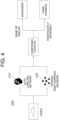
- Fig. 4 is a drawing schematically illustrating a method for determining a useful frame, which has a degree of usefulness higher than a threshold usefulness value, for the on-vehicle active learning in accordance with one example embodiment of the present disclosure.
- Fig. 5 is a drawing schematically illustrating another method for determining the useful frame for the on-vehicle active learning in accordance with one example embodiment of the present disclosure.
- Fig. 1 is a drawing schematically illustrating an on-vehicle active learning device for on-vehicle active learning, to be used for training a perception network of an autonomous vehicle, in accordance with one example embodiment of the present disclosure.
- the on-vehicle active learning device 1000 may include a memory 1001 which stores one or more instructions for performing the on-vehicle active learning of one or more consecutive frames in a driving video acquired from the autonomous vehicle, and a processor 1002 which performs functions for the on-vehicle active learning in response to the instructions stored in the memory 1001.
- the basic learning device 1000 may typically achieve a desired system performance by using combinations of at least one computing device and at least one computer software, e.g., a computer processor, a memory, a storage, an input device, an output device, or any other conventional computing components, an electronic communication device such as a router or a switch, an electronic information storage system such as a network-attached storage (NAS) device and a storage area network (SAN) as the computing device and any instructions that allow the computing device to function in a specific way as the computer software.
- a computer software e.g., a computer processor, a memory, a storage, an input device, an output device, or any other conventional computing components, an electronic communication device such as a router or a switch, an electronic information storage system such as a network-attached storage (NAS) device and a storage area network (SAN) as the computing device and any instructions that allow the computing device to function in a specific way as the computer software.
- NAS network-attached storage
- SAN storage area network
- the processor of the computing device may include hardware configuration of MPU (Micro Processing Unit) or CPU (Central Processing Unit), cache memory, data bus, etc. Additionally, the computing device may further include software configuration of OS and applications that achieve specific purposes.
- MPU Micro Processing Unit
- CPU Central Processing Unit
- computing device does not exclude an integrated device including any combination of a processor, a memory, a medium, or any other computing components for implementing the present disclosure.
- a method for using the on-vehicle active learning device 1000 for the on-vehicle active learning, to be used for training the perception network of the autonomous vehicle is explained below by referring to Fig. 2 in accordance with one example embodiment of the present disclosure.
- the on-vehicle active learning device 1000 may perform or support another device to perform a process of inputting one or more consecutive frames of the driving video and the sensing information into a scene code assigning module 1200, to thereby allow the scene code assigning module 1200 to generate each of one or more scene codes including information on each of scenes in each of the frames and information on one or more driving events by referring to the frames and the sensing information.
- each of the scene codes may be created by encoding, e.g., codifying, information on each of the scenes of each of the frames and information on the driving events.
- the scene code assigning module 1200 may perform or support another device to perform a process of applying a learning operation to each of the frames and thus classifying each of the scenes of each of the frames into one of preset classes of driving environments and one of preset classes of driving roads, to thereby generate each of class codes of each of the frames, via a scene classifier 1210 based on deep learning. That is, the scene classifier 1210 may extract features of each of the frames and classify the extracted features into one of the classes of the driving environments and one of the classes of the driving roads, to thereby generate each of the class codes of each of the frames.
- the driving environments may include information on weather and information on a time zone of an area where the autonomous vehicle is driven, but the scope of the present disclosure is not limited thereto, and may include various information on weather in a local area or region where the autonomous vehicle is driven.
- the information on weather may include information on weather phenomena like sunshine, rain, snow, fog, etc. and the information on the time zone may include information like day, night, etc.
- the driving roads may include types of roads, e.g., a highway, an urban road, a tunnel, etc., where the autonomous vehicle is driven, but the scope of the present disclosure is not limited thereto, and may include various road environments where the autonomous vehicle is driven.
- the scene code assigning module 1200 may perform or support another device to perform a process of detecting each of the driving events, which occurs while the autonomous vehicle is driven, by referring to each of the frames and each piece of the sensing information on each of the frames, to thereby generate each of event codes, via a driving event detecting module 1220.
- the event codes may include (1) frame-based event codes detected by using the consecutive frames and (2) vehicle-based event codes detected by using the sensing information.
- the scene code assigning module 1200 may perform or support another device to perform a process of inputting the consecutive frames into a scene change detector of the driving event detecting module 1220, to thereby allow the scene change detector to detect whether each of the scenes of each of the consecutive frames is changed and thus generate each of the frame-based event codes corresponding to each of the frames.
- the frame-based event codes may include codes respectively corresponding to a uniform sample, a scene change, etc. according to whether the scenes are changed.
- the scene code assigning module 1200 may perform or support another device to perform a process of detecting operation states of the autonomous vehicle by using the sensing information and thus detecting events which occur while the autonomous vehicle is driven, to thereby generate vehicle-based event codes.
- the vehicle-based event codes may include codes respectively corresponding to a rapid steering, rapid brake slamming, normal action, AEB activated action, etc.
- the scene code assigning module 1200 may perform or support another device to perform a process of generating each of the scene codes of each of the frames by using each of the class codes of each of the frames and each of the event codes of each of the frames.
- Class code Event code Driving environment weather/time
- Driving road Frame-based event code Vehicle-based event code sunshine, rain, snow, fog, etc. day/night highway/city/tunnel uniform sample/ scene change rapid steering/ rapid brake slamming/ normal action/ AEB activated
- scene codes listed in the above table are not to be taken in a limiting sense, and various types of the scene codes of the frames in the driving video can be generated.
- the driving video and the sensing information may be inputted into a driving video & driving information analyzing module 1110 of the autonomous vehicle.
- the driving video & driving information analyzing module 1110 may perform or support another device to perform a process of applying a learning operation to the consecutive frames of the driving video, to thereby detect information on a nearby environment of the autonomous vehicle, for example, information on objects, such as vehicles, pedestrians, etc., information on lanes, information on traffic signal of the driving road, etc. via the perception network, and a process of detecting information on the operation states of the autonomous vehicle by referring to the sensing information.
- the information on the nearby environment and the information on the operation states of the autonomous vehicle may be transmitted to an autonomous driving controlling part 1500, and the autonomous driving controlling part 1500 may control operation of the autonomous vehicle by using the information on the nearby environment and the information on the operation states.
- the driving video & driving information analyzing module 1110 performs or supports another device to perform a process of detecting objects from the frames of the driving video, to thereby generate object detection information of each of the frames, via an object detector based on deep learning, for example, the object detector based on a convolutional neural network (CNN), or a process of segmenting the frames of the driving video, to thereby generate the information on the lanes on each of the frames, via a segmentation network based on deep learning.
- the driving video & driving information analyzing module 1110 may also perform or support another device to perform a process of outputting the information on the operation states of the autonomous vehicle.
- the information on the operation states may include information on driving conditions of the autonomous vehicle respectively corresponding to an acceleration, a deceleration, a steering wheel operation, an activation autonomous emergency brake (AEB), etc. of the autonomous vehicle.
- the on-vehicle active learning device 1000 performs or supports another device to perform a process of selecting frames useful for the training data, with which the perception network of the autonomous vehicle is to be trained, by using each of the scene codes of each of the frames and the object detection information on each of the frames detected by the object detector, via a frame selecting module 1300 and a process of storing the frames, selected as the training data, in a frame storing part 1400.
- the on-vehicle active learning device 1000 performs or supports another device to perform a process of allowing the frame selecting module 1300 to select frames, i.e., images, which are useful for training the perception network based on deep learning of the autonomous vehicle, among the consecutive frames acquired from the driving video.
- the frame selecting module 1300 may select the frames useful for training the perception network in various ways.
- the on-vehicle active learning device 1000 performs or supports another device to perform (i) a process of selecting a first part of the frames, whose object detection information generated during the driving events satisfies a preset condition, as specific frames to be used for training the perception network of the autonomous vehicle, via a frame selecting module 1300, by using each of the scene codes of each of the frames and the object detection information, for each of the frames, detected by an object detector and (ii) a process of storing the specific frames and their corresponding specific scene codes in a frame storing part 1400, i.e., a memory with limited capacity installed on the autonomous vehicle, such that the specific frames and their corresponding specific scene codes match with one another.
- a frame selecting module 1300 by using each of the scene codes of each of the frames and the object detection information, for each of the frames, detected by an object detector
- a process of storing the specific frames and their corresponding specific scene codes in a frame storing part 1400 i.e., a memory with limited capacity installed
- the on-vehicle active learning device 1000 may perform or support another device to perform a process of selecting a second part of the frames, matching with a training policy of the perception network of the autonomous vehicle, as the specific frames among the frames by using the scene codes and the object detection information, via the frame selecting module 1300 and a process of storing the specific frames and their corresponding specific scene codes in the frame storing part 1400 such that the specific frames and their corresponding specific scene codes match with one another.
- the on-vehicle active learning device 1000 may perform or support another device to perform a process of selecting a certain frame, which has a collision area where no object is detected in a collision event, as one of the specific frames useful for training the perception network by referring to the scene codes.
- the collision event may be a driving event performed in a situation, e.g., a sudden braking, a sudden right turn, a sudden left turn, etc., in which an operation state of the autonomous vehicle represents a traffic collision or an estimated traffic collision.
- the collision event may include an event where braking of the autonomous vehicle occurs when a traffic collision is expected to be imminent, but the scope of the present disclosure is not limited thereto.
- the collision area may be an area, in the certain frame, where an object is estimated as being located if the autonomous vehicle collides with the object or where the object is estimated to be located if the autonomous vehicle is estimated to collide with the object.
- an event code of the autonomous vehicle corresponds to a sudden braking, a sudden right turn, a sudden left turn, etc.
- an object must be detected in the collision area, however, if no object is detected in the collision area on one of the frames of the driving video, a false negative is suspected, therefore, said one of the frames may be selected as one of the specific frames useful for training the perception network.
- the on-vehicle active learning device 1000 may perform or support another device to perform a process of selecting a certain frame, which has the collision area where an object is detected in a normal event, as one of the specific frames useful for training the perception network by referring to the scene codes.
- the normal event may be an event where the autonomous vehicle is driven normally without any accidents or collisions.
- said one of the frames may be selected as one of the specific frames useful for training the perception network.
- the on-vehicle active learning device 1000 may perform or support another device to perform a process of selecting a certain frame, where an object with its confidence score included in the object detection information equal to or lower than a preset value is located, as one of the specific frames which are useful for training the perception network.
- the perception network is determined as properly operating on such frames, therefore, such frames may be determined as frames not useful for training the perception network and be discarded.
- the on-vehicle active learning device 1000 may perform or support another device to perform a process of selecting a certain frame, from which a pedestrian in a rare driving environment is detected, as one of the specific frames which are useful for training the perception network by referring to the scene codes.
- a frame where a pedestrian is detected may be determined as a hard example, that is, an example which has the degree of usefulness higher than a threshold usefulness value, to be used for training the perception network and thus said frame may be determined as useful for training the perception network.
- the perception network may be determined as sufficiently trained, and therefore, said frame may be determined as not useful for training the perception network in order to avoid overfitting.
- the method described above for determining whether the frames of the driving video are useful for training the perception network or not is just an example. That is, the scope of the present disclosure is not limited thereto and the method may vary by set conditions.
- the frame selecting module 1300 may determine whether the frames of the driving video are useful for training the perception network or not by using a trained network, i.e., a trained deep learning network.
- the frame selecting module 1300 may perform or support another device to perform a process of inputting the frames into an auto labeling network 1310 and the trained deep learning network 1320, respectively. Thereafter, by performing an output comparison, which is a process of comparing an output from the auto labeling network 1310 and an output from the trained deep learning network 1320, the frames may be determined as useful or not for training the perception network. If the outputs are identical or similar to each other, the frames may be determined as not useful. And, if a difference between the outputs is equal or greater than a predetermined value, the frames may be considered as hard examples and determined useful for training the perception network.
- the frame selecting module 1300 may perform or support another device to perform a process of modifying the frames in various ways, to thereby create various modified frames.
- the various ways of modifying the frames may include resizing the frames, changing aspect ratios of the frames, changing color tone of the frames, etc.
- the frame selecting module 1300 may perform or support another device to perform a process of inputting each of the modified frames into the trained deep learning network 1320.
- the frames may be determined as useful or not for training the perception network. If the computed variance is equal or smaller than a preset threshold, the frames may be determined as not useful. And, if the computed variance is greater than the preset threshold, the frames may be considered as hard examples and thus determined as useful for training the perception network.
- the on-vehicle active learning device 1000 may perform or support another device to perform (i) a process of sampling the specific frames stored in the frame storing part 1400 by using the specific scene codes to thereby generate training data and (ii) a process of executing on-vehicle learning of the perception network of the autonomous vehicle by using the training data.
- the on-vehicle active learning device 1000 may perform or support another device to perform (i) a process of under-sampling through selecting a part of the specific frames in a majority class and as many as possible of the specific frames in a minority class by referring to the scene codes or (ii) a process of over-sampling through generating copies of the specific frames in the minority class as many as the number of the specific frames in the majority class, by referring to the scene codes, at the step of sampling the specific frames stored in the frame storing part 1400, to thereby generate the training data and thus train the perception network with the sampled training data.
- the number of frames corresponding to the majority class is 100 and that the number of frames corresponding to the minority class is 10, then if a desired number of frames to be sampled is 30, ten frames corresponding to the minority class may be selected and twenty frames corresponding to the majority class may be selected.
- the on-vehicle active learning device 1000 may perform or support another device to perform a process of calculating one or more weight-balanced losses on the training data, corresponding to the scene codes, by weight balancing, to thereby train the perception network via backpropagation by using the weight-balanced losses, at the step of executing the on-vehicle learning of the perception network by using the specific frames stored in the frame storing part 1400.
- the present disclosure has an effect of providing the method for improving an efficiency of training the perception network with new training data by performing a process of assigning the scene code corresponding to a frame of a video, a process of determining the frame as useful for training or not, and then a process of storing the data in a storage of a vehicle.
- the present disclosure has another effect of providing the method for performing the on-line active learning on the vehicle itself, through sampling balancing on the training data according to the scene code.
- the present disclosure has still another effect of providing the method for performing the on-vehicle learning of the perception network of the autonomous vehicle by performing the sampling balancing on the training data according to its corresponding scene code.
- the embodiments of the present disclosure as explained above can be implemented in a form of executable program command through a variety of computer means recordable to computer readable media.
- the computer readable media may include solely or in combination, program commands, data files, and data structures.
- the program commands recorded to the media may be components specially designed for the present disclosure or may be usable to those skilled in the art.
- Computer readable media include magnetic media such as hard disk, floppy disk, and magnetic tape, optical media such as CD-ROM and DVD, magneto-optical media such as floptical disk and hardware devices such as ROM, RAM, and flash memory specially designed to store and carry out program commands.
- Program commands include not only a machine language code made by a complier but also a high level code that can be used by an interpreter etc., which is executed by a computer.
- the aforementioned hardware device can work as more than a software module to perform the action of the present disclosure and vice versa.
Landscapes
- Engineering & Computer Science (AREA)
- Theoretical Computer Science (AREA)
- Physics & Mathematics (AREA)
- General Physics & Mathematics (AREA)
- Evolutionary Computation (AREA)
- Health & Medical Sciences (AREA)
- Software Systems (AREA)
- Artificial Intelligence (AREA)
- Computing Systems (AREA)
- General Health & Medical Sciences (AREA)
- Multimedia (AREA)
- Mathematical Physics (AREA)
- General Engineering & Computer Science (AREA)
- Data Mining & Analysis (AREA)
- Molecular Biology (AREA)
- Computational Linguistics (AREA)
- Biophysics (AREA)
- Biomedical Technology (AREA)
- Life Sciences & Earth Sciences (AREA)
- Medical Informatics (AREA)
- Databases & Information Systems (AREA)
- Computer Vision & Pattern Recognition (AREA)
- Mechanical Engineering (AREA)
- Automation & Control Theory (AREA)
- Transportation (AREA)
- Human Computer Interaction (AREA)
- Radar, Positioning & Navigation (AREA)
- Remote Sensing (AREA)
- Image Analysis (AREA)
- Traffic Control Systems (AREA)
- Control Of Driving Devices And Active Controlling Of Vehicle (AREA)
- Image Processing (AREA)
Claims (11)
- Procédé mis en oeuvre par ordinateur pour un apprentissage actif embarqué destiné à être utilisé pour entraîner un réseau de perception d'un véhicule autonome, le procédé comprenant de :générer, par un module d'attribution de code de scène (1200) d'un dispositif d'apprentissage actif embarqué (1000) ayant en entrée une ou plusieurs trames consécutives d'une vidéo de conduite et des informations de détection acquises respectivement à partir d'une caméra et d'un ou plusieurs capteurs montés sur un véhicule autonome pendant que le véhicule autonome est conduit, chacun d'un ou plusieurs codes de scène comprenant des informations relatives à chacune des scènes dans chacune des trames et des informations relatives à un ou plusieurs événements de conduite en :générant, par un classificateur de scène (1210) du module d'attribution de code de scène (1200), chacun des codes de classe de chacune des trames en classant chacune des scènes de chacune des trames dans une des classes d'environnements de conduite et une des classes des routes de conduite,générant, par un module de détection d'événement de conduite (1220) du module d'attribution de code de scène (1200), chacun des codes d'événement en détectant chacun des événements de conduite, qui se produisent pendant que le véhicule autonome est conduit, en se référant à chacune des trames et chaque élément d'information de détection sur chacune des trames, etgénérant chacun desdits codes de scène comme chacun des codes de classe de chacune des trames et chacun des codes d'événement de chacune des trames ;générant, au moyen d'un module d'analyse de vidéo de conduite et d'informations de conduite (1110) du dispositif d'apprentissage actif embarqué (1000) ayant en entrée lesdites une ou plusieurs trames consécutives de la vidéo de conduite, des informations de détection d'objet de chacune des trames qui sont des informations relatives aux objets détectés dans chacune des trames ; etsélectionner, à l'aide d'un module de sélection de trame (1300) du dispositif d'apprentissage actif embarqué (1000) ayant en entrée chacun des codes de scène de chacune des trames et les informations de détection d'objet de chacune des trames, une première partie des trames ayant au moins un parmi (i) un code de scène indiquant un événement dans lequel le véhicule autonome est conduit normalement sans aucune information d'accident ou de collision et de détection d'objet indiquant un objet dans une zone de collision, dans lequel une zone de collision est une zone, dans un certain repère, où un objet est estimé comme étant localisé si le véhicule autonome entre en collision avec l'objet ou où l'objet est estimé comme étant localisé si il est estimé que le véhicule autonome entre en collision avec l'objet, (ii) un code de scène indiquant un accident ou un événement de collision et des informations de détection d'objet indiquant l'absence d'objet dans une zone de collision, et (iii) un objet ayant un score de confiance inclus dans les informations de détection d'objet égal ou inférieur à une valeur prédéfinie et mémoriser la première partie sélectionnée des trames et leurs codes de scène correspondants dans une partie de mémorisation de trames (1400) en tant que trames spécifiques à utiliser pour entraîner le réseau de perception du véhicule autonome de telle sorte que les trames spécifiques et leurs codes de scène correspondants correspondent les uns aux autres.
- Procédé selon la revendication 1, comprenant en outre : la sélection, à l'aide du module de sélection de trame (1300) ayant en entrée les codes de scène de chacune des trames et les informations de détection d'objet de chacune des trames, d'une deuxième partie des trames, correspondant à une politique d'apprentissage du réseau de perception du véhicule autonome, et la mémorisation de la deuxième partie sélectionnée des trames et leurs codes de scène correspondants dans la partie de mémorisation de trames (1400) en tant que trames spécifiques à utiliser pour entraîner le réseau de perception du véhicule autonome de telle sorte que les trames spécifiques et leurs codes de scène correspondants correspondent les uns aux autres.
- Procédé selon la revendication 1 ou 2, comprenant en outre de :générer des données d'apprentissage en échantillonnant les trames spécifiques mémorisées dans la partie de mémorisation de trames (1400) en utilisant les codes de scène spécifiques ; etexécuter un apprentissage embarqué du réseau de perception du véhicule autonome à l'aide des données d'entraînement.
- Procédé selon la revendication 3,dans lequel l'échantillonnage des trames spécifiques mémorisées dans la partie de mémorisation de trames (1400) en utilisant les codes de scène spécifiques comprend au moins un du sous-échantillonnage des trames spécifiques en se référant aux codes de scène ou sur-échantillonnage des trames spécifiques en se référant aux codes de scène,le calcul d'une ou plusieurs pertes pondérées sur les données d'entraînement, correspondant aux codes de scène, par pondération, etl'entraînement du réseau de perception par rétropropagation en utilisant les pertes pondérées.
- Procédé selon la revendication 1, comprenant en outre de :détecter, au moyen du module de détection d'événement de conduite (1220), un ou plusieurs changements de scène dans les trames, en générant ainsi un ou plusieurs codes d'événement basés sur des trames ; etdétecter un ou plusieurs états de fonctionnement, correspondant aux informations de détection, du véhicule autonome, en générant ainsi un ou plusieurs codes d'événement basés sur le véhicule, comme codes d'événements.
- Procédé selon la revendication 1, comprenant en outre la sélection d'une certaine trame, à partir de laquelle un piéton dans un environnement de conduite rare est détecté, comme une des trames spécifiques, en se référant aux codes de scène.
- Dispositif d'apprentissage actif embarqué pour un apprentissage actif embarqué destiné à être utilisé pour entraîner un réseau de perception d'un véhicule autonome, le dispositif d'apprentissage actif embarqué comprenant :un module d'attribution de code de scène (1200) ayant en entrée une ou plusieurs trames consécutives d'une vidéo de conduite et des informations de détection acquises respectivement à partir d'une caméra et d'un ou plusieurs capteurs montés sur un véhicule autonome pendant que le véhicule autonome est conduit, le module d'attribution de code de scène (1200) étant configuré pour générer chacun d'un ou plusieurs codes de scène comprenant des informations sur chacune des scènes dans chacune des trames et des informations sur un ou plusieurs événements de conduite en :générant, par un classificateur de scène (1210) du module d'attribution de code de scène (1200), chacun des codes de classe de chacune des trames en classant chacune des scènes de chacune des trames dans une des classes d'environnements de conduite et une des classes de routes de conduite ;générant, par un module de détection d'événements de conduite (1220) du module d'attribution de codes de scène (1200), chacun des codes d'événement en détectant chacun des événements de conduite, qui se produisent pendant que le véhicule autonome est conduit, en se référant à chacune des trames et à chaque élément des informations de détection relatives à chacune des trames, etgénérant ledit code de scène ou chacun desdits codes de scène en tant que chacun des codes de classe de chacune des trames et chacun des codes d'événements de chacune des trames ;un module d'analyse de vidéo de conduite et d'informations de conduite (1110) ayant en entrée lesdites une ou plusieurs trames consécutives de la vidéo de conduite, le module d'analyse de vidéo de conduite et d'informations de conduite (1110) étant configuré pour générer des informations de détection d'objet de chacun des trames qui sont des informations relatives aux objets détectés dans chacune des trames ; etun module de sélection de trames (1300) ayant en entrée chacun des codes de scène de chacune des trames et les informations de détection d'objet de chacune des trames, le module de sélection de trames (1300) étant configuré pour sélectionner une première partie des trames ayant au moins un parmi (i) un code de scène indiquant un événement où le véhicule autonome est conduit normalement sans aucun accident ou collision et des informations de détection d'objet indiquant un objet dans une zone de collision, dans lequel une zone de collision est une zone, dans une certaine trame, où un objet est estimé comme étant localisé si le véhicule autonome entre en collision. avec l'objet ou l'endroit où l'objet est estimé se trouver si on estime que le véhicule autonome entre en collision avec l'objet, (ii) un code de scène indiquant un événement d'accident ou de collision et des informations de détection d'objet indiquant qu'il n'y a aucun objet dans une zone de collision , et (iii) un objet ayant un score de confiance inclus dans les informations de détection d'objet égal ou inférieur à une valeur prédéfinie, et mémoriser la première partie sélectionnée des trames et leurs codes de scène correspondants dans une partie de mémorisation de trames (1400) en tant que trames spécifiques à utiliser pour entraîner le réseau de perception du véhicule autonome de telle sorte que les trames spécifiques et leurs codes de scène spécifiques correspondants correspondent les uns aux autres.
- Dispositif d'apprentissage actif embarqué selon la revendication 7, dans lequel le module de sélection de trames (1300) est en outre configuré pour sélectionner une deuxième partie des trames, correspondant à une politique de formation du réseau de perception du véhicule autonome, et mémoriser les deuxièmes parties sélectionnées des trames et leurs codes de scène spécifiques correspondants dans la partie de mémorisation de trames (1400) en tant que trames spécifiques à utiliser pour entraîner le réseau de perception du véhicule autonome de telle sorte que les trames spécifiques et leurs codes de scène spécifiques correspondants correspondent les uns aux autres.
- Dispositif d'apprentissage actif embarqué selon la revendication 7 ou 8, comprenant en outre un processeur configuré pour échantillonner les trames spécifiques mémorisées dans la partie de mémorisation de trames (1400) en utilisant les codes de scène spécifiques pour générer ainsi des données d'entraînement, et pour exécuter un apprentissage embarqué du réseau de perception du véhicule autonome à l'aide des données d'entraînement.
- Dispositif d'apprentissage actif embarqué selon la revendication 9, dans lequel le processeur est en outre configuré pour :sous-échantillonner les trames spécifiques en se référant aux codes de scène ou sur-échantillonner les trames spécifiques en se référant aux codes de scène, pour générer ainsi les données d'entraînement et entraînez ainsi le réseau de perception,calculer une ou plusieurs pertes pondérées sur les données d'entraînement, correspondant aux codes de scène, par pondération, etentraîner le réseau de perception par rétropropagation à l'aide des pertes pondérées.
- Dispositif d'apprentissage actif embarqué selon la revendication 7, dans lequel le module d'attribution de code de scène est configuré pour (i) détecter un ou plusieurs changements de scène dans les trames via le module de détection d'événement de conduite et ainsi générer un codes d'événement basés sur trames et (ii) détecter un ou plusieurs états de fonctionnement, correspondant aux informations de détection, du véhicule autonome et générer ainsi un ou plusieurs codes d'événement basés sur un véhicule, pour ainsi générer les codes d'événement.
Applications Claiming Priority (2)
| Application Number | Priority Date | Filing Date | Title |
|---|---|---|---|
| US202063014877P | 2020-04-24 | 2020-04-24 | |
| US17/204,287 US11157813B1 (en) | 2020-04-24 | 2021-03-17 | Method and device for on-vehicle active learning to be used for training perception network of autonomous vehicle |
Publications (3)
| Publication Number | Publication Date |
|---|---|
| EP3901822A1 EP3901822A1 (fr) | 2021-10-27 |
| EP3901822B1 true EP3901822B1 (fr) | 2024-02-14 |
| EP3901822C0 EP3901822C0 (fr) | 2024-02-14 |
Family
ID=75529884
Family Applications (1)
| Application Number | Title | Priority Date | Filing Date |
|---|---|---|---|
| EP21168387.5A Active EP3901822B1 (fr) | 2020-04-24 | 2021-04-14 | Procédé et dispositif pour l'apprentissage actif sur véhicule destiné à être utilisé pour la formation d'un réseau de perception de véhicule autonome |
Country Status (6)
| Country | Link |
|---|---|
| US (1) | US11157813B1 (fr) |
| EP (1) | EP3901822B1 (fr) |
| JP (1) | JP7181654B2 (fr) |
| KR (1) | KR102589764B1 (fr) |
| CN (1) | CN115279643B (fr) |
| WO (1) | WO2021215740A1 (fr) |
Families Citing this family (9)
| Publication number | Priority date | Publication date | Assignee | Title |
|---|---|---|---|---|
| US11475628B2 (en) * | 2021-01-12 | 2022-10-18 | Toyota Research Institute, Inc. | Monocular 3D vehicle modeling and auto-labeling using semantic keypoints |
| CN114444576B (zh) * | 2021-12-30 | 2025-01-03 | 北京达佳互联信息技术有限公司 | 一种数据采样方法、装置、电子设备及存储介质 |
| US12296846B2 (en) * | 2022-06-01 | 2025-05-13 | Plusai, Inc. | Methods and apparatus for natural language based scenario discovery to train a machine learning model for a driving system |
| GB202208488D0 (en) * | 2022-06-09 | 2022-07-27 | Aptiv Tech Ltd | Computer-implemented method of training a neural network to select objects, and a vehicle, cloud server, and traffic infrastructure unit |
| CN115150780A (zh) * | 2022-06-10 | 2022-10-04 | 中国第一汽车股份有限公司 | 一种车机系统连接手机蓝牙的报警方法、装置及系统 |
| US12597244B2 (en) | 2022-07-18 | 2026-04-07 | 42Dot Inc. | Method and device for improving object recognition rate of self-driving car |
| CN116229312A (zh) * | 2023-01-03 | 2023-06-06 | 北京达佳互联信息技术有限公司 | 用于视频事件定位模型的学习样本选择的方法和系统 |
| KR20250098097A (ko) | 2023-12-21 | 2025-07-01 | 한국기술교육대학교 산학협력단 | 자율주행 차량의 이동 궤적 예측 방법 및 시스템 |
| CN117622082B (zh) * | 2023-12-22 | 2025-05-27 | 岚图汽车科技有限公司 | 目标更新处理方法、系统、设备及可读存储介质 |
Family Cites Families (35)
| Publication number | Priority date | Publication date | Assignee | Title |
|---|---|---|---|---|
| DE19827835B4 (de) * | 1998-06-23 | 2012-01-19 | Robert Bosch Gmbh | Bildübertragungsverfahren und -vorrichtung |
| US8111923B2 (en) | 2008-08-14 | 2012-02-07 | Xerox Corporation | System and method for object class localization and semantic class based image segmentation |
| US20140005907A1 (en) | 2012-06-29 | 2014-01-02 | Magna Electronics Inc. | Vision-based adaptive cruise control system |
| JP2014010633A (ja) | 2012-06-29 | 2014-01-20 | Honda Elesys Co Ltd | 画像認識装置、画像認識方法、及び画像認識プログラム |
| KR102190484B1 (ko) * | 2013-11-11 | 2020-12-11 | 삼성전자주식회사 | 인식기 학습 방법 및 장치, 데이터 인식 방법 및 장치 |
| KR102147361B1 (ko) * | 2015-09-18 | 2020-08-24 | 삼성전자주식회사 | 객체 인식 장치 및 방법, 객체 인식 모델 학습 장치 및 방법 |
| US10530991B2 (en) * | 2017-01-28 | 2020-01-07 | Microsoft Technology Licensing, Llc | Real-time semantic-aware camera exposure control |
| KR102060662B1 (ko) | 2017-05-16 | 2019-12-30 | 삼성전자주식회사 | 차량의 주행 이벤트를 검출하는 전자 장치 및 방법 |
| GB2560393B (en) * | 2017-07-31 | 2019-01-30 | Matthew Russell Iain | Unmanned aerial vehicles |
| CN110997415A (zh) * | 2017-08-01 | 2020-04-10 | 三星电子株式会社 | 控制车辆的操作的电子设备和方法 |
| CN107679489B (zh) * | 2017-09-29 | 2021-06-04 | 北京奇虎科技有限公司 | 基于场景分割的自动驾驶处理方法、装置及计算设备 |
| US10452920B2 (en) * | 2017-10-31 | 2019-10-22 | Google Llc | Systems and methods for generating a summary storyboard from a plurality of image frames |
| US10768304B2 (en) * | 2017-12-13 | 2020-09-08 | Luminar Technologies, Inc. | Processing point clouds of vehicle sensors having variable scan line distributions using interpolation functions |
| CN108133484B (zh) * | 2017-12-22 | 2022-01-28 | 北京奇虎科技有限公司 | 基于场景分割的自动驾驶处理方法及装置、计算设备 |
| US11941719B2 (en) * | 2018-01-23 | 2024-03-26 | Nvidia Corporation | Learning robotic tasks using one or more neural networks |
| CN110298219A (zh) * | 2018-03-23 | 2019-10-01 | 广州汽车集团股份有限公司 | 无人驾驶车道保持方法、装置、计算机设备和存储介质 |
| US20190310651A1 (en) * | 2018-04-10 | 2019-10-10 | Uber Technologies, Inc. | Object Detection and Determination of Motion Information Using Curve-Fitting in Autonomous Vehicle Applications |
| US11995556B2 (en) * | 2018-05-18 | 2024-05-28 | Cambricon Technologies Corporation Limited | Video retrieval method, and method and apparatus for generating video retrieval mapping relationship |
| US10845818B2 (en) * | 2018-07-30 | 2020-11-24 | Toyota Research Institute, Inc. | System and method for 3D scene reconstruction of agent operation sequences using low-level/high-level reasoning and parametric models |
| US10318842B1 (en) * | 2018-09-05 | 2019-06-11 | StradVision, Inc. | Learning method, learning device for optimizing parameters of CNN by using multiple video frames and testing method, testing device using the same |
| CN109460016A (zh) * | 2018-09-06 | 2019-03-12 | 百度在线网络技术(北京)有限公司 | 自动驾驶协助方法、驾驶设备、协助设备及可读存储介质 |
| WO2020068784A1 (fr) * | 2018-09-24 | 2020-04-02 | Schlumberger Technology Corporation | Cadre d'apprentissage actif pour tâches assistées par machine |
| US10504027B1 (en) * | 2018-10-26 | 2019-12-10 | StradVision, Inc. | CNN-based learning method, learning device for selecting useful training data and test method, test device using the same |
| CN109257622A (zh) * | 2018-11-01 | 2019-01-22 | 广州市百果园信息技术有限公司 | 一种音视频处理方法、装置、设备及介质 |
| CN109886176B (zh) * | 2019-02-14 | 2023-02-24 | 武汉大学 | 复杂驾驶场景下的车道线检测方法 |
| CN109993082B (zh) | 2019-03-20 | 2021-11-05 | 上海理工大学 | 卷积神经网络道路场景分类与道路分割方法 |
| JP2020166758A (ja) * | 2019-03-29 | 2020-10-08 | 株式会社デンソーテン | 画像処理装置および画像処理方法 |
| US10853953B2 (en) * | 2019-04-12 | 2020-12-01 | Logitech Europe S.A. | Video content activity context and regions |
| KR20210002959A (ko) * | 2019-07-01 | 2021-01-11 | 현대자동차주식회사 | 자율주행차량의 차선변경 제어 장치 및 그 방법 |
| US11250296B2 (en) * | 2019-07-24 | 2022-02-15 | Nvidia Corporation | Automatic generation of ground truth data for training or retraining machine learning models |
| KR102737991B1 (ko) * | 2019-08-15 | 2024-12-05 | 엘지전자 주식회사 | 딥러닝 기반의 세탁기의 진동 분석 방법과 그 장치 |
| CN110796081B (zh) * | 2019-10-29 | 2023-07-21 | 深圳龙岗智能视听研究院 | 一种基于关系图分析的群体行为识别方法 |
| US11615266B2 (en) * | 2019-11-02 | 2023-03-28 | Perceptive Automata, Inc. | Adaptive sampling of stimuli for training of machine learning based models for predicting hidden context of traffic entities for navigating autonomous vehicles |
| US20210142168A1 (en) * | 2019-11-07 | 2021-05-13 | Nokia Technologies Oy | Methods and apparatuses for training neural networks |
| CN111008616B (zh) * | 2019-12-25 | 2023-09-12 | 南京猫头鹰智能科技有限公司 | 一种基于卷积神经网络和深度核网络的视频行为识别方法 |
-
2021
- 2021-03-17 US US17/204,287 patent/US11157813B1/en active Active
- 2021-04-14 EP EP21168387.5A patent/EP3901822B1/fr active Active
- 2021-04-14 JP JP2021576476A patent/JP7181654B2/ja active Active
- 2021-04-14 WO PCT/KR2021/004714 patent/WO2021215740A1/fr not_active Ceased
- 2021-04-14 KR KR1020217040053A patent/KR102589764B1/ko active Active
- 2021-04-14 CN CN202180020419.1A patent/CN115279643B/zh active Active
Also Published As
| Publication number | Publication date |
|---|---|
| JP7181654B2 (ja) | 2022-12-01 |
| US20210334652A1 (en) | 2021-10-28 |
| EP3901822A1 (fr) | 2021-10-27 |
| KR20210152025A (ko) | 2021-12-14 |
| EP3901822C0 (fr) | 2024-02-14 |
| WO2021215740A1 (fr) | 2021-10-28 |
| US11157813B1 (en) | 2021-10-26 |
| CN115279643B (zh) | 2025-09-05 |
| CN115279643A (zh) | 2022-11-01 |
| JP2022539697A (ja) | 2022-09-13 |
| KR102589764B1 (ko) | 2023-10-17 |
Similar Documents
| Publication | Publication Date | Title |
|---|---|---|
| EP3901822B1 (fr) | Procédé et dispositif pour l'apprentissage actif sur véhicule destiné à être utilisé pour la formation d'un réseau de perception de véhicule autonome | |
| US11195030B2 (en) | Scene classification | |
| US8520893B2 (en) | Method and system for detecting object | |
| CN110738857A (zh) | 一种车辆违章取证方法、装置及设备 | |
| US11132607B1 (en) | Method for explainable active learning, to be used for object detector, by using deep encoder and active learning device using the same | |
| JP6418574B2 (ja) | 危険度推定装置、危険度推定方法及び危険度推定用コンピュータプログラム | |
| Op den Camp et al. | Cyclist target and test setup for evaluation of cyclist-autonomous emergency braking | |
| CN112277958B (zh) | 一种驾驶员制动行为分析方法 | |
| CN115817468A (zh) | 一种车辆在复杂路段行驶的报警方法及装置 | |
| EP4492336A1 (fr) | Prédiction d'action de rotation et de freinage à l'aide d'une détection de lumière de véhicule | |
| Ghosh | A modified YOLO model for on-road vehicle detection in varying weather conditions | |
| CN117538842A (zh) | 隧道全向广域毫米波雷达感知方法及相关设备 | |
| Gate et al. | Fast algorithm for pedestrian and group of pedestrians detection using a laser scanner | |
| KR20240011067A (ko) | 자율주행 자동차의 객체 인식률 개선 방법 및 그 장치 | |
| Triwibowo et al. | Analysis of Classification and Calculation of Vehicle Type at APILL Intersection Using YOLO Method and Kalman Filter | |
| CN114461671A (zh) | 数据处理方法、车辆、计算机可读存储介质 | |
| JP2024062325A (ja) | 情報処理装置及びプログラム | |
| CN114399714A (zh) | 基于车载相机视频的车辆违停检测方法 | |
| KR20240037396A (ko) | 머신러닝에 기반하여 주변 차량 정보를 생성함으로써 자율 주행을 지원하기 위한 학습 방법 및 학습 장치, 이를 이용한 테스트 방법 및 테스트 장치 | |
| KR102704426B1 (ko) | 도로의 이벤트 상황 인식을 통하여 자율주행차량의 주행가능 경로를 생성하는 방법 및 이를 이용한 컴퓨팅 장치 | |
| JP7538300B2 (ja) | 自動運転車のオブジェクト認識率の改善方法およびその装置 | |
| JP7756184B2 (ja) | 改善された学習データ映像を生成する方法及びその装置 | |
| US12548304B2 (en) | Vehicle and control method thereof | |
| Jebastin et al. | Real Time Detection of Speed Hump/Bump at Nighttime | |
| KR102039814B1 (ko) | 측후방 차량 검출 방법 및 그 장치 |
Legal Events
| Date | Code | Title | Description |
|---|---|---|---|
| PUAI | Public reference made under article 153(3) epc to a published international application that has entered the european phase |
Free format text: ORIGINAL CODE: 0009012 |
|
| STAA | Information on the status of an ep patent application or granted ep patent |
Free format text: STATUS: REQUEST FOR EXAMINATION WAS MADE |
|
| 17P | Request for examination filed |
Effective date: 20210414 |
|
| AK | Designated contracting states |
Kind code of ref document: A1 Designated state(s): AL AT BE BG CH CY CZ DE DK EE ES FI FR GB GR HR HU IE IS IT LI LT LU LV MC MK MT NL NO PL PT RO RS SE SI SK SM TR |
|
| B565 | Issuance of search results under rule 164(2) epc |
Effective date: 20210921 |
|
| RBV | Designated contracting states (corrected) |
Designated state(s): AL AT BE BG CH CY CZ DE DK EE ES FI FR GB GR HR HU IE IS IT LI LT LU LV MC MK MT NL NO PL PT RO RS SE SI SK SM TR |
|
| REG | Reference to a national code |
Free format text: PREVIOUS MAIN CLASS: G06K0009000000 Ipc: G06V0010820000 Ref country code: DE Ref legal event code: R079 Ref document number: 602021009296 Country of ref document: DE |
|
| GRAP | Despatch of communication of intention to grant a patent |
Free format text: ORIGINAL CODE: EPIDOSNIGR1 |
|
| STAA | Information on the status of an ep patent application or granted ep patent |
Free format text: STATUS: GRANT OF PATENT IS INTENDED |
|
| RIC1 | Information provided on ipc code assigned before grant |
Ipc: G06V 10/764 20220101ALI20230904BHEP Ipc: G06V 20/40 20220101ALI20230904BHEP Ipc: G06V 10/82 20220101AFI20230904BHEP |
|
| INTG | Intention to grant announced |
Effective date: 20230927 |
|
| GRAS | Grant fee paid |
Free format text: ORIGINAL CODE: EPIDOSNIGR3 |
|
| GRAA | (expected) grant |
Free format text: ORIGINAL CODE: 0009210 |
|
| STAA | Information on the status of an ep patent application or granted ep patent |
Free format text: STATUS: THE PATENT HAS BEEN GRANTED |
|
| AK | Designated contracting states |
Kind code of ref document: B1 Designated state(s): AL AT BE BG CH CY CZ DE DK EE ES FI FR GB GR HR HU IE IS IT LI LT LU LV MC MK MT NL NO PL PT RO RS SE SI SK SM TR |
|
| REG | Reference to a national code |
Ref country code: GB Ref legal event code: FG4D |
|
| REG | Reference to a national code |
Ref country code: CH Ref legal event code: EP |
|
| REG | Reference to a national code |
Ref country code: DE Ref legal event code: R096 Ref document number: 602021009296 Country of ref document: DE |
|
| REG | Reference to a national code |
Ref country code: IE Ref legal event code: FG4D |
|
| U01 | Request for unitary effect filed |
Effective date: 20240305 |
|
| U07 | Unitary effect registered |
Designated state(s): AT BE BG DE DK EE FI FR IT LT LU LV MT NL PT SE SI Effective date: 20240312 |
|
| U20 | Renewal fee for the european patent with unitary effect paid |
Year of fee payment: 4 Effective date: 20240408 |
|
| PG25 | Lapsed in a contracting state [announced via postgrant information from national office to epo] |
Ref country code: IS Free format text: LAPSE BECAUSE OF FAILURE TO SUBMIT A TRANSLATION OF THE DESCRIPTION OR TO PAY THE FEE WITHIN THE PRESCRIBED TIME-LIMIT Effective date: 20240614 |
|
| PG25 | Lapsed in a contracting state [announced via postgrant information from national office to epo] |
Ref country code: GR Free format text: LAPSE BECAUSE OF FAILURE TO SUBMIT A TRANSLATION OF THE DESCRIPTION OR TO PAY THE FEE WITHIN THE PRESCRIBED TIME-LIMIT Effective date: 20240515 |
|
| PG25 | Lapsed in a contracting state [announced via postgrant information from national office to epo] |
Ref country code: RS Free format text: LAPSE BECAUSE OF FAILURE TO SUBMIT A TRANSLATION OF THE DESCRIPTION OR TO PAY THE FEE WITHIN THE PRESCRIBED TIME-LIMIT Effective date: 20240514 Ref country code: HR Free format text: LAPSE BECAUSE OF FAILURE TO SUBMIT A TRANSLATION OF THE DESCRIPTION OR TO PAY THE FEE WITHIN THE PRESCRIBED TIME-LIMIT Effective date: 20240214 |
|
| PG25 | Lapsed in a contracting state [announced via postgrant information from national office to epo] |
Ref country code: ES Free format text: LAPSE BECAUSE OF FAILURE TO SUBMIT A TRANSLATION OF THE DESCRIPTION OR TO PAY THE FEE WITHIN THE PRESCRIBED TIME-LIMIT Effective date: 20240214 |
|
| PG25 | Lapsed in a contracting state [announced via postgrant information from national office to epo] |
Ref country code: RS Free format text: LAPSE BECAUSE OF FAILURE TO SUBMIT A TRANSLATION OF THE DESCRIPTION OR TO PAY THE FEE WITHIN THE PRESCRIBED TIME-LIMIT Effective date: 20240514 Ref country code: NO Free format text: LAPSE BECAUSE OF FAILURE TO SUBMIT A TRANSLATION OF THE DESCRIPTION OR TO PAY THE FEE WITHIN THE PRESCRIBED TIME-LIMIT Effective date: 20240514 Ref country code: IS Free format text: LAPSE BECAUSE OF FAILURE TO SUBMIT A TRANSLATION OF THE DESCRIPTION OR TO PAY THE FEE WITHIN THE PRESCRIBED TIME-LIMIT Effective date: 20240614 Ref country code: HR Free format text: LAPSE BECAUSE OF FAILURE TO SUBMIT A TRANSLATION OF THE DESCRIPTION OR TO PAY THE FEE WITHIN THE PRESCRIBED TIME-LIMIT Effective date: 20240214 Ref country code: GR Free format text: LAPSE BECAUSE OF FAILURE TO SUBMIT A TRANSLATION OF THE DESCRIPTION OR TO PAY THE FEE WITHIN THE PRESCRIBED TIME-LIMIT Effective date: 20240515 Ref country code: ES Free format text: LAPSE BECAUSE OF FAILURE TO SUBMIT A TRANSLATION OF THE DESCRIPTION OR TO PAY THE FEE WITHIN THE PRESCRIBED TIME-LIMIT Effective date: 20240214 |
|
| PG25 | Lapsed in a contracting state [announced via postgrant information from national office to epo] |
Ref country code: PL Free format text: LAPSE BECAUSE OF FAILURE TO SUBMIT A TRANSLATION OF THE DESCRIPTION OR TO PAY THE FEE WITHIN THE PRESCRIBED TIME-LIMIT Effective date: 20240214 |
|
| PG25 | Lapsed in a contracting state [announced via postgrant information from national office to epo] |
Ref country code: PL Free format text: LAPSE BECAUSE OF FAILURE TO SUBMIT A TRANSLATION OF THE DESCRIPTION OR TO PAY THE FEE WITHIN THE PRESCRIBED TIME-LIMIT Effective date: 20240214 |
|
| PG25 | Lapsed in a contracting state [announced via postgrant information from national office to epo] |
Ref country code: SM Free format text: LAPSE BECAUSE OF FAILURE TO SUBMIT A TRANSLATION OF THE DESCRIPTION OR TO PAY THE FEE WITHIN THE PRESCRIBED TIME-LIMIT Effective date: 20240214 |
|
| PG25 | Lapsed in a contracting state [announced via postgrant information from national office to epo] |
Ref country code: CZ Free format text: LAPSE BECAUSE OF FAILURE TO SUBMIT A TRANSLATION OF THE DESCRIPTION OR TO PAY THE FEE WITHIN THE PRESCRIBED TIME-LIMIT Effective date: 20240214 |
|
| PG25 | Lapsed in a contracting state [announced via postgrant information from national office to epo] |
Ref country code: SK Free format text: LAPSE BECAUSE OF FAILURE TO SUBMIT A TRANSLATION OF THE DESCRIPTION OR TO PAY THE FEE WITHIN THE PRESCRIBED TIME-LIMIT Effective date: 20240214 |
|
| PG25 | Lapsed in a contracting state [announced via postgrant information from national office to epo] |
Ref country code: SM Free format text: LAPSE BECAUSE OF FAILURE TO SUBMIT A TRANSLATION OF THE DESCRIPTION OR TO PAY THE FEE WITHIN THE PRESCRIBED TIME-LIMIT Effective date: 20240214 Ref country code: SK Free format text: LAPSE BECAUSE OF FAILURE TO SUBMIT A TRANSLATION OF THE DESCRIPTION OR TO PAY THE FEE WITHIN THE PRESCRIBED TIME-LIMIT Effective date: 20240214 Ref country code: RO Free format text: LAPSE BECAUSE OF FAILURE TO SUBMIT A TRANSLATION OF THE DESCRIPTION OR TO PAY THE FEE WITHIN THE PRESCRIBED TIME-LIMIT Effective date: 20240214 Ref country code: CZ Free format text: LAPSE BECAUSE OF FAILURE TO SUBMIT A TRANSLATION OF THE DESCRIPTION OR TO PAY THE FEE WITHIN THE PRESCRIBED TIME-LIMIT Effective date: 20240214 |
|
| REG | Reference to a national code |
Ref country code: DE Ref legal event code: R097 Ref document number: 602021009296 Country of ref document: DE |
|
| PG25 | Lapsed in a contracting state [announced via postgrant information from national office to epo] |
Ref country code: MC Free format text: LAPSE BECAUSE OF FAILURE TO SUBMIT A TRANSLATION OF THE DESCRIPTION OR TO PAY THE FEE WITHIN THE PRESCRIBED TIME-LIMIT Effective date: 20240214 |
|
| PG25 | Lapsed in a contracting state [announced via postgrant information from national office to epo] |
Ref country code: MC Free format text: LAPSE BECAUSE OF FAILURE TO SUBMIT A TRANSLATION OF THE DESCRIPTION OR TO PAY THE FEE WITHIN THE PRESCRIBED TIME-LIMIT Effective date: 20240214 |
|
| REG | Reference to a national code |
Ref country code: CH Ref legal event code: PL |
|
| PLBE | No opposition filed within time limit |
Free format text: ORIGINAL CODE: 0009261 |
|
| STAA | Information on the status of an ep patent application or granted ep patent |
Free format text: STATUS: NO OPPOSITION FILED WITHIN TIME LIMIT |
|
| 26N | No opposition filed |
Effective date: 20241115 |
|
| PG25 | Lapsed in a contracting state [announced via postgrant information from national office to epo] |
Ref country code: CH Free format text: LAPSE BECAUSE OF NON-PAYMENT OF DUE FEES Effective date: 20240430 |
|
| PG25 | Lapsed in a contracting state [announced via postgrant information from national office to epo] |
Ref country code: IE Free format text: LAPSE BECAUSE OF NON-PAYMENT OF DUE FEES Effective date: 20240414 |
|
| U20 | Renewal fee for the european patent with unitary effect paid |
Year of fee payment: 5 Effective date: 20250319 |
|
| PG25 | Lapsed in a contracting state [announced via postgrant information from national office to epo] |
Ref country code: CY Free format text: LAPSE BECAUSE OF FAILURE TO SUBMIT A TRANSLATION OF THE DESCRIPTION OR TO PAY THE FEE WITHIN THE PRESCRIBED TIME-LIMIT; INVALID AB INITIO Effective date: 20210414 |
|
| PG25 | Lapsed in a contracting state [announced via postgrant information from national office to epo] |
Ref country code: HU Free format text: LAPSE BECAUSE OF FAILURE TO SUBMIT A TRANSLATION OF THE DESCRIPTION OR TO PAY THE FEE WITHIN THE PRESCRIBED TIME-LIMIT; INVALID AB INITIO Effective date: 20210414 |
|
| GBPC | Gb: european patent ceased through non-payment of renewal fee |
Effective date: 20250414 |
|
| PG25 | Lapsed in a contracting state [announced via postgrant information from national office to epo] |
Ref country code: GB Free format text: LAPSE BECAUSE OF NON-PAYMENT OF DUE FEES Effective date: 20250414 |
|
| U20 | Renewal fee for the european patent with unitary effect paid |
Year of fee payment: 6 Effective date: 20260317 |