EP3905748A1 - Attribution de ressources de découverte de dispositif à dispositif - Google Patents
Attribution de ressources de découverte de dispositif à dispositif Download PDFInfo
- Publication number
- EP3905748A1 EP3905748A1 EP21173754.9A EP21173754A EP3905748A1 EP 3905748 A1 EP3905748 A1 EP 3905748A1 EP 21173754 A EP21173754 A EP 21173754A EP 3905748 A1 EP3905748 A1 EP 3905748A1
- Authority
- EP
- European Patent Office
- Prior art keywords
- user equipment
- report
- discovery
- request
- needs
- Prior art date
- Legal status (The legal status is an assumption and is not a legal conclusion. Google has not performed a legal analysis and makes no representation as to the accuracy of the status listed.)
- Pending
Links
Images

Classifications
-
- H—ELECTRICITY
- H04—ELECTRIC COMMUNICATION TECHNIQUE
- H04L—TRANSMISSION OF DIGITAL INFORMATION, e.g. TELEGRAPHIC COMMUNICATION
- H04L43/00—Arrangements for monitoring or testing data switching networks
- H04L43/16—Threshold monitoring
-
- H—ELECTRICITY
- H04—ELECTRIC COMMUNICATION TECHNIQUE
- H04W—WIRELESS COMMUNICATION NETWORKS
- H04W72/00—Local resource management
- H04W72/04—Wireless resource allocation
-
- H—ELECTRICITY
- H04—ELECTRIC COMMUNICATION TECHNIQUE
- H04W—WIRELESS COMMUNICATION NETWORKS
- H04W72/00—Local resource management
- H04W72/20—Control channels or signalling for resource management
- H04W72/23—Control channels or signalling for resource management in the downlink direction of a wireless link, i.e. towards a terminal
-
- H—ELECTRICITY
- H04—ELECTRIC COMMUNICATION TECHNIQUE
- H04W—WIRELESS COMMUNICATION NETWORKS
- H04W24/00—Supervisory, monitoring or testing arrangements
- H04W24/10—Scheduling measurement reports ; Arrangements for measurement reports
-
- H—ELECTRICITY
- H04—ELECTRIC COMMUNICATION TECHNIQUE
- H04W—WIRELESS COMMUNICATION NETWORKS
- H04W72/00—Local resource management
-
- H—ELECTRICITY
- H04—ELECTRIC COMMUNICATION TECHNIQUE
- H04W—WIRELESS COMMUNICATION NETWORKS
- H04W72/00—Local resource management
- H04W72/12—Wireless traffic scheduling
- H04W72/1263—Mapping of traffic onto schedule, e.g. scheduled allocation or multiplexing of flows
- H04W72/1273—Mapping of traffic onto schedule, e.g. scheduled allocation or multiplexing of flows of downlink data flows
-
- H—ELECTRICITY
- H04—ELECTRIC COMMUNICATION TECHNIQUE
- H04W—WIRELESS COMMUNICATION NETWORKS
- H04W72/00—Local resource management
- H04W72/20—Control channels or signalling for resource management
- H04W72/21—Control channels or signalling for resource management in the uplink direction of a wireless link, i.e. towards the network
-
- H—ELECTRICITY
- H04—ELECTRIC COMMUNICATION TECHNIQUE
- H04W—WIRELESS COMMUNICATION NETWORKS
- H04W76/00—Connection management
- H04W76/10—Connection setup
- H04W76/14—Direct-mode setup
-
- H—ELECTRICITY
- H04—ELECTRIC COMMUNICATION TECHNIQUE
- H04W—WIRELESS COMMUNICATION NETWORKS
- H04W8/00—Network data management
- H04W8/005—Discovery of network devices, e.g. terminals
-
- H—ELECTRICITY
- H04—ELECTRIC COMMUNICATION TECHNIQUE
- H04W—WIRELESS COMMUNICATION NETWORKS
- H04W92/00—Interfaces specially adapted for wireless communication networks
- H04W92/16—Interfaces between hierarchically similar devices
- H04W92/18—Interfaces between hierarchically similar devices between terminal devices
Definitions
- Various communication systems may benefit from techniques and systems for resource allocation.
- communication systems of the third generation partnership project may benefit from device to device discovery resource allocation methods and systems.
- Third generation partnership project (3GPP) long term evolution advanced (LTE-A) release 12 or 13 may include features related to device to device discovery and communications.
- 3GPP Third generation partnership project
- LTE-A long term evolution advanced
- ProSe proximity services
- D2D Device-to-Device
- communication is one issue that is relevant to such standardization.
- D2D discovery is one of the D2D scenarios that can be considered.
- Type-1 & Type-2 resource allocation D2D discovery devices, such as a user equipment (UE), conventionally share a common resource pool. Thus, a UE can autonomously select the resource to be used for discovery signal transmission.
- UE user equipment
- eNB can conventionally assign a UE-specific resource for discovery signal transmission. Idle mode UEs are supposed to be able to discover other UEs and be discovered by other UEs. Thus, supporting Type-1 resource allocation may be necessary in order for an idle mode UE to obtain resources without the need to enter into Radio Resource Control connected (RRC_connected) state for resource allocation, as with Type-2 resource allocation.
- RRC_connected Radio Resource Control connected
- a D2D discovery signal can be sent on a cellular uplink (UL) subframe (SF).
- this subframe is referred to as a "D2D SF".
- cellular and D2D data may not be allowed to be multiplexed in a frequency division multiplexing (FDM) way from one UE perspective.
- FDM frequency division multiplexing
- a UE sends a discovery signal in a D2D SF this UE cannot transmit on a physical uplink control channel (PUCCH) or on a physical uplink shared channel (PUSCH) simultaneously in the same SF, namely in the D2D SF.
- PUCCH physical uplink control channel
- PUSCH physical uplink shared channel
- RRC_Connected mode UEs use type-1 resource allocation, a potential issue arises when cellular and D2D traffic co-exist and when a connected mode UE is very heavily scheduled in DL. For example, if one UE has DL data transmission on physical downlink shared channel (PDSCH) in every DL SF, this UE will conventionally consequently send acknowledgment/negative acknowledgment (ACK/NACK or A/N) on PUCCH on every UL SF. The resulting issue is that this UE will conventionally find no place to send discovery message.
- PDSCH physical downlink shared channel
- UE will conventionally have reduced possibilities for discovery signal transmission.
- D2D discovery signal transmission with higher priority than cellular data or control One way to address this issue is to set D2D discovery signal transmission with higher priority than cellular data or control.
- the eNB cannot conventionally predict in which UL SF UE will send D2D discovery signal. If D2D discovery signal were set with higher priority, eNB would have to assume that any PUCCH in D2D SF could be unavailable, which would affect cellular services, as there would be DL retransmissions of data for which UEs were not able to send A/N. Likewise, DL would also be affected because of UEs not being able to send channel quality information (CQI) in the normal way. If discovery signal transmissions would prevent utilizing a scheduled PUSCH resource, UL resources would be wasted.
- CQI channel quality information
- a method can include determining that an amount of downlink data for a user equipment meets a predetermined threshold. The method can also include requesting the user equipment to report device to device discovery needs based on the amount meeting the predetermined threshold.
- a method can include receiving a request to provide a report of device to device discovery needs. The method can also include reporting the device to device discovery needs to a network element.
- An apparatus can include at least one processor and at least one memory including computer program code.
- the at least one memory and computer program code can be configured to, with the at least one processor, cause the apparatus at least to determine that an amount of downlink data for a user equipment meets a predetermined threshold.
- the at least one memory and computer program code can also be configured to, with the at least one processor, cause the apparatus at least to request the user equipment to report device to device discovery needs based on the amount meeting the predetermined threshold.
- An apparatus in certain embodiments, can include at least one processor and at least one memory including computer program code.
- the at least one memory and computer program code can be configured to, with the at least one processor, cause the apparatus at least to receive a request to provide a report of device to device discovery needs.
- the at least one memory and computer program code can also be configured to, with the at least one processor, cause the apparatus at least to report the device to device discovery needs to a network element.
- an apparatus can include means for determining that an amount of downlink data for a user equipment meets a predetermined threshold.
- the apparatus can also include means for requesting the user equipment to report device to device discovery needs based on the amount meeting the predetermined threshold.
- an apparatus can include means for receiving a request to provide a report of device to device discovery needs.
- the apparatus can also include means for reporting the device to device discovery needs to a network element.
- a non-transitory computer-readable medium can, according to certain embodiments, be encoded with instructions that, when executed in hardware, perform a process.
- the process can include determining that an amount of downlink data for a user equipment meets a predetermined threshold.
- the process can also include requesting the user equipment to report device to device discovery needs based on the amount meeting the predetermined threshold.
- a non-transitory computer-readable medium can, in certain embodiments, be encoded with instructions that, when executed in hardware, perform a process.
- the process can include receiving a request to provide a report of device to device discovery needs.
- the process can also include reporting the device to device discovery needs to a network element.
- a computer program product can encode instructions for performing a process.
- the process can include determining that an amount of downlink data for a user equipment meets a predetermined threshold.
- the process can also include requesting the user equipment to report device to device discovery needs based on the amount meeting the predetermined threshold.
- a computer program product can encode instructions for performing a process.
- the process can include receiving a request to provide a report of device to device discovery needs.
- the process can also include reporting the device to device discovery needs to a network element.
- a method can include determining that a user equipment's opportunities to transmit device-to-device discovery signals are lower than a predefined value.
- the method can also include requesting Type-2 resources or requesting to prioritize the transmitting of the discovery signals.
- an apparatus can include at least one processor and at least one memory including computer program code.
- the at least one memory and computer program code can be configured to, with the at least one processor, cause the apparatus at least to determine that a user equipment's opportunities to transmit device-to-device discovery signals are lower than a predefined value.
- the at least one memory and computer program code can also be configured to, with the at least one processor, cause the apparatus at least to request Type-2 resources or request to prioritize the transmitting of the discovery signals.
- An apparatus can include means for determining that a user equipment's opportunities to transmit device-to-device discovery signals are lower than a predefined value.
- the apparatus can also include means for requesting Type-2 resources or requesting to prioritize the transmitting of the discovery signals.
- a computer program product can encode instructions for performing a process.
- the process can include determining that a user equipment's opportunities to transmit device-to-device discovery signals are lower than a predefined value.
- the process can also include requesting Type-2 resources or requesting to prioritize the transmitting of the discovery signals.
- a non-transitory computer-readable medium can, in certain embodiments, be encoded with instructions that, when executed in hardware, perform a process.
- the process can include determining that a user equipment's opportunities to transmit device-to-device discovery signals are lower than a predefined value.
- the process can also include requesting Type-2 resources or requesting to prioritize the transmitting of the discovery signals.
- An apparatus can comprise means for: receiving a report, from a user equipment, of device to device discovery needs, wherein the report comprises a request for prioritization of participation by the user equipment in device to device discovery; granting the at least one request for prioritization of participation in the device to device discovery; and receiving a report that the device to device discovery needs of the user equipment have ended.
- the apparatus can comprise means for: determining that an amount of downlink data to be scheduled for the user equipment is above a threshold ; and/or determining that the user equipment is frequently transmitting uplink data on a physical uplink shared channel.
- the apparatus can comprise means for: sending a request to the user equipment to send the report of device to device discovery needs.
- the request to the user equipment to send the report of device to device discovery needs can be sent using a downlink control information in a physical downlink control channel or enhanced physical downlink control channel.
- the apparatus can comprise means for: assigning uplink resources for sending the report.
- the uplink resources comprise physical uplink control channel resources and the message format comprises a physical uplink control channel message format.
- the apparatus can comprise means for: signaling the uplink resources and the message format via radio resource control signaling.
- the apparatus can comprise means for: receiving the report, from the user equipment, of device to device discovery needs, on a physical uplink control channel or a physical uplink shared channel.
- the apparatus can comprise means for: receiving the report, from the user equipment, of device to device discovery needs via higher layer signaling.
- Granting the at least one request for prioritization of participation in the device to device discovery can comprises: restricting scheduling in some downlink subframes in order to increase discovery signal transmission opportunities.
- the apparatus can be a base station.
- a method can comprise: receiving (130) a report, from a user equipment, of device to device discovery needs, wherein the report comprises a request for prioritization of participation by the user equipment in device to device discovery; granting the at least one request for prioritization of participation in the device to device discovery; and receiving a report that the device to device discovery needs of the user equipment have ended.
- the method can comprise: sending a request to the user equipment to send the report of device to device discovery needs.
- the method can comprise: assigning uplink resources for sending the report.
- the method can comprise: receiving the report, from the user equipment, of device to device discovery needs, on a physical uplink control channel or a physical uplink shared channel.
- Certain embodiments may provide a better way of handling device to device discovery signal transmissions, while avoiding multiplexing cellular and D2D data in a frequency division multiplexing way from the standpoint of one user equipment.
- an evolved node B when an evolved node B (eNB) finds out a large amount of DL data is to be scheduled for one RRC_Connected mode UE, it can request the UE to report the UE's own D2D discovery needs. A report may also be requested if eNB finds that the UE is transmitting frequently at PUSCH.
- eNB evolved node B
- the eNB can indicate UE to report its D2D discovery needs and can assign an UL resource for sending the report with a predetermined PUCCH reporting format.
- the eNB may just indicate that the UE is to send a report, without assigning PUCCH resources for such a report. In this case, the UE can send the report on PUSCH.
- the UE can request Type-2 resources or ask the eNB to prioritize the UE's participation in D2D discovery.
- the UE when the UE finds out that the UE's opportunities to transmit discovery signals are lower than a predefined value, due to the frequent PUCCH transmissions or scheduled PUSCH transmissions, the UE may indicate the problematic situation to the eNB through a new higher layer signaling (MAC CE or RRC) carried on PUSCH.
- MAC CE new higher layer signaling
- Such a predefined value can be a parameter configured by the eNB.
- the eNB may define such a value as, for example, the number of transmit opportunities during a given interval, which can be deemed to satisfy the minimal discovery requirements for the UE side.
- the UE may carry following information in a message: the UE may directly request Type-2 resources; or the UE may ask the eNB to prioritize the UE's participation in D2D discovery; or the request message may be an indication to the eNB and can inform the eNB that the eNB needs to assign UL resources and message format for UE reporting on discovery status.
- UE When a UE is configured to report or decides to report D2D discovery needs, it can follow the procedures described below. For example, for resource allocation type-1, or common resource allocation, UE may report to the eNB how frequent opportunities it desires to have for discovery signal transmission. UE may, for example, indicate that the UE is satisfied with rare opportunities or that the UE has unexpected discovery needs, beyond the normal discovery signal transmission cycle, or that the discovery needs have ended.
- the UE can request the eNB to assign the UE-specific resource to the UE. Moreover, once the discovery needs end, the UE can report this to the eNB.
- the eNB can take the UE needs into account by restricting scheduling in some DL subframes in order to increase discovery signal transmission opportunities according to the indicated needs. Also, the eNB may avoid scheduling PUSCH transmission on D2D subframes for a UE with discovery needs. Instead, the eNB may schedule PUSCH transmissions in D2D subframes for UEs without discovery needs. Alternatively, or in addition, the eNB can allocate Type-2 resources if available and if requested by the UE. The eNB can also take the allocated Type-2 resources into account when scheduling DL and PUSCH.
- Configurations as to the eNB can include various aspects. Initially, all D2D discovery UEs, including idle mode and connected mode UEs, may be configured to use Type-1, for example common resource pool, to send discovery message. Later, the eNB may realize that there is a need to schedule PDSCH in a way that could possibly cause a conflict between UE's PUCCH and discovery signal transmission. The eNB may, for instance, know that a large amount of data will be transmitted in DL or, based on the statistics of past DL transmissions, deduce that DL transmission will be frequent in the future. Frequent DL transmissions may mean frequent PUCCH transmissions, in order to feedback DL acknowledgement/negative acknowledgment (ACK/NACK or A/N) to the eNB.
- ACK/NACK feedback DL acknowledgement/negative acknowledgment
- the eNB can configure and trigger this connected mode UE to report to the eNB the UE's D2D discovery request.
- the eNB may deduce from the past PUSCH transmissions that the UE might intend to transmit large amount of UL data also in the future and may trigger the UE to report to the eNB the UE's D2D discovery request.
- the eNB can use RRC signaling to indicate a physical layer resource in which the UE can send its report.
- a physical layer resource can be a specific PUCCH resource that is located outside of D2D SFs. Any of the current PUCCH formats can be used to carry such reports.
- the eNB can indicate which format will be used. The format selected for use can depend on which discovery request information the eNB wants to obtain from UE side.
- the eNB can use downlink control information (DCI) in physical downlink control channel (PDCCH) or enhanced PDCCH (ePDCCH) to trigger the UE for reporting with the settings configured in the first step.
- DCI downlink control information
- PDCH physical downlink control channel
- ePDCCH enhanced PDCCH
- reports can be carried on PUSCH.
- DCI could indicate that UE must send a report on PUSCH.
- the eNB can also indicate to the UE whether Type-2 resource allocation can be supported or applied to the connected mode UE. The eNB can make such a decision considering the eNB's resource utilization status and the UE's wish. For example, if there are numerous vacant resources in the cell, the eNB can configure Type-2 resource to the connected mode UE. Otherwise, Type-1 resource can be used as a common resource pool for all D2D UEs, including connected mode and idle mode UEs. On the UE side, when the eNB configures the UE to report the discovery request, the UE can assume the default resource allocation type is Type-1 unless the eNB explicitly indicates otherwise in the RRC signaling. Such explicit signaling could typically follow UE reporting its discovery needs.
- the eNB When the eNB receives a report indicating an end of discovery needs, it may remove scheduling restrictions it has applied for avoiding situations where UE's transmissions of cellular and discovery signals would overlap. Also, eNB may release Type-2 resources allocated for the UE, and release the UL resource the eNB had assigned for the UE for D2D discovery request reports.
- UE reporting of a discovery request can have various implementations. For example, for resource allocation Type-1, if PUCCH format la, carrying 1 bit, can be configured for UE reporting, with respect to which "1" can represent that the UE has a discovery request and "0" can represent the end of a discovery need. Sometimes more information may be useful as, for example, an eNB may need to know how frequently the UE wants the discovery signal to be sent. In such a case, the eNB may configure PUCCH format 1b, 2bits, for UE reporting. In that case, "00", "01", “10", and “11” may respectively represent discovery needs have ended, a low frequency discovery request, a medium frequency discovery request, and a high frequency discovery request.
- More granularity can be included if another PUCCH format, such as format 3, is used or if the report is sent through PUSCH.
- the eNB can restrict scheduling in some DL subframes in order to increase the opportunities of discovery signals transmissions for the reporting UE.
- the usage and meaning of PUCCH indication can be the same as with resource allocation Type-1, as described above.
- a difference can be that when the eNB receives such reporting, the eNB can assign or release a Type-2 resource to a connected mode UE.
- the eNB can consider the frequency level of the discovery request from the UE's reporting.
- the eNB can use, for example, either RRC signaling or DCI format to assign and/or release the Type-2 resource.
- a UE may find out that the UE cannot sufficiently utilize discovery resources due to frequent PUCCH or PUSCH transmissions.
- the UE can indicate the problem to the eNB with a new control message.
- the control message can be a medium access control (MAC) control element (CE) or an RRC control message.
- the UE may include such control message in a PUSCH transmission.
- the resources for sending the request message can be obtained as for any other control message.
- the message may directly carry information regarding the UE needs, or the message may just be an indication for the eNB that the eNB should assign the UE resources on PUCCH that the UE would use for discovery related signaling.
- the UE may directly request Type-2 resources.
- the UE may ask the eNB to prioritize the UE's participation with respect to D2D discovery.
- the request message may be an indication to the eNB and may inform eNB that eNB should assign UL resources and message format for UE reporting on the discovery status.
- UE may be assigned UL resource and message format for the reporting.
- Certain embodiments may have various benefits and/or advantages. For example, certain embodiments may address the issue of when D2D discovery signal and PUCCH A/N transmission conflict for an in coverage D2D discovery use case.
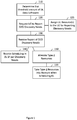
- Figure 1 illustrates a method according to certain embodiments.
- the method of Figure 1 may be performed by, for example, a network element, such as an access point, base station, or evolved Node B.
- a method can include, at 110, determining that an amount of downlink data for a user equipment meets a predetermined threshold.
- the method can also include, at 120, requesting the user equipment to report device to device discovery needs based on the amount meeting the predetermined threshold.
- the requesting can be further contingent on the user equipment being a radio resource control connected mode user equipment.
- the report can be received from the UE at 130, including an indication of the UE's discovery needs.
- the method can further include, at 125, assigning an uplink resource to the user equipment in which to report the discovery needs.
- a specific format can be specified or assigned together with the uplink resource.
- the method can additionally include, at 135, receiving an indication that the user equipment has discovery needs.
- the method can also include, at 140, restricting scheduling in at least one downlink subframe to increase discovery signal transmission opportunities according to the discovery needs.
- the method can include, at 150, allocating Type-2 resources to the user equipment when available and requested by the user equipment. Furthermore, the method can include, at 155, taking the Type-2 resources into account when scheduling on a downlink.
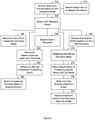
- Figure 2 illustrates another method according to certain embodiments.
- the method of Figure 2 may be performed by, for example, a user equipment, such as a terminal device, a mobile phone, a personal digital assistant, a personal computer, a tablet computer, a smart meter, or a sensor.
- a user equipment such as a terminal device, a mobile phone, a personal digital assistant, a personal computer, a tablet computer, a smart meter, or a sensor.
- a method can include, at 210, receiving a request to provide a report of device to device discovery needs.
- the method can also include, at 220, reporting the device to device discovery needs to a network element.
- the method can further include, at 215, receiving an assignment of an uplink resource in which to include the report.
- the reporting can include initiating sending the report using the uplink resource.
- the assignment can also indicate a specific format to use in providing the report, and the reporting can include following the assigned format.
- the method can also include, at 230, requesting Type-2 resources when providing the report.
- the method can include, at 240, requesting prioritization of participation by the user equipment in device to device discovery, when providing the report.
- the method can further include, at 250, determining that opportunities to transmit discovery signals for a user equipment are lower than a predefined threshold. Furthermore, the method can include, at 255, indicating that the predefined threshold is not met, to the network element.
- the method can additionally include, at 260, determining that a user equipment has unexpected discovery needs.
- the method can further include, at 265, reporting to the network element the unexpected discovery needs.
- the method can also include, at 270, determining that a user equipment has discovery needs.
- the method can further include, at 272, requesting the network element to provide a user equipment specific resource for the discovery needs.
- the method can include, at 274, determining that the discovery needs have ended.
- the method can include, at 276, reporting to the network element that the discovery needs have ended.
- the method of Figure 2 can work in coordination with the method of Figure 1 .
- a method may include both the method of Figure 1 and the method of Figure 2 .
- a method can include determining that a user equipment's opportunities to transmit device-to-device discovery signals are lower than a predefined value.
- the method can also include requesting Type-2 resources or requesting to prioritize the transmitting of the discovery signals.
- the result of the determining can be indicated to an eNB through a higher layer signaling carried on PUSCH. Additionally, the requesting can sent from the user equipment to the eNB via a request message, which also indicates the eNB to assign uplink resources and message format for the user equipment to report discovery status.
- Figure 3 illustrates a system according to certain embodiments. It should be understood that each block of the flowchart of Figures 1 or 2 and any combination thereof may be implemented by various means or their combinations, such as hardware, software, firmware, one or more processors and/or circuitry.
- a system may include several devices, such as, for example, network element 310 and user equipment (UE) or user device 320.
- the system may include more than one UE 320 and more than one network element 310, although only one of each is shown for the purposes of illustration.
- a network element can be an access point, a base station, an eNode B (eNB), server, host or any of the other network elements discussed herein.
- eNB eNode B
- Each of these devices may include at least one processor or control unit or module, respectively indicated as 314 and 324.
- At least one memory may be provided in each device, and indicated as 315 and 325, respectively.
- the memory may include computer program instructions or computer code contained therein.
- One or more transceiver 316 and 326 may be provided, and each device may also include an antenna, respectively illustrated as 317 and 327. Although only one antenna each is shown, many antennas and multiple antenna elements may be provided to each of the devices. Other configurations of these devices, for example, may be provided.
- network element 310 and UE 320 may be additionally configured for wired communication, in addition to wireless communication, and in such a case antennas 317 and 327 may illustrate any form of communication hardware, without being limited to merely an antenna.
- some network elements 310 may be solely configured for wired communication, and such cases antenna 317 may illustrate any form of wired communication hardware, such as a network interface card.
- Transceivers 316 and 326 may each, independently, be a transmitter, a receiver, or both a transmitter and a receiver, or a unit or device that may be configured both for transmission and reception.
- the transmitter and/or receiver (as far as radio parts are concerned) may also be implemented as a remote radio head which is not located in the device itself, but in a mast, for example.
- the operations and functionalities may be performed in different entities, such as nodes, hosts or servers, in a flexible manner. In other words, division of labor may vary case by case.
- One possible use is to make a network element deliver local content.
- One or more functionalities may also be implemented as virtual application(s) in software that can run on a server.
- a user device or user equipment 320 may be a mobile station (MS) such as a mobile phone or smart phone or multimedia device, a computer, such as a tablet, provided with wireless communication capabilities, personal data or digital assistant (PDA) provided with wireless communication capabilities, portable media player, digital camera, pocket video camera, navigation unit provided with wireless communication capabilities or any combinations thereof.
- MS mobile station
- PDA personal data or digital assistant
- an apparatus such as a node or user device, may include means for carrying out embodiments described above in relation to Figures 1 or 2 .
- Processors 314 and 324 may be embodied by any computational or data processing device, such as a central processing unit (CPU), digital signal processor (DSP), application specific integrated circuit (ASIC), programmable logic devices (PLDs), field programmable gate arrays (FPGAs), digitally enhanced circuits, or comparable device or a combination thereof.
- the processors may be implemented as a single controller, or a plurality of controllers or processors.
- the implementation may include modules or unit of at least one chip set (for example, procedures, functions, and so on).
- Memories 315 and 325 may independently be any suitable storage device, such as a non-transitory computer-readable medium.
- a hard disk drive (HDD), random access memory (RAM), flash memory, or other suitable memory may be used.
- the memories may be combined on a single integrated circuit as the processor, or may be separate therefrom.
- the computer program instructions may be stored in the memory and which may be processed by the processors can be any suitable form of computer program code, for example, a compiled or interpreted computer program written in any suitable programming language.
- the memory or data storage entity is typically internal but may also be external or a combination thereof, such as in the case when additional memory capacity is obtained from a service provider.
- the memory may be fixed or removable.
- a non-transitory computer-readable medium may be encoded with computer instructions or one or more computer program (such as added or updated software routine, applet or macro) that, when executed in hardware, may perform a process such as one of the processes described herein.
- Computer programs may be coded by a programming language, which may be a high-level programming language, such as objective-C, C, C++, C#, Java, etc., or a low-level programming language, such as a machine language, or assembler. Alternatively, certain embodiments of the invention may be performed entirely in hardware.
- Figure 3 illustrates a system including a network element 310 and a UE 320
- embodiments of the invention may be applicable to other configurations, and configurations involving additional elements, as illustrated and discussed herein.
- multiple user equipment devices and multiple network elements may be present, or other nodes providing similar functionality, such as nodes that combine the functionality of a user equipment and an access point, such as a relay node.
- the UE 320 may likewise be provided with a variety of configurations for communication other than communication network element 310.
- the UE 320 may be configured for device-to-device communication.
Landscapes
- Engineering & Computer Science (AREA)
- Computer Networks & Wireless Communication (AREA)
- Signal Processing (AREA)
- Databases & Information Systems (AREA)
- Mobile Radio Communication Systems (AREA)
Priority Applications (1)
| Application Number | Priority Date | Filing Date | Title |
|---|---|---|---|
| EP21173754.9A EP3905748A1 (fr) | 2014-01-30 | 2014-01-30 | Attribution de ressources de découverte de dispositif à dispositif |
Applications Claiming Priority (3)
| Application Number | Priority Date | Filing Date | Title |
|---|---|---|---|
| EP21173754.9A EP3905748A1 (fr) | 2014-01-30 | 2014-01-30 | Attribution de ressources de découverte de dispositif à dispositif |
| EP14880859.5A EP3100486B1 (fr) | 2014-01-30 | 2014-01-30 | Attribution de ressources de recherche de dispositif à dispositif |
| PCT/CN2014/071852 WO2015113311A1 (fr) | 2014-01-30 | 2014-01-30 | Attribution de ressources de recherche de dispositif à dispositif |
Related Parent Applications (2)
| Application Number | Title | Priority Date | Filing Date |
|---|---|---|---|
| EP14880859.5A Division-Into EP3100486B1 (fr) | 2014-01-30 | 2014-01-30 | Attribution de ressources de recherche de dispositif à dispositif |
| EP14880859.5A Division EP3100486B1 (fr) | 2014-01-30 | 2014-01-30 | Attribution de ressources de recherche de dispositif à dispositif |
Publications (1)
| Publication Number | Publication Date |
|---|---|
| EP3905748A1 true EP3905748A1 (fr) | 2021-11-03 |
Family
ID=53756200
Family Applications (2)
| Application Number | Title | Priority Date | Filing Date |
|---|---|---|---|
| EP21173754.9A Pending EP3905748A1 (fr) | 2014-01-30 | 2014-01-30 | Attribution de ressources de découverte de dispositif à dispositif |
| EP14880859.5A Active EP3100486B1 (fr) | 2014-01-30 | 2014-01-30 | Attribution de ressources de recherche de dispositif à dispositif |
Family Applications After (1)
| Application Number | Title | Priority Date | Filing Date |
|---|---|---|---|
| EP14880859.5A Active EP3100486B1 (fr) | 2014-01-30 | 2014-01-30 | Attribution de ressources de recherche de dispositif à dispositif |
Country Status (7)
| Country | Link |
|---|---|
| US (1) | US10587493B2 (fr) |
| EP (2) | EP3905748A1 (fr) |
| KR (1) | KR101926947B1 (fr) |
| CN (1) | CN106063310B (fr) |
| BR (1) | BR112016017704B8 (fr) |
| TW (1) | TWI596962B (fr) |
| WO (1) | WO2015113311A1 (fr) |
Families Citing this family (7)
| Publication number | Priority date | Publication date | Assignee | Title |
|---|---|---|---|---|
| CN105723778B (zh) * | 2013-11-06 | 2019-08-23 | 诺基亚技术有限公司 | 用于控制d2d发现过程的方法和装置 |
| EP2942993B1 (fr) | 2014-05-09 | 2020-03-25 | Sun Patent Trust | Affectation de ressources pour transmission de découverte d2d |
| RU2698104C1 (ru) * | 2015-11-06 | 2019-08-22 | Хуавэй Текнолоджиз Ко., Лтд. | Способ и аппарат определения радиоресурса и сервер обслуживания |
| WO2019033413A1 (fr) * | 2017-08-18 | 2019-02-21 | Nokia Solutions And Networks Oy | Procédés et appareils pour la coexistence de deux modes de communications de véhicule à véhicule |
| JP6679130B2 (ja) * | 2019-04-04 | 2020-04-15 | ホアウェイ・テクノロジーズ・カンパニー・リミテッド | 通信方法および通信システム |
| WO2021056196A1 (fr) * | 2019-09-24 | 2021-04-01 | 北京小米移动软件有限公司 | Procédé et appareil de traitement de ressources et support de stockage informatique |
| CN112637894B (zh) * | 2020-12-18 | 2023-08-01 | 京信网络系统股份有限公司 | 资源配置方法、装置、接入网设备和存储介质 |
Family Cites Families (29)
| Publication number | Priority date | Publication date | Assignee | Title |
|---|---|---|---|---|
| JP2009296537A (ja) * | 2008-06-09 | 2009-12-17 | Fujitsu Ltd | 無線リソース割当要求送信周期の制御方法 |
| US9055576B2 (en) * | 2009-10-08 | 2015-06-09 | Qualcomm Incorporated | Uplink resource allocation for LTE advanced |
| WO2011088609A1 (fr) | 2010-01-19 | 2011-07-28 | Nokia Corporation | Réutilisation de ressource centralisée commandée par nœud b évolué pour utilisateurs de communication de dispositif à dispositif et cellulaires |
| US8483059B2 (en) * | 2010-09-15 | 2013-07-09 | Accelera Mobile Broadband, Inc. | Method for congestion avoidance in 4G networks |
| DE112011105271T5 (de) * | 2011-05-25 | 2014-03-06 | Renesas Mobile Corporation | Ressourcenzuordnung für eine D2D-Kommunikation |
| WO2013017154A1 (fr) | 2011-07-29 | 2013-02-07 | Fujitsu Limited | Canal de commande pour communication sans fil |
| CN103179575A (zh) * | 2011-12-23 | 2013-06-26 | 中兴通讯股份有限公司 | 一种邻近设备通信的方法和系统、网络侧设备和用户设备 |
| CN103327568B (zh) * | 2012-03-21 | 2016-12-14 | 中国移动通信集团公司 | 资源分配消息发送方法、设备发现方法及相关设备 |
| US9084241B2 (en) * | 2012-05-21 | 2015-07-14 | Qualcomm Incorporated | Methods and apparatus for determining available resources for D2D communications |
| WO2014003342A1 (fr) * | 2012-06-26 | 2014-01-03 | 엘지전자 주식회사 | Procédé et dispositif d'émission et de réception de signal pour communication de dispositif à dispositif dans un système de communication sans fil |
| KR20150035590A (ko) | 2012-06-28 | 2015-04-06 | 엘지전자 주식회사 | 무선 통신 시스템에서 장치 대 장치 통신 방법 및 장치 |
| US9154267B2 (en) | 2012-07-02 | 2015-10-06 | Intel Corporation | Sounding reference signal (SRS) mechanism for intracell device-to-device (D2D) communication |
| CN102857901A (zh) * | 2012-09-12 | 2013-01-02 | 中兴通讯股份有限公司 | 终端的发现、发现处理方法及装置 |
| US9420511B2 (en) * | 2012-11-01 | 2016-08-16 | Intel Corporation | Signaling QoS requirements and UE power preference in LTE-A networks |
| CN102984699B (zh) | 2012-12-03 | 2016-02-17 | 中国联合网络通信集团有限公司 | D2d通信数据处理方法、设备和系统 |
| EP3709730A1 (fr) * | 2013-01-16 | 2020-09-16 | Interdigital Patent Holdings, Inc. | Génération et réception de signaux de découverte |
| CN103118417B (zh) * | 2013-01-21 | 2017-10-17 | 华为技术有限公司 | 信息传输方法和用户设备 |
| EP2950595B1 (fr) * | 2013-01-24 | 2019-07-31 | LG Electronics Inc. | Procédé permettant de réguler la puissance d'émission d'un signal de découverte pour la communication de dispositif à dispositif dans un système de communication sans fil, et dispositif correspondant |
| US9326121B2 (en) * | 2013-01-24 | 2016-04-26 | National Taiwan University | Device discovery using distributed random access for device to device communication |
| CN105027480B (zh) * | 2013-01-25 | 2018-01-16 | Lg电子株式会社 | 用于在无线通信系统中执行初始接入过程的方法和装置 |
| KR101833187B1 (ko) * | 2013-02-22 | 2018-02-27 | 인텔 아이피 코포레이션 | 액세스 네트워크 선택 및 트래픽 라우팅을 위한 시스템 및 방법 |
| WO2015009123A1 (fr) * | 2013-07-19 | 2015-01-22 | 엘지전자 주식회사 | Procédé de détection de signal de recherche pour une communication de dispositif à dispositif (d2d) dans un système de communications sans fil, et appareil correspondant |
| US9326122B2 (en) * | 2013-08-08 | 2016-04-26 | Intel IP Corporation | User equipment and method for packet based device-to-device (D2D) discovery in an LTE network |
| JP6197109B2 (ja) * | 2013-10-03 | 2017-09-13 | エルジー エレクトロニクス インコーポレイティド | 無線通信システムにおけるd2d動作のための資源を使用する方法及び装置 |
| US9602997B2 (en) * | 2013-10-08 | 2017-03-21 | Futurewei Technologies, Inc. | Operating states for D2D discovery |
| US9572171B2 (en) * | 2013-10-31 | 2017-02-14 | Intel IP Corporation | Systems, methods, and devices for efficient device-to-device channel contention |
| US20150119055A1 (en) * | 2013-10-31 | 2015-04-30 | Electronics And Telecommunications Research Institute | D2d (device-to-device) discovery method and resource allocation method |
| US10149280B2 (en) * | 2014-01-21 | 2018-12-04 | Qualcomm Incorporated | Device-to-device discovery signaling for radio resource allocation |
| CN106464703B (zh) * | 2014-05-09 | 2019-11-26 | 索尼公司 | 通信系统、蜂窝通信网络节点和相关方法 |
-
2014
- 2014-01-30 US US15/112,817 patent/US10587493B2/en active Active
- 2014-01-30 CN CN201480076761.3A patent/CN106063310B/zh active Active
- 2014-01-30 WO PCT/CN2014/071852 patent/WO2015113311A1/fr not_active Ceased
- 2014-01-30 EP EP21173754.9A patent/EP3905748A1/fr active Pending
- 2014-01-30 KR KR1020167023820A patent/KR101926947B1/ko active Active
- 2014-01-30 EP EP14880859.5A patent/EP3100486B1/fr active Active
- 2014-01-30 BR BR112016017704A patent/BR112016017704B8/pt active Search and Examination
-
2015
- 2015-01-21 TW TW104101972A patent/TWI596962B/zh active
Non-Patent Citations (2)
| Title |
|---|
| ETRI: "Discussion on Discovery for D2D Proximity Services", vol. RAN WG2, no. Barcelona, Spain; 20130819 - 20130823, 9 August 2013 (2013-08-09), XP050718249, Retrieved from the Internet <URL:http://www.3gpp.org/ftp/tsg_ran/WG2_RL2/TSGR2_83/Docs/> [retrieved on 20130809] * |
| KYOCERA: "Resource allocation schemes for D2D communication", vol. RAN WG2, no. San Francisco, USA; 20131111 - 20131115, 2 November 2013 (2013-11-02), XP050753430, Retrieved from the Internet <URL:http://www.3gpp.org/ftp/tsg_ran/WG2_RL2/TSGR2_84/Docs/> [retrieved on 20131102] * |
Also Published As
| Publication number | Publication date |
|---|---|
| US10587493B2 (en) | 2020-03-10 |
| EP3100486A4 (fr) | 2018-01-10 |
| TWI596962B (zh) | 2017-08-21 |
| US20160345374A1 (en) | 2016-11-24 |
| WO2015113311A1 (fr) | 2015-08-06 |
| KR20160115964A (ko) | 2016-10-06 |
| CN106063310B (zh) | 2020-10-02 |
| EP3100486B1 (fr) | 2021-12-15 |
| TW201536074A (zh) | 2015-09-16 |
| EP3100486A1 (fr) | 2016-12-07 |
| BR112016017704B8 (pt) | 2023-09-26 |
| KR101926947B1 (ko) | 2018-12-07 |
| BR112016017704A2 (pt) | 2017-08-08 |
| CN106063310A (zh) | 2016-10-26 |
| BR112016017704B1 (pt) | 2023-05-02 |
Similar Documents
| Publication | Publication Date | Title |
|---|---|---|
| US10660118B2 (en) | Logical channel priority reconfiguration for MAC-CES in NR | |
| US10587493B2 (en) | Device to device discovery resource allocation | |
| EP4164317B1 (fr) | Communications directes de dispositif à dispositif gérées par réseau | |
| CN110268783A (zh) | 利用无线通信网络中的短传输时间间隔的方法及装置 | |
| JP6328561B2 (ja) | アップリンクでの制御信号に関する通信リソース割当 | |
| US11350389B2 (en) | Semi-persistent resource allocation enhancement for V2X communication | |
| JP2019512904A (ja) | データ伝送方法 | |
| WO2014094175A1 (fr) | Communications directes de dispositif à dispositif gérées par des équipements utilisateurs | |
| US20140177536A1 (en) | Network-managed direct device to device communications | |
| US20210168763A1 (en) | Communication device that supports d2d communication, base station device, and communication method | |
| EP3706488B1 (fr) | Procédé d'attribution de ressources de paquets de données de liaison montante, et terminal d'utilisateur | |
| JP2020516171A (ja) | グラント不要の送信方法およびデバイス | |
| WO2023013610A1 (fr) | Dispositif de communication, dispositif de station de base et procédé de communication | |
| EP3512283B1 (fr) | Procédé de planification et equipement d'utilisateur | |
| US20210289478A1 (en) | Method for carrier selection in vehicle to everything system and terminal device | |
| US10820309B2 (en) | Communications in a wireless system | |
| CN112136337B (zh) | 下行控制信令传输方法及相关产品 | |
| EP3629657B1 (fr) | Procédé et dispositif d'indication d'ensemble de ressources de canal, et support d'enregistrement informatique | |
| WO2023013547A1 (fr) | Dispositif de communication, station de base et procédé de communication | |
| HK1230386A1 (en) | Device to device discovery resource allocation | |
| CN115549879B (zh) | 一种用于数据传输的方法及装置、通信设备、存储介质 | |
| HK1230386B (zh) | 设备至设备发现资源分配 |
Legal Events
| Date | Code | Title | Description |
|---|---|---|---|
| PUAI | Public reference made under article 153(3) epc to a published international application that has entered the european phase |
Free format text: ORIGINAL CODE: 0009012 |
|
| STAA | Information on the status of an ep patent application or granted ep patent |
Free format text: STATUS: THE APPLICATION HAS BEEN PUBLISHED |
|
| AC | Divisional application: reference to earlier application |
Ref document number: 3100486 Country of ref document: EP Kind code of ref document: P |
|
| AK | Designated contracting states |
Kind code of ref document: A1 Designated state(s): AL AT BE BG CH CY CZ DE DK EE ES FI FR GB GR HR HU IE IS IT LI LT LU LV MC MK MT NL NO PL PT RO RS SE SI SK SM TR |
|
| B565 | Issuance of search results under rule 164(2) epc |
Effective date: 20210714 |
|
| STAA | Information on the status of an ep patent application or granted ep patent |
Free format text: STATUS: REQUEST FOR EXAMINATION WAS MADE |
|
| 17P | Request for examination filed |
Effective date: 20220321 |
|
| RBV | Designated contracting states (corrected) |
Designated state(s): AL AT BE BG CH CY CZ DE DK EE ES FI FR GB GR HR HU IE IS IT LI LT LU LV MC MK MT NL NO PL PT RO RS SE SI SK SM TR |
|
| STAA | Information on the status of an ep patent application or granted ep patent |
Free format text: STATUS: EXAMINATION IS IN PROGRESS |
|
| 17Q | First examination report despatched |
Effective date: 20240327 |
|
| GRAP | Despatch of communication of intention to grant a patent |
Free format text: ORIGINAL CODE: EPIDOSNIGR1 |
|
| STAA | Information on the status of an ep patent application or granted ep patent |
Free format text: STATUS: GRANT OF PATENT IS INTENDED |
|
| RIC1 | Information provided on ipc code assigned before grant |
Ipc: H04W 16/14 20090101AFI20250919BHEP Ipc: H04W 8/00 20090101ALI20250919BHEP Ipc: H04W 72/00 20090101ALI20250919BHEP Ipc: H04W 72/04 20090101ALI20250919BHEP Ipc: H04W 76/14 20180101ALI20250919BHEP Ipc: H04W 92/18 20090101ALI20250919BHEP |
|
| INTG | Intention to grant announced |
Effective date: 20251015 |
|
| GRAJ | Information related to disapproval of communication of intention to grant by the applicant or resumption of examination proceedings by the epo deleted |
Free format text: ORIGINAL CODE: EPIDOSDIGR1 |
|
| STAA | Information on the status of an ep patent application or granted ep patent |
Free format text: STATUS: EXAMINATION IS IN PROGRESS |
|
| INTC | Intention to grant announced (deleted) | ||
| P01 | Opt-out of the competence of the unified patent court (upc) registered |
Free format text: CASE NUMBER: UPC_APP_0004549_3905748/2026 Effective date: 20260209 |