EP3905938B1 - Éponge de raclage - Google Patents
Éponge de raclage Download PDFInfo
- Publication number
- EP3905938B1 EP3905938B1 EP19907960.9A EP19907960A EP3905938B1 EP 3905938 B1 EP3905938 B1 EP 3905938B1 EP 19907960 A EP19907960 A EP 19907960A EP 3905938 B1 EP3905938 B1 EP 3905938B1
- Authority
- EP
- European Patent Office
- Prior art keywords
- layer
- scraper
- sponge
- sponge body
- defining
- Prior art date
- Legal status (The legal status is an assumption and is not a legal conclusion. Google has not performed a legal analysis and makes no representation as to the accuracy of the status listed.)
- Active
Links
Images





Classifications
-
- A—HUMAN NECESSITIES
- A47—FURNITURE; DOMESTIC ARTICLES OR APPLIANCES; COFFEE MILLS; SPICE MILLS; SUCTION CLEANERS IN GENERAL
- A47L—DOMESTIC WASHING OR CLEANING; SUCTION CLEANERS IN GENERAL
- A47L13/00—Implements for cleaning floors, carpets, furniture, walls, or wall coverings
- A47L13/02—Scraping
- A47L13/08—Scraping with scraping blades
-
- A—HUMAN NECESSITIES
- A47—FURNITURE; DOMESTIC ARTICLES OR APPLIANCES; COFFEE MILLS; SPICE MILLS; SUCTION CLEANERS IN GENERAL
- A47L—DOMESTIC WASHING OR CLEANING; SUCTION CLEANERS IN GENERAL
- A47L13/00—Implements for cleaning floors, carpets, furniture, walls, or wall coverings
- A47L13/10—Scrubbing; Scouring; Cleaning; Polishing
- A47L13/16—Cloths; Pads; Sponges
-
- A—HUMAN NECESSITIES
- A47—FURNITURE; DOMESTIC ARTICLES OR APPLIANCES; COFFEE MILLS; SPICE MILLS; SUCTION CLEANERS IN GENERAL
- A47L—DOMESTIC WASHING OR CLEANING; SUCTION CLEANERS IN GENERAL
- A47L13/00—Implements for cleaning floors, carpets, furniture, walls, or wall coverings
- A47L13/02—Scraping
-
- A—HUMAN NECESSITIES
- A47—FURNITURE; DOMESTIC ARTICLES OR APPLIANCES; COFFEE MILLS; SPICE MILLS; SUCTION CLEANERS IN GENERAL
- A47L—DOMESTIC WASHING OR CLEANING; SUCTION CLEANERS IN GENERAL
- A47L13/00—Implements for cleaning floors, carpets, furniture, walls, or wall coverings
- A47L13/02—Scraping
- A47L13/04—Scraping with steel wool
-
- A—HUMAN NECESSITIES
- A47—FURNITURE; DOMESTIC ARTICLES OR APPLIANCES; COFFEE MILLS; SPICE MILLS; SUCTION CLEANERS IN GENERAL
- A47L—DOMESTIC WASHING OR CLEANING; SUCTION CLEANERS IN GENERAL
- A47L13/00—Implements for cleaning floors, carpets, furniture, walls, or wall coverings
- A47L13/10—Scrubbing; Scouring; Cleaning; Polishing
- A47L13/12—Implements with several different treating devices
-
- A—HUMAN NECESSITIES
- A47—FURNITURE; DOMESTIC ARTICLES OR APPLIANCES; COFFEE MILLS; SPICE MILLS; SUCTION CLEANERS IN GENERAL
- A47L—DOMESTIC WASHING OR CLEANING; SUCTION CLEANERS IN GENERAL
- A47L17/00—Apparatus or implements used in manual washing or cleaning of crockery, table-ware, cooking-ware or the like
- A47L17/04—Pan or pot cleaning utensils
- A47L17/06—Scrapers
Definitions
- the present disclosure relates generally to a cleaning apparatus, and more particularly, to a sponge having a scrapper part for cleaning and scraping away unwanted substances from an object or surface.
- US 2 066 420 A discloses a cleaning device capable of cleaning, scouring a surface and washing a material from a surface in one operation.
- the device consists in a multi-material sponge that combines a sponge rubber with a metallic material such as coiled flattened wire or metallics shavings.
- the metallic material is embedded in the sponge.
- US 7 284 293 B1 discloses an article for cleaning uneven, variable geometry surfaces of electronic devices, internal electronic assemblies, or the like.
- the article comprises a housing having opposing faces with a support mounted to a first of the faces and a cleaning surface mounted to a second and opposite face of the housing.
- the cleaning surface includes a substantially flexible material formed in multiple, alternating patterns comprising at least one row of non-continuous, relatively tall triangular-like spikes separated by a plurality of rows of continuous, relatively short triangular-like spikes.
- Tall and short triangular spikes engage generally low and high portions of the surface, respectively.
- One aspect of the present invention provides a scraper sponge for cleaning and scraping away unwanted substances from an object or surface in accordance with claim 1.
- a second aspect of the present invention provides a scraper sponge for cleaning and scraping away unwanted substances from an object or surface in accordance with claim 2.
- the present invention is directed to a scraper sponge and/or pad adapted for scraping and removing unwanted substances such as dirt, hardened oils or grease, mildew, waxes, stuck on foods, or other substances that adhere to surfaces and reside in corners, grooves and crevices.
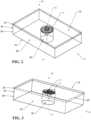
- the scraper sponge 77 comprises a sponge body 5 defining a first surface 10, second surface 70 opposite first surface, and a continuous side surface 80 around the perimeter.
- the sponge body 5 can be made from numerous materials such as polyester foam, natural sponges, polyurethane foams, cellulose fiber, absorbent arrays of synthetic fibers or any combination thereof.
- the invention is not limited in this regard, and any appropriate sponge material that is currently known or later becomes known to those skilled in the art may be used.
- the sponge body 5 is rectangular. However, the invention is not limited in this regard as the sponge body 5 could be any shape appropriate for cleaning such as polygon, oval, square, circle, triangle, trapezoid, etc.
- the sponge body 5 is not limited by size in any dimension.
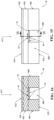
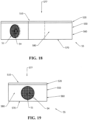
- the length L ( FIG. 10 ) of the sponge body 5 ranges from about 3 inches to about 23 inches, while the width W ( FIG. 11 ) ranges from about 2 inches to about 15 inches; for circular sponges (not shown), the diameter ranges from about 3 inches to about 16 inches.
- the length L of the sponge body 5 ranges from about 3 inches to about 14 inches, while the width W ranges from about 2 inches to about 7 inches; for circular sponges, the diameter ranges from about 3 inches to about 12 inches.
- the length L of the sponge body 5 ranges from about 4 inches to about 12 inches, while the width W ranges from about 2 inches to about 4 inches; for circular sponges, the diameter ranges from about 4 inches to about 8 inches.
- the thickness H ( FIG. 12 ) of the sponge body 5
- the thickness H ranges from about 1 inch to about 5 inches.
- the thickness H of the sponge body 5 ranges from about 1 inch to about 7 inches.
- the thickness H of the sponge body 5 ranges from about 1 inch to about 3 inches.
- the scraper sponge 77 defines a sponge body 5 defining an outer continuous side surface 80 including a first surface 10, a second surface 70, and a scraper 1 inserted into a circular aperture 90 approximately through the middle of the seamless second layer 50, third layer 60, and the second surface.
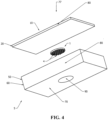
- An exploded view of the scraper sponge 77 is shown in FIG. 4 .
- the rear of scraper 1 is fixedly secured to first layer 20 where it joins second layer 50 within the circular aperture 90 of sponge body 5 of FIG. 1 by way of heat fusion and/or the application of an adhesive (not shown), or by any other method that is currently known or later becomes known to one skilled in the art.
- FIG. 1 FIG.
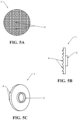
- the rear of scraper 1 ( FIG. 5C ) is securely attached to the sponge body 5.
- the scraper 1 can be any size.
- the scraper 1 on its front surface ( FIG. 5A ) has approximately 70 defined pyramid shaped edges 4, depending on the surface area of the scraper 1 ( FIGS. 5A and 5B ).
- the pyramid shaped edges 4 extend outwardly toward the second surface 70.
- the scraper 1 pyramid shaped edges 4 range from being semi rigid to substantially rigid for scraping unwanted substances and is narrow at its circular border for entering tight corners, groves and crevices and for effectively scraping surfaces.
- the scraper 1 can be any shape; circular, rectangular, polygonal.
- the letter O shaped ring 2 on the rear of scraper 1 defines a depressible surface concave female groove to which normal and angular forces are applied by way of the first surface 10 by the user to manipulate the scraper 1 and apply pressure as required to scrape away and remove substances where desired.
- the scraper 1 can be made from numerous materials such as natural rubber, synthetic rubber, plastics, polymers, wood, metal or any combination thereof. The invention is not limited in this regard, and any appropriate scraper material that is currently known or later becomes known to those skilled in the art may be used.
- the rear surface of the scraper has a letter O shaped ring 2 that is contoured in a concave-like manner and, depending on the size of the scraper 1, is adapted for receiving at least a portion of a human finger for applying pressure and manipulating the scraper 1 as noted above.
- the sponge body 5 comprises multiple layers including a first layer 20 defining the first surface 10 and a second layer 50 defining a third layer 60 defining a second surface 70.
- the first layer 20 and second layer 50 are heat fused and/or bonded together using an adhesive (not shown), or by any method that is currently known or later becomes known to those skilled in the art.
- the second layer 50, third layer 60, and second surface 70 are made of the same material and are seamlessly heat fused and/or bonded together using an adhesive (not shown), or by any method that is currently known or later becomes known to those skilled in the art.
- the first surface 10 and first layer 20 can be made from numerous materials such as nylon, polypropylene, polyester foam, melamine, natural sponges, polyurethane foams, cellulose, and absorbent arrays of synthetic fibers, non-woven materials or any combination thereof.
- the second layer 50, third layer 60, and second surface 70 can be made from numerous materials such as nylon, polypropylene, polyester foam, melamine, natural sponges, polyurethane foams, cellulose, and absorbent arrays of synthetic fibers, non-woven materials or any combination thereof.
- the first surface 10 and first layer 20 are made from nylon.
- the second layer 50, third layer 60, and second surface 70 are indistinguishable and made from cellulose fiber. In one embodiment, ( FIGS.
- the rear of scraper 1 is secured to layer 1 and fits securely into the circular aperture 90 approximately through the middle of layer two and layer three and second surface 70.
- the thickness of the second layer 50 and third layer 60 may comprise approximately 85% to about 90% of the total thickness of the scraper sponge 77.
- the first layer 20 comprises between about 10% to about 20%, of the total thickness of the scraper sponge 77.
- the first layer 420 and second layer 450 comprise about 40% of the total thickness of the sponge body 477 and the third layer 460 comprises about 60%. All three layers can be made of different types of surface scrubbing materials.
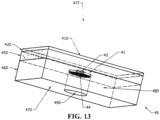
- the scraper sponge 477 defines a sponge body 45 defining an outer surface including a first surface 410, a first layer 420, a second layer 450, a third layer 460 including a second surface 470, a continuous side surface 480, and a circular aperture 490 extending through the second surface 470 and third layer 460 for receiving the scraper 41.
- the rear of scraper 41 FIG.
- the depressible surface 42 on the rear of scraper 41 is contoured in a concave-like manner and, depending on the size, is adapted for receiving at least a portion of: (i) a human finger, (ii) multiple human fingers, (iii) a human hand, or (iv) two human hands, for applying pressure and manipulating the scraper 41 as noted above.
- the scraper edges 44 extend outwardly from within the aperture 490 in the sponge body 45.
- the materials used for the sponge body 45 and scraper 41 are consistent with the materials used in connection with the sponge body 5 and scraper 1 described above.
- the sponge body 45 can comprise a first layer 420, a second layer 450, a third layer 460 and a second surface 470. At least one of the second layer 450 or third layer 460 defines the circular aperture 490 through which the scraper 41 extends.
- the materials used for the first surface 410, first layer 420, second layer 450, third layer 460 and second surface 470 are consistent with the materials used in connection with the sponge body 5 and scraper 1 described above.
- One advantage of this embodiment is that it allows each layer 420, 450, and 460 to be made of a different textured material to be used for scrubbing and cleaning and/or polishing a surface.
- layer one 420 can be made of a coarse grain scouring material
- the continuous side surface 480 of the second layer 450 can be made of a melamine resin material
- the third layer 460 can be made of cellulose fiber.
- the scraper sponge 577 defines a sponge body 55 defining an outer surface including a first surface 510, a first layer 520, a second layer 550, a third layer 560 including a second surface 570, a continuous side surface 580, and a circular aperture extending into the continuous side surface 580 on the width side of scraper sponge 577 for receiving the scraper 51.
- the rear of scraper 51 FIG.
- the scraper 5C is fixedly secured within the continuous side surface to layer two 550 and layer three 560 within the circular aperture 590 by way of heat fusion or by an adhesive (not shown), and like the scraper described above, has approximately 70 three dimensional pyramid shaped cones defining edges 54 and a depressible groove like surface 52 on the rear of scraper 51 to which forces are applied to manipulate the scraper 51.
- the scraper edges 54 extend outwardly from within the aperture 590 in the sponge body 55.
- the materials used for the sponge body 55 and scraper 51 are consistent with the materials used in connection with the sponge body 45 and scraper 41 described above.
- the sponge body 55 can comprise a first layer 520, a second layer 550, a third layer 560, a second surface 570 and a continuous side surface 580. At least one of the second layer 550 or third layer 560 defines the circular aperture 590 through which the scraper 51 extends.
- the materials used for the first surface 510, first layer 520, second layer 550, third layer 560 and second surface 570 are consistent with the materials used in connection with the sponge body 45 and scraper 41 described above.
- One advantage of this embodiment is that the entire surface area of the second surface can be used as a liquid absorbing cleaning
- the scraper sponge 77, 477 and/or the desired object or surface for cleaning prepared with water, soap, cleaning liquids, cleaning powders, or the like
- the user places the sponge body 5, 45 in contact with said object or surface.
- the user then presses on the middle of the first surface 10, 410 imparting downward pressure on the scraper 1, 41 and sponge body 5, 45.
- the sponge body through which pressure is applied to the scraper 1, 41 and, in particular, the middle of the scraper, is compressed thereby allowing the scraper 1, 41 to extend through the circular aperture 90, 490 into a position for contacting and scraping unwanted substances in a desired location.
- the user While maintaining the applied pressure, the user simultaneously moves the sponge body 5, 45 and scraper 1, 41 in, for example, a forward or reciprocating motion to effectively scrape away and remove the unwanted substances.
- both the sponge body and scraper can be cleaned for future applications.
- the sponge body 5, 45 can be used for cleaning and scouring purposes without engaging the scraper 1, 41.
- the scraper sponge 77, 477 can be used in a dry state without the addition of water, soap, cleaning liquids, cleaning powders, or the like.
Landscapes
- Cleaning Implements For Floors, Carpets, Furniture, Walls, And The Like (AREA)
- Battery Electrode And Active Subsutance (AREA)
- Cleaning In General (AREA)
Claims (15)
- Éponge de raclage (77) destinée à nettoyer et racler des substances indésirables d'un objet ou d'une surface, comprenant un corps (5) d'éponge définissant une première surface (10), une première couche (20), une deuxième couche (50), une troisième couche (60), une seconde surface (70) opposée à la première surface (10), une surface latérale continue autour du périmètre ; et l'arrière d'un racloir (1) fixé à la première couche (20) à l'opposé de la première surface (10) et le racloir (1) défini par la première couche (20) et une ouverture circulaire (90) traversant et approximativement dans le milieu de la deuxième couche (50), la troisième couche (60) et la seconde surface (70) du corps (5) d'éponge, ladite totalité de l'aire du racloir (1), sur sa surface avant, étant recouverte de bords en forme de pyramide (4) s'étendant vers l'extérieur en direction de la seconde surface (70) du corps (5) d'éponge et étant mis au niveau de la seconde surface du corps (5) d'éponge lorsque des forces sont appliquées à la première surface (10) et ensuite à l'arrière du racloir (1) pour manipuler le racloir rigide sur une surface dure.
- Éponge de raclage (477) destinée à nettoyer et racler des substances indésirables d'un objet ou d'une surface comprenant un corps (45) d'éponge définissant une première surface (410), une première couche (420), une deuxième couche (450), une troisième couche (460), une seconde surface (470) opposée à la première surface (410), une surface latérale continue autour du périmètre ; et l'arrière d'un racloir (41) fixé à la deuxième couche (450) adjacente à la troisième couche (460) et le racloir (41) défini par la deuxième couche (450) et une ouverture (490) traversant et approximativement dans le milieu de la troisième couche (460) et de la seconde surface (470) du corps (45) d'éponge, toute l'aire du racloir (41), sur sa surface avant, étant recouverte de bords en forme de pyramide (4) s'étendant vers l'extérieur dans la direction de la seconde surface (470) du corps (45) d'éponge et étant mise au niveau de la seconde surface (470) du corps (45) d'éponge lorsque des forces sont appliquées à la première surface (410) et ensuite à l'arrière du racloir (41) pour manipuler le racloir rigide sur une surface dure.
- Éponge de raclage (77 ; 477) selon la revendication 1 ou la revendication 2, ledit corps (5 ; 45) d'éponge étant constitué d'un matériau choisi dans le groupe constitué de mousse de polyester, d'éponges naturelles, de mousses de polyuréthane, de cellulose, de réseaux absorbants de fibres synthétiques et de toute combinaison de ceux-ci.
- Éponge de raclage (77 ; 477) selon la revendication 1 ou la revendication 2, ledit racloir (1 ; 41) étant constitué d'un matériau choisi dans le groupe constitué du caoutchouc naturel, du caoutchouc synthétique, des polymères, du bois, du métal et de toute combinaison de ceux-ci.
- Éponge de raclage selon la revendication 4, ladite aire de racloir (1 ; 41) étant plus petite que l'aire de l'éponge de raclage ou ledit racloir (1 ; 41) étant mince et de forme circulaire avec des bords pointus en forme de pyramide (4) sur sa face avant.
- Racloir selon la revendication 1, ledit racloir (1) étant constitué d'un matériau choisi dans le groupe constitué du caoutchouc naturel, du caoutchouc synthétique, des polymères, du bois, du métal et de toute combinaison de ceux-ci et étant défini par la première couche et une ouverture circulaire s'étendant à travers le milieu de la deuxième couche sans couture (50 ; 450), de la troisième couche (60 ; 460) et de la seconde surface (70 ; 470) du corps (5 ; 45) d'éponge.
- Racloir selon la revendication 2, ledit racloir (41) étant constitué d'un matériau choisi dans le groupe constitué du caoutchouc naturel, du caoutchouc synthétique, des polymères, du bois, du métal et de toute combinaison de ceux-ci et étant défini par la deuxième couche (450) et une ouverture circulaire s'étendant à travers le milieu de la troisième couche (460) et de la seconde surface (470) du corps (45) d'éponge.
- Éponge de raclage (77) selon la revendication 1, ledit corps (5) d'éponge étant constitué d'un matériau choisi dans le groupe constitué de la mousse de polyester, des éponges naturelles, des mousses de polyuréthane, de la cellulose, des réseaux absorbants de fibres synthétiques et toute combinaison de ceux-ci et ladite surface arrière dudit racloir (1) étant fixée de manière fixe à la première couche (20) opposée à la première surface (10) au moyen d'un adhésif, par fusion thermique ou toute combinaison de ceux-ci.
- Éponge de raclage (477) selon la revendication 2, ledit corps (45) d'éponge étant constitué d'un matériau choisi dans le groupe constitué de la mousse de polyester, des éponges naturelles, des mousses de polyuréthane, de la cellulose, des réseaux absorbants de fibres synthétiques et toute combinaison de ceux-ci et ladite surface arrière dudit racloir (41) étant fixée à la deuxième couche (450) opposée à la première surface (410) au moyen d'un adhésif, par fusion thermique ou toute combinaison de ceux-ci.
- Racloir selon la revendication 4 ou la revendication 9, ladite surface de racloir arrière comportant un anneau tridimensionnel (2) en forme de la lettre O avec une rainure de type concave dans l'anneau ou ladite surface avant du racloir (1 ; 41) comportant environ 70 bords en forme de pyramide tridimensionnelle, qui sont au moins un parmi (i) semi-rigides et (ii) sensiblement rigides, fixés à celui-ci.
- Éponge de raclage (77 ; 477) selon la revendication 1 ou la revendication 2, ledit corps (5 ; 45) d'éponge comprenant de multiples couches comprenant une première couche (20 ; 420) définissant la première surface (10 ; 410) et une deuxième couche (50 ; 450), une deuxième couche (50 ; 450) définissant une troisième couche (60 ; 460) et une troisième couche (60 ; 460) définissant la seconde surface (70 ; 470).
- Éponge de raclage (77 ; 477) selon la revendication 11, lesdites première surface (10 ; 410) et première couche (20 ; 420) étant constituées d'un matériau à récurer à gros grains ; ladite deuxième couche (50 ; 450) étant constituée de fibre de cellulose et une ouverture circulaire s'étendant à travers le milieu de la deuxième couche (50) ; ou ladite troisième couche (60) étant constituée de fibre de cellulose et une ouverture circulaire s'étendant à travers le milieu de la troisième couche (60).
- Éponge de raclage selon la revendication 11, ladite épaisseur de ladite première couche (20) étant comprise entre environ 10 % et environ 15 % de l'épaisseur de l'éponge de raclage (77 ; 477).
- Éponge de raclage (77) selon la revendication 11, ladite deuxième couche (50 ; 450) étant constituée de fibre de cellulose et une ouverture circulaire s'étendant à travers le milieu de la deuxième couche (50 ; 450) et ladite épaisseur totale de ladite deuxième couche (50) ou ladite épaisseur totale de ladite troisième couche étant comprise entre environ 40 % et environ 45 % de l'épaisseur totale de l'éponge de raclage (77).
- Éponge de raclage (477) selon la revendication 2, ledit corps (45) d'éponge comprenant de multiples couches comprenant une première couche (420) définissant la première surface (410) et une deuxième couche (450), une deuxième couche (450) définissant une troisième couche (460) et une troisième couche (460) définissant la seconde surface (470), ladite deuxième couche (450) étant constituée de mélamine et sa surface latérale continue étant constituée d'un matériau à récurer à gros grains et l'arrière du racloir étant fixé à la deuxième couche (450) à l'opposé de la première surface (410) ou ladite troisième couche (460) étant constituée de fibre de cellulose et une ouverture circulaire s'étendant à travers le milieu de la troisième couche (460).
Applications Claiming Priority (3)
| Application Number | Priority Date | Filing Date | Title |
|---|---|---|---|
| US201862917756P | 2018-12-31 | 2018-12-31 | |
| US16/602,099 US10932643B2 (en) | 2018-12-31 | 2019-08-12 | Scraper sponge |
| PCT/US2019/000057 WO2020142091A2 (fr) | 2018-12-31 | 2019-11-21 | Éponge de raclage |
Publications (4)
| Publication Number | Publication Date |
|---|---|
| EP3905938A2 EP3905938A2 (fr) | 2021-11-10 |
| EP3905938A4 EP3905938A4 (fr) | 2022-10-26 |
| EP3905938C0 EP3905938C0 (fr) | 2024-02-28 |
| EP3905938B1 true EP3905938B1 (fr) | 2024-02-28 |
Family
ID=68159926
Family Applications (1)
| Application Number | Title | Priority Date | Filing Date |
|---|---|---|---|
| EP19907960.9A Active EP3905938B1 (fr) | 2018-12-31 | 2019-11-21 | Éponge de raclage |
Country Status (7)
| Country | Link |
|---|---|
| US (2) | US20190313874A1 (fr) |
| EP (1) | EP3905938B1 (fr) |
| JP (1) | JP7082843B2 (fr) |
| CN (1) | CN113453604A (fr) |
| AU (1) | AU2019418722B2 (fr) |
| CA (1) | CA3149476A1 (fr) |
| WO (1) | WO2020142091A2 (fr) |
Families Citing this family (3)
| Publication number | Priority date | Publication date | Assignee | Title |
|---|---|---|---|---|
| US20190313874A1 (en) * | 2018-12-31 | 2019-10-17 | Alahandro Olatunde Omotola | Scraper sponge |
| US11678784B2 (en) * | 2020-05-29 | 2023-06-20 | Phiisagen Corporation | Scraper sponge |
| US11779185B2 (en) * | 2021-02-16 | 2023-10-10 | Munchkin, Inc. | Magnetic sponge assembly |
Family Cites Families (19)
| Publication number | Priority date | Publication date | Assignee | Title |
|---|---|---|---|---|
| US2066420A (en) * | 1935-02-09 | 1937-01-05 | Lester J Reysa | Cleaning device |
| US2113452A (en) * | 1935-10-03 | 1938-04-05 | Angus S Long | Cleaning device |
| AT347283B (de) * | 1975-03-07 | 1978-12-27 | Collo Gmbh | Schaumstoffkoerper fuer reinigungs-, scheuer- und/oder polierzwecke u. dgl. |
| US4414700A (en) * | 1981-08-24 | 1983-11-15 | Ez Paintr Corporation | Device for preparing a surface for painting |
| JPS61100358U (fr) * | 1984-12-06 | 1986-06-26 | ||
| US4866806A (en) * | 1988-05-25 | 1989-09-19 | Bedford Peter H | Surgical scrub sponge |
| JPH04103856U (ja) * | 1991-01-25 | 1992-09-08 | ユニチカ株式会社 | スポンジ付きワイピングクロス |
| JPH0737038U (ja) * | 1993-12-09 | 1995-07-11 | 吉一 酒井 | 携帯用カード型クリーナーセット |
| US5522110A (en) * | 1995-05-18 | 1996-06-04 | Borofsky; Gary R. | Cleaning apparatus |
| US5806135A (en) * | 1996-09-12 | 1998-09-15 | Earle; John R. | Apparatus for removing dust from an object |
| JP2003116762A (ja) * | 2001-10-19 | 2003-04-22 | Sanwa Fukuoka:Kk | スポンジたわし及びその製造方法 |
| DE10164757B4 (de) * | 2001-12-05 | 2004-04-15 | Rüttiger, Maximilian, Dipl.-Ing. | Handreinigungsvorrichtung |
| DE10159793C2 (de) * | 2001-12-05 | 2003-10-16 | Maximilian Ruettiger | Handreinigungsvorrichtung |
| US7284293B1 (en) | 2002-06-14 | 2007-10-23 | Hewlett-Packard Development Company, L.P. | Article and method for cleaning uneven, variable geometry surfaces of electronic devices, internal electronic assemblies, or the like |
| US20130091648A1 (en) * | 2010-07-07 | 2013-04-18 | Arthur P. Frigo, JR. | Cleaning implement having insertable member |
| DE102010034193A1 (de) * | 2010-08-12 | 2012-02-16 | Carl Freudenberg Kg | Reinigungsschwamm aus Viskose |
| CN104337472A (zh) * | 2014-11-14 | 2015-02-11 | 刘昶 | 地面清洁器 |
| US10882083B2 (en) * | 2015-11-13 | 2021-01-05 | Sani Products, Inc. | Integrated scraper-sponge |
| US20190313874A1 (en) * | 2018-12-31 | 2019-10-17 | Alahandro Olatunde Omotola | Scraper sponge |
-
2019
- 2019-06-24 US US16/501,868 patent/US20190313874A1/en not_active Abandoned
- 2019-08-12 US US16/602,099 patent/US10932643B2/en active Active
- 2019-11-21 AU AU2019418722A patent/AU2019418722B2/en active Active
- 2019-11-21 WO PCT/US2019/000057 patent/WO2020142091A2/fr not_active Ceased
- 2019-11-21 CA CA3149476A patent/CA3149476A1/fr active Pending
- 2019-11-21 JP JP2021531883A patent/JP7082843B2/ja active Active
- 2019-11-21 CN CN201980077685.0A patent/CN113453604A/zh active Pending
- 2019-11-21 EP EP19907960.9A patent/EP3905938B1/fr active Active
Also Published As
| Publication number | Publication date |
|---|---|
| EP3905938A4 (fr) | 2022-10-26 |
| AU2019418722B2 (en) | 2021-12-23 |
| EP3905938C0 (fr) | 2024-02-28 |
| WO2020142091A2 (fr) | 2020-07-09 |
| CA3149476A1 (fr) | 2020-07-09 |
| EP3905938A2 (fr) | 2021-11-10 |
| WO2020142091A3 (fr) | 2020-08-13 |
| US20190365188A1 (en) | 2019-12-05 |
| US20190313874A1 (en) | 2019-10-17 |
| CN113453604A (zh) | 2021-09-28 |
| US10932643B2 (en) | 2021-03-02 |
| AU2019418722A1 (en) | 2021-08-19 |
| JP7082843B2 (ja) | 2022-06-09 |
| JP2022514213A (ja) | 2022-02-10 |
Similar Documents
| Publication | Publication Date | Title |
|---|---|---|
| US20080216260A1 (en) | Scraper sponge | |
| US11678784B2 (en) | Scraper sponge | |
| EP3905938B1 (fr) | Éponge de raclage | |
| US7543352B2 (en) | Cleaning apparatus and related methods | |
| US9427130B2 (en) | Mop | |
| US20150059111A1 (en) | Cleaning device made of foam having an abrasive surface | |
| AU2004292732A1 (en) | Wiping plate | |
| US10426312B1 (en) | Integrated scraper-sponge | |
| AU713982B2 (en) | Open-pore flexible scourer | |
| US20190210076A1 (en) | Scraper sponge | |
| US20120090120A1 (en) | Textured composite cleaning device | |
| US10882083B2 (en) | Integrated scraper-sponge | |
| US20030192141A1 (en) | Scrub Sponge | |
| US20190208980A1 (en) | Scraper sponge | |
| US11883860B2 (en) | Methods for using an integrated scraper-sponge | |
| HK40050399A (zh) | 刮擦海绵 | |
| US11325169B2 (en) | Methods for using an integrated scraper-sponge | |
| CA3196922C (fr) | Éponge de raclage | |
| JP2020174906A (ja) | 洗浄具 | |
| EP2387930B1 (fr) | Corps de nettoyage | |
| WO2015047891A1 (fr) | Éponge d'astiquage | |
| JPH0641654U (ja) | 摺洗具 | |
| CA2668545A1 (fr) | Tampon a recurer | |
| TWM375482U (en) | Felt structure of mop |
Legal Events
| Date | Code | Title | Description |
|---|---|---|---|
| STAA | Information on the status of an ep patent application or granted ep patent |
Free format text: STATUS: THE INTERNATIONAL PUBLICATION HAS BEEN MADE |
|
| PUAI | Public reference made under article 153(3) epc to a published international application that has entered the european phase |
Free format text: ORIGINAL CODE: 0009012 |
|
| STAA | Information on the status of an ep patent application or granted ep patent |
Free format text: STATUS: REQUEST FOR EXAMINATION WAS MADE |
|
| 17P | Request for examination filed |
Effective date: 20210721 |
|
| AK | Designated contracting states |
Kind code of ref document: A2 Designated state(s): AL AT BE BG CH CY CZ DE DK EE ES FI FR GB GR HR HU IE IS IT LI LT LU LV MC MK MT NL NO PL PT RO RS SE SI SK SM TR |
|
| RAP1 | Party data changed (applicant data changed or rights of an application transferred) |
Owner name: PHIISAGEN CORPORATION |
|
| RIN1 | Information on inventor provided before grant (corrected) |
Inventor name: PHIISAGEN CORPORATION |
|
| DAV | Request for validation of the european patent (deleted) | ||
| DAX | Request for extension of the european patent (deleted) | ||
| A4 | Supplementary search report drawn up and despatched |
Effective date: 20220927 |
|
| RIC1 | Information provided on ipc code assigned before grant |
Ipc: A47L 13/04 20060101ALI20220921BHEP Ipc: A47L 17/06 20060101ALI20220921BHEP Ipc: A47L 13/022 20060101ALI20220921BHEP Ipc: A47L 13/08 20060101ALI20220921BHEP Ipc: A47L 17/00 20060101ALI20220921BHEP Ipc: A47L 13/16 20060101ALI20220921BHEP Ipc: A47L 13/12 20060101AFI20220921BHEP |
|
| GRAP | Despatch of communication of intention to grant a patent |
Free format text: ORIGINAL CODE: EPIDOSNIGR1 |
|
| STAA | Information on the status of an ep patent application or granted ep patent |
Free format text: STATUS: GRANT OF PATENT IS INTENDED |
|
| RIC1 | Information provided on ipc code assigned before grant |
Ipc: A47L 13/04 20060101ALI20231017BHEP Ipc: A47L 17/06 20060101ALI20231017BHEP Ipc: A47L 13/022 20060101ALI20231017BHEP Ipc: A47L 13/08 20060101ALI20231017BHEP Ipc: A47L 17/00 20060101ALI20231017BHEP Ipc: A47L 13/16 20060101ALI20231017BHEP Ipc: A47L 13/12 20060101AFI20231017BHEP |
|
| INTG | Intention to grant announced |
Effective date: 20231108 |
|
| GRAS | Grant fee paid |
Free format text: ORIGINAL CODE: EPIDOSNIGR3 |
|
| GRAA | (expected) grant |
Free format text: ORIGINAL CODE: 0009210 |
|
| STAA | Information on the status of an ep patent application or granted ep patent |
Free format text: STATUS: THE PATENT HAS BEEN GRANTED |
|
| RIN1 | Information on inventor provided before grant (corrected) |
Inventor name: OMOTOLA, ALAHANDRO, O. |
|
| AK | Designated contracting states |
Kind code of ref document: B1 Designated state(s): AL AT BE BG CH CY CZ DE DK EE ES FI FR GB GR HR HU IE IS IT LI LT LU LV MC MK MT NL NO PL PT RO RS SE SI SK SM TR |
|
| REG | Reference to a national code |
Ref country code: GB Ref legal event code: FG4D |
|
| REG | Reference to a national code |
Ref country code: CH Ref legal event code: EP |
|
| REG | Reference to a national code |
Ref country code: DE Ref legal event code: R096 Ref document number: 602019047553 Country of ref document: DE |
|
| REG | Reference to a national code |
Ref country code: IE Ref legal event code: FG4D |
|
| U01 | Request for unitary effect filed |
Effective date: 20240327 |
|
| U07 | Unitary effect registered |
Designated state(s): AT BE BG DE DK EE FI FR IT LT LU LV MT NL PT SE SI Effective date: 20240415 |
|
| PG25 | Lapsed in a contracting state [announced via postgrant information from national office to epo] |
Ref country code: IS Free format text: LAPSE BECAUSE OF FAILURE TO SUBMIT A TRANSLATION OF THE DESCRIPTION OR TO PAY THE FEE WITHIN THE PRESCRIBED TIME-LIMIT Effective date: 20240628 |
|
| PG25 | Lapsed in a contracting state [announced via postgrant information from national office to epo] |
Ref country code: GR Free format text: LAPSE BECAUSE OF FAILURE TO SUBMIT A TRANSLATION OF THE DESCRIPTION OR TO PAY THE FEE WITHIN THE PRESCRIBED TIME-LIMIT Effective date: 20240529 |
|
| PG25 | Lapsed in a contracting state [announced via postgrant information from national office to epo] |
Ref country code: HR Free format text: LAPSE BECAUSE OF FAILURE TO SUBMIT A TRANSLATION OF THE DESCRIPTION OR TO PAY THE FEE WITHIN THE PRESCRIBED TIME-LIMIT Effective date: 20240228 Ref country code: RS Free format text: LAPSE BECAUSE OF FAILURE TO SUBMIT A TRANSLATION OF THE DESCRIPTION OR TO PAY THE FEE WITHIN THE PRESCRIBED TIME-LIMIT Effective date: 20240528 |
|
| PG25 | Lapsed in a contracting state [announced via postgrant information from national office to epo] |
Ref country code: ES Free format text: LAPSE BECAUSE OF FAILURE TO SUBMIT A TRANSLATION OF THE DESCRIPTION OR TO PAY THE FEE WITHIN THE PRESCRIBED TIME-LIMIT Effective date: 20240228 |
|
| PG25 | Lapsed in a contracting state [announced via postgrant information from national office to epo] |
Ref country code: RS Free format text: LAPSE BECAUSE OF FAILURE TO SUBMIT A TRANSLATION OF THE DESCRIPTION OR TO PAY THE FEE WITHIN THE PRESCRIBED TIME-LIMIT Effective date: 20240528 Ref country code: NO Free format text: LAPSE BECAUSE OF FAILURE TO SUBMIT A TRANSLATION OF THE DESCRIPTION OR TO PAY THE FEE WITHIN THE PRESCRIBED TIME-LIMIT Effective date: 20240528 Ref country code: IS Free format text: LAPSE BECAUSE OF FAILURE TO SUBMIT A TRANSLATION OF THE DESCRIPTION OR TO PAY THE FEE WITHIN THE PRESCRIBED TIME-LIMIT Effective date: 20240628 Ref country code: HR Free format text: LAPSE BECAUSE OF FAILURE TO SUBMIT A TRANSLATION OF THE DESCRIPTION OR TO PAY THE FEE WITHIN THE PRESCRIBED TIME-LIMIT Effective date: 20240228 Ref country code: GR Free format text: LAPSE BECAUSE OF FAILURE TO SUBMIT A TRANSLATION OF THE DESCRIPTION OR TO PAY THE FEE WITHIN THE PRESCRIBED TIME-LIMIT Effective date: 20240529 Ref country code: ES Free format text: LAPSE BECAUSE OF FAILURE TO SUBMIT A TRANSLATION OF THE DESCRIPTION OR TO PAY THE FEE WITHIN THE PRESCRIBED TIME-LIMIT Effective date: 20240228 |
|
| PG25 | Lapsed in a contracting state [announced via postgrant information from national office to epo] |
Ref country code: PL Free format text: LAPSE BECAUSE OF FAILURE TO SUBMIT A TRANSLATION OF THE DESCRIPTION OR TO PAY THE FEE WITHIN THE PRESCRIBED TIME-LIMIT Effective date: 20240228 |
|
| PG25 | Lapsed in a contracting state [announced via postgrant information from national office to epo] |
Ref country code: PL Free format text: LAPSE BECAUSE OF FAILURE TO SUBMIT A TRANSLATION OF THE DESCRIPTION OR TO PAY THE FEE WITHIN THE PRESCRIBED TIME-LIMIT Effective date: 20240228 |
|
| PG25 | Lapsed in a contracting state [announced via postgrant information from national office to epo] |
Ref country code: SM Free format text: LAPSE BECAUSE OF FAILURE TO SUBMIT A TRANSLATION OF THE DESCRIPTION OR TO PAY THE FEE WITHIN THE PRESCRIBED TIME-LIMIT Effective date: 20240228 |
|
| PG25 | Lapsed in a contracting state [announced via postgrant information from national office to epo] |
Ref country code: CZ Free format text: LAPSE BECAUSE OF FAILURE TO SUBMIT A TRANSLATION OF THE DESCRIPTION OR TO PAY THE FEE WITHIN THE PRESCRIBED TIME-LIMIT Effective date: 20240228 |
|
| PG25 | Lapsed in a contracting state [announced via postgrant information from national office to epo] |
Ref country code: SK Free format text: LAPSE BECAUSE OF FAILURE TO SUBMIT A TRANSLATION OF THE DESCRIPTION OR TO PAY THE FEE WITHIN THE PRESCRIBED TIME-LIMIT Effective date: 20240228 |
|
| PG25 | Lapsed in a contracting state [announced via postgrant information from national office to epo] |
Ref country code: SM Free format text: LAPSE BECAUSE OF FAILURE TO SUBMIT A TRANSLATION OF THE DESCRIPTION OR TO PAY THE FEE WITHIN THE PRESCRIBED TIME-LIMIT Effective date: 20240228 Ref country code: SK Free format text: LAPSE BECAUSE OF FAILURE TO SUBMIT A TRANSLATION OF THE DESCRIPTION OR TO PAY THE FEE WITHIN THE PRESCRIBED TIME-LIMIT Effective date: 20240228 Ref country code: RO Free format text: LAPSE BECAUSE OF FAILURE TO SUBMIT A TRANSLATION OF THE DESCRIPTION OR TO PAY THE FEE WITHIN THE PRESCRIBED TIME-LIMIT Effective date: 20240228 Ref country code: CZ Free format text: LAPSE BECAUSE OF FAILURE TO SUBMIT A TRANSLATION OF THE DESCRIPTION OR TO PAY THE FEE WITHIN THE PRESCRIBED TIME-LIMIT Effective date: 20240228 |
|
| REG | Reference to a national code |
Ref country code: DE Ref legal event code: R097 Ref document number: 602019047553 Country of ref document: DE |
|
| PLBE | No opposition filed within time limit |
Free format text: ORIGINAL CODE: 0009261 |
|
| STAA | Information on the status of an ep patent application or granted ep patent |
Free format text: STATUS: NO OPPOSITION FILED WITHIN TIME LIMIT |
|
| 26N | No opposition filed |
Effective date: 20241129 |
|
| U21 | Renewal fee for the european patent with unitary effect paid with additional fee |
Year of fee payment: 6 Effective date: 20250517 |
|
| REG | Reference to a national code |
Ref country code: CH Ref legal event code: PL |
|
| PG25 | Lapsed in a contracting state [announced via postgrant information from national office to epo] |
Ref country code: MC Free format text: LAPSE BECAUSE OF FAILURE TO SUBMIT A TRANSLATION OF THE DESCRIPTION OR TO PAY THE FEE WITHIN THE PRESCRIBED TIME-LIMIT Effective date: 20240228 |
|
| REG | Reference to a national code |
Ref country code: CH Ref legal event code: PL |
|
| GBPC | Gb: european patent ceased through non-payment of renewal fee |
Effective date: 20241121 |
|
| PG25 | Lapsed in a contracting state [announced via postgrant information from national office to epo] |
Ref country code: CH Free format text: LAPSE BECAUSE OF NON-PAYMENT OF DUE FEES Effective date: 20241130 |
|
| PG25 | Lapsed in a contracting state [announced via postgrant information from national office to epo] |
Ref country code: GB Free format text: LAPSE BECAUSE OF NON-PAYMENT OF DUE FEES Effective date: 20241121 |
|
| PG25 | Lapsed in a contracting state [announced via postgrant information from national office to epo] |
Ref country code: IE Free format text: LAPSE BECAUSE OF NON-PAYMENT OF DUE FEES Effective date: 20241121 |
|
| PG25 | Lapsed in a contracting state [announced via postgrant information from national office to epo] |
Ref country code: HU Free format text: LAPSE BECAUSE OF FAILURE TO SUBMIT A TRANSLATION OF THE DESCRIPTION OR TO PAY THE FEE WITHIN THE PRESCRIBED TIME-LIMIT; INVALID AB INITIO Effective date: 20191121 |
|
| PG25 | Lapsed in a contracting state [announced via postgrant information from national office to epo] |
Ref country code: CY Free format text: LAPSE BECAUSE OF FAILURE TO SUBMIT A TRANSLATION OF THE DESCRIPTION OR TO PAY THE FEE WITHIN THE PRESCRIBED TIME-LIMIT; INVALID AB INITIO Effective date: 20191121 |