EP3907202A1 - Formulation de poudre prête à l'emploi pour fabriquer un lait de chaux hautement réactif et à haute teneur en solides - Google Patents
Formulation de poudre prête à l'emploi pour fabriquer un lait de chaux hautement réactif et à haute teneur en solides Download PDFInfo
- Publication number
- EP3907202A1 EP3907202A1 EP20173350.8A EP20173350A EP3907202A1 EP 3907202 A1 EP3907202 A1 EP 3907202A1 EP 20173350 A EP20173350 A EP 20173350A EP 3907202 A1 EP3907202 A1 EP 3907202A1
- Authority
- EP
- European Patent Office
- Prior art keywords
- lime
- ready
- powder formulation
- use powder
- milk
- Prior art date
- Legal status (The legal status is an assumption and is not a legal conclusion. Google has not performed a legal analysis and makes no representation as to the accuracy of the status listed.)
- Withdrawn
Links
Images






Classifications
-
- C—CHEMISTRY; METALLURGY
- C04—CEMENTS; CONCRETE; ARTIFICIAL STONE; CERAMICS; REFRACTORIES
- C04B—LIME, MAGNESIA; SLAG; CEMENTS; COMPOSITIONS THEREOF, e.g. MORTARS, CONCRETE OR LIKE BUILDING MATERIALS; ARTIFICIAL STONE; CERAMICS; REFRACTORIES; TREATMENT OF NATURAL STONE
- C04B2/00—Lime, magnesia or dolomite
- C04B2/02—Lime
- C04B2/04—Slaking
- C04B2/045—After-treatment of slaked lime
-
- C—CHEMISTRY; METALLURGY
- C04—CEMENTS; CONCRETE; ARTIFICIAL STONE; CERAMICS; REFRACTORIES
- C04B—LIME, MAGNESIA; SLAG; CEMENTS; COMPOSITIONS THEREOF, e.g. MORTARS, CONCRETE OR LIKE BUILDING MATERIALS; ARTIFICIAL STONE; CERAMICS; REFRACTORIES; TREATMENT OF NATURAL STONE
- C04B2/00—Lime, magnesia or dolomite
- C04B2/02—Lime
- C04B2/04—Slaking
- C04B2/06—Slaking with addition of substances, e.g. hydrophobic agents ; Slaking in the presence of other compounds
-
- C—CHEMISTRY; METALLURGY
- C04—CEMENTS; CONCRETE; ARTIFICIAL STONE; CERAMICS; REFRACTORIES
- C04B—LIME, MAGNESIA; SLAG; CEMENTS; COMPOSITIONS THEREOF, e.g. MORTARS, CONCRETE OR LIKE BUILDING MATERIALS; ARTIFICIAL STONE; CERAMICS; REFRACTORIES; TREATMENT OF NATURAL STONE
- C04B40/00—Processes, in general, for influencing or modifying the properties of mortars, concrete or artificial stone compositions, e.g. their setting or hardening ability
- C04B40/0028—Aspects relating to the mixing step of the mortar preparation
- C04B40/0039—Premixtures of ingredients
- C04B40/0042—Powdery mixtures
Definitions
- the present invention relates to a ready-to-use powder formulation for making a highly reactive, high solids milk of lime having an improved viscosity and settling stability and to its manufacturing process.
- Lime is a calcium-magnesium based compound herein after called calcium-based compound.
- Calcium based compounds such as CaO and Ca(OH) 2 have many practical uses. For instance, these substances are used in treating drinking water, wastewater and sewage, industrial streams, in flue gase cleaning, as soil neutralizing agents and nutrients, for ground stabilization for construction, and as components of building materials or as strong base or calcium-source chemicals.
- “Quicklime” is an industrial product mainly made of calcium oxide, i.e. CaO and some impurities at a level of a few %
- “hydrated lime” is an industrial product mainly made of calcium hydroxide, i.e. Ca(OH) 2 and some impurities at a level of a few %, both sometimes being informally referred to as "lime”.
- Quicklime is usually in the form of lumps or pebbles but it can also be a powder. Dry hydrated lime is usually a powder.
- quicklime by its main component, CaO
- Ca(OH) 2 main component
- the slaking reaction is a heavily exothermic reaction and is chemically as follows: CaO + H 2 O ⁇ Ca(OH) 2
- dry CaO or dry Ca(OH) 2 are often mixed with water to form an aqueous suspension, i.e., a slurry, called milk of lime, which is a fluid suspension of slaked lime, also called hydrated lime, which will inevitably include some impurities, in particular silica, alumina, unburnt limestone (CaCO 3 ), magnesium oxide or magnesium hydroxide to the extent of a few percent.
- Such a suspension is obtained either by slaking quicklime (calcium oxide-CaO) with a large excess of water, or by mixing hydrated lime with water.
- the resulting aqueous suspensions are characterized by the concentration of the mass of the solid matter (% solids), the chemical reactivity of the slurry to neutralize an acid and the distribution of the sizes of the particles in suspension (strongly influencing the suspension viscosity and settling behavior).
- hydrated lime particles are suspended in water.
- the hydrated lime is produced by common atmospheric hydrators, which may or may not have size classifying systems, where water is added to quicklime, possibly in a pre-mixer, at a specific mass ratio and allowed to mix together with said water.
- the particle size distribution will vary depending upon the nature of the quicklime starting material used, the applied process conditions, as well as from the manufacturing process (presence of a size classifying system or not, presence of a screening or milling system).
- Milk of lime made from hydrated lime will have a particle size distribution similar to that of the hydrate from which it is produced and the solids content can vary from 5 to 50 w %.
- Milk of lime made from quicklime, in a commercial, continuous process is notably produced by common tank reactors or by special paste, detention, or ball mill slakers (Boyton, 1980).
- quicklime is added to an excess amount of water and mixed together, to produce slurry with a solid content ranging from 5 to 50 w %.
- the water reacts with the quicklime particles during the slaking operation in an exothermic reaction to form slaked lime.
- the temperature of hydration is below 100° C. (212° F.).
- the particle size distribution of the milk of lime is a function of both the nature of the quicklime, the slaking process conditions and the coarse fraction removal systems, which include screening, settling and milling.
- Lime slurries can be made either in batches or in a continuous process.
- the process of slaking and its resulting milk-of-lime qualities are widely used industrially across many industries and as a result reasonably well understood.
- the milk of lime comprises polycarboxylate dispersants and carbohydrate dispersants.
- the dispersant comprises a polycarboxylate dispersant in combination with a carbohydrate dispersant with a non-volatile weight ratio of the polycarboxylate dispersant to carbohydrate dispersant is in the ratio 1 :20 to 10:1, more preferably 1:20 to 1:1.
- the recited carbohydrates in WO2006/050567 which have been found to be suitable for lowering the viscosity of calcium hydroxide aqueous slurries comprise aldoses, saccharides, disaccharides, polysaccharides and synthetic derivatives from such precursors, for example, glycerol, sorbitol, mannitol, gluconic, citric, isocitric, lactic, tartaric acids and salts thereof, dextrose, maltose, glucose, lactose, saccharose, maltotriose, maltotetraose, both alpha and beta glucoheptonic acids and salts thereof. Many of these are commercially available in syrup form, e.g., glucose syrup and corn syrup. Carbohydrates are compounds of carbon, hydrogen, and oxygen that contain the saccharose unit or its first reaction product and in which the ratio of hydrogen to oxygen is the same as in water.
- Polycarboxylate dispersants useful according to WO2006/050567 are molecules or polymers that contain multiple carboxyl (COOH) groups which can form salts with metals and amine, such as styrene maleic anhydride copolymers in the form of their sodium or other alkali metal salts. Generally, excellent performance is achieved when the polycarboxylate dispersant is in the form of an addition copolymer.
- Suitable copolymers include salts of polyether polycarboxylates. These may be formed from acrylic acid and hydrophilic polyalkylene oxides such as polyethylene and polypropylene oxides. An example of such a copolymer is Ethacryl(R) G from Lyondell Chemie Nederland B. V. This is a polyether polycarboxylate, sodium salt supplied as a 40% aqueous solution.
- both the carbohydrate dispersant and polycarboxylate dispersant have been added to the slaking water before adding the quicklime in the water.
- the viscosity was stable for about 48 hours (i.e. meaning that viscosity was not increasing above 1000 mPa.s (cP).
- EP1999082 discloses milk of lime having a great fineness and a dry matter content between 1 and 60 wt% having rheological properties maintained in time (such as dynamic viscosity, shearing yield or plastic viscosity) at levels compatible with their utilization, implementation, handling in time in stationary, dynamic or mixed conditions. According to this document, this aim is achieved in a milk of lime by the addition of one or several additives chosen among carbohydrates or some of their derivates, such as the ones obtained by oxidation or by hydrogenation of these carbohydrates.
- the milk of lime according to EP 1999082 can be obtained by slaking calcic lime and/or dolomitic lime in water, by suspending in water hydrated lime and/or hydrated dolomitic lime in powder or even by dilution of calcium and/or magnesium hydrate paste or calcic and/or dolomitic lime paste in water.
- the additives are disclosed to be added anywhere in the process (to the quicklime, to the hydrated lime, before, during or after the slaking process or dilution process or even to the slaking water being the illustrated way in the examples).
- the resulting milk of lime shows a viscosity below 2000 mPa.s (cP) (as measured with a Haake Rotovisco RT20 viscosimeter at a shearing speed of 5 s -1 ), preferably below 1500 mPa.s, at best below 1200 mPa.s after an ageing period of 12 hours under agitation at 600 rpm.
- cP 2000 mPa.s
- the possible additives according to EP 1999082 are chosen from the long list made by erythrose, threose, xylose, ribose, allose, glucose, galactose, fructose, mannose, sucrose, lactose, maltose, trehalose, starch, modified starch, hydrolysed starch, glycogen, inuline, modified inuline, cellulose, modified cellulose, pectins, dextrins and cyclodextrins, those glucides further filed into oligosaccharides or polysaccharides, according to their effective degree of polymerization, chitin, glucan, glycosaminoglucans, agar, pectin, xanthene gum, guar gum, carob, glucomannane, sorbitol or glucitol, erythritol, xylitol, lactitol, maltitol, gluco
- the present invention aims to solve at least a part of these drawbacks by providing a ready-to-use powder formulation for making a high solids highly reactive milk of lime having an improved stability and settling allowing shipping the lime in a dry state and preparing the milk of lime at the user's facilities by simply adding the specialized dry hydrated lime to water to form a slurry with these unique properties.
- a ready-to-use powder formulation for making a high solids highly reactive milk of lime having an improved stability and settling comprising particles of high calcium lime, an organic stabilizing agent in C 4 to C 18 bearing one or more hydroxyl group(s) at an amount from 0.3 to 5 wt% and a dispersant polymer at an amount of 0.03 to 1.0 wt% based on the total weight of the ready-to-use powder formulation, said ready-to-use powder formulation containing at least 90 wt% of high calcium lime based on the total weight of the ready-to-use powder formulation, said ready-to-use powder formulation having a d 97 ⁇ 40 ⁇ m and a d 50 comprised between 2 and 15 ⁇ m.
- particles of high calcium lime within the meaning of the present invention means particles containing at least 88 wt% of hydrated lime, preferably at least 90 wt%, more preferably at least 92 wt% and even more preferably at least 93 wt% hydrated lime relative to the weight of the solid matter, such as the particles.
- the content of hydrated lime in the solid matter can be determined by the amount of available lime according to the standard EN 459-2, ⁇ 5.8.
- the organic stabilizing agent and the dispersant polymer are already contained in the ready-to-use formulation without impairing the properties of the final milk of lime. According to the present invention, it was surprisingly possible, against all expectations to have the dispersant polymer easily & swiftly recovering from its collapsed state by addition of water. Further, the dispersant polymer become active again, while the presence of calcium ions would have thought away the man skilled in the art from adding it ta a calcium based compound as it is generally considered that calcium ions are detrimental to the unfolding of the collapsed polymer and to the regaining of the dispersant functionality.
- dispersant polymers like polycarboxylate polymers change their so-called conformation (the "outer shape" of the polymer chain) both with concentration and calcium content. Both will force the polymer into a more compact form, which will reduce its efficiency as a dispersant.
- a good dispersant should have stretched chains to create distance between the solid particle by so-called steric repulsion. A contracted or collapsed conformation occurring by complete removal of the solvent (i.e. the water), will act less or even not at all as a dispersant.
- organic stabilizing agent in C 4 to C 18 bearing one or more hydroxyl group(s) like sugars contain typically either aldehyde (e.g. glucose and its di-, tri- and oligosaccharides) or ketone groups (e.g. fructose and its di-, tri or oligosaccharides).
- aldehyde e.g. glucose and its di-, tri- and oligosaccharides
- ketone groups e.g. fructose and its di-, tri or oligosaccharides
- aldehyde e.g. glucose and its di-, tri- and oligosaccharides
- ketone groups e.g. fructose and its di-, tri or oligosaccharides
- Such groups are well known to be highly susceptible to the so-called aldol reaction or aldol addition under alkaline conditions, which can convert the aldehyde into an alcohol or an acid in the case of polyalcohol
- the dispersant polymer in combination with an organic stabilizing agent made it possible to provide a ready-to-use powder formulation stable on storage under a dry state and which can form after being slurried a highly reactive, high solids milk of lime having an improved viscosity and settling stability.
- the milk of lime When the milk of lime is prepared on site with a standard slurrying equipment, e.g. a stirred tank, it shows a stable and improved viscosity in such a way that it does not exceed 1000 mPa ⁇ s, preferably it does not exceed 500 mPa ⁇ s, more preferably 400 mPa ⁇ s after 14 days of dispersion in water, either in resting state or in sheared state.
- a standard slurrying equipment e.g. a stirred tank
- viscosity it is meant in the present application, dynamic or absolute viscosity measured in the centipoise (cP) unit or in the millipascal-second (mPa ⁇ s) unit.
- centipoise is equal to one millipascal-second (mPa ⁇ s) in the International system of units.
- the viscosity according to the present invention is measured according to standard industry practice, as by the use of a "Brookfield DV III Rheometer" viscometer, with the suitable spindle according to the observed torque or viscosity, typically LV spindle N° 3, at 100 rpm. The measurement was taken on the 30th second, once the viscometer motor was turned on.
- the viscosity measurements have been made under different states, i.e. under a “resting state” or “at rest” and under a “sheared state", or "under agitation”.
- resting state or "at rest”, a state which is considered typically achieved after 2 to 4hrs at rest, i.e. without agitation, movement or flow.
- this state it is assumed, that the lime particles have arranged themselves in a network, which increases the viscosity and the yield strength, i.e. the force required to make the product flow.
- sheared state or "under agitation” it is meant the opposite state where the aforementioned network-state has been destroyed, so that the resistance to flow is reduced. While viscosity is still decreasing with increasing movement, the sheared state has lower viscosity and lower yield strength.
- the agitation can be continuous or applied for a part of the day, each day, like during one hour per day.
- the stable and improved viscosity was observed even for the very high solid contents (such as between 40 wt% to 60 wt%) while keeping a very fine particle size distribution, thereby allowing the preparation of a milk of lime having also a high reactivity which can be advantageous for applications such as pH adjustment in general, remineralization, neutralization, precipitation, coating, lubrification or flocculation.
- said organic stabilizing agent in C 4 to C 18 bearing one or more hydroxyl group(s) is present at an amount from 0.4 to 2.0wt%, most preferably 0.5 to 1.2wt% based on the total weight of the ready-to-use powder formulation.
- the given wt% are defined by the wt% of active matter, i.e. the content of organic stabilizing agent and not the amount of solution or syrup when the organic stabilizing agent is not commercialized under solid form.
- the amount of organic stabilizing agent can be determined by conventional analytic method, such as by extraction of the organic stabilizing agent with a solvent from the particles of high calcium lime and characterizing the amount of organic stabilizing agent by HPLC & GC-MS.
- said dispersant polymer is present at an amount of 0.04 to 0.5wt%, most preferably 0.05 to 0.2wt%, based on the total weight of the ready-to-use powder formulation.
- the given wt% are defined by the wt% of active matter, i.e. the content of dispersant polymer and not the amount of solution of dispersant polymer under which form it is commercialized.
- the amount of dispersant polymer can be determined by conventional analytic method, such as by extraction of the dispersant polymer with a solvent from the particles of high calcium lime and characterizing the amount of dispersant polymer by HPLC & GC-MS & gel-permeation chromatography & FTIR.
- the dispersant polymer is a hydrophilic polymer dispersant ideally soluble in water, i.e. a dispersant polymer characterized by a high content in hydrophilic groups, such as ether, ester, hydroxyl and carboxylate groups.
- said ready-to-use powder formulation has a d 97 lower than or equal to 30 ⁇ m, preferably lower than or equal to 20 ⁇ m, most preferably lower than or equal to 15 ⁇ m.
- said ready-to-use powder formulation has a d 97 greater than or equal to 10 ⁇ m, preferably greater than or equal to 12 ⁇ m.
- the particles have a d 50 lower than 12 ⁇ m, more preferably lower than 10 ⁇ m, particularly lower than or equal to 8 ⁇ m, more particularly lower than or equal to 6 ⁇ m.
- the notation d x represents a diameter expressed in ⁇ m, measured by laser granulometry in methanol after sonication, compared to which the size of x% by volume of the particles measured are less than or equal to this diameter.
- the ready-to-use powder formulation is packaged in an industrial container, such as in 25 to 50 kg bags or about 1 m 3 big bags, in 10 m 3 , 20 m 3 or larger silo, transportable containers and the like.
- the ready-to-use powder formulation for making a high solids highly reactive milk of lime having an improved stability and settling has a silica content expressed in SiO 2 equivalent lower than 1.5 wt%, preferably lower than or equal to 1.1 wt%, particularly lower than or equal to 0.85 wt%, more preferably lower than or equal to 0.65 wt%, even more particularly lower than or equal to 0.5 wt% based on the total weight of the ready-to-use powder formulation.
- the ready-to-use powder formulation according to the present invention has an aluminum content expressed in Al2O 3 equivalent lower than 0.40 wt%, preferably lower than or equal to 0.35 wt%, more preferably lower than or equal to 0.30 wt%, even more particularly lower than or equal to 0.25 wt% based on the total weight of the ready-to-use powder.
- the ready-to-use powder formulation according to the present invention has an sulfur content expressed in SO 3 equivalent lower than 0.5 wt%, preferably lower than or equal to 0.4 wt%, more preferably lower than or equal to 0.30 wt%, even more particularly lower than or equal to 0.25 wt% based on the total weight of the ready-to-use powder.
- the particles of the ready-to-use powder formulation have a specific surface area measured by manometric nitrogen adsorption and calculated using the Brunauer, Emmett and Teller model (BET method) after degassing 2 h at 190°C comprised between 5 and 45 m 2 /g, more preferably between 7 and 30 m 2 /g, more particularly between 8 and 25 m 2 /g.
- BET method Brunauer, Emmett and Teller model
- the particles of the ready-to-use powder formulation have a total BJH pore volume, constituted of pores, the diameter of which are less than 1000 ⁇ greater than or equal to 0.03 cm 3 /g, preferably greater than or equal to 0.05 cm 3 /g and generally lower or equal to 0.15 cm 3 /g, preferably lower than 0.12 cm 3 /g, obtained by the desorption of nitrogen.
- the particles of the ready-to-use powder formulation have a total BJH pore volume made up of pores having a diameter between 100 and 300 ⁇ , obtained by nitrogen desorption, greater than or equal to 0.01 cm 3 /g, preferably greater than or equal to 0.02, preferably greater than or equal to 0.03 cm 3 /g.
- BJH pore volume By the expression “BJH pore volume”, it is meant according to the present invention, the pore volume measured by manometry with nitrogen adsorption at 77 K after degassing under vacuum at a temperature lying between 150 and 250° C, notably at 190° C. for at least 2 hours and calculated according to the BJH method using the desorption graph, with the hypothesis of a cylindrical pore geometry.
- total pore volume By the term “total pore volume”, according to the present invention, it is meant the BJH pore volume made up of pores having a diameter less than or equal to 1000 ⁇ (17 to 1000 Angstroms).
- the particles of the ready-to-use powder formulation presents a monomodal size distribution.
- the ready-to-use powder formulation present having a flowability comprised in the range of 1.2 to 2.0, preferably between 1.3 and 1.8 as measured according to ASTM D6128 standard.
- the advantageous flowability of the ready-to-use powder formulation according to the present invention is kept at a very good level despite the addition of organic stabilizing agent and/or dispersant polymer through an aqueous solution of them. Indeed, typically, even small amounts of water (1 to 2wt%) can impair the flow behavior of powdery hydrated lime, especially for ultrafine hydrated lime used according to the present invention.
- the flowability of the ready-to-use powder formulation is an important aspect to contribute to the "ready-to-use" aspect of the formulation according to the present invention.
- the behaviour of powder in a storage silo may be simulated with another method using a rheometer for powder, such as the Brookfield powder flow tester (PFT) according to the ASTM D6128 norm.
- PFT Brookfield powder flow tester
- a powder sample is introduced into the equipment and is subjected to compaction increasing overtime.
- a specific torque is applied to the powder until failure (non-confined failure restriction).
- the response of the powder to the restriction applied is recorded on a computer, which evaluates the static cohesion of the tested sample. The results are shown by a graph which is compared to the ASTM references.
- the ready-to-use powder formulation presents a moisture content comprised between 0.2 and 3 wt%, preferably between 0.3 and 2 wt%, most preferably between 0.5 and 1.5 wt%, based on the total weight of the powder formulation as measured by infra-red thermobalance at 150°C.
- a moisture content comprised between 0.2 and 3 wt%, preferably between 0.3 and 2 wt%, most preferably between 0.5 and 1.5 wt%, based on the total weight of the powder formulation as measured by infra-red thermobalance at 150°C.
- similar result can be obtained by thermogravimetric analysis at the same temperature.
- the moisture content is measured by a loss of ignition test at 150° C.
- the organic stabilizing agent in C4 to C 18 bearing one or more hydroxyl groups is chosen amongst an uronic or aldonic acid of a carbohydrate, e.g., sodium gluconate, or a polyol, or a carbohydrate chosen amongst a monosaccharide, a disaccharide, an oligosaccharide or a polysaccharide or combination thereof.
- a carbohydrate e.g., sodium gluconate, or a polyol
- a carbohydrate chosen amongst a monosaccharide, a disaccharide, an oligosaccharide or a polysaccharide or combination thereof.
- said dispersant polymer is a water-soluble polymer preferably having an active polycarboxylate ether concentration of at least 10 wt%, more preferably of at least 15 wt% and even more preferably of at least 20 wt%.
- the present invention also relates to a process for manufacturing a ready-to-use powder formulation for making a high solids highly reactive milk of lime having an improved stability and settling.
- the process according to the present invention comprises the steps of:
- the dispersant polymer retains its dispersing function after having been added and stored on a dry hydrated lime powder, as the dispersant function requires, that the dispersant polymer is in its unfolded/ stretched conformation. This conformation is only normally attained in solution, due to the effect of the water molecules, which bond to the polymer's functional groups and prevent the polymer from contracting.
- the dispersant polymer should contract to into a bunched shape, as ina dried state the functional groups attract each other. It was in fact surprising to note that from such dried state in a hydrate formulation according to our invention, the dispersant polymer easily recovers its functionality when slurried with water to form the milk of lime. This would indicate that the dispersant polymer actually readily unfolds again. This is indeed unexpected as the bond between functional groups is quite strong and the water should be hindered from entering the hardened polymer (like dissolving dried-in bread-dough).
- the process according to the present invention comprises a packaging step of the ready-to-use powder formulation for making a milk of lime having an improved stability in an industrial container, such as in 25 to 50 kg bags or about 1 m 3 big bags, in 10 m 3 , 20 m 3 or larger silo, transportable containers and the like.
- said high calcium lime is a hydrated lime
- said process further comprising a step of agitating said predetermined amount of high calcium lime by activating said agitated unit for obtaining a moving high calcium lime, at least one amongst the first and second addition being performed to said moving high calcium lime.
- the process for manufacturing a ready-to-use powder formulation for making a high solids highly reactive milk of lime having an improved stability and settling comprising a preliminary slaking step of quicklime to obtain a high calcium lime saving said particle size distribution.
- the first addition is performed before said slaking step, i.e. to the slaking water or to the quicklime.
- the organic stabilizing agent is in solid state and is mixed to the quicklime before the slaking step. It is also for example foreseen that the organic stabilizing agent is in solid or liquid state and added to the water for slaking the quicklime.
- Quicklime can be also slaked in a hydrator having different zones, said solid particles being transported from the feeding zone (quicklime entry) to the collecting zone (slaked lime exit) for example by a screw.
- the water being possibly added at one location or at several locations between the feeding zone and the collecting zone. It is foreseen according to the present invention that the first addition is performed during said slaking step, i.e. to the slaking water or to the quicklime at least partially hydrated depending on the location between the quicklime entry and hydrated lime exit, at once or progressively along the traveling of the solid lime between the quicklime entry and the hydrated lime exit.
- the first addition is performed after said slaking step, i.e. to the slaked lime, optionally before or after a further drying step.
- the second addition is performed before said slaking step, i.e. to the slaking water or to the quicklime.
- the dispersant polymer is in solid state and is mixed to the quicklime before the slaking step. It is also for example foreseen that the dispersant polymer is in solid or liquid state and added to the water for slaking the quicklime.
- the second addition is performed during said slaking step, i.e. to the slaking water or to the quicklime at least partially hydrated depending on the location between the quicklime entry and hydrated lime exit, at once or progressively along the traveling of the solid lime between the quicklime entry and the hydrated lime exit.
- the second addition is performed after said slaking step, i.e. to the slaked lime, optionally before or after a further drying step.
- the first addition and the second addition can be performed together or separately. One amongst the first and second addition can be performed before the slaking step and the other amongst the first and second additions can be performed during or after the slaking step.
- the dispersant polymer is added under a solid form or under a form of a suspension or solution.
- the dispersant polymer when added as a dry powder, it has a maximum particle size lower than or equal to 500 ⁇ m, preferably lower than or equal to 200 ⁇ m.
- the dispersant polymer When the dispersant polymer is added as a solution, the solution presents a dispersant polymer content lower than or equal to 10wt%, preferably lower than or equal to 20wt%.
- the organic stabilizing agent can be added under a solid form or under a form of a suspension or solution.
- the organic stabilizing agent when added as a dry powder, it has a maximum particle size lower than or equal to 500 ⁇ m, preferably lower than or equal to 200 ⁇ m.
- the organic stabilizing agent when added as a solution, the solution presents an organic stabilizing agent content greater than or equal to 15wt%, preferably greater than or equal to 30wt%.
- the dispersant polymer can be added under a suspension or a solution and the organic stabilizing agent can be added under a solid form or a suspension or solution form. Also, it is foreseen according to the present invention that the dispersant polymer can be added under a solid form and the organic stabilizing agent can be added under a solid form or a suspension or solution form.
- said dispersant polymer is added under the form of dispersant polymer solution, and optionally said organic stabilizing agent as solution, by spraying or atomizing said suspension or solution of said dispersant polymer, optionally with said organic stabilizing agent, on said moving high calcium lime.
- said organic stabilizing agent is added under the form of suspension or a solution, being obtained by suspending said organic stabilizing agent in a liquid phase containing water and optionally said dispersant polymer, by spraying or atomizing said suspension or solution of said organic stabilizing agent, optionally with said dispersant polymer, on said moving high calcium lime.
- said dispersant polymer is added at an amount of 0.04 to 0.5wt%, most preferably 0.05 to 0.2wt%, based on the total weight of the ready-to-use powder formulation.
- the dispersant polymer is a hydrophilic polymer dispersant ideally soluble in water, i.e. a dispersant polymer characterized by a high content in hydrophilic groups, such as ether, ester, hydroxyl and carboxylate groups.
- said step of adding an organic stabilizing agent in C4 to C 18 bearing one or more hydroxyl group(s) to the moving high calcium lime and said step of adding said dispersant polymer are performed together, optionally by first preparing a pre-mix of organic stabilizing agent and dispersant polymer, under a solid form or under the form of a suspension or a solution, in which later case the suspension or solution is sprayed or atomized on said moving high calcium lime.
- said organic stabilizing agent in C' to C 18 bearing one or more hydroxyl group(s) is added at an amount from 0.4 to 2.0wt%, most preferably 0.5 to 1.2wt% based on the total weight of the ready-to-use powder formulation.
- said ready-to-use powder formulation has a d 97 lower than or equal to 30 ⁇ m, preferably lower than or equal to 20 ⁇ m, most preferably lower than or equal to 15 ⁇ m.
- said ready-to-use powder formulation has a d 97 greater than or equal to 10 ⁇ m, preferably greater than or equal to 12 ⁇ m.
- the particles have a d 50 lower than 12 ⁇ m, more preferably lower than 10 ⁇ m, particularly lower than or equal to 8 ⁇ m, more particularly lower than or equal to 6 ⁇ m.
- figure 1 represents the viscosity measurement under agitation for one hour per day of the milk of lime obtained in Example 1.
- the high calcium lime (dry hydrated lime) used in Example 1 present a d 97 of 13.3 ⁇ m and a d 50 of 3.1 ⁇ m.
- the silica content expressed as SiO 2 equivalent was lower than 1.5 wt%
- the aluminum content expressed as Al2O 3 equivalent was lower than 0.5 wt%
- the sulfur content expressed as SO 3 equivalent was lower than 0.5 wt% as well.
- the available Ca(OH) 2 content of the high calcium lime was above 91 wt%.
- a commercially available 72wt% solid content invert-sugar-syrup from Germany with a degree of inversion of 66% is diluted with the same amount in weight of demineralized water.
- the syrup contained about 33 wt% sucrose, about 33wt% fructose, and some glucose in its dry solid content with respect to the total weight of the syrup.
- this diluted syrup is added by spraying from a household spray bottle during ca. 5min onto the agitated lime hydrate powder to achieve a dosage of 1.1 wt% carbohydrate mixture per wt dry hydrate.
- the resultant first mixture is agitated for another 10 min after addition to allow homogenization.
- a 10wt% solid content aqueous polymer dispersant solution is added by spraying during 5 min with the same type of spray bottle onto the agitated resultant first mixture, to achieve a dosage of 0.17wt% non-volatile polymer per weight dry calcium hydrate.
- the polymer dispersant is a comb-copolymer polyether-polycarboxylate, commercially available from Chryso SAS as Neomere®tech 757 (shortened in the text and drawings under Chryso 757).
- the resultant final mixture of Example 1 is agitated for another 10 min after addition to allow homogenization to form a ready-to-use powder formulation of high calcium hydrated lime.
- the ready-to-use powder formulation of high calcium hydrated lime of example 1 was tested for flowability.
- the flowability of the ready-to use formulation was 1.6.
- the flow function determined with the PFT of 1.6 is an average value obtained on 5 measurement points at different consolidating stresses. Those consolidating stresses are applied in the range 1 to 10 kPa.
- the ready-to-use powder formulation of high calcium hydrated lime is stored in a bucket with a tight-fitting lid till it is used.
- a slurry having a solid content (high solids) of 45% 1650 g of water is placed in a beaker of 5 dm 3 and agitated with a propeller stirrer of 70 mm diameter at 700 rpm. Then 1350 g ready-to-use powder formulation of high calcium hydrated lime are added in small portions over the course of 10 to 15 min. The agitation is continued for at least another 30 min, to ensure all lumps have broken up and a visually homogeneous suspension has been obtained.
- the slurry is divided in 3 parts:
- the additive dosage corresponds to 1.2wt% active invert sugar and 0.19wt% active (dry) polymer per wt dry hydrate.
- the slurry is divided in 3 parts:
- the required dosage for wet addition is similar to the one for dry addition and provides similar stability in viscosity of the suspension over time. This is contrary to expectations, as an improved distribution of additives would be expected by a person knowledgeable in the art.
- the protocol of example 1 has been reproduced with a high calcium lime (dry hydrated lime) with a BET specific surface area of ca. 21.3 m 2 /g from Germany.
- the high calcium lime (dry hydrated lime) used in Example 2 present a d 97 of 16.4 ⁇ m and a d 50 of 4.4 ⁇ m.
- the silica content expressed as SiO 2 equivalent was lower than 0.5 wt%
- the aluminum content expressed as Al2O 3 equivalent was lower than 0.2 wt%
- the sulfur content expressed as SO 3 equivalent was lower than 0.1 wt%.
- the available Ca(OH) 2 content of the high calcium lime was above 93 wt%.
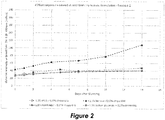
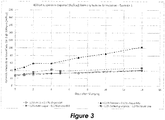
- the slurry is divided in 3 parts which have been treated the same way as indicated under item i, ii and iii.
- sample i The result of the viscosity measurement at rest (sample i) have been plotted on Figure 2 and the result of the viscosity for a milk of lime agitated 1 hour per day (sample ii) have been plotted on Figure 3 .
- the high calcium lime (dry hydrated lime) used in Example 3 present a d 97 of 10.9 ⁇ m and a d 50 of 3.6 ⁇ m.
- the silica content expressed as SiO 2 equivalent was lower than 0.5 wt%
- the aluminum content expressed as Al 2 O 3 equivalent was lower than 0.3 wt%
- the sulfur content expressed as SO 3 equivalent was lower than 0.2 wt%.
- the available Ca(OH) 2 content of the high calcium lime was above 91 wt%.
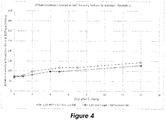
- the slurry is divided in 3 parts which have been treated the same way as indicated under item i, ii and iii.
- sample i The result of the viscosity measurement at rest (sample i) have been plotted on Figure 4 and the result of the viscosity for a milk of lime agitated 1 hour per day (sample ii) have been plotted on Figure 5 .
- the protocol of example 1 has been reproduced with a high calcium lime (dry hydrated lime) with a BET specific surface area of ca. 21.3 m 2 /g from Germany..
- the high calcium lime (dry hydrated lime) used in Example 1 present a d 97 of d 97 of 16.4 ⁇ m and a d 50 of 4.4 ⁇ m.
- the silica content expressed as SiO2 equivalent was lower than 0.5 wt%
- the aluminum content expressed as Al 2 O 3 equivalent was lower than 0.2 wt%
- the sulfur content expressed as SO 3 equivalent was lower than 0.1 wt% as well.
- the available Ca(OH) 2 content of the high calcium lime was above 93 wt%.
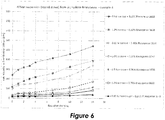
- sample i The result of the viscosity measurement at rest (sample i) have been plotted on Figure 6 and the result of the viscosity for a milk of lime agitated 1 hour per day (sample ii) have been plotted on Figure 7 .
- the viscosity was kept below 600 mPa.s for 14 days for the viscosity measurements plotted on Figure 6 and below 900 mPas for the viscosity measurements plotted on Figure 7 .
- the protocol of example 1 has been reproduced with a high calcium lime (dry hydrated lime) BET specific surface area of ca. 8.5m 2 /g from the Southern United States.
- the high calcium lime (dry hydrated lime) used in Example 1 present a d 97 of 13.3 ⁇ m and a d 50 of 3.1 ⁇ m.
- the silica content expressed as SiO 2 equivalent was lower than 1.5 wt%
- the aluminum content expressed as Al 2 O 3 equivalent was lower than 0.5 wt%
- the sulfur content expressed as SO 3 equivalent was lower than 0.5 wt% as well.
- the available Ca(OH) 2 content of the high calcium lime was above 91 wt%.
- a mixture of High Fructose Corn syrup (2/3 in respect to active, dry sugar content) and sucrose (1/3) has been used to reach a final dosage of 1.1 wt% carbohydrate mixture per weight dry hydrate and have been diluted in water and sprayed onto the high calcium hydrated lime.
- the dispersant polymer was also sprayed onto the high calcium hydrated lime at a dosage of 0.85 wt% corresponding to 0.17wt% active (dry) polymer per wt dry hydrate, according to table 4.
- the slurry is divided in 3 parts which have been treated the same way as indicated under item i, ii and iii.
- the viscosity was kept below 200 mPa.s for 14 days for the viscosity measurement at rest and below 800 mPa.s for the viscosity measurement under agitation 1 hour per day, both plotted on Figure 8 .
- the protocol of example 1 has been reproduced with a high calcium lime (dry hydrated lime) with a BET specific surface area of ca. 8.5m 2 /g from the Southern United States.
- the high calcium lime (dry hydrated lime) used in Example 1 present a d 97 of 13.3 ⁇ m and a d 50 of 3.1 ⁇ m .
- the silica content expressed as SiO 2 equivalent was lower than 1.5 wt%
- the aluminum content expressed as Al2O 3 equivalent was lower than 0.5 wt%
- the sulfur content expressed as SO 3 equivalent was lower than 0.5 wt% as well.
- the available Ca(OH) 2 content of the high calcium lime was above 91 wt%.
- organic stabilizing agent invert sugar syrup has been used to reach a dosage of 1.1 wt% carbohydrate per weight dry hydrate.
- the organic stabilizing agent and the dispersant polymer were pre-mixed before being sprayed together onto the high calcium hydrated lime.
- the dosage of the dispersant polymer was 0.85 wt%, corresponding to 0.17wt% active (dry) polymer per wt dry hydrate, according to table 5.
- Table 5.- Organic stabilizing agent Dosage Dispersant polymer Dosage in DM content* Invert-sugar-syrup 1.1 wt% Neomere® Tech 757 from Chryso 0.17 wt% *per weight dry lime hydrate
- the ready-to-use powder formulation according to the present example was stored for 1 week, for 2 weeks and for 1 month before being slurried according to the protocol of example 1
- the slurry is divided in 3 parts which have been treated the same way as indicated under item i, ii and iii.
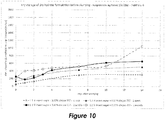
- Example i The result of the viscosity measurement at rest (sample i) have been plotted on Figure 9 and the result of the viscosity for a milk of lime agitated 1 hour per day (sample ii) have been plotted on Figure 10 .
- the viscosity was kept below 400 mPa.s for 14 days for the viscosity measurement at rest plotted on Figure 9 and for each storage period of the ready-to-use powder formulation of Example 6.
- the viscosity was kept acceptable for 14 days for the viscosity measurement with one hour agitation per day plotted on Figure 10 and for each storage period of the ready-to-use powder formulation of Example 6.
- Example 1 The protocol of Example 1 has been reproduced, except that a fine, dry sorbitol powder was used.
- the sorbitol was added dry to the same high calcium hydrated lime as of Example 1 and the powder mixture was agitated for 5 min to ensure homogeneity.
- the same polymer dispersant, method of addition and dosage as in Example 1 was used.
- Example 7 The resultant final mixture of Example 7 is agitated for another 10 min after addition to allow homogenization to form a dry formulation of high calcium hydrated lime.
- the ready-to-use powder formulation of high calcium hydrated lime of example 7 was tested for flowability.
- the flowability of the ready-to use formulation was 1.5.
- the flow function determined with the PFT of 1.5 is an average value obtained on 5 measurement points at different consolidating stresses. Those consolidating stresses are applied in the range 1 to 10 kPa.
- the dry formulation of high calcium hydrated lime is stored in a bucket with a tight-fitting lid till it is used.
- a slurry having a solid content (high solids) of 45% 1650 g of water is placed in a beaker of 5 dm 3 and agitated with a propeller stirrer of 70mm diameter at 700 rpm. Then 1350g of dry formulation of high calcium hydrated lime are added in small portions over the course of 10 to 15 min. The agitation is continued for at least another 30 min, to ensure all lumps have broken up and a visually homogeneous suspension has been obtained.
- the slurry is divided in 3 parts:
- the suspension is then passed through a 1.4ltr horizontal, rotary bead mill, filled to a level of 75% of free volume with yttrium-stabilize zirconium oxide milling beads of an average diameter of 1.2 ⁇ m and operated at a rotation speed of 1600 rpm, milling the suspension to a particle size distribution of D 50 of 2.6 ⁇ m ⁇ m and D 97 of 18.0 ⁇ m.
- Chryso Neomere®tech 757 are added to the milled suspension under agitation by a propeller stirrer of 70mm diameter at 700 rpm during 5min for a dosage of 0.08wt% active (dry) polymer per wt dry hydrate. The agitation is maintained for 10min to ensure homogeneity of distribution.
- the slurry is divided in 3 parts:
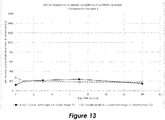
- Example 7 Compared to the previous Example 1 and Comparative Example 1, we can thus conclude from Example 7 and Comparative Example 2, that the effect of the additives in a formulation according to our invention is thus additive-specific, i.e. invert sugar would be a more efficient additive than sorbitol.
Landscapes
- Chemical & Material Sciences (AREA)
- Engineering & Computer Science (AREA)
- Ceramic Engineering (AREA)
- Materials Engineering (AREA)
- Structural Engineering (AREA)
- Organic Chemistry (AREA)
- Compounds Of Alkaline-Earth Elements, Aluminum Or Rare-Earth Metals (AREA)
- Soil Conditioners And Soil-Stabilizing Materials (AREA)
Priority Applications (3)
| Application Number | Priority Date | Filing Date | Title |
|---|---|---|---|
| EP20173350.8A EP3907202A1 (fr) | 2020-05-06 | 2020-05-06 | Formulation de poudre prête à l'emploi pour fabriquer un lait de chaux hautement réactif et à haute teneur en solides |
| PCT/EP2021/062029 WO2021224406A1 (fr) | 2020-05-06 | 2021-05-06 | Formulation pulvérulente prête à l'emploi pour la fabrication d'un lait de chaux hautement réactif et à haute teneur en solides |
| PCT/EP2021/062030 WO2021224407A1 (fr) | 2020-05-06 | 2021-05-06 | Formulation de poudre prête à l'emploi pour la fabrication d'un lait de chaux à haute teneur en matières solides, hautement réactif |
Applications Claiming Priority (1)
| Application Number | Priority Date | Filing Date | Title |
|---|---|---|---|
| EP20173350.8A EP3907202A1 (fr) | 2020-05-06 | 2020-05-06 | Formulation de poudre prête à l'emploi pour fabriquer un lait de chaux hautement réactif et à haute teneur en solides |
Publications (1)
| Publication Number | Publication Date |
|---|---|
| EP3907202A1 true EP3907202A1 (fr) | 2021-11-10 |
Family
ID=70613701
Family Applications (1)
| Application Number | Title | Priority Date | Filing Date |
|---|---|---|---|
| EP20173350.8A Withdrawn EP3907202A1 (fr) | 2020-05-06 | 2020-05-06 | Formulation de poudre prête à l'emploi pour fabriquer un lait de chaux hautement réactif et à haute teneur en solides |
Country Status (2)
| Country | Link |
|---|---|
| EP (1) | EP3907202A1 (fr) |
| WO (2) | WO2021224406A1 (fr) |
Cited By (3)
| Publication number | Priority date | Publication date | Assignee | Title |
|---|---|---|---|---|
| EP4592263A1 (fr) * | 2024-01-29 | 2025-07-30 | S.A. Lhoist Recherche Et Developpement | Suspension d'hydroxyde de calcium a rheologie newtonienne |
| EP4592262A1 (fr) * | 2024-01-29 | 2025-07-30 | S.A. Lhoist Recherche Et Developpement | Suspension d'hydroxyde de calcium a rheologie newtonienne |
| EP4474444A4 (fr) * | 2022-02-01 | 2026-01-21 | Shiraishi Central Laboratories Co Ltd | Bouillie d'hydroxyde de calcium pour matériau de stockage de chaleur chimique, procédé de production d'une bouillie d'hydroxyde de calcium pour matériau de stockage de chaleur chimique, matériau de stockage de chaleur chimique, procédé de production d'un matériau de stockage de chaleur chimique, et procédé de réalisation d'un stockage de chaleur chimique |
Citations (4)
| Publication number | Priority date | Publication date | Assignee | Title |
|---|---|---|---|---|
| WO2006050567A1 (fr) | 2004-11-12 | 2006-05-18 | Ultimate Nominees Pty Ltd | Agents dispersants non-toxiques pour boues de chaux hydratee |
| EP1999082A1 (fr) | 2006-03-27 | 2008-12-10 | Carmeuse S.A. | Stabilisation de suspension de lait de chaux |
| FR3060020A1 (fr) * | 2016-12-08 | 2018-06-15 | S.A. Lhoist Recherche Et Developpement | Procede de manutention de cuve ou poche a laitier et d'outils pyro-metallurgiques |
| BE1026329B1 (fr) * | 2018-11-07 | 2020-01-06 | Carmeuse Research And Tech | Lait de chaux |
Family Cites Families (1)
| Publication number | Priority date | Publication date | Assignee | Title |
|---|---|---|---|---|
| BE1009692A3 (fr) | 1995-10-19 | 1997-07-01 | Lhoist Rech & Dev Sa | PARTICULES DE Ca(OH)2. |
-
2020
- 2020-05-06 EP EP20173350.8A patent/EP3907202A1/fr not_active Withdrawn
-
2021
- 2021-05-06 WO PCT/EP2021/062029 patent/WO2021224406A1/fr not_active Ceased
- 2021-05-06 WO PCT/EP2021/062030 patent/WO2021224407A1/fr not_active Ceased
Patent Citations (4)
| Publication number | Priority date | Publication date | Assignee | Title |
|---|---|---|---|---|
| WO2006050567A1 (fr) | 2004-11-12 | 2006-05-18 | Ultimate Nominees Pty Ltd | Agents dispersants non-toxiques pour boues de chaux hydratee |
| EP1999082A1 (fr) | 2006-03-27 | 2008-12-10 | Carmeuse S.A. | Stabilisation de suspension de lait de chaux |
| FR3060020A1 (fr) * | 2016-12-08 | 2018-06-15 | S.A. Lhoist Recherche Et Developpement | Procede de manutention de cuve ou poche a laitier et d'outils pyro-metallurgiques |
| BE1026329B1 (fr) * | 2018-11-07 | 2020-01-06 | Carmeuse Research And Tech | Lait de chaux |
Non-Patent Citations (2)
| Title |
|---|
| P.A. SHAFFERT.E. FRIEDEMANN: "Sugar Activation by Alkali", JOURNAL OF BIOLOGICAL CHEMISTRY, Retrieved from the Internet <URL:https://www.jbc.org/content/86/l/345.full.pdf> |
| RINLADA SIRISANGSAWANGPRAKOB KITCHAIYA: "Concentrated Lactic Acid Production from Invert Sugar in Alkaline Solution", CHEM. ENG. TRANS, 2019, Retrieved from the Internet <URL:https://www.aidic.it/cet/19/75/103.pdf> |
Cited By (5)
| Publication number | Priority date | Publication date | Assignee | Title |
|---|---|---|---|---|
| EP4474444A4 (fr) * | 2022-02-01 | 2026-01-21 | Shiraishi Central Laboratories Co Ltd | Bouillie d'hydroxyde de calcium pour matériau de stockage de chaleur chimique, procédé de production d'une bouillie d'hydroxyde de calcium pour matériau de stockage de chaleur chimique, matériau de stockage de chaleur chimique, procédé de production d'un matériau de stockage de chaleur chimique, et procédé de réalisation d'un stockage de chaleur chimique |
| EP4592263A1 (fr) * | 2024-01-29 | 2025-07-30 | S.A. Lhoist Recherche Et Developpement | Suspension d'hydroxyde de calcium a rheologie newtonienne |
| EP4592262A1 (fr) * | 2024-01-29 | 2025-07-30 | S.A. Lhoist Recherche Et Developpement | Suspension d'hydroxyde de calcium a rheologie newtonienne |
| WO2025163001A1 (fr) * | 2024-01-29 | 2025-08-07 | S.A. Lhoist Recherche Et Developpement | Suspension d'hydroxyde de calcium à rhéologie newtonienne ou quasi-newtonienne |
| WO2025163002A1 (fr) * | 2024-01-29 | 2025-08-07 | S.A. Lhoist Recherche Et Developpement | Suspension d'hydroxyde de calcium à rhéologie newtonienne |
Also Published As
| Publication number | Publication date |
|---|---|
| WO2021224407A1 (fr) | 2021-11-11 |
| WO2021224406A1 (fr) | 2021-11-11 |
Similar Documents
| Publication | Publication Date | Title |
|---|---|---|
| WO2021224406A1 (fr) | Formulation pulvérulente prête à l'emploi pour la fabrication d'un lait de chaux hautement réactif et à haute teneur en solides | |
| EP1999082B1 (fr) | Stabilisation de suspension de lait de chaux | |
| AU2015314413B2 (en) | Process for manufacturing a milk of slaked lime of great fineness and milk of lime of great fineness thereby obtained | |
| CA2802512C (fr) | Boue aqueuse de silice amorphe et procede de production | |
| EP0357962B1 (fr) | Suspension de polymères hydrosolubles dans des milieux aqueux contenant des sels dissouts | |
| US12391610B2 (en) | Lime milk | |
| EP1928802B1 (fr) | Poudre redispersible dans l'eau, procede pour la preparer et son utilisation | |
| RU2598932C2 (ru) | Растворимая в воде порошкообразная полимерная композиция, обладающая улучшенными характеристиками диспергируемости | |
| CZ150498A3 (cs) | Postup přípravy jemných částic uhličitanu vápenatého | |
| JP5237618B2 (ja) | ヒドロキシプロピルセルロースの製造方法 | |
| US20240199481A1 (en) | Low viscosity milk of lime | |
| JP2018520079A (ja) | 沈降炭酸カルシウムの製造 | |
| HK1045493A1 (zh) | 碳酸鈣松散顆粒的製備方法 | |
| EP0637325A1 (fr) | Procede de fabrication de polyesters a partir d'acide citrique et de composes polyhydroxy et leur utilisation | |
| KR20030024917A (ko) | 팽윤 가능한 층 실리케이트 | |
| EP1969012B1 (fr) | Methode de preparation d'ethers d'hydroxyalkylalkycellulose a un rendement eleve | |
| AU2004226986A1 (en) | Storage-stable particle composition of polysaccharides and/or polysaccharide derivatives and at least one synthetic polymer, a process for production thereof and use in thereof in construction material mixtures | |
| JP7366027B2 (ja) | 逐次的で均質な化学的機能化による多糖材料の加工方法 | |
| US9187572B2 (en) | Treatment of polysaccarides with dialdehydes | |
| RU2238242C2 (ru) | Способ получения высокомодульного жидкого стекла | |
| EP0794986B1 (fr) | Adhesif pulverulent | |
| KR101697073B1 (ko) | 피드스톡의 보유 및 분배 | |
| CN1163555C (zh) | 乳胶漆固态添加剂 |
Legal Events
| Date | Code | Title | Description |
|---|---|---|---|
| PUAI | Public reference made under article 153(3) epc to a published international application that has entered the european phase |
Free format text: ORIGINAL CODE: 0009012 |
|
| STAA | Information on the status of an ep patent application or granted ep patent |
Free format text: STATUS: THE APPLICATION HAS BEEN PUBLISHED |
|
| AK | Designated contracting states |
Kind code of ref document: A1 Designated state(s): AL AT BE BG CH CY CZ DE DK EE ES FI FR GB GR HR HU IE IS IT LI LT LU LV MC MK MT NL NO PL PT RO RS SE SI SK SM TR |
|
| B565 | Issuance of search results under rule 164(2) epc |
Effective date: 20201005 |
|
| STAA | Information on the status of an ep patent application or granted ep patent |
Free format text: STATUS: THE APPLICATION IS DEEMED TO BE WITHDRAWN |
|
| 18D | Application deemed to be withdrawn |
Effective date: 20220511 |