EP3907801B1 - Elektrolyt und elektrochemische vorrichtung - Google Patents
Elektrolyt und elektrochemische vorrichtung Download PDFInfo
- Publication number
- EP3907801B1 EP3907801B1 EP21183436.1A EP21183436A EP3907801B1 EP 3907801 B1 EP3907801 B1 EP 3907801B1 EP 21183436 A EP21183436 A EP 21183436A EP 3907801 B1 EP3907801 B1 EP 3907801B1
- Authority
- EP
- European Patent Office
- Prior art keywords
- och
- compound
- electrolyte
- electrode
- group
- Prior art date
- Legal status (The legal status is an assumption and is not a legal conclusion. Google has not performed a legal analysis and makes no representation as to the accuracy of the status listed.)
- Active
Links
Images
Classifications
-
- H—ELECTRICITY
- H01—ELECTRIC ELEMENTS
- H01M—PROCESSES OR MEANS, e.g. BATTERIES, FOR THE DIRECT CONVERSION OF CHEMICAL ENERGY INTO ELECTRICAL ENERGY
- H01M10/00—Secondary cells; Manufacture thereof
- H01M10/05—Accumulators with non-aqueous electrolyte
- H01M10/056—Accumulators with non-aqueous electrolyte characterised by the materials used as electrolytes, e.g. mixed inorganic/organic electrolytes
- H01M10/0564—Accumulators with non-aqueous electrolyte characterised by the materials used as electrolytes, e.g. mixed inorganic/organic electrolytes the electrolyte being constituted of organic materials only
- H01M10/0566—Liquid materials
-
- H—ELECTRICITY
- H01—ELECTRIC ELEMENTS
- H01G—CAPACITORS; CAPACITORS, RECTIFIERS, DETECTORS, SWITCHING DEVICES, LIGHT-SENSITIVE OR TEMPERATURE-SENSITIVE DEVICES OF THE ELECTROLYTIC TYPE
- H01G11/00—Hybrid capacitors, i.e. capacitors having different positive and negative electrodes; Electric double-layer [EDL] capacitors; Processes for the manufacture thereof or of parts thereof
- H01G11/54—Electrolytes
- H01G11/58—Liquid electrolytes
- H01G11/64—Liquid electrolytes characterised by additives
-
- H—ELECTRICITY
- H01—ELECTRIC ELEMENTS
- H01M—PROCESSES OR MEANS, e.g. BATTERIES, FOR THE DIRECT CONVERSION OF CHEMICAL ENERGY INTO ELECTRICAL ENERGY
- H01M10/00—Secondary cells; Manufacture thereof
- H01M10/05—Accumulators with non-aqueous electrolyte
- H01M10/052—Li-accumulators
- H01M10/0525—Rocking-chair batteries, i.e. batteries with lithium insertion or intercalation in both electrodes; Lithium-ion batteries
-
- H—ELECTRICITY
- H01—ELECTRIC ELEMENTS
- H01M—PROCESSES OR MEANS, e.g. BATTERIES, FOR THE DIRECT CONVERSION OF CHEMICAL ENERGY INTO ELECTRICAL ENERGY
- H01M10/00—Secondary cells; Manufacture thereof
- H01M10/05—Accumulators with non-aqueous electrolyte
- H01M10/056—Accumulators with non-aqueous electrolyte characterised by the materials used as electrolytes, e.g. mixed inorganic/organic electrolytes
- H01M10/0564—Accumulators with non-aqueous electrolyte characterised by the materials used as electrolytes, e.g. mixed inorganic/organic electrolytes the electrolyte being constituted of organic materials only
- H01M10/0566—Liquid materials
- H01M10/0567—Liquid materials characterised by the additives
-
- H—ELECTRICITY
- H01—ELECTRIC ELEMENTS
- H01M—PROCESSES OR MEANS, e.g. BATTERIES, FOR THE DIRECT CONVERSION OF CHEMICAL ENERGY INTO ELECTRICAL ENERGY
- H01M10/00—Secondary cells; Manufacture thereof
- H01M10/05—Accumulators with non-aqueous electrolyte
- H01M10/056—Accumulators with non-aqueous electrolyte characterised by the materials used as electrolytes, e.g. mixed inorganic/organic electrolytes
- H01M10/0564—Accumulators with non-aqueous electrolyte characterised by the materials used as electrolytes, e.g. mixed inorganic/organic electrolytes the electrolyte being constituted of organic materials only
- H01M10/0566—Liquid materials
- H01M10/0569—Liquid materials characterised by the solvents
-
- H—ELECTRICITY
- H01—ELECTRIC ELEMENTS
- H01M—PROCESSES OR MEANS, e.g. BATTERIES, FOR THE DIRECT CONVERSION OF CHEMICAL ENERGY INTO ELECTRICAL ENERGY
- H01M10/00—Secondary cells; Manufacture thereof
- H01M10/05—Accumulators with non-aqueous electrolyte
- H01M10/058—Construction or manufacture
-
- H—ELECTRICITY
- H01—ELECTRIC ELEMENTS
- H01M—PROCESSES OR MEANS, e.g. BATTERIES, FOR THE DIRECT CONVERSION OF CHEMICAL ENERGY INTO ELECTRICAL ENERGY
- H01M10/00—Secondary cells; Manufacture thereof
- H01M10/42—Methods or arrangements for servicing or maintenance of secondary cells or secondary half-cells
- H01M10/4235—Safety or regulating additives or arrangements in electrodes, separators or electrolyte
-
- H—ELECTRICITY
- H01—ELECTRIC ELEMENTS
- H01M—PROCESSES OR MEANS, e.g. BATTERIES, FOR THE DIRECT CONVERSION OF CHEMICAL ENERGY INTO ELECTRICAL ENERGY
- H01M4/00—Electrodes
- H01M4/02—Electrodes composed of, or comprising, active material
- H01M4/13—Electrodes for accumulators with non-aqueous electrolyte, e.g. for lithium-accumulators; Processes of manufacture thereof
-
- H—ELECTRICITY
- H01—ELECTRIC ELEMENTS
- H01M—PROCESSES OR MEANS, e.g. BATTERIES, FOR THE DIRECT CONVERSION OF CHEMICAL ENERGY INTO ELECTRICAL ENERGY
- H01M4/00—Electrodes
- H01M4/02—Electrodes composed of, or comprising, active material
- H01M4/64—Carriers or collectors
-
- H—ELECTRICITY
- H01—ELECTRIC ELEMENTS
- H01M—PROCESSES OR MEANS, e.g. BATTERIES, FOR THE DIRECT CONVERSION OF CHEMICAL ENERGY INTO ELECTRICAL ENERGY
- H01M4/00—Electrodes
- H01M4/02—Electrodes composed of, or comprising, active material
- H01M4/64—Carriers or collectors
- H01M4/70—Carriers or collectors characterised by shape or form
-
- H—ELECTRICITY
- H01—ELECTRIC ELEMENTS
- H01M—PROCESSES OR MEANS, e.g. BATTERIES, FOR THE DIRECT CONVERSION OF CHEMICAL ENERGY INTO ELECTRICAL ENERGY
- H01M2300/00—Electrolytes
- H01M2300/0017—Non-aqueous electrolytes
- H01M2300/0025—Organic electrolyte
-
- H—ELECTRICITY
- H01—ELECTRIC ELEMENTS
- H01M—PROCESSES OR MEANS, e.g. BATTERIES, FOR THE DIRECT CONVERSION OF CHEMICAL ENERGY INTO ELECTRICAL ENERGY
- H01M2300/00—Electrolytes
- H01M2300/0017—Non-aqueous electrolytes
- H01M2300/0025—Organic electrolyte
- H01M2300/0028—Organic electrolyte characterised by the solvent
- H01M2300/0034—Fluorinated solvents
-
- H—ELECTRICITY
- H01—ELECTRIC ELEMENTS
- H01M—PROCESSES OR MEANS, e.g. BATTERIES, FOR THE DIRECT CONVERSION OF CHEMICAL ENERGY INTO ELECTRICAL ENERGY
- H01M2300/00—Electrolytes
- H01M2300/0017—Non-aqueous electrolytes
- H01M2300/0025—Organic electrolyte
- H01M2300/0028—Organic electrolyte characterised by the solvent
- H01M2300/0037—Mixture of solvents
-
- Y—GENERAL TAGGING OF NEW TECHNOLOGICAL DEVELOPMENTS; GENERAL TAGGING OF CROSS-SECTIONAL TECHNOLOGIES SPANNING OVER SEVERAL SECTIONS OF THE IPC; TECHNICAL SUBJECTS COVERED BY FORMER USPC CROSS-REFERENCE ART COLLECTIONS [XRACs] AND DIGESTS
- Y02—TECHNOLOGIES OR APPLICATIONS FOR MITIGATION OR ADAPTATION AGAINST CLIMATE CHANGE
- Y02E—REDUCTION OF GREENHOUSE GAS [GHG] EMISSIONS, RELATED TO ENERGY GENERATION, TRANSMISSION OR DISTRIBUTION
- Y02E60/00—Enabling technologies; Technologies with a potential or indirect contribution to GHG emissions mitigation
- Y02E60/10—Energy storage using batteries
-
- Y—GENERAL TAGGING OF NEW TECHNOLOGICAL DEVELOPMENTS; GENERAL TAGGING OF CROSS-SECTIONAL TECHNOLOGIES SPANNING OVER SEVERAL SECTIONS OF THE IPC; TECHNICAL SUBJECTS COVERED BY FORMER USPC CROSS-REFERENCE ART COLLECTIONS [XRACs] AND DIGESTS
- Y02—TECHNOLOGIES OR APPLICATIONS FOR MITIGATION OR ADAPTATION AGAINST CLIMATE CHANGE
- Y02P—CLIMATE CHANGE MITIGATION TECHNOLOGIES IN THE PRODUCTION OR PROCESSING OF GOODS
- Y02P70/00—Climate change mitigation technologies in the production process for final industrial or consumer products
- Y02P70/50—Manufacturing or production processes characterised by the final manufactured product
-
- Y—GENERAL TAGGING OF NEW TECHNOLOGICAL DEVELOPMENTS; GENERAL TAGGING OF CROSS-SECTIONAL TECHNOLOGIES SPANNING OVER SEVERAL SECTIONS OF THE IPC; TECHNICAL SUBJECTS COVERED BY FORMER USPC CROSS-REFERENCE ART COLLECTIONS [XRACs] AND DIGESTS
- Y02—TECHNOLOGIES OR APPLICATIONS FOR MITIGATION OR ADAPTATION AGAINST CLIMATE CHANGE
- Y02T—CLIMATE CHANGE MITIGATION TECHNOLOGIES RELATED TO TRANSPORTATION
- Y02T10/00—Road transport of goods or passengers
- Y02T10/60—Other road transportation technologies with climate change mitigation effect
- Y02T10/70—Energy storage systems for electromobility, e.g. batteries
Definitions
- the present disclosure relates to the technical field of energy storage technologies, in particular to an electrolyte for a lithium secondary battery, an electrochemical device containing the electrolyte and an electronic device comprising the electrochemical device.
- US 2017/288268 A1 teaches an electrolyte for a rechargeable lithium battery, the electrolyte comprising an organic solvent including C3 to C5 alkyl propionate, a lithium salt, and a compound represented by the following formula: wherein, in the formula, k, l, and m are independently integers of 0 to 20, k, 1, and m being selected so that Chemical Formula 1 has an asymmetric structure, n is an integer of 1 to 7, and R 1 , R 2 , R 3 , R 4 , R 5 , and R 6 are independently hydrogen, an alkyl group, an alkoxy group, or a fluoroalkyl group.
- An embodiment of the present application provides an electrolyte for a lithium secondary battery and an electrochemical device containing the electrolyte, wherein the electrolyte comprises a compound comprising two cyano groups (herein also referred to as "a dinitrile compound”), a compound comprising three cyano groups (herein also referred to as "a trinitrile compound”), and propyl propionate.
- the dinitrile compound can form a protective film on the cathode of the electrochemical device, so as to inhibit the decomposition of the solvent in the electrochemical device.
- the protective film itself is decomposed on the surface of the cathode at a high potential, the effect of inhibiting decomposition of the solvent cannot be sustained for a long time.
- the present inventors unexpectedly found that by using a mixture of a dinitrile compound, a trinitrile compound and propyl propionate, a firm protective film which is not easily decomposed on the surface of the cathode at a high potential can be formed.
- the electrolyte according to the embodiment of the present application can effectively inhibit the increase in DC internal resistance of the electrochemical device.
- the electrolyte comprises a dinitrile compound, a trinitrile compound, and propyl propionate, wherein, based on the total weight of the electrolyte, the weight percentage (X) of the dinitrile compound and the weight percentage (Y) of the trinitrile compound based on the total weight of the electrolyte solution meet the conditions represented by Formula (1) and Formula (2): 2 wt% ⁇ X + Y ⁇ 8 wt% and 0 .1 ⁇ X/Y ⁇ 6
- X is a weight percentage of the dinitrile compound and Y is a weight percentage of the trinitrile compound, and Z is a weight percentage of the propyl propionate.
- the dinitrile compound comprises a compound of Formula (5): CN-R 2 -(O-R 3 ) n -O-R 4 -CN (5);
- the weight percentage of the dinitrile compound is X, and X is 0.01-10 wt%; the weight percentage of the trinitrile compound is Y, and Y is 0.01-10 wt%; and the weight percentage of the propyl propionate is Z, and Z is 5-50 wt%.
- the electrolyte according to the embodiments of the present application can effectively inhibit the increase in DC internal resistance of the electrochemical device, thereby achieving a better effect.
- the electrolyte further comprises a fluoroether, wherein based on the total weight of the electrolyte, the content of fluoroether is 0.01-10 wt%.
- the fluoroether can form a better protective film with the trinitrile compound, thereby improving the DC internal resistance and the storage performance of the electrochemical device.
- the electrolyte further comprises a cyclic phosphonic anhydride, wherein, based on the total weight of the electrolyte, the content of the cyclic phosphonic anhydride is 0.01-10 wt%.
- the addition of the cyclic phosphonic anhydride can further inhibit the increase in DC internal resistance during the cycle.
- the electrolyte further comprises one selected from the group consisting of: a cyclic carbonate ester having a carbon-carbon double bond, a fluorinated chain carbonate ester, a fluorinated cyclic carbonate ester, a compound having a sulfur-oxygen double bond, and any combination thereof.
- a cyclic carbonate ester having a carbon-carbon double bond a fluorinated chain carbonate ester, a fluorinated cyclic carbonate ester, a compound having a sulfur-oxygen double bond, and any combination thereof.
- These compounds can form a firm protective film which is not easily to be decomposed at the electrode interface with the dinitrile compound, the trinitrile compound and propyl propionate, thereby further inhibiting the side reactions in the electrochemical device and reducing the voltage drop during storage of the electrochemical device, so as to improve the long-term storage performance and reliability of the electrochemical device.
- the present application provides an electrochemical device and an electronic device using the electrochemical device.
- the electrochemical device comprises electrodes and an electrolyte which is any of the electrolyte described above.
- the electrode includes a current collector and a coating on the current collector.
- the coating includes a single-sided coating and a double-sided coating.
- the single-sided coating is a coating formed by applying a slurry on one surface of the current collector.
- the double-sided coating is a coating formed by applying a slurry on two surfaces of the current collector, wherein when one surface of a portion of the current collector is coated with a slurry to form the single-sided coating and two opposite surfaces of another portion of the current collector are coated to form the double-sided coating, thereby forming an electrode with a single-sided coating having an electrode compaction density D1, and the electrode with the double-sided coating having an electrode compaction density D2, D1 and D2 meet the following relationship: 0.8 ⁇ D1/D2 ⁇ 1.2.
- the electrodes include a cathode and an anode, wherein for the cathode, 3.5 g/cm 3 ⁇ D2 ⁇ 4.3 g/cm 3 ; wherein for the anode, 1.2 g/cm 3 ⁇ D2 ⁇ 1.8 g/cm 3 .
- the electrochemical device when the electrolyte of the electrochemical device comprises a compound comprising two cyano groups, a compound comprising three cyano groups, and propyl propionate, and the electrode compaction densities meet the above relationships, the electrode can have good electrical conductivity, the effects of the cathode and anode active materials are well exerted, which is important to controlling the expansion of electrochemical devices. Therefore, the electrochemical device according to the embodiments of the present application achieves high capacity density and has excellent cycle and storage performances.
- the present application provides an electronic device including the electrochemical device.
- the term "about” is used to describe and depict minor variations.
- the term may refer to an example in which the event or circumstance occurs precisely, and an example in which the event or circumstance occurs approximately.
- the term may refer to a range of variation less than or equal to ⁇ 10% of the stated value, such as less than or equal to ⁇ 5%, less than or equal to ⁇ 4%, less than or equal to ⁇ 3%, less than or equal to ⁇ 2%, less than or equal to ⁇ 1%, less than or equal to ⁇ 0.5%, less than or equal to ⁇ 0.1%, or less than or equal to ⁇ 0.05%.
- hydrocarbyl covers alkyl, alkenyl, and alkynyl groups.
- the hydrocarbyl may be a straight-chain hydrocarbon structure having 1 to 20 carbon atoms.
- the hydrocarbon group also may be a branched or cyclic hydrocarbon structure having 3 to 20 carbon atoms.
- a hydrocarbon group having a specific number of carbon atoms is defined, it may cover all geometric isomers having the carbon number.
- the hydrocarbon group herein may also be a hydrocarbon group having 1 to 15 carbon atoms, a hydrocarbon group having 1 to 10 carbon atoms, a hydrocarbon group having 1 to 5 carbon atoms, a hydrocarbon group having 5 to 20 carbon atoms, a hydrocarbon group having 5 to 15 carbon atoms or a hydrocarbon group having 5 to 10 carbon atoms.
- the hydrocarbon group may be optionally substituted.
- the hydrocarbon group may be substituted by halo including fluorine, chlorine, bromine, and iodine, an alkyl group, an aryl group or a heteroaryl group.
- the "alkyl group” may be a linear saturated hydrocarbon structure having 1 to 20 carbon atoms.
- the alkyl group also may be a branched or cyclic hydrocarbon structure having 3 to 20 carbon atoms.
- the alkyl group may be an alkyl group having 1-20 carbon atoms, an alkyl group having 1-10 carbon atoms, an alkyl group having 1-5 carbon atoms, an alkyl group having 5-20 carbon atoms, an alkyl group having 5-15 carbon atoms, or alkyl group having 5-10 carbon atoms.
- an alkyl group having a specific number of carbon atoms it may cover all geometric isomers having the carbon number.
- butyl means n-butyl, sec-butyl, isobutyl, tert-butyl and cyclobutyl; and "propyl” includes n-propyl, isopropyl and cyclopropyl.
- alkyl group examples include, but are not limited to, methyl, ethyl, n-propyl, isopropyl, cyclopropyl, n-butyl, isobutyl, sec-butyl, tert-butyl, cyclobutyl, n-pentyl, isoamyl, neopentyl, cyclopentyl, methylcyclopentyl, ethylcyclopentyl, n-hexyl, isohexyl, cyclohexyl, n-heptyl, octyl, cyclopropyl, cyclobutyl, norbornanyl and so on. Additionally, the alkyl group may be optionally substituted.
- alkylene group means a linear or branched divalent saturated hydrocarbon group.
- the alkylene group may be an alkylene group having 1-20 carbon atoms, an alkylene group having 1-15 carbon atoms, an alkylene group having 1-10 carbon atoms, an alkylene group having 1-5 carbon atoms, an alkylene group having 5-20 carbon atoms, an alkylene group having 5-15 carbon atoms, or alkylene group having 5-10 carbon atoms.
- Representative alkylene group includes (for example) methylene, ethane-1,2-diyl ("ethylene”), propane-1,2-diyl, propane-1,3-diyl, butane-1,4-diyl, pentane-1,5-diyl and the like. Additionally, the alkylene group may be optionally substituted.
- alkenylene group covers both linear and branched alkenylene groups. When an alkenylene group having a specific number of carbon atoms is defined, it may cover all geometric isomers having the carbon number.
- the alkenylene group may be an alkenylene group having 2-20 carbon atoms, an alkenylene group having 2-15 carbon atoms, an alkenylene group having 2-10 carbon atoms, an alkenylene group having 2-5 carbon atoms, an alkenylene group having 5-20 carbon atoms, an alkenylene group having 5-15 carbon atoms, or alkenylene group having 5-10 carbon atoms.
- Representative alkenylene group includes (for example) ethenylene, propenylene, butenylene and the like. Additionally, the alkenylene group may be optionally substituted.
- aryl encompasses both monocyclic and polycyclic systems.
- a polycyclic ring may have two or more rings in which two carbons are shared by two adjacent rings (where the rings are "fused"), in which at least one of the rings is aromatic and other rings may be for example, a cycloalkyl group, a cycloalkenyl group, an aryl group, a heterocyclyl group and/or a heteroaryl group.
- the aryl group may be a C 6 -C 50 aryl group, a C 6 -C 40 aryl group, a C 6 -C 30 aryl group, a C 6 -C 20 aryl group, or a C 6 -C 10 aryl group.
- Representative aryl group includes (for example) phenyl, methylphenyl, propylphenyl, isopropylphenyl, benzyl and naphthalen-1-yl, naphthalen-2-yl and the like. Additionally, the aryl group may be optionally substituted.
- heteroaryl group covers a monocyclic heteroaromatic group which may include one to three heteroatoms, for example, pyrrole, furan, thiophene, imidazole, oxazole, thiazole, triazole, pyrazole, pyridine, pyrazine, pyrimidine, and the like.
- heteroaryl group also includes a polycyclic heteroaromatic system having two or more rings in which two atoms are shared by two adjacent rings (where the ring is "fused"), in which at least one of the rings is a heteroaryl group, and other rings may be a cycloalkyl group, a cycloalkenyl group, an aryl group, a heterocyclyl group and/or a heteroaryl group.
- the heteroatom in the heteroaryl group may be for example O, S, N, Se, and so on.
- the heteroaryl group may be a C 2 -C 50 heteroaryl group, a C 2 -C 40 heteroaryl group, a C 2 -C 30 heteroaryl group, a C 2 -C 20 heteroaryl group, or a C 2 -C 10 heteroaryl group.
- the aryl group may be optionally substituted.
- the substituent is selected from the group consisting of halogen, an alkyl group, a cycloalkyl group, an alkenyl group, an aryl group, and a heteroaryl group.
- the content of each component is obtained based on the total weight of the electrolyte.
- An embodiment of the present application provides an electrolyte for a lithium secondary battery, which comprises an electrolyte and a solvent in which the electrolyte is dissolved. It is one of the main characteristics of the electrolyte of the present application that the electrolyte comprises a dinitrile compound, a trinitrile compound, and propyl propionate, wherein, based on the total weight of the electrolyte, the weight percentage of the is X and the weight percentage of the trinitrile compound is Y, and X and Y meet the conditions represented by Formula (1) and Formula (2): 2 wt% ⁇ X + Y ⁇ 8wt% and 0 .1 ⁇ X/Y ⁇ 6
- X and Y meet 3 wt% ⁇ (X+Y) ⁇ 6 wt% and 0.2 ⁇ (X/Y) ⁇ 5 simultaneously. In some embodiments, X and Y meet 4 wt% ⁇ (X+Y) ⁇ 5 wt% and 0.3 ⁇ (X/Y) ⁇ 4 simultaneously. In some embodiments, X and Y meet 2 wt% ⁇ (X+Y) ⁇ 5 wt% and 0.1 ⁇ (X/Y) ⁇ 1 simultaneously.
- the weight percentage of the trinitrile compound is Y and the weight percentage of the propyl propionate is Z, and Y and Z meet the condition represented by Formula (3): 0 .01 ⁇ Y/Z ⁇ 0 .3
- Y and Z meet 0.01 ⁇ (Y/Z) ⁇ 0.2. In some embodiments, Y and Z meet 0.02 ⁇ (Y/Z) ⁇ 0.1.
- the weight percentage of the dinitrile compound is 0.01-7.99 wt%. In some embodiments, the weight percentage of the dinitrile compound is not less than 0.01 wt%, not less than 0.1 wt%, not less than 0.3 wt%, or not less than 0.5 wt%. In some embodiments, the weight percentage of the dinitrile compound is not greater than 7.99 wt%, or not greater than 6 wt%.
- the weight percentage of the trinitrile compound is 0.01-7.99 wt%. In some embodiments, the weight percentage of the trinitrile compound is not less than 0.01 wt%, not less than 0.1 wt%, not less than 0.3 wt%, or not less than 0.5 wt%. In some embodiments, the weight percentage of the trinitrile compound is not greater than 7.99 wt%, not greater than 5 wt%, not greater than 4 wt%, or not greater than 3 wt%.
- the weight percentage of the propyl propionate is 5-50wt%. In some embodiments, the weight percentage (Z) of the propyl propionate is 5-40 wt%, 10-40 wt%, 10-30 wt%, 20-50 wt%, 20-40 wt%, 20-30 wt%, or 25-30 wt%.
- the dinitrile compound according to the present invention includes a compound of Formula [5], and may additionally contain a compound of Formula [4]: CN-R 1 -CN [4], CN-R 2 -(O-R 3 ) n -O-R 4 -CN [5], wherein in Formula [5] R 2 , R 3 and R 4 are each independently an alkylene having 1-5 carbon atoms or an alkylene group having 2-5 carbon atoms, and n is an integer from 0 to 5, and wherein in Formula [4] R 1 represents an alkylene group having 1-5 carbon atoms or an alkenylene group having 2-5 carbon atoms.
- the dinitrile compound of the present application may include a compound of Formula [5], which is selected from the group consisting of 3,5-dioxa-pimelonitrile, 1,4-bis(cyanoethoxy)butane, ethylene glycol bis(2-cyanoethyl)ether, diethylene glycol bis(2-cyanoethyl)ether, triethylene glycol bis(2-cyanoethyl)ether, tetraethylene glycol bis(2-cyanoethyl)ether, 3,6,9,12,15,18-hexaoxaeicosanoic dinitrile, 1,3-bis(2-cyanoethoxy)propane, 1,4-bis(2-cyanoethoxy)butane, 1,5-bis(2-cyanoethoxy)pentane, ethylene glycol bis(4-cyanobutyl)ether.
- Formula [5] is selected from the group consisting of 3,5-dioxa-pimelonitrile, 1,4-bis(cyanoethoxy
- the dinitrile compound of the present application may include a compound of Formula [4], which is selected from the group consisting of butanedinitrile, glutaronitrile, adiponitrile, 1,5-dicyanopentane, 1,6-dicyanohexane, 1,7-dicyanoheptane, 1,8-dicyanooctane, 1,9-dicyanononane, 1,10-dicyanodecane, 1,12-dicyanododecane, tetramethylbutanedinitrile, 2-methylglutaronitrile, 2,4-dimethylglutaronitrile, 2,2,4,4-tetramethylglutaronitrile, 1,4-dicyanopentane, 2,6-dicyanoheptane, 2,7-dicyanooctane, 2,8-dicyanononane, 1,6-dicyanodecane, 1,2-dicyanobenzene, 1,3-dicyanobenzen
- the trinitrile compound includes a compound of Formula [6] or [7]: CN-(CH 2 ) x -CH ⁇ (CH 2 ) y -CN ⁇ -(CH 2 ) z -CN [6],
- the trinitrile compound of the present application is one selected from the group consisting of 1,3,5-pentanetricarbonitrile, 1,2,3-propanetrinitrile, 1,3,6-hexanetricarbonitrile , 1,2,6-hexanetricarbonitrile, 1,2,3-tris(2-cyanoethoxy)propane, 1,2,4-tris(2-cyanoethoxy)butane, 1,1,1-tris(cyanoethoxymethylene)ethane, 1,1,1-tris(cyanoethoxymethylene)propane, 3-methyl-1,3,5-tris(cyanoethoxy)pentane, 1,2,7-tris(cyanoethoxy)heptane, 1,2,6-tris(cyanoethoxy)hexane, or 1,2,5-tris(cyanoethoxy)pentane.
- the trinitrile compounds may be used alone or in combination of two or more thereof.
- the fluoroether compound of the present application includes at least one of the compounds of Formula [8], Formula [9], Formula [10], or Formula [11]: Rf1-O- Rf2 [8]; Rf1-O-R [9]; Rf1-O-(R'-O) n - Rf2 [10]; and Rf1-O-(R' -O) n - R [11], where in Formulae [8], [9], [10], and [11], Rf1 and Rf2 are each independently a linear or branched C 1 to C 12 fluoroalkyl group at least one hydrogen atom of which is replaced with fluorine, R is a linear or branched C 1 to C 12 alkyl group, and R' is a linear or branched C 1 to C 5 alkylene group, and n is an integer from 1 to 5.
- the fluoroether compound of the present application is a compound of Formula [8], Formula [9], Formula [10], or Formula [11].
- Rf1 or Rf2 is each independently a fluoroalkyl group selected from the group consisting of HCF 2 -, CF 3 -, HCF 2 CF 2 -, CH 3 CF 2 -, CF 3 CH 2 -, CF 3 CF 2 -, (CF 3 ) 2 CH-, HCF 2 CF 2 CH 2 -, CF 3 CH 2 CH 2 -, HCF 2 CF 2 CF 2 CH 2 -, HCF 2 CF 2 CF 2 CH 2 -, CF 3 CF 2 CH 2 -, CF 3 CFHCF 2 CH 2 -, HCF 2 CF(CF 3 )CH 2 -, and CF 3 CF 2 CH 2 CH 2 -.
- the fluoroether can form a better protective film with the trinitrile compound, thereby further improving the DC internal resistance and the storage performance of the battery.
- the fluoroether of the present application includes, but is not limited to: HCF 2 CF 2 CH 2 OCF 2 CF 2 H(FEPE), (CF 3 ) 2 CFCF(CF 2 CF 3 )(OCH 3 ) (TMMP), CF 3 CHFCF 2 CH(CH 3 )OCF 2 CHFCF 3 (TPTP), HCF 2 CF 2 CH 2 OCF 2 CF 2 CF 2 H, HCF 2 CF 2 OCH 2 CF 3 , HCF 2 CF 2 OCH 2 CH 2 OCF 2 CF 2 H, HCF 2 CF 2 OCH 2 CH 2 CH 2 OCF 2 CF 2 H, HCF 2 CF 2 CH 2 OCF 2 CF 2 H, HCF 2 CF 2 CH 2 OCF 2 CF 2 H, HCF 2 CF 2 OCH 2 CH 2 OCF 2 CF 2 CF 2 H, HCF 2 CF 2 OCH 2 CH 2 OCF 2 CF 2 H, HCF 2 CF 2 OCH 2 CH 2 OCF 2 CF 2 H, HCF
- the content of the fluoroether is not less than 0.01 wt%, not less than 0.1 wt%, or not less than 0.5 wt%. In some embodiments, the content of the fluoroether is not greater than 5wt%, not greater than 4 wt%, not greater than 3wt%, or not greater than 2 wt%.
- the cyclic phosphonic anhydride according to the present application includes one or more of the compounds of Formula [12]: wherein in Formula [12], R 10 , R 11 , and R 12 each independently may be hydrogen; each independently may be an alkyl group having 1-20 carbon atoms, for example, an alkyl group having 1-15 carbon atoms, an alkyl group having 1-10 carbon atoms, an alkyl group having 1-5 carbon atoms, an alkyl group having 5-20 carbon atoms, an alkyl group having 5-15 carbon atoms, and an alkyl group having 5-10 carbon atoms; and each independently may be an aryl group having 6-50 carbon atoms, for example, an aryl group having 6-30 carbon atoms, an aryl group having 6-26 carbon atoms, an aryl group having 6-20 carbon atoms, an aryl group having 10-50 carbon atoms, an aryl group having 10-30 carbon atoms, an aryl group having 10-26 carbon atoms,
- the cyclic phosphonic anhydride compound of the present application includes, but is not limited to, compounds of following formulae, which may be used alone, or in combination of two or more thereof:
- the content of the cyclic phosphonic anhydride is not less than 0.01 wt % or not less than 0.1 wt%. In some embodiments, the content of the cyclic phosphonic anhydride is not less than 0.3 wt% or not less than 0.5 wt%. In some embodiments, the content of the cyclic phosphonic anhydride is not greater than 4 wt% or not greater than 3wt%.
- the electrolyte of the present application may further comprises one or more selected from the group consisting of: a cyclic carbonate ester having a carbon-carbon double bond, a fluoro chain carbonate ester, a fluorinated cyclic carbonate ester, or a compound having a sulfur-oxygen double bond.
- the cyclic carbonate ester having a carbon-carbon double bond useful in the present application includes, but is not limited to: vinylene carbonate, methyl vinylene carbonate, ethyl vinylene carbonate, 1,2-dimethyl vinylene carbonate, 1,2-diethyl vinylene carbonate, fluorovinylene carbonate, and trifluoromethylvinylene carbonate; vinyl ethylene carbonate, 1-methyl-2-vinylethylene carbonate, 1-ethyl-2-vinylethylene carbonate, 1-n-propyl-2-vinylethylene carbonate, 1-methyl-2-vinylethylene carbonate, 1,1-divinylethylene carbonate, and 1,2-divinylethylene carbonate; and 1,1-dimethyl-2-methylene ethylene carbonate, and 1,1-diethyl-2-methylene ethylene carbonate.
- the cyclic carbonate ester having a carbon-carbon double bond may be used alone or in combination of two or more thereof.
- the content of the cyclic carbonate ester having a carbon-carbon double bond is not less than 0.01 wt%, not less than 0.1 wt%, or not less than 0.3 wt%. In some embodiments, the content of the cyclic carbonate ester having a carbon-carbon double bond is not less than 0.5 wt%. In some embodiments, the content of the cyclic carbonate ester having a carbon-carbon double bond is not greater than 5 wt%, not greater than 3 wt%, or not greater than 1 wt%.
- the fluorinated chain carbonate ester according to the present application includes, but is not limited to: fluoromethmetyl carbonate, difluoromethmethyl carbonate, trifluoromethmethyl carbonate, trifluoroethmethyl carbonate, or bis(trifluoroethyl) carbonate.
- the fluorinated chain carbonate ester may be used alone or in combination of two or more thereof.
- the content of the fluorinated chain carbonate ester is not less than 0.01wt% or not less than 0.1wt%. In some embodiments, the content of the fluorinated chain carbonate ester is not less than 0.3 wt%. In some embodiments, the content of the fluorinated chain carbonate ester is not less than 0.5 wt%. In some other embodiments, the content of the fluorinated chain carbonate ester is not greater than 3 wt% or not greater than 5 wt%. In some other embodiments, the content of the fluorinated chain carbonate ester is not greater than 1 wt%.
- the fluorinated cyclic carbonate ester according to the present application includes, but is not limited to, fluoroethylene carbonate, 4,4-difluoroethylene carbonate, 4,5-difluoroethylene carbonate, 4-fluoro-4-methylethylene carbonate, 4,5-difluoro-4-methylethylene carbonate, 4-fluoro-5-methylethylene carbonate, 4,4-difluoro-5-methylethylene carbonate, 4-(fluoromethyl)-ethylene carbonate, 4-(difluoromethyl)-ethylene carbonate, 4-(trifluoromethyl)-ethylene carbonate, 4-(fluoromethyl)-4-fluoroethylene carbonate, 4-(fluoromethyl)-5-fluoroethylene carbonate, 4-fluoro-4,5-dimethylethylene carbonate, 4,5-difluoro-4,5-dimethylethylene carbonate, and 4,4-difluoro-5,5-dimethylethylene carbonate.
- the fluorinated cyclic carbonate esters may be used alone or in combination
- the content of the fluorinated cyclic carbonate ester is not less than 0.1 wt% based on the total weight of the electrolyte. In some embodiments, the content of the fluoro cyclic carbonate ester is not less than 0.5 wt%. In some embodiments, the content of the fluorinated cyclic carbonate ester is not less than 2 wt%. In some embodiments, the content of the fluorinated cyclic carbonate ester is not less than 4 wt%. In some embodiments, the content of the fluorinated cyclic carbonate ester is not greater than 15 wt%. In some embodiments, the content of the fluorinated cyclic carbonate ester is not greater than 10 wt%. In some embodiments, the content of the fluorinated cyclic carbonate ester is not greater than 8 wt%.
- the compound having a sulfur-oxygen double bond includes, but is not limited to: a cyclic sulfate ester, a chain sulfate ester, a chain sulfonate ester, a cyclic sulfonate ester, a chain sulfite ester, a cyclic sulfite ester, a chain sulfone, a cyclic sulfones, and so on.
- the compound having a sulfur-oxygen double bond may be used alone or in combination of two or more thereof.
- the content of the compound having a sulfur-oxygen double bond is not less than 0.01 wt%. In some embodiments, the content of the compound having a sulfur-oxygen double bond is not less than 0.1 wt%. In some embodiments, the content of the compound having a sulfur-oxygen double bond is not less than 0.3 wt%. In some embodiments, the content of the compound having a sulfur-oxygen double bond is not less than 0.5 wt%. In some other embodiments, the content of the compound having a sulfur-oxygen double bond is not greater than 5 wt%. In some embodiments, the content of the compound having a sulfur-oxygen double bond is not greater than 4 wt%. In some embodiments, the content of the compound having a sulfur-oxygen double bond is not greater than 3 wt%.
- the cyclic sulfate ester according to the present application includes, but is not limited to: 1,2-ethylene glycol sulfate, 1,2-propylene glycol sulfate, 1,3-propylene glycol sulfate, 1,2-butylene glycol sulfate, 1,3-butylene glycol sulfate, 1,4-butylene glycol sulfate, 1,2-pentylene glycol sulfate, 1,3-pentylene glycol sulfate, 1,4-pentylene glycol sulfate, and 1,5-pentylene glycol sulfate.
- the cyclic sulfate ester may be used alone or in combination of two or more thereof.
- the chain sulfate ester according to the present application includes, but is not limited to: a dialkyl sulfate such as dimethyl sulfate, methyl ethyl sulfate, and diethyl sulfate.
- the chain sulfate ester may be used alone or in combination of two or more thereof.
- the chain sulfonate ester according to the present application includes, but is not limited to: methyl fluorosulfonate, ethyl fluorosulfonate, methyl methanesulfonate, ethyl methanesulfonate, butyl dimesylate, methyl 2-(methylsulfonyloxy)propionate, ethyl 2-(methylsulfonyloxy)propionate, methyl methylsulfonyloxyacetate, ethyl methylsulfonyloxyacetate, phenyl methylsulfonate, and pentafluorophenyl methylsulfonate.
- the chain sulfonate ester may be used alone or in combination of two or more thereof.
- the cyclic sulfonate ester according to the present application includes, but is not limited to: 1,3-propanesultone, 1-fluoro-1,3-propanesultone, 2-fluoro-1,3-propanesultone, 3-fluoro-1,3-propanesultone, 1-methyl-1,3-propanesultone, 2-methyl-1,3-propanesultone, 3-methyl-1, 3-propanesultone, 1-propene-1,3-sultone, 2-propene-1,3-sultone, 1-fluoro-1-propene-1,3-sultone, 2-fluoro-1-propene-1,3-sultone, 3 -fluoro-1 -propene-1,3-sultone, 1-fluoro-2-propene-1,3-sultone, 2-fluoro-2-propene-1,3-sultone, 3-fluoro-2-propene-1,3-sultone, 1-methyl-1-propene-1,3
- the chain sulfite ester according to the present application includes, but is not limited to: dimethyl sulfite, methyl ethyl sulfite, and diethyl sulfite.
- the chain sulfite ester may be used alone or in combination of two or more thereof.
- the cyclic sulfite ester according to the present application includes, but is not limited to: 1,2-ethylene glycol sulfite, 1,2-propylene glycol sulfite, 1,3-propylene glycol sulfite, 1,2-butylene glycol sulfite, 1,3-butylene glycol sulfite, 1,4-butylene glycol sulfite, 1,2-pentylene glycol sulfite, 1,3-pentylene glycol sulfite, 1,4-pentylene glycol sulfite, and 1,5-pentylene glycol sulfite.
- the cyclic sulfite ester may be used alone or in combination of two or more thereof.
- the chain sulfone ester according to the present application includes, but is not limited to: a dialkyl sulfone compound such as dimethyl sulfone, and diethyl sulfone.
- the cyclic sulfone according to the present application includes, but is not limited to: sulfolane, methyl sulfolane, 4,5-dimethyl sulfolane, and sulfolene.
- the cyclic sulfone may be used alone or in combination of two or more thereof.
- the electrolyte used in the electrolyte according to the embodiments of the present application may be an electrolyte known in the prior art, including, but not limited to: an inorganic lithium salt, for example LiClO 4 , LiAsF 6 , LiPF 6 , LiBF 4 , LiSbF 6 , LiSO 3 F, and LiN(FSO 2 ) 2 ; a fluorine-containing organic lithium salt, for example LiCF 3 SO 3 , LiN(FSO 2 )(CF 3 SO 2 ), LiN(CF 3 SO 2 ) 2 , LiN(C 2 F 5 SO 2 ) 2 , cyclic lithium 1,3-hexafluoropropane disulfonimide, cyclic lithium 1,2-tetrafluoroethane disulfonimide, LiN(CF 3 SO 2 )(C 4 F 9 SO 2 ), LiC(CF 3 SO 2 ) 3 , LiPF 4 (CF 3 ) 2 , LiPF 4 (C 2 F 5
- the electrolyte may be used alone or in combination of two or more thereof.
- the electrolyte includes a combination of LiPF 6 and LiBF 4 .
- the electrolyte includes a combination of an inorganic lithium salt such as LiPF 6 or LiBF 4 and a fluorine-containing organic lithium salt such as LiCF 3 SO 3 , LiN(CF 3 SO 2 ) 2 , or LiN(C 2 F 5 SO 2 ) 2 .
- the concentration of the electrolyte is in the range of 0.8- 3 mol/L, for example, 0.8- 2.5 mol/L, 0.8- 2 mol/L, 1- 2 mol/L, for example, 1 mol/L, 1.15 mol/L, 1.2 mol/L, 1.5 mol/L, 2 mol/L or 2.5 mol/L.
- the solvent used in the electrolyte according to the embodiments of the present application may be any non-aqueous solvent known in the art as a solvent for an electrolyte.
- the non-aqueous solvent useful in the present application includes, but is not limited to: a cyclic carbonate ester, a chain carbonate ester, a cyclic carboxylate ester, a chain carboxylate ester, a cyclic ether, a chain ether, a phosphorus-containing organic solvent, a sulfur-containing organic solvent, an aromatic fluorine-containing solvent or any combination thereof.
- the cyclic carbonate ester according to the present application generally has 3-6 carbon atoms, and includes, but is not limited to: for example, ethylene carbonate, propylene carbonate, butylene carbonate, and other cyclic carbonates.
- the chain carbonate ester according to the present application includes, but is not limited to: a chain carbonate ester such as dimethyl carbonate, ethyl methyl carbonate, diethyl carbonate, methyl n-propyl carbonate, ethyl n-propyl carbonate, and di-n-propyl carbonate; and a fluorinated chain carbonate ester, for example, bis(fluoromethyl) carbonate, bis(difluoromethyl) carbonate, bis(trifluoromethyl) carbonate, bis(2-fluoroethyl) carbonate, bis(2,2-difluoroethyl) carbonate, bis(2,2,2-trifluoroethyl) carbonate, 2-fluoroethylmethyl carbonate, 2,2-difluoroethylmethyl carbonate, and 2,2,2-trifluoroethylmethyl carbonate.
- a chain carbonate ester such as dimethyl carbonate, ethyl methyl carbonate, dieth
- the cyclic carboxylate ester according to present application includes, but is not limited to: ⁇ -butyrolactone, ⁇ -valerolactone, and the like, and a cyclic carboxylate ester some hydrogen atoms of which are substituted with fluorine.
- the chain carboxylate ester according to the present application includes, but is not limited to: methyl acetate, ethyl acetate, propyl acetate, isopropyl acetate, butyl acetate, sec-butyl acetate, isobutyl acetate, tert-butyl acetate, methyl propionate, ethyl propionate, propyl propionate, isopropyl propionate, methyl butyrate, ethyl butyrate, propyl butyrate, methyl isobutyrate, ethyl isobutyrate, methyl valerate, ethyl valerate, methyl pivalate and ethyl pivalate or the like, and a chain carboxylate ester some hydrogen atoms of which are substituted with fluorine.
- the fluorinated chain carboxylate ester includes, but is not limited to: methyl trifluoroacetate, ethyl trifluoroacetate, propyl trifluoroacetate, butyl trifluoroacetate and 2,2,2-trifluoroethyl trifluoroacetate.
- the cyclic ether according to the present application includes, but is not limited to: tetrahydrofuran, 2-methyltetrahydrofuran, 1,3-dioxolane, 2-methyl-1,3-dioxolane, 4-methyl-1,3-dioxolane, 1,3-dioxane, 1,4-dioxane and dimethoxypropane.
- the chain ether according to the present application includes, but is not limited to: dimethoxymethane, 1,1-dimethoxyethane, 1,2-dimethoxyethane, diethoxymethane, 1,1-diethoxyethane, 1,2-di ethoxyethane, ethoxymethoxymethane, 1,1-ethoxymethoxyethane and 1,2-ethoxymethoxyethane.
- the phosphorus-containing organic solvent according to the present application includes, but is not limited to: trimethyl phosphate, triethyl phosphate, dimethyl ethyl phosphate, methyl diethyl phosphate, ethylene methyl phosphate, ethylene ethyl phosphate, triphenyl phosphate, trimethyl phosphite, triethyl phosphite, triphenyl phosphite, tris(2,2,2-trifluoroethyl) phosphate and tris(2,2,3,3,3-pentafluoropropyl) phosphate.
- the sulfur-containing organic solvent according to the present application includes, but is not limited to: sulfolane, 2-methylsulfolane, 3-methylsulfolane, dimethyl sulfone, diethyl sulfone, ethyl methyl sulfone, methyl propyl sulfone, dimethyl sulfoxide, methyl methanesulfonate, ethyl methanesulfonate, methyl ethane sulfonate, ethyl ethanesulfonate, dimethyl sulfate, diethyl sulfate and dibutyl sulfate, as well as a sulfur-containing organic solvent some hydrogen atoms of which are substituted with fluorine.
- the aromatic fluorine-containing organic solvent according to the present application includes, but is not limited to: fluorobenzene, difluorobenzene, trifluorobenzene, tetrafluorobenzene, pentafluorobenzene, hexafluorobenzene, and trifluoromethylbenzene.
- the non-aqueous solvent of the present application may be used alone, or in combination of two or more thereof:
- the electrochemical device of the present invention includes any device in which an electrochemical reaction takes place, and specific examples include all kinds of primary batteries, secondary batteries, fuel cells, solar cells, or capacitors.
- the electrochemical device is a lithium secondary battery including a lithium metal secondary battery, a lithium ion secondary battery, a lithium polymer secondary battery or a lithium ion polymer secondary battery.
- the electrochemical device of the present application is an electrochemical device having a cathode having a cathode active material capable of absorbing and releasing metal ions; an anode having an anode active material capable of absorbing and releasing metal ions, and characterized by comprising any of the electrolytes of the present application.
- the electrolyte used in the electrochemical device of the present application is any of the aforementioned electrolytes according to the present application. Moreover, the electrolyte used in the electrochemical device of the present application may include other electrolytes falling within the scope of present application.
- the anode material used in the electrochemical device according to the embodiments of the present application can be prepared using materials, construction and manufacturing methods well known in the art.
- the anode of the present application can be prepared using the technique described in US9812739B .
- the anode active material is any substance capable of electrochemically absorbing and releasing a metal ion such as lithium ion.
- the anode active material includes a carbonaceous material, a silicon-carbon material, an alloy material or a lithium-containing metal composite oxide material. In some embodiments, the anode active material includes one or more of those described above.
- the anode can be formed by adding a binder and a solvent to, and if necessary, adding a thickener, a conductive material, a filler, or the like the anode active material, to prepare a slurry, coating the slurry to a current collector, drying, and then pressing.
- a thin film layer (anode active material layer) as an anode active material can be formed by vapor deposition, sputtering, or plating.
- an anode active material layer is formed from, for example, a conductive skeleton of twisted spherical shape and metal particles dispersed in the conductive skeleton, wherein the conductive skeleton of twisted spherical shape may have a porosity of 5% to 85%, and a protective layer may be further disposed on the anode active material layer of lithium metal.
- the cathode material used in the electrochemical device of the present application can be prepared using materials, construction and manufacturing methods well known in the art. In some embodiments, the cathode of the present application can be prepared using the technique described in US9812739B .
- the cathode active material includes, but is not limited to: a sulfide, a phosphate salt compound and a lithium-transition metal composite oxide.
- the cathode active material includes a lithium-transition metal compound which has a structure capable of removing and intercalating lithium ions.
- the composition of the lithium-transition metal compound can refer to the technical content described in US9812739B .
- the cathode is prepared by forming a cathode material from a cathode active material layer including a lithium-transition metal compound powder and a binder on a current collector.
- the cathode active material layer can generally be produced by: dry mixing a cathode material and a binder (and a conductive material and a thickener, if necessary) to form flakes, pressing the obtained flakes on a cathode current collector or dissolving or dispersing the material in a liquid medium to form a slurry, coating the slurry on a cathode current collector, and drying.
- the material of the cathode active material layer includes any material known in the art.
- the cathode active material layer includes materials described in US9812739B .
- the electrochemical device of the present application comprises a cathode and an anode, a separator and an electrolyte.
- the electrode includes a current collector and a coating on the current collector.
- the coating includes a single-sided coating, a double-sided coating, or a combination thereof.
- the single-sided coating is a coating formed by applying a slurry on one surface of the current collector.
- the double-sided coating is a coating formed by applying a slurry on two opposite surfaces of the current collector.
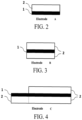
- an electrode A includes a current collector 1 and a coating 2 on the current collector 1.
- the coating 2 is only present on one surface of the current collector, and such coating is a single-sided coating.
- an electrode B includes a current collector 1 and a coating 2 on the current collector.
- the coating 2 is present on two opposite surfaces of the current collector, and such coating is a double-sided coating.
- one surface of a portion of a current collector 1 is coated with a slurry to form a coating 2 and the two opposite surfaces of the other portion of the current collector 1 are coated with a slurry to form a coating 2.
- Such coating includes both a single-sided coating and a double-sided coating.
- the cathode and the cathode are usually each formed by winding an elongated electrode, so that both a single-sided coating and a double-sided coating are present on the elongated electrode.
- the cathode and the anode are usually formed by laminating -shaped electrodes, and there is only a single-sided coating or a double-sided coating on the same electrode.
- the cathode and anode In an electrochemical device in which the wound and laminated electrodes are assembled in combination, the cathode and anode generally comprise an elongated electrode having both a single-sided coating and a double-sided coating, and a -shaped electrode having only a single-sided coating or a double-sided coating.
- the electrode has an electrode compaction density.
- a lower compaction density makes the porosity higher, making some of the particles in an insulating state, and unable to participate in charge and discharge, thereby resulting in a low specific discharge capacity, thus affecting the performance of the electrochemical device.
- a too high compaction density may cause difficulty in infiltrability of the electrolyte and decrease in solution retention, such that the cycle and rate performances cannot be guaranteed.
- Properly controlling the electrodecompaction density of the single-sided and double-sided coating is important to obtain electrochemical devices with high capacity density, and excellent cycle and storage performances.
- the electrode with a single-sided coating has an electrode compaction density D1
- an electrode with a double-sided coating has an electrode compaction density D2
- D1 and D2 meet the relationship: 0.8 ⁇ D1/D2 ⁇ 1.2
- D1 and D2 meet the relationship: 0.9 ⁇ D1/D2 ⁇ 1.1. Under this circumstance, the performance of the electrochemical device can be further improved.
- D1 and D2 meet the relationship: 0.9 ⁇ D1/D2 ⁇ 1.1.
- D1 and D2 meet the relationship: 0.95 ⁇ D1/D2 ⁇ 1.05.
- the distributions of pores and pore sizes in the single-sided coating and the double-sided coating are more uniform, the distributions of the conductive agent and the binder are more uniform, the contact resistance and charge exchange resistance of the electrode are lowered, and the active area capable of participating in the reaction is increased, thereby significantly improving the electrochemical performance of the material and further improving the performances of the electrochemical device.
- the electrode may be a cathode or an anode.
- the electrode When the electrode is a cathode, 3.5 g/cm 3 ⁇ D2 ⁇ 4.3 g/cm 3 .
- the cathode can have good electrical conductivity, and the effect of the cathode active material can be well exerted.
- the electrode When the electrode is an anode, 1.2 g/cm 3 ⁇ D2 ⁇ 1.8 g/cm 3 .
- the anode can have a higher breaking strength, thereby preventing the electrode particles from falling off during the cycle.
- the electrochemical device of the present application is provided with a separator between the positive electrode and the negative electrode to prevent short circuit.
- the material and shape of the separator used in the electrochemical device of the present application are not particularly limited, and may be any of the techniques disclosed in the prior art.
- the separator includes a polymer or an inorganic substance or the like formed from a material which is stable to the electrolyte of the present application.
- the separator may include a substrate layer and a surface treatment layer.
- the substrate layer is a non-woven fabric, film, or composite film having a porous structure, and the material of the substrate layer is at least one selected from polyethylene, polypropylene, polyethylene terephthalate, and polyimide.
- a porous polypropylene film, a porous polyethylene film, a polypropylene nonwoven fabric, a polyethylene nonwoven fabric, or a porous polypropylene-polyethylene-polypropylene composite film may be used.
- At least one surface of the substrate layer is provided with a surface treatment layer, which may be a polymer layer or an inorganic layer, or a layer formed by mixing a polymer and an inorganic substance.
- a surface treatment layer which may be a polymer layer or an inorganic layer, or a layer formed by mixing a polymer and an inorganic substance.
- the inorganic layer comprises inorganic particles and a binder.
- the inorganic particles are one or more selected from alumina, silica, magnesia, titanium oxide, hafnium dioxide, tin oxide, cerium dioxide, nickel oxide, zinc oxide, calcium oxide, zirconia, yttria, silicon carbide, boehmite, aluminum hydroxide, magnesium hydroxide, calcium hydroxide and barium sulfate.
- the binder is one or more selected from polyvinylidene fluoride, a copolymer of vinylidene fluoride-hexafluoropropylene, a polyamide, polyacrylonitrile, a polyacrylate ester, polyacrylic acid, a polyacrylate salt, polyvinylpyrrolidone, polyvinyl ether, polymethyl methacrylate, polytetrafluoroethylene, and polyhexafluoropropylene.
- the polymer layer contains a polymer, and the material of the polymer includes at least one of a polyamide, polyacrylonitrile, a polyacrylate ester, polyacrylic acid, a polyacrylate salt, polyvinylpyrrolidone, polyvinyl ether, polyvinylidene fluoride or poly(vinylidene fluoride-hexafluoropropylene).
- the primary solution is to add a film-forming additive to the electrolyte. However, doing so will cause an increase in the DC internal resistance of the battery, thereby resulting in a decrease in the cycle performance and a decrease in the capacity retention rate.
- the electrolyte according to the embodiments of the present application can be used to inhibit the increase in DC internal resistance of an electrochemical device, and thus applicable to an electronic device comprising the electrochemical device.
- the use of the electrochemical device according to the present application is not particularly limited, and can be used in various known applications, such as notebook computers, pen-input computers, mobile computers, e-book players, portable phones, portable fax machines, portable copiers, portable printers, head-mounted stereo headphones, video recorders, LCD TVs, portable cleaners, portable CD players, Mini discs, transceivers, electronic notebooks, calculators, memory cards, portable recorders, radios, backup power sources, motors, vehicles, motorcycles, motorbicycle, bicycles, lighting apparatus, toys, game consoles, clocks, electric tools, flashing light, cameras, large batteries for household use, or lithium ion capacitors.
- Graphite, conductive carbon black (Super-P), styrene-butadiene rubber, and sodium carboxymethyl cellulose (CMC) were mixed at a weight ratio of 95: 2:2:1 in deionized water as a solvent, and stirred uniformly, to obtain an anode slurry.
- the slurry was coated on a copper foil having a thickness of 12 ⁇ m, dried, cold pressed, and cut, and then a tab was welded, to obtain an anode.
- Lithium cobalt oxide (LiCoO 2 ), conductive carbon black (Super-P), and polyvinylidene fluoride (PVDF) were mixed at a weight ratio of 95: 2:3 in N-methylpyrrolidone as a solvent, and stirred uniformly, to obtain a cathode slurry.
- the slurry was coated on an aluminum foil having a thickness of 12 ⁇ m, dried, cold pressed, and cut, and then a tab was welded, to obtain a cathode.
- a porous PE polymer film was used as a separator.
- the obtained cathode, anode and separator were wound in sequence and placed in the outer packaging foil, with a liquid injection port being left.
- the electrolyte was injected via the liquid injection port, encapsulated, formed and capacity graded to obtain a lithium ion battery.
- the fresh battery herein refers to a battery which is obtained through aforementioned preparation process and is ready for shipping.
- the battery was charged to 4.45 V at a constant current of 1 C (nominal capacity) and then charged to a current of ⁇ 0.05 C at a constant voltage of 4.45 V, allowed to stand for 5 min, and discharged to a cut-off voltage of 3 V at a constant current of 1 C.
- the actual discharge capacity was recorded.
- the battery was adjusted to 50% of the full charge capacity required with the actual capacity, continuously discharged for 10s at a current of 0.3C.
- the DC internal resistances (DCIRs) (average of the measurements from 15 batteries) after one cycle, 200 cycles and 400 cycles was obtained by dividing the current with the difference between the voltage before discharge and the voltage at the end of discharge, .
- Thickness expansion rate [(Thickness after storage-Thickness before storage)/Thickness before storage] x 100%
- Capacity retention rate after the cycle (Discharge capacity after corresponding cycles / Discharge capacity after the first cycle) x 100%
- the lithium ion battery was charged to 4.45 V at a constant voltage of 0.5 C and then to a cut-off current of 0.05 C at a constant current, allowed to stand for 20 h, and then discharged to 3.0 V at a constant current of 0.5 C.
- Capacity retention rate after cycles (Discharge capacity after corresponding cycles / Discharge capacity of the first cycle) x 100%
- the electrolyte was injected into a battery prepared according to the above method.
- the DC internal resistance at 20% SOC of the batteries was tested.
- the test results are shown in Tables 1-1 and 1-2.
- S1-1 to S1-16, and S1-21 to S1-24 do not fall under the scope of the present invention and are Reference Examples.
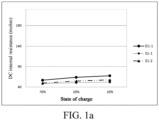
- Fig. 1a shows the DC internal resistances of fresh batteries of Reference Examples S1-1 and S1-2 of the present application and Comparative Example D1-1 at different charge states (10% SOC, 20% SOC, and 70% SOC).
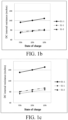
- Fig. 1b shows the DC internal resistances of batteries of Reference Examples S1-1 and S1-2 of the present application and Comparative Example D1-1 at different charge states (10% SOC, 20% SOC, and 70% SOC) after 200 cycles of charge and discharge.
- Fig. 1c shows the DC internal resistances of batteries of Reference Examples S1-1 and S1-2 of the present application and Comparative Example D1-1 at different charge states (10% SOC, 20% SOC, and 70% SOC) after 400 cycles of charge and discharge. It can be seen that the increase in DC internal resistance during cycles in Reference Examples S1-1 and S1-2 is significantly improved compared with Comparative Example D1-1.
- the dinitrile compound is adiponitrile or ethylene glycol bis(2-cyanoethyl)ether
- the trinitrile compound is 1,2,6-hexanetricarbonitrile, 1,3,6-Hexanetricarbonitrile, or 1,2,3-tris(2-cyanoethoxy)propane
- the effect of inhibiting the increase in DC internal resistance can also be achieved.
- the dinitrile compound is ethylene glycol bis(2-cyanoethyl)ether, or the trinitrile compound is 1,2,3-tris(2-cyanoethoxy)propane
- the effect of inhibiting the increase in DC internal resistance of the battery after cycles is more significant.
- the DC internal resistance of the fresh battery decreases continuously with the propyl propionate content increasing.
- the content of the propyl propionate is less than 5 wt% or greater than 50wt%, the DC internal resistance of the battery is greatly increased after 200 cycles, and the performance is deteriorated.
- the combination of additives can form a cathode protection film so as to reduce the side reactions, thereby effectively controlling the polarization and side reactions of the battery.
- the ratio of the content of the trinitrile compound to the content of propyl propionate has great effect on the change in DC internal resistance of the battery. When Y/Z is within the range of 0.01-0.3, a better inhibition effect on the increase in DC internal resistance is achieved.
- the addition of the film-forming additives VC, VEC, FEC, PS, DTD can further improve the stability of the solid electrolytic interface (SEI) film of the battery.
- SEI solid electrolytic interface
- the electrode compaction density ratio (D1/D2) of the lithium ion battery has a significant effect on the cycle performance of the lithium ion battery.
- a too large or too small D1/D2 will damage the cycle performance of lithium-ion batteries.
- D1/D2 is within the range of 0.8-1.2, a better cycle performance is obtained, possibly because the combined additives facilitate the reduction of the electrode interface resistance and the reduction of the cell polarization.
- the cycle performance of the lithium ion battery is further improved when the electrode compaction density of the battery is within the range of 0.8-1.2.
- the capacity retention rate after intermittent cycle of the battery increases with the increase of the amount of the cyclic carboxylate ester, possibly because the cyclic carboxylate forms a passivated film on the surface of the cathode.
- the cyclic carboxylate ester content is close to 40 wt%, the intermittent cycle performance deteriorates to a certain extent, which is mainly caused by a side reaction between LiPF 6 and the cyclic carboxylate ester. Therefore, the amount of the cyclic carboxylate ester is preferably moderate and should not be too large.
Landscapes
- Chemical & Material Sciences (AREA)
- Engineering & Computer Science (AREA)
- Chemical Kinetics & Catalysis (AREA)
- Electrochemistry (AREA)
- General Chemical & Material Sciences (AREA)
- Manufacturing & Machinery (AREA)
- Physics & Mathematics (AREA)
- Inorganic Chemistry (AREA)
- General Physics & Mathematics (AREA)
- Condensed Matter Physics & Semiconductors (AREA)
- Materials Engineering (AREA)
- Power Engineering (AREA)
- Microelectronics & Electronic Packaging (AREA)
- Secondary Cells (AREA)
- Electric Double-Layer Capacitors Or The Like (AREA)
- Organic Low-Molecular-Weight Compounds And Preparation Thereof (AREA)
- Primary Cells (AREA)
Claims (13)
- Elektrolyt für eine Lithium-Sekundärbatterie umfassend:
eine Dinitrilverbindung, eine Trinitrilverbindung und Propylpropionat; wobei,

 wobei bezogen auf das Gesamtgewicht des Elektrolyts, X ein Gewichtsprozentsatz der Dinitrilverbindung ist und Y ein Gewichtsprozentsatz der Trinitrilverbindung ist und Z ein Gewichtsprozentsatz des Propylpropionats ist;wobei die Dinitrilverbindung eine Verbindung der Formel (5) umfasst:
CN-R2-(O-R3)n-O-R4-CN (5);
worin R2, R3 und R4 jeweils unabhängig voneinander eine Alkylengruppe mit 1-5 Kohlenstoffatomen oder eine Alkenylengruppe mit 2-5 Kohlenstoffatomen sind,und n eine ganze Zahl von 0 bis 5 ist;wobei die Trinitrilverbindung eine Verbindung der Formel (6) oder (7) umfasst:
CN-(CH2)x-CH{(CH2)y-CN}-(CH2)z-CN (6);
 oder eine Kombination davonwobei in Formel (6) x, y und z eine ganze Zahl von 0 bis 5 darstellen und x, y und z nicht gleichzeitig 0 sind; undwobei in Formel (7) R5 Wasserstoff oder eine Alkylgruppe mit 1-5 Kohlenstoffatomen darstellt, R6, R7 und R8 jeweils unabhängig voneinander eine Alkylengruppe mit 1-5 Kohlenstoffatomen sind und X4, X5 und X6 jeweils unabhängig voneinander -R9-CN sind, worin R9 eine Alkylengruppe mit 1-5 Kohlenstoffatomen darstellt.
 - Elektrolyt nach Anspruch 1, wobei 3 Gew% ≤ (X+Y) ≤ 6 Gew% und 0,2 ≤ (X/Y) ≤ 5.
- Elektrolyt nach Anspruch 1 oder 2, wobei die Dinitrilverbindung weiterhin eine Verbindung der Formel (4) umfasst:
CN-R1-CN (4);
wobei R1 eine Alkylengruppe mit 1-5 Kohlenstoffatomen oder eine Alkenylengruppe mit 2-5 Kohlenstoffatomen darstellt, wobei die Verbindung der Formel (4) ausgewählt ist aus der Gruppe bestehend aus Butandinitril, Glutaronitril, Adiponitril, 1,5-Dicyanopentan, 1,6-Dicyanohexan, 1,7-Dicyanoheptan, 1,8-Dicyanooctan, 1,9-Dicyanononan, 1,10-Dicyanodecan, 1,12-Dicyanododecan, Tetramethylbutandinitril, 2-Methylglutaronitril, 2,4-Dimethylglutaronitril, 2,2,4,4-Tetramethylglutaronitril, 1,4-Dicyanopentan, 2,6-Dicyanoheptan, 2,7-Dicyanooctan, 2,8-Dicyanononan, 1,6-Dicyanodecan, 1,2-Dicyanobenzol, 1,3-Dicyanobenzol, 1,4-Dicyanobenzol, 1,4-Dicyano-2-buten, 1,4-Dicyano-2-methyl-2-buten, 1,4-Dicyano-2-ethyl-2-buten, 1,4-Dicyano-2,3-dimethyl-2-buten, 1,4-Dicyano-2,3-diethyl-2-buten, 1,6-Dicyano-3-hexen, 1,6-Dicyano-2-methyl-3-hexen, 1,6-Dicyano-2-methyl-5-methyl-3-hexen und eine beliebige Kombination davon. - Elektrolyt nach einem der Ansprüche 1 bis 3, wobei die Dinitrilverbindung ausgewählt ist aus der Gruppe bestehend aus: 3,5-Dioxa-Pimelonitril, 1,4-Bis(cyanoethoxy)butan, Ethylenglykol-bis(2-cyanoethyl)ether, Diethylenglykol-bis(2-cyanoethyl)ether, Triethylenglykol-bis(2-cyanoethyl)ether, Tetraethylenglykol-bis-(2-cyanoethyl)-ether, 3,6,9,12,15,18-Hexaoxaeicosansäuredinitril, 1,3-Bis-(2-cyanoethoxy)-propan, 1,4-Bis-(2-cyanoethoxy)-butan, 1,5-Bis-(2-cyanoethoxy)-pentan, Ethylenglykol-bis-(4-cyanobutyl)-ether und eine beliebige Kombination davon und/oderwobei die Trinitrilverbindung eine Verbindung ist, die ausgewählt ist aus der Gruppe bestehend aus: 1,3,5-Pentanetricarbonitril; 1,2,3-Propantrinitril; 1,3,6-Hexanetricarbonitril; 1,2,6-Hexanetricarbonitril; 1,2,3-Tris(2-cyanoethoxy)propan, 1,2,4-Tris(2-cyanoethoxy)butan; 1,1,1-Tris(cyanoethoxymethylen)ethan, 1,1,1-Tris(cyanoethoxymethylen)propan; 3-Methyl-1,3,5-tris(cyanoethoxy)pentan; 1,2,7-tris(cyanoethoxy)heptan, 1,2,6-tris(cyanoethoxy)hexan; 1,2,5-tris(cyanoethoxy)pentan; und eine beliebige Kombination davon, und/oderwobei X 0,01-7,99 Gew%, Y 0,01-7,99 Gew% und der Gewichtsprozentanteil Z des Propylpropionats 5-50 Gew% beträgt.
- Elektrolyt nach einem der Ansprüche 1-4, ferner umfassend einen Fluorether, der mindestens eine der Verbindungen der Formel (8), Formel (9), Formel (10) oder Formel (11) umfasst:
Rf1-O-Rf2 (8);
Rf1-O-R (9)
Rf1-O-(R'-O)n-Rf2 (10);
and
Rf1-O-(R'-O)n-R (11);
wobei in den Formeln (8), (9), (10) und (11) Rf1 und Rf2 jeweils unabhängig voneinander eine lineare oder verzweigte C1- bis C12-Fluoralkylgruppe mit mindestens einem durch Fluor substituierten Wasserstoffatom sind, R eine lineare oder verzweigte C1- bis C12-Alkylgruppe ist und R' eine lineare oder verzweigte C1- bis C5-Alkylengruppe ist, und n eine ganze Zahl von 1 bis 5 ist. - Elektrolyt nach Anspruch 5, wobei der Fluorether ausgewählt ist aus der Gruppe bestehend aus: HCF2CF2CH2OCF2CF2H, (CF3)2CFCF(CF2CF3)(OCH3), CF3CHFCF2CH(CH3)OCF2CHFCF3, HCF2CF2CH2OCF2CF2CF2CF2H, HCF2CF2OCH2CF3, HCF2CF2OCH2CH2OCF2CF2H, HCF2CF2OCH2CH2CH2OCF2CF2H, HCF2CF2CH2OCF2CF2CF2H, HCF2CF2OCH2CH2OCF2CF2CF2H, HCF2CF2OCH2CH2CH2OCF2CF2CF2H, CH3OCH2CH2OCH2CH2F, CH3OCH2CH2OCH2CF3, CH3OCH2CH(CH3)OCH2CH2F, CH3OCH2CH(CH3)OCH2CF3, FCH2CH2OCH2CH2OCH2CH2F, FCH2CH2OCH2CH(CH3)OCH2CH2F, CF3CH2O(CH2CH2O)2CH2CF3, CF3CH2OCH2CH(CH3)OCH2CF3, und eine beliebige Kombination davon.
- Elektrolyt nach einem der Ansprüche 1 bis 6, ferner umfassend ein zyklisches Phosphonsäureanhydrid; bezogen auf das Gesamtgewicht des Elektrolyten beträgt der Gehalt an zyklischem Phosphonsäureanhydrid 0,01 bis 10 Gew%.
- Elektrolyt nach einem der Ansprüche 1 bis 7, ferner umfassend eines, das aus der Gruppe ausgewählt ist, die besteht aus: einem zyklischen Carbonatester mit einer Kohlenstoff-Kohlenstoff-Doppelbindung, einem fluorierten Kettencarbonatester, einem fluorierten cyclischen Carbonatester, einer Verbindung mit einer Schwefel-Sauerstoff-Doppelbindung und einer beliebigen Kombination davon.
- Elektrolyt nach einem der Ansprüche 1 bis 8, ferner umfassend einen zyklischen Carboxylatester einschließlich γ-Butyrolacton oder γ-Valerolacton oder eine Kombination davon.
- Elektrochemische Vorrichtung, wobei die elektrochemische Vorrichtung Elektroden und den Elektrolyt nach einem der Ansprüche 1-9 umfasst.
- Elektrochemische Vorrichtung nach Anspruch 10, wobei die Elektroden einen Stromkollektor (1) und eine Beschichtung (2) auf dem Stromkollektor (1) umfassen, wobei die Beschichtung (2) eine einseitige Beschichtung und eine doppelseitige Beschichtung umfasst, wobei:die einseitige Beschichtung eine Beschichtung ist, die durch Auftragen einer Aufschlämmung auf eine Oberfläche des Stromkollektors (1) gebildet wird; und die doppelseitige Beschichtung eine Beschichtung ist, die durch Auftragen einer Aufschlämmung auf zwei gegenüberliegende Oberflächen des Stromkollektors (1) gebildet wird; undwobei, wenn eine Oberfläche eines Teils des Stromkollektors (1) mit einer Aufschlämmung beschichtet wird, um eine einseitige Beschichtung zu bilden, und zwei gegenüberliegende Oberflächen eines anderen Teils des Stromkollektors (1) beschichtet werden, um eine doppelseitige Beschichtung zu bilden, wodurch eine Elektrode mit einer einseitigen Beschichtung mit einer Elektrodenverdichtungsdichte D1 und eine Elektrode mit einer doppelseitigen Beschichtung mit einer Elektrodenverdichtungsdichte D2 gebildet wird, 0,8 ≤ D1/D2 ≤1,2,
wobei die Elektrodenverdichtungsdichte erhalten wird durch: Messen der Dicke einer Elektrode unter Verwendung eines präzisen Messwerkzeugs, dann Nehmen der Elektrode eines bestimmten Bereichs und genaues Messen der Fläche und des Gewichts; und Berechnen der Elektrodenverdichtungsdichte durch die folgende Formel:Elektrodenverdichtungsdichte = (Gewicht der Elektrode - Gewicht des Stromkollektors) / Fläche der Elektrode / (Dicke der Elektrode - Dicke des Stromkollektors). - Elektrochemische Vorrichtung nach Anspruch 11, wobei die Elektroden eine Kathode und eine Anode umfassen, wobei für die Kathode, 3,5 g/cm3 ≤ D2 ≤ 4,3 g/cm3 gilt; wobei, für die Anode, 1,2 g/cm3 ≤ D2 ≤ 1,8 g/cm3 gilt.
- Elektronisches Gerät, umfassend eine elektrochemische Vorrichtung nach Anspruch 11oder 12.
Priority Applications (6)
| Application Number | Priority Date | Filing Date | Title |
|---|---|---|---|
| EP24167414.2A EP4383396A3 (de) | 2018-09-21 | 2019-09-19 | Elektrolyt und elektrochemische vorrichtung |
| EP24163045.8A EP4362163A3 (de) | 2018-09-21 | 2019-09-19 | Elektrolyt und elektrochemische vorrichtung |
| EP23172765.2A EP4235900A3 (de) | 2018-09-21 | 2019-09-19 | Elektrolyt und elektrochemische vorrichtung |
| EP24167417.5A EP4404322A3 (de) | 2018-09-21 | 2019-09-19 | Elektrolyt und elektrochemische vorrichtung |
| EP24163040.9A EP4362162A3 (de) | 2018-09-21 | 2019-09-19 | Elektrolyt und elektrochemische vorrichtung |
| EP24167407.6A EP4428976A1 (de) | 2018-09-21 | 2019-09-19 | Elektrolyt und elektrochemische vorrichtung |
Applications Claiming Priority (2)
| Application Number | Priority Date | Filing Date | Title |
|---|---|---|---|
| CN201811108529.XA CN109301326B (zh) | 2018-09-21 | 2018-09-21 | 一种电解液及电化学装置 |
| EP19198416.0A EP3627606B1 (de) | 2018-09-21 | 2019-09-19 | Elektrolyt und elektrochemische vorrichtung |
Related Parent Applications (2)
| Application Number | Title | Priority Date | Filing Date |
|---|---|---|---|
| EP19198416.0A Division-Into EP3627606B1 (de) | 2018-09-21 | 2019-09-19 | Elektrolyt und elektrochemische vorrichtung |
| EP19198416.0A Division EP3627606B1 (de) | 2018-09-21 | 2019-09-19 | Elektrolyt und elektrochemische vorrichtung |
Related Child Applications (12)
| Application Number | Title | Priority Date | Filing Date |
|---|---|---|---|
| EP24163040.9A Division EP4362162A3 (de) | 2018-09-21 | 2019-09-19 | Elektrolyt und elektrochemische vorrichtung |
| EP24163040.9A Division-Into EP4362162A3 (de) | 2018-09-21 | 2019-09-19 | Elektrolyt und elektrochemische vorrichtung |
| EP24163045.8A Division EP4362163A3 (de) | 2018-09-21 | 2019-09-19 | Elektrolyt und elektrochemische vorrichtung |
| EP24163045.8A Division-Into EP4362163A3 (de) | 2018-09-21 | 2019-09-19 | Elektrolyt und elektrochemische vorrichtung |
| EP24167417.5A Division EP4404322A3 (de) | 2018-09-21 | 2019-09-19 | Elektrolyt und elektrochemische vorrichtung |
| EP24167417.5A Division-Into EP4404322A3 (de) | 2018-09-21 | 2019-09-19 | Elektrolyt und elektrochemische vorrichtung |
| EP24167414.2A Division EP4383396A3 (de) | 2018-09-21 | 2019-09-19 | Elektrolyt und elektrochemische vorrichtung |
| EP24167414.2A Division-Into EP4383396A3 (de) | 2018-09-21 | 2019-09-19 | Elektrolyt und elektrochemische vorrichtung |
| EP24167407.6A Division EP4428976A1 (de) | 2018-09-21 | 2019-09-19 | Elektrolyt und elektrochemische vorrichtung |
| EP24167407.6A Division-Into EP4428976A1 (de) | 2018-09-21 | 2019-09-19 | Elektrolyt und elektrochemische vorrichtung |
| EP23172765.2A Division EP4235900A3 (de) | 2018-09-21 | 2019-09-19 | Elektrolyt und elektrochemische vorrichtung |
| EP23172765.2A Division-Into EP4235900A3 (de) | 2018-09-21 | 2019-09-19 | Elektrolyt und elektrochemische vorrichtung |
Publications (2)
| Publication Number | Publication Date |
|---|---|
| EP3907801A1 EP3907801A1 (de) | 2021-11-10 |
| EP3907801B1 true EP3907801B1 (de) | 2024-11-13 |
Family
ID=65163770
Family Applications (9)
| Application Number | Title | Priority Date | Filing Date |
|---|---|---|---|
| EP21183432.0A Active EP3910714B1 (de) | 2018-09-21 | 2019-09-19 | Elektrolyt und elektrochemische vorrichtung |
| EP24167417.5A Pending EP4404322A3 (de) | 2018-09-21 | 2019-09-19 | Elektrolyt und elektrochemische vorrichtung |
| EP24163045.8A Pending EP4362163A3 (de) | 2018-09-21 | 2019-09-19 | Elektrolyt und elektrochemische vorrichtung |
| EP19198416.0A Active EP3627606B1 (de) | 2018-09-21 | 2019-09-19 | Elektrolyt und elektrochemische vorrichtung |
| EP24167407.6A Pending EP4428976A1 (de) | 2018-09-21 | 2019-09-19 | Elektrolyt und elektrochemische vorrichtung |
| EP24167414.2A Pending EP4383396A3 (de) | 2018-09-21 | 2019-09-19 | Elektrolyt und elektrochemische vorrichtung |
| EP21183436.1A Active EP3907801B1 (de) | 2018-09-21 | 2019-09-19 | Elektrolyt und elektrochemische vorrichtung |
| EP23172765.2A Pending EP4235900A3 (de) | 2018-09-21 | 2019-09-19 | Elektrolyt und elektrochemische vorrichtung |
| EP24163040.9A Pending EP4362162A3 (de) | 2018-09-21 | 2019-09-19 | Elektrolyt und elektrochemische vorrichtung |
Family Applications Before (6)
| Application Number | Title | Priority Date | Filing Date |
|---|---|---|---|
| EP21183432.0A Active EP3910714B1 (de) | 2018-09-21 | 2019-09-19 | Elektrolyt und elektrochemische vorrichtung |
| EP24167417.5A Pending EP4404322A3 (de) | 2018-09-21 | 2019-09-19 | Elektrolyt und elektrochemische vorrichtung |
| EP24163045.8A Pending EP4362163A3 (de) | 2018-09-21 | 2019-09-19 | Elektrolyt und elektrochemische vorrichtung |
| EP19198416.0A Active EP3627606B1 (de) | 2018-09-21 | 2019-09-19 | Elektrolyt und elektrochemische vorrichtung |
| EP24167407.6A Pending EP4428976A1 (de) | 2018-09-21 | 2019-09-19 | Elektrolyt und elektrochemische vorrichtung |
| EP24167414.2A Pending EP4383396A3 (de) | 2018-09-21 | 2019-09-19 | Elektrolyt und elektrochemische vorrichtung |
Family Applications After (2)
| Application Number | Title | Priority Date | Filing Date |
|---|---|---|---|
| EP23172765.2A Pending EP4235900A3 (de) | 2018-09-21 | 2019-09-19 | Elektrolyt und elektrochemische vorrichtung |
| EP24163040.9A Pending EP4362162A3 (de) | 2018-09-21 | 2019-09-19 | Elektrolyt und elektrochemische vorrichtung |
Country Status (8)
| Country | Link |
|---|---|
| US (17) | US10833363B2 (de) |
| EP (9) | EP3910714B1 (de) |
| CN (1) | CN109301326B (de) |
| DK (3) | DK3627606T3 (de) |
| ES (3) | ES2902422T3 (de) |
| FI (2) | FI3910714T3 (de) |
| HU (2) | HUE070456T2 (de) |
| PL (3) | PL3910714T3 (de) |
Families Citing this family (37)
| Publication number | Priority date | Publication date | Assignee | Title |
|---|---|---|---|---|
| WO2017035749A1 (zh) * | 2015-08-31 | 2017-03-09 | 宁德新能源科技有限公司 | 二次电池电芯及其卷绕成型系统 |
| CN111740160B (zh) | 2018-09-21 | 2022-04-15 | 宁德新能源科技有限公司 | 电解液和包含该电解液的电化学装置 |
| CN112002942B (zh) | 2018-09-21 | 2022-08-02 | 宁德新能源科技有限公司 | 一种电解液及包含该电解液的电化学装置 |
| CN109301326B (zh) | 2018-09-21 | 2020-11-27 | 宁德新能源科技有限公司 | 一种电解液及电化学装置 |
| CN112670666B (zh) | 2019-05-07 | 2022-08-12 | 宁德新能源科技有限公司 | 电化学装置 |
| CN112234209B (zh) * | 2019-06-03 | 2021-11-23 | 宁德新能源科技有限公司 | 电化学装置 |
| CN112310483B (zh) * | 2019-07-30 | 2021-09-17 | 宁德时代新能源科技股份有限公司 | 一种锂离子电池 |
| CN112825373B (zh) * | 2019-11-20 | 2022-06-14 | 珠海冠宇电池股份有限公司 | 一种非水电解液及包括所述非水电解液的锂二次电池 |
| CN110994025A (zh) * | 2019-12-10 | 2020-04-10 | 惠州市豪鹏科技有限公司 | 一种电解液添加剂、电解液和锂离子电池 |
| CN112993401A (zh) * | 2019-12-17 | 2021-06-18 | 张家港市国泰华荣化工新材料有限公司 | 一种二次电池 |
| CN111416151B (zh) * | 2020-03-20 | 2021-12-07 | 宁德新能源科技有限公司 | 电解液、电化学装置及电子装置 |
| DE112020006663T5 (de) * | 2020-03-31 | 2022-11-24 | Murata Manufacturing Co., Ltd. | Sekundärbatterie |
| CN111682263B (zh) * | 2020-05-09 | 2021-10-15 | 厦门大学 | 腈类化合物在制备高压电池体系用电解液中的应用 |
| CN111740147B (zh) * | 2020-06-29 | 2022-08-09 | 宁德新能源科技有限公司 | 电解液和包含电解液的电化学装置 |
| EP4040559A4 (de) * | 2020-07-09 | 2023-10-25 | LG Energy Solution, Ltd. | Wasserfreier elektrolyt für lithiumsekundärbatterie und denselben umfassende lithiumsekundärbatterie |
| CN111916844B (zh) | 2020-08-13 | 2022-04-15 | 东莞新能安科技有限公司 | 电化学装置及电子装置 |
| CN114256507A (zh) * | 2020-09-25 | 2022-03-29 | 张家港市国泰华荣化工新材料有限公司 | 锂二次电池及其制备方法 |
| CN116344738A (zh) * | 2020-10-15 | 2023-06-27 | 宁德新能源科技有限公司 | 电化学装置和电子装置 |
| JP7431846B2 (ja) | 2020-10-15 | 2024-02-15 | 寧徳新能源科技有限公司 | 電気化学装置及び電子装置 |
| CN115172749B (zh) * | 2020-10-15 | 2025-02-11 | 宁德新能源科技有限公司 | 电化学装置和电子装置 |
| WO2022087830A1 (zh) * | 2020-10-27 | 2022-05-05 | 宁德新能源科技有限公司 | 电解液及包括其的电化学装置和电子装置 |
| CN117374525A (zh) * | 2020-11-18 | 2024-01-09 | 宁德新能源科技有限公司 | 电化学装置和包含其的电子装置 |
| CN113013480A (zh) * | 2021-02-20 | 2021-06-22 | 宁德新能源科技有限公司 | 电化学装置及包括其的电子装置 |
| CN113097556B (zh) * | 2021-03-30 | 2022-11-25 | 宁德新能源科技有限公司 | 电化学装置和电子装置 |
| WO2022205065A1 (zh) * | 2021-03-31 | 2022-10-06 | 宁德新能源科技有限公司 | 电解液、电化学装置以及电子装置 |
| CN113206296A (zh) * | 2021-04-30 | 2021-08-03 | 宁德新能源科技有限公司 | 电解液、电化学装置和电子装置 |
| CN113921911B (zh) * | 2021-10-11 | 2024-04-02 | 河北圣泰材料股份有限公司 | N,n-二甲基三氟甲磺酰胺于电池电解液中的应用 |
| CN114335719A (zh) * | 2021-11-29 | 2022-04-12 | 惠州市豪鹏科技有限公司 | 锂离子电池电解液及锂离子电池 |
| EP4456231A4 (de) * | 2021-12-29 | 2025-12-10 | Ningde Amperex Technology Ltd | Elektrochemische vorrichtung und elektronische vorrichtung |
| EP4456191A4 (de) * | 2021-12-29 | 2025-11-12 | Ningde Amperex Technology Ltd | Elektrochemische vorrichtung und elektronische vorrichtung |
| CN115799642A (zh) * | 2022-12-30 | 2023-03-14 | 宁德新能源科技有限公司 | 二次电池和电子装置 |
| CN116093435B (zh) * | 2023-03-29 | 2023-06-27 | 宁德新能源科技有限公司 | 电化学装置和包括其的电子装置 |
| JP7727227B2 (ja) * | 2023-05-01 | 2025-08-21 | ダイキン工業株式会社 | 電解液及び二次電池 |
| JP7727229B2 (ja) * | 2023-05-01 | 2025-08-21 | ダイキン工業株式会社 | 電解液用組成物、電解液及び二次電池 |
| CN119518089A (zh) * | 2023-08-24 | 2025-02-25 | 宁德新能源科技有限公司 | 电化学装置和用电设备 |
| CN117276811A (zh) * | 2023-10-10 | 2023-12-22 | 宁德新能源科技有限公司 | 一种电化学装置和电子装置 |
| CN118040044B (zh) * | 2023-11-07 | 2024-09-13 | 南昌大学 | 一种电解液与锂离子电池 |
Citations (13)
| Publication number | Priority date | Publication date | Assignee | Title |
|---|---|---|---|---|
| US20060121356A1 (en) | 2004-11-15 | 2006-06-08 | Exa Energy Technology Co. Ltd. | Electrolyte for rechargeable battery |
| CN106058317A (zh) | 2016-08-12 | 2016-10-26 | 联想(北京)有限公司 | 锂离子电池电解液以及锂离子电池和电子设备 |
| CN106099187A (zh) | 2016-07-13 | 2016-11-09 | 东莞市凯欣电池材料有限公司 | 一种宽温区均相非水电解质溶液 |
| US20170018803A1 (en) | 2015-07-13 | 2017-01-19 | Ningde Contemporary Amperex Technology Limited | Overcharging preventive electrolyte and lithium-ion battery |
| JP2017022108A (ja) | 2015-07-07 | 2017-01-26 | ステラケミファ株式会社 | 二次電池用非水電解液、その製造方法及びそれを備えた二次電池 |
| CN106602131A (zh) | 2015-10-16 | 2017-04-26 | 宁德新能源科技有限公司 | 锂离子电池 |
| CN106816633A (zh) | 2017-03-10 | 2017-06-09 | 中国计量大学 | 一种伪高浓度酯类锂硫电池电解液及锂硫电池 |
| CN106848381A (zh) | 2017-01-16 | 2017-06-13 | 广州天赐高新材料股份有限公司 | 一种电解液及含有该电解液的锂二次电池 |
| US20170288268A1 (en) | 2016-04-04 | 2017-10-05 | Samsung Sdi Co., Ltd. | Electrolyte for rechargeable lithium battery and rechargeable lithium battery including the same |
| CN107293781A (zh) | 2016-04-11 | 2017-10-24 | 宁德新能源科技有限公司 | 电解液及锂离子电池 |
| CN109301326A (zh) | 2018-09-21 | 2019-02-01 | 宁德新能源科技有限公司 | 一种电解液及电化学装置 |
| WO2019103496A1 (ko) | 2017-11-22 | 2019-05-31 | 주식회사 엘지화학 | 리튬 이차전지용 비수전해액 및 이를 포함하는 리튬 이차전지 |
| EP3648232A1 (de) | 2017-11-22 | 2020-05-06 | LG Chem, Ltd. | Wasserfreie elektrolytlösung für lithiumsekundärbatterie sowie lithiumsekundärbatterie damit |
Family Cites Families (69)
| Publication number | Priority date | Publication date | Assignee | Title |
|---|---|---|---|---|
| KR100326461B1 (ko) | 2000-01-21 | 2002-02-28 | 김순택 | 리튬 이차 전지용 전해액 |
| JP5400268B2 (ja) | 2006-01-26 | 2014-01-29 | パナソニック株式会社 | リチウム二次電池 |
| KR101508788B1 (ko) | 2006-06-02 | 2015-04-06 | 미쓰비시 가가꾸 가부시키가이샤 | 비수계 전해액 및 비수계 전해액 전지 |
| JP2008108454A (ja) | 2006-10-23 | 2008-05-08 | Sony Corp | 非水電解液およびそれを用いる非水電解液電池 |
| US8367251B2 (en) * | 2007-08-30 | 2013-02-05 | Sony Corporation | Anode with lithium containing ionic polymer coat, method of manufacturing same, secondary battery, and method of manufacturing same |
| JP2009252349A (ja) | 2008-04-01 | 2009-10-29 | Panasonic Corp | 非水電解液二次電池用電極板とその製造方法 |
| CN101640290B (zh) | 2008-08-01 | 2014-05-07 | 三洋电机株式会社 | 非水电解质二次电池 |
| US8481205B2 (en) * | 2010-06-18 | 2013-07-09 | Sony Corporation | Nonaqueous electrolyte and nonaqueous electrolyte battery |
| CN103190027B (zh) | 2010-10-29 | 2015-11-25 | 旭化成电子材料株式会社 | 非水系电解液和非水系二次电池 |
| JP5931749B2 (ja) | 2011-01-28 | 2016-06-08 | 三洋電機株式会社 | 非水電解液二次電池用正極活物質、その製造方法、当該正極活物質を用いた非水電解液二次電池用正極、及び、当該正極を用いた非水電解液二次電池 |
| HUE052859T2 (hu) | 2011-04-11 | 2021-05-28 | Mu Ionic Solutions Corp | Nemvizes elektrolitoldat és nemvizes elektrolitos szekunder akkumulátor |
| JP2012256502A (ja) * | 2011-06-08 | 2012-12-27 | Sony Corp | 非水電解質および非水電解質電池、ならびに非水電解質電池を用いた電池パック、電子機器、電動車両、蓄電装置および電力システム |
| KR101195931B1 (ko) | 2011-07-27 | 2012-10-30 | 주식회사 엘지화학 | 리튬 이차전지용 비수 전해액 및 이를 구비한 리튬 이차전지 |
| CN102522590B (zh) | 2011-12-26 | 2014-09-17 | 华为技术有限公司 | 一种非水有机电解液、包含它的锂离子二次电池及其制备方法和终端通讯设备 |
| JP5935405B2 (ja) | 2012-03-08 | 2016-06-15 | 日産自動車株式会社 | 積層構造電池 |
| KR101669113B1 (ko) | 2012-05-08 | 2016-10-25 | 삼성에스디아이 주식회사 | 복합양극활물질, 이를 채용한 양극 및 리튬 전지 |
| US9819057B2 (en) | 2012-09-07 | 2017-11-14 | Samsung Sdi Co., Ltd. | Rechargeable lithium battery |
| CN103000946A (zh) | 2013-01-07 | 2013-03-27 | 东莞市凯欣电池材料有限公司 | 一种提高锂离子电池电解液稳定性的方法及用该方法制备的锂离子电池电解液 |
| US9040203B2 (en) | 2013-01-16 | 2015-05-26 | Samsung Sdi Co., Ltd. | Lithium battery |
| US9406974B2 (en) | 2013-04-25 | 2016-08-02 | Samsung Sdi Co., Ltd. | Additive for electrolyte of lithium battery, organic electrolytic solution comprising the same, and lithium battery using the organic electrolytic solution |
| CN103401020B (zh) * | 2013-08-08 | 2015-11-04 | 东莞市杉杉电池材料有限公司 | 一种高电压锂离子电池电解液 |
| CN103441303A (zh) * | 2013-08-29 | 2013-12-11 | 嘉德力电源科技(苏州)有限公司 | 用于4.5v锂离子电池电解液 |
| US9698447B2 (en) * | 2013-11-18 | 2017-07-04 | Basf Corporation | Use of lithium bis(fluorosulfonyl) imide (LiFSI) in non-aqueous electrolyte solutions for use with 4.2v and higher cathode materials for lithium ion batteries |
| US9979049B2 (en) | 2013-12-09 | 2018-05-22 | Sk Innovation Co., Ltd. | Electrolyte for lithium secondary battery and lithium secondary battery comprising same |
| CN103633371A (zh) | 2013-12-13 | 2014-03-12 | 深圳新宙邦科技股份有限公司 | 一种用于锂离子电池的非水电解液和锂离子电池 |
| CN103779607B (zh) * | 2014-01-17 | 2017-04-05 | 中南大学 | 一种电解液和锂离子二次电池 |
| CN103956517A (zh) * | 2014-05-14 | 2014-07-30 | 华南师范大学 | 一种高电压锂离子电池电解液及其制备方法与应用 |
| CN105098237A (zh) * | 2014-05-20 | 2015-11-25 | 浙江省化工研究院有限公司 | 一种高电压电解液添加剂及其应用 |
| CN105449262A (zh) | 2014-06-30 | 2016-03-30 | 东莞新能源科技有限公司 | 柔性锂离子电池及其制备方法 |
| CN104332653B (zh) | 2014-09-01 | 2017-03-01 | 东莞新能源科技有限公司 | 一种非水电解液及使用该电解液的锂离子电池 |
| CN109346760A (zh) | 2014-09-29 | 2019-02-15 | 深圳新宙邦科技股份有限公司 | 一种高电压锂离子电池的电解液及高电压锂离子电池 |
| TW201624816A (zh) * | 2014-10-22 | 2016-07-01 | 三井化學股份有限公司 | 鋰二次電池 |
| WO2016095116A1 (en) * | 2014-12-17 | 2016-06-23 | Basf Corporation | Electrolyte compositions for rechargeable lithium ion batteries |
| WO2016121935A1 (ja) * | 2015-01-30 | 2016-08-04 | 三菱化学株式会社 | 非水系電解液、及びそれを用いた非水系電解液二次電池 |
| CN107408734B (zh) | 2015-03-16 | 2020-08-18 | 三菱化学株式会社 | 非水系电解液和使用该非水系电解液的非水系电解液二次电池 |
| CN104766995B (zh) | 2015-03-31 | 2017-03-15 | 宁德时代新能源科技股份有限公司 | 一种电解液添加剂及其在锂离子电池中的应用 |
| CN104752769A (zh) * | 2015-04-10 | 2015-07-01 | 宁德新能源科技有限公司 | 非水电解液及使用该电解液的锂离子电池 |
| CN107615555A (zh) * | 2015-06-09 | 2018-01-19 | 斯泰拉化工公司 | 二次电池用非水电解液和具备其的二次电池 |
| CN105047992B (zh) | 2015-07-21 | 2018-05-08 | 宁德新能源科技有限公司 | 电解液以及包括该电解液的锂离子电池 |
| CN104979589A (zh) * | 2015-07-23 | 2015-10-14 | 东莞市凯欣电池材料有限公司 | 一种高电压电解液及使用该电解液的锂离子电池 |
| KR102446364B1 (ko) * | 2015-09-03 | 2022-09-21 | 삼성에스디아이 주식회사 | 리튬 이차 전지용 전해질 및 이를 포함하는 리튬 이차 전지 |
| CN105186036B (zh) | 2015-09-08 | 2018-03-20 | 宁德新能源科技有限公司 | 电解液以及包括该电解液的锂离子电池 |
| CN105355975B (zh) * | 2015-10-20 | 2018-08-21 | 宁德新能源科技有限公司 | 电解液以及包括该电解液的锂离子电池 |
| US10541445B2 (en) | 2015-10-29 | 2020-01-21 | Lg Chem, Ltd. | Non-aqueous electrolyte solution for lithium secondary battery and lithium secondary battery comprising the same |
| CN105355968B (zh) | 2015-11-24 | 2019-01-08 | 宁德新能源科技有限公司 | 电解液以及包括该电解液的锂离子电池 |
| CN105552439A (zh) | 2015-12-16 | 2016-05-04 | 东莞市杉杉电池材料有限公司 | 一种快速充电的锂离子电池电解液 |
| CN105609874A (zh) | 2015-12-21 | 2016-05-25 | 东莞新能源科技有限公司 | 电解液以及包括该电解液的锂离子电池 |
| CN107017432B (zh) | 2016-01-28 | 2019-02-22 | 宁德新能源科技有限公司 | 非水电解液及锂离子电池 |
| CN105529498A (zh) * | 2016-01-30 | 2016-04-27 | 东莞市凯欣电池材料有限公司 | 一种高电压电解液及使用该电解液的锂离子电池 |
| CN105680088A (zh) * | 2016-02-03 | 2016-06-15 | 东莞市凯欣电池材料有限公司 | 一种高电压锂离子二次电池用非水电解质溶液及高电压锂离子电池 |
| CN107394269B (zh) * | 2016-05-17 | 2020-10-02 | 宁德新能源科技有限公司 | 电解液及锂离子电池 |
| CN105826607B (zh) * | 2016-05-25 | 2019-05-14 | 宁德新能源科技有限公司 | 一种电解液以及包括该电解液的锂离子电池 |
| CN105845984A (zh) * | 2016-06-23 | 2016-08-10 | 东莞市杉杉电池材料有限公司 | 锂离子电池电解液及使用该电解液的锂离子电池 |
| JP6787700B2 (ja) | 2016-06-28 | 2020-11-18 | 三星エスディアイ株式会社Samsung SDI Co., Ltd. | リチウムイオン二次電池 |
| CN105895957B (zh) | 2016-06-29 | 2019-04-02 | 宁德时代新能源科技股份有限公司 | 一种电池液及锂离子电池 |
| CN106099185A (zh) * | 2016-07-05 | 2016-11-09 | 惠州市豪鹏科技有限公司 | 一种电解液及包括该电解液的锂离子电池 |
| KR102396617B1 (ko) | 2016-11-08 | 2022-05-10 | 삼성에스디아이 주식회사 | 리튬 이차 전지용 전해질 및 이를 포함하는 리튬 이차 전지 |
| JP6838359B2 (ja) | 2016-11-10 | 2021-03-03 | 日産自動車株式会社 | 非水電解質二次電池 |
| CN106784589A (zh) | 2016-12-08 | 2017-05-31 | 宁德时代新能源科技股份有限公司 | 一种二次电池及注液方法 |
| CN108242567A (zh) * | 2016-12-26 | 2018-07-03 | 宁德时代新能源科技股份有限公司 | 电解液及二次电池 |
| CN106654128B (zh) | 2017-01-18 | 2021-01-26 | 宁德新能源科技有限公司 | 二次电池 |
| KR102761047B1 (ko) | 2017-02-14 | 2025-02-03 | 에스케이온 주식회사 | 리튬 이차전지 전해액 및 이를 포함하는 리튬 이차전지 |
| CN107275553A (zh) * | 2017-05-27 | 2017-10-20 | 东莞锂威能源科技有限公司 | 一种聚合物锂离子电池及其制备方法 |
| CN108023117A (zh) | 2017-11-30 | 2018-05-11 | 北京国能电池科技有限公司 | 高能量密度的锂离子电池及其制备方法 |
| CN108134135A (zh) | 2017-12-13 | 2018-06-08 | 宁德市凯欣电池材料有限公司 | 锂电池电解液及其生产工艺 |
| CN108336297B (zh) | 2017-12-29 | 2021-10-08 | 惠州市纬世新能源有限公司 | 一种锂离子电池极片制备方法 |
| CN108232300A (zh) | 2018-01-05 | 2018-06-29 | 宁德新能源科技有限公司 | 一种锂离子电池及其电解液 |
| CN110120554B (zh) | 2018-02-05 | 2021-05-18 | 宁德新能源科技有限公司 | 一种电解液和含有该电解液的二次电池 |
| CN110745706B (zh) | 2019-10-22 | 2020-10-16 | 蔡衍葵 | 一种物流供应链用的可吊安全转运装置 |
-
2018
- 2018-09-21 CN CN201811108529.XA patent/CN109301326B/zh active Active
- 2018-12-06 US US16/211,853 patent/US10833363B2/en active Active
-
2019
- 2019-09-19 EP EP21183432.0A patent/EP3910714B1/de active Active
- 2019-09-19 EP EP24167417.5A patent/EP4404322A3/de active Pending
- 2019-09-19 EP EP24163045.8A patent/EP4362163A3/de active Pending
- 2019-09-19 DK DK19198416.0T patent/DK3627606T3/da active
- 2019-09-19 EP EP19198416.0A patent/EP3627606B1/de active Active
- 2019-09-19 PL PL21183432.0T patent/PL3910714T3/pl unknown
- 2019-09-19 FI FIEP21183432.0T patent/FI3910714T3/fi active
- 2019-09-19 EP EP24167407.6A patent/EP4428976A1/de active Pending
- 2019-09-19 PL PL19198416T patent/PL3627606T3/pl unknown
- 2019-09-19 ES ES19198416T patent/ES2902422T3/es active Active
- 2019-09-19 DK DK21183432.0T patent/DK3910714T3/da active
- 2019-09-19 EP EP24167414.2A patent/EP4383396A3/de active Pending
- 2019-09-19 PL PL21183436.1T patent/PL3907801T3/pl unknown
- 2019-09-19 EP EP21183436.1A patent/EP3907801B1/de active Active
- 2019-09-19 HU HUE21183436A patent/HUE070456T2/hu unknown
- 2019-09-19 EP EP23172765.2A patent/EP4235900A3/de active Pending
- 2019-09-19 HU HUE21183432A patent/HUE063500T2/hu unknown
- 2019-09-19 DK DK21183436.1T patent/DK3907801T3/da active
- 2019-09-19 ES ES21183432T patent/ES2955407T3/es active Active
- 2019-09-19 EP EP24163040.9A patent/EP4362162A3/de active Pending
- 2019-09-19 FI FIEP21183436.1T patent/FI3907801T5/fi active
- 2019-09-19 ES ES21183436T patent/ES3005116T3/es active Active
-
2020
- 2020-10-07 US US17/064,959 patent/US11527776B2/en active Active
- 2020-10-07 US US17/064,782 patent/US11522222B2/en active Active
-
2022
- 2022-08-11 US US17/885,920 patent/US11799131B2/en active Active
- 2022-08-11 US US17/885,915 patent/US11799130B2/en active Active
- 2022-11-18 US US17/990,641 patent/US12027667B2/en active Active
- 2022-11-18 US US17/990,626 patent/US11984556B2/en active Active
- 2022-12-07 US US18/076,882 patent/US11769910B2/en active Active
-
2023
- 2023-07-05 US US18/347,053 patent/US12040449B2/en active Active
-
2024
- 2024-04-04 US US18/626,877 patent/US12107221B2/en active Active
- 2024-04-04 US US18/626,603 patent/US12176487B2/en active Active
- 2024-04-04 US US18/626,867 patent/US12107220B2/en active Active
- 2024-04-04 US US18/626,697 patent/US12183884B2/en active Active
- 2024-04-04 US US18/626,447 patent/US12176486B2/en active Active
- 2024-11-05 US US18/937,303 patent/US12407022B2/en active Active
- 2024-11-05 US US18/937,394 patent/US20250062410A1/en active Pending
- 2024-11-05 US US18/937,344 patent/US20250062409A1/en active Pending
Patent Citations (13)
| Publication number | Priority date | Publication date | Assignee | Title |
|---|---|---|---|---|
| US20060121356A1 (en) | 2004-11-15 | 2006-06-08 | Exa Energy Technology Co. Ltd. | Electrolyte for rechargeable battery |
| JP2017022108A (ja) | 2015-07-07 | 2017-01-26 | ステラケミファ株式会社 | 二次電池用非水電解液、その製造方法及びそれを備えた二次電池 |
| US20170018803A1 (en) | 2015-07-13 | 2017-01-19 | Ningde Contemporary Amperex Technology Limited | Overcharging preventive electrolyte and lithium-ion battery |
| CN106602131A (zh) | 2015-10-16 | 2017-04-26 | 宁德新能源科技有限公司 | 锂离子电池 |
| US20170288268A1 (en) | 2016-04-04 | 2017-10-05 | Samsung Sdi Co., Ltd. | Electrolyte for rechargeable lithium battery and rechargeable lithium battery including the same |
| CN107293781A (zh) | 2016-04-11 | 2017-10-24 | 宁德新能源科技有限公司 | 电解液及锂离子电池 |
| CN106099187A (zh) | 2016-07-13 | 2016-11-09 | 东莞市凯欣电池材料有限公司 | 一种宽温区均相非水电解质溶液 |
| CN106058317A (zh) | 2016-08-12 | 2016-10-26 | 联想(北京)有限公司 | 锂离子电池电解液以及锂离子电池和电子设备 |
| CN106848381A (zh) | 2017-01-16 | 2017-06-13 | 广州天赐高新材料股份有限公司 | 一种电解液及含有该电解液的锂二次电池 |
| CN106816633A (zh) | 2017-03-10 | 2017-06-09 | 中国计量大学 | 一种伪高浓度酯类锂硫电池电解液及锂硫电池 |
| WO2019103496A1 (ko) | 2017-11-22 | 2019-05-31 | 주식회사 엘지화학 | 리튬 이차전지용 비수전해액 및 이를 포함하는 리튬 이차전지 |
| EP3648232A1 (de) | 2017-11-22 | 2020-05-06 | LG Chem, Ltd. | Wasserfreie elektrolytlösung für lithiumsekundärbatterie sowie lithiumsekundärbatterie damit |
| CN109301326A (zh) | 2018-09-21 | 2019-02-01 | 宁德新能源科技有限公司 | 一种电解液及电化学装置 |
Non-Patent Citations (47)
| Title |
|---|
| "Ph.D. Dissertation", 1 August 2001, CHONNAM NATIONAL UNIVERSITY GRADUATE SCHOOL, DEPARTMENT OF CHEMISTRY, Korea, article KIM, SHIN, KOOK: "Study on the Electrolyte Characteristics of Lithium-Ion Batteries on Carbon Anode Surfaces", pages: 1 - 133, XP009562638 |
| ANONYMOUS: "Lithium hexafluorophosphate - Safety Data Sheet", LTS RESEARCH LABORATORIES, INC., 11 November 2020 (2020-11-11), XP093307006, Retrieved from the Internet <URL:https://www.ltschem.com/msds/LiPF6_.pdf> |
| ANONYMOUS: "Lithium Ion Battery Analysis Guide", PERKINELMER, 1 January 2019 (2019-01-01), XP093307015, Retrieved from the Internet <URL:https://pepolska.pl/app/uploads/2022/02/Lithium-Ion-Battery-Analysis-Guide.pdf> |
| D12 - Density data sheets 6 December 2022 |
| D13 - Sigma-Aldrich: Product specification „Lithium hexafluorophosphate –battery grade, ≥99.99% trace metals basis" January 2025 (no date found) |
| D14 - Sigma-Aldrich: Product specification „Lithium bis(trifluoromethanesulfonyl) imide – anhydrous, 99.99% trace metals basis January 2025 (no date found) |
| D17 - Brief overview of Dr. Engl‘s considerations regarding D7 |
| D18 - Considerations Dr. Engl „Beurteilung der Rechtsbeständigkeit des Streitpatents im Nichtigkeitsverfahren 3 Ni 12/24 im Lichte der NK 6 und NK 7", regarding EP3627606 24 April 2025 |
| D19 - Gutachten Prof. Dr. Schlücker „Gutachten Streitpatent EP‘606 - Lässt sich aus den Angaben in der Literatur die Zusammensetzung des finalen Elektrolyten aus den vorhandenen Angaben eindeutig bestimmen?", regarding EP3627606, 24 April 2025 |
| D25 - Korean version from 2017 2017 |
| D26 - THERMOFISHER DOCUMENT 4 DECEMBER 2015 |
| D26t - English translation of ThermoFisher document – Determination of lithium battery electrolyte components by gas chromatography-mass spectrometry 4 December 2015 |
| D49 - Copy of Court Order issued by the Regional Court Munich on January 20, 2026 |
| D6c - WEIPU Analysis Report, Report ID: SHA03-23062691-FX-01En 7 September 2023 |
| D6c-1 - WEIPU: Amendment to report „SHA03-23062691-FX-01En" 8 January 2025 |
| D6d - Declaration Prof. Lu/NUS 25 April 2025 |
| D6d Annex 1 - Annex 1 to the declaration of Prof. Lu dated 25 April 2025 "Consideration for the electrolyte of Comparison example 6 of CN 106848381A" 25 April 2025 |
| D6d Annex 10 - Density of LiTFSI 16 April 2002 |
| D6d Annex 2 - Annex 2 to the declaration of Prof. Lu dated 25 April 2025 "Model experiment– Measurement of the volume change when dissolving the two lithium salts in the mixture of four solvents Comparison Case 6 of CN 106848381 A" 25 April 2025 |
| D6d Annex 3 - Annex 3 to the declaration of Prof. Lu dated 25 April 2025 "Electrolyte Mixing Experiment – Mixing Lithium Salts, Solvents and Additives" 25 April 2025 |
| D6d Annex 4 - Annex 4 to the declaration of Prof. Lu dated 25 April 2025 "Densities of different substances" 25 April 2025 |
| D6d Annex 5 - Curriculum Vitae Professor Lu 25 April 2025 |
| D6d Annex 6 - Publications Professor Lu 25 April 2025 |
| D6d Annex 7 - WEIPU Analysis Report, Report ID: SHA03-25040387-FX- 03EnR1, CaseSample 2 25 April 2025 |
| D6d Annex 7a - Annex 7a WEIPU Analysis Report, Report ID: SHA03- 25040387-FX-03CnR2, CaseSample 2 25 April 2025 |
| D6d Annex 8 - WEIPU Analysis Report, Report ID: SHA03-25040387-FX- 01EnR1, CaseSample 3 25 April 2025 |
| D6d Annex 8a - WEIPU Analysis Report, Report ID: SHA03-25040387-FX- 01CnR1, CaseSample 3 25 April 2025 |
| D7a - WEIPU Analysis Report, Report ID SHA03-23062691-FX-03En 7 September 2023 |
| D7b - Z-Teck Original: Technical Appraisal Report (Electrolyte), Report Number: (2025) Z-TECK Appraisal No. 0602 / Chinese version 27 June 2025 |
| D7c - Z-Teck Technical Appraisal Report (Electrolyte), Report Number: (2025) Z-TECK Appraisal No. 0602 / English version 27 June 2025 |
| D7d - Datasheets: sample test report 14 June 2025 |
| D7e - Declaration Professor Lu regarding a repeat of Example 1 of US2017/0288268 A1 7 July 2025 |
| D7e Annex 1 - Composition calculation "Electrolyte of US 2017/0288268 A1, Example 1" (Annex 1 to the declaration dated 7 July 2025) 7 July 2025 |
| D7e Annex 2 - Report 1 "Experimental determination of the volume change associated with the dissolution of LiPF6" (Annex 2 to the declaration dated 7 July 2025) – Measurement of the volume change when dissolving the lithium salt, LiPF6, in the mixture of solvents and additives of Example 1 of US 2017/0288268 A1 7 July 2025 |
| D7e Annex 3 - Report 2 "Sample preparation" (Annex 3 to the declaration dated 7 July 2025) Based on Example 1 of US 2017/0288268 A1, three samples were prepared for component analysis 7 July 2025 |
| D7e Annex 4 - Report 3 (Annex 4 to the declaration dated 7 July 2025) – Composition Analysis 7 July 2025 |
| D7e Annex 5 - Datasheets: sample test report 22 May 2025 |
| D7e Annex 6 - WEIPU Analysis Test Report, Report ID: SHA03-25068237-FX- 01Cn 4 July 2025 |
| D7e Annex 7 - WEIPU Analysis Test Report, Report ID: SHA03-25068237-FX- 01En 4 July 2025 |
| FAN XIULIN, WANG CHUNSHENG: "High-voltage liquid electrolytes for Li batteries: progress and perspectives", CHEMICAL SOCIETY REVIEWS, ROYAL SOCIETY OF CHEMISTRY, UK, vol. 50, no. 18, 20 September 2021 (2021-09-20), UK , pages 10486 - 10566, XP093307012, ISSN: 0306-0012, DOI: 10.1039/D1CS00450F |
| SHI TAN; YA J. JI; ZHONG R. ZHANG; YONG YANG: "Recent Progress in Research on High‐Voltage Electrolytes for Lithium‐Ion Batteries", CHEMPHYSCHEM, WILEY - V C H VERLAG GMBH & CO. KGAA, DE, vol. 15, no. 10, 14 July 2014 (2014-07-14), DE , pages 1956 - 1969, XP072148738, ISSN: 1439-4235, DOI: 10.1002/cphc.201402175 |
| T.R. JOW ET AL.: "Electrolytes for Lithium and Lithium-Ion Batteries", 1 January 2014, SPRINGER, ISBN: 978-1-4939-0301-6, article T. RICHARD JOW, KANG XU, OLEG BORODIN: "Tabler of content", pages: 1 - 18, XP009562617, DOI: 10.1007/978-1-4939-0302-3 |
| VAN REE TEUNIS: "Electrolyte additives for improved lithium-ion battery performance and overcharge protection", CURRENT OPINION IN ELECTROCHEMISTRY, vol. 21, 1 June 2020 (2020-06-01), pages 22 - 30, XP055863554, ISSN: 2451-9103, DOI: 10.1016/j.coelec.2020.01.001 |
| XU KANG: "Electrolytes and Interphases in Li-Ion Batteries and Beyond", JOURNAL OF ORGANIC CHEMISTRY, vol. 114, no. 23, 10 December 2014 (2014-12-10), pages 11503 - 11618, XP055972708, DOI: 10.1021/cr500003w |
| YUPING WU: "Lithium-Ion Batteries - Fundamentals and Applications", 24 April 2015, CRC PRESS, TAYLOR & FRANCIS GROUP , Boca Raton, FL, USA , ISBN: 978-1-4665-5734-5, article CHANGHE CAO, XIANGYUN YUAN, SHIYONG ZHAO, YUPING WU, AND TEUNIS VAN REE: "Chapter 14: Assembly Processes for Lithium-Ion Batteries", pages: 479 - 506, XP009563079, DOI: 10.1201/b18427 |
| YUPING WU: "Lithium-ion batteries : fundamentals and applications", 24 April 2015, CRC PRESS, ISBN: 978-1-4665-5733-8, article BIN WANG, XIANGYUN YUAN, SHIYONG ZHAO, YUPING WU, AND TEUNIS VAN REE: "Chapter 9: Liquid Electrolytes", pages: 273 - 341, XP009563078, DOI: 10.1201/b18427 |
| ZHOU DONG, SHANMUKARAJ DEVARAJ, TKACHEVA ANASTASIA, ARMAND MICHEL, WANG GUOXIU: "Polymer Electrolytes for Lithium-Based Batteries: Advances and Prospects", CHEM, CELL PRESS, US, vol. 5, no. 9, 1 September 2019 (2019-09-01), US , pages 2326 - 2352, XP093197824, ISSN: 2451-9294, DOI: 10.1016/j.chempr.2019.05.009 |
Also Published As
Similar Documents
| Publication | Publication Date | Title |
|---|---|---|
| US12407022B2 (en) | Electrolyte and electrochemical device | |
| EP4404324B1 (de) | Elektrolyt und elektrochemische vorrichtung damit |
Legal Events
| Date | Code | Title | Description |
|---|---|---|---|
| PUAI | Public reference made under article 153(3) epc to a published international application that has entered the european phase |
Free format text: ORIGINAL CODE: 0009012 |
|
| STAA | Information on the status of an ep patent application or granted ep patent |
Free format text: STATUS: REQUEST FOR EXAMINATION WAS MADE |
|
| 17P | Request for examination filed |
Effective date: 20210702 |
|
| AC | Divisional application: reference to earlier application |
Ref document number: 3627606 Country of ref document: EP Kind code of ref document: P |
|
| AK | Designated contracting states |
Kind code of ref document: A1 Designated state(s): AL AT BE BG CH CY CZ DE DK EE ES FI FR GB GR HR HU IE IS IT LI LT LU LV MC MK MT NL NO PL PT RO RS SE SI SK SM TR |
|
| B565 | Issuance of search results under rule 164(2) epc |
Effective date: 20211004 |
|
| STAA | Information on the status of an ep patent application or granted ep patent |
Free format text: STATUS: EXAMINATION IS IN PROGRESS |
|
| 17Q | First examination report despatched |
Effective date: 20220805 |
|
| P01 | Opt-out of the competence of the unified patent court (upc) registered |
Effective date: 20230517 |
|
| GRAP | Despatch of communication of intention to grant a patent |
Free format text: ORIGINAL CODE: EPIDOSNIGR1 |
|
| STAA | Information on the status of an ep patent application or granted ep patent |
Free format text: STATUS: GRANT OF PATENT IS INTENDED |
|
| GRAS | Grant fee paid |
Free format text: ORIGINAL CODE: EPIDOSNIGR3 |
|
| INTG | Intention to grant announced |
Effective date: 20230804 |
|
| TPAC | Observations filed by third parties |
Free format text: ORIGINAL CODE: EPIDOSNTIPA |
|
| GRAJ | Information related to disapproval of communication of intention to grant by the applicant or resumption of examination proceedings by the epo deleted |
Free format text: ORIGINAL CODE: EPIDOSDIGR1 |
|
| GRAL | Information related to payment of fee for publishing/printing deleted |
Free format text: ORIGINAL CODE: EPIDOSDIGR3 |
|
| GRAP | Despatch of communication of intention to grant a patent |
Free format text: ORIGINAL CODE: EPIDOSNIGR1 |
|
| INTG | Intention to grant announced |
Effective date: 20240808 |
|
| GRAS | Grant fee paid |
Free format text: ORIGINAL CODE: EPIDOSNIGR3 |
|
| GRAA | (expected) grant |
Free format text: ORIGINAL CODE: 0009210 |
|
| STAA | Information on the status of an ep patent application or granted ep patent |
Free format text: STATUS: THE PATENT HAS BEEN GRANTED |
|
| AC | Divisional application: reference to earlier application |
Ref document number: 3627606 Country of ref document: EP Kind code of ref document: P |
|
| AK | Designated contracting states |
Kind code of ref document: B1 Designated state(s): AL AT BE BG CH CY CZ DE DK EE ES FI FR GB GR HR HU IE IS IT LI LT LU LV MC MK MT NL NO PL PT RO RS SE SI SK SM TR |
|
| REG | Reference to a national code |
Ref country code: GB Ref legal event code: FG4D |
|
| REG | Reference to a national code |
Ref country code: CH Ref legal event code: EP |
|
| REG | Reference to a national code |
Ref country code: IE Ref legal event code: FG4D |
|
| REG | Reference to a national code |
Ref country code: DE Ref legal event code: R096 Ref document number: 602019062105 Country of ref document: DE |
|
| REG | Reference to a national code |
Ref country code: FI Ref legal event code: FGE |
|
| REG | Reference to a national code |
Ref country code: DK Ref legal event code: T3 Effective date: 20250116 |
|
| REG | Reference to a national code |
Ref country code: NL Ref legal event code: FP |
|
| REG | Reference to a national code |
Ref country code: SE Ref legal event code: TRGR |
|
| REG | Reference to a national code |
Ref country code: LT Ref legal event code: MG9D |
|
| REG | Reference to a national code |
Ref country code: ES Ref legal event code: FG2A Ref document number: 3005116 Country of ref document: ES Kind code of ref document: T3 Effective date: 20250313 |
|
| PG25 | Lapsed in a contracting state [announced via postgrant information from national office to epo] |
Ref country code: HR Free format text: LAPSE BECAUSE OF FAILURE TO SUBMIT A TRANSLATION OF THE DESCRIPTION OR TO PAY THE FEE WITHIN THE PRESCRIBED TIME-LIMIT Effective date: 20241113 Ref country code: IS Free format text: LAPSE BECAUSE OF FAILURE TO SUBMIT A TRANSLATION OF THE DESCRIPTION OR TO PAY THE FEE WITHIN THE PRESCRIBED TIME-LIMIT Effective date: 20250313 Ref country code: PT Free format text: LAPSE BECAUSE OF FAILURE TO SUBMIT A TRANSLATION OF THE DESCRIPTION OR TO PAY THE FEE WITHIN THE PRESCRIBED TIME-LIMIT Effective date: 20250313 |
|
| REG | Reference to a national code |
Ref country code: AT Ref legal event code: MK05 Ref document number: 1742392 Country of ref document: AT Kind code of ref document: T Effective date: 20241113 |
|
| PG25 | Lapsed in a contracting state [announced via postgrant information from national office to epo] |
Ref country code: BG Free format text: LAPSE BECAUSE OF FAILURE TO SUBMIT A TRANSLATION OF THE DESCRIPTION OR TO PAY THE FEE WITHIN THE PRESCRIBED TIME-LIMIT Effective date: 20241113 |
|
| PG25 | Lapsed in a contracting state [announced via postgrant information from national office to epo] |
Ref country code: NO Free format text: LAPSE BECAUSE OF FAILURE TO SUBMIT A TRANSLATION OF THE DESCRIPTION OR TO PAY THE FEE WITHIN THE PRESCRIBED TIME-LIMIT Effective date: 20250213 |
|
| PG25 | Lapsed in a contracting state [announced via postgrant information from national office to epo] |
Ref country code: GR Free format text: LAPSE BECAUSE OF FAILURE TO SUBMIT A TRANSLATION OF THE DESCRIPTION OR TO PAY THE FEE WITHIN THE PRESCRIBED TIME-LIMIT Effective date: 20250214 Ref country code: LV Free format text: LAPSE BECAUSE OF FAILURE TO SUBMIT A TRANSLATION OF THE DESCRIPTION OR TO PAY THE FEE WITHIN THE PRESCRIBED TIME-LIMIT Effective date: 20241113 Ref country code: AT Free format text: LAPSE BECAUSE OF FAILURE TO SUBMIT A TRANSLATION OF THE DESCRIPTION OR TO PAY THE FEE WITHIN THE PRESCRIBED TIME-LIMIT Effective date: 20241113 |
|
| PG25 | Lapsed in a contracting state [announced via postgrant information from national office to epo] |
Ref country code: RS Free format text: LAPSE BECAUSE OF FAILURE TO SUBMIT A TRANSLATION OF THE DESCRIPTION OR TO PAY THE FEE WITHIN THE PRESCRIBED TIME-LIMIT Effective date: 20250213 |
|
| REG | Reference to a national code |
Ref country code: HU Ref legal event code: AG4A Ref document number: E070456 Country of ref document: HU |
|
| PG25 | Lapsed in a contracting state [announced via postgrant information from national office to epo] |
Ref country code: SM Free format text: LAPSE BECAUSE OF FAILURE TO SUBMIT A TRANSLATION OF THE DESCRIPTION OR TO PAY THE FEE WITHIN THE PRESCRIBED TIME-LIMIT Effective date: 20241113 |
|
| PG25 | Lapsed in a contracting state [announced via postgrant information from national office to epo] |
Ref country code: EE Free format text: LAPSE BECAUSE OF FAILURE TO SUBMIT A TRANSLATION OF THE DESCRIPTION OR TO PAY THE FEE WITHIN THE PRESCRIBED TIME-LIMIT Effective date: 20241113 |
|
| PG25 | Lapsed in a contracting state [announced via postgrant information from national office to epo] |
Ref country code: RO Free format text: LAPSE BECAUSE OF FAILURE TO SUBMIT A TRANSLATION OF THE DESCRIPTION OR TO PAY THE FEE WITHIN THE PRESCRIBED TIME-LIMIT Effective date: 20241113 |
|
| PG25 | Lapsed in a contracting state [announced via postgrant information from national office to epo] |
Ref country code: SK Free format text: LAPSE BECAUSE OF FAILURE TO SUBMIT A TRANSLATION OF THE DESCRIPTION OR TO PAY THE FEE WITHIN THE PRESCRIBED TIME-LIMIT Effective date: 20241113 |
|
| PG25 | Lapsed in a contracting state [announced via postgrant information from national office to epo] |
Ref country code: CZ Free format text: LAPSE BECAUSE OF FAILURE TO SUBMIT A TRANSLATION OF THE DESCRIPTION OR TO PAY THE FEE WITHIN THE PRESCRIBED TIME-LIMIT Effective date: 20241113 |
|
| REG | Reference to a national code |
Ref country code: DE Ref legal event code: R026 Ref document number: 602019062105 Country of ref document: DE |
|
| PLBI | Opposition filed |
Free format text: ORIGINAL CODE: 0009260 |
|
| PLAX | Notice of opposition and request to file observation + time limit sent |
Free format text: ORIGINAL CODE: EPIDOSNOBS2 |
|
| PGFP | Annual fee paid to national office [announced via postgrant information from national office to epo] |
Ref country code: NL Payment date: 20250826 Year of fee payment: 7 |
|
| 26 | Opposition filed |
Opponent name: ZHUHAI COSMX BATTERY CO., LTD. Effective date: 20250813 |
|
| REG | Reference to a national code |
Ref country code: CH Ref legal event code: U11 Free format text: ST27 STATUS EVENT CODE: U-0-0-U10-U11 (AS PROVIDED BY THE NATIONAL OFFICE) Effective date: 20251001 |
|
| PGFP | Annual fee paid to national office [announced via postgrant information from national office to epo] |
Ref country code: FI Payment date: 20250912 Year of fee payment: 7 |
|
| PGFP | Annual fee paid to national office [announced via postgrant information from national office to epo] |
Ref country code: DE Payment date: 20250819 Year of fee payment: 7 Ref country code: DK Payment date: 20250911 Year of fee payment: 7 |
|
| PGFP | Annual fee paid to national office [announced via postgrant information from national office to epo] |
Ref country code: IT Payment date: 20250827 Year of fee payment: 7 Ref country code: PL Payment date: 20250827 Year of fee payment: 7 |
|
| PGFP | Annual fee paid to national office [announced via postgrant information from national office to epo] |
Ref country code: BE Payment date: 20250825 Year of fee payment: 7 Ref country code: HU Payment date: 20250915 Year of fee payment: 7 Ref country code: GB Payment date: 20250814 Year of fee payment: 7 |
|
| PGFP | Annual fee paid to national office [announced via postgrant information from national office to epo] |
Ref country code: FR Payment date: 20250821 Year of fee payment: 7 |
|
| PGFP | Annual fee paid to national office [announced via postgrant information from national office to epo] |
Ref country code: SE Payment date: 20250827 Year of fee payment: 7 |
|
| PLBB | Reply of patent proprietor to notice(s) of opposition received |
Free format text: ORIGINAL CODE: EPIDOSNOBS3 |
|
| PGFP | Annual fee paid to national office [announced via postgrant information from national office to epo] |
Ref country code: CH Payment date: 20251001 Year of fee payment: 7 |
|
| PGFP | Annual fee paid to national office [announced via postgrant information from national office to epo] |
Ref country code: ES Payment date: 20251015 Year of fee payment: 7 |
|
| REG | Reference to a national code |
Ref country code: CH Ref legal event code: L10 Free format text: ST27 STATUS EVENT CODE: U-0-0-L10-L00 (AS PROVIDED BY THE NATIONAL OFFICE) Effective date: 20260430 |