EP3909379B1 - Procédure d'accès sélectif à deux étapes dans des systèmes sans fil - Google Patents
Procédure d'accès sélectif à deux étapes dans des systèmes sans fil Download PDFInfo
- Publication number
- EP3909379B1 EP3909379B1 EP19908459.1A EP19908459A EP3909379B1 EP 3909379 B1 EP3909379 B1 EP 3909379B1 EP 19908459 A EP19908459 A EP 19908459A EP 3909379 B1 EP3909379 B1 EP 3909379B1
- Authority
- EP
- European Patent Office
- Prior art keywords
- bpsk
- modulation
- random access
- modulation scheme
- wireless device
- Prior art date
- Legal status (The legal status is an assumption and is not a legal conclusion. Google has not performed a legal analysis and makes no representation as to the accuracy of the status listed.)
- Active
Links
Images



Classifications
-
- H—ELECTRICITY
- H04—ELECTRIC COMMUNICATION TECHNIQUE
- H04W—WIRELESS COMMUNICATION NETWORKS
- H04W74/00—Wireless channel access
- H04W74/08—Non-scheduled access, e.g. ALOHA
- H04W74/0833—Random access procedures, e.g. with 4-step access
- H04W74/0836—Random access procedures, e.g. with 4-step access with 2-step access
Definitions
- This document is directed generally to wireless communications.
- Wireless communication technologies are moving the world toward an increasingly connected and networked society.
- the rapid growth of wireless communications and advances in technology has led to greater demand for capacity and connectivity.
- Other aspects, such as energy consumption, device cost, spectral efficiency, and latency are also important to meeting the needs of various communication scenarios.
- next generation systems and wireless communication techniques need to provide support for an increased number of users and devices, as well as support for higher data rates, thereby requiring user equipment to implement a more efficient random access procedure. Examples can be found in non patent document: ERICSSON: "Small data transmission for inactive UEs", R2-166922 and in patent document: EP3205124 .
- 4G Long-Term Evolution
- LTE Long-Term Evolution
- LTE-Advanced/LTE-A Long-Term Evolution Advanced
- 5G fifth-generation mobile communication technology
- 4G and 5G systems are studying the characteristics of supporting enhanced mobile broadband, ultra-high reliability, ultra-low latency transmission, and massive connectivity.
- FIG. 1 shows an example of a wireless communication system (e.g., an LTE, 5G NR cellular network) that includes a BS 120 and one or more user equipment (UE) 111, 112 and 113.
- the uplink transmissions (131, 132, 133) include MsgA and the downlink transmissions (141, 142, 143) include MsgB, as described by the presently disclosed technology.
- the UE may be, for example, a smartphone, a tablet, a mobile computer, a machine to machine (M2M) device, a terminal, a mobile device, an Internet of Things (IoT) device, and so on.
- M2M machine to machine
- IoT Internet of Things
- an uplink transmission needs to enter the RRC connected state through a random access (RACH) process for subsequent data communication.
- RACH random access
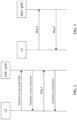
- An existing implementation of the contention-based random access procedure includes four steps, as shown in FIG. 2 .
- the UE transmits a random access preamble over a physical random access channel (PRACH) occasion in a first step.
- PRACH physical random access channel
- the UE obtains a timing according to the information sent over the DL-SCH by the network node (e.g., base station, eNB, gNB).
- the timing may include a timing advance (TA), which may also be called a timing adjustment amount or an arrival delay difference amount.
- TA timing advance
- the UE further obtains, for example, an MCS indication, and a frequency hopping indication that is associated with the third step transmission information, e.g., the uplink transmission scheduling related to Msg3.
- the third step is to transmit Msg3 on a physical uplink shared channel (PUSCH) according to the timing adjustment information sent by the base station and the uplink data transmission scheduling information.
- Msg3 includes information such as a connection request and a user identifier.
- the UE receives a contention resolution message (referred to as Msg4) that is based on the user identification information (e.g., UE ID) received by the network node.
- the Msg4 (including the user identifier and the random access request response message feedback) communication to the UE is based on the PRACH, which is a specific sequence selected from the PRACH resource pool that is configured for the base station, and wherein the UE randomly selects the PRACH transmission from the configured resource pool.
- the PRACH which is a specific sequence selected from the PRACH resource pool that is configured for the base station, and wherein the UE randomly selects the PRACH transmission from the configured resource pool.
- base stations rely on the user ID carried in Msg3 in the third step to identify whether or not to allow users to access successfully; if the UEs do not receive feedback comprising information associated with their own identity from the base station, the random access procedure is deemed unsuccessful.
- the four-step process described in FIG. 2 may be simplified to the two-step process shown in FIG. 3 .
- the random access preamble and Msg3 are merged into MsgA, and the contention resolution and some random access responses are similarly combined in MsgB.
- the content contained in the original messages e.g., frequency hopping information, retransmission information, etc. is merged into MsgB.
- ⁇ /2-BPSK is a supported modulation and coding scheme in conjunction with the Discrete Fourier Transform spread orthogonal frequency multiplexing( DFT-S-OFDM ) waveform.
- DFT-S-OFDM Discrete Fourier Transform spread orthogonal frequency multiplexing
- BPSK or ⁇ /2-BPSK is not supported.
- Some of the advantages of using ⁇ /2-BPSK or BPSK modulation when the UE performs contention-based transmission include: o
- the real and imaginary parts of the received signal can be split into two parts of the minimum mean squared error (MMSE) equation for the received signal, and the interference suppression for the received signal is stronger.
- MMSE minimum mean squared error
- the present document uses section headings and sub-headings for facilitating easy understanding and not for limiting the scope of the disclosed techniques and embodiments to certain sections. Accordingly, embodiments disclosed in different sections can be used with each other. Furthermore, the present document uses examples from the 3GPP New Radio (NR) network architecture and 5G protocol only to facilitate understanding and the disclosed techniques and embodiments may be in other wireless systems that use different communication protocols than the 3GPP protocols.
- NR 3GPP New Radio
- the UE transmits a transport block size (TBSize) of 56 bits, or 64 bits, or 72 bits, or 80 bits, or a 16-bit RNTI on the PDSCH of the MsgA in the two-step random access (2-step RACH) process.
- TBSize transport block size
- the RRC configured TransformPrecoder is disabled, and information indicating that the UE uses BPSK, such as PUSCH-tp-BPSK, is configured.
- the UE shall use the CP-OFDM waveform for uplink transmission.
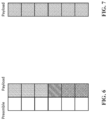
- the UE When transmitting MsgA, the UE randomly selects the preamble sequence and determines the location of the corresponding PUSCH transmission resource block according to a certain mapping rule, the number of resource blocks for transmission could also be determined from a pre-defined mapping rule as described in Embodiments 3 and 4, and as shown in the examples in FIGS. 46.
- MCS modulation and coding scheme
- the UE transmits a transport block size (TBSize) on the PUSCH of MsgA in the process of 2-step RACH to 56 bits, or 64 bits, or 72 bits, or 80 bits, or a 16-bit RNTI.
- TBSize transport block size
- RBs resource blocks
- the UE When transmitting MsgA, the UE randomly selects the preamble sequence and determines the location of the corresponding PUSCH transmission resource block according to a certain mapping rule, the number of resource blocks for transmission could also be determined from the pre-defined mapping rule as described in Embodiments 3 and 4, and as shown in the examples in FIGS. 4-6 .
- MCS modulation and coding scheme
- the UE transmits a transport block size (TBSize) on the PUSCH of MsgA in the process of 2-step RACH to 56 bits, or 64 bits, or 72 bits, or 80 bits, or a 16-bit RNTI.
- TBSize transport block size
- the RRC configured TransformPrecoder is disabled, and information indicating that the UE uses BPSK, such as PUSCH-tp-BPSK, is configured.
- BPSK e.g., PUSCH-tp-BPSK
- the UE shall use the CP-OFDM waveform for uplink transmission.
- the UE selects a modulation and coding mode according to the strength of the received downlink synchronization signal block (SSB) and the downlink reference signal RS, such as the magnitude of the reference signal received power (RSRP). For example, the selection is based on the rule that the larger the RSRP is, the higher the modulation order is.
- SSB downlink synchronization signal block
- RSRP reference signal received power
- One example of the rule that may be implemented are as follows: if P 1 ⁇ RSRP ⁇ P 0 , use BPSK, if P 2 ⁇ RSRP > P 1 , use QPSK, and if P 3 ⁇ RSRP > P 2 , use 16-QAM.
- the UE When transmitting MsgA, the UE randomly selects the preamble sequence and determines the position and number of the corresponding PUSCH transmission resource block according to a certain mapping rule, such as 1, 2 or 3 resource blocks (RBs), as shown in the examples in FIGS. 4-6 .
- a certain mapping rule such as 1, 2 or 3 resource blocks (RBs), as shown in the examples in FIGS. 4-6 .
- the information of the coded modulation mode is reported to the base station by using 2 bits, and the modulation mode of the 2 bits is BPSK or pi/2-BPSK, and is determined by the received downlink MIB/SIB/paging information.
- the UE transmits a transport block size (TBSize) on the PUSCH of MsgA in the process of 2-step RACH to 56 bits, or 64 bits, or 72 bits, or 80 bits, or a 16-bit RNTI.
- TBSize transport block size
- the RRC configured TransformPrecoder is disabled, and information indicating that the UE uses ⁇ /2-BPSK, such as PUSCH-tp-pi/2-BPSK, is configured.
- the UE shall use the CP-OFDM waveform for uplink transmission.
- the UE selects a modulation and coding mode according to the strength of the received downlink synchronization signal block (SSB) and the downlink reference signal RS, such as the magnitude of the reference signal received power (RSRP).
- SSB downlink synchronization signal block
- RSRP reference signal received power
- the selection is based on the rule that the larger the RSRP is, the higher the modulation order is.
- One example of the rules that may be implemented are as follows: if P 1 ⁇ RSRP ⁇ P 0 , use ⁇ /2-BPSK, if P 2 ⁇ RSRP > P 1 , use QPSK, and if P 3 ⁇ RSRP > P 2 , use 16-QAM.
- the UE When transmitting MsgA, the UE randomly selects the preamble sequence and determines the position and number of the corresponding PUSCH transmission resource block according to a certain mapping rule, such as 1, 2 or 3 resource blocks (RBs), as shown in the examples in FIGS. 46.
- a certain mapping rule such as 1, 2 or 3 resource blocks (RBs), as shown in the examples in FIGS. 46.
- the information of the coded modulation mode is reported to the base station by using 2 bits, and the modulation mode of the 2 bits is BPSK or pi/2-BPSK, and is determined by the received downlink MIB/SIB/paging information.
- the UE transmits a transport block size (TBSize) on the PUSCH of MsgA in the process of 2-step RACH to 56 bits, or 64 bits, or 72 bits, or 80 bits, or a 16-bit RNTI.
- TBSize transport block size
- the data of die PUSCH part is processed by a spreading technique after modulation.
- the spreading operation may be performed as follows.
- s k -th transmit symbol is s k
- the information of the spreading code is determined by the downlink MIB/SIB/paging information.
- the transmitted data may include the information associated with the spreading code (e.g., the index of the spreading code in a code set, information related to the generation of the spreading code).
- the spreading code can be used to generate a precise reconstruction of the spread data symbols and assist in blind detection.
- blind detection and decoding may be used to decode the PUSCH or PUCCH by first combining the signals received on the multiple antennas.
- the beam used for combining could loop through a pre-defined beam pool.
- beam determination in contention-based uplink PUSCH or PUCCH transmissions may be performed in a blind manner.
- beam determination in a contention-based uplink PUSCH could be performed in a blind manner by looping through a pre-defined beam pool.
- Table 1 Examples of pre-defined beam pools, in the case of 4 antenna ports and 2 antenna ports, are shown in Tables 1-3. In some embodiments, and to alleviate decoding efforts, the streams with the larger post-SINR could be fed to the FEC decoder.
- Table 1 Example of beam vectors for 4 receive antenna ports Beam Index Beam Vector ⁇ 4 ⁇ C 1 ⁇ 4 1 1 1 0 0 2 1 -1 0 0 3 1 0 1 0 4 1 0 -1 0 5 1 0 0 1 6 1 0 0 -1 7 0 1 1 0 8 0 1 -1 0 9 0 1 0 1 10 0 1 0 -1 11 0 0 1 1 12 0 0 1 -1 13 1 i 0 0 14 1 -i 0 0 15 1 0 i 0 16 1 0 -i 0 17 1 0 0 i 18 1 0 0 -i 19 0 1 i 0 20 0 1 -i 0 21 0
- Embodiments of the disclosed technology advantageously result in, among other features, more efficient signaling and reduces UE power consumption.
- the presently disclosed technology may be characterized by the following features: ⁇
- ⁇ In the two-step random access (2-step RACH) process, when the UE transmits the PUSCH of the MsgA, if the CP-OFDM waveform is used for transmission, pi/2-BPSK or BPSK modulation may be selected.
- the transmission content of the PUSCH of MsgA may include RNTI (e.g., C-RNTI, RA-RNTI), UE identity (e.g., IMSI, S-TMSI, ng-5G-S-TMSI-Part1), an RRC reason for establishment (e.g., mobile terminating access, mobile terminal access), or UCI.
- RNTI e.g., C-RNTI, RA-RNTI
- UE identity e.g., IMSI, S-TMSI, ng-5G-S-TMSI-Part1
- RRC reason for establishment e.g., mobile terminating access, mobile terminal access
- UCI User Service Call Identity
- the UE configures the UE to use pi/2-BPSK modulation through PUSCH-tp-pi/2 BPSK when the upper layer configures the parameter transformPrecoder to be disabled.
- the UE configures the UE to use BPSK modulation through PUSCH-tp-BPSK when
- the UE obtains the modulation mode of the PUSCH of the MsgA by using the MIB transmitted in the PBCH or the SIB transmitted in the PDSCH and the paging information transmitted in the PCH or the PDSCH, including the pi/2-BPSK, BPSK modulation mode.
- the UE autonomously selects a modulation scheme including pi/2-BPSK, BPSK, and optionally, informs the base station of the selected modulation scheme by means of 2 bits. For these 2 bits, modulation is performed using pi/2-BPSK or BPSK.
- the criterion for the UE autonomously selecting the modulation mode may include the strength of the SS-Block or the downlink RS (for example, RSRP).
- the possible process for selecting the strength according to SS-Block or downlink RS may be as follows: • If P 1 ⁇ RSRP ⁇ P 0 , use BPSK or ⁇ /2-BPSK • If P 2 ⁇ RSRP > P 1 , use QPSK • If P 3 ⁇ RSRP > P 2 , use 16-QAM ⁇ For BPSK or ⁇ /2-BPSK, the UE can determine which one to use by using the information obtained by the received MIB/SIB/paging. ⁇ The modulated data is further applied to a spreading technique.
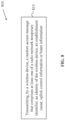
- FIG. 8 shows an example of a wireless communication method 800 for a two-step random access procedure in mobile communication technology.
- the method 800 includes, at step 810, transmitting, by a wireless device, a random access message that comprises at least one of a radio network temporary identifier (RNTI), an identity of the wireless device, an establishment cause, uplink control information (UCI) or beam information.
- RNTI radio network temporary identifier
- UCI uplink control information
- at least a portion of the random access message is modulated using a first modulation scheme selected from a modulation group that comprises binary phase shift keying (BPSK) and ⁇ /2-BPSK.
- BPSK binary phase shift keying
- the method 800 further includes the step of receiving, from a network node and in response to transmitting the random access message, a contention resolution message.
- a precoder parameter is disabled, and a modulation parameter configures the first modulation scheme or the second modulation scheme to be BPSK.
- the precoder parameter is transformPrecoder that is configured by Layer 2 (L2) signaling, and the modulation parameter is PUSCH-tp-BPSK that is configured by a cellular network.
- the first or second modulation scheme is configured based on a master information block (MIB) in a physical broadcast channel (PBCH).
- MIB master information block
- PBCH physical broadcast channel
- the first or second modulation scheme is configured based on a system information block (SIB) in a physical downlink shared channel (PDSCH) and paging information in the PDSCH or a physical channel (PCH).
- SIB system information block
- PDSCH physical downlink shared channel
- PCH physical channel
- the first modulation scheme or the second modulation scheme is configured using a 4-bit field or a 5-bit field.
- the first or second modulation scheme is selected based on a reference signal received power (RSRP) of a downlink reference signal or a synchronization signal (SS) block, and wherein the second modulation scheme is selected from one of BPSK, ⁇ /2-BPSK, quadrature phase shift keying (QPSK) or 16-QAM (quadrature amplitude modulation).
- RSRP reference signal received power
- SS synchronization signal
- the second modulation scheme is selected from one of BPSK, ⁇ /2-BPSK, quadrature phase shift keying (QPSK) or 16-QAM (quadrature amplitude modulation).
- QPSK quadrature phase shift keying
- 16-QAM quadrature amplitude modulation
- the portion of the random access message is a 2-bit field indicative of first modulation scheme or the second modulation scheme, respectively.
- the first modulation scheme or the second modulation scheme is selected as follows:
- P 0 , P 1 , P 2 and P 3 are pre-determined thresholds.
- FIG. 9 shows another example of a wireless communication method 900 for a two-step random access procedure in mobile communication technology.
- This example includes some features and/or steps that are similar to those shown in FIG. 800, and described above. At least some of these features and/or steps may not be separately described in this section.
- the method 900 includes, at step 910, receiving, by a network node, a random access message that comprises at least one of a radio network temporary identifier (RNTI), an identity of the wireless device, an establishment cause, uplink control information (UCI) or beam information (e.g., information related to the downlink beams transmitted by the base station and acquired by the UE).
- RNTI radio network temporary identifier
- UCI uplink control information
- beam information e.g., information related to the downlink beams transmitted by the base station and acquired by the UE.
- at least a portion of the random access message is modulated using a first modulation scheme selected from a modulation group that comprises binary phase shift keying (BPSK) and ⁇ /2-BPSK.
- BPSK binary phase shift keying
- a remainder of the random access message is modulated using a second modulation scheme selected from the modulation group.
- the method 900 includes, at step 920, transmitting, to a wireless device, a contention resolution message.
- communicating the contention resolution message completes a two-step random access procedure between the wireless device and the network node.
- the modulation group further comprises quadrature phase shift keying (QPSK) and 16-QAM (quadrature amplitude modulation).
- QPSK quadrature phase shift keying
- 16-QAM quadrature amplitude modulation
- the RNTI comprises a cell radio network temporary identifier (C-RNTI) or a random access radio network temporary identifier (RA-RNTI).
- C-RNTI cell radio network temporary identifier
- RA-RNTI random access radio network temporary identifier
- the identity of the wireless device comprises at least one of an international mobile subscriber identity (IMSI), a serving temporary mobile subscriber identity (S-TMSI), a ng-5G-S-TSMI-Part1 field, or a random number.
- IMSI international mobile subscriber identity
- S-TMSI serving temporary mobile subscriber identity
- ng-5G-S-TSMI-Part1 field or a random number.
- the establishment cause is a mobile originating signal or data.
- the UCI comprises at least one of a scheduling request, a channel state indicator, a modulation and coding scheme (MCS) indicator, a hybrid automatic repeat request (HARQ) acknowledgement (ACK), a buffer status report (BSR), a beam index of the wireless device, a beam index of the network node, a power headroom report (PHR), beam measurement results or a beam failure indication.
- MCS modulation and coding scheme
- HARQ hybrid automatic repeat request
- BSR buffer status report
- PHR power headroom report
- the beam information comprises a beam index of the wireless device or a beam index of the network node.
- the beam index is an index of a synchronization signal block (SSB) with a strongest receive reference signal received power (RSRP) of a plurality of SSBs.
- SSB synchronization signal block
- RSRP receive reference signal received power
- the random access message and the contention resolution message are communicated using a cyclic prefix orthogonal frequency division multiplexing (CP-OFDM) waveform.
- the random access message is communicated using a discrete Fourier transform (DFT)-spread orthogonal frequency division multiplexing (DFT-S-OFDM) waveform
- the contention resolution message is communicated using a cyclic prefix OFDM (CP-OFDM) waveform.
- DFT discrete Fourier transform
- DFT-S-OFDM discrete Fourier transform-spread orthogonal frequency division multiplexing
- CP-OFDM cyclic prefix OFDM
- the presently disclosed technology may include the incorporation of the following underlined portion into Section 6.1.4.1 of the 3GPP Technical Specification 38.214:
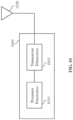
- FIG. 10 is a block diagram representation of a portion of an apparatus, in accordance with some embodiments of the presently disclosed technology.
- An apparatus 1005 such as a base station or a wireless device (or UE), can include processor electronics 1010 such as a microprocessor that implements one or more of the techniques presented in this document.
- the apparatus 1005 can include transceiver electronics 1015 to send and/or receive wireless signals over one or more communication interfaces such as antenna(s) 1020.
- the apparatus 1005 can include other communication interfaces for transmitting and receiving data.
- Apparatus 1005 can include one or more memories (not explicitly shown) configured to store information such as data and/or instructions.
- the processor electronics 1010 can include at least a portion of the transceiver electronics 1015. In some embodiments, at least some of the disclosed techniques, modules or functions are implemented using the apparatus 1005.
- a computer-readable medium may include removable and non-removable storage devices including, but not limited to, Read Only Memory (ROM), Random Access Memory (RAM), compact discs (CDs), digital versatile discs (DVD), etc. Therefore, the computer-readable media can include a non-transitory storage media.
- program modules may include routines, programs, objects, components, data structures, etc. that perform particular tasks or implement particular abstract data types.
- Computer- or processor-executable instructions, associated data structures, and program modules represent examples of program code for executing steps of the methods disclosed herein. The particular sequence of such executable instructions or associated data structures represents examples of corresponding acts for implementing the functions described in such steps or processes.
- a hardware circuit implementation can include discrete analog and/or digital components that are, for example, integrated as part of a printed circuit board.
- the disclosed components or modules can be implemented as an Application Specific Integrated Circuit (ASIC) and/or as a Field Programmable Gate Array (FPGA) device.
- ASIC Application Specific Integrated Circuit
- FPGA Field Programmable Gate Array
- DSP digital signal processor
- the various components or sub-components within each module may be implemented in software, hardware or firmware.
- the connectivity between the modules and/or components within the modules may be provided using any one of the connectivity methods and media that is known in the art, including, but not limited to, communications over the Internet, wired, or wireless networks using the appropriate protocols.
Landscapes
- Engineering & Computer Science (AREA)
- Computer Networks & Wireless Communication (AREA)
- Signal Processing (AREA)
- Mobile Radio Communication Systems (AREA)
Claims (13)
- Procédé de communication sans fil, comprenant :la réception, par un dispositif sans fil d'un noeud de réseau, d'une signalisation configurant un paramètre de pré-codeur à désactiver et une transmission de données par un ou plusieurs canaux ;l'obtention, sur la base de la transmission de données, d'informations indiquant un mode de modulation sélectionné dans un groupe de modulation comprenant un déplacement de phase binaire, BPSK, et un π/2-BPSK ;la transmission, par le dispositif sans fil, d'un message d'accès aléatoire comprenant au moins l'un des éléments suivants : un identifiant temporaire de réseau radio, RNTI, une identité du dispositif sans fil, une cause d'établissement, des informations de commande de liaison montante, UCI, ou des informations de faisceau ; etla réception, en provenance d'un noeud de réseau et en réponse à la transmission du message d'accès aléatoire, d'un message de résolution de conflit,où la communication du message de résolution de conflit termine une procédure d'accès aléatoire en deux étapes entre le dispositif sans fil et le noeud de réseau, etoù au moins une première partie du message d'accès aléatoire est modulée au moyen d'un premier schéma de modulation sélectionné dans le groupe de modulation pour être un BPSK ou π/2-BPSK sur la base du mode de modulation compris dans les informations,où le message d'accès aléatoire et le message de résolution de conflit sont communiqués au moyen d'une forme d'onde de multiplexage par répartition en fréquence orthogonale à préfixe cyclique, CP-OFDM.
- Procédé de communication sans fil, comprenant :la transmission, par un noeud de réseau à un dispositif sans fil, d'une signalisation configurant un paramètre de pré-codeur à désactiver et une transmission de données par un ou plusieurs canaux, la transmission de données comprenant des informations indiquant un mode de modulation sélectionné dans un groupe de modulation comprenant un déplacement de phase binaire, BPSK, et un n/2-BPSK ;la réception, par le noeud de réseau, d'un message d'accès aléatoire comprenant au moins l'un des éléments suivants : un identifiant temporaire de réseau radio, RNTI, une identité du dispositif sans fil, une cause d'établissement, des informations de commande de liaison montante, UCI, ou des informations de faisceau ; etla transmission, au dispositif sans fil, d'un message de résolution de conflit,où la communication du message de résolution de conflit termine une procédure d'accès aléatoire en deux étapes entre le dispositif sans fil et le noeud de réseau, etoù une première partie du message d'accès aléatoire est modulée au moyen d'un premier schéma de modulation sélectionné dans le groupe de modulation pour être un BPSK ou π/2-BPSK sur la base du mode de modulation compris dans les informations,où le message d'accès aléatoire et le message de résolution de conflit sont communiqués au moyen d'une forme d'onde de multiplexage par répartition en fréquence orthogonale à préfixe cyclique, CP-OFDM.
- Procédé selon la revendication 1 ou la revendication 2, où une deuxième partie du message d'accès aléatoire est modulée au moyen d'un deuxième schéma de modulation comprenant un BPSK et π/2-BPSK.
- Procédé selon la revendication 3, où un paramètre de pré-codeur est désactivé, et où un paramètre de modulation configure le premier schéma de modulation ou le deuxième schéma de modulation pour être un π/2-BPSK, où le paramètre de pré-codeur est préférentiellement transformPrecoder, configuré par la signalisation qui est une signalisation de couche 2, L2, et où le paramètre de modulation est PUSCH-tp-pi/2-BPSK, configuré par le noeud de réseau qui est un réseau cellulaire.
- Procédé selon la revendication 3, où un paramètre de pré-codeur est désactivé, où un paramètre de modulation configure le premier schéma de modulation ou le deuxième schéma de modulation pour être un BPSK, où le paramètre de pré-codeur est préférentiellement transformPrecoder, configuré par la signalisation qui est une signalisation de couche 2, L2, et où le paramètre de modulation est PUSCH-tp-BPSK, configuré par le noeud de réseau qui est un réseau cellulaire.
- Procédé selon la revendication 3, où le premier schéma de modulation ou le deuxième schéma de modulation est configuré sur la base (a) d'un bloc d'informations principal, MIB, dans un canal de diffusion physique, PBCH, ou (b) d'un bloc d'informations système, SIB, dans un canal partagé de liaison descendante physique, PDSCH, et d'informations de radiomessagerie dans le PDSCH ou un canal physique, PCH.
- Procédé selon la revendication 6, où le premier schéma de modulation ou le deuxième schéma de modulation est configuré au moyen d'un champ de 4 bits ou d'un champ de 5 bits.
- Procédé selon la revendication 3, où le premier schéma de modulation ou le deuxième schéma de modulation est sélectionné sur la base d'une puissance reçue de signal de référence, RSRP, d'un signal de référence de liaison descendante ou d'un bloc de signal de synchronisation, SS, et où le deuxième schéma de modulation est sélectionné parmi un BPSK, π/2-BPSK, une modulation par déplacement de phase en quadrature, QPSK, ou une modulation d'amplitude en quadrature 16-QAM.
- Procédé selon la revendication 8, où le message d'accès aléatoire comporte un champ de 2 bits indiquant le premier schéma de modulation ou le deuxième schéma de modulation, et où le premier schéma de modulation ou le deuxième schéma de modulation est préférentiellement sélectionné comme suit :si P1 ≥ RSRP ≥ P0, utiliser BPSK ou π/2-BPSK,si P2 ≥ RSRP ≥ P1, utiliser QPSK, etsi P3 ≥ RSRP ≥ P2, utiliser 16-QAM, etoù P0, P1, P2 et P3 sont des seuils prédéterminés, et P1 est le premier seuil.
- Procédé selon l'une des revendications 1 à 9, où le RNTI comprend un identifiant temporaire de réseau radio cellulaire, C-RNTI, ou un identifiant temporaire de réseau radio à accès aléatoire, RA-RNTI, et/ou où l'identité du dispositif sans fil comprend au moins l'un des éléments suivants : une identité internationale d'abonné mobile, IMSI, une identité temporaire d'abonné mobile de desserte, S-TMSI, un champ ng-5G-S-TSMI-Parti, ou un nombre aléatoire, et/ou où la cause d'établissement est un signal de départ mobile ou des données.
- Procédé selon l'une des revendications 1 à 9, où l'UCI comprend au moins l'un des éléments suivants : une demande de programmation, un indicateur d'état de canal, un indicateur de schéma de modulation et de codage, MCS, une demande de répétition automatique hybride, HARQ, un accusé de réception, ACK, un rapport d'état de mémoire tampon, BSR, un indice de faisceau du dispositif sans fil, un indice de faisceau du noeud de réseau, un rapport de marge de puissance, PHR, des résultats de mesure de faisceau ou une indication de défaillance de faisceau, et/ou où les informations sur le faisceau comprennent un indice de faisceau du dispositif sans fil ou un indice de faisceau du noeud de réseau.
- Procédé selon la revendication 11, où l'indice de faisceau est un indice d'un bloc de signal de synchronisation, SSB, avec une puissance maximale reçue de signal de référence reçu, RSRP, d'une pluralité de SSB.
- Appareil de communications sans fil comprenant un processeur et une mémoire, où le processeur est configuré pour extraire un code de la mémoire et mettre en oeuvre un procédé selon l'une des revendications 1 à 12.
Applications Claiming Priority (1)
| Application Number | Priority Date | Filing Date | Title |
|---|---|---|---|
| PCT/CN2019/071484 WO2020143058A1 (fr) | 2019-01-11 | 2019-01-11 | Procédure d'accès sélectif à deux étapes dans des systèmes sans fil |
Publications (3)
| Publication Number | Publication Date |
|---|---|
| EP3909379A1 EP3909379A1 (fr) | 2021-11-17 |
| EP3909379A4 EP3909379A4 (fr) | 2022-01-19 |
| EP3909379B1 true EP3909379B1 (fr) | 2024-08-21 |
Family
ID=71521412
Family Applications (1)
| Application Number | Title | Priority Date | Filing Date |
|---|---|---|---|
| EP19908459.1A Active EP3909379B1 (fr) | 2019-01-11 | 2019-01-11 | Procédure d'accès sélectif à deux étapes dans des systèmes sans fil |
Country Status (4)
| Country | Link |
|---|---|
| US (1) | US11974324B2 (fr) |
| EP (1) | EP3909379B1 (fr) |
| CN (1) | CN113287366B (fr) |
| WO (1) | WO2020143058A1 (fr) |
Families Citing this family (11)
| Publication number | Priority date | Publication date | Assignee | Title |
|---|---|---|---|---|
| CN116249223A (zh) * | 2019-05-28 | 2023-06-09 | 北京小米移动软件有限公司 | 随机接入方法、装置、系统及存储介质 |
| CN114175809B (zh) * | 2019-08-14 | 2025-11-28 | 索尼集团公司 | 对无线通信设备操作的方法和对接入节点操作的方法 |
| CN114503745B (zh) * | 2019-10-02 | 2025-12-12 | 瑞典爱立信有限公司 | 用于随机接入过程的方法和装置 |
| WO2021068119A1 (fr) | 2019-10-09 | 2021-04-15 | Qualcomm Incorporated | Signalisation de canal d'accès aléatoire en deux étapes |
| US11706810B2 (en) * | 2020-02-21 | 2023-07-18 | Qualcomm Incorporated | Message 2 repetition with transmit beam sweep and associated beam refinement for message 3 and message 4 |
| US20220007420A1 (en) * | 2020-07-01 | 2022-01-06 | Qualcomm Incorporated | Spreading aspects of random access channel procedure |
| CN116250204A (zh) * | 2020-08-11 | 2023-06-09 | 诺基亚技术有限公司 | 用于初始接入的pi/2-bpsk |
| WO2022187051A1 (fr) * | 2021-03-04 | 2022-09-09 | Intel Corporation | Planification de répétition pusch à points d'émission-réception multiples (multi-trp) à l'aide d'informations de commande de liaison descendante (dci) |
| CN115706650A (zh) * | 2021-08-13 | 2023-02-17 | 中兴通讯股份有限公司 | 参考信号配置方法、设备和存储介质 |
| US11930527B2 (en) * | 2021-10-27 | 2024-03-12 | Qualcomm Incorporated | Techniques for indicating system information block or paging waveforms for future communications |
| WO2023141924A1 (fr) * | 2022-01-28 | 2023-08-03 | Qualcomm Incorporated | Procédure de canal d'accès aléatoire en deux étapes |
Family Cites Families (12)
| Publication number | Priority date | Publication date | Assignee | Title |
|---|---|---|---|---|
| US9736865B2 (en) * | 2010-04-27 | 2017-08-15 | Ajou University Industry-Academic Cooperation Foundation | Random access method and apparatus in wireless communication system |
| WO2015137632A1 (fr) * | 2014-03-11 | 2015-09-17 | Lg Electronics Inc. | Procédé d'attribution d'identifiant temporaire à un terminal dans un processus d'accès aléatoire dans un système de communication sans fil et appareil correspondant |
| US10104645B2 (en) * | 2014-10-09 | 2018-10-16 | Qualcomm Incorporated | Random access method of devices with different path loss |
| CN107135528A (zh) * | 2016-02-26 | 2017-09-05 | 中兴通讯股份有限公司 | 一种基站发现方法、接入方法、基站及用户设备 |
| CN108271214B (zh) * | 2017-01-04 | 2022-07-22 | 华为技术有限公司 | 一种通信方法及其终端设备、网络设备 |
| US10848287B2 (en) * | 2017-01-13 | 2020-11-24 | Motorola Mobility Llc | Method and apparatus for performing contention based random access in a carrier frequency |
| US10660137B2 (en) * | 2017-02-02 | 2020-05-19 | Huawei Technologies Co., Ltd. | Random access channel contention resolution |
| US10397958B2 (en) * | 2017-03-17 | 2019-08-27 | Asustek Computer Inc. | Method and apparatus for backoff mechanism applied for random access procedure in a wireless communication system |
| CA3057464A1 (fr) * | 2017-03-22 | 2018-09-27 | Comcast Cable Communications, Llc | Procede d'acces aleatoire dans une nouvelle radio |
| US11057935B2 (en) * | 2017-03-22 | 2021-07-06 | Comcast Cable Communications, Llc | Random access process in new radio |
| FI4013122T3 (fi) * | 2017-05-04 | 2025-09-16 | Beijing Xiaomi Mobile Software Co Ltd | Säteilykeiloihin perustuva mittauskonfiguraatio |
| CN112930666A (zh) * | 2018-08-17 | 2021-06-08 | 株式会社Ntt都科摩 | 用户终端以及无线通信方法 |
-
2019
- 2019-01-11 EP EP19908459.1A patent/EP3909379B1/fr active Active
- 2019-01-11 WO PCT/CN2019/071484 patent/WO2020143058A1/fr not_active Ceased
- 2019-01-11 CN CN201980088757.1A patent/CN113287366B/zh active Active
-
2021
- 2021-07-12 US US17/373,008 patent/US11974324B2/en active Active
Also Published As
| Publication number | Publication date |
|---|---|
| EP3909379A1 (fr) | 2021-11-17 |
| US11974324B2 (en) | 2024-04-30 |
| CN113287366A (zh) | 2021-08-20 |
| WO2020143058A1 (fr) | 2020-07-16 |
| EP3909379A4 (fr) | 2022-01-19 |
| US20210345416A1 (en) | 2021-11-04 |
| CN113287366B (zh) | 2024-11-22 |
Similar Documents
| Publication | Publication Date | Title |
|---|---|---|
| EP3909379B1 (fr) | Procédure d'accès sélectif à deux étapes dans des systèmes sans fil | |
| US11438203B2 (en) | Method for transmitting or receiving signal in wireless communication system and device therefor | |
| KR102617897B1 (ko) | 무선 통신 시스템에서 상향링크 기준신호 송수신 방법 및 장치 | |
| US20200100297A1 (en) | Method and apparatus for supporting multiple message a sizes and uplink coverage for two step random access procedure | |
| US11224068B2 (en) | Method and apparatus for contention-free random access and uplink power control in wireless communication system | |
| EP3440888B1 (fr) | Noeud de réseau radio, dispositif sans fil et procédés réalisés dans ces derniers | |
| US11997633B2 (en) | Timing adjustments for data transmission in wireless systems | |
| US11172519B2 (en) | Method for transmitting RRC connection request, and terminal therefor | |
| US20230067619A1 (en) | Methods and systems for reference signaling in wireless communication networks | |
| US11191094B2 (en) | Method for transmitting or receiving signal in wireless communication system and apparatus therefor | |
| US12047217B2 (en) | Contention-based payload transmissions using differential coding | |
| US11963231B2 (en) | Transmitter-side processing of preambles and reference signals | |
| EP3589061B1 (fr) | Procédé d'émission ou de réception de signal dans un système de communication sans fil et dispositif associé | |
| US20210344548A1 (en) | Contention-based payload transmissions using differential coding |
Legal Events
| Date | Code | Title | Description |
|---|---|---|---|
| STAA | Information on the status of an ep patent application or granted ep patent |
Free format text: STATUS: THE INTERNATIONAL PUBLICATION HAS BEEN MADE |
|
| PUAI | Public reference made under article 153(3) epc to a published international application that has entered the european phase |
Free format text: ORIGINAL CODE: 0009012 |
|
| STAA | Information on the status of an ep patent application or granted ep patent |
Free format text: STATUS: REQUEST FOR EXAMINATION WAS MADE |
|
| 17P | Request for examination filed |
Effective date: 20210811 |
|
| AK | Designated contracting states |
Kind code of ref document: A1 Designated state(s): AL AT BE BG CH CY CZ DE DK EE ES FI FR GB GR HR HU IE IS IT LI LT LU LV MC MK MT NL NO PL PT RO RS SE SI SK SM TR |
|
| A4 | Supplementary search report drawn up and despatched |
Effective date: 20211220 |
|
| RIC1 | Information provided on ipc code assigned before grant |
Ipc: H04W 74/08 20090101AFI20211214BHEP |
|
| DAV | Request for validation of the european patent (deleted) | ||
| DAX | Request for extension of the european patent (deleted) | ||
| STAA | Information on the status of an ep patent application or granted ep patent |
Free format text: STATUS: EXAMINATION IS IN PROGRESS |
|
| 17Q | First examination report despatched |
Effective date: 20240229 |
|
| GRAP | Despatch of communication of intention to grant a patent |
Free format text: ORIGINAL CODE: EPIDOSNIGR1 |
|
| STAA | Information on the status of an ep patent application or granted ep patent |
Free format text: STATUS: GRANT OF PATENT IS INTENDED |
|
| RIC1 | Information provided on ipc code assigned before grant |
Ipc: H04W 74/08 20090101AFI20240318BHEP |
|
| INTG | Intention to grant announced |
Effective date: 20240417 |
|
| GRAS | Grant fee paid |
Free format text: ORIGINAL CODE: EPIDOSNIGR3 |
|
| GRAA | (expected) grant |
Free format text: ORIGINAL CODE: 0009210 |
|
| STAA | Information on the status of an ep patent application or granted ep patent |
Free format text: STATUS: THE PATENT HAS BEEN GRANTED |
|
| AK | Designated contracting states |
Kind code of ref document: B1 Designated state(s): AL AT BE BG CH CY CZ DE DK EE ES FI FR GB GR HR HU IE IS IT LI LT LU LV MC MK MT NL NO PL PT RO RS SE SI SK SM TR |
|
| REG | Reference to a national code |
Ref country code: GB Ref legal event code: FG4D |
|
| REG | Reference to a national code |
Ref country code: CH Ref legal event code: EP |
|
| REG | Reference to a national code |
Ref country code: IE Ref legal event code: FG4D |
|
| REG | Reference to a national code |
Ref country code: DE Ref legal event code: R096 Ref document number: 602019057668 Country of ref document: DE |
|
| REG | Reference to a national code |
Ref country code: LT Ref legal event code: MG9D |
|
| REG | Reference to a national code |
Ref country code: NL Ref legal event code: MP Effective date: 20240821 |
|
| PG25 | Lapsed in a contracting state [announced via postgrant information from national office to epo] |
Ref country code: NO Free format text: LAPSE BECAUSE OF FAILURE TO SUBMIT A TRANSLATION OF THE DESCRIPTION OR TO PAY THE FEE WITHIN THE PRESCRIBED TIME-LIMIT Effective date: 20241121 |
|
| REG | Reference to a national code |
Ref country code: AT Ref legal event code: MK05 Ref document number: 1716836 Country of ref document: AT Kind code of ref document: T Effective date: 20240821 |
|
| PG25 | Lapsed in a contracting state [announced via postgrant information from national office to epo] |
Ref country code: NL Free format text: LAPSE BECAUSE OF FAILURE TO SUBMIT A TRANSLATION OF THE DESCRIPTION OR TO PAY THE FEE WITHIN THE PRESCRIBED TIME-LIMIT Effective date: 20240821 Ref country code: PT Free format text: LAPSE BECAUSE OF FAILURE TO SUBMIT A TRANSLATION OF THE DESCRIPTION OR TO PAY THE FEE WITHIN THE PRESCRIBED TIME-LIMIT Effective date: 20241223 Ref country code: FI Free format text: LAPSE BECAUSE OF FAILURE TO SUBMIT A TRANSLATION OF THE DESCRIPTION OR TO PAY THE FEE WITHIN THE PRESCRIBED TIME-LIMIT Effective date: 20240821 Ref country code: PL Free format text: LAPSE BECAUSE OF FAILURE TO SUBMIT A TRANSLATION OF THE DESCRIPTION OR TO PAY THE FEE WITHIN THE PRESCRIBED TIME-LIMIT Effective date: 20240821 Ref country code: GR Free format text: LAPSE BECAUSE OF FAILURE TO SUBMIT A TRANSLATION OF THE DESCRIPTION OR TO PAY THE FEE WITHIN THE PRESCRIBED TIME-LIMIT Effective date: 20241122 |
|
| PG25 | Lapsed in a contracting state [announced via postgrant information from national office to epo] |
Ref country code: BG Free format text: LAPSE BECAUSE OF FAILURE TO SUBMIT A TRANSLATION OF THE DESCRIPTION OR TO PAY THE FEE WITHIN THE PRESCRIBED TIME-LIMIT Effective date: 20240821 |
|
| PG25 | Lapsed in a contracting state [announced via postgrant information from national office to epo] |
Ref country code: LV Free format text: LAPSE BECAUSE OF FAILURE TO SUBMIT A TRANSLATION OF THE DESCRIPTION OR TO PAY THE FEE WITHIN THE PRESCRIBED TIME-LIMIT Effective date: 20240821 |
|
| PG25 | Lapsed in a contracting state [announced via postgrant information from national office to epo] |
Ref country code: AT Free format text: LAPSE BECAUSE OF FAILURE TO SUBMIT A TRANSLATION OF THE DESCRIPTION OR TO PAY THE FEE WITHIN THE PRESCRIBED TIME-LIMIT Effective date: 20240821 Ref country code: IS Free format text: LAPSE BECAUSE OF FAILURE TO SUBMIT A TRANSLATION OF THE DESCRIPTION OR TO PAY THE FEE WITHIN THE PRESCRIBED TIME-LIMIT Effective date: 20241221 |
|
| PG25 | Lapsed in a contracting state [announced via postgrant information from national office to epo] |
Ref country code: HR Free format text: LAPSE BECAUSE OF FAILURE TO SUBMIT A TRANSLATION OF THE DESCRIPTION OR TO PAY THE FEE WITHIN THE PRESCRIBED TIME-LIMIT Effective date: 20240821 |
|
| PG25 | Lapsed in a contracting state [announced via postgrant information from national office to epo] |
Ref country code: RS Free format text: LAPSE BECAUSE OF FAILURE TO SUBMIT A TRANSLATION OF THE DESCRIPTION OR TO PAY THE FEE WITHIN THE PRESCRIBED TIME-LIMIT Effective date: 20241121 Ref country code: ES Free format text: LAPSE BECAUSE OF FAILURE TO SUBMIT A TRANSLATION OF THE DESCRIPTION OR TO PAY THE FEE WITHIN THE PRESCRIBED TIME-LIMIT Effective date: 20240821 |
|
| PG25 | Lapsed in a contracting state [announced via postgrant information from national office to epo] |
Ref country code: RS Free format text: LAPSE BECAUSE OF FAILURE TO SUBMIT A TRANSLATION OF THE DESCRIPTION OR TO PAY THE FEE WITHIN THE PRESCRIBED TIME-LIMIT Effective date: 20241121 Ref country code: PT Free format text: LAPSE BECAUSE OF FAILURE TO SUBMIT A TRANSLATION OF THE DESCRIPTION OR TO PAY THE FEE WITHIN THE PRESCRIBED TIME-LIMIT Effective date: 20241223 Ref country code: PL Free format text: LAPSE BECAUSE OF FAILURE TO SUBMIT A TRANSLATION OF THE DESCRIPTION OR TO PAY THE FEE WITHIN THE PRESCRIBED TIME-LIMIT Effective date: 20240821 Ref country code: NO Free format text: LAPSE BECAUSE OF FAILURE TO SUBMIT A TRANSLATION OF THE DESCRIPTION OR TO PAY THE FEE WITHIN THE PRESCRIBED TIME-LIMIT Effective date: 20241121 Ref country code: NL Free format text: LAPSE BECAUSE OF FAILURE TO SUBMIT A TRANSLATION OF THE DESCRIPTION OR TO PAY THE FEE WITHIN THE PRESCRIBED TIME-LIMIT Effective date: 20240821 Ref country code: LV Free format text: LAPSE BECAUSE OF FAILURE TO SUBMIT A TRANSLATION OF THE DESCRIPTION OR TO PAY THE FEE WITHIN THE PRESCRIBED TIME-LIMIT Effective date: 20240821 Ref country code: IS Free format text: LAPSE BECAUSE OF FAILURE TO SUBMIT A TRANSLATION OF THE DESCRIPTION OR TO PAY THE FEE WITHIN THE PRESCRIBED TIME-LIMIT Effective date: 20241221 Ref country code: HR Free format text: LAPSE BECAUSE OF FAILURE TO SUBMIT A TRANSLATION OF THE DESCRIPTION OR TO PAY THE FEE WITHIN THE PRESCRIBED TIME-LIMIT Effective date: 20240821 Ref country code: GR Free format text: LAPSE BECAUSE OF FAILURE TO SUBMIT A TRANSLATION OF THE DESCRIPTION OR TO PAY THE FEE WITHIN THE PRESCRIBED TIME-LIMIT Effective date: 20241122 Ref country code: FI Free format text: LAPSE BECAUSE OF FAILURE TO SUBMIT A TRANSLATION OF THE DESCRIPTION OR TO PAY THE FEE WITHIN THE PRESCRIBED TIME-LIMIT Effective date: 20240821 Ref country code: ES Free format text: LAPSE BECAUSE OF FAILURE TO SUBMIT A TRANSLATION OF THE DESCRIPTION OR TO PAY THE FEE WITHIN THE PRESCRIBED TIME-LIMIT Effective date: 20240821 Ref country code: BG Free format text: LAPSE BECAUSE OF FAILURE TO SUBMIT A TRANSLATION OF THE DESCRIPTION OR TO PAY THE FEE WITHIN THE PRESCRIBED TIME-LIMIT Effective date: 20240821 Ref country code: AT Free format text: LAPSE BECAUSE OF FAILURE TO SUBMIT A TRANSLATION OF THE DESCRIPTION OR TO PAY THE FEE WITHIN THE PRESCRIBED TIME-LIMIT Effective date: 20240821 |
|
| PG25 | Lapsed in a contracting state [announced via postgrant information from national office to epo] |
Ref country code: SM Free format text: LAPSE BECAUSE OF FAILURE TO SUBMIT A TRANSLATION OF THE DESCRIPTION OR TO PAY THE FEE WITHIN THE PRESCRIBED TIME-LIMIT Effective date: 20240821 Ref country code: RO Free format text: LAPSE BECAUSE OF FAILURE TO SUBMIT A TRANSLATION OF THE DESCRIPTION OR TO PAY THE FEE WITHIN THE PRESCRIBED TIME-LIMIT Effective date: 20240821 Ref country code: DK Free format text: LAPSE BECAUSE OF FAILURE TO SUBMIT A TRANSLATION OF THE DESCRIPTION OR TO PAY THE FEE WITHIN THE PRESCRIBED TIME-LIMIT Effective date: 20240821 |
|
| PG25 | Lapsed in a contracting state [announced via postgrant information from national office to epo] |
Ref country code: EE Free format text: LAPSE BECAUSE OF FAILURE TO SUBMIT A TRANSLATION OF THE DESCRIPTION OR TO PAY THE FEE WITHIN THE PRESCRIBED TIME-LIMIT Effective date: 20240821 |
|
| PG25 | Lapsed in a contracting state [announced via postgrant information from national office to epo] |
Ref country code: CZ Free format text: LAPSE BECAUSE OF FAILURE TO SUBMIT A TRANSLATION OF THE DESCRIPTION OR TO PAY THE FEE WITHIN THE PRESCRIBED TIME-LIMIT Effective date: 20240821 |
|
| PG25 | Lapsed in a contracting state [announced via postgrant information from national office to epo] |
Ref country code: IT Free format text: LAPSE BECAUSE OF FAILURE TO SUBMIT A TRANSLATION OF THE DESCRIPTION OR TO PAY THE FEE WITHIN THE PRESCRIBED TIME-LIMIT Effective date: 20240821 Ref country code: SK Free format text: LAPSE BECAUSE OF FAILURE TO SUBMIT A TRANSLATION OF THE DESCRIPTION OR TO PAY THE FEE WITHIN THE PRESCRIBED TIME-LIMIT Effective date: 20240821 |
|
| REG | Reference to a national code |
Ref country code: DE Ref legal event code: R097 Ref document number: 602019057668 Country of ref document: DE |
|
| PLBE | No opposition filed within time limit |
Free format text: ORIGINAL CODE: 0009261 |
|
| STAA | Information on the status of an ep patent application or granted ep patent |
Free format text: STATUS: NO OPPOSITION FILED WITHIN TIME LIMIT |
|
| 26N | No opposition filed |
Effective date: 20250522 |
|
| REG | Reference to a national code |
Ref country code: CH Ref legal event code: PL |
|
| PG25 | Lapsed in a contracting state [announced via postgrant information from national office to epo] |
Ref country code: SE Free format text: LAPSE BECAUSE OF FAILURE TO SUBMIT A TRANSLATION OF THE DESCRIPTION OR TO PAY THE FEE WITHIN THE PRESCRIBED TIME-LIMIT Effective date: 20240821 |
|
| PG25 | Lapsed in a contracting state [announced via postgrant information from national office to epo] |
Ref country code: LU Free format text: LAPSE BECAUSE OF NON-PAYMENT OF DUE FEES Effective date: 20250111 Ref country code: MC Free format text: LAPSE BECAUSE OF FAILURE TO SUBMIT A TRANSLATION OF THE DESCRIPTION OR TO PAY THE FEE WITHIN THE PRESCRIBED TIME-LIMIT Effective date: 20240821 |
|
| PG25 | Lapsed in a contracting state [announced via postgrant information from national office to epo] |
Ref country code: BE Free format text: LAPSE BECAUSE OF NON-PAYMENT OF DUE FEES Effective date: 20250131 |
|
| PG25 | Lapsed in a contracting state [announced via postgrant information from national office to epo] |
Ref country code: CH Free format text: LAPSE BECAUSE OF NON-PAYMENT OF DUE FEES Effective date: 20250131 |
|
| REG | Reference to a national code |
Ref country code: BE Ref legal event code: MM Effective date: 20250131 |
|
| PGFP | Annual fee paid to national office [announced via postgrant information from national office to epo] |
Ref country code: GB Payment date: 20251204 Year of fee payment: 8 |
|
| PGFP | Annual fee paid to national office [announced via postgrant information from national office to epo] |
Ref country code: FR Payment date: 20251208 Year of fee payment: 8 |
|
| PG25 | Lapsed in a contracting state [announced via postgrant information from national office to epo] |
Ref country code: IE Free format text: LAPSE BECAUSE OF NON-PAYMENT OF DUE FEES Effective date: 20250111 |
|
| PGFP | Annual fee paid to national office [announced via postgrant information from national office to epo] |
Ref country code: DE Payment date: 20251203 Year of fee payment: 8 |