EP3909602A1 - Méthodes permettant qu'un sujet reçoive des doses multiples de virus adéno-associé recombinant - Google Patents
Méthodes permettant qu'un sujet reçoive des doses multiples de virus adéno-associé recombinant Download PDFInfo
- Publication number
- EP3909602A1 EP3909602A1 EP21151619.0A EP21151619A EP3909602A1 EP 3909602 A1 EP3909602 A1 EP 3909602A1 EP 21151619 A EP21151619 A EP 21151619A EP 3909602 A1 EP3909602 A1 EP 3909602A1
- Authority
- EP
- European Patent Office
- Prior art keywords
- antibody
- raav vector
- administration
- prior
- subject
- Prior art date
- Legal status (The legal status is an assumption and is not a legal conclusion. Google has not performed a legal analysis and makes no representation as to the accuracy of the status listed.)
- Pending
Links
Images




Classifications
-
- A—HUMAN NECESSITIES
- A61—MEDICAL OR VETERINARY SCIENCE; HYGIENE
- A61K—PREPARATIONS FOR MEDICAL, DENTAL OR TOILETRY PURPOSES
- A61K39/00—Medicinal preparations containing antigens or antibodies
- A61K39/395—Antibodies; Immunoglobulins; Immune serum, e.g. antilymphocytic serum
- A61K39/39533—Antibodies; Immunoglobulins; Immune serum, e.g. antilymphocytic serum against materials from animals
- A61K39/3955—Antibodies; Immunoglobulins; Immune serum, e.g. antilymphocytic serum against materials from animals against proteinaceous materials, e.g. enzymes, hormones, lymphokines
-
- A—HUMAN NECESSITIES
- A61—MEDICAL OR VETERINARY SCIENCE; HYGIENE
- A61K—PREPARATIONS FOR MEDICAL, DENTAL OR TOILETRY PURPOSES
- A61K31/00—Medicinal preparations containing organic active ingredients
- A61K31/33—Heterocyclic compounds
- A61K31/395—Heterocyclic compounds having nitrogen as a ring hetero atom, e.g. guanethidine or rifamycins
- A61K31/435—Heterocyclic compounds having nitrogen as a ring hetero atom, e.g. guanethidine or rifamycins having six-membered rings with one nitrogen as the only ring hetero atom
- A61K31/4353—Heterocyclic compounds having nitrogen as a ring hetero atom, e.g. guanethidine or rifamycins having six-membered rings with one nitrogen as the only ring hetero atom ortho- or peri-condensed with heterocyclic ring systems
- A61K31/436—Heterocyclic compounds having nitrogen as a ring hetero atom, e.g. guanethidine or rifamycins having six-membered rings with one nitrogen as the only ring hetero atom ortho- or peri-condensed with heterocyclic ring systems the heterocyclic ring system containing a six-membered ring having oxygen as a ring hetero atom, e.g. rapamycin
-
- A—HUMAN NECESSITIES
- A61—MEDICAL OR VETERINARY SCIENCE; HYGIENE
- A61K—PREPARATIONS FOR MEDICAL, DENTAL OR TOILETRY PURPOSES
- A61K38/00—Medicinal preparations containing peptides
- A61K38/16—Peptides having more than 20 amino acids; Gastrins; Somatostatins; Melanotropins; Derivatives thereof
- A61K38/43—Enzymes; Proenzymes; Derivatives thereof
- A61K38/46—Hydrolases (3)
- A61K38/47—Hydrolases (3) acting on glycosyl compounds (3.2), e.g. cellulases, lactases
-
- A—HUMAN NECESSITIES
- A61—MEDICAL OR VETERINARY SCIENCE; HYGIENE
- A61K—PREPARATIONS FOR MEDICAL, DENTAL OR TOILETRY PURPOSES
- A61K39/00—Medicinal preparations containing antigens or antibodies
- A61K39/395—Antibodies; Immunoglobulins; Immune serum, e.g. antilymphocytic serum
- A61K39/39533—Antibodies; Immunoglobulins; Immune serum, e.g. antilymphocytic serum against materials from animals
- A61K39/39558—Antibodies; Immunoglobulins; Immune serum, e.g. antilymphocytic serum against materials from animals against tumor tissues, cells, antigens
-
- A—HUMAN NECESSITIES
- A61—MEDICAL OR VETERINARY SCIENCE; HYGIENE
- A61K—PREPARATIONS FOR MEDICAL, DENTAL OR TOILETRY PURPOSES
- A61K48/00—Medicinal preparations containing genetic material which is inserted into cells of the living body to treat genetic diseases; Gene therapy
- A61K48/0083—Medicinal preparations containing genetic material which is inserted into cells of the living body to treat genetic diseases; Gene therapy characterised by an aspect of the administration regime
-
- C—CHEMISTRY; METALLURGY
- C07—ORGANIC CHEMISTRY
- C07K—PEPTIDES
- C07K16/00—Immunoglobulins [IG], e.g. monoclonal or polyclonal antibodies
- C07K16/06—Immunoglobulins [IG], e.g. monoclonal or polyclonal antibodies from serum
-
- C—CHEMISTRY; METALLURGY
- C07—ORGANIC CHEMISTRY
- C07K—PEPTIDES
- C07K16/00—Immunoglobulins [IG], e.g. monoclonal or polyclonal antibodies
- C07K16/18—Immunoglobulins [IG], e.g. monoclonal or polyclonal antibodies against material from animals or humans
- C07K16/28—Immunoglobulins [IG], e.g. monoclonal or polyclonal antibodies against material from animals or humans against receptors, cell surface antigens or cell surface determinants
- C07K16/2887—Immunoglobulins [IG], e.g. monoclonal or polyclonal antibodies against material from animals or humans against receptors, cell surface antigens or cell surface determinants against CD20
-
- C—CHEMISTRY; METALLURGY
- C12—BIOCHEMISTRY; BEER; SPIRITS; WINE; VINEGAR; MICROBIOLOGY; ENZYMOLOGY; MUTATION OR GENETIC ENGINEERING
- C12N—MICROORGANISMS OR ENZYMES; COMPOSITIONS THEREOF; PROPAGATING, PRESERVING, OR MAINTAINING MICROORGANISMS; MUTATION OR GENETIC ENGINEERING; CULTURE MEDIA
- C12N7/00—Viruses; Bacteriophages; Compositions thereof; Preparation or purification thereof
-
- A—HUMAN NECESSITIES
- A61—MEDICAL OR VETERINARY SCIENCE; HYGIENE
- A61K—PREPARATIONS FOR MEDICAL, DENTAL OR TOILETRY PURPOSES
- A61K39/00—Medicinal preparations containing antigens or antibodies
- A61K2039/505—Medicinal preparations containing antigens or antibodies comprising antibodies
-
- A—HUMAN NECESSITIES
- A61—MEDICAL OR VETERINARY SCIENCE; HYGIENE
- A61K—PREPARATIONS FOR MEDICAL, DENTAL OR TOILETRY PURPOSES
- A61K39/00—Medicinal preparations containing antigens or antibodies
- A61K2039/545—Medicinal preparations containing antigens or antibodies characterised by the dose, timing or administration schedule
-
- A—HUMAN NECESSITIES
- A61—MEDICAL OR VETERINARY SCIENCE; HYGIENE
- A61K—PREPARATIONS FOR MEDICAL, DENTAL OR TOILETRY PURPOSES
- A61K39/00—Medicinal preparations containing antigens or antibodies
- A61K2039/57—Medicinal preparations containing antigens or antibodies characterised by the type of response, e.g. Th1, Th2
-
- C—CHEMISTRY; METALLURGY
- C07—ORGANIC CHEMISTRY
- C07K—PEPTIDES
- C07K2317/00—Immunoglobulins specific features
- C07K2317/20—Immunoglobulins specific features characterized by taxonomic origin
- C07K2317/24—Immunoglobulins specific features characterized by taxonomic origin containing regions, domains or residues from different species, e.g. chimeric, humanized or veneered
-
- C—CHEMISTRY; METALLURGY
- C12—BIOCHEMISTRY; BEER; SPIRITS; WINE; VINEGAR; MICROBIOLOGY; ENZYMOLOGY; MUTATION OR GENETIC ENGINEERING
- C12N—MICROORGANISMS OR ENZYMES; COMPOSITIONS THEREOF; PROPAGATING, PRESERVING, OR MAINTAINING MICROORGANISMS; MUTATION OR GENETIC ENGINEERING; CULTURE MEDIA
- C12N2750/00—MICROORGANISMS OR ENZYMES; COMPOSITIONS THEREOF; PROPAGATING, PRESERVING, OR MAINTAINING MICROORGANISMS; MUTATION OR GENETIC ENGINEERING; CULTURE MEDIA ssDNA viruses
- C12N2750/00011—Details
- C12N2750/14011—Parvoviridae
- C12N2750/14111—Dependovirus, e.g. adenoassociated viruses
- C12N2750/14141—Use of virus, viral particle or viral elements as a vector
- C12N2750/14143—Use of virus, viral particle or viral elements as a vector viral genome or elements thereof as genetic vector
-
- C—CHEMISTRY; METALLURGY
- C12—BIOCHEMISTRY; BEER; SPIRITS; WINE; VINEGAR; MICROBIOLOGY; ENZYMOLOGY; MUTATION OR GENETIC ENGINEERING
- C12Y—ENZYMES
- C12Y302/00—Hydrolases acting on glycosyl compounds, i.e. glycosylases (3.2)
- C12Y302/01—Glycosidases, i.e. enzymes hydrolysing O- and S-glycosyl compounds (3.2.1)
- C12Y302/0102—Alpha-glucosidase (3.2.1.20)
Definitions
- Immune responses to recombinant adeno-associate virus (rAAV) vectors and gene products currently prevent safe and effective administration of more than one dose of a rAAV vector to a subject more than one time points. There is currently no method available that permits administration of multiple doses of rAAV vectors to a subject over multiple time points.
- aspects of the disclosure relate to methods of permitting a subject to receive multiple doses of a rAAV vector.
- B cell depletion using one or more pharmaceutical agents may be utilized to permit the subject to receive multiple doses of a rAAV vector.
- B cell depletion using one or more pharmaceutical agents may be utilized to permit a subject who has received a prior administration of a rAAV vector to receive a subsequent administration of the same or a different rAAV vector.
- the disclosure is premised, in part, on a study showing that a subject who had been B-cell depleted did not have an immune response to the capsid or transgene product of a recombinant adeno-associated virus (rAAV) vector that was administered after the B-cell depletion.
- rAAV recombinant adeno-associated virus
- aspects of the disclosure relate to methods of permitting a subject to receive multiple doses of a rAAV vector.
- Some aspects of the disclosure relate to a method of permitting a human or non-human primate subject to receive multiple doses of a recombinant adeno-associate virus (rAAV) vector.
- the method comprises administering an anti-CD20 antibody and a subsequent rAAV vector to a human or non-human primate subject that has previously been administered a prior rAAV vector.
- the method comprises administering a subsequent rAAV vector to a human or non-human primate subject that has previously been administered a prior rAAV vector and an anti-CD20 antibody.
- the subsequent and prior rAAV vectors are the same serotype.
- the anti-CD20 antibody is administered more than once. In some embodiments, the anti-CD20 antibody is administered at least once prior to the administration of the subsequent rAAV vector.
- the method further comprises administering the prior rAAV vector to the subject prior to the administration of the subsequent rAAV vector.
- the anti-CD20 antibody is administered more than once and wherein the anti-CD20 antibody is administered to the subject at least once prior to the administration of the subsequent rAAV vector and at least once prior to the administration of the prior rAAV vector.
- the method further comprises administering to the subject an mTOR pathway inhibitor.
- the mTOR pathway inhibitor is rapamycin.
- the anti-CD20 antibody and the mTOR pathway inhibitor are each administered more than once.
- the anti-CD20 antibody and the mTOR pathway inhibitor are each administered at least once prior to the administration of the subsequent rAAV vector.
- the method further comprises administering the prior rAAV vector to the subject prior to the administration of the subsequent rAAV vector.
- the anti-CD20 antibody and the mTOR pathway inhibitor are each administered more than once and wherein the anti-CD20 antibody and the mTOR pathway inhibitor are each administered to the subject at least once prior to the administration of the subsequent rAAV vector and at least once prior to the administration of the first rAAV vector.
- the anti-CD20 antibody is rituximab. In some embodiments, the subject is a human.
- the administration of the prior rAAV vector to the subject occurs at least one day prior to the administration of the subsequent rAAV vector. In some embodiments, the administration of the prior rAAV vector to the subject occurs at least one week prior to the administration of the subsequent rAAV vector. In some embodiments, the administration of the prior rAAV vector to the subject occurs at least one month prior to the administration of the subsequent rAAV vector. In some embodiments, the administration of the prior rAAV vector to the subject occurs at least one year prior to the administration of the subsequent rAAV vector.
- Anti-capsid and anti-transgene humoral and cell-mediated responses have been previously observed in all preclinical models and human subjects who received gene therapy for congenital myopathies.
- Such immune responses may result in reduced efficacy of the gene transfer over time and/or may preclude the possibility of re-administration of the same vector or administration of other rAAV vectors to the same subj ect.
- Gene therapy strategies may also require repeat administrations of rAAV vectors as a result of several limitations inherent to clinical design. For example, administration of doses below therapeutic efficacy in patients enrolled in early phase clinical trials may require subsequent administration of higher doses to the same patients to obtain therapeutic efficacy. In another example, progressive reduction of the therapeutic gene expression could result over time in response to an increase in mass in patients treated at a young age.
- kits related to permitting a subject to receive multiple doses of rAAV vectors including multiple doses of the same vector serotype.
- aspects of the disclosure relate to methods of permitting a human or non-human primate subject to receive multiple doses of a recombinant adeno-associate virus (rAAV) vector as described herein.
- rAAV adeno-associate virus
- the method comprises administering a B cell depletion treatment and a subsequent rAAV vector as described herein to the human or non-human primate subject that has previously been administered a prior rAAV vector as described herein.
- the method comprises administering an anti-CD20 antibody as described herein (e.g., rituximab) and a subsequent rAAV vector as described herein to a human or non-human primate subject that has previously been administered a prior rAAV vector as described herein.
- the method further comprises administering an mTOR pathway inhibitor as described herein.
- the method comprises administering a B cell depletion treatment and a subsequent rAAV vector as described herein to a human or non-human primate subject that has previously been administered a B cell depletion treatment and a prior rAAV vector as described herein.
- the method comprises administering an anti-CD20 antibody as described herein (e.g., rituximab) and a subsequent rAAV vector as described herein to a human or non-human primate subject that has previously been administered an anti-CD20 antibody as described herein and a prior rAAV vector as described herein.
- the method further comprises administering an mTOR pathway inhibitor as described herein.
- the method comprises administering a subsequent rAAV vector as described herein to a human or non-human primate subject that has previously been administered a B cell depletion treatment and a prior rAAV vector as described herein. In some embodiments, the method comprises a subsequent rAAV vector as described herein to a human or non-human primate subject that has previously been administered an anti-CD20 antibody as described herein and a prior rAAV vector as described herein. In some embodiments, the method further comprises administering an mTOR pathway inhibitor as described herein.
- a subsequent rAAV vector is a rAAV vector that is administered temporally after the prior rAAV vector.
- the prior rAAV is administered at a first time point and the subsequent rAAV vector is administered at a second time point, where the first time point occurs prior to the second time point (e.g., by at least one day, at least one week, at least one month, or at least one year).
- the first time point occurs at a first visit to a physician and the second time point occurs at a second visit to a physician (e.g., at least one day, at least one week, at least one month, or at least one year later than the first visit).
- the subsequent rAAV vector may be, for example, (a) a second administration of a rAAV vector following a prior first administration of a rAAV vector to the subject; (b) a third administration of a rAAV vector following a prior first administration of a rAAV vector and a prior second administration to the subject; (c) a fourth administration of a rAAV vector following a prior first administration of a rAAV vector, a prior second administration to the subject and a prior third administration to the subject; (d) a fifth administration of a rAAV vector following a prior first administration of a rAAV vector, a prior second administration to the subject, a prior third administration to the subject and a prior fourth administration to the subject or (e) a sixth, seventh, eighth, ninth, tenth, or more administrations where the subject has received five, six, seven, eight, nine, or more prior administrations, respectively.
- the subsequent rAAV vector is administered at a later time point (e.g., at least one day later, at least one month later, at least one year later, at least 5 years later, at least 10 years later) than at least one prior administration of a rAAV vector to the subject.
- a further rAAV vector is administered after the subsequent rAAV vector, meaning that the subsequent rAAV vector may be a middle administration between one or more prior administrations of a rAAV vector and one or more further administrations of a rAAV vector.
- the prior rAAV vector is the first administration of a rAAV vector that a subject has received in their lifetime (i.e., the subject has not received a rAAV vector administration prior to the prior rAAV vector).
- the prior rAAV vector is a second, third, fourth, etc. administration of a rAAV vector to a subject (i.e., the subject has received a rAAV vector administration prior to the prior rAAV vector) and subsequent rAAV vector is an administration of a rAAV vector that occurs after the administration of the prior rAAV vector.
- a human or non-human primate is treated with a series of rAAV vector administrations (e.g., 2, 3, 4, 5, 6, 7, 8, 9, 10, or more) at different time points (e.g., each separated by at least a day, week, month, year, or longer), wherein each administration comprises an rAAV vector being administered in the context of a B-cell depletion treatment as described herein.
- rAAV vector administrations e.g., 2, 3, 4, 5, 6, 7, 8, 9, 10, or more
- time points e.g., each separated by at least a day, week, month, year, or longer
- each administration comprises an rAAV vector being administered in the context of a B-cell depletion treatment as described herein.
- the rAAV vector being administered at each time point is the same rAAV serotype.
- different serotypes may be used at different time points.
- the rAAV vector that is being administered may include different nucleic acid sequences encoding different genes or different versions of the same gene. It also should be appreciated that in some embodiments, the same B-cell depletion treatment may be used for one or more different time points. However, in some embodiments different B-cell depletion treatments may be used for one or more different time points.
- one or more doses of the anti-CD20 antibody and/or the mTOR pathway inhibitor are provided in an amount and at a frequency that suppresses or inhibits the B-cell response and/or depletes the number of B-cells sufficiently to avoid or reduce an immune response to a subsequent rAAV vector in a subject that has received a prior rAAV vector.
- the anti-CD20 antibody and/or the mTOR pathway inhibitor are administered to the subject more than once (e.g., 2, 3, 4, 5, 6, 7, 8, 9, 10, 15, 20, 30 or more times).
- the anti-CD20 antibody and/or the mTOR pathway inhibitor are administered at least once (e.g., 1, 2, 3, 4, 5, 6, 7, 8, 9, 10, 15, 20, 30 or more times) prior to the administration of the subsequent rAAV vector. In some embodiments, the anti-CD20 antibody and/or the mTOR pathway inhibitor are administered at least once (e.g., 1, 2, 3, 4, 5, 6, 7, 8, 9, 10, 15, 20, 30 or more times) prior to the administration of the subsequent rAAV vector and at least once (e.g., 1, 2, 3, 4, 5, 6, 7, 8, 9, 10, 15, 20, 30 or more times) after administration of the subsequent rAAV vector. In some embodiments, the anti-CD20 antibody and/or the mTOR pathway inhibitor are administered concurrently with the subsequent rAAV vector.
- the anti-CD20 antibody and/or the mTOR pathway inhibitor are administered prior to and concurrently with the subsequent rAAV vector. It is to be understood that the anti-CD20 antibody and the mTOR pathway inhibitor can be administered at the same time or at different times and using the same dosage schedule or different dosage schedules (e.g., the anti-CD20 antibody may be administered weekly while the mTOR pathway inhibitor may be administered daily). It is also to be understood that the anti-CD20 antibody and the mTOR pathway inhibitor can be administered a different number of times, such that the number of administrations of the anti-CD20 antibody and the mTOR pathway inhibitor are different.
- the anti-CD20 antibody can be administered at least once (e.g., 1, 2, 3, 4, 5, 6, 7, 8, 9, 10, 15, 20, 30 or more times) and the mTOR pathway inhibitor can be administered at least once (e.g., 1, 2, 3, 4, 5, 6, 7, 8, 9, 10, 15, 20, 30 or more times), wherein the number of administrations of the anti-CD20 antibody differs from the number of administrations of the mTOR pathway inhibitor.
- the method further comprises administering the prior rAAV vector described herein to the subject prior to the administration of the subsequent rAAV vector.
- the anti-CD20 antibody and/or the mTOR pathway inhibitor are administered at least once (e.g., 1, 2, 3, 4, 5, 6, 7, 8, 9, 10, 15, 20, 30 or more times) prior to the administration of the subsequent rAAV vector and at least once (e.g., 1, 2, 3, 4, 5, 6, 7, 8, 9, 10, 15, 20, 30 or more times) prior to the administration of the prior rAAV vector.
- the anti-CD20 antibody and/or the mTOR pathway inhibitor are administered at least once (e.g., 1, 2, 3, 4, 5, 6, 7, 8, 9, 10, 15, 20, 30 or more times) prior to the administration of the subsequent rAAV vector and at least once (e.g., 1, 2, 3, 4, 5, 6, 7, 8, 9, 10, 15, 20, 30 or more times) after administration of the subsequent rAAV vector as well as at least once (e.g., 1, 2, 3, 4, 5, 6, 7, 8, 9, 10, 15, 20, 30 or more times) prior to the administration of the prior rAAV vector and at least once (e.g., 1, 2, 3, 4, 5, 6, 7, 8, 9, 10, 15, 20, 30 or more times) after administration of the prior rAAV vector.
- the anti-CD20 antibody and/or the mTOR pathway inhibitor are administered concurrently with the subsequent rAAV vector and concurrently with the prior rAAV vector. In some embodiments, the anti-CD20 antibody and/or the mTOR pathway inhibitor are administered prior to and concurrently with the subsequent rAAV vector and prior to and concurrently with the prior rAAV vector. In some embodiments, concurrent administration comprises administering a rAAV vector at approximately the same time as an anti-CD20 antibody and/or an mTOR pathway inhibitor.
- a rAAV vector is administered with a dosage regimen that overlaps in part or in whole (e.g., at least one day, one week, one month, or more, of overlap) with a dosage regimen of an anti-CD20 antibody and/or an mTOR pathway inhibitor.
- the anti-CD20 antibody is administered to the subject at least once a week, at least once every 4 weeks, at least once every 8 weeks, at least once every 12 weeks, or any interval in between. In some embodiments, the anti-CD20 antibody is administered to the subject at least once every 12 weeks. In some embodiments, the mTOR pathway inhibitor is administered to the subject at least once a day, at least once a week, at least once a month, or any interval in between. In some embodiments, the mTOR pathway inhibitor is administered to the subject at least once a day.
- a method described herein may further comprise administering intravenous immunoglobulin (IVIG) to the subject.
- IVIG intravenous immunoglobulin
- the IVIG is administered to the subject at least once a week, at least once every 2 weeks, at least once every 3 weeks, at least once every 4 weeks, at least once every 8 weeks, at least once every 12 weeks, or any interval in between.
- the IVIG is administered to the subject at least once every 4 weeks.
- the prior rAAV vector is administered to the subject at least one day (e.g., at least 1, 2, 3, 4, 5, 6, or 7 days), at least one week (e.g., at least 1, 2, 3, 4, 5, or 6 weeks), at least one month (e.g., at least 1, 2, 3, 4, 5, 6, 7, 8, 9, 10, 11, or 12 months), or at least one year (e.g., at least 1, 2, 3, 4, 5, 6, 7, 8, 9, 10, 11, 12, 13, 14, 15, 16, 17, 18, 19, or 20 years) prior to the administration of the subsequent rAAV vector.
- day e.g., at least 1, 2, 3, 4, 5, 6, or 7 days
- at least one week e.g., at least 1, 2, 3, 4, 5, or 6 weeks
- at least one month e.g., at least 1, 2, 3, 4, 5, 6, 7, 8, 9, 10, 11, or 12 months
- at least one year e.g., at least 1, 2, 3, 4, 5, 6, 7, 8, 9, 10, 11, 12, 13, 14, 15, 16, 17, 18, 19, or 20 years
- aspects of the disclosure relate to administering an anti-CD20 antibody and/or an mTOR pathway inhibitor at least once (e.g., 1, 2, 3, 4, 5, 6, 7, 8, 9, 10, 15, 20, 30 or more times) prior to, concurrently with, and/or after the administration of an rAAV vector to a subject who previously has received at least one treatment with (e.g., at least one dosage of) an enzyme replacement therapy.
- an anti-CD20 antibody and/or an mTOR pathway inhibitor at least once (e.g., 1, 2, 3, 4, 5, 6, 7, 8, 9, 10, 15, 20, 30 or more times) prior to, concurrently with, and/or after the administration of an rAAV vector to a subject who previously has received at least one treatment with (e.g., at least one dosage of) an enzyme replacement therapy.
- a subject being treated with an enzyme replacement therapy and being transitioned to an rAAV-based therapy is treated with an anti-CD20 antibody and/or an mTOR pathway inhibitor at least once (e.g., 1, 2, 3, 4, 5, 6, 7, 8, 9, 10, 15, 20, 30 or more times) prior to, concurrently with, and/or after receiving a dose of an enzyme replacement therapy and prior to a first dose of rAAV (e.g., using an rAAV that delivers a gene encoding the same enzyme that was being administered during the enzyme replacement therapy.
- an rAAV vector is administered with a dosage regimen that overlaps in part or in whole (e.g., at least one day, one week, one month, or more, of overlap) with a dosage regimen of an anti-CD20 antibody and/or an mTOR pathway inhibitor.
- compositions for use in a method described herein or compositions for manufacture of a medicament for use in a method described herein are also contemplated.
- a composition comprising an anti-CD20 antibody for use in a method described herein is provided.
- a composition comprising an anti-CD20 antibody and an mTOR pathway inhibitor for use in a method described herein is provided.
- rAAV Recombinant Adeno-Associated Virus
- aspects of the disclosure relate to recombinant adeno-associated virus (rAAV) vectors for delivery of one or more heterologous nucleic acid sequences encoding a protein or polypeptide of interest into various tissues, organs, and/or cells.
- rAAV adeno-associated virus
- the wild-type AAV genome is a single-stranded deoxyribonucleic acid (ssDNA), either positive- or negative-sensed.
- the genome comprises inverted terminal repeats (ITRs) at both ends of the DNA strand, and two open reading frames (ORFs): rep and cap.
- the rep ORF comprises four overlapping genes encoding Rep proteins required for the AAV life cycle.
- the cap ORF comprises overlapping genes encoding capsid proteins: VP1, VP2 and VP3, which interact together to form the viral capsid.
- Recombinant AAV (rAAV) vectors may comprise a nucleic acid vector, which may comprise at a minimum (a) one or more heterologous nucleic acid regions comprising a sequence encoding a protein or polypeptide of interest and (b) one or more regions comprising inverted terminal repeat (ITR) sequences (e.g., wild-type ITR sequences or engineered ITR sequences) flanking the one or more heterologous nucleic acid regions.
- ITR inverted terminal repeat
- This nucleic acid vector may be encapsidated by a viral capsid.
- the nucleic acid vector is circular.
- the nucleic acid vector is single-stranded.
- the nucleic acid vector is double-stranded.
- a double-stranded nucleic acid vector may be, for example, a self-complimentary vector that contains a region of the nucleic acid vector that is complementary to another region of the nucleic acid vector, initiating the formation of the double-strandedness of the nucleic acid vector.
- a rAAV vector comprises a viral capsid and a nucleic acid vector as described herein, which is encapsidated by the viral capsid.
- the nucleic acid vector comprises (1) one or more heterologous nucleic acid regions comprising a sequence encoding a protein or polypeptide of interest, (2) one or more nucleic acid regions comprising a sequence that facilitates expression of the heterologous nucleic acid region (e.g., a promoter and/or enhancer), and (3) one or more nucleic acid regions comprising a sequence that facilitate integration of the heterologous nucleic acid region (optionally with the one or more nucleic acid regions comprising a sequence that facilitates expression) into the genome of the subject.
- viral sequences that facilitate integration comprise Inverted Terminal Repeat (ITR) sequences.
- the nucleic acid vector comprises one or more heterologous nucleic acid regions comprising a sequence encoding a protein or polypeptide of interest operably linked to a promoter, wherein the one or more heterologous nucleic acid regions are flanked on each side with an ITR sequence.
- the ITR sequences can be derived from any AAV serotype (e.g., 1, 2, 3, 4, 5, 6, 7, 8, 9, 10) or can be derived from more than one serotype. In some embodiments, the ITR sequences are derived from AAV2.
- ITR sequences and plasmids containing ITR sequences are known in the art and commercially available (see, e.g., products and services available from Vector Biolabs, Philadelphia, PA; Cellbiolabs, San Diego, CA; Agilent Technologies, Santa Clara, Ca; and Addgene, Cambridge, MA; and Gene delivery to skeletal muscle results in sustained expression and systemic delivery of a therapeutic protein.
- Kessler PD Podsakoff GM, Chen X, McQuiston SA, Colosi PC, Matelis LA, Kurtzman GJ, Byrne BJ. Proc Natl Acad Sci U S A. 1996 Nov 26;93(24):14082-7 ; and Curtis A. Machida. Methods in Molecular MedicineTM.
- the nucleic acid vector comprises a pTR-UF-11 plasmid backbone, which is a plasmid that contains AAV2 ITRs.
- This plasmid is commercially available from the American Type Culture Collection (ATCC MBA-331).
- the nucleic acid vector comprises one or more regions comprising a sequence that facilitates expression of the heterologous nucleic acid, e.g., expression control sequences operatively linked to the heterologous nucleic acid.
- expression control sequences include promoters, insulators, silencers, response elements, introns, enhancers, initiation sites, termination signals, and poly(A) tails. Any combination of such control sequences is completed herein (e.g., a promoter and an enhancer).
- any of a number of promoters suitable for use in the selected host cell may be employed.
- the promoter may be, for example, a constitutive promoter, tissue-specific promoter, inducible promoter, or a synthetic promoter.
- constitutive promoters of different strengths can be used.
- a nucleic acid vector described herein may include one or more constitutive promoters, such as viral promoters or promoters from mammalian genes that are generally active in promoting transcription.
- Non-limiting examples of constitutive viral promoters include the Herpes Simplex virus (HSV), thymidine kinase (TK), Rous Sarcoma Virus (RSV), Simian Virus 40 (SV40), Mouse Mammary Tumor Virus (MMTV), Ad E1A and cytomegalovirus (CMV) promoters.
- constitutive mammalian promoters include various housekeeping gene promoters, as exemplified by the ⁇ -actin promoter.
- Inducible promoters and/or regulatory elements may also be contemplated for achieving appropriate expression levels of the protein or polypeptide of interest.
- suitable inducible promoters include those from genes such as cytochrome P450 genes, heat shock protein genes, metallothionein genes, and hormone-inducible genes, such as the estrogen gene promoter.
- Another example of an inducible promoter is the tetVP16 promoter that is responsive to tetracycline.
- Tissue-specific promoters and/or regulatory elements are also contemplated herein.
- Non-limiting examples of such promoters that may be used include (1) desmin, creatine kinase, myogenin, alpha myosin heavy chain, human brain and natriuretic peptide, specific for muscle cells, and (2) albumin, alpha-1-antitrypsin, hepatitis B virus core protein promoters, specific for liver cells.
- a synthetic promoter may comprise, for example, regions of known promoters, regulatory elements, transcription factor binding sites, enhancer elements, repressor elements, and the like.
- a nucleic acid vector described herein may also contain marker or reporter genes, e.g., LacZ or a fluroscent protein.
- the nucleic acid vector comprises one or more heterologous nucleic acid regions comprising a sequence encoding a protein or polypeptide of interest.
- the protein or polypeptide of interest may be, e.g., a polypeptide or protein of interest provided in Table 1.
- the sequences of the polypeptide or protein of interest may be obtained, e.g., using the non-limiting National Center for Biotechnology Information (NCBI) Protein IDs or SEQ ID NOs from patent applications provided in Table 1. Table 1.
- NCBI National Center for Biotechnology Information
- Non-limiting Exemplary diseases Non-limiting NCBI Protein IDs or Patent SEQ ID NOs acid alpha-glucosidase (GAA) Pompe NP_000143.2, NP_001073271.1, NP 001073272.1 Methyl CpG binding protein 2 (MECP2) Rett syndrome NP _001104262.1, NP_ 004983.1 Aromatic L-amino acid decarboxylase (AADC) Parkinson's disease NP_000781.1, NP_001076440.1, NP_001229815.1, NP 001229816.1, NP_001229817.1, NP_001229818.1, NP 001229819.1 Glial cell-derived neurotrophic factor (GDNF) Parkinson's disease NP_000505.1, NP _001177397.1, NP _001177398.1, NP _001265027.1,
- polypeptides and proteins provided in Table 1 are known in the art (see, e.g., Adeno-Associated Virus Vectors in Clinical Trials. Barrie J. Carter. Human Gene Therapy. May 2005, 16(5): 541-550. doi:10.1089/hum.2005.16.541 . Published in Volume: 16 Issue 5: May 25, 2005; Neuropharmacology. 2013 Jun;69:82-8. doi: 10.1016/j.neuropharm.2012.03.004 . Epub 2012 Mar 17.; Adeno-associated virus (AAV) gene therapy for neurological disease. Weinberg MS1, Samulski RJ, McCown TJ.Gene therapy for lysosomal storage disorders. Yew NS, Cheng SH. Pediatr Endocrinol Rev.
- the polypeptide or protein of interest is a human protein or polypeptide.
- the protein or polypeptide of interest is acid alpha-glucosidase. In some embodiments, the protein or polypeptide of interest is not rituximab.
- the rAAV vector may be of any AAV serotype, including any derivative (including non-naturally occurring variants) or pseudotype (e.g., 1, 2, 3, 4, 5, 6, 7, 8, 9, 10, 2/1, 2/5, 2/8, or 2/9).
- derivatives and pseudotypes include rAAV2/1, rAAV2/5, rAAV2/8, rAAV2/9, AAV2-AAV3 hybrid, AAVrh.10,AAVhu.14, AAV3a/3b, AAVrh32.33, AAV-HSC15, AAV-HSC17, AAVhu.37, AAVrh.8, CHt-P6, AAV2.5, AAV6.2, AAV2i8, AAV-HSC15/17, AAVM41, AAV9.45, AAV6(Y445F/Y731F), AAV2.5T, AAV-HAE1/2, AAV clone 32/83, AAVShH10, AAV2 (Y->F), AAV8 (
- the rAAV vector is a pseudotyped rAAV vector.
- the pseudotyped rAAV vector is a rAAV2/x vector, which comprises (a) a nucleic acid vector comprising AAV2 ITRs and (b) a capsid comprised of capsid proteins derived from AAVx (e.g., AAV1, AAV3, AAV4, AAV5, AAV6, AAV7, AAV8, AAV9, or AAV10).
- exemplary rAAV pseudotyped vectors include, but are not limited to rAAV2/1, rAAV2/5, rAAV2/8, and rAAV2/9 vectors. Methods for producing and using pseudotyped rAAV vectors are known in the art (see, e.g., Duan et al., J.
- a prior and a subsequent rAAV vector are contemplated for use in a method or kit herein.
- the prior and subsequent rAAV vectors are the same serotype (e.g., both AAV1, both AAV2, both AAV3, both AAV4, both AAV5, both AAV6, both AAV7, both AAV8, both AAV9, both AAV10, both AAV2/1, both rAAV2/5, both rAAV2/8, or both rAAV2/9).
- a method provided herein comprises administering a B cell depletion treatment and a subsequent rAAV vector as described herein to the human or non-human primate subject that has previously been administered a prior rAAV vector as described herein, wherein the subsequent rAAV vector and the prior rAAV vector are the same serotype.
- the method comprises administering an anti-CD20 antibody as described herein (e.g., rituximab) and a subsequent rAAV vector as described herein to a human or non-human primate subject that has previously been administered a prior rAAV vector as described herein, wherein the subsequent rAAV vector and the prior rAAV vector are the same serotype.
- an anti-CD20 antibody as described herein e.g., rituximab
- a subsequent rAAV vector as described herein to a human or non-human primate subject that has previously been administered a prior rAAV vector as described herein, wherein the subsequent rAAV vector and the prior rAAV vector are the same serotype.
- the prior and subsequent rAAV vectors are different serotypes (e.g., one is AAV1 and the other is AAV2, one is AAV2 and the other is AAV8, one is AAV8 and the other is AAV9, one is AAV2/1 and the other is AAV2/8, one is AAV2/1 and the other is AAV2/9, or one is AAV2/8 and the other is AAV2/9).
- the prior rAAV vector comprises a nucleic acid vector that encode a first protein or polypeptide of interest and the subsequent rAAV vector comprises a nucleic acid vector that encodes a second protein or polypeptide of interest.
- the first and second protein or polypeptide of interest are the same protein or polypeptide of interest (e.g., both the first and second protein or polypeptide of interest are GAA). In some embodiments, the first and second protein or polypeptide of interest are different proteins or polypeptides of interest (e.g., the first protein or polypeptide of interest is GAA and the second protein or polypeptide of interest is a protein or polypeptide other than GAA, or vice versa).
- rAAV vectors and nucleic acid vectors are known in the art and commercially available (see, e.g., Zolotukhin et al. Production and purification of serotype 1, 2, and 5 recombinant adeno-associated viral vectors. Methods 28 (2002) 158-167 ; and U.S. Patent Publication Numbers US20070015238 and US20120322861 , which are incorporated herein by reference; and plasmids and kits available from ATCC and Cell Biolabs, Inc.).
- the nucleic acid vector may be combined with one or more helper plasmids that encode rep and cap ORFS and transfected into a producer cell line such that the rAAV vector can be packaged and subsequently purified.
- Helper plasmids and methods of making such plasmids, are known in the art and commercially available (see, e.g., pDM, pDG, pDP1rs, pDP2rs, pDP3rs, pDP4rs, pDP5rs, pDP6rs, pDG(R484E/R585E), and pDP8.ape plasmids from PlasmidFactory, Bielefeld, Germany; other products and services available from Vector Biolabs, Philadelphia, PA; Cellbiolabs, San Diego, CA; Agilent Technologies, Santa Clara, Ca; and Addgene, Cambridge, MA; Grimm et al.
- a helper plasmid is produced or obtained, which comprises rep and cap ORFs and the adenoviral VA, E2A (DBP), and E4 genes under the transcriptional control of their native promoters.
- 293 cells available from ATCC are transfected with the helper plasmid and a nucleic acid vector described herein (e.g., comprising one or more heterologous sequences that encode a protein or polypeptide of interest and ITRs flanking the heterologous sequences). The 293 cells are then incubated for at least 24 hours to allow for rAAV vector production.
- the 293 cells are then washed, centrifuged, and lysed using freeze/thaw cycles. Benzonase is added to further digest the lysed cells.
- the rAAV vectors present in the lysate are then purified using iodixanol gradient centrifugation and heparin affinity resin or iodixanol gradient centrifugation and anion-exchange chromatography.
- the rAAV vectors may optionally be concentrated, desalted, and/or buffer exchanged using commercially available concentrators (see, e.g., products available from EMD Millipore).
- the rAAV vector is then stored in lactated Ringer's or PBS.
- viral vectors suitable for gene therapy are also contemplated for use in a method or kit described herein, e.g., a lentivirus vector for delivery of one or more heterologous nucleic acid sequences encoding a protein or polypeptide of interest into various tissues, organs, and/or cells.
- a lentivirus vector comprises a nucleic acid vector, which may comprise at a minimum (a) one or more heterologous nucleic acid regions comprising a sequence encoding a protein or polypeptide of interest and (b) one or more long terminal repeat (LTR) sequences (e.g., wild-type LTR sequences or engineered LTR sequences) flanking the one or more heterologous nucleic acid regions.
- the nucleic acid vector may comprise any other nucleic acid region described herein (e.g., a promoter, enhancer, etc.). Lentiviral vectors, and methods of making lentiviral vectors, are known in the art and commercially available (see, e.g., products available from Addgene, Cambridge, MA).
- CMV-beta-actin promoter directs higher expression from an adeno-associated viral vector in the liver than the cytomegalovirus or elongation factor 1 alpha promoter and results in therapeutic levels of human factor X in mice.
- Preclinical characterization of a recombinant adeno-associated virus type 1-pseudotyped vector demonstrates dose-dependent injection site inflammation and dissemination of vector genomes to distant sites.
- Molecular therapy the journal of the American Society of Gene Therapy 15: 501-507 ; Pacak et al. (2007). Long-term skeletal muscle protection after gene transfer in a mouse model of LGMD-2D.
- Molecular therapy the journal of the American Society of Gene Therapy 15: 1775-1781 ; Cideciyan et al. (2008).
- Non-limiting examples of non-human primate subjects include macaques (e.g., cynomolgus or rhesus macaques), marmosets, tamarins, spider monkeys, owl monkeys, vervet monkeys, squirrel monkeys, baboons, gorillas, chimpanzees, and orangutans.
- the subject is a human subject.
- the subject is a juvenile human subject, such a human subject under the age of 18 years.
- the subject is a human subject under the age of 5, 4, 3, 2 or 1 year.
- the subject is a subject that has not been previously exposed to wild-type AAV or administered a rAAV vector. In some embodiments, the subject is a subject that has not been previously administered a rAAV vector. In some embodiments, the subject is a subject that has been previously administered a rAAV vector, e.g., a rAAV vector described herein.
- a subject that has been exposed or administered an AAV or rAAV can be identified using methods known in the art, e.g., by PCR detection of viral DNA or by measuring antibody titer to AAV or rAAV, either the capsid or the transgene.
- the subject is a subject that has not been administered an enzyme replacement therapy (e.g., by administration of the enzyme protein).
- a subject that has been administered an enzyme replacement therapy can be identified using methods known in the art, e.g., by measuring antibody titer to the enzyme.
- the subject has previously been treated with an enzyme replacement therapy.
- the subject has or is suspected of having a disease that may be treated with gene therapy.
- diseases include, but are not limited to, cystic fibrosis, hemophilia B, San Filippo syndrome, lipoprotein lipase deficiency, alpha-1 antitrypsin deficiency, arthritis, hereditary emphysema, Leber's congenital amaurosis, age-related macular degeneration, muscular dystrophy (duchenne, LGMD2d and 2c), Parkinson's disease, Canavan's disease, Batten's disease, Alzheimer's disease, metachromatic leukodystrophy, alpha-1 antitrypsin deficiency, lipoprotein lipase deficiency, heart failure, rheumatoid arthritis, amyotrophic lateral sclerosis (ALS), spinal muscular atrophy (SMA), ornithine transcarbamylase deficiency, epilepsy, Rett syndrome,lysosomal storage disorders of skeletal muscle skeletal muscle
- the subject has Pompe disease.
- Pompe disease is a lysosomal storage disease caused by an accumulation of glycogen in the lysosome due to deficiency of the lysosomal acid alpha-glucosidase enzyme.
- the build-up of glycogen causes progressive myopathy throughout the body and affects various tissues, particularly in the heart, skeletal muscles, liver and nervous system.
- An anti-CD20 antibody is an antibody that specifically binds CD20.
- An antibody that "specifically binds" (used interchangeably herein) to a target (e.g., CD20) is a term well understood in the art, and methods to determine such specific or preferential binding are also well known in the art.
- a molecule is said to exhibit "specific binding” if it binds with to the antigen with greater affinity, avidity, more readily, and/or with greater duration than it binds to other substances.
- an antibody that specifically binds CD20, or an epitope of CD20 is an antibody that binds CD20, or an epitope of CD20, with greater affinity, avidity, more readily, and/or with greater duration than it binds to other non-CD20 antigens or epitopes.
- Specific binding does not necessarily require (although it can include) exclusive binding. Generally, but not necessarily, reference to binding means preferential binding.
- an antibody encompasses not only intact polyclonal or monoclonal antibodies, but also antigen-binding fragments thereof (such as Fab, Fab', F(ab')2, Fv), single chain (ScFv) and domain antibodies (including, for example, shark and camelid antibodies), and fusion proteins comprising an antibody, and any other modified configuration of the immunoglobulin molecule that comprises an antigen recognition site.
- the antibody can be a human antibody, a humanized antibody, or a chimeric antibody.
- the antibody is a monoclonal antibody.
- the antibody comprises a constant region.
- the antibody is of the human lgG1, lgG2 or lgG2Aa, lgG3, or lgG4 subclass. In some embodiments, the antibody comprises a glycosylated constant region. In some embodiments, the antibody comprises a constant region having increased binding affinity to one or more human Fc gamma receptor(s).
- CD20 is a protein also known as MS4A1, B1, B-lymphocyte antigen CD20, B-lymphocyte surface antigen B1, Bp35, CVID5, LEU-16, Leukocyte surface antigen Leu-16, Membrane-spanning 4-domains subfamily A member 1 , MGC3969, MS4A2, and S7.
- Human CD20 has the amino acid sequence of:
- Non-limiting examples of antibodies specific for CD20 include: “C2B8” which is now called “Rituximab” (RITUXAN®) ( U.S. Pat. No. 5,736,137 , incorporated herein by reference), a chimaeric pan-B antibody targeting CD20; the yttrium-[90]-labeled 2B8 murine antibody designated “Y2B8” or “Ibritumomab Tiuxetan” ZEVALIN® ( U.S. Pat. No.
- suitable antibodies include, e.g., antibody GA101 (obinutuzumab, GAZYVA®), a third generation humanized anti-CD20-antibody of Biogen Idec/Genentech/Roche.
- BLX-301 of Biolex Therapeutics a humanized anti CD20 with optimized glycosylation or Veltuzumab (hA20), a 2nd-generation humanized anti-CD20 antibody of Immunomedics or DXL625, derivatives of veltuzumab, such as the bispecific hexavalent antibodies of IBC Pharmaceuticals (Immunomedics) which are comprised of a divalent anti-CD20 IgG of veltuzumab and a pair of stabilized dimers of Fab derived from milatuzumab, an anti-CD20 mAb enhanced with InNexus' Dynamic Cross Linking technology, of Inexus Biotechnology both are humanized anti-CD20 antibodies are suitable.
- BM-ca a humanized anti-CD20 antibody ( Int J Oncol. 2011 Feb;38(2):335-44 )
- C2H7 a chimeric anti-CD20 antibody ( Mol Immunol. 2008 May;45(10):2861 -8 )
- PRO131921 a third generation anti-CD20 antibody developed by Genentech
- Reditux a biosimilar version of rituximab developed by Dr Reddy's
- PBO-326 a biosimilar version of rituximab developed by Probiomed
- TL-01 1 a biosimilar version of rituximab developed by Teva
- CMAB304 a biosimilar version of rituximab developed by Shanghai CP Guojian
- GP-2013 a biosimilar version of rituximab developed by Sandoz (Novartis)
- SAIT-101 a biosimilar version of rituximab developed by Samsung BioLogic
- the anti-CD20 antibody is rituximab.
- B cell depletion e.g., using an anti-CD20 antibody
- IVIG may be accompanied by administration of IVIG to provide the subject with a pool of antibodies to compensate for the loss of B cell protection to the subject.
- IVIG is pooled, polyvalent, IgG antibodies extracted from plasma healthy blood donors. Methods for producing IVIG are known in the art (see, e.g., Immune Deficiency Foundation.IDF Patient and Family Handbook: For Primary Immunodeficiency. Disease, 4th Edition. Towson, MD. 2007 ).
- IVIG is also commercially available (see, e.g., GAMMAGARD LIQUID® and GAMMAGARD S/D® from Baxter Healthcare, GAMMAPLEX® from Bio Products Laboratory, FLEBOGAMMA® from Grifols, OCTAGAM® from Octapharma, PRIVIGEN® from CSL Behring, GAMUNEX® from Talecris Biotherapeutics, GAMMAKED® from Kedrion and BIVIGAM® from Biotest).
- mTOR pathway inhibitors for use in a method or kit described herein.
- Mammalian target of rapamycin is a serine/threonine kinase, which belongs to phosphatidylinositol-3 kinase (PI3K) related kinases (PIKKs) family.
- PI3K phosphatidylinositol-3 kinase
- mTOR forms two complexes, mTOR Complex 1 and 2 (mTORC1 and mTORC2).
- mTORC1 is composed of mTOR, regulatory-associated protein of mTOR (Raptor), mammalian lethal with SEC 13 protein 8 (MLST8) and the non-core components PRAS40 and DEPTOR.
- mTORC2 is composed of mTOR, rapamycin-insensitive companion of mTOR (RICTOR), MLST8, and mammalian stress-activated protein kinase interacting protein 1 (mSIN1). Accordingly, an mTOR pathway inhibitor may be an inhibitor that binds to and inhibits the activity of mTORC1 and/or mTORC2.
- Exemplary mTOR pathway inhibitors include, but are not limited to, rapamycin (also known as sirolimus, Pfizer and Wyeth Pharmaceuticals) and other rapalogs including, but not limited to, deforolimus (also known as Ridaforolimus, AP23573, MK-8669, Merck, ARIAD Pharmaceuticals), everolimus (RAD001, Novartis), and temsirolimus (CCI-779, Wyeth Pharmaceuticals).
- deforolimus also known as Ridaforolimus, AP23573, MK-8669, Merck, ARIAD Pharmaceuticals
- everolimus RAD001, Novartis
- CCI-779 Wyeth Pharmaceuticals
- the mTOR pathway inhibitor is selected from the group consisting of rapamycin, deforolimus, everolimus, and temsirolimus. In some embodiments, the mTOR pathway inhibitor is rapamycin.
- compositions and methods of administration are provided.
- a composition comprises a rAAV vector described herein for use in a method or kit described herein.
- a composition comprises an anti-CD20 antibody described herein (e.g., rituximab) for use in a method or kit described herein.
- a composition comprises a mTOR pathway inhibitor described herein (e.g., rapamycin) for use in a method or kit described herein.
- a composition comprises IVIG described herein for use in a method or kit described herein.
- the composition may further comprise a pharmaceutically acceptable carrier.
- Non-limiting examples of pharmaceutically acceptable carriers include lactose, dextrose, sucrose, sorbitol, mannitol, starches, gum acacia, calcium phosphate, alginates, tragacanth, gelatin, calcium silicate, microcrystalline cellulose, polyvinylpyrrolidone, cellulose, water, saline, syrup, methylcellulose, ethylcellulose, hydroxypropylmethylcellulose, polyacrylic acids, lubricating agents (such as talc, magnesium stearate, and mineral oil), wetting agents, emulsifying agents, suspending agents, preserving agents (such as methyl-, ethyl-, and propyl-hydroxy-benzoates), pH adjusting agents (such as inorganic and organic acids and bases), sweetening agents, and flavoring agents.
- lubricating agents such as talc, magnesium stearate, and mineral oil
- wetting agents such as talc, magnesium stearate, and mineral oil
- compositions described above may be administered to subject in any suitable formulation by any suitable method.
- the route of administration of the composition may be oral, parenteral, by inhalation or topical.
- parenteral as used herein includes intravenous, intraarterial, intraperitoneal, intramuscular, intradermal, intrathoracic, intrathecal, and subcutaneous administration.
- compositions described above are typically administered to a subject in an effective amount, that is, an amount capable of producing a desirable result.
- the desirable result will depend upon the active agent being administered.
- an effective amount of a rAAV vector may be an amount of the vector that is capable of transferring a heterologous nucleic acid to a host organ, tissue, or cell.
- An effective amount of an anti-CD20 antibody may be an amount of the antibody that is capable of depleting B cells in a subject (e.g., sufficiently to allow one or more subsequent administrations of a rAAV to a subject).
- An effective amount of a mTOR pathway inhibitor may be an amount of the inhibitor that is capable of preventing or attenuating a T cell response.
- Toxicity and efficacy of the compositions utilized in methods and kits of the disclosure can be determined by standard pharmaceutical procedures, using either cells in culture or experimental animals to determine the LD50 (the dose lethal to 50% of the population).
- the dose ratio between toxicity and efficacy is the therapeutic index and it can be expressed as the ratio LD50/ED50.
- Those compositions that exhibit large therapeutic indices are preferred. While those that exhibit toxic side effects may be used, care should be taken to design a delivery system that minimizes the potential damage of such side effects.
- the dosage of compositions as described herein lies generally within a range that includes an ED50 with little or no toxicity. The dosage may vary within this range depending upon the dosage form employed and the route of administration utilized.
- an appropriate dosage for intravenous administration of a rAAV vector may be in the range of about 10 12 -10 15 vectors.
- an appropriate dosage for intravenous administration of an anti-CD20 antibody e.g., rituximab
- an anti-CD20 antibody may be 375 mg/m 2 .
- the anti-CD20 antibody is administered weekly or once every 12 weeks.
- an appropriate dosage for oral rapamycin may be 0.06-1 mg/m 2 . In some embodiments, an appropriate dosage for oral rapamycin is a dosage that maintains a serum trough level of 3-7 ng/ml. In some embodiments, the rapamycin is administered daily. In some embodiments, an appropriate dosage for IVIG is 500-1000 mg/kg of IVIG. In some embodiments, an appropriate dosage for IVIG is a dosage that maintains a trough serum IgG level of 700-1000 mg/dL.
- compositions comprising rAAV vectors may be directly introduced into a subject, including by intravenous (IV) injection, intraperitoneal (IP) injection, or in situ injection into target tissue (e.g., muscle).
- IV intravenous
- IP intraperitoneal
- a conventional syringe and needle can be used to inject a rAAV vector suspension into an animal.
- injection can be in situ (i.e., to a particular tissue or location on a tissue), intramuscular, IV, IP, or by another parenteral route.
- Parenteral administration of rAAV vectors by injection can be performed, for example, by bolus injection or continuous infusion.
- Formulations for injection may be presented in unit dosage form, for example, in ampoules or in multi-dose containers, with an added preservative.
- the compositions may take such forms as suspensions, solutions or emulsions in oily or aqueous vehicles, and may contain formulatory agents such as suspending, stabilizing and/or dispersing agents.
- the rAAV vectors may be in powder form (e.g., lyophilized) for constitution with a suitable vehicle, for example, sterile pyrogen-free water, before use.
- the rAAV vector of the invention can be mixed with a carrier or excipient.
- Carriers and excipients that might be used include saline (e.g., sterilized, pyrogen-free saline) saline buffers (e.g., citrate buffer, phosphate buffer, acetate buffer, and bicarbonate buffer), amino acids, urea, alcohols, ascorbic acid, phospholipids, proteins (for example, serum albumin), EDTA, sodium chloride, liposomes, mannitol, sorbitol, and glycerol. USP grade carriers and excipients are particularly useful for delivery of rAAV vectors to human subjects. Methods for making such formulations are well known and can be found in, for example, Remington's Pharmaceutical Sciences.
- the rAAV vectors can also be formulated as a depot preparation. Such long acting formulations may be administered by implantation (for example subcutaneously or intramuscularly) or by intramuscular (IM) injection.
- the rAAV vector may be formulated with suitable polymeric or hydrophobic materials (for example as an emulsion in an acceptable oil) or ion exchange resins, or as sparingly soluble derivatives.
- compositions comprising an anti-CD20 antibody or IVIG may be administered by parenteral administration.
- parenteral administration may comprise a buffer (e.g., acetate, phosphate or citrate buffer), a surfactant (e.g., polysorbate), optionally a stabilizer agent (e.g., human albumine), etc.
- a buffer e.g., acetate, phosphate or citrate buffer
- a surfactant e.g., polysorbate
- optionally a stabilizer agent e.g., human albumine
- Exemplary preparations for parenteral administration of the anti-CD20 antibody include sterile aqueous or non-aqueous solutions, suspensions, and emulsions.
- non-aqueous solvents examples include propylene glycol, polyethylene glycol, vegetable oils such as olive oil, and injectable organic esters such as ethyl oleate.
- Aqueous carriers include water, alcoholic/aqueous solutions, emulsions or suspensions, including saline and buffered media.
- pharmaceutically acceptable carriers include, but are not limited to, 0.01-0.1M and preferably 0.05M phosphate buffer or 0.8% saline.
- Other common parenteral vehicles include sodium phosphate solutions, Ringer's dextrose, dextrose and sodium chloride, lactated Ringer's, or fixed oils.
- Intravenous vehicles include fluid and nutrient replenishers, electrolyte replenishers, such as those based on Ringer's dextrose, and the like. Preservatives and other additives may also be present such as for example, antimicrobials, antioxidants, chelating agents, and inert gases and the like.
- compositions suitable for injectable use include sterile aqueous solutions (where water soluble) or dispersions and sterile powders for the extemporaneous preparation of sterile injectable solutions or dispersions.
- the composition must be sterile and should be fluid to the extent that easy syringability exists. It should be stable under the conditions of manufacture and storage and will preferably be preserved against the contaminating action of microorganisms, such as bacteria and fungi.
- the carrier can be a solvent or dispersion medium containing, for example, water, ethanol, polyol (e.g., glycerol, propylene glycol, and liquid polyethylene glycol, and the like), and suitable mixtures thereof.
- the proper fluidity can be maintained, for example, by the use of a coating such as lecithin, by the maintenance of the required particle size in the case of dispersion and by the use of surfactants.
- a sterile injectable solutions can be prepared by incorporating an active compound (e.g., an anti-CD20 antibody or IVIG) in the required amount in an appropriate solvent with one or a combination of ingredients enumerated herein, as required, followed by filtered sterilization.
- an active compound e.g., an anti-CD20 antibody or IVIG
- dispersions are prepared by incorporating the active compound into a sterile vehicle, which contains a basic dispersion medium and the required other ingredients from those enumerated above.
- the preferred methods of preparation are vacuum drying and freeze-drying, which yields a powder of an active ingredient plus any additional desired ingredient from a previously sterile-filtered solution thereof.
- the preparations for injections are processed, filled into containers such as ampoules, bags, bottles, syringes or vials, and sealed under aseptic conditions according to methods known in the art.
- the mTOR pathway inhibitor is administered by oral or parenteral administration.
- the pharmaceutical carrier for administration may be solid or liquid.
- a solid carrier can include one or more substances which may also act as flavoring agents, lubricants, solubilizers, suspending agents, fillers, glidants, compression aids, binders or tablet-disintegrating agents; it can also be an encapsulating material.
- the carrier is a finely divided solid which is in admixture with the finely divided active ingredient.
- the active ingredient is mixed with a carrier having the necessary compression properties in suitable proportions and compacted in the shape and size desired. The powders and tablets preferably contain up to 99% of the active ingredient.
- Suitable solid carriers include, for example, calcium phosphate, magnesium stearate, talc, sugars, lactose, dextrin, starch, gelatin, cellulose, methyl cellulose, sodium carboxymethyl cellulose, polyvinylpyrrolidine, low melting waxes and ion exchange resins.
- Liquid carriers may be used in preparing solutions, suspensions, emulsions, syrups, elixirs and pressurized compositions.
- the active ingredient can be dissolved or suspended in a pharmaceutically acceptable liquid carrier such as water, an organic solvent, a mixture of both or pharmaceutically acceptable oils or fats.
- the liquid carrier can contain other suitable pharmaceutical additives such as solubilizers, emulsifiers, buffers, preservatives, sweeteners, flavoring agents, suspending agents, thickening agents, colors, viscosity regulators, stabilizers or osmo-regulators.
- liquid carriers for oral and parenteral administration include water (partially containing additives as above, e.g., cellulose derivatives, preferably sodium carboxymethyl cellulose solution), alcohols (including monohydric alcohols and polyhydric alcohols, e.g., glycols) and their derivatives, and oils (e.g., fractionated coconut oil and arachis oil).
- the carrier can also be an oily ester such as ethyl oleate and isopropyl myristare.
- Sterile liquid carriers are useful in sterile liquid form compositions for parenteral administration.
- the liquid carrier for pressurized compositions can be halogenated hydrocarbon or other pharmaceutically acceptable propellent.
- Liquid pharmaceutical compositions comprising a mTOR pathway inhibitor which are sterile solutions or suspensions can be utilized by, for example, intramuscular, intraperitoneal or subcutaneous injection. Sterile solutions can also be administered intravenously.
- the mTOR pathway inhibitor can also be administered orally either in liquid or solid composition form.
- kits comprises (a) a rAAV vector, (b) an anti-CD20 antibody described herein; and (c) an mTOR pathway inhibitor described herein.
- the anti-CD20 antibody is rituximab.
- the mTOR pathway inhibitor is rapamycin. Any of the components may be comprised within a composition described herein, e.g., a composition comprising a pharmaceutically acceptable carrier.
- the kit further comprises a syringe.
- the kit further comprises instructions for use, e.g., instructions describing a method provided herein. The instructions may be paper instructions or instructions in an electronic format.
- Example 1 B-cell depletion is Protective Against Anti-AAV Capsid Immune Response Introduction
- Pompe disease is a progressive and often fatal neuromuscular disorder resulting from mutation in the gene for acid alpha-glucosidase (GAA), an enzyme necessary for the degradation of lysosomal glycogen within the lysosome.
- GAA acid alpha-glucosidase
- the condition is characterized by a spectrum of disease severity resulting from variable levels of GAA and possibly differential cellular rates of glycogen synthesis.
- the result of GAA deficiency is an extensive glycogen accumulation in all tissues, especially striated muscle, smooth muscle and the central nervous system (CNS) (refs. 1-3).
- the range of disease severity encompasses the fatal early-onset form presenting in infancy to a milder adult-onset of disease symptoms.
- the disease prevalence has been estimated to be 2-4,000 patients in the developed world and incidence is approximately 1 per 40,000 births (refs. 4,5).
- the phenotypic continuum is directly related to the extent of residual enzyme deficiency (refs. 2,6) with complete or near complete deficiency of functional GAA protein in early-onset disease and up to 20% of wild-type activity in late-onset patients (refs. 7,8).
- Respiratory and skeletal muscle weakness is a key progressive feature of Pompe disease. Respiratory muscle weakness often leads to the need for assisted ventilation and is the principal cause of mortality in early and late onset Pompe patients (refs. 9,10). Skeletal muscle weakness primarily affects the lower limbs and results in loss of ambulation and wheelchair dependency (ref. 11). Generally, GAA activity ⁇ 1% of wild-type level correlates with presentation in infancy, and 2%-20% GAA activity is seen in later-onset disease (ref. 4,5). Approximately 25% of infants with ⁇ 1% GAA activity have no detectable GAA protein by Western blot analysis and are considered cross-reactive immunologic material (CRIM)-negative (ref. 12).
- CRIM cross-reactive immunologic material
- CRIM-positive patients the presence of residual GAA protein usually correlates with a lack of neutralizing antibodies (Nabs) against GAA after initiation of enzyme replacement therapy (ERT).
- Nabs neutralizing antibodies
- CRIM-negative patients lack tolerance to GAA protein and produce a robust humoral immune response to ERT, reducing the efficacy of treatment.
- CRIM-negative patients receiving ERT have a poor prognosis and diminished survival if not managed with immunosuppression (refs. 13-16).
- ERT has extended the survival for early onset patients, however, a successful gene therapy strategy may provide additional long-term benefits and improvement in quality of life.
- Recombinant adeno-associated viral vectors rAAV are widely used gene therapy agents for the treatment of genetic diseases. The success of rAAV is based on its safety profile, the ability to transduce both dividing and non-dividing cells and in its low immunogenicity. AAV has been used in several clinical trials for the treatment of different conditions including Leber's congenital amaurosis (refs. 17,18), hemophilia B (refs. 19,20), Pompe disease (ref. 21), San Filippo syndrome (ref. 22), lipoprotein lipase deficiency (refs.
- a critical challenge for the success of gene therapy is the host immune responses to both the vector capsid and transgene product. These immune responses raise concerns regarding the safety and longevity of gene expression.
- induction of antibodies by natural exposure to AAV is frequent early in life and may influence the use of AAV as a gene therapy vector (refs. 28,29). This may be critical in developing effective therapeutic strategies for congenital myopathies that may require repeat administration of AAV vectors. Repeat AAV administration may be necessary because low doses, or doses below optimal therapeutic threshold were provided in early phase studies.
- Human immune responses to foreign antigens include humoral and cellular responses to the AAV capsid and to the transgene product.
- Humoral responses to ERT observed in Pompe disease include activation of antigen-specific CD4 + T helper cells and production of neutralizing (NAbs) and non-neutralizing (non-NAbs) antibodies.
- NAbs have been the focus of gene therapy immunology studies because of their destructive effect on the efficacy of AAV-mediated gene therapy.
- NAbs bind to the AAV capsid and may block or reduce the transduction of target cells. Additionally, anti-transgene antibodies may develop against the therapeutic protein or may serve as co-activating factors for cell-mediated immunity, possibly leading to elimination of transduced cells (refs. 28, 29).
- Rituximab is a monoclonal antibody that induces B-cell depletion by binding the CD20 protein found on the surface of B-cells.
- Rituximab is FDA approved in the treatment of chronic lymphocytic leukemia, non-Hodgkin's lymphoma, and rheumatoid arthritis. Recent studies also showed that Rituximab is able to improve immune tolerance induction in patients with hemophilia (refs. 30-32).
- Rituximab was successful in reduction of existing anti-rAAV NAbs in humans receiving rituximab for rheumatoid arthritis (ref. 33) and in non-human primates (refs. 19, 34).
- Rituximab's mechanism of action includes complement-mediated cell lysis, antibody-dependent cell-mediated cytotoxicity and direct induction of apoptosis by binding to CD20 (ref. 35).
- Rituximab may be used in combination with a B-cell and T-cell agent, such as Sirolimus (ref. 36).
- Sirolimus inhibits the response to interleukin-2 by binding the FK-binding protein 12 and the Sirolimus-FKBP12 complex acts as an inhibitor of the mammalian target of rapamycin (mTOR) pathway and has been used in preclinical studies for gene therapy (refs. 37-39).
- mTOR mammalian target of rapamycin
- the subject of this case study was a CRIM- female child who was diagnosed with Pompe disease (nonsense mutation exon 10, p.W516X; exon 18, p.G828_N882del) at 5.5 months of age.
- CRIM status was evaluated at the Powell Gene Therapy Center (Gainesville, Florida) by Western blot analysis of skin fibroblasts.
- the patient presented a severe phenotype with GAA activity ⁇ 1%, cardiac hypertrophy and ultimately required assisted ventilation.
- she was enrolled in a study for which she received ERT and immune modulation for management of antibody response as part of the prescribed treatment regimen. Details of this study are presented in Elder et al. (ref. 13).
- FIG. 1 summarizes the events of this case study.
- the patient received 375 mg/m 2 of rituximab and 10mg/kg of methylprednisolone intravenously (premedication) weekly for 3 weeks.
- the patient received daily oral Sirolimus (0.06-1 mg/m 2 /day). The dosage was adjusted in order to maintain a Sirolimus serum trough level of 3-7 ng/ml.
- IVIG IV immunoglobulin
- GAMUNEX® Talecris Biotherapeutics, Research Triangle Park, North Carolina or PRIVIGEN®; CSL Behring, King of Prussia, Pennsylvania.
- the amount was adjusted in order to maintain a trough serum IgG level of 700-1000 mg/dL.
- the patient continued B-cell depletion regimen with Rituximab at 12 weeks intervals while receiving Sirolimus daily.
- ERT infusion was subsequently increased to every 10 - 14 days once clinical improvement was demonstrated.
- the patient was enrolled in a Phase I/II study to determine the safety and ventilatory outcomes following intramuscular administration of rAAV1-CMV-hGAA (NCT00976352; ClincalTrials.gov).
- AAV dosing was accomplished at 45 months of age via bilateral diaphragmatic delivery using video-assisted thoracoscopy.
- the vector was injected in each hemidiaphragm in three sites, corresponding to the anterior, lateral and posterior costal regions. Each site received 8.33 x 10 11 vg in 0.8 ml.
- the total dose was 5 x 10 12 vg of rAAV1-CMV-hGAA 21.
- Serum samples were assayed by ELISA for circulating antibodies to the AAV1 capsid proteins.
- the case patient was compared to an immune-modulation control group, which consisted of five children with Pompe disease that received 1-5 x 10 12 vg/kg of rAAV1-CMV-hGAA but did not receive the immunosuppression regimen.
- the control group developed at least a 155-fold increase in anti-AAV1 Ab titer post exposure to AAV1.
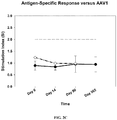
- the patient of this report had no response to AAV capsids through day 180 ( FIG. 2 ).
- the baseline and subsequent titers were at least 2 logs above the limit of detection for the antibody assay.
- Enzyme linked immunospot (ELISpot) assay and antigen specific response assay (ASR) were used to test CD4 + and CD8 + T-cells for reactivity against both the AAV capsid and the transgene products.
- ELISPOT assays to AAV1 capsid protein peptide pools and ASR ( FIG. 2 ) to intact AAV1 capsids were unchanged from baseline to day 180.
- Serum IgG Serum IgG was maintained above 700-1000 mg/dL by regular monthly infusions of IVIG. The approach had no impact on WBC, nor was there any evidence of thrombocytopenia or anemia. Serum transaminase levels are commonly elevated in Pompe disease (ref. 40) and were unchanged in the patient, from baseline through the 90 days following rAAV1-CMV-hGAA dosing. NT-pro BNP, CPK and CPK-MB were responsive to initiation of ERT and were not influenced by the immune management. There was no impact on CD3 positive lymphocytes. Evaluation of CD20 counts confirmed complete depletion of B-cells by Rituximab.
- MIP Maximal Inspiratory Pressure
- rituximab prior to rAAV vector exposure resulted in immune non-responsiveness to rAAV-CMV-hGAA vector administration, therefore allowing for the possibility of repeat administration of the a vector, e.g., a vector of the same AAV serotype. Accordingly, methods involving administration of rituximab are useful for permitting a subject to be administered multiple doses of rAAV. This approach can be applied to prevent immune response to rAAV vectors administered systemically or targeted to cardiac and skeletal muscles or liver.
- PCR quantitative real-time polymerase chain reaction
- Serum samples were assayed by enzyme linked immunosorbent assay (ELISA) for circulating antibodies to the intact AAV1 capsid and hGAA protein 21,46.
- ELISA enzyme linked immunosorbent assay
- Anti-AAV1 and anti-hGAA ASR and ELISPOT assay were performed as previously described on isolated peripheral blood mononuclear cells (ref. 47). Enumeration of B- and T-lymphocyte subpopulations in peripheral blood was done by flow cytometry using monoclonal Abs to CD19 or CD20 for B cells and monoclonal Abs to CD3, CD4, and CD8 for T cells.
- Sirolimus trough levels IgG, CD3, CD4, CD8, CD19, CD20, N-terminal pro-brain natriuretic peptide, creatine kinase, creatine kinase-MB, C-reactive protein, platelets, alkaline phosphatase, gamma-glutamyl transferase, aspartate aminotransferase, and alanine aminotransferase were measured at regular intervals.
- MIP was evaluated using a one-way inspiratory occlusion.
- a one-way valve permitted exhalation, but prevented inspiratory airflow.
- a pressure transducer was used to record the negative pressure. The test was repeated three times and the most negative pressure was recorded.
- GMFM-88 (ref. 48), which is an evaluative tool designed to measure change in the gross motor function of patients over time (e.g., lying/rolling, sitting, crawling/kneeling, standing and walking/running/jumping) was also tested. MIP and GMFM-88 were collected at baseline, day 90 and day 180.
- Example 2 Additional subjects were treated with rAAV1-CMV-GAA in combination with an immunosuppression protocol as described in Example 1 (treated with Rituximab and sirolimus) or were treated with rAAV1-CMV-GAA without immunosuppression.
- Subjects who received 1-5 x 10 12 vg/kg of rAAV1-CMV-GAA without immunosuppression (n 5, lines with circles in FIG. 5 ), had anti-AAV1 antibodies >2 standard deviations (SD) above the population mean by day 14 post-dosing.
- SD standard deviations
- inventive embodiments are presented by way of example only and that, within the scope of the appended claims and equivalents thereto, inventive embodiments may be practiced otherwise than as specifically described and claimed.
- inventive embodiments of the present disclosure are directed to each individual feature, system, article, material, kit, and/or method described herein.
- a reference to "A and/or B", when used in conjunction with open-ended language such as “comprising” can refer, in one embodiment, to A only (optionally including elements other than B); in another embodiment, to B only (optionally including elements other than A); in yet another embodiment, to both A and B (optionally including other elements); etc.
- the phrase "at least one,” in reference to a list of one or more elements, should be understood to mean at least one element selected from any one or more of the elements in the list of elements, but not necessarily including at least one of each and every element specifically listed within the list of elements and not excluding any combinations of elements in the list of elements.
- This definition also allows that elements may optionally be present other than the elements specifically identified within the list of elements to which the phrase "at least one" refers, whether related or unrelated to those elements specifically identified.
- At least one of A and B can refer, in one embodiment, to at least one, optionally including more than one, A, with no B present (and optionally including elements other than B); in another embodiment, to at least one, optionally including more than one, B, with no A present (and optionally including elements other than A); in yet another embodiment, to at least one, optionally including more than one, A, and at least one, optionally including more than one, B (and optionally including other elements); etc.
Landscapes
- Health & Medical Sciences (AREA)
- Chemical & Material Sciences (AREA)
- Life Sciences & Earth Sciences (AREA)
- Medicinal Chemistry (AREA)
- General Health & Medical Sciences (AREA)
- Immunology (AREA)
- Engineering & Computer Science (AREA)
- Animal Behavior & Ethology (AREA)
- Pharmacology & Pharmacy (AREA)
- Epidemiology (AREA)
- Public Health (AREA)
- Veterinary Medicine (AREA)
- Organic Chemistry (AREA)
- Bioinformatics & Cheminformatics (AREA)
- Genetics & Genomics (AREA)
- Proteomics, Peptides & Aminoacids (AREA)
- Molecular Biology (AREA)
- Microbiology (AREA)
- Biochemistry (AREA)
- Biotechnology (AREA)
- Biophysics (AREA)
- Mycology (AREA)
- Wood Science & Technology (AREA)
- Zoology (AREA)
- Biomedical Technology (AREA)
- Endocrinology (AREA)
- Gastroenterology & Hepatology (AREA)
- Virology (AREA)
- General Engineering & Computer Science (AREA)
- Oncology (AREA)
- Medicines Containing Material From Animals Or Micro-Organisms (AREA)
- Medicines That Contain Protein Lipid Enzymes And Other Medicines (AREA)
- Pharmaceuticals Containing Other Organic And Inorganic Compounds (AREA)
Applications Claiming Priority (3)
| Application Number | Priority Date | Filing Date | Title |
|---|---|---|---|
| US201461984607P | 2014-04-25 | 2014-04-25 | |
| EP15782460.8A EP3134113A4 (fr) | 2014-04-25 | 2015-04-24 | Méthodes permettant qu'un sujet reçoive des doses multiples de virus adéno-associé recombinant |
| PCT/US2015/027538 WO2015164758A1 (fr) | 2014-04-25 | 2015-04-24 | Méthodes permettant qu'un sujet reçoive des doses multiples de virus adéno-associé recombinant |
Related Parent Applications (1)
| Application Number | Title | Priority Date | Filing Date |
|---|---|---|---|
| EP15782460.8A Division EP3134113A4 (fr) | 2014-04-25 | 2015-04-24 | Méthodes permettant qu'un sujet reçoive des doses multiples de virus adéno-associé recombinant |
Publications (1)
| Publication Number | Publication Date |
|---|---|
| EP3909602A1 true EP3909602A1 (fr) | 2021-11-17 |
Family
ID=54333277
Family Applications (2)
| Application Number | Title | Priority Date | Filing Date |
|---|---|---|---|
| EP15782460.8A Withdrawn EP3134113A4 (fr) | 2014-04-25 | 2015-04-24 | Méthodes permettant qu'un sujet reçoive des doses multiples de virus adéno-associé recombinant |
| EP21151619.0A Pending EP3909602A1 (fr) | 2014-04-25 | 2015-04-24 | Méthodes permettant qu'un sujet reçoive des doses multiples de virus adéno-associé recombinant |
Family Applications Before (1)
| Application Number | Title | Priority Date | Filing Date |
|---|---|---|---|
| EP15782460.8A Withdrawn EP3134113A4 (fr) | 2014-04-25 | 2015-04-24 | Méthodes permettant qu'un sujet reçoive des doses multiples de virus adéno-associé recombinant |
Country Status (3)
| Country | Link |
|---|---|
| US (2) | US20170049887A1 (fr) |
| EP (2) | EP3134113A4 (fr) |
| WO (1) | WO2015164758A1 (fr) |
Cited By (3)
| Publication number | Priority date | Publication date | Assignee | Title |
|---|---|---|---|---|
| WO2025155923A1 (fr) | 2024-01-17 | 2025-07-24 | The Broad Institute, Inc. | Modifications de capsides de vaa permettant une administration améliorée de gènes à l'échelle du snc par l'intermédiaire d'interactions avec le récepteur de la transferrine |
| WO2025217174A1 (fr) | 2024-04-08 | 2025-10-16 | The Broad Institute, Inc. | Modifications de capside d'aav qui permettent une délivrance améliorée de gènes à l'échelle du snc par l'intermédiaire d'interactions avec l'anhydrase carbonique iv |
| WO2025217163A2 (fr) | 2024-04-08 | 2025-10-16 | The Broad Institute, Inc. | Nouveaux capsides aav se liant à cd59 humain |
Families Citing this family (13)
| Publication number | Priority date | Publication date | Assignee | Title |
|---|---|---|---|---|
| CN115120746A (zh) | 2013-05-15 | 2022-09-30 | 明尼苏达大学董事会 | 腺相关病毒介导的基因向中枢神经系统转移 |
| AU2016291778B2 (en) * | 2015-07-13 | 2021-05-06 | Sangamo Therapeutics, Inc. | Delivery methods and compositions for nuclease-mediated genome engineering |
| EP3384035A4 (fr) | 2015-12-02 | 2019-08-07 | Voyager Therapeutics, Inc. | Dosages pour la détection d'anticorps neutralisants de vaa |
| WO2017139381A1 (fr) | 2016-02-08 | 2017-08-17 | University Of Iowa Research Foundation | Procédés pour produire des virus adéno-associés/bocavirus parvovirus chimériques |
| CA3016985C (fr) | 2016-03-07 | 2023-07-04 | University Of Iowa Research Foundation | Expression mediee par aav utilisant un promoteur et un activateur synthetiques |
| SG10201912761UA (en) | 2016-04-15 | 2020-02-27 | The Trustees Of The Univ Of Pennsyvania | Gene therapy for treating mucopolysaccharidosis type ii |
| WO2017205739A1 (fr) | 2016-05-26 | 2017-11-30 | University Of Iowa Research Foundation | Configurations cis et trans pour la résolution terminale du bocavirus 1 humain |
| US11142775B2 (en) | 2017-01-13 | 2021-10-12 | University Of Iowa Research Foundation | Bocaparvovirus small noncoding RNA and uses thereof |
| KR102883778B1 (ko) | 2017-09-22 | 2025-11-12 | 더 트러스티스 오브 더 유니버시티 오브 펜실베니아 | Ii형 점액다당류증의 치료를 위한 유전자 요법 |
| WO2021067598A1 (fr) * | 2019-10-04 | 2021-04-08 | Ultragenyx Pharmaceutical Inc. | Procédés pour une utilisation thérapeutique améliorée d'aav recombinant |
| EP4149622A4 (fr) * | 2020-05-12 | 2024-12-18 | Myogene Bio LLC | Agents immunosuppresseurs et méthodes de re-dosage d'administration virale pour thérapie génique |
| WO2022006253A2 (fr) * | 2020-06-30 | 2022-01-06 | University Of Iowa Research Foundation | Procédés et compositions pour l'administration de vecteurs viraux recombinants |
| CN116887868A (zh) * | 2020-12-07 | 2023-10-13 | 太空飞船七有限责任公司 | 达农病的治疗 |
Citations (9)
| Publication number | Priority date | Publication date | Assignee | Title |
|---|---|---|---|---|
| US5139941A (en) | 1985-10-31 | 1992-08-18 | University Of Florida Research Foundation, Inc. | AAV transduction vectors |
| US5595721A (en) | 1993-09-16 | 1997-01-21 | Coulter Pharmaceutical, Inc. | Radioimmunotherapy of lymphoma using anti-CD20 |
| US5677180A (en) | 1987-01-08 | 1997-10-14 | Xoma Corporation | Chimeric antibody with specificity to human B cell surface antigen |
| US5736137A (en) | 1992-11-13 | 1998-04-07 | Idec Pharmaceuticals Corporation | Therapeutic application of chimeric and radiolabeled antibodies to human B lymphocyte restricted differentiation antigen for treatment of B cell lymphoma |
| US5962313A (en) | 1996-01-18 | 1999-10-05 | Avigen, Inc. | Adeno-associated virus vectors comprising a gene encoding a lyosomal enzyme |
| WO2004035607A2 (fr) | 2002-10-17 | 2004-04-29 | Genmab A/S | Anticorps monoclonaux humains anti-cd20 |
| US20070015238A1 (en) | 2002-06-05 | 2007-01-18 | Snyder Richard O | Production of pseudotyped recombinant AAV virions |
| US20100003252A1 (en) * | 1999-07-12 | 2010-01-07 | Genentech, Inc. | Blocking immune response to a graft |
| US20120322861A1 (en) | 2007-02-23 | 2012-12-20 | Barry John Byrne | Compositions and Methods for Treating Diseases |
Family Cites Families (2)
| Publication number | Priority date | Publication date | Assignee | Title |
|---|---|---|---|---|
| US20070292922A1 (en) * | 2006-03-31 | 2007-12-20 | Cell Genesys, Inc. | Regulated expression of recombinant proteins from adeno-associated viral vectors |
| WO2011139379A2 (fr) * | 2010-05-06 | 2011-11-10 | Duke University | Méthode de traitement de patients suivant une thérapie de remplacement de protéine, une thérapie de remplacement de gène ou d'autres modalités thérapeutiques |
-
2015
- 2015-04-24 EP EP15782460.8A patent/EP3134113A4/fr not_active Withdrawn
- 2015-04-24 EP EP21151619.0A patent/EP3909602A1/fr active Pending
- 2015-04-24 WO PCT/US2015/027538 patent/WO2015164758A1/fr not_active Ceased
- 2015-04-24 US US15/306,139 patent/US20170049887A1/en not_active Abandoned
-
2022
- 2022-03-04 US US17/686,624 patent/US20220347297A1/en active Pending
Patent Citations (9)
| Publication number | Priority date | Publication date | Assignee | Title |
|---|---|---|---|---|
| US5139941A (en) | 1985-10-31 | 1992-08-18 | University Of Florida Research Foundation, Inc. | AAV transduction vectors |
| US5677180A (en) | 1987-01-08 | 1997-10-14 | Xoma Corporation | Chimeric antibody with specificity to human B cell surface antigen |
| US5736137A (en) | 1992-11-13 | 1998-04-07 | Idec Pharmaceuticals Corporation | Therapeutic application of chimeric and radiolabeled antibodies to human B lymphocyte restricted differentiation antigen for treatment of B cell lymphoma |
| US5595721A (en) | 1993-09-16 | 1997-01-21 | Coulter Pharmaceutical, Inc. | Radioimmunotherapy of lymphoma using anti-CD20 |
| US5962313A (en) | 1996-01-18 | 1999-10-05 | Avigen, Inc. | Adeno-associated virus vectors comprising a gene encoding a lyosomal enzyme |
| US20100003252A1 (en) * | 1999-07-12 | 2010-01-07 | Genentech, Inc. | Blocking immune response to a graft |
| US20070015238A1 (en) | 2002-06-05 | 2007-01-18 | Snyder Richard O | Production of pseudotyped recombinant AAV virions |
| WO2004035607A2 (fr) | 2002-10-17 | 2004-04-29 | Genmab A/S | Anticorps monoclonaux humains anti-cd20 |
| US20120322861A1 (en) | 2007-02-23 | 2012-12-20 | Barry John Byrne | Compositions and Methods for Treating Diseases |
Non-Patent Citations (139)
| Title |
|---|
| "Adeno-Associated Virus Vectors", CLINICAL TRIALS. BARRIE J. CARTER. HUMAN GENE THERAPY, vol. 16, no. 5, 25 May 2005 (2005-05-25), pages 541 - 550 |
| "Disease", 2007, article "Immune Deficiency Foundation.IDF Patient and Family Handbook: For Primary Immunodeficiency" |
| "Late Breaking Abstracts: Presented at the American Society of Gene & Cell Therapy's 16thAnnual Meeting, May 15-18, 2013, Salt Lake City, Utah", MOLECULAR THERAPY, vol. 21, no. 9, 6 September 2013 (2013-09-06), US, pages e1 - e46, XP055258076, ISSN: 1525-0016, DOI: 10.1038/mt.2013.140 * |
| ALEEM, A. ET AL.: "Rituximab as a single agent in the management of adult patients with haemophilia A and inhibitors: marked reduction in inhibitor level and clinical improvement in bleeding but failure to eradicate the inhibitor", HAEMOPHILIA, vol. 15, 2009, pages 210 - 6 |
| ASFOUR ET AL.: "Uniform long-term gene expression using adeno-associated virus (AAV) by ex vivo recirculation in rat-cardiac isografts", THE THORACIC AND CARDIOVASCULAR SURGEON, vol. 50, 2002, pages 347 - 350 |
| AURICCHIO ET AL., HUM. MOLEC. GENET., vol. 10, 2001, pages 3075 - 3081 |
| BALI, D.S.TOLUN, A.A.GOLDSTEIN, J.L.DAI, J.KISHNANI, P.S.: "Molecular analysis and protein processing in late-onset Pompe disease patients with low levels of acid alpha-glucosidase activity", MUSCLE NERVE, vol. 43, 2011, pages 665 - 70 |
| BANUGARIA, S.G. ET AL.: "Algorithm for the early diagnosis and treatment of patients with cross reactive immunologic material-negative classic infantile pompe disease: a step towards improving the efficacy of ERT", PLOS ONE, vol. 8, 2013, pages e67052, XP055763671, DOI: 10.1371/journal.pone.0067052 |
| BANUGARIA, S.G. ET AL.: "Persistence of high sustained antibodies to enzyme replacement therapy despite extensive immunomodulatory therapy in an infant with Pompe disease: need for agents to target antibody-secreting plasma cells", MOL GENET METAB, vol. 105, 2012, pages 677 - 80, XP028472832, DOI: 10.1016/j.ymgme.2012.01.019 |
| BARBARA K. SMITH ET AL: "Phase I/II Trial of Adeno-Associated Virus-Mediated Alpha-Glucosidase Gene Therapy to the Diaphragm for Chronic Respiratory Failure in Pompe Disease: Initial Safety and Ventilatory Outcomes", HUMAN GENE THERAPY, vol. 24, no. 6, 1 June 2013 (2013-06-01), US, pages 630 - 640, XP055412889, ISSN: 1043-0342, DOI: 10.1089/hum.2012.250 * |
| BARRIE J. CARTER: "Adeno-Associated Virus Vectors in Clinical Trials", HUMAN GENE THERAPY, vol. 16, no. 5, 25 May 2005 (2005-05-25), pages 541 - 550 |
| BARTEL MAWEINSTEIN JRSCHAFFER DV: "Directed evolution of novel adeno-associated viruses for therapeutic gene delivery", GENE THER, vol. 19, no. 6, 8 March 2012 (2012-03-08), pages 694 - 700, XP055172045, DOI: 10.1038/gt.2012.20 |
| BRANTLY ET AL.: "Phase I trial of intramuscular injection of a recombinant adeno-associated virus serotype 2 alphal-antitrypsin (AAT) vector in AAT-deficient adults", HUMAN GENE THERAPY, vol. 17, 2006, pages 1177 - 1186, XP055144537, DOI: 10.1089/hum.2006.17.1177 |
| BRANTLY ET AL.: "Sustained transgene expression despite T lymphocyte responses in a clinical trial of rAAVl-AAT gene therapy", PROCEEDINGS OF THE NATIONAL ACADEMY OF SCIENCES OF THE UNITED STATES OF AMERICA, vol. 106, 2009, pages 16363 - 16368 |
| BRANTLY, M.L. ET AL.: "Phase I trial of intramuscular injection of a recombinant adeno-associated virus serotype 2 alphal-antitrypsin (AAT) vector in AAT-deficient adults", HUM GENE THER, vol. 17, 2006, pages 1177 - 86, XP055144537, DOI: 10.1089/hum.2006.17.1177 |
| BRANTLY, M.L. ET AL.: "Sustained transgene expression despite T lymphocyte responses in a clinical trial of rAAVl-AAT gene therapy", PROC NATL ACAD SCI U S A, vol. 106, 2009, pages 16363 - 8 |
| BYRNE ET AL.: "Gene therapy approaches for lysosomal storage disease: next-generation treatment", HUMAN GENE THERAPY, vol. 23, 2012, pages 808 - 815 |
| BYRNE ET AL.: "Pompe disease gene therapy", HUMAN MOLECULAR GENETICS, vol. 20, 2011, pages R61 - 68, XP055098127, DOI: 10.1093/hmg/ddr174 |
| BYRNE, B.J. ET AL.: "Pompe disease gene therapy", HUM MOL GENET, vol. 20, 2011, pages 61 - 8 |
| BYRNE, B.J. ET AL.: "Pompe disease: design, methodology, and early findings from the Pompe Registry", MOL GENET METAB, vol. 103, 2011, pages 1 - 11, XP028197397, DOI: 10.1016/j.ymgme.2011.02.004 |
| BYRNE, BJ: "Innovative vector design: cross-packaged, self-complementary and now trans-splicing AAV vectors", HUMAN GENE THERAPY, vol. 20, 2009, pages 1224 - 1225 |
| CALCEDO, RWILSON, J.M: "Humoral Immune Response to AAV", FRONT IMMUNOL, vol. 4, 2013, pages 341 |
| CHICOINE, L. ET AL.: "Plasmapheresis Eliminates the Negative Impact of AAV Antibodies on Microdystrophin Gene Expression Following Vascular Delivery", MOL THER, 2013 |
| CIDECIYAN ET AL.: "Human gene therapy for RPE65 isomerase deficiency activates the retinoid cycle of vision but with slow rod kinetics", PROCEEDINGS OF THE NATIONAL ACADEMY OF SCIENCES OF THE UNITED STATES OF AMERICA, vol. 105, 2008, pages 15112 - 15117, XP055390820, DOI: 10.1073/pnas.0807027105 |
| CIDECIYAN ET AL.: "Human RPE65 gene therapy for Leber congenital amaurosis: persistence of early visual improvements and safety at 1 year", HUMAN GENE THERAPY, vol. 20, 2009, pages 999 - 1004 |
| CIDECIYAN ET AL.: "Vision 1 year after gene therapy for Leber's congenital amaurosis", THE NEW ENGLAND JOURNAL OF MEDICINE, vol. 361, 2009, pages 725 - 727 |
| CIDECIYAN, A.V. ET AL.: "Vision 1 year after gene therapy for Leber's congenital amaurosis", N ENGL J MED, vol. 361, 2009, pages 725 - 7 |
| CLEMENT ET AL.: "Large-scale adeno-associated viral vector production using a herpesvirus-based system enables manufacturing for clinical studies", HUMAN GENE THERAPY, vol. 20, 2009, pages 796 - 806, XP055041035, DOI: 10.1089/hum.2009.094 |
| COLLINS, P.W. ET AL.: "Rituximab and immune tolerance in severe hemophilia A: a consecutive national cohort", J THROMB HAEMOST, vol. 7, 2009, pages 787 - 94, XP002619265, DOI: 10.1111/j.1538-7836.2009.03332.x |
| CONLON ET AL.: "Preclinical toxicology and biodistribution studies of recombinant adeno-associated virus 1 human acid alpha-glucosidase", HUMAN GENE THERAPY CLINICAL DEVELOPMENT, vol. 24, 2013, pages 127 - 133 |
| CONWAY ET AL.: "High-titer recombinant adeno-associated virus production utilizing a recombinant herpes simplex virus type I vector expressing AAV-2 Rep and Cap", GENE THERAPY, vol. 6, 1999, pages 986 - 993, XP000906811, DOI: 10.1038/sj.gt.3300937 |
| CRESAWN ET AL.: "Impact of humoral immune response on distribution and efficacy of recombinant adeno-associated virus-derived acid alpha-glucosidase in a model of glycogen storage disease type II", HUMAN GENE THERAPY, vol. 16, 2005, pages 68 - 80 |
| CURTIS A. MACHIDA: "Methods in Molecular Medicine", 2003, HUMANA PRESS INC., article "Viral Vectors for Gene TherapyMethods and Protocols" |
| DERUISSEAU, L.R. ET AL.: "Neural deficits contribute to respiratory insufficiency in Pompe disease", PROC NATL ACAD SCI U S A, vol. 106, 2009, pages 9419 - 24 |
| DISEASE, A.W.G.O.M.O.P. ET AL.: "Pompe disease diagnosis and management guideline", GENET MED, vol. 8, 2006, pages 267 - 88, XP002620250, DOI: 10.1097/01.gim.0000218152.87434.f3 |
| DJ FALK ET AL: "Prevention of Anti-Capsid Immune Response Following Systemic AAV9 Dosing in Infant RhesusMonkeys", AMERICAN SOCIETY OF GENE & CELL THERAPY'S 16THANNUAL MEETING, MAY 15-18, 2013, SALT LAKE CITY, UTAH, 13 May 2013 (2013-05-13), XP055416903 * |
| DUAN ET AL., J. VIROL., vol. 75, 2001, pages 7662 - 7671 |
| ELDER, M.E. ET AL.: "B-Cell depletion and immunomodulation before initiation of enzyme replacement therapy blocks the immune response to acid alpha-glucosidase in infantile-onset Pompe disease", J PEDIATR, vol. 163, 2013, pages 847 - 54 |
| ELMALLAH ET AL.: "Retrograde gene delivery to hypoglossal motoneurons using adeno-associated virus serotype 9", HUMAN GENE THERAPY METHODS, vol. 23, 2012, pages 148 - 156, XP055221967, DOI: 10.1089/hgtb.2012.009 |
| ELMALLAH ET AL.: "Sustained Correction of Motoneuron Histopathology Following Intramuscular Delivery of AAV in Pompe Mice", MOLECULAR THERAPY : THE JOURNAL OF THE AMERICAN SOCIETY OF GENE THERAPY, 2013 |
| F MINGOZZI ET AL: "Prevalence and pharmacological modulation of humoral immunity to AAV vectors in gene transfer to synovial tissue", GENE THERAPY, vol. 20, no. 4, 1 April 2013 (2013-04-01), pages 417 - 424, XP055175005, ISSN: 0969-7128, DOI: 10.1038/gt.2012.55 * |
| FALK DD, C.D.NAYAK SDOERFLER PCORTI MCLEMENT NCONLON TTARANTAL AFBYRNE BJ: "Prevention of anti-capsid response following systemic AAV9 dosing infant rhesus monkeys", MOLECULAR THERAPY, vol. 21, 2013, pages e1 - e46 |
| FALK ET AL.: "Intrapleural administration of AAV9 improves neural and cardiorespiratory function in Pompe disease", MOLECULAR THERAPY : THE JOURNAL OF THE AMERICAN SOCIETY OF GENE THERAPY, vol. 21, 2013, pages 1661 - 1667, XP055644624, DOI: 10.1038/mt.2013.96 |
| FEDERICO MINGOZZI ET AL: "Pharmacological Modulation of Humoral Immunity in a Nonhuman Primate Model of AAV Gene Transfer for Hemophilia B", MOLECULAR THERAPY, vol. 20, no. 7, 1 July 2012 (2012-07-01), US, pages 1410 - 1416, XP055416974, ISSN: 1525-0016, DOI: 10.1038/mt.2012.84 * |
| FERREIRA, V. ET AL.: "Immune responses to intramuscular administration of alipogene tiparvovec (AAV1-LPLS447X) in a phase II clinical trial of Lipoprotein Lipase deficiency (LPLD) gene therapy", HUM GENE THER, 2013 |
| FLOTTE ET AL.: "Apparently nonspecific enzyme elevations after portal vein delivery of recombinant adeno-associated virus serotype 2 vector in hepatitis C virus-infected chimpanzees", HUMAN GENE THERAPY, vol. 19, 2008, pages 681 - 689 |
| FLOTTE ET AL.: "Phase I trial of intramuscular injection of a recombinant adeno-associated virus alpha 1-antitrypsin (rAAV2-CB-hAAT) gene vector to AAT-deficient adults", HUMAN GENE THERAPY, vol. 15, 2004, pages 93 - 128, XP002517683, DOI: 10.1089/10430340460732490 |
| FLOTTEET ET AL.: "Preclinical characterization of a recombinant adeno-associated virus type 1-pseudotyped vector demonstrates dose-dependent injection site inflammation and dissemination of vector genomes to distant sites", HUMAN GENE THERAPY, vol. 18, 2007, pages 245 - 256 |
| FRAITES ET AL.: "Correction of the enzymatic and functional deficits in a model of Pompe disease using adeno-associated virus vectors", MOLECULAR THERAPY : THE JOURNAL OF THE AMERICAN SOCIETY OF GENE THERAPY, vol. 5, 2002, pages 571 - 578, XP002349632, DOI: 10.1006/mthe.2002.0580 |
| GHOSH ET AL.: "Long-term correction of murine glycogen storage disease type la by recombinant adeno-associated virus-1-mediated gene transfer", GENE THERAPY, vol. 13, 2006, pages 321 - 329 |
| GRIMM ET AL.: "Helper Virus-Free, Optically Controllable, and Two-Plasmid-Based Production of Adeno-associated Virus Vectors of Serotypes 1 to 6", MOLECULAR THERAPY, vol. 7, 2003, pages 839 - 850, XP002256403, DOI: 10.1016/S1525-0016(03)00095-9 |
| GRIMM ET AL.: "Novel Tools for Production and Purification of Recombinant Adenoassociated Virus Vectors", HUMAN GENE THERAPY, vol. 9, 1998, pages 2745 - 2760, XP002093963 |
| HALBERT ET AL., J. VIROL., vol. 74, 2000, pages 1524 - 1532 |
| HAUSWIRTH ET AL.: "Treatment of leber congenital amaurosis due to RPE65 mutations by ocular subretinal injection of adeno-associated virus gene vector: short-term results of a phase I trial", HUMAN GENE THERAPY, vol. 19, 2008, pages 979 - 990, XP055575361, DOI: 10.1089/hum.2008.107 |
| HAUSWIRTH, W.W. ET AL.: "Treatment of leber congenital amaurosis due to RPE65 mutations by ocular subretinal injection of adeno-associated virus gene vector: short-term results of a phase I trial", HUM GENE THER, vol. 19, 2008, pages 979 - 90, XP055575361, DOI: 10.1089/hum.2008.107 |
| HIELKEMA, T. ET AL.: "GMFM in infancy: age-specific limitations and adaptations", PEDIATR PHYS THER, vol. 25, 2013, pages 168 - 76 |
| HIRSCHHOM, J.N. ET AL.: "SBE-TAGS: an array-based method for efficient single-nucleotide polymorphism genotyping", PROC NATL ACAD SCI U S A, vol. 97, 2000, pages 12164 - 9, XP002158215, DOI: 10.1073/pnas.210394597 |
| INT J ONCOL, vol. 38, no. 2, February 2011 (2011-02-01), pages 335 - 44 |
| JACOBSON ET AL.: "Gene therapy for leber congenital amaurosis caused by RPE65 mutations: safety and efficacy in 15 children and adults followed up to 3 years", ARCHIVES OF OPHTHALMOLOGY, vol. 130, 2012, pages 9 - 24 |
| JACOBSON, S.G. ET AL.: "Gene therapy for leber congenital amaurosis caused by RPE65 mutations: safety and efficacy in 15 children and adults followed up to 3 years", ARCH OPHTHALMOL, vol. 130, 2012, pages 9 - 24 |
| KAEPPEL, C. ET AL.: "A largely random AAV integration profile after LPLD gene therapy", NAT MED, vol. 19, 2013, pages 889 - 91 |
| KARMAN, J. ET AL.: "Proteasome inhibition is partially effective in attenuating pre-existing immunity against recombinant adeno-associated viral vectors", PLOS ONE, vol. 7, 2012, pages e34684, XP055265158, DOI: 10.1371/journal.pone.0034684 |
| KERN, A ET AL.: "Identification of a Heparin-Binding Motif on Adeno-Associated Virus Type 2 Capsids", JOURNAL OF VIROLOGY, vol. 77, 2003, pages 11072 - 11081, XP055548734, DOI: 10.1128/JVI.77.20.11072-11081.2003 |
| KESSLER ET AL.: "Gene delivery to skeletal muscle results in sustained expression and systemic delivery of a therapeutic protein", PROCEEDINGS OF THE NATIONAL ACADEMY OF SCIENCES OF THE UNITED STATES OF AMERICA, vol. 93, 1996, pages 14082 - 14087, XP002742730, DOI: 10.1073/pnas.93.24.14082 |
| KESSLER PDPODSAKOFF GMCHEN XMCQUISTON SACOLOSI PCMATELIS LAKURTZMAN GJBYRNE BJ, PROC NATL ACAD SCI USA., vol. 93, no. 24, 26 November 1996 (1996-11-26), pages 14082 - 7 |
| KISHNANI ET AL.: "Pompe disease diagnosis and management guideline", GENETICS IN MEDICINE : OFFICIAL JOURNAL OF THE AMERICAN COLLEGE OF MEDICAL GENETICS, vol. 8, 2006, pages 267 - 288, XP002620250, DOI: 10.1097/01.gim.0000218152.87434.f3 |
| KISHNANI, P.S. ET AL.: "Cross-reactive immunologic material status affects treatment outcomes in Pompe disease infants", MOL GENET METAB, vol. 99, 2010, pages 26 - 33, XP026802467 |
| KOHLBRENNER ET AL.: "Successful production of pseudotyped rAAV vectors using a modified baculovirus expression system", MOLECULAR THERAPY : THE JOURNAL OF THE AMERICAN SOCIETY OF GENE THERAPY, vol. 12, 2005, pages 1217 - 1225 |
| KRONENBERG ET AL.: "A Conformational Change in the Adeno-Associated Virus Type 2 Capsid Leads to the Exposure of Hidden VP1 N Termini", JOURNAL OF VIROLOGY, vol. 79, 2005, pages 5296 - 5303, XP055470106, DOI: 10.1128/JVI.79.9.5296-5303.2005 |
| LEE ET AL.: "An acidic oligopeptide displayed on AAV2 improves axial muscle tropism after systemic delivery", GENETIC VACCINES AND THERAPY, vol. 10, 2012, pages 3, XP021133105, DOI: 10.1186/1479-0556-10-3 |
| LEE ET AL.: "Treatment of congenital neurotransmitter deficiencies by intracerebral ventricular injection of an AAV9 vector", HUMAN GENE THERAPY, 2013 |
| LESLIE, N.TINKLE, B.T. ET AL., GENEREVIEWS, vol. Glycogen Storage Disease Type II (Pompe Disease, 1993 |
| LEVITSKY, J. ET AL.: "Systemic immunoregulatory and proteogenomic effects of tacrolimus to sirolimus conversion in liver transplant recipients", HEPATOLOGY, vol. 57, 2013, pages 239 - 48 |
| LI, H. ET AL.: "Capsid-specific T-cell responses to natural infections with adeno-associated viruses in humans differ from those of nonhuman primates", MOL THER, vol. 19, 2011, pages 2021 - 30 |
| LOCK ET AL.: "Characterization of a recombinant adeno-associated virus type 2 Reference Standard Material", HUMAN GENE THERAPY, vol. 21, 2010, pages 1273 - 1285, XP055614827, DOI: 10.1089/hum.2009.223 |
| MAH ET AL.: "A new method for recombinant adeno-associated virus vector delivery to murine diaphragm", MOLECULAR THERAPY : THE JOURNAL OF THE AMERICAN SOCIETY OF GENE THERAPY, vol. 9, 2004, pages 458 - 463, XP002349631, DOI: 10.1016/j.ymthe.2004.01.006 |
| MAH ET AL.: "Adeno-associated virus-mediated gene therapy for metabolic myopathy", HUMAN GENE THERAPY, vol. 24, 2013, pages 928 - 936 |
| MAH ET AL.: "Dual vectors expressing murine factor VIII result in sustained correction of hemophilia A mice", HUMAN GENE THERAPY, vol. 14, 2003, pages 143 - 152, XP002399604, DOI: 10.1089/104303403321070838 |
| MAH ET AL.: "Gel-mediated delivery of AAV 1 vectors corrects ventilatory function in Pompe mice with established disease", MOLECULAR THERAPY : THE JOURNAL OF THE AMERICAN SOCIETY OF GENE THERAPY, vol. 18, 2010, pages 502 - 510 |
| MAH ET AL.: "Improved method of recombinant AAV2 delivery for systemic targeted gene therapy", MOLECULAR THERAPY : THE JOURNAL OF THE AMERICAN SOCIETY OF GENE THERAPY, vol. 6, 2002, pages 106 - 112, XP002967965, DOI: 10.1006/mthe.2001.0636 |
| MAH ET AL.: "Physiological correction of Pompe disease by systemic delivery of adeno-associated virus serotype 1 vectors", MOLECULAR THERAPY : THE JOURNAL OF THE AMERICAN SOCIETY OF GENE THERAPY, vol. 15, 2007, pages 501 - 507 |
| MAH ET AL.: "Sustained correction of glycogen storage disease type II using adeno-associated virus serotype 1 vectors", GENE THERAPY, vol. 12, 2005, pages 1405 - 1409 |
| MAH ET AL.: "Virus-based gene delivery systems", CLINICAL PHARMACOKINETICS, vol. 41, 2002, pages 901 - 911, XP009068951, DOI: 10.2165/00003088-200241120-00001 |
| MANDEL ET AL.: "AAV6-mediated gene silencing fALS short", MOLECULAR THERAPY : THE JOURNAL OF THE AMERICAN SOCIETY OF GENE THERAPY, vol. 19, 2011, pages 231 - 233 |
| MANNO, C.S. ET AL.: "Successful transduction of liver in hemophilia by AAV-Factor IX and limitations imposed by the host immune response", NAT MED, vol. 12, 2006, pages 342 - 7, XP002578131 |
| MANUELA CORTI ET AL: "Evaluation of Readministration of a Recombinant Adeno-Associated Virus Vector Expressing Acid Alpha-Glucosidase in Pompe Disease: Preclinical to Clinical Planning", HUMAN GENE THERAPY CLINICAL DEVELOPMENT, vol. 26, no. 3, 1 September 2015 (2015-09-01), pages 185 - 193, XP055416192, ISSN: 2324-8637, DOI: 10.1089/humc.2015.068 * |
| MARGRIET J VERVOORDELDONK ET AL: "825.Pre-Existing Immunity to Different Adeno- Associated Virus Serotypes in Serum and Synovial Fluid of RA Patients: Implications for Vector Effi cacy", MOLECULAR THERAPY, vol. 17, no. 1, 1 May 2009 (2009-05-01), pages S316, XP055416840 * |
| MASAT, E.PAVANI, G.MINGOZZI, F: "Humoral immunity to AAV vectors in gene therapy: challenges and potential solutions", DISCOV MED, vol. 15, 2013, pages 379 - 89, XP009187173 |
| MCKUSICK, V.A.AMBERGER, J.S.FRANCOMANO, C.A.: "Progress in medical genetics: map-based gene discovery and the molecular pathology of skeletal dysplasias", AM J MED GENET, vol. 63, 1996, pages 98 - 105 |
| MELISSA E. ELDER ET AL: "B-Cell Depletion and Immunomodulation before Initiation of Enzyme Replacement Therapy Blocks the Immune Response to Acid Alpha-Glucosidase in Infantile-Onset Pompe Disease", JOURNAL OF PEDIATRICS., vol. 163, no. 3, 1 September 2013 (2013-09-01), US, pages 847 - 854.e1, XP055416187, ISSN: 0022-3476, DOI: 10.1016/j.jpeds.2013.03.002 * |
| MENDELL ET AL.: "Limb-girdle muscular dystrophy type 2D gene therapy restores alpha-sarcoglycan and associated proteins", ANNALS OF NEUROLOGY, vol. 66, 2009, pages 290 - 297 |
| MENDELL ET AL.: "Sustained alpha-sarcoglycan gene expression after gene transfer in limb-girdle muscular dystrophy, type 2D", ANNALS OF NEUROLOGY, vol. 68, 2010, pages 629 - 638, XP055078625, DOI: 10.1002/ana.22251 |
| MENDELL, J.R. ET AL.: "Limb-girdle muscular dystrophy type 2D gene therapy restores alpha-sarcoglycan and associated proteins", ANN NEUROL, vol. 66, 2009, pages 290 - 7 |
| MINGOZZI FHIGH KA, NAT REV GENET., vol. 12, no. 5, May 2011 (2011-05-01), pages 341 - 55 |
| MINGOZZI FHIGH KA: "Therapeutic in vivo gene transfer for genetic disease using AAV: progress and challenges", NAT REV GENET, vol. 12, no. 5, May 2011 (2011-05-01), pages 341 - 55, XP055155351, DOI: 10.1038/nrg2988 |
| MINGOZZI, F. ET AL.: "CD8(+) T-cell responses to adeno-associated virus capsid in humans", NAT MED, vol. 13, 2007, pages 419 - 22, XP055755694, DOI: 10.1038/nm1549 |
| MINGOZZI, F. ET AL.: "Prevalence and pharmacological modulation of humoral immunity to AAV vectors in gene transfer to synovial tissue", GENE THER, vol. 20, 2013, pages 417 - 24, XP055175005, DOI: 10.1038/gt.2012.55 |
| MINGOZZI, F.HIGH, K.A.: "Immune responses to AAV vectors: overcoming barriers to successful gene therapy", BLOOD, vol. 122, 2013, pages 23 - 36, XP055175008, DOI: 10.1182/blood-2013-01-306647 |
| MOL IMMUNOL, vol. 45, no. 10, May 2008 (2008-05-01), pages 2861 - 8 |
| MOL THER, vol. 20, no. 4, 24 January 2012 (2012-01-24), pages 699 - 708 |
| MOUFARREJ, N.A.BERTORINI, T.E.: "Respiratory insufficiency in adult-type acid maltase deficiency", SOUTH MED J, vol. 86, 1993, pages 560 - 7 |
| MOULLIER, PSNYDER, R.O: "International efforts for recombinant adenoassociated viral vector reference standards", MOLECULAR THERAPY, vol. 16, 2008, pages 1185 - 1188 |
| NATHWANI, A.C. ET AL.: "Safe and efficient transduction of the liver after peripheral vein infusion of self-complementary AAV vector results in stable therapeutic expression of human FIX in nonhuman primates", BLOOD, vol. 109, 2007, pages 1414 - 21, XP055426703, DOI: 10.1182/blood-2006-03-010181 |
| NAYAK, S. ET AL.: "Mapping the T helper cell response to acid alpha-glucosidase in Pompe mice", MOL GENET METAB, vol. 106, 2012, pages 189 - 95, XP028487397, DOI: 10.1016/j.ymgme.2012.03.009 |
| NAYAK, S. ET AL.: "Prophylactic immune tolerance induced by changing the ratio of antigen-specific effector to regulatory T cells", J THROMB HAEMOST, vol. 7, 2009, pages 1523 - 32, XP055629505, DOI: 10.1111/j.1538-7836.2009.03548.x |
| NAYAK, S.HERZOG, R.W.: "Progress and prospects: immune responses to viral vectors", GENE THER, vol. 17, 2010, pages 295 - 304, XP055594344, DOI: 10.1038/gt.2009.148 |
| NEUROPHARMACOLOGY, vol. 69, 17 March 2012 (2012-03-17), pages 82 - 8 |
| PACAK ET AL.: "AAV vectors for cardiac gene transfer: experimental tools and clinical opportunities", MOLECULAR THERAPY : THE JOURNAL OF THE AMERICAN SOCIETY OF GENE THERAPY, vol. 19, 2011, pages 1582 - 1590, XP055153306, DOI: 10.1038/mt.2011.124 |
| PACAK ET AL.: "Long-term skeletal muscle protection after gene transfer in a mouse model of LGMD-2D", MOLECULAR THERAPY : THE JOURNAL OF THE AMERICAN SOCIETY OF GENE THERAPY, vol. 15, 2007, pages 1775 - 1781 |
| PACAK ET AL.: "Recombinant adeno-associated virus serotype 9 leads to preferential cardiac transduction in vivo", CIRC RES, vol. 99, 2006, pages e3 - 9 |
| PACAK ET AL.: "Relative persistence of AAV serotype 1 vector genomes in dystrophic muscle", GENETIC VACCINES AND THERAPY, vol. 6, 2008, pages 14, XP021044008, DOI: 10.1186/1479-0556-6-14 |
| PACAK ET AL.: "Tissue specific promoters improve specificity of AAV9 mediated transgene expression following intra-vascular gene delivery in neonatal mice", GENETIC VACCINES AND THERAPY, vol. 6, 2008, pages 13, XP021044007, DOI: 10.1186/1479-0556-6-13 |
| PAULY ET AL.: "Complete correction of acid alpha-glucosidase deficiency in Pompe disease fibroblasts in vitro, and lysosomally targeted expression in neonatal rat cardiac and skeletal muscle", GENE THERAPY, vol. 5, 1998, pages 473 - 480, XP000934031, DOI: 10.1038/sj.gt.3300609 |
| POLYAK ET AL.: "Gene delivery to intestinal epithelial cells in vitro and in vivo with recombinant adeno-associated virus types 1, 2 and 5", DIGESTIVE DISEASES AND SCIENCES, vol. 53, 2008, pages 1261 - 1270, XP019602757 |
| PRESS ET AL., BLOOD, vol. 69, no. 2, 1987, pages 584 - 591 |
| QIU ET AL.: "Spinal Delivery of AAV Vector Restores Enzyme Activity and Increases Ventilation in Pompe Mice", MOLECULAR THERAPY: THE JOURNAL OF THE AMERICAN SOCIETY OF GENE THERAPY, vol. 20, 2012, pages 21 - 27 |
| RABEN, N.PLOTZ, P.BYRNE, B.J.: "Acid alpha-glucosidase deficiency (glycogenosis type II, Pompe disease", CURR MOL MED, vol. 2, 2002, pages 145 - 66, XP009052371, DOI: 10.2174/1566524024605789 |
| RODINO-KLAPAC, L.R.LEE, J.S.MULLIGAN, R.C.CLARK, K.R.MENDELL, J.R.: "Lack of toxicity of alpha-sarcoglycan overexpression supports clinical gene transfer trial in LGMD2D", NEUROLOGY, vol. 71, 2008, pages 240 - 7, XP055753300, DOI: 10.1212/01.wnl.0000306309.85301.e2 |
| RUCKER ET AL.: "Rescue of enzyme deficiency in embryonic diaphragm in a mouse model of metabolic myopathy: Pompe disease", DEVELOPMENT, vol. 131, 2004, pages 3007 - 3019 |
| SIDMAN, R.L. ET AL.: "Temporal neuropathologic and behavioral phenotype of 6neo/6neo Pompe disease mice", J NEUROPATHOL EXP NEUROL, vol. 67, 2008, pages 803 - 18 |
| SMITH ET AL.: "Phase I/II trial of adeno-associated virus-mediated alpha-glucosidase gene therapy to the diaphragm for chronic respiratory failure in Pompe disease: initial safety and ventilatory outcomes", HUMAN GENE THERAPY, vol. 24, 2013, pages 630 - 640, XP055412889, DOI: 10.1089/hum.2012.250 |
| SMITH, B.K. ET AL.: "Phase I/II trial of adeno-associated virus-mediated alpha-glucosidase gene therapy to the diaphragm for chronic respiratory failure in Pompe disease: initial safety and ventilatory outcomes", HUM GENE THER, vol. 24, 2013, pages 630 - 40, XP055412889, DOI: 10.1089/hum.2012.250 |
| SONG ET AL.: "Sustained secretion of human alpha-1-antitrypsin from murine muscle transduced with adeno-associated virus vectors", PROCEEDINGS OF THE NATIONAL ACADEMY OF SCIENCES OF THE UNITED STATES OF AMERICA, vol. 95, 1998, pages 14384 - 14388, XP002125022, DOI: 10.1073/pnas.95.24.14384 |
| STEDMAN ET AL.: "Signs of progress in gene therapy for muscular dystrophy also warrant caution", MOLECULAR THERAPY: THE JOURNAL OF THE AMERICAN SOCIETY OF GENE THERAPY, vol. 20, 2012, pages 249 - 251 |
| STREIF, W. ET AL.: "Inhibitor treatment by rituximab in congenital haemophilia A - Two case reports", HAMOSTASEOLOGIE, vol. 29, 2009, pages 151 - 4 |
| SUN ET AL.: "Sustained hepatic and renal glucose-6-phosphatase expression corrects glycogen storage disease type la in mice", HUMAN MOLECULAR GENETICS, vol. 11, 2002, pages 2155 - 2164 |
| TARDIEU, M ET AL.: "Intracerebral administration of AAV rh.10 carrying human SGSH and SUMF1 cDNAs in children with MPSIIIA disease: results of a phase I/II trial", HUM GENE THER, 2014 |
| TOSCANO, A.SCHOSER, B.: "Enzyme replacement therapy in late-onset Pompe disease: a systematic literature review", J NEUROL, vol. 260, 2013, pages 951 - 9 |
| VALENTINE ET AL.: "Leukocyte Typing", vol. III, 1987, OXFORD UNIVERSITY PRESS, pages: 440 |
| VAN DER BEEK, N.A.HAGEMANS, M.L.VAN DER PLOEG, A.T.REUSER, A.J.VAN DOOM, P.A: "Pompe disease (glycogen storage disease type II): clinical features and enzyme replacement therapy", ACTA NEUROL BELG, vol. 106, 2006, pages 82 - 6 |
| WALKER ET AL.: "Expression of erythropoietin in cats treated with a recombinant adeno-associated viral vector", AMERICAN JOURNAL OF VETERINARY RESEARCH, vol. 66, 2005, pages 450 - 456, XP009509775, DOI: 10.2460/ajvr.2005.66.450 |
| WEINBERG MS1SAMULSKI RJMCCOWN TJ, ADENO-ASSOCIATED VIRUS (AAV) GENE THERAPY FOR NEUROLOGICAL DISEASE |
| WEINBERG MS1SAMULSKI RJMCCOWN TJ: "Adeno-associated virus (AAV) gene therapy for neurological disease", GENE THERAPY FOR LYSOSOMAL STORAGE DISORDERS |
| WEINER, G.J.: "Rituximab: mechanism of action", SEMIN HEMATOL, vol. 47, 2010, pages 115 - 23, XP055463384, DOI: 10.1053/j.seminhematol.2010.01.011 |
| WEINSTEIN ET AL.: "Adeno-associated virus-mediated correction of a canine model of glycogen storage disease type la", HUMAN GENE THERAPY, vol. 21, 2010, pages 903 - 910, XP055256119, DOI: 10.1089/hum.2009.157 |
| XU ET AL.: "CMV-beta-actin promoter directs higher expression from an adeno-associated viral vector in the liver than the cytomegalovirus or elongation factor 1 alpha promoter and results in therapeutic levels of human factor X in mice", HUMAN GENE THERAPY, vol. 12, 2001, pages 563 - 573 |
| YEW NSCHENG SH, PEDIATR ENDOCRINOL REV, vol. ll, November 2013 (2013-11-01), pages 99 - 109 |
| YEW NSCHENG SH: "Gene therapy for lysosomal storage disorders", PEDIATR ENDOCRINOL REV, November 2013 (2013-11-01), pages 99 - 109 |
| ZOLOTUKHIN ET AL.: "Production and purification of serotype 1, 2, and 5 recombinant adeno-associated viral vectors", METHODS, vol. 28, 2002, pages 158 - 167, XP002256404, DOI: 10.1016/S1046-2023(02)00220-7 |
Cited By (3)
| Publication number | Priority date | Publication date | Assignee | Title |
|---|---|---|---|---|
| WO2025155923A1 (fr) | 2024-01-17 | 2025-07-24 | The Broad Institute, Inc. | Modifications de capsides de vaa permettant une administration améliorée de gènes à l'échelle du snc par l'intermédiaire d'interactions avec le récepteur de la transferrine |
| WO2025217174A1 (fr) | 2024-04-08 | 2025-10-16 | The Broad Institute, Inc. | Modifications de capside d'aav qui permettent une délivrance améliorée de gènes à l'échelle du snc par l'intermédiaire d'interactions avec l'anhydrase carbonique iv |
| WO2025217163A2 (fr) | 2024-04-08 | 2025-10-16 | The Broad Institute, Inc. | Nouveaux capsides aav se liant à cd59 humain |
Also Published As
| Publication number | Publication date |
|---|---|
| WO2015164758A1 (fr) | 2015-10-29 |
| EP3134113A1 (fr) | 2017-03-01 |
| US20220347297A1 (en) | 2022-11-03 |
| EP3134113A4 (fr) | 2017-11-29 |
| US20170049887A1 (en) | 2017-02-23 |
Similar Documents
| Publication | Publication Date | Title |
|---|---|---|
| US20220347297A1 (en) | Methods of permitting a subject to receive multiple doses of recombinant adeno-associated virus | |
| AU2021203044B2 (en) | Adeno-Associated Virus Vector Delivery Of B-Sarcoglycan And Microrna-29 And The Treatment Of Muscular Dystrophy | |
| Li et al. | A versatile toolkit for overcoming AAV immunity | |
| TW202214695A (zh) | 用於治療基因療法患者之組成物及方法 | |
| US20190002915A1 (en) | Compositions and methods for regulatable antibody expression | |
| JP2023551903A (ja) | 組織特異的標的化モチーフを有する新規組成物及びそれを含有する組成物 | |
| CN115803064A (zh) | 用于drg特异性降低转基因表达的组合物 | |
| WO2017106326A1 (fr) | Constructions d'anticorps anti-pcsk9 de virus adéno-associé et leurs utilisations | |
| KR20220105158A (ko) | 이식유전자 발현의 drg-특이적 감소를 위한 조성물 | |
| US20240384298A1 (en) | Novel aav capsids and compositions containing same | |
| US20190240328A1 (en) | Novel humanized anti-ebola antibodies useful in preventing ebola infections | |
| Zhao et al. | In vivo applications and toxicities of AAV-based gene therapies in rare diseases | |
| KR20230159837A (ko) | 21-하이드록실라제 결핍에 대한 유전자 요법 | |
| US20230175015A1 (en) | Immunosuppressive agents and viral delivery re-dosing methods for gene therapy | |
| CA3252501A1 (fr) | Virus adéno-associé thérapeutique pour le traitement de la maladie de pompe avec cessation à long terme d'un traitement enzymatique substitutif gaa | |
| CA3165057A1 (fr) | Compositions utiles pour traiter la gm1 gan[[d]]gliosidose | |
| WO2023140971A1 (fr) | Procédés pour le traitement du déficit en ornithine transcarbamylase (otc) | |
| CA3236677A1 (fr) | Procedes d'utilisation de constructions de vecteurs viraux pour le traitement de la maladie de fabry | |
| WO2020160542A1 (fr) | Thérapie génique en une étape pour dystrophie musculaire de duchenne par remplacement de gène et anti-inflammation | |
| US20260002175A1 (en) | Methods of treating muscular dystrophy | |
| WO2025259575A9 (fr) | Méthodes et compositions pour le traitement de la dystrophie musculaire de duchenne | |
| WO2025064350A1 (fr) | Virus adéno-associé thérapeutique utilisant un acide nucléique codant pour l'alpha-glucosidase (gaa) pour traiter la maladie de pompe, avec un peptide signal hétérologue | |
| HK40112402A (zh) | 用於治疗鸟氨酸氨甲酰转移酶(otc)缺乏症的方法 | |
| CN117947040A (zh) | 用于目的基因的表达盒及其应用 | |
| EA053088B1 (ru) | Доставка b-саркогликана с помощью вектора на основе аденоассоциированного вируса и лечение мышечной дистрофии |
Legal Events
| Date | Code | Title | Description |
|---|---|---|---|
| PUAI | Public reference made under article 153(3) epc to a published international application that has entered the european phase |
Free format text: ORIGINAL CODE: 0009012 |
|
| STAA | Information on the status of an ep patent application or granted ep patent |
Free format text: STATUS: REQUEST FOR EXAMINATION WAS MADE |
|
| 17P | Request for examination filed |
Effective date: 20210127 |
|
| AC | Divisional application: reference to earlier application |
Ref document number: 3134113 Country of ref document: EP Kind code of ref document: P |
|
| AK | Designated contracting states |
Kind code of ref document: A1 Designated state(s): AL AT BE BG CH CY CZ DE DK EE ES FI FR GB GR HR HU IE IS IT LI LT LU LV MC MK MT NL NO PL PT RO RS SE SI SK SM TR |
|
| B565 | Issuance of search results under rule 164(2) epc |
Effective date: 20211020 |
|
| P01 | Opt-out of the competence of the unified patent court (upc) registered |
Effective date: 20230526 |