EP3909656A1 - Audiosignalverarbeitungsverfahren und -vorrichtung - Google Patents
Audiosignalverarbeitungsverfahren und -vorrichtung Download PDFInfo
- Publication number
- EP3909656A1 EP3909656A1 EP19912993.3A EP19912993A EP3909656A1 EP 3909656 A1 EP3909656 A1 EP 3909656A1 EP 19912993 A EP19912993 A EP 19912993A EP 3909656 A1 EP3909656 A1 EP 3909656A1
- Authority
- EP
- European Patent Office
- Prior art keywords
- audio signal
- listening
- screening condition
- sound source
- meets
- Prior art date
- Legal status (The legal status is an assumption and is not a legal conclusion. Google has not performed a legal analysis and makes no representation as to the accuracy of the status listed.)
- Pending
Links
Images


Classifications
-
- G—PHYSICS
- G10—MUSICAL INSTRUMENTS; ACOUSTICS
- G10L—SPEECH ANALYSIS TECHNIQUES OR SPEECH SYNTHESIS; SPEECH RECOGNITION; SPEECH OR VOICE PROCESSING TECHNIQUES; SPEECH OR AUDIO CODING OR DECODING
- G10L19/00—Speech or audio signals analysis-synthesis techniques for redundancy reduction, e.g. in vocoders; Coding or decoding of speech or audio signals, using source filter models or psychoacoustic analysis
- G10L19/008—Multichannel audio signal coding or decoding using interchannel correlation to reduce redundancy, e.g. joint-stereo, intensity-coding or matrixing
-
- A—HUMAN NECESSITIES
- A63—SPORTS; GAMES; AMUSEMENTS
- A63F—CARD, BOARD, OR ROULETTE GAMES; INDOOR GAMES USING SMALL MOVING PLAYING BODIES; VIDEO GAMES; GAMES NOT OTHERWISE PROVIDED FOR
- A63F13/00—Video games, i.e. games using an electronically generated display having two or more dimensions
- A63F13/30—Interconnection arrangements between game servers and game devices; Interconnection arrangements between game devices; Interconnection arrangements between game servers
- A63F13/35—Details of game servers
- A63F13/355—Performing operations on behalf of clients with restricted processing capabilities, e.g. servers transform changing game scene into an encoded video stream for transmitting to a mobile phone or a thin client
-
- A—HUMAN NECESSITIES
- A63—SPORTS; GAMES; AMUSEMENTS
- A63F—CARD, BOARD, OR ROULETTE GAMES; INDOOR GAMES USING SMALL MOVING PLAYING BODIES; VIDEO GAMES; GAMES NOT OTHERWISE PROVIDED FOR
- A63F13/00—Video games, i.e. games using an electronically generated display having two or more dimensions
- A63F13/50—Controlling the output signals based on the game progress
- A63F13/54—Controlling the output signals based on the game progress involving acoustic signals, e.g. for simulating revolutions per minute [RPM] dependent engine sounds in a driving game or reverberation against a virtual wall
-
- G—PHYSICS
- G10—MUSICAL INSTRUMENTS; ACOUSTICS
- G10L—SPEECH ANALYSIS TECHNIQUES OR SPEECH SYNTHESIS; SPEECH RECOGNITION; SPEECH OR VOICE PROCESSING TECHNIQUES; SPEECH OR AUDIO CODING OR DECODING
- G10L19/00—Speech or audio signals analysis-synthesis techniques for redundancy reduction, e.g. in vocoders; Coding or decoding of speech or audio signals, using source filter models or psychoacoustic analysis
-
- G—PHYSICS
- G10—MUSICAL INSTRUMENTS; ACOUSTICS
- G10L—SPEECH ANALYSIS TECHNIQUES OR SPEECH SYNTHESIS; SPEECH RECOGNITION; SPEECH OR VOICE PROCESSING TECHNIQUES; SPEECH OR AUDIO CODING OR DECODING
- G10L25/00—Speech or voice analysis techniques not restricted to a single one of groups G10L15/00 - G10L21/00
- G10L25/48—Speech or voice analysis techniques not restricted to a single one of groups G10L15/00 - G10L21/00 specially adapted for particular use
- G10L25/51—Speech or voice analysis techniques not restricted to a single one of groups G10L15/00 - G10L21/00 specially adapted for particular use for comparison or discrimination
- G10L25/60—Speech or voice analysis techniques not restricted to a single one of groups G10L15/00 - G10L21/00 specially adapted for particular use for comparison or discrimination for measuring the quality of voice signals
-
- H—ELECTRICITY
- H04—ELECTRIC COMMUNICATION TECHNIQUE
- H04N—PICTORIAL COMMUNICATION, e.g. TELEVISION
- H04N21/00—Selective content distribution, e.g. interactive television or video on demand [VOD]
- H04N21/20—Servers specifically adapted for the distribution of content, e.g. VOD servers; Operations thereof
- H04N21/23—Processing of content or additional data; Elementary server operations; Server middleware
- H04N21/239—Interfacing the upstream path of the transmission network, e.g. prioritizing client content requests
- H04N21/2393—Interfacing the upstream path of the transmission network, e.g. prioritizing client content requests involving handling client requests
-
- H—ELECTRICITY
- H04—ELECTRIC COMMUNICATION TECHNIQUE
- H04N—PICTORIAL COMMUNICATION, e.g. TELEVISION
- H04N21/00—Selective content distribution, e.g. interactive television or video on demand [VOD]
- H04N21/40—Client devices specifically adapted for the reception of or interaction with content, e.g. set-top-box [STB]; Operations thereof
- H04N21/43—Processing of content or additional data, e.g. demultiplexing additional data from a digital video stream; Elementary client operations, e.g. monitoring of home network or synchronising decoder's clock; Client middleware
- H04N21/438—Interfacing the downstream path of the transmission network originating from a server, e.g. retrieving encoded video stream packets from an IP network
-
- H—ELECTRICITY
- H04—ELECTRIC COMMUNICATION TECHNIQUE
- H04N—PICTORIAL COMMUNICATION, e.g. TELEVISION
- H04N21/00—Selective content distribution, e.g. interactive television or video on demand [VOD]
- H04N21/40—Client devices specifically adapted for the reception of or interaction with content, e.g. set-top-box [STB]; Operations thereof
- H04N21/43—Processing of content or additional data, e.g. demultiplexing additional data from a digital video stream; Elementary client operations, e.g. monitoring of home network or synchronising decoder's clock; Client middleware
- H04N21/439—Processing of audio elementary streams
-
- H—ELECTRICITY
- H04—ELECTRIC COMMUNICATION TECHNIQUE
- H04N—PICTORIAL COMMUNICATION, e.g. TELEVISION
- H04N21/00—Selective content distribution, e.g. interactive television or video on demand [VOD]
- H04N21/40—Client devices specifically adapted for the reception of or interaction with content, e.g. set-top-box [STB]; Operations thereof
- H04N21/47—End-user applications
- H04N21/472—End-user interface for requesting content, additional data or services; End-user interface for interacting with content, e.g. for content reservation or setting reminders, for requesting event notification, for manipulating displayed content
- H04N21/4728—End-user interface for requesting content, additional data or services; End-user interface for interacting with content, e.g. for content reservation or setting reminders, for requesting event notification, for manipulating displayed content for selecting a Region Of Interest [ROI], e.g. for requesting a higher resolution version of a selected region
-
- H—ELECTRICITY
- H04—ELECTRIC COMMUNICATION TECHNIQUE
- H04N—PICTORIAL COMMUNICATION, e.g. TELEVISION
- H04N21/00—Selective content distribution, e.g. interactive television or video on demand [VOD]
- H04N21/80—Generation or processing of content or additional data by content creator independently of the distribution process; Content per se
- H04N21/81—Monomedia components thereof
- H04N21/8106—Monomedia components thereof involving special audio data, e.g. different tracks for different languages
-
- H—ELECTRICITY
- H04—ELECTRIC COMMUNICATION TECHNIQUE
- H04S—STEREOPHONIC SYSTEMS
- H04S7/00—Indicating arrangements; Control arrangements, e.g. balance control
-
- H—ELECTRICITY
- H04—ELECTRIC COMMUNICATION TECHNIQUE
- H04S—STEREOPHONIC SYSTEMS
- H04S7/00—Indicating arrangements; Control arrangements, e.g. balance control
- H04S7/30—Control circuits for electronic adaptation of the sound field
-
- H—ELECTRICITY
- H04—ELECTRIC COMMUNICATION TECHNIQUE
- H04S—STEREOPHONIC SYSTEMS
- H04S7/00—Indicating arrangements; Control arrangements, e.g. balance control
- H04S7/30—Control circuits for electronic adaptation of the sound field
- H04S7/302—Electronic adaptation of stereophonic sound system to listener position or orientation
- H04S7/303—Tracking of listener position or orientation
- H04S7/304—For headphones
-
- A—HUMAN NECESSITIES
- A63—SPORTS; GAMES; AMUSEMENTS
- A63F—CARD, BOARD, OR ROULETTE GAMES; INDOOR GAMES USING SMALL MOVING PLAYING BODIES; VIDEO GAMES; GAMES NOT OTHERWISE PROVIDED FOR
- A63F2300/00—Features of games using an electronically generated display having two or more dimensions, e.g. on a television screen, showing representations related to the game
- A63F2300/60—Methods for processing data by generating or executing the game program
- A63F2300/6063—Methods for processing data by generating or executing the game program for sound processing
- A63F2300/6081—Methods for processing data by generating or executing the game program for sound processing generating an output signal, e.g. under timing constraints, for spatialization
-
- H—ELECTRICITY
- H04—ELECTRIC COMMUNICATION TECHNIQUE
- H04S—STEREOPHONIC SYSTEMS
- H04S2400/00—Details of stereophonic systems covered by H04S but not provided for in its groups
- H04S2400/01—Multi-channel, i.e. more than two input channels, sound reproduction with two speakers wherein the multi-channel information is substantially preserved
-
- H—ELECTRICITY
- H04—ELECTRIC COMMUNICATION TECHNIQUE
- H04S—STEREOPHONIC SYSTEMS
- H04S2400/00—Details of stereophonic systems covered by H04S but not provided for in its groups
- H04S2400/15—Aspects of sound capture and related signal processing for recording or reproduction
-
- H—ELECTRICITY
- H04—ELECTRIC COMMUNICATION TECHNIQUE
- H04S—STEREOPHONIC SYSTEMS
- H04S2420/00—Techniques used stereophonic systems covered by H04S but not provided for in its groups
- H04S2420/01—Enhancing the perception of the sound image or of the spatial distribution using head related transfer functions [HRTF's] or equivalents thereof, e.g. interaural time difference [ITD] or interaural level difference [ILD]
-
- H—ELECTRICITY
- H04—ELECTRIC COMMUNICATION TECHNIQUE
- H04S—STEREOPHONIC SYSTEMS
- H04S7/00—Indicating arrangements; Control arrangements, e.g. balance control
- H04S7/30—Control circuits for electronic adaptation of the sound field
- H04S7/302—Electronic adaptation of stereophonic sound system to listener position or orientation
- H04S7/303—Tracking of listener position or orientation
Definitions
- Embodiments of this application relate to the field of audio signal processing, and in particular to an audio signal processing method and apparatus.
- Immersive audio can meet people's requirements for the voice and audio experience.
- 4th generation mobile communications technology the 4th generation mobile communication technology, 4G
- 5th generation mobile communications technology the 5th generation mobile communication technology, 5G
- audio service virtual reality (virtual reality, VR), augmented reality (Augmented reality, AR), mixed reality (Mixed Reality, MR), and other video and audio technologies are gaining popularity.
- An immersive video and audio system requires not only a stunning visual effect but also a realistic auditory effect. Audio-visual fusion can greatly improve immersive experience.
- a core of audio is a three-dimensional audio technology.
- three-dimensional audio is implemented by using a plurality of reproduction methods, including speaker-based speaker reproduction and headphone-based binaural reproduction.
- Head-related transfer function head related transfer function, HRTF
- binaural room impulse response binaural room impulse response, BRIR
- HRTF head related transfer function
- BRIR binaural room impulse response
- BRIR can be considered as a pulse response of a system composed of the sound source, indoor environment, and two ears (including the head, the body, and the auricle).
- the BRIR includes direct sound, early reflection, and late reverberation.
- Principles of headphone-based binaural reproduction are as follows: After it is assumed that a sound source is at a position, convolution processing is performed based on an HRTF or a BRIR corresponding to a distance from the position to a center position of a listener's head, to obtain output signals to two ears.
- a corresponding device is selected based on an applying scenario to acquire audio signals corresponding to all wanted sound sources in a sound field, encode all the acquired audio signals, and transmit encoded audio signals to a decoder side.
- the decoder side decodes the audio signals, and then renders the decoded audio signals based on a playing device selected as a player.
- power consumption of the decoder side is very high.
- Embodiments of this application provide an audio signal processing method and apparatus, to reduce decoding power consumption while ensuring audio signal quality.
- an audio signal processing method is provided and is applied to an encoder side.
- the method may include: first acquiring at least one audio signal at a listening position, where each of the at least one acquired audio signal has a corresponding sound source, and the at least one acquired audio signal includes at least an audio signal that meets a screening condition; the screening condition may include one or more of the following conditions: volume at the listening position is greater than or equal to a volume threshold, a listening distance between the sound source corresponding to the audio signal and the listening position is less than or equal to a preset listening distance, or the sound source corresponding to the audio signal is in a range corresponding to a listening orientation; encoding the acquired audio signal to obtain an encoded audio signal; and then sending the encoded audio signal to a decoder side.
- the audio signal processing method provided in this application, at least the audio signal that meets the screening condition at the listening position is acquired, and the acquired audio signal is encoded and sent to the decoder side, so that the decoder side decodes and plays the audio signal.
- the encoder side may acquire only the audio signal that meets the screening condition, and encode and send the audio signal, so that the decoder side decodes only the audio signal that meets the screening condition. Therefore, the screening condition for ensuring audio signal quality may be configured.
- transmission of audio signals not only ensures audio signal quality, but also greatly reduces power consumption of the decoder side.
- the encoder side described in this application refers to a part that is in an audio and video system and that encodes an audio signal corresponding to a sound source.
- the encoder side acquires and encodes the audio signal corresponding to the sound source, and transmits an encoded audio signal to the decoder side.
- the decoder side decodes and renders the audio signal, and then plays the audio signal.
- the audio and video system includes but is not limited to a VR system, an AR system, an MR system, or another streaming transmission system.
- audio signal processing includes a real-time audio signal processing scenario and a non-real-time audio signal processing scenario.
- the range corresponding to the listening orientation may include a range of all orientations or a range of a preset angle. This is not specifically limited in this application.
- a listening position is a position at which a listener is currently located in a sound field
- a listening orientation is an orientation toward which the listener at the listening position faces.
- the listening position and/or the listening orientation are both provided by the decoder side to the encoder side.
- the encoder side processes, based on the listening position and/or the listening orientation provided by the decoder side, an audio signal in a synchronous acquisition and transmission manner, to implement realistic restoration of a sound field and to provide immersive experience to the listener.
- a listening position is any possible position in a sound field
- a listening orientation is any possible orientation.
- the audio signal processing method provided in this application may further include: receiving listening position information sent by the decoder side, where the listening position information is used to indicate the listening position.
- the audio signal processing method provided in this application may further include: receiving listening orientation information sent by the decoder side, where the listening orientation information is used to indicate the listening orientation.
- a plurality of listening positions are preset or determined, and there are a plurality of listening orientations at each listening position.
- the encoder side needs to perform the audio signal processing method provided in this application to acquire and encode an audio signal at each listening position.
- the decoder side selects, based on an actual position of the listener, a matched encoded audio signal to perform decoding and rendering, to provide immersive experience to the listener.
- the listening orientation may be any listening orientation at any listening position.
- the encoder side needs to obtain an audio signal corresponding to any listening orientation.
- the decoder side may obtain, from the encoder side, an audio signal that meets a current screening condition, to restore a sound field.
- the encoder side obtains a plurality of audio signals in each listening orientation in advance, so that when the listener is in any listening orientation, a decoder may obtain, from the encoder side, an audio signal corresponding to the current listening orientation of the listener, to provide immersive experience to the listener.
- an audio signal whose volume exceeds a specific threshold can be heard.
- the threshold varies with a position relationship between a sound source and a listening orientation.
- a volume threshold may be configured as a threshold determined based on a position relationship between a sound source corresponding to an audio signal and a listening orientation.
- different thresholds are configured for different position relationships, so that a listening requirement is more accurately met, and a listening effect is more realistic.
- a volume threshold may be configured as a preset volume threshold, to acquire a high-volume sound source signal.
- the audio signal processing method provided in this application may further include:
- the encoder side acquires audio signals corresponding to all sound sources at the listening position, encodes all the acquired audio signals to obtain encoded audio signals, sends the encoded audio signals to the decoder side, and sends indication information to the decoder side, where the indication information is used to indicate the audio signal that meets the screening condition and that is in the encoded audio signal.
- the decoder side decodes, according to the indication information, only the audio signal that meets the screening condition. In this way, the decoder side decodes only the audio signal that corresponds to the sound source at the listening position and that meets the screening condition.
- the indication information may include characteristic information of each audio signal in the encoded audio signal, where the characteristic information includes volume information or position information of a sound source corresponding to the audio signal.
- the decoder side selects, based on the characteristic information, the audio signal that meets the screening condition to perform decoding.
- the indication information may include an identifier of the audio signal that meets the screening condition and that is in the encoded audio signal.
- an audio signal processing method is provided and is applied to a decoder side.
- the method may include: receiving a plurality of encoded audio signals, where the plurality of audio signals are audio signals at a listening position, each audio signal has a corresponding sound source, and the plurality of audio signals include at least an audio signal that meets a screening condition; the screening condition includes one or more of the following conditions: volume at the listening position is greater than or equal to a volume threshold, a listening distance between the sound source corresponding to the audio signal and the listening position is less than or equal to a preset listening distance, or the sound source corresponding to the audio signal is in a range corresponding to a listening orientation; decoding the audio signal that meets the screening condition, to obtain a decoded signal; and rendering the decoded signal based on a sound channel transfer function in a playing device to obtain an output signal
- the decoder side decodes only the audio signal that corresponds to the sound source and that meets the screening
- the rendering the decoded signal based on a sound channel transfer function in a playing device to obtain an output signal includes: performing convolution on each decoded signal based on a sound channel transfer function of the decoded signal in the playing device, to obtain one or more output signals.
- the audio signal processing method provided in this application may further include: The decoder side sends listening position information to the encoder side, so that the encoder side obtains, based on the listening position information, the plurality of encoded audio signals, where the listening position information is used to indicate the listening position.
- the audio signal processing method provided in this application may further include: The decoder side sends listening orientation information to the encoder side, so that the encoder side obtains the plurality of encoded audio signals based on the orientation information, where the listening orientation information is used to indicate the listening orientation.
- the listening position is any position in an applying scenario, for example, in a sound field. Therefore, in the non-real-time audio signal processing scenario, a plurality of listening positions need to be preset or determined, and there are a plurality of listening orientations at each listening position.
- the encoder side needs to perform the audio signal processing method provided in this application to acquire and encode an audio signal at each listening position.
- the decoder side may obtain a corresponding audio signal from the encoder side based on a current listening position of the listener, perform the audio signal processing method provided in this application to restore a sound field, and obtain an audio signal at each listening position in advance. Therefore, when the listener is at any position, the decoder side may obtain, from the encoder side, an encoded audio signal at the current listening position and decode the audio signal, to provide immersive experience to the listener.
- the listening orientation may be any listening orientation at any listening position.
- the encoder side needs to obtain an encoded audio signal that corresponds to any listening orientation.
- the decoder side may obtain, from the encoder side, the audio signal that meets the screening condition, to restore the sound field.
- the encoder side obtains an audio signal in each listening orientation in advance, so that when the listener is in any listening orientation, the decoder side may obtain, from the encoder side, an audio signal corresponding to the current listening orientation, to provide immersive experience to the listener.
- an audio signal whose volume exceeds a specific threshold can be heard.
- the threshold varies with a position relationship between a sound source and a listening orientation.
- a volume threshold may be configured as a threshold determined based on a position relationship between a sound source and a listening orientation.
- different thresholds are configured for different position relationships, so that a listening requirement is more accurately met, and a listening effect is more realistic.
- a volume threshold may be configured as a preset volume threshold, to acquire a high-volume sound source signal.
- the plurality of encoded audio signals include only the audio signal that meets the screening condition at the listening position.
- a specific implementation of decoding, by the decoder side, the audio signal that meets the screening condition, to obtain a decoded signal is: The decoder side decodes each of the plurality of audio signals to obtain the decoded signal.
- the plurality of encoded audio signals include audio signals corresponding to all sound sources at the listening position
- the audio signal processing method provided in this application may further include: The decoder side receives indication information sent by the encoder side, where the indication information is used to indicate a sound source signal that meets the screening condition and that is in the plurality of encoded audio signals; and the decoder side finds, from the plurality of encoded audio signals based on the indication information, the audio signal indicated by the indication information as the audio signal that meets the screening condition.
- the indication information may include characteristic information of each audio signal in the plurality of encoded audio signals, where the characteristic information includes volume information or position information of a sound source corresponding to the audio signal.
- the decoder side selects, based on the characteristic information, the audio signal that meets the screening condition to perform decoding.
- the indication information may include an identifier of the audio signal that meets the screening condition and that is in the plurality of encoded audio signals.
- the decoder side finds, from the plurality of encoded audio signals, an audio signal indicated by the identifier as the audio signal that meets the screening condition.
- the sound channel transfer function may include an HRTF function or a BRIR function.
- a type of the sound channel transfer function is not specifically limited in this application.
- an audio signal processing apparatus in another possible implementation, in a streaming transmission scenario, that the decoder side decodes the audio signal that meets the screening condition, to obtain the decoded signal specifically includes: The decoder side downloads the audio signal that meets the screening condition, and decodes the downloaded audio signal to obtain the decoded signal.
- an audio signal processing apparatus is provided.
- the apparatus may include an acquisition unit, an encoding unit, and a sending unit.
- the acquisition unit is configured to acquire at least one audio signal at a listening position, where each of the at least one acquired audio signal has a corresponding sound source, and the at least one acquired audio signal includes at least an audio signal that meets a screening condition;
- the screening condition includes one or more of the following conditions: volume at the listening position is greater than or equal to a volume threshold, a listening distance between the sound source corresponding to the audio signal and the listening position is less than or equal to a preset listening distance, or the sound source corresponding to the audio signal is in a range corresponding to a listening orientation; an encoding unit, configured to encode the acquired audio signal to obtain an encoded audio signal; and a sending unit, configured to send the encoded audio signal to a decoder side.
- the audio signal that meets the screening condition at the listening position is acquired, so that the decoder side decodes only the audio signal that meets the screening condition. Therefore, the screening condition for ensuring audio signal quality may be configured.
- transmission of audio signals not only ensures audio signal quality, but also greatly reduces power consumption of the decoder side.
- the audio signal processing apparatus provided in the third aspect of this application is configured to implement the audio signal processing method provided in the first aspect or any one of the possible implementations of the first aspect. Therefore, for a specific implementation of the audio signal processing apparatus provided in the third aspect of this application, refer to the first aspect or any one of the possible implementations of the first aspect. Details are not described herein again.
- the apparatus may include a receiving unit, a decoding unit, and a rendering unit.
- the receiving unit is configured to receive a plurality of encoded audio signals, where the plurality of audio signals are audio signals at a listening position, each audio signal has a corresponding sound source, and the plurality of audio signals include at least an audio signal that meets a screening condition;
- the screening condition includes one or more of the following conditions: volume at the listening position is greater than or equal to a volume threshold, a listening distance between the sound source corresponding to the audio signal and the listening position is less than or equal to a preset listening distance, or the sound source corresponding to the audio signal is in a range corresponding to a listening orientation;
- a decoding unit configured to decode the audio signal that meets the screening condition, to obtain a decoded signal;
- a rendering unit configured to render, based on a sound channel transfer function in a playing device, the decoded signal that is obtained by the decoding unit, to obtain an
- the decoder side decodes only the audio signal, in a sound field, that corresponds to the sound source and that meets the screening condition.
- transmission of audio signals not only ensures audio signal quality, but also greatly reduces power consumption of the decoder side.
- the audio signal processing apparatus provided in the fourth aspect of this application is configured to implement the audio signal processing method provided in the second aspect or any one of the possible implementations of the second aspect. Therefore, for a specific implementation of the audio signal processing apparatus provided in the fourth aspect of this application, refer to the second aspect or any one of the possible implementations of the second aspect. Details are not described herein again.
- this application provides an audio signal processing apparatus.
- the audio signal processing apparatus may implement a function of the encoder side in the foregoing method examples.
- the function may be implemented by hardware, or may be implemented by hardware executing corresponding software.
- the hardware or the software includes one or more modules corresponding to the foregoing functions.
- the audio signal processing apparatus may exist in a form of a chip product.
- a structure of the audio signal processing apparatus includes a processor and a transceiver.
- the processor is configured to support the audio signal processing apparatus to perform a corresponding function in the foregoing methods.
- the transceiver is configured to support communication between the audio signal processing apparatus and another device.
- the audio signal processing apparatus may further include a memory, and the memory is configured to be coupled to the processor and store program instructions and data that are necessary for the audio signal processing apparatus.
- this application provides another audio signal processing apparatus.
- the audio signal processing apparatus may implement a function of the decoder side in the foregoing method examples.
- the function may be implemented by hardware, or may be implemented by hardware executing corresponding software.
- the hardware or the software includes one or more modules corresponding to the foregoing functions.
- the audio signal processing apparatus may exist in a form of a chip product.
- a structure of the audio signal processing apparatus includes a processor and a transceiver.
- the processor is configured to support the audio signal processing apparatus to perform a corresponding function in the foregoing methods.
- the transceiver is configured to support communication between the audio signal processing apparatus and another device.
- the audio signal processing apparatus may further include a memory, and the memory is configured to be coupled to the processor and store program instructions and data that are necessary for the audio signal processing apparatus.
- an encoder includes the audio signal processing apparatus that performs the audio signal processing method provided in the first aspect or any one of the possible implementations of the first aspect.
- the encoder may be used by the encoder side in this embodiment of this application.
- a decoder includes the audio signal processing apparatus that performs the audio signal processing method provided in the second aspect or any one of the possible implementations of the second aspect.
- the decoder may be used by the decoder side in this embodiment of this application.
- an audio signal processing system includes the encoder provided in the seventh aspect and/or the decoder provided in the eighth aspect.
- a computer-readable storage medium including instructions is provided.
- the instructions When the instructions are run on a computer, the computer is enabled to perform the audio signal processing method provided in any one of the foregoing aspects or the possible implementations.
- a computer program product including instructions is provided.
- the computer When the computer program product runs on a computer, the computer is enabled to perform the audio signal processing method provided in any one of the foregoing aspects or the possible implementations.
- the word such as “example” or “for example” is used to give an example, an illustration, or a description. Any embodiment or design scheme described as an “example” or “for example” in the embodiments of this application should not be explained as being more preferred or having more advantages than another embodiment or design scheme. Exactly, use of the word “example”, “example”, or the like is intended to present a relative concept in a specific manner.
- A, B, and C described in the embodiments of this application are used to represent the following concepts: A, or B, or C, or A and B, or A and C, or B and C, or A, B, and C.
- the conventional audio signal processing process includes: An encoder device selects, based on an applying scenario, a corresponding device to acquire audio signals corresponding to all sound sources in a current sound field, encodes all the acquired audio signals, and transmits encoded audio signals to a decoder side.
- the decoder side decodes and renders all the received audio signals to obtain output signals. If a playing device is a speaker array, the decoder renders the output signals as a multi-channel speaker signal. If the playing device is a headphone device, the decoder renders the output signals as a binaural output signal.
- Encoding and decoding may be performed using coding manners, such as currently common enhanced voice services (enhance voice services, EVS), adaptive multi-rate wideband (adaptive multi-rate wideband, AMRWB), and adaptive multi-rate (Adaptive Multi-Rate, AMR).
- EVS enhanced voice services
- AMRWB adaptive multi-rate wideband
- AMR adaptive Multi-Rate
- the multi-channel speaker signal is obtained by rendering by a renderer based on a specific quantity of speakers.
- the binaural output signal is obtained by the renderer by using the multi-channel speaker signal and HRTF/BRIR rendering. It should be noted that the foregoing coding manners used for encoding and decoding are merely an example, and another audio coding manner may also be used in an actual application.
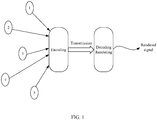
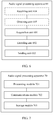
- FIG. 1 shows a current audio signal processing process.
- An example of five sound sources (1-5 shown in FIG. 1 ) in a sound field is used to describe the current audio signal processing process with reference to FIG. 1 .
- Audio signals corresponding to the five sound sources are respectively denoted as S1(n), S2(n), S3(n), S4(n), and S5(n), which are respectively EVS-encoded into five bitstream signals S1S(n), S2S(n), S3S(n), S4S(n), and S5S(n).
- the five bitstream signals are connected in a frame-to-frame adjacency manner, and are sent after channel coding.
- a decoder After receiving the encoded bitstream signals, a decoder first performs channel decoding to obtain the five bitstreams S1S(n), S2S(n), S3S(n), S4S(n), and S5S(n). An EVS decoder decodes the bitstreams to obtain five signals DS1(n), DS2(n), DS3(n), DS4(n), and DS5(n).
- Convolution processing is separately performed on the five signals based on respective corresponding HRTF signals ( HRTF 1( n ), HRTF 2( n ), HRTF 3( n ), HRTF 3( n ), and HRTF 4( n )) in sound channel transfer functions (HRTF functions) selected by a listening apparatus, to obtain convolution results Y1(n), Y2(n), Y3(n), Y4(n), and Y5(n).
- Y ( n ) Y 1 n + Y 2 n + Y 3 n + Y 4 n + Y 5 n .
- the encoder side acquires, encodes, and transmits all the audio signals corresponding to the sound sources to the decoder side, and the decoder side decodes and renders all the received audio signals.
- the decoder side decodes and renders all the received audio signals.
- an embodiment of this application provides an audio signal processing method.
- Basic principles of the method are as follows: The decoder side selects an audio signal that meets a screening condition to perform decoding. This method replaces the conventional-technology method in which the decoder side decodes audio signals corresponding to all sound sources. When there are a large quantity of sound sources, power consumption of the decoder side is reduced. In addition, as long as the screening condition is properly configured, quality of audio signal transmission can still be well ensured while reducing the power consumption, to ensure a listening effect.
- a position of a listener is a position at which the listener (listener) is located.
- a listening orientation is an orientation toward which the listener at the listening position faces.
- the listener may be a user who actually uses a playing device, or may be a virtual user who uses the playing device.
- the virtual user who uses the playing device may be at any possible listening position, and may be in any possible listening orientation.
- a listening distance is a straight-line distance between a sound source and the listening position.
- the listening distance may be a distance of a preset path between the sound source and the listening position.
- the preset path may be a distance of bypassing an obstacle or another distance. This is not specifically limited in this application. The following describes implementations of the embodiments of this application in detail with reference to the accompanying drawings.
- the audio signal processing method provided in this application is applied to an audio and video system 10 shown in FIG. 2 .
- the audio and video system 10 includes an end-to-end audio signal processing part and an end-to-end video signal processing part.
- the audio and video system 10 may be a VR system, an AR system, an MR system, or another streaming transmission system.
- an actual form of the audio and video system 10 is not specifically limited in this embodiment of this application.
- the end-to-end audio signal processing part of the audio and video system 10 may include an acquisition (acquisition) module 201, an audio preprocessing (audio preprocessing) module 202, an audio encoding (audio encoding) module 203, an encapsulation module (file/segment encapsulation) 204, a delivery (delivery) module 205/218, a decapsulation module (file/segment decapsulation) 206, an audio decoding module (audio decoding) 207, an audio rendering module (audio rendering) 208, and a speaker/headphone (loudspeakers/headphones) 209.
- the end-to-end video signal processing part included in the audio and video system 10 may include: an acquisition (acquisition) module 201, a visual stitching (visual stitching) module 210, a prediction and mapping (projection and mapping) module 211, a video encoding (video encoding) module 212, an image encoding module (image encoding) 213, an encapsulation module (file/segment encapsulation) 204, a delivery module (delivery) 205/218, a decapsulation module (file/segment decapsulation) 206, a video decoding module (video decoding) 214, an image decoding module (image decoding) 215, a video rendering module (visual rendering) 216, and a player (display) 217.
- modules are common modules for the end-to-end audio signal processing part and the end-to-end video signal processing part included in the audio and video system 10.
- the acquisition module 201 is configured to acquire an audio signal corresponding to a sound source, and transmit the audio signal to the audio preprocessing module 202.
- the audio preprocessing module 202 is configured to preprocess the audio signal, for example, perform filtering processing, and transmit the preprocessed audio signal to the audio encoding module 203.
- the audio encoding module 203 is configured to encode the preprocessed audio signal, and transmit an encoded audio signal to the encapsulation module 204.
- the acquisition module 201 is further configured to acquire a video signal. After the video combination module 210, the prediction and mapping module 211, the video encoding module 212, and the image encoding module 213 process the video signal, the encoded video signal is transmitted to the encapsulation module 204.
- the encapsulation module 204 is configured to encapsulate the encoded audio signal and the encoded video signal to obtain a bitstream.
- the bitstream is transmitted through the delivery module 205 to the delivery module 218 on the decoder side, and then is transmitted by the delivery module 218 to the decapsulation module 206.
- the delivery module 205 and the delivery module 218 may be wired communications modules or wireless communications modules. This is not specifically limited in this embodiment of this application.
- the delivery module 205 may be specifically implemented in a form of a server.
- the encoder side uploads the bitstream to the server, and the decoder side downloads the bitstream from the server according to a requirement, to implement a function of the delivery module 205. Details of this process are not described again.
- the decapsulation module 206 is configured to decapsulate the bitstream to obtain the encoded audio signal and the encoded video signal, transmit the encoded audio signal to the audio decoding module 207, and transmit the encoded video signal to the video decoding module 214 and the image decoding module 215.
- the audio decoding module 207 is configured to decode the encoded audio signal, and transmit a decoded audio signal to the audio rendering module 208.
- the audio rendering module 208 is configured to perform rendering processing on the decoded audio signal, and transmit a rendered output signal to the speaker/headphone 209.
- the video decoding module 214, the image decoding module 215, and the video rendering module 216 process the encoded video signal, and transmit a processed video signal to the player 217 for playing.
- the audio and video system 10 may include more or fewer components than those shown in the figure, or combine some components, or have different component arrangements.
- the audio and video system 10 may further include a sensor and the like. The sensor is configured to obtain a listening position and/or a listening orientation. Details are not described herein.
- end-to-end video signal processing part and the end-to-end audio signal processing system in the audio and video system 10 shown in FIG. 2 may be independently deployed. Details are not described in this application.
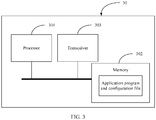
- FIG. 3 shows an audio signal processing apparatus 30 related to the embodiments of this application.
- the audio signal processing apparatus 30 may be deployed as a functional unit on the encoder side in the audio and video system 10, or may be deployed as a functional unit on the decoder side in the audio and video system 10. This is not specifically limited in this embodiment of this application.
- the audio signal processing apparatus 30 may also be the encoder side or the decoder side in the audio and video system.
- the audio signal processing apparatus 30 may be a chip system.
- the chip system may include a chip, or may include a chip and another discrete component.
- the audio signal processing apparatus 30 may include a processor 301, a memory 302, and a transceiver 303.
- the following describes components of the audio signal processing apparatus 30 in detail with reference to FIG. 3 .
- the memory 302 may be a volatile memory (volatile memory), for example, a RAM, or may be a non-volatile memory, for example, a read-only memory (read-only memory, ROM), a flash memory (flash memory), an HDD, an SSD, or a combination of the foregoing types of memories.
- the memory 302 is configured to store program code and a configuration file that can implement the method in this application.
- the processor 301 may be a CPU or an ASIC, or may be configured as one or more integrated circuits for implementing this embodiment of this application, for example, one or more DSPs or one or more FPGAs.
- the processor 301 may run or execute software programs and/or modules stored in the memory 302 and invoke data stored in the memory 302, to perform various functions of the audio signal processing apparatus 30.
- the transceiver 303 is configured to implement interaction between the audio signal processing apparatus 30 and another unit.
- the transceiver 303 may be a transceiver port of the audio signal processing apparatus 30.
- the audio signal processing apparatus 30 may further include a sensor 304, configured to obtain a listening position and/or a listening orientation.
- the sensor 304 may be a gyroscope, an external camera, a motion detection apparatus, an image detection apparatus, or the like. This is not limited in this embodiment of this application.
- the processor 301 when the audio signal processing apparatus 30 is deployed on the encoder side, or when the audio signal processing apparatus 30 is the encoder side, the processor 301 performs the following functions by running or executing a software program and/or a module stored in the memory 302 and invoking data stored in the memory 302: acquiring at least one audio signal at a listening position, where each of the at least one acquired audio signal has a corresponding sound source, and the at least one acquired audio signal includes at least an audio signal that meets a screening condition; the screening condition includes one or more of the following conditions: volume at the listening position is greater than or equal to a volume threshold, a listening distance between the sound source corresponding to the audio signal and the listening position is less than or equal to a preset listening distance, or the sound source corresponding to the audio signal is in a range corresponding to a listening orientation; encoding the acquired audio signal to obtain an encoded audio signal; and sending the encoded audio signal to the decoder side by using the transceiver 303.
- the method, apparatus, device, or system provided in the embodiment of this application may be applied to a real-time audio signal processing scenario and a non-real-time audio signal processing scenario.
- the listening position is on the decoder side, that is, a current position of a listener (listener).
- the current position of the listener (listener) may be in range of a game scene, a sound field, a movie scene, a conference scenario, or another applying scenario.
- the encoder side may acquire an audio signal based on the current position of the listener (that is, the listening position) sent by the decoder side, so that the audio acquired by the encoder side can match the current position of the listener.
- the listening position is a preset position. Because the listener may be at any position within the range of the applying scenario, some listening positions may be preset, and the encoder side may acquire an audio signal based on the preset listening position.
- the decoder side may select, based on the current position of the listener, an audio signal that best matches (for example, a same position or a closest position) to perform decoding processing.
- the processor 301 performs the following functions by running or executing a software program and/or a module stored in the memory 302 and invoking data stored in the memory 302: receiving, by using the transceiver 303, a plurality of encoded audio signals, where the plurality of audio signals are audio signals at the listening position, each audio signal has a corresponding sound source, and the plurality of audio signals include at least an audio signal that meets a screening condition, where the screening condition may include one or more of the following conditions: volume at the listening position is greater than or equal to a volume threshold, a listening distance between the sound source corresponding to the audio signal and the listening position is less than or equal
- an embodiment of this application provides an audio signal processing method. This method is applied to an interaction process between the encoder side and the decoder side of the end-to-end audio signal processing part in the audio and video system 10 shown in FIG. 2 , to process an audio signal in a sound field.
- the operation performed by the encoder side/decoder side described in the following may be performed by the encoder side/decoder side itself, or may be performed by a functional module on the encoder side/decoder side, which is not elaborated in the following.
- the shared medium may be a server, a cloud server, or the like.
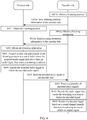
- the audio signal processing method may include the following steps.
- the audio signal processing includes a real-time audio signal processing scenario and a non-real-time audio signal processing scenario.
- the listening position is not fixed due to mobility of a user.
- a listening position is a position at which a listener is currently located in a sound field.
- a listening orientation is an orientation toward which the listener at the listening position faces.
- the listening position may be provided by the decoder side to the encoder side.
- the audio signal processing method provided in this embodiment of this application may further include S401a.
- the decoder side obtains the listening position, and sends listening position information to the encoder side.
- the decoder side may obtain, by using a sensor or an apparatus for obtaining a position, the position at which the listener is currently located in the sound field.
- An implementation of obtaining the listening position by the decoder is not specifically limited in this embodiment of this application.
- the listening position information is used to indicate the listening position obtained by the decoder side, and content of the listening position information may be configured based on an actual requirement. This is not limited in this embodiment of this application.
- the listening position information may be coordinate information or a position identifier.
- An identifier of each position in the sound field is preset.
- a specific listening position may be uniquely determined by using the identifier.
- S401 may be specifically implemented as follows: The encoder side receives the listening position information from the decoder side, where the listening position information is used to indicate the listening position; and the encoder determines, based on the listening position information, the position at which the listener is located in the sound field.
- the decoder side may provide one or more listening positions for the decoder side. This is not specifically limited in this embodiment of this application.
- the listening position may be any position in the sound field. Therefore, in the non-real-time audio signal processing scenario, the encoder side needs to acquire audio signals at a plurality of possible listening positions in advance. In this case, the listening position may be any one of the plurality of preset positions.
- S401 may be specifically implemented as follows: The encoder side determines each possible listening position in the sound field. Specifically, each possible listening position may be determined based on the plurality of preset positions, or each possible listening position may be determined by using a preset algorithm based on a current processing scenario.
- the listening position may be considered.
- S403 is performed after S401.
- the listening orientation may be referenced based on the listening position.
- S402 needs to be first performed after S401, and then S403 is performed.
- the listening orientation is the orientation toward which the user at the listening position faces.
- the listening orientation is not fixed due to mobility of the user.
- the listening orientation is provided by the decoder side to the encoder side. Therefore, before S402, as shown in FIG. 4 , the audio signal processing method provided in this embodiment of this application may further include S402a.
- S402a The decoder side obtains the listening orientation, and sends listening orientation information to the encoder side.
- the decoder may obtain, by using the sensor or the apparatus for obtaining a position, an orientation toward which the listener at the current position in the sound field faces, and use the orientation as the listening orientation.
- An implementation of obtaining the listening orientation by the decoder side is not specifically limited in this embodiment of this application.
- the listening orientation information is used to indicate the listening orientation obtained by the decoder side, and content of the listening orientation information may be configured based on an actual requirement. This is not limited in this embodiment of this application.
- the listening orientation information may be an orientation identifier, or the listening orientation information may be an included angle between the listening orientation and a reference orientation.
- S402 may be specifically implemented as follows: The encoder side receives the listening orientation information from the decoder side, and the encoder side determines the listening orientation of the listener in the sound field based on the listening orientation information.
- S401 and S402 may be combined for implementation. This process is not specifically limited in this application.
- the listening orientation is each possible orientation of each listening position. Therefore, in the non-real-time audio signal processing scenario, there are a plurality of listening positions, and there are a plurality of listening orientations at each listening position.
- S402 may be specifically implemented as follows: The encoder side determines each listening orientation at each possible listening position in the sound field.
- the encoder side acquires at least one audio signal at the listening position in the sound field, where the at least one acquired audio signal includes at least an audio signal that meets a screening condition.
- each acquired audio signal has a corresponding sound source in the sound field.
- the encoder side acquires only the audio signal that meets the screening condition at the listening position in the sound field.
- the encoder side performs S403 at each listening position.
- a process of performing S403 at only one listening position is described herein, but this shall not be construed as a limitation herein.
- the encoder side performs S403 by using at least one audio signal acquisition apparatus.
- the audio signal acquisition apparatus may be a microphone or another apparatus. This is not specifically limited in this embodiment of this application.
- the screening condition may include one or more of the following conditions: volume at the listening position is greater than or equal to a volume threshold, a listening distance between the sound source and the listening position is less than or equal to a preset listening distance, or the sound source is in a range corresponding to a listening orientation.
- content of the screening condition may be alternatively configured based on an actual requirement. This is not specifically limited in this embodiment of this application.
- a volume threshold may be configured as a threshold determined based on a position relationship between a sound source and a listening orientation.
- volume thresholds corresponding to different position relationships may be preconfigured.
- the volume threshold is determined based on the position relationship in S403.
- the position relationship may be at least one of a relative orientation relationship or a relative distance relationship between a sound source and a listening orientation.
- the sound source is located in the front or rear of the listening orientation, and the sound source is located on the left or right side of the listening orientation.
- the position relationship may be an angle relationship between a sound source and a listening orientation.
- a sound source is located 50 degrees to the right of a listening orientation, and a sound source is located 0 degrees to the right (straight ahead) of a listening orientation.
- Table 1 shows a preset correspondence between a position relationship and a volume threshold.
- a volume threshold corresponding to a position relationship is obtained through lookup. For example, when a sound source is located 30 degrees to the right of a listening orientation, and a straight-line distance between the sound source and a listening position is 0.35 meter, it is determined, by looking up Table 1, that a corresponding volume threshold is a threshold 20.
- Table 1 describes, by way of example, and not limitation, a manner of determining the volume threshold.
- a preset position relationship algorithm may be preconfigured for the volume threshold, and then the volume threshold is obtained according to the preset algorithm and based on the position relationship between the sound source and the listening position.
- an implementation solution may be selected based on an actual requirement. This is not specifically limited in this embodiment of this application.
- a volume threshold may be configured as a preset volume threshold, to acquire a high-volume audio signal. Impact of a listening orientation on a listening effect is not considered in this possible implementation.
- volume threshold may also be set by the listener and sent by the decoder side to the encoder side.
- listening distance may also be set by the listener and sent by the decoder side to the encoder side.
- volume threshold may be configured based on an actual requirement. This is not specifically limited in this embodiment of this application.
- the range corresponding to the listening orientation may include a range of all orientations or a range of a preset angle. This is not specifically limited in this application. A specific value of the preset angle may be configured based on an actual requirement. This is not specifically limited in this embodiment of this application.
- S404 The encoder encodes the acquired audio signal to obtain an encoded audio signal.
- S405 The encoder sends the encoded audio signal to the decoder side.
- the encoder side sends the encoded audio signal to the decoder side through the delivery module 205 in the audio and video system 10 shown in FIG. 2 .
- the delivery module 205 may be a transmission line, or the like. This is not specifically limited in this embodiment of this application.
- a plurality of encoded audio signals may also be referred to as a set of audio signals.
- the decoder side receives the plurality of encoded audio signals.
- the plurality of encoded audio signals received by the decoder side in S406 are the encoded audio signals sent by the encoder side in S405.
- the plurality of encoded audio signals include only the audio signal that meets the screening condition at the listening position in the sound field.
- the listening position herein may be the listening position provided by the decoder side in the real-time audio signal processing scenario, or may include each listening position in the sound field in the non-real-time audio signal processing scenario.
- the decoder side decodes the audio signal that meets the screening condition to obtain a decoded signal.
- the decoder side decodes each received audio signal to obtain a decoded signal in S407.
- a decoding process refer to decoding in the audio signal processing process shown in FIG. 1 . Details are not described herein again.
- the decoder side renders the decoded signal based on a sound channel transfer function in a playing device to obtain an output signal.
- the decoder side performs convolution on each decoded signal based on a sound channel transfer function of the decoded signal in the playing device, to obtain one or more output signals.
- the decoded signal is rendered in S408.
- the output signals are rendered as a multi-channel speaker signal. If the playing device is a headphone device, the output signals are rendered as a binaural output signal.
- the sound channel transfer function may include an HRTF function or a BRIR function.
- a type of the sound channel transfer function may be configured based on an actual requirement. This is not specifically limited in this embodiment of this application.
- the decoder side may play the output signals by using the playing device.
- the playing device may be disposed inside or outside the decoder side. This is not specifically limited in this embodiment of this application.
- the encoder side acquires only the audio signal that meets the screening condition in the sound field, and then encodes and sends the audio signal to the decoder side.
- the decoder side decodes the received audio signal that meets the screening condition. Therefore, the screening condition for ensuring audio signal quality is configured to ensure audio quality of the audio signals acquired by the encoder side, and the decoder side does not need to decode all the audio signals.
- an embodiment of this application provides another audio signal processing method. This method is applied to an interaction process between the encoder side and the decoder side of the end-to-end audio signal processing part in the audio and video system 10 shown in FIG. 2 , to process an audio signal in a sound field.
- the operation performed by the encoder side/decoder side described in the following may be performed by the encoder side/decoder side itself, or may be performed by a functional module on the encoder side/decoder side, which is not elaborated in the following.
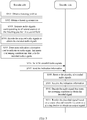
- the audio signal processing method may include the following steps.
- S501 is the same as S401.
- S401 For a specific implementation, refer to S401. Details are not described herein again.
- only the listening position may be considered.
- S503 is performed after S501.
- a listening orientation may be referenced based on the listening position.
- S502 needs to be first performed after S501, and then S503 is performed.
- S502 is the same as S402.
- S402. Details are not described herein again.
- S503 The encoder side acquires audio signals corresponding to all sound sources at the listening position in the sound field.
- the encoder performs S503 at each listening position.
- a process of performing S503 at only one listening position is described, but this shall not be construed as a limitation herein.
- the encoder side performs S503 by using at least one audio signal acquisition apparatus.
- the audio signal acquisition apparatus may be a microphone or another apparatus. This is not specifically limited in this embodiment of this application.
- S504 The encoder encodes the acquired audio signals to obtain encoded audio signals.
- the encoder determines indication information used to indicate an audio signal that meets a screening condition and that is in the encoded audio signal.
- the indication information may include characteristic information of each audio source signal in the encoded audio signals, and the characteristic information includes volume information or position information of a sound source corresponding to the audio signal.
- the encoder side may acquire the characteristic information of the audio signal by using a sensor or another apparatus.
- a specific implementation is not limited in this application.
- the volume information is used to indicate volume of the sound source.
- the volume information may be a specific volume value, may be a volume level, or may certainly be other content. Any volume information indicating the volume of the sound source falls inside the scope of the volume information described herein.
- the position information of the sound source corresponding to the volume signal is used to indicate a specific position of the sound source in the sound field.
- the position information may be coordinates, may be a position identifier, or may certainly be other content. Any position information indicating the specific position of the sound source in the sound field falls inside the scope of the position information described herein.
- the indication information may include an identifier of the audio signal that meets the screening condition and that is in the encoded audio signal.
- the identifier of the audio signal is used to uniquely indicate the audio signal.
- a type of the identifier of the audio signal is not specifically limited in this application.
- the identifier of the audio signal may be a position or a sequence of the audio signal in the encoded audio signals.
- the encoder sends the encoded audio signals to the decoder side.
- the encoder side sends the encoded audio signals to the decoder side through the delivery module 205 in the audio and video system 10 shown in FIG. 2 .
- the delivery module 205 may be a transmission line, or the like. This is not specifically limited in this embodiment of this application.
- S507 The encoder sends the indication information to the decoder side.
- S506 and S507 may be performed together, or may be performed separately. This is not specifically limited in this application. When S506 and S507 are performed separately, they are not subject to a specific sequence. FIG. 5 is merely an example.
- the decoder side receives the plurality of encoded audio signals.
- the plurality of encoded audio signals received by the decoder side in S508 are the encoded audio signals sent by the encoder side in S506.
- the plurality of encoded audio signals received in S508 not only include the audio signal that meets the screening condition at the listening position in the sound field, but also include another audio signal that does not meet the screening condition.
- the encoder side receives the indication information sent by the encoder side.
- S508 and S509 may be performed together, or may be performed separately. This is not specifically limited in this application. When S508 and S509 are performed separately, they are not subject to a specific sequence. FIG. 5 is merely an example.
- S510 The decoder side decodes the audio signal that meets the screening condition to obtain the decoded signal.
- the decoder side performs screening, based on the received indication information, on the plurality of encoded audio signals received in S508, to obtain the audio signal that meets the screening condition at the listening position, and performs decoding to obtain the decoded signal.
- the encoder side determines, based on the characteristic information, whether each audio signal meets the screening condition, and finds the audio signal that meets the screening condition.
- the encoder side when the indication information is the identifier of the audio signal that meets the screening condition, in S510, the encoder side performs screening and finds an audio signal indicated by the indication information, and uses the audio signal as the audio signal that meets the screening condition.
- the decoder side renders the decoded signal based on a sound channel transfer function in a playing device to obtain an output signal.
- S511 is the same as S408.
- S408 For a specific implementation, refer to S408. Details are not described herein again.
- the encoder side acquires the audio signals corresponding to all the sound sources, encodes the audio signals, and sends the encoded audio signals to the decoder side.
- the encoder side indicates, to the decoder side by using the indication information, the audio signal that meets the screening condition.
- the decoder side selects, according to the indication information provided by the encoder side, the audio signal that meets the screening condition to perform decoding.
- the decoder side and the encoder side include corresponding hardware structures and/or software modules for performing the functions.
- a functional unit that implements the foregoing audio signal processing method on the decoder side and the encoder side is referred to as an audio signal processing apparatus.
- this application may be implemented by hardware or a combination of hardware and computer software. Whether a function is performed by hardware or hardware driven by computer software depends on a particular application and a design constraint of the technical solutions. Persons skilled in the art may use different methods to implement the described functions for each particular application, but it should not be considered that the implementation goes beyond the scope of this application.
- the audio signal processing apparatus may be divided into functional modules based on the foregoing method examples.
- functional modules may be obtained through division based on corresponding functions, or two or more functions may be integrated into one processing module.
- the module into which the functions are integrated may be implemented in a form of hardware, or may be implemented in a form of a software functional module. It should be noted that, in the embodiments of this application, division into modules is an example, and is merely a logical function division. In an actual implementation, another division manner may be used.
- FIG. 6 is a schematic diagram of a possible structure of an audio signal processing apparatus 60 deployed on the encoder side in the foregoing embodiments.
- the audio signal processing apparatus 60 may be deployed on the encoder in the audio and video system 10 as a functional unit.
- the audio signal processing apparatus 60 may be the encoder side itself, or may be a functional module or a chip on the encoder side.
- the audio signal processing apparatus 60 may include an acquisition unit 601, an encoding unit 602, and a sending unit 603.
- the acquisition unit 601 is configured to perform the process of S403 in FIG. 4 and the process of S503 in FIG. 5 .
- the encoding unit 602 is configured to perform the process of S404 in FIG. 4 or the process of S504 in FIG. 5 .
- the sending module 603 is configured to perform the process of S405 in FIG. 4 or the processes of S506 and S507 in FIG. 5 . All related content of the steps in the foregoing method embodiments may be cited in function descriptions of corresponding functional modules. Details are not described herein again.
- the acquisition unit 601 may include the acquisition module 201 on the encoder side in the audio and video system 10
- the encoding unit 602 may include the audio encoding module 203 on the encoder side in the audio and video system 10
- the sending unit 603 may include the delivery module 205 belonging to the encoder side in the audio and video system 10.
- the audio signal processing apparatus 60 may further include a receiving unit 604 and an obtaining unit 605.
- the obtaining unit 605 may use the receiving unit 604 to perform the processes of S401 and S402 in FIG. 4 or the processes of S501 and S502 in FIG. 5 .
- the obtaining unit 605 may be configured to perform the processes of S401 and S402 in FIG. 4 or the processes of S501 and S502 in FIG. 5 .
- FIG. 7 is a schematic diagram of a possible structure of an audio signal processing apparatus 70 in the foregoing embodiments.
- the audio signal processing apparatus 70 may be deployed as a functional unit on the encoder side in the audio and video system 10.
- the audio signal processing apparatus 70 may be the encoder side itself, or may be a functional module or a chip on the encoder side.
- the audio signal processing apparatus 70 may include a processing module 701 and a communications module 702.
- the processing module 701 is configured to control and manage an action of the audio signal processing apparatus 70.
- the processing module 701 is configured to perform the processes of S401, S402, S403, and S404 in FIG.
- the communications module 702 is configured to perform the process of S405 in FIG. 4 , or the processes of S506 and S507 in FIG. 5 .
- the audio signal processing apparatus 70 may further include a storage module 703, configured to store program code and data of the audio signal processing apparatus 70.
- the processing module 701 may include the acquisition module 201, the audio preprocessing module 202, and the audio encoding module 203 on the encoder side in the audio and video system 10.
- the communications module 702 may include the delivery module 205 belonging to the encoder side in the audio and video system 10.
- the processing module 701 may be the processor 301 in a physical structure of the audio signal processing apparatus 30 shown in FIG. 3 , and may be a processor or a controller.
- the processing module may be a CPU, a general-purpose processor, a DSP, an ASIC, an FPGA or another programmable logic device, a transistor logic device, a hardware component, or any combination thereof.
- the processor may implement or execute various example logical blocks, modules, and circuits described with reference to content disclosed in this application.
- the processor 701 may be a combination of processors implementing a computing function, for example, a combination of one or more microprocessors, or a combination of a DSP and a microprocessor.
- the communications module 702 may be the transceiver 303 in the physical structure of the audio signal processing apparatus 30 shown in FIG. 3 .
- the communications module 702 may be a communications port, or may be a transceiver, a transceiver circuit, a communications interface, or the like. Alternatively, the communications interface may communicate with another device through the foregoing element that has a transceiver function.
- the foregoing element that has the transceiver function may be implemented through an antenna and/or a radio frequency apparatus.
- the storage module 703 may be the memory 302 in the physical structure of the audio signal processing apparatus 30 shown in FIG. 3 .
- the audio signal processing apparatus 70 shown in FIG. 7 in this embodiment of this application may be the audio signal processing apparatus 30 shown in FIG. 3 .
- the audio signal processing apparatus 60 or the audio signal processing apparatus 70 provided in the embodiments of this application may be configured to implement the functions of the encoder side in the methods implemented in the foregoing embodiments of this application.
- the audio signal processing apparatus 60 or the audio signal processing apparatus 70 provided in the embodiments of this application may be configured to implement the functions of the encoder side in the methods implemented in the foregoing embodiments of this application.
- only a part related to this embodiment of this application is shown.
- FIG. 8 is a schematic diagram of a possible structure of an audio signal processing apparatus 80 deployed on the decoder side in the foregoing embodiments.
- the audio signal processing apparatus 80 may be deployed on the decoder side in the audio and video system 10 as a functional unit.
- the audio signal processing apparatus 80 may be the decoder side itself, or may be a functional module or a chip on the decoder side.
- the audio signal processing apparatus 80 may include a receiving unit 801, a decoding unit 802, and a processing unit 803.
- the receiving unit 801 is configured to perform the process of S406 in FIG. 4 , or the processes of S508 and S509 in FIG. 5 .
- the decoding unit 802 is configured to perform the process of S407 in FIG. 4 or the process of S510 in FIG. 5 .
- the processing unit 803 is configured to perform the process of S408 in FIG. 4 or the process of S511 in FIG. 5 . All related content of the steps in the foregoing method embodiments may be cited in function descriptions of corresponding functional modules. Details are not described herein again.
- the receiving unit 801 may include the delivery module 218 on the decoder side in the audio and video system 10
- the decoding unit 802 may include the audio decoding module 207 on the decoder side in the audio and video system 10
- the processing unit 803 may include the audio rendering module 208 on the decoder side in the audio and video system 10.
- the audio signal processing apparatus 80 may further include an obtaining unit 804 and a sending unit 805.
- the obtaining unit 804 and the sending unit 805 are configured to perform the processes of S401a and S402a in FIG. 4 .
- FIG. 9 is a schematic diagram of a possible structure of an audio signal processing apparatus 90 deployed on the decoder side in the foregoing embodiments.
- the audio signal processing apparatus 90 may be deployed on the decoder side in the audio and video system 10 as a functional unit.
- the audio signal processing apparatus 90 may be the decoder side itself, or may be a functional module or a chip on the decoder side.
- the audio signal processing apparatus 90 may include a processing module 901 and a communications module 902.
- the processing module 901 is configured to control and manage an action of the audio signal processing apparatus 90.
- the processing module 901 is configured to perform the processes of S407, S408, and S401a in FIG.
- the communications module 902 is configured to perform the process of S406 in FIG. 4 , or the processes of S508 and S509 in FIG. 5 .
- the audio signal processing apparatus 90 may further include a storage module 903, configured to store program code and data of the audio signal processing apparatus 90.
- the processing module 901 may include the audio decoding module 207 and the audio rendering module 208 on the decoder side in the audio and video system 10
- the communications module 902 may include the delivery module 218 in the audio and video system 10.
- the processing module 901 may be the processor 301 in a physical structure of the audio signal processing apparatus 30 shown in FIG. 3 , and may be a processor or a controller.
- the processing module may be a CPU, a general-purpose processor, a DSP, an ASIC, an FPGA or another programmable logic device, a transistor logic device, a hardware component, or any combination thereof.
- the processor may implement or execute various example logical blocks, modules, and circuits described with reference to content disclosed in this application.
- the processor 901 may be a combination for implementing a computing function, for example, a combination including one or more microprocessors, a combination of a DSP and a microprocessor, or the like.
- the communications module 902 may be the transceiver 303 in the physical structure of the audio signal processing apparatus 30 shown in FIG. 3 .
- the communications module 902 may be a communications port, or may be a transceiver, a transceiver circuit, a communications interface, or the like. Alternatively, the communications interface may communicate with another device through the foregoing element that has a transceiver function.
- the foregoing element that has the transceiver function may be implemented via an antenna and/or a radio frequency apparatus.
- the storage module 903 may be the memory 302 in the physical structure of the audio signal processing apparatus 30 shown in FIG. 3 .
- the audio signal processing apparatus 90 shown in FIG. 9 in this embodiment of this application may be the audio signal processing apparatus 30 shown in FIG. 3 .
- the audio signal processing apparatus 80 or the audio signal processing apparatus 90 provided in the embodiments of this application may be configured to implement the functions of the decoder side in the methods implemented in the foregoing embodiments of this application.
- the audio signal processing apparatus 80 or the audio signal processing apparatus 90 provided in the embodiments of this application may be configured to implement the functions of the decoder side in the methods implemented in the foregoing embodiments of this application.
- only a part related to this embodiment of this application is shown.
- a computer-readable storage medium stores instructions. When the instructions are executed, the audio signal processing method in the foregoing method embodiments is performed.
- a computer program product including instructions is provided.
- the instructions are executed, the audio signal processing method in the foregoing method embodiments is performed. It may be clearly understood by persons skilled in the art that, for the purpose of convenient and brief description, for a detailed working process of the foregoing system, apparatus, and unit, refer to a corresponding process in the foregoing method embodiments. Details are not described herein again.
- the computer-readable medium includes a computer storage medium and a communications medium, where the communications medium includes any medium that facilitates transmission of a computer program from one place to another.
- the storage medium may be any available medium accessible by a general purpose or dedicated computer.
- the disclosed system, apparatus, and method may be implemented in other manners.
- the described apparatus embodiment is merely an example.
- division into units is merely logical function division and may be other division in an actual implementation.
- a plurality of units or components may be combined or integrated into another system, or some features may be ignored or not performed.
- the displayed or discussed mutual couplings or direct couplings or communications connections may be implemented through some interfaces.
- the indirect couplings or communications connections between the apparatuses or units may be implemented in electrical or other forms.
- the units described as separate parts may or may not be physically separate, and parts displayed as units may or may not be physical units, may be located in one position, or may be distributed on a plurality of network units. Some or all of the units may be selected based on actual requirements to achieve the objectives of the solutions of the embodiments.
- function units in the embodiments of this application may be integrated into one processing unit, or each of the units may exist alone physically, or two or more units are integrated into one unit.
- the integrated unit may be implemented in a form of hardware, or may be implemented in a form of hardware plus a software functional unit.
- the integrated unit may be stored in a computer-readable storage medium.
- the software function unit is stored in a storage medium and includes several instructions for instructing a computer device (which may be a personal computer, a server, a network device, or the like) to perform some of the steps of the methods described in the embodiments of this application.
- the foregoing storage medium includes any medium that can store program code, such as a USB flash drive, a removable hard disk, a read-only memory (Read-Only Memory, ROM), a random access memory (Random Access Memory, RAM), a magnetic disk, or an optical disc.
- program code such as a USB flash drive, a removable hard disk, a read-only memory (Read-Only Memory, ROM), a random access memory (Random Access Memory, RAM), a magnetic disk, or an optical disc.
Landscapes
- Engineering & Computer Science (AREA)
- Multimedia (AREA)
- Signal Processing (AREA)
- Physics & Mathematics (AREA)
- Acoustics & Sound (AREA)
- Human Computer Interaction (AREA)
- Computational Linguistics (AREA)
- Health & Medical Sciences (AREA)
- Audiology, Speech & Language Pathology (AREA)
- Mathematical Physics (AREA)
- Quality & Reliability (AREA)
- Databases & Information Systems (AREA)
- Stereophonic System (AREA)
Applications Claiming Priority (2)
| Application Number | Priority Date | Filing Date | Title |
|---|---|---|---|
| CN201910103595.6A CN111508507B (zh) | 2019-01-31 | 2019-01-31 | 一种音频信号处理方法及装置 |
| PCT/CN2019/128908 WO2020155976A1 (zh) | 2019-01-31 | 2019-12-26 | 一种音频信号处理方法及装置 |
Publications (2)
| Publication Number | Publication Date |
|---|---|
| EP3909656A1 true EP3909656A1 (de) | 2021-11-17 |
| EP3909656A4 EP3909656A4 (de) | 2022-03-23 |
Family
ID=71841612
Family Applications (1)
| Application Number | Title | Priority Date | Filing Date |
|---|---|---|---|
| EP19912993.3A Pending EP3909656A4 (de) | 2019-01-31 | 2019-12-26 | Audiosignalverarbeitungsverfahren und -vorrichtung |
Country Status (5)
| Country | Link |
|---|---|
| US (1) | US20210358506A1 (de) |
| EP (1) | EP3909656A4 (de) |
| KR (1) | KR102696575B1 (de) |
| CN (2) | CN116312572A (de) |
| WO (1) | WO2020155976A1 (de) |
Families Citing this family (5)
| Publication number | Priority date | Publication date | Assignee | Title |
|---|---|---|---|---|
| CN114420160B (zh) * | 2020-10-28 | 2025-08-29 | 华为技术有限公司 | 处理音频信号的方法和装置 |
| DE102021201668A1 (de) * | 2021-02-22 | 2022-08-25 | Fraunhofer-Gesellschaft zur Förderung der angewandten Forschung eingetragener Verein | Signaladaptives Neumischen von getrennten Audioquellen |
| CN116939473A (zh) * | 2022-03-30 | 2023-10-24 | 腾讯科技(深圳)有限公司 | 一种音频生成方法和相关装置 |
| CN116724351B (zh) * | 2023-03-27 | 2026-06-12 | 北京小米移动软件有限公司 | 一种量化编码方法、装置、设备及存储介质 |
| WO2025173919A1 (ko) * | 2024-02-16 | 2025-08-21 | 삼성전자 주식회사 | 근거리 음성을 제거하기 위한 오디오 신호 처리 방법 및 전자 장치 |
Family Cites Families (15)
| Publication number | Priority date | Publication date | Assignee | Title |
|---|---|---|---|---|
| US5659691A (en) * | 1993-09-23 | 1997-08-19 | Virtual Universe Corporation | Virtual reality network with selective distribution and updating of data to reduce bandwidth requirements |
| US5736982A (en) * | 1994-08-03 | 1998-04-07 | Nippon Telegraph And Telephone Corporation | Virtual space apparatus with avatars and speech |
| AUPR989802A0 (en) * | 2002-01-09 | 2002-01-31 | Lake Technology Limited | Interactive spatialized audiovisual system |
| CN101350931B (zh) * | 2008-08-27 | 2011-09-14 | 华为终端有限公司 | 音频信号的生成、播放方法及装置、处理系统 |
| US20130226324A1 (en) * | 2010-09-27 | 2013-08-29 | Nokia Corporation | Audio scene apparatuses and methods |
| CA2837893C (en) * | 2011-07-01 | 2017-08-29 | Dolby Laboratories Licensing Corporation | System and method for adaptive audio signal generation, coding and rendering |
| EP2839460A4 (de) * | 2012-04-18 | 2015-12-30 | Nokia Technologies Oy | Stereotonsignalcodierer |
| CN105959905B (zh) * | 2016-04-27 | 2017-10-24 | 北京时代拓灵科技有限公司 | 混合模式空间声生成系统与方法 |
| WO2018084769A1 (en) * | 2016-11-04 | 2018-05-11 | Dirac Research Ab | Constructing an audio filter database using head-tracking data |
| CN106843801B (zh) * | 2017-01-10 | 2019-09-17 | 福建省天奕网络科技有限公司 | 音效的拟合方法及其系统 |
| US10986457B2 (en) * | 2017-07-09 | 2021-04-20 | Lg Electronics Inc. | Method and device for outputting audio linked with video screen zoom |
| GB2567172A (en) * | 2017-10-04 | 2019-04-10 | Nokia Technologies Oy | Grouping and transport of audio objects |
| KR102653185B1 (ko) * | 2018-04-12 | 2024-04-02 | 소니그룹주식회사 | 정보 처리 장치 및 방법, 그리고 프로그램이 저장된 컴퓨터 판독 가능한 기록매체 |
| CN108744516B (zh) * | 2018-05-29 | 2020-09-29 | 腾讯科技(深圳)有限公司 | 获取定位信息的方法和装置、存储介质及电子装置 |
| JP2023515886A (ja) * | 2020-03-02 | 2023-04-14 | マジック リープ, インコーポレイテッド | 没入型のオーディオプラットフォーム |
-
2019
- 2019-01-31 CN CN202310206948.1A patent/CN116312572A/zh active Pending
- 2019-01-31 CN CN201910103595.6A patent/CN111508507B/zh active Active
- 2019-12-26 EP EP19912993.3A patent/EP3909656A4/de active Pending
- 2019-12-26 WO PCT/CN2019/128908 patent/WO2020155976A1/zh not_active Ceased
- 2019-12-26 KR KR1020217027277A patent/KR102696575B1/ko active Active
-
2021
- 2021-07-28 US US17/386,800 patent/US20210358506A1/en not_active Abandoned
Also Published As
| Publication number | Publication date |
|---|---|
| WO2020155976A1 (zh) | 2020-08-06 |
| EP3909656A4 (de) | 2022-03-23 |
| US20210358506A1 (en) | 2021-11-18 |
| CN111508507A (zh) | 2020-08-07 |
| BR112021015040A2 (pt) | 2021-10-05 |
| CN111508507B (zh) | 2023-03-03 |
| KR20210120063A (ko) | 2021-10-06 |
| KR102696575B1 (ko) | 2024-08-19 |
| CN116312572A (zh) | 2023-06-23 |
Similar Documents
| Publication | Publication Date | Title |
|---|---|---|
| KR102537714B1 (ko) | 오디오 신호 처리 방법 및 장치 | |
| US20210358506A1 (en) | Audio signal processing method and apparatus | |
| TWI819344B (zh) | 音訊訊號渲染方法、裝置、設備及電腦可讀存儲介質 | |
| US10484811B1 (en) | Methods and systems for providing a composite audio stream for an extended reality world | |
| CN101490743B (zh) | 对立体声音频信号的动态解码 | |
| US11109177B2 (en) | Methods and systems for simulating acoustics of an extended reality world | |
| CN116471520A (zh) | 音频装置和音频处理的方法 | |
| US12299823B2 (en) | Audiovisual rendering apparatus and method of operation therefor | |
| WO2022021898A1 (zh) | 音频处理方法、装置、系统以及存储介质 | |
| JP2025041766A (ja) | イマーシブオーディオシーンレンダリングにおける通信オーディオ処理方法および装置 | |
| CN115623156A (zh) | 音频处理方法和相关装置 | |
| BR112021015040B1 (pt) | Método e aparelho de processamento de sinal de áudio e meio de armazenamento legível por computador | |
| GB2639006A (en) | A multi-participant, spatial audio service | |
| TW202516491A (zh) | 產生音訊資料信號 | |
| WO2024212637A1 (zh) | 场景音频解码方法及电子设备 |
Legal Events
| Date | Code | Title | Description |
|---|---|---|---|
| STAA | Information on the status of an ep patent application or granted ep patent |
Free format text: STATUS: THE INTERNATIONAL PUBLICATION HAS BEEN MADE |
|
| PUAI | Public reference made under article 153(3) epc to a published international application that has entered the european phase |
Free format text: ORIGINAL CODE: 0009012 |
|
| STAA | Information on the status of an ep patent application or granted ep patent |
Free format text: STATUS: REQUEST FOR EXAMINATION WAS MADE |
|
| 17P | Request for examination filed |
Effective date: 20210811 |
|
| AK | Designated contracting states |
Kind code of ref document: A1 Designated state(s): AL AT BE BG CH CY CZ DE DK EE ES FI FR GB GR HR HU IE IS IT LI LT LU LV MC MK MT NL NO PL PT RO RS SE SI SK SM TR |
|
| A4 | Supplementary search report drawn up and despatched |
Effective date: 20220218 |
|
| RIC1 | Information provided on ipc code assigned before grant |
Ipc: H04N 21/4728 20110101ALI20220215BHEP Ipc: H04N 21/81 20110101ALI20220215BHEP Ipc: H04N 21/439 20110101ALI20220215BHEP Ipc: H04N 21/239 20110101ALI20220215BHEP Ipc: G10L 25/51 20130101ALI20220215BHEP Ipc: G10L 19/00 20130101ALI20220215BHEP Ipc: A63F 13/355 20140101ALI20220215BHEP Ipc: H04S 7/00 20060101ALI20220215BHEP Ipc: A63F 13/54 20140101AFI20220215BHEP |
|
| DAV | Request for validation of the european patent (deleted) | ||
| DAX | Request for extension of the european patent (deleted) | ||
| STAA | Information on the status of an ep patent application or granted ep patent |
Free format text: STATUS: EXAMINATION IS IN PROGRESS |
|
| 17Q | First examination report despatched |
Effective date: 20240117 |