EP3909741A1 - Procédé de fabrication d'un boîtier de fusible électrique étanche pour automobile - Google Patents
Procédé de fabrication d'un boîtier de fusible électrique étanche pour automobile Download PDFInfo
- Publication number
- EP3909741A1 EP3909741A1 EP21172674.0A EP21172674A EP3909741A1 EP 3909741 A1 EP3909741 A1 EP 3909741A1 EP 21172674 A EP21172674 A EP 21172674A EP 3909741 A1 EP3909741 A1 EP 3909741A1
- Authority
- EP
- European Patent Office
- Prior art keywords
- busbar
- sealant
- cavity image
- fuse
- injection molded
- Prior art date
- Legal status (The legal status is an assumption and is not a legal conclusion. Google has not performed a legal analysis and makes no representation as to the accuracy of the status listed.)
- Pending
Links
Images


Classifications
-
- H—ELECTRICITY
- H01—ELECTRIC ELEMENTS
- H01H—ELECTRIC SWITCHES; RELAYS; SELECTORS; EMERGENCY PROTECTIVE DEVICES
- H01H85/00—Protective devices in which the current flows through a part of fusible material and this current is interrupted by displacement of the fusible material when this current becomes excessive
- H01H85/02—Details
- H01H85/20—Bases for supporting the fuse; Separate parts thereof
- H01H85/201—Bases for supporting the fuse; Separate parts thereof for connecting a fuse in a lead and adapted to be supported by the lead alone
-
- B—PERFORMING OPERATIONS; TRANSPORTING
- B29—WORKING OF PLASTICS; WORKING OF SUBSTANCES IN A PLASTIC STATE IN GENERAL
- B29C—SHAPING OR JOINING OF PLASTICS; SHAPING OF MATERIAL IN A PLASTIC STATE, NOT OTHERWISE PROVIDED FOR; AFTER-TREATMENT OF THE SHAPED PRODUCTS, e.g. REPAIRING
- B29C45/00—Injection moulding, i.e. forcing the required volume of moulding material through a nozzle into a closed mould; Apparatus therefor
- B29C45/14—Injection moulding, i.e. forcing the required volume of moulding material through a nozzle into a closed mould; Apparatus therefor incorporating preformed parts or layers, e.g. injection moulding around inserts or for coating articles
- B29C45/14639—Injection moulding, i.e. forcing the required volume of moulding material through a nozzle into a closed mould; Apparatus therefor incorporating preformed parts or layers, e.g. injection moulding around inserts or for coating articles for obtaining an insulating effect, e.g. for electrical components
-
- H—ELECTRICITY
- H01—ELECTRIC ELEMENTS
- H01H—ELECTRIC SWITCHES; RELAYS; SELECTORS; EMERGENCY PROTECTIVE DEVICES
- H01H69/00—Apparatus or processes for the manufacture of emergency protective devices
- H01H69/02—Manufacture of fuses
-
- B—PERFORMING OPERATIONS; TRANSPORTING
- B29—WORKING OF PLASTICS; WORKING OF SUBSTANCES IN A PLASTIC STATE IN GENERAL
- B29C—SHAPING OR JOINING OF PLASTICS; SHAPING OF MATERIAL IN A PLASTIC STATE, NOT OTHERWISE PROVIDED FOR; AFTER-TREATMENT OF THE SHAPED PRODUCTS, e.g. REPAIRING
- B29C45/00—Injection moulding, i.e. forcing the required volume of moulding material through a nozzle into a closed mould; Apparatus therefor
- B29C45/14—Injection moulding, i.e. forcing the required volume of moulding material through a nozzle into a closed mould; Apparatus therefor incorporating preformed parts or layers, e.g. injection moulding around inserts or for coating articles
- B29C45/14008—Inserting articles into the mould
-
- B—PERFORMING OPERATIONS; TRANSPORTING
- B29—WORKING OF PLASTICS; WORKING OF SUBSTANCES IN A PLASTIC STATE IN GENERAL
- B29C—SHAPING OR JOINING OF PLASTICS; SHAPING OF MATERIAL IN A PLASTIC STATE, NOT OTHERWISE PROVIDED FOR; AFTER-TREATMENT OF THE SHAPED PRODUCTS, e.g. REPAIRING
- B29C45/00—Injection moulding, i.e. forcing the required volume of moulding material through a nozzle into a closed mould; Apparatus therefor
- B29C45/14—Injection moulding, i.e. forcing the required volume of moulding material through a nozzle into a closed mould; Apparatus therefor incorporating preformed parts or layers, e.g. injection moulding around inserts or for coating articles
- B29C45/14311—Injection moulding, i.e. forcing the required volume of moulding material through a nozzle into a closed mould; Apparatus therefor incorporating preformed parts or layers, e.g. injection moulding around inserts or for coating articles using means for bonding the coating to the articles
-
- B—PERFORMING OPERATIONS; TRANSPORTING
- B29—WORKING OF PLASTICS; WORKING OF SUBSTANCES IN A PLASTIC STATE IN GENERAL
- B29C—SHAPING OR JOINING OF PLASTICS; SHAPING OF MATERIAL IN A PLASTIC STATE, NOT OTHERWISE PROVIDED FOR; AFTER-TREATMENT OF THE SHAPED PRODUCTS, e.g. REPAIRING
- B29C45/00—Injection moulding, i.e. forcing the required volume of moulding material through a nozzle into a closed mould; Apparatus therefor
- B29C45/16—Making multilayered or multicoloured articles
- B29C45/1671—Making multilayered or multicoloured articles with an insert
-
- B—PERFORMING OPERATIONS; TRANSPORTING
- B29—WORKING OF PLASTICS; WORKING OF SUBSTANCES IN A PLASTIC STATE IN GENERAL
- B29C—SHAPING OR JOINING OF PLASTICS; SHAPING OF MATERIAL IN A PLASTIC STATE, NOT OTHERWISE PROVIDED FOR; AFTER-TREATMENT OF THE SHAPED PRODUCTS, e.g. REPAIRING
- B29C45/00—Injection moulding, i.e. forcing the required volume of moulding material through a nozzle into a closed mould; Apparatus therefor
- B29C45/17—Component parts, details or accessories; Auxiliary operations
- B29C45/72—Heating or cooling
- B29C45/73—Heating or cooling of the mould
-
- H—ELECTRICITY
- H01—ELECTRIC ELEMENTS
- H01H—ELECTRIC SWITCHES; RELAYS; SELECTORS; EMERGENCY PROTECTIVE DEVICES
- H01H85/00—Protective devices in which the current flows through a part of fusible material and this current is interrupted by displacement of the fusible material when this current becomes excessive
- H01H85/02—Details
- H01H85/04—Fuses, i.e. expendable parts of the protective device, e.g. cartridges
- H01H85/05—Component parts thereof
- H01H85/165—Casings
- H01H85/175—Casings characterised by the casing shape or form
-
- H—ELECTRICITY
- H01—ELECTRIC ELEMENTS
- H01H—ELECTRIC SWITCHES; RELAYS; SELECTORS; EMERGENCY PROTECTIVE DEVICES
- H01H85/00—Protective devices in which the current flows through a part of fusible material and this current is interrupted by displacement of the fusible material when this current becomes excessive
- H01H85/02—Details
- H01H85/20—Bases for supporting the fuse; Separate parts thereof
-
- H—ELECTRICITY
- H01—ELECTRIC ELEMENTS
- H01H—ELECTRIC SWITCHES; RELAYS; SELECTORS; EMERGENCY PROTECTIVE DEVICES
- H01H85/00—Protective devices in which the current flows through a part of fusible material and this current is interrupted by displacement of the fusible material when this current becomes excessive
- H01H85/02—Details
- H01H85/20—Bases for supporting the fuse; Separate parts thereof
- H01H85/2045—Mounting means or insulating parts of the base, e.g. covers, casings
-
- B—PERFORMING OPERATIONS; TRANSPORTING
- B29—WORKING OF PLASTICS; WORKING OF SUBSTANCES IN A PLASTIC STATE IN GENERAL
- B29C—SHAPING OR JOINING OF PLASTICS; SHAPING OF MATERIAL IN A PLASTIC STATE, NOT OTHERWISE PROVIDED FOR; AFTER-TREATMENT OF THE SHAPED PRODUCTS, e.g. REPAIRING
- B29C45/00—Injection moulding, i.e. forcing the required volume of moulding material through a nozzle into a closed mould; Apparatus therefor
- B29C45/14—Injection moulding, i.e. forcing the required volume of moulding material through a nozzle into a closed mould; Apparatus therefor incorporating preformed parts or layers, e.g. injection moulding around inserts or for coating articles
- B29C45/14311—Injection moulding, i.e. forcing the required volume of moulding material through a nozzle into a closed mould; Apparatus therefor incorporating preformed parts or layers, e.g. injection moulding around inserts or for coating articles using means for bonding the coating to the articles
- B29C2045/14319—Injection moulding, i.e. forcing the required volume of moulding material through a nozzle into a closed mould; Apparatus therefor incorporating preformed parts or layers, e.g. injection moulding around inserts or for coating articles using means for bonding the coating to the articles bonding by a fusion bond
-
- B—PERFORMING OPERATIONS; TRANSPORTING
- B29—WORKING OF PLASTICS; WORKING OF SUBSTANCES IN A PLASTIC STATE IN GENERAL
- B29C—SHAPING OR JOINING OF PLASTICS; SHAPING OF MATERIAL IN A PLASTIC STATE, NOT OTHERWISE PROVIDED FOR; AFTER-TREATMENT OF THE SHAPED PRODUCTS, e.g. REPAIRING
- B29C45/00—Injection moulding, i.e. forcing the required volume of moulding material through a nozzle into a closed mould; Apparatus therefor
- B29C45/14—Injection moulding, i.e. forcing the required volume of moulding material through a nozzle into a closed mould; Apparatus therefor incorporating preformed parts or layers, e.g. injection moulding around inserts or for coating articles
- B29C2045/1486—Details, accessories and auxiliary operations
- B29C2045/14868—Pretreatment of the insert, e.g. etching, cleaning
-
- B—PERFORMING OPERATIONS; TRANSPORTING
- B29—WORKING OF PLASTICS; WORKING OF SUBSTANCES IN A PLASTIC STATE IN GENERAL
- B29L—INDEXING SCHEME ASSOCIATED WITH SUBCLASS B29C, RELATING TO PARTICULAR ARTICLES
- B29L2031/00—Other particular articles
- B29L2031/34—Electrical apparatus, e.g. sparking plugs or parts thereof
- B29L2031/36—Plugs, connectors, or parts thereof
-
- H—ELECTRICITY
- H01—ELECTRIC ELEMENTS
- H01H—ELECTRIC SWITCHES; RELAYS; SELECTORS; EMERGENCY PROTECTIVE DEVICES
- H01H85/00—Protective devices in which the current flows through a part of fusible material and this current is interrupted by displacement of the fusible material when this current becomes excessive
- H01H85/02—Details
- H01H85/20—Bases for supporting the fuse; Separate parts thereof
- H01H85/205—Electric connections to contacts on the base
- H01H2085/2055—Connections to bus bars in an installation with screw in type fuses or knife blade fuses
-
- H—ELECTRICITY
- H01—ELECTRIC ELEMENTS
- H01H—ELECTRIC SWITCHES; RELAYS; SELECTORS; EMERGENCY PROTECTIVE DEVICES
- H01H85/00—Protective devices in which the current flows through a part of fusible material and this current is interrupted by displacement of the fusible material when this current becomes excessive
- H01H85/02—Details
- H01H85/20—Bases for supporting the fuse; Separate parts thereof
- H01H85/205—Electric connections to contacts on the base
- H01H2085/206—Electric connections to contacts on the base being tappable, e.g. terminals on the fuse or base being arranged so as to permit an additional connector to be engaged therewith
-
- H—ELECTRICITY
- H01—ELECTRIC ELEMENTS
- H01H—ELECTRIC SWITCHES; RELAYS; SELECTORS; EMERGENCY PROTECTIVE DEVICES
- H01H2229/00—Manufacturing
- H01H2229/044—Injection moulding
- H01H2229/047—Preformed layer in mould
-
- H—ELECTRICITY
- H01—ELECTRIC ELEMENTS
- H01H—ELECTRIC SWITCHES; RELAYS; SELECTORS; EMERGENCY PROTECTIVE DEVICES
- H01H2229/00—Manufacturing
- H01H2229/044—Injection moulding
- H01H2229/048—Insertion moulding
Definitions
- Embodiments of the present disclosure relate to the field of fuses, and, more particularly, to a dust- and moisture-resistant fuse enclosure.
- Fuses are used in a variety of circuits to protect electronic components from overcurrent events. Fuses come in a variety of shapes and sizes. For some applications, such as circuit protection in extreme environments, the fuse may be contained within a closed structure known as an electrical fuse box. Although the fuse is contained therein, it is a continuous challenge in such extreme environments to ensure that the fuse is not damaged such as by dust or moisture entering the electrical fuse box.
- an injection molded base for production of a fuse assembly is prepared by a process including the steps of covering a portion of a busbar with a sealant, inserting the busbar into a cavity image of an injection molding apparatus, wherein the portion of the busbar is inside the cavity image, injecting melted plastic into the cavity image, and removing the injection molded base from the cavity image.
- a method of manufacturing a fuse assembly in accordance with the present disclosure includes coating a busbar with a sealant, the sealant including a powder, baking the busbar in an oven until the sealant is cured onto the busbar, inserting the busbar into a cavity image of an injection molding apparatus, wherein a portion of the busbar is inside the cavity image, filling the cavity image with melted plastic at high pressure, wherein the melted plastic and the sealant form a bonded material that cannot be subsequently separated by heating, and removing a plastic base and the busbar of the fuse assembly from the cavity image.
- a fuse assembly in accordance with the present disclosure includes a fuse, a first busbar for establishing a first electrical connection between a circuit and a first side of the fuse, a second busbar for establishing a second electrical connection between the circuit and a second side of the fuse, and an injection molded base including a first opening through which the first busbar is disposed and a second opening through which the second busbar is disposed, wherein the injection molded base is manufactured by covering a first portion of the first busbar with a sealant, covering a second portion of the second busbar with the sealant, inserting the first busbar and the second busbar into a cavity image of an injection molding apparatus, wherein the first portion and the second portion are inside the cavity image, injecting hot melted plastic into the cavity image, wherein the sealant fills the first and second openings.
- the electrical fuse assembly 100 (hereinafter “the fuse assembly 100") generally includes two busbars 102A and 102B (collectively, “busbars 102"), a fuse housing 104, terminals 118A, 118B, a base 106, a sealant 108, and a cover 110.
- the base 106 and the cover 110 form an enclosure for a fusible element of the fuse assembly 100.
- the busbars 102 are surrounded by the sealant 108, where the sealant 108 is visible in an opening 112B of the base 106.
- the busbar 102B occupies the opening 112B.
- the busbar 102A occupies a second opening 112A (a portion of which is shown) (collectively, "openings 112").
- the openings 112 are rectangular in shape through which the respective busbars 102 are disposed, though the openings 112 may assume a variety of different shapes.
- the base 106 is an injection molded structure that is formed around the busbars 102.
- Busbars 102 may be made from a variety of conductive materials including, but not limited to, copper, tin, silver, zinc, aluminum, alloys including such materials, or combinations thereof.
- the busbars 102 may be positioned at ends of the fuse assembly 100, for example, with the first busbar 102A disposed at a first end 114 of the base 106 and the second busbar 102B disposed at a second end 116 of the base 106.
- the busbars 102A, 102B extend through the base 106 via respective openings 112A, 112B (collectively, "openings 112"), and are electrically connected to respective terminals 118A, 118B (collectively, "terminals 118").
- the first busbar 102A extends through opening 112A of the base 106 and connects to terminal 118A while the second busbar 102B extends through opening 112B of the base 106 and connects to terminal 118B.
- FIG. 2 is a representative drawing of the injection molded base 106 of the fuse assembly 100 of FIG. 1 , according to exemplary embodiments.
- the base 106 includes of a bottom portion 202 and a top portion 204, with the opening or clearance 112 forming a cavity within the bottom portion. Both the bottom portion 202 and top portion 204 are rounded rectangular cubes, although they may be shaped differently without departing from the scope of the present disclosure.
- the bottom portion 202 is adapted to receive the busbars 102. Skeletal lines indicate that the busbar 102A occupies the left opening 112A of the bottom portion 202 of the base 106 from the left side.
- the busbar 102B occupies right opening 112B of the bottom portion 202 of the base 106 from the right side.
- the top portion 204 is for receiving the fuse housing 104 including the terminals 118 and for affixing the fuse cover 110.
- the fuse housing 104 is inserted into an opening 206 of the base 106.
- FIG. 3A and 3B are representative drawings of the fuse assembly 100 of FIG. 1 , according to exemplary embodiments.
- FIG. 3A shows another view 100A of the fuse housing 104 and terminals 118 already introduced while
- FIG. 3B shows a fusible element assembly 300, made up of an exposed fusible element 310, terminal 118A, and terminal 118B that are part of the fuse assembly 100 of FIG 1 , according to exemplary embodiments.
- FIG. 3A shows the fuse housing 104 and terminals 118 while FIG. 3B shows the exposed fusible element 310 that is disposed beneath the fuse housing 104.
- the fuse assembly 100 is an electrical safety device inserted into an electronic circuit for overcurrent protection.
- the fuse element 310 of the fuse assembly 100 is a breakable portion, such as a metal wire or strip, that is adapted to melt or otherwise separate when an amount of current exceeding a current rating of the fuse assembly 100 flows through the fusible element 310. Electrical current flowing through the fuse assembly 100 is thereby arrested in the event of an overcurrent condition, thus protecting connected electrical components.
- the fuse housing 104 hides from view the fusible element 310 of the fusible element assembly 300.
- the fusible element assembly 300 further includes the left terminal 118A and the right terminal 118B.
- the fusible element 310 is disposed between the left terminal 118A and the right terminal 118B.
- the terminals 118 are made of an electrically conductive material, such as metal, which enables the fusible element 310 to be electrically connected to the rest of the protected electrical circuit.
- the left terminal 118A is connected to a left portion of the fusible element 310 while the right terminal 118B is connected to a right portion of the fusible element 310, which is hidden from view by the fuse housing 302 in FIG. 3A but visible in FIG. 3B .
- the terminals 118 further include apertures for connecting the fusible element assembly 300 to the fuse housing 104.
- the terminal 118A includes apertures 312A and 312B while terminal 118B includes apertures 314C and 314D (collectively, "apertures 312").
- the fuse housing 104 includes apertures 314A-D (collectively, "apertures 314"). Apertures 312 of the fusible element assembly 300 align over respective apertures 314 of the fuse housing 104, enabling the terminals 118 to be connected to the fuse housing 104, such as by disposing screws or bolts through the apertures 312, 314.
- the fuse housing 104 may consist of a top portion and a bottom portion, where fusible element assembly 300 is sandwiched between the fuse housing 104.
- the fuse element 310 may melt and separate, and an electrical arc may propagate between the separated ends of the fusible element 310.
- the electrical arc may vaporize portions of the fusible element 310 within the fuse housing 104.
- the fusible element 310 may include multiple bends and curvatures, as shown. It will be appreciated that the shape of the fusible element 310 may be varied to suit a desired application so that during arcing, the fusible element 310 quickly vaporizes and isolates protected circuit components to prevent or mitigate damage to such components.
- the terminals 118 have respective connection holes or apertures 306A, 306B (collectively, “apertures 306") for coupling to respective busbars 102.
- the apertures 306 may be configured to physically and electrically connect the fuse assembly 100 to a source of power and a circuit component.
- the apertures 306 may be configured to receive a cylindrical protrusion, such as a bolt or post.
- the busbars 102 each have respective input studs 308A, 308B (collectively, "input studs 308") for fitting through the respective apertures 306. As illustrated in FIG.
- the aperture 306A of the left terminal 118A of the fuse assembly 100 is positioned over input stud 308A of the left busbar 102A; similarly, the aperture 306B of the right terminal 118B is positioned over input stud 308B of the right busbar 102B.
- the apertures 306 are circular and the input studs 308 are cylindrical, the apertures 306 may be configured in any shape to receive any shape bolt, post, or other retaining/connecting structure.
- the terminals 118 are configured to electrically connect the fuse assembly 100 to a source of power (not shown) and a circuit component to be protected (not shown).
- the fusible element 310 bridges and electrically connects the terminals 118.
- the fusible element 310 is made from the same conductive material as the terminals 118, including for example, copper, tin, silver, zinc, aluminum.
- the terminals 118 are made from a different material than fuse element 310.
- the fuse element 310 may be shaped in any known configuration for providing a circuit interrupt, including but not limited to a wire, a metal link, and an element shaped into multiple bends and/or curves.
- the fusible element assembly 300 can include forming the fusible element 310 and the terminals 118 separately or as one piece. If the fusible element 310 and the terminals 118 are formed separately (i.e., in separate pieces), the pieces may subsequently be joined together using various techniques, including, for example, soldering, welding, and other known joining processes.
- the terminals 118 are generally flat metal pieces; similarly, the busbars 102 are generally flat metal pieces.
- the fuse housing 104 including the left and right terminals 118, are placed so that the apertures 306 fit over the input studs 308.
- the fuse housing 104 is then pushed down so that the terminals 118 and busbars 102 are coupled to one another, with the input studs 308 of each busbar 102 sticking out from the respective apertures 306.
- one flat metal piece (the terminal 304) sits atop a second metal piece (the busbar 102) such that an electrical connection between the two metal pieces is possible.
- the base 106 and the cover 110 of the fuse assembly 100 are produced using injection mold technology.
- Injection molding is a mechanism for the mass production of plastic parts. Though the actual process is somewhat complex, the core of injection mold technology involves heating plastic pellets until they melt and injecting the melted material into a mold, known as a cavity image. The cavity image is usually made of steel or other metal material.
- both the injection molded base 106 and the injection molded cover 110 are made from a plastic material and formed using injection mold technology.
- busbars 102 there are two busbars 102, one on each side of the fuse housing 302 for connection to the fuse housing 104.
- These busbars 102 are made from metal material, such as copper or other material, as described above.
- the busbars 102 also connect the fuse housing 104 to other components of the electrical circuit being protected (not shown). Since the base 106 is manufactured using injection mold technology, the metal busbars 102 are inserted into the cavity image that will form the base 106 before the melted plastic material is injected therein. The injected plastic material forms a shape of the base 106 according to the cavity image. Cooling rods disposed around the cavity image will cause the injected plastic material to cool and eventually cure into the shape of the base 106 with the metal busbars 102 embedded in the base 106.
- Metals have high surface energy while plastics have lower surface energy. These characteristics make it difficult for metal to bond to plastic. Additionally, factors such as crystallinity and polarity affect the ability of plastics to bond. Materials with high surface energy are easier to wet and adhere to than those with low surface energy. The combination of the metal busbars 102 with the plastic material of the fuse base 106, without more, will generally not facilitate a watertight bond between the disparate materials.
- IP code Ingress Protection code
- the first digit of the IP code indicates the level of solid particle protection while the second digit indicates liquid ingress protection.
- an enclosure rated as IP67-compliant would be considered "dust-tight", allowing no ingress of dust into the enclosure (the "6" component) while also being water-tight despite the enclosure being immersed into up to 1 meter of water for 30 minutes (the "7" component).
- the metal busbars 102 of the fuse assembly 100 are partially coated with the sealant material 108 shown in FIG. 1 before being inserted into the cavity image of the injection mold machinery.
- the sealant 108 enables a more effective bond to be formed between the busbars 102 and the base 106 of the fuse assembly 100.
- the sealant 108 is powder-coated onto the busbars 102.
- Powder coating is a process that is used to coat a material, in powder form, usually to a metal part.
- the powder coating operation uses a powder coating gun connected to an air compressor.
- An emitter rod in the gun electrically charges the air in front of the gun. Compressed air moves the powder out of the gun where it passes through the charged air and picks up a high-voltage electrical charge.
- These charged particles move through the air, they're drawn to the metal part being powder coated, which is grounded by being attached to the ground lead of the powder coating gun.
- the electrical attraction causes the powder particles to completely coat the surface of the metal.
- the metal part is then baked in an oven to cure the coating.
- the sealant 108 is a powder material and the metal busbars 102 of the fuse assembly 100 are powder coated with the sealant 108.
- the powder coating process ensures a tight bond between the metal of the busbars 102 and the sealant 108.
- the sealant is considered affixed to the busbars 102.
- the busbars 102 are then ready for placement in the cavity image for forming the base 106.
- a subsequent injection molding operation fills the cavity image with the plastic material making up the base 106 of the fuse assembly 100.
- the injection mold process involves the injection of heated liquid plastic into the cavity image.
- the plastic pellets to be melted may be combined with pigment or other materials before being fed into a hopper of the injection mold machine. From the hopper, the plastic pellets enter a barrel chamber surrounded by heating elements that begin to melt the plastic. Further, a reciprocating screw within the barrel chamber facilitates both uniform heating of the pellets and transport of the pellets through the chamber, toward the cavity image.
- the melted plastic is injected into the cavity image which, in this application, includes the busbars 102.
- the portion of the busbars 102 that are already coated with the cured sealant 108 are thus surrounded by the melted plastic that will ultimately form the base 106 of the fuse assembly 100. Cooling chambers surround the cavity image to cool the plastic base 106.
- the cooled plastic base 106 including the sealant-cured busbars 102, is released from the cavity image.
- a tight bond is formed between the metal of the busbars 102 and the sealant 108. Further, once the plastic base 106 surrounding the busbars cools in the injection mold operation, a tight bond is also formed between the sealant 108 and the plastic of the base 106. Further, in an exemplary embodiment, the heat and pressure of the injection molding process enhances the bonding ability of the sealant 108. In one embodiment, the combination of pressure and heat of the injection molding process creates an environment in which the plastic of the base 106 and the sealant 108 crosslink with one another, forming a strong bond. The resulting bonded material is unable to be separated by a subsequent heating operation because the materials have become irreversibly hardened with one another and cannot be melted.
- the sealant 108 thus allows two disparate materials, a metal and a plastic, to form a tight bond within the fuse assembly 100.
- the combination of metal (from the busbar), sealant, and plastic (of the base) are dust- and moisture-resistant.
- the combination of metal, sealant, and plastic form a seal that makes the fuse assembly 100 IP67-compliant.
- FIG. 4 is a representative drawing of the left busbar 102A such as is used in the fuse assembly 100 of FIG. 1 , according to exemplary embodiments.
- This illustration shows that the busbar 102A is a single metal piece that is generally an elongated rectangular cube with two cylindrical input studs 402 and 308A, the latter of which connects to the terminal 118A of the fuse housing 104 ( FIGs. 3A and 3B ).
- the input studs 402 enables electrical connection to the circuit being protected, in a manner similar to how the busbars 102 are connected to respective terminals 118, as described above.
- the busbar 102A is an elongated metal piece with the two input studs 402 and 308A at either end for making connections to the circuit and fuse housing 104, respectively, as described above.
- a portion 406 (shaded) of the busbar 102A is the part of the busbar that will be embedded in the plastic material of the base 106.
- the busbar 102A is outside the base 106 of the fuse assembly 100 (see, e.g., FIG. 1 ).
- the busbar 102A is visible in the opening 206 of the base 106 where the fuse housing 104 and terminals 118 are to be placed.
- the portion 406 of the busbar 102A is powder-coated with the sealant 108, such as for cost savings.
- the entire rectangular portion of the busbar 102A is powder-coated with the sealant 108, but the input studs 402 and 308A are not powder-coated.
- the sealant 108 does not interfere with a connection point, so as to prevent metal-to-metal contact between a busbar and the circuit, at one end, and its respective fuse terminal, at the other end, the busbar 102A may be liberally coated with the sealant 108.
- the powder-coating of the busbar 102A at the location where the busbar 102A is surrounded by plastic material results in the metal-sealant-plastic bond that renders the fuse assembly 100 both dust- and moisture-resistant.
- the sealant 108 used to manufacture the fuse assembly 100 is a powder-based adhesive that may be used with injection molding operations, in other words, an in-mold adhesive.
- the sealant 108 is a heat-activated epoxy available in powder form.
- the sealant 108 is a spray-on coated adhesive that is pressure- and heat-activated.
- the sealant 108 is a cross-linkable adhesion promoter for metal-plastic hybrid components, such as the commercially available product Vestamelt® Hylink, manufactured by Evonik.
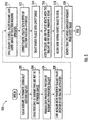
- FIG. 5 is a flow diagram of the process steps for building the fuse assembly of FIG. 1 , according to exemplary embodiments.
- the busbars 102 may first need to be cleaned, such as by using a degreasing agent, such as isopropanol or acetone (block 502). This leaves the busbars 102 having a substantially chemically uniform surface, which promotes bonding. Further, to avoid contact with skin oils, rubber gloves or handling tools should be used when handling the busbars. Where portions of the busbars are not to be powder-coated, these portions are first covered, such as by using masking tape (block 504). The selected (uncovered) portion of each of the busbars 102 is then powder-coated with the powdered sealant 108 (block 506).
- a degreasing agent such as isopropanol or acetone
- the coating thickness is between 52 and 94 ⁇ m.
- the powdered sealant 108 is applied to the portion of the busbars 102 that will be covered in the plastic material making up the injection mold base 106, such as the portion 406 illustrated in FIG. 4 .
- the powder-coat is applied to the busbars 102, they are heated in an oven or other heating apparatus (block 508).
- the busbars are heated for 5-17 minutes at 180-200 °C and the color of the sealant should change from white to transparent when melting is complete. Because of the curing process, a tight bond will be formed between the sealant material 108 and the metal of the busbars 102.
- the busbars are stored in a method that frees the coated parts from particulates or any other form of contamination.
- each fuse assembly 100 includes two busbars 102, two busbars 102 will be inserted inside each cavity image.
- only the portion of each busbar 102 that is covered with the cured sealant, such as the portion 406, is placed inside the cavity image, while the rest of the busbar 102 lies outside the cavity image.
- the plastic pellets that are to become the base 106 of the fuse assembly 100 are then deposited into a hopper of the injection molding machine (block 512).
- the plastic pellets may be mixed with small amounts of pigment called colorant or other materials.
- the injection molding apparatus heats the plastic pellets until they are in a fluid form.
- the fluid plastic is then injected into the cavity image (block 514).
- the high pressure and hot plastic reacts with the sealant on the busbars 102, forming a bond between the sealant 108 and the plastic (block 516).
- Cooling tubes or other apparatus surrounding the cavity image allows the base 106 within the cavity image to cool (block 518).
- the base 106, including the embedded busbars 102 with the powder-coated sealant portion 108 are removed from the cavity image (block 520). A tight bond between the powder-coated sealant 108 of the busbars 102 and the plastic material forming the base 106 is formed.
- the method steps of FIG. 5 may be applied to virtually any device in which a metal busbar is over-molded with plastic material as described herein.
- a method of manufacturing a fuse assembly that is dust- and moisture-resistant is disclosed in accordance with exemplary embodiments.
- a sealant is deposited upon the busbar, forming a tight bond or seal is formed between the metal of the busbar and the sealant.
- the plastic forming the base of the fuse assembly surrounds the portion of the busbar that has been sealant-cured, thus forming a tight bond or seal between the sealant and the plastic material of the fuse assembly base.
- a tight bond or seal between the metal, the sealant, and the plastic makes the fuse assembly both dust- and moisture-resistant and, in an exemplary embodiment, IP67-compliant.
Landscapes
- Engineering & Computer Science (AREA)
- Manufacturing & Machinery (AREA)
- Mechanical Engineering (AREA)
- Fuses (AREA)
- Injection Moulding Of Plastics Or The Like (AREA)
Applications Claiming Priority (1)
| Application Number | Priority Date | Filing Date | Title |
|---|---|---|---|
| US15/931,761 US11404234B2 (en) | 2020-05-14 | 2020-05-14 | Process for manufacturing sealed automotive electrical fuse box |
Publications (1)
| Publication Number | Publication Date |
|---|---|
| EP3909741A1 true EP3909741A1 (fr) | 2021-11-17 |
Family
ID=75870423
Family Applications (1)
| Application Number | Title | Priority Date | Filing Date |
|---|---|---|---|
| EP21172674.0A Pending EP3909741A1 (fr) | 2020-05-14 | 2021-05-07 | Procédé de fabrication d'un boîtier de fusible électrique étanche pour automobile |
Country Status (4)
| Country | Link |
|---|---|
| US (1) | US11404234B2 (fr) |
| EP (1) | EP3909741A1 (fr) |
| JP (1) | JP7686924B2 (fr) |
| CN (1) | CN113675044B (fr) |
Families Citing this family (4)
| Publication number | Priority date | Publication date | Assignee | Title |
|---|---|---|---|---|
| TWI805342B (zh) * | 2022-04-27 | 2023-06-11 | 功得電子工業股份有限公司 | 便於組裝的保險絲 |
| CN117637410A (zh) * | 2022-08-12 | 2024-03-01 | 苏州力特奥维斯保险丝有限公司 | 用于包覆成型母排的新密封设计 |
| KR102622122B1 (ko) * | 2023-05-19 | 2024-01-09 | 스마트전자 주식회사 | 회로보호용 대전류 터미널 및 이를 이용한 회로 보호 시스템 |
| JP7648007B1 (ja) * | 2023-06-01 | 2025-03-18 | 株式会社オートネットワーク技術研究所 | 配線モジュール |
Citations (7)
| Publication number | Priority date | Publication date | Assignee | Title |
|---|---|---|---|---|
| JPH0721892A (ja) * | 1993-06-30 | 1995-01-24 | Riken Densen Kk | 温度ヒューズ用リード線の製造方法 |
| JPH08188626A (ja) * | 1994-10-07 | 1996-07-23 | Hoechst Ag | 特別の異性体分布を有する環状または多環状モノマーを構成単位として含むコポリマー、およびそれを含む塗料 |
| EP1424713A1 (fr) * | 2002-11-26 | 2004-06-02 | Uchihashi Estec Co., Ltd. | Fusible thermique à alliage et matériau pour un élément fusible |
| US20090211089A1 (en) * | 2008-02-25 | 2009-08-27 | Cooper Technologies Company | Method of manufacturing a dual interface separable insulated connector with overmolded faraday cage |
| US20110211246A1 (en) * | 2008-01-31 | 2011-09-01 | Ajjer Llc | Conductive busbars and sealants for chromogenic devices |
| US20120223801A1 (en) * | 2009-11-11 | 2012-09-06 | Hyungtai Moon | Automobile fuse which changes color when short circuited, and preparation method thereof |
| US20130069001A1 (en) * | 2011-09-20 | 2013-03-21 | Ticona Llc | Polyarylene Sulfide/Liquid Crystal Polymer Alloy and Compositions Including Same |
Family Cites Families (21)
| Publication number | Priority date | Publication date | Assignee | Title |
|---|---|---|---|---|
| JPS55160418A (en) * | 1979-05-31 | 1980-12-13 | Nippon Mektron Kk | Capacitor internally containing laminate bus and method of fabricating same |
| JPH097671A (ja) * | 1995-06-19 | 1997-01-10 | Sumitomo Wiring Syst Ltd | コネクタおよびその製造方法 |
| JPH10247547A (ja) * | 1997-03-03 | 1998-09-14 | Yazaki Corp | 防水コネクタ及びその製造方法 |
| US6214261B1 (en) * | 1998-03-23 | 2001-04-10 | Ppg Industries Ohio, Inc. | Method for forming a molded edge seal |
| JP3068571B2 (ja) | 1998-11-02 | 2000-07-24 | 猛 京田 | 感熱型電気回路遮断部品 |
| JP3990516B2 (ja) | 1999-08-04 | 2007-10-17 | 住友電気工業株式会社 | 端子用の金属−樹脂複合体 |
| TW518626B (en) * | 2001-08-02 | 2003-01-21 | Conquer Electronics Co Ltd | Manufacturing method of micro-fuse for industry and product of the same |
| US6649834B1 (en) * | 2002-12-16 | 2003-11-18 | Kingpak Technology Inc. | Injection molded image sensor and a method for manufacturing the same |
| CN101079355B (zh) * | 2005-06-20 | 2012-04-25 | 力特保险丝有限公司 | 一种防水内嵌式熔断器固定器 |
| US20070018774A1 (en) * | 2005-07-20 | 2007-01-25 | Dietsch Gordon T | Reactive fuse element with exothermic reactive material |
| US20070075822A1 (en) * | 2005-10-03 | 2007-04-05 | Littlefuse, Inc. | Fuse with cavity forming enclosure |
| TWI323906B (en) * | 2007-02-14 | 2010-04-21 | Besdon Technology Corp | Chip-type fuse and method of manufacturing the same |
| US8480419B2 (en) * | 2009-01-06 | 2013-07-09 | GM Global Technology Operations LLC | Low inductance connector assembly |
| US7798833B2 (en) * | 2009-01-13 | 2010-09-21 | Gm Global Technology Operations, Inc. | Low inductance busbar assembly |
| CN102762352B (zh) * | 2009-11-11 | 2015-11-25 | 巴鲁夫公司 | 用于注射模制物体外壳的方法、物体以及用于注射模制的设备 |
| TWI594284B (zh) * | 2011-10-20 | 2017-08-01 | 太谷電子日本合同公司 | 保護裝置及保護裝置的製造方法 |
| JP5847535B2 (ja) * | 2011-10-26 | 2016-01-27 | 矢崎総業株式会社 | バスバー成型用金型及びこのバスバー成型用金型を用いたバスバー製造方法 |
| US9912018B2 (en) * | 2012-03-21 | 2018-03-06 | GM Global Technology Operations LLC | Integration of a voltage sense trace fuse into a battery interconnect board |
| JP6341508B2 (ja) | 2014-08-08 | 2018-06-13 | 新生化学工業株式会社 | 防水コネクタ及び防水コネクタの製造方法 |
| US10283307B2 (en) * | 2017-04-05 | 2019-05-07 | Littelfuse, Inc. | Surface mount fuse |
| JP7317471B2 (ja) * | 2018-04-17 | 2023-07-31 | 本田技研工業株式会社 | 成形体及び成形型 |
-
2020
- 2020-05-14 US US15/931,761 patent/US11404234B2/en active Active
-
2021
- 2021-05-06 JP JP2021078824A patent/JP7686924B2/ja active Active
- 2021-05-07 EP EP21172674.0A patent/EP3909741A1/fr active Pending
- 2021-05-14 CN CN202110528939.5A patent/CN113675044B/zh active Active
Patent Citations (7)
| Publication number | Priority date | Publication date | Assignee | Title |
|---|---|---|---|---|
| JPH0721892A (ja) * | 1993-06-30 | 1995-01-24 | Riken Densen Kk | 温度ヒューズ用リード線の製造方法 |
| JPH08188626A (ja) * | 1994-10-07 | 1996-07-23 | Hoechst Ag | 特別の異性体分布を有する環状または多環状モノマーを構成単位として含むコポリマー、およびそれを含む塗料 |
| EP1424713A1 (fr) * | 2002-11-26 | 2004-06-02 | Uchihashi Estec Co., Ltd. | Fusible thermique à alliage et matériau pour un élément fusible |
| US20110211246A1 (en) * | 2008-01-31 | 2011-09-01 | Ajjer Llc | Conductive busbars and sealants for chromogenic devices |
| US20090211089A1 (en) * | 2008-02-25 | 2009-08-27 | Cooper Technologies Company | Method of manufacturing a dual interface separable insulated connector with overmolded faraday cage |
| US20120223801A1 (en) * | 2009-11-11 | 2012-09-06 | Hyungtai Moon | Automobile fuse which changes color when short circuited, and preparation method thereof |
| US20130069001A1 (en) * | 2011-09-20 | 2013-03-21 | Ticona Llc | Polyarylene Sulfide/Liquid Crystal Polymer Alloy and Compositions Including Same |
Also Published As
| Publication number | Publication date |
|---|---|
| JP2021180175A (ja) | 2021-11-18 |
| JP7686924B2 (ja) | 2025-06-03 |
| CN113675044A (zh) | 2021-11-19 |
| US11404234B2 (en) | 2022-08-02 |
| US20210358709A1 (en) | 2021-11-18 |
| CN113675044B (zh) | 2026-01-16 |
Similar Documents
| Publication | Publication Date | Title |
|---|---|---|
| EP3909741A1 (fr) | Procédé de fabrication d'un boîtier de fusible électrique étanche pour automobile | |
| US7613003B2 (en) | Electrical connector | |
| US6521830B1 (en) | Housing for electrical or electronic devices with integrated conductor tracks | |
| EP0420413A1 (fr) | Moyen et méthode pour assurer une pièce d'insertion dans une enveloppe | |
| US12469939B2 (en) | Battery terminal | |
| US20120302098A1 (en) | Fuse unit | |
| US20170004945A1 (en) | Plug-in fuse element | |
| US10074927B1 (en) | Electrical connector and method for manufacturing electrical connector | |
| US20180220539A1 (en) | Electronic Control Device | |
| US11201017B2 (en) | Method for manufacturing capacitor | |
| US4385281A (en) | Electrical fuse | |
| US3044151A (en) | Method of making electrically conductive terminals | |
| JP6230013B1 (ja) | 電気コネクタ | |
| TWI728168B (zh) | 保護元件、電路模組及保護元件之製造方法 | |
| US11691361B2 (en) | Method for producing a component, in particular for a motor vehicle, and component | |
| CN110891756B (zh) | 制造塑料金属混合构件的方法及塑料金属混合构件 | |
| US2899611A (en) | Capacitor | |
| US20140138124A1 (en) | Method of manufacturing an electronic high-current circuit by means of gas injection technology and sealing with an insulating polymer | |
| US5205977A (en) | Method of securing an insert in a shell | |
| TW201608942A (zh) | 電路基板及電子零件之安裝方法 | |
| CN117279346A (zh) | 屏蔽电磁兼容性(emc)的车辆电气模块 | |
| US20170246772A1 (en) | Method of manufacturing integrated modular structure | |
| KR20210000427A (ko) | 배터리 케이스의 제조방법 | |
| JP2004014188A (ja) | 保護素子 | |
| JPH066928A (ja) | 電気接続箱の防水シール方法 |
Legal Events
| Date | Code | Title | Description |
|---|---|---|---|
| PUAI | Public reference made under article 153(3) epc to a published international application that has entered the european phase |
Free format text: ORIGINAL CODE: 0009012 |
|
| STAA | Information on the status of an ep patent application or granted ep patent |
Free format text: STATUS: THE APPLICATION HAS BEEN PUBLISHED |
|
| AK | Designated contracting states |
Kind code of ref document: A1 Designated state(s): AL AT BE BG CH CY CZ DE DK EE ES FI FR GB GR HR HU IE IS IT LI LT LU LV MC MK MT NL NO PL PT RO RS SE SI SK SM TR |
|
| B565 | Issuance of search results under rule 164(2) epc |
Effective date: 20211015 |
|
| STAA | Information on the status of an ep patent application or granted ep patent |
Free format text: STATUS: REQUEST FOR EXAMINATION WAS MADE |
|
| STAA | Information on the status of an ep patent application or granted ep patent |
Free format text: STATUS: EXAMINATION IS IN PROGRESS |
|
| 17P | Request for examination filed |
Effective date: 20220501 |
|
| RBV | Designated contracting states (corrected) |
Designated state(s): AL AT BE BG CH CY CZ DE DK EE ES FI FR GB GR HR HU IE IS IT LI LT LU LV MC MK MT NL NO PL PT RO RS SE SI SK SM TR |
|
| 17Q | First examination report despatched |
Effective date: 20220603 |