EP3910017B1 - Hochgeschwindigkeitsdruckfähige kohlenstofftinte - Google Patents
Hochgeschwindigkeitsdruckfähige kohlenstofftinte Download PDFInfo
- Publication number
- EP3910017B1 EP3910017B1 EP20174741.7A EP20174741A EP3910017B1 EP 3910017 B1 EP3910017 B1 EP 3910017B1 EP 20174741 A EP20174741 A EP 20174741A EP 3910017 B1 EP3910017 B1 EP 3910017B1
- Authority
- EP
- European Patent Office
- Prior art keywords
- electrically conductive
- composition according
- conductive composition
- present
- graphite
- Prior art date
- Legal status (The legal status is an assumption and is not a legal conclusion. Google has not performed a legal analysis and makes no representation as to the accuracy of the status listed.)
- Active
Links
Images
Classifications
-
- C—CHEMISTRY; METALLURGY
- C08—ORGANIC MACROMOLECULAR COMPOUNDS; THEIR PREPARATION OR CHEMICAL WORKING-UP; COMPOSITIONS BASED THEREON
- C08K—Use of inorganic or non-macromolecular organic substances as compounding ingredients
- C08K3/00—Use of inorganic substances as compounding ingredients
- C08K3/02—Elements
- C08K3/04—Carbon
-
- C—CHEMISTRY; METALLURGY
- C08—ORGANIC MACROMOLECULAR COMPOUNDS; THEIR PREPARATION OR CHEMICAL WORKING-UP; COMPOSITIONS BASED THEREON
- C08L—COMPOSITIONS OF MACROMOLECULAR COMPOUNDS
- C08L1/00—Compositions of cellulose, modified cellulose or cellulose derivatives
- C08L1/08—Cellulose derivatives
- C08L1/16—Esters of inorganic acids
- C08L1/18—Cellulose nitrate, i.e. nitrocellulose
-
- C—CHEMISTRY; METALLURGY
- C09—DYES; PAINTS; POLISHES; NATURAL RESINS; ADHESIVES; COMPOSITIONS NOT OTHERWISE PROVIDED FOR; APPLICATIONS OF MATERIALS NOT OTHERWISE PROVIDED FOR
- C09D—COATING COMPOSITIONS, e.g. PAINTS, VARNISHES OR LACQUERS; FILLING PASTES; CHEMICAL PAINT OR INK REMOVERS; INKS; CORRECTING FLUIDS; WOODSTAINS; PASTES OR SOLIDS FOR COLOURING OR PRINTING; USE OF MATERIALS THEREFOR
- C09D11/00—Inks
- C09D11/02—Printing inks
- C09D11/03—Printing inks characterised by features other than the chemical nature of the binder
- C09D11/033—Printing inks characterised by features other than the chemical nature of the binder characterised by the solvent
-
- C—CHEMISTRY; METALLURGY
- C09—DYES; PAINTS; POLISHES; NATURAL RESINS; ADHESIVES; COMPOSITIONS NOT OTHERWISE PROVIDED FOR; APPLICATIONS OF MATERIALS NOT OTHERWISE PROVIDED FOR
- C09D—COATING COMPOSITIONS, e.g. PAINTS, VARNISHES OR LACQUERS; FILLING PASTES; CHEMICAL PAINT OR INK REMOVERS; INKS; CORRECTING FLUIDS; WOODSTAINS; PASTES OR SOLIDS FOR COLOURING OR PRINTING; USE OF MATERIALS THEREFOR
- C09D11/00—Inks
- C09D11/02—Printing inks
- C09D11/03—Printing inks characterised by features other than the chemical nature of the binder
- C09D11/037—Printing inks characterised by features other than the chemical nature of the binder characterised by the pigment
-
- C—CHEMISTRY; METALLURGY
- C09—DYES; PAINTS; POLISHES; NATURAL RESINS; ADHESIVES; COMPOSITIONS NOT OTHERWISE PROVIDED FOR; APPLICATIONS OF MATERIALS NOT OTHERWISE PROVIDED FOR
- C09D—COATING COMPOSITIONS, e.g. PAINTS, VARNISHES OR LACQUERS; FILLING PASTES; CHEMICAL PAINT OR INK REMOVERS; INKS; CORRECTING FLUIDS; WOODSTAINS; PASTES OR SOLIDS FOR COLOURING OR PRINTING; USE OF MATERIALS THEREFOR
- C09D11/00—Inks
- C09D11/02—Printing inks
- C09D11/08—Printing inks based on natural resins
-
- C—CHEMISTRY; METALLURGY
- C09—DYES; PAINTS; POLISHES; NATURAL RESINS; ADHESIVES; COMPOSITIONS NOT OTHERWISE PROVIDED FOR; APPLICATIONS OF MATERIALS NOT OTHERWISE PROVIDED FOR
- C09D—COATING COMPOSITIONS, e.g. PAINTS, VARNISHES OR LACQUERS; FILLING PASTES; CHEMICAL PAINT OR INK REMOVERS; INKS; CORRECTING FLUIDS; WOODSTAINS; PASTES OR SOLIDS FOR COLOURING OR PRINTING; USE OF MATERIALS THEREFOR
- C09D11/00—Inks
- C09D11/02—Printing inks
- C09D11/10—Printing inks based on artificial resins
- C09D11/102—Printing inks based on artificial resins containing macromolecular compounds obtained by reactions other than those only involving unsaturated carbon-to-carbon bonds
-
- C—CHEMISTRY; METALLURGY
- C09—DYES; PAINTS; POLISHES; NATURAL RESINS; ADHESIVES; COMPOSITIONS NOT OTHERWISE PROVIDED FOR; APPLICATIONS OF MATERIALS NOT OTHERWISE PROVIDED FOR
- C09D—COATING COMPOSITIONS, e.g. PAINTS, VARNISHES OR LACQUERS; FILLING PASTES; CHEMICAL PAINT OR INK REMOVERS; INKS; CORRECTING FLUIDS; WOODSTAINS; PASTES OR SOLIDS FOR COLOURING OR PRINTING; USE OF MATERIALS THEREFOR
- C09D11/00—Inks
- C09D11/02—Printing inks
- C09D11/10—Printing inks based on artificial resins
- C09D11/106—Printing inks based on artificial resins containing macromolecular compounds obtained by reactions only involving carbon-to-carbon unsaturated bonds
-
- C—CHEMISTRY; METALLURGY
- C09—DYES; PAINTS; POLISHES; NATURAL RESINS; ADHESIVES; COMPOSITIONS NOT OTHERWISE PROVIDED FOR; APPLICATIONS OF MATERIALS NOT OTHERWISE PROVIDED FOR
- C09D—COATING COMPOSITIONS, e.g. PAINTS, VARNISHES OR LACQUERS; FILLING PASTES; CHEMICAL PAINT OR INK REMOVERS; INKS; CORRECTING FLUIDS; WOODSTAINS; PASTES OR SOLIDS FOR COLOURING OR PRINTING; USE OF MATERIALS THEREFOR
- C09D11/00—Inks
- C09D11/02—Printing inks
- C09D11/14—Printing inks based on carbohydrates
-
- C—CHEMISTRY; METALLURGY
- C09—DYES; PAINTS; POLISHES; NATURAL RESINS; ADHESIVES; COMPOSITIONS NOT OTHERWISE PROVIDED FOR; APPLICATIONS OF MATERIALS NOT OTHERWISE PROVIDED FOR
- C09D—COATING COMPOSITIONS, e.g. PAINTS, VARNISHES OR LACQUERS; FILLING PASTES; CHEMICAL PAINT OR INK REMOVERS; INKS; CORRECTING FLUIDS; WOODSTAINS; PASTES OR SOLIDS FOR COLOURING OR PRINTING; USE OF MATERIALS THEREFOR
- C09D11/00—Inks
- C09D11/30—Inkjet printing inks
- C09D11/32—Inkjet printing inks characterised by colouring agents
- C09D11/324—Inkjet printing inks characterised by colouring agents containing carbon black
-
- C—CHEMISTRY; METALLURGY
- C09—DYES; PAINTS; POLISHES; NATURAL RESINS; ADHESIVES; COMPOSITIONS NOT OTHERWISE PROVIDED FOR; APPLICATIONS OF MATERIALS NOT OTHERWISE PROVIDED FOR
- C09D—COATING COMPOSITIONS, e.g. PAINTS, VARNISHES OR LACQUERS; FILLING PASTES; CHEMICAL PAINT OR INK REMOVERS; INKS; CORRECTING FLUIDS; WOODSTAINS; PASTES OR SOLIDS FOR COLOURING OR PRINTING; USE OF MATERIALS THEREFOR
- C09D11/00—Inks
- C09D11/52—Electrically conductive inks
-
- H—ELECTRICITY
- H01—ELECTRIC ELEMENTS
- H01B—CABLES; CONDUCTORS; INSULATORS; SELECTION OF MATERIALS FOR THEIR CONDUCTIVE, INSULATING OR DIELECTRIC PROPERTIES
- H01B1/00—Conductors or conductive bodies characterised by the conductive materials; Selection of materials as conductors
- H01B1/20—Conductive material dispersed in non-conductive organic material
- H01B1/24—Conductive material dispersed in non-conductive organic material the conductive material comprising carbon-silicon compounds, carbon or silicon
Definitions
- the present invention relates to an electrically conductive composition which can be used in high speed printing techniques such as flexography and rotogravure printing.
- Ordinary electrically conductive inks have been applied to the substrates by for example screen printing, rotary screen printing and dispensing. These printing methods are considered relative slow printing methods.
- screen printing is a traditional printing method, which has been used a lot in the printed electronics industry. Screen printing results in a solids layer having a thickness in the range of from 5 to 15 microns, and these layers are sufficiently conductive to carry the current for a lot of applications. Screen printing has a printing speed from about 3 to 20 m/min.
- Document WO2004039898 A1 discloses an electrically conductive ink comprising a resin, electrically conductive particles and a solvent.
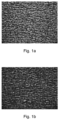
- Figure 1a and 1b illustrate a flexography printing trial on an industrial printer.
- the present invention relates to an electrically conductive composition as defined in claim 1.
- the present invention encompasses an electrically conductive film comprising an electrically conductive composition according to the present invention.
- the present invention relates to use of an electrically conductive composition according to the present invention in a flexography or a rotogravure printing.
- the present invention encompasses use of an electrically conductive composition or an electrically conductive film according to the present invention in smart personal hygiene products, heating elements, pressure sensors, smart books, smart labelling and shielding applications.
- the Applicant has investigated electrically conductive inks applied by high speed printing methods. Especially, a sheet resistance of layers (various thickness) of electrically conductive inks, which were applied by a gravure printer was investigated, and it was found that a low sheet resistance in Ohm/sq/25 ⁇ m, does not always provide the lowest resistance in thin layers. In this context, a thin layer is considered to have thickness in the range of from 1 to 2 ⁇ m. In further experiments it was found that a low sheet resistance can be optimized by selecting an ideal combination of a resin and electrically conductive particles. Further advantage of the ideal combination of a resin and electrically conductive particles is that an ink with a suitable viscosity, a good value for money and a good conductivity in thin layers can be provided.
- the present invention relates to an electrically conductive composition
- an electrically conductive composition comprising a) a resin selected from the group consisting of nitrocellulose, chlorinated polyester, chlorinated polyether, chlorinated polyvinyl, chlorinated polyacetate and mixtures thereof; b) electrically conductive particles comprising graphite and carbon black, wherein ratio of said graphite and said carbon black is from 1:1 to 5:1; and c) a solvent, wherein ratio of said electrically conductive particles and said resin is from 0.20:1 to 4:1.
- the electrically conductive composition according to the present has a combination of electrically conductive particles, which is optimized to provide good conductivity in thin layers.
- the solvent and rheology make it possible to print the composition and dry it (after dilution) at high speeds.
- the electrically conductive composition according to the present invention comprises a resin.
- Suitable resins are nitrocellulose, chlorinated polyester, chlorinated polyether, chlorinated polyvinyl, chlorinated polyacetate and mixtures thereof.
- the selected resins release the solvent easily, which makes the composition suitable for consumer usage. Further, these resins are preferred because they provide low resistance and high conductivity. Generally, these resins disperse well the electrically conductive particles.
- nitrocellulose is used as a resin. Nitrocellulose is particularly preferred because it provides superior conductivity, while it dissolves well and releases the used solvent quickly.
- Suitable commercially available resins for use in the present invention include but are not limited to Solbin A from ShinEtsu and NC-E560 IPA 30% from Dow.
- a resin may be present in an electrically conductive composition according to the present invention in an amount from 2 to 25% by weight of the total weight of the composition, preferably from 3 to 23%, and more preferably from 4 to 21%.
- the electrically conductive composition according to the present invention comprises electrically conductive particles comprising graphite and carbon black, wherein ratio of said graphite and said carbon black is from 1:1 to 5:1.
- Suitable graphite for use in the present invention has preferably a particle size D90 from 1 ⁇ m to 75 ⁇ m, more preferably from 2 ⁇ m to 45 ⁇ m, more preferably from 3 ⁇ m to 25 ⁇ m and even more preferably 3 ⁇ m to 10 ⁇ m.
- the particle size is measured by laser diffraction. In this method a laser beam lights up a cell which contains the sample of graphite suspended in water, the generated diffraction pattern is collected by the system and analysed using the light scattering developed by Mie. The particle size distribution is calculated and reported for quantity of 90%.
- suitable graphite for use in the present invention is a specific surface area preferably from 0.25 m 2 /g to 25 m 2 /g, more preferably from 4 m 2 /g to 22 m 2 /g and more preferably from 7 m 2 /g to 21 m 2 /g, wherein said specific surface area is measured by B.E.T nitrogen absorption.
- the measurement is carried out by measuring the adsorption-desorption isotherm of nitrogen on the surface of the material by means of the Brunauer-Emmet-Teller algorithm, a definite amount (accuracy 0.01mg) of powder is weighted in a sample tube. Subsequently the sample undergoes a series of heating and cooling runs from the evolution of the pressure in the sample tube and the amount of adsorbed nitrogen during different step is calculated; from this data the specific surface area is calculated and reported in m 2 /g.
- the graphite has a particle size D90 from 1 ⁇ m to 75 ⁇ m, preferably from 2 ⁇ m to 45 ⁇ m, more preferably from 3 ⁇ m to 25 ⁇ m and even more preferably 3 ⁇ m to 10 ⁇ m and/or a specific surface area from 0.25 m 2 /g to 25 m 2 /g, preferably from 4 m 2 /g to 22 m 2 /g and more preferably from 7 m 2 /g to 21 m 2 /g, wherein said particle size is measured by laser diffraction, and wherein said specific surface area is measured by B.E.T nitrogen absorption.
- Preferred specific surface areas and particle sizes of a graphite as separate features or as a combination provide low resistance and good conductivity in thin layers as well as good printability.
- too large particle size of a graphite may lead to a lower specific surface area, and in addition, difficulties to release the particles from the cells during the printing process. Whereas too small particle size of a graphite may be too expensive to produce, and have larger specific surface area, which may lead to a higher viscosity. High viscosity is not ideal for a high-speed printing and creates a need for a heavy dilution prior to application, which may adversely affect conductivity of the printed layer.
- Suitable commercially available graphite for use in the present invention include but is not limited to Timrex SFG6 from TIMCAL Graphite & Carbon.
- Suitable carbon black for use in the present invention has preferably an oil absorption number from 70 ml/100g to 500 ml/100g, more preferably from 100 ml/100g to 300 ml/100g and more preferably from 150 ml/100g to 200 ml/100g, wherein said oil absorption number is measured according to ASTM D2414.
- suitable carbon black for use in the present invention has a specific surface area preferably from 30 m 2 /g to 1400 m 2 /g, more preferably from 100 m 2 /g to 700 m 2 /g and more preferably from 150 m 2 /g to 350 m 2 /g, wherein said specific surface area is measured according by BET.
- the method is based on the registration of the absorption of nitrogen at 77K. Following the model proposed by Brunauer, Emmet and Teller (BET), the monolayer capacity can be determined. On the basis of the cross-sectional area of the nitrogen molecule, the monolayer capacity and the weight of the sample, the specific surface can then be calculated.
- the carbon black has an oil absorption number from 70 ml/100g to 500 ml/100g, preferably from 100 ml/100g to 300 ml/100g and more preferably from 150 ml/100g to 200 ml/100g, and/or a specific surface area from 30 m 2 /g to 1400 m 2 /g, preferably from 100 m 2 /g to 700 m 2 /g and more preferably from 150 m 2 /g to 350 m 2 /g, wherein said oil absorption number is measured according to ASTM D2414, and wherein said specific surface area is measured according by BET.
- Preferred specific surface areas and oil absorption numbers separate or as a combination provide a good printability properties and low resistance in thin layers.
- oil absorption number of the carbon black When the oil absorption number of the carbon black is too low, it means less branched carbon black, and therefore, there may be fewer contact points in thin layers, and this will adversely affect conductivity, whereas too high oil absorption number of the carbon black, mainly greater than 500, may cause difficulties in printing process.
- Suitable commercially available carbon black for use in the present invention include but is not limited to Vulcan XC72 from Cabot and Ensaco 250G from Imerys.
- ratio of said graphite and said carbon black is from 1:1 to 5:1, preferably from 2:1 to 4:1, and more preferably ratio of said graphite and said carbon black is 3:1.
- the Applicant has found out that these graphite to carbon black ratios provide ideal viscosity and conductivity properties to the composition according to the present invention. It has been found that too high carbon black concentration in relation to graphite may lead thicker printed layers.
- An electrically conductive particles may be present in an electrically conductive composition according to the present invention in an amount from 3 to 45% by weight of the total weight of the composition, preferably from 4 to 43%, and more preferably from 4.75 to 41%.
- the quantity of the electrically conductive particles is too low, mainly less than 3%, the quantity may not provide desired conductivity, whereas too high quantity, mainly more than 45%, may lead difficulties to process the composition in a printing process.
- the electrically conductive composition according to the present invention comprises a solvent.
- the composition may comprise one solvent or mixture or two or more solvents.
- the solvent of the present invention is selected from isopropyl alcohol, n-propyl acetate and mixtures thereof.
- These solvents are preferred because they dissolve the resin well and are easily released during the drying process.
- Suitable commercially available solvent for use in the present invention include but is not limited to ethyl acetate from Eastman and butyl acetate from Eastman.
- a solvent may be present in an electrically conductive composition according to the present invention in an amount from 40 to 92% by weight of the total weight of the composition, preferably from 45 to 91%, and more preferably from 46 to 90%.
- the electrically conductive composition according to the present invention is preferably prepared by a pebble mill process.
- the electrically conductive particles, a resin and a solvent are being grinded by pebbles for about 15 hours in a large mill.
- an electrically conductive film can be formed comprising the electrically conductive composition according to the present invention.
- An electrically conductive film according to the present invention has one or more layers, wherein each layer has a thickness from 0.5 ⁇ m to 3 ⁇ m, preferably from 0.75 ⁇ m to 2 ⁇ m, and more preferably from 1 to 1.5 ⁇ m.
- Thin layers are desired due the cost-effective aspect but are also desired in a process point view. Thinner layers mean less material build up in the rolls used in the printing process, and this way the quality of printing is increased.
- the electrically conductive composition according to the present invention can be used in a high-speed printing such as a flexography or a rotogravure printing.
- an ink is transferred from a metal cylinder (containing tiny cells, which are filled with ink) to a polymer sleeve (holding the image, like stamp) and subsequently the sleeve transfers the ink (the stamp) to the substrate.
- This process is fast, and the used ink must have low viscosity to allow this process.
- Application of inks with flexography or rotogravure results in thin dry layers having thickness in the range of about 1 micron.
- the electrically conductive composition according to the present invention can be printed in a speed up to and over 200m/min.
- this viscosity range is ideal for the production process used to produce the electrically conductive composition according to the present invention and in addition, this viscosity range prevents composition settling during the storage.
- Preferred dilution range is around 40-50 wt.% and this leads to a viscosity in the range of 100 mPa.s. Despite of low viscosity, the diluted composition according to the present invention provides good conductivity in a thin layer.
- composition according to the present invention does not lose its functionality while printed in high speed.
- the present invention encompasses use of an electrically conductive composition or an electrically conductive film according to the present invention in smart personal hygiene products, heating elements, pressure sensors, smart books, smart labelling and shielding applications.
- Smart personal hygiene products are such as smart nappies.
- Example 2 Resin Solbin A from Shin Etsu NC E 560 from Dow Chemical NC E 560 from Dow Chemical Electrically conductive particles Graphite pure 200-09 from Asbury Graphite pure 200-09 from Asbury Timrex SFG6 from Imerys Electrically conductive particles Vulcan XC 72 from Cabot Vulcan XC 72 from Cabot Vulcan XC 72 from Cabot Solvent 1 methyl isobutyl ketone from Eastman n-propyl acetate from Eastman n-propyl acetate from Eastman Solvent 2 isopropyl alcohol from Dow Chemical isopropyl alcohol from Dow Chemical isopropyl alcohol from Dow Chemical % Resins 13.3 9.73 9.73 wt% electrically conductive particles - graphite 20 15 15 wt% electrically conductive particles - carbon black 6.7 5 5 wt% solvent 1 60 66.1 66.1 wt% solvent 2 4.17 4.17 Total 100 100 100 100 Total wt % pigment 26.7 20
- Viscosity of the compositions is about 200mPa.s.
- Example 1 provided the lowest resistance in a thick dense layer. Table 2 Ink Comparative example Example 1 Example 2 Dry film thickness ( ⁇ m) 16 14 13 Track resistance 1 (Ohm) 274 108 208 Track resistance 2 (Ohm) 293 95 189 Average R (Ohm) 283.5 101.5 198.5 Ohm/sq/25 ⁇ m 18.1 5.7 10.3
- the coating was subsequently dried in air and the thickness of the layer was measured by using Mitutoyo digital thickness gage.
- the film was let to settle for 15 minutes, and a track of 10 x 1 cm was isolated, and the resistance of this track was measured.
- the resistance measurement was done with a 4-point probe using a digital Keithley electrometer.
- Example 2 provided the lowest resistance. The lower the thickness, the better the formula of example 2 is compared to the other inks. Table 3 Ink thickness ( ⁇ m) Comparative example Example 1 Example 2 Air dried kOhm/sq kOhm/sq kOhm/sq Highest volume ⁇ 2.4 2.2 1.1 0.7 Medium volume ⁇ 2.0 6.4 2.9 1.2 Lowest volume ⁇ 1.8 9.7 7.1 2.4
- Example 2 provides the lowest resistance (Example 1 6.3 kOhm/sq and Example 2 2.0 kOhm/sq).
- Table 4 Example 3
- Example 4 Example 5
- Example 6 Example 7 Nitrocellulose EC 560 from Dow Chemical (%) 13.3 13.3 5 5 20 Timrex SFG6 from Imerys (%) 4.99 29.93 11.25 3.75 7.5 Vulcan XC 72 from Cabot (%) 1.66 9.98 3.75 1.25 2.5 n-Propyl acetate from Eastman (%) 74.35 41.09 77.86 87.86 61.4 Isopropyl alcohol from Dow Chemical 5.7 5.7 2.14 2.14 8.6 Total (%) 100 100 100 100 100 100 100 100 100 Total pigment (wt%) 6.65 39.91 15 5 10 solids (wt%) 19.95 53.21 20 10 30 Pigment to binder 0.5 3.0 3.0 1.0 0.5
Landscapes
- Chemical & Material Sciences (AREA)
- Life Sciences & Earth Sciences (AREA)
- Organic Chemistry (AREA)
- Engineering & Computer Science (AREA)
- Materials Engineering (AREA)
- Wood Science & Technology (AREA)
- Chemical Kinetics & Catalysis (AREA)
- General Chemical & Material Sciences (AREA)
- Health & Medical Sciences (AREA)
- Molecular Biology (AREA)
- Physics & Mathematics (AREA)
- Dispersion Chemistry (AREA)
- Spectroscopy & Molecular Physics (AREA)
- Medicinal Chemistry (AREA)
- Polymers & Plastics (AREA)
- Inorganic Chemistry (AREA)
- Inks, Pencil-Leads, Or Crayons (AREA)
- Conductive Materials (AREA)
- Non-Insulated Conductors (AREA)
Claims (14)
- Elektrisch leitfähige Zusammensetzung, umfassend:a) ein Nitrocelluloseharz;b) elektrisch leitfähige Partikel, umfassend Graphit und Ruß, wobei das Verhältnis des Graphits und des Rußes 1:1 bis 5:1 beträgt; undc) ein Lösungsmittel, ausgewählt aus Isopropylalkohol, N-Propylacetat und Mischungen davon, wobei das Verhältnis der elektrisch leitfähigen Partikel und des Harzes von 0,20:1 bis 4:1 beträgt.
- Elektrisch leitfähige Zusammensetzung nach Anspruch 1, wobei das Harz von zu 2 bis 25 Gew.-% des Gesamtgewichts der Zusammensetzung, vorzugsweise von zu 3 bis 23 Gew.-% und bevorzugter von zu 4 bis 21 Gew.-%, vorhanden ist.
- Elektrisch leitfähige Zusammensetzung nach Anspruch 1 oder 2, wobei der Graphit eine Partikelgröße D90 von 1 µm bis 75 µm, vorzugsweise von 2 µm bis 45 µm, bevorzugter von 3 µm bis 25 µm und noch bevorzugter von 3 µm bis 10 µm,
und/odereine spezifische Oberflächenregion von 0,25 m2/g bis 25 m2/g, vorzugsweise von 4 m2/g bis 22 m2/g und bevorzugter von 7 m2/g bis 21 m2/g, aufweist,wobei die Partikelgröße durch Laserbeugung gemessen wird, und wobei die spezifische Oberflächenregion durch B.E.T-Stickstoffabsorption gemessen wird. - Elektrisch leitfähige Zusammensetzung nach einem der Ansprüche 1 bis 3, wobei der Ruß eine Ölabsorptionszahl von 70 ml/100 g bis 500 ml/100 g, vorzugsweise von 100 ml/100 g bis 300 ml/100 g und bevorzugter von 150 ml/100 g bis 200 ml/100 g
und/odereine spezifische Oberflächenregion von 30 m2/g bis 1400 m2/g, vorzugsweise von 100 m2/g bis 700 m2/g und bevorzugter von 150 m2/g bis 350 m2/g aufweist,wobei die Ölabsorptionszahl gemäß ASTM D2414 gemessen wird, und wobei die spezifische Oberflächenregion gemäß BET gemessen wird. - Elektrisch leitfähige Zusammensetzung nach einem der Ansprüche 1 bis 4, wobei das Verhältnis des Graphits und des Rußes 2:1 bis 4:1 beträgt, vorzugsweise das Verhältnis 3:1 beträgt.
- Elektrisch leitfähige Zusammensetzung nach einem der Ansprüche 1 bis 5, wobei die elektrisch leitfähigen Partikel von 3 bis 45 Gew.-% des Gesamtgewichts der Zusammensetzung, vorzugsweise von 4 bis 43 Gew.-% und bevorzugter von 4,75 bis 41 Gew.-% vorhanden sind.
- Elektrisch leitfähige Zusammensetzung nach einem der Ansprüche 1 bis 6, wobei das Verhältnis der elektrisch leitfähigen Partikel und des Harzes von 0,25:1 bis 3:1 beträgt.
- Elektrisch leitfähige Zusammensetzung nach einem der Ansprüche 1 bis 7, wobei das Lösungsmittel von 40 bis 92 Gew.-% des Gesamtgewichts der Zusammensetzung, vorzugsweise von 45 bis 91 Gew.-% und bevorzugter von 46 bis 90 Gew.-% vorhanden ist.
- Elektrisch leitfähige Zusammensetzung nach einem der Ansprüche 1 bis 8, wobei die Zusammensetzung eine Viskosität von 600 bis 5000 mPas, vorzugsweise von 650 bis 3000 und bevorzugter von 700 bis 2000 mPas aufweist, wobei die Viskosität bei Raumtemperatur nach Brookfield (DV-I prime), Spindel Nr. 2 bei 20, gemessen wird.
- Verdünnte elektrisch leitfähige Zusammensetzung, wobei die elektrisch leitfähige Zusammensetzung nach einem der Ansprüche 1 bis 9 in dem Bereich von 20 bis 70 Gew.-%, vorzugsweise von 40 bis 50 Gew.-% verdünnt ist.
- Elektrisch leitfähige Folie, umfassend eine elektrisch leitfähige Zusammensetzung nach einem der Ansprüche 1 bis 9.
- Elektrisch leitfähige Folie nach Anspruch 11, wobei die Folie eine oder mehrere Schichten aufweist, und wobei die Schicht eine Dicke von 0,5 µm bis 3 µm, vorzugsweise von 0,75 µm bis 2 µm und bevorzugter von 1 bis 1,5 µm aufweist.
- Verwendung einer elektrisch leitfähigen Zusammensetzung nach einem der Ansprüche 1 bis 9 oder einer verdünnten Zusammensetzung nach Anspruch 10 in einem Flexodruck- oder Tiefdruckverfahren.
- Verwendung einer elektrisch leitfähigen Zusammensetzung nach einem der Ansprüche 1 bis 9 oder einer elektrisch leitfähigen Folie nach 10 oder 11 in intelligenten Körperhygieneprodukten, Heizelementen, Drucksensoren, intelligenten Büchern, intelligenten Etikettierungs- und Abschirmanwendungen.
Priority Applications (9)
| Application Number | Priority Date | Filing Date | Title |
|---|---|---|---|
| EP20174741.7A EP3910017B1 (de) | 2020-05-14 | 2020-05-14 | Hochgeschwindigkeitsdruckfähige kohlenstofftinte |
| KR1020227039311A KR102973174B1 (ko) | 2020-05-14 | 2021-04-20 | 고속 인쇄가능한 카본 잉크 |
| CN202180034194.5A CN115552550B (zh) | 2020-05-14 | 2021-04-20 | 可高速印刷的碳油墨 |
| CA3183099A CA3183099A1 (en) | 2020-05-14 | 2021-04-20 | High-speed printable carbon ink |
| EP21718897.8A EP4150646A1 (de) | 2020-05-14 | 2021-04-20 | Schnell bedruckbare kohlenstofftinte |
| PCT/EP2021/060162 WO2021228507A1 (en) | 2020-05-14 | 2021-04-20 | High speed printable carbon ink |
| JP2022568851A JP2023526265A (ja) | 2020-05-14 | 2021-04-20 | 高速印刷可能なカーボンインク |
| TW110116869A TWI894271B (zh) | 2020-05-14 | 2021-05-11 | 可高速印刷的碳墨水 |
| US18/053,824 US20230076341A1 (en) | 2020-05-14 | 2022-11-09 | High-speed printable carbon ink |
Applications Claiming Priority (1)
| Application Number | Priority Date | Filing Date | Title |
|---|---|---|---|
| EP20174741.7A EP3910017B1 (de) | 2020-05-14 | 2020-05-14 | Hochgeschwindigkeitsdruckfähige kohlenstofftinte |
Publications (2)
| Publication Number | Publication Date |
|---|---|
| EP3910017A1 EP3910017A1 (de) | 2021-11-17 |
| EP3910017B1 true EP3910017B1 (de) | 2025-03-26 |
Family
ID=70775257
Family Applications (2)
| Application Number | Title | Priority Date | Filing Date |
|---|---|---|---|
| EP20174741.7A Active EP3910017B1 (de) | 2020-05-14 | 2020-05-14 | Hochgeschwindigkeitsdruckfähige kohlenstofftinte |
| EP21718897.8A Pending EP4150646A1 (de) | 2020-05-14 | 2021-04-20 | Schnell bedruckbare kohlenstofftinte |
Family Applications After (1)
| Application Number | Title | Priority Date | Filing Date |
|---|---|---|---|
| EP21718897.8A Pending EP4150646A1 (de) | 2020-05-14 | 2021-04-20 | Schnell bedruckbare kohlenstofftinte |
Country Status (8)
| Country | Link |
|---|---|
| US (1) | US20230076341A1 (de) |
| EP (2) | EP3910017B1 (de) |
| JP (1) | JP2023526265A (de) |
| KR (1) | KR102973174B1 (de) |
| CN (1) | CN115552550B (de) |
| CA (1) | CA3183099A1 (de) |
| TW (1) | TWI894271B (de) |
| WO (1) | WO2021228507A1 (de) |
Families Citing this family (1)
| Publication number | Priority date | Publication date | Assignee | Title |
|---|---|---|---|---|
| EP4524997A1 (de) * | 2023-09-13 | 2025-03-19 | Henkel AG & Co. KGaA | Elektrisch leitfähige zusammensetzung |
Family Cites Families (10)
| Publication number | Priority date | Publication date | Assignee | Title |
|---|---|---|---|---|
| JPS4968808A (de) * | 1972-11-04 | 1974-07-03 | ||
| US4430382A (en) * | 1980-12-15 | 1984-02-07 | Joseph Savit | Conductive coating |
| EP0543948A1 (de) * | 1990-08-16 | 1993-06-02 | The Procter & Gamble Company | Mikrowellen aktives überzugsmittel mit polymerharz |
| US20030151028A1 (en) * | 2002-02-14 | 2003-08-14 | Lawrence Daniel P. | Conductive flexographic and gravure ink |
| EP1578612B1 (de) * | 2002-10-30 | 2007-02-14 | Lifescan Scotland Ltd | Kontinuierlichenbahnverfahren zur herstellung elektrochemischer sensoren |
| JP2005259546A (ja) * | 2004-03-12 | 2005-09-22 | Toyobo Co Ltd | ロータリースクリーン印刷機用導電性ペースト及びそれを用いた導体回路 |
| EP1832632A1 (de) * | 2006-03-07 | 2007-09-12 | DSM IP Assets B.V. | Leitfähiger Farbstoff |
| JP5130822B2 (ja) * | 2007-07-24 | 2013-01-30 | 東洋インキScホールディングス株式会社 | 帯電防止ワニス組成物 |
| CN107556811A (zh) * | 2017-09-25 | 2018-01-09 | 东莞印美涂料有限公司 | 一种环保油墨及其生产工艺 |
| CN110204962A (zh) * | 2019-05-27 | 2019-09-06 | 华侨大学 | 一种石墨烯导电油墨及其制备方法 |
-
2020
- 2020-05-14 EP EP20174741.7A patent/EP3910017B1/de active Active
-
2021
- 2021-04-20 CA CA3183099A patent/CA3183099A1/en active Pending
- 2021-04-20 EP EP21718897.8A patent/EP4150646A1/de active Pending
- 2021-04-20 KR KR1020227039311A patent/KR102973174B1/ko active Active
- 2021-04-20 JP JP2022568851A patent/JP2023526265A/ja active Pending
- 2021-04-20 CN CN202180034194.5A patent/CN115552550B/zh active Active
- 2021-04-20 WO PCT/EP2021/060162 patent/WO2021228507A1/en not_active Ceased
- 2021-05-11 TW TW110116869A patent/TWI894271B/zh active
-
2022
- 2022-11-09 US US18/053,824 patent/US20230076341A1/en active Pending
Also Published As
| Publication number | Publication date |
|---|---|
| US20230076341A1 (en) | 2023-03-09 |
| KR20230010640A (ko) | 2023-01-19 |
| EP3910017A1 (de) | 2021-11-17 |
| TWI894271B (zh) | 2025-08-21 |
| CA3183099A1 (en) | 2021-11-18 |
| JP2023526265A (ja) | 2023-06-21 |
| CN115552550A (zh) | 2022-12-30 |
| EP4150646A1 (de) | 2023-03-22 |
| TW202206560A (zh) | 2022-02-16 |
| WO2021228507A1 (en) | 2021-11-18 |
| KR102973174B1 (ko) | 2026-06-04 |
| CN115552550B (zh) | 2025-01-24 |
Similar Documents
| Publication | Publication Date | Title |
|---|---|---|
| Öhlund et al. | Paper surfaces for metal nanoparticle inkjet printing | |
| KR100311889B1 (ko) | 물기재의전도성후막조성물 | |
| EP2248399B1 (de) | Gedruckte elektronik | |
| EP0676082B1 (de) | Wässrige leitfähige polymer-dickfilmtinte | |
| US20140050903A1 (en) | Method of Printing a Conductive Article and Articles Made Thereby | |
| US20080044651A1 (en) | Coatings Comprising Carbon Nanotubes | |
| US10131168B2 (en) | Rotary printing method | |
| US9731540B2 (en) | Security devices | |
| JP5169062B2 (ja) | 導電性インキ組成物 | |
| US20230076341A1 (en) | High-speed printable carbon ink | |
| JP2006504864A (ja) | 電気化学的センサーの製造におけるインキ組成物およびその使用方法 | |
| US9053840B2 (en) | Printing paste composition and electrode prepared therefrom | |
| Bollström et al. | Paper substrate for printed functionality | |
| US20100129710A1 (en) | Lithographically printed cells | |
| EP4301697B1 (de) | Eine vorrichtung zur aktiven modifikation der wärmestrahlung | |
| Kattumenu et al. | Evaluation of flexographically printed conductive traces on paper substrates for RFID applications | |
| EP4581655A1 (de) | Vorrichtungen zur nahinfrarotsignaturreduktion | |
| KR101161968B1 (ko) | 전도성 향상액 및 이를 이용하여 그라비아 인쇄법으로 도전배선을 형성하는 방법 | |
| EP4053076A1 (de) | Eine vorrichtung zur aktiven modifikation der wärmestrahlung | |
| CN121816627A (zh) | 导电组合物 | |
| Pekarovicova et al. | Western Michigan University, Chemical and Paper Engineering, College of Engineering and Applied Science | |
| JPS6071293A (ja) | 通電熱転写記録シ−ト |
Legal Events
| Date | Code | Title | Description |
|---|---|---|---|
| PUAI | Public reference made under article 153(3) epc to a published international application that has entered the european phase |
Free format text: ORIGINAL CODE: 0009012 |
|
| STAA | Information on the status of an ep patent application or granted ep patent |
Free format text: STATUS: THE APPLICATION HAS BEEN PUBLISHED |
|
| AK | Designated contracting states |
Kind code of ref document: A1 Designated state(s): AL AT BE BG CH CY CZ DE DK EE ES FI FR GB GR HR HU IE IS IT LI LT LU LV MC MK MT NL NO PL PT RO RS SE SI SK SM TR |
|
| B565 | Issuance of search results under rule 164(2) epc |
Effective date: 20201020 |
|
| STAA | Information on the status of an ep patent application or granted ep patent |
Free format text: STATUS: REQUEST FOR EXAMINATION WAS MADE |
|
| 17P | Request for examination filed |
Effective date: 20220504 |
|
| RBV | Designated contracting states (corrected) |
Designated state(s): AL AT BE BG CH CY CZ DE DK EE ES FI FR GB GR HR HU IE IS IT LI LT LU LV MC MK MT NL NO PL PT RO RS SE SI SK SM TR |
|
| P01 | Opt-out of the competence of the unified patent court (upc) registered |
Effective date: 20230531 |
|
| GRAP | Despatch of communication of intention to grant a patent |
Free format text: ORIGINAL CODE: EPIDOSNIGR1 |
|
| STAA | Information on the status of an ep patent application or granted ep patent |
Free format text: STATUS: GRANT OF PATENT IS INTENDED |
|
| RIC1 | Information provided on ipc code assigned before grant |
Ipc: B41F 15/00 20060101ALN20241021BHEP Ipc: C08K 3/04 20060101ALI20241021BHEP Ipc: H01B 1/24 20060101ALI20241021BHEP Ipc: C09D 11/52 20140101ALI20241021BHEP Ipc: C08L 1/18 20060101AFI20241021BHEP |
|
| INTG | Intention to grant announced |
Effective date: 20241108 |
|
| GRAS | Grant fee paid |
Free format text: ORIGINAL CODE: EPIDOSNIGR3 |
|
| GRAA | (expected) grant |
Free format text: ORIGINAL CODE: 0009210 |
|
| STAA | Information on the status of an ep patent application or granted ep patent |
Free format text: STATUS: THE PATENT HAS BEEN GRANTED |
|
| AK | Designated contracting states |
Kind code of ref document: B1 Designated state(s): AL AT BE BG CH CY CZ DE DK EE ES FI FR GB GR HR HU IE IS IT LI LT LU LV MC MK MT NL NO PL PT RO RS SE SI SK SM TR |
|
| REG | Reference to a national code |
Ref country code: GB Ref legal event code: FG4D |
|
| REG | Reference to a national code |
Ref country code: CH Ref legal event code: EP |
|
| REG | Reference to a national code |
Ref country code: DE Ref legal event code: R096 Ref document number: 602020048212 Country of ref document: DE |
|
| REG | Reference to a national code |
Ref country code: IE Ref legal event code: FG4D |
|
| PG25 | Lapsed in a contracting state [announced via postgrant information from national office to epo] |
Ref country code: RS Free format text: LAPSE BECAUSE OF FAILURE TO SUBMIT A TRANSLATION OF THE DESCRIPTION OR TO PAY THE FEE WITHIN THE PRESCRIBED TIME-LIMIT Effective date: 20250626 |
|
| PG25 | Lapsed in a contracting state [announced via postgrant information from national office to epo] |
Ref country code: FI Free format text: LAPSE BECAUSE OF FAILURE TO SUBMIT A TRANSLATION OF THE DESCRIPTION OR TO PAY THE FEE WITHIN THE PRESCRIBED TIME-LIMIT Effective date: 20250326 |
|
| REG | Reference to a national code |
Ref country code: LT Ref legal event code: MG9D |
|
| PG25 | Lapsed in a contracting state [announced via postgrant information from national office to epo] |
Ref country code: NO Free format text: LAPSE BECAUSE OF FAILURE TO SUBMIT A TRANSLATION OF THE DESCRIPTION OR TO PAY THE FEE WITHIN THE PRESCRIBED TIME-LIMIT Effective date: 20250626 |
|
| PG25 | Lapsed in a contracting state [announced via postgrant information from national office to epo] |
Ref country code: HR Free format text: LAPSE BECAUSE OF FAILURE TO SUBMIT A TRANSLATION OF THE DESCRIPTION OR TO PAY THE FEE WITHIN THE PRESCRIBED TIME-LIMIT Effective date: 20250326 |
|
| PG25 | Lapsed in a contracting state [announced via postgrant information from national office to epo] |
Ref country code: LV Free format text: LAPSE BECAUSE OF FAILURE TO SUBMIT A TRANSLATION OF THE DESCRIPTION OR TO PAY THE FEE WITHIN THE PRESCRIBED TIME-LIMIT Effective date: 20250326 |
|
| PG25 | Lapsed in a contracting state [announced via postgrant information from national office to epo] |
Ref country code: GR Free format text: LAPSE BECAUSE OF FAILURE TO SUBMIT A TRANSLATION OF THE DESCRIPTION OR TO PAY THE FEE WITHIN THE PRESCRIBED TIME-LIMIT Effective date: 20250627 Ref country code: BG Free format text: LAPSE BECAUSE OF FAILURE TO SUBMIT A TRANSLATION OF THE DESCRIPTION OR TO PAY THE FEE WITHIN THE PRESCRIBED TIME-LIMIT Effective date: 20250326 |
|
| REG | Reference to a national code |
Ref country code: NL Ref legal event code: MP Effective date: 20250326 |
|
| PG25 | Lapsed in a contracting state [announced via postgrant information from national office to epo] |
Ref country code: NL Free format text: LAPSE BECAUSE OF FAILURE TO SUBMIT A TRANSLATION OF THE DESCRIPTION OR TO PAY THE FEE WITHIN THE PRESCRIBED TIME-LIMIT Effective date: 20250326 |
|
| PG25 | Lapsed in a contracting state [announced via postgrant information from national office to epo] |
Ref country code: SE Free format text: LAPSE BECAUSE OF FAILURE TO SUBMIT A TRANSLATION OF THE DESCRIPTION OR TO PAY THE FEE WITHIN THE PRESCRIBED TIME-LIMIT Effective date: 20250326 |
|
| REG | Reference to a national code |
Ref country code: AT Ref legal event code: MK05 Ref document number: 1778976 Country of ref document: AT Kind code of ref document: T Effective date: 20250326 |
|
| PG25 | Lapsed in a contracting state [announced via postgrant information from national office to epo] |
Ref country code: SM Free format text: LAPSE BECAUSE OF FAILURE TO SUBMIT A TRANSLATION OF THE DESCRIPTION OR TO PAY THE FEE WITHIN THE PRESCRIBED TIME-LIMIT Effective date: 20250326 |
|
| PG25 | Lapsed in a contracting state [announced via postgrant information from national office to epo] |
Ref country code: PT Free format text: LAPSE BECAUSE OF FAILURE TO SUBMIT A TRANSLATION OF THE DESCRIPTION OR TO PAY THE FEE WITHIN THE PRESCRIBED TIME-LIMIT Effective date: 20250728 Ref country code: ES Free format text: LAPSE BECAUSE OF FAILURE TO SUBMIT A TRANSLATION OF THE DESCRIPTION OR TO PAY THE FEE WITHIN THE PRESCRIBED TIME-LIMIT Effective date: 20250326 |
|
| PG25 | Lapsed in a contracting state [announced via postgrant information from national office to epo] |
Ref country code: PL Free format text: LAPSE BECAUSE OF FAILURE TO SUBMIT A TRANSLATION OF THE DESCRIPTION OR TO PAY THE FEE WITHIN THE PRESCRIBED TIME-LIMIT Effective date: 20250326 |
|
| PG25 | Lapsed in a contracting state [announced via postgrant information from national office to epo] |
Ref country code: AT Free format text: LAPSE BECAUSE OF FAILURE TO SUBMIT A TRANSLATION OF THE DESCRIPTION OR TO PAY THE FEE WITHIN THE PRESCRIBED TIME-LIMIT Effective date: 20250326 |
|
| PG25 | Lapsed in a contracting state [announced via postgrant information from national office to epo] |
Ref country code: EE Free format text: LAPSE BECAUSE OF FAILURE TO SUBMIT A TRANSLATION OF THE DESCRIPTION OR TO PAY THE FEE WITHIN THE PRESCRIBED TIME-LIMIT Effective date: 20250326 |
|
| PG25 | Lapsed in a contracting state [announced via postgrant information from national office to epo] |
Ref country code: RO Free format text: LAPSE BECAUSE OF FAILURE TO SUBMIT A TRANSLATION OF THE DESCRIPTION OR TO PAY THE FEE WITHIN THE PRESCRIBED TIME-LIMIT Effective date: 20250326 |
|
| PG25 | Lapsed in a contracting state [announced via postgrant information from national office to epo] |
Ref country code: SK Free format text: LAPSE BECAUSE OF FAILURE TO SUBMIT A TRANSLATION OF THE DESCRIPTION OR TO PAY THE FEE WITHIN THE PRESCRIBED TIME-LIMIT Effective date: 20250326 |
|
| PG25 | Lapsed in a contracting state [announced via postgrant information from national office to epo] |
Ref country code: IS Free format text: LAPSE BECAUSE OF FAILURE TO SUBMIT A TRANSLATION OF THE DESCRIPTION OR TO PAY THE FEE WITHIN THE PRESCRIBED TIME-LIMIT Effective date: 20250726 |
|
| REG | Reference to a national code |
Ref country code: CH Ref legal event code: H13 Free format text: ST27 STATUS EVENT CODE: U-0-0-H10-H13 (AS PROVIDED BY THE NATIONAL OFFICE) Effective date: 20251223 |
|
| REG | Reference to a national code |
Ref country code: DE Ref legal event code: R097 Ref document number: 602020048212 Country of ref document: DE |
|
| PG25 | Lapsed in a contracting state [announced via postgrant information from national office to epo] |
Ref country code: DK Free format text: LAPSE BECAUSE OF FAILURE TO SUBMIT A TRANSLATION OF THE DESCRIPTION OR TO PAY THE FEE WITHIN THE PRESCRIBED TIME-LIMIT Effective date: 20250326 |
|
| PG25 | Lapsed in a contracting state [announced via postgrant information from national office to epo] |
Ref country code: LU Free format text: LAPSE BECAUSE OF NON-PAYMENT OF DUE FEES Effective date: 20250514 |
|
| PG25 | Lapsed in a contracting state [announced via postgrant information from national office to epo] |
Ref country code: CH Free format text: LAPSE BECAUSE OF NON-PAYMENT OF DUE FEES Effective date: 20250531 |
|
| PG25 | Lapsed in a contracting state [announced via postgrant information from national office to epo] |
Ref country code: CZ Free format text: LAPSE BECAUSE OF FAILURE TO SUBMIT A TRANSLATION OF THE DESCRIPTION OR TO PAY THE FEE WITHIN THE PRESCRIBED TIME-LIMIT Effective date: 20250326 |
|
| PG25 | Lapsed in a contracting state [announced via postgrant information from national office to epo] |
Ref country code: MC Free format text: LAPSE BECAUSE OF FAILURE TO SUBMIT A TRANSLATION OF THE DESCRIPTION OR TO PAY THE FEE WITHIN THE PRESCRIBED TIME-LIMIT Effective date: 20250326 |
|
| PLBE | No opposition filed within time limit |
Free format text: ORIGINAL CODE: 0009261 |
|
| STAA | Information on the status of an ep patent application or granted ep patent |
Free format text: STATUS: NO OPPOSITION FILED WITHIN TIME LIMIT |
|
| REG | Reference to a national code |
Ref country code: CH Ref legal event code: L10 Free format text: ST27 STATUS EVENT CODE: U-0-0-L10-L00 (AS PROVIDED BY THE NATIONAL OFFICE) Effective date: 20260211 |
|
| 26N | No opposition filed |
Effective date: 20260105 |
|
| PGFP | Annual fee paid to national office [announced via postgrant information from national office to epo] |
Ref country code: GB Payment date: 20260306 Year of fee payment: 7 |
|
| PG25 | Lapsed in a contracting state [announced via postgrant information from national office to epo] |
Ref country code: IE Free format text: LAPSE BECAUSE OF NON-PAYMENT OF DUE FEES Effective date: 20250514 |
|
| PG25 | Lapsed in a contracting state [announced via postgrant information from national office to epo] |
Ref country code: LT Free format text: LAPSE BECAUSE OF FAILURE TO SUBMIT A TRANSLATION OF THE DESCRIPTION OR TO PAY THE FEE WITHIN THE PRESCRIBED TIME-LIMIT Effective date: 20250326 |
|
| PGFP | Annual fee paid to national office [announced via postgrant information from national office to epo] |
Ref country code: IT Payment date: 20260525 Year of fee payment: 7 |
|
| PGFP | Annual fee paid to national office [announced via postgrant information from national office to epo] |
Ref country code: DE Payment date: 20260522 Year of fee payment: 7 |
|
| PGFP | Annual fee paid to national office [announced via postgrant information from national office to epo] |
Ref country code: BE Payment date: 20260520 Year of fee payment: 7 |
|
| PGFP | Annual fee paid to national office [announced via postgrant information from national office to epo] |
Ref country code: FR Payment date: 20260526 Year of fee payment: 7 |
|
| PG25 | Lapsed in a contracting state [announced via postgrant information from national office to epo] |
Ref country code: CY Free format text: LAPSE BECAUSE OF FAILURE TO SUBMIT A TRANSLATION OF THE DESCRIPTION OR TO PAY THE FEE WITHIN THE PRESCRIBED TIME-LIMIT Effective date: 20250326 |