EP3911080A1 - Verfahren und vorrichtung zur kommunikation - Google Patents
Verfahren und vorrichtung zur kommunikation Download PDFInfo
- Publication number
- EP3911080A1 EP3911080A1 EP20756614.2A EP20756614A EP3911080A1 EP 3911080 A1 EP3911080 A1 EP 3911080A1 EP 20756614 A EP20756614 A EP 20756614A EP 3911080 A1 EP3911080 A1 EP 3911080A1
- Authority
- EP
- European Patent Office
- Prior art keywords
- signal
- sidelink
- bandwidth
- uplink signal
- bwp
- Prior art date
- Legal status (The legal status is an assumption and is not a legal conclusion. Google has not performed a legal analysis and makes no representation as to the accuracy of the status listed.)
- Pending
Links
- 238000000034 method Methods 0.000 title claims abstract description 131
- 238000004891 communication Methods 0.000 title claims abstract description 77
- 238000012545 processing Methods 0.000 claims description 21
- 230000005540 biological transmission Effects 0.000 description 148
- 238000013461 design Methods 0.000 description 61
- 230000008569 process Effects 0.000 description 45
- 239000013256 coordination polymer Substances 0.000 description 29
- 230000006870 function Effects 0.000 description 27
- 125000004122 cyclic group Chemical group 0.000 description 9
- 238000010586 diagram Methods 0.000 description 9
- 230000008878 coupling Effects 0.000 description 6
- 238000010168 coupling process Methods 0.000 description 6
- 238000005859 coupling reaction Methods 0.000 description 6
- 238000007726 management method Methods 0.000 description 6
- 238000004590 computer program Methods 0.000 description 5
- 230000008054 signal transmission Effects 0.000 description 5
- 238000005516 engineering process Methods 0.000 description 4
- 101000741965 Homo sapiens Inactive tyrosine-protein kinase PRAG1 Proteins 0.000 description 3
- 102100038659 Inactive tyrosine-protein kinase PRAG1 Human genes 0.000 description 3
- 230000002776 aggregation Effects 0.000 description 2
- 238000004220 aggregation Methods 0.000 description 2
- 230000003190 augmentative effect Effects 0.000 description 2
- 230000000977 initiatory effect Effects 0.000 description 2
- 230000007774 longterm Effects 0.000 description 2
- 238000012986 modification Methods 0.000 description 2
- 230000004048 modification Effects 0.000 description 2
- 238000011160 research Methods 0.000 description 2
- 230000004913 activation Effects 0.000 description 1
- 230000008901 benefit Effects 0.000 description 1
- 230000001413 cellular effect Effects 0.000 description 1
- 239000003795 chemical substances by application Substances 0.000 description 1
- 238000013500 data storage Methods 0.000 description 1
- 230000009977 dual effect Effects 0.000 description 1
- 230000003993 interaction Effects 0.000 description 1
- 230000003287 optical effect Effects 0.000 description 1
- 239000013307 optical fiber Substances 0.000 description 1
- 238000013468 resource allocation Methods 0.000 description 1
- 239000004065 semiconductor Substances 0.000 description 1
- 230000003595 spectral effect Effects 0.000 description 1
- XLYOFNOQVPJJNP-UHFFFAOYSA-N water Substances O XLYOFNOQVPJJNP-UHFFFAOYSA-N 0.000 description 1
Images




Classifications
-
- H—ELECTRICITY
- H04—ELECTRIC COMMUNICATION TECHNIQUE
- H04W—WIRELESS COMMUNICATION NETWORKS
- H04W52/00—Power management, e.g. Transmission Power Control [TPC] or power classes
- H04W52/04—Transmission power control [TPC]
- H04W52/38—TPC being performed in particular situations
- H04W52/383—TPC being performed in particular situations power control in peer-to-peer links
-
- H—ELECTRICITY
- H04—ELECTRIC COMMUNICATION TECHNIQUE
- H04L—TRANSMISSION OF DIGITAL INFORMATION, e.g. TELEGRAPHIC COMMUNICATION
- H04L1/00—Arrangements for detecting or preventing errors in the information received
- H04L1/12—Arrangements for detecting or preventing errors in the information received by using return channel
- H04L1/16—Arrangements for detecting or preventing errors in the information received by using return channel in which the return channel carries supervisory signals, e.g. repetition request signals
- H04L1/18—Automatic repetition systems, e.g. Van Duuren systems
- H04L1/1867—Arrangements specially adapted for the transmitter end
- H04L1/1896—ARQ related signaling
-
- H—ELECTRICITY
- H04—ELECTRIC COMMUNICATION TECHNIQUE
- H04W—WIRELESS COMMUNICATION NETWORKS
- H04W52/00—Power management, e.g. Transmission Power Control [TPC] or power classes
- H04W52/04—Transmission power control [TPC]
- H04W52/30—Transmission power control [TPC] using constraints in the total amount of available transmission power
- H04W52/34—TPC management, i.e. sharing limited amount of power among users or channels or data types, e.g. cell loading
- H04W52/346—TPC management, i.e. sharing limited amount of power among users or channels or data types, e.g. cell loading distributing total power among users or channels
-
- H—ELECTRICITY
- H04—ELECTRIC COMMUNICATION TECHNIQUE
- H04W—WIRELESS COMMUNICATION NETWORKS
- H04W52/00—Power management, e.g. Transmission Power Control [TPC] or power classes
- H04W52/04—Transmission power control [TPC]
- H04W52/38—TPC being performed in particular situations
-
- H—ELECTRICITY
- H04—ELECTRIC COMMUNICATION TECHNIQUE
- H04W—WIRELESS COMMUNICATION NETWORKS
- H04W72/00—Local resource management
- H04W72/02—Selection of wireless resources by user or terminal
-
- H—ELECTRICITY
- H04—ELECTRIC COMMUNICATION TECHNIQUE
- H04W—WIRELESS COMMUNICATION NETWORKS
- H04W72/00—Local resource management
- H04W72/04—Wireless resource allocation
- H04W72/044—Wireless resource allocation based on the type of the allocated resource
- H04W72/0453—Resources in frequency domain, e.g. a carrier in FDMA
-
- H—ELECTRICITY
- H04—ELECTRIC COMMUNICATION TECHNIQUE
- H04W—WIRELESS COMMUNICATION NETWORKS
- H04W72/00—Local resource management
- H04W72/04—Wireless resource allocation
- H04W72/044—Wireless resource allocation based on the type of the allocated resource
- H04W72/0473—Wireless resource allocation based on the type of the allocated resource the resource being transmission power
-
- H—ELECTRICITY
- H04—ELECTRIC COMMUNICATION TECHNIQUE
- H04W—WIRELESS COMMUNICATION NETWORKS
- H04W72/00—Local resource management
- H04W72/50—Allocation or scheduling criteria for wireless resources
- H04W72/56—Allocation or scheduling criteria for wireless resources based on priority criteria
-
- H—ELECTRICITY
- H04—ELECTRIC COMMUNICATION TECHNIQUE
- H04L—TRANSMISSION OF DIGITAL INFORMATION, e.g. TELEGRAPHIC COMMUNICATION
- H04L5/00—Arrangements affording multiple use of the transmission path
- H04L5/0001—Arrangements for dividing the transmission path
- H04L5/0003—Two-dimensional division
- H04L5/0005—Time-frequency
- H04L5/0007—Time-frequency the frequencies being orthogonal, e.g. OFDM(A) or DMT
- H04L5/001—Time-frequency the frequencies being orthogonal, e.g. OFDM(A) or DMT the frequencies being arranged in component carriers
-
- H—ELECTRICITY
- H04—ELECTRIC COMMUNICATION TECHNIQUE
- H04W—WIRELESS COMMUNICATION NETWORKS
- H04W52/00—Power management, e.g. Transmission Power Control [TPC] or power classes
- H04W52/04—Transmission power control [TPC]
- H04W52/06—TPC algorithms
- H04W52/14—Separate analysis of uplink or downlink
- H04W52/146—Uplink power control
-
- H—ELECTRICITY
- H04—ELECTRIC COMMUNICATION TECHNIQUE
- H04W—WIRELESS COMMUNICATION NETWORKS
- H04W52/00—Power management, e.g. Transmission Power Control [TPC] or power classes
- H04W52/04—Transmission power control [TPC]
- H04W52/18—TPC being performed according to specific parameters
- H04W52/28—TPC being performed according to specific parameters using user profile, e.g. mobile speed, priority or network state, e.g. standby, idle or non-transmission
- H04W52/281—TPC being performed according to specific parameters using user profile, e.g. mobile speed, priority or network state, e.g. standby, idle or non-transmission taking into account user or data type priority
-
- H—ELECTRICITY
- H04—ELECTRIC COMMUNICATION TECHNIQUE
- H04W—WIRELESS COMMUNICATION NETWORKS
- H04W88/00—Devices specially adapted for wireless communication networks, e.g. terminals, base stations or access point devices
- H04W88/02—Terminal devices
- H04W88/04—Terminal devices adapted for relaying to or from another terminal or user
-
- H—ELECTRICITY
- H04—ELECTRIC COMMUNICATION TECHNIQUE
- H04W—WIRELESS COMMUNICATION NETWORKS
- H04W92/00—Interfaces specially adapted for wireless communication networks
- H04W92/16—Interfaces between hierarchically similar devices
- H04W92/18—Interfaces between hierarchically similar devices between terminal devices
Definitions
- This application relates to the field of communications technologies, and in particular, to a communication method and an apparatus.
- communication of a terminal device may include Uu air interface communication and sidelink (sidelink, SL) communication.
- the Uu air interface communication refers to communication between a terminal device and a base station
- the SL communication refers to communication between terminal devices.
- both uplink Uu air interface communication and SL communication may be supported on one carrier, and the carrier may be referred to as a shared carrier. How to send an uplink signal and an SL signal on the shared carrier is a current research focus.
- This application provides a communication method and an apparatus, to simultaneously send an uplink signal and a sidelink signal on a shared carrier.
- a communication method includes: when a first terminal device supports sending of an uplink signal and a sidelink signal in a first time unit on a first carrier, determining, by the first terminal device based on priorities of the uplink signal and the sidelink signal, a first transmit power of the uplink signal and a second transmit power of the sidelink signal, where that the first terminal device supports sending of the uplink signal and the sidelink signal in the first time unit on the first carrier is determined based on one or more in the following set: a transmit link, a system parameter, a waveform, and an inclusion relationship among a bandwidth of the transmit link, a bandwidth of a first bandwidth part BWP, and a bandwidth of a second BWP, the first BWP is a BWP used to transmit the uplink signal, and the second BWP is a BWP used to transmit the sidelink signal; and sending, by the first terminal device, the uplink signal based on the first transmit power, and/or sending the sidelink
- whether the first terminal device supports simultaneous transmission of the uplink signal and the sidelink signal may be determined based on one or more parameters in the foregoing set, so that current transmission of the first terminal device matches an actual transmission capability of the first terminal device. This avoids a case in which the terminal device has a relatively high transmission capability but transmits only one of the uplink signal or the sidelink signal, thereby improving utilization of the terminal device.
- the transmit link includes a first transmit link and a second transmit link; and that the first terminal device supports sending of the uplink signal and the sidelink signal in the first time unit on the first carrier being determined based on one or more in the following set: a transmit link, a system parameter, a waveform, and an inclusion relationship among a bandwidth of the transmit link, a bandwidth of a first bandwidth part BWP, and a bandwidth of a second BWP includes: if the first terminal device supports sending of the uplink signal on the first transmit link and sending of the sidelink signal on the second transmit link, the first terminal device supports sending of the uplink signal and the sidelink signal in the first time unit on the first carrier; or if the first terminal device supports sending of the uplink signal on the first transmit link and sending of the sidelink signal on the second transmit link, and a first system parameter of the uplink signal is the same as a second system parameter of the sidelink signal, the first terminal device supports sending of the uplink signal and the sidelink signal in the first time unit on the first
- the transmit link includes a third transmit link; and that the first terminal device supports sending of the uplink signal and the sidelink signal in the first time unit on the first carrier being determined based on one or more in the following set: a transmit link, a system parameter, a waveform, and an inclusion relationship among a bandwidth of the transmit link, a bandwidth of a first bandwidth part BWP, and a bandwidth of a second BWP includes: if the first terminal device supports sending of the uplink signal and the sidelink signal on the third transmit link, and a first system parameter of the uplink signal is the same as a second system parameter of the sidelink signal, the first terminal device supports sending of the uplink signal and the sidelink signal in the first time unit on the first carrier; or if the first terminal device supports sending of the uplink signal and the sidelink signal on the third transmit link, and a first waveform of the uplink signal is the same as a second waveform of the sidelink signal, the first terminal device supports sending of the uplink signal and the sidelink signal in the
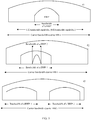
- the inclusion relationship among the bandwidth of the transmit link, the bandwidth of the first BWP, and the bandwidth of the second BWP is a first inclusion relationship or a second inclusion relationship; and the first inclusion relationship is that the bandwidth of the transmit link includes the bandwidth of the first BWP and the bandwidth of the second BWP; and the second inclusion relationship is that the bandwidth of the transmit link includes the bandwidth of the first BWP and a part of the bandwidth of the second BWP, and the part of the bandwidth of the second BWP includes a sending resource pool for a sidelink.
- the transmit link includes a third transmit link; and that the first terminal device supports sending of the uplink signal and the sidelink signal in the first time unit on the first carrier being determined based on one or more in the following set: a transmit link, a system parameter, a waveform, and an inclusion relationship among a bandwidth of the transmit link, a bandwidth of a first BWP, and a bandwidth of a second BWP includes: if the first terminal device supports sending of the uplink signal and the sidelink signal on the third transmit link, and a bandwidth of the third transmit link includes the bandwidth of the first BWP and the bandwidth of the second BWP, the first terminal device supports sending of the uplink signal and the sidelink signal in the first time unit on the first carrier; or if the first terminal device supports sending of the uplink signal and the sidelink signal on the third transmit link, a bandwidth of the third transmit link includes the bandwidth of the first BWP and the bandwidth of the second BWP, and a first system parameter of the uplink signal is the same as a
- the sidelink signal includes feedback information, the uplink signal includes data information, and the priority of the sidelink signal is higher than the priority of the uplink signal; or the uplink signal includes feedback information, the sidelink signal includes data information, and the priority of the uplink signal is higher than the priority of the sidelink signal; or the sidelink signal includes feedback information, the uplink signal includes feedback information, a priority of the feedback information in the sidelink signal is less than a first threshold, and the priority of the sidelink signal is higher than the priority of the uplink signal; or the sidelink signal includes feedback information, the uplink signal includes feedback information, a priority of the feedback information in the sidelink signal is greater than or equal to the first threshold, and the priority of the uplink signal is higher than the priority of the sidelink signal; or the sidelink signal includes data information, the uplink signal includes data information, a priority of the data information in the sidelink signal is less than a second threshold, and the priority of the sidelink signal is higher than the priority of the uplink signal; or the sidelink signal includes data information, the uplink signal
- the uplink signal includes first-type feedback information
- the sidelink signal includes second-type feedback information, a priority of the first-type feedback information is higher than a priority of the second-type feedback information, and the priority of the uplink signal is higher than the priority of the sidelink signal; or the uplink signal includes first-type feedback information, the sidelink signal includes second-type feedback information, a priority of the second-type feedback information is higher than priority of the first-type feedback information, and the priority of the sidelink signal is higher than the priority of the uplink signal; or the uplink signal includes first-type data information, the sidelink signal includes second-type data information, a priority of the first-type data information is higher than a priority of the second-type data information, and the priority of the uplink signal is higher than the priority of the sidelink signal; or the uplink signal includes first-type data information, the sidelink signal includes second-type data information, a priority of the second-type data information is higher than a priority of the first-type data information, and the priority of the sidelink
- the priorities of the uplink signal and the sidelink signal are determined by considering different factors, to ensure correct transmission of a signal with a higher priority. Compared with a manner in which the transmit power of the uplink signal and the transmit power of the sidelink signal are equally divided, transmission of a signal with a higher priority can be ensured.
- a communication method includes: receiving, by a second terminal device, a sidelink signal, where a transmit power of the sidelink signal is a second transmit power, the second transmit power is determined based on priorities of an uplink signal and the sidelink signal when a first terminal device supports sending of the uplink signal and the sidelink signal in a first time unit on a first carrier, that the first terminal device supports sending of the uplink signal and the sidelink signal in the first time unit on the first carrier is determined based on one or more in the following set: a transmit link, a system parameter, a waveform, and an inclusion relationship among a bandwidth of the transmit link, a bandwidth of a first bandwidth part BWP, and a bandwidth of a second BWP, the first BWP is a BWP used to transmit the uplink signal, and the second BWP is a BWP used to transmit the sidelink signal; and processing, by the second terminal device, the sidelink signal.
- the transmit link includes a first transmit link and a second transmit link; and that the first terminal device supports sending of the uplink signal and the sidelink signal in the first time unit on the first carrier being determined based on one or more in the following set: a transmit link, a system parameter, a waveform, and an inclusion relationship among a bandwidth of the transmit link, a bandwidth of a first bandwidth part BWP, and a bandwidth of a second BWP includes: if the first terminal device supports sending of the uplink signal on the first transmit link and sending of the sidelink signal on the second transmit link, the first terminal device supports sending of the uplink signal and the sidelink signal in the first time unit on the first carrier; or if the first terminal device supports sending of the uplink signal on the first transmit link and sending of the sidelink signal on the second transmit link, and a first system parameter of the uplink signal is the same as a second system parameter of the sidelink signal, the first terminal device supports sending of the uplink signal and the sidelink signal in the first time unit on the first
- the transmit link includes a third transmit link; and that the first terminal device supports sending of the uplink signal and the sidelink signal in the first time unit on the first carrier being determined based on one or more in the following set: a transmit link, a system parameter, a waveform, and an inclusion relationship among a bandwidth of the transmit link, a bandwidth of a first bandwidth part BWP, and a bandwidth of a second BWP includes: if the first terminal device supports sending of the uplink signal and the sidelink signal on the third transmit link, and a first system parameter of the uplink signal is the same as a second system parameter of the sidelink signal, the first terminal device supports sending of the uplink signal and the sidelink signal in the first time unit on the first carrier; or if the first terminal device supports sending of the uplink signal and the sidelink signal on the third transmit link, and a first waveform of the uplink signal is the same as a second waveform of the sidelink signal, the first terminal device supports sending of the uplink signal and the sidelink signal in the
- the inclusion relationship among the bandwidth of the transmit link, the bandwidth of the first BWP, and the bandwidth of the second BWP is a first inclusion relationship or a second inclusion relationship; and the first inclusion relationship is that the bandwidth of the transmit link includes the bandwidth of the first BWP and the bandwidth of the second BWP; and the second inclusion relationship is that the bandwidth of the transmit link includes the bandwidth of the first BWP and a part of the bandwidth of the second BWP, and the part of the bandwidth of the second BWP includes a sending resource pool for a sidelink.
- the transmit link includes a third transmit link; and that the first terminal device supports sending of the uplink signal and the sidelink signal in the first time unit on the first carrier being determined based on one or more in the following set: a transmit link, a system parameter, a waveform, and an inclusion relationship among a bandwidth of the transmit link, a bandwidth of a first BWP, and a bandwidth of a second BWP includes: if the first terminal device supports sending of the uplink signal and the sidelink signal on the third transmit link, and a bandwidth of the third transmit link includes the bandwidth of the first BWP and the bandwidth of the second BWP, the first terminal device supports sending of the uplink signal and the sidelink signal in the first time unit on the first carrier; or if the first terminal device supports sending of the uplink signal and the sidelink signal on the third transmit link, a bandwidth of the third transmit link includes the bandwidth of the first BWP and the bandwidth of the second BWP, and a first system parameter of the uplink signal is the same as a
- the sidelink signal includes feedback information, the uplink signal includes data information, and the priority of the sidelink signal is higher than the priority of the uplink signal; or the uplink signal includes feedback information, the sidelink signal includes data information, and the priority of the uplink signal is higher than the priority of the sidelink signal; or the sidelink signal includes feedback information, the uplink signal includes feedback information, a priority of the feedback information in the sidelink signal is less than a first threshold, and the priority of the sidelink signal is higher than the priority of the uplink signal; or the sidelink signal includes feedback information, the uplink signal includes feedback information, a priority of the feedback information in the sidelink signal is greater than or equal to the first threshold, and the priority of the uplink signal is higher than the priority of the sidelink signal; or the sidelink signal includes data information, the uplink signal includes data information, a priority of the data information in the sidelink signal is less than a second threshold, and the priority of the sidelink signal is higher than the priority of the uplink signal; or the sidelink signal includes data information, the uplink signal
- the uplink signal includes first-type feedback information
- the sidelink signal includes second-type feedback information, a priority of the first-type feedback information is higher than a priority of the second-type feedback information, and the priority of the uplink signal is higher than the priority of the sidelink signal; or the uplink signal includes first-type feedback information, the sidelink signal includes second-type feedback information, a priority of the second-type feedback information is higher than priority of the first-type feedback information, and the priority of the sidelink signal is higher than the priority of the uplink signal; or the uplink signal includes first-type data information, the sidelink signal includes second-type data information, a priority of the first-type data information is higher than a priority of the second-type data information, and the priority of the uplink signal is higher than the priority of the sidelink signal; or the uplink signal includes first-type data information, the sidelink signal includes second-type data information, a priority of the second-type data information is higher than a priority of the first-type data information, and the priority of the sidelink
- a communication method includes: receiving, by a network device, an uplink signal, where a transmit power of the uplink signal is a first transmit power, the first transmit power is determined based on priorities of the uplink signal and a sidelink signal when a first terminal device supports sending of the uplink signal and the sidelink signal in a first time unit on a first carrier, that the first terminal device supports sending of the uplink signal and the sidelink signal in the first time unit on the first carrier is determined based on one or more in the following set: a transmit link, a system parameter, a waveform, and an inclusion relationship among a bandwidth of the transmit link, a bandwidth of a first bandwidth part BWP, and a bandwidth of a second BWP, the first BWP is a BWP used to transmit the uplink signal, and the second BWP is a BWP used to transmit the sidelink signal; and processing, by the network device, the uplink signal.
- the transmit link includes a first transmit link and a second transmit link; and that the first terminal device supports sending of the uplink signal and the sidelink signal in the first time unit on the first carrier being determined based on one or more in the following set: a transmit link, a system parameter, a waveform, and an inclusion relationship among a bandwidth of the transmit link, a bandwidth of a first bandwidth part BWP, and a bandwidth of a second BWP includes: if the first terminal device supports sending of the uplink signal on the first transmit link and sending of the sidelink signal on the second transmit link, the first terminal device supports sending of the uplink signal and the sidelink signal in the first time unit on the first carrier; or if the first terminal device supports sending of the uplink signal on the first transmit link and sending of the sidelink signal on the second transmit link, and a first system parameter of the uplink signal is the same as a second system parameter of the sidelink signal, the first terminal device supports sending of the uplink signal and the sidelink signal in the first time unit on the first
- the transmit link includes a third transmit link; and that the first terminal device supports sending of the uplink signal and the sidelink signal in the first time unit on the first carrier being determined based on one or more in the following set: a transmit link, a system parameter, a waveform, and an inclusion relationship among a bandwidth of the transmit link, a bandwidth of a first bandwidth part BWP, and a bandwidth of a second BWP includes: if the first terminal device supports sending of the uplink signal and the sidelink signal on the third transmit link, and a first system parameter of the uplink signal is the same as a second system parameter of the sidelink signal, the first terminal device supports sending of the uplink signal and the sidelink signal in the first time unit on the first carrier; or if the first terminal device supports sending of the uplink signal and the sidelink signal on the third transmit link, and a first waveform of the uplink signal is the same as a second waveform of the sidelink signal, the first terminal device supports sending of the uplink signal and the sidelink signal in the
- the inclusion relationship among the bandwidth of the transmit link, the bandwidth of the first BWP, and the bandwidth of the second BWP is a first inclusion relationship or a second inclusion relationship; and the first inclusion relationship is that the bandwidth of the transmit link includes the bandwidth of the first BWP and the bandwidth of the second BWP; and the second inclusion relationship is that the bandwidth of the transmit link includes the bandwidth of the first BWP and a part of the bandwidth of the second BWP, and the part of the bandwidth of the second BWP includes a sending resource pool for a sidelink.
- the transmit link includes a third transmit link; and that the first terminal device supports sending of the uplink signal and the sidelink signal in the first time unit on the first carrier being determined based on one or more in the following set: a transmit link, a system parameter, a waveform, and an inclusion relationship among a bandwidth of the transmit link, a bandwidth of a first BWP, and a bandwidth of a second BWP includes: if the first terminal device supports sending of the uplink signal and the sidelink signal on the third transmit link, and a bandwidth of the third transmit link includes the bandwidth of the first BWP and the bandwidth of the second BWP, the first terminal device supports sending of the uplink signal and the sidelink signal in the first time unit on the first carrier; or if the first terminal device supports sending of the uplink signal and the sidelink signal on the third transmit link, a bandwidth of the third transmit link includes the bandwidth of the first BWP and the bandwidth of the second BWP, and a first system parameter of the uplink signal is the same as a
- the sidelink signal includes feedback information, the uplink signal includes data information, and the priority of the sidelink signal is higher than the priority of the uplink signal; or the uplink signal includes feedback information, the sidelink signal includes data information, and the priority of the uplink signal is higher than the priority of the sidelink signal; or the sidelink signal includes feedback information, the uplink signal includes feedback information, a priority of the feedback information in the sidelink signal is less than a first threshold, and the priority of the sidelink signal is higher than the priority of the uplink signal; or the sidelink signal includes feedback information, the uplink signal includes feedback information, a priority of the feedback information in the sidelink signal is greater than or equal to the first threshold, and the priority of the uplink signal is higher than the priority of the sidelink signal; or the sidelink signal includes data information, the uplink signal includes data information, a priority of the data information in the sidelink signal is less than a second threshold, and the priority of the sidelink signal is higher than the priority of the uplink signal; or the sidelink signal includes data information, the uplink signal
- the uplink signal includes first-type feedback information
- the sidelink signal includes second-type feedback information, a priority of the first-type feedback information is higher than a priority of the second-type feedback information, and the priority of the uplink signal is higher than the priority of the sidelink signal; or the uplink signal includes first-type feedback information, the sidelink signal includes second-type feedback information, a priority of the second-type feedback information is higher than priority of the first-type feedback information, and the priority of the sidelink signal is higher than the priority of the uplink signal; or the uplink signal includes first-type data information, the sidelink signal includes second-type data information, a priority of the first-type data information is higher than a priority of the second-type data information, and the priority of the uplink signal is higher than the priority of the sidelink signal; or the uplink signal includes first-type data information, the sidelink signal includes second-type data information, a priority of the second-type data information is higher than a priority of the first-type data information, and the priority of the sidelink
- this application provides an apparatus.
- the apparatus may be a terminal device, or may be an apparatus in the terminal device, or an apparatus that can be used in coordination with the terminal device.
- the apparatus may include a processing module and a transceiver module, and the processing module and the transceiver module may perform a corresponding function in any one of the foregoing design examples of the first aspect. Details are as follows:
- the processing module is configured to: when a first terminal device supports sending of an uplink signal and a sidelink signal in a first time unit on a first carrier, determine, based on priorities of the uplink signal and the sidelink signal, a first transmit power of the uplink signal and a second transmit power of the sidelink signal, where that the first terminal device supports sending of the uplink signal and the sidelink signal in the first time unit on the first carrier is determined based on one or more in the following set: a transmit link, a system parameter, a waveform, and an inclusion relationship among a bandwidth of the transmit link, a bandwidth of a first bandwidth part BWP, and a bandwidth of a second BWP, the first BWP is a BWP used to transmit the uplink signal, and the second BWP is a BWP used to transmit the sidelink signal.
- the transceiver module is configured to send the uplink signal based on the first transmit power, and/or send the sidelink signal based on the second transmit power.
- the transmit link includes a first transmit link and the second transmit link; and the first terminal device supports sending of the uplink signal and the sidelink signal in the first time unit on the first carrier being determined based on one or more in the following set: a transmit link, a system parameter, a waveform, and an inclusion relationship among a bandwidth of the transmit link, a bandwidth of a first bandwidth part BWP, and a bandwidth of a second BWP, specifically comprises: if the first terminal device supports sending of the uplink signal on the first transmit link and sending of the sidelink signal on the second transmit link, determine that the first terminal device supports sending of the uplink signal and the sidelink signal in the first time unit on the first carrier; or if the first terminal device supports sending of the uplink signal on the first transmit link and sending of the sidelink signal on the second transmit link, and a first system parameter of the uplink signal is the same as a second system parameter of the sidelink signal, determine that the first terminal device supports sending of the uplink signal and the sidelink signal in the first time
- the transmit link includes a third transmit link; and the first terminal device supports sending of the uplink signal and the sidelink signal in the first time unit on the first carrier being determined based on one or more in the following set: a transmit link, a system parameter, a waveform, and an inclusion relationship among a bandwidth of the transmit link, a bandwidth of a first bandwidth part BWP, and a bandwidth of a second BWP, specifically comprises: if the first terminal device supports sending of the uplink signal and the sidelink signal on the third transmit link, and a first system parameter of the uplink signal is the same as a second system parameter of the sidelink signal, determine that the first terminal device supports sending of the uplink signal and the sidelink signal in the first time unit on the first carrier; or if the first terminal device supports sending of the uplink signal and the sidelink signal on the third transmit link, and a first waveform of the uplink signal is the same as a second waveform of the sidelink signal, determine that the first terminal device supports sending of the uplink signal and the
- the inclusion relationship among the bandwidth of the transmit link, the bandwidth of the first BWP, and the bandwidth of the second BWP is a first inclusion relationship or a second inclusion relationship; and the first inclusion relationship is that the bandwidth of the transmit link includes the bandwidth of the first BWP and the bandwidth of the second BWP; and the second inclusion relationship is that the bandwidth of the transmit link includes the bandwidth of the first BWP and a part of the bandwidth of the second BWP, and the part of the bandwidth of the second BWP includes a sending resource pool for a sidelink.
- the transmit link includes a third transmit link; and the first terminal device supports sending of the uplink signal and the sidelink signal in the first time unit on the first carrier being determined based on one or more in the following set: a transmit link, a system parameter, a waveform, and an inclusion relationship among a bandwidth of the transmit link, a bandwidth of a first BWP, and a bandwidth of a second BWP, specifically comprises: if the first terminal device supports sending of the uplink signal and the sidelink signal on the third transmit link, and a bandwidth of the third transmit link includes the bandwidth of the first BWP and the bandwidth of the second BWP, determine that the first terminal device supports sending of the uplink signal and the sidelink signal in the first time unit on the first carrier; or if the first terminal device supports sending of the uplink signal and the sidelink signal on the third transmit link, a bandwidth of the third transmit link includes the bandwidth of the first BWP and the bandwidth of the second BWP, and a first system parameter of the uplink signal is the same
- the sidelink signal includes feedback information, the uplink signal includes data information, and the priority of the sidelink signal is higher than the priority of the uplink signal; or the uplink signal includes feedback information, the sidelink signal includes data information, and the priority of the uplink signal is higher than the priority of the sidelink signal; or the sidelink signal includes feedback information, the uplink signal includes feedback information, a priority of the feedback information in the sidelink signal is less than a first threshold, and the priority of the sidelink signal is higher than the priority of the uplink signal; or the sidelink signal includes feedback information, the uplink signal includes feedback information, a priority of the feedback information in the sidelink signal is greater than or equal to the first threshold, and the priority of the uplink signal is higher than the priority of the sidelink signal; or the sidelink signal includes data information, the uplink signal includes data information, a priority of the data information in the sidelink signal is less than a second threshold, and the priority of the sidelink signal is higher than the priority of the uplink signal; or the sidelink signal includes data information, the uplink signal
- the uplink signal includes first-type feedback information
- the sidelink signal includes second-type feedback information, a priority of the first-type feedback information is higher than a priority of the second-type feedback information, and the priority of the uplink signal is higher than the priority of the sidelink signal; or the uplink signal includes first-type feedback information, the sidelink signal includes second-type feedback information, a priority of the second-type feedback information is higher than priority of the first-type feedback information, and the priority of the sidelink signal is higher than the priority of the uplink signal; or the uplink signal includes first-type data information, the sidelink signal includes second-type data information, a priority of the first-type data information is higher than a priority of the second-type data information, and the priority of the uplink signal is higher than the priority of the sidelink signal; or the uplink signal includes first-type data information, the sidelink signal includes second-type data information, a priority of the second-type data information is higher than a priority of the first-type data information, and the priority of the sidelink
- an embodiment of this application provides an apparatus.
- the apparatus includes a processor, configured to implement the method described in the first aspect.
- the apparatus may further include a memory, configured to store instructions and data.
- the memory is coupled to the processor.
- the processor can implement the method described in the first aspect.
- the apparatus may further include a communications interface.
- the communications interface is used by the apparatus to communicate with another device.
- the communications interface may be a transceiver, a circuit, a bus, a module, or a communications interface of another type.
- the another device may be a network device, a second terminal device, or the like.
- the apparatus includes:
- the transmit link includes a first transmit link and a second transmit link; and the first terminal device supports sending of the uplink signal and the sidelink signal in the first time unit on the first carrier being determined based on one or more in the following set: a transmit link, a system parameter, a waveform, and an inclusion relationship among a bandwidth of the transmit link, a bandwidth of a first bandwidth part BWP, and a bandwidth of a second BWP, specifically comprises: if the first terminal device supports sending of the uplink signal on the first transmit link and sending of the sidelink signal on the second transmit link, determine that the first terminal device supports sending of the uplink signal and the sidelink signal in the first time unit on the first carrier; or if the first terminal device supports sending of the uplink signal on the first transmit link and sending of the sidelink signal on the second transmit link, and a first system parameter of the uplink signal is the same as a second system parameter of the sidelink signal, determine that the first terminal device supports sending of the uplink signal and the sidelink signal in the first
- the transmit link includes a third transmit link; and the first terminal device supports sending of the uplink signal and the sidelink signal in the first time unit on the first carrier is determined based on one or more in the following set: a transmit link, a system parameter, a waveform, and an inclusion relationship among a bandwidth of the transmit link, a bandwidth of a first bandwidth part BWP, and a bandwidth of a second BWP, specifically comprises: if the first terminal device supports sending of the uplink signal and the sidelink signal on the third transmit link, and a first system parameter of the uplink signal is the same as a second system parameter of the sidelink signal, determine that the first terminal device supports sending of the uplink signal and the sidelink signal in the first time unit on the first carrier; or if the first terminal device supports sending of the uplink signal and the sidelink signal on the third transmit link, and a first waveform of the uplink signal is the same as a second waveform of the sidelink signal, determine that the first terminal device supports sending of the uplink signal and the
- the inclusion relationship among the bandwidth of the transmit link, the bandwidth of the first BWP, and the bandwidth of the second BWP is a first inclusion relationship or a second inclusion relationship; and the first inclusion relationship is that the bandwidth of the transmit link includes the bandwidth of the first BWP and the bandwidth of the second BWP; and the second inclusion relationship is that the bandwidth of the transmit link includes the bandwidth of the first BWP and a part of the bandwidth of the second BWP, and the part of the bandwidth of the second BWP includes a sending resource pool for a sidelink.
- the transmit link includes a third transmit link; and the first terminal device supports sending of the uplink signal and the sidelink signal in the first time unit on the first carrier is determined based on one or more in the following set: a transmit link, a system parameter, a waveform, and an inclusion relationship among a bandwidth of the transmit link, a bandwidth of a first BWP, and a bandwidth of a second BWP, specifically comprises: if the first terminal device supports sending of the uplink signal and the sidelink signal on the third transmit link, and a bandwidth of the third transmit link includes the bandwidth of the first BWP and the bandwidth of the second BWP, determine that the first terminal device supports sending of the uplink signal and the sidelink signal in the first time unit on the first carrier; or if the first terminal device supports sending of the uplink signal and the sidelink signal on the third transmit link, a bandwidth of the third transmit link includes the bandwidth of the first BWP and the bandwidth of the second BWP, and a first system parameter of the uplink signal is the same
- the sidelink signal includes feedback information, the uplink signal includes data information, and the priority of the sidelink signal is higher than the priority of the uplink signal; or the uplink signal includes feedback information, the sidelink signal includes data information, and the priority of the uplink signal is higher than the priority of the sidelink signal; or the sidelink signal includes feedback information, the uplink signal includes feedback information, a priority of the feedback information in the sidelink signal is less than a first threshold, and the priority of the sidelink signal is higher than the priority of the uplink signal; or the sidelink signal includes feedback information, the uplink signal includes feedback information, a priority of the feedback information in the sidelink signal is greater than or equal to the first threshold, and the priority of the uplink signal is higher than the priority of the sidelink signal; or the sidelink signal includes data information, the uplink signal includes data information, a priority of the data information in the sidelink signal is less than a second threshold, and the priority of the sidelink signal is higher than the priority of the uplink signal; or the sidelink signal includes data information, the uplink signal
- the uplink signal includes first-type feedback information
- the sidelink signal includes second-type feedback information, a priority of the first-type feedback information is higher than a priority of the second-type feedback information, and the priority of the uplink signal is higher than the priority of the sidelink signal; or the uplink signal includes first-type feedback information, the sidelink signal includes second-type feedback information, a priority of the second-type feedback information is higher than priority of the first-type feedback information, and the priority of the sidelink signal is higher than the priority of the uplink signal; or the uplink signal includes first-type data information, the sidelink signal includes second-type data information, a priority of the first-type data information is higher than a priority of the second-type data information, and the priority of the uplink signal is higher than the priority of the sidelink signal; or the uplink signal includes first-type data information, the sidelink signal includes second-type data information, a priority of the second-type data information is higher than a priority of the first-type data information, and the priority of the sidelink
- this application provides an apparatus.
- the apparatus may be a terminal device, or may be an apparatus in the terminal device, or an apparatus that can be used in coordination with the terminal device.
- the apparatus may include a processing module and a transceiver module, and the processing module and the transceiver module may perform a corresponding function in any one of the foregoing design examples of the second aspect. Details are as follows:
- the transceiver module is configured to receive a sidelink signal.
- a transmit power of the sidelink signal is a second transmit power
- the second transmit power is determined based on priorities of an uplink signal and the sidelink signal when a first terminal device supports sending of the uplink signal and the sidelink signal in a first time unit on a first carrier, that the first terminal device supports sending of the uplink signal and the sidelink signal in the first time unit on the first carrier is determined based on one or more in the following set: a transmit link, a system parameter, a waveform, and an inclusion relationship among a bandwidth of the transmit link, a bandwidth of a first bandwidth part BWP, and a bandwidth of a second BWP, the first BWP is a BWP used to transmit the uplink signal, and the second BWP is a BWP used to transmit the sidelink signal.
- the processing module is configured to process the sidelink signal.
- the transmit link includes a first transmit link and a second transmit link; and the first terminal device supports sending of the uplink signal and the sidelink signal in the first time unit on the first carrier is determined based on one or more in the following set: a transmit link, a system parameter, a waveform, and an inclusion relationship among a bandwidth of the transmit link, a bandwidth of a first bandwidth part BWP, and a bandwidth of a second BWP, specifically comprises: if the first terminal device supports sending of the uplink signal on the first transmit link and sending of the sidelink signal on the second transmit link, determine that the first terminal device supports sending of the uplink signal and the sidelink signal in the first time unit on the first carrier; or if the first terminal device supports sending of the uplink signal on the first transmit link and sending of the sidelink signal on the second transmit link, and a first system parameter of the uplink signal is the same as a second system parameter of the sidelink signal, determine that the first terminal device supports sending of the uplink signal and the sidelink signal in the first
- the transmit link includes a third transmit link; and the first terminal device supports sending of the uplink signal and the sidelink signal in the first time unit on the first carrier is determined based on one or more in the following set: a transmit link, a system parameter, a waveform, and an inclusion relationship among a bandwidth of the transmit link, a bandwidth of a first bandwidth part BWP, and a bandwidth of a second BWP, specifically comprises: if the first terminal device supports sending of the uplink signal and the sidelink signal on the third transmit link, and a first system parameter of the uplink signal is the same as a second system parameter of the sidelink signal, determine that the first terminal device supports sending of the uplink signal and the sidelink signal in the first time unit on the first carrier; or if the first terminal device supports sending of the uplink signal and the sidelink signal on the third transmit link, and a first waveform of the uplink signal is the same as a second waveform of the sidelink signal, determine that the first terminal device supports sending of the uplink signal and the
- the inclusion relationship among the bandwidth of the transmit link, the bandwidth of the first BWP, and the bandwidth of the second BWP is a first inclusion relationship or a second inclusion relationship; and the first inclusion relationship is that the bandwidth of the transmit link includes the bandwidth of the first BWP and the bandwidth of the second BWP; and the second inclusion relationship is that the bandwidth of the transmit link includes the bandwidth of the first BWP and a part of the bandwidth of the second BWP, and the part of the bandwidth of the second BWP includes a sending resource pool for a sidelink.
- the transmit link includes a third transmit link; and the first terminal device supports sending of the uplink signal and the sidelink signal in the first time unit on the first carrier is determined based on one or more in the following set: a transmit link, a system parameter, a waveform, and an inclusion relationship among a bandwidth of the transmit link, a bandwidth of a first BWP, and a bandwidth of a second BWP, specifically comprises: if the first terminal device supports sending of the uplink signal and the sidelink signal on the third transmit link, and a bandwidth of the third transmit link includes the bandwidth of the first BWP and the bandwidth of the second BWP, determine that the first terminal device supports sending of the uplink signal and the sidelink signal in the first time unit on the first carrier; or if the first terminal device supports sending of the uplink signal and the sidelink signal on the third transmit link, a bandwidth of the third transmit link includes the bandwidth of the first BWP and the bandwidth of the second BWP, and a first system parameter of the uplink signal is the same
- the sidelink signal includes feedback information, the uplink signal includes data information, and the priority of the sidelink signal is higher than the priority of the uplink signal; or the uplink signal includes feedback information, the sidelink signal includes data information, and the priority of the uplink signal is higher than the priority of the sidelink signal; or the sidelink signal includes feedback information, the uplink signal includes feedback information, a priority of the feedback information in the sidelink signal is less than a first threshold, and the priority of the sidelink signal is higher than the priority of the uplink signal; or the sidelink signal includes feedback information, the uplink signal includes feedback information, a priority of the feedback information in the sidelink signal is greater than or equal to the first threshold, and the priority of the uplink signal is higher than the priority of the sidelink signal; or the sidelink signal includes data information, the uplink signal includes data information, a priority of the data information in the sidelink signal is less than a second threshold, and the priority of the sidelink signal is higher than the priority of the uplink signal; or the sidelink signal includes data information, the uplink signal
- the uplink signal includes first-type feedback information
- the sidelink signal includes second-type feedback information, a priority of the first-type feedback information is higher than a priority of the second-type feedback information, and the priority of the uplink signal is higher than the priority of the sidelink signal; or the uplink signal includes first-type feedback information, the sidelink signal includes second-type feedback information, a priority of the second-type feedback information is higher than priority of the first-type feedback information, and the priority of the sidelink signal is higher than the priority of the uplink signal; or the uplink signal includes first-type data information, the sidelink signal includes second-type data information, a priority of the first-type data information is higher than a priority of the second-type data information, and the priority of the uplink signal is higher than the priority of the sidelink signal; or the uplink signal includes first-type data information, the sidelink signal includes second-type data information, a priority of the second-type data information is higher than a priority of the first-type data information, and the priority of the sidelink
- an embodiment of this application provides an apparatus.
- the apparatus includes a processor, configured to implement the method described in the second aspect.
- the apparatus may further include a memory, configured to store instructions and data.
- the memory is coupled to the processor.
- the processor can implement the method described in the first aspect.
- the apparatus may further include a communications interface.
- the communications interface is used by the apparatus to communicate with another device.
- the communications interface may be a transceiver, a circuit, a bus, a module, or a communications interface of another type.
- the another device may be a network device, a second terminal device, or the like.
- the apparatus includes:
- the transmit link includes a first transmit link and a second transmit link; and the first terminal device supports sending of the uplink signal and the sidelink signal in the first time unit on the first carrier is determined based on one or more in the following set: a transmit link, a system parameter, a waveform, and an inclusion relationship among a bandwidth of the transmit link, a bandwidth of a first bandwidth part BWP, and a bandwidth of a second BWP, specifically comprises: if the first terminal device supports sending of the uplink signal on the first transmit link and sending of the sidelink signal on the second transmit link, determine that the first terminal device supports sending of the uplink signal and the sidelink signal in the first time unit on the first carrier; or if the first terminal device supports sending of the uplink signal on the first transmit link and sending of the sidelink signal on the second transmit link, and a first system parameter of the uplink signal is the same as a second system parameter of the sidelink signal, determine that the first terminal device supports sending of the uplink signal and the sidelink signal in the first
- the transmit link includes a third transmit link; and the first terminal device supports sending of the uplink signal and the sidelink signal in the first time unit on the first carrier is determined based on one or more in the following set: a transmit link, a system parameter, a waveform, and an inclusion relationship among a bandwidth of the transmit link, a bandwidth of a first bandwidth part BWP, and a bandwidth of a second BWP, specifically comprises: if the first terminal device supports sending of the uplink signal and the sidelink signal on the third transmit link, and a first system parameter of the uplink signal is the same as a second system parameter of the sidelink signal, determine that the first terminal device supports sending of the uplink signal and the sidelink signal in the first time unit on the first carrier; or if the first terminal device supports sending of the uplink signal and the sidelink signal on the third transmit link, and a first waveform of the uplink signal is the same as a second waveform of the sidelink signal, determine that the first terminal device supports sending of the uplink signal and the
- the inclusion relationship among the bandwidth of the transmit link, the bandwidth of the first BWP, and the bandwidth of the second BWP is a first inclusion relationship or a second inclusion relationship; and the first inclusion relationship is that the bandwidth of the transmit link includes the bandwidth of the first BWP and the bandwidth of the second BWP; and the second inclusion relationship is that the bandwidth of the transmit link includes the bandwidth of the first BWP and a part of the bandwidth of the second BWP, and the part of the bandwidth of the second BWP includes a sending resource pool for a sidelink.
- the transmit link includes a third transmit link; and the first terminal device supports sending of the uplink signal and the sidelink signal in the first time unit on the first carrier is determined based on one or more in the following set: a transmit link, a system parameter, a waveform, and an inclusion relationship among a bandwidth of the transmit link, a bandwidth of a first BWP, and a bandwidth of a second BWP, specifically comprises: if the first terminal device supports sending of the uplink signal and the sidelink signal on the third transmit link, and a bandwidth of the third transmit link includes the bandwidth of the first BWP and the bandwidth of the second BWP, determine that the first terminal device supports sending of the uplink signal and the sidelink signal in the first time unit on the first carrier; or if the first terminal device supports sending of the uplink signal and the sidelink signal on the third transmit link, a bandwidth of the third transmit link includes the bandwidth of the first BWP and the bandwidth of the second BWP, and a first system parameter of the uplink signal is the same
- the sidelink signal includes feedback information, the uplink signal includes data information, and the priority of the sidelink signal is higher than the priority of the uplink signal; or the uplink signal includes feedback information, the sidelink signal includes data information, and the priority of the uplink signal is higher than the priority of the sidelink signal; or the sidelink signal includes feedback information, the uplink signal includes feedback information, a priority of the feedback information in the sidelink signal is less than a first threshold, and the priority of the sidelink signal is higher than the priority of the uplink signal; or the sidelink signal includes feedback information, the uplink signal includes feedback information, a priority of the feedback information in the sidelink signal is greater than or equal to the first threshold, and the priority of the uplink signal is higher than the priority of the sidelink signal; or the sidelink signal includes data information, the uplink signal includes data information, a priority of the data information in the sidelink signal is less than a second threshold, and the priority of the sidelink signal is higher than the priority of the uplink signal; or the sidelink signal includes data information, the uplink signal
- the uplink signal includes first-type feedback information
- the sidelink signal includes second-type feedback information, a priority of the first-type feedback information is higher than a priority of the second-type feedback information, and the priority of the uplink signal is higher than the priority of the sidelink signal; or the uplink signal includes first-type feedback information, the sidelink signal includes second-type feedback information, a priority of the second-type feedback information is higher than priority of the first-type feedback information, and the priority of the sidelink signal is higher than the priority of the uplink signal; or the uplink signal includes first-type data information, the sidelink signal includes second-type data information, a priority of the first-type data information is higher than a priority of the second-type data information, and the priority of the uplink signal is higher than the priority of the sidelink signal; or the uplink signal includes first-type data information, the sidelink signal includes second-type data information, a priority of the second-type data information is higher than a priority of the first-type data information, and the priority of the sidelink
- this application provides an apparatus.
- the apparatus may be a network device, or may be an apparatus in the network device, or an apparatus that can be used in coordination with the network device.
- the apparatus may include a processing module and transceiver module, and the processing module and the transceiver module may perform a corresponding function in any one of the foregoing design examples of the third aspect. Details are as follows:
- the transceiver module is configured to receive an uplink signal.
- a transmit power of the uplink signal is a first transmit power
- the first transmit power is determined based on priorities of the uplink signal and a sidelink signal when a first terminal device supports sending of the uplink signal and the sidelink signal in a first time unit on a first carrier, that the first terminal device supports sending of the uplink signal and the sidelink signal in the first time unit on the first carrier is determined based on one or more in the following set: a transmit link, a system parameter, a waveform, and an inclusion relationship among a bandwidth of the transmit link, a bandwidth of a first bandwidth part BWP, and a bandwidth of a second BWP, the first BWP is a BWP used to transmit the uplink signal, and the second BWP is a BWP used to transmit the sidelink signal.
- the processing module is configured to process the uplink signal.
- the transmit link includes a first transmit link and a second transmit link; and the first terminal device supports sending of the uplink signal and the sidelink signal in the first time unit on the first carrier is determined based on one or more in the following set: a transmit link, a system parameter, a waveform, and an inclusion relationship among a bandwidth of the transmit link, a bandwidth of a first bandwidth part BWP, and a bandwidth of a second BWP, specifically comprises: if the first terminal device supports sending of the uplink signal on the first transmit link and sending of the sidelink signal on the second transmit link, determine that the first terminal device supports sending of the uplink signal and the sidelink signal in the first time unit on the first carrier; or if the first terminal device supports sending of the uplink signal on the first transmit link and sending of the sidelink signal on the second transmit link, and a first system parameter of the uplink signal is the same as a second system parameter of the sidelink signal, determine that the first terminal device supports sending of the uplink signal and the sidelink signal in the first
- the transmit link includes a third transmit link; and the first terminal device supports sending of the uplink signal and the sidelink signal in the first time unit on the first carrier is determined based on one or more in the following set: a transmit link, a system parameter, a waveform, and an inclusion relationship among a bandwidth of the transmit link, a bandwidth of a first bandwidth part BWP, and a bandwidth of a second BWP, specifically comprises: if the first terminal device supports sending of the uplink signal and the sidelink signal on the third transmit link, and a first system parameter of the uplink signal is the same as a second system parameter of the sidelink signal, determine that the first terminal device supports sending of the uplink signal and the sidelink signal in the first time unit on the first carrier; or if the first terminal device supports sending of the uplink signal and the sidelink signal on the third transmit link, and a first waveform of the uplink signal is the same as a second waveform of the sidelink signal, determine that the first terminal device supports sending of the uplink signal and the
- the inclusion relationship among the bandwidth of the transmit link, the bandwidth of the first BWP, and the bandwidth of the second BWP is a first inclusion relationship or a second inclusion relationship; and the first inclusion relationship is that the bandwidth of the transmit link includes the bandwidth of the first BWP and the bandwidth of the second BWP; and the second inclusion relationship is that the bandwidth of the transmit link includes the bandwidth of the first BWP and a part of the bandwidth of the second BWP, and the part of the bandwidth of the second BWP includes a sending resource pool for a sidelink.
- the transmit link includes a third transmit link; and the first terminal device supports sending of the uplink signal and the sidelink signal in the first time unit on the first carrier is determined based on one or more in the following set: a transmit link, a system parameter, a waveform, and an inclusion relationship among a bandwidth of the transmit link, a bandwidth of a first BWP, and a bandwidth of a second BWP, specifically comprises: if the first terminal device supports sending of the uplink signal and the sidelink signal on the third transmit link, and a bandwidth of the third transmit link includes the bandwidth of the first BWP and the bandwidth of the second BWP, determine that the first terminal device supports sending of the uplink signal and the sidelink signal in the first time unit on the first carrier; or if the first terminal device supports sending of the uplink signal and the sidelink signal on the third transmit link, a bandwidth of the third transmit link includes the bandwidth of the first BWP and the bandwidth of the second BWP, and a first system parameter of the uplink signal is the same
- the sidelink signal includes feedback information, the uplink signal includes data information, and the priority of the sidelink signal is higher than the priority of the uplink signal; or the uplink signal includes feedback information, the sidelink signal includes data information, and the priority of the uplink signal is higher than the priority of the sidelink signal; or the sidelink signal includes feedback information, the uplink signal includes feedback information, a priority of the feedback information in the sidelink signal is less than a first threshold, and the priority of the sidelink signal is higher than the priority of the uplink signal; or the sidelink signal includes feedback information, the uplink signal includes feedback information, a priority of the feedback information in the sidelink signal is greater than or equal to the first threshold, and the priority of the uplink signal is higher than the priority of the sidelink signal; or the sidelink signal includes data information, the uplink signal includes data information, a priority of the data information in the sidelink signal is less than a second threshold, and the priority of the sidelink signal is higher than the priority of the uplink signal; or the sidelink signal includes data information, the uplink signal
- the uplink signal includes first-type feedback information
- the sidelink signal includes second-type feedback information, a priority of the first-type feedback information is higher than a priority of the second-type feedback information, and the priority of the uplink signal is higher than the priority of the sidelink signal; or the uplink signal includes first-type feedback information, the sidelink signal includes second-type feedback information, a priority of the second-type feedback information is higher than priority of the first-type feedback information, and the priority of the sidelink signal is higher than the priority of the uplink signal; or the uplink signal includes first-type data information, the sidelink signal includes second-type data information, a priority of the first-type data information is higher than a priority of the second-type data information, and the priority of the uplink signal is higher than the priority of the sidelink signal; or the uplink signal includes first-type data information, the sidelink signal includes second-type data information, a priority of the second-type data information is higher than a priority of the first-type data information, and the priority of the sidelink
- an embodiment of this application provides an apparatus.
- the apparatus includes a processor, configured to implement the method described in the third aspect.
- the apparatus may further include a memory, configured to store instructions and data.
- the memory is coupled to the processor.
- the processor can implement the method described in the third aspect.
- the apparatus may further include a communications interface.
- the communications interface is used by the apparatus to communicate with another device.
- the communications interface may be a transceiver, a circuit, a bus, a module, or a communications interface of another type.
- the another device may be a first terminal device, a second terminal device, or the like.
- the apparatus includes:
- the transmit link includes a first transmit link and a second transmit link; and the first terminal device supports sending of the uplink signal and the sidelink signal in the first time unit on the first carrier is determined based on one or more in the following set: a transmit link, a system parameter, a waveform, and an inclusion relationship among a bandwidth of the transmit link, a bandwidth of a first bandwidth part BWP, and a bandwidth of a second BWP, specifically comprises: if the first terminal device supports sending of the uplink signal on the first transmit link and sending of the sidelink signal on the second transmit link, determine that the first terminal device supports sending of the uplink signal and the sidelink signal in the first time unit on the first carrier; or if the first terminal device supports sending of the uplink signal on the first transmit link and sending of the sidelink signal on the second transmit link, and a first system parameter of the uplink signal is the same as a second system parameter of the sidelink signal, determine that the first terminal device supports sending of the uplink signal and the sidelink signal in the first
- the transmit link includes a third transmit link; and the first terminal device supports sending of the uplink signal and the sidelink signal in the first time unit on the first carrier is determined based on one or more in the following set: a transmit link, a system parameter, a waveform, and an inclusion relationship among a bandwidth of the transmit link, a bandwidth of a first bandwidth part BWP, and a bandwidth of a second BWP, specifically comprises: if the first terminal device supports sending of the uplink signal and the sidelink signal on the third transmit link, and a first system parameter of the uplink signal is the same as a second system parameter of the sidelink signal, determine that the first terminal device supports sending of the uplink signal and the sidelink signal in the first time unit on the first carrier; or if the first terminal device supports sending of the uplink signal and the sidelink signal on the third transmit link, and a first waveform of the uplink signal is the same as a second waveform of the sidelink signal, determine that the first terminal device supports sending of the uplink signal and the
- the inclusion relationship among the bandwidth of the transmit link, the bandwidth of the first BWP, and the bandwidth of the second BWP is a first inclusion relationship or a second inclusion relationship; and the first inclusion relationship is that the bandwidth of the transmit link includes the bandwidth of the first BWP and the bandwidth of the second BWP; and the second inclusion relationship is that the bandwidth of the transmit link includes the bandwidth of the first BWP and a part of the bandwidth of the second BWP, and the part of the bandwidth of the second BWP includes a sending resource pool for a sidelink.
- the transmit link includes a third transmit link; and the first terminal device supports sending of the uplink signal and the sidelink signal in the first time unit on the first carrier is determined based on one or more in the following set: a transmit link, a system parameter, a waveform, and an inclusion relationship among a bandwidth of the transmit link, a bandwidth of a first BWP, and a bandwidth of a second BWP, specifically comprises: if the first terminal device supports sending of the uplink signal and the sidelink signal on the third transmit link, and a bandwidth of the third transmit link includes the bandwidth of the first BWP and the bandwidth of the second BWP, determine that the first terminal device supports sending of the uplink signal and the sidelink signal in the first time unit on the first carrier; or if the first terminal device supports sending of the uplink signal and the sidelink signal on the third transmit link, a bandwidth of the third transmit link includes the bandwidth of the first BWP and the bandwidth of the second BWP, and a first system parameter of the uplink signal is the same
- the sidelink signal includes feedback information, the uplink signal includes data information, and the priority of the sidelink signal is higher than the priority of the uplink signal; or the uplink signal includes feedback information, the sidelink signal includes data information, and the priority of the uplink signal is higher than the priority of the sidelink signal; or the sidelink signal includes feedback information, the uplink signal includes feedback information, a priority of the feedback information in the sidelink signal is less than a first threshold, and the priority of the sidelink signal is higher than the priority of the uplink signal; or the sidelink signal includes feedback information, the uplink signal includes feedback information, a priority of the feedback information in the sidelink signal is greater than or equal to the first threshold, and the priority of the uplink signal is higher than the priority of the sidelink signal; or the sidelink signal includes data information, the uplink signal includes data information, a priority of the data information in the sidelink signal is less than a second threshold, and the priority of the sidelink signal is higher than the priority of the uplink signal; or the sidelink signal includes data information, the uplink signal
- the uplink signal includes first-type feedback information
- the sidelink signal includes second-type feedback information, a priority of the first-type feedback information is higher than a priority of the second-type feedback information, and the priority of the uplink signal is higher than the priority of the sidelink signal; or the uplink signal includes first-type feedback information, the sidelink signal includes second-type feedback information, a priority of the second-type feedback information is higher than priority of the first-type feedback information, and the priority of the sidelink signal is higher than the priority of the uplink signal; or the uplink signal includes first-type data information, the sidelink signal includes second-type data information, a priority of the first-type data information is higher than a priority of the second-type data information, and the priority of the uplink signal is higher than the priority of the sidelink signal; or the uplink signal includes first-type data information, the sidelink signal includes second-type data information, a priority of the second-type data information is higher than a priority of the first-type data information, and the priority of the sidelink
- an embodiment of this application further provides a computer-readable storage medium, including instructions.
- the instructions When the instructions are run on a computer, the computer is enabled to perform the method according to any one of the first aspect to the third aspect.
- an embodiment of this application further provides a chip system.
- the chip system includes a processor, and may further include a memory, and is configured to implement the method according to any one of the first aspect to the third aspect.
- the chip system may include a chip, or may include a chip and another discrete component.
- an embodiment of this application further provides a computer program product, including instructions.
- the computer program product runs on a computer, the computer is enabled to perform the method according to any one of the first aspect to the third aspect.
- FIG. 1 is a schematic diagram of a possible network architecture to which an embodiment of this application is applicable.
- the network architecture includes terminal devices 10.
- the sidelink information may include one or more of data (data) and a scheduling assignment (scheduling assignment, SA).
- data data
- SA scheduling assignment
- the data may also be referred to as data information
- the scheduling assignment may also be referred to as scheduling assignment information.
- the sidelink information may further include sidelink feedback information.
- the sidelink feedback information may include one or more of channel state information (channel state information, CSI) and hybrid automatic repeat request (hybrid automatic repeat request, HARQ) information.
- the HARQ information may be specifically acknowledgement (acknowledgement, ACK) information or a negative acknowledgement (negative acknowledgement, NACK).
- the network architecture shown in FIG. 1 may further include a network device 20.
- the terminal device 10 and the network device 20 may perform Uu air interface communication.
- the Uu air interface communication may include uplink transmission and downlink transmission.
- the uplink transmission may mean that the terminal device 10 sends an uplink signal or uplink information to the network device 20, and the downlink transmission may mean that the network device 20 sends a downlink signal or downlink information to the terminal device 10.
- a Uu air interface may be understood as a universal UE to network interface (universal UE to network interface).
- the network device 20 may be an access network device.
- the network architecture shown in FIG. 1 may further include a network management system 30.
- the terminal device 10 may communicate with the network management system 30 through a wired interface or a wireless interface.
- the terminal device 10 may communicate with the network management system 30 through the network device 20, or the terminal device 10 may directly communicate with the network management system 30.
- the network management system 30 may be a network management system operated by an operator.
- uplink transmission and sidelink transmission coexist that is, an uplink signal and a sidelink signal are simultaneously transmitted on one carrier.
- How to simultaneously transmit an uplink signal and a sidelink signal on one carrier is a current research focus.
- a technical problem to be resolved by this application is how to simultaneously transmit an uplink signal and a sidelink signal on one carrier.
- a terminal device may be referred to as a terminal for short, and is a device having a wireless transceiver function.
- the terminal device may be deployed on land, including an indoor device, an outdoor device, a handheld device, or a vehicle-mounted device; or may be deployed on water (for example, on a ship); or may be deployed in the air (for example, on a plane, a balloon, or a satellite).
- the terminal device may be a mobile phone (mobile phone), a tablet computer (pad), a computer having a wireless transceiver function, a virtual reality (virtual reality, VR) terminal device, an augmented reality (augmented reality, AR) terminal device, a wireless terminal device in industrial control (industrial control), a wireless terminal device in self driving (self driving), a wireless terminal device in telemedicine (remote medical), a wireless terminal device in a smart grid (smart grid), a wireless terminal device in transportation safety (transportation safety), a wireless terminal device in a smart city (smart city), or a wireless terminal device in a smart home (smart home), and may further include user equipment (user equipment, UE) and the like.
- UE user equipment
- the terminal device may be a cellular phone, a cordless phone, a session initiation protocol (session initiation protocol, SIP) phone, a wireless local loop (wireless local loop, WLL) station, a personal digital assistant (personal digital assistant, PDA), a handheld device having a wireless communication function, a computing device or another processing device connected to a wireless modem, a vehicle-mounted device, a wearable device, a terminal device in a future fifth generation (the 5th generation, 5G) network, a terminal device in a future evolved public land mobile network (public land mobile network, PLMN), or the like.
- SIP session initiation protocol
- WLL wireless local loop
- PDA personal digital assistant
- the terminal device sometimes may also be referred to as a terminal device, user equipment (user equipment, UE), an access terminal device, a vehicle-mounted terminal device, an industrial control terminal device, a UE unit, a UE station, a mobile station, a mobile console, a remote station, a remote terminal device, a mobile device, a UE terminal device, a wireless communications device, a UE agent, a UE apparatus, or the like.
- the terminal device may be fixed or movable. This is not limited in the embodiments of this application.
- an apparatus configured to implement a terminal function may be a terminal, or may be an apparatus, for example, a chip system, that can support the terminal in implementing the function.
- the apparatus may be installed in the terminal.
- the chip system may include a chip, or may include a chip and another discrete component.
- the network device may be an access network device.
- the access network device may also be referred to as a radio access network (radio access network, RAN) device, and is a device that provides a wireless communication function for a terminal device.
- the network device includes but is not limited to: a next-generation base station (generation nodeB, gNB) in 5G, an evolved NodeB (evolved node B, eNB), a radio network controller (radio network controller, RNC), a NodeB (node B, NB), a base station controller (base station controller, BSC), a base transceiver station (base transceiver station, BTS), a home base station (for example, a home evolved nodeB or a home node B, HNB), a baseband unit (baseband unit, BBU), a transmission reception point (transmitting and receiving point, TRP), a transmitting point (transmitting point, TP), and a mobile switching center.
- generation nodeB generation node
- the network device may be a radio controller, a centralized unit (centralized unit, CU), and/or a distributed unit (distributed unit, DU) in a cloud radio access network (cloud radio access network, CRAN) scenario, or the network device may be a relay station, an access point, a vehicle-mounted device, a terminal device, a wearable device, a network device in a future 5G network, a network device in a future evolved PLMN network, or the like.
- the terminal device may communicate with a plurality of network devices using different technologies.
- the terminal device may communicate with a network device supporting long term evolution (long term evolution, LTE), may communicate with a network device supporting 5G, or may implement dual connectivity with a network device supporting LTE and a network device supporting 5G. This is not limited in the embodiments of this application.
- LTE long term evolution
- 5G network device supporting 5G
- an apparatus configured to implement a network device function may be a network device, or may be an apparatus that can support the network device in implementing the function, for example, a chip system.
- the apparatus may be installed in the network device.
- a sidelink is used for communication between terminal devices, and may include a physical sidelink shared channel (physical sidelink shared channel, PSSCH) and a physical sidelink control channel (physical sidelink control channel, PSCCH).
- the PSSCH is used to carry sidelink data (SL data)
- the PSCCH is used to carry sidelink control information (sidelink control information, SCI)
- the SCI may also be referred to as a sidelink scheduling assignment (sidelink scheduling assignment, SL SA).
- the SL SA is data scheduling-related information, for example, is used to carry information such as a resource assignment and/or a modulation and coding scheme (modulation and coding scheme, MCS) of the PSSCH.
- MCS modulation and coding scheme
- the sidelink communication may further include a physical sidelink feedback channel (physical sidelink feedback channel, PSFCH).
- the physical sidelink feedback channel may also be referred to as a sidelink feedback channel for short.
- the physical sidelink feedback channel may be used to transmit sidelink feedback control information (sidelink feedback control information, SFCI), and the sidelink feedback control information may also be referred to as sidelink feedback information for short.
- the sidelink feedback control information may include one or more pieces of information such as channel state information (channel state information, CSI) and a hybrid automatic repeat request (hybrid automatic repeat request, HARQ) information.
- the HARQ information may include acknowledgement (acknowledgement, ACK) information, a negative acknowledgement (negative acknowledgement, NACK), or the like.
- a Uu air interface may be referred to as Uu for short, and the Uu air interface is used for communication between the terminal device and the network device. Transmission over the Uu air interface may include uplink transmission and downlink transmission.
- the uplink information or the uplink signal may include one or more of an uplink data signal, an uplink control signal, and a sounding reference signal (sounding reference signal, SRS).
- a channel used to transmit uplink information or an uplink signal is referred to as an uplink channel, and the uplink channel may include one or more of a physical uplink data channel (physical uplink shared channel, PUSCH) and a physical uplink control channel (physical uplink control channel, PUCCH).
- the PUSCH is used to carry uplink data, and the uplink data may also be referred to as uplink data information.
- the PUCCH is used to carry uplink control information (uplink control information, UCI) fed back by the terminal device.
- the UCI may include one or more of channel state information (channel state information, CSI), an ACK, a NACK, and the like that are fed back by the terminal device.
- the downlink information or the downlink signal may include one or more of a downlink data signal, a downlink control signal, a channel state information reference signal (channel state information reference signal, CSI-RS), and a phase tracking reference signal (phase tracking reference signal, PTRS).
- a channel used to transmit downlink information or a downlink signal is referred to as a downlink channel, and the downlink channel may include one or more of a physical downlink data channel (physical downlink shared channel, PDSCH) and a physical downlink control channel (physical downlink control channel, PDCCH).
- the PDCCH is used to carry downlink control information (downlink control information, DCI), and the PDSCH is used to carry downlink data (data).
- the downlink data may also be referred to as downlink data information.
- a transmit link may also be referred to as a baseband link, a radio frequency link, a transmission link, a channel bandwidth, or the like.
- the transmit link may include a radio frequency processing link, a base station processing link, or the like.
- the terminal device may support a plurality of transmit links.
- the terminal device may send a signal on one link by using one or more transmit links.
- the terminal device may support sending of an uplink signal and a sidelink signal on one carrier by using independent transmit links.
- the terminal device may support sending of an uplink signal by using a first transmit link and sending of a sidelink signal by using a second transmit link on one carrier.
- the terminal device may support sending of an uplink signal and a sidelink signal on one carrier by using a shared transmit link.
- the terminal device may support sending of an uplink signal and a sidelink signal on one carrier by using a third transmit link, and the third transmit link is the foregoing shared transmit link.
- a system parameter may also be referred to as a frame structure parameter (numerology).
- the system parameter may include one or more of a subcarrier spacing, a cyclic prefix (cyclic prefix, CP) type, and the like.
- the CP type may also be referred to as a CP length, or referred to as a CP for short.
- the CP type may be an extended CP, or a normal (normal) CP.
- a slot with an extended CP may include 12 time domain symbols, and a slot with a normal CP may include 14 time domain symbols. The time domain symbol may be referred to as a symbol for short.
- the time domain symbol may be an orthogonal frequency division multiplexing (orthogonal frequency division multiplexing, OFDM) symbol, or may be a discrete Fourier transform spread orthogonal frequency division multiplexing (discrete fourier transform spread orthogonal frequency division multiplexing, DFT-s-OFDM) symbol.
- OFDM orthogonal frequency division multiplexing
- DFT-s-OFDM discrete Fourier transform spread orthogonal frequency division multiplexing
- System parameters corresponding to the number 0 are: a subcarrier spacing of 15 kHz and a CP being a normal CP.
- System parameters corresponding to the number 1 are: a subcarrier spacing of 30 kHz and a CP being a normal CP.
- System parameters corresponding to the number 2 are: a subcarrier spacing of 60 kHz and a CP being a normal CP or an extended CP.
- System parameters corresponding to the number 3 are: a subcarrier spacing of 120 kHz and a CP being a normal CP.
- System parameters corresponding to the number 4 are: a subcarrier spacing of 240 kHz and a CP being a normal CP.
- one slot may be 1 millisecond (ms) when a subcarrier spacing is 15 kHz; or one slot may be 0.5 ms when a subcarrier spacing is 30 kHz.
- One slot may include one or more symbols.
- a slot with a normal cyclic prefix (cyclic prefix, CP) may include 14 symbols, and a slot with an extended CP may include 12 symbols.
- a mini-slot also referred to as a mini-slot, may be a smaller unit than a slot, and one mini-slot may include one or more symbols.
- one mini-slot may include two symbols, four symbols, seven symbols, or the like.
- One slot may include one or more mini-slots.
- one radio frame may include 10 subframes, each subframe may include one slot, and each slot may include 14 symbols.
- One radio frame may last for 10 ms, each subframe may last for 1 ms, and each slot may last for 1 ms.
- a mini-slot may include four symbols, two symbols, seven symbols, or the like.
- N symb slot represents a quantity of symbols included in one slot slot, and a number (or referred to as an index) of the symbol in the slot may range from 0 to N symb slot ⁇ 1 .
- N symb slot represents a quantity of symbols included in one slot slot, and a number (or referred to as an index) of the symbol in the slot may range from 0 to N symb slot ⁇ 1 .
- One radio frame may include 10 subframes, one radio frame may be 10 ms, and one subframe may be 1 ms.
- N slot frame , ⁇ represents a quantity of slots included in one radio frame in the case of a system parameter ⁇ , and a number (or referred to as an index) n s ⁇ of a slot in the radio frame may range from 0 to N slot frame , ⁇ ⁇ 1 .
- N slot subframe , ⁇ represents a quantity of slots included in one subframe in the case of the system parameter ⁇ , and a number of the slot in the subframe may be n s , f ⁇ ⁇ 0 , ... N slot frame , ⁇ ⁇ 1 .
- a waveform may also be referred to as a modulation and multiple access technology.
- the waveform may include a single-carrier waveform or a multi-carrier waveform.
- a used channel bandwidth may be divided into several parallel sub-channels.
- a bandwidth of each sub-channel is non-frequency selective (that is, has a spectral flattening gain).
- An advantage of the multi-carrier solution is that a receiver can easily compensate for a gain of each sub-channel in frequency domain.
- orthogonal frequency division multiplexing orthogonal frequency division multiplexing, OFDM
- OFDM orthogonal frequency division multiplexing
- a single-carrier solution includes a single-carrier frequency division multiple access (single carrier frequency division multiple access, SC-FDMA) solution.
- the SC-FDMA solution may also be referred to as a discrete Fourier transform spread orthogonal frequency division multiplexing (discrete fourier transform spread orthogonal frequency division multiplexing, DFT-s-OFDM) solution.
- the SC-OFDM/DFT-s-OFDM solution combines ideal features of OFDM and features of a low cubic metric (cubic metric, CM) or a low peak to average power ratio (peak average power ratio, PAPR) of single-carrier transmission.
- a symbol generated in an SC-FDMA system or solution may be referred to as an SC-FDMA symbol, a DFT-s-OFDM symbol, or a DFT symbol.
- a transmission bandwidth is divided into a plurality of parallel subcarriers, and these subcarriers maintain orthogonality in a frequency-selective channel by using cyclic prefixes or guard intervals.
- a modulated symbol on each subcarrier in SC-FDMA is a linear combination of data symbols transmitted on all subcarriers at a same moment.
- waveforms may be classified into two types depending on whether transform precoding (transform precoding or transform precoder) is enabled, for example, a transmission/system/solution in which transform precoding is enabled, and a transmission/system/solution in which transform precoding is not enabled.
- a waveform in which transform precoding is enabled is a single-carrier waveform, and a waveform in which transform precoding is not enabled is a multi-carrier waveform.
- Carrier bandwidth part (carrier bandwidth part, BWP)
- the carrier bandwidth part may be referred to as a bandwidth part (bandwidth part, BWP) for short.
- the BWP may be a group of contiguous frequency domain resources in a carrier.
- the BWP may be a group of consecutive resource blocks (resource block, RB) in the carrier, or the BWP is a group of consecutive subcarriers in the carrier, or the BWP is a group of consecutive resource block groups (resource block group, RBG) in the carrier.
- RBG resource block group
- One RBG includes at least one RB, for example, one, two, four, six, or eight RBs, and one RB may include at least one subcarrier, for example, 12 subcarriers.
- a network in one cell, for a terminal device, may configure a maximum of four BWPs for the terminal device.
- frequency division duplex frequency division duplexing, FDD
- FDD frequency division duplexing
- TDD time division duplexing
- four BWPs may be configured on each of an uplink and a downlink.
- center frequency bands of BWPs with a same number are aligned.
- a network device may configure, for the terminal device, a system parameter that includes a subcarrier spacing and/or a CP length.
- the terminal device may activate one BWP, and the terminal device and the network device transmit and receive data on the active BWP.
- An existing BWP is defined on a given carrier, that is, a resource of one BWP is located in one carrier resource.
- a BWP another BWP activation solution, or the like is not limited in this application.
- a carrier bandwidth carrier bandwidth
- a bandwidth of the BWP may be less than or equal to a UE bandwidth capability (UE bandwidth capability), and the UE bandwidth capability may be less than or equal to the carrier bandwidth (carrier BW).
- two BWPs namely, a BWP 1 and a BWP 2
- a bandwidth of the BWP 1 and a bandwidth of the BWP 2 may overlap.
- two BWPs in a carrier bandwidth, two BWPs, namely, a BWP 1 and a BWP 2, may be configured for one UE, and the BWP 1 and the BWP 2 may not overlap.
- System parameters of the BWP 1 and the BWP 2 may be a same system parameter, or may be different system parameters.
- a BWP configuration for example, a configuration such as a quantity of BWPs, a BWP position, and/or a system parameter of a BWP
- a BWP configuration may alternatively be another configuration. This is not limited in the embodiments of this application.
- a time unit may refer to a period of time in time domain, and a unit of the time unit may be a unit such as a radio frame (radio frame), a subframe (subframe), a slot (slot), a mini-slot (mini-slot), or a symbol (symbol).
- one time unit may include one or more slots.
- one radio frame may include one or more subframes, and one subframe may include one or more slots.
- One slot may include one or more symbols.
- a slot with a normal cyclic prefix (cyclic prefix, CP) may include 14 time domain symbols, and a slot with an extended CP may include 12 time domain symbols.
- the time domain symbol may be referred to as a symbol for short.
- the time domain symbol may be an orthogonal frequency division multiplexing (orthogonal frequency division multiplexing, OFDM) symbol, or may be a discrete Fourier transform spread orthogonal frequency division multiplexing (discrete fourier transform spread orthogonal frequency division multiplexing, DFT-s-OFDM) symbol.
- a mini-slot also referred to as a mini-slot, may be a smaller unit than a slot, and one mini-slot may include one or more symbols.
- one mini-slot may include two symbols, four symbols, seven symbols, or the like.
- One slot may include one or more mini-slots.
- a and/or B may indicate the following three cases: Only A exists, both A and B exist, and only B exists.
- the character "/" usually indicates an "or" relationship between the associated objects.
- the embodiments of this application are applicable to both a homogeneous network scenario and a heterogeneous network scenario, and no limitation is imposed on a transmission point. Coordinated multipoint transmission may be performed between macro base stations, between micro base stations, or between a macro base station and a micro base station.
- This application is applicable to both a low-frequency scenario (for example, sub 6G) and a high-frequency scenario (above 6G).
- the noun "transmission” in this application may include sending and/or receiving (of data and/or control information).
- the verb "transmit” in this application may include sending and/or receiving.
- uplink transmission means that the terminal device sends an uplink signal or uplink information to the network device
- sidelink transmission means that the terminal device sends a sidelink signal or sidelink information to another terminal device
- sidelink transmission means that the terminal device receives a sidelink signal or sidelink information sent by another terminal device.
- Words such as “first” and “second” are merely used for distinction and description, and shall not be understood as an indication or implication of relative importance or an indication or implication of an order.
- this application provides a procedure of a communication method.
- a network device may be the network device 20 shown in FIG. 1
- a first terminal device or a second terminal device may be the terminal device 10 shown in FIG. 1 .
- the procedure may include the following steps.
- the first terminal device determines, based on one or more in a set, whether the first terminal device supports sending of an uplink signal and a sidelink signal in a first time unit on a first carrier. If yes, the following S401 is performed. Optionally, if not, the following S405 is performed.
- the set may include a transmit link, a system parameter, a waveform, and an inclusion relationship among a bandwidth of a transmit link, a bandwidth of a first BWP, and a bandwidth of a second BWP.
- the first BWP may be a BWP used to transmit the uplink signal, and the first BWP may also be referred to as a UL BWP.
- the second BWP may be a BWP used to transmit the sidelink signal, and the second BWP may also be referred to as an SL BWP.
- supporting sending of the uplink signal and the sidelink signal in the first time unit may also be referred to as supporting simultaneous sending of the uplink signal and the sidelink signal, supporting concurrent sending of the uplink signal and the sidelink signal, or supporting sending of the uplink signal and the sidelink signal at the same time.
- the uplink signal and the sidelink signal may be sent through frequency division multiplexing.
- not supporting sending of the uplink signal and the sidelink signal in the first time unit may also be referred to as not supporting simultaneous sending of the uplink signal and the sidelink signal, not supporting concurrent sending of the uplink signal and the sidelink signal, or not supporting sending of the uplink signal and the sidelink signal at the same time.
- the uplink signal and the sidelink signal are sent through time division multiplexing.
- a period of time in time domain that corresponds to the first time unit may be one or more slots, one or more mini-slots, one or more symbols, or the like.
- the first terminal device may determine, based on one or more of the following examples, whether the first terminal device supports sending of the uplink signal and the sidelink signal in the first time unit on the first carrier. It may be understood that, in this embodiment of this application, the first terminal device is used as an example to describe the following examples, and is not intended to limit this application. The following examples may alternatively be applied to a terminal device other than the first terminal device and the network device, to determine whether a sending process of the uplink signal and the sidelink signal is supported.
- the first terminal device may determine, based on the system parameter, whether the first terminal device supports sending of the uplink signal and the sidelink signal in the first time unit on the first carrier.
- the first terminal device when a first system parameter of the uplink signal is the same as a second system parameter of the sidelink signal, the first terminal device supports sending of the uplink signal and the sidelink signal in the first time unit on the first carrier.
- the first terminal device When a first system parameter of the uplink signal is different from a second system parameter of the sidelink signal, the first terminal device does not support sending of the uplink signal and the sidelink signal in the first time unit on the first carrier.
- the first terminal device may determine, based on the waveform, whether the first terminal device supports sending of the uplink signal and the sidelink signal in the first time unit on the first carrier.
- the first terminal device when a first waveform of the uplink signal is the same as a second waveform of the sidelink signal, the first terminal device supports sending of the uplink signal and the sidelink signal in the first time unit on the first carrier.
- the first terminal device When a first waveform of the uplink signal is different from a second waveform of the sidelink signal, the first terminal device does not support sending of the uplink signal and the sidelink signal in the first time unit on the first carrier.
- the first terminal device may determine, based on the transmit link, whether the first terminal device supports sending of the uplink signal and the sidelink signal in the first time unit on the first carrier.
- Example 3.1 The first terminal device supports use of independent transmit links for uplink transmission and sidelink transmission on the first carrier.
- the transmit link on the first carrier includes a first transmit link and a second transmit link.
- the first transmit link may be used to send the uplink signal
- the second transmit link may be used to send the sidelink signal.
- the terminal device supports sending of the uplink signal on the first transmit link and sending of the sidelink signal on the second transmit link
- the first terminal device supports sending of the uplink signal and the sidelink signal in the first time unit on the first carrier.
- first transmit link and the second transmit link may be independent.
- the first transmit link and the second transmit link may support different transmit radio frequency bandwidths, channel bandwidths, or the like.
- Radio frequency central locations of the first transmit link and the second transmit link may also be independent.
- radio frequency central locations of the first transmit link and the second transmit link may be the same.
- the network device may configure the first BWP and the second BWP for the first terminal device.
- the first BWP is a BWP used to transmit the uplink signal, and the first BWP may also be referred to as a UL BWP.
- the second BWP is a BWP used to transmit the sidelink signal, and the second BWP may also be referred to as an SL BWP.
- the first terminal device may use the first transmit link.
- a bandwidth of the first transmit link is greater than or equal to the bandwidth of the first BWP (in the example shown in FIG.
- the bandwidth of the first transmit link is greater than the bandwidth of the first BWP is used for description
- fc1 represents a central location of the first transmit link
- the first terminal device may use the second transmit link.
- a bandwidth of the second transmit link is less than, equal to, or greater than the bandwidth of the second BWP
- fc2 represents a central location of the second transmit link.
- the bandwidth of the second transmit link is less than the bandwidth of the second BWP
- Option 2 optional 2
- configurations of the first BWP and the second BWP may be independent, and the bandwidth of the first BWP may be the same as or different from the bandwidth of the second BWP.
- a frequency domain resource occupied by the first BWP may completely overlap, partially overlap, or not overlap a frequency domain resource occupied by the second BWP.
- a system parameter of the first BWP may be the same as or different from a system parameter of the second BWP.
- a center frequency of the first BWP may be the same as or different from a center frequency of the second BWP.
- Example 3.2 The first terminal device supports use of a shared transmit link for uplink transmission and sidelink transmission on the first carrier.
- the transmit link on the first carrier includes a third transmit link.
- the third transmit link is used to transmit the uplink signal and the sidelink signal, and the third transmit link may be referred to as a shared transmit link.
- the first terminal device supports sending of the uplink signal and the sidelink signal on the third transmit link
- the first terminal device supports sending of the uplink signal and the sidelink signal in the first time unit on the first carrier, or the first terminal device does not support sending of the uplink signal and the sidelink signal in the first time unit on the first carrier.
- the third transmit link may support one transmit radio frequency bandwidth or channel bandwidth.
- a center of the third transmit link may alternatively be a center of the transmit radio frequency bandwidth.
- the first terminal device may determine, based on the transmit link and the system parameter, whether the first terminal device supports sending of the uplink signal and the sidelink signal in the first time unit on the first carner.
- the first system parameter of the uplink signal may also be referred to as a system parameter of the first BWP.
- the first BWP may be specifically an active UL BWP, a working UL BWP, or the like.
- the system parameter of the first BWP may also be referred to as a system parameter of the active UL BWP, a system parameter of the working UL BWP, or the like.
- the second system parameter of the sidelink signal may also be referred to as a system parameter of the second BWP.
- the second BWP may be specifically an active SL BWP or a working SL BWP.
- the system parameter of the second BWP may also be referred to as a system parameter of the active SL BWP, a system parameter of the working SL BWP, or the like.
- the first terminal device may determine, based on the transmit link and the waveform, whether the first terminal device supports sending of the uplink signal and the sidelink signal in the first time unit on the first carrier.
- the first waveform of the uplink signal may also be referred to as a waveform of uplink signal transmission, or referred to as a waveform of an uplink channel, or the like.
- the waveform of the sidelink signal may also be referred to as a waveform of sidelink signal transmission, a waveform of a sidelink channel, or the like.
- the first terminal device may determine, based on the transmit link, the waveform, and the system parameter, whether the first terminal device supports sending of the uplink signal and the sidelink signal in the first time unit on the first carrier.
- the first terminal device supports use of independent transmit links for uplink transmission and sidelink transmission on the first carrier.
- the transmit link on the first carrier includes a first transmit link and a second transmit link.
- the first transmit link may be used to send the uplink signal
- the second transmit link may be used to send the sidelink signal.
- a first system parameter of the uplink signal is the same as a second system parameter of the sidelink signal
- a first waveform of the uplink signal is the same as a second waveform of the sidelink signal
- the first terminal device supports sending of the uplink signal and the sidelink signal in the first time unit on the first carrier.
- the first terminal device When the first terminal device supports sending of the uplink signal on the first transmit link and sending of the sidelink signal on the second transmit link, and system parameters and/or waveforms of the uplink signal and the sidelink signal are different, the first terminal device does not support sending of the uplink signal and the sidelink signal in the first time unit on the first carrier.
- the first terminal device when the first terminal device supports sending of the uplink signal on the first transmit link and sending of the sidelink signal on the second transmit link, the first system parameter of the uplink signal is different from the second system parameter of the sidelink signal, and the first waveform of the uplink signal is different from the second waveform of the sidelink signal, the first terminal device does not support sending of the uplink signal and the sidelink signal in the first time unit on the first carrier.
- the first terminal device when the first terminal device supports sending of the uplink signal on the first transmit link and sending of the sidelink signal on the second transmit link, the first system parameter of the uplink signal is different from the second system parameter of the sidelink signal, and the first waveform of the uplink signal is the same as the second waveform of the sidelink signal, the first terminal device does not support sending of the uplink signal and the sidelink signal in the first time unit on the first carrier.
- the first terminal device when the first terminal device supports sending of the uplink signal on the first transmit link and sending of the sidelink signal on the second transmit link, the first waveform of the uplink signal is different from the second waveform of the sidelink signal, and the first system parameter of the uplink signal is the same as the second system parameter of the sidelink signal, the first terminal device does not support sending of the uplink signal and the sidelink signal in the first time unit on the first carrier.
- Example 6.2 The first terminal device supports use of a shared transmit link for uplink transmission and sidelink transmission on the first carrier.
- the transmit link on the first carrier includes a third transmit link.
- the third transmit link is used to transmit the uplink signal and the sidelink signal, and the third transmit link may be referred to as a shared transmit link.
- a first system parameter of the uplink signal is the same as a second system parameter of the sidelink signal
- a first waveform of the uplink signal is the same as a second waveform of the sidelink signal
- the first terminal device supports sending of the uplink signal and the sidelink signal in the first time unit on the first carrier.
- the first terminal device When the first terminal device supports sending of the uplink signal and the sidelink signal on the third transmit link, and system parameters of the uplink signal and the sidelink signal and/or waveforms of the uplink signal and the sidelink signal are different, the first terminal device does not support sending of the uplink signal and the sidelink signal in the first time unit on the first carrier.
- the first terminal device when the first terminal device supports sending of the uplink signal and the sidelink signal on the third transmit link, the first waveform of the uplink signal is different from the second waveform of the sidelink signal, and the first system parameter of the uplink signal is different from the second system parameter of the sidelink signal, the first terminal device does not support sending of the uplink signal and the sidelink signal in the first time unit on the first carrier.
- the first terminal device when the first terminal device supports sending of the uplink signal and the sidelink signal on the third transmit link, the first waveform of the uplink signal is different from the second waveform of the sidelink signal, and the first system parameter of the uplink signal is the same as the second system parameter of the sidelink signal, the first terminal device does not support sending of the uplink signal and the sidelink signal in the first time unit on the first carrier.
- the first terminal device when the first terminal device supports sending of the uplink signal and the sidelink signal on the third transmit link, the first waveform of the uplink signal is the same as the second waveform of the sidelink signal, and the first system parameter of the uplink signal is different from the second system parameter of the sidelink signal, the first terminal device does not support sending of the uplink signal and the sidelink signal in the first time unit on the first carrier.
- the first terminal device may determine, based on the inclusion relationship among the bandwidth of the transmit link, the bandwidth of the first BWP, and the bandwidth of the second BWP, whether the first terminal device supports sending of the uplink signal and the sidelink signal in the first time unit on the first carrier.
- the inclusion relationship among the bandwidth of the transmit link, the bandwidth of the first BWP, and the bandwidth of the second BWP in the foregoing set may be a first inclusion relationship, a second inclusion relationship, a third inclusion relationship, a fourth inclusion relationship, a fifth inclusion relationship, a sixth inclusion relationship, or a seventh inclusion relationship.
- the first inclusion relationship may be that the bandwidth of the transmit link includes the bandwidth of the first BWP and the bandwidth of the second BWP.
- the second inclusion relationship may be that the bandwidth of the transmit link includes the bandwidth of the first BWP and a part of the bandwidth of the second BWP, and the part of the bandwidth of the second BWP includes a sending resource pool for a sidelink.
- the third inclusion relationship may be that the bandwidth of the transmit link does not include the bandwidth of the first BWP.
- the fourth inclusion relationship may be that the bandwidth of the transmit link does not include a part of the bandwidth of the second BWP, and the part of the bandwidth of the second BWP includes at least one sending resource pool for a sidelink.
- the fourth inclusion relationship may alternatively be described as that the bandwidth of the transmit link does not include a sending resource pool of the second BWP.
- the terminal device cannot send the sidelink signal on the first carrier by using the transmit link.
- the fifth inclusion relationship may be that the bandwidth of the transmit link includes the bandwidth of the first BWP.
- the sixth inclusion relationship may be that the bandwidth of the transmit link includes the bandwidth of the second BWP.
- the seventh inclusion relationship may be that the bandwidth of the transmit link includes a part of the bandwidth of the second BWP, and the part of the bandwidth of the second BWP includes at least one sending resource pool for a sidelink.
- the first inclusion relationship may also be referred to as that the bandwidth of the first BWP and the bandwidth of the second BWP do not exceed the bandwidth of the transmit link. Specifically, for example, it may mean that a bandwidth resource of the first BWP and a bandwidth resource of the second BWP are in a bandwidth resource of the transmit link, or it may mean that a frequency domain resource of the first BWP and a frequency domain resource of the second BWP are in a bandwidth resource of the transmit link.
- the second inclusion relationship may also be referred to as that the bandwidth of the first BWP and the part of the bandwidth of the second BWP do not exceed the bandwidth of the transmit link, and the part of the bandwidth of the second BWP includes at least one sending resource pool for the sidelink.
- a bandwidth resource of the first BWP and a partial bandwidth resource of the second BWP are in a bandwidth resource of the transmit link, or it may mean that a frequency domain resource of the first BWP and a partial frequency domain resource of the second BWP are in a bandwidth resource of the transmit link, and the partial frequency domain resource of the second BWP includes at least one sending resource pool for the sidelink.
- the third inclusion relationship may also be referred to as that the bandwidth of the first BWP exceeds the bandwidth of the transmit link.
- a part or all of a bandwidth resource of the first BWP is not in a bandwidth resource of the transmit link, or it may mean that a part or all of a frequency domain resource of the first BWP is not in a bandwidth resource of the transmit link.
- the fourth inclusion relationship may also be referred to as that a part of the bandwidth of the second BWP exceeds the bandwidth of the transmit link, and a partial frequency domain resource of the second BWP includes at least one sending resource pool for the sidelink.
- a part of a partial bandwidth resource of the second BWP is not in a bandwidth resource of the transmit link, and the partial bandwidth resource of the second BWP includes at least one sending resource pool for the sidelink, or it may mean that a part of a partial frequency domain resource of the second BWP is not in a bandwidth resource of the transmit link, and the partial frequency domain resource of the second BWP includes at least one sending resource pool for the sidelink.
- the fifth inclusion relationship may also be referred to as that the bandwidth of the first BWP does not exceed the bandwidth of the transmit link.
- a bandwidth resource of the first BWP is in a bandwidth resource of the transmit link, or it may mean that a frequency domain resource of the first BWP is in a bandwidth resource of the transmit link.
- the sixth inclusion relationship may also be referred to as that the bandwidth of the second BWP does not exceed the bandwidth of the transmit link.
- it may mean that a bandwidth resource of the second BWP is in a bandwidth resource of the transmit link, or it may mean that a frequency domain resource of the second BWP is in a bandwidth resource of the transmit link.
- the seventh inclusion relationship may also be referred to as that the part of the bandwidth of the second BWP does not exceed the bandwidth of the transmit link, and the part of the bandwidth of the second BWP includes the at least one sending resource pool for the sidelink.
- it may mean that a partial bandwidth resource of the second BWP is in a bandwidth resource of the transmit link, or it may mean that a partial frequency domain resource of the second BWP is in a bandwidth resource of the transmit link, and the partial frequency domain resource of the second BWP includes at least one sending resource pool for the sidelink.
- the network device may configure the first BWP and the second BWP for the terminal device.
- the first BWP may also be referred to as a UL BWP
- the second BWP may also be referred to as an SL BWP.
- On the first carrier there may be only one third transmit link for uplink transmission and sidelink transmission.
- a bandwidth of the third transmit link may be greater than or equal to the bandwidth of the first BWP
- the bandwidth of the third transmit link may be less than, equal to, or greater than the bandwidth of the SL BWP
- fc may represent a central location of the third transmit link.
- the bandwidth of the first BWP may be greater than the bandwidth of the second BWP, and a frequency domain resource occupied by the first BWP may include a frequency domain resource occupied by the second BWP; or the bandwidth of the second BWP may be greater than the bandwidth of the first BWP, and a frequency domain resource occupied by the second BWP may include a frequency domain resource occupied by the first BWP.
- the first BWP and the second BWP may be independently configured.
- the bandwidth of the first BWP may be the same as or different from the bandwidth of the second BWP, the frequency domain resource occupied by the first BWP may completely overlap, partially overlap, or not overlap the frequency domain resource occupied by the second BWP, and so on.
- an inclusion relationship among the bandwidth of the third transmit link, the bandwidth of the first BWP, and the bandwidth of the second BWP may be discussed in the following options.
- the foregoing Option 1 and Option 2 may correspond to the first inclusion relationship, that is, the bandwidth of the third transmit link includes the bandwidth of the first BWP and the bandwidth of the second BWP.
- the foregoing Option 3 may correspond to the second inclusion relationship, that is, the bandwidth of the third transmit link includes the bandwidth of the first BWP and the part of the bandwidth of the second BWP.
- the foregoing Option 4 may correspond to the third inclusion relationship and the fourth inclusion relationship. Specifically, for the third inclusion relationship, the bandwidth of the third transmit link does not include the bandwidth of the first BWP, which may correspond to the foregoing Option 4.2.
- the bandwidth of the third transmit link does not include the part of the bandwidth of the second BWP, and the part of the bandwidth of the second BWP includes the at least one resource pool for the sidelink, which may correspond to the foregoing Option 4.1.
- the first terminal device determines, based on the transmit link and the inclusion relationship among the bandwidth of the transmit link, the bandwidth of the first BWP, and the bandwidth of the second BWP in the foregoing set, whether the first terminal device supports sending of the uplink signal and the sidelink signal in the first time unit on the first carrier.
- the inclusion relationship among the bandwidth of the transmit link, the bandwidth of the first BWP, and the bandwidth of the second BWP refer to the records in the foregoing Example 7 for details, and descriptions are not provided again in this example.
- the first terminal device determines, based on the transmit link, the inclusion relationship among the bandwidth of the transmit link, the bandwidth of the first BWP, and the bandwidth of the second BWP, and the system parameter in the foregoing set, whether the first terminal device supports sending of the uplink signal and the sidelink signal in the first time unit on the first carrier.
- the inclusion relationship among the bandwidth of the transmit link, the bandwidth of the first BWP, and the bandwidth of the second BWP refer to the records in the foregoing Example 7 for details, and descriptions are not provided again in this example.
- the first terminal device determines, based on the transmit link, the inclusion relationship among the bandwidth of the transmit link, the bandwidth of the first BWP, and the bandwidth of the second BWP, and the waveform in the foregoing set, whether the first terminal device supports sending of the uplink signal and the sidelink signal in the first time unit on the first carrier.
- the inclusion relationship among the bandwidth of the transmit link, the bandwidth of the first BWP, and the bandwidth of the second BWP refer to the records in the foregoing Example 7 for details, and descriptions are not provided again in this example.
- the first terminal device determines, based on the transmit link, the inclusion relationship among the bandwidth of the transmit link, the bandwidth of the first BWP, and the bandwidth of the second BWP, the system parameter, and the waveform in the foregoing set, whether the first terminal device supports sending of the uplink signal and the sidelink signal in the first time unit on the first carrier.
- the inclusion relationship among the bandwidth of the transmit link, the bandwidth of the first BWP, and the bandwidth of the second BWP refer to the records in the foregoing Example 7 for details, and descriptions are not provided again in this example.
- whether the first terminal device supports sending of the uplink signal and the sidelink signal in the first time unit on the first carrier may also be referred to as whether the first terminal device supports simultaneous sending of the uplink signal and the sidelink signal on the first carrier. That the first terminal device supports sending of the uplink signal and the sidelink signal in the first time unit on the first carrier may also be referred to as that the first terminal device supports simultaneous sending of the uplink signal and the sidelink signal on the first carrier. That the first terminal device does not support sending of the uplink signal and the sidelink signal in the first time unit on the first carrier may also be referred to as that the first terminal device does not support simultaneous sending of the uplink signal and the sidelink signal on the first carrier.
- the first terminal device determines, based on priorities of the uplink signal and the sidelink signal, a first transmit power of the uplink signal and a second transmit power of the sidelink signal.
- the second transmit power of the sidelink signal may be adjusted based on the first transmit power of the uplink signal. That is, the transmit power of the uplink signal is preferentially ensured, and the transmit power of the sidelink signal is reduced, or sending of the sidelink signal is abandoned. It may be understood that when the transmit power of the sidelink signal is adjusted to zero, it may be considered that sending of the sidelink signal is abandoned. If the priority of the sidelink signal is higher than the priority of the uplink signal, the first transmit power of the uplink signal may be adjusted based on the second transmit power of the sidelink signal.
- abandonment of sending of a signal or information may also be referred to as discarding of the signal or the information.
- abandonment of sending of the sidelink signal may also be referred to as discarding of the sidelink signal
- abandonment of sending of the uplink signal may also be referred to as discarding of the uplink signal.
- the first terminal device sends the uplink signal based on the first transmit power, and/or sends the sidelink signal based on the second transmit power.
- the first terminal device may send the uplink signal at the first transmit power, and/or send the sidelink signal at the second transmit power in the first time unit on the first carrier.
- the procedure shown in FIG. 4A and FIG. 4B may further include the following step: S403: The second terminal device receives the sidelink signal.
- the second terminal device may process the sidelink signal, for example, perform operations such as decoding and/or parsing of the sidelink signal.
- the procedure shown in FIG. 4A and FIG. 4B may further include the following step: S404: The network device receives the uplink signal. Further, after receiving the uplink signal, the network device may process the uplink signal, for example, perform operations such as decoding and/or parsing of the uplink signal.
- the procedure shown in FIG. 4A and FIG. 4B further includes the following optional step:
- the first terminal device determines, based on the priorities of the uplink signal and the sidelink signal, to send the uplink signal or the sidelink signal in the first time unit on the first carrier. If the uplink signal is to be sent in the first time unit on the first carrier, the first terminal device determines the first transmit power of the uplink signal, and sends the uplink signal to the network device in the first time unit on the first carrier based on the first transmit power. If the sidelink signal is to be sent in the first time unit on the first carrier, the first terminal device determines the second transmit power of the sidelink signal, and sends the sidelink signal to the second terminal device in the first time unit on the first carrier based on the second transmit power.
- the first terminal device sends the uplink signal at the first transmit power in the first time unit on the first carrier. If the priority of the sidelink signal is higher than the priority of the uplink signal, the first terminal device sends the sidelink signal at the second transmit power in the first time unit on the first carrier.
- the first terminal device may report a first capability to the network device, and the network device may perform resource allocation, resource scheduling, or the like for the first terminal device based on the first capability reported by the first terminal device.
- the first capability may mean that the first terminal device has a capability of whether sending of the uplink signal and the sidelink signal in the first time unit on the first carrier is supported. For example, if the first terminal device supports sending of the uplink signal and the sidelink signal in the first time unit on the first carrier, the first capability may be represented by a bit 1. If the first terminal device does not support sending of the uplink signal and the sidelink signal in the first time unit on the first carrier, the first capability may be represented by a bit 0.
- the first terminal device may report a supported example or supported examples.
- the first terminal device may report a capability of supporting one or more of Example 1 to Example 11.
- the network device may determine, based on the capability reported by the first terminal device, whether the terminal device supports sending of the uplink signal and the sidelink signal in the first time unit on the first carrier.
- the first terminal device determines, based on the priorities of the uplink signal and the sidelink signal, the first transmit power of the uplink signal and the second transmit power of the sidelink signal in S401, which may be but is not limited to the solutions recorded in the following examples.
- this embodiment of this application may be used as an independent embodiment, or may be combined with another embodiment. Specifically, this is not limited in this application.
- the terminal device and/or the network device may determine the priorities of the uplink signal and the sidelink signal based on one or more of the following examples.
- the uplink signal may include data information and/or feedback information
- the sidelink signal may include data information and/or feedback information
- That the uplink signal includes the data information may also be referred to as that the uplink signal is the data information.
- the uplink signal may refer to data information in uplink transmission.
- That the uplink signal includes the feedback information may also be referred to as that the uplink signal is the feedback information.
- the uplink signal may refer to feedback information in uplink transmission.
- That the sidelink signal includes the data information may also be referred to as that the sidelink signal is the data information.
- the sidelink signal may refer to data information in sidelink transmission.
- That the sidelink signal includes the feedback information may also be referred to as that the sidelink signal is the feedback information.
- the sidelink signal may refer to feedback information in sidelink transmission.
- the feedback information may include but is not limited to one or more of the following: CSI feedback information, HARQ feedback information, resource request information, a PUCCH, a PSFCH, UCI transmission in a PUSCH (PUSCH with UCI), SFI transmission in a PSSCH (PSSCH with SFI), and the like.
- the data information may include but is not limited to one or more of the following: data, a PUSCH, and the like.
- the terminal device and/or the network device may determine the priorities of the uplink signal and the sidelink signal based on one or more of the following scenarios:
- the first threshold is a threshold used to determine the priorities of the sidelink signal and the uplink signal in the case of the feedback information.
- the first threshold is a threshold used to determine the priority of the feedback information.
- a priority of the data packet may be set for each data packet of feedback information on a sidelink.
- the priority of the data packet may be referred to as a proximity-based service per-packet priority (proSe per-packet priority, PPPP), and the proximity-based service may also be referred to as short-distance communication or sidelink communication.
- the short-distance communication or the sidelink communication refers to communication between terminal devices.
- the priority of the data packet may be a parameter used to measure quality of service of the data packet.
- the priority of the data packet may be a quality of service (quality of service, QoS) parameter.
- the parameter in this embodiment of this application may be a parameter such as a PPPP, a 5G QoS identifier (5G QoS identifier, 5QI), or a V2X 5QI (which may be referred to as a VQI for short).
- the priority of the data packet may be represented by a value, and the value may be an integer or a real number.
- a priority of a data packet may be represented by a positive integer from 1 to 8.
- the data packet of the feedback information may be a data packet corresponding to the feedback information.
- the priority of the data packet of the feedback information may be the same as or different from a priority of a first data packet.
- the first terminal device sends the first data packet to the second terminal device, where the priority of the first data packet is PS1.
- the second terminal device may send feedback information to the first terminal device, where a priority of the data packet of the feedback information may be PS1.
- the priority of the data packet of the feedback information may be PS2, and a value of PS2 may be notified by the network device to the terminal device, or may be predefined in a protocol.
- the data packet of the feedback information may also be referred to as a feedback information data packet for short.
- the priority of the feedback information may be the priority of the data packet of the feedback information, or may be a priority corresponding to the feedback information.
- the priority corresponding to the feedback information may be the same as or different from the priority of the data packet of the feedback information.
- the feedback information may alternatively correspond to a priority.
- the priority corresponding to the feedback information may be PS3.
- a value of PS3 may be notified by the network device to the terminal device, or may be predefined in a protocol. Specifically, this is not limited in this application.
- values of PS1, PS2, and PS3 may be positive integers, integers, or other real numbers.
- the priority of the sidelink signal is higher than the priority of the uplink signal; otherwise, it is determined that the priority of the uplink signal is higher than the priority of the sidelink signal.
- the PPPP of the data packet of the feedback information is less than or equal to the first threshold, the priority of the sidelink signal is higher than the priority of the uplink signal; otherwise, it is determined that the priority of the uplink signal is higher than the priority of the sidelink signal.
- the first threshold may also be referred to as PPPP1, and a value of the first threshold may be a positive integer, an integer, or another real number.
- the value of the first threshold may be an integer from 0 to 7 and including 0 and 7.
- the value of the first threshold may be a positive integer from 1 to 8 and including 1 and 8.
- a value of PPPP1 is p1 and the PPPP of the data packet of the feedback information is p2, if p2 ⁇ p1, the priority of the sidelink signal is higher than the priority of the uplink signal; or if p2 > p1, the priority of the uplink signal is higher than the priority of the sidelink signal.
- the uplink signal including the feedback information may be represented as a UL feedback
- the sidelink signal including the feedback information may be represented as an SL feedback.
- a transmit power of the SL feedback may be adjusted based on a transmit power of the UL feedback. That is, transmission of the UL feedback may be preferentially ensured, and the transmit power of the SL feedback is adjusted based on the transmit power of the UL feedback, or transmission of the SL feedback is abandoned.
- a transmit power of the UL feedback may be adjusted based on a transmit power of the SL feedback. That is, transmission of the SL feedback may be preferentially ensured, and the transmit power of the UL feedback is adjusted based on the transmit power of the UL feedback, or transmission of the UL feedback is abandoned.
- Scenario 4 If the sidelink signal includes data information, and the uplink signal includes data information, when a priority of the data information in the sidelink signal is less than (or less than or equal to) a second threshold, the priority of the sidelink signal is higher than the priority of the uplink signal. When a priority of the data information in the sidelink signal is greater than or equal to (or greater than) the second threshold, the priority of the uplink signal is higher than the priority of the sidelink signal.
- the first threshold is a threshold used to determine the priorities of the sidelink signal and the uplink signal in the case of the data information.
- the first threshold is a threshold used to determine the priority of the data information.
- a priority of the data packet may be set, and the priority of the data packet may be referred to as a PPPP.
- the priority of the data information may be a priority of a data packet corresponding to the data information.
- the first terminal device sends data information to the second terminal device, where a priority of a data packet corresponding to the data information is PS1; in this case, a priority of the data information is PS1.
- the priority of the data packet of the data information may also be referred to as the priority of the data information for short.
- the priority of the sidelink signal is higher than the priority of the uplink signal; otherwise, it is determined that the priority of the uplink signal is higher than the priority of the sidelink signal.
- the priority of the sidelink signal is higher than the priority of the uplink signal; otherwise, it is determined that the priority of the uplink signal is higher than the priority of the sidelink signal.
- the second threshold may also be referred to as PPPP2, and a value of the second threshold may be a positive integer, an integer, or another real number.
- the value of the second threshold may be an integer from 0 to 4 and including 0 and 7, and a value of the first threshold may be a positive integer from 1 to 8 and including 1 and 8.
- a value of PPPP2 is p3 and the PPPP of the data packet of the data information is p4, if p4 ⁇ p3, the priority of the sidelink signal is higher than the priority of the uplink signal; or if p4 > p3, the priority of the uplink signal is higher than the priority of the sidelink signal.
- the first threshold or the second threshold may be predefined, or indicated by the network device.
- the network device may separately indicate the first threshold and the second threshold.
- the network device sends a first indication and a second indication to the first terminal device, where the first indication is used to indicate the first threshold, and the second indication is used to indicate the second threshold.
- the second threshold the first threshold - the first difference.
- the network device may indicate the second threshold and the first difference.
- the sidelink signal including the data information may be represented as SL data
- the uplink signal including the data information may be represented as UL data.
- a transmit power of the UL data may be adjusted based on a transmit power of the SL data. That is, transmission of the SL data may be preferentially ensured, and the transmit power of the UL data is adjusted based on the transmit power of the SL data, or transmission of the UL data is abandoned.
- a transmit power of the SL data may be adjusted based on a transmit power of the UL data. That is, transmission of the UL data may be preferentially ensured, and the transmit power of the SL data is adjusted based on the transmit power of the UL data, or transmission of the SL data is abandoned.
- both the uplink signal and the sidelink signal include feedback information or both include data information, but types of the feedback information corresponding to the uplink signal and the sidelink information are different, or types of the data information corresponding to the uplink signal and the sidelink signal are different, the priorities of the uplink signal and the sidelink signal are determined based on different types of information included in the uplink signal and the sidelink signal.
- a priority of the feedback information or the data information corresponding to the sidelink signal is compared with a threshold to determine the priorities of the uplink signal and the sidelink signal. This is not intended to limit this application.
- a priority of the feedback information or the data information corresponding to the uplink signal may be compared with a threshold to determine the priorities of the uplink signal and the sidelink signal.
- the third threshold may be the same as or different from the first threshold.
- the first threshold is applicable to all feedback information types, or for the third threshold, different feedback information types may correspond to different threshold values.
- a value of the third threshold may be a positive integer, an integer, or another real number.
- a value of a third threshold for first-type feedback information may be PF1
- a value of a third threshold for second-type feedback information may be PF2
- a value of a third threshold for third-type feedback information may be PF3, and so on.
- Values of PF1, PF2, and PF3 may be the same or different.
- the uplink signal and the sidelink information both include first-type feedback information
- a priority of the first-type feedback information corresponding to the sidelink information is less than (or less than or equal to) PF1
- the priority of the sidelink signal is higher than the priority of the uplink signal.
- a priority of the first-type feedback information corresponding to the sidelink information is greater than or equal to (or greater than) PF1
- the priority of the uplink signal is higher than the priority of the sidelink signal.
- the uplink signal and the sidelink information both include second-type feedback information
- a priority of the second-type feedback information corresponding to the sidelink information is less than (or less than or equal to) PF2
- the priority of the sidelink signal is higher than the priority of the uplink signal.
- a priority of the second-type feedback information corresponding to the sidelink information is greater than or equal to (or greater than) PF2
- the priority of the uplink signal is higher than the priority of the sidelink signal.
- the uplink signal and the sidelink information both include third-type feedback information
- a priority of the third-type feedback information corresponding to the sidelink information is less than (or less than or equal to) PF3
- the priority of the sidelink signal is higher than the priority of the uplink signal.
- a priority of the third-type feedback information corresponding to the sidelink information is greater than or equal to (or greater than) PF3
- the priority of the uplink signal is higher than the priority of the sidelink signal.
- the uplink signal and the sidelink signal both include data information, and the uplink signal and the sidelink signal correspond to a same type of data information and both include third-type data information. If a priority of the third-type data information is less than (or less than or equal to) a fourth threshold, the priority of the sidelink signal is higher than the priority of the uplink signal. Alternatively, if a priority of the third-type data information is greater than or equal to (or greater than) the fourth threshold, the priority of the uplink signal is higher than the priority of the sidelink signal.
- the fourth threshold may be the same as or different from the second threshold.
- the second threshold is applicable to all data information types, or for the fourth threshold, different data information types may correspond to different threshold values.
- a value of the fourth threshold may be a positive integer, an integer, or another real number.
- a value of a fourth threshold for first-type data information may be PD1
- a value of a fourth threshold for second-type data information may be PD2
- a value of a fourth threshold for third-type data information may be PD3, and so on.
- Values of PD1, PD2, and PD3 may be the same or different.
- the uplink signal and the sidelink information both include first-type data information
- a priority of the first-type data information corresponding to the sidelink information is less than (or less than or equal to) PD1
- the priority of the sidelink signal is higher than the priority of the uplink signal.
- a priority of the first-type data information corresponding to the sidelink information is greater than or equal to (or greater than) PD1
- the priority of the uplink signal is higher than the priority of the sidelink signal.
- the uplink signal and the sidelink information both include second-type data information
- the priority of the sidelink signal is higher than the priority of the uplink signal.
- a priority of the second-type data information corresponding to the sidelink information is greater than or equal to (or greater than) PD2
- the priority of the uplink signal is higher than the priority of the sidelink signal.
- the uplink signal and the sidelink information both include third-type data information
- a priority of the third-type data information corresponding to the sidelink information is less than (or less than or equal to) PD3
- the priority of the sidelink signal is higher than the priority of the uplink signal.
- a priority of the third-type data information corresponding to the sidelink information is greater than or equal to (or greater than) PD3
- the priority of the uplink signal is higher than the priority of the sidelink signal.
- third threshold and the fourth threshold in the foregoing examples may be predefined, or indicated by the network device.
- the priorities of the uplink signal and the sidelink signal are determined based on a preset priority of feedback information. For example, a priority of one type of feedback information is predefined, and the priorities of the uplink signal and the sidelink signal are determined based on the priority of the feedback information. Alternatively, priorities of a plurality of types of feedback information are predefined, and the network device may indicate a priority of one type of feedback information, and the priorities of the uplink signal and the sidelink signal are determined based on the priority of the feedback information that is indicated by the network device.
- priorities of four types of feedback information may be predefined, which are respectively:
- channel (information or signal) in this embodiment of this application means that the information or the signal is transmitted on the corresponding channel.
- PSFCH HARQ
- first channel (first signal) > “second channel (second signal)” means that when the first signal is transmitted on the first channel, a priority of the first signal is higher than that of the second signal transmitted on the second channel.
- PSFCH (HARQ) > PSFCH (CSI) means that a priority of a HARQ transmitted on a PSFCH channel is higher than a priority of CSI transmitted on the PSFCH channel.
- the priorities of the uplink signal and the sidelink signal may be determined based on the priority of the feedback information. For example, if the sidelink feedback signal includes a HARQ, the HARQ is transmitted on a PSFCH, the uplink signal includes CSI, and the CSI is transmitted on a PUCCH, it may be determined, based on the priority of the feedback information in (1), that a priority of the HARQ on the PSFCH is higher than a priority of the CSI on the PUCCH, and it may be determined that the priority of the sidelink signal is higher than the priority of the uplink signal.
- a process of determining the priorities of the uplink signal and the sidelink signal based on the priority of the feedback information in each of (2) to (4) is similar to the foregoing process, and is not described herein again.
- the sidelink feedback signal may include a HARQ and/or CSI
- the HARQ and/or CSI may be transmitted on the PSFCH, or may be transmitted on a PSSCH.
- a case in which the HARQ and/or the CSI are/is transmitted on the PSSCH may be referred to as a PSSCH (with SFI).
- a priority of a PSSCH (HARQ) may be the same as a priority of a PSFCH (HARQ)
- CSI priority of a PSSCH
- CSI may be the same as a priority of a PSFCH (CSI).
- a priority of the PSSCH may alternatively be less than a priority of the PSFCH.
- a priority of a PSFCH (HARQ) is higher than a priority of a PSFCH (CSI), and the priority of the PSFCH (CSI) is higher than a priority of a PSSCH (with UCI).
- the uplink control information may include a HARQ and/or CSI
- the HARQ and/or the CSI may be transmitted on the PUCCH, or may be transmitted on the PUSCH.
- a case in which the HARQ and/or the CSI are/is transmitted on the PUSCH may be referred to as a PUSCH (with UCI).
- a priority of a PUSCH (HARQ) may be the same as a priority of a PUCCH (HARQ)
- CSI priority of a PUSCH
- CSI may be the same as a priority of a PUCCH (CSI).
- a priority of the PUSCH may alternatively be less than a priority of the PUCCH.
- a priority of a PUCCH (HARQ) is higher than a priority of a PUCCH (CSI), and the priority of the PUCCH (CSI) is higher than a priority of a PUSCH (with UCI).
- the first transmit power of the uplink signal and the second transmit power of the sidelink signal may be further determined in S401 based on the priorities of the uplink signal and the sidelink signal that are determined in the example.
- the network device may indicate the priorities of the sidelink signal and the uplink signal to the terminal device.
- the terminal device may determine the priorities of the sidelink signal and the uplink signal based on the indication of the network device.
- priorities of different feedback signals may be determined in the following manners. Power control is performed based on priorities of different feedback signals. For example, if the sidelink signal includes a HARQ and CSI, and the uplink signal includes CSI, priorities of different feedback signals are: sidelink signal (HARQ) > sidelink feedback signal (CSI) > uplink signal (CSI).
- the terminal device may preferentially ensure transmission of the sidelink signal (HARQ), then preferentially ensure transmission of the sidelink signal (CSI), and finally ensure transmission of the uplink signal (CSI).
- priorities of different feedback information may be: PSFCH (HARQ) > PSFCH (CSI) > PUCCH (HARQ) > PUCCH (CSI).
- priorities of different feedback information may be: PUCCH (HARQ) > PUCCH (CSI) > PSFCH (HARQ) > PSFCH (CSI).
- priorities of different feedback information may be: PSFCH (HARQ) > PUCCH (HARQ) > PSFCH (CSI) > PUCCH (CSI).
- priorities of different feedback information may be: PUCCH (HARQ) > PSFCH (HARQ) > PUCCH (CSI) > PSFCH (CSI).
- the sidelink feedback signal may include a HARQ and/or CSI
- the HARQ and/or CSI may be transmitted on the PSFCH, or may be transmitted on the PSSCH.
- a case in which the HARQ and/or the CSI are/is transmitted on the PSSCH may be referred to as a PSSCH (with SFI).
- a priority of a PSSCH (HARQ) may be the same as a priority of a PSFCH (HARQ)
- CSI priority of a PSSCH
- CSI may be the same as a priority of a PSFCH (CSI).
- a priority of the PSSCH may alternatively be less than a priority of the PSFCH.
- a priority of a PSFCH (HARQ) is higher than a priority of a PSFCH (CSI), and the priority of the PSFCH (CSI) is higher than a priority of a PSSCH (with UCI).
- the uplink control information may include a HARQ and/or CSI
- the HARQ and/or the CSI may be transmitted on the PUCCH, or may be transmitted on the PUSCH.
- a case in which the HARQ and/or the CSI are/is transmitted on the PUSCH may be referred to as a PUSCH (with UCI).
- a priority of a PUSCH (HARQ) may be the same as a priority of a PUCCH (HARQ)
- CSI priority of a PUSCH
- CSI may be the same as a priority of a PUCCH (CSI).
- a priority of the PUSCH may alternatively be less than a priority of the PUCCH.
- a priority of a PUCCH (HARQ) is higher than a priority of a PUCCH (CSI), and the priority of the PUCCH (CSI) is higher than a priority of a PUSCH (with UCI).
- the priorities of the different feedback signals may be configured by the network device, or may be predefined. This is not limited in this application.
- the priorities of the CSI and the HARQ information may be configured by the network device.
- the network device may separately indicate the priority of the CSI and the priority of the HARQ information.
- the priorities of the CSI and the HARQ information may be predefined in a protocol. This is not limited in this application.
- the first transmit power of the uplink signal and the second transmit power of the sidelink signal may be further determined in S401 based on the priorities of the uplink signal and the sidelink signal that are determined in the example.
- CA carrier aggregation
- PCell primary cell
- SCell secondary cell
- the first terminal device may determine the priorities of the uplink signal and the sidelink signal based on priorities of the primary cell and the secondary cell.
- the priority of the primary cell is higher than the priority of the secondary cell
- the priority of the uplink signal is higher than the priority of the sidelink signal.
- the priority of the sidelink signal is higher than the priority of the uplink signal.
- a priority may be determined with reference to a cell identifier. For example, a priority for a smaller cell identifier is higher than a priority for a larger cell identifier. If the uplink signal is transmitted in a cell with a smaller cell identifier, and the sidelink signal is transmitted in a cell with a larger cell identifier, the priority of the uplink signal is higher than the priority of the sidelink signal. Similarly, if the sidelink signal is transmitted in a cell with a smaller cell identifier, and the uplink signal is transmitted in a cell with a larger cell identifier, the priority of the sidelink signal is higher than the priority of the uplink signal.
- cells of the terminal device may include a master cell group (master cell group, MCG) and a secondary cell group (secondary cell group, SCG).
- MCG master cell group
- SCG secondary cell group
- a primary cell in the master cell group is referred to as a primary cell PCell, and a remaining cell is a secondary cell SCell.
- a primary cell in the secondary cell group is referred to as a primary secondary cell (primary secondary cell, PSCell), and a remaining cell is a secondary cell SCell.
- a priority of the primary cell PCell is higher than a priority of the primary secondary cell PSCell, and a priority of the primary secondary cell PSCell is higher than a priority of the secondary cell SCell
- the priority of the uplink signal is higher than the priority of the sidelink signal.
- the priority of the sidelink signal is higher than the priority of the uplink signal.
- a PUCCH may be configured for some cells, and a PUCCH may not be configured for some cells.
- the priorities of the uplink signal and the sidelink signal may be determined depending on whether a PUCCH is configured for the cell. For example, a PUCCH is configured for a first cell, a PUCCH is not configured for a second cell, and a priority of the first cell is higher than a priority of the second cell. If the first cell is used to transmit the uplink signal, and the second cell is used to transmit the sidelink signal, the priority of the uplink signal is higher than the priority of the sidelink signal. If the first cell is used to transmit the sidelink signal, and the second cell is used to transmit the uplink signal, the priority of the sidelink signal is higher than the priority of the uplink signal.
- the network device and the terminal may include a hardware structure and/or a software module, to implement the foregoing functions in a form of the hardware structure, the software module, or a combination of the hardware structure and the software module. Whether a specific function in the foregoing functions is performed by the hardware structure, the software module, or the combination of the hardware structure and the software module depends on a specific application and a design constraint condition of the technical solutions.
- an embodiment of this application further provides an apparatus 700.
- the apparatus 700 includes a transceiver module 701 and a processing module 702.
- the apparatus 700 is configured to implement a function of the first terminal device in the foregoing method.
- the apparatus may be the first terminal device, or may be an apparatus in the first terminal device.
- the apparatus may be a chip system.
- the chip system may include a chip, or may include a chip and another discrete component.
- the processing module 702 is configured to: when a first terminal device supports sending of an uplink signal and a sidelink signal in a first time unit on a first carrier, determine, based on priorities of the uplink signal and the sidelink signal, a first transmit power of the uplink signal and a second transmit power of the sidelink signal.
- the transceiver module 701 is configured to send the uplink signal based on the first transmit power, and/or send the sidelink signal based on the second transmit power.
- the apparatus 700 is configured to implement a function of the second terminal device in the foregoing method.
- the apparatus may be the second terminal device, or may be an apparatus in the second terminal device.
- the apparatus may be a chip system.
- the chip system may include a chip, or may include a chip and another discrete component.
- the transceiver module 701 is configured to receive a sidelink signal.
- the processing module 702 is configured to process the sidelink signal.
- the apparatus 700 is configured to implement a function of the network device in the foregoing method.
- the apparatus may be the network device, or may be an apparatus in the network device.
- the apparatus may be a chip system.
- the chip system may include a chip, or may include a chip and another discrete component.
- the transceiver module 701 is configured to receive an uplink signal.
- the processing module 702 is configured to process the uplink signal.
- modules in this embodiment of this application are an example, is merely logical function division, and may be other division during actual implementation.
- functional modules in the embodiments of this application may be integrated into one processor, or each of the modules may exist alone physically, or two or more modules may be integrated into one module.
- the integrated module may be implemented in a form of hardware, or may be implemented in a form of a software functional module.
- an embodiment of this application further provides an apparatus 800.
- the apparatus 800 is configured to implement a function of the first terminal device in the foregoing method.
- the apparatus may be the terminal device, or may be an apparatus in the terminal device.
- the apparatus 800 includes at least one processor 801, configured to implement a function of the first terminal device in the foregoing method. For example, when sending of an uplink signal and a sidelink signal in a first time unit on a first carrier is supported, the processor 801 may determine, based on priorities of the uplink signal and the sidelink signal, a first transmit power of the uplink signal and a second transmit power of the sidelink signal. For details, refer to the detailed descriptions in the method. Details are not described herein again.
- the apparatus 800 may further include at least one memory 802, configured to store program instructions and/or data.
- the memory 802 is coupled to the processor 801. Coupling in this embodiment of this application may be indirect coupling or a communication connection between apparatuses, units, or modules in an electrical form, a mechanical form, or another form, and is used for information exchange between the apparatuses, the units, or the modules. In another implementation, the memory 802 may alternatively be located outside the apparatus 800.
- the processor 801 may operate in collaboration with the memory 802.
- the processor 801 may execute the program instructions stored in the memory 802. At least one of the at least one memory may be included in the processor.
- the apparatus 800 may further include a communications interface 803, configured to communicate with another device through a transmission medium, so that an apparatus in the apparatus 800 can communicate with the another device.
- the communications interface 803 may be a transceiver, a circuit, a bus, a module, or a communications interface of another type.
- the another device may be a second terminal device or a network device.
- the processor 801 sends and receives data through the communications interface 803, and is configured to implement the method in the foregoing embodiments.
- the communications interface 803 may send the uplink signal based on the first transmit power, and/or send the sidelink signal based on the second transmit power.
- the apparatus 800 is configured to implement a function of the second terminal device in the foregoing method.
- the apparatus may be the terminal device, or may be an apparatus in the terminal device.
- At least one processor 801 of the apparatus 800 is configured to implement a function of the second terminal device in the foregoing method.
- the processor 801 may process a received sidelink signal.
- the apparatus 800 may further include at least one memory 802, configured to store program instructions and/or data.
- the memory 802 is coupled to the processor 801.
- Coupling in this embodiment of this application may be indirect coupling or a communication connection between apparatuses, units, or modules in an electrical form, a mechanical form, or another form, and is used for information exchange between the apparatuses, the units, or the modules.
- the memory 802 may alternatively be located outside the apparatus 800.
- the processor 801 may operate in collaboration with the memory 802.
- the processor 801 may execute the program instructions stored in the memory 802. At least one of the at least one memory may be included in the processor.
- the apparatus 800 may further include a communications interface 803, configured to communicate with another device through a transmission medium, so that an apparatus in the apparatus 800 can communicate with the another device.
- the communications interface 803 may be a transceiver, a circuit, a bus, a module, or a communications interface of another type.
- the another device may be a first terminal device or a network device.
- the processor 801 sends and receives data through the communications interface 803, and is configured to implement the method in the foregoing embodiments.
- the communications interface 803 may receive a sidelink signal.
- the apparatus 800 is configured to implement a function of the network device in the foregoing method.
- the apparatus may be the network device, or may be an apparatus in the network device.
- At least one processor 801 of the apparatus 800 is configured to implement a function of the network device in the foregoing method.
- the processor 801 may process a received uplink signal.
- the apparatus 800 may further include at least one memory 802, configured to store program instructions and/or data.
- the memory 802 is coupled to the processor 801.
- Coupling in this embodiment of this application may be indirect coupling or a communication connection between apparatuses, units, or modules in an electrical form, a mechanical form, or another form, and is used for information exchange between the apparatuses, the units, or the modules.
- the memory 802 may alternatively be located outside the apparatus 800.
- the processor 801 may operate in collaboration with the memory 802.
- the processor 801 may execute the program instructions stored in the memory 802. At least one of the at least one memory may be included in the processor.
- the apparatus 800 may further include a communications interface 803, configured to communicate with another device through a transmission medium, so that an apparatus in the apparatus 800 can communicate with the another device.
- the communications interface 803 may be a transceiver, a circuit, a bus, a module, or a communications interface of another type.
- the another device may be a first terminal device or a second terminal device.
- the processor 801 sends and receives data through the communications interface 803, and is configured to implement the method in the foregoing embodiments.
- the communications interface 803 may receive an uplink signal.
- a connection medium between the communications interface 803, the processor 801, and the memory 802 is not limited.
- the memory 802, the processor 801, and the communications interface 803 are connected by using a bus 804.
- the bus is represented by using a thick line in FIG. 8 .
- a connection manner between other components is schematically described, but does not constitute a limitation.
- the bus may be classified into an address bus, a data bus, a control bus, and the like. For ease of representation, only one thick line is used to represent the bus in FIG. 7 , but this does not mean that there is only one bus or only one type of bus.
- the processor may be a general-purpose processor, a digital signal processor, an application-specific integrated circuit, a field programmable gate array or another programmable logic device, a discrete gate or transistor logic device, or a discrete hardware component, and may implement or execute the methods, steps, and logical block diagrams disclosed in the embodiments of this application.
- the general-purpose processor may be a microprocessor or any conventional processor or the like. The steps of the methods disclosed with reference to the embodiments of this application may be directly performed by a hardware processor, or may be performed by using a combination of hardware in the processor and a software module.
- the memory may be a non-volatile memory, for example, a hard disk drive (hard disk drive, HDD) or a solid-state drive (solid-state drive, SSD); or may be a volatile memory (volatile memory), for example, a random access memory (random-access memory, RAM).
- the memory is any other medium that can carry or store expected program code in a form of an instruction or a data structure and that can be accessed by a computer, but is not limited thereto.
- the memory in this embodiment of this application may alternatively be a circuit or any other apparatus that can implement a storage function, and is configured to store program instructions and/or data.
- All or a part of the foregoing method in the embodiments of this application may be implemented by using software, hardware, firmware, or any combination thereof.
- the embodiments may be implemented in a form of a computer program product.
- the computer program product includes one or more computer instructions.
- the computer may be a general-purpose computer, a dedicated computer, a computer network, a network device, user equipment, or another programmable apparatus.
- the computer instructions may be stored in a computer-readable storage medium or may be transmitted from a computer-readable storage medium to another computer-readable storage medium.
- the computer instructions may be transmitted from a website, computer, server, or data center to another website, computer, server, or data center in a wired (for example, a coaxial cable, an optical fiber, or a digital subscriber line (digital subscriber line, DSL for short)) or wireless (for example, infrared, radio, or microwave) manner.
- the computer-readable storage medium may be any usable medium accessible by a computer, or a data storage device, such as a server or a data center, integrating one or more usable media.
- the usable medium may be a magnetic medium (for example, a floppy disk, a hard disk drive, or a magnetic tape), an optical medium (for example, a digital video disc (digital video disc, DVD for short)), a semiconductor medium (for example, an SSD), or the like.
- a magnetic medium for example, a floppy disk, a hard disk drive, or a magnetic tape
- an optical medium for example, a digital video disc (digital video disc, DVD for short)
- a semiconductor medium for example, an SSD
Landscapes
- Engineering & Computer Science (AREA)
- Computer Networks & Wireless Communication (AREA)
- Signal Processing (AREA)
- Mobile Radio Communication Systems (AREA)
Applications Claiming Priority (2)
| Application Number | Priority Date | Filing Date | Title |
|---|---|---|---|
| CN201910116736.8A CN111586844B (zh) | 2019-02-15 | 2019-02-15 | 一种通信方法及装置 |
| PCT/CN2020/074555 WO2020164445A1 (zh) | 2019-02-15 | 2020-02-07 | 一种通信方法及装置 |
Publications (2)
| Publication Number | Publication Date |
|---|---|
| EP3911080A1 true EP3911080A1 (de) | 2021-11-17 |
| EP3911080A4 EP3911080A4 (de) | 2022-03-23 |
Family
ID=72044026
Family Applications (1)
| Application Number | Title | Priority Date | Filing Date |
|---|---|---|---|
| EP20756614.2A Pending EP3911080A4 (de) | 2019-02-15 | 2020-02-07 | Verfahren und vorrichtung zur kommunikation |
Country Status (4)
| Country | Link |
|---|---|
| US (1) | US12069712B2 (de) |
| EP (1) | EP3911080A4 (de) |
| CN (1) | CN111586844B (de) |
| WO (1) | WO2020164445A1 (de) |
Families Citing this family (10)
| Publication number | Priority date | Publication date | Assignee | Title |
|---|---|---|---|---|
| US12144019B2 (en) * | 2019-03-29 | 2024-11-12 | Lg Electronics Inc. | Method and device for transmitting PUCCH |
| CN117596687A (zh) * | 2019-05-09 | 2024-02-23 | 上海朗帛通信技术有限公司 | 一种被用于无线通信的节点中的方法和装置 |
| US11871454B2 (en) * | 2019-07-19 | 2024-01-09 | Qualcomm Incorporated | Handling collisions between access link and sidelink |
| US11546115B2 (en) * | 2019-08-15 | 2023-01-03 | Ofinno, Llc | Resource selection based on sensing sidelinks by wireless device |
| CN116782411A (zh) * | 2020-04-17 | 2023-09-19 | 北京小米移动软件有限公司 | 直连通信中的资源选择方法、装置、电子设备及存储介质 |
| US11665689B2 (en) * | 2020-06-22 | 2023-05-30 | Qualcomm Incorporated | Signaling apparatus and methods for superposition transmission of sidelink and uplink messages in V2X communications |
| WO2022040984A1 (zh) * | 2020-08-26 | 2022-03-03 | 华为技术有限公司 | 一种通信方法与装置 |
| KR20230062559A (ko) * | 2020-09-09 | 2023-05-09 | 엘지전자 주식회사 | 상이한 rat을 기반으로 sl 통신 및 ul 전송을 수행하는 방법 및 장치 |
| US11716753B2 (en) * | 2021-01-26 | 2023-08-01 | Qualcomm Incorporated | Feedback methods for subband full duplex systems |
| US20230397187A1 (en) * | 2022-06-01 | 2023-12-07 | Qualcomm Incorporated | Multiple waveforms for use in sidelink |
Family Cites Families (11)
| Publication number | Priority date | Publication date | Assignee | Title |
|---|---|---|---|---|
| US9763230B2 (en) * | 2011-05-18 | 2017-09-12 | Lg Electronics Inc. | Method and apparatus for receiving and transmitting channel state information based on carrier sensing |
| CN104904154B (zh) * | 2013-01-03 | 2018-06-19 | Lg电子株式会社 | 用于在无线通信系统中发送上行链路信号的方法和设备 |
| US9876620B2 (en) * | 2013-01-10 | 2018-01-23 | Samsung Electronics Co., Ltd. | Uplink control information transmissions/receptions in wireless networks |
| EP3217730B1 (de) * | 2014-11-06 | 2020-12-30 | Sharp Kabushiki Kaisha | Leistungssteuerungsverfahren und endgerät |
| CN107005989B (zh) * | 2015-09-23 | 2020-09-04 | 华为技术有限公司 | 终端设备、网络设备、上行参考信号发送方法和接收方法 |
| FR3042085B1 (fr) * | 2015-10-02 | 2017-12-01 | Thales Sa | Procede d'adaptation dynamique de la capacite d'un canal de transmission a contention |
| ES2835050T3 (es) * | 2016-02-05 | 2021-06-21 | Ericsson Telefon Ab L M | Diseño SRS para portadoras sin licencia |
| CN107889157B (zh) * | 2016-09-30 | 2023-07-28 | 北京三星通信技术研究有限公司 | 功率控制的方法及设备 |
| CN108174438B (zh) * | 2016-12-07 | 2021-05-14 | 普天信息技术有限公司 | 一种p-ue的信号发送方法 |
| CN108419295B (zh) * | 2017-02-10 | 2022-01-14 | 华为技术有限公司 | 一种终端与终端之间通信的方法、网络侧设备和终端 |
| US11102631B2 (en) * | 2017-03-24 | 2021-08-24 | Samsung Electronics Co., Ltd. | Resource selection method in vehicle to everything communication and apparatus therefore |
-
2019
- 2019-02-15 CN CN201910116736.8A patent/CN111586844B/zh active Active
-
2020
- 2020-02-07 WO PCT/CN2020/074555 patent/WO2020164445A1/zh not_active Ceased
- 2020-02-07 EP EP20756614.2A patent/EP3911080A4/de active Pending
-
2021
- 2021-08-13 US US17/401,585 patent/US12069712B2/en active Active
Also Published As
| Publication number | Publication date |
|---|---|
| US20210377963A1 (en) | 2021-12-02 |
| WO2020164445A1 (zh) | 2020-08-20 |
| EP3911080A4 (de) | 2022-03-23 |
| US12069712B2 (en) | 2024-08-20 |
| CN111586844A (zh) | 2020-08-25 |
| CN111586844B (zh) | 2024-01-05 |
Similar Documents
| Publication | Publication Date | Title |
|---|---|---|
| US12069712B2 (en) | Communication method and apparatus | |
| US12418929B2 (en) | Parameter configuration method and apparatus | |
| US20210337544A1 (en) | Communication method and apparatus | |
| US11683132B2 (en) | System and method for a long-term evolution (LTE)-compatible subframe structure for wideband LTE | |
| JP5606836B2 (ja) | 無線通信システム及び移動端末装置 | |
| EP3251244B1 (de) | Harq-/csi-ack-feedbackverfahren über einen unlizenzierten träger | |
| US20200068610A1 (en) | Resource scheduling method, network device, and communications device | |
| JP2022506704A (ja) | 無線通信システムにおけるサブバンド基盤のチャンネルアクセス方法及び装置 | |
| US20150245344A1 (en) | Method and user device for receiving downlink signal, and method and base station for transmitting downlink signal | |
| EP3796728B1 (de) | Ressourcenkonfigurationsverfahren, netzwerkvorrichtung und endgerät | |
| CN111756508B (zh) | 一种通信方法及装置 | |
| WO2017076340A1 (en) | Systems and Methods for Configuring Modified Air Interfaces | |
| US20240188122A1 (en) | System and method to determine initial bandwidth part for a reduced capacity device | |
| CN108496387A (zh) | 基站装置、终端装置以及通信方法 | |
| CN108496388A (zh) | 基站装置、终端装置以及通信方法 | |
| US12261789B2 (en) | Communication method and apparatus | |
| US20230164829A1 (en) | Method and device for transmitting uplink data in wireless communication system | |
| US20250212257A1 (en) | Wireless communication method, terminal device, and network device | |
| US20240313926A1 (en) | Communication method and apparatus | |
| US20250344229A1 (en) | Sidelink transmission method and terminal device | |
| US12074709B2 (en) | Hybrid automatic repeat request (HARQ) feedback for dynamic multi-slot physical downlink shared channel (PDSCH) | |
| US20220150979A1 (en) | Channel access method for performing transmission in unlicensed band, and apparatus using same | |
| EP4557825A1 (de) | Kommunikationsverfahren, endgerätevorrichtung und netzwerkvorrichtung | |
| US20260025808A1 (en) | Communication method and communication apparatus | |
| US20250150246A1 (en) | Apparatus and method for transmitting/receiving signal on basis of cross division duplex (xdd) in wireless communication system |
Legal Events
| Date | Code | Title | Description |
|---|---|---|---|
| STAA | Information on the status of an ep patent application or granted ep patent |
Free format text: STATUS: THE INTERNATIONAL PUBLICATION HAS BEEN MADE |
|
| PUAI | Public reference made under article 153(3) epc to a published international application that has entered the european phase |
Free format text: ORIGINAL CODE: 0009012 |
|
| STAA | Information on the status of an ep patent application or granted ep patent |
Free format text: STATUS: REQUEST FOR EXAMINATION WAS MADE |
|
| 17P | Request for examination filed |
Effective date: 20210813 |
|
| AK | Designated contracting states |
Kind code of ref document: A1 Designated state(s): AL AT BE BG CH CY CZ DE DK EE ES FI FR GB GR HR HU IE IS IT LI LT LU LV MC MK MT NL NO PL PT RO RS SE SI SK SM TR |
|
| A4 | Supplementary search report drawn up and despatched |
Effective date: 20220218 |
|
| RIC1 | Information provided on ipc code assigned before grant |
Ipc: H04W 52/34 20090101ALI20220215BHEP Ipc: H04W 52/28 20090101ALI20220215BHEP Ipc: H04W 88/04 20090101ALI20220215BHEP Ipc: H04W 52/38 20090101ALI20220215BHEP Ipc: H04L 5/00 20060101ALI20220215BHEP Ipc: H04W 52/14 20090101ALI20220215BHEP Ipc: H04W 72/04 20090101AFI20220215BHEP |
|
| DAV | Request for validation of the european patent (deleted) | ||
| DAX | Request for extension of the european patent (deleted) | ||
| STAA | Information on the status of an ep patent application or granted ep patent |
Free format text: STATUS: EXAMINATION IS IN PROGRESS |
|
| 17Q | First examination report despatched |
Effective date: 20231220 |