EP3917271B1 - Procédés de gestion de connexion et dispositifs terminaux - Google Patents
Procédés de gestion de connexion et dispositifs terminaux Download PDFInfo
- Publication number
- EP3917271B1 EP3917271B1 EP19922093.0A EP19922093A EP3917271B1 EP 3917271 B1 EP3917271 B1 EP 3917271B1 EP 19922093 A EP19922093 A EP 19922093A EP 3917271 B1 EP3917271 B1 EP 3917271B1
- Authority
- EP
- European Patent Office
- Prior art keywords
- terminal
- connection
- request message
- qos parameter
- new connection
- Prior art date
- Legal status (The legal status is an assumption and is not a legal conclusion. Google has not performed a legal analysis and makes no representation as to the accuracy of the status listed.)
- Active
Links
Images


Classifications
-
- H—ELECTRICITY
- H04—ELECTRIC COMMUNICATION TECHNIQUE
- H04W—WIRELESS COMMUNICATION NETWORKS
- H04W76/00—Connection management
- H04W76/10—Connection setup
- H04W76/14—Direct-mode setup
-
- H—ELECTRICITY
- H04—ELECTRIC COMMUNICATION TECHNIQUE
- H04W—WIRELESS COMMUNICATION NETWORKS
- H04W76/00—Connection management
- H04W76/10—Connection setup
-
- H—ELECTRICITY
- H04—ELECTRIC COMMUNICATION TECHNIQUE
- H04W—WIRELESS COMMUNICATION NETWORKS
- H04W28/00—Network traffic management; Network resource management
- H04W28/02—Traffic management, e.g. flow control or congestion control
- H04W28/0268—Traffic management, e.g. flow control or congestion control using specific QoS parameters for wireless networks, e.g. QoS class identifier [QCI] or guaranteed bit rate [GBR]
-
- H—ELECTRICITY
- H04—ELECTRIC COMMUNICATION TECHNIQUE
- H04W—WIRELESS COMMUNICATION NETWORKS
- H04W28/00—Network traffic management; Network resource management
- H04W28/16—Central resource management; Negotiation of resources or communication parameters, e.g. negotiating bandwidth or QoS [Quality of Service]
- H04W28/24—Negotiating SLA [Service Level Agreement]; Negotiating QoS [Quality of Service]
-
- H—ELECTRICITY
- H04—ELECTRIC COMMUNICATION TECHNIQUE
- H04W—WIRELESS COMMUNICATION NETWORKS
- H04W4/00—Services specially adapted for wireless communication networks; Facilities therefor
- H04W4/70—Services for machine-to-machine communication [M2M] or machine type communication [MTC]
-
- H—ELECTRICITY
- H04—ELECTRIC COMMUNICATION TECHNIQUE
- H04W—WIRELESS COMMUNICATION NETWORKS
- H04W76/00—Connection management
- H04W76/10—Connection setup
- H04W76/11—Allocation or use of connection identifiers
-
- H—ELECTRICITY
- H04—ELECTRIC COMMUNICATION TECHNIQUE
- H04W—WIRELESS COMMUNICATION NETWORKS
- H04W76/00—Connection management
- H04W76/20—Manipulation of established connections
-
- H—ELECTRICITY
- H04—ELECTRIC COMMUNICATION TECHNIQUE
- H04W—WIRELESS COMMUNICATION NETWORKS
- H04W76/00—Connection management
- H04W76/20—Manipulation of established connections
- H04W76/23—Manipulation of direct-mode connections
-
- H—ELECTRICITY
- H04—ELECTRIC COMMUNICATION TECHNIQUE
- H04W—WIRELESS COMMUNICATION NETWORKS
- H04W76/00—Connection management
- H04W76/30—Connection release
-
- H—ELECTRICITY
- H04—ELECTRIC COMMUNICATION TECHNIQUE
- H04W—WIRELESS COMMUNICATION NETWORKS
- H04W92/00—Interfaces specially adapted for wireless communication networks
- H04W92/16—Interfaces between hierarchically similar devices
- H04W92/18—Interfaces between hierarchically similar devices between terminal devices
-
- H—ELECTRICITY
- H04—ELECTRIC COMMUNICATION TECHNIQUE
- H04W—WIRELESS COMMUNICATION NETWORKS
- H04W4/00—Services specially adapted for wireless communication networks; Facilities therefor
- H04W4/30—Services specially adapted for particular environments, situations or purposes
- H04W4/40—Services specially adapted for particular environments, situations or purposes for vehicles, e.g. vehicle-to-pedestrians [V2P]
Definitions
- the present disclosure relates to the field of communications, and in particular to connection management methods and terminal devices.
- Device-to-Device communication is a sidelink (SL) transmission technology.
- SL sidelink
- D2D communication Compared to a conventional cellular system in which communication data is received or sent through a base station, D2D communication has higher spectrum efficiency and lower transmission delay.
- D2D is studied in three stages, that is, a proximity based service (ProSe), vehicle to X (V2X), and wearable devices (FeD2D).
- ProSe proximity based service
- V2X vehicle to X
- FeD2D wearable devices
- 3GPP defines a connection management mechanism based on a PCS signaling protocol, which includes but is not limited to: connection establishment and release, connection security parameter configuration, connection channel quality monitoring, etc.
- PCS signaling protocol includes but is not limited to: connection establishment and release, connection security parameter configuration, connection channel quality monitoring, etc.
- NR-V2X due to a need to consider unicast and multicast services, the concept of connection exists between terminals, and 3GPP is discussing how to design a connection management mechanism, but there is still no specific plan.
- connection management method performed by a first terminal, as set out in claim 1.
- Optional features are set out in claims 2 to 9.
- connection management method performed by a second terminal, as set out in claim 10.
- a terminal device as set out in claim 11.
- a terminal device as set out in claim 12.
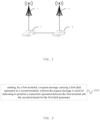
- FIG. 1 is a schematic diagram of an application scenario, wherein the application scenario as such is not covered by the claimed invention, of a connection management method, and the scenario may be applied to a vehicle to X system.
- this scenario includes an access network device 1, an access network device 2, a terminal 3 connected to the access network device 1, and a terminal 4 connected to the access network device 2.
- a communication between the terminal 3 and the terminal 4 is by means of sidelink communication, and a communication between the terminal and the access network device is by means of uplink/downlink communication.
- the access network device may be a base station, and the terminal may be a vehicle-mounted terminal.
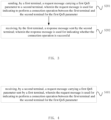
- FIG. 2 is a flowchart of a connection management method provided by an embodiment of the present disclosure, wherein the flowchart, however, does not contain and specify all of the features required by the claimed invention.
- the method is performed by a first terminal, which may be the terminal 3 or the terminal 4 in FIG. 1 .
- This method involves a process in which one terminal sends a request message to another terminal to request operations on the connection between the two terminals. As shown in Figure 1 , the method includes the following steps:
- the first terminal sends a request message carrying a first QoS parameter to a second terminal, and the request message is used for indicating to perform a connection operation between the first terminal and the second terminal for the first QoS parameter.
- the first QoS parameter is used for indicating the first terminal to request to perform the connection operation between the first terminal and the second terminal for a specific QoS attribute.
- the first QoS parameter may be a parameter obtained by the first terminal from a local storage, or may also be a parameter pre-allocated by a network device to the first terminal, or may also be a parameter obtained by the first terminal from the network device in real time.
- the first QoS parameter includes but is not limited to at least one of the following information: a PC5 5G quality of service indicator (PQI), V2X 5G quality of service indicator (VQI), quality of service flow identifier (QFI), a data rate requirement, a communication range requirement, a correspondence between PQI, VQI, QFI, the data rate requirement, the communication range requirement and a radio bearer, a provider service identifier (PSID), and an intelligent transportation systems application identifier (ITS-AID).
- PQI PC5 5G quality of service indicator
- VQI V2X 5G quality of service indicator
- QFI quality of service flow identifier
- the connection operation between the first terminal and the second terminal is establishing a connection between the first terminal and the second terminal.
- connection operation in embodiments not covered by the claimed invention may include modifying the connection between the first terminal and the second terminal, or releasing the connection between the first terminal and the second terminal.
- connection operation between the first terminal and the second terminal may also include: switching the connection between the first terminal and the second terminal, changing a connection mode between the first terminal and the second terminal, and suspending the connection between the first terminal and the second terminal, etc., embodiments not covered by the claimed invention.
- the first terminal When the first terminal needs to perform the connection operation between the first terminal and the second terminal for the first QoS parameter, the first terminal generates the request message carrying the first QoS parameter, and sends the request message to the second terminal. It may be that the network device instructs the first terminal to perform the connection operation between the first terminal and the second terminal for the first QoS parameter, or it may be that the first terminal initiates to perform the connection operation between the first terminal and the second terminal for the first QoS parameter according to a service type, a service status, or an existing connection condition.
- the first terminal sends the request message carrying the first QoS parameter to the second terminal, since the request message is used for indicating to perform the connection operation between the first terminal and the second terminal for the first QoS parameter, signaling interaction is used for realizing the connection operation between terminals for a specific QoS parameter.
- a QoS management mechanism is designed for a QoS flow so as to solve the technical problem that a connection management between terminals in a NR-V2X system cannot be realized.
- the first QoS parameter may not include the correspondence between PQI, VQI, QFI, the data rate requirement, the communication range requirement and the radio bearer. That is, the first QoS parameter may include at least one of the following information: PQI, VQI, QFI, the data rate requirement, the communication range requirement, PSID, and ITS-AID.
- the first terminal may separately send the correspondence between PQI, VQI, QFI, the data rate requirement, the communication range requirement and the radio bearer to the second terminal.
- One possible implementation includes: the first terminal sends first parameter information to the second terminal; and the parameter information includes the correspondence between PQI, VQI, QFI, the data rate requirement, the communication range requirement and the radio bearer.
- the first parameter information is carried in a radio resource control (RRC) signaling sent to the second terminal.
- RRC radio resource control
- the request message is carried in the RRC signaling including the first parameter information.
- the first terminal may make the first parameter information containing the correspondence between PQI, VQI, QFI, the data rate requirement, the communication range requirement and the radio bearer to be carried in the RRC signaling, and send it to the second terminal along with the request message.
- FIG. 3 is a flowchart of a connection management method provided by another embodiment of the present disclosure, wherein the flowchart does not contain and specify all of the features required by the claimed invention.
- This embodiment involves a specific implementation process in which the second terminal responds to the request message of the first terminal. As shown in FIG. 3 , the method includes the following steps:
- the first terminal sends a request message carrying a first QoS parameter to a second terminal, and the request message is used for indicating to perform a connection operation between the first terminal and the second terminal for the first QoS parameter.
- the first terminal receives a response message sent by the second terminal; and the response message is used for indicating whether the connection operation is successful.
- the second terminal when the second terminal receives the request message carrying the first QoS parameter sent by the first terminal, it determines whether the second terminal may perform the connection operation with the first terminal according to the first QoS parameter, and carries a result in the response message for feeding back to the first terminal.
- the result may be that the second terminal agrees to perform the connection operation between the first terminal and the second terminal for the first QoS parameter, and the response message indicates that the connection operation is successful.
- the second terminal can perform the connection operation between the first terminal and the second terminal for part or all of the QoS parameters in the first QoS parameters, and then the connection operation succeeds.
- the result may also be that the second terminal does not agree to perform the connection operation between the first terminal and the second terminal for the first QoS parameter, and the response message indicates that the connection operation failed.
- the second terminal cannot perform the connection operation between the first terminal and the second terminal for all of the QoS parameters in the first QoS parameters, and the connection operation fails.
- the response message when the response message indicates that the connection operation is successful, the response message may include part or all of the QoS parameters that the second terminal is capable of receiving; or, when the response message indicates that the connection operation is successful, and the second terminal is capable of receiving all the parameters in the first QoS parameters, the response message may not include the QoS parameters, and only indicates the connection operation is successful.
- the response message when the response message indicates the connection operation fails, the response message may not include the QoS parameters, and only indicates the connection operation fails.
- the response message when the second terminal replies the response message to the first terminal, the response message includes a second QoS parameter.
- the second QoS parameter is a QoS parameter acceptable to the second terminal.
- the second QoS parameter is a subset of the first QoS parameters.
- the second QoS parameter includes at least one of the following information: PQI, VQI, QFI, the data rate requirement, the communication range requirement, the correspondence between PQI, VQI, QFI, the data rate requirement, the communication range requirement and the radio bearer, PSID, and ITS-AID.
- the second QoS parameters may not include the correspondence between PQI, VQI, QFI, the data rate requirement, the communication range requirement and the radio bearer. That is, the second QoS parameter may include at least one of the following information: PQI, VQI, QFI, the data rate requirement, the communication range requirement, PSID, and ITS-AID.
- the second terminal may separately send the correspondence between PQI, VQI, QFI, the data rate requirement, the communication range requirement and the radio bearer to the first terminal.
- the first terminal receives second parameter information sent by the second terminal, and the second parameter information includes the correspondence between PQI, VQI, QFI, the data rate requirement, the communication range requirement and the radio bearer.
- the second parameter information is carried in the RRC signaling sent to the first terminal.
- the response message is carried in the RRC signaling including the second parameter information.
- the second terminal may make the second parameter information containing the correspondence between PQI, VQI, QFI, the data rate requirement, the communication range requirement and the radio bearer to be carried in the RRC signaling, and send it to the first terminal along with the request message.
- the response message may carry QoS parameters acceptable to the second terminal.
- the first QoS parameters carried in the request message sent by the first terminal include mapping relationships of PQI, QFI, the communication range requirement and the radio bearer and PSID
- the QoS parameters of the second terminal include mapping relationships of PQI, the communication range requirement and the radio bearer, PSID and ITS-AID
- the second QoS parameters acceptable to the second terminal for the first QoS parameters may include the mapping relationships of PQI, the communication range requirement and the radio bearer, and PSID.
- the first terminal sends the request message carrying the first QoS parameter to the second terminal, and the second terminal replies to the first terminal with a response message. Since the request message is used for indicating to perform the connection operation between the first terminal and the second terminal for the first QoS parameter, and the second terminal responds to the request message, the connection management method is further improved. Signaling interaction is used for realizing the connection operation between terminals for a specific QoS parameter.
- a QoS management mechanism is designed for a QoS flow so as to solve the technical problem that a connection management between terminals in a NR-V2X system cannot be realized.
- connection operation includes the establishing the connection between the first terminal and the second terminal, as required by the claimed invention
- request message includes the first QoS parameter corresponding to the connection between the first terminal and the second terminal to be established.
- the QoS parameters required for the connection between the first terminal and the second terminal to be established may be added to the request message.
- the first terminal needs to establish the connection between the first terminal and the second terminal for the QoS attributes such as PQI, the data rate requirement, the communication range requirement, and the radio bearer of PQI, and the first terminal adds PQI, the data rate requirement, the communication range requirement, and the radio bearer of PQI as the first QoS parameters to the request message such as to send to the second terminal.
- an operation type field may be added to the request message, and the operation type field may be set as an establishment identifier.
- connection operation includes the modifying the connection between the first terminal and the second terminal
- request message includes the first QoS parameter corresponding to the connection between the first terminal and the second terminal to be modified.
- the connection between the first terminal and the second terminal may also be modified.
- the connection may be modified, and the first terminal may specify the QoS attribute that need to be modified in the request message.
- the first terminal wants to modify the connection between the first terminal and the second terminal for the three parameters of PQI, the data rate requirement, and the communication range requirement, and the first terminal adds PQI, the data rate requirement, and the communication range requirement as the first QoS parameters to the request message such as to send to the second terminal.
- the operation type field is set as a modification identifier.
- connection operation includes the releasing the connection between the first terminal and the second terminal, and the request message includes the first QoS parameter corresponding to the connection between the first terminal and the second terminal to be released.
- the connection when the connection between the first terminal and the second terminal is idle and there is no service demand for a long time, the connection may be released to save resources.
- the first terminal wants to release the connection between the terminal and the second terminal for the three parameters of PQI, the data rate requirement, and the communication range requirement, and the first terminal adds PQI, the data rate requirement, and the communication range requirement as the first QoS parameters to the request message such as to send to the second terminal.
- the operation type field is set as a release identifier.
- the connection operation includes releasing the connection between the first terminal and the second terminal, and the request message may also include an ID of the connection between the first terminal and the second terminal to be released, thereby directly indicating which connection to be released.
- different request messages are set for different connection operations, and different connection operations may be quickly realized by changing the QoS parameters in the request message and the operation type indication of the request message.
- the method is flexible and changeable, the method is simple, and may be flexibly applied to various scenarios.
- connection between the first terminal and the second terminal there may be multiple connections between the first terminal and the second terminal, and different connections correspond to different parameters.
- the connection between the first terminal and the second terminal is a connection for at least one of the following information a QoS flow (required by the claimed invention), PSID, ITS-AID, PQI, VQI, QFI, the data rate requirement, the communication range requirement, and an application layer ID. That is, the connection between the first terminal and the second terminal may be a connection for any above information, or may be a connection for multiple pieces of information.
- Different parameters may be flexibly selected to establish the connection between the first terminal and the second terminal according to the service requirement, which is not limited by the present disclosure. Establishing the connection between the terminals in this manner may flexibly adapt to multiple scenarios, meet various service requirements, and may also avoid the waste of resources or insufficient resources caused by the fixed connection between the terminals.
- the request message and/or the response message include a connection identification (ID), and the connection ID is used for distinguishing different connections between the first terminal and the second terminal, so as to ensure the accuracy of QoS connection management.
- the request message and the response message may also include information related to the connection ID, which is used for indicating the ID of the connection to be operated.
- At least one of the following information corresponding to the different connections between the first terminal and the second terminal is different: an Internet protocol (IP) address, the application layer ID, PSID, ITS-AID, PQI, VQI, L2ID, the data rate requirement, the communication range requirement. That is to say, if the two connections between the first terminal and the second terminal have one different piece of the above information, the two connections are also different.
- IP Internet protocol
- multiple connections need to be established between the first terminal and the second terminal.
- the following six methods partly not covered by the claimed invention, may be adopted:
- the request message includes an application layer ID and/or L2ID used by the first terminal, and the application layer ID used by the first terminal is different from an application layer ID used by a current connection, and the L2ID used by the first terminal is different from L2ID used by the current connection.
- the first terminal may directly add the application layer ID and/or L2ID used by the first terminal to the request message, and the application layer ID and L2ID used by the first terminal are different from the application layer ID and L2ID used by the current connection.
- user A has registered two social accounts A1 and A2 at the same time, and the social accounts A1 and A2 are both used to process the same service, user A and user B have established a connection for the social account A1, but the user B is not aware that the user A further has the social account A2.
- the user A may add the social account A2 to the request message when sending the request message to a terminal of the user B through the terminal, thereby avoiding establishing the same connection between the terminal of the user A and the terminal of the user B for the social account A2, and avoiding waste of resources.
- a second method the first terminal sends a first connection update request message to the second terminal; and the first connection update request message includes an application layer ID and/or L2ID used by the first terminal, the application layer ID used by the first terminal is different from an application layer ID used by a current connection, and the L2ID used by the first terminal is different from L2ID used by the current connection.
- the first terminal may also separately send the first connection update request message to the second terminal, and inform the second terminal of the application layer ID and/or L2ID used by the first terminal.
- the terminal of the user A may send the first connection update request message carrying the social account A2 to the terminal of the user B.
- a third method the response message includes an application layer ID and/or L2ID used by the second terminal, and the application layer ID used by the second terminal is different from an application layer ID used by a current connection, and the L2ID used by the second terminal is different from L2ID used by the current connection.
- the second terminal may also carry the application layer ID and/or L2ID used by the second terminal in the response message, and the application layer ID and L2ID used by the second terminal are different from the application layer ID and L2ID used by the current connection.
- the user A has registered a social account A1
- the user B has registered social accounts B1 and B2
- the social accounts B1 and B2 are both used to process the same service
- user A and user B have established a connection for the social accounts A1 and B1 but the user A is not aware that the user B further has the social account B2.
- the user B may add the social account B2 to the response message when sending the response message to a terminal of the user Al through the terminal, thereby avoiding establishing the same connection between the terminal of the user A and the terminal of the user B for the social account B2, and avoiding waste of resources.
- a fourth method the first terminal receives a second connection update request message sent by the second terminal; and the second connection update request message includes an application layer ID and/or L2ID used by the second terminal, and the application layer ID used by the second terminal is different from an application layer ID used by a current connection, and the L2ID used by the second terminal is different from L2ID used by the current connection.
- the second terminal may also separately send the first connection update request message to the first terminal, and inform the first terminal of the application layer ID and/or L2ID used by the second terminal.
- the terminal of the user B may send the second connection update request message carrying the social account B2 to the terminal of the user A.
- a fifth method the first terminal sends a first access layer message to the second terminal; and the first access layer message includes an application layer ID and/or L2ID used by the first terminal, the application layer ID used by the first terminal is different from an application layer ID used by a current connection, and the L2ID used by the first terminal is different from L2ID used by the current connection.
- a sixth method the first terminal receives a second access layer message sent by the second terminal; and the second access layer message includes an application layer ID and/or L2ID used by the second terminal, and the application layer ID used by the second terminal is different from an application layer ID used by a current connection, and the L2ID used by the second terminal is different from L2ID used by the current connection.
- the application layer ID and/or L2ID used by the first terminal or the second terminal may also be carried in the access layer message for transmission.
- the first terminal carries the application layer ID and/or L2ID used by the first terminal in the first access layer message such as to send to the second terminal.
- the second terminal carries the application layer ID and/or L2ID used by the second terminal in the second access layer such as to send to the first terminal.
- the first terminal and the second terminal inform each other of the application layer ID and/or L2ID that are used differently from the current connection in a variety of ways, so as to avoid establishing completely the same connection between the first terminal and the second terminal, thereby avoiding the waste of resources.
- a physical ID of the terminal may also be carried in an implicit manner.
- the request message is transmitted based on the L2ID of the transmission layer, and the L2ID and the L2ID used by other sending terminals satisfy a preset mapping relationship.
- the mapping relationship is a mapping relationship defined for the first terminal.
- the mapping relationship is a mapping relationship defined for the connection between the first terminal and the second terminal.
- the second terminal can infer whether the L2ID physically belongs to the ID of the same terminal according to the mapping relationship. For example, the second terminal can infer whether it physically belongs to the ID of the same terminal through different L2IDs.
- L2ID-1 and L2ID-2 the same result may be obtained by using the same function f(), which means that L2ID-1 and L2ID-2 are IDs belonging to the same terminal; or by using different functions fl() and f2(), the same result may be obtained, which means that L2ID-1 and L2ID-2 are IDs belonging to the same terminal.
- the above functions f/f1/f2 may be a function shared by different terminals, different first terminals may use different functions, or different functions are used for different connections between the first terminal and the second terminal.
- the request message is transmitted based on the L2ID of each transmission layer, and L2IDs are in one-to-one correspondence with different PSIDs and/or application layer IDs of the first terminal.
- the L2ID changes if any PSID and/or application layer ID of the first terminal changes.
- connection C has been established between the first terminal and the second terminal, but due to various reasons such as the service type, the network requirement, and connection quality. It is also necessary to establish a new connection between the first terminal and the second terminal.
- the first terminal sends a request message for indicating to establish a new connection in at least one of the following situations, partly not covered by the claimed invention:
- the first terminal when the first terminal determines that at least one of the IP address, the application layer ID (required by the claimed invention) PSID, PQI, VQI, the data rate requirement, the communication range requirement, the radio bearer, and L2ID of the existing connection is not available for the new connection, the first terminal sends the request message for indicating to establish the new connection to the second terminal.
- the request message includes the QoS parameter corresponding to the new connection.
- the request message for indicating to establish the new connection is carried in a PC5-S signaling or a PC5-RRC signaling. That is to say, the establishment of the new connection may be done through PC5-S signaling, or the establishment of the new connection may be done through PC5-RRC by access layer connection management.
- the established new connection includes at least one of the following information:
- the IP of the existing connection is an IP address of the first terminal and/or the second terminal
- the IP address of the existing connection is an IP address of the first terminal and/or the second terminal in the existing connection
- the application layer ID of the existing connection is an application layer ID of the first terminal and/or the second terminal
- the application layer ID of the existing connection is an application layer ID of the first terminal and/or the second terminal in the existing connection
- the L2ID of the existing connection is L2ID of the first terminal and/or the second terminal
- the L2ID of the existing connection is L2ID of the first terminal and/or the second terminal in the existing connection.
- the request message for sending the new connection may be sent again while the existing connection exists, so as to meet the service requirement and improve the QoS.
- the network indicates a specific implementation process of the connection operation between the first terminal and the second terminal through configuration information.
- the method may further include: receiving, by the first terminal, configuration information sent by an access network device; and the configuration information is used for indicating whether to perform the connection operation between the first terminal and the second terminal for the first QoS parameter.
- the embodiment shown in FIG. 2 before S101 "the sending, by the first terminal, the request message carrying the first QoS parameter to a second terminal", the method may further include: receiving, by the first terminal, configuration information sent by an access network device; and the configuration information is used for indicating whether to perform the connection operation between the first terminal and the second terminal for the first QoS parameter.
- the method may further include: receiving, by the first terminal, configuration information sent by an access network device; and the configuration information is used for indicating whether to perform the connection operation between the first terminal and the second terminal for the first QoS parameter.
- the access network device may send the configuration information to the first terminal to indicate whether to perform the connection operation between the first terminal and the second terminal for the first QoS parameter.
- the configuration information may include the first QoS parameter, or the configuration information may be specifically used for indicating a physical layer parameter for the first QoS parameter.
- the physical layer parameter of the first QoS parameter may include at least one of the following information: a modulation and coding scheme (MCS), a hybrid automatic repeat request (HARQ), transmission power, a size of an available time-frequency resource, etc.
- MCS modulation and coding scheme
- HARQ hybrid automatic repeat request
- transmission power a size of an available time-frequency resource
- the configuration information is carried in a system message or the RRC signaling sent to the first terminal.
- different types of core network devices correspond to different configuration information.
- the configuration information includes at least one of the following information: PQI, VQI, the data rate requirement, the communication range requirement; for a 5G core network (5GC), the configuration information includes QFI.
- EPC 4G core network
- VQI the data rate requirement
- 5GC 5G core network
- QFI the configuration information corresponding to different types of core network devices is different, and it is not limited thereto.
- the method may further include: reporting, by the first terminal, a third QoS parameter to the access network device.
- the third QoS parameter includes at least one of the following information: PQI, VQI, QFI, a data rate requirement, a communication range requirement, a correspondence between PQI, VQI, QFI, the data rate requirement, the communication range requirement and a radio bearer, PSID, and ITS-AID.
- the correspondence between PQI, VQI, QFI, the data rate requirement, the communication range requirement and the radio bearer may include a correspondence sent by the second terminal for configuring a correspondence used by the first terminal.
- third QoS parameters corresponding to different types of core network devices are different.
- the first terminal may report the third QoS parameter of the connection between the terminals that needs to be established/modified/released to the access network device, wherein the claimed invention concerns the case of the connection to be established.
- the third QoS parameter includes at least one of the following but is not limited to: PQI, VQI, QFI, a data rate requirement, a communication range requirement, a correspondence between QFI, PQI, VQI, QFI, the data rate requirement, the communication range requirement and the radio bearer (bearer mapping), PSID, and ITS-AID, etc.
- the first terminal reports different third QoS parameters, respectively.
- the third QoS parameters include at least one of the following: PQI, VQI, the data rate requirement, the communication range requirement -bearer mapping; for 5GC, the third QoS parameter includes at least one of the following, QFI, QFI-bearer mapping.
- the access network device sends the determined QoS parameters that the first terminal can support to the first terminal through the configuration information.
- the first terminal reports a channel quality parameter of the connection from the first terminal to the second terminal to the access network device;
- the channel quality information includes at least one of a channel busy rate, RSRP, RSRQ, SINR, and RSSI.
- Different channel quality parameters correspond to different configuration information.
- the configuration information is specifically used for determining whether to perform the connection operation between the first terminal and the second terminal for the first QoS parameter according to the channel quality information.
- the terminal may report the third QoS parameter of the connection between the terminals that needs to be established/modified/released to the access network device, and may also report the channel quality parameter of the connection from the first terminal to the second terminal, so that the access network device can determine the configuration information that satisfies the QoS flow characteristics according to the third QoS parameter and the channel quality parameter and send it to the terminal, so that the terminal can determine the accurate first QoS parameter according to the configuration information, thereby effectively establishing, modifying or releasing the connection between the first terminal and the second terminal, and improving the reliability of the connection between the terminals.
- FIG. 4 is a flowchart of a connection management method provided by another embodiment of the present disclosure, wherein the flowchart does not contain and specify all of the features required by the claimed invention.
- the execution subject of this method is the second terminal, and the second terminal may be the terminal 3 or the terminal 4 in FIG. 1 .
- This method involves a process in which the terminal receives the request message sent by another terminal to perform operation on the connection between the two terminals As shown in FIG. 4 , the method includes the following steps:
- the second terminal receives a request message carrying a first QoS parameter sent by a first terminal, and the request message is used for indicating to perform a connection operation between the first terminal and the second terminal for the first QoS parameter.
- the method further includes: sending, by the second terminal, a response message to the first terminal; and the response message is used for indicating whether the connection operation is successful.
- the response message includes a second QoS parameter; the second QoS parameter is a QoS parameter acceptable to the second terminal.
- the second QoS parameter is a subset of the first QoS parameters.
- connection operation includes at least one of the following: according to the invention establishing a connection between the first terminal and the second terminal, and in embodiments not covered by the claimed invention modifying the connection between the first terminal and the second terminal, and releasing the connection between the first terminal and the second terminal.
- the connection operation includes the establishing the connection between the first terminal and the second terminal, and the request message includes the first QoS parameter corresponding to the connection between the first terminal and the second terminal to be established.
- the connection operation includes the modifying the connection between the first terminal and the second terminal, and the request message includes the first QoS parameter corresponding to the connection between the first terminal and the second terminal to be modified.
- the connection operation includes the modifying the connection between the first terminal and the second terminal, and the request message includes the first QoS parameter corresponding to the connection between the first terminal and the second terminal to be released.
- the first QoS parameter includes at least one of the following information: PQI, VQI, QFI, a data rate requirement, a communication range requirement, a correspondence between PQI, VQI, QFI, the data rate requirement, the communication range requirement and a radio bearer, PSID, and ITS-AID.
- the first QoS parameter includes at least one of the following information: PQI, VQI, QFI, a data rate requirement, a communication range requirement, PSID, and ITS-AID.
- the method further includes: receiving, by the second terminal, first parameter information sent by the first terminal; and the first parameter information includes a correspondence between PQI, VQI, QFI, a data rate requirement, a communication range requirement and a radio bearer.
- the first parameter information is carried in a RRC signaling sent to the second terminal.
- the request message is carried in the RRC signaling including the first parameter information.
- the response message includes the second QoS parameter.
- the second QoS parameter is the QoS parameter acceptable to the second terminal.
- the second QoS parameter is the subset of the first QoS parameters.
- the second QoS parameter includes at least one of the following information: PQI, VQI, QFI, a data rate requirement, a communication range requirement, a correspondence between PQI, VQI, QFI, the data rate requirement, the communication range requirement and a radio bearer, PSID, and ITS-AID.
- the second QoS parameter includes at least one of the following information: PQI, VQI, QFI, a data rate requirement, a communication range requirement, PSID, and ITS-AID.
- the method further includes: sending, by the second terminal, second parameter information to the first terminal; and the second parameter information includes a correspondence between PQI, VQI, QFI, a data rate requirement, a communication range requirement and a radio bearer.
- the second parameter information is carried in the RRC signaling sent to the first terminal.
- the response message is carried in the RRC signaling including the second parameter information.
- the connection between the first terminal and the second terminal is a connection for at least one of the following information: a QoS flow (required by the claimed invention), PSID, ITS-AID, PQI, VQI, QFI, a data rate requirement, a communication range requirement, an application layer ID.
- the request message and/or the response message includes a connection identification (ID), and the connection ID is used for distinguishing different connections between the first terminal and the second terminal.
- ID connection identification
- At least one of the following information corresponding to the different connections between the first terminal and the second terminal is different: an IP address, an application layer ID, PSID, ITS- AID, PQI, VQI, L2ID, a data rate requirement, a communication range requirement.
- the request message includes an application layer ID and/or L2ID used by the first terminal, and the application layer ID used by the first terminal is different from an application layer ID used by a current connection, and the L2ID used by the first terminal is different from L2ID used by the current connection.
- the method further includes: receiving, by the second terminal, a first connection update request message sent by the first terminal; and the first connection update request message includes an application layer ID and/or L2ID used by the first terminal, the application layer ID used by the first terminal is different from an application layer ID used by a current connection, and the L2ID used by the first terminal is different from L2ID used by the current connection.
- the response message includes an application layer ID and/or L2ID used by the second terminal, and the application layer ID used by the second terminal is different from an application layer ID used by a current connection, and the L2ID used by the second terminal is different from L2ID used by the current connection.
- the method further includes: sending, by the second terminal, a second connection update request message to the first terminal; and the second connection update request message includes an application layer ID and/or L2ID used by the second terminal, and the application layer ID used by the second terminal is different from an application layer ID used by a current connection, and the L2ID used by the second terminal is different from L2ID used by the current connection.
- a request message for indicating to establish a new connection is sent by the first terminal in at least one of the following situations:
- the request message for indicating to establish the new connection is carried in a PC5-S signaling or a PC5-RRC signaling.
- the new connection includes at least one of the following information:
- the method further includes any one of the following information:
- the method before the second terminal sends the response message to the first terminal, the method further includes: receiving, by the second terminal, configuration information sent by an access network device; and the configuration information is used for indicating whether to perform the connection operation between the first terminal and the second terminal for the second QoS parameter.
- the method further includes: receiving, by the second terminal, configuration information sent by an access network device; and the configuration information is used for indicating whether to perform the connection operation between the first terminal and the second terminal for the second QoS parameter.
- the configuration information is specifically used for indicating a physical layer parameter for the second QoS parameter.
- the configuration information is carried in a system message or a RRC signaling sent to the second terminal.
- different types of core network devices correspond to different configuration information.
- the method before the second terminal receives the configuration information sent by the access network device, the method further includes: reporting, by the second terminal, a third QoS parameter to the access network device.
- the third QoS parameter includes at least one of the following information: PQI, VQI, QFI, a data rate requirement, a communication range requirement, a correspondence between PQI, VQI, QFI, the data rate requirement, the communication range requirement and a radio bearer, PSID, and ITS-AID.
- the correspondence includes a correspondence used by the first terminal, which is sent by the first terminal.
- the correspondence includes a correspondence sent by the first terminal for configuring a correspondence used by the second terminal.
- third QoS parameters corresponding to different types of core network devices are different.
- the method further includes: reporting, by the second terminal, a channel quality parameter of a connection from the first terminal to the second terminal to the access network device; and the channel quality information includes at least one of a channel busy rate, RSRP, RSRQ, SINR, and RSSI.
- different channel quality parameters correspond to different configuration information.
- the configuration information is specifically used for determining whether to perform the connection operation between the first terminal and the second terminal for the second QoS parameter according to the channel quality information.
- FIG. 1 takes the scenario of FIG. 1 as an example, and Figs. 5 and 6 introduce the implementations of a single connection management process and a dual connection management process, respectively.
- the scheme is further explained by taking the establishing a connection, modifying a connection, and releasing a connection as examples.
- FIG. 5 is a flowchart of a single connection management process provided by an embodiment not covered by the claimed invention. In this embodiment, the entire process is divided into four parts, that is, connection establishment, connection modification (twice), and connection release. As shown in FIG. 5 , establishing a connection may include the following steps:
- S501 and S502 may also be after S506, which is not limited in the present disclosure.
- the UE1 initiating the connection modification may include the following steps:
- S511 and S512 may also be after S516, which is not limited in the present disclosure.
- the UE2 initiating the connection modification may include the following steps:
- S521 and S522 may also be after S526, which is not limited in the present disclosure.
- UE2 initiating the connection release may include the following steps:
- S531 and S532 may also be after S534, which is not limited in the present disclosure.
- the steps in this embodiment are not necessarily performed in sequence in the order indicated by the arrow.
- the steps of UE reporting the QoS parameters to the base station and the base station sending the configuration information to UE are not necessarily executed every time.
- FIG. 5 is only a possible implementation, and the present disclosure is not limited to this.
- FIG. 6 is a flowchart of a dual connection management process provided by an embodiment of the present disclosure.
- the entire process is divided into three parts, that is, connection establishment (twice) and connection release.
- connection establishment (twice)
- connection release (twice)
- FIG. 6 may also include a process of modifying the connection, and the present disclosure is not limited to this.
- establishing a connection may include the following steps:
- S601 and S602 may also be after S606, which is not limited in the present disclosure.
- UE2 initiating the establishment of the new connection may include the following steps:
- S611 and S612 may also be after S616, which is not limited in the present disclosure.
- UE2 initiating the connection release may include the following steps:
- S621 and S622 may also be after S624, which is not limited in the present disclosure.
- the steps in this embodiment are not necessarily performed in sequence in the order indicated by the arrow.
- the steps of UE reporting the QoS parameters to the base station and the base station sending the configuration information to UE are not necessarily executed every time.
- FIG. 6 is only a possible implementation, and the present disclosure is not limited to this.
- blocks in the flowcharts of FIGS. 2-6 are illustrated in sequence as indicated by arrows, the blocks are not necessarily performed in sequence as indicated by the arrows. Unless otherwise specifically specified in the specification, the execution of the blocks is not strictly limited, and the blocks may be performed in other sequences. Moreover, at least some of the blocks in FIGS. 2-6 may include several sub-blocks or stages, which are not necessarily performed simultaneously, but may be executed at different times. The execution sequence of these sub-blocks or stages is not necessarily performed sequentially, but may be performed alternately with at least a portion of other blocks, or sub-blocks or stages of other blocks.
- FIG. 7 is a block diagram of a connection management apparatus provided by an embodiment of the present disclosure, wherein, however, the invention as claimed concerns a terminal device.
- the apparatus includes a processing module 11 and a sending module 12; the processing module 11 is configured to send a request message carrying a first QoS parameter to a second terminal through the sending module 12; and the request message is used for indicating to perform a connection operation between a first terminal and the second terminal for the first QoS parameter.
- the apparatus further includes: a receiving module 13, configured to receive a response message sent by the second terminal; and the response message is used for indicating whether the connection operation is successful.
- FIG. 9 is a block diagram of a connection management apparatus provided by an embodiment of the present disclosure, wherein, however, the invention as claimed concerns a terminal device.
- the apparatus includes a processing module 21 and a receiving module 22; the processing module 21 is configured to receive a request message carrying a first QoS parameter sent by a first terminal through the receiving module 22; and the request message is used for indicating to perform a connection operation between the first terminal and a second terminal for the first QoS parameter.
- the apparatus further includes: a sending module 23, configured to send a response message to the first terminal; and the response message is used for indicating whether the connection operation is successful.
- connection management apparatus For specific definitions of the connection management apparatus, reference may be made to the above definition of the connection management method, which will not be elaborated here.
- Respective modules of the above-described connection management device may be implemented in whole or in part by software, hardware, and the combination thereof.
- Each of the above modules may be embedded in or independent of the processor in the computer device, or may be stored in a memory in the computer device in a software form, so that the processor invokes them to execute the operations corresponding to the above modules.
- Embodiments not covered by the claimed invention also provide a computer device, including a memory and a processor, the memory storing a computer program, and the processor implements steps of the method described in any of the foregoing embodiments when executing the computer program.
- Embodiments not covered by the claimed invention also provide a computer-readable storage medium having a computer program stored thereon, and the computer program, when executed by a processor, implements steps of the method described in any of the above embodiments.
- the computer device may be a server, and its internal structure diagram may be as shown in FIG. 11 .
- the computer device includes a processor, a memory, a network interface, and a database connected through a system bus.
- the processor of the computer device is configured to provide calculation and control capabilities.
- the memory of the computer device includes a non-volatile storage medium and an internal memory.
- the non-volatile storage medium stores an operating system, a computer program, and a database.
- the internal memory provides an environment for running the operating system and the computer program in the non-volatile storage medium.
- the database of the computer equipment is configured to store data such as the QoS parameter and the configuration information.
- the network interface of the computer device is configured to communicate with an external terminal through a network connection.
- the computer program is executed by the processor to realize the connection management method.
- FIG. 11 is only a block diagram of a part of the structure related to the solution of the present disclosure, and does not constitute a limitation on the computer device to which the solution of the present disclosure is applied.
- a specific computer device may include more or less parts than shown in the figure, or combine some parts, or have a different part arrangement.
- the computer program may be stored in a non-volatile computer readable storage medium.
- procedures of the above-mentioned method embodiments may be included.
- Any reference to the memory, the storage, the database, or other media used in the embodiments provided by the present disclosure may include a non-volatile and/or a volatile memory.
- the suitable non-volatile memory may include a read-only memory (ROM), a programmable ROM (PROM), an electrically programmable ROM (EPROM), an electrically erasable programmable ROM (EEPROM), or a flash memory.
- the volatile memory may include a random access memory (RAM) or an external cache memory.
- RAM random access memory
- the RAM is available in a variety of forms such as a static RAM (SRAM), a dynamic RAM (DRAM), a synchronous DRAM (SDRAM), a double data rate SDRAM (DDR SDRAM), an enhanced SDRAM (ESDRAM), a Synchlink DRAM (SLDRAM), a Rambus direct RAM (RDRAM), a direct Rambus dynamic RAM (DRDRAM), and a Rambus dynamic RAM (RDRAM).
- SRAM static RAM
- DRAM dynamic RAM
- SDRAM synchronous DRAM
- DDR SDRAM double data rate SDRAM
- ESDRAM enhanced SDRAM
- SLDRAM Synchlink DRAM
- RDRAM Rambus direct RAM
- DRAM direct Rambus dynamic RAM
- RDRAM Rambus dynamic RAM
Landscapes
- Engineering & Computer Science (AREA)
- Computer Networks & Wireless Communication (AREA)
- Signal Processing (AREA)
- Quality & Reliability (AREA)
- Mobile Radio Communication Systems (AREA)
- Communication Control (AREA)
- Telephonic Communication Services (AREA)
- Connections Arranged To Contact A Plurality Of Conductors (AREA)
Claims (12)
- Procédé de gestion de connexion, comprenant l'étape consistant à :envoyer (S101, S201), par un premier terminal, un message de demande transportant un premier paramètre QoS à un second terminal, le message de demande étant utilisé pour indiquer qu'il faut établir une nouvelle connexion pour un flux QoS entre le premier terminal et le second terminal selon le premier paramètre QoS,la nouvelle connexion entre le premier terminal et le second terminal étant une connexion de dispositif à dispositif (D2D),le procédé étant caractérisé en ce que la nouvelle connexion est établie dans la situation suivante :
un ID de couche application d'une connexion existante n'est pas disponible pour la nouvelle connexion. - Procédé selon la revendication 1, le procédé comprenant en outre l'étape consistant à :
recevoir (S202), par le premier terminal, un message de réponse envoyé par le second terminal ; le message de réponse étant utilisé pour indiquer si l'établissement de la nouvelle connexion pour un flux QoS est réussi. - Procédé selon la revendication 1, dans lequel le message de demande comprend le premier paramètre QoS correspondant à la nouvelle connexion à établir entre le premier terminal et le second terminal.
- Procédé selon la revendication 1 ou 2, dans lequel le premier paramètre QoS comprend au moins une des informations suivantes :un indicateur de qualité de service 5G PCS (PQI) ;un identifiant de flux de qualité de service (QFI) ;une exigence de débit de données ;un identifiant de service de fournisseur (PSID) ; etun identifiant d'application pour systèmes intelligents de transport (ITS-AID).
- Procédé selon la revendication 2, dans lequel le message de réponse comprend un second paramètre QoS.
- Procédé selon la revendication 5, dans lequel le second paramètre QoS est un paramètre QoS acceptable pour le second terminal.
- Procédé selon la revendication 5 ou 6, dans lequel le second paramètre QoS comprend au moins une des informations suivantes :un indicateur de qualité de service 5G PCS (PQI) ;un identifiant de flux de qualité de service (QFI) ;une exigence de débit de données ;un identifiant de service de fournisseur (PSID) ; etun identifiant d'application pour systèmes intelligents de transport (ITS-AID).
- Procédé selon la revendication 1, dans lequel le message de demande servant à indiquer qu'il faut établir la nouvelle connexion est transporté dans une signalisation PC5-S ou une signalisation PC5-RRC.
- Procédé selon la revendication 1 ou 8, dans lequel une adresse IP de la connexion existante est une adresse IP du premier terminal et/ou du second terminal dans la connexion existante.
- Procédé de gestion de connexion, comprenant l'étape consistant à :recevoir (S401), par un second terminal, un message de demande transportant un premier paramètre QoS envoyé par un premier terminal, le message de demande étant utilisé pour indiquer qu'il faut établir une nouvelle connexion pour un flux QoS entre le premier terminal et le second terminal selon le premier paramètre QoS,la nouvelle connexion entre le premier terminal et le second terminal étant une connexion de dispositif à dispositif (D2D),le procédé étant caractérisé en ce que la nouvelle connexion est établie dans la situation suivante :
un ID de couche application d'une connexion existante n'est pas disponible pour la nouvelle connexion. - Dispositif terminal, comprenant un module de traitement (11) et un module d'envoi (12) ;le module de traitement (11) étant configuré pour envoyer, par l'intermédiaire du module d'envoi (12), un message de demande transportant un premier paramètre QoS à un second terminal ; le message de demande étant utilisé pour indiquer qu'il faut établir une nouvelle connexion pour un flux QoS entre le dispositif terminal et le second terminal selon le premier paramètre QoS,la nouvelle connexion entre le dispositif terminal et le second terminal étant une connexion de dispositif à dispositif (D2D),le procédé étant caractérisé en ce que la nouvelle connexion est établie dans la situation suivante :
un ID de couche application d'une connexion existante n'est pas disponible pour la nouvelle connexion. - Dispositif terminal, comprenant : un module de traitement (21) et un module de réception (22) ; le module de traitement (21) étant configuré pour recevoir, par l'intermédiaire du module de réception (22), un message de demande transportant un premier paramètre QoS envoyé par un second terminal ; le message de demande étant utilisé pour indiquer qu'il faut établir une nouvelle connexion pour un flux QoS entre le second terminal et le dispositif terminal selon le premier paramètre QoS,la nouvelle connexion entre le second terminal et le dispositif terminal étant une connexion de dispositif à dispositif (D2D),le procédé étant caractérisé en ce que la nouvelle connexion est établie dans la situation suivante :
un ID de couche application d'une connexion existante n'est pas disponible pour la nouvelle connexion.
Applications Claiming Priority (2)
| Application Number | Priority Date | Filing Date | Title |
|---|---|---|---|
| PCT/CN2019/080191 WO2020191741A1 (fr) | 2019-03-28 | 2019-03-28 | Procédé et appareil de gestion de connexion, dispositif informatique et support de stockage |
| PCT/CN2019/081789 WO2020191814A1 (fr) | 2019-03-28 | 2019-04-08 | Procédé de gestion de connexion, appareil, dispositif informatique et support d'informations |
Publications (3)
| Publication Number | Publication Date |
|---|---|
| EP3917271A1 EP3917271A1 (fr) | 2021-12-01 |
| EP3917271A4 EP3917271A4 (fr) | 2022-02-23 |
| EP3917271B1 true EP3917271B1 (fr) | 2023-06-21 |
Family
ID=72609150
Family Applications (1)
| Application Number | Title | Priority Date | Filing Date |
|---|---|---|---|
| EP19922093.0A Active EP3917271B1 (fr) | 2019-03-28 | 2019-04-08 | Procédés de gestion de connexion et dispositifs terminaux |
Country Status (8)
| Country | Link |
|---|---|
| US (2) | US11375397B2 (fr) |
| EP (1) | EP3917271B1 (fr) |
| JP (1) | JP7296469B2 (fr) |
| KR (1) | KR102687472B1 (fr) |
| CN (2) | CN113596930B (fr) |
| BR (1) | BR112021018316A2 (fr) |
| ES (1) | ES2953119T3 (fr) |
| WO (2) | WO2020191741A1 (fr) |
Families Citing this family (4)
| Publication number | Priority date | Publication date | Assignee | Title |
|---|---|---|---|---|
| EP4023029A4 (fr) * | 2019-10-04 | 2022-10-12 | Samsung Electronics Co., Ltd. | Améliorations apportées et afférentes à la commutation de voies dynamiques |
| CN112911652B (zh) * | 2019-11-19 | 2022-12-02 | 华为技术有限公司 | 通信方法及装置 |
| CN115868182B (zh) * | 2020-07-15 | 2024-10-18 | 高通股份有限公司 | 实施经由无线传输共享的信息的射程可靠性 |
| CN119865763A (zh) * | 2022-03-02 | 2025-04-22 | 华为技术有限公司 | 通信方法和装置 |
Family Cites Families (31)
| Publication number | Priority date | Publication date | Assignee | Title |
|---|---|---|---|---|
| CN1984435B (zh) | 2005-12-12 | 2011-04-13 | 上海原动力通信科技有限公司 | 无线通信系统及其无线资源管理方法和小区切换方法 |
| CN1997215B (zh) | 2006-01-03 | 2011-11-16 | 华为技术有限公司 | 无线通信系统及其无线资源管理方法 |
| WO2010139105A1 (fr) * | 2009-05-31 | 2010-12-09 | 华为技术有限公司 | Procédé et appareil de contrôle de négociation de paramètres de qualité de service |
| CN102185834B (zh) | 2011-04-07 | 2014-01-29 | 北京交通大学 | 一种信息网智能资源控制系统 |
| CN103139930B (zh) * | 2011-11-22 | 2015-07-08 | 华为技术有限公司 | 连接建立方法和用户设备 |
| AU2012376802A1 (en) * | 2012-04-11 | 2014-10-02 | Intel Corporation | Operator-assisted device-to-device (D2D) discovery |
| WO2013162196A1 (fr) * | 2012-04-27 | 2013-10-31 | Lg Electronics Inc. | Procédé et appareil d'établissement de connexion de dispositif à dispositif dans un système de communication sans fil |
| US9345055B2 (en) * | 2012-04-27 | 2016-05-17 | Lg Electronics Inc. | Method and apparatus for establishing device-to-device connection in wireless communication system |
| WO2013162166A1 (fr) * | 2012-04-27 | 2013-10-31 | Lg Electronics Inc. | Procédé et appareil pour reconfigurer des informations de connexion de dispositif à dispositif dans un système de communication sans fil |
| CN102946264B (zh) | 2012-10-17 | 2015-06-03 | 中国联合网络通信集团有限公司 | M2m终端协作传输的方法、装置及系统 |
| US20140194115A1 (en) * | 2013-01-08 | 2014-07-10 | Electronics & Telecommunications Research Institute | Method for discovery in device-to-device communications and apparatus for the same |
| JP6002335B2 (ja) | 2013-02-15 | 2016-10-05 | エルジー エレクトロニクス インコーポレイティド | 無線lanシステムにおいて帯域幅によるフレーム送受信方法及び装置 |
| CN104159266B (zh) | 2013-05-13 | 2017-12-08 | 电信科学技术研究院 | 一种邻近通信的实现方法和装置 |
| CN104284321B (zh) | 2013-07-08 | 2018-09-21 | 华为终端(东莞)有限公司 | 一种路径切换的方法、设备和用户设备 |
| CN104349303B (zh) * | 2013-08-05 | 2019-07-23 | 中兴通讯股份有限公司 | 设备到设备连接管理方法、装置及基站 |
| CN104618849A (zh) | 2013-11-01 | 2015-05-13 | 中兴通讯股份有限公司 | 终端的本地交换方法及系统 |
| CN103685064B (zh) | 2013-12-10 | 2017-01-25 | 中国人民解放军理工大学 | 一种异构级联网络QoS闭环互耦系统及方法 |
| US9980173B2 (en) * | 2014-02-10 | 2018-05-22 | Lg Electronics Inc. | Method and apparatus for indicating QoS of D2D data in wireless communication system |
| CN104902443B (zh) | 2014-03-05 | 2018-10-30 | 华为终端有限公司 | 一种通信的方法和设备 |
| CN106162929B (zh) * | 2015-04-07 | 2021-08-06 | 中兴通讯股份有限公司 | 在设备直通系统中用户终端与中继节点的通信方法和装置 |
| CN106162930B (zh) * | 2015-04-07 | 2021-08-06 | 中兴通讯股份有限公司 | 在设备直通系统中承载的管理方法和装置 |
| CN106937355B (zh) | 2015-12-29 | 2020-01-17 | 普天信息技术有限公司 | 一种车辆通信控制方法及基站 |
| WO2017133021A1 (fr) | 2016-02-06 | 2017-08-10 | 华为技术有限公司 | Procédé de traitement de sécurité et dispositif pertinent |
| EP3471456B1 (fr) | 2016-07-22 | 2023-11-22 | Huawei Technologies Co., Ltd. | Procédé de contrôle de congestion, station de base et terminal |
| CN108366355B (zh) * | 2017-01-26 | 2023-05-02 | 中兴通讯股份有限公司 | 数据发送方法、数据发送终端以及基站 |
| CN108923894B (zh) * | 2017-03-23 | 2023-04-18 | 中兴通讯股份有限公司 | 一种信息传输的方法、用户设备、基站、存储介质和系统 |
| CN108632910B (zh) * | 2017-03-24 | 2019-07-02 | 电信科学技术研究院 | 一种QoS处理方法和设备 |
| US11160134B2 (en) * | 2017-08-09 | 2021-10-26 | Lg Electronics Inc. | Method for performing RRC connection procedure in wireless communication system and apparatus therefor |
| US10827380B2 (en) * | 2018-01-30 | 2020-11-03 | Huawei Technologies Co., Ltd. | System and method for supporting URLLC in advanced V2X communications |
| CN109257831B (zh) * | 2018-08-10 | 2020-09-29 | 维沃移动通信有限公司 | 一种终端之间建立连接的方法及终端 |
| US11252777B2 (en) * | 2019-01-27 | 2022-02-15 | Qualcomm Incorporated | Coordinating radio resource control signaling with upper layer direct link establishment procedures |
-
2019
- 2019-03-28 WO PCT/CN2019/080191 patent/WO2020191741A1/fr not_active Ceased
- 2019-04-08 CN CN202110874783.6A patent/CN113596930B/zh active Active
- 2019-04-08 JP JP2021552880A patent/JP7296469B2/ja active Active
- 2019-04-08 WO PCT/CN2019/081789 patent/WO2020191814A1/fr not_active Ceased
- 2019-04-08 EP EP19922093.0A patent/EP3917271B1/fr active Active
- 2019-04-08 KR KR1020217028327A patent/KR102687472B1/ko active Active
- 2019-04-08 BR BR112021018316A patent/BR112021018316A2/pt unknown
- 2019-04-08 ES ES19922093T patent/ES2953119T3/es active Active
- 2019-04-08 CN CN201980079256.7A patent/CN113170516A/zh active Pending
-
2021
- 2021-08-27 US US17/460,017 patent/US11375397B2/en active Active
-
2022
- 2022-05-23 US US17/751,455 patent/US11825336B2/en active Active
Also Published As
| Publication number | Publication date |
|---|---|
| US11375397B2 (en) | 2022-06-28 |
| WO2020191814A1 (fr) | 2020-10-01 |
| KR20210142101A (ko) | 2021-11-24 |
| EP3917271A1 (fr) | 2021-12-01 |
| BR112021018316A2 (pt) | 2021-11-23 |
| US11825336B2 (en) | 2023-11-21 |
| WO2020191741A1 (fr) | 2020-10-01 |
| EP3917271A4 (fr) | 2022-02-23 |
| CN113596930A (zh) | 2021-11-02 |
| US20220286900A1 (en) | 2022-09-08 |
| US20210392541A1 (en) | 2021-12-16 |
| CN113596930B (zh) | 2023-02-17 |
| ES2953119T3 (es) | 2023-11-08 |
| JP7296469B2 (ja) | 2023-06-22 |
| CN113170516A (zh) | 2021-07-23 |
| KR102687472B1 (ko) | 2024-07-23 |
| JP2022533506A (ja) | 2022-07-25 |
Similar Documents
| Publication | Publication Date | Title |
|---|---|---|
| US11825336B2 (en) | Connection management method, apparatus, computer device and storage medium | |
| CN102958066B (zh) | D2d终端通信方法和设备 | |
| JP7301140B2 (ja) | サイドリンクレポートを処理する方法及び装置 | |
| EP3200484B1 (fr) | Procédé et système de traitement de surcharge et de congestion de réseau | |
| CN105578382B (zh) | 资源的获取、配置方法及装置,资源池的配置方法及装置 | |
| US11743885B2 (en) | Telecommunications apparatus and methods using a common scheduling message for different random access procedures | |
| WO2017117926A1 (fr) | Procédé et dispositif de gestion de connexion pour une communication de relais d2d, terminal et station de base | |
| US11930487B2 (en) | Terminal apparatus identification method and apparatus | |
| US12526871B2 (en) | Sidelink bearer managing method and apparatus, terminal, and medium | |
| EP4266819B1 (fr) | Procédé d'établissement de connexion relais, et dispositif | |
| KR20240121826A (ko) | 중계 통신들을 위한 방법들 및 시스템들 | |
| EP4654539A1 (fr) | Procédé de communication et appareil de communication | |
| EP4535921A1 (fr) | Procédé et appareil pour déterminer une zone de service de multidiffusion inactive, et procédé et appareil pour configurer une zone de service de multidiffusion inactive | |
| RU2791252C1 (ru) | Способ управления соединением, устройство, компьютерное устройство и носитель данных | |
| TW202315454A (zh) | 組配通訊裝置之技術 | |
| KR102859111B1 (ko) | 사이드링크 구현 방법 및 관련 제품 | |
| Panaitopol et al. | Recent advances in 3GPP Rel-12 standardization related to D2D and public safety communications | |
| CN109818724B (zh) | 获取及发送系统消息的方法、终端、基站、可读介质 | |
| US20260006670A1 (en) | Failure recovery in wireless communication | |
| CN114616912B (zh) | 数据传输方法、设备及存储介质 | |
| CN121692126A (zh) | 通信设备和无线通信方法 |
Legal Events
| Date | Code | Title | Description |
|---|---|---|---|
| STAA | Information on the status of an ep patent application or granted ep patent |
Free format text: STATUS: THE INTERNATIONAL PUBLICATION HAS BEEN MADE |
|
| PUAI | Public reference made under article 153(3) epc to a published international application that has entered the european phase |
Free format text: ORIGINAL CODE: 0009012 |
|
| STAA | Information on the status of an ep patent application or granted ep patent |
Free format text: STATUS: REQUEST FOR EXAMINATION WAS MADE |
|
| 17P | Request for examination filed |
Effective date: 20210826 |
|
| AK | Designated contracting states |
Kind code of ref document: A1 Designated state(s): AL AT BE BG CH CY CZ DE DK EE ES FI FR GB GR HR HU IE IS IT LI LT LU LV MC MK MT NL NO PL PT RO RS SE SI SK SM TR |
|
| A4 | Supplementary search report drawn up and despatched |
Effective date: 20220120 |
|
| RIC1 | Information provided on ipc code assigned before grant |
Ipc: H04W 28/02 20090101ALN20220114BHEP Ipc: H04W 4/46 20180101ALN20220114BHEP Ipc: H04W 76/23 20180101ALI20220114BHEP Ipc: H04W 76/14 20180101AFI20220114BHEP |
|
| DAV | Request for validation of the european patent (deleted) | ||
| DAX | Request for extension of the european patent (deleted) | ||
| STAA | Information on the status of an ep patent application or granted ep patent |
Free format text: STATUS: EXAMINATION IS IN PROGRESS |
|
| 17Q | First examination report despatched |
Effective date: 20220907 |
|
| REG | Reference to a national code |
Ref legal event code: R079 Free format text: PREVIOUS MAIN CLASS: H04W0076000000 Ref country code: DE Ref legal event code: R079 Ref document number: 602019031525 Country of ref document: DE Free format text: PREVIOUS MAIN CLASS: H04W0076000000 Ipc: H04W0076140000 |
|
| RIC1 | Information provided on ipc code assigned before grant |
Ipc: H04W 28/02 20090101ALN20221221BHEP Ipc: H04W 4/40 20180101ALN20221221BHEP Ipc: H04W 76/23 20180101ALI20221221BHEP Ipc: H04W 76/14 20180101AFI20221221BHEP |
|
| GRAP | Despatch of communication of intention to grant a patent |
Free format text: ORIGINAL CODE: EPIDOSNIGR1 |
|
| STAA | Information on the status of an ep patent application or granted ep patent |
Free format text: STATUS: GRANT OF PATENT IS INTENDED |
|
| INTG | Intention to grant announced |
Effective date: 20230131 |
|
| GRAS | Grant fee paid |
Free format text: ORIGINAL CODE: EPIDOSNIGR3 |
|
| GRAA | (expected) grant |
Free format text: ORIGINAL CODE: 0009210 |
|
| STAA | Information on the status of an ep patent application or granted ep patent |
Free format text: STATUS: THE PATENT HAS BEEN GRANTED |
|
| AK | Designated contracting states |
Kind code of ref document: B1 Designated state(s): AL AT BE BG CH CY CZ DE DK EE ES FI FR GB GR HR HU IE IS IT LI LT LU LV MC MK MT NL NO PL PT RO RS SE SI SK SM TR |
|
| REG | Reference to a national code |
Ref country code: CH Ref legal event code: EP |
|
| REG | Reference to a national code |
Ref country code: DE Ref legal event code: R096 Ref document number: 602019031525 Country of ref document: DE |
|
| REG | Reference to a national code |
Ref country code: AT Ref legal event code: REF Ref document number: 1581837 Country of ref document: AT Kind code of ref document: T Effective date: 20230715 |
|
| REG | Reference to a national code |
Ref country code: IE Ref legal event code: FG4D |
|
| REG | Reference to a national code |
Ref country code: NL Ref legal event code: FP |
|
| REG | Reference to a national code |
Ref country code: LT Ref legal event code: MG9D |
|
| PG25 | Lapsed in a contracting state [announced via postgrant information from national office to epo] |
Ref country code: SE Free format text: LAPSE BECAUSE OF FAILURE TO SUBMIT A TRANSLATION OF THE DESCRIPTION OR TO PAY THE FEE WITHIN THE PRESCRIBED TIME-LIMIT Effective date: 20230621 Ref country code: NO Free format text: LAPSE BECAUSE OF FAILURE TO SUBMIT A TRANSLATION OF THE DESCRIPTION OR TO PAY THE FEE WITHIN THE PRESCRIBED TIME-LIMIT Effective date: 20230921 |
|
| REG | Reference to a national code |
Ref country code: ES Ref legal event code: FG2A Ref document number: 2953119 Country of ref document: ES Kind code of ref document: T3 Effective date: 20231108 |
|
| REG | Reference to a national code |
Ref country code: AT Ref legal event code: MK05 Ref document number: 1581837 Country of ref document: AT Kind code of ref document: T Effective date: 20230621 |
|
| P01 | Opt-out of the competence of the unified patent court (upc) registered |
Effective date: 20231016 |
|
| PG25 | Lapsed in a contracting state [announced via postgrant information from national office to epo] |
Ref country code: RS Free format text: LAPSE BECAUSE OF FAILURE TO SUBMIT A TRANSLATION OF THE DESCRIPTION OR TO PAY THE FEE WITHIN THE PRESCRIBED TIME-LIMIT Effective date: 20230621 Ref country code: LV Free format text: LAPSE BECAUSE OF FAILURE TO SUBMIT A TRANSLATION OF THE DESCRIPTION OR TO PAY THE FEE WITHIN THE PRESCRIBED TIME-LIMIT Effective date: 20230621 Ref country code: LT Free format text: LAPSE BECAUSE OF FAILURE TO SUBMIT A TRANSLATION OF THE DESCRIPTION OR TO PAY THE FEE WITHIN THE PRESCRIBED TIME-LIMIT Effective date: 20230621 Ref country code: HR Free format text: LAPSE BECAUSE OF FAILURE TO SUBMIT A TRANSLATION OF THE DESCRIPTION OR TO PAY THE FEE WITHIN THE PRESCRIBED TIME-LIMIT Effective date: 20230621 Ref country code: GR Free format text: LAPSE BECAUSE OF FAILURE TO SUBMIT A TRANSLATION OF THE DESCRIPTION OR TO PAY THE FEE WITHIN THE PRESCRIBED TIME-LIMIT Effective date: 20230922 |
|
| PG25 | Lapsed in a contracting state [announced via postgrant information from national office to epo] |
Ref country code: FI Free format text: LAPSE BECAUSE OF FAILURE TO SUBMIT A TRANSLATION OF THE DESCRIPTION OR TO PAY THE FEE WITHIN THE PRESCRIBED TIME-LIMIT Effective date: 20230621 |
|
| PG25 | Lapsed in a contracting state [announced via postgrant information from national office to epo] |
Ref country code: SK Free format text: LAPSE BECAUSE OF FAILURE TO SUBMIT A TRANSLATION OF THE DESCRIPTION OR TO PAY THE FEE WITHIN THE PRESCRIBED TIME-LIMIT Effective date: 20230621 |
|
| PG25 | Lapsed in a contracting state [announced via postgrant information from national office to epo] |
Ref country code: IS Free format text: LAPSE BECAUSE OF FAILURE TO SUBMIT A TRANSLATION OF THE DESCRIPTION OR TO PAY THE FEE WITHIN THE PRESCRIBED TIME-LIMIT Effective date: 20231021 |
|
| PG25 | Lapsed in a contracting state [announced via postgrant information from national office to epo] |
Ref country code: SM Free format text: LAPSE BECAUSE OF FAILURE TO SUBMIT A TRANSLATION OF THE DESCRIPTION OR TO PAY THE FEE WITHIN THE PRESCRIBED TIME-LIMIT Effective date: 20230621 Ref country code: SK Free format text: LAPSE BECAUSE OF FAILURE TO SUBMIT A TRANSLATION OF THE DESCRIPTION OR TO PAY THE FEE WITHIN THE PRESCRIBED TIME-LIMIT Effective date: 20230621 Ref country code: RO Free format text: LAPSE BECAUSE OF FAILURE TO SUBMIT A TRANSLATION OF THE DESCRIPTION OR TO PAY THE FEE WITHIN THE PRESCRIBED TIME-LIMIT Effective date: 20230621 Ref country code: PT Free format text: LAPSE BECAUSE OF FAILURE TO SUBMIT A TRANSLATION OF THE DESCRIPTION OR TO PAY THE FEE WITHIN THE PRESCRIBED TIME-LIMIT Effective date: 20231023 Ref country code: IS Free format text: LAPSE BECAUSE OF FAILURE TO SUBMIT A TRANSLATION OF THE DESCRIPTION OR TO PAY THE FEE WITHIN THE PRESCRIBED TIME-LIMIT Effective date: 20231021 Ref country code: EE Free format text: LAPSE BECAUSE OF FAILURE TO SUBMIT A TRANSLATION OF THE DESCRIPTION OR TO PAY THE FEE WITHIN THE PRESCRIBED TIME-LIMIT Effective date: 20230621 Ref country code: CZ Free format text: LAPSE BECAUSE OF FAILURE TO SUBMIT A TRANSLATION OF THE DESCRIPTION OR TO PAY THE FEE WITHIN THE PRESCRIBED TIME-LIMIT Effective date: 20230621 Ref country code: AT Free format text: LAPSE BECAUSE OF FAILURE TO SUBMIT A TRANSLATION OF THE DESCRIPTION OR TO PAY THE FEE WITHIN THE PRESCRIBED TIME-LIMIT Effective date: 20230621 |
|
| PG25 | Lapsed in a contracting state [announced via postgrant information from national office to epo] |
Ref country code: PL Free format text: LAPSE BECAUSE OF FAILURE TO SUBMIT A TRANSLATION OF THE DESCRIPTION OR TO PAY THE FEE WITHIN THE PRESCRIBED TIME-LIMIT Effective date: 20230621 |
|
| REG | Reference to a national code |
Ref country code: DE Ref legal event code: R097 Ref document number: 602019031525 Country of ref document: DE |
|
| PLBE | No opposition filed within time limit |
Free format text: ORIGINAL CODE: 0009261 |
|
| STAA | Information on the status of an ep patent application or granted ep patent |
Free format text: STATUS: NO OPPOSITION FILED WITHIN TIME LIMIT |
|
| PG25 | Lapsed in a contracting state [announced via postgrant information from national office to epo] |
Ref country code: DK Free format text: LAPSE BECAUSE OF FAILURE TO SUBMIT A TRANSLATION OF THE DESCRIPTION OR TO PAY THE FEE WITHIN THE PRESCRIBED TIME-LIMIT Effective date: 20230621 |
|
| PG25 | Lapsed in a contracting state [announced via postgrant information from national office to epo] |
Ref country code: SI Free format text: LAPSE BECAUSE OF FAILURE TO SUBMIT A TRANSLATION OF THE DESCRIPTION OR TO PAY THE FEE WITHIN THE PRESCRIBED TIME-LIMIT Effective date: 20230621 |
|
| 26N | No opposition filed |
Effective date: 20240322 |
|
| PG25 | Lapsed in a contracting state [announced via postgrant information from national office to epo] |
Ref country code: SI Free format text: LAPSE BECAUSE OF FAILURE TO SUBMIT A TRANSLATION OF THE DESCRIPTION OR TO PAY THE FEE WITHIN THE PRESCRIBED TIME-LIMIT Effective date: 20230621 |
|
| PG25 | Lapsed in a contracting state [announced via postgrant information from national office to epo] |
Ref country code: BG Free format text: LAPSE BECAUSE OF FAILURE TO SUBMIT A TRANSLATION OF THE DESCRIPTION OR TO PAY THE FEE WITHIN THE PRESCRIBED TIME-LIMIT Effective date: 20230621 |
|
| PG25 | Lapsed in a contracting state [announced via postgrant information from national office to epo] |
Ref country code: MC Free format text: LAPSE BECAUSE OF FAILURE TO SUBMIT A TRANSLATION OF THE DESCRIPTION OR TO PAY THE FEE WITHIN THE PRESCRIBED TIME-LIMIT Effective date: 20230621 |
|
| PG25 | Lapsed in a contracting state [announced via postgrant information from national office to epo] |
Ref country code: MC Free format text: LAPSE BECAUSE OF FAILURE TO SUBMIT A TRANSLATION OF THE DESCRIPTION OR TO PAY THE FEE WITHIN THE PRESCRIBED TIME-LIMIT Effective date: 20230621 Ref country code: BG Free format text: LAPSE BECAUSE OF FAILURE TO SUBMIT A TRANSLATION OF THE DESCRIPTION OR TO PAY THE FEE WITHIN THE PRESCRIBED TIME-LIMIT Effective date: 20230621 |
|
| REG | Reference to a national code |
Ref country code: CH Ref legal event code: PL |
|
| PG25 | Lapsed in a contracting state [announced via postgrant information from national office to epo] |
Ref country code: LU Free format text: LAPSE BECAUSE OF NON-PAYMENT OF DUE FEES Effective date: 20240408 |
|
| REG | Reference to a national code |
Ref country code: BE Ref legal event code: MM Effective date: 20240430 |
|
| PG25 | Lapsed in a contracting state [announced via postgrant information from national office to epo] |
Ref country code: LU Free format text: LAPSE BECAUSE OF NON-PAYMENT OF DUE FEES Effective date: 20240408 |
|
| PG25 | Lapsed in a contracting state [announced via postgrant information from national office to epo] |
Ref country code: BE Free format text: LAPSE BECAUSE OF NON-PAYMENT OF DUE FEES Effective date: 20240430 |
|
| PG25 | Lapsed in a contracting state [announced via postgrant information from national office to epo] |
Ref country code: BE Free format text: LAPSE BECAUSE OF NON-PAYMENT OF DUE FEES Effective date: 20240430 Ref country code: CH Free format text: LAPSE BECAUSE OF NON-PAYMENT OF DUE FEES Effective date: 20240430 |
|
| PG25 | Lapsed in a contracting state [announced via postgrant information from national office to epo] |
Ref country code: IE Free format text: LAPSE BECAUSE OF NON-PAYMENT OF DUE FEES Effective date: 20240408 |
|
| PGFP | Annual fee paid to national office [announced via postgrant information from national office to epo] |
Ref country code: NL Payment date: 20250423 Year of fee payment: 7 |
|
| PGFP | Annual fee paid to national office [announced via postgrant information from national office to epo] |
Ref country code: DE Payment date: 20250417 Year of fee payment: 7 |
|
| PGFP | Annual fee paid to national office [announced via postgrant information from national office to epo] |
Ref country code: ES Payment date: 20250506 Year of fee payment: 7 |
|
| PGFP | Annual fee paid to national office [announced via postgrant information from national office to epo] |
Ref country code: IT Payment date: 20250418 Year of fee payment: 7 |
|
| PGFP | Annual fee paid to national office [announced via postgrant information from national office to epo] |
Ref country code: FR Payment date: 20250430 Year of fee payment: 7 |
|
| PG25 | Lapsed in a contracting state [announced via postgrant information from national office to epo] |
Ref country code: CY Free format text: LAPSE BECAUSE OF FAILURE TO SUBMIT A TRANSLATION OF THE DESCRIPTION OR TO PAY THE FEE WITHIN THE PRESCRIBED TIME-LIMIT; INVALID AB INITIO Effective date: 20190408 |
|
| PG25 | Lapsed in a contracting state [announced via postgrant information from national office to epo] |
Ref country code: HU Free format text: LAPSE BECAUSE OF FAILURE TO SUBMIT A TRANSLATION OF THE DESCRIPTION OR TO PAY THE FEE WITHIN THE PRESCRIBED TIME-LIMIT; INVALID AB INITIO Effective date: 20190408 |
|
| PGFP | Annual fee paid to national office [announced via postgrant information from national office to epo] |
Ref country code: GB Payment date: 20260327 Year of fee payment: 8 |