EP3918332B1 - Procédés et compositions permettant d'identifier si un sujet souffrant d'un cancer va être réactif à un inhibiteur de point de contrôle immunitaire - Google Patents
Procédés et compositions permettant d'identifier si un sujet souffrant d'un cancer va être réactif à un inhibiteur de point de contrôle immunitaire Download PDFInfo
- Publication number
- EP3918332B1 EP3918332B1 EP20701777.3A EP20701777A EP3918332B1 EP 3918332 B1 EP3918332 B1 EP 3918332B1 EP 20701777 A EP20701777 A EP 20701777A EP 3918332 B1 EP3918332 B1 EP 3918332B1
- Authority
- EP
- European Patent Office
- Prior art keywords
- subject
- antibody
- treatment
- soluble
- level
- Prior art date
- Legal status (The legal status is an assumption and is not a legal conclusion. Google has not performed a legal analysis and makes no representation as to the accuracy of the status listed.)
- Active
Links
Images



Classifications
-
- G—PHYSICS
- G01—MEASURING; TESTING
- G01N—INVESTIGATING OR ANALYSING MATERIALS BY DETERMINING THEIR CHEMICAL OR PHYSICAL PROPERTIES
- G01N33/00—Investigating or analysing materials by specific methods not covered by groups G01N1/00 - G01N31/00
- G01N33/48—Biological material, e.g. blood, urine; Haemocytometers
- G01N33/50—Chemical analysis of biological material, e.g. blood, urine; Testing involving biospecific ligand binding methods; Immunological testing
- G01N33/53—Immunoassay; Biospecific binding assay; Materials therefor
- G01N33/575—Immunoassay; Biospecific binding assay; Materials therefor for cancer
- G01N33/5758—Immunoassay; Biospecific binding assay; Materials therefor for cancer involving compounds serving as markers for tumours, cancers or neoplasias, e.g. cellular determinants, receptors, heat shock/stress proteins, A-protein, oligosaccharides or metabolites
- G01N33/57585—Immunoassay; Biospecific binding assay; Materials therefor for cancer involving compounds serving as markers for tumours, cancers or neoplasias, e.g. cellular determinants, receptors, heat shock/stress proteins, A-protein, oligosaccharides or metabolites involving compounds identifiable in body fluids
-
- G—PHYSICS
- G01—MEASURING; TESTING
- G01N—INVESTIGATING OR ANALYSING MATERIALS BY DETERMINING THEIR CHEMICAL OR PHYSICAL PROPERTIES
- G01N33/00—Investigating or analysing materials by specific methods not covered by groups G01N1/00 - G01N31/00
- G01N33/48—Biological material, e.g. blood, urine; Haemocytometers
- G01N33/50—Chemical analysis of biological material, e.g. blood, urine; Testing involving biospecific ligand binding methods; Immunological testing
- G01N33/5005—Chemical analysis of biological material, e.g. blood, urine; Testing involving biospecific ligand binding methods; Immunological testing involving human or animal cells
- G01N33/5008—Chemical analysis of biological material, e.g. blood, urine; Testing involving biospecific ligand binding methods; Immunological testing involving human or animal cells for testing or evaluating the effect of chemical or biological compounds, e.g. drugs, cosmetics
- G01N33/5011—Chemical analysis of biological material, e.g. blood, urine; Testing involving biospecific ligand binding methods; Immunological testing involving human or animal cells for testing or evaluating the effect of chemical or biological compounds, e.g. drugs, cosmetics for testing antineoplastic activity
-
- G—PHYSICS
- G01—MEASURING; TESTING
- G01N—INVESTIGATING OR ANALYSING MATERIALS BY DETERMINING THEIR CHEMICAL OR PHYSICAL PROPERTIES
- G01N2333/00—Assays involving biological materials from specific organisms or of a specific nature
- G01N2333/435—Assays involving biological materials from specific organisms or of a specific nature from animals; from humans
- G01N2333/705—Assays involving receptors, cell surface antigens or cell surface determinants
- G01N2333/70578—NGF-receptor/TNF-receptor superfamily, e.g. CD27, CD30 CD40 or CD95
-
- G—PHYSICS
- G01—MEASURING; TESTING
- G01N—INVESTIGATING OR ANALYSING MATERIALS BY DETERMINING THEIR CHEMICAL OR PHYSICAL PROPERTIES
- G01N2800/00—Detection or diagnosis of diseases
- G01N2800/52—Predicting or monitoring the response to treatment, e.g. for selection of therapy based on assay results in personalised medicine; Prognosis
Definitions
- the disclosure is in the field of oncology. More particularly, the disclosure relates to methods and composition for determining whether a subject suffering from kidney cancer will achieve a response with an anti-PD-1, anti-PD-L1 or anti-PD-L2 antibody treatment.
- the anti-PD-1 antibody (nivolumab) has been approved in second-line in metastatic renal cell carcinoma tumors following the Phase 3 study showing the superiority of this treatment compared to anti-angiogenic therapy (everolimus) [1]. 25% of patients respond to this treatment with a 5.5 months survival advantage compared to the standard treatment.
- the invention also refers to an anti-PD-1, anti-PD-L1 or anti-PD-L2 antibody for use in the treatment of kidney cancer in a subject identified as a responder to an anti-PD-1, anti-PD-L1 or anti-PD-L2 antibody treatment, comprising the steps of i) quantifying the level of soluble CD27 in a biological sample obtained from the subject before being treated with an anti-PD-1, anti-PD-L1 or anti-PD-L2 antibody; ii) providing an evaluation based on the quantity of the soluble CD27 in the biological sample of said subject; and iii) treating said subject with the anti-PD-1, anti-PD-L1 or anti-PD-L2 antibody if said subject is identified as responder to said treatment at step ii).
- the invention also refers to use of a kit or device for performing the method for determining whether a subject suffering from kidney cancer will achieve a response with an anti-PD-1, anti-PD-L1 or anti-PD-L2 antibody according to the invention, wherein the kit comprises means for determining the level of the soluble CD27 in a biological sample.
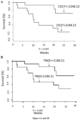
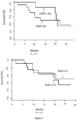
- Inventors have identified a soluble marker, CD27, present in the plasma of patients with renal cell cancer whose pre-treatment concentrations predict the response to anti-PD-1 / PD-L1.
- This marker appears more as a predictive marker of response to anti-PD1 / PD-L1 treatment, than as a prognostic marker. Indeed, it is not associated with better survival in patients with metastatic renal cell cancer treated with an antiangiogenic agent. This marker is not correlated with conventional clinical markers of severity that classify patients with metastatic renal cancer.
- the invention relates to a method for determining whether a subject suffering from kidney cancer will achieve a response with an immune-checkpoint inhibitor selected from the group consisting of anti-PD-1, anti-PD-L1 or anti-PD-L2 antibody comprising the steps of i) quantifying the level of soluble CD27 in a biological sample obtained from the subject treated with an anti-PD-1, anti-PD-L1 or anti-PD-L2 antibody, ii) comparing the level of soluble CD27 quantified at step i) with its corresponding predetermined reference values and iii) concluding that the subject will not respond to the treatment when the level of soluble CD27 is higher than its corresponding predetermined reference value or concluding that the subject will respond to the treatment when the level of soluble CD27 is lower than its corresponding predetermined reference value.
- the terms "will achieve a response” or “respond” refer to the response to a treatment of the subject suffering from kidney cancer. Typically such treatment induces, ameliorates or otherwise causes an improvement in the pathological symptoms, disease progression or physiological conditions associated with or resistance to succumbing to a cancer.
- the term “respond” refers to the ability of an anti-PD-1, anti-PD-L1 or anti-PD-L2 antibody to an improvement of the pathological symptoms, thus, the subject presents a clinical improvement compared to the subject who does not receive the treatment. The said subject is considered as a "responder" to the treatment.
- the term "not respond” refers to a subject who does not present any clinical improvement to the treatment with an anti-PD-1, anti-PD-L1 or anti-PD-L2 antibody treatment.
- This subject is considered as a "non-responder” to the treatment.
- the subject has a particular monitoring in the therapeutic regimen.
- the response to a treatment is determined by Response evaluation criteria in solid tumors (RECIST) criteria.
- RECIST Response evaluation criteria in solid tumors
- This criteria refers to a set of published rules that define when tumors in cancer subjects improve ("respond"), stay the same (“stabilize”), or worsen ("progress") during treatment.
- RECIST Response evaluation criteria in solid tumors
- This criteria refers to a set of published rules that define when tumors in cancer subjects improve ("respond"), stay the same (“stabilize”), or worsen ("progress") during treatment.
- OS/PFS progression-free survival
- the soluble CD27 is a tool to determine the overall survival (OS) of the subject before starting a treatment with an
- OS Overall survival
- cancer refers to a malignant growth or tumour resulting from an uncontrolled division of cells.
- kidney cancer As used herein, the terms “kidney cancer,” “renal cancer,” or “renal cell carcinoma” refer to cancer that has arisen from the kidney.
- renal cell cancer or “renal cell carcinoma” (RCC), as used herein, refer to cancer which originates in the lining of the proximal convoluted tubule. More specifically, RCC encompasses several relatively common histologic subtypes: clear cell renal cell carcinoma, papillary (chromophil), chromophobe, collecting duct carcinoma, and medullary carcinoma. Clear cell renal cell carcinoma (ccRCC) is the most common subtype of RCC. In a particular embodiment, the cancer is a metastatic renal cell carcinoma.
- the term "subject” denotes a mammal, such as a rodent, a feline, a canine, and a primate.
- the subject according to the invention is a human. More particularly, the subject according to the invention has or is susceptible to have renal cell cancer (RCC). In particular embodiment, the subject has or is susceptible to have lung cancer.
- RCC renal cell cancer
- biological sample refers to any sample obtained from a subject, such as a serum sample, a plasma sample, a urine sample, a blood sample, a lymph sample, or a tissue biopsy.
- biological sample for the determination of an expression level includes samples such as a blood sample, a lymph sample, or a biopsy.
- the biological sample is a blood sample.
- the biological sample is a plasma sample.
- CD27 is a member of the tumor necrosis factor receptor superfamily. It is currently of interest to immunologists as a co-stimulatory immune checkpoint molecule. CD27 binds to ligand CD70, and plays a key role in regulating B-cell activation and immunoglobulin synthesis.
- a soluble form of CD27 (sCD27), a 32-kD protein identical to the extracellular domain of membrane-bound CD27, can be released after lymphocyte activation by differential splicing of the receptor protein or shedding from the cell surface by proteases.
- the term "level of soluble CD27” refers to the concentration of soluble CD27.
- the level or concentration of the soluble CD27 gene may be determined by any technology known by a person skilled in the art.
- the concentration may be measured at the genomic and/or nucleic and/or protein level.
- the expression level of gene is determined by measuring the amount of nucleic acid transcripts of each gene.
- the expression level is determined by measuring the amount of each gene corresponding protein.
- the amount of nucleic acid transcripts can be measured by any technology known by a man skilled in the art.
- the measure may be carried out directly on an extracted messenger RNA (mRNA) sample, or on retrotranscribed complementary DNA (cDNA) prepared from extracted mRNA by technologies well-known in the art.
- mRNA messenger RNA
- cDNA retrotranscribed complementary DNA
- the amount of nucleic acid transcripts may be measured using any technology known by a man skilled in the art, including nucleic microarrays, quantitative PCR, microfluidic cards, and hybridization with a labelled probe.
- the expression level is determined by using quantitative PCR. Quantitative, or real-time, PCR is a well-known and easily available technology for those skilled in the art and does not need a precise description. Methods for determining the quantity of mRNA are well known in the art.
- the nucleic acid contained in the biological sample is first extracted according to standard methods, for example using lytic enzymes or chemical solutions or extracted by nucleic-acid-binding resins following the manufacturer's instructions.
- the extracted mRNA is then detected by hybridization (e. g., Northern blot analysis) and/or amplification (e.g., RT-PCR).
- hybridization e. g., Northern blot analysis
- amplification e.g., RT-PCR
- RT-PCR e.g., RT-PCR
- RT-PCR e.g., RT-PCR
- RT-PCR e.g., RT-PCR
- RT-PCR e.g., RT-PCR
- RT-PCR e.g., RT-PCR
- RT-PCR e.g., RT-PCR
- RT-PCR e.g., RT-PCR
- RT-PCR e.g., RT-PCR
- Nucleic acids having at least 10 nucleotides and exhibiting sequence complementarity or homology to the mRNA of interest herein find utility as hybridization probes or amplification primers. It is understood that such nucleic acids do not need to be identical, but are typically at least about 80% identical to the homologous region of comparable size, more preferably 85% identical and even more preferably 90-95% identical. In certain embodiments, it will be advantageous to use nucleic acids in combination with appropriate means, such as a detectable label, for detecting hybridization. A wide variety of appropriate indicators are known in the art including, fluorescent, radioactive, enzymatic or other ligands (e. g. avidin/biotin).
- Probes typically comprise single-stranded nucleic acids of between 10 to 1000 nucleotides in length, for instance of between 10 and 800, more preferably of between 15 and 700, typically of between 20 and 500.
- Primers typically are shorter single-stranded nucleic acids, of between 10 to 25 nucleotides in length, designed to perfectly or almost perfectly match a nucleic acid of interest, to be amplified.
- the probes and primers are "specific" to the nucleic acids they hybridize to, i.e. they preferably hybridize under high stringency hybridization conditions (corresponding to the highest melting temperature Tm, e.g., 50 % formamide, 5x or 6x SCC.
- SCC is a 0.15 M NaCl, 0.015 M Na-citrate).
- the nucleic acid primers or probes used in the above amplification and detection method may be assembled as a kit.
- a kit includes consensus primers and molecular probes.
- a kit also includes the components necessary to determine if amplification has occurred.
- the kit may also include, for example, PCR buffers and enzymes; positive control sequences, reaction control primers; and instructions for amplifying and detecting the specific sequences.
- the method of the invention comprises the steps of providing total RNAs extracted from a biological sample and subjecting the RNAs to amplification and hybridization to specific probes, more particularly by means of a quantitative or semi-quantitative RT-PCR.
- the expression level is determined by DNA chip analysis.
- Such DNA chip or nucleic acid microarray consists of different nucleic acid probes that are chemically attached to a substrate, which can be a microchip, a glass slide or a microsphere-sized bead.
- a microchip may be constituted of polymers, plastics, resins, polysaccharides, silica or silica-based materials, carbon, metals, inorganic glasses, or nitrocellulose.
- Probes comprise nucleic acids such as cDNAs or oligonucleotides that may be about 10 to about 60 base pairs.
- a biological sample from a test subject optionally first subjected to a reverse transcription, is labelled and contacted with the microarray in hybridization conditions, leading to the formation of complexes between target nucleic acids that are complementary to probe sequences attached to the microarray surface.
- the labelled hybridized complexes are then detected and can be quantified or semi-quantified. Labelling may be achieved by various methods, e.g. by using radioactive or fluorescent labelling.
- Many variants of the microarray hybridization technology are available to the man skilled in the art (see e.g. the review by Hoheisel, Nature Reviews, Genetics, 2006, 7:200-210 ).
- the level of soluble CD27 (sCD27) present in a plasma sample obtained from a subject is determined for example by detecting the amount of sCD27 present in the plasma sample.
- the sample is contacted with a specific binding agent (such as an antibody, for example a monoclonal antibody anti-CD27 or a protein, such as CD70) that specifically binds sCD27 and the amount of the specific binding agent bound to sCD27 is detected.
- a specific binding agent such as an antibody, for example a monoclonal antibody anti-CD27 or a protein, such as CD70
- the Procartaplex kit (Thermofischer) was used to carry out a panel of soluble inhibitor or activator receptor (BTLA, GITR, HVEM, IDO, LAG-3, PD-1, PD-L1, PD-L2, Tim-3, CD28, CD80, 4-1BB, CD27, and CTLA-4).
- BTLA soluble inhibitor or activator receptor
- the amount of sCD27 present in the plasma sample is detected by mass spectrometry. In some embodiments, the amount of sCD27 present in the serum sample is detected by measuring the activity of sCD27 in the plasma sample. This amount is compared with a control value.
- Log Rank Kaplan Meier
- a score which is a composite of the level of the soluble CD27 is determined and compared to a reference value.
- a high concentration of soluble CD27 than the reference value is determined, it is indicative that the subject will not achieve a response to an immune checkpoint inhibitor.
- a low concentration of soluble CD27 than the reference value is determined, it is indicative that the subject will respond to an immune checkpoint inhibitor.
- the predetermined reference value is a threshold value or a cut-off value, which can be determined experimentally, empirically, or theoretically.
- a threshold value can also be arbitrarily selected based upon the existing experimental and/or clinical conditions, as would be recognized by a person of ordinary skilled in the art.
- the threshold value has to be determined in order to obtain the optimal sensitivity and specificity according to the function of the test and the benefit/risk balance (clinical consequences of false positive and false negative).
- the optimal sensitivity and specificity can be determined using a Receiver Operating Characteristic (ROC) curve based on experimental data.
- ROC Receiver Operating Characteristic
- ROC curve is receiver operator characteristic curve, which is also known as receiver operation characteristic curve. It is mainly used for clinical biochemical diagnostic tests.
- ROC curve is a comprehensive indicator that reflects the continuous variables of true positive rate (sensitivity) and false positive rate (1-specificity). It reveals the relationship between sensitivity and specificity with the image composition method.
- a series of different cut-off values are set as continuous variables to calculate a series of sensitivity and specificity values. Then sensitivity is used as the vertical coordinate and specificity is used as the horizontal coordinate to draw a curve. The higher the area under the curve (AUC), the higher the accuracy of diagnosis.
- the point closest to the far upper left of the coordinate diagram is a critical point having both high sensitivity and high specificity values.
- the AUC value of the ROC curve is between 1.0 and 0.5. When AUC>0.5, the diagnostic result gets better and better as AUC approaches 1. When AUC is between 0.5 and 0.7, the accuracy is low. When AUC is between 0.7 and 0.9, the accuracy is moderate. When AUC is higher than 0.9, the accuracy is high.
- This algorithmic method is preferably done with a computer.
- ROC curve such as: MedCalc 9.2.0.1 medical statistical software, SPSS 9.0, ROCPOWER.SAS, DESIGNROC.FOR, MULTIREADER POWER.SAS, CREATE-ROC.SAS, GB STAT VI0.0 (Dynamic Microsystems, Inc. Silver Spring, Md., USA), etc.
- the method according to the invention further comprises a step of classification of subject by an algorithm and determining whether a subject will achieve a response to an anti-PD-1, anti-PD-L1 or anti-PD-L2 antibody treatment.
- the method of the present invention comprises a) quantifying the level of the soluble CD27 in the biological sample; b) implementing a classification algorithm on data comprising the quantified of sCD27 levels so as to obtain an algorithm output; c) determining the probability that the subject will achieve or not a response to an anti-PD-1, anti-PD-L1 or anti-PD-L2 antibody from the algorithm output of step b).
- the method according to the invention wherein the algorithm is selected from Linear Discriminant Analysis (LDA), Topological Data Analysis (TDA), Neural Networks, Support Vector Machine (SVM) algorithm and Random Forests algorithm (RF).selected from Linear Discriminant Analysis (LDA), Topological Data Analysis (TDA), Neural Networks, Support Vector Machine (SVM) algorithm and Random Forests algorithm (RF).
- LDA Linear Discriminant Analysis
- TDA Topological Data Analysis
- SVM Support Vector Machine
- RF Random Forests algorithm
- an anti-PD-L1 antibody and an anti-CTLA-4 antibody are used as a combined preparation for treating the subject identified as responder to an immune checkpoint inhibitor treatment.
- the method according to the invention wherein, i) the immune checkpoint inhibitor selected from the group consisting of anti-PD-1, anti-PD-L1 or anti-PD-L2 antibody and ii) a chemotherapeutic agent or a radiation therapy are used as combined preparation for treating the subject identified as responder to an immune checkpoint inhibitor treatment.
- the terms “combined treatment”, “combined therapy” or “therapy combination” refer to a treatment that uses more than one medication.
- the combined therapy may be dual therapy or bi-therapy.
- At least two immune checkpoint inhibitors selected from the group consisting of anti-PD-1, anti-PD-L1 or anti-PD-L2 antibody as a combined preparation according to the invention for simultaneous, separate or sequential use in the method for treating a cancer.
- an immune checkpoint inhibitor selected from the group consisting of anti-PD-1, anti-PD-L1 or anti-PD-L2 antibody and ii) an anti-angiogenesis compound as a combined preparation according to the invention for simultaneous, separate or sequential use in the method for treating a cancer.
- an immune checkpoint inhibitor selected from the group consisting of anti-PD-1, anti-PD-L1 or anti-PD-L2 antibody and a chemotherapeutic agent or a radiotherapeutics agent as a combined preparation according to the invention for simultaneous, separate or sequential use in the method for treating a cancer.
- the term “simultaneous use” refers to an administration of 2 active ingredients by the same route and at the same time or at substantially the same time.
- the term “separate use” refers to an administration of 2 active ingredients at the same time or at substantially the same time by different routes.
- the term “sequential use” refers to an administration of 2 active ingredients at different times, the administration route being identical or different.
- chemotherapeutic agent refers to chemical compounds that are effective in inhibiting tumor growth.
- examples of chemotherapeutic agents include alkylating agents such as thiotepa and cyclosphosphamide; alkyl sulfonates such as busulfan, improsulfan and piposulfan; aziridines such as benzodopa, carboquone, meturedopa, and uredopa; ethylenimines and methylamelamines including altretamine, triethylenemelamine, trietylenephosphoramide, triethylenethiophosphaorarnide and trimethylolomelamine; acetogenins (especially bullatacin and bullatacinone); a carnptothecin (including the synthetic analogue topotecan); bryostatin; callystatin; CC-1065 (including its adozelesin, carzelesin and bizelesin synthetic analogues);
- calicheamicin especially calicheamicin (11 and calicheamicin 211, see, e.g., Agnew Chem Intl. Ed. Engl. 33: 183-186 (1994 ); dynemicin, including dynemicin A; an esperamicin; as well as neocarzinostatin chromophore and related chromoprotein enediyne antiobiotic chromomophores), aclacinomysins, actinomycin, authramycin, azaserine, bleomycins, cactinomycin, carabicin, canninomycin, carzinophilin, chromomycins, dactinomycin, daunorubicin, detorubicin, 6-diazo-5-oxo-L-norleucine, doxorubicin (including morpholino-doxorubicin, cyanomorpholino-doxorubicin, 2-pyrrol
- paclitaxel TAXOL ® , Bristol-Myers Squibb Oncology, Princeton, N.].
- doxetaxel TAXOTERE ® , Rhone-Poulenc Rorer, Antony, France
- chlorambucil gemcitabine
- 6-thioguanine mercaptopurine
- methotrexate platinum analogs such as cisp latin and carbop latin; vinblastine; platinum; etoposide (VP- 16); ifosfamide; mitomycin C; mitoxantrone; vincristine; vinorelbine; navelbine; novantrone; teniposide; daunomycin; aminopterin; xeloda; ibandronate; CPT-1 1 ; topoisomerase inhibitor RFS 2000; difluoromethylornithine (DMFO); retinoic acid; capecitabine; and pharmaceutically acceptable salts, acids or derivatives of any of the above
- antihormonal agents that act to regulate or inhibit honnone action on tumors
- anti-estrogens including for example tamoxifen, raloxifene, aromatase inhibiting 4(5)-imidazoles, 4-hydroxytamoxifen, trioxifene, keoxifene, LY117018, onapristone, and toremifene (Fareston); and anti-androgens such as flutamide, nilutamide, bicalutamide, leuprolide, and goserelin; and pharmaceutically acceptable salts, acids or derivatives of any of the above.
- the term "radiation therapy” has its general meaning in the art and refers the treatment of cancer with ionizing radiation. Ionizing radiation deposits energy that injures or destroys cells in the area being treated (the target tissue) by damaging their genetic material, making it impossible for these cells to continue to grow.
- One type of radiation therapy commonly used involves photons, e.g. X-rays. Depending on the amount of energy they possess, the rays can be used to destroy cancer cells on the surface of or deeper in the body. The higher the energy of the x-ray beam, the deeper the x-rays can go into the target tissue. Linear accelerators and betatrons produce x-rays of increasingly greater energy.
- Gamma rays are another form of photons used in radiation therapy. Gamma rays are produced spontaneously as certain elements (such as radium, uranium, and cobalt 60) release radiation as they decompose, or decay.
- the radiation therapy is external radiation therapy.
- external radiation therapy examples include, but are not limited to, conventional external beam radiation therapy; three-dimensional conformal radiation therapy (3D-CRT), which delivers shaped beams to closely fit the shape of a tumor from different directions; intensity modulated radiation therapy (IMRT), e.g., helical tomotherapy, which shapes the radiation beams to closely fit the shape of a tumor and also alters the radiation dose according to the shape of the tumor; conformal proton beam radiation therapy; image-guided radiation therapy (IGRT), which combines scanning and radiation technologies to provide real time images of a tumor to guide the radiation treatment; intraoperative radiation therapy (IORT), which delivers radiation directly to a tumor during surgery; stereotactic radiosurgery, which delivers a large, precise radiation dose to a small tumor area in a single session; hyperfractionated radiation therapy, e.g., continuous hyperfractionated accelerated radiation therapy (CHART), in which more than one treatment (fraction) of radiation therapy are given to a subject per day; and hypofractionated radiation therapy, in which larger doses of radiation therapy per fraction
- the method of the present invention is particularly suitable in the context of a hypo fractionated radiation therapy.
- hypo fractionated radiation therapy has its general meaning in the art and refers to radiation therapy in which the total dose of radiation is divided into large doses and treatments are given less than once a day.
- Kits or devices of the present invention are provided.
- a third aspect of the present invention relates to use of a kit or device for performing the method of the present invention, comprising means for determining the level of the soluble CD27 in a biological sample.
- the kit or device comprises at least one binding partner (e.g. antibody or aptamer) specific for the soluble CD27 (immobilized or not on a solid support as described above).
- the kit or device can include a second binding partner (e.g. antibody or aptamer) of the present invention which produces a detectable signal.
- kits include but are not limited to ELISA assay kits, and kits comprising test strips and dipsticks.
- the kit or device of the present invention further comprises a microprocessor to implement an algorithm on data comprising the level of soluble CD27 in the sample so as to determine the probability of responding to an immune checkpoint inhibitor.
- the kit or device of the present invention further comprises a visual display and/or audible signal that indicates the probability determined by the microprocessor.
- kit or device of the present invention comprises:
- FIGURES are a diagrammatic representation of FIGURES.
- the Procartaplex kit (Thermofischer) was used to carry out a panel of soluble inhibitor or activator receptor (BTLA, GITR, HVEM, IDO, LAG-3, PD-1, PD-L1, PD-L2, Tim-3, CD28, CD80, 4-1BB, CD27, and CTLA-4)
- Plasma concentrations of CD27 are not correlated with the survival of patients treated with antiangiogenic drugs.
- the CD27 marker is not correlated with clinical prognostic criteria to classify metastatic renal cell cancers
- CD27 a soluble marker, present in the plasma of patients with renal cell cancer whose pre-treatment concentrations predict the response to anti-PD-1 / PD-L1.
- This marker appears more as a predictive marker of response to anti-PD1 / PD-L1 treatment, than as a prognostic marker. Indeed, it is not associated with better survival in patients with metastatic renal cell cancer treated with an antiangiogenic agent.
- This marker is not correlated with conventional clinical markers of severity that classify patients with metastatic renal cancer.
Landscapes
- Health & Medical Sciences (AREA)
- Life Sciences & Earth Sciences (AREA)
- Engineering & Computer Science (AREA)
- Immunology (AREA)
- Biomedical Technology (AREA)
- Molecular Biology (AREA)
- Chemical & Material Sciences (AREA)
- Hematology (AREA)
- Urology & Nephrology (AREA)
- Physics & Mathematics (AREA)
- General Physics & Mathematics (AREA)
- Cell Biology (AREA)
- Food Science & Technology (AREA)
- Medicinal Chemistry (AREA)
- Biotechnology (AREA)
- Analytical Chemistry (AREA)
- Biochemistry (AREA)
- General Health & Medical Sciences (AREA)
- Microbiology (AREA)
- Pathology (AREA)
- Bioinformatics & Cheminformatics (AREA)
- Toxicology (AREA)
- Tropical Medicine & Parasitology (AREA)
- Measuring Or Testing Involving Enzymes Or Micro-Organisms (AREA)
- Investigating Or Analysing Biological Materials (AREA)
- Medicines Containing Antibodies Or Antigens For Use As Internal Diagnostic Agents (AREA)
- Apparatus Associated With Microorganisms And Enzymes (AREA)
- Medicines That Contain Protein Lipid Enzymes And Other Medicines (AREA)
- Pharmaceuticals Containing Other Organic And Inorganic Compounds (AREA)
Claims (9)
- Procédé pour déterminer si un sujet souffrant d'un cancer du rein obtiendra une réponse avec un anticorps anti-PD-1, anti-PD-L1 ou anti-PD-L2 comprenant les étapes consistant à i) quantifier le niveau de CD27 soluble dans un échantillon biologique obtenu du sujet traité avec un anticorps anti-PD-1, anti-PD-L1 ou anti-PD-L2, ii) comparer le niveau de CD27 soluble quantifié à l'étape i) à sa valeur de référence prédéterminée correspondante et iii) conclure que le sujet ne répondra pas au traitement lorsque le niveau de CD27 soluble est supérieur à sa valeur de référence prédéterminée correspondante ou conclure que le sujet répondra au traitement lorsque le niveau de CD27 soluble est inférieur à sa valeur de référence prédéterminée correspondante.
- Anticorps anti-PD-1, anti-PD-L1 ou anti-PD-L2 destiné à être utilisé dans le traitement du cancer du rein chez un sujet identifié comme étant un sujet répondant à un traitement par anticorps anti-PD-1, anti-PD-L1 ou anti-PD-L2, comprenant les étapes consistant à i) quantifier le niveau de CD27 soluble dans un échantillon biologique obtenu du sujet avant d'être traité par un anticorps anti-PD-1, anti-PD-L1 ou anti-PD-L2 ; ii) fournir une évaluation sur la base de la quantité de CD27 soluble dans l'échantillon biologique dudit sujet ; et iii) traiter ledit sujet avec l'anticorps anti-PD-1, anti-PD-L1 ou anti-PD-L2 si ledit sujet est identifié comme étant un sujet répondant à un dit traitement à l'étape ii).
- Procédé selon la revendication 1, dans lequel l'échantillon biologique est un échantillon de plasma.
- Procédé selon la revendication 1, comprenant en outre une étape de classification du sujet par un algorithme pour déterminer si ledit sujet obtiendra une réponse à un traitement par anticorps anti-PD-1, anti-PD-L1 ou anti-PD-L2.
- Procédé selon la revendication 4, dans lequel l'algorithme est choisi parmi une analyse discriminante linéaire (LDA), une analyse de données topologiques (TDA), des réseaux neuronaux, un algorithme de machine à vecteurs de support (SVM) et un algorithme de forêts d'arbres décisionnels (RF).
- Anticorps anti-PD-1, anti-PD-L1 ou anti-PD-L2 destiné à être utilisé selon la revendication 2, dans lequel au moins deux inhibiteurs de point de contrôle immunitaire sont utilisés comme préparation combinée pour traiter le sujet identifié comme étant un sujet répondant à un traitement par anticorps anti-PD-1, anti-PD-L1 ou anti-PD-L2.
- Anticorps anti-PD-1, anti-PD-L1 ou anti-PD-L2 destiné à être utilisé selon la revendication 2, dans lequel i) l'anticorps anti-PD-1, anti-PD-L1 ou anti-PD-L2 et ii) un agent chimiothérapeutique ou un agent radiothérapeutique sont utilisés comme préparation combinée pour traiter le sujet identifié comme étant un sujet répondant à un traitement par anticorps anti-PD-1, anti-PD-L1 ou anti-PD-L2.
- Anticorps anti-PD-1, anti-PD-L1 ou anti-PD-L2 destiné à être utilisé selon la revendication 2, i) un anticorps anti-PD-1, anti-PD-L1 ou anti-PD-L2 et ii) un composé anti-angiogenèse sont utilisés comme préparation combinée pour traiter le sujet identifié comme étant un sujet répondant à un traitement par anticorps anti-PD-1, anti-PD-L1 ou anti-PD-L2.
- Utilisation d'un kit ou d'un dispositif pour réaliser le procédé selon la revendication 1, dans lequel le kit comprend des moyens pour déterminer le niveau du CD27 soluble dans un échantillon biologique.
Applications Claiming Priority (2)
| Application Number | Priority Date | Filing Date | Title |
|---|---|---|---|
| EP19305114 | 2019-01-30 | ||
| PCT/EP2020/052165 WO2020157131A1 (fr) | 2019-01-30 | 2020-01-29 | Procédés et compositions pour identifier si un sujet souffrant d'un cancer parviendra à une réponse avec un inhibiteur de point de contrôle immunitaire |
Publications (2)
| Publication Number | Publication Date |
|---|---|
| EP3918332A1 EP3918332A1 (fr) | 2021-12-08 |
| EP3918332B1 true EP3918332B1 (fr) | 2025-03-19 |
Family
ID=65494063
Family Applications (1)
| Application Number | Title | Priority Date | Filing Date |
|---|---|---|---|
| EP20701777.3A Active EP3918332B1 (fr) | 2019-01-30 | 2020-01-29 | Procédés et compositions permettant d'identifier si un sujet souffrant d'un cancer va être réactif à un inhibiteur de point de contrôle immunitaire |
Country Status (6)
| Country | Link |
|---|---|
| US (1) | US20220107323A1 (fr) |
| EP (1) | EP3918332B1 (fr) |
| JP (1) | JP7442536B2 (fr) |
| CN (2) | CN113366316B (fr) |
| ES (1) | ES3033655T3 (fr) |
| WO (1) | WO2020157131A1 (fr) |
Families Citing this family (4)
| Publication number | Priority date | Publication date | Assignee | Title |
|---|---|---|---|---|
| CN112255410B (zh) * | 2020-09-03 | 2023-12-05 | 北京臻知医学科技有限责任公司 | 一组用于预测2019冠状病毒病免疫检查点风暴的标志物、应用及其试剂盒 |
| CN113866416B (zh) * | 2021-10-20 | 2022-06-24 | 山东大学 | 可溶形式Tim3在免疫检查点阻断治疗抵抗的应用 |
| CN114509567A (zh) * | 2022-02-28 | 2022-05-17 | 成都福实生物科技有限公司 | 用于检测免疫检查点空间分布的试剂在制备肿瘤治疗和预后诊断产品中的应用 |
| WO2024200571A1 (fr) * | 2023-03-28 | 2024-10-03 | Institut National de la Santé et de la Recherche Médicale | Procédé de discrimination d'une mono-immunothérapie à partir d'une poly-immunothérapie dans des cancers |
Family Cites Families (43)
| Publication number | Priority date | Publication date | Assignee | Title |
|---|---|---|---|---|
| EP1320599A2 (fr) | 2000-06-28 | 2003-06-25 | Genetics Institute, LLC | Molecules pd-l2: nouveaux ligands pour pd-1 et leurs utilisations |
| JP4694128B2 (ja) | 2002-01-30 | 2011-06-08 | ザ ブライハム アンド ウイメンズ ホスピタル, インコーポレイテッド | TIM−3、Th1特異的細胞表面分子に関連した組成物および方法 |
| PT1537878E (pt) | 2002-07-03 | 2010-11-18 | Ono Pharmaceutical Co | Composições de imunopotenciação |
| WO2004056875A1 (fr) | 2002-12-23 | 2004-07-08 | Wyeth | Anticorps anti pd-1 et utilisations |
| PL2161336T5 (pl) | 2005-05-09 | 2017-10-31 | Ono Pharmaceutical Co | Ludzkie przeciwciała monoklonalne przeciwko białku Programmed Death 1 (PD-1) oraz sposoby leczenia raka z zastosowaniem samych przeciwciał anty-PD-1 lub w połączeniu z innymi środkami immunoterapeutycznymi |
| CA2612241C (fr) | 2005-07-01 | 2018-11-06 | Medarex, Inc. | Anticorps monoclonaux humains diriges contre un ligand de mort programmee de type 1(pd-l1) |
| US8126690B2 (en) | 2007-05-18 | 2012-02-28 | The Regents Of The University Of Michigan | Algorithms to predict clinical response, adherence, and shunting with thiopurines |
| US20100273661A1 (en) | 2007-06-15 | 2010-10-28 | Smithkline Beecham Corporation | Methods and Kits for Predicting Treatment Response in Type II Diabetes Mellitus Patients |
| KR101586617B1 (ko) | 2007-06-18 | 2016-01-20 | 머크 샤프 앤 도메 비.브이. | 사람 프로그램된 사멸 수용체 pd-1에 대한 항체 |
| CA2704052C (fr) | 2007-10-26 | 2015-04-21 | Rigel Pharmaceuticals, Inc. | Triazoles substitues par aryle polycyclique et triazoles substitues par heteroaryle polycyclique utiles comme inhibiteurs d'axl |
| US8168757B2 (en) | 2008-03-12 | 2012-05-01 | Merck Sharp & Dohme Corp. | PD-1 binding proteins |
| US20110177966A1 (en) * | 2008-06-12 | 2011-07-21 | Xavier Le Loet | method for predicting the response to a treatment with anakinra |
| PL2342226T3 (pl) | 2008-09-26 | 2017-01-31 | Dana-Farber Cancer Institute, Inc. | Ludzkie przeciwciała anty-PD-1, PD-L1 i PD-L2 oraz ich zastosowania |
| KR101050829B1 (ko) | 2008-10-02 | 2011-07-20 | 서울대학교산학협력단 | 항 pd-1 항체 또는 항 pd-l1 항체를 포함하는 항암제 |
| EP4209510B1 (fr) | 2008-12-09 | 2024-01-31 | F. Hoffmann-La Roche AG | Anticorps anti-pd-l1 et leur utilisation pour améliorer la fonction des lymphocytes t |
| EP3192811A1 (fr) | 2009-02-09 | 2017-07-19 | Université d'Aix-Marseille | Anticorps pd-1 et pd-l1 et leurs utilisations |
| ES2571235T3 (es) | 2009-04-10 | 2016-05-24 | Kyowa Hakko Kirin Co Ltd | Procedimiento para el tratamiento de un tumor sanguíneo que utiliza el anticuerpo anti-TIM-3 |
| NO2504364T3 (fr) | 2009-11-24 | 2018-01-06 | ||
| WO2011082400A2 (fr) | 2010-01-04 | 2011-07-07 | President And Fellows Of Harvard College | Modulateurs du récepteur immunosuppresseur pd-1 et procédés d'utilisation de ceux-ci |
| TW201134488A (en) | 2010-03-11 | 2011-10-16 | Ucb Pharma Sa | PD-1 antibodies |
| WO2011155607A1 (fr) | 2010-06-11 | 2011-12-15 | 協和発酵キリン株式会社 | Anticorps anti-tim-3 |
| WO2013006490A2 (fr) | 2011-07-01 | 2013-01-10 | Cellerant Therapeutics, Inc. | Anticorps se liant spécifiquement à tim3 |
| EP3511717A3 (fr) * | 2011-09-29 | 2019-09-25 | Meso Scale Technologies, LLC. | Panels et procédés de biodosimétrie |
| US9624298B2 (en) | 2011-11-28 | 2017-04-18 | Merck Patent Gmbh | Anti-PD-L1 antibodies and uses thereof |
| LT2904011T (lt) | 2012-10-02 | 2017-11-10 | Bristol-Myers Squibb Company | Anti-kir antikūnų ir anti-pd-1 antikūnų derinys, akirtas vėžio gydymui |
| BR112015007672A2 (pt) | 2012-10-04 | 2017-08-08 | Dana Farber Cancer Inst Inc | anticorpos anti-pd-l1 monoclonais humanos e métodos de uso |
| MX2015011374A (es) | 2013-03-15 | 2016-01-15 | Squibb Bristol Myers Co | Inhibidores de indolamina 2,3-dioxigenasa (ido). |
| US9725494B2 (en) * | 2013-05-17 | 2017-08-08 | United States Of America, As Represented By The Secretary, Department Of Health And Human Services | Soluble CD27 (sCD27) and the use thereof |
| US9676853B2 (en) | 2013-05-31 | 2017-06-13 | Sorrento Therapeutics, Inc. | Antigen binding proteins that bind PD-1 |
| CN105658206A (zh) | 2013-06-03 | 2016-06-08 | 诺华股份有限公司 | 抗pd-l1抗体与mek抑制剂和/或braf抑制剂的组合 |
| RU2016107426A (ru) * | 2013-08-02 | 2017-09-07 | Адуро Байотек Холдингс, Юроуп Б.В. | Комбинирование агонистов cd27 и ингибирование иммунных контрольных точек для стимуляции иммунитета |
| LT3702373T (lt) | 2013-09-13 | 2022-11-10 | Beigene Switzerland Gmbh | Anti-pd1 antikūnai ir jų naudojimas terapijai ir diagnostikai |
| DK3049441T3 (da) | 2013-09-27 | 2020-02-03 | Hoffmann La Roche | Anti-PDL1-antistofformuleringer |
| AU2015210750B2 (en) | 2014-01-31 | 2020-08-20 | Children's Medical Center Corporation | Antibody molecules to TIM-3 and uses thereof |
| CA2992139A1 (fr) * | 2015-07-10 | 2017-01-19 | West Virginia University | Marqueurs d'accident vasculaire cerebral et de gravite d'accident vasculaire cerebral |
| WO2017053823A1 (fr) * | 2015-09-25 | 2017-03-30 | Pharmacyclics Llc | Traitement à l'aide d'inhibiteurs d'hdac et d'immunothérapie |
| CN105461808B (zh) * | 2015-12-24 | 2019-03-19 | 长春金赛药业股份有限公司 | 单克隆抗体及其应用 |
| WO2017118634A1 (fr) * | 2016-01-04 | 2017-07-13 | INSERM (Institut National de la Santé et de la Recherche Médicale) | Utilisation de pd-1 et de tim-3 comme mesure de lymphocytes cd8+ dans la prédiction et le traitement de l'hypernéphrome |
| ES3008937T3 (en) * | 2016-11-04 | 2025-03-25 | Aximmune Inc | Beta-alethine in combination with immune modulators and uses thereof |
| EP4628895A3 (fr) * | 2017-01-13 | 2025-12-17 | Mayo Foundation for Medical Education and Research | Matériaux et méthodes de traitement du cancer |
| CN106729705B (zh) * | 2017-01-23 | 2018-04-06 | 河南省华隆生物技术有限公司 | 一种药物组合物及其应用 |
| CA3052670A1 (fr) * | 2017-03-01 | 2018-09-07 | Genentech, Inc. | Procedes diagnostiques et therapeutiques relatifs au cancer |
| US11300574B2 (en) * | 2017-05-26 | 2022-04-12 | University Of Connecticut | Methods for treating breast cancer and for identifying breast cancer antigens |
-
2020
- 2020-01-29 EP EP20701777.3A patent/EP3918332B1/fr active Active
- 2020-01-29 CN CN202080011235.4A patent/CN113366316B/zh active Active
- 2020-01-29 ES ES20701777T patent/ES3033655T3/es active Active
- 2020-01-29 JP JP2021544136A patent/JP7442536B2/ja active Active
- 2020-01-29 WO PCT/EP2020/052165 patent/WO2020157131A1/fr not_active Ceased
- 2020-01-29 CN CN202510576452.2A patent/CN120468425A/zh active Pending
- 2020-01-29 US US17/426,856 patent/US20220107323A1/en active Pending
Also Published As
| Publication number | Publication date |
|---|---|
| CN113366316B (zh) | 2025-05-23 |
| WO2020157131A1 (fr) | 2020-08-06 |
| CN113366316A (zh) | 2021-09-07 |
| JP2022523070A (ja) | 2022-04-21 |
| JP7442536B2 (ja) | 2024-03-04 |
| EP3918332A1 (fr) | 2021-12-08 |
| ES3033655T3 (en) | 2025-08-06 |
| US20220107323A1 (en) | 2022-04-07 |
| CN120468425A (zh) | 2025-08-12 |
Similar Documents
| Publication | Publication Date | Title |
|---|---|---|
| McNamara et al. | Impact of high tumor mutational burden in solid tumors and challenges for biomarker application | |
| ES3033655T3 (en) | Methods and compositions for identifying whether a subject suffering from a cancer will achieve a response with an immune-checkpoint inhibitor | |
| EP3084001A2 (fr) | Biomarqueurs de signature génique de réponse tumorale à des antagonistes de pd-1 | |
| US20240068047A1 (en) | Use of sdha as a prognostic marker and therapeutic target in uveal melanoma | |
| US11908560B2 (en) | Cancer process evaluation | |
| US20230113705A1 (en) | Methods for diagnosing, prognosing and managing treatment of breast cancer | |
| WO2021091747A1 (fr) | Biomarqueur à base d'expressions géniques de l'angiogenèse et de mmdsc associées à la réponse tumorale d'antagonistes de pd-1 | |
| US20210080467A1 (en) | Use of sk1 as biomarker for predicting response to immunecheckpoint inhibitors | |
| EP3963109A1 (fr) | Méthodes et compositions pour le traitement du mélanome | |
| WO2022018163A1 (fr) | Méthode de prédiction du temps de survie de patients atteints d'un cancer | |
| US20200095643A1 (en) | Tim-3 for assessing the severity of cancer | |
| EP4689658A1 (fr) | Procédé de discrimination d'une mono-immunothérapie à partir d'une poly-immunothérapie dans des cancers | |
| US20240301497A1 (en) | Methods for diagnosing nasal intestinal type adenocarcinomas | |
| WO2025153834A1 (fr) | Procédés de prédiction du risque de récidive et/ou de mort de patients souffrant d'un carcinome hépatocellulaire (chc) | |
| EP4244392A1 (fr) | Procédés et compositions pour prédire et traiter un mélanome uvéal | |
| US20230266332A1 (en) | Methods and compositions for preventing and treating a cancer | |
| US20230076415A1 (en) | Methods and compositions for treating melanoma | |
| He et al. | The Expression of PD-L1, CD47, CD4, and CD8 in Breast Cancer before and after Neoadjuvant Chemotherapy and Their Relationship with Clinicopathological Features and Prognosis | |
| WO2023244632A1 (fr) | Signatures basées sur l'expression génique dérivée d'une tumeur à l'échelle du génome associées à un pronostic médiocre pour des patients atteints d'un mélanome avec une maladie à un stade précoce | |
| WO2025219330A1 (fr) | Détection de ppix pour utilisation dans des méthodes de prédiction de la sensibilité à la ferroptose du mélanome et de la résistance aux thérapies ciblées | |
| CN118369729A (zh) | 预测患者应答 |
Legal Events
| Date | Code | Title | Description |
|---|---|---|---|
| STAA | Information on the status of an ep patent application or granted ep patent |
Free format text: STATUS: UNKNOWN |
|
| STAA | Information on the status of an ep patent application or granted ep patent |
Free format text: STATUS: THE INTERNATIONAL PUBLICATION HAS BEEN MADE |
|
| PUAI | Public reference made under article 153(3) epc to a published international application that has entered the european phase |
Free format text: ORIGINAL CODE: 0009012 |
|
| STAA | Information on the status of an ep patent application or granted ep patent |
Free format text: STATUS: REQUEST FOR EXAMINATION WAS MADE |
|
| 17P | Request for examination filed |
Effective date: 20210726 |
|
| AK | Designated contracting states |
Kind code of ref document: A1 Designated state(s): AL AT BE BG CH CY CZ DE DK EE ES FI FR GB GR HR HU IE IS IT LI LT LU LV MC MK MT NL NO PL PT RO RS SE SI SK SM TR |
|
| DAV | Request for validation of the european patent (deleted) | ||
| DAX | Request for extension of the european patent (deleted) | ||
| RAP3 | Party data changed (applicant data changed or rights of an application transferred) |
Owner name: ASSISTANCE PUBLIQUE-HOPITAUX DE PARIS (APHP) Owner name: UNIVERSITE PARIS CITE Owner name: INSERM (INSTITUT NATIONAL DE LA SANTE ET DE LA RECHERCHE MEDICALE) |
|
| STAA | Information on the status of an ep patent application or granted ep patent |
Free format text: STATUS: EXAMINATION IS IN PROGRESS |
|
| 17Q | First examination report despatched |
Effective date: 20221128 |
|
| GRAP | Despatch of communication of intention to grant a patent |
Free format text: ORIGINAL CODE: EPIDOSNIGR1 |
|
| STAA | Information on the status of an ep patent application or granted ep patent |
Free format text: STATUS: GRANT OF PATENT IS INTENDED |
|
| INTG | Intention to grant announced |
Effective date: 20241105 |
|
| RIN1 | Information on inventor provided before grant (corrected) |
Inventor name: EPAILLARD, NICOLAS Inventor name: OUDARD, STEPHANE Inventor name: BEN HAMOUDA, NADINE Inventor name: TARTOUR, ERIC |
|
| GRAS | Grant fee paid |
Free format text: ORIGINAL CODE: EPIDOSNIGR3 |
|
| GRAA | (expected) grant |
Free format text: ORIGINAL CODE: 0009210 |
|
| STAA | Information on the status of an ep patent application or granted ep patent |
Free format text: STATUS: THE PATENT HAS BEEN GRANTED |
|
| AK | Designated contracting states |
Kind code of ref document: B1 Designated state(s): AL AT BE BG CH CY CZ DE DK EE ES FI FR GB GR HR HU IE IS IT LI LT LU LV MC MK MT NL NO PL PT RO RS SE SI SK SM TR |
|
| REG | Reference to a national code |
Ref country code: GB Ref legal event code: FG4D |
|
| REG | Reference to a national code |
Ref country code: CH Ref legal event code: EP |
|
| REG | Reference to a national code |
Ref country code: IE Ref legal event code: FG4D |
|
| REG | Reference to a national code |
Ref country code: DE Ref legal event code: R096 Ref document number: 602020047886 Country of ref document: DE |
|
| RAP4 | Party data changed (patent owner data changed or rights of a patent transferred) |
Owner name: ASSISTANCE PUBLIQUE-HOPITAUX DE PARIS (APHP) Owner name: UNIVERSITE PARIS CITE Owner name: INSERM (INSTITUT NATIONAL DE LA SANTEET DE LA RECHERCHE MEDICALE) |
|
| PG25 | Lapsed in a contracting state [announced via postgrant information from national office to epo] |
Ref country code: RS Free format text: LAPSE BECAUSE OF FAILURE TO SUBMIT A TRANSLATION OF THE DESCRIPTION OR TO PAY THE FEE WITHIN THE PRESCRIBED TIME-LIMIT Effective date: 20250619 |
|
| PG25 | Lapsed in a contracting state [announced via postgrant information from national office to epo] |
Ref country code: FI Free format text: LAPSE BECAUSE OF FAILURE TO SUBMIT A TRANSLATION OF THE DESCRIPTION OR TO PAY THE FEE WITHIN THE PRESCRIBED TIME-LIMIT Effective date: 20250319 |
|
| REG | Reference to a national code |
Ref country code: LT Ref legal event code: MG9D |
|
| PG25 | Lapsed in a contracting state [announced via postgrant information from national office to epo] |
Ref country code: NO Free format text: LAPSE BECAUSE OF FAILURE TO SUBMIT A TRANSLATION OF THE DESCRIPTION OR TO PAY THE FEE WITHIN THE PRESCRIBED TIME-LIMIT Effective date: 20250619 |
|
| PG25 | Lapsed in a contracting state [announced via postgrant information from national office to epo] |
Ref country code: HR Free format text: LAPSE BECAUSE OF FAILURE TO SUBMIT A TRANSLATION OF THE DESCRIPTION OR TO PAY THE FEE WITHIN THE PRESCRIBED TIME-LIMIT Effective date: 20250319 |
|
| PG25 | Lapsed in a contracting state [announced via postgrant information from national office to epo] |
Ref country code: LV Free format text: LAPSE BECAUSE OF FAILURE TO SUBMIT A TRANSLATION OF THE DESCRIPTION OR TO PAY THE FEE WITHIN THE PRESCRIBED TIME-LIMIT Effective date: 20250319 |
|
| PG25 | Lapsed in a contracting state [announced via postgrant information from national office to epo] |
Ref country code: GR Free format text: LAPSE BECAUSE OF FAILURE TO SUBMIT A TRANSLATION OF THE DESCRIPTION OR TO PAY THE FEE WITHIN THE PRESCRIBED TIME-LIMIT Effective date: 20250620 Ref country code: BG Free format text: LAPSE BECAUSE OF FAILURE TO SUBMIT A TRANSLATION OF THE DESCRIPTION OR TO PAY THE FEE WITHIN THE PRESCRIBED TIME-LIMIT Effective date: 20250319 |
|
| REG | Reference to a national code |
Ref country code: NL Ref legal event code: MP Effective date: 20250319 |
|
| REG | Reference to a national code |
Ref country code: ES Ref legal event code: FG2A Ref document number: 3033655 Country of ref document: ES Kind code of ref document: T3 Effective date: 20250806 |
|
| REG | Reference to a national code |
Ref country code: AT Ref legal event code: MK05 Ref document number: 1777346 Country of ref document: AT Kind code of ref document: T Effective date: 20250319 |
|
| PG25 | Lapsed in a contracting state [announced via postgrant information from national office to epo] |
Ref country code: NL Free format text: LAPSE BECAUSE OF FAILURE TO SUBMIT A TRANSLATION OF THE DESCRIPTION OR TO PAY THE FEE WITHIN THE PRESCRIBED TIME-LIMIT Effective date: 20250319 |
|
| PG25 | Lapsed in a contracting state [announced via postgrant information from national office to epo] |
Ref country code: SE Free format text: LAPSE BECAUSE OF FAILURE TO SUBMIT A TRANSLATION OF THE DESCRIPTION OR TO PAY THE FEE WITHIN THE PRESCRIBED TIME-LIMIT Effective date: 20250319 |
|
| PG25 | Lapsed in a contracting state [announced via postgrant information from national office to epo] |
Ref country code: SM Free format text: LAPSE BECAUSE OF FAILURE TO SUBMIT A TRANSLATION OF THE DESCRIPTION OR TO PAY THE FEE WITHIN THE PRESCRIBED TIME-LIMIT Effective date: 20250319 |
|
| PG25 | Lapsed in a contracting state [announced via postgrant information from national office to epo] |
Ref country code: PT Free format text: LAPSE BECAUSE OF FAILURE TO SUBMIT A TRANSLATION OF THE DESCRIPTION OR TO PAY THE FEE WITHIN THE PRESCRIBED TIME-LIMIT Effective date: 20250721 |
|
| PG25 | Lapsed in a contracting state [announced via postgrant information from national office to epo] |
Ref country code: PL Free format text: LAPSE BECAUSE OF FAILURE TO SUBMIT A TRANSLATION OF THE DESCRIPTION OR TO PAY THE FEE WITHIN THE PRESCRIBED TIME-LIMIT Effective date: 20250319 |
|
| PG25 | Lapsed in a contracting state [announced via postgrant information from national office to epo] |
Ref country code: AT Free format text: LAPSE BECAUSE OF FAILURE TO SUBMIT A TRANSLATION OF THE DESCRIPTION OR TO PAY THE FEE WITHIN THE PRESCRIBED TIME-LIMIT Effective date: 20250319 |
|
| PG25 | Lapsed in a contracting state [announced via postgrant information from national office to epo] |
Ref country code: CZ Free format text: LAPSE BECAUSE OF FAILURE TO SUBMIT A TRANSLATION OF THE DESCRIPTION OR TO PAY THE FEE WITHIN THE PRESCRIBED TIME-LIMIT Effective date: 20250319 Ref country code: EE Free format text: LAPSE BECAUSE OF FAILURE TO SUBMIT A TRANSLATION OF THE DESCRIPTION OR TO PAY THE FEE WITHIN THE PRESCRIBED TIME-LIMIT Effective date: 20250319 |
|
| PG25 | Lapsed in a contracting state [announced via postgrant information from national office to epo] |
Ref country code: RO Free format text: LAPSE BECAUSE OF FAILURE TO SUBMIT A TRANSLATION OF THE DESCRIPTION OR TO PAY THE FEE WITHIN THE PRESCRIBED TIME-LIMIT Effective date: 20250319 |
|
| PG25 | Lapsed in a contracting state [announced via postgrant information from national office to epo] |
Ref country code: SK Free format text: LAPSE BECAUSE OF FAILURE TO SUBMIT A TRANSLATION OF THE DESCRIPTION OR TO PAY THE FEE WITHIN THE PRESCRIBED TIME-LIMIT Effective date: 20250319 |
|
| PG25 | Lapsed in a contracting state [announced via postgrant information from national office to epo] |
Ref country code: IS Free format text: LAPSE BECAUSE OF FAILURE TO SUBMIT A TRANSLATION OF THE DESCRIPTION OR TO PAY THE FEE WITHIN THE PRESCRIBED TIME-LIMIT Effective date: 20250719 |
|
| REG | Reference to a national code |
Ref country code: DE Ref legal event code: R079 Ref document number: 602020047886 Country of ref document: DE Free format text: PREVIOUS MAIN CLASS: G01N0033574000 Ipc: G01N0033575000 |
|
| REG | Reference to a national code |
Ref country code: DE Ref legal event code: R097 Ref document number: 602020047886 Country of ref document: DE |
|
| PGFP | Annual fee paid to national office [announced via postgrant information from national office to epo] |
Ref country code: GB Payment date: 20251220 Year of fee payment: 7 |
|
| PG25 | Lapsed in a contracting state [announced via postgrant information from national office to epo] |
Ref country code: DK Free format text: LAPSE BECAUSE OF FAILURE TO SUBMIT A TRANSLATION OF THE DESCRIPTION OR TO PAY THE FEE WITHIN THE PRESCRIBED TIME-LIMIT Effective date: 20250319 |
|
| PGFP | Annual fee paid to national office [announced via postgrant information from national office to epo] |
Ref country code: FR Payment date: 20251217 Year of fee payment: 7 |
|
| PLBE | No opposition filed within time limit |
Free format text: ORIGINAL CODE: 0009261 |
|
| STAA | Information on the status of an ep patent application or granted ep patent |
Free format text: STATUS: NO OPPOSITION FILED WITHIN TIME LIMIT |
|
| REG | Reference to a national code |
Ref country code: CH Ref legal event code: L10 Free format text: ST27 STATUS EVENT CODE: U-0-0-L10-L00 (AS PROVIDED BY THE NATIONAL OFFICE) Effective date: 20260128 |
|
| 26N | No opposition filed |
Effective date: 20251222 |
|
| PGFP | Annual fee paid to national office [announced via postgrant information from national office to epo] |
Ref country code: ES Payment date: 20260202 Year of fee payment: 7 |
|
| PGFP | Annual fee paid to national office [announced via postgrant information from national office to epo] |
Ref country code: DE Payment date: 20251217 Year of fee payment: 7 |
|
| PGFP | Annual fee paid to national office [announced via postgrant information from national office to epo] |
Ref country code: IT Payment date: 20260107 Year of fee payment: 7 |