EP3920094A2 - Verfahren und vorrichtung zum aktualisieren eines benutzerbilderkennungsmodells - Google Patents
Verfahren und vorrichtung zum aktualisieren eines benutzerbilderkennungsmodells Download PDFInfo
- Publication number
- EP3920094A2 EP3920094A2 EP21204097.6A EP21204097A EP3920094A2 EP 3920094 A2 EP3920094 A2 EP 3920094A2 EP 21204097 A EP21204097 A EP 21204097A EP 3920094 A2 EP3920094 A2 EP 3920094A2
- Authority
- EP
- European Patent Office
- Prior art keywords
- user image
- user
- correction information
- image data
- recognition model
- Prior art date
- Legal status (The legal status is an assumption and is not a legal conclusion. Google has not performed a legal analysis and makes no representation as to the accuracy of the status listed.)
- Withdrawn
Links
Images


Classifications
-
- G—PHYSICS
- G06—COMPUTING OR CALCULATING; COUNTING
- G06V—IMAGE OR VIDEO RECOGNITION OR UNDERSTANDING
- G06V20/00—Scenes; Scene-specific elements
-
- G—PHYSICS
- G06—COMPUTING OR CALCULATING; COUNTING
- G06V—IMAGE OR VIDEO RECOGNITION OR UNDERSTANDING
- G06V40/00—Recognition of biometric, human-related or animal-related patterns in image or video data
- G06V40/10—Human or animal bodies, e.g. vehicle occupants or pedestrians; Body parts, e.g. hands
- G06V40/16—Human faces, e.g. facial parts, sketches or expressions
- G06V40/172—Classification, e.g. identification
-
- G—PHYSICS
- G06—COMPUTING OR CALCULATING; COUNTING
- G06F—ELECTRIC DIGITAL DATA PROCESSING
- G06F18/00—Pattern recognition
- G06F18/20—Analysing
- G06F18/21—Design or setup of recognition systems or techniques; Extraction of features in feature space; Blind source separation
- G06F18/217—Validation; Performance evaluation; Active pattern learning techniques
-
- G—PHYSICS
- G06—COMPUTING OR CALCULATING; COUNTING
- G06F—ELECTRIC DIGITAL DATA PROCESSING
- G06F18/00—Pattern recognition
- G06F18/20—Analysing
- G06F18/21—Design or setup of recognition systems or techniques; Extraction of features in feature space; Blind source separation
- G06F18/214—Generating training patterns; Bootstrap methods, e.g. bagging or boosting
- G06F18/2148—Generating training patterns; Bootstrap methods, e.g. bagging or boosting characterised by the process organisation or structure, e.g. boosting cascade
-
- G—PHYSICS
- G06—COMPUTING OR CALCULATING; COUNTING
- G06F—ELECTRIC DIGITAL DATA PROCESSING
- G06F18/00—Pattern recognition
- G06F18/20—Analysing
- G06F18/22—Matching criteria, e.g. proximity measures
-
- G—PHYSICS
- G06—COMPUTING OR CALCULATING; COUNTING
- G06F—ELECTRIC DIGITAL DATA PROCESSING
- G06F18/00—Pattern recognition
- G06F18/20—Analysing
- G06F18/28—Determining representative reference patterns, e.g. by averaging or distorting; Generating dictionaries
-
- G—PHYSICS
- G06—COMPUTING OR CALCULATING; COUNTING
- G06N—COMPUTING ARRANGEMENTS BASED ON SPECIFIC COMPUTATIONAL MODELS
- G06N20/00—Machine learning
-
- G—PHYSICS
- G06—COMPUTING OR CALCULATING; COUNTING
- G06N—COMPUTING ARRANGEMENTS BASED ON SPECIFIC COMPUTATIONAL MODELS
- G06N3/00—Computing arrangements based on biological models
- G06N3/02—Neural networks
- G06N3/04—Architecture, e.g. interconnection topology
- G06N3/0464—Convolutional networks [CNN, ConvNet]
-
- G—PHYSICS
- G06—COMPUTING OR CALCULATING; COUNTING
- G06N—COMPUTING ARRANGEMENTS BASED ON SPECIFIC COMPUTATIONAL MODELS
- G06N3/00—Computing arrangements based on biological models
- G06N3/02—Neural networks
- G06N3/08—Learning methods
- G06N3/09—Supervised learning
-
- G—PHYSICS
- G06—COMPUTING OR CALCULATING; COUNTING
- G06V—IMAGE OR VIDEO RECOGNITION OR UNDERSTANDING
- G06V10/00—Arrangements for image or video recognition or understanding
- G06V10/70—Arrangements for image or video recognition or understanding using pattern recognition or machine learning
- G06V10/77—Processing image or video features in feature spaces; using data integration or data reduction, e.g. principal component analysis [PCA] or independent component analysis [ICA] or self-organising maps [SOM]; Blind source separation
- G06V10/778—Active pattern-learning, e.g. online learning of image or video features
- G06V10/7784—Active pattern-learning, e.g. online learning of image or video features based on feedback from supervisors
- G06V10/7788—Active pattern-learning, e.g. online learning of image or video features based on feedback from supervisors the supervisor being a human, e.g. interactive learning with a human teacher
-
- G—PHYSICS
- G06—COMPUTING OR CALCULATING; COUNTING
- G06V—IMAGE OR VIDEO RECOGNITION OR UNDERSTANDING
- G06V10/00—Arrangements for image or video recognition or understanding
- G06V10/94—Hardware or software architectures specially adapted for image or video understanding
-
- G—PHYSICS
- G06—COMPUTING OR CALCULATING; COUNTING
- G06V—IMAGE OR VIDEO RECOGNITION OR UNDERSTANDING
- G06V10/00—Arrangements for image or video recognition or understanding
- G06V10/98—Detection or correction of errors, e.g. by rescanning the pattern or by human intervention; Evaluation of the quality of the acquired patterns
-
- G—PHYSICS
- G06—COMPUTING OR CALCULATING; COUNTING
- G06V—IMAGE OR VIDEO RECOGNITION OR UNDERSTANDING
- G06V20/00—Scenes; Scene-specific elements
- G06V20/50—Context or environment of the image
- G06V20/59—Context or environment of the image inside of a vehicle, e.g. relating to seat occupancy, driver state or inner lighting conditions
-
- G—PHYSICS
- G06—COMPUTING OR CALCULATING; COUNTING
- G06V—IMAGE OR VIDEO RECOGNITION OR UNDERSTANDING
- G06V40/00—Recognition of biometric, human-related or animal-related patterns in image or video data
- G06V40/20—Movements or behaviour, e.g. gesture recognition
-
- G—PHYSICS
- G06—COMPUTING OR CALCULATING; COUNTING
- G06V—IMAGE OR VIDEO RECOGNITION OR UNDERSTANDING
- G06V40/00—Recognition of biometric, human-related or animal-related patterns in image or video data
- G06V40/50—Maintenance of biometric data or enrolment thereof
-
- G—PHYSICS
- G06—COMPUTING OR CALCULATING; COUNTING
- G06N—COMPUTING ARRANGEMENTS BASED ON SPECIFIC COMPUTATIONAL MODELS
- G06N3/00—Computing arrangements based on biological models
- G06N3/02—Neural networks
- G06N3/04—Architecture, e.g. interconnection topology
- G06N3/044—Recurrent networks, e.g. Hopfield networks
-
- G—PHYSICS
- G06—COMPUTING OR CALCULATING; COUNTING
- G06N—COMPUTING ARRANGEMENTS BASED ON SPECIFIC COMPUTATIONAL MODELS
- G06N3/00—Computing arrangements based on biological models
- G06N3/02—Neural networks
- G06N3/04—Architecture, e.g. interconnection topology
- G06N3/045—Combinations of networks
-
- G—PHYSICS
- G06—COMPUTING OR CALCULATING; COUNTING
- G06N—COMPUTING ARRANGEMENTS BASED ON SPECIFIC COMPUTATIONAL MODELS
- G06N3/00—Computing arrangements based on biological models
- G06N3/02—Neural networks
- G06N3/08—Learning methods
Definitions
- the present disclosure relates to the field of computer technology, specifically, to the technical field of model training, and in particular, to a method and apparatus for updating a user image recognition model.
- the image recognition in vehicle often has poor effects or likely has a false detection, due to illumination, obstructions, angles or inadvertent actions.
- the current solutions include mainly two types, i.e., 1) according to conditions of vehicles fed back by users and the physical features of users, such as long or short hair, hair color, height and surrounding environment, the simulation tests are performed on real cars and the data is collected; and 2) the data is collected all the time indiscriminately, and the collected data is analyzed.
- Embodiments of the present disclosure provide a method, apparatus for updating a user image recognition model, a device and a storage medium.
- an embodiment of the present disclosure provides a method for updating a user image recognition model, and the method includes: acquiring user image data of at least one target user; inputting the user image data of at least one target user to a pre-trained user image recognition model respectively, to obtain a corresponding recognition result, the user image recognition model being configured to recognize the user image data; acquiring, in responding to determining that the recognition result is an incorrect recognition result, correction information of the incorrect recognition result, the correction information being used to indicate a correct recognition result of the user image data corresponding to the incorrect recognition result; and updating the user image recognition model based on the user image data corresponding to the incorrect recognition result, and the correction information, to obtain an updated user image recognition model.
- the updating the user image recognition model based on the user image data corresponding to the incorrect recognition result, and the correction information includes: updating, in response to acquiring an update instruction containing designated information used to reflect correction information selected by a user, the user image recognition model based on correction information matching the designated information, and the user image data corresponding to the correction information matching the designated information.
- the designated information includes class information of a class to which the correction information selected by the user belongs
- the updating the user image recognition model based on the correction information matching the designated information, and the user image data corresponding to the correction information matching the designated information includes: updating the user image recognition model based on first correction information and the user image data corresponding to the first correction information, where a class of the first correction information matches the designated information.
- the designated information includes a target user identification corresponding to the correction information selected by the user
- the updating the user image recognition model based on the correction information matching the designated information, and the user image data corresponding to the correction information matching the designated information includes: updating the user image recognition model based on second correction information and the user image data corresponding to the second correction information, where a target user identification corresponding to the second correction information matches the designated information.
- the designated information includes a target user identification corresponding to the correction information selected by the user, and class information of a class to which the correction information selected by the user belongs
- the updating the user image recognition model, based on the correction information matching the designated information, and the user image data corresponding to the correction information matching the designated information includes: updating the user image recognition model based on third correction information and the user image data corresponding to the third correction information, where a target user identification corresponding to the third correction information matches the designated information, and a class of the third correction information matches the designated information.
- the acquiring user image data of at least one target user includes: acquiring, in response to obtaining authorization of the at least one target user, the user image data of the at least one target user.
- the updating the user image recognition model based on the user image data corresponding to the incorrect recognition result, and the correction information includes: updating, in response to a number of a piece of the user image data corresponding to the incorrect recognition result being greater than or equal to a preset number threshold, the user image recognition model based on the user image data corresponding to the incorrect recognition result, and the correction information.
- an embodiment of the present disclosure provides an apparatus for updating a user image recognition model
- the apparatus includes: an acquisition module, configured to acquire user image data of at least one target user; a recognition module, configured to input the user image data of at least one target user to a pre-trained user image recognition model respectively, to obtain a corresponding recognition result, the user image recognition model being configured to recognize the user image data; a correction module, configured to acquire, in responding to determining that the recognition result is an incorrect recognition result, correction information of the incorrect recognition result, the correction information being used to indicate a correct recognition result of the user image data corresponding to the incorrect recognition result; and an update module, configured to updating the user image recognition model based on the user image data corresponding to the incorrect recognition result, and the correction information, to obtain an updated user image recognition model.
- the update module is further configured to: update, in response to acquiring an update instruction containing designated information used to reflect correction information selected by a user, the user image recognition model based on correction information matching the designated information, and the user image data corresponding to the correction information matching the designated information.
- the designated information includes class information of a class to which the correction information selected by the user belongs
- the updating the user image recognition model based on the correction information matching the designated information, and the user image data corresponding to the correction information matching the designated information includes: updating the user image recognition model based on first correction information and the user image data corresponding to the first correction information, where a class of the first correction information matches the designated information.
- the designated information includes a target user identification corresponding to the correction information selected by the user
- the updating the user image recognition model based on the correction information matching the designated information, and the user image data corresponding to the correction information matching the designated information includes: updating the user image recognition model based on second correction information and the user image data corresponding to the second correction information, where a target user identification corresponding to the second correction information matches the designated information.
- the designated information includes a target user identification corresponding to the correction information selected by the user, and class information of a class to which the correction information selected by the user belongs
- the updating the user image recognition model, based on the correction information matching the designated information, and the user image data corresponding to the correction information matching the designated information includes: updating the user image recognition model based on third correction information and the user image data corresponding to the third correction information, where a target user identification corresponding to the third correction information matches the designated information, and a class of the third correction information matches the designated information.
- the acquisition module is further configured to: acquire, in response to obtaining authorization of the at least one target user, the user image data of the at least one target user.
- the update module is further configured to: update, in response to a number of a piece of the user image data corresponding to the incorrect recognition result being greater than or equal to a preset number threshold, the user image recognition model based on the user image data corresponding to the incorrect recognition result, and the correction information.
- an embodiment of the present disclosure provides an electronic device, and the electronic device includes one or more processors; and a memory storing one or more programs, where the one or more programs, when executed by the one or more processors, cause the one or more processors to implement the method for updating a user image recognition model as described in any of the embodiments of the first aspect.
- an embodiment of the present disclosure provides a computer readable medium storing computer programs, and the computer programs, when executed by a processor, implement the method for updating a user image recognition model as described in any of the embodiments of the first aspect.
- an embodiment of the present disclosure provides a computer program including instructions which, when the program is executed by a computer, cause the computer to perform the method for updating a user image recognition model as described in any of the embodiments of the first aspect.
- the user image data of the at least one target user is acquired; the user image data of the at least one target user is input to the pre-trained user image recognition model respectively, to obtain the corresponding recognition result, the user image recognition model being configured to recognize the user image data; in responding to determining that the recognition result is the incorrect recognition result, the correction information of the incorrect recognition result is acquired, the correction information being used to indicate the correct recognition result of the user image data corresponding to the incorrect recognition result; and the user image recognition model is updated based on the user image data corresponding to the incorrect recognition result, and the correction information, to obtain the updated user image recognition model.
- the user image recognition model is updated based on user image data of which the recognition result by the user image recognition model is incorrect. The recognition effect of the updated user image recognition model may be effectively improved.
- Fig. 1 shows an example system architecture 100 to which an embodiment of a method for updating a user image recognition model according to the present disclosure may be applied.
- the system architecture 100 may include terminal devices 101, 102, 103, a network 104 and a server 105.
- the network 104 serves as a medium for providing a communication link between the terminal devices 101, 102, 103 and the server 105.
- the network 104 may include various types of connections, such as wired or wireless communication links, or optical fiber cables.
- a user may use the terminal devices 101, 102, 103 to interact with the server 105 through the network 104 to receive or send messages.
- Various communication client applications such as image processing applications and image recognition applications, may be installed on the terminal devices 101, 102, 103.
- the terminal devices 101, 102, 103 may be hardware or software.
- the terminal devices 101, 102, 103 may be various electronic devices having a display screen, including but not limited to, a phone and a laptop computer; and when the terminal devices 101, 102, 103 are software, the terminal devices 101, 102, 103 may be installed in the electronic devices, and may be implemented as multiple software pieces or software modules (such as for providing update services of a user image recognition model), or as a single software piece or software module, which is not specifically limited herein.
- the server 105 may be a server providing various services. For example, user image data of at least one target user sent by the terminal devices 101, 102, 103 is acquired; the user image data of at least one target user is input to a pre-trained user image recognition model respectively, to obtain a corresponding recognition result; in responding to determining that the recognition result is an incorrect recognition result, correction information of the incorrect recognition result is acquired; and the user image recognition model is updated based on the user image data and the correction information, to obtain an updated user image recognition model, the user image data corresponding to the incorrect recognition result.
- the server 105 may be hardware or software.
- the server 105 may be implemented as a distributed server cluster composed of multiple servers, or as a single server; and when the server 105 is software, the server 105 may be implemented as multiple software pieces or software modules (such as for providing update services of a user image recognition model), or as a single software piece or software module, which is not specifically limited herein.
- the method for updating a user image recognition model may be executed by the server 105 or the terminal devices 101, 102, 103 or the server 105 and the terminal devices 101, 102, 103 in cooperation with each other.
- parts (such as units, sub-units, modules and sub-modules) included in the apparatus for updating a user image recognition model may be all arranged in the server 105, or may be all arranged in the terminal devices 101, 102, 103, or may be arranged in the server 101 and the terminal devices 101, 102, 103, respectively.
- terminal devices the number of the terminal devices, the network and the server in Fig. 1 is merely illustrative. Any number of terminal devices, networks and servers maybe provided according to actual requirements.
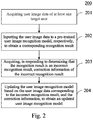
- Fig. 2 shows a flowchart 200 of an embodiment of a method for updating a user image recognition model.
- the method for updating a user image recognition model includes steps 201 to 204.
- Step 201 includes acquiring user image data of at least one target user.
- an execution body (such as the server 105 or the terminal devices 101, 102, 103 shown in Fig. 1 ) may directly acquire the user image data of one or more target users, or may receive the user image data uploaded by one or more target users in a wired or wireless mean.
- the target users herein refer to the users in the in-vehicle environment.
- the user image data is not limited to user face images, user body part images, user gesture images, and user behavior images.
- the execution body may acquire the user image data of a target user A1 in a vehicle A, the user image data of a target user B1 in a vehicle B, and the user image data of a target user C1 in a vehicle C through an in-vehicle image acquisition device.
- the user image data may be user image data acquired under the authorization of the target users, or may be user image data acquired indiscriminately without the authorization of the users, which is not limited herein.
- the acquiring the user image data of the at least one target user includes: acquiring, in response to obtaining the authorization of the at least one target user, the user image data of the at least one target user.
- the execution body may control the in-vehicle image acquisition device to acquire the user image data of the target user.
- the execution body may obtain the authorization of the user in various ways, such as receiving an instruction for agreeing to perform image acquisition input by the target user, detecting that the user initiates an image acquisition device, and the like.
- the vehicle A has a speech recognition function, and the user enters the vehicle A and issues a "start” instruction, and in response to receiving the instruction "start" of the user, i.e., obtaining the authorization of the user, the execution body controls to turn on the image acquisition device to acquire the user image data.
- the user image data of at least one target user is acquired in response to obtaining the authorization of the target user, the problem of poor effectiveness of the user image data caused by indiscriminately acquiring images without the authorization of the target user may be effectively avoided, and the user image data in a specific scenario may be obtained in a targeted way, while protecting the privacy of the user.
- Step 202 includes inputting the user image data of at least one target user to a pre-trained user image recognition model respectively, to obtain a corresponding recognition result.
- the execution body may input the acquired user image data to the pre-trained user image recognition model respectively, to obtain the corresponding recognition result.
- the user image recognition model is configured to recognize user-related information contained in the user image data, such as user identity information and user gestures.
- the user image recognition model may be trained based on a large amount of user image data labeled with recognition results.
- the execution body may deploy the user image recognition model online, and specifically, the execution body may deploy the user image recognition model on a cloud server.
- the user image recognition model may use a neural network model in the existing technology or in future development technology, such as, a convolutional neural network model, a deep neural network model, or a recurrent neural network model, which is not limited herein.
- a neural network model in the existing technology or in future development technology, such as, a convolutional neural network model, a deep neural network model, or a recurrent neural network model, which is not limited herein.
- Step 203 includes acquiring, in responding to determining that the recognition result is an incorrect recognition result, correction information of the incorrect recognition result.
- the execution body may display the user image data and the corresponding recognition result to receive a manually input determination result.
- the execution body may further determine whether the recognition result is the incorrect recognition result based on the manually input determination result, or may match the recognition result with a preset recognition result to determine whether the recognition result is the incorrect recognition result, which is not limited herein.
- the correction information of the incorrect recognition result is further acquired.
- the correction information is used to indicate a correct recognition result of the user image data corresponding to the incorrect recognition result.
- the execution body may store the correction information and the user image data corresponding to the incorrect recognition result.
- the execution body acquires user image data of a target user, and user-related information contained in the user image data is a thumb-up agreeing gesture of the user, that is, a recognition result of the user image data is a thumb-up agreeing gesture.
- a recognition result obtained by inputting the user image data to the pre-trained user image recognition model by the execution body is a thumb-up disagreeing gesture.
- the execution body displays the user image data and the recognition result, determines that the recognition result is an incorrect recognition result in response to receiving the information that the manually input recognition result is the incorrect recognition result and receiving the correction information (the thumb-up agreeing gesture) of the incorrect recognition result, and stores the user image data and the correction information.
- Step 204 includes updating the user image recognition model based on the user image data corresponding to the incorrect recognition result, and the correction information, to obtain an updated user image recognition model.
- the execution body may update the user image recognition model by using the user image data corresponding to the incorrect recognition result and the correction information as training samples, to obtain the updated image recognition model.
- the execution body may train the user image recognition model to update parameters in the user image recognition model by using the user image data corresponding to the incorrect recognition result as an input of the user image recognition model, and using the correction information corresponding to the user image data as an expected output, and in response to a loss function of the user image recognition model meeting a preset condition, complete the training of the user image recognition model to obtain the updated user image recognition model.
- the execution body may directly update the user image recognition model based on the pieces of user image data corresponding to the multiple incorrect recognition results and the pieces of correction information, or may update the user image recognition model based on a part of the pieces of user image data corresponding to the incorrect recognition result and a part of the pieces of correction information selected by the user, which is not limited herein.
- the execution body may directly update the user image recognition model based on the user image data corresponding to the incorrect recognition result and the correction information, or may update, in response to a number of the pieces of the user image data corresponding to the incorrect recognition result being greater than or equal to a preset number threshold, the user image recognition model to obtain the updated user image recognition model.
- the updating the user image recognition model based on the correction information, and the user image data corresponding to the incorrect recognition result to obtain the updated user image recognition model includes: updating, in response to a number of a piece of the user image data corresponding to the incorrect recognition result being greater than or equal to the preset number threshold, the user image recognition model based on the user image data corresponding to the incorrect recognition result and the correction information, to obtain the updated user image recognition model.
- the execution body may update the user image recognition model to obtain the updated user image recognition model.
- the preset number threshold may be set according to experience, actual requirements and specific application scenarios, which is not limited herein.
- the user image recognition model in response to the number of the piece of the user image data corresponding to the incorrect recognition result being greater than or equal to the preset number threshold, the user image recognition model is updated based on the correction information and the user image data corresponding to the incorrect recognition result to obtain the updated user image recognition model, thereby effectively avoiding the frequent update of the model and improving the update effectiveness of the model.
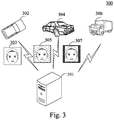
- FIG. 3 is a schematic diagram of an application scenario of the method for updating a user image recognition model according to this embodiment.
- the execution body 301 acquires the user image data 303 of the target user A in the vehicle 302, where the user image data 303 is an image containing the face of the target user A, acquires the user image data 305 of the target user B in the vehicle 304, where the user image data 305 is an image containing the face of the target user B, acquires the user image data 307 of the target user C in the vehicle 306, where the user image data 307 is an image containing the face of the target user C, and inputs the user image data 303, 305, 307 to a pre-trained user image recognition model respectively, to obtain corresponding recognition results, where the user image recognition model is configured to recognize the user image data, and the recognition results of the user image data 303 and 307 are incorrect recognition results, that is, the user image recognition model can not correctly recognize the user image data 303 and 307, e.g., the user image recognition model can not recognize whether the images in the user image data 303 and 307
- the execution body may update the user image recognition model based on the user image data 303 corresponding to the incorrect recognition result and the correction information corresponding to the user image data 303, and the user image data 307 corresponding to the incorrect recognition result and the correction information corresponding to the user image data 307, to obtain the updated user image recognition model.
- the user image data of the at least one target user is acquired; the user image data is input to the pre-trained user image recognition model respectively, to obtain the corresponding recognition result, the user image recognition model being configured to recognize the user image data; in responding to determining that the recognition result is the incorrect recognition result, the correction information of the incorrect recognition result is acquired, the correction information being used to indicate the correction recognition result of the user image data corresponding to the incorrect recognition result; and the user image recognition model is updated, based on the correction information and the user image data corresponding to the incorrect recognition result, to obtain the updated user image recognition model, the user image data corresponding to the incorrect recognition result.
- the recognition effect of the user image recognition model may be effectively improved.
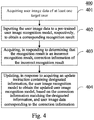
- a flow 400 of another embodiment of the method for updating a user image recognition model is shown.
- the flow 400 of the method for updating a user image recognition model may include steps 401 to 404.
- Step 401 includes acquiring user image data of at least one target user.
- the step 401 is substantially the same as the step 201 in the embodiment corresponding to Fig. 2 , and is not described in detail herein.
- Step 402 includes inputting the user image data of at least one target user to a pre-trained user image recognition model respectively, to obtain a corresponding recognition result.
- the step 402 is substantially the same as the step 202 in the embodiment corresponding to Fig. 2 , and is not described in detail herein.
- Step 403 includes acquiring, in responding to determining that the recognition result is an incorrect recognition result, correction information of the incorrect recognition result.
- the step 403 is substantially the same as the step 203 in the embodiment corresponding to Fig. 2 , and is not described in detail herein.
- Step 404 includes updating, in response to acquiring an update instruction containing designated information, the user image recognition model based on the correction information matching the designated information, and user image data corresponding to the correction information, to obtain the updated user image recognition model.
- the execution body acquires the instruction containing the designated information input by the user, where the designated information is used to reflect the correction information selected by the user
- the correction information matching the designated information may be determined from multiple pieces of user image data corresponding to multiple incorrect recognition results and multiple pieces of correction information, and the execution body further updates the user image recognition model based on the determined matched correction information and the corresponding user image data to obtain the updated user image recognition model.
- the updating the user image recognition model based on the correction information matching the designated information, and user image data corresponding to the correction information includes: updating the user image recognition model based on first correction information and the user image data corresponding to the first correction information, where a class to which the first correction information belongs matches the designated information.
- the designated information includes class information of a class to which the correction information selected by the user belongs.
- the class information includes at least one of a user face class, a user gesture class or a user behavior class.
- the execution body may determine the first correction information from multiple pieces of user image data corresponding to the incorrect recognition results and multiple pieces of correction information, where the class of the correction information matches the class information in the designated information, and the execution body further updates the user image recognition model based on the determined first correction information and the user image data corresponding to the first correction information to obtain the updated user image recognition model.
- Pieces of user image data corresponding to 5 incorrect recognition results and pieces of correction information which are “user image data 1-user agreeing gesture”, “user image data 2-user face”, “user image data 3-user disagreeing gesture”, “user image data 4-user agreeing gesture” and “user image data 5-user face”.
- a received instruction containing the designated information sent by the user is an updating instruction of "user gesture”, "user image data 1-user approval gesture”, “user image data 3-user disagreeing gesture” and “user image data 4-user agreeing gesture” are determined as the first correction information matching the designated information and the corresponding user image data, and the user image recognition model is updated based on the first correction information and the user image data corresponding to the first correction information, i.e., "user image data 1-user agreeing gesture", “user image data 3-user disagreeing gesture” and “user image data 4-user approval gesture” to obtain the updated user image recognition model.
- the user image recognition model is updated based on the first correction information and the user image data corresponding to the first correction information, where the class of the first correction information matches the designated information, so that the refined recognition effect of the updated user image recognition model on the user image data of a designated class is effectively improved.
- the updating the user image recognition model based on the correction information matching the designated information, and user image data corresponding to the correction information includes: updating the user image recognition model based on second correction information and the user image data corresponding to the second correction information, where a target user identification corresponding to the second correction information matches the designated information.
- the designated information includes a target user identification corresponding to the correction information selected by the user.
- the execution body may determine the second correction information from pieces of user image data corresponding to multiple incorrect recognition results and pieces of correction information, where the target user identification corresponding to the correction information matches the target user identification in the designated information, and the execution body further updates the user image recognition model based on the determined second correction information and the user image data corresponding to the second correction information to obtain the updated user image recognition model.
- the target user identification corresponding to the correction information may be contained in the correction information, or may be determined based on the source of the user image data corresponding to the correction information, which is not limited herein.
- Pieces of user image data corresponding to 5 incorrect recognition results and pieces of correction information which are "user image data 1-image of the target user A”, “user image data 2-image of the target user B”, “user image data 3-image of the target user C”, “user image data 4-image of the target user A” and “user image data 5-image of the target user A”.
- a received instruction containing the designated information sent by the user is an updating instruction of "the target user A", "user image data 1-image of the target user A”, “user image data 4-image of the target user A” and “user image data 5-image of the target user A” are determined as the second correction information matching the designated information and the user image data corresponding to the second correction information, and the user image recognition model is updated based on the second correction information and the user image data corresponding to the second correction information, i.e., "user image data 1-image of the target user A", “user image data 4-image of the target user A” and “user image data 5-an image of the target user A” to obtain the updated user image recognition model.
- the user image recognition model is updated based on the second correction information and the user image data corresponding to the second correction information, where the target user identification corresponding to the second correction information matches the designated information, so that the refined recognition effect of the updated user image recognition model on the user image data of the specified user is effectively improved.
- the updating the user image recognition model based on the correction information matching the designated information, and user image data corresponding to the correction information includes: updating the user image recognition model based on third correction information and the user image data corresponding to the third correction information, where a target user identification corresponding to the third correction information and a class of the third correction information match the designated information.
- the designated information includes a target user identification corresponding to the correction information selected by the user, and class information of a class to which the correction information selected by the user belongs.
- the execution body may determine the third correction information from pieces of user image data corresponding to multiple incorrect recognition results and pieces of correction information, where the target user identification corresponding to the third correction information matches the target user identification in the designated information, and the class of the third correction information matches the class information in the designated information, and the execution body further updates the user image recognition model based on the determined matched third correction information and the user image data corresponding to the third correction information to obtain the updated user image recognition model.
- Pieces of user image data corresponding to 5 incorrect recognition results and pieces of correction information which are “user image data 1-image of the target user A-gesture image”, “user image data 2-image of the target user B-face image”, “user image data 3-image of the target user C-gesture image”, “user image data 4-image of the target user A-face image” and “user image data 5-image of the target user A-gesture image”.
- a received instruction containing the designated information sent by the user is an updating instruction "the target user A-gesture image", "user image data 1-image of the target user A-gesture image” and “user image data 5-image of the target user A-gesture image” are determined as the third correction information matching the designated information and the user image data corresponding to the third correction information, and the user image recognition model is updated based on the third correction information and the user image data corresponding to the third correction information, i.e., "user image data 1-image of the target user A-gesture image” and "user image data 5-image of the target user A-gesture image” to obtain the updated user image recognition model.
- the user image recognition model is updated based on the third correction information and the user image data corresponding to the third correction information, where the target user identification corresponding to the third correction information matches the designated information, and the class of the third correction information matches the designated information, so that the refined recognition effect of the updated user image recognition model on the user image data of the specified class of the specified user is effectively improved.
- the flow 400 of the method for updating a user image recognition model in this embodiment highlights that, in response to acquiring the update instruction containing designated information, the user image recognition model is updated based on the correction information matching the designated information, and the user image data corresponding to the correction information, so that the execution body may update the user image recognition model based on the user image data designated by the user, and the refined degree of recognizing the user image data by the updated user image recognition model may be improved in a targeted way, thereby further improving the recognition effect of the model.
- the present disclosure provides an embodiment of an apparatus for updating a user image recognition model.
- the embodiment of the apparatus corresponds to the embodiment of the method shown in Fig. 2 , and the apparatus is particularly applicable to various electronic devices.
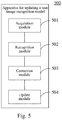
- the apparatus 500 for updating a user image recognition model of this embodiment includes: an acquisition module 501, a recognition module 502, a correction module 503 and an update module 504.
- the acquisition module 501 is configured to acquire user image data of at least one target user.
- the recognition module 502 is configured to input the user image data of at least one target user to a pre-trained user image recognition model respectively, to obtain a corresponding recognition result, the user image recognition model being configured to recognize the user image data.
- the correction module 503 is configured to acquire, in responding to determining that the recognition result is an incorrect recognition result, correction information of the incorrect recognition result, the correction information being used to indicate a correct recognition result of the user image data corresponding to the incorrect recognition result.
- the update module 504 is configured to update the user image recognition model based on the user image data corresponding to the incorrect recognition result, and the correction information, to obtain an updated user image recognition model,.
- the update module is further configured to: update, in response to acquiring an update instruction containing designated information used to reflect correction information selected by a user, the user image recognition model based on the correction information matching the designated information, and user image data corresponding to the correction information, .
- the designated information includes class information of a class to which the correction information selected by the user belongs
- the updating the user image recognition model based on the the correction information matching the designated information, and user image data corresponding to the correction information includes: updating the user image recognition model based on first correction information and the user image data corresponding to the first correction information, where a class of the first correction information matches the designated information.
- the designated information includes a target user identification corresponding to the correction information selected by the user
- the updating the user image recognition model based on the correction information matching the designated information, and user image data corresponding to the correction information includes: updating the user image recognition model, based on second correction information and the user image data corresponding to the second correction information, where a target user identification corresponding to the second correction information matches the designated information.
- the designated information includes a target user identification corresponding to the correction information selected by the user, and class information of a class to which the correction information selected by the user belongs
- the updating the user image recognition model based on the correction information matching the designated information, and user image data corresponding to the correction information includes: updating the user image recognition model based on third correction information and the user image data corresponding to the third correction information, where a target user identification corresponding to the third correction information matches the designated information, and a class of the third correction information matches the designated information.
- the acquisition module is further configured to: acquire, in response to obtaining authorization of the at least one target user, the user image data of the at least one target user.
- the update module is further configured to: update, in response to a number of a piece of the user image data corresponding to the incorrect recognition result being greater than or equal to a preset number threshold, the user image recognition model based on the user image data corresponding to the incorrect recognition result, and the correction information.
- the present disclosure further provides an electronic device and a readable storage medium.
- a block diagram 600 of an electronic device adapted to implement the method for updating a user image recognition model according to an embodiment of the present disclosure is provided.
- the electronic device is intended to represent various forms of digital computers, such as laptops, desktops, worktables, personal digital assistants, servers, blade servers, mainframe computers and other suitable computers.
- the electronic device may also represent various forms of mobile devices, such as personal digital processing, cellular phones, smart phones, wearable devices and other similar computing devices.
- the parts, their connections and relationships, and their functions shown herein are examples only, and are not intended to limit the implementations of the present disclosure as described and/or claimed herein.
- the electronic device includes one or more processors 601, a memory 602 and interfaces for connecting components, including a high-speed interface and a low-speed interface.
- the components are interconnected by using different buses and may be mounted on a common motherboard or otherwise as required.
- the processor may process instructions executed within the electronic device, including instructions stored in memory or on memory to display graphical information of the GUI on an external input or output device (such as a display device coupled to an interface).
- multiple processors and/or multiple buses and multiple memories may be used with multiple memories, if required.
- multiple electronic devices may be connected (for example, used as a server array, a set of blade servers or a multiprocessor system), and the electronic device provides some of the necessary operations.
- An example of a processor 601 is shown in Fig. 6 .
- the memory 602 is a non-transitory computer readable storage medium according to the present disclosure.
- the memory stores instructions executable by at least one processor to cause the at least one processor to execute the method for updating a user image recognition model according to the present disclosure.
- the non-transitory computer readable storage medium of the present disclosure stores computer instructions for causing a computer to execute the method for updating a user image recognition model according to the present disclosure.
- the memory 602 may be used to store non-transitory software programs, non-transitory computer executable programs and modules, such as the program instructions or modules corresponding to the method for updating a user image recognition model in the embodiment of the present disclosure (such as, the acquisition module 501, the recognition module 502, the correction module 503 and the update module 504 shown in Fig. 5 ).
- the processor 601 runs the non-transitory software programs, instructions and modules stored in the memory 602 to execute various functional applications and data processing of the server, thereby implementing the method for updating a user image recognition model in the embodiment of the method.
- the memory 602 may include a storage program area and a storage data area, where the storage program area may store an operating system and an application program required by at least one function; and the storage data area may store data created by the electronic device when executing the method for updating a user image recognition model.
- the memory 602 may include a high-speed random access memory, and may further include a non-transitory memory, such as at least one magnetic disk storage device, a flash memory or other non-transitory solid state storage devices.
- the memory 602 may alternatively include a memory disposed remotely relative to the processor 601, which may be connected through a network to the electronic device adapted to execute the method for updating a user image recognition model. Examples of such networks include, but are not limited to, the Internet, enterprise intranets, local area networks, mobile communication networks and combinations thereof.
- the electronic device adapted to execute the method for updating a user image recognition model may further include an input device 603 and an output device 604.
- the processor 601, the memory 602, the input device 603 and the output device 604 may be interconnected through a bus or other means, and an example of a connection through a bus is shown in Fig. 6 .
- the input device 603 may receive input digit or character information, and generate key signal input related to user settings and functional control of the electronic device adapted to execute the method for updating a user image recognition model, such as a touch screen, a keypad, a mouse, a track pad, a touch pad, a pointer bar, one or more mouse buttons, a trackball or a joystick.
- the output device 604 may include a display device, an auxiliary lighting device (such as an LED) and a tactile feedback device (such as a vibration motor).
- the display device may include, but is not limited to, a liquid crystal display (LCD), a light emitting diode (LED) display and a plasma display. In some embodiments, the display device may be a touch screen.
- the various embodiments of the systems and technologies described herein may be implemented in digital electronic circuit systems, integrated circuit systems, ASICs (application specific integrated circuits), computer hardware, firmware, software and/or combinations thereof.
- the various embodiments may include: being implemented in one or more computer programs, where the one or more computer programs may be executed and/or interpreted on a programmable system including at least one programmable processor, and the programmable processor maybe a dedicated or general-purpose programmable processor, which may receive data and instructions from a memory system, at least one input device and at least one output device, and send the data and instructions to the memory system, the at least one input device and the at least one output device.
- machine readable medium and “computer readable medium” refer to any computer program product, device and/or apparatus (such as magnetic disk, optical disk, memory and programmable logic device (PLD)) for providing machine instructions and/or data to a programmable processor, including a machine readable medium that receives machine instructions as machine readable signals.
- machine readable signal refers to any signal used to provide machine instructions and/or data to a programmable processor.
- the systems and technologies described herein may be implemented on a computer having: a display device (such as a CRT (cathode ray tube) or LCD (liquid crystal display) monitor) for displaying information to the user; and a keyboard and a pointing device (such as a mouse or a trackball) through which the user may provide input to the computer.
- a display device such as a CRT (cathode ray tube) or LCD (liquid crystal display) monitor
- a keyboard and a pointing device such as a mouse or a trackball
- Other types of devices may also be used to provide interaction with the user.
- the feedback provided to the user may be any form of sensory feedback (such as visual feedback, auditory feedback or tactile feedback); and input from the user may be received in any form, including acoustic input, speech input or tactile input.
- the systems and technologies described herein may be implemented in: a computing system including a background component (such as a data server), or a computing system including a middleware component (such as an application server), or a computing system including a front-end component (such as a user computer having a graphical user interface or a web browser through which the user may interact with the implementation of the systems and technologies described herein), or a computing system including any combination of such background component, middleware component or front-end component.
- the components of the system may be interconnected by any form or medium of digital data communication (such as a communication network). Examples of communication networks include a local area network (LAN), a wide area network (WAN), and the Internet.
- the computer system may include a client and a server.
- the client and the server are typically remote from each other and typically interact through a communication network.
- the relationship between the client and the server is generated by a computer program running on the corresponding computer and having a client-server relationship with each other.
- the update effect of the user image recognition model is effectively improved.
Landscapes
- Engineering & Computer Science (AREA)
- Theoretical Computer Science (AREA)
- Physics & Mathematics (AREA)
- General Physics & Mathematics (AREA)
- Data Mining & Analysis (AREA)
- Multimedia (AREA)
- Artificial Intelligence (AREA)
- Evolutionary Computation (AREA)
- Computer Vision & Pattern Recognition (AREA)
- General Engineering & Computer Science (AREA)
- Life Sciences & Earth Sciences (AREA)
- Software Systems (AREA)
- Evolutionary Biology (AREA)
- Bioinformatics & Computational Biology (AREA)
- Bioinformatics & Cheminformatics (AREA)
- Health & Medical Sciences (AREA)
- General Health & Medical Sciences (AREA)
- Computing Systems (AREA)
- Mathematical Physics (AREA)
- Databases & Information Systems (AREA)
- Human Computer Interaction (AREA)
- Medical Informatics (AREA)
- Biomedical Technology (AREA)
- Computational Linguistics (AREA)
- Quality & Reliability (AREA)
- Biophysics (AREA)
- Molecular Biology (AREA)
- Psychiatry (AREA)
- Social Psychology (AREA)
- Oral & Maxillofacial Surgery (AREA)
- Image Analysis (AREA)
Applications Claiming Priority (1)
| Application Number | Priority Date | Filing Date | Title |
|---|---|---|---|
| CN202011371250.8A CN112487973B (zh) | 2020-11-30 | 2020-11-30 | 用户图像识别模型的更新方法和装置 |
Publications (2)
| Publication Number | Publication Date |
|---|---|
| EP3920094A2 true EP3920094A2 (de) | 2021-12-08 |
| EP3920094A3 EP3920094A3 (de) | 2022-05-18 |
Family
ID=74937387
Family Applications (1)
| Application Number | Title | Priority Date | Filing Date |
|---|---|---|---|
| EP21204097.6A Withdrawn EP3920094A3 (de) | 2020-11-30 | 2021-10-22 | Verfahren und vorrichtung zur aktualisierung eines benutzerbilderkennungsmodells |
Country Status (5)
| Country | Link |
|---|---|
| US (1) | US20220044076A1 (de) |
| EP (1) | EP3920094A3 (de) |
| JP (1) | JP7285899B2 (de) |
| KR (2) | KR20210082401A (de) |
| CN (1) | CN112487973B (de) |
Families Citing this family (7)
| Publication number | Priority date | Publication date | Assignee | Title |
|---|---|---|---|---|
| AU2021204545A1 (en) * | 2021-06-11 | 2023-01-05 | Sensetime International Pte. Ltd. | Methods, apparatuses, systems, media, and computer devices for processing data |
| WO2022259031A1 (en) * | 2021-06-11 | 2022-12-15 | Sensetime International Pte. Ltd. | Methods, apparatuses, systems, media, and computer devices for processing data |
| CN114201154B (zh) | 2021-12-10 | 2023-01-31 | 北京百度网讯科技有限公司 | 算子生成方法和装置 |
| CN114863532B (zh) * | 2022-05-11 | 2025-04-11 | 北京宾理信息科技有限公司 | 在终端设备处执行的模型训练方法、装置、设备及介质 |
| CN115238793B (zh) * | 2022-07-25 | 2025-10-31 | 苏州微创畅行机器人有限公司 | 业务功能更新方法、装置、系统、计算机设备、存储介质 |
| CN115891871B (zh) * | 2022-11-16 | 2024-05-17 | 阿维塔科技(重庆)有限公司 | 车辆座舱的控制方法、装置及计算机可读存储介质 |
| CN119904862A (zh) * | 2025-04-02 | 2025-04-29 | 厦门赫玛科技有限公司 | 动静结合的果蔬商品识别方法、服务器、介质和程序产品 |
Family Cites Families (11)
| Publication number | Priority date | Publication date | Assignee | Title |
|---|---|---|---|---|
| JP2007069756A (ja) | 2005-09-07 | 2007-03-22 | Toyota Motor Corp | 車両用入力操作規制装置 |
| JP4910194B2 (ja) | 2007-09-20 | 2012-04-04 | 関西電力株式会社 | アナログ式メータの読取方法、読取装置および読取システム |
| GB201517462D0 (en) * | 2015-10-02 | 2015-11-18 | Tractable Ltd | Semi-automatic labelling of datasets |
| KR102314098B1 (ko) * | 2016-07-31 | 2021-10-18 | 구글 엘엘씨 | 자동 핸즈프리 서비스 요청 |
| US10074038B2 (en) * | 2016-11-23 | 2018-09-11 | General Electric Company | Deep learning medical systems and methods for image reconstruction and quality evaluation |
| US10489722B2 (en) * | 2017-07-27 | 2019-11-26 | Disney Enterprises, Inc. | Semiautomatic machine learning model improvement and benchmarking |
| KR102550932B1 (ko) * | 2017-12-29 | 2023-07-04 | 삼성전자주식회사 | 음성 인식 모델의 개인화 방법 및 장치 |
| US11119638B2 (en) * | 2018-09-28 | 2021-09-14 | Apple Inc. | Using face detection to update user interface orientation |
| CN109800805A (zh) * | 2019-01-14 | 2019-05-24 | 上海联影智能医疗科技有限公司 | 基于人工智能的图像处理系统以及计算机设备 |
| JP6749655B1 (ja) | 2019-03-19 | 2020-09-02 | 株式会社 システムスクエア | 検査装置、異常検出方法、コンピュータプログラム、学習モデルの生成方法、及び学習モデル |
| CN110288049B (zh) * | 2019-07-02 | 2022-05-24 | 北京字节跳动网络技术有限公司 | 用于生成图像识别模型的方法和装置 |
-
2020
- 2020-11-30 CN CN202011371250.8A patent/CN112487973B/zh active Active
-
2021
- 2021-06-15 KR KR1020210077393A patent/KR20210082401A/ko not_active Withdrawn
- 2021-10-20 KR KR1020210140067A patent/KR20210134251A/ko not_active Ceased
- 2021-10-21 JP JP2021172394A patent/JP7285899B2/ja active Active
- 2021-10-22 US US17/508,401 patent/US20220044076A1/en not_active Abandoned
- 2021-10-22 EP EP21204097.6A patent/EP3920094A3/de not_active Withdrawn
Also Published As
| Publication number | Publication date |
|---|---|
| CN112487973B (zh) | 2023-09-12 |
| US20220044076A1 (en) | 2022-02-10 |
| KR20210134251A (ko) | 2021-11-09 |
| JP7285899B2 (ja) | 2023-06-02 |
| EP3920094A3 (de) | 2022-05-18 |
| KR20210082401A (ko) | 2021-07-05 |
| CN112487973A (zh) | 2021-03-12 |
| JP2022028667A (ja) | 2022-02-16 |
Similar Documents
| Publication | Publication Date | Title |
|---|---|---|
| EP3920094A2 (de) | Verfahren und vorrichtung zum aktualisieren eines benutzerbilderkennungsmodells | |
| US11928432B2 (en) | Multi-modal pre-training model acquisition method, electronic device and storage medium | |
| US11915484B2 (en) | Method and apparatus for generating target re-recognition model and re-recognizing target | |
| US12333795B2 (en) | Multimodal data processing | |
| EP3923160A1 (de) | Verfahren, gerät, vorrichtung und speichermedium für ein trainingsmodell | |
| EP3923272B1 (de) | Verfahren und vorrichtung zum adaptieren eines aufweckmodells | |
| CN111582375B (zh) | 数据增强策略搜索方法、装置、设备以及存储介质 | |
| US20170277374A1 (en) | Visual regression analysis | |
| EP3859732A2 (de) | Verfahren und vorrichtung zur spracherkennung | |
| CN110659569B (zh) | 电子签名方法、装置、存储介质及电子设备 | |
| US20220027575A1 (en) | Method of predicting emotional style of dialogue, electronic device, and storage medium | |
| US11954013B2 (en) | Method of testing applet performance, electronic device, and computer-readable medium | |
| EP3901905B1 (de) | Verfahren und vorrichtung zur verarbeitung eines bildes | |
| KR102599978B1 (ko) | 음성 검출 방법 및 장치 | |
| US20230135661A1 (en) | Image processing method and apparatus for smart pen, and electronic device | |
| US20230012881A1 (en) | Method and apparatus for reading data, electronic device and storage medium | |
| CN111708477B (zh) | 按键识别方法、装置、设备以及存储介质 | |
| CN114912522B (zh) | 信息分类方法和装置 | |
| CN111522599B (zh) | 用于发送信息的方法和装置 | |
| CN113779616A (zh) | 用于识别数据的方法和装置 | |
| CN117474091A (zh) | 一种知识图谱构建方法、装置、设备及存储介质 | |
| CN113113017B (zh) | 音频的处理方法和装置 | |
| CN111782445B (zh) | 设备调试环境的配置方法和装置 | |
| CN111711927A (zh) | 用于定位终端的方法、装置、设备以及存储介质 | |
| US20230206756A1 (en) | Method and system of controlling traffic lighting apparatus, electronic device and storage medium |
Legal Events
| Date | Code | Title | Description |
|---|---|---|---|
| PUAI | Public reference made under article 153(3) epc to a published international application that has entered the european phase |
Free format text: ORIGINAL CODE: 0009012 |
|
| STAA | Information on the status of an ep patent application or granted ep patent |
Free format text: STATUS: REQUEST FOR EXAMINATION WAS MADE |
|
| 17P | Request for examination filed |
Effective date: 20211022 |
|
| AK | Designated contracting states |
Kind code of ref document: A2 Designated state(s): AL AT BE BG CH CY CZ DE DK EE ES FI FR GB GR HR HU IE IS IT LI LT LU LV MC MK MT NL NO PL PT RO RS SE SI SK SM TR |
|
| PUAL | Search report despatched |
Free format text: ORIGINAL CODE: 0009013 |
|
| AK | Designated contracting states |
Kind code of ref document: A3 Designated state(s): AL AT BE BG CH CY CZ DE DK EE ES FI FR GB GR HR HU IE IS IT LI LT LU LV MC MK MT NL NO PL PT RO RS SE SI SK SM TR |
|
| RIC1 | Information provided on ipc code assigned before grant |
Ipc: G06V 40/16 20220101ALI20220413BHEP Ipc: G06V 20/59 20220101ALI20220413BHEP Ipc: G06V 40/20 20220101ALI20220413BHEP Ipc: G06V 10/778 20220101ALI20220413BHEP Ipc: G06K 9/62 20060101ALI20220413BHEP Ipc: G06K 9/00 20060101AFI20220413BHEP |
|
| STAA | Information on the status of an ep patent application or granted ep patent |
Free format text: STATUS: EXAMINATION IS IN PROGRESS |
|
| 17Q | First examination report despatched |
Effective date: 20230306 |
|
| STAA | Information on the status of an ep patent application or granted ep patent |
Free format text: STATUS: THE APPLICATION IS DEEMED TO BE WITHDRAWN |
|
| 18D | Application deemed to be withdrawn |
Effective date: 20240118 |