EP3920146A1 - Procédé d'apprentissage d'un modèle de prévision de paramètre smpl, dispositif informatique, et support de stockage - Google Patents
Procédé d'apprentissage d'un modèle de prévision de paramètre smpl, dispositif informatique, et support de stockage Download PDFInfo
- Publication number
- EP3920146A1 EP3920146A1 EP20748016.1A EP20748016A EP3920146A1 EP 3920146 A1 EP3920146 A1 EP 3920146A1 EP 20748016 A EP20748016 A EP 20748016A EP 3920146 A1 EP3920146 A1 EP 3920146A1
- Authority
- EP
- European Patent Office
- Prior art keywords
- model
- human body
- parameter
- predicted
- dimensional
- Prior art date
- Legal status (The legal status is an assumption and is not a legal conclusion. Google has not performed a legal analysis and makes no representation as to the accuracy of the status listed.)
- Pending
Links
Images





Classifications
-
- G—PHYSICS
- G06—COMPUTING OR CALCULATING; COUNTING
- G06T—IMAGE DATA PROCESSING OR GENERATION, IN GENERAL
- G06T7/00—Image analysis
- G06T7/70—Determining position or orientation of objects or cameras
- G06T7/73—Determining position or orientation of objects or cameras using feature-based methods
- G06T7/74—Determining position or orientation of objects or cameras using feature-based methods involving reference images or patches
-
- G—PHYSICS
- G06—COMPUTING OR CALCULATING; COUNTING
- G06F—ELECTRIC DIGITAL DATA PROCESSING
- G06F18/00—Pattern recognition
- G06F18/20—Analysing
- G06F18/22—Matching criteria, e.g. proximity measures
-
- G—PHYSICS
- G06—COMPUTING OR CALCULATING; COUNTING
- G06F—ELECTRIC DIGITAL DATA PROCESSING
- G06F18/00—Pattern recognition
- G06F18/20—Analysing
- G06F18/25—Fusion techniques
- G06F18/254—Fusion techniques of classification results, e.g. of results related to same input data
-
- G—PHYSICS
- G06—COMPUTING OR CALCULATING; COUNTING
- G06N—COMPUTING ARRANGEMENTS BASED ON SPECIFIC COMPUTATIONAL MODELS
- G06N3/00—Computing arrangements based on biological models
- G06N3/02—Neural networks
- G06N3/04—Architecture, e.g. interconnection topology
- G06N3/0464—Convolutional networks [CNN, ConvNet]
-
- G—PHYSICS
- G06—COMPUTING OR CALCULATING; COUNTING
- G06N—COMPUTING ARRANGEMENTS BASED ON SPECIFIC COMPUTATIONAL MODELS
- G06N3/00—Computing arrangements based on biological models
- G06N3/02—Neural networks
- G06N3/08—Learning methods
-
- G—PHYSICS
- G06—COMPUTING OR CALCULATING; COUNTING
- G06N—COMPUTING ARRANGEMENTS BASED ON SPECIFIC COMPUTATIONAL MODELS
- G06N3/00—Computing arrangements based on biological models
- G06N3/02—Neural networks
- G06N3/08—Learning methods
- G06N3/09—Supervised learning
-
- G—PHYSICS
- G06—COMPUTING OR CALCULATING; COUNTING
- G06T—IMAGE DATA PROCESSING OR GENERATION, IN GENERAL
- G06T17/00—Three-dimensional [3D] modelling for computer graphics
-
- G—PHYSICS
- G06—COMPUTING OR CALCULATING; COUNTING
- G06T—IMAGE DATA PROCESSING OR GENERATION, IN GENERAL
- G06T7/00—Image analysis
- G06T7/70—Determining position or orientation of objects or cameras
-
- G—PHYSICS
- G06—COMPUTING OR CALCULATING; COUNTING
- G06V—IMAGE OR VIDEO RECOGNITION OR UNDERSTANDING
- G06V10/00—Arrangements for image or video recognition or understanding
- G06V10/70—Arrangements for image or video recognition or understanding using pattern recognition or machine learning
- G06V10/77—Processing image or video features in feature spaces; using data integration or data reduction, e.g. principal component analysis [PCA] or independent component analysis [ICA] or self-organising maps [SOM]; Blind source separation
- G06V10/80—Fusion, i.e. combining data from various sources at the sensor level, preprocessing level, feature extraction level or classification level
- G06V10/809—Fusion, i.e. combining data from various sources at the sensor level, preprocessing level, feature extraction level or classification level of classification results, e.g. where the classifiers operate on the same input data
-
- G—PHYSICS
- G06—COMPUTING OR CALCULATING; COUNTING
- G06V—IMAGE OR VIDEO RECOGNITION OR UNDERSTANDING
- G06V10/00—Arrangements for image or video recognition or understanding
- G06V10/70—Arrangements for image or video recognition or understanding using pattern recognition or machine learning
- G06V10/82—Arrangements for image or video recognition or understanding using pattern recognition or machine learning using neural networks
-
- G—PHYSICS
- G06—COMPUTING OR CALCULATING; COUNTING
- G06V—IMAGE OR VIDEO RECOGNITION OR UNDERSTANDING
- G06V40/00—Recognition of biometric, human-related or animal-related patterns in image or video data
- G06V40/10—Human or animal bodies, e.g. vehicle occupants or pedestrians; Body parts, e.g. hands
- G06V40/107—Static hand or arm
- G06V40/11—Hand-related biometrics; Hand pose recognition
-
- G—PHYSICS
- G06—COMPUTING OR CALCULATING; COUNTING
- G06N—COMPUTING ARRANGEMENTS BASED ON SPECIFIC COMPUTATIONAL MODELS
- G06N3/00—Computing arrangements based on biological models
- G06N3/02—Neural networks
- G06N3/04—Architecture, e.g. interconnection topology
- G06N3/045—Combinations of networks
-
- G—PHYSICS
- G06—COMPUTING OR CALCULATING; COUNTING
- G06T—IMAGE DATA PROCESSING OR GENERATION, IN GENERAL
- G06T2207/00—Indexing scheme for image analysis or image enhancement
- G06T2207/20—Special algorithmic details
- G06T2207/20036—Morphological image processing
- G06T2207/20044—Skeletonization; Medial axis transform
-
- G—PHYSICS
- G06—COMPUTING OR CALCULATING; COUNTING
- G06T—IMAGE DATA PROCESSING OR GENERATION, IN GENERAL
- G06T2207/00—Indexing scheme for image analysis or image enhancement
- G06T2207/20—Special algorithmic details
- G06T2207/20081—Training; Learning
-
- G—PHYSICS
- G06—COMPUTING OR CALCULATING; COUNTING
- G06T—IMAGE DATA PROCESSING OR GENERATION, IN GENERAL
- G06T2207/00—Indexing scheme for image analysis or image enhancement
- G06T2207/20—Special algorithmic details
- G06T2207/20084—Artificial neural networks [ANN]
-
- G—PHYSICS
- G06—COMPUTING OR CALCULATING; COUNTING
- G06T—IMAGE DATA PROCESSING OR GENERATION, IN GENERAL
- G06T2207/00—Indexing scheme for image analysis or image enhancement
- G06T2207/30—Subject of image; Context of image processing
- G06T2207/30196—Human being; Person
Definitions
- Embodiments of the present disclosure relate to the field of computer vision, and in particular, to a method for training an SMPL parameter prediction model, a computer device, and a storage medium.
- Three-dimensional human body reconstruction is an important topic in the computer vision research and has great application value in the fields such as virtual reality (VR), human body animation, and games.
- VR virtual reality
- human body animation and games.
- three-dimensional human body reconstruction is performed for a human body in a two-dimensional image by utilizing a skinned multi-person linear (SMPL) model.
- SMPL skinned multi-person linear
- human body information such as two-dimensional joints, three-dimensional joints, a two-dimensional human body segmentation map, and three-dimensional voxels of a human body in a two-dimensional image are extracted by utilizing a human body information extraction model.
- the extracted human body information is inputted into a parameter prediction model for SMPL parameter prediction; and SMPL parameters obtained by prediction are inputted into an SMPL model for three-dimensional human body reconstruction.
- the human body information extraction model and the parameter prediction model are required to be trained separately before three-dimensional human body reconstruction; and then the separately trained models are trained jointly, resulting in a complex model training process and consuming much time.
- a method for training an SMPL parameter prediction model, a computer device, and a storage medium are provided.
- the technical solutions are as follows.
- a method for training an SMPL parameter prediction model is provided according to embodiments of the present disclosure.
- the method is performed by a computer device, and the method includes:
- a three-dimensional human body reconstruction method is provided according to embodiments of the present disclosure.
- the method is performed by a computer device, and the method includes:
- an apparatus for training an SMPL parameter prediction model includes a first obtaining module, a first prediction module, a second prediction module, a loss calculation module and a training module.
- the first obtaining module is configured to obtain a sample picture.
- the sample picture contains a human body image.
- the first prediction module is configured to input the sample picture into a pose parameter prediction model to obtain a predicted pose parameter.
- the predicted pose parameter is a parameter used for indicating a human body pose in the SMPL parameter prediction model.
- the second prediction module is configured to input the sample picture into a shape parameter prediction model to obtain a predicted shape parameter.
- the predicted shape parameter is a parameter used for indicating a human body shape in the SMPL parameter prediction model.
- the loss calculation module is configured to calculate model prediction losses according to the SMPL parameter prediction model and annotation information of the sample picture.
- the training module is configured to update the pose parameter prediction model and the shape parameter prediction model according to the model prediction losses
- a three-dimensional human body reconstruction apparatus includes a second obtaining module, a third prediction module, a fourth prediction module and a second construction module.
- the second obtaining module is configured to obtain a target picture.
- the target picture contains a human body image.
- the third prediction module is configured to input the target picture into a pose parameter prediction model to obtain a predicted pose parameter.
- the predicted pose parameter is a parameter used for indicating a human body pose in the SMPL parameter prediction model.
- the fourth prediction module is configured to input the target picture into a shape parameter prediction model to obtain a predicted shape parameter.
- the predicted shape parameter is a parameter used for indicating a human body shape in the SMPL parameter prediction model.
- the second construction module is configured to construct a target three-dimensional human body model by using an SMPL model according to the predicted pose parameter and the predicted shape parameter.
- a computer device including a processor and a memory is provided according to embodiments of the present disclosure.
- the memory stores computer-readable instructions.
- the computer-readable instructions when executed by the processor, cause the processor to perform the method for training an SMPL parameter prediction model or the three-dimensional human body reconstruction method described above.
- a non-volatile computer-readable storage medium storing computer-readable instructions
- the computer-readable instructions when executed by one or more processors, cause the one or more processors to perform the method for training an SMPL parameter prediction model or the three-dimensional human body reconstruction method described above.
- the SMPL model is a parametric human body model, driven by SMPL parameters.
- the SMPL parameters include shape parameters ⁇ and pose parameters ⁇ .
- the shape parameters ⁇ ⁇ R 10 include 10 parameters such as a height, size, and head-to-body ratio that characterize a human body.
- the pose parameters ⁇ ⁇ R 72 include 72 parameters corresponding to 24 joints (where parameters corresponding to each joint are represented by a three-dimensional rotation vector, and therefore there are a total of 24 ⁇ 3 parameters).
- Projection function is a function for projecting coordinate points in a three-dimensional space into a two-dimensional space.
- the projection function in the embodiments of the present disclosure is used for projecting the model vertices of the three-dimensional human body model into a two-dimensional image space.
- Pose parameter prediction model is a neural network model for predicting a human body pose in a picture.
- a picture is inputted to the model, a 72-dimensional pose parameter is outputted from the model.
- Shape parameter prediction model is a neural network model for predicting a human body shape in a picture. A picture is inputted to the model, and a 10-dimensional shape parameter is outputted from the model.
- Annotation information represents information used for indicating a key parameter in a training sample, in the field of machine learning.
- the annotation information may be generated by manual annotation.
- Annotation information in the embodiments of the present disclosure is used for indicating a key parameter in a human body image, and the annotation information may include at least one of SMPL parameters, two-dimensional joint coordinates, three-dimensional joint coordinates, and a two-dimensional human body contour.
- Loss function is a non-negative real-valued function for estimating a difference between a predicted value and a true value of a model. A smaller value of the loss function of a model indicates higher robustness of the model.
- the loss function in the embodiments of the present disclosure is used for estimating differences between predicted parameters outputted by the pose parameter prediction model and pre-annotated information and differences between predicted parameters outputted by the shape parameter prediction model and pre-annotated information.
- parameters affecting the three-dimensional human body reconstruction include shape parameters and pose parameters. Therefore, to accurately predict the shape parameters and pose parameters is important for three-dimensional human body reconstruction based on a single picture.
- the human body information extraction model such as two-dimensional joints, three-dimensional joints, a two-dimensional human body segmentation map, and three-dimensional voxels.
- the complexity of the constructed parameter prediction model is high.
- model training it is necessary to first train the human body information extraction model and the parameter prediction model separately, and then perform joint training on the separately trained models, resulting in increasing of the complexity and time consumption of model training.
- two neural network models (using a picture as the model input) for predicting pose parameters and shape parameters are designed respectively, so as to avoid separately training the human body information extraction model for extracting human body information.
- a corresponding loss function is designed from the perspective of the human body shape and pose, and the two neural network models are trained based on the designed loss function and annotation information. Therefore, the prediction accuracy of the neural network models is improved, thereby improving the accuracy of a reconstructed three-dimensional human body for the human body pose and shape. Exemplary embodiments are described below.
- FIG. 1 is a flowchart of a method for training an SMPL parameter prediction model according to an embodiment of the present disclosure.
- the training method is applied to a server.
- the method may include the following steps S101 to S106
- step 101 a sample picture is obtained.
- the sample picture contains a human body image.
- the server performs model training based on multiple sample picture sets. Therefore, during the training process, the server obtains a sample picture from a sample picture set, and the sample picture set contains multiple pre-annotated sample pictures.
- each sample picture has at least one type of annotation information, and sample pictures in different sample picture sets have different types of annotation information.
- annotation information of sample pictures in a sample picture set A includes two-dimensional joint coordinates and a two-dimensional human body contour.
- Annotation information of sample pictures in a sample picture set B includes two-dimensional joint coordinates and three-dimensional joint coordinates.
- Annotation information of sample pictures in a sample picture set B includes two-dimensional joint coordinates and SMPL parameters.
- the server After obtaining a sample picture, inputs the sample picture into a pose parameter prediction model and a shape parameter prediction model respectively.
- the server before inputting the sample picture into the pose/shape parameter prediction model, the server needs to preprocess the sample picture so that the sample picture to be inputted into the pose/shape parameter prediction model meets a model input requirement.
- Preprocessing methods include clipping and size scaling. For example, the size of the preprocessed sample picture is 224 ⁇ 224.
- step 102 the sample picture is inputted into a parameter prediction model to obtain a predicted pose parameter.
- the predicted pose parameter is a parameter used for indicating a human body pose in the SMPL parameter prediction model.
- the predicted pose parameter outputted by the pose parameter prediction model is a 72-dimensional parameter, which indicates rotation vectors of 24 joints of a human body.
- a backbone network structure of the pose parameter prediction model is a residual neural network (ResNet), for example, ResNet50.
- ResNet residual neural network
- the specific structure of the pose parameter prediction model is not limited in the embodiments of the present disclosure. Schematically, parameter settings of each network layer in the pose parameter prediction model are shown in Table 1.
- step 103 the sample picture is inputted into a shape parameter prediction model to obtain a predicted shape parameter.
- the predicted shape parameter is a parameter used for indicating a human body shape in the SMPL parameter prediction model.
- the predicted shape parameter outputted by the shape parameter prediction model is a 10-dimensional parameter, which indicates 10 parameters such as a height, size, and head-to-body ratio of a human body.
- the shape parameter prediction model is constructed based on a simplified visual geometry group (VGG) network.
- VCG visual geometry group
- the specific structure of the shape parameter prediction model is not limited in the embodiments of the present disclosure. Schematically, parameter settings of each network layer in the shape parameter prediction model are shown in Table 2.
- a three-dimensional human body model is constructed by using an SMPL model according to the predicted pose parameter and the predicted shape parameter.
- the server substitutes the predicted pose parameter and the predicted shape parameter into the SMPL model to construct a three-dimensional human body model, so as to subsequently evaluate the parameter prediction accuracy of the three-dimensional human body model.
- the three-dimensional human body model contains vertex coordinates of 6,890 model vertices.
- step 105 the model prediction losses are calculated according to the SMPL parameter prediction model and/or the three-dimensional human body model in combination with annotation information of the sample picture.
- the server calculates the model prediction loss by using a pre-constructed loss function according to the prediction result and the annotation information of the sample picture.
- the loss function includes at least one loss sub-function, and different loss sub-functions are used for calculating the model prediction losses according to different types of annotation information.
- the server determines, according to annotation information of a sample picture, to calculate the model prediction loss by using a corresponding loss sub-function.
- the server calculates the model prediction loss according to the annotation information and the SMPL parameter prediction model, and/or the server calculates the model prediction loss according to the annotation information and the three-dimensional human body model.
- step 106 the pose parameter prediction model and the shape parameter prediction model are updated according to the model prediction losses.
- the server updates the pose parameter prediction model and the shape parameter prediction model (i.e., optimizes parameters in the models) by using a gradient descent algorithm, and stops updating when the gradient is less than a threshold.
- the specific method for updating the model is not limited in the embodiments of the present disclosure.
- the model training process is performed by using a learning rate of le-4 and a batch size of 96.
- a sample picture containing a human body image is inputted into the pose parameter prediction model and the shape parameter prediction model respectively to obtain a predicted pose parameter and a predicted shape parameter in the SMPL parameter prediction model; a three-dimensional human body model is constructed based on the predicted pose parameter and the predicted shape parameter; a model prediction loss is calculated based on annotation information of the sample picture and at least one of the SMPL parameter prediction model or the three-dimensional human body model; and the pose parameter prediction model and the shape parameter prediction model are updated according to the model prediction loss.
- the models are trained by using the method provided in the embodiments of the present disclosure, a sample picture is directly inputted to the model for model training, and it is unnecessary to train the model for extracting human body information in a picture separately, thereby reducing the complexity of model training and improving the efficiency of model training.
- the model prediction loss is calculated according to annotation information, predicted parameters, and the three-dimensional human body model constructed based on the predicted parameters, thereby being beneficial to improve the training quality of the model, and thus improving the accuracy of predicted parameters.
- the loss function predefined by the server includes four loss sub-functions: an SMPL parameter loss function, a joint position loss function, a human body contour loss function, and a regular loss function.
- the SMPL parameter loss function is used for evaluating a difference between the predicted pose parameter and the annotated SMPL parameter and a difference between the predicted shape parameter and the annotated SMPL parameter.
- the joint position loss function is used for evaluating a difference between a predicted joint position and an annotated joint position.
- the human body contour loss function is used for evaluating a difference between a human body contour of a reconstructed three-dimensional human body model and a human body contour in a sample picture.
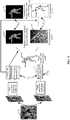
- a model training process performed by the server is shown in FIG. 2 .
- the server After inputting a sample picture 21 into a pose parameter prediction model 22, the server obtains a projection parameter 221 and a predicted pose parameter 222 outputted by the pose parameter prediction model 22.
- the server After inputting the sample picture 21 into a shape parameter prediction model 23, the server obtains a predicted shape parameter 231 outputted by the shape parameter prediction model 23.
- the server constructs a three-dimensional human body model 24 by using the SMPL model.
- the process of calculating the model prediction loss according to the predicted parameters, the three-dimensional human body model, and the annotation information is described below with reference to exemplary embodiments.
- FIG. 3 is a flowchart of a method for training an SMPL parameter prediction model according to another embodiment of the present disclosure.
- the training method is applied to a server.
- the method may include the following steps S301 to S309.
- step 301 a sample picture is obtained.
- the sample picture contains a human body image.
- step 101 For the implementation of this step, one may refer to step 101, and the details are not described again in this embodiment.
- step 302 the sample picture is inputted into a pose parameter prediction model to obtain a predicted pose parameter and a projection parameter.
- the model prediction loss is to be calculated subsequently according to two-dimensional coordinates (for example, two-dimensional coordinates of joints and two-dimensional coordinates of a human body contour), but the three-dimensional human body model constructed based on the predicted pose parameter and the predicted shape parameter contains only three-dimensional coordinates of the model vertices. Therefore, a projection parameter of the sample picture also needs to be predicted when the pose parameter and the shape parameter are predicted by using the model, so that points on the three-dimensional human body model can subsequently be projected into a two-dimensional image space by using the projection parameter.
- the projection parameter is related to a photographing angle of the sample picture.
- the server predicts the pose parameter and the projection parameter by using the pose parameter prediction model.
- parameters outputted by the predicted pose parameter model have a total of 75 dimensions, including a 72-dimensional predicted pose parameter ⁇ and a 3-dimensional projection parameter C.
- step 303 the sample picture is inputted into a shape parameter prediction model to obtain a predicted shape parameter.
- a three-dimensional human body model is constructed by using an SMPL model according to the predicted pose parameter and the predicted shape parameter.
- steps 303 and 304 For the implementation of steps 303 and 304, one may refer steps 103 and 104, and the details are not described again in this embodiment.
- a first model prediction loss is calculated according to SMPL parameter prediction model and annotated SMPL parameters in annotation information.
- the server calculates the first model prediction loss by using an SMPL parameter loss function according to the SMPL parameter prediction model (including a predicted pose parameter and a predicted shape parameter) and the annotated SMPL parameters.
- this step includes the following steps 305A to 305C.
- step 305A a first Euclidean distance between the annotated pose parameter and the predicted pose parameter is calculated.
- the server calculates the first Euclidean distance between the annotated pose parameter and the predicted pose parameter (a Euclidean distance between 72-dimensional vectors), and then evaluates the accuracy of prediction of the pose parameter according to the first Euclidean distance.
- a smaller first Euclidean distance indicates higher accuracy of prediction of the pose parameter.
- the first Euclidean the first Euclidean distance ⁇ ⁇ ⁇ ⁇ ⁇ 2 , where ⁇ indicates the predicted pose parameter, and ⁇ indicates the annotated pose parameter.
- step 305B a second Euclidean distance between the annotated shape parameter and the predicted shape parameter is calculated.
- the server calculates the second Euclidean distance between the annotated shape parameter and the predicted shape parameter (a Euclidean distance between 10-dimensional vectors), and then evaluates the accuracy of prediction of the shape parameter according to the second Euclidean distance.
- a smaller second Euclidean distance indicates higher the accuracy of prediction of the shape parameter.
- the second Euclidean the second Euclidean distance ⁇ ⁇ ⁇ ⁇ ⁇ 2 , where ⁇ is the predicted shape parameter, and ⁇ is the annotated shape parameter.
- step 305C the first model prediction loss is determined according to the first Euclidean distance and the second Euclidean distance.
- the server calculates the first model prediction loss (that is, an SMPL parameter prediction loss).
- the server calculates the first model prediction loss L p according to the predicted pose parameter 222 and the predicted shape parameter 231.
- a second model prediction loss is calculated according to predicted joint coordinates of joints in the three-dimensional human body model and annotated joint coordinates of joints in the annotation information.
- the server first determines the predicted joint coordinates of the joints in the three-dimensional human body model, and calculates the second model prediction loss by using the joint position loss function according to the predicted joint coordinates and the annotated joint coordinates.
- this step includes the following steps 306A to 306C.
- step 306A third Euclidean distances between three-dimensional predicted joint coordinates of the joints in the three-dimensional human body model and the three-dimensional annotated joint coordinates are calculated.
- the server selects 14 joints among 24 joints as target joints, and calculates the third Euclidean distances between the three-dimensional predicted joint coordinates and the three-dimensional annotated joint coordinates of the 14 target joints.
- the server determines the three-dimensional predicted joint coordinates of the joints in the three-dimensional human body model according to vertex coordinates of model vertices around the joints in the three-dimensional human body model.
- the three-dimensional predicted joint coordinates of a joint are an average value of vertex coordinates of model vertices around the joint.
- the server generates a three-dimensional joint map 25 according to the three-dimensional human body model 24, and the three-dimensional joint map 25 contains three-dimensional predicted joint coordinates of each joint.
- the server calculates the third Euclidean distance between the three-dimensional predicted joint coordinates and the three-dimensional annotated joint coordinates (corresponding to the same joint).
- the third Euclidean distance ⁇ j ⁇ F M ⁇ M j ⁇ j ⁇ 3 D ⁇ 2 .
- F M indicates a set of joints
- M( j ) indicates three-dimensional predicted joint coordinates of the joint in the three-dimensional human body model
- ⁇ 3 D indicates three-dimensional annotated joint coordinates of the joint.
- step 306B fourth Euclidean distances between two-dimensional predicted joint coordinates of the joints in the three-dimensional human body model and the two-dimensional annotated joint coordinates are calculated.
- this step includes the following steps 1 to 3.
- step 1 the three-dimensional predicted joint coordinates of the joints in the three-dimensional human body model are determined according to vertex coordinates of model vertices around the joints in the three-dimensional human body model.
- the server first determines the three-dimensional predicted joint coordinates of the joints before calculating the two-dimensional predicted joint coordinates. For the process of determining the three-dimensional predicted joint coordinates, one may refer to step 306A, and the details are not described again in this step.
- step 2 the three-dimensional predicted joint coordinates are projected according to the projection parameter to obtain the two-dimensional predicted joint coordinates.
- the server can project the three-dimensional predicted joint coordinates according to the projection parameter, that is, project the three-dimensional joints into a two-dimensional image space to obtain two-dimensional predicted joint coordinates of two-dimensional joints.
- the two-dimensional predicted joint coordinates obtained by projection are proj (M( j )).
- the server generates a two-dimensional joint map 26 according to the three-dimensional joint map 25 and the projection parameter 221.
- the two-dimensional joint map 26 contains the two-dimensional predicted joint coordinates of each joint.
- step 3 the fourth Euclidean distances between the two-dimensional predicted joint coordinates and the two-dimensional annotated joint coordinates are calculated.
- the server calculates the fourth Euclidean distance between the two-dimensional predicted joint coordinates and the two-dimensional annotated joint coordinates (corresponding to the same joint).
- the fourth Euclidean distance ⁇ j ⁇ F M ⁇ proj M j ⁇ j ⁇ 2 D ⁇ 2 .
- F M indicates a set of joints
- M( j ) indicates three-dimensional predicted joint coordinates of the joint in the three-dimensional human body model
- proj indicates projection processing
- ⁇ 2 D indicates two-dimensional annotated joint coordinates of the joint.
- step 306C the second model prediction loss is calculated according to the third Euclidean distances and the fourth Euclidean distances.
- the server calculates the second model prediction loss (that is, a joint position prediction loss).
- ⁇ 3 D indicates a three-dimensional joint position loss weight
- ⁇ 2 D indicates a two-dimensional joint position loss weight
- ⁇ 3 D and ⁇ 3 D are both 60.0.
- the server calculates the second model prediction loss L j according to the three-dimensional joint map 25 and the two-dimensional joint map 26.
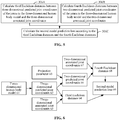
- the server in a complete process of calculating the second model prediction loss, the server first determines three-dimensional predicted joint coordinates 62 of a joint according to a three-dimensional human body model 61, and calculates third Euclidean distances 64 according to the three-dimensional predicted joint coordinates 62 and three-dimensional annotated joint coordinates 63 in annotation information.
- the server also projects the three-dimensional predicted joint coordinates 62 according to a projection parameter 65 to obtain two-dimensional predicted joint coordinates 66 corresponding to the joint, and calculates fourth Euclidean distances 68 according to the two-dimensional predicted joint coordinates 66 and two-dimensional annotated joint coordinates 67 in the annotation information.
- the server determines a second model prediction loss 69 according to the third Euclidean distances 64 and the fourth Euclidean distances 68.
- the server may determine the second model prediction loss based on only the third Euclidean distances or the fourth Euclidean distances.
- the manner for determining the second model prediction loss is not limited in this embodiment.
- a third model prediction loss is calculated according to a predicted two-dimensional human body contour of the three-dimensional human body model and an annotated two-dimensional human body contour in the annotation information.
- the server can generate a predicted two-dimensional human body contour according to the constructed three-dimensional human body model to improve the accuracy of prediction of the human body shape, so as to determine the accuracy of the prediction of the human body shape by calculating a loss between the human body contours.
- the human body contour is used for indicating a human body region in the picture, and may be represented by a black-and-white image.
- a white region in the black-and-white image is the human body region.
- the server generates a predicted two-dimensional human body contour 27 according to the three-dimensional human body model 24, and calculates the third model prediction loss L s according to the annotated two-dimensional human body contour 28.
- this step may include the following steps 307A to 307C.
- step 307A model vertices in the three-dimensional human body model are projected into a two-dimensional space according to the projection parameter, and the predicted two-dimensional human body contour is generated.
- the server can evaluate the accuracy of the prediction of the human body pose and shape based on the difference between the two-dimensional human body contours.
- the server projects each model vertex in the three-dimensional human body model into a two-dimensional space by using a projection function according to the projection parameter, so as to generate a two-dimensional image containing a predicted two-dimensional human body contour.
- a first contour loss and a second contour loss are calculated according to the predicted two-dimensional human body contour and the annotated two-dimensional human body contour.
- the first contour loss is also referred to as a forward contour loss, and indicates a loss from a predicted two-dimensional human body contour to an annotated two-dimensional human body contour.
- the second contour loss is also referred to as a reverse contour loss, and indicates a loss from an annotated two-dimensional human body contour to a predicted two-dimensional human body contour.
- the server may calculate the contour loss by performing the following steps.
- a first shortest distance from each contour point in the predicted two-dimensional human body contour to the annotated two-dimensional human body contour is calculated; and the first contour loss is calculated according to the first shortest distance corresponding to each contour point in the predicted two-dimensional human body contour.
- a terminal calculates the first shortest distance from each contour point in the predicted two-dimensional human body contour to the annotated two-dimensional human body contour, and calculates a sum of the first shortest distances corresponding to all contour points to obtain the first contour loss.
- the process of calculating the first contour loss according to the first shortest distance corresponding to each contour point in the predicted two-dimensional human body contour includes the following steps 1 and 2.
- step 1 a first weight of the contour point corresponding to each model vertex is determined according to visibility of the joint to which the model vertex in the three-dimensional human body model belongs.
- the server automatically allocates the each model vertex ⁇ to a closest joint J( ⁇ ).
- the server allocates the model vertices to 14 joints J( ⁇ ).
- the server After calculating the first shortest distance corresponding to each contour point in the predicted two-dimensional human body contour, the server detects the visibility of the joint to which the model vertex corresponding to the contour point belongs. If the joint to which a model vertex belongs is visible, the server determines that the first weight of the contour point is 1; if the joint to which a model vertex belongs is invisible, the server determines that the first weight of the contour point is 0.
- ⁇ ⁇ indicates the first weight of the contour point corresponding to the model vertex ⁇
- J( ⁇ ) indicates the joint to which the model vertex ⁇ belongs.
- the server may also first detect the visibility of the joint to which the model vertex corresponding to the contour point belongs. Then, in a case that the joint is not visible, the server stops calculating the shortest distance from the contour point corresponding to the model vertex to the annotated two-dimensional human body contour, thereby reducing the amount of calculation.
- step 2 the first contour loss is calculated according to the first weight and the first shortest distance corresponding to each contour point in the predicted two-dimensional human body contour.
- the server corrects the first shortest distance corresponding to each contour point according to the first weight, and calculates a sum of the corrected first shortest distances to obtain the first contour loss.
- the process of calculating the first contour loss according to the first shortest distance corresponding to each contour point in the predicted two-dimensional human body contour may include the following steps 1 to 3.
- step 1 the predicted joint coordinates of the joint to which each model vertex in the three-dimensional human body model belongs are determined.
- the server automatically allocates the model vertex ⁇ to a closest joint J( ⁇ ), and projects the joint J ( ⁇ ) into a two-dimensional space according to the projection parameter, to obtain (two-dimensional) predicted joint coordinates of the joint J( ⁇ ).
- the predicted joint coordinates of the joint J( ⁇ ) to which each model vertex ⁇ belongs are equal to proj (M (J( ⁇ ))).
- a second weight of the contour point corresponding to each model vertex is determined according to a fifth Euclidean distance between the predicted joint coordinates and the annotated joint coordinates.
- the second weight is negatively correlated with the fifth Euclidean distance.
- the server determines the accuracy of the prediction of the joint by calculating the fifth Euclidean distance between the predicted joint coordinates and the annotated joint coordinates (of the same joint).
- the fifth Euclidean distance ⁇ proj (M (J( ⁇ ))) - ⁇ ( ⁇ ) 2 D ⁇ 2 , where ⁇ ( ⁇ ) 2 D indicates (two-dimensional) annotated joint coordinates of the joint J( ⁇ ).
- the server determines the second weight of the contour point corresponding to the model vertex belonging to the joint according to the fifth Euclidean distance.
- the second weight is a positive value, and the second weight is negatively correlated with the fifth Euclidean distance.
- step 3 the first contour loss is calculated according to the second weight and the first shortest distance corresponding to each contour point in the predicted two-dimensional human body contour.
- the server corrects the first shortest distance corresponding to each contour point according to the second weight, and calculates a sum of the corrected first shortest distances to obtain the first contour loss.
- the server calculates the first weight and the second weight at the same time, and calculates the first contour loss according to the first shortest distance, the first weight, and the second weight corresponding to each contour point in the predicted two-dimensional human body contour.
- M indicates the predicted two-dimensional human body contour
- S p indicates a point in the annotated two-dimensional human body contour closest to a contour point p in the predicted two-dimensional human body contour.
- a second shortest distance from each contour point in the annotated two-dimensional human body contour to the predicted two-dimensional human body contour is calculated; and the second contour loss is calculated according to the second shortest distance corresponding to each contour point in the annotated two-dimensional human body contour.
- the terminal calculates the second shortest distance from each contour point in the annotated two-dimensional human body contour to the predicted two-dimensional human body contour, and calculates a sum of the second shortest distances corresponding to all contour points to obtain the second contour loss.
- S b indicates the annotated two-dimensional human body contour
- M q indicates a point in the predicted two-dimensional human body contour closest to the contour point q in the annotated two-dimensional human body contour.
- step 307C the third model prediction loss is determined according to the first contour loss and the second contour loss.
- the server calculates the third model prediction loss according to the first contour loss, a weight corresponding to the first contour loss, the second contour loss, and a weight corresponding to the second contour loss.
- ⁇ M2S indicates the weight corresponding to the first contour loss
- ⁇ S2M indicates the weight corresponding to the second contour loss.
- ⁇ M2S and ⁇ S2M are both 3.0.
- the server first generates a predicted two-dimensional human body contour 83 according to a three-dimensional human body model 81 and a projection parameter 82; then calculates a first contour loss 85 and a second contour loss 86 according to the predicted two-dimensional human body contour 83 and an annotated two-dimensional human body contour 84; and finally determines a third model prediction loss 87 according to the first contour loss 85 and the second contour loss 86.
- the server when the server calculates a first shortest distance 851 from each contour point on the predicted two-dimensional human body contour 83 to the annotated two-dimensional human body contour 84, the server also determines a first weight 852 according to the visibility of the joint to which the contour point belongs, and determines a second weight 853 according to the accuracy of the prediction of the joint to which the contour point belongs, so as to calculate the first contour loss 85 according to the first shortest distance 851, the first weight 852, and the second weight 853.
- the server calculates a second shortest distance 861 from each contour point on the annotated two-dimensional human body contour 84 to the predicted two-dimensional human body contour 83, so as to determine the second contour loss 86 according to the second shortest distance 861.
- step 308 regularization is performed on the predicted shape parameter to obtain a fourth model prediction loss.
- ⁇ reg is 1.0.
- the server obtains the fourth model prediction loss L reg according to the predicted shape parameter 231.
- step 309 the pose parameter prediction model and the shape parameter prediction model are updated according to the model prediction losses.
- the server reversely trains the pose parameter prediction model and the shape parameter prediction model based on the first, second, third, and fourth model prediction losses calculated in the foregoing steps.
- the process of updating one may refer to step 106, and the details are not be described again in this embodiment.
- the server may perform updating according to a part of the foregoing model prediction losses.
- the manner for updating is not limited in this embodiment.
- the human body contour is introduced.
- the server projects the model vertices of the reconstructed three-dimensional human body model to the two-dimensional space according to the projection parameter to obtain the predicted two-dimensional human body contour, and updates the models by using the contour loss between the predicted two-dimensional human body contour and the annotated two-dimensional human body contour, thereby being beneficial to improve the accuracy of the prediction of the shape parameter, and thus improving the accuracy of the reconstructed three-dimensional human body model in the human body shape.
- the contour loss between the predicted two-dimensional human body contour and the annotated two-dimensional human body contour is calculated in consideration of the visibility of the joints and the influence of the accuracy of the prediction of joint coordinates on the contour loss, thereby further improving the accuracy of the calculated contour loss.
- a terminal 920 uploads a picture containing a human body image to a server 940.
- the server 940 predicts a pose parameter of the human body in the picture by using a pose parameter prediction model, predicts a shape parameter of the human body in the picture by using a shape parameter prediction model, and sends SMPL parameters including the pose parameter and the shape parameter to the terminal 920.
- the terminal 920 After receiving the SMPL parameters, the terminal 920 reconstructs a three-dimensional human body model by using an SMPL model and displays the reconstructed three-dimensional human body model. Certainly, if the pose parameter prediction model and the shape parameter prediction model are stored in the terminal 920, the terminal 920 may also perform SMPL parameter prediction locally without the participation of the server 940.
- a VR device predicts a pose parameter of the player by using a built-in pose parameter prediction model and predicts a shape parameter of the player by using a shape parameter prediction model; reconstructs a three-dimensional human body model of the player according to the pose parameter and the shape parameter; and displays the three-dimensional human body model of the player in a VR picture in real time, thereby increasing the sense of immersion experienced by the player when using the VR device.
- the above models obtained through training may be further applicable to other scenarios for reconstructing a three-dimensional human body model based on a single picture (including a human body) or a video (with video frames containing a continuous human body), which is not limited in the embodiments of the present disclosure.
- FIG. 10 is a flowchart of a three-dimensional human body reconstruction method according to an embodiment of the present disclosure.
- the method is applied to a server.
- the method may include the following steps 1001 to 1004.
- step 1001 a target picture is obtained.
- the target picture contains a human body image.
- the target picture is a single picture uploaded by a terminal, or the target picture is a video frame captured from a video uploaded by a terminal.
- the server before inputting the target picture into a pose/shape parameter prediction model, the server needs to preprocess the target picture so that the target picture to be inputted into the pose/shape parameter prediction model meets a model input requirement.
- Preprocessing methods include clipping and size scaling. For example, the size of the preprocessed target picture is 224 ⁇ 224.
- step 1002 the target picture is inputted into a pose parameter prediction model to obtain a predicted pose parameter.
- the predicted pose parameter is a parameter used for indicating a human body pose in the SMPL parameter prediction model.
- the pose parameter prediction model outputs a 72-dimensional predicted pose parameter.
- the server determines a parameter with 72 dimensions as the predicted pose parameter, and determines a parameter with the remaining 3 dimensions as the projection parameter.
- step 1003 the target picture is inputted into a shape parameter prediction model to obtain a predicted shape parameter.
- the predicted shape parameter is a parameter used for indicating a human body shape in the SMPL parameter prediction model.
- the shape parameter prediction model outputs a 10-dimensional predicted shape parameter.
- a target three-dimensional human body model is constructed by using an SMPL model according to the predicted pose parameter and the predicted shape parameter.
- the server inputs the predicted shape parameter and the predicted pose parameter outputted by the models into the SMPL model, so as to construct a target three-dimensional human body model containing 6890 model vertices.
- the server sends model data of the target three-dimensional human body model to the terminal for rendering and display by the terminal.
- the server sends the predicted shape parameter and the predicted pose parameter outputted by the models to the terminal, so that the terminal reconstructs and displays a three-dimensional human body model.
- a sample picture containing a human body image is inputted into the pose parameter prediction model and the shape parameter prediction model respectively to obtain the predicted pose parameter and the predicted shape parameter; a three-dimensional human body model is constructed based on the predicted pose parameter and the predicted shape parameter; a model prediction loss is calculated according to annotation information of the sample picture and at least one of the predicted pose parameter, the predicted shape parameter, and the three-dimensional human body model; and the pose parameter prediction model and the shape parameter prediction model are updated according to the model prediction loss.
- the model is trained by using the method provided in the embodiments of the present disclosure, a sample picture is directly inputted into the models for model training, and it is unnecessary to separately train a model for extracting human body information in a picture, thereby reducing the complexity of model training and improving the efficiency of model training.
- the model prediction loss is calculated according to annotation information, predicted parameters, and a three-dimensional human body model constructed based on the predicted parameters, thereby being beneficial to improve the training quality of the model, and thus improving the accuracy of predicted parameters.
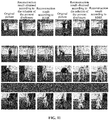
- the solution provided in the present disclosure and the leading human mesh recovery (HMR) solution are compared by using a public data set Human3.6M.
- the obtained three-dimensional human body reconstruction results are shown in FIG. 11 .
- the solution provided in the present disclosure and the leading human mesh recovery (HMR) solution are compared by using a public data set UP (including UP-3D and UPS1h).
- the obtained three-dimensional human body reconstruction results are shown in FIG. 12 .
- Accuracy is used for evaluating the degree of fitness between a reconstructed human body contour and an original human body contour
- F1-score indicates the accuracy and recall rate of the results
- Procrustes analysis - mean per joint position error indicates a prediction error of a joint position.
- the solution provided in the present disclosure can achieve the following beneficial effects. Both accuracy and a recall rate of the reconstruction result are improved, a degree of fitness between the reconstruction result and the human body image in the original picture becomes higher, a joint position error becomes smaller, and the reconstruction effect is better.
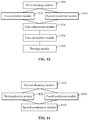
- FIG. 13 is a block diagram of an apparatus for training an SMPL parameter prediction model according to an embodiment of the present disclosure.
- the apparatus has functions of performing the foregoing method embodiments.
- the functions may be implemented by hardware, or may be implemented software executed by hardware.
- the apparatus may include: a first obtaining module 1310, a first predicting module 1320, a second prediction module 1330, a first construction module 1340, a loss calculation module 1350 and a training module 1360.
- the first obtaining module 1310 is configured to obtain a sample picture.
- the sample picture contains a human body image.
- the first prediction module 1320 is configured to input the sample picture into a pose parameter prediction model to obtain a predicted pose parameter.
- the predicted pose parameter is a parameter used for indicating a human body pose in the SMPL parameter prediction model.
- the second prediction module 1330 is configured to input the sample picture into a shape parameter prediction model to obtain a predicted shape parameter.
- the predicted shape parameter is a parameter used for indicating a human body shape in the SMPL parameter prediction model.
- the first construction module 1340 is configured to construct a three-dimensional human body model by using an SMPL model according to the predicted pose parameter and the predicted shape parameter.
- the loss calculation module 1350 is configured to calculate the model prediction losses according to the SMPL parameter prediction model and/or the three-dimensional human body model in combination with annotation information of the sample picture.
- the training module 1360 is configured to update the pose parameter prediction model and the shape parameter prediction model according to the model prediction losses.
- the loss calculation module 1350 includes: a first calculation unit, a second calculation unit and/or a third calculation unit.
- the first calculation unit is configured to calculate the first model prediction loss according to the SMPL parameter prediction model and annotated SMPL parameters in the annotation information.
- the annotated SMPL parameters include an annotated pose parameter and an annotated shape parameter.
- the second calculation unit is configured to calculate the second model prediction loss according to predicted joint coordinates of joints in the three-dimensional human body model and annotated joint coordinates of joints in the annotation information.
- the third calculation unit is configured to calculate the third model prediction loss according to a predicted two-dimensional human body contour of the three-dimensional human body model and an annotated two-dimensional human body contour in the annotation information.
- the first calculation unit is configured to: calculate a first Euclidean distance between the annotated pose parameter and the predicted pose parameter; calculate a second Euclidean distance between the annotated shape parameter and the predicted shape parameter; and determine the first model prediction loss according to the first Euclidean distance and the second Euclidean distance.
- the annotated joint coordinates include three-dimensional annotated joint coordinates and/or two-dimensional annotated joint coordinates.
- the second calculation unit is configured to: calculate third Euclidean distances between three-dimensional predicted joint coordinates of the joints in the three-dimensional human body model and the three-dimensional annotated joint coordinates; calculate fourth Euclidean distances between two-dimensional predicted joint coordinates of the joints in the three-dimensional human body model and the two-dimensional annotated joint coordinates; and calculate the second model prediction loss according to the third Euclidean distances and/or the fourth Euclidean distances.
- the second calculation unit is further configured to: determine the three-dimensional predicted joint coordinates of the joints in the three-dimensional human body model according to vertex coordinates of model vertices around the joints in the three-dimensional human body model; and calculate the third Euclidean distances between the three-dimensional predicted joint coordinates and the three-dimensional annotated joint coordinates.
- the pose parameter prediction model is further configured to output a projection parameter according to the inputted sample picture.
- the projection parameter is used for projecting points in a three-dimensional space into a two-dimensional space.
- the second calculation unit is further configured to: determine the three-dimensional predicted joint coordinates of the joints in the three-dimensional human body model according to vertex coordinates of model vertices around the joints in the three-dimensional human body model;project the three-dimensional predicted joint coordinates according to the projection parameter to obtain the two-dimensional predicted joint coordinates; and calculate the fourth Euclidean distances between the two-dimensional predicted joint coordinates and the two-dimensional annotated joint coordinates.
- the pose parameter prediction model is further configured to output a projection parameter according to the inputted sample picture.
- the projection parameter is used for projecting points in a three-dimensional space into a two-dimensional space.
- the third calculation unit is configured to: project model vertices in the three-dimensional human body model into a two-dimensional space according to the projection parameter, and generate the predicted two-dimensional human body contour; calculate a first contour loss and a second contour loss according to the predicted two-dimensional human body contour and the annotated two-dimensional human body contour; and determine the third model prediction loss according to the first contour loss and the second contour loss.
- the third calculation unit is configured to: calculate a first shortest distance from each contour point in the predicted two-dimensional human body contour to the annotated two-dimensional human body contour, calculate the first contour loss according to the first shortest distance corresponding to each contour point in the predicted two-dimensional human body contour; and calculate a second shortest distance from each contour point in the annotated two-dimensional human body contour to the predicted two-dimensional human body contour, and calculate the second contour loss according to the second shortest distance corresponding to each contour point in the annotated two-dimensional human body contour.
- the third calculation unit is configured to: determine a first weight of the contour point corresponding to each model vertex according to visibility of the joint to which the model vertex in the three-dimensional human body model belongs; and calculate the first contour loss according to the first weight and the first shortest distance corresponding to each contour point in the predicted two-dimensional human body contour. In a case that the joint to which a model vertex belongs is visible, the first weight of the contour point corresponding to the model vertex is 1; in a case that the joint to which a model vertex belongs is invisible, the first weight of the contour point corresponding to the model vertex is 0.
- the third calculation unit is configured to: determine the predicted joint coordinates of the joint to which each model vertex in the three-dimensional human body model belongs; determine a second weight of the contour point corresponding to each model vertex according to a fifth Euclidean distance between the predicted joint coordinates and the annotated joint coordinates, the second weight is negatively correlated with the fifth Euclidean distance; and calculate the first contour loss according to the second weight and the first shortest distance corresponding to each contour point in the predicted two-dimensional human body contour.
- the apparatus further includes a regular loss module, configured to perform regularization on the predicted shape parameter to obtain a fourth model prediction loss.
- the training module 1360 is further configured to: update the pose parameter prediction model and the shape parameter prediction model according to the fourth model prediction loss.
- FIG. 14 is a block diagram of a three-dimensional human body reconstruction apparatus according to an embodiment of the present disclosure.
- the apparatus has functions of performing the foregoing method embodiments.
- the functions may be implemented by hardware, or may be implemented by software executed by hardware.
- the apparatus may include: a second obtaining module 1410, a third prediction module 1420, a fourth prediction module 1430 and a second construction module 1440.
- the second obtaining module 1410 is configured to obtain a target picture.
- the target picture contains a human body image.
- the third prediction module 1420 is configured to input the target picture into a pose parameter prediction model to obtain a predicted pose parameter.
- the predicted pose parameter is a parameter used for indicating a human body pose in the SMPL parameter prediction model.
- the fourth prediction module 1430 is configured to input the target picture into a shape parameter prediction model to obtain a predicted shape parameter.
- the predicted shape parameter is a parameter used for indicating a human body shape in the SMPL parameter prediction model.
- the second construction module 1440 is configured to construct a target three-dimensional human body model by using an SMPL model according to the predicted pose parameter and the predicted shape parameter.
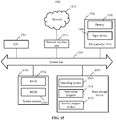
- FIG. 15 is a schematic structural diagram of a computer device according to an embodiment of the present disclosure.
- the computer device is configured to implement the method for training an SMPL parameter prediction model or the three-dimensional human body reconstruction method provided in the foregoing embodiments.
- the computer device 1500 includes a central processing unit (CPU) 1501, a system memory 1504 including a random access memory (RAM) 1502 and a read-only memory (ROM) 1503, and a system bus 1505 connecting the system memory 1504 and the CPU 1501.
- the server 1500 further includes a basic input/output system (I/O system) 1506 for transmitting information between components in a computer, and a mass storage device 1507 used for storing an operating system 1513, an application program 1514, and another program module 1515.
- I/O system basic input/output system
- the basic I/O system 1506 includes a display 1508 configured to display information; and an input device 1509 such as a mouse or a keyboard via which a user inputs information.
- the display 1508 and the input device 1509 are both connected to the CPU 1501 via an input/output controller 1510 connected to the system bus 1505.
- the basic I/O system 1506 may further include the input/output controller 1510 configured to receive and process inputs from multiple other devices, such as the keyboard, the mouse, or an electronic stylus. Similarly, the input/output controller 1510 further outputs results to a display screen, a printer or another type of an output device.
- the mass storage device 1507 is connected to the CPU 1501 via a mass storage controller (not shown) connected to the system bus 1505.
- the mass storage device 1507 and an associated computer-readable medium provide non-volatile storage for the computer device 1500. That is, the mass storage device 1507 may include a computer readable medium (not shown), such as a hard disk or a CD-ROM drive.
- the computer-readable medium may include a computer storage medium and a communication medium.
- the computer-storage medium includes volatile and non-volatile media, and removable and non-removable media implemented by using any method or technology for storing information such as computer-readable instructions, data structures, program modules, or other data.
- the computer-storage medium includes an RAM, an ROM, a EPROM , a EEPROM, a flash memory or another solid-state storage device, a CD-ROM, a DVD or another optical storage, a magnetic cassette, a magnetic tape, a magnetic disk storage or another magnetic storage device.
- the system memory 1504 and the mass storage device 1507 may be collectively referred to as a memory.
- the computer device 1500 may be connected, through a network such as the Internet, to a remote computer on the network for running. That is, the server 1500 may be connected to a network 1512 via a network interface unit 1511 connected to the system bus 1505, or may be connected to another type of network or a remote computer system via the network interface unit 1511.
- a network such as the Internet
- the server 1500 may be connected to a network 1512 via a network interface unit 1511 connected to the system bus 1505, or may be connected to another type of network or a remote computer system via the network interface unit 1511.
- the memory stores at least one instruction, at least one section of program, a code set, or an instruction set, and the at least one instruction, the at least one section of program, the code set, or the instruction set is configured to be executed by one or more processors to implement the functions of the method for training an SMPL parameter prediction model or the functions of the three-dimensional human body reconstruction method.
- a computer-readable storage medium is further provided in the embodiments of the present disclosure.
- the storage medium stores at least one instruction, at least one section of program, a code set, or an instruction set, and the at least one instruction, the at least one section of program, the code set, or the instruction set is loaded and executed by a processor to implement the method for training an SMPL parameter prediction model or the three-dimensional human body reconstruction method provided in the foregoing embodiments.
- the computer-readable storage medium may include: a read-only memory (ROM), a random access memory (RAM), a solid state drive (SSD), an optical disc, or the like.
- the RAM may include a resistance random access memory (ReRAM) and a dynamic random access memory (DRAM).
- ReRAM resistance random access memory
- DRAM dynamic random access memory
Landscapes
- Engineering & Computer Science (AREA)
- Theoretical Computer Science (AREA)
- Physics & Mathematics (AREA)
- General Physics & Mathematics (AREA)
- Computer Vision & Pattern Recognition (AREA)
- Evolutionary Computation (AREA)
- Software Systems (AREA)
- Artificial Intelligence (AREA)
- Health & Medical Sciences (AREA)
- Computing Systems (AREA)
- General Health & Medical Sciences (AREA)
- Data Mining & Analysis (AREA)
- Multimedia (AREA)
- General Engineering & Computer Science (AREA)
- Life Sciences & Earth Sciences (AREA)
- Databases & Information Systems (AREA)
- Medical Informatics (AREA)
- Biophysics (AREA)
- Computational Linguistics (AREA)
- Biomedical Technology (AREA)
- Molecular Biology (AREA)
- Mathematical Physics (AREA)
- Computer Graphics (AREA)
- Geometry (AREA)
- Human Computer Interaction (AREA)
- Bioinformatics & Cheminformatics (AREA)
- Bioinformatics & Computational Biology (AREA)
- Evolutionary Biology (AREA)
- Processing Or Creating Images (AREA)
Applications Claiming Priority (2)
| Application Number | Priority Date | Filing Date | Title |
|---|---|---|---|
| CN201910103414.XA CN109859296B (zh) | 2019-02-01 | 2019-02-01 | Smpl参数预测模型的训练方法、服务器及存储介质 |
| PCT/CN2020/072023 WO2020156148A1 (fr) | 2019-02-01 | 2020-01-14 | Procédé d'apprentissage d'un modèle de prévision de paramètre smpl, dispositif informatique, et support de stockage |
Publications (2)
| Publication Number | Publication Date |
|---|---|
| EP3920146A1 true EP3920146A1 (fr) | 2021-12-08 |
| EP3920146A4 EP3920146A4 (fr) | 2022-10-19 |
Family
ID=66897461
Family Applications (1)
| Application Number | Title | Priority Date | Filing Date |
|---|---|---|---|
| EP20748016.1A Pending EP3920146A4 (fr) | 2019-02-01 | 2020-01-14 | Procédé d'apprentissage d'un modèle de prévision de paramètre smpl, dispositif informatique, et support de stockage |
Country Status (4)
| Country | Link |
|---|---|
| US (1) | US12198374B2 (fr) |
| EP (1) | EP3920146A4 (fr) |
| CN (1) | CN109859296B (fr) |
| WO (1) | WO2020156148A1 (fr) |
Cited By (1)
| Publication number | Priority date | Publication date | Assignee | Title |
|---|---|---|---|---|
| EP4546292A4 (fr) * | 2022-07-20 | 2025-10-22 | Huawei Tech Co Ltd | Procédé et dispositif de traitement de données |
Families Citing this family (64)
| Publication number | Priority date | Publication date | Assignee | Title |
|---|---|---|---|---|
| CN109859296B (zh) * | 2019-02-01 | 2022-11-29 | 腾讯科技(深圳)有限公司 | Smpl参数预测模型的训练方法、服务器及存储介质 |
| US11423630B1 (en) | 2019-06-27 | 2022-08-23 | Amazon Technologies, Inc. | Three-dimensional body composition from two-dimensional images |
| CN110428493B (zh) * | 2019-07-12 | 2021-11-02 | 清华大学 | 基于网格形变的单图像人体三维重建方法及系统 |
| CN110415336B (zh) * | 2019-07-12 | 2021-12-14 | 清华大学 | 高精度人体体态重建方法及系统 |
| CN110599540B (zh) * | 2019-08-05 | 2022-06-17 | 清华大学 | 多视点相机下的实时三维人体体型与姿态重建方法及装置 |
| US11903730B1 (en) | 2019-09-25 | 2024-02-20 | Amazon Technologies, Inc. | Body fat measurements from a two-dimensional image |
| CN110838179B (zh) * | 2019-09-27 | 2024-01-19 | 深圳市三维人工智能科技有限公司 | 基于体测数据的人体建模方法、装置及电子设备 |
| CN110930436B (zh) * | 2019-11-27 | 2023-04-14 | 深圳市捷顺科技实业股份有限公司 | 一种目标跟踪方法及设备 |
| CN112419419B (zh) * | 2019-11-27 | 2025-05-16 | 上海联影智能医疗科技有限公司 | 用于人体姿势和形状估计的系统和方法 |
| CN111105489A (zh) * | 2019-12-23 | 2020-05-05 | 北京奇艺世纪科技有限公司 | 数据合成方法和装置、存储介质和电子装置 |
| US11526697B1 (en) * | 2020-03-10 | 2022-12-13 | Amazon Technologies, Inc. | Three-dimensional pose estimation |
| CN111047548B (zh) * | 2020-03-12 | 2020-07-03 | 腾讯科技(深圳)有限公司 | 姿态变换数据处理方法、装置、计算机设备和存储介质 |
| CN111401234B (zh) * | 2020-03-13 | 2022-06-14 | 深圳普罗米修斯视觉技术有限公司 | 三维人物模型构建方法、装置及存储介质 |
| CN113449570A (zh) * | 2020-03-27 | 2021-09-28 | 虹软科技股份有限公司 | 图像处理方法和装置 |
| CN111582036B (zh) * | 2020-04-09 | 2023-03-07 | 天津大学 | 可穿戴设备下基于形状和姿态的跨视角人物识别方法 |
| CN113689578B (zh) * | 2020-05-15 | 2024-01-02 | 杭州海康威视数字技术股份有限公司 | 一种人体数据集生成方法及装置 |
| CN111968217B (zh) * | 2020-05-18 | 2021-08-20 | 北京邮电大学 | 基于图片的smpl参数预测以及人体模型生成方法 |
| GB2598452B (en) * | 2020-06-22 | 2024-01-10 | Snap Inc | 3D object model reconstruction from 2D images |
| GB202009515D0 (en) * | 2020-06-22 | 2020-08-05 | Ariel Ai Ltd | 3D object model reconstruction from 2D images |
| CN111783609A (zh) * | 2020-06-28 | 2020-10-16 | 北京百度网讯科技有限公司 | 行人再识别的方法、装置、设备和计算机可读存储介质 |
| CN112116984B (zh) * | 2020-09-16 | 2023-08-29 | 无锡职业技术学院 | 面对肥胖大学生群体的肥胖分析干预方法 |
| CN112307940A (zh) * | 2020-10-28 | 2021-02-02 | 有半岛(北京)信息科技有限公司 | 模型训练方法、人体姿态检测方法、装置、设备及介质 |
| CN112270711B (zh) * | 2020-11-17 | 2023-08-04 | 北京百度网讯科技有限公司 | 模型训练以及姿态预测方法、装置、设备以及存储介质 |
| CN112714263B (zh) * | 2020-12-28 | 2023-06-20 | 北京字节跳动网络技术有限公司 | 视频生成方法、装置、设备及存储介质 |
| CN112652057B (zh) * | 2020-12-30 | 2024-05-07 | 北京百度网讯科技有限公司 | 生成人体三维模型的方法、装置、设备以及存储介质 |
| CN112819944B (zh) * | 2021-01-21 | 2022-09-27 | 魔珐(上海)信息科技有限公司 | 三维人体模型重建方法、装置、电子设备及存储介质 |
| CN112802161B (zh) * | 2021-01-27 | 2022-11-15 | 青岛联合创智科技有限公司 | 一种三维虚拟角色智能蒙皮方法 |
| CN112991515B (zh) * | 2021-02-26 | 2022-08-19 | 山东英信计算机技术有限公司 | 一种三维重建方法、装置及相关设备 |
| JP7528383B2 (ja) * | 2021-03-11 | 2024-08-05 | グーグル エルエルシー | 測地線距離を使用して画像における密な対応を予測するためのモデルをトレーニングするためのシステムおよび方法 |
| CN113079136B (zh) * | 2021-03-22 | 2022-11-15 | 广州虎牙科技有限公司 | 动作捕捉方法、装置、电子设备和计算机可读存储介质 |
| CN113096249B (zh) * | 2021-03-30 | 2023-02-17 | Oppo广东移动通信有限公司 | 训练顶点重建模型的方法、图像重建方法及电子设备 |
| CN113569627B (zh) * | 2021-06-11 | 2024-06-14 | 北京旷视科技有限公司 | 人体姿态预测模型训练方法、人体姿态预测方法及装置 |
| US11854146B1 (en) * | 2021-06-25 | 2023-12-26 | Amazon Technologies, Inc. | Three-dimensional body composition from two-dimensional images of a portion of a body |
| CN113610889B (zh) * | 2021-06-30 | 2024-01-16 | 奥比中光科技集团股份有限公司 | 一种人体三维模型获取方法、装置、智能终端及存储介质 |
| CN113487575B (zh) * | 2021-07-13 | 2024-01-16 | 中国信息通信研究院 | 用于训练医学影像检测模型的方法及装置、设备、可读存储介质 |
| CN113628322B (zh) * | 2021-07-26 | 2023-12-05 | 阿里巴巴(中国)有限公司 | 图像处理、ar显示与直播方法、设备及存储介质 |
| CN113592928B (zh) * | 2021-07-26 | 2025-03-07 | 北京小米移动软件有限公司 | 图像处理方法、图像处理装置及存储介质 |
| US11887252B1 (en) | 2021-08-25 | 2024-01-30 | Amazon Technologies, Inc. | Body model composition update from two-dimensional face images |
| US11861860B2 (en) | 2021-09-29 | 2024-01-02 | Amazon Technologies, Inc. | Body dimensions from two-dimensional body images |
| CN115994944B (zh) * | 2021-10-15 | 2025-03-14 | 腾讯科技(深圳)有限公司 | 关键点预测模型的训练方法、三维关键点预测方法及相关设备 |
| US11941738B2 (en) * | 2021-10-28 | 2024-03-26 | Shanghai United Imaging Intelligence Co., Ltd. | Systems and methods for personalized patient body modeling |
| CN114119861B (zh) * | 2021-11-05 | 2025-05-23 | 百果园技术(新加坡)有限公司 | 人体重构网络的训练、人体重构、试衣方法及相关装置 |
| KR20230079618A (ko) | 2021-11-29 | 2023-06-07 | 삼성전자주식회사 | 인체를 3차원 모델링하는 방법 및 장치 |
| CN114550023B (zh) * | 2021-12-31 | 2025-08-01 | 武汉中交交通工程有限责任公司 | 一种交通目标静态信息提取装置 |
| CN114373033B (zh) * | 2022-01-10 | 2024-08-20 | 腾讯科技(深圳)有限公司 | 图像处理方法、装置、设备、存储介质及计算机程序 |
| CN114581502B (zh) * | 2022-03-10 | 2024-11-15 | 西安电子科技大学 | 基于单目图像的三维人体模型联合重建方法、电子设备及存储介质 |
| CN114693853A (zh) * | 2022-04-06 | 2022-07-01 | 商汤集团有限公司 | 对象渲染方法、装置、电子设备及存储介质 |
| WO2023214093A1 (fr) * | 2022-05-06 | 2023-11-09 | MAX-PLANCK-Gesellschaft zur Förderung der Wissenschaften e.V. | Régression précise de forme corporelle 3d à l'aide de métrique et/ou d'attributs sémantiques |
| CN114998514B (zh) * | 2022-05-16 | 2024-12-24 | 聚好看科技股份有限公司 | 一种虚拟角色的生成方法及设备 |
| CN115049764B (zh) * | 2022-06-24 | 2024-01-16 | 苏州浪潮智能科技有限公司 | Smpl参数预测模型的训练方法、装置、设备及介质 |
| CN115393436B (zh) * | 2022-08-24 | 2025-11-11 | 杭州云栖智慧视通科技有限公司 | 基于相机参数约束的单帧图像3d人体姿态估计及重建方法 |
| US20240070987A1 (en) * | 2022-08-31 | 2024-02-29 | Nvidia Corporation | Pose transfer for three-dimensional characters using a learned shape code |
| US12594030B1 (en) | 2022-09-16 | 2026-04-07 | Amazon Technologies, Inc. | Regional body composition from two-dimensional color body images |
| US12318661B2 (en) | 2022-10-18 | 2025-06-03 | Tonal Systems, Inc. | Exercise guidance using multi-modal data |
| CN115496864B (zh) * | 2022-11-18 | 2023-04-07 | 苏州浪潮智能科技有限公司 | 模型构建方法、重建方法、装置、电子设备及存储介质 |
| US12183019B2 (en) * | 2022-11-28 | 2024-12-31 | Shanghai United Imaging Intelligence Co., Ltd. | Systems and methods for human model recovery |
| US12354211B2 (en) | 2023-03-07 | 2025-07-08 | Snap Inc. | Ray tracing between AR and real objects |
| CN117372657B (zh) * | 2023-07-12 | 2025-02-14 | 南京硅基智能科技有限公司 | 关键点旋转模型的训练方法及装置、电子设备和存储介质 |
| US20250022202A1 (en) * | 2023-07-14 | 2025-01-16 | Disney Enterprises, Inc. | Pose-aware neural inverse kinematics |
| US12524965B2 (en) * | 2023-09-25 | 2026-01-13 | Sony Group Corporation | Generation of three-dimensional (3D) blend-shapes from 3D scans using neural network |
| CN117115363B (zh) * | 2023-10-24 | 2024-03-26 | 清华大学 | 人体胸部平面估计方法和装置 |
| US20250356593A1 (en) * | 2024-05-20 | 2025-11-20 | Qualcomm Incorporated | Method and apparatus for three-dimensional human-body model estimation and refinement |
| CN119649410B (zh) * | 2025-02-11 | 2025-05-30 | 大连海事大学 | 一种基于三维重建和图像生成的行人重识别方法 |
| CN121074277B (zh) * | 2025-11-05 | 2026-02-03 | 西北妇女儿童医院 | 基于多模态的胎儿脑积水三维重建及手术规划方法 |
Family Cites Families (13)
| Publication number | Priority date | Publication date | Assignee | Title |
|---|---|---|---|---|
| EP4571665A3 (fr) * | 2015-06-24 | 2025-08-27 | Max-Planck-Gesellschaft zur Förderung der Wissenschaften e.V. | Modèle linéaire multi-personnes en peau |
| US10529137B1 (en) * | 2016-11-29 | 2020-01-07 | MAX-PLANCK-Gesellschaft zur Förderung der Wissenschaften e.V. | Machine learning systems and methods for augmenting images |
| US10679046B1 (en) * | 2016-11-29 | 2020-06-09 | MAX-PLANCK-Gesellschaft zur Förderung der Wissenschaften e.V. | Machine learning systems and methods of estimating body shape from images |
| CN108053437B (zh) * | 2017-11-29 | 2021-08-03 | 奥比中光科技集团股份有限公司 | 基于体态的三维模型获取方法及装置 |
| CN108594997B (zh) * | 2018-04-16 | 2020-04-21 | 腾讯科技(深圳)有限公司 | 手势骨架构建方法、装置、设备及存储介质 |
| CN108960036B (zh) * | 2018-04-27 | 2021-11-09 | 北京市商汤科技开发有限公司 | 三维人体姿态预测方法、装置、介质及设备 |
| CN108629801B (zh) * | 2018-05-14 | 2020-11-24 | 华南理工大学 | 一种视频序列的三维人体模型姿态与形状重构方法 |
| EP3579196A1 (fr) * | 2018-06-05 | 2019-12-11 | Cristian Sminchisescu | Dispositif, système et procédé de transfert d'habillement humain |
| CN108898087B (zh) * | 2018-06-22 | 2020-10-16 | 腾讯科技(深圳)有限公司 | 人脸关键点定位模型的训练方法、装置、设备及存储介质 |
| CN109285215B (zh) * | 2018-08-28 | 2021-01-08 | 腾讯科技(深圳)有限公司 | 一种人体三维模型重建方法、装置和存储介质 |
| CN109191554B (zh) * | 2018-09-04 | 2021-01-01 | 清华-伯克利深圳学院筹备办公室 | 一种超分辨图像重建方法、装置、终端和存储介质 |
| CN113168710B (zh) * | 2018-11-16 | 2024-12-17 | 斯纳普公司 | 三维对象重建 |
| CN109859296B (zh) * | 2019-02-01 | 2022-11-29 | 腾讯科技(深圳)有限公司 | Smpl参数预测模型的训练方法、服务器及存储介质 |
-
2019
- 2019-02-01 CN CN201910103414.XA patent/CN109859296B/zh active Active
-
2020
- 2020-01-14 WO PCT/CN2020/072023 patent/WO2020156148A1/fr not_active Ceased
- 2020-01-14 EP EP20748016.1A patent/EP3920146A4/fr active Pending
-
2021
- 2021-04-15 US US17/231,952 patent/US12198374B2/en active Active
Cited By (1)
| Publication number | Priority date | Publication date | Assignee | Title |
|---|---|---|---|---|
| EP4546292A4 (fr) * | 2022-07-20 | 2025-10-22 | Huawei Tech Co Ltd | Procédé et dispositif de traitement de données |
Also Published As
| Publication number | Publication date |
|---|---|
| US12198374B2 (en) | 2025-01-14 |
| EP3920146A4 (fr) | 2022-10-19 |
| CN109859296A (zh) | 2019-06-07 |
| WO2020156148A1 (fr) | 2020-08-06 |
| CN109859296B (zh) | 2022-11-29 |
| US20210232924A1 (en) | 2021-07-29 |
Similar Documents
| Publication | Publication Date | Title |
|---|---|---|
| US12198374B2 (en) | Method for training SMPL parameter prediction model, computer device, and storage medium | |
| CN112529999B (zh) | 一种参数估算模型的训练方法、装置、设备和存储介质 | |
| CN110599528B (zh) | 一种基于神经网络的无监督三维医学图像配准方法及系统 | |
| EP4036863B1 (fr) | Procédé et système de reconstruction de modèle de corps humain, et support de stockage associé | |
| CN110008835B (zh) | 视线预测方法、装置、系统和可读存储介质 | |
| EP4293567A1 (fr) | Procédé et appareil de reconstruction de face tridimensionnelle, dispositif, et support de stockage | |
| EP3674852A2 (fr) | Procédé et appareil comportant une estimation du regard | |
| JP2023545190A (ja) | 画像の視線補正方法、装置、電子機器、及びコンピュータプログラム | |
| JP2023548921A (ja) | 画像の視線補正方法、装置、電子機器、コンピュータ可読記憶媒体及びコンピュータプログラム | |
| WO2020042720A1 (fr) | Procédé de reconstruction de modèle tridimensionnel de corps humain, dispositif et support d'informations | |
| US20150213307A1 (en) | Rigid stabilization of facial expressions | |
| JP2023532285A (ja) | アモーダル中心予測のためのオブジェクト認識ニューラルネットワーク | |
| CN119295638B (zh) | 基于高斯泼溅的图像渲染方法、装置、设备、存储介质及程序产品 | |
| CN114429518B (zh) | 人脸模型重建方法、装置、设备和存储介质 | |
| WO2024198583A1 (fr) | Procédé et appareil de capture d'expression faciale basés sur une fusion de caractéristiques multi-échelles, et support | |
| WO2024103890A1 (fr) | Procédé et appareil de construction de modèle, procédé et appareil de reconstruction, et dispositif électronique et support de stockage lisible non volatil | |
| CN115359191A (zh) | 一种基于深度学习的物体三维重建系统 | |
| CN115471611B (zh) | 一种提升3dmm人脸模型视觉效果的方法 | |
| CN114202615A (zh) | 人脸表情的重建方法、装置、设备和存储介质 | |
| CN112785562A (zh) | 一种基于神经网络模型进行评估的系统和相关产品 | |
| CN114663579B (zh) | 孪生三维模型生成方法、装置、电子设备及存储介质 | |
| Sheng et al. | Optimizing photographic composition with deep reinforcement learning | |
| CN115359523B (zh) | 参数预测模型的训练方法及三维人脸重建方法、装置 | |
| CN114723720B (zh) | 一种人体背部棘突线检测方法和系统 | |
| JP4887491B2 (ja) | 医用画像処理方法及びその装置、プログラム |
Legal Events
| Date | Code | Title | Description |
|---|---|---|---|
| STAA | Information on the status of an ep patent application or granted ep patent |
Free format text: STATUS: THE INTERNATIONAL PUBLICATION HAS BEEN MADE |
|
| PUAI | Public reference made under article 153(3) epc to a published international application that has entered the european phase |
Free format text: ORIGINAL CODE: 0009012 |
|
| STAA | Information on the status of an ep patent application or granted ep patent |
Free format text: STATUS: REQUEST FOR EXAMINATION WAS MADE |
|
| 17P | Request for examination filed |
Effective date: 20210901 |
|
| AK | Designated contracting states |
Kind code of ref document: A1 Designated state(s): AL AT BE BG CH CY CZ DE DK EE ES FI FR GB GR HR HU IE IS IT LI LT LU LV MC MK MT NL NO PL PT RO RS SE SI SK SM TR |
|
| DAV | Request for validation of the european patent (deleted) | ||
| DAX | Request for extension of the european patent (deleted) | ||
| RAP3 | Party data changed (applicant data changed or rights of an application transferred) |
Owner name: TENCENT TECHNOLOGY (SHENZHEN) COMPANY LIMITED |
|
| A4 | Supplementary search report drawn up and despatched |
Effective date: 20220919 |
|
| RIC1 | Information provided on ipc code assigned before grant |
Ipc: G06T 13/40 20110101AFI20220913BHEP |