EP3920147A1 - Procédé et appareil pour générer un avatar virtuel, dispositif, support d'enregistrement et produit programme informatique - Google Patents
Procédé et appareil pour générer un avatar virtuel, dispositif, support d'enregistrement et produit programme informatique Download PDFInfo
- Publication number
- EP3920147A1 EP3920147A1 EP21161680.0A EP21161680A EP3920147A1 EP 3920147 A1 EP3920147 A1 EP 3920147A1 EP 21161680 A EP21161680 A EP 21161680A EP 3920147 A1 EP3920147 A1 EP 3920147A1
- Authority
- EP
- European Patent Office
- Prior art keywords
- face
- virtual
- feature templates
- virtual avatar
- target
- Prior art date
- Legal status (The legal status is an assumption and is not a legal conclusion. Google has not performed a legal analysis and makes no representation as to the accuracy of the status listed.)
- Withdrawn
Links
Images
Classifications
-
- G—PHYSICS
- G06—COMPUTING OR CALCULATING; COUNTING
- G06T—IMAGE DATA PROCESSING OR GENERATION, IN GENERAL
- G06T15/00—Three-dimensional [3D] image rendering
- G06T15/005—General purpose rendering architectures
-
- G—PHYSICS
- G06—COMPUTING OR CALCULATING; COUNTING
- G06T—IMAGE DATA PROCESSING OR GENERATION, IN GENERAL
- G06T17/00—Three-dimensional [3D] modelling for computer graphics
-
- G—PHYSICS
- G06—COMPUTING OR CALCULATING; COUNTING
- G06T—IMAGE DATA PROCESSING OR GENERATION, IN GENERAL
- G06T15/00—Three-dimensional [3D] image rendering
- G06T15/04—Texture mapping
-
- G—PHYSICS
- G06—COMPUTING OR CALCULATING; COUNTING
- G06T—IMAGE DATA PROCESSING OR GENERATION, IN GENERAL
- G06T17/00—Three-dimensional [3D] modelling for computer graphics
- G06T17/10—Constructive solid geometry [CSG] using solid primitives, e.g. cylinders, cubes
-
- G—PHYSICS
- G06—COMPUTING OR CALCULATING; COUNTING
- G06T—IMAGE DATA PROCESSING OR GENERATION, IN GENERAL
- G06T7/00—Image analysis
- G06T7/40—Analysis of texture
-
- G—PHYSICS
- G06—COMPUTING OR CALCULATING; COUNTING
- G06V—IMAGE OR VIDEO RECOGNITION OR UNDERSTANDING
- G06V10/00—Arrangements for image or video recognition or understanding
- G06V10/70—Arrangements for image or video recognition or understanding using pattern recognition or machine learning
- G06V10/74—Image or video pattern matching; Proximity measures in feature spaces
- G06V10/75—Organisation of the matching processes, e.g. simultaneous or sequential comparisons of image or video features; Coarse-fine approaches, e.g. multi-scale approaches; using context analysis; Selection of dictionaries
- G06V10/757—Matching configurations of points or features
-
- G—PHYSICS
- G06—COMPUTING OR CALCULATING; COUNTING
- G06V—IMAGE OR VIDEO RECOGNITION OR UNDERSTANDING
- G06V40/00—Recognition of biometric, human-related or animal-related patterns in image or video data
- G06V40/10—Human or animal bodies, e.g. vehicle occupants or pedestrians; Body parts, e.g. hands
- G06V40/16—Human faces, e.g. facial parts, sketches or expressions
- G06V40/161—Detection; Localisation; Normalisation
- G06V40/166—Detection; Localisation; Normalisation using acquisition arrangements
-
- G—PHYSICS
- G06—COMPUTING OR CALCULATING; COUNTING
- G06V—IMAGE OR VIDEO RECOGNITION OR UNDERSTANDING
- G06V40/00—Recognition of biometric, human-related or animal-related patterns in image or video data
- G06V40/10—Human or animal bodies, e.g. vehicle occupants or pedestrians; Body parts, e.g. hands
- G06V40/16—Human faces, e.g. facial parts, sketches or expressions
- G06V40/168—Feature extraction; Face representation
-
- G—PHYSICS
- G06—COMPUTING OR CALCULATING; COUNTING
- G06V—IMAGE OR VIDEO RECOGNITION OR UNDERSTANDING
- G06V40/00—Recognition of biometric, human-related or animal-related patterns in image or video data
- G06V40/10—Human or animal bodies, e.g. vehicle occupants or pedestrians; Body parts, e.g. hands
- G06V40/16—Human faces, e.g. facial parts, sketches or expressions
- G06V40/168—Feature extraction; Face representation
- G06V40/169—Holistic features and representations, i.e. based on the facial image taken as a whole
-
- G—PHYSICS
- G06—COMPUTING OR CALCULATING; COUNTING
- G06V—IMAGE OR VIDEO RECOGNITION OR UNDERSTANDING
- G06V40/00—Recognition of biometric, human-related or animal-related patterns in image or video data
- G06V40/10—Human or animal bodies, e.g. vehicle occupants or pedestrians; Body parts, e.g. hands
- G06V40/16—Human faces, e.g. facial parts, sketches or expressions
- G06V40/174—Facial expression recognition
Definitions
- Embodiments of the present disclosure relate to the field of deep learning and image technology, and specifically to the field of Internet software technology. Specifically, embodiments of the present disclosure provide a method and apparatus for generating a virtual avatar, a device, a storage medium, and a computer program product.
- a technology in which a virtual avatar similar to a face feature of a single face photograph is generated based on the single face photograph is a current hot topic of the technology research and product application in the field of three-dimensional face.
- a virtual avatar similar to the face in the photograph is determined from the preset virtual avatar.
- Embodiments of the present disclosure provide a method and apparatus for generating a virtual avatar, a device, a storage medium, and a computer program product.
- an embodiment of the present disclosure provides a method for generating a virtual avatar, the method including: determining a template coefficient of a target face in a to-be-processed image based on at least two real face feature templates; and determining a virtual avatar of the target face according to the template coefficient and at least two virtual face feature templates associated with the at least two real face feature templates.
- an embodiment of the present disclosure provides an apparatus for generating a virtual avatar, the apparatus including: a coefficient determining module, configured to determine a template coefficient of a target face in a to-be-processed image based on at least two real face feature templates; and an avatar determining module, configured to determine a virtual avatar of the target face according to the template coefficient and at least two virtual face feature templates associated with the at least two real face feature templates.
- an embodiment of the present disclosure provides an electronic device, the device electronic including: at least one processor; and a memory communicatively connected with the at least one processor, the memory storing instructions executable by the at least one processor, and the instructions, when executed by the at least one processor, causing the at least one processor to perform the method according to any embodiment of the present disclosure.
- an embodiment of the present disclosure provides a non-transitory computer readable storage medium storing computer instructions, the computer instructions being used to cause a computer to implement the method according to any embodiment of the present disclosure.
- an embodiment of the present disclosure provides a computer program product including a computer program, where the computer program, when executed by a processor, implements the method according to the first aspect.
- the simulation degree of the virtual avatar is improved while virtualizing the target face.
- Fig. 1 is a flowchart of a method for generating a virtual avatar provided according to the first embodiment of the present disclosure. This embodiment is applicable to a situation where a virtual avatar similar to a face feature in a face image is generated according to the face image.
- the method may be performed by an apparatus for generating a virtual avatar.
- the apparatus may be implemented by means of software and/or hardware.
- the method for generating a virtual avatar provided in embodiments of the present disclosure includes the following steps.
- a real face feature template refers to a template of a feature presented by an actual face.
- the template may be three-dimensional or two-dimensional.
- the real face feature template may be a feature template of a whole face, or may be a feature template of a partial face.
- the at least two real face feature templates may be used to describe at least one face feature.
- the face feature includes at least one of: a face expression, a face shape, or a five-sense organ.
- the face feature may be the face expression, the face shape, or the five-sense organ.
- the face feature may also be the face expression and the face shape, the face expression and the five-sense organ, or the face shape and the five-sense organ.
- the face feature may also be the face expression, the face shape and the five-sense organ.
- the face expression may include at least one of: excitement, joy, surprise, sadness, fear, shyness, disgust, anger, or the like.
- the face shape may include at least one of: a round face, a square face, a heart-shaped face, an oval face, a diamond face, or the like.
- the nose may include at least one of: a standard nose, a curved nose, a straight nose, or the like.
- the eye may include at least one of: a standard eye, a pendulous eye, a phoenix eye, a triangular eye, a hypertropia eye, a narrow eye, a round eye, or the like.
- the eyebrow may include at least one of: a natural eyebrow, a flat straight eyebrow, a willow eyebrow, an arched eyebrow, an upward eyebrow, or the like.
- the mouth may include at least one of: a standard mouth, a cherry mouth, a big mouth, a crooked mouth, or the like.
- the to-be-processed image is an image for which a virtual avatar is to be generated according to the target face in the image.
- the template coefficient refers to a fusion weight of a fused face having a similarity with the target face greater than a set similarity threshold obtained by fusing the at least two real face feature templates.
- the determining the template coefficient of the target face in the to-be-processed image based on the at least two real face feature templates may include: inputting the to-be-processed image into a pre-trained template coefficient identification model, and outputting the template coefficient of the target face.
- the determining the template coefficient of the target face in the to-be-processed image based on the at least two real face feature templates may further include: extracting a feature point of the target face in the to-be-processed image; and indexing the template coefficient of the target face from data according to the extracted feature point.
- a virtual face feature template refers to a template of a feature presented by a face of a certain style.
- the style may be at least one of: sweet and delicious, natural and elegant, romantic and appealing, charismatic and stylish, graceful and gentle, gorgeous and graceful, pure and concise, intellectual and calm, or modern.
- the virtual face feature template may be drawn by a cartoonist according to a real face feature template.
- Each real face feature template is associated with a virtual face feature template.
- the virtual avatar refers to an unreal look.
- the virtual avatar may be in a form of a three-dimensional model, or may be in a form of a two-dimensional image.
- the determining the virtual avatar of the target face according to the template coefficient and the at least two virtual face feature templates associated with the at least two real face feature templates includes: performing a weighted summation on a position of each feature point in the at least two real face feature templates according to the template coefficient; and using a weighted summation result as a position of a corresponding feature point in the virtual avatar to obtain the virtual avatar of the target face.
- the virtual avatar of the target face is determined according to the template coefficient and the at least two virtual face feature templates associated with the at least two real face feature templates. A more real description for the target face may be achieved through the fitting of the at least two real face feature templates. Therefore, according to embodiments of the present disclosure, it may be implemented that the simulation degree of the virtual avatar is improved while virtualizing the target face.
- Fig. 2 is a flowchart of a method for generating a virtual avatar provided according to the second embodiment of the present disclosure. This embodiment is a specific optimization for S120 on the basis of the above embodiment. Referring to Fig. 2 , the method for generating a virtual avatar provided in embodiments of the present disclosure includes the following steps.
- the virtual face image is a face image of a virtual avatar.
- the determining the virtual face image of the target face according to the template coefficient, the at least two virtual face feature templates and the to-be-processed image may include: determining a three-dimensional model of a virtual face according to the template coefficient and the at least two virtual face feature templates; extracting texture information of the target face from the to-be-processed image; and rendering the three-dimensional model of the virtual face according to the texture information of the target face, to obtain the virtual face image.
- the texture information includes at least one of color information or illumination information.
- the virtual face refers to a face of a virtual avatar.
- the virtual face image is filled into the target face area in the to-be-processed image using the face mask of the target face in the to-be-processed image to obtain an image of the virtual avatar, such that the virtual avatar has another user feature (e.g., a hairstyle and clothing) in addition to the target face, thereby further improving the similarity between the virtual avatar and the user to which the target face belongs.
- another user feature e.g., a hairstyle and clothing
- the method further includes: transforming the virtual face image according to a face key point of the target face to align the virtual face in the virtual face image with the target face.
- Fig. 3 is a flowchart of a method for generating a virtual avatar provided according to the third embodiment of the present disclosure. This embodiment is a specific optimization for S120 on the basis of the above embodiment. Referring to Fig. 3 , the method for generating a virtual avatar provided in embodiments of the present disclosure includes the following steps.
- the baseline face model refers to a face model as a baseline.
- the baseline refers to a calm state presented before people make different expressions.
- the adjusting the baseline face model according to the template coefficient and the at least two virtual face feature templates to obtain the virtual avatar of the target face may include: matching a face key point in each of the virtual face feature templates with a face key point in the baseline face model to obtain matching point pairs; performing a weighted summation on distances of at least two matching point pairs with associated face key point in the baseline face model according to the template coefficient; and translating the face key point in the baseline face model according to a weighted summation result to obtain the virtual avatar of the target face.
- x is a dimension coordinate of a feature point in the virtual avatar
- x 0 is a corresponding dimension coordinate of a corresponding feature point in the baseline face model
- x 1 is a corresponding dimension coordinate of a corresponding feature point in a virtual face feature template
- x 2 is a corresponding dimension coordinate of a corresponding feature point in another virtual face feature template
- a and b are template coefficients.
- the obtained virtual avatar of the target face is constrained through the baseline face model, which avoids the distortion of the virtual avatar and improves the accuracy of the virtual avatar.
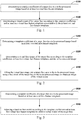
- Fig. 4 is a flowchart of a method for generating a virtual avatar provided according to the fourth embodiment of the present disclosure. This embodiment is a specific optimization for S110 on the basis of the above embodiment. Referring to Fig. 4 , the method for generating a virtual avatar provided in embodiments of the present disclosure includes the following steps.
- the first key point is a key point of the target face in the to-be-processed image.
- the second key point refers to a key point of a face in each of the real face feature templates.
- a face key point is a feature point representing a face key position.
- the face key point is a key point at a set face position.
- the set face position may be at least one of: a center point position of an eye, a nose tip position, or a mouth corner position.
- the association relationship between the first face key point and the second face key point may be established according to feature information describing a face.
- an association relationship is established between a first face key point and a second face key point that describe an eye corner position of a left eye in a face.
- the determining the template coefficient based on the association relationship and according to the first face key point and the second face key point includes: establishing an equation group based on the association relationship; and substituting the first face key point and the second face key point into the equation group to solve the template coefficient.
- the association relationship between the first face key point and the second face key point is determined, and the template coefficient is determined based on the association relationship and according to the first face key point and the second face key point.
- the determination of the template coefficient is implemented.
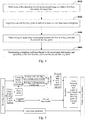
- Fig. 5 is a flowchart of a method for generating a virtual avatar provided according to the fifth embodiment of the present disclosure.
- the method for generating a virtual avatar provided in embodiments of the present disclosure includes: inputting a to-be-processed image into a face-shape expression coefficient solver and outputting a template coefficient of a target face and pose information of the target face; inputting the pose information of the target face and the to-be-processed image into a texture illumination estimator, and outputting an average color of the target face, an average color of a lip in the target face and illumination information; inputting the average color of the target face, the average color of the lip in the target face and the illumination information into a texture synthesizer, and outputting a target texture map; adjusting a baseline face model according to the template coefficient to obtain a three-dimensional model of a virtual face; rendering the three-dimensional model of the virtual face using the target texture map
- the face-shape expression coefficient solver may be implemented based on a perspective transformation (perspective-n-point, PNP) method of a face feature point, or may be implemented through a deep learning approach.
- PNP perspective transformation
- the template coefficient may include at least one of: an expression template coefficient, a face-shape template coefficient, or a five-sense-organ template coefficient.
- both the texture illumination estimator and the texture synthesizer may be implemented according to the deep learning approach.
- an expression template, a face-shape template and a five-sense-organ template of the virtual face are combined based on the template coefficient, to obtain the virtual avatar matching the face in the image.
- the simulation degree of the virtual avatar is improved while performing the virtualization.
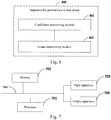
- Fig. 6 is a schematic structural diagram of an apparatus for generating a virtual avatar provided according to the sixth embodiment of the present disclosure.
- the apparatus for generating a virtual avatar provided in embodiments of the present disclosure includes a coefficient determining module 601 and an avatar determining module 602.
- the coefficient determining module 601 is configured to determine a template coefficient of a target face in a to-be-processed image based on at least two real face feature templates.
- the avatar determining module 602 is configured to determine a virtual avatar of the target face according to the template coefficient and at least two virtual face feature templates associated with the at least two real face feature templates.
- the virtual avatar of the target face is determined according to the template coefficient and the at least two virtual face feature templates associated with the at least two real face feature templates. A more real description for the target face may be achieved through the fitting of the at least two real face feature templates. Therefore, according to embodiments of the present disclosure, it may be implemented that the simulation degree of the virtual avatar is improved while virtualizing the target face.
- the avatar determining module includes: an image determining unit, configured to determine a virtual face image of the target face according to the template coefficient, the at least two virtual face feature templates and the to-be-processed image; an area filling unit, configured to fill the virtual face image into a target face area in the to-be-processed image using a face mask of the target face in the to-be-processed image; and an avatar obtaining unit, configured to use an image obtained through the filling as the virtual avatar.
- the image determining unit includes: a model determining subunit, configured to determine a three-dimensional model of a virtual face according to the template coefficient and the at least two virtual face feature templates; an information extracting subunit, configured to extract texture information of the target face from the to-be-processed image; and a rendering subunit, configured to render the three-dimensional model of the virtual face according to the texture information of the target face, to obtain the virtual face image.
- a model determining subunit configured to determine a three-dimensional model of a virtual face according to the template coefficient and the at least two virtual face feature templates
- an information extracting subunit configured to extract texture information of the target face from the to-be-processed image
- a rendering subunit configured to render the three-dimensional model of the virtual face according to the texture information of the target face, to obtain the virtual face image.
- the avatar determining module includes: a model adjusting unit, configured to adjust a baseline face model according to the template coefficient and the at least two virtual face feature templates; and an avatar determining unit, configured to use a new face model obtained through the adjusting as the virtual avatar of the target face.
- the model adjusting unit includes: a matching subunit, configured to match a face key point in each of the virtual face feature templates with a face key point in the baseline face model to obtain matching point pairs; a weighting subunit, configured to perform a weighted summation on distances of at least two matching point pairs with associated face key point in the baseline face model according to the template coefficient; and a translating subunit, configured to translate the face key point in the baseline face model according to a weighted summation result.
- a matching subunit configured to match a face key point in each of the virtual face feature templates with a face key point in the baseline face model to obtain matching point pairs
- a weighting subunit configured to perform a weighted summation on distances of at least two matching point pairs with associated face key point in the baseline face model according to the template coefficient
- a translating subunit configured to translate the face key point in the baseline face model according to a weighted summation result.
- the present disclosure further provides an electronic device and a readable storage medium.
- Fig. 7 is a block diagram of an electronic device of a method for generating a virtual avatar according to embodiments of the present disclosure.
- the electronic device is intended to represent various forms of digital computers such as a laptop computer, a desktop computer, a workstation, a personal digital assistant, a server, a blade server, a mainframe computer, and other appropriate computers.
- the electronic device may also represent various forms of mobile apparatuses such as a personal digital processor, a cellular telephone, a smart phone, a wearable device and other similar computing apparatuses.
- the parts shown herein, their connections and relationships, and their functions are only as examples, and not intended to limit implementations of the present disclosure as described and/or claimed herein.
- the electronic device includes: one or more processors 701, a memory 702, and interfaces for connecting various components, including high-speed interfaces and low-speed interfaces.
- the various components are connected to each other using different buses, and may be installed on a common motherboard or in other methods as needed.
- the processor may process instructions executed within the electronic device, including instructions stored in or on the memory to display graphic information of GUI on an external input/output apparatus (such as a display device coupled to the interface).
- a plurality of processors and/or a plurality of buses may be used together with a plurality of memories and a plurality of memories if desired.
- a plurality of electronic devices may be connected, and the devices provide some necessary operations, for example, as a server array, a set of blade servers, or a multi-processor system.
- one processor 701 is used as an example.
- the memory 702 is a non-transitory computer readable storage medium provided by embodiments of the present disclosure.
- the memory stores instructions executable by at least one processor, so that the at least one processor performs the method for generating a virtual avatar provided by embodiments of the present disclosure.
- the non-transitory computer readable storage medium of embodiments of the present disclosure stores computer instructions for causing a computer to perform the method for generating a virtual avatar provided by embodiments of the present disclosure.
- the memory 702 may be used to store non-transitory software programs, non-transitory computer executable programs and modules, such as program instructions/modules (for example, the coefficient determining module 601 and the avatar determining module 602 as shown in Fig. 6 ) corresponding to the method for generating a virtual avatar in embodiments of the present disclosure.
- the processor 701 executes the non-transitory software programs, instructions, and modules stored in the memory 702 to execute various functional applications and data processing of the server, that is, to implement the method for generating a virtual avatar in the foregoing method embodiments.
- the memory 702 may include a storage program area and a storage data area, where the storage program area may store an operating system and an application program required by at least one function; and the storage data area may store data created by the electronic device for performing the method for generating a virtual avatar.
- the memory 702 may include a high-speed random access memory, and may also include a non-transitory memory, such as at least one magnetic disk storage device, a flash memory device, or other non-transitory solid-state storage devices.
- the memory 702 may optionally include memories remotely provided with respect to the processor 701, and these remote memories may be connected to the electronic device suitable for performing the method for generating a virtual avatar through a network. Examples of the above network include but are not limited to the Internet, intranet, local area network, mobile communication network, and combinations thereof.
- the electronic device for performing the method for generating a virtual avatar may further include: an input apparatus 703 and an output apparatus 704.
- the processor 701, the memory 702, the input apparatus 703, and the output apparatus 704 may be connected through the bus or in other methods. In Fig. 7 , connection through the bus is used as an example.
- the input apparatus 703 may receive input digital or character information, and generate key signal inputs related to user settings and function control of the electronic device for performing the method for generating a virtual avatar, such as touch screen, keypad, mouse, trackpad, touchpad, pointing stick, one or more mouse buttons, trackball, joystick and other input apparatuses.
- the output apparatus 704 may include a display device, an auxiliary lighting apparatus (for example, LED), a tactile feedback apparatus (for example, a vibration motor), and the like.
- the display device may include, but is not limited to, a liquid crystal display (LCD), a light emitting diode (LED) display, and a plasma display. In some embodiments, the display device may be a touch screen.
- Various implementations of the systems and techniques described herein may be implemented in a digital electronic circuit system, an integrated circuit system, an application specific integrated circuit (ASIC), computer hardware, firmware, software, and/or combinations thereof. These various implementations may include the implementation in one or more computer programs.
- the one or more computer programs may be executed and/or interpreted on a programmable system including at least one programmable processor, and the programmable processor may be a dedicated or general-purpose programmable processor, may receive data and instructions from a storage system, at least one input apparatus and at least one output apparatus, and transmit the data and the instructions to the storage system, the at least one input apparatus and the at least one output apparatus.
- a computer having a display apparatus (e.g., a cathode ray tube (CRT)) or an LCD monitor) for displaying information to the user, and a keyboard and a pointing apparatus (e.g., a mouse or a track ball) by which the user may provide the input to the computer.
- a display apparatus e.g., a cathode ray tube (CRT)
- LCD monitor for displaying information to the user
- a keyboard and a pointing apparatus e.g., a mouse or a track ball
- Other kinds of apparatuses may also be used to provide the interaction with the user.
- a feedback provided to the user may be any form of sensory feedback (e.g., a visual feedback, an auditory feedback, or a tactile feedback); and an input from the user may be received in any form, including acoustic, speech, or tactile input.
- the systems and techniques described here may be implemented in a computing system (e.g., as a data server) that includes a backend part, implemented in a computing system (e.g., an application server) that includes a middleware part, implemented in a computing system (e.g., a user computer having a graphical user interface or a Web browser through which the user may interact with an implementation of the systems and techniques described here) that includes a frontend part, or implemented in a computing system that includes any combination of the backend part, the middleware part or the frontend part.
- the parts of the system may be interconnected by any form or medium of digital data communication (e.g., a communication network) . Examples of the communication network include a local area network (LAN), a wide area network (WAN) and Internet.
- the computer system may include a client and a server.
- the client and the server are generally far from each other and generally interact through the communication network.
- the relationship between the client and the server is generated by computer programs that run on the corresponding computer and have a client-server relationship with each other.
- the server may be a cloud server, also known as a cloud computing server or a cloud host, and is a host product in a cloud computing service system, so as to solve the defects of difficult management and weak service extendibility existing in conventional physical hosts and VPS services.
- the present disclosure further provides a computer program product including a computer program, where the computer program, when executed by a processor, implements the method for generating a virtual avatar.
- the simulation degree of the virtual avatar is improved while virtualizing the target face.
- Embodiments do not constitute a limitation to the scope of protection of the present disclosure. It should be appreciated by those skilled in the art that various modifications, combinations, sub-combinations and substitutions may be made depending on design requirements and other factors. Any modifications, equivalents and replacements, and improvements falling within the spirit and the principle of embodiments of the present disclosure should be included within the scope of protection of the present disclosure.
Landscapes
- Engineering & Computer Science (AREA)
- Physics & Mathematics (AREA)
- Theoretical Computer Science (AREA)
- General Physics & Mathematics (AREA)
- Health & Medical Sciences (AREA)
- Computer Graphics (AREA)
- Oral & Maxillofacial Surgery (AREA)
- Computer Vision & Pattern Recognition (AREA)
- General Health & Medical Sciences (AREA)
- Multimedia (AREA)
- Software Systems (AREA)
- Geometry (AREA)
- Human Computer Interaction (AREA)
- Evolutionary Computation (AREA)
- Databases & Information Systems (AREA)
- Medical Informatics (AREA)
- Computing Systems (AREA)
- Artificial Intelligence (AREA)
- Processing Or Creating Images (AREA)
- Image Processing (AREA)
- Image Generation (AREA)
- Image Analysis (AREA)
Applications Claiming Priority (1)
| Application Number | Priority Date | Filing Date | Title |
|---|---|---|---|
| CN202010490847.8A CN111695471B (zh) | 2020-06-02 | 2020-06-02 | 虚拟形象生成方法、装置、设备以及存储介质 |
Publications (1)
| Publication Number | Publication Date |
|---|---|
| EP3920147A1 true EP3920147A1 (fr) | 2021-12-08 |
Family
ID=72479236
Family Applications (1)
| Application Number | Title | Priority Date | Filing Date |
|---|---|---|---|
| EP21161680.0A Withdrawn EP3920147A1 (fr) | 2020-06-02 | 2021-03-10 | Procédé et appareil pour générer un avatar virtuel, dispositif, support d'enregistrement et produit programme informatique |
Country Status (5)
| Country | Link |
|---|---|
| US (1) | US11715259B2 (fr) |
| EP (1) | EP3920147A1 (fr) |
| JP (1) | JP7227292B2 (fr) |
| KR (1) | KR102612524B1 (fr) |
| CN (1) | CN111695471B (fr) |
Families Citing this family (48)
| Publication number | Priority date | Publication date | Assignee | Title |
|---|---|---|---|---|
| TWI439960B (zh) | 2010-04-07 | 2014-06-01 | 蘋果公司 | 虛擬使用者編輯環境 |
| US10009536B2 (en) | 2016-06-12 | 2018-06-26 | Apple Inc. | Applying a simulated optical effect based on data received from multiple camera sensors |
| CN110895439A (zh) | 2016-09-23 | 2020-03-20 | 苹果公司 | 头像创建和编辑 |
| DK180859B1 (en) | 2017-06-04 | 2022-05-23 | Apple Inc | USER INTERFACE CAMERA EFFECTS |
| US11722764B2 (en) * | 2018-05-07 | 2023-08-08 | Apple Inc. | Creative camera |
| DK201870374A1 (en) | 2018-05-07 | 2019-12-04 | Apple Inc. | AVATAR CREATION USER INTERFACE |
| US12033296B2 (en) | 2018-05-07 | 2024-07-09 | Apple Inc. | Avatar creation user interface |
| DK201870623A1 (en) | 2018-09-11 | 2020-04-15 | Apple Inc. | User interfaces for simulated depth effects |
| US11128792B2 (en) | 2018-09-28 | 2021-09-21 | Apple Inc. | Capturing and displaying images with multiple focal planes |
| US11321857B2 (en) | 2018-09-28 | 2022-05-03 | Apple Inc. | Displaying and editing images with depth information |
| US11107261B2 (en) | 2019-01-18 | 2021-08-31 | Apple Inc. | Virtual avatar animation based on facial feature movement |
| US11770601B2 (en) | 2019-05-06 | 2023-09-26 | Apple Inc. | User interfaces for capturing and managing visual media |
| US11706521B2 (en) | 2019-05-06 | 2023-07-18 | Apple Inc. | User interfaces for capturing and managing visual media |
| DK202070624A1 (en) | 2020-05-11 | 2022-01-04 | Apple Inc | User interfaces related to time |
| US11921998B2 (en) | 2020-05-11 | 2024-03-05 | Apple Inc. | Editing features of an avatar |
| US11054973B1 (en) | 2020-06-01 | 2021-07-06 | Apple Inc. | User interfaces for managing media |
| US11212449B1 (en) | 2020-09-25 | 2021-12-28 | Apple Inc. | User interfaces for media capture and management |
| CN112102462B (zh) * | 2020-09-27 | 2023-07-21 | 北京百度网讯科技有限公司 | 图像的渲染方法、装置 |
| CN112396691B (zh) * | 2020-11-23 | 2023-10-17 | 北京百度网讯科技有限公司 | 三维模型处理方法、装置、电子设备及存储介质 |
| CN112419485B (zh) * | 2020-11-25 | 2023-11-24 | 北京市商汤科技开发有限公司 | 一种人脸重建方法、装置、计算机设备及存储介质 |
| CN112396692B (zh) * | 2020-11-25 | 2023-11-28 | 北京市商汤科技开发有限公司 | 一种人脸重建方法、装置、计算机设备及存储介质 |
| CN112419454B (zh) * | 2020-11-25 | 2023-11-28 | 北京市商汤科技开发有限公司 | 一种人脸重建方法、装置、计算机设备及存储介质 |
| CN112396693B (zh) * | 2020-11-25 | 2024-09-13 | 上海商汤智能科技有限公司 | 一种面部信息的处理方法、装置、电子设备及存储介质 |
| CN112668408B (zh) * | 2020-12-11 | 2024-12-20 | 北京大米科技有限公司 | 人脸关键点生成方法、装置、存储介质及电子设备 |
| CN112668407B (zh) * | 2020-12-11 | 2024-11-26 | 北京大米科技有限公司 | 人脸关键点生成方法、装置、存储介质及电子设备 |
| CN112581573B (zh) * | 2020-12-15 | 2023-08-04 | 北京百度网讯科技有限公司 | 虚拟形象驱动方法、装置、设备、介质和程序产品 |
| CN112714337A (zh) * | 2020-12-22 | 2021-04-27 | 北京百度网讯科技有限公司 | 视频处理方法、装置、电子设备和存储介质 |
| CN112669422B (zh) * | 2021-01-07 | 2024-06-14 | 深圳追一科技有限公司 | 仿真3d数字人生成方法、装置、电子设备及存储介质 |
| KR102485774B1 (ko) | 2021-04-12 | 2023-01-09 | 주식회사 현대케피코 | 운전모드 변경에 따른 변속 제어 방법 및 시스템, 그리고 운전모드 변경에 따른 변속 제어 시스템을 포함하는 자동 변속기 차량 |
| CN113129450B (zh) * | 2021-04-21 | 2024-04-05 | 北京百度网讯科技有限公司 | 虚拟试衣方法、装置、电子设备和介质 |
| US11778339B2 (en) | 2021-04-30 | 2023-10-03 | Apple Inc. | User interfaces for altering visual media |
| US12112024B2 (en) | 2021-06-01 | 2024-10-08 | Apple Inc. | User interfaces for managing media styles |
| US11776190B2 (en) | 2021-06-04 | 2023-10-03 | Apple Inc. | Techniques for managing an avatar on a lock screen |
| CN113643412B (zh) * | 2021-07-14 | 2022-07-22 | 北京百度网讯科技有限公司 | 虚拟形象的生成方法、装置、电子设备及存储介质 |
| CN113409454B (zh) * | 2021-07-14 | 2022-05-13 | 北京百度网讯科技有限公司 | 人脸图像处理方法、装置、电子设备及存储介质 |
| CN113642481A (zh) * | 2021-08-17 | 2021-11-12 | 百度在线网络技术(北京)有限公司 | 识别方法、训练方法、装置、电子设备以及存储介质 |
| CN113808007B (zh) * | 2021-09-16 | 2022-07-19 | 北京百度网讯科技有限公司 | 调整虚拟脸部模型的方法、装置、电子设备及存储介质 |
| CN114049472A (zh) * | 2021-11-15 | 2022-02-15 | 北京百度网讯科技有限公司 | 三维模型调整方法、装置、电子设备、介质 |
| KR20230076004A (ko) | 2021-11-23 | 2023-05-31 | 주식회사 엘지유플러스 | 메타버스 제공 방법 및 장치 |
| CN114119935B (zh) * | 2021-11-29 | 2023-10-03 | 北京百度网讯科技有限公司 | 图像处理方法和装置 |
| CN114202597B (zh) * | 2021-12-07 | 2023-02-03 | 北京百度网讯科技有限公司 | 图像处理方法及装置、设备、介质和产品 |
| CN114187405B (zh) * | 2021-12-07 | 2023-05-05 | 北京百度网讯科技有限公司 | 确定虚拟形象的方法及装置、设备、介质和产品 |
| CN114758042B (zh) * | 2022-06-14 | 2022-09-02 | 深圳智华科技发展有限公司 | 新的虚拟仿真引擎、虚拟仿真方法以及装置 |
| US12287913B2 (en) | 2022-09-06 | 2025-04-29 | Apple Inc. | Devices, methods, and graphical user interfaces for controlling avatars within three-dimensional environments |
| CN115437538A (zh) * | 2022-09-23 | 2022-12-06 | 上海喜马拉雅科技有限公司 | 虚拟形象表情控制方法及相关装置 |
| CN115393486B (zh) * | 2022-10-27 | 2023-03-24 | 科大讯飞股份有限公司 | 虚拟形象的生成方法、装置、设备及存储介质 |
| CN115953813B (zh) * | 2022-12-19 | 2024-01-30 | 北京字跳网络技术有限公司 | 一种表情驱动方法、装置、设备及存储介质 |
| CN118570588B (zh) * | 2024-08-01 | 2024-09-27 | 腾讯科技(深圳)有限公司 | 图像生成方法、装置、设备以及存储介质 |
Citations (4)
| Publication number | Priority date | Publication date | Assignee | Title |
|---|---|---|---|---|
| US20110234581A1 (en) * | 2010-03-28 | 2011-09-29 | AR (ES) Technologies Ltd. | Methods and systems for three-dimensional rendering of a virtual augmented replica of a product image merged with a model image of a human-body feature |
| WO2012139276A1 (fr) * | 2011-04-11 | 2012-10-18 | Intel Corporation | Techniques d'expression faciale d'avatar |
| US20130235045A1 (en) * | 2012-03-06 | 2013-09-12 | Mixamo, Inc. | Systems and methods for creating and distributing modifiable animated video messages |
| US20180374242A1 (en) * | 2016-12-01 | 2018-12-27 | Pinscreen, Inc. | Avatar digitization from a single image for real-time rendering |
Family Cites Families (10)
| Publication number | Priority date | Publication date | Assignee | Title |
|---|---|---|---|---|
| KR100745981B1 (ko) * | 2006-01-13 | 2007-08-06 | 삼성전자주식회사 | 보상적 특징에 기반한 확장형 얼굴 인식 방법 및 장치 |
| JP5795979B2 (ja) * | 2012-03-15 | 2015-10-14 | 株式会社東芝 | 人物画像処理装置、及び人物画像処理方法 |
| CN104794733B (zh) * | 2014-01-20 | 2018-05-08 | 株式会社理光 | 对象跟踪方法和装置 |
| US9799096B1 (en) * | 2014-07-08 | 2017-10-24 | Carnegie Mellon University | System and method for processing video to provide facial de-identification |
| CN108140020A (zh) * | 2015-07-30 | 2018-06-08 | 英特尔公司 | 情感增强型化身动画化 |
| US10733780B2 (en) * | 2016-10-31 | 2020-08-04 | Dg Holdings, Inc. | Portable and persistent virtual identity systems and methods |
| CN109308727B (zh) * | 2018-09-07 | 2020-11-10 | 腾讯科技(深圳)有限公司 | 虚拟形象模型生成方法、装置及存储介质 |
| CN109377544B (zh) * | 2018-11-30 | 2022-12-23 | 腾讯科技(深圳)有限公司 | 一种人脸三维图像生成方法、装置和可读介质 |
| CN110688948B (zh) * | 2019-09-26 | 2022-11-15 | 北京百度网讯科技有限公司 | 视频中人脸性别变换方法、装置、电子设备和存储介质 |
| CN110766777B (zh) * | 2019-10-31 | 2023-09-29 | 北京字节跳动网络技术有限公司 | 虚拟形象的生成方法、装置、电子设备及存储介质 |
-
2020
- 2020-06-02 CN CN202010490847.8A patent/CN111695471B/zh active Active
-
2021
- 2021-03-10 EP EP21161680.0A patent/EP3920147A1/fr not_active Withdrawn
- 2021-03-10 US US17/249,714 patent/US11715259B2/en active Active
- 2021-03-11 JP JP2021039147A patent/JP7227292B2/ja active Active
- 2021-03-23 KR KR1020210037332A patent/KR102612524B1/ko active Active
Patent Citations (4)
| Publication number | Priority date | Publication date | Assignee | Title |
|---|---|---|---|---|
| US20110234581A1 (en) * | 2010-03-28 | 2011-09-29 | AR (ES) Technologies Ltd. | Methods and systems for three-dimensional rendering of a virtual augmented replica of a product image merged with a model image of a human-body feature |
| WO2012139276A1 (fr) * | 2011-04-11 | 2012-10-18 | Intel Corporation | Techniques d'expression faciale d'avatar |
| US20130235045A1 (en) * | 2012-03-06 | 2013-09-12 | Mixamo, Inc. | Systems and methods for creating and distributing modifiable animated video messages |
| US20180374242A1 (en) * | 2016-12-01 | 2018-12-27 | Pinscreen, Inc. | Avatar digitization from a single image for real-time rendering |
Non-Patent Citations (1)
| Title |
|---|
| DIEGO THOMAS: "Real-time Simultaneous 3D Head Modeling and Facial Motion Capture with an RGB-D camera", ARXIV.ORG, CORNELL UNIVERSITY LIBRARY, 201 OLIN LIBRARY CORNELL UNIVERSITY ITHACA, NY 14853, 22 April 2020 (2020-04-22), XP081650358 * |
Also Published As
| Publication number | Publication date |
|---|---|
| US11715259B2 (en) | 2023-08-01 |
| US20210375042A1 (en) | 2021-12-02 |
| CN111695471B (zh) | 2023-06-27 |
| CN111695471A (zh) | 2020-09-22 |
| JP7227292B2 (ja) | 2023-02-21 |
| KR20210047283A (ko) | 2021-04-29 |
| KR102612524B1 (ko) | 2023-12-11 |
| JP2021192220A (ja) | 2021-12-16 |
Similar Documents
| Publication | Publication Date | Title |
|---|---|---|
| US11715259B2 (en) | Method and apparatus for generating virtual avatar, device and storage medium | |
| CN113643412B (zh) | 虚拟形象的生成方法、装置、电子设备及存储介质 | |
| JP7258066B2 (ja) | 測位方法、測位装置及び電子機器 | |
| EP3929875A1 (fr) | Procédé et appareil de création de modèle d'édition d'images | |
| US20210383605A1 (en) | Driving method and apparatus of an avatar, device and medium | |
| CN111860167B (zh) | 人脸融合模型获取及人脸融合方法、装置及存储介质 | |
| CN113407850B (zh) | 一种虚拟形象的确定和获取方法、装置以及电子设备 | |
| CN111968203B (zh) | 动画驱动方法、装置、电子设备及存储介质 | |
| CN114723888B (zh) | 三维发丝模型生成方法、装置、设备、存储介质及产品 | |
| CN114549695B (zh) | 图像生成方法、装置、电子设备及可读存储介质 | |
| CN112581573B (zh) | 虚拟形象驱动方法、装置、设备、介质和程序产品 | |
| CN113902956B (zh) | 融合模型的训练方法、图像融合方法、装置、设备及介质 | |
| CN114549710A (zh) | 一种虚拟形象的生成方法、装置、电子设备及存储介质 | |
| CN116309983A (zh) | 虚拟人物模型的训练方法、生成方法、装置和电子设备 | |
| CN114266937A (zh) | 模型训练、图像处理方法,装置,设备以及存储介质 | |
| CN112215243A (zh) | 图像特征提取方法、装置、设备及存储介质 | |
| CN114120412B (zh) | 图像处理方法和装置 | |
| CN115082298A (zh) | 图像生成方法、装置、电子设备以及存储介质 | |
| CN112562043B (zh) | 图像处理方法、装置和电子设备 | |
| CN112116548A (zh) | 人脸图像的合成方法、装置 | |
| CN115345981B (zh) | 图像处理方法、装置、电子设备和存储介质 | |
| CN115131562B (zh) | 三维场景分割方法、模型训练方法、装置和电子设备 | |
| CN119006953A (zh) | 模型训练方法、人脸生成方法及装置 | |
| CN116611990A (zh) | 一种显示方法、装置、设备及存储介质 | |
| CN116152412A (zh) | 模型渲染方法、装置以及设备 |
Legal Events
| Date | Code | Title | Description |
|---|---|---|---|
| PUAI | Public reference made under article 153(3) epc to a published international application that has entered the european phase |
Free format text: ORIGINAL CODE: 0009012 |
|
| STAA | Information on the status of an ep patent application or granted ep patent |
Free format text: STATUS: REQUEST FOR EXAMINATION WAS MADE |
|
| 17P | Request for examination filed |
Effective date: 20210310 |
|
| AK | Designated contracting states |
Kind code of ref document: A1 Designated state(s): AL AT BE BG CH CY CZ DE DK EE ES FI FR GB GR HR HU IE IS IT LI LT LU LV MC MK MT NL NO PL PT RO RS SE SI SK SM TR |
|
| B565 | Issuance of search results under rule 164(2) epc |
Effective date: 20210928 |
|
| STAA | Information on the status of an ep patent application or granted ep patent |
Free format text: STATUS: EXAMINATION IS IN PROGRESS |
|
| 17Q | First examination report despatched |
Effective date: 20220830 |
|
| STAA | Information on the status of an ep patent application or granted ep patent |
Free format text: STATUS: THE APPLICATION IS DEEMED TO BE WITHDRAWN |
|
| 18D | Application deemed to be withdrawn |
Effective date: 20230809 |