EP3922232B1 - System zur identifikation von arzneimitteln, vorrichtung zur identifikation von arzneimitteln, verfahren zur identifikation von arzneimitteln und programm - Google Patents
System zur identifikation von arzneimitteln, vorrichtung zur identifikation von arzneimitteln, verfahren zur identifikation von arzneimitteln und programm Download PDFInfo
- Publication number
- EP3922232B1 EP3922232B1 EP20752369.7A EP20752369A EP3922232B1 EP 3922232 B1 EP3922232 B1 EP 3922232B1 EP 20752369 A EP20752369 A EP 20752369A EP 3922232 B1 EP3922232 B1 EP 3922232B1
- Authority
- EP
- European Patent Office
- Prior art keywords
- medicine
- image
- images
- unit
- display
- Prior art date
- Legal status (The legal status is an assumption and is not a legal conclusion. Google has not performed a legal analysis and makes no representation as to the accuracy of the status listed.)
- Active
Links
Images







Classifications
-
- G—PHYSICS
- G06—COMPUTING OR CALCULATING; COUNTING
- G06V—IMAGE OR VIDEO RECOGNITION OR UNDERSTANDING
- G06V20/00—Scenes; Scene-specific elements
- G06V20/10—Terrestrial scenes
-
- A—HUMAN NECESSITIES
- A61—MEDICAL OR VETERINARY SCIENCE; HYGIENE
- A61J—CONTAINERS SPECIALLY ADAPTED FOR MEDICAL OR PHARMACEUTICAL PURPOSES; DEVICES OR METHODS SPECIALLY ADAPTED FOR BRINGING PHARMACEUTICAL PRODUCTS INTO PARTICULAR PHYSICAL OR ADMINISTERING FORMS; DEVICES FOR ADMINISTERING FOOD OR MEDICINES ORALLY; BABY COMFORTERS; DEVICES FOR RECEIVING SPITTLE
- A61J7/00—Devices for administering medicines orally, e.g. spoons; Pill counting devices; Arrangements for time indication or reminder for taking medicine
- A61J7/0069—Trays for holding or distributing medicines
-
- G—PHYSICS
- G06—COMPUTING OR CALCULATING; COUNTING
- G06T—IMAGE DATA PROCESSING OR GENERATION, IN GENERAL
- G06T7/00—Image analysis
-
- G—PHYSICS
- G06—COMPUTING OR CALCULATING; COUNTING
- G06T—IMAGE DATA PROCESSING OR GENERATION, IN GENERAL
- G06T7/00—Image analysis
- G06T7/10—Segmentation; Edge detection
- G06T7/13—Edge detection
-
- G—PHYSICS
- G06—COMPUTING OR CALCULATING; COUNTING
- G06T—IMAGE DATA PROCESSING OR GENERATION, IN GENERAL
- G06T7/00—Image analysis
- G06T7/10—Segmentation; Edge detection
- G06T7/174—Segmentation; Edge detection involving the use of two or more images
-
- G—PHYSICS
- G06—COMPUTING OR CALCULATING; COUNTING
- G06V—IMAGE OR VIDEO RECOGNITION OR UNDERSTANDING
- G06V20/00—Scenes; Scene-specific elements
- G06V20/60—Type of objects
- G06V20/66—Trinkets, e.g. shirt buttons or jewellery items
-
- G—PHYSICS
- G16—INFORMATION AND COMMUNICATION TECHNOLOGY [ICT] SPECIALLY ADAPTED FOR SPECIFIC APPLICATION FIELDS
- G16H—HEALTHCARE INFORMATICS, i.e. INFORMATION AND COMMUNICATION TECHNOLOGY [ICT] SPECIALLY ADAPTED FOR THE HANDLING OR PROCESSING OF MEDICAL OR HEALTHCARE DATA
- G16H40/00—ICT specially adapted for the management or administration of healthcare resources or facilities; ICT specially adapted for the management or operation of medical equipment or devices
- G16H40/60—ICT specially adapted for the management or administration of healthcare resources or facilities; ICT specially adapted for the management or operation of medical equipment or devices for the operation of medical equipment or devices
- G16H40/63—ICT specially adapted for the management or administration of healthcare resources or facilities; ICT specially adapted for the management or operation of medical equipment or devices for the operation of medical equipment or devices for local operation
-
- A—HUMAN NECESSITIES
- A61—MEDICAL OR VETERINARY SCIENCE; HYGIENE
- A61J—CONTAINERS SPECIALLY ADAPTED FOR MEDICAL OR PHARMACEUTICAL PURPOSES; DEVICES OR METHODS SPECIALLY ADAPTED FOR BRINGING PHARMACEUTICAL PRODUCTS INTO PARTICULAR PHYSICAL OR ADMINISTERING FORMS; DEVICES FOR ADMINISTERING FOOD OR MEDICINES ORALLY; BABY COMFORTERS; DEVICES FOR RECEIVING SPITTLE
- A61J2205/00—General identification or selection means
- A61J2205/40—General identification or selection means by shape or form, e.g. by using shape recognition
-
- A—HUMAN NECESSITIES
- A61—MEDICAL OR VETERINARY SCIENCE; HYGIENE
- A61J—CONTAINERS SPECIALLY ADAPTED FOR MEDICAL OR PHARMACEUTICAL PURPOSES; DEVICES OR METHODS SPECIALLY ADAPTED FOR BRINGING PHARMACEUTICAL PRODUCTS INTO PARTICULAR PHYSICAL OR ADMINISTERING FORMS; DEVICES FOR ADMINISTERING FOOD OR MEDICINES ORALLY; BABY COMFORTERS; DEVICES FOR RECEIVING SPITTLE
- A61J2205/00—General identification or selection means
- A61J2205/60—General identification or selection means using magnetic or electronic identifications, e.g. chips, RFID, electronic tags
-
- G—PHYSICS
- G06—COMPUTING OR CALCULATING; COUNTING
- G06T—IMAGE DATA PROCESSING OR GENERATION, IN GENERAL
- G06T2207/00—Indexing scheme for image analysis or image enhancement
- G06T2207/10—Image acquisition modality
- G06T2207/10141—Special mode during image acquisition
- G06T2207/10152—Varying illumination
-
- G—PHYSICS
- G16—INFORMATION AND COMMUNICATION TECHNOLOGY [ICT] SPECIALLY ADAPTED FOR SPECIFIC APPLICATION FIELDS
- G16H—HEALTHCARE INFORMATICS, i.e. INFORMATION AND COMMUNICATION TECHNOLOGY [ICT] SPECIALLY ADAPTED FOR THE HANDLING OR PROCESSING OF MEDICAL OR HEALTHCARE DATA
- G16H20/00—ICT specially adapted for therapies or health-improving plans, e.g. for handling prescriptions, for steering therapy or for monitoring patient compliance
- G16H20/10—ICT specially adapted for therapies or health-improving plans, e.g. for handling prescriptions, for steering therapy or for monitoring patient compliance relating to drugs or medications, e.g. for ensuring correct administration to patients
Definitions
- the present invention relates to a medicine identification system, a medicine identification device, a medicine identification method, and a program, and in particular to a technology of identifying a medicine to be identified by means of a simple device.
- Patent Literature 1 a system has been proposed that acquires an image for identifying a tablet (medicine) by using a mobile device such as a smartphone including a camera, and identifies the medicine based on the image thus acquired.
- the surface (surface of a tray on which the medicine is to be placed) disclosed in Patent Literature 1 includes a rectangular background region in which the medicine is to be placed, and a boundary region surrounding the background region.
- the background region has a high-density colored checker board pattern to permit distinction between the background and the medicine, while the boundary region has a color property of which color is known (white).
- the boundary region four regions corresponding to four corners of the rectangular background region
- four known targets (yellow circle) are provided, with an anchor point being provided at the center of each of the targets.
- the four targets provided in the boundary region have a function of assisting a user in imaging the medicine with the mobile device, by allowing the mobile device to be in the preset position and attitude.
- target fields corresponding to the four targets are displayed in advance.
- imaging of the medicine while standardizing the size and shape thereof is enabled through determining the position and attitude of the mobile device such that the four targets with the anchor points are properly positioned in the four target fields displayed.
- Patent Literature 1 corrects the color of a pixel belonging to the medicine to produce the color of the pixel captured under an ideal lighting condition, based on the known color of the boundary region.
- Patent Literature 1 Japanese Translation of PCT International Application Publication No. 2015-535108 . Further relevant documents: Document US 2014/119644 A1 discloses a mobile medicine identification device and document JP 2017 194413 A discloses a drug recognition system that features illumination units that can illuminate a medication in question from a plurality of illumination directions. However, none of the documents discloses the generation of a plurality of illumination directions for image capture by changing of the light-emitting region on the display of a mobile terminal device.
- Patent Literature 1 discloses identifying a medicine based on the shape, size, color, and imprint (embossed or printed character(s) and numeral(s)), but does not provide any disclosure regarding an emphasis process for emphasizing an embossed mark or a printed mark.
- Patent Literature 1 also discloses a system for assisting adjustment of the position and attitude of a camera-equipped mobile device so as to enable imaging of the medicine with the mobile device while standardizing the shape and size thereof; however, there is a problem of requiring a user to adjust the position and attitude of the mobile device before imaging, resulting in cumbersome imaging.
- the present invention has been made in view of the aforementioned circumstances, and an objective of the present invention is to provide a medicine identification system, a medicine identification device, a medicine identification method, and a program that enable favorable identification of a medicine by means of a simple device employing a camera-equipped mobile terminal.
- a medicine identification system includes: a tray configured to have an indicator used for standardizing size and shape of a medicine, on which a medicine to be identified is to be placed; a camera-equipped mobile terminal configured to include a camera on the same face as a display; and a medicine identification device configured to identify the medicine based on an image taken by the camera-equipped mobile terminal, in which the camera-equipped mobile terminal is provided with: a display control unit configured to, upon reception of an instruction input for medicine identification, change a light-emitting region on the display and change for a plurality of times an illuminating direction with respect to the medicine placed on the tray; and an image acquiring unit configured to cause the camera to image for a plurality of times the medicine with different illuminating directions through changing of the light-emitting region on the display, to thereby acquire a plurality of first images of the medicine, and the medicine identification device is provided with: a standardizing unit configured to standardize each of the plurality of first
- the camera-equipped mobile terminal images the medicine placed on the tray together with the indicator provided on the tray.
- the display on the same face as the camera is used as illuminating means.
- a plurality of images (first images) are acquired by causing the camera to image for a plurality of times the medicine with different illuminating directions, in such a way that an illuminating direction with respect to the medicine placed on the tray is changed for a plurality of times through changing of the light-emitting region on the display.
- the standardizing unit standardizes each of the plurality of first images based on the indicator captured in the plurality of first images, thereby making the first images independent of the position and attitude of the camera during imaging.
- the image extracting unit extracts a medicine region image from each of the plurality of first images thus standardized, and the image processing unit generates, based on a plurality of medicine region images thus extracted, an image (second image) having undergone an emphasis process for emphasizing an embossed mark or a printed mark provided on the medicine.
- the second image shows the size and shape of the medicine, and also has an embossed mark or a printed mark provided on the medicine being emphasized, thereby enabling favorable identification of the medicine.
- the one aspect of the present invention eliminates the need for dedicated lighting device, camera, and the like, and thus enables identification of a medicine by means of a simple device.
- the image processing unit acquires a plurality of edge images from the plurality of medicine region images thus extracted by using edge extraction filters of respective directions corresponding to the illuminating directions, and generates the second image by using the plurality of edge images.
- the tray has a grid-shaped partition of which size and shape are known; the medicine is placed on a placement face partitioned by the grid-shaped partition; and the grid-shaped partition serves also as the indicator.
- color of the placement face of the tray for the medicine partitioned by the grid-shaped partition is different in at least one of hue, brightness, and saturation, for every placement face or for every plural placement faces. It is preferable to place the medicine by choosing the placement face of which color is different from the color of the medicine in one of hue, brightness, and saturation. This is for facilitating distinction between the medicine region images and the placement face (background), and in turn making it easy to trim the medicine region images by the image extracting unit.
- the image acquiring unit acquires, as the plurality of first images, three or more images with different illuminating directions and an image in a state in which the display is turned off; and the medicine identification device is provided with a generating unit configured to subtract the image in a state in which the display is turned off from each of the three or more images, to generate the plurality of first images with elimination of influence of ambient light.
- the medicine region images can be reproduced with the original color of the medicine without the influence of ambient light.
- the display includes a polarizing plate
- the camera includes a polarizing plate installed in front of an imaging lens, a polarization direction of the polarizing plate being different by 90° from a polarization direction of light emitted from the display. This enables an image to be taken with elimination of a specular reflection component.
- the medicine identifying unit includes: a feature quantity calculating unit configured to calculate a feature quantity of the second image; and an inferring unit configured to infer which one of registered medicines resembles the medicine based on the feature quantity of the second image.
- the feature quantity calculating unit and the inferring unit include a learned convolutional neural network obtained through learning of each of the registered medicines by using as teacher data the second images corresponding to the registered medicines and medicine identification information for identifying the registered medicines.
- the medicine identifying unit identifies the medicine through template matching between images of the registered medicines narrowed down by inference by the inferring unit and the second image.
- the tray serves also as a protection cover for protecting the camera-equipped mobile terminal.
- a medicine identification device for identifying a medicine to be identified based on an image taken by a camera-equipped mobile terminal, in which the camera-equipped mobile terminal is configured to: include a camera on the same face as a display; when imaging the medicine to be identified placed on a tray having an indicator used for standardizing size and shape of a medicine, change a light-emitting region on the display; change for a plurality of times an illuminating direction with respect to the medicine placed on the tray; and image by means of the camera for a plurality of times the medicine with different illuminating directions through changing of the light-emitting region on the display, to acquire a plurality of first images of the medicine
- the medicine identification device includes: an image accepting unit configured to accept the plurality of first images of the medicine from the camera-equipped mobile terminal; a standardizing unit configured to standardize each of the plurality of first images based on the indicator captured in the plurality of first images; an image extracting unit configured to extract a medicine region image from each of the pluralit
- a medicine identification method for identifying a medicine to be identified placed on a tray having an indicator used for standardizing size and shape of a medicine includes: a first step in which a display control unit changes a light-emitting region on a display of a camera-equipped mobile terminal including a camera on the same face as the display, to thereby change for a plurality of times an illuminating direction with respect to the medicine placed on the tray; a second step in which an image acquiring unit causes the camera to image for a plurality of times the medicine with different illuminating directions through changing of the light-emitting region on the display, to thereby acquire a plurality of first images of the medicine; a third step in which a standardizing unit standardizes each of the plurality of first images based on the indicator captured in the plurality of first images; a fourth step in which an image extracting unit extracts a medicine region image from each of the plurality of first images thus standardized; a fifth step in which an image extracting unit generate
- the fifth step acquires a plurality of edge images from the plurality of medicine region images thus extracted by using edge extraction filters of respective directions corresponding to the illuminating directions, and generates the second image by using the plurality of edge images.
- the tray has a grid-shaped partition of which size and shape are known; the medicine is placed on a placement face partitioned by the grid-shaped partition; and the grid-shaped partition serves also as the indicator.
- color of the placement face of the tray for the medicine partitioned by the grid-shaped partition is different in at least one of hue, brightness, and saturation, for every placement face or for every plural placement faces.
- the second step acquires, as the plurality of first images, three or more images with different illuminating directions and an image in a state in which the display is turned off, and includes a step in which a generating unit subtracts the image in a state in which the display is turned off from each of the three or more images, to thereby generate the plurality of first images with elimination of influence of ambient light.
- the first step to the fifth step carry out identical procedures respectively with respect to the medicine thus turned over; and the fifth step identifies the medicine based on the second images generated respectively for the medicine before turning over and the medicine after turning over.
- a program installed on the camera-equipped mobile terminal constituting the aforementioned medicine identification system causes the camera-equipped mobile terminal to execute: a display control function configured to, upon reception of an instruction input for medicine identification, change a light-emitting region on the display and change for a plurality of times an illuminating direction with respect to the medicine placed on the tray; and an image acquiring function configured to cause the camera to image for a plurality of times the medicine with different illuminating directions through changing of the light-emitting region on the display, to thereby acquire a plurality of first images of the medicine.
- the program according to yet further aspect of the present invention causes the camera-equipped mobile terminal to execute: a standardizing function configured to standardize each of the plurality of first images based on the indicator captured in the plurality of first images; an image extracting function configured to extract a medicine region image from each of the plurality of first images thus standardized; an image processing function configured to generate, based on a plurality of medicine region images thus extracted, a second image having undergone an emphasis process for emphasizing an embossed mark or a printed mark provided on the medicine; and a medicine identifying function configured to identify the medicine based on the second image thus generated.
- the image by imaging the medicine placed on the tray together with the indicator provided on the tray by means of the camera-equipped mobile terminal, the image (size and shape of the medicine) can be standardized based on the indicator captured in the image.
- the display on the same face as the camera as illuminating means, and in particular changing the light-emitting region on the display, imaging of the medicine placed on the tray with different illuminating directions with the camera is enabled.
- the image (second image) having undergone the emphasis process for an embossed mark or a printed mark provided on the medicine is generated based on the plurality of images (first images) taken with different illuminating directions, the second image enabling favorable identification of the medicine.
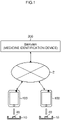
- Figure 1 is a system configuration diagram showing an embodiment of a medicine identification system according to the present invention.
- the medicine identification system is configured with a tray 10, a smartphone 100 which is a camera-equipped mobile terminal, and a server 200 functioning as the medicine identification device, and the smartphone 100 and the server 200 are connected to each other in such a way that data communication is possible, via a network 2 such as internet, LAN (Local Area Network), and the like.
- a network 2 such as internet, LAN (Local Area Network), and the like.
- the tray 10, on which one or more medicines 20 to be identified is to be placed, has an indicator used for standardizing size and shape of a medicine as described later.
- the tray 10 serves also as a protection cover for protecting the smartphone 100.
- the smartphone 100 includes a camera (front camera) on the same face as the display, and images the medicine 20 on the tray 10 by means of the camera.
- the smartphone 100 transmits an image of the medicine 20 thus taken to the server 200 via the network 2.
- the server 200 identifies the medicine 20 based on the image of the medicine 20 uploaded from the smartphone 100, and transmits an identification result (for example, medicine identification information composed of a drug name, a trade name, an abbreviation, or a combination thereof) to the smartphone 100 having transmitted the image of the medicine 20.
- an identification result for example, medicine identification information composed of a drug name, a trade name, an abbreviation, or a combination thereof
- identification code information for identifying classification of the medicine is provided on the surface of the medicine (tablet).
- the identification code information is provided typically by means of embossing or typing (printing).
- the server 200 has an improved medicine identification capacity through use of the identification code information provided on the medicine, as described later in detail.
- an embossed mark provided on the medicine refers to the identification code information provided through formation of a groove, which is a concave region, on the surface of the medicine.
- the groove is not limited to that formed by engraving the surface, and may also be formed by pressing the surface.
- the embossed mark may also include those with no identification function, such as a score line.
- a printed mark provided on the medicine refers to the identification code information provided through application of edible ink, etc. in a contact or noncontact manner on the surface of the medicine.
- the expression “provided by typing” is synonymous with “provided by printing”.
- the smartphone 100 shown in Figure 2 has a flat plate-like housing 102, and a display 120, which is composed of a display panel 121 as a display unit and an operation panel 122 as an input unit in an integral manner, is provided on one side of the housing 102.
- the display panel 121 is configured with a liquid crystal panel, and thus the display 120 of the present example is a liquid crystal display.
- the housing 102 includes a speaker 131, a microphone 132, an operation unit 140, and a camera unit 141.
- the camera unit 141 is a camera (front camera) provided on the same face as the display 120.
- the smartphone 100 is provided also with a camera (rear camera) not illustrated, not on a front face of the housing 102 on which the display 120 is provided, but on a rear face of the housing 102.
- another lens adapter lens for short-distance imaging
- Figure 3 is a block diagram showing an internal configuration of the smartphone 100 shown in Figure 2 .
- the smartphone 100 includes, as main constituent elements, a wireless communication unit 110, the display 120, a phone-call unit 130, the operation unit 140, the camera unit 141, a storage unit 150, an external input/output unit 160 (output unit), a GPS (Global Positioning System) reception unit 170, a motion sensor unit 180, a power unit 190, and a main control unit 101.
- the smartphone 100 has, as a main function, a wireless communication function for carrying out mobile wireless communication via a base station device and a mobile communication network.
- the wireless communication unit 110 carries out wireless communication with the base station device connected to the mobile communication network, according to an instruction from the main control unit 101.
- wireless communication By means of the wireless communication, transmission/reception of various types of file data such as sound data and image data, electronic mail data, and the like; and reception of web data, streaming data and the like are carried out.
- the display 120 is a so-called touch-screen-equipped display including the operation panel 122 provided on a screen of the display panel 121 that, under control of the main control unit 101, visually transmits information to a user by displaying images (still image and video), character information, and the like, and detects a user operation in response to the information thus displayed.
- the display panel 121 uses an LCD (Liquid Crystal Display) as a display device. Note that the display panel 121 is not limited to the LCD and may also be, for example, an OLED (Organic Light Emitting Diode).
- LCD Liquid Crystal Display
- OLED Organic Light Emitting Diode
- the operation panel 122 is a device that is provided in a state such that an image displayed on a display face of the display panel 121 is visually recognizable, and detects one or more coordinates operated by a user's finger or a stylus.
- the operation panel 122 outputs to the main control unit 101 a detection signal generated due to the operation. Then, the main control unit 101 detects an operated position (coordinate) on the display panel 121 based on the detection signal thus received.
- the phone-call unit 130 including the speaker 131 and the microphone 132 converts user's sound being input through the microphone 132 into sound data processable by the main control unit 101 and then outputs to the main control unit 101, and decodes sound data received by the wireless communication unit 110 or the external input/output unit 160 and then outputs from the speaker 131.
- the operation unit 140 is a hardware key employing a key switch or the like, that receives an instruction from the user.
- the operation unit 140 is a push-button type switch installed on a lateral face of the housing 102 of the smartphone 100, that reaches an active state when pressed by a finger or the like, and reaches an inactive state due to a restorative force of a spring or the like when the finger is released.
- the storage unit 150 stores a control program and control data of the main control unit 101, address data containing names, telephone numbers, etc. of communication counterparts in association with each other, data of transmitted and received electronic mails, web data downloaded through web browsing, downloaded content data, and the like, and also temporarily stores streaming data and the like.
- the storage unit 150 includes an internal storage unit 151 and an external storage unit 152 having a detachable external memory slot.
- the internal storage unit 151 and the external storage unit 152 constituting the storage unit 150 are each realized by means of a storage medium such as flash memory type memory, hard disk type memory, multimedia card micro type memory, card type memory, RAM (Random Access Memory), ROM (Read Only Memory), or the like.
- the external input/output unit 160 serves as an interface for all external devices to be connected to the smartphone 100, and is connected directly or indirectly to other external devices via communication or the like (for example, USB (Universal Serial Bus), IEEE1394, etc.) or a network (for example, wireless LAN (Local Area Network), Bluetooth (Registered Trademark).
- USB Universal Serial Bus
- IEEE1394 IEEE1394
- a network for example, wireless LAN (Local Area Network), Bluetooth (Registered Trademark).
- the GPS reception unit 170 receives GPS signals transmitted from GPS satellites ST1, ST2, ... STn, executes a positioning computing process based on the plurality of GPS signals thus received, and obtains position information (GPS information) identified based on latitude, longitude, and altitude of the smartphone 100.
- position information can be obtained from the wireless communication unit 110 and/or the external input/output unit 160 (for example, wireless LAN)
- the GPS reception unit 170 may also detect a position by using the position information.
- the motion sensor unit 180 is provided with, for example, a triaxial acceleration sensor and the like, and detects physical movement of the smartphone 100 according to an instruction from the main control unit 101. Moving direction and acceleration of the smartphone 100 are detected through detection of the physical movement of the smartphone 100. A result of the detection is output to the main control unit 101.
- the power unit 190 supplies electricity stored in a battery (not illustrated) to each part of the smartphone 100, according to an instruction from the main control unit 101.
- the main control unit 101 is provided with a microprocessor, and operates according to the control program and the control data stored in the storage unit 150, to integrally control each part of the smartphone 100.
- the main control unit 101 is provided with a mobile communication control function for controlling each part related to communication and a software processing function, in order to carry out voice communication and data communication through the wireless communication unit 110.
- the software processing function is realized by the main control unit 101 operating according to software stored in the storage unit 150.
- the software processing function is exemplified by an electronic mail function for transmitting and receiving electronic mails through control of the external input/output unit 160, a web browsing function for browsing web pages, a function for using the medicine identification system according to the present invention, and the like.
- the function for using the medicine identification system according to the present invention can be realized by downloading relevant software (the program according to the present invention) from the server 200 functioning as the medicine identification device, a website of a provider that runs the server 200, or the like.
- the main control unit 101 is provided with an image processing function of, for example, displaying a video on the display 120 based on image data (data of still image and video) such as received data, downloaded streaming data, and the like.
- the main control unit 101 executes a display control with respect to the display 120, and an operation detection control for detecting a user operation through the operation unit 140 and the operation panel 122.
- the camera unit 141 is capable of, under control of the main control unit 101: converting data acquired by imaging to, for example, compressed image data such as JPEG (Joint Photographic Experts Group); storing the image data to the storage unit 150; and outputting the image data through the external input/output unit 160 or the wireless communication unit 110.
- compressed image data such as JPEG (Joint Photographic Experts Group)
- the camera unit 141 may be used for various functions of the smartphone 100.
- the camera unit 141 in the case of identification of a medicine, the camera unit 141 is used for imaging the medicine. It is also possible to use an image from the camera unit 141 in software.
- Figure 4 is a main-section block diagram showing an electrical configuration of the medicine identification system.
- the main control unit 101 of the smartphone 100 has the program (application) according to the present invention installed, and functions as a display control unit 101A, an image acquiring unit 101B, and a communication control unit 101C through execution of the application.
- the display control unit 101A controls the display 120 as illuminating means during imaging of a medicine, in particular by carrying out a control of changing for a plurality of times a light-emitting region on the display 120 to change an illuminating direction with respect to the medicine 20 placed on the tray 10.
- the image acquiring unit 101B causes the camera unit 141 to image for a plurality of times the medicine 20 with different illuminating directions through changing of the light-emitting region on the display 120, to thereby acquire from the camera unit 141 a plurality of images (first images) of the medicine.
- the communication control unit 101C transmits the plurality of first images thus acquired by the image acquiring unit 101B to the server 200 via the wireless communication unit 110 and the network 2, and acquires an identification result of the medicine 20 identified by the server 200 based on the plurality of first images via the network 2 and the wireless communication unit 110.
- Figure 5 is a diagram showing a configuration of the tray 10, and a state of imaging with the smartphone 100 the medicine 20 placed on the tray 10.
- a placement face in the present example, a rectangular placement face to be a background for the medicine 12 on which the medicine 20 is placed, and indicators (four indicators) 14A, 14B, 14C, 14D used for standardizing the size and shape of the medicine, are provided on the tray 10.
- the placement face 12 has a specific background color (color different from the color of the medicine) or a specific fine background pattern, in order to facilitate extraction (trimming) of an image of a region corresponding to the medicine (medicine region) from the image taken.
- the background color for the medicine is different from the color of the medicine in at least one of hue, brightness, and saturation.
- the four indicators 14A, 14B, 14C, and 14D have a known positional relationship with each other. Note that, instead of the four indicators 14A, 14B, 14C, and 14D, for example, information relating to the shape of the placement face 12 (coordinates of four corners, lengths of four sides, etc. of the rectangular placement face 12) may be used as the indicator.
- the imaging needs to be carried out with the position and attitude of the smartphone 100 (camera unit 141) being selected such that the four indicators 14A, 14B, 14C, and 14D are captured within an imaging range of the camera unit 141.
- the imaging is carried out with the position and attitude with which the medicine 20 is right in front of the camera unit 141 and captured in large size, the position and attitude of the camera unit 141 are only required to be selected such that the four indicators 14A, 14B, 14C, and 14D are captured within an imaging range.
- the tray 10 with the medicine 20 placed thereon is imaged by the camera unit 141 for a plurality of times (five times in the present example) while using the display 120 on the same face as the camera unit 141 as illuminating means.
- Figure 6 is a diagram showing a light-emitting region on the display 120 to be controlled in the case of imaging the medicine 20 placed on the tray 10 for five times.
- the display control unit 101A changes the light-emitting region on the display 120 coincidentally with five imaging timings at time t 1 , time t 2 , time t 3 , time t 4 , and time ts as shown in Figure 6 .
- the medicine 20 is imaged in a state in which the display 120 is turned off and ambient light 30 ( Figure 5 ) is the only illuminating light.
- the display 120 of the present example is a liquid crystal display employing a liquid crystal panel as the display panel 121, "the display 120 is turned off” means that the transmitted light amount of the entire liquid crystal panel is minimized (black color is displayed).
- the medicine 20 is imaged in a state in which the light-emitting region on the display 120 is a left half of the display 120, and the ambient light 30 and illuminating light from the display 120 are mixed.
- the light-emitting region on the display 120 is a left half of the display 120 means that the transmitted light amount of a left half of the liquid crystal panel is increased (preferably maximized) while the transmitted light amount of a right half is minimized.
- the medicine 20 is imaged at respective imaging timings: in a state in which the light-emitting region on the display 120 is a right half of the display 120 at the imaging timing at time t 3 ; in a state in which the light-emitting region on the display 120 is an upper half of the display 120 at the imaging timing at time t 4 ; and in a state in which the light-emitting region on the display 120 is a lower half of the display 120 at the imaging timing at time t 5 .
- the image acquiring unit 101B operates the camera unit 141 to image at the five imaging timings at time t 1 , time t 2 , time t 3 , time t 4 , and time t 5 , and acquires five first images taken of the medicine 20 from the camera unit 141. Since the light-emitting region on the display 120 is the left half, the right half, the upper half, and the lower half of the display 120 at time t 2 , time t 3 , time t 4 , and time ts respectively, the illuminating light from the display 120 to the medicine 20 is thus different in the illuminating direction.
- the first images acquired by imaging the medicine 20 illuminated with the illuminating light of respective different illuminating directions each have luminance unevenness generated along the illuminating direction, resulting in, when the medicine 20 is provided with an embossed mark, difference in the way in which a shadow of the embossed mark appears.
- a time interval between the imaging timings is short, so that a change in the position and attitude of the camera unit 141 may be minimized during five sessions of imaging.
- the display 120 is a liquid crystal display with a polarizing plate
- the illuminating light emitted from the display 120 is a polarized light corresponding to the polarizing plate.
- a polarizing plate polarizing filter
- a polarization direction of the polarizing plate being different by 90° from a polarization direction of light emitted from the display 120.
- the camera unit 141 is enabled to take the first images with elimination of a specular reflection component.
- the medicine 20 is provided with an embossed mark or a printed mark
- the medicine 20 is placed on the tray 10 in such a way that a face with the embossed mark or the printed mark is directed upward.
- the medicine 20 is placed on the tray 10 in such a way that a side with the embossed mark or the printed mark functioning better as the identification code information is directed upward.
- the server 200 shown in Figure 4 functions as the medicine identification device, and is configured primarily with a communication unit 210, a CPU (Central Processing Unit) 220, a standardizing unit 230, an image extracting unit 240, a medicine DB (database) 250, a memory 260, an image processing unit 270, and a medicine identifying unit 280.
- a communication unit 210 a CPU (Central Processing Unit) 220
- a standardizing unit 230 an image extracting unit 240
- a medicine DB (database) 250 a memory 260
- an image processing unit 270 an image processing unit 270
- a medicine identifying unit 280 a medicine identifying unit
- the CPU 220 integrally controls each part of the server 200, and, together with the communication unit 210 functioning as the image accepting unit that accepts the plurality of first images transmitted from the smartphone 100, causes the standardizing unit 230, the image extracting unit 240, the image processing unit 270, and the medicine identifying unit 280 to execute each process on the plurality of first images thus accepted.
- the CPU 220 then transmits an identification result of the medicine to the smartphone 100 having transmitted the first images, via the communication unit 210.
- the medicine DB 250 is a component that registers and manages images of medicines (images of obverse sides and reverse sides of medicines) in association with the medicine identification information such as medicine names.
- the medicine images of medicines (registered medicines) registered in the medicine DB 250 are used as teacher data in a case of teaching a machine learning device that checks which one of registered medicines resembles a medicine to be identified, or as template images in a case of identifying a medicine to be identified through template matching with an image of the medicine to be identified.
- the memory 260 includes a storage unit in which a program providing a medicine identification service is stored, and a portion serving as a workspace for the CPU 220.
- Figure 7 is a block diagram showing the standardizing unit 230, the image extracting unit 240, and the image processing unit 270 in the server 200 shown in Figure 4 .
- Five first images 50 imaged while changing the light-emitting region on the display 120 are output to the standardizing unit 230 and thus standardized into images independent of the position and attitude of the camera unit 141.
- the four indicators 14A, 14B, 14C, 14D provided on the tray 10 shown in Figure 5 are captured in each of the first images 50.
- the standardizing unit 230 obtains coordinates of the four indicators 14A, 14B, 14C, 14D in each of the first images 50, and obtains a projective transformation parameter from a relationship between the coordinates of the four indicators 14A, 14B, 14C, 14D and the four indicators 14A, 14B, 14C, and 14D having a known positional relationship with each other.
- the standardizing unit 230 standardizes the shape of each of the first images 50 (medicine 20) through projective transformation of the first images 50 by the projective transformation parameter thus obtained.
- the size of the medicine 20 can also be standardized.
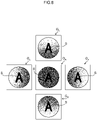
- Figure 8 shows a part of the first images containing an image of the medicine 20, for the sake of simplification of explanation.
- first images G L , G R , G U and G D are images taken in a state in which the left half, right half, upper half, and lower half of the display 120 are turned on, respectively with different illuminating directions of the illuminating light from the display 120, while first image G A is an image taken in a state in which the display 120 is turned off.
- the four first images G L , G R , Gu and G D each have luminance unevenness generated along the illuminating direction.
- the symbol "A" on each of the images shown in Figure 8 indicates an embossed mark S.
- the embossed mark S on the images G L , G R , Gu and G D is an indented pattern on the surface of the medicine, resulting in difference in the way in which a shadow of the embossed mark S appears depending on the illuminating direction of the illuminating light, as described later.
- the standardizing unit 230 includes a generating unit that subtracts the first image G A in a state in which the display 120 is turned off from each of the four first images G L , G R , Gu and G D with different illumination directions of the display 120, to thereby generate four first images G L , G R , G U and G D with elimination of influence of ambient light.
- the standardizing unit 230 adjusts white balance of the four first images G L , G R , G U and G D with a white balance gain corresponding to the color temperature (known color temperature) of the illuminating light of the display 120, to thereby make the color of the four first images G L , G R , G U and G D consistent to the original color of the medicine 20.
- elimination or reduction of influence of ambient light may also be carried out by adjusting white balance, so that the known color of the tray 10 (for example, the color of the region in which the four indicators 14A, 14B, 14C, 14D are provided, preferably white) can be reproduced. In this case, it is not necessary to acquire the first image G A in the state in which the display 120 is turned off.
- the known color of the tray 10 for example, the color of the region in which the four indicators 14A, 14B, 14C, 14D are provided, preferably white
- the four first images G L , G R , Gu and G D are output to the image extracting unit 240.
- the image extracting unit 240 extracts (trims) a medicine region image from each of the four first images G L , G R , Gu and G D thus standardized.
- the image extracting unit 240 is capable of trimming the medicine region image appropriately by utilizing the background color of the placement face 12 of the tray 10 on which the medicine 20 is placed as shown in Figure 5 , or the background pattern of the placement face 12.
- An edge image generating unit 274 of the image processing unit 270 generates four edge images from the four images G L , G R , G U and G D , by using edge extraction filters (for example, Sobel filters) of respective directions corresponding to the illuminating directions of the illuminating light.
- edge extraction filters for example, Sobel filters
- Figure 9 is a schematic view of a cross-sectional structure of a medicine T taken along an x-y plane passing through the center of the medicine T, showing a profile of a line of one pixel.
- the medicine T shown in Figure 7 has a diameter D and provided with the embossed mark S, which is a score line composed of a groove having a V-shaped cross section, on the surface.
- the groove of the embossed mark S has a width W. Note that the width of the groove of the embossed mark S refers to a distance on the surface of the medicine T between one end and the other end of the groove in a direction orthogonal to the extending direction of the groove.
- the way in which a shadow of the embossed mark S appears is different between the case of using the left half of the display 120 as the light-emitting region and illuminating the medicine T with illuminating light L L from the light-emitting region, and the case of using the right half of the display 120 as the light-emitting region and illuminating the medicine T with illuminating light L R from the light-emitting region.
- a right side face S R of the embossed mark S is illuminated with the illuminating light L L while a left side face S L of the embossed mark S is not illuminated with the illuminating light L L , generating a shadow on the left side face S L of the embossed mark S.
- the left side face S L of the embossed mark S is illuminated with the illuminating light L R while the right side face S R of the embossed mark S is not illuminated with the illuminating light L R , generating a shadow on the right side face S R of the embossed mark S.
- Figure 10 is a diagram showing an example of a Sobel Filter used for edge extraction by the edge image generating unit 274.
- a Sobel filter F L is used for edge extraction from the image G L of the medicine T illuminated by the illuminating light L L from the left side, while a Sobel filter F R is used for edge extraction from the image G R of the medicine T illuminated by the illuminating light L R from the left side.
- the kernel size of the Sobel filters F L and F R shown in Figure 10 is three pixels in x-axis direction ⁇ three pixels in y-axis direction in the present example, but is not limited thereto and it is preferable to change the kernel size depending on the resolution of the camera unit 141.
- the kernel size of the Sobel filters F L and F R it is preferable to use a Sobel filter of a size greater than a half of (pixel count of) the width W of the embossed mark S. For example, when the pixel count of the width of the groove of the embossed mark S is four pixels, a Sobel filter of a size greater than two pixels, which is one-half thereof, is to be used.
- edge extraction filter of a size selected in consideration of the pixel count of the width of the groove of the embossed mark S enables accurate extraction of the groove and, in addition, reduction of information other than the embossed mark, such as a pattern and scratches on the surface finer than the width of the groove.
- a derivation method of a filter size and a filter coefficient of a Sobel filter is described in http://sssiii.seesaa.net/article/368842002.html.
- the edge image generating unit 274 generates edge images corresponding to the images G L , G R by using the Sobel filters F L and F R for the images G L , G R respectively.
- the edge image generating unit 274 also generates edge images for the image Gu of the medicine T illuminated by the illuminating light from the upper side by using the upper half of the display 120 as the light-emitting region, and for the image G D of the medicine T illuminated by the illuminating light from the lower side by using the lower half of the display 120 as the light-emitting region, by using the Sobel filters corresponding to the directions of the illuminating light similarly to the foregoing.
- the filter used for the edge extraction filter processing in an edge image synthesizing unit 272 is not limited to the Sobel filter, and the Laplacian filter, the Canny filter, and the like may also be used.
- the edge image generating unit 274 outputs the four edge images generated respectively for the four images G L , G R , G U and G D to the edge image synthesizing unit 272 in the image processing unit 270.
- the edge image synthesizing unit 272 generates an image with small luminance unevenness by, for example: selecting one image among the four images G L , G R , G U and G D ; detecting luminance unevenness of the one image thus selected; and carrying out luminance unevenness correction process of, based on the luminance unevenness thus detected, correcting the luminance unevenness of the image selected. And then the edge image synthesizing unit 272 combines the four edge images generated by the edge image synthesizing unit 272 with the image with small luminance unevenness.
- the image processing unit 270 can thus generate an image (second image) 60 having undergone an emphasis process for emphasizing the embossed mark in the image of the medicine with small luminance unevenness due to the illuminating light.
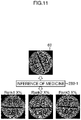
- Figure 11 is a diagram showing an outline of a medicine identification process by a medicine identifying unit 280-1 according to the first embodiment of the medicine identifying unit 280 shown in Figure 4 .
- 60 is a picture showing an example of the second image of the medicine with an emphasis on the embossed mark by the image processing unit 270.
- the medicine identifying unit 280-1 infers which one of the registered medicines resembles the medicine to be identified, based on the second image 60. Deep learning (classification) is used for the inference. In the present example, the inference is carried out by medicine identifying unit 280-1, as described later in detail.
- a result of the inference is output in a visually recognizable manner by an output unit such as a display device, a printer, and the like.
- information (medicine identification information, medicine image, and the like) of the registered medicines can be output in an order of resemblance to the medicine to be identified (Rank 1, Rank 2, Rank 3, ).
- information of the most resemblant medicine, or information of a plurality of medicines ranked in the predetermined top positions can be output.
- Figure 12 is a functional block diagram showing main functions of the medicine identifying unit 280-1 according to the first embodiment.
- the medicine identifying unit 280-1 shown in Figure 12 is constituted of, in the present example, a convolutional neural network (CNN) 280-1, which is a mode of a machine learning device, and checks which one of the medicines having been registered (registered medicines) resembles the medicine to be identified.
- the CNN 280-1 is capable of preliminary learning by means of teacher data corresponding to each of the registered medicines, or additional learning by means of teacher data corresponding to a registered medicine to add.
- the teacher data corresponding to the registered medicine is, for example, correct answer data containing a medicine image having undergone the emphasis process for emphasizing an embossed mark or a printed mark in an image taken of the registered medicine, the name of the registered medicine, and the like.
- the teacher data having been used for, or to be used for, the learning is stored in the medicine DB 250 ( Figure 4 ).
- the learning method by means of the teacher data is well-known, and therefore detailed description thereof is omitted herein.
- the CNN 280-1 shown in Figure 12 functions as: a feature quantity calculating unit 282 configured to, when the second image 60 to be identified is used as an input image, extract (calculate) a feature quantity of the second image 60; and an inferring unit 284 configured to infer which one of the registered medicines resembles the medicine corresponding to the input image, based on the feature quantity thus calculated.
- the CNN 280-1 has a plurality of layered structures and retains a plurality of weighting parameters.
- the weighting parameter is exemplified by a filter coefficient of a filter called kernel used for convolution calculation in a convolutional layer, and the like.
- the CNN 280-1 can be evolved from an unlearned model to a learned model that learns each registered medicine, through updating the weighting parameter from an initial value to an optimal value.
- the CNN 280-1 is provided with: an input layer 280A; an intermediate layer 280B including a plurality of sets (in the present example, six sets) each configured with a convolutional layer 286A1, a normalization layer 286B1, an activation processing unit 286C1 using an activation function, and a pooling layer 286D1, and a fully connected layer 286E1; and an output layer 280C, in which each layer has a structure in which a plurality of "nodes" are connected by "edges".
- the structure of the CNN 280-1 is not limited to that illustrated in Figure 12 , and typical learning models such as VGG16, AlexNet, and the like may be employed.
- the second image 60 of the medicine to be identified is input as the input image to the input layer 280A of the CNN 280-1.
- the second image 60 is a colored image in RGB (Red Green Blue) color space, in other words three images of R, G, and B; therefore, the input image is an image set of three images in total.
- the convolutional layers 286A1 to 286A6 play a role of feature extraction such as edge extraction from the image.
- the convolutional layers 285A1 to 286A6 play a role of feature extraction such as edge extraction from the image, through carrying out filter processing (carrying out convolution calculation using a filter) on the image set being input from the input layer 280A or on a proximate node in the previous layer and thus obtaining a "feature map".
- the first convolutional layer 286A1 carries out the convolution calculation of the image set and a filter.
- the filter since the image set has three channels of R image, G image, and B image (three images), for example in the case of a size-5 filter, the filter has a filter size of 5 ⁇ 5 ⁇ 3.
- the convolution calculation using the 5 ⁇ 5 ⁇ 3 filter generates a one-channeled (for one image) "feature map" for each filter. Therefore, using N filters can generate a N-channeled "feature map”.
- a filter used in the second convolutional layer 285A2 has, for example in the case of a size-3 filter, a filter size of 3 ⁇ 3 ⁇ N.
- the normalization layers 286B1 to 286B6 carry out normalization of luminance, contrast, etc. with respect not only to the input image, but also to the "feature map" in the middle of the CNN 280-1.
- the activation processing units 286C1 to 286C6 processes an input signal by means of an activation function (for example, step function, sigmoid function, and softmax function), thus playing a role of preparing a value to pass on to the next layer.
- an activation function for example, step function, sigmoid function, and softmax function
- the pooling layer 286D1 reduces the feature map being output from the convolutional layer 286A1 (in the present example, activation processing unit 286C1) to generate a new feature map.
- the "pooling layer” plays a role of imparting robustness to the feature extracted, not to be affected by parallel shift and the like.
- One or more fully connected layer 286E1 which functions as the inferring unit 284, is weighted-connected to all nodes in the previous layer (in the present example, the feature map output from the activation processing units 286C6) and outputs a value (feature variable) converted by the activation function.
- a greater number of nodes leads to a greater number of divisions in a feature quantity space and a greater number of feature variables.
- the output layer 280C which functions as the inferring unit 284, carries out classification by converting the output (feature variable) from the fully connected layer 286E1 into a probability by using a softmax function, and maximizing the probability of correct classification into each region (in the present example, each medicine) (maximum likelihood estimation method).
- the fully connected layer of the final phase may also be referred to as the output layer.
- the output layer 280C outputs to an output unit 288 a result of inference indicating which one of the registered medicines resembles the second image 60 of the medicine (input image) as shown in Figure 11 .
- Information medicine identification information, medicine image, and the like
- the output unit 288 in an order of resemblance to the medicine to be identified (Rank 1, Rank 2, Rank 3, ).
- a user can use the result of inference, which is output from the output unit 288, as assistance information for audit or discrimination of the medicine to be identified.
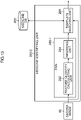
- Figure 13 is a block diagram showing a medicine identifying unit 280-2 according to the second embodiment.
- the medicine identifying unit 280-2 shown in Figure 13 is configured primarily with the CNN 280-1 and a template matching unit 289.
- the CNN 280-1 is identical to that shown in Figure 12 , and therefore detailed description thereof is omitted herein.
- a result of inference by the CNN 280-1 is output to the template matching unit 289.
- the template matching unit 289 identifies the medicine through template matching between images of the registered medicines narrowed down from the registered medicines registered on the medicine DB 250 based on the result of inference from the CNN 280-1, and the second image 60. For example, images of medicines (images of medicines with an emphasis on embossed marks or printed marks) acquired in advance may be clustered. Then the CNN 280-1 infers a class in the clustering to which the second image 60 to be identified belongs, and the template matching unit 289 carries out template matching within the class thus inferred. The processing time of the template matching can thus be reduced.
- FIG 14 is a diagram showing another embodiment of the tray used in the medicine identification system according to the present invention.
- a tray 40 shown in Figure 14 has a grid-shaped partition, and a medicine can be placed in each of nine regions A11, A12, A13, A21, A22, A23, A31, A32, A33 partitioned by the grid-shaped partition.
- the tray 40 is partitioned into the nine regions A11 to A33 by the grid-shaped partition, the number of regions to be partitioned by the partition is not limited thereto.
- the size and shape of the grid-shaped partition on the tray 40 are known.
- the grid-shaped partition of which size and shape are known serves also as the indicator used for standardizing the size and shape of the medicine, similarly to the indicators 14A to 14D shown in Figure 5 .
- the color of the placement faces for the medicine in the nine regions A11 to A33 partitioned by the partition is different in at least one of hue, brightness, and saturation, for every placement face or for every plural placement faces.
- a medicine having a light color such as white is placed selectively on the placement face having a dark color such as black. This is for facilitating trimming of an image of a medicine region corresponding to the medicine 20 from the image taken by the camera unit 141.
- the tray 40 Since the tray 40 has the placement faces in the nine regions A11 to A33, a plurality (up to nine) of medicines can be placed at the same time and the plurality of medicines can be imaged at the same time by the camera unit 141 of the smartphone 100.
- the medicine is provided with an embossed mark or a printed mark on both faces
- the imaging method of the medicine by the smartphone 100 and the processing method of the image of the medicine thus imaged can be the same as in the case of imaging one medicine, therefore detailed description thereof is omitted herein.
- Figure 15 is a flowchart showing an embodiment of the medicine identification method according to the present invention, explaining processing procedure of each part of the medicine identification system shown in Figure 4 .
- a user places the medicine 20 to be identified on the placement face 12 of the tray 10 ( Figure 5 ). Subsequently, the user operates the smartphone 100 to cause the smartphone 100 to execute imaging of the medicine 20.
- the display control unit 101A of the smartphone 100 puts the display 120 into a turned-off state, while the image acquiring unit 101B causes the camera unit 141 to execute imaging of the medicine 20 in a state in which the display 120 is turned off to acquire an image (first image) of the medicine 20 illuminated only with ambient light (Step S 10).
- the display control unit 101A changes the light-emitting region on the display 120 sequentially (first step), and the image acquiring unit 101B causes the camera unit 141 to image for a plurality of times (in the present example, four times) the medicine 20 with different illuminating directions through changing of the light-emitting region on the display 120, to thereby acquire four images (first images) (second step S12).
- the communication control unit 101C of the smartphone 100 transmits to the server 200 one first image taken in the state in which the display 120 is turned off acquired in Step S10, and four first images acquired in the second step S12 with different illuminating directions through changing of the light-emitting region on the display 120 (five first images 50 in total).
- the standardizing unit 230 of the server 200 obtains coordinates of the four indicators 14A, 14B, 14C, 14D in the plurality of first images, and standardizes the shape and size of the plurality of first images (medicine 20) based on a relationship between the coordinates of the four indicators 14A, 14B, 14C, 14D and the four indicators 14A, 14B, 14C, and 14D having a known positional relationship with each other (third step S14).
- the standardizing unit 230 subtracts the first image G A in a state in which the display 120 is turned off from each of the plurality of (four in the present example) first images G L , G R , Gu and G D with different illumination directions of the display 120, to thereby generate a plurality of first images with elimination of influence of ambient light.
- the image extracting unit 240 extracts (trims) first images G L , G R , G U and G D of a medicine region respectively from the plurality of (four in the present example) first images thus standardized (fourth step S16).
- the edge image generating unit 274 of the image processing unit 270 generates edge images by using Sobel filters, which correspond respectively to the illuminating directions of the illuminating light, on the plurality of images G L , G R , Gu and G D (Step S18).
- the edge image synthesizing unit 272 generates an image with small luminance unevenness by: selecting one image among the plurality of images G L , G R , Gu and G D ; detecting luminance unevenness of the one image thus selected; and carrying out luminance unevenness correction process of, based on the luminance unevenness thus detected, correcting the luminance unevenness of the image selected. And then the edge image synthesizing unit 272 combines the plurality of edge images generated in Step S18 with the image with small luminance unevenness, to thereby generate a synthetic image (second image) (fifth step S20).
- the medicine identifying unit 280 identifies the medicine 20 to be identified based on the second image thus generated (sixth step S22).
- the medicine identifying unit 280 outputs in a visually recognizable manner a result of the inference by the learned CNN 280-1 indicating which one of the registered medicines resembles the second image of the medicine (input image), and identifies the medicine through template matching by the template matching unit 289 between images of the registered medicines narrowed down by the result of inference and the second image and outputs an identification result in a visually recognizable manner.
- the number of images with different illuminating directions is not limited to four and only required to be three or more.
- the changing of the light-emitting region on the display is not limited to switching between the left half, right half, upper half, and lower half of the display, and it is only required that the changing of the light-emitting region on the display (including a high/low pattern of light emission intensity) results in different illumination directions to the medicine.
- the medicine identification device is not limited to the server and may be any device that is communicable with the camera-equipped mobile terminal typified by a smartphone.
- the hardware structure of the medicine identification device includes various processors described below.
- the various processors include: a CPU (Central Processing Unit) which is a general-purpose processor functioning as various control units through execution of software (program); a programmable logic device (PLD) such as an FPGA (Field Programmable Gate Array) which is a processor of which circuit configuration is changeable after production; a dedicated electrical circuit such as ASIC (Application Specific Integrated Circuit) which is a processor having a circuit configuration designed exclusively for execution of a specific processing; and the like.
- a CPU Central Processing Unit
- PLD programmable logic device
- FPGA Field Programmable Gate Array
- ASIC Application Specific Integrated Circuit
- One processing unit may be configured either with one of these various processors, or with a combination of two or more processors of the same type or different types (for example, a plurality of FPGAs, or a combination of a CPU and an FPGA). Alternatively, a plurality of control units may be configured with one processor.
- Configuration of a plurality of control units with one processor is exemplified by: a mode of configuring one processor with a combination of one or more CPU and software, as typified by a computer such as a client and a server, the processor functioning as a plurality of control units; and a mode of using a processor that realizes a function of an entire system including a plurality of control units by means of one IC (Integrated Circuit) chip, as typified by a System on Chip (SoC).
- the various control units are configured with one or more of the aforementioned various processors as a hardware structure.
- the camera-equipped mobile terminal is provided with a function of taking a plurality of images with different illuminating directions; however, the camera-equipped mobile terminal may be provided with a part of the function of the medicine identification device (for example, functions of the standardizing unit, the image extracting unit, and the image processing unit), or an entirety of the function of the medicine identification device. In the latter case, the need for a medicine identification device separate from the camera-equipped mobile terminal is eliminated.
- the medicine identification device for example, functions of the standardizing unit, the image extracting unit, and the image processing unit
- the medicine identification method by the medicine identifying unit is not limited to the present embodiment, and may be any method identifying a medicine based on an image (second image) with an emphasis on an embossed mark or a printed mark provided on the medicine.
- the present invention further includes: a program that is installed on a general-purpose camera-equipped mobile terminal and realizes various functions (display control function, image acquiring function, and the like) as the camera-equipped mobile terminal according to the present invention; and a storage medium storing the program.
Landscapes
- Engineering & Computer Science (AREA)
- Physics & Mathematics (AREA)
- General Physics & Mathematics (AREA)
- Theoretical Computer Science (AREA)
- Health & Medical Sciences (AREA)
- Multimedia (AREA)
- Computer Vision & Pattern Recognition (AREA)
- General Health & Medical Sciences (AREA)
- Public Health (AREA)
- Biomedical Technology (AREA)
- Life Sciences & Earth Sciences (AREA)
- Animal Behavior & Ethology (AREA)
- Veterinary Medicine (AREA)
- General Business, Economics & Management (AREA)
- Epidemiology (AREA)
- Business, Economics & Management (AREA)
- Medical Informatics (AREA)
- Primary Health Care (AREA)
- Medical Preparation Storing Or Oral Administration Devices (AREA)
- Image Analysis (AREA)
Claims (15)
- System zur Identifizierung von Medikamenten bzw. Arzneimitteln, das Folgendes umfasst:ein Tablett (10, 40), das so konfiguriert ist, dass es einen Indikator aufweist, der zur Standardisierung von Größe und Form eines Medikaments verwendet wird, auf das ein zu identifizierendes Medikament gelegt werden soll;ein mit einer Kamera ausgestattetes mobiles Endgerät, das so konfiguriert ist, dass es eine Kamera auf derselben Seite wie eine Anzeige (120) aufweist; undeine Medikamenten-Identifikationsvorrichtung (200), die so konfiguriert ist, dass sie das Medikament (20) auf der Grundlage eines von dem mit einer Kamera ausgestatteten mobilen Endgerät aufgenommenen Bildes identifiziert,wobei das mit einer Kamera ausgestattete mobile Endgerät aufweist:eine Anzeigesteuereinheit (101A), die so konfiguriert ist, dass sie bei Empfang einer Befehlseingabe zur Medikamentenidentifikation einen lichtemittierenden Bereich auf der Anzeige ändert und mehrmals eine Beleuchtungsrichtung in Bezug auf das auf dem Tablett platzierte bzw. abgelegte Medikament ändert; undeine Bilderfassungseinheit (101B), die so konfiguriert ist, dass sie die Kamera veranlasst, das Medikament mehrmals mit unterschiedlichen Beleuchtungsrichtungen durch Ändern des lichtemittierenden Bereichs auf der Anzeige abzubilden, um dadurch eine Vielzahl erster Bilder des Arzneimittels zu erfassen, undwobei die Vorrichtung zur Identifizierung von Medikamenten (200) aufweist:eine Standardisierungseinheit (230), die so konfiguriert ist, dass sie jedes der mehreren ersten Bilder auf der Grundlage des in den mehreren ersten Bildern erfassten Indikators standardisiert;eine Bildextraktionseinheit (240), die so konfiguriert ist, dass sie aus jedem der mehreren ersten Bilder, die auf diese Weise standardisiert wurden, ein Bild des medizinischen Bereichs extrahiert;eine Bildverarbeitungseinheit (270), die so konfiguriert ist, dass sie auf der Grundlage einer Vielzahl von auf diese Weise extrahierten Medikamentenbildern ein zweites Bild erzeugt, das einem Hervorhebungsprozess unterzogen wurde, um eine geprägte Markierung oder eine gedruckte Markierung hervorzuheben, die auf dem Medikament vorgesehen ist; undeine Medikamentenidentifizierungseinheit (280), die so konfiguriert ist, dass sie das Medikament auf der Grundlage des so erzeugten zweiten Bildes identifiziert.
- System zur Identifizierung von Medikamenten nach Anspruch 1, wobei die Bildverarbeitungseinheit (270) eine Vielzahl von Kantenbildern aus der Vielzahl der so extrahierten Bilder des Medikamentenbereichs unter Verwendung von Kantenextraktionsfiltern der jeweiligen Richtungen, die den Beleuchtungsrichtungen entsprechen, erfasst und das zweite Bild unter Verwendung der Vielzahl von Kantenbildern erzeugt.
- System zur Identifizierung von Medikamenten nach Anspruch 1 oder 2, wobei:das Tablett (10, 40) eine gitterförmige Trennwand, deren Größe und Form bekannt sind, aufweist;das Medikament auf eine durch die gitterförmige Trennwand unterteilte Ablagefläche (12) gelegt wird; unddie gitterförmige Trennwand auch als Indikator dient, undvorzugsweise,
die Farbe der Ablagefläche (12) des Tabletts (10, 40) für das durch die gitterförmige Trennwand unterteilte Medikament in mindestens einem der Parameter Farbton, Helligkeit und Sättigung für jede Ablagefläche oder für jede Mehrzahl von Ablageflächen unterschiedlich ist. - System zur Identifizierung von Medikamenten nach einem der Ansprüche 1 bis 3, wobei:die Bilderfassungseinheit (101B) als die Vielzahl erster Bilder drei oder mehr Bilder mit unterschiedlichen Beleuchtungsrichtungen und ein Bild in einem Zustand erfasst, in dem die Anzeige ausgeschaltet ist; unddie Medikamenten-Identifizierungsvorrichtung (200) mit einer Erzeugungseinheit versehen ist, die so konfiguriert ist, dass sie das Bild in einem Zustand, in dem die Anzeige ausgeschaltet ist, von jedem der drei oder mehr Bilder subtrahiert, um die Vielzahl der ersten Bilder unter Eliminierung des Einflusses des Umgebungslichts zu erzeugen.
- System zur Identifizierung von Medikamenten nach einem der Ansprüche 1 bis 4, wobei:die Anzeige (120) eine polarisierende Platte enthält; unddie Kamera eine polarisierende Platte enthält, die vor einer Abbildungslinse installiert ist, wobei eine Polarisationsrichtung der polarisierenden Platte um 90° von einer Polarisationsrichtung des von der Anzeige (120) emittierten Lichts abweicht.
- System zur Identifizierung von Medikamenten nach einem der Ansprüche 1 bis 5, wobei die Medikamenten-Identifikationseinheit (280) umfasst: eine MerkmalsmengenBerechnungseinheit (282), die so konfiguriert ist, dass sie eine Merkmalsmenge des zweiten Bildes berechnet; und eine Schlussfolgerungseinheit (284), die so konfiguriert ist, dass sie auf der Grundlage der Merkmalsmenge des zweiten Bildes schlussfolgert, welches der registrierten Medikamente dem Medikament ähnelt, undvorzugsweise,
die Merkmalsmengenberechnungseinheit (282) und die Schlussfolgerungseinheit (284) ein gelerntes bzw. lernendes neuronales Faltungsnetzwerk umfassen, das durch Lernen jedes der registrierten Medikamente bzw. Arzneimittel erhalten wird, indem als Lehrerdaten die zweiten Bilder, die den registrierten Medikamenten entsprechen, und Medikamentenidentifikationsinformationen zum Identifizieren der registrierten Medikamente verwendet werden, undweiter bevorzugt,
die Medikamenten-Identifizierungseinheit (280) identifiziert das Medikament durch Schablonenabgleich zwischen Bildern der registrierten Medikamente, die durch Ableitung durch die Ableitungseinheit eingegrenzt wurden, und dem zweiten Bild. - System zur Identifizierung von Medikamenten nach einem der Ansprüche 1 bis 6, wobei das Tablett (10, 40) auch als Schutzhülle zum Schutz des mit einer Kamera ausgestatteten mobilen Endgeräts dient.
- Medikamenten-Identifizierungsvorrichtung zur Identifizierung eines zu identifizierenden Medikaments auf der Grundlage eines von einem mit einer Kamera ausgestatteten mobilen Endgerät aufgenommenen Bildes,
wobei das mit einer Kamera ausgestattete mobile Endgerät so konfiguriert ist, dass es:eine Kamera auf der gleichen Seite bzw. Fläche wie eine Anzeige bzw. ein Display aufweist;beim Abbilden des zu identifizierenden Medikaments (20), das auf einem Tablett (10, 40) mit einem Indikator zur Standardisierung von Größe und Form eines Medikaments platziert bzw. abgelegt ist, einen lichtemittierenden Bereich auf der Anzeige ändert;die Beleuchtungsrichtung in Bezug auf das auf dem Tablett befindliche Arzneimittel (20) mehmals ändert; unddas Medikament (20) mittels der Kamera mehrmals bzw. für eine Vielzahl von Malen mit verschiedenen Beleuchtungsrichtungen durch Ändern des lichtemittierenden Bereichs auf der Anzeige abbildet, um eine Vielzahl von ersten Bildern des Medikaments zu erfassen,wobei die Vorrichtung zur Identifizierung von Medikamenten (200) umfasst:eine Bildannahmeeinheit, die so konfiguriert ist, dass sie die mehreren ersten Bilder des Medikaments von dem mit einer Kamera ausgestatteten mobilen Endgerät annimmt;eine Standardisierungseinheit (230), die so konfiguriert ist, dass sie jedes der mehreren ersten Bilder auf der Grundlage des in den mehreren ersten Bildern erfassten Indikators standardisiert;eine Bildextraktionseinheit (240), die so konfiguriert ist, dass sie aus jedem der mehreren ersten Bilder, die auf diese Weise standardisiert wurden, ein Bild des medizinischen Bereichs extrahiert;eine Bildverarbeitungseinheit (270), die so konfiguriert ist, dass sie auf der Grundlage einer Vielzahl von auf diese Weise extrahierten Medikamentenbildern ein zweites Bild erzeugt, das einem Hervorhebungsprozess unterzogen wurde, um eine geprägte Markierung oder eine gedruckte Markierung, die auf dem Medikament bzw. Arzneimittel vorgesehen ist, hervorzuheben; undeine Medikamentenidentifizierungseinheit (280), die so konfiguriert ist, dass sie das Medikament auf der Grundlage des so erzeugten zweiten Bildes identifiziert. - Verfahren zur Identifizierung von Medikamenten bzw. Arzneimitteln zum Identifizieren eines zu identifizierenden Medikaments (20), das auf einem Tablett (10, 40) mit einem Indikator zur Standardisierung von Größe und Form eines Medikaments (20) angeordnet ist, umfassend:einen ersten Schritt, bei dem eine Anzeigesteuereinheit (101A) einen lichtemittierenden Bereich auf einer Anzeige (120) eines mit einer Kamera ausgestatteten mobilen Endgeräts, das eine Kamera auf derselben Seite bzw. Fläche wie die Anzeige (120) enthält, ändert, um dadurch mehrmals eine Beleuchtungsrichtung in Bezug auf das auf dem Tablett platzierte Medikament zu ändern;einen zweiten Schritt, in dem eine Bilderfassungseinheit (101B) die Kamera veranlasst, das Medikament (20) mehrmals mit unterschiedlichen Beleuchtungsrichtungen durch Ändern des lichtemittierenden Bereichs auf der Anzeige (120) abzubilden, um dadurch eine Vielzahl erster Bilder des Medikaments zu erfassen;einen dritten Schritt, in dem eine Standardisierungseinheit (230) jedes der mehreren ersten Bilder auf der Grundlage des in den mehreren ersten Bildern erfassten Indikators standardisiert;einen vierten Schritt, in dem eine Bildextraktionseinheit (240) ein Bild einer medizinischen Region aus jedem der mehreren so standardisierten ersten Bilder extrahiert;einen fünften Schritt, in dem eine Bildverarbeitungseinheit (270) auf der Grundlage einer Vielzahl von auf diese Weise extrahierten Medikamentenbildern ein zweites Bild erzeugt, das einem Hervorhebungsprozess unterzogen wurde, um eine geprägte Markierung oder eine gedruckte Markierung hervorzuheben, die auf dem Medikament vorgesehen ist; undeinen sechsten Schritt, in dem eine Medikamentenidentifizierungseinheit (280) das Medikament auf der Grundlage des so erzeugten zweiten Bildes identifiziert.
- Verfahren zur Identifizierung von Medikamenten nach Anspruch 9, wobei der fünfte Schritt eine Vielzahl von Kantenbildern aus der Vielzahl der so extrahierten Bilder des Medikamentenbereichs unter Verwendung von Kantenextraktionsfiltern der jeweiligen Richtungen, die den Beleuchtungsrichtungen entsprechen, erfasst und das zweite Bild unter Verwendung der Vielzahl von Kantenbildern erzeugt.
- Verfahren zur Identifizierung von Medikamenten nach Anspruch 9 oder 10, wobei:sas Tablett (10, 40) eine gitterförmige Trennwand, deren Größe und Form bekannt sind aufweist;das Medikament (20) auf einer durch die gitterförmige Trennwand unterteilten Ablagefläche (12) platziert wird; unddie gitterförmige Trennwand auch als Indikator dient, undvorzugsweise,
die Farbe der Ablagefläche bzw. Bestückungsfläche (12) des Tabletts (10, 40) für das durch die gitterförmige Trennwand unterteilte Medikament (20) für jede Ablagefläche (12) oder für jede Mehrzahl von Ablageflächen in mindestens einem der Parameter Farbton, Helligkeit und Sättigung unterschiedlich ist. - Verfahren zur Identifizierung von Medikamenten nach einem der Ansprüche 9 bis 11, wobei der zweite Schritt als die Mehrzahl der ersten Bilder drei oder mehr Bilder mit unterschiedlichen Beleuchtungsrichtungen und ein Bild in einem Zustand, in dem die Anzeige (120) ausgeschaltet ist, erfasst, und
einen Schritt umfasst, in dem eine Erzeugungseinheit das Bild in einem Zustand, in dem die Anzeige ausgeschaltet ist, von jedem der drei oder mehr Bilder subtrahiert, um dadurch die Vielzahl der ersten Bilder unter Eliminierung des Einflusses von Umgebungslicht zu erzeugen. - Verfahren zur Identifizierung von Medikamenten nach einem der Ansprüche 9 bis 12, bei dem: nach dem Umdrehen des auf dem Tablett (10, 40) befindlichen Medikaments bzw. Arzneimittels (20) der erste Schritt bis zum fünften Schritt jeweils identische Verfahren in Bezug auf das so umgedrehte Medikament durchführen; und
der sechste Schritt identifiziert das Medikament (20) auf der Grundlage der zweiten Bilder, die jeweils für das Medikament vor dem Umdrehen und das Medikament nach dem Umdrehen erzeugt wurden. - Nicht-transitorisches und computerlesbares Speichermedium, in dem ein Programm, das auf dem mit einer Kamera ausgestatteten mobilen Endgerät nach einem der Ansprüche 1 bis 7 installiert ist, gespeichert ist, wobei das Programm das mit einer Kamera ausgestattete mobile Endgerät veranlasst, ein Verfahren zur Identifizierung von Medikamenten bzw. Arzneimitteln auszuführen,
wobei das Verfahren zur Identifizierung von Medikamenten Folgendes umfasst:einen Anzeigesteuerungsschritt des Änderns eines lichtemittierenden Bereichs auf der Anzeige (120) bei Empfang einer Befehlseingabe zur Medikamentenidentifikation und des mehrmaligen Änderns einer Beleuchtungsrichtung in Bezug auf das auf dem Tablett (10, 40) platzierte Medikament (20); undeinen Bilderfassungsschritt, bei dem die Kamera veranlasst wird, das Medikament (20) mehrmals mit unterschiedlichen Beleuchtungsrichtungen durch Ändern des lichtemittierenden Bereichs auf der Anzeige (120) abzubilden, um dadurch eine Vielzahl erster Bilder des Medikaments zu erfassen. - Nichttransitorisches und computerlesbares Speichermedium nach Anspruch 14, wobei das Verfahren zur Identifizierung von Medikamenten ferner umfasst:einen Standardisierungsschritt zum Standardisieren jedes der mehreren ersten Bilder auf der Grundlage des in den mehreren ersten Bildern (50) erfassten Indikators;einen Bildextraktionsschritt des Extrahierens eines Bildes einer medizinischen Region aus jedem der Vielzahl der so standardisierten ersten Bilder;einen Bildverarbeitungsschritt des Erzeugens eines zweiten Bildes (60), das einem Hervorhebungsprozess unterzogen wurde, um eine geprägte Markierung oder eine gedruckte Markierung, die auf dem Medikament (20) vorgesehen ist, hervorzuheben, auf der Grundlage einer Vielzahl von so extrahierten Bildern des Medikamentenbereichs; undeinen Schritt zur Identifizierung des Medikaments (20) auf der Grundlage des so erzeugten zweiten Bildes (60).
Applications Claiming Priority (2)
| Application Number | Priority Date | Filing Date | Title |
|---|---|---|---|
| JP2019021802 | 2019-02-08 | ||
| PCT/JP2020/002946 WO2020162262A1 (ja) | 2019-02-08 | 2020-01-28 | 薬剤識別システム、薬剤識別装置、薬剤識別方法及びプログラム |
Publications (3)
| Publication Number | Publication Date |
|---|---|
| EP3922232A1 EP3922232A1 (de) | 2021-12-15 |
| EP3922232A4 EP3922232A4 (de) | 2022-03-23 |
| EP3922232B1 true EP3922232B1 (de) | 2022-11-23 |
Family
ID=71948236
Family Applications (1)
| Application Number | Title | Priority Date | Filing Date |
|---|---|---|---|
| EP20752369.7A Active EP3922232B1 (de) | 2019-02-08 | 2020-01-28 | System zur identifikation von arzneimitteln, vorrichtung zur identifikation von arzneimitteln, verfahren zur identifikation von arzneimitteln und programm |
Country Status (5)
| Country | Link |
|---|---|
| US (1) | US20210312219A1 (de) |
| EP (1) | EP3922232B1 (de) |
| JP (1) | JP7106688B2 (de) |
| CN (1) | CN113301883A (de) |
| WO (1) | WO2020162262A1 (de) |
Families Citing this family (8)
| Publication number | Priority date | Publication date | Assignee | Title |
|---|---|---|---|---|
| KR102344338B1 (ko) | 2020-08-19 | 2021-12-29 | 인핸드플러스 주식회사 | 약물 이행 모니터링 시스템 및 이를 이용하는 장치 |
| WO2022092130A1 (ja) * | 2020-10-29 | 2022-05-05 | 株式会社湯山製作所 | 種類判別装置、種類判別方法、種類判別プログラム、及び薬剤仕分装置 |
| WO2022149193A1 (ja) * | 2021-01-05 | 2022-07-14 | アイティアクセス株式会社 | 撮影補助治具及び肌撮影装置 |
| CN116830149A (zh) * | 2021-01-26 | 2023-09-29 | 富士胶片富山化学株式会社 | 药剂识别装置、药剂识别方法及程序、药剂识别系统、药剂载置台、照明装置、拍摄辅助装置、已学习模型及学习装置 |
| WO2022163508A1 (ja) * | 2021-01-26 | 2022-08-04 | 富士フイルム富山化学株式会社 | 薬剤識別装置、薬剤識別方法及びプログラム、薬剤識別システム、薬剤載置台、照明装置、撮影補助装置、学習済みモデル、並びに学習装置 |
| CN114168772A (zh) * | 2021-12-03 | 2022-03-11 | 杭州睿胜软件有限公司 | 药片识别方法、可读存储介质和电子设备 |
| CN116434256A (zh) | 2021-12-16 | 2023-07-14 | 富联精密电子(天津)有限公司 | 药物影像辨识方法、电子设备及存储介质 |
| TWI781856B (zh) * | 2021-12-16 | 2022-10-21 | 新加坡商鴻運科股份有限公司 | 藥物影像辨識方法、電腦設備及儲存介質 |
Family Cites Families (27)
| Publication number | Priority date | Publication date | Assignee | Title |
|---|---|---|---|---|
| JP4923282B2 (ja) * | 2002-11-22 | 2012-04-25 | グローリー株式会社 | 薬剤認識装置 |
| CN101175990B (zh) * | 2005-02-23 | 2011-04-20 | 松下电工株式会社 | 粒状物体的检查方法及实施该方法的检查装置 |
| CN201534392U (zh) * | 2009-07-16 | 2010-07-28 | 上海理工大学 | 药片冲压设备高精度检测系统 |
| US8224391B2 (en) * | 2009-07-20 | 2012-07-17 | Lg Electronics Inc. | Mobile terminal having an LED backlight unit |
| EP2573547A1 (de) * | 2010-05-20 | 2013-03-27 | Panasonic Corporation | Vorrichtung zur verabreichung von arzneimittellösungen und verfahren zur verabreichung von arzneimittellösungen |
| JP5748624B2 (ja) * | 2011-09-14 | 2015-07-15 | 株式会社トーショー | 薬品管理システム |
| JP2014053791A (ja) * | 2012-09-07 | 2014-03-20 | Panasonic Corp | 画像処理装置、画像処理プログラムおよび画像撮影装置 |
| US8948508B2 (en) * | 2012-10-31 | 2015-02-03 | Medsnap, Llc | System and method of adaptive color correction for pill recognition in digital images |
| JP2014095652A (ja) * | 2012-11-12 | 2014-05-22 | Kansai Seiki Kogyo Kk | 薬剤認識方法および薬剤認識装置 |
| WO2014129526A1 (ja) * | 2013-02-20 | 2014-08-28 | 株式会社湯山製作所 | 薬剤鑑査装置、及び薬剤分包システム |
| US20140378810A1 (en) * | 2013-04-18 | 2014-12-25 | Digimarc Corporation | Physiologic data acquisition and analysis |
| WO2014172671A1 (en) * | 2013-04-18 | 2014-10-23 | Digimarc Corporation | Physiologic data acquisition and analysis |
| US20140313303A1 (en) * | 2013-04-18 | 2014-10-23 | Digimarc Corporation | Longitudinal dermoscopic study employing smartphone-based image registration |
| JP6100136B2 (ja) * | 2013-09-30 | 2017-03-22 | 富士フイルム株式会社 | 薬剤認識装置及び方法 |
| US9940439B2 (en) * | 2013-11-29 | 2018-04-10 | Atabak Reza Royaee | Method and device for identification and/or sorting of medicines |
| CN104754203B (zh) * | 2013-12-31 | 2018-07-31 | 华为技术有限公司 | 拍摄方法、装置及终端 |
| US20160360084A1 (en) * | 2014-02-26 | 2016-12-08 | Huawei Device Co., Ltd. | Method and Apparatus for Controlling Photographic Fill-In Light and Terminal |
| WO2015133287A1 (ja) * | 2014-03-07 | 2015-09-11 | 新日鐵住金株式会社 | 表面性状指標化装置、表面性状指標化方法及びプログラム |
| KR102276711B1 (ko) * | 2014-03-31 | 2021-07-13 | 가부시키가이샤 유야마 세이사쿠쇼 | 약제 촬영 장치 |
| KR102382736B1 (ko) * | 2014-09-25 | 2022-04-06 | 가부시키가이샤 유야마 세이사쿠쇼 | 감사 지원 시스템, 정제 분포 장치 |
| KR102322987B1 (ko) * | 2015-06-26 | 2021-11-09 | (주)제이브이엠 | 약포 검사 장치 및 약포 검사 방법 |
| CN107920956B (zh) * | 2015-09-28 | 2020-06-16 | 富士胶片株式会社 | 药剂检查装置及方法以及记录介质 |
| JP2017130887A (ja) * | 2016-01-22 | 2017-07-27 | レノボ・シンガポール・プライベート・リミテッド | 情報処理装置、撮像方法、及びプログラム |
| JP6674834B2 (ja) * | 2016-04-22 | 2020-04-01 | 富士フイルム富山化学株式会社 | 薬剤監査装置及び方法並びにプログラム |
| US10713540B2 (en) * | 2017-03-07 | 2020-07-14 | Board Of Trustees Of Michigan State University | Deep learning system for recognizing pills in images |
| JP2018190085A (ja) * | 2017-04-28 | 2018-11-29 | キヤノンマーケティングジャパン株式会社 | 情報処理システム、情報処理システムの制御方法、およびプログラム |
| CN112585667A (zh) * | 2018-05-16 | 2021-03-30 | 康耐克斯数字有限责任公司 | 智能平台柜台展示系统和方法 |
-
2020
- 2020-01-28 CN CN202080008525.3A patent/CN113301883A/zh active Pending
- 2020-01-28 WO PCT/JP2020/002946 patent/WO2020162262A1/ja not_active Ceased
- 2020-01-28 EP EP20752369.7A patent/EP3922232B1/de active Active
- 2020-01-28 JP JP2020571113A patent/JP7106688B2/ja active Active
-
2021
- 2021-06-17 US US17/349,927 patent/US20210312219A1/en not_active Abandoned
Also Published As
| Publication number | Publication date |
|---|---|
| WO2020162262A1 (ja) | 2020-08-13 |
| EP3922232A1 (de) | 2021-12-15 |
| CN113301883A (zh) | 2021-08-24 |
| JP7106688B2 (ja) | 2022-07-26 |
| EP3922232A4 (de) | 2022-03-23 |
| JPWO2020162262A1 (ja) | 2021-11-25 |
| US20210312219A1 (en) | 2021-10-07 |
Similar Documents
| Publication | Publication Date | Title |
|---|---|---|
| EP3922232A1 (de) | System zur identifikation von arzneimitteln, vorrichtung zur identifikation von arzneimitteln, verfahren zur identifikation von arzneimitteln und programm | |
| US7426293B2 (en) | Rapid color recognition method | |
| WO2011058418A2 (en) | Method and system for reading and validating identity documents | |
| US12265864B2 (en) | Information code, information code generation device, information code readout device, program, and information code utilization system | |
| US12374042B2 (en) | Method for updating 3-dimensional map using image, and electronic device for supporting same | |
| JP7657244B2 (ja) | 薬剤識別装置、薬剤識別方法及びプログラム、薬剤載置台、照明装置、並びに学習装置、出力物の製造方法 | |
| JP7741044B2 (ja) | 薬剤識別装置、薬剤識別方法及びプログラム | |
| JP7752597B2 (ja) | 薬剤識別装置、薬剤識別方法及びプログラム | |
| JP7225416B2 (ja) | 画像処理装置、携帯端末、画像処理方法及びプログラム | |
| CN110163192B (zh) | 字符识别方法、装置及可读介质 | |
| CN112201118B (zh) | 一种逻辑板识别方法、装置及终端设备 | |
| CN116830149A (zh) | 药剂识别装置、药剂识别方法及程序、药剂识别系统、药剂载置台、照明装置、拍摄辅助装置、已学习模型及学习装置 | |
| KR20230055311A (ko) | 콘텐트를 식별하기 위한 전자 장치 및 방법 | |
| EP4390846A1 (de) | Elektronische vorrichtung und verfahren zur identifizierung von inhalt | |
| EP4362481A1 (de) | Verfahren zur anzeige einer führung zur position einer kamera und elektronische vorrichtung | |
| JP2016045882A (ja) | 画像処理装置および情報処理装置 | |
| JP5853848B2 (ja) | 画像処理装置、画像処理プログラム及び画像処理方法 | |
| JP4312185B2 (ja) | ゲーム用マット、カードゲームシステム、画像解析装置、画像解析方法 | |
| US11694441B2 (en) | Electronic device correcting meta information of image and operating method thereof | |
| WO2024190416A1 (ja) | 薬剤識別装置、薬剤識別方法及びプログラム、学習済みモデル並びに学習装置 | |
| CN112201116A (zh) | 一种逻辑板识别方法、装置及终端设备 | |
| JP2024100083A (ja) | 薬剤識別装置、薬剤識別方法及びプログラム | |
| JP2007080108A (ja) | カード | |
| KR20180080831A (ko) | 큐브 패턴 인식 방법과 이를 위한 프로그램을 기록한 컴퓨터 판독 가능한 기록매체, 및 큐브 패턴 인식 시스템 | |
| JP2024171231A (ja) | 読取装置、読取方法、および読取プログラム |
Legal Events
| Date | Code | Title | Description |
|---|---|---|---|
| STAA | Information on the status of an ep patent application or granted ep patent |
Free format text: STATUS: THE INTERNATIONAL PUBLICATION HAS BEEN MADE |
|
| PUAI | Public reference made under article 153(3) epc to a published international application that has entered the european phase |
Free format text: ORIGINAL CODE: 0009012 |
|
| STAA | Information on the status of an ep patent application or granted ep patent |
Free format text: STATUS: REQUEST FOR EXAMINATION WAS MADE |
|
| 17P | Request for examination filed |
Effective date: 20210629 |
|
| AK | Designated contracting states |
Kind code of ref document: A1 Designated state(s): AL AT BE BG CH CY CZ DE DK EE ES FI FR GB GR HR HU IE IS IT LI LT LU LV MC MK MT NL NO PL PT RO RS SE SI SK SM TR |
|
| A4 | Supplementary search report drawn up and despatched |
Effective date: 20220218 |
|
| RIC1 | Information provided on ipc code assigned before grant |
Ipc: G06T 7/00 20170101ALI20220215BHEP Ipc: A61J 3/00 20060101AFI20220215BHEP |
|
| DAV | Request for validation of the european patent (deleted) | ||
| DAX | Request for extension of the european patent (deleted) | ||
| REG | Reference to a national code |
Ref country code: DE Ref legal event code: R079 Ref document number: 602020006485 Country of ref document: DE Free format text: PREVIOUS MAIN CLASS: A61J0003000000 Ipc: G16H0040630000 |
|
| GRAP | Despatch of communication of intention to grant a patent |
Free format text: ORIGINAL CODE: EPIDOSNIGR1 |
|
| STAA | Information on the status of an ep patent application or granted ep patent |
Free format text: STATUS: GRANT OF PATENT IS INTENDED |
|
| RIC1 | Information provided on ipc code assigned before grant |
Ipc: G16H 40/63 20180101AFI20220620BHEP |
|
| INTG | Intention to grant announced |
Effective date: 20220718 |
|
| GRAS | Grant fee paid |
Free format text: ORIGINAL CODE: EPIDOSNIGR3 |
|
| GRAA | (expected) grant |
Free format text: ORIGINAL CODE: 0009210 |
|
| STAA | Information on the status of an ep patent application or granted ep patent |
Free format text: STATUS: THE PATENT HAS BEEN GRANTED |
|
| AK | Designated contracting states |
Kind code of ref document: B1 Designated state(s): AL AT BE BG CH CY CZ DE DK EE ES FI FR GB GR HR HU IE IS IT LI LT LU LV MC MK MT NL NO PL PT RO RS SE SI SK SM TR |
|
| REG | Reference to a national code |
Ref country code: GB Ref legal event code: FG4D |
|
| REG | Reference to a national code |
Ref country code: CH Ref legal event code: EP |
|
| REG | Reference to a national code |
Ref country code: AT Ref legal event code: REF Ref document number: 1533654 Country of ref document: AT Kind code of ref document: T Effective date: 20221215 Ref country code: DE Ref legal event code: R096 Ref document number: 602020006485 Country of ref document: DE |
|
| REG | Reference to a national code |
Ref country code: IE Ref legal event code: FG4D |
|
| REG | Reference to a national code |
Ref country code: LT Ref legal event code: MG9D |
|
| REG | Reference to a national code |
Ref country code: NL Ref legal event code: MP Effective date: 20221123 |
|
| REG | Reference to a national code |
Ref country code: AT Ref legal event code: MK05 Ref document number: 1533654 Country of ref document: AT Kind code of ref document: T Effective date: 20221123 |
|
| PG25 | Lapsed in a contracting state [announced via postgrant information from national office to epo] |
Ref country code: SE Free format text: LAPSE BECAUSE OF FAILURE TO SUBMIT A TRANSLATION OF THE DESCRIPTION OR TO PAY THE FEE WITHIN THE PRESCRIBED TIME-LIMIT Effective date: 20221123 Ref country code: PT Free format text: LAPSE BECAUSE OF FAILURE TO SUBMIT A TRANSLATION OF THE DESCRIPTION OR TO PAY THE FEE WITHIN THE PRESCRIBED TIME-LIMIT Effective date: 20230323 Ref country code: NO Free format text: LAPSE BECAUSE OF FAILURE TO SUBMIT A TRANSLATION OF THE DESCRIPTION OR TO PAY THE FEE WITHIN THE PRESCRIBED TIME-LIMIT Effective date: 20230223 Ref country code: LT Free format text: LAPSE BECAUSE OF FAILURE TO SUBMIT A TRANSLATION OF THE DESCRIPTION OR TO PAY THE FEE WITHIN THE PRESCRIBED TIME-LIMIT Effective date: 20221123 Ref country code: FI Free format text: LAPSE BECAUSE OF FAILURE TO SUBMIT A TRANSLATION OF THE DESCRIPTION OR TO PAY THE FEE WITHIN THE PRESCRIBED TIME-LIMIT Effective date: 20221123 Ref country code: ES Free format text: LAPSE BECAUSE OF FAILURE TO SUBMIT A TRANSLATION OF THE DESCRIPTION OR TO PAY THE FEE WITHIN THE PRESCRIBED TIME-LIMIT Effective date: 20221123 Ref country code: AT Free format text: LAPSE BECAUSE OF FAILURE TO SUBMIT A TRANSLATION OF THE DESCRIPTION OR TO PAY THE FEE WITHIN THE PRESCRIBED TIME-LIMIT Effective date: 20221123 |
|
| PG25 | Lapsed in a contracting state [announced via postgrant information from national office to epo] |
Ref country code: RS Free format text: LAPSE BECAUSE OF FAILURE TO SUBMIT A TRANSLATION OF THE DESCRIPTION OR TO PAY THE FEE WITHIN THE PRESCRIBED TIME-LIMIT Effective date: 20221123 Ref country code: PL Free format text: LAPSE BECAUSE OF FAILURE TO SUBMIT A TRANSLATION OF THE DESCRIPTION OR TO PAY THE FEE WITHIN THE PRESCRIBED TIME-LIMIT Effective date: 20221123 Ref country code: LV Free format text: LAPSE BECAUSE OF FAILURE TO SUBMIT A TRANSLATION OF THE DESCRIPTION OR TO PAY THE FEE WITHIN THE PRESCRIBED TIME-LIMIT Effective date: 20221123 Ref country code: IS Free format text: LAPSE BECAUSE OF FAILURE TO SUBMIT A TRANSLATION OF THE DESCRIPTION OR TO PAY THE FEE WITHIN THE PRESCRIBED TIME-LIMIT Effective date: 20230323 Ref country code: HR Free format text: LAPSE BECAUSE OF FAILURE TO SUBMIT A TRANSLATION OF THE DESCRIPTION OR TO PAY THE FEE WITHIN THE PRESCRIBED TIME-LIMIT Effective date: 20221123 Ref country code: GR Free format text: LAPSE BECAUSE OF FAILURE TO SUBMIT A TRANSLATION OF THE DESCRIPTION OR TO PAY THE FEE WITHIN THE PRESCRIBED TIME-LIMIT Effective date: 20230224 |
|
| PGFP | Annual fee paid to national office [announced via postgrant information from national office to epo] |
Ref country code: DE Payment date: 20221220 Year of fee payment: 4 |
|
| PG25 | Lapsed in a contracting state [announced via postgrant information from national office to epo] |
Ref country code: NL Free format text: LAPSE BECAUSE OF FAILURE TO SUBMIT A TRANSLATION OF THE DESCRIPTION OR TO PAY THE FEE WITHIN THE PRESCRIBED TIME-LIMIT Effective date: 20221123 |
|
| PG25 | Lapsed in a contracting state [announced via postgrant information from national office to epo] |
Ref country code: SM Free format text: LAPSE BECAUSE OF FAILURE TO SUBMIT A TRANSLATION OF THE DESCRIPTION OR TO PAY THE FEE WITHIN THE PRESCRIBED TIME-LIMIT Effective date: 20221123 Ref country code: RO Free format text: LAPSE BECAUSE OF FAILURE TO SUBMIT A TRANSLATION OF THE DESCRIPTION OR TO PAY THE FEE WITHIN THE PRESCRIBED TIME-LIMIT Effective date: 20221123 Ref country code: EE Free format text: LAPSE BECAUSE OF FAILURE TO SUBMIT A TRANSLATION OF THE DESCRIPTION OR TO PAY THE FEE WITHIN THE PRESCRIBED TIME-LIMIT Effective date: 20221123 Ref country code: DK Free format text: LAPSE BECAUSE OF FAILURE TO SUBMIT A TRANSLATION OF THE DESCRIPTION OR TO PAY THE FEE WITHIN THE PRESCRIBED TIME-LIMIT Effective date: 20221123 Ref country code: CZ Free format text: LAPSE BECAUSE OF FAILURE TO SUBMIT A TRANSLATION OF THE DESCRIPTION OR TO PAY THE FEE WITHIN THE PRESCRIBED TIME-LIMIT Effective date: 20221123 |
|
| REG | Reference to a national code |
Ref country code: DE Ref legal event code: R097 Ref document number: 602020006485 Country of ref document: DE |
|
| PG25 | Lapsed in a contracting state [announced via postgrant information from national office to epo] |
Ref country code: SK Free format text: LAPSE BECAUSE OF FAILURE TO SUBMIT A TRANSLATION OF THE DESCRIPTION OR TO PAY THE FEE WITHIN THE PRESCRIBED TIME-LIMIT Effective date: 20221123 Ref country code: AL Free format text: LAPSE BECAUSE OF FAILURE TO SUBMIT A TRANSLATION OF THE DESCRIPTION OR TO PAY THE FEE WITHIN THE PRESCRIBED TIME-LIMIT Effective date: 20221123 |
|
| REG | Reference to a national code |
Ref country code: CH Ref legal event code: PL |
|
| PG25 | Lapsed in a contracting state [announced via postgrant information from national office to epo] |
Ref country code: LU Free format text: LAPSE BECAUSE OF NON-PAYMENT OF DUE FEES Effective date: 20230128 |
|
| PLBE | No opposition filed within time limit |
Free format text: ORIGINAL CODE: 0009261 |
|
| STAA | Information on the status of an ep patent application or granted ep patent |
Free format text: STATUS: NO OPPOSITION FILED WITHIN TIME LIMIT |
|
| REG | Reference to a national code |
Ref country code: BE Ref legal event code: MM Effective date: 20230131 |
|
| PG25 | Lapsed in a contracting state [announced via postgrant information from national office to epo] |
Ref country code: LI Free format text: LAPSE BECAUSE OF NON-PAYMENT OF DUE FEES Effective date: 20230131 Ref country code: CH Free format text: LAPSE BECAUSE OF NON-PAYMENT OF DUE FEES Effective date: 20230131 |
|
| 26N | No opposition filed |
Effective date: 20230824 |
|
| PG25 | Lapsed in a contracting state [announced via postgrant information from national office to epo] |
Ref country code: SI Free format text: LAPSE BECAUSE OF FAILURE TO SUBMIT A TRANSLATION OF THE DESCRIPTION OR TO PAY THE FEE WITHIN THE PRESCRIBED TIME-LIMIT Effective date: 20221123 Ref country code: FR Free format text: LAPSE BECAUSE OF NON-PAYMENT OF DUE FEES Effective date: 20230131 Ref country code: BE Free format text: LAPSE BECAUSE OF NON-PAYMENT OF DUE FEES Effective date: 20230131 |
|
| PG25 | Lapsed in a contracting state [announced via postgrant information from national office to epo] |
Ref country code: IE Free format text: LAPSE BECAUSE OF NON-PAYMENT OF DUE FEES Effective date: 20230128 |
|
| PG25 | Lapsed in a contracting state [announced via postgrant information from national office to epo] |
Ref country code: IT Free format text: LAPSE BECAUSE OF FAILURE TO SUBMIT A TRANSLATION OF THE DESCRIPTION OR TO PAY THE FEE WITHIN THE PRESCRIBED TIME-LIMIT Effective date: 20221123 |
|
| PG25 | Lapsed in a contracting state [announced via postgrant information from national office to epo] |
Ref country code: MC Free format text: LAPSE BECAUSE OF FAILURE TO SUBMIT A TRANSLATION OF THE DESCRIPTION OR TO PAY THE FEE WITHIN THE PRESCRIBED TIME-LIMIT Effective date: 20221123 |
|
| PG25 | Lapsed in a contracting state [announced via postgrant information from national office to epo] |
Ref country code: MC Free format text: LAPSE BECAUSE OF FAILURE TO SUBMIT A TRANSLATION OF THE DESCRIPTION OR TO PAY THE FEE WITHIN THE PRESCRIBED TIME-LIMIT Effective date: 20221123 |
|
| REG | Reference to a national code |
Ref country code: DE Ref legal event code: R119 Ref document number: 602020006485 Country of ref document: DE |
|
| GBPC | Gb: european patent ceased through non-payment of renewal fee |
Effective date: 20240128 |
|
| PG25 | Lapsed in a contracting state [announced via postgrant information from national office to epo] |
Ref country code: DE Free format text: LAPSE BECAUSE OF NON-PAYMENT OF DUE FEES Effective date: 20240801 |
|
| PG25 | Lapsed in a contracting state [announced via postgrant information from national office to epo] |
Ref country code: GB Free format text: LAPSE BECAUSE OF NON-PAYMENT OF DUE FEES Effective date: 20240128 |
|
| PG25 | Lapsed in a contracting state [announced via postgrant information from national office to epo] |
Ref country code: GB Free format text: LAPSE BECAUSE OF NON-PAYMENT OF DUE FEES Effective date: 20240128 Ref country code: DE Free format text: LAPSE BECAUSE OF NON-PAYMENT OF DUE FEES Effective date: 20240801 |
|
| PG25 | Lapsed in a contracting state [announced via postgrant information from national office to epo] |
Ref country code: BG Free format text: LAPSE BECAUSE OF FAILURE TO SUBMIT A TRANSLATION OF THE DESCRIPTION OR TO PAY THE FEE WITHIN THE PRESCRIBED TIME-LIMIT Effective date: 20221123 |
|
| PG25 | Lapsed in a contracting state [announced via postgrant information from national office to epo] |
Ref country code: BG Free format text: LAPSE BECAUSE OF FAILURE TO SUBMIT A TRANSLATION OF THE DESCRIPTION OR TO PAY THE FEE WITHIN THE PRESCRIBED TIME-LIMIT Effective date: 20221123 |
|
| PG25 | Lapsed in a contracting state [announced via postgrant information from national office to epo] |
Ref country code: CY Free format text: LAPSE BECAUSE OF FAILURE TO SUBMIT A TRANSLATION OF THE DESCRIPTION OR TO PAY THE FEE WITHIN THE PRESCRIBED TIME-LIMIT; INVALID AB INITIO Effective date: 20200128 |
|
| PG25 | Lapsed in a contracting state [announced via postgrant information from national office to epo] |
Ref country code: HU Free format text: LAPSE BECAUSE OF FAILURE TO SUBMIT A TRANSLATION OF THE DESCRIPTION OR TO PAY THE FEE WITHIN THE PRESCRIBED TIME-LIMIT; INVALID AB INITIO Effective date: 20200128 |
|
| PG25 | Lapsed in a contracting state [announced via postgrant information from national office to epo] |
Ref country code: TR Free format text: LAPSE BECAUSE OF FAILURE TO SUBMIT A TRANSLATION OF THE DESCRIPTION OR TO PAY THE FEE WITHIN THE PRESCRIBED TIME-LIMIT Effective date: 20221123 |