EP3922733A1 - Einzelnukleotidpolymorphismarker zur diagnose von frühzeitiger pubertät oder zur behandlungsprognosevorhersage und verwendung davon - Google Patents
Einzelnukleotidpolymorphismarker zur diagnose von frühzeitiger pubertät oder zur behandlungsprognosevorhersage und verwendung davon Download PDFInfo
- Publication number
- EP3922733A1 EP3922733A1 EP19914656.4A EP19914656A EP3922733A1 EP 3922733 A1 EP3922733 A1 EP 3922733A1 EP 19914656 A EP19914656 A EP 19914656A EP 3922733 A1 EP3922733 A1 EP 3922733A1
- Authority
- EP
- European Patent Office
- Prior art keywords
- base
- dna sequences
- human chromosome
- polynucleotide consisting
- consecutive dna
- Prior art date
- Legal status (The legal status is an assumption and is not a legal conclusion. Google has not performed a legal analysis and makes no representation as to the accuracy of the status listed.)
- Granted
Links
Images

Classifications
-
- C—CHEMISTRY; METALLURGY
- C12—BIOCHEMISTRY; BEER; SPIRITS; WINE; VINEGAR; MICROBIOLOGY; ENZYMOLOGY; MUTATION OR GENETIC ENGINEERING
- C12Q—MEASURING OR TESTING PROCESSES INVOLVING ENZYMES, NUCLEIC ACIDS OR MICROORGANISMS; COMPOSITIONS OR TEST PAPERS THEREFOR; PROCESSES OF PREPARING SUCH COMPOSITIONS; CONDITION-RESPONSIVE CONTROL IN MICROBIOLOGICAL OR ENZYMOLOGICAL PROCESSES
- C12Q1/00—Measuring or testing processes involving enzymes, nucleic acids or microorganisms; Compositions therefor; Processes of preparing such compositions
- C12Q1/68—Measuring or testing processes involving enzymes, nucleic acids or microorganisms; Compositions therefor; Processes of preparing such compositions involving nucleic acids
- C12Q1/6876—Nucleic acid products used in the analysis of nucleic acids, e.g. primers or probes
- C12Q1/6883—Nucleic acid products used in the analysis of nucleic acids, e.g. primers or probes for diseases caused by alterations of genetic material
-
- C—CHEMISTRY; METALLURGY
- C12—BIOCHEMISTRY; BEER; SPIRITS; WINE; VINEGAR; MICROBIOLOGY; ENZYMOLOGY; MUTATION OR GENETIC ENGINEERING
- C12Q—MEASURING OR TESTING PROCESSES INVOLVING ENZYMES, NUCLEIC ACIDS OR MICROORGANISMS; COMPOSITIONS OR TEST PAPERS THEREFOR; PROCESSES OF PREPARING SUCH COMPOSITIONS; CONDITION-RESPONSIVE CONTROL IN MICROBIOLOGICAL OR ENZYMOLOGICAL PROCESSES
- C12Q2600/00—Oligonucleotides characterized by their use
- C12Q2600/118—Prognosis of disease development
-
- C—CHEMISTRY; METALLURGY
- C12—BIOCHEMISTRY; BEER; SPIRITS; WINE; VINEGAR; MICROBIOLOGY; ENZYMOLOGY; MUTATION OR GENETIC ENGINEERING
- C12Q—MEASURING OR TESTING PROCESSES INVOLVING ENZYMES, NUCLEIC ACIDS OR MICROORGANISMS; COMPOSITIONS OR TEST PAPERS THEREFOR; PROCESSES OF PREPARING SUCH COMPOSITIONS; CONDITION-RESPONSIVE CONTROL IN MICROBIOLOGICAL OR ENZYMOLOGICAL PROCESSES
- C12Q2600/00—Oligonucleotides characterized by their use
- C12Q2600/156—Polymorphic or mutational markers
Definitions
- the present invention relates to a composition for diagnosing precocious puberty or predicting prognosis of treatment for the disease using a single nucleotide polymorphism (SNP) of a gene related to the risk of developing precocious puberty, and a method for diagnosing precocious puberty or predicting prognosis of treatment for the disease.
- SNP single nucleotide polymorphism
- Precocious puberty is a phenomenon in which secondary sexual characteristics appear earlier than 2 standard deviations of the mean value. Generally, it means that secondary sexual characteristics have appeared before the age of 8 years old (breast development before 8 years old, pubic hair development before 9 years old, menarche before 9.5 years old) in girls and before the age of 9 years old in boys.
- True (central) precocious puberty is a case in which precocious puberty is caused by an increase in the secretion of sex hormones due to early activation of the hypothalamus-pituitary-gonad axis
- pseudoprecocious puberty is a case in which secondary sexual characteristics occur without activation of the hypothalamus-pituitary-gonad axis.
- the disease is more commonly occurred 5 to 10 times in girls than in boys.
- precocious puberty Several factors are involved in precocious puberty, the first of which is heredity. As a result of investigating the ancestry of 156 patients with precocious puberty in a recent study, it was reported that a case in which parents or siblings had precocious puberty is 27.5%. The second is a westernized diet and an increase in obesity. In a recent study, it was reported that the age of menarche was faster as the degree of obesity increased, and the incidence of precocious puberty was higher in the obese group than in the normal weight group.
- the priority is to determine the start time of secondary sexual characteristics (breast development or pubic hair development) through questionnaire and examination. Thereafter, X-rays of the left hand and carpal bones are taken to determine whether the measured bone age is progressed compared to the age. If the secondary sexual characteristics develop rapidly and bone age has been progress, it is essential to perform a gonadotropin-releasing hormone (GnRH) stimulation test to determine whether or not the hypothalamic-pituitary-gonadal axis is activated. After GnRH stimulation, if luteinizing hormone (LH) among puberty hormones is 5 IU/L or more, precocious puberty is diagnosed.
- GnRH gonadotropin-releasing hormone
- the GnRH stimulation test which is the most used for diagnosing precocious puberty until now, has high specificity, but sensitivity is relatively low. It has disadvantages that sensitivity is different depending on the blood luteinizing hormone measurement method, and it has disadvantages that needs to take a blood sample at 4-5 times or more, and that takes a time of 1 hour or more.
- a genetic biomarker that can easily and conveniently diagnose or predict precocious puberty.
- the prognosis of treatment can be evaluated, and through this, a personalized treatment strategy, such as adjustment of treatment dose and administration cycle, can be established. Since early diagnosis and customized treatment according to the patient's clinical symptoms are particularly important for precocious puberty, a genetic biomarker for customized medical treatment for precocious puberty can be utilized as a very useful diagnostic biomarker.
- SNPs single nucleotide polymorphisms
- SNPs can cause great differences in individuals depending on their location. For example, when an SNP is present at a protein-encoding position, it may affect the structure of the protein, resulting in a difference in protein function and may be associated with disease.
- SNP is present in a non-coding region that does not encode a protein, that is, a promoter or an intron, it may cause a difference in the expression level of the protein for each, thereby reducing the overall activity of the protein, and also abnormal proteins may be expressed through alternative splicing.
- An object of the present invention is to provide a marker composition for diagnosing precocious puberty or a marker composition for predicting prognosis of treatment for precocious puberty.
- Another object of the present invention is to provide a composition for diagnosing precocious puberty or a composition for predicting prognosis of treatment for precocious puberty.
- Still another object of the present invention is to provide a kit for diagnosing precocious puberty or a kit for predicting prognosis of treatment for precocious puberty.
- Still another object of the present invention is to provide a microarray for diagnosing precocious puberty or a microarray for predicting prognosis of treatment for precocious puberty.
- Still another object of the present invention is to provide information on diagnosing precocious puberty or predicting prognosis of treatment for precocious puberty.
- the present invention provides a marker composition for diagnosing precocious puberty or a marker composition for predicting prognosis of treatment for precocious puberty comprising a polynucleotide consisting of 5-100 consecutive DNA sequences comprising a base at 137937537 position on the human chromosome 5, wherein the base at 137937537 position is C (rs10900855), or a complementary polynucleotide thereof as an active ingredient.
- the present invention provides a composition for diagnosing precocious puberty or predicting prognosis of treatment for precocious puberty, comprising a probe capable of detecting the marker composition or a reagent capable of amplifying the marker composition as an active ingredient.
- the present invention provides a kit for diagnosing precocious puberty or a kit for predicting prognosis of treatment for precocious puberty comprising the composition for diagnosing precocious puberty.
- the present invention provides a microarray for diagnosing precocious puberty or a microarray for predicting prognosis of treatment for precocious puberty comprising the marker composition.
- the present invention provides information on diagnosing precocious puberty or predicting prognosis of treatment for precocious puberty comprising the steps of (a) obtaining DNA or RNA from a sample isolated from a human; (b) amplifying or hybridizing with a probe the polymorphic site of the marker from the DNA or RNA; and (c) identifying the base of the amplified or hybridized polymorphic site.
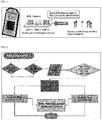
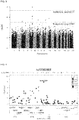
- DNA of 700 girl patients suffering precocious puberty was treated on a microarray chip containing a total of 8,754,887 SNP probes to obtain SNP genotyping data, and 23 SNPs related to the risk of developing precocious puberty were discovered through genome-wide association analysis. Therefore, the SNPs can be used for diagnosing precocious puberty or predicting prognosis of treatment for precocious puberty, and can be usefully utilized for personally customized treatment because it enables simple and quick early diagnosis of precocious puberty and enables prediction on treatment effect and prognosis.
- the inventors of the present invention treated the DNA of 700 girl patients suffering precocious puberty on a microarray chip containing a total of 8,754,887 SNP probes to obtain SNP genotyping data, and discovered 23 SNPs related to the risk of developing precocious puberty through genome-wide association study, thereby completing the present invention.
- the present invention provides a marker composition for diagnosing precocious puberty comprising a polynucleotide consisting of 5-100 consecutive DNA sequences comprising a base at 137937537 position on human chromosome 5, wherein the base at 137937537 position is C (rs10900855), or a complementary polynucleotide thereof as an active ingredient.
- the composition further comprises one or more polynucleotides selected from the group consisting of a polynucleotide consisting of 5-100 consecutive DNA sequences comprising a base at 30643668 position on human chromosome 11, wherein the base at 30643668 position is T (rs373629); a polynucleotide consisting of 5-100 consecutive DNA sequences comprising a base at 78084567 position on human chromosome 7, wherein the base at 78084567 position is C (rs56252016); a polynucleotide consisting of 5-100 consecutive DNA sequences comprising a base at 130141353 position on human chromosome 9, wherein the base at 130141353 position is A (rs62579679); a polynucleotide consisting of 5-100 consecutive DNA sequences comprising a base at 27973513 position on human chromosome 3, wherein the base at 27973513 position is C (rs4680885); a polynucleotide
- polymorphism refers to a case in which two or more alleles exist at a single gene locus
- 'polymorphic site' refers to a gene locus in which the alleles exist.
- SNP single nucleotide polymorphism
- alleles refers to several types of a gene present on the same gene locus of a homologous chromosome. Alleles are also used to indicate polymorphism. For example, in the present invention, a single nucleotide polymorphism that can consist of only two alleles is used as a marker. Therefore, the SNPs used in the present invention have two types of biallele.
- rs_id refers to rs-ID, an independent marker given to all SNPs initially registered by the NCBI, which has been accumulating SNP information since 1998.
- rs_id described in this table means an SNP marker, which is a polymorphic marker in the present invention.
- the present invention provides a composition for diagnosing precocious puberty comprising a probe capable of detecting the marker composition or a reagent capable of amplifying the marker composition as an active ingredient.
- probe used in the present invention refers to a nucleic acid fragment such as RNA or DNA, which can bind to mRNA specifically and consists of several bases for short to several hundred bases for long. Since it is labelled, it can check whether or not a specific mRNA is present, and the expression level of the mRNA.
- the probe may be manufactured in the form of an oligonucleotide probe, a single strand DNA probe, a double strand DNA probe, an RNA probe, and the like. Suitable probe selection and hybridization conditions may be appropriately selected according to the prior art in the corresponding technical field.
- the primer used for amplification of the polymorphic marker refers to a single-stranded oligonucleotide that can serve as a starting point for template-directed DNA synthesis prepared under suitable conditions in an appropriate buffer (e.g., 4 different nucleoside triphosphates and a polymerization agent such as DNA, RNA polymerase or reverse transcriptase) and under appropriate temperature.
- an appropriate buffer e.g., 4 different nucleoside triphosphates and a polymerization agent such as DNA, RNA polymerase or reverse transcriptase
- the appropriate length of the primer may vary depending on the intended use, but is usually 15 to 30 nucleotides. Short primer molecules generally require lower temperatures to form stable hybrids with the template.
- the primer sequence need not be completely complementary to the template, but must be sufficiently complementary to hybridize to the template.
- the "primer” is a base sequence having a short free 3' hydroxyl group. It means a short sequence that can form a base pair with a complementary template and serves as a starting point for copying template strand.
- the primer is capable of initiating DNA synthesis in the presence of reagents for polymerization (i.e., DNA polymerase or reverse transcriptase) and four different nucleoside triphosphates in appropriate buffers and temperatures.
- the length of the sense and antisense primers may be modified based on known in the art.
- the probes or primers in the present invention may be chemically synthesized using the phosphoramidite solid-phase method or other well-known methods.
- Such nucleic acid sequences may also be modified using a number of means known in the art. Non-limiting examples of such modifications include methylation, "capping", substitution of one or more homologs of natural nucleotides, and modifications between nucleotides, such as uncharged linkages (e.g., methyl phosphonates, phosphotriesters, phosphoroamidates, carbamates, etc.) or charged linkages (e.g., phosphorothioates, phosphorodithioates, etc.).
- uncharged linkages e.g., methyl phosphonates, phosphotriesters, phosphoroamidates, carbamates, etc.
- charged linkages e.g., phosphorothioates, phosphorod
- the present invention also provides a kit for diagnosing precocious puberty comprising the composition for the diagnosing precocious puberty.
- the kit may be a DNA chip kit or an RT-PCR kit, but is not limited thereto.
- the kit can diagnose the type by confirming through amplifying the SNP polymorphic marker, which is a diagnostic marker for precocious puberty, or by determining the expression level of the SNP polymorphic marker at the level of DNA or mRNA.
- the kit for measuring the mRNA expression level of the marker for diagnosing precocious puberty in the present invention may be a kit including essential elements necessary for performing RT-PCR.
- the RT-PCR kit may include, in addition to each pair of primers specific for the gene of a diagnostic marker for precocious puberty, a test tube or other suitable container, a reaction buffer (with varying pH and magnesium concentrations), deoxynucleotides (dNTPs), enzymes such as Taq-polymerase and reverse transcriptase, DNase, RNAse inhibitors, DEPCwater, sterile water, and the like. It may also include a pair of primers specific for a gene used as a quantitative control. Also preferably, the kit in the present invention may be a kit for diagnosing precocious puberty including essential elements necessary for performing a DNA chip.
- a DNA chip kit is a generally flat solid support plate, and typically a glass surface no larger than a microscope slide in which nucleic acid species are attached in a gridded array. It is a tool that allows for a large-scale parallel analysis, in which the nucleic acids are uniformly arranged on the chip surface, so that multiple hybridization reactions between the nucleic acids on the DNA chip and the complementary nucleic acids contained in the solution treated on the chip surface.
- the present invention provides a microarray for diagnosing precocious puberty comprising the marker composition.
- the microarray in the present invention may include DNA or RNA polynucleotides.
- the microarray consists of a conventional microarray except that the polynucleotide in the present invention is included as the probe polynucleotide.
- Methods for preparing microarrays by immobilizing probe polynucleotides on a surface are well known in the art.
- the probe polynucleotide refers to a hybridizable polynucleotide, and refers to an oligonucleotide capable of sequence-specific binding to a complementary strand of nucleic acids.
- the probe in the present invention is an allele-specific probe.
- a polymorphic site exists in nucleic acid fragments derived from two members of the same species, so that it hybridizes to a DNA fragment derived from one member but does not hybridize to a fragment derived from another member.
- the hybridization conditions must be sufficiently stringent to hybridize only one of the alleles by showing a significant difference in the hybridization intensity between alleles. This can lead to good hybridization differences between different allelic forms.
- the diagnostic methods may include detection methods based on hybridization of nucleic acids, such as Southern blotting, and may be provided in a form previously bound to a surface of a DNA chip in a method using a DNA chip.
- the hybridization may be usually performed under stringent conditions, for example, a salt concentration of 1 M or less, and a temperature of 25° C or more.
- the present invention provides a method for providing information on diagnosing precocious puberty comprising the steps of (a) obtaining DNA or RNA from a sample isolated from a human; (b) amplifying the polymorphic site of the marker from the DNA or RNA, or hybridizing it with a probe; and (c) identifying the base of the amplified or hybridized polymorphic site.
- the DNA or RNA may be isolated from all cells such as blood, skin cells, mucosal cells, and hair of a subject.
- a method for extracting DNA or RNA from the cells is not particularly limited, and the prior art in the corresponding technical field or a commercially available DNA or RNA extraction kit may be used.
- any method known to those skilled in the art may be used for the step (b) of amplifying the polymorphic site of the single nucleotide polymorphism marker or hybridizing it with a probe.
- it can be obtained by amplifying a target nucleic acid through PCR and purifying it.
- Others including ligase chain reaction (LCR) ( Wu and Wallace, Genomics 4, 560 (1989 ), Landegren et al., Science 241, 1077 (1988 )), transcription amplification ( Kwoh et al., Proc. Natl. Acad. Sci. USA 86, 1173 (1989 )), self-sustained sequence replication ( Guatelli et al., Proc. Natl. Acad. Sci. USA 87, 1874 (1990 )) and nucleic acid sequence based amplification (NASBA) can be used.
- LCR ligase chain reaction
- LCR Wu and Wallace, Genomics 4, 560 (1989 ), Landegren et al.,
- Identifying the base of the polymorphic site in step (c) includes sequencing analysis, hybridization by microarray, allele specific PCR, dynamic allele specific hybridization (DASH), PCR Extension analysis, SSCP, PCR-RFLP analysis or TaqMan technique, SNPlex platform (Applied Biosystems), mass spectrometry (e.g., Sequenom's MassARRAY system), mini-sequencing method, Bio-Plex system (BioRad), CEQ and SNPstream systems (Beckman), Molecular Inversion Probe array technologies (e.g., Affymetrix GeneChip), and BeadArray Technologies (e.g., Illumina GoldenGate and Infinium assays), but is not limited thereto.
- One or more alleles in polymorphic markers may be identified, including microsatellites, SNPs, or other types of polymorphic markers, by the above methods or other methods available to those skilled in the art. Determination of the base of such a polymorphic site may be preferably performed through an SNP chip.
- sequence analysis may be performed. Sequence analysis may be used any method known in the art, and specifically, but not limited thereto, may be used an automatic sequencing analyzer, or may be used any one or more selected from known methods such as pyrosequencing, PCR-RFLP (restriction fragment length polymorphism) method, PCRSSCP (single strand conformation polymorphism) method, PCR-SSO (specific sequence oligonucleotide) method, ASO (allele specific oligonucleotide) hybridization method combining PCR-SSO method and dot hybridization method, TaqMan-PCR method, MALDI-TOF/MS method, RCA (rolling circle amplification) method, HRM (high resolution melting) method, primer extension method, Southern blot hybridization method, dot hybridization method, and the like.
- PCR-RFLP restriction fragment length polymorphism
- PCRSSCP single strand conformation polymorphism
- PCR-SSO specific sequence oligonucleotide
- the present invention provides a marker composition for predicting the prognosis of treatment for precocious puberty comprising a polynucleotide consisting of 5-100 consecutive DNA sequences comprising a base at 137937537 position on human chromosome 5, wherein the base at 137937537 position is C (rs10900855), or a complementary polynucleotide thereof as an active ingredient.
- the composition further comprises one or more selected from the group consisting of a polynucleotide consisting of 5-100 consecutive DNA sequences comprising a base at 30643668 position on human chromosome 11, wherein the base at 30643668 position is T (rs373629); a polynucleotide consisting of 5-100 consecutive DNA sequences comprising a base at 78084567 position on human chromosome 7, wherein the base at 78084567 position is C (rs56252016); a polynucleotide consisting of 5-100 consecutive DNA sequences comprising a base at 130141353 position on human chromosome 9, wherein the base at 130141353 position is A (rs62579679); a polynucleotide consisting of 5-100 consecutive DNA sequences comprising a base at 27973513 position on human chromosome 3, wherein the base at 27973513 position is C (rs4680885); a polynucleotide consisting of 5-100 consecutive DNA
- the present invention provides a composition for predicting prognosis of treatment for precocious puberty comprising a probe capable of detecting the marker composition or an agent capable of amplifying the marker composition as an active ingredient.
- the present invention provides a kit for predicting prognosis of treatment for precocious puberty comprising the composition for predicting prognosis of treatment for precocious puberty.
- the kit may be a DNA chip kit or an RT-PCR kit, but is not limited thereto.
- the present invention provides a microarray for predicting the prognosis of treatment for precocious puberty comprising the marker composition.
- the present invention provides a method for providing information on predicting prognosis of treatment for precocious puberty comprising the steps of (a) obtaining DNA or RNA from a sample isolated from a human; (b) amplifying the polymorphic site of the marker from the DNA or RNA, or hybridizing it with a probe; and (c) identifying the base of the amplified or hybridized polymorphic site.
- GnRH gonadotropin-releasing hormone
- Example 2 Selection of SNPs related to the risk of developing precocious puberty
- the extracted DNA sample was treated on a chip (axiom precision medicine research array (PMRA) microarray chip, affymetrix, Santa Clava, CA, USA) containing a total of 8,754,887 SNP probes and the SNP genotype was investigated as hybridization difference to the probe.
- PMRA axiom precision medicine research array
- GWAS genome wide association study
- the 23 single nucleotide polymorphisms can be usefully utilized for diagnosing precocious puberty or predicting the risk of developing the disease.
Landscapes
- Chemical & Material Sciences (AREA)
- Life Sciences & Earth Sciences (AREA)
- Proteomics, Peptides & Aminoacids (AREA)
- Health & Medical Sciences (AREA)
- Organic Chemistry (AREA)
- Wood Science & Technology (AREA)
- Analytical Chemistry (AREA)
- Zoology (AREA)
- Genetics & Genomics (AREA)
- Engineering & Computer Science (AREA)
- Pathology (AREA)
- Immunology (AREA)
- Microbiology (AREA)
- Molecular Biology (AREA)
- Biotechnology (AREA)
- Biophysics (AREA)
- Physics & Mathematics (AREA)
- Biochemistry (AREA)
- Bioinformatics & Cheminformatics (AREA)
- General Engineering & Computer Science (AREA)
- General Health & Medical Sciences (AREA)
- Measuring Or Testing Involving Enzymes Or Micro-Organisms (AREA)
Applications Claiming Priority (3)
| Application Number | Priority Date | Filing Date | Title |
|---|---|---|---|
| KR20190014993 | 2019-02-08 | ||
| KR1020190046714A KR102181563B1 (ko) | 2019-02-08 | 2019-04-22 | 성조숙증 진단 또는 치료 예후 예측용 단일염기다형성 마커 및 이의 용도 |
| PCT/KR2019/018703 WO2020162663A1 (ko) | 2019-02-08 | 2019-12-30 | 성조숙증 진단 또는 치료 예후 예측용 단일염기다형성 마커 및 이의 용도 |
Publications (3)
| Publication Number | Publication Date |
|---|---|
| EP3922733A1 true EP3922733A1 (de) | 2021-12-15 |
| EP3922733A4 EP3922733A4 (de) | 2022-11-23 |
| EP3922733B1 EP3922733B1 (de) | 2026-03-25 |
Family
ID=72291806
Family Applications (1)
| Application Number | Title | Priority Date | Filing Date |
|---|---|---|---|
| EP19914656.4A Active EP3922733B1 (de) | 2019-02-08 | 2019-12-30 | Einzelnukleotidpolymorphismarker zur diagnose von frühzeitiger pubertät oder zur behandlungsprognosevorhersage und verwendung davon |
Country Status (2)
| Country | Link |
|---|---|
| EP (1) | EP3922733B1 (de) |
| KR (1) | KR102181563B1 (de) |
Cited By (1)
| Publication number | Priority date | Publication date | Assignee | Title |
|---|---|---|---|---|
| WO2026007477A1 (zh) * | 2024-07-05 | 2026-01-08 | 南通大学附属医院 | 一种用于诊断女性中枢性性早熟的生物标志物及其应用 |
Family Cites Families (3)
| Publication number | Priority date | Publication date | Assignee | Title |
|---|---|---|---|---|
| KR20150143095A (ko) | 2014-06-13 | 2015-12-23 | 안련섭 | 타액을 이용한 성조숙증 진단 방법 |
| KR102367260B1 (ko) * | 2017-05-29 | 2022-02-24 | 안련섭 | 진성성조숙증 의증 여아의 GnRH 자극 반응 결과의 사전예측 방법 |
| CN108753995B (zh) * | 2018-07-19 | 2021-07-02 | 江苏省淡水水产研究所 | 一种与中华绒螯蟹性早熟性状显著相关的snp位点及应用 |
-
2019
- 2019-04-22 KR KR1020190046714A patent/KR102181563B1/ko active Active
- 2019-12-30 EP EP19914656.4A patent/EP3922733B1/de active Active
Cited By (1)
| Publication number | Priority date | Publication date | Assignee | Title |
|---|---|---|---|---|
| WO2026007477A1 (zh) * | 2024-07-05 | 2026-01-08 | 南通大学附属医院 | 一种用于诊断女性中枢性性早熟的生物标志物及其应用 |
Also Published As
| Publication number | Publication date |
|---|---|
| KR102181563B1 (ko) | 2020-11-23 |
| KR20200097617A (ko) | 2020-08-19 |
| EP3922733A4 (de) | 2022-11-23 |
| EP3922733B1 (de) | 2026-03-25 |
Similar Documents
| Publication | Publication Date | Title |
|---|---|---|
| CN101137760B (zh) | 检测染色体非整倍性的方法 | |
| KR20170034867A (ko) | 보습 피부 타입 유전자 다형성 마커 및 이의 용도 | |
| KR102158717B1 (ko) | Cd163l1 유전자의 단일염기다형성을 포함하는 뇌동맥류 진단용 snp 마커 | |
| KR102158716B1 (ko) | Arhgap32 유전자의 단일염기다형성을 포함하는 뇌동맥류 진단용 snp 마커 | |
| KR101536213B1 (ko) | 복부비만 예측용 snp 마커 및 이의 용도 | |
| EP3922733B1 (de) | Einzelnukleotidpolymorphismarker zur diagnose von frühzeitiger pubertät oder zur behandlungsprognosevorhersage und verwendung davon | |
| KR102158713B1 (ko) | Gba 유전자의 단일염기다형성을 포함하는 뇌동맥류 진단용 snp 마커 | |
| KR101532308B1 (ko) | 복부비만 예측용 snp 마커 및 이의 용도 | |
| KR102158721B1 (ko) | Rnf144a 유전자의 단일염기다형성을 포함하는 뇌동맥류 진단용 snp 마커 | |
| KR102724607B1 (ko) | 근감소증 진단용 마커 및 이의 용도 | |
| KR102543907B1 (ko) | 치주질환 위험도 평가용 유전자 마커 | |
| US12344896B2 (en) | Single nucleotide polymorphism marker for precocious puberty diagnosis or treatment prognosis prediction, and use thereof | |
| KR102158715B1 (ko) | Olfml2a 유전자의 단일염기다형성을 포함하는 뇌동맥류 진단용 snp 마커 | |
| KR101777911B1 (ko) | 골다공증 골절 발생 예측용 바이오마커 | |
| WO2010141362A1 (en) | Compositions and methods for diagnosing the occurrence or likelihood of occurrence of testicular germ cell cancer | |
| KR102343561B1 (ko) | 조기진통 환자에 대한 리토드린 투여 반응성 예측용 adcy9 snp 마커 및 이의 용도 | |
| US20050221306A1 (en) | Detection of predisposition to osteoporosis | |
| KR102158714B1 (ko) | Tcf24 유전자의 단일염기다형성을 포함하는 뇌동맥류 진단용 snp 마커 | |
| KR102158720B1 (ko) | Lrrc3 유전자의 단일염기다형성을 포함하는 뇌동맥류 진단용 snp 마커 | |
| KR102158722B1 (ko) | Flj45964 유전자의 단일염기다형성을 포함하는 뇌동맥류 진단용 snp 마커 | |
| KR102158725B1 (ko) | Mink1 유전자의 단일염기다형성을 포함하는 뇌동맥류 진단용 snp 마커 | |
| KR102158724B1 (ko) | Lingo2 유전자의 단일염기다형성을 포함하는 뇌동맥류 진단용 snp 마커 | |
| KR102158718B1 (ko) | Cul4a 유전자의 단일염기다형성을 포함하는 뇌동맥류 진단용 snp 마커 | |
| KR102158719B1 (ko) | Loc102724084 유전자의 단일염기다형성을 포함하는 뇌동맥류 진단용 snp 마커 | |
| KR102158723B1 (ko) | Spcs3 유전자의 단일염기다형성을 포함하는 뇌동맥류 진단용 snp 마커 |
Legal Events
| Date | Code | Title | Description |
|---|---|---|---|
| STAA | Information on the status of an ep patent application or granted ep patent |
Free format text: STATUS: THE INTERNATIONAL PUBLICATION HAS BEEN MADE |
|
| PUAI | Public reference made under article 153(3) epc to a published international application that has entered the european phase |
Free format text: ORIGINAL CODE: 0009012 |
|
| STAA | Information on the status of an ep patent application or granted ep patent |
Free format text: STATUS: REQUEST FOR EXAMINATION WAS MADE |
|
| 17P | Request for examination filed |
Effective date: 20210821 |
|
| AK | Designated contracting states |
Kind code of ref document: A1 Designated state(s): AL AT BE BG CH CY CZ DE DK EE ES FI FR GB GR HR HU IE IS IT LI LT LU LV MC MK MT NL NO PL PT RO RS SE SI SK SM TR |
|
| DAV | Request for validation of the european patent (deleted) | ||
| DAX | Request for extension of the european patent (deleted) | ||
| A4 | Supplementary search report drawn up and despatched |
Effective date: 20221020 |
|
| RIC1 | Information provided on ipc code assigned before grant |
Ipc: C12Q 1/6883 20180101AFI20221014BHEP |
|
| STAA | Information on the status of an ep patent application or granted ep patent |
Free format text: STATUS: EXAMINATION IS IN PROGRESS |
|
| 17Q | First examination report despatched |
Effective date: 20240321 |
|
| GRAP | Despatch of communication of intention to grant a patent |
Free format text: ORIGINAL CODE: EPIDOSNIGR1 |
|
| STAA | Information on the status of an ep patent application or granted ep patent |
Free format text: STATUS: GRANT OF PATENT IS INTENDED |
|
| INTG | Intention to grant announced |
Effective date: 20251216 |
|
| GRAS | Grant fee paid |
Free format text: ORIGINAL CODE: EPIDOSNIGR3 |
|
| GRAA | (expected) grant |
Free format text: ORIGINAL CODE: 0009210 |
|
| STAA | Information on the status of an ep patent application or granted ep patent |
Free format text: STATUS: THE PATENT HAS BEEN GRANTED |
|
| AK | Designated contracting states |
Kind code of ref document: B1 Designated state(s): AL AT BE BG CH CY CZ DE DK EE ES FI FR GB GR HR HU IE IS IT LI LT LU LV MC MK MT NL NO PL PT RO RS SE SI SK SM TR |
|
| REG | Reference to a national code |
Ref country code: CH Ref legal event code: F10 Free format text: ST27 STATUS EVENT CODE: U-0-0-F10-F00 (AS PROVIDED BY THE NATIONAL OFFICE) Effective date: 20260325 Ref country code: GB Ref legal event code: FG4D |
|
| REG | Reference to a national code |
Ref country code: DE Ref legal event code: R096 Ref document number: 602019082978 Country of ref document: DE |
|
| REG | Reference to a national code |
Ref country code: IE Ref legal event code: FG4D |