EP3923537B1 - Procédé de partage d'informations de canal dans un réseau bluetooth et dispositif électronique associé - Google Patents
Procédé de partage d'informations de canal dans un réseau bluetooth et dispositif électronique associé Download PDFInfo
- Publication number
- EP3923537B1 EP3923537B1 EP20765638.0A EP20765638A EP3923537B1 EP 3923537 B1 EP3923537 B1 EP 3923537B1 EP 20765638 A EP20765638 A EP 20765638A EP 3923537 B1 EP3923537 B1 EP 3923537B1
- Authority
- EP
- European Patent Office
- Prior art keywords
- link
- information
- electronic device
- processor
- external
- Prior art date
- Legal status (The legal status is an assumption and is not a legal conclusion. Google has not performed a legal analysis and makes no representation as to the accuracy of the status listed.)
- Active
Links
Images


Classifications
-
- H—ELECTRICITY
- H04—ELECTRIC COMMUNICATION TECHNIQUE
- H04L—TRANSMISSION OF DIGITAL INFORMATION, e.g. TELEGRAPHIC COMMUNICATION
- H04L69/00—Network arrangements, protocols or services independent of the application payload and not provided for in the other groups of this subclass
- H04L69/14—Multichannel or multilink protocols
-
- H—ELECTRICITY
- H04—ELECTRIC COMMUNICATION TECHNIQUE
- H04L—TRANSMISSION OF DIGITAL INFORMATION, e.g. TELEGRAPHIC COMMUNICATION
- H04L25/00—Baseband systems
- H04L25/02—Details ; arrangements for supplying electrical power along data transmission lines
- H04L25/0202—Channel estimation
- H04L25/0204—Channel estimation of multiple channels
-
- H—ELECTRICITY
- H04—ELECTRIC COMMUNICATION TECHNIQUE
- H04L—TRANSMISSION OF DIGITAL INFORMATION, e.g. TELEGRAPHIC COMMUNICATION
- H04L61/00—Network arrangements, protocols or services for addressing or naming
- H04L61/50—Address allocation
- H04L61/5084—Providing for device mobility
-
- H—ELECTRICITY
- H04—ELECTRIC COMMUNICATION TECHNIQUE
- H04W—WIRELESS COMMUNICATION NETWORKS
- H04W4/00—Services specially adapted for wireless communication networks; Facilities therefor
- H04W4/80—Services using short range communication, e.g. near-field communication [NFC], radio-frequency identification [RFID] or low energy communication
-
- H—ELECTRICITY
- H04—ELECTRIC COMMUNICATION TECHNIQUE
- H04W—WIRELESS COMMUNICATION NETWORKS
- H04W40/00—Communication routing or communication path finding
- H04W40/24—Connectivity information management, e.g. connectivity discovery or connectivity update
-
- H—ELECTRICITY
- H04—ELECTRIC COMMUNICATION TECHNIQUE
- H04W—WIRELESS COMMUNICATION NETWORKS
- H04W76/00—Connection management
- H04W76/10—Connection setup
- H04W76/14—Direct-mode setup
-
- H—ELECTRICITY
- H04—ELECTRIC COMMUNICATION TECHNIQUE
- H04W—WIRELESS COMMUNICATION NETWORKS
- H04W76/00—Connection management
- H04W76/10—Connection setup
- H04W76/15—Setup of multiple wireless link connections
-
- H—ELECTRICITY
- H04—ELECTRIC COMMUNICATION TECHNIQUE
- H04L—TRANSMISSION OF DIGITAL INFORMATION, e.g. TELEGRAPHIC COMMUNICATION
- H04L67/00—Network arrangements or protocols for supporting network services or applications
- H04L67/50—Network services
- H04L67/51—Discovery or management thereof, e.g. service location protocol [SLP] or web services
Definitions
- Certain embodiments of the present disclosure relate to a method for sharing channel information in a Bluetooth network and an electronic device therefor.
- an electronic device may reduce radio resource consumption in a Bluetooth network environment.
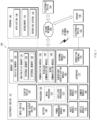
- the processor 120 may execute, for example, software (e.g., a program 140) to control at least one other component (e.g., a hardware or software component) of the electronic device 101 coupled with the processor 120, and may perform various data processing or computation. According to one embodiment, as at least part of the data processing or computation, the processor 120 may load a command or data received from another component (e.g., the sensor module 176 or the communication module 190) in volatile memory 132, process the command or the data stored in the volatile memory 132, and store resulting data in non-volatile memory 134.
- software e.g., a program 140
- the processor 120 may load a command or data received from another component (e.g., the sensor module 176 or the communication module 190) in volatile memory 132, process the command or the data stored in the volatile memory 132, and store resulting data in non-volatile memory 134.
- the display device 160 may visually provide information to the outside (e.g., a user) of the electronic device 101.
- the display device 160 may include, for example, a display, a hologram device, or a projector and control circuitry to control a corresponding one of the display, hologram device, and projector.
- the display device 160 may include touch circuitry adapted to detect a touch, or sensor circuitry (e.g., a pressure sensor) adapted to measure the intensity of force incurred by the touch.
- the sensor module 176 may detect an operational state (e.g., power or temperature) of the electronic device 101 or an environmental state (e.g., a state of a user) external to the electronic device 101, and then generate an electrical signal or data value corresponding to the detected state.
- the sensor module 176 may include, for example, a gesture sensor, a gyro sensor, an atmospheric pressure sensor, a magnetic sensor, an acceleration sensor, a grip sensor, a proximity sensor, a color sensor, an infrared (IR) sensor, a biometric sensor, a temperature sensor, a humidity sensor, or an illuminance sensor.
- the interface 177 may support one or more specified protocols to be used for the electronic device 101 to be coupled with the external electronic device (e.g., the electronic device 102) directly (e.g., wiredly) or wirelessly.
- the interface 177 may include, for example, a high-definition multimedia interface (HDMI), a universal serial bus (USB) interface, a secure digital (SD) card interface, or an audio interface.
- HDMI high-definition multimedia interface
- USB universal serial bus
- SD secure digital
- the battery 189 may supply power to at least one component of the electronic device 101.
- the battery 189 may include, for example, a primary cell which is not rechargeable, a secondary cell which is rechargeable, or a fuel cell.
- the communication module 190 may support establishing a direct (e.g., wired) communication channel or a wireless communication channel between the electronic device 101 and the external electronic device (e.g., the electronic device 102, the electronic device 104, or the server 108) and performing communication via the established communication channel.
- the communication module 190 may include one or more communication processors that are operable independently from the processor 120 (e.g., the application processor (AP)) and supports a direct (e.g., wired) communication or a wireless communication.
- AP application processor
- the signal or the power may then be transmitted or received between the communication module 190 and the external electronic device via the selected at least one antenna.
- another component e.g., a radio frequency integrated circuit (RFIC)
- RFIC radio frequency integrated circuit
- commands or data may be transmitted or received between the electronic device 101 and the external electronic device 104 via the server 108 coupled with the second network 199.
- Each of the electronic devices 102 and 104 may be a device of a same type as, or a different type, from the electronic device 101.
- all or some of operations to be executed at the electronic device 101 may be executed at one or more of the external electronic devices 102, 104, or 108. For example, if the electronic device 101 should perform a function or a service automatically, or in response to a request from a user or another device, the electronic device 101, instead of, or in addition to, executing the function or the service, may request the one or more external electronic devices to perform at least part of the function or the service.
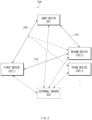
- FIG. 2 illustrates a topology 200 of a Bluetooth network environment according to certain embodiments.
- the user device 201 may recognize the first device 202-1 using wireless communication (e.g., Bluetooth (e.g., Bluetooth legacy and/or BLE)).
- the user device 201 may recognize the first device 202-1 by receiving an advertising signal broadcast or multicast by the first device 202-1.
- the first device 202-1 may transmit an advertising signal including information related to a connection or a connection request.
- the advertising signal may include at least one of identification information about the first device 202-1, user's account information, information indicating whether another device is currently paired, information about a device capable of being simultaneously paired, or information about transmission power, sensing area, or battery remaining capacity.
- the user device 201 may perform a connection operation with the recognized first device 202-1 based on a Bluetooth or BLE protocol.
- the user device 201 may recognize the first device 202-1 based on the Bluetooth and/or BLE protocol and may perform a connection operation with the first device 202-1 based on the Bluetooth or BLE protocol.
- the user device 201 may output, to a display, a user interface for connecting to the first device 202-1.
- the user interface may include identification information about an identified device (e.g., the first device 202-1).
- the user interface may include an indicator indicating whether the identified device has been paired with the user device 201 in the past.
- the user interface may include information about a user account associated with the user device 201 and/or the first device 202-1.
- the user device 201 may identify another electronic device and may provide identified electronic device information to a user.
- the user device 201 may perform connection with an external electronic device (e.g., the first device 202-1) based on a user input (e.g., input for selecting a connection device) to at least one of identified electronic devices.
- the user device 201 may transmit a connection request to the selected first device 202-1 and may connect to the first device 202-1 upon receiving an acceptance response from the first device 202-1.
- the user device 201 when connected to the first device 202-1, may transmit information associated with the first device 202-1 to an external server 203 (e.g., Internet-of-things (IoT) server or Samsung Connect TM server).
- an external server 203 e.g., Internet-of-things (IoT) server or Samsung Connect TM server.
- the user device 201 may register information about the connected first device 202-1 in the external server 203.
- the user device 201 may transmit state information associated with the first device 202-1 and/or first link 205 to the external server 203.
- the user device 201 may manage other electronic devices based on an account (e.g., user account associated with the user device 201) using information of the external server 203.
- the user device 201 may store, in a memory, information about a connected device (e.g., the first device 202-1) and/or link (e.g., the first link 205).
- the user device 201 may store information of the first device 202-1 in a memory or update the same.
- the user device 201 may receive information of another electronic device from the external server 203.
- the second device 202-2 may be connected to the first device 202-1 via a third link 215, and may transmit information of the first device 202-1 to the external server 203.
- the user device 201 may receive, from the external server 203, the information of the first device 202-1 transmitted from the second device 202-2.
- the user device 201, the first device 202-1, and the second device 202-2 may be electronic devices associated with the same account in the external server 203.
- the user device 201 may form only the first link 205 with the first device 202-1, and may transmit a data packet via the first link 205.
- at least one other electronic device e.g., the second device 202-2 and/or the third device 202-3 may monitor the first link 205 in order to receive (e.g., listen) a data packet transmitted from the user device 201 to the first device 202-1 via the first link 205.
- the user device 201 unicasts data to the first device 202-1, but the data transmitted from the user device 201 may be received by not only the first device 202-1 but also another electronic device (e.g., the second device 202-2 and/or the third device 202-3).
- the second device 202-2 is described as monitoring the first link 205, but embodiments of the present disclosure are not limited thereto.
- Another electronic device e.g., the third device 202-3) may also monitor the first link 205 in a manner similar to that in which the second device 202-2 monitors the first link 205.
- the second device 202-2 may receive (e.g., listen on) communication between the user device 201 and the first device 202-1 via the first link 205 using the first link information.
- the second device 202-2 may determine a first link 205 hopping channel (or frequency hopping channel) using the first link information, and may decrypt encrypted data packets through key information.
- the first device 202-1 may transmit a response message to the user device 201 in order to notify that a data packet has been received normally.
- the response message may include a positive acknowledgement (ACK) message indicating that the data packet has been received normally or a negative acknowledgement (NACK) message indicating that the data packet has not been received normally.
- the response message may include, for example, 1-bit information. If an ACK message is received after transmitting a data packet, the user device 201 may transmit a next data packet, and if a NACK message is received or a response message is not received within a specified time, the user device 201 may retransmit the same data packet.
- the first device 202-1 may transmit a response message including NACK to the user device 201 via the first link 205.
- the first device 202-1 may transmit a response message including NACK to the user device 201 via the first link 205.
- the first device 202-1 may transmit a response message including ACK to the user device 201 via the first link 205 only when data is successfully received from the user device 201 and ACK for the data is received from the second device 202-2.
- the second device 202-2 may transmit a response message to the user device 201 based on ACK/NACK from the first device 202-1.
- the first device 202-1 may transmit a reception result of a data packet transmitted via the first link 205 to the second device 202-2 via the third link 215.
- the first device 202-1 may transmit ACK to the second device 202-2 via the third link 215 if the data packet is successfully received from the user device 201, and may transmit NACK to the second device 202-2 via the third link 215 if the data packet is not successfully received.
- the first device 202-1 may not transmit ACK to the second device 202-2 if the packet is not successfully received.
- the second device 202-2 may transmit a response message including NACK to the user device 201 via the second link 210.
- the second device 202-2 may transmit a response message including NACK to the user device 201 via the second link 210.
- the second device 202-2 may transmit a response message including ACK to the user device 201 via the second link 210 only when data is successfully received from the user device 201 and ACK for the data is received from the first device 202-1.
- the first device 202-1 and the second device 202-2 may transmit ACK/NACK at different timings.
- the first device 202-1 and the second device 202-2 may be configured to transmit ACK/NACK for data from the user device 201 at different timings within one time interval (e.g., slot or time interval).
- the first device 202-1 and the second device 202-2 may transmit ACK/NACK to the user device 201 using different sub-slots among a plurality of sub-slots constituting one slot.
- the first device 202-1 and the second device 202-2 may transmit ACK/NACK at non-overlapping timings within one time interval (e.g., time interval set for data transmission).
- the first device 202-1 and the second device 202-2 may transmit ACK/NACK using the first link 205 or the second link 210.
- the second device 202-2 may transmit NACK using a time margin interval (e.g., Rx cycle) set between slots. For example, if reception of data from the user device 201 succeeds, the second device 202-2 may not transmit ACK and NACK within the time margin interval. In this case, the first device 202-1 may transmitACK to the user device 201 via the first link 205 after elapse of the time margin interval. For another example, if reception of data from the user device 201 fails, the second device 202-2 may transmit NACK to the user device 201 within the time margin interval. Therefore, the second device 202-2 may transmit NACK to the user device 201 prior to the first device 202-1 only when data is not successfully received from the user device 201.
- a time margin interval e.g., Rx cycle
- the first device 202-1 may transmit a message (e.g., message corresponding to NACK) to the user device 201 via the first link 205 if reception of data from the user device 201 fails.
- the second device 202-2 may transmit no message to the user device 201. Therefore, the user device 201 may receive only a message associated with ACK via the second link 210, and may receive only a message associated with NACK via the first link 205. The user device 201 may recognize a case corresponding to NACK even if there is no response.
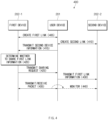
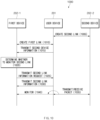
- FIG. 3 is a signal flowchart 300 illustrating a link information sharing method based on determination of a user device according to an embodiment.
- the user device 201 may determine whether to share the first link information at least partially based on identification information (e.g., name) of the first device 202-1 and the second device 202-2. For example, the user device 201 may determine whether to share the first link information at least partially based on similarity and/or regularity of the identification information between the first device 202-1 and the second device 202-2. For example, if the first device 202-1 has a name of AAA_left and the second device 202-2 has a name of AAA_Right, the user device 201 may recognize that the first device 202-1 and the second device 202-2 are electronic devices supporting the same service based on the identification information.
- identification information e.g., name
- the user device 201 may recognize that the first device 202-1 and the second device 202-2 are electronic devices supporting the same service based on the identification information.
- the user device 201 may determine to share the first link information with the second device 202-2 if the first device 202-1 and the second device 202-2 have the same manufacturer identification information and similar LAP values. For example, the user device 201 may share the first link information with the second device 202-2 if the addresses of the first device 202-1 and the second device 202-2 indicate the same manufacturer and a difference of the LAPs falls within a preset range.
- the user device 201 may determine whether to share the first link information at least partially based on at least one of supported features or manufacturers of the first device 202-1 and the second device 202-2. For example, the user device 201 may identify the first device 202-1 and the second device 202-2 as electronic devices supporting the same service by using supported feature information of each of the first device 202-1 and the second device 202-2, and may determine to share the first link information with the second device 202-2 that supports the same service. For example, the user device 201 may identify the first device 202-1 and the second device 202-2 as electronic devices supporting the same service by using information about manufacturers of the first device 202-1 and the second device 202-2, and may determine to share the first link information with the second device 202-2 that supports the same service.
- the user device 201 may identify the first device 202-1 and the second device 202-2 as electronic devices supporting the same service by using the supported feature information and manufacturer information of the first device 202-1 and the second device 202-2, and may determine to share the first link information with the second device 202-2 that supports the same service.
- the first device 202-1 may determine whether to share the first link information based on at least the identification information, addresses, supported features, and/or manufacturers of the first device 202-1 and the second device 202-2. For example, the first device 202-1 may determine whether to share the first link information using at least one of the identification information, addresses, supported features, and/or manufacturers. For another example, the first device 202-1 may determine whether to share the first link information using all of the identification information, addresses, supported features, and manufacturers.
- FIG. 5 is a signal flowchart 500 illustrating a link information sharing method based on determination of the second device 202-2 according to an embodiment.
- the second device 202-2 may transmit a connected electronic device information request to the user device 201.
- the second device 202-2 may transmit the connected electronic device information request when the second link 210 is created.
- the second device 202-2 may transmit the connected electronic device information request if the second link 210 and a third link (e.g., the third link 215 of FIG. 2 ) are created.
- the connected electronic device information request may be a message requesting information of electronic devices connected to the user device 201.
- the user device 201 may transmit, to the second device 202-2, connected electronic device information including information of at least one of electronic devices connected to the user device 201.
- the connected electronic device information may include information of the first device 202-1.
- the information of the first device 202-1 may include at least one of the address of the first device 202-1, the identification information of the first device 202-1, and/or the manufacturer of the first device 202-1.
- the second device 202-2 may transmit a first link information request to the user device 201 in operation 535.
- the second device 202-2 may transmit the first link information request to the user device 201 via the second link 210.
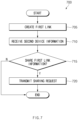
- a user device may include a wireless communication circuit (e.g., the communication module 190 of FIG. 1 ), a memory (e.g., the memory 130 of FIG. 1 ), and a processor (e.g., application processor and/or communication processor).
- the processor may be operatively connected to the wireless communication circuit and the memory.
- the memory may store one or more instructions that, when executed, cause the processor to perform the operations of the user device 201 described below.
- the user device 201 may establish a first link (e.g., the first link 205 of FIG. 2 ) with a first device (e.g., the first device 202-1 of FIG. 2 ) through the processor and the wireless communication circuit.
- a first link e.g., the first link 205 of FIG. 2
- a first device e.g., the first device 202-1 of FIG. 2
- the above descriptions of operation 305 of FIG. 3 may be referenced for operation 605.
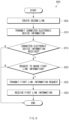
- FIG. 7 is a flowchart 700 illustrating a link information sharing method of a first device according to an embodiment.
- a first device may include a wireless communication circuit (e.g., the communication module 190 of FIG. 1 ), a memory (e.g., the memory 130 of FIG. 1 ), and a processor (e.g., application processor and/or communication processor).
- the processor may be operatively connected to the wireless communication circuit and the memory.
- the memory may store one or more instructions that, when executed, cause the processor to perform the operations of the first device 202-1 described below.
- the first device 202-1 may establish a first link (e.g., the first link 205 of FIG. 2 ) with a user device (e.g., the user device 201 of FIG. 2 ) through the processor and the wireless communication circuit.
- a first link e.g., the first link 205 of FIG. 2
- a user device e.g., the user device 201 of FIG. 2
- the above descriptions of operation 405 of FIG. 4 may be referenced for operation 705.
- the first device 202-1 may determine whether to share first link information through the processor.
- the above descriptions of operation 420 of FIG. 4 may be referenced for operation 715.
- the first device 202-1 may transmit a sharing request to the user device 201 through the processor and the wireless communication circuit when determining that the first link information is to be shared.
- the above descriptions of operation 425 of FIG. 4 may be referenced for operation 720.
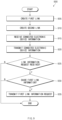
- FIG. 8 is a flowchart 800 illustrating a link information sharing method of a second device according to an embodiment.
- the second device 202-2 may establish a second link (e.g., the second link 215 of FIG. 2 ) with a user device (e.g., the user device 201 of FIG. 2 ) through the processor and the wireless communication circuit.
- a second link e.g., the second link 215 of FIG. 2
- a user device e.g., the user device 201 of FIG. 2
- the above descriptions of operation 510 of FIG. 5 may be referenced for operation 805.
- the second device 202-2 may determine, through the processor, whether connected electronic device information has been received. For example, the second device 202-2 may determine whether the connected electronic device information is received from the user device 201 within a specified time after transmitting the connected electronic device information request. If the connected electronic device information is not received from the user device 201 within the specified time or a rejection response is received from the user device 201, link information sharing may be ended.
- the second device 202-2 may determine whether to request to share first link information through the processor in operation 820. For example, the above descriptions of operation 525 of FIG. 5 may be referenced for operation 820.
- the second device 202-2 may transmit a first link information request to the user device 201 through the processor and the wireless communication circuit in operation 825.
- the above descriptions of operation 535 of FIG. 5 may be referenced for operation 825.
- the second device 202-2 may receive the first link information from the user device 201 through the processor and the wireless communication circuit. For example, the above descriptions of operation 540 of FIG. 5 may be referenced for operation 830.
- the second device 202-2 may monitor the first link 205 using the received first link information.
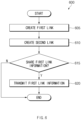
- FIG. 9 is a flowchart illustrating a link information sharing method 900 of a user device according to an embodiment.
- the user device 201 may create a second link (e.g., the second link 210 of FIG. 2 ) with a second device (e.g., the second device 202-2 of FIG. 2 ) through the processor and the wireless communication circuit.
- a second link e.g., the second link 210 of FIG. 2
- a second device e.g., the second device 202-2 of FIG. 2
- the above descriptions of operation 510 of FIG. 5 may be referenced for operation 910.
- the user device 201 may receive a connected electronic device information request from the second device 202-2 through the processor and the wireless communication circuit.
- the above descriptions of operation 515 of FIG. 5 may be referenced for operation 915.
- the user device 201 may transmit connected electronic device information to the second device 202-2 through the processor and the wireless communication circuit.
- the above descriptions of operation 520 of FIG. 5 may be referenced for operation 920.
- operation 915 may be skipped. For example, even if the connected electronic device information request is not received, the user device 201 may transmit the connected electronic device information to the second device 202-2 if the second link 210 is generated.
- the user device 201 may determine whether to share first link information through the processor. For example, as described above in relation to operation 315 of FIG. 3 , the user device 201 may determine whether to share the first link information. According to an embodiment, operation 930 may be skipped. In this case, the user device 201 may perform operation 935 if the link information request is received.
- the user device 201 may transmit the first link information through the processor and the wireless communication circuit. For example, the user device 201 may transmit the first link information to the second device 202-2 if the first link is determined to be shared. For example, the above descriptions of operation 540 of FIG. 5 may be referenced for operation 935.
- the user device 201 may reject a link information sharing request received from the second device 202-2. For example, the user device 201 may reject the link information sharing request at least partially based on the name, address, supported feature, manufacturer, sharing request, setting, sharing history, and/or account of each of the second device 202-2 and the first device 202-1.
- FIG. 10 is a signal flowchart 1000 of a link monitoring method of the first device 202-1 according to an embodiment.
- the user device 201 and the second device 202-2 may establish the second link 210.
- the user device 201 and the second device 202-2 may create the second link 210 according to the method described above with reference to FIG. 3 .
- the first device 202-1 may determine whether to monitor the second link. For example, the first device 202-1 may determine whether to monitor at least partially based on the identification information, address, supported feature, manufacture, and/or setting of each of the first device 202-1 and the second device 202-2.
- the first device 202-1 may transmit a second link information request to the user device 201 via the first link 205 in operation 1025.
- the user device 201 may transmit the second link information in response to the second link information request.
- the second link information may include address information (e.g., Bluetooth information) of the user device 201, piconet clock information (e.g. clock native (CLKN) of the master device of the second link 210), logical transport address information (e.g., information of a slave device of the second link 210), used channel map information, link key information, service discovery protocol (SDP) information (e.g., service and/or profile information associated with the second link 210), and/or supported feature information.
- the second link information may further include, for example, an extended inquiry response (EIR) packet.
- the EIR packet may include resource control information about the second link 210.
- the user device 201 may communicate with the second device 202-2 via the second link 210 in operation 1035.
- the user device 201 may transmit (e.g., unicast) a data (e.g., data including media) packet to the second device 202-2 via the second link 210.
- a data e.g., data including media
- the first device 202-1 may monitor (e.g., listen on) the second link 210.
- the first device 202-1 may monitor the second link 210 using the second link information.
- the first device 202-1 may monitor the second link 210 upon receiving an additional request from the user device 201 after continuously performing page scanning by using the Bluetooth address of the second device 202-2.
- the first device 202-1 may monitor the second link 210 upon receiving the second link information.
- the first device 202-1 may identify a hopping channel of the second link 210 using clock information and a Bluetooth address of a master device of the second link 210.
- the first device 202-1 may monitor the second link 210 using the identified hopping channel.
- the second device 202-2 may transmit, to the first device 202-1, a response message for the data packet received from the user device 201 via the second link 210.
- the second device 202-2 may transmit ACK/NACK to the first device 202-1 via a third link (e.g., the third link 215 of FIG. 2 ).
- the first device 202-1 may transmit a response message to the user device 201 at least partially based on ACK/NACK received from the second device 202-2.
- an electronic device may include a wireless communication circuit (e.g., the communication module 190 of FIG. 1 ), a processor (e.g., the processor 120 of FIG. 1 ) operatively connected to the wireless communication circuit, and a memory (e.g., the memory 130 of FIG. 1 ) operatively connected to the processor.
- the memory may store one or more instructions that, when executed, cause the at least one processor to: create a first link (e.g., the first link 205 of FIG. 2 ) with a first external electronic device (e.g., the first device 202-1 of FIG.
- a second link e.g., the second link 210 of FIG. 2
- a second external electronic device e.g., the second device 202-2 of FIG. 2
- the one or more instructions when executed, may cause the processor to determine whether to share the first link information at least partially based on similarity of identification information between the first external electronic device and the second external electronic device.
- the one or more instructions when executed, may cause the processor to determine to share the first link information when the addresses of the first external electronic device and the second external electronic device have the same organizationally unique identifier (OUI) and a difference of lower address part (LAP) between the addresses falls within a preset range.
- OUI organizationally unique identifier
- LAP difference of lower address part
- the first link information may include at least one of address information, piconet clock information, logical transport address information, used channel map information, link key information, service discovery protocol (SDP) information, or supported feature information of at least one electronic device associated with the first link.
- address information may include at least one of address information, piconet clock information, logical transport address information, used channel map information, link key information, service discovery protocol (SDP) information, or supported feature information of at least one electronic device associated with the first link.
- SDP service discovery protocol
- the electronic device may transmit the first link information so as to allow the second external electronic device to monitor the data packet using the first link information.
- the one or more instructions when executed, may cause the processor to determine whether to retransmit the data packet based on a response message for the data packet from the first external electronic device.
- the one or more instructions when executed, may cause the processor to transmit a subsequent data packet of the data packet when the response message received from the first external electronic device indicates positive acknowledgement.
- the positive acknowledgement may indicate that the first external electronic device and the second external electronic device have successfully received the data packet.
- an electronic device may include a wireless communication circuit (e.g., the communication module 190 of FIG. 1 ), a processor (e.g., the processor 120 of FIG. 1 ) operatively connected to the wireless communication circuit, and a memory (e.g., the memory 130 of FIG. 1 ) operatively connected to the processor.
- the memory may store one or more instructions that, when executed, cause the processor to: create a first link (e.g., the first link 205 of FIG. 2 ) with a user device (e.g., the user device 201 of FIG.
- the wireless communication circuit uses the wireless communication circuit to receive information of an external device (e.g., the second device 202-2 of FIG. 2 ) connected to the user device from the user device using the wireless communication circuit; determine whether to share, with the external electronic device, first link information for estimating a channel of the first link at least partially based on the information of the external electronic device and information of the electronic device; and transmit, based on the determination, a sharing request instructing sharing of the first link information with the external device to the user device via the first link.
- an external device e.g., the second device 202-2 of FIG. 2
- the one or more instructions when executed, may cause the processor to determine whether to share the first link information at least partially based on similarity of identification information between the electronic device and the external device.
- the one or more instructions when executed, may cause the processor to determine whether to share the first link information at least partially based on addresses of the electronic device and the external device.
- the one or more instructions when executed, may cause the processor to determine to share the first link information based on manufacturers and supported service information of the electronic device and the external device.
- the first link information may include at least one of address information, piconet clock information, logical transport address information, used channel map information, link key information, service discovery protocol (SDP) information, or supported feature information of at least one electronic device associated with the first link.
- address information may include at least one of address information, piconet clock information, logical transport address information, used channel map information, link key information, service discovery protocol (SDP) information, or supported feature information of at least one electronic device associated with the first link.
- SDP service discovery protocol
- the one or more instructions when executed, may cause the processor to: create a second link with the external device using the wireless communication circuit; receive a first message indicating whether a first data packet has been received from the external device via the second link; transmit a second message indicating positive acknowledgement for the first data packet to the user device via the first link when the first message indicates successful data packet reception and the first data packet is successfully received via the first link; and transmit the second message indicating negative acknowledgement for the first data packet to the user device via the first link when the first message indicates data packet reception failure or reception of the first data packet via the first link fails.
- an electronic device may include a wireless communication circuit (e.g., the communication module 190 of FIG. 1 ), a processor (e.g., the processor 120 of FIG. 1 ) operatively connected to the wireless communication circuit, and a memory (e.g., the memory 130 of FIG. 1 ) operatively connected to the processor.
- the memory may store one or more instructions that, when executed, cause the processor to: create a second link (e.g., the second link 210 of FIG. 2 ) with a user device (e.g., the user device 201 of FIG.
- the first link information may include at least one of address information, piconet clock information, logical transport address information, used channel map information, link key information, service discovery protocol (SDP) information, or supported feature information of at least one electronic device associated with the first link.
- address information may include at least one of address information, piconet clock information, logical transport address information, used channel map information, link key information, service discovery protocol (SDP) information, or supported feature information of at least one electronic device associated with the first link.
- SDP service discovery protocol
- the electronic device may be one of various types of electronic devices.
- the electronic devices may include, for example, a portable communication device (e.g., a smartphone), a computer device, a portable multimedia device, a portable medical device, a camera, a wearable device, or a home appliance. According to an embodiment of the disclosure, the electronic devices are not limited to those described above.
- each of such phrases as “A or B”, “at least one of A and B”, “at least one of A or B”, “A, B, or C”, “at least one of A, B, and C”, and “at least one of A, B, or C” may include any one of, or all possible combinations of the items enumerated together in a corresponding one of the phrases.
- such terms as “1st” and “2nd”, or “first” and “second” may be used to simply distinguish a corresponding component from another, and does not limit the components in other aspect (e.g., importance or order).
- an element e.g., a first element
- the element may be coupled with the other element directly (e.g., wiredly), wirelessly, or via a third element.
- module may include a unit implemented in hardware, software, or firmware, and may interchangeably be used with other terms, for example, “logic”, “logic block”, “part”, or “circuitry”.
- a module may be a single integral component, or a minimum unit or part thereof, adapted to perform one or more functions.
- the module may be implemented in a form of an application-specific integrated circuit (ASIC).
- ASIC application-specific integrated circuit
- Certain embodiments as set forth herein may be implemented as software (e.g., the program 140) including one or more instructions that are stored in a storage medium (e.g., internal memory 136 or external memory 138) that is readable by a machine (e.g., the electronic device 101).
- a processor e.g., the processor 120
- the machine e.g., the electronic device 101
- the one or more instructions may include a code generated by a compiler or a code executable by an interpreter.
- a method may be included and provided in a computer program product.
- the computer program product may be traded as a product between a seller and a buyer.
- the computer program product may be distributed in the form of a machine-readable storage medium (e.g., compact disc read only memory (CD-ROM)), or be distributed (e.g., downloaded or uploaded) online via an application store (e.g., PlayStore TM ), or between two user devices (e.g., smart phones) directly. If distributed online, at least part of the computer program product may be temporarily generated or at least temporarily stored in the machine-readable storage medium, such as memory of the manufacturer's server, a server of the application store, or a relay server.
- CD-ROM compact disc read only memory
- an application store e.g., PlayStore TM
- two user devices e.g., smart phones
- each component e.g., a module or a program of the above-described components may include a single entity or multiple entities. According to certain embodiments, one or more of the above-described components may be omitted, or one or more other components may be added. Alternatively or additionally, a plurality of components (e.g., modules or programs) may be integrated into a single component. In such a case, according to certain embodiments, the integrated component may still perform one or more functions of each of the plurality of components in the same or similar manner as they are performed by a corresponding one of the plurality of components before the integration.
- operations performed by the module, the program, or another component may be carried out sequentially, in parallel, repeatedly, or heuristically, or one or more of the operations may be executed in a different order or omitted, or one or more other operations may be added.
Landscapes
- Engineering & Computer Science (AREA)
- Computer Networks & Wireless Communication (AREA)
- Signal Processing (AREA)
- Power Engineering (AREA)
- Computer Security & Cryptography (AREA)
- Mobile Radio Communication Systems (AREA)
Claims (13)
- Dispositif électronique (201), comprenant :un circuit de communication sans fil ;un processeur connecté de manière opérationnelle au circuit de communication sans fil ; etune mémoire connectée de manière opérationnelle au processeur,dans lequel la mémoire stocke une ou plusieurs instructions qui, lorsqu'elles sont exécutées, amènent le processeur à :établir (305, 605) une première liaison (205) entre le dispositif électronique (201) et un premier dispositif électronique externe (202-1) d'un dispositif audio sans fil utilisant le circuit de communication sans fil ;établir (310, 610) une deuxième liaison (210) entre le dispositif électronique (201) et un deuxième dispositif électronique externe (202-2) du dispositif audio sans fil à l'aide du circuit de communication sans fil ;déterminer (315, 615) s'il convient de partager, avec le deuxième dispositif électronique externe (202-2), des premières informations de liaison pour surveiller un échange de données via la première liaison (205), au moins en partie sur la base d'une comparaison entre une adresse Bluetooth du deuxième dispositif électronique externe (202-2) et une adresse Bluetooth du premier dispositif électronique externe (202-1) ;transmettre (320, 620) les premières informations de liaison au deuxième dispositif électronique externe (202-2) via la deuxième liaison (210) sur la base de la détermination (315, 615) ; ettransmettre (325) un paquet de données, du dispositif électronique (201) au dispositif audio sans fil via la première liaison (205), à émettre par le dispositif audio sans fil.
- Dispositif électronique de la revendication 1, dans lequel l'une ou les plusieurs instructions, lorsqu'elles sont exécutées, amènent le processeur à déterminer s'il convient de partager les premières informations de liaison en outre sur la base de la similarité entre des informations d'identification du premier dispositif électronique externe et des informations d'identification du deuxième dispositif électronique externe.
- Dispositif électronique de la revendication 1, dans lequel l'une ou les plusieurs instructions, lorsqu'elles sont exécutées, amènent le processeur à déterminer qu'il convient de partager les premières informations de liaison lorsque les adresses Bluetooth du premier dispositif électronique externe et du deuxième dispositif électronique externe ont le même identifiant organisationnel unique, OUI, et qu'une différence de la partie d'adresse inférieure, LAP, entre les adresses se situe dans une plage prédéfinie.
- Dispositif électronique de la revendication 1, dans lequel l'une ou les plusieurs instructions, lorsqu'elles sont exécutées, amènent le processeur à déterminer le partage des premières informations de liaison en outre sur la base des informations de fabricant et de de service prises en charge du premier dispositif électronique externe et du deuxième dispositif électronique externe.
- Dispositif électronique de la revendication 1, dans lequel les premières informations de liaison comprennent au moins l'une des informations suivantes : informations relatives à l'adresse, informations relatives à l'horloge du piconet, informations relatives à l'adresse de transport logique, informations relatives à la carte des canaux utilisés, informations relatives à la clé de liaison, informations relatives au protocole de découverte de service, SDP, ou informations relatives aux caractéristiques prises en charge d'au moins un dispositif électronique associé à la première liaison.
- Dispositif électronique de la revendication 5,dans lequel le dispositif électronique transmet la première information de liaison au deuxième dispositif électronique externe pour le contrôle du paquet de données utilisant la première information de liaison par le deuxième dispositif électronique externe, etdans lequel l'une ou les plusieurs instructions, lorsqu'elles sont exécutées, amènent le processeur à déterminer s'il convient de retransmettre le paquet de données en fonction d'un message de réponse pour le paquet de données provenant du premier dispositif électronique externe.
- Dispositif électronique de la revendication 6,
dans lequel l'une ou les plusieurs instructions, lorsqu'elles sont exécutées, amènent le processeur à transmettre un paquet de données ultérieur lorsque le message de réponse reçu du premier dispositif électronique externe indique un accusé de réception positif, l'accusé de réception positif indiquant que le premier dispositif électronique externe et le deuxième dispositif électronique externe ont reçu avec succès le paquet de données. - Dispositif électronique (202-1) comme premier dispositif externe d'un dispositif audio sans fil, comprenant :un circuit de communication sans fil ;un processeur connecté de manière opérationnelle au circuit de communication sans fil ; etune mémoire connectée de manière opérationnelle au processeur,dans lequel la mémoire stocke une ou plusieurs instructions qui, lorsqu'elles sont exécutées, amènent le processeur à :établir (405, 705) une première liaison (205) entre le dispositif électronique (202-1) et un dispositif d'utilisateur (201) à l'aide du circuit de communication sans fil ;recevoir (415, 710), à l'aide du circuit de communication sans fil, des informations provenant du dispositif utilisateur (201) concernant un deuxième dispositif externe (202-2) d'un dispositif audio sans fil, le deuxième dispositif externe étant connecté de manière communicable au dispositif utilisateur (201) ;déterminer (420, 715) s'il convient de partager, avec le deuxième dispositif externe (202-2), des premières informations de liaison pour surveiller un échange de données via la première liaison (205), au moins en partie sur la base d'une comparaison entre une adresse bluetooth du deuxième dispositif externe (202-2) et une adresse bluetooth du dispositif électronique (202-1) ; ettransmettre (425, 720), sur la base de la détermination, une demande de partage au dispositif utilisateur (201) via la première liaison (205), afin d'amener le dispositif utilisateur (201) à transmettre les premières informations de liaison au deuxième dispositif externe (202-2).
- Dispositif électronique de la revendication 8, dans lequel l'une ou les plusieurs instructions, lorsqu'elles sont exécutées, amènent le processeur à déterminer s'il convient de partager les premières informations de liaison en outre sur la base de la similarité entre les informations d'identification du dispositif électronique et les informations d'identification du deuxième dispositif externe.
- Dispositif électronique de la revendication 8, dans lequel l'une ou les plusieurs instructions, lorsqu'elles sont exécutées, amènent le processeur à déterminer qu'il convient de partager les premières informations de liaison lorsque les adresses Bluetooth du dispositif électronique et du deuxième dispositif externe comprennent un identifiant organisationnel unique, OUI, correspondant et lorsqu'une différence entre les parties d'adresse inférieures (LAP) des adresses se situe dans une plage prédéfinie.
- Dispositif électronique de la revendication 8, dans lequel l'une ou les plusieurs instructions, lorsqu'elles sont exécutées, amènent le processeur à déterminer s'il convient de partager les premières informations de liaison en se basant en outre sur l'identification d'une correspondance prédéfinie entre les informations fabricants et de service prises en charge du dispositif électronique et du deuxième dispositif externe.
- Dispositif électronique de la revendication 8, dans lequel les premières informations de liaison comprennent au moins l'une des informations suivantes : informations relatives à l'adresse, informations relatives à l'horloge du piconet, informations relatives à l'adresse de transport logique, informations relatives à la carte des canaux utilisés, informations relatives à la clé de liaison, informations relatives au protocole de découverte de service, SDP, ou informations relatives aux caractéristiques prises en charge d'au moins un dispositif électronique associé à la première liaison.
- Dispositif électronique de la revendication 12, dans lequel l'une ou les plusieurs instructions, lorsqu'elles sont exécutées, amènent le processeur à :établir une deuxième liaison avec le deuxième dispositif externe à l'aide du circuit de communication sans fil ;recevoir un premier message du deuxième dispositif externe indiquant si un premier paquet de données a été reçu via la deuxième liaison ;transmettre un deuxième message indiquant un accusé de réception positif pour le premier paquet de données au dispositif utilisateur via la première liaison, lorsque le premier message indique que la réception du paquet de données a réussi et que le premier paquet de données a été reçu avec succès via la première liaison ; ettransmettre le deuxième message indiquant un accusé de réception négatif pour le premier paquet de données au dispositif utilisateur via la première liaison lorsque le premier message indique un échec de réception du paquet de données ou lorsque la réception du premier paquet de données via la première liaison échoue.
Applications Claiming Priority (2)
| Application Number | Priority Date | Filing Date | Title |
|---|---|---|---|
| KR1020190025339A KR102639249B1 (ko) | 2019-03-05 | 2019-03-05 | 블루투스 네트워크에서 채널 정보를 공유하기 위한 방법 및 이를 위한 전자 장치 |
| PCT/KR2020/003080 WO2020180113A1 (fr) | 2019-03-05 | 2020-03-04 | Procédé de partage d'informations de canal dans un réseau bluetooth et dispositif électronique associé |
Publications (3)
| Publication Number | Publication Date |
|---|---|
| EP3923537A1 EP3923537A1 (fr) | 2021-12-15 |
| EP3923537A4 EP3923537A4 (fr) | 2022-11-16 |
| EP3923537B1 true EP3923537B1 (fr) | 2023-10-25 |
Family
ID=72337886
Family Applications (1)
| Application Number | Title | Priority Date | Filing Date |
|---|---|---|---|
| EP20765638.0A Active EP3923537B1 (fr) | 2019-03-05 | 2020-03-04 | Procédé de partage d'informations de canal dans un réseau bluetooth et dispositif électronique associé |
Country Status (4)
| Country | Link |
|---|---|
| US (1) | US11943079B2 (fr) |
| EP (1) | EP3923537B1 (fr) |
| KR (1) | KR102639249B1 (fr) |
| WO (1) | WO2020180113A1 (fr) |
Families Citing this family (2)
| Publication number | Priority date | Publication date | Assignee | Title |
|---|---|---|---|---|
| KR102871050B1 (ko) * | 2019-10-29 | 2025-10-15 | 삼성전자주식회사 | 암호화 통신을 수행하기 위한 전자 장치와 그 동작 방법 |
| KR20220043681A (ko) * | 2020-09-29 | 2022-04-05 | 삼성전자주식회사 | 링크를 운용하기 위한 전자 장치 및 이의 동작 방법 |
Family Cites Families (17)
| Publication number | Priority date | Publication date | Assignee | Title |
|---|---|---|---|---|
| DE60316909T2 (de) * | 2003-03-03 | 2008-07-31 | Sony Ericsson Mobile Communications Ab | Verfahren zum Einrichten einer drahtlosen Nachrichtenverbindung |
| DE112004002902A5 (de) | 2004-04-06 | 2007-05-24 | Siemens Ag | Verfahren zum Herstellen eines Metalls |
| US8768252B2 (en) | 2010-09-02 | 2014-07-01 | Apple Inc. | Un-tethered wireless audio system |
| KR101760911B1 (ko) | 2011-05-18 | 2017-07-24 | 엘지전자 주식회사 | 이동 단말기 |
| KR101475472B1 (ko) | 2012-08-02 | 2014-12-30 | 주식회사 휴먼시스템 | 디바이스 간의 접속 제어장치 |
| WO2014086388A1 (fr) * | 2012-12-03 | 2014-06-12 | Phonak Ag | Transmission sans fil en flux continu d'un signal audio vers de multiples dispositifs de récepteur audio |
| US20150065049A1 (en) * | 2013-08-28 | 2015-03-05 | Hyundai Motor Company | Apparatus having bluetooth module and method for bluetooth communication thereof |
| US20150296468A1 (en) | 2014-04-14 | 2015-10-15 | Qualcomm Incorporated | Capture of pss and sss with wireless local area network receive chain |
| TWI563859B (en) | 2015-04-23 | 2016-12-21 | Airoha Tech Corp | Bluetooth audio packet sharing method |
| US9913079B2 (en) | 2015-06-05 | 2018-03-06 | Apple Inc. | Cloud-based proximity pairing and switching for peer-to-peer devices |
| KR20170076527A (ko) * | 2015-12-24 | 2017-07-04 | 한국전기연구원 | 이종 웨어러블 기기들에 기반하여 통화를 지원하는 장치 및 방법 |
| CN106535081A (zh) * | 2016-12-20 | 2017-03-22 | 建荣半导体(深圳)有限公司 | 蓝牙模式切换方法、装置、通信系统及立体声音频传输方法 |
| KR102449232B1 (ko) * | 2017-04-10 | 2022-09-30 | 삼성전자 주식회사 | 전자장치 및 그 제어방법 |
| US11297670B2 (en) * | 2018-09-27 | 2022-04-05 | Apple Inc. | Coordinated transmission and control for audio output devices |
| US11800327B2 (en) * | 2018-11-20 | 2023-10-24 | Navitaire Llc | Systems and methods for sharing information between augmented reality devices |
| CN109495869A (zh) * | 2018-11-30 | 2019-03-19 | 锐迪科微电子科技(上海)有限公司 | 蓝牙连接方法及装置 |
| CN113170251A (zh) * | 2018-12-12 | 2021-07-23 | 谷歌有限责任公司 | 检测触发角色切换的条件 |
-
2019
- 2019-03-05 KR KR1020190025339A patent/KR102639249B1/ko active Active
-
2020
- 2020-03-04 EP EP20765638.0A patent/EP3923537B1/fr active Active
- 2020-03-04 US US17/434,041 patent/US11943079B2/en active Active
- 2020-03-04 WO PCT/KR2020/003080 patent/WO2020180113A1/fr not_active Ceased
Also Published As
| Publication number | Publication date |
|---|---|
| EP3923537A1 (fr) | 2021-12-15 |
| WO2020180113A1 (fr) | 2020-09-10 |
| KR102639249B1 (ko) | 2024-02-22 |
| EP3923537A4 (fr) | 2022-11-16 |
| KR20200106744A (ko) | 2020-09-15 |
| US11943079B2 (en) | 2024-03-26 |
| US20220150092A1 (en) | 2022-05-12 |
Similar Documents
| Publication | Publication Date | Title |
|---|---|---|
| US11659626B2 (en) | Apparatus and method for communicating by using Bluetooth low energy | |
| US11252773B2 (en) | Method for supporting multiple links in Bluetooth network environment and electronic device thereof | |
| US11751034B2 (en) | Electronic device for transmitting response message in bluetooth network environment and method thereof | |
| EP3709685B1 (fr) | Procédé pour établir une liaison de communication sans fil et dispositif électronique le prenant en charge | |
| US11419182B2 (en) | Electronic device supporting link sharing and method therefor | |
| US11502786B2 (en) | Electronic device for retransmitting data in Bluetooth network environment and method thereof | |
| EP3917273B1 (fr) | Dispositif électronique pour la transmission d'un message de réponse dans un environnement de réseau bluetooth et procédé correspondant | |
| EP3909386B1 (fr) | Dispositif électronique pour transmettre un message de réponse dans un environnement de réseau bluetooth, et procédé associé | |
| EP4002737B1 (fr) | Dispositif électronique pour la transmission de paquets de données dans un environnement de réseau bluetooth et procédé associé | |
| EP3923537B1 (fr) | Procédé de partage d'informations de canal dans un réseau bluetooth et dispositif électronique associé | |
| US12200789B2 (en) | Electronic device for transmitting data packets in Bluetooth network environment, and method therefor | |
| EP4195862A1 (fr) | Dispositif électronique pour liaison de fonctionnement et son procédé de fonctionnement | |
| US11770693B2 (en) | Electronic device for setting address information and method for operating same |
Legal Events
| Date | Code | Title | Description |
|---|---|---|---|
| STAA | Information on the status of an ep patent application or granted ep patent |
Free format text: STATUS: THE INTERNATIONAL PUBLICATION HAS BEEN MADE |
|
| PUAI | Public reference made under article 153(3) epc to a published international application that has entered the european phase |
Free format text: ORIGINAL CODE: 0009012 |
|
| STAA | Information on the status of an ep patent application or granted ep patent |
Free format text: STATUS: REQUEST FOR EXAMINATION WAS MADE |
|
| 17P | Request for examination filed |
Effective date: 20210906 |
|
| AK | Designated contracting states |
Kind code of ref document: A1 Designated state(s): AL AT BE BG CH CY CZ DE DK EE ES FI FR GB GR HR HU IE IS IT LI LT LU LV MC MK MT NL NO PL PT RO RS SE SI SK SM TR |
|
| DAV | Request for validation of the european patent (deleted) | ||
| DAX | Request for extension of the european patent (deleted) | ||
| REG | Reference to a national code |
Ref country code: DE Free format text: PREVIOUS MAIN CLASS: H04L0029060000 Ref country code: DE Ref legal event code: R079 Ref document number: 602020019893 Country of ref document: DE Free format text: PREVIOUS MAIN CLASS: H04L0029060000 Ipc: H04L0025020000 |
|
| A4 | Supplementary search report drawn up and despatched |
Effective date: 20221014 |
|
| RIC1 | Information provided on ipc code assigned before grant |
Ipc: H04W 4/80 20180101ALI20221010BHEP Ipc: H04L 25/02 20060101AFI20221010BHEP |
|
| GRAP | Despatch of communication of intention to grant a patent |
Free format text: ORIGINAL CODE: EPIDOSNIGR1 |
|
| STAA | Information on the status of an ep patent application or granted ep patent |
Free format text: STATUS: GRANT OF PATENT IS INTENDED |
|
| INTG | Intention to grant announced |
Effective date: 20230615 |
|
| GRAS | Grant fee paid |
Free format text: ORIGINAL CODE: EPIDOSNIGR3 |
|
| GRAA | (expected) grant |
Free format text: ORIGINAL CODE: 0009210 |
|
| STAA | Information on the status of an ep patent application or granted ep patent |
Free format text: STATUS: THE PATENT HAS BEEN GRANTED |
|
| AK | Designated contracting states |
Kind code of ref document: B1 Designated state(s): AL AT BE BG CH CY CZ DE DK EE ES FI FR GB GR HR HU IE IS IT LI LT LU LV MC MK MT NL NO PL PT RO RS SE SI SK SM TR |
|
| REG | Reference to a national code |
Ref country code: GB Ref legal event code: FG4D |
|
| REG | Reference to a national code |
Ref country code: CH Ref legal event code: EP |
|
| REG | Reference to a national code |
Ref country code: DE Ref legal event code: R096 Ref document number: 602020019893 Country of ref document: DE |
|
| REG | Reference to a national code |
Ref country code: IE Ref legal event code: FG4D |
|
| REG | Reference to a national code |
Ref country code: LT Ref legal event code: MG9D |
|
| REG | Reference to a national code |
Ref country code: NL Ref legal event code: MP Effective date: 20231025 |
|
| REG | Reference to a national code |
Ref country code: AT Ref legal event code: MK05 Ref document number: 1625814 Country of ref document: AT Kind code of ref document: T Effective date: 20231025 |
|
| PG25 | Lapsed in a contracting state [announced via postgrant information from national office to epo] |
Ref country code: NL Free format text: LAPSE BECAUSE OF FAILURE TO SUBMIT A TRANSLATION OF THE DESCRIPTION OR TO PAY THE FEE WITHIN THE PRESCRIBED TIME-LIMIT Effective date: 20231025 |
|
| PG25 | Lapsed in a contracting state [announced via postgrant information from national office to epo] |
Ref country code: GR Free format text: LAPSE BECAUSE OF FAILURE TO SUBMIT A TRANSLATION OF THE DESCRIPTION OR TO PAY THE FEE WITHIN THE PRESCRIBED TIME-LIMIT Effective date: 20240126 |
|
| PG25 | Lapsed in a contracting state [announced via postgrant information from national office to epo] |
Ref country code: IS Free format text: LAPSE BECAUSE OF FAILURE TO SUBMIT A TRANSLATION OF THE DESCRIPTION OR TO PAY THE FEE WITHIN THE PRESCRIBED TIME-LIMIT Effective date: 20240225 |
|
| PG25 | Lapsed in a contracting state [announced via postgrant information from national office to epo] |
Ref country code: LT Free format text: LAPSE BECAUSE OF FAILURE TO SUBMIT A TRANSLATION OF THE DESCRIPTION OR TO PAY THE FEE WITHIN THE PRESCRIBED TIME-LIMIT Effective date: 20231025 |
|
| PG25 | Lapsed in a contracting state [announced via postgrant information from national office to epo] |
Ref country code: AT Free format text: LAPSE BECAUSE OF FAILURE TO SUBMIT A TRANSLATION OF THE DESCRIPTION OR TO PAY THE FEE WITHIN THE PRESCRIBED TIME-LIMIT Effective date: 20231025 |
|
| PG25 | Lapsed in a contracting state [announced via postgrant information from national office to epo] |
Ref country code: ES Free format text: LAPSE BECAUSE OF FAILURE TO SUBMIT A TRANSLATION OF THE DESCRIPTION OR TO PAY THE FEE WITHIN THE PRESCRIBED TIME-LIMIT Effective date: 20231025 |
|
| PG25 | Lapsed in a contracting state [announced via postgrant information from national office to epo] |
Ref country code: LT Free format text: LAPSE BECAUSE OF FAILURE TO SUBMIT A TRANSLATION OF THE DESCRIPTION OR TO PAY THE FEE WITHIN THE PRESCRIBED TIME-LIMIT Effective date: 20231025 Ref country code: IS Free format text: LAPSE BECAUSE OF FAILURE TO SUBMIT A TRANSLATION OF THE DESCRIPTION OR TO PAY THE FEE WITHIN THE PRESCRIBED TIME-LIMIT Effective date: 20240225 Ref country code: GR Free format text: LAPSE BECAUSE OF FAILURE TO SUBMIT A TRANSLATION OF THE DESCRIPTION OR TO PAY THE FEE WITHIN THE PRESCRIBED TIME-LIMIT Effective date: 20240126 Ref country code: ES Free format text: LAPSE BECAUSE OF FAILURE TO SUBMIT A TRANSLATION OF THE DESCRIPTION OR TO PAY THE FEE WITHIN THE PRESCRIBED TIME-LIMIT Effective date: 20231025 Ref country code: BG Free format text: LAPSE BECAUSE OF FAILURE TO SUBMIT A TRANSLATION OF THE DESCRIPTION OR TO PAY THE FEE WITHIN THE PRESCRIBED TIME-LIMIT Effective date: 20240125 Ref country code: AT Free format text: LAPSE BECAUSE OF FAILURE TO SUBMIT A TRANSLATION OF THE DESCRIPTION OR TO PAY THE FEE WITHIN THE PRESCRIBED TIME-LIMIT Effective date: 20231025 Ref country code: PT Free format text: LAPSE BECAUSE OF FAILURE TO SUBMIT A TRANSLATION OF THE DESCRIPTION OR TO PAY THE FEE WITHIN THE PRESCRIBED TIME-LIMIT Effective date: 20240226 |
|
| PG25 | Lapsed in a contracting state [announced via postgrant information from national office to epo] |
Ref country code: SE Free format text: LAPSE BECAUSE OF FAILURE TO SUBMIT A TRANSLATION OF THE DESCRIPTION OR TO PAY THE FEE WITHIN THE PRESCRIBED TIME-LIMIT Effective date: 20231025 Ref country code: RS Free format text: LAPSE BECAUSE OF FAILURE TO SUBMIT A TRANSLATION OF THE DESCRIPTION OR TO PAY THE FEE WITHIN THE PRESCRIBED TIME-LIMIT Effective date: 20231025 Ref country code: PL Free format text: LAPSE BECAUSE OF FAILURE TO SUBMIT A TRANSLATION OF THE DESCRIPTION OR TO PAY THE FEE WITHIN THE PRESCRIBED TIME-LIMIT Effective date: 20231025 Ref country code: NO Free format text: LAPSE BECAUSE OF FAILURE TO SUBMIT A TRANSLATION OF THE DESCRIPTION OR TO PAY THE FEE WITHIN THE PRESCRIBED TIME-LIMIT Effective date: 20240125 Ref country code: LV Free format text: LAPSE BECAUSE OF FAILURE TO SUBMIT A TRANSLATION OF THE DESCRIPTION OR TO PAY THE FEE WITHIN THE PRESCRIBED TIME-LIMIT Effective date: 20231025 Ref country code: HR Free format text: LAPSE BECAUSE OF FAILURE TO SUBMIT A TRANSLATION OF THE DESCRIPTION OR TO PAY THE FEE WITHIN THE PRESCRIBED TIME-LIMIT Effective date: 20231025 |
|
| PG25 | Lapsed in a contracting state [announced via postgrant information from national office to epo] |
Ref country code: DK Free format text: LAPSE BECAUSE OF FAILURE TO SUBMIT A TRANSLATION OF THE DESCRIPTION OR TO PAY THE FEE WITHIN THE PRESCRIBED TIME-LIMIT Effective date: 20231025 |
|
| PG25 | Lapsed in a contracting state [announced via postgrant information from national office to epo] |
Ref country code: CZ Free format text: LAPSE BECAUSE OF FAILURE TO SUBMIT A TRANSLATION OF THE DESCRIPTION OR TO PAY THE FEE WITHIN THE PRESCRIBED TIME-LIMIT Effective date: 20231025 |
|
| REG | Reference to a national code |
Ref country code: DE Ref legal event code: R097 Ref document number: 602020019893 Country of ref document: DE |
|
| PG25 | Lapsed in a contracting state [announced via postgrant information from national office to epo] |
Ref country code: SK Free format text: LAPSE BECAUSE OF FAILURE TO SUBMIT A TRANSLATION OF THE DESCRIPTION OR TO PAY THE FEE WITHIN THE PRESCRIBED TIME-LIMIT Effective date: 20231025 |
|
| PG25 | Lapsed in a contracting state [announced via postgrant information from national office to epo] |
Ref country code: SM Free format text: LAPSE BECAUSE OF FAILURE TO SUBMIT A TRANSLATION OF THE DESCRIPTION OR TO PAY THE FEE WITHIN THE PRESCRIBED TIME-LIMIT Effective date: 20231025 Ref country code: SK Free format text: LAPSE BECAUSE OF FAILURE TO SUBMIT A TRANSLATION OF THE DESCRIPTION OR TO PAY THE FEE WITHIN THE PRESCRIBED TIME-LIMIT Effective date: 20231025 Ref country code: RO Free format text: LAPSE BECAUSE OF FAILURE TO SUBMIT A TRANSLATION OF THE DESCRIPTION OR TO PAY THE FEE WITHIN THE PRESCRIBED TIME-LIMIT Effective date: 20231025 Ref country code: IT Free format text: LAPSE BECAUSE OF FAILURE TO SUBMIT A TRANSLATION OF THE DESCRIPTION OR TO PAY THE FEE WITHIN THE PRESCRIBED TIME-LIMIT Effective date: 20231025 Ref country code: EE Free format text: LAPSE BECAUSE OF FAILURE TO SUBMIT A TRANSLATION OF THE DESCRIPTION OR TO PAY THE FEE WITHIN THE PRESCRIBED TIME-LIMIT Effective date: 20231025 Ref country code: DK Free format text: LAPSE BECAUSE OF FAILURE TO SUBMIT A TRANSLATION OF THE DESCRIPTION OR TO PAY THE FEE WITHIN THE PRESCRIBED TIME-LIMIT Effective date: 20231025 Ref country code: CZ Free format text: LAPSE BECAUSE OF FAILURE TO SUBMIT A TRANSLATION OF THE DESCRIPTION OR TO PAY THE FEE WITHIN THE PRESCRIBED TIME-LIMIT Effective date: 20231025 |
|
| PLBE | No opposition filed within time limit |
Free format text: ORIGINAL CODE: 0009261 |
|
| STAA | Information on the status of an ep patent application or granted ep patent |
Free format text: STATUS: NO OPPOSITION FILED WITHIN TIME LIMIT |
|
| 26N | No opposition filed |
Effective date: 20240726 |
|
| PG25 | Lapsed in a contracting state [announced via postgrant information from national office to epo] |
Ref country code: SI Free format text: LAPSE BECAUSE OF FAILURE TO SUBMIT A TRANSLATION OF THE DESCRIPTION OR TO PAY THE FEE WITHIN THE PRESCRIBED TIME-LIMIT Effective date: 20231025 |
|
| PG25 | Lapsed in a contracting state [announced via postgrant information from national office to epo] |
Ref country code: SI Free format text: LAPSE BECAUSE OF FAILURE TO SUBMIT A TRANSLATION OF THE DESCRIPTION OR TO PAY THE FEE WITHIN THE PRESCRIBED TIME-LIMIT Effective date: 20231025 |
|
| REG | Reference to a national code |
Ref country code: CH Ref legal event code: PL |
|
| PG25 | Lapsed in a contracting state [announced via postgrant information from national office to epo] |
Ref country code: LU Free format text: LAPSE BECAUSE OF NON-PAYMENT OF DUE FEES Effective date: 20240304 |
|
| PG25 | Lapsed in a contracting state [announced via postgrant information from national office to epo] |
Ref country code: MC Free format text: LAPSE BECAUSE OF FAILURE TO SUBMIT A TRANSLATION OF THE DESCRIPTION OR TO PAY THE FEE WITHIN THE PRESCRIBED TIME-LIMIT Effective date: 20231025 |
|
| GBPC | Gb: european patent ceased through non-payment of renewal fee |
Effective date: 20240304 |
|
| PG25 | Lapsed in a contracting state [announced via postgrant information from national office to epo] |
Ref country code: MC Free format text: LAPSE BECAUSE OF FAILURE TO SUBMIT A TRANSLATION OF THE DESCRIPTION OR TO PAY THE FEE WITHIN THE PRESCRIBED TIME-LIMIT Effective date: 20231025 Ref country code: LU Free format text: LAPSE BECAUSE OF NON-PAYMENT OF DUE FEES Effective date: 20240304 |
|
| REG | Reference to a national code |
Ref country code: BE Ref legal event code: MM Effective date: 20240331 |
|
| PG25 | Lapsed in a contracting state [announced via postgrant information from national office to epo] |
Ref country code: BE Free format text: LAPSE BECAUSE OF NON-PAYMENT OF DUE FEES Effective date: 20240331 |
|
| PG25 | Lapsed in a contracting state [announced via postgrant information from national office to epo] |
Ref country code: GB Free format text: LAPSE BECAUSE OF NON-PAYMENT OF DUE FEES Effective date: 20240304 |
|
| PG25 | Lapsed in a contracting state [announced via postgrant information from national office to epo] |
Ref country code: FR Free format text: LAPSE BECAUSE OF NON-PAYMENT OF DUE FEES Effective date: 20240331 |
|
| PG25 | Lapsed in a contracting state [announced via postgrant information from national office to epo] |
Ref country code: IE Free format text: LAPSE BECAUSE OF NON-PAYMENT OF DUE FEES Effective date: 20240304 |
|
| PG25 | Lapsed in a contracting state [announced via postgrant information from national office to epo] |
Ref country code: IE Free format text: LAPSE BECAUSE OF NON-PAYMENT OF DUE FEES Effective date: 20240304 Ref country code: GB Free format text: LAPSE BECAUSE OF NON-PAYMENT OF DUE FEES Effective date: 20240304 Ref country code: FR Free format text: LAPSE BECAUSE OF NON-PAYMENT OF DUE FEES Effective date: 20240331 Ref country code: BE Free format text: LAPSE BECAUSE OF NON-PAYMENT OF DUE FEES Effective date: 20240331 Ref country code: CH Free format text: LAPSE BECAUSE OF NON-PAYMENT OF DUE FEES Effective date: 20240331 |
|
| PG25 | Lapsed in a contracting state [announced via postgrant information from national office to epo] |
Ref country code: CY Free format text: LAPSE BECAUSE OF FAILURE TO SUBMIT A TRANSLATION OF THE DESCRIPTION OR TO PAY THE FEE WITHIN THE PRESCRIBED TIME-LIMIT; INVALID AB INITIO Effective date: 20200304 |
|
| PG25 | Lapsed in a contracting state [announced via postgrant information from national office to epo] |
Ref country code: HU Free format text: LAPSE BECAUSE OF FAILURE TO SUBMIT A TRANSLATION OF THE DESCRIPTION OR TO PAY THE FEE WITHIN THE PRESCRIBED TIME-LIMIT; INVALID AB INITIO Effective date: 20200304 |
|
| PG25 | Lapsed in a contracting state [announced via postgrant information from national office to epo] |
Ref country code: FI Free format text: LAPSE BECAUSE OF FAILURE TO SUBMIT A TRANSLATION OF THE DESCRIPTION OR TO PAY THE FEE WITHIN THE PRESCRIBED TIME-LIMIT Effective date: 20231025 |
|
| PG25 | Lapsed in a contracting state [announced via postgrant information from national office to epo] |
Ref country code: TR Free format text: LAPSE BECAUSE OF FAILURE TO SUBMIT A TRANSLATION OF THE DESCRIPTION OR TO PAY THE FEE WITHIN THE PRESCRIBED TIME-LIMIT Effective date: 20231025 |
|
| PGFP | Annual fee paid to national office [announced via postgrant information from national office to epo] |
Ref country code: DE Payment date: 20260220 Year of fee payment: 7 |