EP3924876B1 - Automatische unüberwachte lokalisierung von kontextsensitiven ereignissen bei nutzpflanzenkulturen und deren rechenumfang - Google Patents
Automatische unüberwachte lokalisierung von kontextsensitiven ereignissen bei nutzpflanzenkulturen und deren rechenumfang Download PDFInfo
- Publication number
- EP3924876B1 EP3924876B1 EP20756128.3A EP20756128A EP3924876B1 EP 3924876 B1 EP3924876 B1 EP 3924876B1 EP 20756128 A EP20756128 A EP 20756128A EP 3924876 B1 EP3924876 B1 EP 3924876B1
- Authority
- EP
- European Patent Office
- Prior art keywords
- pixels
- rois
- cnn
- segmentation map
- segments
- Prior art date
- Legal status (The legal status is an assumption and is not a legal conclusion. Google has not performed a legal analysis and makes no representation as to the accuracy of the status listed.)
- Active
Links
Images




Classifications
-
- G—PHYSICS
- G06—COMPUTING OR CALCULATING; COUNTING
- G06T—IMAGE DATA PROCESSING OR GENERATION, IN GENERAL
- G06T7/00—Image analysis
- G06T7/10—Segmentation; Edge detection
- G06T7/136—Segmentation; Edge detection involving thresholding
-
- G—PHYSICS
- G06—COMPUTING OR CALCULATING; COUNTING
- G06N—COMPUTING ARRANGEMENTS BASED ON SPECIFIC COMPUTATIONAL MODELS
- G06N3/00—Computing arrangements based on biological models
- G06N3/02—Neural networks
- G06N3/04—Architecture, e.g. interconnection topology
- G06N3/045—Combinations of networks
-
- G—PHYSICS
- G06—COMPUTING OR CALCULATING; COUNTING
- G06N—COMPUTING ARRANGEMENTS BASED ON SPECIFIC COMPUTATIONAL MODELS
- G06N3/00—Computing arrangements based on biological models
- G06N3/02—Neural networks
- G06N3/04—Architecture, e.g. interconnection topology
- G06N3/0464—Convolutional networks [CNN, ConvNet]
-
- G—PHYSICS
- G06—COMPUTING OR CALCULATING; COUNTING
- G06N—COMPUTING ARRANGEMENTS BASED ON SPECIFIC COMPUTATIONAL MODELS
- G06N3/00—Computing arrangements based on biological models
- G06N3/02—Neural networks
- G06N3/08—Learning methods
- G06N3/084—Backpropagation, e.g. using gradient descent
-
- G—PHYSICS
- G06—COMPUTING OR CALCULATING; COUNTING
- G06N—COMPUTING ARRANGEMENTS BASED ON SPECIFIC COMPUTATIONAL MODELS
- G06N3/00—Computing arrangements based on biological models
- G06N3/02—Neural networks
- G06N3/08—Learning methods
- G06N3/0895—Weakly supervised learning, e.g. semi-supervised or self-supervised learning
-
- G—PHYSICS
- G06—COMPUTING OR CALCULATING; COUNTING
- G06T—IMAGE DATA PROCESSING OR GENERATION, IN GENERAL
- G06T7/00—Image analysis
- G06T7/0002—Inspection of images, e.g. flaw detection
- G06T7/0012—Biomedical image inspection
-
- G—PHYSICS
- G06—COMPUTING OR CALCULATING; COUNTING
- G06T—IMAGE DATA PROCESSING OR GENERATION, IN GENERAL
- G06T7/00—Image analysis
- G06T7/0002—Inspection of images, e.g. flaw detection
- G06T7/0012—Biomedical image inspection
- G06T7/0014—Biomedical image inspection using an image reference approach
- G06T7/0016—Biomedical image inspection using an image reference approach involving temporal comparison
-
- G—PHYSICS
- G06—COMPUTING OR CALCULATING; COUNTING
- G06T—IMAGE DATA PROCESSING OR GENERATION, IN GENERAL
- G06T7/00—Image analysis
- G06T7/10—Segmentation; Edge detection
- G06T7/11—Region-based segmentation
-
- G—PHYSICS
- G06—COMPUTING OR CALCULATING; COUNTING
- G06T—IMAGE DATA PROCESSING OR GENERATION, IN GENERAL
- G06T7/00—Image analysis
- G06T7/10—Segmentation; Edge detection
- G06T7/174—Segmentation; Edge detection involving the use of two or more images
-
- G—PHYSICS
- G06—COMPUTING OR CALCULATING; COUNTING
- G06T—IMAGE DATA PROCESSING OR GENERATION, IN GENERAL
- G06T7/00—Image analysis
- G06T7/10—Segmentation; Edge detection
- G06T7/194—Segmentation; Edge detection involving foreground-background segmentation
-
- G—PHYSICS
- G06—COMPUTING OR CALCULATING; COUNTING
- G06V—IMAGE OR VIDEO RECOGNITION OR UNDERSTANDING
- G06V10/00—Arrangements for image or video recognition or understanding
- G06V10/20—Image preprocessing
- G06V10/26—Segmentation of patterns in the image field; Cutting or merging of image elements to establish the pattern region, e.g. clustering-based techniques; Detection of occlusion
-
- G—PHYSICS
- G06—COMPUTING OR CALCULATING; COUNTING
- G06V—IMAGE OR VIDEO RECOGNITION OR UNDERSTANDING
- G06V10/00—Arrangements for image or video recognition or understanding
- G06V10/70—Arrangements for image or video recognition or understanding using pattern recognition or machine learning
- G06V10/764—Arrangements for image or video recognition or understanding using pattern recognition or machine learning using classification, e.g. of video objects
-
- G—PHYSICS
- G06—COMPUTING OR CALCULATING; COUNTING
- G06V—IMAGE OR VIDEO RECOGNITION OR UNDERSTANDING
- G06V10/00—Arrangements for image or video recognition or understanding
- G06V10/70—Arrangements for image or video recognition or understanding using pattern recognition or machine learning
- G06V10/77—Processing image or video features in feature spaces; using data integration or data reduction, e.g. principal component analysis [PCA] or independent component analysis [ICA] or self-organising maps [SOM]; Blind source separation
- G06V10/7715—Feature extraction, e.g. by transforming the feature space, e.g. multi-dimensional scaling [MDS]; Mappings, e.g. subspace methods
-
- G—PHYSICS
- G06—COMPUTING OR CALCULATING; COUNTING
- G06V—IMAGE OR VIDEO RECOGNITION OR UNDERSTANDING
- G06V10/00—Arrangements for image or video recognition or understanding
- G06V10/70—Arrangements for image or video recognition or understanding using pattern recognition or machine learning
- G06V10/77—Processing image or video features in feature spaces; using data integration or data reduction, e.g. principal component analysis [PCA] or independent component analysis [ICA] or self-organising maps [SOM]; Blind source separation
- G06V10/776—Validation; Performance evaluation
-
- G—PHYSICS
- G06—COMPUTING OR CALCULATING; COUNTING
- G06V—IMAGE OR VIDEO RECOGNITION OR UNDERSTANDING
- G06V10/00—Arrangements for image or video recognition or understanding
- G06V10/70—Arrangements for image or video recognition or understanding using pattern recognition or machine learning
- G06V10/82—Arrangements for image or video recognition or understanding using pattern recognition or machine learning using neural networks
-
- G—PHYSICS
- G06—COMPUTING OR CALCULATING; COUNTING
- G06V—IMAGE OR VIDEO RECOGNITION OR UNDERSTANDING
- G06V10/00—Arrangements for image or video recognition or understanding
- G06V10/94—Hardware or software architectures specially adapted for image or video understanding
- G06V10/95—Hardware or software architectures specially adapted for image or video understanding structured as a network, e.g. client-server architectures
-
- G—PHYSICS
- G06—COMPUTING OR CALCULATING; COUNTING
- G06V—IMAGE OR VIDEO RECOGNITION OR UNDERSTANDING
- G06V20/00—Scenes; Scene-specific elements
- G06V20/60—Type of objects
- G06V20/68—Food, e.g. fruit or vegetables
-
- G—PHYSICS
- G06—COMPUTING OR CALCULATING; COUNTING
- G06N—COMPUTING ARRANGEMENTS BASED ON SPECIFIC COMPUTATIONAL MODELS
- G06N7/00—Computing arrangements based on specific mathematical models
- G06N7/01—Probabilistic graphical models, e.g. probabilistic networks
-
- G—PHYSICS
- G06—COMPUTING OR CALCULATING; COUNTING
- G06Q—INFORMATION AND COMMUNICATION TECHNOLOGY [ICT] SPECIALLY ADAPTED FOR ADMINISTRATIVE, COMMERCIAL, FINANCIAL, MANAGERIAL OR SUPERVISORY PURPOSES; SYSTEMS OR METHODS SPECIALLY ADAPTED FOR ADMINISTRATIVE, COMMERCIAL, FINANCIAL, MANAGERIAL OR SUPERVISORY PURPOSES, NOT OTHERWISE PROVIDED FOR
- G06Q50/00—Information and communication technology [ICT] specially adapted for implementation of business processes of specific business sectors, e.g. utilities or tourism
- G06Q50/02—Agriculture; Fishing; Forestry; Mining
-
- G—PHYSICS
- G06—COMPUTING OR CALCULATING; COUNTING
- G06T—IMAGE DATA PROCESSING OR GENERATION, IN GENERAL
- G06T2207/00—Indexing scheme for image analysis or image enhancement
- G06T2207/10—Image acquisition modality
- G06T2207/10016—Video; Image sequence
-
- G—PHYSICS
- G06—COMPUTING OR CALCULATING; COUNTING
- G06T—IMAGE DATA PROCESSING OR GENERATION, IN GENERAL
- G06T2207/00—Indexing scheme for image analysis or image enhancement
- G06T2207/20—Special algorithmic details
- G06T2207/20081—Training; Learning
-
- G—PHYSICS
- G06—COMPUTING OR CALCULATING; COUNTING
- G06T—IMAGE DATA PROCESSING OR GENERATION, IN GENERAL
- G06T2207/00—Indexing scheme for image analysis or image enhancement
- G06T2207/20—Special algorithmic details
- G06T2207/20084—Artificial neural networks [ANN]
-
- G—PHYSICS
- G06—COMPUTING OR CALCULATING; COUNTING
- G06T—IMAGE DATA PROCESSING OR GENERATION, IN GENERAL
- G06T2207/00—Indexing scheme for image analysis or image enhancement
- G06T2207/20—Special algorithmic details
- G06T2207/20112—Image segmentation details
- G06T2207/20132—Image cropping
-
- G—PHYSICS
- G06—COMPUTING OR CALCULATING; COUNTING
- G06T—IMAGE DATA PROCESSING OR GENERATION, IN GENERAL
- G06T2207/00—Indexing scheme for image analysis or image enhancement
- G06T2207/30—Subject of image; Context of image processing
- G06T2207/30181—Earth observation
- G06T2207/30188—Vegetation; Agriculture
-
- G—PHYSICS
- G06—COMPUTING OR CALCULATING; COUNTING
- G06T—IMAGE DATA PROCESSING OR GENERATION, IN GENERAL
- G06T2207/00—Indexing scheme for image analysis or image enhancement
- G06T2207/30—Subject of image; Context of image processing
- G06T2207/30242—Counting objects in image
-
- Y—GENERAL TAGGING OF NEW TECHNOLOGICAL DEVELOPMENTS; GENERAL TAGGING OF CROSS-SECTIONAL TECHNOLOGIES SPANNING OVER SEVERAL SECTIONS OF THE IPC; TECHNICAL SUBJECTS COVERED BY FORMER USPC CROSS-REFERENCE ART COLLECTIONS [XRACs] AND DIGESTS
- Y02—TECHNOLOGIES OR APPLICATIONS FOR MITIGATION OR ADAPTATION AGAINST CLIMATE CHANGE
- Y02A—TECHNOLOGIES FOR ADAPTATION TO CLIMATE CHANGE
- Y02A40/00—Adaptation technologies in agriculture, forestry, livestock or agroalimentary production
- Y02A40/10—Adaptation technologies in agriculture, forestry, livestock or agroalimentary production in agriculture
Definitions
- the disclosure herein generally relates to image processing for precision farming, and, more particularly, to systems and computer implemented methods for automated unsupervised localization of context sensitive events in crops and computing extent of the events.
- a prior art that uses unsupervised segmentation relies on feature clustering method to train a neural network and segment 3D images.
- Document "A unified matrix based convolutional neural network for fine grained image classification of wheat leaf diseases” by Zhongqi lin discloses a unified convolutional neural network (CNN) denoting the matrix-based convolutional neural network (M-bCNN) was proposed.
- Embodiments of the present disclosure present technological improvements as solutions to one or more of the above-mentioned technical problems recognized by the inventors in conventional systems.
- the invention as set out in the appended set of claims discloses a processor implemented method comprising the steps of: receiving an image from a temporal set of images of at least a portion of one or more crops being monitored for a pre-defined event; detecting one or more Regions Of Interest (ROIs) as localized bounding boxes in the received image based on the pre-defined event using one or more context sensitive pre-trained models associated with the pre-defined event for the one or more crops being monitored, wherein the one or more ROIs correspond to a detected event; performing unsupervised segmentation of the one or more ROIs using a Convolutional Neural Network (CNN) to obtain a segmentation map having predicted labels based on spatial continuity of pixels comprised within each of the ROIs; obtaining superpixels from the received image using a superpixel generating algorithm; and iteratively auto-correcting the obtained segmentation map by: updating labels of the pixels in the one or more ROIs using boundaries of the obtained superpixels; computing a cross entropy loss between the predicted labels by a last
- the invention as set out in the appended set of claims discloses a system comprising: one or more data storage devices operatively coupled to one or more hardware processors and configured to store instructions configured for execution by the one or more hardware processors to: receive an image from a temporal set of images of at least a portion of one or more crops being monitored for a pre-defined event, wherein the pre-defined event relates to manifestation of diseases, manifestation of pests, count of one or more parts of the crop and growth stages; detect one or more Regions Of Interest (ROIs) as localized bounding boxes in the received image based on the pre-defined event using one or more context sensitive pre-trained models associated with the pre-defined event for the one or more crops being monitored, wherein the one or more ROIs correspond to a detected event; perform unsupervised segmentation of the one or more ROIs using a Convolutional Neural Network (CNN) to obtain a segmentation map having predicted labels based on spatial continuity of pixels comprised within each of the ROIs; obtain superpixels from the received image using a
- the invention as set out in the appended set of claims discloses a computer program product comprising a non-transitory computer readable medium having a computer readable program embodied therein, wherein the computer readable program, when executed on a computing device, causes the computing device to: receive an image from a temporal set of images of at least a portion of one or more crops being monitored for a pre-defined event, wherein the pre-defined event relates to manifestation of diseases, manifestation of pests, count of one or more parts of the crop and growth stages; detect one or more Regions Of Interest (ROIs) as localized bounding boxes in the received image based on the pre-defined event using one or more context sensitive pre-trained models associated with the pre-defined event for the one or more crops being monitored, wherein the one or more ROIs correspond to a detected event; perform unsupervised segmentation of the one or more ROIs using a Convolutional Neural Network (CNN) to obtain a segmentation map having predicted labels based on spatial continuity of pixels comprised within each of the ROIs
- the pre-defined event relates to manifestation of diseases, manifestation of pests, count of one or more parts of the crop and growth stages.
- the step of detecting the one or more ROIs in the received image is preceded by preprocessing of the received image, wherein the preprocessing comprises one or more of normalization of image data, resizing, Principal Components Analysis (PCA) whitening, brightness correction, histogram equalization, contrast stretching, de-correlation stretching and denoising.
- preprocessing comprises one or more of normalization of image data, resizing, Principal Components Analysis (PCA) whitening, brightness correction, histogram equalization, contrast stretching, de-correlation stretching and denoising.
- PCA Principal Components Analysis
- the CNN is configured to be a Fully Convolutional Network (FCN), a 2 Dimensional (2D) CNN, a 3 Dimensional (3D) CNN or in the form of blocks of CNN.
- FCN Fully Convolutional Network
- 2D 2 Dimensional
- 3D 3 Dimensional
- the step of performing unsupervised segmentation of the one or more ROIs comprises: computing features in the one or more ROIs, by the CNN, based on properties including color, edges, texture and the spatial continuity of the pixels comprised therein; labeling the pixels in the one or more ROIs based on the computed features such that (i) pixels with identical features are assigned a common label, (ii) spatially continuous pixels are assigned a common label; and (iii) a pre-defined number of potential unique labels is selected to account for each segment of the one or more ROIs; and obtaining the segmentation map having one or more segments, wherein each of the one or more segments being assigned a unique label.
- the step of performing unsupervised segmentation of the one or more ROIs is followed by post processing the segmentation map using Conditional Random Fields (CRFs) to refine the boundaries of the one or more segments comprised in the segmentation map.
- CRFs Conditional Random Fields
- the step of updating labels of the pixels in the one or more ROIs using boundaries of the obtained superpixels comprises: determining a label represented by a maximum number of pixels in the segmentation map within a boundary associated with each of a corresponding superpixel in the received image; and updating the label assigned to all the pixels in the segmentation map within each of the corresponding superpixel with the determined label.
- the method further comprises: updating weights of the CNN based on the updated labels in each iteration of the auto-correction of the obtained segmentation map; identifying the CNN at the end of the iterative auto-correction the obtained segmentation map as a new pre-trained model; and updating a model library comprising the one or more pre-trained models with the new pre-trained model, wherein each of the one or more pre-trained models is associated with a corresponding architecture definition.
- the method further comprises one or more of : localizing the detected event to one or more segments of interest from the one or more segments comprised in the auto-corrected segmentation map by analyzing the auto-corrected segmentation map for the detected event based on presence or absence of one or more features in the one or more segments comprised therein, wherein the one or more features include brightness, chromaticity, concentration of the pixels, gray scale differences, hue values and contrast; and computing an extent of the detected event based on number of pixels corresponding to the detected event and the total number of pixels in a corresponding one or more segments of interest.
- FIG.1 illustrates an exemplary block diagram of a system for automated unsupervised localization of context sensitive events in crops and computing extent of the events, in accordance with an embodiment of the present disclosure.
- FIG.2A through FIG.2D illustrates an exemplary flow diagram of a computer implemented method for automated unsupervised localization of context sensitive events in crops and computing extent of the events, in accordance with an embodiment of the present disclosure.
- FIG.3 illustrates an exemplary architecture for the system of FIG. 1 , in accordance with an embodiment of the present disclosure.
- the present disclosure provides an unsupervised method to address unavailability of labeled information in detail and in abundance in order to identify an event and assess the extent of manifestation of that event.
- the methods of the present disclosure work with images captured from ground or aerial cameras (such as drones), with or without their Global Positioning System (GPS) locations and without a need for the images to be of a particular size or resolution since fully convolutional neural networks are employed.
- GPS Global Positioning System
- information of spatial continuity in pixels and boundaries in a given image are used to update feature representation and label assignment to every pixel using CNN based models.
- the methods and systems of the present disclosure may find practical application in identifying and localizing plants and parts of a plant in an image, classifying parts and plants into their type as well as possible health state and growth stage. Such detected plants, plant parts and occurrences of events on the plant can be counted. An extent (such as severity) of manifestation of an event (such as a disease), size of the event (such as fruit size) as well as temporal change of these events may be estimated in terms of percentage of pixels.
- all possible segments are obtained from a received image based on pixel features in an unsupervised manner. These segments are then further used for inferring events and extent of the inferred events.
- the features are different for every image and generally dependent on color, edges and texture of pixel groups in the image. Such groups of pixels with similar features constitute a segment whose label is unknown in the method of the present invention.
- the features are calculated using CNN.
- pixels are labeled based on three criteria: (i) pixels with identical features are assigned a common label, (ii) spatially continuous pixels are assigned a common label; and (iii) a pre-defined number of potential unique labels is selected to account for each segment of the one or more ROIs, wherein the pre-defined number is typically a randomly selected large number, say, 100 to ensure not even a smallest segment is missed.
- the down-sampling path in the neural network architecture captures the semantic information within the image and the up-sampling path helps to recover the spatial information.
- a plurality of blocks of convolutional layers followed by pooling are used to calculate the features.
- the last convolution layer 1 ⁇ 1 ⁇ M fully convolutional layers are used for classification of the pixels into different clusters, where M may be considered as the maximum number of potential unique labels in which the pixels may be clustered.
- the total number of unique segments or the labels in an image are between 1 to M and is determined by the image content and training of the neural network at every iteration. Since the convolutional networks are known to learn generalized features in the images well, the first criterion of assigning same cluster label to same pixels is satisfied.
- a post processing step of using Conditional Random Fields (CRFs) on the map of cluster labels help in increasing the segmentation accuracy of refining boundaries.
- CRFs Conditional Random Fields
- the neural network self-trains in order to segment the image into certain number of clusters.
- a normalized cut method is applied on the input image to obtain a superpixel output.
- Region Adjacency Graph (RAG) along with Normalized Cut method is used on the image. Any superpixel algorithm may be used to obtain an over segmented map of the input image.
- the updated cluster assignments are then used for back propagation to train the neural network.
- a change in cross entropy loss decides whether a ( t + 1) th iteration is required to be performed, wherein an absolute difference ⁇ between the value of cross entropy loss between the t th and the ( t - 1) th iterations being less than say 0.0001 results in end of the iterative process.
- Using superpixels helps to compute features on more meaningful regions and helps to get disjoint partitions of the input image and preserve image boundaries.
- Use of superpixels also results in reduced number of iterations. Again, every superpixel is expected to represent connected sets of pixels. This helps to satisfy the second criterion of assigning labels, wherein spatially continuous pixels form part of the same segment.
- training of the neural network involves learning of parameters ⁇ W c , b c ⁇ of the convolutional layers of the neural network that contributes in getting image features and also ⁇ W op , b op ⁇ , the parameters of output 1 ⁇ 1 ⁇ M layer used to get a cluster map for each pixel. This is referred to as label updation or feature updation in step 10 of Algorithm 1 below.
- Unsupervised segmentation in accordance with an embodiment of the present disclosure may be represented in the form of Algorithm 1 as given below:
- FIG. 1 through FIG.3 where similar reference characters denote corresponding features consistently throughout the figures, there are shown preferred embodiments and these embodiments are described in the context of the following exemplary system and/or method.
- FIG.1 illustrates an exemplary block diagram of a system 100 for automated unsupervised localization of context sensitive events in crops and computing extent of the events, in accordance with an embodiment of the present disclosure.
- the system 100 includes one or more processors 104, communication interface device(s) or input/output (I/O) interface(s) 106, and one or more data storage devices or memory 102 operatively coupled to the one or more processors 104.
- the one or more processors 104 that are hardware processors can be implemented as one or more microprocessors, microcomputers, microcontrollers, digital signal processors, central processing units, state machines, graphics controllers, logic circuitries, and/or any devices that manipulate signals based on operational instructions.
- the processor(s) are configured to fetch and execute computer-readable instructions stored in the memory.
- the expressions 'processors' and ⁇ hardware processors' may be used interchangeably.
- the system 100 can be implemented in a variety of computing systems, such as laptop computers, notebooks, hand-held devices, workstations, mainframe computers, servers, a network cloud and the like.
- the I/O interface(s) 106 can include a variety of software and hardware interfaces, for example, a web interface, a graphical user interface, and the like and can facilitate multiple communications within a wide variety of networks N/W and protocol types, including wired networks, for example, LAN, cable, etc., and wireless networks, such as WLAN, cellular, or satellite.
- the I/O interface(s) can include one or more ports for connecting a number of devices to one another or to another server.
- the memory 102 may include any computer-readable medium known in the art including, for example, volatile memory, such as static random access memory (SRAM) and dynamic random access memory (DRAM), and/or non-volatile memory, such as read only memory (ROM), erasable programmable ROM, flash memories, hard disks, optical disks, and magnetic tapes.
- volatile memory such as static random access memory (SRAM) and dynamic random access memory (DRAM)
- non-volatile memory such as read only memory (ROM), erasable programmable ROM, flash memories, hard disks, optical disks, and magnetic tapes.
- ROM read only memory
- erasable programmable ROM erasable programmable ROM
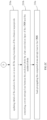
- FIG.2A through FIG.2D illustrates an exemplary flow diagram of a computer implemented method 200 for automated unsupervised localization of context sensitive events in crops and computing extent of the events, in accordance with an embodiment of the present disclosure.
- the system 100 includes one or more data storage devices or memory 102 operatively coupled to the one or more processors 104 and is configured to store instructions configured for execution of steps of the method 200 by the one or more processors 104.
- the steps of the method 200 will now be explained in detail with reference to the components of the system 100 of FIG.1 .
- process steps, method steps, techniques or the like may be described in a sequential order, such processes, methods and techniques may be configured to work in alternate orders. In other words, any sequence or order of steps that may be described does not necessarily indicate a requirement that the steps be performed in that order.
- the steps of processes described herein may be performed in any order practical. Further, some steps may be performed simultaneously.
- the method 200 comprises two parts, wherein a first part is related to segmentation of an image captured in an uncontrolled environment in an unsupervised manner using CNN followed by auto-correction of an obtained segmentation map by back propagating pixel labels modified according to the output of a graph based method that helps the neural network to converge and provide a time efficient solution.
- a second part of the method 200 is related to detecting context sensitive events using the auto-corrected segmentation map and estimating an extent of the detected context sensitive events.
- the one or more processors 104 are configured to receive, at step 202, an image from a temporal set of images of at least a portion of one or more crops being monitored for a pre-defined event.
- the pre-defined event relates to manifestation of diseases, manifestation of pests, count of one or more parts of the crop (such as fruits) and growth stages for an agricultural context.
- the received image may be captured in different lighting and background conditions in an uncontrolled environment. The images may need to be preprocessed for brightness correction.
- preprocessing of the received image may be performed, wherein the preprocessing comprises one or more of normalization of image data, resizing, Principal Components Analysis (PCA) whitening, brightness correction, histogram equalization, contrast stretching, de-correlation stretching and denoising.
- PCA Principal Components Analysis
- the one or more processors 104 are configured to detect, at step 204, one or more Regions Of Interest (ROIs) as localized bounding boxes in the received image based on the pre-defined event using one or more context sensitive pre-trained models associated with the pre-defined event for the one or more crops being monitored, wherein the one or more ROIs correspond to a detected event.
- the ROIs may depend on an event like detecting a disease affected area in the crop or a pest affecting the crop.
- the one or more pre-trained models are comprised in a model library, wherein each of the one or more pre-trained models is associated with a corresponding architecture definition. There may be a common architecture definition for several pre-trained models even though they represent say, different diseases. Likewise, a same disease may be represented by pre-trained models having different architecture definitions.
- the one or more processors 104 are configured to perform unsupervised segmentation, at step 206, of the one or more ROIs using a CNN to obtain a segmentation map having predicted labels based on spatial continuity of pixels comprised within each of the ROIs.
- the CNN is configured to be a Fully Convolutional Network (FCN), a 2 Dimensional (2D) CNN, a 3 Dimensional (3D) CNN or in the form of blocks of CNN.
- the step of performing unsupervised segmentation of the one or more ROIs comprises: computing features in the one or more ROIs, by the CNN, based on properties including color, edges, texture and the spatial continuity of the pixels comprised in the ROIs; labeling the pixels in the one or more ROIs based on the computed features such that the three criteria for labeling described above are satisfied; and obtaining the segmentation map having one or more segments, wherein each of the one or more segments is assigned a unique label.
- the step of performing unsupervised segmentation of the one or more ROIs may be followed by post processing the segmentation map CRFs to refine the boundaries of the one or more segments comprised in the segmentation map.
- the one or more processors 104 are configured to obtain superpixels, at step 208, from the received image using a superpixel generating algorithm.
- the step of obtaining superpixels is followed by generating a region adjacency graph.
- the region adjacency graph is generated using a normalized cut method.
- the one or more processors 104 are configured to iteratively auto-correct the obtained segmentation map, at step 210.
- the step of auto-correction comprises firstly updating labels of the pixels in the one or more ROIs using boundaries of the obtained superpixels at step 210a.
- a cross entropy loss is then calculated, at step 210b, between the predicted labels by a last convolution layer of the CNN and the updated labels.
- the computed cross entropy loss is back propagated to the CNN. The iterative auto-correction continues until a change in the cross entropy loss from a previous iteration is less than a predetermined threshold that may be heuristically determined.
- the step of updating labels of the pixels in the one or more ROIs using boundaries of the obtained superpixels comprises determining a label represented by a maximum number of pixels in the segmentation map within a boundary associated with each of a corresponding superpixel in the received image; and updating the label assigned to all the pixels in the segmentation map within each of the corresponding superpixel with the determined label.
- the one or more processors 104 are configured to obtain update weights of the CNN, at step 212, based on the updated labels in each iteration of the auto-correction of the obtained segmentation map.
- the CNN having updated weights at the end of the iterative auto-correction of the obtained segmentation map is then identified as a new pre-trained model at step 214.
- the model library is updated with the new pre-trained model obtained after auto-correction of the obtained segmentation map.
- the one or more processors 104 are configured to localize the detected event, at step 218, to one or more segments of interest from the one or more segments comprised in the auto-corrected segmentation map by analyzing the auto-corrected segmentation map for the detected event based on presence or absence of one or more features in the one or more segments comprised therein, wherein the one or more features include brightness, chromaticity, concentration of the pixels, gray scale differences, hue values and contrast.
- emergence of a new segment itself may be an indication of an event like flowering or a disease manifestation.
- emergence of a new segment itself may be an indication of an event like flowering or a disease manifestation.
- a segment has a different feature or characteristic like color, texture, etc. yellow, brown or black pixels inside a leaf, the leaf has a high probability of being disease / pest affected.
- the properties of a particular disease manifestation can be compared with the resulting segments. Instead of presence of a certain feature like color or texture, the absence of the same may also flag a change.
- absence of a particular hue or chromaticity of pixel values on the segment corresponding to a leaf flags occurrence of some deficiency or disease e.g. light green color of leaves due to lack of fertilizer.
- absence of certain amount of density of required green pixels in the segment may indicate slower growth of a plant.
- the one or more processors 104 are configured to compute, at step 220, an extent of the detected event based on number of pixels corresponding to the detected event and the total number of pixels in a corresponding one or more segments of interest.
- pixels that belong to all the nc labels that have pixels of brown value and inside the leaf boundary, i.e. surrounded by pixels with green value are the set of pixels representing pest on the leaves.
- the ROIs can be the whole plant, individual leaves of the plant or multiple / canopy of plants in a single image.
- the number of bounding boxes may be used to get an estimate of the instances (count) of the event in the image. For example, detection of leaves on a plant gives an idea of number of leaves on that plant. Moreover, detection of diseased leaves also gives a proportion of leaves that have been infected on a particular plant.
- the one or more processors 104 may constitute either a cloud component of a distributed system or an edge component (an IoT gateway or a mobile device) of a distributed system.
- the model library is hosted on the cloud component and the edge component of the distributed system.
- FIG.3 illustrates an exemplary architecture 300 for the system of FIG. 1 , in accordance with an embodiment of the present disclosure.
- the system 100 constitutes the cloud component with the model library hosted therein.
- the pre-trained models are used for inferencing images on the edge component where computation resource may be limited.
- the pre-trained models in the model library may be deployed to the edge devices for making offline image inferences for real time crop monitoring. The inferences are also sent with the received images to the model library on availability of connection.
- a user interface may be provided where an agricultural expert may view the images and all the inferences generated by the pre-trained models.
- the agricultural expert may correct the detected Region Of Interest (ROI) or the predicted labels or segments and ROI boundaries.
- ROI Region Of Interest
- Such corrected meta-information of the images may be used to fine-tune the pre-trained models used for detecting the ROIs.
- a neural network with 4 convolutional layers was used.
- the last convolutional layer was 1 ⁇ 1 ⁇ 50 where 50 represents maximum potential labels.
- CRF was used as a post processing step for refining the segments.
- the over segmented map for the final step of refined cluster (label) assignment was obtained using the Normalized cut over the RAG of the image.
- Cross-entropy loss between the predicted labels of the last convolutional layer and the updated labels was calculated for back propagation.
- the method of the present disclosure was applied for images of different crops to obtain optimal number of clusters and segments.
- the color of every segment obtained is the average of the RGB values of pixels assigned to that particular segment label.
- 4 segments (unique labels or clusters) were obtained in Variegated Balfour Aralia with 92% accuracy, 3 segments were obtained in Dracaena, 7 segments in Tea with 81% accuracy, 6 segments in Cabbage with 94% accuracy, 9 segments in Pomegranate with 67% accuracy, 6 segments in Citrus with 93% accuracy.
- segments of interest were successfully obtained in all the images, i.e.
- the methods and systems of the present disclosure obviates the disadvantages of the conventional techniques for labeling such as (i) need for finding the correct features that help in getting the correct labels and (ii) need to specify the desired number of clusters as input along with the image.
- the conventional methods are also sensitive to imaging conditions like light exposure and clarity. Eliminating the constraint by hand coded features also helps automating and generalizing the method of the present disclosure.
- the hardware device can be any kind of device which can be programmed including e.g. any kind of computer like a server or a personal computer, or the like, or any combination thereof.
- the device may also include means which could be e.g. hardware means like e.g. an application-specific integrated circuit (ASIC), a field-programmable gate array (FPGA), or a combination of hardware and software means, e.g.
- ASIC application-specific integrated circuit
- FPGA field-programmable gate array
- the means can include both hardware means and software means.
- the method embodiments described herein could be implemented in hardware and software.
- the device may also include software means.
- the embodiments may be implemented on different hardware devices, e.g. using a plurality of CPUs.
- the embodiments herein can comprise hardware and software elements.
- the embodiments that are implemented in software include but are not limited to, firmware, resident software, microcode, etc.
- the functions performed by various modules described herein may be implemented in other modules or combinations of other modules.
- a computer-usable or computer readable medium can be any apparatus that can comprise, store, communicate, propagate, or transport the program for use by or in connection with the instruction execution system, apparatus, or device.
- a computer-readable storage medium refers to any type of physical memory on which information or data readable by a processor may be stored.
- a computer-readable storage medium may store instructions for execution by one or more processors, including instructions for causing the processor(s) to perform steps or stages consistent with the embodiments described herein.
- the term "computer-readable medium” should be understood to include tangible items and exclude carrier waves and transient signals, i.e., be non-transitory. Examples include random access memory (RAM), read-only memory (ROM), volatile memory, nonvolatile memory, hard drives, CD ROMs, DVDs, flash drives, disks, and any other known physical storage media.
Landscapes
- Engineering & Computer Science (AREA)
- Theoretical Computer Science (AREA)
- Physics & Mathematics (AREA)
- General Physics & Mathematics (AREA)
- Computer Vision & Pattern Recognition (AREA)
- Health & Medical Sciences (AREA)
- Evolutionary Computation (AREA)
- General Health & Medical Sciences (AREA)
- Software Systems (AREA)
- Multimedia (AREA)
- Artificial Intelligence (AREA)
- Computing Systems (AREA)
- Medical Informatics (AREA)
- Databases & Information Systems (AREA)
- Molecular Biology (AREA)
- Biomedical Technology (AREA)
- Biophysics (AREA)
- Computational Linguistics (AREA)
- Data Mining & Analysis (AREA)
- Life Sciences & Earth Sciences (AREA)
- General Engineering & Computer Science (AREA)
- Mathematical Physics (AREA)
- Nuclear Medicine, Radiotherapy & Molecular Imaging (AREA)
- Radiology & Medical Imaging (AREA)
- Quality & Reliability (AREA)
- Image Analysis (AREA)
Claims (10)
- Prozessorimplementiertes Verfahren (200), das die folgenden Schritte umfasst:Empfangen, durch einen oder mehrere Prozessoren, eines Bildes aus einem zeitlichen Satz von Bildern von mindestens einem Teil von einer oder mehreren Nutzpflanzen, die auf ein vordefiniertes Ereignis überwacht werden, wobei sich das vordefinierte Ereignis auf die Manifestation von Krankheiten, die Manifestation von Schädlingen, die Zählung von einem oder mehreren Teilen der Nutzpflanze und die Wachstumsstadien (202) bezieht;Detektieren einer oder mehrerer Regionen von Interesse (ROIs) durch den einen oder die mehreren Prozessoren als lokalisierte Begrenzungskästen in dem empfangenen Bild unter Verwendung des vordefinierten Ereignisses und eines oder mehrerer kontextsensitiver vortrainierter Modelle des vordefinierten Ereignisses für die eine oder die mehreren Nutzpflanzen, die überwacht werden, wobei die eine oder die mehreren ROIs einem detektierten Ereignis entsprechen (204);Durchführen einer unbeaufsichtigten Segmentierung der einen oder der mehreren ROIs durch den einen oder die mehreren Prozessoren unter Verwendung eines Convolutional Neural Network (CNN), um eine Segmentierungskarte mit vorhergesagten Kennzeichnungen zu erhalten, die von der räumlichen Kontinuität von Pixeln abgeleitet sind, die in jeder der ROIs enthalten sind (206);Nachverarbeiten der Segmentierungskarte unter Verwendung von Bedingungszufallsfeldern (CRFs), um die Grenzen des einen oder der mehreren Segmente, die in der Segmentierungskarte enthalten sind, zu verfeinern;Erhalten von Superpixeln aus dem empfangenen Bild durch den einen oder die mehreren Prozessoren unter Verwendung eines Superpixelerzeugungsalgorithmus (208); unditeratives Autokorrigieren, durch den einen oder die mehreren Prozessoren, der erhaltenen Segmentierungskarte (210) durch:Aktualisieren von Kennzeichnungen der Pixel in der einen oder den mehreren ROIs unter Verwendung von Grenzen der erhaltenen Superpixel (210a) durch Verwenden einer unbeaufsichtigten Segmentierung und Berechnen von Merkmalen auf einer oder mehreren Regionen aus den empfangenen Bildern, um disjunkte Partitionen des empfangenen Bildes zu erhalten;Berechnen eines Kreuzentropieverlusts zwischen den vorhergesagten Kennzeichnungen durch eine letzte Faltungsschicht des CNN und den aktualisierten Kennzeichnungen (210b); undZurückpropagieren des berechneten Kreuzentropieverlusts zu dem CNN (210c),bis eine Änderung des Kreuzentropieverlusts aus einer vorherigen Iteration kleiner als ein vorbestimmter Schwellenwert ist.
- Prozessorimplementiertes Verfahren nach Anspruch 1, wobei dem Schritt des Detektierens der einen oder der mehreren ROIs in dem empfangenen Bild eine Vorverarbeitung des empfangenen Bildes vorausgeht, wobei die Vorverarbeitung eines oder mehrere von einer Normalisierung von Bilddaten, einer Größenänderung, einer Hauptkomponentenanalyse (PCA)-Weißung, einer Helligkeitskorrektur, einer Histogrammentzerrung, einer Kontraststreckung, einer Dekorrelationsstreckung und einem Entrauschen umfasst.
- Prozessorimplementiertes Verfahren nach Anspruch 1, wobei der Schritt des Durchführens einer unbeaufsichtigten Segmentierung der einen oder der mehreren ROIs Folgendes umfasst:Berechnen von Merkmalen in der einen oder den mehreren ROIs durch das CNN, die von Eigenschaften abgeleitet sind, die Farbe, Kanten, Textur und die räumliche Kontinuität der darin enthaltenen Pixel umfassen (206a);Kennzeichnen der Pixel in der einen oder den mehreren ROIs, die von den berechneten Merkmalen abgeleitet sind, derart, dass (i) Pixeln mit identischen Merkmalen eine gemeinsame Kennzeichnung zugewiesen wird, (ii) räumlich kontinuierlichen Pixeln eine gemeinsame Kennzeichnung zugewiesen wird; und (iii) eine vordefinierte Anzahl von potenziellen eindeutigen Kennzeichnungen ausgewählt wird, um jedes Segment der einen oder der mehreren ROIs zu berücksichtigen (206b); undErhalten der Segmentierungskarte, die ein oder mehrere Segmente aufweist, wobei jedem des einen oder der mehreren Segmente eine eindeutige Kennzeichnung zugewiesen wird (206c).
- Prozessorimplementiertes Verfahren nach Anspruch 1, das ferner eines oder mehrere von Folgendem umfasst:Aktualisieren von Gewichten des CNN, die von den aktualisierten Kennzeichnungen in jeder Iteration der Autokorrektur der erhaltenen Segmentierungskarte abgeleitet sind (212);Identifizieren des CNN am Ende der iterativen Autokorrektur der erhaltenen Segmentierungskarte als ein neues vortrainiertes Modell (214);Aktualisieren einer Modellbibliothek, die das eine oder die mehreren vortrainierten Modelle umfasst, mit dem neuen vortrainierten Modell, wobei jedes des einen oder der mehreren vortrainierten Modelle eine entsprechende Architekturdefinition aufweist (216);Lokalisieren des detektierten Ereignisses an einem oder mehreren Segmenten von Interesse aus dem einen oder den mehreren Segmenten, die in der autokorrigierten Segmentierungskarte enthalten sind, durch Analysieren der autokorrigierten Segmentierungskarte auf das detektierte Ereignis, das von Vorhandensein oder Nichtvorhandensein eines oder mehrerer Merkmale in dem einen oder den mehreren darin enthaltenen Segmenten abgeleitet ist, wobei das eine oder die mehreren Merkmale Helligkeit, Chromatizität, Konzentration der Pixel, Graustufenunterschiede, Farbtonwerte und Kontrast beinhalten (218); undBerechnen eines Ausmaßes des detektierten Ereignisses, das von der Anzahl von Pixeln des detektierten Ereignisses und der Gesamtanzahl von Pixeln in einem entsprechenden einen oder mehreren Segmenten von Interesse abgeleitet ist (220).
- System (100), das Folgendes umfasst:eine oder mehrere Datenspeichervorrichtungen (102), die betriebsfähig mit einem oder mehreren Hardwareprozessoren (104) gekoppelt sind undkonfiguriert sind, um Anweisungen zu speichern, die zur Ausführung durch den einen oder die mehreren Hardwareprozessoren konfiguriert sind, um:ein Bild aus einem zeitlichen Satz von Bildern von mindestens einem Teil von einer oder mehreren Nutzpflanzen, die auf ein vordefiniertes Ereignis überwacht werden, zu empfangen, wobei sich das vordefinierte Ereignis auf die Manifestation von Krankheiten, die Manifestation von Schädlingen, die Zählung von einem oder mehreren Teilen der Nutzpflanze und die Wachstumsstadien bezieht;eine oder mehrere Regionen von Interesse (ROIs) als lokalisierte Begrenzungskästen in dem empfangenen Bild unter Verwendung des vordefinierten Ereignisses und eines oder mehrerer kontextsensitiver vortrainierter Modelle des vordefinierten Ereignisses für die eine oder die mehreren Nutzpflanzen, die überwacht werden, zu detektieren, wobei die eine oder die mehreren ROIs einem detektierten Ereignis entsprechen;eine unbeaufsichtigte Segmentierung der einen oder der mehreren ROIs unter Verwendung eines Convolutional Neural Network (CNN) durchzuführen, um eine Segmentierungskarte mit vorhergesagten Kennzeichnungen zu erhalten, die von der räumlichen Kontinuität von Pixeln abgeleitet sind, die in jeder der ROIs enthalten sind;die Segmentierungskarte unter Verwendung von Bedingungszufallsfeldern (CRFs) nachzuverarbeiten, um die Grenzen des einen oder der mehreren Segmente, die in der Segmentierungskarte enthalten sind, zu verfeinern;Superpixel aus dem empfangenen Bild unter Verwendung eines Superpixelerzeugungsalgorithmus zu erhalten; unddie erhaltene Segmentierungskarte iterativ zu autokorrigieren durch:Aktualisieren von Kennzeichnungen der Pixel in der einen oder den mehreren ROIs unter Verwendung von Grenzen der erhaltenen Superpixel durch Verwenden einer unbeaufsichtigten Segmentierung und Berechnen von Merkmalen auf einer oder mehreren Regionen aus den empfangenen Bildern, um disjunkte Partitionen des empfangenen Bildes zu erhalten;Berechnen eines Kreuzentropieverlusts zwischen den vorhergesagten Kennzeichnungen durch eine letzte Faltungsschicht des CNN und den aktualisierten Kennzeichnungen; undZurückpropagieren des berechneten Kreuzentropieverlusts zu dem CNN,bis eine Änderung des Kreuzentropieverlusts aus einer vorherigen Iteration kleiner als ein vorbestimmter Schwellenwert ist.
- System nach Anspruch 5, wobei der eine oder die mehreren Prozessoren ferner konfiguriert sind, um das empfangene Bild vor dem Detektieren der einen oder der mehreren ROIs in dem empfangenen Bild vorzuverarbeiten, wobei die Vorverarbeitung eines oder mehrere von einer Normalisierung von Bilddaten, einer Größenänderung, einer Hauptkomponentenanalyse (PCA)-Weißung, einer Helligkeitskorrektur, einer Histogrammentzerrung, einer Kontraststreckung, einer Dekorrelationsstreckung und einem Entrauschen umfasst.
- System nach Anspruch 5, wobei das CNN konfiguriert ist, um ein vollständig gefaltetes Netzwerk (FCN), ein 2-dimensionales (2D) CNN, ein 3-dimensionales (3D) CNN oder in der Form von CNN-Blöcken zu sein.
- System nach Anspruch 5, wobei der eine oder die mehreren Prozessoren ferner konfiguriert sind, um eines oder mehrere von Folgendem durchzuführen:eine unbeaufsichtigte Segmentierung der einen oder der mehreren ROIs durch:Berechnen von Merkmalen in der einen oder den mehreren ROIs durch das CNN, die von Eigenschaften abgeleitet sind, die Farbe, Kanten, Textur und die räumliche Kontinuität der darin enthaltenen Pixel beinhalten;Kennzeichnen der Pixel in der einen oder den mehreren ROIs, die von den berechneten Merkmalen abgeleitet sind, derart, dass (i) Pixeln mit identischen Merkmalen eine gemeinsame Kennzeichnung zugewiesen wird, (ii) räumlich kontinuierlichen Pixeln eine gemeinsame Kennzeichnung zugewiesen wird; und (iii) eine vordefinierte Anzahl von potenziellen eindeutigen Kennzeichnungen ausgewählt wird, um jedes Segment der einen oder der mehreren ROIs zu berücksichtigen; undErhalten der Segmentierungskarte, die ein oder mehrere Segmente aufweist, wobei jedem des einen oder der mehreren Segmente eine eindeutige Kennzeichnung zugewiesen wird;Aktualisieren von Kennzeichnungen der Pixel in der einen oder den mehreren ROIs unter Verwendung von Grenzen der erhaltenen Superpixel durch:Bestimmen einer Kennzeichnung, die durch eine maximale Anzahl von Pixeln in der Segmentierungskarte innerhalb einer Grenze jedes eines entsprechenden Superpixels in dem empfangenen Bild dargestellt wird; undAktualisieren der Kennzeichnung, die allen Pixeln in der Segmentierungskarte innerhalb jedes des entsprechenden Superpixels zugewiesen ist, mit der bestimmten Kennzeichnung;Aktualisieren von Gewichten des CNN, die von den aktualisierten Kennzeichnungen in jeder Iteration der Autokorrektur der erhaltenen Segmentierungskarte abgeleitet sind;Identifizieren des CNN am Ende der iterativen Autokorrektur der erhaltenen Segmentierungskarte als ein neues vortrainiertes Modell;Aktualisieren einer Modellbibliothek, die das eine oder die mehreren vortrainierten Modelle umfasst, mit dem neuen vortrainierten Modell, wobei jedes des einen oder der mehreren vortrainierten Modelle eine entsprechende Architekturdefinition aufweist;Lokalisieren des detektierten Ereignisses an einem oder mehreren Segmenten von Interesse aus dem einen oder den mehreren Segmenten, die in der autokorrigierten Segmentierungskarte enthalten sind, durch Analysieren der autokorrigierten Segmentierungskarte auf das detektierte Ereignis, das von Vorhandensein oder Nichtvorhandensein eines oder mehrerer Merkmale in dem einen oder den mehreren darin enthaltenen Segmenten abgeleitet ist, wobei das eine oder die mehreren Merkmale Helligkeit, Chromatizität, Konzentration der Pixel, Graustufenunterschiede, Farbtonwerte und Kontrast beinhalten; undBerechnen eines Ausmaßes des detektierten Ereignisses, das von der Anzahl von Pixeln des detektierten Ereignisses und der Gesamtanzahl von Pixeln in einem entsprechenden einen oder mehreren Segmenten von Interesse abgeleitet ist.
- Computerprogrammprodukt, das ein nichtflüchtiges computerlesbares Medium umfasst, in dem ein computerlesbares Programm verkörpert ist, wobei das computerlesbare Programm, wenn es auf einer Rechenvorrichtung ausgeführt wird, die Rechenvorrichtung zu Folgendem veranlasst:Empfangen eines Bildes aus einem zeitlichen Satz von Bildern von mindestens einem Teil von einer oder mehreren Nutzpflanzen, die auf ein vordefiniertes Ereignis überwacht werden, wobei sich das vordefinierte Ereignis auf die Manifestation von Krankheiten, die Manifestation von Schädlingen, die Zählung von einem oder mehreren Teilen der Nutzpflanze und die Wachstumsstadien bezieht;Detektieren einer oder mehrerer Regionen von Interesse (ROIs) als lokalisierte Begrenzungskästen in dem empfangenen Bild unter Verwendung des vordefinierten Ereignisses und eines oder mehrerer kontextsensitiver vortrainierter Modelle des vordefinierten Ereignisses für die eine oder die mehreren Nutzpflanzen, die überwacht werden, wobei die eine oder die mehreren ROIs einem detektierten Ereignis entsprechen;Durchführen einer unbeaufsichtigten Segmentierung der einen oder der mehreren ROIs unter Verwendung eines Convolutional Neural Network (CNN), um eine Segmentierungskarte mit vorhergesagten Kennzeichnungen zu erhalten, die von der räumlichen Kontinuität von Pixeln abgeleitet sind, die in jeder der ROIs enthalten sind;
Nachverarbeiten der Segmentierungskarte unter Verwendung von Bedingungszufallsfeldern (CRFs), um die Grenzen des einen oder der mehreren Segmente, die in der Segmentierungskarte enthalten sind, zu verfeinern;Erhalten von Superpixeln aus dem empfangenen Bild unter Verwendung eines Superpixelerzeugungsalgorithmus; unditeratives Autokorrigieren der erhaltenen Segmentierungskarte durch:Aktualisieren von Kennzeichnungen der Pixel in der einen oder den mehreren ROIs unter Verwendung von Grenzen der erhaltenen Superpixel durch Verwenden einer unbeaufsichtigten Segmentierung und Berechnen von Merkmalen auf einer oder mehreren Regionen aus den empfangenen Bildern, um disjunkte Partitionen des empfangenen Bildes zu erhalten;Berechnen eines Kreuzentropieverlusts zwischen den vorhergesagten Kennzeichnungen durch eine letzte Faltungsschicht des CNN und den aktualisierten Kennzeichnungen; undZurückpropagieren des berechneten Kreuzentropieverlusts zu dem CNN,bis eine Änderung des Kreuzentropieverlusts aus einer vorherigen Iteration kleiner als ein vorbestimmter Schwellenwert ist. - Computerprogrammprodukt nach Anspruch 9, wobei das computerlesbare Programm ferner die Rechenvorrichtung zu Folgendem veranlasst:Durchführen einer unbeaufsichtigten Segmentierung der einen oder der mehreren ROIs durch:Berechnen von Merkmalen in der einen oder den mehreren ROIs durch das CNN, die von Eigenschaften abgeleitet sind, die Farbe, Kanten, Textur und die räumliche Kontinuität der darin enthaltenen Pixel beinhalten;Kennzeichnen der Pixel in der einen oder den mehreren ROIs basierend auf den berechneten Merkmalen derart, dass (i) Pixeln mit identischen Merkmalen eine gemeinsame Kennzeichnung zugewiesen wird, (ii) räumlich kontinuierlichen Pixeln eine gemeinsame Kennzeichnung zugewiesen wird; und (iii) eine vordefinierte Anzahl von potenziellen eindeutigen Kennzeichnungen ausgewählt wird, um jedes Segment der einen oder der mehreren ROIs zu berücksichtigen; undErhalten der Segmentierungskarte, die ein oder mehrere Segmente aufweist, wobei jedem des einen oder der mehreren Segmente eine eindeutige Kennzeichnung zugewiesen wird;Aktualisieren von Kennzeichnungen der Pixel in der einen oder den mehreren ROIs unter Verwendung von Grenzen der erhaltenen Superpixel durch:Bestimmen einer Kennzeichnung, die durch eine maximale Anzahl von Pixeln in der Segmentierungskarte innerhalb einer Grenze jedes eines entsprechenden Superpixels in dem empfangenen Bild dargestellt wird; undAktualisieren der Kennzeichnung, die allen Pixeln in der Segmentierungskarte innerhalb jedes des entsprechenden Superpixels zugewiesen ist, mit der bestimmten Kennzeichnung;Aktualisieren von Gewichten des CNN, die von den aktualisierten Kennzeichnungen in jeder Iteration der Autokorrektur der erhaltenen Segmentierungskarte abgeleitet sind;Identifizieren des CNN am Ende der iterativen Autokorrektur der erhaltenen Segmentierungskarte als ein neues vortrainiertes Modell;Aktualisieren einer Modellbibliothek, die das eine oder die mehreren vortrainierten Modelle umfasst, mit dem neuen vortrainierten Modell, wobei jedes des einen oder der mehreren vortrainierten Modelle eine entsprechende Architekturdefinition aufweist;Lokalisieren des detektierten Ereignisses an einem oder mehreren Segmenten von Interesse aus dem einen oder den mehreren Segmenten, die in der autokorrigierten Segmentierungskarte enthalten sind, durch Analysieren der autokorrigierten Segmentierungskarte auf das detektierte Ereignis, das von Vorhandensein oder Nichtvorhandensein eines oder mehrerer Merkmale in dem einen oder den mehreren darin enthaltenen Segmenten abgeleitet ist, wobei das eine oder die mehreren Merkmale Helligkeit, Chromatizität, Konzentration der Pixel, Graustufenunterschiede, Farbtonwerte und Kontrast beinhalten; undBerechnen eines Ausmaßes des detektierten Ereignisses, das von der Anzahl von Pixeln des detektierten Ereignisses und der Gesamtanzahl von Pixeln in einem entsprechenden einen oder mehreren Segmenten von Interesse abgeleitet ist.
Applications Claiming Priority (2)
| Application Number | Priority Date | Filing Date | Title |
|---|---|---|---|
| IN201921005556 | 2019-02-12 | ||
| PCT/IN2020/050124 WO2020165913A1 (en) | 2019-02-12 | 2020-02-07 | Automated unsupervised localization of context sensitive events in crops and computing extent thereof |
Publications (4)
| Publication Number | Publication Date |
|---|---|
| EP3924876A1 EP3924876A1 (de) | 2021-12-22 |
| EP3924876A4 EP3924876A4 (de) | 2023-03-22 |
| EP3924876C0 EP3924876C0 (de) | 2024-08-21 |
| EP3924876B1 true EP3924876B1 (de) | 2024-08-21 |
Family
ID=72044628
Family Applications (1)
| Application Number | Title | Priority Date | Filing Date |
|---|---|---|---|
| EP20756128.3A Active EP3924876B1 (de) | 2019-02-12 | 2020-02-07 | Automatische unüberwachte lokalisierung von kontextsensitiven ereignissen bei nutzpflanzenkulturen und deren rechenumfang |
Country Status (4)
| Country | Link |
|---|---|
| US (1) | US11989886B2 (de) |
| EP (1) | EP3924876B1 (de) |
| BR (1) | BR112021014378A2 (de) |
| WO (1) | WO2020165913A1 (de) |
Families Citing this family (16)
| Publication number | Priority date | Publication date | Assignee | Title |
|---|---|---|---|---|
| WO2021191195A1 (en) * | 2020-03-26 | 2021-09-30 | Shell Internationale Research Maatschappij B.V. | Method for predicting geological features from images of geologic cores using a deep learning segmentation process |
| KR102532006B1 (ko) * | 2020-07-24 | 2023-05-12 | 한국전자기술연구원 | Self-Spatial Adaptive Normalization 기법을 적용한 영상 영역 분할 방법 및 시스템 |
| CN112528726B (zh) * | 2020-10-14 | 2022-05-13 | 石河子大学 | 一种基于光谱成像和深度学习的棉蚜虫害监测方法及系统 |
| RU2764705C1 (ru) * | 2020-12-22 | 2022-01-19 | Общество с ограниченной ответственностью «Аби Продакшн» | Извлечение нескольких документов из единого изображения |
| US20220232813A1 (en) * | 2021-01-23 | 2022-07-28 | PestNotify Patent Holdco, LLC | Insect Trap and Classification System |
| US20230018041A1 (en) * | 2021-02-09 | 2023-01-19 | Nutech Ventures | Optical analysis paired plot automated fertigation systems, methods and datastructures |
| CN112861802B (zh) * | 2021-03-16 | 2022-09-27 | 吉林大学 | 基于时空深度学习融合技术的农作物全自动化分类方法 |
| US11785024B2 (en) * | 2021-03-22 | 2023-10-10 | University Of South Florida | Deploying neural-trojan-resistant convolutional neural networks |
| US20220375239A1 (en) * | 2021-05-20 | 2022-11-24 | Vishnu Agarwal | System and methods to optimize yield in indoor farming |
| CN113269196B (zh) * | 2021-07-19 | 2021-09-28 | 湖南大学 | 一种图卷积神经网络高光谱医药成分分析的实现方法 |
| KR20230110143A (ko) * | 2022-01-14 | 2023-07-21 | 삼성전자주식회사 | 레이블의 노이즈를 처리하는 장치의 동작 방법 및 이를 수행하는 장치 |
| US12591848B2 (en) * | 2022-02-24 | 2026-03-31 | Auburn University | Tree seedling inventory system |
| US12548136B2 (en) * | 2022-11-15 | 2026-02-10 | Motion Metrics International Corp. | Monitoring an operating cycle of heavy equipment |
| US20250022129A1 (en) * | 2023-06-28 | 2025-01-16 | University Of North Texas | System to assist farmers |
| US20250200730A1 (en) * | 2023-12-13 | 2025-06-19 | Bae Systems Information And Electronic Systems Integration Inc. | Automatic determination of the presence of burn-in overlay in video imagery |
| CN120877277B (zh) * | 2025-09-26 | 2025-12-02 | 四川省食品检验研究院 | 一种基于计算机视觉的食品检测系统及方法 |
Family Cites Families (12)
| Publication number | Priority date | Publication date | Assignee | Title |
|---|---|---|---|---|
| EP2831813B1 (de) * | 2012-03-28 | 2019-11-06 | University of Houston System | Verfahren und software zur untersuchung und diagnose von hautverletzungen und pflanzenerkrankungen |
| US9443314B1 (en) | 2012-03-29 | 2016-09-13 | Google Inc. | Hierarchical conditional random field model for labeling and segmenting images |
| AU2013206597A1 (en) | 2013-06-28 | 2015-01-22 | Canon Kabushiki Kaisha | Depth constrained superpixel-based depth map refinement |
| CN103778628B (zh) * | 2014-01-10 | 2017-01-18 | 北京农业信息技术研究中心 | 田间开放环境下的叶片病害程度获取方法及系统 |
| US9652840B1 (en) * | 2014-10-30 | 2017-05-16 | AgriSight, Inc. | System and method for remote nitrogen monitoring and prescription |
| ZA201501916B (en) * | 2014-12-11 | 2016-08-31 | Tata Consultancy Services Ltd | Method and system for classifying plant disease through crowdsourcing using a mobile communiacation device |
| US9638678B2 (en) * | 2015-01-30 | 2017-05-02 | AgriSight, Inc. | System and method for crop health monitoring |
| RU2018142757A (ru) * | 2016-05-13 | 2020-06-15 | Басф Се | Система и способ обнаружения болезней растений |
| AU2017357645B2 (en) * | 2016-11-08 | 2022-11-10 | Dogtooth Technologies Limited | A robotic fruit picking system |
| CN106651886A (zh) | 2017-01-03 | 2017-05-10 | 北京工业大学 | 一种基于超像素聚类优化cnn的云图分割方法 |
| BR112019023576A8 (pt) * | 2017-05-09 | 2022-11-22 | Blue River Tech Inc | Método e meio legível por computador |
| CN108364300A (zh) | 2018-03-15 | 2018-08-03 | 山东财经大学 | 蔬菜叶部病害图像分割方法、系统及计算机可读存储介质 |
-
2020
- 2020-02-07 WO PCT/IN2020/050124 patent/WO2020165913A1/en not_active Ceased
- 2020-02-07 EP EP20756128.3A patent/EP3924876B1/de active Active
- 2020-02-07 BR BR112021014378-5A patent/BR112021014378A2/pt active Search and Examination
- 2020-02-07 US US17/371,650 patent/US11989886B2/en active Active
Also Published As
| Publication number | Publication date |
|---|---|
| WO2020165913A1 (en) | 2020-08-20 |
| US20220122347A1 (en) | 2022-04-21 |
| EP3924876A1 (de) | 2021-12-22 |
| EP3924876A4 (de) | 2023-03-22 |
| BR112021014378A2 (pt) | 2021-09-28 |
| EP3924876C0 (de) | 2024-08-21 |
| US11989886B2 (en) | 2024-05-21 |
Similar Documents
| Publication | Publication Date | Title |
|---|---|---|
| EP3924876B1 (de) | Automatische unüberwachte lokalisierung von kontextsensitiven ereignissen bei nutzpflanzenkulturen und deren rechenumfang | |
| Rao et al. | Deep learning precision farming: grapes and mango leaf disease detection by transfer learning | |
| Math et al. | Early detection and identification of grape diseases using convolutional neural networks | |
| US11636701B2 (en) | Method for calculating deviation relations of a population | |
| Gao et al. | Cross-domain transfer learning for weed segmentation and mapping in precision farming using ground and UAV images | |
| Albattah et al. | Custom CornerNet: a drone-based improved deep learning technique for large-scale multiclass pest localization and classification | |
| US10679330B2 (en) | Systems and methods for automated inferencing of changes in spatio-temporal images | |
| Villon et al. | A new method to control error rates in automated species identification with deep learning algorithms | |
| Chudzik et al. | Mobile real-time grasshopper detection and data aggregation framework | |
| EP4064214B1 (de) | Integriertes tiefenlernmodell für kooperative und kaskadierte inferenz in edge | |
| Raja Kumar et al. | Novel segmentation and classification algorithm for detection of tomato leaf disease | |
| Lakshmi et al. | Whale optimization based deep residual learning network for early rice disease prediction in IoT | |
| Mitra et al. | aGROdet: a novel framework for plant disease detection and leaf damage estimation | |
| Rani et al. | Infield disease detection in citrus plants: integrating semantic segmentation and dynamic deep learning object detection model for enhanced agricultural yield | |
| Ramachandran et al. | Tiny Criss-cross network for segmenting paddy panicles using aerial images | |
| Chander et al. | Comparative analysis on deep learning models for detection of anomalies and leaf disease prediction in cotton plant data | |
| Gao et al. | Transferring learned patterns from ground-based field imagery to predict UAV-based imagery for crop and weed semantic segmentation in precision crop farming | |
| Lyasmine et al. | Plant leaf image segmentation in natural scenes: a multi-layer graph queries propagation approach | |
| Karthikeyan et al. | Precision Agriculture: Coconut Tree Disease Segmentation with Enhanced Fuzzy C Means and Hybrid Deep Learning Classification | |
| Kumar et al. | AI-SCAN: Advancing plant leaf disease detection with Transcendental Residual Convolutional Swin Transformer with hybrid optimizer | |
| Jia et al. | Pcr: A large-scale benchmark for pig counting in real world | |
| Reddy et al. | Development and Testing of a CNN-Based Smart Web Application Deep Learning for Early Detection of Plant Diseases | |
| Sundaram et al. | Detection and Providing Suggestion for Removal of Weeds Using Machine Learning Techniques | |
| Kumar et al. | Computer Vision and Deep Learning for Weed Identification and Categorization in Agricultural Fields | |
| Punitha et al. | Crop Disease and Pest Management in Agriculture via UAV Remote Sensing and Advanced Machine Learning Models |
Legal Events
| Date | Code | Title | Description |
|---|---|---|---|
| STAA | Information on the status of an ep patent application or granted ep patent |
Free format text: STATUS: THE INTERNATIONAL PUBLICATION HAS BEEN MADE |
|
| PUAI | Public reference made under article 153(3) epc to a published international application that has entered the european phase |
Free format text: ORIGINAL CODE: 0009012 |
|
| STAA | Information on the status of an ep patent application or granted ep patent |
Free format text: STATUS: REQUEST FOR EXAMINATION WAS MADE |
|
| 17P | Request for examination filed |
Effective date: 20210712 |
|
| AK | Designated contracting states |
Kind code of ref document: A1 Designated state(s): AL AT BE BG CH CY CZ DE DK EE ES FI FR GB GR HR HU IE IS IT LI LT LU LV MC MK MT NL NO PL PT RO RS SE SI SK SM TR |
|
| DAV | Request for validation of the european patent (deleted) | ||
| DAX | Request for extension of the european patent (deleted) | ||
| RIC1 | Information provided on ipc code assigned before grant |
Ipc: G06T 7/11 20170101ALI20221114BHEP Ipc: G06Q 50/02 20120101ALI20221114BHEP Ipc: G06N 3/08 20060101AFI20221114BHEP |
|
| REG | Reference to a national code |
Ref legal event code: R079 Free format text: PREVIOUS MAIN CLASS: G06K0009340000 Ipc: G06N0003080000 Ref country code: DE Ref legal event code: R079 Ref document number: 602020036259 Country of ref document: DE Free format text: PREVIOUS MAIN CLASS: G06K0009340000 Ipc: G06N0003080000 |
|
| A4 | Supplementary search report drawn up and despatched |
Effective date: 20230221 |
|
| RIC1 | Information provided on ipc code assigned before grant |
Ipc: G06T 7/11 20170101ALI20230215BHEP Ipc: G06Q 50/02 20120101ALI20230215BHEP Ipc: G06N 3/08 20060101AFI20230215BHEP |
|
| GRAP | Despatch of communication of intention to grant a patent |
Free format text: ORIGINAL CODE: EPIDOSNIGR1 |
|
| STAA | Information on the status of an ep patent application or granted ep patent |
Free format text: STATUS: GRANT OF PATENT IS INTENDED |
|
| INTG | Intention to grant announced |
Effective date: 20240322 |
|
| GRAS | Grant fee paid |
Free format text: ORIGINAL CODE: EPIDOSNIGR3 |
|
| GRAA | (expected) grant |
Free format text: ORIGINAL CODE: 0009210 |
|
| STAA | Information on the status of an ep patent application or granted ep patent |
Free format text: STATUS: THE PATENT HAS BEEN GRANTED |
|
| AK | Designated contracting states |
Kind code of ref document: B1 Designated state(s): AL AT BE BG CH CY CZ DE DK EE ES FI FR GB GR HR HU IE IS IT LI LT LU LV MC MK MT NL NO PL PT RO RS SE SI SK SM TR |
|
| REG | Reference to a national code |
Ref country code: GB Ref legal event code: FG4D |
|
| REG | Reference to a national code |
Ref country code: CH Ref legal event code: EP |
|
| REG | Reference to a national code |
Ref country code: IE Ref legal event code: FG4D |
|
| REG | Reference to a national code |
Ref country code: DE Ref legal event code: R096 Ref document number: 602020036259 Country of ref document: DE |
|
| U01 | Request for unitary effect filed |
Effective date: 20240821 |
|
| U07 | Unitary effect registered |
Designated state(s): AT BE BG DE DK EE FI FR IT LT LU LV MT NL PT SE SI Effective date: 20240827 |
|
| PG25 | Lapsed in a contracting state [announced via postgrant information from national office to epo] |
Ref country code: NO Free format text: LAPSE BECAUSE OF FAILURE TO SUBMIT A TRANSLATION OF THE DESCRIPTION OR TO PAY THE FEE WITHIN THE PRESCRIBED TIME-LIMIT Effective date: 20241121 |
|
| PG25 | Lapsed in a contracting state [announced via postgrant information from national office to epo] |
Ref country code: GR Free format text: LAPSE BECAUSE OF FAILURE TO SUBMIT A TRANSLATION OF THE DESCRIPTION OR TO PAY THE FEE WITHIN THE PRESCRIBED TIME-LIMIT Effective date: 20241122 Ref country code: PL Free format text: LAPSE BECAUSE OF FAILURE TO SUBMIT A TRANSLATION OF THE DESCRIPTION OR TO PAY THE FEE WITHIN THE PRESCRIBED TIME-LIMIT Effective date: 20240821 |
|
| PG25 | Lapsed in a contracting state [announced via postgrant information from national office to epo] |
Ref country code: IS Free format text: LAPSE BECAUSE OF FAILURE TO SUBMIT A TRANSLATION OF THE DESCRIPTION OR TO PAY THE FEE WITHIN THE PRESCRIBED TIME-LIMIT Effective date: 20241221 |
|
| PG25 | Lapsed in a contracting state [announced via postgrant information from national office to epo] |
Ref country code: HR Free format text: LAPSE BECAUSE OF FAILURE TO SUBMIT A TRANSLATION OF THE DESCRIPTION OR TO PAY THE FEE WITHIN THE PRESCRIBED TIME-LIMIT Effective date: 20240821 |
|
| PG25 | Lapsed in a contracting state [announced via postgrant information from national office to epo] |
Ref country code: ES Free format text: LAPSE BECAUSE OF FAILURE TO SUBMIT A TRANSLATION OF THE DESCRIPTION OR TO PAY THE FEE WITHIN THE PRESCRIBED TIME-LIMIT Effective date: 20240821 Ref country code: RS Free format text: LAPSE BECAUSE OF FAILURE TO SUBMIT A TRANSLATION OF THE DESCRIPTION OR TO PAY THE FEE WITHIN THE PRESCRIBED TIME-LIMIT Effective date: 20241121 |
|
| PG25 | Lapsed in a contracting state [announced via postgrant information from national office to epo] |
Ref country code: RS Free format text: LAPSE BECAUSE OF FAILURE TO SUBMIT A TRANSLATION OF THE DESCRIPTION OR TO PAY THE FEE WITHIN THE PRESCRIBED TIME-LIMIT Effective date: 20241121 Ref country code: PL Free format text: LAPSE BECAUSE OF FAILURE TO SUBMIT A TRANSLATION OF THE DESCRIPTION OR TO PAY THE FEE WITHIN THE PRESCRIBED TIME-LIMIT Effective date: 20240821 Ref country code: NO Free format text: LAPSE BECAUSE OF FAILURE TO SUBMIT A TRANSLATION OF THE DESCRIPTION OR TO PAY THE FEE WITHIN THE PRESCRIBED TIME-LIMIT Effective date: 20241121 Ref country code: IS Free format text: LAPSE BECAUSE OF FAILURE TO SUBMIT A TRANSLATION OF THE DESCRIPTION OR TO PAY THE FEE WITHIN THE PRESCRIBED TIME-LIMIT Effective date: 20241221 Ref country code: HR Free format text: LAPSE BECAUSE OF FAILURE TO SUBMIT A TRANSLATION OF THE DESCRIPTION OR TO PAY THE FEE WITHIN THE PRESCRIBED TIME-LIMIT Effective date: 20240821 Ref country code: GR Free format text: LAPSE BECAUSE OF FAILURE TO SUBMIT A TRANSLATION OF THE DESCRIPTION OR TO PAY THE FEE WITHIN THE PRESCRIBED TIME-LIMIT Effective date: 20241122 Ref country code: ES Free format text: LAPSE BECAUSE OF FAILURE TO SUBMIT A TRANSLATION OF THE DESCRIPTION OR TO PAY THE FEE WITHIN THE PRESCRIBED TIME-LIMIT Effective date: 20240821 |
|
| RAP4 | Party data changed (patent owner data changed or rights of a patent transferred) |
Owner name: TATA CONSULTANCY SERVICES LIMITED |
|
| U1H | Name or address of the proprietor changed after the registration of the unitary effect |
Owner name: TATA CONSULTANCY SERVICES LIMITED; IN |
|
| U20 | Renewal fee for the european patent with unitary effect paid |
Year of fee payment: 6 Effective date: 20250224 |
|
| PG25 | Lapsed in a contracting state [announced via postgrant information from national office to epo] |
Ref country code: SM Free format text: LAPSE BECAUSE OF FAILURE TO SUBMIT A TRANSLATION OF THE DESCRIPTION OR TO PAY THE FEE WITHIN THE PRESCRIBED TIME-LIMIT Effective date: 20240821 |
|
| PGFP | Annual fee paid to national office [announced via postgrant information from national office to epo] |
Ref country code: CH Payment date: 20250301 Year of fee payment: 6 |
|
| PG25 | Lapsed in a contracting state [announced via postgrant information from national office to epo] |
Ref country code: CZ Free format text: LAPSE BECAUSE OF FAILURE TO SUBMIT A TRANSLATION OF THE DESCRIPTION OR TO PAY THE FEE WITHIN THE PRESCRIBED TIME-LIMIT Effective date: 20240821 |
|
| PG25 | Lapsed in a contracting state [announced via postgrant information from national office to epo] |
Ref country code: SK Free format text: LAPSE BECAUSE OF FAILURE TO SUBMIT A TRANSLATION OF THE DESCRIPTION OR TO PAY THE FEE WITHIN THE PRESCRIBED TIME-LIMIT Effective date: 20240821 |
|
| PLBE | No opposition filed within time limit |
Free format text: ORIGINAL CODE: 0009261 |
|
| STAA | Information on the status of an ep patent application or granted ep patent |
Free format text: STATUS: NO OPPOSITION FILED WITHIN TIME LIMIT |
|
| 26N | No opposition filed |
Effective date: 20250522 |
|
| PG25 | Lapsed in a contracting state [announced via postgrant information from national office to epo] |
Ref country code: MC Free format text: LAPSE BECAUSE OF FAILURE TO SUBMIT A TRANSLATION OF THE DESCRIPTION OR TO PAY THE FEE WITHIN THE PRESCRIBED TIME-LIMIT Effective date: 20240821 |
|
| PG25 | Lapsed in a contracting state [announced via postgrant information from national office to epo] |
Ref country code: IE Free format text: LAPSE BECAUSE OF NON-PAYMENT OF DUE FEES Effective date: 20250207 |
|
| REG | Reference to a national code |
Ref country code: CH Ref legal event code: U11 Free format text: ST27 STATUS EVENT CODE: U-0-0-U10-U11 (AS PROVIDED BY THE NATIONAL OFFICE) Effective date: 20260301 |
|
| U20 | Renewal fee for the european patent with unitary effect paid |
Year of fee payment: 7 Effective date: 20260224 |
|
| PGFP | Annual fee paid to national office [announced via postgrant information from national office to epo] |
Ref country code: GB Payment date: 20260223 Year of fee payment: 7 |
|
| PG25 | Lapsed in a contracting state [announced via postgrant information from national office to epo] |
Ref country code: RO Free format text: LAPSE BECAUSE OF FAILURE TO SUBMIT A TRANSLATION OF THE DESCRIPTION OR TO PAY THE FEE WITHIN THE PRESCRIBED TIME-LIMIT Effective date: 20240821 |