EP3926877A1 - Procédé de production de signal de référence et dispositif de communication - Google Patents
Procédé de production de signal de référence et dispositif de communication Download PDFInfo
- Publication number
- EP3926877A1 EP3926877A1 EP20756280.2A EP20756280A EP3926877A1 EP 3926877 A1 EP3926877 A1 EP 3926877A1 EP 20756280 A EP20756280 A EP 20756280A EP 3926877 A1 EP3926877 A1 EP 3926877A1
- Authority
- EP
- European Patent Office
- Prior art keywords
- reference signal
- modulation
- target
- communications device
- dmrs
- Prior art date
- Legal status (The legal status is an assumption and is not a legal conclusion. Google has not performed a legal analysis and makes no representation as to the accuracy of the status listed.)
- Pending
Links
Images

Classifications
-
- H—ELECTRICITY
- H04—ELECTRIC COMMUNICATION TECHNIQUE
- H04L—TRANSMISSION OF DIGITAL INFORMATION, e.g. TELEGRAPHIC COMMUNICATION
- H04L27/00—Modulated-carrier systems
- H04L27/26—Systems using multi-frequency codes
- H04L27/2601—Multicarrier modulation systems
- H04L27/2602—Signal structure
- H04L27/261—Details of reference signals
- H04L27/2613—Structure of the reference signals
-
- H—ELECTRICITY
- H04—ELECTRIC COMMUNICATION TECHNIQUE
- H04L—TRANSMISSION OF DIGITAL INFORMATION, e.g. TELEGRAPHIC COMMUNICATION
- H04L5/00—Arrangements affording multiple use of the transmission path
- H04L5/003—Arrangements for allocating sub-channels of the transmission path
- H04L5/0048—Allocation of pilot signals, i.e. of signals known to the receiver
- H04L5/0051—Allocation of pilot signals, i.e. of signals known to the receiver of dedicated pilots, i.e. pilots destined for a single user or terminal
-
- H—ELECTRICITY
- H04—ELECTRIC COMMUNICATION TECHNIQUE
- H04L—TRANSMISSION OF DIGITAL INFORMATION, e.g. TELEGRAPHIC COMMUNICATION
- H04L27/00—Modulated-carrier systems
- H04L27/26—Systems using multi-frequency codes
- H04L27/2601—Multicarrier modulation systems
- H04L27/2602—Signal structure
- H04L27/261—Details of reference signals
- H04L27/2613—Structure of the reference signals
- H04L27/26134—Pilot insertion in the transmitter chain, e.g. pilot overlapping with data, insertion in time or frequency domain
-
- H—ELECTRICITY
- H04—ELECTRIC COMMUNICATION TECHNIQUE
- H04L—TRANSMISSION OF DIGITAL INFORMATION, e.g. TELEGRAPHIC COMMUNICATION
- H04L27/00—Modulated-carrier systems
- H04L27/0008—Modulated-carrier systems arrangements for allowing a transmitter or receiver to use more than one type of modulation
-
- H—ELECTRICITY
- H04—ELECTRIC COMMUNICATION TECHNIQUE
- H04L—TRANSMISSION OF DIGITAL INFORMATION, e.g. TELEGRAPHIC COMMUNICATION
- H04L27/00—Modulated-carrier systems
- H04L27/26—Systems using multi-frequency codes
- H04L27/2601—Multicarrier modulation systems
- H04L27/2626—Arrangements specific to the transmitter only
- H04L27/2646—Arrangements specific to the transmitter only using feedback from receiver for adjusting OFDM transmission parameters, e.g. transmission timing or guard interval length
-
- H—ELECTRICITY
- H04—ELECTRIC COMMUNICATION TECHNIQUE
- H04L—TRANSMISSION OF DIGITAL INFORMATION, e.g. TELEGRAPHIC COMMUNICATION
- H04L5/00—Arrangements affording multiple use of the transmission path
- H04L5/0001—Arrangements for dividing the transmission path
- H04L5/0014—Three-dimensional division
- H04L5/0016—Time-frequency-code
-
- H—ELECTRICITY
- H04—ELECTRIC COMMUNICATION TECHNIQUE
- H04L—TRANSMISSION OF DIGITAL INFORMATION, e.g. TELEGRAPHIC COMMUNICATION
- H04L5/00—Arrangements affording multiple use of the transmission path
- H04L5/003—Arrangements for allocating sub-channels of the transmission path
- H04L5/0048—Allocation of pilot signals, i.e. of signals known to the receiver
-
- H—ELECTRICITY
- H04—ELECTRIC COMMUNICATION TECHNIQUE
- H04L—TRANSMISSION OF DIGITAL INFORMATION, e.g. TELEGRAPHIC COMMUNICATION
- H04L27/00—Modulated-carrier systems
- H04L27/18—Phase-modulated carrier systems, i.e. using phase-shift keying
- H04L27/20—Modulator circuits; Transmitter circuits
-
- H—ELECTRICITY
- H04—ELECTRIC COMMUNICATION TECHNIQUE
- H04L—TRANSMISSION OF DIGITAL INFORMATION, e.g. TELEGRAPHIC COMMUNICATION
- H04L27/00—Modulated-carrier systems
- H04L27/26—Systems using multi-frequency codes
- H04L27/2601—Multicarrier modulation systems
- H04L27/2602—Signal structure
- H04L27/26035—Maintenance of orthogonality, e.g. for signals exchanged between cells or users, or by using covering codes or sequences
-
- H—ELECTRICITY
- H04—ELECTRIC COMMUNICATION TECHNIQUE
- H04L—TRANSMISSION OF DIGITAL INFORMATION, e.g. TELEGRAPHIC COMMUNICATION
- H04L27/00—Modulated-carrier systems
- H04L27/26—Systems using multi-frequency codes
- H04L27/2601—Multicarrier modulation systems
- H04L27/2614—Peak power aspects
-
- H—ELECTRICITY
- H04—ELECTRIC COMMUNICATION TECHNIQUE
- H04L—TRANSMISSION OF DIGITAL INFORMATION, e.g. TELEGRAPHIC COMMUNICATION
- H04L27/00—Modulated-carrier systems
- H04L27/26—Systems using multi-frequency codes
- H04L27/2601—Multicarrier modulation systems
- H04L27/2626—Arrangements specific to the transmitter only
- H04L27/2627—Modulators
- H04L27/2634—Inverse fast Fourier transform [IFFT] or inverse discrete Fourier transform [IDFT] modulators in combination with other circuits for modulation
- H04L27/2636—Inverse fast Fourier transform [IFFT] or inverse discrete Fourier transform [IDFT] modulators in combination with other circuits for modulation with FFT or DFT modulators, e.g. standard single-carrier frequency-division multiple access [SC-FDMA] transmitter or DFT spread orthogonal frequency division multiplexing [DFT-SOFDM]
-
- H—ELECTRICITY
- H04—ELECTRIC COMMUNICATION TECHNIQUE
- H04L—TRANSMISSION OF DIGITAL INFORMATION, e.g. TELEGRAPHIC COMMUNICATION
- H04L5/00—Arrangements affording multiple use of the transmission path
- H04L5/003—Arrangements for allocating sub-channels of the transmission path
- H04L5/0053—Allocation of signalling, i.e. of overhead other than pilot signals
Definitions
- Embodiments of this disclosure relate to the field of communications technologies, and in particular, to a method for reference signal generation and a communications device.
- reference signals for traffic and control channels are generated by using a PN sequence or a ZC sequence.
- transmission precoding also known as DFT-s-OFDM waveform
- PUSCH Physical Uplink Shared Channel
- PUCCH Physical Uplink Control Channel
- PAPR Peak to Average Power Ratio
- Embodiments of this disclosure provide a method for reference signal generation and a communications device, to resolve the problem of relatively high PAPR for DMRS symbols.
- a method for reference signal generation is provided, applied to a first communications device and including:
- the first modulation includes any one of the following: ⁇ /2-binary phase shift keying BPSK modulation and 8-phase shift keying PSK modulation, and the indication information is used to indicate that the first communications device uses the target reference signal for transmission.
- a first communications device including:
- a communications device including: a processor, a memory, and a program stored in the memory and capable of running on the processor.
- the program is executed by the processor, the steps of the method for reference signal generation described above are implemented.
- a computer-readable storage medium is further provided.
- a computer program is stored in the computer-readable storage medium, and when the computer program is executed by a processor, the steps of the method for reference signal generation described above are implemented.
- PAPR of DMRS symbols being higher than PAPR of data symbols when transmission precoding is used for PUSCH or PUCCH can be avoided, thereby improving uplink coverage performance.
- LTE-Advanced LTE-Advanced
- LTE-A LTE/LTE-Advanced
- LTE-A LTE/LTE-Advanced
- CDMA code division multiple access
- Time Division Multiple Access Time Division Multiple Access
- FDMA frequency division multiple access
- OFDMA Orthogonal Frequency Division Multiple Access
- SC-FDMA single-carrier Frequency-Division Multiple Access
- the terms “system” and “network” are usually used interchangeably.
- the CDMA system can implement radio technologies such as CDMA2000 and Universal Terrestrial Radio Access (Universal Terrestrial Radio Access, UTRA).
- the UTRA includes wideband CDMA (Wideband Code Division Multiple Access, WCDMA) and other CDMA variants.
- the TDMA system can implement radio technologies such as the Global System for Mobile Communications (Global System for Mobile Communication, GSM).
- the OFDMA system can implement radio technologies such as ultra mobile broadband (Ultra Mobile Broadband, UMB), evolved UTRA (Evolution-UTRA, E-UTRA), IEEE 802.11 (Wi-Fi), IEEE 802.16 (WiMAX), IEEE 802.20, and Flash-OFDM.
- the UTRA and E-UTRA are parts of the Universal Mobile Telecommunications System (Universal Mobile Telecommunications System, UMTS).
- the LTE and more advanced LTE (such as LTE-A) are new UMTS releases that use the E-UTRA.
- the UTRA, E-UTRA, UMTS, LTE, LTE-A, and GSM are cited from descriptions of the documentation of the organization named "3rd Generation Partnership Project” (3rd Generation Partnership Project, 3GPP).
- the CDMA2000 and UMB are cited from descriptions of the documentation of the organization named "3rd Generation Partnership Project 2" (3GPP2).
- Techniques described in this specification may be used in the aforementioned systems and radio technologies, and can also be used in other systems and radio technologies.
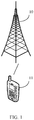
- FIG. 1 is a schematic architectural diagram of a wireless communications system according to an embodiment of this disclosure.
- the wireless communications system may include a network device 10 and a terminal.
- the terminal is denoted as user equipment (User Equipment, UE) 11, and the UE 11 may communicate (transmit signaling or transmit data) with the network device 10.
- connections between the foregoing devices may be wireless connections.
- a solid line is used in FIG. 1 .
- the communications system may include a plurality of UEs 11, and the network device 10 may communicate with the plurality of UEs 11.
- the terminal provided in this embodiment of this disclosure may be a mobile phone, a tablet computer, a notebook computer, an ultra-mobile personal computer (Ultra-Mobile Personal Computer, UMPC), a netbook, a personal digital assistant (Personal Digital Assistant, PDA), a mobile Internet device (Mobile Internet Device, MID), a wearable device (Wearable Device), an in-vehicle device, or the like.
- the network device 10 provided in this embodiment of this disclosure may be a base station.
- the base station may be a generally used base station, or may be an evolved base station (evolved node base station, eNB), or may be a device such as a network device (for example, a next generation base station (next generation node base station, gNB)) or a transmission and reception point (transmission and reception point, TRP) in a 5G system.
- eNB evolved base station
- gNB next generation base station
- TRP transmission and reception point
- the following first describes a manner of generating a DMRS sequence by using a low-PAPR sequence.
- a DMRS sequence is generated by using a low-PAPR sequence (which is also referred to as a Zadoff-Chu sequence).
- the Zadoff-Chu sequence is generated through computer searching.
- an embodiment of this disclosure provides a method for reference signal generation.
- the method is executed by a first communications device.
- the first communications device may be a terminal and a second communications device may be a network device; or that the first communications device may be a network device and the second communications device may be a terminal.
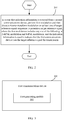
- Specific steps include step 201.
- Step 201 In a case that indication information is received from the second communications device, perform first modulation and then discrete Fourier transform modulation on at least one of target-reference-signal sequences to generate a target reference signal, where the first modulation includes any one of the following: ⁇ /2-BPSK modulation and 8-PSK modulation, and the indication information is used to indicate that the first communications device uses the target reference signal for transmission.
- the indication information is related to the target reference signal, and for brevity, details are not repeated herein.
- first modulation is performed on the at least one of target-reference-signal sequences to generate the target reference signal.
- the physical channel demodulation reference signal includes one or more of the following: PUSCH DMRS, physical downlink shared channel (Physical Downlink Shared Channel, PDSCH) DMRS, physical Sidelink shared channel (Physical Sidelink Shared Channel, PSSCH) DMRS, PUCCH DMRS, physical downlink control channel (Physical Downlink Control Channel, PDCCH) DMRS, physical Sidelink control channel (Physical Sidelink Control Channel, PSCCH) DMRS, and physical broadcast channel (Physical broadcast channel, PBCH) DMRS.
- PUSCH DMRS physical downlink shared channel (Physical Downlink Shared Channel, PDSCH) DMRS, physical Sidelink shared channel (Physical Sidelink Shared Channel, PSSCH) DMRS, PUCCH DMRS, physical downlink control channel (Physical Downlink Control Channel, PDCCH) DMRS, physical Sidelink control channel (Physical Sidelink Control Channel, PSCCH) DMRS, and physical broadcast channel (Physical broadcast channel,
- the channel state information acquisition reference signal includes one or more of the following: sounding reference signal (Sounding Reference Signal, SRS) and channel state information reference signal (Channel State Information-Reference Signal, CSI-RS).
- Sounding Reference Signal Sounding Reference Signal
- CSI-RS Channel State Information-Reference Signal
- a physical channel may be at least one of a service channel, a control channel, and a broadcast channel.
- the reference signal may include at least one of a DMRS and an SRS.
- the second communications device is a network device, and the indication information is transmitted by using radio resource control (Radio Resource Control, RRC) signaling or downlink control information (Downlink Control Information, DCI).
- RRC Radio Resource Control
- DCI Downlink Control Information
- the target-reference-signal sequence includes at least one of the sequences in Table 1.
- the target reference signal may be generated based on at least one of sequences with indexes 0 to 14 shown in Table 1.
- first modulation is performed on the at least one of sequences with indexes 0 to 14 shown in Table 1, and then discrete Fourier transform modulation is performed to generate the target reference signal.
- the first modulation includes any one of the following: ⁇ /2-BPSK modulation and 8-PSK modulation.
- TD-OCC time domain orthogonal cover code
- a frequency domain orthogonal cover code (FD-OCC) is [+1, +1].
- both the TD-OCC and the FD-OCC may be [+1, +1].
- the method shown in FIG. 2 may further include: generating the target-reference-signal sequence according to a predetermined rule.
- the predetermined rule may include one or more of the following:
- PAPR of DMRS symbols being higher than PAPR of data symbols when transmission precoding is used for PUSCH or PUCCH can be avoided, thereby improving power amplifier efficiency of a transmit end to reduce power consumption, and improving demodulation performance of a receive end to improve uplink coverage.
- the modulation scheme is: (1) first perform ⁇ /2-BPSK modulation and then perform discrete Fourier transform modulation; or (2) first perform 8-PSK modulation and discrete Fourier transform, where when the number of resources is one physical resource block (Physical Resource Block, PRB), preferably, a PUSCH DMRS is generated through DFT modulation based on at least one of sequences with indexes 0 to 14 shown in Table 1.
- PRB Physical Resource Block
- the modulation scheme is: (1) first perform ⁇ /2-BPSK modulation and then discrete Fourier transform modulation; or (2) first perform 8-PSK modulation and then discrete Fourier transform, where when the number of resources is one PRB and the number of DMRS port is one, an FD-OCC used in DMRS resource mapping is [+1, +1], instead of the FD-OCC of [+1, -1] in the related art.
- An embodiment of this disclosure further provides a first communications device.
- a problem resolving principle of the first communications device is similar to that of the method for reference signal generation in the embodiments of this disclosure; therefore, for implementation of the first network device, reference may be made to the implementation of the method, and details are not described herein again.
- an embodiment of this disclosure further provides a first communications device, and the first communications device 300 includes: a first generating module 301, configured to: in a case that indication information is received from a second communications device, perform first modulation and then discrete Fourier transform modulation on at least one of target-reference-signal sequences to generate a target reference signal.
- a first generating module 301 configured to: in a case that indication information is received from a second communications device, perform first modulation and then discrete Fourier transform modulation on at least one of target-reference-signal sequences to generate a target reference signal.
- the first modulation includes any one of the following: (1) ⁇ /2-BPSK modulation and (2) 8-PSK modulation.
- the indication information is used to indicate that the first communications device uses the target reference signal for transmission.
- the target-reference-signal sequence includes at least one of the following sequences:
- the target-reference-signal sequence further includes at least one of the following sequences:
- a TD-OCC is [+1, +1].
- an FD-OCC is [+1, +1].
- the first generating module 301 is further configured to: in a case that a physical channel demodulation reference signal or a channel state information acquisition reference signal is transmitted based on transmission precoding, perform first modulation and then discrete Fourier transform modulation on the at least one of target-reference-signal sequences to generate the target reference signal.
- the physical channel demodulation reference signal includes one or more of the following: PUSCH DMRS, PDSCH DMRS, PSSCH DMRS, PUCCH DMRS, PDCCH DMRS, PSCCH DMRS, and PBCH DMRS.
- the channel state information acquisition reference signal includes one or more of the following: SRS and CSI-RS.
- the first communications device further includes: a second generating module, configured to generate the target-reference-signal sequence according to a predetermined rule.
- the predetermined rule includes one or more of the following:
- the first communications device provided in this embodiment of this disclosure is capable of executing the foregoing method embodiment, and implementation principles and technical effects thereof are similar. Therefore, details are not described herein again.
- FIG. 4 is a structural diagram of a communications device to which an embodiment of this disclosure is applied.
- the communications device 400 includes a processor 401, a transceiver 402, a memory 403, and a bus interface.
- the communications device 400 further includes a program stored in the memory 403 and capable of running on the processor 401.
- the program When the program is executed by the processor 401, the following steps are implemented: in a case that indication information is received from a second communications device, performing first modulation and then discrete Fourier transform modulation on at least one of target-reference-signal sequences to generate a target reference signal.
- the first modulation includes any one of the following: (1) ⁇ /2-BPSK modulation and (2) 8-PSK modulation, and the indication information is used to indicate that the first communications device uses the target reference signal for transmission.
- a bus architecture may include any quantity of interconnected buses and bridges, and specifically connects together circuits that are of one or more processors represented by the processor 401 and of a memory represented by the memory 403.
- the bus architecture may further interconnect various other circuits such as a peripheral device, a voltage regulator, and a power management circuit. These are all well known in the art, and therefore are not further described in this specification.
- the bus interface provides an interface.
- the transceiver 402 may be a plurality of components, including a transmitter and a receiver, and provides units for communicating with a variety of other apparatuses on a transmission medium.
- the processor 401 is responsible for management of the bus architecture and general processing, and the memory 403 is capable of storing data that is used by the processor 401 during operation.
- the communications device provided in this embodiment of this disclosure is capable of executing the foregoing method embodiment, and implementation principles and technical effects thereof are similar. Therefore, details are not described herein again.
- An embodiment of this disclosure further provides a computer-readable storage medium.
- the computer-readable storage medium stores a computer program, and when the computer program is executed by a processor, the processes of the embodiment of the method for reference signal generation are implemented, with the same technical effect achieved. To avoid repetition, details are not described herein again.
- the computer-readable storage medium is, for example, a read-only memory (Read-Only Memory, ROM), a random access memory (Random Access Memory, RAM), a magnetic disk, or an optical disc.
- the methods in the foregoing embodiments may be implemented by using software in combination with a necessary common hardware platform, and certainly may alternatively be implemented by using hardware. However, in most cases, the former is a preferred implementation.
- the technical solutions of this disclosure essentially or the part contributing to the prior art may be implemented in a form of a software product.
- the software product is stored in a storage medium (such as a ROM/RAM, a magnetic disk, or an optical disc), and includes several instructions for instructing a terminal (which may be a mobile phone, a computer, a server, an air conditioner, a network device, or the like) to perform the methods described in the embodiments of this disclosure.
Landscapes
- Engineering & Computer Science (AREA)
- Signal Processing (AREA)
- Computer Networks & Wireless Communication (AREA)
- Mobile Radio Communication Systems (AREA)
- Digital Transmission Methods That Use Modulated Carrier Waves (AREA)
Applications Claiming Priority (2)
| Application Number | Priority Date | Filing Date | Title |
|---|---|---|---|
| CN201910117787.2A CN111277383A (zh) | 2019-02-15 | 2019-02-15 | 参考信号生成的方法及通信设备 |
| PCT/CN2020/075028 WO2020164537A1 (fr) | 2019-02-15 | 2020-02-13 | Procédé de production de signal de référence et dispositif de communication |
Publications (2)
| Publication Number | Publication Date |
|---|---|
| EP3926877A1 true EP3926877A1 (fr) | 2021-12-22 |
| EP3926877A4 EP3926877A4 (fr) | 2022-04-06 |
Family
ID=71003276
Family Applications (1)
| Application Number | Title | Priority Date | Filing Date |
|---|---|---|---|
| EP20756280.2A Pending EP3926877A4 (fr) | 2019-02-15 | 2020-02-13 | Procédé de production de signal de référence et dispositif de communication |
Country Status (10)
| Country | Link |
|---|---|
| US (1) | US12074749B2 (fr) |
| EP (1) | EP3926877A4 (fr) |
| JP (1) | JP7250944B2 (fr) |
| KR (1) | KR102801429B1 (fr) |
| CN (1) | CN111277383A (fr) |
| BR (1) | BR112021016061A2 (fr) |
| MY (1) | MY209858A (fr) |
| PH (1) | PH12021551979A1 (fr) |
| SG (1) | SG11202108870WA (fr) |
| WO (1) | WO2020164537A1 (fr) |
Families Citing this family (5)
| Publication number | Priority date | Publication date | Assignee | Title |
|---|---|---|---|---|
| WO2022000377A1 (fr) * | 2020-07-01 | 2022-01-06 | Nokia Shanghai Bell Co., Ltd. | Commande de puissance de réutilisation spatiale pour prendre en charge une communication sensible au temps dans la bande sans licence |
| CN115442004B (zh) * | 2021-06-02 | 2025-08-22 | 维沃移动通信有限公司 | 上行数据传输方法、装置、终端及介质 |
| CN115811451B (zh) * | 2021-09-13 | 2025-11-04 | 维沃移动通信有限公司 | 参考信号序列生成方法、装置、设备及介质 |
| CN116390019A (zh) * | 2021-12-31 | 2023-07-04 | 维沃移动通信有限公司 | 定位方法、装置及通信设备 |
| EP4507426A4 (fr) * | 2022-04-02 | 2025-07-30 | Vivo Mobile Communication Co Ltd | Procédé et appareil de transmission de signal de référence de démodulation, terminal et dispositif côté réseau |
Family Cites Families (11)
| Publication number | Priority date | Publication date | Assignee | Title |
|---|---|---|---|---|
| KR100940730B1 (ko) | 2007-09-07 | 2010-02-04 | 엘지전자 주식회사 | 무선통신 시스템에서 기준 신호 생성 방법 |
| CN114884640B (zh) * | 2016-03-31 | 2024-07-30 | 北京三星通信技术研究有限公司 | 通信系统中的终端、基站及其方法 |
| CN107547462A (zh) * | 2016-06-24 | 2018-01-05 | 华为技术有限公司 | 一种信号处理方法及装置 |
| US10476642B2 (en) * | 2016-09-30 | 2019-11-12 | Qualcomm Incorporated | Reference signal design |
| US20210144038A1 (en) * | 2017-03-24 | 2021-05-13 | Intel IP Corporation | Control signaling for demodulation reference signal antenna port indication |
| US10735225B2 (en) * | 2017-05-04 | 2020-08-04 | Samsung Electronics Co., Ltd. | Method and apparatus for transmitting and receiving signal for low peak-to-average power ratio in wireless communication system |
| CN109219134B (zh) * | 2017-06-30 | 2020-11-06 | 华为技术有限公司 | 一种发送方法及装置 |
| CN109245844B (zh) | 2017-06-30 | 2020-11-03 | 华为技术有限公司 | 无线通信方法、装置及系统 |
| CN108809609B (zh) * | 2017-08-11 | 2019-07-09 | 华为技术有限公司 | 一种dmrs指示和接收方法,发射端和接收端 |
| CN109428846B (zh) * | 2017-08-25 | 2023-12-08 | 华为技术有限公司 | 一种信号传输的方法、设备及系统 |
| CN113383606A (zh) * | 2019-02-01 | 2021-09-10 | 株式会社Ntt都科摩 | 用户终端以及无线通信方法 |
-
2019
- 2019-02-15 CN CN201910117787.2A patent/CN111277383A/zh active Pending
-
2020
- 2020-02-13 BR BR112021016061-2A patent/BR112021016061A2/pt unknown
- 2020-02-13 KR KR1020217028684A patent/KR102801429B1/ko active Active
- 2020-02-13 JP JP2021547090A patent/JP7250944B2/ja active Active
- 2020-02-13 EP EP20756280.2A patent/EP3926877A4/fr active Pending
- 2020-02-13 MY MYPI2021004669A patent/MY209858A/en unknown
- 2020-02-13 SG SG11202108870WA patent/SG11202108870WA/en unknown
- 2020-02-13 WO PCT/CN2020/075028 patent/WO2020164537A1/fr not_active Ceased
- 2020-02-13 PH PH1/2021/551979A patent/PH12021551979A1/en unknown
-
2021
- 2021-08-16 US US17/403,218 patent/US12074749B2/en active Active
Also Published As
| Publication number | Publication date |
|---|---|
| US20210377087A1 (en) | 2021-12-02 |
| JP7250944B2 (ja) | 2023-04-03 |
| PH12021551979A1 (en) | 2022-05-23 |
| CN111277383A (zh) | 2020-06-12 |
| MY209858A (en) | 2025-08-07 |
| BR112021016061A2 (pt) | 2021-10-13 |
| EP3926877A4 (fr) | 2022-04-06 |
| SG11202108870WA (en) | 2021-09-29 |
| KR20210121244A (ko) | 2021-10-07 |
| WO2020164537A1 (fr) | 2020-08-20 |
| JP2022520387A (ja) | 2022-03-30 |
| KR102801429B1 (ko) | 2025-04-29 |
| US12074749B2 (en) | 2024-08-27 |
Similar Documents
| Publication | Publication Date | Title |
|---|---|---|
| US12074749B2 (en) | Method for reference signal generation and communications device | |
| US9735947B2 (en) | Transmitting device and transmitting method | |
| US8068466B2 (en) | Transmission of multiple information elements in multiple channels | |
| EP3557829B1 (fr) | Procédé de transmission et procédé de réception pour signal de liaison montante, terminal et station de base | |
| JP5894346B2 (ja) | 無線通信システムにおいて受信確認応答送信方法及び装置 | |
| EP3879777B1 (fr) | Procédé et appareil de traitement de signal à base de séquence | |
| CA3030456C (fr) | Procede et equipement terminal servant a transmettre des donnees | |
| EP3565342A1 (fr) | Procédé de transmission d'informations de commande de liaison descendante, équipement terminal et dispositif de réseau | |
| KR102526417B1 (ko) | 무선 통신 방법, 단말 및 네트워크 기기 | |
| US12245284B2 (en) | Method for 2-step random access and terminal | |
| IL265237A (en) | Method for transmitting run signal and device | |
| CA3050335C (fr) | Procede et appareil de transmission de signal | |
| CN108259148B (zh) | 传输参考信号的方法和装置 | |
| US11563612B2 (en) | Transmission method and first communication device | |
| CN107888527B (zh) | 一种参考信号映射方法及装置 | |
| HK40059425A (en) | Reference signal generation method and communication device | |
| CN109802784B (zh) | 一种pucch传输方法、移动通信终端及网络侧设备 | |
| WO2024098901A1 (fr) | Configuration et indication de mappage de signal de référence de suivi de phase dans des systèmes de communication sans fil |
Legal Events
| Date | Code | Title | Description |
|---|---|---|---|
| STAA | Information on the status of an ep patent application or granted ep patent |
Free format text: STATUS: THE INTERNATIONAL PUBLICATION HAS BEEN MADE |
|
| PUAI | Public reference made under article 153(3) epc to a published international application that has entered the european phase |
Free format text: ORIGINAL CODE: 0009012 |
|
| STAA | Information on the status of an ep patent application or granted ep patent |
Free format text: STATUS: REQUEST FOR EXAMINATION WAS MADE |
|
| 17P | Request for examination filed |
Effective date: 20210906 |
|
| AK | Designated contracting states |
Kind code of ref document: A1 Designated state(s): AL AT BE BG CH CY CZ DE DK EE ES FI FR GB GR HR HU IE IS IT LI LT LU LV MC MK MT NL NO PL PT RO RS SE SI SK SM TR |
|
| A4 | Supplementary search report drawn up and despatched |
Effective date: 20220309 |
|
| RIC1 | Information provided on ipc code assigned before grant |
Ipc: H04L 27/26 20060101ALI20220302BHEP Ipc: H04L 27/20 20060101ALI20220302BHEP Ipc: H04L 5/00 20060101AFI20220302BHEP |
|
| REG | Reference to a national code |
Ref country code: HK Ref legal event code: DE Ref document number: 40059425 Country of ref document: HK |
|
| DAV | Request for validation of the european patent (deleted) | ||
| DAX | Request for extension of the european patent (deleted) | ||
| STAA | Information on the status of an ep patent application or granted ep patent |
Free format text: STATUS: EXAMINATION IS IN PROGRESS |
|
| 17Q | First examination report despatched |
Effective date: 20250716 |