EP3928741A1 - Systèmes et procédés d'emballage de gestion d'humidité - Google Patents
Systèmes et procédés d'emballage de gestion d'humidité Download PDFInfo
- Publication number
- EP3928741A1 EP3928741A1 EP21184639.9A EP21184639A EP3928741A1 EP 3928741 A1 EP3928741 A1 EP 3928741A1 EP 21184639 A EP21184639 A EP 21184639A EP 3928741 A1 EP3928741 A1 EP 3928741A1
- Authority
- EP
- European Patent Office
- Prior art keywords
- relative humidity
- humidity control
- humidity
- packaging system
- solution
- Prior art date
- Legal status (The legal status is an assumption and is not a legal conclusion. Google has not performed a legal analysis and makes no representation as to the accuracy of the status listed.)
- Granted
Links
Images



Classifications
-
- A—HUMAN NECESSITIES
- A61—MEDICAL OR VETERINARY SCIENCE; HYGIENE
- A61F—FILTERS IMPLANTABLE INTO BLOOD VESSELS; PROSTHESES; DEVICES PROVIDING PATENCY TO, OR PREVENTING COLLAPSING OF, TUBULAR STRUCTURES OF THE BODY, e.g. STENTS; ORTHOPAEDIC, NURSING OR CONTRACEPTIVE DEVICES; FOMENTATION; TREATMENT OR PROTECTION OF EYES OR EARS; BANDAGES, DRESSINGS OR ABSORBENT PADS; FIRST-AID KITS
- A61F2/00—Filters implantable into blood vessels; Prostheses, i.e. artificial substitutes or replacements for parts of the body; Appliances for connecting them with the body; Devices providing patency to, or preventing collapsing of, tubular structures of the body, e.g. stents
- A61F2/0095—Packages or dispensers for prostheses or other implants
-
- A—HUMAN NECESSITIES
- A61—MEDICAL OR VETERINARY SCIENCE; HYGIENE
- A61F—FILTERS IMPLANTABLE INTO BLOOD VESSELS; PROSTHESES; DEVICES PROVIDING PATENCY TO, OR PREVENTING COLLAPSING OF, TUBULAR STRUCTURES OF THE BODY, e.g. STENTS; ORTHOPAEDIC, NURSING OR CONTRACEPTIVE DEVICES; FOMENTATION; TREATMENT OR PROTECTION OF EYES OR EARS; BANDAGES, DRESSINGS OR ABSORBENT PADS; FIRST-AID KITS
- A61F2/00—Filters implantable into blood vessels; Prostheses, i.e. artificial substitutes or replacements for parts of the body; Appliances for connecting them with the body; Devices providing patency to, or preventing collapsing of, tubular structures of the body, e.g. stents
- A61F2/02—Prostheses implantable into the body
- A61F2/04—Hollow or tubular parts of organs, e.g. bladders, tracheae, bronchi or bile ducts
- A61F2/06—Blood vessels
-
- B—PERFORMING OPERATIONS; TRANSPORTING
- B65—CONVEYING; PACKING; STORING; HANDLING THIN OR FILAMENTARY MATERIAL
- B65B—MACHINES, APPARATUS OR DEVICES FOR, OR METHODS OF, PACKAGING ARTICLES OR MATERIALS; UNPACKING
- B65B61/00—Auxiliary devices, not otherwise provided for, for operating on sheets, blanks, webs, binding material, containers or packages
- B65B61/20—Auxiliary devices, not otherwise provided for, for operating on sheets, blanks, webs, binding material, containers or packages for adding cards, coupons or other inserts to package contents
-
- B—PERFORMING OPERATIONS; TRANSPORTING
- B65—CONVEYING; PACKING; STORING; HANDLING THIN OR FILAMENTARY MATERIAL
- B65D—CONTAINERS FOR STORAGE OR TRANSPORT OF ARTICLES OR MATERIALS, e.g. BAGS, BARRELS, BOTTLES, BOXES, CANS, CARTONS, CRATES, DRUMS, JARS, TANKS, HOPPERS, FORWARDING CONTAINERS; ACCESSORIES, CLOSURES, OR FITTINGS THEREFOR; PACKAGING ELEMENTS; PACKAGES
- B65D33/00—Details of, or accessories for, sacks or bags
- B65D33/01—Ventilation or drainage of bags
-
- B—PERFORMING OPERATIONS; TRANSPORTING
- B65—CONVEYING; PACKING; STORING; HANDLING THIN OR FILAMENTARY MATERIAL
- B65D—CONTAINERS FOR STORAGE OR TRANSPORT OF ARTICLES OR MATERIALS, e.g. BAGS, BARRELS, BOTTLES, BOXES, CANS, CARTONS, CRATES, DRUMS, JARS, TANKS, HOPPERS, FORWARDING CONTAINERS; ACCESSORIES, CLOSURES, OR FITTINGS THEREFOR; PACKAGING ELEMENTS; PACKAGES
- B65D81/00—Containers, packaging elements, or packages, for contents presenting particular transport or storage problems, or adapted to be used for non-packaging purposes after removal of contents
- B65D81/18—Containers, packaging elements, or packages, for contents presenting particular transport or storage problems, or adapted to be used for non-packaging purposes after removal of contents providing specific environment for contents, e.g. temperature above or below ambient
- B65D81/22—Containers, packaging elements, or packages, for contents presenting particular transport or storage problems, or adapted to be used for non-packaging purposes after removal of contents providing specific environment for contents, e.g. temperature above or below ambient in moist conditions or immersed in liquids
-
- B—PERFORMING OPERATIONS; TRANSPORTING
- B65—CONVEYING; PACKING; STORING; HANDLING THIN OR FILAMENTARY MATERIAL
- B65D—CONTAINERS FOR STORAGE OR TRANSPORT OF ARTICLES OR MATERIALS, e.g. BAGS, BARRELS, BOTTLES, BOXES, CANS, CARTONS, CRATES, DRUMS, JARS, TANKS, HOPPERS, FORWARDING CONTAINERS; ACCESSORIES, CLOSURES, OR FITTINGS THEREFOR; PACKAGING ELEMENTS; PACKAGES
- B65D85/00—Containers, packaging elements or packages, specially adapted for particular articles or materials
- B65D85/50—Containers, packaging elements or packages, specially adapted for particular articles or materials for living organisms, articles or materials sensitive to changes of environment or atmospheric conditions, e.g. land animals, birds, fish, water plants, non-aquatic plants, flower bulbs, cut flowers or foliage
-
- A—HUMAN NECESSITIES
- A61—MEDICAL OR VETERINARY SCIENCE; HYGIENE
- A61F—FILTERS IMPLANTABLE INTO BLOOD VESSELS; PROSTHESES; DEVICES PROVIDING PATENCY TO, OR PREVENTING COLLAPSING OF, TUBULAR STRUCTURES OF THE BODY, e.g. STENTS; ORTHOPAEDIC, NURSING OR CONTRACEPTIVE DEVICES; FOMENTATION; TREATMENT OR PROTECTION OF EYES OR EARS; BANDAGES, DRESSINGS OR ABSORBENT PADS; FIRST-AID KITS
- A61F2/00—Filters implantable into blood vessels; Prostheses, i.e. artificial substitutes or replacements for parts of the body; Appliances for connecting them with the body; Devices providing patency to, or preventing collapsing of, tubular structures of the body, e.g. stents
- A61F2/02—Prostheses implantable into the body
- A61F2/08—Muscles; Tendons; Ligaments
-
- A—HUMAN NECESSITIES
- A61—MEDICAL OR VETERINARY SCIENCE; HYGIENE
- A61F—FILTERS IMPLANTABLE INTO BLOOD VESSELS; PROSTHESES; DEVICES PROVIDING PATENCY TO, OR PREVENTING COLLAPSING OF, TUBULAR STRUCTURES OF THE BODY, e.g. STENTS; ORTHOPAEDIC, NURSING OR CONTRACEPTIVE DEVICES; FOMENTATION; TREATMENT OR PROTECTION OF EYES OR EARS; BANDAGES, DRESSINGS OR ABSORBENT PADS; FIRST-AID KITS
- A61F2/00—Filters implantable into blood vessels; Prostheses, i.e. artificial substitutes or replacements for parts of the body; Appliances for connecting them with the body; Devices providing patency to, or preventing collapsing of, tubular structures of the body, e.g. stents
- A61F2/02—Prostheses implantable into the body
- A61F2/24—Heart valves ; Vascular valves, e.g. venous valves; Heart implants, e.g. passive devices for improving the function of the native valve or the heart muscle; Transmyocardial revascularisation [TMR] devices; Valves implantable in the body
-
- B—PERFORMING OPERATIONS; TRANSPORTING
- B65—CONVEYING; PACKING; STORING; HANDLING THIN OR FILAMENTARY MATERIAL
- B65B—MACHINES, APPARATUS OR DEVICES FOR, OR METHODS OF, PACKAGING ARTICLES OR MATERIALS; UNPACKING
- B65B5/00—Packaging individual articles in containers or receptacles, e.g. bags, sacks, boxes, cartons, cans, jars
- B65B5/04—Packaging single articles
-
- B—PERFORMING OPERATIONS; TRANSPORTING
- B65—CONVEYING; PACKING; STORING; HANDLING THIN OR FILAMENTARY MATERIAL
- B65B—MACHINES, APPARATUS OR DEVICES FOR, OR METHODS OF, PACKAGING ARTICLES OR MATERIALS; UNPACKING
- B65B5/00—Packaging individual articles in containers or receptacles, e.g. bags, sacks, boxes, cartons, cans, jars
- B65B5/04—Packaging single articles
- B65B5/045—Packaging single articles in bags
-
- B—PERFORMING OPERATIONS; TRANSPORTING
- B65—CONVEYING; PACKING; STORING; HANDLING THIN OR FILAMENTARY MATERIAL
- B65B—MACHINES, APPARATUS OR DEVICES FOR, OR METHODS OF, PACKAGING ARTICLES OR MATERIALS; UNPACKING
- B65B7/00—Closing containers or receptacles after filling
- B65B7/16—Closing semi-rigid or rigid containers or receptacles not deformed by, or not taking-up shape of, contents, e.g. boxes or cartons
- B65B7/28—Closing semi-rigid or rigid containers or receptacles not deformed by, or not taking-up shape of, contents, e.g. boxes or cartons by applying separate preformed closures, e.g. lids, covers
- B65B7/2842—Securing closures on containers
-
- B—PERFORMING OPERATIONS; TRANSPORTING
- B65—CONVEYING; PACKING; STORING; HANDLING THIN OR FILAMENTARY MATERIAL
- B65D—CONTAINERS FOR STORAGE OR TRANSPORT OF ARTICLES OR MATERIALS, e.g. BAGS, BARRELS, BOTTLES, BOXES, CANS, CARTONS, CRATES, DRUMS, JARS, TANKS, HOPPERS, FORWARDING CONTAINERS; ACCESSORIES, CLOSURES, OR FITTINGS THEREFOR; PACKAGING ELEMENTS; PACKAGES
- B65D81/00—Containers, packaging elements, or packages, for contents presenting particular transport or storage problems, or adapted to be used for non-packaging purposes after removal of contents
- B65D81/24—Adaptations for preventing deterioration or decay of contents; Applications to the container or packaging material of food preservatives, fungicides, pesticides or animal repellants
- B65D81/26—Adaptations for preventing deterioration or decay of contents; Applications to the container or packaging material of food preservatives, fungicides, pesticides or animal repellants with provision for draining away, or absorbing, or removing by ventilation, fluids, e.g. exuded by contents; Applications of corrosion inhibitors or desiccators
- B65D81/264—Adaptations for preventing deterioration or decay of contents; Applications to the container or packaging material of food preservatives, fungicides, pesticides or animal repellants with provision for draining away, or absorbing, or removing by ventilation, fluids, e.g. exuded by contents; Applications of corrosion inhibitors or desiccators for absorbing liquids
Definitions
- This disclosure relates generally to packaging systems for storing bioprosthetic devices and, more particularly, to packaging systems that include a humidity control system configured to maintain a target relative humidity across a range of temperatures.
- Bioprosthetic devices, and other medical and surgical components, can be moisture sensitive.
- a single medical device manufacturer may supply moisture-sensitive products across many different regions of the world as well as across seasons. The wide range of temperature and humidity across these regions and seasons place significant burdens on the optimization of the packaging system for these products. For example, a system that works well in North America may rapidly fail in Southeast Asia.
- packaging systems for storing bioprosthetic devices have generally functioned merely as sterile packages. It would be desirable, however, to have packages with moisture management, such as a two-way moisture management system, which is able to function as both humidifier and dehumidifier by compensating for what would otherwise be changes to the relative humidity in the packaging. This could be done, for example, in response to temperature changes. It would also be desirable to have a moisture management system (e.g., a two-way moisture management system) for maintaining relative humidity under extreme conditions and during thermal shock events.
- moisture management system e.g., a two-way moisture management system
- packaging systems can be for storing a bioprosthetic device while maintaining a target relative humidity across a temperature range.
- the packaging system(s) can provide a moisture management system (e.g., a two-way moisture management system) that can adjust and control relative humidity, such as across a specified or desired range of relative humidity, within a degree of statistical confidence and reliability.
- the packaging system can be made from commercially available, medical-grade materials, and maintenance or replacement of the system may not be required.
- the packaging system includes a sealed package, which defines an internal space having an internal volume.
- the packaging system can optionally further include both the bioprosthetic device and a humidity control device within the internal space or volume of the package.
- the humidity control device can include a barrier, which defines an enclosed space. At least a portion of the barrier can include a gas-permeable membrane.
- a humidity control solution comprising glycerol can be provided in the enclosed space.
- the target relative humidity can be provided within the internal volume of the sealed package, and the humidity control device can maintain the target relative humidity across the temperature range by selectively liberating and absorbing water vapor.
- the packaging system can maintain the target relative humidity within a tolerance of about ⁇ 10%.
- the packaging system can maintain the target relative humidity within a tolerance of about ⁇ 5%.
- the bioprosthetic device can comprise a bioprosthetic tissue that has a reduced water content of about 25% (by weight) or less.
- the bioprosthetic tissue can be glycerolized.
- the bioprosthetic device can comprise a heart valve, and the bioprosthetic tissue can form leaflets of the heart valve.
- the gas-permeable membrane can have a water vapor transfer rate of about 0.02 to 0.07 grams per square inch (about 3-10 mg/cm 2 ) per 24 hours. In one embodiment, the gas-permeable membrane can have an average porosity of about 8 to 36 Gurley units. In one embodiment, the gas-permeable membrane can have a surface area, and a ratio of the surface area of the gas-permeable membrane to the internal volume of the sealed package can be from about 0.1 to about 0.5 g/in 3 (about 6-30 mg/mL). In some embodiments, the gas-permeable membrane can comprise or consist of a hydrophobic homopolymer. In some embodiments, the gas-permeable membrane can comprise or consist of a high-density polyethylene having a microfibrous structure. In some embodiments, the gas-permeable membrane can be a medical-grade material.
- the sealed package can include a polymer/foil pouch. In some embodiments, the sealed package can have a water vapor transfer rate of less than about 0.002 grams per day. In some embodiments, the sealed package can be hermetically sealed.
- the packaging system includes a sealed package, which has an internal space having an internal volume.
- the bioprosthetic device and a humidity control device can be provided within the internal space.
- the humidity control device can have a barrier, which defines an enclosed space that is in vapor communication with the sealed package.
- a humidity control solution comprising glycerol can be provided in the enclosed space.
- the humidity control solution can have a total weight of at least about 0.1 g per cubic inch (about 6 mg/mL) of the internal volume.
- the humidity control solution can maintain the target relative humidity across the temperature range by selectively liberating and absorbing water vapor.
- the humidity control solution can further include an aqueous solution.
- glycerol can be provided in a concentration of from about 34% to about 96% (by weight) of the humidity control solution and the aqueous solution can be provided in a concentration of from about 4% to about 66% (by weight) of the humidity control solution.
- the concentration of the glycerol (G w ) in the humidity control solution can defined by the target relative humidity (RH) to be maintained within the internal volume of the sealed package according to Eq. 1.
- G w 383 ⁇ 0.189 RH + 19.9 0.0806 ⁇ 383
- the humidity control solution can further include a microbicidal agent.
- the microbicidal agent can be glutaraldehyde.
- the glutaraldehyde can be provided in an amount of from about 0.3% to about 1%.
- the aqueous solution may be about 97% (by volume) water and about 3% (by volume) of a solution of an about 0.625% (by weight) glutaraldehyde.
- a method for storing a bioprosthetic device within a packaging system that maintains a target relative humidity across a temperature range includes determining an internal volume of an outer packaging, selecting the target relative humidity, providing a humidity control device comprising a humidity control solution disposed within a gas-permeable enclosure, and sealing the humidity control device and the bioprosthetic device within the internal volume of the outer packaging.
- the humidity control solution can include glycerol.
- a concentration of glycerol (G w ) (by weight) in the humidity control solution can be defined by the target relative humidity (RH) to be maintained within the internal volume of the outer packaging according to Eq. 1.
- G w 383 ⁇ 0.189 RH + 19.9 0.0806 ⁇ 383
- the weight of the humidity control solution provided can be at least about 0.1 g per cubic inch (about 6 mg/mL) of the internal volume.
- the method can maintain the target relative humidity across the temperature range from about -18 °C to about 45 °C.
- the gas-permeable enclosure can have a water vapor transfer rate of from about 0.02 to about 0.07 grams per square inch (about 3-10 mg/cm 2 ) per 24 hours.
- the method can further include subjecting the outer packaging to a terminal sterilization process.
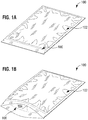
- the packaging systems generally include an outer packaging 100 that defines an internal space 104 ( Figures 1A and 1B ).
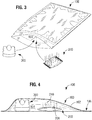
- the systems generally include one or multiple bioprosthetic devices and one or multiple humidity control devices (e.g., exemplary humidity control devices 200 in Figures 2A-2D ), which are preferably stored within the internal space of the outer packaging.
- the packaging system is generally configured to maintain a target relative humidity within the internal space across a range of temperatures.
- target relative humidity and “desired relative humidity” can refer to a particular relative humidity value or a range of relative humidities that includes the particular value, as will be apparent according to the context.
- the humidity control device When the packaging system is exposed to higher ambient temperatures, relative humidity within the internal space will tend to decrease and the humidity control device will release water vapor or moisture vapor 210 to restore the relative humidity within the internal space to the target relative humidity.
- relative humidity within the internal space will tend to increase and the humidity control device will absorb water vapor to restore the relative humidity within the internal space to the target relative humidity.
- bioprosthetic device(s) that may be stored using the system and method described herein can encompass a variety of different devices.
- bioprosthetic devices include replacement heart valves, aortic conduits, catheters, stents, grafts, stent-grafts, vascular stents, vascular grafts, patches, bone grafts, and tissue grafts to name just a few.
- the bioprosthetic device(s) can include bioprosthetic tissue or other biological materials.
- Bioprosthetic tissue incorporated in the bioprosthetic devices can be a biological tissue, or any connective or collagenous tissue, whether directly or derived from animal or human sources, and whether in its native form, or modified chemically or otherwise.
- the bioprosthetic tissue can include, for example, all or a portion of at least one of native cardiac valves, blood vessels, skin, hides, epidermis, dura mater, pericardium, small intestinal submucosa, ligaments, and tendons.
- the bioprosthetic tissue can be pericardium from animal sources, including but not limited to bovine, porcine, kangaroo, bison, and equine pericardium.
- the bioprosthetic tissue can also be selected based on certain desired characteristics of the tissue, such as the orientation of collagen fibers. For example, kangaroo hides are believed to have collagen fibers that are aligned substantially parallel to one another.
- the bioprosthetic tissue can further be any engineered tissue that is formed using a natural or biodegradable synthetic scaffold that can be seeded with cells from humans (autologous or allogenic) or from animal sources.
- Embodiments of the system are also suitable for packaging, storing, and/or shipping any device or object for which moisture or humidity control is desired, for example, medical devices, electronics, semiconductors, batteries, magnetic media, optics, documents, alloys, jewelry, chemicals, pharmaceuticals, biologies, or the like.
- bioprosthetic tissue may be subjected to a fixation process which preferably renders the bioprosthetic tissue less antigenic and at least partially, if not completely, cross-linked.
- the fixation process is understood to include any chemical, thermal, or other processes, the result of which the bioprosthetic tissue is preserved and rendered more mechanically and dimensionally stable than if the tissue had not been subjected to the fixation process.
- the fixation process can include contacting the tissue with one or more fixatives or cross-linking agents.
- fixatives or cross-linking agents include aldehydes, dialdehydes, polyaldehydes, amines, diamines (such as 1,6-hexanediamine and 1,7-heptanediamine), polyamines, diisocyanates, carbodiimides, photooxidation agents, and polyepoxide compounds.
- the fixative is an aldehyde, such as formaldehyde or glutaraldehyde.
- Glutaraldehyde-fixed tissue is particularly vulnerable to calcification because glutaraldehyde fixation generates residual aldehyde groups and labile Schiff bases.
- the residual aldehydes and Schiff bases are believed to be potential binding sites for calcium.
- free aldehyde groups may oxidize to carboxylic acid groups, which are known to attract and bind calcium.
- Various techniques have therefore been developed to reduce the aldehyde and/or acid levels of glutaraldehyde-fixed tissues, and therefore its propensity to calcify after implantation in a host.
- One technique for reducing aldehyde and/or acid levels in glutaraldehyde-fixed tissue is to include a heat-treating step during or after the bioprosthetic tissue is contacted or treated with glutaraldehyde.
- the bioprosthetic tissue can be heat treated any time prior to implantation in a host by heating in a saline or physiologic solution either before or after fixation with glutaraldehyde.
- the bioprosthetic tissue can be heat treated in a glutaraldehyde solution, either during or after the initial fixation of the tissue using glutaraldehyde.
- the heat treatment can be performed by immersing the tissue in the selected saline, physiologic, and/or fixative solution, and heating the solution to a temperature of from about 25°C to about 80 °C or from about 35°C to about 55 °C.
- the solution can be heated either before or after the bioprosthetic tissue is added to the solution.
- the tissue can be heat treated for from a few seconds to several months, or from about 4 weeks to about 22 weeks.
- the tissue is be heated in a glutaraldehyde solution at a temperature of from about 60°C to about 70 °C for a duration of from about 1 day to about 7 days.
- the tissue is heated in a glutaraldehyde solution at a temperature of about 65°C for about 3-5 days or for about 4 days.
- Embodiments of glutaraldehyde-fixed tissue demonstrate reduced aldehyde and carboxylic acid contents after heat treatment, and thus a marked reduction in calcification after implantation, as compared with glutaraldehyde-fixed tissue without heat treatment.
- Heat treatment of glutaraldehyde-fixed tissue is described, for example, in U.S. Patent No. 6,561,970, issued May 13, 2003 to Edwards Lifesciences, the entire contents of which is incorporated herein by reference.
- the fixation process can also further include pre-conditioning, pre-stressing, or pre-damaging fixed, bioprosthetic tissue to generate additional calcium binding sites, which can subsequently be capped, as described in U.S. Patent Application Publication No. 2008/0302372 A1, published December 11, 2008 , entitled “Methods for Pre-Stressing and Capping Bioprosthetic Tissue” to Edwards Lifesciences, the entire contents of which are incorporated herein by reference.
- the bioprosthetic tissue can be subjected to a rapid pulsed fluid flow (for example, from about 4 Hz to about 1,500 Hz), repeatedly flexed, exposed to elevated temperature (for example, from about 26 °C to about 65°C), contacted with an acidic solution (for example, pH in the range of from about 4 to about 7), contacted with an alkaline solution (for example, pH in the range of from about 8 to about 10), or any combination of the foregoing for the purpose of generating additional calcium binding sites, which can be capped and/or reduced in a separate treatment process.
- a rapid pulsed fluid flow for example, from about 4 Hz to about 1,500 Hz
- elevated temperature for example, from about 26 °C to about 65°C
- an acidic solution for example, pH in the range of from about 4 to about 7
- an alkaline solution for example, pH in the range of from about 8 to about 10
- Embodiments of the bioprosthetic tissue can include functional groups that predispose the tissue to calcification, which can include any combination of those that exist natively in the bioprosthetic tissue, that are generated under cross-linking or fixation, or that result from any number of chemical or physical processes, including the pre-conditioning, pre-stressing, and/or pre-damaging disclosed herein.
- carboxylic acid groups are formed after glutaraldehyde fixation of bioprosthetic tissue, and these groups attract and bind calcium ions due to their negative charges and electrostatic interactions with positively charged ions, leading to calcification of the tissue or other adverse cellular interactions.
- embodiments of the bioprosthetic tissue can be treated with a capping agent.
- the capping agent can be any agent that can block, remove, or alter a functional group that can actually or potentially produce an undesirable interaction between the bioprosthetic tissue and the host, such as calcification, immunological reaction, pannus formation, and the like.
- the bioprosthetic tissue can be treated with the capping agent without a step of fixing or crosslinking the bioprosthetic tissue. In one embodiment, the bioprosthetic tissue can be treated with the capping agent before or after the step of fixing or crosslinking the bioprosthetic tissue.
- the capping agent can be one or a combination of the following: amines, including alkyl amines, amino alcohols, including ethanolamine, amino acids (including lysine and hydroxylysine), amino sulfonates( including taurine, amino sulfates, dextran sulfate, and chondroitin sulfate), a hydrophilic multifunctional polymer (including polyvinyl alcohol and polyethyleneimine), a hydrophobic multifunctional polymer, an ⁇ -dicarbonyl (including methylglyoxyl, 3-deoxyglucosone, and glyoxal), a hydrazide (including adipic hydrazide), an N,N -disuccinimidyl carbonate, a carbodiimide (including 1-ethyl-3-[3-dimethylaminopropyl]carbodiimide hydrochloride (EDC), N -cyclohexyl- N' -(2-morph
- the capping agent can be any agent that is reactive with a functional group, wherein the functional group is a free aldehyde or a free carboxylic acid.
- the capping agent can be an amine, such as an alkyl amine or an amino alcohol.
- the capping agent can be an ethanolamine, for example, ethanolamine.
- certain reactions of the capping agent and functional groups may produce labile Schiff bases, and it may be desirable to reduce the Schiff bases, thereby converting them into more stable amines.
- the treatment of the bioprosthetic tissue can further include treatment with a reducing agent.
- the reducing agent can be selected to reduce Schiff bases formed from the reaction of the crosslinking agent and the bioprosthetic tissue, the capping agent and the bioprosthetic tissue, and/or the capping agent and the crosslinking agent.
- the bioprosthetic tissue can be treated with the reducing agent, with or without fixing or crosslinking the bioprosthetic tissue.
- the bioprosthetic tissue can be treated with the reducing agent, with or without the capping agent.
- the bioprosthetic tissue can be treated with the reducing agent, with or without both fixing or crosslinking, and capping the bioprosthetic tissue.
- the reducing agent can be any one or a combination of reducing agents, for example, reducing agents that comprise a borohydride.
- the reducing agent can be one or a combination selected from the group consisting of sodium borohydride, sodium cyanoborohydride, sodium triacetoxyborohydride, alkyl borohydride, amino borohydride, lithium aminoborohydrides, and an organoborate hydride salt having the formula XBR 3 H, where each R is an independently selected alkyl group and X is lithium, sodium, or potassium.
- the lithium aminoborohydride can be a lithium dimethylaminoborohydride, a lithium morpholinoborohydride, and a lithium pyrrolidinoborohydride, or the corresponding sodium or potassium salts, to name a few.
- the organoborate hydride salt reducing agent can be a lithium tri-sec-butyl(hydrido)borate, a sodium tri- sec -butyl(hydrido)borate, or a potassium tri-sec-butyl(hydrido)borate.
- the reactivity of aminoborohydrides in general can be tailored by modifying the amine group and/or the cation (lithium > sodium > potassium).
- the reducing agent comprises sodium bisulfate in acetylacetone and/or formic acid in formaldehyde.
- the bioprosthetic tissue can be subjected to a treating step in which it is treated with a capping agent and a reducing agent in a solution.
- the capping agent is selected to react with one or more functional groups associated with the bioprosthetic tissue and the reducing agent is selected to reduce Schiff bases.
- the Schiff bases can be formed from any one or more of the reaction of the crosslinking agent and the bioprosthetic tissue, the reaction of the capping agent and the bioprosthetic tissue, and the reaction of the capping agent and the crosslinking agent.
- the capping agent can be an amine or an amino alcohol, such as an ethanolamine, the functional groups can be an aldehyde or a carboxylic acid, the reducing agent can be a borohydride, such as a sodium borohydride and the crosslinking agent can be an aldehyde-containing agent, such as glutaraldehyde.
- the treating can be performed sequentially with a first step of contacting the tissue with a solution of the capping agent and a second step of contacting the tissue with a solution of the reducing agent, or simultaneously with both the capping and reducing agents present in the solution. In one embodiment, the treating can be performed with the capping agent and reducing agent in a solution on an orbital shaker operating at from about 80 to about 100 rpm for about 4 hours.
- the bioprosthetic tissue can be treated such that it does not require storage in a liquid, such as a preservative solution.
- a liquid such as a preservative solution.
- preservative solutions include glutaraldehyde, formaldehyde, and saline solutions.
- the dry storage of bioprosthetic devices has certain advantages, including reduced storage requirements and ease of handling. Because preservative solutions often include toxic and/or carcinogenic chemicals, implantable medical devices stored in preservative solutions often require extensive rinsing prior to implantation. Eliminating the use of such preservative solutions therefore obviates the need for extensive rinsing and therefore permits for greater efficiency in the operating room prior to implantation, as well as reduced exposure of personnel to a potentially hazardous preservative solution.
- dry storage is understood to mean that the bioprosthetic device is not partially or completely immersed in a liquid preservative solution for storage.
- dry storage can refer to the environment in which the implantable bioprosthetic device is stored when it is packaged for transit after manufacture.
- “Dry storage” does not, however, preclude the step of hydrating the implantable medical device once the package is opened or just prior to implantation.
- “Dry storage” also does not preclude the presence of residual moisture or water that may be present in the bioprosthetic tissue or humidity in the packaging system.
- the bioprosthetic tissue can undergo treatment with anhydrous, non-aqueous, or aqueous solutions to partially or substantially, if not completely, dehydrate the bioprosthetic tissue for dry storage.
- the bioprosthetic tissue following treatment can contain residual water or moisture within the tissue interstices but can be packaged for dry storage.
- the bioprosthetic tissue can further undergo treatment with anhydrous, non-aqueous, or aqueous solutions to at least partially, substantially, or completely, dehydrate the bioprosthetic tissue for dry storage, as described above. It is understood that the bioprosthetic tissue can retain an amount of water within its interstices and/or bound to the tissue, for example, to collagen.
- bioprosthetic tissue suitable for dry storage include water bound to the tissue itself, with substantially all interstitial water removed.
- the solution comprises glycerol and, preferably, a solution comprising about 75 wt% glycerol and about 25 wt% ethanol.
- the solution is non-aqueous, that is, a solution in which the solvent is not water.
- the solution can be anhydrous.
- the bioprosthetic tissue can be contacted with, for example, immersed in, the glycerol solution for a time sufficient to penetrate through the tissue and displace a substantial amount of water in the tissue interstices.
- the bioprosthetic tissue can be contacted with the glycerol solution for about 4 or more hours. The glycerolized bioprosthetic tissue can then be removed from the solution and excess solution removed, for example, on standing in a clean hood.
- a solution of glycerol and a C 1 -C 3 alcohol can be anhydrous or non-aqueous, wherein the treatment solution comprises about 60-95% by volume glycerol. It is understood that an anhydrous solution does not contain water, whereas a non-aqueous solution may contain water. Suitable treatment for the biological tissues are described in U.S. Patent No. 8,007,992, issued August 30, 2011 , to Edwards Lifesciences Corp., the entire contents of which are incorporated herein by reference as if fully set forth herein.
- an aqueous glycerol solution can be used to at least partially dehydrate and to glycerolize the tissue, as described in U.S. Patent No. 6,534,004, issued March 18, 2003 , issued to The Cleveland Clinic Foundation, the entire contents of which are incorporated herein by reference in its entirety as if fully set forth herein.
- one or more antioxidants can be added to the glycerol treatment solution, which is believed to reduce or prevent oxidation of the bioprosthetic tissue during subsequent sterilization and storage of the tissue.
- the bioprosthetic tissue can be treated with an anhydrous, non-aqueous, or aqueous solution that comprises glycerol.
- the anhydrous, non-aqueous, or aqueous solution can comprise glycerol at about 25% by volume, about 30% by volume, about 35% by volume, about 40% by volume, about 45% by volume, about 50% by volume, about 55% by volume, about 60% by volume, about 65% by volume, about 70% by volume, about 75% by volume, about 80% by volume, about 85% by volume, about 90% by volume, or about 95% by volume.
- the anhydrous, non-aqueous, or aqueous solution comprises an amount of glycerol within and including any two of the foregoing values.
- the anhydrous, non-aqueous, or aqueous glycerol solution can comprise alcohol.
- the anhydrous, non-aqueous, or aqueous solution can comprise alcohol at about 5% by volume, about 10% by volume, about 15% by volume, about 20% by volume, about 25% by volume, about 30% by volume, about 35% by volume, about 40% by volume, about 45% by volume, about 50% by volume, about 55% by volume, about 60% by volume, about 65% by volume, about 70% by volume, or about 75% by volume.
- the anhydrous, non-aqueous, or aqueous solution comprises an amount of alcohol within and including any two of the foregoing values.
- the alcohol can be any one or a combination of C 1 , C 2 , C 3 , C 4 , and C 5 alcohols, such as ethanol, propanol, and butanol.
- the bioprosthetic tissue can also be treated by means other than the glycerol treatment process described above to dry or dehydrate the bioprosthetic tissue.
- dry or dehydrate as used herein with reference to the bioprosthetic tissue or the bioprosthetic device, is understood to include embodiments that include residual water or moisture that may be present in the bioprosthetic tissue following glycerol or other treatment to reduce the water content of the bioprosthetic tissue.
- the water content of the dried or dehydrated bioprosthetic tissue following glycerol or other treatment is about 25% by weight or less, about 20% by weight or less, about 15% by weight or less, about 10% by weight or less, about 9% by weight or less, about 8% by weight or less, about 7% by weight or less, about 6% by weight or less, about 5% by weight or less, about 4% by weight or less, about 3% by weight or less, about 2% by weight or less, or about 1% by weight or less.
- the percentages provided herein are understood to be based on the combined weight of the bioprosthetic tissue and water content.
- the packaging system includes an outer packaging 100, which can be a sealable pouch, tray, and/or clamshell, which can comprise, for example, foil, polymer, or a combination thereof.
- the outer packaging 100 When sealed, the outer packaging 100 provides an internal space 104 for storing one or multiple bioprosthetic devices in a relatively sterile environment.
- the outer packaging 100 can be a rectangular pouch, as show in Figures 1A and 1B , or any other shape or configuration suitable for storing the bioprosthetic device and a humidity control device 200 in a relatively sealed environment.
- the outer packaging 100 can be formed from a polymer/foil pouch or any other packaging material 102 that is impermeable to microorganisms and that has a low water or moisture vapor transfer rate.
- the outer packaging's low water vapor transfer rate can mitigate the effect of ambient moisture on the relative humidity within the internal space 104 of the sealed outer packaging 100.
- the outer packaging 100 preferably has a water vapor transfer rate of less than about 2 milligrams per day per package.
- At least one bioprosthetic device 300 and at least one humidity control device 200 can be placed within the internal space 104 of the outer packaging 100 for storage. Thereafter, the outer packaging 100 can be closed and sealed, whereupon the sealed outer package 100 provides an internal space 104 can be inaccessible to microorganisms and relatively unaffected by ambient relative humidity.
- the humidity control device 200 is shown. While these illustrations depict the humidity control device 200 to have a generally pouch-like or box-like shape, the overall shape of the humidity control device is not critical.
- the humidity control device 200 can be generally pouch-like, as illustrated by Figures 2A, 2B, and 2D , box-like as illustrated by Figure 2C , spherical, cylindrical, or any other suitable shape.
- the humidity control device 200 is at least partially integrated with the outer packaging, for example, disposed in at least one well in a tray or clamshell, or sharing at least one wall or surface with a pouch, lid, or cover.
- the humidity control device 200 preferably includes a barrier 202 that defines an enclosed space 204.
- the barrier 202 is formed from a first portion 203 and a second portion 205, which are sealed at their periphery to define the enclosed space 204 therebetween.
- the barrier 202 preferably includes a gas-permeable membrane 208.
- the first portion includes the gas-permeable membrane 208 and the second portion 205 comprises a non-permeable material, such as about 100 gauge (about 25 ⁇ m) biaxially-oriented film made of polyamide resin (BOPA or Biax Nylon), although other thicknesses, materials, and/or polymers are used in other embodiments.
- some embodiments of the second portion are sufficiently rigid to maintain a desired shape under the expected conditions of use.
- both the first portion and the second portion 205 comprise the gas-permeable membrane.
- the gas-permeable membrane is a medical-grade material. In one embodiment, the gas-permeable membrane comprises a hydrophobic homopolymer. In one embodiment, the gas-permeable membrane comprises a high-density polyethylene having a microfibrous structure.
- the gas-permeable membrane 208 can facilitate the two-way transfer of water vapor between the enclosed space 204 of the humidity control device 200 and the internal space 104 of the outer packaging 100.
- the back-and-forth movement of water vapor 210 between these volumes or spaces establishes a relative humidity equilibrium that tends to maintain a desired target relative humidity range in the enclosed space 204.
- the higher the gas-permeable membrane's water vapor transfer rate the better the performance in retaining the target relative humidity range within the enclosed space.
- the gas-permeable membrane 208 can have a water vapor transfer rate of from about 0.02 to about 0.07 grams per square inch (about 3-10 mg/cm 2 ) per 24 hours. In one embodiment, the gas-permeable membrane 208 can have a water vapor transfer rate of from about 0.03 to 0.05 grams per square inch (about 5-8 mg/cm 2 ) per 24 hours. In one embodiment, the gas-permeable membrane 208 may have a water vapor transfer rate of about 0.03 grams per square inch (about 5 mg/cm 2 ) per 24 hours. In one embodiment, the gas-permeable membrane 208 may have an average porosity of from about 8 to about 36 Gurley units (ISO 5636-5:2003).
- a side sectional view is shown of an exemplary embodiment of the packaging system 400 for storing a bioprosthetic device 300.
- This embodiment includes a sealed package 100 that defines an internal space 104 having an internal volume.
- the bioprosthetic device(s) and a humidity control device(s) 200 are preferably stored within the sealed package's internal space.
- the humidity control device 200 includes a barrier that defines an enclosed space and a humidity control solution in the enclosed space 104.
- a portion of the barrier can include a gas-permeable membrane.
- a target relative humidity range is provided within the internal volume of the sealed package with the control solution preferably maintaining the target relative humidity range across a temperature range by selectively liberating and absorbing water vapor.
- the bioprosthetic device is unprotected within the sealed package.
- the bioprosthetic device is stored within internal packaging, for example, a polyethylene terephthalate (PETG) tray with a breathable lid (not shown) before being placed within the internal space of the sealed package.
- the bioprosthetic device is coupled to an accessory, for example, at least a portion of a holder or delivery device, for example.
- the internal volume of the outer packaging's internal space will inform the configuration of the gas-permeable membrane.
- the surface area of the gas-permeable membrane may be larger for larger internal volumes.
- a ratio of the surface area of the gas-permeable membrane to the internal volume of the sealed package is from about 0.1 to about 0.5 g/in 3 (about 6-30 mg/mL).
- a humidity control solution 206 is disposed within the barrier 202.
- the humidity control solution 206 comprises glycerol, which is a polyol compound with three hydroxyl groups and a high affinity for water. Glycerol solutions will absorb or release moisture until a concentration is reached that is in equilibrium with the relative humidity of the packaging system.
- an aqueous solution of 80 grams of glycerol and 20 grams of water will have an equilibrium relative humidity of about 50%, at 24 °C, within a closed system.
- Increasing the ambient temperature from 24 °C to 45 °C would normally decrease the relative humidity within the system, but water will evaporate from the glycerol solution to bring the relative humidity back to about 50%.
- relative humidity will normally increase, but the glycerol solution will absorb water to bring relative humidity back to about 50%.
- a microbicidal agent such as glutaraldehyde can be added to the volume of water to maintain proper log reduction of microbial activity within the humidity control device, for example, to a sterility assurance level (SAL) of 10 -6 .
- the humidity control solution comprises glycerol and an aqueous solution that contains about 97% (by volume) water and about 3% (by volume) of an about 0.625% (by weight) aqueous glutaraldehyde solution.
- a user would preferably provide a humidity control solution having about 88.8% (by weight) glycerol.
- Embodiments of the humidity control solutions, devices, and systems are effective over a range of temperatures, for example, from about -20 °C to about 50 °C, or from about - 15 °C to about 45 °C.
- Embodiments of the humidity control solutions, devices, and systems maintain a humidity to within about a ⁇ 10% relative humidity range that includes the desired relative humidity, for example, about ⁇ 5% of the desired relative humidity percentage. For example, for a target relative humidity of 35%, embodiments of the solutions, devices, and systems maintain an actual relative humidity of from about 30% to about 40% (35% ⁇ 5%).
- the performance of the humidity control device is determined, in part, by the ratio of the total weight of the humidity control solution to the internal volume of the outside packaging.
- a user can provide a humidity control solution having a total weight, for example, of about 8 grams, about 16 grams, about 24 grams, or any other value appropriate for the internal volume of the outside packaging. If, for example, a user provides about 24 grams of a humidity control solution having about 88.8% (by weight) glycerol, the solution may comprise about 16.88 mL glycerol, about 2.69 mL water, and about 0.08 mL of a solution of 0.625% (by weight) glutaraldehyde.
- an embodiment of the humidity control solution would comprise about 16.88 mL glycerol and about 2.78 mL of an aqueous solution that is about 97% (by volume) water and 3% (by volume) of an aqueous 0.625% (by weight) glutaraldehyde solution.
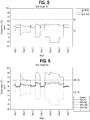
- Figure 5 illustrates the relative humidity in an embodiment of a packaging system for storing a bioprosthetic device using 16 g of a solution with a target relative humidity of 35% across a range of temperatures. Relative humidity and temperature are on the same scale. Across the span of several days, the packaging system was exposed to temperatures from about -18 °C to about 45 °C. At higher ambient temperatures, relative humidity within the packaging system decreased before returning to about 35%, while at lower ambient temperatures, relative humidity within the packaging system increased before returning to about 35%.
- Figure 6 illustrates embodiments of packaging systems including different amounts of a humidity control solution having a target relative humidity of 40% (prepared according to Table I).
- the total weights or masses of the humidity control solutions were 8 grams, 16 grams, and 24 grams. Relative humidity and temperature are on the same scale. As shown, the performance and response of the humidity control system to temperature changes improved with higher masses of the humidity control solution.
- ratio of total weight to volume shows data from 8 g, 16 g, and 24 g of 35% target control solutions in two different size laminated foil pouches, plus a control sample.
- This graph provides an indication of the responsiveness of the packaging system. As shown, control of relative humidity improves as the ratio of total weight to volume increases. Thus, the performance of the humidity control device is determined, in part, by the ratio of total weight or mass to volume.
- a boxplot of the maximum change in relative humidity for different ratios of total weight of humidity control solution to internal volume of the package is shown for the same samples illustrated in Figure 7 .
- This graph provides an indication of the efficiency of the packaging system.
- control of relative humidity generally improves as the ratio of total weight to volume increases.
- the maximum change of relative humidity is about ⁇ 10% and further increases to the ratio of total weight to volume do not yield material improvements in the maximum change of relative humidity for the temperature range tested.
- a humidity control solution having a total weight to volume of about 0.1 g per cubic inch (about 6 mg/mL) of the internal volume or more can control relative humidity within about ⁇ 5% of the target equilibrium relative humidity.
- Figure 9 depicts an exemplary method 900 for storing a bioprosthetic device within a packaging system that maintains a target relative humidity range across a temperature range.
- the internal volume of an outer packaging is determined.
- the internal volume can be determined using methods well known in the art. For example, the internal volume can be obtained experimentally or calculated from the geometry of the outer packaging.
- the outer packaging is preferably sterile and, in an optional step (not shown), the outer packaging can be subjected to a terminal sterilization process or aseptic production.
- Step 904 illustrates providing a humidity control solution having a weight within a gas-permeable enclosure to produce a humidity control device.
- the humidity control solution preferably includes glycerol.
- the gas-permeable enclosure can, for example, comprise a sealable pouch.
- the humidity control solution can be poured or injected into the pouch and the pouch can then be sealed with the humidity control solution within the gas-permeable enclosure.
- the humidity control solution can be provided within a gas-permeable enclosure by any other method well known in the art.
- the gas-permeable enclosure has a water vapor transfer rate of from about 0.02 to about 0.07 grams per square inch per 24 hours (about 3-11 mg/cm 2 /24 hr).
- an additional step (not shown) of selecting the target relative humidity from about 15% to about 95% can be performed.
- This selection step can be determined by the technical requirements of the bioprosthetic device.
- the selected target relative humidity will define the concentration of glycerol (by weight) in the humidity control solution.
- the concentration of glycerol in the humidity control solution can be about 88.8% (by weight). If the target storage relative humidity for the bioprosthetic device is about 65%, the concentration of glycerol in the humidity control solution can be about 68.1% (by weight).
- the target relative humidity to be maintained within the internal volume of the outer packaging is determined by the concentration of glycerol in the humidity control solution, as provided in Eq. 2.
- RH ⁇ G W + 383 383 12.4 ⁇ 19.9 0.189
- the resulting humidity control device will maintain a target relative humidity of about 55%.
- step 906 illustrates sealing the humidity control device and the bioprosthetic device within the internal volume of the outer packaging.
- This step can be accomplished by any sealing means, method, or modality.
- the outer packaging is provided as a pouch with a sealable flap 106
- the humidity control device and bioprosthetic device would simply be placed within the internal volume before folding the flap over to seal the pouch.
- Other methods of sealing the humidity control device and the bioprosthetic device within the internal volume of the outer packaging include, for example, heat sealing, pressure sealing, adhesive sealing, and/or mechanical sealing.
- the humidity control device will maintain the target relative humidity across a temperature range from about -18 °C to about 45 °C.
- the packaging system that not only stores a bioprosthetic device in a relatively sterile environment, but that also maintains a relatively stable relative humidity therefor across a range of temperatures.
- Each humidity control solution in the first set had a total mass of 8 grams
- each humidity control solution in the second set had a total mass of 16 grams
- each humidity control solution in the third set had a total mass of 24 grams.
- the seven humidity control solutions were prepared according to TABLE I as follows: one with a concentration of glycerol sufficient to maintain a target relative humidity of about 20%, one with a target relative humidity of about 30%, one with a target relative humidity of about 40%, one with a target relative humidity of about 50%, one with a target relative humidity of about 60%, one with a target relative humidity of about 90%, and a Control solution with no glycerol.
- the humidity control solutions were each poured into respective spunbonded polyolefin (Tyvek ® , DuPont) pouches that were between 4.5 to 5.5 inches (11-14 cm) wide and between 5.5 to 7 inches (14-18 cm) long.
- Each pouch had a gas-permeable side and a non-permeable side.
- the gas-permeable side comprised an uncoated, medical-grade 3 mil (75 ⁇ m) HDPE COEX and the non-permeable side comprised a 100 gauge (25 ⁇ m) biaxially oriented film made of polyamide resin.
- the pouches had a water vapor transfer rate of about 0.03 grams per square inch (about 5 mg/cm 2 ) per 24 hours.
- the humidity control devices were each sealed within respective laminated polymer/foil pouches, which had a water vapor transfer rate of about 0.001 grams per day per package. With this low water vapor transfer rate, the ambient relative humidity had little or no effect on the relative humidity within the sealed package's internal space. Relative humidity was measured using iButton temperature/humidity loggers (model DS1923, Maxim Integrated, San Jose, CA).
- the three sets of packaging systems were then placed within a test chamber where they were subjected to the following temperature profile: 25 °C for 10 hours, followed by 45 °C for 24 hours, followed by 15-20 °C for 50 hours, followed by 45 °C for 24 hours, followed by 1 °C for 24 hours, followed by 45 °C for 24 hours, followed by 1 °C for 24 hours, followed by - 18 °C for 48 hours, followed by 1 °C for 24 hours, followed by 45 °C for the 32 hours.
- the packaging systems successfully controlled the relative humidity across the temperature profile.
- the packaging systems exhibited two-way control of the relative humidity - adding and removing water vapor to control for any target humidity.
- the target humidity was not maintained within the internal spaces by the Control systems, which did not contain glycerol.
- the temperature was found to have an inverse effect on the equilibrium relative humidity.
- the equilibrium relative humidity was found to be higher at lower temperatures and lower at higher temperatures.
- the weight of the humidity control solution was found to have no effect on the equilibrium relative humidity for the same concentration.
- the 8 gram, 16 gram, and 24 gram systems had the same equilibrium relative humidity.
- a packaging system with a target relative humidity of 35% was found to have a Process Capability Index of about 1.45, where the Upper Specification Limit was 65% and the Lower Specification Limit was 25%.
- Table II sets forth results from experiments including data for a Control system and packaging systems having a target relative humidities of 30% and 40%, where "Mass” is the mass of the control solution in grams, “Volume” is the internal volume of the package in cubic inches (123 in 3 ⁇ 2 L), “m/V” is the mass to volume ratio in g/in 3 (1 g/in 3 ⁇ 0.06 g/mL), “ ⁇ T n “ is the nth temperature change, “ ⁇ RH” is the change in relative humidity at steady state, “ ⁇ t” is the time to change the temperature, “RH/t” is the rate of change of relative humidity, and “RH/t/ ⁇ T” is the rate of change of relative humidity per temperature change.
- both the maximum change in relative humidity and the rate of change of relative humidity improved as the ratio of total weight to volume increased.
- the maximum change in relative humidity was about ⁇ 10% and further increases to the ratio of total weight or mass to volume did not yield material improvements.
Landscapes
- Health & Medical Sciences (AREA)
- Engineering & Computer Science (AREA)
- Cardiology (AREA)
- Life Sciences & Earth Sciences (AREA)
- Mechanical Engineering (AREA)
- General Health & Medical Sciences (AREA)
- Veterinary Medicine (AREA)
- Vascular Medicine (AREA)
- Heart & Thoracic Surgery (AREA)
- Animal Behavior & Ethology (AREA)
- Biomedical Technology (AREA)
- Public Health (AREA)
- Transplantation (AREA)
- Oral & Maxillofacial Surgery (AREA)
- Toxicology (AREA)
- Evolutionary Biology (AREA)
- Marine Sciences & Fisheries (AREA)
- Zoology (AREA)
- Food Science & Technology (AREA)
- Pulmonology (AREA)
- Orthopedic Medicine & Surgery (AREA)
- Rehabilitation Therapy (AREA)
- Rheumatology (AREA)
- Gastroenterology & Hepatology (AREA)
- Packages (AREA)
- Agricultural Chemicals And Associated Chemicals (AREA)
- Prostheses (AREA)
Applications Claiming Priority (4)
| Application Number | Priority Date | Filing Date | Title |
|---|---|---|---|
| US201762467684P | 2017-03-06 | 2017-03-06 | |
| US15/909,111 US10631968B2 (en) | 2017-03-06 | 2018-03-01 | Humidity-management packaging systems and methods |
| PCT/US2018/020962 WO2018165045A1 (fr) | 2017-03-06 | 2018-03-05 | Systèmes et procédés d'emballage de gestion d'humidité |
| EP18763981.0A EP3592284B1 (fr) | 2017-03-06 | 2018-03-05 | Systèmes et procédés d'emballage de gestion d'humidité |
Related Parent Applications (2)
| Application Number | Title | Priority Date | Filing Date |
|---|---|---|---|
| EP18763981.0A Division-Into EP3592284B1 (fr) | 2017-03-06 | 2018-03-05 | Systèmes et procédés d'emballage de gestion d'humidité |
| EP18763981.0A Division EP3592284B1 (fr) | 2017-03-06 | 2018-03-05 | Systèmes et procédés d'emballage de gestion d'humidité |
Publications (3)
| Publication Number | Publication Date |
|---|---|
| EP3928741A1 true EP3928741A1 (fr) | 2021-12-29 |
| EP3928741C0 EP3928741C0 (fr) | 2023-12-27 |
| EP3928741B1 EP3928741B1 (fr) | 2023-12-27 |
Family
ID=63357079
Family Applications (2)
| Application Number | Title | Priority Date | Filing Date |
|---|---|---|---|
| EP21184639.9A Active EP3928741B1 (fr) | 2017-03-06 | 2018-03-05 | Systèmes et procédés d'emballage de gestion d'humidité |
| EP18763981.0A Active EP3592284B1 (fr) | 2017-03-06 | 2018-03-05 | Systèmes et procédés d'emballage de gestion d'humidité |
Family Applications After (1)
| Application Number | Title | Priority Date | Filing Date |
|---|---|---|---|
| EP18763981.0A Active EP3592284B1 (fr) | 2017-03-06 | 2018-03-05 | Systèmes et procédés d'emballage de gestion d'humidité |
Country Status (10)
| Country | Link |
|---|---|
| US (4) | US10631968B2 (fr) |
| EP (2) | EP3928741B1 (fr) |
| JP (1) | JP7107959B2 (fr) |
| KR (1) | KR102479315B1 (fr) |
| CN (1) | CN110366398B (fr) |
| CA (1) | CA3052306A1 (fr) |
| CR (1) | CR20200501A (fr) |
| ES (1) | ES2901681T3 (fr) |
| SG (1) | SG11201907849PA (fr) |
| WO (1) | WO2018165045A1 (fr) |
Families Citing this family (26)
| Publication number | Priority date | Publication date | Assignee | Title |
|---|---|---|---|---|
| US8579964B2 (en) | 2010-05-05 | 2013-11-12 | Neovasc Inc. | Transcatheter mitral valve prosthesis |
| US9554897B2 (en) | 2011-04-28 | 2017-01-31 | Neovasc Tiara Inc. | Methods and apparatus for engaging a valve prosthesis with tissue |
| US9308087B2 (en) | 2011-04-28 | 2016-04-12 | Neovasc Tiara Inc. | Sequentially deployed transcatheter mitral valve prosthesis |
| US9345573B2 (en) | 2012-05-30 | 2016-05-24 | Neovasc Tiara Inc. | Methods and apparatus for loading a prosthesis onto a delivery system |
| US9572665B2 (en) | 2013-04-04 | 2017-02-21 | Neovasc Tiara Inc. | Methods and apparatus for delivering a prosthetic valve to a beating heart |
| CA2982788C (fr) * | 2015-04-15 | 2023-08-29 | American Aerogel Corporation | Ensembles recipients pour regulation de la temperature |
| WO2017100927A1 (fr) | 2015-12-15 | 2017-06-22 | Neovasc Tiara Inc. | Système d'administration trans-septale |
| JP7665280B2 (ja) | 2015-12-22 | 2025-04-21 | アクセス・バスキュラー・インコーポレイテッド | 高強度生体材 |
| JP7006940B2 (ja) | 2016-01-29 | 2022-01-24 | ニオバスク ティアラ インコーポレイテッド | 流出の閉塞を回避するための人工弁 |
| WO2018090148A1 (fr) | 2016-11-21 | 2018-05-24 | Neovasc Tiara Inc. | Procédés et systèmes de rétraction rapide d'un système de pose de valvule cardiaque transcathéter |
| FI3641842T3 (fi) | 2017-06-21 | 2026-04-17 | Access Vascular Inc | Korkealujuuksisia huokoisia materiaaleja, joihin sisältyy vesiliukoisia polymeerejä |
| CN111263622A (zh) | 2017-08-25 | 2020-06-09 | 内奥瓦斯克迪亚拉公司 | 顺序展开的经导管二尖瓣假体 |
| AU2019374743B2 (en) | 2018-11-08 | 2022-03-03 | Neovasc Tiara Inc. | Ventricular deployment of a transcatheter mitral valve prosthesis |
| CN113365673B (zh) | 2018-12-19 | 2022-10-28 | 阿塞斯血管有限公司 | 用于受控释放的高强度多孔材料 |
| JP7430732B2 (ja) | 2019-03-08 | 2024-02-13 | ニオバスク ティアラ インコーポレイテッド | 回収可能補綴物送達システム |
| EP3946163B1 (fr) | 2019-04-01 | 2025-08-20 | Neovasc Tiara Inc. | Valve prothétique déployable de manière contrôlable |
| WO2020206306A1 (fr) | 2019-04-05 | 2020-10-08 | American Aerogel Corporation | Matériaux à changement de phase non miscibles multiples contenus dans un récipient commun |
| US11491006B2 (en) | 2019-04-10 | 2022-11-08 | Neovasc Tiara Inc. | Prosthetic valve with natural blood flow |
| EP4729110A2 (fr) | 2019-05-20 | 2026-04-22 | Neovasc Tiara Inc. | Introducteur avec mécanisme d'hémostase |
| WO2020257643A1 (fr) | 2019-06-20 | 2020-12-24 | Neovasc Tiara Inc. | Valve mitrale prothétique à profil bas |
| CN110372884B (zh) * | 2019-07-22 | 2022-02-08 | 杭州干将实业有限公司 | 用于调控密闭环境湿度的水润包的制备方法 |
| CA3170732A1 (fr) * | 2020-03-06 | 2021-09-10 | Access Vascular, Inc. | Emballage d'articles hydrates et procedes correspondants |
| EP4171704A4 (fr) | 2020-06-30 | 2024-10-23 | Access Vascular, Inc. | Articles comprenant des marquages et procédés associés |
| JP2023545425A (ja) * | 2020-10-12 | 2023-10-30 | アムジエン・インコーポレーテツド | 長期薬剤保管装置及び方法 |
| CN114652893A (zh) * | 2020-12-23 | 2022-06-24 | 上海微创心通医疗科技有限公司 | 生物假体组织的处理方法和生物假体心脏瓣膜 |
| US20220266191A1 (en) * | 2021-02-23 | 2022-08-25 | Zhuhai Hermesin Enterprises CO.,LTD | Dehumidification Bag Capable of Being Placed in Multiple Formse |
Citations (8)
| Publication number | Priority date | Publication date | Assignee | Title |
|---|---|---|---|---|
| US5035731A (en) * | 1988-10-07 | 1991-07-30 | Philip Morris Management Corp. | Device for controlling relative humidity within a substantially sealed container |
| WO1998036992A1 (fr) * | 1997-02-19 | 1998-08-27 | St. Jude Medical, Inc. | Boite de rangement |
| US6534004B2 (en) | 1998-05-14 | 2003-03-18 | The Cleveland Clinic Foundation | Processing of implantable animal tissues for dry storage |
| US6561970B1 (en) | 1994-07-29 | 2003-05-13 | Edwards Lifesciences Corporation | Methods for treating implantable biological tissues to mitigate the calcification thereof and bioprosthetic articles treated by such methods |
| WO2004039683A1 (fr) * | 2002-10-25 | 2004-05-13 | The Procter & Gamble Company | Papier d'emballage adhesif multifonctionnel pour aliments |
| US20080302372A1 (en) | 2007-06-11 | 2008-12-11 | Edwards Lifesciences Corporation | Methods for pre-stressing and capping bioprosthetic tissue |
| US7972376B1 (en) | 2007-12-21 | 2011-07-05 | Edwards Lifesciences Corporation | Capping bioprosthetic tissue to reduce calcification |
| US8007992B2 (en) | 2006-10-27 | 2011-08-30 | Edwards Lifesciences Corporation | Method of treating glutaraldehyde-fixed pericardial tissue with a non-aqueous mixture of glycerol and a C1-C3 alcohol |
Family Cites Families (59)
| Publication number | Priority date | Publication date | Assignee | Title |
|---|---|---|---|---|
| US4011947A (en) | 1975-05-22 | 1977-03-15 | Philip Nicholas Sawyer | Packaged prosthetic device |
| US4101031A (en) | 1975-10-06 | 1978-07-18 | Medical Engineering Corp. | Package for prosthetic heart valve or the like |
| US4182446A (en) | 1978-06-12 | 1980-01-08 | Hancock Laboratories, Inc. | Heart valve holder |
| US4211325A (en) | 1979-06-07 | 1980-07-08 | Hancock Laboratories, Inc. | Heart valve holder |
| US4801015A (en) | 1986-04-16 | 1989-01-31 | Shiley Inc. | Releasable holder and package assembly for a prosthetic heart valve |
| US4697703A (en) | 1986-07-02 | 1987-10-06 | Malcolm Will | Joint prosthesis package |
| EP0363194B1 (fr) | 1988-10-07 | 1996-03-27 | Philip Morris Products Inc. | Dispositif pour le contrÔle de l'humidité relative dans un récipient substantiellement fermé |
| US5167223A (en) | 1989-09-08 | 1992-12-01 | Tibor Koros | Heart valve retractor and sternum spreader surgical instrument |
| US5336616A (en) | 1990-09-12 | 1994-08-09 | Lifecell Corporation | Method for processing and preserving collagen-based tissues for transplantation |
| US5236450A (en) | 1992-06-04 | 1993-08-17 | Carbon Implants, Inc. | Heart valve holder-rotator |
| US5531785A (en) | 1994-05-06 | 1996-07-02 | Autogenics, Inc. | Prosthetic heart valve holder |
| US5480425A (en) | 1994-06-09 | 1996-01-02 | Carbomedics, Inc. | Integrated heart valve rotator and holder |
| US5560487A (en) | 1994-07-29 | 1996-10-01 | Carbomedics, Inc. | Holder and packaging for bioprosthetic heart valve |
| US5582607A (en) | 1994-09-09 | 1996-12-10 | Carbomedics, Inc. | Heart valve prosthesis rotator with bendable shaft and drive mechanism |
| US5776187A (en) | 1995-02-09 | 1998-07-07 | St. Jude Medical, Inc. | Combined holder tool and rotator for a prosthetic heart valve |
| US5578076A (en) | 1995-05-24 | 1996-11-26 | St. Jude Medical, Inc. | Low profile holder for heart valve prosthesis |
| US5615770A (en) | 1995-08-10 | 1997-04-01 | Smith & Nephew, Inc. | Implant package insert delivery system |
| US5720391A (en) | 1996-03-29 | 1998-02-24 | St. Jude Medical, Inc. | Packaging and holder for heart valve prosthesis |
| US5868253A (en) | 1996-03-29 | 1999-02-09 | St. Jude Medical, Inc. | Hinged support collar for mechanical heart valve packaging |
| US5690226A (en) | 1996-04-19 | 1997-11-25 | Benoist Girard | Air-impermeable packaging for medical implants |
| US5800531A (en) | 1996-09-30 | 1998-09-01 | Baxter International Inc. | Bioprosthetic heart valve implantation device |
| US5936178A (en) | 1997-06-10 | 1999-08-10 | Humidi-Pak, Inc. | Humidity control device |
| US5980569A (en) | 1997-09-19 | 1999-11-09 | United States Surgical Corp. | Prosthetic valve holder and method of use |
| US5984959A (en) | 1997-09-19 | 1999-11-16 | United States Surgical | Heart valve replacement tools and procedures |
| US5823342A (en) | 1997-11-14 | 1998-10-20 | Sulzer Carbomedics Inc. | Packaging for mitral or aortic heart valve device |
| US6090138A (en) | 1998-01-23 | 2000-07-18 | Sulzer Carbomedics Inc. | Universal heart valve holder |
| US6346094B2 (en) | 1998-09-28 | 2002-02-12 | Becton, Dickinson And Company | Pen needle magazine |
| US6126007A (en) | 1998-12-30 | 2000-10-03 | St. Jude Medical, Inc. | Tissue valve holder |
| US6736845B2 (en) | 1999-01-26 | 2004-05-18 | Edwards Lifesciences Corporation | Holder for flexible heart valve |
| US6199696B1 (en) | 1999-05-26 | 2001-03-13 | Sulzer Carbomedics Inc. | Shock resistant packaging for a prosthetic heart valve |
| US6416547B1 (en) | 1999-10-06 | 2002-07-09 | Edwards Lifesciences Corporation | Heart valve carrier and rinse cage |
| US6543610B1 (en) | 2000-09-12 | 2003-04-08 | Alok Nigam | System for packaging and handling an implant and method of use |
| US20020120328A1 (en) | 2000-12-21 | 2002-08-29 | Pathak Chandrashekhar Prabhakar | Mechanical heart valve packaged in a liquid |
| US6966925B2 (en) | 2000-12-21 | 2005-11-22 | Edwards Lifesciences Corporation | Heart valve holder and method for resisting suture looping |
| US6591998B2 (en) | 2000-12-21 | 2003-07-15 | Sulzer Carbomedics Inc. | Leakproof container for implantable prosthetic device |
| US6723122B2 (en) | 2001-08-30 | 2004-04-20 | Edwards Lifesciences Corporation | Container and method for storing and delivering minimally-invasive heart valves |
| FI117748B (fi) * | 2001-10-15 | 2007-02-15 | Stora Enso Oyj | Pakkauksen kansi, sen valmistusmenetelmä sekä kannella suljettu pakkaus |
| US6996952B2 (en) | 2003-09-30 | 2006-02-14 | Codman & Shurtleff, Inc. | Method for improving stability and effectivity of a drug-device combination product |
| EP1778127B1 (fr) | 2004-07-19 | 2015-09-02 | St. Jude Medical, Inc. | Systeme support de valvule cardiaque et garniture de couvercle, et procedes |
| EP1796693A2 (fr) | 2004-08-26 | 2007-06-20 | Chandrashekhar P. Pathak | Compositions tissulaires implantables et procede |
| US7699168B2 (en) | 2004-10-29 | 2010-04-20 | Medtronic, Inc. | Heart valve storage and shipping retainer |
| US8287583B2 (en) | 2005-01-10 | 2012-10-16 | Taheri Laduca Llc | Apparatus and method for deploying an implantable device within the body |
| US20060195183A1 (en) | 2005-02-18 | 2006-08-31 | The Cleveland Clinic Foundation | Apparatus and methods for replacing a cardiac valve |
| US7712606B2 (en) | 2005-09-13 | 2010-05-11 | Sadra Medical, Inc. | Two-part package for medical implant |
| US8052750B2 (en) | 2006-09-19 | 2011-11-08 | Medtronic Ventor Technologies Ltd | Valve prosthesis fixation techniques using sandwiching |
| US7578842B2 (en) | 2006-10-03 | 2009-08-25 | St. Jude Medical, Inc. | Prosthetic heart valves |
| US7866468B2 (en) | 2007-01-12 | 2011-01-11 | George Kyritsis | Medical instrument sterilization pouch |
| US8105375B2 (en) | 2007-01-19 | 2012-01-31 | The Cleveland Clinic Foundation | Method for implanting a cardiovascular valve |
| GB0803777D0 (en) * | 2008-02-29 | 2008-04-09 | British American Tobacco Co | Packaging with humidity control |
| US8869982B2 (en) | 2009-12-18 | 2014-10-28 | Edwards Lifesciences Corporation | Prosthetic heart valve packaging and deployment system |
| US8679404B2 (en) * | 2010-03-05 | 2014-03-25 | Edwards Lifesciences Corporation | Dry prosthetic heart valve packaging system |
| US9498317B2 (en) * | 2010-12-16 | 2016-11-22 | Edwards Lifesciences Corporation | Prosthetic heart valve delivery systems and packaging |
| US9155619B2 (en) | 2011-02-25 | 2015-10-13 | Edwards Lifesciences Corporation | Prosthetic heart valve delivery apparatus |
| EP2554758A1 (fr) | 2011-08-02 | 2013-02-06 | DSM IP Assets B.V. | Contrôle de la vapeur d'eau disposé face à l'intérieur d'un bâtiment |
| US8652145B2 (en) | 2011-12-14 | 2014-02-18 | Edwards Lifesciences Corporation | System and method for crimping a prosthetic valve |
| US9301835B2 (en) | 2012-06-04 | 2016-04-05 | Edwards Lifesciences Corporation | Pre-assembled bioprosthetic valve and sealed conduit |
| EP3909633B1 (fr) | 2013-03-14 | 2023-11-22 | Fisher & Paykel Healthcare Limited | Chambre d'humidification avec un élément de mélange comprenant des microstructures |
| US10350047B2 (en) | 2015-09-02 | 2019-07-16 | Edwards Lifesciences Corporation | Method and system for packaging and preparing a prosthetic heart valve and associated delivery system |
| US20170173214A1 (en) * | 2015-12-21 | 2017-06-22 | Medtronic Vascular, Inc. | Methods for preparing dry cross-linked tissue |
-
2018
- 2018-03-01 US US15/909,111 patent/US10631968B2/en active Active
- 2018-03-05 EP EP21184639.9A patent/EP3928741B1/fr active Active
- 2018-03-05 CA CA3052306A patent/CA3052306A1/fr active Pending
- 2018-03-05 SG SG11201907849PA patent/SG11201907849PA/en unknown
- 2018-03-05 EP EP18763981.0A patent/EP3592284B1/fr active Active
- 2018-03-05 KR KR1020197028862A patent/KR102479315B1/ko active Active
- 2018-03-05 CN CN201880015002.4A patent/CN110366398B/zh active Active
- 2018-03-05 WO PCT/US2018/020962 patent/WO2018165045A1/fr not_active Ceased
- 2018-03-05 ES ES18763981T patent/ES2901681T3/es active Active
- 2018-03-05 JP JP2019548464A patent/JP7107959B2/ja active Active
- 2018-03-06 CR CR20200501A patent/CR20200501A/es unknown
-
2020
- 2020-03-12 US US16/816,889 patent/US11166801B2/en active Active
-
2021
- 2021-11-08 US US17/454,025 patent/US11931237B2/en active Active
-
2024
- 2024-02-28 US US18/590,012 patent/US12383390B2/en active Active
Patent Citations (8)
| Publication number | Priority date | Publication date | Assignee | Title |
|---|---|---|---|---|
| US5035731A (en) * | 1988-10-07 | 1991-07-30 | Philip Morris Management Corp. | Device for controlling relative humidity within a substantially sealed container |
| US6561970B1 (en) | 1994-07-29 | 2003-05-13 | Edwards Lifesciences Corporation | Methods for treating implantable biological tissues to mitigate the calcification thereof and bioprosthetic articles treated by such methods |
| WO1998036992A1 (fr) * | 1997-02-19 | 1998-08-27 | St. Jude Medical, Inc. | Boite de rangement |
| US6534004B2 (en) | 1998-05-14 | 2003-03-18 | The Cleveland Clinic Foundation | Processing of implantable animal tissues for dry storage |
| WO2004039683A1 (fr) * | 2002-10-25 | 2004-05-13 | The Procter & Gamble Company | Papier d'emballage adhesif multifonctionnel pour aliments |
| US8007992B2 (en) | 2006-10-27 | 2011-08-30 | Edwards Lifesciences Corporation | Method of treating glutaraldehyde-fixed pericardial tissue with a non-aqueous mixture of glycerol and a C1-C3 alcohol |
| US20080302372A1 (en) | 2007-06-11 | 2008-12-11 | Edwards Lifesciences Corporation | Methods for pre-stressing and capping bioprosthetic tissue |
| US7972376B1 (en) | 2007-12-21 | 2011-07-05 | Edwards Lifesciences Corporation | Capping bioprosthetic tissue to reduce calcification |
Also Published As
| Publication number | Publication date |
|---|---|
| JP2020508811A (ja) | 2020-03-26 |
| CA3052306A1 (fr) | 2018-09-13 |
| US20220054251A1 (en) | 2022-02-24 |
| US20200205959A1 (en) | 2020-07-02 |
| US20240197461A1 (en) | 2024-06-20 |
| SG11201907849PA (en) | 2019-09-27 |
| EP3592284A1 (fr) | 2020-01-15 |
| KR20190117777A (ko) | 2019-10-16 |
| EP3928741C0 (fr) | 2023-12-27 |
| CN110366398B (zh) | 2021-09-03 |
| US10631968B2 (en) | 2020-04-28 |
| CN110366398A (zh) | 2019-10-22 |
| JP7107959B2 (ja) | 2022-07-27 |
| WO2018165045A1 (fr) | 2018-09-13 |
| EP3592284B1 (fr) | 2021-12-01 |
| EP3928741B1 (fr) | 2023-12-27 |
| US11166801B2 (en) | 2021-11-09 |
| ES2901681T3 (es) | 2022-03-23 |
| EP3592284A4 (fr) | 2020-05-13 |
| US12383390B2 (en) | 2025-08-12 |
| CR20200501A (es) | 2021-02-22 |
| KR102479315B1 (ko) | 2022-12-20 |
| US20180250116A1 (en) | 2018-09-06 |
| US11931237B2 (en) | 2024-03-19 |
Similar Documents
| Publication | Publication Date | Title |
|---|---|---|
| US12383390B2 (en) | Humidity-management packaging systems and methods | |
| EP4122507B1 (fr) | Procédé de préparation d'une valvule cardiaque bioprosthétique résistant à la calcification | |
| US10966822B2 (en) | Heart valve with reduced calcification | |
| US5960956A (en) | Storage container |
Legal Events
| Date | Code | Title | Description |
|---|---|---|---|
| PUAI | Public reference made under article 153(3) epc to a published international application that has entered the european phase |
Free format text: ORIGINAL CODE: 0009012 |
|
| STAA | Information on the status of an ep patent application or granted ep patent |
Free format text: STATUS: THE APPLICATION HAS BEEN PUBLISHED |
|
| AC | Divisional application: reference to earlier application |
Ref document number: 3592284 Country of ref document: EP Kind code of ref document: P |
|
| AK | Designated contracting states |
Kind code of ref document: A1 Designated state(s): AL AT BE BG CH CY CZ DE DK EE ES FI FR GB GR HR HU IE IS IT LI LT LU LV MC MK MT NL NO PL PT RO RS SE SI SK SM TR |
|
| B565 | Issuance of search results under rule 164(2) epc |
Effective date: 20211110 |
|
| STAA | Information on the status of an ep patent application or granted ep patent |
Free format text: STATUS: REQUEST FOR EXAMINATION WAS MADE |
|
| 17P | Request for examination filed |
Effective date: 20220629 |
|
| RBV | Designated contracting states (corrected) |
Designated state(s): AL AT BE BG CH CY CZ DE DK EE ES FI FR GB GR HR HU IE IS IT LI LT LU LV MC MK MT NL NO PL PT RO RS SE SI SK SM TR |
|
| GRAP | Despatch of communication of intention to grant a patent |
Free format text: ORIGINAL CODE: EPIDOSNIGR1 |
|
| STAA | Information on the status of an ep patent application or granted ep patent |
Free format text: STATUS: GRANT OF PATENT IS INTENDED |
|
| INTG | Intention to grant announced |
Effective date: 20230705 |
|
| RIN1 | Information on inventor provided before grant (corrected) |
Inventor name: LIBURD, GREGORY G. Inventor name: MOURHATCH, RYAN |
|
| P01 | Opt-out of the competence of the unified patent court (upc) registered |
Effective date: 20230927 |
|
| GRAS | Grant fee paid |
Free format text: ORIGINAL CODE: EPIDOSNIGR3 |
|
| GRAA | (expected) grant |
Free format text: ORIGINAL CODE: 0009210 |
|
| STAA | Information on the status of an ep patent application or granted ep patent |
Free format text: STATUS: THE PATENT HAS BEEN GRANTED |
|
| AC | Divisional application: reference to earlier application |
Ref document number: 3592284 Country of ref document: EP Kind code of ref document: P |
|
| AK | Designated contracting states |
Kind code of ref document: B1 Designated state(s): AL AT BE BG CH CY CZ DE DK EE ES FI FR GB GR HR HU IE IS IT LI LT LU LV MC MK MT NL NO PL PT RO RS SE SI SK SM TR |
|
| REG | Reference to a national code |
Ref country code: GB Ref legal event code: FG4D |
|
| REG | Reference to a national code |
Ref country code: CH Ref legal event code: EP |
|
| REG | Reference to a national code |
Ref country code: DE Ref legal event code: R096 Ref document number: 602018063482 Country of ref document: DE |
|
| REG | Reference to a national code |
Ref country code: IE Ref legal event code: FG4D |
|
| U01 | Request for unitary effect filed |
Effective date: 20240126 |
|
| U07 | Unitary effect registered |
Designated state(s): AT BE BG DE DK EE FI FR IT LT LU LV MT NL PT SE SI Effective date: 20240206 |
|
| P04 | Withdrawal of opt-out of the competence of the unified patent court (upc) registered |
Effective date: 20240202 |
|
| U20 | Renewal fee for the european patent with unitary effect paid |
Year of fee payment: 7 Effective date: 20240207 |
|
| PG25 | Lapsed in a contracting state [announced via postgrant information from national office to epo] |
Ref country code: GR Free format text: LAPSE BECAUSE OF FAILURE TO SUBMIT A TRANSLATION OF THE DESCRIPTION OR TO PAY THE FEE WITHIN THE PRESCRIBED TIME-LIMIT Effective date: 20240328 |
|
| PG25 | Lapsed in a contracting state [announced via postgrant information from national office to epo] |
Ref country code: ES Free format text: LAPSE BECAUSE OF FAILURE TO SUBMIT A TRANSLATION OF THE DESCRIPTION OR TO PAY THE FEE WITHIN THE PRESCRIBED TIME-LIMIT Effective date: 20231227 |
|
| PG25 | Lapsed in a contracting state [announced via postgrant information from national office to epo] |
Ref country code: GR Free format text: LAPSE BECAUSE OF FAILURE TO SUBMIT A TRANSLATION OF THE DESCRIPTION OR TO PAY THE FEE WITHIN THE PRESCRIBED TIME-LIMIT Effective date: 20240328 Ref country code: ES Free format text: LAPSE BECAUSE OF FAILURE TO SUBMIT A TRANSLATION OF THE DESCRIPTION OR TO PAY THE FEE WITHIN THE PRESCRIBED TIME-LIMIT Effective date: 20231227 |
|
| PG25 | Lapsed in a contracting state [announced via postgrant information from national office to epo] |
Ref country code: RS Free format text: LAPSE BECAUSE OF FAILURE TO SUBMIT A TRANSLATION OF THE DESCRIPTION OR TO PAY THE FEE WITHIN THE PRESCRIBED TIME-LIMIT Effective date: 20231227 Ref country code: NO Free format text: LAPSE BECAUSE OF FAILURE TO SUBMIT A TRANSLATION OF THE DESCRIPTION OR TO PAY THE FEE WITHIN THE PRESCRIBED TIME-LIMIT Effective date: 20240327 Ref country code: HR Free format text: LAPSE BECAUSE OF FAILURE TO SUBMIT A TRANSLATION OF THE DESCRIPTION OR TO PAY THE FEE WITHIN THE PRESCRIBED TIME-LIMIT Effective date: 20231227 |
|
| PG25 | Lapsed in a contracting state [announced via postgrant information from national office to epo] |
Ref country code: IS Free format text: LAPSE BECAUSE OF FAILURE TO SUBMIT A TRANSLATION OF THE DESCRIPTION OR TO PAY THE FEE WITHIN THE PRESCRIBED TIME-LIMIT Effective date: 20240427 |
|
| PG25 | Lapsed in a contracting state [announced via postgrant information from national office to epo] |
Ref country code: CZ Free format text: LAPSE BECAUSE OF FAILURE TO SUBMIT A TRANSLATION OF THE DESCRIPTION OR TO PAY THE FEE WITHIN THE PRESCRIBED TIME-LIMIT Effective date: 20231227 |
|
| PG25 | Lapsed in a contracting state [announced via postgrant information from national office to epo] |
Ref country code: SK Free format text: LAPSE BECAUSE OF FAILURE TO SUBMIT A TRANSLATION OF THE DESCRIPTION OR TO PAY THE FEE WITHIN THE PRESCRIBED TIME-LIMIT Effective date: 20231227 |
|
| PG25 | Lapsed in a contracting state [announced via postgrant information from national office to epo] |
Ref country code: SM Free format text: LAPSE BECAUSE OF FAILURE TO SUBMIT A TRANSLATION OF THE DESCRIPTION OR TO PAY THE FEE WITHIN THE PRESCRIBED TIME-LIMIT Effective date: 20231227 Ref country code: SK Free format text: LAPSE BECAUSE OF FAILURE TO SUBMIT A TRANSLATION OF THE DESCRIPTION OR TO PAY THE FEE WITHIN THE PRESCRIBED TIME-LIMIT Effective date: 20231227 Ref country code: RO Free format text: LAPSE BECAUSE OF FAILURE TO SUBMIT A TRANSLATION OF THE DESCRIPTION OR TO PAY THE FEE WITHIN THE PRESCRIBED TIME-LIMIT Effective date: 20231227 Ref country code: IS Free format text: LAPSE BECAUSE OF FAILURE TO SUBMIT A TRANSLATION OF THE DESCRIPTION OR TO PAY THE FEE WITHIN THE PRESCRIBED TIME-LIMIT Effective date: 20240427 Ref country code: CZ Free format text: LAPSE BECAUSE OF FAILURE TO SUBMIT A TRANSLATION OF THE DESCRIPTION OR TO PAY THE FEE WITHIN THE PRESCRIBED TIME-LIMIT Effective date: 20231227 |
|
| PG25 | Lapsed in a contracting state [announced via postgrant information from national office to epo] |
Ref country code: PL Free format text: LAPSE BECAUSE OF FAILURE TO SUBMIT A TRANSLATION OF THE DESCRIPTION OR TO PAY THE FEE WITHIN THE PRESCRIBED TIME-LIMIT Effective date: 20231227 |
|
| PG25 | Lapsed in a contracting state [announced via postgrant information from national office to epo] |
Ref country code: PL Free format text: LAPSE BECAUSE OF FAILURE TO SUBMIT A TRANSLATION OF THE DESCRIPTION OR TO PAY THE FEE WITHIN THE PRESCRIBED TIME-LIMIT Effective date: 20231227 |
|
| REG | Reference to a national code |
Ref country code: DE Ref legal event code: R097 Ref document number: 602018063482 Country of ref document: DE |
|
| REG | Reference to a national code |
Ref country code: CH Ref legal event code: PL |
|
| PLBE | No opposition filed within time limit |
Free format text: ORIGINAL CODE: 0009261 |
|
| STAA | Information on the status of an ep patent application or granted ep patent |
Free format text: STATUS: NO OPPOSITION FILED WITHIN TIME LIMIT |
|
| PG25 | Lapsed in a contracting state [announced via postgrant information from national office to epo] |
Ref country code: MC Free format text: LAPSE BECAUSE OF FAILURE TO SUBMIT A TRANSLATION OF THE DESCRIPTION OR TO PAY THE FEE WITHIN THE PRESCRIBED TIME-LIMIT Effective date: 20231227 |
|
| GBPC | Gb: european patent ceased through non-payment of renewal fee |
Effective date: 20240327 |
|
| PG25 | Lapsed in a contracting state [announced via postgrant information from national office to epo] |
Ref country code: MC Free format text: LAPSE BECAUSE OF FAILURE TO SUBMIT A TRANSLATION OF THE DESCRIPTION OR TO PAY THE FEE WITHIN THE PRESCRIBED TIME-LIMIT Effective date: 20231227 |
|
| 26N | No opposition filed |
Effective date: 20240930 |
|
| P05 | Withdrawal of opt-out of the competence of the unified patent court (upc) changed |
Free format text: CASE NUMBER: APP_5860/2024 Effective date: 20240206 |
|
| PG25 | Lapsed in a contracting state [announced via postgrant information from national office to epo] |
Ref country code: GB Free format text: LAPSE BECAUSE OF NON-PAYMENT OF DUE FEES Effective date: 20240327 |
|
| PG25 | Lapsed in a contracting state [announced via postgrant information from national office to epo] |
Ref country code: IE Free format text: LAPSE BECAUSE OF NON-PAYMENT OF DUE FEES Effective date: 20240305 |
|
| PG25 | Lapsed in a contracting state [announced via postgrant information from national office to epo] |
Ref country code: IE Free format text: LAPSE BECAUSE OF NON-PAYMENT OF DUE FEES Effective date: 20240305 Ref country code: GB Free format text: LAPSE BECAUSE OF NON-PAYMENT OF DUE FEES Effective date: 20240327 Ref country code: CH Free format text: LAPSE BECAUSE OF NON-PAYMENT OF DUE FEES Effective date: 20240331 |
|
| U20 | Renewal fee for the european patent with unitary effect paid |
Year of fee payment: 8 Effective date: 20250205 |
|
| PG25 | Lapsed in a contracting state [announced via postgrant information from national office to epo] |
Ref country code: CY Free format text: LAPSE BECAUSE OF FAILURE TO SUBMIT A TRANSLATION OF THE DESCRIPTION OR TO PAY THE FEE WITHIN THE PRESCRIBED TIME-LIMIT; INVALID AB INITIO Effective date: 20180305 |
|
| PG25 | Lapsed in a contracting state [announced via postgrant information from national office to epo] |
Ref country code: HU Free format text: LAPSE BECAUSE OF FAILURE TO SUBMIT A TRANSLATION OF THE DESCRIPTION OR TO PAY THE FEE WITHIN THE PRESCRIBED TIME-LIMIT; INVALID AB INITIO Effective date: 20180305 |
|
| PG25 | Lapsed in a contracting state [announced via postgrant information from national office to epo] |
Ref country code: TR Free format text: LAPSE BECAUSE OF FAILURE TO SUBMIT A TRANSLATION OF THE DESCRIPTION OR TO PAY THE FEE WITHIN THE PRESCRIBED TIME-LIMIT Effective date: 20231227 |
|
| U20 | Renewal fee for the european patent with unitary effect paid |
Year of fee payment: 9 Effective date: 20260209 |