EP3929247A2 - Pièce recyclée pour la fabrication d'une porte renforcée par des fibres à base de résine de polyester, ainsi qu'une porte renforcée par des fibres à base de résine de polyester comprenant la pièce recyclée - Google Patents
Pièce recyclée pour la fabrication d'une porte renforcée par des fibres à base de résine de polyester, ainsi qu'une porte renforcée par des fibres à base de résine de polyester comprenant la pièce recyclée Download PDFInfo
- Publication number
- EP3929247A2 EP3929247A2 EP21181399.3A EP21181399A EP3929247A2 EP 3929247 A2 EP3929247 A2 EP 3929247A2 EP 21181399 A EP21181399 A EP 21181399A EP 3929247 A2 EP3929247 A2 EP 3929247A2
- Authority
- EP
- European Patent Office
- Prior art keywords
- door panel
- recycled part
- fiber
- gelcoat
- door
- Prior art date
- Legal status (The legal status is an assumption and is not a legal conclusion. Google has not performed a legal analysis and makes no representation as to the accuracy of the status listed.)
- Pending
Links
Images

Classifications
-
- B—PERFORMING OPERATIONS; TRANSPORTING
- B29—WORKING OF PLASTICS; WORKING OF SUBSTANCES IN A PLASTIC STATE IN GENERAL
- B29C—SHAPING OR JOINING OF PLASTICS; SHAPING OF MATERIAL IN A PLASTIC STATE, NOT OTHERWISE PROVIDED FOR; AFTER-TREATMENT OF THE SHAPED PRODUCTS, e.g. REPAIRING
- B29C70/00—Shaping composites, i.e. plastics material comprising reinforcements, fillers or preformed parts, e.g. inserts
- B29C70/04—Shaping composites, i.e. plastics material comprising reinforcements, fillers or preformed parts, e.g. inserts comprising reinforcements only, e.g. self-reinforcing plastics
- B29C70/06—Fibrous reinforcements only
- B29C70/08—Fibrous reinforcements only comprising combinations of different forms of fibrous reinforcements incorporated in matrix material, forming one or more layers, and with or without non-reinforced layers
- B29C70/086—Fibrous reinforcements only comprising combinations of different forms of fibrous reinforcements incorporated in matrix material, forming one or more layers, and with or without non-reinforced layers and with one or more layers of pure plastics material, e.g. foam layers
-
- B—PERFORMING OPERATIONS; TRANSPORTING
- B29—WORKING OF PLASTICS; WORKING OF SUBSTANCES IN A PLASTIC STATE IN GENERAL
- B29C—SHAPING OR JOINING OF PLASTICS; SHAPING OF MATERIAL IN A PLASTIC STATE, NOT OTHERWISE PROVIDED FOR; AFTER-TREATMENT OF THE SHAPED PRODUCTS, e.g. REPAIRING
- B29C37/00—Component parts, details, accessories or auxiliary operations, not covered by group B29C33/00 or B29C35/00
- B29C37/0025—Applying surface layers, e.g. coatings, decorative layers, printed layers, to articles during shaping, e.g. in-mould printing
- B29C37/0028—In-mould coating, e.g. by introducing the coating material into the mould after forming the article
- B29C37/0032—In-mould coating, e.g. by introducing the coating material into the mould after forming the article the coating being applied upon the mould surface before introducing the moulding compound, e.g. applying a gelcoat
-
- B—PERFORMING OPERATIONS; TRANSPORTING
- B29—WORKING OF PLASTICS; WORKING OF SUBSTANCES IN A PLASTIC STATE IN GENERAL
- B29B—PREPARATION OR PRETREATMENT OF THE MATERIAL TO BE SHAPED; MAKING GRANULES OR PREFORMS; RECOVERY OF PLASTICS OR OTHER CONSTITUENTS OF WASTE MATERIAL CONTAINING PLASTICS
- B29B17/00—Recovery of plastics or other constituents of waste material containing plastics
- B29B17/0026—Recovery of plastics or other constituents of waste material containing plastics by agglomeration or compacting
- B29B17/0042—Recovery of plastics or other constituents of waste material containing plastics by agglomeration or compacting for shaping parts, e.g. multilayered parts with at least one layer containing regenerated plastic
-
- B—PERFORMING OPERATIONS; TRANSPORTING
- B29—WORKING OF PLASTICS; WORKING OF SUBSTANCES IN A PLASTIC STATE IN GENERAL
- B29B—PREPARATION OR PRETREATMENT OF THE MATERIAL TO BE SHAPED; MAKING GRANULES OR PREFORMS; RECOVERY OF PLASTICS OR OTHER CONSTITUENTS OF WASTE MATERIAL CONTAINING PLASTICS
- B29B17/00—Recovery of plastics or other constituents of waste material containing plastics
- B29B17/04—Disintegrating plastics, e.g. by milling
-
- B—PERFORMING OPERATIONS; TRANSPORTING
- B29—WORKING OF PLASTICS; WORKING OF SUBSTANCES IN A PLASTIC STATE IN GENERAL
- B29C—SHAPING OR JOINING OF PLASTICS; SHAPING OF MATERIAL IN A PLASTIC STATE, NOT OTHERWISE PROVIDED FOR; AFTER-TREATMENT OF THE SHAPED PRODUCTS, e.g. REPAIRING
- B29C43/00—Compression moulding, i.e. applying external pressure to flow the moulding material; Apparatus therefor
- B29C43/02—Compression moulding, i.e. applying external pressure to flow the moulding material; Apparatus therefor of articles of definite length, i.e. discrete articles
- B29C43/18—Compression moulding, i.e. applying external pressure to flow the moulding material; Apparatus therefor of articles of definite length, i.e. discrete articles incorporating preformed parts or layers, e.g. compression moulding around inserts or for coating articles
-
- B—PERFORMING OPERATIONS; TRANSPORTING
- B29—WORKING OF PLASTICS; WORKING OF SUBSTANCES IN A PLASTIC STATE IN GENERAL
- B29C—SHAPING OR JOINING OF PLASTICS; SHAPING OF MATERIAL IN A PLASTIC STATE, NOT OTHERWISE PROVIDED FOR; AFTER-TREATMENT OF THE SHAPED PRODUCTS, e.g. REPAIRING
- B29C43/00—Compression moulding, i.e. applying external pressure to flow the moulding material; Apparatus therefor
- B29C43/02—Compression moulding, i.e. applying external pressure to flow the moulding material; Apparatus therefor of articles of definite length, i.e. discrete articles
- B29C43/20—Making multilayered or multicoloured articles
- B29C43/203—Making multilayered articles
-
- B—PERFORMING OPERATIONS; TRANSPORTING
- B29—WORKING OF PLASTICS; WORKING OF SUBSTANCES IN A PLASTIC STATE IN GENERAL
- B29C—SHAPING OR JOINING OF PLASTICS; SHAPING OF MATERIAL IN A PLASTIC STATE, NOT OTHERWISE PROVIDED FOR; AFTER-TREATMENT OF THE SHAPED PRODUCTS, e.g. REPAIRING
- B29C43/00—Compression moulding, i.e. applying external pressure to flow the moulding material; Apparatus therefor
- B29C43/32—Component parts, details or accessories; Auxiliary operations
- B29C43/36—Moulds for making articles of definite length, i.e. discrete articles
-
- B—PERFORMING OPERATIONS; TRANSPORTING
- B29—WORKING OF PLASTICS; WORKING OF SUBSTANCES IN A PLASTIC STATE IN GENERAL
- B29C—SHAPING OR JOINING OF PLASTICS; SHAPING OF MATERIAL IN A PLASTIC STATE, NOT OTHERWISE PROVIDED FOR; AFTER-TREATMENT OF THE SHAPED PRODUCTS, e.g. REPAIRING
- B29C70/00—Shaping composites, i.e. plastics material comprising reinforcements, fillers or preformed parts, e.g. inserts
- B29C70/04—Shaping composites, i.e. plastics material comprising reinforcements, fillers or preformed parts, e.g. inserts comprising reinforcements only, e.g. self-reinforcing plastics
- B29C70/28—Shaping operations therefor
- B29C70/30—Shaping by lay-up, i.e. applying fibres, tape or broadsheet on a mould, former or core; Shaping by spray-up, i.e. spraying of fibres on a mould, former or core
-
- B—PERFORMING OPERATIONS; TRANSPORTING
- B32—LAYERED PRODUCTS
- B32B—LAYERED PRODUCTS, i.e. PRODUCTS BUILT-UP OF STRATA OF FLAT OR NON-FLAT, e.g. CELLULAR OR HONEYCOMB, FORM
- B32B13/00—Layered products comprising a a layer of water-setting substance, e.g. concrete, plaster, asbestos cement, or like builders' material
- B32B13/04—Layered products comprising a a layer of water-setting substance, e.g. concrete, plaster, asbestos cement, or like builders' material comprising such water setting substance as the main or only constituent of a layer, which is next to another layer of the same or of a different material
- B32B13/12—Layered products comprising a a layer of water-setting substance, e.g. concrete, plaster, asbestos cement, or like builders' material comprising such water setting substance as the main or only constituent of a layer, which is next to another layer of the same or of a different material of synthetic resin
-
- B—PERFORMING OPERATIONS; TRANSPORTING
- B32—LAYERED PRODUCTS
- B32B—LAYERED PRODUCTS, i.e. PRODUCTS BUILT-UP OF STRATA OF FLAT OR NON-FLAT, e.g. CELLULAR OR HONEYCOMB, FORM
- B32B19/00—Layered products comprising a layer of natural mineral fibres or particles, e.g. asbestos, mica
- B32B19/04—Layered products comprising a layer of natural mineral fibres or particles, e.g. asbestos, mica next to another layer of the same or of a different material
- B32B19/045—Layered products comprising a layer of natural mineral fibres or particles, e.g. asbestos, mica next to another layer of the same or of a different material of synthetic resin
-
- B—PERFORMING OPERATIONS; TRANSPORTING
- B32—LAYERED PRODUCTS
- B32B—LAYERED PRODUCTS, i.e. PRODUCTS BUILT-UP OF STRATA OF FLAT OR NON-FLAT, e.g. CELLULAR OR HONEYCOMB, FORM
- B32B27/00—Layered products comprising a layer of synthetic resin
- B32B27/06—Layered products comprising a layer of synthetic resin as the main or only constituent of a layer, which is next to another layer of the same or of a different material
- B32B27/065—Layered products comprising a layer of synthetic resin as the main or only constituent of a layer, which is next to another layer of the same or of a different material of foam
-
- B—PERFORMING OPERATIONS; TRANSPORTING
- B32—LAYERED PRODUCTS
- B32B—LAYERED PRODUCTS, i.e. PRODUCTS BUILT-UP OF STRATA OF FLAT OR NON-FLAT, e.g. CELLULAR OR HONEYCOMB, FORM
- B32B27/00—Layered products comprising a layer of synthetic resin
- B32B27/06—Layered products comprising a layer of synthetic resin as the main or only constituent of a layer, which is next to another layer of the same or of a different material
- B32B27/08—Layered products comprising a layer of synthetic resin as the main or only constituent of a layer, which is next to another layer of the same or of a different material of synthetic resin
-
- B—PERFORMING OPERATIONS; TRANSPORTING
- B32—LAYERED PRODUCTS
- B32B—LAYERED PRODUCTS, i.e. PRODUCTS BUILT-UP OF STRATA OF FLAT OR NON-FLAT, e.g. CELLULAR OR HONEYCOMB, FORM
- B32B27/00—Layered products comprising a layer of synthetic resin
- B32B27/18—Layered products comprising a layer of synthetic resin characterised by the use of special additives
- B32B27/20—Layered products comprising a layer of synthetic resin characterised by the use of special additives using fillers, pigments, thixotroping agents
-
- B—PERFORMING OPERATIONS; TRANSPORTING
- B32—LAYERED PRODUCTS
- B32B—LAYERED PRODUCTS, i.e. PRODUCTS BUILT-UP OF STRATA OF FLAT OR NON-FLAT, e.g. CELLULAR OR HONEYCOMB, FORM
- B32B27/00—Layered products comprising a layer of synthetic resin
- B32B27/36—Layered products comprising a layer of synthetic resin comprising polyesters
-
- B—PERFORMING OPERATIONS; TRANSPORTING
- B32—LAYERED PRODUCTS
- B32B—LAYERED PRODUCTS, i.e. PRODUCTS BUILT-UP OF STRATA OF FLAT OR NON-FLAT, e.g. CELLULAR OR HONEYCOMB, FORM
- B32B27/00—Layered products comprising a layer of synthetic resin
- B32B27/40—Layered products comprising a layer of synthetic resin comprising polyurethanes
-
- B—PERFORMING OPERATIONS; TRANSPORTING
- B32—LAYERED PRODUCTS
- B32B—LAYERED PRODUCTS, i.e. PRODUCTS BUILT-UP OF STRATA OF FLAT OR NON-FLAT, e.g. CELLULAR OR HONEYCOMB, FORM
- B32B3/00—Layered products comprising a layer with external or internal discontinuities or unevennesses, or a layer of non-planar shape; Layered products comprising a layer having particular features of form
- B32B3/02—Layered products comprising a layer with external or internal discontinuities or unevennesses, or a layer of non-planar shape; Layered products comprising a layer having particular features of form characterised by features of form at particular places, e.g. in edge regions
- B32B3/04—Layered products comprising a layer with external or internal discontinuities or unevennesses, or a layer of non-planar shape; Layered products comprising a layer having particular features of form characterised by features of form at particular places, e.g. in edge regions characterised by at least one layer folded at the edge, e.g. over another layer ; characterised by at least one layer enveloping or enclosing a material
-
- B—PERFORMING OPERATIONS; TRANSPORTING
- B32—LAYERED PRODUCTS
- B32B—LAYERED PRODUCTS, i.e. PRODUCTS BUILT-UP OF STRATA OF FLAT OR NON-FLAT, e.g. CELLULAR OR HONEYCOMB, FORM
- B32B3/00—Layered products comprising a layer with external or internal discontinuities or unevennesses, or a layer of non-planar shape; Layered products comprising a layer having particular features of form
- B32B3/02—Layered products comprising a layer with external or internal discontinuities or unevennesses, or a layer of non-planar shape; Layered products comprising a layer having particular features of form characterised by features of form at particular places, e.g. in edge regions
- B32B3/08—Layered products comprising a layer with external or internal discontinuities or unevennesses, or a layer of non-planar shape; Layered products comprising a layer having particular features of form characterised by features of form at particular places, e.g. in edge regions characterised by added members at particular parts
-
- B—PERFORMING OPERATIONS; TRANSPORTING
- B32—LAYERED PRODUCTS
- B32B—LAYERED PRODUCTS, i.e. PRODUCTS BUILT-UP OF STRATA OF FLAT OR NON-FLAT, e.g. CELLULAR OR HONEYCOMB, FORM
- B32B3/00—Layered products comprising a layer with external or internal discontinuities or unevennesses, or a layer of non-planar shape; Layered products comprising a layer having particular features of form
- B32B3/26—Layered products comprising a layer with external or internal discontinuities or unevennesses, or a layer of non-planar shape; Layered products comprising a layer having particular features of form characterised by a particular shape of the outline of the cross-section of a continuous layer; characterised by a layer with cavities or internal voids ; characterised by an apertured layer
- B32B3/266—Layered products comprising a layer with external or internal discontinuities or unevennesses, or a layer of non-planar shape; Layered products comprising a layer having particular features of form characterised by a particular shape of the outline of the cross-section of a continuous layer; characterised by a layer with cavities or internal voids ; characterised by an apertured layer characterised by an apertured layer, the apertures going through the whole thickness of the layer, e.g. expanded metal, perforated layer, slit layer regular cells B32B3/12
-
- B—PERFORMING OPERATIONS; TRANSPORTING
- B32—LAYERED PRODUCTS
- B32B—LAYERED PRODUCTS, i.e. PRODUCTS BUILT-UP OF STRATA OF FLAT OR NON-FLAT, e.g. CELLULAR OR HONEYCOMB, FORM
- B32B5/00—Layered products characterised by the non- homogeneity or physical structure, i.e. comprising a fibrous, filamentary, particulate or foam layer; Layered products characterised by having a layer differing constitutionally or physically in different parts
- B32B5/18—Layered products characterised by the non- homogeneity or physical structure, i.e. comprising a fibrous, filamentary, particulate or foam layer; Layered products characterised by having a layer differing constitutionally or physically in different parts characterised by features of a layer of foamed material
-
- C—CHEMISTRY; METALLURGY
- C08—ORGANIC MACROMOLECULAR COMPOUNDS; THEIR PREPARATION OR CHEMICAL WORKING-UP; COMPOSITIONS BASED THEREON
- C08K—Use of inorganic or non-macromolecular organic substances as compounding ingredients
- C08K7/00—Use of ingredients characterised by shape
- C08K7/02—Fibres or whiskers
- C08K7/04—Fibres or whiskers inorganic
- C08K7/14—Glass
-
- E—FIXED CONSTRUCTIONS
- E06—DOORS, WINDOWS, SHUTTERS, OR ROLLER BLINDS IN GENERAL; LADDERS
- E06B—FIXED OR MOVABLE CLOSURES FOR OPENINGS IN BUILDINGS, VEHICLES, FENCES OR LIKE ENCLOSURES IN GENERAL, e.g. DOORS, WINDOWS, BLINDS, GATES
- E06B3/00—Window sashes, door leaves, or like elements for closing wall or like openings; Layout of fixed or moving closures, e.g. windows in wall or like openings; Features of rigidly-mounted outer frames relating to the mounting of wing frames
- E06B3/04—Wing frames not characterised by the manner of movement
- E06B3/06—Single frames
- E06B3/08—Constructions depending on the use of specified materials
- E06B3/20—Constructions depending on the use of specified materials of plastics
-
- E—FIXED CONSTRUCTIONS
- E06—DOORS, WINDOWS, SHUTTERS, OR ROLLER BLINDS IN GENERAL; LADDERS
- E06B—FIXED OR MOVABLE CLOSURES FOR OPENINGS IN BUILDINGS, VEHICLES, FENCES OR LIKE ENCLOSURES IN GENERAL, e.g. DOORS, WINDOWS, BLINDS, GATES
- E06B3/00—Window sashes, door leaves, or like elements for closing wall or like openings; Layout of fixed or moving closures, e.g. windows in wall or like openings; Features of rigidly-mounted outer frames relating to the mounting of wing frames
- E06B3/30—Coverings, e.g. protecting against weather, for decorative purposes
- E06B3/301—Coverings, e.g. protecting against weather, for decorative purposes consisting of prefabricated profiled members or glass
- E06B3/306—Covering plastic frames with metal or plastic profiled members
-
- E—FIXED CONSTRUCTIONS
- E06—DOORS, WINDOWS, SHUTTERS, OR ROLLER BLINDS IN GENERAL; LADDERS
- E06B—FIXED OR MOVABLE CLOSURES FOR OPENINGS IN BUILDINGS, VEHICLES, FENCES OR LIKE ENCLOSURES IN GENERAL, e.g. DOORS, WINDOWS, BLINDS, GATES
- E06B3/00—Window sashes, door leaves, or like elements for closing wall or like openings; Layout of fixed or moving closures, e.g. windows in wall or like openings; Features of rigidly-mounted outer frames relating to the mounting of wing frames
- E06B3/32—Arrangements of wings characterised by the manner of movement; Arrangements of movable wings in openings; Features of wings or frames relating solely to the manner of movement of the wing
-
- E—FIXED CONSTRUCTIONS
- E06—DOORS, WINDOWS, SHUTTERS, OR ROLLER BLINDS IN GENERAL; LADDERS
- E06B—FIXED OR MOVABLE CLOSURES FOR OPENINGS IN BUILDINGS, VEHICLES, FENCES OR LIKE ENCLOSURES IN GENERAL, e.g. DOORS, WINDOWS, BLINDS, GATES
- E06B3/00—Window sashes, door leaves, or like elements for closing wall or like openings; Layout of fixed or moving closures, e.g. windows in wall or like openings; Features of rigidly-mounted outer frames relating to the mounting of wing frames
- E06B3/70—Door leaves
-
- E—FIXED CONSTRUCTIONS
- E06—DOORS, WINDOWS, SHUTTERS, OR ROLLER BLINDS IN GENERAL; LADDERS
- E06B—FIXED OR MOVABLE CLOSURES FOR OPENINGS IN BUILDINGS, VEHICLES, FENCES OR LIKE ENCLOSURES IN GENERAL, e.g. DOORS, WINDOWS, BLINDS, GATES
- E06B3/00—Window sashes, door leaves, or like elements for closing wall or like openings; Layout of fixed or moving closures, e.g. windows in wall or like openings; Features of rigidly-mounted outer frames relating to the mounting of wing frames
- E06B3/70—Door leaves
- E06B3/72—Door leaves consisting of frame and panels, e.g. of raised panel type
-
- E—FIXED CONSTRUCTIONS
- E06—DOORS, WINDOWS, SHUTTERS, OR ROLLER BLINDS IN GENERAL; LADDERS
- E06B—FIXED OR MOVABLE CLOSURES FOR OPENINGS IN BUILDINGS, VEHICLES, FENCES OR LIKE ENCLOSURES IN GENERAL, e.g. DOORS, WINDOWS, BLINDS, GATES
- E06B5/00—Doors, windows, or like closures for special purposes; Border constructions therefor
-
- B—PERFORMING OPERATIONS; TRANSPORTING
- B29—WORKING OF PLASTICS; WORKING OF SUBSTANCES IN A PLASTIC STATE IN GENERAL
- B29B—PREPARATION OR PRETREATMENT OF THE MATERIAL TO BE SHAPED; MAKING GRANULES OR PREFORMS; RECOVERY OF PLASTICS OR OTHER CONSTITUENTS OF WASTE MATERIAL CONTAINING PLASTICS
- B29B17/00—Recovery of plastics or other constituents of waste material containing plastics
- B29B17/04—Disintegrating plastics, e.g. by milling
- B29B2017/0424—Specific disintegrating techniques; devices therefor
- B29B2017/0484—Grinding tools, roller mills or disc mills
-
- B—PERFORMING OPERATIONS; TRANSPORTING
- B29—WORKING OF PLASTICS; WORKING OF SUBSTANCES IN A PLASTIC STATE IN GENERAL
- B29C—SHAPING OR JOINING OF PLASTICS; SHAPING OF MATERIAL IN A PLASTIC STATE, NOT OTHERWISE PROVIDED FOR; AFTER-TREATMENT OF THE SHAPED PRODUCTS, e.g. REPAIRING
- B29C37/00—Component parts, details, accessories or auxiliary operations, not covered by group B29C33/00 or B29C35/00
- B29C37/0025—Applying surface layers, e.g. coatings, decorative layers, printed layers, to articles during shaping, e.g. in-mould printing
- B29C37/0028—In-mould coating, e.g. by introducing the coating material into the mould after forming the article
- B29C2037/0035—In-mould coating, e.g. by introducing the coating material into the mould after forming the article the coating being applied as liquid, gel, paste or the like
-
- B—PERFORMING OPERATIONS; TRANSPORTING
- B29—WORKING OF PLASTICS; WORKING OF SUBSTANCES IN A PLASTIC STATE IN GENERAL
- B29C—SHAPING OR JOINING OF PLASTICS; SHAPING OF MATERIAL IN A PLASTIC STATE, NOT OTHERWISE PROVIDED FOR; AFTER-TREATMENT OF THE SHAPED PRODUCTS, e.g. REPAIRING
- B29C43/00—Compression moulding, i.e. applying external pressure to flow the moulding material; Apparatus therefor
- B29C43/02—Compression moulding, i.e. applying external pressure to flow the moulding material; Apparatus therefor of articles of definite length, i.e. discrete articles
- B29C43/18—Compression moulding, i.e. applying external pressure to flow the moulding material; Apparatus therefor of articles of definite length, i.e. discrete articles incorporating preformed parts or layers, e.g. compression moulding around inserts or for coating articles
- B29C2043/181—Compression moulding, i.e. applying external pressure to flow the moulding material; Apparatus therefor of articles of definite length, i.e. discrete articles incorporating preformed parts or layers, e.g. compression moulding around inserts or for coating articles encapsulated
-
- B—PERFORMING OPERATIONS; TRANSPORTING
- B29—WORKING OF PLASTICS; WORKING OF SUBSTANCES IN A PLASTIC STATE IN GENERAL
- B29C—SHAPING OR JOINING OF PLASTICS; SHAPING OF MATERIAL IN A PLASTIC STATE, NOT OTHERWISE PROVIDED FOR; AFTER-TREATMENT OF THE SHAPED PRODUCTS, e.g. REPAIRING
- B29C70/00—Shaping composites, i.e. plastics material comprising reinforcements, fillers or preformed parts, e.g. inserts
- B29C70/04—Shaping composites, i.e. plastics material comprising reinforcements, fillers or preformed parts, e.g. inserts comprising reinforcements only, e.g. self-reinforcing plastics
- B29C70/28—Shaping operations therefor
- B29C70/40—Shaping or impregnating by compression not applied
- B29C70/42—Shaping or impregnating by compression not applied for producing articles of definite length, i.e. discrete articles
- B29C70/46—Shaping or impregnating by compression not applied for producing articles of definite length, i.e. discrete articles using matched moulds, e.g. for deforming sheet moulding compounds [SMC] or prepregs
-
- B—PERFORMING OPERATIONS; TRANSPORTING
- B29—WORKING OF PLASTICS; WORKING OF SUBSTANCES IN A PLASTIC STATE IN GENERAL
- B29D—PRODUCING PARTICULAR ARTICLES FROM PLASTICS OR FROM SUBSTANCES IN A PLASTIC STATE
- B29D99/00—Subject matter not provided for in other groups of this subclass
- B29D99/001—Producing wall or panel-like structures, e.g. for hulls, fuselages, or buildings
-
- B—PERFORMING OPERATIONS; TRANSPORTING
- B29—WORKING OF PLASTICS; WORKING OF SUBSTANCES IN A PLASTIC STATE IN GENERAL
- B29D—PRODUCING PARTICULAR ARTICLES FROM PLASTICS OR FROM SUBSTANCES IN A PLASTIC STATE
- B29D99/00—Subject matter not provided for in other groups of this subclass
- B29D99/001—Producing wall or panel-like structures, e.g. for hulls, fuselages, or buildings
- B29D99/0021—Producing wall or panel-like structures, e.g. for hulls, fuselages, or buildings provided with plain or filled structures, e.g. cores, placed between two or more plates or sheets, e.g. in a matrix
-
- B—PERFORMING OPERATIONS; TRANSPORTING
- B29—WORKING OF PLASTICS; WORKING OF SUBSTANCES IN A PLASTIC STATE IN GENERAL
- B29K—INDEXING SCHEME ASSOCIATED WITH SUBCLASSES B29B, B29C OR B29D, RELATING TO MOULDING MATERIALS OR TO MATERIALS FOR MOULDS, REINFORCEMENTS, FILLERS OR PREFORMED PARTS, e.g. INSERTS
- B29K2067/00—Use of polyesters or derivatives thereof, as moulding material
- B29K2067/06—Unsaturated polyesters
-
- B—PERFORMING OPERATIONS; TRANSPORTING
- B29—WORKING OF PLASTICS; WORKING OF SUBSTANCES IN A PLASTIC STATE IN GENERAL
- B29K—INDEXING SCHEME ASSOCIATED WITH SUBCLASSES B29B, B29C OR B29D, RELATING TO MOULDING MATERIALS OR TO MATERIALS FOR MOULDS, REINFORCEMENTS, FILLERS OR PREFORMED PARTS, e.g. INSERTS
- B29K2105/00—Condition, form or state of moulded material or of the material to be shaped
- B29K2105/06—Condition, form or state of moulded material or of the material to be shaped containing reinforcements, fillers or inserts
-
- B—PERFORMING OPERATIONS; TRANSPORTING
- B29—WORKING OF PLASTICS; WORKING OF SUBSTANCES IN A PLASTIC STATE IN GENERAL
- B29L—INDEXING SCHEME ASSOCIATED WITH SUBCLASS B29C, RELATING TO PARTICULAR ARTICLES
- B29L2031/00—Other particular articles
- B29L2031/724—Doors
-
- B—PERFORMING OPERATIONS; TRANSPORTING
- B32—LAYERED PRODUCTS
- B32B—LAYERED PRODUCTS, i.e. PRODUCTS BUILT-UP OF STRATA OF FLAT OR NON-FLAT, e.g. CELLULAR OR HONEYCOMB, FORM
- B32B2250/00—Layers arrangement
- B32B2250/40—Symmetrical or sandwich layers, e.g. ABA, ABCBA, ABCCBA
-
- B—PERFORMING OPERATIONS; TRANSPORTING
- B32—LAYERED PRODUCTS
- B32B—LAYERED PRODUCTS, i.e. PRODUCTS BUILT-UP OF STRATA OF FLAT OR NON-FLAT, e.g. CELLULAR OR HONEYCOMB, FORM
- B32B2255/00—Coating on the layer surface
- B32B2255/10—Coating on the layer surface on synthetic resin layer or on natural or synthetic rubber layer
-
- B—PERFORMING OPERATIONS; TRANSPORTING
- B32—LAYERED PRODUCTS
- B32B—LAYERED PRODUCTS, i.e. PRODUCTS BUILT-UP OF STRATA OF FLAT OR NON-FLAT, e.g. CELLULAR OR HONEYCOMB, FORM
- B32B2255/00—Coating on the layer surface
- B32B2255/26—Polymeric coating
-
- B—PERFORMING OPERATIONS; TRANSPORTING
- B32—LAYERED PRODUCTS
- B32B—LAYERED PRODUCTS, i.e. PRODUCTS BUILT-UP OF STRATA OF FLAT OR NON-FLAT, e.g. CELLULAR OR HONEYCOMB, FORM
- B32B2260/00—Layered product comprising an impregnated, embedded, or bonded layer wherein the layer comprises an impregnation, embedding, or binder material
- B32B2260/02—Composition of the impregnated, bonded or embedded layer
- B32B2260/021—Fibrous or filamentary layer
- B32B2260/023—Two or more layers
-
- B—PERFORMING OPERATIONS; TRANSPORTING
- B32—LAYERED PRODUCTS
- B32B—LAYERED PRODUCTS, i.e. PRODUCTS BUILT-UP OF STRATA OF FLAT OR NON-FLAT, e.g. CELLULAR OR HONEYCOMB, FORM
- B32B2262/00—Composition or structural features of fibres which form a fibrous or filamentary layer or are present as additives
- B32B2262/10—Inorganic fibres
- B32B2262/101—Glass fibres
-
- B—PERFORMING OPERATIONS; TRANSPORTING
- B32—LAYERED PRODUCTS
- B32B—LAYERED PRODUCTS, i.e. PRODUCTS BUILT-UP OF STRATA OF FLAT OR NON-FLAT, e.g. CELLULAR OR HONEYCOMB, FORM
- B32B2264/00—Composition or properties of particles which form a particulate layer or are present as additives
-
- B—PERFORMING OPERATIONS; TRANSPORTING
- B32—LAYERED PRODUCTS
- B32B—LAYERED PRODUCTS, i.e. PRODUCTS BUILT-UP OF STRATA OF FLAT OR NON-FLAT, e.g. CELLULAR OR HONEYCOMB, FORM
- B32B2264/00—Composition or properties of particles which form a particulate layer or are present as additives
- B32B2264/10—Inorganic particles
- B32B2264/102—Oxide or hydroxide
-
- B—PERFORMING OPERATIONS; TRANSPORTING
- B32—LAYERED PRODUCTS
- B32B—LAYERED PRODUCTS, i.e. PRODUCTS BUILT-UP OF STRATA OF FLAT OR NON-FLAT, e.g. CELLULAR OR HONEYCOMB, FORM
- B32B2266/00—Composition of foam
- B32B2266/02—Organic
- B32B2266/0214—Materials belonging to B32B27/00
- B32B2266/0278—Polyurethane
-
- B—PERFORMING OPERATIONS; TRANSPORTING
- B32—LAYERED PRODUCTS
- B32B—LAYERED PRODUCTS, i.e. PRODUCTS BUILT-UP OF STRATA OF FLAT OR NON-FLAT, e.g. CELLULAR OR HONEYCOMB, FORM
- B32B2272/00—Resin or rubber layer comprising scrap, waste or recycling material
-
- B—PERFORMING OPERATIONS; TRANSPORTING
- B32—LAYERED PRODUCTS
- B32B—LAYERED PRODUCTS, i.e. PRODUCTS BUILT-UP OF STRATA OF FLAT OR NON-FLAT, e.g. CELLULAR OR HONEYCOMB, FORM
- B32B2307/00—Properties of the layers or laminate
- B32B2307/50—Properties of the layers or laminate having particular mechanical properties
- B32B2307/544—Torsion strength; Torsion stiffness
-
- B—PERFORMING OPERATIONS; TRANSPORTING
- B32—LAYERED PRODUCTS
- B32B—LAYERED PRODUCTS, i.e. PRODUCTS BUILT-UP OF STRATA OF FLAT OR NON-FLAT, e.g. CELLULAR OR HONEYCOMB, FORM
- B32B2307/00—Properties of the layers or laminate
- B32B2307/50—Properties of the layers or laminate having particular mechanical properties
- B32B2307/546—Flexural strength; Flexion stiffness
-
- B—PERFORMING OPERATIONS; TRANSPORTING
- B32—LAYERED PRODUCTS
- B32B—LAYERED PRODUCTS, i.e. PRODUCTS BUILT-UP OF STRATA OF FLAT OR NON-FLAT, e.g. CELLULAR OR HONEYCOMB, FORM
- B32B2307/00—Properties of the layers or laminate
- B32B2307/50—Properties of the layers or laminate having particular mechanical properties
- B32B2307/558—Impact strength, toughness
-
- B—PERFORMING OPERATIONS; TRANSPORTING
- B32—LAYERED PRODUCTS
- B32B—LAYERED PRODUCTS, i.e. PRODUCTS BUILT-UP OF STRATA OF FLAT OR NON-FLAT, e.g. CELLULAR OR HONEYCOMB, FORM
- B32B2307/00—Properties of the layers or laminate
- B32B2307/70—Other properties
- B32B2307/714—Inert, i.e. inert to chemical degradation, corrosion
-
- B—PERFORMING OPERATIONS; TRANSPORTING
- B32—LAYERED PRODUCTS
- B32B—LAYERED PRODUCTS, i.e. PRODUCTS BUILT-UP OF STRATA OF FLAT OR NON-FLAT, e.g. CELLULAR OR HONEYCOMB, FORM
- B32B2307/00—Properties of the layers or laminate
- B32B2307/70—Other properties
- B32B2307/726—Permeability to liquids, absorption
- B32B2307/7265—Non-permeable
-
- B—PERFORMING OPERATIONS; TRANSPORTING
- B32—LAYERED PRODUCTS
- B32B—LAYERED PRODUCTS, i.e. PRODUCTS BUILT-UP OF STRATA OF FLAT OR NON-FLAT, e.g. CELLULAR OR HONEYCOMB, FORM
- B32B2307/00—Properties of the layers or laminate
- B32B2307/70—Other properties
- B32B2307/732—Dimensional properties
-
- B—PERFORMING OPERATIONS; TRANSPORTING
- B32—LAYERED PRODUCTS
- B32B—LAYERED PRODUCTS, i.e. PRODUCTS BUILT-UP OF STRATA OF FLAT OR NON-FLAT, e.g. CELLULAR OR HONEYCOMB, FORM
- B32B2419/00—Buildings or parts thereof
-
- Y—GENERAL TAGGING OF NEW TECHNOLOGICAL DEVELOPMENTS; GENERAL TAGGING OF CROSS-SECTIONAL TECHNOLOGIES SPANNING OVER SEVERAL SECTIONS OF THE IPC; TECHNICAL SUBJECTS COVERED BY FORMER USPC CROSS-REFERENCE ART COLLECTIONS [XRACs] AND DIGESTS
- Y02—TECHNOLOGIES OR APPLICATIONS FOR MITIGATION OR ADAPTATION AGAINST CLIMATE CHANGE
- Y02W—CLIMATE CHANGE MITIGATION TECHNOLOGIES RELATED TO WASTEWATER TREATMENT OR WASTE MANAGEMENT
- Y02W30/00—Technologies for solid waste management
- Y02W30/50—Reuse, recycling or recovery technologies
- Y02W30/62—Plastics recycling; Rubber recycling
Definitions
- the invention relates to a recycled part according to the preamble of claim 1 for manufacturing a polyester resin based, fiber-reinforced door, as well as to a polyester resin based, fiber-reinforced door which comprises said recycled part.
- the invention relates also to a method of manufacturing a polyester resin based, fiber-reinforced door which includes a recycled part, as well as to the use of a recycled part for manufacturing a polyester resin based door.
- a door resistant to chemicals and water which is a seamless, compression molded polyester resin based door.
- This door may be for example a fire door, X-ray door, access door, soundproof door, swing door or sliding door.
- the door panel has its outer surface glazed by making it from gelcoat, and under this outer gelcoat surface (hereinafter gelcoat skin layer) is present a fiberglass-reinforced polyester matrix made up of several fiberglass-reinforced polyester polymer layers.
- gelcoat skin layer is smooth and additionally provides the door panel with resistance to dust and soiling.
- the invention relates to a recycled part for manufacturing a polyester resin based fiber-reinforced door.
- the fiber-reinforced door comprises a sandwich-structured door panel body, which is fabricated by compression molding from virgin plastic composite as well as from a recycled part, and which door panel's body is made up of an ethylenically unsaturated polyester resin based fiber-reinforced polyester matrix providing the door panel with mechanical strength, and of a gelcoat skin layer capable of being laid on top of said fiber-reinforced polyester matrix during the course of compression molding, providing the door panel with resistance to chemicals and based on ethylenically unsaturated polyester resin which has been allowed to harden in the mold prior to laying said fiber-reinforced polyester matrix on top of said gelcoat skin layer.
- the door panel's body comprises two co-directional leaf elements seamlessly positioned by means of a bridge element opposite to and at a distance from each other in such a way that in a space defined by said leaf elements of the body and by the bridge element adapted to interconnect the same is left a hollow core layer of the door panel.
- the core layer is capable of having introduced therein some optional filler material, wherein the bridge element is transverse to the direction of the leaf elements and encircles the longitudinal and lateral end faces of the leaf elements.
- the resistance of a compression molded door panel's body to hard body impact, when tested in compliance with standard SFS-EN 950, is such that the impact mark resulting in the door panel's body has a diameter of not more 1,5 mm and an average for indentations of not more than 1 mm.
- the recycled part comprises a one-piece door panel's body, which includes two co-directional leaf elements positioned by means of a bridge element opposite to and at a distance from each other.
- the recycled part has its door panel's body fabricated from a fiber-reinforced polyester matrix, the top of which lacks most of the gelcoat skin layer, preferably the entire gelcoat skin layer.
- the invention relates also to a polyester resin based fiber-reinforced door, which comprises the recycled part.
- the door comprises a sandwich-structured door panel's body which is fabricated by compression molding from both
- the invention further relates to the use of a recycled part in the manufacture of a polyester resin based fiber-reinforced door, wherein the manufacture of a fiber-reinforced door is performed by compression molding, and the recycled part comprises a one-piece door panel's body which includes two co-directional leaf elements positioned by means of a bridge element opposite to and at a distance from each other, and which door panel's body of the recycled plastic composite part is fabricated from a fiber-reinforced polyester matrix.
- the one-piece recycled part indicates that the recycled part is a monolithic, continuous article.
- the seamlessness of a door panel indicates here that the gelcoat skin layer, which covers the door panel's surface, does not have slits or openings permeable to water or air.
- the gelcoat skin layer, or gelcoat glazing builds thereby an air- and watertight surface on top of a fiber-reinforced polyester-fabricated door panel.
- the gelcoat skin layer is smooth in terms of its surface quality, being therefore also dirt and dust repellant.
- the door panel's core layer refers to a space which is left between the compressed door leaf halves of fiber-reinforced polyester matrix as these door leaves are interconnected by a transverse bridge element.
- Each door leaf half comprises a plastic composite laminated on a mold half (mold section).
- the plastic composite comprises a polyester resin based fiber-reinforced laminate (fiber-reinforced polyester matrix), whose mold-facing side has a hardened gelcoat skin layer on its surface.
- the invention is based on conducting door manufacturing by making use of a prefabricated door panel whose gelcoat skin layer has been ground off.
- the removal of a gelcoat skin layer from the top of a door panel enables the latter to be used almost as such or in slight modification in the compression molding of a new door panel.
- the properties of a door consisting of such a pair of door leaves are significantly different as compared to a similar door that has a gelcoat skin layer on top of its surface.
- the recycled part does not measure up to the resistance to chemicals and oxidizing agents as determined for at least two hours or at least 16 hours according to standard EN 14688 for one or more of the following substances: an acid such as acetic acid (10% v/v), a base such as sodium hydroxide (5% (m/m), an alcohol such as ethanol (70% v/v), a bleach such as sodium hypochlorite, an oxidant such as methylene blue (1% m/m), and a salt such as sodium chloride (50% v/v).
- an acid such as acetic acid (10% v/v)
- a base such as sodium hydroxide (5% (m/m)
- an alcohol such as ethanol (70% v/v)
- a bleach such as sodium hypochlorite
- an oxidant such as methylene blue (1% m/m)
- a salt such as sodium chloride (50% v/v).
- the recycled part's surface does not measure up to the required resistance to cold liquids as determined according to standard DIN 68861 (SFS- EN 12720) for three or more of the following substances: coffee, mild detergent, cola beverage, ink (waterproof), olive oil, paraffin oil, acetone, hydrogen chloride, milk, animal blood (the liquid brings about at least a moderate change 3 on the recycled part's surface).
- a one-piece recycled part of the invention is used for manufacturing a polyester resin based fiber-reinforced door.
- the manufacture of a fiber-reinforced door is carried out by compression molding and, in this case, the recycled part comprises a one-piece door panel's body which includes two co-directional leaf elements positioned by means of a bridge element opposite to and at a distance from each other.
- the door panel's body is fabricated from a fiber-reinforced polyester matrix.
- the fiber-reinforced door is manufactured by using a recycled part as follows:
- the door panel's body is fabricated from a fiber-reinforced polyester matrix and from its top is missing most of the gelcoat skin layer, preferably the entire gelcoat skin layer.
- the recycled part is fabricated from a blank recycled part, which has had a window opening.
- the window opening has been produced in said blank recycled part by removing a window from the door panel's body.
- the recycled part is fabricated from a blank recycled part, including at least one hardware opening which has been produced by removing a hardware item from the door panel's body.
- the recycled part comprises filler pieces and possibly an adhesive used for gluing the filler pieces.
- the recycled part is fabricated by fitting the filler pieces in the openings of a blank recycled part used in the fabrication of the recycled part.
- the filler pieces are either filler pieces removed from the door panel or separately prepared filler pieces.
- the polyester resin used for making a polyester matrix has been composed by allowing at least one ethylenically unsaturated dicarboxylic acid or its acid anhydride to react with at least one polyol.
- the polyester resin used for making a polyester matrix has been composed by allowing at least one ethylenically unsaturated dicarboxylic acid or its acid anhydride or a mixture of unsaturated dicarboxylic acid and saturated dicarboxylic acid to react with at least one polyol.
- the ethylenically unsaturated dicarboxylic acid or its acid anhydride has thus been selected from a group, including: maleic acid, maleic anhydride, fumaric acid, itaconic acid, phthalic acid, phthalic anhydride, isophthalic acid, terephthalic acid, tetrahydrophthalic anhydride, nadic anhydride, methyl nadic anhydride, hexahydrophthalic anhydride, dimethyl terephthalate or recycled terephthalate.
- the polyol has thus been selected from a group, including glycols such as ethylene glycol; diols such as 1,3-propanediol, 1,4-propanediol, 1,4-butanediol, 2,2-methyl-1,3-propanediol, 2-methyl-1,3-propanediol; glycol ethers; and triols such as glycerol and trimethylpropane.
- glycols such as ethylene glycol
- diols such as 1,3-propanediol, 1,4-propanediol, 1,4-butanediol, 2,2-methyl-1,3-propanediol, 2-methyl-1,3-propanediol
- glycol ethers such as 1,3-propanediol, 1,4-propanediol, 1,4-butanediol, 2,2-methyl-1,3-propanediol, 2-
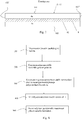
- the chart of fig. 8 represents a manufacturing method for a door which contains the recycled part.
- Fig. 1 shows schematically a door 1 which is installed on a door frame 20 and the door including a recycled part 12.
- the door 1 is here an access door 1a.
- the door 1 has the body of its door panel 10 provided with a polyester resin matrix and on top of that lies a so-called gelcoat skin layer 30 (glazing).
- the door panel 10 has a sandwich-structured body, which is fabricated by compression molding from a plastic composite composed in part of a recycled material.
- the door 1 depicted in fig. 1 comprises a lock 5; 53 mounted on the door panel 10, as well as a handle 5; 52.
- the door further comprises a doorway-surrounding frame 20, in which the door's 1 door panel 10 is fitted by means of hinges 5; 51.
- the door 1 may also comprise a slide rail, extending laterally relative to the doorway and enabling the door's 1 door panel 10 to be fitted therein by means of a roller system or the like sliding element.
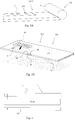
- Fig. 2 shows a blank recycled part 12a made up of a recycled door panel 10; 11.
- Fig. 3A shows another recycled door panel 10, from which is fashioned a blank recycled part 12a provided with a window opening 2. What is demonstrated by fig. 3A is how some of the gelcoat skin layer on top of the door panel 10 is removed for producing the blank recycled part 12a.
- Fig. 3B shows yet another recycled door panel, from which is fashioned a blank recycled part 12a.
- the blank recycled part 12a depicted in fig. 3B has a window opening 2 and its surface is missing a gelcoat skin layer.
- What is also demonstrated by fig. 3A is how the door panel's 10 window opening is being fitted with a filler piece 45.
- Fig. 4 shows, in a schematic cross-sectional view, a mold 7 useful for the compression molding of a door.
- the mold 7 comprises two mold halves 71 and 72, i.e. the two mold sections visible in fig. 4 .
- the shape of each mold section is adapted to match a respective leaf element 101, 102 and a bridge element 103 connecting the same.
- the reference embodiment shown in fig. 5 is used to illustrate a door panel 10 which does not have a recycled part 12.
- a door panel 10 includes a core layer 8 which contains a filler material 80.
- the filler material is surrounded by a fiber-reinforced polyester matrix 4.
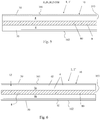
- FIG. 6 The internal structure of a door 1; 1" fabricated from a recycled part 12 is illustrated in more detail in fig. 6 . Illustrated schematically in fig. 6 is the door's 1, 1' internal structure, said door having been manufactured partly from virgin and partly from recycled materials. The core layer 8 is transferred as such, along with a one-piece recycled part or recycled blank visible in fig. 7 , in the process of manufacturing the door 1; 1' made partly of virgin and partly of recycled materials and illustrated in fig. 6 .
- Fig. 7 depicts schematically a recycled part 12.
- the recycled part 12 is made up of a one-piece body of the door panel 10, which includes two co-directional leaf elements 101 and 102, said leaf elements having been positioned by means of a bridge element 103 opposite to and at a distance from each other.
- the door panel 10 has the polyester matrix of its body consisting of a recycled fiber-reinforced polyester matrix 4a (as the recycled part has been prefabricated from a previously compression molded door panel) and from its top is missing most of a gelcoat skin layer 30, preferably the entire gelcoat skin layer 30.
- Fig. 5 shows, in a schematic cross-sectional view, some of the internal structure for a door 1; 1' manufactured from virgin materials (reference embodiment).
- the door 1 has its door panel 10 comprising two co-directional leaf elements 101, 102 positioned during the course of compression molding by means of a bridge element 103 at a distance from, opposite to, each other.
- a core layer 8 of the door panel 10 In a space defined by the leaf elements 101, 102 and by the bridge element 103 connecting the same is left a core layer 8 of the door panel 10, said core layer 8 having a filler material 80 incorporated therein.
- the plastic composite of each leaf element 101, 102 comprises a fiber-reinforced polyester matrix 4 based on ethylenically unsaturated polyester resin and giving mechanical strength to the compression molded door panel 10.
- a gelcoat skin layer 30 which gives chemical resistance to the door panel and is based on ethylenically unsaturated polyester resin.
- the leaf elements 101, 102 and said bridge element 103 are conjoined in compression molding seamlessly to each other.
- the bridge element 103 is transverse to the direction of the leaf elements 101, 102 and encircles the longitudinal and lateral end faces of the leaf elements 101, 102.
- the gelcoat skin layer 30 on the door panel's 10 leaf elements 101, 102 can have a thickness of 0,5 mm.
- the door panel's 10 core element 8 can have a width of about 40 mm crosswise of the door panel.
- Each fiber-reinforced polyester matrix 4 can have a thickness of about 2,5 mm crosswise of the door panel 10.
- the compression molding of the door is performed with a mold illustrated in fig. 4 .
- each mold section 71, 72 Onto the surface of each mold section 71, 72 is applied a gelcoat coating 3 prepared from polyester resin. This is followed by laminating on top of the gelcoat coating of each mold section 71, 72 a number of fiber material fortified, ethylenically unsaturated polyester resin based fiber-reinforced resin layers 40. Before the mold sections 71, 72 are placed face to face and pressed against each other, while heating, between the mold sections 71, 72 is introduced a filler material 80 (cf. fig. 5 ). With regard to the implementation of heating and pressing in the compression molding of a door, reference is here made to general prior art technology.
- the filler material 80 depicted in fig. 5 may consist of foamed polyurethane or a polyurea resin-based material used instead of polyurethane, one or more polyurethane panels, one or more plasterboards, or a barium sulphate-based gypsum panel, or vermiculite. Other inert filler materials may also be possible.
- the surface 3 of a compression molded door panel as illustrated in figs. 1 and 5 is required, when tested in compliance with standard SFS-EN 950, to have such a hard body impact resistance that the impact mark left on the door panel has a diameter of not more 1,5 mm and an average for indentations of not more than 1 mm.
- the door panel 10 should have a consequent deflection of not more than 1,0 mm when determined by a test method consistent with standard SFS-EN-947.
- the door panel's consequent deflection caused by a torsional load of 350 N should be less than 2 mm when determined by a test method consistent with standard SFS-EN-948.
- the door panel should have resistance to chemicals and oxidizing agents for at least two hours or at least 16 hours, when determined in compliance with standard EN 14688, for one or more of the following substances: an acid such as acetic acid (10% v/v), a base such as sodium hydroxide (5%(m/m), an alcohol such as ethanol (70% v/v), a bleach such as sodium hypochlorite, an oxidizing agent such as methylene blue (1% m/m), and a salt such as sodium chloride (50% v/v).
- an acid such as acetic acid (10% v/v)
- a base such as sodium hydroxide (5%(m/m)
- an alcohol such as ethanol (70% v/v)
- a bleach such as sodium hypochlorite
- an oxidizing agent such as methylene blue (1% m/m)
- a salt such as sodium chloride (50% v/v).
- the door's 1 surface made of gelcoat material should be resistant to cold liquid substances as determined according to standard DIN 68861 (SFS- EN 12720) for the following substances: coffee, mild detergent, cola beverage, olive oil, paraffin oil, acetone, hydrogen chloride, milk, blood.
- the recycled part 12 of the invention is utilized for manufacturing a compression molded door. This is demonstrated particularly in figs. 2-4 , 6-8 .
- the compression molded door is manufactured as follows (cf. fig. 8 ).
- An employed mold 7 is again the mold visible in fig. 4 , which comprises two mold halves 7; 71, 7; 72.
- the shape of each mold section is again adapted to enable the use thereof for fabricating leaf elements 101, 102 and a bridge element 103 connecting the same (step 100).
- Onto the surface of each mold section 71, 72 is applied a gelcoat coating 3 prepared from polyester resin (step 200). This is followed by laminating on top of the gelcoat coating 3 of each mold section 71, 72 a few, often just one, fiber material-fortified, ethylenically unsaturated polyester resin based fiber-reinforced resin layers 40 (step 300).
- the door panel 10 constructed as described above comprises both virgin plastic composite 4 and recycled plastic composite originating from the recycled part 12 and comprising for the most part a fiber-reinforced polyester matrix 4a as well as a filler material 80.
- the polyester matrix 4a of the recycled part 12 has its surface stripped of a gelcoat skin layer 30.
- the recycled part 12 of the door panel 10 comprises generally most of the fiber-reinforced polyester matrix 4a of a previously, for example by compression molding, fabricated door panel 10; 11.
- a recycled part 12, utilized in the above-described compression molding of a door, or a door panel made up of the recycled part 12, are illustrated in a schematic cross-sectional side view in fig. 7 .
- the door panel 10 may comprise either just a recycled part 12 or a recycled blank.
- Such a door panel 10 contains a core layer 8 with a filler material 80.
- the filler material 80 is surrounded by a fiber-reinforced (recycled) polyester matrix 4a. From top of the polyester matrix 4a is missing a gelcoat skin layer, i.e. the fiber-reinforced polyester matrix 4a constitutes a surface for the recycled part.
- Fig. 6 shows a compression molded door 1; 1" manufactured as described above by utilizing a recycled part 12 in its manufacturing process.
- the door panel 10 comprises two co-directional leaf elements 101, 102 positioned during the course of compression molding by means of a bridge element 103 at a distance from, opposite to, each other.
- a core layer 8 of the door panel 10 In a space defined by the leaf elements 101, 102 and by the bridge element 103 connecting the same is formed a core layer 8 of the door panel 10, in which core layer 8 is now placed, during compression molding, a one-piece recycled part 12 of the door panel (cf. fig. 7 ).
- the leaf elements 101, 102 and said bridge element 103 are in compression molding coupled seamlessly to each other.
- the bridge element 103 is transverse to the direction of leaf elements 101, 102 and encircles the longitudinal and lateral end faces of leaf elements 101, 102.
- Each leaf element 101 and 102 comprises a plastic composite, which is fabricated from an ethylenically unsaturated polyester resin based, fiber-reinforced polyester matrix 4 providing the compression molded door panel 10 with mechanical strength. On top of said polyester matrix 4 is laid a gelcoat skin layer 30 providing the door panel with chemical resistance and being based on ethylenically unsaturated polyester resin.
- Fiber-reinforced polyester matrix 4 originates from a recycled polyester matrix 4a, which therefore comes originally from a previously fabricated door panel 10; 11 (for example, from the door panel consisting of a recycled part 12 as depicted in fig. 7 ), whose top is missing a gelcoat skin layer and which thereby makes up most of the fiber-reinforced polyester matrix 4.
- 10-50 wt% of the fiber-reinforced polyester matrix 4 consists of a virgin fiber-reinforced polyester matrix 40, which has been laminated on top of a hardened gelcoat coating 3 applied onto each mold half 71, 72.
- about 90 wt% of the fiber-reinforced polyester matrix 4 comprises a recycled fiber-reinforced polyester matrix 4a and 10 wt% originates from a previously manufactured door and comprises a layer of new, virgin fiber-reinforced polyester matrix 40.
- the thickness of a polyester resin layer to be laminated onto each mold half 71, 72 is merely a fraction of what it would be in case the formation of a fiber-reinforced polyester resin matrix (layer) 4 were carried out by only using virgin fiber and virgin polyester resin.
- the gelcoat skin layer 30 of leaf elements 101, 102 for the door panel 10 including a recycled part 12 has for example a thickness of 0,5 mm.
- the door panel's 10 core element 8 has a width of about 40 mm crosswise of the door panel.
- the fiber-reinforced polyester matrix layer 4 (4a+40a) of each leaf element 101, 102 has a thickness of about 2,5 mm crosswise of the door panel 10.
- the plastic composite's ethylenically unsaturated polyester resin based fiber-reinforced polyester matrix layer 4 (4a+40) contains fiberglass.
- the door 1 containing a recycled part 12 should fulfill the same requirements as the compression molded door manufactured for virgin material.
- the door panel's resistance to hard body impact is required to be such that the impact mark left on the door panel has a diameter of not more than 1,5 mm and an average for indentations of not more than 1 mm.
- the door panel 10 should have a consequent deflection of not more than 1,0 mm when determined by a test method consistent with standard SFS-EN-947.
- the door panel's consequent deflection caused by a torsional load of 350 N should be less than 2 mm when determined by a test method consistent with standard SFS-EN-948.
- this recycled part 12 be fabricated from a recycled blank 12a derived from a previously manufactured door panel 10; 11 (cf. figs. 2 , 3A and 3B ) in order to make it suitable for manufacturing the door 1 with proper torsional strength and hardness.
- Illustrated in figs. 2 , 3A-3B is preparation of a blank 12a for the door's 1 recycled part 12.
- the blank for a recycled part is prepared from a previously fabricated door panel 10, which is stripped of hardware 5 and a window as well as a gelcoat skin layer.
- the thus obtained door panel is used as a blank 12a for the recycled part 12.
- the blank recycled part 12a comprises a recycled door panel 10; 11, which does not have a gelcoat skin layer and which is formed with window openings 2 or hardware openings 6 from which, respectively, the windows or hardware items have been removed.
- the thus obtained blank 12a of a recycled part 12, which includes openings 2, 4 originating from window openings or hardware fittings of the previously, for example by compression molding, manufactured door panel 10; 11, will be further processed for producing a recycled part 12 for the door panel 10.
- the blank recycled part 12a has its window openings 2 and hardware openings 6 fitted with filler pieces 45, and possibly with an adhesive used for gluing the filler pieces. Thereby is produced a one-piece recycled part 12, which has been stripped of a gelcoat skin 3; 30 and which comprises filler pieces 45 and possibly an adhesive used for gluing the filler pieces.
- the blank recycled part 12a visible in fig.2 and made up of a recycled door panel 10; 11, has been fabricated by removing both a gelcoat skin layer 30 and a window from the previously manufactured door panel. Thereby is obtained the blank recycled part 12a, which includes a window opening 2 visible in fig. 2 .
- the blank recycled part 12a visible in fig. 2 includes a number of hardware openings 6; 6a, 6b (lock opening 6a, handle opening 6b, and knob opening 6b), wherein each hardware opening 6a and 6b has been created by removing a hardware item 5 from the door panel 10; 11 manufactured earlier by compression molding.
- the hardware item 5 has been selected from a group, comprising a door handle 5; 52, a hinge 5; 51, a knob and lock 5; 53.
- Fig. 3A shows a blank recycled part 12a, including a window opening 2 which has been made by removing a window from a blank of the window opening 2 in a previously manufactured door panel 10; 11.
- the door panel 10; 11 shown in fig. 3A is in the process of having a gelcoat skin layer 3 (glazing) removed from its surface with a grinding tool 9 for producing a blank 12a of the recycled part 12
- Fig. 3B shows how a filler piece 45 is being fitted in a window opening 2 shown in fig. 2 and included in a blank 12a of the recycled part 12.
- the filler piece originates for example from a material removed in the process of making a window opening 2 for some earlier manufactured door panel 11.
- Serving as a blank for the door panel's 10 recycled part is a previously manufactured door panel 10; 11, in which is formed a window opening and from which has been removed a gelcoat skin layer.
- the door panel 10; 11 itself may have been fabricated from virgin plastic composite or, alternatively, it may contain material from another, previously fabricated recycled part of a door panel.
- the filler pieces 45 can be either filler pieces 45 worked out of a material removed from openings 2, 6 made in the door panel 10, or separately fabricated filler pieces 45.
- the filler piece 45 comprises an ethylenically unsaturated polyester resin based fiber-reinforced polyester matrix.
- the filler pieces 45 comprise an ethylenically unsaturated polyester resin based fiber-reinforced polyester matrix removed from the recycled door panel's 10; 11 openings 2, 6.
- the resistance to chemicals and oxidizing agents of a door panel containing the recycled part 12 was determined by a method consistent with standard SFS-EN 14688, section 5.5.1.1'. Prior to testing, the temperature and moisture of each door panel were allowed to stabilize over the period of 24 h to the temperature of 23+-2 degrees and to the relative humidity of 50%+ 5%. Chemicals and oxidizing agents were as follows:
- Coffee 5 2.
- Detergent (Serto) 5 3. Cola beverage (Coca Cola) 5 4. Indian ink (waterproof) 1 5.
- Cleaner (Fairy) 5 6. Olive oil 5 7. Paraffin oil 5 8. Acetone 4 9. Hydrogen chloride or hydrochloric acid (HCI) 3 10. Milk 5 11. Animal blood (cattle) 5 12. Chlorine 5
- the resistance of a door panel, containing the recycled part 12, to chemicals and oxidizing agents was determined by a method consistent with standard SFS-EN 14688, section 5.5.1.1'. Prior to testing, the temperature and moisture of each door panel were allowed to stabilize over the period of 24 h to the temperature of 23+-2 degrees and to the relative humidity of 50%+ 5%. Chemicals and oxidizing agents were as follows:
- the recycled part 12 as such cannot be used as door panel, but it must be coated with a gelcoat skin layer to obtain a sufficiently smooth door panel surface.
Landscapes
- Engineering & Computer Science (AREA)
- Mechanical Engineering (AREA)
- Structural Engineering (AREA)
- Civil Engineering (AREA)
- Chemical & Material Sciences (AREA)
- Composite Materials (AREA)
- Environmental & Geological Engineering (AREA)
- Health & Medical Sciences (AREA)
- Chemical Kinetics & Catalysis (AREA)
- Medicinal Chemistry (AREA)
- Polymers & Plastics (AREA)
- Organic Chemistry (AREA)
- Casting Or Compression Moulding Of Plastics Or The Like (AREA)
- Securing Of Glass Panes Or The Like (AREA)
- Laminated Bodies (AREA)
Applications Claiming Priority (1)
| Application Number | Priority Date | Filing Date | Title |
|---|---|---|---|
| FI20205669A FI130364B (fi) | 2020-06-24 | 2020-06-24 | Polyesterihartsipohjainen kuitulujitteinen ovi ja sen valmistusmenetelmä |
Publications (2)
| Publication Number | Publication Date |
|---|---|
| EP3929247A2 true EP3929247A2 (fr) | 2021-12-29 |
| EP3929247A3 EP3929247A3 (fr) | 2022-08-17 |
Family
ID=76859422
Family Applications (1)
| Application Number | Title | Priority Date | Filing Date |
|---|---|---|---|
| EP21181399.3A Pending EP3929247A3 (fr) | 2020-06-24 | 2021-06-24 | Pièce recyclée pour la fabrication d'une porte renforcée par des fibres à base de résine de polyester, ainsi qu'une porte renforcée par des fibres à base de résine de polyester comprenant la pièce recyclée |
Country Status (2)
| Country | Link |
|---|---|
| EP (1) | EP3929247A3 (fr) |
| FI (2) | FI130364B (fr) |
Cited By (2)
| Publication number | Priority date | Publication date | Assignee | Title |
|---|---|---|---|---|
| EP4101614A1 (fr) * | 2021-06-10 | 2022-12-14 | Liderkit SL | Procede de fabrication de panneau a partir de materiau recycle, et panneau resultant |
| IT202300016779A1 (it) * | 2023-08-07 | 2025-02-07 | Atelier23 Srl | Materiale multistrato, particolarmente per costruzioni edili, e procedimento per la sua realizzazione |
Citations (2)
| Publication number | Priority date | Publication date | Assignee | Title |
|---|---|---|---|---|
| US4550540A (en) * | 1983-01-07 | 1985-11-05 | Therma-Tru Corp. | Compression molded door assembly |
| CN105462205A (zh) * | 2015-12-19 | 2016-04-06 | 胜利油田新大管业科技发展有限责任公司 | 一种新型复合材料豪华仿木模压门及制作方法 |
Family Cites Families (5)
| Publication number | Priority date | Publication date | Assignee | Title |
|---|---|---|---|---|
| FI110018B (fi) * | 1998-03-19 | 2002-11-15 | Muovilami Oy | Menetelmä antibakteerisen rakenne-elementin valmistamiseksi |
| GB0601435D0 (en) * | 2006-01-24 | 2006-03-08 | Dumaplast Coleshill Ltd | Composite |
| GB2453308B (en) * | 2007-10-03 | 2012-07-25 | Acell Group Ltd | Composite products |
| CA2823868A1 (fr) * | 2012-08-21 | 2014-02-21 | Masonite Corporation | Renforcement de cadre pour empecher le gauchissement |
| EP3202813A1 (fr) * | 2016-02-05 | 2017-08-09 | Telene SAS | Composition durcissable et article moulé comprenant la composition |
-
2020
- 2020-06-24 FI FI20205669A patent/FI130364B/fi active IP Right Grant
-
2021
- 2021-06-24 FI FI20215748A patent/FI130005B/fi active
- 2021-06-24 EP EP21181399.3A patent/EP3929247A3/fr active Pending
Patent Citations (2)
| Publication number | Priority date | Publication date | Assignee | Title |
|---|---|---|---|---|
| US4550540A (en) * | 1983-01-07 | 1985-11-05 | Therma-Tru Corp. | Compression molded door assembly |
| CN105462205A (zh) * | 2015-12-19 | 2016-04-06 | 胜利油田新大管业科技发展有限责任公司 | 一种新型复合材料豪华仿木模压门及制作方法 |
Cited By (3)
| Publication number | Priority date | Publication date | Assignee | Title |
|---|---|---|---|---|
| EP4101614A1 (fr) * | 2021-06-10 | 2022-12-14 | Liderkit SL | Procede de fabrication de panneau a partir de materiau recycle, et panneau resultant |
| IT202300016779A1 (it) * | 2023-08-07 | 2025-02-07 | Atelier23 Srl | Materiale multistrato, particolarmente per costruzioni edili, e procedimento per la sua realizzazione |
| EP4506154A1 (fr) * | 2023-08-07 | 2025-02-12 | Atelier23 Srl | Matériau multicouche, notamment pour la construction de bâtiments, et son procédé de fabrication |
Also Published As
| Publication number | Publication date |
|---|---|
| EP3929247A3 (fr) | 2022-08-17 |
| FI130005B (fi) | 2022-12-15 |
| FI20215748A1 (fi) | 2021-12-25 |
| FI20205669A1 (fi) | 2021-12-25 |
| FI130364B (fi) | 2023-07-24 |
Similar Documents
| Publication | Publication Date | Title |
|---|---|---|
| US11904557B2 (en) | Composite products | |
| EP3929247A2 (fr) | Pièce recyclée pour la fabrication d'une porte renforcée par des fibres à base de résine de polyester, ainsi qu'une porte renforcée par des fibres à base de résine de polyester comprenant la pièce recyclée | |
| US6442912B1 (en) | Method for retrofitting a surface of a house or building | |
| CA2337518C (fr) | Ensemble porte moule par compression | |
| US6226958B1 (en) | Insulated door assembly with low thermal deflection | |
| EP0770007B1 (fr) | Ensemble porte moule par compression | |
| JP2007534865A (ja) | 繊維強化複合体、及び繊維強化複合体を含む建築用構造物 | |
| US20070110979A1 (en) | Fiber-reinforced composite fire door | |
| US20050260389A1 (en) | System and method of making a layered, reinforced composite | |
| CA2339332A1 (fr) | Element d'ossature renforce de tissu thermoplastique a charniere, profile et methodes | |
| EP0629254A1 (fr) | Composition pour habillage de facade et son procede de preparation | |
| KR100750479B1 (ko) | 내캐스터성 마루바닥재 | |
| CN111226013A (zh) | Pvc板和制造方法 | |
| CN102518357B (zh) | 复合式节能门窗框或门窗扇框及成型方法 | |
| US5137787A (en) | Composite plastic panel and method for producing same | |
| US4562103A (en) | Weather resistant boards | |
| KR20040080518A (ko) | 다중 공압출을 이용한 합성목재 제품 및 그 제조방법 | |
| KR200241616Y1 (ko) | 문틀재 | |
| US20070266661A1 (en) | Method for manufacturing of composite door panel using injection molding technology | |
| KR101498998B1 (ko) | 구조물 보강용 고강도 복합섬유패널 및 이를 이용한 구조물 보강공법 | |
| US4690848A (en) | Weather-resistant lignocellulose or other organic or inorganic material boards and process for their production | |
| KR102769930B1 (ko) | 알루미늄 창호용 단열바 및 이를 포함하는 알루미늄 창호 시스템 | |
| Scott et al. | Weathering resistance of plastics composites: Article 6 in the series—Composite materials and the designer | |
| CA1216722A (fr) | Production de pieces faconnees en chlorure de polyvinyle avec armature de fibres de verre | |
| WO1995019252A1 (fr) | Panneau composite |
Legal Events
| Date | Code | Title | Description |
|---|---|---|---|
| PUAI | Public reference made under article 153(3) epc to a published international application that has entered the european phase |
Free format text: ORIGINAL CODE: 0009012 |
|
| STAA | Information on the status of an ep patent application or granted ep patent |
Free format text: STATUS: THE APPLICATION HAS BEEN PUBLISHED |
|
| AK | Designated contracting states |
Kind code of ref document: A2 Designated state(s): AL AT BE BG CH CY CZ DE DK EE ES FI FR GB GR HR HU IE IS IT LI LT LU LV MC MK MT NL NO PL PT RO RS SE SI SK SM TR |
|
| PUAL | Search report despatched |
Free format text: ORIGINAL CODE: 0009013 |
|
| AK | Designated contracting states |
Kind code of ref document: A3 Designated state(s): AL AT BE BG CH CY CZ DE DK EE ES FI FR GB GR HR HU IE IS IT LI LT LU LV MC MK MT NL NO PL PT RO RS SE SI SK SM TR |
|
| RIC1 | Information provided on ipc code assigned before grant |
Ipc: B29C 43/36 20060101ALN20220708BHEP Ipc: B29C 37/00 20060101ALN20220708BHEP Ipc: B29D 24/00 20060101ALN20220708BHEP Ipc: B29D 99/00 20100101ALN20220708BHEP Ipc: B29C 70/46 20060101ALN20220708BHEP Ipc: B32B 27/36 20060101ALN20220708BHEP Ipc: B32B 5/26 20060101ALN20220708BHEP Ipc: B29L 31/00 20060101ALN20220708BHEP Ipc: B29B 17/04 20060101ALI20220708BHEP Ipc: B29B 17/00 20060101ALI20220708BHEP Ipc: C08L 67/06 20060101AFI20220708BHEP |
|
| STAA | Information on the status of an ep patent application or granted ep patent |
Free format text: STATUS: REQUEST FOR EXAMINATION WAS MADE |
|
| 17P | Request for examination filed |
Effective date: 20230216 |
|
| RBV | Designated contracting states (corrected) |
Designated state(s): AL AT BE BG CH CY CZ DE DK EE ES FI FR GB GR HR HU IE IS IT LI LT LU LV MC MK MT NL NO PL PT RO RS SE SI SK SM TR |
|
| STAA | Information on the status of an ep patent application or granted ep patent |
Free format text: STATUS: EXAMINATION IS IN PROGRESS |
|
| 17Q | First examination report despatched |
Effective date: 20250227 |
|
| GRAP | Despatch of communication of intention to grant a patent |
Free format text: ORIGINAL CODE: EPIDOSNIGR1 |
|
| STAA | Information on the status of an ep patent application or granted ep patent |
Free format text: STATUS: GRANT OF PATENT IS INTENDED |
|
| RIC1 | Information provided on ipc code assigned before grant |
Ipc: C08L 67/06 20060101AFI20260226BHEP Ipc: B29B 17/00 20060101ALI20260226BHEP Ipc: B29B 17/04 20060101ALI20260226BHEP Ipc: B29L 31/00 20060101ALN20260226BHEP Ipc: B32B 5/26 20060101ALN20260226BHEP Ipc: B32B 27/36 20060101ALN20260226BHEP Ipc: B29C 70/46 20060101ALN20260226BHEP Ipc: B29D 99/00 20100101ALN20260226BHEP Ipc: B29D 24/00 20060101ALN20260226BHEP Ipc: B29C 37/00 20060101ALN20260226BHEP Ipc: B29C 43/36 20060101ALN20260226BHEP |
|
| INTG | Intention to grant announced |
Effective date: 20260309 |