EP3930285A2 - System und verfahren zur verwaltung der überlastung von video-streaming - Google Patents
System und verfahren zur verwaltung der überlastung von video-streaming Download PDFInfo
- Publication number
- EP3930285A2 EP3930285A2 EP21177072.2A EP21177072A EP3930285A2 EP 3930285 A2 EP3930285 A2 EP 3930285A2 EP 21177072 A EP21177072 A EP 21177072A EP 3930285 A2 EP3930285 A2 EP 3930285A2
- Authority
- EP
- European Patent Office
- Prior art keywords
- traffic flow
- video streaming
- video
- bandwidth
- state
- Prior art date
- Legal status (The legal status is an assumption and is not a legal conclusion. Google has not performed a legal analysis and makes no representation as to the accuracy of the status listed.)
- Granted
Links
Images






Classifications
-
- H—ELECTRICITY
- H04—ELECTRIC COMMUNICATION TECHNIQUE
- H04L—TRANSMISSION OF DIGITAL INFORMATION, e.g. TELEGRAPHIC COMMUNICATION
- H04L65/00—Network arrangements, protocols or services for supporting real-time applications in data packet communication
- H04L65/80—Responding to QoS
-
- H—ELECTRICITY
- H04—ELECTRIC COMMUNICATION TECHNIQUE
- H04L—TRANSMISSION OF DIGITAL INFORMATION, e.g. TELEGRAPHIC COMMUNICATION
- H04L47/00—Traffic control in data switching networks
- H04L47/10—Flow control; Congestion control
- H04L47/24—Traffic characterised by specific attributes, e.g. priority or QoS
- H04L47/2475—Traffic characterised by specific attributes, e.g. priority or QoS for supporting traffic characterised by the type of applications
-
- H—ELECTRICITY
- H04—ELECTRIC COMMUNICATION TECHNIQUE
- H04L—TRANSMISSION OF DIGITAL INFORMATION, e.g. TELEGRAPHIC COMMUNICATION
- H04L47/00—Traffic control in data switching networks
- H04L47/70—Admission control; Resource allocation
- H04L47/80—Actions related to the user profile or the type of traffic
- H04L47/803—Application aware
-
- H—ELECTRICITY
- H04—ELECTRIC COMMUNICATION TECHNIQUE
- H04L—TRANSMISSION OF DIGITAL INFORMATION, e.g. TELEGRAPHIC COMMUNICATION
- H04L47/00—Traffic control in data switching networks
- H04L47/70—Admission control; Resource allocation
- H04L47/80—Actions related to the user profile or the type of traffic
- H04L47/805—QOS or priority aware
-
- H—ELECTRICITY
- H04—ELECTRIC COMMUNICATION TECHNIQUE
- H04N—PICTORIAL COMMUNICATION, e.g. TELEVISION
- H04N21/00—Selective content distribution, e.g. interactive television or video on demand [VOD]
- H04N21/20—Servers specifically adapted for the distribution of content, e.g. VOD servers; Operations thereof
- H04N21/23—Processing of content or additional data; Elementary server operations; Server middleware
- H04N21/238—Interfacing the downstream path of the transmission network, e.g. adapting the transmission rate of a video stream to network bandwidth; Processing of multiplex streams
- H04N21/2385—Channel allocation; Bandwidth allocation
-
- H—ELECTRICITY
- H04—ELECTRIC COMMUNICATION TECHNIQUE
- H04N—PICTORIAL COMMUNICATION, e.g. TELEVISION
- H04N21/00—Selective content distribution, e.g. interactive television or video on demand [VOD]
- H04N21/20—Servers specifically adapted for the distribution of content, e.g. VOD servers; Operations thereof
- H04N21/23—Processing of content or additional data; Elementary server operations; Server middleware
- H04N21/24—Monitoring of processes or resources, e.g. monitoring of server load, available bandwidth, upstream requests
- H04N21/2402—Monitoring of the downstream path of the transmission network, e.g. bandwidth available
-
- H—ELECTRICITY
- H04—ELECTRIC COMMUNICATION TECHNIQUE
- H04N—PICTORIAL COMMUNICATION, e.g. TELEVISION
- H04N21/00—Selective content distribution, e.g. interactive television or video on demand [VOD]
- H04N21/60—Network structure or processes for video distribution between server and client or between remote clients; Control signalling between clients, server and network components; Transmission of management data between server and client, e.g. sending from server to client commands for recording incoming content stream; Communication details between server and client
- H04N21/63—Control signaling related to video distribution between client, server and network components; Network processes for video distribution between server and clients or between remote clients, e.g. transmitting basic layer and enhancement layers over different transmission paths, setting up a peer-to-peer communication via Internet between remote STB's; Communication protocols; Addressing
- H04N21/647—Control signaling between network components and server or clients; Network processes for video distribution between server and clients, e.g. controlling the quality of the video stream, by dropping packets, protecting content from unauthorised alteration within the network, monitoring of network load, bridging between two different networks, e.g. between IP and wireless
- H04N21/64723—Monitoring of network processes or resources, e.g. monitoring of network load
- H04N21/64738—Monitoring network characteristics, e.g. bandwidth, congestion level
-
- H—ELECTRICITY
- H04—ELECTRIC COMMUNICATION TECHNIQUE
- H04N—PICTORIAL COMMUNICATION, e.g. TELEVISION
- H04N21/00—Selective content distribution, e.g. interactive television or video on demand [VOD]
- H04N21/60—Network structure or processes for video distribution between server and client or between remote clients; Control signalling between clients, server and network components; Transmission of management data between server and client, e.g. sending from server to client commands for recording incoming content stream; Communication details between server and client
- H04N21/63—Control signaling related to video distribution between client, server and network components; Network processes for video distribution between server and clients or between remote clients, e.g. transmitting basic layer and enhancement layers over different transmission paths, setting up a peer-to-peer communication via Internet between remote STB's; Communication protocols; Addressing
- H04N21/647—Control signaling between network components and server or clients; Network processes for video distribution between server and clients, e.g. controlling the quality of the video stream, by dropping packets, protecting content from unauthorised alteration within the network, monitoring of network load, bridging between two different networks, e.g. between IP and wireless
- H04N21/64784—Data processing by the network
Definitions
- the present disclosure relates generally to computer network traffic. More particularly, the present disclosure relates to a system and method for managing video streaming congestion.
- QoE Quality of Experience
- Video streaming can create network bandwidth bottlenecks and, as such, in order to enhance subscriber Quality of Experience (QoE) and manage the streaming video, network and content service providers have a desire to manage congestion on the network due to Video streaming.
- QoE Quality of Experience
- a method for managing video streaming on a computer network including: reviewing a traffic flow to determine whether the traffic flow is a video streaming traffic flow; if the traffic flow is a video streaming traffic flow, determine at least one video characteristic associated with the video streaming traffic flow; determining a state of the video streaming traffic flow; determining a priority of the video streaming traffic flow based on the characteristics and the state of the video streaming traffic flow; and allocating bandwidth to the video streaming traffic flow based on the priority; otherwise, if the traffic flow is not a video streaming traffic flow, allowing the traffic flow to continue with the traffic flow's current priority.
- the state of the video streaming may be determined to be one of an initial state, a mid-play state or an end state.
- the video streaming traffic flow is determined to have the initial state the video streaming may be a high priority traffic flow.
- the video streaming traffic flow priority may be lowered.
- the method may further include: determining the application type of the video streaming traffic flow as one of the at least one of the video characteristics; determining a ratio of bandwidth consumption for the application type associated with the video streaming application; and allocating the bandwidth based on the ratio of bandwidth consumption for the application type.
- the method may further include: determining if the video streaming traffic flow has had a fast forward, rewind or seek operation performed; redetermining the state of the video based on the operation performed; and reprioritizing the video streaming traffic flow based on the redetermined state.
- the method may further include: monitoring a Quality of Experience (QoE) associated with the video streaming traffic flow; and reprioritizing the traffic flow based on the QoE.
- QoE Quality of Experience
- allocating bandwidth for the video streaming traffic flow may include determining a weighted fair queue for the video streaming traffic flow based on the streaming application type and application's type ratio of demand for bandwidth
- measuring the ratio of the bandwidth consumption for the application type may include: capturing a bandwidth demand for each of a plurality of video streaming applications type; aggregating the bandwidth demand for each of the plurality of video streaming applications over an aggregating factor; and determining the ratio of bandwidth consumption for each application type based on the aggregated bandwidth demand.
- the aggregating factor may be selected from the group comprising: a geographic location, a cell site, a group of subscribers in a link, a group of subscribers in a network
- the initial state may be between 30 and 60 seconds.
- a system for managing video streaming on a computer network including: an analysis module configured to review a traffic flow to determine whether the traffic flow is a video streaming traffic flow, and if the traffic flow is a video streaming traffic flow, determine at least one video characteristic associated with the video streaming traffic flow and a state of the video streaming traffic flow; an allocation module configured to determine a priority of the video streaming traffic flow based on the characteristics and the state of the video streaming traffic flow; and at least one shaper configured to allocate bandwidth to the video streaming traffic flow based on the priority.
- the state of the video streaming may be determined to be one of an initial state, a mid-play state or an end state.
- the video streaming traffic flow is determined to have the initial state the video streaming may have a high priority traffic flow.
- the video streaming traffic flow priority may be lowered.
- the analysis module may be configured to determine the application type of the video streaming traffic flow as one of the at least one of the video characteristics; and the system may further comprise a measuring module configured to determine a ratio of bandwidth consumption for the application type associated with the video streaming application; and the at least one shaper may be configured to allocate the bandwidth based on the ratio of bandwidth consumption for the application type.
- the analysis module may be further configured to determine the video streaming traffic flow has had a fast forward, rewind or seek operation performed and redetermine the state of the video based on the operation performed; and the allocation module may be configured to reprioritizing the video streaming traffic flow based on the redetermined state.
- the system may further include: a monitoring module configured to monitor a Quality of Experience (QoE) associated with the video streaming traffic flow; and the allocation module may be configured to reprioritizing the traffic flow based on the QoE.
- QoE Quality of Experience
- the at least one may be is configured to allocate bandwidth for the video streaming traffic flow comprises determining a weighted fair queue for the video streaming traffic flow based on the streaming application type and application's type ratio of demand for bandwidth
- the measuring module may be configured to measure the ratio of the bandwidth consumption for the application type by: capturing a bandwidth demand for each of a plurality of video streaming applications type; aggregating the bandwidth demand for each of the plurality of video streaming applications over an aggregating factor; and determining the ratio of bandwidth consumption for each application type based on the aggregated bandwidth demand.
- the aggregating factor may be selected from the group comprising: a geographic location, a cell site, a group of subscribers in a link, a group of subscribers in a network.
- the present disclosure provides a method and system for managing video streaming.
- Embodiments of the method and system are configured to determine if a traffic flow is a video streaming traffic flow.
- the system determines video parameters and a category for the video streaming traffic flow. In some cases, the video streaming traffic flow will be categorized as start, mid-play or end. Based on the video parameters and category, the system may determine a priority level for the video streaming traffic flow and a shaper may prioritize the traffic flow based on the priority level.
- Video Streaming It has been observed that internet bandwidth consumption during peak hours can be greater than 50% Video Streaming. During peak network congestion, unmanaged Video streaming applications can add to the congestion at the same time. Video Streaming is generally impacted with down shifts of quality and resolution due to packet delays and packet loss, which may result in relatively poor Quality of Experience for the end customers.
- Some video streaming applications may use different video codecs and buffering techniques and may further use customized techniques to manage and increase the video streaming quality of experience for their end users. Due to the variance in management by these applications, some of the video streaming services are more aggressive in consuming bandwidth to ensure superior quality of experience for their streaming service. This aggressive consumption may impact other players/providers in the video streaming applications space which rely on standard streaming techniques. For example, there might be applications like YouTube TM that may use techniques to consume most of the share of available bandwidth compared to that consumed by applications like Sky TM or Netflix TM for their streaming during the same congested hours. This overconsumption by YouTube TM may result in bad QoE for the other application(s).
- the Quality of Experience in Video Streaming is a crucial measure of experience.
- the Quality of Experience (QOE) is generally determined by a plurality of factors. For example, for a subscriber during Video Streaming, the subscriber would benefit from a fast start, consistent streaming, effective resolution, effective Bandwidth Management and the like. For a Service Provider, effective management of the available overall Bandwidth and ensuring better Video QoE for a large portion of the plurality of subscribers is generally desired.
- Figure 1A illustrates a bandwidth distribution of a network when no prioritizing of the bandwidth is performed. Without prioritizing traffic based on the categories and the available bandwidth, certain categories of network traffic may dominate the available bandwidth and reduce the QoE of other categories of traffic.
- Figure 1B illustrates a traffic category breakdown when traffic categories are prioritized.
- one option is to provide a fair distribution of the bandwidth for most of the video streaming applications based on their ratio of network demand. The current state of the video and what could be a good enough transfer rate for the video to stream with the good quality may be determined, thereby achieving superior QoE for most of the customers.
- Traffic shaping and prioritization techniques are applied to improve the overall Quality of Experience of the Internet traffic. This might also impact the QoE of the video streaming as an overall outcome if the streaming is highly prioritized. In other cases, this might provide lower effectiveness as there could be more bandwidth consumption conflicts between the various different video streaming applications.
- Bandwidth congestion on the access network is often managed by shaping the subscribers' internet traffic with various traffic prioritizations, as shown in figure 1B .
- the video streaming applications are typically high in bandwidth utilization and moderately sensitive towards the down shifts of quality and resolution due to delays and packet loss, which could be an effect of network congestion. As detailed herein, it has been observed that not all the video applications are designed to react to congestion and gain effective bandwidth in a similar manner.
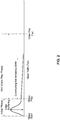
- Figure 2 illustrates a lifecycle of a video stream.
- a video buffer is created.
- a newly started video may consume higher bandwidth (BW) in order to construct a video buffer that is intended to allow the video to start playing without requiring breaks or pauses to refill the buffer.
- BW bandwidth
- the video will start to play and the buffer may work to load the complete video.
- the video may complete downloading at a slower rate than in the initial phase.
- the video buffer has frequently completed the download of the full video, long before the video play ends, as shown in figure 2 . If the video is fast forwarded, or skipped to a location further in the video stream, the buffer may need to consume significant bandwidth again if the buffer has not downloaded past the spot in which the movie restarts playing.
- Embodiments of the system and method are intended to perform one or more functions such as measuring the ratio of bandwidth distribution among different video applications, to detect congestion, define the video characteristics and manage the video streams according to the different applications and characteristics with the use of traffic shaping.
- Embodiments of the system and method are intended to review and manage the Video Streaming at various stages of video, adjust the priority of the Video based on the current stage and/or category of the video by allowing reasonable bandwidth for that stage, and thus provide a higher overall Quality of Experience (QoE).
- QoE Quality of Experience
- This QoE improvement for Video Streaming flows is provided by adapting the rate of downloading or filling the buffer, by adapting the actual bandwidth required for the video streaming flow (bit per second) to give the application an appropriate QoE/BW/resolution based on how the adaptive codecs adapt to adjust to the current bandwidth.
- By controlling the amount of bandwidth based on a stage of the video streaming allows flows to be prioritized based on the flow's need.
- Figure 3 illustrates an example embodiment of a system 100 for managing video streaming congestion.
- the system includes an analysis module 105, a measuring module 110, an allocation module 115, a monitoring module 120, a control system 125, at least one shaper 130, at least one processor 135 and at least one memory component 140.
- the system may include a plurality of processors, for example, one processor per module or the like.
- the at least one processor 135 is configured to execute instructions stored in the at least one memory component 140 in order to allow each module to perform the tasks as detailed herein.
- the system may be distributed and may be housed in a plurality of network devices. In other cases, the system may reside in a single network device.
- the memory component 140 may be included as an internal component of the system. In other cases, the memory component may be housed externally or in a cloud and may be operatively connected to the system 100 and the components of the system.
- the analysis module 105 is configured to review traffic flows to determine which flows are video streaming traffic flows.
- the analysis module 105 is further configured to determine video parameters (sometimes referred to as characteristics) from each streaming video flow, for example, the streaming application, the quality of the video, the streaming state of the video, and the like.
- the analysis module 105 may further determine the network or localized region's Quality of Experience.
- the analysis module 105 may further determine a geographical location of the subscriber.
- the analysis module 105 is further configured to determine the stage of the video streaming traffic flow in relation to, for example, the phases illustrated in Fig. 2 , and may categorize the stage as, for example, start, mid-play or end of the video stream. It will be understood that the terms "start”, “mid-play” and “end” are intended to detail where the current position is of the video stream and other or additional classification terms may be used. For example, additional classifications may include "fast forward", "rewind” or the like.
- the measuring module 110 is configured to measure the ratio of the bandwidth consumption for various video streaming applications.
- the measuring module 110 may further aggregate the measurements based on the analysis, the parameters, and the categorization done by the analysis module 105.
- the measurement module output is intended to be provided as input to the control system 125 and the at least one shaper 130.
- the measurement module output is intended to be categorized Per Video Streaming Flow (application)/ Per Video Streaming flow category (determined by the analysis module 105) to be synchronous with the control system 125 and the at least one shaper 130 managing the traffic bandwidth.
- control system 125 may include the allocation module 115 and the monitoring module 120.
- the allocation module 115 is configured to determine the priority of the video streaming traffic flow and provide appropriate bandwidth allocation to the flow as detailed herein.
- the allocation module 115 may be operatively connected with at least one shaper 130 and provide input to the at least one shaper for determining the priority of the video streaming flow.
- the monitoring module120 is configured to monitor the video streaming traffic flows and determine whether the traffic flows are being properly characterized and prioritized. In particular, the monitoring module 120 is configured to monitor the stage of the video streaming traffic flow to prioritize the flow depending on the demand for bandwidth.
- the at least one shaper 130 is intended to apply at least one traffic management action to traffic flows.
- the traffic management action may be, for example, Priority and Weighted Fair Queuing based on the determined traffic priority as per the video streaming categorization and input from the allocation module 115.
- the at least one traffic management action may substitute for or be in addition to any previously applied traffic management actions.
- Embodiments of the system and method are intended to efficiently manage network bandwidth, enhance the subscriber video streaming experience by insulating video streaming applications from a back-off effect of other aggressive streaming techniques described herein. Further, embodiments of the system and method are intended to provide the video streaming traffic flows protection from bandwidth hogging non-critical or low priority applications like FTP, Torrents, heavy downloads, and the like. It is intended that the embodiments of the system and method are intended to effectively distribute any saved bandwidth to each video streaming application based on the determined demand at various stages of the video streaming.
- it is intended to manage the video streaming traffic by being agnostic towards a plurality of access network types, for example, wireless, fixed access, or the like, the consolidation of the traffic, for example, radio cells, DSLAMs, and the like, and also agnostic towards the different video streaming application types and codecs.
- streaming video's QoE may depend on, for example, runtime adaptation, startup time of the video, and other factors.
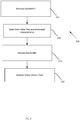
- Figure 4 illustrates an embodiment of a method 200 for managing video streaming congestion.
- the measuring module 110 measures the ratio of bandwidth consumption for various video streaming applications.
- the video streaming flows are determined and general characteristics of each of the flows are reviewed by the analysis module 105.
- the analysis module 105 may determine at least some of the following characteristics of the video flow, for example, streaming application, quality of the video (Standard definition, high definition, etc.), streaming state of the video, network or localized regions' Quality of Experience, or the like.
- the allocation module may determine an associated shaper as well as determine the network congestion and define the shaper with traffic prioritization considering the different tolerance levels and traffic ratio of applications and categories. The allocation module may further use the defined characteristics to manage the video streaming application traffic flows.
- the monitoring module 120 may continue to monitor the state of the video stream and update the priority of the flow based on the state of the video stream or take other traffic enforcement actions.
- the measurements may be defined in a manner that is intended to capture the bandwidth demand of each video streaming application uniquely identified by the application and the aggregating factor.
- a geographic location (geo-location) like a cell site, a group of subscribers in a link or in a network, or the like may be reviewed by the measuring module 110.
- This measurement's peak value may be used to ascertain the ratio of the bandwidth to be fairly distributed across the different video streaming applications at the aggregated level.
- embodiments of the system and method may associate a QoE metric as 'bandwidth by video streaming application by category (or by geo-location)' and treat the continuous calculated value as a benchmark that could be applied to the ratio for the next interval.
- the system may determine over a predetermined interval, for example the last 12 hours, 24 hours, the last 2 days, or the like, the bandwidth of Netflix TM by category (initial/start, mid-play, end) by geo-location (for example, a particular region like: Waterloo Region).
- the system if further configured to calculate the same data for other Video streaming applications for example: YouTube TM , SKY TM , and the like. This is intended to provide a ratio that can be applied for the forthcoming interval (for example, the next 24 hours) to manage the Video streaming traffic.
- the analysis module 105 is configured to determine video streaming traffic flows and devise characteristics or parameters of a streaming video.
- the analysis module 105 may determine the video streaming traffic flows across different application types. Determining the application types may be used in order to calculate the ratio of the bandwidth and accurately isolate the flows and feed to the right shaping priorities.
- Various application types may include, for example, YouTube TM , Netflix TM , Amazon Prime TM , SKY TM satellite services, and the like.
- the analysis module 105 may further define and distinguish other characteristics related to the quality of the video to assess the effective bandwidth consumed against the required quality for the video, for example, Standard Definition, High Definition with different resolutions or the like.
- the analysis module 105 is configured to determine the streaming state of the video and categorize the video by the state.
- the states may include, for example, the Initial Start, which would be the phase of the video during the start.
- the video starts to buffer until the video flow reaches the desired buffer health.
- Video Initial Reactivity time and the buffer health may be important for subscribers to become "hooked" on to the video.
- For a user to persist on to watching a video to completion requires not only good content but also an acceptable level of QoE. It will be understood that a subscriber is likely to stop watching a video if the QoE degrades below an acceptable level.
- the QoE is intended to be at an acceptable level for subscribers.
- Another state of the video may be the Mid Video Play Cycle State. This state may include the duration in which video is playing thereby the application desired to maintain the buffer for seamless video play without pause.
- a still further state may include the Slider state. In this state, the slider action of Video, moving forward or rewind of the video resulting in the re-buffering of the Video
- the monitoring module 120 is configured to continuously assess and monitor the Network Quality of Experience and Video Quality of Experience. These assessments may be fed as inputs to the system, which will help in determining when to trigger the start or stop of the management of the Video streaming traffic. This monitoring may be for a complete network or a specific subset (region) of the network based on where the Video Streaming would benefit from being managed at a consolidated level. Various techniques are known that may be used to help determine the network QoE. The benefit is categorized by multiple factors, as detailed herein, and these parameters are intended to act as input variables. The state of the video is intended to determine the ratio of the bandwidth (aggregated across all the video and state in the selected subset) and when the Video's Bandwidth Demand varies based on the video. It will be understood that when the buffering is complete, the demand in bandwidth may reduce. It is intended that these parameters may be consistently assessed by the control system 125.
- this process could be even further alleviated if the management of the Video Streaming applications is to be devised without any influence on the network congestion.
- the process of managing the network bandwidth tends to be considered a high importance for service providers, especially during congestion in the network. At the time of peak network usage, the service providers will be keen to maintain the best end-user QoE.
- video streaming tends to be influenced significantly based in part on the QoE, it is intended that embodiments of the system and method detailed herein will provide benefit to the service providers.
- the service provider may wish to regulate or standardize the Video Streaming bandwidth management, Usage Service Plans based on Video Prioritization, or the like. In this case, the system may not determine or use a congestion metric as an input parameter.
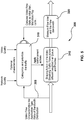
- FIG. 5 illustrates an embodiment of information flow 300 through the system.
- the measuring module 110 is configured to measure the ratio of bandwidth distribution among different video applications.
- the control system is fed with Video streaming flow parameters or characteristics determined by the analysis module 105 and bandwidth to detect congestion, define the video states, and manage the video streams according to the different applications and characteristics with the use of the traffic shaping, at 305.
- the analysis module 105 determines the video flow characteristics
- the system 100 is configured to categorize and prioritize the traffic, at 310.
- the priority of the traffic may be based on various factors, such as the network quality, the video quality, the application type or other determined characteristics.
- the at least one shaper may apply enforcement actions or traffic actions on the video streaming traffic flows across, for example, different weighted fair queues and priorities, at 315, based on the allocation determined by the allocation module 115.
- the system may also be configured to determine the state of the video and continue to measure the flow time and the flow bandwidth in order to update the priority of the flow as the video playing progresses, at 320.
- Figure 6 illustrates a method 400 to manage the video streaming application traffic flows according to an embodiment.
- the system begins by determining whether the video streaming management is consolidated to a region.
- a region is intended to be a granular section of traffic associated with subscribers for whom the video streaming is managed. In some cases, the region may be a geo-location, for example, a city, a radio cell or site, a DSLAM, a corporate office, an apartment or the like. If the video is consolidated by a region then the measuring module 110 is intended to determine measurements to estimate the ratio of bandwidth by region, at 410. If not, at 415, the measurements to estimate the ratio of bandwidth may be done for the network as a whole.
- a different selection may be made to provide for a granular section of traffic associated with subscribers to be managed.
- General characteristics of the video may then be determined, at 420, via the analysis module 105.
- the control system 125 and associated at least one shaper may determine an appropriate priority for the video streaming traffic flow, at 425.
- the management of video streaming applications at the time of congestion is intended to be strategic prioritization and isolation of the traffic across different weighted fair queues (WFQ) in the at least one traffic shaper. Placing the video in a relevant WFQ based on the streaming application type and the video's ratio of demand for bandwidth, which is intended to provide for each application to acquire its appropriate share agnostic to the protocols used and would not hover over or creep into other applications' bandwidth beyond the demand. This method is intended to protect the boundary of the least greedy or bandwidth-demanding streaming protocols.
- WFQ weighted fair queues
- Each video streaming application flow may require different traffic prioritization and management in traffic shapers based on, for example, various stages in time and characteristics of the application traffic flow.
- the system 100 is intended to provide continuous monitoring, via for example the monitoring module 120, of the characteristics over time and provide feedback to the shapers or the analysis module 105 of the system based on changes to the characteristics as detailed herein.
- Video streaming traffic flows are placed on the same priority, not all the video applications and/or video codecs and/or solutions are designed to react to congestion and gain effective bandwidth. This may result in an imbalance and inferior Quality of Experience for some video streaming applications, whereas some other applications, which are designed to hog bandwidth may receive more bandwidth at a cost to the others.
- the prioritization on the traffic shapers have been typically based on the applications' tolerance to congestion.
- the traffic may be classified as:
- Embodiments of the system and method disclosed herein are intended to determine the characteristics of each video streaming traffic flow.
- Each of the independent video streaming application (or) each group of similar application flows may be divided into different shaping channels (for example, independent shaper queues).
- Fair weights based on the Bandwidth demand distribution may be determined via the bandwidth measuring done by the measuring module. This is intended to provide for the same available bandwidth for video streaming applications.
- the bandwidth is effectively divided and distributed fairly across different Weighted Fair Queues with relative weights (x : y : z) where x, y, z are the assessed traffic demand through the control system 125 and measurements as detailed herein. In some cases, this could may be based on the bandwidth measurements on the network as a continuous input. In other cases, the control system 125 may use an automated calibration technique.
- Embodiments of the system and method are intended to provide for the prioritization of video streaming applications together with other internet traffic.
- One example is the following:
- the priority of traffic may be categorized in to various independent weighted fair queues for the independent video streaming application (or) each group of similar application flows based on the ratio assessed on the traffic demand over the aggregated entity for example, a specific region or the whole network.
- W1, W2..., Wn may represent a plurality of weighted fair queues with ratio R1, R2..., Rn assessed by the measurements and current bandwidth allocated by the control system and traffic shaper.
- the ratios may vary during peak traffic hours of video streaming. In some cases, through observation, it has been seen that video streaming traffic may constitute 55-60% of the overall network.
- the top 4 video streaming applications are as follows: 25-30% of streaming is YouTube TM , approximately 15-20% is Netflix TM , Amazon Prime TM and others constitute some 10%.
- Video streaming traffic and other non-sensitive traffic could be categorized in low priority.
- the video streaming traffic that would be placed in this priority would be for example, the long duration video streaming flows and the like.
- the prioritization and traffic shaper configuration could be as follows:
- the traffic flows may be further classified to add the flows that has the Video State Change and Manage the Re-buffering back to the Priority 2 WFQs. By reprioritizing these traffic flows, it is intended to enhance the Video Streaming Quality on Demand.
- embodiments of the system and method may provide for Pacing the Video Streams based on determined properties such as the video state.
- Video Streams of an application may be prioritized higher during the initial N* seconds to build enough buffer quickly and start playing. It will be understood that N would be the time based on the bandwidth for the video stream to effectively perform Initial Buffering and start the Video with good quality at a minimal wait.
- the initial buffering period may be between approximately 30 - 60 seconds.
- the system and method can be configured to review Video Flows periodically to determine state, for example, every 5 seconds, 10 seconds, 20 seconds, 30 seconds or a different time as appropriate. Videos typically require more bandwidth and speed in the initial buffering phase in order to provide reliable playback once the video has started.
- the priority of the video traffic flow may be lowered.
- the video, while streaming, is able to progressively buffer.
- the video streaming traffic flow may be dynamically allowed lower bandwidth, by changing the priority of the video flow, to allow enough buffer to prevent the video from stalling.
- the method and system provided herein can use the priorities and techniques, such as Weighted Fair Queues, to allocate effective bandwidth to the various video traffic flows based on the video streams state, for example, Initial Buffer (High Priority), Mid-Play (Medium Priority) and the like.
- the Ratio may be determined through WFQs (for example, 20% - YouTube TM , 10% for Netflix TM and the like).
- the system may be configured to prioritize and give a higher ratio of bandwidth to a newly commenced video streaming traffic flow.
- This prioritization is intended to allow the video streaming traffic flow to buffer the required content quickly at higher rates.
- the video streaming traffic flow may be moved under a lower Weighted Fair Queue to manage the progressive buffering at a reduced level bandwidth.
- Key Performance Indicators KPIs may be considered, for example: Video stalls, Buffer exhaustion or the like and content requests to re-prioritize to the higher priority.
- Reprioritizing may be optional and is intended to allow the system to be more effective.
- the system may determine, for example: Video State (Initial, Mid Play, End, or the like), Traffic Demand, Video Applications and Ratio, Network Congestion and the like, as detailed herein.
- Video Parameters for example, Video Stalls and Buffer Health may be made available to the system
- the system may use these video parameters to move a video flow to a different priority.
- the Video may consider this parameter and move the Video flow to the Higher Priority bucket (for example, the Initial Start priority) to improve the Video Experience.
- the Higher Priority bucket for example, the Initial Start priority
- Embodiments of the system and method are intended to provide an advantage in managing the bandwidth allocation for Video Streams based on dynamic Video state and feedback.
- the system and method are intended to manage video streaming traffic flows by prioritizing and allocating the bandwidth at a desired level, which is intended to prevent unnecessary rapid buffer build up for the video.
- this initial rapid buildup provided for the majority of the video to be downloaded to the buffer, prior to the subscriber reaching that point of viewing the video.
- Prioritizing and redirecting the bandwidth is intended to benefit the videos that are in critical requirement at that point to ensure effective QoE.
- each video application may have a few control flows to the Video application server for establishing connection, authentication, or any other enabler for the video streaming.
- the streaming connection will be established for a start of video streaming flow cycle.
- this start cycle will be a predetermined time, for example, 30 to 60 seconds or the like depending on the video characteristics, of streaming and can be considered the initial state where the priority of the traffic is high.
- the video streaming traffic flows may in the 'Initial Streaming State' (for example, for an initial interval of for example, 15 seconds, 30 seconds, 60 second, or the like). This initial interval may be shorter or longer and may be configured by a network operator or determined dynamically based on video characteristics.
- the video then moves to a Mid-Play State where the flows would be in the buffering state, where the flows may be downloading at a slower rate to fill up the buffer for the streaming traffic flow until the buffer is completed with the full video.
- the buffer is being filled for the forthcoming frames to be watched.
- the user either moves the Video slide to a time forward in the video or dragged back to some other time in the past frames. This movement in the video can sometimes be considered to initiate a new flow for the video streaming applications.
- Figure 7 illustrates examples of different Traffic Shaping priorities that classified traffic may fall under at time T1, as an example, this may range from a Highest Priority at the Top to a Lowest Priority at the bottom.
- Figure 7 illustrates a video streaming traffic flow prioritization at an initial buffering state.
- the figure illustrates two different applications or video streaming protocols.
- Application 1 may be a YouTube TM video flow and Application 2 may be a Netflix TM video flow. It will be understood that in a network there will be many video streaming traffic flows going simultaneously.
- Figure 8 illustrates an example of a video streaming traffic flow prioritization at a mid-video play cycle state, at time T-2.
- the New Flows that started at the Time T1 - as noted in Figure 7 have moved on past the initial buffering (for example, past a time of approximately 30-60 seconds or as appropriate) and are now considered by the system to be in a Mid-Play cycle.
- the Video Flows that were in the Higher Priority, letting them gain the greater share of bandwidth to fill up the initial buffer at quick pace and start the video as fast as possible (by categorizing them in the higher priority) are now moved to the mid-play cycle. It is intended that, at the time the system moves the video streaming flows to a mid-play category, the video streaming traffic flows have good buffer health.
- Figure 8 illustrates the video streaming traffic flow at time T2, there are new Video Streams started by some users (Application 1) and another Application 3.
- the new Video streams that are started are prioritized in higher priority to allow these flows to gain a greater share of bandwidth. Gaining a greater share of the bandwidth is intended to allow for quick buffer creation, faster start of play and better quality of streaming.
- the flows in figure 8 continue to be listed as new Flow 1 and New Flow 2, at Time T2 these flows may be considered existing flows.
- Figure 9 illustrates an example of video streaming traffic flow prioritization at, for example, a re-buffering state. If a subscriber or viewer scrolls past a previously buffered point of the video stream, the system is configured to consider the video streaming traffic flow as a new stream and provide the stream with a higher prioritization and more bandwidth. This is intended to provide the viewer with a stall free Video steam.
- Figure 9 illustrates three different scenarios.
- Figure 9 illustrates a new video streaming traffic flow started for an application of type 3.
- the system provides for this application to start at a higher priority in an initial Start category.
- the traffic flows, which were started at the previous timelines T1 continue on the Lower Priority and fills up the extra buffer at a pace to allow the video to play consistently.
- the video started at T2 is now moved from Higher Priority to the next lower priority as the video has progressed past the initial start phase.
- the video streaming that was started earlier may now be running at a constant pace.
- a user may choose to move the video slider forward in video time (or in some cases may move the video slider back in time).
- the system can be configured to provide the video stream the same priority and share of bandwidth as a newly started video. This is intended to provide for quick and healthy buffer creation, which is intended to allow the video to start quickly after the slide.
- the new flow for that Video stream is returned to a Higher Priority - as noted in figure 9 as Video Application1 - Slide Moved Flow 2.
- the system via for example the measuring module 110, may be configured to define a measurement to identify the Video Quality, for example, whether the video is standard definition or high definition and provide, for example, Fair Enough Bandwidth for a Subscriber or Geographical location by sampling the number of video flows and their Short(age) / Long flows running.
- These additional measurements may be used by the analysis module 105 in order to provide input to the system to prioritize and enforce prioritization on the various video streaming flows.
- Embodiments of the method and system are generally intended to operate on an aggregated basis, for example, by a group of subscribers in a single geographical location or the like to present a positive effect on the subscribers and overall impact on the location.
- the traffic optimization policies may be applied on an aggregate location, group of subscribers (for example, a tier) or the like.
- the following order of priorities may be applied through the policy language and Shaper definitions.
- video flows may be further classified to add the flows that have had the Video State Change or in order to manage the Re-buffering may be reclassified to the Priority 2 WFQs. It will be understood that this reclassification is intended to enhance the Video Streaming Quality on Demand.
- Embodiments of the method and system have been tested and the outcome was analyzed with the following applications and metrics as standard KPIs.
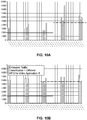
- Figures 10A to 10D illustrate histogram measurements capturing the average throughput of the video flows captured during congested hours on a network.
- data was measured between 21:00 to 03:00 on a plurality of days which included both weekdays and weekends.
- Figure 10A illustrates measurements captured for Application A without any traffic optimization.
- Figure 10B illustrates measurements captured with typical traffic optimization where there is no explicit pacing of the Video flows.
- Figure 10C illustrates measurement captured where an embodiment of the method and system have been used to manage the video streaming.
- the Initial Buffering State of the Video streams of each application are segregated as different WFQ based on the ratio of their bandwidth requirement.
- the 'Mid Video Play Cycle' phase of the Video streams are aggregated and included under the same priority, but a different WFQ with its relevant weightage as measured.
- FIG. 10C illustrates the prioritization of traffic in such a way that all the Video Stream traffic are prioritized as Higher Priority.
- Each of the Video Application traffic is categorized as separate Weighted Fair Queue based on their Ratio of traffic in the network (which may be determined by the measurement module). In this case, all the traffic irrespective of the Video State (Start/Mid-Flow) is put under same priority.
- FIG 10D illustrates a histogram using an embodiment of the system and method detailed herein with the 'Mid Video Play Cycle' phase of the Video streams.
- the Mid Video Play Cycle streams are aggregated and put under a lower priority than 'Initial Buffering State' phase with different WFQ for applications with its relevant weightage as measured.
- This relevant weightage may be defined in the measurement module, for each of the Video stream applications (Netflix, YouTube, and the like) and each video stream's corresponding Video State (Start, Mid-Play, End) has their share in the network. These relevant weightage are applied as the Weights for the Weighted Fair Queue to the Traffic Shaper's individual Traffic Priorities such that each application gets their fair share.
- Figure 11A illustrates measurements captured for Application B without any traffic optimization.
- Figure 11B illustrates measurements captured with typical traffic optimization where there is no explicit pacing of the Video flows.
- Figure 11C illustrates measurement captured where an embodiment of the method and system have been used to optimize the video streaming and
- Figure 11D illustrates a histogram using the embodiment of the system and method detailed herein with the 'Mid Video Play Cycle' phase of the Video streams for Video stream application B.
- the Video Application A may be a typical video streaming application that has a higher share of bandwidth and which had unique characteristics that may be considered aggressive in bandwidth consumption.
- the Video Application B which may be a video streaming application that has a lower share of bandwidth demand and has characteristics that are not as aggressive, was impacted during the congestion (possibly also impacted by aggressive nature of Video Application A in consuming the available bandwidth) resulting in latency and packet loss.
- FIGS 10C and 11C show that the video stream (Application B) that was in need of more bandwidth in (as shown in figures 10A, 10B , 11A and 11B ) had received a share of bandwidth that the application needed to have resulting in 2x better traffic rate. This increase in traffic rate would in turn improve the video quality.
- the aggressive Application A is not deprived of an adequate share of the bandwidth as it gets its fair share. As such, Application B is able to see an improvement while Application A continues to have an appropriate quality and should not overly harm the QoE of the subscriber. This result is achieved by segregating and providing fair share of their independent bandwidth requirements for both high value Video streams.
- Figures 10D and 11D illustrate that the video streams from both Applications A & B have had a further improvement on the bandwidth share during the critical 'Initial Buffering State' of the Video streams. This improvement is intended to be achieved by applying bandwidth boundaries by moving the buffer fill-up in 'Mid Video Play Cycle' to a lower priority than the start of the video or 'Initial Buffering State' phase.
- Figures 10D and 11D are the intended results of embodiments of the system and method detailed herein.
- Application Type A and Application Type B belong to two different applications, may be video streaming technologies, the system and method are intended to be adaptable and provide for effective improved QoE for the Video streaming applications.
- the Application Type B which was not performing as well prior to the use of embodiments of the system and method, performed significantly better with the system and method by improving the average throughput from 2Mbps to 5.5Mbps per video stream.
- the Application Type A which was more aggressive among the two applications, had consistently performed well above 4Mbps by having its effective share of the bandwidth and did not have negative impact in traffic rate (bandwidth share per Video stream).
- bandwidth share per Video stream bandwidth share per Video stream
- Embodiments of the disclosure or elements thereof can be represented as a computer program product stored in a machine-readable medium (also referred to as a computer-readable medium, a processor-readable medium, or a computer usable medium having a computer-readable program code embodied therein).
- the machine-readable medium can be any suitable tangible, non-transitory medium, including magnetic, optical, or electrical storage medium including a diskette, compact disk read only memory (CD-ROM), memory device (volatile or non-volatile), or similar storage mechanism.
- the machine-readable medium can contain various sets of instructions, code sequences, configuration information, or other data, which, when executed, cause a processor to perform steps in a method according to an embodiment of the disclosure.
Landscapes
- Engineering & Computer Science (AREA)
- Signal Processing (AREA)
- Computer Networks & Wireless Communication (AREA)
- Multimedia (AREA)
- Computer Security & Cryptography (AREA)
- Data Exchanges In Wide-Area Networks (AREA)
- Two-Way Televisions, Distribution Of Moving Picture Or The Like (AREA)
- Environmental & Geological Engineering (AREA)
Priority Applications (3)
| Application Number | Priority Date | Filing Date | Title |
|---|---|---|---|
| CA3121370A CA3121370A1 (en) | 2020-06-05 | 2021-06-07 | System and method for managing video streaming congestion |
| US17/340,235 US11431640B2 (en) | 2020-06-05 | 2021-06-07 | System and method for managing video streaming congestion |
| US17/889,492 US11831555B2 (en) | 2020-06-05 | 2022-08-17 | System and method for managing video streaming congestion |
Applications Claiming Priority (1)
| Application Number | Priority Date | Filing Date | Title |
|---|---|---|---|
| IN202011023710 | 2020-06-05 |
Publications (4)
| Publication Number | Publication Date |
|---|---|
| EP3930285A2 true EP3930285A2 (de) | 2021-12-29 |
| EP3930285A3 EP3930285A3 (de) | 2022-04-20 |
| EP3930285B1 EP3930285B1 (de) | 2023-10-11 |
| EP3930285C0 EP3930285C0 (de) | 2023-10-11 |
Family
ID=76217751
Family Applications (1)
| Application Number | Title | Priority Date | Filing Date |
|---|---|---|---|
| EP21177072.2A Active EP3930285B1 (de) | 2020-06-05 | 2021-06-01 | System und verfahren zur verwaltung der überlastung von video-streaming |
Country Status (3)
| Country | Link |
|---|---|
| US (2) | US11431640B2 (de) |
| EP (1) | EP3930285B1 (de) |
| CA (1) | CA3121370A1 (de) |
Families Citing this family (2)
| Publication number | Priority date | Publication date | Assignee | Title |
|---|---|---|---|---|
| US11570228B2 (en) * | 2020-10-15 | 2023-01-31 | Sandvine Corporation | System and method for managing video streaming quality of experience |
| US20260095495A1 (en) * | 2024-09-27 | 2026-04-02 | Hughes Network Systems, Llc | Selectively Prioritizing Video Stream Traffic Using A Predicted Buffer Health In A Satellite Network |
Family Cites Families (10)
| Publication number | Priority date | Publication date | Assignee | Title |
|---|---|---|---|---|
| US8089870B2 (en) * | 2009-07-22 | 2012-01-03 | Cisco Technology, Inc. | QoE based admission control |
| WO2012177763A2 (en) * | 2011-06-20 | 2012-12-27 | Vid Scale. Inc. | Method and apparatus for video aware bandwidth aggregation and/or management |
| US9191114B2 (en) * | 2012-12-14 | 2015-11-17 | Infinera Corporation | Quality of service application for different data flow types |
| US9131009B2 (en) * | 2013-03-08 | 2015-09-08 | Comcast Cable Holdings, Llc | Resource request management |
| US9491496B2 (en) * | 2014-05-01 | 2016-11-08 | Verizon Patent And Licensing Inc. | Systems and methods for delivering content to a media content access device |
| US10063895B2 (en) * | 2015-12-27 | 2018-08-28 | Comigo Ltd. | System and method for allocating bandwidth in a network |
| US10104413B2 (en) * | 2016-07-07 | 2018-10-16 | Telefonaktiebolaget Lm Ericsson (Publ) | Bandwidth and ABR video QoE management based on OTT video providers and devices |
| CA3031584C (en) * | 2016-07-20 | 2023-09-05 | Arris Enterprises Llc | Client feedback enhanced methods and devices for efficient adaptive bitrate streaming |
| US10587583B2 (en) * | 2017-05-19 | 2020-03-10 | Vmware, Inc. | Prioritizing application traffic through network tunnels |
| US10555040B2 (en) * | 2018-06-22 | 2020-02-04 | Samsung Electronics Co., Ltd. | Machine learning based packet service classification methods for experience-centric cellular scheduling |
-
2021
- 2021-06-01 EP EP21177072.2A patent/EP3930285B1/de active Active
- 2021-06-07 US US17/340,235 patent/US11431640B2/en active Active
- 2021-06-07 CA CA3121370A patent/CA3121370A1/en active Pending
-
2022
- 2022-08-17 US US17/889,492 patent/US11831555B2/en active Active
Also Published As
| Publication number | Publication date |
|---|---|
| CA3121370A1 (en) | 2021-12-05 |
| EP3930285A3 (de) | 2022-04-20 |
| US11431640B2 (en) | 2022-08-30 |
| US20210385168A1 (en) | 2021-12-09 |
| US20220393985A1 (en) | 2022-12-08 |
| US11831555B2 (en) | 2023-11-28 |
| EP3930285B1 (de) | 2023-10-11 |
| EP3930285C0 (de) | 2023-10-11 |
Similar Documents
| Publication | Publication Date | Title |
|---|---|---|
| US10833997B2 (en) | System and method of adaptive congestion management | |
| US10805837B2 (en) | Context aware and adaptive QOS/QOE target definition in 5G | |
| Wang et al. | SQUAD: A spectrum-based quality adaptation for dynamic adaptive streaming over HTTP | |
| US10771833B2 (en) | System and method for improving streaming video via better buffer management | |
| EP3501152B1 (de) | Verfahren zur auswahl einer inhaltsverteilungsnetzwerkeinheit | |
| US9877226B2 (en) | Dynamically provisioning subscribers to manage network traffic | |
| US9660922B2 (en) | Network assisted rate shifting for adaptive bit rate streaming | |
| US11924040B2 (en) | System and method for intent based traffic management | |
| US8819303B2 (en) | Deferred transfer of content to optimize bandwidth usage | |
| US10142252B2 (en) | Server intelligence for network speed testing control | |
| US11831555B2 (en) | System and method for managing video streaming congestion | |
| CN102138301A (zh) | 合理使用管理方法和系统 | |
| CN104717158A (zh) | 一种调整带宽调度策略的方法及装置 | |
| Wamser et al. | Using buffered playtime for QoE‐oriented resource management of YouTube video streaming | |
| Wang et al. | Design and analysis of QoE-aware quality adaptation for DASH: A spectrum-based approach | |
| White et al. | Active queue management in docsis 3. x cable modems | |
| US9294404B2 (en) | Modem mode control based on flow ranking | |
| JP6276206B2 (ja) | 帯域割り当て制御装置及び帯域割り当て制御方法 | |
| US20180317142A1 (en) | Allocating radio resources in a cellular network | |
| CA3056359A1 (en) | System and method for intent based traffic management | |
| KR101737786B1 (ko) | 무선 자원 상태 예측 및 트래픽 제어를 위한 프록시 장치 및 방법 | |
| CN121217653A (zh) | 内容分发方法、系统、电子设备、存储介质及程序产品 | |
| WO2017131674A1 (en) | Managing network traffic using experiential capacity |
Legal Events
| Date | Code | Title | Description |
|---|---|---|---|
| PUAI | Public reference made under article 153(3) epc to a published international application that has entered the european phase |
Free format text: ORIGINAL CODE: 0009012 |
|
| STAA | Information on the status of an ep patent application or granted ep patent |
Free format text: STATUS: THE APPLICATION HAS BEEN PUBLISHED |
|
| AK | Designated contracting states |
Kind code of ref document: A2 Designated state(s): AL AT BE BG CH CY CZ DE DK EE ES FI FR GB GR HR HU IE IS IT LI LT LU LV MC MK MT NL NO PL PT RO RS SE SI SK SM TR |
|
| PUAL | Search report despatched |
Free format text: ORIGINAL CODE: 0009013 |
|
| AK | Designated contracting states |
Kind code of ref document: A3 Designated state(s): AL AT BE BG CH CY CZ DE DK EE ES FI FR GB GR HR HU IE IS IT LI LT LU LV MC MK MT NL NO PL PT RO RS SE SI SK SM TR |
|
| RIC1 | Information provided on ipc code assigned before grant |
Ipc: H04N 21/2385 20110101ALI20220318BHEP Ipc: H04L 12/927 20130101ALI20220318BHEP Ipc: H04L 12/867 20130101ALI20220318BHEP Ipc: H04L 29/06 20060101AFI20220318BHEP Ipc: H04N 21/2387 20110101ALI20220318BHEP |
|
| STAA | Information on the status of an ep patent application or granted ep patent |
Free format text: STATUS: REQUEST FOR EXAMINATION WAS MADE |
|
| 17P | Request for examination filed |
Effective date: 20221020 |
|
| RBV | Designated contracting states (corrected) |
Designated state(s): AL AT BE BG CH CY CZ DE DK EE ES FI FR GB GR HR HU IE IS IT LI LT LU LV MC MK MT NL NO PL PT RO RS SE SI SK SM TR |
|
| REG | Reference to a national code |
Ref country code: DE Ref legal event code: R079 Ref country code: DE Ref legal event code: R079 Ref document number: 602021005747 Country of ref document: DE Free format text: PREVIOUS MAIN CLASS: H04L0029060000 Ipc: H04L0065800000 |
|
| GRAP | Despatch of communication of intention to grant a patent |
Free format text: ORIGINAL CODE: EPIDOSNIGR1 |
|
| STAA | Information on the status of an ep patent application or granted ep patent |
Free format text: STATUS: GRANT OF PATENT IS INTENDED |
|
| RIC1 | Information provided on ipc code assigned before grant |
Ipc: H04L 47/80 20220101ALI20230414BHEP Ipc: H04N 21/2387 20110101ALI20230414BHEP Ipc: H04N 21/2385 20110101ALI20230414BHEP Ipc: H04L 65/80 20220101AFI20230414BHEP |
|
| INTG | Intention to grant announced |
Effective date: 20230503 |
|
| GRAS | Grant fee paid |
Free format text: ORIGINAL CODE: EPIDOSNIGR3 |
|
| GRAA | (expected) grant |
Free format text: ORIGINAL CODE: 0009210 |
|
| STAA | Information on the status of an ep patent application or granted ep patent |
Free format text: STATUS: THE PATENT HAS BEEN GRANTED |
|
| AK | Designated contracting states |
Kind code of ref document: B1 Designated state(s): AL AT BE BG CH CY CZ DE DK EE ES FI FR GB GR HR HU IE IS IT LI LT LU LV MC MK MT NL NO PL PT RO RS SE SI SK SM TR |
|
| REG | Reference to a national code |
Ref country code: GB Ref legal event code: FG4D |
|
| REG | Reference to a national code |
Ref country code: CH Ref legal event code: EP |
|
| REG | Reference to a national code |
Ref country code: DE Ref legal event code: R096 Ref document number: 602021005747 Country of ref document: DE |
|
| REG | Reference to a national code |
Ref country code: IE Ref legal event code: FG4D |
|
| U01 | Request for unitary effect filed |
Effective date: 20231018 |
|
| U07 | Unitary effect registered |
Designated state(s): AT BE BG DE DK EE FI FR IT LT LU LV MT NL PT SE SI Effective date: 20231026 |
|
| PG25 | Lapsed in a contracting state [announced via postgrant information from national office to epo] |
Ref country code: GR Free format text: LAPSE BECAUSE OF FAILURE TO SUBMIT A TRANSLATION OF THE DESCRIPTION OR TO PAY THE FEE WITHIN THE PRESCRIBED TIME-LIMIT Effective date: 20240112 |
|
| PG25 | Lapsed in a contracting state [announced via postgrant information from national office to epo] |
Ref country code: IS Free format text: LAPSE BECAUSE OF FAILURE TO SUBMIT A TRANSLATION OF THE DESCRIPTION OR TO PAY THE FEE WITHIN THE PRESCRIBED TIME-LIMIT Effective date: 20240211 |
|
| PG25 | Lapsed in a contracting state [announced via postgrant information from national office to epo] |
Ref country code: ES Free format text: LAPSE BECAUSE OF FAILURE TO SUBMIT A TRANSLATION OF THE DESCRIPTION OR TO PAY THE FEE WITHIN THE PRESCRIBED TIME-LIMIT Effective date: 20231011 |
|
| PG25 | Lapsed in a contracting state [announced via postgrant information from national office to epo] |
Ref country code: IS Free format text: LAPSE BECAUSE OF FAILURE TO SUBMIT A TRANSLATION OF THE DESCRIPTION OR TO PAY THE FEE WITHIN THE PRESCRIBED TIME-LIMIT Effective date: 20240211 Ref country code: GR Free format text: LAPSE BECAUSE OF FAILURE TO SUBMIT A TRANSLATION OF THE DESCRIPTION OR TO PAY THE FEE WITHIN THE PRESCRIBED TIME-LIMIT Effective date: 20240112 Ref country code: ES Free format text: LAPSE BECAUSE OF FAILURE TO SUBMIT A TRANSLATION OF THE DESCRIPTION OR TO PAY THE FEE WITHIN THE PRESCRIBED TIME-LIMIT Effective date: 20231011 |
|
| PG25 | Lapsed in a contracting state [announced via postgrant information from national office to epo] |
Ref country code: RS Free format text: LAPSE BECAUSE OF FAILURE TO SUBMIT A TRANSLATION OF THE DESCRIPTION OR TO PAY THE FEE WITHIN THE PRESCRIBED TIME-LIMIT Effective date: 20231011 Ref country code: PL Free format text: LAPSE BECAUSE OF FAILURE TO SUBMIT A TRANSLATION OF THE DESCRIPTION OR TO PAY THE FEE WITHIN THE PRESCRIBED TIME-LIMIT Effective date: 20231011 Ref country code: NO Free format text: LAPSE BECAUSE OF FAILURE TO SUBMIT A TRANSLATION OF THE DESCRIPTION OR TO PAY THE FEE WITHIN THE PRESCRIBED TIME-LIMIT Effective date: 20240111 Ref country code: HR Free format text: LAPSE BECAUSE OF FAILURE TO SUBMIT A TRANSLATION OF THE DESCRIPTION OR TO PAY THE FEE WITHIN THE PRESCRIBED TIME-LIMIT Effective date: 20231011 |
|
| REG | Reference to a national code |
Ref country code: DE Ref legal event code: R097 Ref document number: 602021005747 Country of ref document: DE |
|
| PG25 | Lapsed in a contracting state [announced via postgrant information from national office to epo] |
Ref country code: CZ Free format text: LAPSE BECAUSE OF FAILURE TO SUBMIT A TRANSLATION OF THE DESCRIPTION OR TO PAY THE FEE WITHIN THE PRESCRIBED TIME-LIMIT Effective date: 20231011 |
|
| PG25 | Lapsed in a contracting state [announced via postgrant information from national office to epo] |
Ref country code: SK Free format text: LAPSE BECAUSE OF FAILURE TO SUBMIT A TRANSLATION OF THE DESCRIPTION OR TO PAY THE FEE WITHIN THE PRESCRIBED TIME-LIMIT Effective date: 20231011 |
|
| PG25 | Lapsed in a contracting state [announced via postgrant information from national office to epo] |
Ref country code: SM Free format text: LAPSE BECAUSE OF FAILURE TO SUBMIT A TRANSLATION OF THE DESCRIPTION OR TO PAY THE FEE WITHIN THE PRESCRIBED TIME-LIMIT Effective date: 20231011 Ref country code: SK Free format text: LAPSE BECAUSE OF FAILURE TO SUBMIT A TRANSLATION OF THE DESCRIPTION OR TO PAY THE FEE WITHIN THE PRESCRIBED TIME-LIMIT Effective date: 20231011 Ref country code: RO Free format text: LAPSE BECAUSE OF FAILURE TO SUBMIT A TRANSLATION OF THE DESCRIPTION OR TO PAY THE FEE WITHIN THE PRESCRIBED TIME-LIMIT Effective date: 20231011 Ref country code: CZ Free format text: LAPSE BECAUSE OF FAILURE TO SUBMIT A TRANSLATION OF THE DESCRIPTION OR TO PAY THE FEE WITHIN THE PRESCRIBED TIME-LIMIT Effective date: 20231011 |
|
| U20 | Renewal fee for the european patent with unitary effect paid |
Year of fee payment: 4 Effective date: 20240627 |
|
| PLBE | No opposition filed within time limit |
Free format text: ORIGINAL CODE: 0009261 |
|
| STAA | Information on the status of an ep patent application or granted ep patent |
Free format text: STATUS: NO OPPOSITION FILED WITHIN TIME LIMIT |
|
| 26N | No opposition filed |
Effective date: 20240712 |
|
| PG25 | Lapsed in a contracting state [announced via postgrant information from national office to epo] |
Ref country code: MC Free format text: LAPSE BECAUSE OF FAILURE TO SUBMIT A TRANSLATION OF THE DESCRIPTION OR TO PAY THE FEE WITHIN THE PRESCRIBED TIME-LIMIT Effective date: 20231011 |
|
| REG | Reference to a national code |
Ref country code: CH Ref legal event code: PL |
|
| PG25 | Lapsed in a contracting state [announced via postgrant information from national office to epo] |
Ref country code: IE Free format text: LAPSE BECAUSE OF NON-PAYMENT OF DUE FEES Effective date: 20240601 |
|
| PG25 | Lapsed in a contracting state [announced via postgrant information from national office to epo] |
Ref country code: CH Free format text: LAPSE BECAUSE OF NON-PAYMENT OF DUE FEES Effective date: 20240630 |
|
| PGFP | Annual fee paid to national office [announced via postgrant information from national office to epo] |
Ref country code: GB Payment date: 20250627 Year of fee payment: 5 |
|
| U20 | Renewal fee for the european patent with unitary effect paid |
Year of fee payment: 5 Effective date: 20250628 |
|
| PG25 | Lapsed in a contracting state [announced via postgrant information from national office to epo] |
Ref country code: CY Free format text: LAPSE BECAUSE OF FAILURE TO SUBMIT A TRANSLATION OF THE DESCRIPTION OR TO PAY THE FEE WITHIN THE PRESCRIBED TIME-LIMIT; INVALID AB INITIO Effective date: 20210601 |
|
| PG25 | Lapsed in a contracting state [announced via postgrant information from national office to epo] |
Ref country code: HU Free format text: LAPSE BECAUSE OF FAILURE TO SUBMIT A TRANSLATION OF THE DESCRIPTION OR TO PAY THE FEE WITHIN THE PRESCRIBED TIME-LIMIT; INVALID AB INITIO Effective date: 20210601 |