EP3932974B1 - Biologisch abbaubare harzteilchen - Google Patents
Biologisch abbaubare harzteilchen Download PDFInfo
- Publication number
- EP3932974B1 EP3932974B1 EP21171102.3A EP21171102A EP3932974B1 EP 3932974 B1 EP3932974 B1 EP 3932974B1 EP 21171102 A EP21171102 A EP 21171102A EP 3932974 B1 EP3932974 B1 EP 3932974B1
- Authority
- EP
- European Patent Office
- Prior art keywords
- group
- compound
- resin
- biodegradable resin
- resin particle
- Prior art date
- Legal status (The legal status is an assumption and is not a legal conclusion. Google has not performed a legal analysis and makes no representation as to the accuracy of the status listed.)
- Active
Links
Classifications
-
- C—CHEMISTRY; METALLURGY
- C08—ORGANIC MACROMOLECULAR COMPOUNDS; THEIR PREPARATION OR CHEMICAL WORKING-UP; COMPOSITIONS BASED THEREON
- C08J—WORKING-UP; GENERAL PROCESSES OF COMPOUNDING; AFTER-TREATMENT NOT COVERED BY SUBCLASSES C08B, C08C, C08F, C08G or C08H
- C08J3/00—Processes of treating or compounding macromolecular substances
- C08J3/12—Powdering or granulating
- C08J3/126—Polymer particles coated by polymer, e.g. core shell structures
-
- C—CHEMISTRY; METALLURGY
- C08—ORGANIC MACROMOLECULAR COMPOUNDS; THEIR PREPARATION OR CHEMICAL WORKING-UP; COMPOSITIONS BASED THEREON
- C08L—COMPOSITIONS OF MACROMOLECULAR COMPOUNDS
- C08L1/00—Compositions of cellulose, modified cellulose or cellulose derivatives
- C08L1/08—Cellulose derivatives
- C08L1/10—Esters of organic acids, i.e. acylates
- C08L1/12—Cellulose acetate
-
- A—HUMAN NECESSITIES
- A61—MEDICAL OR VETERINARY SCIENCE; HYGIENE
- A61K—PREPARATIONS FOR MEDICAL, DENTAL OR TOILETRY PURPOSES
- A61K8/00—Cosmetics or similar toiletry preparations
- A61K8/02—Cosmetics or similar toiletry preparations characterised by special physical form
- A61K8/0241—Containing particulates characterized by their shape and/or structure
-
- A—HUMAN NECESSITIES
- A61—MEDICAL OR VETERINARY SCIENCE; HYGIENE
- A61K—PREPARATIONS FOR MEDICAL, DENTAL OR TOILETRY PURPOSES
- A61K8/00—Cosmetics or similar toiletry preparations
- A61K8/18—Cosmetics or similar toiletry preparations characterised by the composition
- A61K8/72—Cosmetics or similar toiletry preparations characterised by the composition containing organic macromolecular compounds
- A61K8/81—Cosmetics or similar toiletry preparations characterised by the composition containing organic macromolecular compounds obtained by reactions involving only carbon-to-carbon unsaturated bonds
- A61K8/817—Compositions of homopolymers or copolymers of compounds having one or more unsaturated aliphatic radicals, each having only one carbon-to-carbon double bond, and at least one being terminated by a single or double bond to nitrogen or by a heterocyclic ring containing nitrogen; Compositions or derivatives of such polymers, e.g. vinylimidazol, vinylcaprolactame, allylamines (Polyquaternium 6)
-
- A—HUMAN NECESSITIES
- A61—MEDICAL OR VETERINARY SCIENCE; HYGIENE
- A61Q—SPECIFIC USE OF COSMETICS OR SIMILAR TOILETRY PREPARATIONS
- A61Q1/00—Make-up preparations; Body powders; Preparations for removing make-up
- A61Q1/02—Preparations containing skin colorants, e.g. pigments
-
- C—CHEMISTRY; METALLURGY
- C08—ORGANIC MACROMOLECULAR COMPOUNDS; THEIR PREPARATION OR CHEMICAL WORKING-UP; COMPOSITIONS BASED THEREON
- C08J—WORKING-UP; GENERAL PROCESSES OF COMPOUNDING; AFTER-TREATMENT NOT COVERED BY SUBCLASSES C08B, C08C, C08F, C08G or C08H
- C08J7/00—Chemical treatment or coating of shaped articles made of macromolecular substances
- C08J7/04—Coating
- C08J7/042—Coating with two or more layers, where at least one layer of a composition contains a polymer binder
-
- C—CHEMISTRY; METALLURGY
- C08—ORGANIC MACROMOLECULAR COMPOUNDS; THEIR PREPARATION OR CHEMICAL WORKING-UP; COMPOSITIONS BASED THEREON
- C08K—Use of inorganic or non-macromolecular organic substances as compounding ingredients
- C08K5/00—Use of organic ingredients
- C08K5/04—Oxygen-containing compounds
- C08K5/09—Carboxylic acids; Metal salts thereof; Anhydrides thereof
-
- C—CHEMISTRY; METALLURGY
- C08—ORGANIC MACROMOLECULAR COMPOUNDS; THEIR PREPARATION OR CHEMICAL WORKING-UP; COMPOSITIONS BASED THEREON
- C08K—Use of inorganic or non-macromolecular organic substances as compounding ingredients
- C08K5/00—Use of organic ingredients
- C08K5/04—Oxygen-containing compounds
- C08K5/13—Phenols; Phenolates
-
- C—CHEMISTRY; METALLURGY
- C08—ORGANIC MACROMOLECULAR COMPOUNDS; THEIR PREPARATION OR CHEMICAL WORKING-UP; COMPOSITIONS BASED THEREON
- C08L—COMPOSITIONS OF MACROMOLECULAR COMPOUNDS
- C08L1/00—Compositions of cellulose, modified cellulose or cellulose derivatives
- C08L1/08—Cellulose derivatives
- C08L1/10—Esters of organic acids, i.e. acylates
- C08L1/14—Mixed esters, e.g. cellulose acetate-butyrate
-
- C—CHEMISTRY; METALLURGY
- C08—ORGANIC MACROMOLECULAR COMPOUNDS; THEIR PREPARATION OR CHEMICAL WORKING-UP; COMPOSITIONS BASED THEREON
- C08L—COMPOSITIONS OF MACROMOLECULAR COMPOUNDS
- C08L67/00—Compositions of polyesters obtained by reactions forming a carboxylic ester link in the main chain; Compositions of derivatives of such polymers
- C08L67/02—Polyesters derived from dicarboxylic acids and dihydroxy compounds
-
- C—CHEMISTRY; METALLURGY
- C08—ORGANIC MACROMOLECULAR COMPOUNDS; THEIR PREPARATION OR CHEMICAL WORKING-UP; COMPOSITIONS BASED THEREON
- C08L—COMPOSITIONS OF MACROMOLECULAR COMPOUNDS
- C08L67/00—Compositions of polyesters obtained by reactions forming a carboxylic ester link in the main chain; Compositions of derivatives of such polymers
- C08L67/04—Polyesters derived from hydroxycarboxylic acids, e.g. lactones
-
- C—CHEMISTRY; METALLURGY
- C08—ORGANIC MACROMOLECULAR COMPOUNDS; THEIR PREPARATION OR CHEMICAL WORKING-UP; COMPOSITIONS BASED THEREON
- C08L—COMPOSITIONS OF MACROMOLECULAR COMPOUNDS
- C08L79/00—Compositions of macromolecular compounds obtained by reactions forming in the main chain of the macromolecule a linkage containing nitrogen with or without oxygen or carbon only, not provided for in groups C08L61/00 - C08L77/00
- C08L79/02—Polyamines
-
- C—CHEMISTRY; METALLURGY
- C08—ORGANIC MACROMOLECULAR COMPOUNDS; THEIR PREPARATION OR CHEMICAL WORKING-UP; COMPOSITIONS BASED THEREON
- C08L—COMPOSITIONS OF MACROMOLECULAR COMPOUNDS
- C08L91/00—Compositions of oils, fats or waxes; Compositions of derivatives thereof
- C08L91/06—Waxes
-
- A—HUMAN NECESSITIES
- A61—MEDICAL OR VETERINARY SCIENCE; HYGIENE
- A61K—PREPARATIONS FOR MEDICAL, DENTAL OR TOILETRY PURPOSES
- A61K2800/00—Properties of cosmetic compositions or active ingredients thereof or formulation aids used therein and process related aspects
- A61K2800/40—Chemical, physico-chemical or functional or structural properties of particular ingredients
- A61K2800/59—Mixtures
- A61K2800/594—Mixtures of polymers
-
- A—HUMAN NECESSITIES
- A61—MEDICAL OR VETERINARY SCIENCE; HYGIENE
- A61K—PREPARATIONS FOR MEDICAL, DENTAL OR TOILETRY PURPOSES
- A61K2800/00—Properties of cosmetic compositions or active ingredients thereof or formulation aids used therein and process related aspects
- A61K2800/40—Chemical, physico-chemical or functional or structural properties of particular ingredients
- A61K2800/60—Particulates further characterized by their structure or composition
- A61K2800/61—Surface treated
- A61K2800/62—Coated
- A61K2800/63—More than one coating
-
- C—CHEMISTRY; METALLURGY
- C08—ORGANIC MACROMOLECULAR COMPOUNDS; THEIR PREPARATION OR CHEMICAL WORKING-UP; COMPOSITIONS BASED THEREON
- C08J—WORKING-UP; GENERAL PROCESSES OF COMPOUNDING; AFTER-TREATMENT NOT COVERED BY SUBCLASSES C08B, C08C, C08F, C08G or C08H
- C08J2300/00—Characterised by the use of unspecified polymers
- C08J2300/16—Biodegradable polymers
-
- C—CHEMISTRY; METALLURGY
- C08—ORGANIC MACROMOLECULAR COMPOUNDS; THEIR PREPARATION OR CHEMICAL WORKING-UP; COMPOSITIONS BASED THEREON
- C08J—WORKING-UP; GENERAL PROCESSES OF COMPOUNDING; AFTER-TREATMENT NOT COVERED BY SUBCLASSES C08B, C08C, C08F, C08G or C08H
- C08J2301/00—Characterised by the use of cellulose, modified cellulose or cellulose derivatives
- C08J2301/08—Cellulose derivatives
- C08J2301/10—Esters of organic acids
- C08J2301/12—Cellulose acetate
-
- C—CHEMISTRY; METALLURGY
- C08—ORGANIC MACROMOLECULAR COMPOUNDS; THEIR PREPARATION OR CHEMICAL WORKING-UP; COMPOSITIONS BASED THEREON
- C08J—WORKING-UP; GENERAL PROCESSES OF COMPOUNDING; AFTER-TREATMENT NOT COVERED BY SUBCLASSES C08B, C08C, C08F, C08G or C08H
- C08J2301/00—Characterised by the use of cellulose, modified cellulose or cellulose derivatives
- C08J2301/08—Cellulose derivatives
- C08J2301/14—Mixed esters
-
- C—CHEMISTRY; METALLURGY
- C08—ORGANIC MACROMOLECULAR COMPOUNDS; THEIR PREPARATION OR CHEMICAL WORKING-UP; COMPOSITIONS BASED THEREON
- C08J—WORKING-UP; GENERAL PROCESSES OF COMPOUNDING; AFTER-TREATMENT NOT COVERED BY SUBCLASSES C08B, C08C, C08F, C08G or C08H
- C08J2367/00—Characterised by the use of polyesters obtained by reactions forming a carboxylic ester link in the main chain; Derivatives of such polymers
- C08J2367/02—Polyesters derived from dicarboxylic acids and dihydroxy compounds
-
- C—CHEMISTRY; METALLURGY
- C08—ORGANIC MACROMOLECULAR COMPOUNDS; THEIR PREPARATION OR CHEMICAL WORKING-UP; COMPOSITIONS BASED THEREON
- C08J—WORKING-UP; GENERAL PROCESSES OF COMPOUNDING; AFTER-TREATMENT NOT COVERED BY SUBCLASSES C08B, C08C, C08F, C08G or C08H
- C08J2367/00—Characterised by the use of polyesters obtained by reactions forming a carboxylic ester link in the main chain; Derivatives of such polymers
- C08J2367/04—Polyesters derived from hydroxy carboxylic acids, e.g. lactones
-
- C—CHEMISTRY; METALLURGY
- C08—ORGANIC MACROMOLECULAR COMPOUNDS; THEIR PREPARATION OR CHEMICAL WORKING-UP; COMPOSITIONS BASED THEREON
- C08J—WORKING-UP; GENERAL PROCESSES OF COMPOUNDING; AFTER-TREATMENT NOT COVERED BY SUBCLASSES C08B, C08C, C08F, C08G or C08H
- C08J2433/00—Characterised by the use of homopolymers or copolymers of compounds having one or more unsaturated aliphatic radicals, each having only one carbon-to-carbon double bond, and only one being terminated by only one carboxyl radical, or of salts, anhydrides, esters, amides, imides, or nitriles thereof; Derivatives of such polymers
-
- C—CHEMISTRY; METALLURGY
- C08—ORGANIC MACROMOLECULAR COMPOUNDS; THEIR PREPARATION OR CHEMICAL WORKING-UP; COMPOSITIONS BASED THEREON
- C08J—WORKING-UP; GENERAL PROCESSES OF COMPOUNDING; AFTER-TREATMENT NOT COVERED BY SUBCLASSES C08B, C08C, C08F, C08G or C08H
- C08J2439/00—Characterised by the use of homopolymers or copolymers of compounds having one or more unsaturated aliphatic radicals, each having only one carbon-to-carbon double bond, and at least one being terminated by a single or double bond to nitrogen or by a heterocyclic ring containing nitrogen; Derivatives of such polymers
- C08J2439/02—Homopolymers or copolymers of vinylamine
-
- C—CHEMISTRY; METALLURGY
- C08—ORGANIC MACROMOLECULAR COMPOUNDS; THEIR PREPARATION OR CHEMICAL WORKING-UP; COMPOSITIONS BASED THEREON
- C08J—WORKING-UP; GENERAL PROCESSES OF COMPOUNDING; AFTER-TREATMENT NOT COVERED BY SUBCLASSES C08B, C08C, C08F, C08G or C08H
- C08J2443/00—Characterised by the use of homopolymers or copolymers of compounds having one or more unsaturated aliphatic radicals, each having only one carbon-to-carbon double bond, and containing boron, silicon, phosphorus, selenium, tellurium or a metal; Derivatives of such polymers
- C08J2443/04—Homopolymers or copolymers of monomers containing silicon
-
- C—CHEMISTRY; METALLURGY
- C08—ORGANIC MACROMOLECULAR COMPOUNDS; THEIR PREPARATION OR CHEMICAL WORKING-UP; COMPOSITIONS BASED THEREON
- C08J—WORKING-UP; GENERAL PROCESSES OF COMPOUNDING; AFTER-TREATMENT NOT COVERED BY SUBCLASSES C08B, C08C, C08F, C08G or C08H
- C08J2467/00—Characterised by the use of polyesters obtained by reactions forming a carboxylic ester link in the main chain; Derivatives of such polymers
-
- C—CHEMISTRY; METALLURGY
- C08—ORGANIC MACROMOLECULAR COMPOUNDS; THEIR PREPARATION OR CHEMICAL WORKING-UP; COMPOSITIONS BASED THEREON
- C08J—WORKING-UP; GENERAL PROCESSES OF COMPOUNDING; AFTER-TREATMENT NOT COVERED BY SUBCLASSES C08B, C08C, C08F, C08G or C08H
- C08J2475/00—Characterised by the use of polyureas or polyurethanes; Derivatives of such polymers
- C08J2475/04—Polyurethanes
-
- C—CHEMISTRY; METALLURGY
- C08—ORGANIC MACROMOLECULAR COMPOUNDS; THEIR PREPARATION OR CHEMICAL WORKING-UP; COMPOSITIONS BASED THEREON
- C08J—WORKING-UP; GENERAL PROCESSES OF COMPOUNDING; AFTER-TREATMENT NOT COVERED BY SUBCLASSES C08B, C08C, C08F, C08G or C08H
- C08J2479/00—Characterised by the use of macromolecular compounds obtained by reactions forming in the main chain of the macromolecule a linkage containing nitrogen with or without oxygen, or carbon only, not provided for in groups C08J2461/00 - C08J2477/00
- C08J2479/02—Polyamines
-
- C—CHEMISTRY; METALLURGY
- C08—ORGANIC MACROMOLECULAR COMPOUNDS; THEIR PREPARATION OR CHEMICAL WORKING-UP; COMPOSITIONS BASED THEREON
- C08J—WORKING-UP; GENERAL PROCESSES OF COMPOUNDING; AFTER-TREATMENT NOT COVERED BY SUBCLASSES C08B, C08C, C08F, C08G or C08H
- C08J2491/00—Characterised by the use of oils, fats or waxes; Derivatives thereof
- C08J2491/06—Waxes
-
- C—CHEMISTRY; METALLURGY
- C08—ORGANIC MACROMOLECULAR COMPOUNDS; THEIR PREPARATION OR CHEMICAL WORKING-UP; COMPOSITIONS BASED THEREON
- C08L—COMPOSITIONS OF MACROMOLECULAR COMPOUNDS
- C08L2201/00—Properties
- C08L2201/06—Biodegradable
-
- C—CHEMISTRY; METALLURGY
- C08—ORGANIC MACROMOLECULAR COMPOUNDS; THEIR PREPARATION OR CHEMICAL WORKING-UP; COMPOSITIONS BASED THEREON
- C08L—COMPOSITIONS OF MACROMOLECULAR COMPOUNDS
- C08L2205/00—Polymer mixtures characterised by other features
- C08L2205/02—Polymer mixtures characterised by other features containing two or more polymers of the same C08L -group
Definitions
- the present invention relates to a biodegradable resin particle.
- Patent Literature 1 discloses "a cellulose material having improved biodegradability by coating with a water-soluble polymer”.
- Patent Literature 1 discloses polyethyleneimine as the water-soluble polymer.
- Patent Literature 2 discloses "a makeup method that changes an appearance of a skin, changes a touch feeling of the skin, and/or protects the skin, the makeup method including a step of applying, onto the skin, a self-sustaining beauty sheet containing at least one biocompatible and/or biodegradable hydrophobic polymer layer, in which the self-sustaining beauty sheet has a thickness of 10 nm to 1000 nm, preferably 30 nm to 500 nm, and more preferably 50 nm to 300 nm".
- Patent Literature 2 discloses a layer containing polyethyleneimine as the hydrophobic polymer layer.
- Patent Literature 3 discloses "a biodegradable resin composition containing: (A) a thermoplastic synthetic resin; (B) an inorganic filler; and (C) a biodegradable organic matter, in which a blending amount of the component (A) is 49 mass% or less based on the total amount of the composition, and a blending ratio ((B)/(C)) of the component (B) to the component (C) is in a range of 3/7 to 7/3 in terms of mass ratio".
- Patent Literature 3 discloses that the biodegradable resin composition is blended with at least one selected from liquid paraffin, metal soap, silicone, a side-chain crystalline polyolefin, stearic acid, and polyglutamic acid as a binder component (D).
- Patent Literature 4 discloses "compositions, and methods that aid particle transport in mucus".
- An object of the present invention is to provide a biodegradable resin particle having a slow initial biodegradation rate while having a biodegradation rate over time, as compared with a biodegradable resin particle having only a layer containing at least one cationic resin of a polyalkyleneimine, a polyallylamine and a polyvinylamine on a surface of a base particle containing a biodegradable resin.
- a biodegradable resin particle containing:
- the anionic or nonionic hydrophobic compound may be at least one selected from the group consisting of a silicone compound, a hydrocarbon compound, a fatty acid compound, an acrylic resin, a polyester resin, and a urethane resin.
- the silicone compound may be at least one selected from the group consisting of a dimethylpolysiloxane, a methylpolysiloxane, an MQ resin, and a silicone rubber.
- the hydrocarbon compound may be at least one selected from the group consisting of a paraffin wax, a microcrystalline wax, a polyethylene wax, and a polypropylene wax.
- the fatty acid compound may be at least one selected from the group consisting of a carnauba wax, a rice wax, a candelilla wax, a palm wax, a castor oil wax, a soybean oil wax, and a sunflower oil wax.
- the polyalkyleneimine may be a polyalkyleneimine having a constituent unit having an alkylene group having 1 or more and 4 or less carbon atoms.
- the polyalkyleneimine may have a constituent unit having an alkylene group having 1 or more and 4 or less carbon atoms and be a polyethyleneimine.
- the biodegradable resin may be at least one selected from the group consisting of a cellulose resin and a polyester resin.
- biodegradable resin particle having a biodegradation rate over time and a slow initial biodegradation rate, as compared with a biodegradable resin particle having only a layer containing at least one cationic resin of a polyalkyleneimine, a polyallylamine and a polyvinylamine on a surface of a base particle containing a biodegradable resin.
- the biodegradable resin may be the cellulose resin.
- biodegradable resin particle having a fast biodegradation rate over time and a slow initial biodegradation rate, as compared with a case where the biodegradable resin is a polyester resin.
- the cellulose resin may be a cellulose acylate having two or more kinds of acyl groups.
- biodegradable resin particle having a fast biodegradation rate over time and a slow initial biodegradation rate, as compared with a case where the cellulose resin is a cellulose acylate having one kind of acyl group.
- the base particle may further contain at least one of a fatty acid ester and an aromatic compound, and the aromatic compound does not have a functional group that reacts with the cellulose resin and the aromatic compound has a long-chain aliphatic group and at least one of a phenolic hydroxy group and a monoglycidyl ether group that is directly bonded to an aromatic group of the aromatic compound.
- biodegradable resin particle having biodegradability and excellent in hydrolysis resistance even when a cellulose resin and at least one of an aromatic compound and a fatty acid ester are contained as the biodegradable resin, as compared with a biodegradable resin particle having only a layer containing at least one cationic resin of a polyalkyleneimine, a polyallylamine and a polyvinylamine on a surface of a base particle containing a biodegradable resin.
- the aromatic compound may be a cardanol compound.
- the cardanol compound may be at least one compound selected from the group consisting of a compound represented by the following general formula (CDN1) and a compound represented by the following general formula (CDN1-e), in which, in the general formula (CDN1), R 1 represents an alkyl group which may have a substituent or an unsaturated aliphatic group which has a double bond and may have a substituent, R 2 represents a hydroxy group, a carboxy group, an alkyl group which may have a substituent, or an unsaturated aliphatic group which has a double bond and may have a substituent, P2 represents an integer of 0 or more and 4 or less, and a plurality of R 2 S may be the same group or different groups when P2 is 2 or more, in which, in the general formula (CDN1-e), L EP represents a single bond or a divalent linking group, R 1 represents an alkyl group which may have a substituent or an unsaturated aliphatic group which has a double bond and may
- the cellulose resin may be a cellulose acetate propionate and the aromatic compound may be a cardanol compound.
- the cellulose resin may be a cellulose acetate butyrate and the base particle may contain the fatty acid ester.
- biodegradable resin particle having biodegradability and excellent in hydrolysis resistance, as compared with a case where the base particle contains cellulose acetate butyrate as a cellulose resin and a cardanol compound as an aromatic compound, or a case where the base particle contains cellulose acetate propionate as a cellulose resin and a fatty acid ester.
- a mass ratio of a content of the cationic resin in the first layer to a content of the anionic or nonionic hydrophobic compound in the second layer may be 0.1 or more and 10 or less.
- biodegradable resin particle having a fast biodegradation rate over time and a slow initial biodegradation rate, as compared with a case where the mass ratio of the cationic resin to the hydrophobic compound is less than 0.1 or more than 10.
- a content of the cationic resin with respect to the base particle may be 0.1 mass% or more and 10 mass% or less.
- biodegradable resin particle having a fast biodegradation rate over time and a slow initial biodegradation rate, as compared with a case where a content of the cationic resin with respect to the base particle is less than 0.1 mass% or more than 10 mass%.
- a number average molecular weight of the cationic resin may be 10,000 or more and 85,000 or less.
- biodegradable resin particle having a fast biodegradation rate over time and a slow initial biodegradation rate, as compared with a case where the number average molecular weight of the cationic resin is less than 10,000 or more than 85,000.
- an upper limit or a lower limit described in one numerical range may be replaced with an upper limit or a lower limit of the numerical range described in other stages. Further, in the numerical ranges described in the present description, the upper limit or the lower limit of the numerical range may be replaced with values shown in Examples.
- step indicates not only an independent step, and even when a step cannot be clearly distinguished from other steps, this step is included in the term “step” as long as the intended purpose of the step is achieved.
- Each component may contain a plurality of corresponding substances.
- the amount of each component when there are a plurality of substances corresponding to each component, unless otherwise specified, it refers to the total amount of the plurality of substances.
- (meth)acryl means at least one of acryl and methacryl
- (meth)acrylate means at least one of acrylate and methacrylate
- a biodegradable resin particle according to the first exemplary embodiment contains: a base particle containing a biodegradable resin; a first layer containing at least one cationic resin of a polyalkyleneimine, a polyallylamine and a polyvinylamine, which is present on a surface of the base particle; and a second layer containing an anionic or nonionic hydrophobic compound on the first layer.
- the biodegradable resin particle according to the first exemplary embodiment is a biodegradable resin particle having a biodegradation rate over time (for example, 12 months under aerobic conditions) and a slow initial biodegradation rate (for example, 3 months under aerobic conditions).
- a biodegradation rate over time for example, 12 months under aerobic conditions
- a slow initial biodegradation rate for example, 3 months under aerobic conditions
- the biodegradable resin particle is required to have a high biodegradation rate. However, when the biodegradation rate is excessively high, the durability of the resin particle decreases rapidly. That is, it is required to maintain the function as the resin particle for a certain period (for example, a period of several years during the period of use).
- the second layer containing an anionic or nonionic hydrophobic compound is provided on the surface of the base particle containing a biodegradable resin via the first layer containing at least one cationic resin of a polyalkyleneimine, a polyallylamine and a polyvinyl amine.
- an anionic or nonionic hydrophobic compound is adsorbed on the surface of the base particle to form a hydrophobic second layer. Therefore, the hydrophobicity of the surface of the biodegradable resin particle is increased. As a result, the initial biodegradation rate is slowed down, and the function as a resin particle is maintained for a certain period. Then, since the biodegradation of the hydrophobic compound in the second layer progresses with the passage of time, the biodegradability of the base particle containing a biodegradable resin is exhibited over time.
- the biodegradable resin particle according to the first exemplary embodiment is a biodegradable resin particle having a biodegradation rate over time and a slow initial biodegradation rate.
- a biodegradable resin particle according to the second exemplary embodiment contains: a base particle containing a biodegradable resin; and a compound layer on a surface of the base particle, in which a water contact angle of a pellet in which the biodegradable resin particle is pelletized is 70° or more and 120° or less.
- the biodegradable resin particle according to the second exemplary embodiment is a biodegradable resin particle having a biodegradation rate over time (for example, 12 months under aerobic conditions) and a slow initial biodegradation rate (for example, 3 months under aerobic conditions).
- the surface of the compound layer exhibits hydrophobicity within the above contact angle range, the initial biodegradation rate is slowed down when the hydrolyzability of the biodegradable resin of the base particle is prevented, and the function as a resin particle is maintained for a certain period. Then, after a certain period, components of the compound layer of the biodegradable resin particle are decomposed, so that the biodegradability of the base particle containing a biodegradable resin is exhibited over time.
- a biodegradable resin particle according to the third exemplary embodiment contains: a base particle containing a biodegradable resin; and a compound layer on a surface of the base particle, in which an aerobic condition biodegradation rate after 3 months as measured by a method according to ISO-14855-2 (2016) is 20% or less.
- the biodegradable resin particle according to the third exemplary embodiment is a biodegradable resin particle having a biodegradation rate over time (for example, 12 months under aerobic conditions) and a slow initial biodegradation rate (for example, 3 months under aerobic conditions).
- the compound layer reduces the aerobic condition biodegradation rate after the above 3 months, the initial biodegradation rate is slowed down when the hydrolyzability of the biodegradable resin of the base particle is prevented, and the function as a resin particle is maintained for a certain period. Then, after a certain period, components of the compound layer of the biodegradable resin particle are decomposed, so that the biodegradability of the base particle containing a biodegradable resin is exhibited over time.
- a biodegradable resin particle according to the fourth exemplary embodiment contains: a base particle containing a biodegradable resin; and a compound layer on a surface of the base particle, in which when a surface of the biodegradable resin particle is measured by X-ray photoelectron spectroscopy (XPS), a relationship between a carbon atomic weight Cs, a silicon atomic weight Sis, and an oxygen atomic weight Os satisfies an expression A: Cs + Sis / Os ⁇ 3 .
- XPS X-ray photoelectron spectroscopy
- the biodegradable resin particle according to the fourth exemplary embodiment is a biodegradable resin particle having a biodegradation rate over time (for example, 12 months under aerobic conditions) and a slow initial biodegradation rate (for example, 3 months under aerobic conditions).
- the hydrophobicity of the surface of the biodegradable resin particle is increased when the amounts of carbon atoms and silicon atoms present on the surface of the biodegradable resin particle are increased by the compound layer to satisfy the expression A, the initial biodegradation rate is slowed down when the hydrolyzability of the biodegradable resin of the base particle is prevented, and the function as a resin particle is maintained for a certain period. Then, after a certain period, components of the compound layer of the biodegradable resin particle are decomposed, so that the biodegradability of the base particle containing a biodegradable resin is exhibited over time.
- the oil lipophilicity of the surface of the biodegradable resin particle is improved, and the oil absorption rate of the resin particle is increased.
- the biodegradable resin particles in the related art are excellent in degradability in the natural environment, but have a relatively hydrophilic structure, and therefore have low compatibility with oil or have a low oil absorbency.
- the biodegradable resin particles in the related art are added to cosmetics or the like, if the oil absorbency is low, the smeared makeup is likely to occur due to sebum or the like.
- the biodegradable resin particles in the related art are added to paints, if the oil absorbency is low and the compatibility with the oil is poor, a phenomenon of agglutination and solidification occurs. Therefore, the biodegradable resin particles having a high oil absorption rate are useful in the fields of cosmetics, paints, etc., because of being less likely to smear the makeup even when added to cosmetics and are less likely to aggregate even when added to paints.
- examples of the compound layer in the biodegradable resin particles according to the second to fourth exemplary embodiments include a two-layer compound layer including a first layer containing at least one cationic resin of a polyalkyleneimine, a polyallylamine and a polyvinyl amine and a second layer containing an anionic or nonionic hydrophobic compound on the first layer.
- the compound layer in the biodegradable resin particles according to the second and third exemplary embodiments is not particularly limited as long as the compound layer is a compound layer to which the above characteristics of the biodegradable resin particles according to the second and third exemplary embodiments are imparted.
- biodegradable resin particle according to any of the biodegradable resin particles according to the first to fourth exemplary embodiments (hereinafter, also referred to as "biodegradable resin particle according to the present exemplary embodiment") will be described in detail.
- an example of the biodegradable resin particle of the present invention may be a biodegradable resin particle corresponding to any of the biodegradable resin particles according to the first to fourth exemplary embodiments.
- biodegradable resin particle according to the present exemplary embodiment will be described in detail.
- the base particle is a particle for which the first layer and the second layer are formed, and contain a biodegradable resin.
- the base particle examples include a particle containing a biodegradable resin as a main component. Specific examples thereof include a particle containing preferably 90 mass%, more preferably 95 mass%, still more preferably 98 mass%, and particularly preferably 100 mass% of a biodegradable resin with respect to the entire base particle.
- the biodegradable resin is a resin that is decomposed into water and carbon dioxide by microorganisms.
- the biodegradable resin means a resin having an aerobic condition biodegradation rate of 50% or more after one month as measured by a method according to ISO-14855-2 (2016).
- biodegradable resin examples include a polyester resin, a natural polymer, and a polyvinyl alcohol.
- polyester resin examples include an aliphatic polyester resin and an aliphatic aromatic polyester resin.
- aliphatic polyester resin examples include polylactic acid (PLA), polyglycolic acid (PGA), and polyhydroxyalkanoic acids such as polyhydroxybutyrate, poly(3-hydroxybutyrate-co-3-hydroxyhexanoate) (PHBH), polycaprolactone, polybutylene succinate (PBS), polybutylene succinate/adipate (PBSA), and polyethylene succinate (PBA).
- PLA polylactic acid
- PGA polyglycolic acid
- PHA polyhydroxyalkanoic acids
- PBS polybutylene succinate
- PBSA polybutylene succinate/adipate
- PBA polyethylene succinate
- aliphatic aromatic polyester resin examples include a polybutylene adipate/terephthalate copolymer resin (PBAH), and a polytetramethylene adipate/terephthalate copolymer resin.
- PBAH polybutylene adipate/terephthalate copolymer resin
- PBAH polytetramethylene adipate/terephthalate copolymer resin
- Examples of the natural polymer include starch, cellulose, chitin, chitosan, gluten, gelatin, zein, soy protein, collagen, and keratin.
- the biodegradable resin is preferably at least one selected from the group consisting of a cellulose resin and a polyester resin, and more preferably a cellulose resin, from the viewpoint of improving the biodegradation rate over time.
- the cellulose resin is preferably cellulose acylate.
- the cellulose acylate is a cellulose derivative in which at least a part of hydroxy groups in cellulose is substituted (in other words, acylated) by an acyl group.
- the acyl group is a group having a structure of -COR AC (R AC represents a hydrogen atom or a hydrocarbon group).
- the cellulose acylate is, for example, a cellulose derivative represented by the following general formula (CA).
- a 1 , A 2 and A 3 independently represent a hydrogen atom or an acyl group, and n represents an integer of 2 or more. However, at least a part of n A 1 s, n A 2 s and n A 3 s represents an acyl group.
- the n A 1 S in the molecule may be all the same as, partially the same as, or different from each other.
- the n A 2 S may be all the same as, partially the same as, or different from each other
- the n A 3 s in the molecule may be all the same as, partially the same as, or different from each other.
- the hydrocarbon group in the acyl group may be linear, branched or cyclic, and is preferably linear or branched, and more preferably linear.
- the hydrocarbon group in the acyl group may be a saturated hydrocarbon group or an unsaturated hydrocarbon group, and is more preferably a saturated hydrocarbon group.
- the acyl group represented by A 1 , A 2 and A 3 is preferably an acyl group having 1 or more and 6 or less carbon atoms. That is, the cellulose acylate is preferably a cellulose acylate having an acyl group having 1 or more and 6 or less carbon atoms.
- the acyl group represented by A 1 , A 2 and A 3 may be a group in which a hydrogen atom in the acyl group is substituted with a halogen atom (for example, a fluorine atom, a bromine atom, and an iodine atom), an oxygen atom, a nitrogen atom or the like, but is preferably unsubstituted.
- a halogen atom for example, a fluorine atom, a bromine atom, and an iodine atom
- Examples of the acyl group represented by A 1 , A 2 and A 3 include a formyl group, an acetyl group, a propionyl group, a butyryl group (butanoyl group), a propenoyl group, and a hexanoyl group.
- the acyl group is more preferably an acyl group having 2 or more and 4 or less carbon atoms, and still more preferably an acyl group having 2 or 3 carbon atoms, from the viewpoint of improving the biodegradation rate of the resin particle.
- cellulose acylate examples include cellulose acetate (such as cellulose monoacetate, cellulose diacetate (DAC), and cellulose triacetate), cellulose acetate propionate (CAP), and cellulose acetate butyrate (CAB).
- cellulose acetate such as cellulose monoacetate, cellulose diacetate (DAC), and cellulose triacetate
- CAP cellulose acetate propionate
- CAB cellulose acetate butyrate
- the cellulose acylate is preferably a cellulose acylate having two or more kinds of acyl groups from the viewpoint of improving the biodegradation rate of the resin particle.
- the cellulose acylate is preferably cellulose acetate propionate (CAP) and cellulose acetate butyrate (CAB), and more preferably cellulose acetate propionate (CAP) from the viewpoint of improving the biodegradation rate of the resin particle.
- the cellulose acylate may be used alone or in combination of two or more thereof.
- the weight-average degree of polymerization of the cellulose acylate is preferably 200 or more and 1000 or less, more preferably 500 or more and 1000 or less, and still more preferably 600 or more and 1000 or less.
- the weight-average degree of polymerization of the cellulose acylate is determined from the weight average molecular weight (Mw) by the following procedure.
- the weight average molecular weight (Mw) of the cellulose acylate is measured by gel permeation chromatography (GPC apparatus: HLC-8320GPC manufactured by Tosoh Corporation, column: TSKgel ⁇ -M) in terms of polystyrene using tetrahydrofuran.
- the weight average molecular weight (Mw) of the cellulose acylate is divided by a molecular weight of a constituent unit of the cellulose acylate to determine the degree of polymerization of the cellulose acylate.
- Mw weight average molecular weight
- the molecular weight of the constituent unit is 263 when the degree of substitution is 2.4 and 284 when the degree of substitution is 2.9.
- the degree of substitution of the cellulose acylate is preferably 2.1 or more and 2.9 or less, more preferably 2.2 or more and 2.9 or less, still more preferably 2.3 or more and 2.9 or less, and particularly preferably 2.6 or more and 2.9 or less.
- the ratio of the degree of substitution of the acetyl group to the propionyl group is preferably 0.01 or more and 1 or less, and more preferably 0.05 or more and 0.1 or less, from the viewpoint of improving the biodegradation rate of the resin particle.
- the ratio of the degree of substitution of the acetyl group to the butyryl group is preferably 0.05 or more and 3.5 or less, and more preferably 0.5 or more and 3.0 or less, from the viewpoint of improving the biodegradation rate of the resin particle.
- the degree of substitution of the cellulose acylate is an index indicating a degree to which the hydroxy group of cellulose is substituted with an acyl group. That is, the degree of substitution is an index indicating a degree of acylation of the cellulose acylate. Specifically, the degree of substitution means an intramolecular average of the number of substitution in which three hydroxy groups in a D-glucopyranose unit of the cellulose acylate are substituted with acyl group. The degree of substitution is determined from a ratio of a peak integral of a cellulose-derived hydrogen to peak integral of an acyl group-derived hydrogen with 1 H-NMR (JMN-ECA manufactured by JEOL RESONANCE Co., Ltd.).
- the biodegradable resin may be used alone or in combination of two or more thereof.
- the base particle may contain other components.
- Examples of other components include plasticizers, flame retardants, compatibilizers, mold release agents, light-resistant agents, weatherproofing agents, colorants, pigments, modifiers, drip inhibitors, antistatic agents, hydrolysis inhibitors, fillers, reinforcing agents (glass fiber, carbon fiber, talc, clay, mica, glass flakes, milled glass, glass beads, crystalline silica, alumina, silicon nitride, aluminum nitride, boron nitride, etc.), acid acceptors for preventing acid release (oxides such as magnesium oxide and aluminum oxide; metal hydroxides such as magnesium hydroxide, calcium hydroxide, aluminum hydroxide and hydrotalcite; calcium carbonate; talcite; etc.), and reactive trapping agents (epoxy compounds, acid anhydride compounds, carbodiimide, etc.).
- plasticizers flame retardants, compatibilizers, mold release agents, light-resistant agents, weatherproofing agents, colorants, pigments, modifiers, drip inhibitors, antistatic agents, hydrolysis inhibitor
- the content of the other components is preferably 0 mass% or more and 5 mass% or less with respect to the total amount of the base particle.
- “0 mass%” means that the base particle does not contain other components.
- plasticizer examples include an ester compound, camphor, a metal soap, a polyol, and a polyalkylene oxide.
- the plasticizer is preferably an ester compound from the viewpoint of improving the mechanical properties of the resin particle.
- the plasticizer may be used alone or in combination of two or more thereof.
- ester compound examples include fatty acid esters (e.g., adipate ester, citrate ester, sebacate ester, azelate ester, phthalate ester, and acetate ester), phosphate esters, condensed phosphate esters, glycol esters (e.g., benzoate glycol ester), and modified fatty acid esters (e.g., epoxidized fatty acid ester).
- fatty acid esters e.g., adipate ester, citrate ester, sebacate ester, azelate ester, phthalate ester, and acetate ester
- phosphate esters condensed phosphate esters
- glycol esters e.g., benzoate glycol ester
- modified fatty acid esters e.g., epoxidized fatty acid ester
- ester examples include monoesters, diesters, triesters, and polyesters. Among these, dicarboxylic acid diesters
- the plasticizer is preferably adipate ester.
- the adipate ester has a high affinity for cellulose acylate, and by being dispersed in a state close to uniform with cellulose acylate, has thermal fluidity further improved as compared with other plasticizers.
- adipate ester a mixture of the adipate ester and other components may be used.
- Examples of commercially available products of the mixture include Daifatty 101 manufactured by DAIHACHI CHEMICAL INDUSTRY CO., LTD.
- fatty acid esters such as citrate ester, sebacate ester, azelate ester, phthalate ester, and acetate ester
- esters of fatty acids and alcohols examples include: monohydric alcohols such as methanol, ethanol, propanol, butanol, and 2-ethylhexanol; and polyhydric alcohols such as glycerin, polyglycerin (diglycerin, etc.), pentaerythritol, ethylene glycol, diethylene glycol, propylene glycol, butylene glycol, trimethylolpropane, trimethylolethane, and sugar alcohol.
- monohydric alcohols such as methanol, ethanol, propanol, butanol, and 2-ethylhexanol
- polyhydric alcohols such as glycerin, polyglycerin (diglycerin, etc.), pentaerythritol, ethylene glycol, diethylene glycol, propy
- glycol in the benzoate glycol ester examples include ethylene glycol, diethylene glycol, and propylene glycol.
- the epoxidized fatty acid ester is an ester compound having a structure in which the carbon-carbon unsaturated bond of the unsaturated fatty acid ester is epoxidized (that is, oxacyclopropane).
- the epoxidized fatty acid ester include esters of fatty acids and alcohols in which some or all of the carbon-carbon unsaturated bond in unsaturated fatty acids (e.g., oleic acid, palmitoleic acid, vaccenic acid, linoleic acid, linolenic acid, and nervonic acid) are epoxidized.
- Examples of the alcohol include: monohydric alcohols such as methanol, ethanol, propanol, butanol, and 2-ethylhexanol; and polyhydric alcohols such as glycerin, polyglycerin (diglycerin, etc.), pentaerythritol, ethylene glycol, diethylene glycol, propylene glycol, butylene glycol, trimethylolpropane, trimethylolethane, and sugar alcohol.
- monohydric alcohols such as methanol, ethanol, propanol, butanol, and 2-ethylhexanol
- polyhydric alcohols such as glycerin, polyglycerin (diglycerin, etc.), pentaerythritol, ethylene glycol, diethylene glycol, propylene glycol, butylene glycol, trimethylolpropane, trimethylolethane, and sugar alcohol.
- the ester compound as a plasticizer has a molecular weight (or weight average molecular weight) of preferably 200 or more and 2000 or less, more preferably 250 or more and 1500 or less, and still more preferably 280 or more and 1000 or less.
- the weight average molecular weight of the ester compound is a value measured according to the method for measuring the weight average molecular weight of the cellulose acylate.
- the base particle contains the cellulose resin and, as a plasticizer, at least one of a fatty acid ester (hereinafter, also referred to as “fatty acid ester (B2)”) and an aromatic compound (hereinafter, also referred to as "aromatic compound (B1)”) that does not have a functional group that reacts with the cellulose resin and has a long-chain aliphatic group and at least one of a phenolic hydroxy group and a monoglycidyl ether group that is directly bonded to an aromatic group of the aromatic compound.
- a fatty acid ester hereinafter, also referred to as “fatty acid ester (B2)
- aromatic compound (B1)) that does not have a functional group that reacts with the cellulose resin and has a long-chain aliphatic group and at least one of a phenolic hydroxy group and a monoglycidyl ether group that is directly bonded to an aromatic group of the aromatic compound.
- the cellulose resin is less likely to hydrolyze by itself, and is difficult to mold because of being inferior in flexibility, so that it is preferable to add a plasticizer to the cellulose resin in order to impart flexibility.
- the cellulose resin to which the plasticizer is added is easily hydrolyzed. Therefore, coating the base particle containing the cellulose resin and the plasticizer with the second layer containing a hydrophobic compound is effective in imparting hydrolysis resistance while ensuring biodegradability.
- the base particle is firmly coated with the second layer containing a hydrophobic compound.
- the first layer containing a cationic resin which functions as an adhesive layer between the surface of the base particle and the second layer containing a hydrophobic compound, is more firmly coated on the surface of the base particle.
- the base particle can be more firmly coated with the second layer containing a hydrophobic compound, and high hydrolysis resistance can be imparted to the biodegradable resin particle while ensuring biodegradability.
- the aromatic compound (B1) has a benzene ring
- the benzene ring attracts electrons and the OH group becomes acidic. Therefore, the reactivity with a cationic compound is high.
- the fatty acid ester (B2) is a compound that is acidic, it has high reactivity with a cationic compound. As a result, the first layer containing a cationic resin is more firmly coated on the surface of the base particle.
- the base particle can be more firmly coated with the second layer containing a hydrophobic compound, and high hydrolysis resistance can be imparted to the biodegradable resin particle while ensuring biodegradability.
- the biodegradable resin particle has excellent hydrolysis resistance while ensuring biodegradability.
- cellulose acetate propionate is applied as the cellulose resin
- the aromatic compound (B1) is an aromatic compound that does not have a functional group that reacts with the cellulose resin and has a long-chain aliphatic group and at least one of a phenolic hydroxy group and a monoglycidyl ether group that is directly bonded to an aromatic group of the aromatic compound.
- the aromatic compound (B1) is a compound that does not have a functional group that reacts with the cellulose acylate and has a long-chain aliphatic group and at least one of a phenolic hydroxy group and a monoglycidyl ether group.
- examples of the long-chain aliphatic group include saturated aliphatic groups (that is, alkyl group) having 6 or more and 30 or less (preferably 10 or more and 20 or less) carbon atoms and unsaturated aliphatic groups (that is, alkenyl group and alkynyl group) having 6 or more and 30 or less (preferably 10 or more and 20 or less) carbon atoms.
- the aliphatic group may be linear, branched or cyclic, and is preferably linear or branched, and more preferably linear.
- Examples of the aromatic compound (B1) include a compound in which a phenolic hydroxy group is substituted on a monocyclic ring, a condensed ring which is a polycyclic ring having two or more aromatic rings, a polynuclear ring which is a polycyclic ring in which aromatic rings are linked by a carbon-carbon bond, or a heterocyclic ring which is a monocyclic ring of a heterocyclic ring, a condensed ring containing a heterocyclic ring, a polynuclear ring containing a heterocyclic ring, etc. together with a long-chain aliphatic group.
- aromatic compound (B1) examples include a cardanol compound, a phenalkamine compound, a phenol resin, a phenol novolac type epoxy resin, a phenol resol type epoxy resin, a phenol-modified palm oil, a phenol-modified soybean oil, and a phenol-modified flaxseed oil.
- a cardanol compound is preferred as the aromatic compound (B1) from the viewpoint of improving biodegradability.
- the cardanol compound refers to a component contained in a naturally-derived compound made from cashew (for example, a compound represented by the following structural formulas (b-1) to (b-4)) or a derivative of the component.
- the cardanol compound may be a mixture of a naturally-derived compound made from cashew (hereinafter, also referred to as "cashew-derived mixture").
- the cardanol compound may be a derivative of the cashew-derived mixture.
- Examples of the derivative of the cashew-derived mixture include the following mixtures and pure substances.
- a pure substance includes a multimer such as a dimer and a trimer.
- the cardanol compound is preferably at least one compound selected from the group consisting of a compound represented by a general formula (CDN1) and a polymer obtained by polymerizing the compound represented by the general formula (CDN1), from the viewpoint of improving the biodegradation rate of the resin particle.
- R 1 represents an alkyl group which may have a substituent or an unsaturated aliphatic group which has a double bond and may have a substituent.
- R 2 represents a hydroxy group, a carboxy group, an alkyl group which may have a substituent, or an unsaturated aliphatic group which has a double bond and may have a substituent.
- P2 represents an integer of 0 or more and 4 or less. When P2 is 2 or more, a plurality of R 2 s may be the same group or different groups.
- the alkyl group which may have a substituent and represented by R 1 is preferably an alkyl group having 3 or more and 30 or less carbon atoms, more preferably an alkyl group having 5 or more and 25 or less carbon atoms, and still more preferably an alkyl group having 8 or more and 20 or less carbon atoms.
- substituents examples include a hydroxy group; a substituent containing an ether bond such as an epoxy group and a methoxy group; and a substituent containing an ester bond such as an acetyl group and a propionyl group.
- the unsaturated aliphatic group which has a double bond and may have a substituent and represented by R 1 is preferably an unsaturated aliphatic group having 3 or more and 30 or less carbon atoms, more preferably an unsaturated aliphatic group having 5 or more and 25 or less carbon atoms, and still more preferably an unsaturated aliphatic group having 8 or more and 20 or less carbon atoms.
- the number of the double bond contained in the unsaturated aliphatic group is preferably 1 or more and 3 or less.
- substituents examples include those listed as the substituent of the above alkyl group.
- Examples of the unsaturated aliphatic group which has a double bond and may have a substituent include a pentadeca-8-en-1-yl group, a pentadeca-8,11-diene-1-yl group, a pentadeca-8,11,14-trien-1-yl group, a pentadeca-7-en-l-yl group, a pentadeca-7,10-diene-1-yl group, and a pentadeca-7,10,14-trien-1-yl group.
- R 1 is preferably a pentadeca-8-ene-1-yl group, a pentadeca-8,11-diene-1-yl group, a pentadeca-8,11,14-triene-1-yl group, a pentadeca-7-ene-1-yl group, a pentadeca-7,10-diene-1-yl group, and a pentadeca-7,10,14-triene-1-yl group.
- alkyl group which may have a substituent and the unsaturated aliphatic group which has a double bond and may have a substituent which are represented by R 2
- preferred examples of the alkyl group which may have a substituent and the unsaturated aliphatic group which has a double bond and may have a substituent, which are represented by R 1 include those listed as the alkyl group which may have a substituent and the unsaturated aliphatic group which has a double bond and may have a substituent, which are represented by R 1 .
- the compound represented by the general formula (CDN1) may be further modified.
- the compound may be epoxidized.
- the compound is preferably a compound having a structure in which the hydroxy group of the compound represented by the general formula (CDN1) is substituted with the following group (EP), i.e., a compound represented by the following general formula (CDN1-e).
- L EP represents a single bond or a divalent linking group.
- R 1 , R 2 and P2 have the same meaning with R 1 , R 2 and P2 in the general formula (CDN1), respectively.
- examples of the divalent linking group represented by L EP include an alkylene group which may have a substituent (preferably an alkylene group having 1 or more and 4 or less carbon atoms, and more preferably an alkylene group having 1 carbon atom), and a -CH 2 CH 2 OCH 2 CH 2 - group.
- L EP is preferably a methylene group.
- the polymer obtained by polymerizing the compound represented by the general formula (CDN1) refers to a polymer obtained by polymerizing at least two compounds represented by the general formula (CDN1) with or without a linking group.
- Examples of the polymer obtained by polymerizing the compound represented by the general formula (CDN1) include a compound represented by the following general formula (CDN2).
- R 11 , R 12 and R 13 each independently represent an alkyl group which may have a substituent or an unsaturated aliphatic group which has a double bond and may have a substituent.
- R 21 , R 22 and R 23 each independently represent a hydroxy group, a carboxy group, an alkyl group which may have a substituent, or an unsaturated aliphatic group which has a double bond and may have a substituent.
- P21 and P23 each independently represent an integer of 0 or more and 3 or less, and P22 represents an integer of 0 or more and 2 or less.
- L 1 and L 2 each independently represent a divalent linking group.
- n represents an integer of 0 or more and 10 or less.
- a plurality of R 21 s when P21 is 2 or more may be the same group or different groups, a plurality of R 22 S when P22 is 2 or more may be the same group or different groups, and a plurality of R 21 S when P23 is 2 or more may be the same group or different groups.
- a plurality of R 12 S when n is 2 or more may be the same group or different groups, a plurality of R 22 S when n is 2 or more may be the same group or different groups, and a plurality of L 1 s when n is 2 or more may be the same group or different groups, and a plurality of P22s when n is 2 or more may be the same number or different numbers.
- alkyl group which may have a substituent and the unsaturated aliphatic group which has a double bond and may have a substituent which are represented by R 11 , R 12 , R 13 , R 21 , R 22 and R 23 , include those listed as R 1 in the general formula (CDN1).
- examples of the divalent linking group represented by L 1 and L 2 include an alkylene group which may have a substituent (preferably an alkylene group having 2 or more and 30 or less carbon atoms, and more preferably an alkylene group having 5 or more and 20 or less carbon atoms).
- n is preferably 1 or more and 10 or less, and more preferably 1 or more and 5 or less.
- the compound represented by the general formula (CDN2) may be further modified.
- the compound may be epoxidized.
- the compound may be a compound having a structure in which the hydroxy group of the compound represented by the general formula (CDN2) is substituted with the group (EP), i.e., a compound represented by the following general formula (CDN2-e).
- R 11 , R 12 , R 13 , R 21 , R 22 , R 23 , P21, P22, P23, L 1 , L 2 and n have the same meaning with R 11 , R 12 , R 13 , R 21 , R 22 , R 23 , P21, P22, P23, L 1 , L 2 and n in the general formula (CDN2), respectively.
- L EP1 , L EP2 and L EP3 each independently represent a single bond or a divalent linking group.
- n is 2 or more, a plurality of L EP2 S may be the same group or different groups.
- divalent linking group represented by L EP1 , L EP2 and L EP3 include those listed as the divalent linking group represented by L EP in the general formula (CDN1-e).
- the polymer obtained by polymerizing the compound represented by the general formula (CDN1) may be, for example, a polymer obtained by three-dimensionally crosslinking and polymerizing at least three compounds represented by the general formula (CDN1) with or without a linking group.
- Examples of the polymer obtained by three-dimensionally crosslinking and polymerizing the compounds represented by the general formula (CDN1) include a compound represented by the following structural formula.
- R 10 , R 20 and P20 have the same meaning with R 1 , R 2 and P2 in the general formula (CDN1), respectively.
- L 10 represents a single bond or a divalent linking group.
- a plurality of R 10 s may be the same group or different groups, a plurality of R 20 S may be the same group or different groups, and a plurality of L 10 s may be the same group or different groups.
- a plurality of P20s may be the same number or different numbers.
- examples of the divalent linking group represented by L 10 include an alkylene group which may have a substituent (preferably an alkylene group having 2 or more and 30 or less carbon atoms, and more preferably an alkylene group having 5 or more and 20 or less carbon atoms).
- the compound represented by the above structural formula may be further modified, for example, epoxidized.
- the compound may be a compound having a structure in which the hydroxy group of the compound represented by the above structural formula is substituted with the group (EP), for example, a compound represented by the following structural formula, that is, a polymer obtained by three-dimensionally crosslinking and polymerizing the compound represented by the general formula (CDN1-e).
- R 10 , R 20 and P20 have the same meaning with R 1 , R 2 and P2 in the general formula (CDN1-e), respectively.
- L 10 represents a single bond or a divalent linking group.
- a plurality of R 10 s may be the same group or different groups, a plurality of R 20 s may be the same group or different groups, and a plurality of L 10 s may be the same group or different groups.
- a plurality of P20s may be the same number or different numbers.
- examples of the divalent linking group represented by L 10 include an alkylene group which may have a substituent (preferably an alkylene group having 2 or more and 30 or less carbon atoms, and more preferably an alkylene group having 5 or more and 20 or less carbon atoms).
- the cardanol compound preferably contains a cardanol compound having an epoxy group, and is more preferably a cardanol compound having an epoxy group.
- the cardanol compound a commercially available product may be used.
- the commercially available product include: NX-2024, Ultra LITE 2023, NX-2026, GX-2503, NC-510, LITE 2020, NX-9001, NX-9004, NX-9007, NX-9008, NX-9201, and NX-9203, manufactured by Cardolite Corporation; and LB-7000, LB-7250, and CD-5L, manufactured by Tohoku Chemical Industry Co., Ltd.
- Examples of the commercially available product of the cardanol compound having an epoxy group include NC-513, NC-514S, NC-547, LITE 513E, and Ultra LTE 513 manufactured by Cardolite Corporation.
- the cardanol compound preferably has a hydroxyl value of 100 mgKOH/g or more, more preferably 120 mgKOH/g or more, and still more preferably 150 mgKOH/g or more, from the viewpoint of improving the biodegradation rate of the resin molded product.
- the hydroxyl value of the cardanol compound is measured according to Method A of ISO14900.
- an epoxy equivalent is preferably 300 or more and 500 or less, more preferably 350 or more and 480 or less, and still more preferably 400 or more and 470 or less, from the viewpoint of improving the transparency of the resin molded product.
- the epoxy equivalent of the cardanol compound having an epoxy group is measured according to ISO3001.
- the molecular weight of the cardanol compound is preferably 250 or more and 1000 or less, more preferably 280 or more and 800 or less, and still more preferably 300 or more and 500 or less, from the viewpoint of improving the biodegradation rate of the resin molded product.
- the cardanol compound may be used alone or in combination of two or more thereof.
- the fatty acid ester (B2) may be any of a monoester, a diester, a triester and a polyester.
- fatty acid ester (B2) examples include aliphatic monocarboxylic acid esters (acetate ester, etc.), aliphatic dicarboxylic acid esters (succinate ester, adipate ester, azelate ester, sebacate ester, stearate ester, etc.), aliphatic tricarboxylic acid esters (citrate ester, isocitrate ester, etc.), epoxidized fatty acid esters (epoxidized soybean oil, epoxidized flaxseed oil, epoxidized rapeseed fatty acid isobutyl, and epoxidized fatty acid 2-ethylhexyl), fatty acid methyl esters, and sucrose esters.
- aliphatic monocarboxylic acid esters acetate ester, etc.
- aliphatic dicarboxylic acid esters succinate ester, adipate ester, azelate ester, sebacate ester,
- the fatty acid ester may be acylated with an alkylcarboxylic acid anhydride (for example, a linear or branched alkylcarboxylic acid anhydride having 2 or more and 6 or less (preferably 2 or more and 3 or less) carbon atoms such as acetic anhydride, propionic anhydride, butyric anhydride, and valeric anhydride).
- an alkylcarboxylic acid anhydride for example, a linear or branched alkylcarboxylic acid anhydride having 2 or more and 6 or less (preferably 2 or more and 3 or less) carbon atoms such as acetic anhydride, propionic anhydride, butyric anhydride, and valeric anhydride.
- Preferred examples of the fatty acid ester (B2) include aliphatic dicarboxylic acid esters (particularly adipate ester and sebacate ester) and aliphatic tricarboxylic acid esters (particularly citrate ester).
- adipate ester examples include an adipic acid diester represented by the following general formula (AE) and an adipic acid polyester represented by the following general formula (APE).
- AE adipic acid diester
- APE adipic acid polyester
- R AE1 and R AE2 each independently represent an alkyl group or a polyoxyalkyl group [-(C x H 2x -O) y -R A1 ], in which R A1 represents an alkyl group, x represents an integer of 1 or more and 10 or less, and y represents an integer of 1 or more and 10 or less.
- R AE1 and R AE2 each independently represent an alkyl group or a polyoxyalkyl group [-(C x H 2x -O)y-R A1 ], in which R A1 represents an alkyl group, x represents an integer of 1 or more and 10 or less, and y represents an integer of 1 or more and 10 or less, and R AE3 represents an alkylene group.
- m1 represents an integer of 1 or more and 10 or less, and m2 represents an integer of 1 or more and 20 or less.
- the alkyl group represented by R AE1 and R AE2 is preferably an alkyl group having 1 or more and 12 or less carbon atoms, more preferably an alkyl group having 4 or more and 10 or less carbon atoms, and still more preferably an alkyl group having 8 carbon atoms.
- the alkyl group represented by R AE1 and R AE2 may be linear, branched or cyclic, and is preferably linear or branched.
- the alkyl group represented by R A1 is preferably an alkyl group having 1 or more and 6 or less carbon atoms, and more preferably an alkyl group having 1 or more and 4 or less carbon atoms.
- the alkyl group represented by R A1 may be linear, branched or cyclic, and is preferably linear or branched.
- the alkylene group represented by R AE3 is preferably an alkylene group having 1 or more and 6 or less carbon atoms, and more preferably an alkylene group having 1 or more and 4 or less carbon atoms.
- the alkylene group may be linear, branched or cyclic, and is preferably linear or branched.
- m1 is preferably an integer of 1 or more and 5 or less, and m2 is preferably an integer of 1 or more and 10 or less.
- each reference numeral may be substituted with a substituent.
- substituents include an alkyl group, an aryl group, and a hydroxy group.
- adipate ester a mixture of the adipate ester and other components may be used.
- Examples of commercially available products of the mixture include Daifatty 101 manufactured by DAIHACHI CHEMICAL INDUSTRY CO., LTD.
- sebacate ester examples include alkyl esters of sebacic acid having 1 or more and 12 or less (preferably 1 or more and 8 or less) carbon atoms.
- citrate ester examples include alkyl esters of citric acid having 1 or more and 12 or less (preferably 1 or more and 8 or less) carbon atoms.
- the citrate ester may be a citrate ester acylated with an alkylcarboxylic acid anhydride (for example, a linear or branched alkylcarboxylic acid anhydride having 2 or more and 6 or less (preferably 2 or more and 3 or less) carbon atoms such as acetic anhydride, propionic anhydride, butyric anhydride, and valeric anhydride).
- alkylcarboxylic acid anhydride for example, a linear or branched alkylcarboxylic acid anhydride having 2 or more and 6 or less (preferably 2 or more and 3 or less) carbon atoms such as acetic anhydride, propionic anhydride, butyric anhydride, and valeric anhydride.
- the fatty acid ester (B2) has a molecular weight (or weight average molecular weight) of preferably 200 or more and 2000 or less, more preferably 250 or more and 1500 or less, and still more preferably 280 or more and 1000 or less. Unless otherwise specified, the weight average molecular weight of the fatty acid ester (B2) is a value measured according to the method for measuring the weight average molecular weight of the cellulose acylate.
- the content of the aromatic compound, the content of the fatty acid ester, or the total content of the aromatic compound and the fatty acid ester is preferably 1 mass% or more and 50 mass% or less, and more preferably 1 mass% or more and 30 mass% or less with respect to the cellulose resin.
- the base particle may contain a resin other than the biodegradable resin.
- the content of other resins is preferably 5 mass% or less, and preferably less than 1 mass% with respect to the total amount of the resin composition. It is more preferable that other resins are not contained in the base particle (that is, 0 mass%).
- thermoplastic resins examples include thermoplastic resins known in the related art. Specific examples thereof include: a polycarbonate resin; a polypropylene resin; a polyester resin; a polyolefin resin; a polyester carbonate resin; a polyphenylene ether resin; a polyphenylene sulfide resin; a polysulfone resin; a polyether sulfone resin; a polyarylene resin; a polyetherimide resin; a polyacetal resin; a polyvinyl acetal resin; a polyketone resin; a polyetherketone resin; a polyetheretherketone resin; a polyarylketone resin; a polyethernitrile resin; a liquid crystal resin; a polybenzimidazole resin; a polyparavanic acid resin; a vinyl polymer or copolymer obtained by polymerizing or copolymerizing one or more vinyl monomers selected from the group consisting of an aromatic alkenyl compound, a methacrylate ester, an acryl
- the first layer is a resin layer on the surface of the base particle.
- the first layer contains at least one cationic resin of a polyalkyleneimine, a polyallylamine, and a polyvinyl amine.
- the cationic resin may be any of a polyalkyleneimine, a polyallylamine, and a polyvinyl amine, but a polyalkyleneimine is preferred from the viewpoints of improving the biodegradation rate over time and slowing down the initial biodegradation rate.
- the polyalkyleneimine is preferably a polyalkyleneimine having a constituent unit having an alkylene group having 1 or more and 6 or less carbon atoms (preferably 1 or more and 4 or less carbon atoms, and more preferably 1 or more and 2 or less carbon atoms), and more preferably a polyethyleneimine.
- the polyethyleneimine is a compound having high adhesion and high water absorbency.
- the amino group of the polyethyleneimine has a hydrogen bond with a hydroxy group, an ionic bond with a carboxyl group, and a covalent bond with a carbonyl group.
- the polyethyleneimine has a polar group (amino group) and a hydrophobic group (ethylene group) in the structure thereof, and therefore has a property of easily binding different substances.
- the polyethyleneimine is a compound having high cationicity. Accordingly, the polyethyleneimine is present as a polycation in water and neutralizes and adsorbs anionic substances.
- the polyethyleneimine is a compound having high reactivity because of having a highly reactive primary amino group or secondary amino group. Accordingly, the polyethyleneimine easily reacts with various compounds.
- the base particle is more firmly coated with the second layer containing a hydrophobic compound, and the initial biodegradation rate tends to be slowed down while the biodegradation rate over time is obtained.
- the number average molecular weight of the cationic resin is preferably 300 or more and 100,000 or less, more preferably 10,000 or more and 85,000 or less, and still more preferably 50,000 or more and 80,000 or less, from the viewpoints of improving the biodegradation rate over time and slowing down the initial biodegradation rate.
- the number average molecular weight of the cationic resin is measured by gel permeation chromatography (GPC apparatus: HLC-8320GPC manufactured by Tosoh Corporation, column: TSKgel ⁇ -M) in terms of polystyrene using tetrahydrofuran.
- the second layer is a compound layer on the first layer.
- the second layer contains an anionic or nonionic hydrophobic compound.
- anionic or nonionic hydrophobic compound examples include a hydrophobic compound having an anionic group (-COOH (carboxyl group), -SO 3 H (sulfon group), etc.), and a hydrophobic compound having no cationic or anionic group.
- the hydrophobic compound refers to a compound that imparts hydrophobicity (specifically, a water contact angle) to the biodegradable resin particle described later.
- hydrophobic compound examples include a silicone compound, a hydrocarbon compound, a fatty acid compound, an acrylic resin, a polyester resin, and a urethane resin.
- At least one selected from the group consisting of a silicone compound, a hydrocarbon compound, a fatty acid compound, an acrylic resin, a polyester resin, and a urethane resin is preferred from the viewpoints of improving the biodegradation rate over time and slowing down the initial biodegradation rate.
- silicone compound examples include dimethylpolysiloxane, methylpolysiloxane, octamethylcyclotetrasiloxane, decamethylcyclopentanesiloxane, methylcyclopolysiloxane, various modified silicone oils (an alkyl-modified silicone oil, a polyether-modified silicone oil, an alcohol-modified silicone oil, a fluorine-modified silicone oil, an amino-modified silicone oil, etc.), MQ resin, and silicone rubber.
- modified silicone oils an alkyl-modified silicone oil, a polyether-modified silicone oil, an alcohol-modified silicone oil, a fluorine-modified silicone oil, an amino-modified silicone oil, etc.
- the silicone compound is preferably at least one selected from the group consisting of dimethylpolysiloxane, methylpolysiloxane, MQ resin, and silicone rubber from the viewpoints of improving the biodegradation rate over time and slowing down the initial biodegradation rate.
- the MQ resin refers to a silicone resin having an M unit which is a monofunctional siloxane unit [(CH 3 ) 3 SiO 1/2] and a Q unit which is a tetrafunctional siloxane unit [SiO 4/2 ].
- silicone compounds examples include silicone compounds (KM-902, KM-903, KM-910, KM-9729, POLON-MN-ST, KM-9737A, KM-9782, KM-9738A, KM-752T, POLON-MF-33, KM-9717, X-51-1302M (MQ resin), POLON-MF-56, KM-2002-L-1, KM-2002-T, KM-9772, KM-9749, POLON-MF-40, KM-9729, X-52-1133, etc.) manufactured by Shin-Etsu Chemical Co., Ltd., and silicone compounds (BELSII, DM3112VP) manufactured by Wacker Asahikasei Silicone Co., Ltd.
- silicone compounds KM-902, KM-903, KM-910, KM-9729, POLON-MN-ST, KM-9737A, KM-9782, KM-9738A, KM-752T, POLON-MF
- hydrocarbon compound examples include petroleum wax (paraffin wax, microcrystalline wax, petrolatum wax, etc.), and synthetic hydrocarbon wax (polyethylene wax, polypropylene wax, polybutene wax, fischer-tropsch wax, etc.).
- the hydrocarbon compound is preferably at least one selected from the group consisting of paraffin wax, microcrystalline wax, polyethylene wax, and polypropylene wax, from the viewpoints of improving the biodegradation rate over time and slowing down the initial biodegradation rate.
- Examples of the commercially available product of the hydrocarbon compound include micro-crystallin (EMUSTAR-0001, etc.) manufactured by Nippon Seiro Co., Ltd., paraffin wax (EMUSTAR-0135, etc.) manufactured by Nippon Seiro Co., Ltd., paraffin wax (AQUACER497 etc.) manufactured by BYK Co., Ltd., polyethylene wax (AQUACER507, AQUACER840, AQUACER1547, AQUACER272, etc.) manufactured by BYK Co., Ltd., polyethylene wax (Hi-Tech E-2213, Hi-Tech E-6324, etc.) manufactured by TOHO Chemical Industry Co., Ltd., polypropylene wax (AQUACER593, etc.) manufactured by BYK Co., Ltd., and polypropylene (Hi-Tech P-9018, Hi-Tech P-5060P, etc.) manufactured by TOHO Chemical Industry Co., Ltd.
- fatty acid compound examples include vegetable oil containing fatty acids (castor oil, tung oil, flaxseed oil, shortening, corn oil, soybean oil, sesame oil, rapeseed oil, sunflower oil, rice bran oil, camellia oil, coconut oil, palm oil, walnut oil, olive oil, peanut oil, almond oil, jojoba oil, cacao butter, shea butter, neem oil, safflower oil, japan wax, candelilla wax, rice wax, carnauba wax, etc.).
- vegetable oil containing fatty acids castor oil, tung oil, flaxseed oil, shortening, corn oil, soybean oil, sesame oil, rapeseed oil, sunflower oil, rice bran oil, camellia oil, coconut oil, palm oil, walnut oil, olive oil, peanut oil, almond oil, jojoba oil, cacao butter, shea butter, neem oil, safflower oil, japan wax, candelilla wax, rice wax, carnauba wax, etc.
- At least one selected from the group consisting of carnauba wax, rice wax, candelilla wax, palm wax, castor oil wax, soybean oil wax, and sunflower oil wax is preferred from the viewpoints of improving the biodegradation rate over time and slowing down the initial biodegradation rate.
- Examples of the commercially available product of the fatty acid compound include carnauba wax (EMUSTAR-0413 (carnauba wax)) manufactured by Nippon Seiro Co., Ltd., rice wax (AQUASPROUT-7300, etc.) manufactured by Nippon Seiro Co., Ltd., palm wax (AQUASPROUT-7100, etc.) manufactured by Nippon Seiro Co., Ltd., castor oil wax (AQUASPROUT-7500, etc.) manufactured by Nippon Seiro Co., Ltd., soybean oil wax (AQUASPROUT-7200, etc.) manufactured by Nippon Seiro Co., Ltd., sunflower oil wax (AQUASPROUT-7400, etc.) manufactured by Nippon Seiro Co., Ltd., and palm oil wax (Cuckoo Ace TKE, etc.) manufactured by Nippon Seiro Co., Ltd.
- acrylic resin examples include well-known acrylic resins such as a polymer of acrylic acid and a polymer of an acrylic acid alkyl ester.
- acrylic resins examples include acrylic resins (3WX-2015, 3MF-320, 3MF-333, 3MF-407, etc.) manufactured by TAISEI FINE CHEMICAL CO., LTD., and acrylic resins (COAT SFC-6440, VONCOAT CE-6270, VONCOAT CE-6400, VONCOAT CF-2800, etc.) manufactured by DIC Corporation.
- polyester resin examples include well-known polyester resins such as a polycondensate of a polyhydric alcohol and a polyhydric alcohol and a ring-opening polycondensate of cyclic lactam.
- polyester resins (A-110F, A-160P, A-520, A-613D, A-615GE, A-640, A-645GH, A-647GEX, etc.) manufactured by Takamatsu Oil & Fat Co., Ltd.
- urethane resin examples include well-known urethane resins such as a polyester-based polyurethane, a polyether-based polyurethane, and a polycarbonate-based polyurethane. Further, as the urethane resin, a material having a urethane polymer shell layer around the acrylic polymer core may be used.
- urethane resins examples include urethane resins (WEM-031U, WEM-200U, WEM-321U, WEM-3000, WBR-016U, WBR-2101, etc.) by TAISEI FINE CHEMICAL CO., LTD.
- the mass ratio of the content of the cationic resin in the first layer to the content of the hydrophobic compound in the second layer is preferably 0.05 or more and 20 or less, more preferably 0.1 or more and 10 or less, and still more preferably 0.1 or more and 3 or less, from the viewpoints of improving the biodegradation rate over time and slowing down the initial biodegradation rate.
- the content of the cationic resin with respect to the base particle is preferably 0.05 mass% or more and 15 mass% or less, more preferably 0.1 mass% or more and 10 mass% or less, and still more preferably 0.1 mass% or more and 3 mass% or less, from the viewpoints of improving the biodegradation rate over time and slowing down the initial biodegradation rate.
- the content of the hydrophobic compound with respect to the base particle is preferably 0.05 mass% or more and 15 mass% or less, more preferably 0.1 mass% or more and 10 mass% or less, and still more preferably 0.1 mass% or more and 3 mass% or less, from the viewpoints of improving the biodegradation rate over time and slowing down the initial biodegradation rate.
- each content of the cationic resin and the hydrophobic compound (that is, a content of the cationic resin in the first layer and a content of the hydrophobic compound in the second layer) is measured as follows.
- the content of the cationic resin is determined by the difference between the treated amount of the cationic resin and the cationic resin obtained by drying the supernatant after the treatment.
- the content of the hydrophobic compound is determined by the difference between the treated amount of the hydrophobic compound and the hydrophobic compound obtained by drying the supernatant after the treatment.
- the water contact angle of a pellet in which the biodegradable resin particle is pelletized is 70° or more and 120° or less.
- the water contact angle is preferably 72° or more and 110° or less, and more preferably 75° or more and 105° or less.
- the water contact angle is measured 1 minute after pelletizing the prepared biodegradable resin particles and dropping 1 ⁇ l of water droplets on the surface of the pellets with a syringe using a contact angle meter (model number: CA-X type manufactured by Kyowa Interface Science Co., Ltd.) in an environment of 23°C.
- the biodegradable resin particle according to the present exemplary embodiment has an aerobic condition biodegradation rate of 20% or less after 3 months as measured by a method according to ISO-14855-2 (2016).
- the aerobic condition biodegradation rate after 3 months is preferably 15% or less, more preferably 10% or less, and still more preferably 5% or less.
- the lower limit is ideally 0%, but is, for example, 1%.
- the ratio of the aerobic condition biodegradation rate after 6 months to the aerobic condition biodegradation rate after 3 months is preferably 1.20 or more, preferably 1.50 or more, and more preferably 2.00 or more.
- the ratio of the aerobic condition biodegradation rate after 12 months to the aerobic condition biodegradation rate after 3 months is preferably 3.50 or more, preferably 5.00 or more, more preferably 10.00 or more, still more preferably 15.00 or more, and even more preferably 20.00 or more.
- biodegradable resin particle when the surface of the biodegradable resin particle is measured by X-ray photoelectron spectroscopy (XPS), a relationship between a carbon atomic weight Cs, a silicon atomic weight Sis, and an oxygen atomic weight Os satisfies an expression A: ( Cs + Sis )/ Os ⁇ 3.
- XPS X-ray photoelectron spectroscopy
- the initial biodegradation rate is slowed down.
- the oil lipophilicity of the surface of the biodegradable resin particle is improved, and the oil absorption rate of the resin particle is increased.
- the value of "(Cs + Sis)/Os” is preferably 4 or more, and more preferably 7 or more, from the viewpoint of reducing the initial biodegradation rate and improving the oil absorption rate.
- the upper limit of the value of "(Cs + Sis)/Os” is, for example, 95 from the viewpoint of the biodegradation rate over time.
- a relationship between a carbon atomic weight Ce, a silicon atomic weight Sie, and an oxygen atomic weight Oe preferably satisfies an expression B: ( Ce + Sie )/ Oe > 3.
- the period during which the biodegradation rate is reduced becomes longer.
- a high oil absorption rate can be easily maintained.
- even when a mechanical load is applied to the biodegradable resin particle for example, even when the biodegradable resin particle is agitated by ultrasonic homogenization or the like, the oil absorption rate is unlikely to decrease.
- the value of "(Ce + Sie)/Oe” is more preferably 4 or more, and still more preferably 7 or more, from the viewpoint of the initial biodegradation rate maintenance and the oil absorption rate maintenance.
- the upper limit of the value of "(Ce + Sie)/Oe” is, for example, 95 from the viewpoint of the biodegradation rate over time.
- the method of measuring each atomic weight (atom%) by X-ray photoelectron spectroscopy (XPS) is as follows. The measurement is performed on the prepared biodegradable resin particle.
- PHI5000 Versa Probe II manufactured by ULVAC-PHI Inc. is used as an XPS measurement device, monochromatic AlK ⁇ rays are used as an X-ray source, and the acceleration voltage is set to 15 kV for measurement. Specifically, assuming that the analysis region is 100 ⁇ m ⁇ , the number of each atom (the carbon atom, the silicon atom and the oxygen atom) is obtained based on the spectrum of each measured atom, and each atomic weight (the carbon atomic weight, the silicon atomic weight, and the oxygen atomic weight) with respect to the total atomic weight in the measurement region is calculated.
- the carbon atomic weight, the silicon atomic weight and the oxygen atomic weight when the surface of the biodegradable resin particle before etching is measured are obtained as the carbon atomic weight Cs, the silicon atomic weight Sis and the oxygen atomic weight Os.
- the carbon atomic weight, the silicon atomic weight and the oxygen atomic weight when the surface of the biodegradable resin particle 3 minutes after the surface etching are measured are obtained as the carbon atomic weight Ce, the silicon atomic weight Sie and the oxygen atomic weight Oe.
- the silicon atomic weight is 0 atom%.
- the surface etching is performed on the prepared biodegradable resin particle as follows.
- etching is performed for 3 minutes under the conditions of an acceleration voltage of 5 kV and a sweep region of 2 mm ⁇ 2 mm.
- the volume average particle diameter of the biodegradable resin particle is preferably 3 ⁇ m or more and 100 ⁇ m or less, more preferably 5 ⁇ m or more and 70 ⁇ m or less, and still more preferably 8 ⁇ m or more and 60 ⁇ m or less.
- the particle diameter of the biodegradable resin particle is 3 ⁇ m or more, the number of particles per unit weight does not become too large, so that the decrease in the biodegradation rate is prevented.
- the particle diameter of the biodegradable resin particle is 100 ⁇ m or less, the specific surface area is increased and the biodegradation rate can be further improved.
- the volume average particle diameter of the biodegradable resin particle is preferably within the above range.
- the large-diameter side particle size distribution index GSDv of the biodegradable resin particle is preferably 1.5 or less, more preferably 1.3 or less, and still more preferably 1.2 or less.
- the volume average particle diameter and the large-diameter-side particle size distribution index GSDv of the biodegradable resin particle are measured as follows.
- the particle diameter is measured with an LS particle size distribution measuring device "Beckman Coulter LS13 320 (manufactured by Beckman Coulter, Inc.)", the cumulative distribution of the particle diameter is drawn from the small diameter side on a volume basis, and the particle diameter at which the cumulation is 50% is determined as the volume average particle diameter.
- the cumulative distribution of the particle diameter is drawn from the small diameter side on a volume basis, and the particle diameter corresponding to the cumulative percentage of 50% is defined as a number average particle diameter D50v, and the particle diameter corresponding to the cumulative percentage of 84% is defined as a number particle diameter D84v.
- the base particles are prepared.
- Examples of the method for producing the base particles include the following methods.
- wet methods such as the agglomeration and coalescence method and the dissolution and suspension method are preferred from the viewpoints of obtaining a biodegradable resin particle having a volume average particle diameter and a large-diameter side particle size distribution index GSDv to be described later.
- an aqueous dispersion in which the obtained base particles are dispersed is prepared. It is preferable to acid-wash the base particles before preparing the aqueous dispersion.
- the aqueous dispersion in which the base particles are dispersed, and an aqueous solution containing a cationic resin are mixed.
- the hydroxy group of the resin contained in the base particles reacts with the amine site of the cationic resin to form the first layer.
- the base particles on which the first layer is formed are taken out from the mixed solution. Taking out the base particles is carried out, for example, by filtering the mixed solution. The base particles taken out may be washed with water. Thereby, the unreacted cationic resin can be removed.
- an aqueous dispersion in which the base particles are dispersed is prepared, and then the aqueous dispersion and an emulsion solution of an anionic or nonionic hydrophobic compound are mixed. Thereby, the emulsion of the hydrophobic compound is adsorbed on the first layer of the base particles.
- the mixed solution is dried, the emulsion of the hydrophobic compound is broken, and the hydrophobic compound is filmed on the first layer. Thereby, the second layer is formed.
- the biodegradable resin particle according to the present exemplary embodiment can be obtained.
- biodegradable resin particle examples include granules of cosmetic base materials, rolling agents, abrasives, scrubbing agents, display spacers, bead molding materials, light diffusing particles, resin strengthening agents, refractive index control agents, biodegradation accelerators, fertilizers, water-absorbent particles, and toner particles.
- the cylinder temperature is adjusted, and kneading is carried out with a twin-screw kneader (TEX41SS manufactured by Toshiba Machine Co., Ltd.) to obtain a pellet-shaped resin composition (hereinafter referred to as a resin pellet).
- a twin-screw kneader TEX41SS manufactured by Toshiba Machine Co., Ltd.
- the base particles are obtained as follows.
- 300 g of the resin pellet is completely dissolved in 700 g of methyl ethyl ketone.
- the mixture is added to an aqueous liquid in which 100 g of calcium carbonate, 4 g of carboxymethyl cellulose and 200 g of methyl ethyl ketone are dispersed in 1100 g of pure water, and the mixture is stirred for 3 hours.
- 10 g of sodium hydroxide is added thereto, and the mixture is heated to 80°C and stirred for 3 hours to remove methyl ethyl ketone. After filtering the residue, the obtained substance is dispersed in pure water again to obtain a slurry of base particles.
- the base particles are obtained as follows.
- the resin pellet is melt-kneaded (kneader), the kneaded product is rolled with two rolls to form a plate, and then the molded product is cooled and roughly pulverized by a crusher. The roughly crushed product is finely crushed with a jet mill, to obtain base particles.
- the base particles are dispersed in pure water to obtain a slurry of base particles.
- biodegradable resin particles are obtained as follows such that the content in each layer is the amount shown in Tables 1 and 2.
- a predetermined amount of a cationic resin solution is added with respect to the amount of solid content contained in this slurry in terms of pure content, and stirring is performed under the condition of 25°C for 1 hour.
- the residue is filtered and the obtained substance is dispersed in pure water again to adjust the solid content to 20%, a predetermined amount of a hydrophobic compound is added with respect to the amount of solid content contained in this slurry in terms of pure content, and stirring is performed under the condition of 25°C for 1 hour.
- the residue is filtered and the solid content is freeze-dried to obtain biodegradable resin particles.
- the hydrolysis resistance of the biodegradable resin particle is evaluated as follows. However, the evaluation of hydrolysis resistance is carried out only for the biodegradable resin particles of Examples B1 to B29 and Comparative Examples B1 to B2.
- biodegradable resin particles 50 g are sealed in a bag made of #508/585-1 ⁇ nylon mesh (opening 1 ⁇ m), and immersed in distilled water adjusted to a pH of 7.8 at 50°C for 90 days. Thereafter, the nylon mesh containing the resin particles is taken out, and the resin particles in the nylon mesh are vacuum dried. The mass of the biodegradable resin particles after vacuum drying is measured, and the mass reduction rate of the biodegradable resin particles is measured. Then, evaluation is performed according to the following criteria.
- oil absorption rate mass increase after centrifugation / mass before dispersion in linseed oil ⁇ 100
- An ultrasonic homogenizer is placed in a solution in which 1 g of biodegradable resin particles are dispersed in 10 g of linseed oil, ultrasonic waves of 20 kHz are emitted, and the solution is stirred for 10 minutes.
- the solution after stirring is centrifuged at 10,000 rpm for 20 minutes to gently remove the supernatant, and then the mass of the biodegradable resin particles is measured. Then, the oil absorption rate is calculated according to the above equation.
- the oil absorption rate is evaluated according to the following criteria.
- the biodegradable resin particles of Examples have a biodegradation rate over time, and a slower initial biodegradation rate as compared with the biodegradable resin particles of Comparative Examples.
- biodegradable resin particles of Examples have a higher oil absorption rate than that of the biodegradable resin particles of Comparative Examples.
- the biodegradable resin particles obtained by sequentially coating the base particles containing a specific plasticizer in a cellulose resin as a biodegradable resin with the first layer containing a cationic resin and the second layer containing a hydrophobic compound have biodegradability and are excellent in hydrolysis resistance.
Landscapes
- Chemical & Material Sciences (AREA)
- Health & Medical Sciences (AREA)
- Chemical Kinetics & Catalysis (AREA)
- Medicinal Chemistry (AREA)
- Polymers & Plastics (AREA)
- Organic Chemistry (AREA)
- Life Sciences & Earth Sciences (AREA)
- Public Health (AREA)
- Animal Behavior & Ethology (AREA)
- General Health & Medical Sciences (AREA)
- Veterinary Medicine (AREA)
- Birds (AREA)
- Epidemiology (AREA)
- Oil, Petroleum & Natural Gas (AREA)
- Crystallography & Structural Chemistry (AREA)
- Biological Depolymerization Polymers (AREA)
- Compositions Of Macromolecular Compounds (AREA)
Claims (18)
- Biologisch abbaubares Harzteilchen, umfassend:ein Basisteilchen, das ein biologisch abbaubares Harz enthält, das ein Harz mit einer biologischen Abbaurate unter aeroben Bedingungen von 50 % oder mehr nach einem Monat ist, gemessen nach einem Verfahren gemäß ISO-14855-2 (2018);eine erste Schicht auf einer Oberfläche des Basisteilchens, wobei die erste Schicht mindestens ein kationisches Harz aus einem Polyalkylenimin, einem Polyallylamin und einem Polyvinylamin enthält; undeine zweite Schicht auf der ersten Schicht, wobei die zweite Schicht eine anionische oder nichtionische hydrophobe Verbindung enthält, wobei sich hydrophobe Verbindung auf eine Verbindung bezieht, die einem Pellet, in dem das biologisch abbaubare Harzteilchen pelletisiert ist, einen Wasserkontaktwinkel von 70° oder mehr und 120° oder weniger verleiht.
- Biologisch abbaubares Harzteilchen nach Anspruch 1,
wobei die anionische oder nichtionische hydrophobe Verbindung mindestens eine ist, die aus der Gruppe bestehend aus einer Silikonverbindung, einer Kohlenwasserstoffverbindung, einer Fettsäureverbindung, einem Acrylharz, einem Polyesterharz und einem Urethanharz ausgewählt ist. - Biologisch abbaubares Harzteilchen nach Anspruch 2,
wobei die Silikonverbindung mindestens eine ist, die aus der Gruppe bestehend aus einem Dimethylpolysiloxan, einem Methylpolysiloxan, einem MQ-Harz und einem Silikonkautschuk ausgewählt ist. - Biologisch abbaubares Harzteilchen nach Anspruch 2 oder 3, wobei die Kohlenwasserstoffverbindung mindestens eine ist, die aus der Gruppe bestehend aus einem Paraffinwachs, einem mikrokristallinen Wachs, einem Polyethylenwachs und einem Polypropylenwachs ausgewählt ist.
- Biologisch abbaubares Harzteilchen nach einem der Ansprüche 2 bis 4,
wobei die Fettsäureverbindung mindestens eine ist, die aus der Gruppe bestehend aus einem Carnaubawachs, einem Reiswachs, einem Candelillawachs, einem Palmwachs, einem Rizinusölwachs, einem Sojabohnenölwachs und einem Sonnenblumenölwachs ausgewählt ist. - Biologisch abbaubares Harzteilchen nach einem der Ansprüche 1 bis 5,
wobei das Polyalkylenimin ein Polyalkylenimin mit einer konstituierenden Einheit mit einer Alkylengruppe mit 1 oder mehr und 4 oder weniger Kohlenstoffatomen ist. - Biologisch abbaubares Harzteilchen nach Anspruch 6,
wobei das Polyalkylenimin mit einer konstituierenden Einheit mit einer Alkylengruppe mit 1 oder mehr und 4 oder weniger Kohlenstoffatomen ein Polyethylenimin ist. - Biologisch abbaubares Harzteilchen nach einem der Ansprüche 1 bis 7,
wobei das biologisch abbaubare Harz mindestens eines ist, das aus der Gruppe bestehend aus einem Celluloseharz und einem Polyesterharz ausgewählt ist. - Biologisch abbaubares Harzteilchen nach Anspruch 8,
wobei das biologisch abbaubare Harz das Zelluloseharz ist. - Biologisch abbaubares Harzteilchen nach Anspruch 9,
wobei das Celluloseharz ein Celluloseacylat mit zwei oder mehr Arten von Acylgruppen ist. - Biologisch abbaubares Harzteilchen nach Anspruch 9 oder 10, wobei das Basisteilchen ferner mindestens eines von einem Fettsäureester und einer aromatischen Verbindung enthält, und die aromatische Verbindung keine funktionelle Gruppe aufweist, die mit dem Celluloseharz reagiert, und die aromatische Verbindung eine langkettige aliphatische Gruppe und mindestens eine von einer phenolischen Hydroxygruppe und einer Monoglycidylethergruppe, die direkt an eine aromatische Gruppe der aromatischen Verbindung gebunden ist, aufweist.
- Biologisch abbaubares Harzteilchen nach Anspruch 11,
wobei die aromatische Verbindung eine Cardanolverbindung ist. - Biologisch abbaubares Harzteilchen nach Anspruch 12,wobei die Cardanolverbindung mindestens eine Verbindung ist, die aus der Gruppe bestehend aus einer Verbindung, dargestellt durch die folgende allgemeine Formel (CDN1) und einer Verbindung, dargestellt durch die folgende allgemeine Formel (CDN1-e), ausgewählt ist,
 wobei in der allgemeinen Formel (CDN1) R1 eine Alkylgruppe, die einen Substituenten aufweisen kann, oder eine ungesättigte aliphatische Gruppe, die eine Doppelbindung aufweist und einen Substituenten aufweisen kann, R2 eine Hydroxygruppe, eine Carboxygruppe, eine Alkylgruppe, die einen Substituenten aufweisen kann, oder eine ungesättigte aliphatische Gruppe, die eine Doppelbindung aufweist und einen Substituenten aufweisen kann, darstellt, P2 eine ganze Zahl von 0 oder mehr und 4 oder weniger darstellt, und eine Vielzahl von R2 die gleiche Gruppe oder verschiedene Gruppen sein können, wenn P2 2 oder mehr ist,
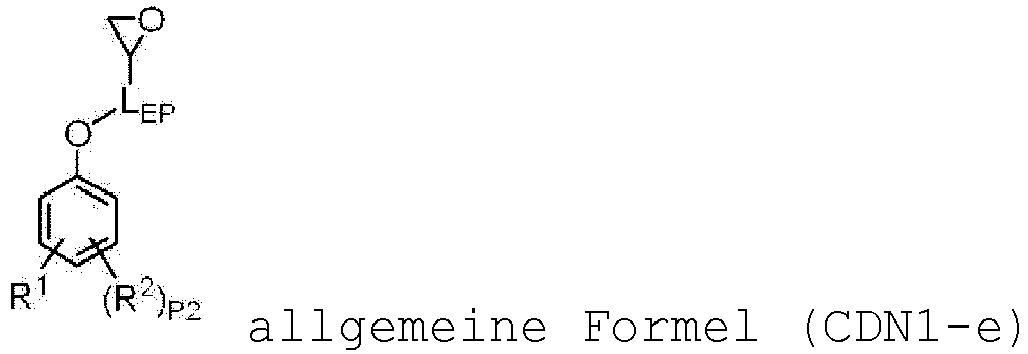 wobei in der allgemeinen Formel (CDN1-e) LEP eine Einfachbindung oder eine zweiwertige Verknüpfungsgruppe darstellt, R1 eine Alkylgruppe darstellt, oder eine ungesättigte aliphatische Gruppe, die eine Doppelbindung aufweist und einen Substituenten aufweisen kann, R2 eine Hydroxygruppe, eine Carboxygruppe, eine Alkylgruppe, die einen Substituenten aufweisen kann, oder eine ungesättigte aliphatische Gruppe, die eine Doppelbindung aufweist und einen Substituenten aufweisen kann, darstellt, P2 eine ganze Zahl von 0 oder mehr und 4 oder weniger darstellt, und eine Vielzahl von R2 die gleiche Gruppe oder verschiedene Gruppen sein können, wenn P2 2 oder mehr ist.
 - Biologisch abbaubares Harzteilchen nach einem der Ansprüche 11 bis 13,
wobei das Celluloseharz ein Celluloseacetatpropionat ist und die aromatische Verbindung eine Cardanolverbindung ist. - Biologisch abbaubares Harzteilchen nach einem der Ansprüche 11 bis 13,
wobei das Celluloseharz ein Celluloseacetatbutyrat ist und das Basisteilchen den Fettsäureester enthält. - Biologisch abbaubares Harzteilchen nach einem der Ansprüche 1 bis 15,
wobei ein Massenverhältnis eines Gehalts des kationischen Harzes in der ersten Schicht zu einem Gehalt der anionischen oder nicht ionischen hydrophoben Verbindung in der zweiten Schicht 0,1 oder mehr und 10 oder weniger beträgt. - Biologisch abbaubares Harzteilchen nach Anspruch 16,
wobei ein Gehalt des kationischen Harzes in Bezug auf das Basisteilchen 0,1 Masse-% oder mehr und 10 Masse-% oder weniger beträgt. - Biologisch abbaubares Harzteilchen nach einem der Ansprüche 1 bis 17,
wobei ein Zahlenmittel des Molekulargewichts des kationischen Harzes, bestimmt durch Gelpermeationschromatographie unter Verwendung einer GPC-Vorrichtung: HLC-8320GPC, hergestellt von Tosoh Corporation, Säule: TSKgelα-M, bezogen auf Polystyrol unter Verwendung von Tetrahydrofuran, 10.000 oder mehr und 85.000 oder weniger beträgt.
Applications Claiming Priority (2)
| Application Number | Priority Date | Filing Date | Title |
|---|---|---|---|
| JP2020113307 | 2020-06-30 | ||
| JP2020189310A JP7683191B2 (ja) | 2020-06-30 | 2020-11-13 | 生分解性樹脂粒子 |
Publications (2)
| Publication Number | Publication Date |
|---|---|
| EP3932974A1 EP3932974A1 (de) | 2022-01-05 |
| EP3932974B1 true EP3932974B1 (de) | 2023-02-22 |
Family
ID=75746191
Family Applications (1)
| Application Number | Title | Priority Date | Filing Date |
|---|---|---|---|
| EP21171102.3A Active EP3932974B1 (de) | 2020-06-30 | 2021-04-29 | Biologisch abbaubare harzteilchen |
Country Status (3)
| Country | Link |
|---|---|
| US (1) | US20210403660A1 (de) |
| EP (1) | EP3932974B1 (de) |
| CN (2) | CN113861514B (de) |
Families Citing this family (7)
| Publication number | Priority date | Publication date | Assignee | Title |
|---|---|---|---|---|
| JP7721940B2 (ja) | 2021-03-25 | 2025-08-13 | 富士フイルムビジネスイノベーション株式会社 | 樹脂粒子 |
| JP7725845B2 (ja) * | 2021-03-26 | 2025-08-20 | 富士フイルムビジネスイノベーション株式会社 | 樹脂粒子 |
| CN113101376A (zh) * | 2021-04-12 | 2021-07-13 | 中国科学院长春应用化学研究所 | 一种可用于基因治疗的复合基因载体及其制备方法和应用 |
| JP2024110730A (ja) * | 2023-02-03 | 2024-08-16 | 富士フイルムビジネスイノベーション株式会社 | セルロース粒子 |
| EP4438668A1 (de) * | 2023-03-28 | 2024-10-02 | FUJIFILM Business Innovation Corp. | Cellulosepartikel und verfahren zur herstellung von cellulosepartikeln |
| JP2024141017A (ja) * | 2023-03-28 | 2024-10-10 | 富士フイルムビジネスイノベーション株式会社 | セルロース粒子 |
| JP2024142154A (ja) * | 2023-03-29 | 2024-10-10 | 富士フイルムビジネスイノベーション株式会社 | セルロース粒子 |
Family Cites Families (14)
| Publication number | Priority date | Publication date | Assignee | Title |
|---|---|---|---|---|
| AP1224A (en) * | 1998-03-19 | 2003-11-14 | Bristol Myers Squibb Co | Biphasic controlled release delivery system for high solubility pharmaceuticals and method. |
| WO1999055774A1 (en) * | 1998-04-24 | 1999-11-04 | Eastman Chemical Company | Coprecipitation of cellulose esters with functional additives and compositions thus obtainable |
| JP2004256579A (ja) | 2003-02-24 | 2004-09-16 | Mitsubishi Paper Mills Ltd | セルロース素材 |
| CA2600085A1 (en) * | 2005-03-09 | 2006-09-14 | Toray Industries, Inc. | Microparticle and pharmaceutical preparation |
| CN102352046A (zh) * | 2005-06-03 | 2012-02-15 | 三菱化学株式会社 | 水性树脂分散体的制造方法 |
| US20090092847A1 (en) * | 2006-03-10 | 2009-04-09 | Mitsubishi Chemical Corporation | Resin dispersion, coating materials, laminates, and process for production of the same |
| JP2008163071A (ja) * | 2006-12-27 | 2008-07-17 | Toray Ind Inc | 生分解性樹脂含有フィルム |
| JP2011225643A (ja) | 2010-04-15 | 2011-11-10 | Idemitsu Unitech Co Ltd | 生分解性樹脂組成物、生分解性フィルムおよび生分解性成形体 |
| US9949897B2 (en) | 2012-04-11 | 2018-04-24 | L'oreal | Self-standing cosmetic sheet |
| JP6360039B2 (ja) * | 2012-05-03 | 2018-07-18 | カラ ファーマシューティカルズ インコーポレイテッド | 複数の被覆された粒子を含む組成物、医薬組成物、医薬製剤、及び当該粒子の形成方法 |
| WO2015048515A1 (en) * | 2013-09-27 | 2015-04-02 | Board Of Regents, The University Of Texas System | Method of preparation of biodegradable nanoparticles with recognition characteristics |
| JP6597025B2 (ja) * | 2014-08-01 | 2019-10-30 | 三菱ケミカル株式会社 | 水性樹脂分散体、塗料、接着剤及び積層体 |
| JP2020037607A (ja) * | 2018-08-31 | 2020-03-12 | 富士ゼロックス株式会社 | 樹脂組成物及び樹脂成形体 |
| JP7311251B2 (ja) * | 2018-08-31 | 2023-07-19 | イーストマン ケミカル カンパニー | 樹脂組成物及び樹脂成形体 |
-
2021
- 2021-04-29 EP EP21171102.3A patent/EP3932974B1/de active Active
- 2021-04-29 US US17/243,734 patent/US20210403660A1/en not_active Abandoned
- 2021-06-04 CN CN202110628412.XA patent/CN113861514B/zh active Active
- 2021-06-04 CN CN202411037242.8A patent/CN118956011A/zh active Pending
Also Published As
| Publication number | Publication date |
|---|---|
| US20210403660A1 (en) | 2021-12-30 |
| EP3932974A1 (de) | 2022-01-05 |
| CN113861514B (zh) | 2024-08-23 |
| CN118956011A (zh) | 2024-11-15 |
| CN113861514A (zh) | 2021-12-31 |
Similar Documents
| Publication | Publication Date | Title |
|---|---|---|
| EP3932974B1 (de) | Biologisch abbaubare harzteilchen | |
| JP7683191B2 (ja) | 生分解性樹脂粒子 | |
| JP7721940B2 (ja) | 樹脂粒子 | |
| EP2182023B1 (de) | Silikonmikropartikel mit kugelförmigen Silikonelastomermikropartikeln, die mit Polyorganosileschioxan beschichtet sind, sowie Herstellungsverfahren dafür | |
| EP4186943A1 (de) | Kautschukpartikel, verbundpartikel und herstellungsverfahren dafür | |
| KR102140008B1 (ko) | 실리카-코팅된 실리콘 고무 입자 및 화장품 | |
| JP2025123399A (ja) | 樹脂粒子 | |
| EP4442736A1 (de) | Partikel und deren verwendung | |
| EP4063431A1 (de) | Harzpartikel | |
| JP2022007648A (ja) | 生分解性樹脂粒子 | |
| WO2024032316A1 (zh) | 可降解微珠及其制备方法与应用 | |
| Bhattacharyya et al. | Effect of Polyethylene Glycol on Bis (2‐hydroxyethyl) terephthalate‐Based Polyurethane/Alginate pH‐Sensitive Blend for Oral Protein Delivery | |
| Bhattacharyya et al. | Synthesis of a novel pH‐sensitive polyurethane–alginate blend with poly (ethylene terephthalate) waste for the oral delivery of protein | |
| Mohanty et al. | Highly transparent castor oil‐derived polyurethane/silica nanocomposite coating synthesized by in situ polymerization | |
| JP7686958B2 (ja) | 樹脂粒子 | |
| Srisuwan et al. | Synergistic effects of PEG middle-blocks and talcum on crystallizability and thermomechanical properties of flexible PLLA-b-PEG-b-PLLA bioplastic | |
| KR20190088394A (ko) | 분말 슬러쉬 몰딩용 열가소성 폴리우레탄 분말의 제조방법과 이로부터 제조된 열가소성 폴리우레탄 분말 및 이를 이용하여 형성된 표피재 | |
| EP4093912B1 (de) | Biopolymerzusammensetzung und deren verwendung als pulverlack | |
| JP4780267B2 (ja) | 粉体成形用熱可塑性ポリウレタン樹脂組成物及びその製造方法 | |
| JP2005154451A (ja) | 粉体成形用熱可塑性ポリウレタン樹脂組成物及びその製造方法 | |
| JP3866550B2 (ja) | 生分解性模型素材用樹脂成形品 |
Legal Events
| Date | Code | Title | Description |
|---|---|---|---|
| STAA | Information on the status of an ep patent application or granted ep patent |
Free format text: STATUS: UNKNOWN |
|
| PUAI | Public reference made under article 153(3) epc to a published international application that has entered the european phase |
Free format text: ORIGINAL CODE: 0009012 |
|
| STAA | Information on the status of an ep patent application or granted ep patent |
Free format text: STATUS: THE APPLICATION HAS BEEN PUBLISHED |
|
| AK | Designated contracting states |
Kind code of ref document: A1 Designated state(s): AL AT BE BG CH CY CZ DE DK EE ES FI FR GB GR HR HU IE IS IT LI LT LU LV MC MK MT NL NO PL PT RO RS SE SI SK SM TR |
|
| B565 | Issuance of search results under rule 164(2) epc |
Effective date: 20210910 |
|
| STAA | Information on the status of an ep patent application or granted ep patent |
Free format text: STATUS: REQUEST FOR EXAMINATION WAS MADE |
|
| 17P | Request for examination filed |
Effective date: 20220110 |
|
| RBV | Designated contracting states (corrected) |
Designated state(s): AL AT BE BG CH CY CZ DE DK EE ES FI FR GB GR HR HU IE IS IT LI LT LU LV MC MK MT NL NO PL PT RO RS SE SI SK SM TR |
|
| STAA | Information on the status of an ep patent application or granted ep patent |
Free format text: STATUS: EXAMINATION IS IN PROGRESS |
|
| 17Q | First examination report despatched |
Effective date: 20220325 |
|
| REG | Reference to a national code |
Ref country code: DE Ref legal event code: R079 Ref document number: 602021001443 Country of ref document: DE Free format text: PREVIOUS MAIN CLASS: C08J0003120000 Ipc: A61K0008810000 |
|
| RIC1 | Information provided on ipc code assigned before grant |
Ipc: A61K 8/02 20060101ALI20221013BHEP Ipc: C08J 7/04 20200101ALI20221013BHEP Ipc: C08J 3/12 20060101ALI20221013BHEP Ipc: A61Q 1/02 20060101ALI20221013BHEP Ipc: A61K 8/81 20060101AFI20221013BHEP |
|
| INTG | Intention to grant announced |
Effective date: 20221031 |
|
| GRAS | Grant fee paid |
Free format text: ORIGINAL CODE: EPIDOSNIGR3 |
|
| STAA | Information on the status of an ep patent application or granted ep patent |
Free format text: STATUS: GRANT OF PATENT IS INTENDED |
|
| GRAA | (expected) grant |
Free format text: ORIGINAL CODE: 0009210 |
|
| STAA | Information on the status of an ep patent application or granted ep patent |
Free format text: STATUS: THE PATENT HAS BEEN GRANTED |
|
| AK | Designated contracting states |
Kind code of ref document: B1 Designated state(s): AL AT BE BG CH CY CZ DE DK EE ES FI FR GB GR HR HU IE IS IT LI LT LU LV MC MK MT NL NO PL PT RO RS SE SI SK SM TR |
|
| REG | Reference to a national code |
Ref country code: GB Ref legal event code: FG4D |
|
| REG | Reference to a national code |
Ref country code: CH Ref legal event code: EP |
|
| REG | Reference to a national code |
Ref country code: DE Ref legal event code: R096 Ref document number: 602021001443 Country of ref document: DE |
|
| REG | Reference to a national code |
Ref country code: AT Ref legal event code: REF Ref document number: 1549055 Country of ref document: AT Kind code of ref document: T Effective date: 20230315 Ref country code: IE Ref legal event code: FG4D |
|
| REG | Reference to a national code |
Ref country code: LT Ref legal event code: MG9D |
|
| REG | Reference to a national code |
Ref country code: NL Ref legal event code: MP Effective date: 20230222 |
|
| REG | Reference to a national code |
Ref country code: AT Ref legal event code: MK05 Ref document number: 1549055 Country of ref document: AT Kind code of ref document: T Effective date: 20230222 |
|
| PG25 | Lapsed in a contracting state [announced via postgrant information from national office to epo] |
Ref country code: RS Free format text: LAPSE BECAUSE OF FAILURE TO SUBMIT A TRANSLATION OF THE DESCRIPTION OR TO PAY THE FEE WITHIN THE PRESCRIBED TIME-LIMIT Effective date: 20230222 Ref country code: PT Free format text: LAPSE BECAUSE OF FAILURE TO SUBMIT A TRANSLATION OF THE DESCRIPTION OR TO PAY THE FEE WITHIN THE PRESCRIBED TIME-LIMIT Effective date: 20230622 Ref country code: NO Free format text: LAPSE BECAUSE OF FAILURE TO SUBMIT A TRANSLATION OF THE DESCRIPTION OR TO PAY THE FEE WITHIN THE PRESCRIBED TIME-LIMIT Effective date: 20230522 Ref country code: NL Free format text: LAPSE BECAUSE OF FAILURE TO SUBMIT A TRANSLATION OF THE DESCRIPTION OR TO PAY THE FEE WITHIN THE PRESCRIBED TIME-LIMIT Effective date: 20230222 Ref country code: LV Free format text: LAPSE BECAUSE OF FAILURE TO SUBMIT A TRANSLATION OF THE DESCRIPTION OR TO PAY THE FEE WITHIN THE PRESCRIBED TIME-LIMIT Effective date: 20230222 Ref country code: LT Free format text: LAPSE BECAUSE OF FAILURE TO SUBMIT A TRANSLATION OF THE DESCRIPTION OR TO PAY THE FEE WITHIN THE PRESCRIBED TIME-LIMIT Effective date: 20230222 Ref country code: HR Free format text: LAPSE BECAUSE OF FAILURE TO SUBMIT A TRANSLATION OF THE DESCRIPTION OR TO PAY THE FEE WITHIN THE PRESCRIBED TIME-LIMIT Effective date: 20230222 Ref country code: ES Free format text: LAPSE BECAUSE OF FAILURE TO SUBMIT A TRANSLATION OF THE DESCRIPTION OR TO PAY THE FEE WITHIN THE PRESCRIBED TIME-LIMIT Effective date: 20230222 Ref country code: AT Free format text: LAPSE BECAUSE OF FAILURE TO SUBMIT A TRANSLATION OF THE DESCRIPTION OR TO PAY THE FEE WITHIN THE PRESCRIBED TIME-LIMIT Effective date: 20230222 |
|
| PG25 | Lapsed in a contracting state [announced via postgrant information from national office to epo] |
Ref country code: SE Free format text: LAPSE BECAUSE OF FAILURE TO SUBMIT A TRANSLATION OF THE DESCRIPTION OR TO PAY THE FEE WITHIN THE PRESCRIBED TIME-LIMIT Effective date: 20230222 Ref country code: PL Free format text: LAPSE BECAUSE OF FAILURE TO SUBMIT A TRANSLATION OF THE DESCRIPTION OR TO PAY THE FEE WITHIN THE PRESCRIBED TIME-LIMIT Effective date: 20230222 Ref country code: IS Free format text: LAPSE BECAUSE OF FAILURE TO SUBMIT A TRANSLATION OF THE DESCRIPTION OR TO PAY THE FEE WITHIN THE PRESCRIBED TIME-LIMIT Effective date: 20230622 Ref country code: GR Free format text: LAPSE BECAUSE OF FAILURE TO SUBMIT A TRANSLATION OF THE DESCRIPTION OR TO PAY THE FEE WITHIN THE PRESCRIBED TIME-LIMIT Effective date: 20230523 Ref country code: FI Free format text: LAPSE BECAUSE OF FAILURE TO SUBMIT A TRANSLATION OF THE DESCRIPTION OR TO PAY THE FEE WITHIN THE PRESCRIBED TIME-LIMIT Effective date: 20230222 |
|
| PG25 | Lapsed in a contracting state [announced via postgrant information from national office to epo] |
Ref country code: SM Free format text: LAPSE BECAUSE OF FAILURE TO SUBMIT A TRANSLATION OF THE DESCRIPTION OR TO PAY THE FEE WITHIN THE PRESCRIBED TIME-LIMIT Effective date: 20230222 Ref country code: RO Free format text: LAPSE BECAUSE OF FAILURE TO SUBMIT A TRANSLATION OF THE DESCRIPTION OR TO PAY THE FEE WITHIN THE PRESCRIBED TIME-LIMIT Effective date: 20230222 Ref country code: EE Free format text: LAPSE BECAUSE OF FAILURE TO SUBMIT A TRANSLATION OF THE DESCRIPTION OR TO PAY THE FEE WITHIN THE PRESCRIBED TIME-LIMIT Effective date: 20230222 Ref country code: DK Free format text: LAPSE BECAUSE OF FAILURE TO SUBMIT A TRANSLATION OF THE DESCRIPTION OR TO PAY THE FEE WITHIN THE PRESCRIBED TIME-LIMIT Effective date: 20230222 Ref country code: CZ Free format text: LAPSE BECAUSE OF FAILURE TO SUBMIT A TRANSLATION OF THE DESCRIPTION OR TO PAY THE FEE WITHIN THE PRESCRIBED TIME-LIMIT Effective date: 20230222 |
|
| REG | Reference to a national code |
Ref country code: DE Ref legal event code: R097 Ref document number: 602021001443 Country of ref document: DE |
|
| PG25 | Lapsed in a contracting state [announced via postgrant information from national office to epo] |
Ref country code: SK Free format text: LAPSE BECAUSE OF FAILURE TO SUBMIT A TRANSLATION OF THE DESCRIPTION OR TO PAY THE FEE WITHIN THE PRESCRIBED TIME-LIMIT Effective date: 20230222 |
|
| P01 | Opt-out of the competence of the unified patent court (upc) registered |
Effective date: 20231102 |
|
| PG25 | Lapsed in a contracting state [announced via postgrant information from national office to epo] |
Ref country code: LU Free format text: LAPSE BECAUSE OF NON-PAYMENT OF DUE FEES Effective date: 20230429 |
|
| PLBE | No opposition filed within time limit |
Free format text: ORIGINAL CODE: 0009261 |
|
| STAA | Information on the status of an ep patent application or granted ep patent |
Free format text: STATUS: NO OPPOSITION FILED WITHIN TIME LIMIT |
|
| REG | Reference to a national code |
Ref country code: BE Ref legal event code: MM Effective date: 20230430 |
|
| PG25 | Lapsed in a contracting state [announced via postgrant information from national office to epo] |
Ref country code: MC Free format text: LAPSE BECAUSE OF FAILURE TO SUBMIT A TRANSLATION OF THE DESCRIPTION OR TO PAY THE FEE WITHIN THE PRESCRIBED TIME-LIMIT Effective date: 20230222 |
|
| 26N | No opposition filed |
Effective date: 20231123 |
|
| PG25 | Lapsed in a contracting state [announced via postgrant information from national office to epo] |
Ref country code: SI Free format text: LAPSE BECAUSE OF FAILURE TO SUBMIT A TRANSLATION OF THE DESCRIPTION OR TO PAY THE FEE WITHIN THE PRESCRIBED TIME-LIMIT Effective date: 20230222 Ref country code: MC Free format text: LAPSE BECAUSE OF FAILURE TO SUBMIT A TRANSLATION OF THE DESCRIPTION OR TO PAY THE FEE WITHIN THE PRESCRIBED TIME-LIMIT Effective date: 20230222 |
|
| REG | Reference to a national code |
Ref country code: IE Ref legal event code: MM4A |
|
| PG25 | Lapsed in a contracting state [announced via postgrant information from national office to epo] |
Ref country code: BE Free format text: LAPSE BECAUSE OF NON-PAYMENT OF DUE FEES Effective date: 20230430 |
|
| PG25 | Lapsed in a contracting state [announced via postgrant information from national office to epo] |
Ref country code: IE Free format text: LAPSE BECAUSE OF NON-PAYMENT OF DUE FEES Effective date: 20230429 |
|
| PG25 | Lapsed in a contracting state [announced via postgrant information from national office to epo] |
Ref country code: IE Free format text: LAPSE BECAUSE OF NON-PAYMENT OF DUE FEES Effective date: 20230429 |
|
| PG25 | Lapsed in a contracting state [announced via postgrant information from national office to epo] |
Ref country code: IT Free format text: LAPSE BECAUSE OF FAILURE TO SUBMIT A TRANSLATION OF THE DESCRIPTION OR TO PAY THE FEE WITHIN THE PRESCRIBED TIME-LIMIT Effective date: 20230222 |
|
| PG25 | Lapsed in a contracting state [announced via postgrant information from national office to epo] |
Ref country code: BG Free format text: LAPSE BECAUSE OF FAILURE TO SUBMIT A TRANSLATION OF THE DESCRIPTION OR TO PAY THE FEE WITHIN THE PRESCRIBED TIME-LIMIT Effective date: 20230222 |
|
| PG25 | Lapsed in a contracting state [announced via postgrant information from national office to epo] |
Ref country code: BG Free format text: LAPSE BECAUSE OF FAILURE TO SUBMIT A TRANSLATION OF THE DESCRIPTION OR TO PAY THE FEE WITHIN THE PRESCRIBED TIME-LIMIT Effective date: 20230222 |
|
| REG | Reference to a national code |
Ref country code: CH Ref legal event code: PL |
|
| PG25 | Lapsed in a contracting state [announced via postgrant information from national office to epo] |
Ref country code: CH Free format text: LAPSE BECAUSE OF NON-PAYMENT OF DUE FEES Effective date: 20240430 |
|
| PGFP | Annual fee paid to national office [announced via postgrant information from national office to epo] |
Ref country code: DE Payment date: 20250305 Year of fee payment: 5 |
|
| PG25 | Lapsed in a contracting state [announced via postgrant information from national office to epo] |
Ref country code: CY Free format text: LAPSE BECAUSE OF FAILURE TO SUBMIT A TRANSLATION OF THE DESCRIPTION OR TO PAY THE FEE WITHIN THE PRESCRIBED TIME-LIMIT; INVALID AB INITIO Effective date: 20210429 |
|
| PG25 | Lapsed in a contracting state [announced via postgrant information from national office to epo] |
Ref country code: HU Free format text: LAPSE BECAUSE OF FAILURE TO SUBMIT A TRANSLATION OF THE DESCRIPTION OR TO PAY THE FEE WITHIN THE PRESCRIBED TIME-LIMIT; INVALID AB INITIO Effective date: 20210429 |
|
| PG25 | Lapsed in a contracting state [announced via postgrant information from national office to epo] |
Ref country code: TR Free format text: LAPSE BECAUSE OF FAILURE TO SUBMIT A TRANSLATION OF THE DESCRIPTION OR TO PAY THE FEE WITHIN THE PRESCRIBED TIME-LIMIT Effective date: 20230222 |
|
| PGFP | Annual fee paid to national office [announced via postgrant information from national office to epo] |
Ref country code: GB Payment date: 20260313 Year of fee payment: 6 |
|
| PGFP | Annual fee paid to national office [announced via postgrant information from national office to epo] |
Ref country code: FR Payment date: 20260309 Year of fee payment: 6 |