EP3933029A2 - Colonisation réduite de microbes au niveau de la muqueuse - Google Patents
Colonisation réduite de microbes au niveau de la muqueuse Download PDFInfo
- Publication number
- EP3933029A2 EP3933029A2 EP21169279.3A EP21169279A EP3933029A2 EP 3933029 A2 EP3933029 A2 EP 3933029A2 EP 21169279 A EP21169279 A EP 21169279A EP 3933029 A2 EP3933029 A2 EP 3933029A2
- Authority
- EP
- European Patent Office
- Prior art keywords
- thya
- gene
- microbe
- usp45
- mutans
- Prior art date
- Legal status (The legal status is an assumption and is not a legal conclusion. Google has not performed a legal analysis and makes no representation as to the accuracy of the status listed.)
- Withdrawn
Links
Images


Classifications
-
- C—CHEMISTRY; METALLURGY
- C12—BIOCHEMISTRY; BEER; SPIRITS; WINE; VINEGAR; MICROBIOLOGY; ENZYMOLOGY; MUTATION OR GENETIC ENGINEERING
- C12N—MICROORGANISMS OR ENZYMES; COMPOSITIONS THEREOF; PROPAGATING, PRESERVING, OR MAINTAINING MICROORGANISMS; MUTATION OR GENETIC ENGINEERING; CULTURE MEDIA
- C12N1/00—Microorganisms; Compositions thereof; Processes of propagating, maintaining or preserving microorganisms or compositions thereof; Processes of preparing or isolating a composition containing a microorganism; Culture media therefor
- C12N1/36—Adaptation or attenuation of cells
-
- A—HUMAN NECESSITIES
- A61—MEDICAL OR VETERINARY SCIENCE; HYGIENE
- A61K—PREPARATIONS FOR MEDICAL, DENTAL OR TOILETRY PURPOSES
- A61K47/00—Medicinal preparations characterised by the non-active ingredients used, e.g. carriers or inert additives; Targeting or modifying agents chemically bound to the active ingredient
- A61K47/50—Medicinal preparations characterised by the non-active ingredients used, e.g. carriers or inert additives; Targeting or modifying agents chemically bound to the active ingredient the non-active ingredient being chemically bound to the active ingredient, e.g. polymer-drug conjugates
- A61K47/69—Medicinal preparations characterised by the non-active ingredients used, e.g. carriers or inert additives; Targeting or modifying agents chemically bound to the active ingredient the non-active ingredient being chemically bound to the active ingredient, e.g. polymer-drug conjugates the conjugate being characterised by physical or galenical forms, e.g. emulsion, particle, inclusion complex, stent or kit
- A61K47/6901—Conjugates being cells, cell fragments, viruses, ghosts, red blood cells or viral vectors
-
- A—HUMAN NECESSITIES
- A61—MEDICAL OR VETERINARY SCIENCE; HYGIENE
- A61P—SPECIFIC THERAPEUTIC ACTIVITY OF CHEMICAL COMPOUNDS OR MEDICINAL PREPARATIONS
- A61P1/00—Drugs for disorders of the alimentary tract or the digestive system
-
- A—HUMAN NECESSITIES
- A61—MEDICAL OR VETERINARY SCIENCE; HYGIENE
- A61P—SPECIFIC THERAPEUTIC ACTIVITY OF CHEMICAL COMPOUNDS OR MEDICINAL PREPARATIONS
- A61P1/00—Drugs for disorders of the alimentary tract or the digestive system
- A61P1/04—Drugs for disorders of the alimentary tract or the digestive system for ulcers, gastritis or reflux esophagitis, e.g. antacids, inhibitors of acid secretion, mucosal protectants
-
- A—HUMAN NECESSITIES
- A61—MEDICAL OR VETERINARY SCIENCE; HYGIENE
- A61P—SPECIFIC THERAPEUTIC ACTIVITY OF CHEMICAL COMPOUNDS OR MEDICINAL PREPARATIONS
- A61P1/00—Drugs for disorders of the alimentary tract or the digestive system
- A61P1/16—Drugs for disorders of the alimentary tract or the digestive system for liver or gallbladder disorders, e.g. hepatoprotective agents, cholagogues, litholytics
-
- A—HUMAN NECESSITIES
- A61—MEDICAL OR VETERINARY SCIENCE; HYGIENE
- A61P—SPECIFIC THERAPEUTIC ACTIVITY OF CHEMICAL COMPOUNDS OR MEDICINAL PREPARATIONS
- A61P11/00—Drugs for disorders of the respiratory system
-
- A—HUMAN NECESSITIES
- A61—MEDICAL OR VETERINARY SCIENCE; HYGIENE
- A61P—SPECIFIC THERAPEUTIC ACTIVITY OF CHEMICAL COMPOUNDS OR MEDICINAL PREPARATIONS
- A61P17/00—Drugs for dermatological disorders
- A61P17/06—Antipsoriatics
-
- A—HUMAN NECESSITIES
- A61—MEDICAL OR VETERINARY SCIENCE; HYGIENE
- A61P—SPECIFIC THERAPEUTIC ACTIVITY OF CHEMICAL COMPOUNDS OR MEDICINAL PREPARATIONS
- A61P19/00—Drugs for skeletal disorders
- A61P19/08—Drugs for skeletal disorders for bone diseases, e.g. rachitism, Paget's disease
- A61P19/10—Drugs for skeletal disorders for bone diseases, e.g. rachitism, Paget's disease for osteoporosis
-
- A—HUMAN NECESSITIES
- A61—MEDICAL OR VETERINARY SCIENCE; HYGIENE
- A61P—SPECIFIC THERAPEUTIC ACTIVITY OF CHEMICAL COMPOUNDS OR MEDICINAL PREPARATIONS
- A61P25/00—Drugs for disorders of the nervous system
-
- A—HUMAN NECESSITIES
- A61—MEDICAL OR VETERINARY SCIENCE; HYGIENE
- A61P—SPECIFIC THERAPEUTIC ACTIVITY OF CHEMICAL COMPOUNDS OR MEDICINAL PREPARATIONS
- A61P25/00—Drugs for disorders of the nervous system
- A61P25/14—Drugs for disorders of the nervous system for treating abnormal movements, e.g. chorea, dyskinesia
- A61P25/16—Anti-Parkinson drugs
-
- A—HUMAN NECESSITIES
- A61—MEDICAL OR VETERINARY SCIENCE; HYGIENE
- A61P—SPECIFIC THERAPEUTIC ACTIVITY OF CHEMICAL COMPOUNDS OR MEDICINAL PREPARATIONS
- A61P25/00—Drugs for disorders of the nervous system
- A61P25/28—Drugs for disorders of the nervous system for treating neurodegenerative disorders of the central nervous system, e.g. nootropic agents, cognition enhancers, drugs for treating Alzheimer's disease or other forms of dementia
-
- A—HUMAN NECESSITIES
- A61—MEDICAL OR VETERINARY SCIENCE; HYGIENE
- A61P—SPECIFIC THERAPEUTIC ACTIVITY OF CHEMICAL COMPOUNDS OR MEDICINAL PREPARATIONS
- A61P3/00—Drugs for disorders of the metabolism
- A61P3/04—Anorexiants; Antiobesity agents
-
- A—HUMAN NECESSITIES
- A61—MEDICAL OR VETERINARY SCIENCE; HYGIENE
- A61P—SPECIFIC THERAPEUTIC ACTIVITY OF CHEMICAL COMPOUNDS OR MEDICINAL PREPARATIONS
- A61P3/00—Drugs for disorders of the metabolism
- A61P3/08—Drugs for disorders of the metabolism for glucose homeostasis
- A61P3/10—Drugs for disorders of the metabolism for glucose homeostasis for hyperglycaemia, e.g. antidiabetics
-
- A—HUMAN NECESSITIES
- A61—MEDICAL OR VETERINARY SCIENCE; HYGIENE
- A61P—SPECIFIC THERAPEUTIC ACTIVITY OF CHEMICAL COMPOUNDS OR MEDICINAL PREPARATIONS
- A61P31/00—Antiinfectives, i.e. antibiotics, antiseptics, chemotherapeutics
- A61P31/04—Antibacterial agents
-
- A—HUMAN NECESSITIES
- A61—MEDICAL OR VETERINARY SCIENCE; HYGIENE
- A61P—SPECIFIC THERAPEUTIC ACTIVITY OF CHEMICAL COMPOUNDS OR MEDICINAL PREPARATIONS
- A61P31/00—Antiinfectives, i.e. antibiotics, antiseptics, chemotherapeutics
- A61P31/12—Antivirals
-
- A—HUMAN NECESSITIES
- A61—MEDICAL OR VETERINARY SCIENCE; HYGIENE
- A61P—SPECIFIC THERAPEUTIC ACTIVITY OF CHEMICAL COMPOUNDS OR MEDICINAL PREPARATIONS
- A61P35/00—Antineoplastic agents
-
- A—HUMAN NECESSITIES
- A61—MEDICAL OR VETERINARY SCIENCE; HYGIENE
- A61P—SPECIFIC THERAPEUTIC ACTIVITY OF CHEMICAL COMPOUNDS OR MEDICINAL PREPARATIONS
- A61P43/00—Drugs for specific purposes, not provided for in groups A61P1/00-A61P41/00
-
- A—HUMAN NECESSITIES
- A61—MEDICAL OR VETERINARY SCIENCE; HYGIENE
- A61P—SPECIFIC THERAPEUTIC ACTIVITY OF CHEMICAL COMPOUNDS OR MEDICINAL PREPARATIONS
- A61P7/00—Drugs for disorders of the blood or the extracellular fluid
-
- A—HUMAN NECESSITIES
- A61—MEDICAL OR VETERINARY SCIENCE; HYGIENE
- A61P—SPECIFIC THERAPEUTIC ACTIVITY OF CHEMICAL COMPOUNDS OR MEDICINAL PREPARATIONS
- A61P9/00—Drugs for disorders of the cardiovascular system
-
- A—HUMAN NECESSITIES
- A61—MEDICAL OR VETERINARY SCIENCE; HYGIENE
- A61P—SPECIFIC THERAPEUTIC ACTIVITY OF CHEMICAL COMPOUNDS OR MEDICINAL PREPARATIONS
- A61P9/00—Drugs for disorders of the cardiovascular system
- A61P9/10—Drugs for disorders of the cardiovascular system for treating ischaemic or atherosclerotic diseases, e.g. antianginal drugs, coronary vasodilators, drugs for myocardial infarction, retinopathy, cerebrovascula insufficiency, renal arteriosclerosis
-
- C—CHEMISTRY; METALLURGY
- C12—BIOCHEMISTRY; BEER; SPIRITS; WINE; VINEGAR; MICROBIOLOGY; ENZYMOLOGY; MUTATION OR GENETIC ENGINEERING
- C12N—MICROORGANISMS OR ENZYMES; COMPOSITIONS THEREOF; PROPAGATING, PRESERVING, OR MAINTAINING MICROORGANISMS; MUTATION OR GENETIC ENGINEERING; CULTURE MEDIA
- C12N9/00—Enzymes; Proenzymes; Compositions thereof; Processes for preparing, activating, inhibiting, separating or purifying enzymes
- C12N9/10—Transferases (2.)
- C12N9/1003—Transferases (2.) transferring one-carbon groups (2.1)
- C12N9/1007—Methyltransferases (general) (2.1.1.)
-
- C—CHEMISTRY; METALLURGY
- C12—BIOCHEMISTRY; BEER; SPIRITS; WINE; VINEGAR; MICROBIOLOGY; ENZYMOLOGY; MUTATION OR GENETIC ENGINEERING
- C12P—FERMENTATION OR ENZYME-USING PROCESSES TO SYNTHESISE A DESIRED CHEMICAL COMPOUND OR COMPOSITION OR TO SEPARATE OPTICAL ISOMERS FROM A RACEMIC MIXTURE
- C12P21/00—Preparation of peptides or proteins
- C12P21/02—Preparation of peptides or proteins having a known sequence of two or more amino acids, e.g. glutathione
-
- C—CHEMISTRY; METALLURGY
- C12—BIOCHEMISTRY; BEER; SPIRITS; WINE; VINEGAR; MICROBIOLOGY; ENZYMOLOGY; MUTATION OR GENETIC ENGINEERING
- C12Y—ENZYMES
- C12Y201/00—Transferases transferring one-carbon groups (2.1)
- C12Y201/01—Methyltransferases (2.1.1)
- C12Y201/01045—Thymidylate synthase (2.1.1.45)
-
- A—HUMAN NECESSITIES
- A61—MEDICAL OR VETERINARY SCIENCE; HYGIENE
- A61K—PREPARATIONS FOR MEDICAL, DENTAL OR TOILETRY PURPOSES
- A61K39/00—Medicinal preparations containing antigens or antibodies
- A61K2039/51—Medicinal preparations containing antigens or antibodies comprising whole cells, viruses or DNA/RNA
- A61K2039/52—Bacterial cells; Fungal cells; Protozoal cells
- A61K2039/523—Bacterial cells; Fungal cells; Protozoal cells expressing foreign proteins
-
- A—HUMAN NECESSITIES
- A61—MEDICAL OR VETERINARY SCIENCE; HYGIENE
- A61K—PREPARATIONS FOR MEDICAL, DENTAL OR TOILETRY PURPOSES
- A61K39/00—Medicinal preparations containing antigens or antibodies
- A61K2039/54—Medicinal preparations containing antigens or antibodies characterised by the route of administration
- A61K2039/541—Mucosal route
- A61K2039/542—Mucosal route oral/gastrointestinal
-
- A—HUMAN NECESSITIES
- A61—MEDICAL OR VETERINARY SCIENCE; HYGIENE
- A61K—PREPARATIONS FOR MEDICAL, DENTAL OR TOILETRY PURPOSES
- A61K39/00—Medicinal preparations containing antigens or antibodies
- A61K2039/555—Medicinal preparations containing antigens or antibodies characterised by a specific combination antigen/adjuvant
- A61K2039/55588—Adjuvants of undefined constitution
- A61K2039/55594—Adjuvants of undefined constitution from bacteria
Definitions
- the present invention relates to recombinant microbes that, in comparison to the wild type ancestor, show reduced capacity of colonization to the mucosa, in particular when residing in the alimentary tract of a human or animal.
- the invention relates to the engineering and use of colonizing microorganisms with reduced colonizing capacity, e.g. as host organisms for expression and delivery of therapeutic proteins and peptides.
- the invention is in the field of use of colonizing microbes (such as, for example, Escherichia coli, Lactobacillus sp, Streptococcus sp., Bacteroides sp., Bifidobacterium sp., yeast, fungi%) in human and veterinary medicine.
- Medical applications can be a consequence of inherent features of such microbe, or such microbe can be genetically modified (GM) for the administration of prophylactic or therapeutic peptides or proteins to humans or animals suffering from or at a risk of developing a disease, or such GM microbes may be used for vaccination purposes.
- GM genetically modified
- the invention relates to GM microbes that show reduced capacity of colonization, in particular when residing in the human or animal mucosa (such as, without limitation, alimentary tract, oral cavity, nasal cavity, urogenital tract, etc.) as part of a treatment or vaccination of a human or animal.
- mucosa such as, without limitation, alimentary tract, oral cavity, nasal cavity, urogenital tract, etc.
- the GM microbe contains an inactive thymidylate synthase gene that causes the reduced capability for said microbe to colonize in human or animal mucosa.
- the GM microbe contains an inactive thymidylate synthase gene that completely prevents the GM microbe to colonize in human or animal mucosa .
- Selected microbes also called functional microflora, probiotics
- Lactic acid bacteria but also other species are increasingly becoming important as hosts for recombinant expression of heterologous polypeptides in vitro (e.g., US 5,559,007 ) as well as for in vivo or in situ expression and delivery of antigens and/or therapeutically relevant polypeptides (e.g., WO 97/14806 ).
- Lactococcus lactis was the first lactic acid bacteria species characterised into great detail at a molecular and genetic level, it enjoyed an increasing interest as production host for heterologous proteins and eventually as in situ delivery system for biologically active molecules.
- L. lactis is non-pathogenic, non-invasive and non-colonizing.
- colonizing microorganisms may facilitate protein expression and delivery in situ, via prolonged retention and closer contact to the host tissues.
- the potency of any therapeutic application may therefore benefit substantially from using a colonizing microorganism.
- the only possibility to stop the treatment may be the use of selective antibiotics, which should however be avoided due to development of antibiotic resistance, impact on other microflora and other reported side effects.
- ThyA thymidylate synthase gene
- ThyA gene mutations for biological containment of genetically modified Lactococcus sp. and Lactobacillus sp., in order to avoid the surviving and spreading of the genetically modified organisms in the environment ( Steidler et al., 2003 (Nat. Biotechnol. 21(785-9 ), WO2004/046346 , WO2005/111194 ).
- the experiments in these disclosures are mainly related to growth and survival of said recombinant bacteria and did not yield any information on the colonization capacity of the Lactobacillus ThyA mutants nor did they give any direction to a possible use of ThyA gene impairment in Lactobacillus to reduce or avoid colonization. Instead, given that some of these publications indicated the ability of Lactobacillus ThyA mutants to produce and deliver therapeutic proteins in situ, one would have no reason to expect said bacteria to display reduced colonization.
- said defective thyA gene, and particularly said defective recombinant thyA gene is situated in the chromosome and is inactivated by gene disruption.
- said defective thyA gene, and particularly said defective recombinant thymidylate synthase gene is a non-reverting mutant gene.
- the isolated strain of the microbe comprising the defective thyA gene as taught herein may be a thymidylate synthase deficient strain, i.e., the strain may be deficient in thymidylate synthase activity, such as for example may display a substantial reduction in or more preferably absence of thymidylate synthase activity.
- phenotypically said isolated strain may preferably manifest as a thymine and/or thymidine auxotrophic strain, i.e., requiring exogenously provided thymine and/or thymidine for survival, growth and/or propagation.
- Bacteroides sp. is a Bacteroides ovatus strain, and any subspecies and strains thereof.
- S. mutans is acidogenic and acidoduric, non-motile and facultative anaerobic.
- S. mutans is commonly divided into four serotypes, based on the chemical composition of its cell surface rhamnose-glucose polymers ( Hamada et al., 1980 (Microb rev 44(2): 331-84 ; Maruyama et al., 2009 (BMC genomics 10(358 ).
- serotype c is dominant among S. mutans clinical isolates (almost 80%) and is now considered the ancestral phenotype, with other serotypes having evolved strain-specific genes ( Maruyama et al., 2009 (BMC genomics 10(358 ). The natural habitat of S.
- mutans is the human mouth, with a clear preference for tooth surfaces as well as prosthetic devices ( Hamada et al., 1980 (Microb rev 44(2): 331-84 ).
- the organism can also be isolated from feces, in humans ( Kilian et al., 1971 (Archives of oral biology 16(5): 553-4 ; Finegold et al., 1975 (Can res 35(11 Pt.
- mutans has among others been isolated from oral surfaces of several monkey and bat species ( Lehner et al., 1975 (Nature 254(5500): 517-20 ; Coykendall et al., 1976 (Infection and immunity 14(3): 667-70 ; Dent et al., 1978 (Journal appl bact 44(2): 249-58 ; Beighton et al., 1982 (Archives of oral biology 27(4): 331-5 ), rats ( Lehner et al., 1975 (Nature 254(5500): 517-20 ; Coykendall et al., 1976 (Infection and immunity 14(3): 667-70 ; Hamada et al., 1980 (Microbio rev 44(2): 331-84 ), hamsters ( Gehring et al., 1976 (Deutsche zahn GmbH Zeitschrift 31(1): 18-21 ; Hamada et al., 1980 (Microb rev 44(2): 331-84
- the oral microflora is a complex ecosystem of microbial species, and without proper oral hygiene, large microbial masses and biofilms (plaques) may develop on dental surfaces.
- Streptococci normally comprise the majority of the total viable cell count retrieved from human carious lesions ( Hamada et al., 1980 (Microb rev 44(2): 331-84 ).
- the adherence of S. mutans and other oral bacteria to tooth surfaces and the formation of dental plaque are of major significance in the development of dental caries.
- S. mutans Bacterial attachment to the tooth surface is usually preceded by the formation of a thin layer of heterogeneous salivary glycoproteins (pellicle), which facilitates the adhesion of S . mutans.
- S. mutans is capable of metabolizing (fermenting) a wide variety of carbohydrates.
- the acidification of the local environment by the end product of metabolism i.e., lactic acid
- lactic acid inhibits many competing bacterial species, thus enabling S. mutans to maintain its niche, while at the same time causing dental demineralization in the host.
- sucrose is particularly important in this process because it also serves as substrate for extracellular enzymes which synthesize sucrose-derived polymers.
- glucans consist solely of glucose units and possess a marked ability to promote adherence when synthesized de novo on various solid surfaces ( Hamada et al., 1980 (Microb rev 44(2): 331-84 ).
- Several approaches to reduce S. mutans colonization have been described, focusing mainly on dental plaque-related diseases. These interventions range from the obvious mechanical cleansing, to compounds targeting bacterial interactions, the salivary pellicle or bacterial polymers adsorbed to the tooth (i.e.
- Such clones produce no detectable lactic acid and are significantly less cariogenic.
- the genetic modification is to maintain or even improve upon the colonizing potential of the engineered S. mutans strains, to replace the wild type S . mutants bacteria, which is distinct from the goal of the present invention, i.e., to obtain strains such as S. mutans strains having reduced or abolished colonization capacity.
- non-reverting mutant as used throughout this specification means that the reversion frequency is lower than 10 -8 , preferably the reversion frequency is lower than 10 -10 , even more preferably, said reversion frequency is lower than 10 -12 , even more preferably, said reversion frequency is lower than 10 -14 , most preferably, said reversion frequency is not detectable using the routine methods known to the person skilled in the art.
- the main advantage of the invention is the improved use of the selected or recombinant microbes (e.g. Lactobacillus sp., Bacteroides sp., or Streptococcus sp.) as a medicament to treat animals or humans suffering from a disease, or its use as a vaccine, to the extent that it is now possible to have a controlled dosing of the prophylactic and/or therapeutic microbes. This can avoid the use of antibiotics in case of terminating the treatment.
- Prophylactic and/or therapeutic traits may be inherent to the strain comprising the defective ThyA (e.g., probiotic microbes) and/or may be expressed as a consequence of genetic engineering of the strain comprising a defective ThyA .
- the invention also provides an isolated strain of a microbe comprising the defective thyA gene as taught herein, wherein said strain elicits a prophylactic and/or therapeutic effect in a subject, preferably in a human or animal.
- an isolated strain of a microbe comprising the defective thyA gene as taught herein wherein the strain further expresses an expression product, preferably a heterologous expression product, particularly a prophylactically and/or therapeutically relevant expression product (such as an expression product capable of eliciting a prophylactic and/or therapeutic response in a subject, preferably in a human or animal subject), such as for example a (preferably, heterologous) peptide, polypeptide or protein, and more particularly antigens and/or non-vaccinogenic prophylactically and/or therapeutically active peptides, polypeptides or proteins.
- an expression product preferably a heterologous expression product, particularly a prophylactically and/or therapeutically relevant expression product (such as an expression product capable of e
- another aspect of the invention is the use of an isolated strain of the microbe comprising the defective thyA gene as taught herein, and particularly the use of Lactobacillus strain, Streptococcus strain (e.g., Streptococcus mutans strain) or Bacteroides strain (e.g., Bacteroides ovatus strain), comprising the defective thyA gene according to the invention, as a reduced colonizing, or even preferably non-colonizing, strain for the delivery of prophylactic and/or therapeutic molecules, such as for the delivery of one or more (preferably heterologous) expression products as taught herein.
- Lactobacillus strain e.g., Streptococcus mutans strain
- Bacteroides strain e.g., Bacteroides ovatus strain
- a Streptococcus strain e.g., Streptococcus mutans
- delivery of prophylactic and/or therapeutic molecules has been disclosed, as a non-limiting example, in WO 97/14806 and in WO 98/31786 .
- Prophylactic and/or therapeutic molecules include, but are not reduced to polypeptides such as insulin, growth hormone, prolactine, calcitonin, group 1 cytokines, group 2 cytokines, group 3 cytokines, neuropeptides and antibodies (or functional fragments thereof), and polysaccharides such as polysaccharide antigens from pathogenic bacteria.
- the present invention demonstrates that the strain according to the invention surprisingly passes the gut at more or less the same speed as the non-colonizing Lactococcus strains and show that their loss of colonization capacity results in a much faster clearance of the gut after the last administration than wild type Lactobacillus sp.
- the strain as taught herein expressing (and capable of delivering) one or more (preferably heterologous) expression products for use in treating a disease or condition in which the administration of said one or more (preferably heterologous) expression products is capable of eliciting a prophylactic and/or therapeutic effect.
- the strain as taught herein expressing (and hence, capable of delivering) one or more (preferably heterologous) expression products for use in delivery of said expression product(s) to a human or animal; and use of said strain for the manufacture of a medicament for delivering said expression product(s) to a human or animal.
- said medicament is used to treat Crohn's disease or inflammatory bowel disease, oral mucositis, lesions of gastro-intestinal tract, autoimmune pathologies, allergy, metabolic disorders such as obesity and diabetes, etc.
- the microbe subjected to the method may be normally (i.e., when thymidylate synthase proficient, in other words when comprising an active thyA gene, prior to rendering the same defective) colonizing, i.e., capable of colonizing a mucosa, such as human or animal mucosa, preferably mucosa or the alimentary tract.
- the microbe may be as taught here above.
- the microbe may commonly comprise a recombinant nucleic acid encoding the (preferably heterologous) expression product(s).
- the recombinant nucleic acid may comprise suitable regulatory sequence(s) (e.g., a promoter) operably linked to one or more open reading frames encoding the (preferably heterologous) expression product(s).
- suitable regulatory sequence(s) e.g., a promoter
- a method for reducing or abolishing the colonization capacity of a microbe wherein said microbe expresses a (preferably heterologous) expression product, said method comprising rendering defective a thymidylate synthase (thyA) gene in said microbe.
- a cell refers to one or more than one cell.
- nucleic acid as used herein means a polymer of any length composed essentially of nucleotides, e.g., deoxyribonucleotides and/or ribonucleotides.
- Nucleic acids can comprise purine and/or pyrimidine bases and/or other natural (e.g., xanthine, inosine, hypoxanthine), chemically or biochemically modified (e.g., methylated), non-natural, or derivatised nucleotide bases.
- the backbone of nucleic acids can comprise sugars and phosphate groups, as can typically be found in RNA or DNA, and/or one or more modified or substituted sugars and/or one or more modified or substituted phosphate groups.
- nucleic acid further preferably encompasses DNA, RNA and DNA/RNA hybrid molecules, specifically including hnRNA, pre-mRNA, mRNA, cDNA, genomic DNA, amplification products, oligonucleotides, and synthetic (e.g. chemically synthesised) DNA, RNA or DNA/RNA hybrids.
- a "nucleic acid” can be double-stranded, partly double stranded, or single-stranded. Where single-stranded, the nucleic acid can be the sense strand or the antisense strand. In addition, nucleic acid can be circular or linear.
- a nucleic acid may be DNA or RNA, more preferably DNA.
- recombinant nucleic acid refers generally to a nucleic acid which is comprised of segments joined together using recombinant DNA technology. When a recombinant nucleic replicates in a host organism, the progeny nucleic acids are also encompassed within the term "recombinant nucleic acid”.
- Expression of peptides, polypeptides and proteins can be achieved through operably linking nucleic acid sequences or open reading frame(s) (ORFs) encoding said products with regulatory sequences allowing for expression of the nucleic acids or ORFs, e.g., in the microbes and/or strains taught herein.
- ORFs open reading frame
- Such expression may be achieved, e.g., under suitable (culture) conditions or upon addition of inducers (e.g., where inducible regulatory sequences are used).
- regulatory sequences or elements required for expression may vary between expression environments, but typically include a promoter and a transcription terminator, and optionally an enhancer.
- promoter refers to a nucleotide sequence, preferably DNA sequence, which controls the initiation and/or maintenance of transcription of a sequence from a promoter.
- microbes generally refers to microorganisms and particularly refers to bacteria, yeast, fungus.
- colonizing microbes refers to those bacteria, yeast and fungi that are capable of residing in the mucosa of the animal or human subject, in particular in the mucosa of the alimentary tract.
- colonizing microbes would be readily understood by a skilled person, in particular to encompass microbes that are able to survive, grow and remain in a given site such as a mucosa for extended periods of time.
- the colonizing nature or colonization capacity of a microbe may be determined by means available in the art, such as by analyzing biopsy samples or mucus samples in order to determine persistence of microbes in said samples, or taking stool samples to evaluate excretion of microbes.
- the term encompasses any extent of such reduction.
- the "reduction" may particularly encompass a decrease in the value of said variable by at least about 10%, e.g., by at least about 20%, preferably by at least about 30%, e.g., by at least about 40%, more preferably by at least about 50%, e.g., by at least about 60%, even more preferably by at least about 70%, e.g., by at least about 80%, still more preferably by at least about 90%, e.g., by at least about 95%, such as by at least about 96%, 97%, 98%, 99% or even by 100%, compared to a reference microbe.
- dentium dentium, B. gallicum, B. gallinarum, B. indicum, B. infantis, B. inopinatum, B. lactis, B. longum, B. magnum, B. merycicum, B. minimum, B. pseudocatenulatum, B. pseudolongum, B. pullorum, B. ruminantium, B. saeculare, B. subtile, B. suis, B. thermacidophilum and B . thermophilum.
- Bacteroides generally refers to the genus Bacteroides and encompasses any taxon (e.g., species, subspecies, strain) classified as belonging to such in the art.
- Bacteroides or Bacteroides sp. includes the species B . acidifaciens, B. distasonis, B. gracilis, B. eggerthii, B. fragilis, B. oris, B . ovatus, B. putredinis, B. pyogenes, B. stercoris, B. suis, B . tectus, B. thetaiotaomicron, B. uniformis, B. vulgatus, and any subspecies and strains thereof.
- the Bacteroides is Bacteroides ovatus.
- Streptococcus or "Streptococcus sp.” generally refers to the genus Streptococcus and encompasses any taxon (e.g., species, subspecies, strain) classified as belonging to such in the art.
- Streptococcus or Streptococcus sp. includes the species S . agalactiae, S . anginosus, S. bovis, S. canis, S. equi, S. iniae, S. mitis, S . mutans, S. oralis, S. parasanguinis, S. peroris, S. pneumoniae, S . pyogenes, S . ratti, S.
- thymidylate synthase is common in the art and generally refers to the enzyme EC 2.1.1.45, also known under the synonymous denotations dTMP synthase, thymidylate synthetase, methylenetetrahydrofolate:dUMP C-methyltransferase and TMP synthetase.
- Thymidylate synthase activity in particular involves catalyzing reaction of 5,10-methylenetetrahydrofolate + dUMP to dihydrofolate + dTMP.
- a thymidylate synthase may be generally encoded by and expressed from a thymidylate synthase gene, abbreviated as "thyA" gene.
- the thyA gene defect may result in no thymidylate synthase activity being produced from said thyA gene, i.e., in abolishment of said activity.
- the activity of thymidylate synthase may be measured, without limitation, by established enzymatic assays or by assessing the degree of thymine and/or thymidine auxotrophy of a microbe.
- the microbe as disclosed herein may possess inherent prophylactic and/or therapeutic traits, such as for example, the microbe may be deemed a probiotic.
- probiotic is know in the art and may particularly encompass microbial food or feed supplements whose primary aim is to maintain and/or improve the health and/or well-being of a subject such as a human or animal. Beneficial effects of probiotics may in particular be due to improving mucosal microbial balance, such as microbial balance in the alimentary tract or parts thereof.
- the microbe may express a heterologous expression product.
- heterologous when referring to the relationship between an expression product and a microbe means that said expression product is not normally expressed by said microbe in nature.
- expression of said expression product by the microbe may be created using recombinant DNA techniques, more in particular through introducing to the microbe a recombinant nucleic acid encoding and effecting the expression of said expression product in said microbe.
- an antigen is capable of eliciting an immune tolerance response in a subject such as a human or animal.
- alimentary canal is known in the art and may particularly encompass the mouth, oesophagus, stomach, small intestine (including inter alia Duodenum, Jejunum and Ileum) and large intestine (colon) rectum and anus.
- mucosa of the alimentary canal may refer to mucosa of any one or more or all sites of the alimentary canal, as may be apparent from the context.
- a non-vaccinogenic therapeutically active polypeptide refers generally to a polypeptide that, in a human or animal subject to which it is administered, does not elicit an immune response against itself and is able to achieve a therapeutic effect.
- the therapeutic effect of such a polypeptide would be expected to be directly linked to its own natural biological function whereby it can achieve particular effects in a body of a subject; rather than producing a therapeutic effect by acting as an immunogenic and/or immunoprotective antigen in the subject.
- the non-vaccinogenic therapeutically active polypeptide should be biologically active in its expressed form or, at least, must be converted into the biologically active form once released from the expressing host cell.
- such biologically active form of the said polypeptide may display a secondary and preferably also tertiary conformation which is the same or closely analogous to its native configuration.
- the therapeutically active polypeptide can be a receptor or antagonist for the therapeutically active polypeptides as defined above.
- suitable polypeptides are listed, e.g., in WO 96/11277 , page 14, lines 1-30, incorporated herein by reference; in WO 97/14806 , page 12, line 1 through page 13, line 27, incorporated herein by reference; or US 5,559,007 , col. 8, line 31 through col. 9, line 9, incorporated by reference herein.
- said non-vaccinogenic therapeutically active polypeptide may be hIL-10, GLP-2, GLP-1, TFF or hPYY.
- the promoter may in the alternative be chosen from the group comprising or consisting of the native promoters of genes of Lactobacillus, preferably but without limitation of Lactobacillus rhamnosus, for 1) ribosomal protein S14 and ribosomal protein S17 and ribosomal protein L15 and ribosomal protein S3 ( rpsJ ), 2) nucleoid DNA-binding protein ( dnabp ), 3) ribosomal protein S21 ( rpS21 ), 4) 50S ribosomal protein L19 ( rplS ), 5) 50S ribosomal protein L17 ( rnap40 ) , 6) 50S ribosomal protein L13 ( rplM ), 7) phosphoglycerate mutase 1 ( pgm1 ) , 8) ribosomal protein S4 ( rpS4 ), 9) glyceraldehyde-3-phosphate dehydr
- Said promoters can ensure particularly strong expression of molecules of interest.
- Said promoters may find particular use in expression of molecules of interest in Lactobacillus sp. such as for example in L. plantarum, L. acidophilus, L. rhamnosus, L. salivarius or L. casei, and any subspecies and strains thereof.
- recombinant nucleic acid as taught herein such as recombinant nucleic acid encoding the (preferably heterologous) expression product, may be comprised in a vector.
- Vectors may include, without limitation, plasmids, phagemids, bacteriophages, bacteriophage-derived vectors, PAC, BAC, linear nucleic acids, e.g., linear DNA, etc., as appropriate (see, e.g., ( Sambrook et al., Molecular Cloning: A Laboratory Manual, 2nd ed., vol. 1-3, ed. Cold Spring Harbor Laboratory Press, Cold Spring Harbor, N.Y., 1989 ); ( Ausubel et al., Current Protocols in Molecular Biology, ed. Ausubel et al., Greene Publishing and Wiley-Interscience, New York, 1992 ).
- Factors of importance in selecting a particular vector include inter alia: the ease with which recipient cells that contain the vector may be recognized and selected from those recipient cells which do not contain the vector; the number of copies of the vector which are desired in a particular host; and whether it is desirable to be able to "shuttle" the vector between host cells of different species.
- Preferred prokaryotic vectors include plasmids such as those capable of replication in E. coli (such as, for example, pBR322, ColE1, pSC101, pUC19, etc.). Such plasmids are describe in, e.g., ( Sambrook et al., Molecular Cloning: A Laboratory Manual, 2nd ed., vol.
- Particularly preferred vectors may be those able to replicate in E. coli (or other Gram negative bacteria) as well as in another host cell of interest, such as in a Gram positive bacterium, a lactic acid bacterium, preferably Lactobacillus.
- Other preferred vectors may be those able to replicate and/or shuttle between one or more Gram positive bacteria but not in Gram negative bacteria.
- the vector is pT1NX as described by ( Steidler et al., 1998 (Infect Immun 66(7): 3183-9 ) "Mucosal delivery of murine interleukin-2 (IL-2) and IL-6 by recombinant strains of Lactococcus lactis coexpressing antigen and cytokine", which is specifically incorporated by reference herein)
- the invention provides a method for delivery of a (preferably heterologous) expression product, such as polypeptide encoded by the one or more open reading frames comprised within the recombinant nucleic acid of the invention to human or animal in need thereof, comprising administering to the said human or animal a therapeutically effective amount of host cells (strain, microbe) transformed with the said nucleic acid and/or vector of the invention.
- a (preferably heterologous) expression product such as polypeptide encoded by the one or more open reading frames comprised within the recombinant nucleic acid of the invention to human or animal in need thereof, comprising administering to the said human or animal a therapeutically effective amount of host cells (strain, microbe) transformed with the said nucleic acid and/or vector of the invention.
- the animal may preferably be a mammal, such as, e.g., domestic animals, farm animals, zoo animals, sport animals, pet and experimental animals such as dogs, cats, guinea pigs, rabbits, rats, mice, horses, cattle, cows; primates such as apes, monkeys, orang-utans, and chimpanzees; canids such as dogs and wolves; felids such as cats, lions, and tigers; equids such as horses, donkeys, and zebras; food animals such as cows, pigs, and sheep; ungulates such as deer and giraffes; rodents such as mice, rats, hamsters and guinea pigs; and so on.
- domestic animals, farm animals, zoo animals, sport animals, pet and experimental animals such as dogs, cats, guinea pigs, rabbits, rats, mice, horses, cattle, cows; primates such as apes
- the term "subject” or “patient” may be used interchangeably and particularly refer to animals, preferably warm-blooded animals, more preferably vertebrates, even more preferably mammals, still more preferably primates, and specifically includes human patients and non-human animals, mammals and primates. Preferred patients may be human subjects.
- treat or “treatment” refer to both therapeutic treatment and prophylactic or preventative measures, wherein the object is to prevent or slow down (lessen) an undesired physiological change or disorder.
- a "human or animal in need of treatment” includes ones that would benefit from treatment of a given condition.
- a therapeutically effective amount refers to an amount of a therapeutic substance or composition effective to treat a disease or disorder in a subject, e.g., human or animal, i.e., to obtain a desired local or systemic effect and performance.
- a therapeutically effective amount of bacteria may comprise at least 1 bacterium, or at least 10 bacteria, or at least 10 2 bacteria, or at least 10 3 bacteria, or at least 10 4 bacteria, or at least 10 5 bacteria, or at least 10 6 bacteria, or at least 10 7 bacteria, or at least 10 8 bacteria, or at least 10 9 , or at least 10 10 , or at least 10 11 , or at least 10 12 , or at least 10 13 , or at least 10 14 , or at least 10 15 , or more host cells, e.g., bacteria, e.g., in a single or repeated dose.
- the host cells (strain, microbe) of the present invention may be administered alone or in combination with one or more active compounds.
- the latter can be administered before, after or simultaneously with the administration of the said host cells.
- bacterial delivery of trefoil peptides may be used to treat diseases of the alimentary canal (see, e.g., WO 01/02570 ), delivery of interleukins in particular IL-10 for treating colitis (e.g., see WO 00/23471 ), delivery of antigens as vaccines (e.g., WO 97/14806 ), delivery of GLP-2 and related analogs may be used to treat short bowel disease, Crohn's disease, osteoporosis and as adjuvant therapy during cancer chemotherapy, etc. Further therapeutic applications are envisioned using the promoters and host cells (strain, microbe) of the invention.
- a suitable expression product preferably a polypeptide, e.g., an antigen and/or a non-vaccinogenic therapeutically active polypeptide
- a skilled person would be able to achieve its expression, isolation and/or delivery using the reagents of the invention.
- Diseases in cats include but are not limited to viral rhinotracheitis (herpesvirus), feline caliciviral disease (calicivirus), feline infectious peritonitis (parvovirus) and feline leukaemia (feline leukaemia virus).
- Other viral diseases in horses and birds are also contemplated as being treatable using the methods and compositions of the invention.
- the use of microorganisms expressing recombinant interferons will be particularly preferred.
- some recombinant bacteria may be prepared as aqueous suspensions in suitable media, or lyophilized bacteria may be suspended in a suitable medium just prior to use, such medium including the excipients referred to herein and other excipients such as glucose, glycine and sodium saccharinate.
- the dosage could be anyhow determined on a case by case way by measuring the serum level concentrations of the recombinant protein after administration of predetermined numbers of cells, using well known methods, such as those known as ELISA or Biacore (See examples).
- ELISA ELISA
- Biacore See examples.
- the analysis of the kinetic profile and half life of the delivered recombinant protein provides sufficient information to allow the determination of an effective dosage range for the transformed host cells.
- the invention when the host cells (strain, microbe) express an antigen, the invention may thus also provide a vaccine.
- the antigen may be capable of eliciting an immune response in and used as a vaccine in a human or animal.
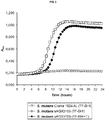
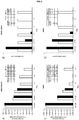
- Streptococcus mutans is a Gram positive, facultative anaerobic, lactic acid producing bacterium. It is a species that colonizes the human as well as hamster dental surface. As such it is an interesting candidate to serve as a host organism for delivery of therapeutic proteins to the oral mucosa. Hence, the effect of thyA deficiency on the colonizing capacity of S. mutans was investigated herein.
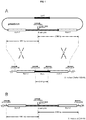
- thyA of S. mutans strain Clarke 1924 AL With the uidA gene, encoding E. coli ⁇ -glucuronidase (GUS) ( Figure 1 , Figure 2 ).
- the construction strategy uses a conditionally-replicative plasmid, pAGX0725, which was introduced in Streptococcus mutans Clarke 1924 AL under non-permissive circumstances.
- the plasmid pAGX0725 carries the uidA gene in-between 1kb regions cloned from chromosomal DNA upstream (thyA 5') or downstream (thyA 3') of thyA.
Landscapes
- Health & Medical Sciences (AREA)
- Life Sciences & Earth Sciences (AREA)
- Chemical & Material Sciences (AREA)
- Engineering & Computer Science (AREA)
- Organic Chemistry (AREA)
- Bioinformatics & Cheminformatics (AREA)
- General Health & Medical Sciences (AREA)
- Medicinal Chemistry (AREA)
- Pharmacology & Pharmacy (AREA)
- Animal Behavior & Ethology (AREA)
- Public Health (AREA)
- Veterinary Medicine (AREA)
- General Chemical & Material Sciences (AREA)
- Chemical Kinetics & Catalysis (AREA)
- Nuclear Medicine, Radiotherapy & Molecular Imaging (AREA)
- Zoology (AREA)
- Wood Science & Technology (AREA)
- Genetics & Genomics (AREA)
- Biomedical Technology (AREA)
- General Engineering & Computer Science (AREA)
- Biochemistry (AREA)
- Biotechnology (AREA)
- Microbiology (AREA)
- Virology (AREA)
- Diabetes (AREA)
- Neurology (AREA)
- Neurosurgery (AREA)
- Hematology (AREA)
- Cell Biology (AREA)
- Molecular Biology (AREA)
- Physical Education & Sports Medicine (AREA)
- Communicable Diseases (AREA)
- Obesity (AREA)
- Proteomics, Peptides & Aminoacids (AREA)
- Rheumatology (AREA)
- Oncology (AREA)
- Orthopedic Medicine & Surgery (AREA)
- Heart & Thoracic Surgery (AREA)
- Epidemiology (AREA)
- Cardiology (AREA)
Applications Claiming Priority (4)
| Application Number | Priority Date | Filing Date | Title |
|---|---|---|---|
| EP08105458 | 2008-09-29 | ||
| PCT/EP2009/062647 WO2010034844A1 (fr) | 2008-09-29 | 2009-09-29 | Colonisation réduite de microbes au niveau de la muqueuse |
| EP09736880.7A EP2344626B1 (fr) | 2008-09-29 | 2009-09-29 | Colonisation réduite de microbes au niveau de la muqueuse |
| EP17154984.3A EP3181682B1 (fr) | 2008-09-29 | 2009-09-29 | Colonisation réduite de microbes au niveau de la muqueuse |
Related Parent Applications (2)
| Application Number | Title | Priority Date | Filing Date |
|---|---|---|---|
| EP17154984.3A Division EP3181682B1 (fr) | 2008-09-29 | 2009-09-29 | Colonisation réduite de microbes au niveau de la muqueuse |
| EP09736880.7A Division EP2344626B1 (fr) | 2008-09-29 | 2009-09-29 | Colonisation réduite de microbes au niveau de la muqueuse |
Publications (2)
| Publication Number | Publication Date |
|---|---|
| EP3933029A2 true EP3933029A2 (fr) | 2022-01-05 |
| EP3933029A3 EP3933029A3 (fr) | 2022-03-23 |
Family
ID=41348919
Family Applications (3)
| Application Number | Title | Priority Date | Filing Date |
|---|---|---|---|
| EP21169279.3A Withdrawn EP3933029A3 (fr) | 2008-09-29 | 2009-09-29 | Colonisation réduite de microbes au niveau de la muqueuse |
| EP17154984.3A Active EP3181682B1 (fr) | 2008-09-29 | 2009-09-29 | Colonisation réduite de microbes au niveau de la muqueuse |
| EP09736880.7A Active EP2344626B1 (fr) | 2008-09-29 | 2009-09-29 | Colonisation réduite de microbes au niveau de la muqueuse |
Family Applications After (2)
| Application Number | Title | Priority Date | Filing Date |
|---|---|---|---|
| EP17154984.3A Active EP3181682B1 (fr) | 2008-09-29 | 2009-09-29 | Colonisation réduite de microbes au niveau de la muqueuse |
| EP09736880.7A Active EP2344626B1 (fr) | 2008-09-29 | 2009-09-29 | Colonisation réduite de microbes au niveau de la muqueuse |
Country Status (6)
| Country | Link |
|---|---|
| US (1) | US20110150850A1 (fr) |
| EP (3) | EP3933029A3 (fr) |
| JP (1) | JP2012504116A (fr) |
| CA (1) | CA2738781C (fr) |
| DK (1) | DK3181682T3 (fr) |
| WO (1) | WO2010034844A1 (fr) |
Families Citing this family (24)
| Publication number | Priority date | Publication date | Assignee | Title |
|---|---|---|---|---|
| WO2011039137A1 (fr) * | 2009-09-29 | 2011-04-07 | Actogenix N.V. | Promoteurs de type lactobacillus et de streptococcus et leurs utilisations |
| HUE038830T2 (hu) | 2011-09-23 | 2018-11-28 | Intrexon Actobiotics Nv | Módosított gram-pozitív baktériumok és alkalmazásaik |
| CN103917639B (zh) | 2011-09-23 | 2017-09-26 | 英特瑞克斯顿阿克图比奥帝克斯有限公司 | 经修饰的革兰氏阳性细菌及其用途 |
| EP3034610A1 (fr) * | 2013-08-13 | 2016-06-22 | The Kitasato Institute | Nouveau composé terpénoïde et son procédé de production |
| US9688967B2 (en) | 2014-12-05 | 2017-06-27 | Synlogic, Inc. | Bacteria engineered to treat diseases associated with hyperammonemia |
| US20160206666A1 (en) | 2014-12-22 | 2016-07-21 | Synlogic, Inc. | Bacteria engineered to treat diseases that benefit from reduced gut inflammation and/or tighten gut mucosal barrier |
| CA2971520C (fr) | 2014-12-23 | 2024-04-09 | Ilya Pharma Ab | Methodes favorisant la cicatrisation des plaies |
| IL296538A (en) | 2015-05-13 | 2022-11-01 | Synlogic Operating Co Inc | A genetically engineered bacterium to lower hyperphenylamine |
| US11883439B2 (en) | 2015-05-13 | 2024-01-30 | Synlogic Operating Company, Inc. | Bacteria engineered to treat a disease or disorder |
| WO2016210384A2 (fr) | 2015-06-25 | 2016-12-29 | Synlogic, Inc. | Bactéries manipulées pour traiter des maladies métaboliques |
| US11685925B2 (en) | 2015-10-30 | 2023-06-27 | Synlogic Operating Company, Inc. | Bacteria engineered to treat diseases that benefit from reduced gut inflammation and/or tightened gut mucosal barrier |
| PL3377518T3 (pl) | 2015-11-16 | 2022-09-26 | Synlogic Operating Company, Inc. | Bakterie modyfikowane do celów zmniejszenia hiperfenyloalaninemii |
| EP3402499B1 (fr) | 2016-01-14 | 2021-07-21 | Intrexon Actobiotics NV | Compositions et procédés de traitement du diabète de type 1 |
| EP4302824A3 (fr) | 2016-04-20 | 2024-03-20 | The Board of Trustees of the Leland Stanford Junior University | Compositions et procédés d'expression d'acide nucléique et sécrétion de protéine dans des bactéroïdes |
| US11566238B2 (en) | 2016-12-15 | 2023-01-31 | The Board Of Trustees Of The Leland Stanford Junior University | Compositions and methods for modulating growth of a genetically modified gut bacterial cell |
| AU2018290278B2 (en) | 2017-06-21 | 2022-12-15 | Synlogic Operating Company, Inc. | Bacteria for the treatment of disorders |
| WO2019061263A1 (fr) * | 2017-09-29 | 2019-04-04 | Dupont Nutrition Biosciences Aps | Nouvelle souche de lactobacillus plantarum et utilisations de cette dernière |
| GB201718133D0 (en) * | 2017-11-02 | 2017-12-20 | Sporegen Ltd | Modified bacterial spores |
| CN112391305B (zh) * | 2019-08-15 | 2023-01-13 | 上海交通大学 | 唾液链球菌f286及其用途 |
| CN110878267B (zh) * | 2019-11-21 | 2023-01-31 | 中国农业科学院兰州兽医研究所 | 一株唾液乳杆菌及其用途 |
| AU2021240078A1 (en) | 2020-03-20 | 2022-09-01 | Synlogic Operating Company, Inc. | Microorganisms engineered to reduce hyperphenylalaninemia |
| WO2021195672A1 (fr) * | 2020-03-26 | 2021-09-30 | The Regents Of The University Of California | Détection et traitement de la fibrose intestinale |
| KR102231437B1 (ko) * | 2020-09-21 | 2021-03-24 | 주식회사 보삼바이오산업 | 고병원성 조류 인플루엔자 바이러스 감염의 예방 또는 치료용 조성물의 제조방법 및 그를 이용하여 제조한 고병원성 조류 인플루엔자 바이러스 감염의 예방 또는 치료용 조성물 |
| WO2024074540A2 (fr) | 2022-10-06 | 2024-04-11 | Danmarks Tekniske Universitet | Stratégies de confinement biologique pour des applications in vivo de levures |
Citations (11)
| Publication number | Priority date | Publication date | Assignee | Title |
|---|---|---|---|---|
| EP0450176A1 (fr) | 1990-03-02 | 1991-10-09 | Bayer Ag | Polymères contenant du sucre pour l'encapsulation et l'enrobage de médicaments |
| WO1996011277A1 (fr) | 1994-10-05 | 1996-04-18 | Dompe' S.P.A. | Micro-organismes utilises en tant que systemes d'apport de composes therapeutiques |
| US5559007A (en) | 1990-03-22 | 1996-09-24 | Suri; Bruno | Bacterial shuttle vectors |
| WO1996040865A1 (fr) | 1995-06-07 | 1996-12-19 | University Of Florida Research Foundation, Inc. | Therapie de substitution pour caries dentaires |
| WO1997014806A2 (fr) | 1995-10-20 | 1997-04-24 | Cambridge University Technical Services Limited | Administration de polypeptides biologiquement actifs |
| WO1998031786A2 (fr) | 1997-01-17 | 1998-07-23 | Microbial Technics Limited | Nouveaux micro-organisms |
| WO2000023471A2 (fr) | 1998-10-20 | 2000-04-27 | Vlaams Interuniversitair Instituut Voor Biotechnologie Vzw | Utilisation de souche de lactococcus produisant de la cytokine pour traiter la colite |
| WO2001002570A1 (fr) | 1999-07-05 | 2001-01-11 | Vlaams Interuniversitair Instituut Voor Biotechnologie | Distribution de peptides en trefle |
| WO2004046346A2 (fr) | 2002-11-15 | 2004-06-03 | Vib Vzw | Souche de lactobacillus autonome |
| WO2005111194A1 (fr) | 2004-05-18 | 2005-11-24 | Vib Vzw | Souche de lactobacillus autonome |
| WO2008084115A2 (fr) | 2007-01-12 | 2008-07-17 | Actogenix N.V. | Promoteurs lactococcus et leurs utilisations |
Family Cites Families (4)
| Publication number | Priority date | Publication date | Assignee | Title |
|---|---|---|---|---|
| GB9518323D0 (en) * | 1995-09-07 | 1995-11-08 | Steidler Lothar | Materials and methods relating to the attachment and display of substances on cell surfaces |
| ES2266515T3 (es) * | 2001-05-03 | 2007-03-01 | Vlaams Interuniversitair Instituut Voor Biotechnologie Vzw. | Cepa de lactococcus con autocontencion. |
| US7780961B2 (en) * | 2001-05-03 | 2010-08-24 | Actogenix N.V. | Self-containing Lactococcus strain |
| WO2004001020A2 (fr) * | 2002-06-19 | 2003-12-31 | Vlaams Interuniversitair Instituut Voor Biotechnologie Vzw | Procedes et moyens permettant de favoriser l'absorption intestinale |
-
2009
- 2009-09-29 CA CA2738781A patent/CA2738781C/fr active Active
- 2009-09-29 EP EP21169279.3A patent/EP3933029A3/fr not_active Withdrawn
- 2009-09-29 DK DK17154984.3T patent/DK3181682T3/da active
- 2009-09-29 EP EP17154984.3A patent/EP3181682B1/fr active Active
- 2009-09-29 US US12/737,929 patent/US20110150850A1/en not_active Abandoned
- 2009-09-29 WO PCT/EP2009/062647 patent/WO2010034844A1/fr not_active Ceased
- 2009-09-29 EP EP09736880.7A patent/EP2344626B1/fr active Active
- 2009-09-29 JP JP2011528366A patent/JP2012504116A/ja active Pending
Patent Citations (11)
| Publication number | Priority date | Publication date | Assignee | Title |
|---|---|---|---|---|
| EP0450176A1 (fr) | 1990-03-02 | 1991-10-09 | Bayer Ag | Polymères contenant du sucre pour l'encapsulation et l'enrobage de médicaments |
| US5559007A (en) | 1990-03-22 | 1996-09-24 | Suri; Bruno | Bacterial shuttle vectors |
| WO1996011277A1 (fr) | 1994-10-05 | 1996-04-18 | Dompe' S.P.A. | Micro-organismes utilises en tant que systemes d'apport de composes therapeutiques |
| WO1996040865A1 (fr) | 1995-06-07 | 1996-12-19 | University Of Florida Research Foundation, Inc. | Therapie de substitution pour caries dentaires |
| WO1997014806A2 (fr) | 1995-10-20 | 1997-04-24 | Cambridge University Technical Services Limited | Administration de polypeptides biologiquement actifs |
| WO1998031786A2 (fr) | 1997-01-17 | 1998-07-23 | Microbial Technics Limited | Nouveaux micro-organisms |
| WO2000023471A2 (fr) | 1998-10-20 | 2000-04-27 | Vlaams Interuniversitair Instituut Voor Biotechnologie Vzw | Utilisation de souche de lactococcus produisant de la cytokine pour traiter la colite |
| WO2001002570A1 (fr) | 1999-07-05 | 2001-01-11 | Vlaams Interuniversitair Instituut Voor Biotechnologie | Distribution de peptides en trefle |
| WO2004046346A2 (fr) | 2002-11-15 | 2004-06-03 | Vib Vzw | Souche de lactobacillus autonome |
| WO2005111194A1 (fr) | 2004-05-18 | 2005-11-24 | Vib Vzw | Souche de lactobacillus autonome |
| WO2008084115A2 (fr) | 2007-01-12 | 2008-07-17 | Actogenix N.V. | Promoteurs lactococcus et leurs utilisations |
Non-Patent Citations (58)
| Title |
|---|
| "Genbank", Database accession no. 4419806 |
| "GenBank", Database accession no. CP001396.1 |
| AJDIC ET AL., PNAS, vol. 99, no. 22, 2002, pages 14434 - 9 |
| AJDIC, D.W. M. MCSHAN ET AL.: "Genome sequence of Streptococcus mutans UA159, a cariogenic dental pathogen", PROCEEDINGS OF THE NATIONAL ACADEMY OF SCIENCES OF THE UNITED STATES OF AMERICA, vol. 99, no. 22, 2002, pages 14434 - 9, XP002989804, DOI: 10.1073/pnas.172501299 |
| ALLAKER ET AL., INT J ANTIMICROB AGENTS, vol. 33, no. 1, 2009, pages 8 - 13 |
| ALLAKER, R. P.C. W. DOUGLAS: "Novel anti-microbial therapies for dental plaque-related diseases", INTERNATIONAL JOURNAL OF ANTIMICROBIAL AGENTS, vol. 33, no. 1, 2009, pages 8 - 13, XP025716504, DOI: 10.1016/j.ijantimicag.2008.07.014 |
| ALTERMANN ET AL., PNAS, vol. 102, no. 11, 2005, pages 3906 - 12 |
| ALTERMANN, E.W. M. RUSSELL ET AL.: "Complete genome sequence of the probiotic lactic acid bacterium Lactobacillus acidophilus NCFM", PROCEEDINGS OF THE NATIONAL ACADEMY OF SCIENCES OF THE UNITED STATES OF AMERICA, vol. 102, no. 11, 2005, pages 3906 - 12, XP002402517, DOI: 10.1073/pnas.0409188102 |
| AUSUBEL ET AL.: "Current Protocols in Molecular Biology", 1992, GREENE PUBLISHING AND WILEY-INTERSCIENCE |
| BEIGHTON, D.H. HAYDAY: "The streptococcal flora of the tongue of the monkey Macaca fascicularis", ARCHIVES OF ORAL BIOLOGY, vol. 27, no. 4, 1982, pages 331 - 5, XP026165661, DOI: 10.1016/0003-9969(82)90163-7 |
| BESIER, S.A. LUDWIG ET AL.: "Molecular analysis of the thymidine-auxotrophic small colony variant phenotype of Staphylococcus aureus", INT J MED MICROBIOL, vol. 297, no. 4, 2007, pages 217 - 25, XP022100450, DOI: 10.1016/j.ijmm.2007.02.003 |
| BIGAS, A.M. E. GARRIDO ET AL.: "Colonization capacity and serum bactericidal activity of Haemophilus parasuis thy mutants", INT MICROBIOL, vol. 9, no. 4, 2006, pages 297 - 301, XP009101779 |
| CAZZANIGA ET AL.: "Oral delayed release system for colonic specific delivery", INT. J. PHARM., vol. i08, 1994, pages 7 |
| CLAESSON ET AL., PNAS, vol. 103, no. 17, 2006, pages 6718 - 23 |
| CLAESSON, M. J.Y. LI ET AL.: "Multireplicon genome architecture of Lactobacillus salivarius", PROCEEDINGS OF THE NATIONAL ACADEMY OF SCIENCES OF THE UNITED STATES OF AMERICA, vol. 103, no. 17, 2006, pages 6718 - 23, XP002402646, DOI: 10.1073/pnas.0511060103 |
| COYKENDALL, A. L.D. BRATTHALL ET AL.: "Serological and genetic examination of some nontypical Streptococcus mutans strains", INFECTION AND IMMUNITY, vol. 14, no. 3, 1976, pages 667 - 70 |
| DENT ET AL., JOURNAL APPL BACT, vol. 44, no. 2, 1978, pages 249 - 58 |
| DENT, V. E.J. M. HARDIE ET AL.: "Streptococci isolated from dental plaque of animals", THE JOURNAL OF APPLIED BACTERIOLOGY, vol. 44, no. 2, 1978, pages 249 - 58 |
| FINEGOLD ET AL., CAN RES, vol. 35, no. 11, 1975, pages 3407 - 17 |
| FINEGOLD, S. M.D. J. FLORA ET AL.: "Fecal bacteriology of colonic polyp patients and control patients", CANCER RESEARCH, vol. 35, no. 11, 1975, pages 3407 - 17 |
| GEHRING, F.E. J. KARLE ET AL.: "The occurrence of Streptococcus mutans variants in man and laboratory animals", DEUTSCHE ZAHNARZTLICHE ZEITSCHRIFT, vol. 31, no. 1, 1976, pages 18 - 21 |
| HAMADA ET AL., J CLIN MICROBIOL, vol. 11, no. 4, 1980, pages 314 - 8 |
| HAMADA ET AL., MICROB REV, vol. 44, no. 2, 1980, pages 331 - 84 |
| HAMADA ET AL., MICROBIO REV, vol. 44, no. 2, 1980, pages 331 - 84 |
| HAMADA, S.H. D. SLADE: "Biology, immunology, and cariogenicity of Streptococcus mutans", MICROBIOLOGICAL REVIEWS, vol. 44, no. 2, 1980, pages 331 - 84 |
| HAMADA, S.N. MASUDA ET AL.: "Isolation and serotyping of Streptococcus mutans from teeth and feces of children", JOURNAL OF CLINICAL MICROBIOLOGY, vol. 11, no. 4, 1980, pages 314 - 8 |
| HAMADY, Z. Z.N. SCOTT ET AL.: "Xylan regulated delivery of human keratinocyte growth factor-2 to the inflamed colon by the human anaerobic commensal bacterium Bacteroides ovatus", GUT, 2009 |
| HANSEL ET AL.: "Pharmaceutical dosage forms and drug delivery systems", 1990, WILLIAM AND WILKINS |
| HASSELBRING, B. M.C. A. PAGE ET AL.: "Transposon mutagenesis identifies genes associated with Mycoplasma pneumoniae gliding motility", J BACTERIOL, vol. 188, no. 17, 2006, pages 6335 - 45 |
| HUBER ET AL., J OF DENT RES, vol. 56, no. 12, 1977, pages 1614 - 9 |
| HUBER, G.J. VAN HOUTE ET AL.: "Relationship between the populations of Streptococcus mutans in the mouth and feces of conventional Sprague-Dawley rats", JOURNAL OF DENTAL RESEARCH, vol. 56, no. 12, 1977, pages 1614 - 9 |
| KILIAN, M.E. THEILADE ET AL.: "Isolation of Streptococcus mutans from human faeces", ARCHIVES OF ORAL BIOLOGY, vol. 16, no. 5, 1971, pages 553 - 4, XP026167451, DOI: 10.1016/0003-9969(71)90201-9 |
| KLEEREBEZEM ET AL., PNAS, vol. 100, no. 4, 2003, pages 1990 - 5 |
| KLEEREBEZEM, M.J. BOEKHORST ET AL.: "Complete genome sequence of Lactobacillus plantarum WCFS1", PROCEEDINGS OF THE NATIONAL ACADEMY OF SCIENCES OF THE UNITED STATES OF AMERICA, vol. 100, no. 4, 2003, pages 1990 - 5, XP002318080, DOI: 10.1073/pnas.0337704100 |
| LAW, J.G. BUIST ET AL.: "A system to generate chromosomal mutations in Lactococcus lactis which allows fast analysis of targeted genes", J BACTERIOL, vol. 177, no. 24, 1995, pages 7011 - 8, XP000674323 |
| LEHNER, T.S. J. CHALLACOMBE ET AL.: "Immunological and bacteriological basis for vaccination against dental caries in rhesus monkeys", NATURE, vol. 254, no. 5500, 1975, pages 517 - 20, XP037056253, DOI: 10.1038/254517a0 |
| LILJEMARK ET AL., J DENT RES, vol. 57, no. 2, 1978, pages 373 - 9 |
| LILJEMARK ET AL., J DENT RESH, vol. 57, no. 2, 1978, pages 373 - 9 |
| LILJEMARK, W. F.S. V. SCHAUER ET AL.: "Compounds which affect the adherence of Streptococcus sanguis and Streptococcus mutans to hydroxyapatite", JOURNAL OF DENTAL RESEARCH, vol. 57, no. 2, 1978, pages 373 - 9 |
| MAGLOTT ET AL.: "Entrez Gene: gene-centered information at NCBI", NUCLEIC ACIDS RES., vol. 33, 2005, pages D54 - D58, XP055233102, DOI: 10.1093/nar/gki031 |
| MARUYAMA, F.M. KOBATA ET AL.: "Comparative genomic analyses of Streptococcus mutans provide insights into chromosomal shuffling and species-specific content", BMC GENOMICS, vol. 10, no. 358, 2009, pages 358, XP021056168, DOI: 10.1186/1471-2164-10-358 |
| PEREZ-MARTINEZ, G.J. KOK ET AL.: "Protein export elements from Lactococcus lactis", MOL GEN GENET, vol. 234, no. 3, 1992, pages 401 - 11, XP002135837, DOI: 10.1007/BF00538699 |
| PRESCOTT ET AL.: "Molecular Cloning: A Laboratory Manual", vol. 1-3, 1989, COLD SPRING HARBOR LABORATORY PRESS |
| PRESCOTT ET AL.: "Novel drug delivery", 1998, J. WILEY & SONS |
| PROCTOR, R. A.P. VAN LANGEVELDE ET AL.: "Persistent and relapsing infections associated with small-colony variants of Staphylococcus aureus", CLIN INFECT DIS, vol. 20, no. 1, 1995, pages 95 - 102 |
| SAMUEL, J. L.: "The normal flora of the mouths of macropods (Marsupialia: macropodidae", ARCHIVES OF ORAL BIOLOGY, vol. 27, no. 2, 1982, pages 141 - 6, XP026164845, DOI: 10.1016/0003-9969(82)90134-0 |
| SASAKI, Y.Y. ITO ET AL.: "ThyA as a selection marker in construction of food-grade host-vector and integration systems for Streptococcus thermophilus", APPL ENVIRON MICROBIOL, vol. 70, no. 3, 2004, pages 1858 - 64, XP002322566, DOI: 10.1128/AEM.70.3.1858-1864.2004 |
| SIBAKOV, M.T. KOIVULA ET AL.: "Secretion of TEM beta-lactamase with signal sequences isolated from the chromosome of Lactococcus lactis subsp. lactis", APPL ENVIRON MICROBIOL, vol. 57, no. 2, 1991, pages 341 - 8 |
| SPANU, T.L. ROMANO ET AL.: "Recurrent ventriculoperitoneal shunt infection caused by small-colony variants of Staphylococcus aureus", CLIN INFECT DIS, vol. 41, no. 5, 2005, pages e48 - 52 |
| STEIDLER, L.K. ROBINSON ET AL.: "Mucosal delivery of murine interleukin-2 (IL-2) and IL-6 by recombinant strains of Lactococcus lactis coexpressing antigen and cytokine", INFECT IMMUN, vol. 66, no. 7, 1998, pages 3183 - 9, XP002105819 |
| STEIDLER, L.S. NEIRYNCK ET AL.: "Biological containment of genetically modified Lactococcus lactis for intestinal delivery of human interleukin 10", NAT. BIOTECHNOL., vol. 21, no. 785-9, 2003, pages 785 - 9, XP002276104, DOI: 10.1038/nbt840 |
| STEIDLER, L.W. HANS ET AL.: "Treatment of murine colitis by Lactococcus lactis secreting interleukin-10", SCIENCE, vol. 289, 2000, pages 1352 - 5, XP002208404, DOI: 10.1126/science.289.5483.1352 |
| THOMSON ET AL., CARIES RES, vol. 13, no. 1, 1979, pages 9 - 17 |
| THOMSON, L. A.W. H. BOWEN ET AL.: "Simultaneous implantation of five serotypes of Streptococcus mutans in gnotobiotic rats", CARIES RESEARCH, vol. 13, no. 1, 1979, pages 9 - 17 |
| UNSWORTH, J HYG, vol. 85, no. 1, 1980, pages 153 - 64 |
| UNSWORTH, P. F.: "The isolation of streptococci from human faeces", THE JOURNAL OF HYGIENE, vol. 85, no. 1, 1980, pages 153 - 64 |
| WUNDER ET AL., J DENT RES, vol. 55, no. 6, 1976, pages 1097 - 102 |
| WUNDER, J. A.W. W. BRINER ET AL.: "Identification of the cultivable bacteria in dental plaque from the beagle dog", JOURNAL OF DENTAL RESEARCH, vol. 55, no. 6, 1976, pages 1097 - 102 |
Also Published As
| Publication number | Publication date |
|---|---|
| US20110150850A1 (en) | 2011-06-23 |
| EP3181682A1 (fr) | 2017-06-21 |
| CA2738781C (fr) | 2020-06-09 |
| EP2344626B1 (fr) | 2017-03-29 |
| JP2012504116A (ja) | 2012-02-16 |
| EP3933029A3 (fr) | 2022-03-23 |
| EP3181682B1 (fr) | 2021-04-21 |
| EP2344626A1 (fr) | 2011-07-20 |
| CA2738781A1 (fr) | 2010-04-01 |
| DK3181682T3 (da) | 2021-07-05 |
| WO2010034844A1 (fr) | 2010-04-01 |
Similar Documents
| Publication | Publication Date | Title |
|---|---|---|
| EP3181682B1 (fr) | Colonisation réduite de microbes au niveau de la muqueuse | |
| US8759088B2 (en) | Lactococcus promoters and uses thereof | |
| EP1383897B1 (fr) | Souche de lactococcus a auto-confinement | |
| US7740835B2 (en) | Anaerobic bacterium as a drug for cancer gene therapy | |
| US20100316611A1 (en) | Self-containing lactococcus strain | |
| KR20190056387A (ko) | 점막부착성 미생물 | |
| US20050276788A1 (en) | Self-containing lactobacillus strain | |
| AU2002314040A1 (en) | Self-containing lactococcus strain | |
| EP2483409B1 (fr) | PROMOTEURS de glycéraldéhyde-3-phosphate déshydrogénase DE LACTOBACILLUS ET LEURS UTILISATIONS | |
| HK1236565A1 (en) | Reduced colonization of microbes at the mucosa | |
| US20170209501A1 (en) | Production of omega 3 fatty acids by recombinant escherichia coli nissle 1917 | |
| HK1241410A1 (en) | Lactobacillus and streptococcus promoters and uses thereof | |
| HK1227928A1 (en) | Lactococcus promoters and uses thereof | |
| HK40001496A (en) | Selection of bacterial strains useful in allergy treatment |
Legal Events
| Date | Code | Title | Description |
|---|---|---|---|
| PUAI | Public reference made under article 153(3) epc to a published international application that has entered the european phase |
Free format text: ORIGINAL CODE: 0009012 |
|
| STAA | Information on the status of an ep patent application or granted ep patent |
Free format text: STATUS: THE APPLICATION HAS BEEN PUBLISHED |
|
| AC | Divisional application: reference to earlier application |
Ref document number: 2344626 Country of ref document: EP Kind code of ref document: P Ref document number: 3181682 Country of ref document: EP Kind code of ref document: P |
|
| AK | Designated contracting states |
Kind code of ref document: A2 Designated state(s): AT BE BG CH CY CZ DE DK EE ES FI FR GB GR HR HU IE IS IT LI LT LU LV MC MK MT NL NO PL PT RO SE SI SK SM TR |
|
| PUAL | Search report despatched |
Free format text: ORIGINAL CODE: 0009013 |
|
| AK | Designated contracting states |
Kind code of ref document: A3 Designated state(s): AT BE BG CH CY CZ DE DK EE ES FI FR GB GR HR HU IE IS IT LI LT LU LV MC MK MT NL NO PL PT RO SE SI SK SM TR |
|
| RIC1 | Information provided on ipc code assigned before grant |
Ipc: C12N 1/00 20060101AFI20220215BHEP |
|
| STAA | Information on the status of an ep patent application or granted ep patent |
Free format text: STATUS: THE APPLICATION IS DEEMED TO BE WITHDRAWN |
|
| 18D | Application deemed to be withdrawn |
Effective date: 20220924 |