EP3933457A1 - Résine thermoplastique, son procédé de fabrication et lentille optique - Google Patents
Résine thermoplastique, son procédé de fabrication et lentille optique Download PDFInfo
- Publication number
- EP3933457A1 EP3933457A1 EP20762624.3A EP20762624A EP3933457A1 EP 3933457 A1 EP3933457 A1 EP 3933457A1 EP 20762624 A EP20762624 A EP 20762624A EP 3933457 A1 EP3933457 A1 EP 3933457A1
- Authority
- EP
- European Patent Office
- Prior art keywords
- group
- carbon atoms
- thermoplastic resin
- bis
- hydroxyethoxy
- Prior art date
- Legal status (The legal status is an assumption and is not a legal conclusion. Google has not performed a legal analysis and makes no representation as to the accuracy of the status listed.)
- Pending
Links
- WERHZQJDRYNHCD-UHFFFAOYSA-N COCCOc(ccc1c2ccc(-c3c4[s]c5ccccc5c4ccc3)c1)c2-c(c(cc1)c(cc2)cc1-c1cccc3c1[s]c1c3cccc1)c2OCCOC Chemical compound COCCOc(ccc1c2ccc(-c3c4[s]c5ccccc5c4ccc3)c1)c2-c(c(cc1)c(cc2)cc1-c1cccc3c1[s]c1c3cccc1)c2OCCOC WERHZQJDRYNHCD-UHFFFAOYSA-N 0.000 description 1
- BKYGTOFPNYXFEK-UHFFFAOYSA-N COCCOc(ccc1c2ccc(-c3cc(cccc4)c4c4c3cccc4)c1)c2-c1c(ccc(-c2cc3ccccc3c3ccccc23)c2)c2ccc1OCCOC Chemical compound COCCOc(ccc1c2ccc(-c3cc(cccc4)c4c4c3cccc4)c1)c2-c1c(ccc(-c2cc3ccccc3c3ccccc23)c2)c2ccc1OCCOC BKYGTOFPNYXFEK-UHFFFAOYSA-N 0.000 description 1
Images







Classifications
-
- C—CHEMISTRY; METALLURGY
- C08—ORGANIC MACROMOLECULAR COMPOUNDS; THEIR PREPARATION OR CHEMICAL WORKING-UP; COMPOSITIONS BASED THEREON
- C08G—MACROMOLECULAR COMPOUNDS OBTAINED OTHERWISE THAN BY REACTIONS ONLY INVOLVING UNSATURATED CARBON-TO-CARBON BONDS
- C08G63/00—Macromolecular compounds obtained by reactions forming a carboxylic ester link in the main chain of the macromolecule
- C08G63/66—Polyesters containing oxygen in the form of ether groups
- C08G63/668—Polyesters containing oxygen in the form of ether groups derived from polycarboxylic acids and polyhydroxy compounds
- C08G63/672—Dicarboxylic acids and dihydroxy compounds
-
- C—CHEMISTRY; METALLURGY
- C08—ORGANIC MACROMOLECULAR COMPOUNDS; THEIR PREPARATION OR CHEMICAL WORKING-UP; COMPOSITIONS BASED THEREON
- C08G—MACROMOLECULAR COMPOUNDS OBTAINED OTHERWISE THAN BY REACTIONS ONLY INVOLVING UNSATURATED CARBON-TO-CARBON BONDS
- C08G64/00—Macromolecular compounds obtained by reactions forming a carbonic ester link in the main chain of the macromolecule
- C08G64/04—Aromatic polycarbonates
- C08G64/06—Aromatic polycarbonates not containing aliphatic unsaturation
-
- C—CHEMISTRY; METALLURGY
- C07—ORGANIC CHEMISTRY
- C07C—ACYCLIC OR CARBOCYCLIC COMPOUNDS
- C07C43/00—Ethers; Compounds having groups, groups or groups
- C07C43/02—Ethers
- C07C43/20—Ethers having an ether-oxygen atom bound to a carbon atom of a six-membered aromatic ring
- C07C43/202—Ethers having an ether-oxygen atom bound to a carbon atom of a six-membered aromatic ring the aromatic ring being a naphthalene
-
- C—CHEMISTRY; METALLURGY
- C08—ORGANIC MACROMOLECULAR COMPOUNDS; THEIR PREPARATION OR CHEMICAL WORKING-UP; COMPOSITIONS BASED THEREON
- C08G—MACROMOLECULAR COMPOUNDS OBTAINED OTHERWISE THAN BY REACTIONS ONLY INVOLVING UNSATURATED CARBON-TO-CARBON BONDS
- C08G63/00—Macromolecular compounds obtained by reactions forming a carboxylic ester link in the main chain of the macromolecule
- C08G63/66—Polyesters containing oxygen in the form of ether groups
-
- C—CHEMISTRY; METALLURGY
- C08—ORGANIC MACROMOLECULAR COMPOUNDS; THEIR PREPARATION OR CHEMICAL WORKING-UP; COMPOSITIONS BASED THEREON
- C08G—MACROMOLECULAR COMPOUNDS OBTAINED OTHERWISE THAN BY REACTIONS ONLY INVOLVING UNSATURATED CARBON-TO-CARBON BONDS
- C08G63/00—Macromolecular compounds obtained by reactions forming a carboxylic ester link in the main chain of the macromolecule
- C08G63/78—Preparation processes
-
- C—CHEMISTRY; METALLURGY
- C08—ORGANIC MACROMOLECULAR COMPOUNDS; THEIR PREPARATION OR CHEMICAL WORKING-UP; COMPOSITIONS BASED THEREON
- C08G—MACROMOLECULAR COMPOUNDS OBTAINED OTHERWISE THAN BY REACTIONS ONLY INVOLVING UNSATURATED CARBON-TO-CARBON BONDS
- C08G64/00—Macromolecular compounds obtained by reactions forming a carbonic ester link in the main chain of the macromolecule
- C08G64/04—Aromatic polycarbonates
- C08G64/06—Aromatic polycarbonates not containing aliphatic unsaturation
- C08G64/08—Aromatic polycarbonates not containing aliphatic unsaturation containing atoms other than carbon, hydrogen or oxygen
- C08G64/081—Aromatic polycarbonates not containing aliphatic unsaturation containing atoms other than carbon, hydrogen or oxygen containing sulfur
-
- C—CHEMISTRY; METALLURGY
- C08—ORGANIC MACROMOLECULAR COMPOUNDS; THEIR PREPARATION OR CHEMICAL WORKING-UP; COMPOSITIONS BASED THEREON
- C08G—MACROMOLECULAR COMPOUNDS OBTAINED OTHERWISE THAN BY REACTIONS ONLY INVOLVING UNSATURATED CARBON-TO-CARBON BONDS
- C08G64/00—Macromolecular compounds obtained by reactions forming a carbonic ester link in the main chain of the macromolecule
- C08G64/04—Aromatic polycarbonates
- C08G64/06—Aromatic polycarbonates not containing aliphatic unsaturation
- C08G64/08—Aromatic polycarbonates not containing aliphatic unsaturation containing atoms other than carbon, hydrogen or oxygen
- C08G64/12—Aromatic polycarbonates not containing aliphatic unsaturation containing atoms other than carbon, hydrogen or oxygen containing nitrogen
-
- C—CHEMISTRY; METALLURGY
- C08—ORGANIC MACROMOLECULAR COMPOUNDS; THEIR PREPARATION OR CHEMICAL WORKING-UP; COMPOSITIONS BASED THEREON
- C08G—MACROMOLECULAR COMPOUNDS OBTAINED OTHERWISE THAN BY REACTIONS ONLY INVOLVING UNSATURATED CARBON-TO-CARBON BONDS
- C08G64/00—Macromolecular compounds obtained by reactions forming a carbonic ester link in the main chain of the macromolecule
- C08G64/20—General preparatory processes
- C08G64/30—General preparatory processes using carbonates
- C08G64/307—General preparatory processes using carbonates and phenols
-
- C—CHEMISTRY; METALLURGY
- C08—ORGANIC MACROMOLECULAR COMPOUNDS; THEIR PREPARATION OR CHEMICAL WORKING-UP; COMPOSITIONS BASED THEREON
- C08L—COMPOSITIONS OF MACROMOLECULAR COMPOUNDS
- C08L69/00—Compositions of polycarbonates; Compositions of derivatives of polycarbonates
-
- G—PHYSICS
- G02—OPTICS
- G02B—OPTICAL ELEMENTS, SYSTEMS OR APPARATUS
- G02B1/00—Optical elements characterised by the material of which they are made; Optical coatings for optical elements
- G02B1/04—Optical elements characterised by the material of which they are made; Optical coatings for optical elements made of organic materials, e.g. plastics
- G02B1/041—Lenses
-
- C—CHEMISTRY; METALLURGY
- C07—ORGANIC CHEMISTRY
- C07B—GENERAL METHODS OF ORGANIC CHEMISTRY; APPARATUS THEREFOR
- C07B2200/00—Indexing scheme relating to specific properties of organic compounds
- C07B2200/13—Crystalline forms, e.g. polymorphs
Definitions
- the present invention relates to a thermoplastic resin, in particular, a thermoplastic resin such as a polyester resin, a polyester carbonate resin and a polycarbonate resin, and a method for producing the same.
- a thermoplastic resin such as a polyester resin, a polyester carbonate resin and a polycarbonate resin
- the present invention also relates to an optical lens containing the thermoplastic resin.
- optical glasses As a material of optical lenses to be used in optical systems of various cameras such as cameras, film integrated type cameras and video cameras, an optical glass or an optical resin is used.
- Optical glasses are excellent in heat resistance, transparency, size stability, chemical resistance, etc., but have problems of high material costs, bad molding processability and low productivity.
- optical lenses made of optical resins can be massproduced by injection molding.
- thermoplastic resins, etc. are used in camera lenses.
- Patent Documents 1-4 it has been desired to develop a resin having a high refractive index because of miniaturization of products.
- a lens element having the same refractive index can be realized with a surface having a smaller curvature, and for this reason, the amount of aberration generated on this surface can be reduced.
- lenses to be used in optical systems of cameras it is required not only that a high refractive index is provided, but also that a b value is not too high and is within a certain range of the level and chromatic aberration can be suppressed.
- thermoplastic resin and optical lens having a sufficiently high refractive index and a low b value had not been provided.
- the problems to be solved by the present invention are to provide a thermoplastic resin having a high refractive index, a low b value and high moist heat resistance, in particular, a high refractive index, and to provide an excellent optical lens obtained by using the resin.
- the present inventors diligently made researches in order to solve the above-described problem and found that it can be solved by the below-described thermoplastic resin and optical lens, and thus the present invention was achieved.
- the present invention is, for example, as described below.
- thermoplastic resin of the present invention exhibits a high refractive index, a low b value and high moist heat resistance, in particular, a high refractive index. Further, by using the thermoplastic resin having the above-described excellent characteristics, an excellent optical lens can be obtained.
- thermoplastic resin structural units
- thermoplastic resin of the present invention comprises a structural unit represented by general formula (1) below.
- the type of the thermoplastic resin is not particularly limited as long as it has the below-described structural unit, but it is preferably a polyester resin, a polyester carbonate resin, a polycarbonate resin or a mixture of at least two of them.
- the polyester resin has a polyester structural unit (repeat unit) comprising a (-RCO-O-) moiety and does not comprise any polycarbonate structural unit (repeat unit) comprising a (-RO-CO-O-) moiety;
- the polycarbonate resin has a polycarbonate structural unit (repeat unit) comprising a (-RO-CO-O-) moiety and does not comprise any polyester structural unit (repeat unit) comprising a (-RCO-O-) moiety;
- the polyester carbonate resin has both a polyester structural unit (repeat unit) comprising a (-RO-CO-) moiety and a polycarbonate structural unit (repeat unit) comprising a (-RO-CO-O-) moiety (each R represents a hydrocarbon group or the like).
- R 1 and R 2 in general formula (1) above is preferably a hydrogen atom, an alkyl group having 1 to 4 carbon atoms, an aryl group having 6 to 30 carbon atoms, an alkenyl group having 2 to 4 carbon atoms, an alkoxy group having 1 to 4 carbon atoms or an aralkyl group having 7 to 12 carbon atoms, more preferably an aryl group having 6 to 20 carbon atoms, and even more preferably an aryl group having 6 to 14 carbon atoms.
- R 1 to R 10 in general formula (1) is preferably an aryl group having 6 to 20 carbon atoms, and more preferably an aryl group having 6 to 14 carbon atoms, and it is particularly preferred that at least two of R 1 to R 10 are an aryl group having 6 to 14 carbon atoms or 6 to 12 carbon atoms.
- R 1 and R 2 are, for example, the same.
- R 1 and R 2 may be the same or different from each other and may be selected from among a monocyclic or polycyclic aryl group having 6 to 36 carbon atoms and a monocyclic or polycyclic heteroaryl group having 5 to 36 ring atoms where 1, 2, 3 or 4 of the ring atoms are selected from nitrogen, sulfur and oxygen while the other ring atoms are carbon atoms.
- the monocyclic or polycyclic aryl group and the monocyclic or polycyclic heteroaryl group may be unsubstituted.
- R 1 and R 2 may be respectively selected from the group consisting of:
- R 1 and R 2 may be respectively selected from the group consisting of:
- R 1 and R 2 are preferably selected from the group consisting of phenyl, 2-cyanophenyl, 3-cyanophenyl, 4-cyanophenyl, 2-naphthyl, 1-naphthyl and 9-naphthyl.
- R 1 and R 2 may be respectively selected from the group consisting of:
- R 1 and R 2 may be respectively selected from the group consisting of furyl, thienyl, pyrrolyl, imidazolyl, pyrazolyl, 1,2,3-triazolyl, 1,2,4-triazolyl, tetrazolyl, oxazolyl, isoxazolyl, 1,3,4-oxadiazolyl, 1,2,4-oxadiazolyl, pyridinyl, pyrazinyl, pyridazinyl, pyrimidinyl, triazinyl, benzofuryl, dibenzofuranyl, benzothienyl, dibenzothienyl, thianthrenyl, naphthofuryl, furo[3,2-b]furanyl, furo[2,3-b]furanyl, furo[3,4-b]furanyl, oxanthrenyl, indolyl, isoindolyl, carbazolyl, indolizinyl, benzo
- X in general formula (1) above is preferably an alkylene group having 2 to 4 carbon atoms, a cycloalkylene group having 5 to 8 carbon atoms or an arylene group having 6 to 14 carbon atoms, more preferably an alkylene group having 2 or 3 carbon atoms, a cycloalkylene group having 5 to 6 carbon atoms or an arylene group having 6 to 10 carbon atoms, and particularly preferably an alkylene group having 2 or 3 carbon atoms, for example, an ethylene group.
- each of a and b in general formula (1) above is preferably an integer of 1 to 6, more preferably 1 to 4, and particularly preferably 2 or 3.
- thermoplastic resin is, for example, a polyester resin or a polyester carbonate resin. Further, it is preferred that the polyester resin or polyester carbonate resin further comprises a structural unit represented by general formula (2) below.
- R C s are each independently a single bond that bonds to a CO group in formula (2) or an alkylene group, which may have a substituent, wherein the total carbon number is 1 to 10, and which includes a point of bonding to the CO group in formula (2) at the end.
- R C s are preferably a single bond or an alkylene group, wherein the total carbon number is 1 to 3.
- Q in formula (2) is preferably represented by formula (2b) below.
- n and m are each independently an integer of 0 to 5, and preferably an integer of 1 to 3.
- p and k are each independently an integer of 1 to 5, and preferably an integer of 1 to 3.
- R 1 and R 2 are the same as R 1 and R 2 in formula (1).
- a and b are each independently an integer of 0 to 6, preferably an integer of 1 to 3, and more preferably an integer of 1 or 2.
- ⁇ represents the point of bonding to the CO group in formula (2).
- Q in formula (2) is more preferably represented by formula (2c) below.
- ⁇ represents the point of bonding to the CO group in formula (2).
- the structural unit represented by general formula (1) above preferably comprises at least one of structural units represented by general formulae (A-1) to (A-7) below.
- the structural unit represented by general formula (1) preferably comprises at least one of: a structural unit derived from (BINL-2EO (2,2'-bis(2-hydroxyethoxy)-6,6'-diphenyl-1,1'-binaphthalene) represented by general formula (A-1); a structural unit derived from DNBINOL-2EO (2,2'-bis(2-hydroxyethoxy)-6,6'-di(naphthalene-1-yl)-1,1'-binaphthalene) represented by general formula (A-2); a structural unit derived from 2DNBINOL-2EO (2,2'-bis(2-hydroxyethoxy)-6,6'-di(naphthalene-2-yl)-1,1'-binaphthalene) represented by general formula (A-3); a structural unit derived from 9DPNBINOL-2EO (2,2'-bis(2-hydroxyethoxy)-6,6'-di(phenanthrene-9-yl)-1,1'-binaphthalene) represented by general
- thermoplastic resin of the present invention comprises the structural unit represented by general formula (1) in an amount of preferably more than 50 mol%, more preferably more than 60 mol%, even more preferably more than 70 mol%, and particularly preferably more than 80 mol% or more than 90 mol%. Further, the thermoplastic resin of the present invention may be formed only by the structural unit represented by general formula (1).
- thermoplastic resin of the present invention may comprise at least one of other structural units in addition to the structural unit represented by general formula (1) (structural unit (1)).
- structural unit (1) structural unit represented by general formula (1)
- a fluorene derivative unit, etc. are preferred.
- thermoplastic resin of the present invention further comprises at least one of structural units represented by general formulae (3) and (4).
- general formula (3)
- Each of R' 1 to R' 20 in general formula (3) is preferably a hydrogen atom, an alkyl group having 1 to 4 carbon atoms, an aryl group having 6 to 12 carbon atoms, an alkenyl group having 2 to 4 carbon atoms, an alkoxy group having 1 to 4 carbon atoms or an aralkyl group having 7 to 12 carbon atoms, and more preferably hydrogen.
- Y in general formula (3) is preferably an alkylene group having 2 to 4 carbon atoms, a cycloalkylene group having 5 to 8 carbon atoms or an arylene group having 6 to 14 carbon atoms, more preferably an alkylene group having 2 or 3 carbon atoms, a cycloalkylene group having 5 to 6 carbon atoms or an arylene group having 6 to 10 carbon atoms, and particularly preferably an alkylene group having 2 or 3 carbon atoms.
- each of c and d in general formula (3) is preferably an integer of 1 to 6, more preferably 1 to 4, and particularly preferably 2 or 3.
- Each of R" 1 to R" 16 in general formula (4) is preferably a hydrogen atom, an alkyl group having 1 to 4 carbon atoms, an aryl group having 6 to 12 carbon atoms, an alkenyl group having 2 to 4 carbon atoms, an alkoxy group having 1 to 4 carbon atoms or an aralkyl group having 7 to 12 carbon atoms, and more preferably hydrogen or an aryl group having 6 to 10 carbon atoms.
- Z in general formula (4) is preferably an alkylene group having 2 to 4 carbon atoms, a cycloalkylene group having 5 to 8 carbon atoms or an arylene group having 6 to 14 carbon atoms, more preferably an alkylene group having 2 or 3 carbon atoms, a cycloalkylene group having 5 to 6 carbon atoms or an arylene group having 6 to 10 carbon atoms, and particularly preferably an alkylene group having 2 or 3 carbon atoms.
- each of e and f in general formula (4) is preferably an integer of 1 to 6, more preferably 1 to 4, and particularly preferably 2 or 3.
- thermoplastic resin of the present invention comprises the structural unit (1) and in addition, as the structural unit represented by general formula (3) or (4), at least one of structural units represented by general formula (5) below.
- the thermoplastic resin of the present invention comprises, in addition to the structural unit (1), at least one of a structural unit derived from BNEF (9,9-bis(6-(2-hydroxyethoxy)naphthalene-2-yl)fluorene), a structural unit derived from BNE (2,2'-bis(2-hydroxyethoxy)-1,1'-binaphthalene) and a structural unit derived from BPPEF (9,9-bis(4-(2-hydroxyethoxy)-3-phenylphenyl)fluorene) represented by general formula (5) above.
- BNEF 9,9-bis(6-(2-hydroxyethoxy)naphthalene-2-yl)fluorene
- BNE 2,2'-bis(2-hydroxyethoxy)-1,1'-binaphthalene
- BPPEF 9,9-bis(4-(2-hydroxyethoxy)-3-phenylphenyl)fluorene
- thermoplastic resin of the present invention may comprise structural units other than the structural unit (1), preferably the structural units represented by general formulae (3) and (4) in an amount of 20 to 80 mol% in total, and for example, 25 to 75 mol%.
- the thermoplastic resin comprises the structural units represented by general formulae (3) and (4) in an amount of 30 to 70 mol%, 35 to 65 mol% or 40 to 60 mol%.
- the molar ratio between the structural unit (1) and the structural unit (3) represented by general formula (3) in the thermoplastic resin composition of the present invention is, for example, 4:1 to 1:4 or 7:3 to 3:7. Further, the above-described molar ratio may be 65:35 to 35:65, and may be 3:2 to 2:3 or 1:1. However, since it is preferred that the thermoplastic resin composition comprises the structural unit (1) in an amount of more than 50 mol% as described above, preferred specific examples of the molar ratio between the structural unit (1) and the structural unit (3) are 4:1 to 1:1, 7:3 to 1:1, 65:35 to 1:1, 3:2 to 1:1, etc.
- the molar ratio between the structural unit (1) and the structural unit (4) represented by general formula (4) is the same as the molar ratio between the structural unit (1) and the structural unit (3).
- the thermoplastic resin of the present invention may comprise a structure of either a random copolymer, block copolymer or alternating copolymer. Further, it is not necessary that all of the structural unit (1), the structural unit (3) and the structural unit (4) are contained in the same polymer molecule in the thermoplastic resin of the present invention. Specifically, as long as the above-described structural units are contained in the whole of a plurality of polymer molecules, the thermoplastic resin of the present invention may be a blend resin.
- the thermoplastic resin containing all of the structural unit (1), the structural unit (3) and the structural unit (4) may be either a copolymer containing all of the structural units (1), (3) and (4), a mixture of a homopolymer or copolymer containing the structural unit (1), a homopolymer or copolymer containing the structural unit (2) and a homopolymer or copolymer containing the structural unit (4), or a blend resin of a copolymer containing the structural units (1) and (3) and a copolymer containing the structural units (1) and (4).
- thermoplastic resin of the present invention may be blended in the thermoplastic resin of the present invention to be provided to the production of a molded body.
- thermoplastic resin is polyester, polyester carbonate or polycarbonate
- examples of said another resin include polyamide, polyacetal, polycarbonate whose type is different from that of the thermoplastic resin, modified polyphenylene ether, polyethylene terephthalate and polybutylene terephthalate.
- thermoplastic resin composition of the present invention an antioxidant, a mold release agent, a processing stabilizer, an ultraviolet absorber, a flowability improving agent, a crystal nucleating agent, a toughening agent, a dye, an antistatic agent, an antimicrobial agent or the like is preferably added.
- antioxidants examples include triethylene glycol-bis[3-(3-tert-butyl-5-methyl-4-hydroxyphenyl)propionate], 1,6-hexanediol-bis[3-(3,5-di-tert-butyl-4-hydroxyphenyl)propionate], pentaerythritol tetrakis[3-(3,5-di-tert-butyl-4-hydroxyphenyl)propionate], octadecyl-3-(3,5-di-tert-butyl-4-hydroxyphenyl)propionate, 1,3,5-trimethyl-2,4,6-tris(3,5-di-tert-butyl-4-hydroxybenzyl)benzene, N,N-hexamethylene bis(3,5-di-tert-butyl-4-hydroxy-hydrocinnamide), 3,5-di-tert-butyl-4-hydroxy-benzylphosphonate-diethyl ester, tris
- pentaerythritol tetrakis[3-(3,5-di-tert-butyl-4-hydroxyphenyl)propionate] is preferred.
- the content of the antioxidant in the thermoplastic resin composition is preferably 0.001 to 0.3 parts by weight relative to 100 parts by weight of the thermoplastic resin.
- the mold release agent it is preferred that 90% by weight or more of it is made of an ester of an alcohol and a fatty acid.
- the ester of an alcohol and a fatty acid include an ester of a monohydric alcohol and a fatty acid and a partial ester or whole ester of a polyhydric alcohol and a fatty acid.
- an ester of a monohydric alcohol and a fatty acid an ester of a monohydric alcohol having 1 to 20 carbon atoms and a saturated fatty acid having 10 to 30 carbon atoms is preferred.
- partial ester or whole ester of a polyhydric alcohol and a fatty acid a partial ester or whole ester of a polyhydric alcohol having 1 to 25 carbon atoms and a saturated fatty acid having 10 to 30 carbon atoms is preferred.
- ester of a monohydric alcohol and a saturated fatty acid examples include stearyl stearate, palmityl palmitate, butyl stearate, methyl laurate and isopropyl palmitate.
- Specific examples of the partial ester or whole ester of a polyhydric alcohol and a saturated fatty acid include whole esters or partial esters of monoglyceride stearate, diglyceride stearate, triglyceride stearate, monosorbitate stearate, monoglyceride behenate, monoglyceride caprate, monoglyceride laurate, pentaerythritol monostearate, pentaerythritol tetrastearate, pentaerythritol tetrapelargonate, propylene glycol monostearate, biphenyl biphenate, sorbitan monostearate, 2-ethylhexyl stearate and dipentaerythritol
- monoglyceride stearate and monoglyceride laurate are particularly preferred.
- the content of these mold release agents is preferably 0.005 to 2.0 parts by weight, more preferably 0.01 to 0.6 parts by weight, and even more preferably 0.02 to 0.5 parts by weight relative to 100 parts by weight of the thermoplastic resin.
- processing stabilizer examples include a phosphorus-based processing heat stabilizer and a sulfur-based processing heat stabilizer.
- phosphorus-based processing heat stabilizer examples include phosphorous acid, phosphoric acid, phosphonous acid, phosphonic acid and esters thereof.
- triphenyl phosphite tris(nonylphenyl) phosphite, tris(2,4-di-tert-butylphenyl) phosphite, tris(2,6-di-tert-butylphenyl) phosphite, tridecyl phosphite, trioctyl phosphite, trioctadecyl phosphite, didecylmonophenyl phosphite, dioctylmonophenyl phosphite, diisopropylmonophenyl phosphite, monobutyldiphenyl phosphite, monodecyldiphenyl phosphite, monooctyldiphenyl phosphite, bis(2,6-di-tert-butyl-4-methylphenyl) pentaerythritol
- the content of the phosphorus-based processing heat stabilizer in the thermoplastic resin composition is preferably 0.001 to 0.2 parts by weight relative to 100 parts by weight of the thermoplastic resin.
- sulfur-based processing heat stabilizer examples include pentaerythritol-tetrakis(3-lauryl thiopropionate), pentaerythritol-tetrakis(3-myristyl thiopropionate), pentaerythritol-tetrakis(3-stearyl thiopropionate), dilauryl-3,3'-thiodipropionate, dimyristyl-3,3'-thiodipropionate and distearyl-3,3'-thiodipropionate.
- the content of the sulfur-based processing heat stabilizer in the thermoplastic resin composition is preferably 0.001 to 0.2 parts by weight relative to 100 parts by weight of the thermoplastic resin.
- the ultraviolet absorber is preferably at least one ultraviolet absorber selected from the group consisting of a benzotriazole-based ultraviolet absorber, a benzophenone-based ultraviolet absorber, a triazine-based ultraviolet absorber, a cyclic iminoester-based ultraviolet absorber and a cyanoacrylate-based ultraviolet absorber. That is, ultraviolet absorbers mentioned below may be used solely, or two or more of them may be used in combination.
- benzotriazole-based ultraviolet absorber examples include 2-(2-hydroxy-5-methylphenyl)benzotriazole, 2-(2-hydroxy-5-tert-octylphenyl)benzotriazole, 2-(2-hydroxy-3,5-dicumylphenyl)phenylbenzotriazole, 2-(2-hydroxy-3-tert-butyl-5-methylphenyl)-5-chlorobenzotriazole, 2,2'-methylenebis[4-(1,1,3,3-tetramethylbutyl)-6-(2N-benzotriazol-2-yl)phenol], 2-(2-hydroxy-3,5-di-tert-butylphenyl)benzotriazole, 2-(2-hydroxy-3,5-di-tert-butylphenyl)-5-chlorobenzotriazole, 2-(2-hydroxy-3,5-di-tert-amylphenyl)benzotriazole, 2-(2-hydroxy-5-tert-octylphenyl
- benzophenone-based ultraviolet absorber examples include 2,4-dihydroxybenzophenone, 2-hydroxy-4-methoxybenzophenone, 2-hydroxy-4-octoxybenzophenone, 2-hydroxy-4-benzyloxybenzophenone, 2-hydroxy-4-methoxy-5-sulfoxybenzophenone, 2-hydroxy-4-methoxybenzophenone-5-sulfonic acid hydrate, 2,2'-dihydroxy-4-methoxybenzophenone, 2,2',4,4'-tetrahydroxybenzophenone, 2,2'-dihydroxy-4,4'-dimethoxybenzophenone, 2,2'-dihydroxy-4,4'-dimethoxy-5-sodiumsulfoxybenzophenone, bis(5-benzoyl-4-hydroxy-2-methoxyphenyl)methane, 2-hydroxy-4-n-dodecyloxybenzophonone and 2-hydroxy-4-methoxy-2'-carboxybenzophenone.
- triazine-based ultraviolet absorber examples include 2-(4,6-diphenyl-1,3,5-triazin-2-yl)-5-[(hexyl)oxy]-phenol and 2-(4,6-bis(2,4-dimethylphenyl)-1,3,5-triazin-2-yl)-5-[(octyl)oxy]-phenol.
- Examples of the cyclic iminoester-based ultraviolet absorber include 2,2'-bis(3,1-benzoxazin-4-one), 2,2'-p-phenylenebis(3,1-benzoxazin-4-one), 2,2'-m-phenylenebis(3,1-benzoxazin-4-one), 2,2'-(4,4'-diphenylene)bis(3,1-benzoxazin-4-one), 2,2'-(2,6-naphthalene)bis(3,1-benzoxazin-4-one), 2,2'-(1,5-naphthalene)bis(3,1-benzoxazin-4-one), 2,2'-(2-methyl-p-phenylene)bis(3,1-benzoxazin-4-one), 2,2'-(2-nitro-p-phenylene)bis(3,1-benzoxazin-4-one) and 2,2'-(2-chloro-p-phenylene)bis(3,1-benzoxazin-4-one).
- cyanoacrylate-based ultraviolet absorber examples include 1,3-bis-[(2'-cyano-3',3'-diphenylacryloyl)oxy]-2,2-bis[(2-cyano-3,3-diphenylacryloyl)oxy]methyl)propane and 1,3-bis-[(2-cyano-3,3-diphenylacryloyl)oxy]benzene.
- the content of the ultraviolet absorber is preferably 0.01 to 3.0 parts by weight, more preferably 0.02 to 1.0 parts by weight, and even more preferably 0.05 to 0.8 parts by weight relative to 100 parts by weight of the thermoplastic resin. When the content is within these ranges, sufficient weatherability can be imparted to the thermoplastic resin composition according to intended use.
- thermoplastic resin composition for example, in a polycarbonate resin composition, phenol produced at the time of the production and carbonic acid diester which is unreacted and remains are present as impurities.
- the phenol content in the thermoplastic resin composition is preferably 0.1 to 3000 ppm, more preferably 0.1 to 2000 ppm, and even more preferably 1 to 1000 ppm, 1 to 800 ppm, 1 to 500 ppm or 1 to 300 ppm.
- the carbonic acid diester content in the thermoplastic resin composition is preferably 0.1 to 1000 ppm, more preferably 0.1 to 500 ppm, and particularly preferably 1 to 100 ppm.
- thermoplastic resin composition By adjusting the amounts of phenol and carbonic acid diester contained in the thermoplastic resin composition, a resin having physical properties appropriate for purposes can be obtained.
- the adjustment of the phenol content and the carbonic acid diester content can be suitably carried out by changing conditions for polycondensation and apparatuses. The adjustment can also be carried out by changing conditions for the extrusion process after polycondensation.
- the content of phenol or carbonic acid diester When the content of phenol or carbonic acid diester is more than the above-described ranges, it may cause problems such as reduction in the strength of a resin molded body obtained and generation of odor. Meanwhile, when the content of phenol or carbonic acid diester is less than the above-described ranges, it may cause reduction in the plasticity of a resin at the time of melting.
- the viscosity average molecular weight (Mv) of the thermoplastic resin of the present invention is preferably 8,000 to 20,000, more preferably 9,000 to 15,000, and even more preferably 10,000 to 14,000.
- the refractive index (nD) of the thermoplastic resin of the present invention at 23°C at a wavelength of 589 nm is preferably 1.635 or more, more preferably 1.645 or more, even more preferably 1.655 or more, and particularly preferably 1.665 or more or more than these values.
- the refractive index of the thermoplastic resin of the present invention is preferably 1.640 to 1.710, more preferably 1.645 to 1.700, even more preferably 1.650 to 1.697, and particularly preferably 1.655 to 1.695.
- the thermoplastic resin of the present invention has a high refractive index (nD) and is suitable as an optical lens material.
- the refractive index can be measured by the method of JIS-K-7142 using a film having a thickness of 0.1 mm and an Abbe's refractometer.
- the Abbe number (v) of the thermoplastic resin of the present invention is preferably 24 or less, more preferably 22 or less, and even more preferably 20 or less.
- the glass transition temperature (Tg) of the thermoplastic resin of the present invention is preferably 90 to 185°C, more preferably 95 to 180°C, and even more preferably 100 to 175°C.
- Tg is lower than 90°C, the operating temperature range may be narrowed.
- Tg is higher than 185°C, the melting temperature of the resin increases, and decomposition and coloring of the resin may be easily caused.
- the glass transition temperature of the resin is too high, in the case of using a widely-used mold temperature controller, the difference between the mold temperature and the glass transition temperature of the resin increases. For this reason, it may be difficult to use a resin having a too high glass transition temperature for applications which require exact surface accuracy of products.
- the lower limit of Tg is preferably 130°C, and more preferably 135°C
- the upper limit of Tg is preferably 185°C, and more preferably 175°C.
- the total light transmittance of an optical molded body obtained by using the thermoplastic resin of the present invention is preferably 85% or more, more preferably 87% or more, and particularly preferably 88% or more.
- the total light transmittance is 85% or more, it is comparable to those of a bisphenol A-type polycarbonate resin, etc.
- the thermoplastic resin of the present invention has high moist heat resistance.
- the moist heat resistance can be evaluated by conducting a "PCT test" (pressure cooker test) with respect to an optical molded body obtained by using the thermoplastic resin and measuring the total light transmittance of the optical molded body after the test.
- the PCT test can be conducted by keeping an injection-molded product having a diameter of 50 mm and a thickness of 3 mm under conditions of 120°C, 0.2 Mpa, 100%RH and 20 hours.
- the thermoplastic resin of the present invention has a total light transmittance after the PCT test of 60% or more, preferably 70% or more, more preferably 75% or more, even more preferably 80% or more, and particularly preferably 85% or more. When the total light transmittance is 60% or more, it can be said that the thermoplastic resin has moist heat resistance higher than that of conventional thermoplastic resins.
- the b value indicating color phase of the thermoplastic resin of the present invention is preferably 5 or less. The smaller the b value is, the lower the yellowness is, and good color phase is obtained.
- thermoplastic resin having the structural unit represented by general formula (1) above is a polycarbonate resin
- the production method thereof includes, for example, melt-polycondensing a dihydroxy compound represented by general formula (6) below and carbonic acid diester: (In general formula (6):
- the compound represented by general formula (6) above is used as a dihydroxy component and reacted with a carbonate precursor such as a carbonic acid diester, thereby producing a polycarbonate resin.
- a carbonate precursor such as a carbonic acid diester
- the compound represented by general formula (6) and a carbonate precursor such as a carbonic acid diester are subjected to a reaction by means of the melt polycondensation method in the presence or absence of a basic compound catalyst or a transesterification catalyst or a mixed catalyst made of both of them, thereby producing the polycarbonate resin.
- a polyester carbonate resin and a polyester resin can also be obtained by using the dihydroxy compound represented by general formula (6) above as a raw material (monomer).
- the polyester carbonate resin or polyester resin can be produced, for example, by melt-polycondensing the dihydroxy compound represented by general formula (6) above and at least one of carboxylic acid, carboxylic acid monoester and carboxylic acid diester.
- carboxylic acid, carboxylic acid monoester and carboxylic acid diester include a dicarboxylic acid or monocarboxylic acid monoester or diester of 2,2'-bis(2-hydroxyethoxy)-6,6'-diphenyl-1,1'-binaphthalene (BINL-2EO), 9,9-fluorene-dipropionic acid, and 9,9-fluorene-methyl dipropionate (FDPM) that is a monoester or diester of 9,9-fluorene-dipropionic acid.
- BINL-2EO 2,2'-bis(2-hydroxyethoxy)-6,6'-diphenyl-1,1'-binaphthalene
- FDPM 9,9-fluorene-methyl dipropionate
- carboxylic acid, carboxylic acid monoester and carboxylic acid diester further include a dicarboxylic acid or monocarboxylic acid monoester or diester of 2,2'-bis(2-hydroxyethoxy)-6,6'-di(naphthalene-1-yl)-1,1'-binaphthalene (DNBINOL-2EO), 2,2'-bis(2-hydroxyethoxy)-6,6'-di(naphthalene-2-yl)-1,1'-binaphthalene (2DNBINOL-2EO), 2,2'-bis(2-hydroxyethoxy)-6,6'-di(phenanthrene-9-yl)-1,1'-binaphthalene (9DPNBINOL-2EO), 6,6'-di-(3-cyanophenyl)-2,2'-bis-(2-hydroxyethoxy)-1,1'-binaphthyl (CN-BNA), 6,6'-di-(dibenzo[b,d]
- Examples of the compound of general formula (6) include 2,2'-bis(hydroxy(poly)alkoxy)-diaryl-1,1'-binaphthalenes and 2,2'-bis(hydroxy(poly)alkoxy)-dinaphthyl-1,1'-binaphthalenes.
- a dihydroxy compound wherein each of a and b in general formula (6) is 0, or a dihydroxy compound, wherein either a or b in general formula (6) is 0, may be contained as an impurity.
- the dihydroxy compounds wherein at least one of the values of a and b is different from general formula (6) above, are contained in an amount of preferably 1000 ppm or less, more preferably 500 ppm or less, even more preferably 200 ppm or less, and particularly preferably 100 ppm or less in total.
- the total content of the dihydroxy compounds, wherein at least one of the values of a and b is different from general formula (6) above, in the monomer is desirably 50 ppm or less, and more desirably 20 ppm or less.
- the compound of general formula (6) can be produced by various synthesis methods. For example, it can be produced by (a) a method in which 1,1'-binaphthol is reacted with ethylene glycol monotosylate, (b) a method in which binaphthols are reacted with alkylene oxide, halogenoalkanol or alkylene carbonate, (c) a method in which 1,1'-binaphthol is reacted with ethylene carbonate, (d) a method in which 1,1'-binaphthol is reacted with ethylene carbonate, or the like as described in Japanese Laid-Open Patent Publication Nos. 2014-227387 , 2014-227388 , 2015-168658 and 2015-187098 .
- the monomers of the formula (6) may contain impurities, which may adversely affect the properties of the thermoplastic resin, in particular its optical properties.
- monomers of the formula (6) may contain one or more of the following side products of the general formulae (6a) and (6b) as impurities from their production process:
- the monomers of the formula (6) may contain the following side product of the general formula (6c) as an impurity from their production process additionally to or instead of the impurities of the formulae (6a) and (6b).
- the variables R 1 , R 2 and X are as defined for the monomers of the formula (6).
- the variable a is an integer in the range from 1 - 10, in particular in the range from 1 to 4, and especially 1, 2 or 3.
- the variables b, c and d are an integer in the range from 1 - 10, in particular in the range from 1 to 4, and especially 1, 2 or 3.
- variable X is in particular alkylene having 1 to 4 carbon atoms and especially ethylene, i.e. 1,2-ethandiyl or CH 2 CH 2 , respectively.
- the variables R 1 and R 2 are in particular a monocyclic or polycylclic aryl group having 6 to 36 carbon atoms or a monocyclic or polycylclic heteroaryl group having 6 to 36 carbon atoms, more particular an aryl group having 6 to 20 carbon atoms, in particular 6 to 14 carbon atoms and especially a group selected from the group consisting of phenyl, 1-naphthyl, 2-naphthyl, 9-phenanthryl, 4-dibenzo[b,d]furanyl and 4-dibenzo[b,d]-thienyl.
- the total weight of impurities of the formulae (6a) and (6b) in the monomers of the formula (6) applied in the method of the invention does not exceed 5000 ppm, based on 1 part by weight of the monomers of the formula (6).
- the total weight of impurities of the formulae (6a) and (6b) is at most 4000 ppm or less, more particularly at most 3000 ppm or less and especially at most 2000 ppm or less, based on 1 part by weight of the monomer of the formula (6).
- the weight of each impurity of the formulae (6a) and (6b) is preferably at most 2000 ppm or less, in particular at most 1500 ppm or less and especially at most 1000 ppm or less, based on 1 part by weight of the monomer of the formula (6). If present, the amount of the impurity of the formula (6c) will typically not exceed 2000 ppm and is frequently at most 1500 ppm or less, based on 1 part by weight of the monomer of the formula (6).
- a particular group of embodiments of the invention relates to thermoplastic resins obtained by the method of the invention where in the monomers of the formula (6) both variables (a) and (b) are 1, hereinafter the monomers (6-1).
- monomers (6-1) may contain one or more of the following side products of the formulae (6a-1), (6-2) and (6b) and, in some cases, (6c-1) as impurities:
- variable X is in particular alkylene having 1 to 4 carbon atoms and especially ethylene, i.e. 1,2-ethandiyl or CH 2 CH 2 , respectively.
- variable e is as defined for variable a and in particular 2 or 3.
- the variables R 1 and R 2 are in particular a monocyclic or polycylclic aryl group having 6 to 36 carbon atoms or a monocyclic or polycylclic heteroaryl group having 6 to 36 carbon atoms, more particular an aryl group having 6 to 20 carbon atoms, in particular 6 to 14 carbon atoms and especially a group selected from the group consisting of phenyl, 1-naphthyl, 2-naphthyl, 9-phenanthryl, 4-dibenzo[b,d]furanyl and 4-dibenzo[b,d]-thienyl.
- the total amount of impurities of the formulae (6a-1), (6-2) and (6b) in the monomers of the formula (6-1) applied in the method of the invention does not exceed 5000 ppm or less, based on 1 part by weight of the monomers of the formula (6).
- the total weight of impurities of the formulae (6a-1), (6-2) and (6b) is at most 4000 ppm or less, more particularly at most 3000 ppm or less and especially at most 2000 ppm or less, based on 1 part by weight of the monomer of the formula (6-1).
- each impurity of the formulae (6a-1), (6-2) and (6b) is preferabyl at most 2000 ppm or less, in particular at most 1500 ppm or less and especially at most 1000 ppm or less, based on 1 part by weight of the monomer of the formula (6). If present, the amount of the impurity of the formula (6c-1) will typically not exceed 2000 ppm and is frequently at most 1500 ppm or less, based on 1 part by weight of the monomer of the formula (6-1).
- thermoplastic resins obtained by the method of the invention where in the monomer of the formula (6) is 6,6'-diphenyl-2,2'-bis(2-hydroxyethoxy)-1,1'-binaphthyl, i.e. the monomer of formula (6), wherein both variables (a) and (b) are 1, X is 1,2-ethandiyl and both variables R 1 and R 2 are phenyl.
- 6,6'-diphenyl-2,2'-bis(2-hydroxyethoxy)-1,1'-binaphthyl is abbreviated as 6,6'-DPBHBNA.
- 6,6'-DPBHBNA may contain one or more of the aforementioned impurities of the formulae (6a-1), (6-2), (6b) and (6c-1), where X is 1,2-ethandiyl and all variables R 1 and R 2 are phenyl and where the variable e in formula (6-2) is 2 or 3, in particular 2.
- the chemical name of the compound of the formula (6a-1), where X is 1,2-ethandiyl and both variables R 1 and R 2 are phenyl is 6,6'-diphenyl-2-(2-hydroxyethoxy)-2'-hydroxy-1,1'-binaphthyl.
- the total amount of said impurities of the formulae (6a-1), (6-2) and (6b), where X is 1,2-ethandiyl and all variables R 1 and R 2 are phenyl, does not exceed 5000 ppm or less, based on 1 part by weight of 6,6'-DPBHBNA.
- 6,6'-DPBHBNA which has such a low amount of the aforementioned impurities is new and thus it is also part of the present invention.
- the total amount of impurities of the formulae (6a-1), (6-2) and (6b), where X is 1,2-ethandiyl and all variables R 1 and R 2 are phenyl is at most 4000 ppm or less, more particularly at most 3000 ppm or less and especially at most 2000 ppm or less, based on 1 part by weight of 6,6'-DPBHBNA.
- the weight of each impurity of the formulae (6a-1), (6-2) and (6b), where X is 1,2-ethandiyl and all variables R 1 and R 2 are phenyl is preferably at most 2000 ppm or less, in particular at most 1500 ppm or less and especially at most 1000 ppm or less, based on 1 part by weight of 6,6'-DPBHBNA. If present, the amount of the impurity of the formula (6c-1), where X is 1,2-ethandiyl and all variables R 1 and R 2 are phenyl, will typically not exceed 2000 ppm and is frequently at most 1500 ppm or less, based on 1 part by weight of 6,6'-DPBHBNA.
- the amount of the respective organic solvent is typically in the range from 0.3 to 1.5 mol per 1 mol of 6,6'-DPBHBNA.
- solvate is understood as a crystalline form, which contains a solvent within the crystal lattice of the crystalline form. These solvates are often termed “pseudo-polymorphs" to distinguish them from “polymorphs” which essentially do not contain a solvent.
- the amount of solvent is not necessarily a stoichiometric amount with respect to of 6,6'-DPBHBNA but it may vary. Without being bound to theory, it is believed that the solvent molecules present in the crystalline solvates of 6,6'-DPBHBNA typically fill gaps or wholes within the crystal lattice formed by the 6,6'-DPBHBNA molecules.
- methanol, toluene and methyl ethyl ketone are particularly suitable, as the crystalline solvates they form with 6,6'-DPBHBNA are usually obtained as compact crystals with a low aspect ratio, which do not tend to adhere mother liquor and which contain 6,6'-DPBHBNAin high purity.
- These crystalline solvates are therefore also part of the present invention.
- the crystalline solvates of 6,6'-DPBHBNA with an organic solvent which is selected from the group consisting of methanol, toluene and methyl ethyl ketone, allow for a purification of 6,6'-DPBHBNA to a purity of above 99 %, in particular at least 99.5 % or higher, especially 99.7 % or higher.
- a purity of above 99 % means that the total amount of organic impurities, i.e. organic compounds other than 6,6'-DPBHBNA and the optionally present solvent, which are contained in the respective solid form of 6,6'-DPBHBNA, is below 1 % by weight.
- a purity of at least 99.5 % or at least 99.7 % means that the total amount of organic impurities, i.e. organic compounds other than 6,6'-DPBHBNA and the optionally present solvent, which are contained in the respective solid form of 6,6'-DPBHBNA, is at most 0.5 % by weight or at most 0.3 % by weight,
- the total amount of impurities having a 1,1'-binaphthyl moiety selected from the group consisting of 6,6'-diphenyl-2-(2-hydroxyethoxy)-2'-hydroxy-1,1'-binaphthyl, 6,6'-diphenyl-2,2'-bishydroxy-1,1'-binaphthyl, 6,6'-diphenyl-2-(2-hydroxyethoxy)-2'-(2-(2-hydroxyethoxy)-ethoxy)-1,1'-binaphthyl is frequently at most 5000 ppm (0.50 % by weight) or less, preferably at most 4000 ppm (0.40 % by weight) or less, in particular at most 3000 ppm (0.30 % by weight) or less and especially at most 2000 ppm (0.2 % by weight) or less, based on 1 part by weight of 6,6'-DPBHBNA contained
- the individual weight of each of the aforementioned impurities is preferably most 2000 ppm or less, in particular at most 1500 ppm or less and especially at most 1000 ppm, based on 1 part by weight of 6,6'-DPBHBNA.
- the respective solvate contains bis[2-[[1-[2-(2-hydroxyethoxy)-6-phenyl-1-naphthyl]-6-phenyl-2-naphthyl]oxy]ethyl] carbonate, its amount will typically not exceed 2000 ppm and is frequently at most 1500 ppm or less, based on 1 part by weight of 6,6'-DPBHBNA.
- the amount of solvent may vary and is typically in the range of 0.3 to 1.5 mol, in particular in the range from 0.3 to 1.2 mol per 1 mol of 6,6'-DPBHBNA.
- a particular embodiment of the invention relates to the crystalline solvate of 6,6'-DPBHBNA with methanol, hereinafter the methanol-solvate.
- the amount of methanol is typically in the range of 0.3 to 1.5 mol, in particular in the range from 0.4 to 1.2 mol and especially in the range from 0.6 to 1.1 mol per 1 mol of 6,6'-DPBHBNA.
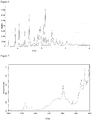
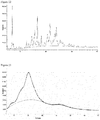
- the methanol-solvate typically displays the following three reflections, quoted as 2 ⁇ values: 13.0 ⁇ 0.2°, 14.9 ⁇ 0.2° and 21.5 ⁇ 0.2°; at least 3, in particular at least 5 or at least 7 or all of the following reflections, quoted as 2 ⁇ values: 6.2 ⁇ 0.2°, 9.0 ⁇ 0.2°, 10.6 ⁇ 0.2°, 16.9 ⁇ 0.2°, 18.2 ⁇ 0.2°, 18.5 ⁇ 0.2°, 19.2 ⁇ 0.2°, 19.6 ⁇ 0.2°, 20.9 ⁇ 0.2°, 22.7 ⁇ 0.2°, 24.3 ⁇ 0.2°, 24.9 ⁇ 0.2°, 26.2 ⁇ 0.2°, 28.7 ⁇ 0.2° and 30.5 ⁇ 0.2°; and optionally 1, 2, 3, 4, 5, 6, 7, 8, 9 or 10 of the following reflections, quoted as 2 ⁇ values: 8.4 ⁇ 0.2°, 11.8
- the methanol-solvate is also characterized by an endothermic peak, which indicates its decomposition.
- DSC differential scanning calorimetry
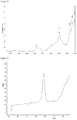
- the methanol-solvate typically shows an endothermic peak having an onset in the range of 97 - 101°C and a peak maximum in the range from 108 - 115°C.
- the reaction point is typically in the range from 103 - 110°C.
- the reaction point is understood as the lower inflection point of the endothermic peak in the DSC curve.
- the aforementioned temperatures may vary with the aforementioned ranges depending from the methanol content with higher methanol contents resulting in higher temperatures.
- the methanol-solvate can be obtained by crystallization of 6,6'-DPBHBNA from a solution of 6,6'-DPBHBNA in hot methanol or in hot mixtures of methanol with toluene.
- the 6,6'-DPBHBNA subjected to crystallization has a purity of at least 97 % by weight, with respect to the organic matter, except for solvents. It is preferred that 6,6'-DPBHBNA having a purity of at least 97 % is dissolved in hot methanol or in a hot mixture of methanol with toluene.
- the amount of methanol is preferably at least 50 vol.-% and up to 90 vol.-%, based on the total amount of solvent, i.e. the volume ratio of methanol to toluene is in the range from 1 : 1 to 9 : 1 and especially in the range from 6 : 4 to 8 : 2, such as 7 : 3.
- the temperature of the hot solution of 6,6'-DPBHBNA is at least 45°C and may be as high as the refluxing temperature, in particular, if the amount of methanol is high.
- the concentration of 6,6'-DPBHBNA in the hot solution may vary depending on the amount of methanol in the solvent used for crystallization.
- Crystallization of the methanol-solvate from its hot solution is usually effected by cooling the hot solution to a temperature below 40°C, e.g. to a temperature in the range from -10 to ⁇ 40°C or from -5 to 30°C. Seed crystals may be added at a temperature of below 40°C, e.g. at a temperature in the range of -5 to 30°C.
- the amount of seed crystals will then be typically in the range from 0.05 to 2 % by weight, in particular from 0.1 to 1 % by weight, based on the amount of 6,6'-DPBHBNA to be crystallized as its methanol-solvate.
- the time for complete crystallization of the methanol-solvate may depend on the concentration of 6,6'-DPBHBNA and temperature applied and is normally in the range from 4 to 24 h.
- Crystallization of the methanol-solvate may also be effected by concentrating the hot solution or by combination of concentrating and cooling. Concentrating the solution can be achieved by distilling off a part of the solvent.
- the methanol-solvate is obtained from the crystallization in the form of compact crystals with a low aspect ratio.
- the aspect ratio of the methanol-solvate crystals is typically less than 5, in particular in the range from 1 to 4.
- the crystal size is typically in the range from 5 to 200 ⁇ m.
- the crystal size of the solvate forms as well as of the non-solvate crystalline forms given herein are obtained by visual inspection of a probe via a light microscope at 100 fold magnification. The size ranges given refer to the largest dimension of the crystals.
- the crystals of the methanol-solvate do not tend to entrap significant amounts of mother liquor. Therefore, the crystalline solvate of 6,6'-DPBHBNAwith methanol allows for a purification of 6,6'-DPBHBNA to a purity above 99 %, in particular at least 99.5 % or higher, especially at least 99.7 % or higher. As explained above, this means that the total amount of impurities other than methanol in the methanol solvate does not exceed 1 % by weight, in particular 0.5 % by weight and especially 0.3 % by weight.
- the methanol-solvate can be decomposed very easily by prolonged drying, preferably at elevated temperatures but below the melting point of the methanol solvate.
- a new crystalline polymorph form of 6,6'-DPBHBNA is obtained, which essentially does not contain an organic solvent and which cannot be obtained by crystallization of 6,6'-DPBHBNA from solvents.
- This crystalline form is hereinafter termed crystalline form A of 6,6'-DPBHBNA, or simply form A.
- form A does not contain significant amounts of solvent, it is particularly useful for producing the thermoplastic resins of the present invention.
- Form A typically does not contain more than 0.1 mol, in particular not more than 0.05 mol of organic solvents per 1 mol of 6,6'-DPBHBNA.
- the total amount of organic solvent is typically below 1 % by weight.
- the amount of methanol in form A is typically below 0.1 % by weight.
- the form A typically displays the following six reflections, quoted as 2 ⁇ values: 13.0 ⁇ 0.2°, 14.9 ⁇ 0.2°, 20.9 ⁇ 0.2°, 21.4 ⁇ 0.2°, 21.5 ⁇ 0.2° and 23.7 ⁇ 0.2°; and at least one 5, in particular at least 7 or at least 9 or all of the following reflections, quoted as 2 ⁇ values: 6.5 ⁇ 0.2°, 8.6 ⁇ 0.2°, 11.0 ⁇ 0.2°, 13.2 ⁇ 0.2°, 14.9 ⁇ 0.2°, 16.2 ⁇ 0.2°, 17.3 ⁇ 0.2°, 17.8 ⁇ 0.2°, 18.4 ⁇ 0.2° and 19.0 ⁇ 0.2°; and optionally 1, 2, 3, 4, 5, 6, 7, 8 or 9 of the following reflections, quoted as 2 ⁇ values: 9.4 ⁇ 0.2°, 10.4 ⁇ 0.2°, 15.5 ⁇ 0.2°, 22.5 ⁇ 0.2°;
- Form A is also characterized having an endothermic peak, which indicates its melting.
- form A When form A is analyzed by DSC recorded according to ISO 11357-3:2018 at a heating rate of 20 K/min, form A typically shows an endothermic peak having an onset in the range of 112 - 114°C and a peak maximum in the range from 124 - 126°C. The reaction point is typically in the range from 117 - 120°C.
- the form A is obtained from the decomposition of the methanol-solvate in the form of compact crystals with a low aspect ratio.
- the aspect ratio of the form A crystals is typically less than 5, in particular in the range from 1 to 4.
- the crystal size of form A crystals is typically in the range from 1 to 200 ⁇ m, as determined by visual inspection of a probe via a light microscope at 100 fold magnification.
- the decomposition of the methanol solvate is typically carried out by prolonged drying, preferably at elevated temperatures but below the melting point of the methanol solvate. Typically the drying is carried out until the amount of methanol in the obtained 6,6'-DPBHBNA is less than 0.1 % by weight. Drying may be carried out in a temperature range from 30 to 95°C, in particular in the range from 30 to 70°C.
- the crystalline from A of 6,6'-DPBHBNA typically has a purity of above 99 %, in particular of at least 99.5 % or higher, especially of at least 99.7 % or higher. As explained above, this means that the total amount of impurities other than solvent in form A does not exceed 1 % by weight, in particular 0.5 % by weight and especially 0.3 % by weight.
- the total amount of impurities selected from the group consisting of 6,6'-diphenyl-2-(2-hydroxyethoxy)-2'-hydroxy-1,1'-binaphthyl, 6,6'-diphenyl-2,2'-bishydroxy-1,1'-binaphthyl and 6,6'-diphenyl-2-(2-hydroxyethoxy)-2'-(2-(2-hydroxyethoxy)-ethoxy)-1,1'-binaphthyl is frequently at most 5000 ppm or less, preferably at most 4000 ppm or less, more particularly at most 3000 ppm or less and especially at most 2000 ppm or less, based on 1 part by weight of 6,6'-DPBHBNA contained in the crystals of form A.
- the individual weight of each of the aforementioned impurities is preferably most 2000 ppm or less, in particular at most 1500 ppm or less and especially at most 1000 ppm, based on 1 part by weight of 6,6'-DPBHBNA contained in the crystals of form A.
- the form A contains bis[2-[[1-[2-(2-hydroxyethoxy)-6-phenyl-1-naphthyl]-6-phenyl-2-naphthyl]oxy]ethyl] carbonate, its amount will typically not exceed 2000 ppm and is frequently at most 1500 ppm or less, based on 1 part by weight of 6,6'-DPBHBNA contained in the crystals of form A.
- a further particular embodiment of the invention relates to crystalline 6,6'-DPBHBNA, which is a mixtures of the the crystalline methanol-solvate and form A of 6,6'-DPBHBNA. This mixture is frequently obtained by incomplete decomposition of the methanol-solvate. This mixture is characterized by showing an X-ray powder diffraction diagram reflections of both the methanol solvate and the form A.
- the mixture in an X-ray powder diffraction diagram recorded at 22°C and using Cu-K ⁇ radiation shows the following three reflections, quoted as 2 ⁇ values: 20.9 ⁇ 0.2°, 21.4 ⁇ 0.2° and 23.7 ⁇ 0.2°; at least one 3, in particular at least 5 or at least 7 or at least 9 of the following reflections, quoted as 2 ⁇ values: 6.2 ⁇ 0.2°, 6.5 ⁇ 0.2°, 8.6 ⁇ 0.2°, 9.0 ⁇ 0.2°, 10.6 ⁇ 0.2°, 11.0 ⁇ 0.2°, 13.2 ⁇ 0.2°, 14.9 ⁇ 0.2°, 16.2 ⁇ 0.2°, 16.9 ⁇ 0.2°, 17.3 ⁇ 0.2°, 17.8 ⁇ 0.2°, 18.2 ⁇ 0.2°, 18.4 ⁇ 0.2°, 18.5 ⁇ 0.2°, 19.0 ⁇ 0.2°, 19.2 ⁇ 0.2°, 19.6 ⁇ 0.2°, 20.9 ⁇ 0.2°, 22.7 ⁇ 0.2
- the mixture of the methanol solvate and form A typically has a purity of above 99 %, in particular of at least 99.5 % or higher, especially of at least 99.7 % or higher.
- the total amount of impurities selected from the group consisting of 6,6'-diphenyl-2-(2-hydroxyethoxy)-2'-hydroxy-1,1'-binaphthyl, 6,6'-diphenyl-2,2'-bishydroxy-1,1'-binaphthyl and 6,6'-diphenyl-2-(2-hydroxyethoxy)-2'-(2-(2-hydroxyethoxy)-ethoxy)-1,1'-binaphthyl is frequently at most 5000 ppm or less, preferably at most 4000 ppm or less, more particularly at most 3000 ppm or less and especially at most 2000 ppm or less, based on 1 part by weight of 6,6'-DPBHBNA contained in the mixture of the methanol solvate and form A
- a further particular embodiment of the invention relates to the crystalline solvate of 6,6'-DPBHBNA with toluene, hereinafter the toluene-solvate.
- the amount of toluene is typically in the range of 0.3 to 1.5 mol, in particular in the range from 0.3 to 1.2 mol and especially in the range from 0.3 to 0.5 mol per 1 mol of 6,6'-DPBHBNA.
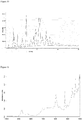
- the toluene-solvate typically displays the following three reflections, quoted as 2 ⁇ values: 5.2 ⁇ 0.2°, 7.7 ⁇ 0.2° and 21.6 ⁇ 0.2°; and at least one 3, in particular at least 5 or at least 7 or all of the following reflections, quoted as 2 ⁇ values: 8.2 ⁇ 0.2°, 9.1 ⁇ 0.2°, 10.6 ⁇ 0.2°, 10.8 ⁇ 0.2°, 11.6 ⁇ 0.2°, 12.6 ⁇ 0.2°, 13.6 ⁇ 0.2°, 14.2 ⁇ 0.2°, 14.7 ⁇ 0.2°, 15.0 ⁇ 0.2°, 15.7 ⁇ 0.2°, 16.7 ⁇ 0.2°, 17.1 ⁇ 0.2°, 18.0 ⁇ 0.2°, 18.5 ⁇ 0.2°, 19.4 ⁇ 0.2°, 19.9 ⁇ 0.2°, 20.8 ⁇ 0.2°, 21.0 ⁇ 0.2°, 22.2
- the toluene-solvate is also characterized by an endothermic peak, which indicates its decomposition.
- an endothermic peak When a the toluene-solvate is analyzed by DSC recorded according to ISO 11357-3:2018 at a heating rate of 20 K/min, the toluene-solvate typically shows an endothermic peak having an onset in the range of 105 - 108°C and a peak maximum in the range from 112 - 115°C.
- the reaction point of the toluene-solvate is typically in the range from 109 - 112°C.
- the toluene-solvate can be obtained by crystallization of 6,6'-DPBHBNA from hot toluene, which does not contain more than 5 % by weight of other organic solvents and which does in particular not contain more than 1 % of methanol.
- the 6,6'-DPBHBNA subjected to crystallization has a purity of at least 97 % by weight, with respect to the organic matter, except for solvents. It is preferred that 6,6'-DPBHBNA having a purity of at least 97 % is dissolved in hot toluene.
- the temperature of the hot solution of 6,6'-DPBHBNA in toluene is at least 60°C and may be as high as the refluxing temperature.
- the concentration of 6,6'-DPBHBNA in the hot solution will typically not exceed 50 % by weight and is typically in the range from 10 to 40 % by weight.
- Crystallization of the toluene-solvate from its hot solution is usually effected by cooling the hot solution to a temperature below 50°C, e.g. to a temperature in the range from -10 to ⁇ 50°C or from -5 to 40°C. Seed crystals may be added at a temperature of below 50°C, e.g. at a temperature in the range of -5 to 40°C.
- the amount of seed crystals will then be typically in the range from 0.05 to 2 % by weight, in particular from 0.1 to 1 % by weight, based on the amount of 6,6'-DPBHBNA to be crystallized as its toluene-solvate.
- the time for complete crystallization of the toluene-solvate may depend on the concentration of 6,6'-DPBHBNA and temperature applied and is normally in the range from 4 to 24 h. Crystallization of the toluene-solvate may also be effected by concentrating the hot solution or by combination of concentrating and cooling. Concentrating the solution can be achieved by distilling of a part of the toluene.
- the toluene-solvate is obtained as compact crystals with a low aspect ratio.
- the aspect ratio of the toluene-solvate crystals is typically less than 5, in particular in the range from 1 to 4.
- the crystal size is typically in the range from 5 to 300 ⁇ m.
- the crystals of the toluene-solvate do not tend to entrap significant amounts of mother liquor. Therefore, the crystalline solvate of 6,6'-DPBHBNA with toluene allows for a purification of 6,6'-DPBHBNA to a purity above 99 %, in particular at least 99.5 % or higher, especially at least 99.7 % or higher.
- the amount of MEK is typically in the range of 0.3 to 1.5 mol, in particular in the range from 0.4 to 1.0 mol and especially in the range from 0.5 to 0.8 mol per 1 mol of 6,6'-DPBHBNA.
- MEK-solvate typically displays the following three reflections, quoted as 2 ⁇ values: 7.0 ⁇ 0.2°, 16.8 ⁇ 0.2° and 23.4 ⁇ 0.2°; and at least 3, in particular at least 5 or at least 7 or all of the following reflections, quoted as 2 ⁇ values: 5.0 ⁇ 0.2°, 7.5 ⁇ 0.2°, 12.6 ⁇ 0.2°, 13.4 ⁇ 0.2°, 14.5 ⁇ 0.2°, 15.4 ⁇ 0.2°, 15.7 ⁇ 0.2°, 18.3 ⁇ 0.2°, 19.4 ⁇ 0.2°, 20.6 ⁇ 0.2°, 21.5 ⁇ 0.2°, 22.7 ⁇ 0.2°, 24.1 ⁇ 0.2°, 25.6 ⁇ 0.2°, 26.2 ⁇ 0.2°, 26.6 ⁇ 0.2° and 30.8 ⁇ 0.2°.
- the MEK-solvate is also characterized an endothermic peak, which indicates its decomposition.
- the MEK-solvate When a the MEK-solvate is analyzed by DSC recorded according to ISO 11357-3:2018 at a heating rate of 20 K/min, the MEK-solvate typically shows an endothermic peak having an onset in the range of 87 - 91°C and a peak maximum in the range from 95 - 100°C.
- the reaction point of the MEK-solvate is typically in the range from 94 - 98°C.
- the MEK-solvate can be obtained by crystallization of 6,6'-DPBHBNA from hot MEK, which does not contain more than 5 % by weight of other organic solvents and which does in particular not contain more than 0.5 % of methanol.
- the 6,6'-DPBHBNA subjected to crystallization has a purity of at least 97 % by weight, with respect to the organic matter, except for solvents. It is preferred that 6,6'-DPBHBNA having a purity of at least 97 % is dissolved in hot MEK.
- the temperature of the hot solution of 6,6'-DPBHBNA in MEK is at least 60°C and may be as high as the refluxing temperature.
- the concentration of 6,6'-DPBHBNA in the hot solution will typically not exceed 50 % by weight and is typically in the range from 10 to 40 % by weight.
- Crystallization of the MEK-solvate from its hot solution is usually effected by cooling the hot solution to a temperature below 50°C, e.g. to a temperature in the range from -10 to ⁇ 50°C or from -5 to 40°C. Seed crystals may be added at a temperature of below 50°C, e.g. at a temperature in the range of -5 to 40°C.
- the amount of seed crystals will then be typically in the range from 0.05 to 2 % by weight, in particular from 0.1 to 1 % by weight, based on the amount of 6,6'-DPBHBNA to be crystallized as its anisole-solvate.
- the time for complete crystallization of the MEK-solvate may depend on the concentration of 6,6'-DPBHBNA and temperature applied and is normally in the range from 4 to 24 h.
- Crystallization of the MEK-solvate may also be effected by concentrating the hot solution or by combination of concentrating and cooling. Concentrating the solution can be achieved by distilling of a part of the MEK.
- the MEK-solvate is obtained as compact crystals with a low aspect ratio.
- the aspect ratio of the MEK-solvate crystals is typically less than 5, in particular in the range from 1 to 4.
- the crystal size is typically in the range from 1 to 300 ⁇ m.
- the crystals of the MEK-solvate do not tend to entrap significant amounts of mother liquor. Therefore, the crystalline solvate of 6,6'-DPBHBNA with MEK allows for a purification of 6,6'-DPBHBNA to a purity above 99 %, in particular at least 99.5 % or higher, especially at least 99.7 % or higher.
- the amorphous form B is stable and does not tend to crystallize even after prolonged storage or if comminuted by grinding.
- the amorphous form B is prepared by melting one of the crystalline forms followed by rapid cooling. Preferably, the respective crystalline form is heated to a temperature of at least 5 K above its melting point, until the crystals are completely molten and a clear melt us obtained. If a solvate is used as a starting material for preparing the melt, any solvent is preferable removed by applying a vacuum. Then the melt is rapidly cooled, preferably with a heating rate of at least 5 K/min, e.g.
- form B is obtained as a solid glass.
- This glass can be comminuted, e.g. by grinding, to obtain a powder.
- the comminution is carried out at a temperature, which is significantly lower than 100°C, e.g. in the range from 5 to 40°C.
- the particles are still present as the amorphous form B.
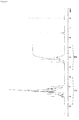
- amorphous form B In an X-ray powder diffraction diagram of form B recorded at 22°C and using Cu-K ⁇ radiation the amorphous form B typically displays no reflections at diffraction angles quoted as 2 ⁇ values, in the range from 5° to 40°. Rather a broad halo is observed indicating that essentially no crystalline phase is present.
- Form B is also characterized showing no endothermic peak the temperature range of 80 - 200°C, when it is analyzed by DSC according to ISO 11357-3:2018 at a heating rate of 20 K/min. Rather, under these conditions, the amorphous form B may show a glass transition temperature in the range from 105 to 125 °C.
- the amorphous form B of 6,6'-DPBHBNA typically has a purity above 99 %, in particular at least 99.5 % or higher, especially at least 99.7 % or higher. As explained above, this means that the total amount of impurities other than solvent in the form B does not exceed 1 % by weight, in particular 0.5 % by weight and especially 0.3 % by weight.
- the total amount of impurities selected from the group consisting of 6,6'-diphenyl-2-(2-hydroxyethoxy)-2'-hydroxy-1,1'-binaphthyl, 6,6'-diphenyl-2,2'-bishydroxy-1,1'-binaphthyl and 6,6'-diphenyl-2-(2-hydroxyethoxy)-2'-(2-(2-hydroxyethoxy)-ethoxy)-1,1'-binaphthyl is frequently at most 5000 ppm or less, preferably at most 4000 ppm or less, more particularly at most 3000 ppm or less and especially at most 2000 ppm or less, based on 1 part by weight of 6,6'-DPBHBNA contained in the amorphous form B.
- the individual weight of each of the aforementioned impurities is preferably most 2000 ppm or less, in particular at most 1500 ppm or less and especially at most 1000 ppm, based on 1 part by weight of 6,6'-DPBHBNA contained in the amorphous form B.
- the amorphous form B contains bis[2-[[1-[2-(2-hydroxyethoxy)-6-phenyl-1-naphthyl]-6-phenyl-2-naphthyl]oxy]ethyl] carbonate, its amount will typically not exceed 2000 ppm and is frequently at most 1500 ppm or less, based on 1 part by weight of 6,6'-DPBHBNA contained in the amorphous form B.
- Form C typically does not contain more than 0.1 mol, in particular not more than 0.05 mol of organic solvents per 1 mol of 6,6'-DPBHBNA.
- the total amount of organic solvent is typically below 1 % by weight, in particular at most 0.5 % by weight and especially at most 0.1 % by weight.
- the form C typically displays the following three reflections, quoted as 2 ⁇ values: 5.1 ⁇ 0.2°, 7.6 ⁇ 0.2° and 21.0 ⁇ 0.2°; and at least 3, in particular at least 5 or at least 7 or all of the following reflections, quoted as 2 ⁇ values: 8.2 ⁇ 0.2°, 9.2 ⁇ 0.2°, 10.4 ⁇ 0.2°, 10.8 ⁇ 0.2°, 11.6 ⁇ 0.2°, 12.8 ⁇ 0.2°, 13.4 ⁇ 0.2°, 14.5 ⁇ 0.2°, 15.2 ⁇ 0.2°, 15.6 ⁇ 0.2°, 16.6 ⁇ 0.2°, 17.4 ⁇ 0.2°, 17,9 ⁇ 0.2°, 18.5 ⁇ 0.2°, 19.2 ⁇ 0.2°, 19.9 ⁇ 0.2°, 20.4 ⁇ 0.2°, 21.8 ⁇ 0.2°, 22.2 ⁇ 0.2°, 22.6 ⁇ 0.2°, 13.
- the powder X-ray powder diffraction pattern of form C is almost identical with the X-ray powder diffraction pattern of the toluene solvate, indicating that in form C the molecules of 6,6'-DPBHBNA are arranged in the crystal lattice in the same way as in the toluene-solvate.
- Form C is also characterized having an endothermic peak, which indicates its melting.
- form C When form C is analyzed by DSC recorded according to ISO 11357-3:2018 at a heating rate of 20 K/min, form C typically shows an endothermic peak having an onset in the range of 115 to 118°C and a peak maximum in the range from 124 to 126°C. The reaction point is typically in the range from 120 to 122°C.
- Form C can be obtained by crystallization of 6,6'-DPBHBNAfrom a solution of 6,6'-DPBHBNAin hot ethanol.
- the 6,6'-DPBHBNA subjected to crystallization has generally a purity of preferably at least 97 % by weight, with respect to the organic matter, except for solvents. It is preferred that 6,6'-DPBHBNA having a purity of at least 97 % is dissolved in hot ethanol.
- the temperature of the hot solution of 6,6'-DPBHBNA is at least 45°C and may be as high as the refluxing temperature.
- the concentration of 6,6'-DPBHBNA in the hot solution will typically not exceed 30 % by weight and is typically in the range from 2 to 25 % by weight.
- Crystallization of the form C from its hot solution is usually effected by cooling the hot solution to a temperature below 40°C, e.g. to a temperature in the range from -10 to ⁇ 40°C or from -5 to 30°C. Seed crystals may be added at a temperature of below 40°C, e.g. at a temperature in the range of -5 to 30°C.
- the amount of seed crystals will then be typically in the range from 0.05 to 2 % by weight, in particular from 0.1 to 1 % by weight, based on the amount of 6,6'-DPBHBNA to be crystallized as its form C.
- the time for complete crystallization of the form C may depend on the concentration of 6,6'-DPBHBNA and temperature applied and is normally in the range from 4 to 24 h.
- Crystallization of the form C may also be effected by concentrating the hot solution or by combination of concentrating and cooling. Concentrating the solution can be achieved by distilling off a part of the solvent.
- the form C is obtained from the crystallization in the form of compact crystals with a low aspect ratio.
- the aspect ratio of the form C crystals is typically less than 5, in particular in the range from 1 to 4.
- the crystal size is typically in the range from 2 to 250 ⁇ m.
- the crystals of the form C do not tend to entrap significant amounts of mother liquor. Therefore, the crystalline form C of 6,6'-DPBHBNA allows for a purification of 6,6'-DPBHBNA to a purity above 99 %, in particular at least 99.5 % or higher, especially at least 99.7 % or higher. As explained above, this means that the total amount of impurities other than solvent in the form C does not exceed 1 % by weight, in particular 0.5 % by weight and especially 0.3 % by weight.
- the total amount of impurities selected from the group consisting of 6,6'-diphenyl-2-(2-hydroxyethoxy)-2'-hydroxy-1,1'-binaphthyl, 6,6'-diphenyl-2,2'-bishydroxy-1,1'-binaphthyl and 6,6'-diphenyl-2-(2-hydroxyethoxy)-2'-(2-(2-hydroxyethoxy)-ethoxy)-1,1'-binaphthyl is frequently at most 5000 ppm or less, preferably at most 4000 ppm or less, more particularly at most 2000 ppm or less and especially at most 100 ppm or less, based on 1 part by weight of 6,6'-DPBHBNA contained in the crystals of form C.
- the individual weight of each of the aforementioned impurities is preferably most 2000 ppm or less, in particular at most 1500 ppm or less and especially at most 1000 ppm, based on 1 part by weight of 6,6'-DPBHBNA contained in the crystals of form C.
- the form C contains bis[2-[[1-[2-(2-hydroxyethoxy)-6-phenyl-1-naphthyl]-6-phenyl-2-naphthyl]oxy]ethyl] carbonate, its amount will typically not exceed 2000 ppm and is frequently at most 1500 ppm or less, based on 1 part by weight of 6,6'-DPBHBNA contained in the crystals of form C.
- the solid forms of 6,6'-DPBHBNA according to the present invention i.e. the methanol solvate, the toluene-solvate, the methyl ethyl ketone solvate and also the anhydrate form A as well the amorphous form B, will typically have a low yellowness index Y.I. of less than 3.0, frequently of less than 2.5 or less than 2.0, particularly of less than 1.5 and especially less than 1.0 or less than 0.75 and even as low as 0.5 or lower. All Y.I. values referred herein are determined in accordance with ASTM E313 from a 5 % w/w solution of 6,6'-DPBHBNA in dichloromethane.
- the solid forms of 6,6'-DPBHBNA according to the present invention will frequently have a low haze of less than 1.0 ntu, in particular less than 0.8 ntu or less than 0.6 ntu as determined from a 5 % w/w solution of 6,6'-DPBHBNA in dichloromethane.
- the turbidity herein referred to is determined from a 5 % w/w solution of 6,6'-DPBHBNA in dichloromethane and given as nephelomethric turbidity units (ntu).
- the haze of the crystalline solvates of 6,6'-DPBHBNA according to the present invention may be even lower, e.g. less than 0.4 ntu or less than 0.35 ntu or less than 0.3 ntu and even as low as 0.2 ntu or lower.
- thermoplastic resin of the present invention specifically, the polyester resins, the polyester carbonate resins, the polycarbonate resin or a mixture of at least two of them-are produced from monomers with a predetermined amount of impurity, a predetermined level of purity, and so on.
- thermoplastic resin of the present invention is produced from a dihydroxy compound including 0.3 to 1.2 mol of an organic solvent per 1 mol of the dihydroxy compound.
- the solvent are methanol, toluene, methyl ethyl ketone, and so on.
- thermoplastic resin When using a monomer including a suitable amount of the organic solvent as mentioned above as those of formula (6), a thermoplastic resin can effectively be produced.
- a thermoplastic resin when a thermoplastic resin is produced with a dihydroxy compound including 0.3 to 1.2 mol, 0.3 to 1.0 mol, or around 0.3 to 0.5 mol of an organic solvent per 1 mol of the dihydroxy compound, scattering of the monomer can be prevented and highly pure thermoplastic resin can be produced.
- a thermoplastic resin of the present invention can be produced from a dihydroxy compound including less than 0.1 mol of an organic solvent per 1 mol of a crystal of the dihydroxy compound.
- crystalline forms of a dihydroxy compound those crystals with the above-mentioned aspect ratio of-for example-at most 5:1, at most 3:1 or at most 1:1 can be used.
- a dihydroxy compound represented by general formula (6) with a purity of at least 99.0 weight % (or 99.0 weight % or higher), preferably 99.5 weight % or higher, more preferably 99.7 weight % or higher is preferable.
- a thermoplastic resin can be produced from a dihydroxy compound represented by general formula (6) with less than 0.1 mol-for example, below 0.05 mol or preferably below 0.03 mol of an organic solvent.
- a dihydroxy compound represented by general formula (6) with a yellowness index Y.I. of less than 3.0, as determined in accordance with ASTM E313 from a 5% w/w solution of dichloromethane is preferable. More preferably, the value of the yellowness index is less than 2.0, or more preferably, less than 1.0.
- a dihydroxy compound represented by general formula (6) with a haze of less than 1.0 ntu, as determined from a 5% w/w solution of dichloromethane is preferable. More preferably, the value of the haze is less than 0.7 ntu, or more preferably, less than 0.5 ntu.
- the total amount of impurities is preferably below 0.5 weight %, more preferably below 0.3 weight %, further preferably below 0.1 weight %, based on the dihydroxy compounds of the formula (6).
- the total amount of impurities selected from the group consisting of 6,6'-diphenyl-2-(2-hydroxyethoxy)-2'-hydroxy-1,1'-binaphthyl, 6,6'-diphenyl-2,2'-bishydroxy-1,1'-binaphthyl, and 6,6'-diphenyl-2-(2-hydroxyethoxy)-2'-(2-(2-hydroxyethoxy)-ethoxy)-1,1'-binaphthyl is preferably less than 0.5 % by weight, more preferably less than 0.3 % by weight, and further preferably less than 0.1 % by weight, based on the weight of 6,6'-DPBHBNA.
- the reaction efficiency may be lowered or the achieved molecular weight of a polymer may be lowered.
- the obtained thermoplastic resins tend to have lower refractive index value.
- the obtained resins when less than 0.5% by weight of impurities are included in the specific dihydroxy compounds, the obtained resins have basic structures and therefore the resins have a low melt viscosity. This tends to achieve high moldability-namely, high flow of resin-and also to increase the impact resistance of the obtained molded body such as an optical lens.
- the monomers of the formula (6) include impurities in the range of 1 ppb to less than 5000 ppm based on 1 part by weight of the monomers of the formula (6).
- resins, resin compositions, optical lenses, optical films, and so on from the monomers of formula (6) with less than 0.5 weight % of impurities-for example, those with less than 0.5 weight % of structural units derived from the impurities selected from the group consisting of 6,6'-diphenyl-2-(2-hydroxyethoxy)-2'-hydroxy-1,1'-binaphthyl, 6,6'-diphenyl-2,2'-bishydroxy-1,1'-binaphthyl, and 6,6'-diphenyl-2-(2-hydroxyethoxy)-2'-(2-(2-hydroxyethoxy)-ethoxy)-1,1'-binaphthyl.
- thermoplastic resins have properties suitable for optical use.
- thermoplastic resins having a well-balanced refractive index and Abbe number are preferable.
- thermoplastic resins with a refractive index higher than 1.660 or higher than 1.668, and with Abbe number of less than 19, such as more than or equal to 13 and less than 19, or more than or equal to 15 and less than 19 are preferable.
- the refractive index (nD) and Abbe number (v) meet the relationship of -0.0002v+1.6718 ⁇ nD ⁇ -0.024v+2.124, more preferably the relationship of -0.004v+1.744 ⁇ nD ⁇ -0.024v+2.124, and further more preferably the relationship of -0.02v+2.04 ⁇ nD ⁇ -0.024v+2.124.
- thermoplastic resin having the structural unit represented by general formula (1) an aromatic dihydroxy compound and an aliphatic dihydroxy compound (e.g., dihydroxy compounds having a fluorene skeleton and binaphthols) can be used as dihydroxy components in combination with the compound of general formula (6).
- an aromatic dihydroxy compound and an aliphatic dihydroxy compound e.g., dihydroxy compounds having a fluorene skeleton and binaphthols
- thermoplastic resin of the present invention can be produced by preferably using the compound represented by general formula (7) below and/or the compound represented by general formula (8) below as dihydroxy components in addition to the compound represented by general formula (6) above.
- Examples of the dihydroxy compound represented by formula (7) include 2,2'-bis(1-hydroxymethoxy)-1,1'-binaphthyl, 2,2'-bis(2-hydroxyethoxy)-1,1'-binaphthyl, 2,2'-bis(3-hydroxypropyloxy)-1,1'-binaphthyl and 2,2'-bis(4-hydroxybutoxy)-1,1'-binaphthyl.
- 2,2'-bis(2-hydroxyethoxy)-1,1'-binaphthyl is preferred. These materials may be used solely, or two or more of them may be used in combination.
- Examples of the dihydroxy compound represented by formula (8) include 9,9-bis[4-(2-hydroxyethoxy)phenyl]fluorene, 9,9-bis[4-(2-hydroxyethoxy)-3-methylphenyl]fluorene, 9,9-bis[4-(2-hydroxyethoxy)-3-tert-butylphenyl]fluorene, 9,9-bis[4-(2-hydroxyethoxy)-3-isopropylphenyl]fluorene, 9,9-bis[4-(2-hydroxyethoxy)-3-cyclohexylphenyl]fluorene and 9,9-bis[4-(2-hydroxyethoxy)-3-phenylphenyl]fluorene.
- 9,9-bis[4-(2-hydroxyethoxy)phenyl]fluorene and 9,9-bis[4-(2-hydroxyethoxy)-3-phenylphenyl]fluorene are preferred. These materials may be used solely, or two or more of them may be used in combination.
- Examples of the dihydroxy compound represented by formula (7) or (8) include those represented by general formula (9) below.
- a dihydroxy compound wherein each of c and d in general formula (6) is 0, or a dihydroxy compound, wherein either c or d in general formula (6) is 0, may be contained as an impurity.
- the dihydroxy compounds wherein at least one of the values of c and d is different from general formula (6) above, are contained in an amount of preferably 1000 ppm or less, more preferably 500 ppm or less, even more preferably 200 ppm or less, and particularly preferably 100 ppm or less in total.
- the total content of the dihydroxy compounds, wherein at least one of the values of c and d is different from general formula (6) above, in the monomer is desirably 50 ppm or less, and more desirably 20 ppm or less.
- a dihydroxy compound wherein each of e and f in general formula (7) or (8) is 0, or a dihydroxy compound, wherein either e or f in general formula (7) or (8) is 0, may be contained as an impurity.
- these impurities are contained in an amount of preferably 1000 ppm or less, more preferably 500 ppm or less, even more preferably 200 ppm or less, and particularly preferably 100 ppm or less in total.
- the total content of the impurities in the monomer is desirably 50 ppm or less, and more desirably 20 ppm or less.
- the compounds of general formulae (7) and (8) can be produced by various synthesis methods.
- the compounds can be produced by obtaining 9,9-bis(hydroxynaphthyl)fluorenes by utilizing: (a) a method in which fluorenones are reacted with hydroxynaphthalenes in the presence of hydrogen chloride gas and mercaptocarboxylic acid; (b) a method in which 9-fluorenone is reacted with hydroxynaphthalenes in the presence of an acid catalyst (and alkyl mercaptan); (c) a method in which fluorenones are reacted with hydroxynaphthalenes in the presence of hydrochloric acid and thiols (e.g., mercaptocarboxylic acid); (d) a method in which fluorenones are reacted with hydroxynaphthalenes in the presence of sulfuric acid and thiols (e.g., mercaptocarboxylic acid
- 9,9-bis[6-(2-hydroxyethoxy)naphthyl]fluorene may be obtained by reacting 9,9-bis[6-hydroxynaphthyl]fluorene with 2-chloroethanol under alkaline conditions.
- aromatic dihydroxy compounds which can be used in combination other than the above-described compounds include bisphenol A, bisphenol AP, bisphenol AF, bisphenol B, bisphenol BP, bisphenol C, bisphenol E, bisphenol F, bisphenol G, bisphenol M, bisphenol S, bisphenol P, bisphenol PH, bisphenol TMC and bisphenol Z.
- the polyester resin, polyester carbonate resin and polycarbonate resin that are the thermoplastic resin of the present invention are obtained by using the above-described compounds represented by general formulae (6) to (9), etc. as dihydroxy components and reacting them with a carbonate precursor such as carbonic acid diester.
- a carbonate precursor such as carbonic acid diester.
- impurities with a vinyl group as represented by the formula (v-1) below can be included in the monomers, resins, resin compositions, optical lenses, and optical films described in the present description.
- the symbol " ⁇ " represents a polymer chain and "Hp” represents a hydrogen atom.
- the above-described vinyl group may generate in the steps of monomer synthesis and purification and may be included in monomers.
- the above-mentioned vinyl group may generate or increase also in the steps of polymerization for forming resins and additive mixing.
- the vinyl group can be considered to be one of the causes of coloring of polymers; however, if the amount is limited, the vinyl group can increase the bend strength or impact resistance of the obtained resins.
- the amount of such impurities having a vinyl terminal structure is usually very small, and a polymer produced can be used as a thermoplastic resin without purification.
- the amount of vinyl groups in polycarbonate resins can be determined by carrying out the 1H-NMR measurement as stated item 9.
- the preferable range of the amount of vinyl groups is 0.0001 to 5.0, more preferably, 0.01 to 3.0, or further more preferably 0.1 to 1.0.
- Amount of terminal vinyl groups Integration value of peak of proton corresponding to Hp / Integration value of peak of proton corresponding to Hk ⁇ 100
- Hk represents Hk in the formula (v-2) below, which corresponds to the formula (v-1) above.
- the symbol “Hk” represents a hydrogen atom.
- the resins of the present application may form oligomers with a molecular weight (Mw) of 1,000 or below or cyclic compounds caused by polycarbonate bonding of more than two monomers.
- Mw molecular weight
- Such oligomers and cyclic compounds can be analyzed by LC-MS and other methods.
- the total amount of the oligomers and cyclic compounds is, for example, 2.5 weight % or below, preferably 2.0 weight % or below, or more preferably 1.0 weight % or below.
- the total amount of metals of Li, Na, Mg, Al, K, Ca, Ti, Cr, Fe, Ni, Zn, and Sn included in the monomer is 1000 weight ppm or lower (for example, 100 weight ppm, or 10 weight ppm).
- the total amount of metals of Li, Na, Mg, Al, K, Ca, Ti, Cr, Fe, Ni, Zn, and Sn included in the obtained resin or resin composition is 1000 weight ppm or lower.
- a metal content of 1000 weight ppm or lower tends to prevent coloring of the obtained resin and lowers the catalyst activity during the polymerization process.
- a metal content of preferably 1 weight ppb or more may make it possible to omit the addition of catalyst or reduce the required amount of catalyst due to the catalytic effects of the metals, which may enable a reduction in production costs.
- the above-mentioned metal contents are for example, measured by the following method.
- a 2 g sample was weighed and placed in a synthetic fused silica beaker, to which 2.5 ml of sulfuric acid was added before carbonization.
- 0.1 ml of sulfuric acid was further added to the sample and a quartz dish was placed on the beaker as a lid.
- the carbonization process comprised heating the sample to 500°C for ten hours on an electric hotplate.
- heating acid decomposition of the sample was carried out by adding sulfuric acid to and drying and solidifying the sample, then repeating the addition of sulfuric acid and dry solidification.
- Nitric acid aqueous solution was added to the sample in a quantity of 50 ml, the sample was heated to 50°C, and then quantitative analysis using ICP-MS was carried out.
- ICP-MS device ICPE-9000 of Shimadzu Corporation
- Examples of the carbonic acid diester to be used in the production of a polycarbonate resin or polyester carbonate resin include diphenyl carbonate, ditolyl carbonate, bis(chlorophenyl) carbonate, m-cresyl carbonate, dimethyl carbonate, diethyl carbonate, dibutyl carbonate and dicyclohexyl carbonate.
- diphenyl carbonate is particularly preferred.
- the diphenyl carbonate is used at a ratio of preferably 0.97 to 1.20 mol, and more preferably 0.98 to 1.10 mol relative to 1 mol of the total of the dihydroxy compounds.
- dicarboxylic acid, monocarboxylic acid monoester and diester compound which can be used in the production of a polyester resin or polyester carbonate resin are used at a ratio of preferably 0.97 to 1.20 mol, and more preferably 0.98 to 1.10 mol relative to 1 mol of the total of the dihydroxy compounds.
- examples of basic compound catalysts particularly include an alkali metal compound, an alkaline earth metal compound and a nitrogen-containing compound.
- alkali metal compound to be used in the present invention examples include an organic salt, inorganic salt, oxide, hydroxide, hydride or alkoxide of an alkali metal, etc.
- Specific examples thereof include sodium hydroxide, potassium hydroxide, cesium hydroxide, lithium hydroxide, sodium hydrogen carbonate, sodium carbonate, potassium carbonate, cesium carbonate, lithium carbonate, sodium acetate, potassium acetate, cesium acetate, lithium acetate, sodium stearate, potassium stearate, cesium stearate, lithium stearate, sodium borohydride, sodium phenylborate (sodium tetraphenylborate), sodium benzoate, potassium benzoate, cesium benzoate, lithium benzoate, disodium hydrogen phosphate, dipotassium hydrogen phosphate, dilithium hydrogen phosphate, disodium phenyl phosphate, a disodium salt, dipotassium salt, dicesium salt or dilithium salt of bisphenol A, and
- alkaline earth metal compound examples include an organic salt, inorganic salt, oxide, hydroxide, hydride or alkoxide of an alkaline earth metal compound, etc.
- specific examples thereof include magnesium hydroxide, calcium hydroxide, strontium hydroxide, barium hydroxide, magnesium hydrogen carbonate, calcium hydrogen carbonate, strontium hydrogen carbonate, barium hydrogen carbonate, magnesium carbonate, calcium carbonate, strontium carbonate, barium carbonate, magnesium acetate, calcium acetate, strontium acetate, barium acetate, magnesium stearate, calcium stearate, calcium benzoate and magnesium phenyl phosphate.
- nitrogen-containing compound examples include quaternary ammonium hydroxides and salts thereof, and amines. Specific examples thereof include: quaternary ammonium hydroxides having an alkyl group, aryl group or the like such as tetramethylammonium hydroxide, tetraethylammonium hydroxide, tetrapropylammonium hydroxide, tetrabutylammonium hydroxide and trimethylbenzylammonium hydroxide; tertiary amines such as triethylamine, dimethylbenzylamine and triphenylamine; secondary amines such as diethylamine and dibutylamine; primary amines such as propylamine and butylamine; imidazoles such as 2-methylimidazole, 2-phenylimidazole and benzimidazole; and bases or basic salts such as ammonia, tetramethylammonium borohydride, tetrabutylammonium boro
- salts of titanium, zinc, tin, zirconium, lead, etc. are preferably used. These substances may be used solely, or two or more of them may be used in combination.
- alkoxytitanium such as tetrabutoxytitanium, zinc acetate, zinc benzoate, zinc 2-ethylhexanoate, tin(II) chloride, tin(IV) chloride, tin(II) acetate, tin(IV) acetate, dibutyltin dilaurate, dibutyltin oxide, dibutyltin dimethoxide, zirconium acetylacetonato, zirconium oxyacetate, zirconium tetrabutoxide, lead(II) acetate, lead(IV) acetate or the like is specifically used.
- These catalysts are used at a ratio of 10 -9 to 10 -3 mol, and preferably 10 -7 to 10 -4 mol relative to 1 mol of the total of the dihydroxy compounds.
- melt polycondensation is carried out while removing a by-product by means of the transesterification reaction under heating conditions and under ordinary pressure or reduced pressure.
- the reaction is desirably performed with a monohydroxy compound by-produced being retained.
- a reaction apparatus can be closed, or the pressure can be controlled, for example, by reducing or elevating the pressure.
- the reaction time of this process is 20 minutes to 240 minutes, preferably 40 minutes to 180 minutes, and particularly preferably 60 minutes to 150 minutes.
- the monohydroxy compound by-produced is distilled away immediately after it is produced, the content of a high-molecular-weight body in the thermoplastic resin finally obtained is low.
- the monohydroxy compound by-produced is retained in the reactor for a certain period of time, the content of the high-molecular-weight body in the thermoplastic resin finally obtained is high.
- the melt polycondensation reaction may be either a continuous type or a batch type.
- the reaction apparatus to be used for performing the reaction may be a vertical apparatus equipped with an anchor type stirring blade, maxblend stirring blade, helicalribbon type stirring blade or the like, or a horizontal apparatus equipped with a paddle blade, lattice blade, spectacle-shaped blade or the like, or an extruder-type apparatus equipped with a screw. Further, use of a reaction apparatus in which these reaction apparatuses are suitably combined is preferably carried out in consideration of the viscosity of a polymerized product.
- the catalyst may be removed or deactivated.
- a method for deactivating a catalyst by means of addition of a publicly-known acidic substance can be suitably carried out.
- esters such as butyl benzoate; aromatic sulfonic acids such as p-toluenesulfonic acid; aromatic sulfonic acid esters such as butyl p-toluenesulfonate and hexyl p-toluenesulfonate; phosphoric acids such as phosphorous acid, phosphoric acid and phosphonic acid; phosphorous acid esters such as triphenyl phosphite, monophenyl phosphite, diphenyl phosphite, diethyl phosphite, di-n-propyl phosphite, di-n-butyl phosphite, di-n-hexyl phosphite, dioctyl phosphite and monooctyl phosphite; phosphoric acid esters such as triphenyl phosphate, diphenyl phosphate,
- deactivating agents are used in an amount of 0.01 to 50 times, and preferably 0.3 to 20 times the molar quantity of the catalyst. When the amount is less than 0.01 times the molar quantity of the catalyst, the deactivating effect is insufficient and therefore it is undesirable. When the amount is more than 50 times the molar quantity of the catalyst, heat resistance of the resin is reduced and a molded body tends to be easily colored, and therefore it is undesirable.
- a process of devolatilizing and removing a low boiling point compound in the polymer under a pressure of 0.1 to 1 mmHg and at a temperature of 200 to 350°C may be carried out.
- a horizontal apparatus equipped with a stirring blade having excellent surface renewal ability such as a paddle blade, a lattice blade and a spectacle-shaped blade, or a thin film evaporator is suitably used.
- the content of foreign materials in the thermoplastic resin of the present invention is as small as possible, and filtration of a melting raw material, filtration of a catalyst solution, etc. are suitably carried out.
- the mesh of the filter is preferably 5 ⁇ m or less, and more preferably 1 ⁇ m or less.
- filtration of the produced resin using a polymer filter is suitably carried out.
- the mesh of the polymer filter is preferably 100 ⁇ m or less, and more preferably 30 ⁇ m or less.
- the process of obtaining a resin pellet should definitely be carried out in a low-dust environment, which is preferably Class 6 or lower, and more preferably Class 5 or lower.
- Examples of methods for molding the polycarbonate resin include, but are not limited to, injection molding, compression molding, cast molding, roll processing, extrusion molding and stretching.
- thermoplastic resin of the present invention An optical molded body can be produced using the thermoplastic resin of the present invention. It is molded according to any method, for example, the injection molding method, compression molding method, extrusion molding method, solution casting method or the like.
- the thermoplastic resin of the present invention is excellent in moldability and heat resistance, and therefore can be advantageously used particularly for optical lenses which require injection molding.
- the thermoplastic resin of the present invention can be mixed with another resin such as a polycarbonate resin and a polyester resin to be used.
- additives such as an antioxidant, a processing stabilizer, a light stabilizer, a heavy metal deactivator, a flame retardant, a lubricant, an antistatic agent, a surfactant, an antimicrobial agent, a mold release agent, an ultraviolet absorber, a plasticizer and a compatibilizer may be mixed therewith.
- antioxidants examples include triethylene glycol-bis[3-(3-tert-butyl-5-methyl-4-hydroxyphenyl)propionate], 1,6-hexanediol-bis[3-(3,5-di-tert-butyl-4-hydroxyphenyl)propionate], pentaerythritol tetrakis[3-(3,5-di-tert-butyl-4-hydroxyphenyl)propionate], octadecyl-3-(3,5-di-tert-butyl-4-hydroxyphenyl)propionate, 1,3,5-trimethyl-2,4,6-tris(3,5-di-tert-butyl-4-hydroxybenzyl)benzene, N,N-hexamethylene bis(3,5-di-tert-butyl-4-hydroxy-hydrocinnamide), 3,5-di-tert-butyl-4-hydroxy-benzylphosphonate-diethyl ester, tris
- processing stabilizer examples include a phosphorus-based processing heat stabilizer and a sulfur-based processing heat stabilizer.
- phosphorus-based processing heat stabilizer examples include phosphorous acid, phosphoric acid, phosphonous acid, phosphonic acid and esters thereof.
- triphenyl phosphite tris(nonylphenyl) phosphite, tris(2,4-di-tert-butylphenyl) phosphite, tris(2,6-di-tert-butylphenyl) phosphite, tridecyl phosphite, trioctyl phosphite, trioctadecyl phosphite, didecylmonophenyl phosphite, dioctylmonophenyl phosphite, diisopropylmonophenyl phosphite, monobutyldiphenyl phosphite, monodecyldiphenyl phosphite, monooctyldiphenyl phosphite, bis(2,6-di-tert-butyl-4-methylphenyl) pentaerythritol
- sulfur-based processing heat stabilizer examples include pentaerythritol-tetrakis(3-lauryl thiopropionate), pentaerythritol-tetrakis(3-myristyl thiopropionate), pentaerythritol-tetrakis(3-stearyl thiopropionate), dilauryl-3,3'-thiodipropionate, dimyristyl-3,3'-thiodipropionate and distearyl-3,3'-thiodipropionate.
- the content of the sulfur-based processing heat stabilizer in the thermoplastic resin is preferably 0.001 to 0.2 parts by weight relative to 100 parts by weight of the thermoplastic resin.
- the mold release agent it is preferred that 90 wt% or more of it is made of an ester of an alcohol and a fatty acid.
- the ester of an alcohol and a fatty acid include an ester of a monohydric alcohol and a fatty acid and a partial ester or whole ester of a polyhydric alcohol and a fatty acid.
- an ester of a monohydric alcohol and a fatty acid an ester of a monohydric alcohol having 1 to 20 carbon atoms and a saturated fatty acid having 10 to 30 carbon atoms is preferred.
- partial ester or whole ester of a polyhydric alcohol and a fatty acid a partial ester or whole ester of a polyhydric alcohol having 1 to 25 carbon atoms and a saturated fatty acid having 10 to 30 carbon atoms is preferred.
- ester of a monohydric alcohol and a saturated fatty acid examples include stearyl stearate, palmityl palmitate, butyl stearate, methyl laurate and isopropyl palmitate.
- Specific examples of the partial ester or whole ester of a polyhydric alcohol and a saturated fatty acid include whole esters or partial esters of monoglyceride stearate, monoglyceride stearate, diglyceride stearate, triglyceride stearate, monosorbitate stearate, monoglyceride behenate, monoglyceride caprate, monoglyceride laurate, pentaerythritol monostearate, pentaerythritol tetrastearate, pentaerythritol tetrapelargonate, propylene glycol monostearate, biphenyl biphenate, sorbitan monostearate, 2-ethylhexyl stearate
- the ultraviolet absorber is preferably at least one ultraviolet absorber selected from the group consisting of a benzotriazole-based ultraviolet absorber, a benzophenone-based ultraviolet absorber, a triazine-based ultraviolet absorber, a cyclic iminoester-based ultraviolet absorber and a cyanoacrylate-based ultraviolet absorber. That is, ultraviolet absorbers mentioned below may be used solely, or two or more of them may be used in combination.
- benzotriazole-based ultraviolet absorber examples include 2-(2-hydroxy-5-methylphenyl)benzotriazole, 2-(2-hydroxy-5-tert-octylphenyl)benzotriazole, 2-(2-hydroxy-3,5-dicumylphenyl)phenylbenzotriazole, 2-(2-hydroxy-3-tert-butyl-5-methylphenyl)-5-chlorobenzotriazole, 2,2'-methylenebis[4-(1,1,3,3-tetramethylbutyl)-6-(2N-benzotriazol-2-yl)phenol], 2-(2-hydroxy-3,5-di-tert-butylphenyl)benzotriazole, 2-(2-hydroxy-3,5-di-tert-butylphenyl)-5-chlorobenzotriazole, 2-(2-hydroxy-3,5-di-tert-amylphenyl)benzotriazole, 2-(2-hydroxy-5-tert-octylphenyl
- benzophenone-based ultraviolet absorber examples include 2,4-dihydroxybenzophenone, 2-hydroxy-4-methoxybenzophenone, 2-hydroxy-4-octoxybenzophenone, 2-hydroxy-4-benzyloxybenzophenone, 2-hydroxy-4-methoxy-5-sulfoxybenzophenone, 2-hydroxy-4-methoxybenzophenone-5-sulfonic acid hydrate, 2,2'-dihydroxy-4-methoxybenzophenone, 2,2',4,4'-tetrahydroxybenzophenone, 2,2'-dihydroxy-4,4'-dimethoxybenzophenone, 2,2'-dihydroxy-4,4'-dimethoxy-5-sodiumsulfoxybenzophenone, bis(5-benzoyl-4-hydroxy-2-methoxyphenyl)methane, 2-hydroxy-4-n-dodecyloxybenzophonone and 2-hydroxy-4-methoxy-2'-carboxybenzophenone.
- triazine-based ultraviolet absorber examples include 2-(4,6-diphenyl-1,3,5-triazin-2-yl)-5-[(hexyl)oxy]-phenol and 2-(4,6-bis(2,4-dimethylphenyl)-1,3,5-triazin-2-yl)-5 - [(octyl)oxy] -phenol.
- Examples of the cyclic iminoester-based ultraviolet absorber include 2,2'-bis(3,1-benzoxazin-4-one), 2,2'-p-phenylenebis(3,1-benzoxazin-4-one), 2,2'-m-phenylenebis(3,1-benzoxazin-4-one), 2,2'-(4,4'-diphenylene)bis(3,1-benzoxazin-4-one), 2,2'-(2,6-naphthalene)bis(3,1-benzoxazin-4-one), 2,2'-(1,5-naphthalene)bis(3,1-benzoxazin-4-one), 2,2'-(2-methyl-p-phenylene)bis(3,1-benzoxazin-4-one), 2,2'-(2-nitro-p-phenylene)bis(3,1-benzoxazin-4-one) and 2,2'-(2-chloro-p-phenylene)bis(3,1-benzoxazin-4-one).
- cyanoacrylate-based ultraviolet absorber examples include 1,3-bis-[(2'-cyano-3',3'-diphenylacryloyl)oxy]-2,2-bis[(2-cyano-3,3-diphenylacryloyl)oxy]methyl)propane and 1,3-bis-[(2-cyano-3,3-diphenylacryloyl)oxy]benzene.
- the content of the ultraviolet absorber is preferably 0.01 to 3.0 parts by weight, more preferably 0.02 to 1.0 parts by weight, and even more preferably 0.05 to 0.8 parts by weight relative to 100 parts by weight of the thermoplastic resin. When the content is within these ranges, sufficient weatherability can be imparted to the thermoplastic resin according to intended use.
- thermoplastic resin of the present invention has a high refractive index and a low Abbe number.
- the thermoplastic resin can be advantageously used as a structural material of optical components such as a liquid crystal display, an organic EL display, a transparent conductive substrate to be used for a solar cell, etc., an optical disk, a liquid crystal panel, an optical card, a sheet, a film, an optical fiber, a connector, a vapor-deposited plastic reflection mirror and a display, or as an optical molded body appropriate for use as a functional material.
- a coat layer such as an antireflection layer, a hard coat layer or the like may be provided according to need.
- the antireflection layer may be either a single layer or a multilayer, and may be made of either an organic substance or an inorganic substance, but is preferably made of an inorganic substance. Specific examples thereof include oxides and fluorides such as silicon oxide, aluminium oxide, zirconium oxide, titanium oxide, cerium oxide, magnesium oxide and magnesium fluoride.
- An optical lens produced by using the thermoplastic resin of the present invention has a high refractive index, a low Abbe number and high moist heat resistance, and therefore can be used in the field in which expensive glass lenses having a high refractive index have been conventionally used including telescopes, binoculars and television projectors and is very useful.
- the optical lens is preferably used in the form of an aspherical lens according to need.
- the aspherical lens since the spherical aberration can be adjusted to be substantially zero by one lens, it is not necessary to remove the spherical aberration by combining a plurality of spherical lenses, and reduction in weight and reduction in the production cost can be carried out. Accordingly, the aspherical lens is particularly useful as a camera lens among optical lenses.
- the optical lens is molded by any method such as the injection molding method, the compression molding method and the injection compression molding method. According to the present invention, an aspherical lens having a high refractive index and low birefringence, which is technically difficult to obtain by processing a glass lens, can be more conveniently obtained.
- the molding environment In order to avoid mixing of a foreign material in the optical lens as much as possible, the molding environment must be a low-dust environment, and it is preferably Class 6 or lower, and more preferably Class 5 or lower.
- thermoplastic resin of the present invention has excellent transparency and heat resistance, and therefore is suitably used for a film for liquid crystal substrates, an optical memory card, etc.
- the molding environment In order to avoid mixing of a foreign material in the optical film as much as possible, the molding environment must be a low-dust environment, and it is preferably Class 6 or lower, and more preferably Class 5 or lower.
- i represents the "i”th dividing point when dividing the molecular weight M
- Wi represents the “i”th weight
- Mi represents the "i”th molecular weight.
- the molecular weight M represents the value of the molecular weight of polystyrene at the corresponding elution time in the calibration curve.
- HLC-8320GPC manufactured by Tosoh Corporation was used.
- TSKguardcolumn SuperMPHZ-M was used.
- analysis columns three columns (TSKgel SuperMultiporeHZ-M) were connected in series and used. The other conditions were as described below.
- the glass transition temperature was measured by differential scanning calorimetry (DSC) according to JIS K7121-1987.
- the measuring device was X-DSC7000 manufactured by Hitachi High-Tech Science Corporation.
- the refractive index of a film having a thickness of 0.1 mm made of a resin produced in the Examples was measured using an Abbe refractometer according to the method of JIS-K-7142.
- the produced resin was dried at 120°C for 4 hours in vacuum, and then injection-molded by an injection molding machine (FANUC ROBOSHOT ⁇ -S30iA) at a cylinder temperature of 270°C and a mold temperature of Tg-10°C to obtain a disc-shaped test plate piece having a diameter of 50 mm and a thickness of 3 mm.
- This plate piece was used to measure the b value in accordance with JIS K 7105. When the b value is smaller, the plate is less yellowish and thus the hue is better.
- a SE2000 type spectrocolorimeter manufactured by Nippon Denshoku Industries Co., Ltd. was used for the measurement.
- the produced resin was dried at 120°C for 4 hours in vacuum, and then injection-molded by an injection molding machine (FANUC ROBOSHOT ⁇ -S30iA) at a cylinder temperature of 270°C and a mold temperature of Tg of resin -10°C to obtain a disc-shaped test plate piece having a diameter of 50 mm and a thickness of 3 mm. This plate piece was exposed at 130°C and at a relative humidity of 85%rh for 48 hours.
- FANUC ROBOSHOT ⁇ -S30iA injection molding machine
- the total light transmittance of the plate piece before and after the PCT test was measured using a SE2000 type spectrocolorimeter manufactured by Nippon Denshoku Industries Co., Ltd. according to the method of JIS-K-7361-1.
- Total light transmittance retention rate was calculated according to the below-described formula using the values of the total light transmittance measured by the above-described method.
- Total light transmittance retention rate % total light transmittance after PCT test / total light transmittance before PCT test ⁇ 100
- Example 1 0.5 g of a sample of Example 1 which will be described in detail later was dissolved in 50 ml of tetrahydrofuran (THF) to obtain a sample solution. A standard curve was created from a pure form of each of compounds as a preparation. 2 ⁇ L of the sample solution was quantitatively analyzed by LC-MS under the below-described measurement conditions. The detection limit under the measurement conditions is 0.01 ppm.
- LC-MS measurement conditions Measurement apparatus (LC part): Agilent Infinity 1260 LC System Column: ZORBAX Eclipse XDB-18 and guard cartridge Mobile phase: A: 0.01 mol/L -- aqueous solution of ammonium acetate B: 0.01 mol/L -- methanol solution of ammonium acetate C: THF Gradient program of mobile phase: As shown in Table 1, mixtures of the above-described Ato C were used as mobile phases. The mobile phases were flowed in the column for 30 minutes while the compositions of the mobile phases were switched when the time (minutes) shown in Table 1 lapsed. Table 1 Time (min) Mobile phase composition (% by volume) A B C 0 10 75 15 10.0 9 67.5 23.5 10.1 0 25 75 30.0 0 25 75
- Powder X-Ray Diffraction (PXRD) patterns were recorded with a D8 Discover X-ray diffractometer of Bruker AXS GmbH, Germany, in reflection geometry (Bragg Brentano) using Cu K ⁇ radiation (40 kV, 40 mA) as an X-Ray source.
- DSC measurements were performed using a Linseis Chip-DSC 10.
- the heating-rate was 20°C/min.
- Melting points were determined by the capillary method using a Büchi Melting Point B-545 apparatus with a heating rate of 1 K/min.
- NIR spectroscopic analyses were recorded by means of a Bruker FT-NIR spectrometer Matrix F spectrometer and Bruker Opus 5.5 software and a reflection immersible probe head.
- UPLC Purity was determined by UPLC, which was carried out using the following system and operating conditions: Waters Acquity UPLC H-Class Systems; column: Acquity UPLC BEH C18, 1.7 ⁇ m, 2 ⁇ 100 mm; column temperature: 40°C, gradient: acetonitrile/water (acrylnitrile; ACN: 0 min 48% , 21 min 50%, 26 min 100 %, 28 min 100 % , 28.1 min 48 %, 32 min 48 %); injection volume: 0.8 ⁇ l; flow rate 0.6 ml/min; detection at 210 nm.
- volatile solvents were determined by gas chromatography using a Shimadzu GC 14 B with Class VP 4.3 software, an AOC-20i auto injector, an AOC-20s auto sampler and an FID detector.
- the yellowness index YI of 6,6'-DPBHBNA can be determined by analogy to ASTN E313 using the following protocol: 1 g of 6,6'-DPBHBNA is dissolved in 19 g of dichloromethane. The solution is transferred into a 50 mm cuvette and transmission is determined in the range 300-800 nm by a Shimadzu UV-Visible spectrophotometer UV-1650PC. Dichloromethane is used as a reference.
- the yellowness index can be calculated by using the Software "RCA-software UV2DAT" in accordance with ASTM E308 (Standard practice for computing the colors of objects by using the CIE System) und ASTM E 313 (Standard practice for calculating yellowness and whiteness indices from instrumentally measured color coordinates).
- the haze can be determined by measuring the transmission at 860 nm of a 5 % solution of 6,6'-DPBHBNA in dichloromethane by a standard nephelometer.
- the degree of pressure reduction was adjusted to 200 mmHg, and simultaneously, the temperature was elevated to 200°C at a rate of 60°C/hr. During this, initiation of distillation of by-produced phenol was confirmed. After that, the mixture was kept at 200°C for 40 minutes to perform a reaction. Further, the temperature was elevated to 240°C at a rate of 75°C/hr, and 10 minutes after the completion of elevating the temperature, the degree of pressure reduction was adjusted to 1 mmHg or lower over 1 hour while the temperature was kept. After that, the temperature was elevated to 245°C at a rate of 60°C/hr, and the mixture was stirred for 30 minutes.
- BINL-2EO used in Examples 1, 2-A to 2-C, 3-A to 3-C, 4-A to 4-C and 6-A to 6-C are the form A obtained in Example 21 of which details are stated below.
- Polyester resins were obtained in a manner similar to that in Example 12, except that a diol compound described in Table 1 was used as a diol compound. Physical properties of the obtained polyester resins are shown in Table 1.
- a nitrogen-flushed vessel was charged with 1053 kg of anisole, 157.6 kg of 6,6'-dibromo-1,1'-bis(2-naphthol) (commercially available),14.6 kg of potassium carbonate and 97 kg of ethylene carbonate. After addition of the starting materials was complete, the vessel was heated to an internal temperature of 125-135°. The reaction started at about 80°-90°C, marked by evolution of gas. The reaction mixture was kept at 125-135°for 40 h until TLC showed complete conversion. The reaction mixture was cooled to an internal temperature of 75°. 145 kg of water were added slowly. This mixture was heated to 80°C and stirred at this temperature for another 30 min. After stirring was stopped, the phases were allowed to separate for 25 min.
- the catalyst solution was prepared by dissolving 84 g of tris -( o -tolyl)phosphine and 15 g of palladium(II)acetate in 1,5 kg of anisole.
- step 1 the solution of 2,2'-bis(2-hydroxyethoxy)-6,6'-dibromo-1,1'-binaphthyl in anisole obtained in step 1 was warmed to 60°C and 93.4 kg of phenylboronic acid were added. This mixture was stirred for 15 min until the phenylboronic acid was completely dissolved. Then, the mixture was cooled to 40°-50°C.
- the filtrate (ca. 2500 L) was then transferred into a still. Anisol was distilled off at a temperature of above 80°C and 90 mbar until about 200 L of residue were left. The anisole was collected and can be reused. After the vacuum was broken, the residue was cooled to 55°C. At this temperature, 140 kg of methanol and 60kg of toluene were added. This mixture was then heated with stirring to 60-65°C to dissolve any precipitate until the solution was homogenous. When the mixture was completely homogenous, the vessel was cooled to 20°C. At a temperature of about 35-40°C, the solution was seeded with 40 g of 6,6'-DPBHBNA and crystallization started. The mixture was cooled to 20°C stirred at 20° for at least 4 h. The precipitate was then collected by centrifugation, the filter cake was washed with two portions of 10 kg methanol each.
- 6,6'-DPBHBNA obtained according to procedure of step 2 (142kg, 270 mol; purity 98.0%) was dissolved in a mixture of methanol/toluene (7:3 v/v; 827kg). The solution was treated at 55°C with activated charcoal (8kg) for 2 hours. The charcoal was removed by filtration and the filtrate was cooled with stirring within 4 h to 0°C and stirred for one additional hour at 0°C. Thereby, the 6,6'-DPBHBNA crystallizes.
- 6,6'-DPBHBNA was dissolved in a mixture of methanol/toluene (7:3 v/v; 772 kg) and the solution of was again treated at 55°C with activated charcoal (7 kg) for 2 hours.
- the charcoal was removed by filtration and the filtrate was cooled with stirring within 5 h to 0°C and stirred at 0°C for one additional hour.
- the solid was collected by filtration, washed with methanol to yield 131.4 kg of 6,6'-DPBHBNA (LOD: 14%; 220mol; purity UPLC: 99%).
- the material obtained was identified by PXRD as the methanol-solvate.
- Step 4 Transformation of the methanol-solvate into form A of 6,6'-DPBHBNA
- the material obtained in step 4 had a solvent content of 0.03 % b.w. of MeOH and 0.3 % b.w. of toluene as determined by GC. Specifically, it was determined that the solvent components of 0.03 weight percent of methanol and 0.3 weight percent of toluene based on the weight of 6,6'-DPBHBNA (6,6'-diphenyl-2,2'-bis(2-hydroxyethoxy)-1,1'-binaphthyl; or relative to 100 percent by weight of 6,6'-DPBHBNA) were included in the 6,6' -DPBHBNA.
- 6,6'-DPBHBNA 6,6'-diphenyl-2,2'-bis(2-hydroxyethoxy)-1,1'-binaphthyl; or relative to 100 percent by weight of 6,6'-DPBHBNA
- step 4 The material obtained in step 4 was analyzed by PXRD.
- the PXRD is shown in figure 2 and revealed that the crystalline form was that of form A. The following reflections were observed.
- the yellowness index YI of the material obtained in step 4 was 3.9 and the haze was 0.5 ntu.
- the material obtained in step 4 was analyzed by IR and NIR.
- the NIR is shown in figure 3 and the IR is shown in figure 4 .
- the habit in the regions around 7000 and 4500 cm -1 are characteristic for form A and clearly allows for a distinction from the solvates.
- DSC of the material obtained in step 4 showed an endothermic peak having an onset at 113.6°C, a peak maximum 124.4°C and a reaction point at 112.9°C.
- the melting point was determined trice and showed melting points at 127.0°C, 126.5°C and 126.8°C.
- the DSC is shown in figure 5 .
- 6,6'-DPBHBNA (6,6'-diphenyl-2,2'-bis(2-hydroxyethoxy)-1,1'-binaphthyl including 5.98 weight percent of methanol based on the weight of 6,6'-DPBHBNA
- 6,6'-DPBHBNA (6,6'-diphenyl-2,2'-bis(2-hydroxyethoxy)-1,1'-binaphthyl including 5.98 weight percent of methanol based on the weight of 6,6'-DPBHBNA
- the thus obtained material was analyzed by IR and NIR.
- the NIR is shown in figure 7 and the IR is shown in figure 8 .
- the habit in the regions of 4500 and 4300 cm -1 is characteristic for the methanol solvate and clearly allows a distinction from forms A and the other solvates.
- DSC of the thus obtained material showed an endothermic peak having an onset at 100.9°C, a peak maximum 113.4°C and a reaction point at 108.3°C.
- the melting point was determined trice and showed melting points at 107.4°C, 108.7°C and 107.7°C.
- the DSC is shown in figure 9 .
- phase-separation a 15 % b.w. aqueous NaOH (110 g) was added to the organic layer and the mixture was stirred at 95°C for 3 hours. After phase-separation, the organic layer was washed with an aqueous solution, prepared from water (110g) and brine (25g). The organic layer, obtained after phase-separation was directly used in the next step without isolation of the product.
- the material obtained in step 3 had a solvent content of 2.4 % b.w. of MeOH 0.1 % b.w. of toluene and 0.002% b.w. of anisole (specifically, 6,6'-DPBHBNA (6,6'-diphenyl-2,2'-bis(2-hydroxyethoxy)-1,1'-binaphthyl including 2.4 weight percent of methanol, 0.1 weight percent of toluene and 0.002 weight percent of anisole based on the weight of 6,6'-DPBHBNA) as determined by GC.
- 6,6'-DPBHBNA 6,6'-diphenyl-2,2'-bis(2-hydroxyethoxy)-1,1'-binaphthyl including 2.4 weight percent of methanol, 0.1 weight percent of toluene and 0.002 weight percent of anisole based on the weight of 6,6'-DPBHBNA
- step 3 The material obtained in step 3 was analyzed by PXRD.
- the PXRD is shown in figure 10 and revealed that the crystalline form was a mixture of form A and the methanol solvate.
- the following reflections were observed: [Table 7] 2- ⁇ (Theta) %* 6.25 10.87 8.61 58.88 8.98 33.71 9.47 16.41 10.59 41.40 11.82 9.716 12.95 36.20 13.25 22.35 14.82 100 16.02 11.65 16.27 11.10 17.03 26.14 18.43 37.00 19.31 57.83 19.60 48.99 20.83 91.68 21.47 90.71 22.28 23.42 22.62 34.69 24.39 51.81 24.96 27.86 26.13 34.43 27.61 18.75 28.93 14.31 30.28 14.82 30.67 14.72 31.68 11.82 32.47 12.43 ⁇ relative intensity
- the material obtained in step 3 was analyzed by IR and NIR.
- the NIR is shown in figure 11 and the IR is shown in figure 12 .
- the habit in the region of about 4500 and 4300 cm -1 is characteristic for the methanol solvate.
- DSC of the material obtained in step 3 showed a first endothermic peak having an onset at 97.3°C, a peak maximum 109.8°C and a reaction point at 103.8°C and a second peak having an onset at 118.9°C, a peak maximum 124.2°C and a reaction point at 121.4°C.
- the melting point was determined trice and showed melting points at 118.6°C, 119.4°C and 116.7°C.
- the DSC is shown in figure 13 .
- the thus obtained material was analyzed by IR and NIR.
- the NIR is shown in figure 16 and the IR is shown in figure 17 .
- the habit in the region of about 7000 and 4700 cm -1 is characteristic for the toluene solvate and clearly allows for a distinction from forms A and B and the other solvates.
- DSC of the thus obtained material showed an endothermic peak having an onset at 106.5°C, a peak maximum at 113.6°C and a reaction point at 110.7°C.
- the melting point was determined trice and showed melting ranges at 103-107.9°C, 104.0-106.8°C and 104.8-107.6°C.
- the DSC is shown in figure 18 .
- the thus obtained material was analyzed by NIR.
- the NIR is shown in figure 20 .
- the habit in the region of 4600 cm -1 is characteristic for the MEK solvate and clearly allows for a distinction from forms A and the other solvates.
- DSC of the thus obtained material showed an endothermic peak having an onset at 89,4°C, a peak maximum at 97.6°C and a reaction point at 95.5°C.
- the melting point was determined twice and showed melting points at 105.9°C and 105.8°C.
- the DSC is shown in figure 21 .
- the thus obtained material was analyzed by PXRD.
- the PXRD is shown in figure 23 and revealed that no crystalline phase was present as evidenced by the absence of reflections in the 2 theta range from 5° to 40°. Rather a broad halo was observed in this 2 theta range.
- the thus obtained material was analyzed by IR and NIR.
- the NIR is shown in figure 24 and the IR is shown in figure 25 .
- DSC of the thus obtained material did not show an endothermic peak in the temperature range of 80 - 200°C. Rather a step was observed which corresponds to a glass transition in the range of 109 - 110°C.
- the material obtained in example 27b was also analyzed by PXRD.
- the PXRD showed the same reflections and the same habit as the material of example 27a and confirmed that the crystals obtained in example 27a and 27b are the same crystalline forms.
- the material obtained in example 27a was analyzed by IR and NIR.
- the NIR is shown in figure 27 and the IR is shown in figure 28 .
- the habit in the region of 7000 cm -1 and in the region of 4700 cm -1 is characteristic for the form C and clearly allows for a distinction from forms A and B and the solvates other than the toluene solvate.
- the material obtained in example 27b was also analyzed by IR and NIR. The spectra showed the same habits as for the material of example 27a.
- a DSC of the material of example 27a showed an endothermic peak having an onset at 116.6°C, a peak maximum at 125.0°C and a reaction point at 121.0°C.
- the DSC of the material of example 27a is shown in figure 29 .
- a DSC of the material of example 27b showed an endothermic peak having an onset at 115.4°C, a peak maximum at 124.0°C and a reaction point at 120.0°C.
- the materials were heated to 180°C in a nitrogen atmosphere of 760 mmHg. Twenty minutes after the heating was started, the materials were confirmed to be completely melted, and were then stirred for 120 minutes under the same conditions. The pressure was then adjusted to 200 mmHg, and at the same time, the temperature was raised to 200°C at a rate of 60°C/hr. At this point, it was confirmed that phenol generated as a byproduct had started to be distilled. The materials were then maintained at 200°C for 40 minutes to cause a reaction, after which the temperature was raised to 240°C at a rate of 75°C/hr. Ten minutes after completion of the temperature increase, the pressure was adjusted to 1 mm Hg or lower over 1 hour while maintaining the temperature at 240°C. Next, the temperature was raised to 245°C at a rate of 60°C/hr and the materials were stirred for 30 minutes.
- the molecular weight (Mw) of the pellet was 27500.
- the obtained pellets were dried at 100°C for three hours and it was confirmed that the water content of the pellet was 1% using the Karl Fischer method.
- the dried pellets and additives namely, 1000 ppm of Pentaerythritol tetrakis[3-(3,5-di-tert-butyl-4- hydroxyphenyl)propionate] (AO-60 from ADEKA Corporation; anti-oxidant); 1500 ppm of glycerol mono-stearate (S-100A from RIKEN VITAMIN Co., Ltd.; releasing agent); and 300 ppm of 3,9-bis(2,6-di-tert-butyl-4-methylphenoxy)-2,4,8,10-tetraoxa-3,9-diphosphaspiro[5.5]undecane (PEP-36 from ADEKA Corporation; antioxidant)-were mixed to adhere the additives to the dried pellets. These were then melt mixed while depressurizing to 40 mmHg using a twin screw extru
- the obtained polycarbonate resin composition has a refractive index of 1.680; an Abbe number of 18.1; Tg of 147°C; Mv of 11900; Mw of 27000; b value of 3.9; Moldability of A; transparency 89% of total light transmittance; and 89% of total light transmittance after PCT test.
- Example 28 Substantially the same operation was performed as in Example 28, except that 12.6kg (24.0mol) of BINL-2EO, 11.1kg (30.0mol) of BNE, 17.8kg (33.0mol) of BNEF, 8.1kg (13.0mol) of 2DNBINOL-2EO, 22.1kg (103.0mol) of DPC and 0.117g (13.9 ⁇ 10 -4 mol) of sodium hydrogen carbonate were used as the raw material to obtain polycarbonate resin and polycarbonate composition.
- 12.6kg (24.0mol) of BINL-2EO 11.1kg (30.0mol) of BNE, 17.8kg (33.0mol) of BNEF, 8.1kg (13.0mol) of 2DNBINOL-2EO, 22.1kg (103.0mol) of DPC and 0.117g (13.9 ⁇ 10 -4 mol) of sodium hydrogen carbonate were used as the raw material to obtain polycarbonate resin and polycarbonate composition.
- the obtained polycarbonate resin composition has a refractive index of 1.690; an Abbe number of 16.7; Tg of 115.5°C; Mv of 11900; Mw of 27000; b value of 3.9; Moldability of A; transparency 89% of total light transmittance; and 89% of total light transmittance after PCT test.
- the materials were heated to 180°C in a nitrogen atmosphere of 760 mmHg. Twenty minutes after the heating was started, the materials were confirmed to be completely melted, and were then stirred for 120 minutes under the same conditions. The pressure was then adjusted to 200 mmHg, and at the same time, the temperature was raised to 200°C at a rate of 60°C/hr. At this point, it was confirmed that phenol generated as a byproduct had started to be distilled. The materials were then maintained at 200°C for 40 minutes to cause a reaction, after which the temperature was raised to 240°C at a rate of 75°C/hr. Ten minutes after completion of the temperature increase, the pressure was adjusted to 1 mm Hg or lower over 1 hour while maintaining the temperature at 240°C. Next, the temperature was raised to 245°C at a rate of 60°C/hr and the materials were stirred for 30 minutes.
- step 3 of Example 23 "the solid was collected by filtration, washed with methanol and dried on the air at room temperature overnight” but the drying time was shortened; and BINL-2EO or 6,6'-DPBHBNA, which includes 1.3 mol of methanol per 1 mol of 2,2'-bis(2-hydroxyethoxy)-6,6'-diphenyl-1,1'-binaphthalene was used. Substantially the same operation was performed as in Example 1, except that the BINL-2EO (6,6'-DPBHBNA) obtained here was used as the main raw material.
- Figures 30 and 31 are graphs in which Abbe numbers (v) are plotted on the x-axis and the values for the refractive index (nD) thereof are plotted on the y-axis as the properties of the thermoplastic resins obtained in the examples and comparative examples.
- thermoplastic resins have well-balanced refractive indices and Abbe numbers, and that thermoplastic resins suitable for optical use were achieved in the examples.
- Fig. 31 shows polycarbonate resins with a refractive index higher than 1.660 and Abbe number of less than 19, or less than or equal to 19, such as 13 to 19 and 15 to 19 as represented therein;
Landscapes
- Chemical & Material Sciences (AREA)
- Organic Chemistry (AREA)
- Health & Medical Sciences (AREA)
- Chemical Kinetics & Catalysis (AREA)
- Medicinal Chemistry (AREA)
- Polymers & Plastics (AREA)
- Physics & Mathematics (AREA)
- Optics & Photonics (AREA)
- General Physics & Mathematics (AREA)
- Organic Low-Molecular-Weight Compounds And Preparation Thereof (AREA)
- Polyesters Or Polycarbonates (AREA)
- Compositions Of Macromolecular Compounds (AREA)
- Addition Polymer Or Copolymer, Post-Treatments, Or Chemical Modifications (AREA)
- Crystallography & Structural Chemistry (AREA)
- Heterocyclic Carbon Compounds Containing A Hetero Ring Having Oxygen Or Sulfur (AREA)
- Polyoxymethylene Polymers And Polymers With Carbon-To-Carbon Bonds (AREA)
Priority Applications (1)
| Application Number | Priority Date | Filing Date | Title |
|---|---|---|---|
| EP22172215.0A EP4102262A3 (fr) | 2019-02-27 | 2020-02-27 | Résine thermoplastique, son procédé de fabrication, et lentille optique |
Applications Claiming Priority (2)
| Application Number | Priority Date | Filing Date | Title |
|---|---|---|---|
| JP2019034783 | 2019-02-27 | ||
| PCT/JP2020/008193 WO2020175663A1 (fr) | 2019-02-27 | 2020-02-27 | Résine thermoplastique, son procédé de fabrication et lentille optique |
Related Child Applications (2)
| Application Number | Title | Priority Date | Filing Date |
|---|---|---|---|
| EP22172215.0A Division EP4102262A3 (fr) | 2019-02-27 | 2020-02-27 | Résine thermoplastique, son procédé de fabrication, et lentille optique |
| EP22172215.0A Division-Into EP4102262A3 (fr) | 2019-02-27 | 2020-02-27 | Résine thermoplastique, son procédé de fabrication, et lentille optique |
Publications (2)
| Publication Number | Publication Date |
|---|---|
| EP3933457A1 true EP3933457A1 (fr) | 2022-01-05 |
| EP3933457A4 EP3933457A4 (fr) | 2022-07-27 |
Family
ID=72238872
Family Applications (2)
| Application Number | Title | Priority Date | Filing Date |
|---|---|---|---|
| EP20762624.3A Pending EP3933457A4 (fr) | 2019-02-27 | 2020-02-27 | Résine thermoplastique, son procédé de fabrication et lentille optique |
| EP22172215.0A Pending EP4102262A3 (fr) | 2019-02-27 | 2020-02-27 | Résine thermoplastique, son procédé de fabrication, et lentille optique |
Family Applications After (1)
| Application Number | Title | Priority Date | Filing Date |
|---|---|---|---|
| EP22172215.0A Pending EP4102262A3 (fr) | 2019-02-27 | 2020-02-27 | Résine thermoplastique, son procédé de fabrication, et lentille optique |
Country Status (7)
| Country | Link |
|---|---|
| US (3) | US12516153B2 (fr) |
| EP (2) | EP3933457A4 (fr) |
| JP (3) | JP7405133B2 (fr) |
| KR (3) | KR20250142933A (fr) |
| CN (3) | CN118955256A (fr) |
| TW (3) | TWI849065B (fr) |
| WO (1) | WO2020175663A1 (fr) |
Cited By (1)
| Publication number | Priority date | Publication date | Assignee | Title |
|---|---|---|---|---|
| EP3933456A4 (fr) * | 2017-08-30 | 2022-06-22 | Teijin Limited | Lentille optique |
Families Citing this family (14)
| Publication number | Priority date | Publication date | Assignee | Title |
|---|---|---|---|---|
| CN118955256A (zh) * | 2019-02-27 | 2024-11-15 | 三菱瓦斯化学株式会社 | 热塑性树脂、其制造方法和光学透镜 |
| US20230192950A1 (en) * | 2020-04-28 | 2023-06-22 | Teijin Limited | Thermoplastic resin and optical member |
| CN116457415B (zh) * | 2020-10-27 | 2025-07-01 | 帝人株式会社 | 热塑性树脂和包含该热塑性树脂的光学部件 |
| WO2023038156A1 (fr) * | 2021-09-10 | 2023-03-16 | Mitsubishi Gas Chemical Company, Inc. | Composés de bisphénol substitués par (hét)aryle et résines thermoplastiques |
| TW202328275A (zh) * | 2021-11-12 | 2023-07-16 | 日商三菱瓦斯化學股份有限公司 | 聚酯碳酸酯樹脂,以及使用其之光學透鏡及光學薄膜 |
| TW202336084A (zh) * | 2021-11-12 | 2023-09-16 | 日商三菱瓦斯化學股份有限公司 | 聚碳酸酯樹脂,及使用其之光學透鏡及光學薄膜 |
| CN114957954B (zh) * | 2022-05-16 | 2024-08-20 | 万华化学集团股份有限公司 | 一种用于光学透镜的热塑性树脂组合物及其制备方法和应用 |
| CN115716912B (zh) * | 2022-11-04 | 2023-09-19 | 万华化学集团股份有限公司 | 一种耐黄变热塑性树脂组合物及其制备方法和应用 |
| CN115926135B (zh) * | 2022-11-17 | 2024-08-20 | 万华化学集团股份有限公司 | 一种光学形成体用热塑性树脂组合物及其制造方法 |
| WO2024117265A1 (fr) * | 2022-11-30 | 2024-06-06 | Mitsubishi Gas Chemical Company, Inc. | Composés de binaphtyle et résines thermoplastiques |
| WO2024237237A1 (fr) * | 2023-05-18 | 2024-11-21 | 三菱瓦斯化学株式会社 | Composition de résine thermoplastique, et lentille optique contenant celle-ci |
| WO2025079690A1 (fr) * | 2023-10-13 | 2025-04-17 | 三菱ケミカル株式会社 | Composition de résine de polycarbonate, corps moulé, corps de projection pour xr, et film pour xr |
| CN118909238B (zh) * | 2023-11-29 | 2025-07-15 | 万华化学集团股份有限公司 | 一种高折射率聚碳酸酯树脂及其制备方法和应用 |
| CN117623952A (zh) * | 2023-12-15 | 2024-03-01 | 吉林大学 | 一种基于萘和菲多环芳烃的聚醚单体 |
Family Cites Families (23)
| Publication number | Priority date | Publication date | Assignee | Title |
|---|---|---|---|---|
| JPS5220100A (en) | 1975-08-07 | 1977-02-15 | Omron Tateisi Electronics Co | Bus data collection unit |
| US6063464A (en) * | 1998-04-23 | 2000-05-16 | Hna Holdings, Inc. | Isosorbide containing polyesters and methods for making same |
| JP2002332345A (ja) * | 2001-05-08 | 2002-11-22 | Konica Corp | 樹脂組成物及び光学用レンズ |
| CN102803192B (zh) * | 2009-06-11 | 2015-05-20 | 田冈化学工业株式会社 | 芴衍生物的非晶质形态体及其制造方法 |
| JP6139258B2 (ja) * | 2013-05-13 | 2017-05-31 | 帝人株式会社 | ポリエステルカーボネート共重合体 |
| JP6083900B2 (ja) | 2013-05-24 | 2017-02-22 | 田岡化学工業株式会社 | ビナフタレン化合物の製造方法 |
| JP6083901B2 (ja) | 2013-05-24 | 2017-02-22 | 田岡化学工業株式会社 | ビナフタレン化合物の製造方法 |
| JP2014028806A (ja) | 2013-07-26 | 2014-02-13 | Osaka Gas Co Ltd | フルオレン骨格を有するアルコール |
| JP6175555B2 (ja) * | 2014-02-28 | 2017-08-02 | 帝人株式会社 | ポリカーボネートおよびそれを含む光学部材 |
| JP6253099B2 (ja) | 2014-03-10 | 2017-12-27 | 田岡化学工業株式会社 | 2,2’−ビス(2−ヒドロキシエトキシ)−1,1’−ビナフタレンの製造方法 |
| JP6484465B2 (ja) | 2014-03-10 | 2019-03-13 | 田岡化学工業株式会社 | 2,2’−ビス(2−ヒドロキシエトキシ)−1,1’−ビナフタレンの結晶多形体およびその製造方法 |
| KR102219152B1 (ko) * | 2014-03-10 | 2021-02-22 | 타오카 케미컬 컴퍼니 리미티드 | 2,2'-비스(2-하이드록시에톡시)-1,1'-비나프탈렌의 결정 다형체 및 그 제조 방법 |
| KR102645903B1 (ko) * | 2015-11-04 | 2024-03-08 | 미츠비시 가스 가가쿠 가부시키가이샤 | 디하이드록시 화합물 |
| JP6831650B2 (ja) | 2016-03-28 | 2021-02-17 | 大阪ガスケミカル株式会社 | 高屈折率ポリカーボネート系樹脂及び成形体 |
| JP6689146B2 (ja) | 2016-07-04 | 2020-04-28 | 帝人株式会社 | 熱可塑性樹脂 |
| JP6739255B2 (ja) | 2016-07-04 | 2020-08-12 | 帝人株式会社 | 熱可塑性樹脂 |
| JP6689147B2 (ja) | 2016-07-04 | 2020-04-28 | 帝人株式会社 | 熱可塑性樹脂 |
| WO2018016516A1 (fr) * | 2016-07-21 | 2018-01-25 | 三菱瓦斯化学株式会社 | Résine de polycarbonate, procédé de fabrication de cette résine et lentille optique |
| JP6968642B2 (ja) | 2016-10-06 | 2021-11-17 | 大阪ガスケミカル株式会社 | フルオレン骨格を有するポリエステル樹脂 |
| CN107176905B (zh) * | 2017-04-25 | 2020-06-26 | 江苏永星化工股份有限公司 | 高纯度(±)-2,2’-二-(2-羟基乙氧基)-1,1’-联萘的制备方法 |
| US11434327B2 (en) | 2017-08-30 | 2022-09-06 | Mitsubishi Gas Chemical Company, Inc. | Polycarbonate resin, method for producing the same, and optical lens |
| WO2019043060A1 (fr) * | 2017-08-30 | 2019-03-07 | Reuter Chemische Apparatebau Kg | Composés binaphtyle |
| CN118955256A (zh) * | 2019-02-27 | 2024-11-15 | 三菱瓦斯化学株式会社 | 热塑性树脂、其制造方法和光学透镜 |
-
2020
- 2020-02-27 CN CN202411003869.1A patent/CN118955256A/zh active Pending
- 2020-02-27 US US17/434,258 patent/US12516153B2/en active Active
- 2020-02-27 JP JP2021502391A patent/JP7405133B2/ja active Active
- 2020-02-27 CN CN202080017426.1A patent/CN113518934B/zh active Active
- 2020-02-27 WO PCT/JP2020/008193 patent/WO2020175663A1/fr not_active Ceased
- 2020-02-27 KR KR1020257030923A patent/KR20250142933A/ko active Pending
- 2020-02-27 EP EP20762624.3A patent/EP3933457A4/fr active Pending
- 2020-02-27 KR KR1020247042121A patent/KR102935923B1/ko active Active
- 2020-02-27 EP EP22172215.0A patent/EP4102262A3/fr active Pending
- 2020-02-27 TW TW109106455A patent/TWI849065B/zh active
- 2020-02-27 KR KR1020217030561A patent/KR102864886B1/ko active Active
- 2020-02-27 CN CN202511008959.4A patent/CN120757764A/zh active Pending
- 2020-02-27 TW TW114110263A patent/TW202525892A/zh unknown
- 2020-02-27 TW TW112144589A patent/TWI881550B/zh active
-
2022
- 2022-01-28 US US17/587,571 patent/US12540215B2/en active Active
-
2023
- 2023-10-30 JP JP2023185196A patent/JP2024020250A/ja active Pending
-
2025
- 2025-05-23 US US19/217,265 patent/US20250282910A1/en active Pending
- 2025-06-17 JP JP2025101272A patent/JP2025134827A/ja active Pending
Cited By (1)
| Publication number | Priority date | Publication date | Assignee | Title |
|---|---|---|---|---|
| EP3933456A4 (fr) * | 2017-08-30 | 2022-06-22 | Teijin Limited | Lentille optique |
Also Published As
| Publication number | Publication date |
|---|---|
| KR102935923B1 (ko) | 2026-03-06 |
| JP2024020250A (ja) | 2024-02-14 |
| WO2020175663A1 (fr) | 2020-09-03 |
| EP4102262A2 (fr) | 2022-12-14 |
| CN120757764A (zh) | 2025-10-10 |
| KR20250005521A (ko) | 2025-01-09 |
| US20220243008A1 (en) | 2022-08-04 |
| KR102864886B1 (ko) | 2025-09-25 |
| CN113518934B (zh) | 2025-08-12 |
| JP2025134827A (ja) | 2025-09-17 |
| CN118955256A (zh) | 2024-11-15 |
| US12516153B2 (en) | 2026-01-06 |
| JPWO2020175663A1 (fr) | 2020-09-03 |
| EP3933457A4 (fr) | 2022-07-27 |
| EP4102262A3 (fr) | 2023-03-08 |
| US20220145004A1 (en) | 2022-05-12 |
| US20250282910A1 (en) | 2025-09-11 |
| TW202525892A (zh) | 2025-07-01 |
| KR20250142933A (ko) | 2025-09-30 |
| CN113518934A (zh) | 2021-10-19 |
| TW202411295A (zh) | 2024-03-16 |
| KR20210132134A (ko) | 2021-11-03 |
| US12540215B2 (en) | 2026-02-03 |
| TWI881550B (zh) | 2025-04-21 |
| TWI849065B (zh) | 2024-07-21 |
| JP7405133B2 (ja) | 2023-12-26 |
| TW202100611A (zh) | 2021-01-01 |
Similar Documents
| Publication | Publication Date | Title |
|---|---|---|
| US20250282910A1 (en) | Thermoplastic resin, method for manufacturing same, and optical lens | |
| JP7533664B2 (ja) | ポリカーボネート樹脂、その製造方法、及び、光学レンズ | |
| EP4198072B1 (fr) | Résine de polycarbonate, son procédé de production et lentille optique | |
| EP3749631B1 (fr) | Composés de triarylméthane | |
| WO2024115460A1 (fr) | Composés de binaphtyle et résines thermoplastiques | |
| JP2026508450A (ja) | ジベンゾチオフェン置換芳香族化合物およびそれらから調製した熱可塑性樹脂 | |
| HK40022871A (en) | Polycarbonate resin, method for producing same and optical lens |
Legal Events
| Date | Code | Title | Description |
|---|---|---|---|
| STAA | Information on the status of an ep patent application or granted ep patent |
Free format text: STATUS: THE INTERNATIONAL PUBLICATION HAS BEEN MADE |
|
| PUAI | Public reference made under article 153(3) epc to a published international application that has entered the european phase |
Free format text: ORIGINAL CODE: 0009012 |
|
| STAA | Information on the status of an ep patent application or granted ep patent |
Free format text: STATUS: REQUEST FOR EXAMINATION WAS MADE |
|
| 17P | Request for examination filed |
Effective date: 20210924 |
|
| AK | Designated contracting states |
Kind code of ref document: A1 Designated state(s): AL AT BE BG CH CY CZ DE DK EE ES FI FR GB GR HR HU IE IS IT LI LT LU LV MC MK MT NL NO PL PT RO RS SE SI SK SM TR |
|
| DAV | Request for validation of the european patent (deleted) | ||
| DAX | Request for extension of the european patent (deleted) | ||
| A4 | Supplementary search report drawn up and despatched |
Effective date: 20220629 |
|
| RIC1 | Information provided on ipc code assigned before grant |
Ipc: C08G 63/78 20060101ALI20220623BHEP Ipc: C08G 63/672 20060101ALI20220623BHEP Ipc: C08G 63/66 20060101ALI20220623BHEP Ipc: G02B 1/04 20060101AFI20220623BHEP |