EP3933700A1 - Procédé et appareil permettant d'effectuer une liaison d'entités - Google Patents
Procédé et appareil permettant d'effectuer une liaison d'entités Download PDFInfo
- Publication number
- EP3933700A1 EP3933700A1 EP20183123.7A EP20183123A EP3933700A1 EP 3933700 A1 EP3933700 A1 EP 3933700A1 EP 20183123 A EP20183123 A EP 20183123A EP 3933700 A1 EP3933700 A1 EP 3933700A1
- Authority
- EP
- European Patent Office
- Prior art keywords
- entity
- text
- contextual
- knowledge graph
- vector
- Prior art date
- Legal status (The legal status is an assumption and is not a legal conclusion. Google has not performed a legal analysis and makes no representation as to the accuracy of the status listed.)
- Withdrawn
Links
Images

Classifications
-
- G—PHYSICS
- G06—COMPUTING OR CALCULATING; COUNTING
- G06N—COMPUTING ARRANGEMENTS BASED ON SPECIFIC COMPUTATIONAL MODELS
- G06N5/00—Computing arrangements using knowledge-based models
- G06N5/02—Knowledge representation; Symbolic representation
- G06N5/022—Knowledge engineering; Knowledge acquisition
-
- G—PHYSICS
- G06—COMPUTING OR CALCULATING; COUNTING
- G06N—COMPUTING ARRANGEMENTS BASED ON SPECIFIC COMPUTATIONAL MODELS
- G06N3/00—Computing arrangements based on biological models
- G06N3/02—Neural networks
- G06N3/08—Learning methods
-
- G—PHYSICS
- G06—COMPUTING OR CALCULATING; COUNTING
- G06F—ELECTRIC DIGITAL DATA PROCESSING
- G06F40/00—Handling natural language data
- G06F40/20—Natural language analysis
- G06F40/279—Recognition of textual entities
- G06F40/284—Lexical analysis, e.g. tokenisation or collocates
-
- G—PHYSICS
- G06—COMPUTING OR CALCULATING; COUNTING
- G06F—ELECTRIC DIGITAL DATA PROCESSING
- G06F40/00—Handling natural language data
- G06F40/20—Natural language analysis
- G06F40/279—Recognition of textual entities
- G06F40/289—Phrasal analysis, e.g. finite state techniques or chunking
- G06F40/295—Named entity recognition
-
- G—PHYSICS
- G06—COMPUTING OR CALCULATING; COUNTING
- G06F—ELECTRIC DIGITAL DATA PROCESSING
- G06F40/00—Handling natural language data
- G06F40/40—Processing or translation of natural language
- G06F40/42—Data-driven translation
- G06F40/49—Data-driven translation using very large corpora, e.g. the web
-
- G—PHYSICS
- G06—COMPUTING OR CALCULATING; COUNTING
- G06N—COMPUTING ARRANGEMENTS BASED ON SPECIFIC COMPUTATIONAL MODELS
- G06N3/00—Computing arrangements based on biological models
- G06N3/02—Neural networks
- G06N3/04—Architecture, e.g. interconnection topology
- G06N3/044—Recurrent networks, e.g. Hopfield networks
-
- G—PHYSICS
- G06—COMPUTING OR CALCULATING; COUNTING
- G06N—COMPUTING ARRANGEMENTS BASED ON SPECIFIC COMPUTATIONAL MODELS
- G06N3/00—Computing arrangements based on biological models
- G06N3/02—Neural networks
- G06N3/04—Architecture, e.g. interconnection topology
- G06N3/045—Combinations of networks
-
- G—PHYSICS
- G06—COMPUTING OR CALCULATING; COUNTING
- G06N—COMPUTING ARRANGEMENTS BASED ON SPECIFIC COMPUTATIONAL MODELS
- G06N3/00—Computing arrangements based on biological models
- G06N3/02—Neural networks
- G06N3/08—Learning methods
- G06N3/09—Supervised learning
Definitions
- the invention relates to a computer-implemented method and apparatus for performing entity linking between surface entity mentions in a surface text and entities in a knowledge graph.
- entity linking words of interest such as names of persons, locations or companies can be mapped from an input surface text to corresponding unique entities in a target knowledge graph. Words of interest can be called named entities, mentions or surface forms. Accordingly, entity linking is a task of recognizing and disambiguating named entities to a knowledge base. Entity linking provides for an automatic association of mentions of entities in a surface text data to their corresponding unique entities in the knowledge base. Typical applications for entity linking include information extraction, question answering, search, enhancing semantic understanding of texts as well as the construction of entity-centric knowledge networks.
- the role of entity linking is, given a knowledge graph or a knowledge base and unstructured data, e.g. text data, to detect mentions in the entities of the knowledge base in the unstructured data and link them to the correct knowledge base entry.
- the entity linking task is typically implementing by performing main steps of mention detection, candidate generation and entity disambiguation. During mention detection, text spans of potential entity mentions are identified. During candidate generation, entity candidates for each mention are retrieved from the knowledge base. Finally, during entity disambiguation, a mix of useful coreference and coherence features can be used together with a classifier to determine the final entity link.
- the final entity linking task can be modelled as a classification task where the features of the classifier form the representations of the surface text entities and the knowledge graph entities and where the classification names are either "yes" or "no".
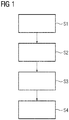
- the invention provides according to the first aspect of the present invention a computer-implemented method for performing entity linking between a surface entity mention in a surface text and entities of a knowledge graph, wherein the method comprises the steps of:
- the computer-implemented method according to the present invention does in contrast to existing conventional approaches use a contextual text representation model and does fine-tune it for a final entity linking classification task using an input vector forming a combination of a contextual entity representation vector and of an entity node embedding vector.
- the contextual entity representation vector and the entity node embedding vector are concatenated to generate the input vector applied to the fully connected layer.
- a dot product of the contextual entity representation vector and the entity node embedding vector is calculated and is included as an additional feature representation into the input vector applied to the fully connected layer.
- text spans of the supplied surface text are annotated by named entity recognition to provide surface entity mentions within the surface text.
- aliases of entities are collected and indexed using a MinHash Locality Sensitive Hashing, LSH, algorithm to create signatures of the aliases entities.
- LSH MinHash Locality Sensitive Hashing
- the aliases of entities are derived from a knowledge graph stored in a memory.
- the identifiers of the selected candidate knowledge graph entities are supplied sequentially to the knowledge graph embedding model to provide corresponding entity node embedding vectors.
- the calculated similarity scores comprise Jaccard similarity scores.
- the contextual text representation model comprises a bidirectional encoder representations from transformers, BERT, model.
- the knowledge graph embedding model comprises a TransE model.
- the invention further provides according to a further aspect an apparatus comprising the features of claim 12.
- the invention provides according to the second aspect an apparatus used for performing entity linking between a surface entity mention in a surface text and entities of a knowledge graph, said apparatus comprising:
- the computer-implemented contextual text representation model comprises a bidirectional encoder representations from transformers, BERT, model.
- the computer-implemented knowledge graph embedding model comprises a TransE model.
- the processing unit is adapted to concatenate the contextual entity representation vector and the entity node embedding vector to generate the input vector applied to the fully connected layer.
- the processing unit is adapted to calculate a dot product of the contextual entity representation vector and of the entity node embedding vector which is included as the additional feature representation into the input vector applied to the fully connected layer.
- the computer-implemented for performing entity linking according to the first aspect of the present invention can comprise several main steps.
- a surface text st is supplied to a contextual text representation model CTRM which calculates a contextual representation for each token t within the surface text st.
- the token t can comprise a word or a word piece forming part of a word.
- a named entity recognition NER takes place before supplying the surface text st to the contextual text representation model CTRM.
- the named entity recognition NER is provided to locate and classify named entities mentioned in the unstructured surface text st into predefined categories such as person names, organizations, locations, medical codes, time expressions, quantities, monetary values, percentages, etc.
- Text spans in the surface text st are annotated by the recognized entity types. These annotated text spans form the surface entity mentions SEMs.
- the computer-implemented method according to the first aspect of the present invention is used for performing entity linking between a surface entity mention SEM in the received surface text st and knowledge graph entities in a predefined knowledge graph.
- the contextual representations of the tokens t of a surface entity mention SEM in the surface text st are pooled with contextual representations of the other tokens t within the surface text st or surface text span to provide a contextual entity representation representing the surface entity mention SEM with its surface text context. Pooling can be performed in a final hidden layer of the contextual text representation model CTRM. Pooling is performed to combine representations of the tokens t for the service entity mention SEM and representations of the rest of the tokens t. This does give a representation of the surface entity mention SEM with its contexts.
- the contextual text representation model CTRM can comprise a bidirectional encoder representations from transformers, BERT, model.
- the bidirectional encoder representations from transformers, BERT, model is used for representing surface entity mentions SEMs and their contexts. This does address the problem of polysemy.
- the bidirectional encoder representations from transformers, BERT, model can be pre-trained and then fine-tuned for the entity linking classification task. The learned attention is provided by the bidirectional encoder representations from transformers, BERT, model to represent context in simple terms.
- the bidirectional encoder representations from transformers, BERT, model used by the computer-implemented method according to the first aspect of the present invention does learn how much attention needs to be paid to what part of a sentence or text span in a surface text st for a target classification task.
- the bidirectional encoder representations from transformers, BERT, model comprises a neural network NN which can be pre-trained using an extensive text corpus such as a book corpus of millions of words and/or an encyclopedia having billions of words. This pre-trained model or neural network of the bidirectional encoder representation from transformers, BERT, model is fine-tuned for the entity linking task of the method according to the present invention.
- a bidirectional encoder representations from transformers, BERT, model can be used to learn attention weights for a final entity linking prediction task which can be modeled as a fully connected layer FCL with graph embeddings as its additional features.
- the use of a bidirectional encoder representations from transformers, BERT, model as the contextual text representation model CRTM allows to take advantage of rich pre-trained language representation models and to fine-tune it for the specific entity linking task at hand.
- the bidirectional encoder representations from transformers, BERT, model is designed to pre-train bidirectional representations from unlabeled text by jointly conditioning on both left and right context in all layers.
- the bidirectional encoder representations from transformers, BERT, model used by the computer-implemented method according to the present invention is a deeply bidirectional, unsupervised language representation pre-trained using only a plain text corpus.
- context-free models such as word2vec generate a single-word embedding representation for each word in the vocabulary
- the bidirectional encoder representations from transformers, BERT, model is essentially bidirectional.
- the bidirectional encoder representations from transformers, BERT, model applies a bidirectional training of a transformer being a popular attention model to language modeling. This is in contrast to previous conventional approaches which looked at a text sequence of a surface text st either from left to right or combined left to right and right to left for training.
- a language model which is bidirectionally trained does have a deeper sense of language context and flow than a single direction language model.
- a transformer encoder used by the bidirectional encoder representations from transformers, BERT, model can read an entire sequence of words at once.
- conventional context-free models such as word2vec
- single-word embedding representation is generated for each word in a vocabulary.
- the word “bank” does have the same context-free representation in "bank account” and "bank of the river”.
- contextual language models generate a representation of each word based also on the other words in the text span or sentence. For example, in the sentence "I accessed the bank account” a conventional unidirectional contextual model would represent “bank” based on “I accessed the” but not on “account”.
- the contextual text representation model CTRM used in the computer-implemented method according to the present invention uses both the previous and the following context of the focus word, i.e. "I accessed the” and "account” starting from the bottom of a deep neural network matching the context bidirectionally.
- the pooling performed in step S2 of Fig. 1 has the advantage that it does reduce the dimensions of the data.
- an identifier CE-ID of a candidate knowledge graph entity CE selected for the surface entity mention SEM is supplied to a knowledge graph embedding model KGEM to provide an entity node embedding vector ENEV.
- aliases of entities AE can be collected and indexed using a MinHash Locality Sensitive Hashing, LSH, algorithm to create signatures of the knowledge graph entities. Further, similarity scores SS between the signatures of the knowledge graph entities and the signature of a surface entity mention SEM can be calculated and the knowledge graph entities CE of all the matched entities having a similarity score SS above a threshold are selected as candidate knowledge graph entities CE.
- the aliases of entities AE can be derived from a knowledge graph stored in a memory.
- the identifiers CE-ID of the selected candidate knowledge graph entities can be supplied sequentially in step S3 to the knowledge graph embedding model KGEM to provide corresponding entity node embedding vectors ENEVs.
- This computer-implemented knowledge graph embedding model KGEM can comprise in a possible implementation a TransE data model.
- step S4 of the computer-implemented method according to the first aspect of the present invention as shown in Fig. 1 the contextual entity representation vector CERV and the entity node embedding vector ENEV are combined to generate an input vector IV which is applied to a fully connected layer FCL which provides an unnormalized output transformed by a softmax function into a normalized output processed to classify whether the surface entity mention SEM corresponds to the candidate knowledge graph entity CE.
- the contextual entity representation vector CERV and the entity node embedding vector ENEV are concatenated in step S4 to generate an input vector IV applied to the fully connected layer FCL.
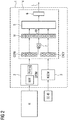
- a dot product of the contextual entity representation vector CERV and of the entity node embedding vector ENEV is calculated and can be included as an additional feature representation into the input vector IV applied to the fully connected layer FCL as also illustrated in Fig. 2 .
- a dot product or scalar product is an algebraic operation that takes two equal-length sequences of numbers included in the two vectors to calculate a single number forming a feature of the input vector IV applied to the fully connected layer FCL.
- the fully connected layer FCL connects every neuron in one layer to every neuron in another layer.
- the softmax function transforms the unnormalized output of the fully connected layer FCL to a probability distribution as a normalized output.
- Fig. 2 shows a diagram for illustrating a possible architecture of an apparatus 1 according to the second aspect of the present invention used for performing entity linking between a surface entity mention SEM in a surface text st and knowledge graph entities of a knowledge graph.
- a surface text st is supplied to a contextual text representation model CTRM which is adapted to calculate a contextual representation for each token t of a surface text mention SEM in a received surface text st.
- the contextual text representation model CTRM comprises in the illustrated embodiment of Fig. 2 a bidirectional encoder representations from transformers, BERT, model.
- the contextual text representation model CTRM forms a context-aware surface entity encoder for the received surface text st.
- the surface text st can comprise the following text: "Thanks to its wide fuel range capability and design features, the SGT-700 is a perfect choice for several onshore applications.”.
- the surface text st comprises one or more surface entity mentions SEMs such as "SGT-700".
- This is applied to the pre-trained and fine-tuned contextual text representation model CTRM which calculates a contextual representation for each token within the received surface text st and performs a final pooling of the tokens of the surface entity mention SEM in the received surface text st with contextual representations of other tokens within the same surface text st to provide a contextual entity representation vector CERV representing the surface entity mention SEM with its surface text context as also illustrated in Fig. 2 .
- a candidate entity identifier CE-ID such as "Q5893981" selected for the surface entity mention SEM is applied to a knowledge graph embedding model KGEM to provide an entity node embedding vector ENEV.
- the knowledge graph embedding model KGEM is trained separately.
- the candidate entity identifier CE-ID forms a result of a candidate selection process and forms one of a group of top-matched candidate entity node identifiers.
- Fig. 3 illustrates the generation of candidate knowledge graph entity identifiers CE-ID in a candidate selection process.
- aliases of entities AE are collected and indexed using a MinHash Locality Sensitive Hashing, LSH, algorithm to create signatures of knowledge graph entities.
- similarity scores SS between the signatures of the knowledge graph entities and the signature of a surface entity mention SEM are calculated and the knowledge graph entities of all the matched aliases entities having a similarity score SS above a predefined threshold value TH can be selected as candidate knowledge graph entities CE.
- Identifiers CE-IDs of these candidate knowledge graph entities CE are then supplied sequentially to the knowledge graph embedding model KGEM shown in Fig. 2 .
- a first set of candidate knowledge graph entities CE which potentially correspond to the surface entity is found.
- the aliases of entities AE are collected first.
- the aliases of entities AE can be derived from synonym labels in a target knowledge graph and the labeled training data where surface entity mentions SEMs are labeled with knowledge graph entities.
- the collected aliases of entities AE are indexed in a possible embodiment using a MinHash Locality Sensitive Hashing, LSH, algorithm.
- the keys in this index are the entity of aliases AE which have been collected previously.
- the values are the entity identifiers in the respective knowledge graph.
- Fig. 3 shows the overall candidate selection process.
- the general idea underlying the candidate selection is to perform a fuzzy search over the aliases of entity AE.
- the used MinHash algorithm enables the creation of signatures for sets. In order to match a set in a collection of sets, it is possible to compute in a possible implementation a Jaccard similarity as a similarity score between the signature of the querying set and the signatures of the other sets in the collection. Further, an approach using only MinHash provides linear query costs. However, a sub-linear query cost is preferred as the number of aliases of entities AE and entities in the knowledge graph KG can be very high.
- the aliases of entities AE are collected and indexed using a MinHash Locality Sensitive Hashing, LSH, algorithm to create signatures of the knowledge graph entities.
- LSH MinHash Locality Sensitive Hashing
- This MinHash Locality Sensitive Hashing, LSH, algorithm avoids computing a similarity for every pair of sets or characters. It does divide the set signatures into bands and computes a similarity of a pair only if they have at least one band in common. Due to this, the MinHash Locality Sensitive Hashing, LSH, algorithm provides for sub-linear query costs.
- Each alias of entity AE comprises a set of words or word pieces, i.e. tokens t. All aliases of entities AE are indexed with the MinHash Locality Sensitive Hashing, LSH, algorithm. Further, a dictionary is kept where one can look up a given alias of entity to find its corresponding knowledge graph entities.
- the associated knowledge graph entity ID i.e. the candidate entity CE-ID corresponding to the matched aliases of entities AE are output having a similarity score SS above a predefined threshold.
- the calculated similarity score SS can comprise a Jaccard similarity score JSS.
- the candidate entity-identifiers CE-IDs of the top-matched candidate knowledge graph entities can be sequentially supplied to the knowledge graph embedding model KGEM as illustrated in Fig. 2 to calculate corresponding entity node embedding vectors ENEVs one after the other.
- the computer-implemented knowledge graph embedding model KGEM is adapted to provide an entity node embedding vector ENEV for the received identifier CE-ID at one of the candidate knowledge graph entities CE selected for the respective surface entity mention SEM.
- the size of the contextual entity representation vector CERV output by the contextual text representation model CTRM and the size of the entity node embedding vector ENEV output by the knowledge graph embedding model KGEM is equal and can comprise in a possible implementation 768 vector entries or vector elements. Each vector element comprises latent feature representation.
- Both calculated vectors, i.e. the contextual entity representation vector CERV and the entity node embedding vector ENEV, are supplied to a processing unit 4 adapted to combine the contextual entity representation vector CERV with the entity node embedding vector ENEV to generate an input vector IV applied to a fully connected layer (FCL) 5 of the apparatus 1.
- the fully connected layer 5 generates an unnormalized output which is transformed by a following softmax function 6 into a normalized output processed to classify whether the surface entity mention SEM in the received surface text st does indeed correspond to the selected candidate knowledge graph entity CE.
- the processing unit 4 is adapted to concatenate the received contextual entity representation vector CERV and the received entity node embedding vector ENEV to generate the input vector IV applied to the following fully connected layer 5 of the apparatus 1 as shown in Fig. 2 .
- the processing unit 4 has an entity 7 adapted to calculate also a dot product of the contextual entity representation vector CERV and of the entity node embedding vector ENEV.
- the calculated dot product dp is then included as an additional feature representation into the input vector IV applied to the fully connected layer 5.
- the dot product feature represents a measure of the relationship between the entity node and the surface entity mention SEM in an input pair.
- the fully connected layer 5 performs the final linking classification task using in a preferred embodiment a linear classifier.
- the softmax activation function 6 provides probabilities for the "yes" and "no" classes, i.e. whether the surface entity mention SEM corresponds to the candidate knowledge graph entity CE or not.
- a label L can be output which indicates whether the surface entity mention SEM "SGT-700" in the received surface text st corresponds to a candidate knowledge graph node in the existing knowledge graph KG.
- the candidate selection using the MinHash Locality Sensitive Hashing, LSH, algorithm with a Jaccard similarity score JSS is adapted to deal with not only exact matches but also syntactically similar words.
- the candidate selection process illustrated in Fig. 3 does not require prior probabilities which removes the dependency on prior probability computation steps.
- a bidirectional encoder representations from transformers, BERT, model is used for representing surface entity mentions SEMs and their contexts in the surface text st.
- This model learns attention weights for the final entity link prediction task which is modeled as the fully connected layer (FCL) 5 with graph embeddings as additional features.
- FCL fully connected layer
- Using the bidirectional encoder representations from transformers, BERT, model allows to take advantage of its rich pre-trained language representation models and to fine-tune it for the entity linking task performed by the method according to the present invention.
- Knowledge graph embedding is used for representing entities in the knowledge base, i.e. the catalogued entities.
- the knowledge graph entity representations used in the method according to the present invention are rich in a sense that they can represent both their descriptions and their network structure in the target knowledge graph.
- the computer-implemented method and apparatus 1 for performing entity linking can be used for different use cases or applications, in particular information extraction, question answering, search, enhancing semantic understanding of texts as well as the construction of entity-centric knowledge networks.
- the computer-implemented method can be used as a software tool for performing entity linking between surface entity mentions SEMs in a surface text st and entities of a stored knowledge graph.
- the software tool receives via an input interface a surface text st and has access to a memory where a knowledge graph is stored.
- the computer-implemented method outputs a classification or label whether a surface entity mention SEM within the received surface text st does correspond with a selected candidate entity CE.
- a surface entity mention SEM such as "SGT-700"
- different kinds of actions can be triggered automatically. For instance, a user may receive via a graphical user interface an indication that a surface entity mention SEM has been recognized in the received surface text st.
- automatic actions can be triggered if a surface entity mention SEM is found within a received surface text st such as the output of additional information about the recognized surface entity mention SEM or the automatic triggering of control signals used to control a process such as a maintenance or manufacturing process.
- the surface text st comprises a documentation for performing repair or maintenance services
- an identified surface entity mention SEM within the surface text st may trigger the automatic provision of a tool which can be used to maintain, repair or replace the recognized mentioned surface entity by a user.
- the entity linking result output by the softmax function 6, i.e. the classification labels L can trigger different kinds of activities automatically having a tangible impact on the physical environment of the respective process or use case.
- the entity linking provided by the method according to the present invention can map ambiguous named entities to unique identifiers in an extensive knowledge database.
- the entity linking can be performed in a possible embodiment with low latency in real time. Consequently, the triggering of activities using actuators can also be performed in a possible implementation using the labels L provided by the entity linking method in real time.
- the knowledge graph embedding model KGEM can comprise a TransE model used for learning low-dimensional embeddings of entities.
- Entity-relational data refers to directed graphs whose nodes correspond to entities and edges of the form (head, label, tail) wherein each indicates that there exists a relationship of name label between the entities head and tail.
- the computer-implemented models used by the apparatus 1 according to the present invention can be adapted to the different entity linking use cases.
Landscapes
- Engineering & Computer Science (AREA)
- Theoretical Computer Science (AREA)
- Physics & Mathematics (AREA)
- General Engineering & Computer Science (AREA)
- Artificial Intelligence (AREA)
- General Physics & Mathematics (AREA)
- Computational Linguistics (AREA)
- General Health & Medical Sciences (AREA)
- Health & Medical Sciences (AREA)
- Mathematical Physics (AREA)
- Evolutionary Computation (AREA)
- Computing Systems (AREA)
- Data Mining & Analysis (AREA)
- Software Systems (AREA)
- Molecular Biology (AREA)
- Biophysics (AREA)
- Biomedical Technology (AREA)
- Life Sciences & Earth Sciences (AREA)
- Audiology, Speech & Language Pathology (AREA)
- Machine Translation (AREA)
Priority Applications (2)
| Application Number | Priority Date | Filing Date | Title |
|---|---|---|---|
| EP20183123.7A EP3933700A1 (fr) | 2020-06-30 | 2020-06-30 | Procédé et appareil permettant d'effectuer une liaison d'entités |
| US17/352,431 US11961010B2 (en) | 2020-06-30 | 2021-06-21 | Method and apparatus for performing entity linking |
Applications Claiming Priority (1)
| Application Number | Priority Date | Filing Date | Title |
|---|---|---|---|
| EP20183123.7A EP3933700A1 (fr) | 2020-06-30 | 2020-06-30 | Procédé et appareil permettant d'effectuer une liaison d'entités |
Publications (1)
| Publication Number | Publication Date |
|---|---|
| EP3933700A1 true EP3933700A1 (fr) | 2022-01-05 |
Family
ID=71409165
Family Applications (1)
| Application Number | Title | Priority Date | Filing Date |
|---|---|---|---|
| EP20183123.7A Withdrawn EP3933700A1 (fr) | 2020-06-30 | 2020-06-30 | Procédé et appareil permettant d'effectuer une liaison d'entités |
Country Status (2)
| Country | Link |
|---|---|
| US (1) | US11961010B2 (fr) |
| EP (1) | EP3933700A1 (fr) |
Cited By (2)
| Publication number | Priority date | Publication date | Assignee | Title |
|---|---|---|---|---|
| CN114880991A (zh) * | 2022-06-08 | 2022-08-09 | 工银科技有限公司 | 知识图谱问答问句实体链接方法、装置、设备及介质 |
| CN114925681A (zh) * | 2022-06-08 | 2022-08-19 | 工银科技有限公司 | 知识图谱问答问句实体链接方法、装置、设备及介质 |
Families Citing this family (19)
| Publication number | Priority date | Publication date | Assignee | Title |
|---|---|---|---|---|
| US12141732B1 (en) * | 2020-02-28 | 2024-11-12 | Ip.Com I, Llc | System and method for aggregated modeling, search, visualization, and summarization and applications thereof |
| US11755838B2 (en) * | 2020-09-14 | 2023-09-12 | Smart Information Flow Technologies, LLC | Machine learning for joint recognition and assertion regression of elements in text |
| US12596933B2 (en) * | 2021-03-19 | 2026-04-07 | Nec Corporation | Context-aware entity linking for knowledge graphs to support decision making |
| US12361218B2 (en) * | 2021-04-16 | 2025-07-15 | Cognizer, Inc. | Nested named entity recognition |
| US12112131B2 (en) * | 2021-09-10 | 2024-10-08 | Salesforce, Inc. | Systems and methods for factual extraction from language model |
| US12608558B2 (en) * | 2021-10-12 | 2026-04-21 | Regents Of The University Of Michigan | Unsupervised focus-driven graph-based content extraction |
| CN114386418B (zh) * | 2022-01-10 | 2025-08-05 | 新华智云科技有限公司 | 知识图谱中重复实体的去重方法 |
| CN114386420B (zh) * | 2022-01-11 | 2024-11-29 | 平安科技(深圳)有限公司 | 基于人工智能的实体链接方法、装置、设备及存储介质 |
| CN114510569B (zh) * | 2022-01-12 | 2025-06-27 | 淮阴工学院 | 基于ChineseBERT模型和注意力机制的化工突发事件新闻分类方法 |
| CN114419304B (zh) * | 2022-01-18 | 2024-11-08 | 深圳前海环融联易信息科技服务有限公司 | 一种基于图神经网络的多模态文档信息抽取方法 |
| CN114416923A (zh) * | 2022-01-18 | 2022-04-29 | 新华智云科技有限公司 | 一种基于富文本特征的新闻实体链接方法和系统 |
| US12493751B2 (en) | 2022-03-31 | 2025-12-09 | Smart Information Flow Technologies, LLC | Natural language processing for bias identification |
| CN115269826B (zh) * | 2022-04-08 | 2026-03-17 | 海信电子科技(武汉)有限公司 | 一种智能设备及文本实体链接方法 |
| CN114722163B (zh) * | 2022-06-10 | 2023-04-07 | 科大讯飞股份有限公司 | 数据查询方法、装置、电子设备和存储介质 |
| CN115270801B (zh) * | 2022-09-28 | 2022-12-30 | 浙江太美医疗科技股份有限公司 | 文本信息抽取模型的训练方法、文本信息抽取方法和应用 |
| CN115935626B (zh) * | 2022-11-25 | 2023-09-08 | 河南大学 | 河水-地下水垂向瞬态交互水流通量的反演方法 |
| CN116227496B (zh) * | 2023-05-06 | 2023-07-14 | 国网智能电网研究院有限公司 | 一种基于深度学习的电力舆情实体关系抽取方法及系统 |
| CN119129722B (zh) * | 2024-08-27 | 2025-03-14 | 北京长河数智科技有限责任公司 | 一种基于大语言模型及向量库构建知识图谱的方法 |
| CN118798342B (zh) * | 2024-09-11 | 2024-12-31 | 湖北光谷实验室 | 基于生成式人工智能的科技情报感知与获取方法及系统 |
Citations (2)
| Publication number | Priority date | Publication date | Assignee | Title |
|---|---|---|---|---|
| EP3156949A2 (fr) * | 2015-10-16 | 2017-04-19 | Baidu USA LLC | Systèmes et procédés de réponse aux questions simples inspirées de l'humain (hisqa) |
| US20180232443A1 (en) * | 2017-02-16 | 2018-08-16 | Globality, Inc. | Intelligent matching system with ontology-aided relation extraction |
Family Cites Families (4)
| Publication number | Priority date | Publication date | Assignee | Title |
|---|---|---|---|---|
| WO2019050968A1 (fr) * | 2017-09-05 | 2019-03-14 | Forgeai, Inc. | Procédés, appareil et systèmes permettant de transformer des informations de langage naturel non structurées en données structurées pouvant être traitées par ordinateur |
| US20200074301A1 (en) * | 2018-09-04 | 2020-03-05 | Beijing Jingdong Shangke Information Technology Co., Ltd. | End-to-end structure-aware convolutional networks for knowledge base completion |
| US11556579B1 (en) * | 2019-12-13 | 2023-01-17 | Amazon Technologies, Inc. | Service architecture for ontology linking of unstructured text |
| CN111563149B (zh) * | 2020-04-24 | 2023-01-31 | 西北工业大学 | 一种用于中文知识图谱问答系统的实体链接方法 |
-
2020
- 2020-06-30 EP EP20183123.7A patent/EP3933700A1/fr not_active Withdrawn
-
2021
- 2021-06-21 US US17/352,431 patent/US11961010B2/en active Active
Patent Citations (2)
| Publication number | Priority date | Publication date | Assignee | Title |
|---|---|---|---|---|
| EP3156949A2 (fr) * | 2015-10-16 | 2017-04-19 | Baidu USA LLC | Systèmes et procédés de réponse aux questions simples inspirées de l'humain (hisqa) |
| US20180232443A1 (en) * | 2017-02-16 | 2018-08-16 | Globality, Inc. | Intelligent matching system with ontology-aided relation extraction |
Cited By (2)
| Publication number | Priority date | Publication date | Assignee | Title |
|---|---|---|---|---|
| CN114880991A (zh) * | 2022-06-08 | 2022-08-09 | 工银科技有限公司 | 知识图谱问答问句实体链接方法、装置、设备及介质 |
| CN114925681A (zh) * | 2022-06-08 | 2022-08-19 | 工银科技有限公司 | 知识图谱问答问句实体链接方法、装置、设备及介质 |
Also Published As
| Publication number | Publication date |
|---|---|
| US20210406706A1 (en) | 2021-12-30 |
| US11961010B2 (en) | 2024-04-16 |
Similar Documents
| Publication | Publication Date | Title |
|---|---|---|
| US11961010B2 (en) | Method and apparatus for performing entity linking | |
| CN113591483B (zh) | 一种基于序列标注的文档级事件论元抽取方法 | |
| Ezen-Can | A Comparison of LSTM and BERT for Small Corpus | |
| Kim et al. | Two-stage multi-intent detection for spoken language understanding | |
| CN111611810B (zh) | 一种多音字读音消歧装置及方法 | |
| US7295965B2 (en) | Method and apparatus for determining a measure of similarity between natural language sentences | |
| Lee et al. | Deep learning-based context-sensitive spelling typing error correction | |
| EP1617340B1 (fr) | Procédé et appareil pour fournir une reconnaissance de noms propres ou fragments de noms propres | |
| Schlaefer et al. | Semantic Extensions of the Ephyra QA System for TREC 2007. | |
| CN111914097A (zh) | 基于注意力机制和多层级特征融合的实体抽取方法与装置 | |
| CN113627158B (zh) | 基于多表征和多预训练模型的中文拼写纠错方法及装置 | |
| CA2500467A1 (fr) | Identification de langage a base d'un reseau neural echelonable a partir d'un texte ecrit | |
| CN113158675B (zh) | 基于人工智能的实体抽取方法、装置、设备及介质 | |
| Gashaw et al. | Machine learning approaches for amharic parts-of-speech tagging | |
| Chen et al. | Efficient SPARQL queries generator for question answering systems | |
| CN113746946A (zh) | 全球地址解析器 | |
| Kumar et al. | Morphological analyzer for agglutinative languages using machine learning approaches | |
| JP2006244262A (ja) | 質問回答検索システム、方法およびプログラム | |
| Schaback et al. | Multi-level feature extraction for spelling correction | |
| CN115238697A (zh) | 基于自然语言处理的司法命名实体识别方法 | |
| Jain et al. | Detection and correction of non word spelling errors in Hindi language | |
| Engonopoulos et al. | ELS: a word-level method for entity-level sentiment analysis | |
| Bolla et al. | Detection of objectionable song lyrics using weakly supervised learning and natural language processing techniques | |
| Maarif et al. | Complexity algorithm analysis for edit distance | |
| JPH117447A (ja) | 話題抽出方法及びこれに用いる話題抽出モデルとその作成方法、話題抽出プログラム記録媒体 |
Legal Events
| Date | Code | Title | Description |
|---|---|---|---|
| PUAI | Public reference made under article 153(3) epc to a published international application that has entered the european phase |
Free format text: ORIGINAL CODE: 0009012 |
|
| STAA | Information on the status of an ep patent application or granted ep patent |
Free format text: STATUS: THE APPLICATION HAS BEEN PUBLISHED |
|
| AK | Designated contracting states |
Kind code of ref document: A1 Designated state(s): AL AT BE BG CH CY CZ DE DK EE ES FI FR GB GR HR HU IE IS IT LI LT LU LV MC MK MT NL NO PL PT RO RS SE SI SK SM TR |
|
| B565 | Issuance of search results under rule 164(2) epc |
Effective date: 20210118 |
|
| STAA | Information on the status of an ep patent application or granted ep patent |
Free format text: STATUS: THE APPLICATION IS DEEMED TO BE WITHDRAWN |
|
| 18D | Application deemed to be withdrawn |
Effective date: 20220706 |