EP3933772B1 - Verfahren und server zur ermöglichung der bereitstellung von lebensmittelproduktinformationen - Google Patents
Verfahren und server zur ermöglichung der bereitstellung von lebensmittelproduktinformationen Download PDFInfo
- Publication number
- EP3933772B1 EP3933772B1 EP21182710.0A EP21182710A EP3933772B1 EP 3933772 B1 EP3933772 B1 EP 3933772B1 EP 21182710 A EP21182710 A EP 21182710A EP 3933772 B1 EP3933772 B1 EP 3933772B1
- Authority
- EP
- European Patent Office
- Prior art keywords
- image data
- data
- visual marker
- food package
- artificial image
- Prior art date
- Legal status (The legal status is an assumption and is not a legal conclusion. Google has not performed a legal analysis and makes no representation as to the accuracy of the status listed.)
- Active
Links
Images



Classifications
-
- G—PHYSICS
- G06—COMPUTING OR CALCULATING; COUNTING
- G06T—IMAGE DATA PROCESSING OR GENERATION, IN GENERAL
- G06T7/00—Image analysis
- G06T7/70—Determining position or orientation of objects or cameras
- G06T7/73—Determining position or orientation of objects or cameras using feature-based methods
-
- G—PHYSICS
- G06—COMPUTING OR CALCULATING; COUNTING
- G06T—IMAGE DATA PROCESSING OR GENERATION, IN GENERAL
- G06T11/00—Two-dimensional [2D] image generation
-
- G—PHYSICS
- G06—COMPUTING OR CALCULATING; COUNTING
- G06T—IMAGE DATA PROCESSING OR GENERATION, IN GENERAL
- G06T19/00—Manipulating three-dimensional [3D] models or images for computer graphics
- G06T19/006—Mixed reality
-
- G—PHYSICS
- G06—COMPUTING OR CALCULATING; COUNTING
- G06T—IMAGE DATA PROCESSING OR GENERATION, IN GENERAL
- G06T7/00—Image analysis
- G06T7/70—Determining position or orientation of objects or cameras
- G06T7/73—Determining position or orientation of objects or cameras using feature-based methods
- G06T7/74—Determining position or orientation of objects or cameras using feature-based methods involving reference images or patches
-
- G—PHYSICS
- G06—COMPUTING OR CALCULATING; COUNTING
- G06V—IMAGE OR VIDEO RECOGNITION OR UNDERSTANDING
- G06V10/00—Arrangements for image or video recognition or understanding
- G06V10/20—Image preprocessing
- G06V10/24—Aligning, centring, orientation detection or correction of the image
- G06V10/245—Aligning, centring, orientation detection or correction of the image by locating a pattern; Special marks for positioning
-
- G—PHYSICS
- G06—COMPUTING OR CALCULATING; COUNTING
- G06V—IMAGE OR VIDEO RECOGNITION OR UNDERSTANDING
- G06V20/00—Scenes; Scene-specific elements
- G06V20/20—Scenes; Scene-specific elements in augmented reality scenes
-
- G—PHYSICS
- G06—COMPUTING OR CALCULATING; COUNTING
- G06K—GRAPHICAL DATA READING; PRESENTATION OF DATA; RECORD CARRIERS; HANDLING RECORD CARRIERS
- G06K7/00—Methods or arrangements for sensing record carriers, e.g. for reading patterns
- G06K7/10—Methods or arrangements for sensing record carriers, e.g. for reading patterns by electromagnetic radiation, e.g. optical sensing; by corpuscular radiation
- G06K7/14—Methods or arrangements for sensing record carriers, e.g. for reading patterns by electromagnetic radiation, e.g. optical sensing; by corpuscular radiation using light without selection of wavelength, e.g. sensing reflected white light
- G06K7/1404—Methods for optical code recognition
- G06K7/1408—Methods for optical code recognition the method being specifically adapted for the type of code
- G06K7/1417—2D bar codes
-
- G—PHYSICS
- G06—COMPUTING OR CALCULATING; COUNTING
- G06T—IMAGE DATA PROCESSING OR GENERATION, IN GENERAL
- G06T2207/00—Indexing scheme for image analysis or image enhancement
- G06T2207/30—Subject of image; Context of image processing
- G06T2207/30204—Marker
Definitions
- the invention relates to software technology within the food processing and packaging industry. More particularly, it is related to methods and servers for facilitating provision of food product information.
- augmented image data allows for facilitating provision of food product information. Having the possibility to add artificial image data to authentic image data provides namely for that consumers that cannot read, or in any other way not grasp food product information printed on the package, can access this information, which can in turn reduce a risk that a food product containing e.g. nuts is consumed by a consumer with nut allergy.
- the visual marker should be interpreted as an identifiable marker of a pre-determined size. It could be a simple shape or a complex image.
- the food product component should be interpreted as an ingredient of a food product.
- a food product component may be water, sugar or salt. It may also be in a processed or un-processed form such as either crushed tomatoes or fresh tomatoes.
- the artificial image data may also be a text and or text and image in combination.
- the artificial image data may comprise an image depicting three oranges, which can be a number of oranges used for producing juice held in the package.
- the artificial image data may be a text "3 ORANGES" that may be presented next to the package in the augmented image data. Still an option is that the both three oranges and the text is presented next to the package in the augmented image data.
- a food product may comprise one food product component, an example of which may be milk.
- a food product may also comprise multiple food product components, an example of which may be soda, which may comprise the food product components carbonated water, sugar, flavourings and food colouring.
- An advantage of the proposed method may be that food product information may be accessed without having to identify where on the package it is written. Furthermore it is possible to visualize the product without having to open the package. Since the food product information is restricted to space available for printing on the food package, this method provides for that that large text that is easy to read can be used also for small portion packages.
- the method may further comprise extracting spatial measurement data from the authentic image data, wherein the spatial measurement data is linked to measurements of the food package and/or measurements of the visual marker, generating calibrated artificial image data by performing a spatial calibration of the artificial image data by comparing the spatial measurement data with spatial reference data linked to the food package and/or linked to the visual marker, provided by a spatial reference database, wherein the augmented image data is generated by combining the authentic image data, the calibrated artificial image data and the artificial image spatial reference point.
- An advantage of the steps of generating calibrated artificial data may be that the augmented image data may be scaled to fit with the authentic image data.
- the method may further comprise, in the step of providing a food package, providing an additional food package, wherein the additional food package may be provided with an additional visual marker, wherein the authentic image data depicts the visual marker and the additional visual marker, wherein the marker data may be based on the visual marker and the additional visual marker, wherein the artificial image data may depict at least one food product component of a food product held in the food package and at least one additional food product component of an additional food product held in the additional food package, and wherein the artificial image spatial reference point may be based on the visual marker and the additional visual marker.
- An advantage of providing an additional package may be that a mix of the food products held in the food packages may be illustrated in the augmented image data.
- the spatial measurement data may be linked to measurements of the food package, measurements of the additional food package, measurements of the visual marker and/or measurements of the additional visual marker, and the spatial reference data may be linked to the food package, the additional food package, the visual marker and/or the additional visual marker.
- An advantage of this may be that in the case of an additional food package, the augmented image data may be calibrated to both the food package and the additional food package.
- the geometric data may be determined by comparing the spatial reference data linked to the food package and/or linked to the visual marker, with the physical container.
- the visual marker may be provided on a side of the food package, together with a two-dimensional code, such as a QR-code. This may be advantageous in that the visual marker and the two-dimensional code may be captured in the same image.
- the two-dimensional code may be configured to launch an application on the user device.
- the launch of an application on the user device may be to open a web page in a web browser on the user device. This may be an advantage since no preinstalled application is required.
- the two dimensional code may further be configure to give instructions to the user to move the camera backwards, if the code is scanned close to the camera. This way a larger field of view may be obtained.
- the two-dimensional code may comprise a unique identifier of the food package. This may be advantageous in that food product information that are relevant to a specific package, such as expiry data, may be provided in the augmented image data.
- the visual marker may be comprised in a décor of the food package.
- the décor of the food package should be interpreted as the printed surface of the package, on which consumer directed information, such as name of the product, is provided. This may be advantageous since no additional marker has to be printed on the food package. In other words, the printing process does not have to be altered. Further, by having less non-consumer directed information, such as a bar code, more space of the package can be used for consumer directed information. Further, by having the visual marker "hidden" in the décor, there is less risk of counterfeit production or other types of fraud. Put differently, by not stating where and how the visual marker is provided on the package, this will be more difficult to copy or unduly amend.
- the artificial image data may depict the food product in a first form and the food product may be held in the food package in an second form.
- a first volume of the food product in the first form may be different from a second volume of the food product in the second form.
- To depict the food product in different forms may be advantageous since it for instance allows the user to see how full a bowl would be after the food product has been processed, which aids the user in the choice of bowl.
- the artificial image data may depend on a geographical position of the user device. This may be an advantage since it may be possible to provide different augmented image data depending on where the food package is located.
- the artificial image data may depend on a personal profile of the user.
- the personal profile may comprise user set data for different food product components. This may be an advantage since it allows for providing food product information relevant to a specific user. For instance it may be food product information regarding possible food product components that the user is allergic to. Another advantage may be that the user may choose what information they want to be presented. For instance they may want to know the contents of the food product and its origin. Or they may want to know the nutrition values and expiry date. To find specific information otherwise would be hard and time consuming.
- a server configured for facilitating provision of food product information is provided, according to claim 12.
- the control unit may further be configured to execute an extracting function configured to extract spatial measurement data from the authentic image data, wherein the spatial measurement data may be linked to measurements of the visual marker, a second generating function configured to generate calibrated artificial image data by performing a spatial calibration of the artificial image data by comparing the spatial measurement data with spatial reference data linked to the visual marker, provided by a spatial reference database.
- an extracting function configured to extract spatial measurement data from the authentic image data, wherein the spatial measurement data may be linked to measurements of the visual marker
- a second generating function configured to generate calibrated artificial image data by performing a spatial calibration of the artificial image data by comparing the spatial measurement data with spatial reference data linked to the visual marker, provided by a spatial reference database.
- Fig.1 is a schematic view illustrating a system 100 for facilitating provision of food product information by way of example.
- a food package 102 can be provided.
- the food package 102 can hold a food product.
- the food product can comprise one or more food product components.
- an additional food package 122 is provided with an additional visual marker 124. It may also be multiple additional food packages. In the case of multiple food packages, two or more food packages may hold the same food product. They may also hold different food products.
- a physical container 126 is also provided, as illustrated in this example. It can also be multiple physical containers provided.
- a physical container 126 can be a bowl, a pot, a glass, or any other physical container able to hold a food product. The physical container 126 may be different from the food package 102.
- the food package 102 is provided with a visual marker 104. It may also have a two-dimensional code 402, such as a QR-code.
- the visual marker 104 and two-dimensional code 402 is further described in regard to Fig. 4A to Fig. 4C .
- the system 100 further comprises a user device 108.
- the user device can be a mobile device such as a smart phone, or a tablet or any other electronic device fit for the purpose. It can also be smart glasses, wherein a screen is incorporated in a lens of the glasses.
- the user device 108 can comprise a camera 106.
- the camera 106 can be provided as an external camera, connected to the user device 108 by suitable means.
- the user device 108 comprises a screen 110.
- the camera 106 of the user device 108 can be used to capture authentic image data.
- the authentic image depicts one or more visual markers 104 that are provided on the food package 102.
- the authentic image data further depicts one or more food packages. It also depicts one or more physical containers.
- Marker data 112 can be extracted from the authentic image data by the user device 108.
- the marker data 112 is used to retrieve artificial image data 114 linked to the marker data 112, from an artificial image database 116.
- the artificial image database 116 can be provided locally on the user device 108. It can also be provided externally to the user device 108.
- the artificial image data 114 depicts food product components that a food product held in the food package is comprised of. In other words, it can be illustrations of the contents of the food package 102. It can also be illustrations or videos related to the food package 102, such as a guide on how to open the food package. It can also be illustrations related to the producer, such as a mascot or logotype of the company.
- An artificial image spatial reference point is determined. It can be determined based on a location of the visual marker 104.
- Augmented image data can be generated by combining the authentic image data, the artificial image data and the artificial image spatial reference point.
- the augmented image data can be interpreted as an image showing both real life objects, such as food packages or physical containers, and animated objects from the artificial image database.
- the artificial image spatial reference point can be used to align the authentic image data and the artificial image data.
- the step of determining an artificial image spatial reference point can be skipped. Instead, a pre-determined reference point, such as the center of the screen, can be used to know where to place the artificial image data.
- the augmented image data is provided to the screen 110 of the user device 108.
- a spatial reference database 120 can be provided.
- the spatial reference database 120 can provide spatial reference data 118 linked to a food package 102 and/or a visual marker 104.
- the spatial reference data can be geometrical dimensions of the food package or visual marker. To know which package type that is depicted, this information may be linked to the visual marker or other code provided on the package. By knowing which type of package, e.g. Tetra Brik Aseptic 1000 ml Slim, spatial reference data linked to the package being depicted can be retrieved.
- An advantage of using the package for spatial alignment instead of the visual marker is that the package is larger and as an effect different spatial reference points can be placed further apart, which may provide for improved spatial alignment of the artificial image data and the authentic image data.
- Spatial measurement data can be extracted from the authentic image data.
- the spatial measurement data can be linked to measurements of a food package 102, as described above, and/or measurements of a visual marker 104.
- Calibrated artificial image data can be generated by comparing the spatial measurement data with the spatial reference data.
- the augmented image data may be generated using the authentic image data, the calibrated artificial image data and the artificial image spatial reference point. In this way, the size of an artificial object may be calibrated to match the size of the food package 102 and/or the visual marker 104.
- Geometric data of the physical container 126 can be determined, for instance by comparing the physical container 126 to spatial reference data of the food package 102 and/or the visual marker 104.
- Fig. 2A illustrates, by way of example, a scene based on authentic image data.
- the food package 102 with a visual marker 104, and a physical container 126 is visualized.
- Fig. 2B illustrates.
- a scene based on augmented image data It illustrates the food product held in the food package 102 but in the physical container 126 in a first form 202. It could also be illustrated in a second form 205 as in Fig. 2C , which shows the same food package 102 and the same food product but in a second form 204 with a different volume.
- the first and second form can be interpreted as a processed and un-processed form of the food product.
- the food package 102 could be a package of cream.
- the cream is visualized as un-whipped cream.
- Fig. 2C the cream is visualized as whipped cream.
- the first form 202 of the product has a smaller volume than the second form 204.
- the food package 102 could be a package of orange juice.
- the first form can be un-processed oranges.
- the second form can be the processed form of orange juice.
- the first form of the product has a larger volume than the second form.
- the augmented image data can depict food products or food product components of multiple food packages in the same scene. This could be used to illustrate a mix of two food products.
- a food product can be illustrated by the food product components it's comprised of separately.
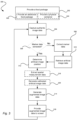
- Fig. 3 is a flowchart illustrating the steps of a method 300 for facilitating provision of food product information.
- a food package is provided, wherein the food package is provided with a visual marker.
- authentic image data depicting the visual marker can be captured by a camera of a user device.
- marker data is extracted from the authentic image data.
- a fourth step 310 artificial image data linked to the marker data is retrieved from an artificial image database, wherein the artificial image data depicts at least one food product component of a food product held in the food package.
- the third and fourth step can be skipped by checking 306 if marker data already has been retrieved.
- the method 300 can be repeated continuously, to get a real-time feed of augmented image data on the screen of the user device.
- the third step may need to be performed only once.
- the fourth step may need to be performed only once.
- an artificial image spatial reference point is determined, based on the visual marker.
- augmented image data can be generated by combining the authentic image data, the artificial image data and the artificial image spatial reference point.
- a seventh step 316 the augmented image data is provided to a screen of the user device.
- spatial measurement data from the authentic image data can be extracted, wherein the spatial measurement data can be linked to measurements of the food package and/or measurements of the visual marker.
- calibrated artificial image data can be generated by performing a spatial calibration of the artificial image data by comparing the spatial measurement data with spatial reference data linked to the food package and/or linked to the visual marker, provided by a spatial reference database.
- the augmented image data can be generated by combining the authentic image data, the calibrated artificial image data and the artificial image spatial reference point.
- an additional food package can be provided 322, wherein the additional food package can be provided with an additional visual marker,
- the spatial measurement data can be linked to measurements of the food package, measurements of the additional food package, measurements of the visual marker and/or measurements of the additional visual marker. Further, the spatial reference data can be linked to the food package, the additional food package, the visual marker and/or the additional visual marker.
- a physical container is provided 324, wherein the authentic image data further depicts the physical container.
- geometric data for the physical container in the authentic image data is determined.
- adjusted artificial image data is generated by adjusting the artificial image data based on the geometric data for the physical container.
- the augmented image data is generated by combining the authentic image data, the adjusted artificial image data and the artificial image spatial reference point.
- the geometric data is determined by comparing the spatial reference data linked to the food package and/or linked to the visual marker, with the physical container.
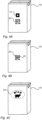
- Fig. 4A to Fig. 4C illustrates examples of ways the visual marker 104 can be provided on the food package 102.
- the visual marker 104 can be provided together with the two-dimensional code 402, such as a QR code, or separately.
- Fig. 4A illustrates an example where the visual marker 104 is provided next to the two dimensional code 402 on one side of the food package 102. They can be placed on either side of the food package 102.
- Fig. 4B illustrates an example where the visual marker 104 is provided within the two-dimensional code 402.
- Fig. 4C illustrates an example where the visual marker 104 is comprised in a décor 404 of the food package 102.
- the visual marker 104 can be, for instance, a logo on the package that is already printed on the food package 104.
- Fig. 5 illustrates a schematic view of a server 500.
- the server 500 is configured for facilitating provision of food product information.
- the server 500 comprises a transceiver 502, a control unit 504 and a memory 508.
- the transceiver 502 is configured to communicate with other devices.
- the transceiver 502 can be configured to receive marker data, and transmit augmented image data to a screen of a user device.
- the control circuit 504 can be configured to perform the control of functions and operations of the server 500.
- the control circuit 504 can include a processor 506, such as a central processing unit (CPU).
- the processor 506 can be configured to execute program code stored in the memory 508, in order to perform functions and operations of the server 500.
- the control circuit 504 executes a retrieving function 510 configured to retrieve artificial image data linked to the marker data from an artificial image database, wherein the artificial image data depicts at least one food product component of a food product held in the food package.
- the control circuit 504 executes a determining function 512 configured to determine an artificial image spatial reference point based on the visual marker.
- the control circuit 504 can execute a first generating function 514 configured to generate augmented image data by combining the authentic image data, the artificial image data and the artificial image spatial reference point.
- control circuit 504 can execute an extracting function 516 configured to extract spatial measurement data from the authentic image data, wherein the spatial measurement data is linked to measurements of the visual marker and/or the package depicted in the authentic image data.
- control circuit 504 can execute a second generating function 518 configured to generate calibrated artificial image data by performing a spatial calibration of the artificial image data by comparing the spatial measurement data with spatial reference data linked to the visual marker and/or the package, provided by a spatial reference database.
- the control circuit 504 executes a second determining function 520 configured to determine geometric data for a physical container in the authentic image data.
- the control circuit 504 executes a third generating function 522 configured to generate adjusted artificial image data by adjusting the artificial image data based on the geometric data for the physical container.
- the control circuit 504 executes a fourth generating function 524 configured to generate the augmented image data by combining the authentic image data, the adjusted artificial image data and the artificial image spatial reference point.
- control circuit 504 can be configured to extract marker data from the authentic image data, by means of an second extraction function.
- the server 500 may be provided within the user device.
Landscapes
- Engineering & Computer Science (AREA)
- Physics & Mathematics (AREA)
- Theoretical Computer Science (AREA)
- General Physics & Mathematics (AREA)
- Multimedia (AREA)
- Computer Vision & Pattern Recognition (AREA)
- Software Systems (AREA)
- General Engineering & Computer Science (AREA)
- Computer Hardware Design (AREA)
- Computer Graphics (AREA)
- Processing Or Creating Images (AREA)
- Management, Administration, Business Operations System, And Electronic Commerce (AREA)
- Editing Of Facsimile Originals (AREA)
Claims (13)
- Verfahren (300) zum Ermöglichen der Bereitstellung von Lebensmittelproduktinformationen, das Folgendes umfasst:Bereitstellen (302) einer Lebensmittelverpackung (102), wobei die Lebensmittelverpackung (102) mit einem visuellen Marker (104), (104) versehen ist, Bereitstellen (324) eines physischen Behälters (126), der sich von der Lebensmittelverpackung (102) unterscheidet,Erfassen (304), durch eine Kamera (106) einer Benutzervorrichtung (108), authentischer Bilddaten, die den visuellen Marker (104) und den physischen Behälter (126) darstellen,Extrahieren (308) von Markerdaten (112) aus den authentischen Bilddaten,Abrufen (310) von künstlichen Bilddaten (114), die mit den Markerdaten (112) verknüpft sind, aus einer künstlichen Bilddatenbank (116), wobei die künstlichen Bilddaten (114) mindestens eine Lebensmittelproduktkomponente eines Lebensmittelprodukts darstellen, das in der Lebensmittelverpackung (102) gehalten wird,Bestimmen (312) eines räumlichen Referenzpunkts eines künstlichen Bildes basierend auf dem visuellen Marker (104),Bestimmen von geometrischen Daten für den physischen Behälter (126) in den authentischen Bilddaten,Erzeugen angepasster künstlicher Bilddaten durch Anpassen der künstlichen Bilddaten (114) basierend auf den geometrischen Daten für den physischen Behälter (126), Erzeugen (314) der erweiterten Bilddaten durch Kombinieren der authentischen Bilddaten, der angepassten künstlichen Bilddaten und des räumlichen Referenzpunkts des künstlichen Bildes und Bereitstellen (316) der erweiterten Daten an einen Bildschirm (110) der Benutzervorrichtung (108).
- Verfahren nach Anspruch 1, wobei das Verfahren ferner Folgendes umfasst:Extrahieren (318) von räumlichen Messdaten aus den authentischen Bilddaten, wobei die räumlichen Messdaten mit Messungen der Lebensmittelverpackung (102) und/oder Messungen des visuellen Markers (104) verknüpft sind,Erzeugen (320) kalibrierter künstlicher Bilddaten durch Durchführen einer räumlichen Kalibrierung der künstlichen Bilddaten (114) durch Vergleichen der räumlichen Messdaten mit räumlichen Referenzdaten (118), die mit der Lebensmittelverpackung (102) verknüpft sind und/oder mit dem visuellen Marker (104) verknüpft sind, der durch eine räumliche Referenzdatenbank (120) bereitgestellt wird,wobei die erweiterten Bilddaten durch Kombinieren der authentischen Bilddaten, der kalibrierten künstlichen Bilddaten und des räumlichen Referenzpunkts des künstlichen Bildes erzeugt werden.
- Verfahren nach einem der vorhergehenden Ansprüche, wobei der Schritt des Bereitstellens (302) einer Lebensmittelverpackung (102) ferner das Bereitstellen (322) einer zusätzlichen Lebensmittelverpackung (122) umfasst, wobei die zusätzliche Lebensmittelverpackung (122) mit einem zusätzlichen visuellen Marker (124) versehen ist,wobei die authentischen Bilddaten den visuellen Marker (104) und den zusätzlichen visuellen Marker (124) darstellen,wobei die Markerdaten (112) auf dem visuellen Marker (104) und dem zusätzlichen visuellen Marker (124) basieren,wobei die künstlichen Bilddaten (114) mindestens eine Lebensmittelproduktkomponente eines in der Lebensmittelverpackung (102) gehaltenen Lebensmittelprodukts und mindestens eine zusätzliche Lebensmittelproduktkomponente eines in der zusätzlichen Lebensmittelverpackung (122) gehaltenen zusätzlichen Lebensmittelprodukts darstellen,wobei der räumliche Referenzpunkt des künstlichen Bildes auf dem visuellen Marker (104) und dem zusätzlichen visuellen Marker (124) basiert.
- Verfahren nach Anspruch 2 oder 3, wobei die räumlichen Messdaten mit Messungen der Lebensmittelverpackung (102), Messungen der zusätzlichen Lebensmittelverpackung (122), Messungen des visuellen Markers (104) und/oder Messungen des zusätzlichen visuellen Markers (124) verknüpft sind und
wobei die räumlichen Referenzdaten mit der Lebensmittelverpackung (102), der zusätzlichen Lebensmittelverpackung (122), dem visuellen Marker (104) und/oder dem zusätzlichen visuellen Marker (124) verknüpft sind. - Verfahren nach einem der vorhergehenden Ansprüche, wobei die geometrischen Daten durch Vergleichen der mit der Lebensmittelverpackung (102) verknüpften und/oder mit dem visuellen Marker (104) verknüpften räumlichen Referenzdaten mit dem physischen Behälter (126) bestimmt werden.
- Verfahren nach einem der vorhergehenden Ansprüche, wobei der visuelle Marker (104) zusammen mit einem zweidimensionalen Code (402), wie etwa einem QR-Code, auf einer Seite der Lebensmittelverpackung (102) bereitgestellt wird, wobei der zweidimensionale Code (402) dazu ausgelegt ist, eine Anwendung auf der Benutzervorrichtung (108) zu starten.
- Verfahren nach Anspruch 6, wobei der zweidimensionale Code (402) eine eindeutige Kennung der Lebensmittelverpackung (102) umfasst.
- Verfahren nach einem der vorhergehenden Ansprüche, wobei der visuelle Marker (104) in einem Dekor (404) der Lebensmittelverpackung (102) enthalten ist.
- Verfahren nach einem der vorhergehenden Ansprüche, wobei die künstlichen Bilddaten (114) das Lebensmittelprodukt in einer ersten Form (202) darstellen und das Lebensmittelprodukt in der Lebensmittelverpackung in einer zweiten Form (204) gehalten wird, wobei sich ein erstes Volumen des Lebensmittelprodukts in der ersten Form (202) von einem zweiten Volumen des Lebensmittelprodukts in der zweiten Form (204) unterscheidet.
- Verfahren nach einem der vorhergehenden Ansprüche, wobei die künstlichen Bilddaten (114) von einer geografischen Position der Benutzervorrichtung (108) abhängen.
- Verfahren nach einem der vorhergehenden Ansprüche, wobei die künstlichen Bilddaten (114) von einem persönlichen Profil des Benutzers abhängen, wobei das persönliche Profil Benutzersatzdaten für verschiedene Lebensmittelproduktkomponenten umfasst.
- Server (500), der zum Ermöglichen der Bereitstellung von Lebensmittelproduktinformationen ausgelegt ist, wobei der Server (500) einen Sendeempfänger (502), eine Steuereinheit (504) und einen Speicher (508) umfasst, wobei der Sendeempfänger (502) dazu ausgelegt ist:authentische Bilddaten zu empfangen, die eine Lebensmittelverpackung (104) und einen physischen Behälter (126), der sich von der Lebensmittelverpackung unterscheidet, umfassen, wobei die Lebensmittelverpackung mit einem visuellen Marker (104) versehen ist,erweiterte Bilddaten an einen Bildschirm (108) einer Benutzervorrichtung zu übertragen, wobei die Steuereinheit (504) dazu ausgelegt ist, Folgendes auszuführen:eine Abruffunktion (510), die dazu ausgelegt ist, künstliche Bilddaten (114), die mit den Markerdaten (112) verknüpft sind, aus einer künstlichen Bilddatenbank (116) abzurufen, wobei die künstlichen Bilddaten (114) mindestens eine Lebensmittelproduktkomponente eines Lebensmittelprodukts darstellen, das in einer Lebensmittelverpackung (102) gehalten wird,eine Bestimmungsfunktion (512), die dazu ausgelegt ist, einen räumlichen Referenzpunkt eines künstlichen Bildes basierend auf dem visuellen Marker (104) zu bestimmen, wobei die Steuereinheit (504) ferner dazu ausgelegt ist, Folgendes auszuführen:eine zweite Bestimmungsfunktion (520), die dazu ausgelegt ist, geometrische Daten für den physischen Behälter (126) in den authentischen Bilddaten zu bestimmen,eine erste Erzeugungsfunktion (522), die dazu ausgelegt ist, angepasste künstliche Bilddaten durch Anpassen der künstlichen Bilddaten (114) basierend auf den geometrischen Daten für den physischen Behälter (126) zu erzeugen, undeine zweite Erzeugungsfunktion (524), die dazu ausgelegt ist, die erweiterten Bilddaten durch Kombinieren der authentischen Bilddaten, der angepassten künstlichen Bilddaten und des räumlichen Referenzpunkts des künstlichen Bildes zu erzeugen.
- Server (500) nach Anspruch 12, wobei die Steuereinheit (504) ferner dazu ausgelegt ist, Folgendes auszuführen:eine Extraktionsfunktion (516), die dazu ausgelegt ist, räumliche Messdaten aus den authentischen Bilddaten zu extrahieren, wobei die räumlichen Messdaten mit Messungen des visuellen Markers (104) verknüpft sind,eine dritte Erzeugungsfunktion (518), die dazu ausgelegt ist, kalibrierte künstliche Bilddaten durch Durchführen einer räumlichen Kalibrierung der künstlichen Bilddaten (114) durch Vergleichen der räumlichen Messdaten mit räumlichen Referenzdaten (118) zu erzeugen, die mit dem visuellen Marker (104) verknüpft sind, der durch eine räumliche Referenzdatenbank (120) bereitgestellt wird.
Applications Claiming Priority (1)
| Application Number | Priority Date | Filing Date | Title |
|---|---|---|---|
| EP20183988 | 2020-07-03 |
Publications (2)
| Publication Number | Publication Date |
|---|---|
| EP3933772A1 EP3933772A1 (de) | 2022-01-05 |
| EP3933772B1 true EP3933772B1 (de) | 2025-05-07 |
Family
ID=71514939
Family Applications (1)
| Application Number | Title | Priority Date | Filing Date |
|---|---|---|---|
| EP21182710.0A Active EP3933772B1 (de) | 2020-07-03 | 2021-06-30 | Verfahren und server zur ermöglichung der bereitstellung von lebensmittelproduktinformationen |
Country Status (5)
| Country | Link |
|---|---|
| US (1) | US12288353B2 (de) |
| EP (1) | EP3933772B1 (de) |
| JP (1) | JP7733095B2 (de) |
| CN (1) | CN115735232A (de) |
| WO (1) | WO2022003023A1 (de) |
Families Citing this family (2)
| Publication number | Priority date | Publication date | Assignee | Title |
|---|---|---|---|---|
| US10902577B2 (en) * | 2017-06-19 | 2021-01-26 | Apeel Technology, Inc. | System and method for hyperspectral image processing to identify object |
| US10902581B2 (en) * | 2017-06-19 | 2021-01-26 | Apeel Technology, Inc. | System and method for hyperspectral image processing to identify foreign object |
Family Cites Families (15)
| Publication number | Priority date | Publication date | Assignee | Title |
|---|---|---|---|---|
| CA2875891A1 (en) * | 2011-06-07 | 2012-12-13 | In Situ Media Corporation | System and method for identifying and altering images in a digital video |
| KR20150029257A (ko) * | 2013-09-09 | 2015-03-18 | 계명대학교 산학협력단 | 증강현실을 이용한 음식물 정보 제공 방법 및 시스템 |
| CN204515851U (zh) * | 2015-03-11 | 2015-07-29 | 上海安悦四维信息技术有限公司 | 适于影像点餐及餐厅场景渲染的控制系统 |
| JP2016192118A (ja) * | 2015-03-31 | 2016-11-10 | 株式会社リコー | 情報処理システム、情報処理装置、および情報処理プログラム並びに情報処理方法 |
| CN107784541A (zh) * | 2016-08-26 | 2018-03-09 | 阿里巴巴集团控股有限公司 | 提供数据对象信息的方法及装置 |
| US10424121B1 (en) * | 2016-11-06 | 2019-09-24 | Oded Melinek | Generated offering exposure |
| US9754168B1 (en) | 2017-05-16 | 2017-09-05 | Sounds Food, Inc. | Incentivizing foodstuff consumption through the use of augmented reality features |
| CN108319373A (zh) * | 2018-04-13 | 2018-07-24 | 北京理工大学 | 一种用于虚拟现实的虚实融合食物摄入系统 |
| JP2019192091A (ja) | 2018-04-27 | 2019-10-31 | 京セラドキュメントソリューションズ株式会社 | 食品情報提供システム |
| KR102243452B1 (ko) | 2018-09-28 | 2021-04-22 | 가천대학교 산학협력단 | 식품 정보 추정을 위한 가이드 카드, 이를 이용한 식품 정보 추정 시스템 및 방법 |
| JP2022512403A (ja) | 2018-12-12 | 2022-02-03 | エイヴェリー デニソン リテール インフォメーション サービシズ リミテッド ライアビリティ カンパニー | 仮想的に透明な包装システム |
| CN110840080A (zh) * | 2019-07-14 | 2020-02-28 | 湖南泉奇服饰有限公司 | 全息餐桌、全息餐厅及全息式餐饮服务方法 |
| CN111048180B (zh) * | 2019-12-05 | 2024-02-02 | 上海交通大学医学院 | 一种膳食摄入调查分析系统、方法和终端 |
| JP7535388B2 (ja) | 2020-05-01 | 2024-08-16 | アルテミラ株式会社 | 情報提供装置、情報処理装置、情報表示システムおよびプログラム |
| EP4295314A4 (de) * | 2021-02-08 | 2025-04-16 | Sightful Computers Ltd | Gemeinsame inhaltsnutzung in erweiterter realität |
-
2021
- 2021-06-30 EP EP21182710.0A patent/EP3933772B1/de active Active
- 2021-06-30 US US18/002,644 patent/US12288353B2/en active Active
- 2021-06-30 WO PCT/EP2021/067997 patent/WO2022003023A1/en not_active Ceased
- 2021-06-30 CN CN202180047412.9A patent/CN115735232A/zh active Pending
- 2021-06-30 JP JP2023500029A patent/JP7733095B2/ja active Active
Also Published As
| Publication number | Publication date |
|---|---|
| WO2022003023A1 (en) | 2022-01-06 |
| JP7733095B2 (ja) | 2025-09-02 |
| CN115735232A (zh) | 2023-03-03 |
| JP2023532953A (ja) | 2023-08-01 |
| US20230237710A1 (en) | 2023-07-27 |
| EP3933772A1 (de) | 2022-01-05 |
| US12288353B2 (en) | 2025-04-29 |
Similar Documents
| Publication | Publication Date | Title |
|---|---|---|
| US11922259B2 (en) | Universal product labeling for vision-based commerce | |
| JP7662088B2 (ja) | 情報処理装置、情報処理方法、およびプログラム | |
| EP3933772B1 (de) | Verfahren und server zur ermöglichung der bereitstellung von lebensmittelproduktinformationen | |
| EP2499635B1 (de) | System, verfahren und vorrichtung für erweiterte realität zur anzeige eines objektbildes in einer kontextuellen umgebung | |
| WO2016033495A2 (en) | Methods and arrangements including data migration among computing platforms, e.g., through use of steganographic screen encoding | |
| EP3811294A1 (de) | Verfahren zur bestimmung der authentizität eines konsumguts | |
| CN113627411A (zh) | 一种基于超分辨率的商品识别与价格匹配方法及系统 | |
| US20210342664A1 (en) | Product authentication and product viewing system | |
| US20100142758A1 (en) | Method for Providing Photographed Image-Related Information to User, and Mobile System Therefor | |
| JP2014127168A (ja) | 自動販売機管理装置、そのデータ処理方法、およびプログラム | |
| US20160171581A1 (en) | Apparatus and method for locating products in a retail store using a mobile device | |
| US11172700B2 (en) | Image-based encoding | |
| US20160042233A1 (en) | Method and system for facilitating evaluation of visual appeal of two or more objects | |
| CN120526089A (zh) | 一种增强现实与数字产品融合展示系统 | |
| US20210176375A1 (en) | Information processing device, information processing system, information processing method and program | |
| CN206193909U (zh) | 实现商品的本体信息与外包装信息关联的商品及检查装置 | |
| US11356568B2 (en) | System and method for ordering a print product including a digital image utilizing augmented reality | |
| CN108463843A (zh) | 物品识别设备、物品识别方法、程序、服务器和物品识别系统 | |
| CN114333181A (zh) | 电子秤用多功能结算方法、系统、设备及计算机存储介质 | |
| CN120450596B (zh) | 商品信息确定方法、装置、电子设备和存储介质 | |
| US20230385895A1 (en) | Display control apparatus, display control method, and non-transitory computer-readable medium | |
| CN119360361A (zh) | 一种物品识别方法、装置、存储介质和电子设备 | |
| CN121357349A (zh) | 视频处理方法及装置 | |
| CN118097657A (zh) | 食材商品的纹理检测处理方法及装置 | |
| KR101673803B1 (ko) | 넓은 거리 범위에서의 정보 코드 인식 방법 및 시스템 |
Legal Events
| Date | Code | Title | Description |
|---|---|---|---|
| PUAI | Public reference made under article 153(3) epc to a published international application that has entered the european phase |
Free format text: ORIGINAL CODE: 0009012 |
|
| STAA | Information on the status of an ep patent application or granted ep patent |
Free format text: STATUS: THE APPLICATION HAS BEEN PUBLISHED |
|
| AK | Designated contracting states |
Kind code of ref document: A1 Designated state(s): AL AT BE BG CH CY CZ DE DK EE ES FI FR GB GR HR HU IE IS IT LI LT LU LV MC MK MT NL NO PL PT RO RS SE SI SK SM TR |
|
| B565 | Issuance of search results under rule 164(2) epc |
Effective date: 20211001 |
|
| STAA | Information on the status of an ep patent application or granted ep patent |
Free format text: STATUS: REQUEST FOR EXAMINATION WAS MADE |
|
| 17P | Request for examination filed |
Effective date: 20220705 |
|
| RBV | Designated contracting states (corrected) |
Designated state(s): AL AT BE BG CH CY CZ DE DK EE ES FI FR GB GR HR HU IE IS IT LI LT LU LV MC MK MT NL NO PL PT RO RS SE SI SK SM TR |
|
| GRAP | Despatch of communication of intention to grant a patent |
Free format text: ORIGINAL CODE: EPIDOSNIGR1 |
|
| STAA | Information on the status of an ep patent application or granted ep patent |
Free format text: STATUS: GRANT OF PATENT IS INTENDED |
|
| RIC1 | Information provided on ipc code assigned before grant |
Ipc: G06V 20/20 20220101ALI20241128BHEP Ipc: G06V 10/24 20220101ALI20241128BHEP Ipc: G06T 19/00 20110101ALI20241128BHEP Ipc: G06T 7/73 20170101AFI20241128BHEP |
|
| INTG | Intention to grant announced |
Effective date: 20241216 |
|
| P01 | Opt-out of the competence of the unified patent court (upc) registered |
Free format text: CASE NUMBER: APP_3738/2025 Effective date: 20250123 |
|
| GRAS | Grant fee paid |
Free format text: ORIGINAL CODE: EPIDOSNIGR3 |
|
| GRAA | (expected) grant |
Free format text: ORIGINAL CODE: 0009210 |
|
| STAA | Information on the status of an ep patent application or granted ep patent |
Free format text: STATUS: THE PATENT HAS BEEN GRANTED |
|
| AK | Designated contracting states |
Kind code of ref document: B1 Designated state(s): AL AT BE BG CH CY CZ DE DK EE ES FI FR GB GR HR HU IE IS IT LI LT LU LV MC MK MT NL NO PL PT RO RS SE SI SK SM TR |
|
| REG | Reference to a national code |
Ref country code: GB Ref legal event code: FG4D |
|
| REG | Reference to a national code |
Ref country code: CH Ref legal event code: EP |
|
| REG | Reference to a national code |
Ref country code: DE Ref legal event code: R096 Ref document number: 602021030282 Country of ref document: DE |
|
| REG | Reference to a national code |
Ref country code: IE Ref legal event code: FG4D |
|
| PGFP | Annual fee paid to national office [announced via postgrant information from national office to epo] |
Ref country code: DE Payment date: 20250626 Year of fee payment: 5 |
|
| REG | Reference to a national code |
Ref country code: NL Ref legal event code: MP Effective date: 20250507 |
|
| PG25 | Lapsed in a contracting state [announced via postgrant information from national office to epo] |
Ref country code: ES Free format text: LAPSE BECAUSE OF FAILURE TO SUBMIT A TRANSLATION OF THE DESCRIPTION OR TO PAY THE FEE WITHIN THE PRESCRIBED TIME-LIMIT Effective date: 20250507 Ref country code: PT Free format text: LAPSE BECAUSE OF FAILURE TO SUBMIT A TRANSLATION OF THE DESCRIPTION OR TO PAY THE FEE WITHIN THE PRESCRIBED TIME-LIMIT Effective date: 20250908 Ref country code: FI Free format text: LAPSE BECAUSE OF FAILURE TO SUBMIT A TRANSLATION OF THE DESCRIPTION OR TO PAY THE FEE WITHIN THE PRESCRIBED TIME-LIMIT Effective date: 20250507 |
|
| REG | Reference to a national code |
Ref country code: LT Ref legal event code: MG9D |
|
| PG25 | Lapsed in a contracting state [announced via postgrant information from national office to epo] |
Ref country code: NO Free format text: LAPSE BECAUSE OF FAILURE TO SUBMIT A TRANSLATION OF THE DESCRIPTION OR TO PAY THE FEE WITHIN THE PRESCRIBED TIME-LIMIT Effective date: 20250807 Ref country code: GR Free format text: LAPSE BECAUSE OF FAILURE TO SUBMIT A TRANSLATION OF THE DESCRIPTION OR TO PAY THE FEE WITHIN THE PRESCRIBED TIME-LIMIT Effective date: 20250808 |
|
| PG25 | Lapsed in a contracting state [announced via postgrant information from national office to epo] |
Ref country code: PL Free format text: LAPSE BECAUSE OF FAILURE TO SUBMIT A TRANSLATION OF THE DESCRIPTION OR TO PAY THE FEE WITHIN THE PRESCRIBED TIME-LIMIT Effective date: 20250507 Ref country code: NL Free format text: LAPSE BECAUSE OF FAILURE TO SUBMIT A TRANSLATION OF THE DESCRIPTION OR TO PAY THE FEE WITHIN THE PRESCRIBED TIME-LIMIT Effective date: 20250507 |
|
| PGFP | Annual fee paid to national office [announced via postgrant information from national office to epo] |
Ref country code: IT Payment date: 20250721 Year of fee payment: 5 |
|
| REG | Reference to a national code |
Ref country code: AT Ref legal event code: MK05 Ref document number: 1793336 Country of ref document: AT Kind code of ref document: T Effective date: 20250507 |
|
| PG25 | Lapsed in a contracting state [announced via postgrant information from national office to epo] |
Ref country code: BG Free format text: LAPSE BECAUSE OF FAILURE TO SUBMIT A TRANSLATION OF THE DESCRIPTION OR TO PAY THE FEE WITHIN THE PRESCRIBED TIME-LIMIT Effective date: 20250507 |
|
| PG25 | Lapsed in a contracting state [announced via postgrant information from national office to epo] |
Ref country code: HR Free format text: LAPSE BECAUSE OF FAILURE TO SUBMIT A TRANSLATION OF THE DESCRIPTION OR TO PAY THE FEE WITHIN THE PRESCRIBED TIME-LIMIT Effective date: 20250507 |
|
| PG25 | Lapsed in a contracting state [announced via postgrant information from national office to epo] |
Ref country code: AT Free format text: LAPSE BECAUSE OF FAILURE TO SUBMIT A TRANSLATION OF THE DESCRIPTION OR TO PAY THE FEE WITHIN THE PRESCRIBED TIME-LIMIT Effective date: 20250507 |
|
| PG25 | Lapsed in a contracting state [announced via postgrant information from national office to epo] |
Ref country code: RS Free format text: LAPSE BECAUSE OF FAILURE TO SUBMIT A TRANSLATION OF THE DESCRIPTION OR TO PAY THE FEE WITHIN THE PRESCRIBED TIME-LIMIT Effective date: 20250807 |
|
| PG25 | Lapsed in a contracting state [announced via postgrant information from national office to epo] |
Ref country code: IS Free format text: LAPSE BECAUSE OF FAILURE TO SUBMIT A TRANSLATION OF THE DESCRIPTION OR TO PAY THE FEE WITHIN THE PRESCRIBED TIME-LIMIT Effective date: 20250907 |
|
| PG25 | Lapsed in a contracting state [announced via postgrant information from national office to epo] |
Ref country code: LV Free format text: LAPSE BECAUSE OF FAILURE TO SUBMIT A TRANSLATION OF THE DESCRIPTION OR TO PAY THE FEE WITHIN THE PRESCRIBED TIME-LIMIT Effective date: 20250507 |
|
| PG25 | Lapsed in a contracting state [announced via postgrant information from national office to epo] |
Ref country code: DK Free format text: LAPSE BECAUSE OF FAILURE TO SUBMIT A TRANSLATION OF THE DESCRIPTION OR TO PAY THE FEE WITHIN THE PRESCRIBED TIME-LIMIT Effective date: 20250507 Ref country code: SM Free format text: LAPSE BECAUSE OF FAILURE TO SUBMIT A TRANSLATION OF THE DESCRIPTION OR TO PAY THE FEE WITHIN THE PRESCRIBED TIME-LIMIT Effective date: 20250507 |
|
| PG25 | Lapsed in a contracting state [announced via postgrant information from national office to epo] |
Ref country code: CZ Free format text: LAPSE BECAUSE OF FAILURE TO SUBMIT A TRANSLATION OF THE DESCRIPTION OR TO PAY THE FEE WITHIN THE PRESCRIBED TIME-LIMIT Effective date: 20250507 |
|
| PG25 | Lapsed in a contracting state [announced via postgrant information from national office to epo] |
Ref country code: EE Free format text: LAPSE BECAUSE OF FAILURE TO SUBMIT A TRANSLATION OF THE DESCRIPTION OR TO PAY THE FEE WITHIN THE PRESCRIBED TIME-LIMIT Effective date: 20250507 |
|
| PG25 | Lapsed in a contracting state [announced via postgrant information from national office to epo] |
Ref country code: SK Free format text: LAPSE BECAUSE OF FAILURE TO SUBMIT A TRANSLATION OF THE DESCRIPTION OR TO PAY THE FEE WITHIN THE PRESCRIBED TIME-LIMIT Effective date: 20250507 Ref country code: RO Free format text: LAPSE BECAUSE OF FAILURE TO SUBMIT A TRANSLATION OF THE DESCRIPTION OR TO PAY THE FEE WITHIN THE PRESCRIBED TIME-LIMIT Effective date: 20250507 |
|
| REG | Reference to a national code |
Ref country code: CH Ref legal event code: H13 Free format text: ST27 STATUS EVENT CODE: U-0-0-H10-H13 (AS PROVIDED BY THE NATIONAL OFFICE) Effective date: 20260127 |
|
| REG | Reference to a national code |
Ref country code: DE Ref legal event code: R097 Ref document number: 602021030282 Country of ref document: DE |
|
| PG25 | Lapsed in a contracting state [announced via postgrant information from national office to epo] |
Ref country code: LU Free format text: LAPSE BECAUSE OF NON-PAYMENT OF DUE FEES Effective date: 20250630 |
|
| PG25 | Lapsed in a contracting state [announced via postgrant information from national office to epo] |
Ref country code: MC Free format text: LAPSE BECAUSE OF FAILURE TO SUBMIT A TRANSLATION OF THE DESCRIPTION OR TO PAY THE FEE WITHIN THE PRESCRIBED TIME-LIMIT Effective date: 20250507 |
|
| REG | Reference to a national code |
Ref country code: BE Ref legal event code: MM Effective date: 20250630 |
|
| PLBE | No opposition filed within time limit |
Free format text: ORIGINAL CODE: 0009261 |
|
| STAA | Information on the status of an ep patent application or granted ep patent |
Free format text: STATUS: NO OPPOSITION FILED WITHIN TIME LIMIT |
|
| REG | Reference to a national code |
Ref country code: CH Ref legal event code: L10 Free format text: ST27 STATUS EVENT CODE: U-0-0-L10-L00 (AS PROVIDED BY THE NATIONAL OFFICE) Effective date: 20260318 |
|
| PG25 | Lapsed in a contracting state [announced via postgrant information from national office to epo] |
Ref country code: IE Free format text: LAPSE BECAUSE OF NON-PAYMENT OF DUE FEES Effective date: 20250630 |
|
| 26N | No opposition filed |
Effective date: 20260210 |
|
| PG25 | Lapsed in a contracting state [announced via postgrant information from national office to epo] |
Ref country code: BE Free format text: LAPSE BECAUSE OF NON-PAYMENT OF DUE FEES Effective date: 20250630 |
|
| PG25 | Lapsed in a contracting state [announced via postgrant information from national office to epo] |
Ref country code: FR Free format text: LAPSE BECAUSE OF NON-PAYMENT OF DUE FEES Effective date: 20250707 |
|
| PG25 | Lapsed in a contracting state [announced via postgrant information from national office to epo] |
Ref country code: CH Free format text: LAPSE BECAUSE OF NON-PAYMENT OF DUE FEES Effective date: 20250630 |