EP3935857B1 - Methods and apparatus for adaptive streaming of point clouds - Google Patents
Methods and apparatus for adaptive streaming of point clouds Download PDFInfo
- Publication number
- EP3935857B1 EP3935857B1 EP20717377.4A EP20717377A EP3935857B1 EP 3935857 B1 EP3935857 B1 EP 3935857B1 EP 20717377 A EP20717377 A EP 20717377A EP 3935857 B1 EP3935857 B1 EP 3935857B1
- Authority
- EP
- European Patent Office
- Prior art keywords
- pcc
- video
- component
- attribute
- main
- Prior art date
- Legal status (The legal status is an assumption and is not a legal conclusion. Google has not performed a legal analysis and makes no representation as to the accuracy of the status listed.)
- Active
Links
Images



Classifications
-
- H—ELECTRICITY
- H04—ELECTRIC COMMUNICATION TECHNIQUE
- H04L—TRANSMISSION OF DIGITAL INFORMATION, e.g. TELEGRAPHIC COMMUNICATION
- H04L65/00—Network arrangements, protocols or services for supporting real-time applications in data packet communication
- H04L65/60—Network streaming of media packets
- H04L65/61—Network streaming of media packets for supporting one-way streaming services, e.g. Internet radio
-
- H—ELECTRICITY
- H04—ELECTRIC COMMUNICATION TECHNIQUE
- H04L—TRANSMISSION OF DIGITAL INFORMATION, e.g. TELEGRAPHIC COMMUNICATION
- H04L67/00—Network arrangements or protocols for supporting network services or applications
- H04L67/01—Protocols
- H04L67/02—Protocols based on web technology, e.g. hypertext transfer protocol [HTTP]
-
- H—ELECTRICITY
- H04—ELECTRIC COMMUNICATION TECHNIQUE
- H04N—PICTORIAL COMMUNICATION, e.g. TELEVISION
- H04N19/00—Methods or arrangements for coding, decoding, compressing or decompressing digital video signals
- H04N19/10—Methods or arrangements for coding, decoding, compressing or decompressing digital video signals using adaptive coding
- H04N19/169—Methods or arrangements for coding, decoding, compressing or decompressing digital video signals using adaptive coding characterised by the coding unit, i.e. the structural portion or semantic portion of the video signal being the object or the subject of the adaptive coding
- H04N19/184—Methods or arrangements for coding, decoding, compressing or decompressing digital video signals using adaptive coding characterised by the coding unit, i.e. the structural portion or semantic portion of the video signal being the object or the subject of the adaptive coding the unit being bits, e.g. of the compressed video stream
-
- H—ELECTRICITY
- H04—ELECTRIC COMMUNICATION TECHNIQUE
- H04N—PICTORIAL COMMUNICATION, e.g. TELEVISION
- H04N19/00—Methods or arrangements for coding, decoding, compressing or decompressing digital video signals
- H04N19/50—Methods or arrangements for coding, decoding, compressing or decompressing digital video signals using predictive coding
- H04N19/597—Methods or arrangements for coding, decoding, compressing or decompressing digital video signals using predictive coding specially adapted for multi-view video sequence encoding
-
- H—ELECTRICITY
- H04—ELECTRIC COMMUNICATION TECHNIQUE
- H04N—PICTORIAL COMMUNICATION, e.g. TELEVISION
- H04N19/00—Methods or arrangements for coding, decoding, compressing or decompressing digital video signals
- H04N19/70—Methods or arrangements for coding, decoding, compressing or decompressing digital video signals characterised by syntax aspects related to video coding, e.g. related to compression standards
-
- H—ELECTRICITY
- H04—ELECTRIC COMMUNICATION TECHNIQUE
- H04N—PICTORIAL COMMUNICATION, e.g. TELEVISION
- H04N19/00—Methods or arrangements for coding, decoding, compressing or decompressing digital video signals
- H04N19/80—Details of filtering operations specially adapted for video compression, e.g. for pixel interpolation
-
- H—ELECTRICITY
- H04—ELECTRIC COMMUNICATION TECHNIQUE
- H04N—PICTORIAL COMMUNICATION, e.g. TELEVISION
- H04N21/00—Selective content distribution, e.g. interactive television or video on demand [VOD]
- H04N21/20—Servers specifically adapted for the distribution of content, e.g. VOD servers; Operations thereof
- H04N21/23—Processing of content or additional data; Elementary server operations; Server middleware
- H04N21/234—Processing of video elementary streams, e.g. splicing of video streams or manipulating encoded video stream scene graphs
- H04N21/2343—Processing of video elementary streams, e.g. splicing of video streams or manipulating encoded video stream scene graphs involving reformatting operations of video signals for distribution or compliance with end-user requests or end-user device requirements
-
- H—ELECTRICITY
- H04—ELECTRIC COMMUNICATION TECHNIQUE
- H04N—PICTORIAL COMMUNICATION, e.g. TELEVISION
- H04N21/00—Selective content distribution, e.g. interactive television or video on demand [VOD]
- H04N21/20—Servers specifically adapted for the distribution of content, e.g. VOD servers; Operations thereof
- H04N21/23—Processing of content or additional data; Elementary server operations; Server middleware
- H04N21/235—Processing of additional data, e.g. scrambling of additional data or processing content descriptors
Definitions
- Emre B. Aksu et al. [PCC] On high level syntax of V-PCC", no. m44727, 124. MPEG meeting; Macao; (Motion Picture Expert Group or ISO/IEC JTC1/SC29/WG11), 4 October 2018, XP030192423 , provides information about two different approaches for the high level syntax of PCC. In particular, a comparison of a PCC-stream-based encapsulation approach and a file-format-based encapsulation approach is provided.
- the source and destination devices 112, 114 may include other elements/components or arrangements.
- the source device 112 may be adapted to receive video data from an external video source.
- the destination device 114 may interface with an external display device (not shown) and/or may include and/or use the (e.g., integrated) display device 132.
- a data stream generated by the video encoder unit 118 may be conveyed to other devices without modulating the data onto a carrier signal, such as by direct digital transfer and the other devices may or may not modulate the data for transmission.
- the techniques provided herein may be performed by any digital video encoding and/or decoding device. Although generally the techniques provided herein are performed by separate video encoding and/or video decoding devices, the techniques may also be performed by a combined video encoder/decoder, typically referred to as a "CODEC.” The techniques provided herein may also be performed by a video preprocessor or the like.
- the source device 112 and the destination device 114 are merely examples of such coding devices in which the source device 112 may generate (and/or may receive video data and may generate) the encoded video information for transmission to the destination device 114.
- the source and destination devices 112, 114 may operate in a substantially symmetrical manner such that each of the devices 112, 114 may include both video encoding and decoding components and/or elements (collectively "elements").
- the system 100 may support any of one-way and two-way video transmission between the source and destination devices 112, 114 (e.g., for any of video streaming, video playback, video broadcasting, video telephony and/or video conferencing, among others).
- the source device 112 may be, for example, a video streaming server adapted to generate (and/or receive the video data and to generate) the encoded video information for one or more destination devices, where the destination devices may be in communication with the source device 112 over wired and/or wireless communication systems.
- the external video source and/or the video source 124 may be and/or include a video capture device, such as a video camera, a video archive containing previously captured video, and/or a video feed from a video content provider.
- the external video source and/or the video source 124 may generate computer graphics-based data as the source video, or a combination of live video, archived video, and/or computer-generated video.
- the source device 112 and destination device 114 may be or may embody camera phones or video phones.
- the captured, pre-captured, computer-generated video, video feed, and/or other type of the video data may be encoded by the video encoder unit 118 to form the encoded video information.
- the Tx/Rx unit 120 may modulate the encoded video information (e.g., according to a communication standard, to form one or more modulated signals carrying the encoded video information).
- the Tx/Rx unit 120 may pass the modulated signals to its transmitter for transmission.
- the transmitter may transmit the modulated signals via the Tx/Rx element 122 to the destination device 114.
- the Tx/Rx unit 128 may receive the modulated signals from over channel 116 via the Tx/Rx element 126.
- the Tx/Rx unit 128 may demodulate the modulated signals to obtain the encoded video information.
- the Tx/RX unit 128 may pass the encoded video information to the video decoder unit 130.
- the video decoder unit 130 may decode the encoded video information to obtain decoded video data.
- the encoded video information may include syntax information defined by the video encoder unit 118. This syntax information may include one or more elements ("syntax elements"); some or all of which may be useful for decoding the encoded video information.
- syntax elements may include, for example, characteristics of the encoded video information.
- the syntax elements may also include characteristics, and/or describe the processing, of the un-encoded video used to form the encoded video information.
- the video decoder unit 130 may output the decoded video data for later storage and/or display on the external display (not shown). In certain representative embodiments, the video decoder unit 130 may output the decoded video data to the display device 132.
- the display device 132 may be and/or may include any individual, multiple, combination, of a variety of display devices adapted to display the decoded video data to a user. Examples of such display devices include a liquid crystal display (LCD), a plasma display, an organic light emitting diode (OLED) display, and/or a cathode ray tube (CRT), among others.
- LCD liquid crystal display
- OLED organic light emitting diode
- CRT cathode ray tube
- One or more video encoder and/or video decoder units 118, 130 may be included in one or more encoders and/or decoders; any of which may be integrated as part of a CODEC, and may be integrated and/or combined with a respective camera, computer, mobile device, subscriber device, broadcast device, set-top box and/or server, among others.
- the video encoder unit 118 and/or the video decoder unit 130 may be implemented as any of a variety of suitable encoder and/or decoder circuitries, respectively, such as one or more microprocessors, digital signal processors (DSPs), application specific integrated circuits (ASICs), field programmable gate arrays (FPGAs), discrete logic, software, hardware, firmware or any combinations thereof.
- DSPs digital signal processors
- ASICs application specific integrated circuits
- FPGAs field programmable gate arrays
- Either or both of the video encoder and video decoder units 118, 130 may be implemented substantially in software, and operations of the elements of the video encoder unit 118 and/or the video decoder unit 130 may be performed by appropriate software instructions executed by one or more processors (not shown).
- processors not shown
- the software instructions may be maintained on a computer readable medium including, for example, magnetic disks, optical disks, any other volatile (e.g., Random Access Memory (“RAM”)) non-volatile (e.g., Read-Only Memory (“ROM”)), and/or mass storage system readable by the CPU, among others.
- RAM Random Access Memory
- ROM Read-Only Memory
- the computer readable medium may include cooperating or interconnected computer readable medium, which may exist exclusively on the processing system and/or are distributed among multiple interconnected processing systems that may be local or remote to the processing system.
- FIG. 1B is a block diagram illustrating an example video encoder unit 118 for use with a video encoding and/or decoding system, such as the system 100.
- the video encoder unit 118 may include a video encoder 133, an output buffer 134, and a system controller 136.
- the video encoder 133 (or one or more elements thereof) may be implemented according to one or more standards and/or specifications, such as, for example, H.261, H.263, H.264, H.264/AVC, SVC extensions of H.264/AVC (H.264/AVC Annex G), HEVC, and/or scalable extensions of HEVC (SHVC), among others.
- H.261, H.263, H.264, H.264/AVC SVC extensions of H.264/AVC (H.264/AVC Annex G), HEVC, and/or scalable extensions of HEVC (SHVC), among others.
- H.261, H.263, H.264, H.264/AVC S
- the video encoder 133 may receive a video signal provided from a video source, such as, the video source 124 and/or the external video source. This video signal may include the un-encoded video.
- the video encoder 133 may encode the un-encoded video, and provide an encoded (i.e., compressed) video bitstream (BS) at its output.
- a video source such as, the video source 124 and/or the external video source.
- This video signal may include the un-encoded video.
- the video encoder 133 may encode the un-encoded video, and provide an encoded (i.e., compressed) video bitstream (BS) at its output.
- BS video bitstream
- the encoded video bitstream BS may be provided to an output buffer 134.
- the output buffer 134 may buffer the encoded video bitstream BS, and may provide such encoded video bitstream BS, as a buffered bitstream (BBS), for transmission via the communication channel 116.
- BBS buffered bitstream
- the encoded video bitstream BS and in turn, the buffered bitstream BBS may carry bits of the encoded video information.
- the bits of the buffered bitstream BBS may be arranged as a stream of encoded video frames.
- the encoded video frames may be intra-coded frames (e.g., I-frames), or inter-coded frames (e.g., B-frames and/or P-frames).
- the stream of encoded video frames may be arranged, for example, as a series of Groups of Pictures (GOPs), with the encoded video frames of each GOP arranged in a specified order.
- GIPs Groups of Pictures
- each GOP may start with an intra-coded frame (e.g., an I-frame) followed by one or more inter-coded frames (e.g., P-frames and/or B-frames).
- Each GOP may include only a single intra-coded frame; although any of the GOPs may include multiples.
- B-frames might not be used for real-time, low delay applications as, for example, bi-directional prediction may cause extra coding delay compared to uni-directional prediction (P-frames).
- Additional and/or other frame types may be used, and the particular ordering of the encoded video frames may be modified as understood by one skilled in the art.
- Each GOP may include syntax data ("GOP syntax data").
- the GOP syntax data may be disposed in a header of the GOP, in a header of one or more frames of the GOP, and/or elsewhere.
- the GOP syntax data may indicate ordering, quantity, or type, and/or describe the encoded video frames of the respective GOP.
- Each encoded video frame may include syntax data ("encoded-frame syntax data").
- the encoded-frame syntax data may indicate and/or describe an encoding mode for the respective encoded video frame.
- the system controller 136 may monitor various parameters and/or constraints associated with the channel 116, computational capabilities of the video encoder unit 118, demands by the users, etc., and may establish target parameters to provide an attendant quality of experience (QoE) suitable for the specified constraints and/or conditions of the channel 116.
- QoE quality of experience
- One or more of the target parameters may be adjusted from time to time or periodically depending upon the specified constraints and/or channel conditions.
- the QoE may be assessed quantitatively using one or more metrics for assessing video quality, including, for example, a metric commonly referred to as relative perceptive quality of encoded video sequences.
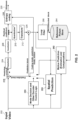
- FIG. 2 is a block diagram of a block-based hybrid video encoder 200 for use with a video encoding and/or decoding system, such as system 100.
- video encoder 200 Details of the video encoder 200 are meant merely to be illustrative, and real world implementations may differ.
- a real world implementation may include more, fewer, and/or different elements, and/or may be arranged differently from the arrangement shown in FIG. 2 .
- some or all functionality of both of the transform unit 204 and quantization unit 206 may be highly integrated in some of the real-world implementations, such as, for example, implementations that use the core transform of the H.264 standard.
- the inverse quantization unit 210 and inverse transform unit 212 may be highly integrated in some of the real-world implementations (e.g., H.264 or HEVC-standard-compliant implementations), but are likewise illustrated separately for conceptual purposes.
- the video encoder 200 may receive the video signal at its input 202.
- the video encoder 200 may generate the encoded video information from the received un-encoded video, and output the encoded video information (e.g., any of intra-frames or inter-frames) from its output 220 in the form of the encoded video bitstream BS.
- the video encoder 200 may operate, for example, as a hybrid video encoder, and employ a block-based coding process for encoding the un-encoded video. When performing such an encoding process, the video encoder 200 may operate on individual frames, pictures, and/or images (collectively "un-encoded pictures") of the un-encoded video.
- the video encoder 200 may slice, partition, divide, and/or segment (collectively "segment") each un-encoded picture received at its input 202 into multiple un-encoded video blocks.
- the video encoder 200 may segment the un-encoded picture into multiple un-encoded video segments (e.g., slices) and may (e.g., then may) segment each of the un-encoded video segments into the un-encoded video blocks.
- the video encoder 200 may pass, supply, send, or provide the un-encoded video blocks to the spatial prediction unit 260, the motion prediction unit 262, the mode decision and encoder controller unit 280 and/or the first adder 216.
- the un-encoded video blocks may be provided on a block-by-block basis.
- the reference video blocks may be from one or more previously encoded and/or reconstructed pictures.
- the encoded and/or reconstructed pictures may be neighbors of, adjacent to, and/or in proximity to, the un-encoded picture.
- motion estimation may be carried out to estimate motion for each un-encoded video block relative to the reference-picture video blocks, and may involve generating a motion vector for the un-encoded video block.
- the motion vector may indicate a displacement of a prediction block relative to the un-encoded video block being coded.
- This prediction block is the reference-picture video block that is found to closely match, in terms of, for example, pixel difference of the un-encoded video block being coded.
- the matching may be determined by a sum of absolute difference (SAD), a sum of square difference (SSD), and/or other difference metrics.
- Motion compensation may involve fetching and/or generating the prediction block based on the motion vector determined by the motion estimation.
- MPEG Dynamic Adaptive Streaming over HTTP (MPEG-DASH) is a universal delivery format that provides end users with the best possible video experience by dynamically adapting to changing network conditions.
- HTTP adaptive streaming requires various bitrate alternatives of the multimedia content to be available at the server.
- the multimedia content may comprise several media components (e.g. audio, video, text), each of which may have different characteristics. In MPEG-DASH, these characteristics are described by Media Presentation Description (MPD).
- MPD Media Presentation Description
- FIG. 5 demonstrates the MPD hierarchical data model.
- the MPD describes the sequence of Periods, where a consistent set of encoded versions of the media content components does not change during a Period.
- Each Period has a starting time and duration and is composed of one or multiple adaptation sets (AdaptationSet).
- An Adaptation Set represents a set of encoded versions of one or several media content components sharing the identical properties such as the language, the media type, the picture aspect ratio, the role, the accessibility, and the rating property.
- an AdaptationSet may contain different bitrates of the video component of the same multimedia content.
- Another AdaptationSet may contain different bitrates of the audio component (e.g. lower quality stereo and higher quality surround sound) of the same multimedia content.
- Each AdaptationSet usually includes multiple Representations.
- a Representation describes a deliverable encoded version of one or several media components, varying from other representations by bitrate, resolution, number of channels or other characteristics. Each Representation consists of one or multiple segments.
- the attributes of Representation element such as @id, @bandwidth, @qualityRanking, and @dependencyId are used to specify the properties of the associated Representation.
- Representations may also include Sub-Representations, which is part of the Representation, to describe and extract partial information from a Representation. Sub-Representations may provide the ability to access a lower quality version of the Representation in which they are contained.
- a Segment is the largest unit of data that can be retrieved with a single HTTP request.
- Each segment has a URL, i.e. an addressable location on a server, which can be downloaded using HTTP GET or HTTP GET with byte ranges.
- the DASH client parses the MPD XML document, selects a collection of AdaptationSets suitable for its environment based on information provided in each of the AdaptationSet elements. Within each AdaptationSet, the client selects one Representation, typically based on the value of the @bandwidth attribute, but also taking into account client decoding and rendering capabilities. The client downloads the initialization segment of the selected Representations and then accesses the content by requesting entire Segments or byte ranges of Segments. Once the presentation has started, the client continues consuming the media content by continuously requesting Media Segments or parts of Media Segments and playing content according to the media presentation timeline. The client may switch Representations taking into account updated information from its environment. The client should play the content continuously across Periods. Once the client is consuming media contained in the Segments towards the end of the announced media in the Representation, then either the Media Presentation is terminated, a new Period is started or the MPD needs to be re-fetched.
- a bundle is a set of media components which may be consumed jointly by a single decoder instance.
- Each bundle includes a main media component that contains the decoder specific information and bootstraps the decoder.
- a PreSelection defines a subset of media components in a bundle that are expected to be consumed jointly.
- the AdaptationSet that contains the main media component is referred to as the main AdaptationSet.
- the main media component is always included in any PreSelection that is associated with a bundle.
- each bundle may include one or multiple partial AdaptationSets. Partial AdaptationSets may only be processed in combination with the main AdaptationSet.
- N Specifies information about accessibility scheme. Role 0 ... N Specifies information on role annotation scheme. Rating 0 ... N Specifies information on rating scheme. Viewpoint 0 ... N Specifies information on viewpoint annotation scheme.
- an EssentialProperty descriptor may be used with the @schemeldUri attribute equal to "urn:mpeg:mpegl:vpcc:2019:component", This descriptor is referred to as a VPCCComponent descriptor.
- component @min_layer_ind ex O xs integer Indicates the index of the first layer of the component represented by the AdaptationSet within which the VPCCComponent descriptor is present. If only one layer is present in the representations of the AdaptationSet, min_layer_index and max_layer_index shall have the same value.
- component @max_layer_ind ex CM xs integer Indicates the index of the last layer of the component represented by the AdaptationSet within which the VPCCComponent descriptor is present. Shall only be present if min_layer is present. If only one layer is present in the representations of the adaptation set, min_layer_index and max_layer_index shall have the same value.
- component @attribute_type CM xs:unsignedByte Indicates the type of the attribute (refer to Table 7.2 in the V-PCC CD. Only values between 0 and 15, inclusive, are allowed. Shall be present only if the component is a point cloud attribute (i.e., component_type has the value 'attr').
- component @attribute_index CM xs:unsignedByte Indicates the index of the attribute. Shall be a value between 0 and 127, inclusive. Shall be present only if the component is a point cloud attribute (i.e., component_type has the value 'attr').
- the data types for the various elements and attributes of the VPCCComponent descriptor may be as defined in the following XML schema.
- the main AdaptationSet shall contain either a single initialization segment at adaptation set level or multiple initialization segments at representation level (one for each Representation ) .
- initialization segments should contain V-PCC sequence parameter sets, as defined in the community draft, which are used to initialize the V-PCC decoder.
- V-PCC sequence parameter sets for all Representations may be contained in the initialization segment.
- the initialization segment of each Representation may contain the V-PCC sequence parameter sets for that particular Representation.
- initialization segments may also include a MetaBox, as defined in ISO/IEC 14496-12.
- This MetaBox contains one or more VPCCGroupBox instances, as defined in the VPCC CD, that provide metadata information describing the tracks at the file format level and the relationship between them.
- media segments for the Representation s of the main AdaptationSet contain one or more track fragments of the V-PCC track, defined in the community draft.
- Media segments for the Representation s of component AdaptationSet s contain one or more track fragments of the corresponding component track at the file format level.
- an additional attribute herein termed the @videoCodec attribute, is defined for the VPCCComponent descriptor, the value of which indicates the codec used for encoding the corresponding point cloud component. This enables supporting scenarios where more than one point cloud component is present in an AdaptationSet or Representation.
- the Role descriptor element may be used with newly defined values for V-PCC components to indicate the role of the corresponding AdaptationSet or Representation (e.g., geometry, occupancy map, or attribute).
- geometry, occupancy map, and attribute components may have the following corresponding values, respectively: vpcc-geometry, vpcc-occupancy, and vpcc-attribute.
- An additional EssentialProperty descriptor element, similar to the one described in Table 5 minus the component_type attribute may be signaled at the adaptation set level to identify the layers of the component and the attribute type (if the component is a point cloud attribute).
- a streaming client is able to identify the type of point cloud component in an AdaptationSet or Representation by checking the VPCCComponent descriptor within the corresponding element.
- a streaming client also needs to distinguish between different point cloud streams present in the MPD file and identify their respective component streams.
- VPCC descriptor An EssentialProperty element with a @schemeldUri attribute equal to "urn:mpeg:mpegl:vpcc:2019:vpc" may be introduced and is herein referred to as a VPCC descriptor. At most one VPCC descriptor may be present at the adaptation set level for the main AdaptationSet of the point cloud. If more than one Representation is present in the main AdaptationSet, then at most one VPCC descriptor may be present at the representation level (i.e., within each Representation element). Table 6 illustrates the attributes of a VPCC descriptor according to an embodiment.
- FIG. 6 illustrates an exemplary DASH configuration for grouping V-PCC components belonging to a single point cloud within an MPEG-DASH MPD file.
- this grouping/association may be signaled as follows.
- a Supplemental Property element with a @schemeldUri attribute equal to "urn:mpeg:mpegl:vpcc:2019:geom_meta” may be introduced and is herein referred to as a geometry metadata descriptor or geoMeta descriptor.
- a geometry metadata descriptor or geoMeta descriptor At most, one geomMeta descriptor may be present at the MPD level, in which case it is applicable to geometry components for all point clouds signaled in the MPD, unless overridden by a geoMeta descriptor at a lower level as discussed below.. At most, one geomMeta descriptor may be present at the adaptation set level in the main AdaptationSet. At most, one geomMeta descriptor may be present at the representation level in the main AdaptationSet. If a geomMeta descriptor is present at a certain level, it overrides any geomMeta descriptor signaled at a higher level.
- the @value attribute of the geomMeta descriptor shall not be present.
- the geomMeta descriptor includes the elements and attributes specified in Table 7. Table 7 Elements and attributes for the geomMeta descriptor Elements and attributes for geomMeta descriptor Use Data type Description geom 0..1 vpcc: geometryMetadata Type Container element whose attributes and elements specify geometry metadata information.
- geom @point_shape O xs:unsignedByte Indicates the geometry point shape to be used for rendering. Supported values are in the range 0 to 15, inclusive. The corresponding shape is derived from Table 7-2 in the community draft. If not present, the default value shall be 0.
- geom @point_size O xs:unsignedShort Indicates the geometry point size to be used for rendering. Supported values are in the range 1 to 65535, inclusive. If not present, the default value shall be 1. geom.geomSmoothin 9 0..1 vpcc:geometrySmoothingType Element whose attributes provide geometry smoothing information. geom.geomSmoothin g @grid_size M xs:unsignedByte Specifies the grid size for geometry smoothing. Allowed values shall be in the range 2 to 128, inclusive. If a geom.geomSmoothing element is not present, the default grid size shall be inferred to be 8. geom.
- geom.geomSmoothing element If a geom.geomSmoothing element is not present, the default value shall be inferred to be 1. geom. geomScale @z M xs:unsignedlnt The value of the scale along the Z axis. If a geom.geomSmoothing element is not present, the default value shall be inferred to be 1. geom.geomOffset 0..1 vpcc:GeometryOffsetType Element whose attributes provide geometry offsetting information. geom.geomOffset @x M xs:int The value of the offset along the X axis. If a geom.geomSmoothing element is not present, the default value shall be inferred to be 0.
- geom.geomOffset @y M xs:int The value of the offset along the Y axis. If a geom.geomSmoothing element is not present, the default value shall be inferred to be 0. geom.geomOffset @z M xs:int The value of the offset along the Z axis. If a geom.geomSmoothing element is not present, the default value shall be inferred to be 0. geom.geomRotation 0..1 vpcc: geometryRotation Type Element whose attributes provide geometry rotation information. geom. geomRotation @x M xs:int The value of the rotation along the X axis in units of 2 -16 degrees.
- the @value attribute of the attrMeta descriptor is not present.
- the attrMeta descriptor may include elements and attributes as specified in Table 8.
- Table 8 Elements and attributes for the attrMeta descriptor Elements and attributes for attrMeta descriptor Use Data type Description attm 0..N vpcc: attributeMetadataType Container element whose attributes and elements specify metadata information for a point cloud attribute.
- attm @index M xs:unsignedByte Indicates the index of the attribute. Shall be a value between 0 and 127, inclusive.
- attm @num_dimensions M xs:unsignedByte The number of dimensions for the point cloud attribute.
- Attm.attrSmoothing 0..1 vpcc:attributeSmoothingType Element whose attributes provide smoothing information for the point cloud attribute.
- attm. attrSmoothing @radius M xs:unsignedByte The radius to detect neighbours for attribute smoothing. If a attm.attmSmoothing element is not present, the default value shall be inferred to be 0. attm. attrSmoothing @neigh bor_count M xs:unsignedByte The maximum number of neighbouring points used for attribute smoothing. If a attm.attmSmoothing element is not present, the default value shall be inferred to be 0. attm.
- AttrSmoothing @radius 2_boundary M xs:unsignedByte The radius for boundary point detection. If a attm.attmSmoothing element is not present, the default value shall be inferred to be 0. attm. attrSmoothing @thresh old M xs:unsignedByte The attribute smoothing threshold. If a attm.attmSmoothing element is not present, the default value shall be inferred to be 0. attm. attrSmoothing @thresh old_local_entropy M xs:unsignedByte The local entropy threshold in the neighbourhood of a boundary point. Values for this attribute shall be in the range 0 to 7, inclusive.
- Attm.attmSmoothing element If a attm.attmSmoothing element is not present, the default value shall be inferred to be 0. attm.attrScale 0..1 vpcc: attributeScaleType Element whose attribute provides scaling information along each dimension of the point cloud attribute.
- attm.attrOffset 0..1 vpcc attributeOffsetType Element whose attribute provides offset information along each dimension of the point cloud attribute.
- Attm.attrOffset @value s M xs string A string of comma-separated offset values for each dimension of the point cloud attribute.
- ⁇ minOccurs>.. ⁇ maxOccurs> (N unbounded) Elements are bold; attributes are non-bold and preceded with an @.
- the data types for the various elements and attributes of the attrMeta descriptor may be as defined in the following XML schema.
- a DASH client (a decoder node) is guided by the information provided in the MPD.
- the following is an example client behavior for processing streaming point cloud content in accordance with the signaling presented in this specification, assuming an embodiment in which association of component AdaptationSets to the main point cloud AdaptationSet is signaled using the VPCC descriptor.
- Fig. 7 is a flow diagram illustrating an exemplary streaming client process in accordance with an embodiment.
- the client first issues an HTTP request and downloads the MPD file from the content server.
- the client then parses the MPD file to generate a corresponding in-memory representation of the XML elements in the MPD file.
- the streaming client scans the AdaptationSet elements to find AdaptationSets with @codecs attribute set to 'vpc1' and a VPCC descriptor element.
- the resulting subset is a set of main AdaptationSets for point cloud content.
- the streaming client identifies the number of unique point clouds by checking the VPCC descriptors of those AdaptationSets and groups AdaptationSets with the same @pcld value in their VPCC descriptor as versions of the same content.
- the group of AdaptationSet with @pcld value corresponding to the point cloud content that the user wishes to stream is identified. If the group contains more than one AdaptationSet, the streaming client selects the AdaptationSet with a supported version (e.g., video resolution). Otherwise, the group's sole AdaptationSet is chosen.
- a supported version e.g., video resolution
- the streaming client checks the VPCC descriptor of the chosen AdaptationSet to identify the AdaptationSets for the point cloud components. These are identified from the values of the @occupancyld, @geometryld, and @attributeld attributes. If geomMeta and/or attrMeta descriptors are present in the chosen main AdaptationSet, the streaming client is able to identify whether it supports the signaled rendering configuration for the point cloud stream before downloading any segments. Otherwise, the client needs to extract this information from the initialization segment.
- the client starts streaming the point cloud by downloading the initialization segment for the main AdaptationSet which contains the parameter sets needed for initializing the V-PCC decoder.
- initialization segments for the video coded component streams are downloaded and cached in memory.
- the streaming client then starts downloading time-aligned media segments from the main AdaptatationSet and component AdatptationSets in parallel over HTTP and the downloaded segments are stored in an in-memory segment buffer.
- time-aligned media segments are removed from their respective buffers and concatenated with their respective initialization segments.
- the media container e.g., ISOBMFF
- the media container e.g., ISOBMFF
- ROM read only memory
- RAM random access memory
- register cache memory
- semiconductor memory devices magnetic media such as internal hard disks and removable disks, magneto-optical media, and optical media such as CD-ROM disks, and digital versatile disks (DVDs).
- a processor in association with software may be used to implement a radio frequency transceiver for use in a WTRU 102, UE, terminal, base station, RNC, or any host computer.
- Suitable processors include, by way of example, a general purpose processor, a special purpose processor, a conventional processor, a digital signal processor (DSP), a plurality of microprocessors, one or more microprocessors in association with a DSP core, a controller, a microcontroller, Application Specific Integrated Circuits (ASICs), Application Specific Standard Products (ASSPs); Field Programmable Gate Arrays (FPGAs) circuits, any other type of integrated circuit (IC), and/or a state machine.
- DSP digital signal processor
- ASICs Application Specific Integrated Circuits
- ASSPs Application Specific Standard Products
- FPGAs Field Programmable Gate Arrays
- the terms “station” and its abbreviation “STA”, “user equipment” and its abbreviation “UE” may mean (i) a wireless transmit and/or receive unit (WTRU), such as described infra; (ii) any of a number of embodiments of a WTRU, such as described infra; (iii) a wireless-capable and/or wired-capable (e.g., tetherable) device configured with, inter alia, some or all structures and functionality of a WTRU, such as described infra; (iii) a wireless-capable and/or wired-capable device configured with less than all structures and functionality of a WTRU, such as described infra; or (iv) the like.
- WTRU wireless transmit and/or receive unit
- ASICs Application Specific Integrated Circuits
- FPGAs Field Programmable Gate Arrays
- DSPs digital signal processors
- ASICs Application Specific Integrated Circuits
- FPGAs Field Programmable Gate Arrays
- DSPs digital signal processors
- FIG. 1 ASICs
- FIG. 1 ASICs
- FIG. 1 ASICs
- FIG. 1 ASICs
- FIG. 1 ASICs
- FIG. 1 ASICs
- FIG. 1 Application Specific Integrated Circuits
- FPGAs Field Programmable Gate Arrays
- DSPs digital signal processors
- a signal bearing medium examples include, but are not limited to, the following: a recordable type medium such as a floppy disk, a hard disk drive, a CD, a DVD, a digital tape, a computer memory, etc., and a transmission type medium such as a digital and/or an analog communication medium (e.g., a fiber optic cable, a waveguide, a wired communications link, a wireless communication link, etc.).
- a signal bearing medium include, but are not limited to, the following: a recordable type medium such as a floppy disk, a hard disk drive, a CD, a DVD, a digital tape, a computer memory, etc.
- a transmission type medium such as a digital and/or an analog communication medium (e.g., a fiber optic cable, a waveguide, a wired communications link, a wireless communication link, etc.).
- any two components so associated may also be viewed as being “operably connected”, or “operably coupled”, to each other to achieve the desired functionality, and any two components capable of being so associated may also be viewed as being “operably couplable” to each other to achieve the desired functionality.
- operably couplable include but are not limited to physically mateable and/or physically interacting components and/or wirelessly interactable and/or wirelessly interacting components and/or logically interacting and/or logically interactable components.
- the phrase “A or B” will be understood to include the possibilities of “A” or “B” or “A and B”.
- the terms “any of” followed by a listing of a plurality of items and/or a plurality of categories of items, as used herein, are intended to include “any of,” “any combination of,” “any multiple of,” and/or “any combination of multiples of” the items and/or the categories of items, individually or in conjunction with other items and/or other categories of items.
- the term “set” or “group” is intended to include any number of items, including zero.
- the term “number” is intended to include any number, including zero.
- a range includes each individual member.
- a group having 1-3 cells refers to groups having 1, 2, or 3 cells.
- a group having 1-5 cells refers to groups having 1, 2, 3, 4, or 5 cells, and so forth.
- non-transitory computer-readable storage media include, but are not limited to, a read only memory (ROM), random access memory (RAM), a register, cache memory, semiconductor memory devices, magnetic media such as internal hard disks and removable disks, magneto-optical media, and optical media such as CD-ROM disks, and digital versatile disks (DVDs).
- ROM read only memory
- RAM random access memory
- a processor in association with software may be used to implement a radio frequency transceiver for use in a WRTU, UE, terminal, base station, RNC, or any host computer.
- processing platforms, computing systems, controllers, and other devices containing processors are noted. These devices may contain at least one Central Processing Unit (“CPU”) and memory.
- CPU Central Processing Unit
- An electrical system represents data bits that can cause a resulting transformation or reduction of the electrical signals and the maintenance of data bits at memory locations in a memory system to thereby reconfigure or otherwise alter the CPU's operation, as well as other processing of signals.
- the memory locations where data bits are maintained are physical locations that have particular electrical, magnetic, optical, or organic properties corresponding to or representative of the data bits.
- the data bits may also be maintained on a computer readable medium including magnetic disks, optical disks, and any other volatile (e.g., Random Access Memory (“RAM”)) or non-volatile (“e.g., Read-Only Memory (“ROM”)) mass storage system readable by the CPU.
- RAM Random Access Memory
- ROM Read-Only Memory
- the computer readable medium may include cooperating or interconnected computer readable medium, which exist exclusively on the processing system or are distributed among multiple interconnected processing systems that may be local or remote to the processing system. It is understood that the representative embodiments are not limited to the above-mentioned memories and that other platforms and memories may support the described methods.
- the article “a” is intended to include one or more items. Where only one item is intended, the term “one” or similar language is used.
- the terms “any of” followed by a listing of a plurality of items and/or a plurality of categories of items, as used herein, are intended to include “any of,” “any combination of,” “any multiple of,” and/or “any combination of multiples of” the items and/or the categories of items, individually or in conjunction with other items and/or other categories of items.
- the term “set” is intended to include any number of items, including zero.
- the term “number” is intended to include any number, including zero.
- Suitable processors include, by way of example, a general purpose processor, a special purpose processor, a conventional processor, a digital signal processor (DSP), a plurality of microprocessors, one or more microprocessors in association with a DSP core, a controller, a microcontroller, Application Specific Integrated Circuits (ASICs), Application Specific Standard Products (ASSPs); Field Programmable Gate Arrays (FPGAs) circuits, any other type of integrated circuit (IC), and/or a state machine.
- DSP digital signal processor
- ASICs Application Specific Integrated Circuits
- ASSPs Application Specific Standard Products
- FPGAs Field Programmable Gate Arrays
- a processor in association with software may be used to implement a radio frequency transceiver for use in a wireless transmit receive unit (WRTU), user equipment (UE), terminal, base station, Mobility Management Entity (MME) or Evolved Packet Core (EPC), or any host computer.
- WRTU wireless transmit receive unit
- UE user equipment
- MME Mobility Management Entity
- EPC Evolved Packet Core
- the WRTU may be used m conjunction with modules, implemented in hardware and/or software including a Software Defined Radio (SDR), and other components such as a camera, a video camera module, a videophone, a speakerphone, a vibration device, a speaker, a microphone, a television transceiver, a hands free headset, a keyboard, a Bluetooth ® module, a frequency modulated (FM) radio unit, a Near Field Communication (NFC) Module, a liquid crystal display (LCD) display unit, an organic light-emitting diode (OLED) display unit, a digital music player, a media player, a video game player module, an Internet browser, and/or any Wireless Local Area Network (WLAN) or Ultra Wide Band (UWB) module.
- SDR Software Defined Radio
- other components such as a camera, a video camera module, a videophone, a speakerphone, a vibration device, a speaker, a microphone, a television transceiver, a hands free headset,
Landscapes
- Engineering & Computer Science (AREA)
- Multimedia (AREA)
- Signal Processing (AREA)
- Computer Networks & Wireless Communication (AREA)
- Compression Or Coding Systems Of Tv Signals (AREA)
- Two-Way Televisions, Distribution Of Moving Picture Or The Like (AREA)
- Data Exchanges In Wide-Area Networks (AREA)
Priority Applications (1)
| Application Number | Priority Date | Filing Date | Title |
|---|---|---|---|
| EP25181928.0A EP4593393A3 (en) | 2019-03-08 | 2020-03-06 | Methods and apparatus for adaptive streaming of point clouds |
Applications Claiming Priority (4)
| Application Number | Priority Date | Filing Date | Title |
|---|---|---|---|
| US201962815725P | 2019-03-08 | 2019-03-08 | |
| US201962866043P | 2019-06-25 | 2019-06-25 | |
| US201962908630P | 2019-10-01 | 2019-10-01 | |
| PCT/US2020/021431 WO2020185578A1 (en) | 2019-03-08 | 2020-03-06 | Methods and apparatus for adaptive streaming of point clouds |
Related Child Applications (1)
| Application Number | Title | Priority Date | Filing Date |
|---|---|---|---|
| EP25181928.0A Division EP4593393A3 (en) | 2019-03-08 | 2020-03-06 | Methods and apparatus for adaptive streaming of point clouds |
Publications (2)
| Publication Number | Publication Date |
|---|---|
| EP3935857A1 EP3935857A1 (en) | 2022-01-12 |
| EP3935857B1 true EP3935857B1 (en) | 2025-07-02 |
Family
ID=70190104
Family Applications (2)
| Application Number | Title | Priority Date | Filing Date |
|---|---|---|---|
| EP20717377.4A Active EP3935857B1 (en) | 2019-03-08 | 2020-03-06 | Methods and apparatus for adaptive streaming of point clouds |
| EP25181928.0A Pending EP4593393A3 (en) | 2019-03-08 | 2020-03-06 | Methods and apparatus for adaptive streaming of point clouds |
Family Applications After (1)
| Application Number | Title | Priority Date | Filing Date |
|---|---|---|---|
| EP25181928.0A Pending EP4593393A3 (en) | 2019-03-08 | 2020-03-06 | Methods and apparatus for adaptive streaming of point clouds |
Country Status (9)
| Country | Link |
|---|---|
| US (2) | US12041104B2 (da) |
| EP (2) | EP3935857B1 (da) |
| JP (2) | JP7522125B2 (da) |
| KR (2) | KR102762419B1 (da) |
| CN (2) | CN117834914A (da) |
| BR (1) | BR112021017800A2 (da) |
| DK (1) | DK3935857T3 (da) |
| HU (1) | HUE072733T2 (da) |
| WO (1) | WO2020185578A1 (da) |
Families Citing this family (11)
| Publication number | Priority date | Publication date | Assignee | Title |
|---|---|---|---|---|
| DK3935857T3 (da) * | 2019-03-08 | 2025-08-18 | Interdigital Vc Holdings Inc | Fremgangsmåder og indretninger til adaptiv streaming af punktskyer |
| CN114731462B (zh) | 2020-01-08 | 2023-12-15 | 中兴通讯股份有限公司 | 点云数据处理 |
| CN115380528B (zh) * | 2020-04-11 | 2024-03-29 | Lg电子株式会社 | 点云数据发送设备、点云数据发送方法、点云数据接收设备和点云数据接收方法 |
| WO2021242036A1 (ko) * | 2020-05-28 | 2021-12-02 | 엘지전자 주식회사 | 포인트 클라우드 데이터 송신 장치, 포인트 클라우드 데이터 송신 방법, 포인트 클라우드 데이터 수신 장치 및 포인트 클라우드 데이터 수신 방법 |
| KR102788914B1 (ko) * | 2020-06-29 | 2025-03-31 | 삼성전자주식회사 | 무선 통신 시스템에서 데이터의 송수신을 제어하기 위한 방법 및 장치 |
| CN114554243B (zh) * | 2020-11-26 | 2023-06-20 | 腾讯科技(深圳)有限公司 | 点云媒体的数据处理方法、装置、设备及存储介质 |
| US12149738B2 (en) | 2021-04-13 | 2024-11-19 | Samsung Electronics Co., Ltd. | MPEG media transport (MMT) signaling of visual volumetric video-based coding (V3C) content |
| US20240386614A1 (en) * | 2021-07-15 | 2024-11-21 | Lg Electronics Inc. | Point cloud data transmission method, point cloud data transmission device, point cloud data reception method, and point cloud data reception device |
| CN118202636A (zh) * | 2021-11-05 | 2024-06-14 | 字节跳动有限公司 | 用于媒体处理的方法、装置和介质 |
| KR102510454B1 (ko) * | 2022-09-02 | 2023-03-16 | 주식회사 솔디아 | 전송량을 저감시킨 동영상 전송 시스템 |
| CN115474047B (zh) * | 2022-09-13 | 2025-01-03 | 福州大学 | 一种基于增强映射图相关性LiDAR点云编码方法及解码方法 |
Family Cites Families (16)
| Publication number | Priority date | Publication date | Assignee | Title |
|---|---|---|---|---|
| US7987491B2 (en) | 2002-05-10 | 2011-07-26 | Richard Reisman | Method and apparatus for browsing using alternative linkbases |
| US8918533B2 (en) * | 2010-07-13 | 2014-12-23 | Qualcomm Incorporated | Video switching for streaming video data |
| US9125073B2 (en) * | 2012-08-03 | 2015-09-01 | Intel Corporation | Quality-aware adaptive streaming over hypertext transfer protocol using quality attributes in manifest file |
| KR101825575B1 (ko) | 2013-01-07 | 2018-02-05 | 노키아 테크놀로지스 오와이 | 비디오 코딩 및 디코딩 방법 및 장치 |
| DE102013211571B4 (de) | 2013-06-19 | 2016-02-11 | Opticom Dipl.-Ing. Michael Keyhl Gmbh | Konzept zur bestimmung der qualität eines mediadatenstroms mit variierender qualität-zu-bitrate |
| CN105379294A (zh) | 2013-07-15 | 2016-03-02 | 华为技术有限公司 | 基于超文本传输协议的动态自适应流媒体中的远程元素的即时性间接引用 |
| KR102064792B1 (ko) | 2013-12-17 | 2020-01-10 | 한국전자통신연구원 | Http 기반의 멀티미디어 스트리밍 서비스를 위한 네트워크 대역폭 적응적 콘텐츠 생성 방법 및 시스템 |
| US9866608B2 (en) | 2014-03-24 | 2018-01-09 | Qualcomm Incorporated | Processing continuous multi-period content |
| CA2948903C (en) | 2014-05-13 | 2020-09-22 | Pcp Vr Inc. | Method, system and apparatus for generation and playback of virtual reality multimedia |
| US10694210B2 (en) | 2016-05-28 | 2020-06-23 | Microsoft Technology Licensing, Llc | Scalable point cloud compression with transform, and corresponding decompression |
| CN110291788B (zh) * | 2017-02-20 | 2022-03-08 | 索尼公司 | 图像处理设备和图像处理方法 |
| EP3399757A1 (en) | 2017-05-04 | 2018-11-07 | Thomson Licensing | Method and apparatus to encode and decode two-dimension point clouds |
| CN108833927B (zh) | 2018-05-03 | 2019-08-16 | 北京大学深圳研究生院 | 一种基于删除量化矩阵中0元素的点云属性压缩方法 |
| US20200202608A1 (en) * | 2018-12-21 | 2020-06-25 | Point Cloud Compression, B.V. | Method and apparatus for receiving a volumetric video stream |
| DK3935857T3 (da) * | 2019-03-08 | 2025-08-18 | Interdigital Vc Holdings Inc | Fremgangsmåder og indretninger til adaptiv streaming af punktskyer |
| CN114731462B (zh) * | 2020-01-08 | 2023-12-15 | 中兴通讯股份有限公司 | 点云数据处理 |
-
2020
- 2020-03-06 DK DK20717377.4T patent/DK3935857T3/da active
- 2020-03-06 BR BR112021017800A patent/BR112021017800A2/pt unknown
- 2020-03-06 WO PCT/US2020/021431 patent/WO2020185578A1/en not_active Ceased
- 2020-03-06 KR KR1020217028808A patent/KR102762419B1/ko active Active
- 2020-03-06 EP EP20717377.4A patent/EP3935857B1/en active Active
- 2020-03-06 CN CN202311608352.0A patent/CN117834914A/zh active Pending
- 2020-03-06 JP JP2021553345A patent/JP7522125B2/ja active Active
- 2020-03-06 KR KR1020257003000A patent/KR20250020729A/ko active Pending
- 2020-03-06 HU HUE20717377A patent/HUE072733T2/hu unknown
- 2020-03-06 EP EP25181928.0A patent/EP4593393A3/en active Pending
- 2020-03-06 US US17/436,891 patent/US12041104B2/en active Active
- 2020-03-06 CN CN202080019886.8A patent/CN113557741B/zh active Active
-
2024
- 2024-05-30 US US18/678,465 patent/US20240323243A1/en active Pending
- 2024-07-11 JP JP2024111684A patent/JP7765561B2/ja active Active
Non-Patent Citations (2)
| Title |
|---|
| AHMED HAMZA (INTERDIGITAL) ET AL: "[VPCC] DASH Signaling for V-PCC", no. m47436, 20 March 2019 (2019-03-20), XP030211434, Retrieved from the Internet <URL:http://phenix.int-evry.fr/mpeg/doc_end_user/documents/126_Geneva/wg11/m47436-v1-m47436.zip m47436 - [VPCC] DASH Signaling for V-PCC.docx> [retrieved on 20190320] * |
| AHMED HAMZA (INTERDIGITAL) ET AL: "On DASH Signalling of V-PCC", no. m49110, 9 July 2019 (2019-07-09), XP030207296, Retrieved from the Internet <URL:http://phenix.int-evry.fr/mpeg/doc_end_user/documents/127_Gothenburg/wg11/m49110-v2-m49110.zip m49110 - On DASH Signaling for V-PCC v2.docx> [retrieved on 20190709] * |
Also Published As
| Publication number | Publication date |
|---|---|
| US12041104B2 (en) | 2024-07-16 |
| US20240323243A1 (en) | 2024-09-26 |
| EP3935857A1 (en) | 2022-01-12 |
| WO2020185578A1 (en) | 2020-09-17 |
| KR102762419B1 (ko) | 2025-02-05 |
| JP2022524130A (ja) | 2022-04-27 |
| HUE072733T2 (hu) | 2025-12-28 |
| JP7522125B2 (ja) | 2024-07-24 |
| CN113557741A (zh) | 2021-10-26 |
| EP4593393A2 (en) | 2025-07-30 |
| JP7765561B2 (ja) | 2025-11-06 |
| BR112021017800A2 (pt) | 2021-11-23 |
| US20220166814A1 (en) | 2022-05-26 |
| JP2024153681A (ja) | 2024-10-29 |
| KR20210146897A (ko) | 2021-12-06 |
| KR20250020729A (ko) | 2025-02-11 |
| DK3935857T3 (da) | 2025-08-18 |
| CN117834914A (zh) | 2024-04-05 |
| CN113557741B (zh) | 2023-12-08 |
| EP4593393A3 (en) | 2025-10-15 |
Similar Documents
| Publication | Publication Date | Title |
|---|---|---|
| EP3935857B1 (en) | Methods and apparatus for adaptive streaming of point clouds | |
| RU2771478C1 (ru) | Системы и способы сигнализации параметров при кодировании видеосигналов | |
| CN113170201B (zh) | 用于对视频数据进行解码的方法和设备 | |
| CN113923455B (zh) | 一种双向帧间预测方法及装置 | |
| TW202046739A (zh) | 用於適應性迴圈濾波器變數之適應變數集合 | |
| WO2012170833A1 (en) | Internal bit depth increase in video coding | |
| CN103299627A (zh) | 视频译码中的帧分裂 | |
| JP6199320B2 (ja) | 3次元ビデオコーディングのためのネットワーク抽象化レイヤ(nal)ユニットヘッダ設計 | |
| CN113302663B (zh) | 点云译码中的有效patch旋转 | |
| CN112866721A (zh) | 一种双向帧间预测方法及装置 | |
| CN117560505A (zh) | 一种双向帧间预测方法及装置 | |
| AU2024210999A1 (en) | Method and device for weighted prediction for image/video coding | |
| US20240314326A1 (en) | Video Coding Method and Related Apparatus Thereof | |
| WO2018123542A1 (en) | Systems and methods for reducing artifacts in temporal scalable layers of video | |
| TWI892980B (zh) | 網路節點及用於該節點之方法 | |
| CN116195247A (zh) | 图像编码方法和用于该图像编码方法的装置 | |
| TW201826785A (zh) | 用於減少於視訊之時間可適性層之假影之系統及方法 | |
| HK40061313A (en) | Methods and apparatus for adaptive streaming of point clouds | |
| HK40061313B (en) | Methods and apparatus for adaptive streaming of point clouds | |
| RU2795052C2 (ru) | Способы и устройство для адаптивной потоковой передачи облаков точек | |
| AU2020392150B2 (en) | Slice and tile configuration for image/video coding | |
| TW202103496A (zh) | 用於適應性迴路濾波器之剪切值計算之簡化 | |
| Ohm et al. | MPEG video compression advances |
Legal Events
| Date | Code | Title | Description |
|---|---|---|---|
| STAA | Information on the status of an ep patent application or granted ep patent |
Free format text: STATUS: UNKNOWN |
|
| STAA | Information on the status of an ep patent application or granted ep patent |
Free format text: STATUS: THE INTERNATIONAL PUBLICATION HAS BEEN MADE |
|
| PUAI | Public reference made under article 153(3) epc to a published international application that has entered the european phase |
Free format text: ORIGINAL CODE: 0009012 |
|
| STAA | Information on the status of an ep patent application or granted ep patent |
Free format text: STATUS: REQUEST FOR EXAMINATION WAS MADE |
|
| 17P | Request for examination filed |
Effective date: 20210907 |
|
| AK | Designated contracting states |
Kind code of ref document: A1 Designated state(s): AL AT BE BG CH CY CZ DE DK EE ES FI FR GB GR HR HU IE IS IT LI LT LU LV MC MK MT NL NO PL PT RO RS SE SI SK SM TR |
|
| REG | Reference to a national code |
Ref country code: HK Ref legal event code: DE Ref document number: 40061313 Country of ref document: HK |
|
| DAV | Request for validation of the european patent (deleted) | ||
| DAX | Request for extension of the european patent (deleted) | ||
| STAA | Information on the status of an ep patent application or granted ep patent |
Free format text: STATUS: EXAMINATION IS IN PROGRESS |
|
| 17Q | First examination report despatched |
Effective date: 20230201 |
|
| RAP1 | Party data changed (applicant data changed or rights of an application transferred) |
Owner name: INTERDIGITAL VC HOLDINGS, INC. |
|
| GRAP | Despatch of communication of intention to grant a patent |
Free format text: ORIGINAL CODE: EPIDOSNIGR1 |
|
| STAA | Information on the status of an ep patent application or granted ep patent |
Free format text: STATUS: GRANT OF PATENT IS INTENDED |
|
| INTG | Intention to grant announced |
Effective date: 20250213 |
|
| P01 | Opt-out of the competence of the unified patent court (upc) registered |
Free format text: CASE NUMBER: APP_13085/2025 Effective date: 20250317 |
|
| GRAS | Grant fee paid |
Free format text: ORIGINAL CODE: EPIDOSNIGR3 |
|
| GRAA | (expected) grant |
Free format text: ORIGINAL CODE: 0009210 |
|
| STAA | Information on the status of an ep patent application or granted ep patent |
Free format text: STATUS: THE PATENT HAS BEEN GRANTED |
|
| AK | Designated contracting states |
Kind code of ref document: B1 Designated state(s): AL AT BE BG CH CY CZ DE DK EE ES FI FR GB GR HR HU IE IS IT LI LT LU LV MC MK MT NL NO PL PT RO RS SE SI SK SM TR |
|
| REG | Reference to a national code |
Ref country code: GB Ref legal event code: FG4D |
|
| REG | Reference to a national code |
Ref country code: CH Ref legal event code: EP |
|
| REG | Reference to a national code |
Ref country code: DE Ref legal event code: R096 Ref document number: 602020053756 Country of ref document: DE |
|
| REG | Reference to a national code |
Ref country code: IE Ref legal event code: FG4D |
|
| REG | Reference to a national code |
Ref country code: DK Ref legal event code: T3 Effective date: 20250807 |
|
| REG | Reference to a national code |
Ref country code: NL Ref legal event code: FP |
|
| PG25 | Lapsed in a contracting state [announced via postgrant information from national office to epo] |
Ref country code: PT Free format text: LAPSE BECAUSE OF FAILURE TO SUBMIT A TRANSLATION OF THE DESCRIPTION OR TO PAY THE FEE WITHIN THE PRESCRIBED TIME-LIMIT Effective date: 20251103 |
|
| REG | Reference to a national code |
Ref country code: AT Ref legal event code: MK05 Ref document number: 1810641 Country of ref document: AT Kind code of ref document: T Effective date: 20250702 |
|
| REG | Reference to a national code |
Ref country code: HU Ref legal event code: AG4A Ref document number: E072733 Country of ref document: HU |
|
| PG25 | Lapsed in a contracting state [announced via postgrant information from national office to epo] |
Ref country code: IS Free format text: LAPSE BECAUSE OF FAILURE TO SUBMIT A TRANSLATION OF THE DESCRIPTION OR TO PAY THE FEE WITHIN THE PRESCRIBED TIME-LIMIT Effective date: 20251102 |
|
| PG25 | Lapsed in a contracting state [announced via postgrant information from national office to epo] |
Ref country code: NO Free format text: LAPSE BECAUSE OF FAILURE TO SUBMIT A TRANSLATION OF THE DESCRIPTION OR TO PAY THE FEE WITHIN THE PRESCRIBED TIME-LIMIT Effective date: 20251002 |
|
| REG | Reference to a national code |
Ref country code: LT Ref legal event code: MG9D |
|
| PG25 | Lapsed in a contracting state [announced via postgrant information from national office to epo] |
Ref country code: AT Free format text: LAPSE BECAUSE OF FAILURE TO SUBMIT A TRANSLATION OF THE DESCRIPTION OR TO PAY THE FEE WITHIN THE PRESCRIBED TIME-LIMIT Effective date: 20250702 |
|
| PG25 | Lapsed in a contracting state [announced via postgrant information from national office to epo] |
Ref country code: FI Free format text: LAPSE BECAUSE OF FAILURE TO SUBMIT A TRANSLATION OF THE DESCRIPTION OR TO PAY THE FEE WITHIN THE PRESCRIBED TIME-LIMIT Effective date: 20250702 |
|
| PG25 | Lapsed in a contracting state [announced via postgrant information from national office to epo] |
Ref country code: HR Free format text: LAPSE BECAUSE OF FAILURE TO SUBMIT A TRANSLATION OF THE DESCRIPTION OR TO PAY THE FEE WITHIN THE PRESCRIBED TIME-LIMIT Effective date: 20250702 |
|
| PG25 | Lapsed in a contracting state [announced via postgrant information from national office to epo] |
Ref country code: GR Free format text: LAPSE BECAUSE OF FAILURE TO SUBMIT A TRANSLATION OF THE DESCRIPTION OR TO PAY THE FEE WITHIN THE PRESCRIBED TIME-LIMIT Effective date: 20251003 |
|
| PG25 | Lapsed in a contracting state [announced via postgrant information from national office to epo] |
Ref country code: SE Free format text: LAPSE BECAUSE OF FAILURE TO SUBMIT A TRANSLATION OF THE DESCRIPTION OR TO PAY THE FEE WITHIN THE PRESCRIBED TIME-LIMIT Effective date: 20250702 Ref country code: CZ Free format text: LAPSE BECAUSE OF FAILURE TO SUBMIT A TRANSLATION OF THE DESCRIPTION OR TO PAY THE FEE WITHIN THE PRESCRIBED TIME-LIMIT Effective date: 20250702 |
|
| PG25 | Lapsed in a contracting state [announced via postgrant information from national office to epo] |
Ref country code: LV Free format text: LAPSE BECAUSE OF FAILURE TO SUBMIT A TRANSLATION OF THE DESCRIPTION OR TO PAY THE FEE WITHIN THE PRESCRIBED TIME-LIMIT Effective date: 20250702 |
|
| PG25 | Lapsed in a contracting state [announced via postgrant information from national office to epo] |
Ref country code: BG Free format text: LAPSE BECAUSE OF FAILURE TO SUBMIT A TRANSLATION OF THE DESCRIPTION OR TO PAY THE FEE WITHIN THE PRESCRIBED TIME-LIMIT Effective date: 20250702 Ref country code: PL Free format text: LAPSE BECAUSE OF FAILURE TO SUBMIT A TRANSLATION OF THE DESCRIPTION OR TO PAY THE FEE WITHIN THE PRESCRIBED TIME-LIMIT Effective date: 20250702 |
|
| PG25 | Lapsed in a contracting state [announced via postgrant information from national office to epo] |
Ref country code: RS Free format text: LAPSE BECAUSE OF FAILURE TO SUBMIT A TRANSLATION OF THE DESCRIPTION OR TO PAY THE FEE WITHIN THE PRESCRIBED TIME-LIMIT Effective date: 20251002 |
|
| PG25 | Lapsed in a contracting state [announced via postgrant information from national office to epo] |
Ref country code: ES Free format text: LAPSE BECAUSE OF FAILURE TO SUBMIT A TRANSLATION OF THE DESCRIPTION OR TO PAY THE FEE WITHIN THE PRESCRIBED TIME-LIMIT Effective date: 20250702 |
|
| PG25 | Lapsed in a contracting state [announced via postgrant information from national office to epo] |
Ref country code: SM Free format text: LAPSE BECAUSE OF FAILURE TO SUBMIT A TRANSLATION OF THE DESCRIPTION OR TO PAY THE FEE WITHIN THE PRESCRIBED TIME-LIMIT Effective date: 20250702 |
|
| PGFP | Annual fee paid to national office [announced via postgrant information from national office to epo] |
Ref country code: GB Payment date: 20260319 Year of fee payment: 7 |
|
| PGFP | Annual fee paid to national office [announced via postgrant information from national office to epo] |
Ref country code: DK Payment date: 20260323 Year of fee payment: 7 Ref country code: DE Payment date: 20260320 Year of fee payment: 7 |
|
| PGFP | Annual fee paid to national office [announced via postgrant information from national office to epo] |
Ref country code: IT Payment date: 20260320 Year of fee payment: 7 |
|
| PGFP | Annual fee paid to national office [announced via postgrant information from national office to epo] |
Ref country code: HU Payment date: 20260303 Year of fee payment: 7 Ref country code: NL Payment date: 20260323 Year of fee payment: 7 |
|
| PGFP | Annual fee paid to national office [announced via postgrant information from national office to epo] |
Ref country code: FR Payment date: 20260323 Year of fee payment: 7 |
|
| PG25 | Lapsed in a contracting state [announced via postgrant information from national office to epo] |
Ref country code: EE Free format text: LAPSE BECAUSE OF FAILURE TO SUBMIT A TRANSLATION OF THE DESCRIPTION OR TO PAY THE FEE WITHIN THE PRESCRIBED TIME-LIMIT Effective date: 20250702 Ref country code: SK Free format text: LAPSE BECAUSE OF FAILURE TO SUBMIT A TRANSLATION OF THE DESCRIPTION OR TO PAY THE FEE WITHIN THE PRESCRIBED TIME-LIMIT Effective date: 20250702 |