EP3936152A1 - Construction d'acide nucléique codant un fragment trk, et application de celle-ci - Google Patents
Construction d'acide nucléique codant un fragment trk, et application de celle-ci Download PDFInfo
- Publication number
- EP3936152A1 EP3936152A1 EP20766490.5A EP20766490A EP3936152A1 EP 3936152 A1 EP3936152 A1 EP 3936152A1 EP 20766490 A EP20766490 A EP 20766490A EP 3936152 A1 EP3936152 A1 EP 3936152A1
- Authority
- EP
- European Patent Office
- Prior art keywords
- nucleic acid
- trkb
- sequence
- acid construct
- trk
- Prior art date
- Legal status (The legal status is an assumption and is not a legal conclusion. Google has not performed a legal analysis and makes no representation as to the accuracy of the status listed.)
- Pending
Links
Images




Classifications
-
- C—CHEMISTRY; METALLURGY
- C07—ORGANIC CHEMISTRY
- C07K—PEPTIDES
- C07K14/00—Peptides having more than 20 amino acids; Gastrins; Somatostatins; Melanotropins; Derivatives thereof
- C07K14/435—Peptides having more than 20 amino acids; Gastrins; Somatostatins; Melanotropins; Derivatives thereof from animals; from humans
- C07K14/705—Receptors; Cell surface antigens; Cell surface determinants
- C07K14/71—Receptors; Cell surface antigens; Cell surface determinants for growth factors; for growth regulators
-
- C—CHEMISTRY; METALLURGY
- C12—BIOCHEMISTRY; BEER; SPIRITS; WINE; VINEGAR; MICROBIOLOGY; ENZYMOLOGY; MUTATION OR GENETIC ENGINEERING
- C12N—MICROORGANISMS OR ENZYMES; COMPOSITIONS THEREOF; PROPAGATING, PRESERVING, OR MAINTAINING MICROORGANISMS; MUTATION OR GENETIC ENGINEERING; CULTURE MEDIA
- C12N9/00—Enzymes; Proenzymes; Compositions thereof; Processes for preparing, activating, inhibiting, separating or purifying enzymes
- C12N9/10—Transferases (2.)
- C12N9/12—Transferases (2.) transferring phosphorus containing groups, e.g. kinases (2.7)
-
- A—HUMAN NECESSITIES
- A61—MEDICAL OR VETERINARY SCIENCE; HYGIENE
- A61K—PREPARATIONS FOR MEDICAL, DENTAL OR TOILETRY PURPOSES
- A61K38/00—Medicinal preparations containing peptides
- A61K38/16—Peptides having more than 20 amino acids; Gastrins; Somatostatins; Melanotropins; Derivatives thereof
- A61K38/43—Enzymes; Proenzymes; Derivatives thereof
- A61K38/45—Transferases (2)
-
- A—HUMAN NECESSITIES
- A61—MEDICAL OR VETERINARY SCIENCE; HYGIENE
- A61K—PREPARATIONS FOR MEDICAL, DENTAL OR TOILETRY PURPOSES
- A61K48/00—Medicinal preparations containing genetic material which is inserted into cells of the living body to treat genetic diseases; Gene therapy
- A61K48/005—Medicinal preparations containing genetic material which is inserted into cells of the living body to treat genetic diseases; Gene therapy characterised by an aspect of the 'active' part of the composition delivered, i.e. the nucleic acid delivered
-
- A—HUMAN NECESSITIES
- A61—MEDICAL OR VETERINARY SCIENCE; HYGIENE
- A61P—SPECIFIC THERAPEUTIC ACTIVITY OF CHEMICAL COMPOUNDS OR MEDICINAL PREPARATIONS
- A61P25/00—Drugs for disorders of the nervous system
-
- A—HUMAN NECESSITIES
- A61—MEDICAL OR VETERINARY SCIENCE; HYGIENE
- A61P—SPECIFIC THERAPEUTIC ACTIVITY OF CHEMICAL COMPOUNDS OR MEDICINAL PREPARATIONS
- A61P27/00—Drugs for disorders of the senses
- A61P27/02—Ophthalmic agents
-
- A—HUMAN NECESSITIES
- A61—MEDICAL OR VETERINARY SCIENCE; HYGIENE
- A61P—SPECIFIC THERAPEUTIC ACTIVITY OF CHEMICAL COMPOUNDS OR MEDICINAL PREPARATIONS
- A61P27/00—Drugs for disorders of the senses
- A61P27/02—Ophthalmic agents
- A61P27/06—Antiglaucoma agents or miotics
-
- A—HUMAN NECESSITIES
- A61—MEDICAL OR VETERINARY SCIENCE; HYGIENE
- A61P—SPECIFIC THERAPEUTIC ACTIVITY OF CHEMICAL COMPOUNDS OR MEDICINAL PREPARATIONS
- A61P43/00—Drugs for specific purposes, not provided for in groups A61P1/00-A61P41/00
-
- C—CHEMISTRY; METALLURGY
- C07—ORGANIC CHEMISTRY
- C07K—PEPTIDES
- C07K14/00—Peptides having more than 20 amino acids; Gastrins; Somatostatins; Melanotropins; Derivatives thereof
- C07K14/435—Peptides having more than 20 amino acids; Gastrins; Somatostatins; Melanotropins; Derivatives thereof from animals; from humans
- C07K14/705—Receptors; Cell surface antigens; Cell surface determinants
-
- C—CHEMISTRY; METALLURGY
- C12—BIOCHEMISTRY; BEER; SPIRITS; WINE; VINEGAR; MICROBIOLOGY; ENZYMOLOGY; MUTATION OR GENETIC ENGINEERING
- C12N—MICROORGANISMS OR ENZYMES; COMPOSITIONS THEREOF; PROPAGATING, PRESERVING, OR MAINTAINING MICROORGANISMS; MUTATION OR GENETIC ENGINEERING; CULTURE MEDIA
- C12N15/00—Mutation or genetic engineering; DNA or RNA concerning genetic engineering, vectors, e.g. plasmids, or their isolation, preparation or purification; Use of hosts therefor
- C12N15/09—Recombinant DNA-technology
- C12N15/11—DNA or RNA fragments; Modified forms thereof; Non-coding nucleic acids having a biological activity
- C12N15/62—DNA sequences coding for fusion proteins
-
- C—CHEMISTRY; METALLURGY
- C12—BIOCHEMISTRY; BEER; SPIRITS; WINE; VINEGAR; MICROBIOLOGY; ENZYMOLOGY; MUTATION OR GENETIC ENGINEERING
- C12N—MICROORGANISMS OR ENZYMES; COMPOSITIONS THEREOF; PROPAGATING, PRESERVING, OR MAINTAINING MICROORGANISMS; MUTATION OR GENETIC ENGINEERING; CULTURE MEDIA
- C12N15/00—Mutation or genetic engineering; DNA or RNA concerning genetic engineering, vectors, e.g. plasmids, or their isolation, preparation or purification; Use of hosts therefor
- C12N15/09—Recombinant DNA-technology
- C12N15/11—DNA or RNA fragments; Modified forms thereof; Non-coding nucleic acids having a biological activity
- C12N15/62—DNA sequences coding for fusion proteins
- C12N15/625—DNA sequences coding for fusion proteins containing a sequence coding for a signal sequence
-
- C—CHEMISTRY; METALLURGY
- C12—BIOCHEMISTRY; BEER; SPIRITS; WINE; VINEGAR; MICROBIOLOGY; ENZYMOLOGY; MUTATION OR GENETIC ENGINEERING
- C12N—MICROORGANISMS OR ENZYMES; COMPOSITIONS THEREOF; PROPAGATING, PRESERVING, OR MAINTAINING MICROORGANISMS; MUTATION OR GENETIC ENGINEERING; CULTURE MEDIA
- C12N15/00—Mutation or genetic engineering; DNA or RNA concerning genetic engineering, vectors, e.g. plasmids, or their isolation, preparation or purification; Use of hosts therefor
- C12N15/09—Recombinant DNA-technology
- C12N15/63—Introduction of foreign genetic material using vectors; Vectors; Use of hosts therefor; Regulation of expression
- C12N15/79—Vectors or expression systems specially adapted for eukaryotic hosts
- C12N15/85—Vectors or expression systems specially adapted for eukaryotic hosts for animal cells
- C12N15/86—Viral vectors
-
- C—CHEMISTRY; METALLURGY
- C12—BIOCHEMISTRY; BEER; SPIRITS; WINE; VINEGAR; MICROBIOLOGY; ENZYMOLOGY; MUTATION OR GENETIC ENGINEERING
- C12Y—ENZYMES
- C12Y207/00—Transferases transferring phosphorus-containing groups (2.7)
- C12Y207/10—Protein-tyrosine kinases (2.7.10)
- C12Y207/10001—Receptor protein-tyrosine kinase (2.7.10.1)
-
- A—HUMAN NECESSITIES
- A01—AGRICULTURE; FORESTRY; ANIMAL HUSBANDRY; HUNTING; TRAPPING; FISHING
- A01K—ANIMAL HUSBANDRY; AVICULTURE; APICULTURE; PISCICULTURE; FISHING; REARING OR BREEDING ANIMALS, NOT OTHERWISE PROVIDED FOR; NEW BREEDS OF ANIMALS
- A01K2207/00—Modified animals
- A01K2207/30—Animals modified by surgical methods
-
- A—HUMAN NECESSITIES
- A01—AGRICULTURE; FORESTRY; ANIMAL HUSBANDRY; HUNTING; TRAPPING; FISHING
- A01K—ANIMAL HUSBANDRY; AVICULTURE; APICULTURE; PISCICULTURE; FISHING; REARING OR BREEDING ANIMALS, NOT OTHERWISE PROVIDED FOR; NEW BREEDS OF ANIMALS
- A01K2217/00—Genetically modified animals
- A01K2217/07—Animals genetically altered by homologous recombination
- A01K2217/075—Animals genetically altered by homologous recombination inducing loss of function, i.e. knock out
-
- A—HUMAN NECESSITIES
- A01—AGRICULTURE; FORESTRY; ANIMAL HUSBANDRY; HUNTING; TRAPPING; FISHING
- A01K—ANIMAL HUSBANDRY; AVICULTURE; APICULTURE; PISCICULTURE; FISHING; REARING OR BREEDING ANIMALS, NOT OTHERWISE PROVIDED FOR; NEW BREEDS OF ANIMALS
- A01K2227/00—Animals characterised by species
- A01K2227/10—Mammal
- A01K2227/105—Murine
-
- A—HUMAN NECESSITIES
- A01—AGRICULTURE; FORESTRY; ANIMAL HUSBANDRY; HUNTING; TRAPPING; FISHING
- A01K—ANIMAL HUSBANDRY; AVICULTURE; APICULTURE; PISCICULTURE; FISHING; REARING OR BREEDING ANIMALS, NOT OTHERWISE PROVIDED FOR; NEW BREEDS OF ANIMALS
- A01K2267/00—Animals characterised by purpose
- A01K2267/03—Animal model, e.g. for test or diseases
-
- A—HUMAN NECESSITIES
- A61—MEDICAL OR VETERINARY SCIENCE; HYGIENE
- A61K—PREPARATIONS FOR MEDICAL, DENTAL OR TOILETRY PURPOSES
- A61K38/00—Medicinal preparations containing peptides
-
- C—CHEMISTRY; METALLURGY
- C07—ORGANIC CHEMISTRY
- C07K—PEPTIDES
- C07K2319/00—Fusion polypeptide
- C07K2319/01—Fusion polypeptide containing a localisation/targetting motif
- C07K2319/035—Fusion polypeptide containing a localisation/targetting motif containing a signal for targeting to the external surface of a cell, e.g. to the outer membrane of Gram negative bacteria, GPI- anchored eukaryote proteins
-
- C—CHEMISTRY; METALLURGY
- C12—BIOCHEMISTRY; BEER; SPIRITS; WINE; VINEGAR; MICROBIOLOGY; ENZYMOLOGY; MUTATION OR GENETIC ENGINEERING
- C12N—MICROORGANISMS OR ENZYMES; COMPOSITIONS THEREOF; PROPAGATING, PRESERVING, OR MAINTAINING MICROORGANISMS; MUTATION OR GENETIC ENGINEERING; CULTURE MEDIA
- C12N2750/00—MICROORGANISMS OR ENZYMES; COMPOSITIONS THEREOF; PROPAGATING, PRESERVING, OR MAINTAINING MICROORGANISMS; MUTATION OR GENETIC ENGINEERING; CULTURE MEDIA ssDNA viruses
- C12N2750/00011—Details
- C12N2750/14011—Parvoviridae
- C12N2750/14111—Dependovirus, e.g. adenoassociated viruses
- C12N2750/14141—Use of virus, viral particle or viral elements as a vector
- C12N2750/14143—Use of virus, viral particle or viral elements as a vector viral genome or elements thereof as genetic vector
Definitions
- the present invention relates to a nucleic acid construct encoding a functional fragment of a Trk family member and to use of the nucleic acid construct.
- Nerve growth factor (NGF), brain-derived neurotrophic factor (BDNF), neurotrophin-3 (NT-3), NT-4/5, and the like are known as neurotrophic factors which play important roles in neural cell survival, axonal outgrowth, generation of a central nervous system, and the like (Non-patent Literature 1).
- TrkB is known as a high-affinity receptor for the above BDNF. Typically, an extracellular domain of TrkB forms a dimer so that TrkB can receive BDNF. However, there is also a truncated form of TrkB that lacks a tyrosine kinase domain in a cell, and the function of the truncated form of TrkB is not fully understood (Non-patent Literature 2).
- Non-patent Literatures 3 to 5 The inventors of the present invention have studied neurotrophic factors for years and have reported that control of signaling between glia cells and signaling between a glia cell and a neuron is important for neuroprotection.
- Patent Literature 1 International Publication WO2018/185468 (International Publication Date: October 11, 2018 )
- TrkB As described above, the important roles of TrkB in neuroprotection and the like are beginning to be understood from various viewpoints.
- TrkB TrkB
- a genetic vector having a full-length TrkB gene incorporated therein This is because the full-length TrkB gene has a relatively large size, so that a workable size of a promoter and the like are restricted.
- TrkB in treatment of a nerve-related disease, it is considered necessary to not only cause overexpression of TrkB but also periodically administer BDNF at the same time. As such, no study of gene therapy utilizing TrkB has been put into practice.
- Patent Literature 1 A recent report shows an expression vector that has incorporated therein a gene encoding a fusion protein of BDNF and TrkB (Patent Literature 1). However, considering the molecular size of the fusion protein, it is presumed that the expression level is not very high.
- An objective of the present invention is to provide a novel nucleic acid construct encoding a functional fragment of a Trk family member, and use of the nucleic acid construct.
- the present invention encompasses the following aspects.
- nucleic acid construct encoding a functional fragment of a Trk family member, use of the nucleic acid construct, and the like.
- polynucleotide can be interpreted as meaning “nucleic acid” or “nucleic acid molecule”.
- polynucleotide includes in its scope a polynucleotide that contains a known analog of a naturally-occurring nucleotide capable of functioning similarly to the naturally-occurring nucleotide.
- base sequence can be interpreted as meaning "nucleic acid sequence” or “nucleotide sequence”. Unless otherwise indicated, the term “base sequence” is intended to mean a deoxyribonucleotide sequence or a ribonucleotide sequence.
- the polynucleotide may have a single-stranded structure or a double-stranded structure, and may be a sense strand or an antisense strand in the case of a single strand.
- the term “gene” refers to a "polynucleotide” encoding a protein.
- expression regulatory region of a gene refers to a “polynucleotide” that regulates expression of the gene.
- expression regulatory region include a promoter region and an enhancer region.
- the term "expression cassette” refers to an expression unit including (i) an expression regulatory region that is functional in an expression host and (ii) a polynucleotide that is operably linked to the expression regulatory region.
- the polynucleotide is preferably a gene or a gene fragment.
- An example of the expression cassette is an expression unit in which the above expression regulatory region is linked to the above polynucleotide in a genetically engineered manner.
- the term “operably linked” refers to a state in which expression of a polynucleotide is regulated with use of an expression regulatory sequence.
- the expression cassette may be in the form of an expression vector.
- polypeptide is interchangeable with “protein”.
- a “polypeptide” includes a structure of amino acids linked by a peptide bond.
- a “polypeptide” may further include a structure of a sugar chain or an isoprenoid group and the like.
- the term “polypeptide”, unless otherwise specified, includes in its scope a polypeptide that contains a known analog of a naturally-occurring amino acid having a function as well as the naturally-occurring amino acid.
- a nucleic acid construct in accordance with an embodiment of the present invention is a nucleic acid construct encoding a fusion polypeptide including an intracellular domain of Trk and a membrane localization sequence.
- the present invention has been made based on the surprising knowledge that causing the nucleic acid construct to be expressed in a cell enables activation of an intracellular signaling pathway downstream of Trk without administration of a neurotrophic factor (neurotrophin). That is, the present invention relates to a novel cell activation technique of causing the intracellular domain of Trk to be localized at a cell membrane via the membrane localization sequence of the fusion polypeptide encoded by the nucleic acid construct.
- the nucleic acid construct in accordance with the present embodiment provides effects typified by the following.
- the fusion polypeptide encoded by the nucleic acid construct in accordance with the present embodiment includes (1) an intracellular domain of Trk and (2) a membrane localization sequence, each of which will be described later. It may be preferable that the membrane localization sequence be provided on the N-terminus side of the fusion polypeptide or on the C-terminus side of the fusion polypeptide, depending on the characteristics of the membrane localization sequence. In relation to the intracellular domain of Trk, the membrane localization sequence may be provided on the N-terminus side of the intracellular domain (on a side close to a transmembrane domain) or may be provided on the C-terminus side of the intracellular domain.
- a membrane localization sequence is provided on a side that is the C-terminus side of a fusion polypeptide and is the C-terminus side of an intracellular domain of Trk.
- the intracellular domain of Trk is located on a side opposite to the side on which an intracellular domain is typically located, with respect to a cell membrane (see also Figs. 1 and 9 ).
- the fusion polypeptide may include "another sequence" other than "the intracellular domain of Trk and the membrane localization sequence".
- the "another sequence” include a spacer sequence and an SH2 sequence of p85.
- the position in which the "another sequence” is inserted can be set according to the purpose of inserting the "another sequence". For example, the position can be between the intracellular domain of Trk and the membrane localization sequence, or on the N-terminus side of the fusion polypeptide (in this case, it may be preferable that the membrane localization sequence be provided on the C-terminus side), or on the C-terminus side of the fusion polypeptide (in this case, it may be preferable that the membrane localization sequence be provided on the N-terminus side).
- the number of amino acids in the fusion polypeptide is in a range of 300 to 650, and may be more preferably in a range of 330 to 630.
- the number of amino acids in "the intracellular domain of Trk and the membrane localization sequence" in the fusion polypeptide is in a range of 300 to 450, and may be more preferably in a range of 330 to 440, 350 to 440, 360 (or 370) to 440, or 360 (or 370) to 410.
- the fusion polypeptide having a small size has advantages such as, for example, (1) an increased degree of freedom in designing other features in the nucleic acid construct (that is, features other than a region encoding the fusion polypeptide) and (2) an improved expression efficiency of the fusion polypeptide.
- advantages such as, for example, (1) an increased degree of freedom in designing other features in the nucleic acid construct (that is, features other than a region encoding the fusion polypeptide) and (2) an improved expression efficiency of the fusion polypeptide.
- having a wider range of options for a promoter and the like in the nucleic acid construct significantly contributes to improving the expression efficiency of the fusion polypeptide.
- the fusion polypeptide may include a part of an extracellular domain of Trk and/or a part of a transmembrane domain. In a preferable example, the fusion polypeptide does not include the extracellular domain of Trk and/or the transmembrane domain. In a more preferable example, the fusion polypeptide includes neither the extracellular domain of Trk nor the transmembrane domain.
- the intracellular domain of Trk refers to (i) a polypeptide corresponding to an intracellular domain of a high-affinity receptor (Trk) for a neurotrophic factor, which high-affinity receptor is a single-span transmembrane protein, and (ii) a polypeptide functionally equivalent to this polypeptide.
- the intracellular domain is also referred to as a cytoplasmic domain.
- TrkA, TrkB, and TrkC are each a domain receiving a neurotrophic factor, and the intracellular domains of TrkA, TrkB, and TrkC each have tyrosine kinase activity.
- TrkA, TrkB, and TrkC respectively receive corresponding neurotrophic factors.
- the reception of the neurotrophic factors triggers activation of respective intracellular signaling pathways downstream of TrkA, TrkB, and TrkC.
- TrkA is a receptor for NGF
- TrkB is a receptor for NT-4/5
- TrkC is a receptor for NT-3.
- the intracellular domain of Trk is only required to (1) have tyrosine kinase activity and/or (2) be capable of activating an intracellular signaling pathway downstream of Trk in a case where the intracellular domain is localized at a cell membrane.
- the activation of the intracellular signaling pathway downstream of Trk can be recognized by a known technique, for example, by a technique of recognizing the activation in the form of an increased expression of at least one selected from Ras, ERK1/2, PI3K, Akt, phospholipase C-y, and the like.
- Trk intracellular domain of Trk preferably include, but are not particularly limited to, the following.
- the membrane localization sequence is a peptide sequence for causing the above fusion polypeptide to be localized at a cell membrane.
- the membrane localization sequence preferably induces lipid modification of an amino acid.
- the type of the lipid modification of an amino acid is not particularly limited, but can be, for example, (1) fatty-acylation, (2) prenylation, (3) glycosylphosphatidylinositolation, (4) cholesterolation, or the like, and more specifically myristoylation, palmitoylation, farnesylation, geranylgeranylation, or the like, and preferably farnesylation or geranylgeranylation.
- an amino acid sequence motif constituting the membrane localization sequence include the following: (1) Met-Gly-X-X-X-Ser-X-X-X (an N-terminus side lipid modification motif (N-myristoylation)); and (2) a CAAX motif, a CC motif, a CXC motif, a CCXX motif (a C-terminus side lipid modification motif) where X is any amino acid, A is an aliphatic amino acid (e.g., isoleucine, leucine, valine, alanine, methionine), and C is cysteine.
- A is an aliphatic amino acid (e.g., isoleucine, leucine, valine, alanine, methionine)
- C cysteine.
- An aspect of the nucleic acid construct in accordance with the present embodiment is a gene encoding the above fusion polypeptide including the intracellular domain of Trk and the membrane localization sequence.
- An example of the gene can be a gene having a base sequence represented by any one of SEQ ID NO: 4, 5, 8, or 11, or can be a gene having a base sequence having a sequence identity of 85% or more, 90% or more, 91% or more, 92% or more, 93% or more, 94% or more, 95% or more, 96% or more, 97% or more, 98% or more, or 99% or more with respect to a base sequence represented by any one of SEQ ID NO: 4, 5, 8, or 11.
- an example of a gene encoding the intracellular domain of Trk included in the above fusion polypeptide can be a gene having a base sequence represented by any one of SEQ ID NO: 3, 7, 10, 13, or 15, or can be a gene having a base sequence having a sequence identity of 85% or more, 90% or more, 91% or more, 92% or more, 93% or more, 94% or more, 95% or more, 96% or more, 97% or more, 98% or more, or 99% or more with respect to a base sequence represented by any one of SEQ ID NO: 3, 7, 10, 13, or 15.
- the expression cassette is preferably an expression vector, and more preferably a virus vector such as a retrovirus vector, a lentivirus vector, an adenovirus vector, an adeno-associated virus vector, a herpesvirus vector, and a vaccinia virus vector.
- a virus vector such as a retrovirus vector, a lentivirus vector, an adenovirus vector, an adeno-associated virus vector, a herpesvirus vector, and a vaccinia virus vector.
- the adeno-associated virus vector is particularly preferable.
- the gene be an adeno-associated virus vector such as a serotype 1 (AAV1) having a tissue tropism for a central nervous system and the like, a serotype 2 (AAV2) having a broad tissue tropism, and a serotype 5 (AAV5) having a tissue tropism for a central nervous system, retina, and the like.
- AAV1 serotype 1
- AAV2 serotype 2
- AAV5 serotype 5
- the above expression cassette includes any expression regulatory region that is functional in an expression host.
- a promoter serving as the expression regulatory region is not limited to a particular type, but specifically, for example, it may be preferable that the promoter be a promoter that enables high-level expression in a mammal (in particular, a human) or selectively functions in a specific tissue, such as a CAG promoter, a CMV promoter, and SYN (synapsin) I.
- the CAG promoter may be particularly preferable as the promoter.
- the promoter is provided on an upstream side of the gene.
- the above expression cassette may further include, as necessary, a functional sequence that has an effect of, for example, increasing the stability of mRNA produced from transcription and serves to achieve an improvement of gene expression and the like.
- a functional sequence include a WPRE (woodchuck hepatitis virus posttranscriptional regulatory element) sequence.
- WPRE woodchuck hepatitis virus posttranscriptional regulatory element
- the functional sequence that can be included in the above expression cassette include a poly-A tail addition signal sequence.
- the poly-A tail addition signal sequence include a poly-A tail addition signal sequence of simian virus 40 and a poly-A tail addition signal sequence of human growth hormone.
- the poly-A tail addition signal sequence of human growth hormone may be more preferable.
- the WPRE sequence is provided on a downstream side of the gene.
- the above expression cassette may further include inverted terminal repeat sequences (ITRs) and the like. ITRs are provided in the expression cassette so as to sandwich an entire transcription unit (from the promoter to the poly-A tail addition signal sequence) therebetween.
- ITRs inverted terminal repeat sequences
- a pharmaceutical composition in accordance with an embodiment of the present invention is a gene therapeutic drug containing the above nucleic acid construct.
- the pharmaceutical composition is a drug for a nerve-related disease.
- the pharmaceutical composition is for neuroprotection or neuroregeneration.
- the pharmaceutical composition exhibits a high neuroprotection effect and a high axon regeneration effect and can be used for treatment and/or prevention of a nerve-related disease.
- the scope of the present invention encompasses a method for treatment and/or prevention of a nerve-related disease, including administration of an effective amount of the pharmaceutical composition to an administration target.
- a human or a non-human animal to be an administration target is preferably any one selected from the group consisting of mammals including a human.
- the type of a mammal to be an administration target is not particularly limited, but can be a laboratory animal such as a mouse, a rat, a rabbit, a guinea pig, and a primate other than a human; a pet animal such as a dog and a cat; a farm animal such as a cow and a horse; or a human, and particularly preferably a human.
- the human or the non-human animal to be an administration target has, for example, a nerve-related disease described later.
- the nerve-related disease to be treated and/or prevented is not limited to a particular type, but refers to a pathological condition in which the function of a neural cell is impaired due to denaturation of the neural cell and/or cell death of the neural cell.
- the causes of the denaturation and cell death of the neural cell are not particularly limited and include a damage of the nervous system resulting from an accident or the like.
- Examples of a nerve-related disease of an optic nerve system include: a neurodegenerative disease such as glaucoma, retinitis pigmentosa, age-related macular degeneration, and diabetic retinopathy; and a damage of an optic nerve system resulting from an accident or the like.
- a disease accompanied by degeneration of retinal ganglion cells typified by glaucoma and a damage of an optic nerve system (optic nerve injury) may be preferable as a disease to which the present invention is applied.
- Examples of a nerve-related disease of an auditory nervous system include: a sensory nerve degenerative disease such as nervous deafness; and a damage of an auditory nervous system resulting from an accident or the like.
- a method of administering the pharmaceutical composition is not particularly limited.
- the pharmaceutical composition may be administered topically by a method such as injection (with use of a syringe, an injection pump, or the like), instillation to an eye, transdermal administration, or sublingual administration, or may be administered systemically by a method such as oral administration, intravascular administration such as intravenous administration or intraarterial administration, or enteral administration.
- the pharmaceutical composition is administered topically to a part in the vicinity of a nervous system to be subjected to treatment or the like.
- the dosage (effective amount) of the pharmaceutical composition may be set as appropriate according to the age and sex of the human or animal to be an administration target, the symptom, the administration route, the number of times of administration, and the like. As necessary, an in vivo assay with use of the pharmaceutical composition may be carried out in advance to determine the dosage without undue experiment.
- the number of times of administration of the pharmaceutical composition is not particularly limited as long as an effect is obtained, and can be set as appropriate, for example, according to the dosage, the administration route, the symptom, the age and sex of the human or animal.
- a pharmaceutical composition in accordance with an embodiment of the present invention can contain at least the above nucleic acid construct and a pharmaceutically-acceptable carrier.
- the pharmaceutically-acceptable carrier is not particularly limited, but is preferably one that does not substantially inhibit the function of the nucleic acid construct and does not have a substantial adverse effect on the human or non-human animal to be an administration target. It may be preferable that the pharmaceutical composition contain a liquid carrier such as water. In one example, the pharmaceutical composition may be a liposomal preparation.
- Examples of the component constituting the above pharmaceutical composition further include, but are not particularly limited to, a lubricant, a preservative, a stabilizer, a wetting agent, an emulsifier, an osmotic pressure controlling salt, a buffer agent, a coloring agent, an antioxidant, and a viscosity modifier.
- a method for cell activation in accordance with an embodiment of the present invention is a method including the step (localization step) of causing an intracellular domain of Trk to be localized at a cell membrane via a membrane localization sequence in a cell.
- the localization step can typically be carried out by causing one selected from a nucleic acid construct described in the section [1. Nucleic acid construct] and a pharmaceutical composition described in the section [2. Pharmaceutical composition] to be expressed in a neural cell.
- the type of the neural cell is not particularly limited, and examples of the neural cell include a cell of a central nervous system, a cell of a peripheral nervous system, and a precursor cell of any of these cells.
- the neural cell may be an isolated neural cell, or may be a neural cell present in a body of a human or a non-human animal.
- the method for cell activation it is possible to activate an intracellular signaling pathway downstream of Trk without administration of a neurotrophic factor. As a result of the cell activation, a high neuroprotection effect and a high axon regeneration effect can be exhibited. Thus, the method for cell activation can be used for treatment and/or prevention of a nerve-related disease.
- An embodiment of the present invention further provides a neural cell into which a nucleic acid construct described in the section [1. Nucleic acid construct] has been introduced in an expressible manner, a non-human animal having the neural cell, and the like.
- the present invention encompasses the following aspects.
- An AAV vector (referred to as "AAV-CA-TrkB") expressing an intracellular domain of a TrkB molecule was prepared in the following manner.
- AAV vector in which to incorporate a gene fragment encoding CA-TrkB used was pAAV-CAG-shuttle-WPRE manufactured by Applied Viromics.
- a DNA fragment encoding a protein having a myc-tag added to the N-terminus of an intracellular domain of TrkB and a farnesylation signal sequence added to the C-terminus of the intracellular domain was prepared as a gene fragment encoding CA-TrkB (see also Fig. 1 ).
- CA-TrkB was provided by: using only the intracellular domain of TrkB without including neither an extracellular domain of TrkB nor a transmembrane domain; and adding the myc-tag and the farnesylation signal sequence to the intracellular domain.
- the farnesylation signal sequence (having a base sequence represented by SEQ ID NO: 1) is a signal sequence for causing a protein to be localized at a membrane.
- the amino acid sequence of the intracellular domain of TrkB is represented by SEQ ID NO: 2
- the base sequence of a gene (DNA) encoding the intracellular domain of TrkB is represented by SEQ ID NO: 3.
- the base sequence of the gene fragment (the full length of the gene fragment inserted into the AAV vector) encoding CA-TrkB is represented by SEQ ID NO: 4.
- AAV-CA-TrkB was designed with an aim to achieve high-level expression, by using a CAG promoter as an expression regulatory system for the gene fragment encoding CA-TrkB and further fusing a WPRE sequence and a poly-A sequence derived from human growth hormone together (see Fig. 2 ).
- the WPRE sequence and the poly-A sequence derived from human growth hormone were provided downstream of the farnesylation signal sequence in the AAV vector.
- the CAG promoter, the WPRE sequence, and the poly-A sequence derived from human growth hormone had been incorporated in the original AAV vector from the start.
- AAV-CA-TrkB was transfected into Cos7 cells, and evaluation of the expression level of AAV-CA-TrkB and activity was carried out.
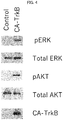
- Figs. 3 and 4 show results obtained from transfecting AAV-CA-TrkB into the Cos7 cells, culturing the cells for 24 hours, and then dissolving the cells and conducting Western blotting with use of an anti-myc antibody (c-Myc antibody (9E10) manufactured by Santa Cruz). It was found that AAV-CA-TrkB had a clearly increased expression level in comparison with a full-length TrkB vector which was subjected to a similar experiment.
- c-Myc antibody 9E10 manufactured by Santa Cruz
- the full-length TrkB vector is an adeno-associated virus vector in which, in contrast to the structure of AAV-CA-TrkB, a gene fragment encoding full-length TrkB is inserted instead of a gene fragment encoding CA-TrkB.
- Fig. 4 shows results obtained from transfecting AAV-CA-TrkB into Cos7 cells, culturing the cells for 24 hours, and then dissolving the cells and conducting Western blotting with use of an anti-pERK antibody (Phospho-p44/42 (Erk1/2) (Thr202/Thr204) manufactured by Cell Signaling Technology), an anti-pAKT antibody (Phospho-Akt (Ser473) (587F11) manufactured by Cell Signaling Technology), an anti-ERK antibody (p44/42 MAPK (Erk1/2) (137F5) manufactured by Cell Signaling Technology), and an anti-AKT antibody (Akt antibody manufactured by Cell Signaling Technology).
- an anti-pERK antibody Phospho-p44/42 (Erk1/2) (Thr202/Thr204) manufactured by Cell Signaling Technology
- Phospho-Akt Phospho-Akt (Ser473) (587F11) manufactured by Cell Signaling Technology
- an anti-ERK antibody p44/42 MAPK (Erk1/2) (137F5) manufactured by Cell Signal
- AAV-DsRed is an adeno-associated virus vector in which, in contrast to the structure of AAV-CA-TrkB, a gene fragment encoding fluorescent protein DsRed is inserted instead of a gene fragment encoding CA-TrkB.
- mice line name: C57BL/6, obtained from Charles River
- 2 ⁇ L of AAV-DsRed (control group) or AAV-CA-TrkB was administered into an eyeball 14 days before crushing an optic nerve.
- Crushing of the optic nerve was carried out similarly as discussed in "Evaluation method of neuroprotection effect" above. Then, 14 days after the crushing of the optic nerve, each mouse was subjected to perfusion fixation, a pathological specimen of the optic nerve was prepared, and the amount of axon regeneration from the part at which the optic nerve had been crushed was quantified. Note that 3 days before the optic nerve was collected (i.e., 3 days before the pathological specimen of the optic nerve was prepared), a fluorescent dye CTB had been injected from the eyeball to color regenerated axonal fibers.
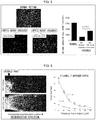
- the X-axis and the Y-axis of the graph in Fig. 6 respectively indicate a distance (pm) from the part at which the optic nerve had been crushed and the number of axons. Note that p ⁇ 0.05 (one-tailed Student's t test).
- a GLAST knockout mouse which is a glaucoma model mouse (Reference research paper: Harada T, et al. The potential role of glutamate transporters in the pathogenesis of normal tension glaucoma. The Journal of Clinical Investigation 117: 1763-1770, 2007 .), loses retinal ganglion cells to experience decreased visual performance at the age of 3 weeks to 5 weeks.
- AAV-DsRed control group
- AAV-CA-TrkB was administered into an eyeball (see also Example 2).
- an expanded specimen of a retina of these knockout mice was prepared when the mice had become 12 weeks old, and the number of remaining retinal ganglion cells was quantitatively counted.
- RBPMS antibody an anti-RBPMS antibody manufactured by Merck Millipore
- these vectors were transfected into Cos7 cells, the cells were dissolved after 24 hours of culturing, and Western blotting was conducted to examine effect on activation of ERK and AKT.
- AAV-CA-TrkA An AAV vector (referred to as "AAV-CA-TrkA") expressing an intracellular domain of a TrkA molecule was prepared in accordance with the method of Example 1. That is, AAV-CA-TrkA was prepared in accordance with the method described in Example 1 with use of a fragment having the same structure as the gene fragment encoding CA-TrkB (see Example 1) except that an intracellular domain of TrkA is encoded instead of an intracellular domain of TrkB (see also Fig. 9 ).
- the amino acid sequence of the intracellular domain of TrkA is represented by SEQ ID NO: 6, and the base sequence of a gene (DNA) encoding the intracellular domain of TrkA is represented by SEQ ID NO: 7.
- the base sequence of the gene fragment (the full length of the gene fragment inserted into the AAV vector) encoding CA-TrkA is represented by SEQ ID NO: 8 and illustrated as Fig. 11 .
- an AAV vector (referred to as "AAV-CA-TrkC") expressing an intracellular domain of a TrkC molecule was prepared in accordance with the method of Example 1. That is, AAV-CA-TrkC was prepared in accordance with the method described in Example 1 with use of a fragment having the same structure as the gene fragment encoding CA-TrkB (see Example 1) except that an intracellular domain of TrkC is encoded instead of an intracellular domain of TrkB (see also Fig. 9 ).
- the amino acid sequence of the intracellular domain of TrkC is represented by SEQ ID NO: 9
- the base sequence of a gene (DNA) encoding the intracellular domain of TrkC is represented by SEQ ID NO: 10.
- the base sequence of the gene fragment (the full length of the gene fragment inserted into the AAV vector) encoding CA-TrkC is represented by SEQ ID NO: 11 and illustrated as Fig. 12 .
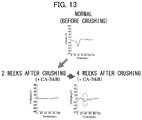
- reaction of the visual evoked potential was lost 2 weeks after the crushing, but generation of the visual evoked potential was observed 4 weeks after the crushing. It was thus confirmed that the visual performance had partially recovered.
- the present invention can be used for medical purposes involving, for example, nerve-related diseases and the like.
Landscapes
- Health & Medical Sciences (AREA)
- Life Sciences & Earth Sciences (AREA)
- Chemical & Material Sciences (AREA)
- Engineering & Computer Science (AREA)
- Genetics & Genomics (AREA)
- Organic Chemistry (AREA)
- Bioinformatics & Cheminformatics (AREA)
- General Health & Medical Sciences (AREA)
- Zoology (AREA)
- Biomedical Technology (AREA)
- Medicinal Chemistry (AREA)
- Wood Science & Technology (AREA)
- General Engineering & Computer Science (AREA)
- Molecular Biology (AREA)
- Biotechnology (AREA)
- Veterinary Medicine (AREA)
- Public Health (AREA)
- Animal Behavior & Ethology (AREA)
- Pharmacology & Pharmacy (AREA)
- Biochemistry (AREA)
- Nuclear Medicine, Radiotherapy & Molecular Imaging (AREA)
- Chemical Kinetics & Catalysis (AREA)
- General Chemical & Material Sciences (AREA)
- Ophthalmology & Optometry (AREA)
- Biophysics (AREA)
- Microbiology (AREA)
- Plant Pathology (AREA)
- Physics & Mathematics (AREA)
- Immunology (AREA)
- Proteomics, Peptides & Aminoacids (AREA)
- Gastroenterology & Hepatology (AREA)
- Neurology (AREA)
- Neurosurgery (AREA)
- Epidemiology (AREA)
- Cell Biology (AREA)
- Toxicology (AREA)
- Virology (AREA)
- Medicines That Contain Protein Lipid Enzymes And Other Medicines (AREA)
- Micro-Organisms Or Cultivation Processes Thereof (AREA)
- Medicines Containing Material From Animals Or Micro-Organisms (AREA)
Applications Claiming Priority (2)
| Application Number | Priority Date | Filing Date | Title |
|---|---|---|---|
| JP2019038503 | 2019-03-04 | ||
| PCT/JP2020/009259 WO2020179844A1 (fr) | 2019-03-04 | 2020-03-04 | CONSTRUCTION D'ACIDE NUCLÉIQUE CODANT UN FRAGMENT Trk, ET APPLICATION DE CELLE-CI |
Publications (2)
| Publication Number | Publication Date |
|---|---|
| EP3936152A1 true EP3936152A1 (fr) | 2022-01-12 |
| EP3936152A4 EP3936152A4 (fr) | 2022-12-07 |
Family
ID=72338176
Family Applications (1)
| Application Number | Title | Priority Date | Filing Date |
|---|---|---|---|
| EP20766490.5A Pending EP3936152A4 (fr) | 2019-03-04 | 2020-03-04 | Construction d'acide nucléique codant un fragment trk, et application de celle-ci |
Country Status (5)
| Country | Link |
|---|---|
| US (1) | US20220162572A1 (fr) |
| EP (1) | EP3936152A4 (fr) |
| JP (1) | JP7524158B2 (fr) |
| CN (2) | CN113557301B (fr) |
| WO (1) | WO2020179844A1 (fr) |
Family Cites Families (14)
| Publication number | Priority date | Publication date | Assignee | Title |
|---|---|---|---|---|
| AU730387B2 (en) * | 1994-03-18 | 2001-03-08 | Genentech Inc. | Human TRK receptors and neurotrophic factor inhibitors |
| KR100225465B1 (ko) * | 1997-04-01 | 1999-10-15 | 성재갑 | 히스티딘이 표지된 파네실전이효소 (farneyl transferase)의 제조방법 |
| US20030232350A1 (en) * | 2001-11-13 | 2003-12-18 | Eos Biotechnology, Inc. | Methods of diagnosis of cancer, compositions and methods of screening for modulators of cancer |
| EP1864130A2 (fr) * | 2005-03-02 | 2007-12-12 | Acadia Pharmaceuticals Inc. | Dosage par transfert d'énergie de résonance bioluminescente fonctionnel afin de cribler, identifier et caractériser des ligands du récepteur tyrosine kinase |
| EP1869224A4 (fr) * | 2005-04-15 | 2009-11-18 | Oncomethylome Sciences Inc | Marqueurs de méthylation pour le diagnostic et le traitement de cancers |
| JP2010511382A (ja) * | 2006-12-01 | 2010-04-15 | エージェンシー フォー サイエンス,テクノロジー アンド リサーチ | 癌関連タンパク質キナーゼ |
| WO2008097875A1 (fr) * | 2007-02-08 | 2008-08-14 | Neurologix, Inc. | Nouveaux procédés pour le traitement de troubles neurodégénératifs |
| US10407509B2 (en) * | 2013-07-30 | 2019-09-10 | Blueprint Medicines Corporation | NTRK2 fusions |
| GB2547179A (en) | 2015-10-26 | 2017-08-16 | Quethera Ltd | Genetic construct |
| KR102917220B1 (ko) | 2016-01-11 | 2026-01-22 | 더 보드 어브 트러스티스 어브 더 리랜드 스탠포드 주니어 유니버시티 | 키메라 단백질 및 유전자 발현을 조절하는 방법 |
| JP2019517787A (ja) | 2016-05-03 | 2019-06-27 | ザ スクリプス リサーチ インスティテュート | 神経変性障害の処置のためのTrkBアゴニスト抗体 |
| GB201705484D0 (en) | 2017-04-05 | 2017-05-17 | Quethera Ltd | Genetic construct |
| JP7361031B2 (ja) * | 2017-11-30 | 2023-10-13 | リジェネロン・ファーマシューティカルズ・インコーポレイテッド | ヒト化trkb遺伝子座を含む非ヒト動物 |
| EP3717514A1 (fr) * | 2017-11-30 | 2020-10-07 | Regeneron Pharmaceuticals, Inc. | Anticorps monoclonaux anti-trkb et leurs procédés d'utilisation |
-
2020
- 2020-03-04 WO PCT/JP2020/009259 patent/WO2020179844A1/fr not_active Ceased
- 2020-03-04 CN CN202080018480.8A patent/CN113557301B/zh active Active
- 2020-03-04 JP JP2021503631A patent/JP7524158B2/ja active Active
- 2020-03-04 EP EP20766490.5A patent/EP3936152A4/fr active Pending
- 2020-03-04 CN CN202411905272.6A patent/CN119685361A/zh active Pending
- 2020-03-04 US US17/436,256 patent/US20220162572A1/en active Pending
Also Published As
| Publication number | Publication date |
|---|---|
| WO2020179844A1 (fr) | 2020-09-10 |
| CN113557301B (zh) | 2025-03-07 |
| EP3936152A4 (fr) | 2022-12-07 |
| CN119685361A (zh) | 2025-03-25 |
| JP7524158B2 (ja) | 2024-07-29 |
| JPWO2020179844A1 (fr) | 2020-09-10 |
| US20220162572A1 (en) | 2022-05-26 |
| CN113557301A (zh) | 2021-10-26 |
Similar Documents
| Publication | Publication Date | Title |
|---|---|---|
| CA2222453C (fr) | Therapies et methodes de criblage en vue du traitement et de la prevention de maladies neuronales | |
| Binder et al. | Brain-derived neurotrophic factor | |
| EP2315833B1 (fr) | Vecteurs pour la délivrance de protéines photosensibles et procédés d'utilisation | |
| Lu | BDNF and activity-dependent synaptic modulation | |
| US20100172871A1 (en) | Muller Cell Specific Gene Therapy | |
| WO2020061079A1 (fr) | Protéines photosensibles modifiées | |
| US20030129164A1 (en) | Expression of glial-derived neurotrophic factor for treatment of diseases of the eye | |
| US20230159609A1 (en) | G-protein-gated-k+ channel-mediated enhancements in light sensitivity in rod-cone dystrophy (rcd) | |
| EP3936152A1 (fr) | Construction d'acide nucléique codant un fragment trk, et application de celle-ci | |
| Mocchetti et al. | Targeting neurotrophin receptors in the central nervous system | |
| Duprey‐Díaz et al. | Changes in brain‐derived neurotrophic factor and trkB receptor in the adult Rana pipiens retina and optic tectum after optic nerve injury | |
| WO2025002450A1 (fr) | Facteurs de reprogrammation modifiés et leurs utilisations pour le traitement de maladies oculaires | |
| EP3892738A1 (fr) | Améliorations induites par le canal k+ ouvert par protéine g dans la sensibilité à la lumière dans la dystrophie des cônes et des bâtonnets (crd) | |
| WO2024210145A1 (fr) | Construction d'acide nucléique codant pour un fragment de récepteur d'insuline et son utilisation | |
| Abe et al. | Topical doxycycline can induce expression of BDNF in transduced retinal pigment epithelial cells transplanted into the subretinal space | |
| US20230338581A1 (en) | G-protein-gated-k+ channel-mediated enhancements in light sensitivity in rod-cone dystrophy (rcd) | |
| US20240207451A1 (en) | G-protein-gated-k+ channel-mediated enhancements in light sensitivity in rod-cone dystrophy (rcd) | |
| JP2024521975A (ja) | Prpf31変異体およびその使用 | |
| Avilla-Rodriguez et al. | Mitochondrial KATP Channel and Dopaminergic Vulnerability | |
| WO2022248634A1 (fr) | Améliorations de la sensibilité à la lumière induite par le canal k+ couplé à la protéine g dans une dystrophie de type bâtonnet-cône (rcd) |
Legal Events
| Date | Code | Title | Description |
|---|---|---|---|
| STAA | Information on the status of an ep patent application or granted ep patent |
Free format text: STATUS: THE INTERNATIONAL PUBLICATION HAS BEEN MADE |
|
| PUAI | Public reference made under article 153(3) epc to a published international application that has entered the european phase |
Free format text: ORIGINAL CODE: 0009012 |
|
| STAA | Information on the status of an ep patent application or granted ep patent |
Free format text: STATUS: REQUEST FOR EXAMINATION WAS MADE |
|
| 17P | Request for examination filed |
Effective date: 20210913 |
|
| AK | Designated contracting states |
Kind code of ref document: A1 Designated state(s): AL AT BE BG CH CY CZ DE DK EE ES FI FR GB GR HR HU IE IS IT LI LT LU LV MC MK MT NL NO PL PT RO RS SE SI SK SM TR |
|
| DAV | Request for validation of the european patent (deleted) | ||
| DAX | Request for extension of the european patent (deleted) | ||
| A4 | Supplementary search report drawn up and despatched |
Effective date: 20221107 |
|
| RIC1 | Information provided on ipc code assigned before grant |
Ipc: A61K 35/76 20150101ALI20221031BHEP Ipc: A61K 35/30 20150101ALI20221031BHEP Ipc: A61K 31/7088 20060101ALI20221031BHEP Ipc: A61K 38/16 20060101ALI20221031BHEP Ipc: C12N 15/864 20060101ALI20221031BHEP Ipc: C12N 15/62 20060101ALI20221031BHEP Ipc: C12N 15/12 20060101ALI20221031BHEP Ipc: C12N 5/0793 20100101ALI20221031BHEP Ipc: C07K 14/705 20060101ALI20221031BHEP Ipc: A61P 43/00 20060101ALI20221031BHEP Ipc: A61P 27/06 20060101ALI20221031BHEP Ipc: A61P 27/02 20060101ALI20221031BHEP Ipc: A61P 25/00 20060101ALI20221031BHEP Ipc: A61K 48/00 20060101AFI20221031BHEP |
|
| STAA | Information on the status of an ep patent application or granted ep patent |
Free format text: STATUS: EXAMINATION IS IN PROGRESS |
|
| 17Q | First examination report despatched |
Effective date: 20250509 |