EP3936231A1 - Catalyseurs à nanoparticules métalliques incorporés dans un support d'oxyde poreux, qui présentent une activité catalytique élevée même à basses températures - Google Patents
Catalyseurs à nanoparticules métalliques incorporés dans un support d'oxyde poreux, qui présentent une activité catalytique élevée même à basses températures Download PDFInfo
- Publication number
- EP3936231A1 EP3936231A1 EP20778962.9A EP20778962A EP3936231A1 EP 3936231 A1 EP3936231 A1 EP 3936231A1 EP 20778962 A EP20778962 A EP 20778962A EP 3936231 A1 EP3936231 A1 EP 3936231A1
- Authority
- EP
- European Patent Office
- Prior art keywords
- oxide
- catalyst composition
- metallic nanoparticles
- present
- metallic
- Prior art date
- Legal status (The legal status is an assumption and is not a legal conclusion. Google has not performed a legal analysis and makes no representation as to the accuracy of the status listed.)
- Pending
Links
Images







Classifications
-
- B—PERFORMING OPERATIONS; TRANSPORTING
- B01—PHYSICAL OR CHEMICAL PROCESSES OR APPARATUS IN GENERAL
- B01D—SEPARATION
- B01D53/00—Separation of gases or vapours; Recovering vapours of volatile solvents from gases; Chemical or biological purification of waste gases, e.g. engine exhaust gases, smoke, fumes, flue gases, aerosols
- B01D53/34—Chemical or biological purification of waste gases
- B01D53/74—General processes for purification of waste gases; Apparatus or devices specially adapted therefor
- B01D53/86—Catalytic processes
- B01D53/864—Removing carbon monoxide or hydrocarbons
-
- B—PERFORMING OPERATIONS; TRANSPORTING
- B01—PHYSICAL OR CHEMICAL PROCESSES OR APPARATUS IN GENERAL
- B01J—CHEMICAL OR PHYSICAL PROCESSES, e.g. CATALYSIS OR COLLOID CHEMISTRY; THEIR RELEVANT APPARATUS
- B01J35/00—Catalysts, in general, characterised by their form or physical properties
- B01J35/19—Catalysts containing parts with different compositions
-
- B—PERFORMING OPERATIONS; TRANSPORTING
- B01—PHYSICAL OR CHEMICAL PROCESSES OR APPARATUS IN GENERAL
- B01D—SEPARATION
- B01D53/00—Separation of gases or vapours; Recovering vapours of volatile solvents from gases; Chemical or biological purification of waste gases, e.g. engine exhaust gases, smoke, fumes, flue gases, aerosols
- B01D53/34—Chemical or biological purification of waste gases
- B01D53/46—Removing components of defined structure
- B01D53/62—Carbon oxides
-
- B—PERFORMING OPERATIONS; TRANSPORTING
- B01—PHYSICAL OR CHEMICAL PROCESSES OR APPARATUS IN GENERAL
- B01D—SEPARATION
- B01D53/00—Separation of gases or vapours; Recovering vapours of volatile solvents from gases; Chemical or biological purification of waste gases, e.g. engine exhaust gases, smoke, fumes, flue gases, aerosols
- B01D53/34—Chemical or biological purification of waste gases
- B01D53/46—Removing components of defined structure
- B01D53/72—Organic compounds not provided for in groups B01D53/48 - B01D53/70, e.g. hydrocarbons
-
- B—PERFORMING OPERATIONS; TRANSPORTING
- B01—PHYSICAL OR CHEMICAL PROCESSES OR APPARATUS IN GENERAL
- B01D—SEPARATION
- B01D53/00—Separation of gases or vapours; Recovering vapours of volatile solvents from gases; Chemical or biological purification of waste gases, e.g. engine exhaust gases, smoke, fumes, flue gases, aerosols
- B01D53/34—Chemical or biological purification of waste gases
- B01D53/92—Chemical or biological purification of waste gases of engine exhaust gases
- B01D53/94—Chemical or biological purification of waste gases of engine exhaust gases by catalytic processes
- B01D53/944—Simultaneously removing carbon monoxide, hydrocarbons or carbon making use of oxidation catalysts
-
- B—PERFORMING OPERATIONS; TRANSPORTING
- B01—PHYSICAL OR CHEMICAL PROCESSES OR APPARATUS IN GENERAL
- B01J—CHEMICAL OR PHYSICAL PROCESSES, e.g. CATALYSIS OR COLLOID CHEMISTRY; THEIR RELEVANT APPARATUS
- B01J21/00—Catalysts comprising the elements, oxides, or hydroxides of magnesium, boron, aluminium, carbon, silicon, titanium, zirconium, or hafnium
- B01J21/02—Boron or aluminium; Oxides or hydroxides thereof
- B01J21/04—Alumina
-
- B—PERFORMING OPERATIONS; TRANSPORTING
- B01—PHYSICAL OR CHEMICAL PROCESSES OR APPARATUS IN GENERAL
- B01J—CHEMICAL OR PHYSICAL PROCESSES, e.g. CATALYSIS OR COLLOID CHEMISTRY; THEIR RELEVANT APPARATUS
- B01J21/00—Catalysts comprising the elements, oxides, or hydroxides of magnesium, boron, aluminium, carbon, silicon, titanium, zirconium, or hafnium
- B01J21/06—Silicon, titanium, zirconium or hafnium; Oxides or hydroxides thereof
- B01J21/063—Titanium; Oxides or hydroxides thereof
-
- B—PERFORMING OPERATIONS; TRANSPORTING
- B01—PHYSICAL OR CHEMICAL PROCESSES OR APPARATUS IN GENERAL
- B01J—CHEMICAL OR PHYSICAL PROCESSES, e.g. CATALYSIS OR COLLOID CHEMISTRY; THEIR RELEVANT APPARATUS
- B01J21/00—Catalysts comprising the elements, oxides, or hydroxides of magnesium, boron, aluminium, carbon, silicon, titanium, zirconium, or hafnium
- B01J21/06—Silicon, titanium, zirconium or hafnium; Oxides or hydroxides thereof
- B01J21/08—Silica
-
- B—PERFORMING OPERATIONS; TRANSPORTING
- B01—PHYSICAL OR CHEMICAL PROCESSES OR APPARATUS IN GENERAL
- B01J—CHEMICAL OR PHYSICAL PROCESSES, e.g. CATALYSIS OR COLLOID CHEMISTRY; THEIR RELEVANT APPARATUS
- B01J23/00—Catalysts comprising metals or metal oxides or hydroxides, not provided for in group B01J21/00
- B01J23/38—Catalysts comprising metals or metal oxides or hydroxides, not provided for in group B01J21/00 of noble metals
- B01J23/48—Silver or gold
- B01J23/52—Gold
-
- B—PERFORMING OPERATIONS; TRANSPORTING
- B01—PHYSICAL OR CHEMICAL PROCESSES OR APPARATUS IN GENERAL
- B01J—CHEMICAL OR PHYSICAL PROCESSES, e.g. CATALYSIS OR COLLOID CHEMISTRY; THEIR RELEVANT APPARATUS
- B01J35/00—Catalysts, in general, characterised by their form or physical properties
- B01J35/30—Catalysts, in general, characterised by their form or physical properties characterised by their physical properties
- B01J35/391—Physical properties of the active metal ingredient
- B01J35/393—Metal or metal oxide crystallite size
-
- B—PERFORMING OPERATIONS; TRANSPORTING
- B01—PHYSICAL OR CHEMICAL PROCESSES OR APPARATUS IN GENERAL
- B01J—CHEMICAL OR PHYSICAL PROCESSES, e.g. CATALYSIS OR COLLOID CHEMISTRY; THEIR RELEVANT APPARATUS
- B01J35/00—Catalysts, in general, characterised by their form or physical properties
- B01J35/40—Catalysts, in general, characterised by their form or physical properties characterised by dimensions, e.g. grain size
-
- B—PERFORMING OPERATIONS; TRANSPORTING
- B01—PHYSICAL OR CHEMICAL PROCESSES OR APPARATUS IN GENERAL
- B01J—CHEMICAL OR PHYSICAL PROCESSES, e.g. CATALYSIS OR COLLOID CHEMISTRY; THEIR RELEVANT APPARATUS
- B01J35/00—Catalysts, in general, characterised by their form or physical properties
- B01J35/40—Catalysts, in general, characterised by their form or physical properties characterised by dimensions, e.g. grain size
- B01J35/45—Nanoparticles
-
- B—PERFORMING OPERATIONS; TRANSPORTING
- B01—PHYSICAL OR CHEMICAL PROCESSES OR APPARATUS IN GENERAL
- B01J—CHEMICAL OR PHYSICAL PROCESSES, e.g. CATALYSIS OR COLLOID CHEMISTRY; THEIR RELEVANT APPARATUS
- B01J35/00—Catalysts, in general, characterised by their form or physical properties
- B01J35/60—Catalysts, in general, characterised by their form or physical properties characterised by their surface properties or porosity
- B01J35/64—Pore diameter
-
- B—PERFORMING OPERATIONS; TRANSPORTING
- B01—PHYSICAL OR CHEMICAL PROCESSES OR APPARATUS IN GENERAL
- B01J—CHEMICAL OR PHYSICAL PROCESSES, e.g. CATALYSIS OR COLLOID CHEMISTRY; THEIR RELEVANT APPARATUS
- B01J35/00—Catalysts, in general, characterised by their form or physical properties
- B01J35/60—Catalysts, in general, characterised by their form or physical properties characterised by their surface properties or porosity
- B01J35/66—Pore distribution
-
- B—PERFORMING OPERATIONS; TRANSPORTING
- B01—PHYSICAL OR CHEMICAL PROCESSES OR APPARATUS IN GENERAL
- B01J—CHEMICAL OR PHYSICAL PROCESSES, e.g. CATALYSIS OR COLLOID CHEMISTRY; THEIR RELEVANT APPARATUS
- B01J37/00—Processes, in general, for preparing catalysts; Processes, in general, for activation of catalysts
- B01J37/0009—Use of binding agents; Moulding; Pressing; Powdering; Granulating; Addition of materials ameliorating the mechanical properties of the product catalyst
-
- B—PERFORMING OPERATIONS; TRANSPORTING
- B01—PHYSICAL OR CHEMICAL PROCESSES OR APPARATUS IN GENERAL
- B01J—CHEMICAL OR PHYSICAL PROCESSES, e.g. CATALYSIS OR COLLOID CHEMISTRY; THEIR RELEVANT APPARATUS
- B01J37/00—Processes, in general, for preparing catalysts; Processes, in general, for activation of catalysts
- B01J37/0009—Use of binding agents; Moulding; Pressing; Powdering; Granulating; Addition of materials ameliorating the mechanical properties of the product catalyst
- B01J37/0018—Addition of a binding agent or of material, later completely removed among others as result of heat treatment, leaching or washing,(e.g. forming of pores; protective layer, desintegrating by heat)
-
- B—PERFORMING OPERATIONS; TRANSPORTING
- B01—PHYSICAL OR CHEMICAL PROCESSES OR APPARATUS IN GENERAL
- B01J—CHEMICAL OR PHYSICAL PROCESSES, e.g. CATALYSIS OR COLLOID CHEMISTRY; THEIR RELEVANT APPARATUS
- B01J37/00—Processes, in general, for preparing catalysts; Processes, in general, for activation of catalysts
- B01J37/04—Mixing
-
- B—PERFORMING OPERATIONS; TRANSPORTING
- B01—PHYSICAL OR CHEMICAL PROCESSES OR APPARATUS IN GENERAL
- B01J—CHEMICAL OR PHYSICAL PROCESSES, e.g. CATALYSIS OR COLLOID CHEMISTRY; THEIR RELEVANT APPARATUS
- B01J37/00—Processes, in general, for preparing catalysts; Processes, in general, for activation of catalysts
- B01J37/08—Heat treatment
-
- B—PERFORMING OPERATIONS; TRANSPORTING
- B01—PHYSICAL OR CHEMICAL PROCESSES OR APPARATUS IN GENERAL
- B01J—CHEMICAL OR PHYSICAL PROCESSES, e.g. CATALYSIS OR COLLOID CHEMISTRY; THEIR RELEVANT APPARATUS
- B01J37/00—Processes, in general, for preparing catalysts; Processes, in general, for activation of catalysts
- B01J37/08—Heat treatment
- B01J37/082—Decomposition and pyrolysis
-
- B—PERFORMING OPERATIONS; TRANSPORTING
- B01—PHYSICAL OR CHEMICAL PROCESSES OR APPARATUS IN GENERAL
- B01D—SEPARATION
- B01D2255/00—Catalysts
- B01D2255/10—Noble metals or compounds thereof
- B01D2255/106—Gold
-
- B—PERFORMING OPERATIONS; TRANSPORTING
- B01—PHYSICAL OR CHEMICAL PROCESSES OR APPARATUS IN GENERAL
- B01D—SEPARATION
- B01D2255/00—Catalysts
- B01D2255/20—Metals or compounds thereof
- B01D2255/202—Alkali metals
- B01D2255/2027—Sodium
-
- B—PERFORMING OPERATIONS; TRANSPORTING
- B01—PHYSICAL OR CHEMICAL PROCESSES OR APPARATUS IN GENERAL
- B01D—SEPARATION
- B01D2255/00—Catalysts
- B01D2255/20—Metals or compounds thereof
- B01D2255/204—Alkaline earth metals
- B01D2255/2045—Calcium
-
- B—PERFORMING OPERATIONS; TRANSPORTING
- B01—PHYSICAL OR CHEMICAL PROCESSES OR APPARATUS IN GENERAL
- B01D—SEPARATION
- B01D2255/00—Catalysts
- B01D2255/20—Metals or compounds thereof
- B01D2255/204—Alkaline earth metals
- B01D2255/2047—Magnesium
-
- B—PERFORMING OPERATIONS; TRANSPORTING
- B01—PHYSICAL OR CHEMICAL PROCESSES OR APPARATUS IN GENERAL
- B01D—SEPARATION
- B01D2255/00—Catalysts
- B01D2255/20—Metals or compounds thereof
- B01D2255/206—Rare earth metals
- B01D2255/2065—Cerium
-
- B—PERFORMING OPERATIONS; TRANSPORTING
- B01—PHYSICAL OR CHEMICAL PROCESSES OR APPARATUS IN GENERAL
- B01D—SEPARATION
- B01D2255/00—Catalysts
- B01D2255/20—Metals or compounds thereof
- B01D2255/207—Transition metals
- B01D2255/20707—Titanium
-
- B—PERFORMING OPERATIONS; TRANSPORTING
- B01—PHYSICAL OR CHEMICAL PROCESSES OR APPARATUS IN GENERAL
- B01D—SEPARATION
- B01D2255/00—Catalysts
- B01D2255/20—Metals or compounds thereof
- B01D2255/207—Transition metals
- B01D2255/20715—Zirconium
-
- B—PERFORMING OPERATIONS; TRANSPORTING
- B01—PHYSICAL OR CHEMICAL PROCESSES OR APPARATUS IN GENERAL
- B01D—SEPARATION
- B01D2255/00—Catalysts
- B01D2255/20—Metals or compounds thereof
- B01D2255/207—Transition metals
- B01D2255/2073—Manganese
-
- B—PERFORMING OPERATIONS; TRANSPORTING
- B01—PHYSICAL OR CHEMICAL PROCESSES OR APPARATUS IN GENERAL
- B01D—SEPARATION
- B01D2255/00—Catalysts
- B01D2255/20—Metals or compounds thereof
- B01D2255/207—Transition metals
- B01D2255/20738—Iron
-
- B—PERFORMING OPERATIONS; TRANSPORTING
- B01—PHYSICAL OR CHEMICAL PROCESSES OR APPARATUS IN GENERAL
- B01D—SEPARATION
- B01D2255/00—Catalysts
- B01D2255/20—Metals or compounds thereof
- B01D2255/207—Transition metals
- B01D2255/20746—Cobalt
-
- B—PERFORMING OPERATIONS; TRANSPORTING
- B01—PHYSICAL OR CHEMICAL PROCESSES OR APPARATUS IN GENERAL
- B01D—SEPARATION
- B01D2255/00—Catalysts
- B01D2255/20—Metals or compounds thereof
- B01D2255/207—Transition metals
- B01D2255/20776—Tungsten
-
- B—PERFORMING OPERATIONS; TRANSPORTING
- B01—PHYSICAL OR CHEMICAL PROCESSES OR APPARATUS IN GENERAL
- B01D—SEPARATION
- B01D2255/00—Catalysts
- B01D2255/90—Physical characteristics of catalysts
- B01D2255/92—Dimensions
- B01D2255/9202—Linear dimensions
-
- B—PERFORMING OPERATIONS; TRANSPORTING
- B01—PHYSICAL OR CHEMICAL PROCESSES OR APPARATUS IN GENERAL
- B01D—SEPARATION
- B01D2255/00—Catalysts
- B01D2255/90—Physical characteristics of catalysts
- B01D2255/92—Dimensions
- B01D2255/9205—Porosity
-
- B—PERFORMING OPERATIONS; TRANSPORTING
- B01—PHYSICAL OR CHEMICAL PROCESSES OR APPARATUS IN GENERAL
- B01D—SEPARATION
- B01D2257/00—Components to be removed
- B01D2257/10—Single element gases other than halogens
- B01D2257/108—Hydrogen
-
- B—PERFORMING OPERATIONS; TRANSPORTING
- B01—PHYSICAL OR CHEMICAL PROCESSES OR APPARATUS IN GENERAL
- B01D—SEPARATION
- B01D2257/00—Components to be removed
- B01D2257/50—Carbon oxides
- B01D2257/502—Carbon monoxide
-
- B—PERFORMING OPERATIONS; TRANSPORTING
- B01—PHYSICAL OR CHEMICAL PROCESSES OR APPARATUS IN GENERAL
- B01D—SEPARATION
- B01D2257/00—Components to be removed
- B01D2257/70—Organic compounds not provided for in groups B01D2257/00 - B01D2257/602
- B01D2257/702—Hydrocarbons
- B01D2257/7022—Aliphatic hydrocarbons
- B01D2257/7025—Methane
-
- B—PERFORMING OPERATIONS; TRANSPORTING
- B01—PHYSICAL OR CHEMICAL PROCESSES OR APPARATUS IN GENERAL
- B01D—SEPARATION
- B01D2257/00—Components to be removed
- B01D2257/70—Organic compounds not provided for in groups B01D2257/00 - B01D2257/602
- B01D2257/702—Hydrocarbons
- B01D2257/7027—Aromatic hydrocarbons
-
- B—PERFORMING OPERATIONS; TRANSPORTING
- B01—PHYSICAL OR CHEMICAL PROCESSES OR APPARATUS IN GENERAL
- B01J—CHEMICAL OR PHYSICAL PROCESSES, e.g. CATALYSIS OR COLLOID CHEMISTRY; THEIR RELEVANT APPARATUS
- B01J2235/00—Indexing scheme associated with group B01J35/00, related to the analysis techniques used to determine the catalysts form or properties
-
- B—PERFORMING OPERATIONS; TRANSPORTING
- B01—PHYSICAL OR CHEMICAL PROCESSES OR APPARATUS IN GENERAL
- B01J—CHEMICAL OR PHYSICAL PROCESSES, e.g. CATALYSIS OR COLLOID CHEMISTRY; THEIR RELEVANT APPARATUS
- B01J2235/00—Indexing scheme associated with group B01J35/00, related to the analysis techniques used to determine the catalysts form or properties
- B01J2235/30—Scanning electron microscopy; Transmission electron microscopy
-
- Y—GENERAL TAGGING OF NEW TECHNOLOGICAL DEVELOPMENTS; GENERAL TAGGING OF CROSS-SECTIONAL TECHNOLOGIES SPANNING OVER SEVERAL SECTIONS OF THE IPC; TECHNICAL SUBJECTS COVERED BY FORMER USPC CROSS-REFERENCE ART COLLECTIONS [XRACs] AND DIGESTS
- Y02—TECHNOLOGIES OR APPLICATIONS FOR MITIGATION OR ADAPTATION AGAINST CLIMATE CHANGE
- Y02C—CAPTURE, STORAGE, SEQUESTRATION OR DISPOSAL OF GREENHOUSE GASES [GHG]
- Y02C20/00—Capture or disposal of greenhouse gases
- Y02C20/20—Capture or disposal of greenhouse gases of methane
Definitions
- the present invention relates to a metallic nanoparticle catalyst, and more particularly, to a porous catalyst in which metallic nanoparticles are embedded in a porous oxide support, and a method for preparing the porous catalyst.
- Heterogeneous catalysts are essential elements that control 90% or more of the world's chemical processes.
- a catalyst substance mainly composed of metal does not directly participate in a reaction but lowers activation energy through an interaction with a reaction substance on the surface thereof to reduce the energy cost to increase the economics of the processes.
- catalyst technology has also been more elaborately deepened.
- the catalyst substance is made of nanometer-sized particles, the surface area where a reaction is caused is dramatically increased.
- nanoparticles have very low stability.
- the nanoparticles are easily sintered with nearby nanoparticles and become larger particles.
- the surface area of the catalyst and the catalytic activity decreases. Eventually, the lifespan of the catalyst is shortened, thereby increasing the cost of the catalyst.
- platinum group metals such as platinum, palladium, and rhodium.
- the prices of the platinum group metals are on a continuous upward trend with increasing demands.
- 85% or more of about 170 tons of platinum mined annually is already used as catalysts for automobiles and chemical processes, and palladium is already in need of 1.5 times or more about 190 tons, which is the annual mining amount, just in terms of catalyst demand.
- the annual mining amount itself is only about 20 tons.
- gold nanocatalysts have recently been in the spotlight as potential substitutes for the platinum group catalysts.
- gold has a much richer mining amount (about 3,347 tons in 2018, www.gold.org) and reserve.
- characteristics that surpass those of the platinum group in terms of performance as catalysts are shown as well as allowing a relatively stable supply.
- Gold in bulk was known to have no activity as catalysts.
- nanoparticle gold has very high catalytic activity from low temperature, and it was confirmed that a reaction occurs at a much lower temperature than the platinum group in a carbon monoxide oxidation reaction or the like.
- active and intensive researches on the gold nanoparticle catalysts have been performed worldwide.
- the melting point (1,064°C) of gold is lower than the melting point (1,768°C) of platinum, the melting point (1,964°C) of rhodium, the melting point (1,555°C) of palladium, or the like, the fluidity on particle surfaces increases from a relatively low temperature.
- the Tamman temperature which is a temperature at which the fluidity on metal surfaces rapidly increases, is about 396°C in the case of gold, but the temperature of general automobile exhaust gas is about 400 to 600°C.
- Gold nanocatalysts currently developed mostly have a form in which gold nanoparticles are exposed and attached to the surface of a support made of an oxide, and have a structure that cannot guarantee the safety of the catalysts at high temperatures.
- a technical challenge to be achieved by the present invention is to provide a metallic nanoparticle dispersion in a form in which, in addition to silica and alumina that are oxides that can guarantee thermal and chemical stability, titanium oxide or the like is used as a matrix structure to protect metallic nanoparticles, and pores are secured in an oxide matrix so that a reactant of a catalytic reaction can contact the surfaces of the metallic nanoparticles.
- another technical challenge of the present invention is to provide a preparing method for synthesizing a catalyst in the form of the metallic nanoparticles confined inside an oxide nanocage.
- another technical challenge of the present invention is to provide a method for oxidizing carbon monoxide (CO) using the catalyst composition to remove carbon monoxide (CO).
- Another technical challenge of the present invention is to provide a method for oxidizing methane (CH 4 ) using the catalyst composition to remove methane (CH 4 ).
- Another technical challenge of the present invention is to provide a hydrogen oxidation method for oxidizing hydrogen (H 2 ) using the catalyst composition.
- Another technical challenge of the present invention is to provide a method for removing volatile organic compounds (VOC) using the catalyst composition.
- another technical challenge of the present invention is to provide a method for oxidizing benzene, toluene, ethylbenzene, and xylene using the catalyst composition to remove benzene, toluene, ethylbenzene, and xylene.
- a porous catalyst composition having metallic nanoparticles according to the present invention is configured to include an oxide matrix structure having mesopores and micropores; and metallic oxide nanoparticles embedded in the oxide matrix structure having the mesopores and micropores.
- the oxide matrix structure may be configured from at least any one selected from a group consisting of silica, alumina, titanium oxide, iron oxide, cerium oxide, tungsten oxide, cobalt oxide, magnesium oxide, zirconium oxide, calcium oxide, sodium oxide, manganese oxide, and the like, and combinations thereof.
- a method for preparing a porous catalyst composition having metallic nanoparticles includes a step of binding a polymer to surfaces of metallic nanoparticles stabilized by being covered with a stabilizer to functionalize the metallic nanoparticles; a step of mixing an oxide precursor with a solution in which the functionalized metallic nanoparticles and an activator are mixed and dispersed, thereby synthesizing a metallic nanoparticle dispersion embedded in a porous oxide support; and a step of calcining the metallic nanoparticle dispersion.
- the stabilizer may be configured from at least any one or more selected from a group consisting of oleylnamine, sodium citrate, chitosan, polyvinyl alcohol, Polyvinyl Pyrrolidone, polyDADMAC, oleic acid, and the like.
- a polymer used for the functionalization may have a molecular weight selected in a range of 200 to 20 k Da, and more preferably, may have a molecular weight selected in a range of 300 to 10 k Da.
- a length of pores may be configured to be adjusted by adjusting the molecular weight of the polymer used for the functionalization.
- the activator may be configured to be selected from amphiphilic molecules that form a spherical micelle and a block copolymer of a hydrophilic chain and a hydrophobic chain.
- a mesopore ratio or the like may be configured to be adjusted by adjusting an amount of the activator when the functionalized metallic nanoparticles and the activator are mixed.
- the oxide precursor may be one for forming at least one or more oxides selected from a group consisting of silica, alumina, titanium oxide, iron oxide, cerium oxide, tungsten oxide, cobalt oxide, magnesium oxide, zirconium oxide, calcium oxide, sodium oxide, and manganese oxide.
- the silica precursor may be configured from any one selected from a group consisting of tetramethylsilicate, tetraethyl orthosilicate, tetrapropylorthosilicate, tetrabutylorthosilicate, tetrachlorosilane, sodiumsilicate, tetraisopropoxysilane, methoxytriethoxysilane, dimethoxydiethoxysilane, ethoxytrimethoxysilane, methyltrimethoxysilane, methyltriethoxysilane, ethyltriethoxysilane, dimethyldimethoxysilane, dimethyldiethoxysilane, diethyldiethoxysilane, tetramethoxymethylsilane, tetramethoxyethylsilane, tetraethoxymethylsilane
- the alumina precursor may be selected from a group consisting of aluminum ethoxide , aluminum nitrate nonahydrate, aluminum fluoride trihydrate, aluminum phosphate hydrate, aluminum chloride hexahydrate, aluminum hydroxide, aluminum sulfate hexadecahydrate, aluminum ammonium sulfate dodecahydrate, and combinations thereof, and aluminum ethoxide may be preferably used.
- the titanium oxide precursor may be selected from a group consisting of titanium tetraisopropoxide, titanium butoxide, titanium ethoxide, titanium oxysulfate, titanium chloride, and combinations thereof, and titanium tetraisopropoxide may be preferably used.
- a redox catalyst using a porous catalyst composition according to the present invention is configured to include the porous catalyst composition.
- the redox catalyst using a porous catalyst composition according to the present invention may be configured to oxidize at least one of carbon monoxide and hydrogen, methane, a volatile organic compound (VOC), benzene, toluene, ethylbenzene, and xylene.
- VOC volatile organic compound
- the porous catalyst composition having metallic nanoparticles according to the present invention has an effect of forming a thermally and chemically stable structure and exhibiting very high activity from a low temperature, thereby remarkably improving catalyst performance.
- the method for preparing a porous catalyst composition having metallic nanoparticles according to the present invention it is easy to perform the adjustment of lowering or increasing the ratio of the mesopores and micropores depending on user's needs.
- the choice of forming the mesopores at the same level as or at a higher level than the micropores is possible. Through this choice, it is possible to reduce the resistance to a flow through a reaction target fluid. Thus, there is an effect of greatly improving the phenomenon in which the fluidity is lowered due to the installation of the catalyst in industrial use.
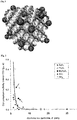
- FIG. 1 is a schematic diagram showing a metallic nanoparticle dispersion embedded in porous silica in a porous catalyst composition of the present invention and showing the structure of a metallic nanoparticle dispersion in which at least one or more mesopores are formed between metallic nanoparticles.
- FIG. 2 shows carbon monoxide oxidation catalytic activity depending on the particle size and support material of a gold nanoparticle catalyst in the gold nanoparticle catalyst of the related art and shows that a silica support is known to have no special advantages in terms of low-temperature activity.
- FIG. 1 is a schematic diagram showing a metallic nanoparticle dispersion embedded in porous silica in a porous catalyst composition of the present invention and showing the structure of a metallic nanoparticle dispersion in which at least one or more mesopores are formed between metallic nanoparticles.
- FIG. 2 shows carbon monoxide oxidation catalytic activity depending on the particle size and support material of a gold nanoparticle catalyst in the gold nanoparticle catalyst of
- FIG. 3 shows a transmission electron microscope image of a gold nanoparticle catalyst dispersed and embedded in porous silica in a metallic nanoparticle catalyst composition according to an embodiment of the present invention. It can be seen from FIG. 3 that the gold nanoparticle catalyst has a structure in which gold nanoparticles are embedded between a number of mesopores in non-uniform distribution.
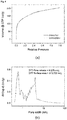
- FIG. 4(a) and 4(b) show the Ar adsorption curve of a gold nanoparticle catalyst composition dispersed in the porous silica and a pore volume distribution depending on pore size in the metallic nanoparticle catalyst composition according to the embodiment of the present invention.
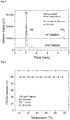
- FIG. 5 shows a gas chromatographic curve of a carbon monoxide room-temperature oxidation experiment using the gold nanoparticle catalyst embedded in the porous silica in the metallic nanoparticle catalyst composition according to the embodiment of the present invention. The carbon monoxide oxidation conversion effects can be confirmed from FIG. 4(a), FIG. 4(b) , and FIG. 5.
- FIG. 5 shows a gas chromatographic curve of a carbon monoxide room-temperature oxidation experiment using the gold nanoparticle catalyst embedded in the porous silica in the metallic nanoparticle catalyst composition according to the embodiment of the present invention. The carbon monoxide oxidation conversion effects can be confirmed from FIG. 4(a), FIG. 4(b) , and FIG. 5.
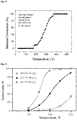
- FIG. 6 shows a carbon monoxide conversion rate depending on the temperature of a carbon monoxide catalytic oxidation reaction using the gold nanoparticle catalyst embedded in the porous silica in the metallic nanoparticle catalyst composition according to the embodiment of the present invention. It can be confirmed from FIG. 6 that the carbon monoxide conversion performance is consistently provided at an excellent level from room temperature to a high-temperature range.
- FIG. 7 shows a gas chromatographic curve of a carbon monoxide room-temperature oxidation experiment using a catalyst in which the gold nanoparticles are dispersed in porous alumina by using alumina as a support in the metallic nanoparticle catalyst composition according to the embodiment of the present invention. It can be confirmed from FIG. 7 that even in the catalyst of the present invention using alumina, which is one of irreducible oxides, as a support, the carbon monoxide oxidation conversion effect is excellent in a room-temperature and normal-pressure atmosphere.
- FIG. 8 shows a gas chromatographic curve of a carbon monoxide room-temperature oxidation experiment using a catalyst in which the gold nanoparticles are dispersed in porous titanium oxide by using titanium oxide as a support in the metallic nanoparticle catalyst composition according to the embodiment of the present invention. It can be confirmed from FIG. 8 that even the catalyst of the present invention using titanium oxide, which is one of reducible oxides as well as silica and alumina that are irreducible oxides, also, as a support, as has the carbon monoxide oxidation conversion effect in a room-temperature and normal-pressure atmosphere.
- the catalyst of the present invention using the heterogeneous oxide mixture as a support also has the carbon monoxide oxidation conversion effects in a room-temperature and normal-pressure atmosphere as in the effects exhibited by a single type of oxide such as silica, alumina, or titanium oxide.
- FIG. 10 is a graph showing carbon monoxide concentration change rate over time in a carbon monoxide removal performance experiment of an air purifier including the metallic nanoparticle catalyst composition according to the embodiment of the present invention. According to the experimental results according to the embodiment, it could be confirmed that an air cleaning filter including the catalysts of the present invention removed carbon monoxide having a concentration of 1000 ppm up to 100 ppm or less.
- FIG. 11 shows a conversion rate depending on the temperature of a methane oxidation reaction using the gold nanoparticle catalyst embedded in the porous silica in the metallic nanoparticle catalyst composition according to the embodiment of the present invention. It can be confirmed from FIG. 11 that excellent performance is exhibited in which methane oxidation conversion occurs from a relatively low temperature and substantially all the methane is oxidized from 370°C.
- FIG. 13 shows the results of a hydrogen oxidation reaction using the gold nanoparticle catalyst embedded in the porous silica in the gold nanoparticle catalyst composition according to the embodiment of the present invention. It can be confirmed from FIG. 13 that the hydrogen oxidation conversion performance is excellently ensured from room temperature.
- FIG. 14 is an analysis graph obtained by measuring, through ultraviolet absorbance analysis, changes in concentration over time after the catalyst powder of the present invention is put into an aqueous solution of benzene, toluene, ethylbenzene, or xylene in order to confirm the oxidation catalytic reactivity of volatile organic compounds (VOC) in a room-temperature and normal-pressure atmosphere in the metallic nanoparticle catalyst composition according to the embodiment of the present invention.
- VOC volatile organic compounds
- the concentration of the VOC has decreased to 20 ppm or less in about 30 minutes and has dropped to 5 ppm or less after 200 minutes.
- aqueous solutions of benzene, toluene, ethylbenzene, and xylene, which aromatic compounds a very strong smell was emitted even in an olfactory test, but the smell was hardly confirmed at the last measurement after about 3 hours of reaction.
- excellent VOC oxidation performance is ensured at room temperature and normal pressure.
- FIG. 15 is a graph obtained by measuring the interatomic distance distribution in the catalysts of the present invention using an extended X-ray absorption fine structure (EXAFS) analysis method for the catalyst reactivity improvement mechanism analysis of the present invention. From this graph, in the catalyst according to the present invention, the peak of a distance (a radial distribution function (RDF) corresponding to less than 2 ⁇ ) of an Au-O bond that cannot appear in natural gold was found, and it was confirmed that the shape of a peak corresponding to 'Au-Au' was asymmetrical. The analysis thereof is described in the detailed description of the present specification.
- EXAFS extended X-ray absorption fine structure
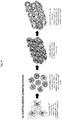
- FIG. 16 illustrates an existing metal nanocage preparing process.
- an existing catalyst preparing method in which nanoparticles surrounded by ligands are bound together with amphiphilic molecules ( FIG. 16-a )
- oxide precursors it is difficult for oxide precursors to form oxides near the nanoparticles, and a spaced distance is present even if the oxides contract after calcination.
- a gap is eventually present at an interface between the nanoparticles and the support, so that a metal nanocage that cannot be stressed is formed (FIG. 16-d).
- This formation is summarized and expressed as a simple figure. This can be supported by the catalyst reactivity improvement mechanism analysis of the present invention with reference to FIG. 15 .
- FIG. 17 illustrates the catalyst preparing process according to the present invention.
- the oxide precursors can be directly functionalized with ligands capable of inducing the oxide precursors on the surfaces of the nanoparticles to form the oxides very close to the surfaces of the nanoparticles.
- the oxides contract and compressive stress is applied to the nanoparticles, so that a catalyst structure having a structure in which no gap is present between the nanoparticles and the support is formed. This formation is summarized and expressed as a simple figure. (FIG. 17-d).
- the process of replacing an existing ligand (or capping agent) with a new ligand having a functional group having a higher affinity with the corresponding nanoparticle in this way is generally expressed as a ligand exchange.
- FIG. 18 shows, in the catalyst according to the embodiment of the present invention, results obtained by measuring the energy level of gold particles (hereinafter referred to as Au4f) in catalysts synthesized differently depending on the molecular weight of PEG (a polymer used as one of the embodiments of the present invention) used for preparing the catalysts by the X-ray photoelectron spectroscopy (XPS).
- Au4f gold particles
- PEG a polymer used as one of the embodiments of the present invention
- XPS X-ray photoelectron spectroscopy
- a graph (a) at the top shows the energy level of a gold particle (Au4f) in a catalyst prepared using PEG having a molecular weight of 1 kDa
- a graph (b) shows the energy level of a gold particle measured by targeting a catalyst prepared using a molecular weight of 2 kDa
- a graph (c) shows the energy level of a gold particle measured by targeting a catalyst prepared using PEG having a molecular weight of 5 kDa.
- a graph (d) at the bottom is a graph obtained by measuring the energy level of Au particles dispersed in a nanocage prepared according to the existing metallic nanoparticle catalyst process.
- the present invention provides a porous catalyst composition including an oxide matrix structure having mesopores and micropores; and metallic nanoparticles embedded in the oxide matrix structure having the mesopores and micropores.
- the present invention provides a metallic nanoparticle dispersion in a form in which an oxide such as silica, alumina, or titanium oxide, which is an oxide that can guarantee thermal and chemical stability, or a mixture thereof, is formed as a matrix structure to embed the metallic nanoparticles, and the mesopores and micropores are secured in the matrix structure so that a reactant of a catalytic reaction can easily contact the surfaces of the metallic nanoparticles.
- the present invention provides a method for preparing the porous catalyst composition.
- the 'metallic nanoparticles' means nanoparticles including at least one of a metal and a metal oxide
- the metallic nanoparticles can be broadly interpreted as metallic nanoparticles under conditions that do not conflict with each other.
- the oxide matrix structure may be at least one of reducing oxides and irreducible oxides.
- the porous catalyst composition according to the embodiment of the present invention may have a nanocage form in which the metallic nanoparticles embedded in the matrix structure are uniformly spread and fixed inside the structure by the mesopores, the contact between the metallic nanoparticles is blocked, and sufficient pores are open to allow entry and exit of reaction substance molecules introduced from the outside.
- a structure in which the metal or metal oxide nanoparticles is non-uniformly or non-hierarchically dispersed may be formed by the mesopores.
- the mesopores may be formed at the same level as or at a higher level as that of the micropores.
- the metallic nanoparticles are dispersed at intervals of about 10 to 500 nm and fixed to the structure, and the mesopores or micropores are characterized by being formed in a body centered cubic (BCC) structure between the metallic nanoparticles.
- BCC body centered cubic
- the method for preparing the porous catalyst composition according to the present invention broadly includes a step of binding a polymer to surfaces of the metallic nanoparticles stabilized by being covered with a stabilizer to functionalize the metallic nanoparticles; a step of mixing the functionalized metallic nanoparticles and an activator with an oxide precursor in a solution to synthesize a metallic nanoparticle dispersion embedded in a porous support; and calcining the metallic nanoparticle dispersion at 400 to 500°C.
- the metal of the metallic nanoparticles may be, for example, at least one or more selected from a group consisting of metals including gold, silver, nickel, copper, palladium, platinum, rhodium, and the like, and metal oxides, and the metallic nanoparticles may be prepared by the method described in the present specification or may be prepared by using a commercially available material or by a method known to those having ordinary skill.
- the 'binding a polymer to surfaces of the nanoparticles to functionalize the nanoparticles' includes a method of attaching a polymer capable of inducing an oxide precursor through several steps in addition to directly functionalizing the polymer that can induce the oxide precursor on the surfaces of the nanoparticles.
- the oxide precursor refers to at least one or more oxide precursors for forming at least one or more oxides selected from a group consisting of silica, alumina, titanium oxide, iron oxide, cerium oxide, tungsten oxide, cobalt oxide, magnesium oxide, zirconium oxide, calcium oxide, sodium oxide, and manganese oxide.
- the stabilizer of the metallic nanoparticles may be one or more of oleylnamine, sodium citrate, chitosan, polyvinyl alcohol, Polyvinyl Pyrrolidone, and polyDADMAC but is not limited thereto.
- the length of the pores can be adjusted by adjusting the molecular weight of the polymer used for the functionalization, and the molecular weight can be selected in a range of 200 to 20 k Da, more preferably, can be selected from a range of 300 to 10 k Da.
- the molecular amount of the polymer in this way, the length of the pores can be adjusted, and as a result, the volume of the pores can also be adjusted.
- the polymer used for the functionalization is a hydrophilic polymer and may be selected from polymers capable of having charges through ionization or hydrogen bonds in an aqueous solution.
- the polymer used for the functionalization may be at least any one or more selected from thiolated polymers such as poly(N-isopropylacrylamide) (PNIPAM), polyacrylamide (PAM), poly(2-oxazoline) (POx), polyethylenimine (PEI), polyacrylic acid (PAA), polymethacrylate, other acrylic polymers, polyethylene glycol (PEG), polyethylene oxide (PEO), polyvinyl alcohol (PVA), polyvinylpyrrolidone (PVP), and the like.
- PNIPAM poly(N-isopropylacrylamide)
- PAM polyacrylamide
- POx poly(2-oxazoline)
- PEI polyethylenimine
- PAA polyacrylic acid
- PMMA polymethacrylate
- other acrylic polymers polyethylene glycol (PEG
- the activator is amphiphilic molecules that form a spherical micelle and is preferably a block copolymer of a hydrophilic chain and a hydrophobic chain.
- the activator may be at least one or more of Pluronic F127, Pluronic F108, Pluronic F87, Pluronic F68, Pluronic F38, and Brij but is not limited thereto.
- the Pluronic F127 and the like are block copolymers of a hydrophilic polyethylene oxide (PEO) chain and a hydrophobic polyphenylene oxide (PPO) chain, and a Brij-based surfactant can be used as an activator in the present invention because the surfactant has a structure having a hydrocarbon chain.
- the activator since the activator has a longer PEO chain than the PPO chain, the activator is very soluble in water and forms a spherical micelle in an aqueous solution, and may react with a silica precursor to form porous silica having pores of a BCC structure.
- the method for preparing a porous catalyst composition according to the present invention has the effect that it is possible to easily adjust the ratio of mesopores and micropores or total porosity in the porous catalyst composition of the present invention by adjusting the amount of the activator.
- the activator in the mixture of the functionalized nanoparticles and the activator, is preferably selected in a weight ratio of 10 to 99%.
- the oxide precursor may be at least one or more oxide precursors for forming at least one or more oxides selected from a group consisting of silica, alumina, titanium oxide, iron oxide, cerium oxide, tungsten oxide, cobalt oxide, magnesium oxide, zirconium oxide, calcium oxide, sodium oxide, and manganese oxide.
- a silica precursor, an alumina precursor, a titanium oxide precursor, and the like will be described as examples.
- the silica precursor may be tetramethylsilicate, tetraethyl orthosilicate, tetrapropylorthosilicate, tetrabutylorthosilicate, tetrachlorosilane, sodiumsilicate, tetraisopropoxysilane, methoxytriethoxysilane, dimethoxydiethoxysilane, ethoxytrimethoxysilane, methyltrimethoxysilane, methyltriethoxysilane, ethyltriethoxysilane, dimethyldimethoxysilane, dimethyldiethoxysilane, diethyldiethoxysilane, tetramethoxymethylsilane, tetramethoxyethylsilane, tetraethoxymethylsilane, or the like, and tetraethylorthosilicate
- the alumina precursor may be selected from the group consisting of aluminum ethoxide, aluminum nitrate nonahydrate, aluminum fluoride trihydrate, aluminum phosphate hydrate, aluminum chloride hexahydrate, aluminum hydroxide, aluminum sulfate hexadecahydrate, aluminum ammonium sulfate dodecahydrate, and combinations thereof, and aluminum ethoxide may be preferably used.
- the titanium oxide precursor may be selected from a group consisting of titanium tetraisopropoxide, titanium butoxide, titanium ethoxide, titanium oxysulfate, titanium chloride, and combinations thereof, and titanium tetraisopropoxide may be preferably used.
- the molecular weight of the polymer used for the functionalization and the mixing ratio of the activator can be used to adjust the pores of the catalyst.
- An effect is triggered that as the molecular weight of the polymer increases, the length of the micropores coupled to the nanoparticle surfaces increases, and an effect is triggered that as the mixing ratio of the activator increases, the volume of the mesopores and the volume of the micropores directly coupled to the mesopores increase and thus the porosity of the entire structure increases.
- an activator such as Pluronic F127
- oleylamine was selected as a stabilizer, and a solution composed of 60 ml of tetralin, 60 ml of oleylamine, and 0.6 g of HAuCl ⁇ H 2 O was prepared by being stirred at room temperature for 10 minutes. 6 mmol of tetrabutylammonium bromide (TBAB), 6 ml of tetralin, and 6 ml of oleylamine were subjected to ultrasonic pulverization and mixed together, and rapidly added into the solution. Then, the solution was further stirred at room temperature for an hour, ethanol was added thereto, and then centrifugation was performed to precipitate gold nanoparticles.
- TBAB tetrabutylammonium bromide
- 6 ml of tetralin 6 ml of oleylamine were subjected to ultrasonic pulverization and mixed together, and rapidly added into the solution. Then, the solution was further stirred at room temperature for an hour
- the gold nanoparticle precipitate was re-dispersed with hexane, ethanol was added, and centrifugation was performed.
- the 4-nm gold nanoparticles formed in this way were dispersed in 100 ml toluene as being formed.
- the gold nanoparticles dispersed in toluene in Step 1-1 were further diluted with 100 ml of tetrahydrofuran, a thiolated polymer was selected to bind the polymer to the surfaces of the gold nanoparticles to functionalize the gold nanoparticles, and 1 g of 1 kDa thiolated PEG was added. After this was stirred, hexane was added and centrifugation was performed to precipitate gold nanoparticles (4-Au-PEG) functionalized with PEG. The 4-Au-PEG collected by the precipitation was dried and then dispersed in water.
- Step 2 Synthesis of metallic nanoparticle dispersion embedded in porous silica by mixing with silica precursor in solution in which functionalized metallic nanoparticles and activator are dispersed.
- the red precipitate prepared in the previous step was washed with water, dried, and then calcined at a temperature of 450°C to remove PEG and Plronic F127 polymers, thereby preparing a gold nanoparticle catalyst embedded in the porous silica.
- the mixture of F127 used as the activator and the gold nanoparticles was selected as a weight ratio of 9:2.
- the mixing ratio is exemplary and can be optionally and easily adjusted.
- porous catalyst compositions were prepared with different types of oxide precursors by the following method.
- 0.10 g of gold nanoparticles functionalized with PEG (4-Au-PEG), which was prepared in the same manner as in [Step 1-2] of the above Example 1, and 0.44 g of Pluronic F127 were prepared and uniformly dispersed in a mixed solution of 0.68 mL of 37% hydrochloric acid and 17.05 mL of ethanol, and then, 2.28 g of titanium tetraisopropoxide was added to the dispersion liquid. Then, the dispersion liquid of the mixture was stirred for 3 hours, maintained without stirring at room temperature for 24 hours, and then dried at a temperature of 60°C for 3 hours to prepare a red solid. Thereafter, the red solid was washed with water, dried, and calcined at a temperature of 400°C to remove PEG and Plronic F127 polymers, thereby preparing a gold nanoparticle catalyst embedded in a porous titanium oxide support.
- 0.10 g of gold nanoparticles functionalized with PEG (4-Au-PEG), which was prepared in the same manner as in [Step 1-2] of the above Example 1, and 0.44 g of Pluronic F127 were prepared and uniformly dispersed in a mixed solution of 0.68 mL of 37% hydrochloric acid and 17.05 mL of ethanol, and then, 0.83 g of tetraethylosilicate (TEOS) serving as a silica precursor and 1.13 g of titanium tetraisopropoxide serving as a titanium oxide precursor were added to the dispersion liquid.
- TEOS tetraethylosilicate
- the dispersion liquid of the mixture was stirred for 3 hours, maintained without stirring at room temperature for 24 hours, and then dried at a temperature of 60°C for 3 hours to prepare a red solid. Thereafter, the red solid was washed with water, dried, and calcined at a temperature of 400°C to remove PEG and Plronic F127 polymers, thereby preparing a gold nanoparticle catalyst embedded in a silica-titanium oxide mixed support.
- the gold nanoparticle dispersion was prepared in a form in which titanium oxide, which is one of reducible oxides other than silica and alumina that are irreducible oxides that can guarantee the thermal and chemical stability, is used as the matrix structure to protect the gold nanoparticles, and the pores were secured in the matrix structure so that the reactant of the catalytic reaction can contact the surfaces of the gold nanoparticles. That is, the catalysts in the form of the gold nanoparticles confined inside various oxide nanocages are synthesized, and the performance thereof is confirmed through various catalytic reactions below.
- the low-temperature carbon monoxide (CO) oxidation reaction is a reaction preferred by those having ordinary skill belonging to this field, and almost all the catalysts prepared are tested with this reaction.
- gold nanoparticle catalyst of the related art it is known that gold nanoparticles exhibit very high activity when a reducible metal oxide such as TiO 2 or Fe 2 O 3 is used as a support, but has little or very low activity at low temperature when an irreducible oxide such as silica (SiO 2 ) or alumina (Al 2 O 3 ) is used as a support. That is, as shown in the graph of FIG.
- the existing gold nanoparticle catalyst has the highest carbon monoxide oxidation rate when TiO 2 is used and then has the higher carbon monoxide oxidation rate in order of Fe 2 O 3 , MgAl 2 O 4 , and Al 2 O 3 ( Lopez, N. et al., J. Catalysis, 2004, 223, 232-235 ).
- the content of gold in the catalyst as confirmed by inductively coupled plasma optical emission spectrometer (IPC-OES) was 5.56 wt%.
- the content of gold can be controlled by adjusting the mixing ratio of 4-Au-PEG and Pluronic F127 in the above Step 2.
- an adsorption curve as shown in FIG. 4(a) can be obtained.
- the pore distribution as shown in FIG. 4(b) can be obtained.
- the pore volume per unit mass of the catalyst composition is 0.278 cc/g, and the specific surface area is about 916 m 2 /g, which are results similar to those of general porous silica synthesized using a pluronic polymer. It can be confirmed that no significant deterioration in porosity performance occurs despite the embedment of the gold nanoparticles.
- a gas chromatographic curve as shown in FIG. 5 can be obtained. This is a case where a carbon monoxide oxidation experiment is performed under the condition that a gas containing 1% carbon monoxide and 20% oxygen was allowed to flow through 100 ml of a catalyst at a flow rate of 100 cc (STP) per minute. The remaining amount of carbon monoxide is not detected by a measurement sensor used. As a result, it can be confirmed that substantially all the carbon monoxide is converted into carbon dioxide.
- the catalyst composition was heated to 350°C to activate the catalyst while the mixing ratio of the gas and the flow rate were maintained as described above, and then cooled at room temperature.
- the conversion rate distribution as shown in FIG. 6 can be obtained. It can be confirmed from this that the catalyst according to the embodiment of the present invention substantially maintains a conversion rate of 100%.
- a gas chromatographic curve as shown in FIG. 8 could be obtained.
- the experiment was performed under the condition that a gas containing 1% carbon monoxide and 20% oxygen was allowed to flow through 100 mg of the titanium oxide support catalyst composition at a flow rate of 100 cc (STP) per minute.
- STP cc
- the high-efficiency low-temperature catalytic reaction effects of the present invention are effective not only in a case where an irreducible oxide such as silica or alumina is used as a support but also in a case where a reducible oxide is used as a support.
- a porous silica catalyst powder sample prepared according to the embodiment of the present invention 50 mg was prepared. Then, the catalyst structure powder sample was uniformly applied to a front surface of a first filter unit for removing foreign substances from the introduced air with a brush to form a second filter unit.
- the first filter unit used in this case was 11.8 cm ⁇ 5.7 cm, and an ultrafine filter having a pore size of 0.3 ⁇ m was used.
- the air purification filter prepared in this way was mounted on an air purifier to measure air purification performance or the like.
- the air purification performance was measured by using a commercially available air purifier made (Model name: AP139MWA) by LG Electronics but without providing any other filter means other than an air purification filter of this air purifier.
- an air purification filter which was not provided with the second filter unit by using the material of the ultrafine filter used in the first filter unit in the previous example but not applying the catalysts of the present invention, was prepared, and the performance thereof was measured under the same experimental conditions.
- the carbon monoxide (CO) oxidation was performed within about 75,000 cm3 of a quasi-enclosed cleanness test space, and an air purification filter applied with a catalyst according to the embodiment of the present invention was mounted on an air purifier, and a carbon monoxide generation source and a carbon monoxide measuring instrument were installed on one side of the cleanness test space. Then, when the carbon monoxide concentration from the carbon monoxide generation source was 1,000 ppm, the air purifiers according to the examples and the comparative example were operated to measure the gas concentration in the space in units of a predetermined time. Experimental measurements were carried out at atmospheric pressure to create an environment that can be easily encountered in everyday life and operated at room temperature for 900 seconds (15 minutes). Incompletely burned charcoal was used as the carbon monoxide generation source, and a commercially available known device was used as the carbon monoxide measuring instrument.
- a circle-marked line represents the performance of the air purifier using the air purification filter including the catalysts of the present invention
- a square-marked line represents the performance of the air purifier using the air purification filter according to the comparative example.
- An oxidation reaction experiment of methane gas depending on temperature may be performed using the catalyst composition according to the embodiment of the present invention, and the performance thereof may be measured by the gas chromatography.
- As performance experiment conditions in a case where a mixed gas of 6,000 ppm of methane, 19.4% of oxygen, and 80% of helium is allowed to flow through 100 mg of catalyst at 100 cc (STP) per minute, the space velocity is about 50,000 times the catalyst volume per hour.
- STP cc
- the porous catalyst of gold nanoparticles according to the embodiment of the present invention has the effect of lowering the oxidation temperature of methane by about 100°C.
- the catalysts of the present invention it is possible to provide the effect of removing methane, which is emitted without completely burned in internal combustion engines for natural gas, at a relatively low temperature, thereby reducing the emission of greenhouse gases and improving energy efficiency.
- the catalysts of the present invention have the effect of greatly expanding the available region of the gold nanoparticle catalyst due to structurally guaranteed high stability.
- the oxidation catalytic reactivity, in a room-temperature and normal-pressure atmosphere, of benzene, toluene, ethylbenzene, and xylene that are typical volatile organic compounds (VOC) was confirmed using the catalyst composition according to the embodiment of the present invention.
- an experiment was performed by an aerobic oxidation method of measuring an aerobic oxidation reaction in an aqueous solution rather than a gas-phase method due to the limited circumstances of equipment construction.
- Each volatile organic compound was prepared as 30 ml of 50 ppm aqueous solution, was filled with 200 mg of the catalyst composition, and enclosed.
- an oxygen balloon (O 2 balloon) was used as the oxygen source.
- the oxidation performance using the catalyst composition of the present invention can be usefully used for the oxidation reaction of liquids such as alcohol in addition to the oxidation reaction of various gases.
- liquids such as alcohol
- platinum group metals such as palladium and ruthenium oxide or nanoparticle catalysts such as gold can be used not only used to oxidize and convert gases such as carbon monoxide, hydrogen, and methane but also used to oxidize and convert liquids such as alcohol.
- precious metals such as gold are widely known to be chemically inert substances and have resistance to s oxidation.
- gold particles reduced to nano-isize have activity in various reactions when supported with a high degree of dispersion on a support such as Co 3 O 4 , Fe 2 O 3 , or TiO 2 .
- a support such as Co 3 O 4 , Fe 2 O 3 , or TiO 2 .
- the content obtained by analyzing the reaction phenomenon of the porous catalyst composition according to the present invention (hereinafter referred to as 'the catalysts of the present invention' or 'catalysts according to the present invention'), particularly, the mechanism of improving catalytic reactivity showing excellent catalytic effects at room temperature will be described as follows.
- the catalysts of the present invention were analyzed using an extended X-ray absorption fine structure (EXAFS) analysis method that is a technique capable of analyzing the X-ray absorption characteristics to measure the interatomic distance distribution.
- EXAFS extended X-ray absorption fine structure
- RDF radial distribution function
- the present inventor found that the shape of the peak corresponding to 'Au-Au' is asymmetrical in the graph for the extended X-ray absorption fine structure analysis, and could confirm that the following analysis resulting from the fitting of two Gaussian functions was very appropriate by fitting the peak with a plurality of Gaussian functions and performing statistical processing on this.
- FIG. 16 which is a schematic diagram of the existing nanocage structure catalyst preparing method, it can be understood that Au nanoparticles are surrounded by several ligands (oleylamine) and are encapsulated inside the micelles of the amphiphilic molecules due to the physical adsorption or hydrophobic interaction between the ligands and the hydrophobic polymer portions (PPO) of the amphiphilic molecules. That is, as shown in FIG.
- a nanostructure is formed due to the physical adsorption between the ligands and the hydrophobic polymer portions (PPO) of the amphiphilic molecules while the Au nanoparticles and hydrophilic polymer portions (PEO) of the amphiphilic molecules are slightly separated from each other, then the nanostructure forms a condensed state (refer to FIG. 16(b)) as oxide precursors are induced in the hydrophilic polymer portions (PEO) of the amphiphilic molecules due to an electrostatic force or the like, then the oxide precursors are prepared as a polymer (refer to FIG.
- PEG polymer
- the three-dimensional micropore structure of the support is determined depending on the selection of micelles (build blocks) that affect the formation of pores along with the synthesis of the porous oxides.
- suitable amphiphilic molecules are selected so as to induce a support structure capable of applying an appropriate stress to the Au nanoparticles, the high-efficiency room-temperature and normal-pressure catalyst performance as in the present invention cannot be expected.
- the X-ray photoelectron spectroscopy is an analysis method in which when the X-rays are incident on and absorbed by a substance using X-rays as a light source, some of the electrons excited by the energy of the X-rays are released out of the substance and the kinetic energy of the electrons are analyzed.
- the binding energy of the electrons can be known, and the binding energy of each atom has a specific value.
- the ingredients of the substance can be known.
- the binding energy slightly varies depending on the surrounding environment. Therefore, the atomic composition of the substance and the binding state of electrons can be investigated through this variation.
- FIG. 18 shows the results obtained by measuring the energy level of Au4f (7/2, 5/2) by this analysis method. It can be confirmed from FIG. 18 that the energy (eV) of Au4f5/2 and Au4f7/2 is shifted to the right toward a graph of 1 kDa ( FIG. 18(c) ), a graph of 2 kDa (refer to FIG.18(b) ), and a graph of 5 kDa (refer to FIG.
- the energy level of the catalyst particles can be controlled as necessary by appropriately combining various materials used in the synthesis of the catalyst structure, and provides technical means for artificially designing and preparing catalysts having specific reactivity and selectivity.
- the catalyst preparing method of the present invention provides technical means capable of physically controlling the energy level or bandgap energy of specific catalyst substances, thereby artificially inducing catalytic activity that is not present in the natural world.
Landscapes
- Chemical & Material Sciences (AREA)
- Engineering & Computer Science (AREA)
- Chemical Kinetics & Catalysis (AREA)
- Materials Engineering (AREA)
- Organic Chemistry (AREA)
- Environmental & Geological Engineering (AREA)
- Analytical Chemistry (AREA)
- Biomedical Technology (AREA)
- Health & Medical Sciences (AREA)
- General Chemical & Material Sciences (AREA)
- Oil, Petroleum & Natural Gas (AREA)
- Physics & Mathematics (AREA)
- Thermal Sciences (AREA)
- Combustion & Propulsion (AREA)
- Catalysts (AREA)
- Exhaust Gas Treatment By Means Of Catalyst (AREA)
Applications Claiming Priority (2)
| Application Number | Priority Date | Filing Date | Title |
|---|---|---|---|
| KR20190033141 | 2019-03-22 | ||
| PCT/KR2020/003914 WO2020197200A1 (fr) | 2019-03-22 | 2020-03-22 | Catalyseurs à nanoparticules métalliques incorporés dans un support d'oxyde poreux, qui présentent une activité catalytique élevée même à basses températures |
Publications (2)
| Publication Number | Publication Date |
|---|---|
| EP3936231A1 true EP3936231A1 (fr) | 2022-01-12 |
| EP3936231A4 EP3936231A4 (fr) | 2022-12-28 |
Family
ID=72608849
Family Applications (1)
| Application Number | Title | Priority Date | Filing Date |
|---|---|---|---|
| EP20778962.9A Pending EP3936231A4 (fr) | 2019-03-22 | 2020-03-22 | Catalyseurs à nanoparticules métalliques incorporés dans un support d'oxyde poreux, qui présentent une activité catalytique élevée même à basses températures |
Country Status (6)
| Country | Link |
|---|---|
| US (1) | US12485403B2 (fr) |
| EP (1) | EP3936231A4 (fr) |
| JP (1) | JP7306750B2 (fr) |
| KR (2) | KR102640434B1 (fr) |
| CN (1) | CN113613786B (fr) |
| WO (2) | WO2020197026A1 (fr) |
Cited By (2)
| Publication number | Priority date | Publication date | Assignee | Title |
|---|---|---|---|---|
| EP4501451A4 (fr) * | 2022-03-28 | 2025-07-23 | Quantum Cat Co Ltd | Catalyseur composite comprenant des nanoparticules d'or imprégnées dans un support poreux |
| EP4501452A4 (fr) * | 2022-03-28 | 2025-07-23 | Quantum Cat Co Ltd | Catalyseur à structure composite poreuse comprenant une couche de revêtement de catalyseur de nanoparticules d'or imprégnées dans un support poreux |
Families Citing this family (9)
| Publication number | Priority date | Publication date | Assignee | Title |
|---|---|---|---|---|
| CN114160130B (zh) * | 2021-12-21 | 2024-03-19 | 黑龙江省能源环境研究院 | 一种限域纳米金有序多孔整体催化剂及其制备方法 |
| WO2023191463A1 (fr) * | 2022-03-28 | 2023-10-05 | 주식회사 퀀텀캣 | Système de filtre de climatisation pour éliminer des substances nocives |
| KR102901963B1 (ko) * | 2022-03-28 | 2025-12-18 | 주식회사 퀀텀캣 | 다공성 지지체에 함입된 금 나노입자를 포함하는 복합체 촉매 |
| KR102901964B1 (ko) * | 2022-03-28 | 2025-12-18 | 주식회사 퀀텀캣 | 다공성 지지체에 함입된 금 나노입자 촉매 코팅층를 포함하는 다공성 복합 구조체 촉매 |
| CN115212877A (zh) * | 2022-06-28 | 2022-10-21 | 深圳市添金利新材料科技有限公司 | 一种耐热性纳米催化剂及其光化学驱动制备方法 |
| KR102806233B1 (ko) * | 2022-08-25 | 2025-05-15 | 주식회사 퀀텀캣 | 코어-쉘 구조의 복합체 입자 및 이의 제조방법 |
| WO2024107016A1 (fr) * | 2022-11-17 | 2024-05-23 | 주식회사 퀀텀캣 | Catalyseurs hybrides poreux et leur procédé de fabrication |
| WO2025071313A1 (fr) * | 2023-09-26 | 2025-04-03 | 주식회사 퀀텀캣 | Appareil d'élimination de monoxyde de carbone et procédé d'élimination de monoxyde de carbone l'utilisant |
| CN118079919A (zh) * | 2024-03-10 | 2024-05-28 | 河南工业大学 | 四氧化三铁/四氧化三钴微米花状复合材料及其制备方法 |
Family Cites Families (19)
| Publication number | Priority date | Publication date | Assignee | Title |
|---|---|---|---|---|
| US1917179A (en) * | 1930-12-12 | 1933-07-04 | Carbide & Carbon Chem Corp | Preparation of allyl alcohol |
| US6762143B2 (en) | 1999-09-07 | 2004-07-13 | Abb Lummus Global Inc. | Catalyst containing microporous zeolite in mesoporous support |
| US7081433B2 (en) * | 2003-03-12 | 2006-07-25 | The United States Of America As Represented By The Secretary Of The Navy | Catalytic three dimensional aerogels having mesoporous nanoarchitecture |
| JP2005287507A (ja) * | 2004-03-10 | 2005-10-20 | Japan Science & Technology Agency | カチオン性金ナノ粒子及びポリエチレングリコール修飾カチオン性金ナノ粒子並びにそれらの核酸との複合体 |
| CA2499782A1 (fr) * | 2005-03-07 | 2006-09-07 | Queen's University At Kingston | Catalyseur a base de silicate et capteur de silicate fonctionnalises par un procede sol-gel |
| JP4784727B2 (ja) * | 2005-03-10 | 2011-10-05 | 独立行政法人産業技術総合研究所 | 金属超微粒子を担持した多孔質複合体 |
| FR2886636B1 (fr) * | 2005-06-02 | 2007-08-03 | Inst Francais Du Petrole | Materiau inorganique presentant des nanoparticules metalliques piegees dans une matrice mesostructuree |
| KR100900919B1 (ko) * | 2007-06-04 | 2009-06-03 | 서울시립대학교 산학협력단 | 제올라이트 골격을 갖는 메조포러스 물질의 제조방법 |
| KR101091770B1 (ko) * | 2008-06-03 | 2011-12-12 | 한국외국어대학교 연구산학협력단 | 메조포러스 실리카 물질 및 그 제조방법 |
| JP5299992B2 (ja) * | 2008-07-14 | 2013-09-25 | 独立行政法人産業技術総合研究所 | 金属ナノ粒子触媒及び酸素酸化方法 |
| FR2969513B1 (fr) * | 2010-12-22 | 2013-04-12 | IFP Energies Nouvelles | Procede de preparation d'un materiau spherique a porosite hierarchisee comprenant des particules metalliques piegees dans une matrice mesostructuree |
| US8697129B2 (en) * | 2011-03-02 | 2014-04-15 | Imra America, Inc. | Stable colloidal gold nanoparticles with controllable surface modification and functionalization |
| JP6188185B2 (ja) * | 2012-07-30 | 2017-08-30 | 国立研究開発法人産業技術総合研究所 | TiO2複合化多孔質シリカ光触媒粒子の製造方法及びTiO2複合化多孔質シリカ光触媒粒子 |
| KR101802987B1 (ko) * | 2014-12-11 | 2017-12-28 | 전북대학교산학협력단 | 메조포러스 실리카의 제조방법 |
| US11565245B2 (en) * | 2016-09-28 | 2023-01-31 | Korea Advanced Institute Of Science And Technology | Gold nanoparticle superlattice embedded in porous silica and method for manufacturing same |
| JP6208316B1 (ja) * | 2016-11-24 | 2017-10-04 | アドバンス理工株式会社 | 金属ナノ粒子担持方法及びその装置 |
| WO2018155432A1 (fr) * | 2017-02-23 | 2018-08-30 | 株式会社Nbcメッシュテック | Corps de catalyseur mésoporeux et appareil de traitement de gaz l'utilisant |
| CN108246350A (zh) * | 2018-01-10 | 2018-07-06 | 武汉理工大学 | 一种包覆贵金属的介孔分子筛催化剂材料及其原位制备方法 |
| CN108311094A (zh) * | 2018-03-02 | 2018-07-24 | 奥为(天津)环保科技有限公司 | 一种快速合成负载型金属纳米颗粒的方法 |
-
2019
- 2019-11-01 WO PCT/KR2019/014649 patent/WO2020197026A1/fr not_active Ceased
-
2020
- 2020-03-22 CN CN202080022649.7A patent/CN113613786B/zh active Active
- 2020-03-22 JP JP2021559487A patent/JP7306750B2/ja active Active
- 2020-03-22 KR KR1020217030364A patent/KR102640434B1/ko active Active
- 2020-03-22 US US17/292,986 patent/US12485403B2/en active Active
- 2020-03-22 WO PCT/KR2020/003914 patent/WO2020197200A1/fr not_active Ceased
- 2020-03-22 EP EP20778962.9A patent/EP3936231A4/fr active Pending
- 2020-03-22 KR KR1020247005649A patent/KR102868571B1/ko active Active
Cited By (2)
| Publication number | Priority date | Publication date | Assignee | Title |
|---|---|---|---|---|
| EP4501451A4 (fr) * | 2022-03-28 | 2025-07-23 | Quantum Cat Co Ltd | Catalyseur composite comprenant des nanoparticules d'or imprégnées dans un support poreux |
| EP4501452A4 (fr) * | 2022-03-28 | 2025-07-23 | Quantum Cat Co Ltd | Catalyseur à structure composite poreuse comprenant une couche de revêtement de catalyseur de nanoparticules d'or imprégnées dans un support poreux |
Also Published As
| Publication number | Publication date |
|---|---|
| US20220016602A1 (en) | 2022-01-20 |
| JP7306750B2 (ja) | 2023-07-11 |
| KR102868571B1 (ko) | 2025-10-14 |
| CN113613786B (zh) | 2023-12-08 |
| CN113613786A (zh) | 2021-11-05 |
| EP3936231A4 (fr) | 2022-12-28 |
| KR102640434B1 (ko) | 2024-02-27 |
| WO2020197026A1 (fr) | 2020-10-01 |
| WO2020197200A1 (fr) | 2020-10-01 |
| KR20240025724A (ko) | 2024-02-27 |
| JP2022528253A (ja) | 2022-06-09 |
| KR20210124485A (ko) | 2021-10-14 |
| US12485403B2 (en) | 2025-12-02 |
Similar Documents
| Publication | Publication Date | Title |
|---|---|---|
| US12485403B2 (en) | Metallic nanoparticle catalysts embedded in porous oxide support, which show high catalytic activity even at low temperatures | |
| Lee et al. | Sintering-resistant Pt@ CeO 2 nanoparticles for high-temperature oxidation catalysis | |
| JP5346740B2 (ja) | 内燃機関用排気ガス浄化システム | |
| ES2641241T3 (es) | Preparación de catalizador de oxidación para motores diésel por medio de deposición de nanopartículas coloidales | |
| CN1269566C (zh) | 用于分解一氧化二氮的催化剂和分解含n2o气体中n2o的工艺的实施方法 | |
| Liu et al. | Catalytic oxidation of toluene over a porous Co 3 O 4-supported ruthenium catalyst | |
| Wu et al. | Interfacial activation of catalytically inert Au (6.7 nm)-Fe3O4 dumbbell nanoparticles for CO oxidation | |
| JP2016536120A (ja) | ヘビーデューティディーゼルの燃焼機関のための触媒デザイン | |
| JP5794294B2 (ja) | 金属粒子及びそれを含む排ガス浄化用触媒並びにそれらの製造方法 | |
| Wu et al. | Pt-Embedded CuO x–CeO2 Multicore–Shell Composites: Interfacial Redox Reaction-Directed Synthesis and Composition-Dependent Performance for CO Oxidation | |
| Liao et al. | Multi-shelled ceria hollow spheres with a tunable shell number and thickness and their superior catalytic activity | |
| Fiuza et al. | Supported AuCu alloy nanoparticles for the preferential oxidation of CO (CO-PROX) | |
| JP5825439B2 (ja) | 排ガス浄化用触媒及びその製造方法 | |
| Singhania et al. | Nickel nanocatalyst ex-solution from ceria-nickel oxide solid solution for low temperature CO oxidation | |
| Jin et al. | Effects of Au–Ce strong interactions on catalytic activity of Au/CeO2/3DOM Al2O3 catalyst for soot combustion under loose contact conditions | |
| Ahmad et al. | Natural clay-supported palladium catalysts for methane oxidation reaction: effect of alloying | |
| Kaishyop et al. | Ni–N synergy enhanced the synthesis of formic acid via CO 2 hydrogenation under mild conditions | |
| JP2005152725A (ja) | 触媒体およびその製造方法 | |
| Luo et al. | Anchoring and promotion effects of metal oxides on silica supported catalytic gold nanoparticles | |
| US20260061400A1 (en) | Metallic nanoparticle catalysts embedded in porous oxide support, which show high catalytic activity even at low temperatures | |
| Zhang et al. | Silica encapsulated heterostructure catalyst of Pt nanoclusters on hematite nanocubes: synthesis and reactivity | |
| JP4984678B2 (ja) | Co酸化方法 | |
| Upare et al. | Unravelling the Role of Silver in CO Oxidation: A Comprehensive Review on Catalytic Mechanisms and Material Innovations | |
| JP4712406B2 (ja) | 排NOx浄化用触媒 | |
| Jiang et al. | AuPt/3DOM CoCr2O4: Highly Active Catalysts for the Combustion of Methane |
Legal Events
| Date | Code | Title | Description |
|---|---|---|---|
| STAA | Information on the status of an ep patent application or granted ep patent |
Free format text: STATUS: THE INTERNATIONAL PUBLICATION HAS BEEN MADE |
|
| PUAI | Public reference made under article 153(3) epc to a published international application that has entered the european phase |
Free format text: ORIGINAL CODE: 0009012 |
|
| STAA | Information on the status of an ep patent application or granted ep patent |
Free format text: STATUS: REQUEST FOR EXAMINATION WAS MADE |
|
| 17P | Request for examination filed |
Effective date: 20211004 |
|
| AK | Designated contracting states |
Kind code of ref document: A1 Designated state(s): AL AT BE BG CH CY CZ DE DK EE ES FI FR GB GR HR HU IE IS IT LI LT LU LV MC MK MT NL NO PL PT RO RS SE SI SK SM TR |
|
| DAV | Request for validation of the european patent (deleted) | ||
| DAX | Request for extension of the european patent (deleted) | ||
| A4 | Supplementary search report drawn up and despatched |
Effective date: 20221128 |
|
| RIC1 | Information provided on ipc code assigned before grant |
Ipc: B01D 53/72 20060101ALI20221122BHEP Ipc: B01D 53/62 20060101ALI20221122BHEP Ipc: B01J 37/00 20060101ALI20221122BHEP Ipc: B01J 37/08 20060101ALI20221122BHEP Ipc: B01J 37/04 20060101ALI20221122BHEP Ipc: B01J 23/52 20060101ALI20221122BHEP Ipc: B01J 35/02 20060101ALI20221122BHEP Ipc: B01J 35/10 20060101ALI20221122BHEP Ipc: B01J 35/00 20060101AFI20221122BHEP |