EP3936611A1 - Composition, milieu de culture et procédé pour induire et/ou amplifier des tscm in vitro - Google Patents
Composition, milieu de culture et procédé pour induire et/ou amplifier des tscm in vitro Download PDFInfo
- Publication number
- EP3936611A1 EP3936611A1 EP19917821.1A EP19917821A EP3936611A1 EP 3936611 A1 EP3936611 A1 EP 3936611A1 EP 19917821 A EP19917821 A EP 19917821A EP 3936611 A1 EP3936611 A1 EP 3936611A1
- Authority
- EP
- European Patent Office
- Prior art keywords
- antibody
- culture medium
- ligand
- cells
- composition
- Prior art date
- Legal status (The legal status is an assumption and is not a legal conclusion. Google has not performed a legal analysis and makes no representation as to the accuracy of the status listed.)
- Pending
Links
Images



Classifications
-
- B—PERFORMING OPERATIONS; TRANSPORTING
- B03—SEPARATION OF SOLID MATERIALS USING LIQUIDS OR USING PNEUMATIC TABLES OR JIGS; MAGNETIC OR ELECTROSTATIC SEPARATION OF SOLID MATERIALS FROM SOLID MATERIALS OR FLUIDS; SEPARATION BY HIGH-VOLTAGE ELECTRIC FIELDS
- B03C—MAGNETIC OR ELECTROSTATIC SEPARATION OF SOLID MATERIALS FROM SOLID MATERIALS OR FLUIDS; SEPARATION BY HIGH-VOLTAGE ELECTRIC FIELDS
- B03C1/00—Magnetic separation
- B03C1/02—Magnetic separation acting directly on the substance being separated
-
- A—HUMAN NECESSITIES
- A61—MEDICAL OR VETERINARY SCIENCE; HYGIENE
- A61P—SPECIFIC THERAPEUTIC ACTIVITY OF CHEMICAL COMPOUNDS OR MEDICINAL PREPARATIONS
- A61P35/00—Antineoplastic agents
-
- A—HUMAN NECESSITIES
- A61—MEDICAL OR VETERINARY SCIENCE; HYGIENE
- A61K—PREPARATIONS FOR MEDICAL, DENTAL OR TOILETRY PURPOSES
- A61K40/00—Cellular immunotherapy
- A61K40/10—Cellular immunotherapy characterised by the cell type used
- A61K40/11—T-cells, e.g. tumour infiltrating lymphocytes [TIL] or regulatory T [Treg] cells; Lymphokine-activated killer [LAK] cells
-
- A—HUMAN NECESSITIES
- A61—MEDICAL OR VETERINARY SCIENCE; HYGIENE
- A61K—PREPARATIONS FOR MEDICAL, DENTAL OR TOILETRY PURPOSES
- A61K40/00—Cellular immunotherapy
- A61K40/30—Cellular immunotherapy characterised by the recombinant expression of specific molecules in the cells of the immune system
- A61K40/31—Chimeric antigen receptors [CAR]
-
- A—HUMAN NECESSITIES
- A61—MEDICAL OR VETERINARY SCIENCE; HYGIENE
- A61K—PREPARATIONS FOR MEDICAL, DENTAL OR TOILETRY PURPOSES
- A61K40/00—Cellular immunotherapy
- A61K40/40—Cellular immunotherapy characterised by antigens that are targeted or presented by cells of the immune system
- A61K40/41—Vertebrate antigens
- A61K40/42—Cancer antigens
- A61K40/4202—Receptors, cell surface antigens or cell surface determinants
- A61K40/421—Immunoglobulin superfamily
- A61K40/4211—CD19 or B4
-
- C—CHEMISTRY; METALLURGY
- C07—ORGANIC CHEMISTRY
- C07K—PEPTIDES
- C07K14/00—Peptides having more than 20 amino acids; Gastrins; Somatostatins; Melanotropins; Derivatives thereof
- C07K14/435—Peptides having more than 20 amino acids; Gastrins; Somatostatins; Melanotropins; Derivatives thereof from animals; from humans
- C07K14/52—Cytokines; Lymphokines; Interferons
- C07K14/54—Interleukins [IL]
-
- C—CHEMISTRY; METALLURGY
- C07—ORGANIC CHEMISTRY
- C07K—PEPTIDES
- C07K14/00—Peptides having more than 20 amino acids; Gastrins; Somatostatins; Melanotropins; Derivatives thereof
- C07K14/435—Peptides having more than 20 amino acids; Gastrins; Somatostatins; Melanotropins; Derivatives thereof from animals; from humans
- C07K14/52—Cytokines; Lymphokines; Interferons
- C07K14/54—Interleukins [IL]
- C07K14/5418—IL-7
-
- C—CHEMISTRY; METALLURGY
- C07—ORGANIC CHEMISTRY
- C07K—PEPTIDES
- C07K16/00—Immunoglobulins [IG], e.g. monoclonal or polyclonal antibodies
- C07K16/18—Immunoglobulins [IG], e.g. monoclonal or polyclonal antibodies against material from animals or humans
- C07K16/28—Immunoglobulins [IG], e.g. monoclonal or polyclonal antibodies against material from animals or humans against receptors, cell surface antigens or cell surface determinants
- C07K16/2803—Immunoglobulins [IG], e.g. monoclonal or polyclonal antibodies against material from animals or humans against receptors, cell surface antigens or cell surface determinants against the immunoglobulin superfamily
-
- C—CHEMISTRY; METALLURGY
- C12—BIOCHEMISTRY; BEER; SPIRITS; WINE; VINEGAR; MICROBIOLOGY; ENZYMOLOGY; MUTATION OR GENETIC ENGINEERING
- C12N—MICROORGANISMS OR ENZYMES; COMPOSITIONS THEREOF; PROPAGATING, PRESERVING, OR MAINTAINING MICROORGANISMS; MUTATION OR GENETIC ENGINEERING; CULTURE MEDIA
- C12N5/00—Undifferentiated human, animal or plant cells, e.g. cell lines; Tissues; Cultivation or maintenance thereof; Culture media therefor
- C12N5/06—Animal cells or tissues; Human cells or tissues
- C12N5/0602—Vertebrate cells
- C12N5/0634—Cells from the blood or the immune system
- C12N5/0636—T lymphocytes
-
- A—HUMAN NECESSITIES
- A61—MEDICAL OR VETERINARY SCIENCE; HYGIENE
- A61K—PREPARATIONS FOR MEDICAL, DENTAL OR TOILETRY PURPOSES
- A61K2239/00—Indexing codes associated with cellular immunotherapy of group A61K40/00
- A61K2239/31—Indexing codes associated with cellular immunotherapy of group A61K40/00 characterized by the route of administration
-
- A—HUMAN NECESSITIES
- A61—MEDICAL OR VETERINARY SCIENCE; HYGIENE
- A61K—PREPARATIONS FOR MEDICAL, DENTAL OR TOILETRY PURPOSES
- A61K2239/00—Indexing codes associated with cellular immunotherapy of group A61K40/00
- A61K2239/38—Indexing codes associated with cellular immunotherapy of group A61K40/00 characterised by the dose, timing or administration schedule
-
- A—HUMAN NECESSITIES
- A61—MEDICAL OR VETERINARY SCIENCE; HYGIENE
- A61K—PREPARATIONS FOR MEDICAL, DENTAL OR TOILETRY PURPOSES
- A61K2239/00—Indexing codes associated with cellular immunotherapy of group A61K40/00
- A61K2239/46—Indexing codes associated with cellular immunotherapy of group A61K40/00 characterised by the cancer treated
- A61K2239/55—Lung
-
- C—CHEMISTRY; METALLURGY
- C12—BIOCHEMISTRY; BEER; SPIRITS; WINE; VINEGAR; MICROBIOLOGY; ENZYMOLOGY; MUTATION OR GENETIC ENGINEERING
- C12N—MICROORGANISMS OR ENZYMES; COMPOSITIONS THEREOF; PROPAGATING, PRESERVING, OR MAINTAINING MICROORGANISMS; MUTATION OR GENETIC ENGINEERING; CULTURE MEDIA
- C12N2501/00—Active agents used in cell culture processes, e.g. differentation
- C12N2501/20—Cytokines; Chemokines
- C12N2501/23—Interleukins [IL]
- C12N2501/2303—Interleukin-3 (IL-3)
-
- C—CHEMISTRY; METALLURGY
- C12—BIOCHEMISTRY; BEER; SPIRITS; WINE; VINEGAR; MICROBIOLOGY; ENZYMOLOGY; MUTATION OR GENETIC ENGINEERING
- C12N—MICROORGANISMS OR ENZYMES; COMPOSITIONS THEREOF; PROPAGATING, PRESERVING, OR MAINTAINING MICROORGANISMS; MUTATION OR GENETIC ENGINEERING; CULTURE MEDIA
- C12N2501/00—Active agents used in cell culture processes, e.g. differentation
- C12N2501/20—Cytokines; Chemokines
- C12N2501/23—Interleukins [IL]
- C12N2501/2307—Interleukin-7 (IL-7)
-
- C—CHEMISTRY; METALLURGY
- C12—BIOCHEMISTRY; BEER; SPIRITS; WINE; VINEGAR; MICROBIOLOGY; ENZYMOLOGY; MUTATION OR GENETIC ENGINEERING
- C12N—MICROORGANISMS OR ENZYMES; COMPOSITIONS THEREOF; PROPAGATING, PRESERVING, OR MAINTAINING MICROORGANISMS; MUTATION OR GENETIC ENGINEERING; CULTURE MEDIA
- C12N2501/00—Active agents used in cell culture processes, e.g. differentation
- C12N2501/20—Cytokines; Chemokines
- C12N2501/23—Interleukins [IL]
- C12N2501/2312—Interleukin-12 (IL-12)
-
- C—CHEMISTRY; METALLURGY
- C12—BIOCHEMISTRY; BEER; SPIRITS; WINE; VINEGAR; MICROBIOLOGY; ENZYMOLOGY; MUTATION OR GENETIC ENGINEERING
- C12N—MICROORGANISMS OR ENZYMES; COMPOSITIONS THEREOF; PROPAGATING, PRESERVING, OR MAINTAINING MICROORGANISMS; MUTATION OR GENETIC ENGINEERING; CULTURE MEDIA
- C12N2501/00—Active agents used in cell culture processes, e.g. differentation
- C12N2501/20—Cytokines; Chemokines
- C12N2501/23—Interleukins [IL]
- C12N2501/2315—Interleukin-15 (IL-15)
-
- C—CHEMISTRY; METALLURGY
- C12—BIOCHEMISTRY; BEER; SPIRITS; WINE; VINEGAR; MICROBIOLOGY; ENZYMOLOGY; MUTATION OR GENETIC ENGINEERING
- C12N—MICROORGANISMS OR ENZYMES; COMPOSITIONS THEREOF; PROPAGATING, PRESERVING, OR MAINTAINING MICROORGANISMS; MUTATION OR GENETIC ENGINEERING; CULTURE MEDIA
- C12N2501/00—Active agents used in cell culture processes, e.g. differentation
- C12N2501/20—Cytokines; Chemokines
- C12N2501/23—Interleukins [IL]
- C12N2501/2318—Interleukin-18 (IL-18)
-
- C—CHEMISTRY; METALLURGY
- C12—BIOCHEMISTRY; BEER; SPIRITS; WINE; VINEGAR; MICROBIOLOGY; ENZYMOLOGY; MUTATION OR GENETIC ENGINEERING
- C12N—MICROORGANISMS OR ENZYMES; COMPOSITIONS THEREOF; PROPAGATING, PRESERVING, OR MAINTAINING MICROORGANISMS; MUTATION OR GENETIC ENGINEERING; CULTURE MEDIA
- C12N2501/00—Active agents used in cell culture processes, e.g. differentation
- C12N2501/20—Cytokines; Chemokines
- C12N2501/23—Interleukins [IL]
- C12N2501/2321—Interleukin-21 (IL-21)
-
- C—CHEMISTRY; METALLURGY
- C12—BIOCHEMISTRY; BEER; SPIRITS; WINE; VINEGAR; MICROBIOLOGY; ENZYMOLOGY; MUTATION OR GENETIC ENGINEERING
- C12N—MICROORGANISMS OR ENZYMES; COMPOSITIONS THEREOF; PROPAGATING, PRESERVING, OR MAINTAINING MICROORGANISMS; MUTATION OR GENETIC ENGINEERING; CULTURE MEDIA
- C12N2501/00—Active agents used in cell culture processes, e.g. differentation
- C12N2501/40—Regulators of development
- C12N2501/415—Wnt; Frizzeled
-
- C—CHEMISTRY; METALLURGY
- C12—BIOCHEMISTRY; BEER; SPIRITS; WINE; VINEGAR; MICROBIOLOGY; ENZYMOLOGY; MUTATION OR GENETIC ENGINEERING
- C12N—MICROORGANISMS OR ENZYMES; COMPOSITIONS THEREOF; PROPAGATING, PRESERVING, OR MAINTAINING MICROORGANISMS; MUTATION OR GENETIC ENGINEERING; CULTURE MEDIA
- C12N2510/00—Genetically modified cells
-
- C—CHEMISTRY; METALLURGY
- C12—BIOCHEMISTRY; BEER; SPIRITS; WINE; VINEGAR; MICROBIOLOGY; ENZYMOLOGY; MUTATION OR GENETIC ENGINEERING
- C12N—MICROORGANISMS OR ENZYMES; COMPOSITIONS THEREOF; PROPAGATING, PRESERVING, OR MAINTAINING MICROORGANISMS; MUTATION OR GENETIC ENGINEERING; CULTURE MEDIA
- C12N2513/00—3D culture
Definitions
- the present invention belongs to the field of cell culture.
- the present invention relates to a composition, culture medium and method for inducing and/or amplifying cells. More particularly, the present invention relates to a composition, culture medium and method for inducing and/or amplifying T-memory stem cells in vitro.
- T cells with strong anti-infection and anti-tumor abilities, are the backbone force of the body's adaptive immune system to defend against pathogens, tumor cells and other foreign bodies. They can not only quickly respond to foreign bodies or body neoplasms, but also provide relatively long-term immune protection memory. Studies have shown that by transfusing memory T cells that are induced and amplified in vitro back into patients' bodies, a variety of diseases, especially cancer that are serious threats to human health, can be treated.
- the more mature method is to combine an anti-CD3 antibody, an anti-CD28 antibody, and an IL-2 for stimulating induction and differentiation, and by this method, the proliferation of T cells subjected to stimulated differentiation is significantly accelerated, the number of naive T cells is greatly reduced, while the number of terminally differentiated T cells is significantly increased.
- Such T cells have a short survival time in vivo, cannot provide a long-term immune protection, and cannot meet the needs of clinical treatment.
- T SCM T-memory stem cell
- T SCM which is in the upstream of memory T cells, has the characteristics of stem cells, has a stronger multi-directional differentiation potential, and can differentiate into central memory T cells (T CM ), effector memory T cells (T EM ), and effector T cells (T EF ), thus producing a large number of effector molecules such as IFN- ⁇ which have a stronger killing ability.
- T SCM also has a self-renewal ability while having the multi-directional differentiation potential, thereby maintaining its homeostasis in the absence of antigens. Studies have shown that T SCM has a stronger anti-tumor ability, and its in-vivo self-renewal ability, secondary immune response intensity and in-vivo survival time are superior to those of traditional memory T cells.
- T SCM which is obtained by the commonly used culture method of combining an anti-CD3 antibody, an anti-CD28 antibody, and an IL-2, has low percentage (only 9 to 20%).
- T SCM multi-directional differentiation potential and self-renewal ability of T SCM have solved the problems of difficulties in in-vitro induction and amplification and poor in-vivo efficacy of the adoptive reinfusion of the immune cell therapy in clinical practice.
- T SCM -like CD8 + CD45RA + CCR7 + CAR-T cells that are induced, amplified and cultured in vitro is positively correlated with the clinical efficacy of tumor immunotherapy, which indicates that T SCM has a stronger in-vivo anti-tumor ability.
- the reason may be that the strong viability of T SCM greatly prolongs the in-vivo survival time of transfused CAR-T cells.
- the strong anti-tumor ability makes T SCM the most effective cell subset in immunotherapy. Therefore, immunotherapy using antigen-specific T SCM , TCR-T SCM or CAR-T SCM that are induced and amplified in vitro will become a new approach and new means of cell therapy.
- the aim of the present invention is to provide a composition and culture medium for inducing and/or amplifying T-memory stem cells in vitro to overcome the shortcomings of the prior art.
- the present invention further provides a method for inducing and/or amplifying T-memory stem cells in vitro by using the composition provided by the present invention.
- the proportion of CAR-T SCM in CAR-T cells is significantly increased and the CAR-T SCM can be used directly for a reinfusion therapy of a CAR-T therapy for a patient.
- the present invention provides a composition for inducing and/or amplifying T-memory stem cells (T SCM ) in vitro.
- T SCM T-memory stem cells
- the composition consists of inducing agents comprising interleukin-7 (IL-7) and interleukin-21 (IL-21).
- the inducing agents further comprise one or more of IL-3, IL-12, IL-15 and IL-18; and preferably, the inducing agents further comprise IL-15.
- working concentrations of various inducing agents are as follows: a working concentration of each of inducing agents, excluding a GSK-3 ⁇ inhibitor, ranges from 1 to 100 ng/mL, and a working concentration of a GSK-3 ⁇ inhibitor ranges from 1 to 50 ⁇ M.
- the working concentrations of various inducing agents in the composition are as follows:
- the present invention provides a culture medium for inducing and/or amplifying T-memory stem cells (T SCM ) in vitro, wherein the culture medium comprises a T cell growth basal culture medium and the composition.
- T SCM T-memory stem cells
- the method comprises a step of adding the composition into the T cell growth basal culture medium;
- the culture medium may be prepared by using one or a combination of the method.
- the present invention further provides use of the composition and/or culture medium for inducing and/or amplifying T SCM in vitro.
- the T SCM is a peripheral blood mononuclear cell (PBMC), a CD4 + T cell, a CD8 + T cell or a CD4 - CD8 - T cell.
- PBMC peripheral blood mononuclear cell
- the T SCM is a CAR-T cell, a TCR-T cell or a tumor infiltrating lymphocyte.
- the present invention provides a method for inducing and/or amplifying T SCM in vitro, which comprises the step of inducing and/or amplifying cells by using the composition and/or culture medium of the present invention;
- the method comprises the steps of:
- the method is a method for inducing and/or amplifying chimeric antigen receptor T-memory stem cells (CAR-T SCM ) in vitro, which comprises the steps of:
- the method comprises the steps of:
- the method is a method for inducing and/or amplifying T cell receptor T-memory stem cells (TCR-T SCM ) in vitro, which comprises the steps of:
- the method comprises the steps of:
- the present invention provides a T SCM prepared according to the method of the present invention; and preferably, the T SCM is a CAR-T SCM , a TCR-T SCM or a tumor infiltrating lymphocyte.
- the present invention further provides use of the T SCM of the present invention in the manufacture of a medicament for treating tumors.
- the present invention provides a method for cellular immunotherapeutically treating tumors, which comprises using the T SCM of the present invention.
- the inventors of the present invention have found that by adding cytokines IL-7, IL-15 and IL-21 during the culture of T cells, the T cells can be efficiently induced and/or amplified to T SCM in vitro, and the proportion of T SCM in the T cells and the number of T SCM are significantly increased.
- the method disclosed by the present invention can be used for inducing and/or amplifying chimeric antigen receptor T-memory stem cells (CAR-T SCM ) in vitro and also for inducing and amplifying T cell receptor T-memory stem cells (TCR-T SCM ) in vitro.
- CAR-T SCM chimeric antigen receptor T-memory stem cells
- TCR-T SCM T cell receptor T-memory stem cells
- composition used in the present invention is safe and readily available; and TCR-T SCM or CAR-T SCM induced and/or amplified by the composition can be used in cellular therapy for tumor patients, which provides a new strategy for cancer immunotherapy and has an important value for development and popularization.
- reagents, instruments, devices, and methods used in the present invention are those conventional and commercially available reagents, instruments, devices, and methods used in the art.
- Culture media B to E of the present invention were prepared, and a culture medium A was prepared for control, wherein the media contained the following common components:
- Example 1 In-vitro induction and amplification of CD8 + T SCM in the culture media of the present invention
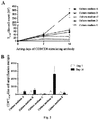
- Fig. 1 is a comparison diagram illustrating in-vitro induction effects of the culture media A to E on CD8 + T SCM .
- Fig. 1A illustrates the percentage of T SCM in CD8 + T cells (namely, primary cells) in healthy human peripheral blood. As shown in Fig. 1A , the percentage of T SCM in primary CD8 + T cells was very low, which is less than 2%, and
- Fig. 1B is a comparison diagram illustrating effects of inducing CD8 + T cells to differentiate into T SCM by using the culture media A to E at Day 7 and Day 14 of culture. Compared with commonly used IL-2, other media B to E could effectively induce CD8 + T cells to differentiate into T SCM , and had much better induction effects than IL-2.
- the medium A had an average induction efficiency of less than 10% at Day 14 of culture.
- the percentage of T SCM of the culture medium B group in the whole primary CD8 + T cells namely the induction efficiency, was up to 78.7%, and the induction efficiency of T SCM of the culture medium D group was slightly lower (72.0%).
- the culture medium C group and E group, having TWS119 combined in the medium achieved an induction efficiency of T SCM of 87.0%.
- the inducing agents of the present invention could effectively induce the formation of T SCM in the following concentration ranges: IL-7 (1 to 100 ng/mL), IL-15 (1 to 100 ng/mL), IL-21 (1 to 100 ng/mL), and TWS119 (1 to 50 ⁇ M).
- Fig. 2 illustrates in-vitro induction and amplification effects of the culture media A to E according to the present invention on CD8 + T SCM .
- Fig. 2A is a cell counting diagram illustrating CD8 + T SCM induced and amplified by using the culture media A to E according to the present invention.
- the induction and amplification effects of the culture medium A on CD8 + T SCM were the lowest, and the induction and amplification effects of the culture medium B group according to the present invention on CD8 + T SCM were significantly superior to those of the culture medium C group according to the present invention, while the induction and amplification effects of the culture medium D group according to the present invention on CD8 + T SCM were even better.
- Fig. 2B illustrates induction and amplification multiples of CD8 + T SCM at Day 7 and Day 14 of culture by using the culture media A to E according to the present invention.
- the induction and amplification effects on CD8 + T SCM were as follows: the induction and amplification multiple of the culture medium A group according to the present invention was 800 folds, the induction and amplification multiple of the culture medium B group according to the present invention was 1162 folds, and the induction and amplification multiple of the culture medium D group according to the present invention was 5269 folds.
- the concentrations of IL-7, IL-15 and IL-21 for effectively amplifying CD8 + T SCM all ranged from 1 to 100 ng/mL.
- the whole of the above cell culture system was transferred to a 12-well plate, and the culture medium B or D was supplemented.
- the magnetic beads coupled to an anti-CD3 antibody and an anti-CD28 antibody were removed, and the culture medium B or D was supplemented.
- T SCM CD45RA, CCR7 and CD95
- Fig. 3 illustrates in-vitro induced differentiation and amplification effects of two T SCM induction and amplification culture media B or D on CD19 CAR-T SCM .
- Fig. 3A illustrates a detection flow of the flow cytometry for CD19 CAR-T SCM at Day 11 of culture and percentages of the corresponding cell subsets.
- Fig. 3B illustrates a statistical result of the percentages of CD19 CAR-T SCM in CD19 CAR-T cells at Day 7 and Day 11 of culture.
- the percentages of T SCM (CD45RA + CCR7 + CD95 + ) induced and differentiated by the culture medium B and the culture medium D reached 81.3% and 64.4% respectively in CD19 CAR-T cells cultured at Day 11, indicating that both media can effectively induce the differentiation of CD19 CAR-T SCM .
- Fig. 3C illustrates in-vitro induced differentiation and amplification effects of two T SCM induction and amplification culture media on CD19 CAR-T SCM .
- the experimental results showed that culture medium D could induce and amplify CD19 CAR-T SCM more effectively.
- CD19 chimeric antigen receptor CD8 + T cells (CD19 CAR-CD8 + T cells) were prepared:
- the whole of the above cell culture system was transferred to a 12-well plate, and the culture medium B or D according to the present invention was supplemented.
- the magnetic beads coupled to an anti-CD3 antibody and an anti-CD28 antibody were removed, and the culture medium B or D according to the present invention was supplemented.
- a fresh culture medium B or D according to the present invention was supplemented repeatedly as that at Day 7.
- CD8 + -T SCM CD45RA + CCR7 + CD95 + CD8 + T cells
- Fig. 4 illustrates in-vitro induced differentiation and amplification effects of the two culture media B or D on CD19 CAR-CD8 + T SCM .
- Fig. 4A illustrates a detection flow of the flow cytometry for CD19 CAR-CD8 + T SCM at Day 11 of culture and percentages of the corresponding cell subsets.
- Fig. 4B illustrates a statistical result of the percentage of CD19 CAR-CD8 + T SCM in CD19 CAR-CD8 + T cells.
- the percentages of T SCM (CD45RA + CCR7 + CD95 + ) induced and differentiated by the culture media B and D reached 93.2% and 82.5% respectively in CD19 CAR-CD8 + T cells, indicating that the combination of two cytokines can effectively induce the differentiation of CD19 CAR-CD8 + T SCM .
- Fig. 4C illustrates in-vitro induced differentiation and amplification effects of the two culture media B or D on CD19 CAR-CD8 + T SCM .
- the experimental results showed that the culture medium D could induce and amplify CD19 CAR-CD8 + T SCM more effectively.
- K562-CD19 cells were labeled with eFluor 450.
- the cells were washed twice with PBS or a serum-free RPMI1640 culture medium, and centrifuged at 500 g for 5 minutes to remove residual serum from the cells.
- the cells were resuspended in PBS (at least 500 ⁇ L of PBS) at a density of 2 ⁇ 10 7 /mL.
- An eFluor 450 stock solution was diluted to 10 ⁇ M by using PBS and then the diluted solution was mixed with the cell suspension in a ratio of 1: 1 (total volume 1 mL).
- the mixture was put into a water bath at 37°C, and reacted in dark for 10 minutes.
- the reaction was stopped by adding 200 ⁇ L of precooled FBS and the mixture was incubated on ice for 5 minutes. And then, the cells were washed with PBS for 3 times, and labeled with the cell membrane dye PKH26.
- the above target cells were labeled with PKH26: refer to the manufacturer's instructions in a PKH26 kit for a labeling method.
- 2 ⁇ single-cell suspension was prepared by using Diluent C provided in the kit, and the cell density was controlled at 2 ⁇ 10 7 /mL.
- 2 ⁇ PKH26 staining solution was prepared by using Diluent C, the 2 ⁇ single-cell suspension was added into the 2 ⁇ PKH26 staining solution in a ratio of 1: 1, and the mixture was reacted at room temperature for 5 min. Finally, FBS in an equal volume was added for reacting for 1 min. and staining was stopped.
- the cells were washed with a complete medium RPMI1640 (10% FBS) for 3 times for later use.
- the number of the tumor target cells was fixed at 3 ⁇ 10 4 , the effector cells CD19 CAR-CD8 + T cells prepared in Example 3 were added in a ratio of the effector cells to target cells of 2: 1, 4: 1, 8: 1 and 16: 1, respectively, the cells were co-incubated at 37°C for 4 hours, a cell suspension was collected, and the killing efficiency of the effector cells was detected by using a flow cytometry.
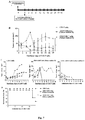
- Fig. 7A illustrates a schedule of in-vivo experiment of mice.
- Fig. 7B and Fig. 7C are diagrams illustrating in-vivo anti-tumor effects of CD19 CAR-T SCM cultured by the culture media B and E.
- the CD19 CAR-T SCM induced and amplified by both the culture media could effectively inhibit the growth of tumor, wherein the tumor clearance rate of the culture medium B group was 80%, while the CD19 CAR-T SCM prepared by the combined culture group of the culture medium D group had a better in-vivo anti-tumor effect, achieving rapid and efficient tumor clearance in vivo, with the tumor clearance rate as high as 100%.
- UTD T cells of the control group could not inhibit the growth of tumor.
- Fig. 7D is a diagram of survival curves of mice in each group after CD19 CAR-T SCM treatment. As shown in the figure, all the mice treated with CD19 CAR-T SCM induced and amplified by the two culture media survived, while the mortality rate of the mice reinfused with UTD T cells of the control group was as high as 80%.
Landscapes
- Health & Medical Sciences (AREA)
- Life Sciences & Earth Sciences (AREA)
- Chemical & Material Sciences (AREA)
- General Health & Medical Sciences (AREA)
- Organic Chemistry (AREA)
- Engineering & Computer Science (AREA)
- Immunology (AREA)
- Genetics & Genomics (AREA)
- Animal Behavior & Ethology (AREA)
- Public Health (AREA)
- Veterinary Medicine (AREA)
- Biomedical Technology (AREA)
- Zoology (AREA)
- Epidemiology (AREA)
- Biochemistry (AREA)
- Biotechnology (AREA)
- Bioinformatics & Cheminformatics (AREA)
- Wood Science & Technology (AREA)
- Medicinal Chemistry (AREA)
- Biophysics (AREA)
- Molecular Biology (AREA)
- Proteomics, Peptides & Aminoacids (AREA)
- Microbiology (AREA)
- General Engineering & Computer Science (AREA)
- Cell Biology (AREA)
- Hematology (AREA)
- Gastroenterology & Hepatology (AREA)
- Toxicology (AREA)
- Chemical Kinetics & Catalysis (AREA)
- General Chemical & Material Sciences (AREA)
- Nuclear Medicine, Radiotherapy & Molecular Imaging (AREA)
- Pharmacology & Pharmacy (AREA)
- Micro-Organisms Or Cultivation Processes Thereof (AREA)
- Medicines Containing Material From Animals Or Micro-Organisms (AREA)
Applications Claiming Priority (1)
| Application Number | Priority Date | Filing Date | Title |
|---|---|---|---|
| PCT/CN2019/076957 WO2020177071A1 (fr) | 2019-03-05 | 2019-03-05 | Composition, milieu de culture et procédé pour induire et/ou amplifier des tscm in vitro |
Publications (2)
| Publication Number | Publication Date |
|---|---|
| EP3936611A1 true EP3936611A1 (fr) | 2022-01-12 |
| EP3936611A4 EP3936611A4 (fr) | 2022-10-19 |
Family
ID=72337418
Family Applications (1)
| Application Number | Title | Priority Date | Filing Date |
|---|---|---|---|
| EP19917821.1A Pending EP3936611A4 (fr) | 2019-03-05 | 2019-03-05 | Composition, milieu de culture et procédé pour induire et/ou amplifier des tscm in vitro |
Country Status (3)
| Country | Link |
|---|---|
| US (1) | US20220177839A1 (fr) |
| EP (1) | EP3936611A4 (fr) |
| WO (1) | WO2020177071A1 (fr) |
Families Citing this family (5)
| Publication number | Priority date | Publication date | Assignee | Title |
|---|---|---|---|---|
| CA3158133A1 (fr) | 2020-04-28 | 2021-11-04 | Lyell Immunopharma, Inc. | Procedes de culture de cellules |
| JP2024501127A (ja) * | 2020-11-25 | 2024-01-11 | 上海君賽生物科技有限公司 | 腫瘍浸潤リンパ球培地及びその使用 |
| WO2022216963A1 (fr) * | 2021-04-08 | 2022-10-13 | Janssen Biotech, Inc. | Matériaux et méthodes pour ingénierie de cellule t mémoire de type cellule souche améliorée |
| US20250108070A1 (en) * | 2022-01-21 | 2025-04-03 | Institut Pasteur | Method for reprogramming cd8+ t cells to enhance their therapeutic potential and applications thereof |
| TWI837927B (zh) * | 2022-11-03 | 2024-04-01 | 沛爾生技醫藥股份有限公司 | 生產富含幹細胞樣記憶t細胞之人類嵌合抗原受體t細胞的方法 |
Family Cites Families (4)
| Publication number | Priority date | Publication date | Assignee | Title |
|---|---|---|---|---|
| US10316289B2 (en) * | 2012-09-06 | 2019-06-11 | The United States Of America, As Represented By The Secretary, Department Of Health And Human Services | Methods of producing T memory stem cell populations |
| WO2017100403A1 (fr) * | 2015-12-08 | 2017-06-15 | Regents Of The University Of Minnesota | Lymphocyte t humain dérivé de cellule souche pluripotente induite dérivée de lymphocyte t et procédés de fabrication et d'utilisation |
| CN105543170A (zh) * | 2015-12-31 | 2016-05-04 | 中山大学 | 一种可刺激t细胞扩增的组合物 |
| CN109423478A (zh) * | 2017-08-22 | 2019-03-05 | 郑州大学第附属医院 | 一种记忆性t细胞的制备方法 |
-
2019
- 2019-03-05 US US17/436,306 patent/US20220177839A1/en active Pending
- 2019-03-05 EP EP19917821.1A patent/EP3936611A4/fr active Pending
- 2019-03-05 WO PCT/CN2019/076957 patent/WO2020177071A1/fr not_active Ceased
Also Published As
| Publication number | Publication date |
|---|---|
| US20220177839A1 (en) | 2022-06-09 |
| EP3936611A4 (fr) | 2022-10-19 |
| WO2020177071A1 (fr) | 2020-09-10 |
Similar Documents
| Publication | Publication Date | Title |
|---|---|---|
| EP3936611A1 (fr) | Composition, milieu de culture et procédé pour induire et/ou amplifier des tscm in vitro | |
| CN109294985B (zh) | 一种用于nk细胞体外扩增的培养基体系及nk细胞体外扩增的方法 | |
| CN104321425B (zh) | 用于诱导和扩增源自外周血单个核细胞的自然杀伤细胞的方法 | |
| CN109913412B (zh) | 体外诱导和/或扩增tscm的组合物、培养基和方法 | |
| JP5792622B2 (ja) | ナチュラルキラー細胞の製造方法 | |
| CN105624107B (zh) | 一种多种淋巴细胞亚群的扩增方法及其应用 | |
| CN104357394B (zh) | 一种自体外周血淋巴细胞dc‑cik的培养方法 | |
| CN107002039B (zh) | 使用t细胞用于培养自然杀伤细胞的方法 | |
| JP6073417B2 (ja) | 自然殺害細胞増殖方法、及び自然殺害細胞増殖用の組成物 | |
| CN104357390A (zh) | 同时高效扩增cd3+cd56+cik细胞和cd3-cd56+nk细胞的方法 | |
| CN106754730A (zh) | 一种高效扩增nk细胞的方法 | |
| KR102227155B1 (ko) | Ox40l을 발현하는 배양보조세포 및 이를 이용한 자연살해세포 배양 방법 | |
| CN115558641B (zh) | 高纯度效应免疫细胞群及其培养方法、试剂组合物和应用 | |
| EP1233058A1 (fr) | Methode de proliferation de cellules tueuses naturelles | |
| CN116574679A (zh) | 特异性nk细胞的制备方法及其应用 | |
| CN115197909A (zh) | 一种nk细胞的体外培养方法 | |
| CN107502589A (zh) | 一种肿瘤浸润淋巴细胞与单个核细胞共培养方法 | |
| CN113293130B (zh) | 一种肿瘤特异性t细胞的培养方法 | |
| CN117551607A (zh) | 一种恶性胸/腹水til细胞的培养方法 | |
| CN115197907A (zh) | 一种用于自体或通用nk细胞体外培养的刺激细胞的制备方法 | |
| CN120904358B (zh) | 一种新型il-15融合蛋白及其应用 | |
| CN121513167B (zh) | 过表达cdca5在制备增强t细胞的抗肿瘤功能药物中的应用 | |
| Ansprenger et al. | Paramunity-inducing Factors (PINDs) in dendritic cell (DC) cultures lead to impaired antileukemic functionality of DC-stimulated T-cells | |
| WO2026070936A1 (fr) | Procédé de production de lymphocytes t spécifiques d'un antigène et kit de production | |
| CN117604011A (zh) | 融合基因、表达该融合基因的滋养型树突状细胞、自然杀伤细胞培养方法以及自然杀伤细胞 |
Legal Events
| Date | Code | Title | Description |
|---|---|---|---|
| STAA | Information on the status of an ep patent application or granted ep patent |
Free format text: STATUS: THE INTERNATIONAL PUBLICATION HAS BEEN MADE |
|
| PUAI | Public reference made under article 153(3) epc to a published international application that has entered the european phase |
Free format text: ORIGINAL CODE: 0009012 |
|
| STAA | Information on the status of an ep patent application or granted ep patent |
Free format text: STATUS: REQUEST FOR EXAMINATION WAS MADE |
|
| 17P | Request for examination filed |
Effective date: 20210825 |
|
| AK | Designated contracting states |
Kind code of ref document: A1 Designated state(s): AL AT BE BG CH CY CZ DE DK EE ES FI FR GB GR HR HU IE IS IT LI LT LU LV MC MK MT NL NO PL PT RO RS SE SI SK SM TR |
|
| DAV | Request for validation of the european patent (deleted) | ||
| DAX | Request for extension of the european patent (deleted) | ||
| A4 | Supplementary search report drawn up and despatched |
Effective date: 20220915 |
|
| RIC1 | Information provided on ipc code assigned before grant |
Ipc: C07K 16/28 20060101ALI20220909BHEP Ipc: C07K 14/54 20060101ALI20220909BHEP Ipc: A61K 39/00 20060101ALI20220909BHEP Ipc: A61P 35/00 20060101ALI20220909BHEP Ipc: A61K 35/17 20150101ALI20220909BHEP Ipc: C12N 5/0783 20100101AFI20220909BHEP |