EP3936629A1 - Kaltgewalztes stahlblech und herstellungsverfahren dafür - Google Patents
Kaltgewalztes stahlblech und herstellungsverfahren dafür Download PDFInfo
- Publication number
- EP3936629A1 EP3936629A1 EP20767363.3A EP20767363A EP3936629A1 EP 3936629 A1 EP3936629 A1 EP 3936629A1 EP 20767363 A EP20767363 A EP 20767363A EP 3936629 A1 EP3936629 A1 EP 3936629A1
- Authority
- EP
- European Patent Office
- Prior art keywords
- less
- steel sheet
- pearlite
- rolled steel
- hot rolled
- Prior art date
- Legal status (The legal status is an assumption and is not a legal conclusion. Google has not performed a legal analysis and makes no representation as to the accuracy of the status listed.)
- Pending
Links
Images
Classifications
-
- C—CHEMISTRY; METALLURGY
- C22—METALLURGY; FERROUS OR NON-FERROUS ALLOYS; TREATMENT OF ALLOYS OR NON-FERROUS METALS
- C22C—ALLOYS
- C22C38/00—Ferrous alloys, e.g. steel alloys
- C22C38/02—Ferrous alloys, e.g. steel alloys containing silicon
-
- C—CHEMISTRY; METALLURGY
- C22—METALLURGY; FERROUS OR NON-FERROUS ALLOYS; TREATMENT OF ALLOYS OR NON-FERROUS METALS
- C22C—ALLOYS
- C22C38/00—Ferrous alloys, e.g. steel alloys
- C22C38/18—Ferrous alloys, e.g. steel alloys containing chromium
- C22C38/40—Ferrous alloys, e.g. steel alloys containing chromium with nickel
- C22C38/58—Ferrous alloys, e.g. steel alloys containing chromium with nickel with more than 1.5% by weight of manganese
-
- C—CHEMISTRY; METALLURGY
- C21—METALLURGY OF IRON
- C21D—MODIFYING THE PHYSICAL STRUCTURE OF FERROUS METALS; GENERAL DEVICES FOR HEAT TREATMENT OF FERROUS OR NON-FERROUS METALS OR ALLOYS; MAKING METAL MALLEABLE, e.g. BY DECARBURISATION OR TEMPERING
- C21D9/00—Heat treatment, e.g. annealing, hardening, quenching or tempering, adapted for particular articles; Furnaces therefor
- C21D9/46—Heat treatment, e.g. annealing, hardening, quenching or tempering, adapted for particular articles; Furnaces therefor for sheet metals
-
- B—PERFORMING OPERATIONS; TRANSPORTING
- B21—MECHANICAL METAL-WORKING WITHOUT ESSENTIALLY REMOVING MATERIAL; PUNCHING METAL
- B21C—MANUFACTURE OF METAL SHEETS, WIRE, RODS, TUBES, PROFILES OR LIKE SEMI-MANUFACTURED PRODUCTS OTHERWISE THAN BY ROLLING; AUXILIARY OPERATIONS USED IN CONNECTION WITH METAL-WORKING WITHOUT ESSENTIALLY REMOVING MATERIAL
- B21C47/00—Winding-up, coiling or winding-off metal wire, metal band or other flexible metal material characterised by features relevant to metal processing only
- B21C47/02—Winding-up or coiling
-
- C—CHEMISTRY; METALLURGY
- C21—METALLURGY OF IRON
- C21D—MODIFYING THE PHYSICAL STRUCTURE OF FERROUS METALS; GENERAL DEVICES FOR HEAT TREATMENT OF FERROUS OR NON-FERROUS METALS OR ALLOYS; MAKING METAL MALLEABLE, e.g. BY DECARBURISATION OR TEMPERING
- C21D1/00—General methods or devices for heat treatment, e.g. annealing, hardening, quenching or tempering
- C21D1/02—Hardening articles or materials formed by forging or rolling, with no further heating beyond that required for the formation
-
- C—CHEMISTRY; METALLURGY
- C21—METALLURGY OF IRON
- C21D—MODIFYING THE PHYSICAL STRUCTURE OF FERROUS METALS; GENERAL DEVICES FOR HEAT TREATMENT OF FERROUS OR NON-FERROUS METALS OR ALLOYS; MAKING METAL MALLEABLE, e.g. BY DECARBURISATION OR TEMPERING
- C21D1/00—General methods or devices for heat treatment, e.g. annealing, hardening, quenching or tempering
- C21D1/18—Hardening; Quenching with or without subsequent tempering
-
- C—CHEMISTRY; METALLURGY
- C21—METALLURGY OF IRON
- C21D—MODIFYING THE PHYSICAL STRUCTURE OF FERROUS METALS; GENERAL DEVICES FOR HEAT TREATMENT OF FERROUS OR NON-FERROUS METALS OR ALLOYS; MAKING METAL MALLEABLE, e.g. BY DECARBURISATION OR TEMPERING
- C21D1/00—General methods or devices for heat treatment, e.g. annealing, hardening, quenching or tempering
- C21D1/18—Hardening; Quenching with or without subsequent tempering
- C21D1/19—Hardening; Quenching with or without subsequent tempering by interrupted quenching
-
- C—CHEMISTRY; METALLURGY
- C21—METALLURGY OF IRON
- C21D—MODIFYING THE PHYSICAL STRUCTURE OF FERROUS METALS; GENERAL DEVICES FOR HEAT TREATMENT OF FERROUS OR NON-FERROUS METALS OR ALLOYS; MAKING METAL MALLEABLE, e.g. BY DECARBURISATION OR TEMPERING
- C21D6/00—Heat treatment of ferrous alloys
- C21D6/002—Heat treatment of ferrous alloys containing Cr
-
- C—CHEMISTRY; METALLURGY
- C21—METALLURGY OF IRON
- C21D—MODIFYING THE PHYSICAL STRUCTURE OF FERROUS METALS; GENERAL DEVICES FOR HEAT TREATMENT OF FERROUS OR NON-FERROUS METALS OR ALLOYS; MAKING METAL MALLEABLE, e.g. BY DECARBURISATION OR TEMPERING
- C21D6/00—Heat treatment of ferrous alloys
- C21D6/005—Heat treatment of ferrous alloys containing Mn
-
- C—CHEMISTRY; METALLURGY
- C21—METALLURGY OF IRON
- C21D—MODIFYING THE PHYSICAL STRUCTURE OF FERROUS METALS; GENERAL DEVICES FOR HEAT TREATMENT OF FERROUS OR NON-FERROUS METALS OR ALLOYS; MAKING METAL MALLEABLE, e.g. BY DECARBURISATION OR TEMPERING
- C21D8/00—Modifying the physical properties of ferrous metals or ferrous alloys by deformation combined with, or followed by, heat treatment
-
- C—CHEMISTRY; METALLURGY
- C21—METALLURGY OF IRON
- C21D—MODIFYING THE PHYSICAL STRUCTURE OF FERROUS METALS; GENERAL DEVICES FOR HEAT TREATMENT OF FERROUS OR NON-FERROUS METALS OR ALLOYS; MAKING METAL MALLEABLE, e.g. BY DECARBURISATION OR TEMPERING
- C21D8/00—Modifying the physical properties of ferrous metals or ferrous alloys by deformation combined with, or followed by, heat treatment
- C21D8/02—Modifying the physical properties of ferrous metals or ferrous alloys by deformation combined with, or followed by, heat treatment during manufacturing of plates or strips
-
- C—CHEMISTRY; METALLURGY
- C21—METALLURGY OF IRON
- C21D—MODIFYING THE PHYSICAL STRUCTURE OF FERROUS METALS; GENERAL DEVICES FOR HEAT TREATMENT OF FERROUS OR NON-FERROUS METALS OR ALLOYS; MAKING METAL MALLEABLE, e.g. BY DECARBURISATION OR TEMPERING
- C21D8/00—Modifying the physical properties of ferrous metals or ferrous alloys by deformation combined with, or followed by, heat treatment
- C21D8/02—Modifying the physical properties of ferrous metals or ferrous alloys by deformation combined with, or followed by, heat treatment during manufacturing of plates or strips
- C21D8/0221—Modifying the physical properties of ferrous metals or ferrous alloys by deformation combined with, or followed by, heat treatment during manufacturing of plates or strips characterised by the working steps
- C21D8/0226—Hot rolling
-
- C—CHEMISTRY; METALLURGY
- C21—METALLURGY OF IRON
- C21D—MODIFYING THE PHYSICAL STRUCTURE OF FERROUS METALS; GENERAL DEVICES FOR HEAT TREATMENT OF FERROUS OR NON-FERROUS METALS OR ALLOYS; MAKING METAL MALLEABLE, e.g. BY DECARBURISATION OR TEMPERING
- C21D8/00—Modifying the physical properties of ferrous metals or ferrous alloys by deformation combined with, or followed by, heat treatment
- C21D8/02—Modifying the physical properties of ferrous metals or ferrous alloys by deformation combined with, or followed by, heat treatment during manufacturing of plates or strips
- C21D8/0247—Modifying the physical properties of ferrous metals or ferrous alloys by deformation combined with, or followed by, heat treatment during manufacturing of plates or strips characterised by the heat treatment
- C21D8/0263—Modifying the physical properties of ferrous metals or ferrous alloys by deformation combined with, or followed by, heat treatment during manufacturing of plates or strips characterised by the heat treatment following hot rolling
-
- C—CHEMISTRY; METALLURGY
- C21—METALLURGY OF IRON
- C21D—MODIFYING THE PHYSICAL STRUCTURE OF FERROUS METALS; GENERAL DEVICES FOR HEAT TREATMENT OF FERROUS OR NON-FERROUS METALS OR ALLOYS; MAKING METAL MALLEABLE, e.g. BY DECARBURISATION OR TEMPERING
- C21D8/00—Modifying the physical properties of ferrous metals or ferrous alloys by deformation combined with, or followed by, heat treatment
- C21D8/02—Modifying the physical properties of ferrous metals or ferrous alloys by deformation combined with, or followed by, heat treatment during manufacturing of plates or strips
- C21D8/04—Modifying the physical properties of ferrous metals or ferrous alloys by deformation combined with, or followed by, heat treatment during manufacturing of plates or strips to produce plates or strips for drawing, e.g. for deep-drawing
-
- C—CHEMISTRY; METALLURGY
- C21—METALLURGY OF IRON
- C21D—MODIFYING THE PHYSICAL STRUCTURE OF FERROUS METALS; GENERAL DEVICES FOR HEAT TREATMENT OF FERROUS OR NON-FERROUS METALS OR ALLOYS; MAKING METAL MALLEABLE, e.g. BY DECARBURISATION OR TEMPERING
- C21D8/00—Modifying the physical properties of ferrous metals or ferrous alloys by deformation combined with, or followed by, heat treatment
- C21D8/02—Modifying the physical properties of ferrous metals or ferrous alloys by deformation combined with, or followed by, heat treatment during manufacturing of plates or strips
- C21D8/04—Modifying the physical properties of ferrous metals or ferrous alloys by deformation combined with, or followed by, heat treatment during manufacturing of plates or strips to produce plates or strips for drawing, e.g. for deep-drawing
- C21D8/0421—Modifying the physical properties of ferrous metals or ferrous alloys by deformation combined with, or followed by, heat treatment during manufacturing of plates or strips to produce plates or strips for drawing, e.g. for deep-drawing characterised by the working steps
- C21D8/0426—Hot rolling
-
- C—CHEMISTRY; METALLURGY
- C21—METALLURGY OF IRON
- C21D—MODIFYING THE PHYSICAL STRUCTURE OF FERROUS METALS; GENERAL DEVICES FOR HEAT TREATMENT OF FERROUS OR NON-FERROUS METALS OR ALLOYS; MAKING METAL MALLEABLE, e.g. BY DECARBURISATION OR TEMPERING
- C21D8/00—Modifying the physical properties of ferrous metals or ferrous alloys by deformation combined with, or followed by, heat treatment
- C21D8/02—Modifying the physical properties of ferrous metals or ferrous alloys by deformation combined with, or followed by, heat treatment during manufacturing of plates or strips
- C21D8/04—Modifying the physical properties of ferrous metals or ferrous alloys by deformation combined with, or followed by, heat treatment during manufacturing of plates or strips to produce plates or strips for drawing, e.g. for deep-drawing
- C21D8/0447—Modifying the physical properties of ferrous metals or ferrous alloys by deformation combined with, or followed by, heat treatment during manufacturing of plates or strips to produce plates or strips for drawing, e.g. for deep-drawing characterised by the heat treatment
- C21D8/0463—Modifying the physical properties of ferrous metals or ferrous alloys by deformation combined with, or followed by, heat treatment during manufacturing of plates or strips to produce plates or strips for drawing, e.g. for deep-drawing characterised by the heat treatment following hot rolling
-
- C—CHEMISTRY; METALLURGY
- C22—METALLURGY; FERROUS OR NON-FERROUS ALLOYS; TREATMENT OF ALLOYS OR NON-FERROUS METALS
- C22C—ALLOYS
- C22C38/00—Ferrous alloys, e.g. steel alloys
- C22C38/001—Ferrous alloys, e.g. steel alloys containing N
-
- C—CHEMISTRY; METALLURGY
- C22—METALLURGY; FERROUS OR NON-FERROUS ALLOYS; TREATMENT OF ALLOYS OR NON-FERROUS METALS
- C22C—ALLOYS
- C22C38/00—Ferrous alloys, e.g. steel alloys
- C22C38/002—Ferrous alloys, e.g. steel alloys containing In, Mg, or other elements not provided for in one single group C22C38/001 - C22C38/60
-
- C—CHEMISTRY; METALLURGY
- C22—METALLURGY; FERROUS OR NON-FERROUS ALLOYS; TREATMENT OF ALLOYS OR NON-FERROUS METALS
- C22C—ALLOYS
- C22C38/00—Ferrous alloys, e.g. steel alloys
- C22C38/005—Ferrous alloys, e.g. steel alloys containing rare earths, i.e. Sc, Y, Lanthanides
-
- C—CHEMISTRY; METALLURGY
- C22—METALLURGY; FERROUS OR NON-FERROUS ALLOYS; TREATMENT OF ALLOYS OR NON-FERROUS METALS
- C22C—ALLOYS
- C22C38/00—Ferrous alloys, e.g. steel alloys
- C22C38/04—Ferrous alloys, e.g. steel alloys containing manganese
-
- C—CHEMISTRY; METALLURGY
- C22—METALLURGY; FERROUS OR NON-FERROUS ALLOYS; TREATMENT OF ALLOYS OR NON-FERROUS METALS
- C22C—ALLOYS
- C22C38/00—Ferrous alloys, e.g. steel alloys
- C22C38/06—Ferrous alloys, e.g. steel alloys containing aluminium
-
- C—CHEMISTRY; METALLURGY
- C22—METALLURGY; FERROUS OR NON-FERROUS ALLOYS; TREATMENT OF ALLOYS OR NON-FERROUS METALS
- C22C—ALLOYS
- C22C38/00—Ferrous alloys, e.g. steel alloys
- C22C38/18—Ferrous alloys, e.g. steel alloys containing chromium
-
- C—CHEMISTRY; METALLURGY
- C22—METALLURGY; FERROUS OR NON-FERROUS ALLOYS; TREATMENT OF ALLOYS OR NON-FERROUS METALS
- C22C—ALLOYS
- C22C38/00—Ferrous alloys, e.g. steel alloys
- C22C38/18—Ferrous alloys, e.g. steel alloys containing chromium
- C22C38/20—Ferrous alloys, e.g. steel alloys containing chromium with copper
-
- C—CHEMISTRY; METALLURGY
- C22—METALLURGY; FERROUS OR NON-FERROUS ALLOYS; TREATMENT OF ALLOYS OR NON-FERROUS METALS
- C22C—ALLOYS
- C22C38/00—Ferrous alloys, e.g. steel alloys
- C22C38/18—Ferrous alloys, e.g. steel alloys containing chromium
- C22C38/22—Ferrous alloys, e.g. steel alloys containing chromium with molybdenum or tungsten
-
- C—CHEMISTRY; METALLURGY
- C22—METALLURGY; FERROUS OR NON-FERROUS ALLOYS; TREATMENT OF ALLOYS OR NON-FERROUS METALS
- C22C—ALLOYS
- C22C38/00—Ferrous alloys, e.g. steel alloys
- C22C38/18—Ferrous alloys, e.g. steel alloys containing chromium
- C22C38/24—Ferrous alloys, e.g. steel alloys containing chromium with vanadium
-
- C—CHEMISTRY; METALLURGY
- C22—METALLURGY; FERROUS OR NON-FERROUS ALLOYS; TREATMENT OF ALLOYS OR NON-FERROUS METALS
- C22C—ALLOYS
- C22C38/00—Ferrous alloys, e.g. steel alloys
- C22C38/18—Ferrous alloys, e.g. steel alloys containing chromium
- C22C38/26—Ferrous alloys, e.g. steel alloys containing chromium with niobium or tantalum
-
- C—CHEMISTRY; METALLURGY
- C22—METALLURGY; FERROUS OR NON-FERROUS ALLOYS; TREATMENT OF ALLOYS OR NON-FERROUS METALS
- C22C—ALLOYS
- C22C38/00—Ferrous alloys, e.g. steel alloys
- C22C38/18—Ferrous alloys, e.g. steel alloys containing chromium
- C22C38/28—Ferrous alloys, e.g. steel alloys containing chromium with titanium or zirconium
-
- C—CHEMISTRY; METALLURGY
- C22—METALLURGY; FERROUS OR NON-FERROUS ALLOYS; TREATMENT OF ALLOYS OR NON-FERROUS METALS
- C22C—ALLOYS
- C22C38/00—Ferrous alloys, e.g. steel alloys
- C22C38/18—Ferrous alloys, e.g. steel alloys containing chromium
- C22C38/32—Ferrous alloys, e.g. steel alloys containing chromium with boron
-
- C—CHEMISTRY; METALLURGY
- C22—METALLURGY; FERROUS OR NON-FERROUS ALLOYS; TREATMENT OF ALLOYS OR NON-FERROUS METALS
- C22C—ALLOYS
- C22C38/00—Ferrous alloys, e.g. steel alloys
- C22C38/18—Ferrous alloys, e.g. steel alloys containing chromium
- C22C38/38—Ferrous alloys, e.g. steel alloys containing chromium with more than 1.5% by weight of manganese
-
- C—CHEMISTRY; METALLURGY
- C22—METALLURGY; FERROUS OR NON-FERROUS ALLOYS; TREATMENT OF ALLOYS OR NON-FERROUS METALS
- C22C—ALLOYS
- C22C38/00—Ferrous alloys, e.g. steel alloys
- C22C38/18—Ferrous alloys, e.g. steel alloys containing chromium
- C22C38/40—Ferrous alloys, e.g. steel alloys containing chromium with nickel
-
- C—CHEMISTRY; METALLURGY
- C22—METALLURGY; FERROUS OR NON-FERROUS ALLOYS; TREATMENT OF ALLOYS OR NON-FERROUS METALS
- C22C—ALLOYS
- C22C38/00—Ferrous alloys, e.g. steel alloys
- C22C38/18—Ferrous alloys, e.g. steel alloys containing chromium
- C22C38/40—Ferrous alloys, e.g. steel alloys containing chromium with nickel
- C22C38/42—Ferrous alloys, e.g. steel alloys containing chromium with nickel with copper
-
- C—CHEMISTRY; METALLURGY
- C22—METALLURGY; FERROUS OR NON-FERROUS ALLOYS; TREATMENT OF ALLOYS OR NON-FERROUS METALS
- C22C—ALLOYS
- C22C38/00—Ferrous alloys, e.g. steel alloys
- C22C38/18—Ferrous alloys, e.g. steel alloys containing chromium
- C22C38/40—Ferrous alloys, e.g. steel alloys containing chromium with nickel
- C22C38/44—Ferrous alloys, e.g. steel alloys containing chromium with nickel with molybdenum or tungsten
-
- C—CHEMISTRY; METALLURGY
- C22—METALLURGY; FERROUS OR NON-FERROUS ALLOYS; TREATMENT OF ALLOYS OR NON-FERROUS METALS
- C22C—ALLOYS
- C22C38/00—Ferrous alloys, e.g. steel alloys
- C22C38/18—Ferrous alloys, e.g. steel alloys containing chromium
- C22C38/40—Ferrous alloys, e.g. steel alloys containing chromium with nickel
- C22C38/46—Ferrous alloys, e.g. steel alloys containing chromium with nickel with vanadium
-
- C—CHEMISTRY; METALLURGY
- C22—METALLURGY; FERROUS OR NON-FERROUS ALLOYS; TREATMENT OF ALLOYS OR NON-FERROUS METALS
- C22C—ALLOYS
- C22C38/00—Ferrous alloys, e.g. steel alloys
- C22C38/18—Ferrous alloys, e.g. steel alloys containing chromium
- C22C38/40—Ferrous alloys, e.g. steel alloys containing chromium with nickel
- C22C38/48—Ferrous alloys, e.g. steel alloys containing chromium with nickel with niobium or tantalum
-
- C—CHEMISTRY; METALLURGY
- C22—METALLURGY; FERROUS OR NON-FERROUS ALLOYS; TREATMENT OF ALLOYS OR NON-FERROUS METALS
- C22C—ALLOYS
- C22C38/00—Ferrous alloys, e.g. steel alloys
- C22C38/18—Ferrous alloys, e.g. steel alloys containing chromium
- C22C38/40—Ferrous alloys, e.g. steel alloys containing chromium with nickel
- C22C38/50—Ferrous alloys, e.g. steel alloys containing chromium with nickel with titanium or zirconium
-
- C—CHEMISTRY; METALLURGY
- C22—METALLURGY; FERROUS OR NON-FERROUS ALLOYS; TREATMENT OF ALLOYS OR NON-FERROUS METALS
- C22C—ALLOYS
- C22C38/00—Ferrous alloys, e.g. steel alloys
- C22C38/18—Ferrous alloys, e.g. steel alloys containing chromium
- C22C38/40—Ferrous alloys, e.g. steel alloys containing chromium with nickel
- C22C38/54—Ferrous alloys, e.g. steel alloys containing chromium with nickel with boron
-
- C—CHEMISTRY; METALLURGY
- C21—METALLURGY OF IRON
- C21D—MODIFYING THE PHYSICAL STRUCTURE OF FERROUS METALS; GENERAL DEVICES FOR HEAT TREATMENT OF FERROUS OR NON-FERROUS METALS OR ALLOYS; MAKING METAL MALLEABLE, e.g. BY DECARBURISATION OR TEMPERING
- C21D2211/00—Microstructure comprising significant phases
- C21D2211/009—Pearlite
Definitions
- the present invention relates to hot rolled steel sheet and a method for producing the same, more particularly relates to hot rolled steel sheet which is used for a structural member of an automobile etc., which is high in strength with a tensile strength of 980 MPa or more, and which is excellent in ductility, hole expandability, and stampability and to a method for producing the same.
- PTL 1 describes a high strength high ductility steel sheet comprising a composition of constituents containing, by mass%, C: 0.4 to 0.8%, Si: 0.8 to 3.0%, and Mn: 0.1 to 0.6% and a balance of iron and unavoidable impurities, and a steel microstructure including, by area ratio with respect to the entire microstructure, pearlite in 80% or more and residual austenite in 5% or more, an average lamellar spacing of the pearlite of 0.5 ⁇ m or less, an effective crystal grain size of ferrite surrounded by large angle grain boundaries of orientation differences of 15° or more of 20 ⁇ m or less, and carbides having a circle equivalent diameter of 0.1 ⁇ m or more of 5 or less per 400 ⁇ m 2 .
- TS tensile strength
- EL tensile strength
- PTL 2 describes a high carbon hot rolled steel sheet consisting of, by mass%, C: 0.60 to 1.20%, Si: 0.10 to 0.35%, Mn: 0.10 to 0.80%, P: greater than 0 and 0.03% or less, and S: greater than 0 and 0.03% or less, one or more of Ni: 0.25% or less (including 0), Cr: 0.30% or less (including 0), and Cu: 0.25% or less (including 0) and a balance of Fe and other unavoidable impurities, and containing micro pearlite structures having a width of cementite greater than 0 and 0.2 ⁇ m or less and a spacing between the cementite and cementite greater than 0 and 0.5 ⁇ m or less. Further, PTL 2 describes that since the high carbon hot rolled steel sheet has micro pearlite structures, the final finished product can be given durability and strength.
- PTL 3 describes a high strength steel sheet comprising a composition of constituents consisting of, by mass%, C: 0.3 to 0.85%, Si: 0.01 to 0.5%, Mn: 0.1 to 1.5%, P: 0.035% or less, S: 0.02% or less, Al: 0.08% or less, N: 0.01% or less, Cr: 2.0 to 4.0% and a balance of Fe and unavoidable impurities, and a microstructure containing rolled pearlite structures, wherein a ratio of amount of dissolved C calculated by a predetermined formula is 50% or more. Further, PTL 3 describes that according to the above high strength steel sheet, excellent bendability and higher strength of a tensile strength of 1500 MPa or more can be realized.
- PTL 4 describes a method for producing thin-gauge steel sheet comprising roughing rolling a continuously cast slab having a C content of 0.8 mass% or less to prepare a rough bar, finishing rolling the rough bar by a finish temperature of (Ar 3 transformation point -20) °C or more to prepare a steel strip, primary cooling the steel strip after finishing rolling down to 500 to 800°C in temperature by a cooling rate of more than 120°C/sec, allowing the steel strip after the primary cooling to cool for 1 to 30 seconds, secondary cooling the steel strip after cooling by a cooling rate of 20°C/sec or more, and coiling the steel strip after the secondary cooling by a coiling temperature of 650°C or less. Further, PTL 4 describes that according to the above producing method, thin-gauge steel sheet excellent in workability, including stretch flangeability, and having uniform mechanical properties of various strength levels is obtained.
- PTL 5 describes a soft high carbon steel sheet cimprising, by mass%, C: 0.70 to 0.95%, Si: 0.05 to 0.4%, Mn: 0.5 to 2.0%, P: 0.005 to 0.03%, S: 0.0001 to 0.006%, Al: 0.005 to 0.10%, N: 0.001 to 0.01%, and a balance of Fe and unavoidable impurities, and a microstructure having 100 or more voids per 1 mm 2 of the observed microstructure. Further, PTL 5 describes that by having the above constitution, it is possible to provide a soft high carbon steel sheet excellent in stampability. In addition, in order to obtain the above soft high carbon steel sheet, PTL 5 teaches a production method comprising cooling, coiling, and pickling a hot rolled steel sheet under predetermined conditions, then performing softening box annealing.
- the high carbon hot rolled steel sheet described in PTL 2 in the same way as the case of the high strength high ductility steel sheet described in PTL 1, either does not contain Cr or contains Cr in only a relatively small amount. Further, PTL 2 describes that due to having micro pearlite structures, the final finished product can be given durability and strength, as explained above, but does not disclose the specific tensile strength. In addition, PTL 2 does not sufficiently study improvement of the other mechanical properties, for example, ductility and hole expandability etc.
- PTL 3 discloses a high strength steel sheet having a tensile strength of 1500 MPa or more, but does not sufficiently study improvement of the hole expandability and other mechanical properties.
- the high strength steel sheet described in PTL 3 is produced by preparing a billet having pearlite structures as its main phases by pearlite forming treatment in an annealing furnace, then cold rolling this by a rolling rate of 90% or more, but in the case of such a production method, due to the above cold rolling, a microstructure is formed with the directions of the layered cementite in the pearlite aligned with the rolling direction.
- a microstructure lowers the hole expandability, with the high strength steel sheet described in PTL 3, it is difficult to achieve a hole expandability suitable to use as a steel sheet for automobile.
- stamping processes using press machines are included, but in particular there is the problem that if stamping a high strength steel sheet, due to the increase in strength of steel sheet, cracks (stamping cracks) easily occur at the stamped end faces.
- PTLs 1 to 4 do not also sufficiently study improvement of the stampability of a high strength steel sheet.
- PTL 5 describes that it is possible to provide a soft high carbon steel sheet excellent in stampability, as explained above.
- softening box annealing is performed as the heat treatment for obtaining the soft high carbon steel sheet, and therefore the carbides become spherical and fine lamellar structures cannot be obtained. Therefore, with the soft high carbon steel sheet described in PTL 5, there was still room for improvement relating to improving the mechanical properties.
- the present invention has as its object to provide a hot rolled steel sheet which is high in strength with a tensile strength of 980 MPa or more and which is excellent in ductility, hole expandability, and stampability and a method for producing the same by a novel configuration.
- the inventors studied the chemical composition and microstructure of a hot rolled steel sheet so as to achieve the above object. As a result, the inventors discovered that it is important to make the structure of the hot rolled steel sheet mainly pearlite, which has a good balance of strength and ductility, and in addition to suitably control the microstructure of the pearlite.
- the inventors discovered that by including pearlite in the hot rolled steel sheet in an area ratio of 90% or more, it is possible to secure ductility, on the other hand, by not including residual austenite, it is possible to secure stampability, and, in addition, by making the pearlite blocks (corresponding to regions where ferrite forming the pearlite is aligned in crystal orientation) finer, it is possible to suppress the occurrence of cracking at the time of local deformation and secure hole expandability and, furthermore, by making the lamellar spacing of the pearlite finer while maintaining the pearlite fraction of 90% or more, it is possible to increase the strength of the hot rolled steel sheet without detracting from the ductility and hole expandability, and thereby completed the present invention.
- the present invention was completed based on the above findings. Specifically, it is as follows:
- a hot rolled steel sheet which is high in strength with a tensile strength of 980 MPa or more and which is excellent in ductility, hole expandability, and stampability.
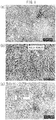
- FIG. 1 is a reference view showing pearlite, pseudo pearlite, and pro-eutectoid ferrite.
- the hot rolled steel sheet according to an embodiment of the present invention comprises a chemical composition comprising, by mass%,
- the chemical composition of a hot rolled steel sheet according to an embodiment of the present invention and a slab used for its production will be explained.
- the "%" of the units of contents of the elements contained in the hot rolled steel sheet and slab means “mass%” unless otherwise particularly indicated.
- the content of C is an element essential for securing the strength of the hot rolled steel sheet.
- the content of C is 0.50% or more.
- the content of C may also be 0.53% or more, 0.55% or more, 0.60% or more, or 0.65% or more.
- the content of C is 1.00% or less.
- the content of C may also be 0.95% or less, 0.90% or less, 0.85% or less, 0.80% or less, or 0.75% or less.
- the ratio, with respect to the total amount of C in the steel (content of C), of the amount of dissolved C (content of C minus amount of C precipitating as cementite) is generally less than 50%. More specifically, if performing strong working under a high rolling reduction in the cold rolling, the amount of dissolved C sometimes increases, but in the hot rolled steel sheet according to the embodiment of the present invention where such cold rolling is not performed, the ratio of the amount of dissolved C is generally considerably lower than 50%, for example, is 30% or less, 20% or less, or 10% or less.
- Si is an element used for deoxidizing steel. However, if the content of Si is excessive, the chemical convertability falls and austenite remains in the microstructure of the steel sheet, so the stampability of the steel sheet deteriorates. For this reason, the content of Si is 0.01 to 0.50%.
- the content of Si may also be 0.05% or more, 0.10% or more, or 0.15% or more and/or may be 0.45% or less, 0.40% or less, or 0.30% or less.
- Mn is an element effective for delaying phase transformation of the steel and preventing phase transformation from occurring in the middle of cooling.
- the content of Mn becomes excessive, microsegregation or macrosegregation easily occurs and the hole expandability is made to deteriorate.
- the content of Mn is 0.50 to 2.00%.
- the content of Mn may be 0.60% or more, 0.70% or more, or 0.90% or more as well and/or may be 1.90% or less, 1.70% or less, 1.50% or less, or 1.30% or less.
- the content of P may be 0% as well, but excessive reduction invites a rise in costs, so the content is preferably 0.0001% or more.
- the content of S forms MnS which acts as the starting points for fracture and causes a remarkable drop in the hole expandability of steel sheet. For this reason, the content of S is 0.0100% or less.
- the content of S is preferably 0.0090% or less, more preferably is 0.0060% or less or 0.0010% or less.
- the content of S may be 0% as well, but excessive reduction invites a rise in costs, so the content is preferably 0.0001% or more.
- Al is an element used for deoxidizing steel. However, if the content of Al is excessive, inclusions increase and cause the workability of the steel sheet to deteriorate. For this reason, the content of Al is 0.100% or less.
- the content of Al may be 0% as well, but the content is preferably 0.005% or more or 0.010% or more. On the other hand, the content of Al may be 0.080% or less, 0.050% or less, or 0.040% or less.
- the content of N is 0.0100% or less.
- the content of N is preferably 0.0090% or less, 0.0080% or less, or 0.0050% or less. From this viewpoint, there is no need to set a lower limit of the content of N.
- the content may be 0% as well. However, to reduce the content of N to less than 0.0010%, the steelmaking costs will swell. For this reason, the content of N is preferably 0.0010% or more.
- the Cr has the effect of making the lamellar spacing of the pearlite finer and thereby can secure the strength of the steel sheet.
- the lower limit of the content of Cr is 0.50%, preferably 0.60%.
- the upper limit of the content of Cr is 2.00%, 1.50%, 1.25%, preferably 1.15%.
- the basic composition of constituents of the hot rolled steel sheet according to an embodiment of the present invention and the slab used for its production is as explained above. Furthermore, the hot rolled steel sheet and slab may if necessary contain any of the following optional elements. Inclusion of these elements is not essential. The lower limits of the contents of these elements are 0%.
- Cu is an element able to dissolve in the steel and improve the strength without detracting from the toughness.
- the content of Cu may be 0%, but Cu may be included as required to obtain the above effect. However, if the content is excessive, due to the increase in precipitates, at the time of hot working, microcracks are sometimes formed at the surface. Therefore, the content of Cu is preferably 1.00% or less or 0.60% or less, more preferably 0.40% or less or 0.25% or less. To sufficiently obtain such an effect, the content of Cu is preferably 0.01% or more, more preferably 0.05% or more.
- Ni is an element which can dissolve in the steel to raise the strength without detracting from the toughness.
- the content of Ni may be 0% as well, but Ni may be included as needed to obtain that effect.
- Ni is an expensive element. Excessive addition invites a rise in costs. Therefore, the content of Ni is preferably 1.00% or less or 0.80% or less, more preferably 0.60% or less or 0.30% or less. To sufficiently obtain that effect, the content of Ni is preferably 0.10% or more, more preferably 0.20% or more.
- Mo is an element increasing the strength of steel.
- the content of Mo may be 0% as well, but Mo may be included as needed to obtain that effect. However, if the content is excessive, the drop in toughness accompanying an increase in strength becomes remarkable. Therefore, the content of Mo is preferably 0.50% or less or 0.40% or less, more preferably 0.20% or less or 0.10% or less. To sufficiently obtain that effect, the content of Mo is preferably 0.01% or more, more preferably 0.05% or more.
- Nb, V, and Ti contribute to improvement of the steel sheet strength by the precipitation of carbides, so one selected from these may be included alone in accordance with need or two or more may be included compositely. However, if any of these elements is included in excess, a large amount of carbides are formed and the toughness of the steel sheet is lowered.
- the content of Nb is preferably 0.10% or less or 0.08% or less, more preferably 0.05% or less
- the content of V is preferably 1.00% or less or 0.80% or less, more preferably 0.50% or less or 0.20% or less
- the content of Ti is preferably 1.00% or less or 0.50% or less, more preferably 0.20% or less or 0.04% or less.
- the lower limit values of the contents of Nb, V, and Ti may be, for all of the elements, 0.01% or 0.03%.
- B has the effect of segregating at the grain boundaries and raising the intergranular strength, so may be included in accordance with need. However, if the content is excessive, the effect becomes saturated and the costs of the raw materials swell. For this reason, the content of B is 0.0100% or less.
- the content of B is preferably 0.0080% or less, 0.0060% or less, or 0.0020% or less. To sufficiently obtain the above effect, the content of B is preferably 0.0005% or more, more preferably 0.0010% or more.
- Ca is an element which controls the form of the nonmetallic inclusions which act as the starting points of fracture and cause deterioration of workability and which improves the workability, so may be included in accordance with need. However, if the content is excessive, the effect becomes saturated and the costs of the raw materials swell. For this reason, the content of Ca is 0.0050% or less.
- the content of Ca is preferably 0.0040% or less or 0.0030% or less. To sufficiently obtain the above effect, the content of Ca is preferably 0.0005% or more.
- REM is an element improving the toughness of the weld zone by addition in fine amounts.
- the content of the REM may also be 0%, but these may be included in accordance with need to obtain the above effect. However, if excessively added, conversely the weldability deteriorates. For this reason, the content of the REM is preferably 0.0050% or less or 0.0040% or less. To sufficiently obtain the above effect, the content of REM is preferably 0.0005% or more, more preferably 0.0010% or more.
- "REM" is the general term for a total 17 elements of Sc, Y, and the lanthanoids. The content of REM means the total amount of the above elements.
- the balance aside from the constituents explained above is comprised of Fe and impurities.
- Impurities are constituents etc., entering due to various factors in the producing process such as the ore, scrap, and other such raw materials when industrially producing hot rolled steel sheet.
- the metallic structure of the steel sheet a structure mainly comprised of pearlite, it is possible to obtain a steel sheet maintaining a high strength while being excellent in ductility and hole expandability. If the pearlite is present in an area ratio of less than 90%, the ductility cannot be secured and/or the hole expandability cannot be secured due to the unevenness of the structure. For this reason, the content of pearlite in the metallic structure of the hot rolled steel sheet according to an embodiment of the present invention is an area ratio of 90% or more, preferably 95% or more, 96% or more, 97% or more, 98% or more, or 99% or more. It may also be 100%.
- the remaining structure other than the pearlite may be 0%, but if this is a remaining structure present, it is comprised of at least one of pseudo pearlite and pro-eutectoid ferrite.
- pearlite means, as opposed to pearlite in which the ferrite phases and cementite are dispersed in a layered state (lamellar state), structures mainly comprised of cementite dispersed in clumps, more specifically structures containing such clump shaped cementite in an area ratio of more than 50% with respect to the total amount of cementite in the structures, and may contain some lamellar cementite.
- pro-eutectoid ferrite means ferrite precipitating as primary crystals in the cooling stage after hot rolling and substantially not containing cementite, that is, having a fraction of cementite in the crystal grains of an area ratio of less than 1% (for example, see reference view of FIG. 1(c) ).
- the pseudo pearlite may be present in an area ratio of 0 to 10%, for example, an area ratio of 8% or less, 6% or less, 4% or less, 3% or less, 2% or less, or 1% or less.
- Pro-eutectoid ferrite may be present in an area ratio of 0 to 1%, for example, an area ratio of 0.8% or less or 0.6% or less.
- either residual austenite, pro-eutectoid cementite, bainite, and martensite are not present in the metallic structure or are substantially not present.
- substantially not present means the area ratios of these structures are, even in total, less than 0.5%. It is difficult to accurately measure the total amount of such fine structures. Further, their effects can be ignored. Therefore, when the total amount of these structures becomes less than 0.5%, it can be judged that they are not present.
- the average lamellar spacing of the pearlite (however, excluding the above-mentioned pseudo pearlite) is strongly correlated with the strength of steel sheet.
- the average lamellar spacing of pearlite in the metallic structure in hot rolled steel sheet according to an embodiment of the present invention is 0.20 ⁇ m or less, preferably 0.15 ⁇ m or less, or 0.10 ⁇ m or less.
- the lower limit value of the average lamellar spacing of pearlite is not particularly limited, but for example may be 0.05 ⁇ m or 0.07 ⁇ m.
- a "pearlite block” corresponds to a region where the ferrite forming the pearlite (however, except above-mentioned pseudo pearlite) is aligned in crystal orientation.
- the average pearlite block size of pearlite is correlated with the local ductility and toughness of steel sheet. The smaller the average pearlite block size, the more the hole expandability is improved. With an average pearlite block size of more than 20.0 ⁇ m, the hole expandability ends up deteriorating, so the average pearlite block size of the metallic structure of the hot rolled steel sheet according to an embodiment of the present invention is 20.0 ⁇ m or less, preferably 18.0 ⁇ m or less, more preferably 16.0 ⁇ m or less. Note that, the lower limit value of the average pearlite block size of pearlite is not particularly limited, but for example may be 3.0 ⁇ m, 5.0 ⁇ m, or 7.0 ⁇ m.
- the fractions of the pearlite and remaining structure are found in the following way. First, samples are taken from positions of 1/4 or 3/4 of the thickness from the surface of the steel sheet so that the cross-sections parallel to the rolling direction and the thickness direction of the steel sheet become the observed surfaces. Next, the observed surfaces are polished to a mirror finish, corroded by a picral etchant, then examined for structure using a scanning electron microscope (SEM). The magnification is 5000X (measurement region: 80 ⁇ m ⁇ 150 ⁇ m). From the obtained structural photograph, using the point calculation method, regions where the cementite forms layers are judged to be pearlite (for example, see reference view of FIG. 1(a) ) and the fraction of the same is calculated.
- SEM scanning electron microscope
- structures where the ferrite phases and cementite are not dispersed in layers, but are mainly comprised of cementite dispersed in clumps are judged to be pseudo pearlite (for example, see reference figure of FIG. 1(b) ) and the fraction of the same is calculated.
- assemblies of lath shaped crystal grains which have pluralities of iron-based carbides with major axes of 20 nm or more inside the laths and furthermore have these carbides belonging to groups of iron-based carbides of single variants, that is, stretched in the same directions, are judged to be bainite.
- regions of clump like or film like iron-based carbides with circle equivalent diameters of 300 nm or more are judged to be pro-eutectoid cementite.
- the observed inclusions are basically cementite.
- SEM-EDS scanning electron microscope
- an energy dispersive type X-ray spectroscope etc. to identify individual inclusions as cementite or iron-based carbides. It is possible to use SEM-EDS etc., to analyze inclusions, separate from examination by SEM, as required only when a doubt arises as to their being cementite or iron-based carbides.
- Pro-eutectoid ferrite and residual austenite both have less than 1% area fractions of cementite inside them. If such structures, after examination of the structures by SEM, electron back scatter diffraction (EBSD) is used for analysis and bcc structures are judged as pro-eutectoid ferrite and fcc structures are judged as residual austenite.
- EBSD electron back scatter diffraction
- the average lamellar spacing is found as follows: First, samples are taken from positions of 1/4 or 3/4 of the thickness from the surface of the steel sheet so that the cross-sections parallel to the rolling direction and the thickness direction of the steel sheet become the observed surfaces. Next, the observed surfaces are polished to a mirror finish, corroded by a picral etchant, then examined for structure using a scanning electron microscope (SEM). The magnification is 5000X (measurement region: 80 ⁇ m ⁇ 150 ⁇ m). 10 or more locations where the cementite layer vertically traverses the paper surface of the structural photograph are selected. Information on the depth direction is obtained by measurement by corrosion by a picral etchant, so the locations vertically traversing the cementite layer are known.
- the lamellar spacings S are found at the respective locations. The average of these is taken to obtain the average lamellar spacing.
- the average pearlite block size is measured using EBSD.
- samples are taken from positions of 1/4 or 3/4 of the thickness from the surface of the steel sheet so that the cross-sections parallel to the rolling direction and the thickness direction of the steel sheet become the observed surfaces.
- the observed surfaces are polished to a mirror finish, EBSD is used to measure the crystal orientation of iron, and the crystal grain boundaries are found.
- a crystal grain boundary is defined as a boundary where the crystal orientation changes by 15°.
- the measurement region is 100 ⁇ m ⁇ 200 ⁇ m and the distance between measurement points is 0.2 ⁇ m in pitch.
- the circle equivalent diameter is found from the area of the region surrounded by the crystal grain boundaries.
- the average value of the circle equivalent diameters calculated for all of the crystal grains in the measurement region by the area fraction method is defined as the average pearlite block size.
- high tensile strength specifically a 980 MPa or more tensile strength
- the tensile strength is 980 MPa or more so as to satisfy the demand for lighter weight of car bodies in automobiles.
- the tensile strength is preferably 1050 MPa or more, more preferably 1100 MPa or more.
- the upper limit value does not have to be particularly prescribed, but, for example, the tensile strength may be 1500 MPa or less, 1400 MPa or less, or 1300 MPa or less.
- a high ductility can be realized, more specifically a 13% or more, preferably 15% or more, more preferably 17% or more total elongation can be realized.
- the upper limit value does not have to be particularly prescribed, but, for example, the total elongation may be 30% or less or 25% or less.
- excellent hole expandability can be realized, more specifically, a 45% or more, preferably 50% or more, more preferably 55% or more hole expandability can be realized.
- the upper limit value does not have to be particularly prescribed, but, for example, the hole expandability may be 80% or less or 70% or less.
- the tensile strength and total elongation are measured by taking a JIS No. 5 tensile test piece from a direction perpendicular to the rolling direction of the hot rolled steel sheet and subjecting it to a tensile test based on JIS Z2241(2011).
- the hole expandability is measured by conducting a hole expansion test based on JIS Z2256(2010).
- the hot rolled steel sheet according to an embodiment of the present invention generally has a thickness of 1.0 to 6.0 mm. While not particularly limited, the thickness may be 1.2 mm or more or 2.0 mm or more and/or may be 5.0 mm or less or 4.0 mm or less.
- a slab having the chemical composition explained above is heated before hot rolling.
- the heating temperature of the slab is 1100°C or more so as to make the Ti carbonitrides etc., sufficiently redissolve.
- the upper limit value is not particularly prescribed, but for example may be 1250°C.
- the heating time is not particularly limited, but for example may be 30 minutes or more and/or may be 120 minutes or less.
- the slab used is preferably cast by the continuous casting method from the viewpoint of productivity, but may also be produced by the ingot casting method or thin slab casting method.
- the heated slab may be roughing rolled before the finishing rolling so as to adjust the thickness etc.
- the roughing rolling is not particularly limited in conditions so long as the desired sheet bar dimensions are secured.
- the heated slab or the slab additionally roughing rolled in accordance with need is next finish rolled.
- the exit side temperature at the finishing rolling is controlled to 820 to 920°C. If the exit side temperature of the finishing rolling is more than 920°C, the austenite becomes coarser and the condition of the average pearlite block size of the final finished product (that is, 20.0 ⁇ m or less) is no longer satisfied. For this reason, the upper limit of the exit side temperature of the finishing temperature is 920°C, preferably 900°C, more preferably 880°C. From such a viewpoint, it is not necessary to provide a lower limit for the exit side temperature of the finishing rolling so long as the Ar3 point or more, but the lower the temperature, the more the deformation resistance of the steel sheet increases. A massive load is applied to the rolling machine and can become the case of equipment trouble. For this reason, the lower limit of the exit side temperature of the finishing rolling is 820°C.
- the steel sheet After the end of the finishing rolling, the steel sheet is cooled.
- the cooling is furthermore subdivided into primary cooling and secondary cooling.
- the steel sheet is cooled from the above exit side temperature of the finishing rolling by an average cooling rate of 40 to 80°C/s down to the Ae1 point. If the average cooling rate down to the above temperature is less than 40°C/s, pro-eutectoid ferrite and/or pro-eutectoid cementite precipitates and the above target value of the pearlite fraction (90% or more) is liable to be unable to be achieved.
- the average cooling rate of the primary cooling may be 43°C/s or more or 45°C/s or more. On the other hand, if the average cooling rate becomes too high, the steel sheet can no longer be uniformly cooled and variations are liable to arise in the quality.
- the average cooling rate of the primary cooling may be made 80°C/s or less. For example, it is 70°C/s or less.
- the steel sheet is cooled from the Ae1 point down to the coiling temperature (that is, the 540 to 700°C temperature region) by an average cooling rate of less than 20°C/s.
- the cooling rate slower than the primary cooling in this way, it is possible to form pearlite structures more random in lamellar direction and possible to make the lamellar spacing finer to improve the hole expandability.
- the average cooling rate down to that temperature region is high, the lamellar spacing ends up becoming uneven inside the steel sheet and the hole expandability is liable to deteriorate or pseudo pearlite is formed in a large amount and the target value of the pearlite fraction (90% or more) is liable to become unable to be achieved.
- the average cooling rate of the above secondary cooling is less than 20°C/s and is preferably 15°C/s or less, more preferably 10°C/s or less, most preferably 10°C/s or less.
- the secondary cooling is preferably performed immediately after the end of the primary cooling so as to reliably suppress formation of ferrite.
- the temperature of the steel sheet at the time of coiling is 540 to 700°C.
- the coiling temperature is 540 to 700°C.
- the coiling temperature is less than 540°C, other structures of pseudo pearlite, bainite, etc., appear and it becomes difficult to secure a pearlite fraction of 90% or more. Therefore, the coiling temperature is 540°C or more and may be 550°C or more or 600°C or more as well.
- the coiling temperature may be made 700°C or less, 680°C or less, or 650°C or less.
- the conditions after the coiling are not particularly limited.
- hot rolled steel sheets according to an embodiment of the present invention were produced under various conditions and the mechanical properties of the obtained hot rolled steel sheets were investigated.
- the continuous casting method was used to produce slabs having the chemical compositions shown in Table 1.
- the heating, hot rolling, cooling, and coiling conditions shown in Table 2 were used to produce thickness 3 mm hot rolled steel sheets from these slabs.
- the secondary cooling in the cooling step was performed right after the end of the primary cooling.
- the balances aside from the constituents shown in Table 1 are comprised of Fe and impurities.
- the chemical compositions obtained by analyzing samples taken from the produced hot rolled steel sheets were equal to the chemical compositions of the slabs shown in Table 1.
- the ratios of the amount of dissolved C were 10% or less.
- a JIS No. 5 tensile test piece was taken from each of the thus obtained hot rolled steel sheets in a direction perpendicular to the rolling direction and subjected to a tensile test based on JIS Z2241(2011) to measure the tensile strength (TS) and total elongation (E1). Further, it was subjected to a hole expansion test based on JIS Z2256(2010) to measure the hole expandability ( ⁇ ).
- the stampability was evaluated by punching a 10 mm diameter hole with a punching clearance of 12.5%, visually examining the properties of the end face, judging the case where a crack of a size of 0.5 mm or more is observed at the end face as "failing (Poor)", and judging the case where it is not observed as "passing (Good)".
- Table 3 Table 3
- the coiling temperature was more than 700°C, so the average lamellar spacing of the pearlite coarsened to more than 0.20 ⁇ m. For this reason, a TS of 980 MPa or more and a ⁇ of 45% or more could not be reached.
- the average cooling rate of the primary cooling in the cooling step was less than 40°C/s, pro-eutectoid ferrite was formed in a large amount, and the pearlite fraction became less than 90%. For this reason, a ⁇ of 45% or more could not be reached.
- the average cooling rate of the secondary cooling was high, so the pseudo pearlite increased and the pearlite fraction became less than 90%.
- Comparative Example 12 the content of Cr was high, so the pseudo pearlite increased, bainite entered, and the pearlite fraction became less than 90%. For this reason, an El of 13% or more and an ⁇ of 45% or more could not be reached.
- Comparative Example 13 the content of C was low, so a TS of 980 MPa or more could not be reached.
- Comparative Example 14 the content of Cr was low, so a TS of 980 MPa or more could not be reached.
- the exit side temperature of the finishing rolling in the hot rolling step was more than 920°C, so the average pearlite block size ended up becoming more than 20.0 ⁇ m and a ⁇ of 45% or more could not be reached.
- Comparative Examples 15 and 16 the content of Si was excessive, so residual austenite entered the remaining structure and the stampability became failing.
- Comparative Example 17 the content of C was high, so pro-eutectoid cementite entered the remaining structure and the pearlite fraction became less than 90%. For this reason, an E1 of 13% or more and a ⁇ of 45% or more could not be reached.
- Comparative Example 18 the content of Mn was high, so an ⁇ of 45% or more could not be reached.
Landscapes
- Chemical & Material Sciences (AREA)
- Engineering & Computer Science (AREA)
- Mechanical Engineering (AREA)
- Materials Engineering (AREA)
- Metallurgy (AREA)
- Organic Chemistry (AREA)
- Physics & Mathematics (AREA)
- Thermal Sciences (AREA)
- Crystallography & Structural Chemistry (AREA)
- Heat Treatment Of Sheet Steel (AREA)
- Heat Treatment Of Steel (AREA)
Applications Claiming Priority (2)
| Application Number | Priority Date | Filing Date | Title |
|---|---|---|---|
| JP2019040948 | 2019-03-06 | ||
| PCT/JP2020/008710 WO2020179737A1 (ja) | 2019-03-06 | 2020-03-02 | 熱間圧延鋼板およびその製造方法 |
Publications (2)
| Publication Number | Publication Date |
|---|---|
| EP3936629A1 true EP3936629A1 (de) | 2022-01-12 |
| EP3936629A4 EP3936629A4 (de) | 2024-04-24 |
Family
ID=72337796
Family Applications (1)
| Application Number | Title | Priority Date | Filing Date |
|---|---|---|---|
| EP20767363.3A Pending EP3936629A4 (de) | 2019-03-06 | 2020-03-02 | Kaltgewalztes stahlblech und herstellungsverfahren dafür |
Country Status (7)
| Country | Link |
|---|---|
| US (1) | US12534772B2 (de) |
| EP (1) | EP3936629A4 (de) |
| JP (1) | JP7131687B2 (de) |
| KR (1) | KR102649506B1 (de) |
| CN (1) | CN113396232B (de) |
| MX (1) | MX2021008043A (de) |
| WO (1) | WO2020179737A1 (de) |
Families Citing this family (6)
| Publication number | Priority date | Publication date | Assignee | Title |
|---|---|---|---|---|
| KR102980520B1 (ko) | 2020-03-02 | 2026-06-24 | 닛폰세이테츠 가부시키가이샤 | 열간 압연 강판 |
| WO2023026582A1 (ja) * | 2021-08-24 | 2023-03-02 | 日本製鉄株式会社 | 熱間圧延鋼板 |
| CN115404403B (zh) * | 2022-08-25 | 2023-07-18 | 北京首钢股份有限公司 | 一种压缩机阀片用热轧带钢及其制备方法、压缩机阀片 |
| KR20250090683A (ko) * | 2023-12-13 | 2025-06-20 | 주식회사 포스코 | 고탄소 열연강판, 이를 이용한 고탄소강 제품 및 이들의 제조 방법 |
| WO2026070266A1 (ja) * | 2024-09-27 | 2026-04-02 | Jfeスチール株式会社 | 熱延鋼板およびその製造方法 |
| JP7896798B1 (ja) * | 2024-09-27 | 2026-07-29 | Jfeスチール株式会社 | 熱延鋼板およびその製造方法 |
Family Cites Families (26)
| Publication number | Priority date | Publication date | Assignee | Title |
|---|---|---|---|---|
| JPH08302428A (ja) * | 1995-05-10 | 1996-11-19 | Nisshin Steel Co Ltd | ばね用高強度鋼帯の製造方法 |
| JPH09324212A (ja) * | 1996-06-07 | 1997-12-16 | Kawasaki Steel Corp | 焼入性と冷間加工性に優れた高炭素熱延鋼帯の製造方法 |
| JP3965886B2 (ja) | 1999-09-29 | 2007-08-29 | Jfeスチール株式会社 | 薄鋼板および薄鋼板の製造方法 |
| WO2001055466A1 (en) | 2000-01-27 | 2001-08-02 | Nkk Corporation | High carbon steel sheet and method for production thereof |
| KR100742871B1 (ko) | 2001-08-16 | 2007-07-26 | 주식회사 포스코 | 가공 절단면이 미려한 고탄소강대의 제조방법 |
| BRPI0304718B1 (pt) * | 2002-04-05 | 2016-01-12 | Nippon Steel & Sumitomo Metal Corp | método para a produção de um trilho de aço perlítico excelente na resistência ao desgaste e ductilidade |
| US20050199322A1 (en) | 2004-03-10 | 2005-09-15 | Jfe Steel Corporation | High carbon hot-rolled steel sheet and method for manufacturing the same |
| JP5050386B2 (ja) * | 2006-03-31 | 2012-10-17 | Jfeスチール株式会社 | ファインブランキング加工性に優れた鋼板およびその製造方法 |
| KR101150365B1 (ko) | 2008-08-14 | 2012-06-08 | 주식회사 포스코 | 고탄소 열연강판 및 그 제조방법 |
| JP4903839B2 (ja) | 2009-07-02 | 2012-03-28 | 新日本製鐵株式会社 | 打抜き性に優れた軟質高炭素鋼板及びその製造方法 |
| JP5630004B2 (ja) | 2009-11-04 | 2014-11-26 | Jfeスチール株式会社 | 引張強さが1500MPa以上の高強度鋼板およびその製造方法 |
| JP5630006B2 (ja) * | 2009-11-04 | 2014-11-26 | Jfeスチール株式会社 | 引張強さが1500MPa以上の高強度鋼板およびその製造方法ならびに冷間圧延用素材 |
| JP5440203B2 (ja) * | 2010-01-22 | 2014-03-12 | Jfeスチール株式会社 | 高炭素熱延鋼板の製造方法 |
| KR101356773B1 (ko) | 2010-09-16 | 2014-01-28 | 주식회사 포스코 | 고탄소 열연강판, 냉연강판 및 그 제조방법 |
| CN102959115B (zh) * | 2011-03-14 | 2014-07-30 | 新日铁住金株式会社 | 钢线材及其制造方法 |
| KR101384798B1 (ko) | 2011-12-15 | 2014-04-15 | 주식회사 포스코 | 고탄소 열연강판, 냉연강판 및 그 제조방법 |
| KR101417260B1 (ko) | 2012-04-10 | 2014-07-08 | 주식회사 포스코 | 재질 균일성이 우수한 고탄소 열연강판 및 이의 제조방법 |
| KR101710816B1 (ko) * | 2013-01-31 | 2017-02-27 | 제이에프이 스틸 가부시키가이샤 | 전봉 강관 |
| AU2014245320B2 (en) | 2013-03-27 | 2017-05-25 | Jfe Steel Corporation | Pearlite rail and method for manufacturing pearlite rail |
| KR102291678B1 (ko) * | 2013-06-05 | 2021-08-23 | 닛테츠 닛신 세이코 가부시키가이샤 | 스틸 벨트용 강판 및 그 제조 방법 및 스틸 벨트 |
| US20170191149A1 (en) * | 2014-06-11 | 2017-07-06 | Jfe Steel Corporation | Railway vehicle wheel and method for manufacturing railway vehicle wheel |
| CN106574343B (zh) * | 2014-08-08 | 2019-06-25 | 日本制铁株式会社 | 拉丝加工性优异的高碳钢线材 |
| JP6189819B2 (ja) | 2014-11-21 | 2017-08-30 | 株式会社神戸製鋼所 | 高強度高延性鋼板 |
| EP3228721A4 (de) * | 2014-12-05 | 2018-07-11 | Nippon Steel & Sumitomo Metal Corporation | Stahldrahtstange mit hohem kohlenstoffanteil und hervorragender drahtziehbarkeitseigenschaften |
| WO2016174500A1 (fr) * | 2015-04-30 | 2016-11-03 | Aperam | Acier inoxydable martensitique, procédé de fabrication d'un demi-produit en cet acier et outil de coupe réalisé à partir de ce demi-produit |
| KR101917447B1 (ko) | 2016-12-20 | 2018-11-09 | 주식회사 포스코 | 고온연신 특성이 우수한 고강도 강판, 온간프레스 성형부재 및 이들의 제조방법 |
-
2020
- 2020-03-02 CN CN202080011420.3A patent/CN113396232B/zh active Active
- 2020-03-02 EP EP20767363.3A patent/EP3936629A4/de active Pending
- 2020-03-02 WO PCT/JP2020/008710 patent/WO2020179737A1/ja not_active Ceased
- 2020-03-02 US US17/296,496 patent/US12534772B2/en active Active
- 2020-03-02 KR KR1020217027642A patent/KR102649506B1/ko active Active
- 2020-03-02 JP JP2021504083A patent/JP7131687B2/ja active Active
- 2020-03-02 MX MX2021008043A patent/MX2021008043A/es unknown
Also Published As
| Publication number | Publication date |
|---|---|
| EP3936629A4 (de) | 2024-04-24 |
| CN113396232B (zh) | 2023-02-21 |
| JP7131687B2 (ja) | 2022-09-06 |
| MX2021008043A (es) | 2021-08-05 |
| US20220033927A1 (en) | 2022-02-03 |
| KR20210120087A (ko) | 2021-10-06 |
| KR102649506B1 (ko) | 2024-03-22 |
| US12534772B2 (en) | 2026-01-27 |
| JPWO2020179737A1 (ja) | 2021-10-21 |
| WO2020179737A1 (ja) | 2020-09-10 |
| CN113396232A (zh) | 2021-09-14 |
Similar Documents
| Publication | Publication Date | Title |
|---|---|---|
| EP3584337B1 (de) | Hochfestes heissgewalztes stahlblech und verfahren zur herstellung davon | |
| EP3101147B1 (de) | Hochfestes kaltgewalztes stahlblech und verfahren zur herstellung davon | |
| EP3263728B1 (de) | Hochfeste kaltgewalzte stahlplatte und verfahren zu deren herstellung | |
| US12534772B2 (en) | Hot rolled steel sheet and method for producing same | |
| EP3128027B1 (de) | Hochfestes kaltgewalztes stahlblech mit hohem streckgrenzenverhältnis und herstellungsverfahren dafür | |
| KR101542676B1 (ko) | 국부 변형능이 우수한 고강도 열연 강판과 그 제조 방법 | |
| EP3495528A1 (de) | Stahlblech und plattiertes stahlblech | |
| EP3715492B1 (de) | Warmgewalztes stahlblech und verfahren zu dessen herstellung | |
| CN104395490B (zh) | 高强度热轧钢板及其制造方法 | |
| EP3715491B1 (de) | Warmgewalztes stahlblech und herstellungsverfahren dafür | |
| EP3770289A1 (de) | Verschleissfester stahl und verfahren zu seiner herstellung | |
| JP4901623B2 (ja) | 打ち抜き穴広げ性に優れた高強度薄鋼板およびその製造方法 | |
| US11198929B2 (en) | Hot rolled steel sheet and method for producing same | |
| EP4324952A1 (de) | Kaltgewalztes stahlblech, stahlbauteile, verfahren zur herstellung eines kaltgewalzten stahlblechs und verfahren zur herstellung von stahlbauteilen | |
| US12534787B2 (en) | Hot rolled steel sheet | |
| TWI665312B (zh) | 鋼板 | |
| EP4585707A1 (de) | Stahlplatte | |
| EP4074854A1 (de) | Warmgewalztes stahlblech | |
| US20260092346A1 (en) | High strength hot rolled steel sheet | |
| EP4613886A1 (de) | Warmgewalztes band | |
| EP4223893A1 (de) | Warmgewalztes stahlblech |
Legal Events
| Date | Code | Title | Description |
|---|---|---|---|
| STAA | Information on the status of an ep patent application or granted ep patent |
Free format text: STATUS: THE INTERNATIONAL PUBLICATION HAS BEEN MADE |
|
| PUAI | Public reference made under article 153(3) epc to a published international application that has entered the european phase |
Free format text: ORIGINAL CODE: 0009012 |
|
| STAA | Information on the status of an ep patent application or granted ep patent |
Free format text: STATUS: REQUEST FOR EXAMINATION WAS MADE |
|
| 17P | Request for examination filed |
Effective date: 20210617 |
|
| AK | Designated contracting states |
Kind code of ref document: A1 Designated state(s): AL AT BE BG CH CY CZ DE DK EE ES FI FR GB GR HR HU IE IS IT LI LT LU LV MC MK MT NL NO PL PT RO RS SE SI SK SM TR |
|
| DAV | Request for validation of the european patent (deleted) | ||
| DAX | Request for extension of the european patent (deleted) | ||
| REG | Reference to a national code |
Ref country code: DE Ref legal event code: R079 Free format text: PREVIOUS MAIN CLASS: C21D0009460000 Ipc: C22C0038180000 |
|
| A4 | Supplementary search report drawn up and despatched |
Effective date: 20240327 |
|
| RIC1 | Information provided on ipc code assigned before grant |
Ipc: C21D 8/04 20060101ALI20240321BHEP Ipc: C21D 1/19 20060101ALI20240321BHEP Ipc: C21D 1/18 20060101ALI20240321BHEP Ipc: C21D 1/02 20060101ALI20240321BHEP Ipc: C21D 6/00 20060101ALI20240321BHEP Ipc: C21D 8/02 20060101ALI20240321BHEP Ipc: C21D 8/00 20060101ALI20240321BHEP Ipc: C21D 9/46 20060101ALI20240321BHEP Ipc: C22C 38/40 20060101ALI20240321BHEP Ipc: C22C 38/32 20060101ALI20240321BHEP Ipc: C22C 38/28 20060101ALI20240321BHEP Ipc: C22C 38/24 20060101ALI20240321BHEP Ipc: C22C 38/26 20060101ALI20240321BHEP Ipc: C22C 38/22 20060101ALI20240321BHEP Ipc: C22C 38/20 20060101ALI20240321BHEP Ipc: C22C 38/00 20060101ALI20240321BHEP Ipc: C22C 38/06 20060101ALI20240321BHEP Ipc: C22C 38/38 20060101ALI20240321BHEP Ipc: C22C 38/04 20060101ALI20240321BHEP Ipc: C22C 38/02 20060101ALI20240321BHEP Ipc: C22C 38/18 20060101AFI20240321BHEP |