EP3936859A1 - Procédé de réalisation d'au moins une mesure analytique à l'aide d'un dispositif mobile - Google Patents
Procédé de réalisation d'au moins une mesure analytique à l'aide d'un dispositif mobile Download PDFInfo
- Publication number
- EP3936859A1 EP3936859A1 EP20184181.4A EP20184181A EP3936859A1 EP 3936859 A1 EP3936859 A1 EP 3936859A1 EP 20184181 A EP20184181 A EP 20184181A EP 3936859 A1 EP3936859 A1 EP 3936859A1
- Authority
- EP
- European Patent Office
- Prior art keywords
- mobile device
- position information
- time series
- medical article
- measurement
- Prior art date
- Legal status (The legal status is an assumption and is not a legal conclusion. Google has not performed a legal analysis and makes no representation as to the accuracy of the status listed.)
- Pending
Links
Images

Classifications
-
- G—PHYSICS
- G01—MEASURING; TESTING
- G01N—INVESTIGATING OR ANALYSING MATERIALS BY DETERMINING THEIR CHEMICAL OR PHYSICAL PROPERTIES
- G01N21/00—Investigating or analysing materials by the use of optical means, i.e. using sub-millimetre waves, infrared, visible or ultraviolet light
- G01N21/84—Systems specially adapted for particular applications
- G01N21/8483—Investigating reagent band
-
- G—PHYSICS
- G01—MEASURING; TESTING
- G01N—INVESTIGATING OR ANALYSING MATERIALS BY DETERMINING THEIR CHEMICAL OR PHYSICAL PROPERTIES
- G01N21/00—Investigating or analysing materials by the use of optical means, i.e. using sub-millimetre waves, infrared, visible or ultraviolet light
- G01N21/75—Systems in which material is subjected to a chemical reaction, the progress or the result of the reaction being investigated
- G01N21/77—Systems in which material is subjected to a chemical reaction, the progress or the result of the reaction being investigated by observing the effect on a chemical indicator
- G01N21/78—Systems in which material is subjected to a chemical reaction, the progress or the result of the reaction being investigated by observing the effect on a chemical indicator producing a change of colour
-
- G—PHYSICS
- G06—COMPUTING OR CALCULATING; COUNTING
- G06T—IMAGE DATA PROCESSING OR GENERATION, IN GENERAL
- G06T7/00—Image analysis
- G06T7/0002—Inspection of images, e.g. flaw detection
- G06T7/0012—Biomedical image inspection
-
- G—PHYSICS
- G06—COMPUTING OR CALCULATING; COUNTING
- G06T—IMAGE DATA PROCESSING OR GENERATION, IN GENERAL
- G06T7/00—Image analysis
- G06T7/70—Determining position or orientation of objects or cameras
- G06T7/73—Determining position or orientation of objects or cameras using feature-based methods
-
- G—PHYSICS
- G01—MEASURING; TESTING
- G01N—INVESTIGATING OR ANALYSING MATERIALS BY DETERMINING THEIR CHEMICAL OR PHYSICAL PROPERTIES
- G01N21/00—Investigating or analysing materials by the use of optical means, i.e. using sub-millimetre waves, infrared, visible or ultraviolet light
- G01N21/75—Systems in which material is subjected to a chemical reaction, the progress or the result of the reaction being investigated
- G01N21/77—Systems in which material is subjected to a chemical reaction, the progress or the result of the reaction being investigated by observing the effect on a chemical indicator
- G01N2021/7756—Sensor type
- G01N2021/7759—Dipstick; Test strip
-
- G—PHYSICS
- G01—MEASURING; TESTING
- G01N—INVESTIGATING OR ANALYSING MATERIALS BY DETERMINING THEIR CHEMICAL OR PHYSICAL PROPERTIES
- G01N21/00—Investigating or analysing materials by the use of optical means, i.e. using sub-millimetre waves, infrared, visible or ultraviolet light
- G01N21/84—Systems specially adapted for particular applications
- G01N21/8483—Investigating reagent band
- G01N2021/8488—Investigating reagent band the band presenting reference patches
-
- G—PHYSICS
- G01—MEASURING; TESTING
- G01N—INVESTIGATING OR ANALYSING MATERIALS BY DETERMINING THEIR CHEMICAL OR PHYSICAL PROPERTIES
- G01N2201/00—Features of devices classified in G01N21/00
- G01N2201/02—Mechanical
- G01N2201/022—Casings
- G01N2201/0221—Portable; cableless; compact; hand-held
-
- G—PHYSICS
- G06—COMPUTING OR CALCULATING; COUNTING
- G06T—IMAGE DATA PROCESSING OR GENERATION, IN GENERAL
- G06T2207/00—Indexing scheme for image analysis or image enhancement
- G06T2207/10—Image acquisition modality
- G06T2207/10016—Video; Image sequence
-
- G—PHYSICS
- G06—COMPUTING OR CALCULATING; COUNTING
- G06T—IMAGE DATA PROCESSING OR GENERATION, IN GENERAL
- G06T2207/00—Indexing scheme for image analysis or image enhancement
- G06T2207/10—Image acquisition modality
- G06T2207/10024—Color image
Definitions
- the present invention refers to a method of performing at least one analytical measurement by using a mobile device.
- the invention further refers to a mobile device, to a kit for performing the at least one analytical measurement and to a computer program and a computer-readable storage medium.
- the method and devices specifically may be used in medical diagnostics, in order to for example quantitatively and/or qualitatively detect one or more analytes in a sample of a bodily fluid, such as for detecting glucose in blood and/or in interstitial fluid.
- Other fields of application of the present invention are also feasible.
- analytes In the field of medical diagnostics, in many cases, one or more analytes have to be detected in samples of a body fluid, such as blood, interstitial fluid, urine, saliva or other types of body fluids.
- a body fluid such as blood, interstitial fluid, urine, saliva or other types of body fluids.
- analytes to be detected are glucose, triglycerides, lactate, cholesterol or other types of analytes typically present in these body fluids.
- an appropriate treatment may be chosen, if necessary.
- the invention specifically may be described with respect to blood glucose measurements. It shall be noted, however, that the present invention may also be used for other types of analytical measurements, specifically analytical measurements using one or more test elements.
- test elements comprising one or more test chemicals, which, in presence of the analyte to be detected, are capable of performing one or more detectable detection reactions, such as optically detectable detection reactions.
- detectable detection reactions such as optically detectable detection reactions.
- test chemicals comprised in test elements reference may be made e.g. to J. Hoenes et al.: The Technology Behind Glucose Meters: Test Strips, Diabetes Technology & Therapeutics, Volume 10, Supplement 1, 2008, S-10 to S-26 .
- Other types of test chemistry are possible and may be used for performing the present invention.
- WO 2012/131386 A1 discloses a testing apparatus for performing an assay, the testing apparatus comprising: a receptacle containing a reagent, the reagent being reactive to an applied test sample by developing a color or pattern variation; a portable device, e.g. a mobile phone or a laptop, comprising a processor and an image capture device, wherein the processor is configured to process data captured by the image capture device and output a test result for the applied test sample.
- a camera-based evaluation of optical test strips by using mobile devices may require capturing images having defined intensity criteria.
- captured images may be devoid of glare and/or specular reflection, specifically on relevant elements in the images, such as the test field, the reference fields and/or other elements.
- the mobile device and the object to be imaged may be aligned in a predetermined position to each other.
- the spatial and/or the angular orientation may be derived from elements of the captured image having known geometry.
- US 10,357,092 B2 describes a shaving guidance system for guiding a user during a shaving procedure, the system comprising an image sensor configured to register an image of a part of the body of the user, an image data analyzer configured to determine a local hair-growth direction based on data in the image, a controller configured to generate instructions about a direction in which a hair cutting device is to be moved in dependence on the determined local hair-growth direction, and a feedback system configured to provide the instructions to the user.
- US 9,906,712 B2 discloses methods and apparatus to capture photographs using mobile devices.
- An example method includes receiving sensor data from a sensor in a mobile device.
- the example method further includes presenting visual feedback to a user, via a display of the mobile device, to guide the user in capturing a photograph with a camera of the mobile device.
- the visual feedback is based on the sensor data.
- US 9,485,416 B2 discloses a method for guiding a user to capture an image of a target object using an image capturing device.
- the method comprises determining a bounding area for image to be captured and capturing at least one frame of the image upon detecting image to be inside the bounding area. Then, the target object in the captured at least one frame is segmented by separating the target object from the rest of the image. Further, at least one of symmetry and self-similarity of the segmented target object is determined. In addition, at least one image parameter is determined by a sensor. The method then provides inputs for guiding user to capture a final image of the target object, based on at least one of determined symmetry, self-similarity, and at least one image parameter.
- US 10,353,049 B2 describes a detector device for determining an orientation of at least one object.
- the detector device comprises: at least two beacon devices, the beacon devices being adapted to be at least one of attached to the object, held by the object and integrated into the object, the beacon devices each being adapted to direct light beams towards a detector, the beacon devices having predetermined coordinates in a coordinate system of the object; at least one detector adapted to detect the light beams traveling from the beacon devices towards the detector; at least one evaluation device, the evaluation device being adapted to determine longitudinal coordinates of each of the beacon devices in a coordinate system of the detector, the evaluation device being further adapted to determine an orientation of the object in the coordinate system of the detector by using the longitudinal coordinates of the beacon devices.
- US 9,903,857 B2 describes a testing apparatus for performing an assay, the testing apparatus comprising: a receptacle containing a reagent, the reagent being reactive to an applied test sample by developing a color or pattern variation; a portable device, e.g. a mobile phone or a laptop, comprising a processor and an image capture device, wherein the processor is configured to process data captured by the image capture device and output a test result for the applied test sample.
- a portable device e.g. a mobile phone or a laptop, comprising a processor and an image capture device, wherein the processor is configured to process data captured by the image capture device and output a test result for the applied test sample.
- deriving spatial and/or angular orientation of the mobile device by image processing remains challenging. Specifically, processing multiple image frames per second, such as at least 10 image frames per second, may generally be possible when using mobile devices with high computing resources.
- the derived information may be used to guide the user to the correct image recording position. In order to enable sufficient user guidance, however, fast feedback is generally required.
- mobile devices having low computing resources shall be used, only a limited number of images, for example only 1 or 2 image frames per second, may generally be processed by the mobile device. This frequency, however, may be too slow to enable a correct guidance for the user of the mobile device. It may be possible that the user will be trapped in a loop of searching the correct positioning.
- the terms “have”, “comprise” or “include” or any arbitrary grammatical variations thereof are used in a non-exclusive way. Thus, these terms may both refer to a situation in which, besides the feature introduced by these terms, no further features are present in the entity described in this context and to a situation in which one or more further features are present.
- the expressions “A has B”, “A comprises B” and “A includes B” may both refer to a situation in which, besides B, no other element is present in A (i.e. a situation in which A solely and exclusively consists of B) and to a situation in which, besides B, one or more further elements are present in entity A, such as element C, elements C and D or even further elements.
- the terms "at least one”, “one or more” or similar expressions indicating that a feature or element may be present once or more than once typically will be used only once when introducing the respective feature or element.
- the expressions “at least one” or “one or more” will not be repeated, non-withstanding the fact that the respective feature or element may be present once or more than once.
- a method of performing at least one analytical measurement comprises using a mobile device having at least one camera.
- the method comprises the following steps which, as an example, may be performed in the given order. It shall be noted, however, that a different order is also possible. Further, it is also possible to perform one or more of the method steps once or repeatedly. Further, it is possible to perform two or more of the method steps simultaneously or in a timely overlapping fashion. The method may comprise further method steps which are not listed.
- the method comprises:
- performing an analytical measurement also referred to as an “analytical measurement” is a broad term and is to be given its ordinary and customary meaning to a person of ordinary skill in the art and is not to be limited to a special or customized meaning.
- the term specifically may refer, without limitation, to a quantitative and/or qualitative determination of at least one medical parameter, specifically to a quantitative and/or qualitative determination of at least one analyte.
- the analytical measurement may refer to a quantitative and/or qualitative determination of at least one analyte in an arbitrary sample or aliquot of bodily fluid.
- the bodily fluid may comprise one or more of blood, interstitial fluid, urine, saliva or other types of body fluids.
- the result of the determination may be a concentration of the analyte and/or the presence or absence of the analyte to be determined.
- the analytical measurement may be a blood glucose measurement, thus the result of the analytical measurement may for example be a blood glucose concentration.
- an analytical measurement result value and/or an analyte concentration value may be determined by the analytical measurement, such as a blood glucose concentration value.
- the term "analyte concentration value”, often also referred to as “analytical measurement result value”, as used herein, is a broad term and is to be given its ordinary and customary meaning to a person of ordinary skill in the art and is not to be limited to a special or customized meaning.
- the term specifically may refer, without limitation, to a numerical indication of an analyte concentration in a sample.
- the at least one analyte may be or may comprise one or more specific chemical compounds and/or other parameters.
- one or more analytes may be determined which take part in metabolism, such as blood glucose. Additionally or alternatively, other types of analytes or parameters may be determined, e.g. a pH value.
- the method comprises using a mobile device having at least one camera.
- mobile device as used herein is a broad term and is to be given its ordinary and customary meaning to a person of ordinary skill in the art and is not to be limited to a special or customized meaning.
- the term specifically may refer, without limitation, to a mobile electronics device, more specifically to a mobile communication device such as a cell phone or smart phone. Additionally or alternatively, as will be outlined in further detail below, the mobile device may also refer to a tablet computer or another type of portable computer having at least one camera.
- the term "camera” as used herein is a broad term and is to be given its ordinary and customary meaning to a person of ordinary skill in the art and is not to be limited to a special or customized meaning.
- the term specifically may refer, without limitation, to a device having at least one imaging element configured for recording or capturing spatially resolved one-dimensional, two-dimensional or even three-dimensional optical data or information.
- the camera may comprise at least one camera chip, such as at least one CCD chip and/or at least one CMOS chip configured for recording images.
- image specifically may relate to data recorded by using a camera, such as a plurality of electronic readings from the imaging device, such as the pixels of the camera chip.
- the camera may comprise further elements, such as one or more optical elements, e.g. one or more lenses.
- the camera may be a fix-focus camera, having at least one lens which is fixedly adjusted with respect to the camera.
- the camera may also comprise one or more variable lenses which may be adjusted, automatically or manually.
- the invention specifically shall be applicable to cameras as usually used in mobile applications such as notebook computers, tablets or, specifically, cell phones such as smart phones.
- the camera may be part of a mobile device which, besides the at least one camera, comprises one or more data processing devices such as one or more data processors. Other cameras, however, are feasible.
- the camera specifically may be a color camera.
- color information may be provided or generated, such as color values for three colors R, G, B.
- a larger number of color values is also feasible, such as four color values for each pixel, for example R, G, G, B.
- Color cameras are generally known to the skilled person.
- the camera chip may consist of a plurality of three or more different color sensors each, such as color recording pixels like one pixel for red (R), one pixel for green (G) and one pixel for blue (B).
- values may be recorded by the pixels, such as digital values in the range of 0 to 255, depending on the intensity of the respective color.
- quadruples may be used, such as R, G, G, B.
- the color sensitivities of the pixels may be generated by color filters or by appropriate intrinsic sensitivities of the sensor elements used in the camera pixels. These techniques are generally known to the skilled person
- step i) comprises capturing, by using the camera, a time series of images.
- time series of images as used herein is a broad term and is to be given its ordinary and customary meaning to a person of ordinary skill in the art and is not to be limited to a special or customized meaning.
- the term specifically may refer, without limitation, to a sequence of images, wherein each image has a different capturing time.
- the time series of images may comprise at least one first image and at least one second image, wherein the first image may be captured prior to the second image and, thus, the first image may have an earlier capturing time than the second image.
- the time series may comprise a plurality of images, specifically more than two images, more specifically even more than five images, each having a different capturing time.
- the capturing of the time series of images may comprise recording continuously a sequence of images such as a video or a movie or a plurality of single captured images.
- the different capturing times of the time series of images may be equidistant points in time or may be unequally distanced points in time.
- capturing the time series of images may specifically comprise capturing at least one image by using the camera of the mobile device.
- the time series of images may be captured continuously, such that, in regular or irregular time intervals, new images may be captured and added to the time series. Older images of the time series may be maintained or discarded.
- the images of the time series may be stored in a data storage device, e.g. of the mobile device or externally.
- capturing at least one image is a broad term and is to be given its ordinary and customary meaning to a person of ordinary skill in the art and is not to be limited to a special or customized meaning.
- the term specifically may refer, without limitation, to one or more of imaging, image recording, image acquisition, image capturing.
- the term "capturing at least one image” may comprise capturing a single image and/or a plurality of images.
- the capturing of the at least one image may be initiated by the user action or may automatically be initiated, e.g. once the presence of the at least one object within a field of view and/or within a predetermined sector of the field of view of the camera is automatically detected.
- These automatic image acquisition techniques are known e.g.
- the capturing of the images may take place, as an example, by acquiring a stream or "life stream" of images with the camera, wherein one or more of the images, automatically or by user interaction such as pushing a button, are stored and used as the at least one first image or the at least one second image, respectively.
- the image acquisition may be supported by a processor of the mobile device, and the storing of the images may take place in a data storage device of the mobile device.
- step i) comprises capturing the time series of images of at least a part of at least one medical article.
- medical article as used herein is a broad term and is to be given its ordinary and customary meaning to a person of ordinary skill in the art and is not to be limited to a special or customized meaning.
- the term specifically may refer, without limitation, to an arbitrary element or article being configured for use in the field of medical technology, specifically in the field of medical analytics or medical diagnostics.
- the medical article may be configured for performing at least one function in the field of medical technology, specifically medical diagnostics.
- the medical article may comprise one or more elements, wherein the plurality of elements may interact with each other or wherein each element may have a specific function for enabling the functionality of the medical article.
- the medical article may be or may comprise at least one test element, specifically a test strip, more specifically an optical test strip.
- the medical article may also comprise at least one color reference card, specifically for providing color reference and/or gray level or intensity reference for an analytical measurement using an optical test strip.
- the medical article may also comprise at least one optical test strip and at least one color reference card, wherein the optical test strip and the color reference card may be two distinct elements of the medical article or wherein the optical test strip may be comprised by the color reference card or alternatively, vice versa.
- optical test strip as used herein is a broad term and is to be given its ordinary and customary meaning to a person of ordinary skill in the art and is not to be limited to a special or customized meaning.
- the term specifically may refer, without limitation, to an arbitrary element or device configured for performing a color change detection reaction, specifically in the presence of at least one specific analyte to be detected.
- the optical test strip may also be referred to as test strip or test element, wherein all three terms may refer to the same element.
- the optical test strip may particularly have a reagent test field, sometimes also simply referred to as a "test field", containing at least one test chemical for detecting at least one analyte.
- the optical test strip may comprise at least one substrate, such as at least one carrier, with the at least one reagent test field applied thereto or integrated therein.
- the optical test strip may further comprise at least one white area, such as a white field, specifically in a proximity to the test field, for example enclosing or surrounding the test field.
- the white area may be a separate field independently arranged on the substrate or carrier.
- the substrate or carrier itself may be or may comprise the white area.
- the at least one carrier may be strip-shaped, there-by rendering the test element a test strip.
- test field also simply referred to as "test field”
- test field is a broad term and is to be given its ordinary and customary meaning to a person of ordinary skill in the art and is not to be limited to a special or customized meaning.
- the term specifically may refer, without limitation, to a coherent amount of the test chemical, such as to a field, e.g. a field of round, polygonal or rectangular shape, having one or more layers of material, with at least one layer of the reagent test field having the test chemical comprised therein.
- color reference card as used herein is a broad term and is to be given its ordinary and customary meaning to a person of ordinary skill in the art and is not to be limited to a special or customized meaning.
- the term specifically may refer, without limitation, to an arbitrary item having, disposed therein or disposed thereon, such as on at least one surface, at least one color reference field having known color properties or optical properties, such as having one or more colored fields having known reference color values, and further at least one gray reference field having known gray levels.
- the color reference card may be a flat card comprising at least one substrate having, on at least one surface and/or disposed therein, at least one color reference field having known color coordinates and at least one gray reference field having known gray levels.
- the substrate may have a flat surface with the color reference fields and the gray reference fields disposed thereon.
- the substrate may be or may comprise one or more of a paper substrate, a cardboard substrate, a plastic substrate, a ceramic substrate or a metal substrate. Laminate substrates are also possible.
- the substrate as an example, may be sheet-like or flexible. It shall be noted, however, that the substrate may also be implemented into an article of use, such as into a wall of a box, a vial, a container, a medical consumable, such as a test strip, or the like.
- the color reference card may also fully or partially be integrated into the optical test strip.
- at least one image of the time series of images of at least a part of the medical article may fully or partially comprise an image of at least one part color reference card and/or of the optical test strip having at least one reagent test field.
- step ii) comprises deriving, from the time series of images, image-derived position information on a relative position of the mobile device and the medical article.
- position information as used herein is a broad term and is to be given its ordinary and customary meaning to a person of ordinary skill in the art and is not to be limited to a special or customized meaning.
- the term specifically may refer, without limitation, to at least one item of information describing at least one of a position and/or an orientation of at least one object.
- the position information may describe the position and/or the orientation of the object qualitatively and/or quantitatively, such as in one or more absolute and/or relative coordinates.
- the position information may be or may comprise a numerical item of information describing the position and/or the orientation of the object.
- the numerical item of information may be given by using one or more coordinates, such as for the degrees of freedom in space.
- spatial position information may be given by using a one-, two- or three-dimensional vector indicating the position of the object in an absolute or a relative coordinate system.
- the coordinate system may be a Cartesian, a spherical and/or a cylindrical coordinate system. Other coordinate systems are also feasible.
- the coordinate system may be a body-fixed coordinate system and/or a "laboratory"-fixed coordinate system.
- the position information may describe the position and/or the orientation of an object in terms of absolute and/or relative values.
- the position of the object may be described by a position vector indicating the object's center of mass or another reference point of the object and/or by multiple position vectors indicating multiple reference points of the object, for example the contour of the object.
- an angular orientation may be given, such as by using one, two or three angular values with respect to the same coordinate system or a different coordinate system.
- Euler angles may be used and/or nick, roll and gear angles.
- the orientation of the object may be described by one or more angles indicating a rotation of the object with respect to the coordinate system and/or with respect to another object, specifically by Euler angles, such as by proper Euler angles and/or by Tait-Bryan angles. Other options are feasible.
- image-derived as used herein is a broad term and is to be given its ordinary and customary meaning to a person of ordinary skill in the art and is not to be limited to a special or customized meaning.
- the term specifically may refer, without limitation, to a property of at least one item, specifically of at least one item of information, of being generated by of one or more of retrieving, obtaining, calculating or deriving by other means from at least one image.
- image-derived position information may, thus, refer to position information being generated by evaluating image data of at least one image.
- an image-derived position information may be obtained by image analysis, by homography and/or by image processing.
- the image-derived position information may be obtained by an algorithm configured for analyzing and/or processing images, such as a computer vision algorithm.
- the image-derived position information may be derived from one or more images of the time series of images captured in step i).
- Means for deriving position information of at least one object fully or partially visible in an image are generally known to the skilled person.
- one or more parameters derived from the image of the object may be used, such as at least one of the size of the object in the image, the orientation of the object in the image, an aspect ratio of two or more sides of the object in the image or the like.
- other optical image analysis techniques may be used, such as triangulation methods, specifically in case the mobile device comprises more than one camera.
- relative position is a broad term and is to be given its ordinary and customary meaning to a person of ordinary skill in the art and is not to be limited to a special or customized meaning.
- the term specifically may refer, without limitation, to at least one item of position information indicating the position and/or orientation of at least one object with respect to at least one other object, such as in at least one coordinate system defined by the other object.
- the relative position may be or may comprise at least one spatial position such as at least one distance between the objects and/or at least one orientation of at least one object with respect to the at least one other object.
- the relative position may describe a relative spatial position and/or orientation of the mobile device relative to the medical article or vice versa.
- the relative position may be obtained by comparing position information of the objects with each other, specifically by comparing the position information of the mobile device with the position information of the medical article.
- the position information may be obtained in different coordinate systems, and, thus, obtaining the relative position may comprise transforming position information from one coordinate system to another, specifically transforming position information into a common coordinate system.
- the relative position may be derived from the images of the time series of images, such as for each image, by using one or more of the techniques mentioned above and/or by other image evaluation techniques. For this application, it may be assumed that the position of the camera corresponds to the position of the mobile device.
- the relative position of the at least one camera may be derived from the image of the at least one part of the medical article
- the relative position of the mobile device may be known.
- the camera and the mobile device may be on the same plane.
- the camera of the mobile device may define the spatial position of the mobile device with respect to the medical article.
- first time series of position information is generated.
- first time series of position information is a broad term and is to be given its ordinary and customary meaning to a person of ordinary skill in the art and is not to be limited to a special or customized meaning.
- the term specifically may refer, without limitation, to a sequence of position information being derived at different points in time, such as at least one item of position information derived from each of the images of the time series of images.
- the first time series of position information may specifically refer to a sequence of position information being obtained by deriving position information from image data.
- the points in time of the first time series of position information may correspond to the capturing times of the images of the time series of images captured in step i).
- the first time series of position information may comprise at least one item of image-derived position information for each capturing time.
- first is meant as a nomenclature and is not intended to refer to a ranking or to an order.
- step iii) comprises using at least one sensor device for capturing measurement information on the relative position of the mobile device and the medical article.
- sensor device as used herein is a broad term and is to be given its ordinary and customary meaning to a person of ordinary skill in the art and is not to be limited to a special or customized meaning.
- the term specifically may refer, without limitation, to an arbitrary device which is configured for qualitatively or quantitatively determining at least one measurement information and further for generating at least one electronic signal being indicative of the measurement information.
- the sensor device is comprised by the mobile device and, thus, may be configured for qualitatively or quantitatively determining the at least one measurement information of the mobile device, specifically relative to the medical article.
- the sensor device specifically may be or may comprise at least one position sensor device configured for sensing at least one item of position information, such as at least one item of information selected from the group consisting of: spatial position information; spatial velocity information; spatial acceleration information; angular position information; angular velocity information; angular acceleration information.
- the sensor device may comprise one or more of an accelerometer; an orientation sensor; a gyroscopic sensor, specifically a 6-axis-gyroscopic sensor; a motion sensor.
- the sensor device may be configured for determining one or more of a motion, a velocity or an acceleration of the mobile device, specifically with a measurement frequency of more than 8 Hz, specifically more than 9 Hz or more specifically more than 10 Hz.
- the at least one sensor device is used for capturing measurement information on the relative position of the mobile device and the medical article.
- measurement information is a broad term and is to be given its ordinary and customary meaning to a person of ordinary skill in the art and is not to be limited to a special or customized meaning.
- the term specifically may refer, without limitation, to at least one item of information being determined by the at least one sensor device, specifically at least one item of position information such as outlined above.
- the measurement information may comprise at least one item of information indicating at least one of: spatial position information of the mobile device; spatial velocity information of the mobile device; spatial acceleration information of the mobile device; angular position information of the mobile device; angular velocity information of the mobile device; angular acceleration information of the mobile device.
- step iv) comprises deriving, from the measurement information, measurement-derived position information on the relative position of the mobile device and the medical article, thereby generating a second time series of position information.
- measurement-derived as used herein is a broad term and is to be given its ordinary and customary meaning to a person of ordinary skill in the art and is not to be limited to a special or customized meaning.
- the term specifically may refer, without limitation, to the property of an object or of at least one item of information of being derived by evaluating measurement information, specifically measurement information captured by the at least one sensor device.
- the at least one item of measurement-derived position information may be derived by one or more of retrieving, obtaining, estimating and/or calculating position information from the measurement information.
- the measurement-derived position information is derived, at least partially, by using the measurement information of the sensor device.
- measurement-derived position information may be obtained by evaluating and/or analyzing at least one electronic signal generated by the sensor device, wherein the electronic signal may be indicative of the at least one measurement information.
- measurement-derived position information may be or may comprise position information obtained by evaluating the generated signal from one or more sensor devices comprised by the mobile device, such as from one or more of the accelerometer, the orientation sensor, the gyroscopic sensor and/or the motion sensor of the mobile device.
- second time series of position information is a broad term and is to be given its ordinary and customary meaning to a person of ordinary skill in the art and is not to be limited to a special or customized meaning.
- the term specifically may refer, without limitation, to a sequence of position information being generated at different points in time, specifically by making use of the measurement information of the sensor device.
- the second time series of position information may specifically refer to a sequence of position information being obtained by deriving position information from the measurement information of the sensor device captured in step iii), either alone or in combination with further information, such as information derived from the images captured in step i).
- the points in time of the second time series of position information may correspond to the points in time of the measurement information captured in step iii).
- the second time series of position information may comprise at least one item of measurement-derived position information, e.g. for each point in time of the measurement information captured in step iii).
- second time series of position information the term “second” is given as nomenclature, without ranking or without indicating a sequence.
- step v) comprises generating an augmented time series of position information.
- augmented time series of position information as used herein is a broad term and is to be given its ordinary and customary meaning to a person of ordinary skill in the art and is not to be limited to a special or customized meaning.
- the term specifically may refer, without limitation, to a mixed time series of position information.
- the augmented timer series of position information may comprise at least two different time series of position information.
- the augmented time series of position information comprises the first time series of position information and the second time series of position information. Adding further time series of position information may also be possible.
- the augmented time series of position information may comprise position information at different points in time, wherein the points in time may correspond to the points in time of the first and second time series of position information.
- position information may be available from both the first and the second time series of position information at the same point in time
- the augmented time series of position information may comprise position information from only one time series of position information, preferably from the first time series of position information.
- step vi) comprises providing guidance to a user in order to have the user bring the mobile device into at least one relative target position.
- the term "guidance” as used herein is a broad term and is to be given its ordinary and customary meaning to a person of ordinary skill in the art and is not to be limited to a special or customized meaning.
- the term specifically may refer, without limitation, to instructions provided by the mobile device to the user by one or more of visual, audible and/or haptic means.
- the guidance may be provided to the user by prompting instructions on a display of the mobile device, such as verbal instructions and/or pictographic instructions, e.g. arrows indicating a direction into which the mobile device is to be moved and/or turned.
- the guidance may also be provided to the user by playing a sound and/or by playing spoken instructions, specifically via a loudspeaker of the mobile device.
- Another example may comprise guiding the user via a haptic feedback of the mobile device.
- the user guidance may comprise a real-time user guidance.
- real-time specifically may refer to a situation where the mobile device may be configured for processing data in such a way that the processing results may be available within a predetermined period of time which is small in comparison with a typical reaction time of the user.
- the real-time guidance of the user may comprise instructions brought to the user's attention with a time delay of less than 10 ms, more specifically with a time delay of less than 1 ms, after a movement of the mobile device on which the guidance may be based, wherein the time delay, as an example, may be calculated from a point in time at which a specific event happens in the real world, e.g. from a point in time at which the mobile device is in a specific position.
- the time delay may be limited by the measurement frequency of the sensor device and/or by a measurement speed of the camera.
- a time delay due to a delayed provision of the user guidance typically has to be minimized.
- the time delay of less than 10 ms may be sufficient for guiding a user in real time since the time delay may be smaller than the typical reaction time of the user.
- relative target position is a broad term and is to be given its ordinary and customary meaning to a person of ordinary skill in the art and is not to be limited to a special or customized meaning.
- the term specifically may refer, without limitation, to at least one predetermined relative position of one object to another.
- the relative target position may comprise a predetermined position information on the relative position of the mobile device to the medical article or vice versa.
- the relative target position may specifically comprise at least one predetermined distance and/or a predetermined angular orientation of the mobile device to the medical article.
- one or more target positions may be provided, including the option of one or more target ranges.
- the relative target position may be a favorable relative position of the mobile device to the medical article, such as predetermined by at least one empiric measurement and/or by theoretical analysis. Specifically, the relative target position may allow for capturing at least one image of the medical article in such a way that the captured image may be of sufficient quality to be used for the analytical measurement, specifically with regard to the intensity of the image. Further, the relative target position may be or may comprise a non-parallel orientation of the mobile device to the medical article.
- the predetermined distance between the medical article and the mobile device may be in the range of 50 mm to 1 m, e.g. in the range of 70 mm to 200 mm, more specifically in the range of 80 mm to 150 mm.
- the predetermined angular orientation may comprise an angle between the medical article and the mobile device.
- the angle may be defined by at least one angle between a normal axis of the medical article, e.g. a normal axis perpendicular to a surface of the optical test strip and/or the color reference card, and an optical axis of the camera, wherein an angle of 0° may be defined as a parallel orientation.
- the target position may comprise an angle in the range of 0° to 90°, such as in the range of 15° to 45°, e.g. in the range of 20° to 40°. Other target positions may be possible, e.g. depending on the measurement conditions.
- the method may further comprise performing step i) repeatedly, specifically continuously repeatedly.
- step i) may be performed at a constant frame rate.
- the term "frame” specifically may refer to a single image from the time series of images.
- a frame rate may refer to a frequency of capturing single images of the time series of images.
- step i) may be performed repeatedly at a frame rate of less than 10 frames per second, specifically at a frame rate of less than 5 frames per second, more specifically with a frame rate in the range of 1 to 2 frames per second.
- the method may further comprise performing step iii) repeatedly, specifically continuously repeatedly. Further, step iii) may be performed at a constant measurement speed. For example, step iii) may be performed at a constant measurement speed of more than 8 Hz, specifically more than 9 Hz or more specifically more than 10 Hz.
- step vi) may comprise deriving at least one item of current position information from the augmented time series of position information and comparing the at least one item of current position information with the at least one relative target position.
- Step vi) may also comprise determining a current point in time, e.g. by using an internal clock of the mobile device and/or time information retrieved by the mobile device e.g. via transmission from an external device, and wherein step vi) may further comprise determining whether the current point in time corresponds to a capturing time at which an image of the time series of images is captured, and, if so, using the first time series of position information for deriving the at least one item of current position information, and, if not, using the second time series of position information.
- step vi) may comprise providing the user guidance such that a difference between the at least one item of current position information and the at least one relative target position is decreased.
- step vi) may comprise providing real-time user guidance, specifically with a time delay of less than 10 ms, more specifically with a time delay of less than 1 ms .
- the relative position of the mobile device and the medical article may comprise at least one of: a distance between the mobile device and the medical article; an angular orientation between the mobile device and the medical article.
- the relative target position of the mobile device and the medical article may comprise at least one of: a predetermined distance between the mobile device and the medical article; a predetermined angular orientation between the mobile device and the medical article; a predetermined distance range between the mobile device and the medical article; a predetermined angular range of angular orientations between the mobile device and the medical article.
- the relative target position of the mobile device and the medical article may comprise a non-parallel relative orientation of the mobile device and the medical article.
- the analytical measurement may comprise determining the concentration of at least one analyte in a sample of a bodily fluid.
- the medical article may comprise at least one optical test strip having at least one reagent test field.
- the method may further comprise determining the concentration of the at least one analyte in the sample of bodily fluid by automatically evaluating at least one color formation of the at least one reagent test field after reaction with the sample of the body fluid.
- the medical article may further comprise at least one color reference card comprising at least one of: a plurality of different color reference fields having known reference color values; a plurality of different gray reference fields.
- the color reference card may further comprise at least one position marker, specifically at least one ArUco code label.
- the mobile device comprises the at least one sensor device.
- the sensor device of the mobile device may comprise at least one sensor device selected from the group consisting of: an accelerometer; an orientation sensor; a gyroscopic sensor, specifically a 6-axis-gyroscopic sensor; a motion sensor.
- the first time series may comprise image-derived position information as a function of capturing times of the images.
- the second time series may comprise measurement-derived position information as a function of time.
- the measurement-derived position information of the second time series may be given for points in time differing from the capturing times of the images.
- the augmented time series may also comprise position information as a function of time.
- the position information of the augmented time series may be given for points in time being identical to the capturing times of the images and/or to the points in time of the second time series.
- the method may further comprise in step iv) using at least one item of position information from the first time series of position information.
- step iv) may comprise estimating the at least one item of measurement-derived position information on the basis of the at least one item of position information from the first time series of position information and the at least one item of measurement information captured in step iii).
- the estimating may comprise at least one of: interpolating position information based on image-derived position information derived in step ii) and measurement information captured in step iii); extrapolating position information based on image-derived position information derived in step ii) and measurement information captured in step iii); determining at least one prospective trajectory of the relative position of the mobile device and the medical article, based on the at least one item of position information from the first time series of position information and at least one item of measurement information captured in step iii).
- a specific point in time e.g. a specific capturing time
- the relative position between the mobile device and the medical article may be derived from the respective image.
- the relative position of the mobile device and the medical article may be determined by extrapolation, taking into account the last-known image-derived position information and further taking into account the measurement information of the at least one sensor device, e.g. information on a velocity, an acceleration or a tilt of the mobile device.
- the measurement information of the at least one sensor device e.g. information on a velocity, an acceleration or a tilt of the mobile device.
- the estimating may be performed for at least one point in time on the basis of at least one image-derived position information derived in step ii) for at least one capturing time of an image neighboring the point in time.
- the estimating may be performed for a plurality of times differing from capturing times of the images captured in step i).
- the image-derived position information may be derived from the time series of images by using at least one target feature of the medical article in the respective image and by using at least one of the following:
- the target feature may comprise at least one of: an edge of the medical article visible in the respective image; a field of the medical article visible in the respective image, specifically at least one of a reagent test field, a color reference field, a gray reference field; a position marker of the medical article, specifically an ArUco code.
- the method comprises in step vi) providing guidance to a user.
- the user guidance may specifically comprise at least one of: visual user guidance, specifically by displaying indications on a display of the mobile device; audible user guidance, specifically by giving audible user instructions via at least one loudspeaker of the mobile device; haptic user guidance, specifically by haptic feedback of the mobile device indicating the relative target position.
- the user guidance may comprise information for the user indicating at least one of: a direction into which the mobile device is to be moved in order to achieve the target position; an orientation into which the mobile device is to be oriented in order to achieve the target position.
- the method may further comprise providing instructions to the user on an analytical measurement procedure. Specifically, the method may comprise prompting a user to bring the at least one medical article into a field of view of the camera. Additionally or alternatively, the method may further comprise providing to the user instructions for performing the analytical measurement, specifically at least one instruction selected from the group consisting of: bringing at least one optical test strip having at least one reagent test field, without having a sample of a bodily fluid applied thereto, into a field of view of the camera; bringing at least one optical test strip having at least one reagent test field, having a sample of a bodily fluid applied thereto, into a field of view of the camera; bringing at least one color reference card into a field of view of the camera.
- a mobile device comprising at least one camera, the mobile device further comprising at least one sensor device for capturing position information, the mobile device being configured for performing the method according to the present invention, such as according to any one of the embodiments disclosed above and/or according to any one of the embodiments disclosed in further detail below.
- the mobile device may comprise at least one processor.
- processor as used herein is a broad term and is to be given its ordinary and customary meaning to a person of ordinary skill in the art and is not to be limited to a special or customized meaning.
- the term specifically may refer, without limitation, to an arbitrary logic circuitry configured for performing basic operations of a computer or system, and/or, generally, to a device which is configured for performing calculations or logic operations.
- the processor may be configured for processing basic instructions that drive the computer or system.
- the processor may comprise at least one arithmetic logic unit (ALU), at least one floating-point unit (FPU), such as a math co-processor or a numeric co-processor, a plurality of registers, specifically registers configured for supplying operands to the ALU and storing results of operations, and a memory, such as an L1 and L2 cache memory.
- the processor may be a multi-core processor.
- the processor may be or may comprise a central processing unit (CPU).
- the processor may be or may comprise a microprocessor, thus specifically the processor's elements may be contained in one single integrated circuitry (IC) chip.
- the processor may be or may comprise one or more application-specific integrated circuits (ASICs) and/or one or more field-programmable gate arrays (FPGAs) or the like.
- ALU arithmetic logic unit
- FPU floating-point unit
- registers specifically registers configured for supplying operands to the ALU and storing results of operations
- a memory such
- kits for performing at least one analytical measurement specifically for determining the concentration of at least one analyte in at least one sample of a bodily fluid.
- the kit comprises the mobile device according to the present invention, such as according to any one of the embodiments disclosed above and/or according to any one of the embodiments disclosed in further detail below, the kit further comprising at least one medical article.
- the medical article may comprise the at least one optical test strip having the at least one reagent test field.
- the kit may comprise the at least one color reference card, wherein the color reference card may comprise a plurality of different gray reference fields locally assigned to the test field, and wherein the color reference card may comprise a plurality of different color reference fields having known reference color values and a plurality of different gray reference fields locally assigned to the color reference fields.
- a computer program comprises instructions which, when executed by a mobile device having a camera, specifically by the mobile device according to the present invention, such as according to any one of the embodiments disclosed above and/or according to any one of the embodiments disclosed in further detail below, cause the mobile device to carry out the method according to the present invention, such as according to any one of the embodiments disclosed above and/or according to any one of the embodiments disclosed in further detail below.
- a computer-readable storage medium comprising instructions which, when executed by a mobile device having a camera, specifically by the mobile device according to the present invention, such as according to any one of the embodiments disclosed above and/or according to any one of the embodiments disclosed in further detail below, cause the mobile device to carry out the method according to the present invention, such as according to any one of the embodiments disclosed above and/or according to any one of the embodiments disclosed in further detail below.
- computer-readable storage medium specifically may refer to a non-transitory data storage means, such as a hardware storage medium having stored thereon computer-executable instructions.
- the computer-readable data carrier or storage medium specifically may be or may comprise a storage medium such as a random-access memory (RAM) and/or a read-only memory (ROM).
- RAM random-access memory
- ROM read-only memory
- the computer program may also be embodied as a computer program product.
- a computer program product may refer to the program as a tradable product.
- the product may generally exist in an arbitrary format, such as in a paper format, or on a computer-readable data carrier and/or on a computer-readable storage medium. Specifically, the computer program product may be distributed over a data network.
- the methods and devices according to the present invention provide a large number of advantages over similar methods and devices known in the art. Specifically, the method and devices according to the present invention may allow a fast and efficient way for performing the analytical measurement since the additional use of the sensor device comprised by the mobile device may save computing resources of the mobile device. Thus, using the sensor device of the mobile device for tracking the user movement after capturing an image and/or in between the capturing of two subsequent images of the time series of images may enable the use of a greater variety of mobile device. Further, the method may provide a much more convenient and efficient user handling when capturing images of the medical article.
- the method may comprise using the sensor device of the mobile device, such as the accelerometer, for example the 6-axis gyroscope, for tracking the user movement after an image recording and/or processing.
- the measurement-derived position information obtained from the measurement information may be available at much higher frequencies, for example at frequencies of above 10 Hz even for mobile devices with low computing resources.
- the guidance of the user may be continued to capture one or more images being of sufficient quality to perform at least one analytical measurement.
- kit 110 for performing at least one analytical measurement is shown in a perspective view.
- the kit 110 comprises a mobile device 112 and at least one medical article 114.
- the kit 110 may be configured for determining the concentration of at least one analyte in at least one sample of a bodily fluid.
- the mobile device 112 comprises at least one camera 116 and at least one sensor device 118 for capturing position information.
- the mobile device 112 is configured for performing the method of performing at least one analytical measurement.
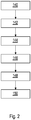
- the method is shown in Figure 2 and will be explained in further detail below. Thus, reference may be made to the description of Figure 2 .
- the mobile device 112 may further comprise at least one processor 120.
- the processor 120 may be configured, such as by software programming, for performing and/or supporting one or more of the method steps i) to vi) of the method.
- the method specifically may be computer-implemented or computer-controlled.
- the medical article 114 may comprise at least one color reference card 122 and/or at least one optical test strip 124 having at least one reagent test field 126. As can be seen in Figure 1 , the medical article 114 may also comprise both the color reference card 122 and the optical test strip 124, such as an integral part and/or as an overlay of two articles stacked on top of each other or being positioned in a predetermined fashion relative to one another.
- the color reference card 122 may comprise a plurality of different gray reference fields 128 and/or a plurality of different color reference fields 130 having known reference color values.
- the different gray reference fields 128 may be locally assigned to the reagent test field 126 and/or to the color reference fields 130.
- the color reference card 122 may further comprise at least one position marker 132.
- the position marker 132 may be or may comprise at least one ArUco code label 134. Other position markers, however, are also feasible.
- the color reference card 122 may comprise at least one positioning element 136.
- the positioning element 136 may be or may comprise a window element 138.
- the positioning element 136 may be configured for positioning the optical test strip 124 and/or the reagent test field 126 with respect to the color reference card 122 and for keeping the optical test strip 124 and/or the reagent test field 126 in a fixed position.
- the optical test strip 124 and/or the reagent test field 126 may be visible through the window element 138 when the optical test strip 124 and/or the reagent test field 126 is placed behind the color reference card 122.
- FIG. 2 a flow chart of an exemplary embodiment of a method of performing at least one analytical measurement is shown.
- the method comprises using the mobile device 112 having at least one camera 116. Further, the method comprises the following steps, which may specifically be performed in the given order. Still, a different order may also be possible. It may be possible to perform two or more of the method steps fully or partially simultaneously. It may further be possible to perform one, more than one or even all of the method steps once or repeatedly. The method may comprise additional method steps that are not listed.
- the method comprises:
- the method may specifically comprise performing step i) repeatedly, more specifically continuously repeatedly.
- the image-derived position information may be derived from the time series of images by using at least one target feature of the medical article 114 in the respective image.
- the target feature may be or may comprise one or more of an edge of the medical article 114, a field of the medical article 114, such as the reagent test field 126, a color reference field 130 or a gray reference field 128, or the position marker 132 of the medical article 114.
- step iii) may be performed repeatedly, specifically continuously repeatedly.
- Another exemplary embodiment of the method wherein the method steps may be repeated continuously is shown in Figure 3 and will be explained further detailed below. Thus, reference may be made to the description of Figure 3 .
- step iv) may comprise using at least one item of position information from the first time series of position information.
- step iv) may comprise estimating the measurement-derived position information on the basis of the at least one item of position information from the first time series of position information and at least one item of measurement information captured in step iii).
- the measured derived position information may be estimated by interpolating position information based on image-derived position information derived in step ii) and measurement information captured in step iii).
- the measured derived position information may also be estimated by extrapolating position information based on image-derived position information derived in step ii) and measurement information captured in step iii).
- the estimating of the measurement-derived position information may further comprise determining at least one prospective trajectory of the relative position of the mobile device 112 and the medical article 114, based on the at least one item of position information from the first time series of position information and at least one item of measurement information captured in step iii).
- the first time series of position information and the second time series of position information may comprise position information as a function of time.
- the augmented time series generated in step v) is generated by combining the first time series of position information and the second time series of position information.
- the augmented time series of position information may also comprise position information as a function of time.
- the augmented time series of position information may comprise position information of the first time series of position information and additionally position information of the second time series of position information, specifically for the points in time where no image-derived position information from the first time series of position information is available.
- step vi) may comprise deriving at least one item of current position information from the augmented time series of position information.
- the current item of position information may be derived from the first time series of position information if a current point in time, at which the current position information is to be determined, corresponds to a capturing time at which an image of the time series of images is captured.
- the current position information may be derived from the second time series of position information.
- the user guidance may be provided such that a difference between the at least one item of current position information and the at least one relative target position is decreased.
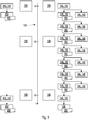
- Figure 3 shows a flow chart of another exemplary embodiment of the method of performing at least one analytical measurement.
- the embodiment of Figure 3 may form a more detailed variation of the embodiment shown in Figure 2 , so for most terms and options reference may be made to Figure 2 .
- a timeline 152 is shown together with a flow chart of the method.
- an exemplary embodiment of the method according to the present invention such as for example according to the exemplary embodiment of Figure 2 , is shown. Contrarily and for reasons of comparison, only, a method of performing an analytical method without using measurement-derived position information is shown on the left hand side of the timeline 152.
- the part on the right hand side of the timeline 152 constitutes an embodiment referring to the present invention, whereas the steps on the left hand side of the timeline 152 are given for the purpose of comparison.
- the method steps of the method on the right hand side may correspond to the method steps of Figure 2 .
- the mobile device 112 may be in a relative position too far away from the medical article 114 (denoted by reference number 154).
- the user may be guided, based on the image-derived position information, to decrease the distance (denoted by reference number 160) between the mobile device 112 and the medical article 114.
- steps iii) and iv) may be performed, wherein measurement information of the sensor device 118 of the mobile device 112 may be used to track the user movement.
- the current position of the mobile device 112 may be obtained by extrapolating the movement of the mobile device 112 based on the image-derived position information and the measurement information captured in step iii).
- steps v) and vi) may be performed, wherein the user guidance may specifically comprise a real-time user guidance.
- method steps iii), iv), v) and vi) may be performed repeatedly. Specifically, method steps iii) and iv) may be performed at a constant measurement speed of above 8 Hz. However, method steps i) and ii) may be performed at a constant frame rate, specifically at a frame rate of less than 10 frames per second, more specifically of less than five frames per second.
- the mobile device 112 may be in the relative target position to the medical article 114 at a point in time t2
- the user may be guided to hold the mobile device 112 in the current position (denoted by reference number 162).
- a further image of at least part of the medical article 114 may be captured based on which the analytical measurement may be performed.
- the user may be informed that the image capturing and/or the analytical measurement is done (denoted by reference number 164).
- the mobile device 112 may be in a position to close to the medical article 114 at the point in time t3 (denoted by reference number 158).
- the user may be guided to increase the distance of the mobile device 112 to the medical article 114 (denoted by reference number 166).
- the user may be trapped in a loop of searching the correct relative target position.
Landscapes
- Engineering & Computer Science (AREA)
- Health & Medical Sciences (AREA)
- Physics & Mathematics (AREA)
- General Physics & Mathematics (AREA)
- Life Sciences & Earth Sciences (AREA)
- General Health & Medical Sciences (AREA)
- Chemical & Material Sciences (AREA)
- Analytical Chemistry (AREA)
- Biochemistry (AREA)
- Immunology (AREA)
- Pathology (AREA)
- Computer Vision & Pattern Recognition (AREA)
- Theoretical Computer Science (AREA)
- Molecular Biology (AREA)
- Nuclear Medicine, Radiotherapy & Molecular Imaging (AREA)
- Radiology & Medical Imaging (AREA)
- Quality & Reliability (AREA)
- Medical Informatics (AREA)
- Chemical Kinetics & Catalysis (AREA)
- Plasma & Fusion (AREA)
- Measuring And Recording Apparatus For Diagnosis (AREA)
- Investigating Or Analysing Biological Materials (AREA)
- Processing Or Creating Images (AREA)
- Investigating Or Analysing Materials By Optical Means (AREA)
- Image Analysis (AREA)
- Investigating Or Analysing Materials By The Use Of Chemical Reactions (AREA)
- Ultra Sonic Daignosis Equipment (AREA)
Priority Applications (14)
| Application Number | Priority Date | Filing Date | Title |
|---|---|---|---|
| EP20184181.4A EP3936859A1 (fr) | 2020-07-06 | 2020-07-06 | Procédé de réalisation d'au moins une mesure analytique à l'aide d'un dispositif mobile |
| CN202180048391.2A CN115917296A (zh) | 2020-07-06 | 2021-07-05 | 通过使用移动装置执行至少一种分析测量的方法 |
| TW110124566A TW202217275A (zh) | 2020-07-06 | 2021-07-05 | 藉由使用行動裝置來執行至少一種分析測量之方法 |
| CA3183767A CA3183767A1 (fr) | 2020-07-06 | 2021-07-05 | Methode de realisation d'au moins une mesure analytique a l'aide d'un dispositif mobile |
| KR1020237000267A KR20230031284A (ko) | 2020-07-06 | 2021-07-05 | 모바일 장치를 이용함으로써 적어도 하나의 분석 측정을 수행하는 방법 |
| AU2021304210A AU2021304210A1 (en) | 2020-07-06 | 2021-07-05 | Method of performing at least one analytical measurement by using a mobile device |
| IL299651A IL299651A (en) | 2020-07-06 | 2021-07-05 | A method for performing at least one analytical measurement using a mobile device |
| JP2023500273A JP7788437B2 (ja) | 2020-07-06 | 2021-07-05 | モバイル装置を使用することによって少なくとも1つの分析測定を実行する方法 |
| PCT/EP2021/068431 WO2022008396A1 (fr) | 2020-07-06 | 2021-07-05 | Méthode de réalisation d'au moins une mesure analytique à l'aide d'un dispositif mobile |
| BR112023000133A BR112023000133A2 (pt) | 2020-07-06 | 2021-07-05 | Método para realizar pelo menos uma medição analítica usando um dispositivo móvel, dispositivo móvel, kit, programa de computador e meio de armazenamento legível por computador |
| MX2023000294A MX2023000294A (es) | 2020-07-06 | 2021-07-05 | Metodo para llevar a cabo al menos una medicion analitica mediante el uso de un dispositivo movil. |
| ARP210101874A AR122875A1 (es) | 2020-07-06 | 2021-07-05 | Método para llevar a cabo al menos una medición analítica mediante el uso de un dispositivo móvil |
| ZA2022/13569A ZA202213569B (en) | 2020-07-06 | 2022-12-14 | Method of performing at least one analytical measurement by using a mobile device |
| US18/150,551 US12529657B2 (en) | 2020-07-06 | 2023-01-05 | Method of performing an analytical measurement using a mobile device |
Applications Claiming Priority (1)
| Application Number | Priority Date | Filing Date | Title |
|---|---|---|---|
| EP20184181.4A EP3936859A1 (fr) | 2020-07-06 | 2020-07-06 | Procédé de réalisation d'au moins une mesure analytique à l'aide d'un dispositif mobile |
Publications (1)
| Publication Number | Publication Date |
|---|---|
| EP3936859A1 true EP3936859A1 (fr) | 2022-01-12 |
Family
ID=71522947
Family Applications (1)
| Application Number | Title | Priority Date | Filing Date |
|---|---|---|---|
| EP20184181.4A Pending EP3936859A1 (fr) | 2020-07-06 | 2020-07-06 | Procédé de réalisation d'au moins une mesure analytique à l'aide d'un dispositif mobile |
Country Status (14)
| Country | Link |
|---|---|
| US (1) | US12529657B2 (fr) |
| EP (1) | EP3936859A1 (fr) |
| JP (1) | JP7788437B2 (fr) |
| KR (1) | KR20230031284A (fr) |
| CN (1) | CN115917296A (fr) |
| AR (1) | AR122875A1 (fr) |
| AU (1) | AU2021304210A1 (fr) |
| BR (1) | BR112023000133A2 (fr) |
| CA (1) | CA3183767A1 (fr) |
| IL (1) | IL299651A (fr) |
| MX (1) | MX2023000294A (fr) |
| TW (1) | TW202217275A (fr) |
| WO (1) | WO2022008396A1 (fr) |
| ZA (1) | ZA202213569B (fr) |
Citations (7)
| Publication number | Priority date | Publication date | Assignee | Title |
|---|---|---|---|---|
| EP1963828B1 (fr) * | 2005-12-21 | 2010-03-03 | Micronas GmbH | Procédé pour mesurer la concentration d'un analyte dans un échantillon de fluide biologique |
| WO2012131386A1 (fr) | 2011-03-31 | 2012-10-04 | Albagaia Limited | Appareil de test |
| US9485416B2 (en) | 2014-03-11 | 2016-11-01 | Wipro Limited | Method and a guided imaging unit for guiding a user to capture an image |
| US9906712B2 (en) | 2015-06-18 | 2018-02-27 | The Nielsen Company (Us), Llc | Methods and apparatus to facilitate the capture of photographs using mobile devices |
| US10353049B2 (en) | 2013-06-13 | 2019-07-16 | Basf Se | Detector for optically detecting an orientation of at least one object |
| US10357092B2 (en) | 2013-11-06 | 2019-07-23 | Koninklijke Phiilps N.V. | System and a method for guiding a user during a shaving procedure |
| WO2019238500A1 (fr) * | 2018-06-11 | 2019-12-19 | F. Hoffmann-La Roche Ag | Procédé d'étalonnage permettant d'étalonner une caméra d'un dispositif mobile à des fins de détection d'un analyte dans un échantillon |
Family Cites Families (6)
| Publication number | Priority date | Publication date | Assignee | Title |
|---|---|---|---|---|
| CN101606119B (zh) | 2007-12-07 | 2016-03-16 | 索尼株式会社 | 输入装置、控制装置、控制系统、控制方法及手持装置 |
| US11940388B2 (en) * | 2017-03-17 | 2024-03-26 | Ixensor Co., Ltd. | Method for improving usability and accuracy for physiological measurement |
| PT3477286T (pt) | 2017-10-25 | 2023-04-24 | Hoffmann La Roche | Métodos e dispositivos para realizar uma medição analítica |
| US10900768B2 (en) | 2017-11-29 | 2021-01-26 | Hill Engineering, Llc | Systems and methods for analysis of material properties of components and structures using machining processes to enable stress relief in the material under test |
| CN108562548B (zh) | 2018-01-26 | 2021-07-13 | 北京秒康智能科技有限公司 | 智能尿检马桶的颜色识别方法及其系统 |
| US10605741B2 (en) | 2018-06-28 | 2020-03-31 | International Business Machines Corporation | Accurate colorimetric based test strip reader system |
-
2020
- 2020-07-06 EP EP20184181.4A patent/EP3936859A1/fr active Pending
-
2021
- 2021-07-05 JP JP2023500273A patent/JP7788437B2/ja active Active
- 2021-07-05 AR ARP210101874A patent/AR122875A1/es active IP Right Grant
- 2021-07-05 WO PCT/EP2021/068431 patent/WO2022008396A1/fr not_active Ceased
- 2021-07-05 BR BR112023000133A patent/BR112023000133A2/pt unknown
- 2021-07-05 KR KR1020237000267A patent/KR20230031284A/ko active Pending
- 2021-07-05 CN CN202180048391.2A patent/CN115917296A/zh active Pending
- 2021-07-05 AU AU2021304210A patent/AU2021304210A1/en active Pending
- 2021-07-05 CA CA3183767A patent/CA3183767A1/fr active Pending
- 2021-07-05 TW TW110124566A patent/TW202217275A/zh unknown
- 2021-07-05 MX MX2023000294A patent/MX2023000294A/es unknown
- 2021-07-05 IL IL299651A patent/IL299651A/en unknown
-
2022
- 2022-12-14 ZA ZA2022/13569A patent/ZA202213569B/en unknown
-
2023
- 2023-01-05 US US18/150,551 patent/US12529657B2/en active Active
Patent Citations (9)
| Publication number | Priority date | Publication date | Assignee | Title |
|---|---|---|---|---|
| EP1963828B1 (fr) * | 2005-12-21 | 2010-03-03 | Micronas GmbH | Procédé pour mesurer la concentration d'un analyte dans un échantillon de fluide biologique |
| WO2012131386A1 (fr) | 2011-03-31 | 2012-10-04 | Albagaia Limited | Appareil de test |
| US20140154789A1 (en) * | 2011-03-31 | 2014-06-05 | Neil Polwart | Testing apparatus |
| US9903857B2 (en) | 2011-03-31 | 2018-02-27 | Norarum DX Limited | Testing apparatus |
| US10353049B2 (en) | 2013-06-13 | 2019-07-16 | Basf Se | Detector for optically detecting an orientation of at least one object |
| US10357092B2 (en) | 2013-11-06 | 2019-07-23 | Koninklijke Phiilps N.V. | System and a method for guiding a user during a shaving procedure |
| US9485416B2 (en) | 2014-03-11 | 2016-11-01 | Wipro Limited | Method and a guided imaging unit for guiding a user to capture an image |
| US9906712B2 (en) | 2015-06-18 | 2018-02-27 | The Nielsen Company (Us), Llc | Methods and apparatus to facilitate the capture of photographs using mobile devices |
| WO2019238500A1 (fr) * | 2018-06-11 | 2019-12-19 | F. Hoffmann-La Roche Ag | Procédé d'étalonnage permettant d'étalonner une caméra d'un dispositif mobile à des fins de détection d'un analyte dans un échantillon |
Non-Patent Citations (1)
| Title |
|---|
| J. HOENES ET AL., THE TECHNOLOGY BEHIND GLUCOSE METERS: TEST STRIPS, DIABETES TECHNOLOGY & THERAPEUTICS, vol. 10, no. 1, 2008, pages S-10 - S-26 |
Also Published As
| Publication number | Publication date |
|---|---|
| KR20230031284A (ko) | 2023-03-07 |
| AU2021304210A1 (en) | 2023-02-02 |
| CN115917296A (zh) | 2023-04-04 |
| TW202217275A (zh) | 2022-05-01 |
| MX2023000294A (es) | 2023-02-09 |
| US20230152239A1 (en) | 2023-05-18 |
| CA3183767A1 (fr) | 2022-01-13 |
| BR112023000133A2 (pt) | 2023-01-31 |
| US12529657B2 (en) | 2026-01-20 |
| WO2022008396A1 (fr) | 2022-01-13 |
| IL299651A (en) | 2023-03-01 |
| AR122875A1 (es) | 2022-10-12 |
| JP2023532984A (ja) | 2023-08-01 |
| JP7788437B2 (ja) | 2025-12-18 |
| ZA202213569B (en) | 2025-06-25 |
Similar Documents
| Publication | Publication Date | Title |
|---|---|---|
| AU2019284819B2 (en) | A calibration method for calibrating a camera of a mobile device for detecting an analyte in a sample | |
| EP4065965B1 (fr) | Procédé de réalisation d'une mesure analytique | |
| US20220283097A1 (en) | Methods and devices for performing an analytical measurement | |
| US12529657B2 (en) | Method of performing an analytical measurement using a mobile device | |
| US20260126396A1 (en) | Method of performing an analytical measurement using a mobile device | |
| RU2845883C1 (ru) | Способ выполнения по меньшей мере одного аналитического измерения с помощью мобильного устройства | |
| HK40090870A (zh) | 通过使用移动装置执行至少一种分析测量的方法 | |
| RU2846704C1 (ru) | Способы и устройства для проведения аналитического измерения | |
| RU2823570C1 (ru) | Способ проведения аналитического измерения | |
| EP4476525B1 (fr) | Méthode de détermination d'un intervalle d'attente de couleur pour évaluer la plausibilité d'une valeur supposée de temps de réaction utilisée dans une mesure analytique basée sur une réaction de formation de couleur, système et dispositif mobile | |
| US20240252070A1 (en) | Method and system for improved optical analyte measurements | |
| HK40079911A (en) | Methods and devices for performing an analytical measurement | |
| WO2025162741A1 (fr) | Procédé de détection d'un analyte dans un échantillon de fluide corporel |
Legal Events
| Date | Code | Title | Description |
|---|---|---|---|
| PUAI | Public reference made under article 153(3) epc to a published international application that has entered the european phase |
Free format text: ORIGINAL CODE: 0009012 |
|
| STAA | Information on the status of an ep patent application or granted ep patent |
Free format text: STATUS: THE APPLICATION HAS BEEN PUBLISHED |
|
| AK | Designated contracting states |
Kind code of ref document: A1 Designated state(s): AL AT BE BG CH CY CZ DE DK EE ES FI FR GB GR HR HU IE IS IT LI LT LU LV MC MK MT NL NO PL PT RO RS SE SI SK SM TR |
|
| B565 | Issuance of search results under rule 164(2) epc |
Effective date: 20201210 |
|
| STAA | Information on the status of an ep patent application or granted ep patent |
Free format text: STATUS: REQUEST FOR EXAMINATION WAS MADE |
|
| 17P | Request for examination filed |
Effective date: 20220216 |
|
| RAV | Requested validation state of the european patent: fee paid |
Extension state: TN Effective date: 20220216 Extension state: MA Effective date: 20220216 |
|
| RBV | Designated contracting states (corrected) |
Designated state(s): AL AT BE BG CH CY CZ DE DK EE ES FI FR GB GR HR HU IE IS IT LI LT LU LV MC MK MT NL NO PL PT RO RS SE SI SK SM TR |
|
| STAA | Information on the status of an ep patent application or granted ep patent |
Free format text: STATUS: EXAMINATION IS IN PROGRESS |
|
| 17Q | First examination report despatched |
Effective date: 20220531 |
|
| GRAP | Despatch of communication of intention to grant a patent |
Free format text: ORIGINAL CODE: EPIDOSNIGR1 |
|
| STAA | Information on the status of an ep patent application or granted ep patent |
Free format text: STATUS: GRANT OF PATENT IS INTENDED |
|
| DAV | Request for validation of the european patent (deleted) | ||
| INTG | Intention to grant announced |
Effective date: 20250915 |
|
| GRAJ | Information related to disapproval of communication of intention to grant by the applicant or resumption of examination proceedings by the epo deleted |
Free format text: ORIGINAL CODE: EPIDOSDIGR1 |
|
| STAA | Information on the status of an ep patent application or granted ep patent |
Free format text: STATUS: EXAMINATION IS IN PROGRESS |
|
| INTC | Intention to grant announced (deleted) | ||
| GRAP | Despatch of communication of intention to grant a patent |
Free format text: ORIGINAL CODE: EPIDOSNIGR1 |
|
| STAA | Information on the status of an ep patent application or granted ep patent |
Free format text: STATUS: GRANT OF PATENT IS INTENDED |
|
| RIC1 | Information provided on ipc code assigned before grant |
Ipc: G01N 21/84 20060101AFI20260220BHEP Ipc: G06T 7/73 20170101ALI20260220BHEP Ipc: G06T 7/00 20170101ALI20260220BHEP |
|
| INTG | Intention to grant announced |
Effective date: 20260305 |