EP3940077B1 - Oberflächenexpressionsvektor mit zwei arten von promotoren aus lactobacillus casei zur gleichzeitigen expression zweier zielproteine und verfahren zur expression von proteinen auf einer mikrobiellen oberfläche unter verwendung desselben - Google Patents
Oberflächenexpressionsvektor mit zwei arten von promotoren aus lactobacillus casei zur gleichzeitigen expression zweier zielproteine und verfahren zur expression von proteinen auf einer mikrobiellen oberfläche unter verwendung desselben Download PDFInfo
- Publication number
- EP3940077B1 EP3940077B1 EP19870792.9A EP19870792A EP3940077B1 EP 3940077 B1 EP3940077 B1 EP 3940077B1 EP 19870792 A EP19870792 A EP 19870792A EP 3940077 B1 EP3940077 B1 EP 3940077B1
- Authority
- EP
- European Patent Office
- Prior art keywords
- proteins
- pgsa
- protein
- promoter
- seq
- Prior art date
- Legal status (The legal status is an assumption and is not a legal conclusion. Google has not performed a legal analysis and makes no representation as to the accuracy of the status listed.)
- Active
Links
Images






Classifications
-
- C—CHEMISTRY; METALLURGY
- C12—BIOCHEMISTRY; BEER; SPIRITS; WINE; VINEGAR; MICROBIOLOGY; ENZYMOLOGY; MUTATION OR GENETIC ENGINEERING
- C12N—MICROORGANISMS OR ENZYMES; COMPOSITIONS THEREOF; PROPAGATING, PRESERVING, OR MAINTAINING MICROORGANISMS; MUTATION OR GENETIC ENGINEERING; CULTURE MEDIA
- C12N15/00—Mutation or genetic engineering; DNA or RNA concerning genetic engineering, vectors, e.g. plasmids, or their isolation, preparation or purification; Use of hosts therefor
- C12N15/09—Recombinant DNA-technology
- C12N15/63—Introduction of foreign genetic material using vectors; Vectors; Use of hosts therefor; Regulation of expression
- C12N15/67—General methods for enhancing the expression
-
- C—CHEMISTRY; METALLURGY
- C12—BIOCHEMISTRY; BEER; SPIRITS; WINE; VINEGAR; MICROBIOLOGY; ENZYMOLOGY; MUTATION OR GENETIC ENGINEERING
- C12N—MICROORGANISMS OR ENZYMES; COMPOSITIONS THEREOF; PROPAGATING, PRESERVING, OR MAINTAINING MICROORGANISMS; MUTATION OR GENETIC ENGINEERING; CULTURE MEDIA
- C12N15/00—Mutation or genetic engineering; DNA or RNA concerning genetic engineering, vectors, e.g. plasmids, or their isolation, preparation or purification; Use of hosts therefor
- C12N15/09—Recombinant DNA-technology
- C12N15/63—Introduction of foreign genetic material using vectors; Vectors; Use of hosts therefor; Regulation of expression
- C12N15/74—Vectors or expression systems specially adapted for prokaryotic hosts other than E. coli, e.g. Lactobacillus, Micromonospora
-
- C—CHEMISTRY; METALLURGY
- C12—BIOCHEMISTRY; BEER; SPIRITS; WINE; VINEGAR; MICROBIOLOGY; ENZYMOLOGY; MUTATION OR GENETIC ENGINEERING
- C12N—MICROORGANISMS OR ENZYMES; COMPOSITIONS THEREOF; PROPAGATING, PRESERVING, OR MAINTAINING MICROORGANISMS; MUTATION OR GENETIC ENGINEERING; CULTURE MEDIA
- C12N15/00—Mutation or genetic engineering; DNA or RNA concerning genetic engineering, vectors, e.g. plasmids, or their isolation, preparation or purification; Use of hosts therefor
- C12N15/09—Recombinant DNA-technology
- C12N15/11—DNA or RNA fragments; Modified forms thereof; Non-coding nucleic acids having a biological activity
- C12N15/62—DNA sequences coding for fusion proteins
-
- C—CHEMISTRY; METALLURGY
- C12—BIOCHEMISTRY; BEER; SPIRITS; WINE; VINEGAR; MICROBIOLOGY; ENZYMOLOGY; MUTATION OR GENETIC ENGINEERING
- C12N—MICROORGANISMS OR ENZYMES; COMPOSITIONS THEREOF; PROPAGATING, PRESERVING, OR MAINTAINING MICROORGANISMS; MUTATION OR GENETIC ENGINEERING; CULTURE MEDIA
- C12N15/00—Mutation or genetic engineering; DNA or RNA concerning genetic engineering, vectors, e.g. plasmids, or their isolation, preparation or purification; Use of hosts therefor
- C12N15/09—Recombinant DNA-technology
- C12N15/63—Introduction of foreign genetic material using vectors; Vectors; Use of hosts therefor; Regulation of expression
- C12N15/74—Vectors or expression systems specially adapted for prokaryotic hosts other than E. coli, e.g. Lactobacillus, Micromonospora
- C12N15/746—Vectors or expression systems specially adapted for prokaryotic hosts other than E. coli, e.g. Lactobacillus, Micromonospora for lactic acid bacteria (Streptococcus; Lactococcus; Lactobacillus; Pediococcus; Enterococcus; Leuconostoc; Propionibacterium; Bifidobacterium; Sporolactobacillus)
-
- C—CHEMISTRY; METALLURGY
- C12—BIOCHEMISTRY; BEER; SPIRITS; WINE; VINEGAR; MICROBIOLOGY; ENZYMOLOGY; MUTATION OR GENETIC ENGINEERING
- C12N—MICROORGANISMS OR ENZYMES; COMPOSITIONS THEREOF; PROPAGATING, PRESERVING, OR MAINTAINING MICROORGANISMS; MUTATION OR GENETIC ENGINEERING; CULTURE MEDIA
- C12N9/00—Enzymes; Proenzymes; Compositions thereof; Processes for preparing, activating, inhibiting, separating or purifying enzymes
- C12N9/10—Transferases (2.)
- C12N9/13—Transferases (2.) transferring sulfur containing groups (2.8)
-
- C—CHEMISTRY; METALLURGY
- C12—BIOCHEMISTRY; BEER; SPIRITS; WINE; VINEGAR; MICROBIOLOGY; ENZYMOLOGY; MUTATION OR GENETIC ENGINEERING
- C12N—MICROORGANISMS OR ENZYMES; COMPOSITIONS THEREOF; PROPAGATING, PRESERVING, OR MAINTAINING MICROORGANISMS; MUTATION OR GENETIC ENGINEERING; CULTURE MEDIA
- C12N9/00—Enzymes; Proenzymes; Compositions thereof; Processes for preparing, activating, inhibiting, separating or purifying enzymes
- C12N9/88—Lyases (4.)
-
- C—CHEMISTRY; METALLURGY
- C12—BIOCHEMISTRY; BEER; SPIRITS; WINE; VINEGAR; MICROBIOLOGY; ENZYMOLOGY; MUTATION OR GENETIC ENGINEERING
- C12N—MICROORGANISMS OR ENZYMES; COMPOSITIONS THEREOF; PROPAGATING, PRESERVING, OR MAINTAINING MICROORGANISMS; MUTATION OR GENETIC ENGINEERING; CULTURE MEDIA
- C12N9/00—Enzymes; Proenzymes; Compositions thereof; Processes for preparing, activating, inhibiting, separating or purifying enzymes
- C12N9/90—Isomerases (5.)
-
- C—CHEMISTRY; METALLURGY
- C12—BIOCHEMISTRY; BEER; SPIRITS; WINE; VINEGAR; MICROBIOLOGY; ENZYMOLOGY; MUTATION OR GENETIC ENGINEERING
- C12N—MICROORGANISMS OR ENZYMES; COMPOSITIONS THEREOF; PROPAGATING, PRESERVING, OR MAINTAINING MICROORGANISMS; MUTATION OR GENETIC ENGINEERING; CULTURE MEDIA
- C12N9/00—Enzymes; Proenzymes; Compositions thereof; Processes for preparing, activating, inhibiting, separating or purifying enzymes
- C12N9/93—Ligases (6)
-
- C—CHEMISTRY; METALLURGY
- C12—BIOCHEMISTRY; BEER; SPIRITS; WINE; VINEGAR; MICROBIOLOGY; ENZYMOLOGY; MUTATION OR GENETIC ENGINEERING
- C12Y—ENZYMES
- C12Y207/00—Transferases transferring phosphorus-containing groups (2.7)
- C12Y207/08—Transferases for other substituted phosphate groups (2.7.8)
- C12Y207/08005—CDP-diacylglycerol-glycerol-3-phosphate 3-phosphatidyltransferase (2.7.8.5)
-
- C—CHEMISTRY; METALLURGY
- C12—BIOCHEMISTRY; BEER; SPIRITS; WINE; VINEGAR; MICROBIOLOGY; ENZYMOLOGY; MUTATION OR GENETIC ENGINEERING
- C12Y—ENZYMES
- C12Y501/00—Racemaces and epimerases (5.1)
- C12Y501/03—Racemaces and epimerases (5.1) acting on carbohydrates and derivatives (5.1.3)
- C12Y501/03003—Aldose 1-epimerase (5.1.3.3)
-
- C—CHEMISTRY; METALLURGY
- C12—BIOCHEMISTRY; BEER; SPIRITS; WINE; VINEGAR; MICROBIOLOGY; ENZYMOLOGY; MUTATION OR GENETIC ENGINEERING
- C12Y—ENZYMES
- C12Y603/00—Ligases forming carbon-nitrogen bonds (6.3)
- C12Y603/02—Acid—amino-acid ligases (peptide synthases)(6.3.2)
- C12Y603/02017—Tetrahydrofolate synthase (6.3.2.17)
-
- A—HUMAN NECESSITIES
- A61—MEDICAL OR VETERINARY SCIENCE; HYGIENE
- A61K—PREPARATIONS FOR MEDICAL, DENTAL OR TOILETRY PURPOSES
- A61K39/00—Medicinal preparations containing antigens or antibodies
- A61K2039/51—Medicinal preparations containing antigens or antibodies comprising whole cells, viruses or DNA/RNA
- A61K2039/52—Bacterial cells; Fungal cells; Protozoal cells
- A61K2039/523—Bacterial cells; Fungal cells; Protozoal cells expressing foreign proteins
-
- C—CHEMISTRY; METALLURGY
- C07—ORGANIC CHEMISTRY
- C07K—PEPTIDES
- C07K2319/00—Fusion polypeptide
- C07K2319/01—Fusion polypeptide containing a localisation/targetting motif
- C07K2319/035—Fusion polypeptide containing a localisation/targetting motif containing a signal for targeting to the external surface of a cell, e.g. to the outer membrane of Gram negative bacteria, GPI- anchored eukaryote proteins
-
- C—CHEMISTRY; METALLURGY
- C07—ORGANIC CHEMISTRY
- C07K—PEPTIDES
- C07K2319/00—Fusion polypeptide
- C07K2319/60—Fusion polypeptide containing spectroscopic/fluorescent detection, e.g. green fluorescent protein [GFP]
-
- C—CHEMISTRY; METALLURGY
- C12—BIOCHEMISTRY; BEER; SPIRITS; WINE; VINEGAR; MICROBIOLOGY; ENZYMOLOGY; MUTATION OR GENETIC ENGINEERING
- C12N—MICROORGANISMS OR ENZYMES; COMPOSITIONS THEREOF; PROPAGATING, PRESERVING, OR MAINTAINING MICROORGANISMS; MUTATION OR GENETIC ENGINEERING; CULTURE MEDIA
- C12N2710/00—MICROORGANISMS OR ENZYMES; COMPOSITIONS THEREOF; PROPAGATING, PRESERVING, OR MAINTAINING MICROORGANISMS; MUTATION OR GENETIC ENGINEERING; CULTURE MEDIA dsDNA viruses
- C12N2710/00011—Details
- C12N2710/20011—Papillomaviridae
- C12N2710/20022—New viral proteins or individual genes, new structural or functional aspects of known viral proteins or genes
-
- C—CHEMISTRY; METALLURGY
- C12—BIOCHEMISTRY; BEER; SPIRITS; WINE; VINEGAR; MICROBIOLOGY; ENZYMOLOGY; MUTATION OR GENETIC ENGINEERING
- C12Y—ENZYMES
- C12Y401/00—Carbon-carbon lyases (4.1)
- C12Y401/02—Aldehyde-lyases (4.1.2)
- C12Y401/02013—Fructose-bisphosphate aldolase (4.1.2.13)
Definitions
- the present invention relates to a vector which co-expresses two different genes on the microbial surface using an aldolase promoter and galactose mutarotase promoter derived from Lactobacillus casei, and a microorganism transformed with this vector.
- the present invention relates to a novel vector, which effectively expresses a foreign protein on the microbial surface using an outer membrane protein (pgsA) which is derived from a Bacillus sp. strain and involved in the synthesis of poly-gamma-glutamate. Furthermore, the present invention relates to a method of producing a protein by expressing a foreign protein on the microbial surface using an outer membrane protein which is derived from a Bacillus sp. strain and involved in the synthesis of poly-gamma-glutamate.
- pgsA outer membrane protein
- the present invention relates to a method of producing a protein by expressing a foreign protein on the microbial surface using an outer membrane protein which is derived from a Bacillus sp. strain and involved in the synthesis of poly-gamma-glutamate.
- Cell surface display or cell surface expression refers to a technique by which a protein or a peptide is fused with an appropriate surface anchoring motif and expressed on the surface of Gram-negative or Gram-positive bacteria, fungus, yeast, or animal cells ( Lee S. Y., et al., Trends Biotechnol., 21:4552, 2003 ).
- the first cell surface display technique was developed in 1980s using phage having a relatively simple surface, and is a technique in which a peptide or a small protein is fused with pIII of filamentous phage and expressed.
- the first cell surface display technique was named the surface-expression system.
- Cell surface display using phage has been used for screening of antibodies, epitopes, and high-affinity ligands, but has a limitation in that the size of protein that can be displayed on the phage surface is relatively limited.
- cell surface expression using bacteria has been developed. This cell surface display is a technique in which a foreign protein is stably expressed on the microbial surface by using a surface protein of a microorganism such as bacteria or yeast as a surface anchoring motif.
- a suitable surface protein and the foreign protein should be linked with each other at the gene level to form a fusion protein, and the fusion protein should stably pass through the inner cell membrane and should be attached to and maintained on the cell surface.
- a protein having the following properties is preferably used as the surface anchoring motif.
- the protein has, at the N-terminus, a secretion signal capable of passing through the inner cell membrane; (2) the protein should have a targeting signal which can be stably attached onto the outer cell membrane; (3) the protein can be expressed on the cell surface in large amounts within the range that does not adversely affect the growth of cells, so that the protein can show high activity; and (4) the protein should be able to be stably expressed regardless of the size thereof such that it can be used in various reactions ( Georgiou et al., TIBTECH, 11:6, 1993 ).
- this surface anchoring motif also needs to be genetically engineered such that it is inserted into the N-terminus, C-terminus or central portion of the outer membrane protein on the surface of a host cell ( Lee et al., TIBTECH, 21:45-52, 2003 ).
- the protein In order for a protein to be expressed on the bacterial surface, the protein should have, in the primary sequence thereof, a secretion signal enabling the protein biosynthesized in the cell to pass through the cell membrane.
- the protein in the case of Gram-negative bacteria, should pass through the inner cell membrane and the cell membrane space, should be inserted into and attached to the outer cell membrane, and should be anchored to the membrane so as to protrude outward from the membrane.
- proteins that have this secretion signal and a targeting signal for protein anchoring to the cell surface include surface proteins, special enzymes, and toxin proteins.
- the secretion signals and target signals of these proteins are used together with proper promoters, the proteins can be successfully expressed on the bacterial surface.
- lactic acid bacteria have been considered highly useful as vaccine vehicles.
- lactic acid bacteria have a number of advantages in that they can deliver antigens to the intestines due to their resistance to bile acid and gastric acid, and thus induce mucosal immunity in the intestines.
- galactose mutarotase is known to play an important role in normal galactose metabolism by catalyzing the conversion of ⁇ -D-galactose to ⁇ -D-galactose in the Leloir pathway which is a metabolic pathway for D-galactose catabolism.
- studies on the molecular biological characteristics of this galactose mutarotase in lactic bacteria are still insufficient.
- WO 2008/115019 A1 corresponding to US 2010/0196956 A1 of the present applicant discloses a vector comprising a Paid promoter driving the expression of a nucleic acid encoding a pgsA complex gene and a target protein.
- the vector of D1 comprises a single expression cassette directed by a promoter having SEQ ID NO:1.
- WO 03/014360 A1 of the present applicant discloses a surface expression vector containing one or more genes selected among pgsB, pgsC and pgsA, i.e. the complete pgsA gene.
- the present inventors have developed a surface expression vector which effectively expresses two different foreign proteins on the microbial surface using a strain which expresses the HPV E7 protein on the cell surface thereof, and a method for stably expressing large amounts of two different foreign proteins on the microbial surface. Furthermore, the present inventors have conducted extensive studies on the use of a gene (pgsA), which is involved in the synthesis of poly-gamma-glutamate, as a novel surface anchoring motif, and as a result, have developed a novel vector which is effectively expresses foreign proteins on the microbial surface using the pgsA gene, and a method for expressing large amounts of foreign proteins on the microbial surface, thereby completing the present invention.
- pgsA a gene
- the present invention is intended to provide a surface expression vector which co-expresses two target proteins on the microbial surface using a poly-gamma-glutamate synthetase complex gene, derived from a Bacillus subtilis var. Chungkookjang strain, as a surface anchoring motif capable of expressing large amounts of two foreign proteins on the microbial surface, and using an aldolase promoter and galactose mutarotase promoter derived from Lactobacillus casei, and a method of efficiently expressing two different foreign proteins on the surface of a transformant obtained by transformation with the surface expression vector.
- a poly-gamma-glutamate synthetase complex gene derived from a Bacillus subtilis var. Chungkookjang strain
- an aldolase promoter and galactose mutarotase promoter derived from Lactobacillus casei
- the present invention is also intended to provide a method including: selecting an outer membrane protein, which is derived from a Bacillus sp. strain and involved in the synthesis of poly-gamma-glutamate, as a surface anchoring motif capable of expressing a large amount of a foreign protein on the microbial surface; constructing a surface expression vector capable of expressing a foreign protein or peptide on the microbial surface using the selected outer membrane protein; and efficiently expressing a foreign protein on the surface of a transformant obtained by transformation with the surface expression vector.
- the present invention provides a surface expression vector for expressing target proteins, the surface expression vector including: a first promoter, a gene encoding a poly-gamma-glutamate synthetase complex for surface anchoring, and a gene encoding the target protein; and a second promoter, a gene encoding a poly-gamma-glutamate synthetase complex for surface anchoring, and a gene encoding a target protein,
- the first promoter is an aldolase promoter, Paid, isolated from lactic acid bacteria, and is a promoter of SEQ ID NO: 1.
- the second promoter is a galactose mutarotase promoter, Pgm, isolated from lactic acid bacteria, and is a promoter of SEQ ID NO: 2.
- the gene encoding the poly-gamma-glutamate synthetase complex may be obtained from a Bacillus sp. strain that produces the gamma-glutamate synthetase complex, and is pgsA and has the nucleotide sequence of any of SEQ ID NO: 21 to 23 and 32 to 34.
- a linker is inserted into an end of the gene encoding the poly-gamma-glutamate synthetase complex, and the gene encoding the target protein is inserted into the inserted linker.
- the target protein may be one in which a portion of the amino acid sequence of the target protein has been removed or mutated in a site-directed manner so as to favor surface expression.
- the first promoter is an aldolase promoter (Paid) derived from lactic acid bacteria.
- the second promoter is a galactose mutarotase promoter (Pgm) derived from lactic acid bacteria.
- the present invention also provides a microorganism transformed with the surface expression vector.
- a microorganism used for the transformation may be a microorganism modified so that it does not produce intracellular or extracellular proteases, which are involved in degradation of the expressed target protein, in order to favor cell surface expression of the target protein.
- the microorganism that is used as a host may be lactic acid bacteria.
- examples of the lactic acid bacteria include Lactobacillus sp., Streptococcus sp., and Bifidobacterium sp.
- the Lactobacillus sp. may be selected from among L. acidophilus, L. casei, L. plantarum, L. ferementum, L. delbrueckii, L. johnsonii LJI, L. reuteri, and L. bulgaricus
- the Streptococcus sp. may be S. thermophilus
- the Bifidobacterium sp. may be selected from among B.
- the microorganism is Lactobacillus sp.
- the present invention also provides a method for cell surface expression of a target protein, the method including steps of:
- the target protein may be any one selected from the group consisting of hormones, hormone analogs, enzymes, enzyme inhibitors, signaling proteins or fragments thereof, antibodies or fragments thereof, single chain antibodies, binding proteins, binding domains, peptides, antigens, adhesion proteins, structural proteins, regulatory proteins, toxin proteins, cytokines, transcription regulatory factors, coagulation factors, and plant biodefense-inducing proteins.
- the present specification also provides a method of inducing humoral immunity or cellular immunity by administering cells, produced by the above-described method and having an antigen expressed on the surface thereof, to vertebrates other than humans (not claimed).
- the present specification also provides a method of producing an antibody in vertebrates other than humans, the method including: inducing an immune response by administering cells, produced by the above-described method and having an antigen expressed on the surface thereof, to the vertebrates; and recovering an antibody produced by the immune response (not claimed).
- the surface expression vector according to the present invention is a single vector including: two different promoters; genes encoding a poly-gamma-glutamate synthetase complex for surface anchoring; and target protein-encoding genes linked to the genes encoding the poly-gamma-glutamate synthetase complex, respectively.
- the surface expression vector according to the present invention has advantages over prior art inventions in that it may co-express two different target proteins, and the possibility of cellular transformation that may occur in two transformation processes may be minimized because a microorganism transformed with the surface expression vector is used.
- the surface expression vector is a single vector containing two different promoters, it may efficiently express target proteins within a shorter time than conventional art inventions, and has an excellent effect of remarkably reducing drug development costs by selecting substances with high drug potential rapidly and expressing two different target proteins by the single surface expression vector.
- the surface expression vector for expressing target proteins according to the present invention may stably express target proteins.
- the surface expression vector according to the present invention may constitutively express target proteins on the surface of a recombinant microorganism.
- the surface expression vector may be advantageously used in the production of antigens for the manufacture of vaccines required.
- Example 1 Construction of Surface Expression Vector pKV-Pald-pgsA-HPV16E7_Pgm-pgsA-EGFP for Co-Expression of Two Antigens
- a gene encoding Pgm-pgsA-EGFP was inserted into the C-terminus of Pald-pgsA-HPV16E7 to obtain the vector pKV-Pald-pgsA-HPV16E7_Pgm-pgsA-EGFP capable of co-expressing two different target proteins on the surface of lactic acid bacteria.
- PCR was using the primers of SEQ ID NO: 3 and SEQ ID NO: 4.
- a 755-bp EGFP gene fragment was obtained, which contains a BamHI restriction enzyme site at the 5' end thereof and an XbaI restriction enzyme site at the 3' end thereof.
- the obtained DNA fragment was treated with BamHI and XbaI restriction enzymes, the vector pKV-Pald-pgsA-E7 was cleaved with BamHI and XbaI to remove the HPV16 E7 gene region, and then the EGFP gene and the cleaved vector were ligated to each other to obtain pKV-Pald-pgsA-EGFP.
- the Lactobacillus casei genome was subjected to PCR using the primers of SEQ ID NO: 5 and SEQ ID NO: 6 to obtain a galactose mutarotase promoter fragment containing an SphI restriction enzyme site at the 5' end thereof and a XbaI restriction enzyme site at the 3' end thereof.
- the obtained DNA fragment was treated with SphI and XbaI restriction enzymes, and the vector pKV-Pald-pgsA-EGFP was also cleaved with the same restriction enzymes to remove the aldolase promoter region, and then the galactose mutarotase promoter and the cleaved promoter were ligated to each other to obtain pKV-Pgm-pgsA-EGFP.
- PCR was performed using the pKV-Pgm-pgsA-EGFP vector as a template and the primers of SEQ ID NO: 7 and SEQ ID NO: 8.
- a 2608-bp fragment including the Pgm-pgsA-EGFP gene was obtained, which contains an EcoRI restriction enzyme site at the 5' end thereof and an FspI restriction enzyme site at the 3' end thereof.
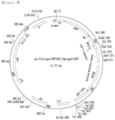
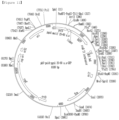
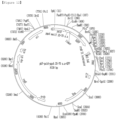
- the obtained DNA fragment which is a gene encoding Pgm-pgsA-EGFP, was inserted into the surface expression vector pKV-Pald-pgsA-HPV16E7 using the EcoRI and FspI restriction enzyme sites to obtain pKV-Pald-pgsA-HPV16E7_Pgm-pgsA-EGFP which is a 1,1171-bp fragment ( FIGS. 1 and 2 ).
- the present invention provides a surface expression vector which co-expresses two target proteins on the microbial surface using a poly-gamma-glutamate synthetase complex gene, derived from a Bacillus subtilis var. Chungkookjang strain, as a surface anchoring motif capable of expressing large amounts of two foreign proteins on the microbial surface, and using an aldolase promoter and galactose mutarotase promoter derived from Lactobacillus casei, and a method of efficiently expressing two different foreign proteins on the surface of a transformant obtained by transformation with the surface expression vector.
- a poly-gamma-glutamate synthetase complex gene derived from a Bacillus subtilis var. Chungkookjang strain
- an aldolase promoter and galactose mutarotase promoter derived from Lactobacillus casei
- the present invention provides a surface expression vector for expressing target proteins, the surface expression vector including: the surface expression vector including: a first promoter, a gene encoding a poly-gamma-glutamate synthetase complex for surface anchoring, and a gene encoding the target protein; and a second promoter, a gene encoding a poly-gamma-glutamate synthetase complex for surface anchoring, and a gene encoding a target protein.
- promoter refers to a minimal sequence sufficient to direct transcription.
- the aldolase promoter and galactose mutarotase promoter of the present invention are promoters that induce expression of aldolase gene and galactose mutarotase gene, respectively, in Lactobacillus casei.
- a promoter contains a region to which RNA polymerase binds to induce the initiation of transcription, and the degree of RNA synthesis is determined depending on the nucleotide sequence of the promoter.
- the expression level of a gene may vary depending on the type of promoter.
- the Lactobacillus casei genome was amplified by PCR, and a 406-bp promoter (SEQ ID NO: 1) and 607-bp promoter (SEQ ID NO: 2) derived from Lactobacillus casei were isolated using gene cloning technology.
- the surface expression vector when a gene encoding the target protein to be expressed is operably linked to the surface expression vector, the surface expression vector may be used as a target-protein expression vector capable of expressing the target protein with high efficiency.
- the surface expression vector may expression the target protein in a host cell.
- operably linked means that a nucleic acid expression control sequence and a nucleic acid sequence encoding a target protein are functionally linked to each other so as to perform a general function.
- a promoter and a nucleic acid sequence encoding a protein or RNA can be operably linked to each other so as to affect expression of the coding sequence.
- the operable linkage to the surface expression vector may be prepared using a gene recombinant technique well known in the art, and site-specific DNA cleavage and linkage may be performed using an enzyme commonly known in the art.
- the first promoter is a promoter of SEQ ID NO: 1.
- the second promoter is a promoter of SEQ ID NO: 2.
- a variant of the nucleotide sequence represented by SEQ ID NO: 1 or 2 are also included within the scope of the present invention as defined in claim 1.
- the first promoter aldolase promoter nucleic acid molecule and the second promoter galactose mutarotase promoter nucleic acid molecule are meant to include functional equivalents of the nucleic acid molecules, for example, variants which result from deletion, substitution or insertion of a portion of the nucleotide sequence of each of the first promoter aldolase promoter and the second promoter galactose mutarotase promoter, but are capable of having the same function as the first promoter aldolase promoter and second promoter galactose mutarotase promoter nucleic acid molecules.
- each of the first promoter aldolase promoter and the second promoter galactose mutarotase promoter may have a nucleotide sequence having a sequence homology of at least 70%, more preferably at least 80%, even more preferably at least 90%, most preferably at least 95%, to the nucleotide sequence of SEQ ID NO: 1 or 2.
- "% of sequence homology" to polynucleotides is identified by comparing two optimally aligned sequences by the comparison region, and a portion of the polynucleotide sequence in the comparison region may include addition or deletion (i.e., gap) compared to the reference sequence (without addition or deletion) for the optimal alignment of the two sequences.
- the first promoter, the gene encoding the poly-gamma-glutamate synthetase complex for surface anchoring, and the gene encoding the target protein; and the second promoter, the gene encoding the poly-gamma-glutamate synthetase complex for surface anchoring, and the gene encoding a target protein are arranged consecutively, so that the expressions of the target proteins by the two different promoters located in the "single promoter" are driven independently of each other. Since the promoters that operate independently of each other are present in the single vector, it is possible to more efficiently express the target proteins on the cell surface by effectively reducing the number of surface expression vector construction steps compared to prior art inventions.
- the present invention has an advantage in that, since the two different promoters are present in the single vector, it is possible to minimize the possibility of cellular transformation that may occur in two transformation processes that are performed to express two target proteins on the cell surface in a conventional art.
- the cell surface expression according to the present invention has an advantage in that the expressions of two genes are driven independently of each other by the respective promoters, so that the expressions of the different target proteins can be independently confirmed.
- the present invention provides a microorganism transformed with the surface expression vector.
- the microorganism may be lactic acid bacteria, more preferably probiotic Gram-positive lactic acid bacteria.
- probiotic microorganisms include the following: (i) a microorganism derived from humans; (ii) stability against bile, acid, enzyme and oxygen; (iii) ability to adhere to intestinal mucosa; (iv) colonization potential in the human gastrointestinal tract; (v) production of antimicrobial substances; and (vi) demonstrable efficacy and safety. On the basis of such criteria, it is apparent that lactic acid bacteria are biocompatible and harmless to the human body.
- examples of the lactic acid bacteria include Lactobacillus sp., Streptococcus sp., and Bifidobacterium sp.
- the Lactobacillus sp. may be selected from among L. acidophilus, L. casei, L. plantarum, L. ferementum, L. delbrueckii, L. johnsonii LJI, L. reuteri, and L. bulgaricus
- the Streptococcus sp. may be S. thermophilus
- the Bifidobacterium sp. may be selected from among B. infantis, B. bifidum, B. longum, B. psuedolongum, B. breve, B. lactis Bb-12, and B. adolescentis.
- the lactic acid bacteria is Lactobacillus sp.
- the microorganism used for the transformation may include a transformed microorganism modified so that it does not produce an intracellular or extracellular protease, which is involved in degradation of the expressed target protein, in order to favor cell surface expression of the target protein.
- the present invention provides a method for cell surface expression of a target protein, the method including steps of: expressing the target protein on the cell surface by culturing a microorganism transformed with the surface expression vector; and recovering cells having the target protein expressed on the surface thereof.
- the present invention provides a method for producing a foreign target protein, which allows the target protein to be efficiently used without a cell disruption or protein isolation/purification process by expressing the foreign target protein on the microbial surface using the surface expression vector of the present invention.
- target protein refers to a protein that cannot normally exist in a transformed host cell expressing the protein.
- foreign protein refers to a protein that cannot normally exist in a transformed host cell expressing the protein.
- foreign protein refers to a protein that cannot normally exist in a transformed host cell expressing the protein.
- examples of the target protein include, but are not limited to, infectious microorganisms, immune disease-derived antigens or tumor-derived antigens, for example, fungal pathogens, bacteria, parasites, helminths, viruses or allergy-causing substances.
- examples of the antigen include tetanus toxoid, influenza virus hemagglutinin or nuclear protein, diphtheria toxoid, HIV gp120 or fragments thereof, HIV gag protein, IgA protease, insulin peptide B, Spongospora subterranea antigen, Vibriose antigen, Salmonella antigen, Pneumococcus antigen, RSV (respiratory syncytial virus) antigen, Hemophilus influenza outer membrane protein, Streptococcus pneumoniae antigen, Helicobacter pylori urease, Neisseria meningitidis pilin, N.
- gonorrhoeae pilin melanoma associated antigens
- TRP2 MAGE-1, MAGE-3, gp100, tyrosinase, MART-1, HSP-70, beta-HCG
- human papilloma virus antigens including E1, E2, E6 and E7 derived from HPV-16, -18, - 31, -35 or -45
- CEA tumor antigen normal or mutated ras protein
- normal or mutated p53 normal or mutated p53
- Muc1 Muc1
- pSA antigens well known in the art, which are derived from the followings: cholera, diphtheria, Haemophilus, hepatitis A, hepatitis B, influenza, measles, meningitis, mumps, pertussis, small pox, pneumococcal pneumonia, polio, rabies, rubella, tetanus, tuberculo
- the target protein produced by the surface expression method of the present invention may be used in various applications. These applications include effective production of antibodies and enzymes, as well as production of peptide libraries for screening antigens, adhesion or adsorption proteins and new physiologically active substances.
- the present invention provides a method of expressing a target protein on the surface of a Gram-negative or Gram-positive host cell, the method including steps of: (a) constructing a recombinant vector by inserting a gene encoding the target protein into the surface expression vector; (b) transforming the Gram-negative or Gram-positive host cell with the recombinant vector; and (c) expressing the target protein on the surface of the transformed host cell by culturing the transformed host cell.
- the present invention provides the surface expression vector pKV-Pald-pgsA-HPV16E7_Pgm-pgsA-EGFP which co-expresses two different target proteins on the microbial surface using an aldolase promoter and galactose mutarotase promoter derived from Lactobacillus casei.
- the aldolase promoter and galactose mutarotase promoter derived from Lactobacillus casei were used in one example, but either constructing a vector using an aldolase promoter and galactose mutarotase promoter derived from another strain, which have a sequence homology of at least 80% to the nucleotide sequences of the aldolase promoter and galactose mutarotase promoter derived from Lactobacillus casei, or expressing foreign proteins on the microbial surface using the constructed vector, is also included in the scope of the present invention.
- HPV16E7 is an oncogenic HPV type 16 gene that causes cancer, and E7 proteins are all involved in HPV-mediated cellular immortalization and cell transformation.
- the E7 protein induces hyperphosphorylation of Rb protein by direct binding thereto, and this E7 protein derived from HPV is a specific target capable of killing only HPV-infected cancer cells, and is used as a drug target in the treatment of HPV-induced cancer.
- the "enhanced green fluorescent protein (EGFP)” is a gene that emits green light in vivo to enable easy observation of cells expressing the corresponding protein, and has the advantage of being capable of being observed under a fluorescence microscope.
- GFP is a green fluorescent protein originating from jellyfish ( Aequorea victoria ) and has been used as an important marker for gene expression in various research fields.
- EGFP is a mutant of GFP, results from substitution of leucine for phenylalanine at position 64 in the amino acid sequence of GFP and substitution of threonine for serine at position 65, and has the advantage of showing a stronger fluorescent signal than the original GFP.
- the present inventors constructed a surface expression vector by inserting HPV16E7 and EGFP genes into a vector, transformed Lactobacillus casei with the surface expression vector, and then cultured the transformed Lactobacillus casei to induce protein expression, and obtained proteins by collecting a certain amount of the culture.
- the obtained proteins were analyzed by SDS-PAGE and subjected to Western blotting using anti-EGFP and anti-HPV16E7 antibodies, and as a result, it was confirmed that the HPV16E7 and EGFP proteins were inserted successfully into the constructed surface expression vector pKV-Pald-pgsA-HPV16E7_Pgm-pgsA-EGFP and co-expressed on the cell surface.
- HPV16E7 and EGFP proteins were used as foreign proteins, but any other proteins, such as enzymes, antigens, antibodies, adhesion proteins, or adsorption proteins, may also be used as foreign proteins.
- the transformed microorganism of the present invention may be used as a vaccine.
- the present specification discloses a method of producing a microbial vaccine by using lactic acid bacteria transformed with the surface expression vector.
- Vaccines are drugs that are used to stimulate the immune system using living organisms for the purpose of preventing diseases.
- Immune activation refers to a process of efficiently removing antigens by antibody production, stimulation of T-lymphocytes, or stimulation of other immune cells (e.g., macrophages) in organisms.
- T-lymphocytes e.g., T-lymphocytes
- other immune cells e.g., macrophages
- a transformed microorganism vaccine expressing a target protein as an antigen may be administered to mammals, preferably humans.
- the preparation of the vaccine composition may be performed using standard techniques.
- a dose suitable for administration to a subject varies depending on the antigenicity of gene products and may be an amount in which the vaccine can sufficiently induce typical immune responses.
- the dose can be easily determined through usual experimental procedures.
- the typical initial dose of the vaccine is 0.001 to 1 mg antigen/kg of body weight. If necessary, the dose can be increased so as to offer a preferred level of protection, or the vaccine is used in a multiple dose.
- the dose can be determined by those skilled in the art and can also vary depending on various factors such as formulation method, administration mode, the subject's age, body weight and sex, pathological conditions, diet, administration duration, administration route, excretion rate, and response sensitivity.
- the vaccine In order for the vaccine to be effective in producing an antibody, an antigenic substance should be released in vivo so that the antibody-producing mechanism in the vaccinated subject can be realized.
- a microbial carrier for a gene product must be preferentially introduced in vivo for immune responses.
- the vaccine In order to stimulate a preferred response by an antigen which is presented by the transformant of the present invention, the vaccine is preferably administered orally, by gastrointestinal intubation, or directly to the intestines or lungs in the form of aerosol, even though administration methods such as intravenous injection, intramuscular injection, or subcutaneous injection are also possible.
- the vaccine composition is preferably provided in a lyophilic form, for example, a capsule form.
- the capsule is provided as an enteric coating containing Eudragit S, Eudragit L, cellulose acetate, cellulose phthalate or hydroxyprolylmethyl cellulose.
- the capsule may be used as it is or may be administered after it has been reconstituted into a lyophilic material such as a suspension.
- the reconstitution is preferably performed in a buffer having a pH value suitable for the survival of the transformed microorganism.
- the vaccine can be selectively prepared for parenteral administration, intranasal administration or intramammary administration.
- the transformed lactic acid bacteria containing the promoters of the present invention and containing the genes encoding the target proteins capable of acting as antigens may exhibit the desired efficacy while forming colonies in the mucous membrane of the digestive tract, so that the desired efficacy can be obtained.
- the above-described lactic acid bacteria may co-administer the selected antibiotics in the vector for smooth colony formation while maintaining the desired transformation properties, and may control the development of undesired lactic acid bacteria having no vector, which can be developed during cell division in the transformant.
- the process for selection of the antibiotics can be easily performed using any conventional technique known in the art, and the selected antibiotics, which may be used in the above process, may vary depending on the antibiotic genes contained in the expression vector.
- PgsA fragments containing 1-60 a.a, 1-70 a.a, 1-80 a.a, 1-100 a.a and 1-188 a.a, respectively, were obtained by performing PCR using the surface expression vector (pKV-Pald-PgsA-EGFP) as a template and the primers of SEQ ID NOs: 11 to 20.
- DNA fragments containing an aldolase promoter and the respective PgsA motif fragments, were obtained.
- Each of the DNA fragments contained an SphI restriction enzyme site at the 5' end thereof and a BamHI restriction enzyme site at the 3' end thereof.
- Each of the obtained DNA fragments was treated with SphI and BamHI to obtain fragments.
- the PgsA1 to A5 motif fragments had the nucleotide sequences of SEQ ID NOs: 21 to 25, respectively.
- PgsA fragments containing 25-60 a.a, 25-70 a.a and 25-100 a.a were obtained by performing PCR using the surface expression vector as a template and the primers of SEQ ID NOs: 26 to 31.
- DNA fragments containing the respective PgsA motif fragments were obtained.
- Each of the fragments contained an EcoRV restriction enzyme site at the 5' end thereof and a BamHI restriction enzyme site at the 3' end thereof.
- the obtained DNA fragments were treated with EcoRV and BamHI to obtain fragments.
- the PgsA motif fragments had the nucleotide sequences of SEQ ID NOs: 32 to 34, respectively.
- An object of the present invention is to provide a method including: selecting an outer membrane protein, which is derived from a Bacillus sp. strain and involved in the synthesis of poly-gamma-glutamate, as a new surface anchoring motif capable of expressing a large amount of a foreign protein on the microbial surface; constructing a surface expression vector capable of expressing a foreign protein or peptide on the microbial surface using the selected outer membrane protein; and efficiently expressing a foreign protein on the surface of a transformant obtained using the surface expression vector.
- the present invention provides a microbial surface expression vector as defined in claim 1 containing the gene pgsA having the nucleotide sequence of any one of SEQ ID NO: 21 to 23 and 32 to 34 encoding a poly-gamma-glutamate synthetase complex, and a strain transformed with the vector.
- the present invention also provides a method of expressing a foreign protein on the surface of the transformed strain using the microbial surface expression vector as defined in the claims.
- the protein encoded by the gene pgsA is an outer membrane protein present in Bacillus sp., and is a protein which is involved in the synthesis of poly-gamma-glutamate, which is an edible, water-soluble, anionic and biodegradable polymer produced from Bacillus subtilis IFO3336 ( Natto; Biochem. Biophys. Research Comm., 263, 6-12, 1999 ), Bacillus licheniformis ATCC9945 ( Biotech. Bioeng. 57(4), 430-437, 1998 ), Bacillus anthracis ( J. Bacteriology, 171, 722-730, 1989 ), etc.
- the outer membrane proteins isolated from Bacillus subtilis IFO3336 consist of a total of 922 amino acids and are composed of pgsB, pgsC and pgsA.
- pgsB consists of 393 amino acids
- pgsC consists of 149 amino acids
- pgsA consists of 380 amino acids.
- Ashiuchi et al. cloned the poly-gamma-glutamate synthetase gene derived from Bacillus subtilis, transformed the gene into E. coli, and observed the synthesis of the gene in the E. coli [ Ashiuchi et al., Biochem. Biophy. Res. Communications, 263: 6-12 (1999 )].
- pgsA protein of the poly-gamma-glutamate synthetase complex
- pgsB is an amide ligase system
- the specific amino acids at the N-terminus of pgsB interact with the cell membrane or cell wall
- pgsA has hydrophilic specific amino acid sequences at the N-terminus and C-terminus thereof.
- these amino acids have secretion signals, which can pass through the inner cell membrane with the help of pgsB, and targeting and adhesion signals.
- the outer membrane proteins which are involved in the synthesis of poly-gamma-glutamate have many advantages as a surface anchoring motif which expresses a foreign protein on the cell surface due to the primary amino acid sequence structures and characteristics thereof.
- the advantages are as follows.
- the outer membrane proteins which are involved in the synthesis of poly-gamma-glutamate may be expressed in large amounts on the cell surface for the synthesis and extracellular secretion of poly-gamma-glutamate.
- the expressed outer membrane proteins which are involved in the synthesis of poly-gamma-glutamate are stably maintained even in the resting phase of the cell cycle.
- the outer membrane proteins which are involved in the synthesis of poly-gamma-glutamate originate from the surfaces of Gram-positive bacteria and may be stably expressed on the surfaces of not only various Gram-positive bacteria but also Gram-negative bacteria.
- An object of the present invention is to provide a useful vector capable of expressing a foreign protein on the bacterial surface using the characteristics of an outer membrane protein which is involved in the synthesis of poly-gamma-glutamate.
- the surface expression vector for expressing a target protein according to the present invention includes a secretion signal and a targeting signal, which are contained in the primary sequence of the outer membrane protein which is involved in the synthesis of poly-gamma-glutamate.
- Another object of the present invention is to provide a method of expressing a foreign protein on the microbial surface using a surface expression vector which uses the characteristics of an outer membrane protein which is involved in the synthesis of poly-gamma-glutamate.
- the present invention provides a method for producing a foreign protein, which enables the foreign protein to be efficiently used without a cell disruption or protein isolation/purification process by expressing the foreign protein on the microbial surface using an outer membrane protein which is involved in the synthesis of poly-gamma-glutamate.
- the surface expression vector containing a poly-gamma-glutamate synthetase gene according to the present invention may be applied to all types of strains to express a foreign protein on the microbial surface.
- the surface expression vector may be applied to Gram-negative bacteria, more preferably E. coli, Salmonella typhi, Salmonella typhimurium, Vibrio cholera, Mycobacterium bovis, and Shigella, and to Gram-positive bacteria, preferably Bacillus, Lactobacillus, Lactococcus, Staphylococcus, hysteria monocytogenes, and Streptococcus. Methods of producing all types of foreign proteins using the above strains are included within the scope of the present invention.
- restriction enzyme recognition sites may be inserted into the N-terminus or C-terminus of the poly-gamma-glutamate synthetase gene, and surface expression vectors having these restriction enzyme sites inserted therein are all included within the scope of the present invention.
- the present invention provides the surface expression vectors pKV-Pald-pgsA1 to pKV-Pald-pgsA8 which contain the poly-gamma-glutamate synthetase gene pgsA derived from a Bacillus sp. strain and into which various foreign genes may be easily cloned using restriction enzyme recognition sites inserted into the C-terminus of pgsA.
- the present invention provides the surface expression vectors pKV-Pald-pgsA1 to pKV-Pald-pgsA8 which contain the outer membrane complex pgsA among outer membrane protein complexes involved in the synthesis of poly-gamma-glutamate, and may express, on the surface of Gram-positive bacteria, an EGFP protein in the form of a fusion protein obtained by linking the N-terminus of the EGFP protein to the C-terminus of pgsA.
- the outer-membrane protein gene pgsA which is involved in the synthesis of poly-gamma-glutamate was obtained from Bacillus subtilis var. Chungkookjang (KCTC 0697BP), but constructing a vector using pgsA obtained from any Bacillus sp. strain, which produces poly-gamma-glutamate, or expressing a foreign protein on the microbial surface using the vector, is also included within the scope of the present invention.
- constructing a vector using a pgsA gene derived from any strain, which has a sequence homology of at least 80% to the nucleotide sequence of the pgsA gene present in Bacillus subtilis var. Chungkookjang, or expressing a foreign protein on the microbial surface using the vector is also included within the scope of the present invention.
- EGFP enhanced Green fluorescent protein
- the "enhanced green fluorescent protein (EGFP)" is a protein that emits green light in vivo to enable easy observation of cells expressing the corresponding protein, and has the advantage of being capable of being observed under a fluorescence microscope.
- GFP is a green fluorescent protein originating from jellyfish ( Aequorea victoria ) and has been used as an important marker for gene expression in various research fields.
- EGFP is a mutant of GFP, results from substitution of leucine for phenylalanine at position 64 in the amino acid sequence of GFP and substitution of threonine for serine at position 65, and has the advantage of showing a stronger fluorescent signal than the original GFP
- the present inventors constructed surface expression vectors by inserting the EGFP gene into the above-described constructed recombinant vectors pKV-Pald-pgsA1 to pKV-Pald-pgsA8, transformed Lactobacillus casei with each of the surface expression vectors, and then cultured the transformed Lactobacillus casei to induce protein expression, and obtained a protein by collecting a certain amount of the culture.
- the obtained protein was analyzed by SDS-PAGE and subjected to Western blotting using anti-EGFP antibody, and as a result, it was confirmed that the EGFP protein was inserted successfully into the constructed recombinant vectors pKV-Pald-pgsA1 to pKV-Pald-pgsA8 and expressed on the cell surface.
- EGFP protein was used as a foreign protein, but any other proteins such as enzymes, antigens, antibodies, adhesion proteins or adsorption proteins may also be used as foreign proteins.
- surface expression vectors for application to Gram-positive bacteria were constructed and Lactobacillus casei was used as host cells, but it will be obvious to those skilled in the art that any Gram-positive bacteria other than Lactobacillus casei may be used as host cells, and Gram-negative bacteria and other bacteria other than Gram-positive bacteria may be transformed with the surface expression vectors.
- Example 1 Construction of Surface Expression Vector pKV-Pald-pgsA-HPV16E7_Pgm-pgsA-EGFP for Co-Expression of Two Antigens
- a gene encoding Pgm-pgsA-EGFP was inserted into the C-terminus of Pald-pgsA-HPV16E7 to obtain the vector pKV-Pald-pgsA-HPV16E7_Pgm-pgsA-EGFP capable of co-expressing two different target proteins on the surface of lactic acid bacteria.
- PCR was using the primers of SEQ ID NO: 3 and SEQ ID NO: 4.
- a 755-bp EGFP gene fragment was obtained, which contains a BamHI restriction enzyme site at the 5' end thereof and an XbaI restriction enzyme site at the 3' end thereof.
- the obtained DNA fragment was treated with BamHI and XbaI restriction enzymes, the vector pKV-Pald-pgsA-E7 was cleaved with BamHI and XbaI to remove the HPV16 E7 gene region, and then the EGFP gene and the cleaved vector were ligated to each other to obtain pKV-Pald-pgsA-EGFP.
- the Lactobacillus casei genome was subjected to PCR using the primers of SEQ ID NO: 5 and SEQ ID NO: 6 to obtain a galactose mutarotase promoter fragment containing an SphI restriction enzyme site at the 5' end thereof and a XbaI restriction enzyme site at the 3' end thereof.
- the obtained DNA fragment was treated with SphI and XbaI restriction enzymes, and the vector pKV-Pald-pgsA-EGFP was also cleaved with the same restriction enzymes to remove the aldolase promoter region, and then the galactose mutarotase promoter and the cleaved promoter were ligated to each other to obtain pKV-Pgm-pgsA-EGFP.
- PCR was performed using the pKV-Pgm-pgsA-EGFP vector as a template and the primers of SEQ ID NO: 7 and SEQ ID NO: 8.
- a 2,608-bp fragment including the Pgm-pgsA-EGFP gene was obtained, which contains an EcoRI restriction enzyme site at the 5' end thereof and an FspI restriction enzyme site at the 3' end thereof.
- the obtained DNA fragment which is a gene encoding Pgm-pgsA-EGFP, was inserted into the surface expression vector pKV-Pald-pgsA-HPV16E7 using the EcoRI and FspI restriction enzyme sites to obtain pKV-Pald-pgsA-HPV16E7_Pgm-pgsA-EGFP which is a 1,1171-bp fragment ( FIGS. 1 and 2 ).
- Lactobacillus casei was transformed with the surface expression vector pKV-Pald-pgsA-HPV16E7_Pgm-pgsA-EGFP constructed in Example 1.
- the transformed recombinant Lactobacillus casei was cultured, and expression of HPV16E7 and EGFP proteins on the surface thereof was analyzed. Whether the HPV16E7 and EGFP proteins were expressed on the transformed recombinant Lactobacillus casei was examined by Western blotting.
- the recombinant Lactobacillus casei transformed with the surface expression vector of the present invention was stationary-cultured in MRS medium (Lactobacillus MRS, Becton Dickinson and Company Sparks, USA) at 30°C to induce expression of the HPV16E7 and EGFP proteins.
- MRS medium Lactobacillus MRS, Becton Dickinson and Company Sparks, USA
- Fusion proteins were analyzed by subjecting the cultured Lactobacillus casei whole cells to SDS-polyacrylamide gel electrophoresis and to Western blotting using a specific antibody against each of pgsA, HPV16E7 and EGFP.
- the recombinant Lactobacillus casei whole cells on which protein expression was induced were denatured with proteins obtained at the same cell concentration to prepare a sample.
- the sample was analyzed by SDS-polyacrylamide gel electrophoresis, and then the fractionated proteins were transferred to a PVDF (polyvinylidene-difluoride) membrane (Bio-Rad).
- the PVDF membrane having the proteins transferred thereto was blocked in blocking buffer (50 mM Tris-HCl, 5% skim milk, pH 8.0) for 1 hour, and then incubated for 1 hour with a 1:1,000 dilution of an anti-rabbit polyclonal primary antibody against each of pgsA, HPV16E7 and EGFP in blocking buffer.
- the membrane was washed with buffer and incubated for 1 hour with a 1: 10,000 dilution of HRP (horseradish peroxidase)-conjugated anti-rabbit secondary antibody in blocking solution.
- HRP horseradish peroxidase
- the membrane was washed with buffer, and the washed membrane was color-developed with a substrate (Lumigen PS-3 acridan, H 2 O 2 ) for about 2 minutes. Then, specific binding between the specific antibody against each of pgsA, HPV16E7 and EGFP and the fusion protein was visualized by a CCD camera ( FIG. 3 ).
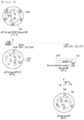
- FIG. 3 shows the results of performing Western blotting to analyze the expression levels of pgsA, HPV16 E7 and EGFP in the recombinant Lactobacillus casei whole cells transformed with the surface expression vector of the present invention.
- Lane SM represents a protein size marker
- lane 1 represents Lactobacillus casei (empty vector)
- lane 2 represents expression on Lactobacillus casei (pKV-Pald-pgsA)
- lane 3 represents expression on Lactobacillus casei (pKV-Pald-pgsA-HPV16E7)
- lane 4 represents expression on Lactobacillus casei (pKV-Pgm-pgsA-EGFP)
- lane 5 represents expression on Lactobacillus casei (pKV-Pald-pgsA-HPV16E7_Pgm-pgsA-EGFP).
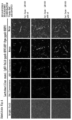
- fluorescence images were observed by confocal microscopy (Carl Zeiss LSM800) .
- the recombinant Lactobacillus casei transformed with the surface expression vector (pKV-Pald-pgsA-HPV16E7_Pgm-pgsA-EGFP) of the present invention was stationary-cultured in MRS medium (Lactobacillus MRS, Becton Dickinson and Company Sparks, USA) at 30°C to induce the HPV16E7 and EGFP proteins on the cell surface.
- MRS medium Lactobacillus MRS, Becton Dickinson and Company Sparks, USA
- each protein was allowed to bind to each specific antibody, and then HPV16E7 was immunostained with Alexa594 (red), and EGFP was immunostained with Alexa488 (green). Then, expression of each antigen on the cell surface was observed by confocal microscopy.
- the surface expression vector of the present invention may be transformed into lactic acid bacteria, and may be used as a method of efficiently co-expressing two different target proteins within a short time, which does not require a strain-detoxifying step, unlike a conventional vaccine production method.
- a gene encoding the EGFP protein was inserted into the C-terminus of PgsA of the surface expression vector to obtain the vector pKV-Pald-PgsA-EGFP capable of expressing the EGFP protein on the surface of lactic acid bacteria.
- the HPV16 E7 gene fused with pgsA in the pKV-Pald-PgsA-E7 vector was removed, and a gene encoding EGFP was inserted into the vector.
- PCR was performed using the primers of SEQ ID NOs: 9 and 10.
- a 755-bp fragment containing the EGFP gene was obtained, which contains a BamHI restriction enzyme site at the 5' end thereof and an XbaI restriction enzyme site at the 3' end thereof.
- the obtained DNA fragment was cleaved by treatment with BamHI and XbaI restriction enzymes to obtain a 741-bp fragment.
- pKV-Pald-PgsA-E7 was cleaved with BamHI and XbaI to remove the HPV16 E7 gene region and to obtain the vector region.
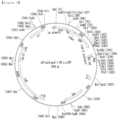
- the E7 gene-containing DNA fragment cleaved with BamHI and XbaI was ligated with the vector cleaved with the same restriction enzymes, thus constructing pKV-Pald-PgsA-EGFP ( FIG. 5 ).
- Example 4 improvement of the PgsA gene fragment in the surface expression vector (pKV-Pald-PgsA-EGFP) constructed in Example 4 was performed so that the vector could exhibit a high expression level in the lactic acid bacteria host.
- PgsA fragments containing 1-60 a.a, 1-70 a.a, 1-80 a.a, 1-100 a.a and 1-188 a.a, respectively, were obtained by performing PCR using the surface expression vector pKV-Pald-PgsA-EGFP as a template and the following primers. Only SEQ ID NO: 21 to 23 and 32 to 34 are according to the invention.
- DNA fragments containing an aldolase promoter and the respective PgsA motif fragments were obtained.
- Each of the DNA fragments contained an SphI restriction enzyme site at the 5' end thereof and a BamHI restriction enzyme site at the 3' end thereof.
- Each of the obtained DNA fragments was treated with SphI and BamHI to obtain fragments.
- the PgsA1 to PgsA5 motif fragments had the following nucleotide sequences, respectively.
- the pKV-Pald-PgsA-EGFP was cleaved with SphI and BamHI to remove the aldolase promoter and the PgsA gene region and to obtain the vector region.
- DNA fragments containing the respective PgsA motif fragments were obtained.
- Each of the fragments contained an EcoRV restriction enzyme site at the 5' end thereof and a BamHI restriction enzyme site at the 3' end thereof.
- Each of the obtained DNA fragments was treated with EcoRV and BamHI to obtain fragments.
- the PgsA motif fragments have the following nucleotide sequences, respectively.
- pKV-Pald-PgsA-EGFP was cleaved with EcoRV and BamHI to remove the PgsA gene region and to obtain the vector region.
- the recombinant Lactobacillus casei transformed with each of the surface expression vectors containing each PgsA motif fragment was stationary-cultured in MRS medium (Lactobacillus MRS, Becton Dickinson and Company Sparks, USA) at 30°C to induce surface expression of the EGFP protein fused with the C-terminus of any one of the gene fragments pgsA1 to pgsA8 (pgsA4 and pgsA5 not according to the invention) involved in the synthesis of poly-gamma-glutamate.
- MRS medium Lacobacillus MRS, Becton Dickinson and Company Sparks, USA
- the recombinant Lactobacillus casei whole cells on which protein expression was induced were denatured with proteins obtained at the same cell concentration to prepare a sample.
- the sample was analyzed by SDS-polyacrylamide gel electrophoresis, and then the fractionated proteins were transferred to a PVDF (polyvinylidene-difluoride) membrane (Bio-Rad).
- the PVDF membrane having the proteins transferred thereto was blocked by shaking in blocking buffer (50 mM Tris-HCl, 5% skim milk, pH 8.0) for 1 hour, and then incubated for 1 hour with a 1:1,000 dilution of an anti-rabbit polyclonal primary antibody against EGFP in blocking buffer.
- the membrane was washed with buffer and incubated for 1 hour with a 1: 10,000 dilution of HRP (horseradish peroxidase)-conjugated anti-rabbit secondary antibody in blocking solution. After completion of the incubation, the membrane was washed with buffer, and the washed membrane was color-developed with a substrate (Lumigen PS-3 acridan, H 2 O 2 ) for about 2 minutes. Then, specific binding between the specific antibody against EGFP and the fusion protein was visualized by a CCD camera ( FIG. 14 ).
- HRP horseradish peroxidase
- FIG. 14 shows expression patterns (lanes 6 and 11) in Lactobacillus casei depending on the recombinant expression vector pKV-Pald-pgsA containing the non-improved pgsA as a control for comparison with the present invention, and expression patterns (lanes 1 to 5 and lanes 7 to 10) in Lactobacillus casei depending on the recombinant expression vectors pKV-Pald-pgsA1 to pgsA8 containing the improved pgsA1 to pgsA8 according to the present invention.
- lane 1 represents protein expression on the recombinant Lactobacillus casei transformed with EGFP fused with PgsA motif 1-60 a.a (SEQ ID NO: 21);
- lane 2 represents protein expression on the recombinant Lactobacillus casei transformed with EGFP fused with PgsA motif 1-70 a.a (SEQ ID NO:22);
- lane 3 represents protein expression on the recombinant Lactobacillus casei transformed with EGFP fused with PgsA motif 1-80 a.a (SEQ ID NO:23);
- lane 4 represents protein expression on the recombinant Lactobacillus casei transformed with EGFP fused with PgsA motif 1-100 a.a (not according to the invention).
- Lane 5 represents protein expression on the recombinant Lactobacillus casei transformed with EGFP fused with PgsA motif 1-188 a.a (not according to the invention).
- Lane 6 represents protein expression on the recombinant Lactobacillus casei transformed with pKV-Pald-PgsA-EGFP (not according to the invention).
- lane 7 represents protein expression on the recombinant Lactobacillus casei transformed with EGFP fused with PgsA motif 26-50 a.a (SEQ ID NO: 32); lane 8 represents protein expression on the recombinant Lactobacillus casei transformed with EGFP fused with PgsA motif 25-70 a.a (SEQ ID NO: 33); and lane 9 represents protein expression on the recombinant Lactobacillus casei transformed with EGFP fused with PgsA motif 25-100 a.a (SEQ ID NO: 34).
- Lane 10 represents protein expression on the recombinant Lactobacillus casei transformed with EGFP fused with PgsA motif 1-188 a.a (not according to the invention).
- Lane 11 represents protein expression on the recombinant Lactobacillus casei transformed with pKV-Pald-PgsA-EGFP (not according to the invention).
- the present invention relates to a vector which co-expresses two different target proteins on the microbial surface using an aldolase promoter and galactose mutarotase promoter derived from Lactobacillus casei, a microorganism transformed with this vector, and a novel vector which effectively expresses a foreign protein on the microbial surface using an outer membrane protein (pgsA) which is derived from a Bacillus sp. strain and involved in the synthesis of poly-gamma-glutamate.
- pgsA outer membrane protein
- the surface expression vector according to the present invention is a single vector including: two different promoters; genes encoding a poly-gamma-glutamate synthetase complex for surface anchoring; target protein-encoding genes linked to the genes encoding the poly-gamma-glutamate synthetase complex, and wherein a linker is inserted into an end of the gene encoding the poly-gamma-glutamate synthetase complex, and the gene encoding the target protein is inserted into the inserted linker, respectively.
- the surface expression vector according to the present invention has advantages over prior art inventions in that it may co-express two different target proteins, and the possibility of cellular transformation that may occur in two transformation processes may be minimized because a microorganism transformed with the surface expression vector is used.
- the surface expression vector is a single vector containing two different promoters, it may efficiently express target proteins within a shorter time than conventional art inventions, and has an excellent effect of remarkably reducing drug development costs by selecting substances with high drug potential rapidly and expressing two different target proteins by the single surface expression vector. Therefore, the present invention is industrially applicable.
Landscapes
- Health & Medical Sciences (AREA)
- Life Sciences & Earth Sciences (AREA)
- Genetics & Genomics (AREA)
- Chemical & Material Sciences (AREA)
- Engineering & Computer Science (AREA)
- Organic Chemistry (AREA)
- Bioinformatics & Cheminformatics (AREA)
- Zoology (AREA)
- Wood Science & Technology (AREA)
- General Engineering & Computer Science (AREA)
- Biomedical Technology (AREA)
- Biotechnology (AREA)
- Biochemistry (AREA)
- General Health & Medical Sciences (AREA)
- Molecular Biology (AREA)
- Microbiology (AREA)
- Medicinal Chemistry (AREA)
- Plant Pathology (AREA)
- Biophysics (AREA)
- Physics & Mathematics (AREA)
- Micro-Organisms Or Cultivation Processes Thereof (AREA)
- Preparation Of Compounds By Using Micro-Organisms (AREA)
- Coloring Foods And Improving Nutritive Qualities (AREA)
Claims (10)
- Oberflächenexpressionsvektor zur Expression von Zielproteinen, wobei der Oberflächenexpressionsvektor umfasst: einen ersten Promotor, ein Gen, das für einen Poly-Gamma-Glutamat-Synthetase-Komplex zur Oberflächenverankerung kodiert, und ein Gen, das für das Zielprotein kodiert; und einen zweiten Promotor, ein Gen, das für einen Poly-Gamma-Glutamat-Synthetase-Komplex zur Oberflächenverankerung kodiert, und ein Gen, das für ein Zielprotein kodiert,wobei der erste Promotor ein Aldolase-Promotor, Pald, ist, der aus Milchsäurebakterien stammt und durch SEQ ID NO: 1 dargestellt wird,wobei der zweite Promotor ein Galaktose-Mutarotase-Promotor, Pgm, ist, der aus Milchsäurebakterien stammt und durch SEQ ID NO:2 dargestellt wird,wobei ein Linker in ein Ende des Gens, das für den Polygamma-Glutamat-Synthetase-Komplex kodiert, eingefügt ist und das Gen, das für das Traget-Protein kodiert, in den eingefügten Linker eingefügt ist, undwobei das Gen, das für den Poly-Gamma-Glutamat-Synthetase-Komplex kodiert, pgsA ist und die Nukleotidsequenz einer der SEQ ID NO: 21 bis 23 und 32 bis 34 aufweist.
- Oberflächenexpressionsvektor nach Anspruch 1, wobei das für den Poly-Gamma-Glutamat-Synthetase-Komplex kodierende Gen von einem Bacillus sp.-Stamm stammt
- Oberflächenexpressionsvektor nach Anspruch 1, wobei es sich bei dem Zielprotein um eines handelt, bei dem ein Teil der Aminosäuresequenz des Zielproteins entfernt oder ortsgerichtet mutiert wurde, um die Oberflächenexpression zu begünstigen.
- Oberflächenexpressionsvektor nach einem der Ansprüche 1 bis 3, wobei der Vektor auf Gram-negative oder Gram-positive Bakterien angewendet wird.
- Mikroorganismus, der mit dem Oberflächenexpressionsvektor nach einem der Ansprüche 1 bis 3 transformiert ist.
- Mikroorganismus nach Anspruch 5, wobei ein für die Transformation verwendeter Mikroorganismus ein Mikroorganismus ist, der so modifiziert ist, dass er keine intrazellulären oder extrazellulären Proteasen produziert, die am Abbau der exprimierten Zielproteine beteiligt sind, um die Expression der Zielproteine an der Zelloberfläche zu begünstigen.
- Mikroorganismus nach Anspruch 6, der ein Milchsäurebakterium ist.
- Verfahren zur Zelloberflächenexpression von Zielproteinen, wobei das Verfahren die folgenden Schritte umfasst: Expression der Zielproteine auf einer Zelloberfläche durch Kultivierung des transformierten Mikroorganismus nach Anspruch 5; und Gewinnung von Zellen, die die Zielproteine auf ihrer Oberfläche exprimiert haben.
- Verfahren zur Expression von Zielproteinen auf einer Oberfläche einer Gram-negativen oder Gram-positiven Wirtszelle, wobei das Verfahren die folgenden Schritte umfasst:(a) Konstruieren eines rekombinanten Vektors durch Einfügen von Genen, die für die Zielproteine kodieren, in den Oberflächenexpressionsvektor nach Anspruch 4;(b) Transformieren der Gram-negativen oder Gram-positiven Wirtszelle mit dem rekombinanten Vektor; und(c) Exprimieren der Zielproteine auf der Oberfläche der transformierten Wirtszelle durch Kultivieren der transformierten Wirtszelle.
- Verfahren nach Anspruch 9, wobei das Zielprotein eines ist, das aus der Gruppe ausgewählt ist, die aus Hormonen, Hormonanaloga, Enzymen, Enzyminhibitoren, Signalproteinen oder Fragmenten davon, Antikörpern oder Fragmenten davon, Einzelketten-Antikörpern, Bindungsproteinen, Bindungsdomänen, Peptiden, Antigenen, Adhäsionsproteinen, Strukturproteinen, regulatorischen Proteinen, Toxinproteinen, Zytokinen, Transkriptionsregulationsfaktoren, Gerinnungsfaktoren und pflanzlichen Bioabwehrproteinen besteht.
Applications Claiming Priority (2)
| Application Number | Priority Date | Filing Date | Title |
|---|---|---|---|
| KR20180120547 | 2018-10-10 | ||
| PCT/KR2019/013261 WO2020076079A2 (ko) | 2018-10-10 | 2019-10-10 | 락토바실러스 카제이 유래의 두 종류 프로모터를 이용한 두 가지 목적단백질의 동시 표면발현벡터 및 이를 이용한 단백질의 미생물표면 발현 방법 |
Publications (3)
| Publication Number | Publication Date |
|---|---|
| EP3940077A2 EP3940077A2 (de) | 2022-01-19 |
| EP3940077A4 EP3940077A4 (de) | 2022-08-10 |
| EP3940077B1 true EP3940077B1 (de) | 2025-01-01 |
Family
ID=70165054
Family Applications (1)
| Application Number | Title | Priority Date | Filing Date |
|---|---|---|---|
| EP19870792.9A Active EP3940077B1 (de) | 2018-10-10 | 2019-10-10 | Oberflächenexpressionsvektor mit zwei arten von promotoren aus lactobacillus casei zur gleichzeitigen expression zweier zielproteine und verfahren zur expression von proteinen auf einer mikrobiellen oberfläche unter verwendung desselben |
Country Status (6)
| Country | Link |
|---|---|
| US (1) | US12188027B2 (de) |
| EP (1) | EP3940077B1 (de) |
| JP (1) | JP7170129B2 (de) |
| KR (1) | KR102604524B1 (de) |
| CN (1) | CN113330120B (de) |
| WO (1) | WO2020076079A2 (de) |
Families Citing this family (7)
| Publication number | Priority date | Publication date | Assignee | Title |
|---|---|---|---|---|
| WO2020076078A1 (ko) * | 2018-10-10 | 2020-04-16 | 주식회사 바이오리더스 | 락토바실러스 카제이 유래 갈락토오스 뮤타로테이즈 유전자의 프로모터를 이용한 항시적 고발현 표면발현벡터 및 그 이용 |
| CN110066758A (zh) * | 2019-06-06 | 2019-07-30 | 武汉骏安生物科技有限公司 | 一种高产聚-γ-谷氨酸的芽胞杆菌及其构建方法和应用 |
| KR102401860B1 (ko) * | 2021-10-21 | 2022-05-24 | 을지대학교 산학협력단 | 신규 항암 백신 조성물 및 그를 이용한 백신화 방법 |
| KR102421307B1 (ko) * | 2021-11-19 | 2022-07-14 | 을지대학교 산학협력단 | 암 발생 및 성장 억제를 위한 신규 항암 백신 조성물 및 그를 이용한 백신화 방법 |
| CN114702559A (zh) * | 2022-04-02 | 2022-07-05 | 江西师范大学 | 枯草芽孢杆菌蛋白PgsA及其在表面展示系统中的应用 |
| CN118773237A (zh) * | 2024-07-10 | 2024-10-15 | 北京理工大学 | 一种酵母表面展示系统及其构建方法和应用 |
| CN121575075B (zh) * | 2026-01-28 | 2026-05-12 | 山东隆贝生物科技有限公司 | 一种复合微生物发酵牛源蛋白肽材料及应用 |
Citations (1)
| Publication number | Priority date | Publication date | Assignee | Title |
|---|---|---|---|---|
| US20100196956A1 (en) * | 2007-03-22 | 2010-08-05 | Bioleaders Corporation | Novel constitutive strong promoter and use thereof |
Family Cites Families (16)
| Publication number | Priority date | Publication date | Assignee | Title |
|---|---|---|---|---|
| US5990091A (en) | 1997-03-12 | 1999-11-23 | Virogenetics Corporation | Vectors having enhanced expression, and methods of making and uses thereof |
| US6846481B1 (en) * | 1999-02-04 | 2005-01-25 | University Of Georgia Research Foundation, Inc. | Recombinant expression of heterologous nucleic acids in protozoa |
| US7553636B2 (en) * | 2001-08-10 | 2009-06-30 | Bioleaders Corporation | Surface expression vectors having pgsBCA the gene coding poly-gamma-glutamate synthetase, and a method for expression of target protein at the surface of microorganism using the vector |
| KR100525759B1 (ko) | 2002-10-17 | 2005-11-03 | 한국생명공학연구원 | 바실러스 속 균주 유래의 폴리 감마 글루탐산합성유전자를 이용한 펩타이드 항생물질 P5와Anal3의 표면 발현 방법 및 그의 용도 |
| EP1629104A4 (de) * | 2003-06-04 | 2006-11-02 | Bioleaders Corp | Zelloberflächenexpressionsvektor von sars-virus-antigen und damit transformierte mikroorganismen |
| US7255855B2 (en) * | 2004-02-27 | 2007-08-14 | Bioleaders Corporation | Surface expression method of peptides P5 and Anal3 using the gene encoding poly-gamma-glutamate synthetase |
| KR100690948B1 (ko) * | 2004-06-17 | 2007-03-09 | 한국과학기술원 | 대장균의 외막 단백질을 이용한 목적 단백질의 미생물표면발현 방법 |
| KR100784261B1 (ko) * | 2006-01-02 | 2007-12-11 | 한국과학기술원 | 탄저균의 포자외막 단백질을 이용한 목적단백질의 미생물표면발현방법 |
| KR100857861B1 (ko) * | 2007-10-15 | 2008-09-11 | 주식회사 바이오리더스 | Myo-2 펩타이드 중합체와 마이오스타틴의 융합단백질표면발현용 벡터 및 상기 벡터로 형질전환된 미생물 |
| JP2010088332A (ja) * | 2008-10-07 | 2010-04-22 | Japan Health Science Foundation | 複数の遺伝子発現を行うための発現ベクター |
| KR101471043B1 (ko) | 2009-01-08 | 2014-12-09 | 주식회사 바이오리더스 | 안정적인 항시적 고발현 자궁경부암 치료백신용 벡터 및 그에 의해 형질전환된 재조합 유산균 |
| US20110091493A1 (en) * | 2009-10-16 | 2011-04-21 | Northwestern University | Vaccine compositions and uses thereof |
| US20140045235A1 (en) * | 2012-08-12 | 2014-02-13 | Wisconsin Alumi Research Foundation | Construction of a lactobacillus casei ethanologen |
| CN107446872A (zh) * | 2017-08-29 | 2017-12-08 | 东北农业大学 | 一种组成型表达兔病毒性出血症病毒vp60蛋白的重组乳酸菌疫苗株及其制备方法和用途 |
| KR20200000972A (ko) * | 2018-06-26 | 2020-01-06 | 주식회사 바이오리더스 | 바실러스 속 균주 유래의 폴리감마글루탐산 합성유전자를 이용한 표면발현벡터 및 이를 이용한 단백질의 미생물표면 발현 방법 |
| WO2020076078A1 (ko) * | 2018-10-10 | 2020-04-16 | 주식회사 바이오리더스 | 락토바실러스 카제이 유래 갈락토오스 뮤타로테이즈 유전자의 프로모터를 이용한 항시적 고발현 표면발현벡터 및 그 이용 |
-
2019
- 2019-10-10 KR KR1020217010524A patent/KR102604524B1/ko active Active
- 2019-10-10 JP JP2021518746A patent/JP7170129B2/ja active Active
- 2019-10-10 EP EP19870792.9A patent/EP3940077B1/de active Active
- 2019-10-10 WO PCT/KR2019/013261 patent/WO2020076079A2/ko not_active Ceased
- 2019-10-10 CN CN201980076721.1A patent/CN113330120B/zh active Active
- 2019-10-10 US US17/281,756 patent/US12188027B2/en active Active
Patent Citations (1)
| Publication number | Priority date | Publication date | Assignee | Title |
|---|---|---|---|---|
| US20100196956A1 (en) * | 2007-03-22 | 2010-08-05 | Bioleaders Corporation | Novel constitutive strong promoter and use thereof |
Also Published As
| Publication number | Publication date |
|---|---|
| WO2020076079A2 (ko) | 2020-04-16 |
| JP2022512617A (ja) | 2022-02-07 |
| WO2020076079A3 (ko) | 2020-10-15 |
| KR102604524B1 (ko) | 2023-11-22 |
| JP7170129B2 (ja) | 2022-11-11 |
| KR20210046811A (ko) | 2021-04-28 |
| CN113330120A (zh) | 2021-08-31 |
| EP3940077A2 (de) | 2022-01-19 |
| US12188027B2 (en) | 2025-01-07 |
| EP3940077A4 (de) | 2022-08-10 |
| CN113330120B (zh) | 2024-09-24 |
| US20230295644A1 (en) | 2023-09-21 |
Similar Documents
| Publication | Publication Date | Title |
|---|---|---|
| US12188027B2 (en) | Surface expression vector using two kinds of promoters derived from Lactobacillus casei for concurrently expressing two target proteins and method for expressing proteins on microbial surface by using same | |
| US8236940B2 (en) | Constitutive strong promoter and use thereof | |
| EP1421195B1 (de) | OBERFLÄCHENEXPRESSIONSVEKTOREN MIT pgsBCA, DEM FÜR POLY-GAMMA-GLUTAMAT-SYNTHETASE CODIERENDEN GEN, SOWIE VERFAHREN ZUR EXPRESSION EINES ZIELPROTEINS AN DER OBERFLÄCHE EINES DEN VEKTOR BENUTZENDEN MIKROORGANISMUS | |
| UA94974C2 (uk) | Мікроорганізми як носії нуклеотидних послідовностей, що кодують антигени та білкові токсини, спосіб їх одержання та застосування | |
| JP2012514469A (ja) | 安定的な構成的高発現子宮頸癌治療ワクチン用ベクター及びそれによって形質転換された組換え乳酸菌 | |
| US7425438B2 (en) | Vector for anti-HPV vaccine and transformed microorganism by the vector | |
| US12180469B2 (en) | Surface expression vector for constitutive high-expression using promoter of galactose mutarotase gene derived from Lactobacillus casei, and use thereof | |
| CN112334580B (zh) | 利用源自芽孢杆菌菌株的聚γ-谷氨酸合成基因的表面表达载体以及使用该载体在微生物表面表达蛋白的方法 | |
| US9228190B2 (en) | Vector for constitutive high-level expression containing REPe mutant gene | |
| KR102077703B1 (ko) | 바실러스 속 균주 유래의 폴리감마글루탐산 합성유전자를 이용한 표면발현벡터 및 이를 이용한 단백질의 미생물표면 발현 방법 | |
| KR20210081196A (ko) | 락토바실러스 카제이 유래의 두 종류 프로모터를 이용한 두 가지 목적단백질의 동시 표면발현벡터 및 이를 이용한 단백질의 미생물표면 발현 방법 | |
| HK40059009A (en) | Surface expression vector using two kinds of promoters derived from lactobacillus casei for concurrently expressing two target proteins and method for expressing proteins on microbial surface by using same | |
| CN111518801A (zh) | 一种组成型乳酸菌启动子、重组载体及其重组菌和应用 | |
| HK40059009B (zh) | 利用源自干酪乳杆菌的两种启动子共表达两种靶蛋白的表面表达载体以及使用其在微生物表面上表达蛋白质的方法 | |
| HK40059531A (en) | Surface expression vector for constitutive high- expression using promoter of galactose mutarotase gene derived from lactobacillus casei, and use thereof | |
| KR20210081195A (ko) | 락토바실러스 카제이 유래 갈락토오스 뮤타로테이즈 유전자의 프로모터를 이용한 항시적 고발현 표면발현벡터 및 그 이용 | |
| HK40059531B (zh) | 使用源自干酪乳杆菌的半乳糖变旋酶基因启动子用於组成型高表达的表面表达载体及其用途 | |
| KR20200001036A (ko) | 바실러스 속 균주 유래의 폴리감마글루탐산 합성유전자를 이용한 표면발현벡터 및 이를 이용한 단백질의 미생물표면 발현 방법 |
Legal Events
| Date | Code | Title | Description |
|---|---|---|---|
| STAA | Information on the status of an ep patent application or granted ep patent |
Free format text: STATUS: THE INTERNATIONAL PUBLICATION HAS BEEN MADE |
|
| PUAI | Public reference made under article 153(3) epc to a published international application that has entered the european phase |
Free format text: ORIGINAL CODE: 0009012 |
|
| STAA | Information on the status of an ep patent application or granted ep patent |
Free format text: STATUS: REQUEST FOR EXAMINATION WAS MADE |
|
| 17P | Request for examination filed |
Effective date: 20210510 |
|
| AK | Designated contracting states |
Kind code of ref document: A2 Designated state(s): AL AT BE BG CH CY CZ DE DK EE ES FI FR GB GR HR HU IE IS IT LI LT LU LV MC MK MT NL NO PL PT RO RS SE SI SK SM TR |
|
| A4 | Supplementary search report drawn up and despatched |
Effective date: 20220711 |
|
| RIC1 | Information provided on ipc code assigned before grant |
Ipc: A61K 39/00 20060101ALI20220705BHEP Ipc: C12N 15/62 20060101ALI20220705BHEP Ipc: C12N 9/10 20060101ALI20220705BHEP Ipc: C12N 9/90 20060101ALI20220705BHEP Ipc: C12N 15/74 20060101ALI20220705BHEP Ipc: C12N 9/88 20060101ALI20220705BHEP Ipc: C12N 9/00 20060101ALI20220705BHEP Ipc: C07K 14/025 20060101ALI20220705BHEP Ipc: C12N 15/67 20060101AFI20220705BHEP |
|
| STAA | Information on the status of an ep patent application or granted ep patent |
Free format text: STATUS: EXAMINATION IS IN PROGRESS |
|
| 17Q | First examination report despatched |
Effective date: 20230606 |
|
| GRAP | Despatch of communication of intention to grant a patent |
Free format text: ORIGINAL CODE: EPIDOSNIGR1 |
|
| STAA | Information on the status of an ep patent application or granted ep patent |
Free format text: STATUS: GRANT OF PATENT IS INTENDED |
|
| INTG | Intention to grant announced |
Effective date: 20240916 |
|
| GRAS | Grant fee paid |
Free format text: ORIGINAL CODE: EPIDOSNIGR3 |
|
| GRAA | (expected) grant |
Free format text: ORIGINAL CODE: 0009210 |
|
| STAA | Information on the status of an ep patent application or granted ep patent |
Free format text: STATUS: THE PATENT HAS BEEN GRANTED |
|
| P01 | Opt-out of the competence of the unified patent court (upc) registered |
Free format text: CASE NUMBER: APP_61320/2024 Effective date: 20241115 |
|
| AK | Designated contracting states |
Kind code of ref document: B1 Designated state(s): AL AT BE BG CH CY CZ DE DK EE ES FI FR GB GR HR HU IE IS IT LI LT LU LV MC MK MT NL NO PL PT RO RS SE SI SK SM TR |
|
| REG | Reference to a national code |
Ref country code: GB Ref legal event code: FG4D |
|
| REG | Reference to a national code |
Ref country code: DE Ref legal event code: R096 Ref document number: 602019064401 Country of ref document: DE |
|
| REG | Reference to a national code |
Ref country code: CH Ref legal event code: EP |
|
| REG | Reference to a national code |
Ref country code: IE Ref legal event code: FG4D |
|
| REG | Reference to a national code |
Ref country code: LT Ref legal event code: MG9D |
|
| REG | Reference to a national code |
Ref country code: NL Ref legal event code: MP Effective date: 20250101 |
|
| REG | Reference to a national code |
Ref country code: AT Ref legal event code: MK05 Ref document number: 1756277 Country of ref document: AT Kind code of ref document: T Effective date: 20250101 |
|
| PG25 | Lapsed in a contracting state [announced via postgrant information from national office to epo] |
Ref country code: NL Free format text: LAPSE BECAUSE OF FAILURE TO SUBMIT A TRANSLATION OF THE DESCRIPTION OR TO PAY THE FEE WITHIN THE PRESCRIBED TIME-LIMIT Effective date: 20250101 |
|
| PG25 | Lapsed in a contracting state [announced via postgrant information from national office to epo] |
Ref country code: FI Free format text: LAPSE BECAUSE OF FAILURE TO SUBMIT A TRANSLATION OF THE DESCRIPTION OR TO PAY THE FEE WITHIN THE PRESCRIBED TIME-LIMIT Effective date: 20250101 |
|
| PG25 | Lapsed in a contracting state [announced via postgrant information from national office to epo] |
Ref country code: PL Free format text: LAPSE BECAUSE OF FAILURE TO SUBMIT A TRANSLATION OF THE DESCRIPTION OR TO PAY THE FEE WITHIN THE PRESCRIBED TIME-LIMIT Effective date: 20250101 |
|
| PG25 | Lapsed in a contracting state [announced via postgrant information from national office to epo] |
Ref country code: ES Free format text: LAPSE BECAUSE OF FAILURE TO SUBMIT A TRANSLATION OF THE DESCRIPTION OR TO PAY THE FEE WITHIN THE PRESCRIBED TIME-LIMIT Effective date: 20250101 |
|
| PG25 | Lapsed in a contracting state [announced via postgrant information from national office to epo] |
Ref country code: NO Free format text: LAPSE BECAUSE OF FAILURE TO SUBMIT A TRANSLATION OF THE DESCRIPTION OR TO PAY THE FEE WITHIN THE PRESCRIBED TIME-LIMIT Effective date: 20250401 Ref country code: IS Free format text: LAPSE BECAUSE OF FAILURE TO SUBMIT A TRANSLATION OF THE DESCRIPTION OR TO PAY THE FEE WITHIN THE PRESCRIBED TIME-LIMIT Effective date: 20250501 |
|
| PG25 | Lapsed in a contracting state [announced via postgrant information from national office to epo] |
Ref country code: HR Free format text: LAPSE BECAUSE OF FAILURE TO SUBMIT A TRANSLATION OF THE DESCRIPTION OR TO PAY THE FEE WITHIN THE PRESCRIBED TIME-LIMIT Effective date: 20250101 |
|
| PG25 | Lapsed in a contracting state [announced via postgrant information from national office to epo] |
Ref country code: LV Free format text: LAPSE BECAUSE OF FAILURE TO SUBMIT A TRANSLATION OF THE DESCRIPTION OR TO PAY THE FEE WITHIN THE PRESCRIBED TIME-LIMIT Effective date: 20250101 Ref country code: PT Free format text: LAPSE BECAUSE OF FAILURE TO SUBMIT A TRANSLATION OF THE DESCRIPTION OR TO PAY THE FEE WITHIN THE PRESCRIBED TIME-LIMIT Effective date: 20250502 |
|
| PG25 | Lapsed in a contracting state [announced via postgrant information from national office to epo] |
Ref country code: GR Free format text: LAPSE BECAUSE OF FAILURE TO SUBMIT A TRANSLATION OF THE DESCRIPTION OR TO PAY THE FEE WITHIN THE PRESCRIBED TIME-LIMIT Effective date: 20250402 Ref country code: BG Free format text: LAPSE BECAUSE OF FAILURE TO SUBMIT A TRANSLATION OF THE DESCRIPTION OR TO PAY THE FEE WITHIN THE PRESCRIBED TIME-LIMIT Effective date: 20250101 |
|
| PG25 | Lapsed in a contracting state [announced via postgrant information from national office to epo] |
Ref country code: AT Free format text: LAPSE BECAUSE OF FAILURE TO SUBMIT A TRANSLATION OF THE DESCRIPTION OR TO PAY THE FEE WITHIN THE PRESCRIBED TIME-LIMIT Effective date: 20250101 |
|
| PG25 | Lapsed in a contracting state [announced via postgrant information from national office to epo] |
Ref country code: CZ Free format text: LAPSE BECAUSE OF FAILURE TO SUBMIT A TRANSLATION OF THE DESCRIPTION OR TO PAY THE FEE WITHIN THE PRESCRIBED TIME-LIMIT Effective date: 20250101 |
|
| PG25 | Lapsed in a contracting state [announced via postgrant information from national office to epo] |
Ref country code: SE Free format text: LAPSE BECAUSE OF FAILURE TO SUBMIT A TRANSLATION OF THE DESCRIPTION OR TO PAY THE FEE WITHIN THE PRESCRIBED TIME-LIMIT Effective date: 20250101 |
|
| REG | Reference to a national code |
Ref country code: DE Ref legal event code: R097 Ref document number: 602019064401 Country of ref document: DE |
|
| PG25 | Lapsed in a contracting state [announced via postgrant information from national office to epo] |
Ref country code: SM Free format text: LAPSE BECAUSE OF FAILURE TO SUBMIT A TRANSLATION OF THE DESCRIPTION OR TO PAY THE FEE WITHIN THE PRESCRIBED TIME-LIMIT Effective date: 20250101 |
|
| PG25 | Lapsed in a contracting state [announced via postgrant information from national office to epo] |
Ref country code: DK Free format text: LAPSE BECAUSE OF FAILURE TO SUBMIT A TRANSLATION OF THE DESCRIPTION OR TO PAY THE FEE WITHIN THE PRESCRIBED TIME-LIMIT Effective date: 20250101 |
|
| PGFP | Annual fee paid to national office [announced via postgrant information from national office to epo] |
Ref country code: IT Payment date: 20250924 Year of fee payment: 7 |
|
| PGFP | Annual fee paid to national office [announced via postgrant information from national office to epo] |
Ref country code: FR Payment date: 20250925 Year of fee payment: 7 |
|
| PG25 | Lapsed in a contracting state [announced via postgrant information from national office to epo] |
Ref country code: EE Free format text: LAPSE BECAUSE OF FAILURE TO SUBMIT A TRANSLATION OF THE DESCRIPTION OR TO PAY THE FEE WITHIN THE PRESCRIBED TIME-LIMIT Effective date: 20250101 |
|
| PG25 | Lapsed in a contracting state [announced via postgrant information from national office to epo] |
Ref country code: RO Free format text: LAPSE BECAUSE OF FAILURE TO SUBMIT A TRANSLATION OF THE DESCRIPTION OR TO PAY THE FEE WITHIN THE PRESCRIBED TIME-LIMIT Effective date: 20250101 |
|
| PG25 | Lapsed in a contracting state [announced via postgrant information from national office to epo] |
Ref country code: SK Free format text: LAPSE BECAUSE OF FAILURE TO SUBMIT A TRANSLATION OF THE DESCRIPTION OR TO PAY THE FEE WITHIN THE PRESCRIBED TIME-LIMIT Effective date: 20250101 |
|
| PLBE | No opposition filed within time limit |
Free format text: ORIGINAL CODE: 0009261 |
|
| STAA | Information on the status of an ep patent application or granted ep patent |
Free format text: STATUS: NO OPPOSITION FILED WITHIN TIME LIMIT |
|
| 26N | No opposition filed |
Effective date: 20251002 |
|
| PGFP | Annual fee paid to national office [announced via postgrant information from national office to epo] |
Ref country code: DE Payment date: 20250922 Year of fee payment: 7 |