EP3940119B1 - Mikroporöse plattierungslösung und verfahren zur verwendung dieser plattierungslösung zur durchführung von mikroporöser plattierung auf einem zu plattierenden objekt - Google Patents
Mikroporöse plattierungslösung und verfahren zur verwendung dieser plattierungslösung zur durchführung von mikroporöser plattierung auf einem zu plattierenden objekt Download PDFInfo
- Publication number
- EP3940119B1 EP3940119B1 EP20771139.1A EP20771139A EP3940119B1 EP 3940119 B1 EP3940119 B1 EP 3940119B1 EP 20771139 A EP20771139 A EP 20771139A EP 3940119 B1 EP3940119 B1 EP 3940119B1
- Authority
- EP
- European Patent Office
- Prior art keywords
- plating
- microporous
- plating solution
- nickel
- bath
- Prior art date
- Legal status (The legal status is an assumption and is not a legal conclusion. Google has not performed a legal analysis and makes no representation as to the accuracy of the status listed.)
- Active
Links
Images


Classifications
-
- C—CHEMISTRY; METALLURGY
- C25—ELECTROLYTIC OR ELECTROPHORETIC PROCESSES; APPARATUS THEREFOR
- C25D—PROCESSES FOR THE ELECTROLYTIC OR ELECTROPHORETIC PRODUCTION OF COATINGS; ELECTROFORMING; APPARATUS THEREFOR
- C25D3/00—Electroplating: Baths therefor
- C25D3/02—Electroplating: Baths therefor from solutions
- C25D3/12—Electroplating: Baths therefor from solutions of nickel or cobalt
-
- C—CHEMISTRY; METALLURGY
- C25—ELECTROLYTIC OR ELECTROPHORETIC PROCESSES; APPARATUS THEREFOR
- C25D—PROCESSES FOR THE ELECTROLYTIC OR ELECTROPHORETIC PRODUCTION OF COATINGS; ELECTROFORMING; APPARATUS THEREFOR
- C25D15/00—Electrolytic or electrophoretic production of coatings containing embedded materials, e.g. particles, whiskers, wires
-
- C—CHEMISTRY; METALLURGY
- C25—ELECTROLYTIC OR ELECTROPHORETIC PROCESSES; APPARATUS THEREFOR
- C25D—PROCESSES FOR THE ELECTROLYTIC OR ELECTROPHORETIC PRODUCTION OF COATINGS; ELECTROFORMING; APPARATUS THEREFOR
- C25D21/00—Processes for servicing or operating cells for electrolytic coating
- C25D21/12—Process control or regulation
-
- C—CHEMISTRY; METALLURGY
- C25—ELECTROLYTIC OR ELECTROPHORETIC PROCESSES; APPARATUS THEREFOR
- C25D—PROCESSES FOR THE ELECTROLYTIC OR ELECTROPHORETIC PRODUCTION OF COATINGS; ELECTROFORMING; APPARATUS THEREFOR
- C25D3/00—Electroplating: Baths therefor
- C25D3/02—Electroplating: Baths therefor from solutions
- C25D3/04—Electroplating: Baths therefor from solutions of chromium
- C25D3/06—Electroplating: Baths therefor from solutions of chromium from solutions of trivalent chromium
-
- C—CHEMISTRY; METALLURGY
- C25—ELECTROLYTIC OR ELECTROPHORETIC PROCESSES; APPARATUS THEREFOR
- C25D—PROCESSES FOR THE ELECTROLYTIC OR ELECTROPHORETIC PRODUCTION OF COATINGS; ELECTROFORMING; APPARATUS THEREFOR
- C25D5/00—Electroplating characterised by the process; Pretreatment or after-treatment of workpieces
- C25D5/10—Electroplating with more than one layer of the same or of different metals
- C25D5/12—Electroplating with more than one layer of the same or of different metals at least one layer being of nickel or chromium
- C25D5/14—Electroplating with more than one layer of the same or of different metals at least one layer being of nickel or chromium two or more layers being of nickel or chromium, e.g. duplex or triplex layers
-
- C—CHEMISTRY; METALLURGY
- C25—ELECTROLYTIC OR ELECTROPHORETIC PROCESSES; APPARATUS THEREFOR
- C25D—PROCESSES FOR THE ELECTROLYTIC OR ELECTROPHORETIC PRODUCTION OF COATINGS; ELECTROFORMING; APPARATUS THEREFOR
- C25D3/00—Electroplating: Baths therefor
- C25D3/02—Electroplating: Baths therefor from solutions
- C25D3/04—Electroplating: Baths therefor from solutions of chromium
- C25D3/08—Deposition of black chromium, e.g. hexavalent chromium, CrVI
-
- C—CHEMISTRY; METALLURGY
- C25—ELECTROLYTIC OR ELECTROPHORETIC PROCESSES; APPARATUS THEREFOR
- C25D—PROCESSES FOR THE ELECTROLYTIC OR ELECTROPHORETIC PRODUCTION OF COATINGS; ELECTROFORMING; APPARATUS THEREFOR
- C25D3/00—Electroplating: Baths therefor
- C25D3/02—Electroplating: Baths therefor from solutions
- C25D3/04—Electroplating: Baths therefor from solutions of chromium
- C25D3/10—Electroplating: Baths therefor from solutions of chromium characterised by the organic bath constituents used
-
- C—CHEMISTRY; METALLURGY
- C25—ELECTROLYTIC OR ELECTROPHORETIC PROCESSES; APPARATUS THEREFOR
- C25D—PROCESSES FOR THE ELECTROLYTIC OR ELECTROPHORETIC PRODUCTION OF COATINGS; ELECTROFORMING; APPARATUS THEREFOR
- C25D3/00—Electroplating: Baths therefor
- C25D3/02—Electroplating: Baths therefor from solutions
- C25D3/38—Electroplating: Baths therefor from solutions of copper
-
- C—CHEMISTRY; METALLURGY
- C25—ELECTROLYTIC OR ELECTROPHORETIC PROCESSES; APPARATUS THEREFOR
- C25D—PROCESSES FOR THE ELECTROLYTIC OR ELECTROPHORETIC PRODUCTION OF COATINGS; ELECTROFORMING; APPARATUS THEREFOR
- C25D5/00—Electroplating characterised by the process; Pretreatment or after-treatment of workpieces
- C25D5/34—Pretreatment of metallic surfaces to be electroplated
-
- C—CHEMISTRY; METALLURGY
- C25—ELECTROLYTIC OR ELECTROPHORETIC PROCESSES; APPARATUS THEREFOR
- C25D—PROCESSES FOR THE ELECTROLYTIC OR ELECTROPHORETIC PRODUCTION OF COATINGS; ELECTROFORMING; APPARATUS THEREFOR
- C25D5/00—Electroplating characterised by the process; Pretreatment or after-treatment of workpieces
- C25D5/60—Electroplating characterised by the structure or texture of the layers
- C25D5/623—Porosity of the layers
Definitions
- the present invention relates to a microporous plating solution containing nonconductive particles, and a method for performing microporous plating on an object to be plated using the plating solution.
- chromium plating has been used as decorative plating for automobile parts, faucet fittings, etc.
- the chromium plating does not deposit uniformly and pores are opened in the film, a corrosion current is concentrated at one point only with the chromium plating film. Therefore, in general, multilayer nickel is often used under the chromium plating for improving corrosion resistance.
- Multilayer nickel is composed of semi-bright nickel plating, high sulfur-content nickel strike plating, bright nickel plating, and microporous plating from the bottom, but it is microporous plating that particularly contributes to the improvement of corrosion resistance. Due to the presence of the microporous plating film, a large number of invisible micropores can be formed on the surface layer of the chromium plating so as to disperse the corrosion current, and thus, the corrosion resistance can be improved (PTL 1).
- NPL 1 " Prevention of Surface Corrosion of Microporous Chromium Plating", Takaaki Koga, Journal of the Surface Finishing Society of Japan, Vol. 28, No. 11, pp. 522-527 (1981 )
- an object of the present invention is to provide a microporous plating solution and a plating method that allow for easy preparation of positively charged nonconductive particles, are highly stable, and result in a favorable number of micropores formed in plating film.
- the present inventors conducted intensive studies to achieve the above-mentioned object, and as a result, they found that the above-mentioned object can be achieved by using a specific aluminum compound that has not been used so far when positively charging the nonconductive particles, and thus completed the present invention.
- the present invention is directed to a microporous plating solution selected from an electrolytic nickel plating solution, a trivalent chromium plating solution, an electroless nickel plating solution, an alloy electroplating solution, a tin-cobalt alloy electroplating bath, and a nickel-phosphorus alloy electroplating bath, characterized by containing nonconductive particles and polyaluminum chloride, wherein the nonconductive particles are one or more types selected from oxides, nitrides, sulfides, and inorganic salts of silicon, barium, zirconium, aluminum, and titanium.
- the present invention is directed to the use of an additive characterized by containing nonconductive particles and polyaluminum chloride, for microporous plating, wherein the nonconductive particles are one or more types selected from oxides, nitrides, sulfides, and inorganic salts of silicon, barium, zirconium, aluminum, and titanium.
- the present invention is directed to an additive kit for microporous plating, separately containing the following (a) and (b) :
- the present invention is directed to a method for performing microporous plating on an object to be plated, characterized by electroplating the object to be plated in the above-mentioned microporous plating solution.
- the present invention is directed to a method for controlling the number of micropores in plating, characterized in that when plating is performed on an object to be plated in the above-mentioned microporous plating solution, the basicity of polyaluminum chloride contained in the microporous plating solution is changed.
- microporous plating solution of the present invention allows for easy preparation of positively charged nonconductive particles and is highly stable, and when plating is performed using the solution, also a favorable number of micropores formed in the plating film is yielded.
- the number of micropores in plating can also be controlled by changing the basicity of polyaluminum chloride used in the microporous plating solution of the present invention.
- the microporous plating solution of the present invention (hereinafter referred to as "the plating solution of the present invention") contains nonconductive particles and polyaluminum chloride.
- the nonconductive particles used in the plating solution of the present invention include oxides, nitrides, sulfides, and inorganic salts of silicon, barium, zirconium, aluminum, and titanium.
- oxides such as silica (silicon dioxide) and zirconia (zirconium dioxide), and inorganic salts such as barium sulfate are preferred.
- one or more types can be used.
- a commercially available product such as MP POWDER 308 or MP POWDER 309A of JCU Corporation can also be used.
- the average particle diameter of these nonconductive particles is not particularly limited, but is, for example, from 0.1 to 10 um, and preferably from 1.0 to 3.0 um. Note that the average particle diameter is a value measured by a zeta potential/particle diameter/molecular weight measurement system ELSZ-2000 manufactured by Otsuka Electronics Co., Ltd.
- the content of the nonconductive particles in the plating solution of the present invention is not particularly limited, but is, for example, from 0.01 to 10 wt% (hereinafter, simply referred to as "%"), and preferably from 0.05 to 10%.
- Polyaluminum chloride used in the plating solution of the present invention is represented by the following formula.
- the basicity of polyaluminum chloride is not particularly limited, but is, for example, from 50 to 65. Further, the basicity is a numerical value represented by n/6 ⁇ 100 (%) in the following formula, and can be calculated from an absorbance using the bicinchoninic acid method. Note that when the basicity of polyaluminum chloride used in the plating solution of the present invention is low, the number of micropores in plating increases, and when the basicity is high, the number of micropores decreases, and therefore, the number of micropores can be controlled by appropriately selecting the basicity of polyaluminum chloride. [Chem. 1] [Al 2 (OH) n Cl 6-n ] m
- n is an integer of 1 or more and 5 or less
- m is an integer of 10 or less.
- polyaluminum chloride in the form of a powder may be added, or for example, a commercially available product, which is in the form of an aqueous solution at about 10% in terms of aluminum oxide, such as Taipac series of Taimei Chemicals Co., Ltd., or PAC of Nankai Chemical Co., Ltd. may be added.
- Such polyaluminum chloride may be added as it is or after being appropriately diluted or the like.
- the content of polyaluminum chloride in the plating solution of the present invention is not particularly limited, but is, for example, preferably from 0.06 to 50.0%, and more preferably from 0.06 to 40% in terms of aluminum oxide.
- the plating solution of the present invention need only contain nonconductive particles and polyaluminum chloride in a plating solution serving as a base.
- the plating solution serving as a base is not particularly limited, and for example, an electrolytic nickel plating solution such as a Watts bath or a sulfamate bath, a trivalent chromium plating solution such as a sulfate bath or a chloride bath, an electroless nickel plating solution using a hypophosphite as a reducing agent, an alloy electroplating solution such as a tin-nickel alloy electroplating bath, a tin-cobalt alloy electroplating bath, or a nickel-phosphorus alloy electroplating bath, and the like are exemplified.
- an electrolytic nickel plating solution is preferred.
- the plating solution serving as a base is preferably one having a specific gravity of 1.0 to 1.6 g/cm 3 and more preferably one having a specific gravity of 1.1 to 1.4 g/cm 3 in order to maintain formation of uniform micropores.
- the pH of the plating solution serving as a base is not particularly specified, but is desirably set to the same pH as that at the time of plating described later.
- a surfactant is further incorporated from the viewpoint of maintaining the dispersibility.
- the surfactant is not particularly limited, and examples thereof include nonionic surfactants such as polyethylene glycol, anionic surfactants such as polyoxyethylene alkyl ether sodium sulfate, cationic surfactants such as benzethonium chloride and stearylamine acetate, and amphoteric surfactants such as lauryl betaine and lauryl dimethyl amine oxide.
- nonionic surfactants such as polyethylene glycol
- anionic surfactants such as polyoxyethylene alkyl ether sodium sulfate
- cationic surfactants such as benzethonium chloride and stearylamine acetate
- amphoteric surfactants such as lauryl betaine and lauryl dimethyl amine oxide.
- a cationic surfactant that is positively charged or an amphoteric surfactant that exhibits cationicity in the used pH range is preferred.
- the content of the surfactant in the plating solution of the present invention is not particularly limited, but is, for example, preferably from 0.001 to 5%, and more preferably from 0.001 to 2%.
- a brightener is further incorporated from the viewpoint of improving the appearance and adjusting the electrochemical potential for the purpose of preventing rust.
- the type of brightener is not particularly limited, and one type or two or more types may be appropriately selected from brighteners suitable for the plating solutions serving as various bases.
- the content of the brightener in the plating solution of the present invention is not particularly limited, but is, for example, preferably from 0.01 to 20%, and more preferably from 0.1 to 15%.
- a component such as chloral hydrate may be further incorporated in order to adjust the electrochemical potential for the purpose of preventing rust.
- the composition of the Watts bath a composition as described below is exemplified.
- composition of the sulfamate bath a composition as described below is exemplified.
- a primary brightener and a secondary brightener are further incorporated.
- the primary brightener include sulfonamide, sulfonimide, benzenesulfonic acid, and an alkylsulfonic acid.
- MP333 manufactured by JCU Corporation
- examples of the secondary brightener include 1,4-butynediol and coumarin.
- the secondary brightener for example, #810 (manufactured by JCU Corporation) or the like is commercially available, and therefore, this may be used.
- These primary brighteners and secondary brighteners may be used alone or in combination. Further, it is preferred to add the primary brightener at 5 to 15 mL/L and the secondary brightener at about 10 to 35 mL/L.
- composition of the trivalent chromium plating bath a composition as described below is exemplified.
- a sulfur-containing organic compound is further incorporated.
- the sulfur-containing organic compound it is preferred to use saccharin or a salt thereof and a sulfur-containing organic compound having an allyl group in combination.
- the saccharin or a salt thereof include saccharin and sodium saccharinate.
- the sulfur-containing organic compound having an allyl group include sodium allylsulfonate, allylthiourea, sodium 2-methylallylsulfonate, and allyl isothiocyanate.
- sulfur-containing organic compound having an allyl group one type or two types may be combined, and it is preferred to use sodium allylsulfonate and allylthiourea individually by itself or in combination.
- a preferred combination of the sulfur-containing organic compounds is sodium saccharinate and sodium allylsulfonate.
- the content of the sulfur-containing organic compound is, for example, from 0.5 to 10 g/L, and preferably from 2 to 8 g/L.
- composition of the electroless nickel plating bath a composition as described below is exemplified.
- composition of the tin-nickel alloy electroplating bath a composition as described below is exemplified.
- composition of the tin-cobalt alloy electroplating bath a composition as described below is exemplified.
- the primary brightener as listed above at 5 to 15 mL/L and the secondary brightener as listed above at 10 to 35 mL/L may be further incorporated.
- composition of the nickel-phosphorus alloy electroplating bath a composition as described below is exemplified.
- the primary brightener as listed above at 5 to 15 mL/L and the secondary brightener as listed above at 10 to 35 mL/L may be further incorporated.
- a method for preparing the plating solution of the present invention is not particularly limited because the nonconductive particles are positively charged merely by incorporating the nonconductive particles and polyaluminum chloride in the plating solution serving as a base, however, preferably, an additive for microporous plating containing the nonconductive particles and polyaluminum chloride or an additive kit for microporous plating separately containing the following (a) and (b), or the like may be added to and mixed in the plating solution serving as a base.
- the nonconductive particles are added to and mixed in a portion of the plating solution serving as a base, or water or the like, and thereafter, polyaluminum chloride may be added thereto and mixed therein.
- Such an additive for microporous plating does not cause solidification, and therefore can be stably stored and is suitable for replenishment when consuming the nonconductive particles as compared with a case where a conventional aluminum compound that forms aluminum hydroxide is used.
- (a) and (b) may be used as they are or diluted with the plating solution serving as a base, or water or the like.
- microporous plating having a better number of micropores than the conventional method can be achieved.
- the object to be plated that can be plated with the plating solution of the present invention is not particularly limited as long as it can be plated, and examples thereof include metals such as copper, nickel, and zinc, and resins such as ABS, PC/ABS, and PP.
- the plating conditions of the plating solution of the present invention may be the same conditions as those of a conventional method for performing microporous plating on an object to be plated. For example, conditions in which the temperature is from 50 to 55°C, the pH is from 4.0 to 5.5, and the current density is from 3 to 4 A/dm 2 , and the like are exemplified.
- microporous nickel plating using the plating solution of the present invention for example, semi-bright nickel plating, high sulfur-content nickel strike plating, and bright nickel plating are performed in this order, and then, plating is performed in the plating solution of the present invention using an electrolytic nickel plating solution as a base, and finally, hexavalent or trivalent chromium plating need only be performed. Further, after performing trivalent chromium plating, electrolytic chromate treatment may be performed.
- the lower layer of microporous nickel plating is bright nickel plating, high sulfur-content nickel strike plating, and semi-bright nickel plating. It is preferred that the sulfur content of the bright nickel plating film is set to 0.05% to 0.15%, the sulfur content of the high sulfur-content nickel strike plating film is set to 0.1 to 0.25%, and the sulfur content of the semi-bright nickel plating film is set to less than 0.005%.
- the bright nickel plating film is less noble than the semi-bright nickel plating film by about 60 to 200 mV, and the bright nickel plating film is more noble than the high sulfur-content nickel strike plating film by about 10 to 50 mV, and the bright nickel plating film is less noble than the microporous nickel plating film by about 10 to 120 mV.
- Such potential adjustment can be performed by a method as described in JP-A-5-171468 .
- the semi-bright nickel plating bath used to obtain the semi-bright nickel plating film is not particularly limited, but for example, it is preferred to add a primary brightener and a secondary brightener as listed above to a known nickel plating bath.
- a primary brightener for such semi-bright nickel plating for example, CF-NIIA (manufactured by JCU Corporation) or the like is commercially available, and therefore, this may be used.
- the secondary brightener for semi-bright nickel plating for example, CF-24T (manufactured by JCU Corporation) or the like is commercially available, and therefore, this may be used.
- CF-24T manufactured by JCU Corporation
- the plating conditions are not particularly limited.
- the high sulfur-content nickel strike plating bath is not particularly limited, but for example, it is preferred to add a primary brightener as listed above to a known nickel plating bath in order to make the sulfur content high.
- a primary brightener for such high sulfur-content nickel strike plating bath for example, TRI-STRIKE (manufactured by JCU Corporation) or the like is commercially available, and therefore, this may be used.
- a preferred high sulfur-content nickel strike plating bath the following bath is exemplified.
- the plating conditions are not particularly limited.
- the bright nickel plating bath is not particularly limited as long as a film that becomes electrochemically less noble than the semi-bright nickel plating film can be formed, but for example, it is preferred to add a primary brightener and a secondary brightener as listed above to a known nickel plating bath.
- a primary brightener for such bright nickel plating for example, #83-S, #83 (manufactured by JCU Corporation), or the like is commercially available, and therefore, this may be used.
- the secondary brightener for bright nickel plating for example, #810 (manufactured by JCU Corporation) or the like is commercially available, and therefore, this may be used.
- the following bath is exemplified. Further, the plating conditions are not particularly limited.
- the following solution is exemplified.
- the plating conditions are not particularly limited, and may be conventional plating conditions of microporous plating.
- hexavalent chromium plating bath a known hexavalent chromium plating bath can be used, but it is preferred to further add a catalyst.
- the catalyst include sodium silicofluoride and strontium silicofluoride.
- the catalyst for hexavalent chromium plating for example, ECR-300L (manufactured by JCU Corporation) or the like is commercially available, and therefore, this may be used.
- ECR-300L manufactured by JCU Corporation
- the following bath is exemplified. Further, the plating conditions are not particularly limited.
- a trivalent chromium plating bath is not particularly limited, and may be either a sulfate bath or a chloride bath.
- a preferred trivalent chromium plating bath the following bath is exemplified. Further, the plating conditions are not particularly limited.
- microporous plating film has excellent corrosion resistance, and therefore is suitable for applications such as automobile parts and faucet fittings.
- a Watts bath having the following composition was prepared, and silicon dioxide was added thereto at 50 g/L, followed by stirring and mixing. Subsequently, polyaluminum chloride (Taimei Chemicals Co., Ltd., Taipac 6010, basicity: 63) was added thereto at 2 g/L in terms of aluminum oxide, followed by stirring and mixing, whereby an additive for microporous plating containing positively charged nonconductive particles was obtained.
- silicon dioxide was added thereto at 50 g/L, followed by stirring and mixing.
- polyaluminum chloride Teaimei Chemicals Co., Ltd., Taipac 6010, basicity: 63
- a Watts bath having the same composition as that used in Example 1 was prepared, and silicon dioxide was added thereto at 50 g/L, followed by stirring and mixing. Subsequently, aluminic acid which is an aluminum compound that forms aluminum hydroxide was added thereto at 2 g/L in terms of aluminum oxide, followed by stirring and mixing, whereby an additive for microporous plating containing charged silica particles was obtained.
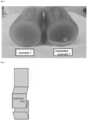
- Example 1 and Comparative Example 1 were each placed in a glass bottle container, and left for 1 week. When the containers after being left were laid on its side, it could be confirmed that the additive for microporous plate of Comparative Example 1 solidified and stuck to the bottom of the container (right in FIG. 1 ). On the other hand, it could be confirmed that the additive for microporous plating of Example 1 was well dispersed, did not solidify, and did not stick to the bottom of the container (left in FIG. 1 ).
- Example 1 The additive for microporous plating prepared in Example 1 was added at 15 mL/L to a Watts bath having the following composition, whereby a microporous plating solution was prepared.
- the additive for microporous plating prepared in Comparative Example 1 was added at 15 mL/L to a Watts bath having the same composition as that used in Example 2, whereby a microporous plating solution was prepared.
- a bent cathode test piece (brass: manufactured by YAMAMOTO-MS Co., Ltd.) having a shape shown in FIG. 2 was used as a test piece, and a microporous plated product was produced by the following step.
- test piece was treated with SK-144 (manufactured by JCU Corporation) for 5 minutes to degrease, and then treated with V-345 (manufactured by JCU Corporation) for 30 seconds to perform acid activity.
- test piece having been subjected to the degreasing and acid activity treatments in the above was plated at 4 A/dm 2 for 3 minutes in the following nickel plating solution.
- test piece having been subjected to bright plating was plated at 3 A/dm 2 for 3 minutes in the microporous plating solution prepared in Example 2 or Comparative Example 2.
- test piece having been subjected to the above-mentioned microporous plating was plated at 10 A/dm 2 for 3 minutes in a hexavalent chromium plating solution having the following composition.
- test piece after being subjected to chromium plating was immersed for 3 minutes in a copper sulfate plating solution having the following composition, and thereafter, plated at 0.5 A/dm 2 for 3 minutes in the copper sulfate plating solution.
- Example 2 Comparative Example 2 Number of micropores on evaluation face (micropores/cm 2 ) 86800 27604
- Example 2 As apparent from Table 1, even if the amount in terms of aluminum oxide in the plating solution is the same, a larger number of micropores was obtained in Example 2 using polyaluminum chloride.
- Example 2 The additive prepared in Example 1 was added at 10 mL/L to a Watts bath having the same composition as that used in Example 2, and a difference in the performance immediately after preparation and one month after preparation was compared. Plating was performed in the same manner as in Test Example 2, and the number of micropores (micropores/cm 2 ) was measured also in the same manner as in Test Example 2. The results are shown in Table 2. [Table 2] Immediately after preparation One month after preparation Number of micropores on evaluation face (micropores/cm 2 ) 36805 36381
- Example 1 As apparent from Table 2, the number of micropores was almost constant immediately after preparation and one month after preparation. These results indicated that the additive prepared in Example 1 can maintain stable performance even after one month.
- silicon dioxide (average particle diameter: 1.5 um) was added at 1 g/L and polyaluminum chloride (Alphaine 83, manufactured by Taimei Chemicals Co., Ltd., basicity: 83) was added at 0.04 g/L in terms of aluminum oxide, whereby a microporous plating solution was prepared.
- polyaluminum chloride (Alphaine 83, manufactured by Taimei Chemicals Co., Ltd., basicity: 83) was added at 0.04 g/L in terms of aluminum oxide, whereby a microporous plating solution was prepared.
- silicon dioxide (average particle diameter: 1.5 um) was added at 1 g/L and polyaluminum chloride (PAC, manufactured by Nankai Chemical Co., Ltd., basicity: 53) was added at 0.04 g/L in terms of aluminum oxide, whereby a microporous plating solution was prepared.
- PAC polyaluminum chloride
- silicon dioxide (average particle diameter: 1.5 um) was added at 1 g/L and polyaluminum chloride (Taipack 6010, manufactured by Taimei Chemicals Co., Ltd., basicity: 63) was added at 0.04 g/L in terms of aluminum oxide, whereby a microporous plating solution was prepared.
- a brass plate (Hull cell plate) having a size of 60 cm ⁇ 10 cm was used as a test piece.
- the test piece was subjected to the same procedure as in Test Example 2 except that any of the microporous plating solutions prepared in Examples 3 to 6 was used as the microporous plating solution, and a microporous plated product was produced by setting the current value to 2A.
- Example 3 Example 4
- Example 6 Basicity 55 83 53 63 Number of micropores in 6 ASD portion (micropores/cm 2 ) 57843 938 111800 18603 Number of micropores in 3 ASD portion (micropores/cm2) 55476 424 109800 19028 Number of micropores in 1 ASD portion (micropores/cm 2 ) 28832 67 44644 10295
- silicon dioxide average particle diameter: 1.5 ⁇ m
- polyaluminum chloride Teaimei Chemicals Co., Ltd., Taipac 6010, basicity: 63
- silicon dioxide average particle diameter: 1.5 ⁇ m
- polyaluminum chloride Teaimei Chemicals Co., Ltd., Taipac 6010, basicity: 63
- silicon dioxide average particle diameter: 1.5 ⁇ m
- polyaluminum chloride Teaimei Chemicals Co., Ltd., Taipac 6010, basicity: 63
- silicon dioxide average particle diameter: 1.5 ⁇ m
- polyaluminum chloride Teaimei Chemicals Co., Ltd., Taipac 6010, basicity: 63
- Example 7 The additive for microporous plating prepared in Example 7 was added at 10 mL/L to 1 L of a Watts bath having the same composition as that used in Example 2, whereby a microporous plating solution was prepared.
- Example 8 The additive for microporous plating prepared in Example 8 was added at 10 mL/L to 1 L of a Watts bath having the same composition as that used in Example 2, whereby a microporous plating solution was prepared.
- Example 9 The additive for microporous plating prepared in Example 9 was added at 10 mL/L to 1 L of a Watts bath having the same composition as that used in Example 2, whereby a microporous plating solution was prepared.
- Example 10 The additive for microporous plating prepared in Example 10 was added at 3 mL/L to 267 mL of a Watts bath having the same composition as that used in Example 2, whereby a microporous plating solution was prepared.
- Example 1 The additive for microporous plating prepared in Example 1 was added at 3 mL/L to 267 mL of a Watts bath having the same composition as that used in Example 2, whereby a microporous plating solution was prepared.
- Microporous plated products were produced in the same manner as in Test Example 2 except that any of the microporous plating solutions prepared in Examples 11 to 13 was used as the microporous plating solution.
- the number of micropores was also measured in the same manner as in Test Example 2. The results are shown in Table 4. [Table 4]
- Example 11 Example 12
- Example 13 Number of micropores on evaluation face (micropores/cm 2 ) 65012 44063 40468
- Microporous plated products were produced in the same manner as in Test Example 4 except that any of the microporous plating solutions prepared in Examples 14 to 15 was used as the microporous plating solution.
- the number of micropores (micropores/cm 2 ) was also measured in the same manner as in the Test Example. The results are shown in Table 5. [Table 5]
- Example 14 Example 15 Number of micropores in 6 ASD portion (micropores/cm 2 ) 17956 35242 Number of micropores in 3 ASD portion (micropores/cm 2 ) 10161 28542 Number of micropores in 1 ASD portion (micropores/cm 2 ) 3551 13958
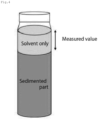
- Example 1 and Examples 7 to 10 were each placed in a transparent glass container, and left for 1 hour.
- the containers after being left were confirmed, in the additive for microporous plating of Example 10, the positively charged nonconductive particles sedimented faster than in the other samples.
- the positively charged nonconductive particles sedimented most slowly ( Fig. 3 ).
- Example 1 Example 7
- Example 8 Example 9
- Example 10 Measured value (cm) 1.0 1.0 1.0 0.3 2.0
- silicon dioxide average particle diameter: 1.5 ⁇ m
- polyaluminum chloride Teaimei Chemicals Co., Ltd., Taipac 6010, basicity: 63
- silicon dioxide average particle diameter: 1.5 ⁇ m
- polyaluminum chloride Teaimei Chemicals Co., Ltd., Taipac 6010, basicity: 63
- silicon dioxide average particle diameter: 1.5 ⁇ m
- polyaluminum chloride Teaimei Chemicals Co., Ltd., Taipac 6010, basicity: 63
- silicon dioxide average particle diameter: 1.5 ⁇ m
- polyaluminum chloride Teaimei Chemicals Co., Ltd., Taipac 6010, basicity: 63
- Microporous plated products were produced in the same manner as in Test Example 2 except that any of the microporous plating solutions prepared in Examples 16 to 19 was used as the microporous plating solution.
- the number of micropores was also measured in the same manner as in the Test Example. Note that in the Test Example, the evaluation face for which the number of micropores is measured was determined to be an upper shelf face, a vertical face, and a lower shelf face of a bent cathode test piece shown in Fig. 5 . Further, a value obtained by subtracting the smallest number from the largest number of micropores of each of Examples 16 to 19 was defined as a range width. The results are shown in Table 7.
- Example 16 Example 17
- Example 18 Example 19 Number of micropores on upper shelf face (micropores/cm 2 ) 78000 29614 32361 17219 Number of micropores on vertical face (micropores/cm 2 ) 34036 17487 18425 13065 Number of micropores on lower shelf face (micropores/cm 2 ) 36716 22485 17688 13869 Range width (micropores/cm 2 ) 43964 12127 14673 4154
- the present invention can be utilized in the production of automobile parts, faucet fittings, etc.
Landscapes
- Chemical & Material Sciences (AREA)
- Engineering & Computer Science (AREA)
- Chemical Kinetics & Catalysis (AREA)
- Electrochemistry (AREA)
- Materials Engineering (AREA)
- Metallurgy (AREA)
- Organic Chemistry (AREA)
- Automation & Control Theory (AREA)
- Electroplating And Plating Baths Therefor (AREA)
- Electroplating Methods And Accessories (AREA)
Claims (10)
- Mikroporöse Plattierungslösung, ausgewählt aus einer elektrolytischen Nickel-Plattierungslösung, einer Chrom(III)-Plattierungslösung, einer Lösung zur chemischen Vernickelung, einer eine Legierung enthaltenden Galvanisierungslösung, einem eine Zinn-Kobalt-Legierung enthaltendem Galvanisierungsbad und einem eine Nickel-Phorspor-Legierung enthaltendem Galvanisierungsbad, dadurch gekennzeichnet, dass sie nichtleitende Partikel und Polyaluminiumchlorid umfasst, wobei die nichtleitenden Partikel ein Typ ist oder mehrere Typen sind, ausgewählt aus Oxiden, Nitriden, Sulfiden und anorganischen Salzen von Silicium, Barium, Zirkonium, Aluminium und Titan.
- Mikroporöse Plattierungslösung nach Anspruch 1, ferner ein Tensid umfassend.
- Mikroporöse Plattierungslösung nach Anspruch 1 oder 2, ferner einen Aufheller umfassend.
- Mikroporöse Plattierungslösung nach einem der Ansprüche 1 bis 3, wobei der Aufheller ausgewählt ist aus einem primären und/oder einem sekundären Aufheller, wobei der primäre Aufheller ausgewählt ist aus Sulfonamid, Sulfonimid, Benzolsulfonsäure und einer Alkylsulfonsäure und der sekundäre Aufheller ausgewählt ist aus 2-Butin-1,4-diol und Kumarin.
- Mikroporöse Plattierungslösung nach einem der Ansprüche 1 bis 4, bei der es sich um eine elektrolytische Nickel-Plattierungslösung handelt.
- Verwendung eines Additivs, umfassend nichtleitende Partikel und Polyaluminiumchlorid, wobei die nichtleitenden Partikel ein Typ ist oder mehrere Typen sind, ausgewählt aus Oxiden, Nitriden, Sulfiden und anorganischen Salzen von Silicium, Barium, Zirkonium, Aluminium und Titan, zum mikroporösen Plattieren.
- Verwendung eines Additivs nach Anspruch 6 in einer elektrolytischen Nickel-Plattierungslösung, einer Chrom(III)-Plattierungslösung, einer Lösung zur chemischen Vernickelung oder einer eine Legierung enthaltenden Galvanisierungslösung.
- Verwendung eines Additiv-Kits, der getrennt die Folgenden (a) und (b) umfasst: (a) nichtleitende Partikel und (b) Polyaluminiumchlorid, wobei die nichtleitenden Partikel ein Typ ist oder mehrere Typen sind, ausgewählt aus Oxiden, Nitriden, Sulfiden und anorganischen Salzen von Silicium, Barium, Zirkonium, Aluminium und Titan, zum mikroporösen Plattieren.
- Verfahren zum Durchführen einer mikroporösen Plattierung auf einem zu plattierenden Objekt, dadurch gekennzeichnet, dass das zu plattierende Objekt in der mikroporösen Plattierungslösung nach einem der Ansprüche 1 bis 5 plattiert wird.
- Verfahren zum Steuern der Anzahl von Mikroporen beim Plattieren, dadurch gekennzeichnet, dass, wenn das Plattieren eines zu plattierenden Objekts in der mikroporösen Plattierungslösung nach einem der Ansprüche 1 bis 5 durchgeführt wird, die Basizität des Polyaluminiumchlorids, das in der mikroporösen Plattierungslösung enthalten ist, verändert wird.
Applications Claiming Priority (2)
| Application Number | Priority Date | Filing Date | Title |
|---|---|---|---|
| JP2019044556 | 2019-03-12 | ||
| PCT/JP2020/008897 WO2020184289A1 (ja) | 2019-03-12 | 2020-03-03 | マイクロポーラスめっき液およびこのめっき液を用いた被めっき物へのマイクロポーラスめっき方法 |
Publications (3)
| Publication Number | Publication Date |
|---|---|
| EP3940119A1 EP3940119A1 (de) | 2022-01-19 |
| EP3940119A4 EP3940119A4 (de) | 2022-08-10 |
| EP3940119B1 true EP3940119B1 (de) | 2024-08-07 |
Family
ID=72427905
Family Applications (1)
| Application Number | Title | Priority Date | Filing Date |
|---|---|---|---|
| EP20771139.1A Active EP3940119B1 (de) | 2019-03-12 | 2020-03-03 | Mikroporöse plattierungslösung und verfahren zur verwendung dieser plattierungslösung zur durchführung von mikroporöser plattierung auf einem zu plattierenden objekt |
Country Status (5)
| Country | Link |
|---|---|
| US (1) | US12221715B2 (de) |
| EP (1) | EP3940119B1 (de) |
| JP (1) | JP7469289B2 (de) |
| CN (1) | CN113557325B (de) |
| WO (1) | WO2020184289A1 (de) |
Families Citing this family (5)
| Publication number | Priority date | Publication date | Assignee | Title |
|---|---|---|---|---|
| EP4083268A1 (de) * | 2021-04-30 | 2022-11-02 | Atotech Deutschland GmbH & Co. KG | Elektroplattierungszusammensetzung zur abscheidung einer chrom- oder chromlegierungsschicht auf einem substrat |
| JP6945761B1 (ja) * | 2021-06-16 | 2021-10-06 | 株式会社Jcu | コンポジットめっき液用添加剤 |
| CN114525558B (zh) * | 2022-03-01 | 2024-01-02 | 九牧厨卫股份有限公司 | 一种抗病毒环保复合镀层及其制备方法和抗病毒环保产品 |
| CN115652384A (zh) * | 2022-11-07 | 2023-01-31 | 九江德福科技股份有限公司 | 一种特殊粗化形貌电解铜箔及其制备方法 |
| CN117604585B (zh) * | 2023-11-15 | 2025-12-16 | 江西省江铜铜箔科技股份有限公司 | 一种表面微孔化柔性光亮镀镍铜箔及其制备方法 |
Family Cites Families (10)
| Publication number | Priority date | Publication date | Assignee | Title |
|---|---|---|---|---|
| DE2943028A1 (de) * | 1978-11-01 | 1980-05-08 | M & T Chemicals Inc | Galvanisches nickelbad |
| JPH07111000B2 (ja) | 1990-04-09 | 1995-11-29 | 荏原ユージライト株式会社 | 高耐食ニッケルめっき方法 |
| JP2962598B2 (ja) | 1991-06-20 | 1999-10-12 | 荏原ユージライト株式会社 | マイクロポーラスクロムめっき方法 |
| JP2741126B2 (ja) | 1991-12-16 | 1998-04-15 | 荏原ユージライト株式会社 | ニッケル−クロムめっき製品 |
| JPH10251870A (ja) | 1998-03-09 | 1998-09-22 | Marui Kogyo Kk | クロムめっき製品 |
| JP2005144998A (ja) * | 2003-11-19 | 2005-06-09 | Fuji Photo Film Co Ltd | 画像記録材料用塗布液及びその製造方法、画像記録材料及びインクジェット記録媒体、並びにインクジェット記録方法 |
| US10266957B2 (en) | 2009-02-13 | 2019-04-23 | Nissan Motor Co., Ltd. | Chrome-plated part and manufacturing method of the same |
| US8580469B2 (en) | 2011-12-15 | 2013-11-12 | Xerox Corporation | Colored toners |
| ES2726525T3 (es) * | 2012-11-20 | 2019-10-07 | Kemira Oyj | Método para producir una composición de revestimiento, composición de revestimiento y su uso |
| CN103991916A (zh) * | 2014-06-12 | 2014-08-20 | 杭州一清环保工程有限公司 | 一种综合电镀废水处理剂 |
-
2020
- 2020-03-03 JP JP2021504951A patent/JP7469289B2/ja active Active
- 2020-03-03 CN CN202080020071.1A patent/CN113557325B/zh active Active
- 2020-03-03 US US17/438,149 patent/US12221715B2/en active Active
- 2020-03-03 WO PCT/JP2020/008897 patent/WO2020184289A1/ja not_active Ceased
- 2020-03-03 EP EP20771139.1A patent/EP3940119B1/de active Active
Also Published As
| Publication number | Publication date |
|---|---|
| CN113557325B (zh) | 2024-10-29 |
| JP7469289B2 (ja) | 2024-04-16 |
| US12221715B2 (en) | 2025-02-11 |
| EP3940119A4 (de) | 2022-08-10 |
| US20220213606A1 (en) | 2022-07-07 |
| CN113557325A (zh) | 2021-10-26 |
| JPWO2020184289A1 (de) | 2020-09-17 |
| EP3940119A1 (de) | 2022-01-19 |
| WO2020184289A1 (ja) | 2020-09-17 |
Similar Documents
| Publication | Publication Date | Title |
|---|---|---|
| EP3940119B1 (de) | Mikroporöse plattierungslösung und verfahren zur verwendung dieser plattierungslösung zur durchführung von mikroporöser plattierung auf einem zu plattierenden objekt | |
| EP2705176B1 (de) | Galvanisierungsbad und verfahren zur herstellung von dunklen chromschichten | |
| JP6534391B2 (ja) | 三価クロムを含有する電気めっき浴及びクロムを析出させる方法 | |
| CN101622379B (zh) | 铜-锡-电解液和沉积青铜层的方法 | |
| CN114752975B (zh) | 铂电解镀敷浴和镀铂产品 | |
| JP6951465B2 (ja) | 3価クロムメッキ液およびこれを用いたクロムメッキ方法 | |
| JP2011520037A (ja) | 改良された銅−錫電解液及び青銅層の析出方法 | |
| JP2015165053A (ja) | 電着浴、電着システム、及び電着方法 | |
| CN104911648A (zh) | 无氰化物的酸性亚光银电镀组合物及方法 | |
| JP2002507666A (ja) | ニッケル・タングステン合金のための延性剤 | |
| JPH0322478B2 (de) | ||
| JPH0151555B2 (de) | ||
| ES2729408T3 (es) | Sistema de protección multicorrosión para piezas decorativas que presentan un acabado de cromo | |
| US9103027B2 (en) | Polishing and electroless nickel compositions, kits, and methods | |
| EP2357268A1 (de) | Auf zinkat basierendes verzinkungsbad | |
| US4428803A (en) | Baths and processes for electrodepositing alloys of colbalt, tin and/or zinc | |
| EP3415664B1 (de) | Wässriges saures kupfergalvanisierungsbad und verfahren zur elektrolytischen abscheidung einer kupferbeschichtung | |
| GB1577699A (en) | Electroplating | |
| JPS6141998B2 (de) | ||
| ES2969188T3 (es) | Procedimiento para la deposición galvánica de revestimientos de aleaciones de cinc-níquel a partir de un baño de aleación de cinc-níquel alcalino con degradación reducida de aditivos | |
| EP4357488A1 (de) | Additiv für kompositplattierungslösungen | |
| US3972788A (en) | Zinc anode benefaction | |
| GB2094349A (en) | Metal plating compositions and processes | |
| EP4379095A1 (de) | Dreiwertiges weisses chromplattierungsbad und dreiwertiges weisses chromplattierungsverfahren für ein zu plattierungsendes objekt damit | |
| US4565611A (en) | Aqueous electrolytes and method for electrodepositing nickel-cobalt alloys |
Legal Events
| Date | Code | Title | Description |
|---|---|---|---|
| STAA | Information on the status of an ep patent application or granted ep patent |
Free format text: STATUS: THE INTERNATIONAL PUBLICATION HAS BEEN MADE |
|
| PUAI | Public reference made under article 153(3) epc to a published international application that has entered the european phase |
Free format text: ORIGINAL CODE: 0009012 |
|
| STAA | Information on the status of an ep patent application or granted ep patent |
Free format text: STATUS: REQUEST FOR EXAMINATION WAS MADE |
|
| 17P | Request for examination filed |
Effective date: 20211006 |
|
| AK | Designated contracting states |
Kind code of ref document: A1 Designated state(s): AL AT BE BG CH CY CZ DE DK EE ES FI FR GB GR HR HU IE IS IT LI LT LU LV MC MK MT NL NO PL PT RO RS SE SI SK SM TR |
|
| DAV | Request for validation of the european patent (deleted) | ||
| DAX | Request for extension of the european patent (deleted) | ||
| RIN1 | Information on inventor provided before grant (corrected) |
Inventor name: SHIBATA, KANA |
|
| A4 | Supplementary search report drawn up and despatched |
Effective date: 20220708 |
|
| RIC1 | Information provided on ipc code assigned before grant |
Ipc: C25D 5/34 20060101ALN20220704BHEP Ipc: C25D 3/38 20060101ALN20220704BHEP Ipc: C25D 3/10 20060101ALN20220704BHEP Ipc: C25D 3/08 20060101ALN20220704BHEP Ipc: C25D 5/14 20060101ALI20220704BHEP Ipc: C25D 21/12 20060101ALI20220704BHEP Ipc: C25D 15/00 20060101ALI20220704BHEP Ipc: C25D 3/12 20060101AFI20220704BHEP |
|
| GRAP | Despatch of communication of intention to grant a patent |
Free format text: ORIGINAL CODE: EPIDOSNIGR1 |
|
| STAA | Information on the status of an ep patent application or granted ep patent |
Free format text: STATUS: GRANT OF PATENT IS INTENDED |
|
| RIC1 | Information provided on ipc code assigned before grant |
Ipc: C25D 5/34 20060101ALN20240321BHEP Ipc: C25D 3/38 20060101ALN20240321BHEP Ipc: C25D 3/10 20060101ALN20240321BHEP Ipc: C25D 3/08 20060101ALN20240321BHEP Ipc: C25D 5/14 20060101ALI20240321BHEP Ipc: C25D 21/12 20060101ALI20240321BHEP Ipc: C25D 15/00 20060101ALI20240321BHEP Ipc: C25D 3/12 20060101AFI20240321BHEP |
|
| INTG | Intention to grant announced |
Effective date: 20240409 |
|
| GRAS | Grant fee paid |
Free format text: ORIGINAL CODE: EPIDOSNIGR3 |
|
| GRAA | (expected) grant |
Free format text: ORIGINAL CODE: 0009210 |
|
| STAA | Information on the status of an ep patent application or granted ep patent |
Free format text: STATUS: THE PATENT HAS BEEN GRANTED |
|
| AK | Designated contracting states |
Kind code of ref document: B1 Designated state(s): AL AT BE BG CH CY CZ DE DK EE ES FI FR GB GR HR HU IE IS IT LI LT LU LV MC MK MT NL NO PL PT RO RS SE SI SK SM TR |
|
| REG | Reference to a national code |
Ref country code: GB Ref legal event code: FG4D |
|
| REG | Reference to a national code |
Ref country code: CH Ref legal event code: EP |
|
| REG | Reference to a national code |
Ref country code: IE Ref legal event code: FG4D |
|
| REG | Reference to a national code |
Ref country code: DE Ref legal event code: R096 Ref document number: 602020035390 Country of ref document: DE |
|
| REG | Reference to a national code |
Ref country code: LT Ref legal event code: MG9D |
|
| REG | Reference to a national code |
Ref country code: NL Ref legal event code: MP Effective date: 20240807 |
|
| PG25 | Lapsed in a contracting state [announced via postgrant information from national office to epo] |
Ref country code: NO Free format text: LAPSE BECAUSE OF FAILURE TO SUBMIT A TRANSLATION OF THE DESCRIPTION OR TO PAY THE FEE WITHIN THE PRESCRIBED TIME-LIMIT Effective date: 20241107 |
|
| REG | Reference to a national code |
Ref country code: AT Ref legal event code: MK05 Ref document number: 1711015 Country of ref document: AT Kind code of ref document: T Effective date: 20240807 |
|
| PG25 | Lapsed in a contracting state [announced via postgrant information from national office to epo] |
Ref country code: NL Free format text: LAPSE BECAUSE OF FAILURE TO SUBMIT A TRANSLATION OF THE DESCRIPTION OR TO PAY THE FEE WITHIN THE PRESCRIBED TIME-LIMIT Effective date: 20240807 Ref country code: PT Free format text: LAPSE BECAUSE OF FAILURE TO SUBMIT A TRANSLATION OF THE DESCRIPTION OR TO PAY THE FEE WITHIN THE PRESCRIBED TIME-LIMIT Effective date: 20241209 Ref country code: FI Free format text: LAPSE BECAUSE OF FAILURE TO SUBMIT A TRANSLATION OF THE DESCRIPTION OR TO PAY THE FEE WITHIN THE PRESCRIBED TIME-LIMIT Effective date: 20240807 Ref country code: PL Free format text: LAPSE BECAUSE OF FAILURE TO SUBMIT A TRANSLATION OF THE DESCRIPTION OR TO PAY THE FEE WITHIN THE PRESCRIBED TIME-LIMIT Effective date: 20240807 Ref country code: GR Free format text: LAPSE BECAUSE OF FAILURE TO SUBMIT A TRANSLATION OF THE DESCRIPTION OR TO PAY THE FEE WITHIN THE PRESCRIBED TIME-LIMIT Effective date: 20241108 |
|
| PG25 | Lapsed in a contracting state [announced via postgrant information from national office to epo] |
Ref country code: BG Free format text: LAPSE BECAUSE OF FAILURE TO SUBMIT A TRANSLATION OF THE DESCRIPTION OR TO PAY THE FEE WITHIN THE PRESCRIBED TIME-LIMIT Effective date: 20240807 |
|
| PG25 | Lapsed in a contracting state [announced via postgrant information from national office to epo] |
Ref country code: LV Free format text: LAPSE BECAUSE OF FAILURE TO SUBMIT A TRANSLATION OF THE DESCRIPTION OR TO PAY THE FEE WITHIN THE PRESCRIBED TIME-LIMIT Effective date: 20240807 |
|
| PG25 | Lapsed in a contracting state [announced via postgrant information from national office to epo] |
Ref country code: AT Free format text: LAPSE BECAUSE OF FAILURE TO SUBMIT A TRANSLATION OF THE DESCRIPTION OR TO PAY THE FEE WITHIN THE PRESCRIBED TIME-LIMIT Effective date: 20240807 Ref country code: IS Free format text: LAPSE BECAUSE OF FAILURE TO SUBMIT A TRANSLATION OF THE DESCRIPTION OR TO PAY THE FEE WITHIN THE PRESCRIBED TIME-LIMIT Effective date: 20241207 |
|
| PG25 | Lapsed in a contracting state [announced via postgrant information from national office to epo] |
Ref country code: HR Free format text: LAPSE BECAUSE OF FAILURE TO SUBMIT A TRANSLATION OF THE DESCRIPTION OR TO PAY THE FEE WITHIN THE PRESCRIBED TIME-LIMIT Effective date: 20240807 |
|
| PG25 | Lapsed in a contracting state [announced via postgrant information from national office to epo] |
Ref country code: ES Free format text: LAPSE BECAUSE OF FAILURE TO SUBMIT A TRANSLATION OF THE DESCRIPTION OR TO PAY THE FEE WITHIN THE PRESCRIBED TIME-LIMIT Effective date: 20240807 Ref country code: RS Free format text: LAPSE BECAUSE OF FAILURE TO SUBMIT A TRANSLATION OF THE DESCRIPTION OR TO PAY THE FEE WITHIN THE PRESCRIBED TIME-LIMIT Effective date: 20241107 |
|
| PG25 | Lapsed in a contracting state [announced via postgrant information from national office to epo] |
Ref country code: RS Free format text: LAPSE BECAUSE OF FAILURE TO SUBMIT A TRANSLATION OF THE DESCRIPTION OR TO PAY THE FEE WITHIN THE PRESCRIBED TIME-LIMIT Effective date: 20241107 Ref country code: PT Free format text: LAPSE BECAUSE OF FAILURE TO SUBMIT A TRANSLATION OF THE DESCRIPTION OR TO PAY THE FEE WITHIN THE PRESCRIBED TIME-LIMIT Effective date: 20241209 Ref country code: PL Free format text: LAPSE BECAUSE OF FAILURE TO SUBMIT A TRANSLATION OF THE DESCRIPTION OR TO PAY THE FEE WITHIN THE PRESCRIBED TIME-LIMIT Effective date: 20240807 Ref country code: NO Free format text: LAPSE BECAUSE OF FAILURE TO SUBMIT A TRANSLATION OF THE DESCRIPTION OR TO PAY THE FEE WITHIN THE PRESCRIBED TIME-LIMIT Effective date: 20241107 Ref country code: NL Free format text: LAPSE BECAUSE OF FAILURE TO SUBMIT A TRANSLATION OF THE DESCRIPTION OR TO PAY THE FEE WITHIN THE PRESCRIBED TIME-LIMIT Effective date: 20240807 Ref country code: LV Free format text: LAPSE BECAUSE OF FAILURE TO SUBMIT A TRANSLATION OF THE DESCRIPTION OR TO PAY THE FEE WITHIN THE PRESCRIBED TIME-LIMIT Effective date: 20240807 Ref country code: IS Free format text: LAPSE BECAUSE OF FAILURE TO SUBMIT A TRANSLATION OF THE DESCRIPTION OR TO PAY THE FEE WITHIN THE PRESCRIBED TIME-LIMIT Effective date: 20241207 Ref country code: HR Free format text: LAPSE BECAUSE OF FAILURE TO SUBMIT A TRANSLATION OF THE DESCRIPTION OR TO PAY THE FEE WITHIN THE PRESCRIBED TIME-LIMIT Effective date: 20240807 Ref country code: GR Free format text: LAPSE BECAUSE OF FAILURE TO SUBMIT A TRANSLATION OF THE DESCRIPTION OR TO PAY THE FEE WITHIN THE PRESCRIBED TIME-LIMIT Effective date: 20241108 Ref country code: FI Free format text: LAPSE BECAUSE OF FAILURE TO SUBMIT A TRANSLATION OF THE DESCRIPTION OR TO PAY THE FEE WITHIN THE PRESCRIBED TIME-LIMIT Effective date: 20240807 Ref country code: ES Free format text: LAPSE BECAUSE OF FAILURE TO SUBMIT A TRANSLATION OF THE DESCRIPTION OR TO PAY THE FEE WITHIN THE PRESCRIBED TIME-LIMIT Effective date: 20240807 Ref country code: BG Free format text: LAPSE BECAUSE OF FAILURE TO SUBMIT A TRANSLATION OF THE DESCRIPTION OR TO PAY THE FEE WITHIN THE PRESCRIBED TIME-LIMIT Effective date: 20240807 Ref country code: AT Free format text: LAPSE BECAUSE OF FAILURE TO SUBMIT A TRANSLATION OF THE DESCRIPTION OR TO PAY THE FEE WITHIN THE PRESCRIBED TIME-LIMIT Effective date: 20240807 |
|
| PG25 | Lapsed in a contracting state [announced via postgrant information from national office to epo] |
Ref country code: DK Free format text: LAPSE BECAUSE OF FAILURE TO SUBMIT A TRANSLATION OF THE DESCRIPTION OR TO PAY THE FEE WITHIN THE PRESCRIBED TIME-LIMIT Effective date: 20240807 Ref country code: SM Free format text: LAPSE BECAUSE OF FAILURE TO SUBMIT A TRANSLATION OF THE DESCRIPTION OR TO PAY THE FEE WITHIN THE PRESCRIBED TIME-LIMIT Effective date: 20240807 |
|
| PG25 | Lapsed in a contracting state [announced via postgrant information from national office to epo] |
Ref country code: EE Free format text: LAPSE BECAUSE OF FAILURE TO SUBMIT A TRANSLATION OF THE DESCRIPTION OR TO PAY THE FEE WITHIN THE PRESCRIBED TIME-LIMIT Effective date: 20240807 |
|
| PG25 | Lapsed in a contracting state [announced via postgrant information from national office to epo] |
Ref country code: CZ Free format text: LAPSE BECAUSE OF FAILURE TO SUBMIT A TRANSLATION OF THE DESCRIPTION OR TO PAY THE FEE WITHIN THE PRESCRIBED TIME-LIMIT Effective date: 20240807 |
|
| PG25 | Lapsed in a contracting state [announced via postgrant information from national office to epo] |
Ref country code: SK Free format text: LAPSE BECAUSE OF FAILURE TO SUBMIT A TRANSLATION OF THE DESCRIPTION OR TO PAY THE FEE WITHIN THE PRESCRIBED TIME-LIMIT Effective date: 20240807 |
|
| REG | Reference to a national code |
Ref country code: DE Ref legal event code: R097 Ref document number: 602020035390 Country of ref document: DE |
|
| PLBE | No opposition filed within time limit |
Free format text: ORIGINAL CODE: 0009261 |
|
| STAA | Information on the status of an ep patent application or granted ep patent |
Free format text: STATUS: NO OPPOSITION FILED WITHIN TIME LIMIT |
|
| 26N | No opposition filed |
Effective date: 20250508 |
|
| PG25 | Lapsed in a contracting state [announced via postgrant information from national office to epo] |
Ref country code: SE Free format text: LAPSE BECAUSE OF FAILURE TO SUBMIT A TRANSLATION OF THE DESCRIPTION OR TO PAY THE FEE WITHIN THE PRESCRIBED TIME-LIMIT Effective date: 20240807 |
|
| PG25 | Lapsed in a contracting state [announced via postgrant information from national office to epo] |
Ref country code: MC Free format text: LAPSE BECAUSE OF FAILURE TO SUBMIT A TRANSLATION OF THE DESCRIPTION OR TO PAY THE FEE WITHIN THE PRESCRIBED TIME-LIMIT Effective date: 20240807 |
|
| REG | Reference to a national code |
Ref country code: CH Ref legal event code: H13 Free format text: ST27 STATUS EVENT CODE: U-0-0-H10-H13 (AS PROVIDED BY THE NATIONAL OFFICE) Effective date: 20251023 |
|
| PG25 | Lapsed in a contracting state [announced via postgrant information from national office to epo] |
Ref country code: LU Free format text: LAPSE BECAUSE OF NON-PAYMENT OF DUE FEES Effective date: 20250303 |
|
| GBPC | Gb: european patent ceased through non-payment of renewal fee |
Effective date: 20250303 |
|
| REG | Reference to a national code |
Ref country code: BE Ref legal event code: MM Effective date: 20250331 |
|
| PG25 | Lapsed in a contracting state [announced via postgrant information from national office to epo] |
Ref country code: GB Free format text: LAPSE BECAUSE OF NON-PAYMENT OF DUE FEES Effective date: 20250303 |
|
| PG25 | Lapsed in a contracting state [announced via postgrant information from national office to epo] |
Ref country code: BE Free format text: LAPSE BECAUSE OF NON-PAYMENT OF DUE FEES Effective date: 20250331 |
|
| PG25 | Lapsed in a contracting state [announced via postgrant information from national office to epo] |
Ref country code: CH Free format text: LAPSE BECAUSE OF NON-PAYMENT OF DUE FEES Effective date: 20250331 |
|
| PG25 | Lapsed in a contracting state [announced via postgrant information from national office to epo] |
Ref country code: IE Free format text: LAPSE BECAUSE OF NON-PAYMENT OF DUE FEES Effective date: 20250303 |
|
| PG25 | Lapsed in a contracting state [announced via postgrant information from national office to epo] |
Ref country code: IT Free format text: LAPSE BECAUSE OF FAILURE TO SUBMIT A TRANSLATION OF THE DESCRIPTION OR TO PAY THE FEE WITHIN THE PRESCRIBED TIME-LIMIT Effective date: 20240807 |
|
| PGFP | Annual fee paid to national office [announced via postgrant information from national office to epo] |
Ref country code: DE Payment date: 20260328 Year of fee payment: 7 |
|
| PG25 | Lapsed in a contracting state [announced via postgrant information from national office to epo] |
Ref country code: RO Free format text: LAPSE BECAUSE OF FAILURE TO SUBMIT A TRANSLATION OF THE DESCRIPTION OR TO PAY THE FEE WITHIN THE PRESCRIBED TIME-LIMIT Effective date: 20240807 |
|
| PGFP | Annual fee paid to national office [announced via postgrant information from national office to epo] |
Ref country code: FR Payment date: 20260325 Year of fee payment: 7 |