EP3944232A1 - Commande vocale pour véhicules autonomes - Google Patents
Commande vocale pour véhicules autonomes Download PDFInfo
- Publication number
- EP3944232A1 EP3944232A1 EP20205245.2A EP20205245A EP3944232A1 EP 3944232 A1 EP3944232 A1 EP 3944232A1 EP 20205245 A EP20205245 A EP 20205245A EP 3944232 A1 EP3944232 A1 EP 3944232A1
- Authority
- EP
- European Patent Office
- Prior art keywords
- vehicle
- command
- navigation command
- control
- navigation
- Prior art date
- Legal status (The legal status is an assumption and is not a legal conclusion. Google has not performed a legal analysis and makes no representation as to the accuracy of the status listed.)
- Withdrawn
Links
Images



Classifications
-
- G—PHYSICS
- G10—MUSICAL INSTRUMENTS; ACOUSTICS
- G10L—SPEECH ANALYSIS TECHNIQUES OR SPEECH SYNTHESIS; SPEECH RECOGNITION; SPEECH OR VOICE PROCESSING TECHNIQUES; SPEECH OR AUDIO CODING OR DECODING
- G10L15/00—Speech recognition
- G10L15/22—Procedures used during a speech recognition process, e.g. man-machine dialogue
-
- B—PERFORMING OPERATIONS; TRANSPORTING
- B60—VEHICLES IN GENERAL
- B60W—CONJOINT CONTROL OF VEHICLE SUB-UNITS OF DIFFERENT TYPE OR DIFFERENT FUNCTION; CONTROL SYSTEMS SPECIALLY ADAPTED FOR HYBRID VEHICLES; ROAD VEHICLE DRIVE CONTROL SYSTEMS FOR PURPOSES NOT RELATED TO THE CONTROL OF A PARTICULAR SUB-UNIT
- B60W60/00—Drive control systems specially adapted for autonomous road vehicles
- B60W60/001—Planning or execution of driving tasks
-
- G—PHYSICS
- G06—COMPUTING OR CALCULATING; COUNTING
- G06F—ELECTRIC DIGITAL DATA PROCESSING
- G06F3/00—Input arrangements for transferring data to be processed into a form capable of being handled by the computer; Output arrangements for transferring data from processing unit to output unit, e.g. interface arrangements
- G06F3/16—Sound input; Sound output
- G06F3/167—Audio in a user interface, e.g. using voice commands for navigating, audio feedback
-
- G—PHYSICS
- G10—MUSICAL INSTRUMENTS; ACOUSTICS
- G10L—SPEECH ANALYSIS TECHNIQUES OR SPEECH SYNTHESIS; SPEECH RECOGNITION; SPEECH OR VOICE PROCESSING TECHNIQUES; SPEECH OR AUDIO CODING OR DECODING
- G10L17/00—Speaker identification or verification techniques
-
- B—PERFORMING OPERATIONS; TRANSPORTING
- B60—VEHICLES IN GENERAL
- B60W—CONJOINT CONTROL OF VEHICLE SUB-UNITS OF DIFFERENT TYPE OR DIFFERENT FUNCTION; CONTROL SYSTEMS SPECIALLY ADAPTED FOR HYBRID VEHICLES; ROAD VEHICLE DRIVE CONTROL SYSTEMS FOR PURPOSES NOT RELATED TO THE CONTROL OF A PARTICULAR SUB-UNIT
- B60W2420/00—Indexing codes relating to the type of sensors based on the principle of their operation
- B60W2420/54—Audio sensitive means, e.g. ultrasound
-
- B—PERFORMING OPERATIONS; TRANSPORTING
- B60—VEHICLES IN GENERAL
- B60W—CONJOINT CONTROL OF VEHICLE SUB-UNITS OF DIFFERENT TYPE OR DIFFERENT FUNCTION; CONTROL SYSTEMS SPECIALLY ADAPTED FOR HYBRID VEHICLES; ROAD VEHICLE DRIVE CONTROL SYSTEMS FOR PURPOSES NOT RELATED TO THE CONTROL OF A PARTICULAR SUB-UNIT
- B60W2540/00—Input parameters relating to occupants
- B60W2540/043—Identity of occupants
-
- G—PHYSICS
- G10—MUSICAL INSTRUMENTS; ACOUSTICS
- G10L—SPEECH ANALYSIS TECHNIQUES OR SPEECH SYNTHESIS; SPEECH RECOGNITION; SPEECH OR VOICE PROCESSING TECHNIQUES; SPEECH OR AUDIO CODING OR DECODING
- G10L15/00—Speech recognition
- G10L15/22—Procedures used during a speech recognition process, e.g. man-machine dialogue
- G10L2015/223—Execution procedure of a spoken command
-
- G—PHYSICS
- G10—MUSICAL INSTRUMENTS; ACOUSTICS
- G10L—SPEECH ANALYSIS TECHNIQUES OR SPEECH SYNTHESIS; SPEECH RECOGNITION; SPEECH OR VOICE PROCESSING TECHNIQUES; SPEECH OR AUDIO CODING OR DECODING
- G10L15/00—Speech recognition
- G10L15/22—Procedures used during a speech recognition process, e.g. man-machine dialogue
- G10L2015/225—Feedback of the input speech
-
- G—PHYSICS
- G10—MUSICAL INSTRUMENTS; ACOUSTICS
- G10L—SPEECH ANALYSIS TECHNIQUES OR SPEECH SYNTHESIS; SPEECH RECOGNITION; SPEECH OR VOICE PROCESSING TECHNIQUES; SPEECH OR AUDIO CODING OR DECODING
- G10L15/00—Speech recognition
- G10L15/22—Procedures used during a speech recognition process, e.g. man-machine dialogue
- G10L2015/226—Procedures used during a speech recognition process, e.g. man-machine dialogue using non-speech characteristics
Definitions
- This disclosure relates to a method and apparatus for in-vehicle voice control for autonomous vehicles.
- Autonomous vehicles or self-driving vehicles may allow a vehicle to carry passenger to a desired destination without the need for a driver.
- the Society of Automotive Engineers publication "Taxonomy and Definitions for Terms Related to Driving Automation Systems for On-Road Motor Vehicles J3016TM", issued 16th January 2014 and revised 15th June 2018 defines six levels of automation.
- a vehicle with level 4 automation may operate safely in predefined zones without any human intervention, and a vehicle with level 5 automation may operate safely anywhere.
- Such a vehicle may be operated for example as a robot taxi.
- a method for controlling an autonomous vehicle comprising: detecting an audio signal; processing the audio signal to determine whether the speech comprises a vehicle-navigation command; determining whether the audio signal comprises speech from an authorised occupant of the vehicle; in response to the speech comprising an authorised vehicle-navigation command, determining whether execution of the vehicle-navigation command is feasible and executing the vehicle-navigation command if feasible to control at least one vehicle actuator to control the direction and speed of the autonomous vehicle.
- the method may comprise providing feedback to the authorized occupant if execution of the vehicle navigation command is not feasible.
- determining whether the audio signal comprises speech of an authorised occupant of the vehicle further comprises determining the seat location of the occupant.
- the method may comprise comparing the voice signature of the received speech with a predetermined speech signature database and determining if an occupant is an authorised occupant from the comparison.
- determining whether execution of the vehicle-navigation command is feasible may comprise: receiving navigation data via at least one of an in-vehicle navigation system and vehicle-to-x (V2X) network; and obtaining environmental context attributes from the received navigation data.
- V2X vehicle-to-x
- the method may comprise receiving an abort instruction for a previously issued command; determining whether the previously issued command is in an execution phase; cancelling the previously issued command if the previously issued command is not in an execution phase.
- an audio device comprising: a microphone; a transceiver; a processor coupled to the transceiver and the microphone and configured to: process the audio signal to determine whether the speech comprises a vehicle-navigation command; transmit a control instruction comprising the vehicle-navigation command to a vehicle control system coupled to the audio device, the vehicle control system being configured to determine whether the vehicle-navigation command is authorised; and in response to determining that the vehicle-navigation command is authorised, control at least one actuator in the vehicle dependent on the authorized vehicle-navigation command.
- the audio device may be further configured to: receive a location identifier via the transceiver from a location identification transmitter located in a vehicle; and wherein the control instruction further comprises the received location identifier and wherein the vehicle control system is further configured to determine whether the audio signal comprises speech from an authorised occupant of the vehicle from the location of the occupant provided by the location identification transmitter.
- the audio device may be configured as a mobile hearable device and comprise a wireless transceiver configured as one of a near field magnetic induction, NFMI, transceiver, a near field electromagnetic induction, NFEMI, transceiver and an Ultra-Wide-Band, UWB, transceiver.
- a wireless transceiver configured as one of a near field magnetic induction, NFMI, transceiver, a near field electromagnetic induction, NFEMI, transceiver and an Ultra-Wide-Band, UWB, transceiver.
- a vehicle control apparatus for an autonomous vehicle comprising: a vehicle function controller configured to be coupled to one or more vehicle actuators and comprising a vehicle control transceiver configured to be coupled to an audio device; wherein the vehicle control transceiver is configured to receive a vehicle-navigation command from the audio device and is further configured to determine whether the vehicle-navigation command is authorized and to control the one or more vehicle actuators to control the direction and speed of the autonomous vehicle dependent on the authorized vehicle-navigation command.
- the vehicle control apparatus may further comprise at least one location identification transmitter located in the autonomous vehicle wherein each of the at least one location identification transmitters are configured to transmit a respective location identifier for authorizing a vehicle-navigation command to the audio device.
- the at least one location identification transmitter may comprise a wireless transceiver configured as one of a near field magnetic induction, NFMI, transceiver, a near field electromagnetic induction, NFEMI, transceiver and an Ultra-Wide-Band, UWB, transceiver.
- NFMI near field magnetic induction
- NFEMI near field electromagnetic induction
- UWB Ultra-Wide-Band
- Embodiments of the audio input device and vehicle control apparatus may be included in a system for controlling an autonomous vehicle.
- a non-transitory computer readable media comprising a computer program comprising computer executable instructions which, when executed by a processing unit, causes the processing unit to control an autonomous vehicle by performing the steps of :detecting an audio signal; processing the audio signal to determine whether the speech comprises a vehicle-navigation command; determining whether the audio signal comprises speech from an authorised occupant of a vehicle; in response to the speech comprising an authorised vehicle-navigation command, determining whether execution of the vehicle-navigation command is feasible and executing the vehicle-navigation command if feasible to control at least one vehicle actuator to control the direction and speed of the autonomous vehicle.
- the non-transitory computer readable media may further comprise instructions to perform the steps of providing feedback to the authorized occupant if execution of the vehicle navigation command is not feasible.
- the non-transitory computer readable media may further comprise instructions to determine whether the audio signal comprises speech of an authorised occupant of the vehicle be determining the seat location of the occupant.
- the non-transitory computer readable media may further comprise instructions to provide an indication to the user that the action is prohibited in response to determining that the execution of the vehicle is not feasible.
- the non-transitory computer readable media may further comprise instructions to compare the voice signature of the received speech with a predetermined speech signature database and determine if an occupant is an authorised occupant from the comparison.
- the non-transitory computer readable media may further comprise instructions to receive an abort instruction for a previously issued command; determine whether the previously issued command is in an execution phase; and cancel the previously issued command if the previously issued command is not in an execution phase.
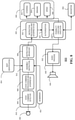
- FIG. 1 illustrates a system 100 for in-vehicle voice control of an autonomous vehicle according to an example embodiment.
- the system 100 includes an audio input device 110 coupled to a microphone 102 that captures a voice command which may be a vehicle-navigation command and provides it to the vehicle electronics implementing a vehicle function controller 120.
- the audio input device 110 and microphone 102 may be referred to herein as a microphone unit.
- the audio input device 110 may include a voice command detector 104, a voice command processor and interpreter 106 and an instruction broadcast module 108.
- the vehicle function controller 120 may be connected to one or more actuators 140 such as a steering actuator 142 braking actuator 144 and speed actuator 146 to control the navigation of the autonomous vehicle.
- the vehicle function controller 120 may include an instruction processing and interpretation module 122, an authorization module 124 and a feasibility check and execution module 126.
- the vehicle function controller 120 may also include a vehicle control transceiver (not shown) which may be a wired or wireless transceiver for connecting the audio input device 110.
- the vehicle function controller 120 may also be connected to a navigation module 150.
- the navigation module 150 may provide Global Positioning System (GPS) location information and other environment context information such as parking locations, roadworks, and other information used for the navigation of the autonomous vehicle.
- GPS Global Positioning System
- the vehicle function controller 120 may connect via a wired or wireless vehicle control transceiver (not shown) to an audio output device 130 including an audio processor 132.
- the audio output device 130 may be connected to a speaker 134 to provide acoustic feedback to the passengers of the autonomous vehicle.
- the audio output device 130 and the speaker 134 may be referred to herein as a speaker unit.
- the speaker unit may be incorporated in the vehicle or be part of a mobile hearable device.
- the vehicle function controller 120 may be connected to a screen for visual feedback instead of or as well as an audio output device 130.
- the microphone unit and the speaker unit may be part of a mobile hearable device such as a hearing aid or other hearing device which may be wirelessly coupled to the vehicle function controller 120 for example by transmitter which may be a near field magnetic induction (NFMI), a near field electromagnetic induction (NFEMI), Bluetooth, or Ultra-Wide-Band (UWB) transmitter.
- NFMI refers to any communication means that makes use of transmissions within a localized magnetic field.
- NFEMI is an extension of NFMI which also uses an electric antenna for transmissions as explained for example in US 9197986B1 and European Patent application 15164621.3 .
- the audio input device 110 may receive the audio signal from the microphone 102.
- the audio input device 110 may perform voice command detection with voice command detector 104 followed by voice command processing and interpretation by the voice command processing and interpreter 106 .
- the results of the voice command processing and interpretation may be broadcast by the broadcast instruction module 108 to the vehicle function controller 120.
- the assembled instruction may be output from the audio input device 110 and broadcast via a wired or wireless connection to the vehicle function controller 120.
- the vehicle function controller 120 may receive and process the instruction with instruction processing and interpretation module 122. Following instruction processing and interpretation a check is made by the authorization module 124 to determine to identify whether voice commands are provided by an authorized occupant of the vehicle. In some examples, identification of an authorized person may be based on either seat location, biometric data, from voice recognition, visual information.
- the feasibility check and execution module 126 may output an audio signal to the audio output device 130 if the command is not authorised or it is not feasible to execute the command for some other reason. If the command is authorised and feasible, the command may be executed to control the actuators 140 in order to navigate the autonomous vehicle based on information from the navigation module 150 and the authorized command. Audio input device 110, vehicle function controller 120 and audio output device 130 may be implemented in hardware or a combination of hardware and software.
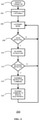
- Figure 2 describes a method 200 of operating the audio input device 110.
- the autonomous vehicle may be switched on.
- an optional pairing action may occur between the audio input device 110 and the vehicle function controller 120. This may be done for examples of the audio input device which are wirelessly coupled to the vehicle function controller 120 using for example a Bluetooth, UWB, NFMI or NFEMI wireless connection. In examples when the audio input device 110 is fixed in the vehicle interior or connected by a wired connection, the pairing may not be required.
- the audio input device 110 may be in a listening mode.
- the audio input device may determine whether a voice has been detected. If a voice has not been detected, the method may return to step 206.
- step 210 the method may proceed to step 210 and extract keywords from the speech. Keyword extraction may be implemented for example using temporal convolution networks as described in " Temporal Convolutional Networks for Action Segmentation and Detection", Colin Lea et al, 16th November 2016, arXiv:1611.05267 . An extracted keyword may be compared against known vehicle-navigation commands in step 212. If a known command has not been detected, then the method returns to step 206. If a known command has been detected then the method proceeds to step 214 in which a command instruction may be assembled including the command keyword and additional authentication information such as for example the seat location of the occupant. In step 216 the assembled command may be transmitted to the vehicle function controller. Following step 216, the method may return to listening mode step 206.
- FIG. 3 Shows an example implementation of a microphone unit 300 which may implement the method 200.
- Microphone unit 300 includes first and second microphone 302, 302' connected to a respective microphone interface 304. 304'.
- the microphone interface outputs may be connected to a digital signal processor 306.
- the output of the digital signal processor 306 may be connected to a wired or wireless transceiver 308 for communication with for example vehicle function controller 120.
- the microphone unit may have two microphones which for example may allow beamforming which may for example be implemented by software executed on the digital signal processor 306. Using beamforming may improve the discrimination between the intended user and background noise or speech from other occupants of the vehicle.
- Figure 4 shows an example method of operation 400 which may be implemented by the vehicle function controller 120.
- an instruction from the microphone unit may be received by the vehicle function controller.
- the instruction may be processed to check whether it includes a valid command
- the extracted keyword may be compared with the database keyword instruction set to make a comparison if the keyword is valid.
- a list of valid commands may be provide in database 408.
- Step 404 may be implemented for example by the instruction processing and interpretation module 122.
- an authorization check is made to determine whether a command is provided by an authorized person.
- An authorized person may be a person that wears a paired hearable/wearable or a person that is located on a given seat.
- Authorised person and location information may be stored in database 408.
- authorization is done by pairing so that only voice commands that are provided from a paired device are authorized for execution.
- authorization may be based on Seating location.
- navigation may be authorized from a given seat within the vehicle.
- navigation may only be permitted from a particular seat location. Alternatively, navigation could be handed-over to be done from any other seat within the vehicle.
- the detection of the seat location may be implemented for example as described in European patent application 19187261.3 , where a seat ID transceiver is part of the seat.
- a seat ID transceiver is part of the seat.
- the voice signature of the authorized person may be stored as part of the authenticated persons/seats database.
- a signature may be stored for all of the keywords.
- the authentication may include face recognition. Once a voice command has been provided together with a seat location, a check is done via a camera system whether the occupant of the vehicle that provided the voice command is authorized to navigate the vehicle. In other examples a centralized microphone system may be used that includes a direction of where the voice command came from.
- a microphone may be paired with more than one microphone. For example, there could be a microphone on each side (left/right) of a centre microphone. From the relative signal strengths and time delay of the audio signal detected by each microphone, the direction of the audio source may be determined.
- step 410 checks if the command is valid.
- the voice command is classified as invalid when it has been provided by a non-authorized person, or when it is not a valid navigation instruction for the vehicle. If the command is invalid, the method proceeds to step 412 and an audio signal is generated for example an alert sound or a generated speech message to be provided to the vehicle occupants. This audio signal is then output on a speaker in step 414 which may be implemented using the audio output device 130 and speaker 134.
- the navigation instruction may be captured in step 416 and stored for execution in step 418.
- Authorization and validity checks carried out in steps 406 and 410 may be implemented for example by authorization module 124.
- Figure 5 shows an example method of operation 500 which may be implemented by the vehicle function controller 120.
- Method 500 indicates the operation for a navigation action process which may be implemented for example by feasibility check and execution module 126.
- the commands are Turn Left, Turn Right, Stop, and Park but it will be appreciated that other commands may also be similarly processed.
- the navigation instruction for execution which may be determined by method 400 is captured in step 514 and processed in step 516. If the command is to " turn left " the method proceeds to step 518 and in step 526 a determination is made whether a route exists that allows the vehicle to comply with the instruction. This determination step 526 may require environmental information to provide the information about the context in which the vehicle is operating.
- This environmental information may be provided via a V2X connection 502, V2X transceiver 504 and V2X processor 506.
- the environmental information may be provided by navigation maps 512.
- the information from V2X processor 506 is provided to the decision step 526 schematically by the connection 508.
- Map information for route details and path planning may be provided by connection 510. If the left route exists the method proceeds to an execution step 534. For the left turn instruction in step 536 the actuators of the autonomous vehicle may be controlled to re-route. If the left route does not exist, for example due to a closed street, safety related aspects such as no turn or stop permitted in the current location, the method proceeds to step 544 and an indication is provided to the used that the command cannot be serviced. This indication may be a computer generated speech or other audio indication.
- step 520 a determination is made whether a route exists that allows the vehicle to comply with the instruction. If the route exists the method proceeds to an execution step 534. For the right turn instruction in step 538 the actuators of the autonomous vehicle may be controlled to re-route. If the left route does not exist, the method proceeds to step 544 as previously described.
- step 522 the method proceeds to step 522 and in step 530 a determination is made whether a stopping zone exists that allows the vehicle to comply with the instruction. If the stopping zone does not exist the method proceeds to an execution step 534. In step 540 actuators in the autonomous vehicle may be controlled to execute the stop instruction. If it is not possible to execute the stop instruction, the method proceeds to step 544 as previously described.
- step 524 a determination is made whether a stopping zone exists that allows the vehicle to comply with the instruction. If the stopping zone does not exist the method proceeds to an execution step 534 In step 54 actuators in the autonomous vehicle may be controlled to execute the park instruction. If it is not possible to execute the stop instruction, the method proceeds to step 544 as previously described.
- Figures 6A and 6B illustrate an example operation of an " abort " command.
- Figure 6A shows the possible phases of operation 600.
- a first phase or T1 phase 602 the voice command capturing and processing is in progress.
- a second phase 604 or T2 phase the execution is in progress i.e. the action is being performed.
- FIG. 6B shows an example abort process 610.
- step 612 the captured navigation abort command is received
- step 614 a check is made to determine whether the received abort command is in the T1 phase 602. If the abort command is in the T1 phase 602 then in step 616, the previous instruction command is cancelled and in step 618 no control instructions are issued by the vehicle function controller. In step 620 an indication is generated that the abort operation was successful.
- the actions of the current instruction continue to be executed in step 622 and in step 624 the user receives feedback that the abort operation was not done and the previous instruction has been executed.
- Figures 7A, 7B and 7C illustrate a further example detail of the execution steps 534 shown in figure 5 .
- FIG. 7A shows a method 700 of executing a stop instruction which may be used to implement execution step 540 in method 500.
- the method may control the actuators to reduce speed and initiate a lane change.
- a check is made to determine whether the vehicle is on a high speed lane. If the vehicle is not on a high speed lane then the method proceeds to step 708 and stop light or hazard indicators may be activated.
- the method proceeds to step 706 and the vehicle actuators are controlled to move the autonomous vehicle to a low speed lane and then to step 708.
- the actuators may be controlled to move the vehicle to a stop zone in step 710 and then in step 712 the brakes are actuated to halt the vehicle.
- the completion of the command may be indicated by generating an audio output.
- Figure 7B shows a method of executing a park instruction 720 which may be used to implement execution step 542 in method 500.
- the method may control the actuators to reduce speed and initiate a lane change.
- a check is made to determine whether the vehicle is on a high speed lane. If the vehicle is not on a high speed lane then the method proceeds to step 728 and stop light or hazard indicators may be activated.
- the method proceeds to step 726 and the vehicle actuators are controlled to move the autonomous vehicle to a low speed lane and then to step 728.
- the actuators may be controlled to move the vehicle to a stop zone in step 730 and then in step 732 the brakes are actuated to halt the vehicle.
- the completion of the command may be indicated by generating an audio output.
- Figure 7C shows a method of executing a re-route instruction 740 which may be used to implement steps 536 and 538.
- navigation controls may be adapted depending on the command.
- step 744 the successful service of the command may be indicated.
- FIG. 8 illustrates a system 800 for in-vehicle voice control of an autonomous vehicle according to an example embodiment.
- the system 800 may implement one or more of the methods 200, 400, 500, 510, 610, 700, 720.
- the system 800 includes an audio input device 810 coupled to a microphone 802 that captures a voice command which may be a vehicle-navigation command and provides it to the vehicle electronics implementing a vehicle function controller 820.
- the audio input device 810 and microphone 802 may be referred to herein as a microphone unit.
- the audio input device 810 may include a voice command detector 804, a voice command processor and interpreter 806 an instruction assembler 812 and an instruction broadcast module 808.
- the vehicle function controller 820 may be connected to one or more actuators 840 such as a steering actuator 842 braking actuator 844 and speed actuator 846 to control the navigation of the autonomous vehicle.
- the vehicle function controller 820 may include an instruction processing and interpretation module 822, an authorization module 824 and a feasibility check and execution module 826.
- the vehicle function controller 820 may also include a vehicle control transceiver (not shown) which may be a wired or wireless transceiver for connecting the audio input device 810.
- the vehicle function controller 820 may also be connected to a navigation module 850.
- the navigation module 850 may provide GPS location information and other environment context information such as parking locations, roadworks, and other information used for the navigation of the autonomous vehicle.
- the vehicle function controller 820 may have an output connected by a wired or wireless connection to an audio output device 830 including an audio processor 832.
- the audio output device 830 may be connected to a speaker 834 to provide acoustic feedback to the passengers of the autonomous vehicle.
- the audio output device 830 and the speaker 934 may be referred to herein as a speaker unit.
- the speaker unit may be incorporated in the vehicle or be part of a mobile hearable device.
- the microphone unit and the speaker unit may be part of a mobile hearable device such as a hearing aid or other hearing device which may be wirelessly coupled to the vehicle function controller 820 for example by transmitter which may be a near field magnetic induction (NFMI) transmitter or a near field electromagnetic induction transmitter (NFEMI), Bluetooth and Ultra-Wide-Band (UWB) communication.
- NFMI near field magnetic induction
- NFEMI near field electromagnetic induction transmitter
- UWB Ultra-Wide-Band
- the audio input device 810 may receive the audio signal from the microphone 802.
- the audio input device 810 may perform voice command detection with voice command detector followed by voice command processing and interpretation.
- the instruction assemble module 812 may receive a seat identifier for example from a seat identification transceiver which may be wirelessly coupled to the audio input device 810.
- the instruction assemble module 812 may receive biomarker data from the biomarker module 852 .
- the biomarker module 852 may be included in the vehicle.
- the biomarker module 852 may be in the audio input device 810.
- the results of the voice command processing and interpretation instruction may be broadcast by the broadcast instruction module 808 to the vehicle function controller 820.
- the assembled instruction may be output from the audio input device 810 and broadcast via a wired or wireless connection to the vehicle function controller 820.
- the vehicle function controller 820 may receive and process the instruction with instruction processing and interpretation module 822. Following instruction processing and interpretation a check is made by the authorization module 824 to determine to identify whether voice commands are provided by an authorized occupant of the vehicle. In some examples, identification of an authorized person may be based on either seat location, biometric data, from voice recognition, visual information.
- the feasibility check and execution module 826 may output an audio signal to the audio output device 830 if the command is not authorised or it is not feasible to execute the command for some other reason such. If the command is authorised and feasible, the command may be executed to control the actuators 840 in order to navigate the autonomous vehicle based on information from the navigation module 850 and the authorized command. Audio input device 810, vehicle function controller 820 and audio output device 830 may be implemented in hardware or a combination of hardware and software.
- Example embodiments described provide an intelligent voice-based human-machine interface for vehicles that enable control the navigation functionality of the vehicle from personalized zones of passengers inside vehicles. Any occupant of the vehicle is enabled to interact with the vehicle by means of voice commands, for navigating the vehicle to destination from their personal seating zone.
- the control actuators include, but are not limited to, Speed Control Unit, Brake Control Unit, Steering Control Unit, Start / Stop.
- Embodiments described herein may allow the direct connection between an occupant of the vehicle providing the voice command comprising at least a navigation command to a Navigation control unit of Vehicle electronics, the authorization of an occupant of the vehicle to allow execution of the given navigation instruction.
- a voice command comprising at least a navigation command may be validated by Vehicle electronics for the allowable Navigation control commands.
- Navigation commands are checked for feasibility of execution in conjunction with at least predefined navigation maps and V2X information. Adapting the navigation controls like steering, speed etc. in conjunction with at least V2X and navigation maps for path planning and rerouting to the new destination in Realtime. The command may be aborted before the navigation controls execute the instruction and provide the feedback to the occupants of the vehicle.
- One or more embodiments may enable lane change assist, indicators etc., for path rerouting, stop or park command.
- One or more embodiments may enable navigating to stop zone, parking zone based on V2X information and initiating the stop or parking sequence.
- the audio control system as described herein may be used with autonomous vehicles configured for example as a robot taxi.
- a method and apparatus for controlling an autonomous vehicle is described.
- An audio signal is detected and processed the to determine whether the speech comprises a vehicle-navigation command.
- the audio signal is analyzed to determine whether the signal includes speech from an authorised occupant of the vehicle. If the speech includes an authorised vehicle-navigation command which is feasible to execute given the current position of the vehicle, the command is executed to control the direction and speed of the autonomous vehicle.
- the set of instructions/method steps described above are implemented as functional and software instructions embodied as a set of executable instructions which are effected on a computer or machine which is programmed with and controlled by said executable instructions. Such instructions are loaded for execution on a processor (such as one or more CPUs).
- processor includes microprocessors, microcontrollers, processor modules or subsystems (including one or more microprocessors or microcontrollers), or other control or computing devices.
- a processor can refer to a single component or to plural components.
- the set of instructions/methods illustrated herein and data and instructions associated therewith are stored in respective storage devices, which are implemented as one or more non-transient machine or computer-readable or computer-usable storage media or mediums.
- Such computer-readable or computer usable storage medium or media is (are) considered to be part of an article (or article of manufacture).
- An article or article of manufacture can refer to any manufactured single component or multiple components.
- the non-transient machine or computer usable media or mediums as defined herein excludes signals, but such media or mediums may be capable of receiving and processing information from signals and/or other transient mediums.
- Example embodiments of the material discussed in this specification can be implemented in whole or in part through network, computer, or data based devices and/or services. These may include cloud, internet, intranet, mobile, desktop, processor, look-up table, microcontroller, consumer equipment, infrastructure, or other enabling devices and services. As may be used herein and in the claims, the following non-exclusive definitions are provided.
- one or more instructions or steps discussed herein are automated.
- the terms automated or automatically mean controlled operation of an apparatus, system, and/or process using computers and/or mechanical/electrical devices without the necessity of human intervention, observation, effort and/or decision.
Landscapes
- Engineering & Computer Science (AREA)
- Human Computer Interaction (AREA)
- Physics & Mathematics (AREA)
- Multimedia (AREA)
- Health & Medical Sciences (AREA)
- Audiology, Speech & Language Pathology (AREA)
- Theoretical Computer Science (AREA)
- Acoustics & Sound (AREA)
- Mechanical Engineering (AREA)
- Computational Linguistics (AREA)
- Transportation (AREA)
- General Health & Medical Sciences (AREA)
- General Engineering & Computer Science (AREA)
- General Physics & Mathematics (AREA)
- Automation & Control Theory (AREA)
- Navigation (AREA)
Applications Claiming Priority (1)
| Application Number | Priority Date | Filing Date | Title |
|---|---|---|---|
| IN202011031938 | 2020-07-25 |
Publications (1)
| Publication Number | Publication Date |
|---|---|
| EP3944232A1 true EP3944232A1 (fr) | 2022-01-26 |
Family
ID=73059440
Family Applications (1)
| Application Number | Title | Priority Date | Filing Date |
|---|---|---|---|
| EP20205245.2A Withdrawn EP3944232A1 (fr) | 2020-07-25 | 2020-11-02 | Commande vocale pour véhicules autonomes |
Country Status (1)
| Country | Link |
|---|---|
| EP (1) | EP3944232A1 (fr) |
Cited By (4)
| Publication number | Priority date | Publication date | Assignee | Title |
|---|---|---|---|---|
| CN115547313A (zh) * | 2022-09-20 | 2022-12-30 | 海南大学 | 一种基于驾驶员语音控制行驶车辆急停的方法 |
| US20240166234A1 (en) * | 2022-11-22 | 2024-05-23 | Hyundai Motor Company | Method and Apparatus for Controlling Vehicle Using Voice or Facial Expressions |
| DE102024207833A1 (de) | 2024-07-09 | 2026-01-15 | Continental Automotive Technologies GmbH | Verfahren zum Steuern eines zumindest teilautonomen Fahrzeugs mittels sprachlicher Eingabe |
| US12586588B2 (en) * | 2022-12-22 | 2026-03-24 | Toyota Jidosha Kabushiki Kaisha | Information processing apparatus, information processing method, and non-transitory storage medium |
Citations (5)
| Publication number | Priority date | Publication date | Assignee | Title |
|---|---|---|---|---|
| US20140365228A1 (en) * | 2013-03-15 | 2014-12-11 | Honda Motor Co., Ltd. | Interpretation of ambiguous vehicle instructions |
| US9197986B1 (en) | 2014-06-12 | 2015-11-24 | Nxp, B.V. | Electromagnetic induction radio |
| US20170349184A1 (en) * | 2016-06-06 | 2017-12-07 | GM Global Technology Operations LLC | Speech-based group interactions in autonomous vehicles |
| US20180194366A1 (en) * | 2017-01-10 | 2018-07-12 | Ford Global Technologies, Llc | Autonomous-Vehicle-Control System And Method Incorporating Occupant Preferences |
| US20180201226A1 (en) * | 2017-01-17 | 2018-07-19 | NextEv USA, Inc. | Voice Biometric Pre-Purchase Enrollment for Autonomous Vehicles |
-
2020
- 2020-11-02 EP EP20205245.2A patent/EP3944232A1/fr not_active Withdrawn
Patent Citations (5)
| Publication number | Priority date | Publication date | Assignee | Title |
|---|---|---|---|---|
| US20140365228A1 (en) * | 2013-03-15 | 2014-12-11 | Honda Motor Co., Ltd. | Interpretation of ambiguous vehicle instructions |
| US9197986B1 (en) | 2014-06-12 | 2015-11-24 | Nxp, B.V. | Electromagnetic induction radio |
| US20170349184A1 (en) * | 2016-06-06 | 2017-12-07 | GM Global Technology Operations LLC | Speech-based group interactions in autonomous vehicles |
| US20180194366A1 (en) * | 2017-01-10 | 2018-07-12 | Ford Global Technologies, Llc | Autonomous-Vehicle-Control System And Method Incorporating Occupant Preferences |
| US20180201226A1 (en) * | 2017-01-17 | 2018-07-19 | NextEv USA, Inc. | Voice Biometric Pre-Purchase Enrollment for Autonomous Vehicles |
Non-Patent Citations (1)
| Title |
|---|
| COLIN LEA ET AL., TEMPORAL CONVOLUTIONAL NETWORKS FOR ACTION SEGMENTATION AND DETECTION, 16 November 2016 (2016-11-16) |
Cited By (5)
| Publication number | Priority date | Publication date | Assignee | Title |
|---|---|---|---|---|
| CN115547313A (zh) * | 2022-09-20 | 2022-12-30 | 海南大学 | 一种基于驾驶员语音控制行驶车辆急停的方法 |
| US20240166234A1 (en) * | 2022-11-22 | 2024-05-23 | Hyundai Motor Company | Method and Apparatus for Controlling Vehicle Using Voice or Facial Expressions |
| US12447996B2 (en) * | 2022-11-22 | 2025-10-21 | Hyundai Motor Company | Method and apparatus for controlling vehicle using voice or facial expressions |
| US12586588B2 (en) * | 2022-12-22 | 2026-03-24 | Toyota Jidosha Kabushiki Kaisha | Information processing apparatus, information processing method, and non-transitory storage medium |
| DE102024207833A1 (de) | 2024-07-09 | 2026-01-15 | Continental Automotive Technologies GmbH | Verfahren zum Steuern eines zumindest teilautonomen Fahrzeugs mittels sprachlicher Eingabe |
Similar Documents
| Publication | Publication Date | Title |
|---|---|---|
| EP3944232A1 (fr) | Commande vocale pour véhicules autonomes | |
| US20220358843A1 (en) | Transport vehicle configuration for impaired riders | |
| US11577742B2 (en) | Methods and systems for increasing autonomous vehicle safety and flexibility using voice interaction | |
| US11180116B2 (en) | Vehicle dispatch management system and vehicle dispatch management server | |
| CN112180921B (zh) | 自动驾驶算法训练系统及方法 | |
| US10266182B2 (en) | Autonomous-vehicle-control system and method incorporating occupant preferences | |
| JP6011584B2 (ja) | 音声認識装置及び音声認識システム | |
| KR20190006741A (ko) | 커넥티비티 통합관리 방법 및 커넥티드 카 | |
| JP6052402B2 (ja) | 運転支援システム | |
| CN104412068A (zh) | 用于运行机动车的方法和控制系统 | |
| CN105957523A (zh) | 车载系统控制方法及装置 | |
| WO2019131116A1 (fr) | Dispositif de traitement d'informations, dispositif mobile et procédé, et programme | |
| CN110366852B (zh) | 信息处理设备、信息处理方法和记录介质 | |
| CN119649805A (zh) | 用于语音控制自动驾驶系统的认证系统 | |
| CN112238827B (zh) | 移动可听装置 | |
| CN113557174A (zh) | 信息处理装置、信息处理方法、移动控制装置和移动控制方法 | |
| CN113260953A (zh) | 信息处理设备与信息处理方法 | |
| JP3979080B2 (ja) | 音声認識装置 | |
| WO2022157090A1 (fr) | Dispositif électronique, procédé et programme informatique | |
| CN114148342A (zh) | 自动驾驶判断系统、自动驾驶控制系统及车辆 | |
| JP2013206319A (ja) | 車両用遠隔支援システム | |
| US12406663B2 (en) | Routing of user commands across disparate ecosystems | |
| US20250006200A1 (en) | Information processing device, information processing method, and information processing program | |
| CN109345855A (zh) | 一种用户管理方法 | |
| KR20190074344A (ko) | 대화 시스템 및 대화 처리 방법 |
Legal Events
| Date | Code | Title | Description |
|---|---|---|---|
| PUAI | Public reference made under article 153(3) epc to a published international application that has entered the european phase |
Free format text: ORIGINAL CODE: 0009012 |
|
| STAA | Information on the status of an ep patent application or granted ep patent |
Free format text: STATUS: THE APPLICATION HAS BEEN PUBLISHED |
|
| AK | Designated contracting states |
Kind code of ref document: A1 Designated state(s): AL AT BE BG CH CY CZ DE DK EE ES FI FR GB GR HR HU IE IS IT LI LT LU LV MC MK MT NL NO PL PT RO RS SE SI SK SM TR |
|
| STAA | Information on the status of an ep patent application or granted ep patent |
Free format text: STATUS: THE APPLICATION IS DEEMED TO BE WITHDRAWN |
|
| 18D | Application deemed to be withdrawn |
Effective date: 20220727 |