EP3948690B1 - Entraînement de réseaux neuronaux plus sécurisés à l'aide d'une régularisation de linéarité locale - Google Patents
Entraînement de réseaux neuronaux plus sécurisés à l'aide d'une régularisation de linéarité locale Download PDFInfo
- Publication number
- EP3948690B1 EP3948690B1 EP20728460.5A EP20728460A EP3948690B1 EP 3948690 B1 EP3948690 B1 EP 3948690B1 EP 20728460 A EP20728460 A EP 20728460A EP 3948690 B1 EP3948690 B1 EP 3948690B1
- Authority
- EP
- European Patent Office
- Prior art keywords
- training
- input
- perturbation
- output
- loss function
- Prior art date
- Legal status (The legal status is an assumption and is not a legal conclusion. Google has not performed a legal analysis and makes no representation as to the accuracy of the status listed.)
- Active
Links
Images


Classifications
-
- G—PHYSICS
- G06—COMPUTING OR CALCULATING; COUNTING
- G06F—ELECTRIC DIGITAL DATA PROCESSING
- G06F18/00—Pattern recognition
- G06F18/20—Analysing
- G06F18/24—Classification techniques
- G06F18/241—Classification techniques relating to the classification model, e.g. parametric or non-parametric approaches
- G06F18/2413—Classification techniques relating to the classification model, e.g. parametric or non-parametric approaches based on distances to training or reference patterns
- G06F18/24133—Distances to prototypes
-
- G—PHYSICS
- G06—COMPUTING OR CALCULATING; COUNTING
- G06F—ELECTRIC DIGITAL DATA PROCESSING
- G06F18/00—Pattern recognition
- G06F18/20—Analysing
- G06F18/21—Design or setup of recognition systems or techniques; Extraction of features in feature space; Blind source separation
- G06F18/213—Feature extraction, e.g. by transforming the feature space; Summarisation; Mappings, e.g. subspace methods
- G06F18/2135—Feature extraction, e.g. by transforming the feature space; Summarisation; Mappings, e.g. subspace methods based on approximation criteria, e.g. principal component analysis
- G06F18/21355—Feature extraction, e.g. by transforming the feature space; Summarisation; Mappings, e.g. subspace methods based on approximation criteria, e.g. principal component analysis nonlinear criteria, e.g. embedding a manifold in a Euclidean space
-
- G—PHYSICS
- G06—COMPUTING OR CALCULATING; COUNTING
- G06F—ELECTRIC DIGITAL DATA PROCESSING
- G06F18/00—Pattern recognition
- G06F18/20—Analysing
- G06F18/21—Design or setup of recognition systems or techniques; Extraction of features in feature space; Blind source separation
- G06F18/214—Generating training patterns; Bootstrap methods, e.g. bagging or boosting
-
- G—PHYSICS
- G06—COMPUTING OR CALCULATING; COUNTING
- G06N—COMPUTING ARRANGEMENTS BASED ON SPECIFIC COMPUTATIONAL MODELS
- G06N3/00—Computing arrangements based on biological models
- G06N3/02—Neural networks
- G06N3/04—Architecture, e.g. interconnection topology
- G06N3/0464—Convolutional networks [CNN, ConvNet]
-
- G—PHYSICS
- G06—COMPUTING OR CALCULATING; COUNTING
- G06N—COMPUTING ARRANGEMENTS BASED ON SPECIFIC COMPUTATIONAL MODELS
- G06N3/00—Computing arrangements based on biological models
- G06N3/02—Neural networks
- G06N3/08—Learning methods
-
- G—PHYSICS
- G06—COMPUTING OR CALCULATING; COUNTING
- G06N—COMPUTING ARRANGEMENTS BASED ON SPECIFIC COMPUTATIONAL MODELS
- G06N3/00—Computing arrangements based on biological models
- G06N3/02—Neural networks
- G06N3/08—Learning methods
- G06N3/09—Supervised learning
-
- G—PHYSICS
- G06—COMPUTING OR CALCULATING; COUNTING
- G06N—COMPUTING ARRANGEMENTS BASED ON SPECIFIC COMPUTATIONAL MODELS
- G06N3/00—Computing arrangements based on biological models
- G06N3/02—Neural networks
- G06N3/08—Learning methods
- G06N3/094—Adversarial learning
-
- G—PHYSICS
- G06—COMPUTING OR CALCULATING; COUNTING
- G06V—IMAGE OR VIDEO RECOGNITION OR UNDERSTANDING
- G06V10/00—Arrangements for image or video recognition or understanding
- G06V10/70—Arrangements for image or video recognition or understanding using pattern recognition or machine learning
- G06V10/764—Arrangements for image or video recognition or understanding using pattern recognition or machine learning using classification, e.g. of video objects
-
- G—PHYSICS
- G06—COMPUTING OR CALCULATING; COUNTING
- G06V—IMAGE OR VIDEO RECOGNITION OR UNDERSTANDING
- G06V10/00—Arrangements for image or video recognition or understanding
- G06V10/70—Arrangements for image or video recognition or understanding using pattern recognition or machine learning
- G06V10/77—Processing image or video features in feature spaces; using data integration or data reduction, e.g. principal component analysis [PCA] or independent component analysis [ICA] or self-organising maps [SOM]; Blind source separation
- G06V10/774—Generating sets of training patterns; Bootstrap methods, e.g. bagging or boosting
-
- G—PHYSICS
- G06—COMPUTING OR CALCULATING; COUNTING
- G06V—IMAGE OR VIDEO RECOGNITION OR UNDERSTANDING
- G06V10/00—Arrangements for image or video recognition or understanding
- G06V10/70—Arrangements for image or video recognition or understanding using pattern recognition or machine learning
- G06V10/82—Arrangements for image or video recognition or understanding using pattern recognition or machine learning using neural networks
-
- G—PHYSICS
- G06—COMPUTING OR CALCULATING; COUNTING
- G06N—COMPUTING ARRANGEMENTS BASED ON SPECIFIC COMPUTATIONAL MODELS
- G06N3/00—Computing arrangements based on biological models
- G06N3/02—Neural networks
- G06N3/04—Architecture, e.g. interconnection topology
- G06N3/045—Combinations of networks
Definitions
- This specification relates to training neural networks that are secure, i.e., that are robust to attacks from malicious actors.
- Neural networks are machine learning models that employ one or more layers of nonlinear units to predict an output for a received input.
- Some neural networks include one or more hidden layers in addition to an output layer. The output of each hidden layer is used as input to the next layer in the network, i.e., the next hidden layer or the output layer.
- Each layer of the network generates an output from a received input in accordance with current values of a respective set of parameters.
- Miyato et al. "Virtual Adversarial Training: A Regularization Method for Supervised and Semi-Supervised Learning", 13 April 2017, arXiv:1704.03976 , describes a regularization method based on a virtual adversarial loss, a measure of local smoothness of the output distribution.
- the method is similar to adversarial training, but differs in that it determines the adversarial direction based only on the output distribution. It does not use a perturbation for which the loss function is most non-linear when evaluated at an input - output pair.
- This specification describes a system implemented as computer programs on one or more computers in one or more locations that trains a neural network to be resistant to adversarial attacks.
- a method of training a neural network having a plurality of network parameters to provide a more secure neural network comprises obtaining a plurality of training inputs and for each of the plurality of training inputs, a respective target output for the training input.
- the method further comprises training the neural network on each of the plurality of training inputs.
- the training comprises processing each of the training inputs using the neural network and in accordance with current values of the network parameters to generate a respective network output for each of the training inputs.
- the training further comprises computing a respective loss for each of the training inputs by evaluating a loss function.
- the training further comprises determining an update to the current values of the parameters of the neural network by performing an iteration of a neural network training procedure to decrease the respective losses for the training inputs and to decrease the non-linearity of the loss function for the identified maximally non-linear perturbation.
- the training inputs are images.
- the network output is an image classification output, or object detection output.
- the local linearity measure may measure how non-linear the loss function is when evaluated at an input - output pair that includes (i) the perturbed training input and (ii) the target output for the training input.
- the identification may further comprise generating an averaged gradient of the local linearity measure by averaging the gradients for the training inputs.
- the identification may further comprise updating the perturbation using the averaged gradient.
- the identification may further comprise selecting the perturbation after the last iteration of the one or more iterations as the maximally non-linear perturbation.
- the local linearity regularized loss function may include a third term that measures an average across the plurality of training inputs of an absolute value of a dot product between the maximally non-linear perturbation and a gradient with respect to the training input of the loss function evaluated at the input - output pair that includes the training input and the target output for the training input.
- FIG. 1 shows an example neural network training system 100.
- the neural network training system 100 is an example of a system implemented as computer programs on one or more computers in one or more locations, in which the systems, components, and techniques described below can be implemented.
- the neural network training system 100 is a system that trains a neural network 110 on training data 140 to determine trained values of the parameters of the neural network (referred to as network parameters 118).
- the neural network 110 can be configured to receive any kind of digital data input as a network input and to generate any kind of network output, i.e., any kind of score, classification, or regression output based on the network input.
- the described techniques can be used to train a neural network 110 to perform any task that requires receiving continuous inputs, i.e., inputs that can take any value from some predetermined range.
- the inputs to the neural network are images and the output generated by the neural network for a given image is an image classification output that, for example, includes scores for each of a set of object categories, with each score representing an estimated likelihood that the image contains an image of an object belonging to the category.
- the output generated by the neural network for a given image is an objection detection output that, for example, identifies positions of objects within the given image.
- the neural network 110 can have any architecture that is appropriate for the type of network inputs processed by the neural network 110.
- the neural network 110 can be a convolutional neural network.
- the training data 140 that is used by the system 100 to train the neural network 110 includes multiple batches of training inputs 142 and, for each training input, a respective target output 144.
- Each batch can include, e.g., 64, 128, 256, or 512 inputs.
- the target output 144 for any given training input 142 is the output that should be generated by the neural network 110 by performing the particular machine learning task on the labeled training input.
- a training engine 150 in the system 100 trains the neural network 110 by performing an iterative training process on batches of training inputs.
- the training engine 150 receives (i) network outputs 114 generated by the neural network 110 for training inputs 142 in the batch corresponding to the training iteration in accordance with current values of the network parameters 118 and (ii) target outputs 144 for the training inputs 142 in the batch.
- the training engine 150 uses the network outputs 114 and the target outputs 144 to update the current values of the network parameters 118.
- the training engine 150 would train the neural network 110 to minimize a loss function that measures a difference between (i) an output generated by the neural network 110 by processing an input in an input - output pair and (ii) an output in the input - output pair.
- each input in each input - output pair would be one of the training inputs 142 and the output would be the target output 144 for the training input.
- the loss function can be any machine learning loss function that is appropriate for the task that the neural network is being trained to perform.
- the loss function can be the cross-entropy loss function.
- the loss function will be referred to in this specification as the "task loss function.”
- the training engine 150 regularizes the training using a perturbation engine 160.
- the training engine 150 instead trains the neural network 110 on a local linearity regularized loss function that includes one term corresponding to the task loss function and one or more additional regularization terms that measure the non-linearity of the task loss function near the training inputs in the batch.
- the perturbation engine 160 identifies, from a plurality of possible perturbations, a maximally non-linear perturbation for the batch.
- a perturbation is a set of values that (i) is the same dimensionality as the training inputs, i.e., that includes a corresponding value for each value in a given training input, and (ii) that has a norm, e.g., a Euclidean norm or an infinity norm, that does not exceed a threshold value.
- a perturbation can be applied to a training input by element-wise adding the perturbation and the training input.
- a threshold value of 4/255 would mean that applying a randomly selected perturbation to a training input results in every pixel of the training input being perturbed independently by up to 4 units up or down on the 0 to 255 scale.
- the norm is the infinity norm
- pixels take values ranging between 0 and 255
- a threshold value of 6/255 would mean that applying a randomly selected perturbation to a training input results in every pixel of the training input being perturbed independently by up to 6 units up or down on the 0 to 255 scale.
- the maximally non-linear perturbation is a perturbation for which the task loss function is most non-linear (from among the plurality of possible perturbations that are considered by the perturbation engine 160) when evaluated at an input - output pair that includes (i) a perturbed training input generated by applying the possible perturbation to a given training input and (ii) a target output for the given training input.
- the training engine 150 determines the update to the current values of the network parameters 118 by performing an iteration of a neural network training procedure to minimize the local linearity regularized loss function, i.e., to decrease losses for the training inputs (as measured by the task loss function) and to decrease the non-linearity of the task loss function for the maximally non-linear perturbation identified by the perturbation engine 160.
- the training engine 150 can continue performing iterations of the training process to update the values of the network parameters 118 until termination criteria for the training are satisfied, e.g., a specified number of training iterations have been performed, a specified amount of time has elapsed, or the network parameters 118 have converged.
- the system 100 can provide data specifying the trained network for use in processing new network inputs. That is, the system 100 can output, e.g., by outputting to a user device or by storing in a memory accessible to the system 100, the trained values of the network parameters 118 for later use in processing inputs using the trained network.
- the system 100 can instantiate an instance of the neural network 110 having the trained values of the network parameters 118, receive inputs to be processed, e.g., through an application programming interface (API) offered by the system, use the trained neural network 110 to process the received inputs to generate network outputs and then provide the generated network outputs in response to the received inputs.
- API application programming interface
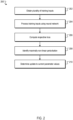
- FIG. 2 is a flow diagram of an example process 200 for training the neural network.
- the process 200 will be described as being performed by a system of one or more computers located in one or more locations.
- a neural network training system e.g., the neural network training system 100 of FIG.1 , appropriately programmed, can perform the process 200.
- the system can perform the process 200 multiple times for multiple different batches to determine trained values of the network parameters from initial values of the model parameters, i.e., can perform the process 200 repeatedly at different training iterations of an iterative training process to train the neural network.
- the system obtains a plurality of training inputs and, for each of the plurality of training inputs, a respective target output for the training input (step 202).
- the system then trains the neural network on each of the plurality of training inputs.
- the system processes each of the training inputs using the neural network and in accordance with the current values of the network parameters to generate a respective network output for each of the training inputs (step 204).
- the system computes the respective loss a given training input by evaluating the task loss function for an input - output pair that includes the given training input and the target output for the given training input.
- the system evaluates, at the input - output pair that includes the given training input and the target output for the given training input, a loss function that measures a difference between (i) an output generated by the neural network by processing an input in an input - output pair and (ii) an output in the input - output pair.
- the system identifies, from a plurality of possible perturbations, a maximally non-linear perturbation (step 208).
- the maximally non-linear perturbation is a perturbation for which the task loss function is most non-linear (from among the possible perturbations) when evaluated at an input - output pair that includes (i) a perturbed training input generated by applying the perturbation to a given training input and (ii) a target output for the given training input.
- the system determines an update to the current values of the parameters of the neural network by performing an iteration of a neural network training procedure to decrease the respective losses for the training inputs and to decrease the non-linearity of the loss function for the identified maximally non-linear perturbation (step 210).
- the system can perform the iteration of the neural network training procedure to minimize a local linearity regularized loss function that measures at least the respective losses for the plurality of training inputs and the non-linearity for the identified maximally non-linear perturbation.
- the system can determine, e.g., through backpropagation, a respective gradient with respect to the network parameters of the local linearity regularized loss function for each of the plurality of training examples and determine an averaged gradient with respect to the network parameters from the respective gradients for the plurality of training examples, i.e., by computing an average of the respective gradients.
- the system then generates updated values of the network parameters by applying the update, i.e., by subtracting or adding, to the current values of the network parameters.
- the local linearity regularized loss function includes one term that measures an average loss for the plurality of training examples and one or more terms that are based on the identified maximally non-linear perturbation.
- the local linearity regularized loss function can be a sum or a weighted sum of the multiple terms.
- the local linearity regularized loss function can include a second term that measures an average across the plurality of training inputs of an absolute difference between (i) the task loss function evaluated at an input - output pair that includes 1) the training input perturbed with the maximally non-linear perturbation and 2) the target output for the training input and (ii) a first-order Taylor expansion of the task loss function evaluated at the input - output pair that includes 1) the training input perturbed with the maximally non-linear perturbation and 2) the target output for the training input.
- the local linearity regularized loss function can also include a third term that measures the change in loss when the maximally non-linear perturbation is applied to a training input as predicted by the gradient of the loss with respect to the training input.
- the third term can be an average across the plurality of training inputs of an absolute value of a dot product between (i) the maximally non-linear perturbation and (ii) a gradient with respect to the training input of the loss function evaluated at the input - output pair that includes the training input and the target output for the training input.
- the system can train the system to be robust to adversarial attack in a computationally efficient manner.
- FIG. 3 is a flow diagram of an example process 300 for identifying the maximally non-linear perturbation for a given batch.
- the process 300 will be described as being performed by a system of one or more computers located in one or more locations.
- a neural network training system e.g., the neural network training system 100 of FIG.1 , appropriately programmed, can perform the process 300.
- the system initializes a perturbation (step 302). For example, the system can sample the perturbation uniformly at random from the possible perturbations having a norm that does not exceed the threshold value.
- the system then performs one or more iterations of steps 304-312.
- the number of iterations can be fixed prior to training or can be determined through hyper-parameter search at the outset of training.
- the number of iterations can be equal to 1, 2, 4, 8 or 16.
- the system For each of the training inputs, the system generates a respective perturbed training input by applying the perturbation (as of the current iteration) to the training input (step 304). As described above, the system can apply a perturbation to an input by adding, i.e., element-wise adding, the perturbation and the training input.
- the system For each of the training inputs, the system processes the perturbed training input generated from the training input using the neural network and in accordance with the current values of the network parameters to generate a network output for the perturbed training input (step 306).
- the system determines, using the network output for the perturbed training input, a gradient of a local linearity measure with respect to the perturbation and evaluated at the perturbed input for the training input (step 308).
- the local linearity measure measures how non-linear the loss function is when evaluated at an input - output pair that includes (i) the perturbed training input and (ii) the target output for the training input.
- the local linearity measure can be an absolute difference between (1) the loss function evaluated at the input - output pair that includes (i) the perturbed training input and (ii) the target output for the training input and (2) a first-order Taylor expansion of the loss function evaluated at the input - output pair.
- the system can compute the gradient of the measure with respect to the perturbation using a conventional gradient computation technique, e.g., through backpropagation.
- the system generates an averaged gradient of the local linearity measure by averaging the gradients of the local linearity measure for the training inputs (step 310).
- the system updates the perturbation using the averaged gradient (step 312).
- the system can apply a gradient descent technique to the averaged gradient and the current perturbation to generate an updated perturbation.
- the gradient descent technique can be a projected gradient descent (PGD) technique, which updates the perturbation as follows: ⁇ ⁇ Proj ⁇ ⁇ s ⁇ Optimizer gradient , where gradient the averaged gradient, s is a step size hyperparameter, and Optimizer is an update rule that is applied to the averaged gradient, e.g., the Adam update rule or the rmsProp update rule.
- PGD projected gradient descent
- the technique can be a Fast Gradient Signed Method (FGSM) technique, as described in Ian J Goodfellow, Jonathon Shlens, and Christian Szegedy. Explaining and harnessing adversarial examples. arXiv preprint arXiv:1412.6572, 2014.
- FGSM Fast Gradient Signed Method
- the system selects the perturbation after the last iteration of the one or more iterations as the maximally non-linear perturbation (step 314).
- the described techniques also require an inner optimization to be performed to identify a perturbation that satisfies some criteria.
- many fewer optimization steps are required for the described techniques to be effective in training the neural network to be robust to adversarial attack. Because as the number of inner optimization steps increases, the inner optimization becomes the dominant factor in how computationally intensive the training process is, by performing fewer optimization steps the described training techniques become much more computationally efficient than existing techniques.
- the trained neural network may be more robust to adversarial attacks, i.e., both attacks from a strong adversary and a weak adversary, if trained using the described techniques.
- the total training wall clock time for a network having a threshold value of 4/255 was 7 hours for 110 epochs of training using the described techniques.
- the total training wall clock time was 36 hours for 110 epochs. Therefore a five times speed-up in training time was achieved.
- the network trained using the described techniques exhibited better robustness to adversarial attack despite the speed-up in training time.
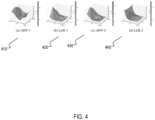
- FIG. 4 shows the non-linearity of the task loss function around a particular training input.
- FIG. 4 shows 4 visualizations of the surface of the task loss around the particular training input.
- Visualization 410 shows the surface of the task loss around the particular training input when the neural network has been trained using adversarial training (“ADV") with one inner optimization step (ADV-1).
- Visualization 420 shows the surface of the task loss around the particular training input when the neural network has been trained using the described techniques ("LLR”) with the same number, i.e., one, of inner optimization steps (LLR-1).
- the loss surface is much more linear after training using LLR than after training using ADV with the same number of inner optimization steps.
- Visualization 430 shows the surface of the task loss around the particular training input when the neural network has been trained using adversarial training with two inner optimization step (ADV-2).
- Visualization 440 shows the surface of the task loss around the particular training input when the neural network has been trained using the described techniques with the same number, i.e., two, of inner optimization steps (LLR-2).
- the loss surface is much more linear after training using LLR than after training using ADV with the same number of inner optimization steps. Moreover, as can be seen by comparing visualization 430 to visualization 420, the loss surface is more linear after one inner optimization step when training using LLR than after two inner optimization steps when training using ADV.
- Producing a more linear loss surface avoids having the trained neural network only being robust against weak attacks, i.e., but breaking down under strong adversarial attacks, e.g., due to gradient obfuscation.
- one form of gradient obfuscation occurs when the network learns to fool a gradient based attack by making the loss surface highly convoluted and non-linear.
- the nonlinearity prevents gradient based optimization methods from finding an adversarial perturbation within a small number of iterations and therefore decreases the effectiveness of the training.
- the loss surface is linear in the vicinity of the training examples, which is to say well-predicted by local gradient information, gradient obfuscation cannot occur.
- the described techniques can generate more linear loss surfaces in fewer inner optimization steps, training using the described techniques yields trained neural networks that are more robust to both strong and weak adversarial attacks than networks trained using other existing techniques.
- Embodiments of the subject matter and the functional operations described in this specification can be implemented in digital electronic circuitry, in tangibly-embodied computer software or firmware, in computer hardware, including the structures disclosed in this specification and their structural equivalents, or in combinations of one or more of them.
- Embodiments of the subject matter described in this specification can be implemented as one or more computer programs, i.e., one or more modules of computer program instructions encoded on a tangible non transitory storage medium for execution by, or to control the operation of, data processing apparatus.
- the computer storage medium can be a machine-readable storage device, a machine-readable storage substrate, a random or serial access memory device, or a combination of one or more of them.
- the program instructions can be encoded on an artificially generated propagated signal, e.g., a machine-generated electrical, optical, or electromagnetic signal, that is generated to encode information for transmission to suitable receiver apparatus for execution by a data processing apparatus.
- data processing apparatus refers to data processing hardware and encompasses all kinds of apparatus, devices, and machines for processing data, including by way of example a programmable processor, a computer, or multiple processors or computers.
- the apparatus can also be, or further include, special purpose logic circuitry, e.g., an FPGA (field programmable gate array) or an ASIC (application specific integrated circuit).
- the apparatus can optionally include, in addition to hardware, code that creates an execution environment for computer programs, e.g., code that constitutes processor firmware, a protocol stack, a database management system, an operating system, or a combination of one or more of them.
- a computer program which may also be referred to or described as a program, software, a software application, an app, a module, a software module, a script, or code, can be written in any form of programming language, including compiled or interpreted languages, or declarative or procedural languages; and it can be deployed in any form, including as a stand alone program or as a module, component, subroutine, or other unit suitable for use in a computing environment.
- a program may, but need not, correspond to a file in a file system.
- a program can be stored in a portion of a file that holds other programs or data, e.g., one or more scripts stored in a markup language document, in a single file dedicated to the program in question, or in multiple coordinated files, e.g., files that store one or more modules, sub programs, or portions of code.
- a computer program can be deployed to be executed on one computer or on multiple computers that are located at one site or distributed across multiple sites and interconnected by a data communication network.
- the term “database” is used broadly to refer to any collection of data: the data does not need to be structured in any particular way, or structured at all, and it can be stored on storage devices in one or more locations.
- the index database can include multiple collections of data, each of which may be organized and accessed differently.
- engine is used broadly to refer to a software-based system, subsystem, or process that is programmed to perform one or more specific functions.
- an engine will be implemented as one or more software modules or components, installed on one or more computers in one or more locations. In some cases, one or more computers will be dedicated to a particular engine; in other cases, multiple engines can be installed and running on the same computer or computers.
- the processes and logic flows described in this specification can be performed by one or more programmable computers executing one or more computer programs to perform functions by operating on input data and generating output.
- the processes and logic flows can also be performed by special purpose logic circuitry, e.g., an FPGA or an ASIC, or by a combination of special purpose logic circuitry and one or more programmed computers.
- Computers suitable for the execution of a computer program can be based on general or special purpose microprocessors or both, or any other kind of central processing unit.
- a central processing unit will receive instructions and data from a read only memory or a random access memory or both.
- the essential elements of a computer are a central processing unit for performing or executing instructions and one or more memory devices for storing instructions and data.
- the central processing unit and the memory can be supplemented by, or incorporated in, special purpose logic circuitry.
- a computer will also include, or be operatively coupled to receive data from or transfer data to, or both, one or more mass storage devices for storing data, e.g., magnetic, magneto optical disks, or optical disks. However, a computer need not have such devices.
- Computer readable media suitable for storing computer program instructions and data include all forms of non volatile memory, media and memory devices, including by way of example semiconductor memory devices, e.g., EPROM, EEPROM, and flash memory devices; magnetic disks, e.g., internal hard disks or removable disks; magneto optical disks; and CD ROM and DVD-ROM disks.
- semiconductor memory devices e.g., EPROM, EEPROM, and flash memory devices
- magnetic disks e.g., internal hard disks or removable disks
- magneto optical disks e.g., CD ROM and DVD-ROM disks.
- embodiments of the subject matter described in this specification can be implemented on a computer having a display device, e.g., a CRT (cathode ray tube) or LCD (liquid crystal display) monitor, for displaying information to the user and a keyboard and a pointing device, e.g., a mouse or a trackball, by which the user can provide input to the computer.
- a display device e.g., a CRT (cathode ray tube) or LCD (liquid crystal display) monitor
- keyboard and a pointing device e.g., a mouse or a trackball
- Other kinds of devices can be used to provide for interaction with a user as well; for example, feedback provided to the user can be any form of sensory feedback, e.g., visual feedback, auditory feedback, or tactile feedback; and input from the user can be received in any form, including acoustic, speech, or tactile input.
- a computer can interact with a user by sending documents to and receiving documents from a device that is used by the user; for example, by sending web pages to a web browser on a user's device in response to requests received from the web browser.
- a computer can interact with a user by sending text messages or other forms of message to a personal device, e.g., a smartphone that is running a messaging application, and receiving responsive messages from the user in return.
- Data processing apparatus for implementing machine learning models can also include, for example, special-purpose hardware accelerator units for processing common and compute-intensive parts of machine learning training or production, i.e., inference, workloads.
- Machine learning models can be implemented and deployed using a machine learning framework, .e.g., a TensorFlow framework, a Microsoft Cognitive Toolkit framework, an Apache Singa framework, or an Apache MXNet framework.
- a machine learning framework .e.g., a TensorFlow framework, a Microsoft Cognitive Toolkit framework, an Apache Singa framework, or an Apache MXNet framework.
- Embodiments of the subject matter described in this specification can be implemented in a computing system that includes a back end component, e.g., as a data server, or that includes a middleware component, e.g., an application server, or that includes a front end component, e.g., a client computer having a graphical user interface, a web browser, or an app through which a user can interact with an implementation of the subject matter described in this specification, or any combination of one or more such back end, middleware, or front end components.
- the components of the system can be interconnected by any form or medium of digital data communication, e.g., a communication network. Examples of communication networks include a local area network (LAN) and a wide area network (WAN), e.g., the Internet.
- LAN local area network
- WAN wide area network
- the computing system can include clients and servers.
- a client and server are generally remote from each other and typically interact through a communication network. The relationship of client and server arises by virtue of computer programs running on the respective computers and having a client-server relationship to each other.
- a server transmits data, e.g., an HTML page, to a user device, e.g., for purposes of displaying data to and receiving user input from a user interacting with the device, which acts as a client.
- Data generated at the user device e.g., a result of the user interaction, can be received at the server from the device.
Landscapes
- Engineering & Computer Science (AREA)
- Theoretical Computer Science (AREA)
- Physics & Mathematics (AREA)
- Evolutionary Computation (AREA)
- Artificial Intelligence (AREA)
- General Physics & Mathematics (AREA)
- Data Mining & Analysis (AREA)
- Computer Vision & Pattern Recognition (AREA)
- General Health & Medical Sciences (AREA)
- Health & Medical Sciences (AREA)
- Computing Systems (AREA)
- Software Systems (AREA)
- General Engineering & Computer Science (AREA)
- Life Sciences & Earth Sciences (AREA)
- Medical Informatics (AREA)
- Databases & Information Systems (AREA)
- Multimedia (AREA)
- Biophysics (AREA)
- Biomedical Technology (AREA)
- Computational Linguistics (AREA)
- Molecular Biology (AREA)
- Mathematical Physics (AREA)
- Evolutionary Biology (AREA)
- Bioinformatics & Computational Biology (AREA)
- Bioinformatics & Cheminformatics (AREA)
- Image Analysis (AREA)
- Management, Administration, Business Operations System, And Electronic Commerce (AREA)
- Feedback Control In General (AREA)
Claims (10)
- Procédé mis en œuvre par ordinateur pour entraîner un réseau neuronal plus sécurisé ayant une pluralité de paramètres de réseau, le procédé comprenant :l'obtention d'une pluralité d'entrées d'entraînement et, pour chacune de la pluralité d'entrées d'entraînement, d'une sortie cible respective pour l'entrée d'entraînement ; etl'entraînement du réseau neuronal sur chacune de la pluralité d'entrées d'entraînement, comprenant :le traitement de chacune des entrées d'entraînement à l'aide du réseau neuronal et conformément aux valeurs actuelles des paramètres de réseau pour générer une sortie de réseau respective pour chacune des entrées d'entraînement ;le calcul d'une perte respective pour chacune des entrées d'entraînement en évaluant une fonction de perte, dans lequel la fonction de perte mesure une différence entre (i) une sortie générée par le réseau neuronal en traitant une entrée dans une paire entrée-sortie et (ii) une sortie dans la paire entrée-sortie, et dans lequel le calcul de la perte pour chacune des entrées d'entraînement comprend l'évaluation de la fonction de perte au niveau de la paire entrée-sortie qui comporte l'entrée d'entraînement et la sortie cible pour l'entrée d'entraînement ;l'identification, à partir d'une pluralité de perturbations possibles, d'une perturbation non linéaire maximale, dans lequel une perturbation est un ensemble de valeurs qui (i) a la même dimensionnalité que l'entrée d'entraînement et (ii) a une norme qui ne dépasse pas une valeur seuil et dans lequel la perturbation non linéaire maximale est une perturbation pour laquelle la fonction de perte est la plus non linéaire lorsqu'elle est évaluée au niveau d'une paire entrée-sortie qui comporte (i) une entrée d'entraînement perturbée générée en appliquant la perturbation possible à une entrée d'entraînement donnée et (ii) une sortie cible pour l'entrée d'entraînement donnée ;la détermination d'une mise à jour des valeurs actuelles des paramètres du réseau neuronal en réalisant une itération d'une procédure d'entraînement de réseau neuronal pour diminuer les pertes respectives pour les entrées d'entraînement et pour diminuer la non-linéarité de la fonction de perte pour la perturbation non linéaire maximale identifiée ; etdans lequel les entrées d'entraînement sont des images et la sortie de réseau est une sortie de classification d'image ou une sortie de détection d'objection.
- Procédé selon une quelconque revendication précédente, dans lequel l'identification de la perturbation non linéaire maximale comprend :l'initialisation d'une perturbation ;pour chacune d'une ou de plusieurs itérations :pour chacune des entrées d'entraînement, la génération d'une entrée d'entraînement perturbée respective en appliquant la perturbation à l'entrée d'entraînement ;pour chacune des entrées d'entraînement, le traitement de l'entrée d'entraînement perturbée à l'aide du réseau neuronal et conformément aux valeurs actuelles des paramètres de réseau pour générer une sortie de réseau pour l'entrée d'entraînement perturbée ;pour chacune des entrées d'entraînement, la détermination, à l'aide de la sortie de réseau pour l'entrée d'entraînement perturbée, d'un gradient d'une mesure de linéarité locale par rapport à la perturbation et évaluée au niveau de l'entrée perturbée pour l'entrée d'entraînement, dans lequel la mesure de linéarité locale mesure à quel point la fonction de perte est non linéaire lorsqu'elle est évaluée au niveau d'une paire entrée-sortie qui comporte (i) l'entrée d'entraînement perturbée et (ii) la sortie cible pour l'entrée d'entraînement ;la génération d'un gradient moyen de la mesure de linéarité locale en faisant la moyenne des gradients pour les entrées d'entraînement ; etla mise à jour de la perturbation à l'aide du gradient moyen ; etla sélection de la perturbation après la dernière itération des une ou plusieurs itérations comme perturbation non linéaire maximale.
- Procédé selon la revendication 2, dans lequel la mesure de linéarité locale est une différence absolue entre (1) la fonction de perte évaluée au niveau de la paire entrée-sortie qui comporte (i) l'entrée d'entraînement perturbée et (ii) la sortie cible pour l'entrée d'entraînement et (2) un développement de Taylor du premier ordre de la fonction de perte évaluée au niveau de la paire entrée-sortie.
- Procédé selon une quelconque revendication précédente, dans lequel la détermination de la mise à jour des valeurs actuelles des paramètres du réseau neuronal comprend :
la réalisation de l'itération de la procédure d'entraînement de réseau neuronal pour minimiser une fonction de perte régularisée par linéarité locale qui mesure au moins les pertes respectives pour la pluralité d'entrées d'entraînement et la non-linéarité pour la perturbation non linéaire maximale identifiée. - Procédé selon la revendication 4, dans lequel la réalisation de l'itération de la procédure d'entraînement de réseau neuronal comprend :la détermination d'un gradient respectif par rapport aux paramètres de réseau de la fonction de perte régularisée par linéarité locale pour chacun de la pluralité d'exemples d'entraînement ;la détermination d'un gradient moyen par rapport aux paramètres de réseau à partir des gradients respectifs pour la pluralité d'exemples d'entraînement ;la détermination d'une mise à jour des valeurs actuelles des paramètres de réseau à partir du gradient moyen ; etla génération de valeurs mises à jour des paramètres de réseau en appliquant la mise à jour aux valeurs actuelles des paramètres de réseau.
- Procédé selon l'une quelconque des revendications 4 ou 5, dans lequel la fonction de perte régularisée par linéarité locale comporte un premier terme qui mesure une perte moyenne pour la pluralité d'exemples d'entraînement.
- Procédé selon l'une quelconque des revendications 4 à 6, dans lequel la fonction de perte régularisée par linéarité locale comporte un deuxième terme qui mesure une moyenne sur la pluralité d'entrées d'entraînement d'une différence absolue entre (i) la fonction de perte évaluée au niveau d'une paire entrée-sortie qui comporte 1) l'entrée d'entraînement perturbée par la perturbation non linéaire maximale et 2) la sortie cible pour l'entrée d'entraînement et (ii) un développement de Taylor du premier ordre de la fonction de perte évaluée au niveau de la paire entrée-sortie qui comporte 1) l'entrée d'entraînement perturbée par la perturbation non linéaire maximale et 2) la sortie cible pour l'entrée d'entraînement.
- Procédé selon l'une quelconque des revendications 4 à 7, dans lequel la fonction de perte régularisée par linéarité locale comporte un troisième terme qui mesure une moyenne sur la pluralité d'entrées d'entraînement d'une valeur absolue d'un produit scalaire entre la perturbation non linéaire maximale et un gradient par rapport à l'entrée d'entraînement de la fonction de perte évaluée au niveau de la paire entrée-sortie qui comporte l'entrée d'entraînement et la sortie cible pour l'entrée d'entraînement.
- Système comprenant un ou plusieurs ordinateurs et un ou plusieurs dispositifs de stockage stockant des instructions qui, lorsqu'elles sont exécutées par les un ou plusieurs ordinateurs, amènent les un ou plusieurs ordinateurs à réaliser les opérations du procédé selon l'une quelconque des revendications 1 à 8.
- Un ou plusieurs supports de stockage informatique stockant des instructions qui, lorsqu'elles sont exécutées par un ou plusieurs ordinateurs, amènent les un ou plusieurs ordinateurs à réaliser les opérations du procédé selon l'une quelconque des revendications 1 à 8.
Applications Claiming Priority (2)
| Application Number | Priority Date | Filing Date | Title |
|---|---|---|---|
| US201962852298P | 2019-05-23 | 2019-05-23 | |
| PCT/EP2020/064339 WO2020234475A1 (fr) | 2019-05-23 | 2020-05-22 | Entraînement de réseaux neuronaux plus sécurisés à l'aide d'une régularisation de linéarité locale |
Publications (2)
| Publication Number | Publication Date |
|---|---|
| EP3948690A1 EP3948690A1 (fr) | 2022-02-09 |
| EP3948690B1 true EP3948690B1 (fr) | 2025-04-23 |
Family
ID=70857177
Family Applications (1)
| Application Number | Title | Priority Date | Filing Date |
|---|---|---|---|
| EP20728460.5A Active EP3948690B1 (fr) | 2019-05-23 | 2020-05-22 | Entraînement de réseaux neuronaux plus sécurisés à l'aide d'une régularisation de linéarité locale |
Country Status (4)
| Country | Link |
|---|---|
| US (2) | US11526755B2 (fr) |
| EP (1) | EP3948690B1 (fr) |
| CN (1) | CN113841157B (fr) |
| WO (1) | WO2020234475A1 (fr) |
Families Citing this family (9)
| Publication number | Priority date | Publication date | Assignee | Title |
|---|---|---|---|---|
| US11606389B2 (en) * | 2019-08-29 | 2023-03-14 | Nec Corporation | Anomaly detection with graph adversarial training in computer systems |
| US10846407B1 (en) * | 2020-02-11 | 2020-11-24 | Calypso Ai Corp | Machine learning model robustness characterization |
| DE202020107432U1 (de) * | 2020-12-21 | 2021-01-22 | Robert Bosch Gesellschaft mit beschränkter Haftung | Vorrichtung zur robusten Klassifikation und Regression von Zeitreihen |
| CN114819046B (zh) * | 2021-01-29 | 2026-04-14 | 华为云计算技术有限公司 | 神经网络的训练方法及其装置、计算机设备、存储介质 |
| US20240105197A1 (en) * | 2021-02-12 | 2024-03-28 | Visa International Service Association | Method and System for Enabling Speaker De-Identification in Public Audio Data by Leveraging Adversarial Perturbation |
| US11922296B2 (en) * | 2021-07-28 | 2024-03-05 | Rain Neuromorphics Inc. | Electrical networks using analytic loss gradients for design, analysis and machine learning |
| CN114491448B (zh) * | 2022-01-24 | 2026-04-07 | 支付宝(杭州)数字服务技术有限公司 | 一种自动化对抗训练方法和装置 |
| CN115222022B (zh) * | 2022-08-04 | 2026-03-27 | 平安科技(深圳)有限公司 | 对抗型神经网络训练方法、装置、设备和存储介质 |
| US11615316B1 (en) * | 2022-09-19 | 2023-03-28 | Rain Neuromorphics Inc. | Machine learning using gradient estimate determined using improved perturbations |
Family Cites Families (10)
| Publication number | Priority date | Publication date | Assignee | Title |
|---|---|---|---|---|
| US10776692B2 (en) * | 2015-07-24 | 2020-09-15 | Deepmind Technologies Limited | Continuous control with deep reinforcement learning |
| US11062206B2 (en) * | 2015-11-12 | 2021-07-13 | Deepmind Technologies Limited | Training neural networks using normalized target outputs |
| US11715009B2 (en) * | 2016-05-20 | 2023-08-01 | Deepmind Technologies Limited | Training neural networks using synthetic gradients |
| US10839291B2 (en) * | 2017-07-01 | 2020-11-17 | Intel Corporation | Hardened deep neural networks through training from adversarial misclassified data |
| KR102563752B1 (ko) * | 2017-09-29 | 2023-08-04 | 삼성전자주식회사 | 뉴럴 네트워크를 위한 트레이닝 방법, 뉴럴 네트워크를 이용한 인식 방법 및 그 장치들 |
| US10657259B2 (en) * | 2017-11-01 | 2020-05-19 | International Business Machines Corporation | Protecting cognitive systems from gradient based attacks through the use of deceiving gradients |
| US10699195B2 (en) * | 2017-12-15 | 2020-06-30 | Uber Technologies, Inc. | Training of artificial neural networks using safe mutations based on output gradients |
| US11315012B2 (en) * | 2018-01-12 | 2022-04-26 | Intel Corporation | Neural network training using generated random unit vector |
| CN108256630A (zh) * | 2018-01-23 | 2018-07-06 | 深圳市唯特视科技有限公司 | 一种基于低维流形正则化神经网络的过拟合解决方法 |
| CN109584179A (zh) * | 2018-11-29 | 2019-04-05 | 厦门美图之家科技有限公司 | 一种卷积神经网络模型生成方法及图像质量优化方法 |
-
2020
- 2020-05-22 CN CN202080033413.3A patent/CN113841157B/zh active Active
- 2020-05-22 EP EP20728460.5A patent/EP3948690B1/fr active Active
- 2020-05-22 US US16/882,332 patent/US11526755B2/en active Active
- 2020-05-22 WO PCT/EP2020/064339 patent/WO2020234475A1/fr not_active Ceased
-
2022
- 2022-12-12 US US18/079,791 patent/US11775830B2/en active Active
Also Published As
| Publication number | Publication date |
|---|---|
| EP3948690A1 (fr) | 2022-02-09 |
| CN113841157A (zh) | 2021-12-24 |
| US20230252286A1 (en) | 2023-08-10 |
| US20200372353A1 (en) | 2020-11-26 |
| WO2020234475A1 (fr) | 2020-11-26 |
| US11775830B2 (en) | 2023-10-03 |
| US11526755B2 (en) | 2022-12-13 |
| CN113841157B (zh) | 2024-08-06 |
Similar Documents
| Publication | Publication Date | Title |
|---|---|---|
| EP3948690B1 (fr) | Entraînement de réseaux neuronaux plus sécurisés à l'aide d'une régularisation de linéarité locale | |
| US12333433B2 (en) | Training neural networks using priority queues | |
| US20260094064A1 (en) | Training machine learning models on multiple machine learning tasks | |
| EP3459021B1 (fr) | Entraînement de réseaux neuronaux au moyen de gradients synthétiques | |
| US11443170B2 (en) | Semi-supervised training of neural networks | |
| EP3602412B1 (fr) | Systèmes de réseau neuronal multitâche | |
| US10860920B2 (en) | Distributional reinforcement learning | |
| EP3571631B1 (fr) | Couches de réseau neuronal avec bruit | |
| EP3916597B1 (fr) | Détection de logiciel malveillant avec des modèles génératifs profonds | |
| US20180189950A1 (en) | Generating structured output predictions using neural networks | |
| US20200410365A1 (en) | Unsupervised neural network training using learned optimizers | |
| CN109923560A (zh) | 使用变分信息瓶颈来训练神经网络 | |
| WO2021012263A1 (fr) | Systèmes et procédés pour une résolution de coréférence basée sur un apprentissage profond par renforcement de bout en bout | |
| US20210166131A1 (en) | Training spectral inference neural networks using bilevel optimization | |
| US11941867B2 (en) | Neural network training using the soft nearest neighbor loss | |
| CN111738441B (zh) | 兼顾预测精度和隐私保护的预测模型训练方法及装置 | |
| US11676033B1 (en) | Training machine learning models to be robust against label noise | |
| US20200257978A1 (en) | Increasing security of neural networks by discretizing neural network inputs | |
| US20260058960A1 (en) | Data processing systems providing security alerts to a user device in response to an unauthorized device intrusion | |
| EP4599366A1 (fr) | Fusion de réseaux neuronaux robustes contradictoires | |
| HK40064111B (en) | Detecting malware with deep generative models |
Legal Events
| Date | Code | Title | Description |
|---|---|---|---|
| STAA | Information on the status of an ep patent application or granted ep patent |
Free format text: STATUS: UNKNOWN |
|
| STAA | Information on the status of an ep patent application or granted ep patent |
Free format text: STATUS: THE INTERNATIONAL PUBLICATION HAS BEEN MADE |
|
| PUAI | Public reference made under article 153(3) epc to a published international application that has entered the european phase |
Free format text: ORIGINAL CODE: 0009012 |
|
| STAA | Information on the status of an ep patent application or granted ep patent |
Free format text: STATUS: REQUEST FOR EXAMINATION WAS MADE |
|
| 17P | Request for examination filed |
Effective date: 20211027 |
|
| AK | Designated contracting states |
Kind code of ref document: A1 Designated state(s): AL AT BE BG CH CY CZ DE DK EE ES FI FR GB GR HR HU IE IS IT LI LT LU LV MC MK MT NL NO PL PT RO RS SE SI SK SM TR |
|
| DAV | Request for validation of the european patent (deleted) | ||
| DAX | Request for extension of the european patent (deleted) | ||
| P01 | Opt-out of the competence of the unified patent court (upc) registered |
Effective date: 20230505 |
|
| STAA | Information on the status of an ep patent application or granted ep patent |
Free format text: STATUS: EXAMINATION IS IN PROGRESS |
|
| 17Q | First examination report despatched |
Effective date: 20240909 |
|
| GRAP | Despatch of communication of intention to grant a patent |
Free format text: ORIGINAL CODE: EPIDOSNIGR1 |
|
| STAA | Information on the status of an ep patent application or granted ep patent |
Free format text: STATUS: GRANT OF PATENT IS INTENDED |
|
| RIC1 | Information provided on ipc code assigned before grant |
Ipc: G06N 3/045 20230101ALN20241107BHEP Ipc: G06V 10/82 20220101ALI20241107BHEP Ipc: G06V 10/774 20220101ALI20241107BHEP Ipc: G06V 10/764 20220101ALI20241107BHEP Ipc: G06N 3/08 20060101AFI20241107BHEP |
|
| INTG | Intention to grant announced |
Effective date: 20241119 |
|
| RIC1 | Information provided on ipc code assigned before grant |
Ipc: G06N 3/045 20230101ALN20241112BHEP Ipc: G06V 10/82 20220101ALI20241112BHEP Ipc: G06V 10/774 20220101ALI20241112BHEP Ipc: G06V 10/764 20220101ALI20241112BHEP Ipc: G06N 3/08 20060101AFI20241112BHEP |
|
| GRAS | Grant fee paid |
Free format text: ORIGINAL CODE: EPIDOSNIGR3 |
|
| GRAA | (expected) grant |
Free format text: ORIGINAL CODE: 0009210 |
|
| STAA | Information on the status of an ep patent application or granted ep patent |
Free format text: STATUS: THE PATENT HAS BEEN GRANTED |
|
| AK | Designated contracting states |
Kind code of ref document: B1 Designated state(s): AL AT BE BG CH CY CZ DE DK EE ES FI FR GB GR HR HU IE IS IT LI LT LU LV MC MK MT NL NO PL PT RO RS SE SI SK SM TR |
|
| REG | Reference to a national code |
Ref country code: GB Ref legal event code: FG4D |
|
| REG | Reference to a national code |
Ref country code: CH Ref legal event code: EP |
|
| REG | Reference to a national code |
Ref country code: DE Ref legal event code: R096 Ref document number: 602020049934 Country of ref document: DE |
|
| REG | Reference to a national code |
Ref country code: IE Ref legal event code: FG4D |
|
| PGFP | Annual fee paid to national office [announced via postgrant information from national office to epo] |
Ref country code: DE Payment date: 20250529 Year of fee payment: 6 |
|
| PGFP | Annual fee paid to national office [announced via postgrant information from national office to epo] |
Ref country code: GB Payment date: 20250527 Year of fee payment: 6 |
|
| PGFP | Annual fee paid to national office [announced via postgrant information from national office to epo] |
Ref country code: FR Payment date: 20250526 Year of fee payment: 6 |
|
| REG | Reference to a national code |
Ref country code: NL Ref legal event code: MP Effective date: 20250423 |
|
| PG25 | Lapsed in a contracting state [announced via postgrant information from national office to epo] |
Ref country code: NL Free format text: LAPSE BECAUSE OF FAILURE TO SUBMIT A TRANSLATION OF THE DESCRIPTION OR TO PAY THE FEE WITHIN THE PRESCRIBED TIME-LIMIT Effective date: 20250423 |
|
| REG | Reference to a national code |
Ref country code: AT Ref legal event code: MK05 Ref document number: 1788493 Country of ref document: AT Kind code of ref document: T Effective date: 20250423 |
|
| PG25 | Lapsed in a contracting state [announced via postgrant information from national office to epo] |
Ref country code: FI Free format text: LAPSE BECAUSE OF FAILURE TO SUBMIT A TRANSLATION OF THE DESCRIPTION OR TO PAY THE FEE WITHIN THE PRESCRIBED TIME-LIMIT Effective date: 20250423 Ref country code: PT Free format text: LAPSE BECAUSE OF FAILURE TO SUBMIT A TRANSLATION OF THE DESCRIPTION OR TO PAY THE FEE WITHIN THE PRESCRIBED TIME-LIMIT Effective date: 20250825 Ref country code: ES Free format text: LAPSE BECAUSE OF FAILURE TO SUBMIT A TRANSLATION OF THE DESCRIPTION OR TO PAY THE FEE WITHIN THE PRESCRIBED TIME-LIMIT Effective date: 20250423 |
|
| REG | Reference to a national code |
Ref country code: LT Ref legal event code: MG9D |
|
| PG25 | Lapsed in a contracting state [announced via postgrant information from national office to epo] |
Ref country code: GR Free format text: LAPSE BECAUSE OF FAILURE TO SUBMIT A TRANSLATION OF THE DESCRIPTION OR TO PAY THE FEE WITHIN THE PRESCRIBED TIME-LIMIT Effective date: 20250724 Ref country code: NO Free format text: LAPSE BECAUSE OF FAILURE TO SUBMIT A TRANSLATION OF THE DESCRIPTION OR TO PAY THE FEE WITHIN THE PRESCRIBED TIME-LIMIT Effective date: 20250723 |
|
| PG25 | Lapsed in a contracting state [announced via postgrant information from national office to epo] |
Ref country code: PL Free format text: LAPSE BECAUSE OF FAILURE TO SUBMIT A TRANSLATION OF THE DESCRIPTION OR TO PAY THE FEE WITHIN THE PRESCRIBED TIME-LIMIT Effective date: 20250423 |
|
| PG25 | Lapsed in a contracting state [announced via postgrant information from national office to epo] |
Ref country code: BG Free format text: LAPSE BECAUSE OF FAILURE TO SUBMIT A TRANSLATION OF THE DESCRIPTION OR TO PAY THE FEE WITHIN THE PRESCRIBED TIME-LIMIT Effective date: 20250423 |
|
| PG25 | Lapsed in a contracting state [announced via postgrant information from national office to epo] |
Ref country code: HR Free format text: LAPSE BECAUSE OF FAILURE TO SUBMIT A TRANSLATION OF THE DESCRIPTION OR TO PAY THE FEE WITHIN THE PRESCRIBED TIME-LIMIT Effective date: 20250423 |
|
| PG25 | Lapsed in a contracting state [announced via postgrant information from national office to epo] |
Ref country code: AT Free format text: LAPSE BECAUSE OF FAILURE TO SUBMIT A TRANSLATION OF THE DESCRIPTION OR TO PAY THE FEE WITHIN THE PRESCRIBED TIME-LIMIT Effective date: 20250423 |
|
| PG25 | Lapsed in a contracting state [announced via postgrant information from national office to epo] |
Ref country code: RS Free format text: LAPSE BECAUSE OF FAILURE TO SUBMIT A TRANSLATION OF THE DESCRIPTION OR TO PAY THE FEE WITHIN THE PRESCRIBED TIME-LIMIT Effective date: 20250723 |
|
| PG25 | Lapsed in a contracting state [announced via postgrant information from national office to epo] |
Ref country code: IS Free format text: LAPSE BECAUSE OF FAILURE TO SUBMIT A TRANSLATION OF THE DESCRIPTION OR TO PAY THE FEE WITHIN THE PRESCRIBED TIME-LIMIT Effective date: 20250823 |
|
| PG25 | Lapsed in a contracting state [announced via postgrant information from national office to epo] |
Ref country code: LV Free format text: LAPSE BECAUSE OF FAILURE TO SUBMIT A TRANSLATION OF THE DESCRIPTION OR TO PAY THE FEE WITHIN THE PRESCRIBED TIME-LIMIT Effective date: 20250423 |
|
| REG | Reference to a national code |
Ref country code: CH Ref legal event code: W10 Free format text: ST27 STATUS EVENT CODE: U-0-0-W10-W00 (AS PROVIDED BY THE NATIONAL OFFICE) Effective date: 20251105 |
|
| RAP2 | Party data changed (patent owner data changed or rights of a patent transferred) |
Owner name: GDM HOLDING LLC |
|
| REG | Reference to a national code |
Ref country code: CH Ref legal event code: H13 Free format text: ST27 STATUS EVENT CODE: U-0-0-H10-H13 (AS PROVIDED BY THE NATIONAL OFFICE) Effective date: 20251223 |
|
| PG25 | Lapsed in a contracting state [announced via postgrant information from national office to epo] |
Ref country code: SM Free format text: LAPSE BECAUSE OF FAILURE TO SUBMIT A TRANSLATION OF THE DESCRIPTION OR TO PAY THE FEE WITHIN THE PRESCRIBED TIME-LIMIT Effective date: 20250423 Ref country code: DK Free format text: LAPSE BECAUSE OF FAILURE TO SUBMIT A TRANSLATION OF THE DESCRIPTION OR TO PAY THE FEE WITHIN THE PRESCRIBED TIME-LIMIT Effective date: 20250423 |
|
| PG25 | Lapsed in a contracting state [announced via postgrant information from national office to epo] |
Ref country code: LU Free format text: LAPSE BECAUSE OF NON-PAYMENT OF DUE FEES Effective date: 20250522 |
|
| PG25 | Lapsed in a contracting state [announced via postgrant information from national office to epo] |
Ref country code: CH Free format text: LAPSE BECAUSE OF NON-PAYMENT OF DUE FEES Effective date: 20250531 |
|
| PG25 | Lapsed in a contracting state [announced via postgrant information from national office to epo] |
Ref country code: CZ Free format text: LAPSE BECAUSE OF FAILURE TO SUBMIT A TRANSLATION OF THE DESCRIPTION OR TO PAY THE FEE WITHIN THE PRESCRIBED TIME-LIMIT Effective date: 20250423 |
|
| REG | Reference to a national code |
Ref country code: DE Ref legal event code: R081 Ref document number: 602020049934 Country of ref document: DE Owner name: GDM HOLDING LLC (N.D.GES.D.STAATES DELAWARE), , US Free format text: FORMER OWNER: DEEPMIND TECHNOLOGIES LIMITED, LONDON, GB |
|
| PG25 | Lapsed in a contracting state [announced via postgrant information from national office to epo] |
Ref country code: EE Free format text: LAPSE BECAUSE OF FAILURE TO SUBMIT A TRANSLATION OF THE DESCRIPTION OR TO PAY THE FEE WITHIN THE PRESCRIBED TIME-LIMIT Effective date: 20250423 |
|
| REG | Reference to a national code |
Ref country code: DE Ref legal event code: R097 Ref document number: 602020049934 Country of ref document: DE |
|
| PG25 | Lapsed in a contracting state [announced via postgrant information from national office to epo] |
Ref country code: SK Free format text: LAPSE BECAUSE OF FAILURE TO SUBMIT A TRANSLATION OF THE DESCRIPTION OR TO PAY THE FEE WITHIN THE PRESCRIBED TIME-LIMIT Effective date: 20250423 Ref country code: RO Free format text: LAPSE BECAUSE OF FAILURE TO SUBMIT A TRANSLATION OF THE DESCRIPTION OR TO PAY THE FEE WITHIN THE PRESCRIBED TIME-LIMIT Effective date: 20250423 |
|
| PG25 | Lapsed in a contracting state [announced via postgrant information from national office to epo] |
Ref country code: IT Free format text: LAPSE BECAUSE OF FAILURE TO SUBMIT A TRANSLATION OF THE DESCRIPTION OR TO PAY THE FEE WITHIN THE PRESCRIBED TIME-LIMIT Effective date: 20250423 |
|
| REG | Reference to a national code |
Ref country code: BE Ref legal event code: MM Effective date: 20250531 |
|
| PG25 | Lapsed in a contracting state [announced via postgrant information from national office to epo] |
Ref country code: MC Free format text: LAPSE BECAUSE OF FAILURE TO SUBMIT A TRANSLATION OF THE DESCRIPTION OR TO PAY THE FEE WITHIN THE PRESCRIBED TIME-LIMIT Effective date: 20250423 |
|
| PLBE | No opposition filed within time limit |
Free format text: ORIGINAL CODE: 0009261 |
|
| STAA | Information on the status of an ep patent application or granted ep patent |
Free format text: STATUS: NO OPPOSITION FILED WITHIN TIME LIMIT |
|
| REG | Reference to a national code |
Ref country code: CH Ref legal event code: L10 Free format text: ST27 STATUS EVENT CODE: U-0-0-L10-L00 (AS PROVIDED BY THE NATIONAL OFFICE) Effective date: 20260304 |
|
| 26N | No opposition filed |
Effective date: 20260126 |
|
| PG25 | Lapsed in a contracting state [announced via postgrant information from national office to epo] |
Ref country code: IE Free format text: LAPSE BECAUSE OF NON-PAYMENT OF DUE FEES Effective date: 20250522 |
|
| PG25 | Lapsed in a contracting state [announced via postgrant information from national office to epo] |
Ref country code: BE Free format text: LAPSE BECAUSE OF NON-PAYMENT OF DUE FEES Effective date: 20250531 |