EP3948703B1 - Systèmes et procédés de génération d'ensembles d'instructions alimentaires basés sur un guidage constitutionnel dynamique - Google Patents
Systèmes et procédés de génération d'ensembles d'instructions alimentaires basés sur un guidage constitutionnel dynamique Download PDFInfo
- Publication number
- EP3948703B1 EP3948703B1 EP20784679.1A EP20784679A EP3948703B1 EP 3948703 B1 EP3948703 B1 EP 3948703B1 EP 20784679 A EP20784679 A EP 20784679A EP 3948703 B1 EP3948703 B1 EP 3948703B1
- Authority
- EP
- European Patent Office
- Prior art keywords
- data
- alimentary
- label
- prognostic
- user
- Prior art date
- Legal status (The legal status is an assumption and is not a legal conclusion. Google has not performed a legal analysis and makes no representation as to the accuracy of the status listed.)
- Active
Links
Images











Classifications
-
- G—PHYSICS
- G16—INFORMATION AND COMMUNICATION TECHNOLOGY [ICT] SPECIALLY ADAPTED FOR SPECIFIC APPLICATION FIELDS
- G16H—HEALTHCARE INFORMATICS, i.e. INFORMATION AND COMMUNICATION TECHNOLOGY [ICT] SPECIALLY ADAPTED FOR THE HANDLING OR PROCESSING OF MEDICAL OR HEALTHCARE DATA
- G16H50/00—ICT specially adapted for medical diagnosis, medical simulation or medical data mining; ICT specially adapted for detecting, monitoring or modelling epidemics or pandemics
-
- G—PHYSICS
- G06—COMPUTING OR CALCULATING; COUNTING
- G06N—COMPUTING ARRANGEMENTS BASED ON SPECIFIC COMPUTATIONAL MODELS
- G06N20/00—Machine learning
-
- G—PHYSICS
- G06—COMPUTING OR CALCULATING; COUNTING
- G06N—COMPUTING ARRANGEMENTS BASED ON SPECIFIC COMPUTATIONAL MODELS
- G06N3/00—Computing arrangements based on biological models
- G06N3/02—Neural networks
- G06N3/04—Architecture, e.g. interconnection topology
- G06N3/045—Combinations of networks
-
- G—PHYSICS
- G06—COMPUTING OR CALCULATING; COUNTING
- G06N—COMPUTING ARRANGEMENTS BASED ON SPECIFIC COMPUTATIONAL MODELS
- G06N3/00—Computing arrangements based on biological models
- G06N3/02—Neural networks
- G06N3/04—Architecture, e.g. interconnection topology
- G06N3/0464—Convolutional networks [CNN, ConvNet]
-
- G—PHYSICS
- G06—COMPUTING OR CALCULATING; COUNTING
- G06N—COMPUTING ARRANGEMENTS BASED ON SPECIFIC COMPUTATIONAL MODELS
- G06N3/00—Computing arrangements based on biological models
- G06N3/02—Neural networks
- G06N3/08—Learning methods
- G06N3/09—Supervised learning
-
- G—PHYSICS
- G06—COMPUTING OR CALCULATING; COUNTING
- G06N—COMPUTING ARRANGEMENTS BASED ON SPECIFIC COMPUTATIONAL MODELS
- G06N5/00—Computing arrangements using knowledge-based models
- G06N5/02—Knowledge representation; Symbolic representation
-
- G—PHYSICS
- G06—COMPUTING OR CALCULATING; COUNTING
- G06N—COMPUTING ARRANGEMENTS BASED ON SPECIFIC COMPUTATIONAL MODELS
- G06N7/00—Computing arrangements based on specific mathematical models
- G06N7/01—Probabilistic graphical models, e.g. probabilistic networks
-
- G—PHYSICS
- G16—INFORMATION AND COMMUNICATION TECHNOLOGY [ICT] SPECIALLY ADAPTED FOR SPECIFIC APPLICATION FIELDS
- G16H—HEALTHCARE INFORMATICS, i.e. INFORMATION AND COMMUNICATION TECHNOLOGY [ICT] SPECIALLY ADAPTED FOR THE HANDLING OR PROCESSING OF MEDICAL OR HEALTHCARE DATA
- G16H20/00—ICT specially adapted for therapies or health-improving plans, e.g. for handling prescriptions, for steering therapy or for monitoring patient compliance
- G16H20/60—ICT specially adapted for therapies or health-improving plans, e.g. for handling prescriptions, for steering therapy or for monitoring patient compliance relating to nutrition control, e.g. diets
-
- G—PHYSICS
- G06—COMPUTING OR CALCULATING; COUNTING
- G06N—COMPUTING ARRANGEMENTS BASED ON SPECIFIC COMPUTATIONAL MODELS
- G06N20/00—Machine learning
- G06N20/10—Machine learning using kernel methods, e.g. support vector machines [SVM]
-
- G—PHYSICS
- G06—COMPUTING OR CALCULATING; COUNTING
- G06N—COMPUTING ARRANGEMENTS BASED ON SPECIFIC COMPUTATIONAL MODELS
- G06N20/00—Machine learning
- G06N20/20—Ensemble learning
-
- G—PHYSICS
- G06—COMPUTING OR CALCULATING; COUNTING
- G06N—COMPUTING ARRANGEMENTS BASED ON SPECIFIC COMPUTATIONAL MODELS
- G06N5/00—Computing arrangements using knowledge-based models
- G06N5/02—Knowledge representation; Symbolic representation
- G06N5/022—Knowledge engineering; Knowledge acquisition
-
- G—PHYSICS
- G16—INFORMATION AND COMMUNICATION TECHNOLOGY [ICT] SPECIALLY ADAPTED FOR SPECIFIC APPLICATION FIELDS
- G16H—HEALTHCARE INFORMATICS, i.e. INFORMATION AND COMMUNICATION TECHNOLOGY [ICT] SPECIALLY ADAPTED FOR THE HANDLING OR PROCESSING OF MEDICAL OR HEALTHCARE DATA
- G16H50/00—ICT specially adapted for medical diagnosis, medical simulation or medical data mining; ICT specially adapted for detecting, monitoring or modelling epidemics or pandemics
- G16H50/20—ICT specially adapted for medical diagnosis, medical simulation or medical data mining; ICT specially adapted for detecting, monitoring or modelling epidemics or pandemics for computer-aided diagnosis, e.g. based on medical expert systems
-
- G—PHYSICS
- G16—INFORMATION AND COMMUNICATION TECHNOLOGY [ICT] SPECIALLY ADAPTED FOR SPECIFIC APPLICATION FIELDS
- G16H—HEALTHCARE INFORMATICS, i.e. INFORMATION AND COMMUNICATION TECHNOLOGY [ICT] SPECIALLY ADAPTED FOR THE HANDLING OR PROCESSING OF MEDICAL OR HEALTHCARE DATA
- G16H50/00—ICT specially adapted for medical diagnosis, medical simulation or medical data mining; ICT specially adapted for detecting, monitoring or modelling epidemics or pandemics
- G16H50/30—ICT specially adapted for medical diagnosis, medical simulation or medical data mining; ICT specially adapted for detecting, monitoring or modelling epidemics or pandemics for calculating health indices; for individual health risk assessment
-
- G—PHYSICS
- G16—INFORMATION AND COMMUNICATION TECHNOLOGY [ICT] SPECIALLY ADAPTED FOR SPECIFIC APPLICATION FIELDS
- G16H—HEALTHCARE INFORMATICS, i.e. INFORMATION AND COMMUNICATION TECHNOLOGY [ICT] SPECIALLY ADAPTED FOR THE HANDLING OR PROCESSING OF MEDICAL OR HEALTHCARE DATA
- G16H50/00—ICT specially adapted for medical diagnosis, medical simulation or medical data mining; ICT specially adapted for detecting, monitoring or modelling epidemics or pandemics
- G16H50/50—ICT specially adapted for medical diagnosis, medical simulation or medical data mining; ICT specially adapted for detecting, monitoring or modelling epidemics or pandemics for simulation or modelling of medical disorders
-
- Y—GENERAL TAGGING OF NEW TECHNOLOGICAL DEVELOPMENTS; GENERAL TAGGING OF CROSS-SECTIONAL TECHNOLOGIES SPANNING OVER SEVERAL SECTIONS OF THE IPC; TECHNICAL SUBJECTS COVERED BY FORMER USPC CROSS-REFERENCE ART COLLECTIONS [XRACs] AND DIGESTS
- Y02—TECHNOLOGIES OR APPLICATIONS FOR MITIGATION OR ADAPTATION AGAINST CLIMATE CHANGE
- Y02A—TECHNOLOGIES FOR ADAPTATION TO CLIMATE CHANGE
- Y02A90/00—Technologies having an indirect contribution to adaptation to climate change
- Y02A90/10—Information and communication technologies [ICT] supporting adaptation to climate change, e.g. for weather forecasting or climate simulation
Definitions
- the present invention generally relates to the field of artificial intelligence.
- the present invention is directed to systems and methods for generating alimentary instruction sets based on vibrant constitutional guidance using artificial intelligence.
- the system includes an alimentary instruction set generator module operating on the at least a server, the alimentary plan generation module designed and configured to generate, based on the ameliorative output, an alimentary plan associated with the user.
- the system includes a transport request generator module operating on the at least a server, the transport request generator module designed and configured to generate at least a transport request as a function of the at least an alimentary instruction set.
- the system includes an alimentary instruction set generator module operating on the at least a server, the alimentary plan generation module designed and configured to generate, based on the ameliorative output, an alimentary plan associated with the user.
- the system includes a transport request generator module operating on the at least a server, the transport request generator module designed and configured to generate at least a transport request as a function of the at least an alimentary instruction set.
- non-transitory machine-readable storage medium contains machine-executable instructions for performing method of generating an alimentary plan based on vibrant constitutional guidance.
- the instructions include receiving information related to a biological extraction from a user, generating a diagnostic output including at least a prognostic label and at least an ameliorative label identifying a process for reducing body weight of a user based on the biological extraction and the alimentary request, wherein generating the diagnostic output further includes generating the at least a prognostic label using a first machine-learning process as a function of a first training set, the first training set correlating physiological state data and prognostic labels, and the at least a biological extraction and generating the at least an ameliorative label using a second machine-learning process as a function of a second training set, the second training set correlating prognostic labels with ameliorative process label, and the at least a prognostic label, and generating, based on the ameliorative output, an alimentary plan associated with the user.
- the alimentary instruction sets are configured to interact with a plurality of applicable processes and performances relating to users within the vibrant constitutional network.
- the alimentary instruction sets may automatically interact and generate sets of instructions receivable by one or more performances and processes.
- the one or more performances are associated with one or more physical performance entities configured to receive one or more subsets of data based on the alimentary instruction sets, and the physical performance entities are further configured to execute instructions, orders, and requests associated with the one or more subsets of data.
- Systems and methods described herein provide improvements to the execution of alimentary and/or alimentary instruction sets; wherein the alimentary instruction sets comprise a plurality of information derived from one or more analyses performed on collected data associated with a user.
- the alimentary instruction sets comprise a plurality of information derived from one or more analyses performed on collected data associated with a user.
- one or more analyses are performed on the collected data, and outputs of training data are generated based on the one or more analyses on the collected data.
- the outputs are used to generate instruction sets that are used to generate the alimentary instruction sets that are configured to automatically interact with a plurality of performances and processes.
- System 100 includes at least a server 104 which may be housed with, may be incorporated in, or may incorporate one or more sensors of at least a sensor.
- Computing device may include, be included in, and/or communicate with a mobile device such as a mobile telephone or smartphone.
- At least a server 104 may include a single computing device operating independently, or may include two or more computing device operating in concert, in parallel, sequentially or the like; two or more computing devices may be included together in a single computing device or in two or more computing devices.
- Network interface device may be utilized for connecting a at least a server 104 to one or more of a variety of networks, and one or more devices.
- Examples of a network interface device include, but are not limited to, a network interface card (e.g. , a mobile network interface card, a LAN card), a modem, and any combination thereof.
- Examples of a network include, but are not limited to, a wide area network (e.g., the Internet, an enterprise network), a local area network (e.g. , a network associated with an office, a building, a campus or other relatively small geographic space), a telephone network, a data network associated with a telephone/voice provider (e.g.
- At least a server 104 may include but is not limited to, for example, a at least a server 104 or cluster of computing devices in a first location and a second computing device or cluster of computing devices in a second location. At least a server 104 may include one or more computing devices dedicated to data storage, security, distribution of traffic for load balancing, and the like.
- At least a server 104 may distribute one or more computing tasks as described below across a plurality of computing devices of computing device, which may operate in parallel, in series, redundantly, or in any other manner used for distribution of tasks or memory between computing devices.
- At least a server 104 may be implemented using a "shared nothing" architecture in which data is cached at the worker, in an embodiment, this may enable scalability of system 100 and/or computing device.
- system 100 includes a diagnostic engine 108 operating on the at least a server 104, wherein the diagnostic engine 108 configured to receive at least a biological extraction from a user and generate a diagnostic output.
- At least a server 104, diagnostic engine 108, and/or one or more modules operating thereon may be designed and/or configured to perform any method, method step, or sequence of method steps in any embodiment described in this disclosure, in any order and with any degree of repetition.
- At least a server 104 and/or diagnostic engine 108 may be configured to perform a single step or sequence repeatedly until a desired or commanded outcome is achieved; repetition of a step or a sequence of steps may be performed iteratively and/or recursively using outputs of previous repetitions as inputs to subsequent repetitions, aggregating inputs and/or outputs of repetitions to produce an aggregate result, reduction or decrement of one or more variables such as global variables, and/or division of a larger processing task into a set of iteratively addressed smaller processing tasks.
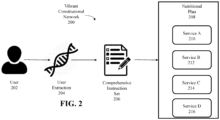
- alimentary instruction set 124 is reflects an applicable solution to nourishment requirements, health deficiencies, and other applicable factors associated with the health, nutrition, and wellness of user 202.
- Alimentary instruction set 124 may include services 210-216 configured to reflect a plurality of performances triggered by alimentary instruction set 124 within the comprehensive instruction set 206.
- alimentary instruction set 124 may comprise a component seeking to remedy a vitamin deficiency of user 202 based on information within the comprehensive instruction set 206. Based on this component, alimentary instruction set 124 may automatically communicate with performance A 210 by transmitting a plurality of executable instructions to performance A 210 that result in a request to order vitamins or supplements to remedy the deficiency of user 202.
- services 210-216 may be companies, facilities, organizations, platforms, programs, mobile applications, networks, or any other applicable means configured to receive and process orders, requests, or instructions.
- services 210-216 may include enlistment of one or more applicable professionals configured to counsel, support, or mentor user 202 regarding applicable areas associated with the health, nutrition, and wellness of user 202.
- alimentary instruction set 124 and/or a user device associated with an alimentary instruction set may be presented to user 202 via a graphical user interface, which may be configured to interact with user 202 allowing user 202 to monitor and amend details associated with alimentary instruction set 124.
- an alimentary instruction set may be monitored and amended based on input provided by an applicable professional either associated with alimentary instruction set 124 or designated by user 202 to be associated with alimentary instruction set 124.
- Network 200 may include one or more users 202 who may interact with system 100.
- a user extraction 204 is collected from user 202 and one or more analyses are performed on the user extraction 204 in order to generate a Comprehensive instruction set 206 reflecting analyses and diagnostics associated with user 202.
- an alimentary instruction set 124 is generated.
- alimentary instruction set 124 is generated by an alimentary instruction set generator module configured to receive a plurality of alimentary information relating to user 202 derived from Comprehensive instruction set 206.
- Information contained in the Comprehensive instruction set 206 may be supplemented by one or more creditable sources either within or outside of network 200.
- alimentary instruction set 124 is reflects an applicable solution to nourishment requirements, health deficiencies, and other applicable factors associated with the health, nutrition, and wellness of user 202.
- Alimentary instruction set 124 may include services 210-216 configured to reflect a plurality of performances triggered by alimentary instruction set 124 within the Comprehensive instruction set 206.
- alimentary instruction set 124 may comprise a component seeking to remedy a vitamin deficiency of user 202 based on information within the Comprehensive instruction set 206. Based on this component, alimentary instruction set 124 may automatically communicate with performance A 210 by transmitting a plurality of executable instructions to performance A 210 that result in a request to order vitamins or supplements to remedy the deficiency of user 202.
- Training data is data containing correlation that a machine-learning process may use to model relationships between two or more categories of data elements.
- training data may include a plurality of data entries, each entry representing a set of data elements that were recorded, received, and/or generated together; data elements may be correlated by shared existence in a given data entry, by proximity in a given data entry, or the like.
- Training data may be formatted and/or organized by categories of data elements, for instance by associating data elements with one or more descriptors corresponding to categories of data elements.
- phrases making up a number "n" of compound words such as nouns modified by other nouns, may be identified according to a statistically significant prevalence of n-grams containing such words in a particular order; such an n-gram may be categorized as an element of language such as a "word” to be tracked similarly to single words, generating a new category as a result of statistical analysis.
- Physiological state data 304 may include, without limitation, hematological data, such as red blood cell count, which may include a total number of red blood cells in a person's blood and/or in a blood sample, hemoglobin levels, hematocrit representing a percentage of blood in a person and/or sample that is composed of red blood cells, mean corpuscular volume, which may be an estimate of the average red blood cell size, mean corpuscular hemoglobin, which may measure average weight of hemoglobin per red blood cell, mean corpuscular hemoglobin concentration, which may measure an average concentration of hemoglobin in red blood cells, platelet count, mean platelet volume which may measure the average size of platelets, red blood cell distribution width, which measures variation in red blood cell size, absolute neutrophils, which measures the number of neutrophil white blood cells, absolute quantities of lymphocytes such as B-cells, T-cells, Natural Killer Cells, and the like, absolute numbers of monocytes including macrophage precursors, absolute numbers of eosinophils, and/or
- Physiological state data 304 may include, without limitation, one or more measures associated with endocrine function, such as without limitation, quantities of dehydroepiandrosterone (DHEAS), DHEA-Sulfate, quantities of cortisol, ratio of DHEAS to cortisol, quantities of testosterone quantities of estrogen, quantities of growth hormone (GH), insulin-like growth factor 1 (IGF-1), quantities of adipokines such as adiponectin, leptin, and/or ghrelin, quantities of somatostatin, progesterone, or the like.
- Physiological state data 304 may include measures of estimated glomerular filtration rate (eGFR).
- Genomic data may include, without limitation, ribonucleic acid (RNA) samples and/or sequences, such as samples and/or sequences of messenger RNA (mRNA) or the like taken from human cells. Genetic data may include telomere lengths. Genomic data may include epigenetic data including data describing one or more states of methylation of genetic material. Physiological state data 304 may include proteomic data, which as used herein is data describing all proteins produced and/or modified by an organism, colony of organisms, or system of organisms, and/or a subset thereof.
- Physiological state data 304 may include data concerning a microbiome of a person, which as used herein includes any data describing any microorganism and/or combination of microorganisms living on or within a person, including without limitation biomarkers, genomic data, proteomic data, and/or any other metabolic or biochemical data useful for analysis of the effect of such microorganisms on other physiological state data 304 of a person, and/or on prognostic labels and/or alimentary data processes as described in further detail below.
- Physiological state data 304 may include any physiological state data 304, as described above, describing any multicellular organism living in or on a person including any parasitic and/or symbiotic organisms living in or on the persons; non-limiting examples may include mites, nematodes, flatworms, or the like. Examples of physiological state data 304 described in this disclosure are presented for illustrative purposes only and are not meant to be exhaustive. Persons skilled in the art, upon reviewing the entirety of this disclosure, will be aware of various additional examples of physiological state data 304 that may be used consistently with descriptions of systems and methods as provided in this disclosure.
- each element of first training set 300 includes at least a first prognostic label 308.
- a prognostic label is an element of data identifying and/or describing a current, incipient, or probable future medical condition affecting a person; medical condition may include a particular disease, one or more symptoms associated with a syndrome, a syndrome, and/or any other measure of current or future health and/or healthy aging.
- At least a prognostic label may be associated with a physical and/or somatic condition, a mental condition such as a mental illness, neurosis, or the like, or any other condition affecting human health that may be associated with one or more elements of physiological state data 304 as described in further detail below.
- Conditions associated with prognostic labels may include, without limitation one or more diseases, defined for purposes herein as conditions that negatively affect structure and/or function of part or all of an organism.
- Conditions associated with prognostic labels may include, without limitation, acute or chronic infections, including without limitation infections by bacteria, archaea, viruses, viroids, prions, single-celled eukaryotic organisms such as amoeba, paramecia, trypanosomes, plasmodia, leishmania, and/or fungi, and/or multicellular parasites such as nematodes, arthropods, fungi, or the like.
- Prognostic labels may be associated with one or more immune disorders, including without limitation immunodeficiencies and/or auto-immune conditions.
- Prognostic labels may be associated with one or more metabolic disorders. Prognostic labels may be associated with one or more endocrinal disorders. Prognostic labels may be associated with one or more cardiovascular disorders. Prognostic labels may be associated with one or more respiratory disorders. Prognostic labels may be associated with one or more disorders affecting connective tissue. Prognostic labels may be associated with one or more digestive disorders. Prognostic labels may be associated with one or more neurological disorders such as neuromuscular disorders, dementia, or the like. Prognostic labels may be associated with one or more disorders of the excretory system, including without limitation nephrological disorders. Prognostic labels may be associated with one or more liver disorders.
- Prognostic labels may be associated with one or more disorders of the bones such as osteoporosis.
- Prognostic labels may be associated with one or more disorders affecting joints, such as osteoarthritis, gout, and/or rheumatoid arthritis.
- Prognostic labels be associated with one or more cancers, including without limitation carcinomas, lymphomas, leukemias, germ cell tumor cancers, blastomas, and/or sarcomas.
- Prognostic labels may include descriptors of latent, dormant, and/or apparent disorders, diseases, and/or conditions.
- Prognostic labels may include descriptors of conditions for which a person may have a higher than average probability of development, such as a condition for which a person may have a "risk factor"; for instance, a person currently suffering from abdominal obesity may have a higher than average probability of developing type II diabetes.
- a condition for which a person may have a "risk factor" for instance, a person currently suffering from abdominal obesity may have a higher than average probability of developing type II diabetes.
- At least a prognostic label may be stored in any suitable data and/or data type.
- at least a prognostic label may include textual data, such as numerical, character, and/or string data.
- Textual data may include a standardized name and/or code for a disease, disorder, or the like; codes may include diagnostic codes and/or diagnosis codes, which may include without limitation codes used in diagnosis classification systems such as The International Statistical Classification of Diseases and Related Health Problems (ICD).
- ICD International Statistical Classification of Diseases and Related Health Problems
- physiological state data 304 may include one or more measures of cognitive function, including without limitation Rey auditory verbal learning test results, California verbal learning test results, NIH toolbox picture sequence memory test, Digital symbol coding evaluations, and/or Verbal fluency evaluations.
- Physiological state data 204 may include one or more measures of psychological function or state, such as without limitation clinical interviews, assessments of intellectual functioning and/or intelligence quotient (IQ) tests, personality assessments, and/or behavioral assessments.
- Physiological state data 204 may include one or more psychological self-assessments, which may include any self-administered and/or automatedly computer-administered assessments, whether administered within system 100 and/or via a third-party service or platform.
- Physiological state data may include entries by a user in a psychological questionnaire.
- At least a first prognostic label 308 of the data element is correlated with at least an element of physiological state data 304 of the data element.
- an element of physiological data is correlated with a prognostic label where the element of physiological data is located in the same data element and/or portion of data element as the prognostic label; for example, and without limitation, an element of physiological data is correlated with a prognostic element where both element of physiological data and prognostic element are contained within the same first data element of the first training set 300.
- an element of physiological data is correlated with a prognostic element where both share a category label as described in further detail below, where each is within a certain distance of the other within an ordered collection of data in data element, or the like.
- an element of physiological data may be correlated with a prognostic label where the element of physiological data and the prognostic label share an origin, such as being data that was collected with regard to a single person or the like.
- a first datum may be more closely correlated with a second datum in the same data element than with a third datum contained in the same data element; for instance, the first element and the second element may be closer to each other in an ordered set of data than either is to the third element, the first element and second element may be contained in the same subdivision and/or section of data while the third element is in a different subdivision and/or section of data, or the like.
- first element and the second element may be closer to each other in an ordered set of data than either is to the third element, the first element and second element may be contained in the same subdivision and/or section of data while the third element is in a different subdivision and/or section of data, or the like.
- diagnostic engine 108 may be designed and configured to associate at least an element of physiological state data 304 with at least a category from a list of significant categories of physiological state data 304.
- Significant categories of physiological state data 304 may include labels and/or descriptors describing types of physiological state data 304 that are identified as being of high relevance in identifying prognostic labels.
- one or more categories may identify significant categories of physiological state data 304 based on degree of diagnostic relevance to one or more impactful conditions and/or within one or more medical or public health fields.
- a particular set of biomarkers, test results, and/or biochemical information may be recognized in a given medical field as useful for identifying various disease conditions or prognoses within a relevant field.
- physiological data describing red blood cells such as red blood cell count, hemoglobin levels, hematocrit, mean corpuscular volume, mean corpuscular hemoglobin, and/or mean corpuscular hemoglobin concentration may be recognized as useful for identifying various conditions such as dehydration, high testosterone, nutrient deficiencies, kidney dysfunction, chronic inflammation, anemia, and/or blood loss.
- hemoglobin levels may be useful for identifying elevated testosterone, poor oxygen deliverability, thiamin deficiency, insulin resistance, anemia, liver disease, hypothyroidism, arginine deficiency, protein deficiency, inflammation, and/or nutrient deficiencies.
- hematocrit may be useful for identifying dehydration, elevated testosterone, poor oxygen deliverability, thiamin deficiency, insulin resistance, anemia, liver disease, hypothyroidism, arginine deficiency, protein deficiency, inflammation, and/or nutrient deficiencies.
- measures of lipid levels in blood such as total cholesterol, HDL, LDL, VLDL, triglycerides, LDL-C and/or HDL-C may be recognized as useful in identifying conditions such as poor thyroid function, insulin resistance, blood glucose dysregulation, magnesium deficiency, dehydration, kidney disease, familial hypercholesterolemia, liver dysfunction, oxidative stress, inflammation, malabsorption, anemia, alcohol abuse, diabetes, hypercholesterolemia, coronary artery disease, atherosclerosis, or the like.
- Persons skilled in the art upon reviewing the entirety of this disclosure, will be aware of various additional categories of physiological data that may be used consistently with this disclosure.
- diagnostic engine 108 may receive the list of significant categories according to any suitable process; for instance, and without limitation, diagnostic engine 108 may receive the list of significant categories from at least an expert.
- diagnostic engine 108 and/or a user device connected to diagnostic engine 108 may provide a graphical user interface, which may include without limitation a form or other graphical element having data entry fields, wherein one or more experts, including without limitation clinical and/or scientific experts, may enter information describing one or more categories of physiological data that the experts consider to be significant or useful for detection of conditions; fields in graphical user interface may provide options describing previously identified categories, which may include a comprehensive or near-comprehensive list of types of physiological data detectable using known or recorded testing methods, for instance in "drop-down" lists, where experts may be able to select one or more entries to indicate their usefulness and/or significance in the opinion of the experts.
- Fields may include free-form entry fields such as text-entry fields where an expert may be able to type or otherwise enter text, enabling expert to propose or suggest categories not currently recorded.
- Graphical user interface or the like may include fields corresponding to prognostic labels, where experts may enter data describing prognostic labels and/or categories of prognostic labels the experts consider related to entered categories of physiological data; for instance, such fields may include drop-down lists or other pre-populated data entry fields listing currently recorded prognostic labels, and which may be comprehensive, permitting each expert to select a prognostic label and/or a plurality of prognostic labels the expert believes to be predicted and/or associated with each category of physiological data selected by the expert.
- Fields for entry of prognostic labels and/or categories of prognostic labels may include free-form data entry fields such as text entry fields; as described above, examiners may enter data not presented in pre-populated data fields in the free-form data entry fields.
- fields for entry of prognostic labels may enable an expert to select and/or enter information describing or linked to a category of prognostic label that the expert considers significant, where significance may indicate likely impact on longevity, mortality, quality of life, or the like as described in further detail below.
- Graphical user interface may provide an expert with a field in which to indicate a reference to a document describing significant categories of physiological data, relationships of such categories to prognostic labels, and/or significant categories of prognostic labels. Any data described above may alternatively or additionally be received from experts similarly organized in paper form, which may be captured and entered into data in a similar way, or in a textual form such as a portable document file (PDF) with examiner entries, or the like.
- PDF portable document file
- data describing significant categories of physiological data, relationships of such categories to prognostic labels, and/or significant categories of prognostic labels may alternatively or additionally be extracted from one or more documents using a language processing module 316.
- Language processing module 316 may include any hardware and/or software module.
- Language processing module 316 may be configured to extract, from the one or more documents, one or more words.
- One or more words may include, without limitation, strings of one or characters, including without limitation any sequence or sequences of letters, numbers, punctuation, diacritic marks, engineering symbols, geometric dimensioning and tolerancing (GD&T) symbols, chemical symbols and formulas, spaces, whitespace, and other symbols, including any symbols usable as textual data as described above.
- Textual data may be parsed into tokens, which may include a simple word (sequence of letters separated by whitespace) or more generally a sequence of characters as described previously.
- token refers to any smaller, individual groupings of text from a larger source of text; tokens may be broken up by word, pair of words, sentence, or other delimitation. These tokens may in turn be parsed in various ways. Textual data may be parsed into words or sequences of words, which may be considered words as well. Textual data may be parsed into "n-grams", where all sequences of n consecutive characters are considered. Any or all possible sequences of tokens or words may be stored as "chains", for example for use as a Markov chain or Hidden Markov Model.
- language processing module 316 may compare extracted words to categories of physiological data recorded at diagnostic engine 108, one or more prognostic labels recorded at diagnostic engine 108, and/or one or more categories of prognostic labels recorded at diagnostic engine 108; such data for comparison may be entered on diagnostic engine 108 as described above using expert data inputs or the like. In an embodiment, one or more categories may be enumerated, to find total count of mentions in such documents. Alternatively or additionally, language processing module 316 may operate to produce a language processing model.
- Language processing model may include a program automatically generated by diagnostic engine 108 and/or language processing module 316 to produce associations between one or more words extracted from at least a document and detect associations, including without limitation mathematical associations, between such words, and/or associations of extracted words with categories of physiological data, relationships of such categories to prognostic labels, and/or categories of prognostic labels.
- Associations between language elements, where language elements include for purposes herein extracted words, categories of physiological data, relationships of such categories to prognostic labels, and/or categories of prognostic labels may include, without limitation, mathematical associations, including without limitation statistical correlations between any language element and any other language element and/or language elements.
- Statistical correlations and/or mathematical associations may include probabilistic formulas or relationships indicating, for instance, a likelihood that a given extracted word indicates a given category of physiological data, a given relationship of such categories to prognostic labels, and/or a given category of prognostic labels.
- statistical correlations and/or mathematical associations may include probabilistic formulas or relationships indicating a positive and/or negative association between at least an extracted word and/or a given category of physiological data, a given relationship of such categories to prognostic labels, and/or a given category of prognostic labels; positive or negative indication may include an indication that a given document is or is not indicating a category of physiological data, relationship of such category to prognostic labels, and/or category of prognostic labels is or is not significant.
- a negative indication may be determined from a phrase such as "telomere length was not found to be an accurate predictor of overall longevity," whereas a positive indication may be determined from a phrase such as "telomere length was found to be an accurate predictor of dementia," as an illustrative example; whether a phrase, sentence, word, or other textual element in a document or corpus of documents constitutes a positive or negative indicator may be determined, in an embodiment, by mathematical associations between detected words, comparisons to phrases and/or words indicating positive and/or negative indicators that are stored in memory at diagnostic engine 108, or the like.
- language processing module 316 and/or diagnostic engine 108 may generate the language processing model by any suitable method, including without limitation a natural language processing classification algorithm; language processing model may include a natural language process classification model that enumerates and/or derives statistical relationships between input term and output terms.
- Algorithm to generate language processing model may include a stochastic gradient descent algorithm, which may include a method that iteratively optimizes an objective function, such as an objective function representing a statistical estimation of relationships between terms, including relationships between input terms and output terms, in the form of a sum of relationships to be estimated.
- sequential tokens may be modeled as chains, serving as the observations in a Hidden Markov Model (HMM).
- HMM Hidden Markov Model
- HMMs as used herein are statistical models with inference algorithms that that may be applied to the models.
- a hidden state to be estimated may include an association between an extracted word category of physiological data, a given relationship of such categories to prognostic labels, and/or a given category of prognostic labels.
- There may be a finite number of category of physiological data, a given relationship of such categories to prognostic labels, and/or a given category of prognostic labels to which an extracted word may pertain; an HMM inference algorithm, such as the forward-backward algorithm or the Viterbi algorithm, may be used to estimate the most likely discrete state given a word or sequence of words.
- Language processing module 316 may combine two or more approaches. For instance, and without limitation, machine-learning program may use a combination of Naive-Bayes (NB), Stochastic Gradient Descent (SGD), and parameter grid-searching classification techniques; the result may include a classification algorithm that returns ranked associations.
- NB Naive-Bayes
- generating language processing model may include generating a vector space, which may be a collection of vectors, defined as a set of mathematical objects that can be added together under an operation of addition following properties of associativity, commutativity, existence of an identity element, and existence of an inverse element for each vector, and can be multiplied by scalar values under an operation of scalar multiplication compatible with field multiplication, and that has an identity element is distributive with respect to vector addition, and is distributive with respect to field addition.
- Each vector in an n-dimensional vector space may be represented by an n-tuple of numerical values.
- Each unique extracted word and/or language element as described above may be represented by a vector of the vector space.
- each unique extracted and/or other language element may be represented by a dimension of vector space; as a non-limiting example, each element of a vector may include a number representing an enumeration of co-occurrences of the word and/or language element represented by the vector with another word and/or language element.
- Vectors may be normalized, scaled according to relative frequencies of appearance and/or file sizes.
- associating language elements to one another as described above may include computing a degree of vector similarity between a vector representing each language element and a vector representing another language element; vector similarity may be measured according to any norm for proximity and/or similarity of two vectors, including without limitation cosine similarity, which measures the similarity of two vectors by evaluating the cosine of the angle between the vectors, which can be computed using a dot product of the two vectors divided by the lengths of the two vectors.
- Degree of similarity may include any other geometric measure of distance between vectors.
- a particular set prognostic labels corresponding to a set of cardiovascular conditions may be typically treated by cardiologists, and a supervised machine-learning process may be performed to relate those prognostic labels to alimentary labels associated with various alimentary options.
- an unsupervised process may determine that a first prognostic label 308 correlates closely with a second prognostic label 324, where the first prognostic label 308 has been linked via supervised learning processes to a given alimentary label, but the second has not; for instance, the second prognostic label 324 may not have been defined as an input for the supervised learning process, or may pertain to a domain outside of a domain limitation for the supervised learning process.
- diagnostic engine 108 and/or alimentary instruction label learner 352 may detect further significant categories of prognostic labels, relationships of such categories to alimentary labels, and/or categories of alimentary labels using machine-learning processes, including without limitation unsupervised machine-learning processes as described above; such newly identified categories, as well as categories entered by experts in free-form fields as described above, may be added to pre-populated lists of categories, lists used to identify language elements for language learning module, and/or lists used to identify and/or score categories detected in documents, as described above.
- alimentary instruction label learner 352 and/or diagnostic engine 108 may continuously or iteratively perform unsupervised machine-learning processes to detect relationships between different elements of the added and/or overall data; in an embodiment, this may enable diagnostic engine 108 to use detected relationships to discover new correlations between known biomarkers, prognostic labels, and/or alimentary labels and one or more elements of data in large bodies of data, such as genomic, proteomic, and/or microbiome-related data, enabling future supervised learning and/or lazy learning processes to identify relationships between, e.g., particular clusters of genetic alleles and particular prognostic labels and/or suitable alimentary labels.
- Use of unsupervised learning may greatly enhance the accuracy and detail with which system may detect prognostic labels and/or alimentary labels.
- alimentary instruction label learner 352 may be configured to perform a lazy learning process as a function of the second training set 320 and the at least a prognostic output to produce the at least an alimentary output; a lazy learning process may include any lazy learning process as described above regarding prognostic label learner 436. Lazy learning processes may be performed by a lazy learning module 1108 executing on diagnostic engine 108 and/or on another computing device in communication with diagnostic engine 108, which may include any hardware or software module. Alimentary output 1112 may be provided to a user output device as described in further detail below.
- alimentary instruction label learner 352 may generate a plurality of alimentary labels having different implications for a particular person. For instance, where a prognostic label indicates that a person has a magnesium deficiency, various dietary choices may be generated as alimentary labels associated with correcting the deficiency, such as alimentary labels associated with consumption of almonds, spinach, and/or dark chocolate, as well as alimentary labels associated with consumption of magnesium supplements. In such a situation, alimentary instruction label learner 352 and/or diagnostic engine 108 may perform additional processes to resolve ambiguity.
- Processes may include presenting multiple possible results to a medical practitioner, informing the medical practitioner of various options that may be available, and/or that follow-up tests, procedures, or counseling may be required to select an appropriate choice.
- processes may include additional machine learning steps.
- alimentary instruction label learner 352 may perform one or more lazy learning processes using a more comprehensive set of user data to identify a more probably correct result of the multiple results.
- Results may be presented and/or retained with rankings, for instance to advise a medical professional of the relative probabilities of various alimentary labels being correct or ideal choices for a given person; alternatively or additionally, alimentary labels associated with a probability of success or suitability below a given threshold and/or alimentary labels contradicting results of the additional process, may be eliminated.
- an additional process may reveal that a person is allergic to tree nuts, and consumption of almonds may be eliminated as an alimentary label to be presented.
- alimentary instruction label learner 352 may be designed and configured to generate further training data and/or to generate outputs using longitudinal data 1116.
- Longitudinal data 1116 may include a temporally ordered series of data concerning the same person, or the same cohort of persons; for instance, Longitudinal data 1116 may describe a series of blood samples taken one day or one month apart over the course of a year. Longitudinal data 1116 may relate to a series of samples tracking response of one or more elements of physiological data recorded regarding a person undergoing one or more alimentary processes linked to one or more alimentary process labels.
- Alimentary instruction label learner 352 may track one or more elements of physiological data and fit, for instance, a linear, polynomial, and/or splined function to data points; linear, polynomial, or other regression across larger sets of longitudinal data, using, for instance, any regression process as described above, may be used to determine a best-fit graph or function for the effect of a given alimentary process over time on a physiological parameter.
- Functions may be compared to each other to rank alimentary processes; for instance, an alimentary process associated with a steeper slope in curve representing improvement in a physiological data element, and/or a shallower slope in a curve representing a slower decline, may be ranked higher than an alimentary process associated with a less steep slope for an improvement curve or a steeper slope for a curve marking a decline.
- Alimentary processes associated with a curve and/or terminal data point representing a value that does not associate with a previously detected prognostic label may be ranked higher than one that is not so associated.
- Information obtained by analysis of Longitudinal data 1116 may be added to alimentary process database and/or second training set.
- Embodiments of diagnostic engine 108 may furnish augmented intelligence systems that facilitate diagnostic, prognostic, curative, and/or therapeutic decisions by nutrition, diet, and wellness professionals such as nutritionists, dieticians, or applicable trainers/coaches/mentors. Diagnostic engine 108 may provide fully automated tools and resources for each applicable professional to handle, process, diagnosis, develop alimentary, diet, or wellness plans, facilitate and monitor all patient implementation, and record each patient status. Provision of expert system elements via expert inputs and document-driven language analysis may ensure that recommendations generated by diagnostic engine 108 are backed by the very best medical and alimentary knowledge and practices in the world. Models and/or learners with access to data in depth may enable generation of recommendations that are directly personalized for each patient, providing complete confidence, mitigated risk, and complete transparency.
- Access to well-organized and personalized knowledge in depth may greatly enhance efficiency of nutrition consultations; in embodiments, a comprehensive session may be completed in as little as 10 minutes. Recommendations may further suggest follow up testing, therapy, and/or delivery of substances, ensuring an effective ongoing treatment and prognostic plan.
- vibrant constitutional network system 100 includes a plan generation module 112 operating on the at least a server 104.
- Plan generation module 112 may include any suitable hardware or hardware module.
- plan generation module 112 is designed and configured to generate a Comprehensive instruction set 206 associated with the user based on the diagnostic output.
- Comprehensive instruction set 206 is a data structure containing instructions to be provided to the user to explain the user's current prognostic status, as reflected by one or more prognostic outputs and provide the user with a plan based on the at least an alimentary instruction set output, to achieve that.
- Comprehensive instruction set 206 may include but is not limited to a program, strategy, summary, recommendation, or any other type of interactive platform that may be configured to comprise information associated with the user, an applicable verified external source, and one or more outputs derived from the analyses performed on the extraction from the user.
- Comprehensive instruction set 206 may describe to a user a future prognostic status to aspire to.
- Comprehensive instruction set 206 includes at least a current prognostic descriptor 1200 which as used in this disclosure is an element of data describing a current prognostic status based on at least one prognostic output.
- Plan generation module 112 may produce at least a current prognostic descriptor 1200 using at least a prognostic output.
- plan generation module 112 may include a label synthesizer 1304.
- Label synthesizer 1204 may include any suitable software or hardware module.
- label synthesizer 1204 may be designed and configured to combine a plurality of labels in at least a prognostic output together to provide maximally efficient data presentation.
- Combination of labels together may include elimination of duplicate information.
- label synthesizer 1204 and/or at least a server 104 may be designed and configure to determine a first prognostic label of the at least a prognostic label is a duplicate of a second prognostic label of the at least a prognostic label and eliminate the first prognostic label.
- Determination that a first prognostic label is a duplicate of a second prognostic label may include determining that the first prognostic label is identical to the second prognostic label; for instance, a prognostic label generated from test data presented in one biological extraction of at least a biological extraction may be the same as a prognostic label generated from test data presented in a second biological extraction of at least a biological extraction.
- a first prognostic label may be synonymous with a second prognostic label, where detection of synonymous labels may be performed, without limitation, by a language processing module 316 as described above.
- label synthesizer 1204 may group prognostic labels according to one or more classification systems relating the prognostic labels to each other. For instance, plan generation module 112 and/or label synthesizer 1204 may be configured to determine that a first prognostic label of the at least a prognostic label and a second prognostic label of the at least a prognostic label belong to a shared category.
- a shared category may be a category of conditions or tendencies toward a future condition to which each of first prognostic label and second prognostic label belongs; as an example, lactose intolerance and gluten sensitivity may each be examples of digestive sensitivity, for instance, which may in turn share a category with food sensitivities, food allergies, digestive disorders such as celiac disease and diverticulitis, or the like.
- Shared category and/or categories may be associated with prognostic labels as well.
- a given prognostic label may belong to a plurality of overlapping categories.
- Plan generation module 112 may be configured to add a category label associated with a shared category to Comprehensive instruction set 206, where addition of the label may include addition of the label and/or a datum linked to the label, such as a textual or narrative description.
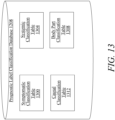
- relationships between prognostic labels and categories may be retrieved from a prognostic label classification database 1208, for instance by generating a query using one or more prognostic labels of at least a prognostic output, entering the query, and receiving one or more categories matching the query from the prognostic label classification database 1208.
- Prognostic label classification database 1208 may be implemented as any database and/or datastore suitable for use as biological extraction database 400 as described above.
- One or more database tables in prognostic label classification database 1208 may include, without limitation, a symptomatic classification table 1300; symptomatic classification table 1300 may relate each prognostic label to one or more categories of symptoms associated with that prognostic label.
- symptomatic classification table 1300 may include records indicating that each of lactose intolerance and gluten sensitivity results in symptoms including gas buildup, bloating, and abdominal pain.
- One or more database tables in prognostic label classification database 1208 may include, without limitation, a systemic classification table 1204; systemic classification table 1304 may relate each prognostic label to one or more systems associated with that prognostic label.
- systemic classification table 1304 may include records indicating each of lactose intolerance and gluten sensitivity affects the digestive system; two digestive sensitivities linked to allergic or other immune responses may additionally be linked in systemic classification table 1304 to the immune system.
- One or more database tables in prognostic label classification database 1208 may include, without limitation, a body part classification table 1208; body part classification table 1308 may relate each prognostic label to one or more body parts associated with that prognostic label.
- body part classification table 1308 may include records indicating each of psoriasis and rosacea affects the skin of a person.
- One or more database tables in prognostic label classification database 1208 may include, without limitation, a causal classification table 1312; causal classification table 1312 may relate each prognostic label to one or more causes associated with that prognostic label.
- causal classification table 1312 may include records indicating each of type 2 diabetes and hypertension may have obesity as a cause.
- plan generation module 112 may be configured to generate current prognostic descriptor 1200 by converting one or more prognostic labels into narrative language.
- plan generation module 112 may include a narrative language unit 1212, which may be configured to determine an element of narrative language associated with at least a prognostic label and include the element of narrative language in current prognostic label descriptor.
- Narrative language unit 1212 may implement this, without limitation, by using a language processing module 316 to detect one or more associations between prognostic labels, or lists of prognostic labels, and phrases and/or statements of narrative language.
- Narrative language unit 1212 may retrieve one or more elements of narrative language from a narrative language database 1316, which may contain one or more tables associating prognostic labels and/or groups of prognostic labels with words, sentences, and/or phrases of narrative language.
- a narrative language database 1316 may contain one or more tables associating prognostic labels and/or groups of prognostic labels with words, sentences, and/or phrases of narrative language.
- One or more elements of narrative language may be included in Comprehensive instruction set 206, for instance for display to a user as text describing a current prognostic status of the user.
- Current prognostic descriptor 1200 may further include one or more images; one or more images may be retrieved by plan generation module 112 from an image database 1120, which may contain one or more tables associating prognostic labels, groups of prognostic labels, current prognostic descriptors 1200, or the like with one or more images.
- Comprehensive instruction set 206 may include one or more follow-up suggestions, which may include, without limitation, suggestions for acquisition of an additional biological extraction; in an embodiment, additional biological extraction may be provided to diagnostic engine 108, which may trigger repetition of one or more processes as described above, including without limitation generation of prognostic output, refinement or elimination of ambiguous prognostic labels of prognostic output, generation of alimentary instruction set output, and/or refinement or elimination of ambiguous alimentary instruction set labels of alimentary instruction set output.
- follow-up suggestions may include suggestions to perform endocrinal tests, genetic tests, and/or electromyographic tests; results of such tests may eliminate one or more of the possible diagnoses, such that a subsequently displayed output only lists conditions that have not been eliminated by the follow-up test.
- follow-up tests may include any receipt of any biological extraction as described above.
- comprehensive instruction set may include one or more elements of contextual information, including without limitation any patient medical history such as current lab results, a current reason for visiting a medical professional, current status of one or more currently implemented treatment plans, biographical information concerning the patient, and the like.
- One or more elements of contextual information may include goals a patient wishes to achieve with a medical visit or session, and/or as result of interaction with diagnostic engine 108.
- Contextual information may include one or more questions a patient wishes to have answered in a medical visit and/or session, and/or as a result of interaction with diagnostic engine 108.
- Contextual information may include one or more questions to ask a patient.
- Comprehensive instruction set 206 may include at least a future prognostic descriptor 1224.
- a future prognostic descriptor 1224 is an element of data describing a future prognostic status based on at least one prognostic output, which may include without limitation a desired further prognostic status.
- future prognostic descriptor 1224 may include any element suitable for inclusion in current prognostic descriptor 1200.
- Future prognostic descriptor 1224 may be generated using any processes, modules, and/or components suitable for generation of current prognostic descriptor 1200 as described above.
- comprehensive instruction set 206 includes at least an alimentary instruction set descriptor 1228, which as defined in this disclosure an element of data describing one or more alimentary instruction set processes to be followed based on at least one alimentary instruction set output; at least an alimentary instruction set process descriptor 1328 may include descriptors for alimentary instruction set processes usable to achieve future prognostic descriptor 1224.
- Plan generation module 112 may receive at least an alimentary instruction set descriptor 1228 from alimentary instruction set generator module 120.
- plan generation module 112 may be configured to receive at least an element of user data and filter diagnostic output using the at least an element of user data.
- At least an element of user data is any element of data describing the user, user needs, and/or user preferences.
- At least an element of user data may include a constitutional restriction.
- At least a constitutional restriction may include any health-based reason that a user may be unable to engage in a given alimentary instruction set process; at least a constitutional restriction may include any counter-indication as described above, including an injury, a diagnosis of something preventing use of one or more alimentary instruction set processes, an allergy or food-sensitivity issue, a medication that is counter-indicated, or the like.
- At least an element of user data may include at least a user preference.
- At least a user preference may include, without limitation, any preference to engage in or eschew any alimentary instruction set process and/or other potential elements of a comprehensive instruction set 206, including religious preferences such as forbidden foods, medical interventions, exercise routines, or the like.
- comprehensive instruction set 206 includes at least an ameliorative process descriptor 1232, which as defined in this disclosure an element of data describing one or more ameliorative processes to be followed based on at least one ameliorative output; at least an ameliorative process descriptor 1232 may include descriptors for ameliorative processes usable to achieve future prognostic descriptor 1024.
- Plan generation module 112 may produce at least an ameliorative process descriptor 1232 using at least a prognostic output.
- label synthesizer 1204 may be designed and configured to combine a plurality of labels in at least an ameliorative output together to provide maximally efficient data presentation. Combination of labels together may include elimination of duplicate information.
- label synthesizer 1204 and/or at least a server 104 may be designed and configure to determine a first ameliorative label of the at least an ameliorative label is a duplicate of a second ameliorative label of the at least an ameliorative label and eliminate the first ameliorative label.
- Determination that a first ameliorative label is a duplicate of a second ameliorative label may include determining that the first ameliorative label is identical to the second ameliorative label; for instance, a ameliorative label generated from test data presented in one biological extraction of at least a biological extraction may be the same as a ameliorative label generated from test data presented in a second biological extraction of at least a biological extraction.
- a first ameliorative label may be synonymous with a second ameliorative label, where detection of synonymous labels may be performed, without limitation, by a language processing module 216 as described above.
- label synthesizer 1204 may group ameliorative labels according to one or more classification systems relating the ameliorative labels to each other. For instance, plan generation module 112 and/or label synthesizer 1204 may be configured to determine that a first ameliorative label of the at least an ameliorative label and a second ameliorative label of the at least an ameliorative label belong to a shared category.
- a shared category may be a category of conditions or tendencies toward a future condition to which each of first ameliorative label and second ameliorative label belongs; as an example, lactose intolerance and gluten sensitivity may each be examples of digestive sensitivity, for instance, which may in turn share a category with food sensitivities, food allergies, digestive disorders such as celiac disease and diverticulitis, or the like.
- Shared category and/or categories may be associated with ameliorative labels as well.
- a given ameliorative label may belong to a plurality of overlapping categories.
- Plan generation module 112 may be configured to add a category label associated with a shared category to comprehensive instruction set 206, where addition of the label may include addition of the label and/or a datum linked to the label, such as a textual or narrative description.
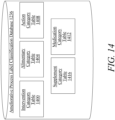
- relationships between ameliorative labels and categories may be retrieved from an ameliorative label classification database 1236, for instance by generating a query using one or more ameliorative labels of at least an ameliorative output, entering the query, and receiving one or more categories matching the query from the ameliorative label classification database 1236.
- Ameliorative label classification database 1236 may be implemented as any database and/or datastore suitable for use as biological extraction database 400 as described above.
- One or more database tables in ameliorative label classification database 1236 may include, without limitation, an intervention category table 1400; an intervention may relate each ameliorative label to one or more categories associated with that ameliorative label.
- intervention category table 1400 may include records indicating that each of a plan to consume a given quantity of almonds and a plan to consume less meat maps to a category of nutritional instruction, while a plan to jog for 30 minutes per day maps to a category of activity.
- One or more database tables in ameliorative label classification database 1236 may include, without limitation, a alimentary category table 1404; alimentary category table 1404 may relate each ameliorative label pertaining to nutrition to one or more categories associated with that ameliorative label.
- alimentary category table 1404 may include records indicating that each of a plan to consume more almonds and a plan to consume more walnuts qualifies as a plan to consume more nuts, as well as a plan to consume more protein.
- One or more database tables in ameliorative label classification database 1236 may include, without limitation, an action category table 1208; action category table 1408 may relate each ameliorative label pertaining to an action to one or more categories associated with that ameliorative label.
- action category table 1408 may include records indicating that each of a plan jog for 30 minutes a day and a plan to perform a certain number of sit-ups per day qualifies as an exercise plan.
- One or more database tables in ameliorative label classification database 1236 may include, without limitation, a medication category table 1412; medication category table 1412 may relate each ameliorative label associated with a medication to one or more categories associated with that ameliorative label.
- medication category table 1412 may include records indicating that each of a plan to take an antihistamine and a plan to take an anti-inflammatory steroid belongs to a category of allergy medications.
- One or more database tables in ameliorative label classification database 1236 may include, without limitation, a supplement category table 1416; supplement category table 1416 may relate each ameliorative label pertaining to a supplement to one or more categories associated with that ameliorative label.
- supplement category table 1416 may include records indicating that each of a plan to consume a calcium supplement and a plan to consume a vitamin D supplement corresponds to a category of supplements to aid in bone density.
- Ameliorative labels may be mapped to each of alimentary category table 1404, action category table 1408, supplement category table 1416, and medication category table 1412 using intervention category table 1400.
- the above-described tables, and entries therein, are provided solely for exemplary purposes. Persons skilled in the art, upon reviewing the entirety of this disclosure, will be aware of various additional examples for tables and/or relationships that may be included or recorded in ameliorative classification table consistently with this disclosure.
- system 100 includes an alimentary instruction set generator module 120 operating on at least a server 104.
- Alimentary instruction set generator module 120 may include any hardware or software module suitable for use as a plan generator module 112. Alimentary instruction set generator module may interact with plan generator module 112. For instance, and without limitation, alimentary instruction set generator module 120 may be configured to generate, based on Comprehensive instruction set 206, an alimentary instruction set 124 associated with the user.
- Comprehensive instruction set 206 includes at least one or more elements of contextual information, including without limitation any patient medical history such as current lab results, a current reason for visiting a medical professional, current status of one or more currently implemented treatment plans, biographical information concerning the patient, and the like.
- One or more elements of contextual information may include goals a patient wishes to achieve with a medical visit or session, and/or as result of interaction with diagnostic engine 108.
- Contextual information may include one or more questions a patient wishes to have answered in a medical visit and/or session, and/or as a result of interaction with diagnostic engine 108.
- Contextual information may include one or more questions to ask a patient.
- Narrative language database 1216 may be implemented as any database and/or datastore suitable for use as biological extraction database 400 as described above.
- One or more database tables in narrative language database 1216 may include, without limitation, a prognostic description table 1300, which may link prognostic labels to narrative descriptions associated with prognostic labels.
- One or more database tables in narrative language database 1216 may include, without limitation, an alimentary instruction set description table 1508, which may link alimentary instruction set process labels to narrative descriptions associated with alimentary instruction set process labels.
- One or more database tables in narrative language database 1216 may include, without limitation, a combined description table 1308, which may link combinations of prognostic labels and alimentary instruction set labels to narrative descriptions associated with the combinations.
- One or more database tables in narrative language database 1216 may include, without limitation, a paragraph template table 1516, which may contain one or more templates of paragraphs, pages, reports, or the like into which images and text, such as images obtained from Image database 1220 and text obtained from prognostic description table 1300, alimentary instruction set description table 1508, and combined description table 1308 may be inserted.
- Tables in narrative description database 1116 may be populated, as a non-limiting example, using submissions from experts, which may be collected according to any processes described above. Persons skilled in the art, upon reviewing the entirety of this disclosure, will be aware of various way sin which entries in narrative description database 1116 may be categorized and/or organized.
- Image database 1220 may be implemented as any database and/or datastore suitable for use as biological extraction database 400 as described above.
- One or more database tables in image database 1220 may include, without limitation, a prognostic image table 1600, which may link prognostic labels to images associated with prognostic labels.
- One or more database tables in image database 1220 may include, without limitation, an alimentary image table 1604, which may link alimentary instruction set process labels to images associated with alimentary instruction set process labels.
- One or more database tables in Image database 1220 may include, without limitation, a combined image table 1608, which may link combinations of prognostic labels and alimentary instruction set labels to images associated with the combinations.
- One or more database tables in image database 102 may include, without limitation, a prognostic video table 1612, which may link prognostic labels to videos associated with prognostic labels.
- One or more database tables in Image database 1220 may include, without limitation, an alimentary instruction set video table 1416, which may link alimentary instruction set process labels to videos associated with alimentary instruction set process labels.
- One or more database tables in Image database 1220 may include, without limitation, a combined video table 1620, which may link combinations of prognostic labels and alimentary instruction set labels to videos associated with the combinations.
- Tables in Image database 1220 may be populated, without limitation, by submissions by experts, which may be provided according to any process or process steps described in this disclosure for collection of expert submissions.
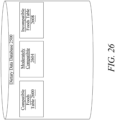
- User database 1236 may be implemented as any database and/or datastore suitable for use as biological extraction database 400 as described above.
- One or more database tables in user database 1236 may include, without limitation, a constitution restriction table 1700; at least a constitutional restriction may be linked to a given user and/or user identifier in a constitutional restriction table 1700.
- One or more database tables in user database 1236 may include, without limitation, a user preference table 1704; at least a user preference may be linked to a given user and/or user identifier in a user preference table 1704.
- system 100 includes an alimentary instruction set generator module 120 operating on at least a server 104.
- Alimentary instruction set generator module 120 may include any hardware or software module suitable for use as a plan generator module 112. Alimentary instruction set generator module may interact with plan generator module 112. For instance, and without limitation, alimentary instruction set generator module 120 may be configured to generate, based on comprehensive instruction set 206, an alimentary instruction set 124 associated with the user.
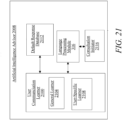
- an exemplary embodiment of an alimentary instruction set generator module 120 is illustrated.
- the alimentary instruction set generator module 120 may be configured to generate an alimentary instruction set comprising a plurality of information reflecting a comprehensive list of meals, supplements, and processes aimed towards resolving any identified issues, suggestions, or deficiencies discoverable via the Comprehensive instruction set 206.
- Alimentary instruction set generator module 120 may be configured to generate an alimentary instruction set associated with user 202 that automatically interacts with a plurality of performances and processes (as illustrated in FIG. 2 via Services 210-216) and generates a set of orders or instructions configured to be processed by Services 210-216.
- Alimentary instruction set generator module 120 may produce at least an alimentary instruction set process descriptor 1028 using at least an alimentary instruction set output.
- Alimentary instruction set generator module may include a label synthesizer 1204 as described above.
- the alimentary instruction set 208 may be presented to user 202 via a graphical user interface coupled to user client device 132 associated with user 202 operating in or subscribing to network 200.
- Alimentary instruction set generator module 120 is further configured to export data to external destinations based on the categorization of components of alimentary instruction set 124 within services 210-216.
- Alimentary instruction set 124 is configured to interact with one or more servers associated with services 210-216 by vibrant constitutional network 200 establishing a communicatively coupling relationship between the alimentary instruction set and respective physical performance entity servers 306 configured to execute a physical performance instruction set associated with respective services 210-216.
- Services 210-216 may be but are not limited to any food preparation performances, food delivery performances, vitamin/supplement coaching service, health supplement delivery service, grocery delivery service, or any other applicable platform configured for preparation and delivery of items relating to food/nutrition, health, and wellness.
- alimentary instruction set generator module 120 is designed and configured to an alimentary instruction set 124 based on comprehensive instruction set 206.
- alimentary instruction set generator module 120 may generate alimentary instruction set 124 based on the integration of data associated with comprehensive instruction set 206, any applicable external sources, and any applicable database within system 100 or physical performance entity network 302.
- Generation of alimentary instruction set 124 may include identification of one or more alimentary instructions in comprehensive instruction set, and insertion of the one or more alimentary instructions in the alimentary instruction set 124; for instance, alimentary instruction set 124 may be formed, wholly or partially, by aggregating alimentary instructions from Comprehensive instruction set 206 and combining the aggregated alimentary instructions using narrative language module, narrative language database, image database, or the like, according to any process suitable for generation of comprehensive instruction set as described above.
- alimentary instruction set generator module 120 may generate alimentary instruction set 124 based on alimentary data and non-alimentary data in order to facilitate both medicinal and holistic components in alimentary instruction set 124 specific to user 202.
- alimentary data may be identified and aggregated into a subset of applicable alimentary data based on at least a biological extraction 204 and comprehensive instruction set 206.
- alimentary instruction set 124 may comprise a plurality of alimentary data specific to user 202 that is able to be used by machine learning and artificial intelligence systems in order to continuously update or modify training sets, and ultimately Comprehensive instruction set 206 and alimentary instruction set 124 based on updated or progressions associated with implementation of alimentary instruction set 124 by user 202.
- Alimentary data and non-alimentary data may include compilations of instruction sets received over a period of time, the compilations may account for improvements or modifications associated with user 202.
- Alimentary instruction set 124 may further include instructions over time, in which the alimentary instructions may change in response to changes in a user's data and/or prognosis.
- system 100 may periodically iterate through one or more processes as described in this disclosure, such that repeated reevaluations may modify alimentary instruction set 124 as information concerning user and/or biological extractions obtained from the user change over time.
- alimentary instruction set generator module 120 may identify a non-alimentary instruction within comprehensive instruction set 206, determine an alimentary analog to the non-alimentary instruction and introduce the alimentary analog into the alimentary instruction set and/or use the alimentary analog to update the physical performance instruction set.
- An alimentary analog is an alimentary process or instruction that achieves a similar purpose to a non-alimentary process and/or instruction.
- certain foods such as grapefruit may act to lower blood sugar; where the impact of consuming a particular quantity of such foods is similar to or the same as an impact of consuming a blood sugar medication, the former may be an alimentary analog of the latter.
- non-alimentary data within Comprehensive instruction set 206 may be subsequently substituted in alimentary instruction set 124 with alimentary data configured to provide user 202 with holistic solutions to issues that were initially treated with non-holistic approaches. For example, if initially diagnostic output indicates that the blood sugar of user 202 is abnormally high then Comprehensive instruction set 206 may recommend that user 202 take applicable medications classified as non-alimentary in order to lower the blood sugar immediately. The process of user 202 receiving the applicable medications may be based on execution of one of services 210-216 by physical performance entity 304.
- alimentary instruction set 124 may subsequently or concurrently provide one or more sets of instructions to remedy the improved blood sugar of user 202 via an alimentary solution such as increased consumption of grapefruits, configured to be executed by a physical performance instruction set based on an updated Comprehensive instruction set 206 and/or by following alimentary instruction set 124 in lieu of that portion of comprehensive instruction set 206.
- a supplement initially presented in Comprehensive instruction set 206 may be subsequently replaced, in alimentary instruction set 124, by a specific food categorized as alimentary in order to remedy the issues in which the initial supplement sought to address.
- alimentary data and alimentary solutions may be incorporated into alimentary instruction set 124 upon one or more determinations that the alimentary data and implementations of the alimentary solution are more efficient than non-alimentary solutions initially included in alimentary instruction set 124. Alimentary data and alimentary solutions may also be substituted for less efficient alimentary solutions. For example, if user 202, based on comprehensive instruction set 206, is deemed to need a boost in HDL, then a secondary alimentary solution of eating certain foods may be determined more efficient than a primary alimentary solution of increasing cardio activity.
- Plan generation module 112 may be configured to add a category label associated with a shared category to alimentary instruction set 124, where addition of the label may include addition of the label and/or a datum linked to the label, such as a textual or narrative description.
- relationships between alimentary labels and categories may be retrieved from an alimentary instruction label classification database 2100, for instance by generating a query using one or more alimentary labels of at least an alimentary output, entering the query, and receiving one or more categories matching the query from the alimentary instruction label classification database 2100.
- Alimentary instruction label classification database 1800 may operate on the diagnostic engine 108. Alimentary instruction label classification database 1800 may be implemented as any database and/or datastore suitable for use as biological extraction database 400 as described above.
- One or more database tables in alimentary instruction label classification database 1800 may include, without limitation, an intervention category table 2100; an intervention may relate each alimentary label to one or more categories of conditions to be addressed by an alimentary instruction associated with that alimentary label, such as a nutritional imbalance to be corrected or the like.
- One or more database tables in alimentary instruction label classification database 1800 may include, without limitation, an alimentary category table 2004; which may associate an alimentary instruction label with one or more categories of nutritional properties, foodstuffs, or the like.
- One or more database tables in alimentary instruction label classification database 1800 may include, without limitation, an action category table 1908, which may describe one or more categories of actions, such as calorie reduction, sugar intake reduction, or the like, to which a given alimentary instruction may belong.
- One or more database tables in alimentary instruction label classification database 1800 may include, without limitation, a supplement table 1912, which may describe a supplement that relates to a nutritional need filled by an alimentary instruction, such as a grain free diet with a recommendation for fiber supplementation or a vegetarian diet with a recommendation for B vitamin supplementation.
- one or more database tables in alimentary instruction label classification database 928 may include, without limitation, an alimentary category table, which may associate an alimentary instruction label with one or more categories of nutritional properties, ingredients, foodstuffs, or the like.
- alimentary instruction set generator module 120 may generate alimentary instruction set 208 based on the integration of data associated with comprehensive instruction set 206, any applicable external sources, and any applicable database within system 100.
- Generation of alimentary instruction set 124 may include identification of one or more alimentary instructions in comprehensive instruction set, and insertion of the one or more alimentary instructions in the alimentary instruction set 124; for instance, alimentary instruction set 124 may be formed, wholly or partially, by aggregating alimentary instructions from comprehensive instruction set 206 and combining the aggregated alimentary instructions using narrative language module, narrative language database, image database, or the like, according to any process suitable for generation of comprehensive instruction set as described above.
- alimentary instruction set generator module 120 may generate alimentary instruction set 124 based on alimentary data and non-alimentary data in order to facilitate both medicinal and holistic components in alimentary instruction set 124 specific to user 202.
- alimentary data may be identified and aggregated into a subset of applicable alimentary data based on at least a biological extraction 204 and Comprehensive instruction set 206.
- alimentary instruction set 124 may comprise a plurality of alimentary data specific to user 202 that is able to be used by machine learning and artificial intelligence systems in order to continuously update or modify training sets, and ultimately Comprehensive instruction set 206 and alimentary instruction set 124 based on updated or progressions associated with implementation of alimentary instruction set 124 by user 202.
- Alimentary data and non-alimentary data may include compilations of instruction sets received over a period of time, the compilations may account for improvements or modifications associated with user 202.
- instruction set generation module 120 may identify a non-alimentary instruction within comprehensive instruction set 206, determine an alimentary analog to the non-alimentary instruction and introduce the alimentary analog into the alimentary instruction set and/or use the alimentary analog to update the physical performance instruction set.
- non-alimentary data within alimentary instruction set 124 may be subsequently substituted with alimentary data configured to provide user 202 with holistic solutions to issues that were initially treated with non-holistic approaches. For example, if initially diagnostic output indicates that the blood sugar of user 202 is abnormally high then Comprehensive instruction set 206 may recommend that user 202 take applicable medications classified as non-alimentary in order to lower the blood sugar immediately.
- the process of user 202 receiving the applicable medications may be based on execution of one of services 210-216 by physical performance entity 304.
- alimentary instruction set 124 may subsequently provide one or more sets of instructions to remedy the improved blood sugar of user 202 via an alimentary solution such as increased consumption of grapefruits, configured to be executed by a physical performance instruction set based on an updated Comprehensive instruction set 206.
- a supplement initially presented in Comprehensive instruction set 206 may be subsequently replaced, in alimentary instruction set 124 by a specific food categorized as alimentary in order to remedy the issues in which the initial supplement sought to address.
- alimentary data and alimentary solutions may be incorporated into alimentary instruction set 124 upon one or more determinations that the alimentary data and implementations of the alimentary solution are more efficient than non-alimentary solutions initially included in alimentary instruction set 124. Alimentary data and alimentary solutions may also be substituted for less efficient alimentary solutions. For example, if user 202, based on Comprehensive instruction set 206, is deemed to need a boost in HDL, then a secondary alimentary solution of eating certain foods may be determined more efficient than a primary alimentary solution of increasing cardio activity.
- alimentary instruction set generator module 120 may generate alimentary instruction set 124, at least in part, by identifying at least a negative effect associated with an ameliorative instruction of Comprehensive instruction set 206; at least a negative effect may include a "side-effect" of an ameliorative process, such as a side effect of a medication, an increase risk of a type of injury associated with an exercise program, or the like. Alimentary instruction set generator module 120 may determine an alimentary instruction that alleviates the at least a negative effect; for instance, a side-effect of a medication may be alleviated and/or prevented by consumption of an alimentary element tending to alleviate the side-effect.
- a medication that may cause fluid retention and edema may be provided in Comprehensive instruction set 206; alimentary instruction set generator module 120 may determine that consumption of an alimentary element having a diuretic effect, such as a food or drink containing caffeine, may act to prevent or alleviate fluid retention.
- an alimentary element having a diuretic effect such as a food or drink containing caffeine
- alimentary instruction set generator module 120 may determine an alimentary instruction that alleviates the at least a negative effect using machine-learning processes and/or modules as described above; for instance, and without limitation, alimentary instruction set generator module 120 may provide at least a negative effect to ameliorative process label learner and/or alimentary instruction set label leaner in the form of at least a prognostic label; ameliorative process label learner and/or alimentary instruction set label leaner may generate one or more ameliorative labels associated with an alimentary process for alleviating the at least a negative effect.
- label synthesizer 1204 may be designed and configured to combine a plurality of labels in at least the alimentary instruction set output together to provide maximally efficient data presentation. Combination of labels together may include elimination of duplicate information.
- label synthesizer 1204 and/or at least a server 104 may be designed and configure to determine a first alimentary instruction set label of the at least a alimentary instruction set label is a duplicate of a second alimentary instruction set label of the at least a alimentary instruction set label and eliminate the first alimentary instruction set label.
- Determination that a first alimentary instruction set label is a duplicate of a second alimentary instruction set label may include determining that the first alimentary instruction set label is identical to the second alimentary instruction set label; for instance, a alimentary instruction set label generated from test data presented in one biological extraction of at least a biological extraction may be the same as a alimentary instruction set label generated from test data presented in a second biological extraction of at least a biological extraction.
- a first alimentary instruction set label may be synonymous with a second alimentary instruction set label, where detection of synonymous labels may be performed, without limitation, by a language processing module 316 as described above.
- label synthesizer 1204 may group alimentary instruction set labels according to one or more classification systems relating the alimentary instruction set labels to each other. For instance, plan generation module 112 and/or label synthesizer 1204 may be configured to determine that a first alimentary instruction set label of the at least a alimentary instruction set label and a second alimentary instruction set label of the at least a alimentary instruction set label belong to a shared category.
- a shared category may be a category of conditions or tendencies toward a future condition to which each of first alimentary instruction set label and second alimentary instruction set label belongs; as an example, lactose intolerance and gluten sensitivity may each be examples of digestive sensitivity, for instance, which may in turn share a category with food sensitivities, food allergies, digestive disorders such as celiac disease and diverticulitis, or the like.
- Shared category and/or categories may be associated with alimentary instruction set labels as well.
- a given alimentary instruction set label may belong to a plurality of overlapping categories.
- Plan generation module 112 may be configured to add a category label associated with a shared category to Comprehensive instruction set 206, where addition of the label may include addition of the label and/or a datum linked to the label, such as a textual or narrative description.
- relationships between alimentary instruction set labels and categories may be retrieved from a alimentary instruction set label classification database 1800, for instance by generating a query using one or more alimentary instruction set labels of at least a alimentary instruction set output, entering the query, and receiving one or more categories matching the query from the alimentary instruction set label classification database 1800.
- the alimentary instruction set label classification database 1800 is configured to generate queries based on preferences of user 202. Preferences may be based upon religious, dietary (vegan/gluten-free), lifestyle, or any other applicable factor associated with user 202 that is able to be manifested in the alimentary instruction set.
- alimentary instruction set generator module 120 may be configured to generate alimentary instruction set process descriptor 1028 by converting one or more alimentary instruction set labels into narrative language.
- nutrition plan generation module 120 may include and/or communicate with narrative language unit 1312, which may be configured to determine an element of narrative language associated with at least a alimentary instruction set label and include the element of narrative language in current alimentary instruction set label descriptor.
- Narrative language unit 1212 may implement this, without limitation, by using a language processing module 316 to detect one or more associations between alimentary instruction set labels, or lists of alimentary instruction set labels, and phrases and/or statements of narrative language.
- Narrative language unit 1212 may retrieve one or more elements of narrative language from narrative language database 1316, which may contain one or more tables associating alimentary instruction set labels and/or groups of alimentary instruction set labels with words, sentences, and/or phrases of narrative language.
- One or more elements of narrative language may be included in alimentary instruction set, for instance for display to a user as text describing a current alimentary instruction set status of the user.
- Alimentary instruction set process descriptor 1228 may further include one or more images; one or more images may be retrieved by nutrition plan generation module 120 from an image database 1120, which may contain one or more tables associating alimentary instruction set labels, groups of alimentary instruction set labels, alimentary instruction set process descriptors 1028, or the like with one or more images.
- vibrant constitutional network system may include a client-interface module 128.
- Client-interface module 128 may include any suitable hardware or software module.
- Client-interface module 128 is designed and configured to transmit Comprehensive instruction set 206 to at least a user client device 132 associated with the user.
- a user client device 132 may include, without limitation, a display in communication with diagnostic engine 108; display may include any display as described below in reference to FIG. 22 .
- a user client device 132 may include an addition computing device, such as a mobile device, laptop, desktop computer, or the like; as a non-limiting example, the user client device 132 may be a computer and/or workstation operated by a medical professional.
- Output may be displayed on at least a user client device 132 using an output graphical user interface; output graphical user interface may display at least a current prognostic descriptor 1000, at least a future prognostic descriptor 1024, and/or at least a alimentary instruction set process descriptor 1028.
- vibrant constitutional network system may include at least an advisory module 132executing on the at least a server 104.
- At least an advisory module may include any suitable hardware or software module.
- at least an advisory module is designed and configured to generate at least an advisory output as a function of the Comprehensive instruction set 206 and/or alimentary instruction set 124 and transmit the advisory output to at least an advisor client device 140.
- At least an advisor client device 140 may include any device suitable for use as a user client device 132 as described above.
- At least an advisor client device 140 may be a user client device 132 as described above; that is, at least an advisory output may be output to the user client device 132.
- At least an advisor client device 140 may be operated by an informed advisor, defined for the purposes of this disclosure as any person besides the user who has access to information useable to aid user in interaction with vibrant constitutional network system.
- An informed advisor may include, without limitation, a medical professional such as a doctor, nurse, nurse practitioner, functional medicine practitioner, any professional with a career in medicine, nutrition, genetics, fitness, life sciences, insurance, and/or any other applicable industry that may contribute information and data to system 100 regarding medical needs.
- An informed advisor may include a spiritual or philosophical advisor, such as a religious leader, pastor, imam, rabbi, or the like.
- An informed advisor may include a physical fitness advisor, such as without limitation a personal trainer, instructor in yoga or martial arts, sports coach, or the like.
- Advisory module 132 may be configured to generate an advisor instruction set 1800 as a function of the diagnostic output.
- Advisory instruction set 2000 may contain any element suitable for inclusion in Comprehensive instruction set 206; advisory module 132; Advisory instruction set 2000 and/or any element thereof may be generated using any process suitable for generation of Comprehensive instruction set 206.
- Advisory instruction set 2000 may include one or more specialized instructions 2304; specialized instructions, as used herein, are instructions the contents of which are selected for display to a particular informed advisor. Selection of instructions for a particular informed advisor may be obtained, without limitation, from information concerning the particular informed advisor, which may be retrieved from a user database 1236 or the like.
- specialized instruction 2304 may include data from biological extraction as described above; specialized instruction may include one or more medical records of user, which may, as a non-limiting example, be downloaded or otherwise received from an external database containing medical records and/or a database (not shown) operating on at least a server 104.
- medical data relevant to fitness such as orthopedic reports, may be provided to an informed advisor whose role is as a fitness instructor, coach, or the like.
- Information provided to informed advisors may be extracted or received from any database described herein, including without limitation biological extraction database 400.
- advisory module 132 may be configured to receive at least an advisory input from the advisor client device 140.
- At least an advisory input may include any information provided by an informed advisor via advisor client device 140.
- Advisory input may include medical information and/or advice.
- Advisory input may include user data, including user habits, preferences, religious affiliations, constitutional restrictions, or the like.
- Advisory input may include spiritual and/or religious advice.
- Advisory input may include user-specific diagnostic information.
- Advisory input may be provided to user client device 132; alternatively or additionally, advisory input may be fed back into system 100, including without limitation insertion into user database 1236, inclusion in or use to update diagnostic engine 108, for instance by augmenting machine-learning models and/or modifying machine-learning outputs via a lazy-learning protocol or the like as described above.
- advisory module 132 may include an artificial intelligence advisor 2008 configured to perform a user textual conversation with the user client device 132.
- Artificial intelligence advisor 2008 may provide output to advisor client device 140 and/or user client device 132.
- Artificial intelligence advisor 2008 may receive inputs from advisor client device 140 and/or user client device 132.
- Inputs and/or outputs may be exchanged using messaging performances and/or protocols, including without limitation any instant messaging protocols.
- Persons skilled in the art, up reviewing the entirety of this disclosure, will be aware of a multiplicity of communication protocols that may be employed to exchange text messages as described herein.
- Text messages may be provided in textual form and/or as audio files using, without limitation, speech-to-text and/or text-to-speech algorithms.
- Corpus of previous conversations may be logged by at least a server 104 as conversations take place; user feedback, and/or one or more functions indicating degree of success of a conversation may be used to differentiate between positive input-output pairs to use for training and negative input-output pairs not to use for training.
Landscapes
- Engineering & Computer Science (AREA)
- Theoretical Computer Science (AREA)
- Health & Medical Sciences (AREA)
- Physics & Mathematics (AREA)
- Data Mining & Analysis (AREA)
- Medical Informatics (AREA)
- Software Systems (AREA)
- General Physics & Mathematics (AREA)
- Public Health (AREA)
- Biomedical Technology (AREA)
- Computing Systems (AREA)
- General Engineering & Computer Science (AREA)
- Mathematical Physics (AREA)
- Evolutionary Computation (AREA)
- Artificial Intelligence (AREA)
- General Health & Medical Sciences (AREA)
- Primary Health Care (AREA)
- Epidemiology (AREA)
- Computational Linguistics (AREA)
- Pathology (AREA)
- Databases & Information Systems (AREA)
- Biophysics (AREA)
- Life Sciences & Earth Sciences (AREA)
- Molecular Biology (AREA)
- Computer Vision & Pattern Recognition (AREA)
- Computational Mathematics (AREA)
- Probability & Statistics with Applications (AREA)
- Pure & Applied Mathematics (AREA)
- Mathematical Optimization (AREA)
- Mathematical Analysis (AREA)
- Algebra (AREA)
- Nutrition Science (AREA)
- Medical Treatment And Welfare Office Work (AREA)
Claims (14)
- Système destiné à générer un ensemble d'instructions alimentaires basé sur une orientation constitutionnelle faisant appel à l'intelligence artificielle, le système comprenant :un serveur ;un module d'interface utilisateur ;un capteur configuré pour détecter les données physiologiques d'un utilisateur ;un moteur de diagnostic fonctionnant sur le serveur, dans lequel le moteur de diagnostic est configuré pour :recevoir une extraction biologique d'un utilisateur en fonction d'une série de données ordonnées temporellement détectées par le capteur sur une période de temps ;générer une sortie de diagnostic basée sur l'extraction biologique, dans lequel la sortie de diagnostic comprend une sortie de pronostic comprenant une étiquette de pronostic, et une sortie d'amélioration comprenant une étiquette de processus d'amélioration, dans lequel l'étiquette de pronostic identifie une condition physique actuelle de l'utilisateur, dans lequel l'étiquette de processus d'amélioration est un identifiant qui identifie un processus d'amélioration visant à améliorer la condition physique de l'utilisateur, et la génération de la sortie de diagnostic comprend en outre :la réception d'un premier ensemble d'entraînements comprenant une pluralité de premières entrées de données, chaque première entrée de données de la pluralité de premières entrées de données comprenant un élément de données d'état physiologique et une première étiquette pronostique corrélée ;la génération de la sortie de pronostic à l'aide d'un premier processus d'apprentissage automatique en fonction du premier ensemble d'entraînements et de l'extraction biologique ;la réception d'un deuxième ensemble d'entraînements comprenant une pluralité de deuxièmes entrées de données, chaque deuxième entrée de données de la pluralité de deuxièmes entrées de données comprenant une deuxième étiquette de pronostic et une étiquette de processus d'amélioration corrélée ; etla génération de la sortie d'amélioration à l'aide d'un deuxième processus d'apprentissage automatique en fonction du deuxième ensemble d'entraînements et de la sortie de pronostic ;un module générateur d'ensemble d'instructions alimentaires fonctionnant sur le serveur, le module de génération d'ensemble d'instructions alimentaires étant conçu et configuré pour générer, sur la base de la sortie d'amélioration, un ensemble d'instructions alimentaires associées à l'utilisateur ;un module de génération de plan fonctionnant sur le serveur, le module de génération de plan étant conçu et configuré pour générer, sur la base de la sortie de diagnostic et de l'ensemble d'instructions alimentaires, un ensemble d'instructions complet associé à l'utilisateur ;dans lequel le système est configuré pour fournir l'ensemble d'instructions complet à l'utilisateur via le module d'interface utilisateur.
- Système selon la revendication 1, dans lequel l'extraction biologique comprend en outre un questionnaire utilisateur ; ou
dans lequel l'extraction biologique comprend en outre un test génétique. - Système selon la revendication 2, dans lequel l'étiquette de pronostic comprend en outre un profil psychologique.
- Système selon la revendication 1, dans lequel un générateur de demande de transport est en outre configuré pour interagir avec une pluralité d'entités de performances physiques ;
et, facultativement, dans lequel le serveur est en outre configuré pour sélectionner les une ou plusieurs entités de performances physiques parmi un ensemble d'entités de performances physiques en fonction de la géolocalisation de l'utilisateur. - Système selon la revendication 4, dans lequel le module générateur de demande de transport est en outre configuré pour générer une demande de transport en fonction de la géolocalisation de l'utilisateur.
- Système selon la revendication 1, dans lequel le module de génération de plan alimentaire est configuré pour : recevoir un élément de données utilisateur ; et
filtrer la sortie de diagnostic à l'aide de l'au moins un élément de données utilisateur. - Système selon la revendication 6, dans lequel l'élément de données utilisateur comprend en outre l'au moins une contrainte de catégorie.
- Procédé pour générer un ensemble d'instructions alimentaires basé sur une orientation constitutionnelle faisant appel à l'intelligence artificielle, le procédé comprenant, sur un moteur de diagnostic fonctionnant sur un serveur : la réception d'une extraction biologique à partir d'un utilisateur en fonction d'une série ordonnée temporellement de données détectées par un capteur sur une période de temps, dans lequel le capteur est configuré pour détecter des données physiologiques d'un utilisateur ;
la génération d'une sortie de diagnostic basée sur l'extraction biologique, dans lequel la sortie de diagnostic comprend une sortie de pronostic comprenant une étiquette de pronostic, et une sortie d'amélioration comprenant une étiquette de processus d'amélioration, dans lequel l'étiquette de pronostic identifie une condition physique actuelle de l'utilisateur, dans lequel l'étiquette de processus d'amélioration est un identifiant qui identifie un processus d'amélioration visant à améliorer la condition physique de l'utilisateur, et la génération de la sortie de diagnostic comprend en outre :la réception d'un premier ensemble d'entraînements comprenant une pluralité de premières entrées de données, chaque première entrée de données de la pluralité de premières entrées de données comprenant un élément de données d'état physiologique et une première étiquette pronostique corrélée ;la génération de la sortie de pronostic à l'aide d'un premier processus d'apprentissage automatique en fonction du premier ensemble d'entraînements et de l'extraction biologique ;la réception d'un deuxième ensemble d'entraînements comprenant une pluralité de deuxièmes entrées de données, chaque deuxième entrée de données de la pluralité de deuxièmes entrées de données comprenant une deuxième étiquette de pronostic et une étiquette de processus d'amélioration corrélée ; etla génération de la sortie d'amélioration à l'aide d'un deuxième processus d'apprentissage automatique en fonction du deuxième ensemble d'entraînements et de la sortie de pronostic ; et le procédé comprenant en outre :au niveau d'un module générateur d'ensemble d'instructions alimentaires fonctionnant sur le serveur, la génération, sur la base de la sortie d'amélioration, d'un ensemble d'instructions alimentaires associées à l'utilisateur ;au niveau d'un module de génération de plan fonctionnant sur le serveur, la génération, sur la base de la sortie de diagnostic et de l'ensemble d'instructions alimentaires, d'un ensemble d'instructions complet associé à l'utilisateur ; etla fourniture de l'ensemble d'instructions complet à l'utilisateur. - Procédé selon la revendication 8, comprenant en outre la transmission du plan alimentaire à un dispositif client utilisateur associé à l'utilisateur ;
et, facultativement, comprenant en outre la réception d'un élément de données utilisateur depuis le dispositif client utilisateur. - Procédé selon la revendication 8, comprenant en outre :la réception de l'au moins un élément de données utilisateur ; etle filtrage de la sortie de diagnostic à l'aide de l'au moins un élément de données utilisateur.
- Procédé selon la revendication 10,
dans lequel l'au moins un élément de données d'utilisateur comprend en outre une préférence d'utilisateur. - Procédé selon la revendication 8, dans lequel l'extraction biologique comprend en outre un questionnaire utilisateur ; ou
dans lequel l'extraction biologique comprend en outre un test génétique. - Procédé selon la revendication 8, dans lequel l'étiquette de pronostic comprend en outre un profil psychologique.
- Programme d'ordinateur comprenant des instructions qui, lorsque le programme est exécuté par un ordinateur, amènent l'ordinateur à effectuer le procédé selon l'une quelconque des revendications 8 à 13.
Applications Claiming Priority (4)
| Application Number | Priority Date | Filing Date | Title |
|---|---|---|---|
| US16/375,303 US10553316B1 (en) | 2019-04-04 | 2019-04-04 | Systems and methods for generating alimentary instruction sets based on vibrant constitutional guidance |
| US16/729,330 US11289198B2 (en) | 2019-04-04 | 2019-12-28 | Systems and methods for generating alimentary instruction sets based on vibrant constitutional guidance |
| US16/779,091 US11315684B2 (en) | 2019-04-04 | 2020-01-31 | Systems and methods for generating alimentary instruction sets based on vibrant constitutional guidance |
| PCT/US2020/020995 WO2020205144A1 (fr) | 2019-04-04 | 2020-03-04 | Systèmes et procédés de génération d'ensembles d'instructions alimentaires basés sur un guidage constitutionnel dynamique |
Publications (4)
| Publication Number | Publication Date |
|---|---|
| EP3948703A1 EP3948703A1 (fr) | 2022-02-09 |
| EP3948703A4 EP3948703A4 (fr) | 2022-12-28 |
| EP3948703B1 true EP3948703B1 (fr) | 2025-04-02 |
| EP3948703C0 EP3948703C0 (fr) | 2025-04-02 |
Family
ID=72662634
Family Applications (1)
| Application Number | Title | Priority Date | Filing Date |
|---|---|---|---|
| EP20784679.1A Active EP3948703B1 (fr) | 2019-04-04 | 2020-03-04 | Systèmes et procédés de génération d'ensembles d'instructions alimentaires basés sur un guidage constitutionnel dynamique |
Country Status (3)
| Country | Link |
|---|---|
| US (1) | US11315684B2 (fr) |
| EP (1) | EP3948703B1 (fr) |
| WO (1) | WO2020205144A1 (fr) |
Families Citing this family (8)
| Publication number | Priority date | Publication date | Assignee | Title |
|---|---|---|---|---|
| US11621077B2 (en) * | 2019-09-30 | 2023-04-04 | Kpn Innovations, Llc. | Methods and systems for using artificial intelligence to select a compatible element |
| US20210233008A1 (en) * | 2020-01-28 | 2021-07-29 | Schlumberger Technology Corporation | Oilfield data file classification and information processing systems |
| US11106335B1 (en) * | 2020-11-30 | 2021-08-31 | Kpn Innovations, Llc. | Methods and systems for providing alimentary elements |
| US20230400962A1 (en) * | 2020-11-30 | 2023-12-14 | Kpn Innovations, Llc. | Methods and systems for providing alimentary elements |
| US11334352B1 (en) * | 2020-12-29 | 2022-05-17 | Kpn Innovations, Llc. | Systems and methods for generating an immune protocol for identifying and reversing immune disease |
| CN114612262B (zh) * | 2022-04-28 | 2022-07-22 | 成都秦川物联网科技股份有限公司 | 一种智能制造工业物联网系统及控制方法 |
| US20240105346A1 (en) * | 2022-09-22 | 2024-03-28 | Providence St. Joseph Health | Optimizing messaging to service principals using machine learning |
| CN120058022B (zh) * | 2025-04-28 | 2025-07-08 | 上海东洛智能科技有限公司 | 一种食品饮料无菌化水处理方法及系统 |
Family Cites Families (36)
| Publication number | Priority date | Publication date | Assignee | Title |
|---|---|---|---|---|
| AU2002255568B8 (en) | 2001-02-20 | 2014-01-09 | Adidas Ag | Modular personal network systems and methods |
| WO2005111840A2 (fr) | 2004-05-11 | 2005-11-24 | Gerjets Sven W | Evaluation informatisee complete de l'etat de sante et systemes diriges par des medecins |
| US8532938B2 (en) | 2005-11-17 | 2013-09-10 | The Invention Science Fund I, Llc | Testing-dependent administration of a nutraceutical |
| US20080177149A1 (en) | 2006-06-16 | 2008-07-24 | Stefan Weinert | System and method for collecting patient information from which diabetes therapy may be determined |
| US7894849B2 (en) | 2006-07-10 | 2011-02-22 | Accenture Global Services Limited | Mobile personal services platform for providing feedback |
| US20080306763A1 (en) | 2007-06-08 | 2008-12-11 | James Terry L | System and Method for Modifying Risk Factors by a Healthcare Individual at a Remote Location |
| US8409104B2 (en) | 2008-05-02 | 2013-04-02 | Conopco Inc. | Heart age assessment |
| JP5651585B2 (ja) | 2008-05-16 | 2015-01-14 | インターロイキン ジェネティクス, インコーポレイテッド | 体重管理のための遺伝子マーカーとその使用方法 |
| US9838508B2 (en) | 2013-11-14 | 2017-12-05 | Mores, Inc. | Method and apparatus for enhanced personal care with interactive diary function |
| JP5894533B2 (ja) | 2009-10-01 | 2016-03-30 | フレゼニウス メディカル ケア ホールディングス インコーポレイテッド | リン−タンパク質比の計算方法 |
| US9132219B2 (en) | 2010-04-16 | 2015-09-15 | Baxter International Inc. | Therapy prediction and optimization of serum potassium for renal failure blood therapy, especially home hemodialysis |
| US20130138447A1 (en) | 2010-07-19 | 2013-05-30 | Pathway Genomics | Genetic based health management apparatus and methods |
| US8762167B2 (en) | 2010-07-27 | 2014-06-24 | Segterra Inc. | Methods and systems for generation of personalized health plans |
| US8737971B2 (en) | 2011-07-17 | 2014-05-27 | Pieter Van Rooyen | Universal personal diagnostics platform |
| WO2013038959A1 (fr) | 2011-09-14 | 2013-03-21 | 株式会社 エヌ・ティ・ティ・ドコモ | Système et procédé d'aide pour régimes diététiques |
| WO2013043554A1 (fr) | 2011-09-23 | 2013-03-28 | Access Business Group International Llc | Procédés d'élaboration d'un régime alimentaire recommandé |
| US10102345B2 (en) | 2012-06-19 | 2018-10-16 | Activbody, Inc. | Personal wellness management platform |
| US10133849B2 (en) | 2012-06-19 | 2018-11-20 | Activbody, Inc. | Merchandizing, socializing, and/or gaming via a personal wellness device and/or a personal wellness platform |
| US20150012295A1 (en) | 2013-07-02 | 2015-01-08 | Center U, L.L.C. | System and computer program for analyzing and managing fitness and nutritional wellness |
| US10127361B2 (en) | 2014-03-31 | 2018-11-13 | Elwha Llc | Quantified-self machines and circuits reflexively related to kiosk systems and associated food-and-nutrition machines and circuits |
| US20160042152A1 (en) | 2014-08-05 | 2016-02-11 | Orb Health, Inc. | Dynamic Presentation of Goals and Therapies Including Related Devices and Applications |
| US9758839B2 (en) | 2014-10-21 | 2017-09-12 | uBiome, Inc. | Method and system for microbiome-derived diagnostics and therapeutics for conditions associated with microbiome functional features |
| WO2017105880A1 (fr) * | 2015-12-14 | 2017-06-22 | Tricella Inc. | Service de suivi de santé robuste |
| US20170300647A1 (en) * | 2016-01-11 | 2017-10-19 | Marc Daniel Goldberg | Health In Your Hands |
| EP4623821A3 (fr) | 2016-02-01 | 2025-12-31 | DexCom, Inc. | Système et procédé d'aide à la décision à l'aide de facteurs de mode de vie |
| US10231623B2 (en) * | 2016-02-04 | 2019-03-19 | Nanowear Inc. | Roll-to-roll printing process for manufacturing a wireless nanosensor |
| US20170308981A1 (en) * | 2016-04-22 | 2017-10-26 | New York University | Patient condition identification and treatment |
| GB2553273A (en) | 2016-07-25 | 2018-03-07 | Fitnessgenes Ltd | Determining an optimal wellness regime |
| US20180032698A1 (en) | 2016-07-29 | 2018-02-01 | Shaklee Corporation | Technology for dynamically generating health-related and customized recommendations for individuals |
| PL3497601T3 (pl) | 2016-08-12 | 2025-03-31 | Nationsbenefits, Llc | Spersonalizowane zalecenia żywieniowe wykorzystujące dane biomarkera |
| TW201816645A (zh) * | 2016-09-23 | 2018-05-01 | 美商德萊福公司 | 用於生物樣本的自動化處理及分析、臨床資訊處理及臨床試驗配對之整合系統及方法 |
| WO2018112441A1 (fr) | 2016-12-15 | 2018-06-21 | Progenity Inc. | Dispositif pouvant être ingéré et procédés associés |
| US11087423B2 (en) * | 2016-12-21 | 2021-08-10 | Hitch Health, Inc. | Systems and methods for transportation coordination in healthcare and other settings |
| US11404165B2 (en) * | 2017-03-30 | 2022-08-02 | Northeastern University | Foodome platform |
| US10950346B2 (en) * | 2017-04-28 | 2021-03-16 | International Business Machines Corporation | Utilizing artificial intelligence for data extraction |
| US20190066849A1 (en) | 2017-08-23 | 2019-02-28 | Donald Lawrence | Systems and Methods for Improved Patient Care |
-
2020
- 2020-01-31 US US16/779,091 patent/US11315684B2/en active Active
- 2020-03-04 EP EP20784679.1A patent/EP3948703B1/fr active Active
- 2020-03-04 WO PCT/US2020/020995 patent/WO2020205144A1/fr not_active Ceased
Also Published As
| Publication number | Publication date |
|---|---|
| WO2020205144A1 (fr) | 2020-10-08 |
| US20200321111A1 (en) | 2020-10-08 |
| EP3948703A4 (fr) | 2022-12-28 |
| EP3948703C0 (fr) | 2025-04-02 |
| EP3948703A1 (fr) | 2022-02-09 |
| US11315684B2 (en) | 2022-04-26 |
Similar Documents
| Publication | Publication Date | Title |
|---|---|---|
| US11928570B2 (en) | Artificial intelligence methods and systems for generation and implementation of alimentary instruction sets | |
| US11315688B2 (en) | Methods and systems for an artificial intelligence alimentary professional support network for vibrant constitutional guidance | |
| US20250087349A1 (en) | Methods and systems for generating an alimentary instruction set | |
| US11289198B2 (en) | Systems and methods for generating alimentary instruction sets based on vibrant constitutional guidance | |
| US11461664B2 (en) | Methods and systems for an artificial intelligence alimentary professional support network for vibrant constitutional guidance | |
| US11114193B2 (en) | Methods and systems for optimizing dietary levels utilizing artificial intelligence | |
| EP3948703B1 (fr) | Systèmes et procédés de génération d'ensembles d'instructions alimentaires basés sur un guidage constitutionnel dynamique | |
| US20250210198A1 (en) | Methods and systems for achieving vibrant constitution based on user inputs | |
| US12014252B2 (en) | Systems and methods for implementing generated alimentary instruction sets based on vibrant constitutional guidance | |
| US12040090B2 (en) | Systems and methods for generating alimentary instruction sets based on vibrant constitutional guidance | |
| US11568351B2 (en) | Systems and methods for arranging transport of alimentary components | |
| US11322255B2 (en) | Methods and systems for self-fulfillment of an alimentary instruction set based on vibrant constitutional guidance | |
| US12061958B2 (en) | Methods and systems for generating a supplement instruction set using artificial intelligence | |
| US11205140B2 (en) | Methods and systems for self-fulfillment of an alimentary instruction set based on vibrant constitutional guidance | |
| US20220054091A1 (en) | Methods and systems for self-fulfillment of an alimentary instruction set based on vibrant constitutional guidance | |
| US20200321113A1 (en) | Systems and methods for generating alimentary instruction sets based on vibrant constitutional guidance | |
| US20240354660A1 (en) | Methods and systems for generating a supplement instruction set using artificial intelligence | |
| US11222727B2 (en) | Systems and methods for generating alimentary instruction sets based on vibrant constitutional guidance | |
| US11929170B2 (en) | Methods and systems for selecting an ameliorative output using artificial intelligence |
Legal Events
| Date | Code | Title | Description |
|---|---|---|---|
| STAA | Information on the status of an ep patent application or granted ep patent |
Free format text: STATUS: THE INTERNATIONAL PUBLICATION HAS BEEN MADE |
|
| PUAI | Public reference made under article 153(3) epc to a published international application that has entered the european phase |
Free format text: ORIGINAL CODE: 0009012 |
|
| STAA | Information on the status of an ep patent application or granted ep patent |
Free format text: STATUS: REQUEST FOR EXAMINATION WAS MADE |
|
| 17P | Request for examination filed |
Effective date: 20211101 |
|
| AK | Designated contracting states |
Kind code of ref document: A1 Designated state(s): AL AT BE BG CH CY CZ DE DK EE ES FI FR GB GR HR HU IE IS IT LI LT LU LV MC MK MT NL NO PL PT RO RS SE SI SK SM TR |
|
| DAV | Request for validation of the european patent (deleted) | ||
| DAX | Request for extension of the european patent (deleted) | ||
| REG | Reference to a national code |
Ref country code: DE Ref legal event code: R079 Free format text: PREVIOUS MAIN CLASS: G06N0020000000 Ipc: G16H0050200000 Ref country code: DE Ref legal event code: R079 Ref document number: 602020048792 Country of ref document: DE Free format text: PREVIOUS MAIN CLASS: G06N0020000000 Ipc: G16H0050200000 |
|
| A4 | Supplementary search report drawn up and despatched |
Effective date: 20221125 |
|
| RIC1 | Information provided on ipc code assigned before grant |
Ipc: G06N 7/00 20060101ALI20221121BHEP Ipc: G06F 40/00 20200101ALI20221121BHEP Ipc: G06N 20/00 20190101ALI20221121BHEP Ipc: G16H 50/30 20180101ALI20221121BHEP Ipc: G16H 20/60 20180101ALI20221121BHEP Ipc: G16H 50/20 20180101AFI20221121BHEP |
|
| STAA | Information on the status of an ep patent application or granted ep patent |
Free format text: STATUS: EXAMINATION IS IN PROGRESS |
|
| 17Q | First examination report despatched |
Effective date: 20231010 |
|
| GRAP | Despatch of communication of intention to grant a patent |
Free format text: ORIGINAL CODE: EPIDOSNIGR1 |
|
| STAA | Information on the status of an ep patent application or granted ep patent |
Free format text: STATUS: GRANT OF PATENT IS INTENDED |
|
| INTG | Intention to grant announced |
Effective date: 20241024 |
|
| GRAS | Grant fee paid |
Free format text: ORIGINAL CODE: EPIDOSNIGR3 |
|
| GRAA | (expected) grant |
Free format text: ORIGINAL CODE: 0009210 |
|
| STAA | Information on the status of an ep patent application or granted ep patent |
Free format text: STATUS: THE PATENT HAS BEEN GRANTED |
|
| AK | Designated contracting states |
Kind code of ref document: B1 Designated state(s): AL AT BE BG CH CY CZ DE DK EE ES FI FR GB GR HR HU IE IS IT LI LT LU LV MC MK MT NL NO PL PT RO RS SE SI SK SM TR |
|
| REG | Reference to a national code |
Ref country code: GB Ref legal event code: FG4D |
|
| REG | Reference to a national code |
Ref country code: CH Ref legal event code: EP |
|
| REG | Reference to a national code |
Ref country code: DE Ref legal event code: R096 Ref document number: 602020048792 Country of ref document: DE |
|
| REG | Reference to a national code |
Ref country code: IE Ref legal event code: FG4D |
|
| U01 | Request for unitary effect filed |
Effective date: 20250502 |
|
| U07 | Unitary effect registered |
Designated state(s): AT BE BG DE DK EE FI FR IT LT LU LV MT NL PT RO SE SI Effective date: 20250512 |
|
| U1N | Appointed representative for the unitary patent procedure changed after the registration of the unitary effect |
Representative=s name: SHAW, ANITA; GB |
|
| PG25 | Lapsed in a contracting state [announced via postgrant information from national office to epo] |
Ref country code: ES Free format text: LAPSE BECAUSE OF FAILURE TO SUBMIT A TRANSLATION OF THE DESCRIPTION OR TO PAY THE FEE WITHIN THE PRESCRIBED TIME-LIMIT Effective date: 20250402 |
|
| PG25 | Lapsed in a contracting state [announced via postgrant information from national office to epo] |
Ref country code: GR Free format text: LAPSE BECAUSE OF FAILURE TO SUBMIT A TRANSLATION OF THE DESCRIPTION OR TO PAY THE FEE WITHIN THE PRESCRIBED TIME-LIMIT Effective date: 20250703 Ref country code: NO Free format text: LAPSE BECAUSE OF FAILURE TO SUBMIT A TRANSLATION OF THE DESCRIPTION OR TO PAY THE FEE WITHIN THE PRESCRIBED TIME-LIMIT Effective date: 20250702 |
|
| PG25 | Lapsed in a contracting state [announced via postgrant information from national office to epo] |
Ref country code: PL Free format text: LAPSE BECAUSE OF FAILURE TO SUBMIT A TRANSLATION OF THE DESCRIPTION OR TO PAY THE FEE WITHIN THE PRESCRIBED TIME-LIMIT Effective date: 20250402 |
|
| PG25 | Lapsed in a contracting state [announced via postgrant information from national office to epo] |
Ref country code: HR Free format text: LAPSE BECAUSE OF FAILURE TO SUBMIT A TRANSLATION OF THE DESCRIPTION OR TO PAY THE FEE WITHIN THE PRESCRIBED TIME-LIMIT Effective date: 20250402 |
|
| PG25 | Lapsed in a contracting state [announced via postgrant information from national office to epo] |
Ref country code: RS Free format text: LAPSE BECAUSE OF FAILURE TO SUBMIT A TRANSLATION OF THE DESCRIPTION OR TO PAY THE FEE WITHIN THE PRESCRIBED TIME-LIMIT Effective date: 20250702 |
|
| PG25 | Lapsed in a contracting state [announced via postgrant information from national office to epo] |
Ref country code: IS Free format text: LAPSE BECAUSE OF FAILURE TO SUBMIT A TRANSLATION OF THE DESCRIPTION OR TO PAY THE FEE WITHIN THE PRESCRIBED TIME-LIMIT Effective date: 20250802 |
|
| PG25 | Lapsed in a contracting state [announced via postgrant information from national office to epo] |
Ref country code: SM Free format text: LAPSE BECAUSE OF FAILURE TO SUBMIT A TRANSLATION OF THE DESCRIPTION OR TO PAY THE FEE WITHIN THE PRESCRIBED TIME-LIMIT Effective date: 20250402 |
|
| PG25 | Lapsed in a contracting state [announced via postgrant information from national office to epo] |
Ref country code: CZ Free format text: LAPSE BECAUSE OF FAILURE TO SUBMIT A TRANSLATION OF THE DESCRIPTION OR TO PAY THE FEE WITHIN THE PRESCRIBED TIME-LIMIT Effective date: 20250402 |
|
| PG25 | Lapsed in a contracting state [announced via postgrant information from national office to epo] |
Ref country code: SK Free format text: LAPSE BECAUSE OF FAILURE TO SUBMIT A TRANSLATION OF THE DESCRIPTION OR TO PAY THE FEE WITHIN THE PRESCRIBED TIME-LIMIT Effective date: 20250402 |
|
| PLBE | No opposition filed within time limit |
Free format text: ORIGINAL CODE: 0009261 |
|
| STAA | Information on the status of an ep patent application or granted ep patent |
Free format text: STATUS: NO OPPOSITION FILED WITHIN TIME LIMIT |
|
| REG | Reference to a national code |
Ref country code: CH Ref legal event code: L10 Free format text: ST27 STATUS EVENT CODE: U-0-0-L10-L00 (AS PROVIDED BY THE NATIONAL OFFICE) Effective date: 20260211 |
|
| 26N | No opposition filed |
Effective date: 20260105 |
|
| U20 | Renewal fee for the european patent with unitary effect paid |
Year of fee payment: 7 Effective date: 20260219 |