EP3949636B1 - Transmission d'informations en accès aléatoire - Google Patents
Transmission d'informations en accès aléatoire Download PDFInfo
- Publication number
- EP3949636B1 EP3949636B1 EP19922741.4A EP19922741A EP3949636B1 EP 3949636 B1 EP3949636 B1 EP 3949636B1 EP 19922741 A EP19922741 A EP 19922741A EP 3949636 B1 EP3949636 B1 EP 3949636B1
- Authority
- EP
- European Patent Office
- Prior art keywords
- random access
- data information
- control information
- resource unit
- preambles
- Prior art date
- Legal status (The legal status is an assumption and is not a legal conclusion. Google has not performed a legal analysis and makes no representation as to the accuracy of the status listed.)
- Active
Links
Images


Classifications
-
- H—ELECTRICITY
- H04—ELECTRIC COMMUNICATION TECHNIQUE
- H04L—TRANSMISSION OF DIGITAL INFORMATION, e.g. TELEGRAPHIC COMMUNICATION
- H04L5/00—Arrangements affording multiple use of the transmission path
- H04L5/003—Arrangements for allocating sub-channels of the transmission path
- H04L5/0053—Allocation of signalling, i.e. of overhead other than pilot signals
-
- H—ELECTRICITY
- H04—ELECTRIC COMMUNICATION TECHNIQUE
- H04W—WIRELESS COMMUNICATION NETWORKS
- H04W74/00—Wireless channel access
- H04W74/08—Non-scheduled access, e.g. ALOHA
- H04W74/0833—Random access procedures, e.g. with 4-step access
- H04W74/0841—Random access procedures, e.g. with 4-step access with collision treatment
-
- H—ELECTRICITY
- H04—ELECTRIC COMMUNICATION TECHNIQUE
- H04L—TRANSMISSION OF DIGITAL INFORMATION, e.g. TELEGRAPHIC COMMUNICATION
- H04L1/00—Arrangements for detecting or preventing errors in the information received
- H04L1/0001—Systems modifying transmission characteristics according to link quality, e.g. power backoff
- H04L1/0002—Systems modifying transmission characteristics according to link quality, e.g. power backoff by adapting the transmission rate
- H04L1/0003—Systems modifying transmission characteristics according to link quality, e.g. power backoff by adapting the transmission rate by switching between different modulation schemes
-
- H—ELECTRICITY
- H04—ELECTRIC COMMUNICATION TECHNIQUE
- H04L—TRANSMISSION OF DIGITAL INFORMATION, e.g. TELEGRAPHIC COMMUNICATION
- H04L27/00—Modulated-carrier systems
- H04L27/26—Systems using multi-frequency codes
- H04L27/2601—Multicarrier modulation systems
- H04L27/2602—Signal structure
- H04L27/261—Details of reference signals
-
- H—ELECTRICITY
- H04—ELECTRIC COMMUNICATION TECHNIQUE
- H04L—TRANSMISSION OF DIGITAL INFORMATION, e.g. TELEGRAPHIC COMMUNICATION
- H04L5/00—Arrangements affording multiple use of the transmission path
- H04L5/0091—Signalling for the administration of the divided path, e.g. signalling of configuration information
- H04L5/0094—Indication of how sub-channels of the path are allocated
-
- H—ELECTRICITY
- H04—ELECTRIC COMMUNICATION TECHNIQUE
- H04W—WIRELESS COMMUNICATION NETWORKS
- H04W74/00—Wireless channel access
- H04W74/002—Transmission of channel access control information
-
- H—ELECTRICITY
- H04—ELECTRIC COMMUNICATION TECHNIQUE
- H04W—WIRELESS COMMUNICATION NETWORKS
- H04W74/00—Wireless channel access
- H04W74/002—Transmission of channel access control information
- H04W74/004—Transmission of channel access control information in the uplink, i.e. towards network
-
- H—ELECTRICITY
- H04—ELECTRIC COMMUNICATION TECHNIQUE
- H04W—WIRELESS COMMUNICATION NETWORKS
- H04W74/00—Wireless channel access
- H04W74/08—Non-scheduled access, e.g. ALOHA
- H04W74/0866—Non-scheduled access, e.g. ALOHA using a dedicated channel for access
Definitions
- Example embodiments of the present disclosure generally relate to the field of telecommunication and in particular, to information transmission in random access.
- a random access (RA) procedure refers to a procedure for a terminal device to establish or reestablish a connection with a network device such as an Evolved NodeB (eNB).
- a network device such as an Evolved NodeB (eNB).
- eNB Evolved NodeB
- a contention based random access can facilitate the possibility that multiple communication devices may be interested in attempting to access the network device through the RA procedure at the same or similar point in time.
- the network device can assign resources to a particular terminal device in support of the uplink communication with the network device.
- US2015/0289292 A1 discloses a data transmission method which uses feedback to indicate whether payload data has been successfully received to improve transmission efficiency of long duty cycles and sporadic small data packets in an internet of things communication system.
- Configuration information is obtained which indicates communication resources used for transmitting a small data packet.
- the communication resources include transmission resources used for transmitting a random access preamble and payload data.
- the configuration information may also indicate information including a position of the resources transmitting the random access preamble and a mapping relationship between the random access preamble and the payload data block resources.
- the mapping relationships may be grouped into sets and each set may correspond to a particular scenario or event such as a high-speed scenario, a large path loss scenario, a large channel delay scenario, a too many data failures scenario and a large data block scenario.
- the terminal determines, through a predefined rule, a random access preamble and payload data block resources through the mapping which matches the scenario determined by the terminal.
- US2016/0295609 A1 discloses that a user equipment may select a coverage enhancement level based on a coverage limitation.
- the UE receives system information from a base station indicating an index of coverage enhancement levels and corresponding physical random access channel configurations, and the user equipment may transmit a random access preamble using the physical random access channel configuration for the selected channel enhancement level.
- example embodiments of the present disclosure provide a solution for information transmission in random access.
- a non-transitory computer readable medium comprising program instructions for causing an apparatus to perform at least the method according to the above first aspect.
- a non-transitory computer readable medium comprising program instructions for causing an apparatus to perform at least the method according to the above second aspect.
- references in the present disclosure to "one embodiment,” “an example embodiment,” “an example embodiment,” and the like indicate that the example embodiment described may include a particular feature, structure, or characteristic, but it is not necessary that every embodiment includes the particular feature, structure, or characteristic. Moreover, such phrases are not necessarily referring to the same embodiment. Further, when a particular feature, structure, or characteristic is described in connection with an example embodiment, it is submitted that it is within the knowledge of one skilled in the art to affect such feature, structure, or characteristic in connection with other example embodiments whether or not explicitly described.
- first and second etc. may be used herein to describe various elements, these elements should not be limited by these terms. These terms are only used to distinguish one element from another. For example, a first element could be termed a second element, and similarly, a second element could be termed a first element, without departing from the scope of example embodiments.
- the term “and/or” includes any and all combinations of one or more of the listed terms.
- circuitry may refer to one or more or all of the following:
- circuitry also covers an implementation of merely a hardware circuit or processor (or multiple processors) or portion of a hardware circuit or processor and its (or their) accompanying software and/or firmware.
- circuitry also covers, for example and if applicable to the particular claim element, a baseband integrated circuit or processor integrated circuit for a mobile device or a similar integrated circuit in server, a cellular network device, or other computing or network device.
- the term "communication network” refers to a network following any suitable communication standards, such as Long Term Evolution (LTE), LTE-Advanced (LTE-A), Wideband Code Division Multiple Access (WCDMA), High-Speed Packet Access (HSPA), Narrow Band Internet of Things (NB-IoT) and so on.
- LTE Long Term Evolution
- LTE-A LTE-Advanced
- WCDMA Wideband Code Division Multiple Access
- HSPA High-Speed Packet Access
- NB-IoT Narrow Band Internet of Things
- the communications between a terminal device and a network device in the communication network may be performed according to any suitable generation communication protocols, including, but not limited to, the first generation (1G), the second generation (2G), 2.5G, 2.75G, the third generation (3G), the fourth generation (4G), 4.5G, the future fifth generation (5G) communication protocols, and/or any other protocols either currently known or to be developed in the future.
- Example embodiments of the present disclosure may be applied in various communication systems. Given the rapid development in communications, there will of course also be future type communication technologies and systems with which the present disclosure may be embodied. It should not be seen as limiting the scope of the present disclosure to only the aforementioned system.
- the term "network device” refers to a node in a communication network via which a terminal device accesses the network and receives services therefrom.
- the network device may refer to a base station (BS) or an access point (AP), for example, a node B (NodeB or NB), an evolved NodeB (eNodeB or eNB), a NR NB (also referred to as a gNB), a Remote Radio Unit (RRU), a radio header (RH), a remote radio head (RRH), a relay, a low power node such as a femto, a pico, and so forth, depending on the applied terminology and technology.
- BS base station
- AP access point
- NodeB or NB node B
- eNodeB or eNB evolved NodeB
- NR NB also referred to as a gNB
- RRU Remote Radio Unit
- RH radio header
- RRH remote radio head
- relay a low power no
- terminal device refers to any end device that may be capable of wireless communication.
- a terminal device may also be referred to as a communication device, user equipment (UE), a Subscriber Station (SS), a Portable Subscriber Station, a Mobile Station (MS), or an Access Terminal (AT).
- UE user equipment
- SS Subscriber Station
- MS Mobile Station
- AT Access Terminal
- the terminal device may include, but not limited to, a mobile phone, a cellular phone, a smart phone, voice over IP (VoIP) phones, wireless local loop phones, a tablet, a wearable terminal device, a personal digital assistant (PDA), portable computers, desktop computer, image capture terminal devices such as digital cameras, gaming terminal devices, music storage and playback appliances, vehicle-mounted wireless terminal devices, wireless endpoints, mobile stations, laptop-embedded equipment (LEE), laptop-mounted equipment (LME), USB dongles, smart devices, wireless customer-premises equipment (CPE), an Internet of Things (loT) device, a watch or other wearable, a head-mounted display (HMD), a vehicle, a drone, a medical device and applications (e.g., remote surgery), an industrial device and applications (e.g., a robot and/or other wireless devices operating in an industrial and/or an automated processing chain contexts), a consumer electronics device, a device operating on commercial and/or industrial wireless networks, and the like.
- the terminal device
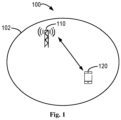
- Fig. 1 illustrates an example communication system 100 in which example embodiments of the present disclosure may be implemented.
- the system 100 includes a network device 110 and a terminal device 120 served by the network device 110.
- the serving area of the network device 110 is called as a cell 102.
- the system 100 may include any suitable number of network devices and terminal devices adapted for implementing embodiments of the present disclosure. Although not shown, it would be appreciated that one or more terminal devices may be located in the cell 102 and served by the network device 110.
- Communications in the communication system 100 may be implemented according to any proper communication protocol(s), comprising, but not limited to, cellular communication protocols of the first generation (1G), the second generation (2G), the third generation (3G), the fourth generation (4G) and the fifth generation (5G) and on the like, wireless local network communication protocols such as Institute for Electrical and Electronics Engineers (IEEE) 802.11 and the like, and/or any other protocols currently known or to be developed in the future.
- cellular communication protocols of the first generation (1G), the second generation (2G), the third generation (3G), the fourth generation (4G) and the fifth generation (5G) and on the like wireless local network communication protocols such as Institute for Electrical and Electronics Engineers (IEEE) 802.11 and the like, and/or any other protocols currently known or to be developed in the future.
- IEEE Institute for Electrical and Electronics Engineers
- the communication may utilize any proper wireless communication technology, comprising but not limited to: Code Division Multiple Access (CDMA), Frequency Division Multiple Access (FDMA), Time Division Multiple Access (TDMA), Frequency Division Duplex (FDD), Time Division Duplex (TDD), Multiple-Input Multiple-Output (MIMO), Orthogonal Frequency Division Multiple (OFDM), Cyclic Prefix Orthogonal Frequency Division Multiplexing (CP-OFDM), Discrete Fourier Transform spread OFDM (DFT-s-OFDM) and/or any other technologies currently known or to be developed in the future.
- CDMA Code Division Multiple Access
- FDMA Frequency Division Multiple Access
- TDMA Time Division Multiple Access
- FDD Frequency Division Duplex
- TDD Time Division Duplex
- MIMO Multiple-Input Multiple-Output
- OFDM Orthogonal Frequency Division Multiple
- CP-OFDM Cyclic Prefix Orthogonal Frequency Division Multiplexing
- DFT-s-OFDM Discrete Fourier Transform
- the network device 110 can communicate with the terminal device 120 and the terminal device 120 can also communicate data and control information to the network device 110.
- a link from the network device 110 to the terminal device 120 is referred to as a downlink (DL), while a link from the terminal device 120 to the network device 110 is referred to as an uplink (UL).
- the network device 110 is a transmitting (TX) device (or a transmitter) and the terminal device 120 is a receiving (RX) device (or a receiver).
- TX transmitting
- RX receiving
- the terminal device 120 is a TX device (or a transmitter) and the network device 110 is a RX device (or a receiver).
- the terminal device 120 may initiate a random access (RA) procedure to establish or reestablish a connection with the network device 110.
- RA random access
- RA procedures there are a plurality of possible RA procedures that can be employed, such as, a two-step RA, a four-step RA, and etc.
- the RA procedures may be based on contention among multiple terminal devices.
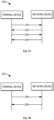
- a fourth-step contention-based RA procedure is a typical one, which is briefly introduced below with reference to Fig. 2A .
- a terminal device selects and transmits 210 a random access preamble (which may be referred to as "Msg1”) to a network device.
- the network device transmits 220 a random access response (which may be referred to as "Msg2”) to the random access preamble.
- Msg1 random access preamble
- Msg2 random access response
- the terminal device Upon receipt of the random access response, the terminal device transmits 230 scheduled transmission (which may be referred to as "Msg3") to the network device.
- the network device transmits 240, depending on contention across its serving terminal devices, a contention resolution (which may be referred to as "Msg4") to the terminal device.
- a terminal device transmits 250 a first message (which may be referred to as "MsgA") to a network device.
- the first message combines a random access preamble (for example, Msg1) and uplink data (for example, Msg3).
- the network device transmits 260 a second message (which may be referred to as "MsgB") to the terminal device.
- the second message combines a random access response (such as Msg2) and a contention resolution (such as Msg4).
- the resource for the data part such as the physical uplink shared channel (PUSCH) occasion may be defined as the time-frequency resource for payload transmission. It has also been proposed that the resource for the data part in that RA message is separately configured from the resource for the RA preamble part (such as the physical random access channel (PRACH) occasion).
- PRACH physical random access channel
- For one PUSCH occasion it may be derived based on reusing the resource allocation for the configured grant (such as the NR configured grant) in principle, or alternatively based on other potential configurations such as reusing the semi-static subframe format indication (SFI) and bandwidth part (BWP), reusing occasion of the PRACH, and/or the like.
- SFI semi-static subframe format indication
- BWP bandwidth part
- the association between the channel for the data and preamble parts (such as PUSCH and PRACH) for transmission of the RA message has not been proposed.
- the relative location of the resource for the data part may be specified or configured with respect to the associated location of the resource for the RA preamble part.
- the time/frequency relation between RA preambles in PRACH occasion(s) and PUSCH occasions may be a single specification fixed value.
- time/frequency relation between each RA preamble in PRACH occasion(s) to the PUSCH occasion may be single specification fixed value.
- different preambles in different PRACH occasions can have different values.
- time/frequency relation between RA preambles in PRACH occasion(s) and PUSCH occasions may be a single semi-statically configured value.
- time/frequency relation between each RA preamble in PRACH occasion(s) to the PUSCH occasion may be a semi-statically configured value; and different preambles in different PRACH occasions can have different values. It is noted that time and frequency relation is not required to be the same alternative.
- DMRS demodulation reference signal
- the payload size of the RA message may be different.
- the presence and the size of each field of data in the RA message depends on the use case as well as on the available size of the uplink resources carrying the RA message, hence the total size of the RA message could vary depending of the use cases and available resources.
- the required minimum size for MsgA may differ for a terminal device in the Radio Resource Control (RRC)-CONNECTED state as compared to terminal device in the RRC IDLE/INACTIVE state.
- RRC Radio Resource Control
- the terminal can autonomously select for the RA message based on the channel conditions between the terminal device and the network device.
- MCSs modulation and coding schemes
- PRBs physical resource blocks
- An alternative solution is to notify the network device of certain control information regarding the encoding and/or transmission of the data part that is used by the terminal device.
- the terminal device can use the preamble index to indicate to the network device the configuration used. For example, if there are 4 possible configurations for encoding/transmission of the data part, the preamble space can be divided into 4 sets with the preamble of each set corresponding to one of the four configurations. However, dividing the preambles into groups reduces the pooling efficiency and increases the probability of collisions.
- the reliability of the control information regarding the encoding and/or transmission of the data part impacts performance of the RA message significantly. Therefore, the transmission of the control information is desired to be of high reliability and robustness.
- a solution for information transmission in RA is related to the RA where a RA preamble and data information are transmitted together in a RA message.
- RA procedure is a two-step RA procedure. It would be appreciated that any other RA procedures may also be applicable.
- a plurality of RA preamble available for transmission are divided into a plurality of subsets, each being mapped to one of a plurality of different predefined sequences.
- a terminal device Upon selecting one of the RA preambles, a terminal device selects one or more predefined sequences that are associated with the selected RA preamble based at least in part on a predetermined association between the subsets of RA preambles and a plurality of predefined sequences. A selected predefined sequence is used to modulate the control information.
- the terminal device transmits the selected RA preamble and the modulated control information as well as the data information in a RA message to the network device. In this way, it is possible to improve the reliability of control information.
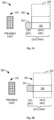
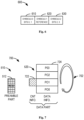
- a RA message 300 comprises a preamble part 310 and a data part 320.
- the preamble part 310 may include a RA preamble selected by the terminal device.
- the data part 320 is split into two sections, including control resource elements carrying control information 322 and data resource elements carrying data information 324.
- control information 322 may be associated to a part of the data information 324, such as a part 332 of the data information 324.
- Fig. 3B shows another example where the control information 322 is illustrated to be associated with a different part 334 of the data information 324.
- the control information 322 is used to assist a receiver of the RA message 300 in detecting the data information 324.
- the data information 324 may include any type of UL data. The type of data and the size of each type of data may depend on the use cases and the triggers for a RA procedure including this RA message 300.
- the data information 324 may include a unique identity (ID) in order to allow for contention resolution in a response message to the message 300, such as MsgB in a two-step RA procedure. The ID may be different in different cases of the RA procedures.
- ID unique identity
- the ID may be the RRC message (or part of it) transmitted by the terminal device, which is regarded as "UE Contention Resolution Identity" in, for example, the medium access control (MAC) layer.
- the ID may be a 48-bit length in a specific example.
- the ID may be the Cell-Radio Network Temporary Identifier (C-RNTI) MAC control element (CE), which may have a length of 16 bits plus MAC subheader.
- C-RNTI Cell-Radio Network Temporary Identifier
- CE MAC control element
- the data information 324 may include a RRC connection request or a RRC resume request, buffer status report (BSR), and/or a power headroom report (PHR).
- the data information 324 may include data payload, such as the data transmission in the RRC CONNECTED state.
- each type of data information may depend on the use cases and/or on the available size of the resources for carrying the RA message. Therefore, the size of the data information 324 and hence the total size of the RA message 300 may vary depending of the use cases and available resources.
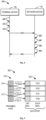
- Fig. 4 shows a process 400 for information transmission in RA according to an example embodiment of the present disclosure.
- the process 400 will be described with reference to Fig. 1 .
- the process 400 may involve the terminal device 120 and the network device 110 as illustrated in Fig. 1 .
- the terminal device 120 selects 405 one of a plurality of RA preambles and selects 410 at least one predefined sequence associated with the selected RA preamble.
- a predefined sequence is associated with control information to be transmitted in a RA message.
- the control information indicates a configuration of data information to be transmitted, which may be used to assist the network device 110 in detecting and decoding the data information.
- the data information and the control information are to be transmitted in a RA message together with a RA preamble to the network device 110.
- the control information and data information may be mapped to different resource elements (REs) when being transmitted.
- REs resource elements
- the control information may indicate at least one of a size of data information to be transmitted, the number of resource units used for transmitting the data information, or a MCS used for the data information.
- the number of resource units used for transmitting the data information may also indicate the size of the data information and thus the size may be omitted from the control information.
- the control information may carry one, two, or more bits of information.
- the control information modulates a sequence.
- the control information modulates a low peak-average power ratio (PAPR) sequence, which may be defined by a cyclic shift of a base sequence. The length of the sequence may be varied and may be extend beyond 12, depending on the number of allocated PRBs.
- the REs assigned to transmission of the control information may be split into two parts, one part carrying an un-modulated sequence as a phase reference, and the other part carrying a sequence modulated by the control information.
- PAPR peak-average power ratio
- control information may be of a predetermined size, for example, may be preconfigured as a fixed size, regardless of the size of the data information that is eventually transmitted.
- resource elements for carrying the control information may also be of a predetermined size.
- the data information may be of a variable size, which may be changed depending on the use cases and the allocated resources.
- control information and the data information may be collectively referred to as a data part of the RA message as compared to the preamble part. Depending on the size of the data part, different sizes of resources may be needed for transmission of the data information.
- the size of the data part in the RA message may be in units of "data information resource units," each data information resource unit conveying a certain amount of information (the data information and/or possible the control information).
- the size of the data part may include one "data information resource unit.”
- the "data information resource unit” is corresponding to a part of resource for transmission of the data part of the RA message (such as the data part 320), and the control information may be contained in this part.
- the size of the data part may include two "data information resource units,” including the one containing the control information and the data information and adjacent one containing data information only.
- the size of the data part may include four "data information resource units,” including the one containing the control information and the data information and three adjacent ones containing the data information. Other sizes of the data part are also possible in the RA message.
- the plurality of RA preambles may be divided into a plurality of subsets of RA preambles, each subset including one or more RA preambles. Each of the subset of RA preambles is mapped to at least one of a plurality of predefined sequences.
- the plurality of RA preambles may be considered as a plurality of sets of RA preambles, each set associated with a resource unit for transmission of data and/or control information.
- the terminal device 120 may be allowed to perform RA preamble selection from a plurality of RA preamble in each time/frequency resource for RA preamble transmission.
- the time/frequency resource unit for transmission of a RA preamble may be referred to as a PRACH occasion ("RO" for short).
- the plurality of RA preamble available in each RO may be the same or different.
- the plurality of RA preambles available in each RO may be divided into a plurality of sets of RA preambles, such as ⁇ A1, A2,..., AN ⁇ , where N represents the number of the sets of RA preambles.
- Each set Ai is associated with a resource unit for transmission of the data information and/or the control information (i.e., a "data information resource unit").
- the set of RA preambles for each resource unit for the data information may be further divided into one or more subsets of RA preambles.
- the subsets of RA preambles may be represented as ⁇ Ai1, Ai2,...,AiM ⁇ , where M represents the number of subsets of RA preambles divided from the set Ai.
- all the available RA preambles may be divided and thus the plurality of subsets of RA preambles are generated.
- a subset of RA preambles is associated with a predefined sequence(s).
- the plurality of predefined sequences are different and are orthogonal or quasi-orthogonal to each other.
- a plurality of predefined sequences may be generated as cyclic shifts of a base sequence.
- a portion of all the available RA preambles is associated with a resource unit for transmission at least part of the data information.
- each is associated with a different predefined sequence. That is, for each resource unit for the data information, each subset of RA preambles may be associated with a unique predefined sequence.
- a subset may include one or more RA preambles.
- RA preamble there is one RA preamble in a subset, there is a one-to-one association between the RA preamble and a predefined sequence for this resource unit. Alternatively, if there is more than one RA preamble in a subset, there is a many-to-one association between RA preambles and the predefined sequences.
- Fig. 5 shows an example of association between the predefined sequence and subsets of RA preambles in a RA message 500.
- resource units i.e., ROs
- ROs resource units for transmission of the preamble part 510 of the RA message 500
- POs resource units for transmission of the data part 520
- PO0, PO1, PO2, and PO3 resource units for transmission of the data part 520.
- the first half of RA preambles (the first four RA preambles) are associated with one resource unit (such as PO), and the second half of RA preambles (the last four RA preambles) are associated with another resource unit (such as PO).
- Table 1 provides an example showing an association between predefined sequences and subsets of RA preambles as well as ROs for the RA preambles and resource units for the data information. This example is to show a one-to-one association between RA preambles and predefined sequence and thus the preamble index is listed.
- each RA preamble is associated with a unique predefined sequence in each resource unit for transmission of data information and each resource unit for transmission of a RA preamble.
- each subset of RA preambles may include more than one RA preamble, and each subset may be associated with more than one predefined sequence in each RO and PO. Table 1.
- the terminal device 120 may first select a RA preamble and then determine a set of RA preambles from which this RA preamble is selected.
- the set of RA preambles are available for use in a RO.
- the terminal device 120 may determine in which target resource unit (for example, PO) the data information and control information are to be transmitted. Then determine a subset of RA preambles from which this RA preamble is selected, based on the predetermined association between subsets of RA preambles and predefined sequences that are specific to the PO, the terminal device 120 may select one or more associated predefined sequences.
- target resource unit for example, PO
- the terminal device 120 may determine that in this RO0, the PO to be used for transmission of data and control information is PO1. According to the predetermined association, the terminal device 120 can select Predefined Sequence 3 for use.
- Table 1 is merely an example provided for purpose of illustration.
- different numbers of RA preambles, subsets of RA preambles, resource units for transmitting data information and/or RA preamble, as well as their association may be varied in different examples.
- the terminal device 120 modulates 415 the control information associated with one of the selected predefined sequence(s). Depending on the configuration of the data information, the terminal device 120 may determine the control information that indicates such configuration. In some example embodiments, the plurality of predefined sequences may be associated with different control information. The terminal device 120 may then modulate the control information with one of the predefined sequence(s) that is selected.
- Table 2 shows an example of how the control information indicates the configuration of the data information (in this example, MCS and the size of the data information represented by the number of resource units).
- Table 2 Example association between control information and configuration of data information Control Information Number of Resource Units MCS 00 1 MCS1 01 1 MCS2 10 2 MCS3 11 4 MCS4
- control information may indicate a different configuration combination of the number of resource units and the MCS to be used for the data information. It is to be understood that Table 2 is merely an example. In other examples, control information may be used to indicate more, less, or other different configurations that may be used by the terminal device 120. Thus, the number of bits in the control information may be less than two bits or more than two bits. Further, in addition to the number of resource units and MCS, other parameters related to processing and/or transmission of the data information and assisting the network device 110 in detecting the data information may also be included and indicated using the control information. The scope of the present disclosure is not limited in this regard.
- the sequence selection may be used on top of modulating the sequence with the control information.
- additional UL symbols for example, a larger number of REs may be allocated to carry the control information.
- three groups of symbols may be allocated to carry the control information 600, where a first group 610 of Symbols 0 and a third group 630 of Symbols 2 contain sequences modulated by the control information, while a second group 620 of Symbols 1 contains one or more un-modulated symbols as a reference signal.
- the terminal device 120 may apply higher order modulation on the control information when transmitting.
- a single modulated sequence can convey up to 4 bits with 16-quadrature amplitude modulation (QAM).
- QAM quadrature amplitude modulation
- other number of bits for the control information and other types of modulation may also be applicable.
- an indication of the association between the subsets of RA preambles and the predefined sequences may be configured at the terminal device 120, for example, by the network device 110, in a system information block (SIB).
- configuration information from the network device 110 may further include, for example, in the SIB, information to determine the location and number of resource units for transmission of the data information; the association between the sets of RA preambles in the resource units for transmission of RA preambles and the resource units for transmission of data information; and information about which part of resources (REs) is used for transmission of the control information and which part is used for transmission of the data information within a resource unit (such as a PUSCH occasion).
- the association between configurations of data information and values for different control information may also be configured by the network device 110, for example, in the SIB.
- the association between the sets of RA preambles in the resource units for transmission of RA preambles and the resource units for transmission of data information may not be required and thus in selecting the RA preamble, the target resource unit to be used for transmission of the RA preamble is not required.
- the location of control information is determined by the set of preambles within a resource unit for transmission of a RA preamble.
- the terminal device 120 transmits 420 the selected RA preamble, the modulated control information, and the data information in a RA message to the network device 110.
- the data information may be transmitted at least using the target resource unit. Depending on the size of the data information and the resource allocation, one or more additional resource units may be needed for its transmission.
- the modulated control information may also be transmitted using the target resource unit.
- the terminal device 120 may transmit such RA message (such as MsgA) to initiate a two-step RA procedure.
- RA message such as MsgA
- other types of RA procedure which requires a combination of RA preamble and data information in a RA message may also be applicable.
- the RA preamble is transmitted using different time and/or frequency resources from the control information and the data information.
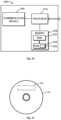
- Fig. 7 illustrates an example of the RA message 700 transmitted by the terminal device 120 to the network device 110 according to the association illustrated in Fig. 5 .
- the terminal device 120 selects Preamble 7 and then selects Predefined Sequence 3 associated with this RA preamble in RO0 and PO1.
- the RA message 502 includes Preamble 7 in the resource unit RO0 512 in the preamble part 510, the control information 722 related to Predefined Sequence 3 in the data part 520 using the resource unit PO1, and the data information 724 using four resource units PO0 to PO3.
- the terminal device 120 may map the data information to those resource units in a cyclic order started from the target resource unit. For example, the terminal device 120 may modulate and encode the data information to generate coded modulation symbols.
- the mapping order of the coded modulation symbols of the data information when it spans the plurality of resource units is such that it starts with the resource unit containing the control information (i.e., the target resource unit) and then cyclically mapped to other resource units.
- the terminal device 120 may cyclically select one or more additional resources from a start of the resource allocation.
- the terminal device 120 may cyclically select one or more additional resources from a start of the resource allocation.
- the terminal device 120 may map the data information using at least one additional resource unit before the target resource unit to satisfy the number of resource units. Still taking the set of available resource ⁇ A, B, C, D, E, F, G, H ⁇ as example, if the number of resource units used is 4, and the target resource unit is G, by selecting additional resource unit(s), the used resource units are G, H, E, and F.
- the benefit of such cyclic is to have the resource units consecutive when it is beneficial to do so (e.g. for the DFT-s-OFDM waveform).
- the control information 722 is transmitted using the target resource unit PO1.
- the data information 724 may be mapped to all the used resource units PO0 to PO4 in a cyclic order from PO1, PO2, PO3, and PO0, as indicated by the arrow 702. It is to be noted that an opposite cyclic order is also possible.
- the cyclic mapping order of the data information may further improve the decodability of data in the case where multiple terminal devices transmit autonomously in the same set of resources.
- the network device 110 may determine allocation of resource units for transmission of the data information based on a location of the target resource unit and the number of resources units and allocate the resource units to the terminal device semi-statically.
- the network device 110 may detect and decode the RA message on all the possible resource units.
- the operation of the network device 110 in detection and decoding the RA message may be regarded as an inverse process to that performed at the terminal device 120.
- the network device 110 detects 425 one of a plurality of RA preambles that is received from the terminal device 120.
- the plurality of RA includes all the possible RA preambles that are potentially used by the terminal device 120.
- the network device 110 may perform bind detection to decode the RA preamble selected and transmitted by the terminal device 120.
- the network device 110 determines 430 at least one predefined sequence associated with the detected random access preamble based on the predetermined association between a plurality of predefined sequences and the plurality of subsets of random access preambles and a target resource unit to be used for transmission of control information and data information from the terminal device.
- the network device 110 detects 435 the control information on the target resource unit based on the at least one predefined sequence.
- the network device 110 may perform demodulation using the determined predefined sequence(s).
- the network device 110 detects 440 the data information based on the control information. The detection of the data information may be performed on at least a target resource unit that is corresponding to the predefined sequence, which is associated with the control information.
- the network device 110 may transmit 445 a response to the RA message.
- the response may include a random access response and a contention resolution.
- Such response may also be referred to as MsgB in the two-step RA procedure. It would be appreciated that the response may include other information in other types of RA procedures.
- the network device 110 in detecting the data information, if the network device 110 determines that the control information indicates the number of resource units used for transmitting the data information and the number is larger than one, it may de-map the data information from the number of resource units in a cyclic order started from the target resource unit.
- Some example embodiments of information transmission in RA have been described above.
- By transmitting the control information in the RA message to the example embodiments it is possible to improve the reliability of the control information and reduce the probability of collision of control information in the case of multiple RA preamble point to the same resource unit.
- Fig. 8 shows a flowchart of an example method 800 implemented at a terminal device according to some example embodiments of the present disclosure. For the purpose of discussion, the method 800 will be described from the perspective of the terminal device 120 with reference to Fig. 1 .
- the terminal device 120 selects, at a terminal device, one of a plurality of random access preambles, the plurality of random access preambles being divided into a plurality of subsets of random access preambles.
- the terminal device 120 selects at least one predefined sequence associated with the selected random access preamble based on a predetermined association between a plurality of predefined sequences and the plurality of subsets of random access preambles and based on a target resource unit to be used for transmission of control information and data information.
- the terminal device 120 modulates the control information with one of the at least one predefined sequence, the control information indicating configuration of the data information.
- the terminal device 120 transmits the selected random access preamble, the modulated control information, and the data information in a random access message to the network device, the data information being transmitted using at least the target resource unit.
- the plurality of predefined sequences are orthogonal or quasi-orthogonal to each other.
- the transmitting comprises: in response to the number of resource units for transmitting the data information being larger than one, mapping the data information to the number of resource units in a cyclic order started from the target resource unit; and transmitting the data information using the number of resource units.
- the method further comprises receiving, from the network device, allocation of resource units for transmission of the data information based on a location of the target resource unit and the number of resources units.
- mapping the data information comprises: in response to no enough resource units available before an end of resource allocation for the data information, mapping the data information using at least one additional resource unit before the target resource unit to satisfy the number of resource units.
- control information indicates at least one of a size of the data information, the number of resource units used for transmitting the data information, or a modulation coding scheme used for the data information.
- selecting the at least one predefined sequence comprises selecting a location of a further target resource unit to be used for transmission of the selected random access preamble; and selecting the at least one predefined sequence based on the predetermined association that is related to the location of the further target resource unit to be used for transmission of the selected random access preamble.
- control information and control resource elements carrying the control information are of predetermined sizes, and wherein the data information is of a variable size.
- the plurality of random access preambles comprise a plurality of sets of random access preambles each associated with a resource unit available for transmission of the control information and the data information, each of plurality of sets of random access preambles being divided into some of the plurality of subsets of random access preambles, and wherein the method further comprises: determining the target resource unit based on the set of random access preamble from which the random access preamble is selected.
- the method 800 further comprises receiving an indication of the predetermined association from the network device.
- Fig. 9 shows a flowchart of an example method 900 implemented at a network device according to some example embodiments of the present disclosure. For the purpose of discussion, the method 900 will be described from the perspective of the network device 110 with reference to Fig. 1 .
- the network device 110 detects, at a network device, one of a plurality of random access preambles that is received from a terminal device, the plurality of preambles being divided into a plurality of subsets of random access preambles.
- the network device 110 determines at least one predefined sequence associated with the detected random access preamble based on a predetermined association between a plurality of predefined sequences and the plurality of subsets of random access preambles and based on a target resource unit to be used for transmission of control information and data information from the terminal device.
- the network device 110 detects the control information on the target resource unit based on the at least one predefined sequence, the control information indicating a configuration of the data information.
- the network device 110 detects, based on the control information, the data information on at least a target resource unit.
- the plurality of predefined sequences are orthogonal or quasi-orthogonal to each other.
- detecting the data information comprises: in response to the control information indicating the number of resource units used for transmitting the data information and the number being larger than one, de-mapping the data information from the number of resource units in a cyclic order started from the target resource unit.
- control information indicates at least one of a size of the data information, the number of resource units used for transmitting the data information, or a modulation coding scheme used for the data information.
- control information and resource elements carrying the control information are of predetermined sizes, and the data information is of a variable size.
- the plurality of random access preambles comprise a plurality of sets of random access preambles each associated with a resource unit available for transmission of the control information and the data information, each of plurality of sets of random access preambles being divided into some of the plurality of subsets of random access preambles.
- the method 900 further comprises transmitting an indication of the predetermined association to the terminal device.
- an apparatus capable of performing any of the method 800 may comprise means for performing the respective steps of the method 800.
- the means may be implemented in any suitable form.
- the means may be implemented in a circuitry or software module.
- the apparatus comprises: means for selecting, at a terminal device, one of a plurality of random access preambles, the plurality of random access preambles being divided into a plurality of subsets of random access preambles; means for selecting at least one predefined sequence associated with the selected random access preamble based on a predetermined association between a plurality of predefined sequences and the plurality of subsets of random access preambles and based on a target resource unit to be used for transmission of control information and data information; means for modulating the control information with one of the at least one predefined sequence, the control information indicating configuration of the data information; and means for transmitting the selected random access preamble, the modulated control information, and the data information in a random access message to the network device, the data information being transmitted using at least the target resource unit.
- the plurality of predefined sequences are orthogonal or quasi-orthogonal to each other.
- the means for transmitting comprises: means for in response to the number of resource units for transmitting the data information being larger than one, mapping the data information to the number of resource units in a cyclic order started from the target resource unit; and transmitting the data information using the number of resource units.
- the apparatus further comprises: means for receiving, from the network device, allocation of resource units for transmission of the data information based on a location of the target resource unit and the number of resources units.
- means for mapping the data information comprises: means for in response to no enough resource units available before an end of resource allocation for the data information, mapping the data information using at least one additional resource unit before the target resource unit to satisfy the number of resource units.
- control information indicates at least one of a size of the data information, the number of resource units used for transmitting the data information, or a modulation coding scheme used for the data information.
- means for selecting the at least one predefined sequence comprises: means for selecting a location of a further target resource unit to be used for transmission of the selected random access preamble; and means for selecting the at least one predefined sequence based on the predetermined association that is related to the location of the further target resource unit to be used for transmission of the selected random access preamble.
- control information and control resource elements carrying the control information are of predetermined sizes, and the data information is of a variable size.
- the plurality of random access preambles comprise a plurality of sets of random access preambles each associated with a resource unit available for transmission of the control information and the data information, each of plurality of sets of random access preambles being divided into some of the plurality of subsets of random access preambles, and wherein the method further comprises: determining the target resource unit based on the set of random access preamble from which the random access preamble is selected.
- the apparatus further comprises means for receiving an indication of the predetermined association from the network device.
- the means in the apparatus comprises at least one processor; and at least one memory including computer program code, the at least one memory and computer program code configured to, with the at least one processor, cause the performance of the apparatus.
- an apparatus capable of performing any of the method 900 may comprise means for performing the respective steps of the method 900.
- the means may be implemented in any suitable form.
- the means may be implemented in a circuitry or software module.
- the apparatus comprises: means for detecting, at a network device, one of a plurality of random access preambles that is received from a terminal device, the plurality of preambles being divided into a plurality of subsets of random access preambles, and a subset of random access preambles being associated with one of a plurality of predefined sequences; means for determining at least one predefined sequence associated with the detected random access preamble based on a predetermined association between a plurality of predefined sequences and the plurality of subsets of random access preambles and based on a target resource unit to be used for transmission of control information and data information from the terminal device; means for detecting the control information on the target resource unit based on the at least one predefined sequence, the control information indicating a configuration of the data information; and means for detecting, based on the control information, the data information on a target resource unit corresponding to the predefined sequence associated with the control information.
- the plurality of predefined sequences are orthogonal or quasi-orthogonal to each other.
- the means for detecting the data information comprises: means for in response to the control information indicating the number of resource units used for transmitting the data information and the number being larger than one, de-mapping the data information from the number of resource units in a cyclic order started from the target resource unit.
- control information indicates at least one of a size of the data information, the number of resource units used for transmitting the data information, or a modulation coding scheme used for the data information.
- control information and resource elements carrying the control information are of predetermined sizes, and the data information is of a variable size.
- the plurality of random access preambles comprise a plurality of sets of random access preambles each associated with a resource unit available for transmission of the control information and the data information, each of plurality of sets of random access preambles being divided into some of the plurality of subsets of random access preambles.
- the apparatus further comprises means for transmitting an indication of the predetermined association to the terminal device.
- the means in the apparatus comprises at least one processor; and at least one memory including computer program code, the at least one memory and computer program code configured to, with the at least one processor, cause the performance of the apparatus.
- Fig. 10 is a simplified block diagram of a device 1000 that is suitable for implementing embodiments of the present disclosure.
- the device 1000 may be provided to implement a communication device, for example the terminal device 120 or the network device 110 as shown in Fig. 1 .
- the device 1000 includes one or more processors 1010, one or more memories 1020 coupled to the processor 1010, and one or more communication modules 1040 coupled to the processor 1010.
- the communication module 1040 is for bidirectional communications.
- the communication module 1040 has at least one antenna to facilitate communication.
- the communication interface may represent any interface that is necessary for communication with other network elements.
- the processor 1010 may be of any type suitable to the local technical network and may include one or more of the following: general purpose computers, special purpose computers, microprocessors, digital signal processors (DSPs) and processors based on multicore processor architecture, as non-limiting examples.
- the device 1000 may have multiple processors, such as an application specific integrated circuit chip that is slaved in time to a clock which synchronizes the main processor.
- the memory 1020 may include one or more non-volatile memories and one or more volatile memories.
- the non-volatile memories include, but are not limited to, a Read Only Memory (ROM) 1024, an electrically programmable read only memory (EPROM), a flash memory, a hard disk, a compact disc (CD), a digital video disk (DVD), and other magnetic storage and/or optical storage.
- ROM Read Only Memory
- EPROM electrically programmable read only memory
- flash memory a hard disk
- CD compact disc
- DVD digital video disk
- the volatile memories include, but are not limited to, a random access memory (RAM) 1022 and other volatile memories that will not last in the power-down duration.
- RAM random access memory
- a computer program 1030 includes computer executable instructions that are executed by the associated processor 1010.
- the program 1030 may be stored in the ROM 1020.
- the processor 1010 may perform any suitable actions and processing by loading the program 1030 into the RAM 1020.
- the example embodiments of the present disclosure may be implemented by means of the program 1030 so that the device 1000 may perform any method/process of the present disclosure as discussed with reference to Fig. 3A to Fig. 8 .
- the example embodiments of the present disclosure may also be implemented by hardware or by a combination of software and hardware.
- the program 1030 may be tangibly contained in a computer readable medium which may be included in the device 1000 (such as in the memory 1020) or other storage devices that are accessible by the device 1000.
- the device 1000 may load the program 1030 from the computer readable medium to the RAM 1022 for execution.
- the computer readable medium may include any types of tangible non-volatile storage, such as ROM, EPROM, a flash memory, a hard disk, CD, DVD, and the like.
- Fig. 11 shows an example of the computer readable medium 1100 in form of CD or DVD.
- the computer readable medium has the program 1030 stored thereon.
- various embodiments of the present disclosure may be implemented in hardware or special purpose circuits, software, logic or any combination thereof. Some aspects may be implemented in hardware, while other aspects may be implemented in firmware or software which may be executed by a controller, microprocessor or other computing device. While various aspects of embodiments of the present disclosure are illustrated and described as block diagrams, flowcharts, or using some other pictorial representations, it is to be understood that the block, apparatus, system, technique or method described herein may be implemented in, as non-limiting examples, hardware, software, firmware, special purpose circuits or logic, general purpose hardware or controller or other computing devices, or some combination thereof.
- the present disclosure also provides at least one computer program product tangibly stored on a non-transitory computer readable storage medium.
- the computer program product includes computer-executable instructions, such as those included in program modules, being executed in a device on a target real or virtual processor, to carry out the methods/ processes as described above with reference to Fig. 3A to Fig. 8 .
- program modules include routines, programs, libraries, objects, classes, components, data structures, or the like that perform particular tasks or implement particular abstract data types.
- the functionality of the program modules may be combined or split between program modules as desired in various embodiments.
- Machine-executable instructions for program modules may be executed within a local or distributed device. In a distributed device, program modules may be located in both local and remote storage media.
- Program code for carrying out methods of the present disclosure may be written in any combination of one or more programming languages. These program codes may be provided to a processor or controller of a general purpose computer, special purpose computer, or other programmable data processing apparatus, such that the program codes, when executed by the processor or controller, cause the functions/operations specified in the flowcharts and/or block diagrams to be implemented.
- the program code may execute entirely on a machine, partly on the machine, as a stand-alone software package, partly on the machine and partly on a remote machine or entirely on the remote machine or server.
- the computer program codes or related data may be carried by any suitable carrier to enable the device, apparatus or processor to perform various processes and operations as described above.
- Examples of the carrier include a signal, computer readable medium, and the like.
Landscapes
- Engineering & Computer Science (AREA)
- Signal Processing (AREA)
- Computer Networks & Wireless Communication (AREA)
- Quality & Reliability (AREA)
- Mobile Radio Communication Systems (AREA)
Claims (14)
- Dispositif, comprenant :sur un dispositif terminal (120), des moyens pour sélectionner l'un d'une pluralité de préambules d'accès aléatoire (510), la pluralité de préambules d'accès aléatoire étant divisés en une pluralité de sous-ensembles de préambules d'accès aléatoire ;des moyens pour sélectionner au moins une séquence prédéfinie associée au préambule d'accès aléatoire sélectionné, sur la base d'une association prédéterminée entre une pluralité de séquences prédéfinies et la pluralité de sous-ensembles de préambules d'accès aléatoire et sur la base d'une unité de ressource cible (PO) à utiliser pour la transmission d'informations de contrôle (722) et d'informations de données (724) ;des moyens pour moduler les informations de contrôle avec une séquence de la au moins une séquence prédéfinie, les informations de contrôle indiquant une configuration des informations de données ; etdes moyens pour transmettre dans un message d'accès aléatoire (700) le préambule d'accès aléatoire sélectionné, les informations de contrôle modulées et les informations de données à un dispositif de réseau (110), les informations de données étant transmises en utilisant au moins l'unité de ressource cible.
- Dispositif selon la revendication 1, dans lequel les moyens de transmission comprennent :
en réponse à un nombre d'unités de ressources pour la transmission des informations de données supérieur à un, des moyens pour mapper les informations de données au nombre d'unités de ressources dans un ordre cyclique à partir de l'unité de ressource cible et pour transmettre les informations de données en utilisant le nombre d'unités de ressources. - Dispositif selon la revendication 2, dans lequel le dispositif comprend en outre :
des moyens pour recevoir du dispositif de réseau une allocation d'unités de ressources pour la transmission des informations de données en fonction d'un emplacement de l'unité de ressource cible et du nombre d'unités de ressources. - Dispositif selon la revendication 2, dans lequel les moyens pour mapper les informations de données comprennent :
en réponse à un nombre insuffisant d'unités de ressources disponible avant la fin d'une allocation des ressources pour les informations de données, des moyens pour mapper les informations de données en utilisant au moins une unité de ressource avant l'unité de ressource cible pour satisfaire le nombre d'unités de ressources. - Dispositif selon la revendication 1, dans lequel les moyens pour sélectionner la au moins une séquence prédéfinie comprennent :
des moyens pour sélectionner un emplacement d'une unité de ressource cible supplémentaire à utiliser pour la transmission du préambule d'accès aléatoire sélectionné et des moyens pour sélectionner la au moins une séquence prédéfinie sur la base de l'association prédéterminée qui est liée à l'emplacement de l'unité de ressource cible supplémentaire à utiliser pour la transmission du préambule d'accès aléatoire sélectionné. - Dispositif selon la revendication 1, dans lequel la pluralité de préambules d'accès aléatoire comprend une pluralité d'ensembles de préambules d'accès aléatoire associés chacun à une unité de ressource disponible pour la transmission des informations de contrôle modulées et des informations de données, chacun de la pluralité d'ensembles de préambules d'accès aléatoire étant divisé en certains de la pluralité de sous-ensembles de préambules d'accès aléatoire, et dans lequel le dispositif comprend en outre :
des moyens pour déterminer l'unité de ressource cible sur la base de l'ensemble de préambule d'accès aléatoire dans lesquels le préambule d'accès aléatoire est sélectionné. - Dispositif selon la revendication 1, dans lequel le dispositif comprend en outre :
des moyens pour recevoir une indication de l'association prédéterminée du dispositif de réseau. - Dispositif, comprenant :au niveau d'un dispositif de réseau (110), des moyens pour détecter l'un d'une pluralité de préambules d'accès aléatoire (510) qui est reçu d'un dispositif terminal (120), la pluralité de préambules étant divisés en une pluralité de sous-ensembles de préambules d'accès aléatoire ;des moyens pour déterminer au moins une séquence prédéfinie associée au préambule d'accès aléatoire détecté, sur la base d'une association prédéterminée entre une pluralité de séquences prédéfinies et la pluralité de sous-ensembles de préambules d'accès aléatoire et sur la base d'une unité de ressource cible (PO) à utiliser pour la transmission d'informations de contrôle (722) et d'informations de données (724) à partir du dispositif terminal ;des moyens pour détecter les informations de contrôle sur l'unité de ressource cible sur la base de la au moins une séquence prédéfinie, les informations de contrôle indiquant une configuration des informations de données ; etsur la base des informations de contrôle, des moyens pour détecter les informations de données sur au moins l'unité de ressource cible.
- Dispositif selon la revendication 1 ou 8, dans lequel la pluralité de séquences prédéfinies sont orthogonales ou quasi-orthogonales les unes par rapport aux autres.
- Dispositif selon la revendication 8, dans lequel les moyens pour détecter les informations de données comprennent :
en réponse aux informations de contrôle indiquant un nombre d'unités de ressources utilisées pour la transmission des informations de données et le nombre étant supérieur à un, des moyens pour dé-mapper les informations de données du nombre d'unités de ressources dans un ordre cyclique à partir de l'unité de ressource cible. - Dispositif selon la revendication 1 ou 8, dans lequel les informations de contrôle et les éléments de ressource portant les informations de contrôle sont de taille prédéterminée, et dans lequel les informations de données sont de taille variable.
- Procédé, comprenant :sur un dispositif terminal (120), la sélection (820) de l'un d'une pluralité de préambules d'accès aléatoire (510), la pluralité de préambules d'accès aléatoire étant divisés en une pluralité de sous-ensembles de préambules d'accès aléatoire ;la sélection (820) d'au moins une séquence prédéfinie associée au préambule d'accès aléatoire sélectionné, sur la base d'une association prédéterminée entre une pluralité de séquences prédéfinies et la pluralité de sous-ensembles de préambules d'accès aléatoire et sur la base d'une unité de ressource cible (PO) à utiliser pour la transmission d'informations de contrôle (722) et d'informations de données (724) ;la modulation des informations de contrôle avec une séquence de la au moins une séquence prédéfinie, les informations de contrôle indiquant une configuration des informations de données ; etla transmission (840) dans un message d'accès aléatoire (700) du préambule d'accès aléatoire sélectionné, des informations de contrôle modulées et des informations de données à un dispositif de réseau (110), les informations de données étant transmises en utilisant au moins l'unité de ressource cible.
- Procédé, comprenant :au niveau d'un dispositif de réseau (110), la détection (910) de l'un d'une pluralité de préambules d'accès aléatoire (510) qui est reçu d'un dispositif terminal (120), la pluralité de préambules étant divisés en une pluralité de sous-ensembles de préambules d'accès aléatoire ;la détermination (920) d'au moins une séquence prédéfinie associée au préambule d'accès aléatoire détecté sur la base d'une association prédéterminée entre une pluralité de séquences prédéfinies et la pluralité de sous-ensembles de préambules d'accès aléatoire et sur la base d'une unité de ressource cible à utiliser pour la transmission d'informations de contrôle (722) et d'informations de données (724) à partir du dispositif terminal ;la détection des informations de contrôle sur l'unité de ressource cible sur la base de la au moins une séquence prédéfinie, les informations de contrôle indiquant une configuration des informations de données ; etsur la base des informations de contrôle, la détection (940) des informations de données sur au moins une unité de ressource cible.
- Support non transitoire lisible par ordinateur (1100) comprenant des instructions de programme qui, lorsqu'elles sont exécutées sur un appareil, amènent l'appareil à réaliser au moins le procédé selon la revendication 12 ou 13.
Applications Claiming Priority (1)
| Application Number | Priority Date | Filing Date | Title |
|---|---|---|---|
| PCT/CN2019/080672 WO2020199042A1 (fr) | 2019-03-29 | 2019-03-29 | Transmission d'informations en accès aléatoire |
Publications (4)
| Publication Number | Publication Date |
|---|---|
| EP3949636A1 EP3949636A1 (fr) | 2022-02-09 |
| EP3949636A4 EP3949636A4 (fr) | 2022-11-16 |
| EP3949636B1 true EP3949636B1 (fr) | 2025-04-02 |
| EP3949636C0 EP3949636C0 (fr) | 2025-04-02 |
Family
ID=72664484
Family Applications (1)
| Application Number | Title | Priority Date | Filing Date |
|---|---|---|---|
| EP19922741.4A Active EP3949636B1 (fr) | 2019-03-29 | 2019-03-29 | Transmission d'informations en accès aléatoire |
Country Status (5)
| Country | Link |
|---|---|
| US (1) | US12089268B2 (fr) |
| EP (1) | EP3949636B1 (fr) |
| CN (1) | CN113711679B (fr) |
| BR (1) | BR112021019047A2 (fr) |
| WO (1) | WO2020199042A1 (fr) |
Families Citing this family (2)
| Publication number | Priority date | Publication date | Assignee | Title |
|---|---|---|---|---|
| US10980067B2 (en) | 2019-05-02 | 2021-04-13 | Qualcomm Incorporated | Reference signal transmission techniques for random access messages |
| JP7434347B2 (ja) * | 2019-09-30 | 2024-02-20 | 株式会社Nttドコモ | 端末及び通信方法 |
Family Cites Families (26)
| Publication number | Priority date | Publication date | Assignee | Title |
|---|---|---|---|---|
| US8665719B2 (en) * | 2004-05-03 | 2014-03-04 | Alcatel Lucent | Variable packet-size backplanes for switching and routing systems |
| US8553594B2 (en) * | 2007-03-20 | 2013-10-08 | Motorola Mobility Llc | Method and apparatus for resource allocation within a multi-carrier communication system |
| EP2234308A1 (fr) * | 2009-03-23 | 2010-09-29 | Panasonic Corporation | Signalisation de mode de retransmission dans un système de communication sans fil |
| KR101485807B1 (ko) * | 2009-04-01 | 2015-01-28 | 삼성전자주식회사 | 무선 통신 시스템의 랜덤 액세스 방법 및 장치 |
| LT2760241T (lt) | 2010-04-01 | 2018-09-10 | Sun Patent Trust | Perduodamos galios valdymas fiziniams atsitiktinės prieigos kanalams |
| US8874157B1 (en) * | 2011-08-11 | 2014-10-28 | Sprint Communications Company L.P. | Scheduling wireless communication power resources in wireless communication systems |
| CN104205670B (zh) * | 2012-03-22 | 2017-12-05 | 中兴通讯(美国)公司 | 机器类型通信数据从移动装置向无线网络的优化传输 |
| US10080246B2 (en) * | 2013-07-01 | 2018-09-18 | Lg Electronics Inc. | Apparatus and method for transmitting signals using multiple access schemes |
| US9451639B2 (en) * | 2013-07-10 | 2016-09-20 | Samsung Electronics Co., Ltd. | Method and apparatus for coverage enhancement for a random access process |
| KR20160132418A (ko) * | 2014-03-03 | 2016-11-18 | 엘지전자 주식회사 | 무선랜에서 프레임을 전송하는 방법 및 장치 |
| JP6640077B2 (ja) * | 2014-03-14 | 2020-02-05 | シャープ株式会社 | 端末装置、および通信方法 |
| CN104981022B (zh) * | 2014-04-04 | 2020-07-10 | 北京三星通信技术研究有限公司 | 数据传输的方法、基站及终端 |
| CN105744639B (zh) | 2014-12-10 | 2018-07-13 | 中兴通讯股份有限公司 | 随机接入配置信息发送、接收方法及装置 |
| EP3241321B1 (fr) | 2014-12-29 | 2019-10-23 | Telefonaktiebolaget LM Ericsson (publ) | Procédés et dispositifs permettant de générer et de détecter des préambules d'accès aléatoire |
| US10631330B2 (en) * | 2015-04-03 | 2020-04-21 | Qualcomm Incorporated | Random access procedures under coverage limitations |
| WO2017034096A1 (fr) * | 2015-08-21 | 2017-03-02 | 엘지전자(주) | Procédé de transmission et de réception de données de liaison descendante dans un système de communication sans fil, et appareil associé |
| CN106507497B (zh) * | 2015-09-08 | 2020-09-11 | 华为技术有限公司 | 用于上行数据传输的方法、终端设备和网络设备 |
| CN107734690B (zh) | 2016-08-12 | 2023-05-12 | 华为技术有限公司 | 随机接入方法、装置、系统、终端和基站 |
| WO2018064367A1 (fr) | 2016-09-28 | 2018-04-05 | Idac Holdings, Inc. | Accès aléatoire dans des systèmes sans fil de prochaine génération |
| CN107889273B (zh) * | 2016-09-30 | 2023-12-29 | 北京三星通信技术研究有限公司 | 随机接入的方法及相应设备 |
| WO2018160046A1 (fr) | 2017-03-03 | 2018-09-07 | 엘지전자 주식회사 | Procédé et équipement d'utilisateur pour transmettre un préambule d'accès aléatoire, et procédé et station de base pour recevoir un préambule d'accès aléatoire |
| CN111818664B (zh) | 2017-03-20 | 2023-01-13 | 华为技术有限公司 | 随机接入方法、用户设备、基站以及随机接入系统 |
| CN113347719A (zh) | 2017-03-22 | 2021-09-03 | 华为技术有限公司 | 信息传输方法、装置及系统 |
| CN116437492A (zh) | 2017-03-24 | 2023-07-14 | 北京三星通信技术研究有限公司 | 随机接入方法及装置和分配随机接入资源的方法及装置 |
| CN109392095B (zh) * | 2017-08-02 | 2024-06-18 | 北京三星通信技术研究有限公司 | 终端、基站以及信息传输的方法 |
| US10924252B2 (en) * | 2019-01-21 | 2021-02-16 | Qualcomm Incorporated | Sequence generation to support demodulation reference signal multiplexing for pi over 2 binary phase shift keying modulation |
-
2019
- 2019-03-29 EP EP19922741.4A patent/EP3949636B1/fr active Active
- 2019-03-29 US US17/593,949 patent/US12089268B2/en active Active
- 2019-03-29 CN CN201980094961.4A patent/CN113711679B/zh active Active
- 2019-03-29 WO PCT/CN2019/080672 patent/WO2020199042A1/fr not_active Ceased
- 2019-03-29 BR BR112021019047A patent/BR112021019047A2/pt unknown
Also Published As
| Publication number | Publication date |
|---|---|
| BR112021019047A2 (pt) | 2021-11-30 |
| EP3949636A1 (fr) | 2022-02-09 |
| US20220159745A1 (en) | 2022-05-19 |
| EP3949636A4 (fr) | 2022-11-16 |
| CN113711679A (zh) | 2021-11-26 |
| EP3949636C0 (fr) | 2025-04-02 |
| WO2020199042A1 (fr) | 2020-10-08 |
| CN113711679B (zh) | 2024-10-01 |
| US12089268B2 (en) | 2024-09-10 |
Similar Documents
| Publication | Publication Date | Title |
|---|---|---|
| US20260113748A1 (en) | Method for transmitting harq-ack codebook, user equipment, device and storage medium, method for receiving harq-ack codebook, and base station | |
| CN113785527B (zh) | 发送pusch的方法、用户设备、设备和存储介质以及接收pusch的方法和基站 | |
| US12238730B2 (en) | Method for transmitting downlink control information and base station, method for receiving downlink control information, user equipment, and storage medium | |
| CN113574807B (zh) | 在无线通信系统中由用户设备发送波束信息的方法以及支持其的用户设备和基站 | |
| CN113383502B (zh) | 在无线通信系统中终端报告状态信息的方法以及支持其的终端和基站 | |
| EP3949605B1 (fr) | Équipements utilisateur, stations de base et procédés permettant un format d'informations de commande de liaison descendante configurable | |
| US9854569B2 (en) | Uplink control channel configuration for unlicensed carriers | |
| US20210409182A1 (en) | Method for transmitting harq-ack information, and communication device | |
| US20230032475A1 (en) | Method, user equipment, processing device, storage medium, and computer program for receiving downlink channel, and method and base station for transmitting downlink channel | |
| CN114731691B (zh) | 用于发送下行链路控制信息的方法和基站及用于接收下行链路控制信息的用户设备、设备和存储介质 | |
| EP3793293A1 (fr) | Procédé, appareil et système d'attribution de ressources | |
| CN114731207B (zh) | 在无线通信系统中发送和接收信号的方法及支持其的设备 | |
| US20110249639A1 (en) | Method of Handling Sounding Reference Signal and Physical Uplink Control Channel and Related Communication Device | |
| CN114026909A (zh) | 在无线通信系统中执行波束故障恢复过程的方法及其设备 | |
| US20230388076A1 (en) | User equipments, base stations and methods for multi-panel pusch transmission | |
| CN114616783A (zh) | 用于物理上行链路共享信道的解调参考信号的可配置下行链路控制信息的用户装备、基站和方法 | |
| US20250056540A1 (en) | Parallel uplink transmission | |
| EP3949636B1 (fr) | Transmission d'informations en accès aléatoire | |
| WO2021022409A1 (fr) | Procédé et appareil de réduction de surdébit d'une transmission de liaison montante basée sur une autorisation configurée | |
| HK40067935A (en) | Information transmission in random access | |
| HK40067935B (en) | Information transmission in random access | |
| WO2020220332A1 (fr) | Mécanisme pour fournir de multiples possibilités de transmission | |
| WO2024229783A1 (fr) | Format de préambule prach dans sbfd | |
| EP4262319B1 (fr) | Transmission améliorée de signaux d'accès aléatoire | |
| RU2796375C2 (ru) | Пользовательское оборудование, базовые станции и способы для конфигурируемого формата информации управления нисходящей линии связи |
Legal Events
| Date | Code | Title | Description |
|---|---|---|---|
| STAA | Information on the status of an ep patent application or granted ep patent |
Free format text: STATUS: THE INTERNATIONAL PUBLICATION HAS BEEN MADE |
|
| PUAI | Public reference made under article 153(3) epc to a published international application that has entered the european phase |
Free format text: ORIGINAL CODE: 0009012 |
|
| STAA | Information on the status of an ep patent application or granted ep patent |
Free format text: STATUS: REQUEST FOR EXAMINATION WAS MADE |
|
| 17P | Request for examination filed |
Effective date: 20211029 |
|
| AK | Designated contracting states |
Kind code of ref document: A1 Designated state(s): AL AT BE BG CH CY CZ DE DK EE ES FI FR GB GR HR HU IE IS IT LI LT LU LV MC MK MT NL NO PL PT RO RS SE SI SK SM TR |
|
| DAV | Request for validation of the european patent (deleted) | ||
| DAX | Request for extension of the european patent (deleted) | ||
| REG | Reference to a national code |
Ref country code: HK Ref legal event code: DE Ref document number: 40067935 Country of ref document: HK |
|
| REG | Reference to a national code |
Ref country code: DE Ref legal event code: R079 Free format text: PREVIOUS MAIN CLASS: H04W0074000000 Ipc: H04L0027260000 Ref country code: DE Ref legal event code: R079 Ref document number: 602019068278 Country of ref document: DE Free format text: PREVIOUS MAIN CLASS: H04W0074000000 Ipc: H04L0027260000 |
|
| A4 | Supplementary search report drawn up and despatched |
Effective date: 20221017 |
|
| RIC1 | Information provided on ipc code assigned before grant |
Ipc: H04W 74/00 20090101ALI20221011BHEP Ipc: H04L 5/00 20060101ALI20221011BHEP Ipc: H04L 27/26 20060101AFI20221011BHEP |
|
| GRAP | Despatch of communication of intention to grant a patent |
Free format text: ORIGINAL CODE: EPIDOSNIGR1 |
|
| STAA | Information on the status of an ep patent application or granted ep patent |
Free format text: STATUS: GRANT OF PATENT IS INTENDED |
|
| INTG | Intention to grant announced |
Effective date: 20240405 |
|
| GRAS | Grant fee paid |
Free format text: ORIGINAL CODE: EPIDOSNIGR3 |
|
| GRAL | Information related to payment of fee for publishing/printing deleted |
Free format text: ORIGINAL CODE: EPIDOSDIGR3 |
|
| GRAJ | Information related to disapproval of communication of intention to grant by the applicant or resumption of examination proceedings by the epo deleted |
Free format text: ORIGINAL CODE: EPIDOSDIGR1 |
|
| STAA | Information on the status of an ep patent application or granted ep patent |
Free format text: STATUS: REQUEST FOR EXAMINATION WAS MADE |
|
| INTC | Intention to grant announced (deleted) | ||
| GRAS | Grant fee paid |
Free format text: ORIGINAL CODE: EPIDOSNIGR3 |
|
| STAA | Information on the status of an ep patent application or granted ep patent |
Free format text: STATUS: GRANT OF PATENT IS INTENDED |
|
| GRAP | Despatch of communication of intention to grant a patent |
Free format text: ORIGINAL CODE: EPIDOSNIGR1 |
|
| GRAJ | Information related to disapproval of communication of intention to grant by the applicant or resumption of examination proceedings by the epo deleted |
Free format text: ORIGINAL CODE: EPIDOSDIGR1 |
|
| GRAL | Information related to payment of fee for publishing/printing deleted |
Free format text: ORIGINAL CODE: EPIDOSDIGR3 |
|
| STAA | Information on the status of an ep patent application or granted ep patent |
Free format text: STATUS: REQUEST FOR EXAMINATION WAS MADE |
|
| INTG | Intention to grant announced |
Effective date: 20240904 |
|
| INTC | Intention to grant announced (deleted) | ||
| GRAP | Despatch of communication of intention to grant a patent |
Free format text: ORIGINAL CODE: EPIDOSNIGR1 |
|
| STAA | Information on the status of an ep patent application or granted ep patent |
Free format text: STATUS: GRANT OF PATENT IS INTENDED |
|
| INTG | Intention to grant announced |
Effective date: 20241113 |
|
| GRAA | (expected) grant |
Free format text: ORIGINAL CODE: 0009210 |
|
| STAA | Information on the status of an ep patent application or granted ep patent |
Free format text: STATUS: THE PATENT HAS BEEN GRANTED |
|
| AK | Designated contracting states |
Kind code of ref document: B1 Designated state(s): AL AT BE BG CH CY CZ DE DK EE ES FI FR GB GR HR HU IE IS IT LI LT LU LV MC MK MT NL NO PL PT RO RS SE SI SK SM TR |
|
| REG | Reference to a national code |
Ref country code: GB Ref legal event code: FG4D |
|
| REG | Reference to a national code |
Ref country code: CH Ref legal event code: EP |
|
| REG | Reference to a national code |
Ref country code: IE Ref legal event code: FG4D |
|
| REG | Reference to a national code |
Ref country code: DE Ref legal event code: R096 Ref document number: 602019068278 Country of ref document: DE |
|
| U01 | Request for unitary effect filed |
Effective date: 20250402 |
|
| U07 | Unitary effect registered |
Designated state(s): AT BE BG DE DK EE FI FR IT LT LU LV MT NL PT RO SE SI Effective date: 20250408 |
|
| PG25 | Lapsed in a contracting state [announced via postgrant information from national office to epo] |
Ref country code: ES Free format text: LAPSE BECAUSE OF FAILURE TO SUBMIT A TRANSLATION OF THE DESCRIPTION OR TO PAY THE FEE WITHIN THE PRESCRIBED TIME-LIMIT Effective date: 20250402 |
|
| PG25 | Lapsed in a contracting state [announced via postgrant information from national office to epo] |
Ref country code: NO Free format text: LAPSE BECAUSE OF FAILURE TO SUBMIT A TRANSLATION OF THE DESCRIPTION OR TO PAY THE FEE WITHIN THE PRESCRIBED TIME-LIMIT Effective date: 20250702 Ref country code: GR Free format text: LAPSE BECAUSE OF FAILURE TO SUBMIT A TRANSLATION OF THE DESCRIPTION OR TO PAY THE FEE WITHIN THE PRESCRIBED TIME-LIMIT Effective date: 20250703 |
|
| PG25 | Lapsed in a contracting state [announced via postgrant information from national office to epo] |
Ref country code: PL Free format text: LAPSE BECAUSE OF FAILURE TO SUBMIT A TRANSLATION OF THE DESCRIPTION OR TO PAY THE FEE WITHIN THE PRESCRIBED TIME-LIMIT Effective date: 20250402 |
|
| PG25 | Lapsed in a contracting state [announced via postgrant information from national office to epo] |
Ref country code: HR Free format text: LAPSE BECAUSE OF FAILURE TO SUBMIT A TRANSLATION OF THE DESCRIPTION OR TO PAY THE FEE WITHIN THE PRESCRIBED TIME-LIMIT Effective date: 20250402 |
|
| PG25 | Lapsed in a contracting state [announced via postgrant information from national office to epo] |
Ref country code: RS Free format text: LAPSE BECAUSE OF FAILURE TO SUBMIT A TRANSLATION OF THE DESCRIPTION OR TO PAY THE FEE WITHIN THE PRESCRIBED TIME-LIMIT Effective date: 20250702 |
|
| PG25 | Lapsed in a contracting state [announced via postgrant information from national office to epo] |
Ref country code: IS Free format text: LAPSE BECAUSE OF FAILURE TO SUBMIT A TRANSLATION OF THE DESCRIPTION OR TO PAY THE FEE WITHIN THE PRESCRIBED TIME-LIMIT Effective date: 20250802 |
|
| PG25 | Lapsed in a contracting state [announced via postgrant information from national office to epo] |
Ref country code: SM Free format text: LAPSE BECAUSE OF FAILURE TO SUBMIT A TRANSLATION OF THE DESCRIPTION OR TO PAY THE FEE WITHIN THE PRESCRIBED TIME-LIMIT Effective date: 20250402 |
|
| PG25 | Lapsed in a contracting state [announced via postgrant information from national office to epo] |
Ref country code: CZ Free format text: LAPSE BECAUSE OF FAILURE TO SUBMIT A TRANSLATION OF THE DESCRIPTION OR TO PAY THE FEE WITHIN THE PRESCRIBED TIME-LIMIT Effective date: 20250402 |
|
| PG25 | Lapsed in a contracting state [announced via postgrant information from national office to epo] |
Ref country code: SK Free format text: LAPSE BECAUSE OF FAILURE TO SUBMIT A TRANSLATION OF THE DESCRIPTION OR TO PAY THE FEE WITHIN THE PRESCRIBED TIME-LIMIT Effective date: 20250402 |
|
| PLBE | No opposition filed within time limit |
Free format text: ORIGINAL CODE: 0009261 |
|
| STAA | Information on the status of an ep patent application or granted ep patent |
Free format text: STATUS: NO OPPOSITION FILED WITHIN TIME LIMIT |
|
| REG | Reference to a national code |
Ref country code: CH Ref legal event code: L10 Free format text: ST27 STATUS EVENT CODE: U-0-0-L10-L00 (AS PROVIDED BY THE NATIONAL OFFICE) Effective date: 20260211 |
|
| 26N | No opposition filed |
Effective date: 20260105 |
|
| U20 | Renewal fee for the european patent with unitary effect paid |
Year of fee payment: 8 Effective date: 20260209 |
|
| PGFP | Annual fee paid to national office [announced via postgrant information from national office to epo] |
Ref country code: GB Payment date: 20260209 Year of fee payment: 8 |