EP3949664B1 - Procédé et appareil de commutation entre des procédures d'accès aléatoire (ra) à 2 étapes et 4 étapes et résolutions de désaccord - Google Patents
Procédé et appareil de commutation entre des procédures d'accès aléatoire (ra) à 2 étapes et 4 étapes et résolutions de désaccord Download PDFInfo
- Publication number
- EP3949664B1 EP3949664B1 EP20794958.7A EP20794958A EP3949664B1 EP 3949664 B1 EP3949664 B1 EP 3949664B1 EP 20794958 A EP20794958 A EP 20794958A EP 3949664 B1 EP3949664 B1 EP 3949664B1
- Authority
- EP
- European Patent Office
- Prior art keywords
- procedure
- msga
- preamble
- transmission
- ssb
- Prior art date
- Legal status (The legal status is an assumption and is not a legal conclusion. Google has not performed a legal analysis and makes no representation as to the accuracy of the status listed.)
- Active
Links
Images



Classifications
-
- H—ELECTRICITY
- H04—ELECTRIC COMMUNICATION TECHNIQUE
- H04W—WIRELESS COMMUNICATION NETWORKS
- H04W74/00—Wireless channel access
- H04W74/002—Transmission of channel access control information
-
- H—ELECTRICITY
- H04—ELECTRIC COMMUNICATION TECHNIQUE
- H04L—TRANSMISSION OF DIGITAL INFORMATION, e.g. TELEGRAPHIC COMMUNICATION
- H04L1/00—Arrangements for detecting or preventing errors in the information received
- H04L1/12—Arrangements for detecting or preventing errors in the information received by using return channel
- H04L1/16—Arrangements for detecting or preventing errors in the information received by using return channel in which the return channel carries supervisory signals, e.g. repetition request signals
- H04L1/18—Automatic repetition systems, e.g. Van Duuren systems
- H04L1/1812—Hybrid protocols; Hybrid automatic repeat request [HARQ]
-
- H—ELECTRICITY
- H04—ELECTRIC COMMUNICATION TECHNIQUE
- H04W—WIRELESS COMMUNICATION NETWORKS
- H04W74/00—Wireless channel access
- H04W74/08—Non-scheduled access, e.g. ALOHA
- H04W74/0866—Non-scheduled access, e.g. ALOHA using a dedicated channel for access
- H04W74/0891—Non-scheduled access, e.g. ALOHA using a dedicated channel for access for synchronized access
-
- H—ELECTRICITY
- H04—ELECTRIC COMMUNICATION TECHNIQUE
- H04L—TRANSMISSION OF DIGITAL INFORMATION, e.g. TELEGRAPHIC COMMUNICATION
- H04L1/00—Arrangements for detecting or preventing errors in the information received
- H04L1/12—Arrangements for detecting or preventing errors in the information received by using return channel
- H04L1/16—Arrangements for detecting or preventing errors in the information received by using return channel in which the return channel carries supervisory signals, e.g. repetition request signals
- H04L1/18—Automatic repetition systems, e.g. Van Duuren systems
- H04L1/1812—Hybrid protocols; Hybrid automatic repeat request [HARQ]
- H04L1/1819—Hybrid protocols; Hybrid automatic repeat request [HARQ] with retransmission of additional or different redundancy
-
- H—ELECTRICITY
- H04—ELECTRIC COMMUNICATION TECHNIQUE
- H04L—TRANSMISSION OF DIGITAL INFORMATION, e.g. TELEGRAPHIC COMMUNICATION
- H04L1/00—Arrangements for detecting or preventing errors in the information received
- H04L1/12—Arrangements for detecting or preventing errors in the information received by using return channel
- H04L1/16—Arrangements for detecting or preventing errors in the information received by using return channel in which the return channel carries supervisory signals, e.g. repetition request signals
- H04L1/18—Automatic repetition systems, e.g. Van Duuren systems
- H04L1/1829—Arrangements specially adapted for the receiver end
- H04L1/1848—Time-out mechanisms
-
- H—ELECTRICITY
- H04—ELECTRIC COMMUNICATION TECHNIQUE
- H04L—TRANSMISSION OF DIGITAL INFORMATION, e.g. TELEGRAPHIC COMMUNICATION
- H04L1/00—Arrangements for detecting or preventing errors in the information received
- H04L1/12—Arrangements for detecting or preventing errors in the information received by using return channel
- H04L1/16—Arrangements for detecting or preventing errors in the information received by using return channel in which the return channel carries supervisory signals, e.g. repetition request signals
- H04L1/18—Automatic repetition systems, e.g. Van Duuren systems
- H04L1/1829—Arrangements specially adapted for the receiver end
- H04L1/1854—Scheduling and prioritising arrangements
-
- H—ELECTRICITY
- H04—ELECTRIC COMMUNICATION TECHNIQUE
- H04L—TRANSMISSION OF DIGITAL INFORMATION, e.g. TELEGRAPHIC COMMUNICATION
- H04L1/00—Arrangements for detecting or preventing errors in the information received
- H04L1/12—Arrangements for detecting or preventing errors in the information received by using return channel
- H04L1/16—Arrangements for detecting or preventing errors in the information received by using return channel in which the return channel carries supervisory signals, e.g. repetition request signals
- H04L1/18—Automatic repetition systems, e.g. Van Duuren systems
- H04L1/1867—Arrangements specially adapted for the transmitter end
- H04L1/1896—ARQ related signaling
-
- H—ELECTRICITY
- H04—ELECTRIC COMMUNICATION TECHNIQUE
- H04L—TRANSMISSION OF DIGITAL INFORMATION, e.g. TELEGRAPHIC COMMUNICATION
- H04L5/00—Arrangements affording multiple use of the transmission path
- H04L5/003—Arrangements for allocating sub-channels of the transmission path
- H04L5/0053—Allocation of signalling, i.e. of overhead other than pilot signals
- H04L5/0055—Physical resource allocation for ACK/NACK
-
- H—ELECTRICITY
- H04—ELECTRIC COMMUNICATION TECHNIQUE
- H04W—WIRELESS COMMUNICATION NETWORKS
- H04W52/00—Power management, e.g. Transmission Power Control [TPC] or power classes
- H04W52/04—Transmission power control [TPC]
- H04W52/30—Transmission power control [TPC] using constraints in the total amount of available transmission power
- H04W52/36—Transmission power control [TPC] using constraints in the total amount of available transmission power with a discrete range or set of values, e.g. step size, ramping or offsets
-
- H—ELECTRICITY
- H04—ELECTRIC COMMUNICATION TECHNIQUE
- H04W—WIRELESS COMMUNICATION NETWORKS
- H04W72/00—Local resource management
- H04W72/04—Wireless resource allocation
- H04W72/044—Wireless resource allocation based on the type of the allocated resource
- H04W72/0446—Resources in time domain, e.g. slots or frames
-
- H—ELECTRICITY
- H04—ELECTRIC COMMUNICATION TECHNIQUE
- H04W—WIRELESS COMMUNICATION NETWORKS
- H04W72/00—Local resource management
- H04W72/20—Control channels or signalling for resource management
- H04W72/23—Control channels or signalling for resource management in the downlink direction of a wireless link, i.e. towards a terminal
-
- H—ELECTRICITY
- H04—ELECTRIC COMMUNICATION TECHNIQUE
- H04W—WIRELESS COMMUNICATION NETWORKS
- H04W74/00—Wireless channel access
- H04W74/002—Transmission of channel access control information
- H04W74/004—Transmission of channel access control information in the uplink, i.e. towards network
-
- H—ELECTRICITY
- H04—ELECTRIC COMMUNICATION TECHNIQUE
- H04W—WIRELESS COMMUNICATION NETWORKS
- H04W74/00—Wireless channel access
- H04W74/08—Non-scheduled access, e.g. ALOHA
- H04W74/0833—Random access procedures, e.g. with 4-step access
- H04W74/0836—Random access procedures, e.g. with 4-step access with 2-step access
-
- H—ELECTRICITY
- H04—ELECTRIC COMMUNICATION TECHNIQUE
- H04W—WIRELESS COMMUNICATION NETWORKS
- H04W76/00—Connection management
- H04W76/10—Connection setup
- H04W76/11—Allocation or use of connection identifiers
-
- H—ELECTRICITY
- H04—ELECTRIC COMMUNICATION TECHNIQUE
- H04L—TRANSMISSION OF DIGITAL INFORMATION, e.g. TELEGRAPHIC COMMUNICATION
- H04L5/00—Arrangements affording multiple use of the transmission path
- H04L5/003—Arrangements for allocating sub-channels of the transmission path
- H04L5/0044—Allocation of payload; Allocation of data channels, e.g. PDSCH or PUSCH
-
- H—ELECTRICITY
- H04—ELECTRIC COMMUNICATION TECHNIQUE
- H04W—WIRELESS COMMUNICATION NETWORKS
- H04W56/00—Synchronisation arrangements
- H04W56/0005—Synchronisation arrangements synchronizing of arrival of multiple uplinks
-
- H—ELECTRICITY
- H04—ELECTRIC COMMUNICATION TECHNIQUE
- H04W—WIRELESS COMMUNICATION NETWORKS
- H04W74/00—Wireless channel access
- H04W74/08—Non-scheduled access, e.g. ALOHA
- H04W74/0833—Random access procedures, e.g. with 4-step access
Definitions
- the disclosure relates to a method for contention resolutions of 2 step random access procedures.
- the 5G or pre-5G communication system is also referred to as a 'beyond 4G network' or a 'post long term evolution (LTE) System.
- the 5G wireless communication system is considered to be implemented not only in lower frequency bands but also in higher frequency (mmWave) bands, e.g., 10 GHz to 100 GHz bands, so as to accomplish higher data rates.
- frequency and quadrature amplitude modulation which is a combination of hybrid frequency shift keying (FSK) and quadrature amplitude modulation (QAM), and sliding window superposition coding (SWSC) as an advanced coding modulation (ACM), filter bank multi-carrier (FBMC), non-orthogonal multiple access (NOMA), and sparse code multiple access (SCMA) as an advanced access technology, have been also developed.
- FQAM frequency and quadrature amplitude modulation
- ACM advanced coding modulation
- FBMC filter bank multi-carrier
- NOMA non-orthogonal multiple access
- SCMA sparse code multiple access
- the Internet which is a human centered connectivity network where humans generate and consume information
- IoT internet of things
- IoE internet of everything
- sensing technology “wired/wireless communication and network infrastructure,” “service interface technology,” and “security technology”
- M2M machine-to-machine
- MTC machine-type communication
- IoT Internet technology services
- IoT may be applied to a variety of fields including a smart home, a smart building, a smart city, a smart car or connected cars, a smart grid, health care, smart appliances, and advanced medical services through convergence and combination between existing information technology (IT) and various industrial applications.
- IT information technology
- 5G communication systems such as a sensor network, MTC, and M2M communication may be implemented by beamforming, MIMO, and array antennas.
- Application of a cloud RAN as the above-described big data processing technology may also be considered to be as an example of convergence between the 5G technology and the IoT technology.
- the second generation (2G) wireless communication system has been developed to provide voice services while ensuring the mobility of users.
- Third generation (3G) wireless communication system supports the voice service and data service.
- the 4G wireless communication system has been developed to provide high-speed data service.
- the 4G wireless communication system currently suffers from lack of resources to meet the growing demand for high speed data services. Therefore, the 5G wireless communication system is being developed to meet the growing demand of various services with diverse requirements, e.g., high-speed data services, support ultra-reliability and low-latency applications.
- the 5G wireless communication system is expected to address different use cases having quite different requirements in terms of data rate, latency, reliability, mobility etc.
- the design of the air-interface of the 5G wireless communication system will be flexible enough to serve user equipments (UEs) having quite different capabilities depending on the use case and market segment in which the UE caters service to the end customer.
- Example use cases the 5G wireless communication system is expected to address includes enhanced mobile broadband (eMBB), massive machine type communication (m-MTC), ultra-reliable low-latency communication (URLL), etc.
- eMBB enhanced mobile broadband
- m-MTC massive machine type communication
- URLL ultra-reliable low-latency communication
- the eMBB requirements (e.g., tens of Gbps data rate, low-latency, high-mobility, and so on) address the market segment representing the wireless broadband subscribers needing internet connectivity everywhere, all the time and on the go.
- the m-MTC requirements (e.g., very high connection density, infrequent data transmission, very long battery life, low mobility address and so on) address the market segment representing the IoT/IoE envisioning connectivity of billions of devices.
- the URLL requirements (e.g., very low latency, very high reliability variable mobility, and so forth) address the market segment representing the Industrial automation application and vehicle-to-vehicle/vehicle-to-infrastructure communication that is foreseen as one of the enablers for autonomous cars.
- random access (RA) procedure is used to achieve uplink time synchronization.
- RA procedure is used during initial access, handover, radio resource control (RRC) connection re-establishment procedure, scheduling request transmission, secondary cell group (SCG) addition/modification and data or control information transmission in uplink by non-synchronized user equipment (UE) in RRC _CONNECTED state.
- RRC radio resource control
- SCG secondary cell group
- UE non-synchronized user equipment
- Next generation node B transmits the RAR on physical downlink shared channel (PDSCH) addressed to RA-radio network temporary identifier (RNTI).
- RA-RNTI identifies the time-frequency resource (also referred as physical random access channel (PRACH) occasion or PRACH transmission (TX) occasion or random access channel (RACH) occasion) in which RA preamble was detected by gNB.
- PRACH physical random access channel
- TX PRACH transmission
- RACH random access channel
- the maximum size of RAR-window is one radio frame, i.e., 10ms.
- RARs for various RA preamble detected by gNB can be multiplexed in the same RAR media access control (MAC) protocol data unit (PDU) by gNB.
- An RAR in MAC PDU corresponds to UE's RA preamble transmission if it includes random access preamble identifier (RAPID) of RA preamble transmitted by it. If the RAR corresponding to its RA preamble transmission is not received during the RAR window and UE has not yet transmitted the RA preamble for a configurable (configured by gNB in RACH configuration) number of times, UE retransmits the RA preamble.
- RAPID random access preamble identifier
- Msg3 includes message such as RRC connection request, RRC connection re-establishment request, RRC handover confirm, scheduling request, etc. It also includes the UE identity (i.e., cell-RNTI (C-RNTI) or system architecture evolution (SAE)-temporary mobile subscriber identity (S-TMSI) or a random number).
- C-RNTI cell-RNTI
- SAE system architecture evolution
- S-TMSI temporary mobile subscriber identity
- UE After transmitting the Msg3, UE starts a contention resolution timer. While the contention resolution timer is running, if LTE receives a PDCCH addressed to C-RNTI included in Msg3, contention resolution is considered successful, contention resolution timer is stopped and RA procedure is completed. While the contention resolution timer is running, if UE receives contention resolution MAC control element (CE) including the LTE's contention resolution identity (first X bits of common control channel (CCCH) service data unit (SDU) transmitted in Msg3), contention resolution is considered successful, contention resolution timer is stopped and RA procedure is completed. If the contention resolution timer expires and UE has not yet transmitted the RA preamble for a configurable number of times, UE retransmits the RA preamble.
- CE contention resolution MAC control element
- CCCH common control channel
- SDU service data unit
- CFRA procedure is used for scenarios such as handover where low latency is required, timing advance establishment for secondary cell (Scell), etc.
- gNB assigns to UE non-contention RA preamble in dedicated signaling.
- UE transmits the assigned non-contention RA preamble.
- gNB transmits the RAR on PDSCH addressed to RA-RNTI.
- RAR conveys RA preamble identifier and timing alignment information.
- RAR may also include UL grant.
- RAR is transmitted in RAR window similar to contention-based RA procedure. Contention free RA procedure terminates after receiving the RAR.
- the 2 step RACH procedure refers to the procedure which can complete RACH procedure in two steps. It comprises of 2 messages, i.e., message A (MsgA) and message B (MsgB).
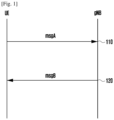
- FIG. 1 shows signaling flows between a UE and a gNB for 2 step RACH procedure according to related art.
- the LTE transmits MsgA to the gNB at operation 110.
- the gNB transmits MsgB to the UE at operation 120.
- the channel structure of MsgA includes PRACH preamble and physical uplink shared channel (PUSCH) carrying payload.
- PRACH preamble and PUSCH in a MsgA is time division multiplexed (TDMed).
- UE sends additional information, i.e., UE identifier (ID) along with PRACH preamble in first step (i.e., MsgA).
- ID UE identifier
- the UE ID can be one of random ID, S-TMSI, C-RNTI, resume ID, international mobile subscriber identity (IMSI), idle mode ID, inactive mode ID, inactive-RNTI (I-RNTI) etc.
- IMSI international mobile subscriber identity
- the UE ID can be different in different scenarios in which UE performs the 2 step RA procedure.
- the UE ID is the random ID.
- the UE ID is S-TMSI. If the UE has an assigned C-RNTI (e.g., in connected state), the UE ID is C-RNTI. In case the UE is in INACTIVE state, the UE ID is resume ID. In case MsgA includes dedicated RACH preamble, UE ID can be skipped (i.e., not included) in MsgA. In this case, gNB can identify the LTE based on a dedicated preamble.
- control information can be transmitted in MsgA.
- the control information may include one or more of connection request indication, connection (re-)establishment cause, connection resume request indication, system information (SI) request indication, information about SI message(s) requested, buffer status indication/report, beam information (e.g., one or more downlink (DL) TX beam ID(s) or synchronization signal block (SSB) ID(s)), beam failure recovery indication/information, data indicator, cell/base station (BS)/transmission reception point (TRP) switching indication, connection re-establishment indication, reconfiguration complete or handover complete message, etc. Note that any other control information is not precluded. Similar to 2 step CBRA, in a 2 step CFRA procedure, additional information can also be transmitted in MsgA in addition to the preamble.
- SI system information
- SSB synchronization signal block
- the 4 step RA procedure refers to a legacy RA procedure comprising Msg1 to Msg4 as described in the TS 38.321 and TS 36.321 specifications.
- the UE transmits MsgA wherein the C-RNTI is included in the MsgA payload.
- the LTE monitors PDCCH for MsgB reception.
- UE monitors PDCCH for MsgB reception in a time window wherein the window starts at an offset from the end of the PUSCH transmission of MsgA. The size of the window is signaled by gNB in SI or RRC signaling.
- the LTE After transmitting the MsgA including C-RNTI, if the LTE receives PDCCH addressed to C-RNTI, contention resolution is considered successful and 2 step RACH procedure is successfully completed.
- the LTE needs to also receive a timing advance (TA) command (12 bit).
- TA timing advance
- the UE will need the TA to transmit a hybrid automatic repeat request (HARQ) acknowledge (ACK) (if PDCCH schedules DL transport block (TB)) or PUSCH (if PDCCH schedules UL TB).
- HARQ hybrid automatic repeat request
- ACK hybrid automatic repeat request
- PUSCH if PDCCH schedules UL TB
- the network can control the number of times 'N', and a UE can transmit MsgA during the RA procedure. If the random access procedure is not successfully completed even after transmitting the MsgA 'N' times, the UE fallbacks to 4 step RACH procedure, i.e., the UE only (re-) transmits the PRACH preamble for the remaining RACH procedure. In case of congestion, it would be beneficial for there to be a mechanism to switch the UEs from 2 step RACH procedure to 4 step RACH procedure.
- An earlier patent document EP 3697167 A1 , cited under Art. 54(3) EPC has a filing date prior to the filing date of this application but was published on or after said filing date discloses apparatuses, systems and methods for a wireless device to perform 2-step random access procedures.
- An apparatus for performing random access procedures of a user equipment device comprises a processor configured to cause the LTE to determine that the at least one fallback criterion is satisfied and fallback to 4-step RA in response to the determination that the at least one fallback criterion is satisfied.
- the at least one fallback criterion specifies a duration of a RA response window.
- a prior art publication of " Contention resolution for 2-step RACH”, 3GPP DRAFT; R2-1903293 refers to mechanisms for contention resolution for 2-step RACH.
- a prior art publication of " Procedure for two-step RACH”, 3GPP DRAFT; R2-1904439 refers to a procedure for 2-step RACH.
- a prior art publication of US 2018/242369 A1 refers to a method of handling time alignment command during a random access procedure in an Evolved Universal Mobile Telecommunications System (E-UMTS) or a Long Term Evolution (LTE) system.
- E-UMTS Evolved Universal Mobile Telecommunications System
- LTE Long Term Evolution
- a LTE needs to receive a timing advance (TA) command.
- TA timing advance
- an aspect of the disclosure is to provide a communication method and system for converging a 5 th generation (5G) communication system for supporting higher data rates beyond a 4 th generation (4G) system.
- 5G 5 th generation
- 4G 4 th generation
- a method performed by a terminal in a wireless communication system includes transmitting, to a base station, a random access, RA, preamble of a message A, MsgA, for a 2 step RA procedure on a physical RA channel, PRACH, transmitting, to the base station, a payload of the MsgA for the 2 step RA procedure on a physical uplink shared channel, PUSCH, the payload including a cell-radio network temporary identifier, C-RNTI, receiving, from the base station, on a physical downlink control channel, PDCCH, addressed to the C-RNTI included in the payload of the MsgA, identifying that the 2 step RA procedure is successfully completed, in case that a time alignment timer (TAT) is running and the PDCCH schedule an uplink resource for a new transmission, and identifying that the 2 step RA procedure is successfully completed, in case that the TAT is not running, the PDCCH schedules a down
- a method performed by a base station in a wireless communication system includes receiving, from a terminal, a RA preamble of a MsgA for a 2 step RA procedure on a PRACH, receiving, from the terminal, a payload of the MsgA for the a 2 step RA procedure on a PUSCH, the payload including a C-RNTI, and transmitting, to the terminal, a PDCCH addressed to the C-RNTI included in the payload of the MsgA, wherein the 2 step RA procedure is successfully completed, in case that a TAT is running and the PDCCH schedules an uplink resource for a new transmission, and wherein the 2 step RA procedure is successfully completed, in case that the TAT is not running, the PDCCH schedules a downlink resource, and a TA command is transmitted in the scheduled downlink resource.
- a terminal in a wireless communication system includes a transceiver and at least one processor configured to transmit (210), to a base station via the transceiver, a RA preamble of a MsgA for a 2 step RA procedure on a PRACH, transmit, to the base station via the transceiver, a payload of the MsgA for the 2 step RA procedure on a PUSCH, the payload including a C-RNTI, receive, from the base station via the transceiver, a PDCCH addressed to the C-RNTI included in the payload of the MsgA, identify that the 2 step RA procedure is successfully completed, in case that a TAT is running and the PDCCH schedules an uplink resource for a new transmission, and identify that the 2 step RA procedure is successfully completed, in case that the TAT is not running, the PDCCH schedules a downlink resource, and a TA command is received in the scheduled downlink resource.
- a base station in a wireless communication system includes a transceiver and at least one processor configured to receive, from a terminal via the transceiver, a RA preamble of a MsgA for a 2 step RA procedure on a PRACH, receive, from the terminal via the transceiver, a payload of the MsgA for the 2 step RA procedure on a PUSCH, the payload including a C-RNTI, and transmit, to the terminal via the transceiver, a PDCCH addressed to the C-RNTI included in the payload of the MsgA, wherein the 2 step RA procedure is successfully completed, in case that a TAT is running and the PDCCH schedules an uplink resource for a new transmission, and wherein the 2 step RA procedure is successfully completed, in case that the TAT is not running, the PDCCH schedules a downlink resource, and a TA command is transmitted in the scheduled downlink resource.
- the UE uses a TA to transmit hybrid automatic repeat request (HARQ) acknowledge (ACK) (if physical downlink control channel (PDCCH) schedules downlink (DL) transport block (TB)) or physical uplink shared channel (PUSCH) (if PDCCH schedules uplink (UL) TB).
- HARQ hybrid automatic repeat request
- ACK ACK
- PDCCH physical downlink control channel
- PUSCH physical uplink shared channel
- blocks of a flowchart (or sequence diagram) and a combination of flowcharts may be represented and executed by computer program instructions.
- These computer program instructions may be loaded on a processor of a general purpose computer, special-purpose computer, or programmable data processing equipment. When the loaded program instructions are executed by the processor, they create a means for carrying out functions described in the flowchart. Because the computer program instructions may be stored in a computer readable memory that is usable in a specialized computer or a programmable data processing equipment, it is also possible to create articles of manufacture that carry out functions described in the flowchart. Because the computer program instructions may be loaded on a computer or a programmable data processing equipment, when executed as processes, they may carry out operations of functions described in the flowchart.
- a block of a flowchart may correspond to a module, a segment, or a code containing one or more executable instructions implementing one or more logical functions, or may correspond to a part thereof.
- functions described by blocks may be executed in an order different from the listed order. For example, two blocks listed in sequence may be executed at the same time or executed in reverse order.
- unit may refer to a software component or hardware component, such as, for example, a field-programmable gate array (FPGA) or an application-specific integrated circuit (ASIC) capable of carrying out a function or an operation.
- a unit, or the like is not limited to hardware or software.
- a unit, or the like may be configured so as to reside in an addressable storage medium or to drive one or more processors.
- Units, or the like may also refer to software components, object-oriented software components, class components, task components, processes, functions, attributes, procedures, subroutines, program code segments, drivers, firmware, microcode, circuits, data, databases, data structures, tables, arrays or variables.
- a function provided by a component and unit may be a combination of smaller components and units, and may be combined with others to compose larger components and units.
- Components and units may be configured to drive a device or one or more processors in a secure multimedia card.
- a base station is an entity communicating with a user equipment (UE) and may be referred to as a BS, a base transceiver station (BTS), a node B (NB), an evolved NB (eNB), an access point (AP), a fifth generation (5G) NB (SGNB), or a next generation NB (gNB).
- BTS base transceiver station
- NB node B
- eNB evolved NB
- AP access point
- 5G NB fifth generation
- gNB next generation NB
- a UE is an entity communicating with a BS and may be referred to as a UE, a device, a mobile station (MS), a mobile equipment (ME), or a terminal.
- MS mobile station
- ME mobile equipment
- LTE transmits message A (MsgA) wherein the cell-radio network temporary identifier (C-RNTI) is included in MsgA payload.
- MsgA message A
- C-RNTI cell-radio network temporary identifier
- UE monitors physical downlink control channel (PDCCH) for message B (MsgB) reception.
- PDCCH physical downlink control channel
- UE monitors PDCCH for MsgB reception in a time window wherein the window starts at an offset from the end of the physical uplink shared channel (PUSCH) transmission of MsgA.
- the size of the window is signaled by gNB in system information (SI) or RRC signaling.
- SI system information
- UE after transmitting the MsgA including C-RNTI, if UE receives PDCCH addressed to C-RNTI, contention resolution is considered successful and 2 step RACH procedure is successfully completed.
- 2 step RACH procedure for handover, SCG addition etc. UE needs to also receive timing advance (TA) command (12 bit). Note that UE will need TA to transmit hybrid automatic repeat request (HARQ) acknowledge (ACK) (if PDCCH schedules downlink (DL) transport block (TB)) or PUSCH (if PDCCH schedules uplink (UL) TB).
- HARQ hybrid automatic repeat request
- ACK hybrid automatic repeat request
- PUSCH if PDCCH schedules uplink (UL) TB.
- RACH procedure can be initiated by UE (e.g., for scheduling request (SR) or upon receiving reconfiguration with sync from gNB) or it can be initiated by network (e.g., by sending the PDCCH order).
- SR scheduling request
- gNB network
- gNB needs to transmit MsgB upon receiving MsgA.
- MsgB In order to enable gNB to avoid transmission of MsgB in directions (or coverage) of all SSBs/CSI-RSs, SSB/CSI-RS is selected by UE.
- gNB identifies the SSB/CSI-RS from the received MsgA and then transmits MsgB in the direction of the identified SSB/CSI-RS.
- gNB is able to receive PRACH preamble part of MsgA but fails to receive MsgA payload, it can still transmit MsgB (or message 2 (Msg2)) including information to fallback to 4 step RACH procedure. So, gNB should be able to determine the SSB/CSI-RS information from PRACH preamble part of MsgA instead of MsgA payload.
- PRACH preambles and PRACH occasions in 2 step RACH procedure are mapped to SSBs/CSI-RSs.
- the information (such as number of SSBs mapped per RACH occasion, number of preambles per SSB) about the mapping is signaled by gNB in RACH configuration.
- UE selects the preamble group. If RA preambles group B is configured, UE selects RA preambles group A or group B based on MsgA payload size or based on MsgA payload size and path loss. If the potential MsgA size (UL data available for transmission plus MAC header and, where required, media access control (MAC) control elements (CEs)) is greater than ra-Msg3SizeGroupA (or ra-MsgASizeGroupA) and the pathloss is less than PCMAX (of the serving cell performing the RA procedure) - preambleReceivedTargetPower - msg3-DeltaPreamble (msgA-DeltaPreamble) - messagePowerOffsetGroupB ; or if the RA procedure was initiated for the common control channel (CCCH) logical channel and the CCCH service data unit (SDU) size plus MAC subheader is greater than ra-Msg3Size
- UE selects an RA preamble randomly with equal probability from the RA preambles associated with the selected SSB and the selected RA preambles group.
- LTE selects the next available PRACH occasion from the PRACH occasions corresponding to the selected SSB.
- UE selects the PUSCH resource. If there is a one to one mapping between preambles in a PRACH occasion and associated PUSCH resources, UE selects the PUSCH resource corresponding to the selected PRACH preamble. If there is a many to one mapping between preambles in a PRACH occasion and associated PUSCH resources, UE selects the PUSCH resource corresponding to the selected PRACH preamble. Note that if there are multiple PUSCH resource pools wherein the PUSCH resource in different pool carries different MsgA payload size, UE selects the PUSCH resource from PUSCH resource pool corresponding to MsgA payload size.
- UE is in RRC _CONNECTED and hence it includes at least C-RNTI in MsgA payload.
- Other information e.g., buffer state report (BSR), power headroom report (PHR), etc.
- BSR buffer state report
- PHR power headroom report
- UE then transmits MsgA (i.e., the selected PRACH preamble is transmitted in the selected PRACH occasion.
- MsgA payload is transmitted in the selected PUSCH resource).
- ra-ResponseWindow for MsgB reception is started by UE at the first PDCCH occasion for MsgB reception that is at least one symbol away from the end of PUSCH in MsgA.
- ra-ResponseWindow should be started as early as possible to enable the gNB to transmit fallback information quickly in case gNB has received the PRACH preamble part of MsgA but fails to decode the PUSCH part of MsgA.
- a large ra-ResponseWindow can be configured to enable gNB enough processing time for transmitting MsgB corresponding to successfully received MsgA.
- UE monitors for PDCCH addressed to one or more RNTI(s).
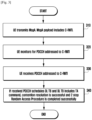
- FIG. 2 illustrates a flowchart for 2 step RA procedure according to an embodiment of the disclosure.
- LTE transmits MsgA at operation 210.
- MsgA payload includes C-RNTI.
- the UE monitors for PDCCH addressed to C-RNTI at operation 220.
- the UE receives PDCCH addressed to C-RNTI at operation 230.
- the UE determines whether TimingAllignementTimer (TAT) is running at operation 240.
- TAGs timing advanced groups
- Timing advanced group is a group of serving cells that is configured by RRC and that, for the cells with a UL configured, uses the same timing reference cell and the same timing advance value.
- a timing advance group containing the special cell (SpCell) of a MAC entity is referred to as primary timing advance group (PTAG), whereas the term secondary timing advance group (STAG) refers to other TAGs.
- TAT is maintained separately for each TAG.
- TAT corresponds to the TAG of the cell on which MsgA is transmitted. If 2 step RA procedure is supported only for SpCell, TAT corresponds to the PTAG.
- this PDCCH addressed to C-RNTI schedules UL TB. In another embodiment, this PDCCH addressed to C-RNTI schedules LTL TB or DL TB.
- TAT is not running and LTE receives PDCCH addressed to C-RNTI scheduling DL TB and absolute timing advance command is received in the scheduled DL TB, contention resolution is successful and 2 step RA procedure is completed successfully at operation 260.
- Absolute timing advance command can be included in MAC PDU (e.g. in a MAC CE). Alternately, it can be included in downlink control information (DCI).
- DCI downlink control information
- the received absolute timing advance command is applied to TAG of the cell on which MsgA is transmitted. If 2 step RA procedure is supported only for SpCell, absolute timing advance command is applied to the PTAG.
- N TA is defined in [4, TS 38.211].
- N TA is relative to the SCS of the first uplink transmission from the LTE after the reception of the MsgB. In another embodiment, it is relative to the SCS of the PUSCH in MsgA. In another embodiment, it is relative to the SCS of the first uplink transmission if LTL grant is received in MsgB/Msg2, and it is relative to the SCS of the PUSCH in MsgA if UL grant is not received in MsgB.
- 4 step RACH procedure if TAT timer is running, the received TA command is ignored. In an embodiment, in case of 2 step RACH procedure irrespective of TAT timer is running or not, UE applies the received TA command.
- RACH procedure can be initiated by UE (e.g., for SR or upon receiving reconfiguration with sync from gNB) or it can be initiated by network (e.g., by sending the PDCCH order).
- gNB needs to transmit MsgB upon receiving MsgA.
- MsgB In order to enable gNB to avoid transmission of MsgB in directions (or coverage) of all SSBs/CSI-RSs, SSB/CSI-RS is selected by UE.
- gNB identifies the SSB/CSI-RS from the received MsgA and then transmits MsgB in the direction of the identified SSB/CSI-RS.
- gNB is able to receive PRACH preamble part of MsgA but fails to receive MsgA payload, it can still transmit MsgB (or Msg2) including information to fallback to 4 step RACH procedure. So, gNB should be able to determine the SSB/CSI-RS information from PRACH preamble part of MsgA instead of MsgA payload.
- PRACH preambles and PRACH occasions in 2 step RACH procedure are mapped to SSBs/CSI-RSs.
- the information (such as number of SSBs mapped per RACH occasion, number of preambles per SSB) about the mapping is signaled by gNB in RACH configuration.
- UE selects the preamble group. If RA preambles group B is configured, UE selects RA preambles group A or group B based on MsgA payload size or based on MsgA payload size and path loss. If the potential MsgA size (UL data available for transmission plus MAC header and, where required, MAC CEs) is greater than ra-Msg3SizeGroupA (or ra-MsgASizeGroupA) and the pathloss is less than PCMAX (of the serving cell performing the RA procedure) - preambleReceivedTargetPower - msg3-DeltaPreamble (msgA-DeltaPreamble) - messagePowerOffsetGroupB ; or if the RA procedure was initiated for the CCCH logical channel and the CCCH SDU size plus MAC subheader is greater than ra-Msg3SizeGroupA : the UE selects the RA preambles group
- UE selects an RA preamble randomly with equal probability from the RA preambles associated with the selected SSB and the selected RA preambles group.
- LTE selects the next available PRACH occasion from the PRACH occasions corresponding to the selected SSB.
- UE selects the PUSCH resource. If there is a one to one mapping between preambles in a PRACH occasion and associated PUSCH resources, UE selects the PUSCH resource corresponding to the selected PRACH preamble. If there is a many to one mapping between preambles in a PRACH occasion and associated PUSCH resources, UE selects the PUSCH resource corresponding to the selected PRACH preamble. Note that if there are multiple PUSCH resource pools wherein the PUSCH resource in different pool carries different MsgA payload size, UE selects the PUSCH resource from PUSCH resource pool corresponding to MsgA payload size.
- UE is in RRC_CONNECTED and hence it includes at least C-RNTI in MsgA payload.
- Other information e.g., BSR, PHR, etc.
- BSR Packet Control Service
- PHR Packet Control Protocol
- UE is in RRC_CONNECTED and hence it includes at least C-RNTI in MsgA payload.
- Other information e.g., BSR, PHR, etc.
- UE then transmits MsgA (i.e., the selected PRACH preamble is transmitted in the selected PRACH occasion.
- MsgA payload is transmitted in the selected PUSCH resource).
- ra-ResponseWindow for MsgB reception is started by UE at the first PDCCH occasion for MsgB reception that is at least one symbol away from the end of PUSCH in MsgA.
- ra-ResponseWindow should be started as early as possible to enable the gNB to transmit fallback information quickly in case gNB has received the PRACH preamble part of MsgA but fails to decode the PUSCH part of MsgA.
- a large ra-ResponseWindow can be configured to enable gNB enough processing time for transmitting MsgB corresponding to successfully received MsgA.
- UE monitors for PDCCH addressed to one or more RNTI(s).
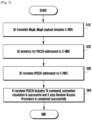
- FIG. 3 illustrates a flowchart for 2 step RA procedure.
- the LTE transmits MsgA at operation 310.
- MsgA payload includes C-RNTI.
- the UE monitors for PDCCH addressed to C-RNTI at operation 320.
- the UE receives PDCCH addressed to C-RNTI at operation 330.
- the UE receives PDCCH addressed to C-RNTI scheduling DL TB and absolute TA command is received in scheduled DL TB, contention resolution is successful and 2 step RA procedure is completed successfully at operation 340.
- the received absolute timing advance command is applied to TAG of the cell on which MsgA is transmitted. If 2 step RA procedure is supported only for SpCell, absolute timing advance command is applied to the PTAG.
- Absolute timing advance command can be included in MAC PDU. Alternately, it can be included in DCI.
- T A Absolute timing advance command [11, TS 38.321]
- N TA is defined in [4, TS 38.211].
- N TA is relative to the SCS of the first uplink transmission from the LTE after the reception of the MsgB. In another example, it is relative to the SCS of the PUSCH in MsgA. In another example, it is relative to the SCS of the first uplink transmission if LTL grant is received in MsgB/Msg2, and it is relative to the SCS of the PUSCH in MsgA if UL grant is not received in MsgB.
- 4 step RACH procedure if TAT timer is running, the received TA command is ignored. In an example, in case of 2 step RACH procedure irrespective of TAT timer is running or not, UE applies the received TA command.
- RACH procedure can be initiated by LTE (e.g., for SR or upon receiving reconfiguration with sync from gNB) or it can be initiated by network (e.g., by sending the PDCCH order).
- gNB needs to transmit MsgB upon receiving MsgA.
- MsgB In order to enable gNB to avoid transmission of MsgB in directions (or coverage) of all SSBs/CSI-RSs, SSB/CSI-RS is selected by UE.
- gNB identifies the SSB/CSI-RS from the received MsgA and then transmits MsgB in the direction of the identified SSB/CSI-RS.
- gNB is able to receive PRACH preamble part of MsgA but fails to receive MsgA payload, it can still transmit MsgB (or Msg2) including information to fallback to 4 step RACH procedure. So, gNB should be able to determine the SSB/CSI-RS information from PRACH preamble part of MsgA instead of MsgA payload.
- PRACH preambles and PRACH occasions in 2 step RACH procedure are mapped to SSBs/CSI-RSs.
- the information (such as number of SSBs mapped per RACH occasion, number of preambles per SSB) about the mapping is signaled by gNB in RACH configuration.
- UE selects the preamble group. If RA preambles group B is configured, UE selects RA preambles group A or group B based on MsgA payload size or based on MsgA payload size and path loss. If the potential MsgA size (UL data available for transmission plus MAC header and, where required, MAC CEs) is greater than ra-Msg3SizeGroupA (or ra-MsgASizeGroupA) and the pathloss is less than PCMAX (of the serving cell performing the RA procedure) - preambleReceivedTargetPower - msg3-DeltaPreamble (msgA-DeltaPreamble) - messagePowerOffsetGroupB ; or if the RA procedure was initiated for the CCCH logical channel and the CCCH SDU size plus MAC subheader is greater than ra-Msg3SizeGroupA : the UE selects the RA preambles group
- UE selects an RA preamble randomly with equal probability from the RA preambles associated with the selected SSB and the selected RA preambles group.
- LTE selects the next available PRACH occasion from the PRACH occasions corresponding to the selected SSB.
- UE selects the PUSCH resource. If there is a one to one mapping between preambles in a PRACH occasion and associated PUSCH resources, UE selects the PUSCH resource corresponding to the selected PRACH preamble. If there is a many to one mapping between preambles in a PRACH occasion and associated PUSCH resources, UE selects the PUSCH resource corresponding to the selected PRACH preamble. Note that if there are multiple PUSCH resource pools wherein the PUSCH resource in different pool carries different MsgA payload size, UE selects the PUSCH resource from PUSCH resource pool corresponding to MsgA payload size.
- UE is in RRC_CONNECTED and hence it includes at least C-RNTI in MsgA payload.
- Other information e.g., BSR, PHR, etc.
- BSR Packet Control Service
- PHR Packet Control Protocol
- UE is in RRC_CONNECTED and hence it includes at least C-RNTI in MsgA payload.
- Other information e.g., BSR, PHR, etc.
- UE then transmits MsgA (i.e., the selected PRACH preamble is transmitted in the selected PRACH occasion.
- MsgA payload is transmitted in the selected PUSCH resource).
- ra-ResponseWindow for MsgB reception is started by UE at the first PDCCH occasion for MsgB reception that is at least one symbol away from the end of PUSCH in MsgA.
- ra-ResponseWindow should be started as early as possible to enable the gNB to transmit fallback information quickly in case gNB has received the PRACH preamble part of MsgA but fails to decode the PUSCH part of MsgA.
- a large ra-ResponseWindow can be configured to enable gNB enough processing time for transmitting MsgB corresponding to successfully received MsgA.
- UE monitors for PDCCH addressed to one or more RNTI(s).
- FIG. 4 illustrates a flowchart for 2 step RA procedure.
- the UE transmits MsgA at operation 410.
- MsgA payload includes C-RNTI.
- the UE monitors for PDCCH addressed to C-RNTI at operation 420.
- the UE receives PDCCH addressed to C-RNTI at operation 430.
- the UE determines whether TAT is running at operation 440.
- Timing advanced group is a group of serving cells that is configured by RRC and that, for the cells with a UL configured, uses the same timing reference cell and the same timing advance value.
- a timing advance group containing the SpCell of a MAC entity is referred to as PTAG, whereas the term STAG refers to other TAGs.
- TAT is maintained separately for each TAG.
- TAT corresponds to the TAG of the cell on which MsgA is transmitted. If 2 step RA procedure is supported only for SpCell, TAT corresponds to the PTAG.
- this PDCCH addressed to C-RNTI schedules UL TB. In another example, this PDCCH addressed to C-RNTI schedules LTL TB or DL TB.
- TAT is not running and LTE receives PDCCH addressed to C-RNTI and it includes absolute TA command
- contention resolution is successful and 2 step RA procedure is completed successfully at operation 460.
- this PDCCH addressed to C-RNTI schedules UL TB.
- this PDCCH addressed to C-RNTI schedules UL TB or DL TB.
- the received absolute timing advance command is applied to TAG of the cell on which MsgA is transmitted. If 2 step RA procedure is supported only for SpCell, absolute Timing advance command is applied to the PTAG.
- T A Absolute timing advance command [11, TS 38.321]
- N TA is defined in [4, TS 38.211].
- N TA is relative to the SCS of the first uplink transmission from the LTE after the reception of the MsgB. In another example, it is relative to the SCS of the PUSCH in MsgA. In another example, it is relative to the SCS of the first uplink transmission if LTL grant is received in MsgB/Msg2, and it is relative to the SCS of the PUSCH in MsgA if UL grant is not received in MsgB.
- 4 step RACH procedure if TAT timer is running, the received TA command is ignored. In an example, in case of 2 step RACH procedure irrespective of TAT timer is running or not, UE applies the received TA command.
- RACH procedure can be initiated by LTE (e.g., for SR or upon receiving reconfiguration with sync from gNB) or it can be initiated by network (e.g., by sending the PDCCH order).
- gNB needs to transmit MsgB upon receiving MsgA.
- MsgB In order to enable gNB to avoid transmission of MsgB in directions (or coverage) of all SSBs/CSI-RSs, SSB/CSI-RS is selected by UE.
- gNB identifies the SSB/CSI-RS from the received MsgA and then transmits MsgB in the direction of the identified SSB/CSI-RS.
- gNB is able to receive PRACH preamble part of MsgA but fails to receive MsgA payload, it can still transmit MsgB (or Msg2) including information to fallback to 4 step RACH procedure. So, gNB should be able to determine the SSB/CSI-RS information from PRACH preamble part of MsgA instead of MsgA payload.
- PRACH preambles and PRACH occasions in 2 step RACH procedure are mapped to SSBs/CSI-RSs.
- the information (such as number of SSBs mapped per RACH occasion, number of preambles per SSB) about the mapping is signaled by gNB in RACH configuration.
- UE selects the preamble group. If RA preambles group B is configured, UE selects RA preambles group A or group B based on MsgA payload size or based on MsgA payload size and path loss. If the potential MsgA size (UL data available for transmission plus MAC header and, where required, MAC CEs) is greater than ra-Msg3SizeGroupA (or ra-MsgASizeGroupA) and the pathloss is less than PCMAX (of the serving cell performing the RA procedure) - preambleReceivedTargetPower - msg3-DeltaPreamble (msgA-DeltaPreamble) - messagePowerOffsetGroupB ; or if the RA procedure was initiated for the CCCH logical channel and the CCCH SDU size plus MAC subheader is greater than ra-Msg3SizeGroupA : the UE selects the RA preambles group
- UE selects an RA preamble randomly with equal probability from the RA preambles associated with the selected SSB and the selected RA preambles group.
- LTE selects the next available PRACH occasion from the PRACH occasions corresponding to the selected SSB.
- UE selects the PUSCH resource. If there is a one to one mapping between preambles in a PRACH occasion and associated PUSCH resources, UE selects the PUSCH resource corresponding to the selected PRACH preamble. If there is a many to one mapping between preambles in a PRACH occasion and associated PUSCH resources, UE selects the PUSCH resource corresponding to the selected PRACH preamble. Note that if there are multiple PUSCH resource pools wherein the PUSCH resource in different pool carries different MsgA payload size, UE selects the PUSCH resource from PUSCH resource pool corresponding to MsgA payload size.
- UE is in RRC_CONNECTED and hence it includes at least C-RNTI in MsgA payload.
- Other information e.g., BSR, PHR, etc.
- BSR Packet Control Service
- PHR Packet Control Protocol
- UE is in RRC_CONNECTED and hence it includes at least C-RNTI in MsgA payload.
- Other information e.g., BSR, PHR, etc.
- UE then transmits MsgA (i.e., the selected PRACH preamble is transmitted in the selected PRACH occasion.
- MsgA payload is transmitted in the selected PUSCH resource).
- ra-ResponseWindow for MsgB reception is started by UE at the first PDCCH occasion for MsgB reception that is at least one symbol away from the end of PUSCH in MsgA.
- ra-ResponseWindow should be started as early as possible to enable the gNB to transmit fallback information quickly in case gNB has received the PRACH preamble part of MsgA but fails to decode the PUSCH part of MsgA.
- a large ra-ResponseWindow can be configured to enable gNB enough processing time for transmitting MsgB corresponding to successfully received MsgA.
- UE monitors for PDCCH addressed to one or more RNTI(s).
- FIG. 5 illustrates a flowchart for 2 step RA procedure.
- the UE transmits MsgA at operation 510.
- MsgA payload includes C-RNTI.
- the UE monitors for PDCCH addressed to C-RNTI at operation 520.
- the UE receives PDCCH addressed to C-RNTI at operation 530.
- UE receives PDCCH addressed to C-RNTI and it includes absolute TA command, contention resolution is successful and 2 step RA procedure is completed successfully at operation 540.
- this PDCCH addressed to C-RNTI schedules UL TB.
- this PDCCH addressed to C-RNTI schedules LTL TB or DL TB.
- the received absolute timing advance command is applied to TAG of the cell on which MsgA is transmitted. If 2 step RA procedure is supported only for SpCell, absolute Timing advance command is applied to the PTAG.
- T A Absolute timing advance command [11, TS 38.321]
- N TA is defined in [4, TS 38.211].
- N TA is relative to the SCS of the first uplink transmission from the LTE after the reception of the MsgB. In another example, it is relative to the SCS of the PUSCH in MsgA. In another example, it is relative to the SCS of the first uplink transmission if LTL grant is received in MsgB/Msg2, and it is relative to the SCS of the PUSCH in MsgA if UL grant is not received in MsgB.
- 4 step RACH procedure if TAT timer is running, the received TA command is ignored. In an example, in case of 2 step RACH procedure irrespective of TAT timer is running or not, UE applies the received TA command.
- RACH procedure can be initiated by LTE (e.g., for SR or upon receiving reconfiguration with sync from gNB) or it can be initiated by network (e.g., by sending the PDCCH order).
- gNB needs to transmit MsgB upon receiving MsgA.
- MsgB In order to enable gNB to avoid transmission of MsgB in directions (or coverage) of all SSBs/CSI-RSs, SSB/CSI-RS is selected by UE.
- gNB identifies the SSB/CSI-RS from the received MsgA and then transmits MsgB in the direction of the identified SSB/CSI-RS.
- gNB is able to receive PRACH preamble part of MsgA but fails to receive MsgA payload, it can still transmit MsgB (or Msg2) including information to fallback to 4 step RACH procedure. So, gNB should be able to determine the SSB/CSI-RS information from PRACH preamble part of MsgA instead of MsgA payload.
- PRACH preambles and PRACH occasions in 2 step RACH procedure are mapped to SSBs/CSI-RSs.
- the information (such as number of SSBs mapped per RACH occasion, number of preambles per SSB) about the mapping is signaled by gNB in RACH configuration.
- UE selects the preamble group. If RA preambles group B is configured, UE selects RA preambles group A or group B based on MsgA payload size or based on MsgA payload size and path loss. If the potential MsgA size (UL data available for transmission plus MAC header and, where required, MAC CEs) is greater than ra-Msg3SizeGroupA (or ra-MsgASizeGroupA) and the pathloss is less than PCMAX (of the serving cell performing the RA procedure) - preambleReceivedTargetPower - msg3-DeltaPreamble (msgA-DeltaPreamble) - messagePowerOffsetGroupB ; or if the RA procedure was initiated for the CCCH logical channel and the CCCH SDU size plus MAC subheader is greater than ra-Msg3SizeGroupA : the UE selects the RA preambles group
- UE selects an RA preamble randomly with equal probability from the RA preambles associated with the selected SSB and the selected RA preambles group.
- LTE selects the next available PRACH occasion from the PRACH occasions corresponding to the selected SSB.
- UE selects the PUSCH resource. If there is a one to one mapping between preambles in a PRACH occasion and associated PUSCH resources, UE selects the PUSCH resource corresponding to the selected PRACH preamble. If there is a many to one mapping between preambles in a PRACH occasion and associated PUSCH resources, UE selects the PUSCH resource corresponding to the selected PRACH preamble. Note that if there are multiple PUSCH resource pools wherein the PUSCH resource in different pool carries different MsgA payload size, UE selects the PUSCH resource from PUSCH resource pool corresponding to MsgA payload size.
- UE is in RRC_CONNECTED and hence it includes at least C-RNTI in MsgA payload.
- Other information e.g., BSR, PHR, etc.
- BSR Packet Control Service
- PHR Packet Control Protocol
- UE is in RRC_CONNECTED and hence it includes at least C-RNTI in MsgA payload.
- Other information e.g., BSR, PHR, etc.
- UE then transmits MsgA (i.e., the selected PRACH preamble is transmitted in the selected PRACH occasion.
- MsgA payload is transmitted in the selected PUSCH resource).
- ra-ResponseWindow for MsgB reception is started by UE at the first PDCCH occasion for MsgB reception that is at least one symbol away from the end of PUSCH in MsgA.
- ra-ResponseWindow should be started as early as possible to enable the gNB to transmit fallback information quickly in case gNB has received the PRACH preamble part of MsgA but fails to decode the PUSCH part of MsgA.
- a large ra-ResponseWindow can be configured to enable gNB enough processing time for transmitting MsgB corresponding to successfully received MsgA.
- UE monitors for PDCCH addressed to one or more RNTI(s).
- Timing advanced group is a group of serving cells that is configured by RRC and that, for the cells with a UL configured, uses the same timing reference cell and the same timing advance value.
- a timing advance group containing the SpCell of a MAC entity is referred to as PTAG, whereas the term STAG refers to other TAGs.
- TAT is maintained separately for each TAG. So the TAT in this operation corresponds to the TAG of the cell on which MsgA is transmitted. If 2 step RA procedure is supported only for SpCell, TAT corresponds to the PTAG. The received absolute timing advance command is applied to TAG of the cell on which MsgA is transmitted. If 2 step RA procedure is supported only for SpCell, absolute timing advance command is applied to the PTAG.
- TAT is not running and UE receives MsgB including its C-RNTI and it includes absolute TA command, contention resolution is successful and 2 step RA procedure is completed successfully.
- T A Absolute timing advance command [11, TS 38.321]
- N TA is defined in [4, TS 38.211].
- N TA is relative to the SCS of the first uplink transmission from the LTE after the reception of the MsgB. In another example, it is relative to the SCS of the PUSCH in MsgA. In another example, it is relative to the SCS of the first uplink transmission if LTL grant is received in MsgB/Msg2, and it is relative to the SCS of the PUSCH in MsgA if UL grant is not received in MsgB.
- 4 step RACH procedure if TAT timer is running, the received TA command is ignored. In an example, in case of 2 step RACH procedure irrespective of TAT timer is running or not, UE applies the received TA command.
- RACH procedure can be initiated by LTE (e.g., for SR or upon receiving reconfiguration with sync from gNB) or it can be initiated by network (e.g., by sending the PDCCH order).
- gNB needs to transmit MsgB upon receiving MsgA.
- MsgB In order to enable gNB to avoid transmission of MsgB in directions (or coverage) of all SSBs/CSI-RSs, SSB/CSI-RS is selected by UE.
- gNB identifies the SSB/CSI-RS from the received MsgA and then transmits MsgB in the direction of the identified SSB/CSI-RS.
- gNB is able to receive PRACH preamble part of MsgA but fails to receive MsgA payload, it can still transmit MsgB (or Msg2) including information to fallback to 4 step RACH procedure. So, gNB should be able to determine the SSB/CSI-RS information from PRACH preamble part of MsgA instead of MsgA payload.
- PRACH preambles and PRACH occasions in 2 step RACH procedure are mapped to SSBs/CSI-RSs.
- the information (such as number of SSBs mapped per RACH occasion, number of preambles per SSB) about the mapping is signaled by gNB in RACH configuration.
- UE selects the preamble group. If RA preambles group B is configured, UE selects RA preambles group A or group B based on MsgA payload size or based on MsgA payload size and path loss. If the potential MsgA size (UL data available for transmission plus MAC header and, where required, MAC CEs) is greater than ra-Msg3SizeGroupA (or ra-MsgASizeGroupA) and the pathloss is less than PCMAX (of the serving cell performing the RA procedure) - preambleReceivedTargetPower - msg3-DeltaPreamble (msgA-DeltaPreamble) - messagePowerOffsetGroupB ; or if the RA procedure was initiated for the CCCH logical channel and the CCCH SDU size plus MAC subheader is greater than ra-Msg3SizeGroupA : the UE selects the RA preambles group
- UE selects an RA preamble randomly with equal probability from the RA preambles associated with the selected SSB and the selected RA preambles group.
- LTE selects the next available PRACH occasion from the PRACH occasions corresponding to the selected SSB.
- UE selects the PUSCH resource. If there is a one to one mapping between preambles in a PRACH occasion and associated PUSCH resources, UE selects the PUSCH resource corresponding to the selected PRACH preamble. If there is a many to one mapping between preambles in a PRACH occasion and associated PUSCH resources, UE selects the PUSCH resource corresponding to the selected PRACH preamble. Note that if there are multiple PUSCH resource pools wherein the PUSCH resource in different pool carries different MsgA payload size, UE selects the PUSCH resource from PUSCH resource pool corresponding to MsgA payload size.
- UE is in RRC_CONNECTED and hence it includes at least C-RNTI in MsgA payload.
- Other information e.g., BSR, PHR, etc.
- BSR Packet Control Service
- PHR Packet Control Protocol
- UE is in RRC_CONNECTED and hence it includes at least C-RNTI in MsgA payload.
- Other information e.g., BSR, PHR, etc.
- UE then transmits MsgA (i.e., the selected PRACH preamble is transmitted in the selected PRACH occasion.
- MsgA payload is transmitted in the selected PUSCH resource).
- ra-ResponseWindow for MsgB reception is started by UE at the first PDCCH occasion for MsgB reception that is at least one symbol away from the end of PUSCH in MsgA.
- ra-ResponseWindow should be started as early as possible to enable the gNB to transmit fallback information quickly in case gNB has received the PRACH preamble part of MsgA but fails to decode the PUSCH part of MsgA.
- a large ra-ResponseWindow can be configured to enable gNB enough processing time for transmitting MsgB corresponding to successfully received MsgA.
- UE monitors for PDCCH addressed to one or more RNTI(s).
- UE receives MsgB including its C-RNTI and it includes absolute TA command, contention resolution is successful and 2 step RA procedure is completed successfully.
- the received absolute timing advance command is applied to TAG of the cell on which MsgA is transmitted. If 2 step RA procedure is supported only for SpCell, absolute timing advance command is applied to the PTAG.
- T A Absolute timing advance command [11, TS 38.321]
- N TA is defined in [4, TS 38.211].
- N TA is relative to the SCS of the first uplink transmission from the LTE after the reception of the MsgB. In another example, it is relative to the SCS of the PUSCH in MsgA. In another example, it is relative to the SCS of the first uplink transmission if LTL grant is received in MsgB/Msg2, and it is relative to the SCS of the PUSCH in MsgA if UL grant is not received in MsgB.
- 4 step RACH procedure if TAT timer is running, the received TA command is ignored. In an example, in case of 2 step RACH procedure irrespective of TAT timer is running or not, UE applies the received TA command.
- RACH procedure is initiated.
- RACH procedure can be initiated by UE (e.g., for SR or upon receiving reconfiguration with sync from gNB) or it can be initiated by network (e.g., by sending the PDCCH order).
- gNB needs to transmit MsgB upon receiving MsgA.
- MsgB In order to enable gNB to avoid transmission of MsgB in directions (or coverage) of all SSBs/CSI-RSs, SSB/CSI-RS is selected by UE.
- gNB identifies the SSB/CSI-RS from the received MsgA and then transmits MsgB in the direction of the identified SSB/CSI-RS.
- gNB is able to receive PRACH preamble part of MsgA but fails to receive MsgA payload, it can still transmit MsgB (or Msg2) including information to fallback to 4 step RACH procedure. So, gNB should be able to determine the SSB/CSI-RS information from PRACH preamble part of MsgA instead of MsgA payload.
- PRACH preambles and PRACH occasions in 2 step RACH procedure are mapped to SSBs/CSI-RSs.
- the information (such as number of SSBs mapped per RACH occasion, number of preambles per SSB) about the mapping is signaled by gNB in RACH configuration.
- UE selects the preamble group. If RA preambles group B is configured, UE selects RA preambles group A or group B based on MsgA payload size or based on MsgA payload size and path loss. If the potential MsgA size (UL data available for transmission plus MAC header and, where required, MAC CEs) is greater than ra-Msg3SizeGroupA (or ra-MsgASizeGroupA) and the pathloss is less than PCMAX (of the serving cell performing the RA procedure) - preambleReceivedTargetPower - msg3-DeltaPreamble (msgA-DeltaPreamble) - messagePowerOffsetGroupB ; or if the RA procedure was initiated for the CCCH logical channel and the CCCH SDU size plus MAC subheader is greater than ra-Msg3SizeGroupA : the UE selects the RA preambles group
- UE selects an RA preamble randomly with equal probability from the RA preambles associated with the selected SSB and the selected RA preambles group.
- LTE selects the next available PRACH occasion from the PRACH occasions corresponding to the selected SSB.
- UE selects the PUSCH resource. If there is a one to one mapping between preambles in a PRACH occasion and associated PUSCH resources, UE selects the PUSCH resource corresponding to the selected PRACH preamble. If there is a many to one mapping between preambles in a PRACH occasion and associated PUSCH resources, UE selects the PUSCH resource corresponding to the selected PRACH preamble. Note that if there are multiple PUSCH resource pools wherein the PUSCH resource in different pool carries different MsgA payload size, UE selects the PUSCH resource from PUSCH resource pool corresponding to MsgA payload size.
- LTE generates MsgA payload.
- UE then transmits MsgA (i.e., the selected PRACH preamble is transmitted in the selected PRACH occasion.
- MsgA payload is transmitted in the selected PUSCH resource).
- ra-ResponseWindow for MsgB reception is started by UE at the first PDCCH occasion for MsgB reception that is at least one symbol away from the end of PUSCH in MsgA.
- ra-ResponseWindow should be started as early as possible to enable the gNB to transmit fallback information quickly in case gNB has received the PRACH preamble part of MsgA but fails to decode the PUSCH part of MsgA.
- a large ra-ResponseWindow can be configured to enable gNB enough processing time for transmitting MsgB corresponding to successfully received MsgA.
- UE monitors for PDCCH addressed to one or more RNTI(s).
- UE If UE receives MsgB and contention resolution is successful upon receiving the MsgB, UE transmits HARQ ACK for the TB in which this MsgB was received.
- PDSCH HARQ feedback timing indicator is included in the PDCCH addressed to RA-RNTI (or RNTI for MsgB reception). Alternately, HARQ feedback timing indicator can be included in MsgB.
- PDSCH HARQ feedback timing indicator is an index to an entry in list of K1 values which is configured by RRC. If PDSCH for MsgB ends in slot 'n', UE transmits HARQ ACK in slot 'n+K1'.
- PDSCH HARQ feedback timing indicator is not included in the PDCCH addressed to RA-RNTI.
- LTE receives MsgB and contention resolution is not successful upon receiving the MsgB, UE does not transmit HARQ ACK for the TB in which this MsgB was received.
- network can direct UE(s) performing 2 step RACH procedure to switch to 4 step RACH procedure in case of congestion on 2 step RACH resources.
- gNB can signal a pre-defined backoff index or a separate indication in MsgB to direct the UE(s) performing 2 step RACH procedure to switch to 4 step RACH procedure, i.e., UE only (re-) transmits the PRACH preamble for the remaining RACH procedure.
- RACH procedure is initiated.
- RACH procedure can be initiated by UE (e.g., for SR or upon receiving reconfiguration with sync from gNB) or it can be initiated by network (e.g., by sending the PDCCH order).
- gNB needs to transmit MsgB upon receiving MsgA.
- MsgB In order to enable gNB to avoid transmission of MsgB in directions (or coverage) of all SSBs/CSI-RSs, SSB/CSI-RS is selected by UE.
- gNB identifies the SSB/CSI-RS from the received MsgA and then transmits MsgB in the direction of the identified SSB/CSI-RS.
- gNB is able to receive PRACH preamble part of MsgA but fails to receive MsgA payload, it can still transmit MsgB (or Msg2) including information to fallback to 4 step RACH procedure. So, gNB should be able to determine the SSB/CSI-RS information from PRACH preamble part of MsgA instead of MsgA payload.
- PRACH preambles and PRACH occasions in 2 step RACH procedure are mapped to SSBs/CSI-RSs.
- the information (such as number of SSBs mapped per RACH occasion, number of preambles per SSB) about the mapping is signaled by gNB in RACH configuration.
- UE selects the preamble group. If RA preambles group B is configured, UE selects RA preambles group A or group B based on MsgA payload size or based on MsgA payload size and path loss. If the potential MsgA size (UL data available for transmission plus MAC header and, where required, MAC CEs) is greater than ra-Msg3SizeGroupA (or ra-MsgASizeGroupA) and the pathloss is less than PCMAX (of the serving cell performing the RA procedure) - preambleReceivedTargetPower - msg3-DeltaPreamble (msgA-DeltaPreamble) - messagePowerOffsetGroupB ; or if the RA procedure was initiated for the CCCH logical channel and the CCCH SDU size plus MAC subheader is greater than ra-Msg3SizeGroupA : the UE selects the RA preambles group
- UE selects an RA preamble randomly with equal probability from the RA preambles associated with the selected SSB and the selected RA preambles group.
- LTE selects the next available PRACH occasion from the PRACH occasions corresponding to the selected SSB.
- UE selects the PUSCH resource. If there is a one to one mapping between preambles in a PRACH occasion and associated PUSCH resources, UE selects the PUSCH resource corresponding to the selected PRACH preamble. If there is a many to one mapping between preambles in a PRACH occasion and associated PUSCH resources, UE selects the PUSCH resource corresponding to the selected PRACH preamble. Note that if there are multiple PUSCH resource pools wherein the PUSCH resource in different pool carries different MsgA payload size, UE selects the PUSCH resource from PUSCH resource pool corresponding to MsgA payload size.
- LTE generates MsgA payload.
- UE then transmits MsgA (i.e., the selected PRACH preamble is transmitted in the selected PRACH occasion.
- MsgA payload is transmitted in the selected PUSCH resource).
- ra-ResponseWindow for MsgB reception is started by UE at the first PDCCH occasion for MsgB reception that is at least one symbol away from the end of PUSCH in MsgA.
- ra-ResponseWindow should be started as early as possible to enable the gNB to transmit fallback information quickly in case gNB has received the PRACH preamble part of MsgA but fails to decode the PUSCH part of MsgA.
- a large ra-ResponseWindow can be configured to enable gNB enough processing time for transmitting MsgB corresponding to successfully received MsgA.
- UE monitors for PDCCH addressed to one or more RNTI(s) (e.g., RA-RNTI (or RNTI for MsgB reception), C-RNTI).
- RNTI e.g., RA-RNTI (or RNTI for MsgB reception), C-RNTI.
- gNB can signal a pre-defined backoff index in MsgB to direct the UE(s) performing 2 step RACH procedure to switch to 4 step RACH procedure.
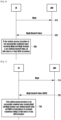
- FIG. 6 shows signaling flows between a UE and a gNB for switching from 2 step RA procedure to 4 step RACH procedure according to an embodiment of the disclosure.
- the UE transmits MsgA to the gNB at operation 610.
- the gNB transmits MsgB to the UE at operation 620.
- UE switches to 4 step RACH procedure, i.e., UE (re-) transmits the PRACH preamble (i.e., Msg1) at operation 630.
- UE selects a random backoff time according to a uniform distribution between 0 and the default back off value.
- the default back off value can be pre-defined or signaled by gNB in system information or dedicated RRC signaling.
- gNB may signal two backoff indexes in MsgB.
- One backoff index is set to a pre-defined backoff index.
- Another backoff index is set to a non-predefined backoff index.
- LTE selects a random backoff time according to a uniform distribution between 0 and the back off value corresponding to the non pre-defined backoff index. After the back off time, UE switches to 4 step RACH procedure as MsgB includes the pre-defined backoff index.
- UE Upon initiation of RA procedure, UE sets the PREAMBLE_TRANSMISSION_COUNTER and PREAMBLE POWER RAMPING COUNTER to 1. For each subsequent MsgA transmission (PRACH preamble and PUSCH (i.e. MsgA payload)), UE increments PREAMBLE_TRANSMISSION_COUNTER.
- PREAMBLE POWER RAMPING COUNTER is increments if all of the following conditions are met: if the notification of suspending power ramping counter has not been received from lower layers; and if listen before talk (LBT) failure indication was not received from lower layers for the last RA preamble transmission; and if SSB or CSI-RS selected is not changed from the selection in the last RA preamble transmission.
- LBT listen before talk
- UE Upon switching to 4 step RACH procedure (based on above procedure (as in FIG. 6 ) or any other trigger), UE handles the
- option to select can be indicated by network in system information or dedicated RRC signaling or in MsgB.
- multiple backoff indexes can be pre-defined. Each of these pre-defined backoff indexes can be mapped to one of the options listed above.
- UE will apply 4 step RACH configuration (power step, received target power, RA response (RAR) window size, etc.) upon switching to 4 step RACH procedure.
- 4 step RACH configuration power step, received target power, RA response (RAR) window size, etc.
- Preamble group selection upon switching If UE is performing 4 step RA procedure as a result of fallback/switching from 2 step RA procedure, LTE shall not perform preamble group reselection for Msg1 transmission. UE uses the same preamble group as selected during 2 step RA procedure. This will enable LTE to transmit MsgA payload as Msg3 during the 4 step RA procedure.
- UL carrier upon switching If MsgA was transmitted on supplementary UL (SUL) and SUL does not support 4 step RA procedure, LTE uses LTL upon switching to 4 step RA procedure. If MsgA was transmitted on LTL and LTL does not support 4 step RA procedure, UE uses SUL upon switching to 4 step RA procedure. In an embodiment, if MsgA was transmitted on SUL and SUL does not support 4 step RA procedure, UE does not switch to 4 step RA procedure. In an embodiment, if MsgA was transmitted on UL and UL does not support 4 step RA procedure, UE does not switch to 4 step RA procedure.
- RACH procedure is initiated.
- RACH procedure can be initiated by UE (e.g., for SR or upon receiving reconfiguration with sync from gNB) or it can be initiated by network (e.g., by sending the PDCCH order).
- gNB needs to transmit MsgB upon receiving MsgA.
- MsgB In order to enable gNB to avoid transmission of MsgB in directions (or coverage) of all SSBs/CSI-RSs, SSB/CSI-RS is selected by UE.
- gNB identifies the SSB/CSI-RS from the received MsgA and then transmits MsgB in the direction of the identified SSB/CSI-RS.
- gNB is able to receive PRACH preamble part of MsgA but fails to receive MsgA payload, it can still transmit MsgB (or Msg2) including information to fallback to 4 step RACH procedure. So, gNB should be able to determine the SSB/CSI-RS information from PRACH preamble part of MsgA instead of MsgA payload.
- PRACH preambles and PRACH occasions in 2 step RACH procedure are mapped to SSBs/CSI-RSs.
- the information (such as number of SSBs mapped per RACH occasion, number of preambles per SSB) about the mapping is signaled by gNB in RACH configuration.
- UE selects the preamble group. If RA preambles group B is configured, UE selects RA preambles group A or group B based on MsgA payload size or based on MsgA payload size and path loss. If the potential MsgA size (UL data available for transmission plus MAC header and, where required, MAC CEs) is greater than ra-Msg3SizeGroupA (or ra-MsgASizeGroupA) and the pathloss is less than PCMAX (of the serving cell performing the RA procedure) - preambleReceivedTargetPower - msg3-DeltaPreamble (msgA-DeltaPreamble) - messagePowerOffsetGroupB ; or if the RA procedure was initiated for the CCCH logical channel and the CCCH SDU size plus MAC subheader is greater than ra-Msg3SizeGroupA : the UE selects the RA preambles group
- UE selects an RA preamble randomly with equal probability from the RA preambles associated with the selected SSB and the selected RA preambles group.
- LTE selects the next available PRACH occasion from the PRACH occasions corresponding to the selected SSB.
- UE selects the PUSCH resource. If there is a one to one mapping between preambles in a PRACH occasion and associated PUSCH resources, UE selects the PUSCH resource corresponding to the selected PRACH preamble. If there is a many to one mapping between preambles in a PRACH occasion and associated PUSCH resources, UE selects the PUSCH resource corresponding to the selected PRACH preamble. Note that if there are multiple PUSCH resource pools wherein the PUSCH resource in different pool carries different MsgA payload size, UE selects the PUSCH resource from PUSCH resource pool corresponding to MsgA payload size.
- LTE generates MsgA payload.
- UE then transmits MsgA (i.e., the selected PRACH preamble is transmitted in the selected PRACH occasion.
- MsgA payload is transmitted in the selected PUSCH resource).
- ra-ResponseWindow for MsgB reception is started by UE at the first PDCCH occasion for MsgB reception that is at least one symbol away from the end of PUSCH in MsgA.
- ra-ResponseWindow should be started as early as possible to enable the gNB to transmit fallback information quickly in case gNB has received the PRACH preamble part of MsgA but fails to decode the PUSCH part of MsgA.
- a large ra-ResponseWindow can be configured to enable gNB enough processing time for transmitting MsgB corresponding to successfully received MsgA.
- UE monitors for PDCCH addressed to one or more RNTI(s) (e.g., RA-RNTI (or RNTI for MsgB reception), C-RNTI).
- RNTI e.g., RA-RNTI (or RNTI for MsgB reception), C-RNTI.
- gNB can signal a pre-defined backoff index in MsgB to direct the UE(s) performing 2 step RACH procedure to switch to 4 step RACH procedure.
- FIG. 7 shows signaling flows between a LTE and a gNB for switching from 2 step RA procedure to 4 step RACH procedure.
- the LTE transmits MsgA to the gNB at operation 710.
- the gNB transmits MsgB to the UE at operation 720.
- the RA procedure is not successfully completed and the received MsgB includes a pre-defined backoff index and a random access preamble identifier (RAPID) corresponding to PRACH preambles transmitted by LTE in MsgA
- RAPID random access preamble identifier
- LTE switches to 4 step RACH procedure, i.e., UE (re-) transmits the PRACH preamble (i.e., Msg1) at operation 730.
- LTE selects a random backoff time according to a uniform distribution between 0 and the default back off value.
- the default back off value can be pre-defined or signaled by gNB in system information or dedicated RRC signaling.
- gNB may signal two backoff indexes in MsgB.
- One backoff index is set to a pre-defined backoff index.
- Another backoff index is set to a non pre-defined backoff index.
- LTE selects a random backoff time according to a uniform distribution between 0 and the back off value corresponding to the non pre-defined backoff index. After the back off time, UE switches to 4 step RACH procedure as MsgB includes the pre-defined backoff index.
- UE Upon initiation of RA procedure, UE sets the PREAMBLE_TRANSMISSION_COUNTER and PREAMBLE POWER RAMPING COUNTER to 1. For each subsequent MsgA transmission (PRACH preamble and PUSCH (i.e. MsgA payload)), UE increments PREAMBLE_TRANSMISSION_COUNTER.
- PREAMBLE_POWER_RAMPING_COUNTER is increments if all of the following conditions are met: if the notification of suspending power ramping counter has not been received from lower layers; and if LBT failure indication was not received from lower layers for the last RA preamble transmission; and if SSB or CSI-RS selected is not changed from the selection in the last RA preamble transmission.
- UE Upon switching to 4 step RACH procedure (based on above procedure (as in FIG. 6 ) or any other trigger), UE handles the
- option to select can be indicated by network in system information or dedicated RRC signaling or in MsgB.
- multiple backoff indexes can be pre-defined. Each of these pre-defined backoff indexes can be mapped to one of the options listed above.
- UE will apply 4 step RACH configuration (power step, received target power, RAR window size, etc.) upon switching to 4 step RACH procedure.
- Preamble group selection upon switching If UE is performing 4 step RA procedure as a result of fallback/switching from 2 step RA procedure, LTE shall not perform preamble group reselection for Msg1 transmission. UE uses the same preamble group as selected during 2 step RA procedure. This will enable LTE to transmit MsgA payload as Msg3 during the 4 step RA procedure.
- UL carrier upon switching If MsgA was transmitted on SUL and SUL does not support 4 step RA procedure, UE uses UL upon switching to 4 step RA procedure. If MsgA was transmitted on UL and UL does not support 4 step RA procedure, UE uses SUL upon switching to 4 step RA procedure. In an example, if MsgA was transmitted on SUL and SUL does not support 4 step RA procedure, UE does not switch to 4 step RA procedure. In an example, if MsgA was transmitted on UL and UL does not support 4 step RA procedure, UE does not switch to 4 step RA procedure.
- RACH procedure is initiated.
- RACH procedure can be initiated by UE (e.g., for SR or upon receiving reconfiguration with sync from gNB) or it can be initiated by network (e.g., by sending the PDCCH order).
- gNB needs to transmit MsgB upon receiving MsgA.
- MsgB In order to enable gNB to avoid transmission of MsgB in directions (or coverage) of all SSBs/CSI-RSs, SSB/CSI-RS is selected by UE.
- gNB identifies the SSB/CSI-RS from the received MsgA and then transmits MsgB in the direction of the identified SSB/CSI-RS.
- gNB is able to receive PRACH preamble part of MsgA but fails to receive MsgA payload, it can still transmit MsgB (or Msg2) including information to fallback to 4 step RACH procedure. So, gNB should be able to determine the SSB/CSI-RS information from PRACH preamble part of MsgA instead of MsgA payload.
- PRACH preambles and PRACH occasions in 2 step RACH procedure are mapped to SSBs/CSI-RSs.
- the information (such as number of SSBs mapped per RACH occasion, number of preambles per SSB) about the mapping is signaled by gNB in RACH configuration.
- UE selects the preamble group. If RA preambles group B is configured, UE selects RA preambles group A or group B based on MsgA payload size or based on MsgA payload size and path loss. If the potential MsgA size (UL data available for transmission plus MAC header and, where required, MAC CEs) is greater than ra-Msg3SizeGroupA (or ra-MsgASizeGroupA) and the pathloss is less than PCMAX (of the serving cell performing the RA procedure) - preambleReceivedTargetPower - msg3-DeltaPreamble (msgA-DeltaPreamble) - messagePowerOffsetGroupB ; or if the RA procedure was initiated for the CCCH logical channel and the CCCH SDU size plus MAC subheader is greater than ra-Msg3SizeGroupA : the UE selects the RA preambles group
- UE selects an RA preamble randomly with equal probability from the RA preambles associated with the selected SSB and the selected RA preambles group.
- LTE selects the next available PRACH occasion from the PRACH occasions corresponding to the selected SSB.
- UE selects the PUSCH resource. If there is a one to one mapping between preambles in a PRACH occasion and associated PUSCH resources, UE selects the PUSCH resource corresponding to the selected PRACH preamble. If there is a many to one mapping between preambles in a PRACH occasion and associated PUSCH resources, UE selects the PUSCH resource corresponding to the selected PRACH preamble. Note that if there are multiple PUSCH resource pools wherein the PUSCH resource in different pool carries different MsgA payload size, UE selects the PUSCH resource from PUSCH resource pool corresponding to MsgA payload size.
- LTE generates MsgA payload.
- UE then transmits MsgA (i.e., the selected PRACH preamble is transmitted in the selected PRACH occasion.
- MsgA payload is transmitted in the selected PUSCH resource).
- ra-ResponseWindow for MsgB reception is started by UE at the first PDCCH occasion for MsgB reception that is at least one symbol away from the end of PUSCH in MsgA.
- ra-ResponseWindow should be started as early as possible to enable the gNB to transmit fallback information quickly in case gNB has received the PRACH preamble part of MsgA but fails to decode the PUSCH part of MsgA.
- a large ra-ResponseWindow can be configured to enable gNB enough processing time for transmitting MsgB corresponding to successfully received MsgA.
- UE monitors for PDCCH addressed to one or more RNTI(s) (e.g., RA-RNTI (or RNTI for MsgB reception), C-RNTI).
- RNTI e.g., RA-RNTI (or RNTI for MsgB reception), C-RNTI.
- gNB can signal a switching indication in MsgB to direct the LTE(s) performing 2 step RACH procedure to switch to 4 step RACH procedure.
- FIG. 8 shows signaling flows between a LTE and a gNB for switching from 2 step RA procedure to 4 step RACH procedure.
- the LTE transmits MsgA to the gNB at operation 810.
- the gNB transmits MsgB to the UE at operation 820.
- UE switches to 4 step RACH procedure, i.e., UE (re-) transmits the PRACH preamble (i.e., Msg1) at operation 830.
- LTE selects a random backoff time according to a uniform distribution between 0 and the default back off value.
- the default back off value can be pre-defined or signaled by gNB in system information or dedicated RRC signaling. After the back off time, UE switches to 4 step RACH procedure.
- gNB may signal both a backoff index and a switching indication in MsgB.
- UE selects a random backoff time according to a uniform distribution between 0 and the back off value corresponding to the backoff index. After the back off time, UE switches to 4 step RACH procedure as MsgB includes the switching indication.
- UE Upon initiation of RA procedure, UE sets the PREAMBLE_TRANSMISSION_COUNTER and PREAMBLE_POWER_RAMPING COUNTER to 1. For each subsequent MsgA transmission (PRACH preamble and PUSCH (i.e. MsgA payload)), UE increments PREAMBLE_TRANSMISSION_COUNTER.
- PREAMBLE POWER RAMPING COUNTER is increments if all of the following conditions are met: if the notification of suspending power ramping counter has not been received from lower layers; and if LBT failure indication was not received from lower layers for the last RA preamble transmission; and if SSB or CSI-RS selected is not changed from the selection in the last RA preamble transmission.
- UE Upon switching to 4 step RACH procedure (based on above procedure (as in FIG. 6 ) or any other trigger), UE handles the
- option to select can be indicated by network in system information or dedicated RRC signaling or in MsgB.
- a switching indication comprises of multiple bits. Each of the switching indication values can be mapped to one of the options listed above. For example, switching indication 0 can indicate option 1, switching indication 1 can indicate option 2, and switching indication can indicate option 3.
- UE will apply 4 step RACH configuration (power step, received target power, RAR window size, etc.) upon switching to 4 step RACH procedure.
- Preamble group selection upon switching If UE is performing 4 step RA procedure as a result of fallback/switching from 2 step RA procedure, LTE shall not perform preamble group reselection for Msg1 transmission. UE uses the same preamble group as selected during 2 step RA procedure. This will enable LTE to transmit MsgA payload as Msg3 during the 4 step RA procedure.
- UL carrier upon switching If MsgA was transmitted on SUL and SUL does not support 4 step RA procedure, UE uses UL upon switching to 4 step RA procedure. If MsgA was transmitted on UL and UL does not support 4 step RA procedure, UE uses SUL upon switching to 4 step RA procedure. In an example, if MsgA was transmitted on SUL and SUL does not support 4 step RA procedure, UE does not switch to 4 step RA procedure. In an example, if MsgA was transmitted on UL and UL does not support 4 step RA procedure, UE does not switch to 4 step RA procedure.
- RACH procedure is initiated.
- RACH procedure can be initiated by UE (e.g., for SR or upon receiving reconfiguration with sync from gNB) or it can be initiated by network (e.g., by sending the PDCCH order).
- gNB needs to transmit MsgB upon receiving MsgA.
- MsgB In order to enable gNB to avoid transmission of MsgB in directions (or coverage) of all SSBs/CSI-RSs, SSB/CSI-RS is selected by UE.
- gNB identifies the SSB/CSI-RS from the received MsgA and then transmits MsgB in the direction of the identified SSB/CSI-RS.
- gNB is able to receive PRACH preamble part of MsgA but fails to receive MsgA payload, it can still transmit MsgB (or Msg2) including information to fallback to 4 step RACH procedure. So, gNB should be able to determine the SSB/CSI-RS information from PRACH preamble part of MsgA instead of MsgA payload.
- PRACH preambles and PRACH occasions in 2 step RACH procedure are mapped to SSBs/CSI-RSs.
- the information (such as number of SSBs mapped per RACH occasion, number of preambles per SSB) about the mapping is signaled by gNB in RACH configuration.
- UE selects the preamble group. If RA preambles group B is configured, UE selects RA preambles group A or group B based on MsgA payload size or based on MsgA payload size and path loss. If the potential MsgA size (UL data available for transmission plus MAC header and, where required, MAC CEs) is greater than ra-Msg3SizeGroupA (or ra-MsgASizeGroupA) and the pathloss is less than PCMAX (of the serving cell performing the RA procedure) - preambleReceivedTargetPower - msg3-DeltaPreamble (msgA-DeltaPreamble) - messagePowerOffsetGroupB ; or if the RA procedure was initiated for the CCCH logical channel and the CCCH SDU size plus MAC subheader is greater than ra-Msg3SizeGroupA : the UE selects the RA preambles group
- UE selects an RA preamble randomly with equal probability from the RA preambles associated with the selected SSB and the selected RA preambles group.
- LTE selects the next available PRACH occasion from the PRACH occasions corresponding to the selected SSB.
- UE selects the PUSCH resource. If there is a one to one mapping between preambles in a PRACH occasion and associated PUSCH resources, UE selects the PUSCH resource corresponding to the selected PRACH preamble. If there is a many to one mapping between preambles in a PRACH occasion and associated PUSCH resources, UE selects the PUSCH resource corresponding to the selected PRACH preamble. Note that if there are multiple PUSCH resource pools wherein the PUSCH resource in different pool carries different MsgA payload size, UE selects the PUSCH resource from PUSCH resource pool corresponding to MsgA payload size.
- LTE generates MsgA payload.
- UE then transmits MsgA (i.e., the selected PRACH preamble is transmitted in the selected PRACH occasion.
- MsgA payload is transmitted in the selected PUSCH resource).
- ra-ResponseWindow for MsgB reception is started by UE at the first PDCCH occasion for MsgB reception that is at least one symbol away from the end of PUSCH in MsgA.
- ra-ResponseWindow should be started as early as possible to enable the gNB to transmit fallback information quickly in case gNB has received the PRACH preamble part of MsgA but fails to decode the PUSCH part of MsgA.
- a large ra-ResponseWindow can be configured to enable gNB enough processing time for transmitting MsgB corresponding to successfully received MsgA.
- UE monitors for PDCCH addressed to one or more RNTI(s) (e.g., RA-RNTI (or RNTI for MsgB reception), C-RNTI).
- RNTI e.g., RA-RNTI (or RNTI for MsgB reception), C-RNTI.
- gNB can signal a switching indication in MsgB to direct the LTE(s) performing 2 step RACH procedure to switch to 4 step RACH procedure.
- FIG. 9 shows signaling flows between a UE and a gNB for switching from 2 step RA procedure to 4 step RACH procedure.
- the UE transmits MsgA to the gNB at operation 910.
- the gNB transmits MsgB to the UE at operation 920.
- UE switches to 4 step RACH procedure, i.e., UE (re-) transmits the PRACH preamble (i.e., Msg1) at operation 930.
- UE selects a random backoff time according to a uniform distribution between 0 and the default back off value.
- the default back off value can be pre-defined or signaled by gNB in system information or dedicated RRC signaling. After the back off time, UE switches to 4 step RACH procedure.
- gNB may signal both a backoff index and a switching indication in MsgB.
- LTE selects a random backoff time according to a uniform distribution between 0 and the back off value corresponding to the backoff index. After the back off time, UE switches to 4 step RACH procedure as MsgB includes the switching indication.
- UE Upon initiation of RA procedure, UE sets the PREAMBLE TRANSMISSION_COUNTER and PREAMBLE POWER RAMPING COUNTER to 1. For each subsequent MsgA transmission (PRACH preamble and PUSCH (i.e. MsgA payload)), UE increments PREAMBLE_TRANSMISSION_COUNTER.
- PREAMBLE_POWER_RAMPING_COUNTER is increments if all of the following conditions are met: if the notification of suspending power ramping counter has not been received from lower layers; and if LBT failure indication was not received from lower layers for the last RA preamble transmission; and if SSB or CSI-RS selected is not changed from the selection in the last RA preamble transmission.
- UE Upon switching to 4 step RACH procedure (based on above procedure (as in FIG. 6 ) or any other trigger), UE handles the
- option to select can be indicated by network in system information or dedicated RRC signaling or in MsgB.
- a switching indication comprises of multiple bits. Each of the switching indication values can be mapped to one of the options listed above. For example, switching indication 0 can indicate option 1, switching indication 1 can indicate option 2, and switching indication can indicate option 3.
- UE will apply 4 step RACH configuration (power step, received target power, RAR window size, etc.) upon switching to 4 step RACH procedure.
- Preamble group selection upon switching If UE is performing 4 step RA procedure as a result of fallback/switching from 2 step RA procedure, LTE shall not perform preamble group reselection for Msg1 transmission. UE uses the same preamble group as selected during 2 step RA procedure. This will enable LTE to transmit MsgA payload as Msg3 during the 4 step RA procedure.
- UL carrier upon switching If MsgA was transmitted on SLTL and SLTL does not support 4 step RA procedure, UE uses UL upon switching to 4 step RA procedure. If MsgA was transmitted on UL and UL does not support 4 step RA procedure, UE uses SUL upon switching to 4 step RA procedure. In an example, if MsgA was transmitted on SUL and SUL does not support 4 step RA procedure, UE does not switch to 4 step RA procedure. In an example, if MsgA was transmitted on UL and UL does not support 4 step RA procedure, UE does not switch to 4 step RA procedure.
- network can transmit a switching indication and/or a pre-defined backoff index in Msg2 to switch from 4 step RACH procedure to 2 step RACH procedure.
- the above procedure can be re-used by simply interchanging MsgA by Msg1 and MsgB by Msg2 and 4 step by 2 step.
- FIG. 10 is a block diagram of a terminal according to an embodiment of the disclosure.
- a terminal includes a transceiver 1010, a controller 1020 and a memory 1030.
- the controller 1020 may refer to a circuitry, an ASIC, an FPGA, or at least one processor.
- the transceiver 1010, the controller 1020 and the memory 1030 are configured to perform the operations of the UE illustrated in the figures, e.g., FIGS. 1 to 9 , or as otherwise described above.
- the transceiver 1010, the controller 1020 and the memory 1030 are shown as separate entities, they may be integrated onto a single chip.
- the transceiver 1010, the controller 1020 and the memory 1030 may also be electrically connected to or coupled with each other.
- the transceiver 1010 may transmit and receive signals to and from other network entities, e.g., a base station.
- the controller 1020 may control the UE to perform functions according to the embodiments described above.
- the controller 1020 is configured to perform a 2 step RA procedure, i.e., the controller 1020 is configured to control the transceiver 1010 to transmit a MsgA including an RA preamble and a C-RNTI MAC CE, and to receive a MsgB on a PDCCH addressed to the C-RNTI.
- the controller 1020 is configured to identify whether a TAT is running or not. If the TAT is running and the PDCCH contains a UL grant for a new transmission, the controller 1020 is configured to determine this 2 step RA procedure successfully completed.
- the controller 1020 is configured to determine this 2 step RA procedure successfully completed. In addition, the controller 1020 is configured to control the transceiver 1010 to transmit an HARQ ACK for the TB in which the MsgB was received if the 2 step RA procedure is successfully completed, and not to transmit an HARQ ACK for the TB in which the MsgB was received if the RA procedure is not yet successfully completed.
- the controller 1020 is configured to determine to switch from the 2 step RA procedure to a 4 step RA procedure, i.e., only (re-) transmits an RA preamble for the remaining RACH procedure, if the 2 step RA procedure is not successfully completed even after transmitting MsgA 'N' times.
- the controller 1020 is configured to select the same group of RA preambles as was selected for the 2 step RA procedure and to maintain PREAMBLE_TRANSMISSION_COUNTER and PREAMBLE_POWER_RAMPING_COUNTER for switching from the 2 step RA procedure to the 4 step RA procedure.
- the operations of the terminal may be implemented using the memory 1030 storing corresponding program codes.
- the terminal may be equipped with the memory 1030 to store program codes implementing desired operations.
- the controller 1020 may read and execute the program codes stored in the memory 1030 by using a processor or a central processing unit (CPU).
- FIG. 11 is a block diagram of a base station according to an embodiment of the disclosure.
- a base station includes a transceiver 1110, a controller 1120 and a memory 1130.
- the controller 1120 may refer to a circuitry, an ASIC, an FPGA, or at least one processor.
- the transceiver 1110, the controller 1120 and the memory 1130 are configured to perform the operations of the gNB illustrated in the figures, e.g., FIGS. 1 to 9 , or as otherwise described above.
- the transceiver 1110, the controller 1120 and the memory 1130 are shown as separate entities, they may be integrated onto a single chip.
- the transceiver 1110, the controller 1120 and the memory 1130 may also be electrically connected to or coupled with each other.
- the transceiver 1110 may transmit and receive signals to and from other network entities, e.g., a terminal.
- the controller 1120 may control the gNB to perform functions according to the embodiments described above.
- the controller 1120 is configured to perform a 2 step RA procedure, i.e., the controller 1120 controls the transceiver 1110 to receive a MsgA including an RA preamble and a C-RNTI MAC CE, and to transmit a MsgB on a PDCCH addressed to the C-RNTI.
- This 2 step RA procedure is considered successfully completed if the TAT of the UE is running and the PDCCH contains a LTL grant for a new transmission; or if the TAT of the LTE is not running, and a downlink assignment has been transmitted on the PDCCH, and the MAC PDU contains the absolute TA command MAC CE.
- the controller 1120 is configured to control the transceiver 1110 to receive an HARQ ACK for the TB in which the MsgB was received.
- the operations of the base station may be implemented using the memory 1130 storing corresponding program codes.
- the base station may be equipped with the memory 1130 to store program codes implementing desired operations.
- the controller 1120 may read and execute the program codes stored in the memory 1130 by using a processor or a CPU.
Landscapes
- Engineering & Computer Science (AREA)
- Signal Processing (AREA)
- Computer Networks & Wireless Communication (AREA)
- Mobile Radio Communication Systems (AREA)
Claims (14)
- Procédé exécuté par un terminal dans un système de communication sans fil, le procédé comprenant :transmettre (210), à une station de base, un préambule d'accès aléatoire, RA, d'un message A, MsgA, pour une procédure RA en 2 étapes sur un canal physique RA, PRACH ;transmettre, à la station de base, une charge utile du MsgA pour la procédure RA en 2 étapes sur un canal physique partagé de liaison montante, PUSCH, la charge utile incluant un identifiant temporaire de réseau radio cellulaire, C-RNTI ;recevoir (230), de la station de base, un canal physique de commande de liaison descendante, PDCCH, adressé au C-RNTI inclus dans la charge utile du MsgA ;identifier (250) que la procédure RA en 2 étapes est complétée avec succès, dans le cas où un temporisateur d'alignement temporel, TAT, est en cours d'exécution et le PDCCH programme une ressource de liaison montante pour une nouvelle transmission ; etidentifier (260) que la procédure RA en deux étapes est complétée avec succès, dans le cas où le TAT n'est pas en cours d'exécution, le PDCCH programme une ressource de liaison descendante et une commande d'avance temporelle, TA, est reçue dans la ressource de liaison descendante programmée.
- Procédé selon la revendication 1, comprenant en outre :
déterminer de commuter de la procédure RA en 2 étapes à une procédure RA en 4 étapes, dans le cas où la procédure RA en 2 étapes n'est pas complétée avec succès et qu'un nombre de transmission du MsgA atteint une valeur spécifique. - Procédé selon la revendication 2, comprenant en outre :
sélectionner un même groupe de préambules RA comme la procédure RA en deux étapes. - Procédé selon la revendication 2, où un compteur de transmission de préambule associé au nombre de transmissions du MsgA et un compteur de montée en puissance de préambule associé à une transmission du MsgA sont maintenus.
- Procédé exécuté par une station de base dans un système de communication sans fil, le procédé comprenant :recevoir, d'un terminal, un préambule d'accès aléatoire, RA, d'un message A, MsgA, pour une procédure RA en deux étapes sur un canal physique RA, PRACH ;recevoir, du terminal, une charge utile du MsgA pour la procédure RA en deux étapes sur un canal physique partagé de liaison montante, PUSCH, la charge utile incluant un identifiant temporaire de réseau radio cellulaire, C-RNTI ; ettransmettre, au terminal, un canal physique de commande de liaison descendante, PDCCH, adressé au C-RNTI inclus dans la charge utile du MsgA,où la procédure RA en deux étapes est complétée avec succès, dans le cas où un temporisateur d'alignement temporel, TAT, est en cours d'exécution et le PDCCH programme une ressource de liaison montante pour une nouvelle transmission, etoù la procédure RA en deux étapes est complétée avec succès, dans le cas où le TAT n'est pas en cours d'exécution, le PDCCH programme une ressource de liaison descendante, et une commande d'avance temporelle, TA, est transmise dans la ressource de liaison descendante programmée.
- Procédé selon la revendication 5, où dans le cas où une procédure RA est commutée de la procédure RA en 2 étapes à une procédure RA en 4 étapes, un préambule RA pour la procédure RA en 4 étapes est sélectionné dans un même groupe de préambules RA comme la procédure RA en 2 étapes.
- Procédé selon la revendication 5, où dans le cas où la procédure RA en deux étapes est commutée à une procédure RA en quatre étapes, un compteur de transmission de préambule associé à un nombre de transmissions du MsgA, et un compteur de montée en puissance du préambule associé à une transmission du MsgA sont maintenus.
- Terminal dans un système de communication sans fil, le terminal comprenant :un émetteur-récepteur (1010) ; etau moins un processeur (1020) configuré pour :transmettre (210), à une station de base via l'émetteur-récepteur, un préambule d'accès aléatoire, RA, d'un message A, MsgA, pour une procédure RA en deux étapes sur un canal RA physique, PRACH,transmettre, à la station de base via l'émetteur-récepteur, une charge utile du MsgA pour la procédure RA en 2 étapes sur un canal physique partagé de liaison montante, PUSCH, la charge utile incluant un identifiant temporaire de réseau radio cellulaire, C-RNTI,recevoir (230), de la station de base via l'émetteur-récepteur, un canal physique de commande de liaison descendante, PDCCH, adressé au C-RNTI inclus dans la charge utile du MsgA,identifier (250) que la procédure RA en 2 étapes est complétée avec succès, dans le cas où un temporisateur d'alignement temporel, TAT, est en cours d'exécution et le PDCCH programme une ressource de liaison montante pour une nouvelle transmission, etidentifier (260) que la procédure RA en deux étapes est complétée avec succès, dans le cas où le TAT n'est pas en cours d'exécution, le PDCCH programme une ressource de liaison descendante et une commande d'avance temporelle, TA, est reçue dans la ressource de liaison descendante programmée.
- Terminal selon la revendication 8, où l'au moins un processeur est en outre configuré pour :
déterminer de commuter de la procédure RA en 2 étapes à une procédure RA en 4 étapes, dans le cas où la procédure RA en 2 étapes n'est pas complétée avec succès et un nombre de transmissions du MsgA atteint une valeur spécifique. - Terminal selon la revendication 9, où l'au moins un processeur est en outre configuré pour :
sélectionner un même groupe de préambules RA comme la procédure RA en 2 étapes. - Terminal selon la revendication 9, où un compteur de transmission de préambule associé au nombre de transmissions du MsgA, et un compteur de montée en puissance du préambule associé à une transmission du MsgA sont maintenus.
- Station de base dans un système de communication sans fil, la station de base comprenant :un émetteur-récepteur (1110) ; etau moins un processeur (1120) configuré pour :recevoir, d'un terminal via l'émetteur-récepteur, un préambule d'accès aléatoire, RA, d'un message A, MsgA, pour une procédure RA en deux étapes sur un canal physique RA, PRACH,recevoir, du terminal via l'émetteur-récepteur, une charge utile du MsgA pour la procédure RA en 2 étapes sur un canal physique partagé de liaison montante, PUSCH, la charge utile incluant un identifiant temporaire de réseau radio cellulaire, C-RNTI, ettransmettre, au terminal via l'émetteur-récepteur, un canal physique de commande de liaison descendante, PDCCH, adressé au C-RNTI inclus dans la charge utile du MsgA,où la procédure RA en deux étapes est complétée avec succès, dans le cas où un temporisateur d'alignement temporel, TAT, est en cours d'exécution et le PDCCH programme une ressource de liaison montante pour une nouvelle transmission, etoù la procédure RA en 2 étapes est complétée avec succès, dans le cas où le TAT n'est pas en cours d'exécution, le PDCCH programme une ressource de liaison descendante, et une commande d'avance temporelle, TA, est transmise dans la ressource de liaison descendante programmée.
- Station de base selon la revendication 12, où dans le cas où une procédure RA est commutée de la procédure RA en 2 étapes à une procédure RA en 4 étapes, un préambule RA pour la procédure RA en 4 étapes est sélectionné dans un même groupe de préambules RA comme la procédure RA en 2 étapes.
- Station de base selon la revendication 12, où dans le cas où la procédure RA en 2 étapes est commutée en une procédure RA en 4 étapes, un compteur de transmission de préambule associé à un nombre de transmission du MsgA, et un compteur de montée en puissance de préambule associé à une transmission du MsgA sont maintenus.
Priority Applications (1)
| Application Number | Priority Date | Filing Date | Title |
|---|---|---|---|
| EP23178355.6A EP4236146A3 (fr) | 2019-04-24 | 2020-04-24 | Procédé et appareil de commutation entre des procédures d'accès aléatoire (ra) à 2 étapes et 4 étapes et résolutions de désaccord |
Applications Claiming Priority (2)
| Application Number | Priority Date | Filing Date | Title |
|---|---|---|---|
| US201962837843P | 2019-04-24 | 2019-04-24 | |
| PCT/KR2020/005477 WO2020218894A1 (fr) | 2019-04-24 | 2020-04-24 | Procédé et appareil de commutation entre des procédures d'accès aléatoire (ra) à 2 étapes et 4 étapes et résolutions de désaccord |
Related Child Applications (2)
| Application Number | Title | Priority Date | Filing Date |
|---|---|---|---|
| EP23178355.6A Division EP4236146A3 (fr) | 2019-04-24 | 2020-04-24 | Procédé et appareil de commutation entre des procédures d'accès aléatoire (ra) à 2 étapes et 4 étapes et résolutions de désaccord |
| EP23178355.6A Division-Into EP4236146A3 (fr) | 2019-04-24 | 2020-04-24 | Procédé et appareil de commutation entre des procédures d'accès aléatoire (ra) à 2 étapes et 4 étapes et résolutions de désaccord |
Publications (3)
| Publication Number | Publication Date |
|---|---|
| EP3949664A1 EP3949664A1 (fr) | 2022-02-09 |
| EP3949664A4 EP3949664A4 (fr) | 2022-06-01 |
| EP3949664B1 true EP3949664B1 (fr) | 2023-07-26 |
Family
ID=72917547
Family Applications (2)
| Application Number | Title | Priority Date | Filing Date |
|---|---|---|---|
| EP20794958.7A Active EP3949664B1 (fr) | 2019-04-24 | 2020-04-24 | Procédé et appareil de commutation entre des procédures d'accès aléatoire (ra) à 2 étapes et 4 étapes et résolutions de désaccord |
| EP23178355.6A Pending EP4236146A3 (fr) | 2019-04-24 | 2020-04-24 | Procédé et appareil de commutation entre des procédures d'accès aléatoire (ra) à 2 étapes et 4 étapes et résolutions de désaccord |
Family Applications After (1)
| Application Number | Title | Priority Date | Filing Date |
|---|---|---|---|
| EP23178355.6A Pending EP4236146A3 (fr) | 2019-04-24 | 2020-04-24 | Procédé et appareil de commutation entre des procédures d'accès aléatoire (ra) à 2 étapes et 4 étapes et résolutions de désaccord |
Country Status (5)
| Country | Link |
|---|---|
| US (2) | US11272548B2 (fr) |
| EP (2) | EP3949664B1 (fr) |
| KR (1) | KR102784342B1 (fr) |
| CN (1) | CN113728717B (fr) |
| WO (1) | WO2020218894A1 (fr) |
Families Citing this family (21)
| Publication number | Priority date | Publication date | Assignee | Title |
|---|---|---|---|---|
| US8515480B2 (en) * | 2005-11-04 | 2013-08-20 | Nec Corporation | Wireless communication system and method of controlling a transmission power |
| CA3132267A1 (fr) * | 2019-03-28 | 2020-10-01 | Ntt Docomo, Inc. | Dispositif utilisateur et procede de communication |
| WO2020220375A1 (fr) | 2019-05-02 | 2020-11-05 | Nokia Shanghai Bell Co., Ltd. | Résolution de conflit pendant une procédure d'accès aléatoire |
| CN112449764B (zh) * | 2019-07-03 | 2022-12-20 | 北京小米移动软件有限公司 | 随机接入方法、装置、系统及存储介质 |
| US11558899B2 (en) * | 2019-08-15 | 2023-01-17 | Industrial Technology Research Institute | Method and user equipment of performing resource switching in unlicensed spectrum |
| EP3975653B1 (fr) * | 2019-09-12 | 2023-10-25 | Guangdong Oppo Mobile Telecommunications Corp., Ltd. | Procédé et appareil d'accès aléatoire |
| WO2021056388A1 (fr) * | 2019-09-27 | 2021-04-01 | Nokia Shanghai Bell Co., Ltd. | Procédure d'accès aléatoire |
| WO2021068119A1 (fr) | 2019-10-09 | 2021-04-15 | Qualcomm Incorporated | Signalisation de canal d'accès aléatoire en deux étapes |
| WO2021157969A1 (fr) | 2020-02-07 | 2021-08-12 | Samsung Electronics Co., Ltd. | Procédé et appareil de sélection de groupe de préambule d'accès aléatoire dans un système de communication sans fil |
| US20230239929A1 (en) * | 2020-02-07 | 2023-07-27 | Telefonaktiebolaget Lm Ericsson (Publ) | Method and apparatus for power control in random access procedure |
| EP4104615A1 (fr) * | 2020-02-13 | 2022-12-21 | Telefonaktiebolaget LM Ericsson (publ) | Commutation d'accès aléatoire déclenchée par une réduction de puissance |
| US11672007B2 (en) * | 2020-03-06 | 2023-06-06 | Qualcomm Incorporated | Feedback reporting in a two-step random-access procedure |
| CN119402953A (zh) * | 2020-09-29 | 2025-02-07 | Oppo广东移动通信有限公司 | 无线通信方法、终端设备和网络设备 |
| CN116671230A (zh) * | 2020-12-31 | 2023-08-29 | 华为技术有限公司 | 功率确定方法、装置及系统 |
| US12604289B2 (en) * | 2021-01-18 | 2026-04-14 | Telefonaktiebolaget Lm Ericsson (Publ) | Method and apparatus for timing advance |
| WO2022164356A1 (fr) * | 2021-01-27 | 2022-08-04 | Telefonaktiebolaget Lm Ericsson (Publ) | Dispositif sans fil de coordination, nœud de réseau, dispositif sans fil et procédés associés pour permettre des transmissions en liaison montante, ul, dans un réseau de communication sans fil |
| US12075484B2 (en) * | 2021-03-16 | 2024-08-27 | Samsung Electronics Co., Ltd. | Method and apparatus for UE reporting for son-based random access operations |
| CN117917165A (zh) * | 2021-09-15 | 2024-04-19 | Lg 电子株式会社 | 无线通信系统中由用户设备基于时间对准定时器发送调度请求的方法和装置 |
| US20240422794A1 (en) * | 2023-06-14 | 2024-12-19 | Samsung Electronics Co., Ltd. | Triggering a random access procedure during a small data transmission |
| AU2023468265A1 (en) * | 2023-09-25 | 2026-04-02 | Nokia Technologies Oy | Timing advance group indication |
| WO2025234705A1 (fr) * | 2024-05-09 | 2025-11-13 | 엘지전자 주식회사 | Procédé et dispositif d'accès initial basé sur une procédure d'accès aléatoire dans un système de communication sans fil |
Family Cites Families (17)
| Publication number | Priority date | Publication date | Assignee | Title |
|---|---|---|---|---|
| KR100917832B1 (ko) * | 2008-09-19 | 2009-09-18 | 엘지전자 주식회사 | 시간 정렬 타이머를 고려한 신호 송수신 방법 및 이를 위한 사용자 기기 |
| EP2374320B1 (fr) * | 2009-01-08 | 2015-04-22 | LG Electronics Inc. | Procédé de gestion d'instruction d'alignement temporel durant une procédure d'accès aléatoire |
| CN102014515B (zh) * | 2009-12-31 | 2014-01-29 | 电信科学技术研究院 | 一种随机接入方法、设备和系统 |
| US8705352B2 (en) * | 2010-09-10 | 2014-04-22 | Industrial Technology Research Institute | Prioritized random access method |
| EP2698012B1 (fr) * | 2011-04-14 | 2018-06-06 | Telefonaktiebolaget LM Ericsson (publ) | Procédés et noeuds de réseau pour définir une valeur de temporisation. |
| KR101306377B1 (ko) | 2011-09-29 | 2013-09-09 | 엘지전자 주식회사 | 상향링크 전송 방법 및 장치 |
| WO2013048170A2 (fr) | 2011-09-29 | 2013-04-04 | 엘지전자 주식회사 | Procédé et appareil d'émission en liaison montante |
| WO2018084565A1 (fr) | 2016-11-04 | 2018-05-11 | Lg Electronics Inc. | Procédé et équipement d'utilisateur pour transmettre des signaux de liaison montante |
| US11647543B2 (en) * | 2017-03-23 | 2023-05-09 | Comcast Cable Communications, Llc | Power control for random access |
| US10609611B2 (en) | 2017-05-04 | 2020-03-31 | Ofinno, LLP | Beam-based measurement configuration |
| WO2019066481A1 (fr) * | 2017-09-27 | 2019-04-04 | 엘지전자 주식회사 | Procédé de transmission et de réception de données de liaison montante entre un terminal et une station de base dans un système de communication sans fil et dispositif prenant en charge ledit procédé |
| PL3738390T3 (pl) * | 2018-01-12 | 2026-03-23 | Innovative Technology Lab Co., Ltd. | Aparat i sposób wykonywania dostępu losowego w systemie komunikacji bezprzewodowej |
| MX2020007845A (es) * | 2018-02-21 | 2020-09-25 | Fg innovation co ltd | Priorizacion de acceso y servicios en redes de proxima generacion. |
| US11166307B2 (en) * | 2018-09-27 | 2021-11-02 | Lenovo (Singapore) Pte. Ltd. | Transmitting a physical downlink shared channel after losing uplink synchronization |
| CN113170503B (zh) | 2018-09-28 | 2024-08-30 | 三星电子株式会社 | 无线通信系统中的随机接入方法和装置 |
| US11497060B2 (en) * | 2018-10-01 | 2022-11-08 | Mediatek Singapore Pte. Ltd. | Multiplexing, addressing and HARQ for MsgB in two-step RACH in mobile communications |
| EP3697167B1 (fr) * | 2019-02-13 | 2026-01-28 | Apple Inc. | Accès aléatoire en deux étapes |
-
2020
- 2020-04-24 KR KR1020217034439A patent/KR102784342B1/ko active Active
- 2020-04-24 CN CN202080031004.XA patent/CN113728717B/zh active Active
- 2020-04-24 EP EP20794958.7A patent/EP3949664B1/fr active Active
- 2020-04-24 WO PCT/KR2020/005477 patent/WO2020218894A1/fr not_active Ceased
- 2020-04-24 EP EP23178355.6A patent/EP4236146A3/fr active Pending
- 2020-04-24 US US16/857,796 patent/US11272548B2/en active Active
-
2022
- 2022-03-04 US US17/687,013 patent/US12004226B2/en active Active
Also Published As
| Publication number | Publication date |
|---|---|
| US20220272764A1 (en) | 2022-08-25 |
| EP3949664A1 (fr) | 2022-02-09 |
| US12004226B2 (en) | 2024-06-04 |
| EP4236146A2 (fr) | 2023-08-30 |
| WO2020218894A1 (fr) | 2020-10-29 |
| CN113728717A (zh) | 2021-11-30 |
| EP4236146A3 (fr) | 2023-10-04 |
| EP3949664A4 (fr) | 2022-06-01 |
| KR20210131458A (ko) | 2021-11-02 |
| KR102784342B1 (ko) | 2025-03-21 |
| CN113728717B (zh) | 2024-06-28 |
| US20200344812A1 (en) | 2020-10-29 |
| US11272548B2 (en) | 2022-03-08 |
Similar Documents
| Publication | Publication Date | Title |
|---|---|---|
| EP3949664B1 (fr) | Procédé et appareil de commutation entre des procédures d'accès aléatoire (ra) à 2 étapes et 4 étapes et résolutions de désaccord | |
| US12543059B2 (en) | Method and apparatus for supporting multiple message a sizes and uplink coverage for two step random access procedure | |
| EP3847865B1 (fr) | Procédé et appareil destinés à une procédure d'accès aléatoire | |
| EP4088542B1 (fr) | Procédé et appareil pour procédure d'accès aléatoire dans un système de communication sans fil | |
| KR102913548B1 (ko) | 비면허 반송파에 대해 랜덤 액세스를 수행하는 방법 및 장치 | |
| US11343848B2 (en) | Method and apparatus for determining preambles and RACH occasions for 2 step random access | |
| US11576212B2 (en) | Method and apparatus for handling switching between 2-step and 4-step random access | |
| US11206692B2 (en) | Method and apparatus for signaling multiple resources for message 3 (Msg3) transmissions | |
| KR102854569B1 (ko) | 무선 통신 시스템에서 랜덤 액세스 프리앰블 그룹 선택을 위한 방법 및 장치 | |
| US11700639B2 (en) | Method and apparatus for releasing PUSCH resources assigned for random access in wireless communication system | |
| KR20220116025A (ko) | 무선 통신 시스템에서 시스템 정보 요청을 처리하기 위한 방법 및 장치 | |
| EP3874896B1 (fr) | Procédé et appareil pour la commutation de bwp et la réduction du surdébit de ressources pusch pour procédure rach à 2 étapes dans un système de communication sans fil |
Legal Events
| Date | Code | Title | Description |
|---|---|---|---|
| STAA | Information on the status of an ep patent application or granted ep patent |
Free format text: STATUS: THE INTERNATIONAL PUBLICATION HAS BEEN MADE |
|
| PUAI | Public reference made under article 153(3) epc to a published international application that has entered the european phase |
Free format text: ORIGINAL CODE: 0009012 |
|
| STAA | Information on the status of an ep patent application or granted ep patent |
Free format text: STATUS: REQUEST FOR EXAMINATION WAS MADE |
|
| 17P | Request for examination filed |
Effective date: 20211025 |
|
| AK | Designated contracting states |
Kind code of ref document: A1 Designated state(s): AL AT BE BG CH CY CZ DE DK EE ES FI FR GB GR HR HU IE IS IT LI LT LU LV MC MK MT NL NO PL PT RO RS SE SI SK SM TR |
|
| A4 | Supplementary search report drawn up and despatched |
Effective date: 20220429 |
|
| RIC1 | Information provided on ipc code assigned before grant |
Ipc: H04L 5/00 20060101ALN20220422BHEP Ipc: H04W 56/00 20090101ALN20220422BHEP Ipc: H04W 74/08 20090101ALN20220422BHEP Ipc: H04L 1/18 20060101ALI20220422BHEP Ipc: H04W 74/00 20090101AFI20220422BHEP |
|
| DAV | Request for validation of the european patent (deleted) | ||
| DAX | Request for extension of the european patent (deleted) | ||
| STAA | Information on the status of an ep patent application or granted ep patent |
Free format text: STATUS: EXAMINATION IS IN PROGRESS |
|
| 17Q | First examination report despatched |
Effective date: 20221109 |
|
| REG | Reference to a national code |
Ref country code: DE Ref legal event code: R079 Free format text: PREVIOUS MAIN CLASS: H04W0074080000 Ipc: H04W0074000000 Ref country code: DE Ref legal event code: R079 Ref document number: 602020014601 Country of ref document: DE Free format text: PREVIOUS MAIN CLASS: H04W0074080000 Ipc: H04W0074000000 |
|
| GRAP | Despatch of communication of intention to grant a patent |
Free format text: ORIGINAL CODE: EPIDOSNIGR1 |
|
| STAA | Information on the status of an ep patent application or granted ep patent |
Free format text: STATUS: GRANT OF PATENT IS INTENDED |
|
| RIC1 | Information provided on ipc code assigned before grant |
Ipc: H04L 5/00 20060101ALN20230411BHEP Ipc: H04W 56/00 20090101ALN20230411BHEP Ipc: H04W 74/08 20090101ALN20230411BHEP Ipc: H04L 1/1867 20230101ALI20230411BHEP Ipc: H04L 1/1829 20230101ALI20230411BHEP Ipc: H04W 74/00 20090101AFI20230411BHEP |
|
| INTG | Intention to grant announced |
Effective date: 20230515 |
|
| GRAS | Grant fee paid |
Free format text: ORIGINAL CODE: EPIDOSNIGR3 |
|
| GRAA | (expected) grant |
Free format text: ORIGINAL CODE: 0009210 |
|
| STAA | Information on the status of an ep patent application or granted ep patent |
Free format text: STATUS: THE PATENT HAS BEEN GRANTED |
|
| AK | Designated contracting states |
Kind code of ref document: B1 Designated state(s): AL AT BE BG CH CY CZ DE DK EE ES FI FR GB GR HR HU IE IS IT LI LT LU LV MC MK MT NL NO PL PT RO RS SE SI SK SM TR |
|
| REG | Reference to a national code |
Ref country code: CH Ref legal event code: EP |
|
| REG | Reference to a national code |
Ref country code: IE Ref legal event code: FG4D |
|
| REG | Reference to a national code |
Ref country code: DE Ref legal event code: R096 Ref document number: 602020014601 Country of ref document: DE |
|
| REG | Reference to a national code |
Ref country code: NL Ref legal event code: FP |
|
| REG | Reference to a national code |
Ref country code: LT Ref legal event code: MG9D |
|
| REG | Reference to a national code |
Ref country code: AT Ref legal event code: MK05 Ref document number: 1593444 Country of ref document: AT Kind code of ref document: T Effective date: 20230726 |
|
| PG25 | Lapsed in a contracting state [announced via postgrant information from national office to epo] |
Ref country code: GR Free format text: LAPSE BECAUSE OF FAILURE TO SUBMIT A TRANSLATION OF THE DESCRIPTION OR TO PAY THE FEE WITHIN THE PRESCRIBED TIME-LIMIT Effective date: 20231027 |
|
| PG25 | Lapsed in a contracting state [announced via postgrant information from national office to epo] |
Ref country code: IS Free format text: LAPSE BECAUSE OF FAILURE TO SUBMIT A TRANSLATION OF THE DESCRIPTION OR TO PAY THE FEE WITHIN THE PRESCRIBED TIME-LIMIT Effective date: 20231126 |
|
| PG25 | Lapsed in a contracting state [announced via postgrant information from national office to epo] |
Ref country code: SE Free format text: LAPSE BECAUSE OF FAILURE TO SUBMIT A TRANSLATION OF THE DESCRIPTION OR TO PAY THE FEE WITHIN THE PRESCRIBED TIME-LIMIT Effective date: 20230726 Ref country code: RS Free format text: LAPSE BECAUSE OF FAILURE TO SUBMIT A TRANSLATION OF THE DESCRIPTION OR TO PAY THE FEE WITHIN THE PRESCRIBED TIME-LIMIT Effective date: 20230726 Ref country code: PT Free format text: LAPSE BECAUSE OF FAILURE TO SUBMIT A TRANSLATION OF THE DESCRIPTION OR TO PAY THE FEE WITHIN THE PRESCRIBED TIME-LIMIT Effective date: 20231127 Ref country code: NO Free format text: LAPSE BECAUSE OF FAILURE TO SUBMIT A TRANSLATION OF THE DESCRIPTION OR TO PAY THE FEE WITHIN THE PRESCRIBED TIME-LIMIT Effective date: 20231026 Ref country code: LV Free format text: LAPSE BECAUSE OF FAILURE TO SUBMIT A TRANSLATION OF THE DESCRIPTION OR TO PAY THE FEE WITHIN THE PRESCRIBED TIME-LIMIT Effective date: 20230726 Ref country code: LT Free format text: LAPSE BECAUSE OF FAILURE TO SUBMIT A TRANSLATION OF THE DESCRIPTION OR TO PAY THE FEE WITHIN THE PRESCRIBED TIME-LIMIT Effective date: 20230726 Ref country code: IS Free format text: LAPSE BECAUSE OF FAILURE TO SUBMIT A TRANSLATION OF THE DESCRIPTION OR TO PAY THE FEE WITHIN THE PRESCRIBED TIME-LIMIT Effective date: 20231126 Ref country code: HR Free format text: LAPSE BECAUSE OF FAILURE TO SUBMIT A TRANSLATION OF THE DESCRIPTION OR TO PAY THE FEE WITHIN THE PRESCRIBED TIME-LIMIT Effective date: 20230726 Ref country code: GR Free format text: LAPSE BECAUSE OF FAILURE TO SUBMIT A TRANSLATION OF THE DESCRIPTION OR TO PAY THE FEE WITHIN THE PRESCRIBED TIME-LIMIT Effective date: 20231027 Ref country code: FI Free format text: LAPSE BECAUSE OF FAILURE TO SUBMIT A TRANSLATION OF THE DESCRIPTION OR TO PAY THE FEE WITHIN THE PRESCRIBED TIME-LIMIT Effective date: 20230726 Ref country code: AT Free format text: LAPSE BECAUSE OF FAILURE TO SUBMIT A TRANSLATION OF THE DESCRIPTION OR TO PAY THE FEE WITHIN THE PRESCRIBED TIME-LIMIT Effective date: 20230726 |
|
| PG25 | Lapsed in a contracting state [announced via postgrant information from national office to epo] |
Ref country code: PL Free format text: LAPSE BECAUSE OF FAILURE TO SUBMIT A TRANSLATION OF THE DESCRIPTION OR TO PAY THE FEE WITHIN THE PRESCRIBED TIME-LIMIT Effective date: 20230726 |
|
| PG25 | Lapsed in a contracting state [announced via postgrant information from national office to epo] |
Ref country code: ES Free format text: LAPSE BECAUSE OF FAILURE TO SUBMIT A TRANSLATION OF THE DESCRIPTION OR TO PAY THE FEE WITHIN THE PRESCRIBED TIME-LIMIT Effective date: 20230726 |
|
| REG | Reference to a national code |
Ref country code: DE Ref legal event code: R097 Ref document number: 602020014601 Country of ref document: DE |
|
| PG25 | Lapsed in a contracting state [announced via postgrant information from national office to epo] |
Ref country code: SM Free format text: LAPSE BECAUSE OF FAILURE TO SUBMIT A TRANSLATION OF THE DESCRIPTION OR TO PAY THE FEE WITHIN THE PRESCRIBED TIME-LIMIT Effective date: 20230726 Ref country code: RO Free format text: LAPSE BECAUSE OF FAILURE TO SUBMIT A TRANSLATION OF THE DESCRIPTION OR TO PAY THE FEE WITHIN THE PRESCRIBED TIME-LIMIT Effective date: 20230726 Ref country code: ES Free format text: LAPSE BECAUSE OF FAILURE TO SUBMIT A TRANSLATION OF THE DESCRIPTION OR TO PAY THE FEE WITHIN THE PRESCRIBED TIME-LIMIT Effective date: 20230726 Ref country code: EE Free format text: LAPSE BECAUSE OF FAILURE TO SUBMIT A TRANSLATION OF THE DESCRIPTION OR TO PAY THE FEE WITHIN THE PRESCRIBED TIME-LIMIT Effective date: 20230726 Ref country code: DK Free format text: LAPSE BECAUSE OF FAILURE TO SUBMIT A TRANSLATION OF THE DESCRIPTION OR TO PAY THE FEE WITHIN THE PRESCRIBED TIME-LIMIT Effective date: 20230726 Ref country code: CZ Free format text: LAPSE BECAUSE OF FAILURE TO SUBMIT A TRANSLATION OF THE DESCRIPTION OR TO PAY THE FEE WITHIN THE PRESCRIBED TIME-LIMIT Effective date: 20230726 Ref country code: SK Free format text: LAPSE BECAUSE OF FAILURE TO SUBMIT A TRANSLATION OF THE DESCRIPTION OR TO PAY THE FEE WITHIN THE PRESCRIBED TIME-LIMIT Effective date: 20230726 |
|
| PLBE | No opposition filed within time limit |
Free format text: ORIGINAL CODE: 0009261 |
|
| STAA | Information on the status of an ep patent application or granted ep patent |
Free format text: STATUS: NO OPPOSITION FILED WITHIN TIME LIMIT |
|
| 26N | No opposition filed |
Effective date: 20240429 |
|
| PG25 | Lapsed in a contracting state [announced via postgrant information from national office to epo] |
Ref country code: SI Free format text: LAPSE BECAUSE OF FAILURE TO SUBMIT A TRANSLATION OF THE DESCRIPTION OR TO PAY THE FEE WITHIN THE PRESCRIBED TIME-LIMIT Effective date: 20230726 |
|
| PG25 | Lapsed in a contracting state [announced via postgrant information from national office to epo] |
Ref country code: BG Free format text: LAPSE BECAUSE OF FAILURE TO SUBMIT A TRANSLATION OF THE DESCRIPTION OR TO PAY THE FEE WITHIN THE PRESCRIBED TIME-LIMIT Effective date: 20230726 |
|
| PG25 | Lapsed in a contracting state [announced via postgrant information from national office to epo] |
Ref country code: MC Free format text: LAPSE BECAUSE OF FAILURE TO SUBMIT A TRANSLATION OF THE DESCRIPTION OR TO PAY THE FEE WITHIN THE PRESCRIBED TIME-LIMIT Effective date: 20230726 |
|
| PG25 | Lapsed in a contracting state [announced via postgrant information from national office to epo] |
Ref country code: MC Free format text: LAPSE BECAUSE OF FAILURE TO SUBMIT A TRANSLATION OF THE DESCRIPTION OR TO PAY THE FEE WITHIN THE PRESCRIBED TIME-LIMIT Effective date: 20230726 Ref country code: BG Free format text: LAPSE BECAUSE OF FAILURE TO SUBMIT A TRANSLATION OF THE DESCRIPTION OR TO PAY THE FEE WITHIN THE PRESCRIBED TIME-LIMIT Effective date: 20230726 |
|
| REG | Reference to a national code |
Ref country code: CH Ref legal event code: PL |
|
| PG25 | Lapsed in a contracting state [announced via postgrant information from national office to epo] |
Ref country code: LU Free format text: LAPSE BECAUSE OF NON-PAYMENT OF DUE FEES Effective date: 20240424 |
|
| PG25 | Lapsed in a contracting state [announced via postgrant information from national office to epo] |
Ref country code: LU Free format text: LAPSE BECAUSE OF NON-PAYMENT OF DUE FEES Effective date: 20240424 |
|
| PG25 | Lapsed in a contracting state [announced via postgrant information from national office to epo] |
Ref country code: CH Free format text: LAPSE BECAUSE OF NON-PAYMENT OF DUE FEES Effective date: 20240430 |
|
| PG25 | Lapsed in a contracting state [announced via postgrant information from national office to epo] |
Ref country code: IE Free format text: LAPSE BECAUSE OF NON-PAYMENT OF DUE FEES Effective date: 20240424 |
|
| PGFP | Annual fee paid to national office [announced via postgrant information from national office to epo] |
Ref country code: IT Payment date: 20250321 Year of fee payment: 6 |
|
| PGFP | Annual fee paid to national office [announced via postgrant information from national office to epo] |
Ref country code: DE Payment date: 20250320 Year of fee payment: 6 |
|
| PG25 | Lapsed in a contracting state [announced via postgrant information from national office to epo] |
Ref country code: CY Free format text: LAPSE BECAUSE OF FAILURE TO SUBMIT A TRANSLATION OF THE DESCRIPTION OR TO PAY THE FEE WITHIN THE PRESCRIBED TIME-LIMIT; INVALID AB INITIO Effective date: 20200424 |
|
| PG25 | Lapsed in a contracting state [announced via postgrant information from national office to epo] |
Ref country code: HU Free format text: LAPSE BECAUSE OF FAILURE TO SUBMIT A TRANSLATION OF THE DESCRIPTION OR TO PAY THE FEE WITHIN THE PRESCRIBED TIME-LIMIT; INVALID AB INITIO Effective date: 20200424 |
|
| PGFP | Annual fee paid to national office [announced via postgrant information from national office to epo] |
Ref country code: GB Payment date: 20260324 Year of fee payment: 7 |
|
| PGFP | Annual fee paid to national office [announced via postgrant information from national office to epo] |
Ref country code: BE Payment date: 20260323 Year of fee payment: 7 |
|
| PGFP | Annual fee paid to national office [announced via postgrant information from national office to epo] |
Ref country code: NL Payment date: 20260324 Year of fee payment: 7 |
|
| PGFP | Annual fee paid to national office [announced via postgrant information from national office to epo] |
Ref country code: FR Payment date: 20260323 Year of fee payment: 7 |