EP3952508A1 - Procédé, dispositif et système d'envoi de demande d'informations système - Google Patents
Procédé, dispositif et système d'envoi de demande d'informations système Download PDFInfo
- Publication number
- EP3952508A1 EP3952508A1 EP19922168.0A EP19922168A EP3952508A1 EP 3952508 A1 EP3952508 A1 EP 3952508A1 EP 19922168 A EP19922168 A EP 19922168A EP 3952508 A1 EP3952508 A1 EP 3952508A1
- Authority
- EP
- European Patent Office
- Prior art keywords
- sul
- terminal equipment
- nul
- message
- request
- Prior art date
- Legal status (The legal status is an assumption and is not a legal conclusion. Google has not performed a legal analysis and makes no representation as to the accuracy of the status listed.)
- Pending
Links
Images



Classifications
-
- H—ELECTRICITY
- H04—ELECTRIC COMMUNICATION TECHNIQUE
- H04L—TRANSMISSION OF DIGITAL INFORMATION, e.g. TELEGRAPHIC COMMUNICATION
- H04L5/00—Arrangements affording multiple use of the transmission path
- H04L5/003—Arrangements for allocating sub-channels of the transmission path
- H04L5/0053—Allocation of signalling, i.e. of overhead other than pilot signals
-
- H—ELECTRICITY
- H04—ELECTRIC COMMUNICATION TECHNIQUE
- H04L—TRANSMISSION OF DIGITAL INFORMATION, e.g. TELEGRAPHIC COMMUNICATION
- H04L5/00—Arrangements affording multiple use of the transmission path
- H04L5/0001—Arrangements for dividing the transmission path
- H04L5/0003—Two-dimensional division
- H04L5/0005—Time-frequency
- H04L5/0007—Time-frequency the frequencies being orthogonal, e.g. OFDM(A) or DMT
- H04L5/001—Time-frequency the frequencies being orthogonal, e.g. OFDM(A) or DMT the frequencies being arranged in component carriers
-
- H—ELECTRICITY
- H04—ELECTRIC COMMUNICATION TECHNIQUE
- H04W—WIRELESS COMMUNICATION NETWORKS
- H04W48/00—Access restriction; Network selection; Access point selection
- H04W48/08—Access restriction or access information delivery, e.g. discovery data delivery
- H04W48/14—Access restriction or access information delivery, e.g. discovery data delivery using user query or user detection
-
- H—ELECTRICITY
- H04—ELECTRIC COMMUNICATION TECHNIQUE
- H04W—WIRELESS COMMUNICATION NETWORKS
- H04W48/00—Access restriction; Network selection; Access point selection
- H04W48/16—Discovering, processing access restriction or access information
-
- H—ELECTRICITY
- H04—ELECTRIC COMMUNICATION TECHNIQUE
- H04W—WIRELESS COMMUNICATION NETWORKS
- H04W72/00—Local resource management
- H04W72/20—Control channels or signalling for resource management
- H04W72/21—Control channels or signalling for resource management in the uplink direction of a wireless link, i.e. towards the network
-
- H—ELECTRICITY
- H04—ELECTRIC COMMUNICATION TECHNIQUE
- H04W—WIRELESS COMMUNICATION NETWORKS
- H04W74/00—Wireless channel access
- H04W74/08—Non-scheduled access, e.g. ALOHA
- H04W74/0833—Random access procedures, e.g. with 4-step access
Definitions
- This disclosure relates to the field of communications, and in particular to a method and apparatus for transmitting a system information request and a system.
- supplementary uplink may be configured as assistance of normal uplink (NUL) or non-supplementary uplink (NUL).
- FIG. 1 is a schematic diagram of an example of using supplementary uplink.
- a network device configures a terminal equipment with one downlink and two uplinks of the same cell by using SUL.
- a network device may provide any one of the following configurations that:
- SIB is an abbreviation of system information block
- SIB 1 is a type of an existing system information block.
- SI system information
- SIB1 contains a relevant configuration, such as si-RequestConfigSUL or si-RequestConfig
- the configuration is available for the terminal equipment.
- the relevant configuration may not be available for the terminal equipment. In this case, if the principle of the current SI request procedure is still adopted, the terminal equipment may not be able to initiate an SI request procedure.
- SIB 1 contains a configuration of SUL, but the capability of the terminal equipment cannot support the use of this SUL, according to the current principle, the terminal equipment has possibility to determine to initiate the SI request procedure based on message 1 using SUL (that is, on the SUL); however, the terminal equipment cannot carry out such a method, thereby resulting in that the terminal equipment cannot obtain on demand system information.
- embodiments of this disclosure provide a method and apparatus for transmitting a system information request and a system.
- a method for transmitting a system information request including: determining by a terminal equipment to use a system information (SI) request procedure based on message 1 or an SI request procedure based on message 3 to request a network device for on demand system information on SUL or NUL according to whether a serving cell is configured with SUL.
- SI system information
- a method for configuring a system information request, applicable to a network device including:
- an apparatus for transmitting a system information request configured in a terminal equipment, the apparatus including: a determining unit configured to determine to use a system information (SI) request procedure based on message 1 or an SI request procedure based on message 3 to request a network device for on demand system information on SUL or NUL according to whether a serving cell is configured with SUL.
- SI system information
- an apparatus for configuring a system information request configured in a network device, the apparatus including:
- a carrier selection method applicable to a terminal equipment, the method including:
- a carrier selection apparatus configured in a terminal equipment, the apparatus including:
- a terminal equipment including the apparatuses as described in the third aspect or the sixth aspect.
- a network device including the apparatus as described in the fourth aspect.
- a communication system including the terminal equipment as described in the seventh aspect and the network device as described in the eighth aspect.
- a computer readable program which, when executed in a terminal equipment, will cause a computer to carry out the methods described in the first aspect or the fifth aspect in the terminal equipment.
- a storage medium storing a computer readable program, which will cause a computer to carry out the methods described in the first aspect or the fifth aspects in the terminal equipment.
- a computer readable program which, when executed in a network device, will cause a computer to carry out the method described in the second aspect in the network device.
- a storage medium storing a computer readable program, which will cause a computer to carry out the method described in the second aspect in a network device.
- the terminal equipment determines whether to use the SI request procedure based on message 1 or the SI request procedure based on message 3 on the SUL or NUL according to "whether the terminal equipment is configured with SUL and/or whether the terminal equipment support the SUL configuration", which can avoid selecting a wrong SI request procedure in a case where a capability of the terminal equipment does not support the SUL configuration.
- the condition of "whether the terminal equipment is configured with SUL and/or whether the terminal equipment can support the configuration of SUL or not” may be integrated into a module, so that only the module needs to be called when judgment is made, which optimizes terminal implementation procedure and saves cost.
- terms “first”, and “second”, etc. are used to differentiate different elements with respect to names, and do not indicate spatial arrangement or temporal orders of these elements, and these elements should not be limited by these terms.
- Terms “and/or” include any one and all combinations of one or more relevantly listed terms.
- Terms “contain”, “include” and “have” refer to existence of stated features, elements, components, or assemblies, but do not exclude existence or addition of one or more other features, elements, components, or assemblies.
- single forms “a”, and “the”, etc. include plural forms, and should be understood as “a kind of' or “a type of' in a broad sense, but should not defined as a meaning of "one”; and the term “the” should be understood as including both a single form and a plural form, except specified otherwise.
- the term “according to” should be understood as “at least partially according to”, the term “based on” should be understood as “at least partially based on”, except specified otherwise.
- the term “communication network” or “wireless communication network” may refer to a network satisfying any one of the following communication standards: long term evolution (LTE), long term evolution-advanced (LTE-A), wideband code division multiple access (WCDMA), and high-speed packet access (HSPA), etc.
- LTE long term evolution
- LTE-A long term evolution-advanced
- WCDMA wideband code division multiple access
- HSPA high-speed packet access
- communication between devices in a communication system may be performed according to communication protocols at any stage, which may, for example, include but not limited to the following communication protocols: 1G (generation), 2G, 2.5G, 2.75G, 3G, 4G, 4.5G, and 5G and new radio (NR) in the future, etc., and/or other communication protocols that are currently known or will be developed in the future.
- 1G generation
- 2G 2.5G, 2.75G
- NR new radio
- the term "network device”, for example, refers to a device in a communication system that accesses a terminal equipment to the communication network and provides services for the terminal equipment.
- the network device may include but not limited to the following equipment: a base station (BS), an access point (AP), a transmission reception point (TRP), a broadcast transmitter, a mobile management entity (MME), a gateway, a server, a radio network controller (RNC), a base station controller (BSC), etc.
- the base station may include but not limited to a node B (NodeB or NB), an evolved node B (eNodeB or eNB), and a 5G base station (gNB), etc. Furthermore, it may include a remote radio head (RRH), a remote radio unit (RRU), a relay, or a low-power node (such as a femto, and a pico, etc.).
- NodeB or NB node B
- eNodeB or eNB evolved node B
- gNB 5G base station
- RRH remote radio head
- RRU remote radio unit
- relay or a low-power node (such as a femto, and a pico, etc.).
- base station may include some or all of its functions, and each base station may provide communication coverage for a specific geographical area.
- a term "cell” may refer to a base station and/or its coverage area, which may be expressed as a serving cell, and may be a macro cell or
- the term "user equipment (UE)” refers to, for example, equipment accessing to a communication network and receiving network services via a network device, and may also be referred to as "terminal equipment (TE)".
- the terminal equipment may be fixed or mobile, and may also be referred to as a mobile station (MS), a terminal, a subscriber station (SS), an access terminal (AT), or a station, etc.
- the terminal equipment may include but not limited to the following devices: a cellular phone, a personal digital assistant (PDA), a wireless modem, a wireless communication device, a hand-held device, a machine-type communication device, a lap-top, a cordless telephone, a smart cell phone, a smart watch, and a digital camera, etc.
- PDA personal digital assistant
- wireless modem a wireless communication device
- hand-held device a machine-type communication device
- a machine-type communication device a lap-top
- a cordless telephone a smart cell phone, a smart watch, and a digital camera, etc.
- the user equipment may also be a machine or a device performing monitoring or measurement.
- the user equipment may include but not limited to a machine-type communication (MTC) terminal, a vehicle mounted communication terminal, a device to device (D2D) terminal, and a machine to machine (M2M) terminal, etc.
- MTC machine-type communication
- D2D device to device
- M2M machine to machine
- FIG. 2 is a schematic diagram of a communication system of an embodiment of this disclosure, in which a case where a terminal equipment and a network device are taken as examples is schematically shown.
- the communication system 200 may include a network device 201 and a terminal equipment 202.
- the network device 201 is, for example, a network device gNB in an NR system.
- eMBB enhanced mobile broadband
- MTC massive machine type communication
- URLLC ultra-reliable and low-latency communication
- the terminal equipment 202 may transmit data to the network device 201, for example, in a grant-free transmission mode.
- the network device 201 may receive data transmitted by one or more terminal equipments 202, and feed back information, such as acknowledgement (ACK) information or non-acknowledgement (NACK) information, to the terminal equipment 202, and the terminal equipment 202 may acknowledge terminating a transmission procedure, or may further perform new data transmission, or may perform data retransmission, according to the feedback information.
- ACK acknowledgement
- NACK non-acknowledgement
- the embodiment of this disclosure provides a method for transmitting a system information request, applicable to a terminal equipment, such as the terminal equipment 202 shown in FIG. 2 .
- FIG. 3 is a schematic diagram of the method for transmitting a system information request of this embodiment.
- the method includes: step 301: a terminal equipment determines to use an SI request procedure based on message 1 or an SI request procedure based on message 3 to request a network device for on demand system information via an SUL or an NUL (i.e. on an SUL or on an NUL) according to whether a serving cell is configured with the SUL.
- the terminal equipment may determine to use the SI request procedure based on message 1 or the SI request procedure based on message 3 according to "whether the serving cell is configured with SUL", which may avoid selecting a wrong SI request procedure in a case where a capability of the terminal equipment does not support.
- the terminal equipment uses the SI request procedure based on message 1 on the SUL to request the on demand system information from the network device; otherwise, if the serving cell is configured with NUL and criteria to select NUL is met, the terminal equipment uses the SI request procedure based on message 1 on the NUL to request the on demand system information from the network device; otherwise, the terminal equipment uses the SI request procedure based on message 3 to request the on demand system information from the network device.
- the SUL is configured in the serving cell when one or more of the following conditions are met, these conditions include but not limited to that:
- the NUL is configured in the serving cell when one or more of the following conditions are met, these conditions include but not limited to that:
- the criteria to select SUL being met includes "the serving cell of the random access procedure is configured with SUL", if one or more of the following conditions are met, it is considered that the SUL is configured in the serving cell, these conditions include but not limited to:
- the serving cell is configured with SUL in performing the SI request described above, in the random access procedure, if the SUL configuration is received from the dedicated configuration, it is considered that the serving cell is configured with SUL.
- the serving cell is configured with SUL may also be expressed as any one of the following: considering that the serving cell is configured with SUL, SUL being configured, considering that SUL is configured, SUL being configured by the terminal equipment, considering that SUL is configured by the terminal equipment, considering by the terminal equipment that SUL is configured, and considering by the terminal equipment that the serving cell is configured with SUL, etc. Regardless of manners of expression, meanings thereof are identical. And in different scenarios, there may be different expressions, which are not limited in this embodiment.
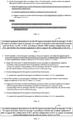
- FIG. 4 is a schematic diagram of an example of applying the method of this embodiment.
- description of an on demand system information request may be modified. For example, "if SIB1 includes si-SchedulingInfo containing si -RequestConfigSUL" is replaced with “if the serving cell is configured with supplementary uplink”, and "else if SIB1 includes si-SchedulingInfo containing si-RequestConfig” is replaced with "if the serving cell is configured with normal uplink”.
- FIG. 5 is a schematic diagram of another example of applying the method of this embodiment.
- the description of triggering SI message acquisition may be modified, for example, an option "5 > if the UE supports one or more of frequency bands indicated in the frequencyBandList of supplementary uplink band" is added, an option “6 > consider supplementary uplink as configured in the serving cell” is added under this option, and the original option "6 > trigger a request to acquire the SI message(s) as defined in sub-clause 5.2.2.3.3” is modified into "6 > trigger a request to acquire the SI message(s) over supplementary uplink as defined in sub-clause 5.2.2.3.3".
- the terminal equipment supports one or more of frequency bands indicated in a frequencyBandList field for NUL" being taken as a condition that the serving cell is configured with SUL is taken as an example, and the above option 5 > may also be replaced with other conditions that the serving cell is configured with the SUL, which shall not be described herein any further.
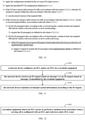
- FIG. 6 is a schematic diagram of a further example of applying the method of this embodiment.
- restrictions on NUL may also be added, such as adding option "5 > else", and adding two options "6 > consider normal uplink as configured in the serving cell” and "6 > trigger a request to acquire the SI message(s) over normal uplink as defined in sub-clause 5.2.2.3.3" under this option.
- option "6 > consider normal uplink as configured in the serving cell” may be replaced with “6 > consider supplementary uplink as not configured in the serving cell”.
- the method of this embodiment determines to use the SI request procedure based on message 1 or the SI request procedure based on message 3 according to whether the serving cell is configured with the SUL, which may avoid selecting wrong SI request procedure in a case where the capability of the terminal equipment does not support.
- condition of "the serving cell is configured with the SUL" may be integrated into a module, so that only the module needs to be called in making judgment, which optimizes terminal implementation procedure and saves cost.
- FIG. 7 is another schematic diagram of the method for transmitting a system information request of this embodiment.
- the method includes: step 701: a terminal equipment determines to use the SI request procedure based on message 1 or the SI request procedure based on message 3 to request on demand system information from the network device via SUL or NUL (that is, on the SUL or on the NUL) according to whether SIB1 includes configuration of the SUL and whether the terminal equipment is able to support the configuration of the SUL.
- whether a serving cell is configured with the SUL refers to "whether SIB1 includes configuration of the SUL and whether the terminal equipment is able to support the configuration of the SUL", and the terminal equipment determines to use the SI request procedure based on message 1 or the SI request procedure based on message 3 according to whether SIB1 includes configuration of the SUL and whether the terminal equipment is able to support the configuration of the SUL, which may avoid selecting a wrong SI request procedure in a case where a capability of the terminal equipment does not support.
- SIB1 includes si-SchedulingInfo containing si-RequestConfigSUL, and the terminal equipment is able to support the configuration of SUL, and the criteria to select SUL is met, the terminal equipment may use the SI request procedure based on message 1 on the SUL to request the network device for the on demand system information; otherwise, if SIB1 includes si-SchedulingInfo containing si-RequestConfig , and the terminal equipment is able to support the configuration of NUL, and the criteria to select NUL is met, the terminal equipment may use the SI request procedure based on message 1 on the NUL to request the network device for the on demand system information; otherwise, the terminal equipment uses the SI request procedure based on message 3 to request the network device for the on demand system information.
- the terminal equipment is able to support the configuration of the SUL when one or more of the following conditions are met, these conditions include but not limited to that:
- the terminal equipment is able to support the configuration of the NUL when one or more of the following conditions are met, these conditions include but not limited to that:
- FIG. 8 is a schematic diagram of an example of applying the method of this embodiment.
- description of the request for on demand system information may be modified. For example, "if SIB1 includes si-SchedulingInfo containing si-RequestConfigSUL and criteria to select supplementary uplink as defined in TS 38.321[13], clause 5.1.1 is met” is replaced with "if SIB1 includes si-SchedulingInfo containing si-RequestConfigSUL and if the UE supports one or more of the frequency bands indicated in the frequencyBandList of supplementary uplink and criteria to select supplementary uplink as defined in TS 38.321[13], clause 5.1.1 is met".
- the current standard may also be supplemented or replaced accordingly, which shall not be described herein any further.
- the method of this embodiment determines to use the SI request procedure based on message 1 or the SI request procedure based on message 3 according to whether SIB 1 includes the configuration of SUL and the terminal equipment is able to support the configuration of SUL, which may avoid selecting wrong SI request procedure in a case where the capability of the terminal equipment does not support.
- the method of this embodiment directly modifies the on demand system information request, which is flexible in implementation and may lower debugging overhead, thereby reducing costs.
- FIG. 9 is a further schematic diagram of the method for transmitting a system information request of this embodiment.
- the method includes: step 901: a terminal equipment determines to use the SI request procedure based on message 1 or the SI request procedure based on message 3 according to whether the terminal equipment is able to support the configuration of SUL and the configuration of NUL to request on demand system information from the network device via SUL or NUL (i.e. on SUL or on NUL).
- whether the serving cell is configured with SUL refers to "whether the terminal equipment is able to support the configuration of SUL and the configuration of NUL", and the terminal equipment determines to use the SI request procedure based on message 1 or the SI request procedure based on message 3 according to whether the terminal equipment is able to support the configuration of SUL and the configuration of NUL, which may avoid selecting wrong SI request procedure in a case where the capability of the terminal equipment does not support.
- the SI request for acquiring the SI message on the SUL or the SI request for acquiring the SI message on the NUL may be triggered according to si-SchedulingInfo. If the SI request for acquiring the SI message on the SUL is triggered and the criteria to select SUL is met, the terminal equipment uses the SI request procedure based on message 1 on the SUL to request the network device for the on demand system information; otherwise, if the SI request for acquiring the SI message on the NUL is triggered and the criteria to select NUL is met, the terminal equipment uses the SI request procedure based on message 1 on the NUL to request the network device for the on demand system information; otherwise, the terminal equipment uses the SI request procedure based on message 3 to request the network device for the on demand system information.
- si-SchedulingInfo for the SI message "including at least one required SIB and its si-BroadcastStatus is set to be notBroadcasting ", if si-SchedulingInfo of si-RequestConfigSUL containing the SI message is included and the terminal equipment is able to support the configuration of SUL, the SI request for acquiring the SI message on the SUL is triggered; otherwise, if si-SchedulingInfo of si-RequestConfig containing the SI message is included and the terminal equipment is able to support the configuration of NUL, the SI request for acquiring the SI message on the NUL is triggered.
- the above triggering mode is an example only, and is not limited in this embodiment.
- the condition that "the terminal equipment is able to support the configuration of SUL” and the condition that "the terminal equipment is able to support the configuration of NUL" are identical to those in the implementation in FIG. 7 , contents of which being incorporated herein, and being not going to be described herein any further.
- FIG. 10 is a schematic diagram of an example of applying the method of this embodiment.
- the description of triggering SI message acquisition may be modified, for example, an option "5 > if the UE supports one or more of frequency bands indicated in the frequencyBandList of supplementary uplink band" is added, and the original option "6 > trigger a request to acquire the SI message(s) as defined in sub-clause 5.2.2.3.3” is modified into "6 > trigger a request to acquire the SI message(s) over supplementary uplink as defined in sub-clause 5.2.2.3.3".
- an option "6 > consider supplementary uplink as configured in the serving cell" may be added under the added option 5>.
- the current standard may also be supplemented or replaced accordingly, which shall not be described herein any further.
- the method of this embodiment first determines whether the terminal equipment is able to support the configuration of SUL and the configuration of NUL, and then determines to use the SI request procedure based on message 1 or the SI request procedure based on message 3, which may avoid selecting wrong SI request procedure in a case where the capability of the terminal equipment does not support.
- the method of this embodiment divides the selection conditions into two levels, both integration and distribution are considered.
- FIG. 11 is a schematic diagram of the method for configuring a system information request of this embodiment. As shown in FIG. 11 , the method includes:
- the network device may transmit SIB1 to the terminal equipment, the SIB1 including si-SchedulingInfo containing si-RequestConfigSUL, or the SIB1 including si-SchedulingInfo containing si-RequestConfig.
- the terminal equipment may accordingly determine whether the serving cell is configured with SUL and/or whether the terminal equipment supports the configuration of SUL and/or whether the terminal equipment supports the configuration of SUL and the configuration of NUL, and then determines whether to use the system information (SI) request procedure based on message 1 or the SI request procedure based on message 3 to request the network device for the on demand system information.
- SI system information
- the above on demand system information may be an SI message that "includes at least one required SIB and its si-BroadcastStatus is set to be notBroadcasting ", and this embodiment is not limited thereto.
- FIG. 12 is a schematic diagram of the carrier selection method of this embodiment. As shown in FIG. 12 , the method includes:
- the condition includes one or more of the following situations, that is, the terminal equipment may consider that the serving cell is configured with the SUL when one or more of the following conditions are met:
- the terminal equipment may obtain the configuration of SUL from the dedicated signaling, and perform random access according to the configuration of SUL provided in the dedicated signaling.
- the embodiment of this disclosure provides an apparatus for transmitting a system information request, configured in a terminal equipment.
- principles of the apparatus for solving problems are similar to that of the method of Embodiment 1, reference may be made to the implementation of the method of Embodiment 1 for implementation of this apparatus, with identical parts being not going to be described herein any further.
- FIG. 13 is a schematic diagram of the apparatus for transmitting a system information request of this embodiment.
- the apparatus 1300 includes: a determining unit 1301 configured to determine to use a system information (SI) request procedure based on message 1 or an SI request procedure based on message 3 to request a network device for on demand system information via an SUL or an NUL according to whether a serving cell is configured with the SUL.
- SI system information
- the determining unit 1301 includes a first selecting unit 13011 configured to, if the serving cell is configured with the SUL and criteria to select SUL is met, use the SI request procedure based on the message 1 on the SUL, otherwise, if the serving cell is configured with the NUL and criteria to select NUL is met, use the SI request procedure based on the message 1 on the NUL, otherwise, use the SI request procedure based on the message 3.
- a first selecting unit 13011 configured to, if the serving cell is configured with the SUL and criteria to select SUL is met, use the SI request procedure based on the message 1 on the SUL, otherwise, if the serving cell is configured with the NUL and criteria to select NUL is met, use the SI request procedure based on the message 1 on the NUL, otherwise, use the SI request procedure based on the message 3.
- the SUL is configured in the serving cell when one or more of the following conditions are met that:
- the NUL is configured in the serving cell when one or more of the following conditions are met that:
- the criteria to select SUL being met refers to:
- the criteria to select SUL being met includes "the serving cell of the random access procedure is configured with SUL", if one or more of the following conditions are met, it is considered that the SUL is configured in the serving cell:
- FIG. 14 is another schematic diagram of the apparatus for transmitting a system information request of this embodiment.
- the apparatus 1400 includes: a determining unit 1401 configured to determine to use a system information (SI) request procedure based on message 1 or an SI request procedure based on message 3 to request the network device for on demand system information via an SUL or an NUL according to whether SIB 1 includes configuration of the SUL and whether the terminal equipment supports the configuration of the SUL.
- SI system information
- the determining unit 1401 includes a second selecting unit 14011 configured to, if SIB1 includes si-SchedulingInfo containing si-RequestConfigSUL, and the terminal equipment is able to support the configuration of the SUL, and the criteria to select SUL is met, use the SI request procedure based on the message 1 on the SUL, otherwise, if SIB1 includes si-SchedulingInfo containing si-RequestConfig , and the terminal equipment is able to support the configuration of the NUL, and the criteria to select NUL is met, use the SI request procedure based on the message 1 on the NUL, otherwise, use the SI request procedure based on the message 3.
- a second selecting unit 14011 configured to, if SIB1 includes si-SchedulingInfo containing si-RequestConfigSUL, and the terminal equipment is able to support the configuration of the SUL, and the criteria to select SUL is met, use the SI request procedure based on the message 1 on the SUL, otherwise, use the SI request procedure based on the message 3.
- the terminal equipment is able to support the configuration of the SUL when one or more of the following conditions are met that:
- the terminal equipment is able to support the configuration of the NUL when one or more of the following conditions are met that:
- FIG. 15 is a further schematic diagram of the apparatus for transmitting a system information request of this embodiment.
- the apparatus 1500 includes: a determining unit 1501 configured to determine to use a system information (SI) request procedure based on message 1 or an SI request procedure based on message 3 to request a network device for on demand system information via an SUL or an NUL according to whether the terminal equipment is able to support configuration of the SUL and configuration of the NUL.
- SI system information
- the determining unit 1501 includes a triggering unit 15011 and a third selecting unit 15012.
- the triggering unit 15011 is configured to trigger an SI request for acquiring an SI message on the SUL or an SI request for acquiring an SI message on the NUL according to the si-SchedulingInfo
- the third selecting unit 15012 is configured to, if the SI request for acquiring an SI message on the SUL is triggered and the criteria to select SUL is met, use the SI request procedure based on the message 1 on the SUL, otherwise, if the SI request for acquiring an SI message on the NUL is triggered and the criteria to select NUL is met, use the SI request procedure based on the message 1 on the NUL, otherwise, use the SI request procedure based on the message 3.
- the triggering unit 15011 triggers the SI request for acquiring the SI message on the SUL, otherwise, if the si-SchedulingInfo containing the si-RequestConfig corresponding to the SI message is included and the terminal equipment is able to support the configuration of the NUL, the triggering unit 15011 triggers the SI request for acquiring the SI message on the NUL.
- the terminal equipment is able to support the configuration of the SUL when one or more of the following conditions are met that:
- the terminal equipment is able to support the configuration of the NUL when one or more of the following conditions are met that:
- the embodiment of this disclosure provides an apparatus for configuring a system information request, configured in a network device.
- principles of the apparatus for solving problems are similar to that of the method of Embodiment 2, reference may be made to the implementation of the method of Embodiment 2 for implementation of this apparatus, with identical parts being not going to be described herein any further.
- FIG. 16 is a schematic diagram of the apparatus for configuring a system information request of this embodiment.
- the apparatus 1600 includes a configuring unit 1601, a receiving unit 1602 and a transmitting unit 1603.
- the configuring unit 1601 is configured to configure an SUL and/or an NUL for a terminal equipment
- the receiving unit 1602 is configured to receive an SI request based on message 1 or an SI request based on message 3 transmitted by the terminal equipment
- the transmitting unit 1603 is configured to transmit on demand system information according to the SI request.
- the configuring unit 1601 may transmit an SIB1 to the terminal equipment, SIB 1 including an si-SchedulingInfo containing an si-RequestConfigSUL, or including an si-SchedulingInfo containing si-RequestConfig. And the terminal equipment may accordingly determine to use the system information (SI) based on message 1 or the SI request procedure based on message 3 to request the network device via the SUL or NUL (i.e. on the SUL or on the NUL) for the on demand system information. Processing of the terminal equipment has been described in Embodiment 1, and shall not be described herein any further.
- the above on demand system information may be an SI message that "includes at least one required SIB and its si-BroadcastStatus is set to be notBroadcasting ", and this embodiment is not limited thereto.
- the embodiment of this disclosure provides a carrier selection apparatus, configured in a terminal equipment.
- a carrier selection apparatus configured in a terminal equipment.
- principles of the apparatus for solving problems are similar to that of the method of Embodiment 3, reference may be made to the implementation of the method of Embodiment 3 for implementation of this apparatus, with identical parts being not going to be described herein any further.
- FIG. 17 is a schematic diagram of the carrier selection apparatus 1700 of this embodiment. As shown in FIG. 17 , the apparatus 1700 includes:
- the SUL is configured in the serving cell when one or more of the following conditions are met that:
- the terminal equipment may obtain the configuration of SUL from the dedicated signaling, and perform random access according to the configuration of SUL provided in the dedicated signaling.
- the embodiment of this disclosure provides a terminal equipment, including the apparatus described in Embodiment 4 or 6.
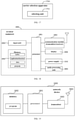
- FIG. 18 is a schematic diagram of the terminal equipment of the embodiment of this disclosure.
- the terminal equipment 1800 may include a central processing unit 1801 and a memory 1802, the memory 1802 being coupled to the central processing unit 1801.
- this figure is illustrative only, and other types of structures may also be used, so as to supplement or replace this structure and achieve a telecommunications function or other functions.
- the functions of the apparatus described in Embodiment 4 or 6 may be integrated into the central processing unit 1801, and the central processing unit 1801 executes functions of the apparatus described in Embodiment 4 or 6.
- the functions of the apparatus described in Embodiment 4 or 6 are incorporated herein, and shall not be described herein any further.
- the apparatus described in Embodiment 4 or 6 and the central processing unit 1801 may be configured separately; for example, the apparatus described in Embodiment 4 or 6 may be configured as a chip connected to the central processing unit 1801, and the functions of the apparatus described in Embodiment 4 or 6 are executed under control of the central processing unit 1801.
- the terminal equipment 1800 may further include a communication module 1803, an input unit 1804, an audio processing unit 1805, a display 1806, and a power supply 1807, etc. It should be noted that the terminal equipment 1800 does not necessarily include all the parts shown in FIG. 18 . Furthermore, the terminal equipment 1800 may include parts not shown in FIG. 18 , and the related art may be referred to.
- the central processing unit 1801 is sometimes referred to as a controller or an operational control, which may include a microprocessor or other processor devices and/or logic devices.
- the central processing unit 1801 receives input and controls operations of components of the terminal equipment 1800.
- the memory 1802 may be, for example, one or more of a buffer memory, a flash memory, a hard drive, a mobile medium, a volatile memory, a nonvolatile memory, or other suitable devices, which may store information related to the configuration above, and furthermore, store programs executing related information.
- the central processing unit 1801 may execute programs stored in the memory 1802, so as to realize information storage or processing, etc. Functions of other parts are similar to those of the related art, which shall not be described herein any further.
- the parts of the terminal equipment 1800 may be realized by specific hardware, firmware, software, or any combination thereof, without departing from the scope of this disclosure.
- selecting a wrong SI request procedure in a case where a capability of the terminal equipment does not support may be avoided, or the configuration of SUL may be obtained from the dedicated signaling, and random access may be performed according to the configuration of SUL provided in the dedicated signaling.
- the embodiment of this disclosure provides a network device, including the apparatus described in Embodiment 5.
- FIG. 19 is a schematic diagram of a structure of the network device of the embodiment of this disclosure.
- the network device 1900 may include a central processing unit (CPU) 1901 and a memory 1902, the memory 1902 being coupled to the central processing unit 1901.
- the memory 1902 may store various data, and furthermore, it may store a program for data processing, and execute the program under control of the central processing unit 1901, so as to receive various information transmitted by a terminal equipment, and transmit various information to the terminal equipment.
- the functions of the apparatus described in Embodiment 5 may be integrated into the central processing unit 1901, and the central processing unit 1901 executes functions of the apparatus described in Embodiment 5.
- the functions of the apparatus described in Embodiment 5 are incorporated herein, and shall not be described herein any further.
- the apparatus described in Embodiment 5 and the central processing unit 1901 may be configured separately; for example, the apparatus described in Embodiment 5 may be configured as a chip connected to the central processing unit 1901, and the functions of the apparatus described in Embodiment 5 are executed under control of the central processing unit 1901.
- the network device 1900 may include a transceiver 1903, and an antenna 1904, etc. Functions of the above components are similar to those in the related art, and shall not be described herein any further. It should be noted that the network device 1900 does not necessarily include all the parts shown in FIG. 19 . Furthermore, the network device 1900 may include parts not shown in FIG. 19 , and the related art may be referred to.
- the embodiment of this disclosure provides a communication system, including a network device and a terminal equipment.
- the network device is, for example, the network device 1900 described in Embodiment 8
- the terminal equipment is, for example, the terminal equipment 1800 described in Embodiment 7.
- the terminal equipment is, for example, a UE served by a gNB, and may include the functions of the apparatus described in Embodiment 4 or 6 in addition to conventional compositions and functions of a terminal equipment, which are as described in Embodiment 7, and shall not be described herein any further.
- the network device may be, for example, a gNB in NR, and may include the functions of the apparatus described in Embodiment 5 in addition to conventional compositions and functions of a network device, which are as described in Embodiment 8, and shall not be described herein any further.
- An embodiment of this disclosure provides a computer readable program, which, when executed in a terminal equipment, will cause a computer to carry out the method described in Embodiment 1 or 3 in the terminal equipment.
- An embodiment of this disclosure provides a storage medium storing a computer readable program, which will cause a computer to carry out the method described in Embodiment 1 or 3 in a terminal equipment.
- An embodiment of this disclosure provides a computer readable program, which, when executed in a network device, will cause a computer to carry out the method described in Embodiment 2 in the network device.
- An embodiment of this disclosure provides a storage medium storing a computer readable program, which will cause a computer to carry out the method described in Embodiment 2 in a network device.
- the above apparatuses and methods of this disclosure may be implemented by hardware, or by hardware in combination with software.
- This disclosure relates to such a computer-readable program that when the program is executed by a logic device, the logic device is enabled to carry out the apparatus or components as described above, or to carry out the methods or steps as described above.
- This disclosure also relates to a storage medium for storing the above program, such as a hard disk, a floppy disk, a CD, a DVD, and a flash memory, etc.
- the methods/apparatuses described with reference to the embodiments of this disclosure may be directly embodied as hardware, software modules executed by a processor, or a combination thereof.
- one or more functional block diagrams and/or one or more combinations of the functional block diagrams shown in the drawings may either correspond to software modules of procedures of a computer program, or correspond to hardware modules.
- Such software modules may respectively correspond to the steps shown in the drawings.
- the hardware module for example, may be carried out by firming the soft modules by using a field programmable gate array (FPGA).
- FPGA field programmable gate array
- the soft modules may be located in an RAM, a flash memory, an ROM, an EPROM, and EEPROM, a register, a hard disc, a floppy disc, a CD-ROM, or any memory medium in other forms known in the art.
- a memory medium may be coupled to a processor, so that the processor may be able to read information from the memory medium, and write information into the memory medium; or the memory medium may be a component of the processor.
- the processor and the memory medium may be located in an ASIC.
- the soft modules may be stored in a memory of a mobile terminal, and may also be stored in a memory card of a pluggable mobile terminal.
- the soft modules may be stored in the MEGA-SIM card or the flash memory device of a large capacity.
- One or more functional blocks and/or one or more combinations of the functional blocks in the drawings may be realized as a universal processor, a digital signal processor (DSP), an application-specific integrated circuit (ASIC), a field programmable gate array (FPGA) or other programmable logic devices, discrete gate or transistor logic devices, discrete hardware component or any appropriate combinations thereof carrying out the functions described in this application.
- DSP digital signal processor
- ASIC application-specific integrated circuit
- FPGA field programmable gate array
- the one or more functional block diagrams and/or one or more combinations of the functional block diagrams in the drawings may also be realized as a combination of computing equipment, such as a combination of a DSP and a microprocessor, multiple processors, one or more microprocessors in communication combination with a DSP, or any other such configuration.
Landscapes
- Engineering & Computer Science (AREA)
- Signal Processing (AREA)
- Computer Networks & Wireless Communication (AREA)
- Computer Security & Cryptography (AREA)
- Mobile Radio Communication Systems (AREA)
Applications Claiming Priority (1)
| Application Number | Priority Date | Filing Date | Title |
|---|---|---|---|
| PCT/CN2019/080156 WO2020191726A1 (fr) | 2019-03-28 | 2019-03-28 | Procédé, dispositif et système d'envoi de demande d'informations système |
Publications (2)
| Publication Number | Publication Date |
|---|---|
| EP3952508A1 true EP3952508A1 (fr) | 2022-02-09 |
| EP3952508A4 EP3952508A4 (fr) | 2022-04-06 |
Family
ID=72610887
Family Applications (1)
| Application Number | Title | Priority Date | Filing Date |
|---|---|---|---|
| EP19922168.0A Pending EP3952508A4 (fr) | 2019-03-28 | 2019-03-28 | Procédé, dispositif et système d'envoi de demande d'informations système |
Country Status (5)
| Country | Link |
|---|---|
| US (1) | US12349198B2 (fr) |
| EP (1) | EP3952508A4 (fr) |
| JP (1) | JP7449959B2 (fr) |
| CN (1) | CN113557775A (fr) |
| WO (1) | WO2020191726A1 (fr) |
Families Citing this family (2)
| Publication number | Priority date | Publication date | Assignee | Title |
|---|---|---|---|---|
| CN118044268A (zh) * | 2021-09-27 | 2024-05-14 | 三星电子株式会社 | 由降低能力的ue发送和接收系统信息的系统和方法 |
| WO2023077313A1 (fr) * | 2021-11-03 | 2023-05-11 | Oppo广东移动通信有限公司 | Procédé et appareil de transmission basés sur une amélioration de couverture de liaison montante, et procédé et appareil de configuration de seuil |
Family Cites Families (13)
| Publication number | Priority date | Publication date | Assignee | Title |
|---|---|---|---|---|
| US8130667B2 (en) * | 2008-09-19 | 2012-03-06 | Texas Instruments Incorporated | Preamble group selection in random access of wireless networks |
| CN112911582B (zh) * | 2015-12-29 | 2022-05-10 | 华为技术有限公司 | 用于随机接入的方法和装置 |
| CN108810827B (zh) | 2017-05-05 | 2021-02-26 | 华为技术有限公司 | 获取系统信息的方法和装置 |
| CN119316954A (zh) * | 2017-06-16 | 2025-01-14 | 华为技术有限公司 | 上行资源的授权方法、装置及系统 |
| WO2019010711A1 (fr) * | 2017-07-14 | 2019-01-17 | 深圳前海达闼云端智能科技有限公司 | Procédé et dispositif destinés à être utilisés pour rapporter une capacité de terminal |
| KR102305906B1 (ko) * | 2017-08-10 | 2021-09-28 | 삼성전자 주식회사 | 무선 통신 시스템에서 상향링크 전송 방법 및 장치 |
| CN111034301B (zh) * | 2017-08-11 | 2023-12-01 | 三星电子株式会社 | 用于支持补充上行链路频率的方法和装置 |
| CN108353408B (zh) | 2017-10-25 | 2022-01-04 | 北京小米移动软件有限公司 | 增补上行载波配置方法及装置和调度资源分配方法及装置 |
| CN107708205B (zh) * | 2017-10-31 | 2020-08-25 | 武汉虹信通信技术有限责任公司 | 一种ran寻呼消息处理方法及基站 |
| US11463923B2 (en) * | 2017-11-14 | 2022-10-04 | Idac Holdings, Inc. | Supplementary uplink in wireless systems |
| CN108521890B (zh) * | 2018-04-17 | 2022-05-13 | 北京小米移动软件有限公司 | 随机接入方法及装置 |
| WO2020111764A1 (fr) | 2018-11-27 | 2020-06-04 | Samsung Electronics Co., Ltd. | Système et procédé de demande d'informations de système dans une cellule prenant en charge de multiples porteuses de liaison montante |
| US11523436B2 (en) * | 2019-02-22 | 2022-12-06 | Samsung Electronics Co., Ltd. | Method and user equipment for handling random access in wireless communication system |
-
2019
- 2019-03-28 JP JP2021556930A patent/JP7449959B2/ja active Active
- 2019-03-28 CN CN201980093727.XA patent/CN113557775A/zh active Pending
- 2019-03-28 WO PCT/CN2019/080156 patent/WO2020191726A1/fr not_active Ceased
- 2019-03-28 EP EP19922168.0A patent/EP3952508A4/fr active Pending
-
2021
- 2021-09-16 US US17/476,567 patent/US12349198B2/en active Active
Also Published As
| Publication number | Publication date |
|---|---|
| CN113557775A (zh) | 2021-10-26 |
| US20220007425A1 (en) | 2022-01-06 |
| WO2020191726A1 (fr) | 2020-10-01 |
| JP2022528515A (ja) | 2022-06-14 |
| JP7449959B2 (ja) | 2024-03-14 |
| EP3952508A4 (fr) | 2022-04-06 |
| US12349198B2 (en) | 2025-07-01 |
Similar Documents
| Publication | Publication Date | Title |
|---|---|---|
| US11997758B2 (en) | Command indication method and apparatus and information interaction method and apparatus | |
| US11438898B2 (en) | Beam indication method, apparatus and system | |
| US12010697B2 (en) | Method and apparatus for supporting multiple configuration grants for sidelink data transmission | |
| US12126989B2 (en) | Cell configuration apparatus and method | |
| US20220279599A1 (en) | Method for random access, terminal device, and network device | |
| EP3952554A1 (fr) | Procédé et dispositif de réception ou de transmission de signal, et système | |
| US11310675B2 (en) | Uplink signal transmission method and apparatus, uplink signal reception method and apparatus and system | |
| US20200313991A1 (en) | Service receiving or transmitting method and device, and communication system | |
| US12349140B2 (en) | Sidelink transmission and reception methods and apparatuses | |
| US20210168636A1 (en) | Method for assessing radio link quality, parameter configuration method, apparatuses thereof and system | |
| WO2020248143A1 (fr) | Procédé de commande de puissance, dispositif terminal et dispositif de réseau | |
| US20190313418A1 (en) | Transmission Apparatus and Method Based on Dynamic Time Division Duplex and Communication System | |
| CN114631347A (zh) | 一种小区配置方法及装置、终端设备、网络设备 | |
| EP4231766A1 (fr) | Procédé, appareil et système de communication radio | |
| US20190379519A1 (en) | Confirmation apparatus for activation command, report apparatus for data transmission mode and methods thereof | |
| JP2024527141A (ja) | 信号を送受信する方法及び装置、並びに通信システム | |
| US12150070B2 (en) | Resource sharing method and apparatus, terminal, and network device | |
| US12349198B2 (en) | Method and apparatus for transmitting a system information request and system | |
| US20240015665A1 (en) | Method and apparatus for transmitting uplink data and a system | |
| US20250374131A1 (en) | Information transceiving method and apparatus | |
| US11895045B2 (en) | Transmission method and apparatus | |
| EP4037365A1 (fr) | Procédé, appareil et système de communication sans fil | |
| US20210219317A1 (en) | Signal transmission method, indication method for antenna panel information, apparatuses thereof and system | |
| CN114846861A (zh) | 一种功率余量上报的方法装置、网络设备、终端设备 | |
| US20260032749A1 (en) | Multi-path communication method and apparatus |
Legal Events
| Date | Code | Title | Description |
|---|---|---|---|
| STAA | Information on the status of an ep patent application or granted ep patent |
Free format text: STATUS: THE INTERNATIONAL PUBLICATION HAS BEEN MADE |
|
| PUAI | Public reference made under article 153(3) epc to a published international application that has entered the european phase |
Free format text: ORIGINAL CODE: 0009012 |
|
| STAA | Information on the status of an ep patent application or granted ep patent |
Free format text: STATUS: REQUEST FOR EXAMINATION WAS MADE |
|
| 17P | Request for examination filed |
Effective date: 20210924 |
|
| AK | Designated contracting states |
Kind code of ref document: A1 Designated state(s): AL AT BE BG CH CY CZ DE DK EE ES FI FR GB GR HR HU IE IS IT LI LT LU LV MC MK MT NL NO PL PT RO RS SE SI SK SM TR |
|
| A4 | Supplementary search report drawn up and despatched |
Effective date: 20220307 |
|
| RIC1 | Information provided on ipc code assigned before grant |
Ipc: H04W 74/08 20090101ALI20220301BHEP Ipc: H04W 72/04 20090101AFI20220301BHEP |
|
| DAV | Request for validation of the european patent (deleted) | ||
| DAX | Request for extension of the european patent (deleted) | ||
| STAA | Information on the status of an ep patent application or granted ep patent |
Free format text: STATUS: EXAMINATION IS IN PROGRESS |
|
| 17Q | First examination report despatched |
Effective date: 20250213 |
|
| RAP1 | Party data changed (applicant data changed or rights of an application transferred) |
Owner name: 1FINITY INC. |