EP3956802B1 - Verfahren und system zur bereitstellung einer simulationsmodellerzeugung in einer cloud-computing-umgebung - Google Patents
Verfahren und system zur bereitstellung einer simulationsmodellerzeugung in einer cloud-computing-umgebung Download PDFInfo
- Publication number
- EP3956802B1 EP3956802B1 EP20727292.3A EP20727292A EP3956802B1 EP 3956802 B1 EP3956802 B1 EP 3956802B1 EP 20727292 A EP20727292 A EP 20727292A EP 3956802 B1 EP3956802 B1 EP 3956802B1
- Authority
- EP
- European Patent Office
- Prior art keywords
- asset
- simulation model
- stored
- processor
- cloud
- Prior art date
- Legal status (The legal status is an assumption and is not a legal conclusion. Google has not performed a legal analysis and makes no representation as to the accuracy of the status listed.)
- Active
Links
Images





Classifications
-
- G—PHYSICS
- G06—COMPUTING OR CALCULATING; COUNTING
- G06F—ELECTRIC DIGITAL DATA PROCESSING
- G06F30/00—Computer-aided design [CAD]
- G06F30/20—Design optimisation, verification or simulation
-
- G—PHYSICS
- G06—COMPUTING OR CALCULATING; COUNTING
- G06F—ELECTRIC DIGITAL DATA PROCESSING
- G06F2111/00—Details relating to CAD techniques
- G06F2111/02—CAD in a network environment, e.g. collaborative CAD or distributed simulation
-
- G—PHYSICS
- G06—COMPUTING OR CALCULATING; COUNTING
- G06F—ELECTRIC DIGITAL DATA PROCESSING
- G06F2111/00—Details relating to CAD techniques
- G06F2111/10—Numerical modelling
Definitions
- the present invention relates to cloud computing systems and more particularly relates to a method and system for provisioning simulation model generation in a cloud computing environment.
- Simulation models with real time capabilities are preferably used, for example, in an Operator Training System (OTS) or in systems for virtual commissioning (VIBM) in the process industry environment.
- Simulation content and models are a key element for any given simulation software.
- simulation model development is done manually in the simulation software by extracting information and the behavior of a field device and converting the behavior into a mathematical model.
- all the simulation models are maintained by the simulation software locally as a collection of libraries.
- Some of the critical use cases of a simulation software are development, testing and maintenance of simulation models for various field devices such as motor, valve, pump, conveyor, hydraulic and the like. Manual implementation and testing of locally stored simulation models lead to different problems for any simulation software. Few of the problems are highlighted below.
- D1 US 2004/230404 A1 relates to a method for simulation of a process of discrete events or tasks having a plurality of available resources.
- a model application communicates with the database and is configured to receive commands from a user, to retrieve one of the plurality of models and the corresponding plurality of one or more entity, task, and resource parameter in response to a user command, to receive input data corresponding to attributes of one or more entity, task, and resource parameter from a business database system, and to generate a simulation model based on the selected business database system and the input data.
- D1 fails to teach validation of the generated simulation model and outputting the generated simulation model only if a result of the validation is successful.
- US 2018/356800 A1 is part of the prior-art.
- the object of the present invention is achieved by a method for provisioning simulation model generation in a cloud computing environment.
- the method comprises receiving a request for generating a simulation model from a user device.
- the request comprises asset information associated with an asset in a plant environment.
- the asset information comprises asset profile data comprising asset configuration information, asset physical block information, test data set, asset alarms and the like.
- the asset comprises servers, robots, switches, automation devices, programmable logic controllers (PLC)s, human machine interfaces (HMIs), input output modules, motors, valves, pumps, actuators, sensors and other industrial equipment(s).
- PLC programmable logic controllers
- HMIs human machine interfaces
- each of the assets in the plant environment is associated with a profile, referred as asset profile file.
- the asset profile file comprises asset configuration information, asset specification information, asset faults, asset alarms and the like.
- the asset profile file is shared along with the request from the user device.
- the method comprises generating the simulation model associated with the asset based on the received asset information and a pre-stored asset information in a cloud database.
- the pre-stored asset information corresponds to the last received version of the asset information associated with the asset in the plant environment.
- the pre-stored asset information may correspond to one or more pre-stored simulation models associated with the asset, one or more pre-stored asset parameters, historical asset information, and sample dataset for the asset.
- the method comprises validating the simulation model associated with the asset based on real-time asset information received from the plant environment.
- the real-time asset information is received from the plant environment via a cloud agent located at the plant environment.
- the real-time asset information is received from one or more assets in the plant environment, where the one or more assets are capable of communicating the asset information directly to the cloud computing system.
- the method comprises outputting the simulation model associated with the asset on a user interface of the user device.
- the method comprises storing the simulation model associated with the asset in a cloud database.
- the method comprises determining behavior of the asset using one or more asset parameters associated with the asset in the plant environment.
- the one or more asset parameters comprises asset characteristics, asset location, asset behavior trends, asset tag information, and/or asset faults.
- the behavior of the asset indicates the physical behavior of an asset in the form of equation or relationship between the different asset parameters.
- the method comprises generating a plurality of test data associated with the behavior of the asset.
- the test data may or may not be available with the asset information as time series data sets. However, it can be generated on the fly based on the minimum and maximum limit of the asset parameters.
- the minimum and maximum value are a range of a process value of an asset.
- current and voltage values of a motor have a minimum range and a maximum range value at which motor starts and collapses. Based on the need of speed / rotation of the motor, a particular motor has this minimum and maximum range of current and voltage values.
- the method comprises generating polynomial graphs for each of the asset parameters influencing the behavior of the asset. Also, the method comprises deriving a relationship matrix for the generated polynomial graphs. The relationship matrix indicates the behavior of the asset with respect to each of the asset parameters.
- the relationship matrix is derived using given inputs in the asset profile test dataset. Based on coefficients of the derived mathematical equation (or models as referred herein), a matching mathematical model is searched in the database. The best possible match of the derived mathematical equation is determined. If a best possible match of the derived mathematical equation is unavailable, then the derived mathematical equation itself is considered as the base version of the mathematical model and further is scheduled for validation based on the received real-time asset information. Additionally, the method comprises deriving the mathematical model associated with the asset based on the relationship matrix.
- the method comprises generating the simulation model for the asset based on the derived mathematical model associated with the asset.
- the method in validating the simulation model associated with the asset based on the real-time asset information received from the plant environment, comprises receiving real-time asset information associated with the asset from the plant environment via a cloud agent. Further, the method comprises validating the simulation model associated with the asset based on the real-time asset information and predefined rules.
- the method comprises analyzing results of validation of the simulation model associated with the asset. Further, the method comprises generating error log files associated with the simulation model if the result of validation is unsuccessful. Furthermore, the method comprises displaying the error log files associated with the simulation model on a user interface of the user device.
- the method comprises analyzing the asset information associated with the asset in the plant environment.
- the method further comprises determining whether a pre-stored simulation model exists in the cloud database based on the analyzed asset information. Further, the method comprises retrieving a similar simulation model stored in the cloud database if the pre-stored simulation model does not exist in the cloud database. Furthermore, the method comprises generating a simulation model template associated with the asset based on the retrieved similar simulation model and historical asset information stored on the cloud database.
- the method comprises detecting one or more abnormalities associated with the asset in the plant environment using a cloud agent.
- the method comprises receiving a notification message from the user device.
- the notification message comprises the detected one or more abnormalities associated with the asset.
- the method comprises providing each stored simulation model with a price based on the asset information.
- each of the simulation model is associated with a pricing model and users rating.
- the object of the present invention is also achieved by a simulation model generation system.
- the simulation model generation system comprises one or more processor(s) and a memory coupled to the processor.
- the memory comprises a simulation model generation module stored in the form of machine-readable instructions executable by the processor.
- the simulation model generation system module is configured for performing the method as described above.
- the object of the present invention is also achieved by a cloud computing system comprising a server and a cloud platform comprising a simulation model generation system stored therein in the form of machine-readable instructions executable by the server.
- the simulation model generation system is configured to perform the method as described above.
- the object of the present invention is also achieved by a cloud computing environment.
- the cloud computing environment comprising a cloud computing system, a plant environment comprising one or more assets and a cloud agent capable of communicating asset information associated with the one or more assets to the cloud computing system.
- the cloud computing environment further comprises at least one user device communicatively coupled to the cloud computing system and the plant environment.
- the object of the present invention is also achieved by a computer-program product having machine-readable instructions stored therein, that when executed by one or more server (s), cause the one or more server(s) to perform method steps as described above.
- the object of the present invention is also achieved by a user device comprising one or more processor(s) and a memory coupled to the processor.
- the memory comprises an asset data processing module stored in the form of machine-readable instructions executable by the processor.
- the asset data processing module is configured for performing the method as described above.
- FIG 1 is a schematic representation of a cloud computing environment 100 capable of provisioning simulation model generation, according to an embodiment of the present invention.
- FIG 1 depicts a cloud computing system 102 which is capable of delivering cloud applications for managing a plant environment 106 comprising one or more asset(s) 122, 124A-B and 126.
- cloud computing environment refers to a processing environment comprising configurable computing physical and logical resources, for example, networks, servers, storage, applications, services, etc., and data distributed over the cloud platform.
- the cloud computing environment 100 provides on-demand network access to a shared pool of the configurable computing physical and logical resources.
- the cloud computing system 102 is connected to a cloud agent 120 in the plant environment 106 via a network 104 (e.g., Internet).
- the one or more asset(s) 122, 124A-B and 126 may include servers, robots, switches, automation devices, programmable logic controllers (PLC)s, human machine interfaces (HMIs), input output modules, motors, valves, pumps, actuators, sensors and other industrial equipment(s).
- the asset 122 may be a PLC
- the asset 124A-N may be input-output modules or controllers.
- the asset 126 may be a field device.
- the cloud computing system 102 may be a public cloud, a private cloud, and/or a hybrid cloud configured to provide dedicated cloud services to its users.
- FIG 1 illustrates the cloud computing system 102 connected to one plant environment 106 via the cloud agent 120, one skilled in the art can envision that the cloud computing system 102 can be connected to several plant environment 106 located at different locations via the network 104.
- the cloud computing system 102 is also connected to user devices 128A-N via the network 104.
- the user devices 128A-N can access the cloud computing system 102 for automatically generating simulation models.
- the user devices 128A-N comprises an engineering system capable of running an industrial automation application.
- the user devices 128A-N can be a laptop computer, desktop computer, tablet computer, smartphone and the like.
- the user devices 128A-N can access cloud applications (such as enabling users to generate simulation models based on user requirement) via a web browser.
- the users are provided a quick option to download the simulation models from cloud platform 108 to directly into their Simulation Software running in the user devices 128A-N.
- the user devices 128A-N may install a plug-in for accessing simulation models on the cloud computing system 102 via different simulation software running on the user devices 128A-N.
- the cloud computing system 102 comprises a cloud platform 108, a simulation generation system 110, a server 112 including hardware resources and an operating system (OS), a network interface 114, a database 116 and application program interfaces (APIs) 118.
- the network interface 114 enables communication between the cloud computing system 102, the plant environment 106, and the user device (s) 128A-N.
- the cloud interface (not shown in FIG 1 ) may allow the engineers at the one or more user device (s) 128A-N to access simulation models stored at the cloud computing system 102 and perform one or more actions on the simulation models as same instance.
- the server 112 may include one or more servers on which the OS is installed.
- the servers 112 may comprise one or more processors, one or more storage devices, such as, memory units, for storing data and machine-readable instructions for example, applications and application programming interfaces (APIs) 118, and other peripherals required for providing cloud computing functionality.
- the cloud platform 108 is a platform which enables functionalities such as data reception, data processing, data rendering, data communication, etc. using the hardware resources and the OS of the servers 112 and delivers the aforementioned cloud services using the application programming interfaces 118 deployed therein.
- the cloud platform 108 may comprise a combination of dedicated hardware and software built on top of the hardware and the OS.
- the cloud agent 120 is used for sending runtime asset information to the cloud computing system 102. Also, the cloud agent 120 is configured for detecting one or more abnormalities associated with the asset 122, 124A-N, and 126 in the plant environment 106. Further, the cloud agent is configured for sending a notification message to the cloud computing system 102 and the user devices 128A-N. The notification message comprises the detected one or more abnormalities associated with the asset.
- the database 116 is configured to store asset information, asset parameters, simulation models, error logs, validation results, abnormalities associated with the asset 122, 124A-N and 126, mathematical models, relationship matrix, behavior trends, polynomial graphs, pricing models, user rating for each simulation models and the like.
- the cloud database 116 also maintains versions of the simulation models.
- FIG 2 is a block diagram of a simulation model generation system 110, such as those shown in FIG 1 , in which an embodiment of the present invention can be implemented.
- the simulation model generation system 110 includes a processor(s) 202, an accessible memory 204, a communication interface 206, an input unit 208, an output unit 210, and a bus 212.
- the memory 204 may be non-transitory volatile memory and nonvolatile memory.
- the memory 204 may be coupled for communication with the processor (s) 202, such as being a computer-readable storage medium.
- the processor(s) 202 may execute machine-readable instructions and/or source code stored in the memory 204.
- a variety of machine-readable instructions may be stored in and accessed from the memory 204.
- the memory 204 may include any suitable elements for storing data and machine-readable instructions, such as read only memory, random access memory, erasable programmable read only memory, electrically erasable programmable read only memory, a hard drive, a removable media drive for handling compact disks, digital video disks, diskettes, magnetic tape cartridges, memory cards, and the like.
- the memory 204 includes a simulation model generation module 214 stored in the form of machine-readable instructions on any of the above-mentioned storage media and may be in communication with and executed by the processor(s) 202.
- the simulation model generation module 214 When executed by the processor(s) 202, the simulation model generation module 214 causes the processor(s) 202 to provisioning simulation model generation in a cloud computing environment 100. In an embodiment, the simulation model generation module 214 causes the processor(s) 202 to receive a request for generating a simulation model by a user device 128A-N.
- the request comprises asset information associated with an asset (such as 122, 124A-B, 126) in the plant environment 106.
- the asset information comprises asset profile data comprising asset configuration information, asset physical block information, test data set, asset alarms and the like.
- the simulation model generation module 214 Upon receiving the request, the simulation model generation module 214 causes the processor(s) 202 to generate the simulation model associated with the asset (122, 124A-B, 126) based on the received asset information and a pre-stored asset information.
- the pre-stored asset information is stored on the database 116.
- the simulation model associated with the asset is generated by determining behavior of the asset using one or more asset parameters associated with the asset in the plant environment 106.
- the one or more asset parameters comprises asset characteristics, asset location, asset behavior trends, asset tag information, and/or asset faults.
- the simulation model generation module 214 causes the processor(s) 202 to generate a plurality of test data associated with the behavior of the asset.
- the simulation model generation module 214 causes the processor(s) 202 to derive a mathematical model associated with the asset based on the test data and the determined behavior of the asset.
- the simulation model generation module 214 causes the processor(s) 202 to generate the simulation model for the asset based on the derived mathematical model associated with the asset.
- the mathematical model associated with the asset is derived by identifying minimum and maximum range values for each of the asset parameters using the asset information. Further, the simulation model generation module 214 causes the processor(s) 202 to generate polynomial graphs for each of the asset parameters influencing the behavior of the asset. Further, the simulation model generation module 214 causes the processor(s) 202 to derive a relationship matrix for the generated polynomial graphs. The relationship matrix indicates the behavior of the asset with respect to each of the asset parameters. Additionally, the simulation model generation module 214 causes the processor(s) 202 to derive the mathematical model associated with the asset based on the relationship matrix.
- the simulation model generation module 214 causes the processor(s) 202 to validate the simulation model associated with the asset based on real-time asset information received from the plant environment 106.
- the simulation model associated with the asset is validated by receiving real-time asset information associated with the asset from the plant environment 106 via a cloud agent 120.
- the simulation model generation module 214 causes the processor(s) 202 to validate the simulation model associated with the asset based on the real-time asset information and predefined rules.
- simulation model generation module 214 causes the processor(s) 202 to output the simulation model associated with the asset on a user interface of the user device 128A-N.
- the simulation model generation module 214 causes the processor(s) 202 to store the simulation model associated with the asset in a cloud database 116.
- the simulation model generation module 214 causes the processor(s) 202 to analyze results of validation of the simulation model associated with the asset. Furthermore, the simulation model generation module 214 causes the processor(s) 202 to generate error log files associated with the simulation model if the results of validation is unsuccessful. Moreover, the simulation model generation module 214 causes the processor(s) 202 to display the error log files associated with the simulation model on a user interface of the user device (128A-N).
- the simulation model generation module 214 causes the processor(s) 202 to detect one or more abnormalities associated with the asset in the plant environment 106 using a cloud agent 120 and receive a notification message from the user device 128A-N.
- the notification message comprises the detected one or more abnormalities associated with the asset.
- the simulation model generation module 214 causes the processor(s) 202 to provide each stored simulation model with a price based on the asset information.
- the communication interface 206 is configured for establishing communication sessions between the one or more user device 128A-N and the cloud computing system 102.
- the communication interface 206 allows the one or more engineering applications running on the user devices 128A-N to import/import simulation models into the cloud computing system 102.
- the communication interface 206 interacts with the interface at the user devices 128A-N for allowing the engineers to access the simulation models and perform one or more actions on the simulation models stored in the cloud computing system 102.
- FIG 2 may vary for particular implementations.
- peripheral devices such as an optical disk drive and the like, Local Area Network (LAN), Wide Area Network (WAN), Wireless (e.g., Wi-Fi) adapter, graphics adapter, disk controller, input/output (I/O) adapter also may be used in addition or in place of the hardware depicted.
- LAN Local Area Network
- WAN Wide Area Network
- Wireless e.g., Wi-Fi
- graphics adapter e.g., disk controller
- I/O input/output
- the depicted example is provided for the purpose of explanation only and is not meant to imply architectural limitations with respect to the present disclosure.
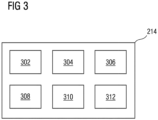
- FIG 3 is a block diagram 300 of a simulation model generation module 214, such as those shown in FIG 1 and FIG 2 , in which an embodiment of the present invention can be implemented.
- the simulation model generation module 214 comprises a data importer module 302, an automatic model generation module 304, a model validation module 306, a model store 308, a model designer module 310, and an output module 312.
- the data importer module 302 is configured for receiving a request for generating a simulation model by a user device 128A-N.
- the request comprises asset information associated with an asset in a plant environment 106.
- the asset information comprises asset profile data comprising asset configuration information, asset physical block information, test data set, asset alarms and the like.
- the data importer module 302 is configured for detecting one or more abnormalities associated with the asset in the plant environment 106 using a cloud agent 120 and receiving a notification message from the user device 128A-N.
- the notification message comprises the detected one or more abnormalities associated with the asset.
- This example represents one of the behaviors of the Pressure Relief Valve.
- different equations may be formulated for different behaviors.
- mx + Cx ⁇ + Fs Ff ⁇ Fg + fc
- m is the mass of moving part including disc, disc holder and stem
- x is the acceleration of the disc part in the moving direction
- c is the damping coefficient
- x ⁇ is the velocity of the disc part
- Fs is the spring force acting on the disc, and is equal to k(x0+x(t))
- Ff is the flow force acting on the disc part
- Fg represents the gravity of disc
- fc is the Coulomb friction.
- the automatic model generation module 304 generates the polynomial graphs for each of the asset parameters influencing the behavior of the asset.
- polynomial graphs are generated for Current vs. Torque and Speed vs. Torque.
- Table. 2 provides exemplary dataset points for each of the speed, current, torque, power and efficiency.
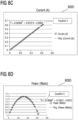
- FIG. 8A depicts one such polynomial graph generated. Table. 2 Torque Speed Current Power Efficiency (oz-in) (rpm) (A) (Watts) (%) 0.025 11, 247.65 0.024 0.208 0.1 0.05 10, 786.30 0.048 0.399 71.87
- the automatic model generation module 304 generates the simulation model for the asset based on the derived mathematical model associated with the asset.
- the automatic model generation module 304 is configured for analyzing the asset information associated with the asset in the plant environment 106. Based on the analyzed asset information, the automatic model generation module 304 is configured for determining whether a pre-stored simulation model exists in the cloud database 116. Further, the automatic model generation module 304 is configured for generating a simulation model template associated with the asset based on the pre-stored simulation model and historical asset information stored on the cloud database 116, if the pre-stored simulation model exists in the cloud database 116.
- the automatic model generation module 304 if it determined that an exact matching simulation model requested by the user of the user device 128A-N is not present at the model data store 308, then the automatic model generation module 304 generates a simulation model template associated with the asset based on the closest matching simulation model stored in the model data store 308 and historical asset information stored on the cloud database 116.
- the model validation module 306 is configured for validating the simulation model associated with the asset based on real-time asset information received from the plant environment 106. Specifically, the model validation module 306 receives real-time asset information associated with the asset from the plant environment 106 via a cloud agent 120. Further, the model validation module 306 validates the simulation model associated with the asset based on the real-time asset information and predefined rules. Further, the model validation module 306 analyzes results of validation of the simulation model associated with the asset. If the results of validation are successful, the models generated are outputted via the output module 312. If in case the validation results are unsuccessful, error log files associated with the simulation model are generated and displayed on a user interface of the user device 128A-N.
- the model store 308 is a database configured for storing the simulation models associated with the assets. Each of the simulation models are stored along with a user rating for the models and a price associated with the model.
- a search box is provided. Suppose a user types a "Reversable Motor" in the search box and clicks on the search button, all the reversable motors which exist in the model store (such as model store 308) along with price and rating details are provided. In case if there are no mathematical models existing in the model store 308, then an option to generate the model by uploading the asset profile is provided.
- the model designer module 310 is configured for allowing the users of the user devices 128A-N to design simulation models based on user requirements using a Component Type Editor interface (A graphical user interface to design simulation model manually). Further, the model designer module 310 is configured to compile and publish the simulation models.
- the output module 312 is configured for outputting the simulation model associated with the asset on a user interface of the user device 128A-N.
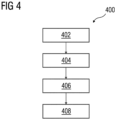
- FIG 4 is a process flowchart illustrating an exemplary method 400 of provisioning simulation model generation in a cloud computing environment 100, according to an embodiment of the present invention.
- a request for generating a simulation model is received from a user device 128A-N.
- the request comprises asset information associated with an asset in a plant environment 106.
- the simulation model associated with the asset is generated based on the received asset information and a pre-stored asset information in a cloud database 116.
- the simulation model associated with the asset is validated based on real-time asset information received from the plant environment 106.
- the simulation model associated with the asset is outputted on a user interface of the user device 128A-N.
- the processor(s) 502 means any type of computational circuit, such as, but not limited to, a microprocessor unit, microcontroller, complex instruction set computing microprocessor unit, reduced instruction set computing microprocessor unit, very long instruction word microprocessor unit, explicitly parallel instruction computing microprocessor unit, graphics processing unit, digital signal processing unit, or any other type of processing circuit.
- the processor (s) 502 may also include embedded controllers, such as generic or programmable logic devices or arrays, application specific integrated circuits, single-chip computers, and the like.
- the memory 504 may be non-transitory volatile memory and nonvolatile memory.
- the memory 504 may be coupled for communication with the processor (s) 502, such as being a computer-readable storage medium.
- the processor(s) 502 may execute machine-readable instructions and/or source code stored in the memory 504.
- a variety of machine-readable instructions may be stored in and accessed from the memory 504.
- the memory 504 may include any suitable elements for storing data and machine-readable instructions, such as read only memory, random access memory, erasable programmable read only memory, electrically erasable programmable read only memory, a hard drive, a removable media drive for handling compact disks, digital video disks, diskettes, magnetic tape cartridges, memory cards, and the like.
- the memory 504 includes asset data processing module 508 stored in the form of machine-readable instructions on any of the above-mentioned storage media and may be in communication with and executed by the processor(s) 502.
- the filtered asset information is sent to the cloud computing system 102 via a wireless network 104.
- the user device 500 further comprises a graphical user interface (GUI) 510 configured for displaying one or more simulation models associated with an asset in the plant environment 106.
- GUI graphical user interface
- the GUI 510 also enables the users to search simulation models stored in the cloud database 116 and also design simulation models using the component type editor user interface.
- the storage unit 506 is configured for storing the asset profile files associated with one or more asset(s) in the plant environment 106.
- the communication interface 512 is configured for establishing communication sessions between the one or more user device 128A-N and the cloud computing system 102.
- the communication interface 206 allows the one or more engineering applications running on the user devices 128A-N to import/import simulation models into the cloud computing system 102.
- the communication interface 206 interacts with the interface 510 at the user devices 128A-N for allowing the engineers to access the simulation models and perform one or more actions on the simulation models stored in the cloud computing system 102.
- the network interface 516 helps in managing network communications between the user devices 128A-N and the cloud computing system 102.
- the input-output unit 514 may include input devices a keypad, touch-sensitive display, camera (such as a camera receiving gesture-based inputs), etc. capable of receiving one or more input signals, such as user commands to process simulation model. Also, the input-output unit 514 may be a display unit for displaying the simulation model associated with the asset and also displays the error logs associated with each set of actions performed on the simulation model.
- the bus 518 acts as interconnect between the processor 502, the memory 504, and the input-output unit 508.
- FIG 5 may vary for particular implementations.
- peripheral devices such as an optical disk drive and the like, Local Area Network (LAN), Wide Area Network (WAN), Wireless (e.g., Wi-Fi) adapter, graphics adapter, disk controller, input/output (I/O) adapter also may be used in addition or in place of the hardware depicted.
- LAN Local Area Network
- WAN Wide Area Network
- Wireless e.g., Wi-Fi
- graphics adapter e.g., disk controller
- I/O input/output
- the depicted example is provided for the purpose of explanation only and is not meant to imply architectural limitations with respect to the present disclosure.
- FIG 6 is a process flowchart illustrating an exemplary method 600 of provisioning simulation model generation in a cloud computing environment 100, according to another embodiment of the present invention.
- user at the user device 128A-N requests for generating a simulation model associated with an asset in the plant environment 106. This is achieved through users searching for simulation models on the GUI 510 with basic set of keywords.
- the asset data processing module 508 processes the request, forms the filtered asset information associated with the asset for which a simulation model is to be generated and transmits such filtered asset information along with the request to the cloud computing system 102.
- mathematical models associated with the asset are derived based on the asset information. Specifically, the mathematical models are derived based on test data associated with the behavior of the asset.
- step 606 it is determined whether a simulation model requested already exists in the cloud database 116 based on the derived mathematical model. If the requested simulation model already exists in the cloud database 116, then at step 608, such simulation models are retrieved and outputted on the user interface of the user device 128A-N. Alternatively, if the requested simulation model does not exist in the cloud database 116, then at step 610, it is further determined whether the requested simulation model can be generated automatically based on the filtered asset information and pre-stored asset information in the cloud database 116. If yes, then at step 612, requested simulation models are generated based on the filtered asset information and the pre-stored asset information in the cloud database 116.
- the generated simulation models are validated based on real-time asset information received from the plant environment 106 via the cloud agent 120. Further, at step 616, the validated simulation models are analyzed, optimized and reconfigured for ensuring that the simulation models are accurate. At step 618, the simulation models are outputted on the user interface 510 of the user device 128A-N.
- a simulation model template associated with the asset is generated based on a similar simulation model stored in the cloud database 116 and historical asset information stored on the cloud database 116.
- the simulation model template is validated based on the predefined rules and the real-time asset information.
- Fig 7A-B is a screenshot of an exemplary graphical user interface for provisioning simulation model generation, according to an embodiment of the present invention.
- a web-based user interface 700a at the user device 128A-N is depicted.
- the web-based user interface 700a allows the users at the user device 128AN to import/export simulation models, search simulation models already stored in the cloud database 116, design, compile and publish simulation models based on the asset information derived from the asset profile file and also determine status of validation of simulation models.
- the graphical user interface 700b comprises a search field 702b for enabling the users to search and select simulation models in the online cloud database 116. Further, the graphical user interface 700b comprises a price and rating tag field information associated with each of the selected simulation model.
- FIG 8A-E is a graphical representation illustrating a method of deriving a mathematical model associated with the asset based on the test data and the determined behavior of the asset, according to an embodiment of the present invention.
- a polynomial graph 800a generated from imported sample dataset points associated with the asset is depicted.
- the polynomial graphs depict the behavioral trends of the asset parameters such as torque, current, power, speed and efficiency.
- a polynomial graph of speed v/s torque values of a motor is depicted. Using this graph 800b, a relationship matrix between speed and torque is derived and thereby a mathematical model for the asset is computed.
- FIG 8C torque v/s current values of a motor are depicted.
- a relationship matrix between torque and current is derived and thereby a mathematical model for the asset is computed.
- power v/s torque vales of a motor are depicted.
- efficiency v/s torque of a motor is depicted.
- a relationship matrix between torque and efficiency is derived and thereby a mathematical model for the asset is computed.
- the present invention can take a form of a computer program product comprising program modules accessible from computer-usable or computer-readable medium storing program code for use by or in connection with one or more computers, processors, or instruction execution system.
- a computer-usable or computer-readable medium can be any apparatus that can contain, store, communicate, propagate, or transport the program for use by or in connection with the instruction execution system, apparatus, or device.
- the medium can be electronic, magnetic, optical, electromagnetic, infrared, or semiconductor system (or apparatus or device) or a propagation mediums in and of themselves as signal carriers are not included in the definition of physical computer-readable medium include a semiconductor or solid state memory, magnetic tape, a removable computer diskette, random access memory (RAM), a read only memory (ROM), a rigid magnetic disk and optical disk such as compact disk read-only memory (CD-ROM), compact disk read/write, and DVD.
- RAM random access memory
- ROM read only memory
- CD-ROM compact disk read-only memory
- DVD compact disk read/write
- Both processors and program code for implementing each aspect of the technology can be centralized or distributed (or a combination thereof) as known to those skilled in the art.
Landscapes
- Engineering & Computer Science (AREA)
- Physics & Mathematics (AREA)
- Theoretical Computer Science (AREA)
- Computer Hardware Design (AREA)
- Evolutionary Computation (AREA)
- Geometry (AREA)
- General Engineering & Computer Science (AREA)
- General Physics & Mathematics (AREA)
- Management, Administration, Business Operations System, And Electronic Commerce (AREA)
- Testing And Monitoring For Control Systems (AREA)
Claims (11)
- Verfahren zur Bereitstellung einer Simulationsmodellerzeugung für ein Benutzergerät in einer Cloud-Computing-Umgebung, umfassend:Empfangen, durch einen Prozessor (202), einer Anforderung zum Erzeugen eines Simulationsmodells von dem Benutzergerät, das über ein Netzwerk (104) mit der Cloud-Computing-Umgebung verbunden ist, wobeidie Anforderung eine Asset-Information umfasst, die einem Asset in einer Anlagenumgebung zugeordnet ist, wobei die Anlagenumgebung über einen Cloud-Agenten (120) mit der Cloud-Computing-Umgebung verbunden ist, unddas Asset eine Industrieausrüstung in der Anlagenumgebung ist;Erzeugen, durch den Prozessor (202), des Simulationsmodells des Assets basierend auf der empfangenen Asset-Information und einer vorab gespeicherten Asset-Information in einer Cloud-Datenbank (116), wobei die vorab gespeicherte Asset-Information mindestens einem oder mehreren vorab gespeicherten Asset-Parametern entsprechen und wobei das Erzeugen des dem Asset (122, 124A-N und 126) zugeordneten Simulationsmodells basierend auf der empfangenen Asset-Information und der vorab gespeicherten Asset-Information umfasst:Bestimmen, durch den Prozessor (202), des Verhaltens des Assets (122, 124A-N und 126) unter Verwendung des einen oder der mehreren dem Asset zugeordneten Asset-Parameter in der Anlagenumgebung (106);Erzeugen, durch den Prozessor (202), einer Vielzahl von dem Verhalten des Assets (122, 124A-N und 126) zugeordneten Testdaten;Ableiten eines dem Asset (122, 124A-N und 126) zugeordneten mathematischen Modells basierend auf den Testdaten und des bestimmten Verhaltens des Assets (122, 124A-N und 126) durch:Identifizieren von minimalen und maximalen Bereichswerten für jeden der Asset-Parameter unter Verwendung der Asset-Information;Erstellen von Polynomgraphen für jeden der Asset-Parameter, der das Verhalten des Assets (122, 124A-N und 126) beeinflusst;Ableiten einer Beziehungsmatrix für die erzeugten Polynomgraphen, wobei die Beziehungsmatrix das Verhalten des Assets (122, 124A-N und 126) in Bezug auf jeden der Asset-Parameter angibt; undAbleiten des dem Asset (122, 124A-N und 126) zugeordneten mathematischen Modells basierend auf der Beziehungsmatrix; undErzeugen des Simulationsmodells für das Asset (122, 124A-N und 126) basierend auf dem abgeleiteten mathematischen Modell, das dem Asset (122, 124A-N und 126) zugeordnet ist;Empfangen, durch den Prozessor (202), von dem Asset (122, 124AN und 126) zugeordneten Echtzeit-Asset-Information aus der Anlagenumgebung (106) über den Cloud-Agenten (120); undValidieren, durch den Prozessor (202), des dem Asset (122, 124AN und 126) zugeordneten Simulationsmodells basierend auf der von der Anlagenumgebung (106) empfangenen Echtzeit-Asset-Information;Ausgeben, durch den Prozessor (202), des dem Asset (122, 124A-N und 126) zugeordneten Simulationsmodells auf einer Benutzeroberfläche des Benutzergeräts (128A-N), wenn ein Ergebnis der Validierung des Simulationsmodells erfolgreich ist; undAusgeben, durch den Prozessor (202), einer Vielzahl von Fehlerprotokolldateien des Simulationsmodells, wenn das Ergebnis der Validierung des Simulationsmodells nicht erfolgreich ist.
- Verfahren (400) nach Anspruch 1, ferner umfassend:
Speichern des dem Asset (122, 124A-N und 126) zugeordneten Simulationsmodells in einer Cloud-Datenbank (116). - Verfahren (400) nach Anspruch 1, wobei das eine oder die mehreren Asset-Parameter Asset-Eigenschaften, Asset-Standort, Asset-Verhaltenstrends, Asset-Taginformationen und/oder Asset-Fehler umfassen.
- Verfahren (400) nach Anspruch 4, wobei das Validieren des dem Asset (122, 124A-N und 126) zugeordneten Simulationsmodells basierend auf der von der Anlagenumgebung (106) empfangenen Echtzeit-Asset-Information umfasst:
Validieren des dem Asset (122, 124A-N und 126) zugeordneten Simulationsmodells basierend auf der Echtzeit-Asset-Information und vordefinierter Regeln. - Verfahren (400) nach Anspruch 1 bis 3, ferner umfassend:Analysieren der Ergebnisse der Validierung des dem Asset zugeordneten Simulationsmodells (122, 124A-N und 126); undErzeugen der Vielzahl von dem Simulationsmodell zugeordneten Fehlerprotokolldateien, wenn das Ergebnis der Validierung nicht erfolgreich ist.
- Verfahren (400) nach Anspruch 1 bis 5, ferner umfassend:Analysieren der dem Asset (122, 124A-N und 126) zugeordneten Asset-Information in der Anlagenumgebung (106);Bestimmen, ob ein vorab gespeichertes Simulationsmodell in der Cloud-Datenbank (116) vorhanden ist, basierend auf der analysierten Asset-Information;Abrufen eines ähnlichen Simulationsmodells, das in der Cloud-Datenbank (116) gespeichert ist, wenn das vorab gespeicherte Simulationsmodell nicht in der Cloud-Datenbank (116) vorhanden ist; undErzeugen einer dem Asset (122, 124A-N und 126) zugeordneten Simulationsmodellvorlage, basierend auf dem abgerufenen ähnlichen Simulationsmodell und den in der Cloud-Datenbank (116) gespeicherten historischen Asset-Informationen.
- Verfahren (400) nach Anspruch 1 bis 6, umfassend:Erkennen einer oder mehrerer dem Asset (122, 124A-N und 126) zugeordneten Anomalien in der Anlagenumgebung (106) unter Verwendung eines Cloud-Agenten (120); undEmpfangen einer Benachrichtigungsmeldung von dem Benutzergerät (128A-N), wobei die Benachrichtigungsmeldung die erkannten eine oder mehreren dem Asset (122, 124A-N und 126) zugeordneten Anomalien umfasst.
- Verfahren nach Anspruch 1 bis 7, ferner umfassend:
Bereitstellen eines Preises für jedes gespeicherte Simulationsmodell basierend auf der Asset-Information. - Simulationsmodellerzeugungssystem (110), umfassend:einen oder mehrere Prozessor(en) (202) undeinen Speicher (204), der mit dem einen oder den mehreren Prozessor(en) (202) gekoppelt ist, wobei der Speicher (204) ein Simulationsmodellerzeugungsmodul (214) umfasst, das in Form maschinenlesbarer Anweisungen gespeichert ist, die durch den einen oder die mehreren Prozessor(en) (202) ausführbar sind, wobei das Simulationsmodellerzeugungsmodul (214) in der Lage ist, ein Verfahren nach einem der Ansprüche 1 bis 8 durchzuführen.
- Cloud-Computing-System (102), umfassend:einen Server (112); undeine Cloud-Plattform (108), die ein Simulationsmodellerzeugungssystem (110) umfasst, das darin in Form maschinenlesbarer Anweisungen gespeichert und von mindestens einem Server (112) ausführbar ist, wobei das Simulationsmodellerzeugungssystem (110) konfiguriert ist, um ein Verfahren nach einem der Ansprüche 1 bis 8 durchzuführen.
- Computerprogrammprodukt, das darin gespeicherte maschinenlesbare Anweisungen umfasst, die bei Ausführung durch einen oder mehrere Server (112) bewirken, dass der eine oder die mehreren Server (112) ein Verfahren nach einem der Ansprüche 1 bis 8 durchführen.
Applications Claiming Priority (2)
| Application Number | Priority Date | Filing Date | Title |
|---|---|---|---|
| EP19176533.8A EP3742313A1 (de) | 2019-05-24 | 2019-05-24 | Verfahren und system zur bereitstellung einer simulationsmodellerzeugung in einer cloud-computing-umgebung |
| PCT/EP2020/064303 WO2020239629A1 (en) | 2019-05-24 | 2020-05-22 | Method and system for provisioning simulation model generation in a cloud computing environment |
Publications (3)
| Publication Number | Publication Date |
|---|---|
| EP3956802A1 EP3956802A1 (de) | 2022-02-23 |
| EP3956802C0 EP3956802C0 (de) | 2024-12-25 |
| EP3956802B1 true EP3956802B1 (de) | 2024-12-25 |
Family
ID=66912512
Family Applications (2)
| Application Number | Title | Priority Date | Filing Date |
|---|---|---|---|
| EP19176533.8A Withdrawn EP3742313A1 (de) | 2019-05-24 | 2019-05-24 | Verfahren und system zur bereitstellung einer simulationsmodellerzeugung in einer cloud-computing-umgebung |
| EP20727292.3A Active EP3956802B1 (de) | 2019-05-24 | 2020-05-22 | Verfahren und system zur bereitstellung einer simulationsmodellerzeugung in einer cloud-computing-umgebung |
Family Applications Before (1)
| Application Number | Title | Priority Date | Filing Date |
|---|---|---|---|
| EP19176533.8A Withdrawn EP3742313A1 (de) | 2019-05-24 | 2019-05-24 | Verfahren und system zur bereitstellung einer simulationsmodellerzeugung in einer cloud-computing-umgebung |
Country Status (4)
| Country | Link |
|---|---|
| US (1) | US12499294B2 (de) |
| EP (2) | EP3742313A1 (de) |
| CN (1) | CN113892106B (de) |
| WO (1) | WO2020239629A1 (de) |
Families Citing this family (1)
| Publication number | Priority date | Publication date | Assignee | Title |
|---|---|---|---|---|
| ES3049001T3 (en) * | 2022-04-02 | 2025-12-12 | Contemporary Amperex Technology Hong Kong Ltd | Plc testing system and method |
Citations (1)
| Publication number | Priority date | Publication date | Assignee | Title |
|---|---|---|---|---|
| US20180356800A1 (en) * | 2017-06-08 | 2018-12-13 | Rockwell Automation Technologies, Inc. | Predictive maintenance and process supervision using a scalable industrial analytics platform |
Family Cites Families (8)
| Publication number | Priority date | Publication date | Assignee | Title |
|---|---|---|---|---|
| US20040230404A1 (en) * | 2002-08-19 | 2004-11-18 | Messmer Richard Paul | System and method for optimizing simulation of a discrete event process using business system data |
| US8321187B2 (en) * | 2009-04-24 | 2012-11-27 | Rockwell Automation Technologies, Inc. | Process simulation utilizing component-specific consumption data |
| US9529348B2 (en) | 2012-01-24 | 2016-12-27 | Emerson Process Management Power & Water Solutions, Inc. | Method and apparatus for deploying industrial plant simulators using cloud computing technologies |
| US9703902B2 (en) * | 2013-05-09 | 2017-07-11 | Rockwell Automation Technologies, Inc. | Using cloud-based data for industrial simulation |
| US10496061B2 (en) | 2015-03-16 | 2019-12-03 | Rockwell Automation Technologies, Inc. | Modeling of an industrial automation environment in the cloud |
| US20170351226A1 (en) * | 2016-06-01 | 2017-12-07 | Rockwell Automation Technologies, Inc. | Industrial machine diagnosis and maintenance using a cloud platform |
| EP3482261B1 (de) * | 2016-07-07 | 2021-05-05 | Aspen Technology Inc. | Computersystem und verfahren zum dynamischen aufbau und online-einsatz eines betriebszentrierten erstprinzipien-prozessmodells für prädiktive analytik |
| CN109145362B (zh) | 2018-07-02 | 2024-11-12 | 中国电力科学研究院有限公司 | 一种电网建模方法及系统 |
-
2019
- 2019-05-24 EP EP19176533.8A patent/EP3742313A1/de not_active Withdrawn
-
2020
- 2020-05-22 WO PCT/EP2020/064303 patent/WO2020239629A1/en not_active Ceased
- 2020-05-22 US US17/613,184 patent/US12499294B2/en active Active
- 2020-05-22 CN CN202080038554.4A patent/CN113892106B/zh active Active
- 2020-05-22 EP EP20727292.3A patent/EP3956802B1/de active Active
Patent Citations (1)
| Publication number | Priority date | Publication date | Assignee | Title |
|---|---|---|---|---|
| US20180356800A1 (en) * | 2017-06-08 | 2018-12-13 | Rockwell Automation Technologies, Inc. | Predictive maintenance and process supervision using a scalable industrial analytics platform |
Also Published As
| Publication number | Publication date |
|---|---|
| CN113892106A (zh) | 2022-01-04 |
| EP3956802C0 (de) | 2024-12-25 |
| CN113892106B (zh) | 2025-10-10 |
| WO2020239629A1 (en) | 2020-12-03 |
| EP3742313A1 (de) | 2020-11-25 |
| US12499294B2 (en) | 2025-12-16 |
| US20220309209A1 (en) | 2022-09-29 |
| EP3956802A1 (de) | 2022-02-23 |
Similar Documents
| Publication | Publication Date | Title |
|---|---|---|
| US12321153B2 (en) | Data modeling and asset management using an industrial information hub | |
| CN114237555B (zh) | 工业自动化项目代码开发指导和分析 | |
| US11703827B2 (en) | Industrial automation asset and control project analysis | |
| CN114257609B (zh) | 用于提供工业信息服务的系统、方法和计算机可读介质 | |
| CN114167814B (zh) | 工业开发中心的数字工程 | |
| CN115617447A (zh) | 数字工程虚拟机基础设施 | |
| CN115623014A (zh) | 数字工程安全远程访问 | |
| CN115622727A (zh) | 工业自动化安全远程访问 | |
| US12360515B2 (en) | Industrial automation system topology with point to point representation paths | |
| CN115220710A (zh) | 用于为工业域生成工程程序的方法和系统 | |
| CN114237164B (zh) | 工业开发中心库和设计工具 | |
| CN115617385A (zh) | 工业自动化控制项目转换 | |
| EP4296803A1 (de) | Vorrichtungskonfigurationsobjektvorlage mit benutzerinteraktion für vorrichtungseigenschaftsgenerator | |
| EP4325795A1 (de) | Hintergrundentdeckungs-agent-orchestrierung | |
| EP3956802B1 (de) | Verfahren und system zur bereitstellung einer simulationsmodellerzeugung in einer cloud-computing-umgebung | |
| US11971795B2 (en) | Adaptively uploading data center asset data for analysis | |
| US11314585B1 (en) | System for generating enterprise remediation documentation | |
| EP4227824A1 (de) | Verfahren und system zur erzeugung von metadaten-tags für eine mehrzahl von technischen objekten | |
| EP4517536A1 (de) | Erzeugung optimaler prüfwerte für eingangs- und ausgangsvariablen von programmdateien | |
| EP4113282A1 (de) | Verfahren und system zur erzeugung von programmen für ein automatisierungssystem durch auf code-ähnlichkeit basierenden ansatz | |
| CN121903024A (zh) | 生成式ai工业数字洞察和建议 |
Legal Events
| Date | Code | Title | Description |
|---|---|---|---|
| STAA | Information on the status of an ep patent application or granted ep patent |
Free format text: STATUS: UNKNOWN |
|
| STAA | Information on the status of an ep patent application or granted ep patent |
Free format text: STATUS: THE INTERNATIONAL PUBLICATION HAS BEEN MADE |
|
| PUAI | Public reference made under article 153(3) epc to a published international application that has entered the european phase |
Free format text: ORIGINAL CODE: 0009012 |
|
| STAA | Information on the status of an ep patent application or granted ep patent |
Free format text: STATUS: REQUEST FOR EXAMINATION WAS MADE |
|
| 17P | Request for examination filed |
Effective date: 20211118 |
|
| AK | Designated contracting states |
Kind code of ref document: A1 Designated state(s): AL AT BE BG CH CY CZ DE DK EE ES FI FR GB GR HR HU IE IS IT LI LT LU LV MC MK MT NL NO PL PT RO RS SE SI SK SM TR |
|
| DAV | Request for validation of the european patent (deleted) | ||
| DAX | Request for extension of the european patent (deleted) | ||
| STAA | Information on the status of an ep patent application or granted ep patent |
Free format text: STATUS: EXAMINATION IS IN PROGRESS |
|
| 17Q | First examination report despatched |
Effective date: 20230227 |
|
| GRAP | Despatch of communication of intention to grant a patent |
Free format text: ORIGINAL CODE: EPIDOSNIGR1 |
|
| STAA | Information on the status of an ep patent application or granted ep patent |
Free format text: STATUS: GRANT OF PATENT IS INTENDED |
|
| INTG | Intention to grant announced |
Effective date: 20240828 |
|
| GRAS | Grant fee paid |
Free format text: ORIGINAL CODE: EPIDOSNIGR3 |
|
| GRAA | (expected) grant |
Free format text: ORIGINAL CODE: 0009210 |
|
| STAA | Information on the status of an ep patent application or granted ep patent |
Free format text: STATUS: THE PATENT HAS BEEN GRANTED |
|
| AK | Designated contracting states |
Kind code of ref document: B1 Designated state(s): AL AT BE BG CH CY CZ DE DK EE ES FI FR GB GR HR HU IE IS IT LI LT LU LV MC MK MT NL NO PL PT RO RS SE SI SK SM TR |
|
| REG | Reference to a national code |
Ref country code: GB Ref legal event code: FG4D |
|
| REG | Reference to a national code |
Ref country code: CH Ref legal event code: EP |
|
| REG | Reference to a national code |
Ref country code: DE Ref legal event code: R096 Ref document number: 602020043650 Country of ref document: DE |
|
| REG | Reference to a national code |
Ref country code: IE Ref legal event code: FG4D |
|
| U01 | Request for unitary effect filed |
Effective date: 20250110 |
|
| U07 | Unitary effect registered |
Designated state(s): AT BE BG DE DK EE FI FR IT LT LU LV MT NL PT RO SE SI Effective date: 20250117 |
|
| PG25 | Lapsed in a contracting state [announced via postgrant information from national office to epo] |
Ref country code: HR Free format text: LAPSE BECAUSE OF FAILURE TO SUBMIT A TRANSLATION OF THE DESCRIPTION OR TO PAY THE FEE WITHIN THE PRESCRIBED TIME-LIMIT Effective date: 20241225 |
|
| PG25 | Lapsed in a contracting state [announced via postgrant information from national office to epo] |
Ref country code: NO Free format text: LAPSE BECAUSE OF FAILURE TO SUBMIT A TRANSLATION OF THE DESCRIPTION OR TO PAY THE FEE WITHIN THE PRESCRIBED TIME-LIMIT Effective date: 20250325 |
|
| PG25 | Lapsed in a contracting state [announced via postgrant information from national office to epo] |
Ref country code: GR Free format text: LAPSE BECAUSE OF FAILURE TO SUBMIT A TRANSLATION OF THE DESCRIPTION OR TO PAY THE FEE WITHIN THE PRESCRIBED TIME-LIMIT Effective date: 20250326 |
|
| PG25 | Lapsed in a contracting state [announced via postgrant information from national office to epo] |
Ref country code: RS Free format text: LAPSE BECAUSE OF FAILURE TO SUBMIT A TRANSLATION OF THE DESCRIPTION OR TO PAY THE FEE WITHIN THE PRESCRIBED TIME-LIMIT Effective date: 20250325 |
|
| U20 | Renewal fee for the european patent with unitary effect paid |
Year of fee payment: 6 Effective date: 20250520 |
|
| PG25 | Lapsed in a contracting state [announced via postgrant information from national office to epo] |
Ref country code: SM Free format text: LAPSE BECAUSE OF FAILURE TO SUBMIT A TRANSLATION OF THE DESCRIPTION OR TO PAY THE FEE WITHIN THE PRESCRIBED TIME-LIMIT Effective date: 20241225 |
|
| PG25 | Lapsed in a contracting state [announced via postgrant information from national office to epo] |
Ref country code: PL Free format text: LAPSE BECAUSE OF FAILURE TO SUBMIT A TRANSLATION OF THE DESCRIPTION OR TO PAY THE FEE WITHIN THE PRESCRIBED TIME-LIMIT Effective date: 20241225 |
|
| PG25 | Lapsed in a contracting state [announced via postgrant information from national office to epo] |
Ref country code: ES Free format text: LAPSE BECAUSE OF FAILURE TO SUBMIT A TRANSLATION OF THE DESCRIPTION OR TO PAY THE FEE WITHIN THE PRESCRIBED TIME-LIMIT Effective date: 20241225 |
|
| PG25 | Lapsed in a contracting state [announced via postgrant information from national office to epo] |
Ref country code: IS Free format text: LAPSE BECAUSE OF FAILURE TO SUBMIT A TRANSLATION OF THE DESCRIPTION OR TO PAY THE FEE WITHIN THE PRESCRIBED TIME-LIMIT Effective date: 20250425 |
|
| PG25 | Lapsed in a contracting state [announced via postgrant information from national office to epo] |
Ref country code: SK Free format text: LAPSE BECAUSE OF FAILURE TO SUBMIT A TRANSLATION OF THE DESCRIPTION OR TO PAY THE FEE WITHIN THE PRESCRIBED TIME-LIMIT Effective date: 20241225 |
|
| PG25 | Lapsed in a contracting state [announced via postgrant information from national office to epo] |
Ref country code: CZ Free format text: LAPSE BECAUSE OF FAILURE TO SUBMIT A TRANSLATION OF THE DESCRIPTION OR TO PAY THE FEE WITHIN THE PRESCRIBED TIME-LIMIT Effective date: 20241225 |
|
| PLBE | No opposition filed within time limit |
Free format text: ORIGINAL CODE: 0009261 |
|
| STAA | Information on the status of an ep patent application or granted ep patent |
Free format text: STATUS: NO OPPOSITION FILED WITHIN TIME LIMIT |
|
| REG | Reference to a national code |
Ref country code: CH Ref legal event code: L10 Free format text: ST27 STATUS EVENT CODE: U-0-0-L10-L00 (AS PROVIDED BY THE NATIONAL OFFICE) Effective date: 20251105 |
|
| 26N | No opposition filed |
Effective date: 20250926 |
|
| REG | Reference to a national code |
Ref country code: CH Ref legal event code: H13 Free format text: ST27 STATUS EVENT CODE: U-0-0-H10-H13 (AS PROVIDED BY THE NATIONAL OFFICE) Effective date: 20251223 |
|
| PG25 | Lapsed in a contracting state [announced via postgrant information from national office to epo] |
Ref country code: CH Free format text: LAPSE BECAUSE OF NON-PAYMENT OF DUE FEES Effective date: 20250531 |
|
| GBPC | Gb: european patent ceased through non-payment of renewal fee |
Effective date: 20250522 |
|
| PG25 | Lapsed in a contracting state [announced via postgrant information from national office to epo] |
Ref country code: MC Free format text: LAPSE BECAUSE OF FAILURE TO SUBMIT A TRANSLATION OF THE DESCRIPTION OR TO PAY THE FEE WITHIN THE PRESCRIBED TIME-LIMIT Effective date: 20241225 |
|
| PG25 | Lapsed in a contracting state [announced via postgrant information from national office to epo] |
Ref country code: GB Free format text: LAPSE BECAUSE OF NON-PAYMENT OF DUE FEES Effective date: 20250522 |
|
| PG25 | Lapsed in a contracting state [announced via postgrant information from national office to epo] |
Ref country code: IE Free format text: LAPSE BECAUSE OF NON-PAYMENT OF DUE FEES Effective date: 20250522 |