EP3957602A2 - Procédé de synthèse de mxènes, nanofeuilles de mxène et leur utilisation - Google Patents
Procédé de synthèse de mxènes, nanofeuilles de mxène et leur utilisation Download PDFInfo
- Publication number
- EP3957602A2 EP3957602A2 EP21192066.5A EP21192066A EP3957602A2 EP 3957602 A2 EP3957602 A2 EP 3957602A2 EP 21192066 A EP21192066 A EP 21192066A EP 3957602 A2 EP3957602 A2 EP 3957602A2
- Authority
- EP
- European Patent Office
- Prior art keywords
- mxene
- alc
- nanosheets
- mxenes
- gac
- Prior art date
- Legal status (The legal status is an assumption and is not a legal conclusion. Google has not performed a legal analysis and makes no representation as to the accuracy of the status listed.)
- Pending
Links
Images
Classifications
-
- C—CHEMISTRY; METALLURGY
- C01—INORGANIC CHEMISTRY
- C01B—NON-METALLIC ELEMENTS; COMPOUNDS THEREOF; METALLOIDS OR COMPOUNDS THEREOF NOT COVERED BY SUBCLASS C01C
- C01B32/00—Carbon; Compounds thereof
- C01B32/90—Carbides
-
- C—CHEMISTRY; METALLURGY
- C01—INORGANIC CHEMISTRY
- C01B—NON-METALLIC ELEMENTS; COMPOUNDS THEREOF; METALLOIDS OR COMPOUNDS THEREOF NOT COVERED BY SUBCLASS C01C
- C01B21/00—Nitrogen; Compounds thereof
- C01B21/06—Binary compounds of nitrogen with metals, with silicon, or with boron, or with carbon, i.e. nitrides; Compounds of nitrogen with more than one metal, silicon or boron
- C01B21/0602—Binary compounds of nitrogen with metals, with silicon, or with boron, or with carbon, i.e. nitrides; Compounds of nitrogen with more than one metal, silicon or boron with two or more other elements chosen from metals, silicon or boron
-
- C—CHEMISTRY; METALLURGY
- C01—INORGANIC CHEMISTRY
- C01B—NON-METALLIC ELEMENTS; COMPOUNDS THEREOF; METALLOIDS OR COMPOUNDS THEREOF NOT COVERED BY SUBCLASS C01C
- C01B32/00—Carbon; Compounds thereof
- C01B32/90—Carbides
- C01B32/914—Carbides of single elements
-
- C—CHEMISTRY; METALLURGY
- C01—INORGANIC CHEMISTRY
- C01B—NON-METALLIC ELEMENTS; COMPOUNDS THEREOF; METALLOIDS OR COMPOUNDS THEREOF NOT COVERED BY SUBCLASS C01C
- C01B32/00—Carbon; Compounds thereof
- C01B32/90—Carbides
- C01B32/914—Carbides of single elements
- C01B32/921—Titanium carbide
-
- C—CHEMISTRY; METALLURGY
- C01—INORGANIC CHEMISTRY
- C01B—NON-METALLIC ELEMENTS; COMPOUNDS THEREOF; METALLOIDS OR COMPOUNDS THEREOF NOT COVERED BY SUBCLASS C01C
- C01B32/00—Carbon; Compounds thereof
- C01B32/90—Carbides
- C01B32/914—Carbides of single elements
- C01B32/949—Tungsten or molybdenum carbides
-
- C—CHEMISTRY; METALLURGY
- C01—INORGANIC CHEMISTRY
- C01P—INDEXING SCHEME RELATING TO STRUCTURAL AND PHYSICAL ASPECTS OF SOLID INORGANIC COMPOUNDS
- C01P2004/00—Particle morphology
- C01P2004/20—Particle morphology extending in two dimensions, e.g. plate-like
-
- C—CHEMISTRY; METALLURGY
- C01—INORGANIC CHEMISTRY
- C01P—INDEXING SCHEME RELATING TO STRUCTURAL AND PHYSICAL ASPECTS OF SOLID INORGANIC COMPOUNDS
- C01P2004/00—Particle morphology
- C01P2004/60—Particles characterised by their size
- C01P2004/61—Micrometer sized, i.e. from 1-100 micrometer
-
- C—CHEMISTRY; METALLURGY
- C01—INORGANIC CHEMISTRY
- C01P—INDEXING SCHEME RELATING TO STRUCTURAL AND PHYSICAL ASPECTS OF SOLID INORGANIC COMPOUNDS
- C01P2004/00—Particle morphology
- C01P2004/60—Particles characterised by their size
- C01P2004/62—Submicrometer sized, i.e. from 0.1-1 micrometer
-
- C—CHEMISTRY; METALLURGY
- C01—INORGANIC CHEMISTRY
- C01P—INDEXING SCHEME RELATING TO STRUCTURAL AND PHYSICAL ASPECTS OF SOLID INORGANIC COMPOUNDS
- C01P2006/00—Physical properties of inorganic compounds
- C01P2006/40—Electric properties
Definitions
- the present invention relates to a method for the synthesis of MXenes comprising the etching in non-aqueous solvents, the MXene nanosheets and the use of the MXenes nanosheets in electronic devices, sensors, reinforcement for composites, electrocatalysts or energy storage materials.
- MXenes are a group of transition metal carbides and/or carbonitrides that exhibit superior potential for energy storage. Jun et al. describe energy and environmental applications of MXenes, their fabrication and properties (Jun et al. 2018).
- Sun et al. disclose double transistion metal MXenes with wide band gaps and their magnetic properties, in particular titanium-vanadium, titanium-chromium and titanium-manganese carbide and nitride based MXenes (Sun et al. 2018).
- MXenes are usually prepared by the etching out of the A element layers, in particular Al layers, from MAX phases.
- Jun et al. describe in particular the production by etching an A layer from a MAX phase of Ti 3 AlC 2 using fluoride-based compounds (Jun et al. 2018).
- MXene nanosheets have attracted significant scientific and industrial attention, these materials are highly susceptible to oxidation, which leads to their chemical degradation and loss of functional properties owing to the contact with water and oxygen.
- MXenes rely on the A element etching from MAX phases, which are metallically conductive, layered solids connected by strong metallic, ionic and/or covalent bonds, such as Ti 2 AlC, Ti 3 AlC 2 , and Ta 4 AlC 3 .
- Naguib et al. describe the use of hydrofluoric acid (HF) for the etching of Al layers (Naguib et al. 2014).
- Ghidiu et al. disclose the use of a solution of lithium fluoride and hydrochloric acid for etching of Al layers from titanium aluminium carbide (LiF/HCI) (Ghidiu et al. 2014). Karlsson et al.
- the methods rely on the A element etching from MAX phases in water, which results in the oxidation of MXene nanosheets during the etching and the functionalization of MXene surfaces, in particular Ti 3 C 2 surfaces, with O-, OH- and fluorine-containing terminations.
- MXene nanosheets dispersed in water, as well as dried MXenes stored in ambient conditions are susceptible to oxidation, which leads to their chemical degradation and loss of functional properties in a matter of days.
- Antioxidants such as sodium L-ascorbate and polyanions are used to prevent the oxidation of MXene nanosheets.
- Zhao et al. disclose the use of sodium L-ascorbate, ascorbic acid or tannic acid to prevent the oxidation of colloidal and dehydrated Ti 3 C 2 T x MXene nanosheets for 21 days (Zhao et al. 2019). Zhao et al. assume the protection of the edges of the nanosheets by sodium L-ascorbate from water molecules.
- Natu et al. disclose the use of polyanions, such as polyphosphates, polysilicates or polyborates, to slow the oxidation of an aqueous, colloidal Ti 3 C 2 T z or V 2 CT z MXene nanosheet suspension for weeks, in particular three weeks or a month (Natu et al. 2019). Furthermore, the polyphosphate salt worked the best among the three salts.
- polyanions such as polyphosphates, polysilicates or polyborates
- dispersed MXene nanosheets Using antioxidants, the stability of dispersed MXene nanosheets has an obvious improvement. For example, they have no apparent changes in composition, morphology, electrical conductivity for at least three weeks.
- Zhao measured an increase in the TiO 2 fraction from 6.1 at-% of Ti 3 C 2 T x as prepared to 13.1 at-% of Ti 3 C 2 T x stored for 21 days in a sodium L-ascorbate solution.
- the electrical conductivity of the MXene film comprising of Ti 3 C 2 T x nanosheets decreased from 3.2 ⁇ 0.3 10 5 S/m after preparation to 5.7 ⁇ 0.5 10 4 S/m after 21 days in a sodium L-ascorbate solution.
- MXenes form less stable suspensions in the latter compared to water is a major drawback.
- CN 110 540 236 A describes an MXene material according to formula M n+1 X n Br 2 or M n+1 X n I 2 , a preparation method and application thereof.
- CN111943207A discloses a method for preparing fluoride-free two-dimensional material MXene according to formula M n+1 X n I 2 , in particular mixing iodine eutectic and a MAX phase uniformly, transferring into a sealed reaction chamber and heated in an inert environment. Disadvantageously, high temperatures up to 800 °C are necessary. Furthermore, Li et al.
- halogenated MXenes in particular Ti 3 C 2 MXene with unitary, binary and ternary halogen terminals, e. g. -CI, -Br, -I, -Brl and -ClBrI, and their electrochemical activity, such as the electrochemical performance as cathodes for aqueous zinc ion batteries (Li et al. 2020).
- the object of the present invention is to provide a method for synthesis of MXenes with an increased stability.
- the method for the synthesis of MXenes comprises the steps
- the method according to the invention is carried out in the order of the steps a), b) and c).
- the method according to the invention is fluorine-free and does not cause the production of toxic liquid waste. Additionally, the use of I 2 to etch A element layers instead of fluorine-based compounds is much safer.
- the removing of A element layers in the MAX phase is carried out in a non-aqueous solution, in particular in an organic solvent, to avoid the oxidation and thus the degradation of the MXenes caused by water.
- the MXene nanosheets obtained by the method according to the invention have a higher quality and higher stability.
- MXene refers to a group of transition metal carbides, carbonitrides or nitrides.
- the MXene is selected from the group comprising Sc 2 C, Ti 2 C, V 2 C, Cr 2 C, Zr 2 C, Nb 2 C, Mo 2 C, Hf 2 C, Ta 2 C, W 2 C, (Ti 0,5 V 0,5 ) 2 C, (Ti 0,5 Nb 0,5 ) 2 C, Mo 1,33 Y 0,67 C, Ti 2 N, V 2 N, Cr 2 N, Zr 2 N, Mo 2 N, Hf 2 N, Ti 3 C 2 , V 3 C 2 , Zr 3 C 2 , Hf 3 C 2 , Ta 3 C 2 , (Ti,V) 3 C 2 , (Ti 2 Nb)C 2 , (Ti 2 Ta)C 2 , (Ti 2 Mn)C 2 , (Hf 2 V)C 2 , (Hf 2 Mn)C 2 , (V 2 Ti)C 2 , (Cr 2 Ti)C 2 , (Cr 2 V)C 2 , (Cr 2 Nb)C 2 , Mo
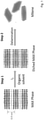
- the MXenes are synthesized by etching of A element layers from a MAX phase according to formula (I) M n+1 AX n (I).
- MAX phase refers to a compound with an atomically layered crystal structure, in which M n+1 X n layers are interleaved by a layer of the A element.
- M is a transition metal, preferably an early transition metal, in particular M is selected from the group comprising Sc, Ti, V, Cr, Zr, Nb, Mo, Hf and Ta.
- M is selected from the group comprising Ti, V and Mo.
- A is a metal or metalloid, in particular A is selected from the group comprising Al, Si, P, S, Ga, Ge, As, Cd, In, Sn, Sb, TI, Bi and Pb.
- A is at least one metal or metalloid selected from the group comprising Al, Si, P, S, Ga, Ge, As, Cd, In, Sn, Sb, TI, Bi or Pb.
- A is one metal or metalloid selected from the group comprising Al, Si, P, S, Ga, Ge, As, Cd, In, Sn, Sb, TI, Bi or Pb.
- A is selected from the group comprising Al, Sn, In and Ga, mostly preferred Al.
- Al m is AlI 3 , SnI 2 , InI 3 or Gal 2 , mostly preferred Al m is AlI 3 .
- the method for the synthesis of MXenes comprises the steps
- the MAX phase is selected from the group comprising Ti 3 AlC 2 , Ti 2 AlC, V 2 AlC, Ti 2 AlN, Cr 2 AlC, Nb 2 AlC, Ta 2 AlC, Ti 3 AlC 2 , V 3 AlC 2 , Ta 3 AlC 2 , Ti 4 AlN 3 , V 4 AlC 3 , Nb 4 AlC 3 , Ta 4 AlC 3 , Ti 2 CdC, Sc 2 InC, Ti 2 GaC, Ti 2 InC, Ti 2 TlC, V 2 GaC, Cr 2 GaC, Ti 2 GaN, Ti 2 InN, V 2 GaN, Cr 2 GaN, Ti 2 GeC, Ti 2 SnC, Ti 2 PbC, V 2 GeC, V 2 AsC, Ti 2 SC, Zr 2 InC, Zr 2 TIC, Nb 2 GaC, Nb 2 InC, Mo 2 GaC, Zr 2 InN, Zr 2 TIN, Zr 2 SnC, Zr 2 PbC, Nb 2 SnC, Nb
- the MAX phase is selected from the group comprising Ti 3 AlC 2 , Ti 2 AlC, V 2 AlC, Ti 2 AlN, Cr 2 AlC, Nb 2 AlC, Ta 2 AlC, Ti 3 AlC 2 , V 3 AlC 2 , Ta 3 AlC 2 , Ti 4 AlN 3 , V 4 AlC 3 , Nb 4 AlC 3 , Ta 4 AlC 3 .
- the MAX phase is in the form of a suspension.
- the MAX phase is prepared by mixing at least two precursor compounds, preferably in a stoichiometric ratio, and thermal annealing at high temperatures, preferably of at least 1000 °C, more preferably at a temperature in the range of 1,200 °C to 1,400 °C.
- the thermal annealing is carried out under an inert gas atmosphere, in particular argon atmosphere.
- the etching of A layers from a MAX phase is carried out in an organic solvent.
- no inert gas is required for the etching of A layers from a MAX phase.
- organic solvent refers to an organic liquid, which can dissolve other liquid or solid substances by physical means. A requirement for suitability as a solvent is that neither the dissolving nor the dissolved substance is chemically changed during the dissolving process.
- the organic solvent is water-free and thus, the synthesized MXenes are not oxidized and/or degraded.
- the organic solvent is selected from the group comprising nitriles, alcohols, ethers and aromatic hydrocarbons, preferably the group comprising acetonitrile, ethanol, ethyl ether and benzene.
- the organic solvent is anhydrous.
- the etching of A layers from a MAX phase is carried out using I 2 .
- I 2 is applied as a solid, as dispersion or suspension, preferably as a powder.
- the etching of A layers from a MAX phase is carried out for a time period in the range of 12 hours to 7 days, preferably 2 days to 4 days.
- the etching is carried out at a temperature in the range of 25°C to 200°C, preferably in the range of 50°C to 150°C.
- the etching is carried out in a sealed system.
- the removal of the dissolved Al m is carried out by centrifugation and/or filtration and/or washing.
- the removal of the dissolved Al m is carried out by centrifugation and washing or filtration and washing.
- the washing is carried out with a solvent, selected from the group comprising an organic solvent and/or water, preferably acetonitrile, alcohols, ethers, such as ethyl ether; and/or water.
- a solvent selected from the group comprising an organic solvent and/or water, preferably acetonitrile, alcohols, ethers, such as ethyl ether; and/or water.
- the washing is carried out for at least one time, preferably two to five times, especially preferred three times.
- a delamination of the MXene (M n+1 X n ) is carried out, preferably in a further solvent.
- the delamination of the etched MAX phases in a further solvent is carried out using slight shaking or stirring.
- no sonification is required.
- the further solvent is selected from the group comprising an organic solvent and/or water, preferably dimethyl sulfoxide (DMSO), alcohols and/or water.
- DMSO dimethyl sulfoxide
- the delamination of the etched MAX phases in a further solvent is carried out for a time period in the range of 15 minutes to 30 minutes.
- the delamination of the etched MAX phases in a further solvent is carried out at a temperature in the range of 0 °C to 35 °C, preferably at room temperature.
- the method comprises at least one further step, wherein the at least one further step is selected from filtration, washing, intercalation, drying and/or shaping.
- intercalation refers to the introduction of molecules in between the layers of the MXenes.
- intercalating molecules are selected from dimethyl sulfoxide (DMSO), hydrazine, water and urea.
- a further aspect of the present invention is the MXene synthesized by the method according to the invention.
- a further aspect of the present invention are the MXene nanosheets according to formula (II) M n+1 X n T x (II),
- the MXene nanosheets are free of halogens, including fluorine.
- the composition of the MXene nanosheets can be measured by Energy-dispersive X-ray spectroscopy (EDS) or X-ray photoelectron spectroscopy (XPS).
- the weight ratio of oxygen to fluorine is at least 200, preferably at least 1,000, more preferably at least 2,000.
- the MXene nanosheets according to the invention are stable as an aqueous dispersion for at least two weeks at room temperature.
- the stability can be determined optically, in particular by microscopy, preferably by atomic force microscopy (AFM); or with nuclear magnetic resonance spectroscopy (NMR).
- AFM atomic force microscopy
- NMR nuclear magnetic resonance spectroscopy
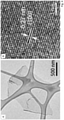
- the morphology of the MXene nanosheets according the invention can be measured by scanning electron microscopy (SEM) or transmission electron microscopy (TEM), and the structure can be measured by high resolution (HR)-TEM.
- the MXene nanosheets have an amount of oxidation groups (O and OH) of at least 20 wt% (oxygen in relation to the sum of all elements).
- the MXene nanosheets according to the state of the art have an amount of oxidation groups (O and OH) of about 10 wt% (Alhabeb et al. 2017).
- the MXene is selected from M 2 X, M 3 X 2 and M 4 X 3 , wherein M is a transition metal and wherein X is C and/or N.
- the MXene is a double transition metal MXene according to formula (IIa) or formula (IIb) M' 2 M"X 2 (IIa) or M' 2 M" 2 X 3 (IIb) , wherein M' and M" are different transition metals and wherein X is C and/or N.
- the MXene is selected from the group comprising Sc 2 C, Ti 2 C, V 2 C, Cr 2 C, Zr 2 C, Nb 2 C, Mo 2 C, Hf 2 C, Ta 2 C, W 2 C, (Ti 0,5 V 0,5 ) 2 C, (Ti 0,5 Nb 0,5 ) 2 C, Mo 1,33 Y 0,67 C, Ti 2 N, V 2 N, Cr 2 N, Zr 2 N, Mo 2 N, Hf 2 N, Ti 3 C 2 , V 3 C 2 , Zr 3 C 2 , Hf 3 C 2 , Ta 3 C 2 , (Ti,V) 3 C 2 , (Ti 2 Nb)C 2 , (Ti 2 Ta)C 2 , (Ti 2 Mn)C 2 , (Hf 2 V)C 2 , (Hf 2 Mn)C 2 , (V 2 Ti)C 2 , (Cr 2 Ti)C 2 , (Cr 2 V)C 2 , (Cr 2 Nb)C, Mo 2 C
- the MXene nanosheets are in the form of a monolayer or a multilayer.
- the thickness of the MXene nanosheets is in the range of the thickness of one monolayer to several layers, preferably in the range of the thickness of one monolayer to five layers.
- the thickness of the MXene nanosheets is in the range of 1 nm to 50 nm, preferably in the range of 1 nm to 5 nm.
- the film thickness of the MXene nanosheets synthesized with the method according to the invention is adjustable by the delamination conditions, in particular by the use of centrifugation.
- the thickness can be determined by atomic force microscopy (AFM) or transmission electron microscopy (TEM).
- the MXene nanosheets according to the invention have an average size, in particular at least one side with a length, in the range of 0.1 ⁇ m to 2 ⁇ m, preferably in the range of 0.5 ⁇ m to 1.9 ⁇ m.
- the MXene nanosheets according to the invention are larger than MXenes synthesized so far.
- the average size can be determined by AFM, TEM and SEM.
- the MXene nanosheets according to the invention have a conductivity in the range of 1,000 S/cm to 1,500 S/cm.
- the conductivity is comparable with MXenes synthesized by different methods.
- the conductivity of the MXenes can be measured with four point probe or four-terminal sensing, respectively.
- the term "four point probe” or “four-terminal sensing” refers to an electrical impedance measuring technique that uses separate pairs of current-carrying and voltage-sensing electrodes for the precise measurement of low resistance values.
- the MXene nanosheets according to the invention are in the form of a colloidal solution, preferably in the form of an aqueous colloidal solution.
- colloidal solution refers to a mixture in which one substance of microscopically dispersed insoluble or soluble particles, in particular the MXene nanosheets, is suspended throughout another substance, in particular an aqueous solution.
- Another aspect of the invention is the use of the MXene nanosheets according to the invention or synthesized with the method according to the invention in electronic devices, sensors, reinforcement for composites, electrocatalysts or energy storage materials.
- the MXene nanosheets are used in supercapacitors.
- the term "supercapacitor” refers to a high-capacity capacitor with a lower voltage limit than a capacitor.
- the recently described embodiments can be combined; in particular, the characteristics of the method according to the invention can be applied to the MXene nanosheets and the use of the MXene nanosheets according to the invention. Furthermore, the characteristics of the MXene nanosheets according to the invention can be applied to the method according to the invention.
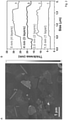
- the Ti 3 C 2 T x nanosheets were transferred onto 300 nm SiO 2 /Si substrates atomic force microscopy (AFM).
- AFM was performed in a tapping mode in air on a customized Ntegra Aura/Spectra from NT-MDT (Moscow, Russia) with a SMENA head operated in contact mode.
- AFM measurements on the SiO 2 /Si wafer show a film thickness of about 5 nm to 30 nm, corresponding to about 1 to 5 layers (see Fig. 2 ). Furthermore, AFM measurements disclose a content of 71% of the Ti 3 C 2 T x nanosheets to have 1 to 5 layers. The average size of the Ti 3 C 2 T x nanosheets is 1.8 ⁇ m.
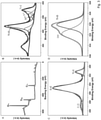
- MXenes produced by HF easily oxidized to TiO 2 in water, but MXenes produced by I 2 are stable in water for at least 2 weeks (see Fig. 5 ).
Landscapes
- Chemical & Material Sciences (AREA)
- Organic Chemistry (AREA)
- Inorganic Chemistry (AREA)
- Catalysts (AREA)
- Organic Low-Molecular-Weight Compounds And Preparation Thereof (AREA)
Applications Claiming Priority (1)
| Application Number | Priority Date | Filing Date | Title |
|---|---|---|---|
| EP20191753.1A EP3957601A1 (fr) | 2020-08-19 | 2020-08-19 | Procédé de synthèse de mxènes, nanofeuilles de mxène et leur utilisation |
Publications (2)
| Publication Number | Publication Date |
|---|---|
| EP3957602A2 true EP3957602A2 (fr) | 2022-02-23 |
| EP3957602A3 EP3957602A3 (fr) | 2022-04-27 |
Family
ID=72148008
Family Applications (2)
| Application Number | Title | Priority Date | Filing Date |
|---|---|---|---|
| EP20191753.1A Withdrawn EP3957601A1 (fr) | 2020-08-19 | 2020-08-19 | Procédé de synthèse de mxènes, nanofeuilles de mxène et leur utilisation |
| EP21192066.5A Pending EP3957602A3 (fr) | 2020-08-19 | 2021-08-19 | Procédé de synthèse de mxènes, nanofeuilles de mxène et leur utilisation |
Family Applications Before (1)
| Application Number | Title | Priority Date | Filing Date |
|---|---|---|---|
| EP20191753.1A Withdrawn EP3957601A1 (fr) | 2020-08-19 | 2020-08-19 | Procédé de synthèse de mxènes, nanofeuilles de mxène et leur utilisation |
Country Status (1)
| Country | Link |
|---|---|
| EP (2) | EP3957601A1 (fr) |
Cited By (12)
| Publication number | Priority date | Publication date | Assignee | Title |
|---|---|---|---|---|
| CN115266829A (zh) * | 2022-07-28 | 2022-11-01 | 电子科技大学 | 一种抗坏血酸钠表面修饰钛化碳MXene功能油墨及湿度传感器 |
| CN115353108A (zh) * | 2022-08-23 | 2022-11-18 | 太原理工大学 | 一种大尺寸MXene纳米片的制备方法 |
| CN115559109A (zh) * | 2022-11-18 | 2023-01-03 | 四川大学华西医院 | 一种透气抗菌纳米复合纤维材料及其制备方法和用途 |
| CN115831480A (zh) * | 2022-12-20 | 2023-03-21 | 西安交通大学 | 一种碱诱导三维多孔MXene-细菌纤维素柔性膜电极的制备方法 |
| CN115819788A (zh) * | 2022-12-08 | 2023-03-21 | 万华化学集团股份有限公司 | 一种高附着力高耐磨的轻量化尼龙粉末的制备方法 |
| CN116040595A (zh) * | 2023-01-16 | 2023-05-02 | 赣南科技学院 | 过渡金属磷化物/C/MXene复合材料的制备方法 |
| CN116040631A (zh) * | 2022-12-06 | 2023-05-02 | 延边大学 | 一维MXene纳米线及其制备方法 |
| CN116322232A (zh) * | 2023-01-18 | 2023-06-23 | 东华大学 | 一种提高钙钛矿太阳电池稳定性的富氟无羟基MXene添加剂 |
| CN116477625A (zh) * | 2023-02-28 | 2023-07-25 | 惠州学院 | 一种氢离子增强MXenes水溶液环境稳定性方法 |
| CN116731587A (zh) * | 2023-07-05 | 2023-09-12 | 苏州久美玻璃钢股份有限公司 | 一种用于高分子管材的防腐耐磨涂料的制备方法 |
| CN117069113A (zh) * | 2023-08-10 | 2023-11-17 | 西安建筑科技大学 | 一种纳米多孔片状TiC及其制备方法和应用 |
| CN120304402A (zh) * | 2025-06-13 | 2025-07-15 | 四川大学华西医院 | 一种纳米酶的制备方法及该纳米酶所构成的抗肺炎克雷伯菌器官保存液 |
Families Citing this family (9)
| Publication number | Priority date | Publication date | Assignee | Title |
|---|---|---|---|---|
| CN114195151B (zh) * | 2021-12-13 | 2023-01-13 | 河北科技大学 | 一种单层MXene材料的制备方法 |
| CN114436261B (zh) * | 2022-03-07 | 2023-04-14 | 安徽大学 | 一种二维Ti3C2Tx材料的自卷曲纤维、制备方法及其应用 |
| CN114975895B (zh) * | 2022-06-08 | 2023-08-18 | 北京航空航天大学 | 铅酸电池的正极铅膏、正极及其制备方法、电池和电动车 |
| CN114944489B (zh) * | 2022-06-15 | 2023-08-01 | 北京航空航天大学 | 具有手风琴MXene阵列的薄膜层及其制备方法、集流体、电极和电池 |
| CN115818644B (zh) * | 2022-11-16 | 2024-07-02 | 北京航空航天大学 | 一种协同致密化碳化钛复合薄膜的制备方法 |
| CN116553549B (zh) * | 2023-04-18 | 2024-07-05 | 燕山大学 | 一种终端基团可控的MXenes材料及制备方法 |
| CN116730382B (zh) * | 2023-06-09 | 2026-07-07 | 广州大学 | 一种二元过渡金属复合负极材料及其制备方法 |
| CN117285362B (zh) * | 2023-11-23 | 2024-02-02 | 中国航发北京航空材料研究院 | SiC/SiC复合材料耐高温抗氧化界面层及制备方法 |
| CN120504322B (zh) * | 2025-05-09 | 2026-01-27 | 渤海大学 | 一种三聚氰胺修饰MXene材料的制备方法及其应用 |
Citations (2)
| Publication number | Priority date | Publication date | Assignee | Title |
|---|---|---|---|---|
| CN110540236A (zh) | 2019-09-09 | 2019-12-06 | 中国科学院宁波材料技术与工程研究所 | 一种MXene材料及其制备方法与应用 |
| CN111943207A (zh) | 2020-07-17 | 2020-11-17 | 郑州骋憬材料科技有限公司 | 一种简单、无污染制备无氟二维材料MXene的方法 |
-
2020
- 2020-08-19 EP EP20191753.1A patent/EP3957601A1/fr not_active Withdrawn
-
2021
- 2021-08-19 EP EP21192066.5A patent/EP3957602A3/fr active Pending
Patent Citations (2)
| Publication number | Priority date | Publication date | Assignee | Title |
|---|---|---|---|---|
| CN110540236A (zh) | 2019-09-09 | 2019-12-06 | 中国科学院宁波材料技术与工程研究所 | 一种MXene材料及其制备方法与应用 |
| CN111943207A (zh) | 2020-07-17 | 2020-11-17 | 郑州骋憬材料科技有限公司 | 一种简单、无污染制备无氟二维材料MXene的方法 |
Non-Patent Citations (10)
| Title |
|---|
| ALHABEB MMALESKI KANASORI BLELYUKH PCLARK LSIN SGOGOTSI Y: "Guidelines for Synthesis and Processing of Two-Dimensional Titanium Carbide (Ti3C2Tx MXene", CHEM. MATER., vol. 29, no. 18, 2017, pages 7633 - 7644, XP055790920, DOI: 10.1021/acs.chemmater.7b02847 |
| GHIDIU MLUKATSKAYA MRZHAO M-QGOGOTSI YBARSOUM MW: "Conductive two-dimensional titanium carbide 'clay' with high volumetric capacitance", NATURE, vol. 516, 2014, pages 78 - 81 |
| JUN B-MKIM SHEO JPARK CMHER NJANG MHUANG YHAN JYOON Y: "Review of MXenes as new nanomaterials for energy storage/delivery and selected environmental applications", NANO RESEARCH, vol. 12, no. 3, 2018, pages 471 - 487, XP036705721, DOI: 10.1007/s12274-018-2225-3 |
| KARLSSON LHBIRCH JHALIM JBARSOUM MWPERSSON POA: "Atomically resolved structural and chemical investigation of single MXene sheets", NANO LETT., vol. 15, 2015, pages 4955 - 4960 |
| LI MLI XLQIN GLUO KLU JLI YLIANG GHUANG ZHULTMAN LEKLUND P: "ARXIV.ORG", vol. 201, 2020, CORNELL UNIVERSITY LIBRARY, article "Halogenated MXenes with Electrochemically Active Terminals for High Performance Zinc Ion Batteries" |
| NAGUIB MMOCHALIN VNBARSOUM MWGOGOTSI Y: "MXenes: a new family of two-dimensional materials", ADV. MATER., vol. 26, 2014, pages 992 - 1005, XP055350812, DOI: 10.1002/adma.201304138 |
| NAM SUMRAO SOH SSHIN KHPARK HSOH I-K: "Sonochemical self-growth of functionalized titanium carbide nanorods on TiSC2 nanosheets for high capacity anode for lithium-ion batteries", COMPOSITES: PART B, vol. 181, 2020 |
| NATU VHART JLSOKOL MCHIANG HTAHERI MLBARSOUM MW: "Edge Capping of 2D-MXene Sheets with Polyanionic Salts to Mitigate Oxidation in Aqueous Colloidal Suspensions", ANGEW. CHEM. INT. ED., vol. 58, 2019, pages 12785 - 12790, XP055771962, DOI: 10.1002/ange.201906138 |
| SUN WXIE YKENT PRC: "Double transition metal MXenes with wide band gaps and novel magnetic properties", NANOSCALE, vol. 10, no. 25, 2018, pages 11962 - 11968, XP055781647, DOI: 10.1039/C8NR00513C |
| ZHAO XVASHISTH APREHN ESUN WSHAH SAHABIB TCHEN YTAN ZLUTKENHAUS JLRADOVIC M: "Antioxidants Unlock Shelf-Stable TisC Tx (MXene) Nanosheet Dispersions", MATTER, vol. 1, 2019, pages 513 - 526 |
Cited By (13)
| Publication number | Priority date | Publication date | Assignee | Title |
|---|---|---|---|---|
| CN115266829A (zh) * | 2022-07-28 | 2022-11-01 | 电子科技大学 | 一种抗坏血酸钠表面修饰钛化碳MXene功能油墨及湿度传感器 |
| CN115353108A (zh) * | 2022-08-23 | 2022-11-18 | 太原理工大学 | 一种大尺寸MXene纳米片的制备方法 |
| CN115559109A (zh) * | 2022-11-18 | 2023-01-03 | 四川大学华西医院 | 一种透气抗菌纳米复合纤维材料及其制备方法和用途 |
| CN116040631A (zh) * | 2022-12-06 | 2023-05-02 | 延边大学 | 一维MXene纳米线及其制备方法 |
| CN115819788A (zh) * | 2022-12-08 | 2023-03-21 | 万华化学集团股份有限公司 | 一种高附着力高耐磨的轻量化尼龙粉末的制备方法 |
| CN115819788B (zh) * | 2022-12-08 | 2024-02-02 | 万华化学集团股份有限公司 | 一种高附着力高耐磨的轻量化尼龙粉末的制备方法 |
| CN115831480A (zh) * | 2022-12-20 | 2023-03-21 | 西安交通大学 | 一种碱诱导三维多孔MXene-细菌纤维素柔性膜电极的制备方法 |
| CN116040595A (zh) * | 2023-01-16 | 2023-05-02 | 赣南科技学院 | 过渡金属磷化物/C/MXene复合材料的制备方法 |
| CN116322232A (zh) * | 2023-01-18 | 2023-06-23 | 东华大学 | 一种提高钙钛矿太阳电池稳定性的富氟无羟基MXene添加剂 |
| CN116477625A (zh) * | 2023-02-28 | 2023-07-25 | 惠州学院 | 一种氢离子增强MXenes水溶液环境稳定性方法 |
| CN116731587A (zh) * | 2023-07-05 | 2023-09-12 | 苏州久美玻璃钢股份有限公司 | 一种用于高分子管材的防腐耐磨涂料的制备方法 |
| CN117069113A (zh) * | 2023-08-10 | 2023-11-17 | 西安建筑科技大学 | 一种纳米多孔片状TiC及其制备方法和应用 |
| CN120304402A (zh) * | 2025-06-13 | 2025-07-15 | 四川大学华西医院 | 一种纳米酶的制备方法及该纳米酶所构成的抗肺炎克雷伯菌器官保存液 |
Also Published As
| Publication number | Publication date |
|---|---|
| EP3957601A1 (fr) | 2022-02-23 |
| EP3957602A3 (fr) | 2022-04-27 |
Similar Documents
| Publication | Publication Date | Title |
|---|---|---|
| EP3957601A1 (fr) | Procédé de synthèse de mxènes, nanofeuilles de mxène et leur utilisation | |
| JP6477760B2 (ja) | 非水系二次電池用負極及び非水系二次電池、負極活物質及びその製造方法、ナノシリコンと炭素層とカチオン性ポリマー層とを具備する複合体、ナノシリコンと炭素層よりなる複合体の製造方法 | |
| Guo et al. | MXene derivatives for energy storage and conversions | |
| Wu et al. | Exploring MXene-based materials for next-generation rechargeable batteries | |
| US11183676B2 (en) | Continuous process for producing electrodes and alkali metal batteries having ultra-high energy densities | |
| US10224125B2 (en) | Compositions comprising free-standing two-dimensional nanocrystals | |
| EP3613094B1 (fr) | Les systèmes électrochimiques comprenant mxenes et compositions de phase de max et méthodes pour utiliser le même | |
| KR102326633B1 (ko) | 초고 에너지 밀도를 갖는 리튬 전지를 제조하기 위한 방법 | |
| KR101543971B1 (ko) | 초임계 유체를 이용한 금속 산화물 나노입자/그래핀 복합체 제조방법 및 이에 의해 제조된 금속 산화물 나노입자/그래핀 복합체 | |
| EP3153605B1 (fr) | Procédé de production d'un matériau stratifié (semi-)conducteur | |
| EP3805186A1 (fr) | Polymere comprenant des nanocristaux bidimensionnels libres | |
| JP2018525795A (ja) | 超高体積エネルギー密度を有する充電式リチウム電池および所要の製造方法 | |
| Epur et al. | A simple and scalable approach to hollow silicon nanotube (h-SiNT) anode architectures of superior electrochemical stability and reversible capacity | |
| JP2018520488A (ja) | 金属および金属イオン電池用の安定なフッ化リチウム系カソード | |
| KR20160025547A (ko) | 리튬이차전지용 실리콘 복합재 음극활물질, 이의 제조방법 및 이를 포함하는 리튬이차전지 | |
| Goswami et al. | Two‐dimensional MXenes: fundamentals, characteristics, synthesis methods, processing, compositions, structure, and applications | |
| WO2023047861A1 (fr) | Composition contenant des particules bidimensionnelles conductrices, film conducteur, et procédé de fabrication d'une composition contenant des particules bidimensionnelles conductrices | |
| Khatun | Progresses and challenges in 2D MXenes: synthesis, intercalation/delamination, and storage | |
| Ye et al. | MXene-based zinc-ion batteries: synthesis, applications, and strategies for performance optimization | |
| EP2375478A1 (fr) | Borates métalliques de transition comportant une cathode pour batterie rechargeable | |
| Simon et al. | 2D Materials for Developing Bendable Li-Ion Cells for Next-Generation Flexible Energy Storage Devices |
Legal Events
| Date | Code | Title | Description |
|---|---|---|---|
| PUAI | Public reference made under article 153(3) epc to a published international application that has entered the european phase |
Free format text: ORIGINAL CODE: 0009012 |
|
| STAA | Information on the status of an ep patent application or granted ep patent |
Free format text: STATUS: THE APPLICATION HAS BEEN PUBLISHED |
|
| AK | Designated contracting states |
Kind code of ref document: A2 Designated state(s): AL AT BE BG CH CY CZ DE DK EE ES FI FR GB GR HR HU IE IS IT LI LT LU LV MC MK MT NL NO PL PT RO RS SE SI SK SM TR |
|
| PUAL | Search report despatched |
Free format text: ORIGINAL CODE: 0009013 |
|
| AK | Designated contracting states |
Kind code of ref document: A3 Designated state(s): AL AT BE BG CH CY CZ DE DK EE ES FI FR GB GR HR HU IE IS IT LI LT LU LV MC MK MT NL NO PL PT RO RS SE SI SK SM TR |
|
| RIC1 | Information provided on ipc code assigned before grant |
Ipc: C08K 3/14 20060101ALI20220323BHEP Ipc: C01B 32/949 20170101ALI20220323BHEP Ipc: C01B 32/921 20170101ALI20220323BHEP Ipc: C01B 32/914 20170101ALI20220323BHEP Ipc: C01B 21/076 20060101ALI20220323BHEP Ipc: C01B 21/06 20060101ALI20220323BHEP Ipc: C01B 32/90 20170101AFI20220323BHEP |
|
| STAA | Information on the status of an ep patent application or granted ep patent |
Free format text: STATUS: REQUEST FOR EXAMINATION WAS MADE |
|
| 17P | Request for examination filed |
Effective date: 20221026 |
|
| RBV | Designated contracting states (corrected) |
Designated state(s): AL AT BE BG CH CY CZ DE DK EE ES FI FR GB GR HR HU IE IS IT LI LT LU LV MC MK MT NL NO PL PT RO RS SE SI SK SM TR |
|
| STAA | Information on the status of an ep patent application or granted ep patent |
Free format text: STATUS: EXAMINATION IS IN PROGRESS |
|
| 17Q | First examination report despatched |
Effective date: 20240906 |